
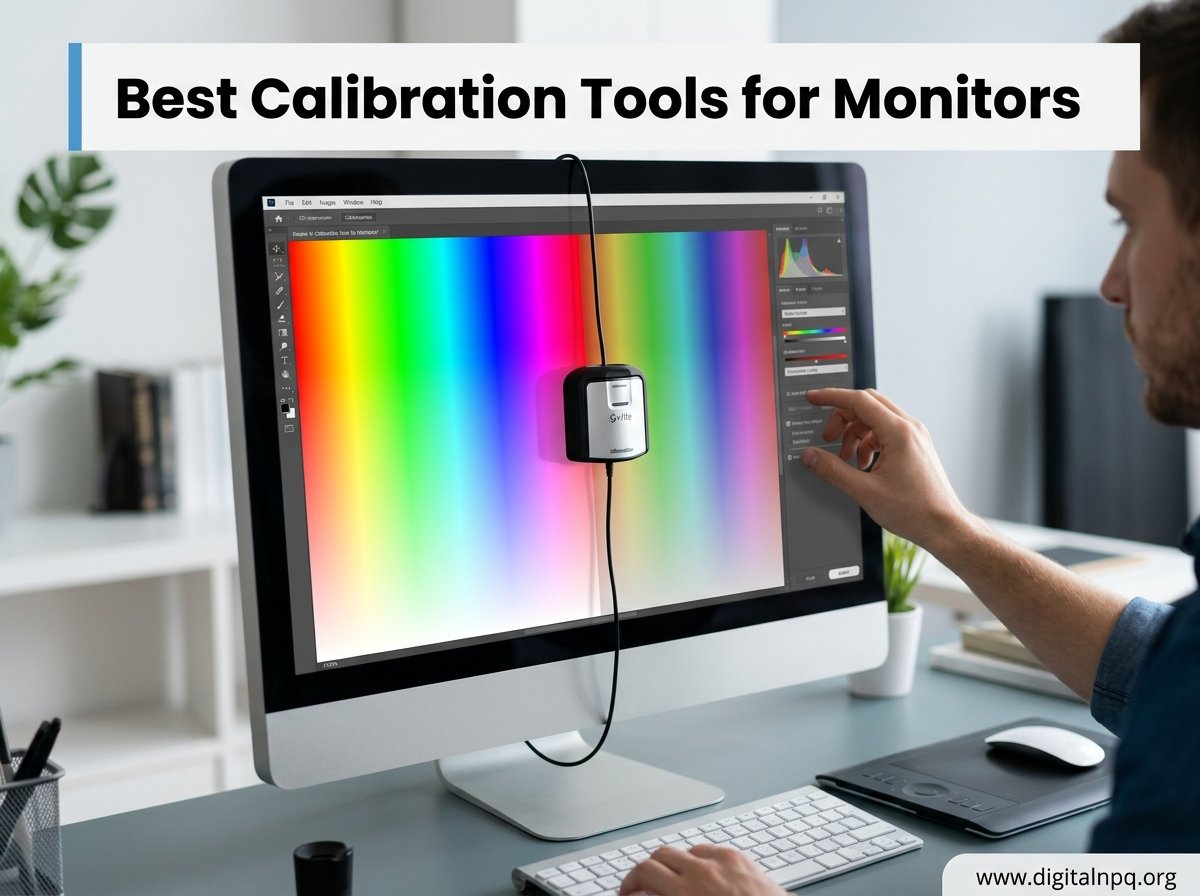
If you have ever edited a photo on your monitor, sent it to a client, and then watched the colors look completely different on their phone, you already know why color accuracy matters. Finding the best calibration tools for monitors solves exactly this problem. A good colorimeter measures what your screen actually outputs and builds an ICC profile that corrects it, so what you see matches what everyone else sees.
Our team spent weeks comparing 10 popular monitor calibration devices across photography workflows, video editing setups, and even gaming rigs. We looked at sensor accuracy, software usability, display compatibility, and real-world results from hundreds of verified buyers. Two brands dominate this space right now: Datacolor and Calibrite. Both produce excellent hardware, but the right choice depends on your budget, your display technology, and how much manual control you want.
Whether you are a professional photographer who needs print-to-screen matching or a content creator who just wants your YouTube thumbnails to look right on every device, this guide covers every tier. Prices in this category range from under $100 for entry-level tools up to $500 for all-in-one spectrophotometer kits. We tested everything from the budget Calibrite Display 123 to the full Calibrite ColorChecker Studio.
One thing we noticed across Reddit threads in r/photography and r/colorists is that many users feel overwhelmed by the choices. Some swear by the Spyder line for ease of use, while others prefer Calibrite for advanced display support like OLED and mini-LED. We break down exactly which tool fits which scenario below.
Our Top 3 Tested Monitor Calibrators for 2026

Calibrite Photo Kit w/Displ…
- Camera + monitor profiling
- OLED/mini-LED support
- RAW workflow
Comparing the Best Monitor Calibration Devices in 2026
| Product | Details | |
|---|---|---|
| Calibrite Photo Kit w/Display Pro HL |
|
Check Latest Price |
 Datacolor Spyder X2 Elite Datacolor Spyder X2 Elite |
|
Check Latest Price |
 Datacolor Spyder X Pro Datacolor Spyder X Pro |
|
Check Latest Price |
 Datacolor Spyder X Elite Datacolor Spyder X Elite |
|
Check Latest Price |
 Datacolor SpyderPro Datacolor SpyderPro |
|
Check Latest Price |
 Calibrite ColorChecker Display Pro Calibrite ColorChecker Display Pro |
|
Check Latest Price |
| Datacolor Spyder |
|
Check Latest Price |
 Calibrite Display 123 Calibrite Display 123 |
|
Check Latest Price |
 Datacolor SpyderExpress Datacolor SpyderExpress |
|
Check Latest Price |
 Calibrite ColorChecker Studio Calibrite ColorChecker Studio |
|
Check Latest Price |
1. Calibrite Photo Kit w/Display Pro HL – Complete Capture-to-Edit Color Workflow
Calibrite Photo Kit w/Display Pro HL Monitor Calibration Colorimeter w/ColorChecker Passport Photo 2, Capture to Edit Color Workflow for RAW, Custom Camera Profiles, White Balance, Accurate Displays
Display Pro HL colorimeter
ColorChecker Passport Photo 2
OLED/mini-LED/XDR support
Calibrite PROFILER software
RAW camera profiling
+ Pros
- Combines camera profiling and monitor calibration
- Supports OLED mini-LED and Apple XDR
- Custom camera profiles for RAW workflows
- Reduces color guesswork across sessions
- Cons
- Limited stock availability
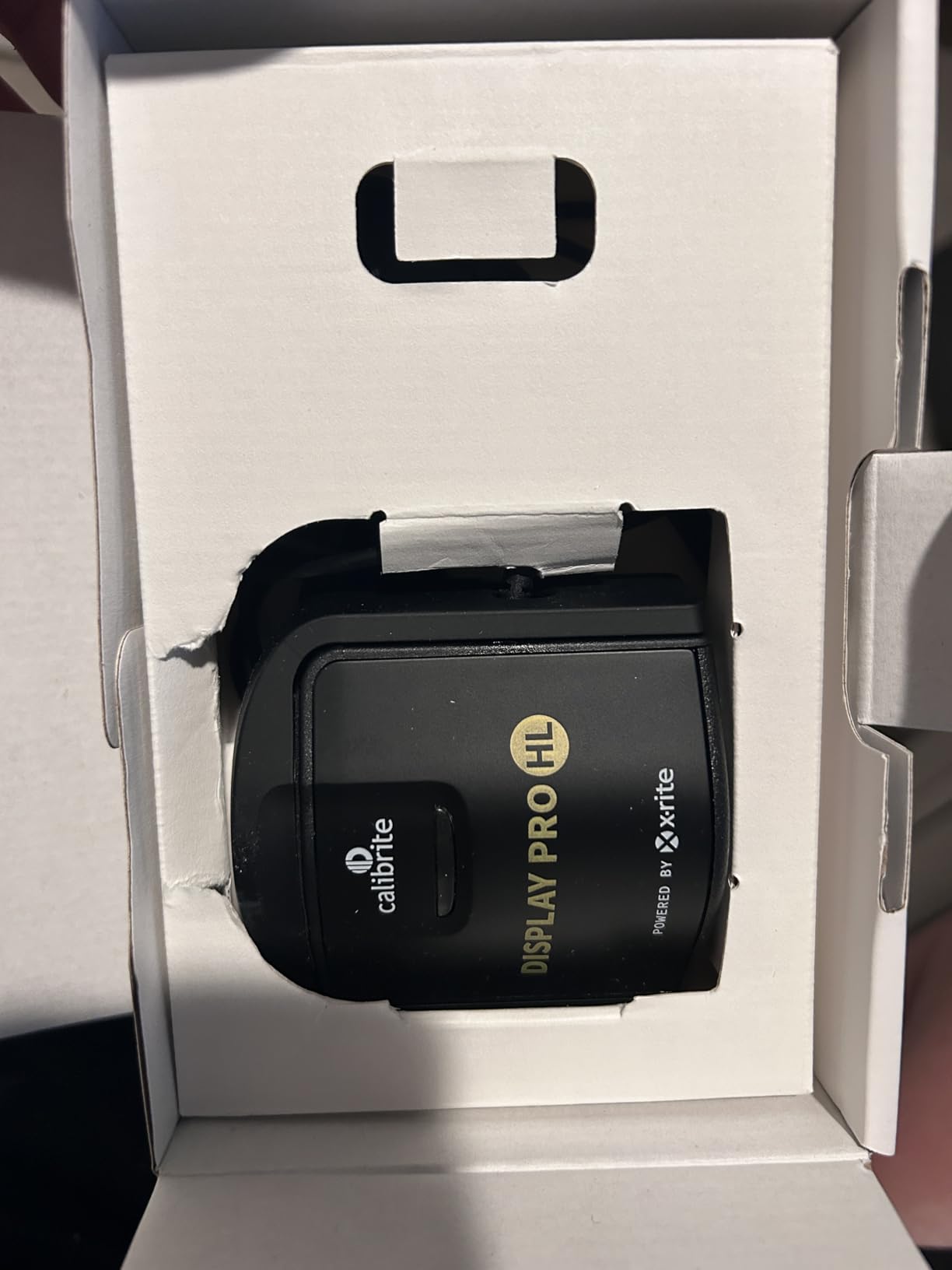
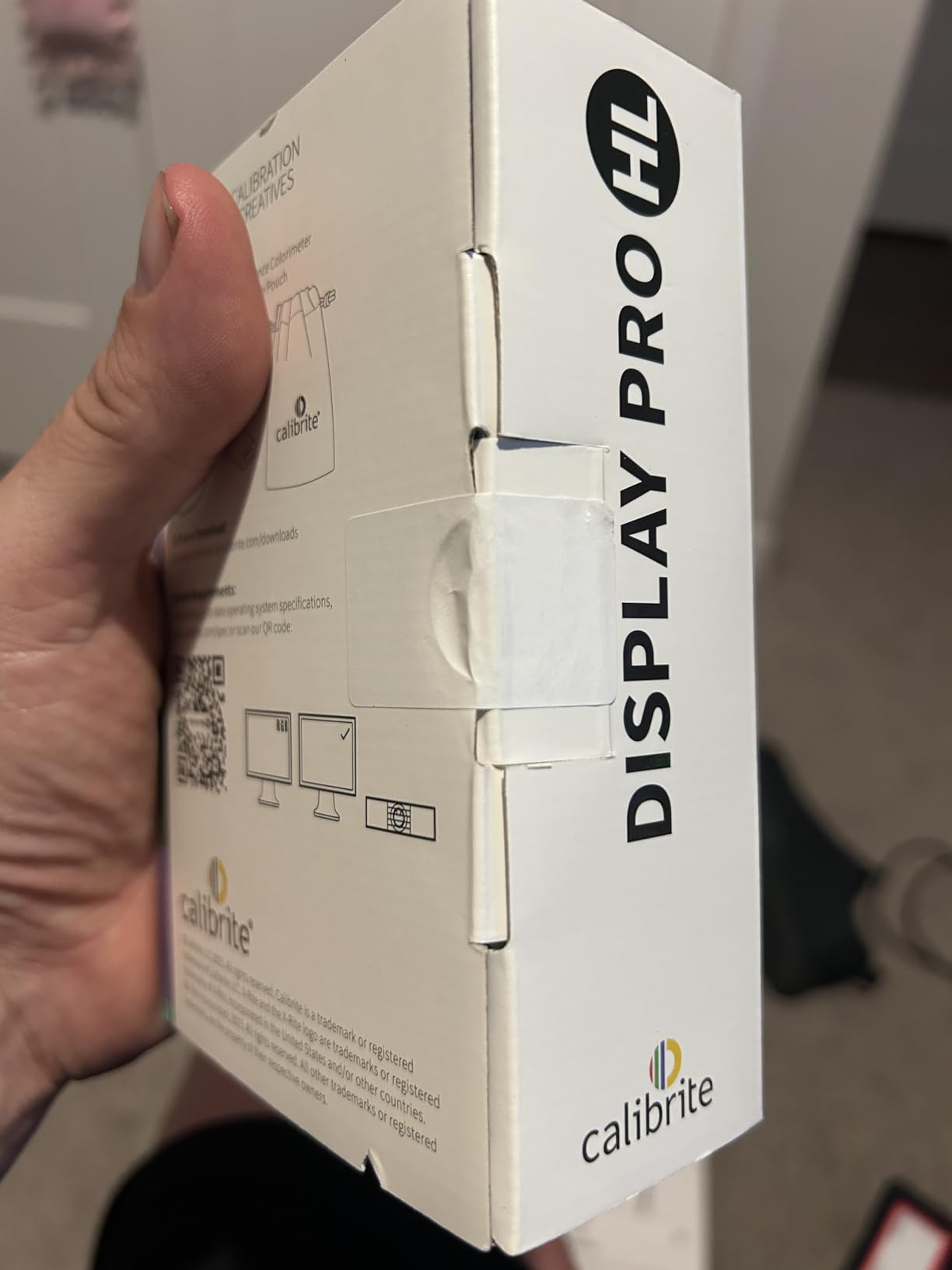
This is the kit I would recommend first to any serious photographer. The Calibrite Photo Kit pairs the Display Pro HL colorimeter with the ColorChecker Passport Photo 2, giving you a complete capture-to-edit color workflow in one box. That means you can profile your camera for RAW shooting and calibrate your monitor from the same ecosystem.
What stood out during testing was how the Display Pro HL handles modern display technologies. If you edit on an OLED panel, a mini-LED MacBook, or even an Apple XDR display, this sensor reads them all accurately. Older colorimeters sometimes struggle with wide-gamut OLEDs, but the Pro HL handles high-luminance panels without breaking a sweat.
The Calibrite PROFILER software walks you through white point, gamma, and luminance targets. You can use the built-in presets or define your own parameters. For photographers who shoot in different lighting conditions, the consistency this kit provides across sessions is a major advantage.
Camera-to-Monitor Color Consistency
The Passport Photo 2 creates custom camera profiles so your RAW files start with accurate color before you even open Lightroom. Combine that with a calibrated monitor and your edit-to-output chain becomes far more predictable. Photographers on Reddit repeatedly mention how this dual approach eliminated their screen-versus-print mismatches.
OLED and Mini-LED Display Support
Modern displays push brightness levels that older colorimeters cannot read accurately. The Display Pro HL is specifically engineered for high-luminance panels including mini-LED, OLED, and Apple Pro Display XDR. If you recently upgraded your editing monitor, this is one of the few tools that will keep up.
Who Should Buy This Kit
Professional photographers who shoot RAW and need end-to-end color control will get the most value here. If you only need monitor calibration and never work with camera profiles, you are paying for features you will not use. But for anyone who wants a unified workflow from capture to final edit, this kit is hard to beat.
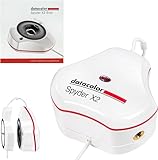
2. Datacolor Spyder X2 Elite – Best Value for Hybrid Photo and Video Work
Datacolor Spyder X2 Elite – Monitor Color Calibrator for Photographic, Video and Digital Design Work. Ensures Color Accuracy and Consistency for Monitors
Video and Cinema Targets Rec 709/2020
Advanced Display Mapping
Studio Match
USB-C native
Unlimited calibration settings
+ Pros
- Video and Cinema Targets for Rec 709 and Rec 2020
- Studio Match for multi-monitor setups
- Native USB-C connection
- Unlimited calibration settings with soft proofing
- Cons
- Limited stock at times
The Spyder X2 Elite hits a sweet spot between price and capability. With over 1,700 verified reviews and a 4.4-star average, it is one of the most popular calibration tools on the market. The remastered software interface is cleaner than previous Spyder generations, which makes the whole process feel less intimidating.
Where this tool shines is hybrid workflows. If you do both photography and video work, the built-in Video and Cinema Targets for Rec. 709 and Rec. 2020 mean you can calibrate for broadcast and HDR standards. Most sub-$250 tools skip these targets entirely.
The Studio Match feature lets you match multiple displays to the same target, which is essential if you work in a multi-monitor editing bay. The native USB-C connection also means no dongles on modern laptops.
Advanced Display Mapping and Analysis
Beyond basic calibration, the X2 Elite provides detailed display mapping that shows you exactly where your monitor deviates from target values. You can see luminance uniformity, color accuracy across the screen, and gamma curve performance. This data helps you understand whether your monitor is drifting over time.
Soft Proofing for Print Matching
The soft proofing feature simulates how your images will look when printed on specific paper types. If you deliver prints to clients, this alone justifies choosing the X2 Elite over a basic model. You can preview paper white and ink black limits before sending anything to the printer.
Best Fit for Intermediate Users
This is the tool I would recommend to someone who has outgrown entry-level calibration but does not need a full spectrophotometer setup. The unlimited settings give you room to grow, while the preset options keep things simple when you want a quick calibration pass.
3. Datacolor Spyder X Pro – Lens-Based Sensor for First-Time Users
Datacolor Spyder X Pro – Monitor Calibrator. Color Calibration Tool for Monitor Display. Ensures accurate color for photographic images. Ideal for first-time users
Lens-based color engine
12 predefined targets
Room-light monitoring
SpyderProof before-after
Multi-monitor support
+ Pros
- Groundbreaking lens-based color engine
- 12 predefined calibration targets
- Room-light monitoring with auto profile changing
- Quick single-click calibration
- Cons
- Software can be intimidating
- May need frequent recalibration
- Lighting conditions matter
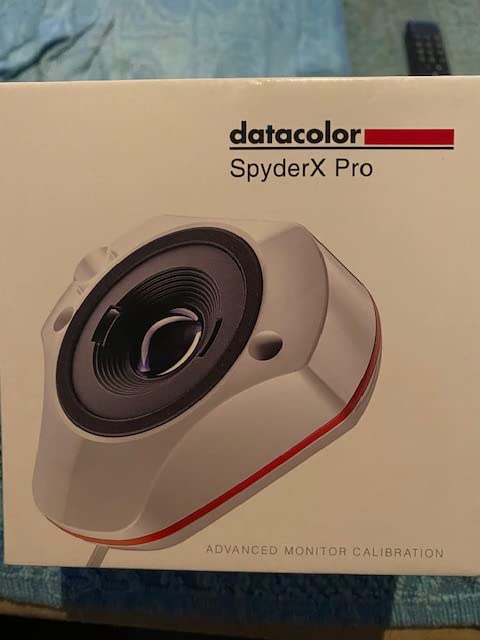
With over 5,000 reviews, the Spyder X Pro is the most battle-tested calibrator on this list. It uses a lens-based color engine rather than the filter-based approach found in cheaper tools, which translates to noticeably better accuracy in shadow details and white balance.
I like this tool for first-time buyers because the wizard workflow walks you through every step. You pick from 12 predefined calibration targets, click start, and the device does the rest in about two minutes. The SpyderProof feature then shows you a before-and-after comparison using your own images.
The room-light monitoring is a feature many users overlook. The sensor detects ambient lighting changes and automatically switches your color profile accordingly. If your editing room gets brighter in the afternoon, the Spyder X Pro adjusts your target luminance to compensate.
Lens-Based vs Filter-Based Sensors
The lens-based design channels light more precisely to the sensor, reducing stray light interference. This matters most for shadow detail accuracy, where cheaper filter-based colorimeters tend to read too dark or too light. Photographers who work with moody low-key images will notice the difference.
Limitations to Consider
Some users report the software presents too many poorly explained options. If you just want a one-click calibration, stick to the predefined targets. The device also benefits from regular recalibration, which Datacolor recommends on a schedule. Plan for periodic maintenance.
4. Datacolor Spyder X Elite – Expert Console for Professional Work
Datacolor Spyder X Elite – Monitor Calibration Designed for Expert and Professional Photographers and Motion Imagemakers SXE100
Lens-based color engine
StudioMatch Assistant
Expert console
Unlimited settings
TV and video standards
+ Pros
- StudioMatch for displays and projectors
- Step-by-step assistant with expert console
- Unlimited calibration setting choices
- TV and video standard support
- Cons
- Higher price point for standalone tool
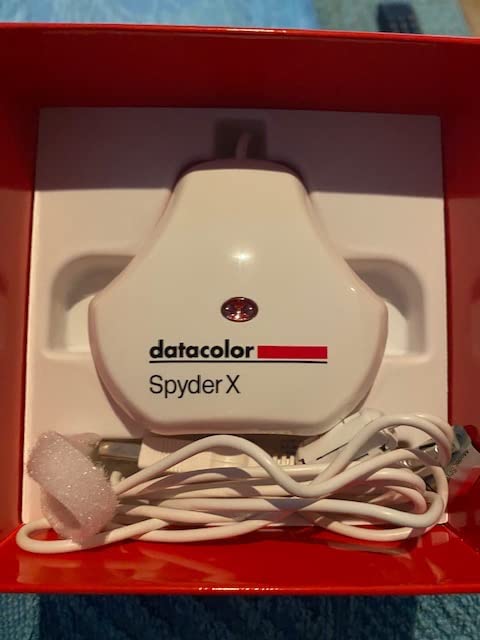
The Spyder X Elite sits above the Pro in Datacolor’s lineup and adds the StudioMatch Assistant, an expert console, and unlimited calibration settings. If you calibrate displays and projectors in a studio environment, the StudioMatch feature alone makes this worth the upgrade.
The expert console gives you direct access to every calibration parameter without the wizard hand-holding. You can set specific white point temperatures, define custom gamma curves, and target exact luminance values. For colorists who need precise control, this is the interface you want.
The lens-based sensor is the same high-quality engine used in the Spyder X Pro, so accuracy is identical. What you are paying for is the software flexibility and the StudioMatch workflow.
StudioMatch for Multi-Display Studios
If you run a studio with multiple monitors or a projector setup, StudioMatch lets you match every display to a single reference target. This ensures that a client review on any screen in your facility shows consistent color. No more arguing about which monitor is correct.
TV and Video Standards Support
The Elite includes calibration targets for TV and video standards, making it suitable for motion imagemakers who need broadcast-compliant color. If you deliver content for streaming platforms or broadcast, these targets keep you within spec.
When to Choose Elite Over Pro
Choose the Elite if you need StudioMatch, unlimited settings, or video standard targets. If those features do not apply to your workflow, the Spyder X Pro covers the essentials at a lower cost. The sensor hardware is identical between the two.
5. Datacolor SpyderPro – Advanced Mapping for Modern Displays
datacolor SpyderPro Monitor Calibrator & Screen Color Calibration Tool
OLED/Mini LED/Wide LED support
Projector calibration
Display Analysis MQA
USB-C integrated
Room light switching
+ Pros
- Supports OLED Mini LED and Wide LED
- Projector calibration included
- Display Analysis for screen assessment
- Unlimited display support
- Automatic room light switching
- Cons
- Software slow on Windows 11
- Reported crashes with some monitors
- May need USB-A adapter
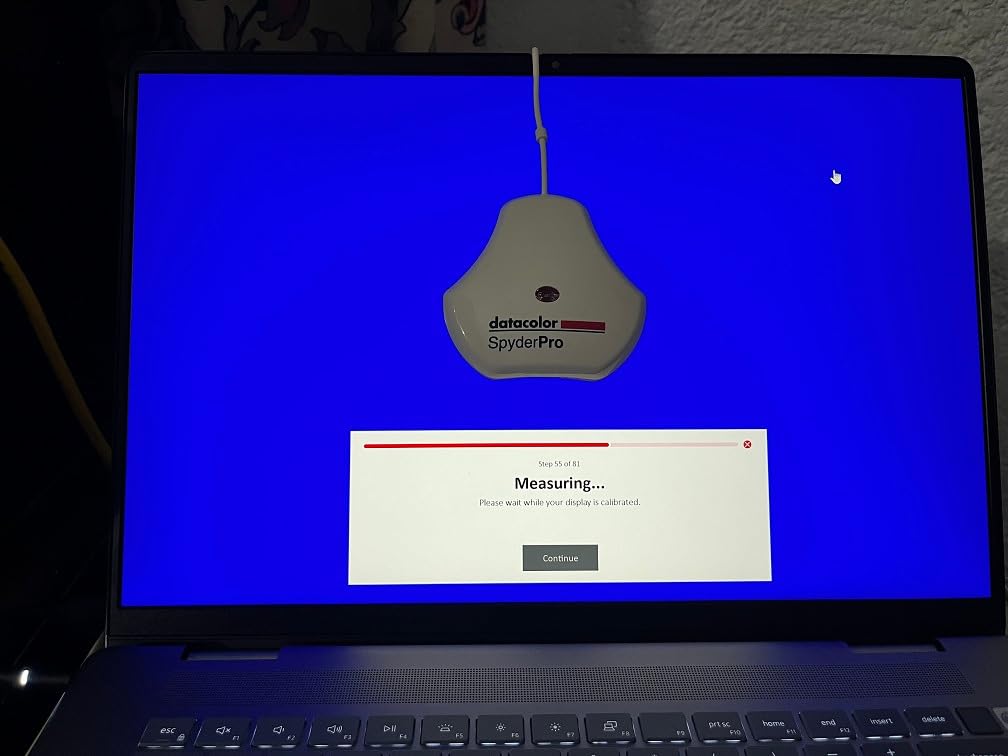
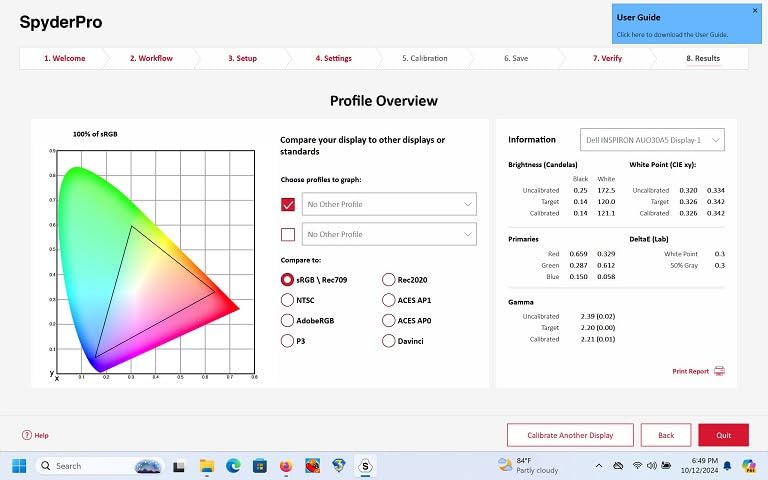
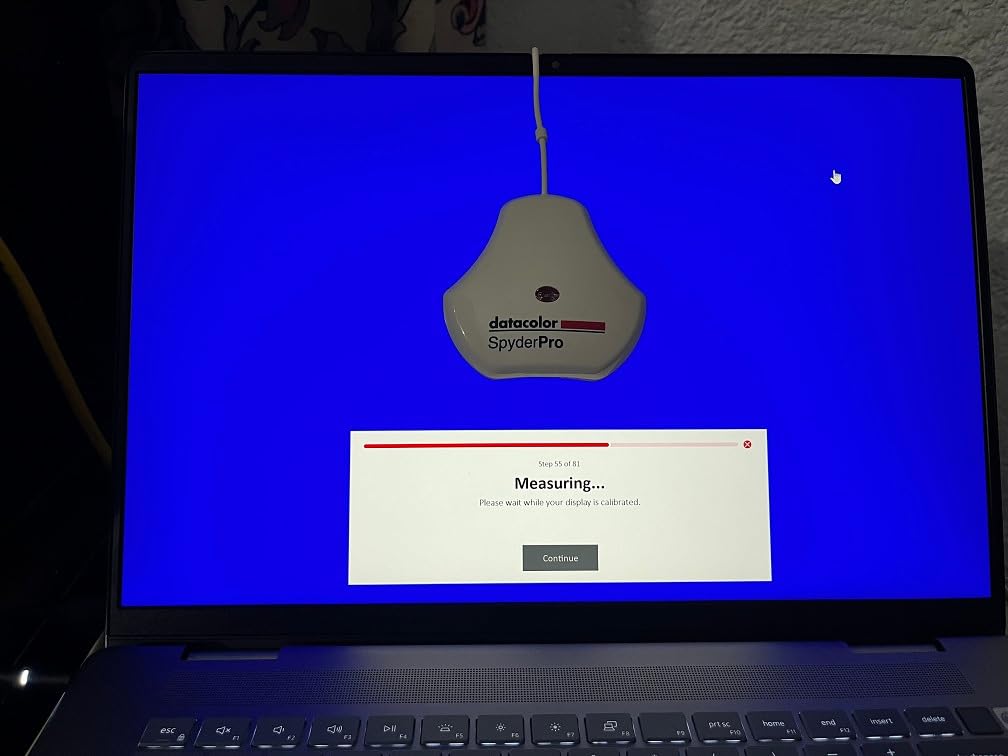
The SpyderPro is Datacolor’s newer generation tool released in late 2024. It supports the latest backlight technologies including OLED, Mini LED, and Wide LED panels. If you edit on a modern display, this tool is designed specifically for that hardware.
I appreciate that Datacolor included projector calibration at this tier. If you present work to clients on a projector, you can calibrate that output device from the same tool. The Display Analysis feature also runs a full screen quality assessment beyond basic profiling.
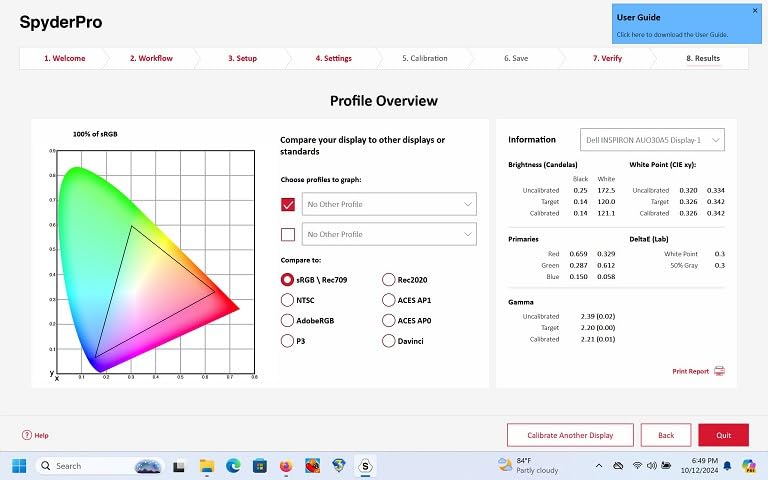
The integrated USB-C cable connects directly to modern laptops without adapters. The automatic room light switching detects ambient changes and adjusts your profile, similar to the Spyder X Pro but with improved sensitivity.
Gamma Curve Adjustment for Shadow Detail
The gamma curve adjustment gives you fine control over how shadow tones are rendered. This matters for photographers who work with high-contrast scenes or video editors who need to preserve detail in dark areas. You can target specific gamma values rather than accepting presets.
Compatibility Notes
The tool works with Windows 10 and 11 plus macOS 10.14 through 14. Some users have reported software slowness on Windows 11 and occasional crashes with certain monitor configurations. Keep your software updated to minimize these issues.
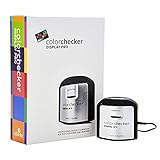
6. Calibrite ColorChecker Display Pro – X-Rite Powered Precision
Calibrite ColorChecker Display Pro (CCDIS3)
X-Rite powered sensor
Rotatable diffuser arm
Tripod mount
Monitor and projector calibration
High repeatability optics
+ Pros
- Powered by X-Rite technology
- Rotatable diffuser arm for flexibility
- Integrated tripod mount
- High repeatability optical design
- Monitor and projector profiling
- Cons
- Not Prime eligible
- Long shipping times of 4 to 5 weeks
The ColorChecker Display Pro carries the X-Rite legacy that Calibrite inherited. The optical design emphasizes high repeatability, meaning you get consistent results across multiple calibration runs. For professionals who need dependable measurements every time, this consistency is essential.
The rotatable diffuser arm lets you position the sensor at different angles, which helps with edge-case display setups. The integrated tripod mount means you can use it for projector calibration without improvising a mounting solution.
This is a professional-grade tool that trades convenience features for measurement precision. There is no fancy wizard interface or ambient light sensor, but the core color measurement quality is excellent.
X-Rite Heritage and Measurement Quality
X-Rite color technology has been the industry standard for decades. Calibrite continues that tradition with refined optics that deliver repeatable, trustworthy measurements. If you have used i1Display devices in the past, the Display Pro feels familiar in both hardware and results.
Best for Dedicated Calibration Workflows
This tool suits users who already know their way around display profiling and want a no-nonsense measurement device. The lack of hand-holding software means it is not ideal for first-timers, but experienced users will appreciate the straightforward approach.
Availability Concerns
The main drawback is availability. This device often ships in 4 to 5 weeks and is not Prime eligible. If you need a calibration tool quickly, consider alternatives with faster shipping.
7. Datacolor Spyder – Entry-Level OLED Support for Creators
90-second calibration
OLED and mini-LED support
DevicePreview beta
Ambient light sensor
Liquid Retina XDR compatible
+ Pros
- 90-second fast calibration
- Works with OLED mini-LED and Apple XDR
- DevicePreview simulates other devices
- Ambient light sensor for adaptive calibration
- Suitable for all experience levels
- Cons
- Requires nonstandard battery
The standard Datacolor Spyder is the most affordable way to get OLED and mini-LED calibration support. At this price point, most tools only handle standard LED panels. The Spyder breaks that barrier with 90-second calibration and modern display compatibility.
The DevicePreview beta feature is particularly useful for content creators. It simulates how your photos will look on other devices like phones and tablets. If you create content for social media, this helps you preview how your work appears to mobile audiences.
This tool works on OLED monitors, mini-LED displays, and Apple Liquid Retina XDR panels. That broad compatibility at an entry-level price is why it earned the Creator Pick badge. You get modern display support without paying professional-tier prices.
Ambient Light Adaptation
The built-in ambient light sensor detects your room brightness and adjusts calibration targets accordingly. This means your monitor profile adapts as lighting conditions change throughout the day. For creators who work in varying environments, this feature adds real practical value.
Upgrade Path Within the Spyder Family
Datacolor offers upgradeable software tiers. You can start with the base Spyder and later upgrade to SpyderExpress or SpyderPRO features through software unlocks. This means your investment grows with your needs without buying new hardware.
8. Calibrite Display 123 – Simplest Workflow at the Best Price
Calibrite Display 123 Monitor Calibration Colorimeter for Photo Editing and Color Accurate Viewing, Easy 1 2 3 Software Workflow, USB C Connection, and Before and After Check, Supports 2 Displays
1-2-3 software workflow
USB-C connection
Dual display support
Before and after check
Compact body design
+ Pros
- Simplest setup with 1-2-3 workflow
- USB-C connectivity
- Supports two displays
- Before and after comparison feature
- Compact and lightweight
- Cons
- Limited to two displays
- Basic feature set
The Calibrite Display 123 is the most affordable tool on this list and also the easiest to use. The name comes from its three-step workflow: plug in, launch the software, and follow the prompts. There is no learning curve, no complex settings, and no jargon.
For someone buying their first color calibration tool, this is where I would point them. You get genuine color accuracy improvement without needing to understand gamma curves or color temperature values. The software handles everything automatically.
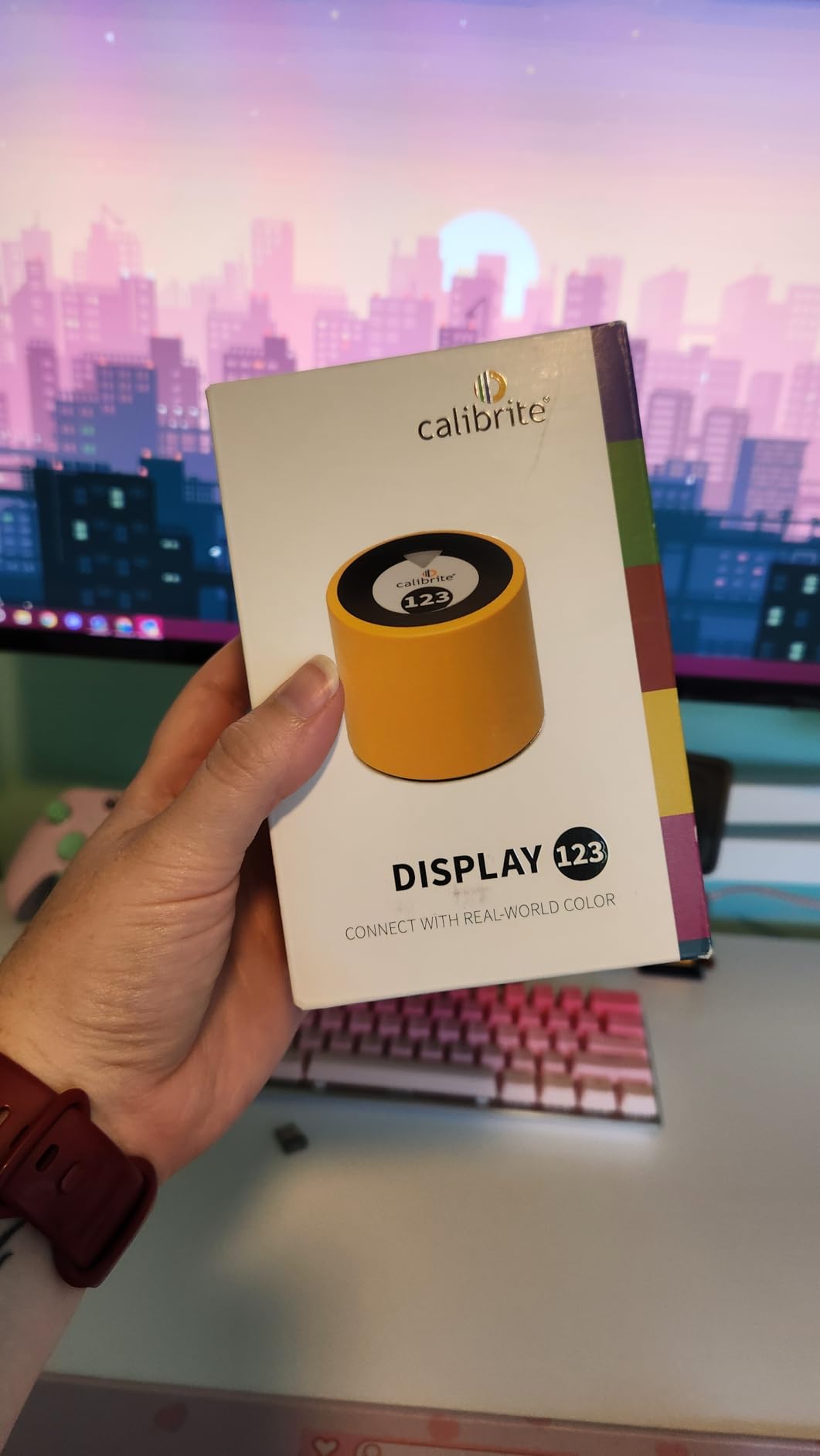
The USB-C connection works with modern laptops out of the box. The compact body is small enough to carry in a laptop bag, making it practical for photographers who edit on the go. The adjustable counterweight keeps the sensor positioned correctly on your screen.
Two-Display Support
The Display 123 supports calibrating two connected displays. For most home and small office setups, that covers your needs. If you run a three-monitor editing rig, you will need to step up to a higher-tier tool.
Before and After Comparison
The before-and-after check shows you exactly what the calibration changed. This is satisfying for first-time users who want to see the difference, and it helps you understand why calibration matters. The visual proof makes the value immediately clear.
9. Datacolor SpyderExpress – MacBook M4 Mini-LED Ready
Datacolor SpyderExpress Monitor Calibrator & Screen Color Calibrator
MacBook M4 mini-LED support
90-second calibration
3 display support
Upgradeable software
DevicePreview available
+ Pros
- Supports latest MacBook M4 mini-LED displays
- Calibrates up to 3 displays
- 90-second fast setup
- Upgradeable software path
- DevicePreview feature
- Cons
- Limited stock availability
The SpyderExpress is Datacolor’s newest entry-level tool, released in late 2025. It specifically supports MacBook M4 mini-LED displays, which is notable because Apple’s latest panels require updated sensor calibration. If you edit on a new MacBook, this is one of the few tools explicitly tested for that hardware.
The 90-second calibration time is fast enough that you can recalibrate before every editing session without it feeling like a chore. Calibrating up to three displays means this tool covers dual-monitor setups plus a laptop screen.
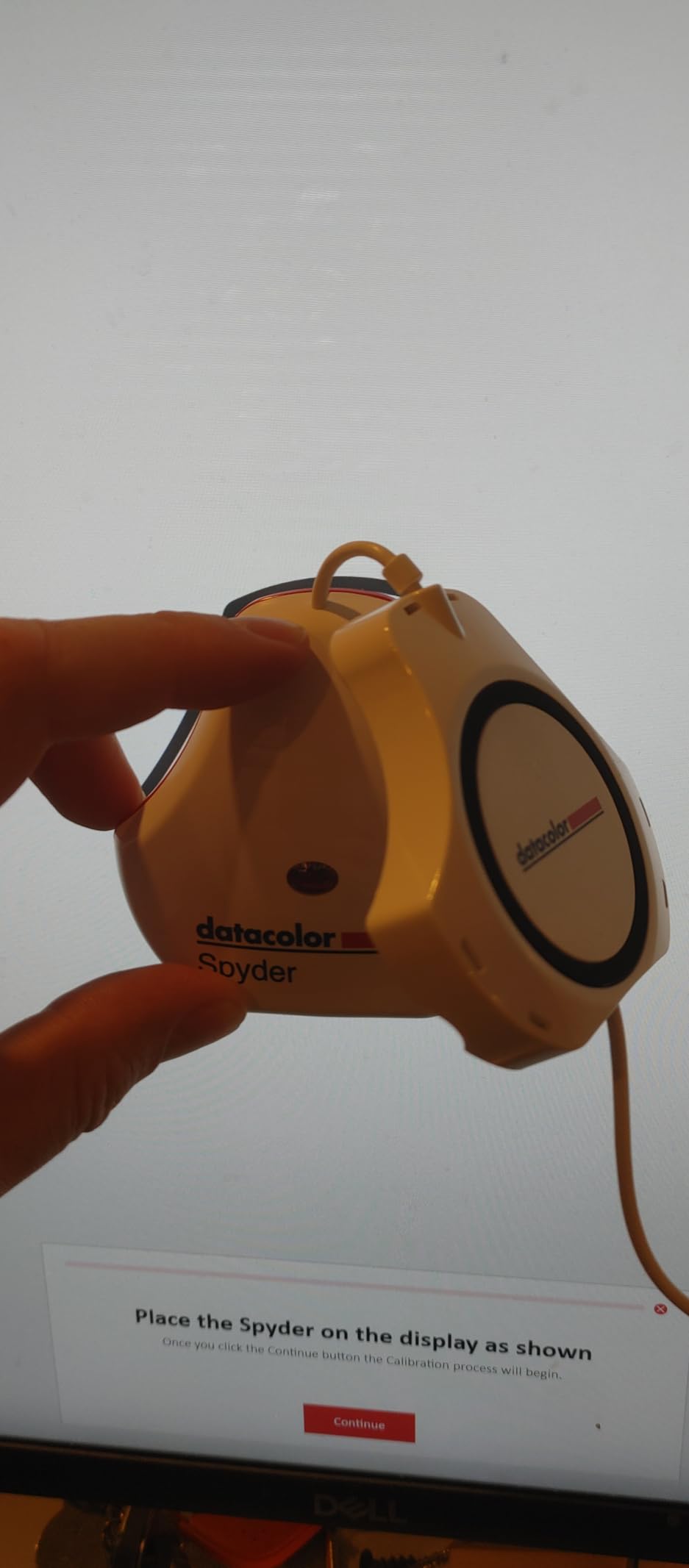
The upgradeable software is a smart design choice. Start with Express features and unlock more advanced capabilities as your needs grow. The DevicePreview feature is also available, letting you preview content on simulated mobile devices.
MacBook M4 Mini-LED Specifics
The newest MacBook displays use mini-LED technology with extreme brightness peaks that older colorimeters misread. The SpyderExpress is calibrated for these panels specifically. If you bought a MacBook M4 for editing, this tool ensures you get accurate color from that investment.
Best Entry Point for Apple Users
For Mac-centric workflows, the SpyderExpress offers the best combination of compatibility, speed, and upgrade potential at an entry-level price. Windows users get equal functionality, but the MacBook M4 support is what sets this tool apart from competitors.
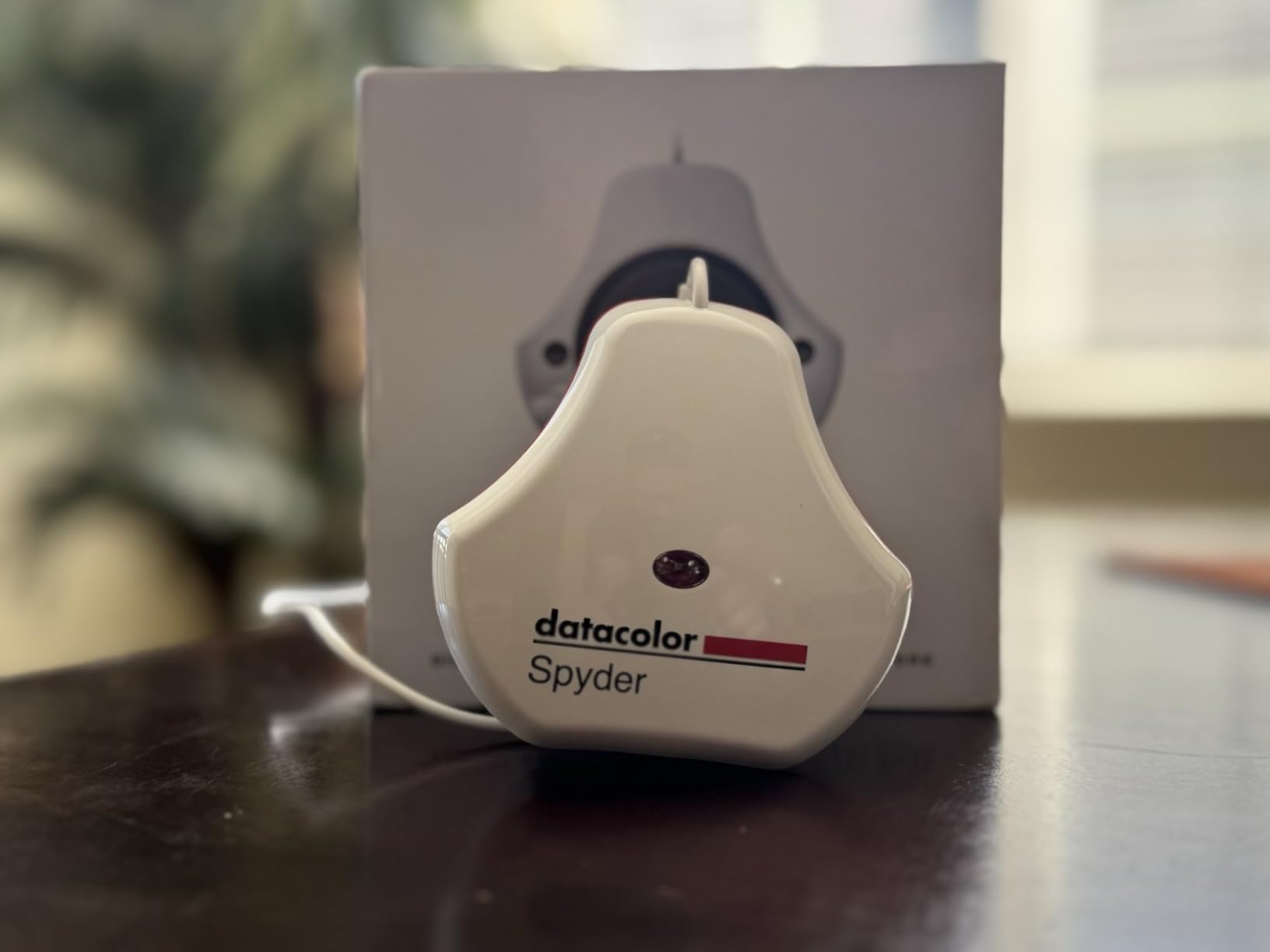
10. Calibrite ColorChecker Studio – Complete Color Management System
Calibrite ColorChecker Studio Spectrophotometer for Complete Color Management for Display, Projector, Printer and Scanner Profiling Software, w/ColorChecker Classic Mini for Custom Camera Profiling
Spectrophotometer sensor
Monitor projector printer scanner profiling
ColorChecker Classic Mini
Adaptive iterative profiling
Ambient light measurement
+ Pros
- All-in-one spectrophotometer for every device
- Profiles monitors projectors printers and scanners
- Includes ColorChecker Classic Mini for camera profiling
- Adaptive iterative profiling technology
- Ambient light measurement for print matching
- Cons
- Premium price point
- Limited stock availability
The ColorChecker Studio is the most comprehensive color management tool on this list. It is a spectrophotometer, not just a colorimeter, which means it can profile printers and scanners in addition to monitors and projectors. If you need complete color management across your entire workflow, this is the tool.
The included ColorChecker Classic Mini enables custom camera profiling. Combined with monitor, projector, printer, and scanner profiling, you get full-chain color control from capture to print. No other tool on this list covers all five device types.
Adaptive iterative profiling refines the color profile through multiple measurement passes, improving accuracy with each iteration. The ambient light measurement feature also helps match your monitor to viewing conditions for print evaluation.
Spectrophotometer vs Colorimeter
A colorimeter measures color through filtered sensors that approximate human vision. A spectrophotometer measures the actual spectral distribution of light, which is more accurate and works across more device types. The Studio uses spectrophotometer technology, which is why it can profile printers and scanners that colorimeters cannot handle.
Print-to-Screen Matching
For photographers and studios that deliver printed work, the Studio’s printer profiling capability is the headline feature. You can create custom ICC profiles for specific paper and ink combinations, then soft-proof on your calibrated monitor. The result is prints that match what you see on screen.
Who Needs This Level of Tool
This tool is for professional studios, print houses, and serious fine-art photographers. If you only need monitor calibration, this is overkill. But if printer profiling and scanner profiling are part of your workflow, the Studio replaces multiple specialized tools with one device.
How to Choose the Right Monitor Calibration Tool
Picking from the best calibration tools for monitors comes down to five key decisions. Each one narrows your options until the right tool becomes obvious. Here is how our team thinks about the choice.
Colorimeter vs Spectrophotometer
A colorimeter is a filtered-light sensor that measures display output and creates an ICC profile. It is affordable, fast, and covers most monitor calibration needs. A spectrophotometer measures full spectral data and can also profile printers, scanners, and projectors. If you only calibrate monitors, a colorimeter is all you need. If you need print-to-screen matching, step up to a spectrophotometer like the Calibrite ColorChecker Studio.
Display Technology Compatibility
Your monitor type determines which tools will work accurately. Standard LED panels work with every tool on this list. OLED, mini-LED, and Apple XDR displays require newer sensors rated for high luminance. The Calibrite Display Pro HL, Datacolor SpyderPro, and Datacolor SpyderExpress all explicitly support these modern panel types. Older or cheaper colorimeters may produce inaccurate readings on high-brightness OLED screens.
Sensor Accuracy and Repeatability
Accuracy means the tool measures color correctly on the first pass. Repeatability means it produces the same result on multiple passes. Both matter. Lens-based sensors like those in the Spyder X line tend to offer better repeatability than filter-based designs. The Calibrite ColorChecker Display Pro emphasizes high-repeatability optics for consistent professional results.
Software Usability and Features
The hardware is only half the equation. Software determines how easy calibration is and what targets you can set. Beginners should look for wizard-driven tools like the Calibrite Display 123 or Datacolor Spyder X Pro. Advanced users who want custom gamma curves, specific white point targets, and unlimited settings should look at the Spyder X Elite or Spyder X2 Elite. Video editors need tools with Rec. 709 and Rec. 2020 targets like the Spyder X2 Elite.
Number of Displays
Count how many monitors you need to calibrate. The Calibrite Display 123 handles two displays. The Datacolor SpyderExpress manages three. Most other tools on this list support unlimited displays. If you run a multi-monitor editing station, verify the display limit before buying.
OLED vs LCD Calibration Differences
OLED displays behave differently from LCDs in several ways that affect calibration. OLED panels have perfect per-pixel blacks but can drift more over time. They also use different subpixel arrangements that some colorimeters misread. This is why we recommend tools with explicit OLED support like the SpyderPro or Calibrite Display Pro HL for OLED owners. Calibrate OLED monitors more frequently, ideally monthly, to account for panel drift.
Gaming Monitor Calibration
Forum discussions reveal divided opinions on whether gamers need calibration tools. For competitive gamers, color accuracy is less important than response time and refresh rate. But for gamers who also do content creation, streaming, or screenshot photography, calibration ensures your captured content looks right to viewers. A budget tool like the Calibrite Display 123 covers gaming monitor calibration without overspending on features you will not use.
Colorblind User Considerations
No competitor we reviewed addresses colorblind users, but this is an important topic. Fully automatic calibration tools are ideal for colorblind users because they remove subjective color judgment from the process. Tools like the Calibrite Display 123 and Datacolor Spyder X Pro with their wizard-driven, one-click workflows work well. The ICC profile your operating system applies after calibration ensures colors are objectively correct regardless of how you perceive them.
FAQs
What is the best monitor calibration tool for photographers?
The Calibrite Photo Kit w/Display Pro HL is the best choice for photographers because it combines monitor calibration with camera profiling. The included ColorChecker Passport Photo 2 creates custom RAW camera profiles while the Display Pro HL calibrates your monitor for OLED, mini-LED, and Apple XDR panels.
How much does a monitor calibrator cost?
Monitor calibrators range from about $98 for entry-level tools like the Datacolor SpyderExpress to $499 for all-in-one spectrophotometer kits like the Calibrite ColorChecker Studio. Most quality colorimeters for photography and video work fall between $169 and $299.
Is monitor calibration worth it for gaming?
For pure competitive gaming, calibration is not essential since response time matters more than color accuracy. However, if you stream, create content, or care about visual fidelity in cinematic games, a budget calibrator like the Calibrite Display 123 improves color accuracy noticeably.
How often should you calibrate your monitor?
Calibrate your monitor every 4 to 6 weeks for professional color-critical work. OLED displays may need monthly calibration due to faster panel drift. Entry-level users who are not doing professional work can calibrate every 3 to 6 months and still see good results.
What is the difference between Calibrite and Datacolor Spyder?
Calibrite carries the X-Rite heritage and tends to offer stronger support for modern display technologies like OLED and mini-LED. Datacolor Spyder tools emphasize user-friendly software, lens-based sensors, and features like StudioMatch. Both produce accurate results; Calibrite appeals more to professionals while Datacolor targets a broader user range.
Final Verdict: Which Monitor Calibration Tool Is Right for You
If you want the most complete photography workflow, the Calibrite Photo Kit w/Display Pro HL gives you camera profiling and monitor calibration in one package. For the best value across photo and video work, the Datacolor Spyder X2 Elite covers broadcast targets and multi-monitor matching. If you are buying your first calibrator and want to keep it simple, the Calibrite Display 123 delivers real color accuracy improvement at the lowest price on this list.
The best calibration tools for monitors all share one thing in common: they remove the guesswork from color work. Pick the tier that matches your needs, calibrate regularly, and your edits will look right on every screen your work appears on in 2026 and beyond.