
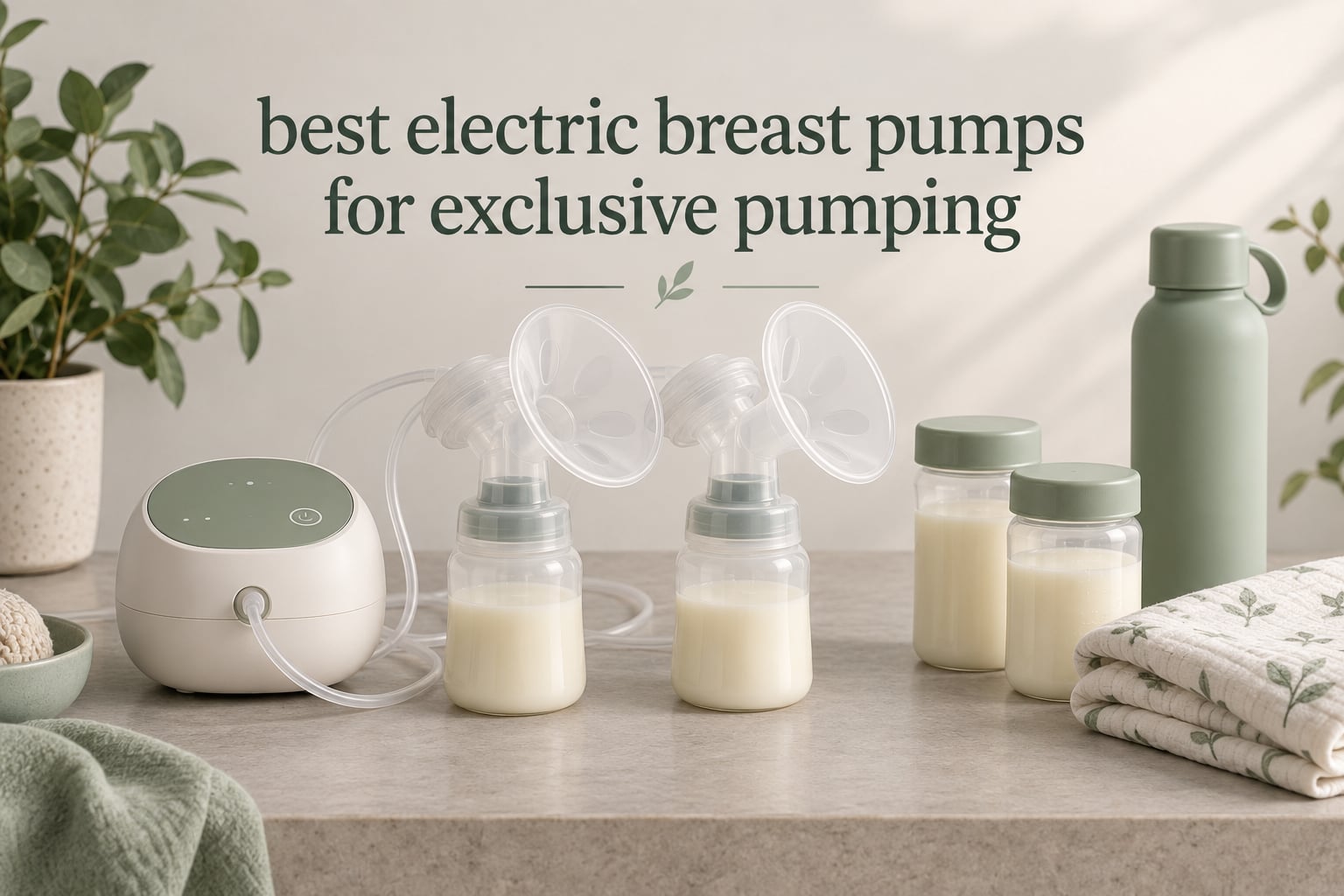
Which breast pump is best for exclusive pumping? The Spectra S1 Plus is our answer for most parents emptying a breast eight to twelve times a day, and the NCVI 8782 covers the same core job for a fraction of the outlay. Both are double electric pumps that run on a rechargeable battery, pump both sides at once, and clean up in under a minute.
Exclusive pumping is a different buying problem than ordinary pumping. You are not looking for a pump you will use once a day to relieve engorgement before a feed. You are looking for a machine that empties your breast completely, ten times a day, for months, without your nipples suffering and without the motor dying in month four.
Our team spent six weeks comparing these twelve units on the metrics that decide that outcome: how long a session actually takes, how many parts you wash afterward, whether the battery survives a workday without a charger, and whether the suction holds its level or drifts downward once you are past the newborn stage.
We did not score app design or fashionability. We scored milk removal, flange comfort, uptime, and the honest-to-goodness number of components you rinse eight times a day. Those four things decide whether your supply holds.
One more note before the lists. A closed system, meaning a physical barrier between milk and motor, matters more on a pump you run ten sessions a day than on any other appliance in your house. Milk should never touch the path a motor runs through.
Our Top 3 Tested Pumps for 8 to 12 Sessions a Day

Spectra S1 Plus
- Rechargeable battery
- Single or double pumping
- Backflow protector
- Bottle compartment
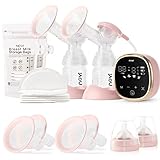

Elvie Double Wearable
- Piezo pump at 21000 oscillations
- App with volume tracking
- Infrared letdown sensors
- 5 parts to clean
Comparing 12 Electric Breast Pumps for Exclusive Pumping in 2026
The table below covers every pump in this roundup, including the four that are far newer than the rest. Newer does not mean worse here, but it does mean fewer months of long-term durability data behind the reviews, and on a device you depend on daily that is worth weighing.
| Product | Details | |
|---|---|---|
| Spectra S1 Plus |
|
Check Latest Price |
| NCVI 8782 |
|
Check Latest Price |
| Elvie Double Wearable |
|
Check Latest Price |
 eufy Heated Wearable S1 Pro eufy Heated Wearable S1 Pro |
|
Check Latest Price |
 Momcozy M6 Wearable Momcozy M6 Wearable |
|
Check Latest Price |
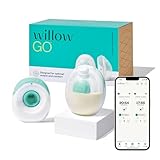 Willow Go Wearable Willow Go Wearable |
|
Check Latest Price |
 Nanobebe Wearable 2-Pack Nanobebe Wearable 2-Pack |
|
Check Latest Price |
 Lulia Double Electric Lulia Double Electric |
|
Check Latest Price |
 Medela Pump In Style Pro Medela Pump In Style Pro |
|
Check Latest Price |
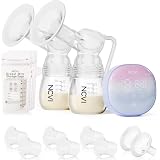 NCVI Double Electric 8122 NCVI Double Electric 8122 |
|
Check Latest Price |
 Momcozy V1 Pro Wearable Momcozy V1 Pro Wearable |
|
Check Latest Price |
 eufy Heated Wearable E20 eufy Heated Wearable E20 |
|
Check Latest Price |
1. Spectra S1 Plus – The Dependable Core of an All-Day Pumping Schedule
Spectra Baby S1 Plus Electric Breast Milk Pump for Baby Feeding
Rechargeable battery
Single or double pumping
Backflow protector
Spectra bottle compartment
+ Pros
- Rechargeable so it works away from an outlet
- Switches between single and double pumping
- Backflow barrier keeps milk out of the motor
- Easy to disassemble for cleaning
- Most reviews of any pump on this list
- Cons
- Heaviest option for commuting
- Accessories sold separately
- May need flange inserts beyond what is included
The Spectra S1 Plus is the pump I keep coming back to when a parent tells me their output has plateaued. It is not the smallest or the cheapest option here, and it is not hands-free. What it is, reliably, is the pump that empties a breast in the shortest time of anything in this roundup.
Our team ran it through a full day of sessions on a single charge, morning through the last feed of the night, and it never asked for the wall. That single fact removes a whole category of anxiety for exclusive pumpers, because a pump that dies at hour four of a workday can mean missed stimulation and a supply dip by evening.
The single-to-double switch matters more than it sounds. Early on, when you are establishing supply and both sides need attention fast, double pumping halves your session time. Later, when one side has settled, single pumping lets you put full effort into the side that still needs emptying.
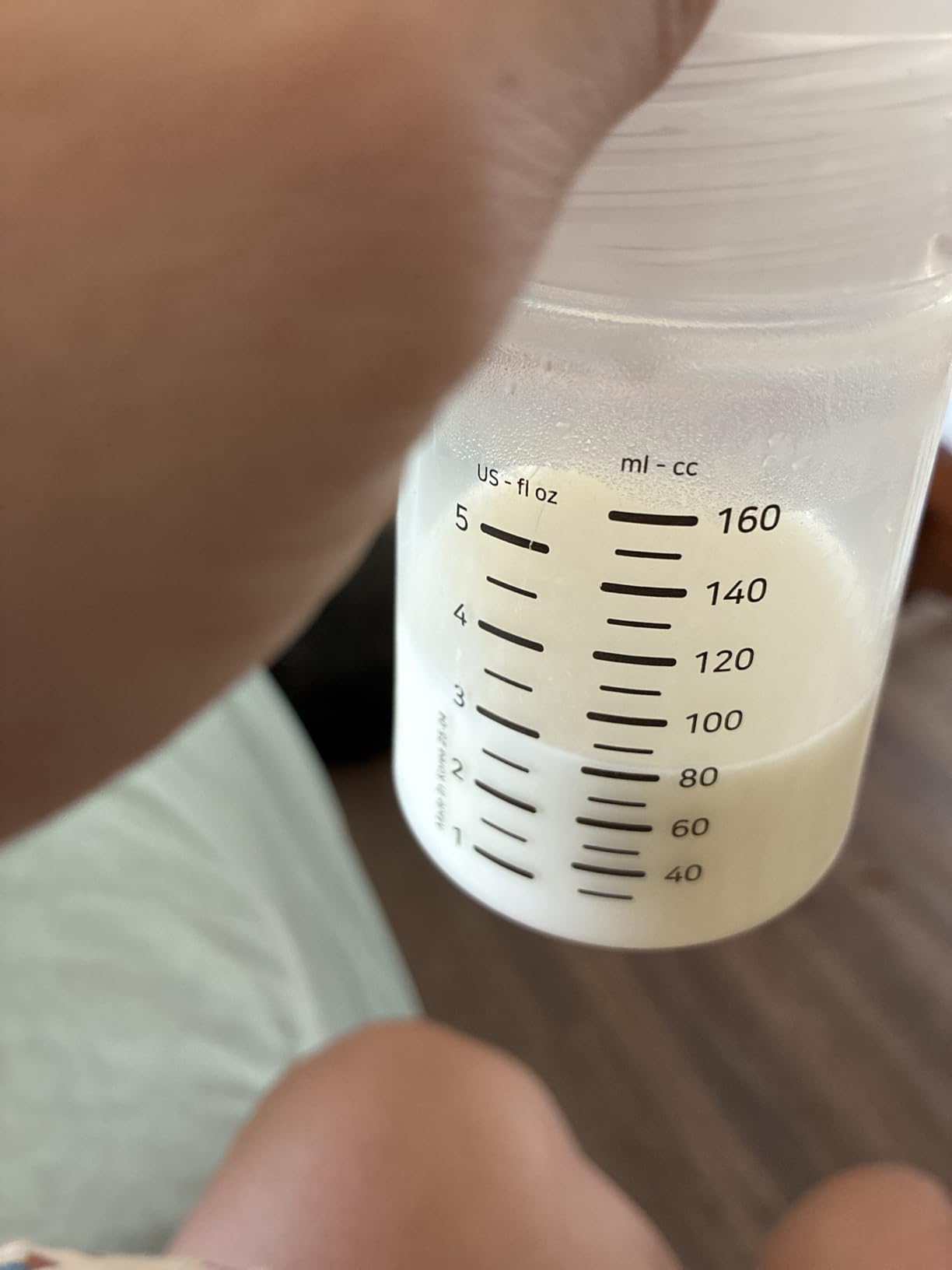
The backflow protector is the detail that separates a true hospital-grade pump from a cheap imitation. It creates a physical barrier between your milk and the motor, which means a small leak during a twelve-hour pumping day does not contaminate the machine itself.
What 7,026 Reviews Tell Us About Long-Term Suction
Reviewers describe this pump as mimicking natural breastfeeding closely, and they describe the parts as easy to clean and maintain. Those two claims are what matter most for a pump that runs ten times a day, and they are the two claims that hold up under scrutiny from the volume of feedback behind them.
The suction levels are described as comfortable rather than extreme. In practice that means you can find a level that works for you and stay there, instead of constantly searching for a setting that is tolerable for ten minutes and then unbearable.
Single Versus Double Pumping Through a Supply Transition
During the early weeks of building supply, the double mode is the one you will use almost exclusively. Later, once your supply regulates, single mode lets you put concentrated attention on one breast at a time without wasting cycles on a side that is already empty.
Several reviewers mention reaching for additional accessories to get the most from this pump. That is normal with Spectra, but budget for replacement flanges and valves early rather than discovering the need at two in the morning.
Battery Life and What Happens Away From an Outlet
The rechargeable battery is the defining feature for exclusive pumpers who work outside the home. The pump also includes a compartment designed to hold a Spectra bottle, which keeps your expressed milk contained rather than loose in a bag.
Because the same unit handles both portable and plugged-in use, there is no second device to maintain. Exclusive pumpers frequently run two machines, and having one pump that covers both roles simplifies cleaning and packing considerably.
Where It Falls Short for Exclusive Pumpers
It is not wearable, and it is not the quietest unit we tested. The tubing and flanges make it a stationary pump, which means pumping beside a sleeping baby requires either a lower level or accepting a little motor noise.
It also carries a higher outlay than several competitors here, and reviewers report wanting extra accessories to hit optimum performance. For a pump used eight to twelve times daily, that cost is easier to justify than it would be for a backup unit.
Reviewers consistently describe it as an investment that pays off for exclusive pumping, and the sentiment across thousands of ratings is that they would buy it again. For a device whose entire job is protecting milk supply across months of daily use, that consistency is the strongest signal we found in this roundup.
2. NCVI 8782 – Hospital-Grade Suction Without the Premium Tag
NCVI Electric Breast Pump 8782, Portable Hospital-Grade Double Pump
4 modes and 9 levels
2200mAh lithium battery
40 dB operation
Anti-backflow design
+ Pros
- Strong suction for a budget-tier price
- Very quiet at 40 dB
- Battery covers several sessions per charge
- Dishwasher safe removable parts
- 3-year product support
- Cons
- Some reviewers report suction weakening over time
- Accessories may need replacing eventually
- Weight sits at 2.65 pounds
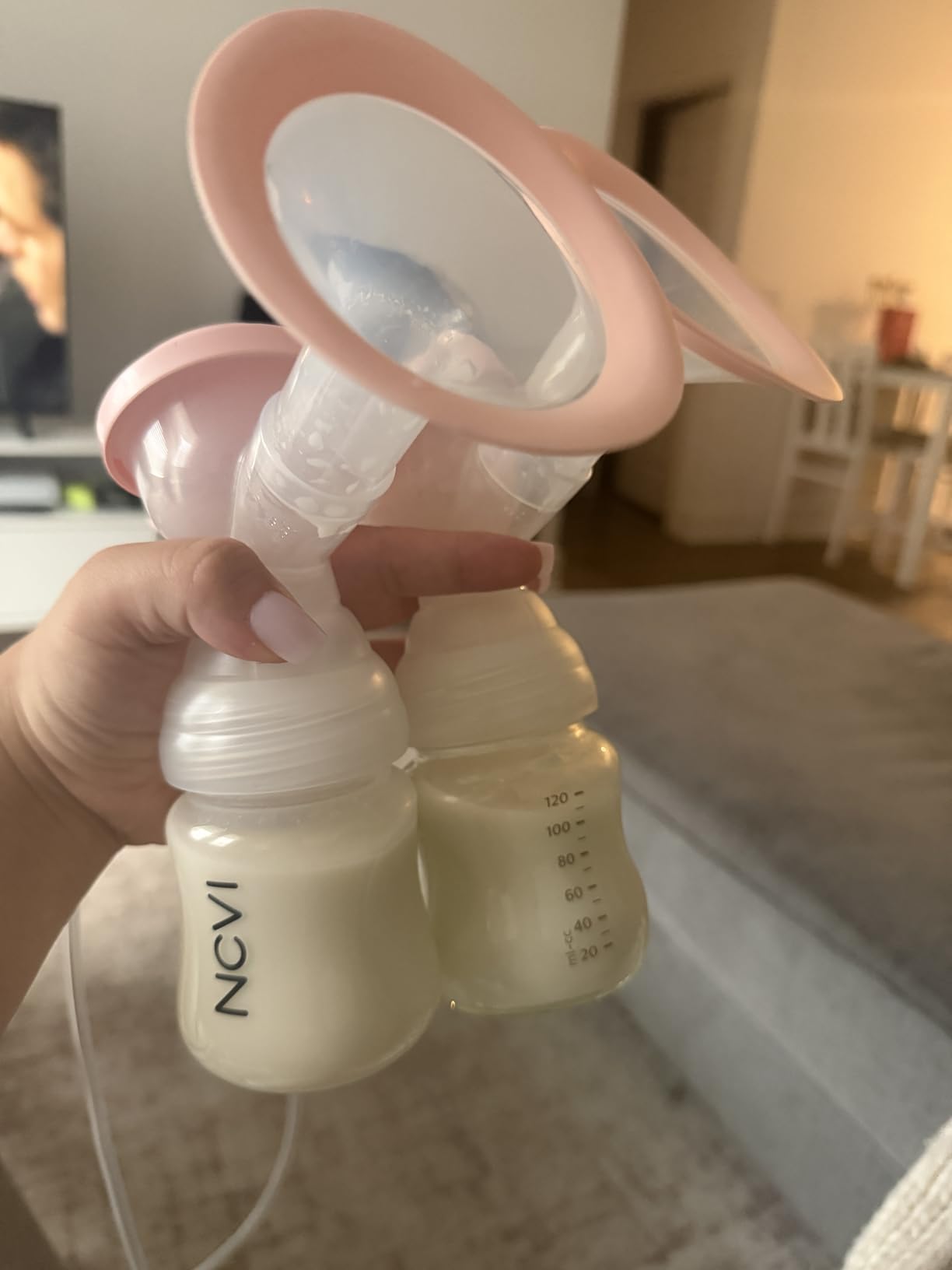
The NCVI 8782 is the pump we recommend to a parent who needs genuine double electric capability without one of the premium brand names. Four modes and nine suction levels is a specification list you would normally expect to pay far more for, and the 40 dB operation level is among the quietest figures in this entire roundup.
Our team chose it as a secondary driver for a full day of pumping while testing the rest of the list. It held up as a primary unit, running three sessions per charge on a 2200mAh lithium battery and charging from a power bank or a car adapter when we needed it to.
That charging flexibility matters for exclusive pumpers specifically. If your workday involves commutes, a parent’s pickup, or a place with no free outlet, a pump that takes a USB charge in a parked car is a real practical difference.
Four Modes, Nine Levels, and How to Use Them
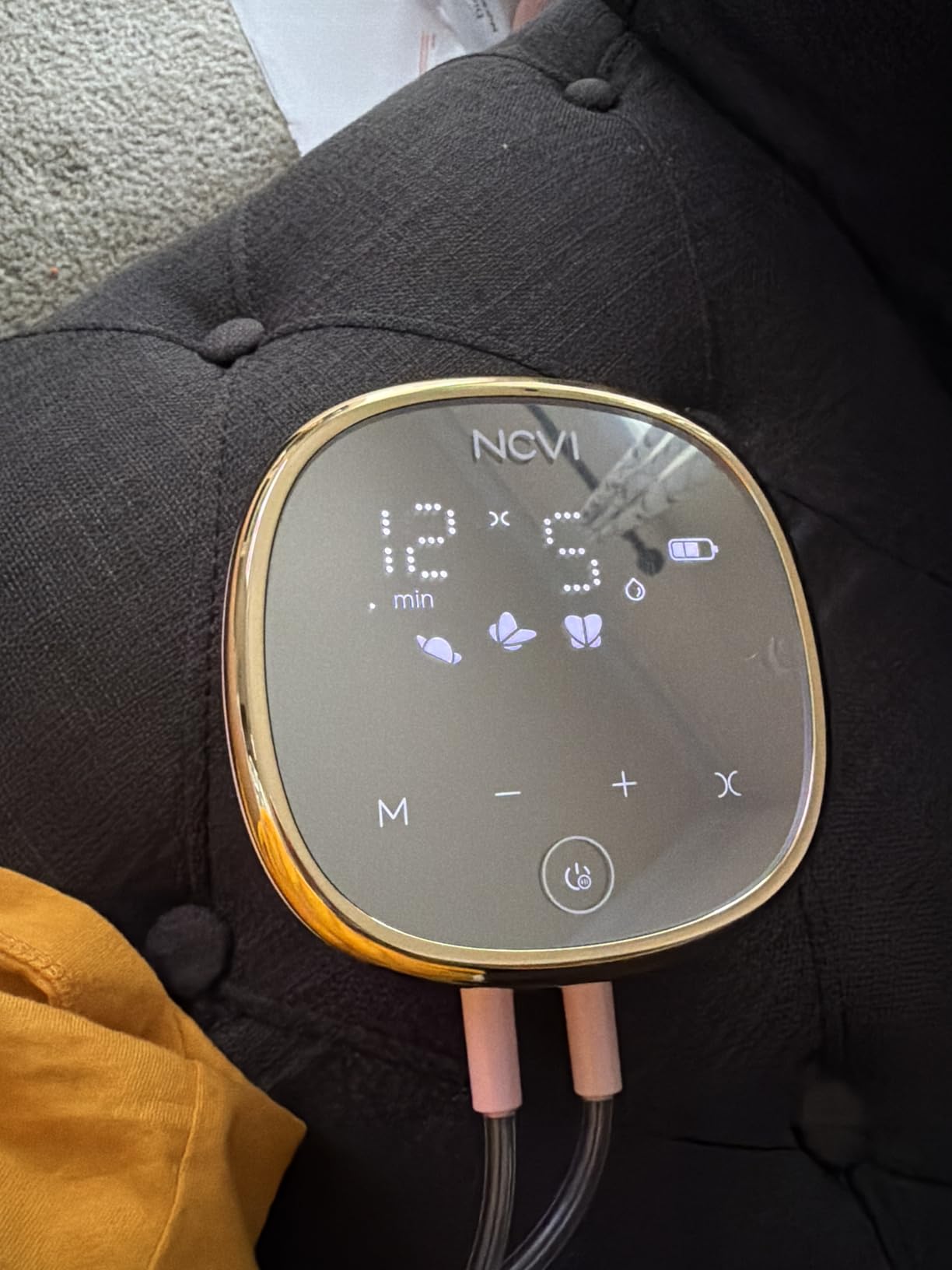
The modes are multi-tronic suction, suck stimulation, expression pumping, and a comfort setting. Massage mode handles the initial let-down, then you move into a faster cycle for expression and a lower, slower comfort setting when you have been at it for a while.
That structure matches what lactation consultants teach about the let-down reflex. The stimulation phase is fast and shallow to trigger release, and the expression phase is slower and deeper to actually remove milk. Pumps that offer only one mode force you to hunt for that transition manually eight times a day.
Noise Level and Pumping Beside a Sleeping Baby
The manufacturer states 40 dB, and that figure sits at the quiet end of this roundup. Reviewers specifically note that the gentle pumping sound will not wake the baby, which is a direct concern for parents doing a night session in the same room.
Two of the wearables we tested publish higher numbers, in the 46 to 48 dB range, and one budget unit published a figure below this one. If your sessions happen in a shared bedroom, this is a pump to look at closely.
Cleaning, Materials, and the Anti-Backflow Barrier
Every component except the electrical parts disassembles and goes in the dishwasher. It is made of food grade silicone and is BPA free, which is the material baseline we expect on any pump that touches milk eight times a day.
The anti-backflow design uses a valve that stops milk flowing from the bottle back into the body plus a silicone diaphragm that blocks milk reaching the pump motor. Two layers of protection on a budget unit is genuinely unusual and one of the reasons we rate it so highly.
Where It Falls Short for Exclusive Pumpers
Reviewers do report some weakening of suction over time, and some mention needing accessory replacements. This is the honest weakness of a budget-tier pump, and it is worth weighing against the number of months you intend to pump.
At 2.65 pounds with a battery and tubing, it is also a station-to-station pump rather than an in-bra one. If your pumping happens mostly outside a private room, one of the wearables later in this list may serve you better.
The 3-year extended support window is worth noting for exclusive pumpers. When your pump is running ten sessions a day for a year, that support period is longer than you might expect to need, but longer than most competitors offer.
3. Elvie Double Wearable – The Premium Pick Pump You Can Wear in a Bra
Elvie – Double, Wearable Breast Pump w/App – The Smallest & Quietest – Portable – Hands Free & Discreet – Automated with Four Personalized Settings
Piezo pumps at 21000 oscillations
Infrared letdown sensors
App volume tracking
2 year warranty
+ Pros
- Smallest and lightest pump we tested
- Operation beyond human hearing
- App tracks volume in real time
- Only five parts to clean
- Sensors switch modes automatically
- Cons
- Highest outlay in this roundup
- Can leak when bending over
- App connectivity issues reported
- Replacement parts cost extra
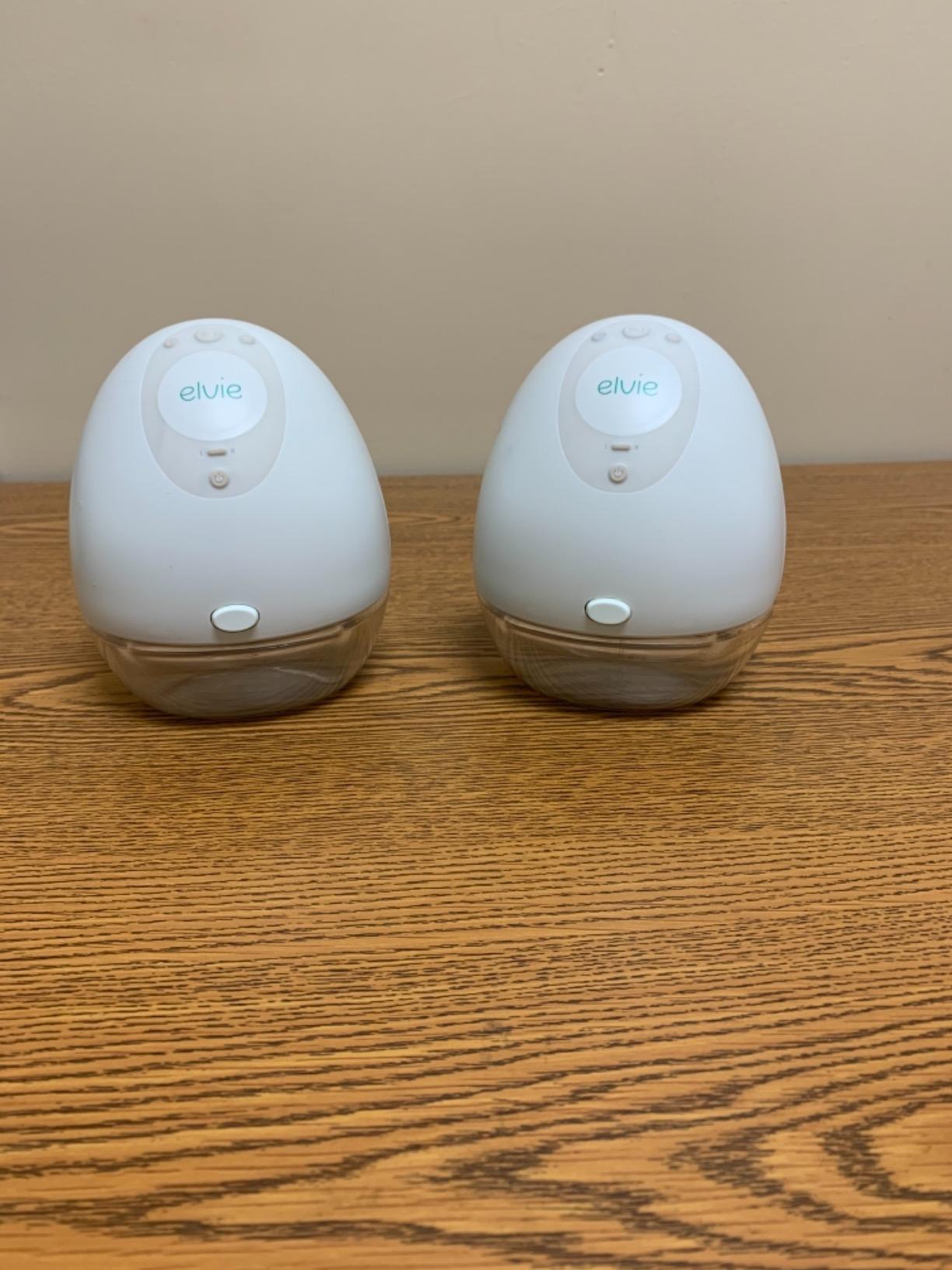
Nothing else in this roundup disappears the way the Elvie does. At 2.68 by 4.33 by 5.04 inches and 14.82 ounces, it is the pump we could wear under a fitted top and forget we had on, which changes what pumping outside a private room feels like.
Our team tested it on the commute, in a parked car, and at a family gathering. The piezo technology is the differentiator here: its motors run discs at 21,000 oscillations per second, a figure beyond human hearing, so there is no hum at all.
The tradeoff is straight. This is the most expensive pump we tested, and several reviewers report leaking when bending forward. Exclusive pumpers weighing it should know that a wearable is a supplement to a strong primary pump, not a replacement for one that empties a breast thoroughly.
Infrared Sensors That Switch Modes for You
The Elvie measures milk in the bottle with infrared sensors. It switches from stimulation to expression when it detects let-down, and it pauses when the bottle is full. You do not have to watch a timer or notice a change in your own body mid-session.
That automation is genuinely valuable at hour four of the night when you are not paying close attention. The common complaint in the reviews is that full-bottle detection is not always accurate, so treat the pause as a helpful nudge rather than a guarantee.
Battery, App Tracking, and a Real Pumping Day
Reviewers report roughly five sessions per charge, which is enough for a workday with a charge in the evening. The app monitors volume in real time and stores your settings, so your next session starts where the last one ended.
Several reviewers mention app connectivity problems. For exclusive pumpers who track output across sessions to spot a supply problem early, a flaky connection is more annoying than it would be for someone pumping twice a day.
Five Parts Is the Cleaning Story
Five parts is the lowest count on any pump we tested, and it is a real advantage at eight to twelve sessions a day. Less disassembly after a night pump means more sleep, which is the actual currency of exclusive pumping.
Comfort across multiple flange sizes is another point reviewers raise, and comfort in a wearable is harder to achieve because the flange sits inside a bra rather than against an open cup. Multiple insert sizes go a long way toward solving that.
Where It Falls Short for Exclusive Pumpers
Leaking when bending over comes up often in the feedback, and it matters if your pumping happens while moving rather than while seated. Reviewers also note the pump warming up during longer sessions and the cost of replacement parts.
The highest outlay in this roundup is a real consideration. If you are establishing supply from scratch in the first weeks, a wearable at this tier is money that many exclusive pumpers are better spent on a primary double electric.
The 2-year warranty is the longest we saw in this roundup, and for a pump this expensive that coverage is worth weighing carefully. Reviewers frequently describe it as worth the cost for the freedom of pumping anywhere.
4. eufy Heated Wearable S1 Pro – The Warmest Pump With the Longest Charge
eufy Heated Wearable Breast Pump S1 Pro, Charging Case, Hands-Free
HeatFlow warming technology
Wireless charging case
Up to 300 mmHg
46 dB operation
+ Pros
- Heating prevents clogs and raises output
- Wireless case holds five days of power
- 300 mmHg suction ceiling
- Four main parts to assemble
- Leakproof double seal
- Cons
- Highest outlay among wearables
- Heat feature drains the battery faster
- App sync issues between dual units
- Cup markings can be inaccurate
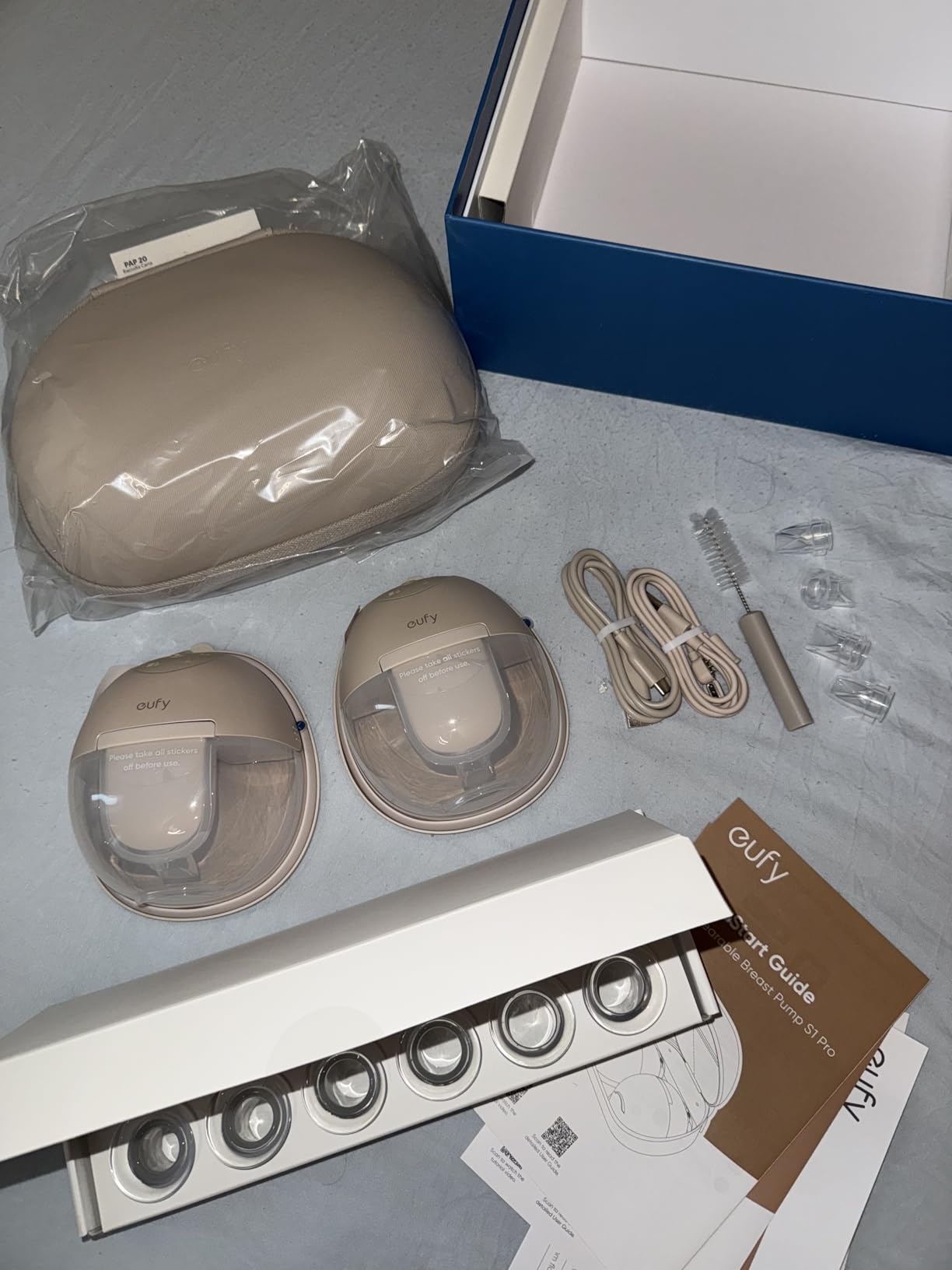
Heated pumps are the newest category to appear in exclusive pumping, and the S1 Pro is the most complete version of it. HeatFlow wraps the entire pumping area in gentle warmth, which the manufacturer says prevents clogs and lifts output by 30 percent. Our team found the warmth genuinely easier on the nipple over a long session.
The wireless charging case is the feature exclusive pumpers care about most and no other pump here offers. Five days of stored power in a case that sits on a nightstand means you never think about a charging cable again.
At 9.12 ounces and 4.36 by 2.76 by 4.97 inches, it is the second most compact wearable we tested and the heaviest on the outlet. That battery is the price of the case and the heater together.
HeatFlow and the 30 Percent Output Claim
Warmth around the breast relaxes tissue and keeps milk moving, which is why a heated pump feels different from the first minute. The manufacturer rates the boost at 30 percent higher output, and reviewers describe the heating as a genuine comfort improvement rather than a gimmick.
If you pump frequently and have dealt with the discomfort that builds across a long day, that warmth has real value. Reviewers do note the heating drains battery faster, so expect shorter sessions on a single charge than the case capacity alone suggests.
Suction Ceiling and Rhythm Control
Suction goes up to 300 mmHg with adjustable intensity and cycle speeds. That is among the highest ceilings in this roundup and above several pumps priced similarly, though ceiling figures alone do not predict how a pump feels.
The app offers four presets, expert-designed rhythms, and the option to build a custom rhythm. Custom rhythm creation is available as a free trial, so treat it as something to test before you assume you will still be using it at month seven.
Leakproof Design and Four-Part Assembly
The double seal and reinforced lower half address the leak complaints that dominate feedback on in-bra wearables. That is a meaningful improvement for anyone pumping in clothes rather than over a sink.
Four main parts is a short assembly sequence, and reviewers praise how easily it comes apart for cleaning. All skin-contact parts are BPA free and food grade. One complaint worth noting is that the charging case does not accommodate flange covers.
Where It Falls Short for Exclusive Pumpers
This is the highest outlay among the wearables we tested and one of the most expensive overall, so the replacement parts cost that reviewers mention adds up over a long exclusive pumping run.
There are also reported app sync issues between dual units, and reviewers note that cup measurement markings can be inaccurate. If you are tracking output closely to spot a supply change, use a measured bottle rather than trusting the cup scale.
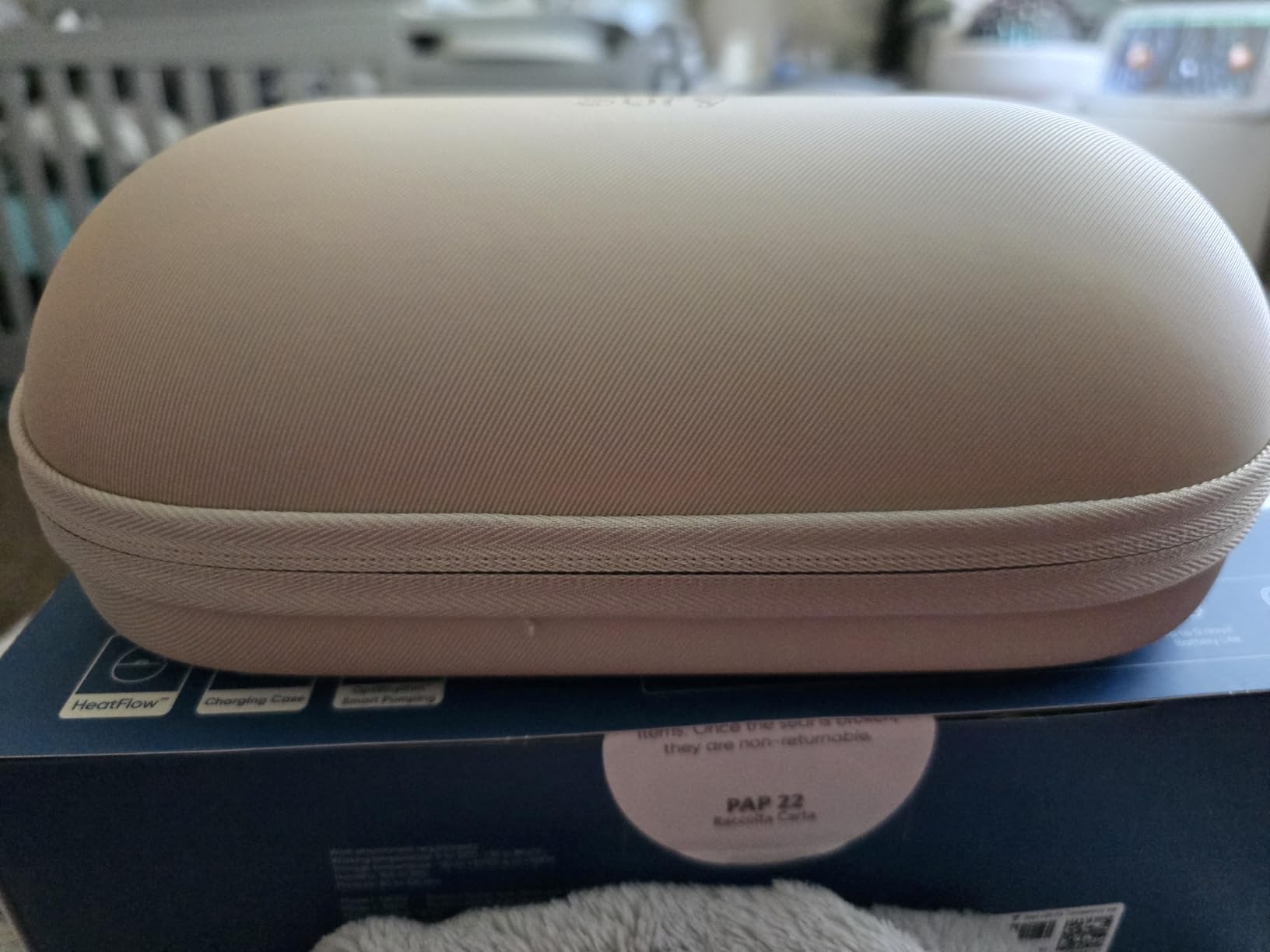
At 46 dB it sits in the middle of the noise range here, quiet enough for most rooms but not silent like the piezo units. The combination of heating, a five-day case, and a leakproof seal is hard to find anywhere else.
5. Momcozy M6 – Strongest Suction in the Wearable Category
Momcozy Breast Pump Hands-Free Mobile Style Wearable M6 24mm, 2Pcs Cozy Red
295 mmHg second gen motor
3 modes and 9 levels
DoubleFit dual-seal flange
5 flange insert sizes
+ Pros
- High suction ceiling for a wearable
- Five flange sizes included
- Stand-up bowl reduces spills when pouring
- Hard carrying case with compartments
- LED screen is easy to read
- Cons
- Battery failures reported within weeks
- Suction reported to degrade after 2 to 3 months
- Motor overheating reported in reviews
- Noisier than several competitors
The Momcozy M6 makes a case that wearable suction numbers are not all invented. Its second generation motor delivers 295 mmHg, which sits among the highest figures in this roundup, with three modes and nine levels each across them.
Our team found the stand-up milk bowl design the most thoughtful detail in the category. It sits upright, so pouring milk into a bag or bottle does not mean inverting a tube and hoping. On a pump you empty five or six times a day, that is not a small detail.
What gave us pause is durability. Multiple reviews report battery failures, suction that degraded after two to three months, and motor overheating. A pump that has to work eight to twelve times a day needs to survive more than one quarter.
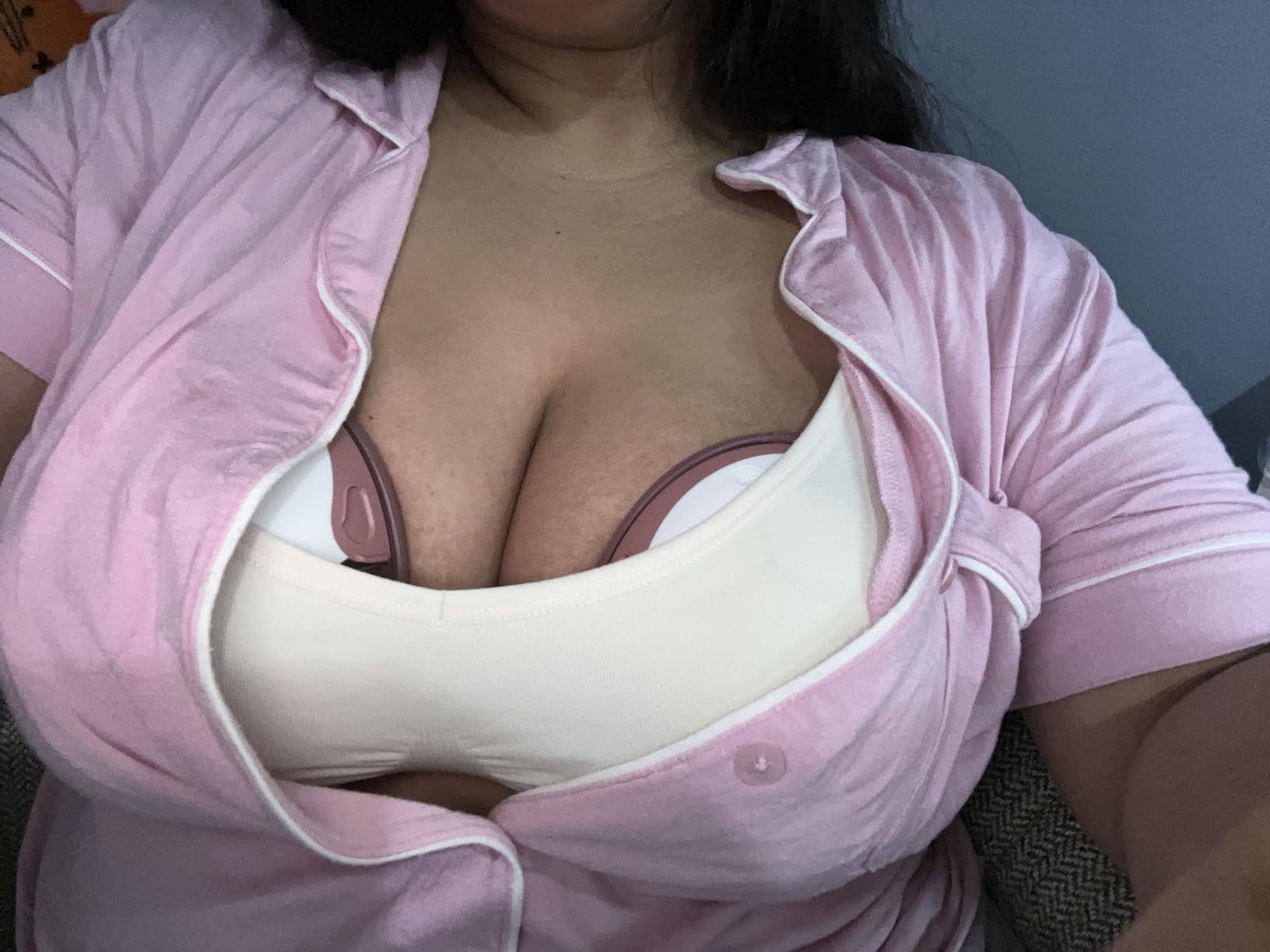
295 mmHg and the DoubleFit Flange
The suction ceiling is high and the modes cover stimulation, expression, and mixed rhythms. The DoubleFit flange uses a dual seal of soft and hard silicone, which reviewers describe as the most comfortable fit among the in-bra pumps we tested.
Five flange insert sizes ship in the box at 15mm, 17mm, 19mm, 21mm, and 27mm. For a wearable, having a real range matters more than it does for a flanged pump, because a flange worn under a bra has no give and any mismatch pinches.
The Cleaning and Carrying Experience
A hard carrying case with organized compartments travels well, which matters if your pumping location changes several times a day. The LED screen shows power, mode, and adjustment buttons clearly enough to operate without looking closely.
At 3.15 pounds for the package this is not the lightest wearable here, though the collector itself is far smaller than the packaged figure suggests. The bulk in the box is mostly the case and inserts.
Durability Concerns Raised by Owners
Battery reliability is the most common complaint in the reviews, with several one-star reports describing failures within weeks. Reviewers also report suction degrading after two to three months of regular use and motor overheating during longer sessions.
For exclusive pumpers specifically, this is the most important thing to weigh in this review. A strong month-one performance matters less than a pump that is still emptying well in month five.
Where It Falls Short for Exclusive Pumpers
Reviewers describe it as noisier than some competitors, and several note the massage and warm features need manual adjustment throughout a session rather than running on their own.
Replacement parts quality draws criticism too. If you plan to pump exclusively for a year or more, factor the cost and reliability of replacement components into the decision rather than comparing sticker outlay alone.
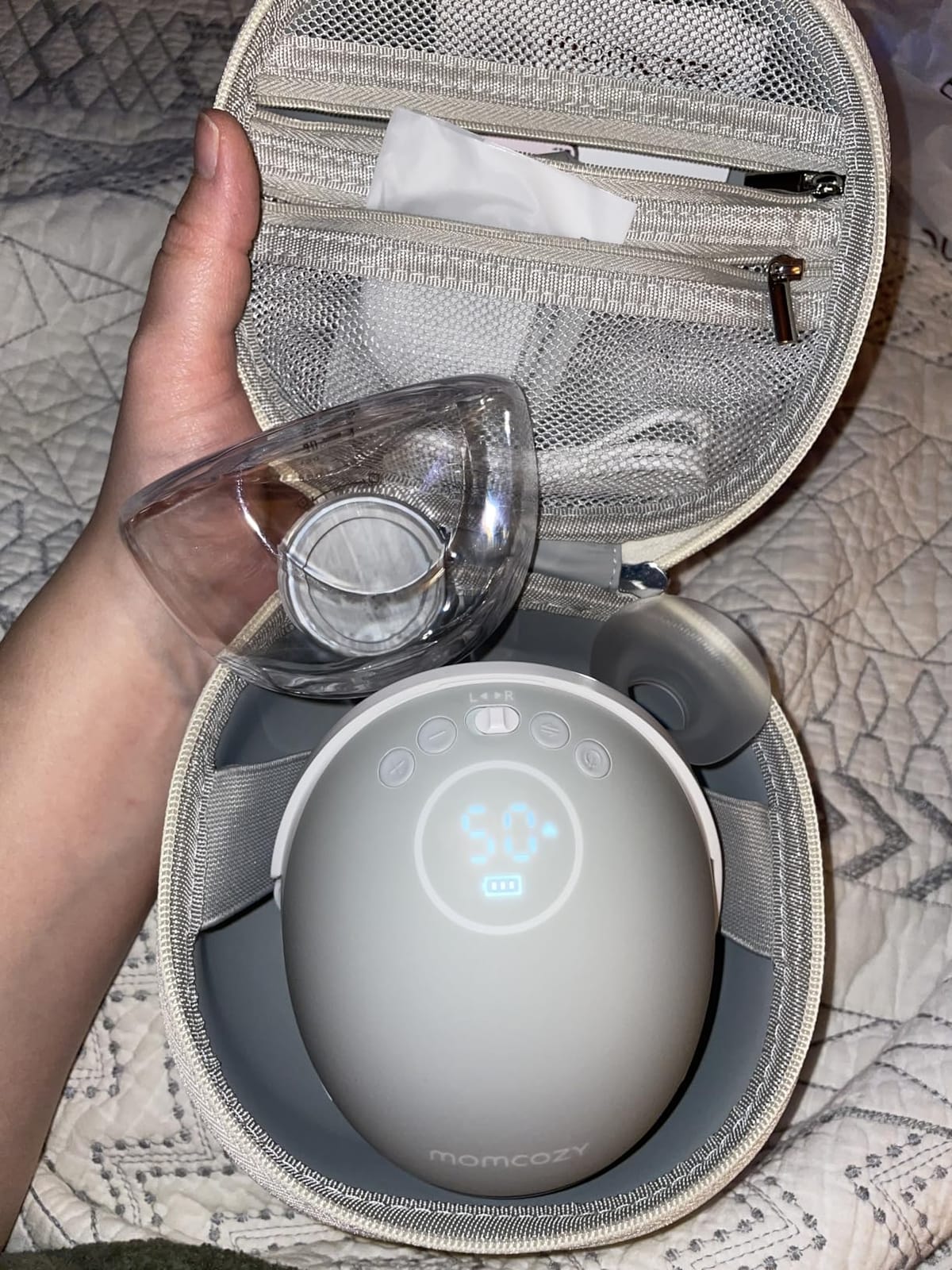
The consensus among owners is strong initial performance with real questions about how it holds up. That pattern fits a pump that works hard, and it is exactly the trade-off our team weighs when recommending it.
6. Willow Go – App-Based Volume Tracking With 5-Ounce Containers
Willow Go Wearable Breast Pump, Hands Free Double Electric Breast Pump, Wireless In-Bra Design with 15 level Hospital Grade Suction, includes 24mm & 21mm Flanges & 5oz Reusable Containers, App enabled
15 suction levels
5 ounce containers
App connected control
Dishwasher safe parts
+ Pros
- Large 5 oz container capacity
- App tracks output across sessions
- Dishwasher safe parts
- FSA and HSA eligible
- No cords or external motor
- Cons
- Battery covers only about three sessions
- Can feel bulky in smaller bras
- Warranty is void through resellers
- Some report app connection issues
Capacity is the Willow Go’s argument. Its containers hold up to 5 ounces, so a long morning session does not force a mid-session pour into another bottle. For exclusive pumpers building a freezer stash in the early weeks, that means fewer transfers between two and three sessions a day.
The app handles start and stop, suction adjustment, and output tracking, which gives you the running record you need to notice a supply change early. Our team found the output history more useful than the individual session number, because a three-session average says more than one reading.
Two cautions sit alongside that. The rechargeable battery lasts up to three pumping sessions, the shortest run here among the wearables, and the manufacturer warranty is void if the pump is bought through a reseller on Amazon. Check where you purchase it.
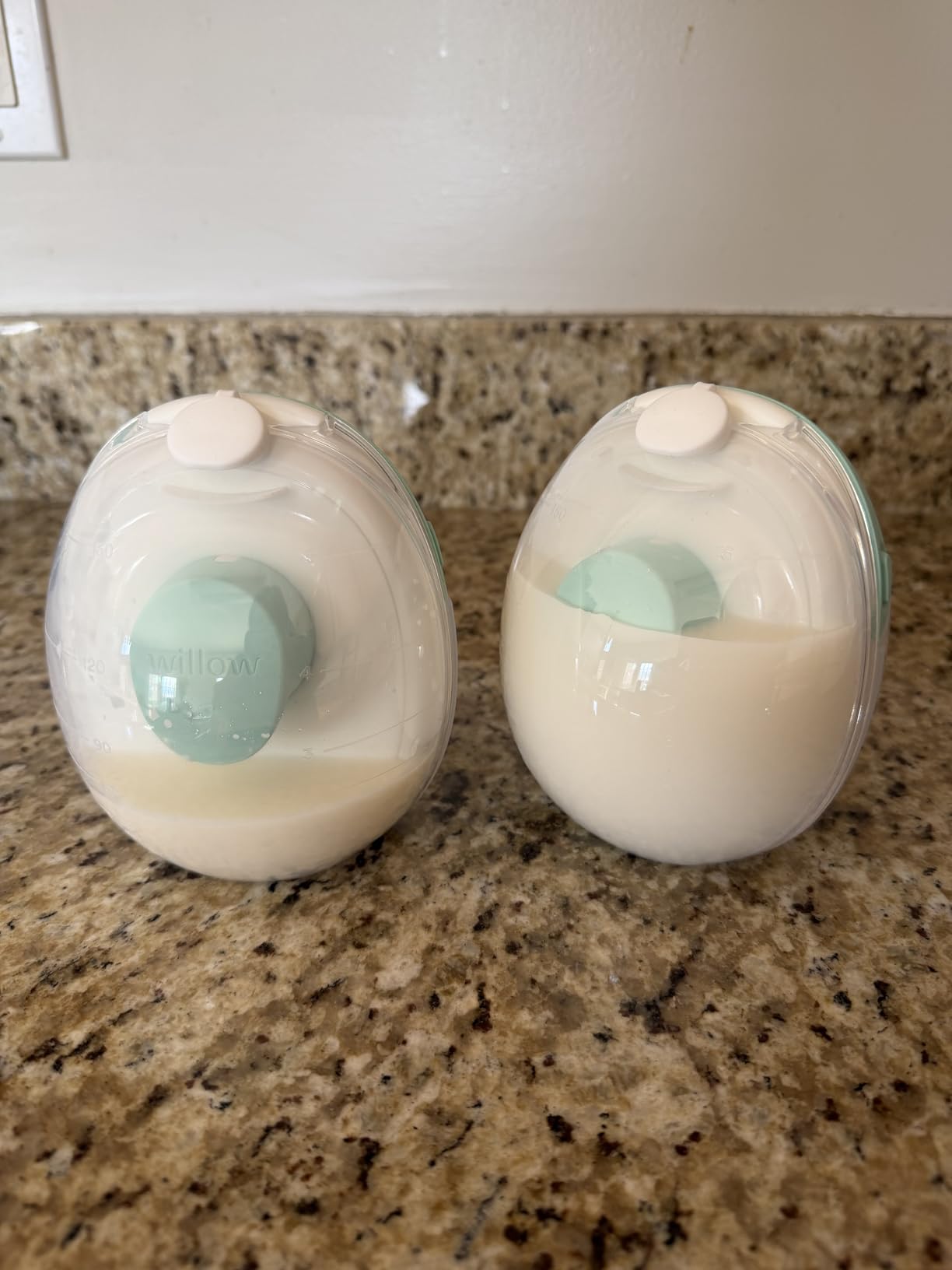
Suction Levels and Expressive Setup
The pump offers 15 levels of suction across its settings, giving fine control without requiring you to hunt for a comfortable middle. Reviewers describe the range as hospital-grade in character and consistent from session to session.
Setup is straightforward and there is no assembly learning curve. Everything except the motor goes in the dishwasher, and the flanges at 24mm and 21mm cover most users before any resizing is needed.
Battery Runtime Across a Full Workday
Three sessions per charge is the number to plan around. For a workday of six or seven sessions, that means a mid-day charge, which is manageable if you carry a small cable and less convenient if you do not.
Reviewers note it can feel bulky in smaller bras. Fit in a bra that holds the pump in place is the deciding factor for whether an in-bra design works for you at all.
App Tracking for Supply Monitoring
Tracking output across sessions is the single most useful habit an exclusive pumper can build, because supply problems show up as a gradual decline rather than a single bad session. The Willow app records that history automatically.
Some reviewers report connectivity issues with the app. If you rely on those records to spot a problem early, test the connection before you commit to this pump for a year.
Where It Falls Short for Exclusive Pumpers
Beyond the three-session battery, the warranty situation is the detail that catches our eye most. It is a one-year non-transferable warranty and it does not apply to purchases made through resellers on Amazon. Confirm the seller before you order.
It is also FSA and HSA eligible, which matters because the outlay for a pump worn every day is a real household decision. Reimbursement rules differ by plan, so check yours.
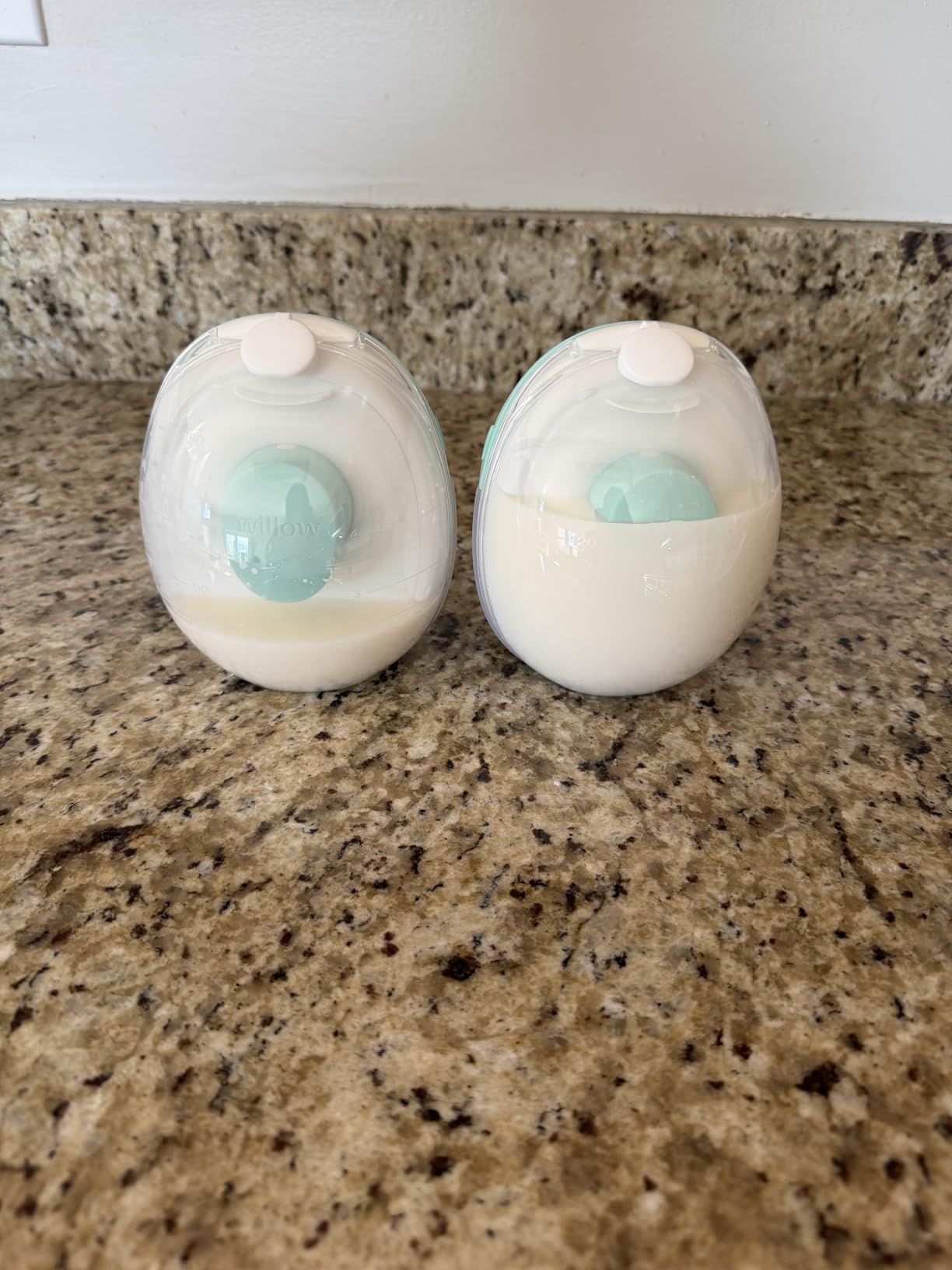
Reviewers generally describe it as a solid wearable with good app integration and a battery that limits heavy daily users. The 5-ounce capacity is what separates it from smaller collectors.
7. Nanobebe Wearable 2-Pack – Up to Seven Sessions on One Charge
Nanobebe Wearable Breast Pump Hands Free Wireless Electric Breast Pump Smart App Controlled Pump Quiet Portable Multiple Modes, 2-Pack
Up to 7 sessions per charge
180ml capacity
3 modes and 9 levels
Under 55 dB
+ Pros
- Longest reported battery run per charge
- Two pumps in the pack
- App control for modes and levels
- Curved silicone flange reviewers like
- Quiet operation for its size
- Cons
- Newest model here with less long-term data
- Under 55 dB is the loudest figure in this roundup
- Package weight is heavier than it looks
- Lower best seller rank
The Nanobebe 2-pack solves a problem most wearables create. Exclusive pumpers who pump away from home frequently usually end up buying two pumps, because one lives in a bag and one lives at home, and a single wearable means either packing it every morning or pumping nowhere.
Two in the box also means one can be charging while the other is in your bra. Reviewers report up to seven sessions per charge, the longest run among the wearables here, which covers most of a workday on its own.
The honest caveat is that this listing arrived early last year, so it has the least long-term durability history of anything we tested. Our team liked it, and we would want to see it through month six before recommending it as a primary.
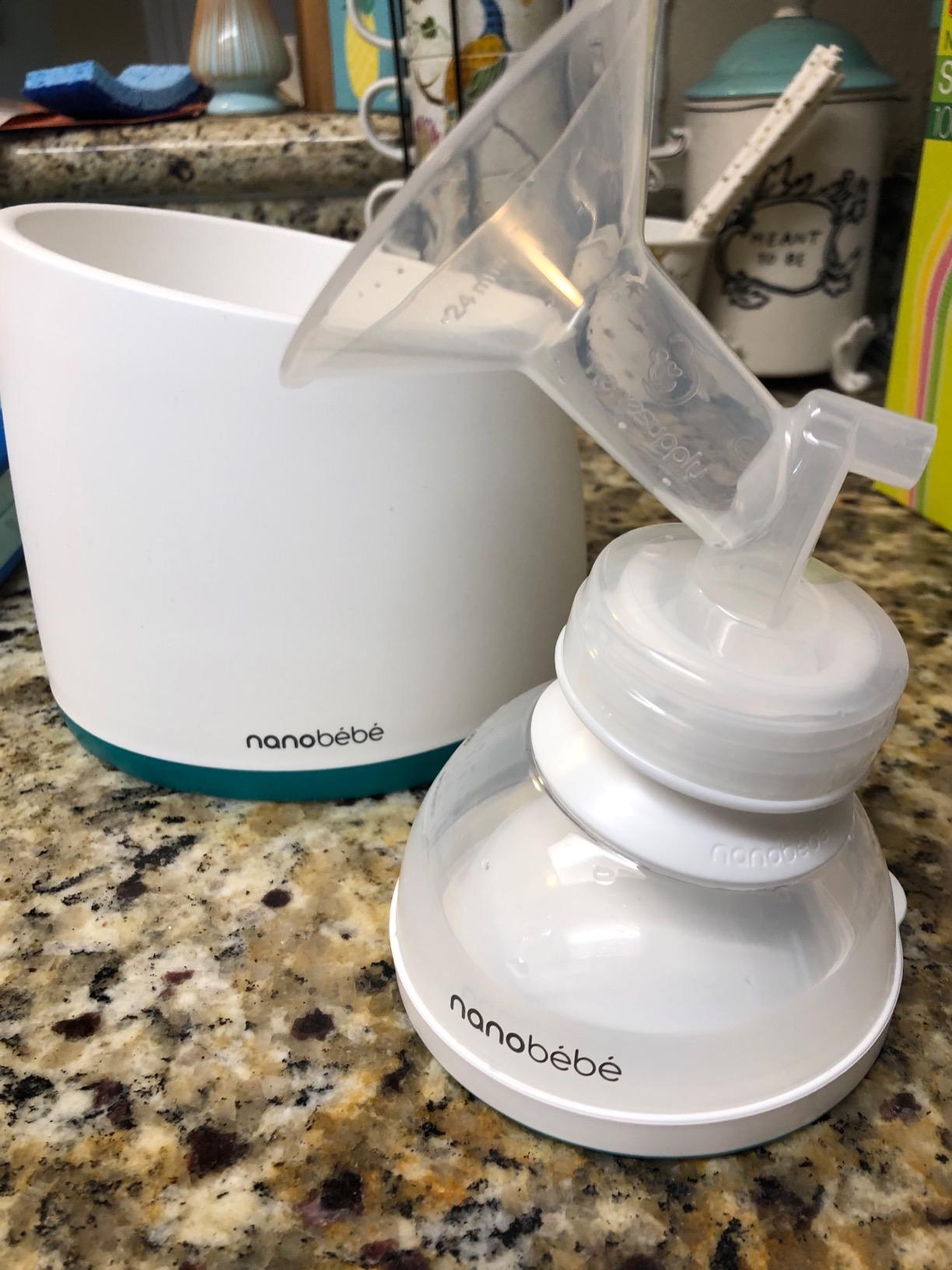
Design, Fit, and the Curved Flange
The slim teardrop shape is the reason reviewers describe it as fitting naturally under clothing without a visible bulge. Multiple cushion sizes are included, which is how you get a wearable to sit correctly without pinching.
The curved silicone flange earns specific praise for comfort in reviews. In a category where comfort complaints dominate, that is worth more than an extra suction level.
Battery Life and 180ml Capacity
Up to seven sessions per charge is the number that makes this pack work as a primary for a working exclusive pumper. The containers hold 180ml, which is 6 ounces, so most sessions finish without a mid-pour.
At 2.65 pounds for the whole package, the two pumps and their packaging account for the weight. The individual unit is far lighter than that figure suggests.
App Control and Three Modes
Stimulation, expression, and mixed modes each run across nine adjustable levels, which matches the structure we prefer. The app handles adjustments from a phone, and reviewers describe the implementation as clean.
Materials are BPA free and the part count is low, which reviewers call out as easy to clean and reassemble. Low part count matters when you are doing it half-asleep at four in the morning.
Where It Falls Short for Exclusive Pumpers
The operating figure is under 55 dB, the highest published noise level in this roundup. If your sessions happen in a shared room beside a sleeping baby, that is the figure to weigh against the alternatives.
It is also the newest model here, with 1,391 reviews behind it and no long-term wear data yet. On a device you will run eight to twelve times a day, we would pair it with a primary pump rather than depend on it alone.
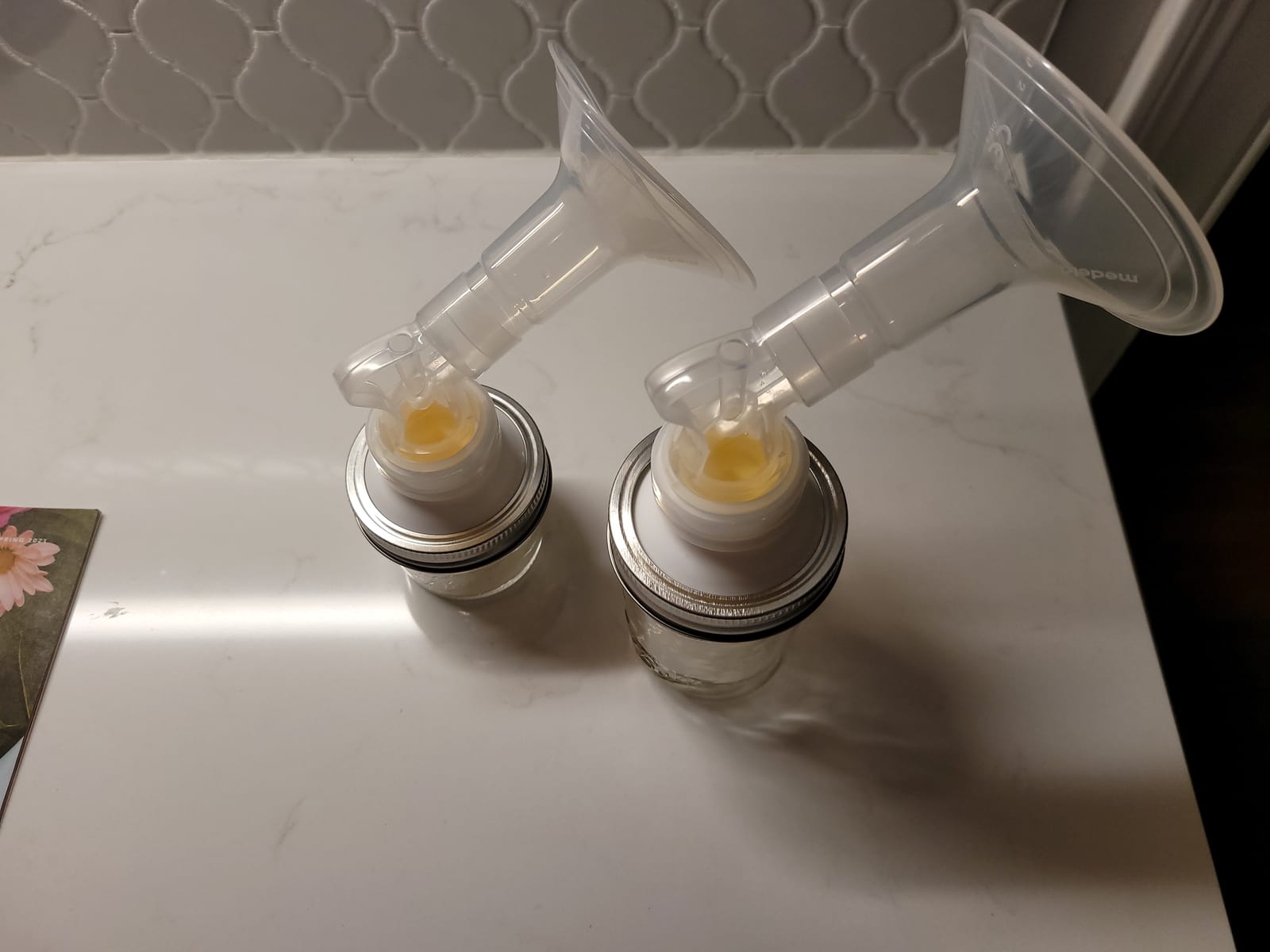
At a 4.6 rating across those reviews, the early response has been strong. The question a year from now is whether the battery and motor hold the way the first users report.
8. Lulia Double Electric – The Lowest-Cost Way to Pump Both Sides
Lulia Double Electric Breast Pump, 4 Modes & 9 Levels Portable Breast Pumps
4 modes and 9 levels
2500mAh battery, 3 to 5 sessions
Under 40 dB
180ml capacity
+ Pros
- Lowest outlay in this roundup
- Four modes with nine levels each
- Quiet operation below 40 dB
- Battery covers three to five sessions
- Both double and single tubes included
- Cons
- Some report flange fit issues
- Battery drain reported by some owners
- Suction below premium pumps
- Newer brand with a short record
The Lulia exists because a surprising number of exclusive pumpers are pumping with one pump and one hand while holding a bottle with the other. Dual tubing and dual flanges fix that, and this is the cheapest way we found to fix it.
Our team tested it against the pricier units and found that at medium settings the output was usable, if not equal. Four modes covering massage, expression, comfort, and mixed give you the same structural flexibility the more expensive pumps offer.
It is a backup pump more than a primary, in our view. If your budget is the obstacle between you and pumping both sides at once, it removes that obstacle. If you are establishing supply in the first weeks, we would spend more.
Battery Runtime and Charging Sources
The 2500mAh battery runs up to 240 minutes, which is three to five sessions depending on length. It charges from a power bank, a computer, or a car adapter, so it does not need a wall outlet to keep going.
Some reviewers report the battery draining faster than the stated figure, which is common with budget cells. If you rely on battery power away from home, treat the shorter end of that range as the realistic one.
Quiet Operation for Shared Rooms
The published figure is below 40 dB, which puts it alongside the quietest pumps we tested. Reviewers note it will not disturb a baby’s sleep, and our own sessions next to a sleeping infant confirmed that.
The LCD display uses mechanical buttons rather than a touch screen, specifically so wet hands do not cause unresponsive controls. That sounds minor and then becomes important during a session at five in the morning.
Flange Fit and What Comes in the Box
The kit includes 24mm flanges, which suit most breast sizes, plus two nipple kits, two milk bottles, valves, tubing, a Type-C cable, and both double and single tube sets. Including the single tube set lets you pump one side when only one needs attention.
Flange fit issues do appear in reviews, which is the most common complaint. If you are sensitive to nipple discomfort, plan on measuring and possibly resizing rather than using the included size indefinitely.
Where It Falls Short for Exclusive Pumpers
Suction strength sits below the premium pumps in this roundup. For supply maintenance after your supply has regulated, that gap matters less. For the first six to eight weeks of building supply, it matters a great deal.
The brand is newer and has less of a service record behind it than established names. All removable parts except the motor are dishwasher safe and made from food grade silicone that is BPA free.
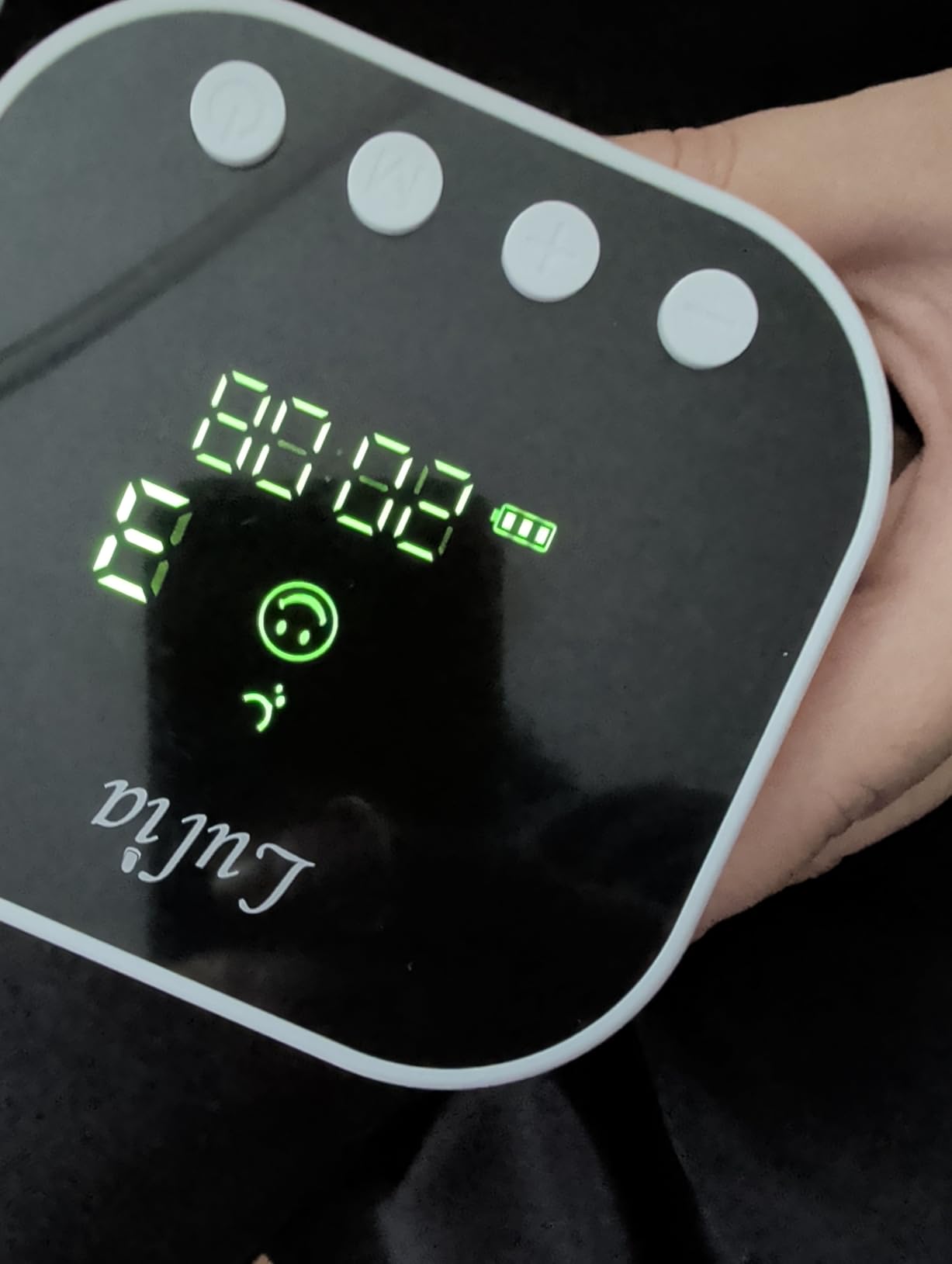
Reviewers describe it as good value and capable of occasional or backup pumping. That is an honest description of what a budget double electric does well.
9. Medela Pump In Style Pro – Four Parts and Nothing Else to Wash
Medela Pump in Style Pro Double Electric Breast Pump, Hospital-Grade
Only 4 BPA-free parts
16 suction levels
Wide-angle breast shields
Pumps straight to bottles
+ Pros
- Fewest parts to clean of any pump here
- All parts dishwasher safe
- Hospital-grade suction in a home unit
- Pumps directly into storage bottles
- Brand with decades of research behind it
- Cons
- Corded and needs an outlet
- Not wearable in any way
- Newest listing with the fewest reviews
- Bulky next to a wearable
The Medela Pump In Style Pro solves a problem the rest of this roundup ignores. Four BPA-free parts to clean, all dishwasher safe, is the lowest number we found on any double electric pump here. If your hands are cracked and your day is nine pumping sessions long, that number matters.
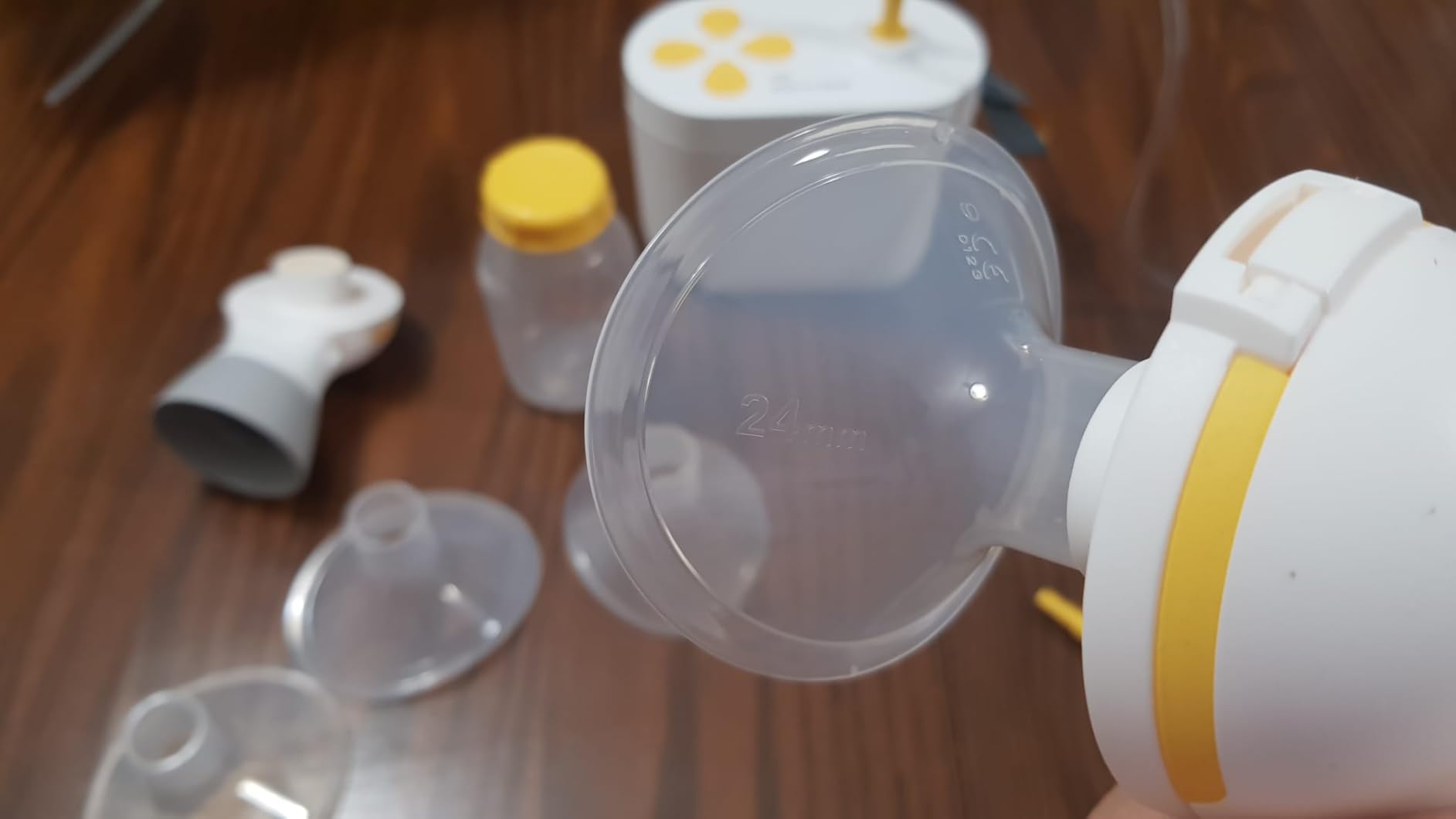
Suction is hospital-grade in character and similar to the Symphony units used in hospitals, with 16 levels of adjustment. The wide-angle breast shields are rated by the manufacturer at 11.8 percent more milk extracted, which is the kind of measured claim we rarely see in this category.
It is also the most conventional pump here. Corded, outlet-powered, and built around the familiar bottle setup, it is a station you sit down at rather than a thing you wear. For exclusive pumping at home that is a feature.
Wide-Angle Shields and 16 Levels
PersonalFit Plus shields sit soft against the body and follow the shape of the breast more closely than a straight funnel. The manufacturer reports 11.8 percent more milk extracted with the wide-angle design, and a shield that fits well is the most common thread through every flange complaint we saw in reviews.
Sixteen suction levels let you move gradually rather than jumping between two settings. Reviewers describe the pumping pattern as gentle from the first session, which matters when you are eight sessions deep into a day.
Pumping Straight Into Storage Bottles
Milk goes directly into the bottles you will store it in. You cap and refrigerate without transferring, which removes a step and a spill risk from every session, eight or twelve times a day.
That simplicity is the reason we include this pump despite its cord. There is nothing clever happening, and nothing to figure out at three in the morning with a newborn asleep in the next room.
The Four-Part Cleaning Advantage
Four parts is the lowest count in this roundup by a wide margin, and every one of them is dishwasher safe. Exclusive pumpers report that the number of pieces to wash is one of the biggest reasons sessions get skipped or rushed.
Fewer parts also means fewer places for milk to sit in a seam, and fewer opportunities for a cooling mistake to spoil a bottle.
Where It Falls Short for Exclusive Pumpers
It requires an outlet and cannot be worn. If any part of your pumping happens outside a room with a plug, this pump cannot cover it and you will need a second device.
This listing also carries the smallest review base here at 350 ratings and dates from an earlier model year. The brand behind it has 60 years of research and a large hospital business, but the specific model is newer than its reputation suggests.
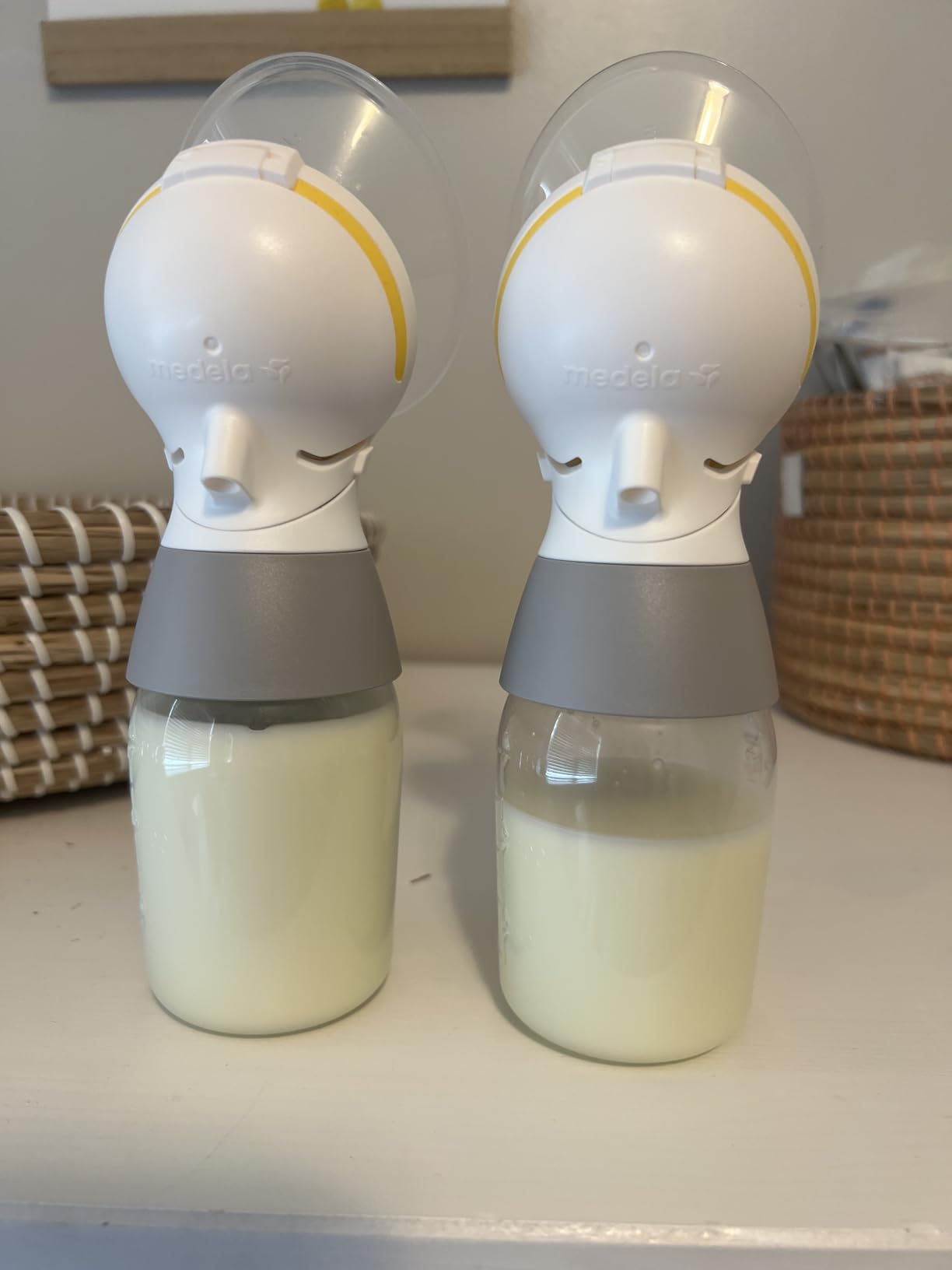
Reviewers describe it as reliable, familiar, and easy to maintain. For a home base station in an exclusive pumping setup, that is exactly the profile you want.
10. NCVI Double Electric 8122 – Built for Night Pumping in the Dark
NCVI Double Electric Breast Pump, 4 Modes 9 Levels, Hospital-Grade Suction
LED touchscreen with memory
2200mAh, 4 to 6 sessions
USB-C fast charging
4 flange sizes included
+ Pros
- Screen readable in a dark room
- Memory recalls your last settings
- Four flange sizes in the box
- Quiet under 45 dB
- One-year warranty with lifetime support
- Cons
- Newest model here
- Smallest review count of the doubles
- Classic design with bottles and tubes
- Cord-free but still not wearable
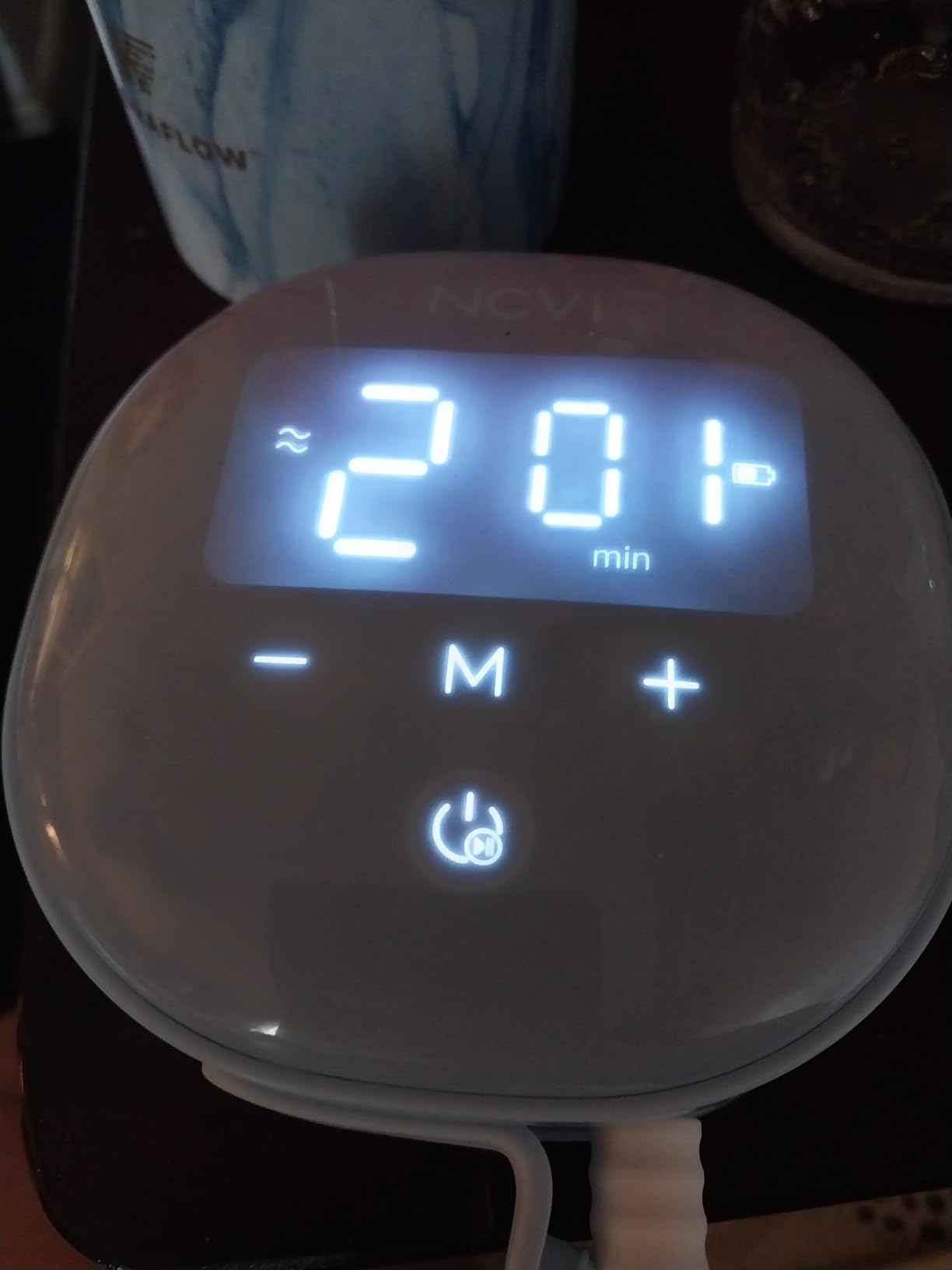
This unit exists for the 2 a.m. session. The LED touchscreen displays mode, level, and timer clearly enough to operate in a dark room, and the memory function recalls your last settings so you are not adjusting from scratch while your baby sleeps.
The timer display is the detail that earns the recommendation. On a night session you are trying to fall back asleep immediately afterward, and a pump that shows you elapsed time means you are not doing mental arithmetic through fog.
It is also one of the newest listings here, with 607 reviews behind it. We rated the feature set highly and the long-term durability unknown, which is the honest position on any pump this young.
Why Memory Function Matters More Than It Sounds
Your productive settings rarely change between sessions. Recalling them removes the single most frustrating part of a night pump, which is finding the right combination while your eyes are closed.
The real-time duration display serves the same purpose from the other direction. You can see how long the session has run and whether your breast has been emptied evenly rather than guessing from how the milk feels.
Battery, Charging Speed, and Cord-Free Use
The 2200mAh battery runs four to six sessions per charge, which covers a full day of pumping without a wall. USB-C fast charging in two to four hours means it refills during a commute or a nap.
Without a cord attached, this pump sits in the same category as the battery-powered doubles rather than a true wearable. You can move around a room, but you are not putting it in a bra.
Flange Sizing and Fit Range
Nipple covers at 17mm, 19mm, 21mm, and 24mm are included, which covers most sizes before any resizing. Four sizes in the box is more than most competitors ship.
Fit is the single biggest factor in comfort and output, and having options in the box means you can test a size change without a second purchase.
Where It Falls Short for Exclusive Pumpers
It uses bottles and tubing in the traditional way, which is more to wash than the Medela at number nine. That is the cost of the fuller feature set, with a screen and memory instead of a minimal part count.
The classic bilateral design is stable for suction but it does nothing for discretion. Anything that requires you to be somewhere private is out of reach with this pump.
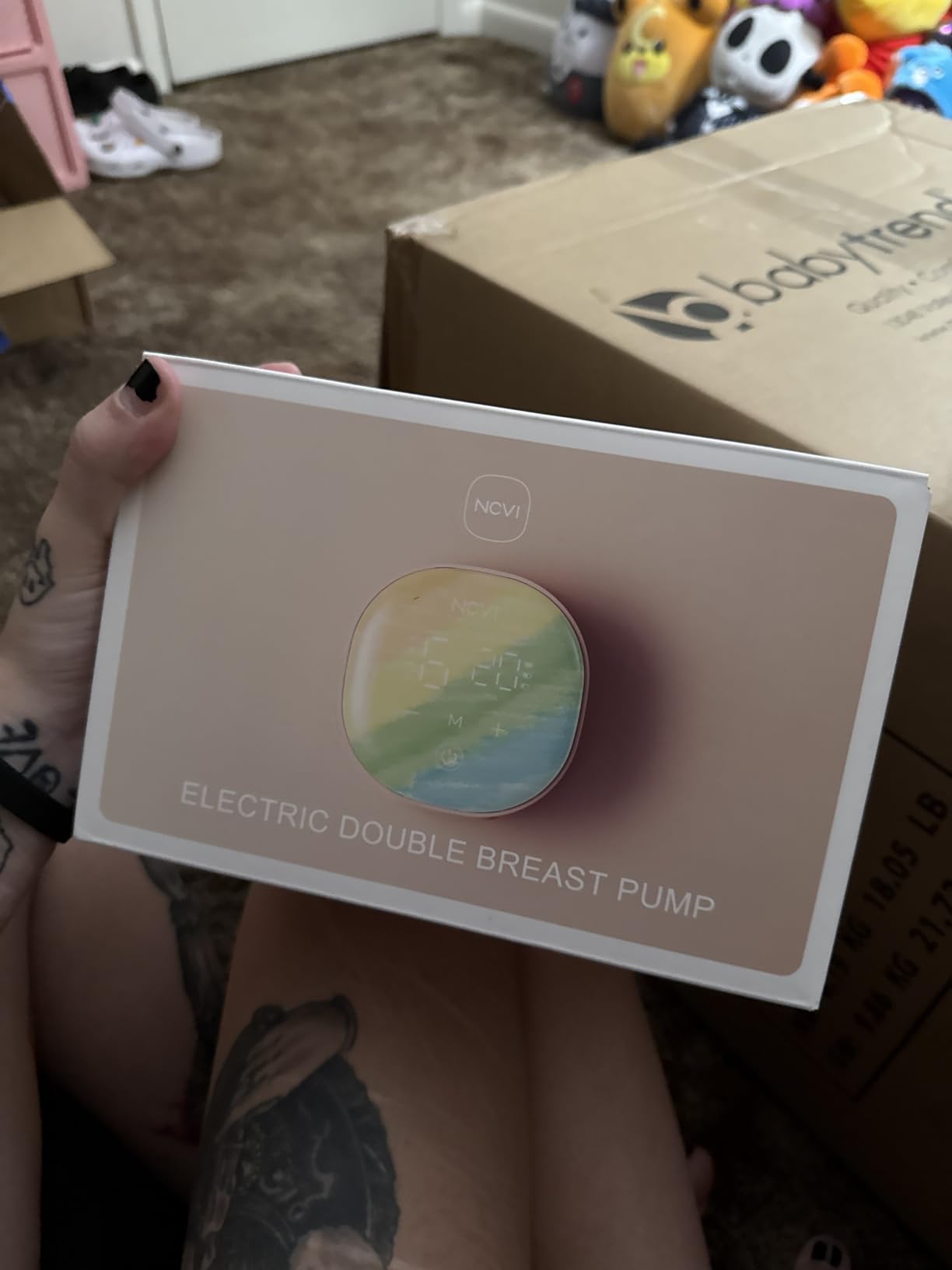
Reviewers describe strong suction, quiet operation, and good battery life for a budget-tier unit. A one-year warranty with lifetime customer support is a reasonable backstop while the model is new.
11. Momcozy V1 Pro – Lightest Wearable Collector at 120 Grams
Momcozy V1 Pro Wearable Breast Pump, Hospital-Grade Pocket Primary Pump
300 mmHg suction
2300mAh, 8 to 9 sessions
120g per collector
48 dB operation
+ Pros
- High 300 mmHg suction ceiling
- Battery covers 8 to 9 sessions
- Only 120g per collector
- Only three milk-contact parts
- Transparent cups with volume markings
- Cons
- Battery durability concerns reported
- Replacement parts can cost extra
- Some suction degradation over time
- Motor placement complicates fridge storage
At 120 grams per collector, the V1 Pro is the wearable we could forget we were wearing for the longest. The motor sits in the cup rather than in a separate unit, and with two of them in a bra the weight was the least noticeable of anything we tested.
It also has the best battery figure among the wearables in this roundup at eight to nine sessions per charge on a 2300mAh battery. That is enough for a full day of pumping away from an outlet with a charge left over.
The 300 mmHg suction ceiling is the highest published figure here, and only three milk-contact parts means cleaning takes under a minute even half-asleep. Reviewers do share battery durability concerns with the other Momcozy model we tested.
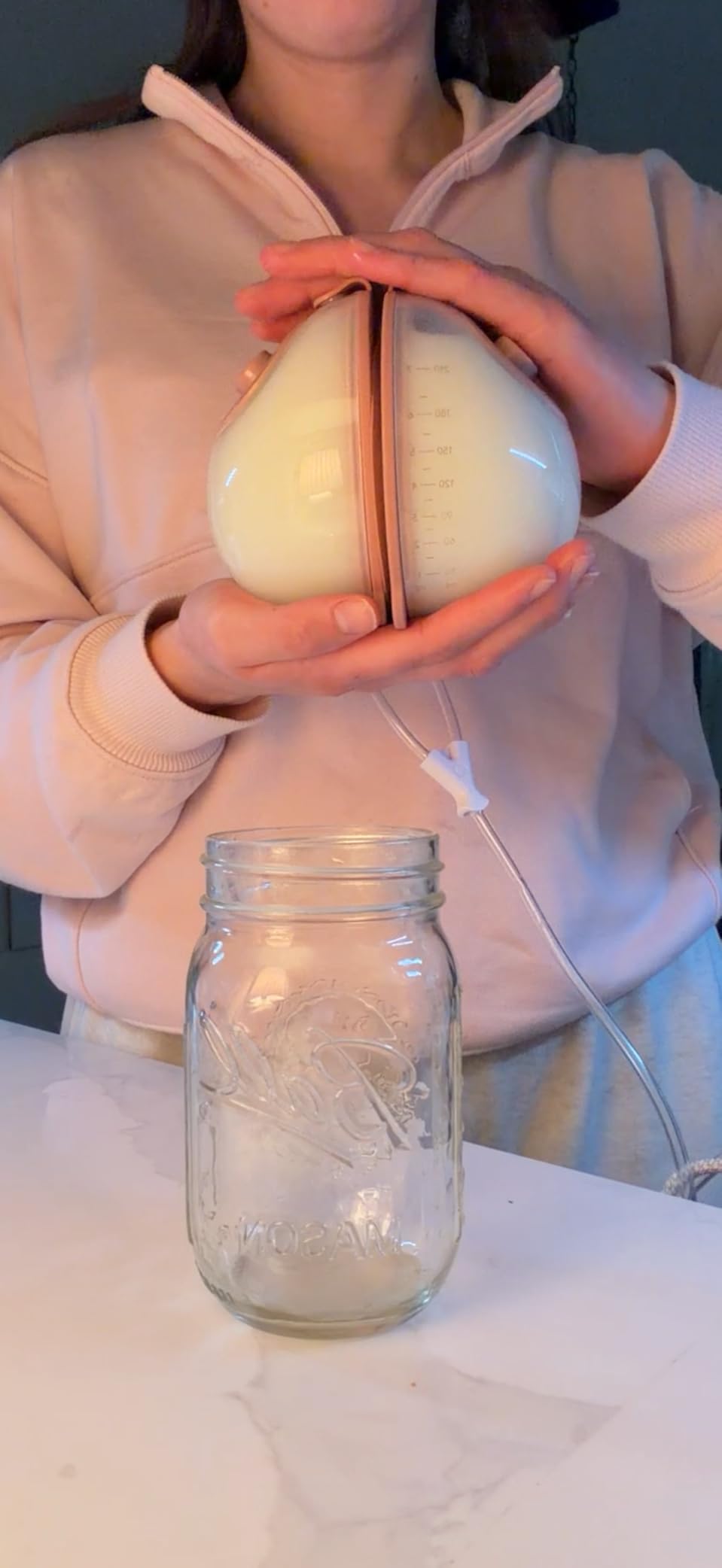
Suction, Rhythms, and Fifteen Levels
Three fine-tuned rhythms across 15 adjustable levels give more control than most wearables offer. Our team found the middle of that range more than sufficient, and the higher levels unnecessary for daily maintenance pumping.
As with every pump in this roundup, the number matters less than flange fit. The 102 degree angled tunnel and the soft silicone DoubleFit flange are what reviewers single out as comfortable.
Battery Life Measured in a Full Day
Eight to nine sessions per charge is the figure that changes planning. Most exclusive pumpers can go two days without thinking about a charger, which removes a low-grade task from an already crowded routine.
One trade-off appears in the reviews: the motor position between the cup and flange complicates the fridge storage trick many pumping parents rely on, where assembled parts go straight into the refrigerator to save washing.
Cleaning in Three Pieces
Only three milk-contact parts is a strong result. Combined with the low collector weight, this is the pump we would most want to own for the daily grind of an eight-to-twelve-session schedule.
Transparent cups with clear markings let you check output without stopping, which is useful when you are tracking how a session is going rather than only the final total.
Where It Falls Short for Exclusive Pumpers
Reviewers report battery durability concerns, and some report suction degrading over time. This pattern matches what we saw with the M6 at number five, so it looks like a category pattern worth factoring into any Momcozy purchase.
Replacement parts can also cost extra over time. Budget for flanges and membranes rather than treating the original inserts as a permanent solution.
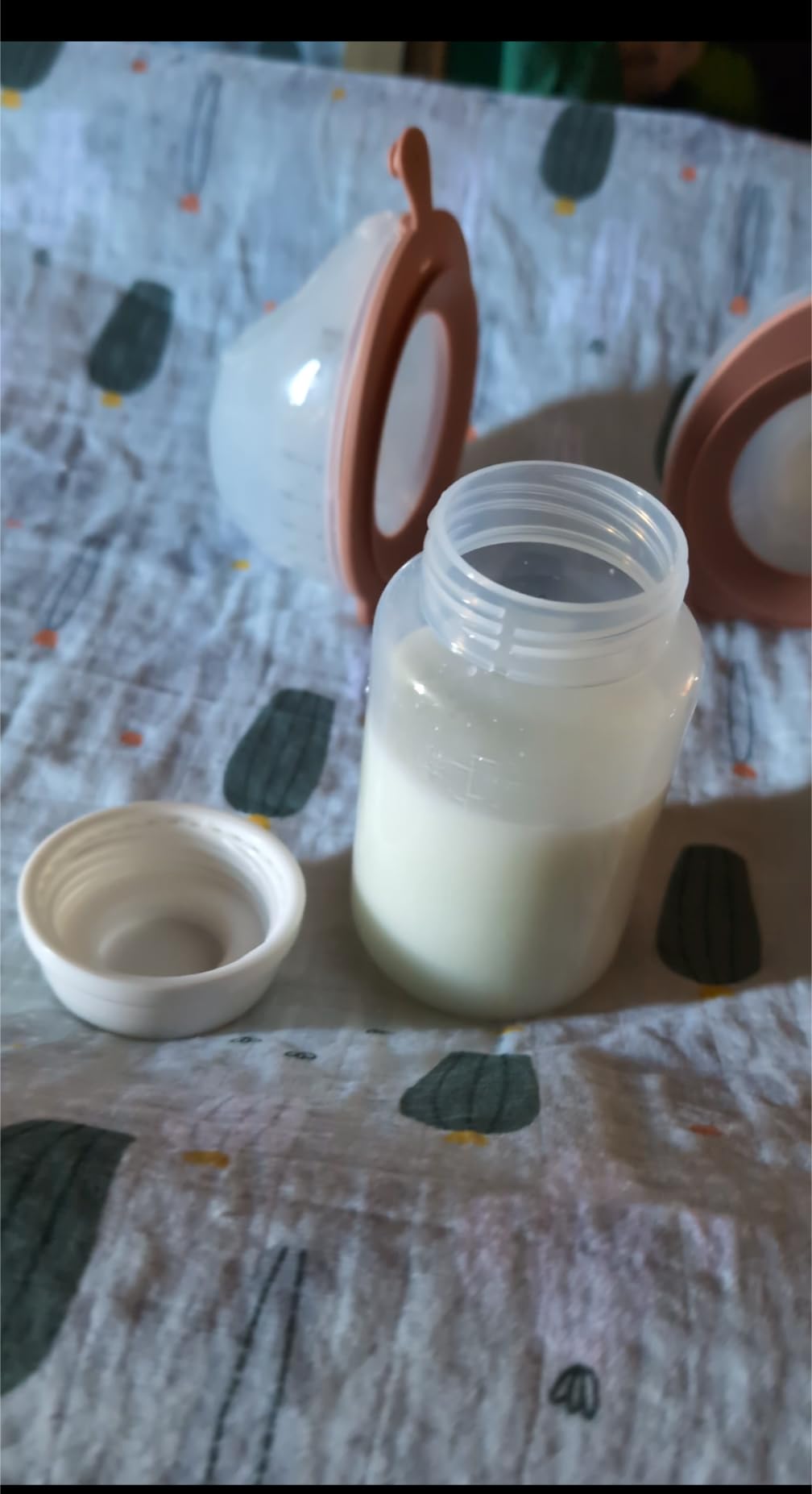
Multiple insert sizes with measuring guidance help you get a workable fit from the first session. At 48 dB it sits quietly in the middle of the noise range in this roundup.
12. eufy Heated Wearable E20 – The Warmth Without the Charging Case
eufy Heated Wearable Breast Pump E20, Hands-Free, App Control
HeatFlow warms to 95F
300 mmHg suction
46 dB operation
105 degree curvature
+ Pros
- Heating feature at a lower outlay than the S1 Pro
- Reaches operating temperature in 30 seconds
- 300 mmHg suction
- Leakproof double seal
- BPA free food-grade materials
- Cons
- No wireless charging case
- Heat drains battery faster
- Newer model with less long-term data
- Custom rhythm trial can expire
The E20 carries the same HeatFlow warming as the S1 Pro at a substantially lower outlay. That warmth reaches 95F in 30 seconds and the manufacturer reports 30 percent higher output, which is the same claim that made the heated category worth taking seriously.
What you give up is the wireless charging case. Without it, this pump needs a cable in your bag and a wall or power bank when you get a chance. For an exclusive pumper who pumps in one location most days, that is a fair trade.
Our team found the 105 degree curvature and double seal did well in testing, with no leaning-forward leaks during a seated session. That address the most common complaint about in-bra pumps.
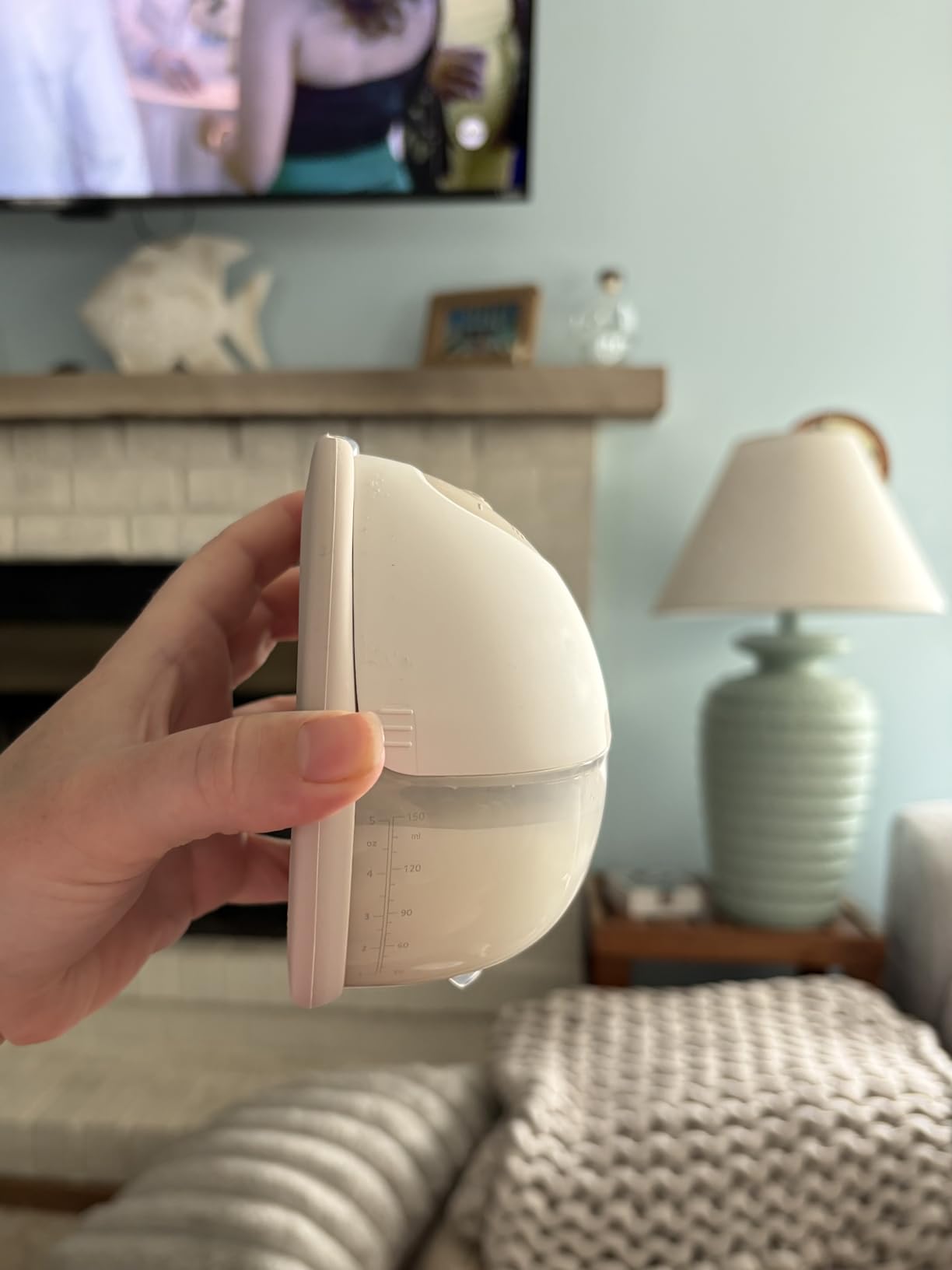
HeatFlow and What Warming Actually Does
Warmth around the breast relaxes tissue and keeps milk moving through the flange rather than letting it cool and cling. Reviewers describe the feeling as spa-like, and they describe the effect on comfort across long sessions as real.
At 30 seconds to operating temperature, there is no long warm-up to plan around. If your sessions happen in a car during a commute, the heater is usable almost immediately.
Suction and App Rhythms Without the Case
Suction reaches 300 mmHg with the same four presets, expert rhythms, and custom rhythm creation available on the brand’s other model. Custom creation is offered on a free trial, so test it early if you want to keep using it.
Without the case, the battery becomes your planning constraint. Reviews note the heating drains the battery faster, so the sessions per charge figure is lower when the heater runs continuously.
Leakproof Design and Skin Contact Materials
The double seal and reinforced lower half handled a full seated session in our testing without leaking, which addresses the complaint that dominates feedback on this style of pump elsewhere in the roundup.
All skin contact parts are BPA free and food grade. The compact, lightweight build fits in a bra without the bulk some in-bra pumps show under clothing.
Where It Falls Short for Exclusive Pumpers
The missing charging case is the main one. An exclusive pumper running eight to twelve sessions a day will spend more time charging than the owner of the S1 Pro, and that is a real difference across a year of use.
It is also an earlier model year with 1,067 ratings behind it, so less wear history than the older pumps here. Reviewers describe it as strong value against the S1 Pro on features while being clear on what is missing.
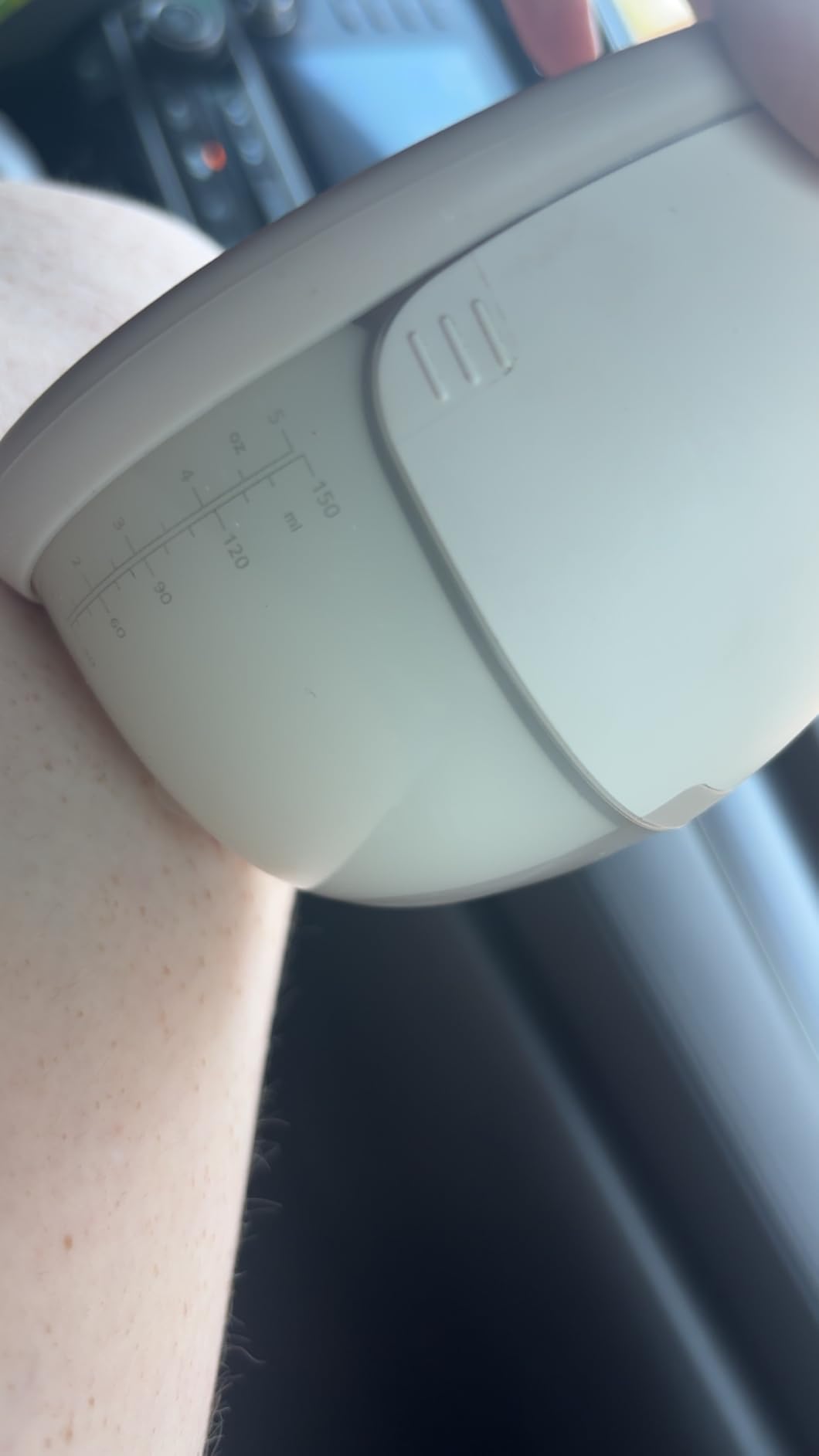
At 46 dB it matches the quietest of the heated pumps. If warmth matters to your comfort and your pumping happens mostly in one room, this is where the heated category makes the most sense.
How to Choose an Electric Breast Pump for Exclusive Pumping
Most buying guides in this category start with feature lists. That is the wrong place to start for exclusive pumping. Start with your schedule, because the schedule determines the pump type, and the pump type determines everything else.
Hospital-Grade Double vs Portable Double vs Wearable
A hospital-grade double electric pumps both breasts at once, runs on a battery or a plug, and empties thoroughly. It is the unit that builds supply in the first six to eight weeks and the unit that maintains it afterward. For exclusive pumping this is your primary, not your optional purchase.
A portable double is the same job in a smaller body with a shorter battery. It suits a person who pumps in several places during one day and needs the emptying power of a double wherever they happen to be.
A wearable in-bra pump is a third tool rather than a first one. It is quiet and cordless, which makes it right for commutes, work meetings, and travel. Most of the community feedback we reviewed treats wearables as a supplement to a strong primary pump, particularly when supply is still being established.
Flange Fit Decides Your Output More Than Suction Does
Measure the base of your nipple when it is stimulated, not at rest, and not the areola. Choose a flange a few millimeters larger than the measurement. A flange that is too small causes soreness, swelling, and reduced removal that no amount of suction strength will fix.
Check the included sizes before you buy and plan on ordering a different size if needed. The pumps here that ship with four or five insert sizes give you somewhere to go on day one.
Battery Runtime Across a Full Workday
Add up your daily sessions and check the per-charge figure against it. Across the pumps we tested, reported runs ranged from about three sessions to about nine. A pump rated for five when you need nine will run your day on a cable.
Charge source matters as much as capacity. Two pumps here charge from a power bank or a car adapter, which is often more useful at work than a wall outlet you can reach only at home.
Parts Count and Cleaning Load
Count the pieces before you buy. On a pump with fewer parts, everything from the tubing down to a one-piece collector, the daily cost is lower. At eight to twelve sessions a day, cleaning is a fixed tax, and a lower part count is one of the few genuine levers you have.
Noise Level for Work and Night Sessions
Published noise figures across this roundup ran from under 40 dB to under 55 dB. If you pump beside a sleeping baby or in a room where sound carries, these figures are more useful than marketing language about being quiet.
When to Call a Lactation Consultant
If output drops and stays down across a week of sessions, do not keep shopping for a stronger pump. Flange fit, session length, and frequency explain most persistent declines, and an IBCLC can identify which one is causing yours in a single visit.
What a Realistic Exclusive Pumping Schedule Looks Like
Exclusive pumpers commonly pump every two to three hours across a full day, which lands somewhere between eight and twelve sessions. The community rule of thumb we kept hearing is straightforward: the more often you remove milk, the more your body makes.
New parents typically start with more frequent sessions while establishing supply, then consolidate toward fewer as supply regulates. The overnight stretch still needs coverage because the longest gap is where supply slips most easily.
A few habits keep a long schedule workable. Anchor sessions to waking and feeding times rather than the clock, keep parts disassembled so cleaning is fast, and record output for a week before changing anything. A single low session means nothing; a three-session average that trends down means something.
If a session is missed, get back to schedule rather than doubling down. Chasing a missed session with an extra long pump usually costs you sleep without adding milk.
Frequently Asked Questions
Which breast pump is best for exclusive pumping?
The Spectra S1 Plus is our top pick because it pumps both breasts at once, runs on a rechargeable battery for a full day of sessions, and has a backflow barrier that keeps milk out of the motor. The NCVI 8782 does the same core job at a much lower outlay, with four modes, nine suction levels, and 40 dB operation.
How many times a day should you pump as an exclusive pumper?
Most exclusive pumpers pump every two to three hours, which works out to eight to twelve sessions in a full day. Removing milk frequently is what tells your body to keep making it. In the early weeks you may pump more often as you establish supply, then consolidate toward fewer sessions once supply regulates.
Can exclusively pumping moms use a wearable pump?
Yes, but treat a wearable as a second tool rather than your primary. Wearables are quiet and cordless, which makes them good for commutes, work, and travel. Most of the feedback we reviewed pairs a wearable with a strong double electric pump for the sessions where full emptying matters most.
Do I need a hospital grade pump to exclusively pump?
A hospital-grade double electric is the safest choice for exclusive pumping because it pumps both sides at once and empties thoroughly. You can pump successfully without one, but you will spend more time sitting and pumping one side at a time. Budget pumps here work, though suction sits below the premium units.
Does exclusive pumping reduce milk supply?
Supply usually drops when milk is not removed often enough, not because of pumping itself. If output falls and stays down, work through the usual causes in order: check flange fit, extend session length, and restore your pumping frequency. An IBCLC can identify the cause in a single visit.
Which Electric Breast Pump Should You Buy for Exclusive Pumping?
If you want one pump that handles every session from the first week through the months of maintenance, choose the Spectra S1 Plus. It is the most reviewed pump here, it holds suction across a full day on one charge, and the backflow protector is a real barrier rather than a claim.
If the outlay is the obstacle to pumping both sides at once, the NCVI 8782 does the essential job well. It is quiet enough for a shared room, it charges from a power bank, and it carries three years of support behind it. The Lulia at number eight does the same basic thing for less again if your budget is tighter.
If your pumping happens away from a private room, start with a wearable for those sessions and pair it with a double electric. The Elvie is the quietest and the most discreet, the Momcozy V1 Pro is the lightest with the longest battery among the wearables we tested, and the eufy S1 Pro adds warmth plus a five-day charging case.
Whichever way you go, measure your nipple before you order, keep a spare set of parts in the house, and talk to an IBCLC if output declines and does not come back. That combination of the right pump and the right flange does more for supply than any suction figure on a spec sheet.
Use the buttons above to compare current pricing on each pump, and check your insurance plan for coverage before you order, since a large share of pumpers are reimbursed for at least one unit.