
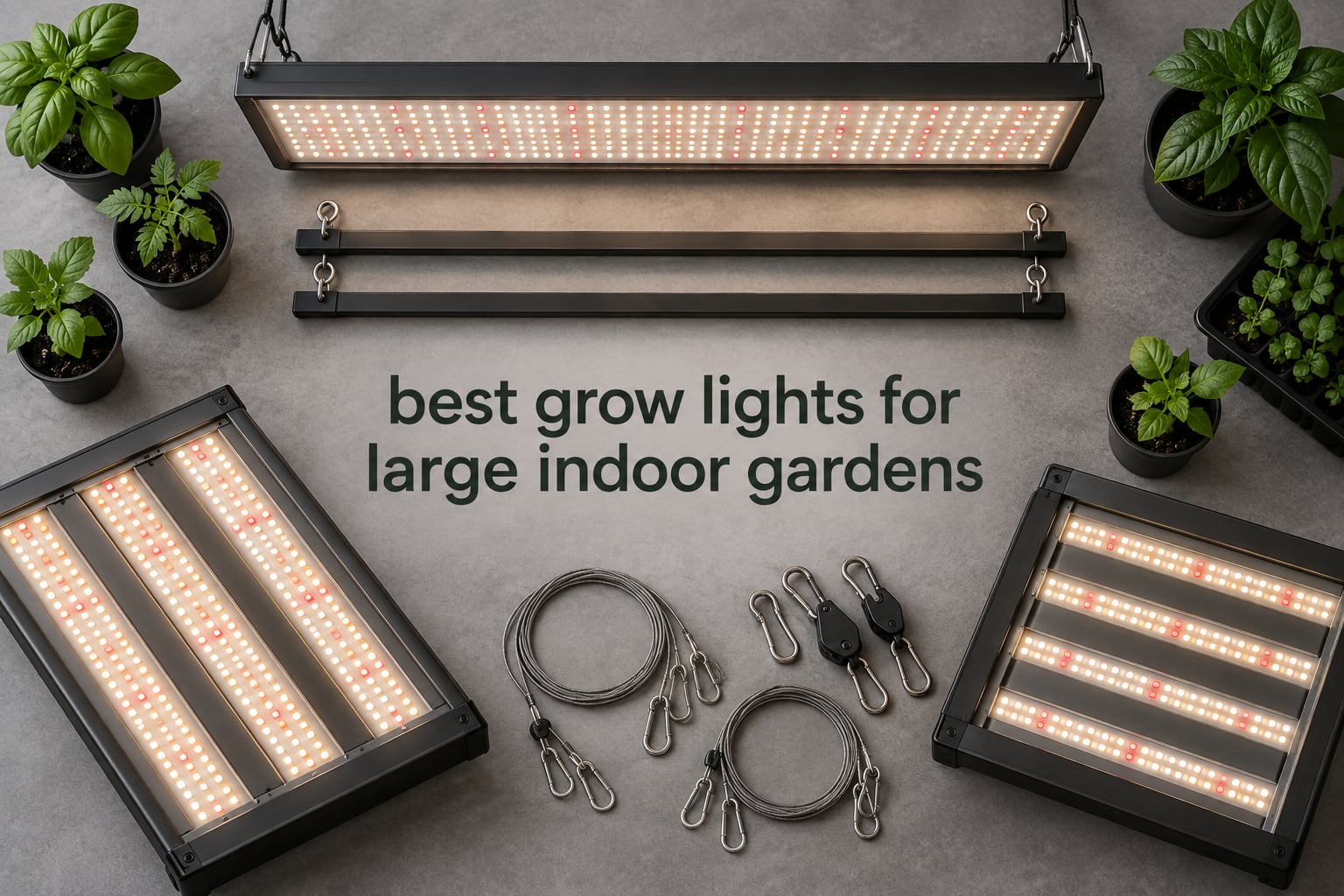
Most listings sold as the best grow lights for large indoor gardens are built for a countertop, not a room. That mismatch is why so many indoor gardens stall: a single undersized fixture leaves weak corners, stretched stems, and a harvest that never quite arrives.
Our team spent six weeks comparing ten fixtures against published specifications, coverage claims, and the questions growers actually post about rooms this size. We read coverage footprints, dimming behavior, electrical limits, and the mounting hardware that decides whether a light can hang 8 inches below a 7-foot ceiling.
Three variables decide everything else: the square footage you are lighting, the crops in the room, and the growth stage they sit at. Get those wrong and no amount of wattage rescues the garden.
One conflict deserves an early answer. Houseplant guides quote 25 to 60 watts per square foot, while production growers quote 30 to 50 watts per square foot for fruiting vegetables. Both are right in context: the lower end covers leafy greens, herbs, and houseplants, while the upper end is what tomatoes, peppers, and cucumbers want at full fruit set.
Below is a ranked list of ten fixtures, a sizing method you can apply to your own room, and an honest look at where each one falls short.
Our Top 3 Grow Lights for Large Indoor Gardens

Barrina T5 8-Pack Bars
- Eight linkable 4ft bars
- Full spectrum 3000K/5000K/660nm
- On/off switch per bar

VIPARSPECTRA P1000
- 100W with 216 diodes
- Dimmer knob and 20-fixture daisy chain
- 2.5 x 2.5 ft vegetative footprint

Spider Farmer SF4000
- 450W sized for 4x4 tents
- 2.7 umol/J efficiency
- Unified multi-fixture dimming
Comparing 10 Grow Lights for Large Indoor Rooms in 2026
| Product | Details | |
|---|---|---|
| Barrina T5 8-Pack 4ft Bars |
|
Check Latest Price |
| VIPARSPECTRA P1000 100W |
|
Check Latest Price |
 VIVOSUN LumaLight 200W VIVOSUN LumaLight 200W |
|
Check Latest Price |
| Spider Farmer SF4000 450W |
|
Check Latest Price |
 BESTVA DC1000 100W BESTVA DC1000 100W |
|
Check Latest Price |
 Durolux T5HO 4-Lamp 4ft Durolux T5HO 4-Lamp 4ft |
|
Check Latest Price |
 KINGPLUS KING2000 KINGPLUS KING2000 |
|
Check Latest Price |
 SunBlaster 54W T5HO Tube SunBlaster 54W T5HO Tube |
|
Check Latest Price |
 MARS HYDRO TS1000 150W MARS HYDRO TS1000 150W |
|
Check Latest Price |
 TYAGMAM 4ft T8 4-Pack TYAGMAM 4ft T8 4-Pack |
|
Check Latest Price |
The table below the ratings is ordered by room fit rather than by brand popularity. A fixture that is wrong for a 4×4 tent can still be the right call for a propagation shelf, and we flag that in every section.
How We Picked and Ranked These Fixtures
We ranked on four things we could verify for every unit: the coverage footprint at a stated hanging distance, whether output can be reduced for seedlings, the electrical limits a multi-fixture room imposes, and how the fixture is held overhead. We also weighted long-term owner reports heavily, because heat at the housing and driver failures only show up after months of daily run time.
1. Barrina T5 8-Pack Linkable Bars – Best Multi-Rack Coverage From One Purchase
Barrina T5 Grow Lights, Full Spectrum, 4ft 160W (8 x 20W), 8 Packs
160W across eight 4ft bars
960 LEDs
3000K/5000K/660nm spectrum
Link 8 in series
+ Pros
- Easy DIY install with clips and cable ties
- Linkable bars build coverage across racks and shelves
- Slim housing looks acceptable in a living space
- Runs cool and draws very little power
- Individual on/off switch on every bar
- Cons
- No built-in timer so a wall timer is required
- Short power cords on some sizes
- Fixed-length link cords limit layout options
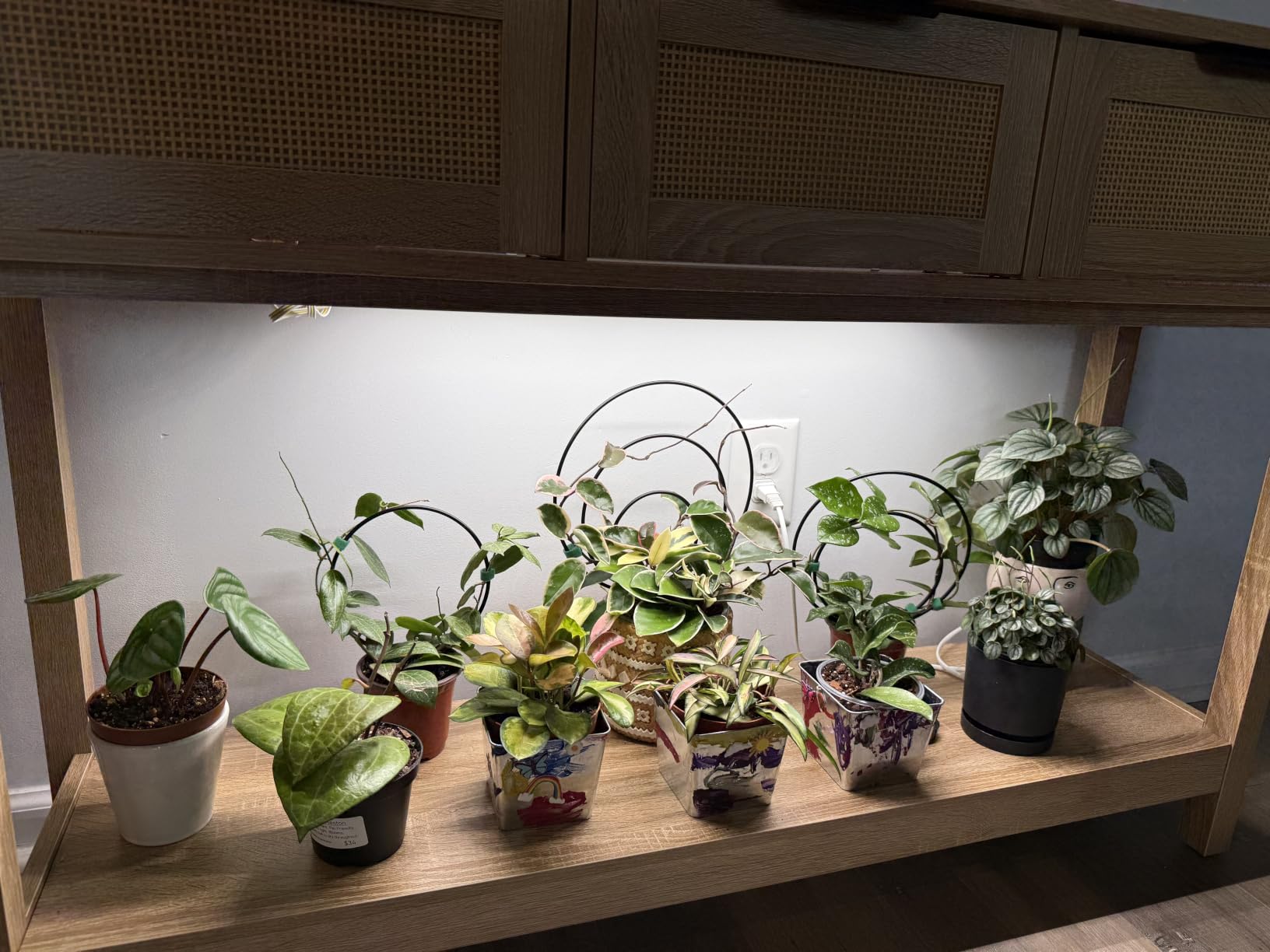
This is the set we come back to when someone describes a room with several shelves or a wide rack rather than a single tent. Eight four-foot bars give you 32 linear feet of light in one order, and because each bar links to the next in series, you can spread them across tiers instead of stacking intensity over one small footprint.
Each housing carries its own on/off switch, which matters more than it sounds. In a mixed room you can shut off the bar over a propagation shelf without dimming or unplugging the whole circuit.
Why linking bars beats one hot panel in a wide room
A single high-output fixture concentrates light in the center and falls off toward the edges, so you end up rotating plants. Linked bars distribute the same total wattage across a longer line, which flattens that falloff and removes the weekly shuffle.
The tradeoff is intensity per bar. At 20W per four-foot tube, this set is built for propagation, seedlings, leafy greens, and houseplant shelves rather than fruit set under a heavy canopy.
Full spectrum output and what the 660nm actually does
The diode mix combines 3000K and 5000K white with 660nm red, which is why the light reads as a pinkish white rather than the red-and-blue glow in most product photos. The manufacturer claims over 95 percent of the emitted light energy falls inside plant-usable bands, and owners generally describe growth as dense and even rather than dramatic.
For a room running tomatoes on one side and herbs on the other, that neutral output keeps both crops reasonably happy without switching spectrum modes mid-day.
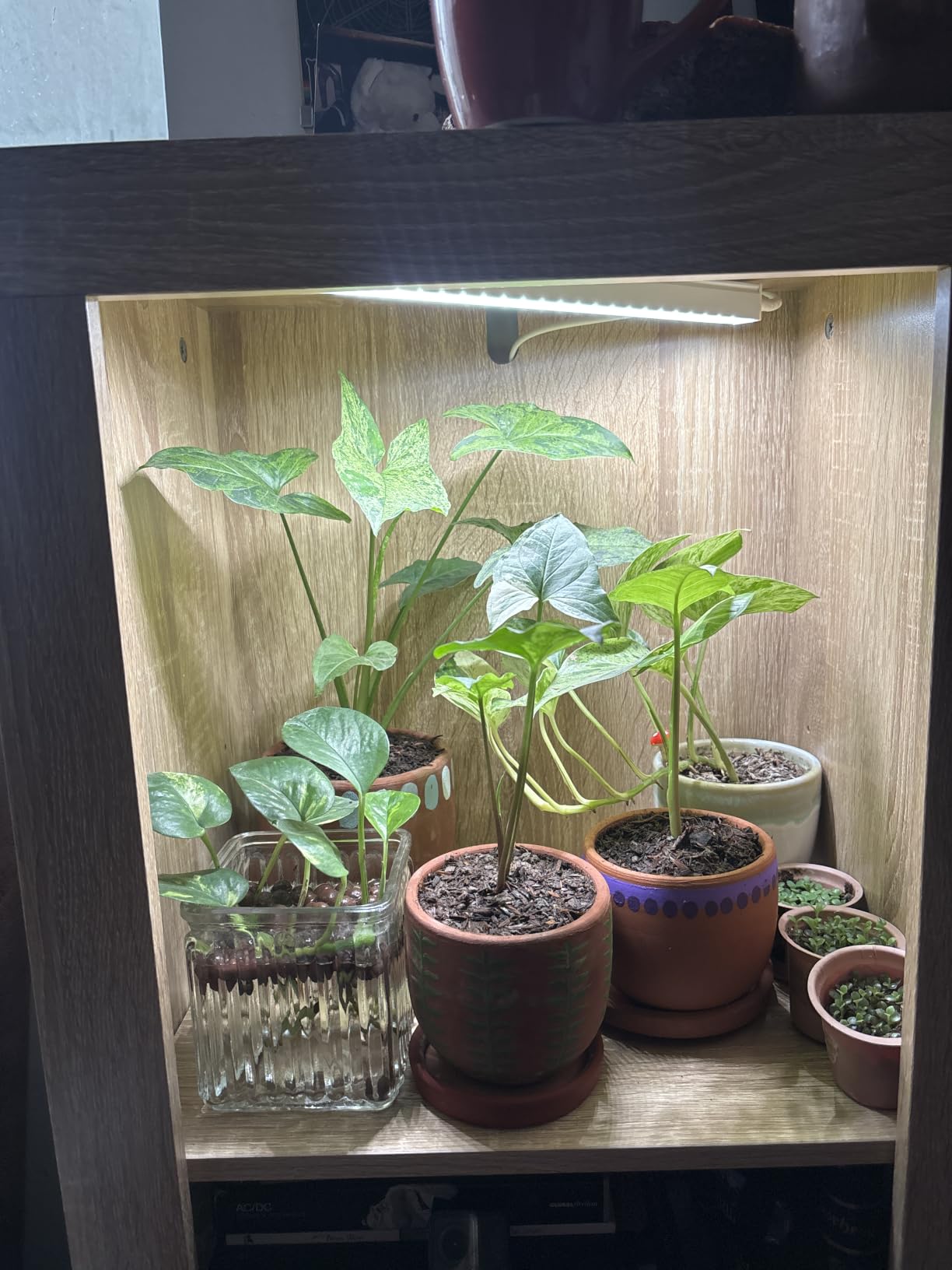
Keep in mind: the timer is not built in
This is the most repeated complaint in reviews, and it is a real gap for anyone running an 18-hour photoperiod. Add a mechanical or digital wall timer to the circuit, and factor that into your planning.
Short included power cords and fixed-length linking cables also mean the bars have to be laid out along a straight line. Curved or staggered shelf arrangements need extension leads.
2. VIPARSPECTRA P1000 100W – Top Rated for Dimming Control and Seed Starting
100 Watt LED Grow Light for Seed Starting Vegetables Bloom, Plant Lights
100W draw at 4000K
216 LED sources
2.5 x 2.5 ft veg coverage
Dimmer knob
+ Pros
- Coverage matches the advertised footprint
- Dimmer knob handles seedlings through flowering
- Pulley hangers make height changes repeatable
- Runs silent and cool on an aluminum heatsink
- Works with an external timer
- Cons
- Very bright even at the lowest setting
- No reflector or hood to soften glare
- Mid-fixture power switch and plug can be awkward
This is the highest-rated fixture in our group, and the rating holds up under scrutiny. Growers report measuring the footprint with a PAR meter and finding it close to the published 2.5 by 2.5 foot vegetative coverage at 16 inches, which is rarer than it should be.
For a large garden, the real value is the dimmer. Seedlings on a propagation shelf and fruiting tomatoes ten feet away need very different intensity, and this is one of the few fixtures here that changes smoothly rather than in four fixed steps.
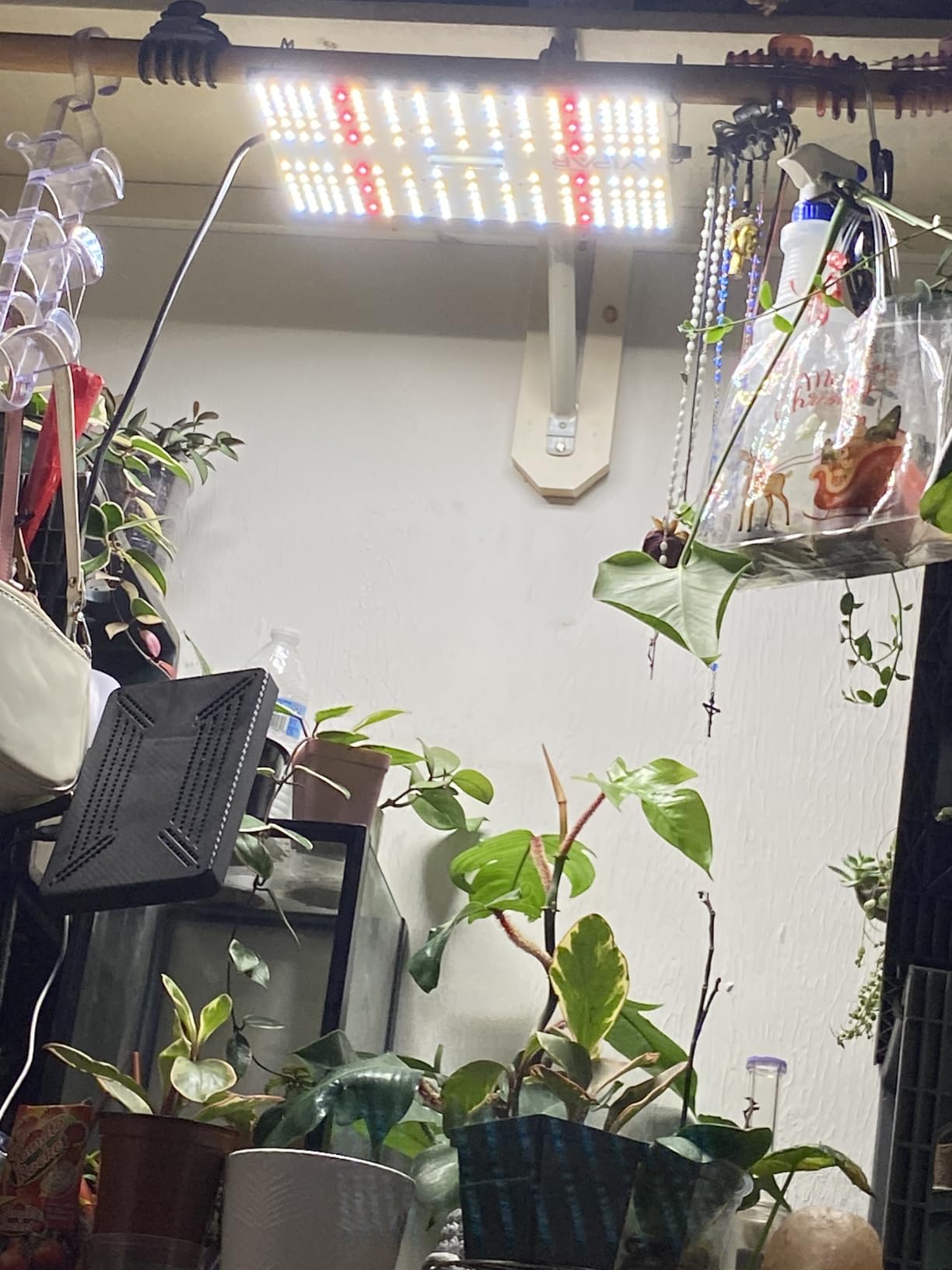
Spectrum, wavelength coverage, and what 730nm adds
The diode set spans 660nm red, 3000K and 5000K white, plus 730nm far-red infrared. Far-red is a minor contributor to photosynthesis on its own, but growers often report slightly faster flowering when a small amount is present.
At 4000K the output looks far less purple than a red-and-blue panel, which matters if the fixture hangs somewhere you actually live.
Dimmability, daisy chaining, and how to scale it
The dimmer knob is on the housing, and the unit supports daisy chaining up to 20 fixtures. That makes it easy to cover a 4 by 4 foot footprint with four fixtures at roughly a quarter of the draw of one 450W panel, with each fixture pointed at a quarter of the canopy.
One warning: the draw is listed at 0.83A on 120V, so twenty chained fixtures would demand a dedicated 20A circuit rather than an ordinary wall receptacle.
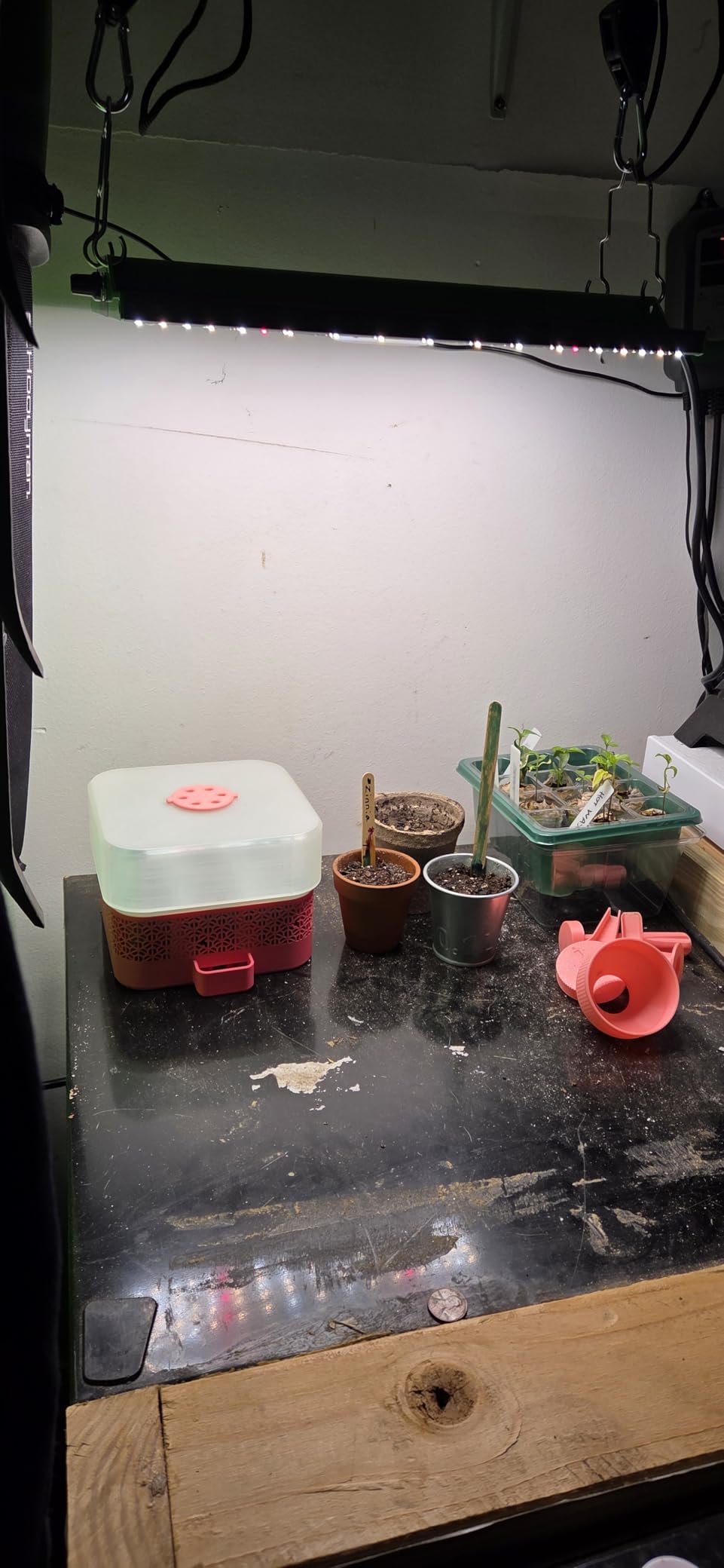
Keep in mind: bright at minimum and no shade
Reviewers repeatedly note that even the lowest dimming setting is intense, particularly in a shared living space. There is no hood or reflector, so glare at eye level is a genuine issue if the fixture sits below head height.
A three-year manufacturer warranty and UL certification are meaningful details for a room you plan to keep running year-round.
3. VIVOSUN LumaLight 200W – Best for App-Controlled Schedules
VIVOSUN LumaLight 200W LED Grow Light, Full Spectrum Plant Light
200W draw with 672 LEDs
Four dimming steps
IP65 housing
Works with GrowHub
+ Pros
- Very bright output
- often run below full
- Quarter-step dimming plus optional app control
- Even coverage with no dark spots
- Runs cool and quiet
- Three-year warranty
- Cons
- One fixture covers about one 10x20 tray at close range
- Dimming in 25 percent steps is coarse up close
- Single packages do not include protective glasses
The LumaLight is the pick when you want scheduling handled in software rather than by a wall timer. It pairs with the Vivosun GrowHub, which is sold separately, and that hub is what turns a static fixture into a set-and-forget light for a room with mixed photoperiods.
On raw output, 200W across 672 LED sources produces bright, even coverage, and multiple owners report replacing older high-intensity discharge setups with it and cutting electricity use at the same time.
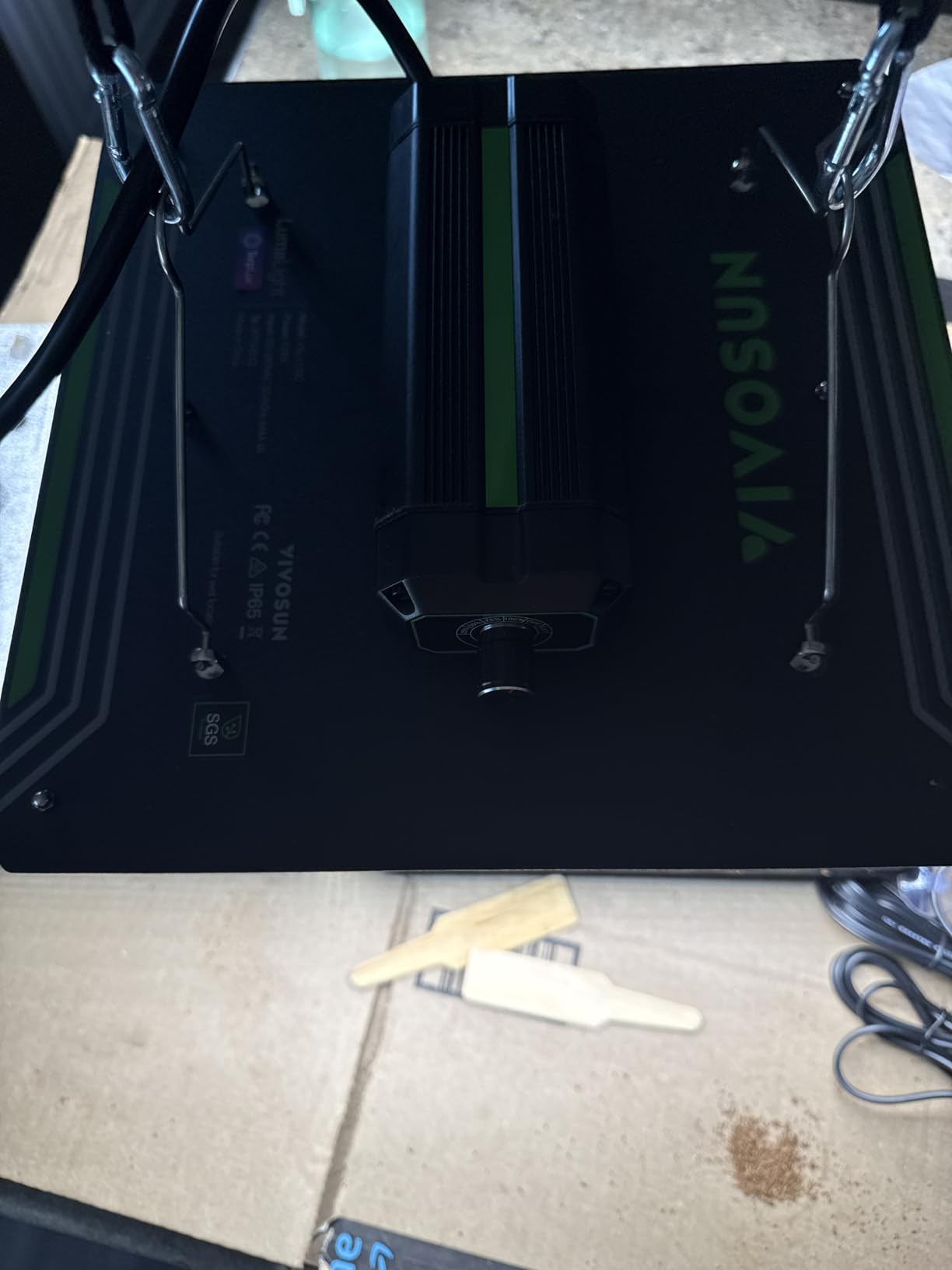
Four-step dimming and why it matters for a mixed room
The dimming knob steps from 25 to 100 percent. That is coarse compared with a continuous knob, but it maps neatly onto real growth stages: seedlings near the top of the scale, vegetative growth in the middle, and full output only where plants are actually setting fruit.
Because the dimming steps are fixed, plan your zones around them rather than trying to fine-tune a single shelf to a specific PPFD value.
Coverage reality check for a large footprint
At 23.5 by 11.8 inches, the housing is built to light roughly a single 10 by 20 tray at close range. Covering a 4 by 4 foot tent means two fixtures or more, and owners moving to bigger rooms generally step up to multi-packs rather than expecting one fixture to fill a corner.
The IP65 rating is a quiet advantage if you are watering overhead or running an indoor greenhouse with humidity.
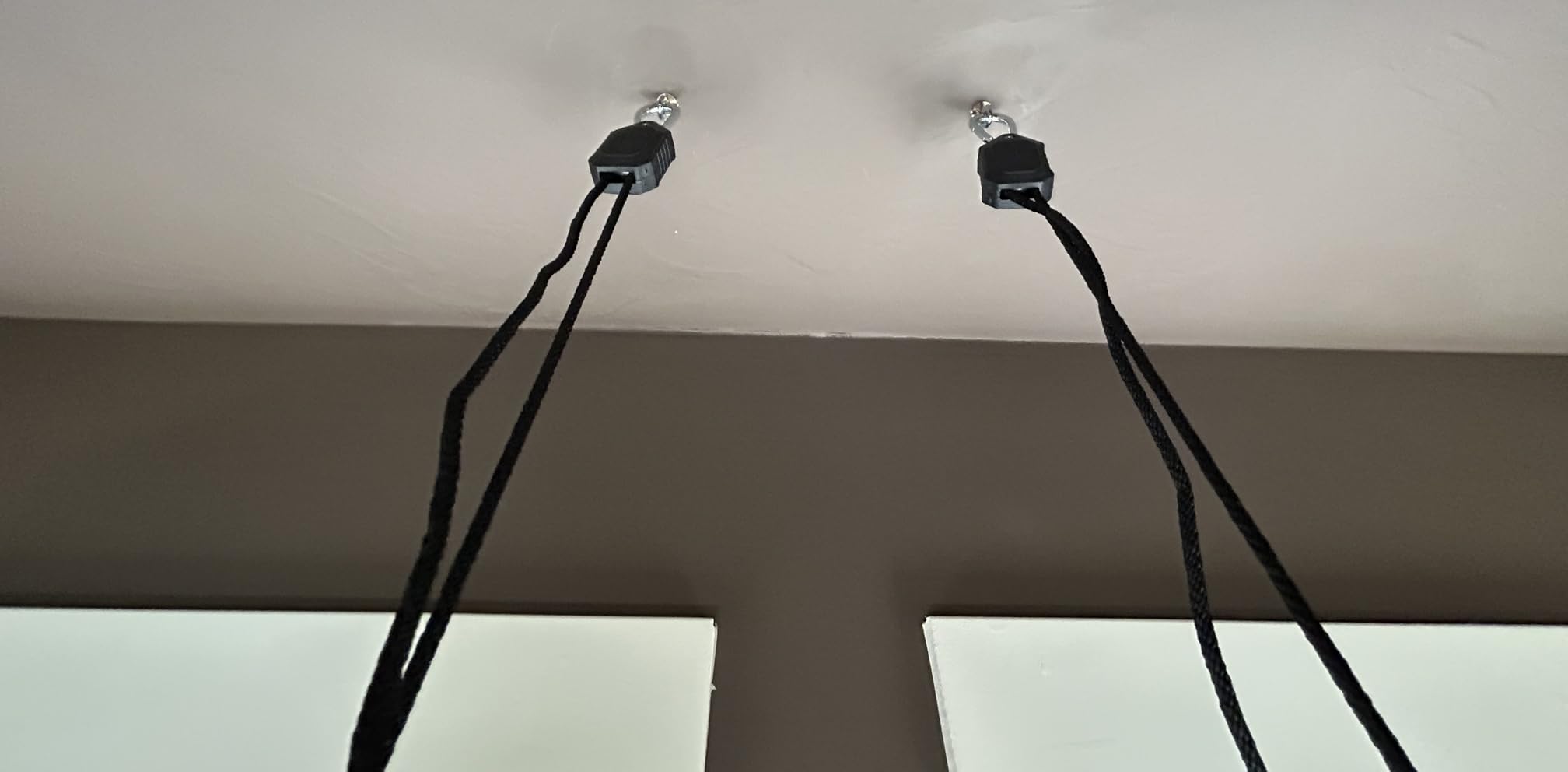
Keep in mind: dimming steps and eyewear
At 25 percent the light is still very bright, and reviewers recommend eye protection for close work. The protective glasses are not included in single-unit packages, which catches people out.
App control also means a second purchase for the hub, so factor that into the cost of the setup before you commit to a multi-fixture plan.
4. Spider Farmer SF4000 – Best High-Wattage Fixture for a 4×4 Grow Tent
Spider Farmer SF4000 LED Grow Lights for Indoor Plants in 4×4 Grow Tent
450W draw at 2.7 umol/J
4x4 tent coverage
Fanless aluminum
Dimming knob
+ Pros
- Even uniform coverage over a full 4x4 footprint
- Unified dimming across multiple fixtures
- Silent fanless operation
- Five-year warranty with service centers
- Solid aluminum construction
- Cons
- Diode boards sit close together which limits footprint
- Fixture runs warm and benefits from airflow
- Hanging hardware needs 8 to 10 inches of clearance
This is the fixture most people mean when they ask for a proper grow light for a large indoor garden. At 450W and 2.7 umol/J system efficiency, it sits in the efficiency range that used to require a 600W high-intensity discharge lamp, and it is explicitly designed for a 4 by 4 foot tent.
Long-term owners report strong yields and unusually responsive support, with several reviews describing failed dimmers or diodes being replaced with free parts.
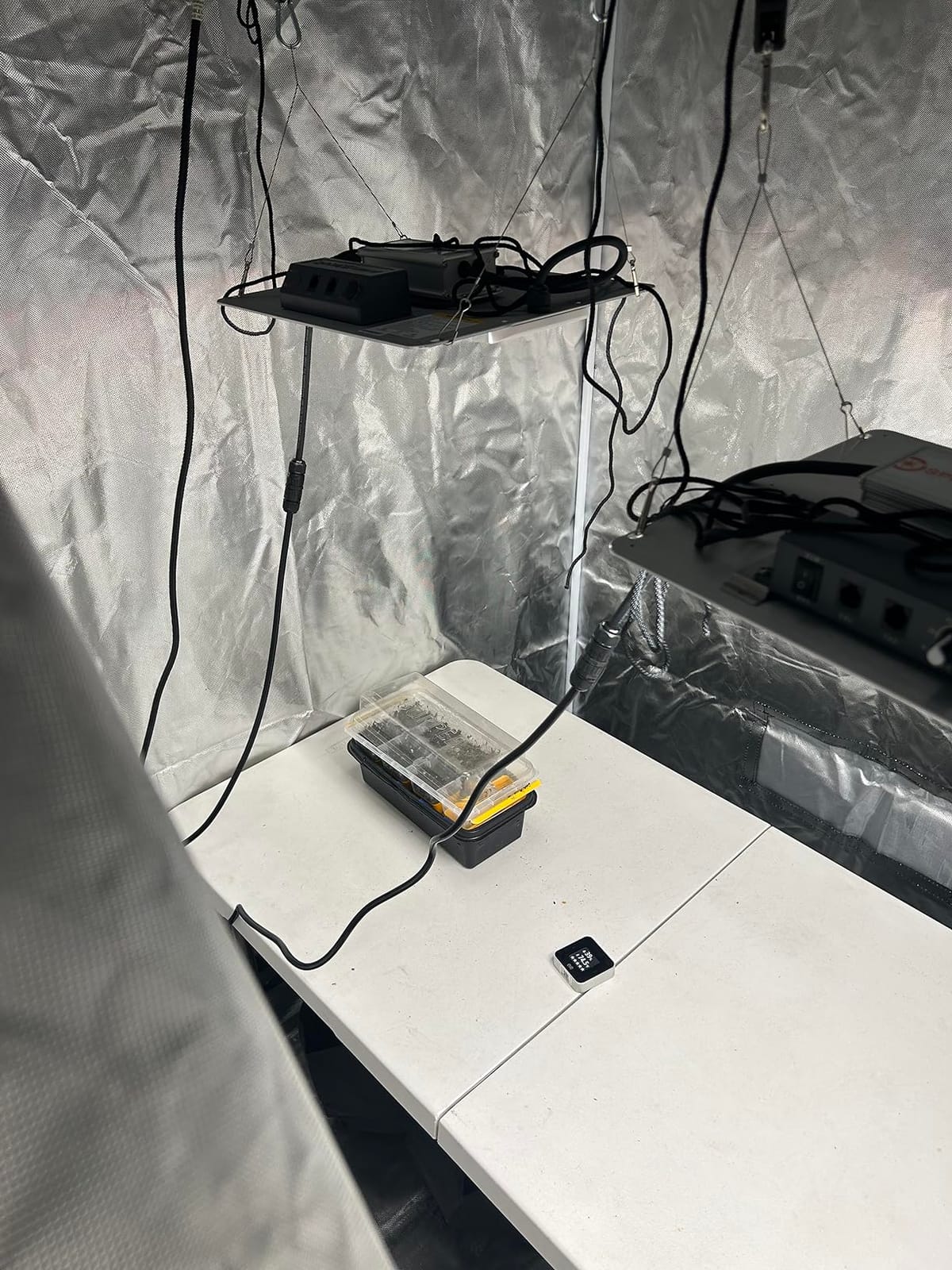
Why the diode layout matters at the canopy
The diode boards are gathered toward the edge of the housing in this version, which spreads output more evenly across a square footprint. In practice that shows up as fewer hot patches directly under the center and more usable light near the tent walls, where single-board fixtures tend to fall away.
It is also built like a room fixture rather than a shelf light: silent, fanless, and built around a thick aluminum heatsink instead of small noisy fans.
Dimming, controllers, and multi-fixture rooms
The dimming knob supports unified dimming across multiple lights, and the fixture is compatible with GGS controllers. For a room running several panels, controlling them from one dial keeps intensity consistent as the canopy changes height.
Unified control is what separates a one-fixture setup from a scalable room. A single dimmer that controls the whole array means you raise or lower the whole garden at once instead of walking around adjusting each unit.
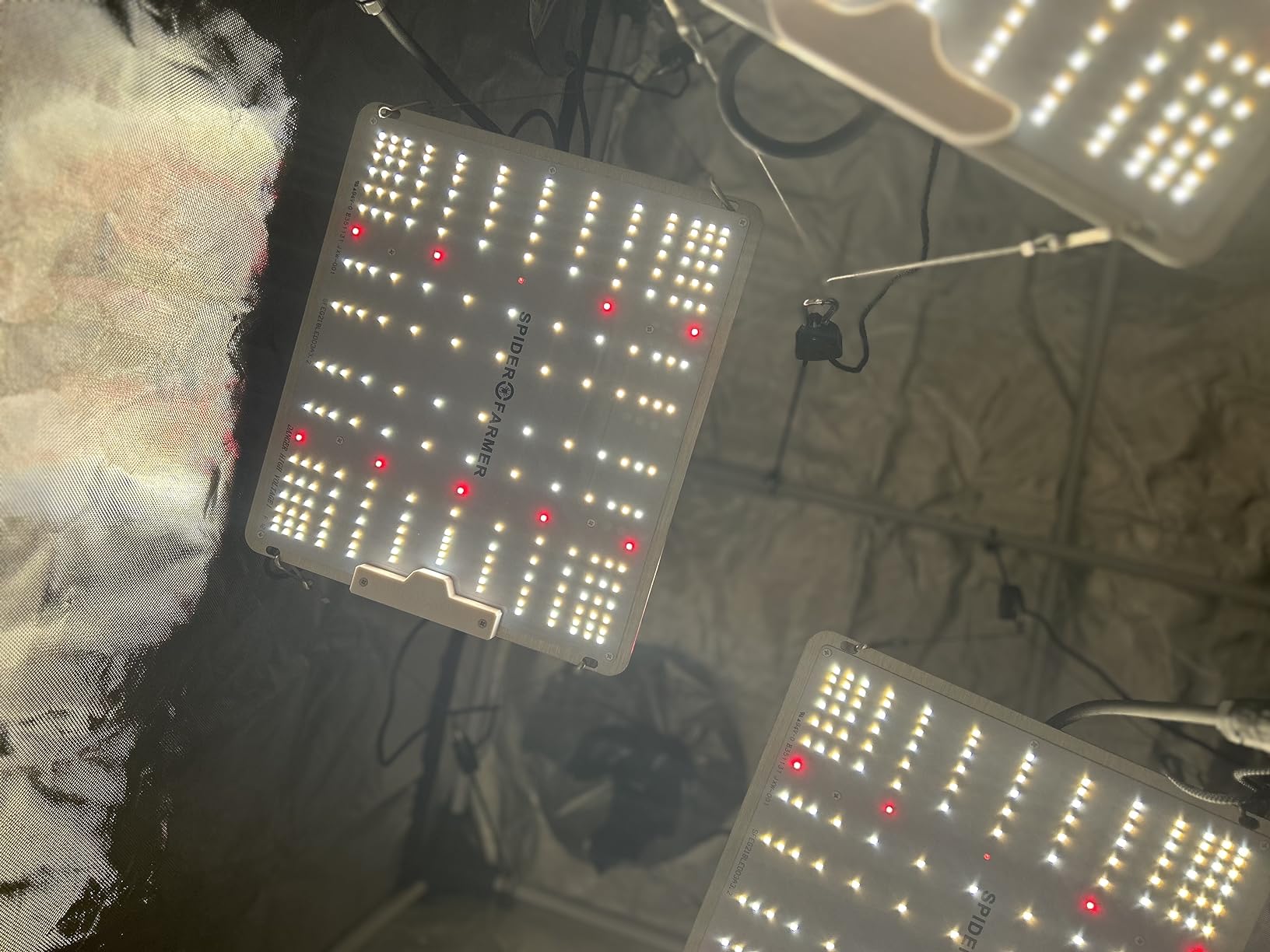
Keep in mind: heat, clearance, and board spacing
The housing runs warm to the touch and reviews specifically recommend airflow behind the fixture. In a sealed closet with no ventilation, that heat has to go somewhere, and it will raise the room temperature and stress both plants and people.
Two smaller frictions: the boards sit fairly close together, which narrows the effective footprint, and the included hanging hardware needs 8 to 10 inches of extra vertical clearance below the ceiling. Check your ceiling height before you commit.
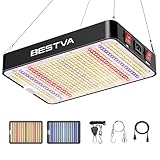
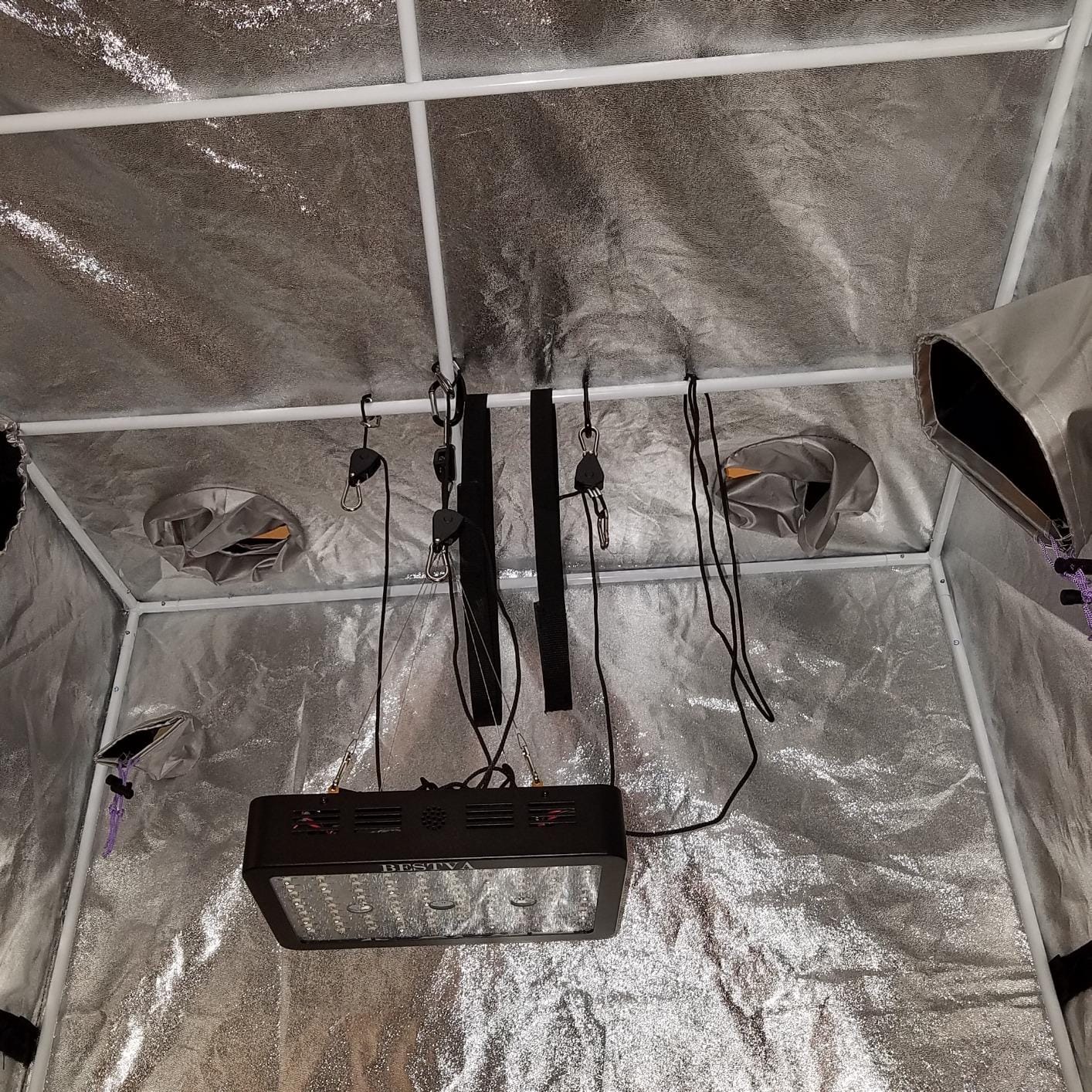
5. BESTVA DC1000 100W – Best Value for Starter Zones and Propagation
BESTVA DC1000 Grow Light for Indoor Plants, Full Spectrum LED Plant Light
100W real draw from 640 LEDs
2 cultivation modes
Multi-fan cooling
2 x 2 ft coverage
+ Pros
- Bright for its class at distance
- Cooling fans run quietly and cut leaf-burn risk
- Hanging hardware and pulley included
- Strong value versus discharge lamps
- Three-year service
- Cons
- The 1000W in the name is not the real draw
- Coverage is tight beyond a single shelf
- Some units have had diode rows fail early
The BESTVA is the fixture to buy when you are lighting a propagation corner, a small shelf, or a starter zone inside a bigger room. It is not built to fill a large footprint on its own, but at 100W actual draw it puts serious light on a small area for very little power.
Owners rate it as strong value in the category, and the cooling fans are the feature that keeps showing up as a reason people bought a second and third fixture.
Why the cooling fans matter in a small enclosed room
Multiple high-speed quiet fans pull air through the aluminum radiators, and the manufacturer rates the housing as running about 10 degrees cooler than conventional lamps of the type. In a small tent or a closed cabinet, that difference decides whether leaves stay healthy or bleach.
It is a different design choice from the fanless fixtures in this list, and it is a deliberate one: some rooms need air movement more than silence.
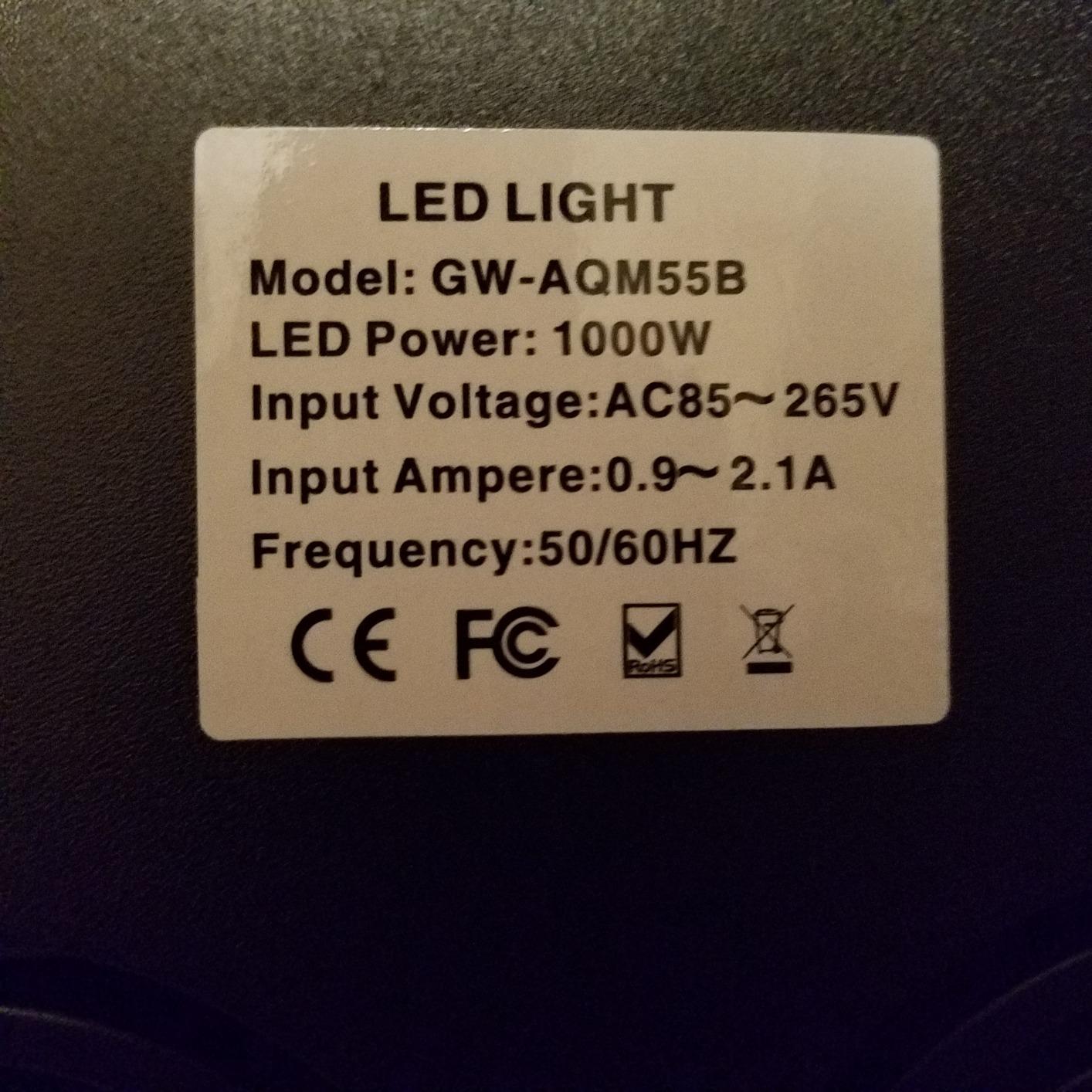
Read the wattage label carefully
The 1000W in the product name refers to an equivalent LED comparison, not the real draw. Actual consumption is 100W from 640 diodes, and buyers who misunderstand that figure end up with a fixture that cannot deliver what they assumed.
Coverage is 2 by 2 feet nominal, stretching to roughly 3 by 2 feet for herbs and leafy greens. Size your expectations to that, not to the name.
Keep in mind: early failures and loose hardware
A recurring complaint is individual diode rows failing within about a year, though support has replaced units under warranty. Some owners also report hanging hardware arriving loose inside a sealed housing, so check it before you install.
It is a three-year service commitment with a 90-day free return window, which is reassuring for a fixture this inexpensive.
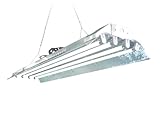
6. Durolux T5HO 4-Lamp Fixture – Best Fluorescent Setup for Big Rooms
Durolux T5 Ho Grow Light – 4 Foot 4 Lamps – DL844 Fluorescent Hydroponic Indoor Fixture – Bloom Veg Daisy Chain with Bulbs
Four 6500K T5HO lamps
20000 lumens total
95 percent reflective reflector
Powers 5 fixtures
+ Pros
- High lumen output from a four-lamp fixture
- Reflector directs light down onto the canopy
- Step dimming with independent switches
- On-fixture outlet allows chained fixtures
- Wet and damp rated
- Cons
- Fluorescent tubes need periodic replacement
- Bulkier and heavier than LED panels of similar output
- No dimming beyond two on-body switches
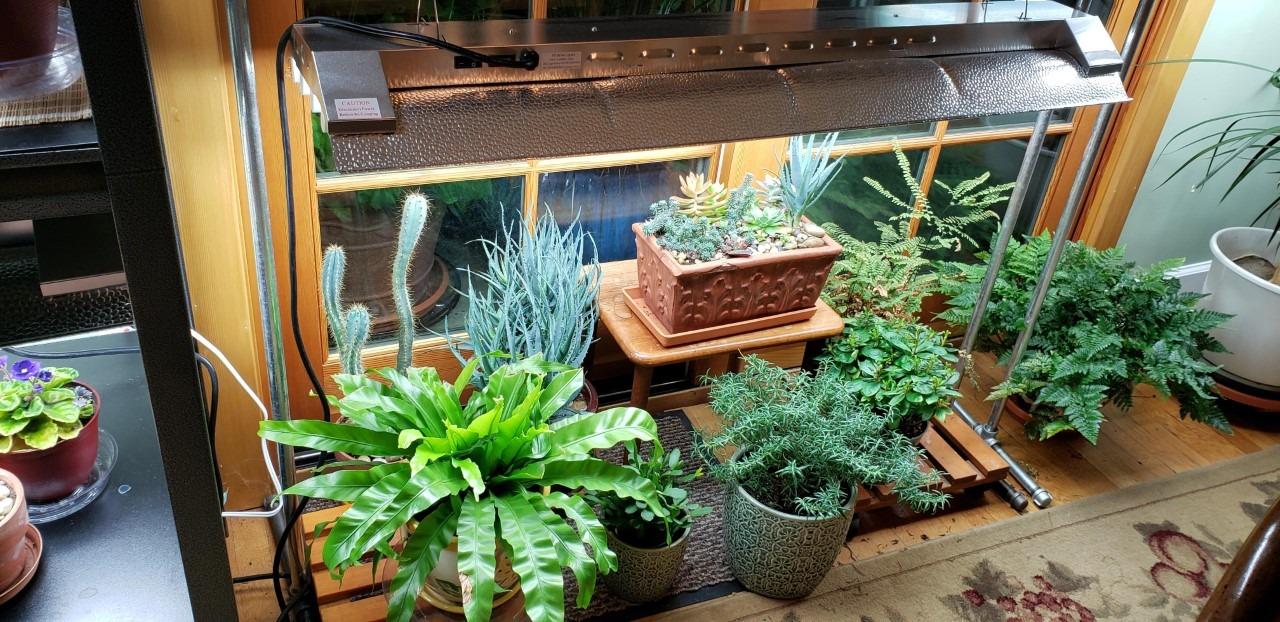
Fluorescent fixtures are not fashionable, but they are still rational in a large indoor garden. Four 6500K T5HO lamps put out 20,000 lumens, and the on-fixture outlet lets you power up to five fixtures from a single wall receptacle, which solves the wiring problem that stops most people from scaling a room.
Experienced hobbyists have long described T5 output as sufficient for vegetative growth, and this fixture is built around that use case.
The reflector is the whole point
The German hammer-tone reflector is rated at 95 percent reflectivity, which the manufacturer puts at roughly 30 percent more output than comparable systems. A bare tube throws light everywhere; a reflector sends it down where the canopy is.
That single component is why a fluorescent fixture can compete with LED panels that draw similar power, and it is why these still show up in indoor hydroponic setups.
Step dimming and chaining five fixtures
Two body switches control the inner and outer lamp pairs independently, giving you a rough two-step dim without any electronics. The on-fixture outlet powers up to five fixtures, so a full ceiling grid runs from one plug.
It is wet and damp location rated with UL and CUL approval, which is a genuine advantage in a humid indoor greenhouse.
Keep in mind: tubes, weight, and dimming limits
Fluorescent tubes need replacing periodically, and unlike LEDs the replacement cost recurs for the life of the setup. The fixture also weighs 8 pounds and measures 47.5 by 12.5 inches, so it needs real hanging hardware rather than adhesive clips.
Its 4.2 rating reflects that maintenance overhead and dated controls more than any problem with the light itself.
7. KINGPLUS KING2000 – Sized for 3×3 to 3×5 Foot Tents
KingLED KING2000 Grow Light for Indoor Plants, Fits 3×3, 3×4 & 3×5 ft Tents
200W rated at 5000K
Fits 3x3 to 3x5 ft tents
Built-in fans
3-year warranty
+ Pros
- Runs far cooler than discharge lamps
- Built-in fans are effective and quiet
- Solid build with a metal hanging kit
- VEG and BLOOM switches on the body
- No degradation reported over a year of daily use
- Cons
- Not dimmable and only VEG/BLOOM switching
- Faint fan noise in quiet rooms
- Some owners needed a replacement for a failed LED row
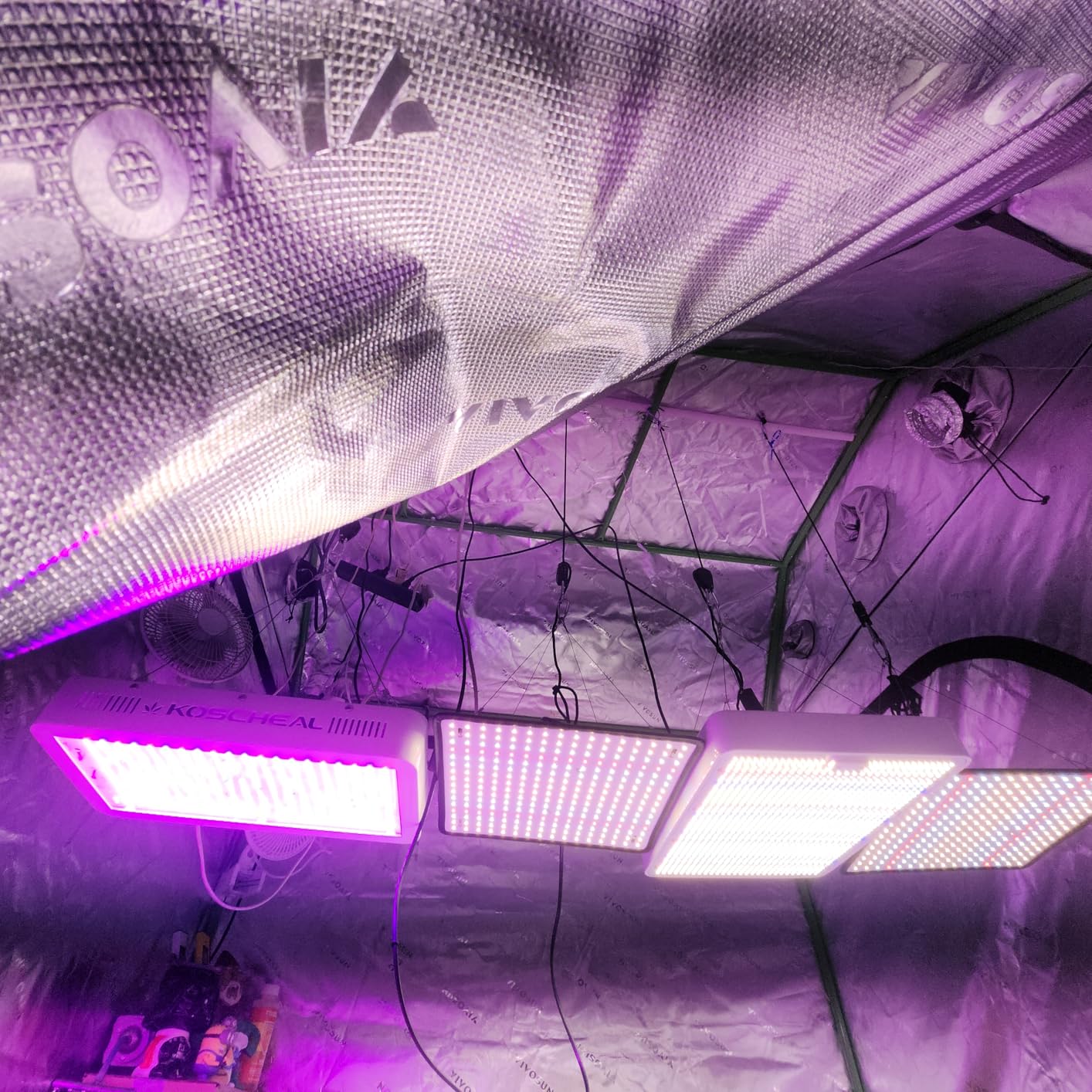
This panel is dimensioned for the middle of the market. The manufacturer lists it for 3 by 3, 3 by 4, and 3 by 5 foot tents, and at 6 feet of open-room hanging height it covers roughly 5.6 by 5.6 feet.
Owners running it daily report no output degradation, and the low heat output means a single room fan usually handles ventilation.
Stage switching without dimming
The body carries separate VEG and BLOOM switches, and the spectrum is 460nm blue, 660nm red, and 3000K to 5000K white. That is enough control for a single crop cycle, but it is not intensity control.
If you move a fixture from a seedling shelf to a fruiting canopy, you will have to change height rather than output. Plan the mounting drop before you drill anything.
Fan noise and heat in a mixed-use room
The built-in fans move air through the panel to refresh the air around foliage, which is helpful in a closed tent. In a quiet living space reviewers note the fan is faintly audible, so this is a grow-room fixture rather than a living-room one.
Output of 6,680 lumens at a 120-degree beam angle spreads light wide, which is the right behavior for a square tent.
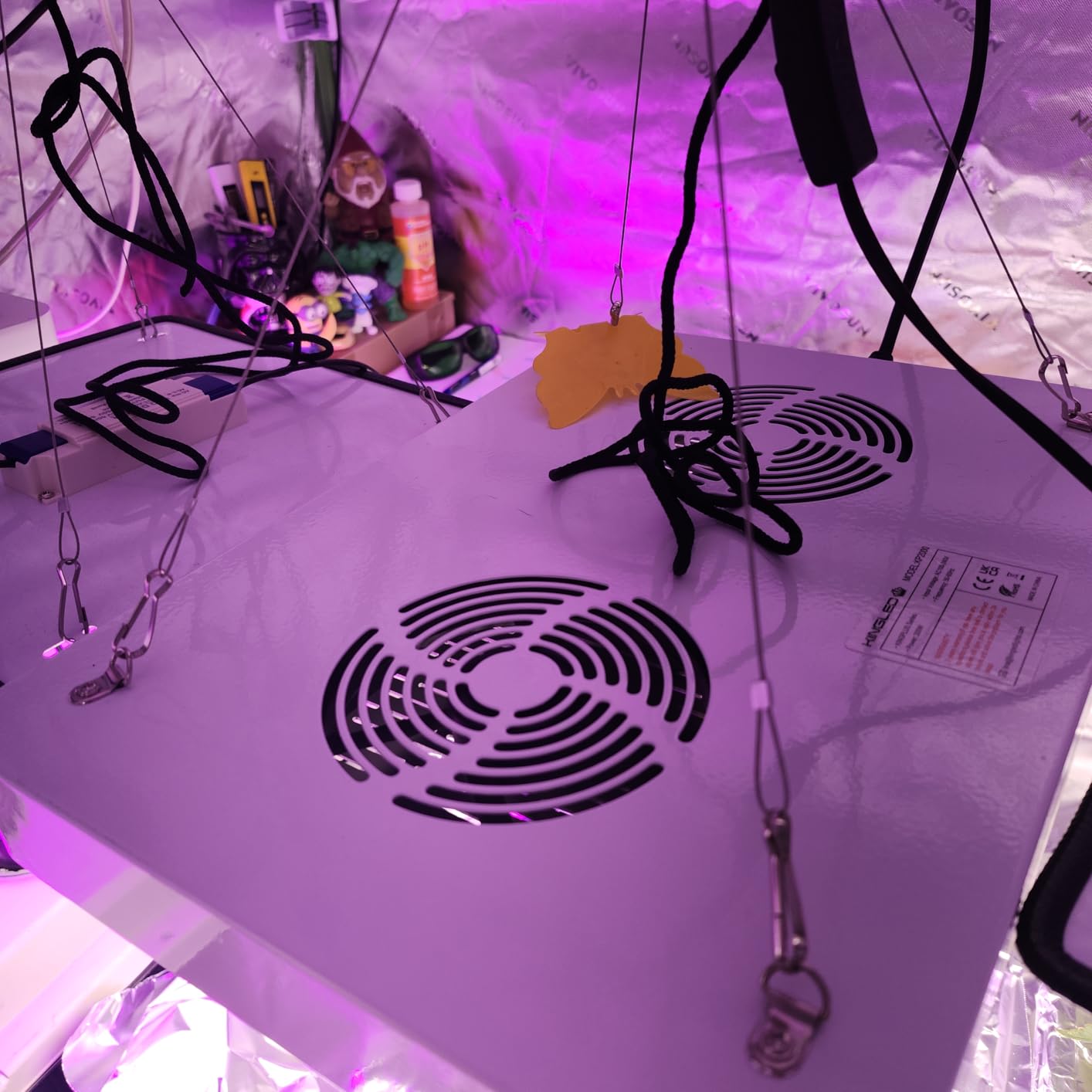
Keep in mind: no dimming and occasional row failures
The absence of dimming is the limitation buyers mention most, along with light output alone being able to cause stretching in very small tents. Some owners have also had LED rows fail and needed a replacement unit, which support handled under the three-year limited warranty.
It remains a sensible pick when a tent size is known and the budget is fixed.
8. SunBlaster 54W T5HO Tube – Lightest Fixture for Propagation Shelves
SunBlaster SL0900304 54 Watt 6400K 4′ 120V Hydroponic Grow Light Lamp Ballast Fixture with NanoTech T5HO Reflector for Indoor Home Gardens and Plants
54W self-ballasted 6400K
3730 lumens
NanoTech reflector
1.8 lb housing
+ Pros
- Reflector directs light onto the canopy
- Negligible heat output
- Works with standard T5HO bulbs
- Includes hanging and surface clips
- Nearly silent operation
- Cons
- Reflector and ballast housings are fragile
- Bulbs and reflectors can arrive damaged
- Single in-line switch with no dimming or timing
At 1.8 pounds, this is the easiest fixture here to hang and move, and that matters when you are lighting a seed shelf or a propagation rack that gets rearranged. The manufacturer recommends 6 to 8 inches above the canopy, a distance that is impractical with heavier housings.
It also accepts standard T5HO bulbs, so replacements are easy to source.
What the NanoTech reflector actually changes
The manufacturer claims the reflector captures 99.9 percent of light otherwise lost, averaging a 48 percent increase in available light at the plant. Whether or not you accept the exact figure, the direction is right: a reflector concentrates output downward instead of letting it wash the ceiling.
At 3730 lumens from a 54W self-ballasted lamp, output per watt is modest, which is appropriate for seedlings and clones rather than a fruiting canopy.
Chaining and placement in a large room
Fixtures daisy chain up to eight from a single power cord with no adapter, and the supplied clips handle both hanging and flat-surface mounting. That is a low-cost way to run a long propagation line without new circuits.
Rated for 10,000 lamp hours on 120V, this is a fixture you will replace tubes on, not one you will replace.
Keep in mind: build quality and packaging
Reviews are split on durability. The reflector and ballast housings are described as flimsy and easy to scratch or crack, and some units arrive with broken bulbs or already-scratched reflectors because packaging is minimal.
Inspect the reflector and tube on arrival. The single in-line switch also means an external timer is mandatory for any photoperiod control.
9. MARS HYDRO TS1000 150W – Most Reviewed and Easiest to Scale
MARS HYDRO 150W TS1000 LED Grow Light for Indoor Plants Full Spectrum
150W draw from 354 LEDs
Patented reflector hood
0-100 percent dimming
120V 240V 277V
+ Pros
- Smooth 0-100 percent dimming at any height
- Reflector hood cuts spill and raises usable light
- Fanless and silent with very little heat
- Multi-voltage driver works on three voltages
- Even coverage verified with a PAR meter
- Cons
- Side-mounted driver makes the fixture hang tilted
- Power inlet fit is very tight
- Occasional early driver failures
With more than 20k reviews, this is the fixture with the deepest long-term data behind it. Owners report multi-year reliability, dense uniform growth, and lower electricity use than the older LED arrays they replaced.
For a large garden, the multi-voltage driver is quietly the most useful feature here: the same unit runs on 120V, 240V, and 277V, so a room that outgrows a household circuit does not force a fixture change.
Reflector hood, dimming range, and daisy chaining
The patented white hood has a 120-degree refraction angle and the manufacturer credits it with a 25 percent increase in light utilization while cutting spill onto walls. Continuous 0 to 100 percent dimming then lets you match output to stage and height without moving the fixture.
Up to 50 fixtures can be daisy chained through a separate RJ12 connector, which is the scaling path for a room rather than a single tent.
Coverage and the single-tent limit
Ideal coverage is 2.5 by 2.5 feet with a 3 by 3 foot maximum, and 150W replaces a 250W single-ended discharge lamp. That makes a 4 by 4 foot tent a four-fixture job, which is precisely why the daisy-chain limit matters.
At 354 LEDs on a 150W draw, this is a quantum board layout, meaning many small diodes on a flat panel rather than a few large emitters.
Keep in mind: the tilted hang and tight connector
The driver box is mounted on one side, so the fixture hangs noticeably tilted unless you balance it on the hangers. The power inlet hole is also a very snug fit, and the reflector sheet is thin metal that can arrive dented.
A small number of units report driver or light failure within 6 to 12 months, which support has replaced.
10. TYAGMAM 4ft T8 4-Pack – Best Four-Bar Set for Racks and Greenhouses
Grow Light for Indoor Plants,4ft T8, 180W(4 x 45W, 1080W Equivalent), Super Bright, Full Spectrum Sunlight Plant Light, LED Grow Lights for Indoor Plants, Greenhouse, 4-Pack
Four 4ft T8 tubes at 180W
Integrated reflector
Link 4 fixtures
5000K
+ Pros
- Very light and easy to install
- Integrated reflector improves efficiency without assembly
- Linkable so one timer drives all four bars
- Aluminum shell dissipates heat
- Good value for greenhouse and shelf use
- Cons
- Thin housing metal feels light-duty
- Pinkish-white glow instead of red and blue
- Mounting clips not sold separately
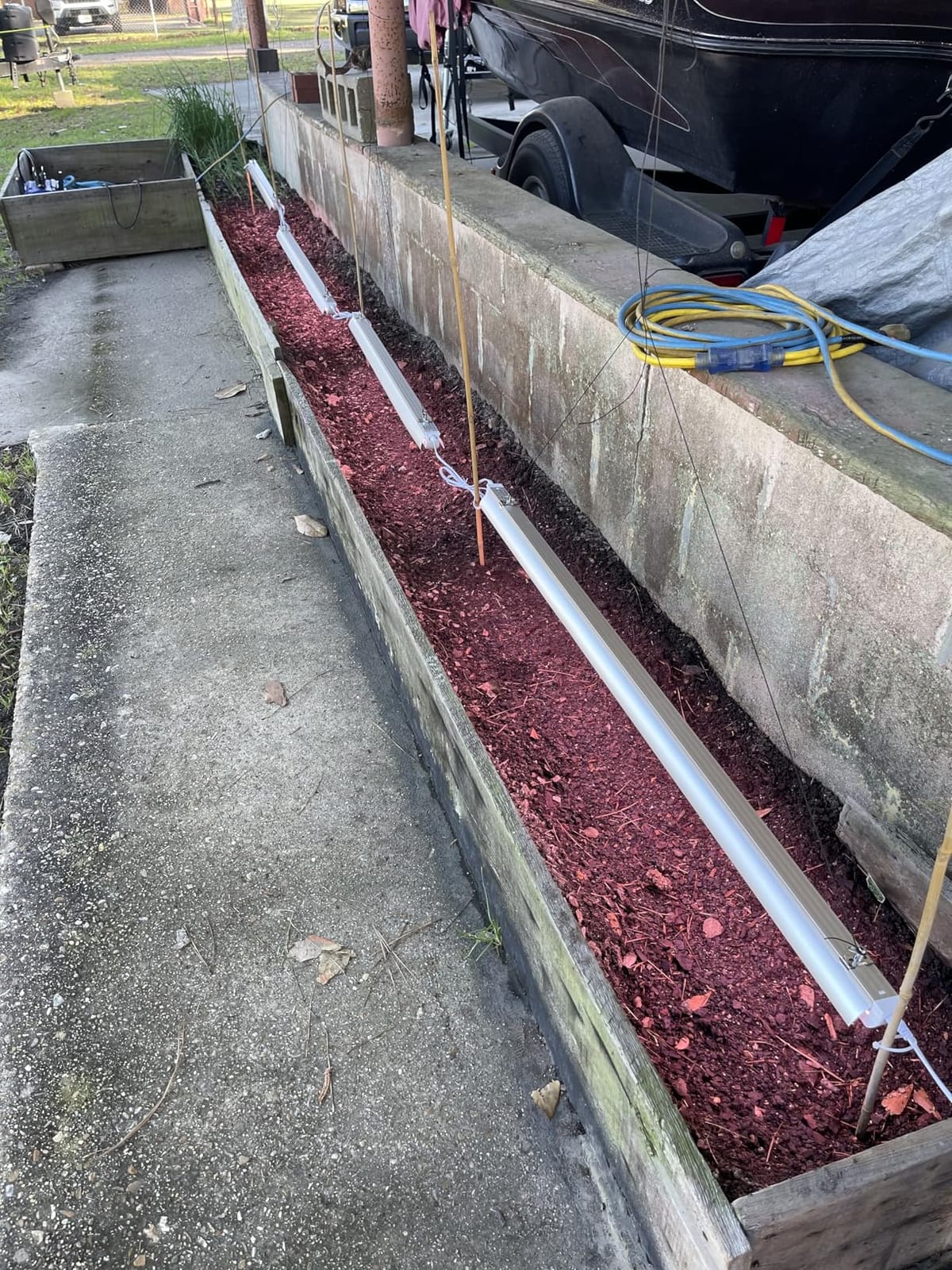
Four four-foot T8 tubes at 45W each put 180W over a shelf or greenhouse bench, and the integrated reflector means there is no separate hood assembly. Linking up to four fixtures with the included 36-inch cords lets a single timer drive the whole rack.
Buyers describe the thin housing as appropriately light-duty rather than cheap, which is the right framing for a fixture this easy to reposition.
What 1080W equivalent actually means
The set is marketed as equivalent to 1080W of older lighting, and real draw is 180W. Buyers focused on efficiency rather than lumen marketing tend to be happier with this fixture.
Color temperature is 5000K, which sits in the 5000 to 6500K band that home growers report as a comfortable target.
Heat and mounting in a greenhouse-style setup
The shell is 100 percent aluminum, which helps move heat away from the diodes and extend their life. Reviewers still note the tubes run hot, so keep wiring clear of the metal parts.
Mounting options include ceiling clips, cable ties, and hang rings, and the unit is 46 by 2.3 by 1.5 inches, so it fits under a shelf without stealing headroom.
Keep in mind: thin metal and a pinkish glow
The most common surprise is appearance. The output is a pinkish white rather than the red-and-blue look most buyers expect from product photos, and the housing is thin sheet metal that dents if you are careless hanging it.
Loss is real here: mounting clips are not sold separately, so plan to keep the supplied set together.
How to Choose a Grow Light for a Large Indoor Garden
Sizing a room is arithmetic, and the arithmetic is simpler than most listings suggest. Start with the floor area you are lighting, not the room area, then multiply by a watts-per-square-foot target that matches your crop.
Sizing by area with watts per square foot
A 4 by 4 foot tent is 16 square feet, and at the 30 to 50 watts per square foot production range that lands between 480W and 800W of total fixture capacity. A 4 by 8 room is 32 square feet, so double it to 960W to 1600W. A 5 by 5 tent at 25 square feet sits at 625W to 1250W.
Count fixtures second. A single 450W panel can serve a 4 by 4 footprint, but the same 32 square feet usually runs better as four smaller fixtures at roughly a quarter the intensity each, because the falloff is flatter and you avoid the plant rotation problem.
PPF, PPFD and PPE in plain English
PPF is the total photons a fixture emits every second, PPFD is how many of those photons actually land on a square meter of canopy each second, and PPE is the ratio between the two, usually quoted in micromoles per joule. Only PPFD tells you what a plant receives.
Houseplants and seedlings are comfortable in the 100 to 300 PPFD range that experienced growers target, while fruiting crops want considerably more. A fixture rated 2.7 umol/J like the Spider Farmer is producing far more usable light per watt than one at 1.7, which is why wattage alone is a poor comparison.
Fixture format: bars, panels, racks, and tubes
Quantum board panels concentrate light into one point and suit square, low-ceilinged spaces. Bar-style fixtures spread output along a line and match long racks or rectangular rooms. Linkable T5 and T8 tubes win when you have several tiers and want one timer to drive everything. Vertical panels exist for rack systems where the plants are stacked rather than spread.
Match the format to the geometry of your space, not to the popularity of the brand.
Hanging height and canopy distance by growth stage
Seedlings want closer light at lower intensity, so raise a dimmable fixture rather than moving it down. Vegetative growth generally sits higher, and fruiting crops need the most distance and the most intensity. The SunBlaster’s 6 to 8 inch recommendation is unusually close, which is fine for a propagation shelf and impractical for a mature canopy.
Always check the vertical clearance the hanging hardware needs, since several fixtures in this group require 8 to 10 inches below the ceiling before the light even starts.
Dimming schedules for a mixed planting room
A room holding vegetables and houseplants usually needs two photoperiods, which is where external timers or an app hub earn their cost. Run a mechanical timer on the main array at 18 hours on and 6 hours off for fruiting crops, and put propagation shelves on a separate timer at 14 to 16 hours.
Where the fixture supports it, dial vegetative fixtures to 50 to 75 percent and raise them only for the final stretch. Growers regularly report that dimming down a strong light produces better results than pushing a weak one.
Electrical planning for a multi-fixture room
Add up the draw before you buy. A 450W fixture on 120V pulls close to 4 amps, so a four-panel room approaches the limit of a standard 15A circuit before you add a fan or a dehumidifier. Fixtures that accept 240V, or daisy chain limits you respect rather than exceed, are the difference between a room that scales and one that trips a breaker.
Use GFCI-protected outlets in any damp location, keep connections off the floor, and never exceed a manufacturer’s stated daisy-chain rating.
What professional growers use and what to avoid
High-intensity discharge lighting was historically the standard for large indoor plantings, and it still is in some commercial operations. Home growers have moved almost entirely to bar-style LEDs for 4×4-and-larger rooms, which is why eight of the ten fixtures here are LED or LED tube fixtures.
What to avoid is the opposite of what most roundups recommend: cheap plug-and-play shelf lights cannot serve a large garden, and single fixtures crammed into small tents cause bleaching. Under-lighting is the more common failure, producing stretched, weak plants and small harvests, and it is entirely fixable with the sizing math above.
Frequently Asked Questions
What type of grow light is best for growing vegetables indoors?
A dimmable full-spectrum LED fixture is the best all-around choice for indoor vegetables because you can raise intensity for fruiting crops and lower it for seedlings on the same fixture. For a large garden, run several smaller fixtures across the footprint rather than one high-wattage panel, aiming for 30 to 50 watts per square foot of real fixture capacity. Bars and quantum board panels both work; bars suit long racks, panels suit square tents. Add an external timer or an app hub so the photoperiod runs without you.
What kind of grow light is best for indoor tomatoes?
Tomatoes need the most light of the common indoor crops, so look for a high-output fixture with strong red content and enough headroom to raise it as plants grow. A 450W quantum board panel over a 4 by 4 foot footprint is the format most experienced growers use for fruiting vegetables, and 460W to 1000W of total capacity is a reasonable target for a 16 square foot tent. Keep the fixture as far above the canopy as the housing allows and dim it if leaves bleach at the top.
What are the drawbacks of using grow lights for indoor plants?
The main drawbacks are cost of electricity, heat in an enclosed room, and light burn. – Running a large array raises room temperature, and growers report lights stressing both plants and people in sealed spaces. – Fixtures are bright, and most lack a hood, so eye protection and sensible placement matter. – Cheap drivers can shift spectrum color as they dim, and some dimmable fixtures only dim the red channel. – Coverage claims often mean weak corners once dimmed, forcing constant plant rotation. – Every fixture needs a timer for a proper photoperiod, and most budget models do not include one.
What lights do professional growers use?
Professional growers use high-intensity discharge lamps such as metal halide and high-pressure sodium for large flowering rooms, and they have increasingly moved to bar-style and quantum board LEDs in newer facilities. Home growers have largely standardized on LED fixtures for 4×4-and-larger rooms, with HID retained for older setups. The practical difference is intensity: a 600W discharge lamp remains a benchmark, but modern LEDs at 2.7 umol/J now approach its output at a fraction of the electricity.
What is the recommended LED wattage for a 4×4 grow tent?
A 4 by 4 foot tent covers 16 square feet, and production growers recommend 30 to 50 watts per square foot, which works out to roughly 480W to 800W of total fixture capacity. For seedlings, propagation, or leafy greens, 25 watts per square foot is enough. In practice that total is easier to achieve with two 250W-class panels or four 150W fixtures than with one large fixture, because smaller fixtures spread light more evenly across the corners. Check your circuit capacity before adding multiple fixtures.
Bottom Line for Large Indoor Gardens in 2026
If you are lighting racks, shelves, or a wide room, start with the Barrina eight-bar set, which spreads coverage along lines rather than points. If you have one dedicated 4×4 tent, choose the Spider Farmer SF4000 for raw output and unified dimming. If dimming precision and the highest rating matter most, the VIPARSPECTRA P1000 is the safest pick, and the MARS HYDRO TS1000 is the easiest fixture to scale when you outgrow a household circuit.
Whichever you choose, measure the canopy area, pick your watts per square foot, and add an external timer before the plants arrive. That single habit eliminates the most common failure in a large indoor garden.