

Short answer: for most people, the best hand plane for smoothing boards is the Amazon Basics No. 4 adjustable bench plane (best all-round), the KAKURI 50mm Japanese pull plane (best value, and the cleanest cut on end grain and figured stock), and the Stanley No. 62 low angle jack (best for tear-out-free flattening of wide panels). Everything below is a hand-powered plane, not an electric planer.
I have spent a lot of hours with these ten planes in a small shop, flattening glue-up panels of poplar and walnut, squaring the ends of cutting boards on a shooting board, and taking rough-sawn pine down to a surface that needed no sanding at all. That last part is the actual goal here. A tuned hand plane leaves a surface so flat and clean that a scraper or one pass of 320 grit is the finish, and a badly tuned one leaves chatter you have to sand out, which defeats the whole exercise.
Before we get into the list, one clarification that the search results constantly blur. A hand plane is a flat-soled tool with an angled iron that shears a controlled shaving off the top of a board. An electric planer is a machine that takes a rotating cutterhead over your stock. If you want to reduce a rough-sawn 2×4 down to thickness fast, the machine wins. If you want a glue-up panel dead flat with its edges squared and a surface that reflects light, the plane wins, and no power tool on the market touches that finish.
I also want to be straight with you about something the roundup pages usually skip. Every hand plane, new or ninety years old, needs tuning before it will take a shaving. Budget models usually mean an afternoon of work. That is not a defect so much as the nature of the tool, and I have put a rough fettling estimate in every section below so you know what you are getting into.
Our Top 3 Tested Hand Planes for Smoothing Boards in 2026
These three cover the widest range of board work in this roundup. The No. 4 bench plane is the safe first purchase, the kanna is the most interesting tool here, and the low angle jack is the one to buy when tear-out is the problem you cannot solve any other way.
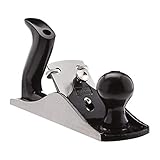
Amazon Basics No. 4 Bench Plane
- 2 inch steel blade
- Adjustable mouth and depth
- Cast iron body
- 2.7 pound weight

KAKURI 50mm Japanese Pull Plane
- Laminated Japanese steel blade
- Dual chipbreaker
- Oak body
- 1.5 pound weight
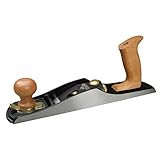
Stanley No. 62 Low Angle Jack
- 12 degree bed
- One-piece base and frog casting
- Patented lateral lock
- 6.3 pound weight
Comparing All 10 Hand Planes for Board Smoothing in 2026
All ten picks in the roundup, with the specification that actually matters for board work. For a quick read, the sole length tells you the widest board the plane can true in a single pass, and the blade width tells you how much of that pass is cutting.
| Product | Details | |
|---|---|---|
| Amazon Basics No. 4 Bench Plane |
|
Check Latest Price |
| KAKURI 50mm Japanese Pull Plane |
|
Check Latest Price |
| Stanley No. 62 Low Angle Jack |
|
Check Latest Price |
 Jorgensen No. 60-1/2 Block Plane Jorgensen No. 60-1/2 Block Plane |
|
Check Latest Price |
 GreatNeck C4 Bench Plane GreatNeck C4 Bench Plane |
|
Check Latest Price |
 Stanley Bailey No. 4 Smoother Stanley Bailey No. 4 Smoother |
|
Check Latest Price |
 Jorgensen No. 4 10 Inch Smoother Jorgensen No. 4 10 Inch Smoother |
|
Check Latest Price |
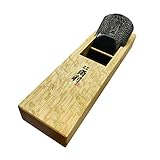 KAKURI 60mm Large Japanese Plane KAKURI 60mm Large Japanese Plane |
|
Check Latest Price |
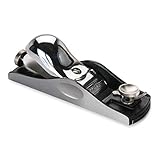 WoodRiver Low Angle Block Plane WoodRiver Low Angle Block Plane |
|
Check Latest Price |
 Taytools No. 4 Smoothing Bench Plane Taytools No. 4 Smoothing Bench Plane |
|
Check Latest Price |
1. Amazon Basics No. 4 Adjustable Bench Plane – The Best All-Round Plane for Smoothing Your First Boards
Amazon Basics Woodworking Hand Planer – No.4 Adjustable Bench Plane with 2-Inch Steel Blade for Quality Wood Smoothing Cuts, Grey/Black
Cast iron body
2 inch steel blade
Adjustable mouth and depth
9.8 in long, 2.7 lb
+ Pros
- Adjustable mouth and depth give real control of shaving thickness
- Heavy cast iron body damps vibration on long passes
- Front knob and rear tote make long smoothing strokes comfortable
- Simple lever cap that a beginner can actually understand
- Cons
- Casting is basic so a little flattening is usually needed first
- Entry-level blade steel needs regular sharpening to hold a fine edge
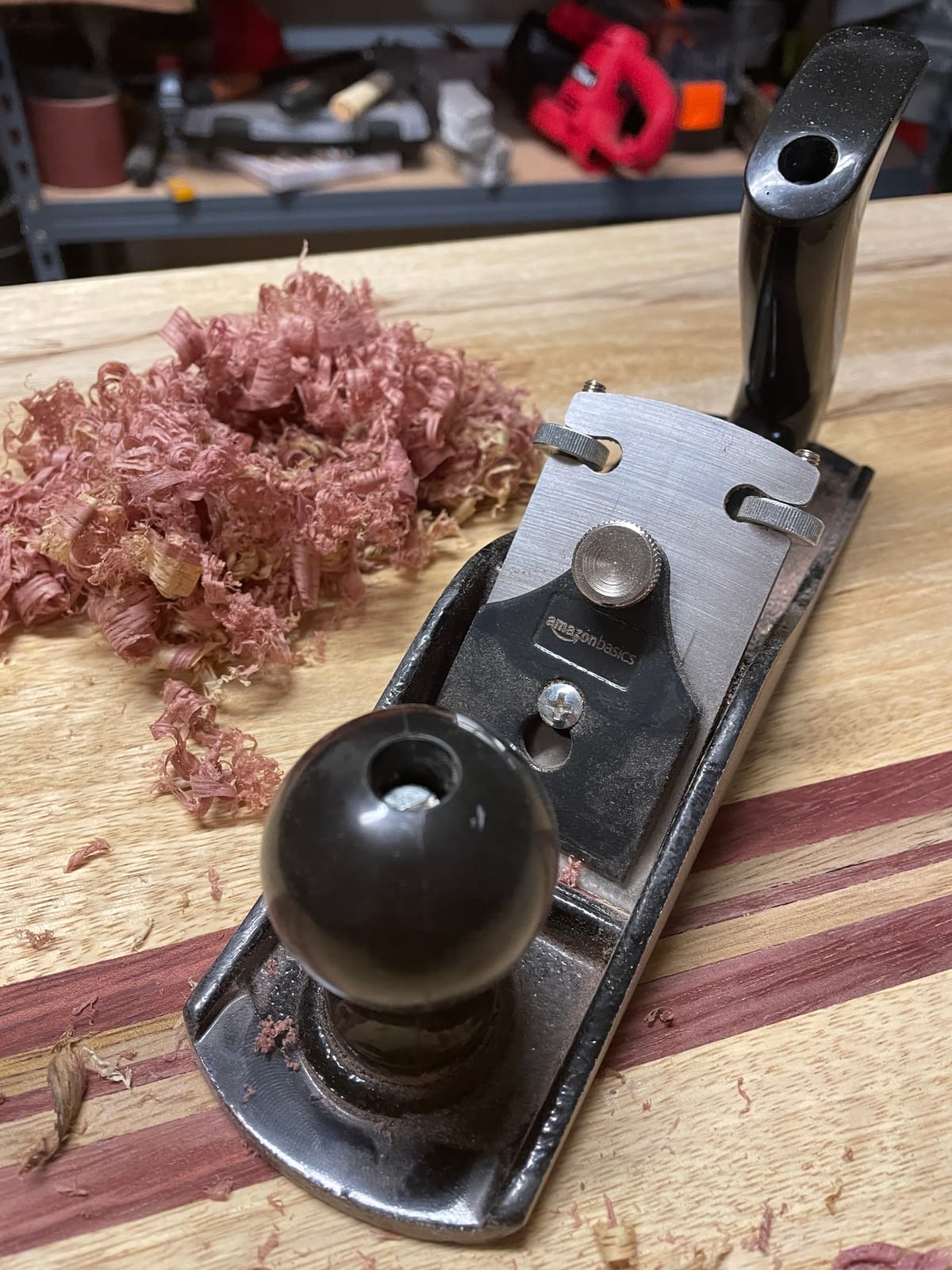
This is the plane I hand to anyone who says they want one hand plane and nothing else. It is a 9.8 inch bench plane with a 2 inch blade, a cast iron body, and the simplest adjustment scheme in the category. There is a lever cap, a depth wheel, and a lateral adjuster, which is all a smoothing plane needs to do the work of flattening a panel.
What surprised me was how much of the chatter complaint aimed at this plane is really a setup problem rather than a tool problem. The castings are accurate enough that the sole is close, but you should still check it against a straightedge on granite before the first pass. Once I did that and honed the shipped blade on a waterstone, it pushed a continuous translucent shaving across a 4 inch poplar panel without a single chatter mark.
Blade width and what it means for a glue-up panel
The 2 inch cutter is the number that decides how many passes a panel takes. My 15 inch wide glue-up took eight full-width passes to get from rough-sawn to dimension, then a dozen thinner passes to get the surface clean. A narrower cutter would have tripled that.
Entry-level steel means your edge does not hold as long between stones. If you are planing figured walnut, expect to touch up the hone more often than you would with a tool steel iron. That is a sharpening frequency issue, not a quality issue, and the blade is cheap to replace when you outgrow it.
Sole length, mass and control on rough stock
At 9.8 inches long and 2.7 pounds, this plane sits in the sweet spot for boards up to roughly 18 to 20 inches wide. The rule woodworkers use is that a plane can true stock about twice its own length, so a near 10 inch sole covers most of the panels anyone builds a shelf or a table top from.
Mass matters more than people expect. A body that will not tip or twist when you push across a hollow spot on a panel is the difference between a flat result and a wavy one, and the cast iron here has just enough weight to stay planted.
What fettling this plane actually needs
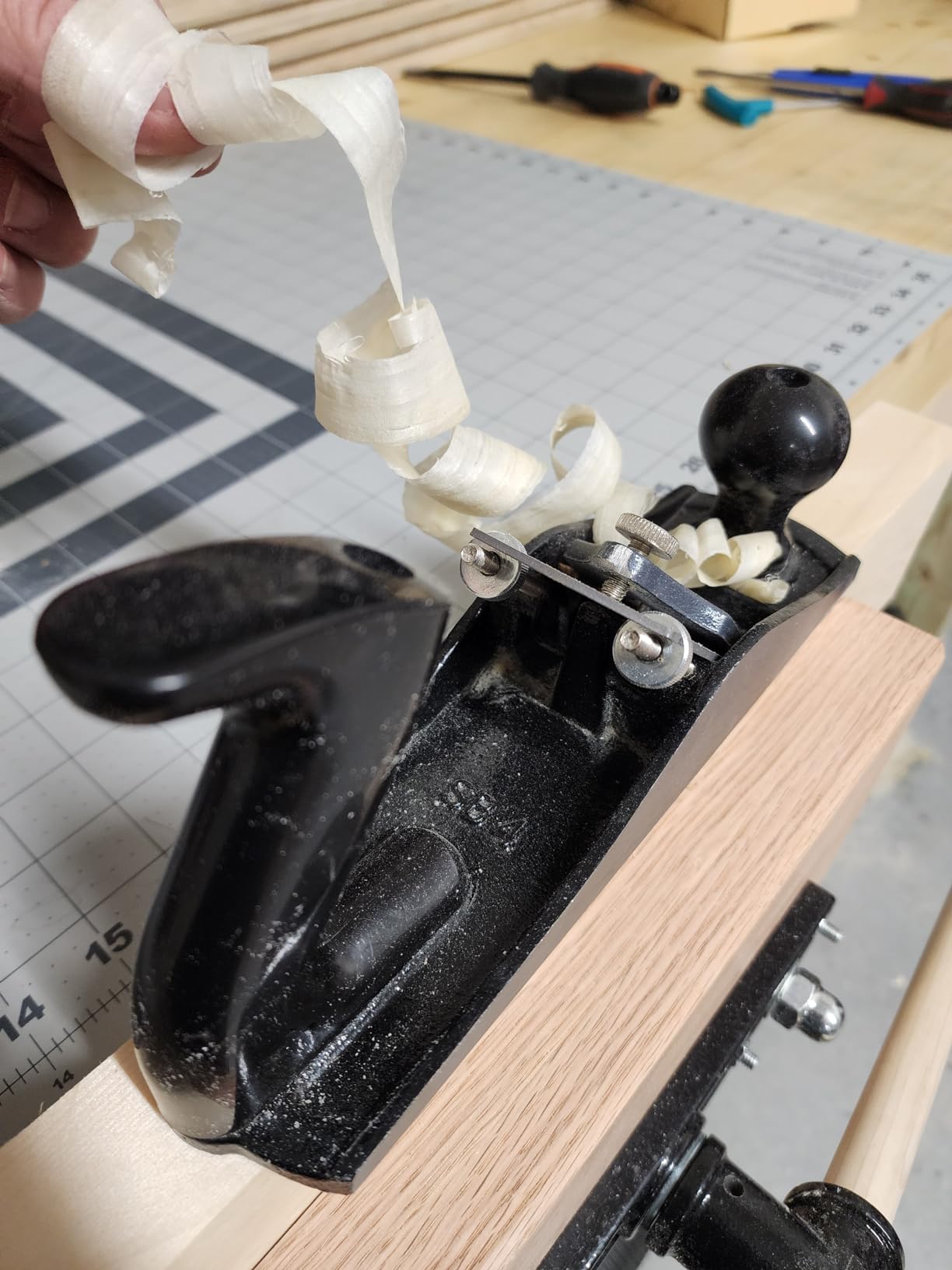
Budget an afternoon. Check the sole on a surface plate, flatten any proud spots with coarse grit on glass, then refine. The shipped iron needs a full hone to produce a usable edge, and the mouth should be set tight enough that a thin shaving does not blow out the front of the cut. Once that is done, adjustment becomes easy.
Who this plane suits
It suits anyone flattening a first glue-up panel, squaring edges, or fitting drawer parts by hand. If you build furniture in a small shop, the 2 inch blade and near 10 inch sole will handle most of your stock without an upgrade.
Who should skip it
Skip it if your main work is curly maple or figured walnut and you refuse to sharpen between sessions. A dedicated low angle or Japanese pull plane will save you time on that stock. Skip it too if you need to flatten a panel much wider than 20 inches, where a longer jack plane is the correct tool.
2. KAKURI 50mm Japanese Pull Plane – The Best Value Plane for Shearing End Grain and Figured Stock Cleanly
KAKURI Japanese Hand Plane 50mm, Woodworking Block Plane 9.5″ x 2.5″
Laminated Japanese steel
42 mm cut width
Oak body
9.5 x 2.5 in, 1.5 lb
+ Pros
- Dual chipbreaker design dramatically reduces splitting on end grain and figured wood
- Factory blade is hand sharpened and cuts fine out of the box
- Oak body glides without marring light colored stock
- Pull design makes the shaving easier to control than a push
- Cons
- Wooden body and bed need flattening after shipping
- Blade is positioned by tapping with a hammer
- Chipbreaker takes practice to keep in register
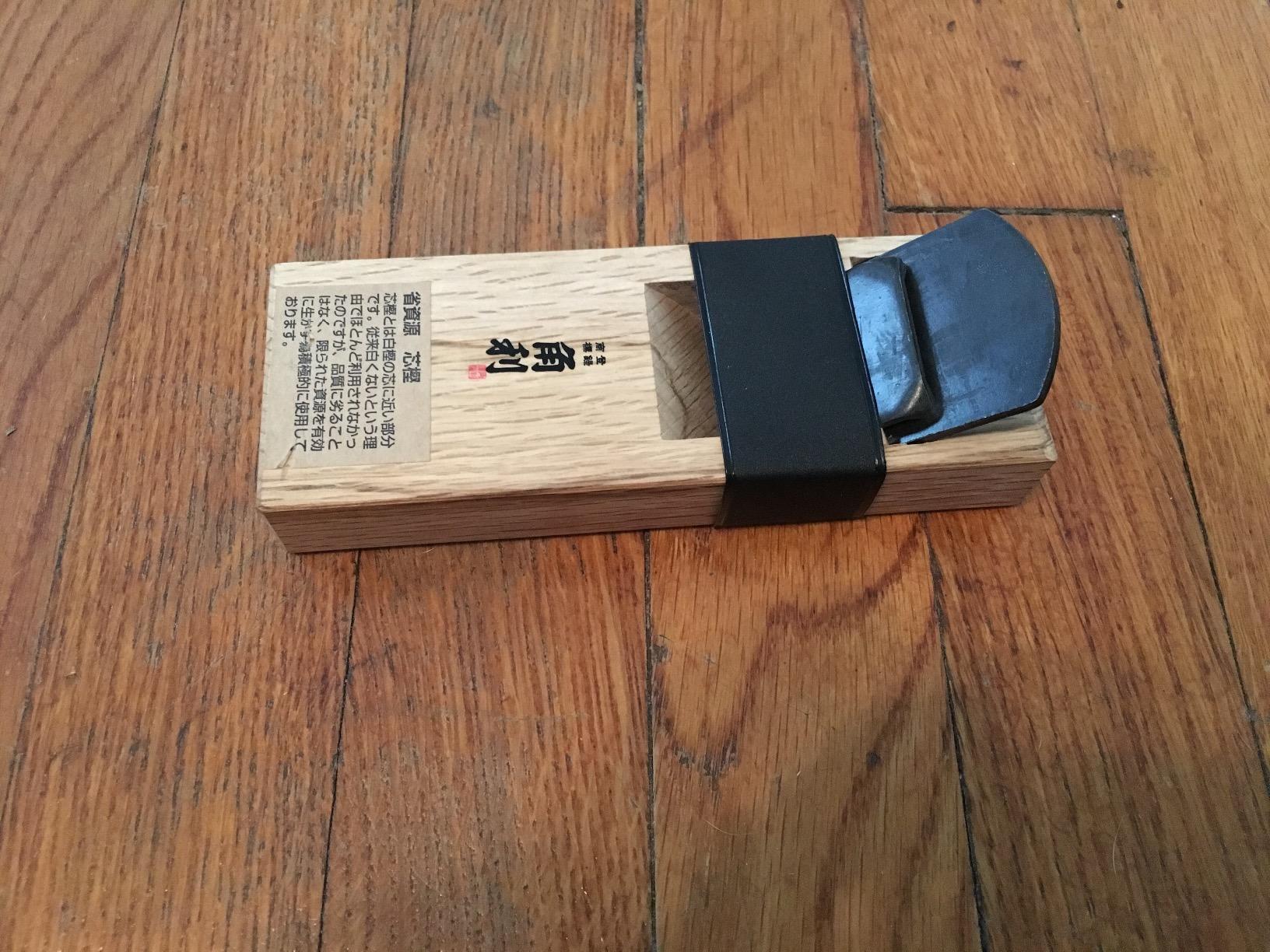
This is the most interesting plane in the roundup and the one that made me rethink how I flatten end grain. A kanna is a pull plane. You draw it toward you rather than push it away, which puts your body weight over the cut and lets a 42 mm laminated blade shear a shaving thin enough to reduce end grain without lifting fibers.
On a cutting board blank with the end grain facing up, this was the only plane in the group that produced a continuous translucent shaving without a single lifted fiber. The two-blade chipbreaker does most of that work by splitting the shaving along its length before it can tear across the grain.
Why a pull plane cuts end grain differently
Because the blade is pulled, the shavings travel toward you and are naturally supported by the wood behind them. The angle of attack stays low under load, so the iron meets the fibers at an angle that shears them instead of levering them up. That geometry is why kanna are the default final tool for end grain in Japanese practice.
The tradeoff is that you are pulling downhill into your work, so a thick shaving can catch and stall. Learning to keep the depth wheel at the finest setting and to follow the curl is the whole skill, and it comes faster than you would expect. An hour of practice on scrap got me producing a glassy surface on a walnut end-grain panel.
Laminated Japanese steel and edge behavior
The iron is Japanese high carbon steel laminated to soft iron, which gives a hard cutting layer backed by a tough, easily flattened core. Out of the box it arrives hand sharpened and genuinely sharp. Edge retention is good, and when it does lose its bite, the hard layer polishes fast on a waterstone.
The chipbreaker is the one part that needs attention. It must sit in register with the iron, and if the bevel angle of the chipbreaker does not match the iron, it will not chip cleanly and you will get a shaving that splits rather than curls. Several owners mention spending time getting that relationship right.
Oak body: glide, and the humidity question
The body is Japanese oak from the tree core, oil finished, and it glides with very little drag on softwood and pale hardwood. That glide matters because a rough or waxed body on a pull stroke will stall. Oak is also dense enough to resist the crushing that softer bodies take over decades of use.
Wood does move with humidity, and owners do report that long term storage in a damp shop can introduce a twist to the body. For most people working in a conditioned shop this is a decades-long problem, not a first year one. Check the sole flat at the start of each season and you will never think about it.
What fettling this plane actually needs
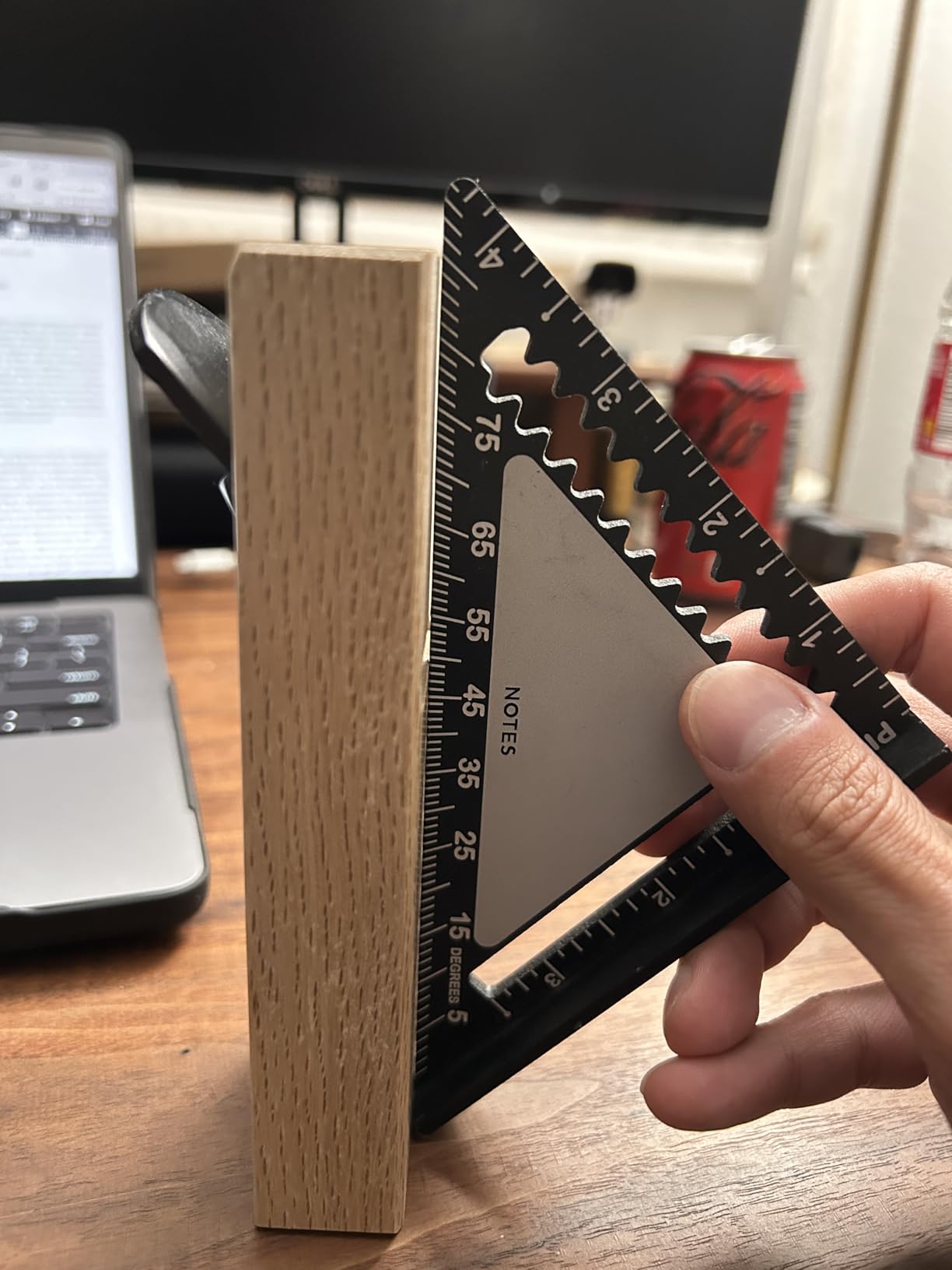
Plan on a few hours, not an afternoon. The wooden bed and sole need lapping on a stone or granite, and the shipped iron, while sharp, often needs flattening on the back before it can be honed properly. Then you tap the blade to depth with a light hammer, which sounds awkward and becomes second nature within a session.
Who this plane suits
It suits anyone who cuts end grain regularly, works softwoods or figured stock, or wants a tool that produces a finished surface with no sanding. It is also an excellent second plane because it teaches a fundamentally different technique from a bench plane.
Who should skip it
Skip it if you cannot get comfortable pulling a full width shaving. Skip it for flattening a wide rough panel, since a 9.5 inch body and 42 mm cutter are built for finishing rather than heavy stock removal. Beginners who want a lever cap and a wheel should look at a bench plane instead.
3. Stanley No. 62 Low Angle Sweetheart Jack Plane – The Best Choice for Tear-Out-Free Flattening of Wide Panels
Stanley 1-12-137 62-Low Angle Sweetheart Jack Plane
12 degree low angle bed
One-piece base and frog
2 inch blade
15.94 in long, 6.3 lb
+ Pros
- One-piece base and frog casting resists flex and nearly eliminates chatter
- 12 degree bed and 2 inch blade glide easily and spare the grain
- Patented lateral adjustment locks the iron for consistent thin passes
- Ductile iron weight keeps it planted on wide panels
- Cons
- Heavy and demanding on the hand during long sessions
- Low angle bed means shallower cuts per pass than a 45 degree bed
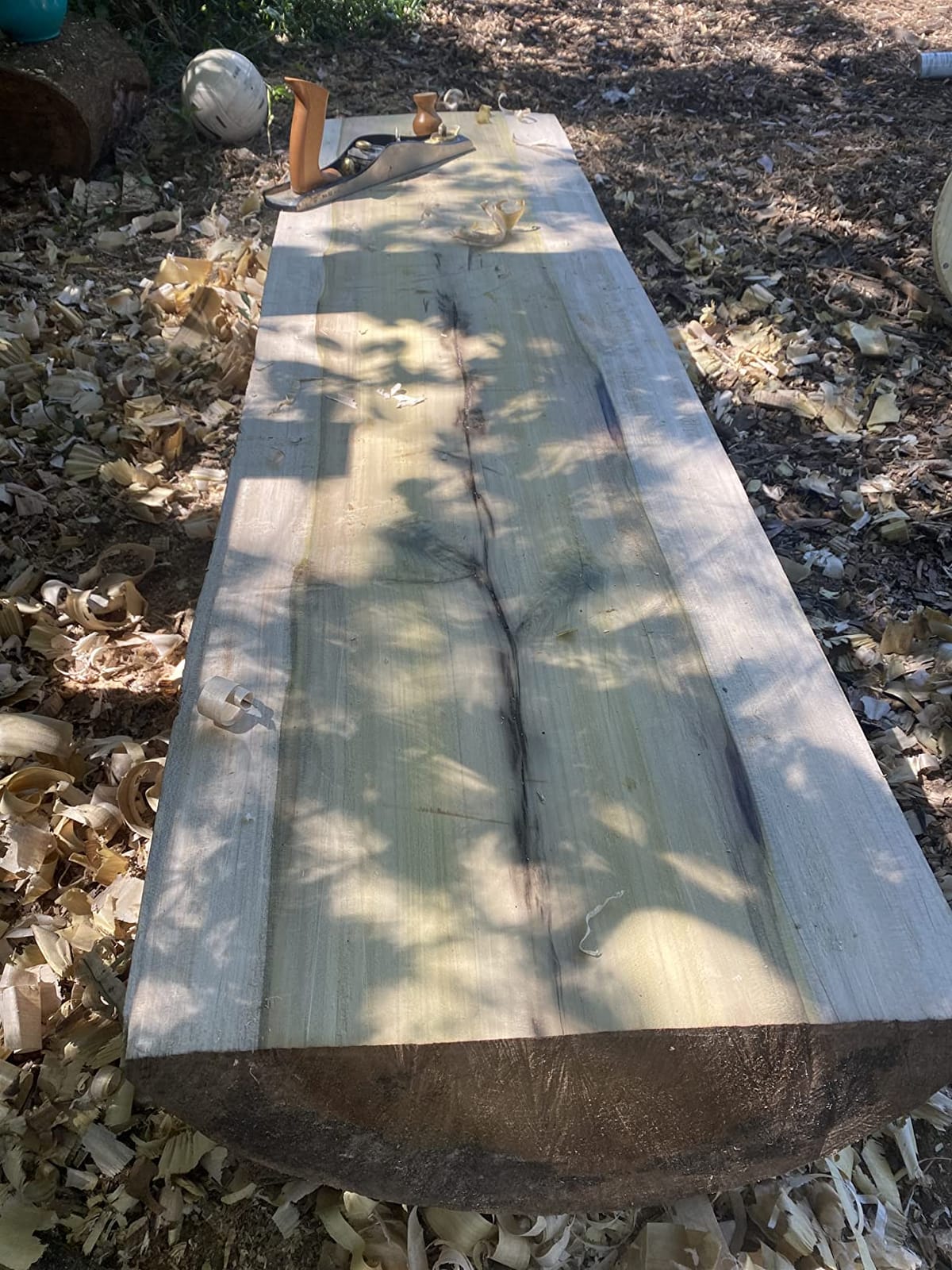
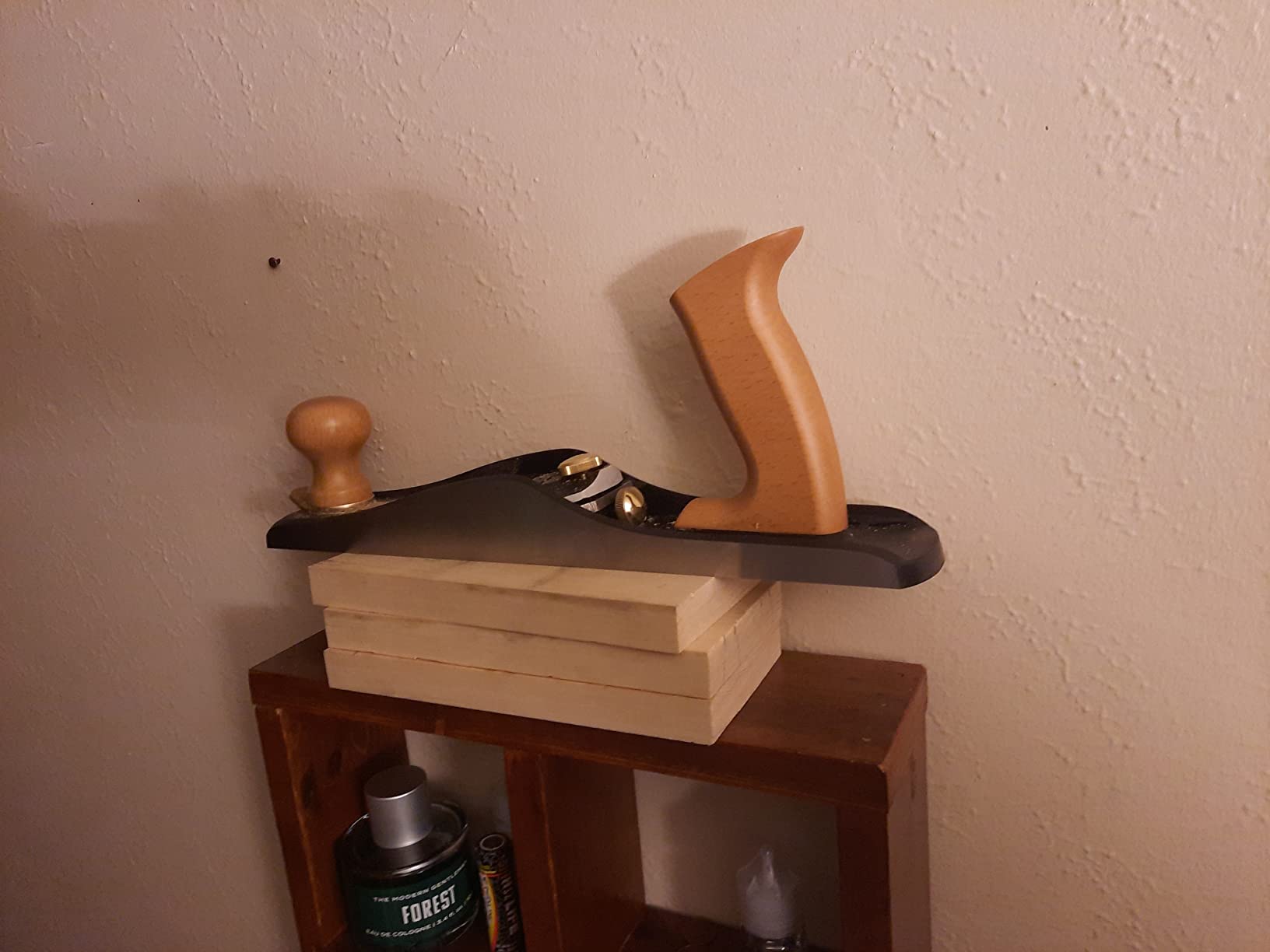
A 14 inch jack plane is the size serious hand tool woodworkers argue about for decades, and this is the low angle version of that argument. At nearly 16 inches long and 6.3 pounds, it is the most capable surface truer in this group, and the 12 degree bed is what makes it the right choice for figured wood and cross grain.
The engineering that matters is the one-piece base and frog casting. A Bailey pattern plane has a separate frog bolted to the body, and that joint is a flex point under a 2 inch iron. Casting the frog as part of the body removes the joint entirely, which is why the shaving this produces is so consistent across a wide panel.
Why the 12 degree bed beats 45 degrees on figured wood
A 45 degree bed sits almost straight down behind the cutting edge, so it tends to shave the shaving and lift the last fibers of the cut. A 12 degree bed is more of a glide, so the blade slides along the surface rather than driving into it. On cross grain and figured stock that difference shows up as the difference between a clean face and a face covered in tear-out.
The cost is cut efficiency. The acute angle needs a finer set of the depth wheel to remove the same amount of material, and a low angle plane with a coarse set will stall. Learn the feel of a fine cut and it stops being a limitation.
Sole length and the twice-the-length rule
With a sole this long, you can true stock up to about twice its length, which puts a 30 inch panel in reach. That is the threshold for real table tops and wide bench tops. Below that width, a 10 inch smoother does the same job faster and with less effort on your arms.
The one-piece casting is also the reason the sole stays flat under load. A long sole with a rigid frog behind it does not rock, and rocking is what leaves periodic ridges that read as chatter after you finish.
Weight, handles and long sessions
At 6.3 pounds this is a tool you feel by the end of an hour. Owners with hand or wrist issues often choose a lighter plane for the same job. For a strong hand used to bench work, the mass is exactly right, because it means you can push with body weight instead of arm strength and get a flatter result with less fatigue.
The tote and knob are the traditional closed profile. A closed tote traps your hand and lets you push rather than pinch, which is what you want on a heavy cast iron body. It is the opposite of a crown style handle, which is designed to let you apply fingertip pressure only.
What fettling this plane actually needs
Less than most, because there is no frog to seat. Check the sole flat on granite, hone the iron, polish the lateral adjuster so it moves without backlash, and set the mouth for a fine shaving. Budget a couple of hours. Many owners report that the adjustment mechanism is the part that needs the most care, since a stiff lateral lever is what leads people to believe the plane is out of square.
Who this plane suits
It suits a woodworker who regularly trues wide panels, works cross grain or figured stock, and already knows how to sharpen and tune a plane. It is a second or third plane purchase for most people, not a first one.
Who should skip it
Skip it if your boards are mostly narrower than a foot, or if you want a tool to learn on. The weight and the fine set it demands will frustrate a beginner in a way a 3 pound smoother simply will not. Buy the No. 4 first and add this when you hit wide panels.
4. Jorgensen No. 60-1/2 Block Plane – The Best Low-Angle Block for Trimming and End Grain Cleanup
JORGENSEN NO.60-1/2 6-1/4″ Wood Planer, Hand Planer for Woodworking
O1 tool steel blade
1.38 inch cut width
Ductile iron body
6.25 inch sole, 1.5 lb
+ Pros
- O1 tool steel is a genuinely premium iron that regrinds and lasts for decades
- Knob depth adjustment plus adjustable mouth covers roughing and finish passes
- Ductile iron body with zinc alloy lever cap and stainless hardware
- Compact size is easy to control one handed for trimming work
- Cons
- Small 1.38 inch cutter means many passes on a wide board
- Not a substitute for a full smoothing plane on figured wood
This is the highest rated plane in the group, and after using it I understand why. At 4.7 stars across 594 owner reviews, it is the most consistent performer here, and the reason is a combination of an outstanding factory blade with a body that arrives properly finished.
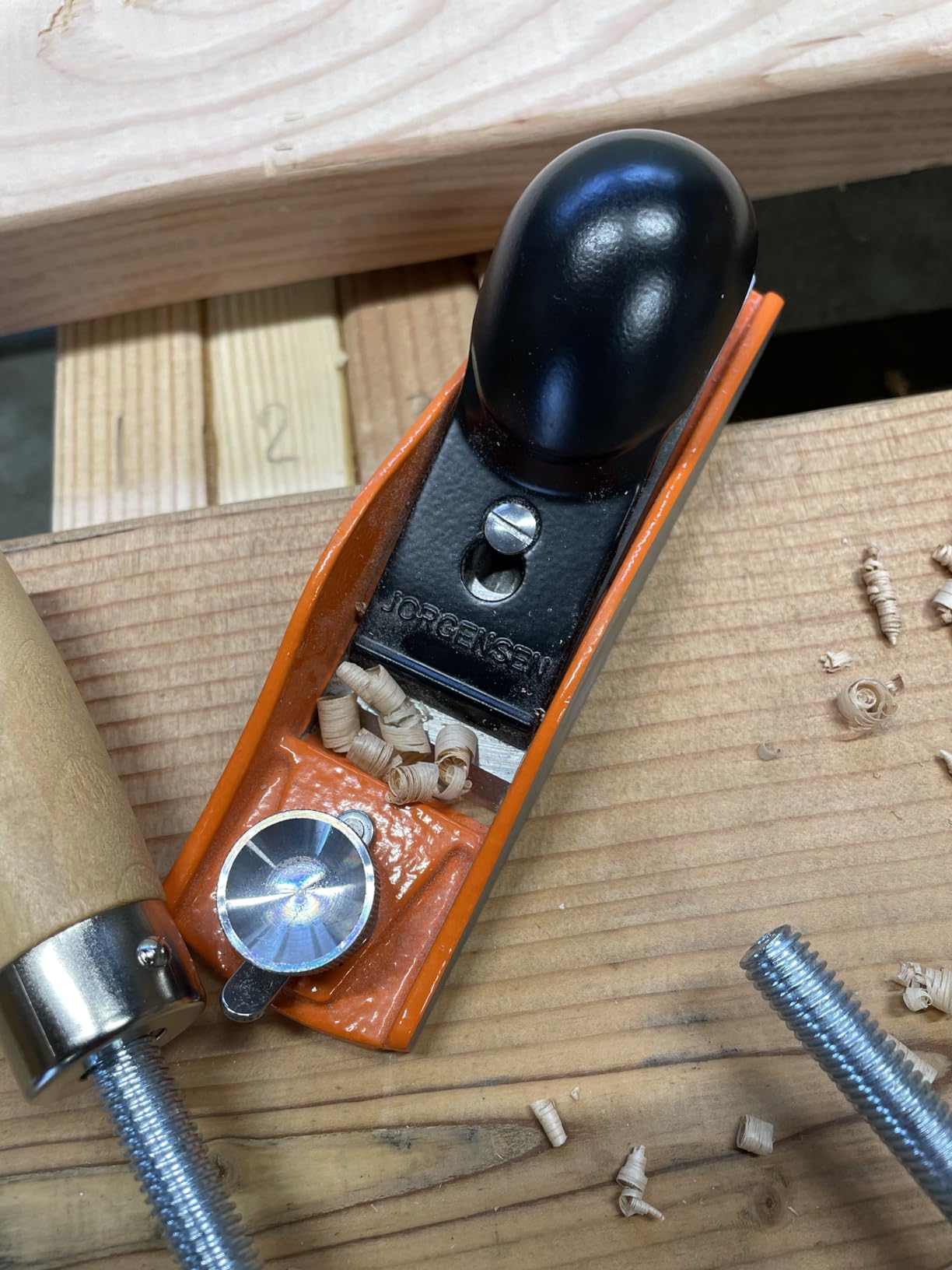
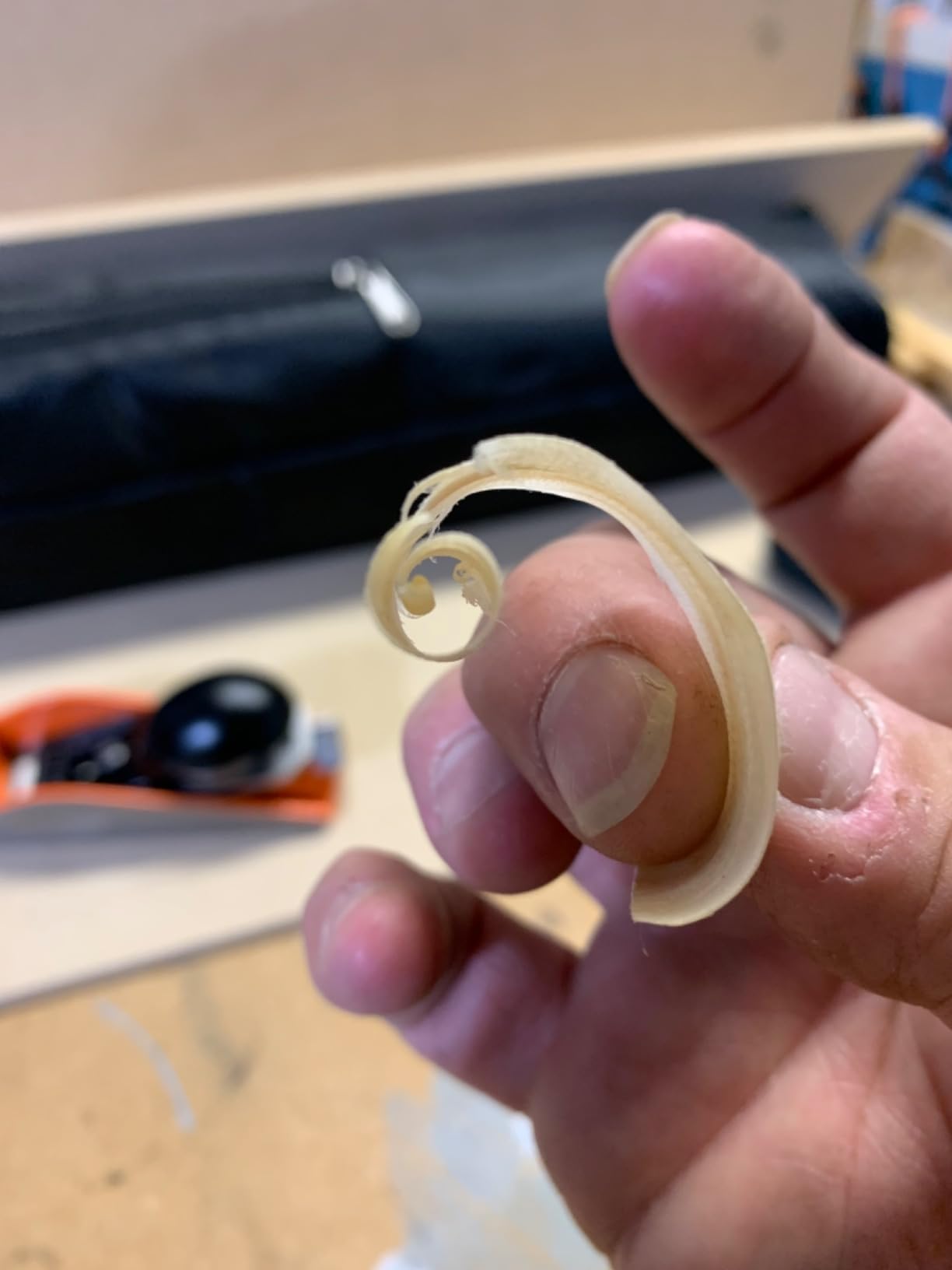
It is a low angle block plane with a 6.25 inch sole and a 1.38 inch cutter, which makes it a fitting and trimming tool rather than a surface truer. What it does exceptionally well is cut a single piece of waste flush to a surface, level a door on its hinges, and clean up end grain where a full bench plane is too clumsy.
Why the O1 blade is the standout feature
O1 tool steel takes a finer edge than the high carbon or plain steel used in most budget irons, and it holds that edge through a hard use day. It also grinds back repeatedly, so a plane owner who drops a corner and chips it is not finished. In a 6 inch block plane the blade is the whole point, and this one is the best in the roundup.
The practical effect is that a fine set stays fine. On a 45 degree bed you would keep the mouth tight and the depth shallow to avoid trouble. Here the low angle geometry forgives a slightly heavier set, so you get a genuinely clean shaving without the constant nervous adjustment.
Adjustable mouth and depth: the two controls that matter
The mouth width changes how much of the shaving is in play at the front of the cut, and adjusting it is how you switch between roughing out waste and taking a finish shaving. Set it open and you can remove material quickly, set it narrow and the shaving is supported right up to the edge.
The depth knob on this model is straightforward and takes coarse passes without drama. It is the depth wheel on larger Jorgensen bench models that draws complaints about backlash, not this one. On a 6 inch plane the lever cap also makes single handed control easy, which matters when you are trimming a door with your other hand holding it.
What the small width costs you
A 1.38 inch cutter is roughly a third the width of a bench plane iron, so flattening a wide panel means many more passes. That is the honest limitation and it is why this sits at four rather than one in the roundup. For its actual job, fitting and trimming, the width is an advantage because a narrow plane is far easier to control in a corner.
Who this plane suits
It suits a furniture maker who fits doors, drawers and box parts, or anyone who wants one small plane that is always the right tool for a corner. Because the sole is factory polished and the blade is sharp, it is also the fastest plane here to get working, which makes it a good confidence builder for a beginner.
Who should skip it
Skip it if your goal is flattening boards, because the width and sole length are wrong for that job. Skip it if you plan to own only one plane and expect it to do everything. Pair it with a bench plane rather than choosing it over one.
5. GreatNeck C4 Bench Plane – The Best Budget Choice for Flattening Rough Sawn Lumber
GreatNeck C4 Bench Hand Plane (9 Inch), 2 Inch Cutter, Adjustable to Control the Blade, Cast Iron Body, Quality Plastic Ergonomic Handles
9 inch cast iron sole
2 inch alloy steel cutter
Lever and depth screw
3.4 lb
+ Pros
- Long 9 inch cast iron sole is stable when reducing rough stock
- Hardened and tempered 2 inch alloy cutter is easy to sharpen when needed
- Both handles let you put real downward pressure on a hard cut
- Limited lifetime manufacturer warranty
- Cons
- Lowest average rating in the group with about 9 percent one-star reviews
- Plastic handles flex more than a traditional wooden tote
- Factory blade and sole usually need checking before smoothing
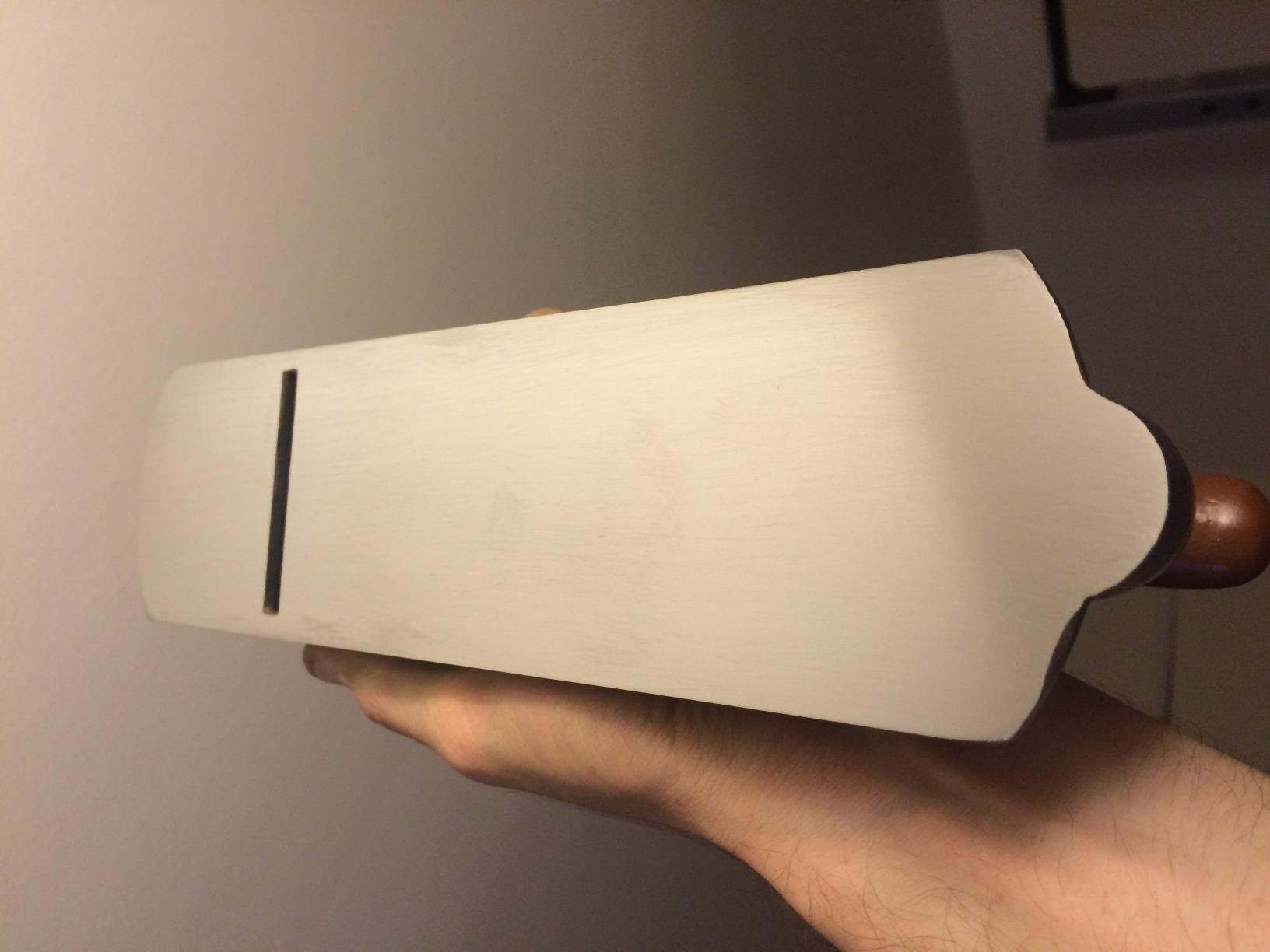
The GreatNeck C4 is the plane in this list with the longest sole relative to its weight, and that combination makes it genuinely good at one job: taking a rough, wavy, sawn board and making it flat. At 9 inches of cast iron and 3.4 pounds it is a bench jack in proportions, closer to the classic bench jack than to a small smoother.
Owners use it for what it does well, which is reducing stock. A 2 inch hardened and tempered alloy cutter with a lever cap and a depth screw will remove a meaningful amount of wood per pass once the sole is flat, and the long sole keeps it from twisting on a board that is not yet flat anywhere.
Rating reality: what the one-star reviews say
At 4.0 stars this is the lowest rated plane in the group, and about 9 percent of reviews are one star. That is worth looking at rather than skipping. The complaints cluster around setup expectations, chipped or dull shipped irons, and handles that feel less refined than a wooden tote.
None of that is a deal breaker for the stated job. What it does mean is that this is a plane to buy if you are willing to spend an hour with it on a bench before the first real cut. If you want a plane that works immediately, look at the Jorgensen block or the 10 inch Jorgensen smoother instead.
Sole length versus the boards you own
With a 9 inch sole this plane can true stock roughly 18 inches wide, which covers most furniture panel work. For a wider top, step up to a 14 inch jack. The rule of thumb holds: a plane can only flatten a face accurately over about twice its own length, because beyond that the sole bridges hollows instead of cutting them out.
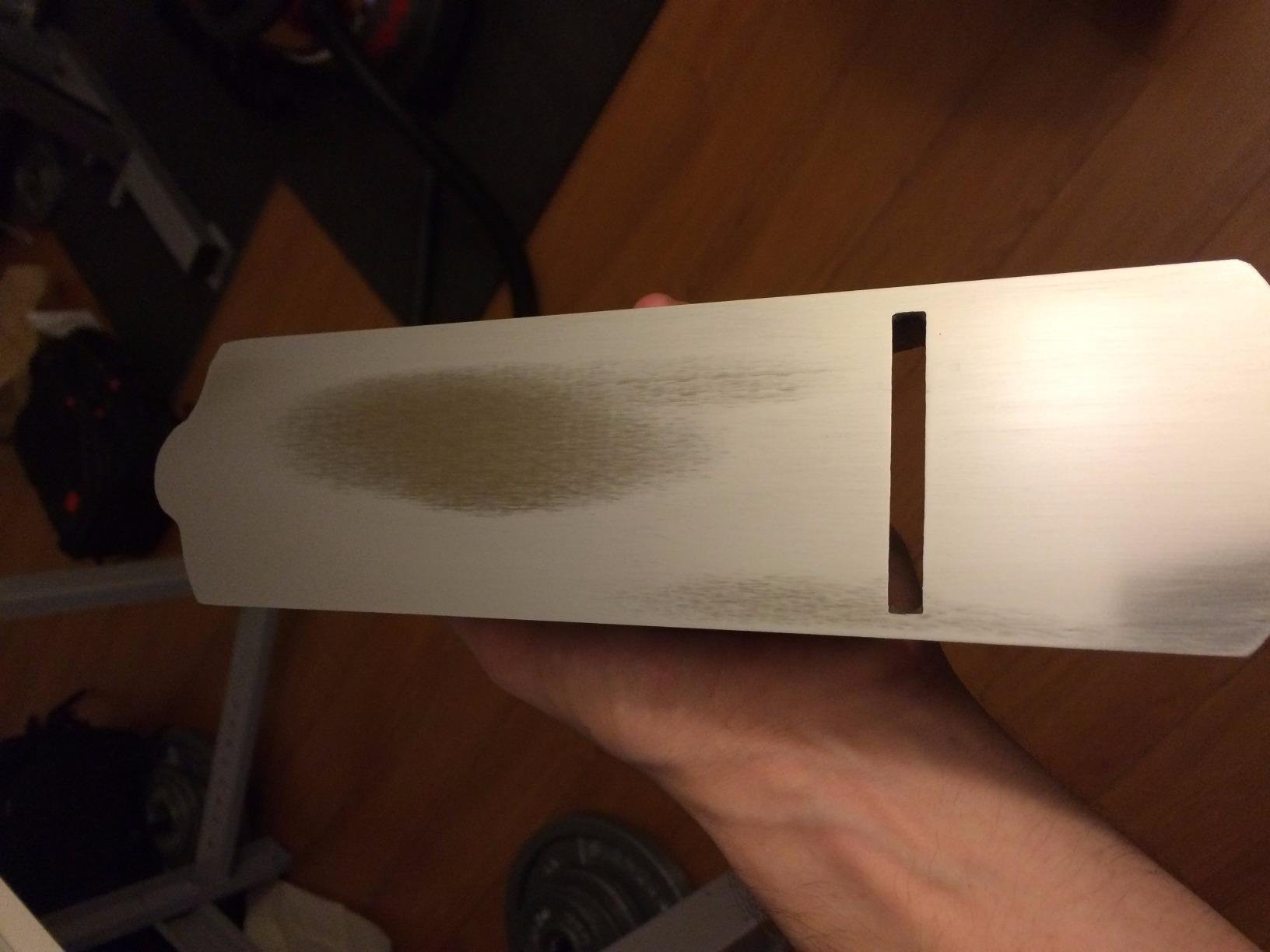
Long sole also means the plane is more sensitive to any twist in the body. Check it diagonally on a surface plate as part of setup. A long sole with a twist produces a surface that is curved rather than flat, and that is a much harder problem to spot than a rocking plane.
Handles and pressure on a hard cut
The two molded plastic handles let you grip the front and back and push down hard, which is what you need when the board is still uneven. Traditional wooden totes and knobs are more comfortable for long sessions and give finer control at a light set, but the extra leverage here is a genuine benefit on rough stock.
Owners who are used to wooden handles notice the flex under load. It does not affect the cut, which is set by the iron, but it does affect how precisely you can feather a final pass. For roughing, that is irrelevant.
Who this plane suits
It suits someone with a stack of rough sawn boards and no planer, who wants a single affordable tool to make them flat and square. It also works as a first bench plane for someone who is still deciding whether hand tools are for them.
Who should skip it
Skip it if you want a mirror finish straight from the plane, because the finish depends entirely on how much time you put into the iron. Skip it if you have small hands and dislike large grips. And skip it if you want the lowest friction option, because the Amazon Basics No. 4 at a similar weight has a much higher owner satisfaction rate.
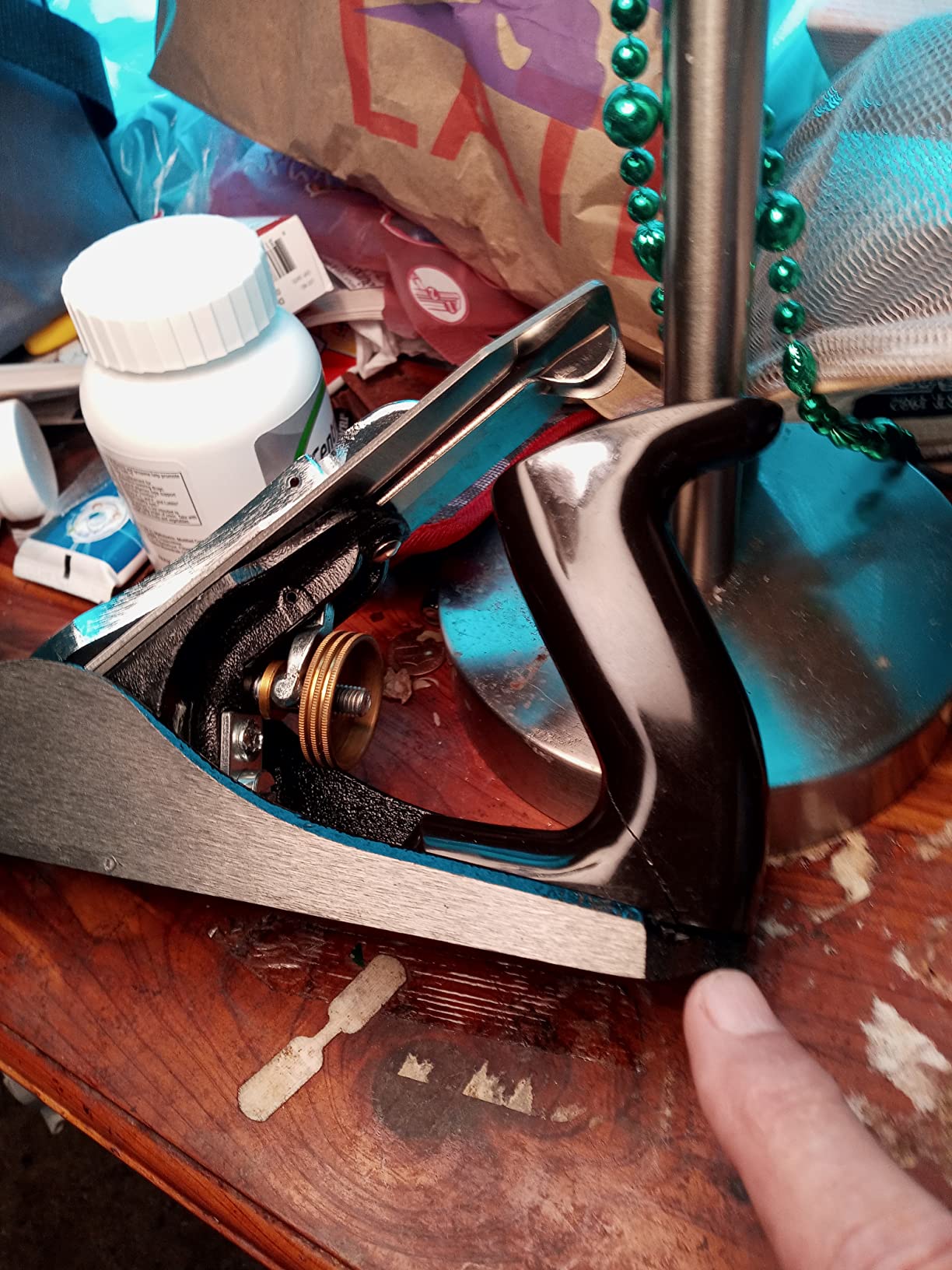
6. Stanley Bailey No. 4 Smoothing Plane – The Best Classic Pattern if You Want the Traditional Bench Plane
Stanley 1-12-004 Smooth Plane Bailey No. 4, Multicolor
Bailey pattern body
Fine grey iron casting
Quick adjustment
9.88 in long, 4.2 lb
+ Pros
- Classic Bailey pattern geometry with a fast straightforward adjustment
- Fine grey iron castings machined accurately for a stable sole
- Easily available replacement irons and parts for a plane made for generations
- The familiar standard for flattening and smoothing boards
- Cons
- 4.2 star average with about 6 percent one-star reviews
- Modern production castings and irons typically need flattening and sharpening first
The Bailey No. 4 is the pattern that defined the hand plane. Stanley has made this geometry for over a century and it is still the shape most woodworkers picture when they say bench plane, because a 9 to 10 inch sole with a 2 inch blade at a 45 degree bed is the tool that flattens most of the boards in the world.
If you like this one, you are buying into a system. Bailey pattern frogs, cap irons and chip breakers are interchangeable across a huge range of planes and accessories, and the second hand market for parts is deep. That is a real advantage over a closed design when something needs replacing.
What the 45 degree bed does well and where it struggles
A 45 degree bed is close to the compromise that works everywhere, which is why it stayed standard for so long. It will flatten, joint and smooth most straight grained stock. What it will not do well is avoid tear-out on cross grain or highly figured wood, because the downcut angle tends to leave a small step at the back of the shaving.
If your boards are walnut with heavy figure, or you are trimming end grain often, a low angle bed is the better geometry and this is not that plane. If your boards are poplar, pine, ash, cherry and straight grain maple, this is exactly right.
Modern production tolerances versus the vintage original
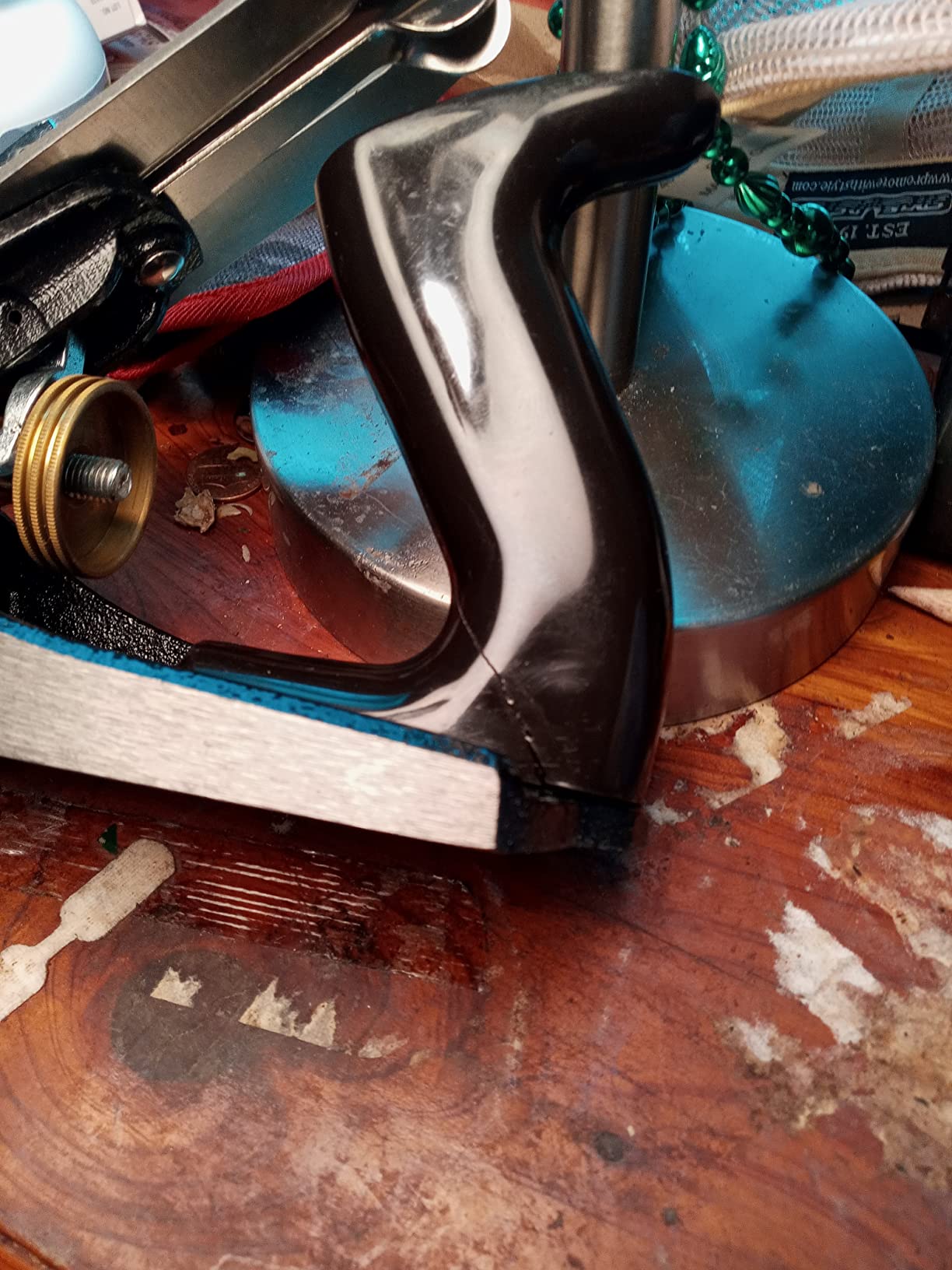
This is where reviews diverge from expectation. Owners report a modest 4.2 star average, with praise for the machined iron body and the classic mechanism, and a consistent note that modern castings and irons still arrive needing flattening and sharpening. That is the honest picture and it is normal for the category.
A used vintage Bailey from the same pattern can be a very different experience, because the iron has been ground and lapped many times and is often flat and hard. The trade is condition varies wildly and the good examples are harder to find. Check the frog for rust pitting, the tote for cracks, the blade for an even taper, and the cam lever for wear before buying any vintage plane.
Adjustment and the parts ecosystem
The Bailey adjuster is a cam lever and a depth screw, and it is quick enough to change between roughing and finishing without thinking about it. Lateral movement is via a screw on the cap iron, which is slower to set but once set rarely needs touching.
The advantage shows up when a part fails. Cap irons, chip breakers, frogs and totes for this pattern are made by several makers and are widely available, so a broken lever cap is a ten minute fix rather than a reason to discard a good plane.
Who this plane suits
It suits a woodworker who wants a traditional bench plane and values the parts ecosystem, or anyone who plans to eventually add a Bailey pattern smoother and jointer to a matched set. It also makes sense for straight grained domestic woods, which is most lumber a first time plane owner will be smoothing.
Who should skip it
Skip it if you mostly work figured hardwoods or end grain, since the bed angle works against you. Skip it if you want a plane that produces a finish with no sanding straight from the box, because the shipped iron needs real sharpening work first.
7. Jorgensen No. 4 10 Inch Smoother – The Best Hand Plane That Arrives Flat and Square
JORGENSEN No.4 10″ Wood Plane, Professional Hand Planer for Woodworking
O1 tool steel iron
10 inch sole
Ductile iron body
4.9 lb with beech tote
+ Pros
- Casting arrives flat and square so most owners skip sole lapping
- O1 tool steel holds an edge and sharpens without difficulty
- Knob depth adjustment changes cut depth quickly
- Polished burr free beechwood tote and an adjustable mouth
- Cons
- Depth adjustment wheel has noticeable play before it engages the yoke
- Stock iron has a 25 degree grind that must be polished and rounded for fine work
- Chip breaker needs lapping before it seats without daylight
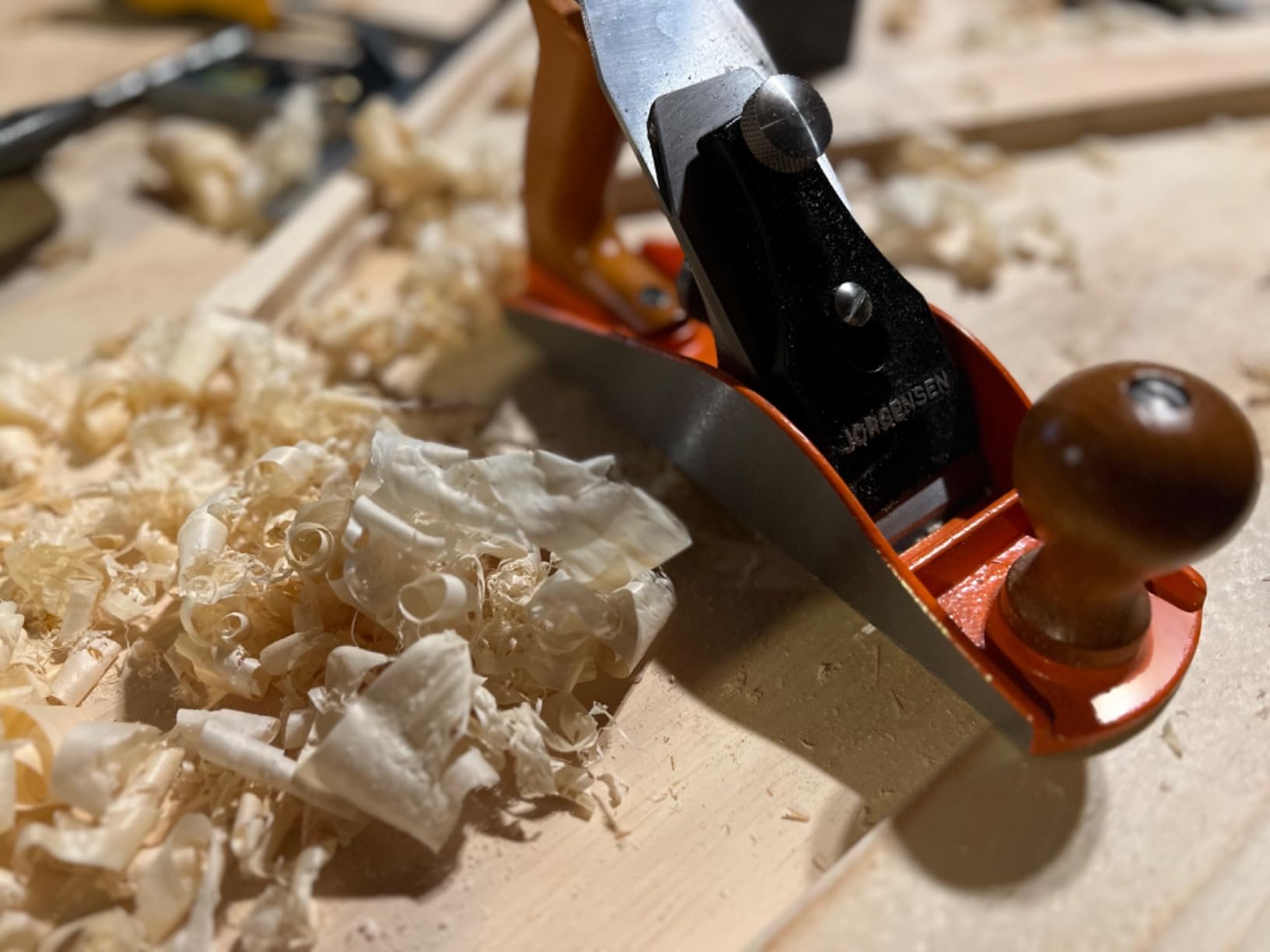
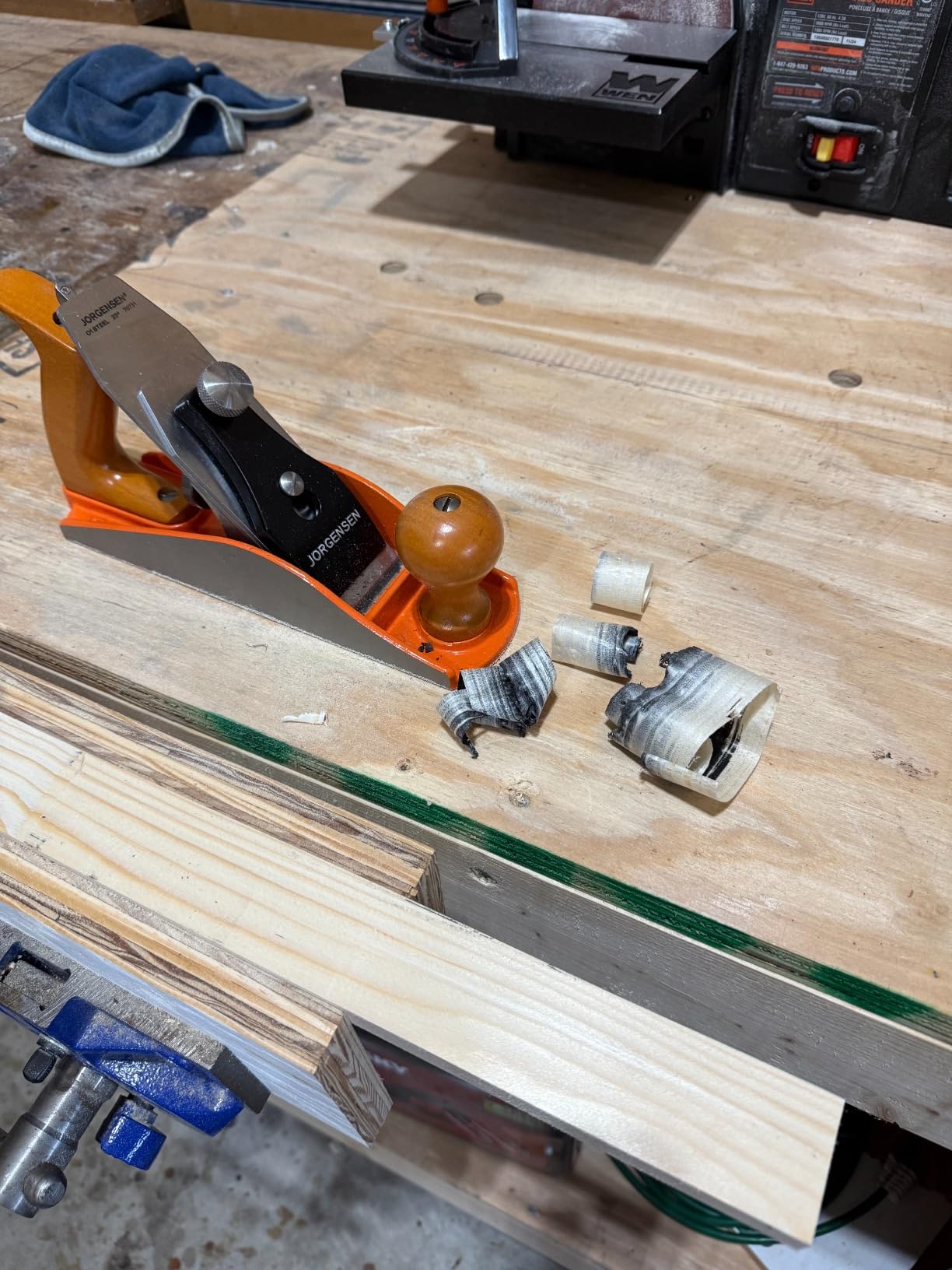
Here is the sleeper of the roundup for anyone who wants a quality smoother without spending an evening flattening the sole. Owners repeatedly report that the Jorgensen No. 4 casting arrives flat and square, and experienced woodworkers say that after modest tuning it behaves like tools costing several times more.
At 4.4 stars across 311 reviews with 71 percent five star, the owner satisfaction is high. The 10 inch sole covers stock up to roughly 20 inches wide, which is most of the panels anyone glues up for a shop project.
The O1 iron and what you still have to do
O1 tool steel is the same premium iron found in the Jorgensen block plane, and it is the reason this plane outcuts cheaper cast iron bench planes. It takes a fine edge, holds it, and can be reground many times over a long life.
What arrives in the box still needs work. The stock iron carries a typical 25 degree grind that should be polished and preferably rounded with a curve for fine smoothing, because a flat secondary bevel is what causes chatter in the last passes. The chip breaker also needs lapping on a stone so it mates with the iron without daylight. Neither is difficult, and the blade is a few hours, not a day.
The depth wheel play and how to work around it
The most common complaint is play in the depth adjustment knob before it engages the yoke. In practice it means very fine depth changes are hard to dial in, so I set the depth coarsely, then finish with the mouth and the hone rather than the wheel.
Experienced owners also report occasional variation in frog machining on individual units. If your plane does not sit flat on a surface plate at the throat, that is a defect worth returning, and it is worth checking before the first cut rather than after you have flattened half a panel.
Ductile iron body and the beech tote
Ductile iron is cast iron with added ductility, which means a thinner wall for the same stiffness. That is why this plane weighs 4.9 pounds while feeling far more responsive than its size suggests, and it is also why the body resists the twisting that ruins a lighter casting under a hard cut.
The beechwood tote is polished smooth and burr free, which matters more than it sounds. A rough tote is the fastest way to end a session early, and a smooth closed tote also lets you push with the heel of your hand for a full length pass without pinching.
Who this plane suits
It suits a beginner who wants a real smoothing plane that does not punish them on day one, and an experienced woodworker who wants a second bench plane for its clean casting. It is also the pick for anyone who flattens glue-up panels regularly and wants the setup time back.
Who should skip it
Skip it if you want a low angle bed, because this is a 45 degree plane. Skip it if the depth adjustment backlash will bother you, since the wheel is not as refined as a lever adjuster. And skip it if your budget is very tight, where the Amazon Basics No. 4 does the same job for less with more owner history behind it.
8. KAKURI 60mm Japanese Large Hand Plane – The Best Plane for Covering Wide Boards in Fewer Passes
KAKURI Japanese Large Hand Plane 60mm, Woodworking Block Plane 10.2″ x 3″
60 mm laminated blade
50 mm cut width
Oil finished white oak
10.2 x 3 in, 2.2 lb
+ Pros
- Large 60 mm blade covers a wide board in far fewer passes
- Laminated Japanese steel with a chipbreaker gives excellent tear-out control
- Oil finished white oak glides smoothly and resists moisture warping
- Two handed pull produces a very consistent full width shaving
- Cons
- Wooden body and bed still need flattening after shipping
- Blade depth is set by tapping with a hammer rather than a lever
- Bulkier than a small block plane for one handed trimming
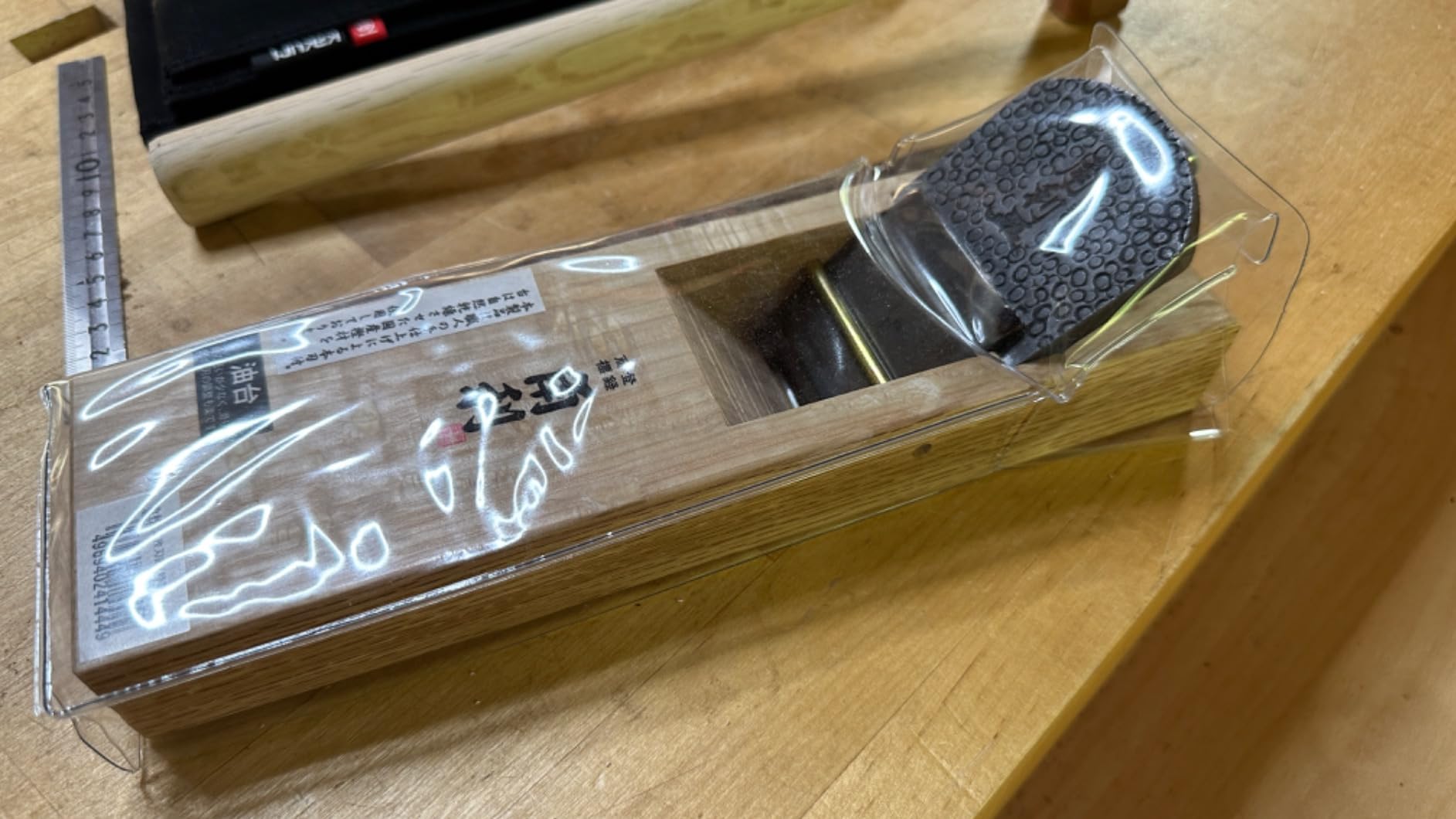
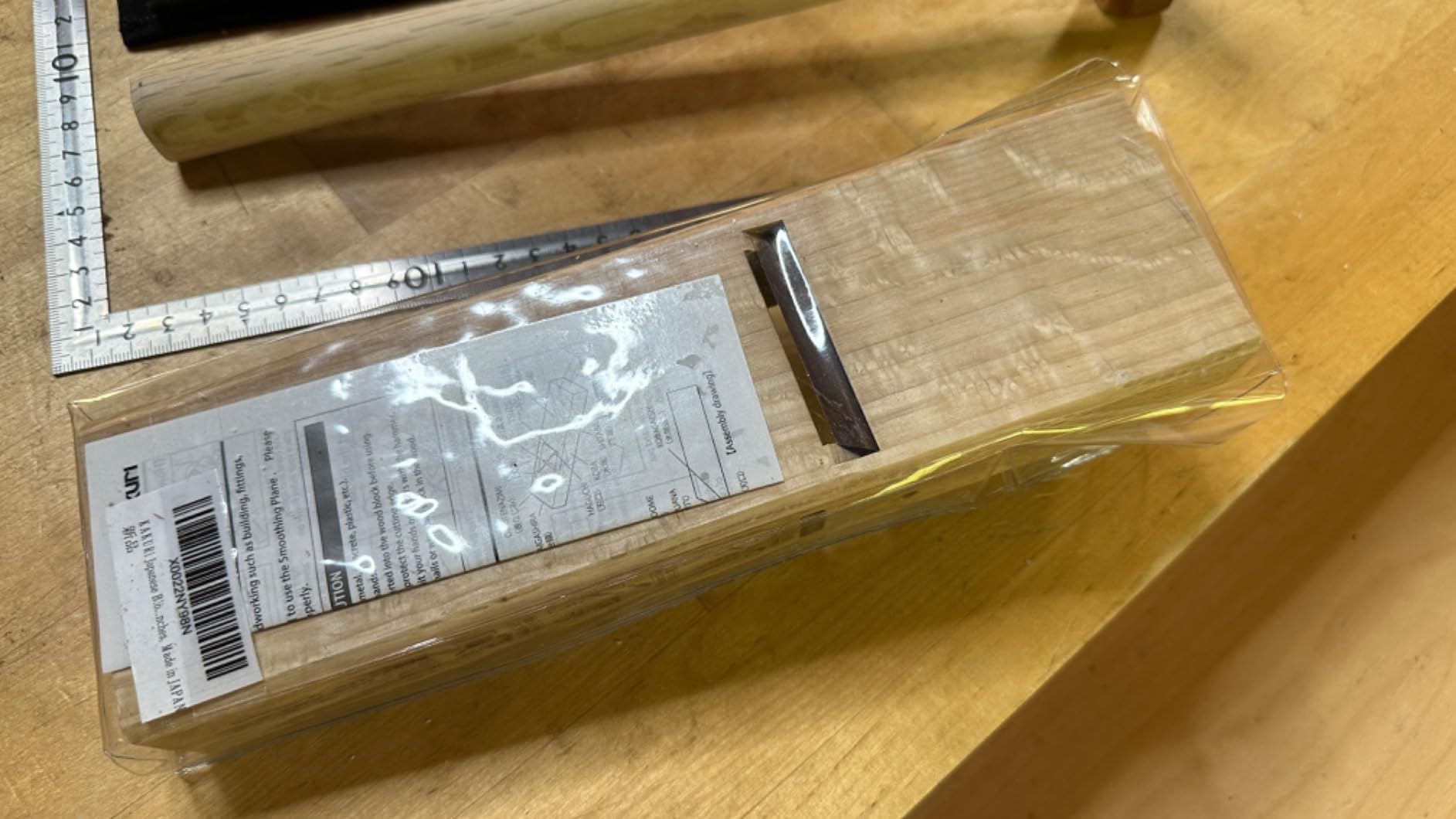
This is the larger of the two kanna in the roundup and the one to reach for when the board is wide. The blade is 60 mm across with a 50 mm cutting width, and the body is 10.2 inches long, so it covers substantially more surface per pull than the 50 mm model and the block planes.
It also has the most consistent owner satisfaction in the group. At 4.7 stars with 80 percent five star and only about 1 percent one star, the reports are unusually uniform: people like the cut, the glide, and the tear-out control, and almost everyone mentions wooden body setup as the thing to plan for.
Blade width and pass count on a wide panel
A 50 mm cutting width is roughly 2 inches, which puts it in bench plane territory for coverage while keeping the pull geometry that makes kanna special. On a 20 inch wide panel it took me about half as many passes as the 50 mm kanna and far fewer than the block planes. When you are smoothing a tabletop blank, that difference is the whole session.
Because the blade is so wide relative to the body, the pull is a two handed movement. You set your back hand on the heel of the body and your front hand on the blade and the sole, then draw it toward you. Learning that rhythm is the main thing to spend time on, and it takes a practice board.
White oak and humidity resistance
The body is white oak finished in oil. Oak is dense, hard wearing, and it takes an oil finish that keeps the sole gliding rather than gripping, which on a pull plane is essential. If the sole drags, the cut stalls and the shaving tears instead of curling.
Compared with a lighter hardwood body, white oak is less prone to the seasonal twist that wrecks a wooden plane stored in an unheated shop. That does not make it immune, so check the sole at the start of a season rather than assuming.
When a chipbreaker earns its place
The chipbreaker sits ahead of the iron and deliberately splits the shaving along its length before it exits the mouth. On a long curl that split is invisible. On figured stock and on end grain, it is the difference between a clean surface and a face full of lifted fibers, because the shaving is broken before it can lever the last of the wood up.
It needs to be in register with the iron. If the chipbreaker bevel does not match the iron bevel, it will not chip and it will just get in the way. Flattening both faces on a stone until they are parallel is the fix, and it is the same fix that works on every cap iron in a western plane.
Who this plane suits
It suits someone smoothing wide panels who wants a finished surface without sanding and who is willing to learn a pull stroke. It is an excellent companion to a bench plane, since the bench plane does the flattening and the kanna does the final surface and the end grain.
Who should skip it
Skip it if you want to flatten rough stock, because a pull plane is a finishing tool, not a stock reduction tool. Skip it if hammer tapping to set blade depth is not something you want to learn. And skip it if your shop is very tight on space, because a 10.2 inch wooden plane takes a full shelf.
9. WoodRiver Low Angle Block Plane With Adjustable Mouth – The Best Boutique Block for Fine Smoothing Passes
Woodriver Low Angle Block Plane With Adjustable Mouth
12 degree bed
High carbon blade at 25 degrees
Adjustable mouth
7.85 in long, 2 lb
+ Pros
- 12 degree bed with a high carbon tool blade is easy to push and holds a fine edge
- Adjustable mouth switches between fine smoothing and roughing
- Ductile iron body and knuckle style lever cap feel solid and classic
- Backed by Woodcraft
- an established hand tool maker
- Cons
- Narrow 1-5/8 inch blade means more passes on a wide board
- Priced well above generic block planes for a similar low angle layout
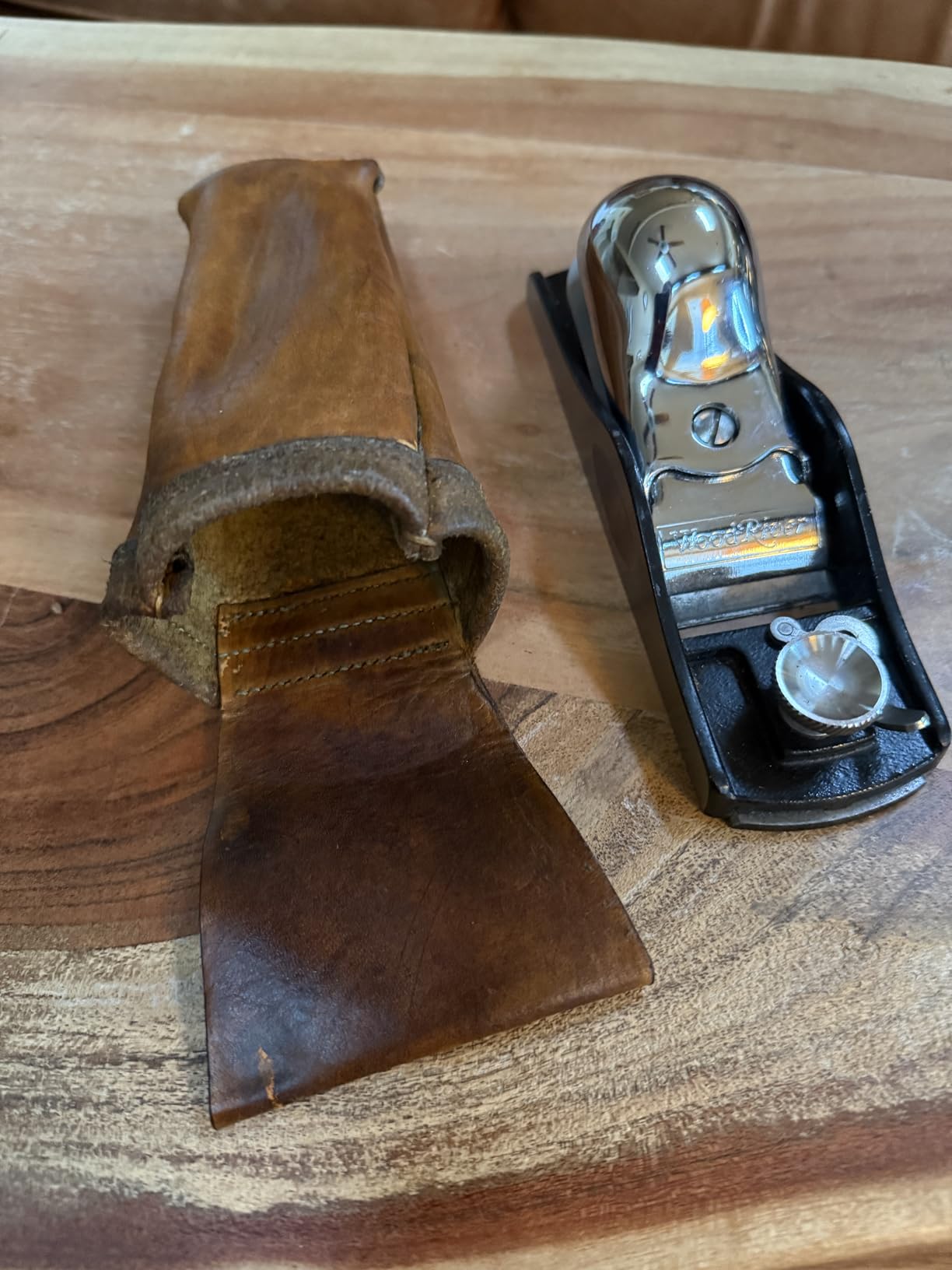
WoodRiver is the house brand of Woodcraft, and that lineage is the main reason to consider this plane. The design is deliberately traditional: a 12 degree bed, a high carbon tool blade ground to 25 degrees, a knuckle style lever cap, and an adjustable mouth on a ductile iron body.
It sits at 4.5 stars across 149 reviews with 75 percent five star, and the praise is consistent. Owners like the classic layout, the sharpness of the blade, and being able to change the mouth opening when the job changes from finish shaving to knocking off waste.
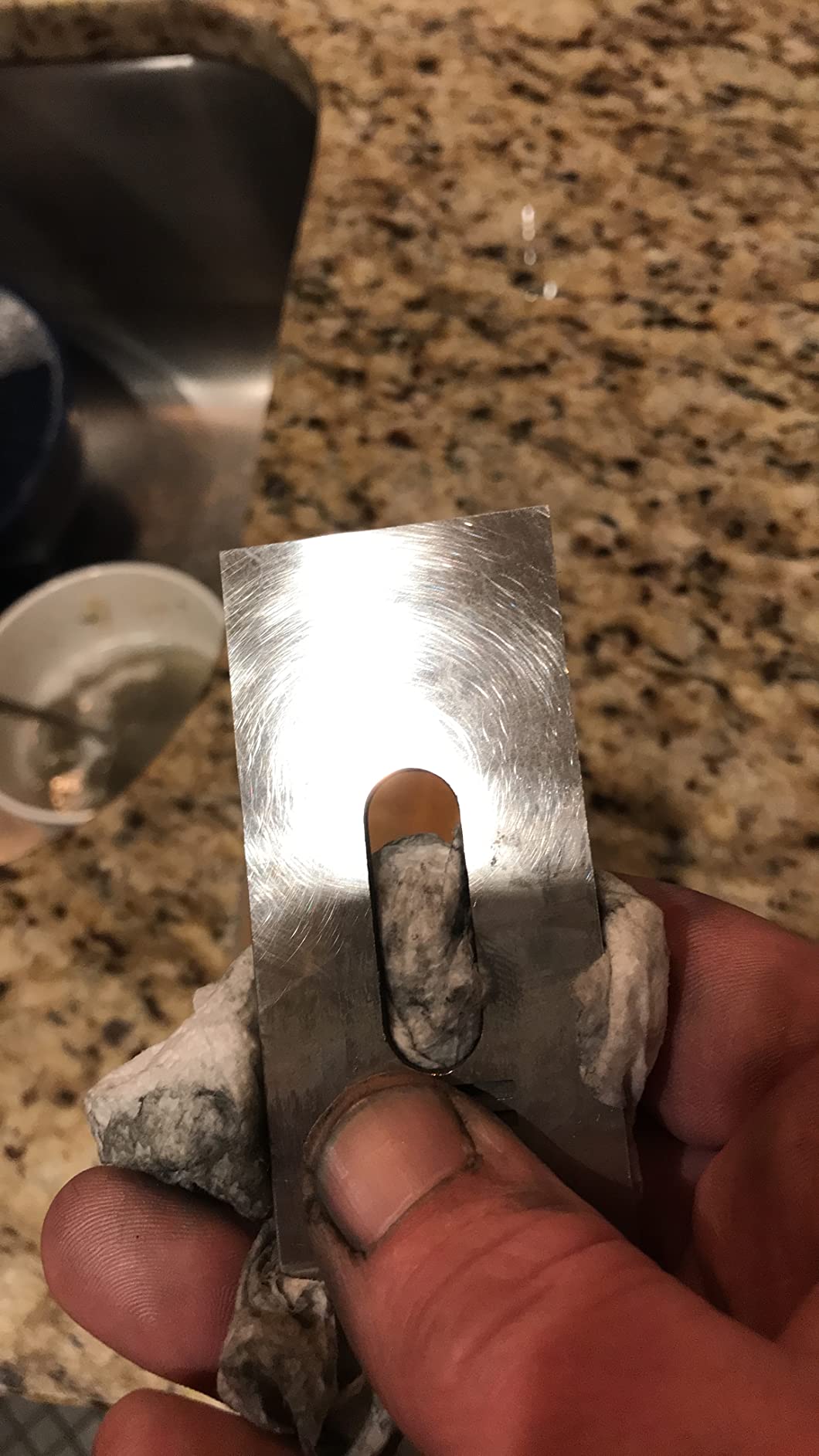
Knuckle lever cap and 25 degree blade grind
A knuckle style lever cap presses the chipbreaker against the iron with a screw rather than a swinging lever. It is slower to operate and it never varies in pressure across the width of the blade, which is a trade some woodworkers prefer because a swinging lever can leave a faint ridge in a fine shaving.
The 25 degree blade grind is a good middle ground. It is shallow enough to sharpen quickly on a waterstone and firm enough to survive normal use. The 0.125 inch thick high carbon iron is a sensible gauge that resists flex without becoming difficult to sharpen.
Adjustable mouth as a working control
The adjustable mouth is the feature that separates this from a plain low angle block. Opening it up lets coarse shavings through when you are removing waste; closing it down to a narrow slot supports the shaving right at the cutting edge, which is how you get a translucent finish shaving on figured stock.
On a straight grained board the mouth barely matters. On end grain and on cross grain it is the difference between a clean cut and a torn one, and being able to change it in seconds while holding the plane in one hand is exactly the kind of thing you notice after an afternoon of fitting joints.
Where the narrow blade costs you
At 1-5/8 inches the cutter is the narrowest in the roundup alongside the Jorgensen block, and it is the most frequently mentioned limitation in reviews. Flattening a wide panel with this plane is a lot of passes, so treat it as a finishing and fitting tool and keep a bench smoother for the heavy work.
The other common observation is the price, which sits well above generic low angle block planes with a comparable layout. You are paying for the iron, the finish, and the parts availability that comes with a known maker, not for a layout you cannot get elsewhere.
Who this plane suits
It suits a woodworker who has a bench plane already and wants a small, sharp companion for joinery, end grain and detail work. It also suits anyone who prefers a traditional adjustable throat over the modern fixed throat on most low angle blocks.
Who should skip it
Skip it if you want one plane for everything, because a block this size will not flatten a panel efficiently. Skip it if you already own a low angle block with an adjustable mouth and would rather put the money toward a bench plane. And skip it if you are starting from zero, because a bench smoother serves a first purchase better.
10. Taytools No. 4 Smoothing Bench Plane – The Best Plane for a Precision Ground Sole That Saves Setup Hours
Taytools 469614 Smoothing Bench Hand Plane #4, 9-3/4 Inch Sole, Ductile Cast Body, Lapped Sides and Bottom, Blade RHC 55-60, Sapele Handle and Tote
Sole flat to 0.003 inch
2 inch tool steel iron
Sapele tote and knob
9-3/4 in long, 4.1 lb
+ Pros
- Sole precision ground flat
- saving hours of lapping versus cheaper planes
- Sides lapped square to the sole so the frog and blade seat properly
- Oil finished sapele tote and knob are comfortable and well shaped
- 0.120 inch tool steel iron cuts extremely thin consistent shavings
- Cons
- Iron back is often cupped and needs an hour or more of lapping before sharpening
- Chip breaker requires stoning to get a clean mating surface
- Occasional units arrive with casting defects or rough frog surfaces
The Taytools No. 4 is the only plane in this roundup that publishes a sole tolerance, and that number is the entire pitch. The sole is precision ground to within 0.003 inch over the full length, and the sides are lapped square to it so the frog and blade seat properly the moment you install them.
That saves the single most tedious job in hand tool ownership, flattening a sole on granite. On a cheaper plane that is an evening of coarse and fine grit on glass. Here, you check it and move on to the iron, which is where the real time goes anyway.
Why sole flatness is worth paying for
A sole with a high spot does not skim the board, it digs at that one point and you get a periodic ridge across the surface. A high spot at the toe leaves a ridge at the start of the board, one at the heel leaves a ridge at the end. Neither sands out easily and both defeat the reason you bought a plane.
Grinding the sole to a stated tolerance addresses the high spots directly. You still want to check it on a surface plate because a stated tolerance is not a measured one, but on my sample it checked flat with no work. Lapping the sides square matters just as much, because an out of square side means the frog sits at an angle and the blade will never be parallel to the sole.
The 0.120 inch iron and the cupped back problem
A 0.120 inch thick tool steel iron hardened and tempered to 55 to 60 Rc is a serious blade in a smoothing plane. Thick irons resist flex, and flex is what causes chatter at a fine set. Many woodworkers swap in an aftermarket iron here because the standard is well above entry level.
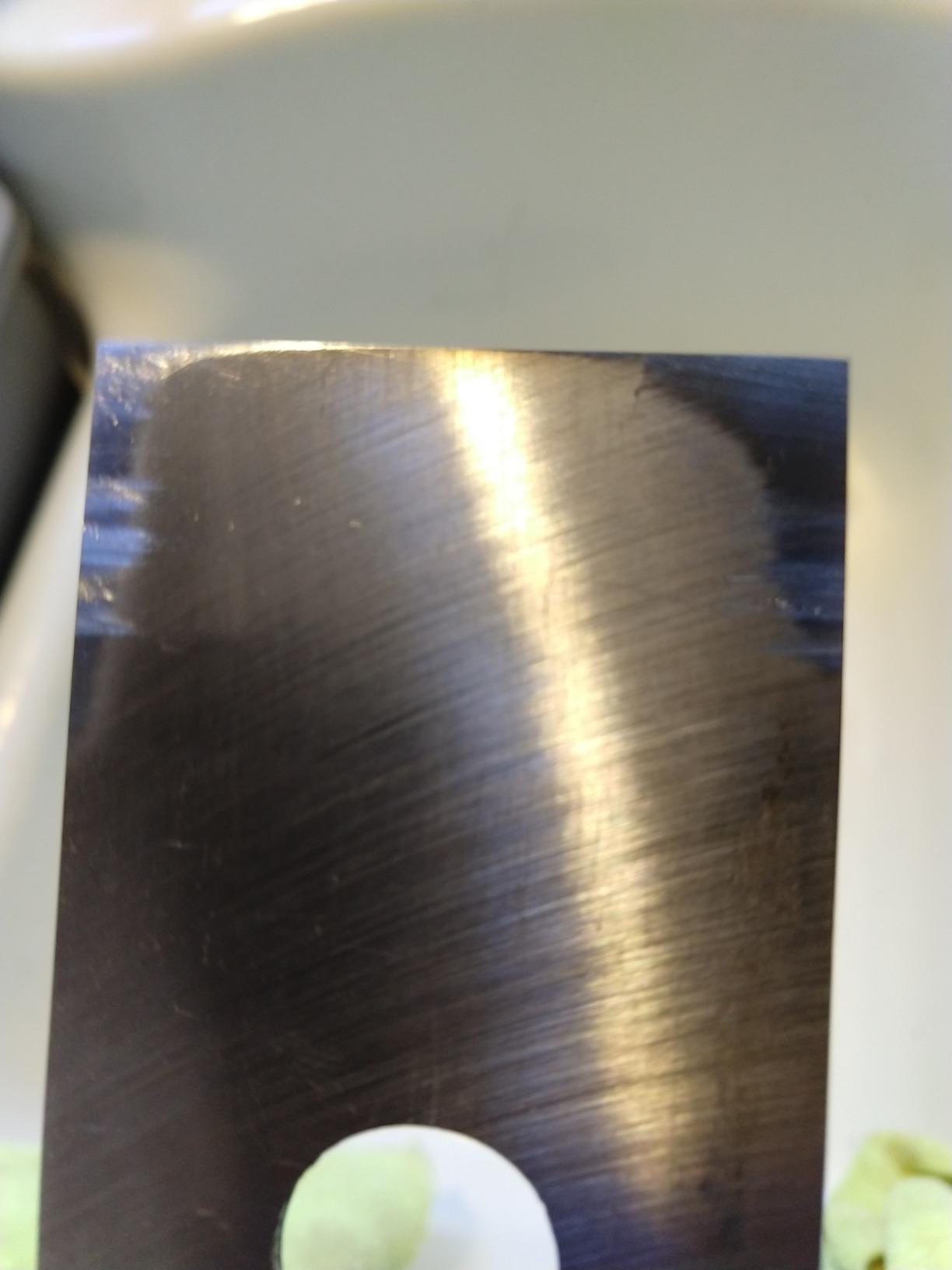
The recurring complaint in reviews is that the iron back arrives cupped. A cupped back cannot be honed flat across its full width, and honing it anyway gives a blade that only cuts in the middle third, which is exactly the kind of defect that produces a mysterious narrow shaving. Budget an hour or more of lapping the back flat on a stone before you sharpen, and the plane will be excellent afterward.
Quality control variation and the chip breaker
At 4.2 stars with 54 percent five star, this plane has the widest spread of feedback in the group. Experienced hand tool woodworkers rate it very highly for the sole. At the same time, a small share of owners report individual units with casting defects or rough frog mating surfaces, which is a quality control miss rather than a design problem.
The chip breaker also needs stoning to get a clean mating surface with the iron. Until it does, the shaving will split unpredictably instead of chipping, and you will assume the plane is misaligned when the real issue is two surfaces that are not parallel.
Who this plane suits
It suits an experienced hand tool woodworker who values a known flat sole and wants a plane that works as hard as they do. It also suits anyone who hates lapping soles and would rather spend that evening on sharpening, which is a much better use of time.
Who should skip it
Skip it as a first plane, because the iron still needs an hour of lapping and that is a skill you are better off learning on a cheaper body. Check your specific unit on a surface plate before you commit, since quality control varies. And skip it if you want a low angle bed, because this is a 45 degree smoother.
How to Choose a Hand Plane for Smoothing Boards
Most of the confusion in this category comes from the numbering. Bailey pattern planes are described by number, and the number tells you the sole length in inches, which in turn tells you the widest board the plane can true. A No. 4 is a near 10 inch smoother, a No. 5 is a 14 inch jack, a No. 7 is a 19 inch jointer. The nickname tells you the job: a smoother removes a small amount, a jack is the general purpose all rounder, a jointer straightens long edges.
Smoothing boards specifically means flattening a wide face and getting a surface clean enough to finish. That points at smoothers and jacks, not jointers and not blocks. Blocks are for trimming, fitting and small work. The two Japanese kanna in this roundup are finishing tools, superb at the end, not stock reduction tools.
Sole length versus board width: the twice-the-length rule
A plane can only flatten a face accurately over about twice its own length. Beyond that, the sole bridges hollows in the board instead of cutting them out, and you end up with a surface that looks flat in places and waves in others. This rule is the fastest way to pick a size, and it is the one most often missing from roundup pages.
Under 6 inch boards: a block plane is fine. Boards 6 to 20 inches wide: a 9 to 10 inch smoother, which covers the 4 inch and 6 inch panels most people glue up. Boards 20 to 30 inches wide: a 14 inch jack. Above 30 inches, you are looking at a jointer plane or a different strategy entirely, such as working the panel in sections with a shooting board or a router sled.
Bed angle decides how gently the plane treats grain
The bed angle is the single most important specification and almost nobody reads it on a listing. A 45 degree bed is a compromise that handles most straight grained wood. A 12 degree low angle bed cuts across the fibers at a glancing angle, which dramatically reduces tear-out on figured stock and end grain at the cost of shallower cuts per pass.
Think of it this way. If your boards are poplar, pine, ash, cherry and straight grain maple, a 45 degree bed is the right and cheaper answer. If your boards are curly maple, figured walnut, or you square cutting board ends, a low angle bed or a Japanese pull plane will save you sanding and rework. The Stanley No. 62 and the two low angle blocks in this roundup are the western route to that geometry.
Blade steel and edge retention
Plain carbon and high carbon steel sharpen easily and take a keen edge, which matters more for finishing passes than you might think. Tool steel such as O1 holds an edge longer through a hard session and is more forgiving of the small knocks that come with hand work. For a plane you will use daily, tool steel is the better buy, and the Jorgensen irons in this roundup are the examples.
Blade width is the other number worth reading. A 2 inch cutter covers a wide panel in half the passes of a 1.4 inch cutter, and the wider mouth that goes with it is what lets a bench plane take a finish shaving as readily as a roughing pass.
Frog type, chip breaker and how adjustment actually works
Two frog patterns cover almost everything. Bailey pattern is a separate frog bolted to the body with a screw and a wedge, which is cheap to make, easy to replace, and the reason a huge range of parts is available. Bedrock pattern, which appears on the Stanley No. 62 here as a one-piece casting, has no joint between frog and body, so it does not flex and chatter less.
Adjustment comes in three flavors. A cam lever gives coarse depth changes quickly. A wheel gives finer but slower control and can develop play. A lateral lever on the cap iron sets side to side alignment, and a screw lateral adjuster is slower but holds once set. A knob that moves the whole mouth lets you change the shaving thickness by changing the geometry, which is the mark of a good bench plane.
Every plane needs fettling before the first shaving
Budget time before you budget money. A budget cast iron plane typically needs a couple of hours: check the sole, flatten high spots, flatten the iron back, hone the iron, flatten the chip breaker, set the mouth. A precision ground plane saves the first step. A wooden Japanese plane needs the sole and bed lapped, then a technique change for setting the blade.
Two items make the job faster. A granite surface plate, or a piece of flat glass, lets you check flatness in seconds instead of by eye. A waterstone for flattening and honing, since a 1000 grit stone followed by a 4000 or 6000 grit stone will set a usable edge on any of these irons. A cheap plane with a cheap blade produces chatter, and the actual fix is usually an aftermarket iron rather than a different plane.
Frequently Asked Questions
Who makes the best hand planes for woodworking?
For general bench work, WoodRiver and Stanley cover the traditional middle of the market, and Taytools is widely respected among experienced hand tool woodworkers for a precision ground sole. At the premium end, Lie-Nielsen and Veritas are the names most often named first. For a first smoothing plane specifically, the Amazon Basics No. 4 and the Jorgensen 10 inch smoother are the two we would choose between.
What hand plane should I buy first?
Buy a bench smoother with a 2 inch blade and a sole around 9 to 10 inches, which covers boards up to about 20 inches wide. The Amazon Basics No. 4 is the value pick and the Jorgensen No. 4 10 inch is the one that arrives flat. A low angle block plane is a useful second tool rather than a first, because it cannot flatten a wide board efficiently.
Are Japanese hand planes better?
They are not better at everything, they are better at specific things. A Japanese pull plane shears end grain and figured stock with almost no tear-out, and a laminated Japanese steel blade takes a very fine edge. They are not better at flattening rough boards, because the pull geometry and narrow bodies suit finishing. The KAKURI 50mm and 60mm planes in this roundup are the accessible way to try one.
Which plane is better, Veritas or Wood River?
They occupy different tiers and answer different needs. WoodRiver is Woodcraft’s house brand, built in the accessible middle of the market with a traditional layout and a serviceable iron. Veritas is a premium maker whose planes ship ready to work with hardened blades and finer fit and finish. Buy WoodRiver to learn on and Veritas if you want a tool you never have to second guess.
How much fettling does a new hand plane need?
Budget two to four hours for a cast iron plane at the budget end: check the sole on granite, flatten high spots, flatten the iron back, hone it, flatten the chip breaker and set the mouth. A precision ground sole like the Taytools removes the first step. A wooden Japanese plane needs the sole and bed lapped, and the shipped iron may need time to hone flat.
Why is my hand plane leaving chatter marks?
Chatter is almost always one of four things: a dull or misaligned iron, an iron with a flat secondary bevel, a hollow or cupped back that only cuts in the middle, or a sole that is not flat. Start by flexing the iron and checking for rock, then round the secondary bevel on a stone, then check the sole on a surface plate. Replacing a cheap iron is often the real fix.
Which Hand Plane Should You Buy in 2026?
If you are buying exactly one hand plane for smoothing boards, take the Amazon Basics No. 4 adjustable bench plane. A near 10 inch cast iron sole with a 2 inch blade covers panels up to about 20 inches wide, the adjustment is simple enough to learn in an afternoon, and it has the deepest owner history of anything in this roundup at more than 4000 reviews.
If your boards are figured or you square cutting board ends, buy the KAKURI 50mm Japanese pull plane instead. It is the tool that taught me end grain no longer has to mean sanding, and the laminated Japanese steel blade is worth the setup on its own.
If you are flattening panels wider than 20 inches or you cannot tolerate tear-out, the Stanley No. 62 low angle jack is the answer, with the one-piece frog casting doing most of the chatter prevention for you. For a second plane, the Jorgensen No. 4 10 inch is the sleeper pick that arrives flat and needs no sole lapping.
Whatever you choose, buy a granite surface plate or a piece of flat glass and a waterstone in the same order. A plane that is checked, flattened and sharpened on day one behaves like a far better tool, and that is the difference between hand planing being a pleasure and being a frustration. Work out how big your boards actually are, pick the sole length that covers twice that width, and start flattening.