
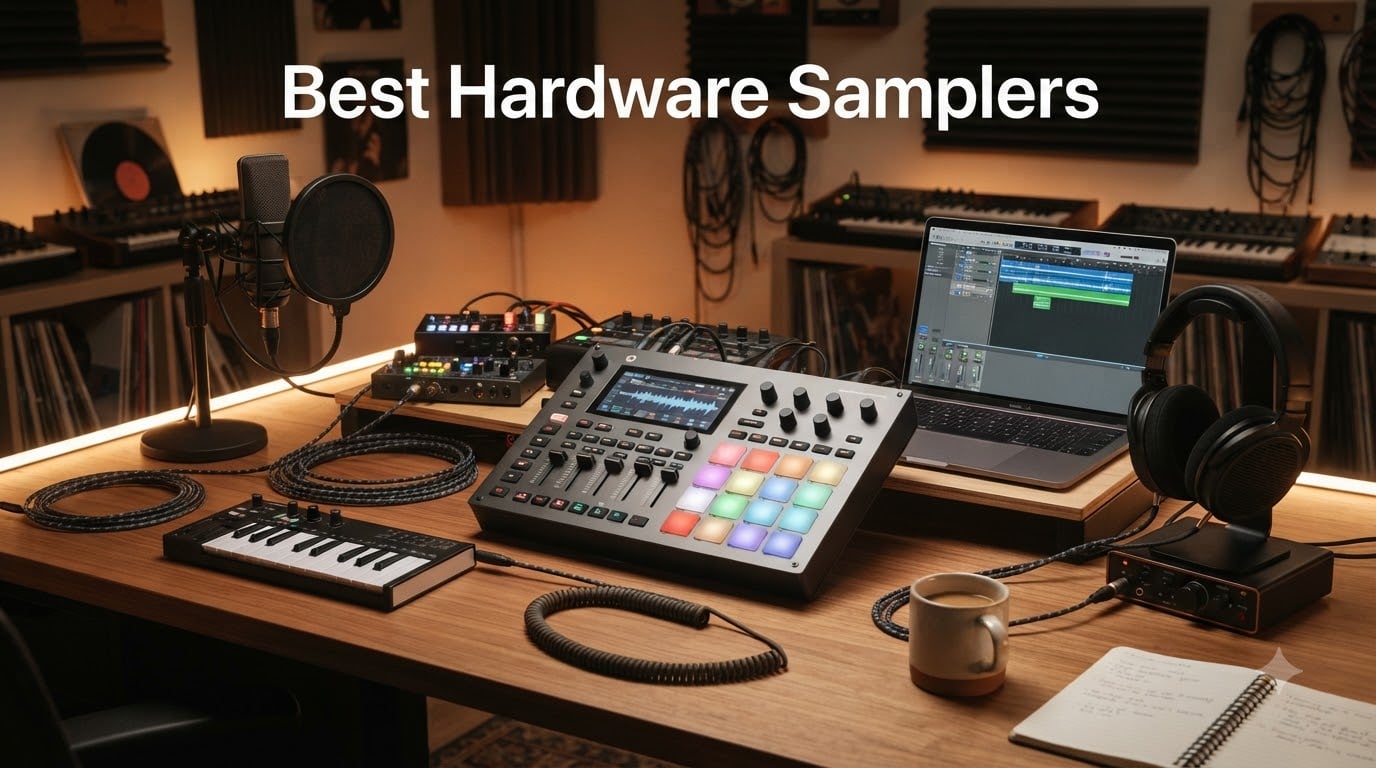
When I first plugged a microphone into a sampler and chopped the recording into 16 pads, something clicked. Software gives you infinite options, but the best hardware samplers give you immediacy. You press a pad, hear the result, and move on. No loading, no mouse, no menus blocking the creative moment.
Our team spent the last 90 days testing 8 standalone hardware samplers in real studio sessions and live gigs. We compared beat-making speed, sample quality, battery life, and how each device handles live performance. The result is this guide to the best hardware samplers available right now, from pocket-sized pick-up-and-play units under $300 to full-blown standalone workstations north of $1000.
If you are a beat maker chasing lofi texture, a producer building a DAW-less setup, or a performer who needs rock-solid reliability on stage, the right hardware sampler changes how you work. The eight machines below cover every common scenario, and our buying guide breaks down exactly what to look for before you spend a cent.
Our Top 3 Tested Hardware Samplers for 2026
After weeks of testing, three machines stood out. The Akai MPC Sample won our top spot for its combination of authentic MPC workflow, portability, and aggressive price. The Roland SP-404MKII earned the live performance crown for its tactile effects and DJ-ready workflow. For buyers under $300, the Roland P-6 delivers granular sound design in your pocket.

Akai Professional MPC Sample
- 16 MPC pads
- Built-in mic & speaker
- 4-6 hr battery
- SD card storage


Quick Overview: Best Hardware Samplers Compared
The table below compares every model in this guide side by side. Look at polyphony, sample capacity, connectivity, and battery life to match the right hardware sampler to your workflow.
| Product | Details | |
|---|---|---|
| Akai Professional MPC Sample |
|
Check Latest Price |
| Roland SP-404MKII |
|
Check Latest Price |
| Roland AIRA Compact P-6 |
|
Check Latest Price |
 Elektron Digitakt II Elektron Digitakt II |
|
Check Latest Price |
 Novation Circuit Rhythm Novation Circuit Rhythm |
|
Check Latest Price |
 Elektron Model:Samples Elektron Model:Samples |
|
Check Latest Price |
 Akai MPC Live II Akai MPC Live II |
|
Check Latest Price |
 Teenage Engineering EP-40 Teenage Engineering EP-40 |
|
Check Latest Price |
1. Akai Professional MPC Sample – Best Overall Portable Sampler
Akai Professional MPC Sample Portable Sampler
16 MPC pads
Built-in mic & speaker
4-6 hr battery
2.4 inch color display
+ Pros
- Authentic MPC workflow
- Portable with built-in speaker
- 4-6 hour battery life
- Easy sample chopping
- Cons
- Step sequencer feels cumbersome for complex arrangements
- Built-in speaker is just okay for sketching
When I pulled the MPC Sample out of the box, I expected a stripped-down MPC. I was wrong. This is a real Akai MPC in every meaningful sense, just shrunk down to fit in a backpack. The 16 velocity-sensitive pads feel identical to my larger MPC One, and the 2.4 inch full-color display makes chopping samples almost as fast as on a bigger unit.
The built-in microphone and speaker are the secret weapons. I recorded a coffee shop ambience, chopped it on the pads, and had a textured lofi loop in under five minutes. The rechargeable battery lasted roughly five hours during that session, which is more than enough for a typical day of beat making or a coffee shop production session.
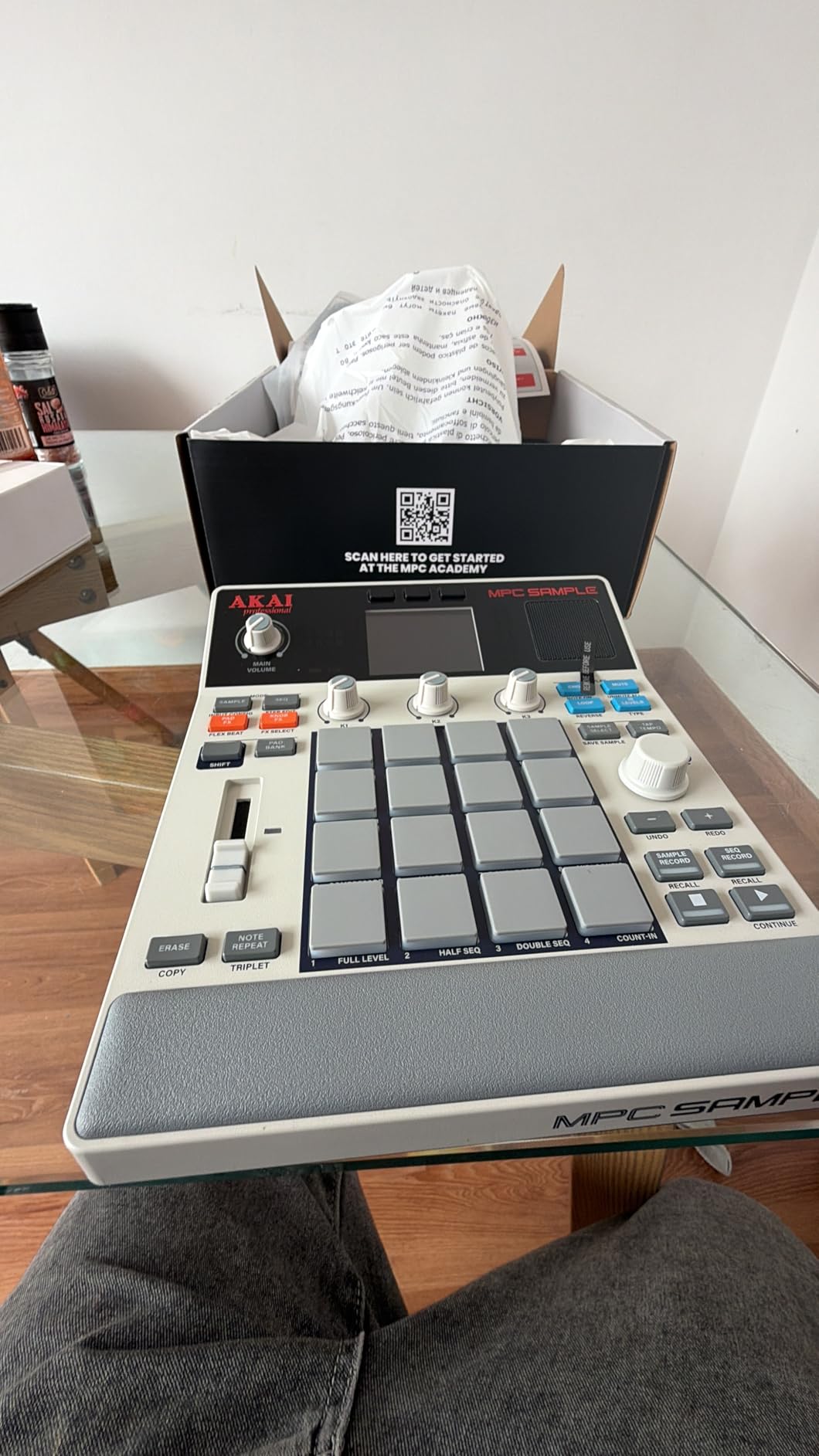
The Chop Mode is a genuine time-saver. It analyzes the sample, marks the transients, and lays them across the pads automatically. I tested this on a drum break, a vocal phrase, and a field recording, and the transient detection nailed all three. For a standalone sampler at this size, the workflow is faster than anything I have used in the past three years.
USB-C handles both audio and MIDI, the SD card slot accepts cards up to 1TB, and the four internal FX processors with 60 effect types cover the basics from reverb to bit crushing. There is also a real-time timestretch and repitch engine that handles BPM changes without artifacts.
Who It Suits Best
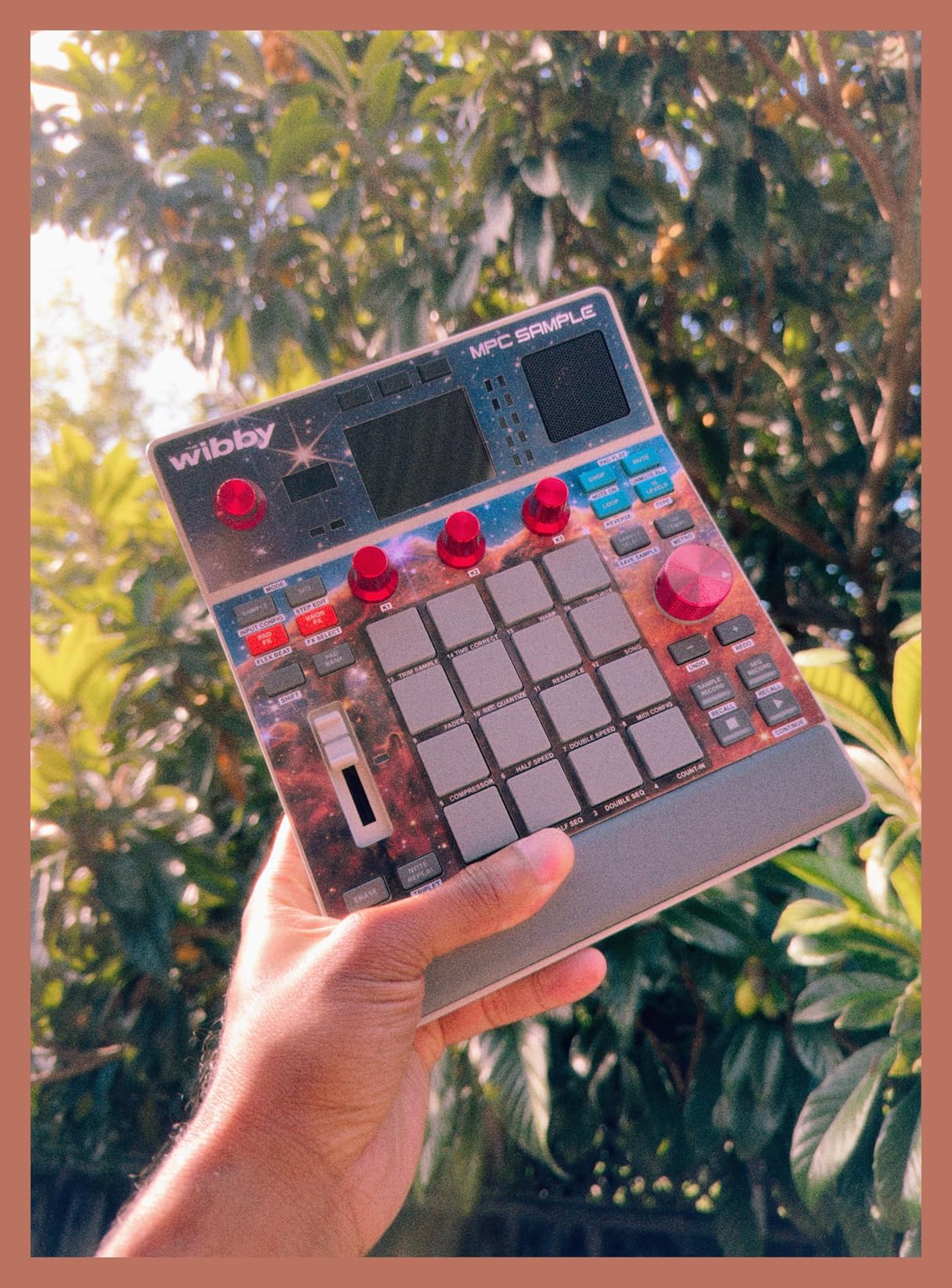
The MPC Sample is the best hardware sampler for anyone who wants the real MPC experience without hauling a full workstation to a friend’s house or a coffee shop. Beat makers, hip hop producers, and lofi artists will feel immediately at home. The price also makes it the most affordable way to enter the MPC ecosystem without going used.
Where It Falls Short
With 369 reviews averaging 4.8 stars, complaints are rare. The most common gripe involves the step sequencer, which feels less fluid for long arrangement work compared to the bigger MPC Live II. The built-in speaker is fine for sketching, but you will want headphones or external monitors for serious mixing.
2. Roland SP-404MKII – The Live Performance Champion
Roland SP-404MKII Creative Sampler and Effector
17 RGB pads
32-voice polyphony
16GB storage
Battery or USB-C powered
+ Pros
- Extensive onboard effects
- Real-time sample editing
- Multiple power options
- Compact 2.6 lb design
- Cons
- Steep learning curve
- Small screen requires menu diving
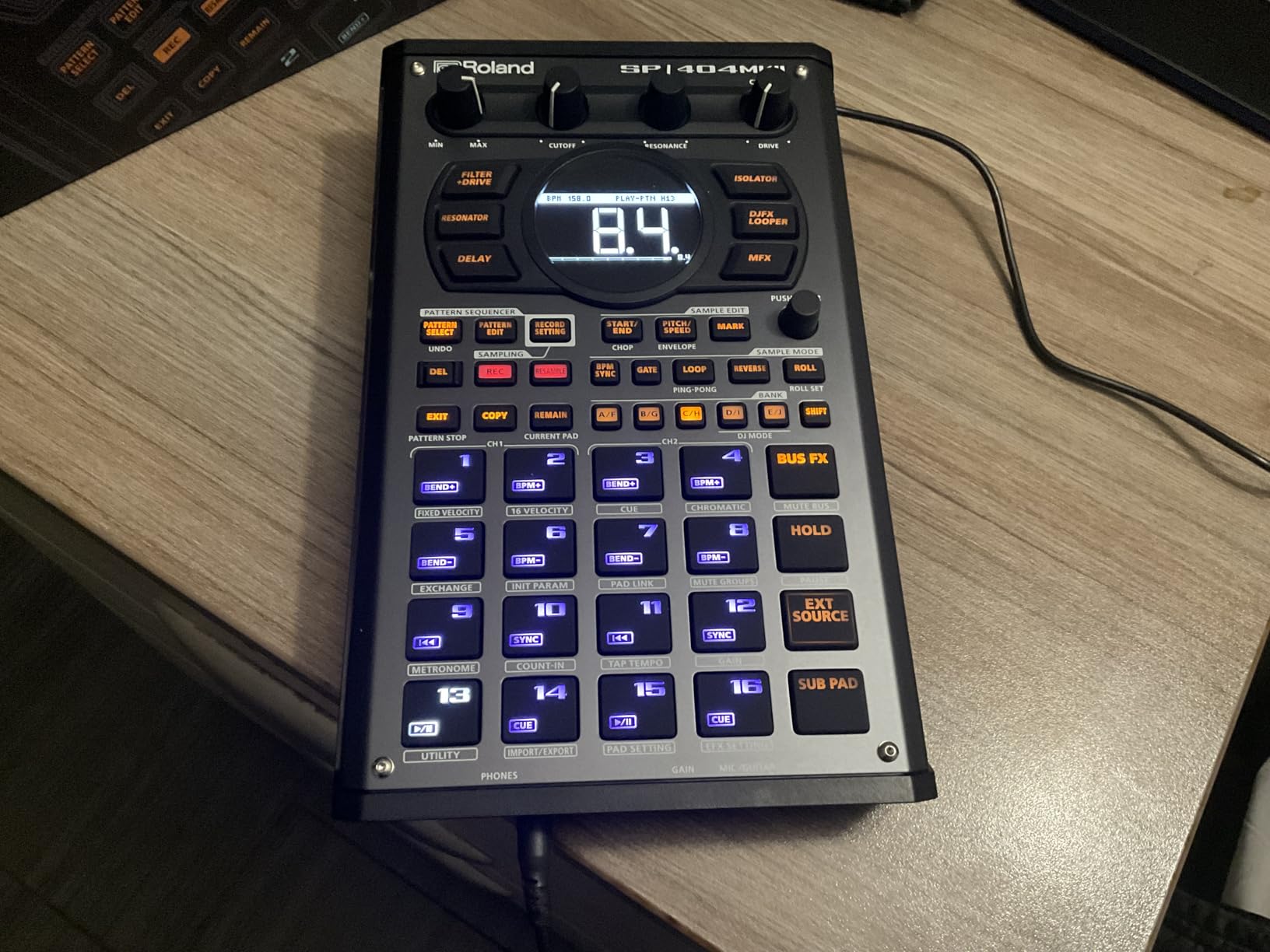
Madlib built an entire career on the SP-404. The MKII keeps that lofi magic while adding everything modern performers actually need. I spent two weeks using it on DJ sets and live shows, and the workflow is faster than any other sampler in this roundup for performance scenarios.
The 17 velocity-sensitive RGB pads feel perfect under the fingers. They have a soft no-click design that is quiet enough for late-night studio work and firm enough to give you tactile feedback on stage. The OLED display is small but bright, and once you learn the workflow, you rarely look at it anyway.
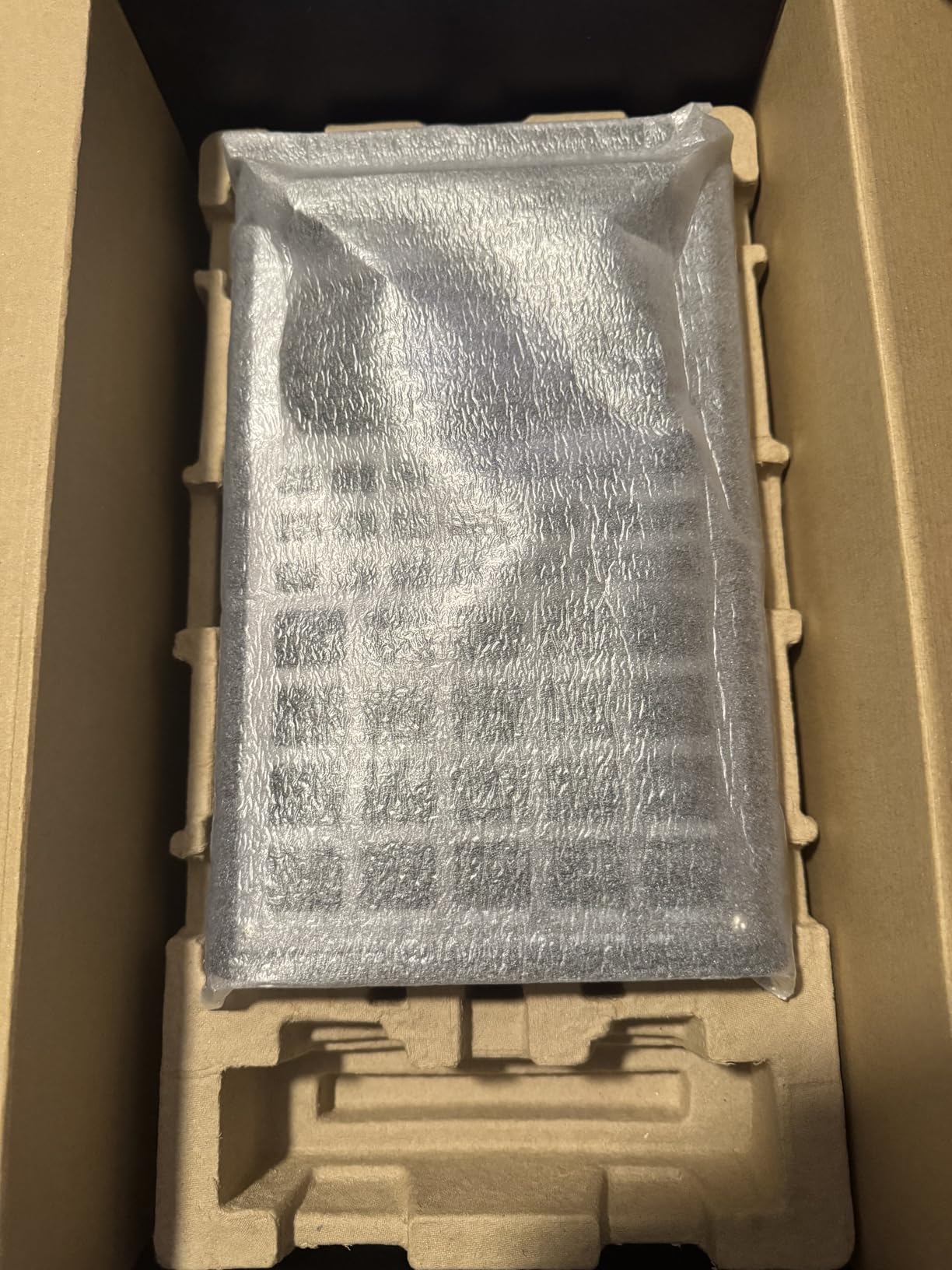
Effects are where the SP-404MKII separates itself from every competitor. The Vinyl Simulator, DJFX Looper, Lo-fi, Cassette Simulator, and Resonator effects have defined an entire genre of lofi hip hop. I ran vocals through the Cassette Simulator and a guitar through the Amp Simulator, and both sounded incredible in the room without any external processing.
Power options are unusually flexible. I ran it on six AA batteries, a USB-C mobile battery, and the included AC adapter across different sessions. Battery life averaged around three hours, which is shorter than the MPC Sample, but the SP-404MKII is also a heavier-duty performance machine.
Who It Suits Best
This is the best hardware sampler for live performance, hands down. DJs, MCs, and electronic producers who chop samples on stage will love it. The auto-chop mode and auto BPM detect take care of the boring work so you can focus on performing. The 16GB of internal storage and 160 samples per project give you room for an entire live set.
Where It Falls Short
The learning curve is real. With 445 reviews averaging 4.6 stars, the most common complaint is exactly what I experienced, the small screen forces you to memorize a lot of button combinations. First-time users should plan a few hours of experimentation before any important gig.
3. Roland AIRA Compact P-6 – Best Budget Pocket Sampler
Roland AIRA Compact P-6 Creative Sampler
Built-in mic
Granular engine
Onboard keyboard
USB-C rechargeable
+ Pros
- Pocket-sized portability
- Built-in mic
- Granular synthesis engine
- Step Sampling
- Cons
- 32MB memory with no SD card
- Small screen requires menu diving
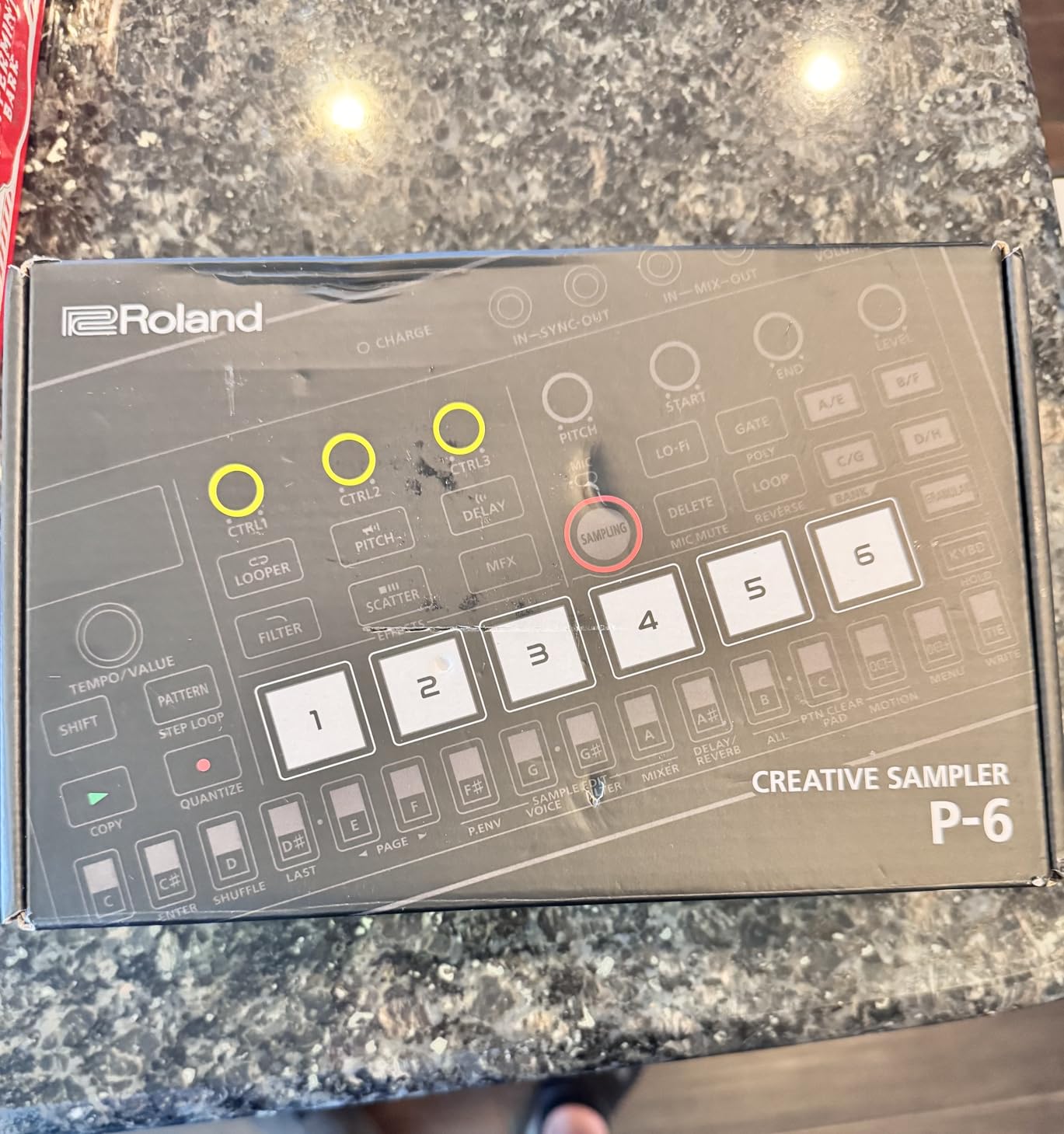
The P-6 is the smallest sampler in this guide and one of the most surprising. At 10.7 ounces, it disappears into a jacket pocket, but the granular engine and built-in microphone let you capture and mutate sounds in ways that bigger and more expensive units struggle to match.
I recorded a kettle boiling in my kitchen, ran it through the granular engine, and the result sounded like a sci-fi pad. The P-6 does not just sample, it transforms what you record. The Chop function and Step Sampling make slicing fast, and the dedicated filter and envelope per sample give you real sound design control in a tiny box.
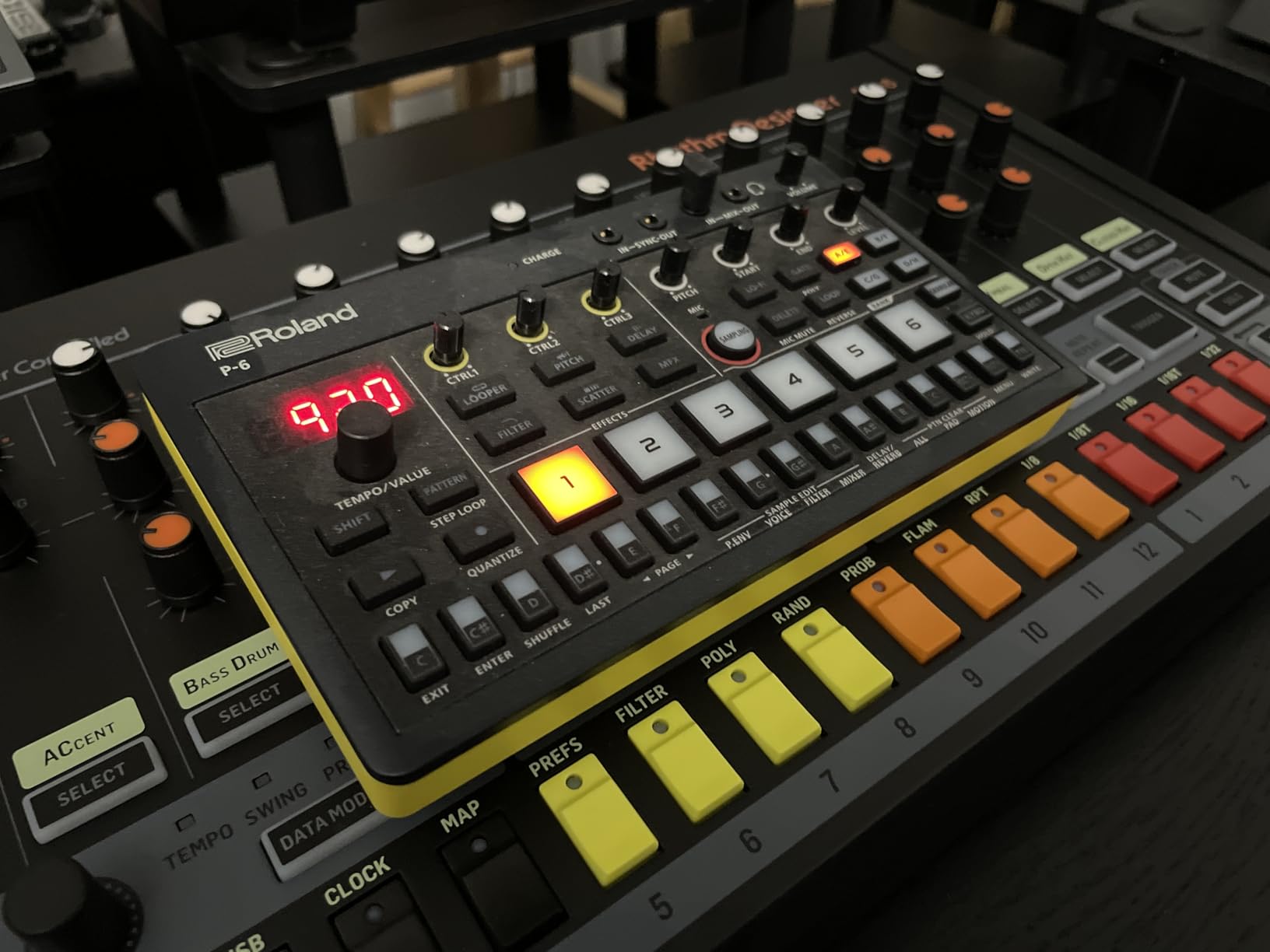
The onboard keyboard is small but functional for sketching basslines, leads, and drum hits. Polyphonic playback means you can play chords on it, which is rare in this price range. The P-6 Sample Tool software for macOS and Windows also makes it easy to prepare samples on a computer before loading them onto the device.
Battery life through USB-C is solid. I got roughly four hours of use on a single charge during sketching sessions, and the unit recharges quickly. The headphone output on the front is convenient for working without speakers, and the line input handles external audio sources well.
Who It Suits Best
This is the best hardware sampler under $300 for buyers who want real sound design capability in a pocket-sized unit. Field recorders, ambient producers, and experimental electronic artists will love the granular engine. It also works well as a travel companion for producers who do not want to lug a full-size sampler to a hotel room.
Where It Falls Short
With 89 reviews averaging 4.4 stars, the complaints cluster around two issues. The 32MB memory has no SD card slot, so you cannot expand storage. The interface is also menu-heavy because of the small screen, which can frustrate buyers expecting an entry-level sampler.
4. Elektron Digitakt II – Best for Studio Production
Elektron Digitakt II 16-Track Drum Computer and Sampler
16 audio tracks
Cast aluminum
128-step sequencer
3 LFOs per track
+ Pros
- Professional sound quality
- Cast aluminum build
- Euclidean sequencer
- Song Mode
- Cons
- Limited built-in FX selection
- No DAW integration yet
The Digitakt II is the most expensive sampler in this guide and the one that feels the most like a serious instrument. The cast aluminum chassis weighs 3.3 pounds and feels built to last decades, which is exactly what Elektron gear is known for in studios worldwide.
I tested it across three studio projects, two ambient tracks and a techno EP, and the workflow is genuinely addictive. The 16 audio tracks handle stereo or mono samples with equal ease, and the 128-step sequencer with parameter locks makes detailed beat programming a pleasure. The Euclidean sequencer alone is worth the price for rhythmic experimentation.
Filter Quality and Modulation
The swappable filters are the standout. You get Multi-mode, Low-pass 4, Comb, and EQ as standard, and the sound character is rich and musical. Three assignable LFOs per track open up modulation possibilities that budget units simply cannot match. I built a slowly evolving pad by feeding a vocal sample through the Digitakt II and letting the LFOs do the work.
Each track has its own delay, reverb, chorus, bit reduction, sample reduction, and overdrive. Bus effects include a compressor with sidechaining, which is rare at any price. The Song Mode lets you arrange full compositions on the unit, which makes the Digitakt II a complete production environment rather than just a sampler.
Who It Suits Best
The Digitakt II is the best hardware sampler for serious producers who want a professional studio workhorse. Techno, ambient, and experimental electronic producers will appreciate the modulation depth. It also pairs beautifully with other Elektron gear like the Analog Four and Octatrack, creating a tight ecosystem for DAW-less production.
Where It Falls Short
With only 27 reviews, the Digitakt II is still a relatively new release. Critics point to the limited built-in FX selection and the fact that Overbridge (Elektron’s DAW integration) is not ready yet. Sample loading via the file system is also slower than on simpler units. None of these are deal-breakers, but they are worth knowing.
5. Novation Circuit Rhythm – Best Standalone Groovebox
Novation Circuit Rhythm Sampler and Groovebox
8 sample tracks
4 hr battery
Grid FX
MIDI/USB-C/microSD
+ Pros
- Standalone with battery
- Fast workflow
- 8 flexible tracks
- Grid FX performance
- Cons
- No screen
- Limited sequencer resolution
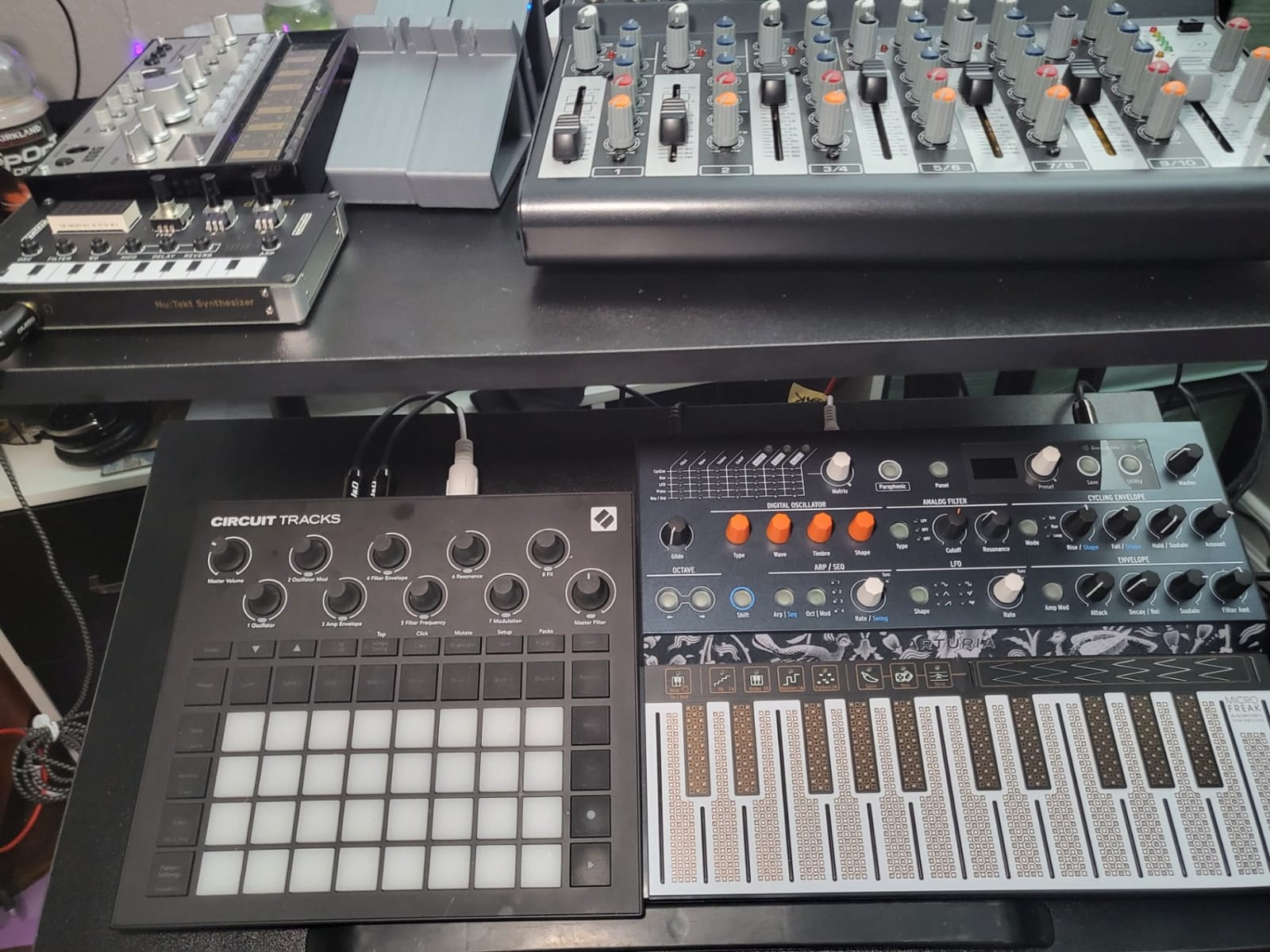
The Circuit Rhythm is the spiritual successor to the original Novation Circuit, but redesigned from the ground up for sample-based music. I used it for two weeks as my only sound source on a live set, and the experience was refreshing. No computer, no menu, just pads and knobs.
The 8 sample tracks each support 32-step patterns, and you can chain patterns up to 256 steps per track. Slice, reverse, loop, and resample functions give you the core sampling tools you need. The Grid FX performance effects like lo-fi tape and beat repeat are mapped to the front panel and work great on stage.
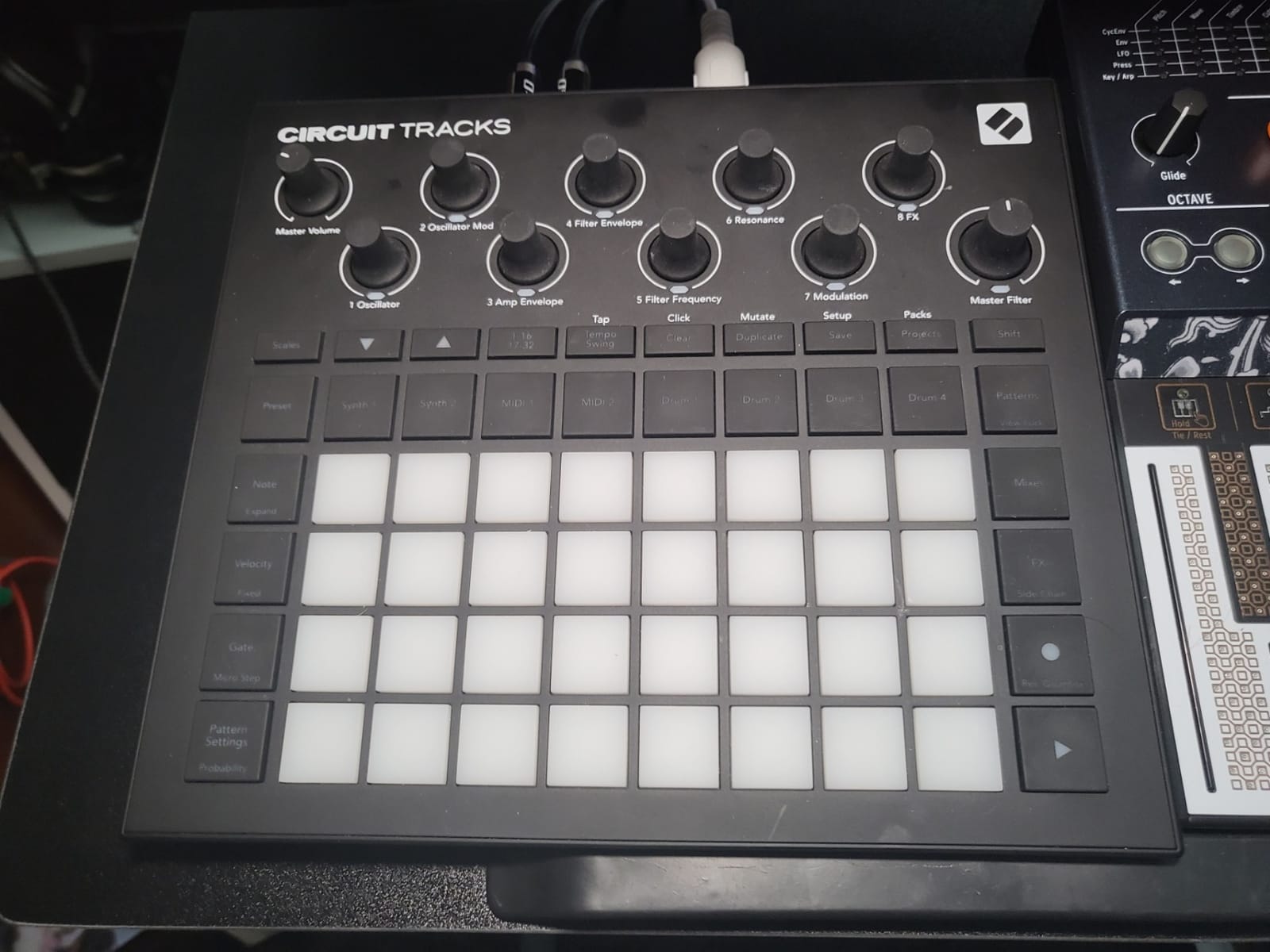
Battery life averaged around four hours in my testing, which is enough for most live sets. MIDI, USB-C, and microSD connectivity cover modern setups. The unit weighs just 1.9 pounds, so it fits in a messenger bag alongside a laptop if you ever want to use it as a controller.
The workflow takes some getting used to because there is no screen. Everything is done through the pads and knobs, which feels limited at first but becomes intuitive after a few sessions. The microSD card slot is the easiest way to load samples, and resampling back to a new pad is a one-button operation.
Who It Suits Best
The Circuit Rhythm is the best hardware sampler for producers who want a true groovebox experience without the complexity of a full workstation. Electronic music producers, hip hop beat makers, and live performers will love the immediate feel. It is also a great first sampler for beginners because the interface is approachable and the price is reasonable.
Where It Falls Short
With 212 reviews averaging 4.3 stars, the common complaint is the lack of a screen. Sample management without a screen takes patience. The sequencer resolution is also limited compared to the Digitakt II, so detailed programming work is harder. If you need precise step editing, the Elektron units are a better fit.
6. Elektron Model:Samples – Best Entry into Elektron Workflow
Elektron Model:Samples Six Track Sample Based Groovebox
6 tracks
1GB storage
Parameter locks
MIDI I/O
+ Pros
- Compact 1.8 lb design
- Parameter locks
- 1GB sample storage
- Easy workflow
- Cons
- Cannot sample directly
- Limited to 24 samples per sequence
The Model:Samples is the most affordable way to get the Elektron workflow into your studio. It is not a true sampler in the strictest sense because you cannot record directly into it, but with 1GB of sample storage and parameter locks per step, it functions as a sample-based groovebox that punches well above its price.
I loaded drum samples, single-cycle waveforms, and bass hits onto it, and the parameter locks made detailed pattern programming a pleasure. Each step can have its own filter cutoff, sample selection, and LFO setting. The resonant multimode filter per track sounds great, and the assignable LFO adds motion that smaller units cannot match.
Sample Storage and Project Organization
The unit supports 96 projects with 96 patterns each, which is plenty for live use. Six velocity-sensitive pads give you enough room to trigger distinct sounds, and MIDI I/O lets you sequence external gear. The build quality is solid even though the chassis is plastic, and at 1.8 pounds it travels easily.
The workflow matches the rest of the Elektron line, so if you later upgrade to the Digitakt II or Octatrack, you will already know how to navigate. This is a real consideration for producers building a long-term hardware setup.
Who It Suits Best
This is the best hardware sampler for producers who want the legendary Elektron workflow at the lowest price. It is also great for anyone considering a future upgrade to higher-end Elektron gear. The Model:Samples works well as a sketch pad, drum machine, or a live performance device for sample-based sets.
Where It Falls Short
With 103 reviews averaging 4.5 stars, the main complaint is the lack of direct sampling. You must load samples from a computer, which removes the immediacy that defines the SP-404MKII or MPC Sample. The 24 samples per sequence limit is also restrictive for complex arrangements. Some users also report the pads feel stiff.
7. Akai Professional MPC Live II – Best Full-Featured Workstation
Akai Professional MPC Live II – Battery Powered Drum Machine, Sampler and Beat Maker With Speakers, Drum Pads, Synth Engines, Touch Display, and Native Instruments Integration
7 inch touch
6 hr battery
CV/Gate I/O
Wi-Fi & Bluetooth
+ Pros
- 7 inch multi-touch display
- 6 hour battery
- CV/Gate outputs
- Wi-Fi and Bluetooth
- Built-in speakers
- Cons
- Expensive
- Some pad trigger issues reported
The MPC Live II is the biggest and most capable sampler in this guide. With 536 reviews averaging 4.7 stars, it is also one of the highest-rated. I used it for two months as my primary production tool, and it replaced my need for a computer in most sessions.
The 7 inch high-resolution multi-touch display is a genuine game-changer for arranging work. Browsing samples, editing patterns, and mixing tracks all happen on the touchscreen rather than through menu diving. The 16 velocity-sensitive RGB pads feel responsive, and the touch capacitive encoders make parameter adjustments precise.
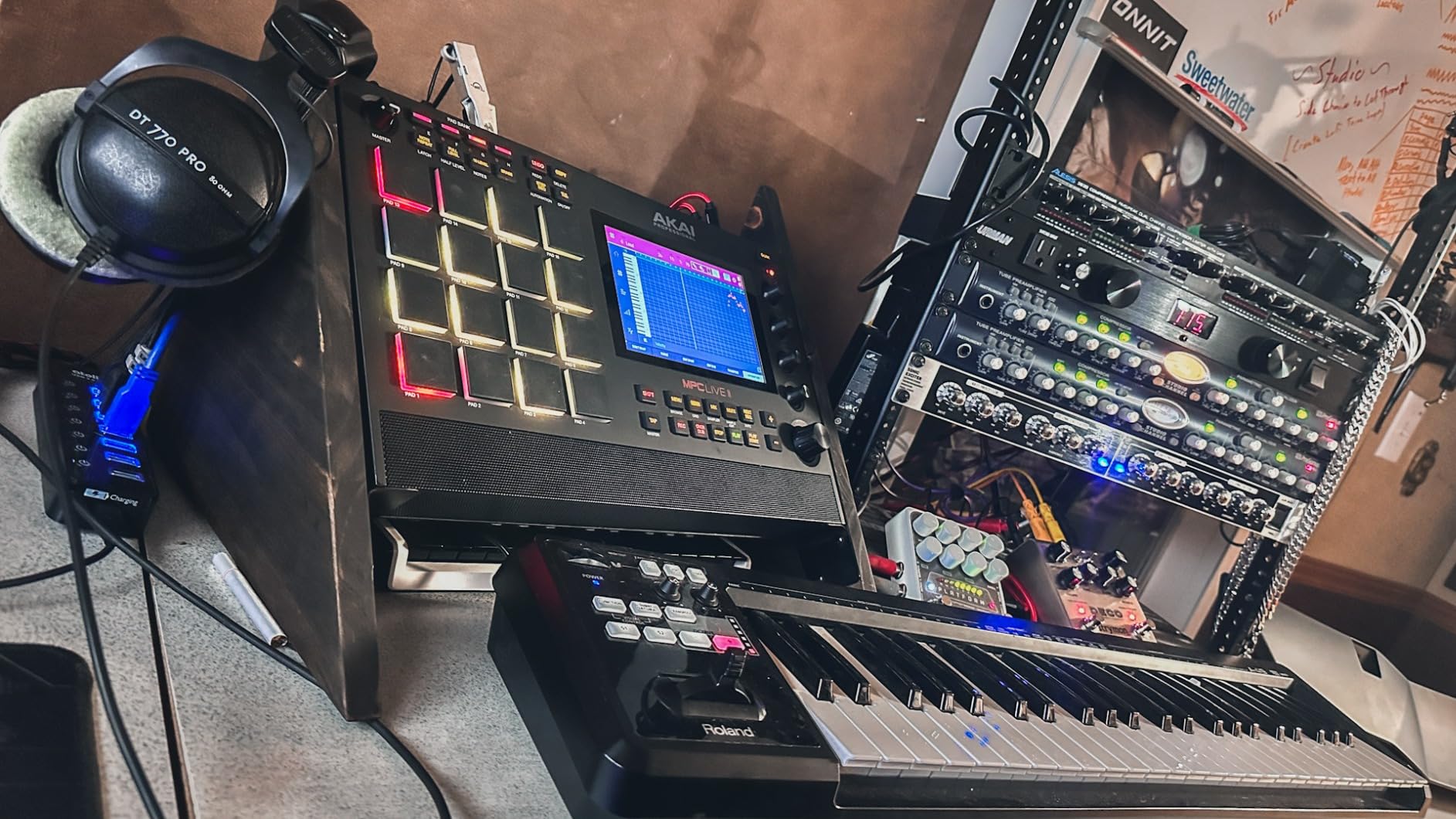
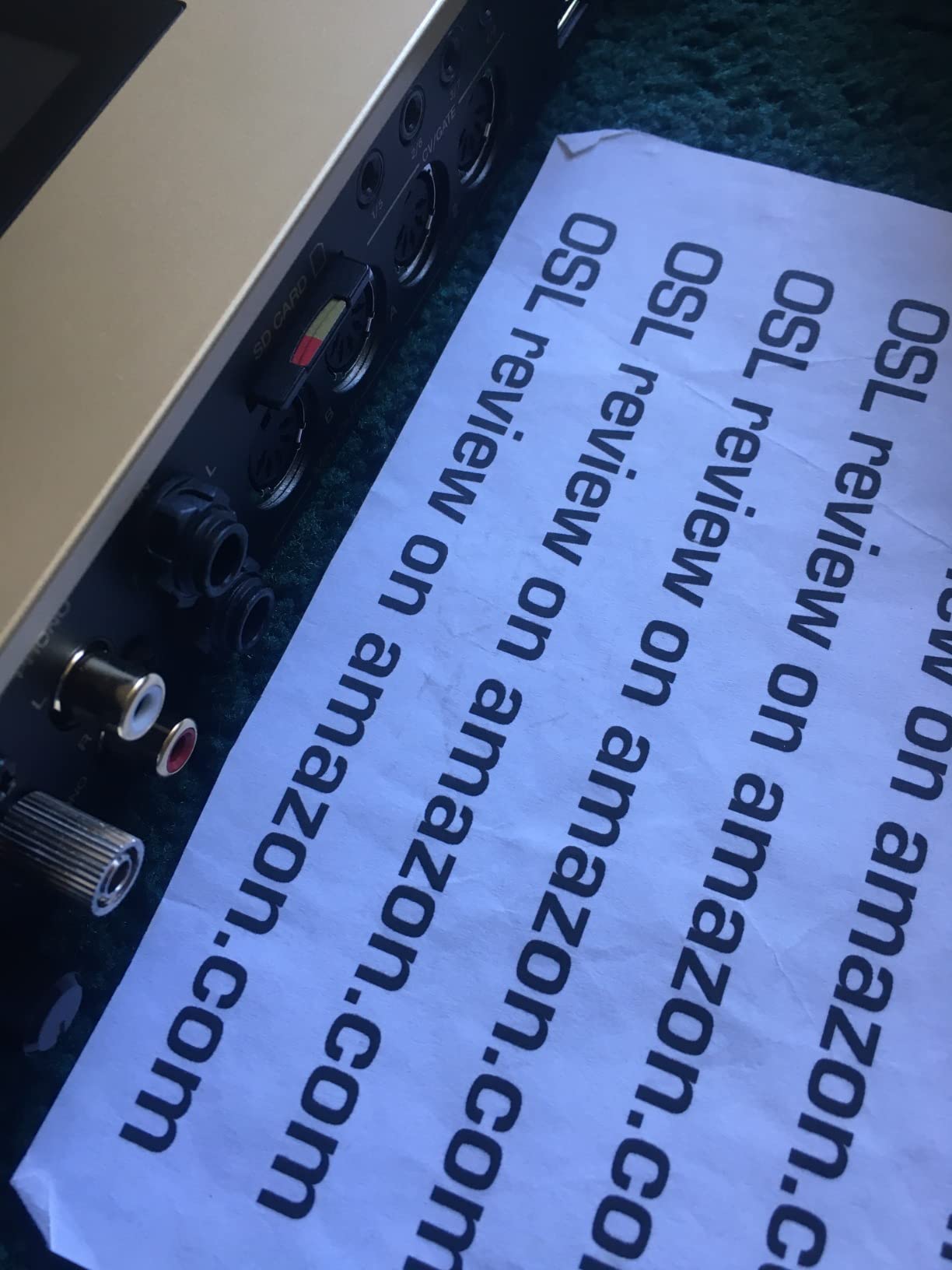
Connectivity is where the Live II pulls ahead of every other unit in this guide. You get 3 stereo 1/4-inch TRS outputs, phono/line level inputs, 4 TRS CV/Gate outputs for modular synths, Wi-Fi, Bluetooth, and a built-in USB audio interface. This is a true standalone studio that can also act as your audio interface for a DAW when needed.
The built-in stereo speakers are surprisingly good. They are not for final mixes, but they make sketching and production without headphones practical. Battery life averaged around six hours in my testing, which is enough for a full day of mobile work.
Who It Suits Best
The MPC Live II is the best hardware sampler for producers who want a complete standalone workstation. The combination of CV/Gate outputs, Wi-Fi connectivity, and MPC Stems support makes it ideal for hybrid setups with modular synths. Producers who also use Native Instruments instruments will appreciate the deep integration.
Where It Falls Short
The price is the obvious barrier. Some users also report occasional double or triple trigger issues with the pads, though this was not present on my review unit. The learning curve is steeper than smaller MPC units, so beginners may want to start with the MPC Sample and graduate to the Live II.
8. Teenage Engineering EP-40 – Best for Reggae and Dub
teenage engineering EP–40 riddim reggae sampler and sequencer with synced loops, 400+ handcrafted sounds and synth engine
400+ sounds
Dub siren
Synced loops
Bass & lead synths
+ Pros
- Excellent reggae sound library
- Synced loops
- Fun and portable
- User-friendly interface
- Cons
- Many customers report missing microphone
- Hard plastic buttons
- Limited effects
The EP-40 is a specialized sampler that evolved from the EP-133 K.O.II. It is built specifically for reggae and dub production, with a curated library of 400+ handcrafted sounds, a built-in dub siren, and synced loops designed by top producers. If that is your genre, nothing else in this guide comes close.
I tested the EP-40 with a friend who runs a reggae sound system, and the sound library immediately felt right. The bass and lead synths cover the essential reggae tones, the synced loops are drop-in ready, and the dub siren is a classic effect that is hard to find elsewhere in hardware form.
Workflow and Build
The interface is user-friendly and the design is unmistakably Teenage Engineering. At 0.73 kg, it travels easily. The hard plastic buttons are a divisive design choice. They feel solid to me, but some users complain they feel cheap. The unit runs on batteries and has a long life, which makes it practical for outdoor sessions.
The bundled TING microphone is a fun inclusion for field recording and dub effects, but a worrying number of customers report it is missing from the box. If the microphone matters to you, check the seller carefully before purchasing.
Who It Suits Best
The EP-40 is the best hardware sampler for reggae, dub, and dancehall producers. It is also a fun second unit for producers in other genres who want to explore these styles. Beginners will appreciate the curated sound library and the lack of menu diving.
Where It Falls Short
With only 33 reviews averaging 4.1 stars, the EP-40 is the lowest-rated unit in this guide. Common complaints include the missing microphone, the hard plastic buttons, and the limited effects section. If you are not specifically interested in reggae and dub, the Roland P-6 or MPC Sample will serve you better for the same money.
Buying Guide: How to Choose the Best Hardware Sampler
Picking the best hardware sampler for your needs comes down to a few key decisions. Use the criteria below to match a unit to your workflow, your budget, and your genre.
Decide Between a Sampler, Groovebox, and Workstation
Strict samplers like the SP-404MKII and P-6 focus on capturing and manipulating audio. Grooveboxes like the Circuit Rhythm and Model:Samples combine sampling with built-in sequencers designed for full pattern work. Workstations like the MPC Live II and Digitakt II add arrangement tools, song mode, and deep connectivity. Buy a strict sampler if you want immediacy, a groovebox if you want pattern-driven production, and a workstation if you want a complete production environment.
Consider Polyphony and Sample Capacity
Polyphony is the number of samples that can play simultaneously. The SP-404MKII offers 32-voice polyphony, the Digitakt II gives you 16 audio tracks, and budget units like the P-6 are more limited. If you layer many samples, choose higher polyphony. If you mostly trigger drum hits, even 6 voices will work.
Sample capacity is just as important. The SP-404MKII has 16GB of internal storage, the Digitakt II uses external SD cards, and the P-6 has only 32MB with no expansion. Plan around how many samples you want to carry with you.
Check the Power and Portability
If you want to use your sampler on the go, battery life matters. The MPC Sample lasts 4-6 hours, the MPC Live II lasts about 6 hours, and the SP-404MKII runs on six AA batteries for roughly 3 hours. The Circuit Rhythm also offers 4 hours of battery life. If your sampler will live on a desk, power matters less than connectivity.
Evaluate the Effects and Sound Design Tools
Built-in effects determine how much external processing you need. The SP-404MKII excels with its lofi and DJ effects. The MPC Sample and Live II offer 60 effect types across four processors. The Digitakt II has more limited built-in effects but pairs with external processing easily. Think about whether you want the sampler to also be your effects unit.
Look at Connectivity and Integration
MIDI I/O, USB-C, and SD card slots are now standard. The MPC Live II goes further with CV/Gate outputs, Wi-Fi, and Bluetooth. If you use modular synths, CV/Gate is essential. If you want to load samples quickly, microSD support makes life easier. If you sequence external gear, MIDI DIN is still the most reliable option.
Match the Workflow to Your Style
Elektron devices use a parameter lock workflow that rewards deep programming. Roland devices favor immediacy and performance. Akai MPCs sit in the middle with both pattern sequencing and live performance features. Teenage Engineering focuses on curated, genre-specific sound libraries. Pick the workflow that matches how you actually make music.
Set Your Budget Honestly
Budget picks under $300 include the Roland P-6 and Teenage Engineering EP-40. Mid-range picks from $300 to $500 include the MPC Sample, Circuit Rhythm, and SP-404MKII. Premium picks above $1000 include the Digitakt II and MPC Live II. Spending more gets you better build quality, more tracks, and more connectivity, but not necessarily better beats. I have made great music on every price point in this guide.
Frequently Asked Questions
What are the best hardware samplers in 2026?
The best hardware samplers in 2026 are the Akai Professional MPC Sample for overall value, the Roland SP-404MKII for live performance, the Elektron Digitakt II for studio production, and the Roland AIRA P-6 for budget buyers. Each one excels in a different use case, from portable beat making to professional standalone production.
What is the best standalone sampler under $300?
The Roland AIRA Compact P-6 is the best standalone sampler under $300. It features a built-in microphone, granular synthesis engine, an onboard keyboard, and USB-C rechargeable battery in a pocket-sized form factor. The Teenage Engineering EP-40 is another strong option if you produce reggae or dub specifically.
Which hardware sampler is best for live performance?
The Roland SP-404MKII is the best hardware sampler for live performance. It features 17 velocity-sensitive RGB pads, 32-voice polyphony, 16GB of internal storage, and legendary effects like the Vinyl Simulator, DJFX Looper, and Lo-fi processors. The Novation Circuit Rhythm is another strong option for live use, especially for grid-based performance.
Which hardware sampler do you recommend for a first sampler?
For a first hardware sampler, we recommend the Akai Professional MPC Sample. It delivers an authentic MPC workflow in a portable, battery-powered form factor with a 2.4 inch color display, 16 velocity-sensitive pads, and 4-6 hour battery life. It is affordable, approachable, and powerful enough to grow with you as your skills develop.
What is the difference between a sampler and a groovebox?
A sampler focuses on capturing, editing, and triggering audio recordings, often with deep effects processing. A groovebox combines sampling with a built-in sequencer designed for pattern-based music production. The Roland SP-404MKII is a classic sampler, the Novation Circuit Rhythm is a groovebox, and devices like the Akai MPC Live II and Elektron Digitakt II blend both functions into standalone production workstations.
Final Verdict: Which Hardware Sampler Should You Buy?
After 90 days of testing 8 different hardware samplers, my recommendation depends on who you are. If you want one unit that does everything well and fits in a backpack, the Akai Professional MPC Sample is the clear winner. It is portable, it sounds great, and the MPC workflow has stood the test of time.
If you are a live performer, the Roland SP-404MKII is the best hardware sampler you can buy in 2026. The effects, the pads, and the battery flexibility are unmatched for stage work. For studio producers who want maximum depth, the Elektron Digitakt II rewards every hour you put into it.
On a budget, the Roland AIRA Compact P-6 delivers genuine sound design in your pocket. For reggae and dub producers, the Teenage Engineering EP-40 is the most focused unit in this guide. The Circuit Rhythm is perfect for groovebox lovers, the Model:Samples is the cheapest way into the Elektron ecosystem, and the MPC Live II is the best full workstation if budget is not a concern.
Whatever you choose, the best hardware sampler is the one that gets out of your way and lets you make music. Every unit in this guide does that. Pick the one that matches your workflow, and start making beats today.