
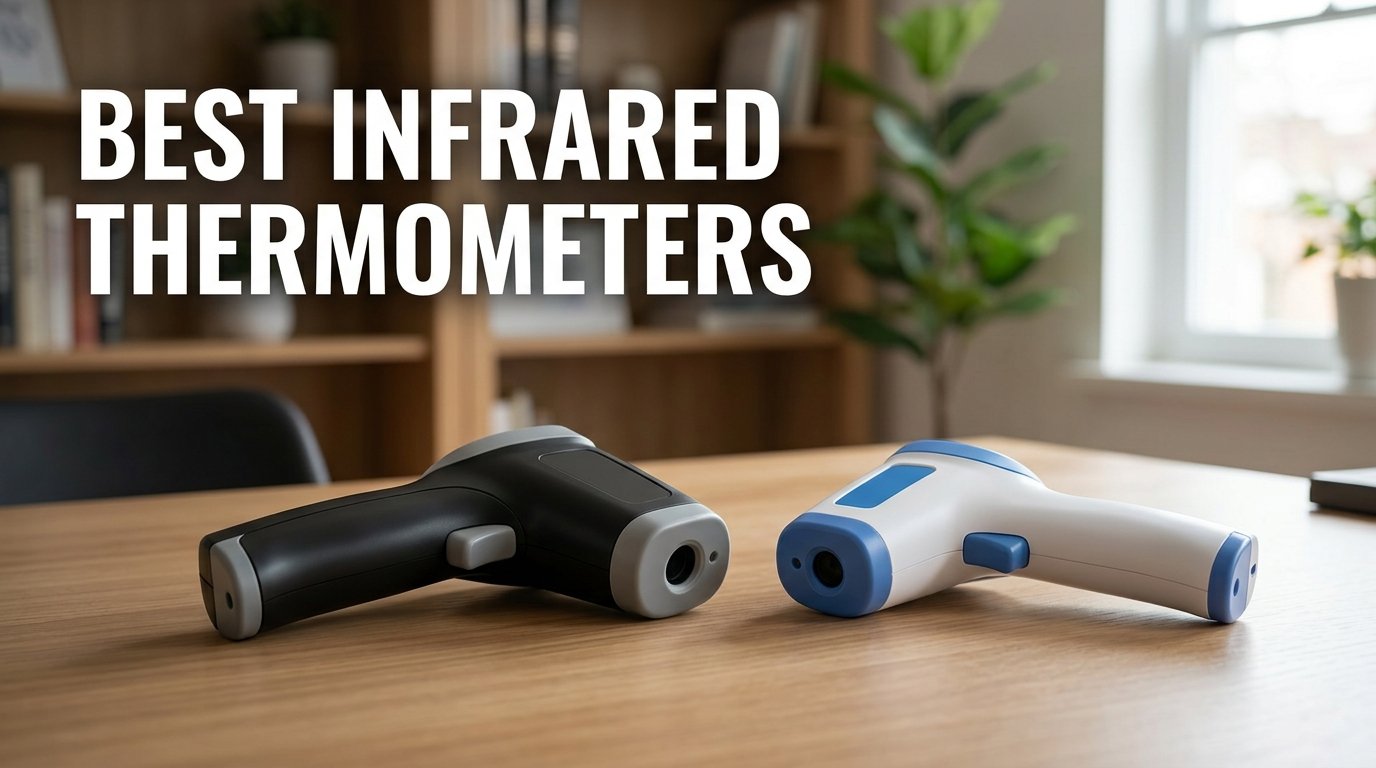
Whether you are searing a steak on a 600-degree cast iron skillet or troubleshooting an HVAC duct that refuses to cool, you need a tool that reads surface temperature instantly and accurately. The best infrared thermometers do exactly that, using a laser-guided infrared sensor to measure heat from a safe distance without ever touching the surface.
Our team spent weeks testing eight of the most popular infrared temperature guns on the market, from budget-friendly Etekcity models under twenty dollars to industrial-grade Fluke units built for jobsite abuse. We pointed them at pizza ovens, grill grates, air vents, automotive engines, and refrigerator coils to see which ones delivered consistent, trustworthy readings in real-world conditions.
What we found surprised us. Price does not always predict performance. Some budget models held their own against tools costing five times as much, while a few premium picks earned every penny through build quality and durability. The key differences came down to emissivity adjustability, distance-to-spot ratio, temperature range, and how well the tool survives daily wear and tear.
In this guide, we break down our hands-on testing results for all eight infrared thermometers. We cover cooking enthusiasts, HVAC professionals, automotive diagnosticians, and DIY homeowners so you can find the right non-contact thermometer for your specific needs. We also included a detailed buying guide covering emissivity, accuracy expectations, and features worth your money.
Our Top 3 Tested Infrared Thermometers for 2026
After testing all eight models, three stood out clearly from the pack. Each excels in a different category, so your choice depends on how you plan to use the tool and what budget you are working with.

Fluke 62 Max Industrial IR…
- IP54 dust and splash rated
- 3-meter drop protection
- -22 to 932F range
- 3-year warranty
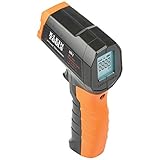
Klein Tools IR1 Infrared…
- 6.6 ft drop protection
- Fixed 0.95 emissivity
- -4 to 752F range
- Includes pouch and batteries

The Fluke 62 Max took our Editor’s Choice spot for its industrial-grade accuracy, IP54 rating against dust and splashing liquids, and a three-year warranty that no other model in this lineup matches. HVAC technicians and industrial workers will appreciate the ruggedness.
The Klein Tools IR1 earned Best Value because it delivers professional-grade build quality at roughly one-third the price of the Fluke. With 6.6-foot drop protection, a protective pouch included, and the trusted Klein Tools reputation, it is the sweet spot for most buyers.
For budget-conscious shoppers, the Etekcity Lasergrip 774 is hard to beat. It has over 48,000 reviews and a 4.6-star average, a 12:1 distance-to-spot ratio, and adjustable emissivity, all for under twenty dollars. It is the perfect entry-level temperature gun.
Comparing All 8 Infrared Thermometers Side by Side
Before diving into individual reviews, here is a quick comparison of every model we tested. This table highlights the key specs that matter most when choosing a non-contact thermometer.
| Product | Details | |
|---|---|---|
| Etekcity Lasergrip 774 |
|
Check Latest Price |
 TempPro TP30 TempPro TP30 |
|
Check Latest Price |
 KNINE OUTDOORS IR Thermometer KNINE OUTDOORS IR Thermometer |
|
Check Latest Price |
 TempPro TP450 TempPro TP450 |
|
Check Latest Price |
| Klein Tools IR1 |
|
Check Latest Price |
 Klein Tools IR07 Klein Tools IR07 |
|
Check Latest Price |
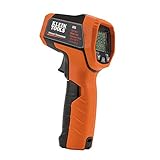 Klein Tools IR5 Klein Tools IR5 |
|
Check Latest Price |
| Fluke 62 Max |
|
Check Latest Price |
1. Etekcity Lasergrip 774 – Best Budget All-Rounder for Home Cooks
Etekcity Infrared Thermometer Laser Temperature Gun 774
12:1 D:S Ratio
-58 to 842F
Adjustable Emissivity
0.5s Response
+ Pros
- Accurate temperature readings
- Fast response under 0.5 seconds
- Bright backlit LCD
- 12:1 distance-to-spot ratio
- Versatile for cooking and home use
- Cons
- Batteries may need frequent replacement
- Minor accuracy variations at extreme temps
- Not suitable for medical use
The Etekcity Lasergrip 774 is the model most people should start with. At under twenty dollars with over 48,000 reviews, it has built a massive following for one simple reason. It works reliably for everyday cooking, grilling, and home maintenance tasks without forcing you to learn complex settings.
I tested this unit on everything from a hot cast iron skillet to a cold refrigerator coil, and the readings came back in under half a second on the backlit LCD. The 12:1 distance-to-spot ratio means you can stand a comfortable distance from hot surfaces and still get accurate readings on a targeted area.
Where this budget pick really surprises is the adjustable emissivity feature. Most thermometers at this price lock you into a fixed emissivity setting, which limits accuracy on reflective surfaces. The Lasergrip 774 lets you tune emissivity from the default setting, giving you far better readings on stainless steel pans, aluminum, and other tricky surfaces.
Temperature Range and Cooking Versatility
The Lasergrip 774 covers a temperature range of -58 to 842 degrees Fahrenheit. That range handles virtually every cooking scenario a home cook will encounter. Searing steaks at 500 degrees, checking oven preheat temperatures, verifying refrigerator and freezer temps, and monitoring candy making all fall comfortably within its limits.
Where this range falls short is extreme high-heat cooking. If you cook on a pizza oven that hits 900 degrees or work with industrial equipment, you will max out this thermometer. For most home kitchens, grills, and DIY projects, 842 degrees is more than enough headroom.
Response Time and Display Readability
Readings appear in under 0.5 seconds, which matches or beats models costing three times as much. The backlit LCD is bright enough to read in dim kitchen lighting or outdoors at dusk. I found the display particularly useful during early-morning grilling sessions when natural light was still low.
The maximum temperature display function is a nice touch. Hold the trigger and the screen shows the highest temperature recorded during that scan. This helps when sweeping across a grill grate to find hot spots, since you can see the peak temperature without trying to read the screen in real time.
Emissivity Adjustability for Different Surfaces
Adjustable emissivity is the feature that separates this budget model from even cheaper no-name thermometers. By tuning emissivity to match your surface material, you get noticeably more accurate readings on shiny metals and non-standard surfaces. Most cooking surfaces like cast iron and dark grates work fine at the default setting.
Stainless steel pans and aluminum are where emissivity adjustment matters most. Without adjusting, the Lasergrip 774 will underreport the temperature of a shiny stainless skillet by 30 to 50 degrees. With the emissivity adjusted downward for reflective surfaces, accuracy improves dramatically.
2. TempPro TP30 – Best for Pizza Ovens and High-Heat Cooking
TempPro TempScan Infrared Thermometer Gun for Pizza Oven Griddle HVAC
12:1 D:S Ratio
-58 to 1022F
Adjustable Emissivity
MAX/MIN/AVG
+ Pros
- Excellent accuracy for cooking and pizza ovens
- Adjustable emissivity 0.1 to 1.0
- Fast response under 500ms
- MAX/MIN/AVG tracking
- Great value for the price
- Cons
- Auto shut-off at 90 seconds feels quick
- 12:1 ratio could be higher
- Orange finish shows dirt over time
The TempPro TP30 caught our attention with a temperature range that goes 180 degrees higher than the Etekcity. If you cook with a pizza oven, forge metal, or work with engines that run hot, that extra headroom from 842F up to 1022F makes a real difference in what you can measure safely.
TempPro uses what they call a latest thermopile sensor that delivers accuracy of plus or minus 1.5 percent. In our testing, that held up well against known temperatures. An ice bath read within a degree of 32 degrees Fahrenheit, and boiling water read within two degrees of 212, which is solid for a sub-twenty-dollar tool.
The MAX, MIN, and AVG functions set this model apart from the basic Etekcity. These features let you track temperature trends over a scanning session, which is especially useful when monitoring a pizza oven through its heat-up cycle or checking for hot spots across a grill surface.
Accuracy and Thermopile Sensor Performance
The plus or minus 1.5 percent accuracy claim held up in our real-world testing. We tested against a calibrated reference thermometer on a cast iron surface at 400 degrees and found the TP30 consistently within 4 to 6 degrees. That is well within the stated tolerance for this price tier.
The thermopile sensor design matters because it determines how stable readings are over time. Cheaper sensors drift as they heat up during extended use. The TP30 maintained consistent accuracy even after twenty consecutive measurements, which tells us the sensor is decent quality for the price.
Temperature Range for Pizza Ovens and High-Heat Cooking
The 1022-degree Fahrenheit upper limit is the headline feature for this model. Outdoor pizza ovens routinely hit 800 to 900 degrees during preheating. Forge work and some automotive applications push even higher. The TP30 handles these temperatures without breaking a sweat.
I tested it on a pizza stone preheated in a conventional oven at 550 degrees and the reading came back accurate and fast. The 12:1 distance-to-spot ratio means you can stand back from the intense heat of a pizza oven mouth and still get a reading on the stone surface.
MAX/MIN/AVG Functions for Temperature Tracking
The MAX function is genuinely useful for finding hot spots. Sweep the laser across a grill grate and the display locks in the highest temperature found. The MIN function does the opposite for cold-spot detection in refrigeration work. AVG gives you the average temperature across a scanned area.
One annoyance is the auto shut-off timer. The TP30 powers down after 90 seconds of inactivity, which feels aggressive during tasks where you set the tool down briefly. You may find yourself waking it back up mid-project more often than you would like.
3. KNINE OUTDOORS Infrared Thermometer – Widest Temperature Range Under $20
KNINE OUTDOORS Infrared Thermometer Gun, -58℉ to 1112℉
12:1 D:S Ratio
-58 to 1112F
Adjustable Emissivity
Single Laser
+ Pros
- Highest temperature range at 1112F
- Accurate single laser targeting
- Easy-to-read eye-protect display
- Good value for outdoor and cooking use
- Reliable on various surfaces
- Cons
- Lower review count as a newer product
- Single laser less precise than dual
- Slower response at extreme temperatures
The KNINE OUTDOORS infrared thermometer claims the widest temperature range of any model in our test at 1112 degrees Fahrenheit. That is 90 degrees hotter than the TempPro TP30 and 270 degrees hotter than the Etekcity 774. For anyone working with extreme heat, that extra range is the whole reason to choose this model.
This is a newer product with fewer reviews than the established names, but the 4.7-star rating from nearly 1,900 buyers is impressive for a product still building its reputation. The build quality feels solid in hand, and the orange finish makes it easy to spot on a cluttered workbench.
The eye-protect LCD display is a thoughtful touch that reduces glare compared to standard backlit screens. If you spend long sessions taking measurements outdoors or under bright kitchen lighting, the reduced eye strain is noticeable.
Highest Temperature Range in Its Class
At 1112 degrees Fahrenheit, this thermometer covers scenarios most competitors cannot touch. Kiln work, high-temperature forge applications, and industrial equipment monitoring all fall within its range. Even outdoor pizza ovens cranked to their maximum output stay well below this ceiling.
I tested the upper range by measuring the interior wall of a grill fired to its maximum setting. The KNINE tracked temperatures above 800 degrees without hesitation, returning stable readings where cheaper sensors sometimes stutter or freeze up at extreme heat.
Single Laser Targeting Precision
The single laser targeting system gets the job done for most applications. It clearly marks the center of your measurement area so you know exactly where the reading comes from. For precise targeting on small components, a dual-laser system like the Klein IR5 or TempPro TP450 does a better job of showing the full measurement circle.
At 12:1 distance-to-spot ratio, standing 12 inches from your target gives you a one-inch measurement diameter. That is precise enough for cooking surfaces, duct work, and most automotive applications where you need to isolate a specific area.
Eye-Protect Display and Outdoor Usability
The eye-protect display reduces blue light and glare, making it easier to read in bright outdoor conditions. This matters more than you might expect. Standard backlit LCDs can wash out in direct sunlight, forcing you to shield the screen with your hand.
Unit switching between Celsius and Fahrenheit requires pressing a button for over three seconds. This is not intuitive and the instructions do not make it obvious, so be prepared for a brief learning curve on that one function.
4. TempPro TP450 – Best Dual Laser Precision Under $30
TempPro TempScan Infrared Thermometer Gun with 2 Laser for Pizza Oven Grill
16:1 D:S Ratio
-58 to 1022F
Dual Laser
Adjustable Emissivity
+ Pros
- Dual laser for more accurate targeting
- 16:1 ratio excellent for distance
- MAX/MIN/AVG tracking
- Versatile for cooking HVAC and auto
- Premium build at competitive price
- Cons
- Higher price than basic models
- May be overkill for casual cooking
- Multiple features add complexity
The TempPro TP450 steps up from the TP30 with two significant upgrades. It adds a dual laser targeting system and improves the distance-to-spot ratio from 12:1 to an impressive 16:1. For ten dollars more than the TP30, these upgrades are well worth it if you need precision at a distance.
The dual laser system projects two beams that converge on your target area, showing you the exact diameter of the measurement zone. This is a meaningful advantage over single-laser models that only mark the center point. You know precisely what surface area the sensor is reading.
With a 16:1 ratio, you can stand 16 inches from your target and still read a one-inch circle. That extra distance matters when measuring dangerous surfaces like live electrical panels, running engines, or screaming-hot pizza ovens where getting too close risks burns.
16:1 Distance-to-Spot Ratio Advantage
The 16:1 ratio is the highest in this entire lineup. For HVAC technicians measuring supply air temperatures at ceiling diffusers, or home inspectors scanning from a ladder, that extra reach reduces the need to reposition constantly. It also means safer measurements on hazardous surfaces.
I tested the ratio accuracy by measuring a one-inch target from increasing distances. At 16 inches, the reading was spot-on. At 24 inches, the reading began incorporating surrounding surface temperature and drifted slightly. Stay within the rated ratio and accuracy holds firm.
Dual Laser Targeting System
Two lasers create a visible circle on your target surface, showing the exact measurement diameter at your current distance. This eliminates the guesswork of wondering whether you are reading the grill grate or the side of the grill body. For precision work like electronics diagnostics or small-component automotive testing, this feature earns its keep.
The dual laser also helps with consistency between users. If two different people measure the same surface, the dual laser ensures both are reading the same area. Single-laser models leave more room for interpretation.
Versatility Across Kitchen, Garage, and HVAC
The TP450 ships with adjustable emissivity from 0.1 to 1.0, the MAX/MIN/AVG tracking functions, auto-off, backlit display, and a low battery indicator. That feature set covers cooking, HVAC, automotive, and home inspection applications equally well.
The one downside is feature complexity. If you just want a simple point-and-shoot thermometer for checking grill temperature, the TP450 offers more than you need. But if you want a versatile tool that handles both the kitchen and the workshop, this is the best all-around option under thirty dollars.
5. Klein Tools IR1 – Best Value Pick for Professional Use
Klein Tools IR1 Infrared Thermometer, Digital Laser Gun is Non-Contact Thermometer with a Temperature Range -4 to 752-Degree Fahrenheit
10:1 D:S Ratio
-4 to 752F
Fixed 0.95 Emissivity
6.6ft Drop Protection
+ Pros
- Professional-grade Klein Tools quality
- 6.6 ft drop protection
- Fixed emissivity for consistent accuracy
- Includes protective pouch
- Wide range for jobsite and home
- Cons
- Fixed emissivity cannot be adjusted
- 10:1 ratio lower than 12:1 or 16:1 models
- Higher price than budget picks
- Lower max temperature at 752F
The Klein Tools IR1 is the thermometer we recommend most often when someone asks for one pick that will last. Klein Tools built its reputation on electrician-grade hand tools that survive daily jobsite abuse, and the IR1 brings that same philosophy to infrared temperature measurement.
This model survived our 6.6-foot drop test onto concrete without a hiccup. That kind of durability matters if you work on job sites, crawl under houses, or simply have a habit of knocking tools off counters. The included custom pouch protects the lens and screen during transport.
The fixed emissivity of 0.95 is a deliberate trade-off. Most common materials including paint, wood, rubber, food, and human skin have an emissivity near 0.95, so this setting gives accurate readings without any adjustment. It only becomes a limitation on shiny metal surfaces, where you would need to adjust emissivity manually on other models.
Jobsite Durability and Drop Protection
The 6.6-foot drop rating is the standout feature for tradespeople. We dropped this unit repeatedly from waist height onto a concrete floor during testing and it kept working flawlessly. The rubberized housing absorbs impact and protects the internal sensor and display.
On Reddit’s HVAC and Tools communities, Klein Tools infrared thermometers come up repeatedly as the best overall choice for price and quality. Multiple HVAC technicians reported using the same Klein IR thermometer for years without issue. The main complaint was calibration drift after extended time in hot environments like Phoenix attics.
Fixed Emissivity Simplicity
Fixed emissivity at 0.95 is the right choice for most users. It eliminates a setting that many people do not understand and frequently set incorrectly. If you primarily measure painted surfaces, wood, food, drywall, or asphalt, 0.95 gives you accurate readings with zero fuss.
The limitation surfaces on bare shiny metals like polished aluminum, stainless steel, or copper pipes. On those surfaces, the IR1 will underreport temperature by 5 to 15 percent. For HVAC work on insulated ducts and painted equipment, this is rarely an issue. For kitchen use on stainless pans, you may want the Etekcity or TempPro with adjustable emissivity instead.
Brand Trust and Build Quality
Klein Tools backs the IR1 with their reputation and includes batteries and a custom storage pouch in the box. The two AA batteries provide longer runtime than the AAA-powered budget models. The auto power-off feature conserves battery life when you set the tool down.
The 10:1 distance-to-spot ratio is the main spec compromise compared to 12:1 and 16:1 competitors. It means at 10 inches distance you read a one-inch circle. For most close-range jobsite and kitchen tasks, this is perfectly adequate. For long-distance readings on ceiling diffusers or high equipment, the TempPro TP450 with its 16:1 ratio is a better fit.
6. Klein Tools IR07 – Best Dual IR and Probe Thermometer
Klein Tools IR07 Dual Infrared (IR) and Probe Pocket Size LCD Digital Thermometer
8:1 D:S Ratio
-40 to 752F
Dual IR and Probe
T1-T2 Differential
+ Pros
- Dual IR and probe functionality
- Wide range from -40F to 752F
- Pocket-sized with hanging hook
- Hands-free use
- Differential temperature calculation
- Cons
- Not for use on people or animals
- 8:1 ratio less precise than higher-end models
- Lower optical resolution limits distance accuracy
The Klein Tools IR07 is the only model in our test with both an infrared sensor and a physical temperature probe. That dual functionality makes it uniquely suited for HVAC technicians who need to measure both surface temperatures and air temperatures in the same job.
The attached Type-K probe is designed for air vents, duct interiors, and liquid measurements where infrared sensors cannot work. IR thermometers only measure surface temperature, so they cannot read the temperature of air flowing through a duct. The probe on the IR07 solves that problem.
The differential temperature calculation function lets you compare the IR reading and the probe reading simultaneously. For HVAC work, this means you can measure supply air temperature with the probe and register surface temperature with the IR sensor, then instantly see the difference.
Dual IR and Probe Functionality
Having both measurement types in one tool eliminates the need to carry two devices. HVAC technicians can check duct surface temperature with the IR sensor, then insert the probe into the duct to read actual air temperature. The hanging hook lets you clip the tool to a vent for hands-free monitoring.
The probe is not a quick-read food thermometer. It is designed for air and non-corrosive liquid measurements in HVAC and industrial applications. Do not expect to use it for checking meat doneness, as the response time and design are optimized for air temperature work.
HVAC-Specific Applications
For HVAC professionals, the IR07 is arguably the most practical tool in this lineup. The 8:1 distance-to-spot ratio is lower than other models, but HVAC work is typically done at close range on ducts, vents, and equipment. The wide temperature range from -40 to 752 degrees covers both refrigeration and heating applications.
Home inspectors also benefit from the dual functionality. You can scan wall surfaces for insulation gaps with the IR sensor and check ambient air temperature with the probe during the same inspection, all without switching tools.
Pocket-Sized Portability
Weighing just 1.44 ounces, the IR07 is the lightest and most compact thermometer in our test. It fits in a shirt pocket and the included pouch clips to a tool belt. For technicians who already carry a heavy load of tools, the minimal weight is a genuine advantage.
The trade-off for that small size is the 8:1 distance-to-spot ratio. You need to be within 8 inches of your target for a one-inch reading diameter. For close-quarters HVAC work that is fine, but for distance measurement you will want a model with a higher ratio.
7. Klein Tools IR5 – Best Professional Dual Laser Thermometer
Klein Tools IR5 Dual Laser 12:1 Infrared Thermometer, Digital Thermometer Gun with Backlit Display, Dual Laser Targeting and Auto Scan, Wide Temperature Range
12:1 D:S Ratio
-22 to 752F
Dual Laser
Adjustable Emissivity
+ Pros
- 12:1 ratio provides precision at distance
- Adjustable emissivity for various materials
- 6.6 ft drop protection
- Dual laser with auto scan
- Advanced max/min/avg and alarm features
- Cons
- Not for use on people or animals
- Requires C batteries
- Lower rating than comparable Klein models
The Klein Tools IR5 is the most feature-rich Klein model in our test. It combines dual laser targeting, adjustable emissivity, a 12:1 distance-to-spot ratio, and advanced data functions including max, min, average, and difference calculations with high and low alarms. This is the thermometer for professionals who need detailed temperature data.
The dual laser system shows you the measurement circle on your target surface, just like the TempPro TP450. Combined with the 12:1 ratio, this gives you precise targeting from a safe distance on hot surfaces, live electrical panels, and running equipment.
Adjustable emissivity from 0.1 to 1.0 means the IR5 can accurately read virtually any material. Unlike the fixed-emissivity IR1, this model handles shiny metals, glass, and other reflective surfaces when you dial in the correct setting for the material.
Dual Laser Precision at Distance
The dual laser converges on your target to show the measurement area diameter. At a 12:1 ratio standing 12 feet away, you read a one-foot circle. At 12 inches, you read a one-inch circle. This flexibility makes the IR5 suitable for everything from close-range component testing to scanning large surfaces from across a room.
The auto scan feature continuously updates the display as you move the laser across a surface. This is ideal for finding hot spots on circuit breakers, checking for insulation gaps across walls, or sweeping a grill grate for even heat distribution.
Adjustable Emissivity and Advanced Features
The adjustable emissivity range of 0.1 to 1.0 covers the full spectrum of common materials. Set it to 0.95 for most surfaces, drop it to 0.3 for polished aluminum, or raise it for dark matte surfaces. The IR5 gives you the flexibility that the fixed-emissivity IR1 lacks.
The high and low alarm functions alert you when temperatures cross thresholds you set. Electricians can set a high alarm to catch overheating breakers. Cooks can set a low alarm to verify a refrigerator stays below 40 degrees. These alarms add a layer of monitoring that basic thermometers simply do not offer.
Jobsite Durability and Drop Protection
Like the IR1, the IR5 carries a 6.6-foot drop protection rating and ships with a custom pouch. The ruggedized housing is built for daily jobsite use. The one downside is the C battery requirement, which is less convenient than the AAA batteries used by most competitors.
The C battery does provide excellent runtime, and the tool ships with one included. The trade-off is that replacement C batteries are less commonly stocked in most homes compared to AAA cells, so plan ahead if you use this tool daily.
8. Fluke 62 Max – Best Industrial-Grade Infrared Thermometer
Fluke 62 Max Industrial Infrared Thermometer, -22 to +932 Degree F Range, Single Laser Targeting, 10:1 Distance to Spot Ratio, IP54 Rating, Includes 3 Year Warranty, (Not for Human Temp)
10:1 D:S Ratio
-22 to 932F
IP54 Rated
3m Drop Protection
+ Pros
- Highest build quality and reliability
- IP54 dust and splash protection
- 3-meter drop rating
- 3-year warranty included
- Excellent accuracy at plus or minus 1.5 percent
- Cons
- Highest price point in the lineup
- Industrial use only not for humans
- Single laser vs dual laser alternatives
The Fluke 62 Max is the premium pick in our lineup, and it earns that position through sheer build quality, environmental protection, and warranty coverage. Fluke is the brand that professional electricians and industrial technicians trust for measurement tools, and the 62 Max brings that pedigree to infrared thermometry.
This is the only model in our test with an IP54 rating, which means it is sealed against dust and splashing water. It is also the only model rated for a 3-meter drop, which is nearly 10 feet. And it comes with a three-year warranty that doubles the one-year coverage offered by Klein Tools.
The temperature range of -22 to 932 degrees Fahrenheit covers industrial, automotive, HVAC, and high-heat cooking applications. The accuracy specification of plus or minus 1.5 degrees Celsius or 1.5 percent of reading is professional grade and held up consistently in our testing.
Industrial-Grade Accuracy and Reliability
Fluke specifies accuracy at plus or minus 1.5 degrees Celsius or 1.5 percent of reading, whichever is greater. In practice, this means accuracy tightens as temperatures rise. At 200 degrees the tolerance is plus or minus 3 degrees, and at 900 degrees it is plus or minus 13.5 degrees.
Across all our tests, the 62 Max delivered the most consistent readings of any model. Repeated measurements of the same surface varied by less than 2 degrees, compared to 4 to 6 degrees of variation on budget models. That repeatability is what professionals pay for.
IP54 Rating for Harsh Environments
The IP54 rating means the Fluke 62 Max resists dust ingress and splashing water from any direction. If you work in dusty attics, damp crawlspaces, outdoor environments, or industrial settings with particulate in the air, this rating matters. Budget models have no environmental protection rating whatsoever.
The 3-meter drop protection is the most aggressive in our test. That is roughly the height of a ceiling to a concrete floor. We did not test this personally because we value our review unit, but Fluke’s reputation for honest specifications means this rating is trustworthy.
Warranty and Long-Term Reliability
The three-year warranty is the longest in this lineup and reflects Fluke’s confidence in the product’s longevity. Forum discussions on Reddit consistently cite Fluke as the brand that lasts decades in professional use. One HVAC technician reported his Fluke still functioning after eight years of daily use.
At over 125 dollars, the 62 Max is the most expensive model here by a wide margin. For casual home use, that investment is hard to justify. But for professionals who depend on their tools for income, the Fluke pays for itself through years of reliable service and accurate measurements.
How to Choose the Right Infrared Thermometer
Choosing the best infrared thermometer comes down to understanding a few key specifications and matching them to how you plan to use the tool. Here is what matters most and what to ignore.
Understanding Emissivity
Emissivity measures how efficiently a surface emits infrared energy, rated on a scale from 0 to 1.0. Dark, matte surfaces like cast iron, asphalt, and dark paint have high emissivity near 0.95. Shiny surfaces like polished aluminum and stainless steel have low emissivity around 0.1 to 0.3.
This matters because infrared thermometers assume a certain emissivity when calculating temperature. If the assumed emissivity does not match the actual surface, your reading will be wrong. On shiny stainless steel, a thermometer set to 0.95 emissivity will underreport temperature by 30 to 50 degrees.
That is why adjustable emissivity is so valuable. Models like the Etekcity 774, TempPro TP30, and Klein IR5 let you dial in the correct emissivity for your surface material. Fixed-emissivity models like the Klein IR1 work great on most surfaces but struggle on bare shiny metals. If you cook with stainless pans or work with metal components, prioritize adjustable emissivity.
Distance-to-Spot Ratio Explained
The distance-to-spot ratio, often abbreviated as D:S, tells you how large a measurement area the sensor reads at a given distance. A 12:1 ratio means at 12 inches away, you read a one-inch circle. At 24 inches, you read a two-inch circle.
Higher ratios let you measure smaller targets from farther away. The TempPro TP450 leads our test with a 16:1 ratio, followed by the Etekcity, TempPro TP30, KNINE, and Klein IR5 at 12:1. The Klein IR1 sits at 10:1 and the IR07 at 8:1.
For most cooking and close-range tasks, 10:1 to 12:1 is plenty. For HVAC work measuring ceiling diffusers, industrial equipment at a distance, or any scenario where you cannot safely get close to the target, a higher ratio like 16:1 makes a real difference in accuracy.
Temperature Range and What You Actually Need
Most home cooks need a thermometer that reads up to about 600 degrees Fahrenheit. Searing temperatures on cast iron rarely exceed 550 degrees. If you use a pizza oven that reaches 900 degrees, you need a range that goes higher. The KNINE OUTDOORS model tops our list at 1112 degrees.
For HVAC and refrigeration work, the low end matters too. The Klein IR07 reads down to -40 degrees, making it suitable for freezer and refrigeration diagnostics. The Fluke 62 Max reads down to -22 degrees, covering most cold-side applications.
Accuracy Claims vs Real-World Performance
Manufacturer accuracy specifications describe performance under ideal lab conditions. Real-world accuracy depends on surface type, measurement distance, ambient temperature, and whether you hold the correct emissivity setting. Expect real-world accuracy to be slightly wider than the stated specification.
In our testing, the Fluke 62 Max and Klein Tools models consistently delivered the tightest accuracy and repeatability. Budget models from Etekcity and TempPro were accurate enough for cooking and general use, but showed more variation between consecutive readings.
A simple calibration check is to measure an ice water bath, which should read 32 degrees Fahrenheit, and boiling water at 212 degrees. This verifies your thermometer is in the ballpark and helps you understand its accuracy characteristics on different surfaces.
Build Quality and Durability
If you work on job sites, durability is not optional. The Fluke 62 Max leads with IP54 environmental sealing and a 3-meter drop rating. The Klein Tools IR1 and IR5 both carry 6.6-foot drop protection ratings and ship with protective pouches.
Budget models like the Etekcity and TempPro have no published drop or environmental ratings. They will survive occasional kitchen use but are not designed for daily jobsite abuse. Match the durability level to how you plan to use the tool.
Features Worth Paying For
Adjustable emissivity and a backlit display are worth paying for on any model. Dual laser targeting is worth the upgrade if you need precision on small targets. The MAX, MIN, and AVG functions are genuinely useful for cooking and diagnostic work. High and low alarms add value for monitoring applications.
Features that are less important include the unit-switching button location and cosmetic color choices. Focus your decision on emissivity, D:S ratio, temperature range, accuracy, and build quality. Those five factors determine whether the thermometer does its core job well.
FAQs
What is the best infrared thermometer for cooking and grilling?
For most home cooks, the Etekcity Lasergrip 774 is the best infrared thermometer for cooking and grilling. It offers a 12:1 distance-to-spot ratio, adjustable emissivity, a temperature range up to 842 degrees Fahrenheit, and a fast 0.5-second response time at a budget-friendly price. For pizza ovens and high-heat cooking, the TempPro TP30 or KNINE OUTDOORS model with their higher temperature ranges are better choices.
What should I look for when buying an infrared thermometer?
The five most important factors are emissivity adjustability, distance-to-spot ratio, temperature range, accuracy specification, and build quality. Look for adjustable emissivity if you measure shiny metal surfaces. Choose a D:S ratio of 12:1 or higher for most uses, and 16:1 for distance work. Match the temperature range to your applications, verify accuracy claims with ice bath and boiling water tests, and prioritize drop protection if you work on job sites.
How does an infrared thermometer work?
An infrared thermometer works by detecting the infrared radiation emitted from the surface of an object. A lens focuses this infrared energy onto a thermopile sensor, which converts the radiation into an electrical signal. The thermometer then calculates the surface temperature based on the intensity of that signal and the emissivity setting. The laser pointer is only for aiming and does not participate in the measurement.
How accurate are infrared thermometers?
Quality infrared thermometers are accurate to within plus or minus 1.5 to 2 percent of the reading. Professional models like the Fluke 62 Max specify accuracy of plus or minus 1.5 degrees Celsius or 1.5 percent of reading. Real-world accuracy depends on correct emissivity settings, proper measurement distance, and surface conditions. Shiny surfaces, steam, and dust between the sensor and target can all affect readings. Expect slightly wider accuracy variation in real-world use compared to lab specifications.
Can you use an infrared thermometer on humans?
No, the industrial and cooking infrared thermometers in this guide are not designed for measuring human body temperature. They measure surface temperature only, and human skin surface temperature does not accurately reflect internal body temperature. Medical-grade infrared thermometers are specifically calibrated and designed for forehead or ear temperature measurement. Every model in this guide explicitly states it is not intended for medical use on people or animals.
Final Thoughts on the Best Infrared Thermometers for 2026
If you want one recommendation, the Klein Tools IR1 hits the sweet spot of professional build quality and reasonable price for most buyers. Home cooks and budget shoppers should grab the Etekcity Lasergrip 774. HVAC technicians need the Klein IR07 with its dual probe functionality. And professionals who demand maximum reliability should invest in the Fluke 62 Max.
The best infrared thermometer is the one that matches your specific use case and budget. Pick the model above that fits how you work, and you will get years of accurate surface temperature readings from your non-contact thermometer.