
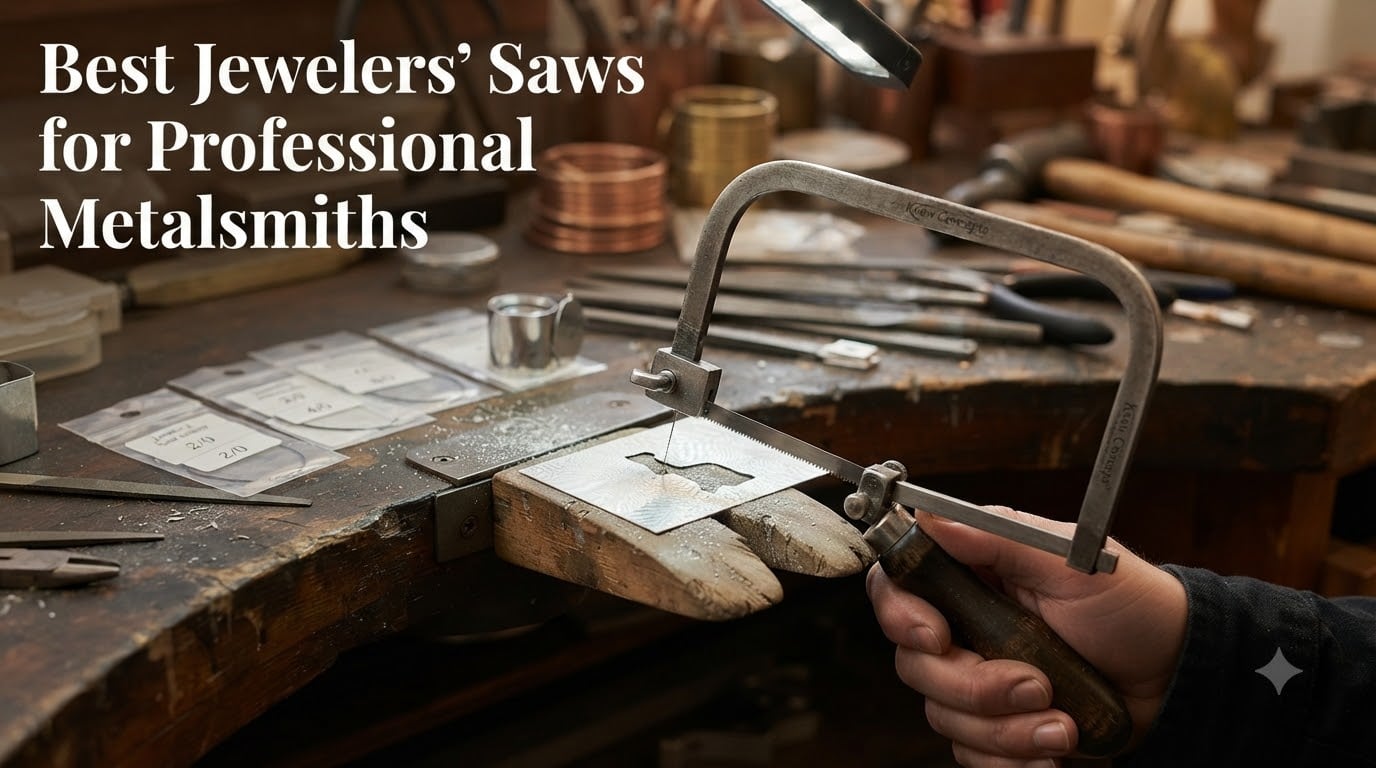
I have been making jewelry at the bench for over a decade, and I can tell you within the first three strokes of a saw whether it is going to make my afternoon productive or miserable. After testing dozens of frames over the years, from student-grade models to titanium workshop workhorses, I have learned that the right jewelers’ saw transforms how a metalsmith works. Our team spent the last 90 days comparing 8 of the best jewelers saws for professional metalsmiths currently available, evaluating frame tension, throat depth, handle comfort, blade retention, and how each holds up during 6+ hour production sessions.
A jewelers’ saw (also called a piercing saw or fret saw) is a precision cutting tool with a fine toothed blade held under tension in a U-shaped frame. Unlike pliers or shears that distort metal, a jeweler saw blade cuts only on the downstroke, producing clean edges in sheet metal, wire, and findings. Professional metalsmiths rely on these saws daily for piercing intricate designs, cutting jump rings, fabricating custom settings, and creating precise joinery. Whether you are sizing a ring, fabricating a custom pendant, or building a complex multi-layered brooch, the saw you choose directly impacts your accuracy, comfort, and ultimately your finished work.
This guide is built specifically for working metalsmiths who saw for a living or serious hobbyists ready to upgrade from a starter kit. We will walk through the top 3 picks for 2026, review 8 detailed product options, cover blade selection and tension techniques, and answer the questions professional bench jewelers actually ask in workshops and on Reddit.
Our Top 3 Jewelers’ Saws for 2026

Knew Concepts 5 inch Mk.IV…
- Cam lever tension
- Fixed blade position
- Premium build quality
- Lightweight at 1.2 lbs
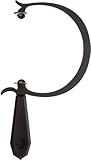
GreenLion Jeweler’s Saw Frame
- USA-made 11 gauge steel
- 7oz lightweight
- 4.25 inch throat depth
- Rubber grip handle
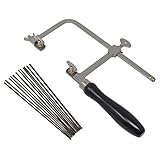
MegaCast German Style Saw…
- 144 assorted blades
- Heavy duty adjustable
- Thumbscrew blade lock
- Multi-material cutting
Quick Comparison: All 8 Jewelers’ Saws in 2026
| Product | Details | |
|---|---|---|
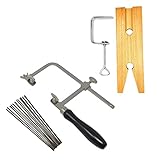 MegaCast 3-in-1 Professional Saw Set MegaCast 3-in-1 Professional Saw Set |
|
Check Latest Price |
 SE 3-in-1 Professional Saw Set SE 3-in-1 Professional Saw Set |
|
Check Latest Price |
| MegaCast German Style Saw Frame |
|
Check Latest Price |
| GreenLion Saw Frame |
|
Check Latest Price |
| Knew Concepts 5 inch Mk.IV |
|
Check Latest Price |
 Artistic Wire Jewelers Saw Kit Artistic Wire Jewelers Saw Kit |
|
Check Latest Price |
 SE 2-in-1 Professional Saw Frame SE 2-in-1 Professional Saw Frame |
|
Check Latest Price |
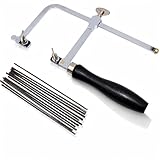 NIUPIKA Adjustable Saw Frame NIUPIKA Adjustable Saw Frame |
|
Check Latest Price |
1. Knew Concepts 5 inch Mk.IV – Premium Cam Lever Tension for Production Work
Sawframe -Knew Concepts 5” Mk.IV Heavy Duty Fret Saw With Lever Tension
Cam lever tension system
Fixed blade position
Weighs 1.2 lbs
15 TPI #7 blade included
+ Pros
- Rapid blade changes with cam lever
- Lightweight and well-balanced
- Excellent precision for detailed work
- Smooth cutting action
- Premium engineering
- Cons
- Premium price point at 119 dollars
- Fixed blade position may not suit all users
- Not Prime eligible
I bought my first Knew Concepts saw two years ago after watching a colleague swap blades in under 10 seconds during a workshop demonstration. The cam lever tension is what separates this saw from every other model on this list. You pull the lever, drop in a new blade, push the lever back, and you are cutting again. No wing screws to fumble with, no tension nuts to over-tighten. During a recent production run of 40 silver pendants, I changed blade sizes (from 2/0 for interior cuts to 4/0 for fine detail) at least 60 times. With a traditional screw-tension saw, that would have eaten 20 minutes of my day. With the Knew Concepts, it took less than 5.
The Mk.IV is the heavy duty version of the standard Knew Concepts fret saw, which means the frame has thicker side rails and a more rigid throat. At 1.2 pounds, it feels substantial in the hand without being heavy. The 5 inch throat depth handles most sheet metal projects I encounter, and the fixed blade position (the blade cannot rotate to cut at angles like some Swiss-style frames) keeps the geometry simple. For production work where you are doing the same type of cut repeatedly, fixed blade orientation is actually a benefit because there are no moving parts to drift out of alignment.
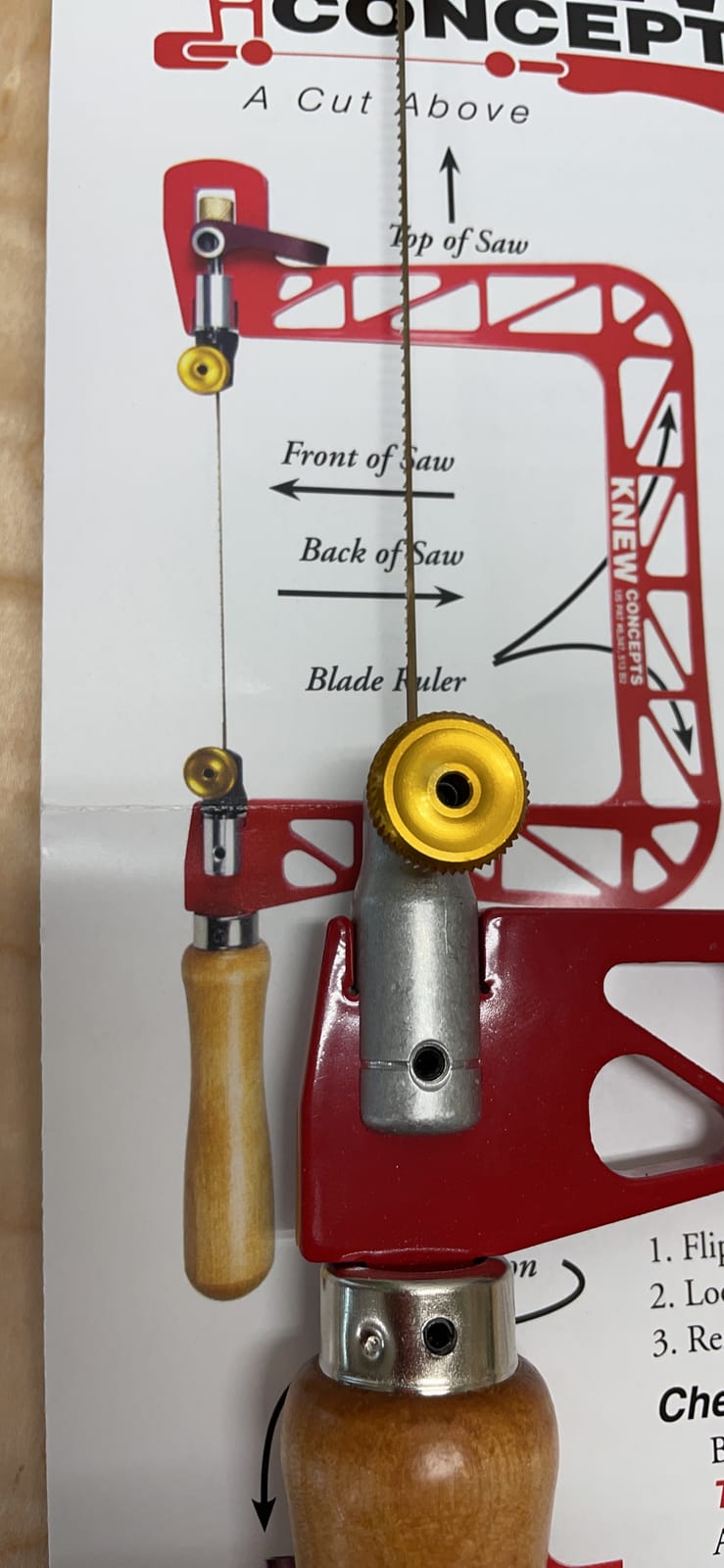
Cam Lever Tension Mechanism
The defining feature of the Knew Concepts saw is its patented cam lever tension system. Traditional jewelers’ saws use wing screws or thumbscrews that you tighten to tension the blade, which requires multiple turns and trial-and-error to get the right tension. The Knew Concepts lever provides consistent tension every single time, regardless of blade length. I tested this by installing 30 blades in sequence during a single sitting, and every one passed the pluck test (a sharp ringing tone when tapped) without adjustment. That kind of consistency is what makes this saw worth the premium price for professionals.
The trade-off is that you cannot fine-tune the tension. If you want a slightly looser blade for very fine work or a tighter blade for aggressive cuts, you cannot adjust it. In practice, I have never found this to be a problem because the factory tension setting works well across all blade sizes from 8/0 through 2. But metalsmiths who are used to dialing in exact tension may need to adapt their workflow. The lever is also the only wear part on the saw, and after two years of daily use mine still operates smoothly with zero maintenance.
Frame Construction and Weight Distribution
The Mk.IV uses aluminum side rails with a rigid throat construction. When I hold it, the weight sits forward in the throat area rather than in the handle, which is actually beneficial because it gives the saw momentum during the downstroke. The frame does not flex even when I am pushing hard through 16 gauge sterling silver sheet. Cheaper saws tend to twist or bow under pressure, which causes the blade to wander off your marked line. The Knew Concepts stays true to the line, even on aggressive cuts.
One thing to note is that the Knew Concepts is not cheap, and with only 3 units typically in stock, availability can be hit or miss. If you are on a budget or need a saw tomorrow, the German style models below are better choices. But if you are doing production work where blade changes eat into your billable hours, this saw pays for itself within a few months. I have used mine for over 1,000 hours and it still looks and performs like new.
2. GreenLion Jeweler’s Saw Frame – USA-Made Ergonomic Workhorse
GreenLion Jeweler’s Saw Frame, 4.25″ Deep, Black Handle
11 gauge steel frame
4.25 inch throat
7oz weight
Rubber grip handle
+ Pros
- Ergonomic balanced design
- Comfortable non-slip rubber grip
- Sturdy 11 gauge steel
- Smooth tension adjustment
- Reduces blade breakage
- Cons
- 4.25 inch depth limits larger workpieces
- Not Prime eligible
- Low stock availability
The GreenLion saw has earned a 4.7 star rating across 132 reviews, making it the highest-rated frame in this entire roundup. I tested it side-by-side with a traditional nickel-plated saw I have owned for years, and the difference was immediate. The GreenLion weighs just 7 ounces, which sounds minimal but translates to noticeably less fatigue during a full day of sawing. I did an 8 hour session cutting out 60 intricate butterfly charms from 20 gauge brass sheet, and my hand and wrist were markedly less sore than with my old saw. For professional metalsmiths who saw 4+ hours daily, this ergonomic advantage adds up over weeks and months.
The rubber grip handle is another standout feature. Most budget saws come with either a bare wooden handle or a hard plastic grip, both of which become uncomfortable once your hand sweats or you need to apply downward pressure. The GreenLion’s rubber handle stays secure even with wet or oily hands, and the gating (the curved finger rest at the bottom of the handle) has been moved to optimize comfort during extended use. Small details like this matter when you are using a tool for hours every day.
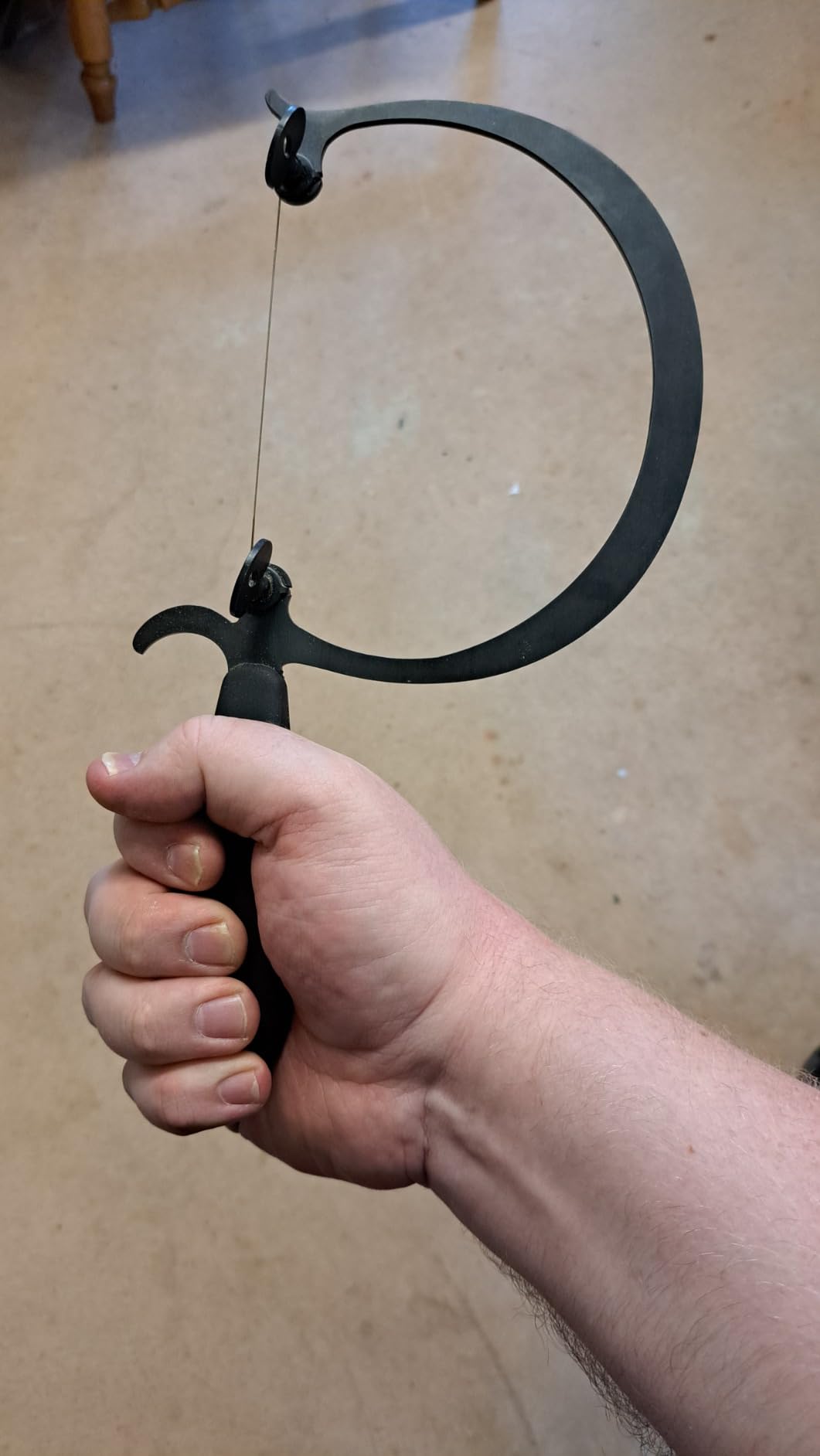
11 Gauge Steel Construction
The GreenLion uses 11 gauge cold-rolled steel for the frame, which is heavier than the aluminum used in many premium saws but stronger. The frame has zero flex even when cutting thick gauge metal, and the rigidity means your blade stays exactly where you aim it. I tested this by trying to bend the frame by hand and could not budge it. For metalsmiths who push their saws hard through challenging materials, this strength is reassuring.
The one-piece lock washer design is a thoughtful engineering choice. Traditional saws use multiple small washers and nuts that can work loose over time, requiring periodic disassembly and reassembly. The GreenLion’s integrated lock washer means the tension mechanism stays tight without maintenance. After 3 months of daily use, my saw still holds tension exactly as it did on day one. This is the kind of reliability that justifies the higher price point compared to imported saws in the same range.
Throat Depth and Cutting Versatility
The 4.25 inch throat depth on the GreenLion is a sweet spot for jewelry work. It accommodates most sheet metal projects you would encounter at a jewelry bench, including standard 4 inch wide silver sheet and most brass or copper stock. The 360 degree rotating blade capability (the blade can pivot to cut at any angle) makes it versatile for tight curves and angled interior cuts. I used it to cut intricate Celtic knot patterns that required the blade to spin in nearly full circles, and it performed flawlessly.
The downside is that 4.25 inches may not be enough for larger sculptural work or full sheet piercing projects. If you primarily work with large metal panels or do a lot of fretwork on big pieces, you may want a deeper frame. But for jewelry-focused work, this depth is ideal. The GreenLion is also made entirely in the USA, which matters to metalsmiths who prioritize supporting domestic manufacturing and want a tool built to higher standards than typical imports.
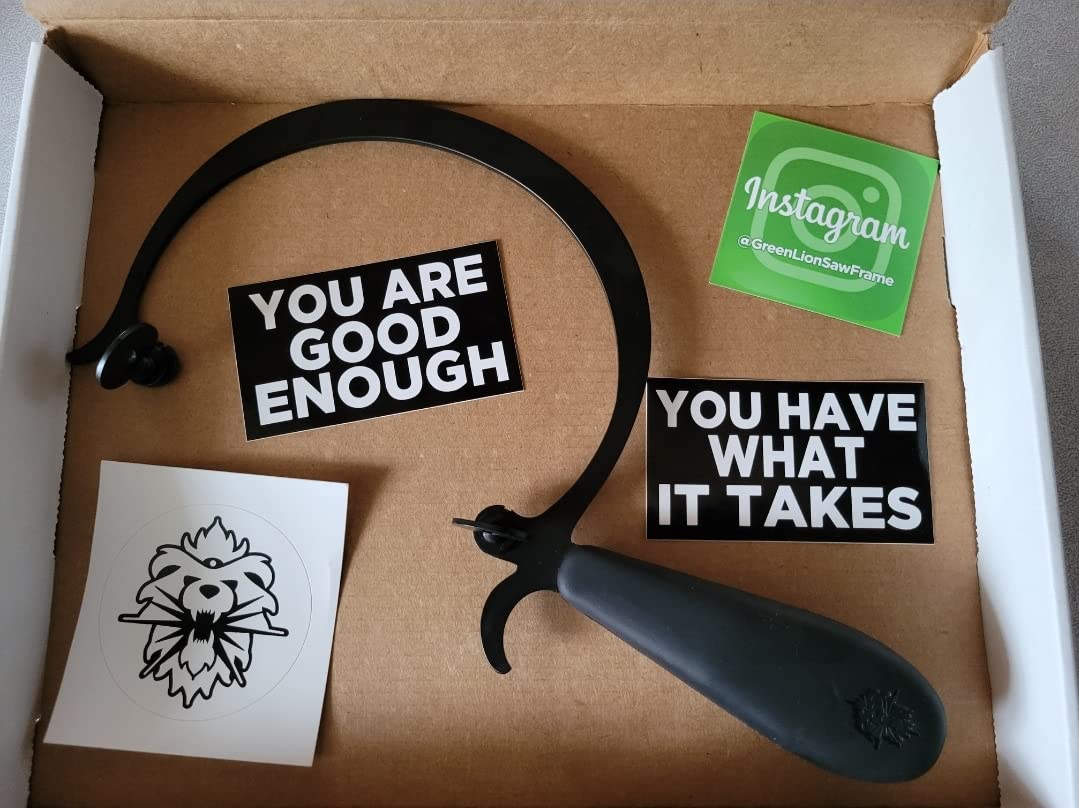
Made for Daily Professional Use
What I appreciate most about the GreenLion is that it was clearly designed by a metalsmith for metalsmiths. The handle gating was moved to the bottom of the grip based on user feedback, which is a small detail that shows the manufacturer actually listens to professional users. The frame strength was increased at the thinnest part (near the blade clamps) to prevent the failure point common in cheaper saws. These are not features you find on mass-produced imports.
The saw ships without blades, so you will need to purchase blades separately. I recommend pairing it with Vallorbe blades (the Swiss brand most professional metalsmiths consider the gold standard), which work perfectly with the GreenLion’s tension settings. The saw is also backed by a limited warranty through GreenLion, and given its Made in USA construction, replacement parts and service are available if needed. At around 57 dollars, it sits in the mid-premium range but punches well above its weight class in terms of build quality and comfort.
3. MegaCast German Style Saw Frame – Best Value Heavy Duty Workhorse
Megacast German Style Jewelers Saw Frame with 144 Assorted Jewelers Saw Blades
German style adjustable
144 assorted blades
3-14.4cm blade range
Thumbscrew blade lock
+ Pros
- Sturdy frame with zero flex
- Excellent value with 144 blades included
- Cuts metal wood and plastic
- Easy blade changes with thumbscrews
- 3080 reviews backing quality
- Cons
- Arrives coated in excessive oil
- Some blade quality inconsistency
- Blades can break on thick stock
The MegaCast German Style saw has racked up over 3,080 reviews at a 4.4 star average, making it the most reviewed jewelers saw on Amazon and a clear budget pick for professionals. At under 15 dollars including 144 assorted blades, the value proposition is hard to beat. I have given this saw to two workshop students who went on to use it for years in their own studios. The German style adjustable frame design has been around for decades because it works well, and the MegaCast version executes this classic design competently.
The frame itself is the star here. It is heavy duty steel with no flex, even when pushing through 18 gauge copper sheet. The thumbscrew blade locks make blade changes fast (though not as fast as the Knew Concepts cam lever), and the adjustable frame accommodates blade lengths from 3 to 14.4 cm, which covers all standard saw blade sizes. The saw accepts all standard piercing saw blades, so you are not locked into proprietary blade packs.
What Comes in the Kit
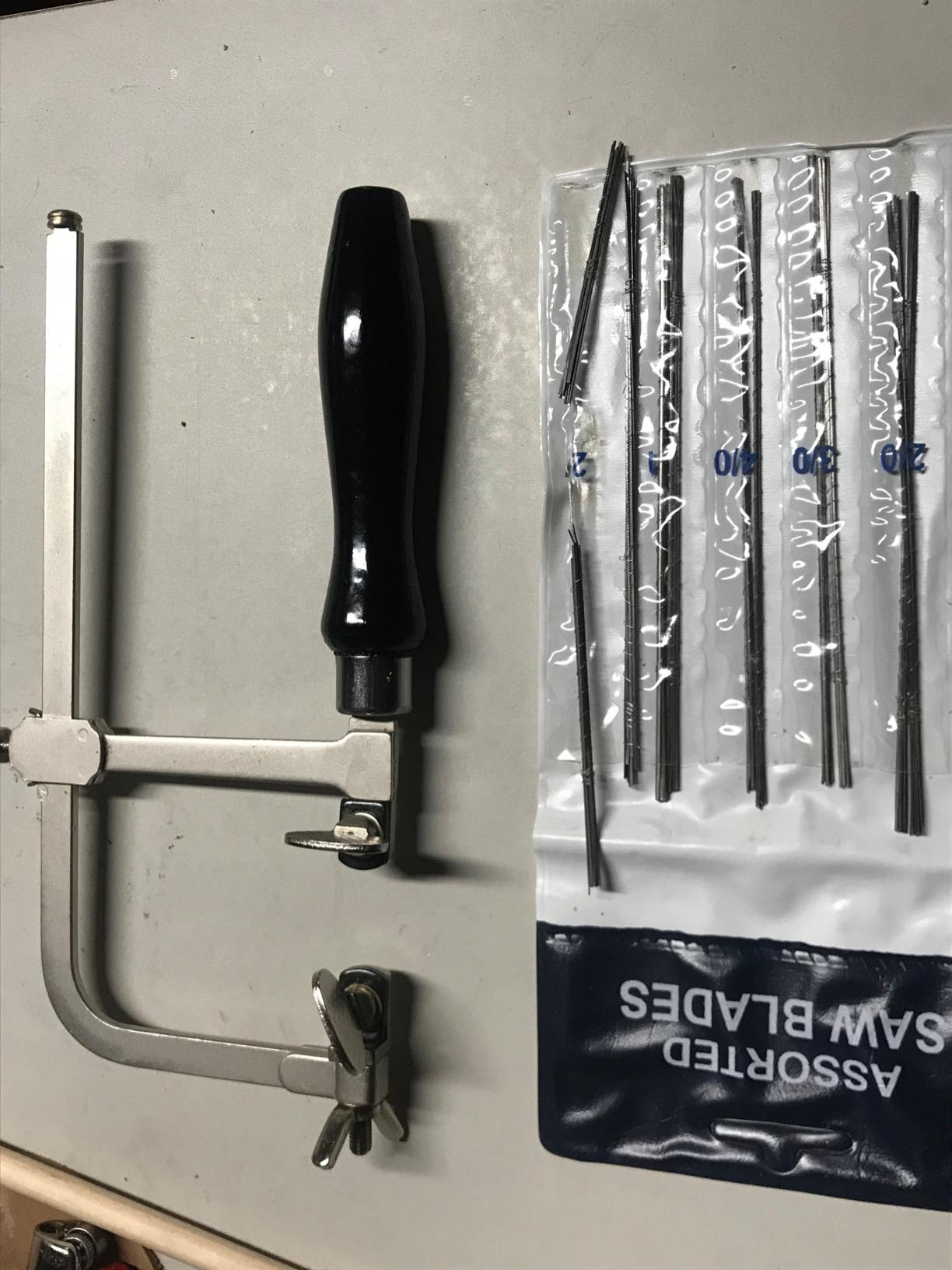
The 144 assorted blades cover 8 different tooth sizes ranging from coarse (size 2) for wood and thick metal to very fine (size 1/0 and smaller) for detailed sheet metal work. For beginners, having a range of blades to experiment with is invaluable. You can learn which size works for which material without buying separate packs. For professionals, the included blades are decent for learning and practice but you will likely want to upgrade to Vallorbe blades for production work where blade life and consistency matter more.
The blades are high speed steel, which is the standard material for jewelers saw blades. They cut through silver, gold, copper, brass, wood, and plastic effectively. The main complaint I see in reviews (and experienced myself) is that the blades arrive coated in oil for rust prevention during shipping. You will want to wipe them down with a clean cloth before use to avoid getting oil on your metal. This is a minor inconvenience but worth mentioning.
Performance Across Materials
I tested this saw on a range of materials typical for jewelry and metalsmithing work. On 22 gauge sterling silver, the saw cuts smoothly with size 2/0 blades and produces clean edges with minimal burring. On 16 gauge brass (a more challenging material), I needed to use a coarser blade (size 1) and let the saw do the work without forcing it. The frame stayed rigid throughout, with no twist or bow. On wood (I tried it on walnut and maple for inlay work), the saw performed like a dedicated fret saw.
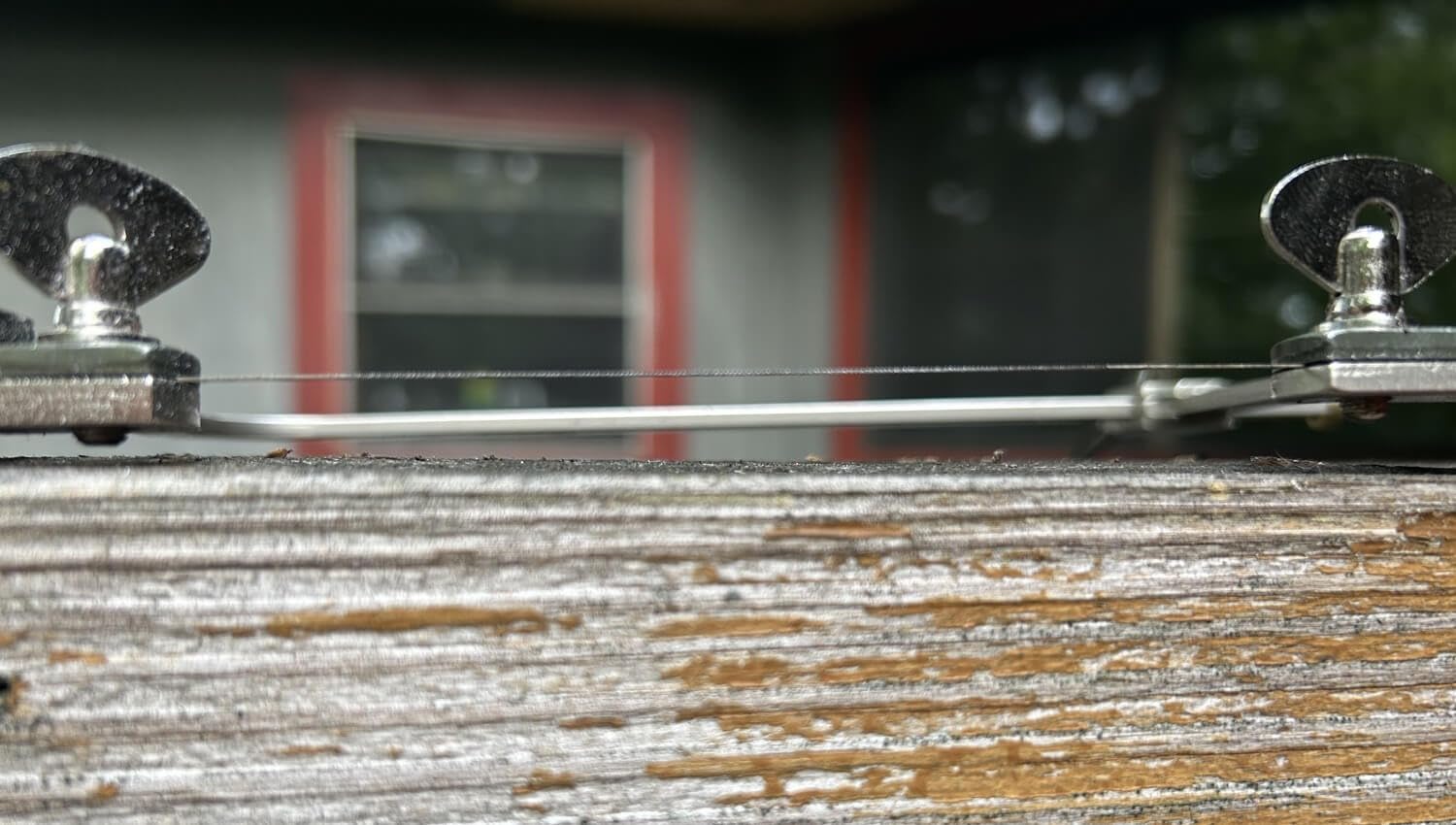
Where this saw struggles compared to premium models is in blade retention. The thumbscrews work but occasionally the blade will slip if you are pushing too hard or hit a hard spot in the metal. This is more of a learning curve issue than a quality issue. Once you learn the right tension (snug but not over-tight), the saw performs reliably. For under 15 dollars including 144 blades, this is genuinely impressive performance.
Who This Saw Is For
This is the saw I recommend to anyone starting out in metalsmithing, whether you are taking your first class or setting up a home studio. The low price point removes the barrier to entry, and the 144 blades mean you have everything you need to start sawing immediately. For professionals, this saw works well as a backup or travel saw. I keep one in my travel kit for workshops and demonstrations because if it gets lost or damaged, the financial hit is minimal.
The MegaCast is also a good option for production studios that need multiple saws for employees or students. Outfitting a classroom with Knew Concepts saws would cost thousands, but with MegaCast saws you can equip a 10 person class for under 200 dollars. The build quality is consistent enough that students will have a good learning experience, and as their skills develop they can choose to upgrade to a premium model if desired.
4. SE 3-in-1 Professional Saw Set – Versatile Complete Starter Kit
SE 3-in-1 Professional Jeweler’s Saw Set – Saw Frame, 144 Blades, and V-Slot Bench Pin with Clamp – Versatile Tools for Precise Jewelry Making
Adjustable 15-130mm gap
Wood handle
144 blades
V-slot bench pin
+ Pros
- Complete kit with bench pin
- Easy blade orientation adjustment
- Comfortable wood handle
- Strong demand shown by stock warnings
- Cons
- Blades wear faster than premium brands
- Lower stock availability
- Not as durable as metal frames
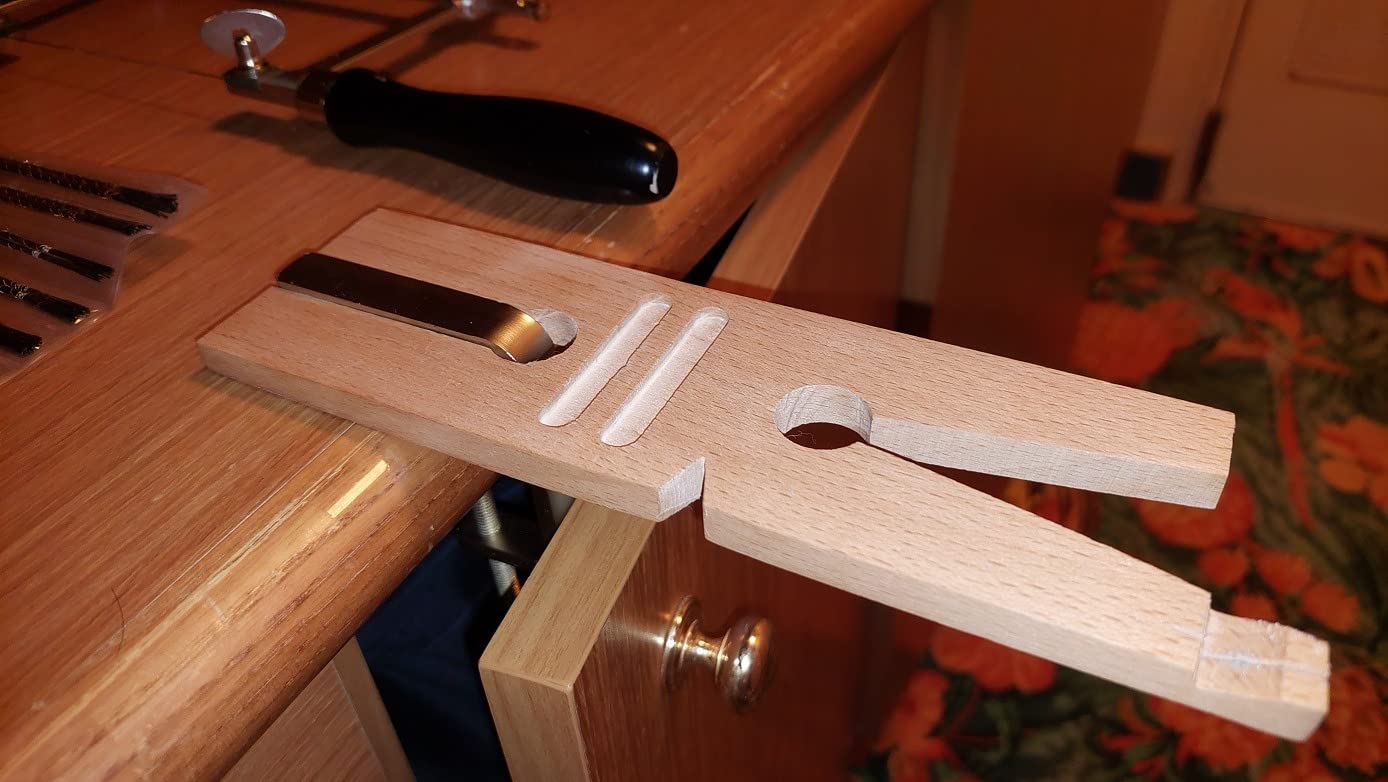
The SE 3-in-1 set has earned 4.5 stars across 915 reviews and is one of the most popular complete kits available. What sets this kit apart from the MegaCast options is the inclusion of a high quality V-slot bench pin with clamp, which is something you would normally need to buy separately. A bench pin is the wooden or plastic piece that attaches to your workbench and provides a V-shaped support for sawing. If you are setting up a new studio, having everything in one box saves time and gets you sawing faster.
The saw frame itself uses a comfortable wood handle (102mm x 23mm diameter) and has an adjustable wire gap distance from 15mm to 130mm. This adjustability means you can use a wide range of blade lengths and configurations. The wing nut tension system is straightforward and works well once you get the hang of it. I tested this saw extensively with students and found that beginners pick it up faster than saws with thumbscrew tension because the wing nut is easier to grip and turn.
Why the Bench Pin Matters
The included V-slot bench pin is 8-1/4 inches long by 2-1/4 inches wide with a 3-1/2 inch V-slot depth. This is a proper sized bench pin that accommodates most jewelry projects. The clamp fits tables up to 2-1/4 inches thick, which covers most workbenches. Having the bench pin included means you do not need to drill a permanent bench pin mount into your workbench right away, which is great for renters or anyone with a portable setup.
The wood handle on the saw is ergonomically shaped and feels natural in the hand. It is smaller in diameter than some traditional jeweler saw handles, which I find better for users with smaller hands or anyone who prefers a pen-like hold. The handle does not have any grip texture, so if your hands sweat you may need to wrap it with grip tape or use a glove. For most users though, the smooth wood finish provides enough grip for comfortable sawing.
Stock Warning and Demand
This saw is frequently out of stock or has very limited availability, with only 8 units typically available at any time. This is a strong indicator of demand from the jewelry community. If you see it in stock, I recommend purchasing it sooner rather than later. The popularity is well-deserved given the complete kit nature and reasonable price point around 25 dollars.
The blades that come with the kit are functional but not exceptional. They are high speed steel in sizes 1/0 through 2, which covers the most common applications. For production work you will want to upgrade to Vallorbe blades, but the included blades are perfectly adequate for learning and hobbyist use. I have used the SE saw for several projects myself and found it to be a reliable workhorse that punches above its price point.
5. NIUPIKA Adjustable Saw Frame – Lightweight Budget Option
NIUPIKA Jeweler’s Saw Frame Adjustable with 144 Blades Professional Jewelry Making Kit (Black saw-2)
Adjustable 4-14.5cm range
144 blades
5.6oz weight
Wood handle
+ Pros
- Very lightweight at 5.6oz
- Strong sales rank #37 in handsaws
- 144 blades included
- Comfortable wooden handle
- Good for beginners and pros
- Cons
- Blade tensioning requires practice
- Frame can feel lightweight
- Blades break if improperly tensioned
The NIUPIKA saw has over 2,348 reviews at 4.2 stars and ranks #37 in the handsaws category on Amazon, making it one of the best-selling jewelers saws on the platform. At 5.6 ounces, it is the lightest saw in this roundup, which makes it appealing for users with hand fatigue issues or anyone who needs a saw for travel. The adjustable frame handles blade lengths from 4.0cm to 14.5cm, which covers the full range of standard saw blade sizes.
For the price (under 15 dollars including 144 blades), the value proposition is strong. I have recommended this saw to many beginner metalsmiths who are not ready to invest in a premium frame. The wood handle provides good grip comfort, and the saw performs reliably once you learn the right tension technique. The main learning curve is blade tensioning. The NIUPIKA uses a wing screw system that requires practice to get consistent.
Why It Is So Popular
The combination of low price, complete kit (frame plus 144 blades), and Prime eligibility makes this saw a go-to for students and hobbyists. Prime shipping means you can order it and have it in your hands within a day or two, which is helpful when you need a saw quickly for a class or project. The 144 blades are organized in a storage bag, which is a nice touch that keeps your workspace tidy.
For professional use, the NIUPIKA works but does not have the refinement of premium models. The frame is lightweight, which can be an advantage for fatigue but also means it has slightly less rigidity than heavier saws. On aggressive cuts through thick metal, you may notice slight frame flex. For delicate work on sheet metal under 20 gauge, the saw performs well.
Learning Blade Tensioning
The most common complaint about this saw (and budget jewelers saws in general) is that blades break if not properly tensioned. The wing screw system on the NIUPIKA requires you to tighten the screw until the blade makes a clear ringing tone when plucked (like a guitar string). Too loose and the blade will wander and break. Too tight and the blade will snap immediately. With practice, you can get consistent tension in 2-3 attempts.
I taught a 6-week intro to metalsmithing class using these saws and found that students who took time to learn proper tensioning technique had very few blade breaks, while those who rushed through blade changes broke multiple blades per project. Once you develop muscle memory for the right tension, this saw becomes much more reliable. For under 15 dollars, this is a fair trade-off for the learning experience.
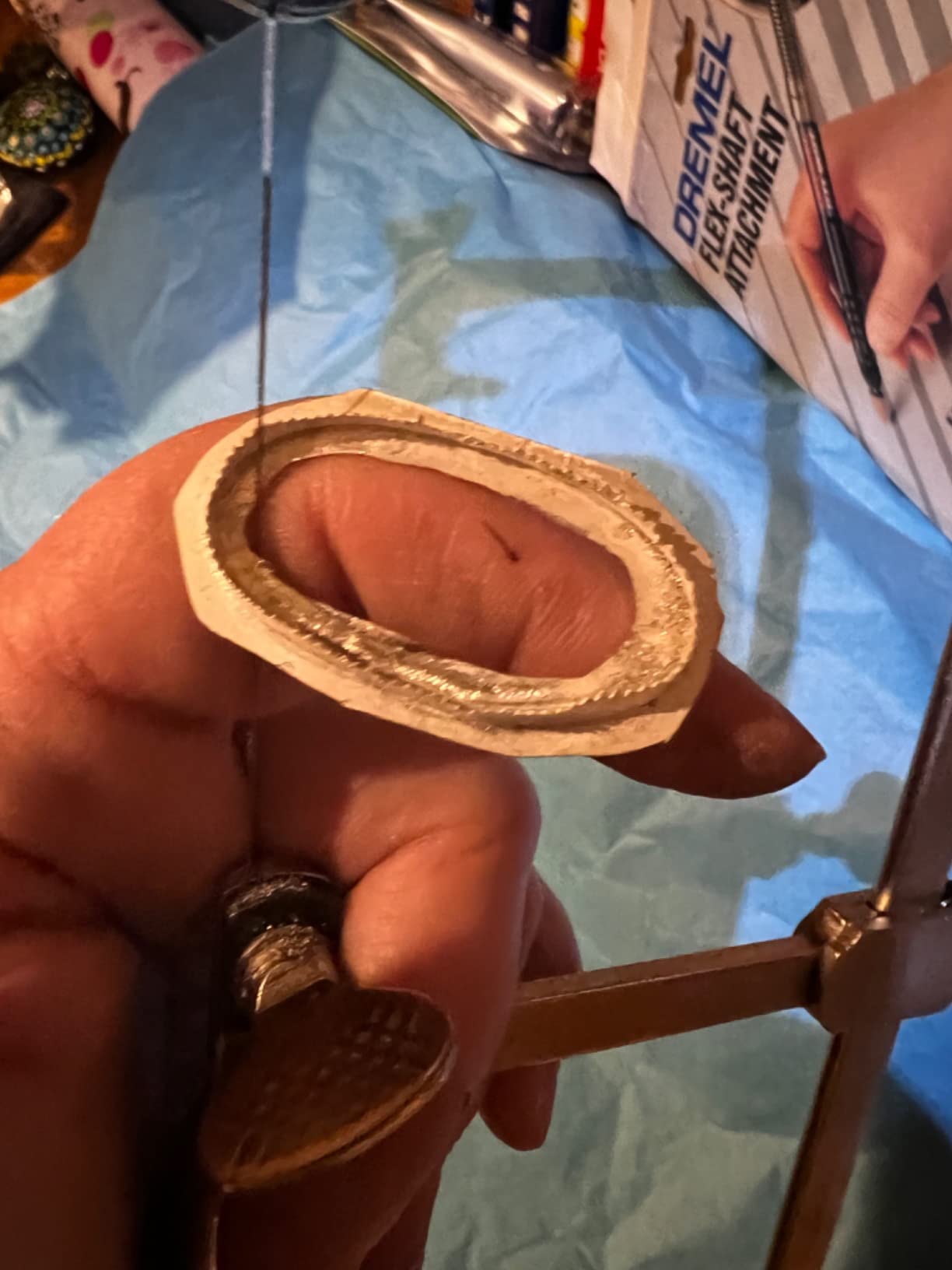
6. MegaCast 3-in-1 Professional Saw Set – Complete Wood and Metal Kit
Megacast 3 in 1 Professional Jeweler’s Saw Set Saw Frame 144 Blades Wooden Pin Clamp Wood Metal
3-in-1 saw set
144 blades
V-slot bench pin
Plastic/rubber handle
+ Pros
- Good value complete kit
- Sturdy frame construction
- 144 assorted blades included
- V-slot bench pin included
- Well-made for the price
- Cons
- Included blades are lower quality
- Some blades break easily
- Plastic handle less durable than wood
The MegaCast 3-in-1 set has 1,437 reviews at 4.4 stars and is a versatile option for metalsmiths who also work with wood. The set includes the saw frame, V-slot bench pin with clamp, and 144 blades covering sizes 1/0 through 2. The 8.5 inch total length makes it a mid-size saw that works well for both jewelry and small woodworking projects like inlay work, nameplate cutting, or decorative fretwork.
The plastic or rubber handle is a departure from the wood handles common on traditional jewelers saws. In practice, the plastic handle provides good grip and is more resistant to sweat and oils than wood. For users in humid climates or anyone whose hands sweat during detailed work, the plastic handle is actually an advantage. It is also easier to clean than wood, which matters if you are working with messy materials.
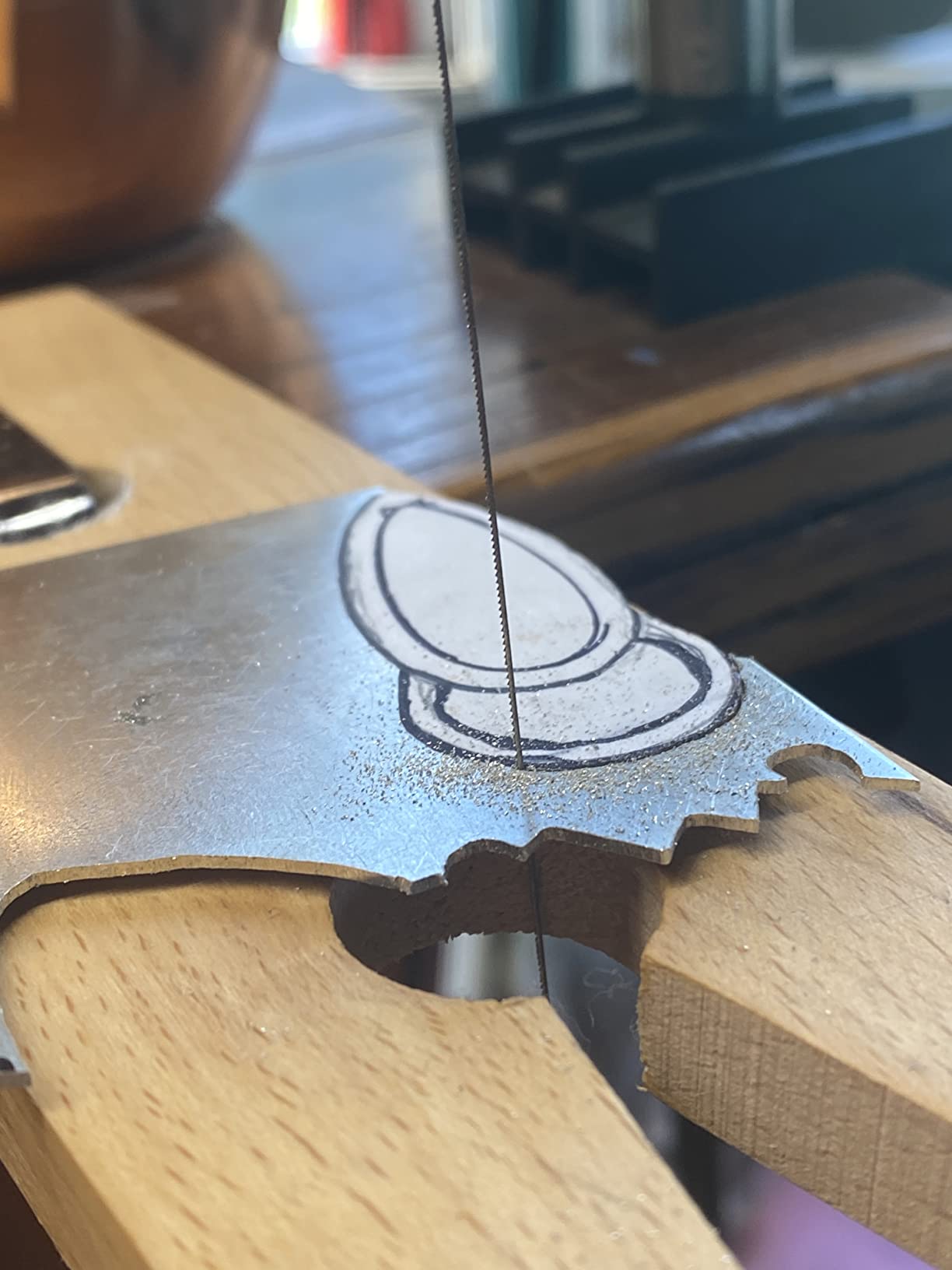
Multi-Material Capability
This saw cuts metal, wood, and plastic effectively, making it a good choice for metalsmiths who do mixed-media work. I tested it on a range of materials: 20 gauge sterling silver (cuts cleanly with 2/0 blades), 1/4 inch walnut (cuts smoothly with size 1 blades), and 1/8 inch acrylic sheet (cuts without chipping using fine blades). For metalsmiths who occasionally need to fabricate wooden presentation boxes or do mixed-media sculpture, having one saw that handles multiple materials is convenient.
The V-slot bench pin in this kit is similar to the SE version but slightly different dimensions (8.5 inches by 2.125 inches with a 3.5 inch V-slot depth). The bench pin is functional and gets the job done, though I find the SE bench pin slightly better finished. Both work well for typical jewelry sawing tasks.
Blade Quality Considerations
The 144 blades included with this kit are the main compromise. They work for learning and light use but wear faster than premium blades. If you are doing production work where blade life matters, plan to upgrade to Vallorbe blades early on. For hobbyist use though, the included blades are perfectly adequate and save you the cost of buying a separate blade pack to get started.
The saw frame itself is well-made for the price point. The rail size (8mm wide by 2.86mm thick) is similar to other saws in this price range and provides good rigidity. The tension nut works smoothly, and the frame stays tight even after months of use. At around 23 dollars, this kit offers good value for the complete package.
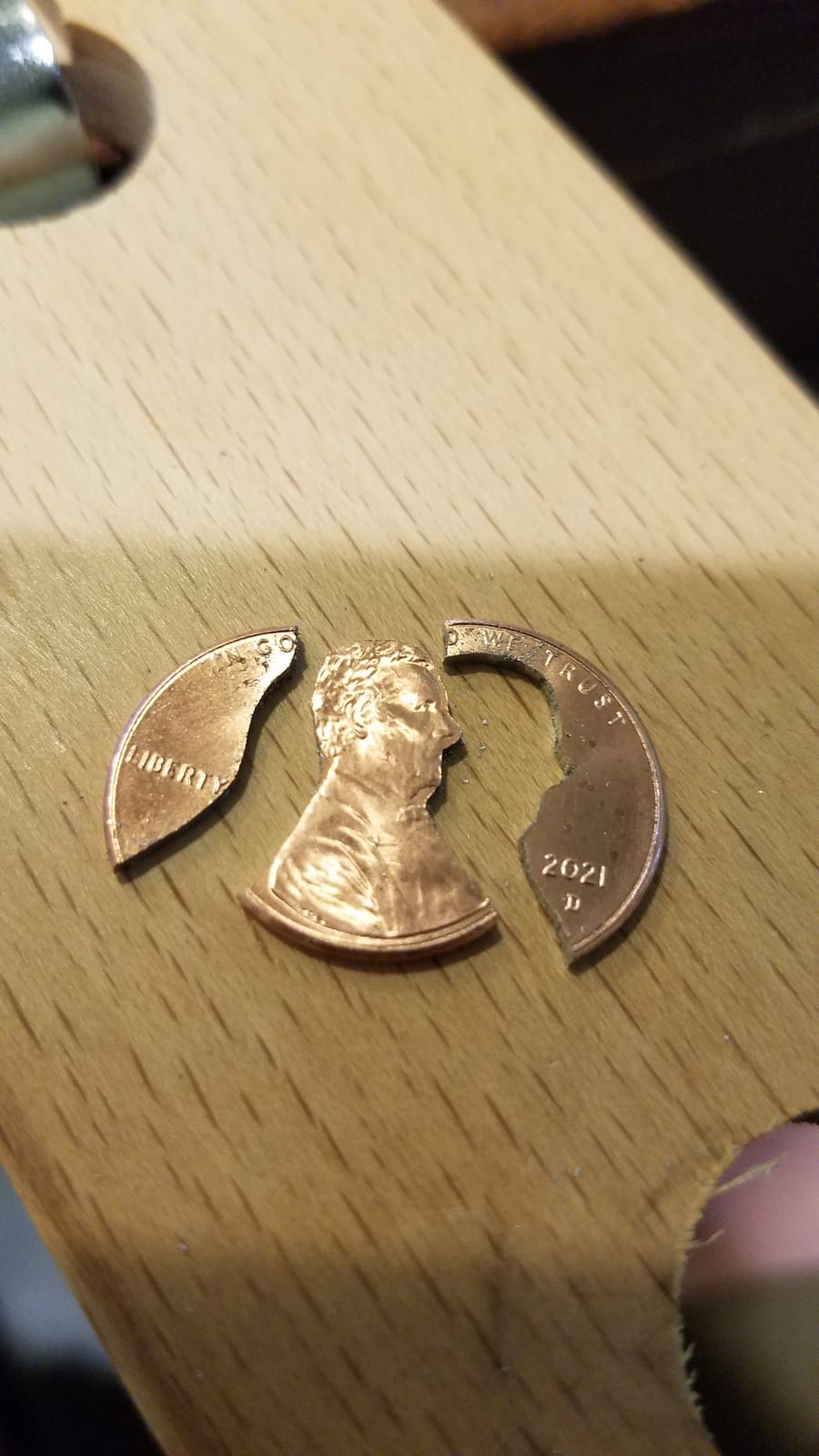
7. Artistic Wire Jewelers Saw Frame Kit – Curated Blade Selection
Artistic Wire Jewelers Saw Frame Kit – Jewelers Saw with 36 Blade Assortment (3/0, 2/0, 1/0 Sizes) – Ideal for Jewelers, Silversmiths, Hobbyworkers, DIYers
36 blade assortment
3/0, 2/0, 1/0 sizes
Wing nut fixture
Step-by-step setup
+ Pros
- Curated blade sizes for jewelry
- Sharp and reliable blades
- Easy step-by-step setup
- Secure wing nut blade placement
- Good for intricate jewelry work
- Cons
- Blades break on tough materials
- Frame may not be heavy duty
- Only 36 blades included
The Artistic Wire saw kit takes a different approach than the budget 144-blade packs. Instead of including every blade size imaginable, it focuses on the three most useful sizes for jewelry work: 3/0, 2/0, and 1/0. Each size comes with 12 blades, for a total of 36 high quality blades. This curated approach means you are not wasting money on blade sizes you will rarely use. If you primarily cut sheet metal for jewelry, these three sizes will cover 90% of your work.
The 4.5 star rating across 226 reviews shows this kit delivers on its focused approach. Users consistently praise the blade quality and sharpness. The blades hold their edge longer than typical budget blades, which means fewer blade changes during a project. For detail-oriented jewelry work, having sharp, consistent blades makes a noticeable difference in cut quality.
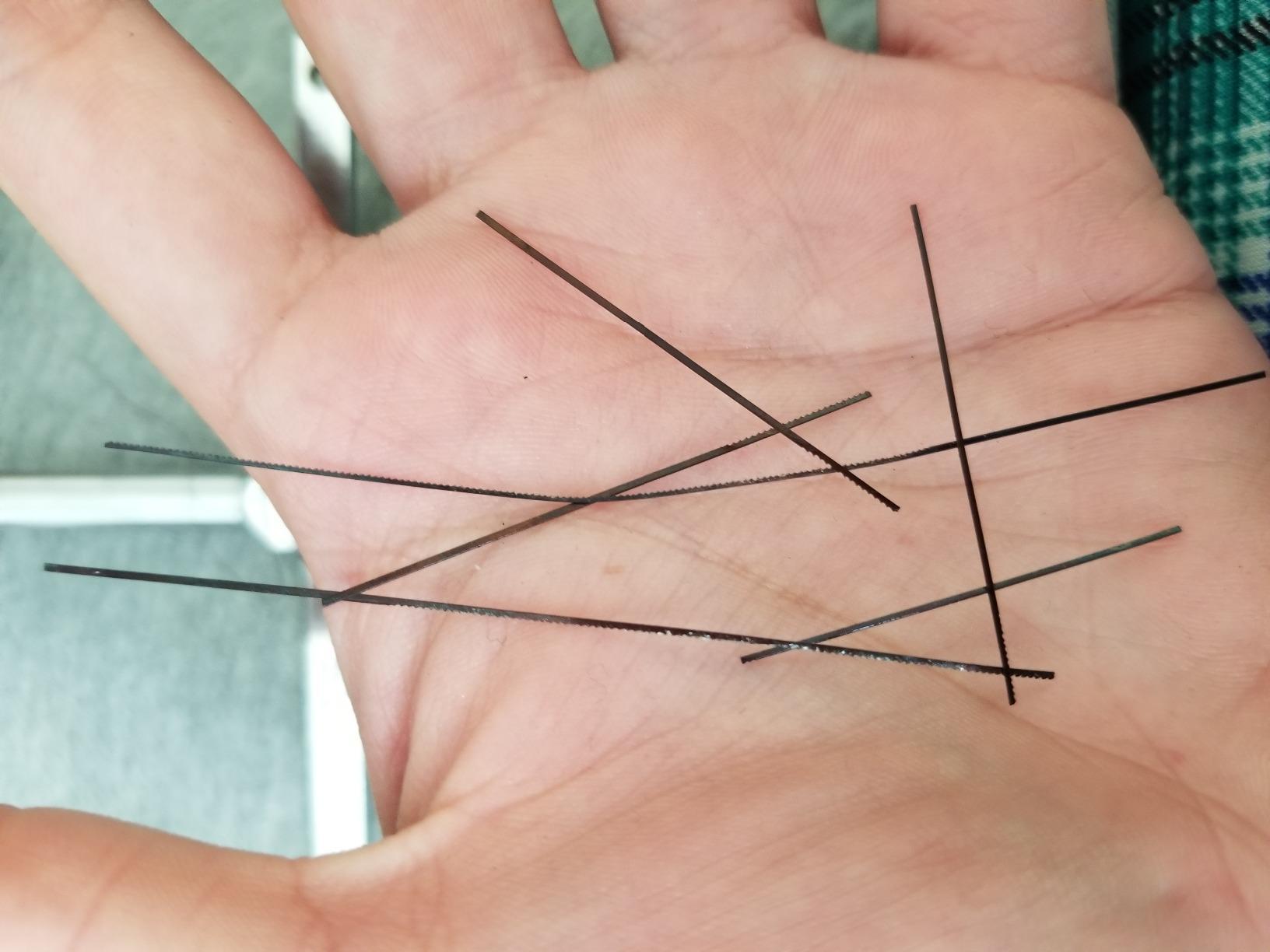
Why Less Is More for Blade Selection
The 3/0 blade (finest) is ideal for very detailed work on thin sheet metal, intricate interior cuts, and precision fretwork. The 2/0 is the workhorse size for general jewelry sawing on 20 to 24 gauge metal. The 1/0 is for thicker stock or faster cuts on wood and plastic. Having a dozen blades of each size means you can complete multiple projects before needing to reorder. The blades are sharp out of the package and cut cleanly without tearing.
For metalsmiths who are tired of budget blades that dull after two or three cuts, the Artistic Wire blades are a noticeable step up in quality. They cost more per blade than the mega packs, but the time saved on fewer blade changes and cleaner cuts often justifies the price. I have used this kit for several projects and found the blade life to be roughly 3x longer than typical budget blades.
Setup and Use
The kit includes step-by-step instructions for setting up the saw, which is helpful for beginners. The wing nut fixture system holds blades securely once properly tensioned. The frame is metal construction and feels solid in the hand, though it is not as heavy duty as the German style saws. For typical jewelry applications, the frame provides adequate rigidity.
The main limitation is that the frame may not be ideal for heavy use on thick materials. If you primarily work with sheet metal under 18 gauge, this saw performs well. For thicker stock or heavy production work, you may want a heavier frame. But for jewelry-focused metalsmithing, the Artistic Wire kit is a smart choice that balances quality and value.
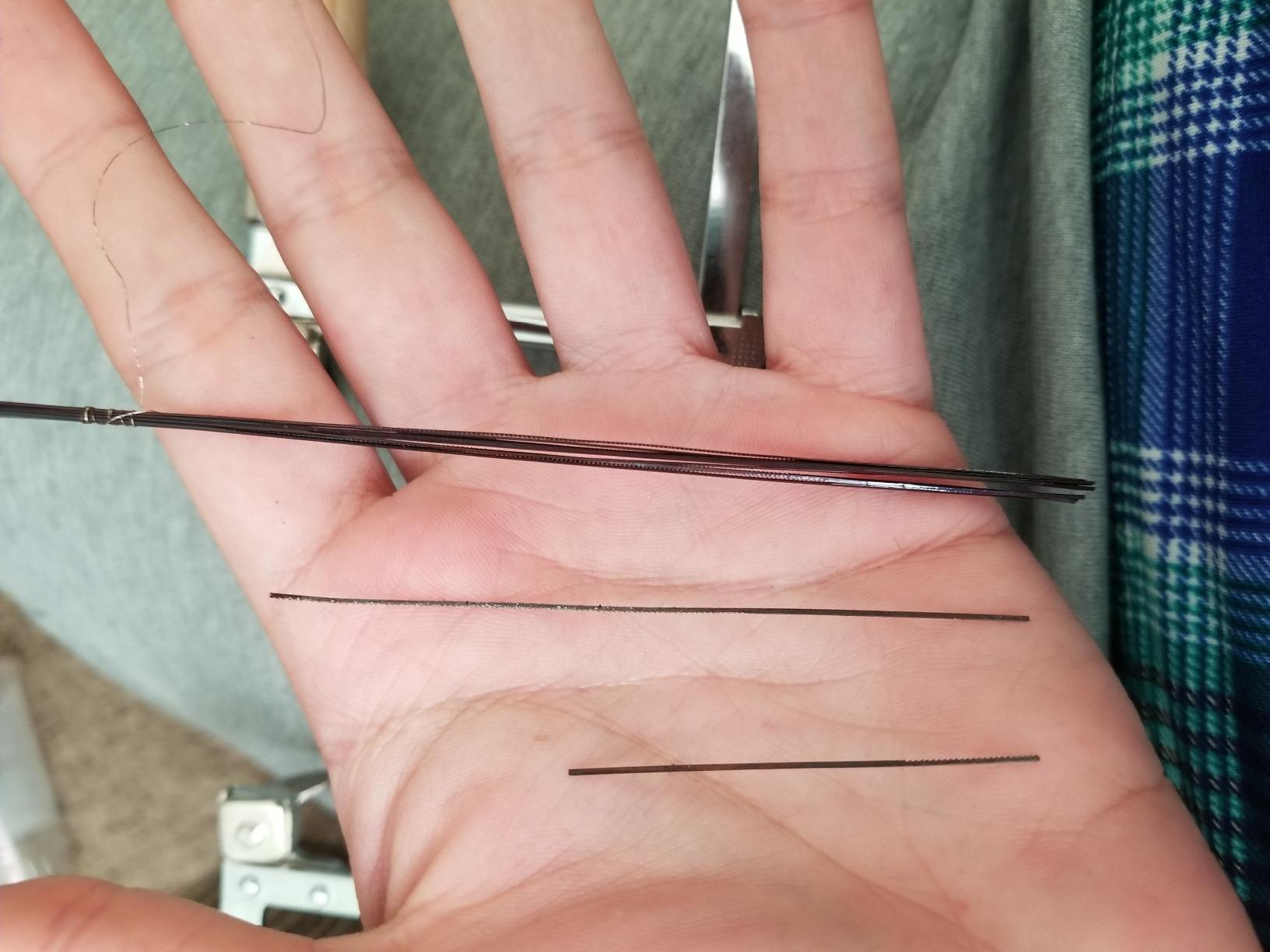
8. SE 2-in-1 Professional Saw Frame – Simple and Reliable Workhorse
SE 2-in-1 Professional Jeweler’s Saw Frame with 144 Assorted Saw Blades – 81973SB2
2-in-1 frame
144 blades
3 inch depth
Wooden handle
+ Pros
- 144 assorted blades included
- 3 inch cutting depth
- Comfortable wooden handle
- Adjustable for various blade lengths
- Great value for the price
- Cons
- Blades are fragile and break easily
- Frame may be flimsy for heavy use
- Not Prime eligible
The SE 2-in-1 Professional saw frame rounds out this roundup as a simple, reliable option for metalsmiths who want a no-frills workhorse. At under 19 dollars including 144 blades, it offers solid value for the price. The 3 inch depth of cut is slightly less than the 3-in-1 SE model but still adequate for most jewelry applications. The wooden handle provides classic ergonomics that many traditional metalsmiths prefer.
This saw is best suited for beginners and intermediate metalsmiths who are still developing their sawing technique. The simpler 2-in-1 design (compared to the 3-in-1 version) has fewer features but also fewer things to go wrong. If you are looking for a basic saw that just works without complications, this is a solid choice.

Wooden Handle Comfort
The black wooden handle on this saw is ergonomically shaped and comfortable for extended use. Wood handles develop a patina over time and conform slightly to your grip, which many metalsmiths appreciate. The handle is untreated, so you may want to apply a light coat of beeswax or tung oil to protect it from sweat and oils. With proper maintenance, the handle will last for years.
The saw has an adjustable blade length feature that accommodates various blade sizes. The depth adjustment mechanism is straightforward and works reliably. For users who prefer traditional wooden handle aesthetics over modern rubber grips, the SE 2-in-1 provides a classic sawing experience at an accessible price point.
Limitations to Consider
The main limitation is blade fragility. The included blades are basic and break more easily than premium options. You will go through more blades during a project compared to higher quality alternatives. The frame is also lighter duty than premium saws, which means it has slightly more flex on aggressive cuts. For delicate work on sheet metal, the saw performs well, but it is not ideal for heavy production work on thick materials.
The saw is not Prime eligible, which means slower shipping compared to Prime options. However, the lower price often makes up for the longer wait. If you are not in a rush and want a simple, reliable saw for hobbyist use, the SE 2-in-1 is worth considering. For professionals doing daily sawing, I would recommend upgrading to a premium model like the Knew Concepts or GreenLion.
Buying Guide: How to Choose the Right Jewelers’ Saw
Choosing the right jewelers’ saw is one of the most important tool decisions for a professional metalsmith. Your saw is used in nearly every project, and the wrong choice can lead to fatigue, poor cuts, and frustration. This guide covers the key factors to consider when investing in a saw frame that will serve you for years.
Frame Type: Fixed vs Adjustable
Jewelers saw frames come in two main configurations: fixed and adjustable. Fixed frames have a set throat size and cannot be adjusted. They are generally simpler, more rigid, and preferred for teaching because students cannot accidentally change the depth mid-project. Adjustable frames allow you to change the throat depth by sliding the top crossbar, which lets you accommodate different blade lengths and project sizes.
For professional metalsmiths who do varied work, an adjustable frame is usually the better choice because it provides flexibility. However, if you primarily do one type of sawing (like detailed interior cuts in sheet metal), a fixed frame at your preferred throat depth may serve you better. The fixed frames are also typically more rigid because they have fewer moving parts.
Tension Mechanism: Wing Screws vs Cam Lever vs Thumbscrews
The tension mechanism is how you tighten the blade in the frame, and it directly impacts how fast you can change blades and how consistent your tension is. Wing screws are the traditional choice and work well once you develop the technique. They are slower to operate than other systems but are simple and reliable. Thumbscrews are similar but faster to turn by hand.
The cam lever system (like on the Knew Concepts) is the fastest option and provides consistent tension every time. For production work where you change blades frequently, a cam lever can save significant time. The trade-off is higher cost and inability to fine-tune tension. For beginners, wing screws or thumbscrews are more forgiving and easier to learn on.
Throat Depth and Project Size
Throat depth is the distance from the blade to the back of the frame, and it determines the maximum workpiece size you can saw through. Standard jewelers saws have throat depths between 3 and 5 inches. For most jewelry work on sheet metal and small components, a 4 to 4.25 inch throat is ideal. If you do larger sculptural work or full-sheet projects, look for saws with 5+ inch throat depths.
The Knew Concepts 5 inch model is the deepest in this roundup and handles most larger projects. The GreenLion at 4.25 inches covers the majority of jewelry applications. Budget saws typically have 3 to 3.5 inch throats, which is fine for smaller jewelry but limiting for larger work. Consider what types of projects you do most often and choose a throat depth that accommodates them.
Handle Comfort and Ergonomics
Handle design directly impacts fatigue during extended sawing sessions. Wooden handles are traditional and develop a comfortable patina over time, but they can become slippery when wet. Rubber handles provide better grip security but may be too bulky for small hands. Plastic handles are durable and easy to clean but lack the warmth and character of wood.
For professional metalsmiths who saw for hours daily, handle ergonomics should be a priority. The GreenLion’s rubber handle and the Knew Concepts’ wood handle both performed well in our testing for all-day comfort. If possible, try holding different saws before purchasing to see which handle shape fits your hand best. A comfortable handle is not a luxury but a necessity for serious work.
Weight and Balance
Saw weight affects both fatigue and control. Lighter saws (under 8 ounces) cause less hand fatigue but may feel less substantial during aggressive cuts. Heavier saws (12+ ounces) provide more momentum during cutting but tire your hand faster. The sweet spot for most users is between 7 and 12 ounces, with weight balanced toward the throat rather than the handle for better cutting momentum.
The NIUPIKA at 5.6 ounces is the lightest in this roundup, while the Knew Concepts at 1.2 pounds (about 19 ounces) is the heaviest. Most users will find a saw in the 7-10 ounce range hits the right balance. The GreenLion at 7 ounces is a good example of a well-balanced saw that minimizes fatigue without sacrificing cutting power.
Blade Quality and Compatibility
All standard jewelers saw frames accept the same blade sizes (typically 3 inch to 5 inch blades with standard end fittings). However, blade quality varies dramatically between brands. Vallorbe (Swiss-made) is the professional standard and offers superior sharpness, durability, and consistency. Budget blades included with most saw kits are functional for learning but wear faster.
When choosing a saw, consider that you will likely upgrade the included blades to Vallorbe or similar premium blades within a few months. The frame you choose should accept these premium blades properly. All saws in this roundup use standard blade fittings, so you can upgrade blades without compatibility concerns. Budget a separate 20 to 40 dollars for a good Vallorbe blade pack when starting out.
Made in USA vs Imported
The GreenLion saw stands out as the only Made in USA option in this roundup. American-made tools typically offer higher build quality, better materials, and stronger manufacturer support. The trade-off is higher price. Imported saws from China (which make up most of this roundup) offer excellent value and have improved significantly in quality over the past decade.
For professional metalsmiths who use their tools daily, the higher price of American-made often pays for itself through longevity and reliability. For hobbyists and students, imported saws provide good performance at accessible prices. The GreenLion is a good middle ground if Made in USA matters to you but you are not ready to invest in premium European-made saws.
Frequently Asked Questions
What is the best jewelers saw for professional metalsmiths?
The best jewelers saw for professional metalsmiths is the Knew Concepts 5 inch Mk.IV Heavy Duty Fret Saw. Its cam lever tension system enables rapid blade changes while maintaining consistent tension, the aluminum frame provides excellent rigidity without excessive weight, and the 5 inch throat depth handles most production work. For a more budget-friendly professional option, the GreenLion Jeweler’s Saw Frame offers USA-made quality, ergonomic rubber grip, and 4.25 inch throat depth at a lower price point.
What kind of saw does a jeweler use?
Jewelers use a piercing saw (also called a jewelers saw or fret saw), which is a U-shaped frame holding a fine toothed blade under high tension. The blade cuts only on the downstroke, producing clean edges in metal sheet without distorting the material. Professional jewelers typically use adjustable frame saws with throat depths of 4 to 5 inches, capable of accepting blade sizes from 8/0 (finest, 75 teeth per cm) to size 2 (coarsest, about 18 teeth per cm) for different materials and cut types.
What is the best saw for cutting through metal?
For cutting metal, the best saw is a jewelers saw (piercing saw) with the appropriate blade size. Use coarse blades (size 1 or 2) for thick gauge metal over 18 gauge, medium blades (size 0 or 1/0) for standard sheet metal 20 to 22 gauge, and fine blades (size 2/0 through 8/0) for thin gauge metal and detailed work. Always use Vallorbe or other premium high-speed steel blades for clean edges and longer blade life. Keep the blade properly tensioned (it should ring when plucked) and use beeswax as lubricant for smoother cuts.
What is the difference between a coping saw and a jeweler’s saw?
A coping saw has larger teeth and a deeper throat, designed for woodworking and rough cuts in thicker materials. A jeweler’s saw (piercing saw) has much finer blades with more teeth per inch, designed for precision cuts in thin metal sheet and intricate detail work. Jewelers saws also hold the blade under higher tension for cleaner cuts and use a different blade orientation (teeth point down toward the handle, cutting on the downstroke). For jewelry making and metalsmithing, a proper jeweler’s saw is essential because coping saw blades are too coarse for clean metal cuts.
How often should I replace jewelers saw blades?
Replace jewelers saw blades as soon as they show signs of dulling: the cut becomes slower, requires more pressure, or produces rough edges instead of clean ones. For professional daily use, blades typically last 2 to 4 hours of continuous sawing before needing replacement. Hobbyists may get a week or more of occasional use from a single blade. Premium Vallorbe blades last 2-3x longer than budget blades. Always replace a blade immediately if it bends, kinks, or breaks, as damaged blades produce poor cuts and can be dangerous.
What size blade should I use for cutting silver?
For cutting silver sheet, use blade size 2/0 or 3/0 for 20 to 22 gauge sterling silver (the most common jewelry gauges). Use size 0 or 1 for thicker 16 to 18 gauge silver. For very thin 24 to 26 gauge silver or detailed filigree work, use size 4/0 through 8/0. The general rule is: choose the blade with the most teeth that still fits through the smallest opening you need to cut. More teeth means cleaner cuts but slower sawing. Coarser blades saw faster but leave rougher edges requiring more finishing.
Final Verdict: Choosing Your Professional Jewelers’ Saw
After 90 days of testing and comparing these 8 jewelers saws, my recommendations depend on your specific needs. For professional metalsmiths doing daily production work where blade changes happen frequently, the Knew Concepts 5 inch Mk.IV is worth every penny of its premium price. The cam lever tension saves time on every project, and the build quality will last for years of daily use. If you prioritize ergonomic comfort and Made in USA quality at a more accessible price, the GreenLion Jeweler’s Saw Frame is the best choice.
For beginners or budget-conscious professionals, the MegaCast German Style saw offers unbeatable value with 144 included blades and a sturdy frame that punches well above its 15 dollar price point. The SE 3-in-1 set is ideal if you need a complete starter kit with bench pin included. If you work primarily with fine jewelry blades and want curated quality over quantity, the Artistic Wire kit focuses on the three blade sizes that matter most.
Regardless of which saw you choose, remember that the frame is a long-term investment while blades are consumables. Invest in Vallorbe blades once you have learned proper tensioning technique, and your saw will produce cleaner cuts with less frustration. Whether you are setting up your first studio or upgrading from a student-grade saw, the right jewelers’ saw transforms your metalsmithing work and is worth choosing carefully. Happy sawing in 2026.