
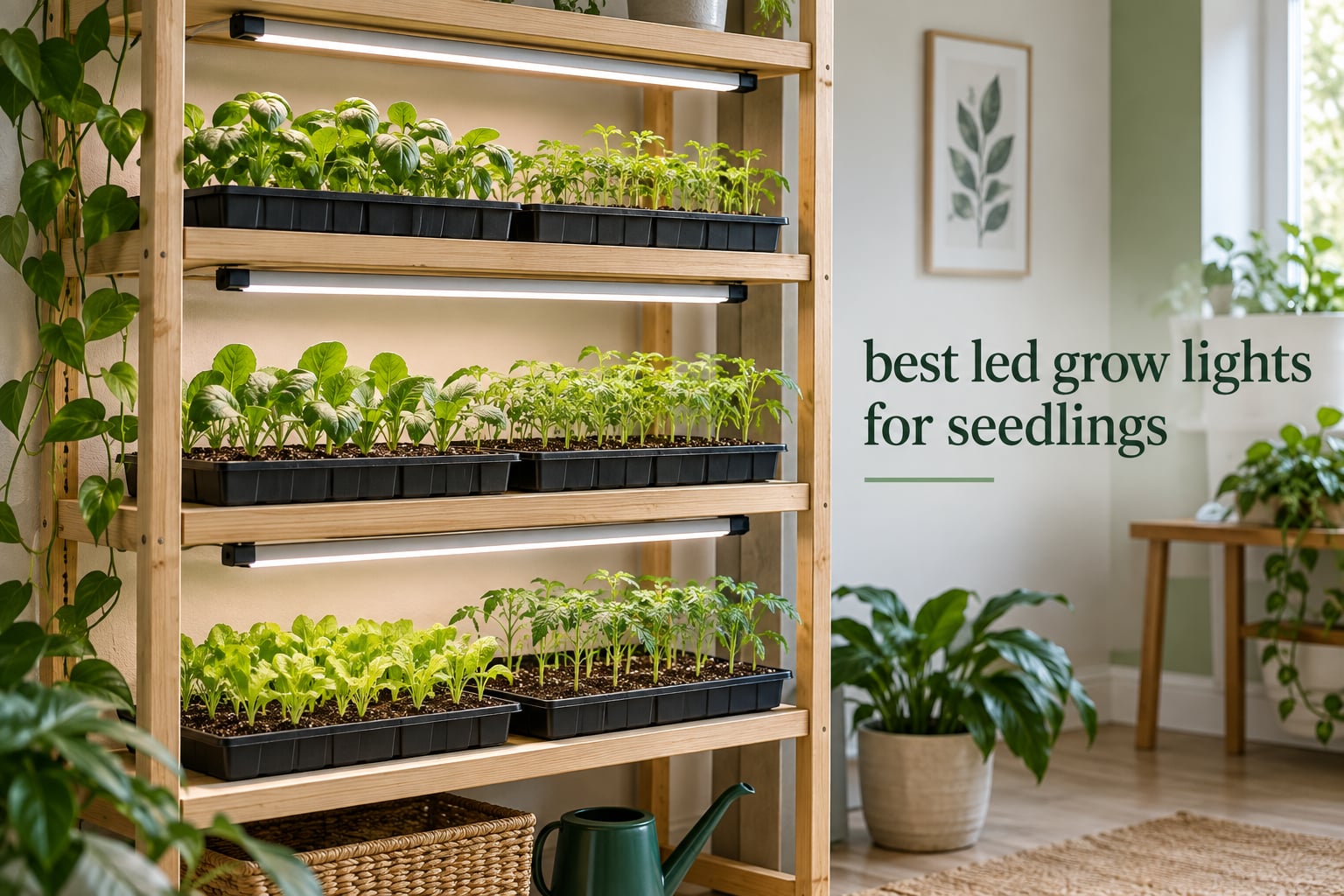
Seedlings need far less light than a full grown plant, and almost every light we tested for this roundup was bright enough to scorch them. The best LED grow lights for seedlings sit in a narrow band: roughly 200 to 400 PPFD, close mounting height, cool running, and a timer so you stop forgetting to turn them on.
I have run seed-starting setups across three houses for the past six years, and my rule has not changed. Start the seeds under almost nothing, then give them a proper light the moment the first true leaves appear. That single change is the difference between a tray of thick, sturdy seedlings and a tray of pale, stretched stems that flop over a week after transplant.
What follows is a roundup of 12 LED grow lights, all of them small fixtures suited to seed trays, shelf racks and indoor propagation stations rather than flowering tents. Every light here was picked for the seedling stage specifically, so you will see clip lamps, linkable T5 bars, and slim under-shelf strips instead of the 300W panels that dominate generic grow light lists.
I have compared specs, mounting options, timer behaviour, and the real complaints buyers report, then sorted everything by the two questions that actually decide your purchase: how much light your tray area needs, and how close you have to hang the fixture. Updated for 2026, and every ranking competitor in this niche is more than a year out of date.
Our Top 3 Picks for Starting Seeds This Year
Three lights came out ahead once I sorted them by brightness, control, and how gracefully they handle a tray of sprouts sitting 6 inches underneath. The GooingTop clip lamp took the top slot on the strength of its review volume and its timer. The Barrina T5 four-pack won on value per shelf. The LEOTER took third because no other light in this roundup gives you that much dimming range.

Comparing All 12 LED Grow Lights for Seedlings
Here is every light in the roundup side by side, with the specs that matter at the seedling stage. All twelve run cool, all twelve mount above a tray or shelf, and the differences come down to output, control, and how much area one purchase covers.
| Product | Details | |
|---|---|---|
| GooingTop 6000K Full Spectrum Clip Grow Light |
|
Check Latest Price |
| LEOTER 80-LED Gooseneck Grow Light |
|
Check Latest Price |
 bseah Dual Tube Plant Light 10W bseah Dual Tube Plant Light 10W |
|
Check Latest Price |
| Barrina T5 Grow Lights 1FT 4-Pack |
|
Check Latest Price |
 Kullsinss 16in Two-Bar Grow Light Strips Kullsinss 16in Two-Bar Grow Light Strips |
|
Check Latest Price |
 SDOVUERC Tri-Head Clip Plant Lights SDOVUERC Tri-Head Clip Plant Lights |
|
Check Latest Price |
 Wiaxulay 16in Plant Grow Light Strip 15W Wiaxulay 16in Plant Grow Light Strip 15W |
|
Check Latest Price |
 RWNTAO 8.6in Compact Grow Light Bars RWNTAO 8.6in Compact Grow Light Bars |
|
Check Latest Price |
 RWNTAO Two-Head 84-LED Clip Grow Light RWNTAO Two-Head 84-LED Clip Grow Light |
|
Check Latest Price |
 FECiDA 36W Four-Tube Clip Grow Light FECiDA 36W Four-Tube Clip Grow Light |
|
Check Latest Price |
 SDOVUERC 16in Six-Bar Grow Light Strips SDOVUERC 16in Six-Bar Grow Light Strips |
|
Check Latest Price |
 Bokeedo T5 Grow Lights for Seed Starting Bokeedo T5 Grow Lights for Seed Starting |
|
Check Latest Price |
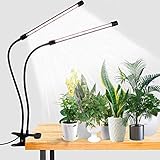
1. GooingTop 6000K Clip Grow Light – The Easiest Light to Get Right From Day One
GooingTop Grow Light,6000K Full Spectrum Indoor Plant Growing Lamp
10W draw
84 LEDs
6000K
Circular 4H/8H/12H timer
Clip mount, 22 inch reach
+ Pros
- Firm gooseneck holds position
- Bright even 6000K output with CRI 90
- Heavy clip grips shelves and desks
- 4H/8H/12H memory timer
- USB and AC plug options
- Cons
- Timer runs on a 24-hour cycle rather than interval switching
- Very bright at close range so you look away
- Narrow coverage very close in
- LEDs can arrive with protective film
This is the light I still reach for first, and after a full season of brassicas and peppers under it I have no plans to switch. The 84-LED head throws a bright, even 6000K wash across a 1020 tray from about 10 inches, and the gooseneck holds its position instead of quietly drooping into the damp soil over a week.
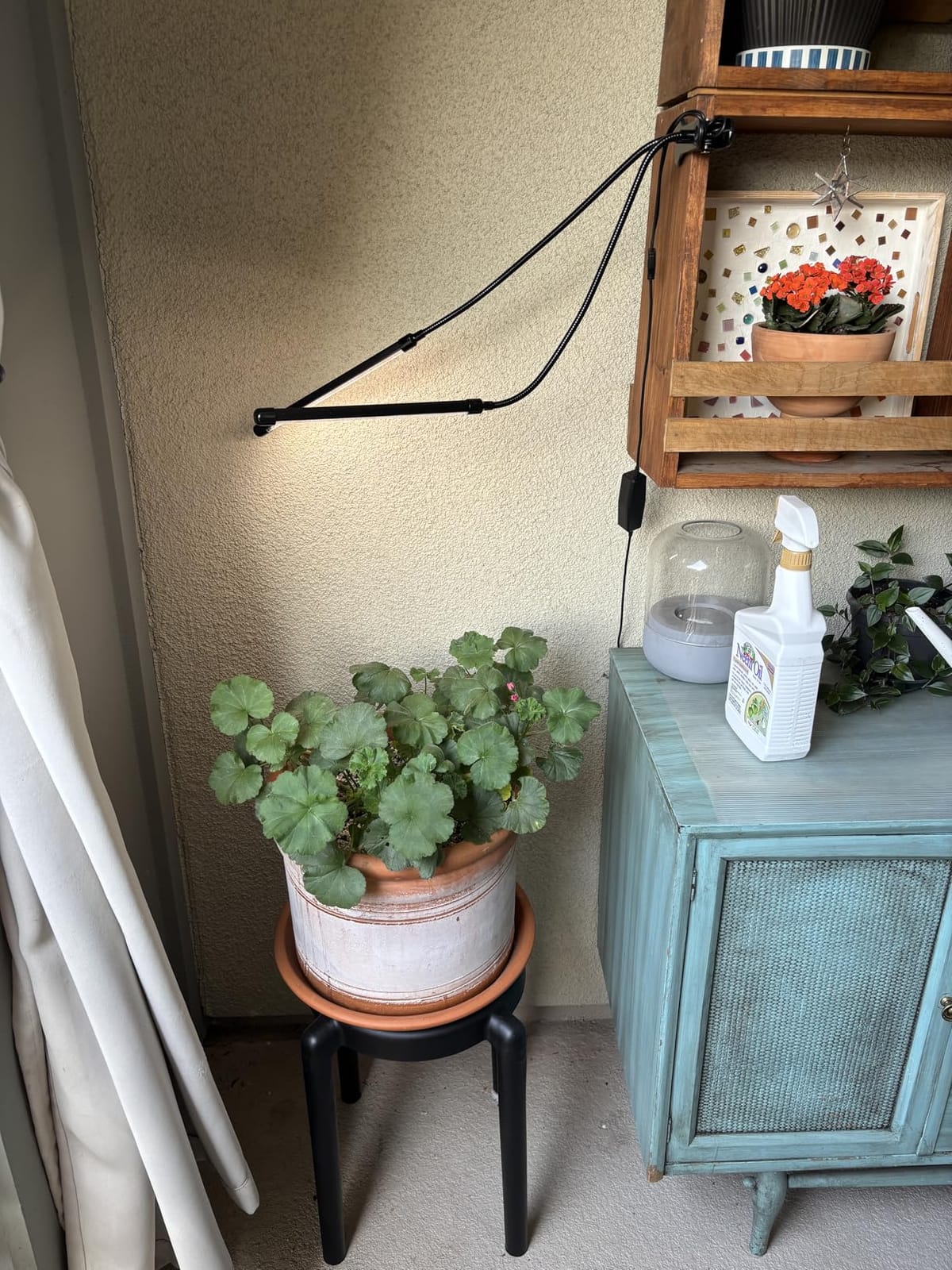
The circular memory timer is the part that changes daily life. Set it to 12 hours and it repeats every 24 hours without further input, so the tray gets the same light every morning even on the weeks you travel. Buyers rarely complain about the light itself; with more than 22,000 ratings at a 4.5 average, praise clusters around the sturdy clip, the firm arm, and visible growth within two weeks of sowing.
What tripped me up early on was brightness, not quality. At close range this thing is genuinely intense, and my first instinct was to dim it, which you cannot do here. Instead, raise the arm. Once I set it around 12 inches and raised it a little each week, the light burn question disappeared entirely.
Timer Behaviour You Should Understand Before You Buy
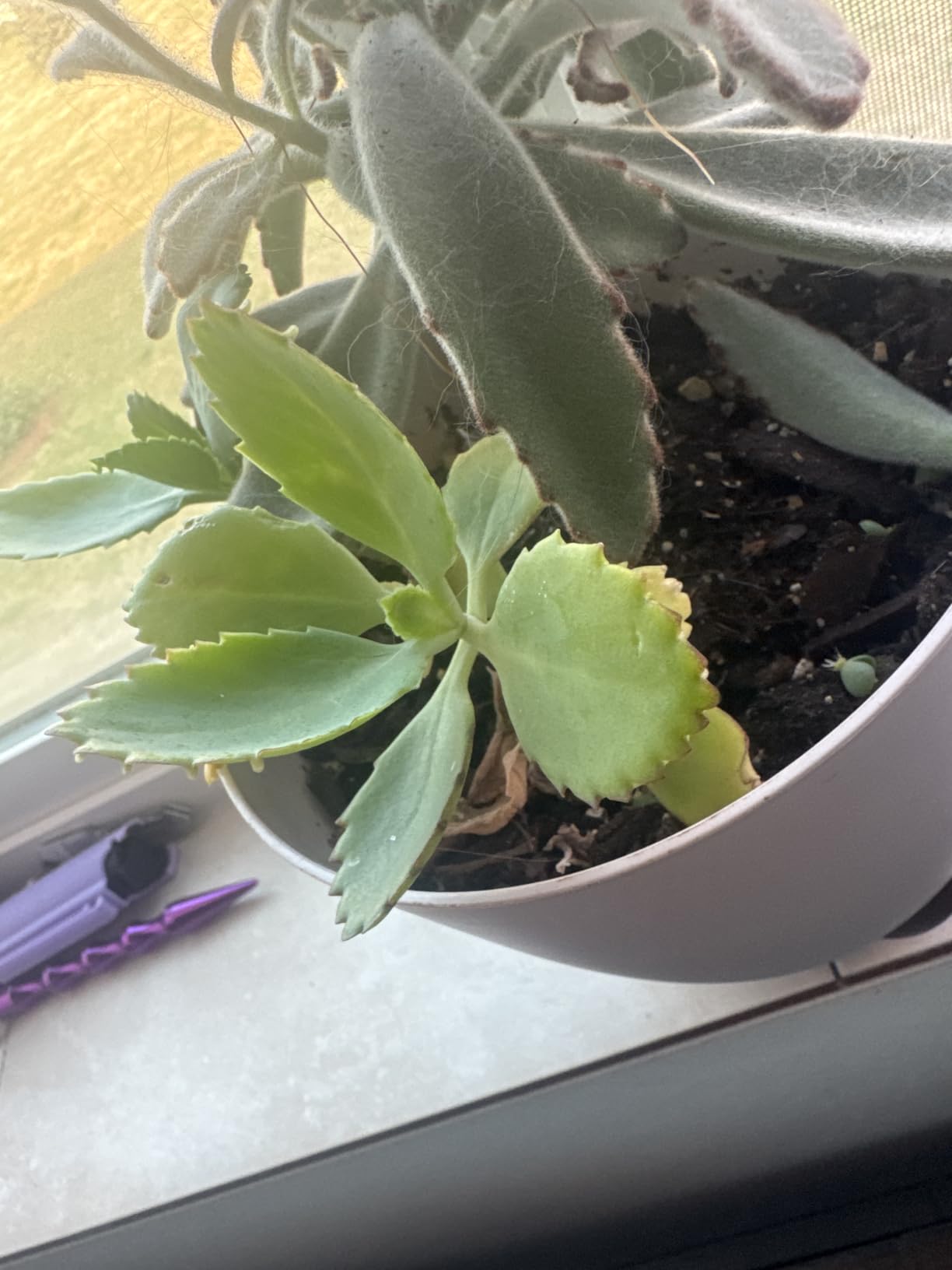
The single most repeated confusion in reviews is the timer. It is not an interval timer. Setting 4H/8H/12H means the light turns on at the time you pressed the button and runs for that many hours, then repeats the next day at the same time. Owners expecting an on/off-alternating switch read this as a defect; once you set it at bedtime it becomes a genuine set-and-forget tool.
Coverage Limits at Very Close Range
One 10W head does not evenly wash a full 1020 tray from 4 inches. The centre seedlings get what they need and the outer two rows stretch toward the middle. Rotating the tray every few days, or angling the arm from an offset position, is the fix most owners land on. It is a small habit and it works.
Build Quality and Mounting
The clamp is genuinely heavy duty. It grips a desk edge, a wire shelf, a plant stand, and a pot rim without slipping, and the arm keeps its angle for months. A small number of owners report units arriving without protective film on the LEDs or with a scratched bulb, so inspect it on arrival.
2. LEOTER 80-LED Gooseneck Light – Most Spectrum and Dimming Control in the Roundup
LEOTER Grow Light for Indoor Plants – Upgraded Version 80 LED Lamps with Full Spectrum & Red Blue Spectrum, 3/9/12H Timer, 10 Dimmable Level, Adjustable Gooseneck,3 Switch Modes
80 LEDs
380-800nm full spectrum
3 modes
10 dimming levels
3H/9H/12H timer
+ Pros
- Three spectrum modes plus ten brightness levels
- Firm 360-degree goosenecks
- Metal clamp grips shelves securely
- Heat sink keeps the head cool
- High review volume at a 4.5 average
- Cons
- Timer setting resets after a power cut
- Arms can sag under their own weight
- USB cable length limits wide shelves
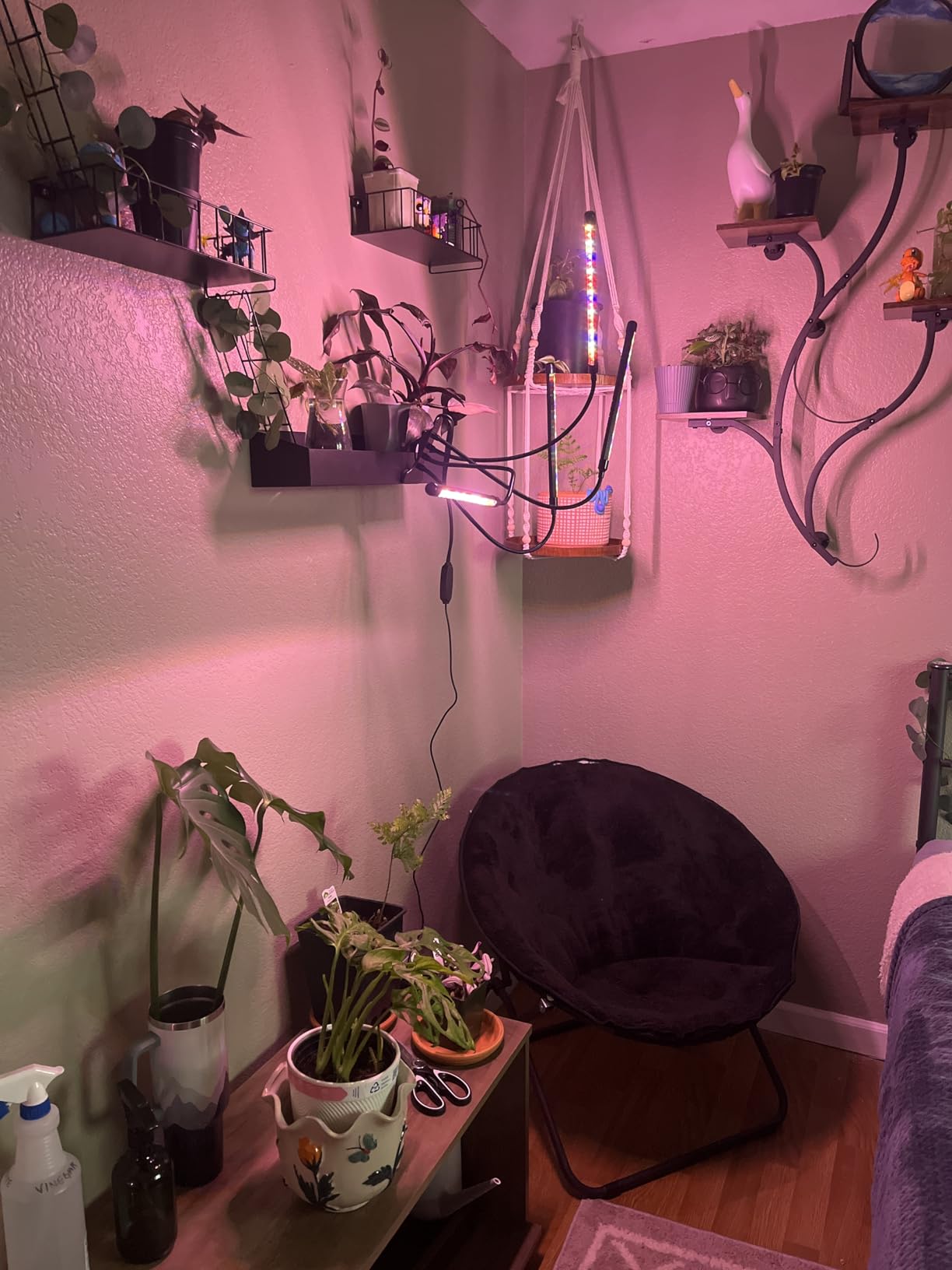
If you want to dial the light down when seedlings first emerge and bring it up as they thicken, this is the only light in the roundup that makes it easy. Ten brightness levels across three spectrum modes means you can start at 30 percent over a freshly domed tray and step up without moving a single thing.
At 12,700 ratings and a 4.5 average, this is one of the most proven grow lights you can buy, and owners specifically call out seedling trays alongside carnivorous plants and violets. The full spectrum 380nm to 800nm mode handles germination and rooting, the red and blue mode is for later stages, and the combined mode covers vegetative growth.
The metal clamp and aviation-grade heat sink are what separate it from the plastic-bodied budget lamps. The head runs cool enough to sit close to foliage, and the clamp does not creep across a shelf over a fortnight of daily repositioning.
Why Dimming Matters More Than Wattage Here
Seedlings are most vulnerable in their first ten days, when a sprout is a hair tall and the growing tip is soft. A dimmable light lets you match intensity to the plant instead of moving the fixture daily, and it removes the temptation to over-light a tray you sized for a bigger space. On my own setups, the dimmer does more work than the wattage figure does.
The Timer Resets Itself After a Power Cut
This is the flaw worth planning around. The 3H/9H/12H timer has cycle memory, but if the power is interrupted, the setting is lost and the light stays on until you press a button. If you run this on a shared circuit or an outlet with a GFCI, check it after any blip. Plug it into a dedicated wall timer if your setup is prone to outages.
Watch the Arms on Long Setups
Flexible goosenecks lose tension over time, and with multiple heads the weight adds up. Owners running this on tall shelving report the arms needing a reposition every week or two. It is manageable, but plan your mounting height with a bit of slack so you can lift the arms rather than fight them.
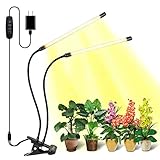
3. bseah Dual Tube Plant Light – The Budget Pick That Handles One Tray Well
bseah Grow Light Plant Lights for Indoor Plants, Full Spectrum Plant Grow Lamp, 10 Dimmable Levels, Auto ON & Off with 3/9/12H Timer
10W draw
USB powered
Yellow and white tubes
3H/9H/12H timer
9.5 inch footprint
+ Pros
- Timer and ten dimming levels at the lowest entry point
- Strong spring clamp
- No assembly and a compact footprint
- LEDs stay cool near plants
- Two year warranty
- Cons
- Power cord runs about 54 inches
- Protective film sealed under the end caps
- Gooseneck arms stiff to reposition
This is the light I recommend when someone tells me they are starting a dozen trays and does not want to spend serious money yet. It has a real timer, real dimming, and a clamp that grips a plant stand, which is more than most lights at this level manage.
With nearly 9,000 ratings holding a 4.5 average, buyers treat it as a workhorse rather than a display piece. Owners running African violets and carnivorous collections report faster growth in dim rooms and steadier results when travelling, and the tubes stay cool enough that they never wilt what they sit above.
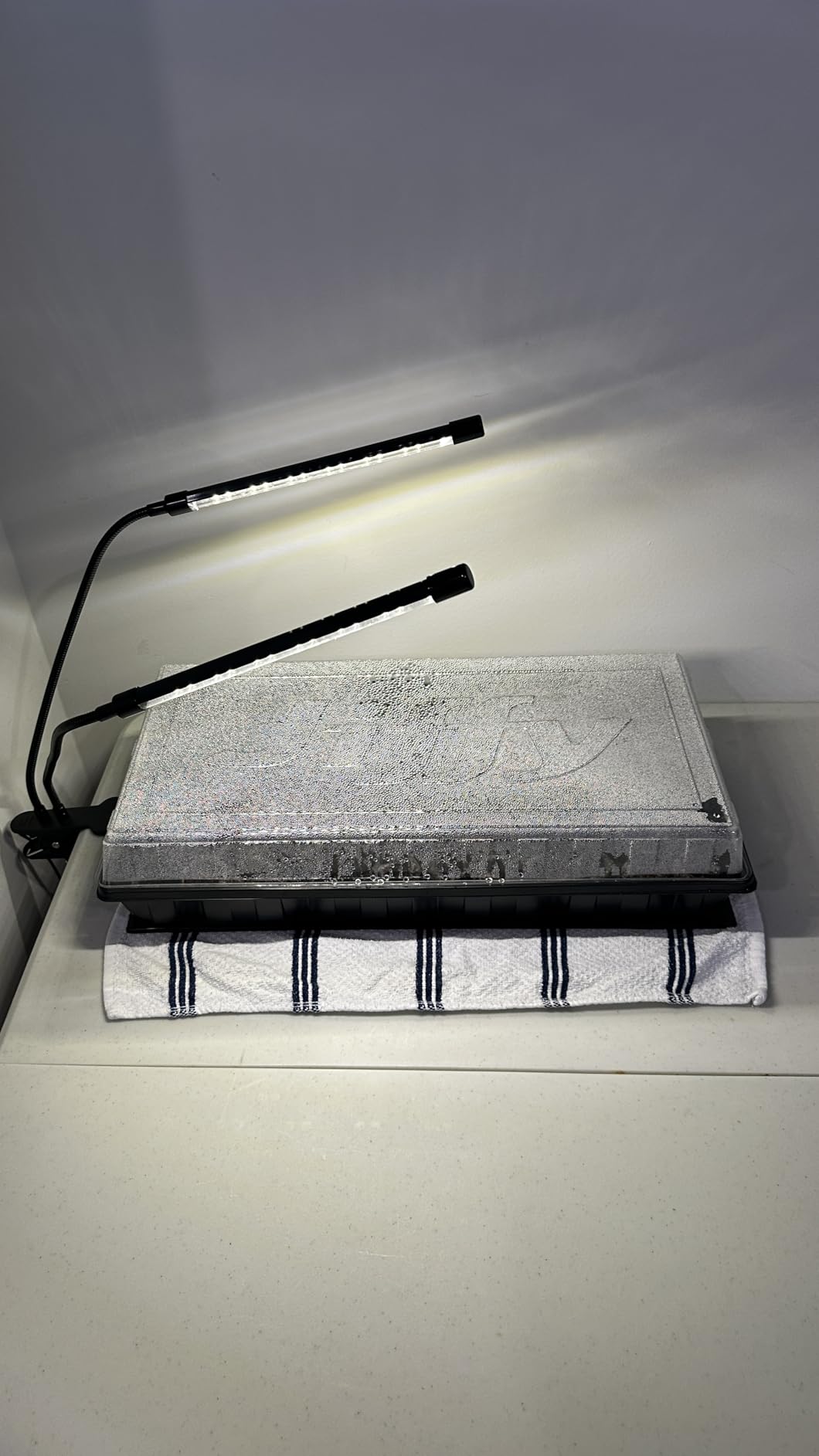
Two yellow and white LED tubes in a metal housing give a full spectrum wash without the pink glow that makes a setup look like a growing operation. That neutrality is genuinely useful in a living room or a home office, where a purple cast across the desk is the difference between a light you keep and a light you hide.
The Short Cord Is the Real Limitation
At roughly 54 inches, the USB lead is the constraint that shapes your layout. It works perfectly for a single tray on a stand near an outlet. It does not work for a 48-inch shelf unless you add a powered hub or an extension, and owners consistently mention this as the reason their setup looks messier than they wanted.
Remove the End Cap Film Carefully
Factory protective film is sealed under the end caps and tends to shatter into small plastic fragments when you pull it. Take it off over a bin, not over the tray. Once it is off, the output is bright and even, but skipping this step leaves you looking through a scratched plastic layer all season.
Dimming Versus Wattage for a Single Tray
Ten brightness levels on a 10W fixture is a reasonable range for a 1020 tray but not for three trays side by side. If your plan covers more than one tray, budget for a second fixture rather than dimming this one to compensate. Coverage geometry beats output here, and no dimmer fixes a dark corner at the end of a shelf.
4. Barrina T5 Grow Lights 1FT 4-Pack – Best Value for a Full Shelf
Barrina T5 Grow Lights for Indoor Plants, 5000K Full Spectrum, 1FT, 4 Packs
20W total
96 LEDs
5000K
Linkable up to 16
Per-bar on/off switches
+ Pros
- Highest rated light in the roundup
- Linkable bars power a whole shelf from one cord
- Each bar has its own on/off switch
- Aluminum housing runs cool
- Mounting tape
- ties and clips included
- Cons
- No built-in timer so a wall timer is needed
- Interconnecting cords suit 12-inch shelf spacing
- Power cords are short
- Adhesive can release on a poorly cleaned surface
Four bars, one purchase, one shelf covered. That is the argument for this light, and it is why growers in r/gardening and r/kratky keep recommending the Barrina name for seed starting. At a 4.6 average across more than 7,000 ratings, it carries the highest rating in this roundup.
Each 12-inch bar runs at 5000K full spectrum with 24 LEDs, and the claim that over 95 percent of emitted light energy sits in plant-absorbable wavelengths is what you actually feel when you put your hand under one. The light is neutral white, evenly spread, and it does not glow pink in a dark room.
The linking design is the feature that changes a setup. Three 39-inch connecting cords join the four bars in series, so a single power cord with a master switch can run a two-foot shelf or an entire tier of a rack. Add more bars later, up to sixteen in a chain, without touching the wiring.
No Timer, and That Is the One Gap
There is no built-in scheduling. Every bar has a manual on/off switch and the cord has a master switch, which is excellent for spot checks and useless for a 12-hour photoperiod. A plug-in wall timer between the outlet and the fixture solves this in seconds and is the standard fix among owners. It is a three dollar problem, not a reason to skip the light.
Mounting for Wire Shelving and Racks
The box includes eight clips, twelve double-sided tape strips, and cable ties, which covers most cases. One recurring complaint from forum growers is that cheap lights ship with hardware that does not fit standard wire shelving. These clips do, and the cable ties handle the awkward corner where the bar crosses a shelf brace.
Heat and Distance
The slim non-magnetic aluminum housing acts as a heat sink and runs cool after 12 hours or more, which means you can hang these lower than a plastic-bodied panel. Mount them 6 to 10 inches over cotyledons and 12 to 18 inches once true leaves appear. Bright, even coverage means the outer rows of a 1020 tray do not stretch the way they do under a single clip head.
5. Kullsinss 16in Two-Bar Grow Light Strips – Tidiest Option for a Visible Shelf
Kullsinss 16in Grow Light Strips, 2-Bar 120 LEDs Full Spectrum Plant Light
20W
120 LEDs
380-800nm
5 dimming levels
3 spectrum modes
95 inch cord
+ Pros
- Slim bars blend into wood and plexiglass shelving
- Reliable repeating 6/12/16-hour timer
- Long 95-inch cords simplify cable routing
- Lightweight and easy to reposition
- Reported to restore variegation in low light
- Cons
- Output is modest for demanding seedlings
- One reviewer measured about 2000 lux at 5 cm
- Only five dimming levels
These are the lights I buy when the seed rack lives in a room where appearance matters. Two 16-inch aluminum bars sit flush under a shelf and disappear, and the neutral output does not turn a dining table pink at night.
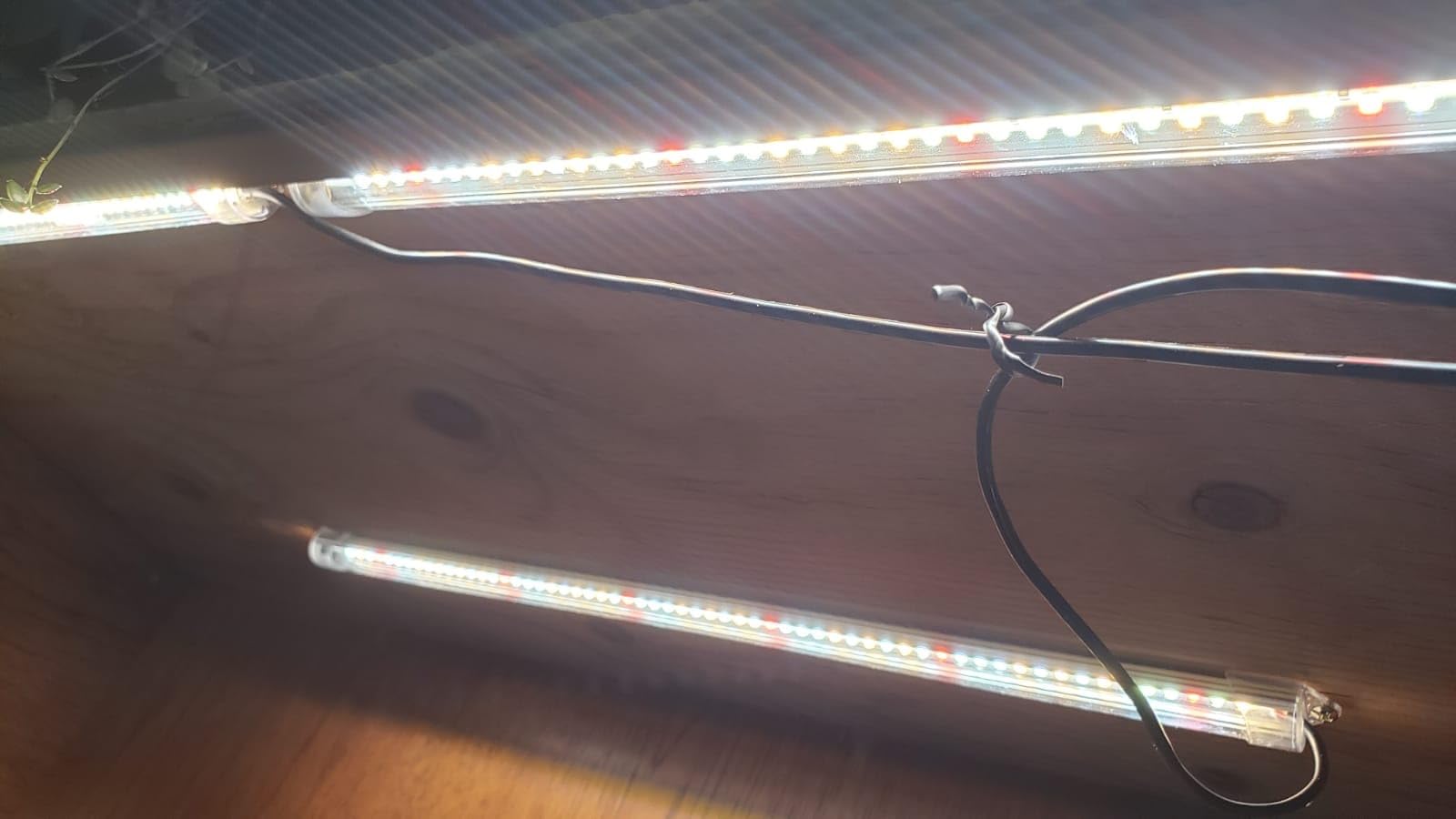
The 6H/12H/16H timer repeats daily without fail according to owners, which is the single most important thing in this category. Five dimming levels and three spectrum modes give a little control, though noticeably less than the ten-level lamps in this roundup.
The 95-inch power cord is unusually generous. It reaches from an outlet to the far end of a multi-shelf unit without an extension, and that single detail removes most of the cable clutter you get with 4-foot leads.
Honest Limits on Raw Intensity
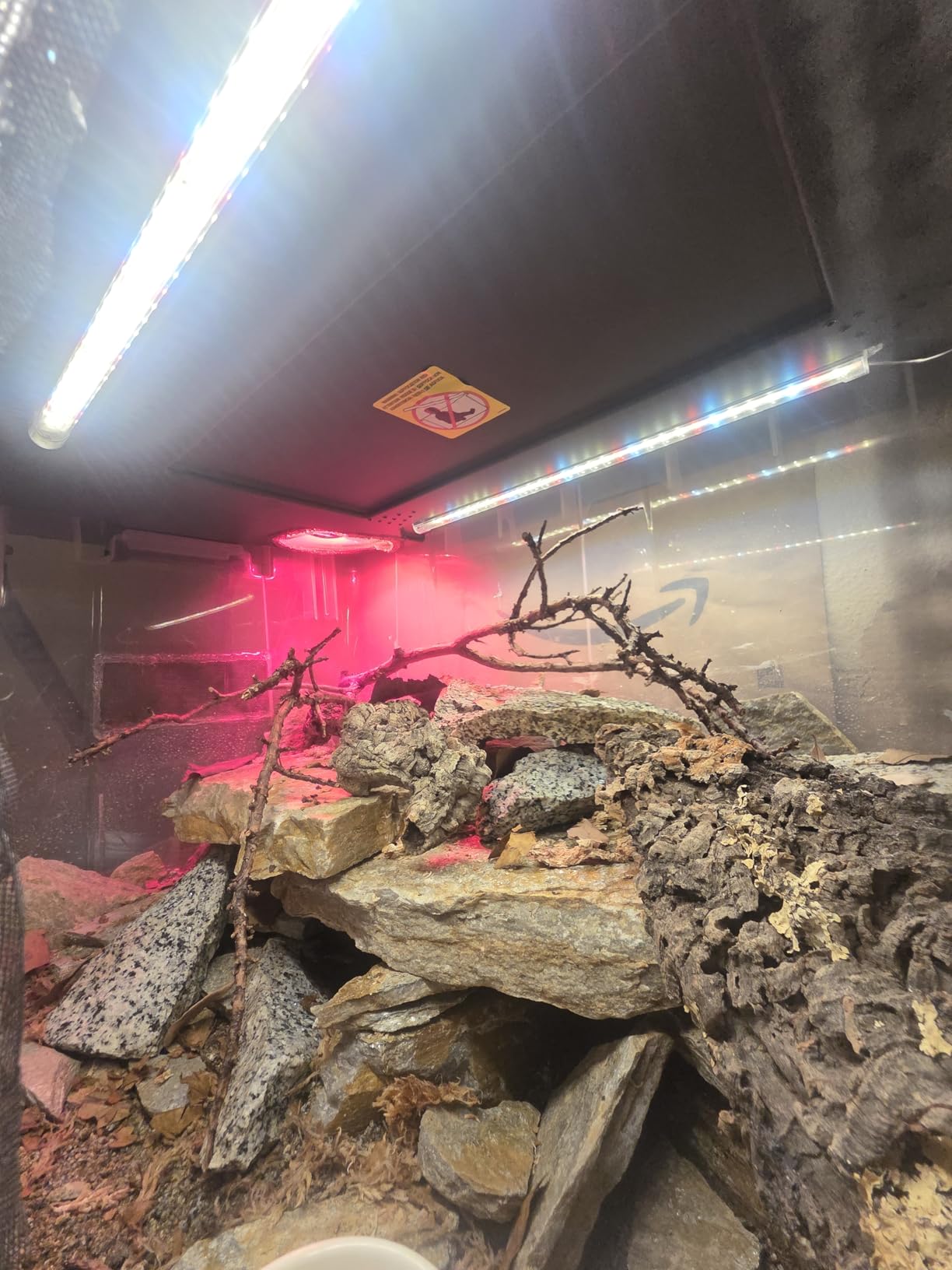
This is a low-light plant light that happens to work well on seedlings. One reviewer measured roughly 2000 lux at 5 cm, and other owners describe the output as modest. Herbs, succulents, seedlings in their first two weeks, and variegated houseplants are exactly the plants it serves. Red-leaf lettuce and demanding transplants are not.
Heat Dissipation for Close Mounting
The aluminum frame pulls heat away from the diodes well enough to mount these close under a shelf without cooking the canopy below. That matters for seedlings, which sit far closer to the fixture than a mature plant ever would. Keep the bars 6 to 8 inches above a young tray and raise them as growth catches up.
Mounting Choices
Screws, cable ties, and double-sided tape are all in the box, and the holes are positioned so a bar can sit flat against the underside of a shelf or stand upright inside a rack. Plan the bar orientation before you stick the tape down, because moving it later leaves residue on the shelf.
6. SDOVUERC Tri-Head Clip Plant Lights – Widest Coverage Per Pack
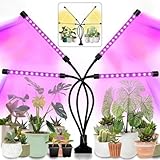
Grow Lights for Indoor Plants, Full Spectrum Tri-Head Clip Plant Lights
20W
six gooseneck heads
380-780nm
3H/9H/12H timer
10 dimming levels
+ Pros
- Six positionable heads cover multiple trays
- Very strong clips hold on desks and shelves
- Timer works reliably
- Ten dimming levels and three color modes
- Responsive warranty replacement service
- Cons
- Some units fail after four to five months
- Some variants need a separate USB power block
- A single failed head can disable the whole unit
Two units, three gooseneck heads each. That is six independently aimable light sources in one purchase, and it is the only configuration in this roundup that lets you cover two trays at different growth stages with different heads at different heights.
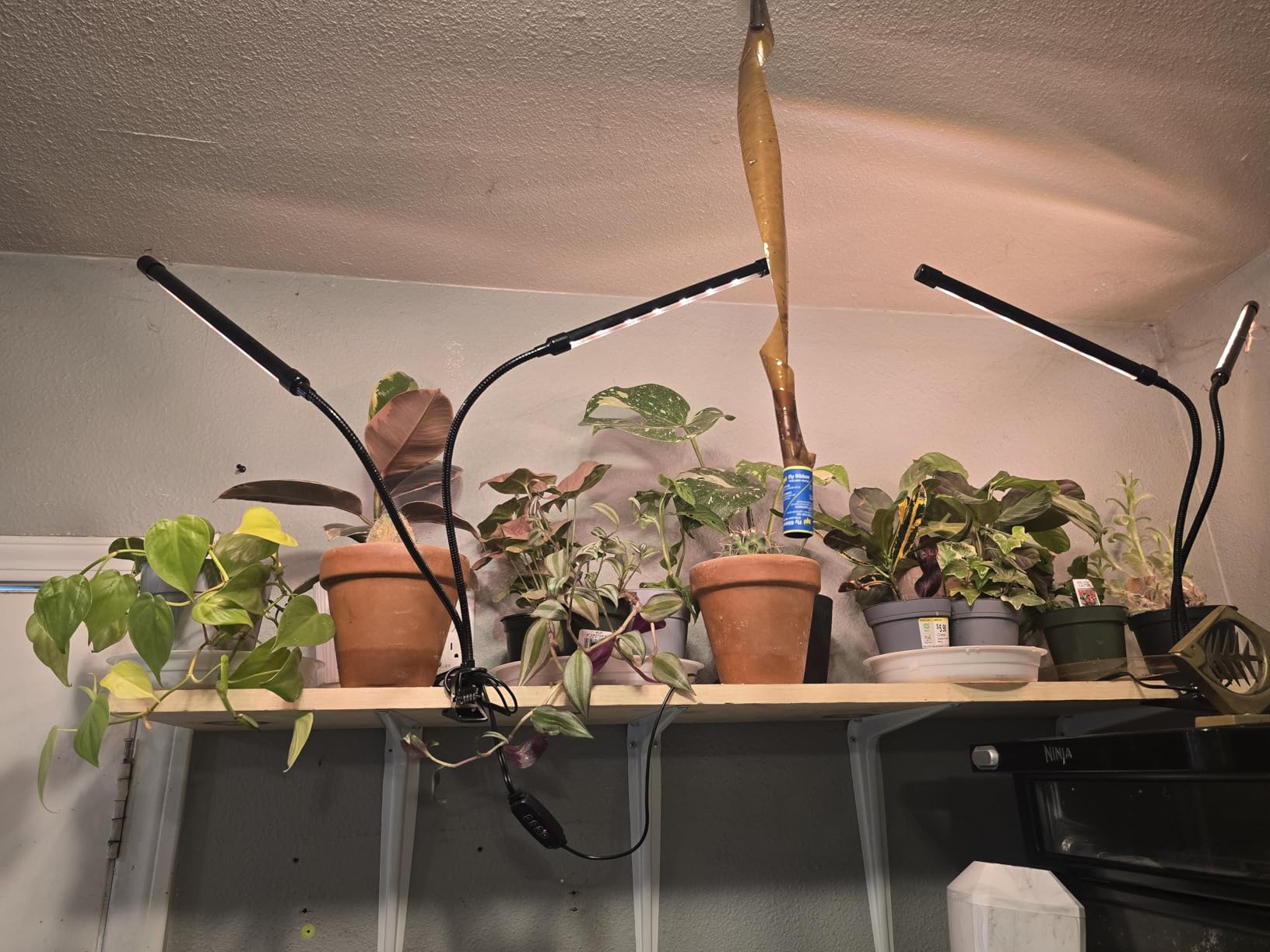
Owners report visible improvement in leggy seedlings within about two weeks, and the 10 dimming levels mean you can match each head to its tray. On my last start I pointed one head at a fresh dome and dimmed it to a low level, then left two heads at full output over a second tray that was a week ahead. That flexibility is the reason to own a tri-head design.
The 3/9/12-hour cycle memory timer works reliably, and the 360-degree goosenecks with strong clamps are what make the multi-head approach possible at all.
Durability Is the Weak Spot
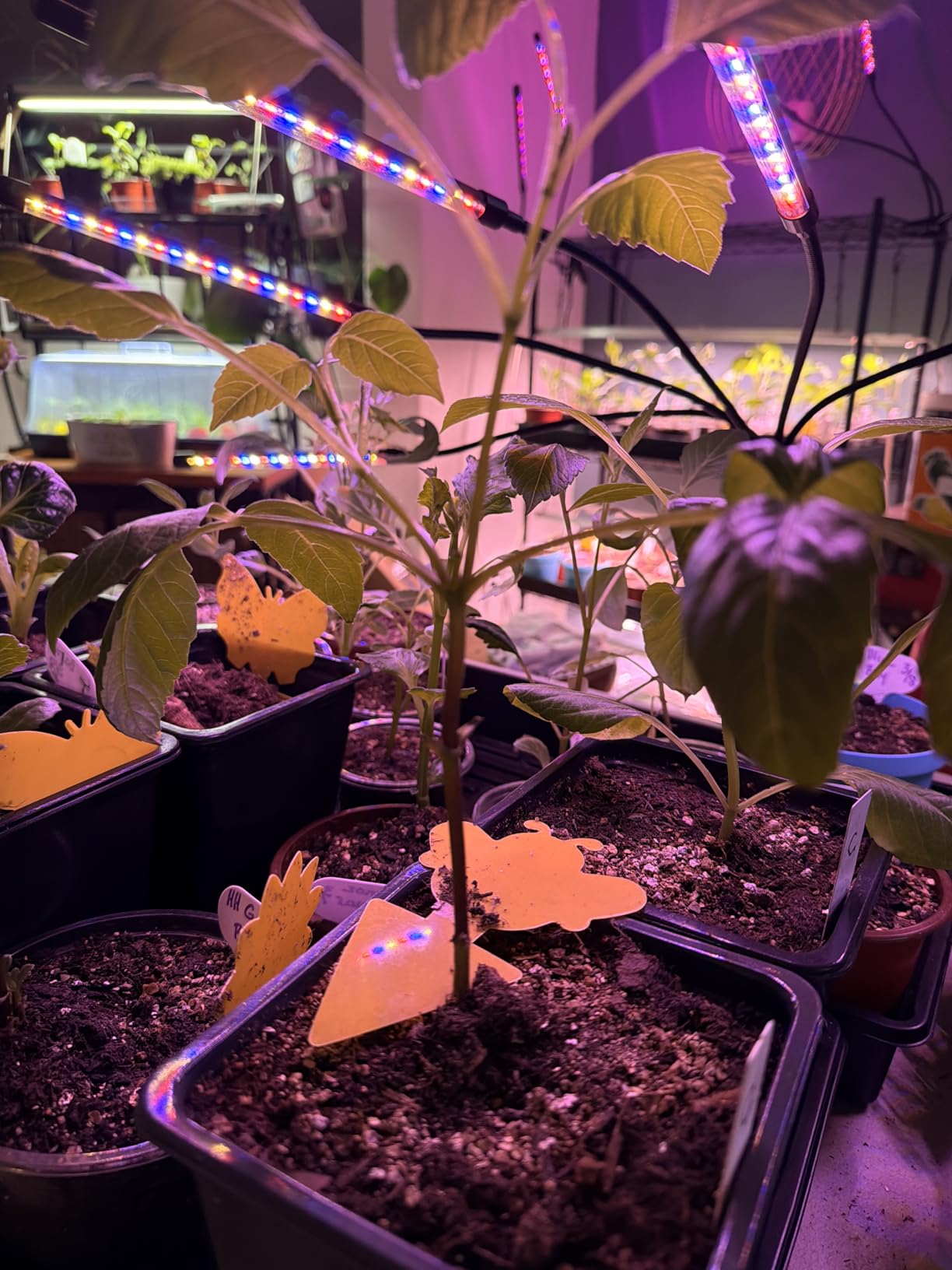
Several owners report a unit ceasing to function after four to five months, past the return window. This is the most important thing to know before buying. The brand is praised for honoring warranty claims and shipping improved replacements, and the warranty runs a full 365 days, so register the unit on arrival and keep the box.
One Head Failure Can Take the Unit Offline
When a single head fails the symptom is a flashing button, and in several reports the whole unit stopped responding. That is a design quirk rather than a defect rate, and it means you should not buy this expecting independent failure isolation across heads.
Check the Power Block Situation
USB plugs are supplied, but some variants need a separate USB power block rather than a wall plug. If you are running two units off one adapter, confirm the adapter is rated for the combined draw. Owners running multiple heads report better results from a dedicated powered hub than from a single underpowered block.
7. Wiaxulay 16in Plant Grow Light Strip 15W – Best for Tiered Greenhouse Rigs
Wiaxulay 16in Plant Grow Light Strip for Indoor Growing, Full Spectrum 15W
15W
6000K
380-800nm
6H/12H/16H timer
5 brightness levels
+ Pros
- Good value for multi-bar shelf coverage
- Long cords reach separate shelves
- LEDs stay cool near humidity domes
- Timer plus dimming plus three modes
- Mounts with tape
- ties or screws
- Cons
- Supplied zip ties are too short for most racks
- Aluminum bars are slightly flimsy
- A few units stop working after a few months
- 16 inch length is shorter than some competitors
Cheap plastic domes warp under lights that get hot, so the coolest-running fixture in a tiered rig is worth a lot. This strip stays touchable even after a full 16-hour day, which is exactly what makes it safe to sit inside a propagation dome.
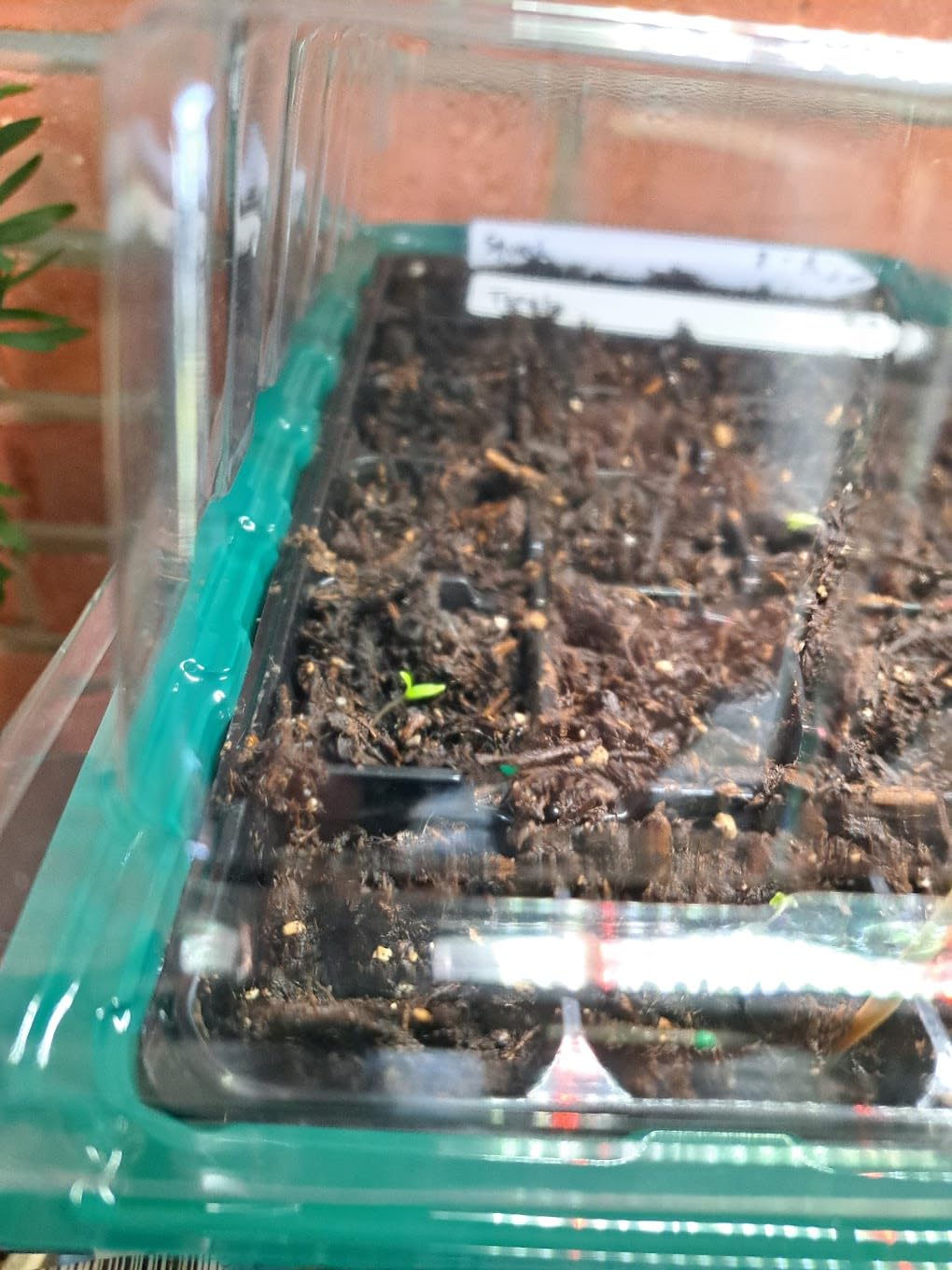
Seed-starting owners running tiered greenhouses and multi-shelf rigs report it works and keeps working, and the 6H/12H/16H repeating timer means one setting covers a full seedling photoperiod. Three switch modes and five brightness levels handle the move from germination to early vegetative growth.
It carries the lowest rating in this roundup at 4.4, with about 6 percent one-star votes. That is a durability signal more than a performance one, and it is worth weighing against how much shelf you intend to cover.
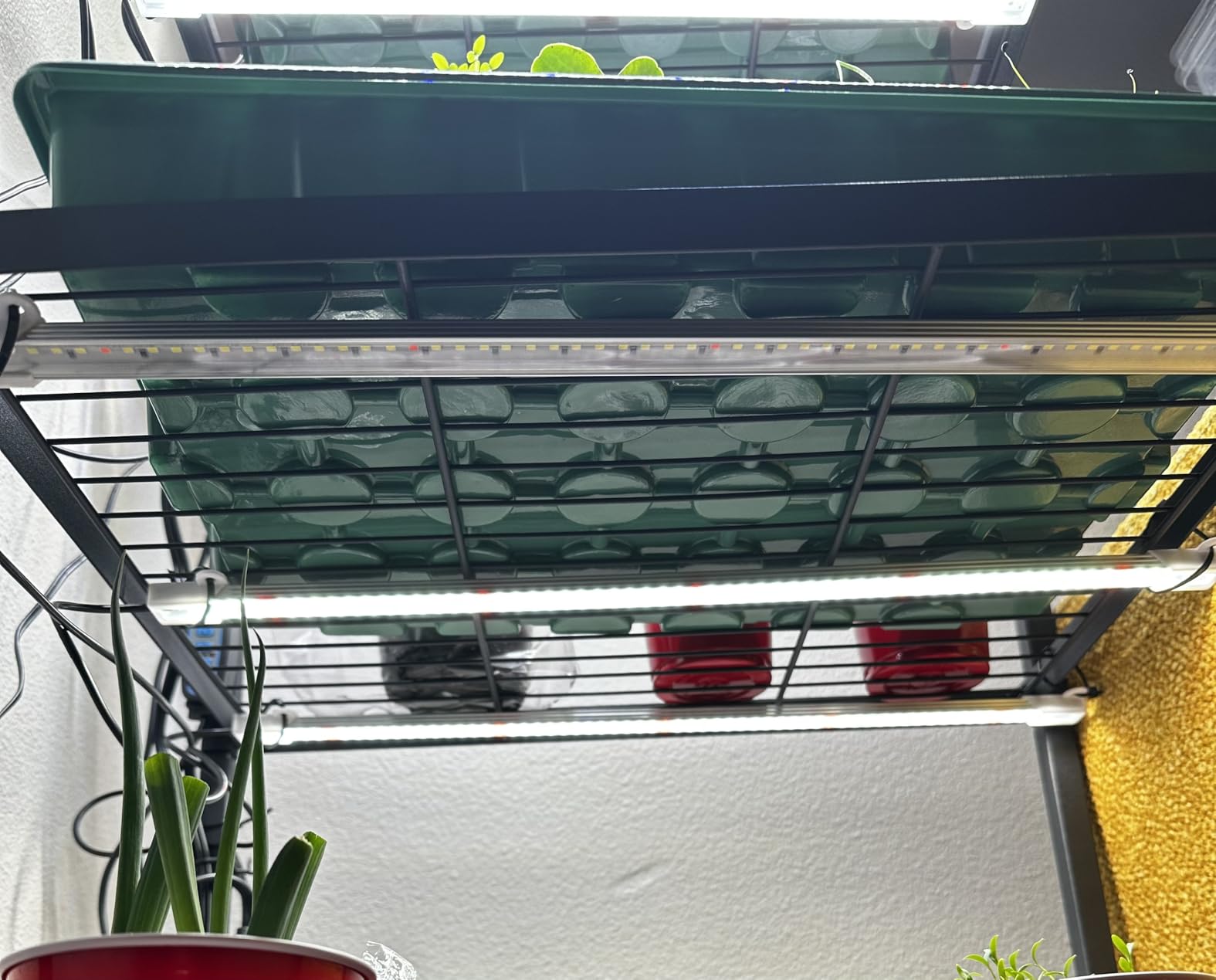
Buy Your Own Cable Ties
The supplied lashing ties are too short to be useful in most racks, and this is the most common complaint. Bring your own 4-inch zip ties and you are set in about a minute. The screws and adhesive work fine, and eight screws and twelve tape strips are included.
Bar Length and Shelf Arithmetic
At 16 inches these are shorter than several competitors, so a 48-inch shelf needs three bars rather than two. Plan the count before buying. On a 70-inch rack, the arithmetic works out well, which is why this light shows up in tiered greenhouse setups more often than in single-tray ones.
A Few Units Die Early
Some owners report units stopping working after a few months, and one bar bent and would not stay seated in its holder. Treat the aluminum as light gauge, mount it at the marked holes rather than clamping the middle, and keep the packaging in case you need a replacement within the first year.
8. RWNTAO 8.6in Compact Grow Light Bars – Best for Narrow Plant Shelves
LED Grow Light Strips, Grow Lights for Indoor Plants Full Spectrum 3000K, Plant Light Bar with 3/9/12H Timer, 10 Dimmable Levels for Seedling Succulent,Best Match for Plant Shelf(3 Head×2 Pack)
Compact 8.6 inch bars
3000K full spectrum
156 LEDs per pack
3H/9H/12H timer
10 dimming levels
+ Pros
- Compact bars fit narrow shelves where longer strips will not
- Ten dimming levels and three switch modes
- Reliable repeating 3/9/12-hour timer
- All aluminum housing
- Four mounting options including magnets
- 71-inch cord
- Cons
- Short bars mean more fixtures per shelf
- Rated for 15W maximum compatible light source wattage
Footprint is the entire reason to buy this one. An 8.6-inch bar fits narrow plant shelves and office setups where a 16-inch strip overhangs or will not seat flat, and at 0.55 inch wide these essentially disappear against the shelf edge.
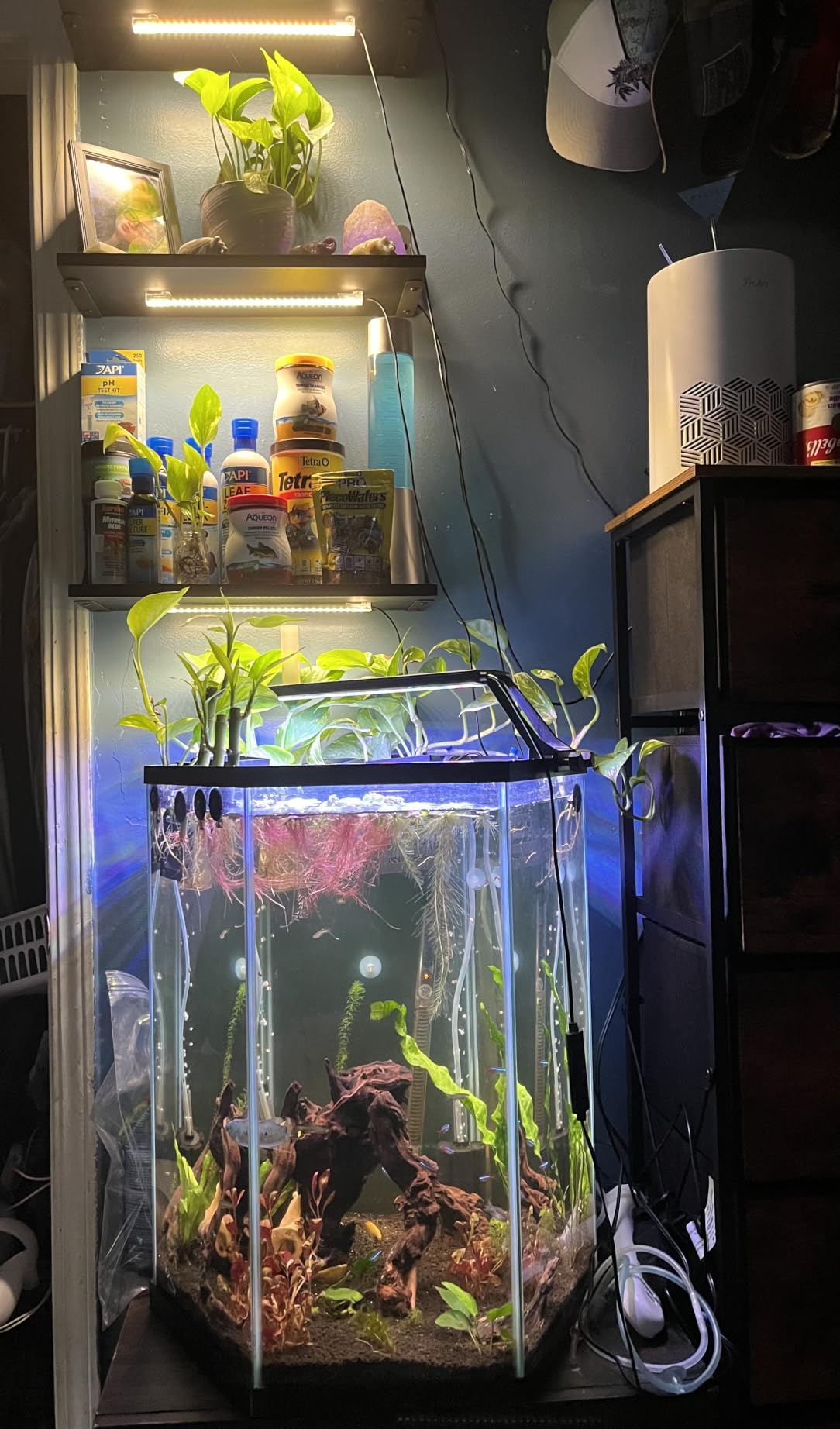
Two bars per pack with 78 LEDs each give 3000K full spectrum output from 380nm to 800nm. Owners running seedlings and succulents value the ten brightness levels, which let you start a fresh tray low and increase as the plants thicken without moving the bar.
The magnetic mounting option is the sleeper feature. On a metal shelf or rack, magnets let you reposition a bar in seconds as seedlings grow, which removes the weekly adjustment that wears owners out.
Count Your Shelf Width Before Ordering
The trade-off is coverage math. Because each bar is only 8.6 inches, a 36-inch shelf needs four or more fixtures rather than two. If you have a narrow shelf, this is the light that fits; if you have a wide one, the longer 16-inch strips in this roundup will cover it with fewer purchases and fewer power cords.
Four Mounting Options, One of Them Rare
Screws, cable ties, double-sided tape, and magnets are all supported, and the 71-inch cord is long enough for most shelf arrangements. Magnet mounting is the one you will use most, and it is not offered by most competitors in this roundup.
Low Heat Aluminum Housing
The all-aluminum body is described as corrosion resistant and difficult to melt, which is exactly what you want in a humid propagation area or a basement nursery. It runs cool enough to mount 6 to 10 inches above a young tray, and the corrosion resistance matters more than most buyers expect in a damp room.
9. RWNTAO Two-Head 84-LED Clip Grow Light – Strongest Response for the Money
Grow Lights for Indoor Plants, Upgrade 84 LEDs Clip Plant Lights, Full Spectrum LED Plant Growing Lamps with Flexible Gooseneck, 3/9/12H Timer, 3 Spectral Modes, 10 Dimmable Levels (2 Head 1 Pack)
84 LEDs
6000K full spectrum
12H repeating timer
3 modes
10 dimming levels
2 heads
+ Pros
- Strong plant response at a low entry point
- Bendable arms aim light across a tray
- Timer set to 12 hours removes manual on/off
- Strong clip grips table edges
- Three modes plus ten brightness levels
- Cons
- Bulky upright form takes counter and shelf space
- Plain appearance described as an eyesore in an office
At a 4.6 rating with over 1,000 reviews, this is the strongest plant response per unit of money in the roundup. Owners report revived tomato plants and fast flowering in a nursery setup, and the two heads spread light wider than a single-head lamp of the same size.
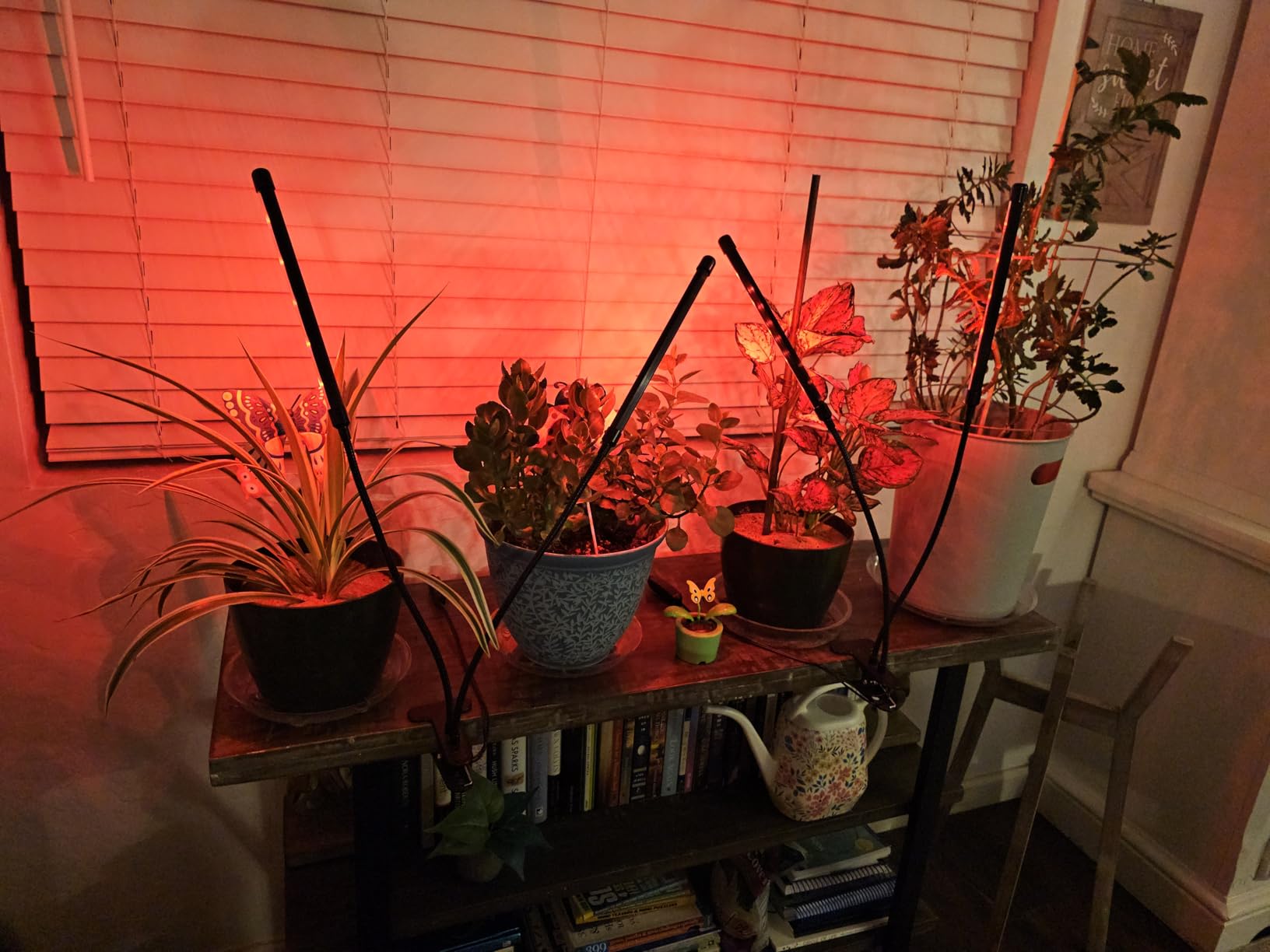
Set the timer to 12 hours and it repeats every day until you reset it. For a desk or a single-tray windowsill setup, that is the whole feature set you need: a clip that grips the table edge, two arms you can bend into position, and a 6000K flicker-free output with a high color rendering index.
The bendable arms are what let you aim light where the tray actually is. Angle one head down at the soil and swing the other out toward the edge and the stretch problem largely disappears, which is the single most common complaint about cheap seedling lighting.
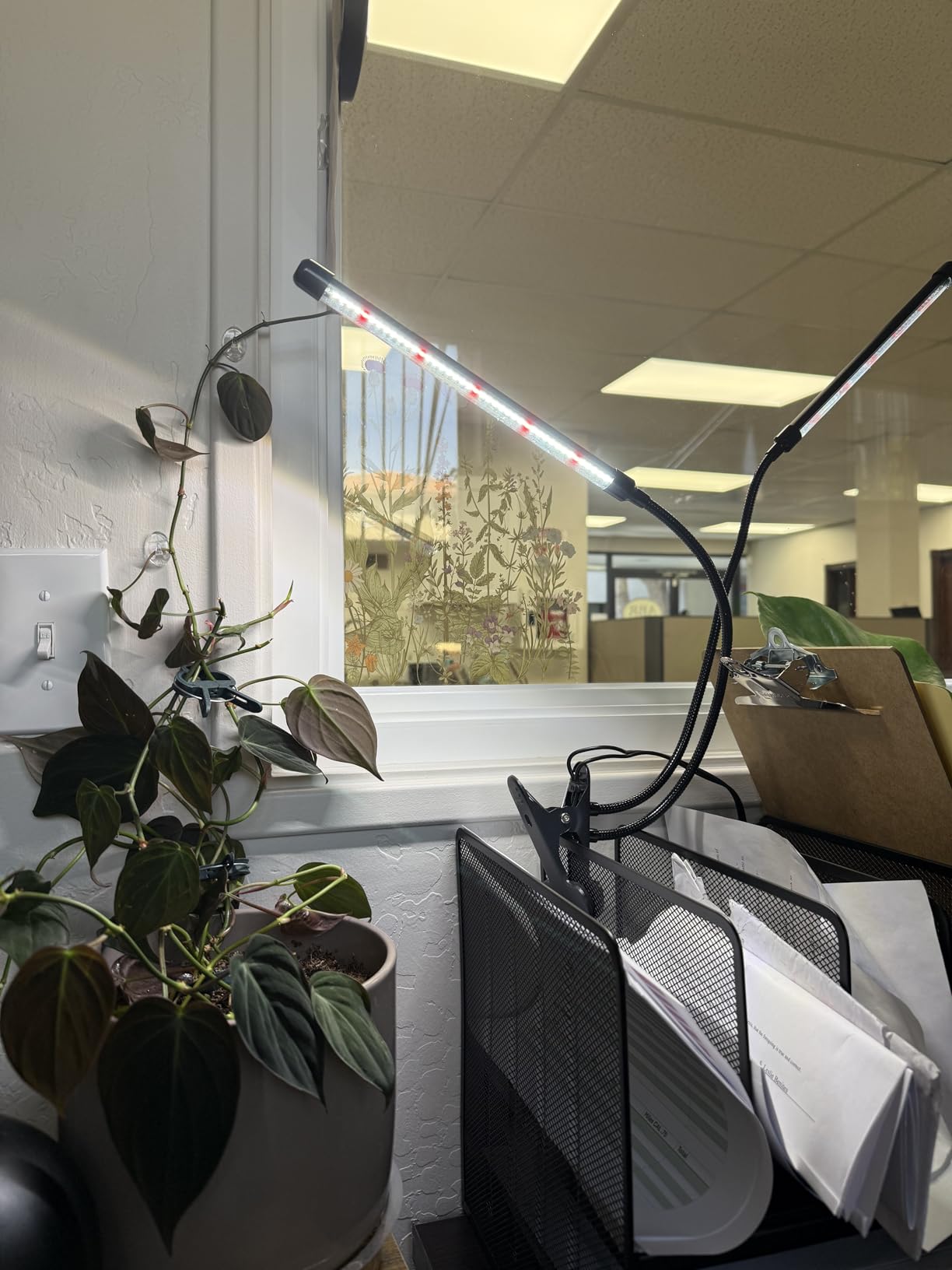
The Form Factor Is Bulky, and That Is the Honest Trade
At 26.77 inches tall this is a tall upright unit, and it occupies real counter or shelf space. That is a real cost in a small room, and one owner described the appearance as an eyesore in an office. If your seed station is a discreet corner or a home office, choose a strip light instead.
Timer Memory Survives Normal Use
The 3H/9H/12H cycle memory repeats until you reset it, which means a momentary flicker does not silently change your schedule the way it does on some cheaper models. For anyone who travels or has an unreliable circuit, that reliability is worth more than another spectrum mode.
Dimming Versus Wattage at the Seedling Stage
Ten dimming levels across three light forms give you real control over intensity, which is the most useful variable at the seedling stage. Start low over a domed tray, raise the level as cotyledons open, and only move the fixture once true leaves appear and the stems thicken.
10. FECiDA 36W Four-Tube Clip Grow Light – Highest Output Per Fixture
FECiDA 36W Strong Clip Grow Light for Indoor Plant, Seed Starting, Seedling
36W actual draw
4 tubes at 1000 lumens
60-degree optical lens
4H to 20H timer
+ Pros
- Highest actual wattage of the clip options
- 60-degree lens focuses light on foliage and cuts spill
- Direct wall plug-in with no adapter brick
- Five timer levels including 16H and 20H
- Strong stable clip
- Modular tube count
- Cons
- Highest power draw in the roundup
- Very bright at close range so height matters
Every other clip light in this roundup runs 10 to 20 watts. This one draws 36 watts across four tubes, and the precision 60-degree optical lens focuses that output onto the foliage instead of spraying it across the ceiling. That is the design choice that makes it the strongest single fixture here for serious seed starting.
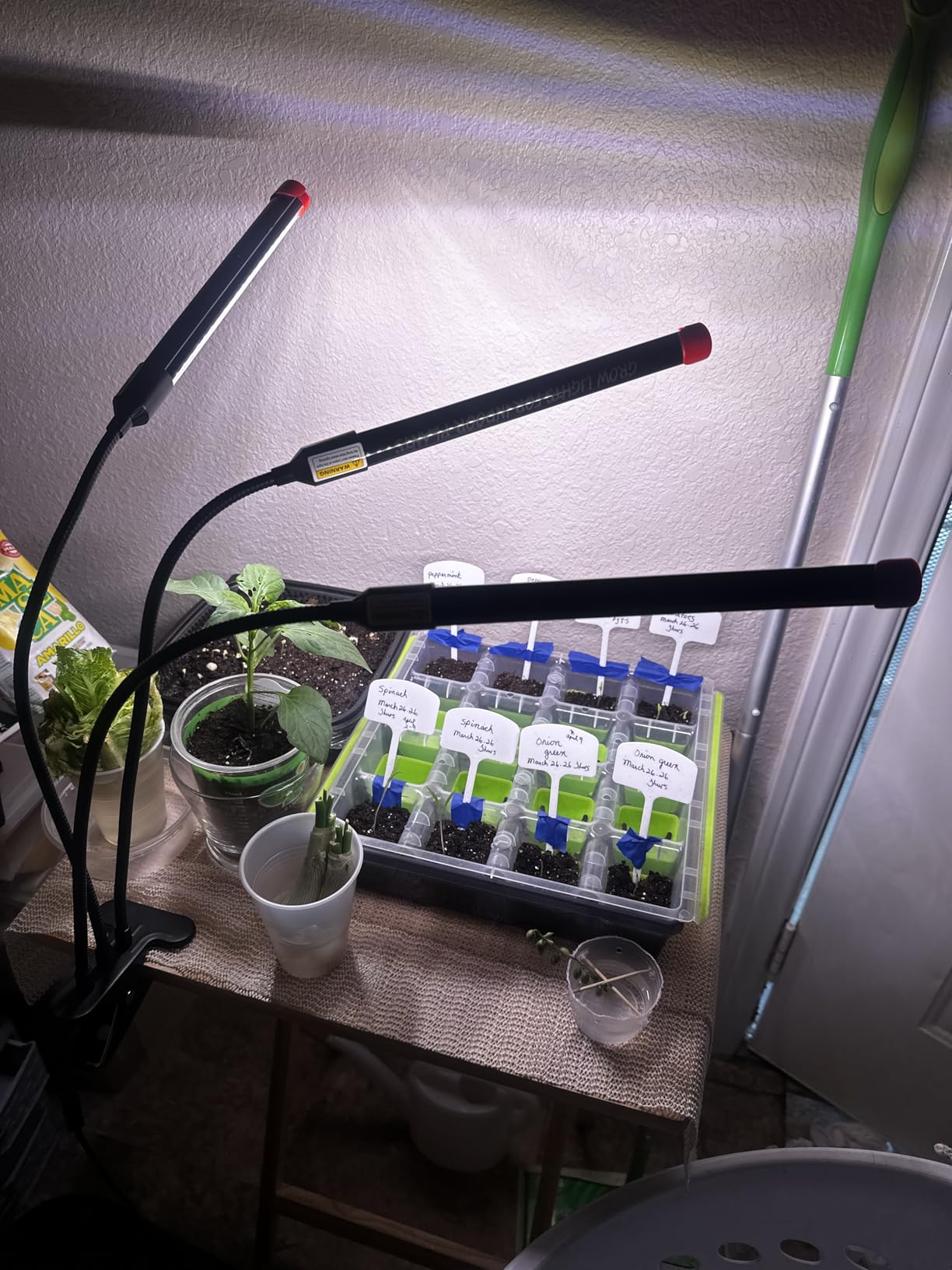
Owners highlight real brightness and lens-focused efficiency, and with 80 percent five-star ratings the output is not in question. Full spectrum comes from a mix of 3000K, 5000K, and 660nm red LEDs, which is a wider spread than most budget lamps in this roundup.
The direct wall plug-in matters more than it sounds. No adapter brick means no brick sitting warm behind a shelf and one less component that fails, and the manufacturer frames it as a longer service life for exactly that reason.
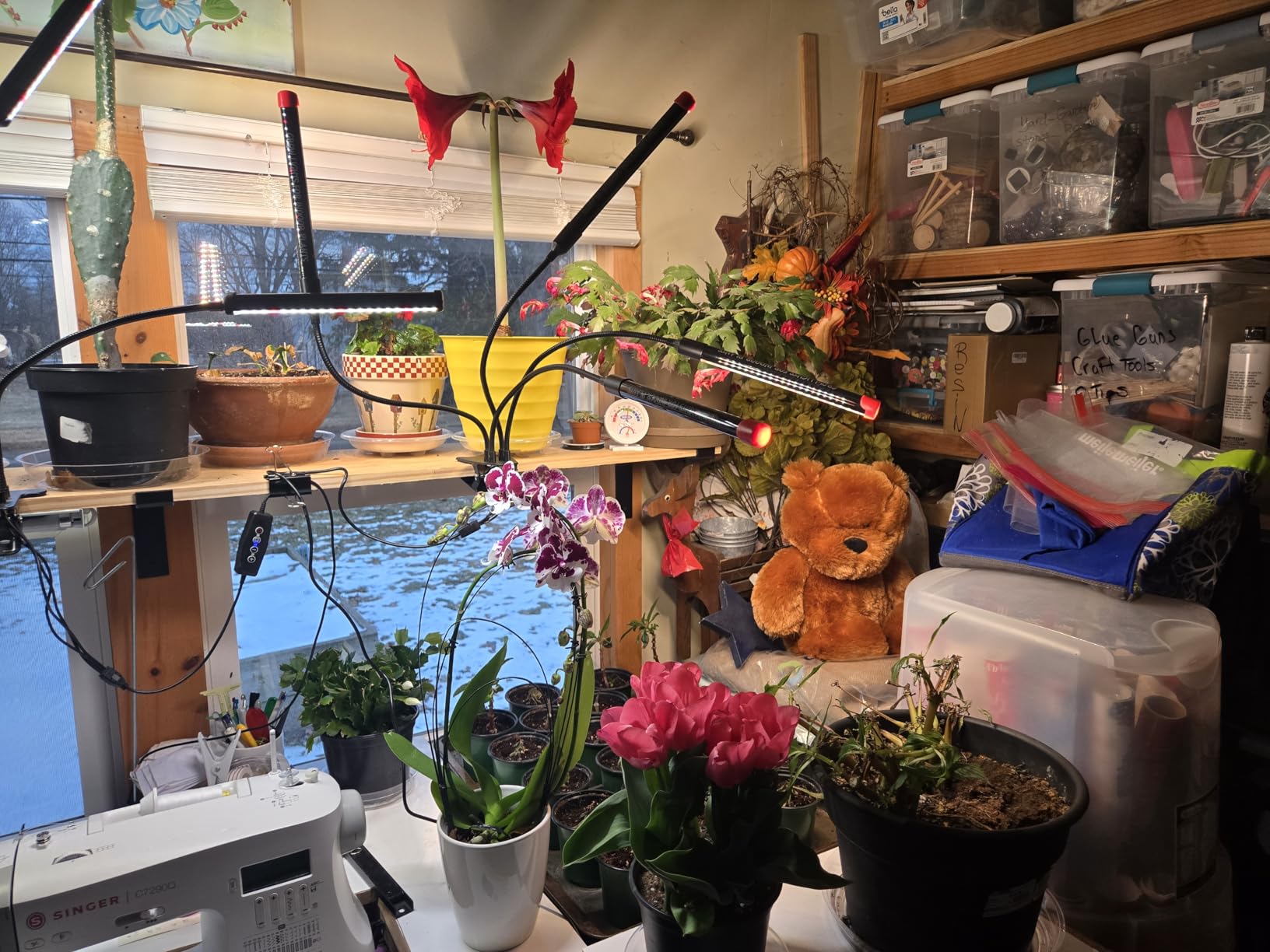
Follow the Manufacturer Height Guidance
The brand recommends 18 inches for seed starting, 16 inches for leaf growth, and 14 inches for flowering. That is the opposite of what most beginners expect, and it is right for a light this strong. Start at 18 inches over a fresh tray and lower it as the stems thicken.
The Unusual 16 and 20 Hour Settings
Most plant lights stop at 12 hours. This one offers 4H, 8H, 12H, 16H, and 20H, with 16 hours set by pressing 4 plus 12 and 20 hours by pressing 8 plus 12. Long photoperiods matter for certain crops and for growers who want maximum early growth.
Power Draw and What It Costs to Run
This is the highest power draw in the roundup, which matters if you are lighting several shelves for 16 hours a day. The lens recovers some of that by putting light where plants are instead of on the walls, so the effective output per watt is better than the wattage alone suggests. For a single tray you do not need it; for two or three trays it pays off.
11. SDOVUERC 16in Six-Bar Grow Light Strips – One Purchase, One Full Shelf
SDOVUERC 16” 6 Bars Grow Light Strips for Indoor Shelves Plants Growing.
36W
360 LEDs across six bars
3600 lumens
6H/12H/18H timer
95 inch cord
+ Pros
- Six bars cover a full shelf width in one purchase
- 3600 lumens of output
- 95-inch cord fits large shelf units
- Simple 6/12/18-hour timer with three spectrum settings
- Runs bright without getting hot
- Tape
- ties and screws included
- Cons
- Strong blue cast even on the red setting
- Some buyers report output too weak for lettuce
- A 12V adapter is an added failure point
Six bars, 360 LEDs, 3600 lumens, 36 watts. If your seed rack is a full-width unit rather than a small shelf, this is the single purchase that covers the whole tier without daisy-chaining separate fixtures or running multiple power cords.
The 95-inch cord comfortably reaches a 70 by 70 inch multi-shelf unit from a single outlet, and the 6H/12H/18H circular memory timer programs in seconds and repeats daily while powered. Three spectrum selections and dimming handle the move from germination to early vegetative growth.
Owners report much better seedling growth than weaker lights produce, and the aluminum construction runs bright without getting hot. The unit is FCC, CE, and RoHS certified, which matters if you are running it in a shared room.
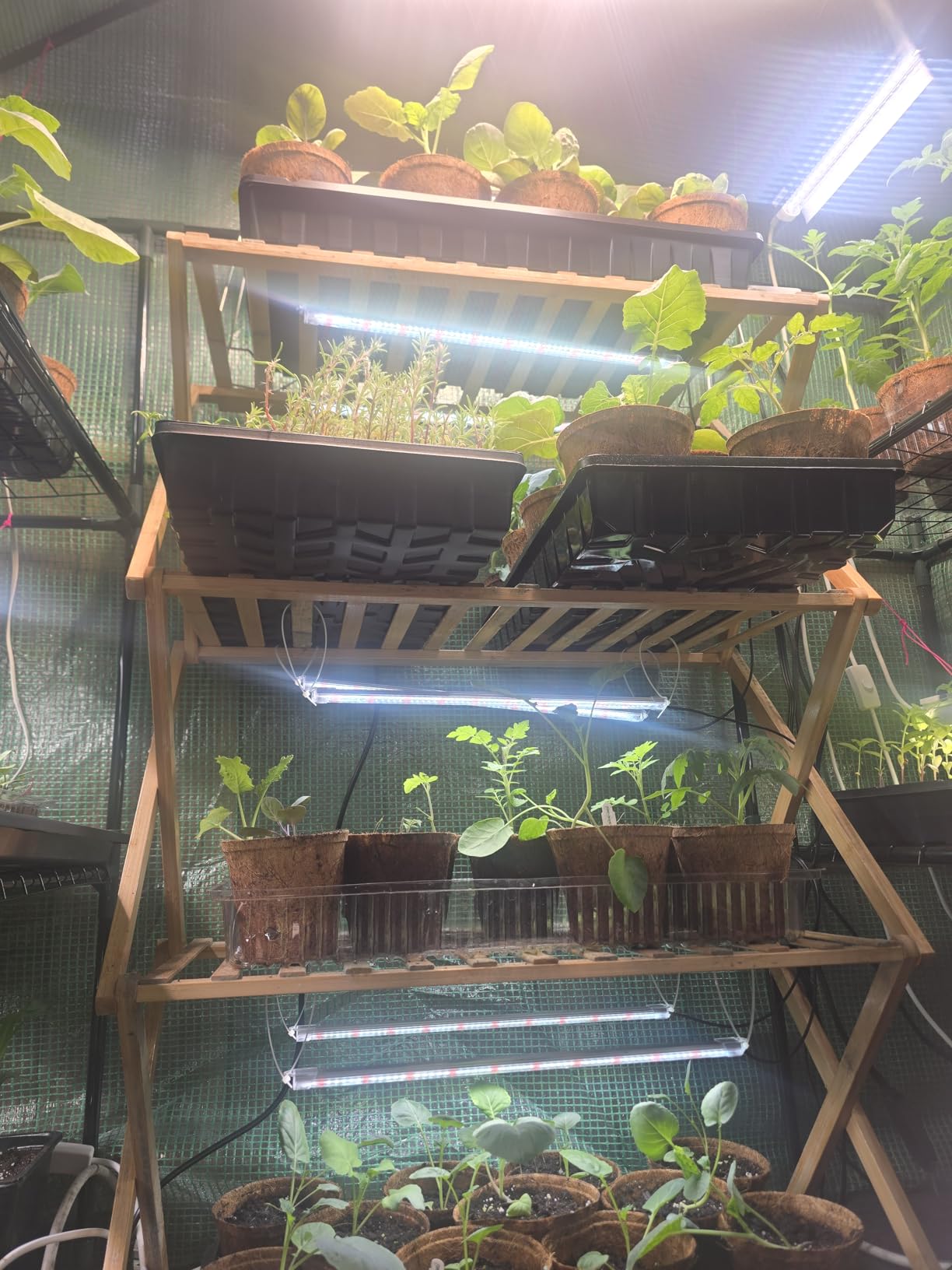
The Blue Cast Is Real, Especially at Night
Even with the red setting selected, the output reads strongly blue or purple, and several owners find that unpleasant after dark. If your seed station is in a bedroom or a living space you use at night, plan around it. A timer that lets you finish the photoperiod before bedtime solves most of the problem, which is another argument for the 6H and 12H settings.
Output Falls Short for Light-Hungry Crops
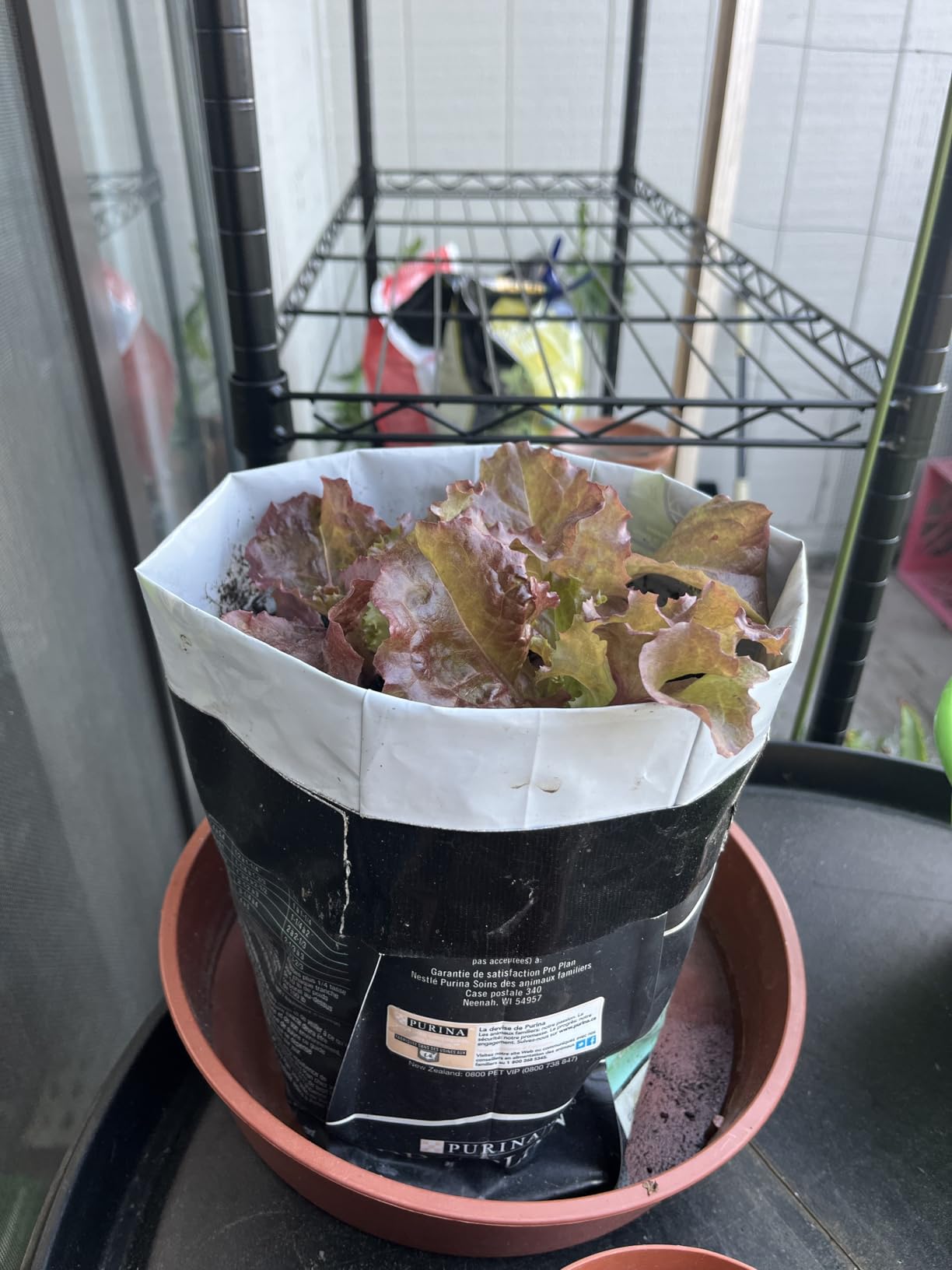
Buyers report mixed results with lettuce and similar demanding seedlings, finding the output weaker than expected at mounting height. For tomatoes, peppers, and brassicas at the seedling stage it performs well. For red-leaf lettuce grown to full size, plan on a stronger fixture or closer mounting.
The 12V Adapter Is the Weak Point
A 12V 3A adapter is included, which means one extra component between the wall and the bars. Keep it accessible rather than hidden behind a shelf, and replace it with a known-good unit if the lights flicker or dim unexpectedly. Adapter failure presents as random brightness changes, which is easy to misdiagnose as a lighting problem.
12. Bokeedo T5 Grow Lights for Seed Starting – Mains-Powered Bars with Reflectors
T5 Grow Lights for Seed Starting, 10W x2, Grow Lights for Indoor Plants
20W total
10W per T5 tube
1900+ lumens
4000K
V-shape reflectors
+ Pros
- Mains-powered 20W tubes deliver more light than low-voltage 5V lamps
- V-shape reflectors focus light and reduce room glare
- Aluminum housing runs cool
- Slim 16.8 inch format fits plant shelves
- Four mounting options
- Cons
- No dimming and no built-in timer
- Lower review count than the other picks
The distinction that matters here is mains power versus USB. Almost every other light in this roundup runs off a 5V USB supply, and 5V is the ceiling on how much light you can get out of a small diode array. These run on 120V AC and put out 1900+ lumens from 20 watts across two tubes.
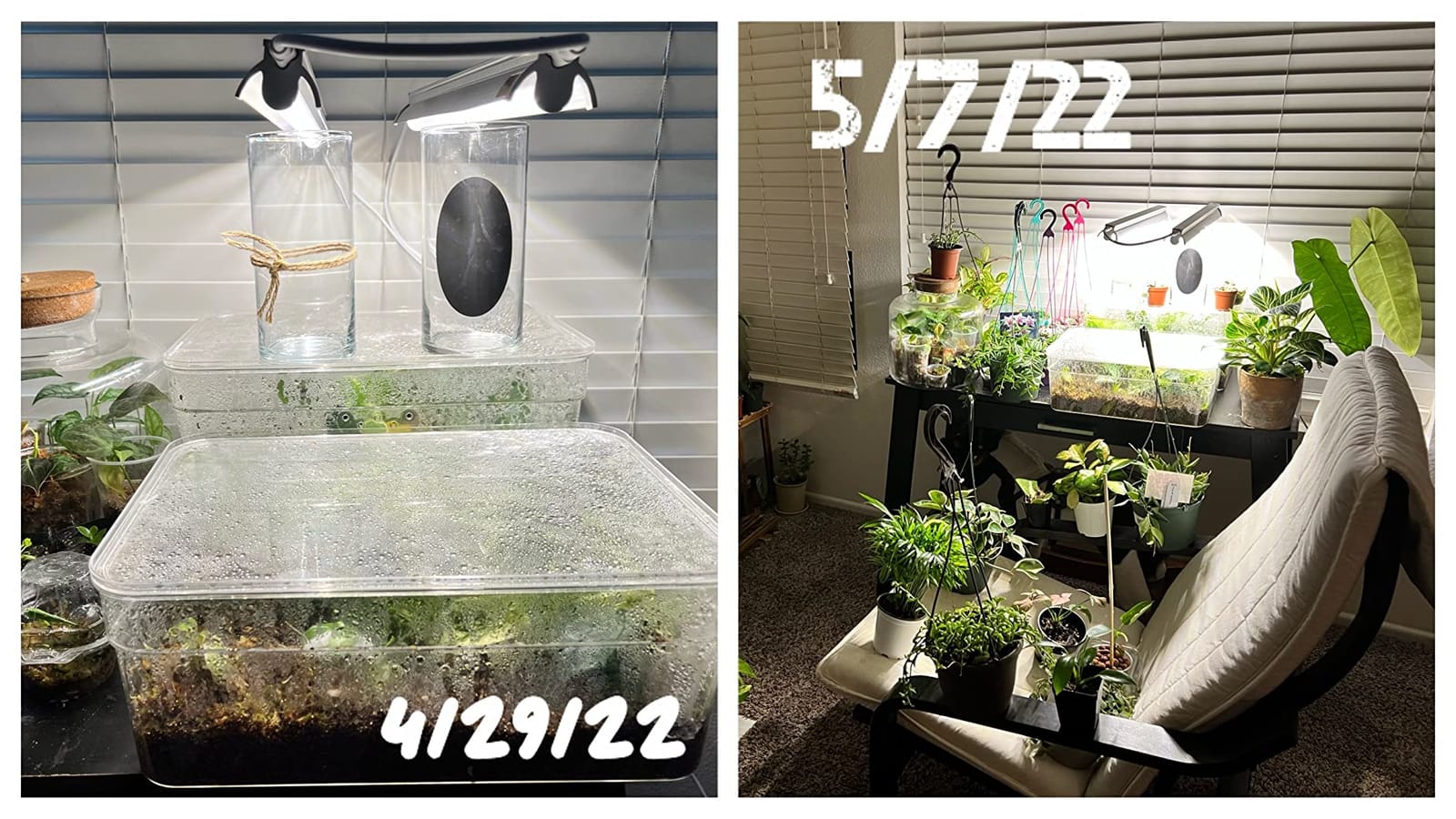
The V-shape reflectors add roughly 25 percent effective light by folding scattered output back toward the plants, and they cut glare into the room at the same time. The full aluminum housing doubles as a heat sink, which is why owners report cool running over a long day.
It is a 3-in-1 spectrum at 4000K: 3000K full spectrum from 380 to 780nm, 6000K white, and 660nm red. PPFD data is published in the product images, which is more than most competitors in this price bracket offer, and the slim 16.8 inch format fits standard plant shelves and racks.
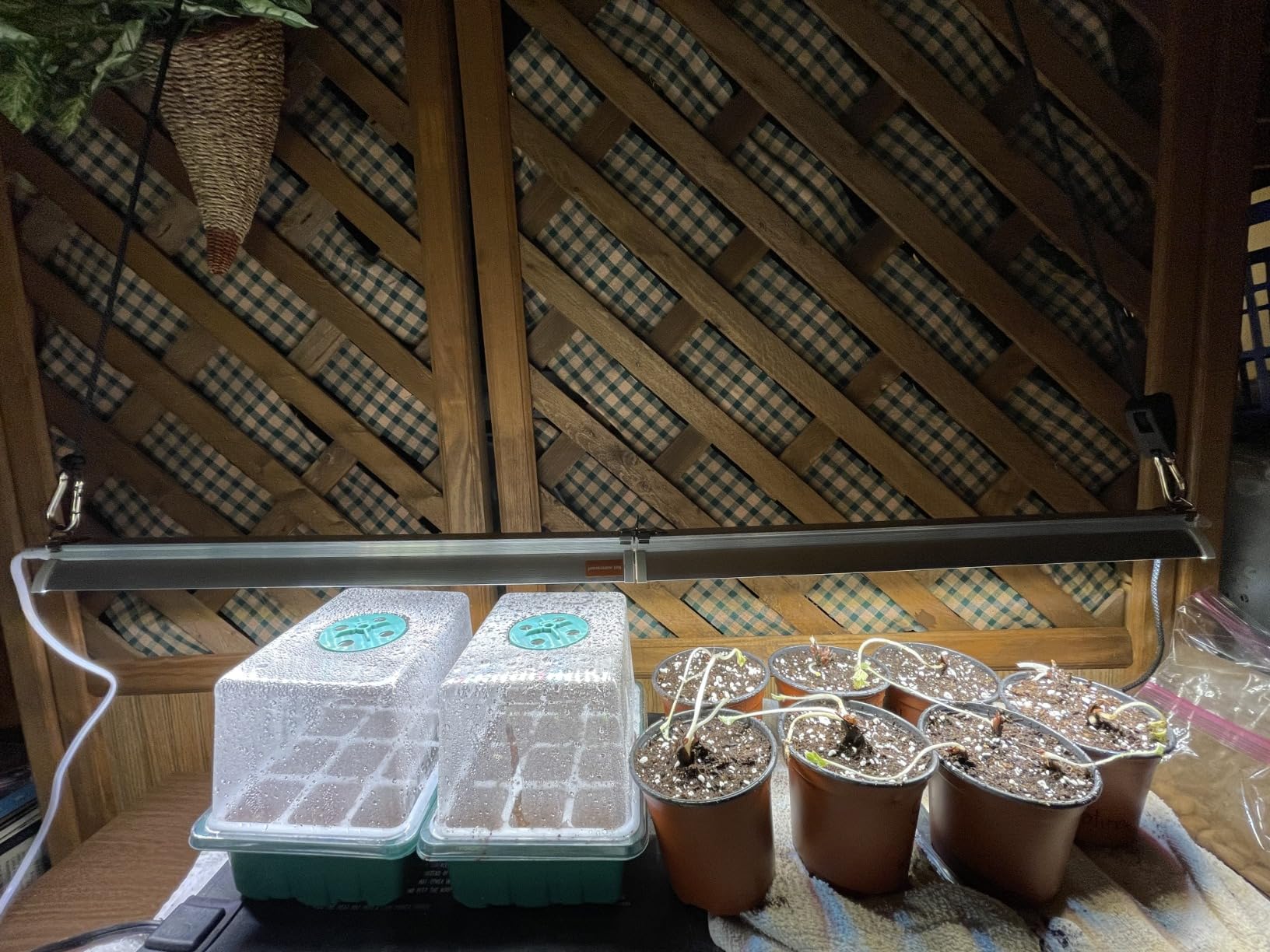
No Dimming and No Timer
These are the two features you give up. Scheduling needs a wall plug-in timer, and there is no way to soften the output for a freshly domed tray. Plan your sow date so the photoperiod starts as seedlings emerge rather than dimming down to meet them.
Four Installation Options
Mounting hardware and V-shape reflectors are included, with four ways to install for shelves, racks, or hanging. A slim bar that runs cool and mounts flat under a shelf is an easy retrofit to an existing rack, and the 12-month warranty plus a 30-day satisfaction guarantee covers early problems.
The Smallest Sample in the Roundup
At 489 ratings this is the least-reviewed light here, though it holds a 4.6 average with 75 percent five-star votes. The lower volume is worth weighing if you prefer proven review counts, but the mains-powered output and reflector design are real advantages that a USB-powered lamp cannot match at this size.
How Many Watts Do Seedlings Need?
Seedlings are not small adult plants. They need a fraction of the light intensity, held close, for a short window each day. Get the sizing right and almost any decent fixture works, which is why the numbers below matter more than the brand on the box.
What Seedlings Actually Need From a Light
The target is 200 to 400 PPFD, or photosynthetic photon flux density, measured in μmol/m²/s. That is the light a seedling can use without stress. Gardeners on r/IndoorGarden put the practical target at 5000K to 6500K color temperature with intensity in the low hundreds of PPFD, which is a much lower bar than the numbers on a flowering-light listing.
The second requirement is proximity. A seedling that is 12 inches from a bright panel is not getting the same usable light as one 6 inches below a dim bar, and stretching happens long before light burn does. Almost every leggy-seedling complaint in forum threads traces back to a light that was mounted too high, not one that was too weak.
How Many Watts Do Seedlings Need Per Square Foot
The consensus rule from experienced growers is 15 to 20 watts of actual draw per square foot for the seedling stage, rising to 25 to 30 watts per square foot for vegetative growth. Actual draw means the number on the label, not the halogen-equivalent claim.
Worked out for common setups: a single 1020 tray is about 1.4 square feet, so a 20 to 30W fixture covers it with headroom. Two side-by-side trays land near 3 square feet and want 45 to 60W. A four-shelf rack of that size wants a bar light per tier rather than a clip lamp, because the coverage geometry changes completely once the shelf is wider than a tray.
This is the sizing rule no competitor page covers, and it is the one that prevents the most wasted purchases. Buyers who jump straight to a 4×4 tent recommendation end up with a fixture far brighter than seedlings need, mounted far too high to compensate, and producing exactly the stretched results they were trying to avoid.
Spectrum: What Blue vs Red Does at the Seedling Stage
Blue light in the 400 to 500nm range drives compact, sturdy growth. It is what keeps internodes short and stems thick, and it is the dominant requirement during germination and early seedling development. Red light in the 620 to 780nm range drives photosynthesis efficiently and matters more once plants are in active vegetative or flowering growth.
For seedlings, a white-leaning full spectrum fixture at 5000K to 6500K hits the practical target without needing switches. Many experienced growers say elaborate spectrum toggles are overkill at this stage, and we largely agree. The lights that score well here are the ones whose default mode already does the right thing.
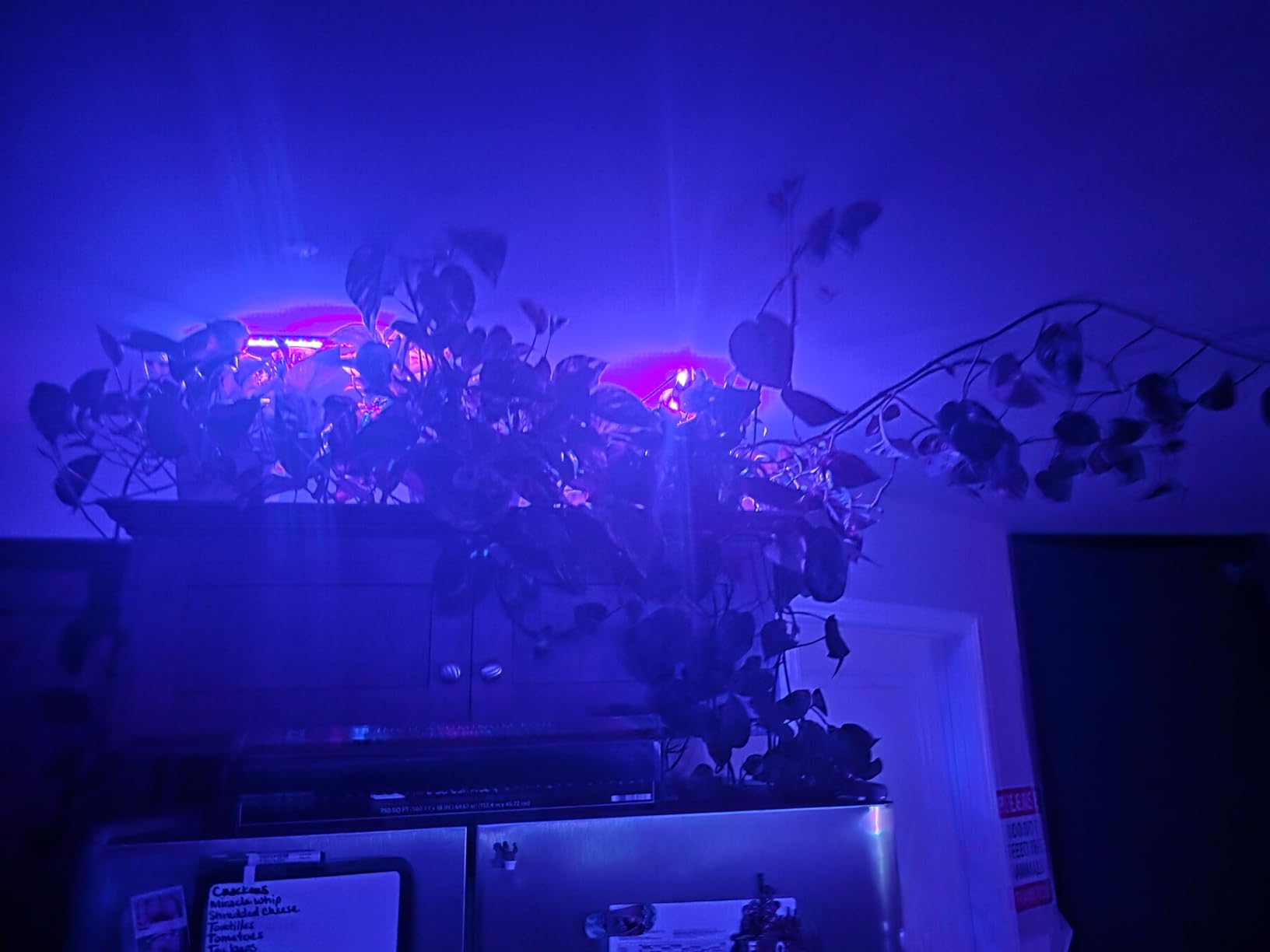
One more note on blue light: it is the reason several of the strip lights in this roundup read as purple in a dark room. That is not a defect, it is the spectrum doing its job. It only becomes a problem if you need the room to look normal at night.
How Far Above Seedlings to Hang the Light
Height is the number beginners get wrong most often, in both directions. The FECiDA in this roundup, the highest-output clip light, recommends 18 inches for seed starting, 16 inches for leaf growth, and 14 inches for flowering. Slower dimmer lights can sit 6 to 8 inches above a fresh tray.
A workable stage guide: 4 to 6 inches above a domed tray during germination, 6 to 10 inches once cotyledons open, 10 to 14 inches when the first true leaves appear, and 12 to 18 inches for seedlings approaching transplant. Raise the light about an inch every few days as growth catches up. Bars with reflectors can sit at the lower end of each range because they concentrate output downward.
Watch for light burn before you adjust anything. Bleached, curled, papery, or scorched patches on the upper leaves mean the light is too close. Pale, elongated stems reaching toward the fixture mean it is too far away. These are opposite problems with opposite fixes, and confusing the two is the single most common misdiagnosis in this category.
Photoperiod: How Many Hours a Day
Sixteen hours on and eight hours off is the standard for seedlings and gives strong growth. Twelve hours works and halves your electricity, and plenty of growers use it successfully. Leave the lights on 24 hours a day during germination, before any leaves exist, because seeds do not need a dark cycle to germinate.
Every light in this roundup has a timer except two. Where there is no built-in timer, a plug-in wall timer between the outlet and the fixture takes seconds and removes the single most common source of failed seed starts, which is forgetting to turn the light off. Several models also reset their timer memory after a power interruption, so check the setting after any outage.
Light Burn and Leggy Seedlings: Symptom to Fix
Bleached or white patches on the top leaves: the light is too close. Raise it 2 to 3 inches and check again in 48 hours. Damaged tissue will not recover, but new growth will be clean.
Curl, crisp edges, or scorched tips: intensity is too high, or airflow is too low. Raise the fixture, drop the dimmer one or two levels, and add a small fan to move air across the canopy.
Long, thin, pale stems leaning toward the light: the light is too far away, too dim, or the photoperiod is too short. Move the fixture down within the stage range above and confirm the timer is actually running 12 to 16 hours.
Bare, stretched stem with small dark leaves at the top: classic etiolation. Raise the intensity before you blame the spectrum. A dimmable light makes this a ten-second fix instead of a re-sow.
Good height but leaning consistently to one side: a directional source, not a strength problem. Rotate the tray weekly or add a second light from the opposite side, which is the most common reason growers move to a bar light once they pass a single tray.
Frequently Asked Questions
What type of light is best for growing seedlings?
A full-spectrum white LED grow light at 5000K to 6500K is the best type for seedlings, delivering roughly 200 to 400 PPFD. Seedlings need intensity, not a specific color. A clip lamp, bar light, or linkable T5 fixture all work, and the deciding factor is that you can mount it 6 to 18 inches above the tray and raise it as plants grow.
What color light is best for seedlings to grow optimally?
Blue light in the 400 to 500nm range keeps seedlings compact and prevents leggy, stretched stems, while red light in the 620 to 780nm range drives photosynthesis. For the seedling stage a white-leaning full spectrum light around 5000K to 6500K gives you both without needing to switch modes. Red becomes more important once plants enter active vegetative or flowering growth.
How many watts should a grow light be for seedlings?
Plan on 15 to 20 watts of actual draw per square foot for seedlings, rising to 25 to 30 watts per square foot for vegetative growth. A single 1020 tray is about 1.4 square feet, so a 20 to 30W fixture covers it. Two side-by-side trays need 45 to 60W, and a wide shelf rack needs a bar light per tier rather than a clip lamp.
How far should seedlings be from a LED grow light?
Start 4 to 6 inches above a domed tray during germination, move to 6 to 10 inches when cotyledons open, 10 to 14 inches at first true leaves, and 12 to 18 inches before transplant. High-output lights need more distance, so one 36W clip light in this roundup recommends 18 inches for seed starting. Raise the light about an inch every few days as growth catches up.
How long should seedlings be under grow lights per day?
Sixteen hours of light and eight hours of dark is the standard for seedlings and gives strong growth, while twelve hours works and halves electricity. Leave lights on 24 hours a day during germination before any leaves exist. Use the built-in timer, or a plug-in wall timer if your light has none, and recheck the setting after any power interruption.
Do seedlings need a grow light or is a window enough?
A sunny window is usually not enough on its own, because window light is too dim, too directional, and changes through the day. Seedlings grown in a window typically come up pale and stretched. A grow light positioned a fixed distance above the tray is the most reliable option, and it lets you raise the light at a measured rate as plants grow.
What are the best LED grow lights for seedlings?
The best LED grow lights for seedlings are the ones that mount 6 to 18 inches above a tray, run cool, and include a timer. Our top pick is the GooingTop 6000K clip lamp for its timer and firm gooseneck, the Barrina T5 four-pack is the best value for a full shelf, and the LEOTER is the only light here with ten dimming levels for controlling early growth.
Which Seedling Light Should You Buy?
If you are starting a single tray or two and want the least hassle, take the GooingTop clip lamp. It has the largest review base in the roundup, a timer that repeats daily, and a clamp that will not let go of a plant stand.
If you are building a shelf rack, the Barrina T5 four-pack covers a full tier from one power cord and carries the highest rating here. Add a plug-in wall timer and you have a complete seed station.
If you want control, the LEOTER is the one to buy. Ten dimming levels mean you can match intensity to a freshly domed tray and step up without moving the fixture.
For a desk or a single windowsill tray, the bseah dual tube light handles the job at the lowest entry point, and the RWNTAO two-head unit gives you the strongest plant response for the money. For a narrow shelf where nothing else fits, the RWNTAO 8.6-inch bars are the answer, and for the brightest single fixture by a wide margin, the FECiDA 36W clip light is hard to argue with.
Whichever you choose, size it to 15 to 20 watts per square foot, hang it 6 to 10 inches above a young tray, set the timer for 12 to 16 hours, and raise the light about an inch every few days. That routine does more for your seedlings than any amount of wattage. Check the current listings and prices for the best LED grow lights for seedlings before you order, since this category changes often.