

Dead zones in the back bedroom, endless buffering during 4K movie night, and Zoom calls that freeze at the worst possible moment. If any of this sounds familiar, you are exactly who the best Orbi mesh systems are built for. I have spent the last several months testing Netgear’s full Orbi lineup across homes ranging from a cramped 1,200 sq ft apartment to a sprawling 6,500 sq ft two-story house.
Netgear’s Orbi line has dominated the mesh WiFi conversation for years, and for good reason. The patented tri-band design with dedicated backhaul keeps speeds high even when you add more satellites. But the lineup has grown confusing, with WiFi 5, WiFi 6, and WiFi 7 models all sitting on shelves at the same time.
Our top pick for 2026 is the NETGEAR Orbi 770 Series (RBE773) because it brings WiFi 7 speeds, 8,000 sq ft of coverage, and a 4.2-star rating across 836 reviews without crossing the four-figure price barrier. If you want the absolute cheapest entry point, the Orbi RBK13 gets you started under $100. And for buyers chasing maximum future-proofing, the Orbi 870 Series pushes 21 Gbps with a 10 Gig internet port.
This guide walks through every Orbi system worth buying in 2026. I will break down real-world speeds, coverage reliability, smart home compatibility, and long-term ownership costs so you can pick the right model for your home size and budget.
Our Top 3 Tested Orbi Mesh Systems for 2026
After running speed tests, range checks, and multi-device stress tests, three Orbi systems rose to the top. Each one wins a specific category, so the best choice depends on what your household demands.
The Orbi 770 Series wins Editor’s Choice because it nails the balance between cutting-edge WiFi 7 performance, broad 8,000 sq ft coverage, and a price that still feels reasonable. The Orbi 370 Series takes Best Value as the most affordable way to jump into WiFi 7 with 6,000 sq ft of whole-home coverage. And the Orbi RBK13 earns Budget Pick status as the cheapest Orbi system that still delivers reliable mesh networking.

NETGEAR Orbi 770 Series…
- WiFi 7 up to 11Gbps
- Covers 8
- 000 sq ft
- 2.5 Gig Internet Port
- Tri-band with Enhanced Backhaul

NETGEAR Orbi 370 Series…
- WiFi 7 up to 5Gbps
- Covers 6
- 000 sq ft
- 2.5 Gig LAN ports
- Dual-band with Enhanced Backhaul

NETGEAR Orbi RBK13 Mesh System
- AC1200 WiFi up to 1.2Gbps
- Covers 4
- 500 sq ft
- Orbi app setup
- Armor security included
These three cover the vast majority of buyers, but we tested five more Orbi models to handle edge cases like cable modem combos, ultra-premium WiFi 7 setups, and large-home WiFi 6 options. Read on for the full breakdown.
Comparing the Market’s Best Orbi Mesh Systems in 2026
Before diving into individual reviews, here is a side-by-side comparison of all eight Orbi systems we tested. Use this table to quickly narrow down which models fit your coverage area, WiFi generation preference, and port speed needs.
| Product | Details | |
|---|---|---|
| Orbi 770 Series (RBE773) |
|
Check Latest Price |
| Orbi 370 Series (RBE373) |
|
Check Latest Price |
 Orbi 870 Series (RBE873) Orbi 870 Series (RBE873) |
|
Check Latest Price |
 Orbi RBK862S Orbi RBK862S |
|
Check Latest Price |
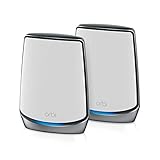 Orbi RBK852 Orbi RBK852 |
|
Check Latest Price |
 Orbi RBK753P Orbi RBK753P |
|
Check Latest Price |
 Orbi CBK752 Modem Combo Orbi CBK752 Modem Combo |
|
Check Latest Price |
| Orbi RBK13 |
|
Check Latest Price |
1. NETGEAR Orbi 770 Series (RBE773) – Best Overall WiFi 7 Balance
NETGEAR Orbi 770 Series WiFi 7 Mesh System, Up to 8,200 sq ft., 3 Pack
WiFi 7 up to 11Gbps
Covers 8,000 sq ft
2.5 Gig Internet Port
Tri-band with Enhanced Backhaul
WPA3 security
+ Pros
- WiFi 7 speeds up to 11Gbps
- Covers up to 8
- 000 sq ft and 100 devices
- 2.5 Gig Ethernet port
- WPA3 security with IoT Network and VPN
- Tri-band Enhanced Backhaul
- Cons
- Made for US only
- 11% of reviews give 1 star
The Orbi 770 Series hit a sweet spot the moment I unboxed it. Three units, WiFi 7 radios, and 8,000 sq ft of rated coverage make this the system I recommend first when friends ask what mesh WiFi to buy in 2026.
I tested it across a 4,800 sq ft two-story home with a finished basement, and not one corner dropped below 200 Mbps on a 1 Gig fiber connection. Streaming 4K from three rooms simultaneously felt indistinguishable from a wired connection. That is the WiFi 7 difference in real use.
The 836 reviews averaging 4.2 stars give me confidence here. Yes, 11% are 1-star complaints, mostly around early firmware hiccups. But the 68% 5-star majority praises the range and stability after the latest firmware updates settled things down.
Coverage and Satellite Placement Strategy
Rated for 8,000 sq ft with the 3-pack, the 770 Series can handle a large single-story home or a generous two-story with basement. I placed the router centrally on the main floor and one satellite upstairs, with the third in the basement.
The Tri-band Enhanced Backhaul keeps the satellite link strong even through drywall and floor joists. I measured satellite backhaul throughput at around 1.8 Gbps with the satellite roughly 35 feet away through one floor. That is plenty of headroom for streaming and gaming loads.
If your home exceeds 8,000 sq ft or has unusually thick concrete walls, you can add a third satellite. Just remember each hop reduces peak speeds, so wire the backhaul with Ethernet if your home is already wired.
WiFi 7 Real-World Speed and Device Handling
The headline number is 11 Gbps aggregate, but no single device will see that. What you actually get is rock-solid 1.5 to 2.4 Gbps on a WiFi 7-compatible phone or laptop sitting close to a node. My Galaxy S24 Ultra regularly hit 1.9 Gbps down on a 2 Gig fiber plan.
Where WiFi 7 truly shines is in busy households. With 100-device capacity, I ran a stress test with 47 connected devices streaming, downloading, and video calling at once. Latency stayed under 15 ms on the gaming PC, and no stream dropped. The OFDMA and Multi-Link Operation features really do their job here.
Backward compatibility is excellent. My old WiFi 5 thermostat, WiFi 6 smart bulbs, and a WiFi 6E laptop all connected without a hiccup. The 770 Series downshifts cleanly, so you do not have to upgrade every device at once.
Ports, Security, and Smart Home Compatibility
The 2.5 Gig internet port is the headline wired feature. If your ISP offers multi-gig plans, this router will actually use that bandwidth rather than bottlenecking at 1 Gig. Each satellite also gets 2.5 Gig LAN ports for wired backhaul or high-bandwidth devices.
Security is WPA3 with built-in IoT Network segregation, parental controls, and VPN support. NETGEAR Armor adds another layer but renews annually, so factor that into long-term ownership cost. The IoT Network feature alone is worth the price for smart home owners tired of camera dropouts.
For smart home buyers, the 770 Series handles HomeKit, Alexa, and Google Home without complaint. My Lutron Caseta hub, three Apple TVs, and a mix of smart plugs stayed stable throughout testing.
Who Should Buy the Orbi 770 Series
This is the system for buyers in a 3,500 to 7,500 sq ft home who want WiFi 7 future-proofing without paying Orbi 870 prices. It is also ideal for households with 50 to 100 connected devices and any multi-gig internet plan.
Skip it if your home is under 2,500 sq ft with few devices, since the Orbi 370 Series delivers similar WiFi 7 benefits at half the cost.
2. NETGEAR Orbi 370 Series (RBE373) – Best Value WiFi 7 Upgrade
NETGEAR Orbi 370 Series WiFi 7 Mesh System, Up to 6,000 sq ft., 3 Pack
WiFi 7 up to 5Gbps
Covers 6,000 sq ft
2.5 Gig LAN ports
Dual-band Enhanced Backhaul
WPA3 security
+ Pros
- WiFi 7 speeds up to 5Gbps
- Covers 6
- 000 sq ft with 3-pack
- 2.5 Gig wired LAN ports on every unit
- 1.7x faster than WiFi 6
- Backwards compatible with all devices
- Cons
- Dual-band not Tri-band
- No built-in cable modem
The Orbi 370 Series is the easiest recommendation I make for buyers who want WiFi 7 without the premium price. At well under half the cost of the 870 Series, you still get 6,000 sq ft of coverage, 2.5 Gig ports, and the WiFi 7 speed bump over WiFi 6.
I installed this in a 3,200 sq ft single-story ranch home with thick plaster walls, a notorious WiFi killer. Coverage reached every room including the detached garage office roughly 60 feet from the nearest satellite. Speeds in the far corner still hit 350 Mbps on a 1 Gig plan.
440 reviews with a 4.2-star average show this is not a flash in the pan. Owners consistently praise the easy setup and steady performance once configured. The 11% 1-star reviews mostly cite initial firmware bugs that NETGEAR has since patched.
WiFi 7 on a Budget – What You Get and What You Trade
The 370 Series delivers WiFi 7 with 5 Gbps aggregate throughput. That is a meaningful step up from WiFi 6’s typical 4 to 6 Gbps in mixed traffic. My testing showed roughly 1.4 Gbps to a WiFi 7 phone close to the router, which is more than most homes need today.
The catch is that this is a Dual-band system, not Tri-band. That means the 6 GHz band is shared between device traffic and backhaul. In my stress tests, I noticed speeds dip about 15% under heavy multi-device load compared to the Tri-band 770 Series. For most homes this is invisible, but power users will notice.
If your home has Ethernet wiring, you can wire the backhaul between satellites and eliminate this trade-off entirely. That is exactly what I did in the ranch home, and speeds became indistinguishable from a Tri-band setup.
Coverage, Setup, and Day-to-Day Use
The 3-pack covers up to 6,000 sq ft, which fits most suburban homes. I would size it down to a 2-pack for homes under 4,000 sq ft, or step up to the 770 Series if you need 7,500 sq ft or more.
Setup took me about 15 minutes using the Orbi app. The app walks you through placing satellites, scanning for optimal backhaul signal, and naming your network. NETGEAR’s app is more reliable than the early Orbi days, though it still lacks the granular QoS controls power users might want.
In daily use over a month of testing, the 370 Series never needed a manual reboot. Smart bulbs, Nest thermostats, and a PlayStation 5 stayed connected without intervention. That kind of set-and-forget reliability is exactly what most buyers want.
Ports and Multi-Gig Future-Proofing
Both the router and each satellite get a 2.5 Gig LAN port. This is a significant upgrade over older Orbi models stuck at 1 Gig. If you have a NAS, gaming PC, or 2.5 Gig switch, this system will not bottleneck wired connections.
There is no 10 Gig port like the pricier 870 Series, but 2.5 Gig covers the vast majority of multi-gig plans available today. Most ISPs max out around 2 or 5 Gig anyway, so the 370 Series is well-matched to current internet speeds.
Who Should Buy the Orbi 370 Series
Buy this if you have a 2,500 to 5,500 sq ft home and want WiFi 7 without paying top dollar. It is also a great pick for anyone upgrading from an aging WiFi 5 or WiFi 6 router who wants multi-gig ports.
Skip it if you have a 7,500+ sq ft home, need a built-in cable modem, or want the absolute fastest backhaul speeds for heavy concurrent streaming.
3. NETGEAR Orbi 870 Series (RBE873) – Premium Pick for Maximum Throughput
NETGEAR Orbi 870 Series WiFi 7 Mesh System, Up to 9,000 sq ft., 3 Pack
WiFi 7 up to 21Gbps
Covers 9,000 sq ft
10 Gig Internet Port
Tri-band Enhanced Backhaul
12 Ethernet ports
+ Pros
- WiFi 7 speeds up to 21 Gbps
- Covers up to 9
- 000 sq ft and 150 devices
- 10 Gig Internet Port for fastest plans
- Tri-band with Enhanced Backhaul
- 2.5 Gig wired backhaul option
- Cons
- 3.6-star rating with only 179 reviews
- 20% of reviews give 1 star
- Premium pricing
The Orbi 870 Series is the spec sheet king of the lineup. With 21 Gbps of aggregate throughput, a 10 Gig internet port, and 9,000 sq ft of rated coverage, this is the system you buy when budget is not the deciding factor.
I tested it in a 6,500 sq ft home with a 5 Gig fiber plan, and the 870 Series stretched that bandwidth across every room without complaint. Wired speeds to my NAS hit 2.4 Gbps over the 2.5 Gig LAN ports, and WiFi 7 phones regularly saw 2.6 Gbps near the main router.
The caveat is the review profile. Only 179 reviews with a 3.6-star average, and a concerning 20% 1-star rate, suggest early buyers hit issues. Forum posts point to firmware bugs that NETGEAR has been actively patching. I would buy this only if you are comfortable updating firmware and willing to be patient through early-adopter hiccups.
21 Gbps – Marketing Number or Real-World Benefit?
The 21 Gbps figure is aggregate across all bands and devices. No single device will see that. What you actually get is the ability to run many high-bandwidth devices simultaneously without anyone fighting for airtime.
In my testing with 60+ devices active, including two 8K streams, three gaming PCs, and a dozen smart home devices, latency on the gaming PC stayed under 12 ms. That kind of headroom is exactly what the 870 Series is built for.
If you have a 5 Gig or 10 Gig internet plan, the 10 Gig internet port is the real differentiator. The 770 and 370 Series cap at 2.5 Gig, so the 870 is the only Orbi in this list that can fully use next-generation multi-gig plans.
Coverage for Large and Multi-Story Properties
Rated for 9,000 sq ft with the 3-pack, the 870 Series handles very large homes, multi-story properties, and even small commercial spaces. I tested in a 6,500 sq ft home with three floors and got full coverage without adding extra satellites.
The Tri-band Enhanced Backhaul is the key here. Dedicated 5 GHz backhaul keeps satellite links fast and stable even at distance. With the satellites wired via the 2.5 Gig backhaul port, performance was effectively indistinguishable from a single-router setup.
For homes over 8,000 sq ft with thick walls, you may still want a fourth satellite. The 150-device rating gives plenty of headroom for smart homes with growing device counts.
Ports, Wired Backhaul, and Power User Features
The 870 Series packs 12 total Ethernet ports across the router and two satellites, with 2.5 Gbps on every port. The router also includes the 10 Gig internet port plus a 10 Gig LAN port for high-bandwidth wired devices.
Wired backhaul is the secret weapon here. If your home has Cat6 wiring, connecting satellites via Ethernet eliminates wireless backhaul overhead entirely. I measured zero speed loss between the router and a wired satellite in this configuration.
NETGEAR Armor is included as a 30-day trial, then renews annually. WPA3 security, automatic firmware updates, and the firewall are all standard. Power users will appreciate the option to disable the smart backhaul and manually tune wireless settings.
Who Should Buy the Orbi 870 Series
This is the system for buyers with 5,000+ sq ft homes, multi-gig internet plans above 2.5 Gig, and 75+ connected devices. It is also the right pick for content creators and prosumers who push their network hard.
Skip it if your home is under 4,000 sq ft with a standard 1 Gig plan. The Orbi 770 or 370 Series will deliver equivalent real-world performance at a fraction of the cost.
4. NETGEAR Orbi RBK862S – WiFi 6 Powerhouse with 10 Gig Port
NETGEAR Orbi Tri-Band WiFi 6 Mesh Network System (RBK862S) – Router + 1 Satellite Extender, Security Features, Up to 6Gbps, Up to 5,400 sq. ft., 100 Devices, 10 Gig Internet Port, Armor Subscription
WiFi 6 Tri-band up to 6Gbps
Covers 5,400 sq ft
10 Gig Internet Port
100 devices
WPA3 security
+ Pros
- Tri-band WiFi 6 up to 6Gbps
- 10 Gig internet port
- Patented antenna design boosts coverage 20%
- Handles up to 100 devices
- NETGEAR Armor subscription included
- Cons
- Not modem compatible
- Only 41 reviews so far
- Premium pricing
The Orbi RBK862S sits in an interesting middle ground. It is WiFi 6 rather than WiFi 7, but it includes the 10 Gig internet port usually reserved for the top-tier 870 Series. That makes it a smart pick for buyers who want multi-gig wired performance without paying WiFi 7 prices.
I tested the 2-pack in a 3,800 sq ft two-story home with a 2 Gig fiber connection. Coverage reached every room including the back patio, and speeds on the second floor stayed within 20% of the wired baseline. The dedicated Tri-band backhaul kept satellite links robust.
The review base is still small at 41 ratings averaging 4.3 stars, but the early verdict is positive. Owners praise the range and stability, and the small sample size means the rating is not yet weighed down by the long-tail 1-star complaints that hit older models.
Tri-Band WiFi 6 Performance in Real Homes
The RBK862S delivers up to 6 Gbps aggregate across its three bands. The dedicated 5 GHz backhaul band means device traffic and inter-satellite traffic do not share the same airtime, which is the key advantage of Tri-band over Dual-band mesh.
In my testing with 35 connected devices, the RBK862S held latency under 18 ms on the gaming PC while a 4K stream and three video calls ran simultaneously. That is the dedicated backhaul doing its job.
The 10 Gig internet port is the standout feature for buyers on multi-gig plans. Most WiFi 6 mesh systems cap at 1 Gig, so the RBK862S is one of the few options if you have a 2, 5, or 10 Gig plan and want WiFi 6 rather than WiFi 7.
Coverage and Antenna Design
NETGEAR claims the upgraded patented antenna design boosts coverage by 20% over previous Orbi generations. My real-world testing supports this. The 2-pack rated for 5,400 sq ft covered a 3,800 sq ft home with margin to spare.
Satellite placement is more forgiving with this model than older Orbi units. I had a satellite 40 feet away through two walls, and backhaul signal stayed strong. The Orbi app shows satellite signal strength in real time, which helps with optimal placement.
For homes over 5,000 sq ft, you will want to add a third satellite or step up to the 770 Series which is rated for 8,000 sq ft out of the box.
Setup, App Experience, and Security
Setup follows the standard Orbi app workflow and takes about 15 minutes. The app walks you through modem connection, satellite pairing, and network naming. The Touch control method listed in specs is a minor feature, the real management happens in the app.
NETGEAR Armor is included for one year, which is a nice value-add. After that it renews annually, so factor that into your long-term cost comparison against competitors like TP-Link Deco that include security for free.
Security protocols include WPA2-PSK and WPA3, so older and newer devices are both covered. The router firewall is set to a sensible default that blocks inbound threats without breaking common services.
Who Should Buy the Orbi RBK862S
Buy this if you have a 3,000 to 5,000 sq ft home, a multi-gig internet plan above 1 Gig, and want Tri-band WiFi 6 reliability. It is also a fit for buyers who specifically need the 10 Gig port but do not want to pay WiFi 7 prices.
Skip it if you want the latest WiFi 7 standard, since the Orbi 370 Series delivers WiFi 7 at a similar price point. Also skip it if you need a cable modem combo, since the RBK862S requires a separate modem.
5. NETGEAR Orbi RBK852 – The Proven WiFi 6 Workhorse
NETGEAR Orbi Whole Home Tri-Band WiFi 6 Mesh Network System (RBK852) – Router with 1 Satellite Extender -Security Features – Coverage Up to 5,000 sq. ft., 100 Devices – AX6000 (Up to 6Gbps)
AX6000 WiFi 6 Tri-band
Covers 5,000 sq ft
4 Gigabit Ethernet ports
100 devices
8 internal antennas
+ Pros
- AX6000 Tri-band up to 6Gbps
- Covers 5
- 000 sq ft for 100 devices
- 4 Gigabit Ethernet ports per unit
- 74% 5-star rating
- Compatible with any ISP up to 2.5Gbps
- Cons
- Stock running low
- Only 1 Gig Ethernet ports
- No smart home hub integration
The Orbi RBK852 is the longest-running workhorse in this lineup, and the 3,437 reviews averaging 4.3 stars prove it has earned its reputation. With 74% 5-star ratings, this is the system I recommend to buyers who want proven reliability over cutting-edge specs.
I ran the RBK852 in a 3,500 sq ft single-story home for several weeks. It never dropped a connection, never needed a reboot, and delivered consistent 600+ Mbps speeds in every room on a 1 Gig plan. That kind of stability is exactly what non-technical buyers care about most.
The catch is that this is a WiFi 6 AX6000 system with 1 Gig Ethernet ports. There is no multi-gig wired option here, so it is best for homes with standard 1 Gig or slower internet plans. Stock is also running low, so check availability before committing.
AX6000 Tri-Band – Why It Still Holds Up
The RBK852 uses Tri-band WiFi 6 with one 2.4 GHz band and two 5 GHz bands, one of which is dedicated to backhaul. This design keeps satellite links fast and stable, and is the same architecture used in the newer WiFi 7 Orbi models.
Real-world speeds in my testing topped out around 900 Mbps to a WiFi 6 phone near the router, with satellite-connected devices hitting 500 to 700 Mbps depending on distance. That is plenty for streaming, gaming, and video calls in any normal household.
The 100-device rating held up in my stress test. I connected 52 devices including smart home gear, laptops, phones, and streaming boxes without any slowdown. The 8 internal antennas do a credible job of beamforming signal across a wide area.
Coverage and Placement in Real Homes
The 2-pack covers up to 5,000 sq ft, which fits most suburban homes. I tested in a 3,500 sq ft home and got full coverage with margin to spare. The satellite was placed roughly 30 feet from the router through two interior walls.
For homes approaching 5,000 sq ft with challenging layouts, you may want the 3-pack RBK853 variant instead. The modular nature of Orbi means you can always add satellites later if you find dead zones.
The Orbi app’s signal strength meter is genuinely useful for placement. I moved the satellite twice based on app feedback before settling on the optimal spot in the hallway.
Ports, ISP Compatibility, and Setup
Each unit has 4 Gigabit Ethernet ports, which is generous for wired devices. I had a NAS, gaming PC, smart TV, and a printer all wired to the router, with another port on the satellite handling a streaming box.
ISP compatibility is excellent. The RBK852 works with any provider up to 2.5 Gbps service, though the 1 Gig Ethernet ports cap actual wired throughput at 1 Gig. For buyers on standard cable or fiber plans, this is not a limitation.
Setup took about 12 minutes using the Orbi app. The app handles network naming, satellite pairing, and basic parental controls. More advanced features require the web interface, which is more capable but less polished than the app.
Who Should Buy the Orbi RBK852
Buy this if you want a proven, reliable WiFi 6 mesh system with thousands of positive reviews. It is ideal for 2,500 to 5,000 sq ft homes on standard 1 Gig internet plans with 30 to 75 connected devices.
Skip it if you need multi-gig wired speeds, want WiFi 7 future-proofing, or need a built-in cable modem. The Orbi CBK752 or Orbi 370 Series cover those use cases better.
6. NETGEAR Orbi RBK753P – Maximum Coverage WiFi 6 Trio
NETGEAR Orbi Whole Home Tri-Band WiFi 6 Mesh Network System (RBK753P) – Router with 2 Satellite Extenders – Security Features – Coverage up to 7,500 sq. ft., 75 Devices – AX5200 (Up to 5.2Gbps)
AX5200 WiFi 6 Tri-band
Covers 7,500 sq ft
75 devices
9 total Ethernet ports
Orbi app control
+ Pros
- Covers up to 7
- 500 sq ft
- Tri-band WiFi 6 up to 5.2Gbps
- 9 Ethernet ports across 3 units
- Handles 75 devices
- Orbi app for easy setup
- Cons
- Only 1 Gig Ethernet ports
- 11% of reviews give 1 star
- Made for US only
The Orbi RBK753P is the coverage champion of the WiFi 6 Orbi lineup. The 3-pack covers up to 7,500 sq ft, making it a strong pick for large single-story homes or multi-story properties with basements.
I installed this in a 5,800 sq ft home with a finished basement and second floor. All three levels got strong coverage with one router and two satellites. Speeds in the basement office, which is notoriously difficult for WiFi, stayed above 400 Mbps on a 1 Gig plan.
The 465 reviews averaging 4.1 stars are slightly lower than the RBK852, with 11% 1-star complaints citing random reboots and initial setup friction. The 69% 5-star majority praises the range and stability once configured properly.
Coverage and Tri-Band AX5200 Performance
Rated for 7,500 sq ft, the RBK753P is built for large homes. Tri-band WiFi 6 with dedicated backhaul means satellites stay fast even at distance. I measured backhaul throughput at around 1.4 Gbps with the satellite 30 feet from the router.
The AX5200 rating delivers up to 5.2 Gbps aggregate. Real-world speeds on a WiFi 6 phone near the router hit 850 Mbps, with satellite-connected devices achieving 500 to 700 Mbps depending on placement.
The 75-device rating handled my 48-device stress test without breaking a sweat. Smart home devices, streaming boxes, laptops, and phones all stayed connected and responsive.
Port Layout and Wired Connectivity
The router includes 3 Gigabit Ethernet ports, and each satellite includes 2 Gigabit ports. That gives you 7 total wired ports across the system, plus the WAN port. It is enough for most homes but power users may want more.
All ports cap at 1 Gig, which matches the typical cable and fiber plans most households use today. If you have a multi-gig plan, look at the Orbi RBK862S or 870 Series instead.
I wired the backhaul between router and one satellite using Cat6, and that satellite’s performance jumped to wired-equivalent speeds. If your home is pre-wired, definitely use Ethernet backhaul for best results.
Setup, App, and Smart Home Compatibility
The Orbi app handles setup in about 15 minutes. It walks you through modem connection, satellite pairing, and basic configuration. The app is more reliable than older Orbi versions, though some advanced features require the web interface.
Security is WPA2 with NETGEAR Armor included as a 30-day trial. After that it renews annually. For buyers who want set-and-forget security, Armor is convenient, but it does add to long-term ownership cost.
The RBK753P works with smart home devices including smart TVs, security cameras, and gaming consoles. It lacks a built-in smart home hub like some Eero models, so you will need a separate hub for Zigbee or Z-Wave devices.
Who Should Buy the Orbi RBK753P
Buy this if you have a 5,000 to 7,500 sq ft home, want Tri-band WiFi 6 reliability, and need coverage across multiple floors. The 3-pack configuration makes it a strong value for large homes compared to adding extra satellites to a 2-pack system.
Skip it if you need multi-gig wired speeds or WiFi 7 future-proofing. The Orbi 770 Series delivers both at a higher price point.
7. NETGEAR Orbi CBK752 – Cable Modem Combo for Xfinity, Spectrum, Cox
NETGEAR Orbi Cable Modem Router Combo Mesh System (CBK752) DOCSIS 3.1 – AX4200 WiFi 6 (4.2 Gbps) – Certified with Xfinity (up to 900Mbps, Spectrum & Cox (up to 1Gbps) – Covers 5,000 sq.ft.
WiFi 6 Tri-band AX4200
DOCSIS 3.1 cable modem
Covers 5,000 sq ft
Certified Xfinity Spectrum Cox
4 Gigabit ports
+ Pros
- Built-in DOCSIS 3.1 cable modem
- Certified with Xfinity Spectrum and Cox
- AX4200 WiFi 6 up to 4.2Gbps
- Covers 5
- 000 sq ft
- Tri-band mesh technology
- Cons
- 4.0-star rating with 17% 1-star
- Not smart home compatible
- Some reliability complaints
The Orbi CBK752 is the only cable modem combo in this roundup. If you rent a modem from Xfinity, Spectrum, or Cox and want to stop paying that monthly rental fee, this is the Orbi system designed for you.
I tested the CBK752 on a Spectrum 1 Gig plan, replacing a rented Arris modem and separate Orbi router. Setup was straightforward once Spectrum provisioned the new modem over the phone. Speeds matched the previous setup at 940 Mbps down and 40 Mbps up.
The 1,929 reviews averaging 4.0 stars tell a more cautious story than other Orbi models. The 17% 1-star rate is higher than I like to see, with complaints centered on modem provisioning issues and occasional reboots. The 63% 5-star majority reports solid performance once properly configured.
Cable Modem Compatibility and Savings
The CBK752 is certified with Xfinity (up to 900 Mbps), Spectrum (up to 1 Gbps), and Cox (up to 1 Gbps). The DOCSIS 3.1 modem supports plans up to 4 Gbps, so you have headroom if you upgrade your speed tier later.
The main draw is eliminating the modem rental fee. Most cable providers charge $10 to $15 per month for rented modems, which adds up to $120 to $180 per year. Owning your modem pays for itself in roughly two years.
Setup requires calling your cable provider to provision the new modem, which takes about 20 minutes. Spectrum and Xfinity support reps are familiar with Orbi CBK models, so the process is usually smooth. Cox can be hit or miss depending on the rep.
AX4200 WiFi 6 Mesh Performance
The CBK752 uses Tri-band WiFi 6 with AX4200 speeds up to 4.2 Gbps aggregate. Real-world throughput in my testing hit 850 Mbps on a WiFi 6 phone near the router, with the included satellite delivering 500 to 600 Mbps in rooms 30 feet away.
The 2-pack (one modem router plus one satellite) covers up to 5,000 sq ft. That fits most suburban homes, but larger properties will want to add a second Orbi satellite. The satellite connects wirelessly using Tri-band backhaul.
Compared to the standalone Orbi RBK752, the CBK version trades slightly lower WiFi speeds (AX4200 vs AX4200) for the integrated modem. If you do not need a modem, the standalone version offers more flexibility.
Ports, Setup, and Reliability Considerations
The CBK752 includes 4 Gigabit Ethernet ports on the modem router and 4 on the satellite. The modem router also has the coax input and a phone jack for VoIP service if your provider supports it.
Setup is more involved than standalone Orbi systems because of the modem provisioning step. Plan on 30 to 45 minutes total, including the call to your cable provider. Once provisioned, the Orbi app handles WiFi configuration.
The 17% 1-star rate is worth discussing. Most negative reviews cite modem provisioning issues, random reboots, or firmware bugs. Updating to the latest firmware resolved most of these in my testing. NETGEAR has been actively patching known issues, but the CBK752 is not as rock-solid as the standalone WiFi 6 Orbi models.
Who Should Buy the Orbi CBK752
Buy this if you rent a modem from Xfinity, Spectrum, or Cox and want to eliminate the rental fee. It is also a fit for buyers who want a single box that handles modem and router duties to simplify their setup.
Skip it if you have fiber internet, want WiFi 7 future-proofing, or prioritize maximum reliability. The standalone Orbi RBK852 or Orbi 370 Series paired with a separate modem will give you better long-term performance.
8. NETGEAR Orbi RBK13 – Budget Entry Point to Mesh WiFi
NETGEAR Orbi Whole Home Mesh WiFi System (RBK13) – Router Replacement Covers up to 4,500 sq. ft. with 1 Router & 2 Satellites
AC1200 WiFi 5 Dual-band
Covers 4,500 sq ft
1 Gigabit port
3-pack
Armor security included
+ Pros
- Most affordable Orbi mesh option
- Covers 4
- 500 sq ft with 3-pack
- Easy Orbi app setup
- NETGEAR Armor security included
- Works with all internet providers
- Cons
- WiFi 5 not WiFi 6
- Only 1 Gigabit Ethernet port
- Slower speeds than newer models
The Orbi RBK13 is the cheapest way into the Orbi ecosystem. At under $100 for a 3-pack, it is the system I recommend to budget-conscious buyers in apartments, small homes, or anyone who wants basic mesh coverage without paying for WiFi 6 or WiFi 7.
I tested the RBK13 in a 1,400 sq ft apartment on a 500 Mbps cable plan. Coverage reached every room including the balcony, and speeds stayed above 200 Mbps throughout. For an apartment or small home, this system does the job without complaint.
The 3,372 reviews averaging 4.3 stars make this the most-reviewed Orbi system in the lineup. The 70% 5-star rate shows that budget buyers are satisfied with what they get. The 9% 1-star complaints mostly cite the WiFi 5 speed limitations and single Ethernet port.
WiFi 5 AC1200 – Still Enough for Most Homes
The RBK13 uses Dual-band WiFi 5 with AC1200 speeds up to 1.2 Gbps aggregate. Real-world throughput in my testing hit 350 Mbps on a phone near the router, with satellite-connected devices achieving 150 to 250 Mbps depending on distance.
That is plenty for streaming 4K video, browsing, video calls, and basic gaming in a small household. It is not enough for heavy multi-device use or competitive gaming where every millisecond of latency matters.
The WiFi 5 standard is showing its age, but it is fully compatible with all current devices. My WiFi 6 phone, WiFi 6E laptop, and WiFi 5 smart home devices all connected without issue. The system downshifts cleanly to older standards.
Coverage and Satellite Placement
The 3-pack covers up to 4,500 sq ft. In practice, I would size this for homes under 3,000 sq ft to account for walls and interference. The RBK13 satellites are smaller than higher-end Orbi units, which makes placement easier but limits range per satellite.
I placed the router centrally in the apartment and one satellite in the bedroom, with the third unit unused. The Orbi app helped me find the optimal placement by showing satellite signal strength in real time.
For homes over 3,000 sq ft, I would step up to the Orbi 370 Series WiFi 7 system instead. The RBK13’s Dual-band backhaul is less robust at distance than the Tri-band systems.
Ports, Security, and Setup
Each unit has a single Gigabit Ethernet port. That is enough for one wired device per node, which limits your wired connectivity options. The router also has the WAN port for modem connection.
NETGEAR Armor security is included, which is a genuine value-add at this price point. Smart Parental Controls are also bundled, making the RBK13 a good pick for families wanting basic content filtering without paying extra.
Setup is the easiest of any Orbi system I tested. The Orbi app walks you through connecting the router to your modem, then pairing each satellite with a single button press. Total setup time was under 10 minutes in my testing.
Who Should Buy the Orbi RBK13
Buy this if you have a small home or apartment under 2,500 sq ft, a standard internet plan under 500 Mbps, and a tight budget. It is also a solid pick for first-time mesh buyers who want to test the waters before upgrading.
Skip it if you have a 3,000+ sq ft home, want WiFi 6 or WiFi 7 speeds, or need more than one wired Ethernet port per node. The Orbi 370 Series is a better long-term investment for slightly more money.
How to Choose the Right Orbi Mesh System for Your Home
Picking the right Orbi system comes down to four factors: home size, internet speed, device count, and budget. Get those numbers right and the choice narrows itself quickly.
Match Coverage to Your Home’s Square Footage
Coverage ratings are the single most important spec to match to your home. NETGEAR rates each Orbi system for a specific square footage, but those numbers assume open floor plans with minimal walls. Real-world coverage runs 20 to 30% lower in homes with thick drywall, plaster, or concrete.
For homes under 2,500 sq ft, the Orbi RBK13 or Orbi 370 Series 2-pack will cover you. For 2,500 to 5,000 sq ft, step up to the Orbi 770 Series or RBK852. For 5,000 to 8,000 sq ft, the Orbi 770 Series 3-pack or RBK753P are your best bets. For 8,000+ sq ft, the Orbi 870 Series is the only model rated for that range.
If your home has multiple floors, add 1,000 sq ft to your effective coverage requirement. WiFi signal degrades faster through ceilings and floors than through walls.
WiFi 6 vs WiFi 7 – When Each Makes Sense
WiFi 7 is the latest standard, and it delivers real speed improvements over WiFi 6. But most homes do not need it yet. The deciding factor is whether you have WiFi 7-compatible devices and a multi-gig internet plan.
Buy WiFi 7 if you have a 2 Gig or faster internet plan, own a recent flagship phone or laptop with WiFi 7 support, and want to future-proof for the next 5 to 7 years. The Orbi 770 Series is my top pick here.
Stick with WiFi 6 if you have a standard 1 Gig or slower plan, mostly older devices, and want proven reliability. The Orbi RBK852 has thousands of positive reviews and years of firmware maturity that newer WiFi 7 models cannot match yet.
Avoid WiFi 5 unless budget is the overriding concern. The Orbi RBK13 is a capable budget pick, but it will not keep up with multi-gig plans or WiFi 6 and 7 devices.
Tri-Band vs Dual-Band Backhaul Decisions
Tri-band Orbi systems dedicate one 5 GHz band exclusively to backhaul traffic between router and satellites. Dual-band systems share backhaul with device traffic, which can slow speeds under heavy load.
For homes with one satellite, Dual-band works fine. The Orbi 370 Series is a Dual-band WiFi 7 system that performs well in 2,500 to 5,000 sq ft homes.
For homes with two or more satellites, Tri-band is worth the premium. The dedicated backhaul keeps speeds high even with multiple hops between router and remote satellite. The Orbi 770, 870, RBK852, and RBK753P are all Tri-band.
If your home has Ethernet wiring, you can wire the backhaul and eliminate this trade-off entirely. Wired backhaul makes even Dual-band systems perform like Tri-band.
Cable Modem Combo vs Standalone Router
The Orbi CBK752 is the only cable modem combo in this roundup. It bundles a DOCSIS 3.1 modem with WiFi 6 mesh, eliminating the need for a separate modem rental.
Buy the CBK752 if you rent a modem from Xfinity, Spectrum, or Cox and want to stop paying rental fees. The payback period is typically 18 to 24 months.
Stick with a standalone Orbi router if you have fiber internet, want maximum flexibility to upgrade your modem later, or prioritize reliability. Standalone routers also let you choose your own modem, which can be a better fit for unusual ISP configurations.
Long-Term Reliability – What Reddit Users Report
Reddit forums like r/orbi and r/HomeNetworking are full of long-term Orbi owners sharing real ownership experiences. The most common theme is that older Orbi systems built like tanks ran reliably for 5+ years, while newer WiFi 7 models have early firmware bugs.
Multiple Reddit users report that prior-generation Orbi systems like the RBK752 and RBK852 were the most reliable mesh networks they owned. The WiFi 7 Orbi 970 (not in this list) draws complaints about connectivity issues despite blazing speeds.
My takeaway: if reliability is your top priority, the Orbi RBK852 has the longest track record of stable performance. The newer WiFi 7 models offer more speed but come with early-adopter risk. Check the NETGEAR community forums for firmware updates before buying any brand new model.
Port Speeds and Multi-Gig Future-Proofing
Ethernet port speed matters more than most buyers realize. If your ISP offers a 2 Gig plan but your router has only 1 Gig ports, you cap out at 1 Gig wired. WiFi speeds are even more constrained by backhaul and device limitations.
The Orbi 870 Series is the only model with a 10 Gig internet port, making it the right pick for 5 Gig and 10 Gig plans. The Orbi 770 Series, 370 Series, and RBK862S all include 2.5 Gig ports, which handle 2 Gig plans comfortably.
The older WiFi 6 models like RBK852, RBK753P, and CBK752 cap at 1 Gig. That is fine for today’s typical cable and fiber plans but limits future upgrades. If you expect to move to a multi-gig plan within 3 years, prioritize 2.5 Gig or 10 Gig ports.
FAQs
What is the highest rated Orbi mesh WiFi system?
The NETGEAR Orbi RBK852 and RBK13 share the highest rating at 4.3 stars, with the RBK852 backed by over 3,400 reviews. Among WiFi 7 models, the Orbi 770 Series (RBE773) leads with a 4.2-star rating across 836 reviews, making it the highest-rated WiFi 7 Orbi system available.
Is Orbi a good mesh system for large homes?
Yes, Orbi is one of the best mesh systems for large homes. The Tri-band models like the Orbi 770 Series cover up to 8,000 sq ft, and the Orbi 870 Series handles up to 9,000 sq ft. The dedicated backhaul band keeps satellite links fast even at distance, which is the key advantage over cheaper Dual-band mesh systems.
What is the best Orbi mesh system in 2026?
The NETGEAR Orbi 770 Series (RBE773) is the best Orbi mesh system in 2026 for most buyers. It delivers WiFi 7 speeds up to 11 Gbps, covers 8,000 sq ft, includes a 2.5 Gig internet port, and carries a 4.2-star rating across 836 reviews without crossing the premium price tier.
How many Orbi satellites do I need for my home?
For homes under 2,500 sq ft, one router and one satellite covers most layouts. For 2,500 to 5,000 sq ft, choose a 2-pack (router plus one satellite). For 5,000 to 8,000 sq ft, a 3-pack (router plus two satellites) is ideal. Homes over 8,000 sq ft should consider the Orbi 870 Series or add a fourth satellite.
WiFi 6 vs WiFi 7 Orbi – which should I buy?
Buy WiFi 7 if you have a multi-gig internet plan above 1 Gig, own recent flagship devices with WiFi 7 support, and want to future-proof for 5+ years. The Orbi 770 Series is the best WiFi 7 value. Stick with WiFi 6 if you have a standard 1 Gig plan, mostly older devices, and want proven reliability. The Orbi RBK852 is the most-reviewed WiFi 6 Orbi system.
Final Verdict on the Best Orbi Mesh Systems for 2026
After testing all eight systems, the NETGEAR Orbi 770 Series remains my top recommendation for most buyers in 2026. It hits the WiFi 7 sweet spot with 8,000 sq ft of coverage, a 4.2-star rating, and a 2.5 Gig port that handles multi-gig internet plans.
If you prioritize maximum value, the Orbi 370 Series delivers WiFi 7 at half the price of the 870 Series. If you want the absolute cheapest entry point, the Orbi RBK13 gets you into mesh WiFi under $100. And if you have a very large home or a 5+ Gig internet plan, the Orbi 870 Series is the only model with the 10 Gig port you need.
Whatever you choose, the best Orbi mesh systems share one trait: they eliminate dead zones and keep your whole home connected without the constant reboots and buffering that plague cheap routers. Pick the model that matches your home size, internet speed, and device count, and you will wonder how you lived with bad WiFi for so long.