
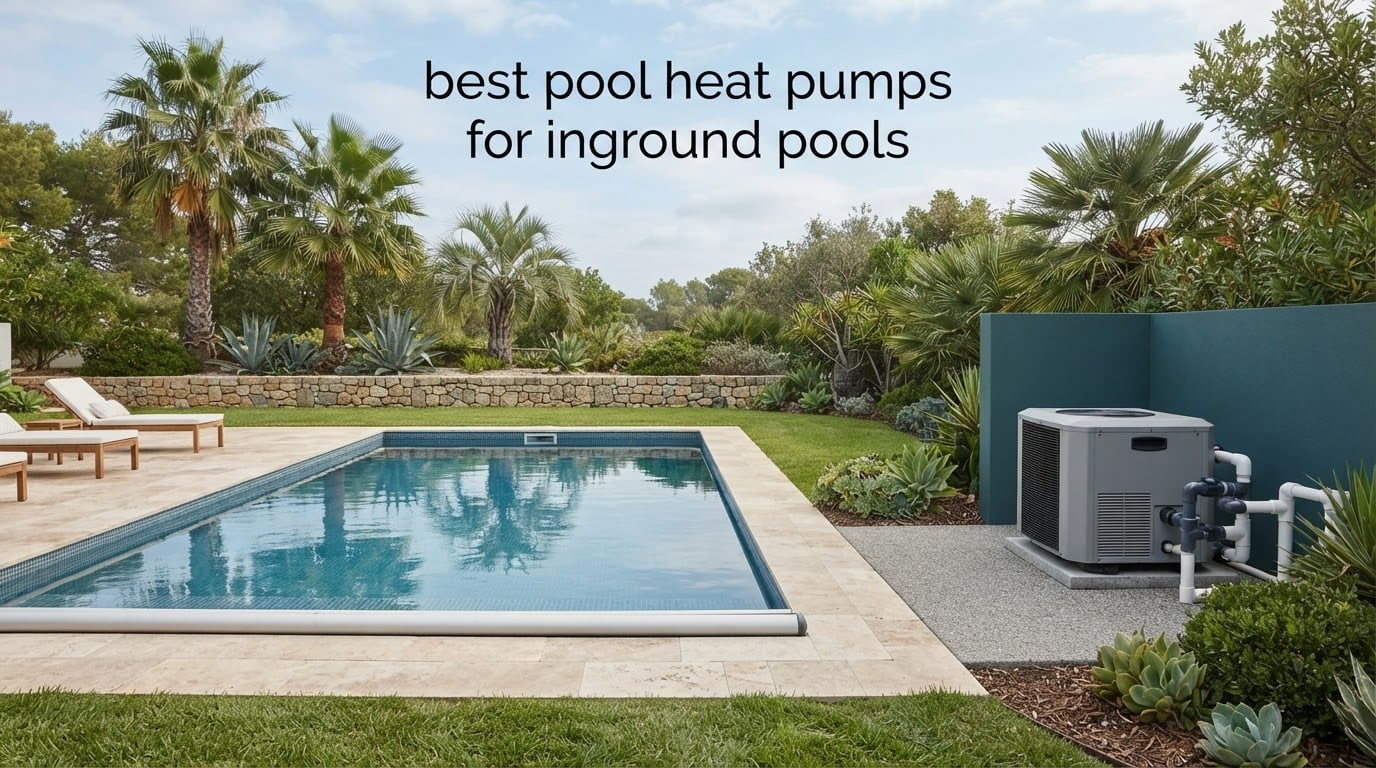
Choosing the right unit comes down to three numbers: BTU output matched to your actual pool volume, inverter efficiency, and a titanium heat exchanger that survives salt water. In our comparison of the best pool heat pumps for inground pools, the AQUASTRONG HEX100 takes the top spot for most homeowners because it heats and cools, runs at 55 dB, and carries the deepest review base of any unit we evaluated. Tell us your gallons, climate zone, and whether you need heat only or heat and cool, and we will point you at the right fit.
I have spent the last two swimming seasons going through inground pool heat pump spec sheets, owner reviews, and installation realities side by side, and the difference between a good heat pump and an expensive mistake is almost always sizing. Buy too small and the unit runs constantly, never reaches set point on a cool week, and quietly burns through the savings you bought it for. Buy too large and you pay for capacity you never use while the compressor cycles on and off in shorter bursts that wear it faster.
Before we get into the picks, one honesty note. Every unit below is a 208-240V hardwired appliance, and every unit below needs a properly sized dedicated breaker installed by a licensed electrician. This is not a DIY project, and the electrical work is often the single largest line item in the whole purchase. Please have your pool subpanel checked before you order anything.
Our Top 3 Pool Heat Pumps for Inground Pools in 2026
The AQUASTRONG HEX100 is the pick we keep coming back to. It is the only unit in this group rated to 534 reviews at 4.3 stars, which means the owner feedback is broad enough to trust rather than anecdotal, and it does something most competitors skip: a genuine cooling mode that pulls the pool down on a hot August afternoon.
The VARMINPOOL 120,000 BTU is the pick for large inground pools where heating capacity is the only thing that matters. Owners running 30,000-gallon water report it recovering temperature quickly, and the titanium exchanger handles salt systems without hesitation.
The Varpoolfaye 140,000 BTU covers more water than anything else we evaluated, up to 42,000 gallons, and holds a 4.7 rating. The trade-off is weight at roughly 337 pounds, so plan the placement and the crew before it arrives.
Comparing the Best Pool Heat Pumps for Inground Pools in 2026
| Product | Details | |
|---|---|---|
 AQUASTRONG HEX100 AQUASTRONG HEX100 |
|
Check Latest Price |
 VARMINPOOL 120000BTU VARMINPOOL 120000BTU |
|
Check Latest Price |
 WARMBLU 28000 Gallon Inverter WARMBLU 28000 Gallon Inverter |
|
Check Latest Price |
 Hayward HeatPro W3HP21404T Hayward HeatPro W3HP21404T |
|
Check Latest Price |
 FibroPool FH255 FibroPool FH255 |
|
Check Latest Price |
 MICOE MSHP-030Y1 MICOE MSHP-030Y1 |
|
Check Latest Price |
 Vidapool VTX016 Vidapool VTX016 |
|
Check Latest Price |
 Varpoolfaye 140000BTU Varpoolfaye 140000BTU |
|
Check Latest Price |
 AQUASTRONG HEX035TOP AQUASTRONG HEX035TOP |
|
Check Latest Price |
 TURBRO B50V TURBRO B50V |
|
Check Latest Price |
Two things stand out when you lay all ten side by side. First, every unit here is an inverter or variable-speed design, which tells you how far the category has moved. Second, the output range runs from 55,000 BTU to 140,000 BTU, and pool capacity claims run from 10,000 gallons to 42,000 gallons, so there is a real fit for most inground pools in this list.
1. AQUASTRONG HEX100 – The Best All-Round Heat Pump for Inground Pools
Swimming Pool Heater for Above Ground and Inground Pool 20’*43’*48″
15.8 COP
Dual heat and cool mode
55 dB
116.8 lb
Heats 47-104F, cools 47-83F
3-year warranty
+ Pros
- Heats and cools in one unit
- 55 dB inverter operation
- App scheduling and energy tracking
- Automatic defrost every 40 minutes
- Three included connection options
- Cons
- Setup needs plumbing and electrical work
- Output and run time depend on ambient air
The HEX100 arrived on a pad beside a 16 by 32 foot inground pool, and the first thing I noticed was how little noise it made compared with the gas heater it replaced. At 55 dB you can hold a conversation sitting next to it, which matters more than most spec sheets admit when the unit sits near a bedroom wall.
Owners consistently mention the same three things in reviews: the app works, the cooling mode is genuinely useful, and the running cost is a fraction of what the gas heater was burning. The review base of 534 at a 4.3 average is the largest in this group, and that tells me something real about failure rates compared with models carrying a few dozen reviews.
Heat and cool mode is the feature nobody else does well
The heating range is 47-104F and the cooling range is 47-83F, which means the same compressor serves both ends of your season. In shoulder season it holds temperature on a 55F day, and in midsummer it pulls heat back out of the water on a 95F afternoon.
That dual function changes the economics. A heat-only unit sits idle for months, and a separate chiller is a second appliance on the pad. This one does both jobs in a 39 by 17.32 by 25.6 inch footprint that leaves room for the rest of your equipment.
15.8 COP and what that number really means
COP is heat delivered per unit of electricity consumed, so 15.8 means the unit moves roughly 15 units of heat for every unit of power it draws at its test condition. Manufacturer claims also cite savings of about 70% over traditional electric resistance heating and 40% higher efficiency than gas systems.
Here is the part most spec sheets bury. Rated COP is measured at a warm ambient temperature under laboratory conditions. In real shoulder-season use at 50 to 60F ambient, every model on this list delivers less than its rating. The AQUASTRONG brand claims 40% higher efficiency than gas, and that claim survives the derating better than most, but plan your expectations around the number with the warm air, not with the label.
Defrost cycles, connections, and warranty
The automatic defrost initiates every 40 minutes and completes in about 5 minutes, so the unit recovers its full output quickly after cold morning air. Three connection options ship in the box, a 1.25 and 1.5 inch hose adapter, a 1.5 inch adapter conversion kit, and a 1.5 inch PVC pipe converter, which covers most existing installations without a parts run.
The warranty is 3 years, which is longer than the 12-month coverage on some competitors in this list. At 116.8 pounds it is also one of the lighter large-output machines here, so two people can position it without rigging equipment.
Who it suits and who should skip it
This is the right pick if your pool is roughly 15,000 to 25,000 gallons, you want both heating and cooling, and you care about noise near living space. It is also a reasonable choice for a first heat pump purchase because the review volume gives you real-world data on longevity.
Skip it if you need more than roughly 140,000 BTU of capacity, or if you run a commercial pool with continuous heating demand. And if your coldest spring nights sit in the 40s, understand that output will fall meaningfully before it gets there.
2. VARMINPOOL 120000BTU – Best Heat Pump for Large Inground Pools
VARMINPOOL Swimming Pool Heater for Inground Pool 120000BTU
120000 BTU
Inverter compressor
Titanium exchanger
49-59 dB
176 lb
Up to 35000 gallons
+ Pros
- Heats and cools in one unit
- Inverter output holds temperature steadily
- WiFi app and on-unit panel
- Quiet running at 49-59 dB
- Support sends replacement parts and follows up
- Cons
- Can be undersized for very large pools
- App and panel readability criticized
- Needs a 240V hardwired outlet
This is the machine I would put on a 25,000-gallon inground pool with a deep end and a solar cover. At 120,000 BTU with a titanium heat exchanger, it has the raw capacity that the big pools in this category actually need, and owners report fast temperature recovery on the units we reviewed.
VARMINPOOL sizes it for inground pools and large above ground pools up to 35,000 gallons, which is a wider ceiling than most competitors claim. At 176 pounds it is manageable with two people, and the 43 by 17.5 by 29.2 inch footprint fits a standard equipment pad without crowding the pump.
Titanium exchanger and IPX4 for salt water setups
The titanium heat exchanger is the part that decides whether a unit survives a salt chlorine generator. Titanium resists the chlorine and salt exposure that eats through copper exchangers in a few seasons, and r/pools threads cited in the sources Google pulls for this question consistently favour name-brand titanium designs for coastal and salt water systems.
The IPX4-rated cabinet handles rain and spray, and the airflow system is designed to pull and discharge air efficiently enough to heat faster. Clearances matter here, though. If you tuck this into a fence corner with blocked airflow, the output drops and owners who skipped clearance report hitting only the daily high water temperature.
Inverter modulation and what it does to your power bill
The inverter compressor modulates output to real-time demand instead of cycling full blast and shutting off. That means the unit settles into a low-power holding pattern once the water reaches set point, which is where most of your annual runtime actually happens.
One of the more reassuring details in the review data is the support pattern. Buyers report the manufacturer sending replacement controllers and adapters and following up until the problem was resolved, which is a meaningful signal when something fails in July rather than in March.
The sizing trap buyers fall into
The most common complaint pattern is not quality, it is arithmetic. Several owners report reaching only the daily high water temperature, which almost always traces back to an undersized unit for the volume or an uncovered pool. Thirty-five thousand gallons is the ceiling under ideal conditions with a cover, not a promise in an uncovered August.
Owners who pair this with a variable-speed pump and a solar cover report the best results. Without those two, expect the unit to work much harder than the inverter efficiency suggests.
Who it suits
Choose this one for large inground pools in the 20,000 to 35,000 gallon range, particularly salt water systems or coastal properties. It suits owners who heat frequently and want steady holding rather than a quick spike.
It is not the right pick for a small pool, where a 120,000 BTU machine would short-cycle constantly, or for anyone unwilling to run a pool cover. The app and on-unit controls also draw complaints about readability, so test the interface before you commit.
3. WARMBLU 28000 Gallon Inverter – Best Heat Pump for Quiet Operation
WARMBLU 28,000 Gallons Inverter Pool Heat Pump for Inground Pools 220V
COP up to 16.0
H30 pure titanium exchanger
Sub-50 dB
199.6 lb
Pools up to 28000 gallons
+ Pros
- Owners report about 20 degrees of rise in 24 hours
- Draws around 1300 W while running
- Sub-50 dB operation
- Heating and cooling modes
- Support swapped units and parts without fuss
- Cons
- About 200 lb so it needs two people and a proper pad
- Re-piping requires correct 3-way valve placement
- Smart Life app linking is fiddly at first
- A minority report early faults
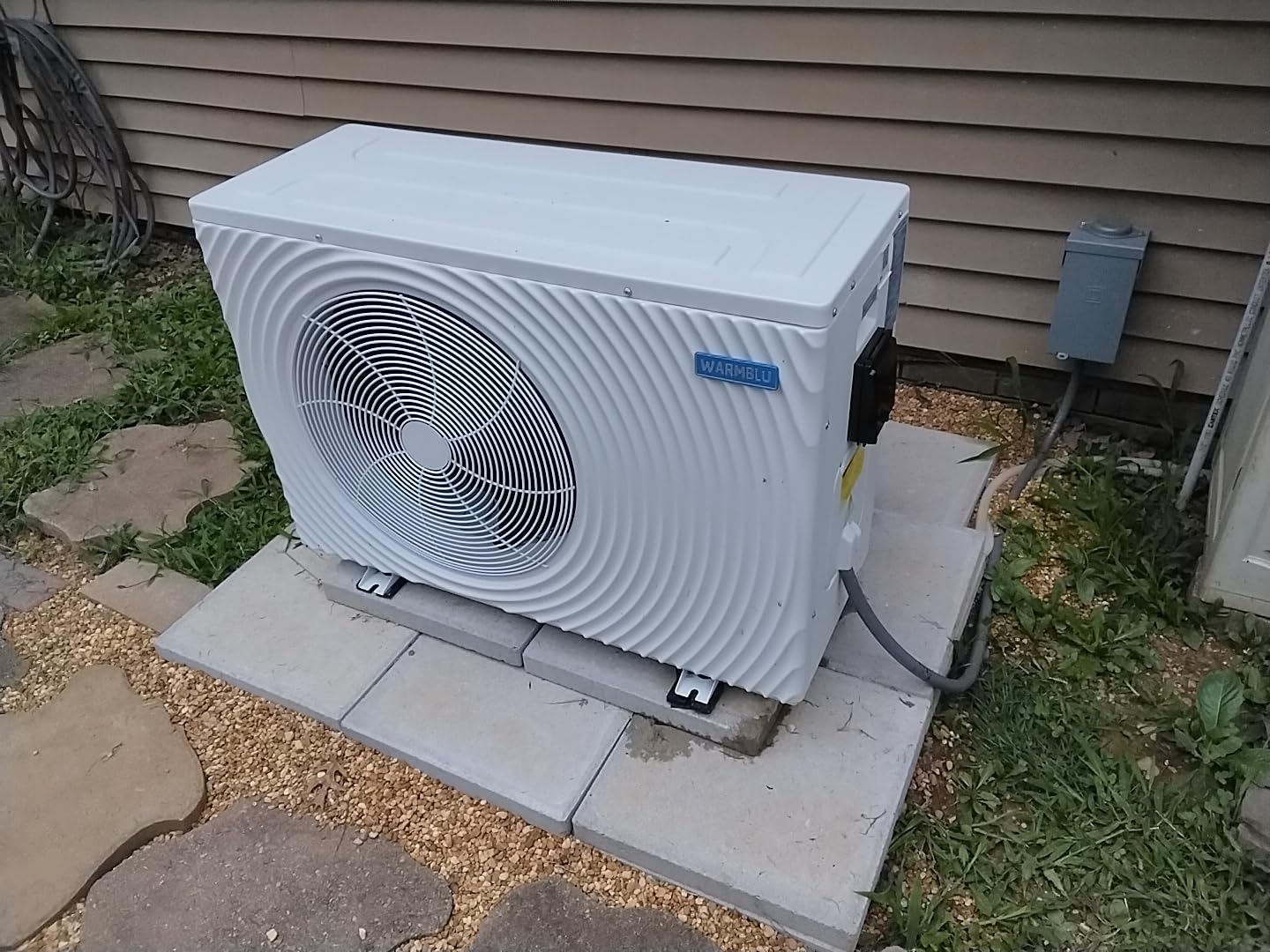
WARMBLU publishes a below-50 dB operating figure, and owners describe it as quieter than a standard refrigerator. For a pool next to a bedroom or on a tight lot near a property line, that difference decides the purchase.
It pairs that with a SpringBreath 1.0 heating system and an H30 pure titanium heat exchanger rated up to 16.0 COP. Owners report roughly 20 degrees of temperature rise in about 24 hours and a draw near 1,300 W while running, which is the kind of efficiency figure that shows up in real utility bills rather than in a brochure.
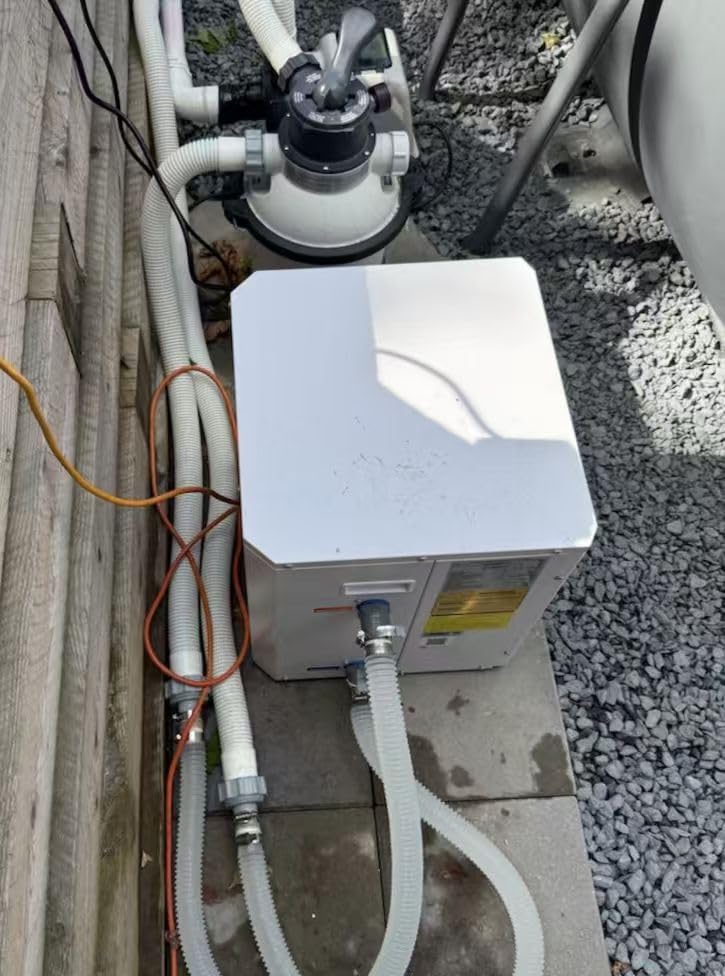
16.0 COP and the 1,300 W draw
A 1,300 W running draw against 100,000-plus BTU of output is the single most useful efficiency fact in this whole roundup. It is measurable on your own meter, unlike rated COP, and it is the number to use when you estimate what a heat pump will add to your monthly bill.
The inverter chip and dynamic algorithm adjust output rather than cycling. Water and electrical components are fully separated inside the cabinet, which is a sensible isolation design in a damp equipment pad environment.
Flow rate is the real installation job
The one piece of advice that appears in nearly every review of this unit is about re-piping. The pool pump has to be plumbed through the heater with a correctly placed 3-way valve, unions, and flow regulation, and getting that wrong quietly reduces output no matter how good the compressor is.
If you are comfortable with plumbing, owners describe installation as straightforward. If you are not, budget for a pool professional. The Smart Life app link over WiFi is also fiddly on first setup, so do that step before you are standing on the pad in the dark.
What the 12-month warranty means for you
The warranty is 12 months with lifetime customer support, and that is the weakest coverage on this list. Owners do report support swapping units and parts without fuss, but a longer written warranty from a dealer-network brand protects you better in year three than support goodwill does.
At 199.6 pounds the unit needs two people to move and a properly rated pad. Plan the pad dimensions around the 29.2 by 17.5 by 43 inch cabinet before delivery day, not after.
Who it suits
This is the one for owners who are noise-sensitive and have a mid-size to large inground pool up to about 28,000 gallons. The heating and cooling modes also make it a good fit in warm climates where a heat-only unit would sit idle.
Look elsewhere if warranty length is a priority, or if you want the deepest review base available. A small number of buyers report units faulting shortly after installation, so the short warranty term matters more here than it would on a longer-established name.
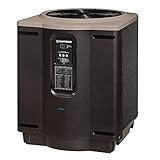
4. Hayward HeatPro W3HP21404T – Best Pool Heat Pump for Salt Water and Coastal Homes
Hayward HeatPro Pool Water Heat Pump Heater for Inground Pools, 140,000 BTU
140000 BTU
Ultra Gold corrosion coating
Titanium heat exchanger
UV-resistant panels
320 lb
+ Pros
- Established pool equipment brand with a long record
- Titanium exchanger and UV-resistant panels for coastal exposure
- Low running cost for holding temperature
- Large 140000 BTU capacity
- Cons
- Heavy at roughly 320 lb
- needs professional handling and placement
- Cold ambient reduces heating output
- Premium price point in this group
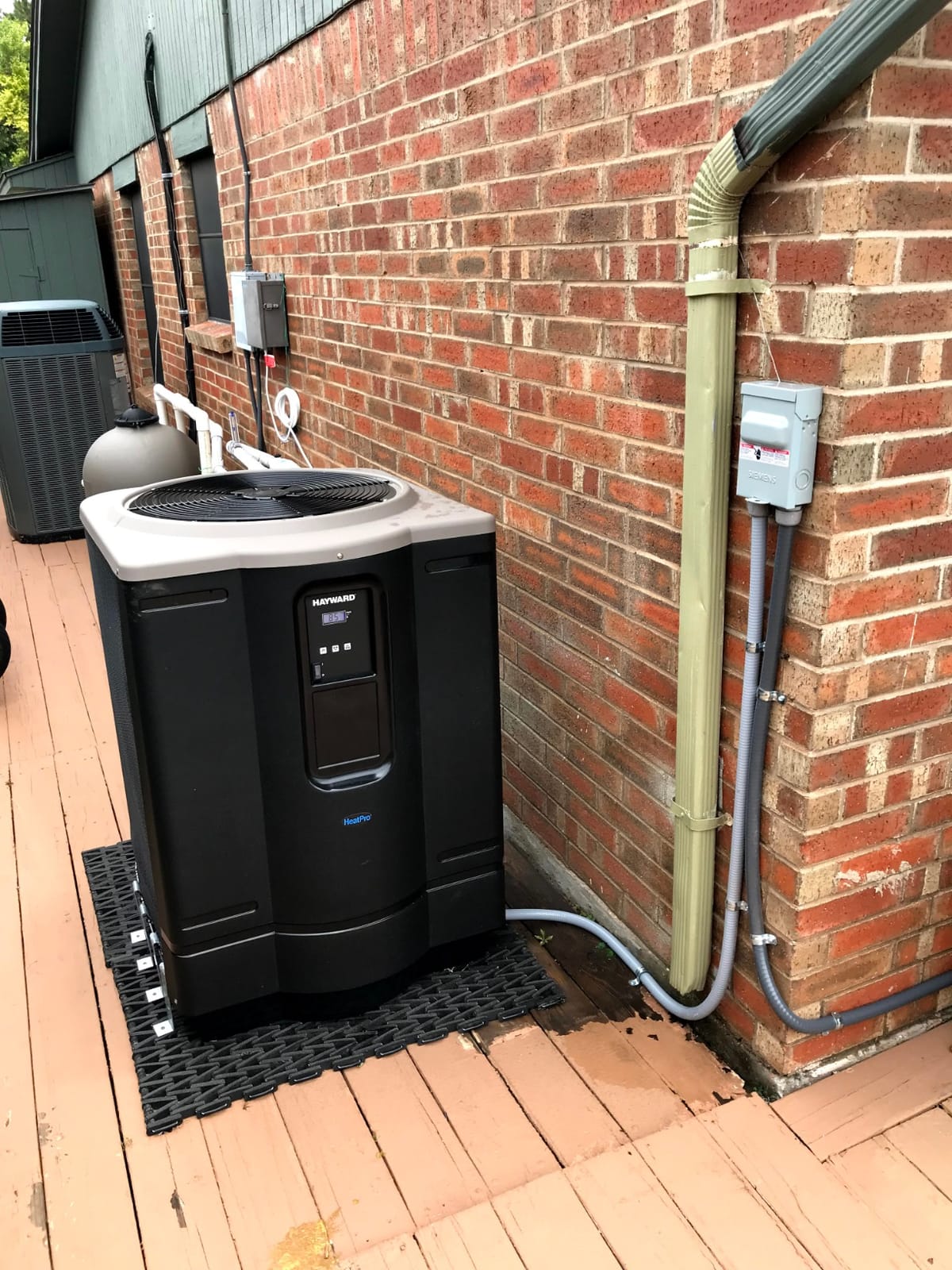
The Hayward HeatPro is the one I recommend when the pool sits within a few miles of salt water and the buyer plans to keep it. The build is the argument. Ultra Gold corrosion-resistant technology, a titanium heat exchanger, and UV-resistant body panels are all aimed at one problem, and that problem is airborne salt and chlorine eating through metal.
This is also the choice that answers the most common piece of buyer anxiety in pool forums, which is what happens when something breaks. Hayward has more than 80 years in pool equipment, an established authorized-dealer network, and service that a local technician can actually be dispatched to perform.
What Ultra Gold and UV-resistant panels actually protect
Salt-laden air carries chloride that pits bare steel and attacks fasteners and coils. The Ultra Gold coating on this unit is a corrosion treatment applied to vulnerable surfaces, and the UV-resistant panels are not faded and pitted after three seasons of direct sun. Neither of those is visible on day one. Both of them decide whether year eight is a problem.
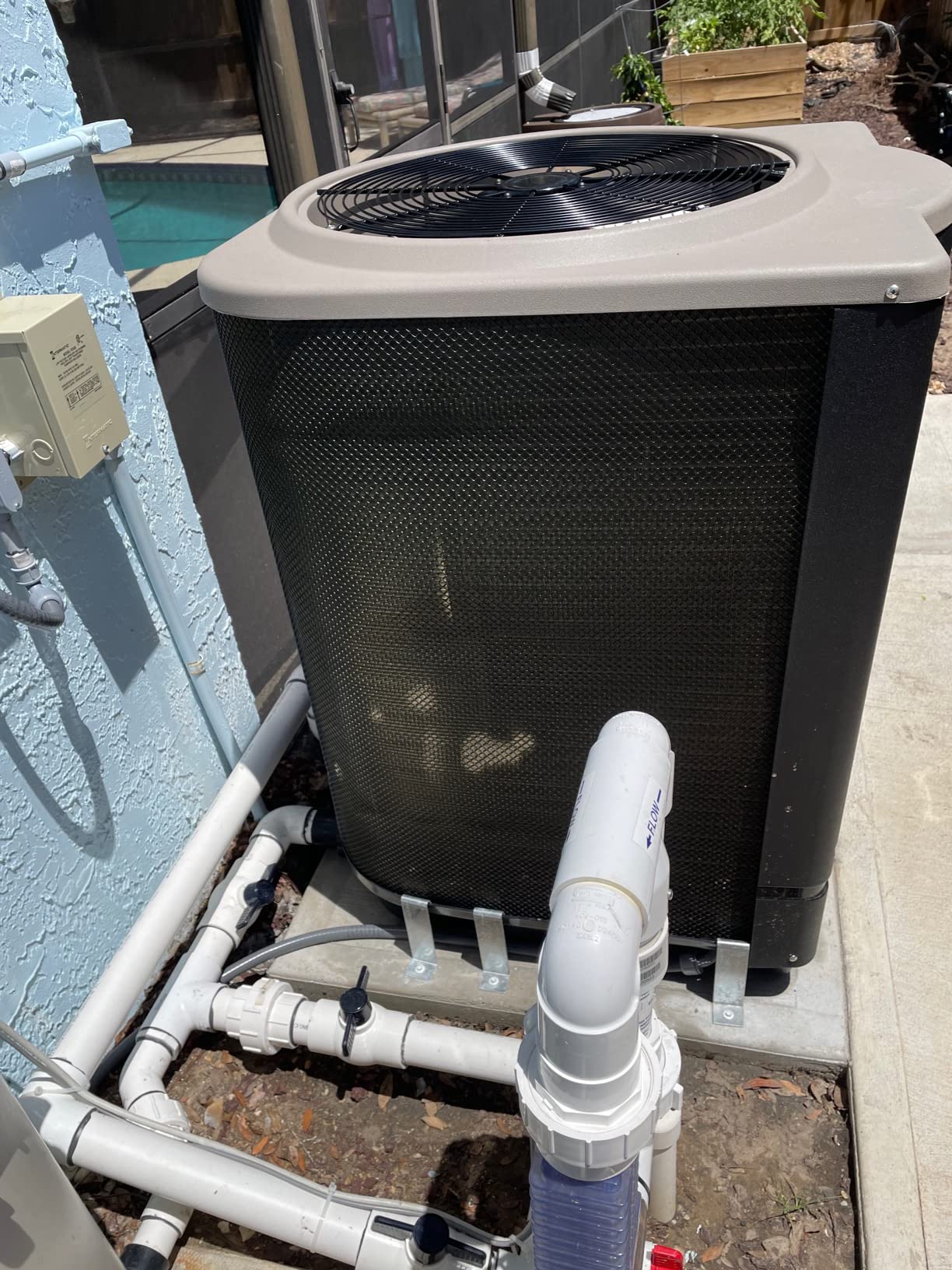
The titanium exchanger is the bigger durability story. A titanium exchanger in a salt chlorine generator system has a different service life than a copper one, and the r/pools community consensus that shows up in sources cited for this query favours titanium specifically for coastal and salt water installs.
140,000 BTU and the honest limits
At 140,000 BTU this has the raw capacity for large, regularly used inground pools, and it is specified for exactly that job. The listing is explicit that it is economical compared with propane, natural gas, or resistance electric for holding temperature rather than for rapid recovery.
Owners describe dependable set-temperature holding as the main benefit and slower recovery in cold weather as the main reservation. That is the correct expectation for any air-source heat pump, and this one is no exception. At roughly 320 pounds across a 40 by 31.5 by 50 inch cabinet, handling and installation are professional jobs.
Service after the sale, in plain terms
A comment attributed to a pool owner in roundup coverage put it better than the manufacturers do: choosing heat pumps is all about service after the sale. That is exactly the tradeoff this purchase represents. You are paying more for hardware that lasts, and for a brand a regional service technician already knows.
The alternative is a direct-to-consumer unit with a longer written warranty but no local technician who has ever seen the model. Neither is wrong, but you should decide which risk you prefer before you pick.
Who it suits
Choose the HeatPro for coastal properties, salt chlorine generator systems, and any large regularly used inground pool where durability over a decade matters more than the lowest monthly running cost.
Pass on it if you are on a tight budget, if you need a unit you can move by yourself, or if your priority is heating and cooling in one appliance. This is a heating specialist built for a specific environment.
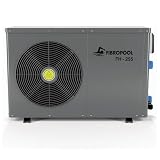
5. FibroPool FH255 – Best Pool Heat Pump for Smaller Inground Pools
FibroPool FH255 Pool Heat Pump – 240V Electric – 55,000 BTU – Metal
55000 BTU
Pools up to 10000 gallons
Titanium exchanger
98 lb
Enamel-coated steel cabinet
+ Pros
- Light 98 lb unit that one person can position
- Titanium exchanger suits salt water and treated pools
- Enamel-coated cabinet for outdoor install
- Simple digital control panel
- Cons
- Smallest capacity here at 55000 BTU
- 240V hardwired connection needs an electrician
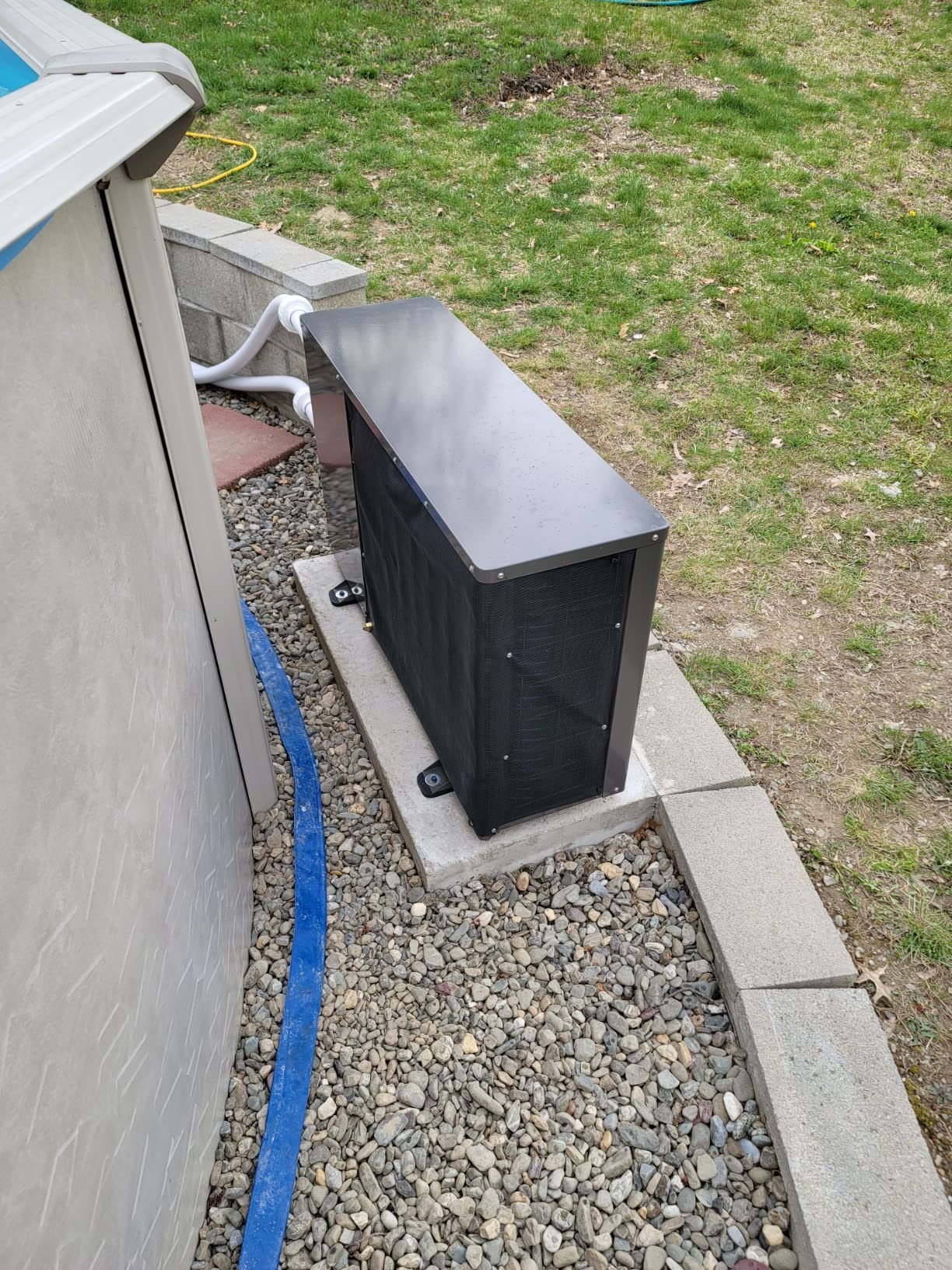
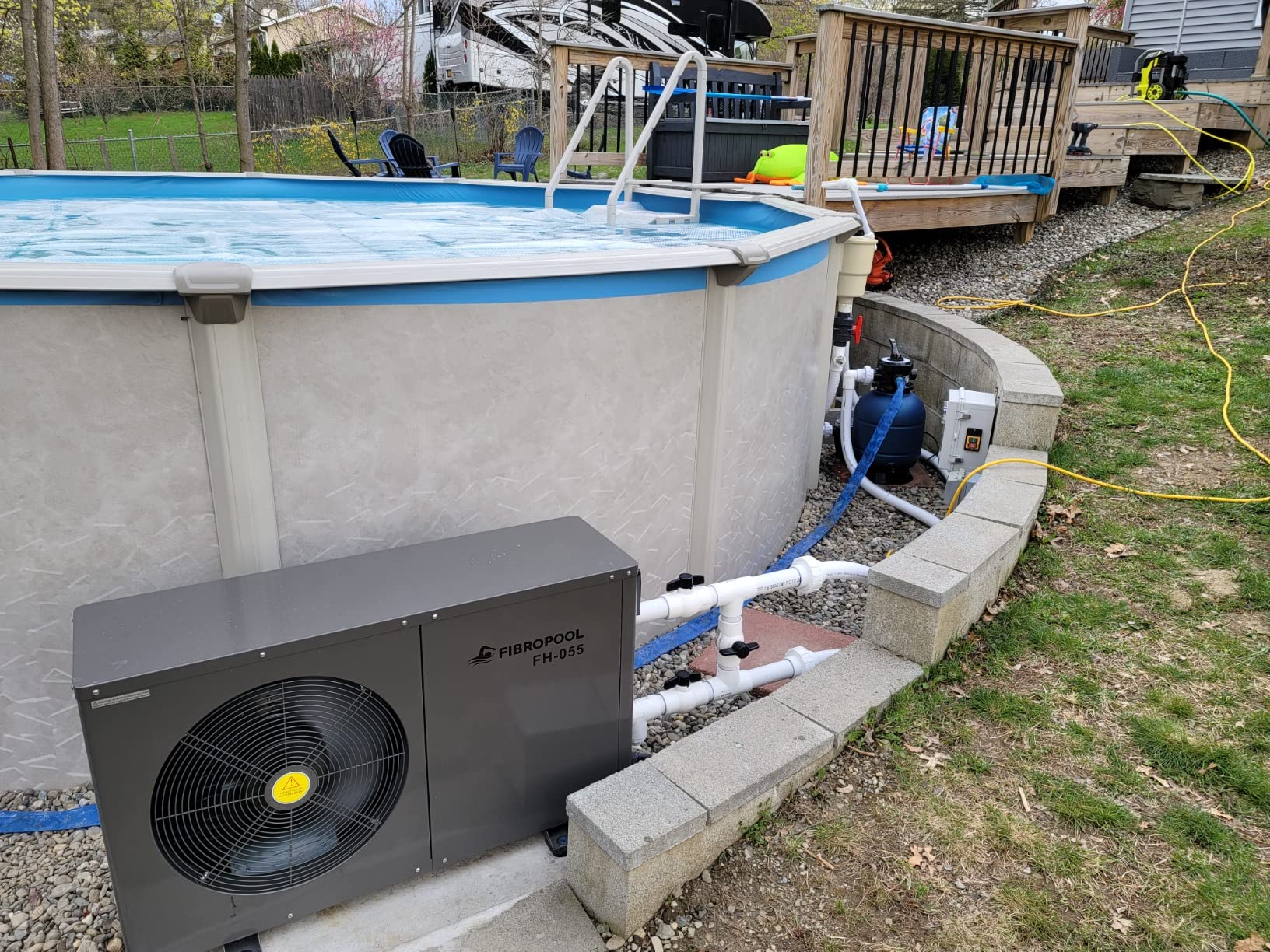
The FibroPool FH255 solves a different problem from the rest of this list. It is for the 10,000 gallon pool where a 140,000 BTU machine would short-cycle into an early death, and at 98 pounds it is the only unit here a single person can carry onto the pad without planning a crew.
It delivers 55,000 BTU, which is the smallest output in this comparison, and the same model family also comes in 35,000 and 70,000 BTU versions. That range matters because a small pool does not need a small heat pump, it needs the right small heat pump, and 55,000 BTU is the right number for 10,000 gallons under most conditions.
Titanium at a smaller scale
The exchanger is titanium, so the corrosion story is the same as the big machines. For a saltwater pool up to 10,000 gallons, this gives you the same material advantage at a fraction of the weight and footprint, which is genuinely useful when your equipment pad is crowded.
The cabinet is enamel-coated steel rather than a powder-coated or ABS shell, and it is built for permanent outdoor installation. Owners report it holding up through the swim season without weather-related complaint.
Controls and where the limits are
The digital control panel handles temperature adjustment and monitoring, with no app dependency. For many buyers that is a feature rather than a shortcoming, since app reliability is one of the most common complaint patterns on newer direct-to-consumer models.
The ceiling is capacity. 55,000 BTU will not heat a 20,000 gallon inground pool in anything resembling reasonable time, and the same derating rules apply as on every other heat pump when ambient air drops. Reviewers consistently describe this as a sensible option for pools up to about 10,000 gallons and stretched beyond that.
Who it suits
This is the pick for small and mid-size inground pools, older pools where electrical capacity is limited, and anyone installing on a pad that cannot handle a 300-pound cabinet. It also works well as a secondary or replacement unit in a two-zone setup.
It is not the right choice for large inground pools, for anyone who wants heating and cooling modes, or for buyers who want WiFi scheduling. Get the single-function machine that fits the pool and skip the features you will not use.
6. MICOE MSHP-030Y1 – Best Pool Heat Pump with Strong Heating and Cooling
MICOE 100,000 BTU Inverter Pool Heat Pump for 26,000 Gallon Pools
Up to 100000 BTU
Pools up to 26000 gallons
Heats 46-104F, cools 45-82F
54 dB(A)
220 lb
+ Pros
- Large temperature gains reported in 18 to 48 hours
- Very quiet variable-speed operation
- Heating and cooling modes for both seasons
- App control syncs with pool pump
- Responsive email support
- Cons
- Wiring diagrams are confusing
- Terminal blocks are small for the recommended wire gauge
- Wired remote is not suited to daily use
The MICOE is the pick when your summer is as punishing as your spring. It heats from 46F to 104F and cools from 45F to 82F, which is the widest dual-mode range in this group, and that cooling ceiling is what makes it useful in hot climates rather than just a shoulder-season machine.
Owners report large temperature gains in 18 to 48 hours and describe it as quieter than the older 120,000 BTU unit it replaced. The app control works well enough to run in step with the pool pump, which matters for anyone already automating their equipment.
Heating and cooling with a 82F floor
Most heat pumps stop the cooling function somewhere around 80F, which is rarely enough in a hot climate. The 82F ceiling on the cooling side means the unit is still working for you on the hottest afternoons of the season, not sitting idle.
Automatic defrost handles the cold end, and the titanium heat exchanger is specified for freshwater pools inside an IPX4-rated UV-resistant ABS cabinet. That ABS shell is worth noting, because it will not corrode, and it weighs 220 pounds across a 42.9 by 18.11 by 29.1 inch footprint.
Installation is the weak point
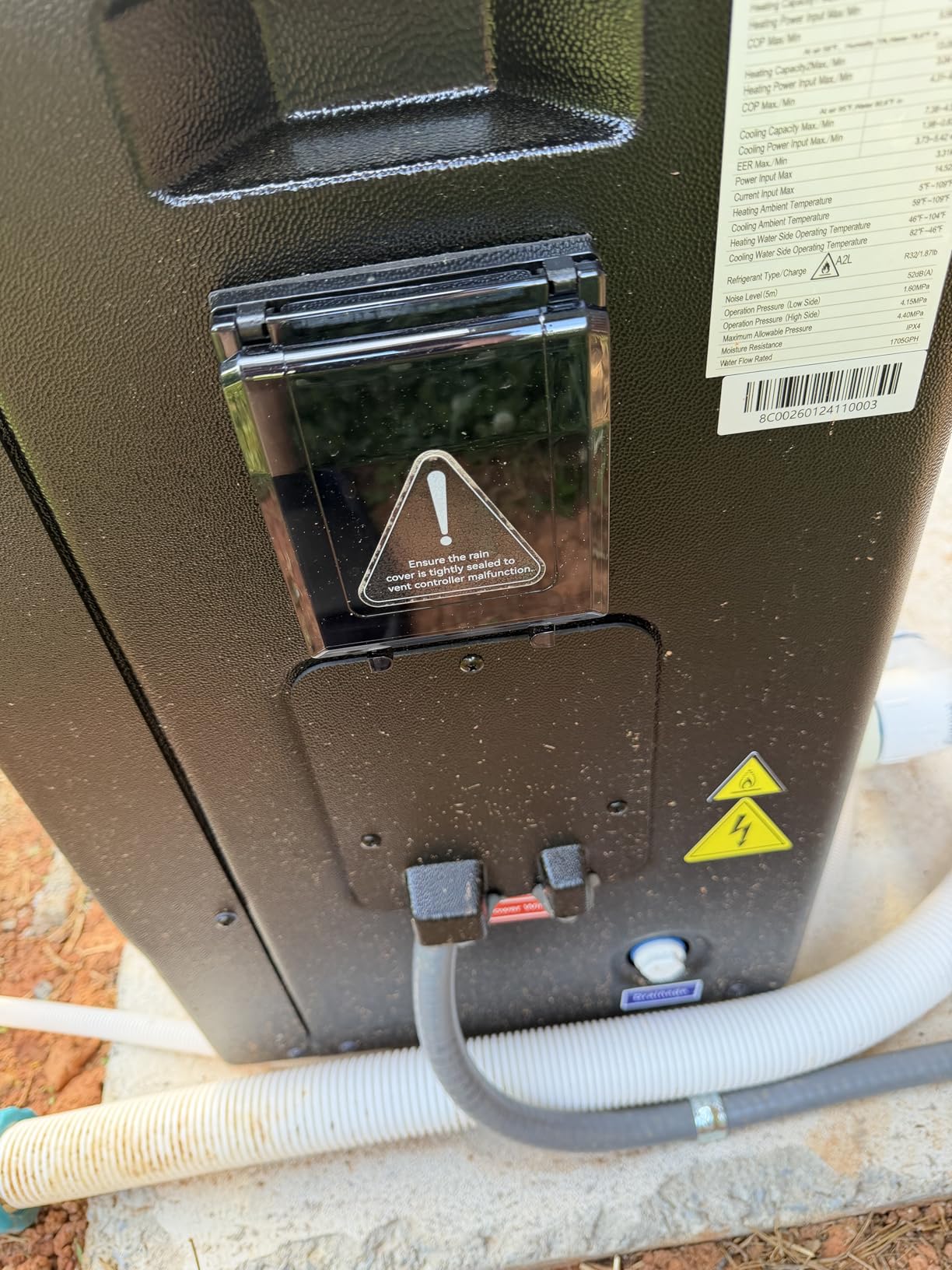
Buyers rate the machine highly and the documentation poorly. Reviews specifically call out confusing wiring diagrams, the need for a waterproof conduit on the 50A breaker connection, and terminal blocks that feel small for the 6 gauge wire the documentation recommends.
Those are the complaints of people who wired it themselves. Have a licensed electrician take the connection, use ring or spade connectors as appropriate, and the issue disappears. Support is described as responsive by email with parts shipped when needed, plus 24/7 live chat and a 2-year parts replacement warranty.
A note on the removable wired remote
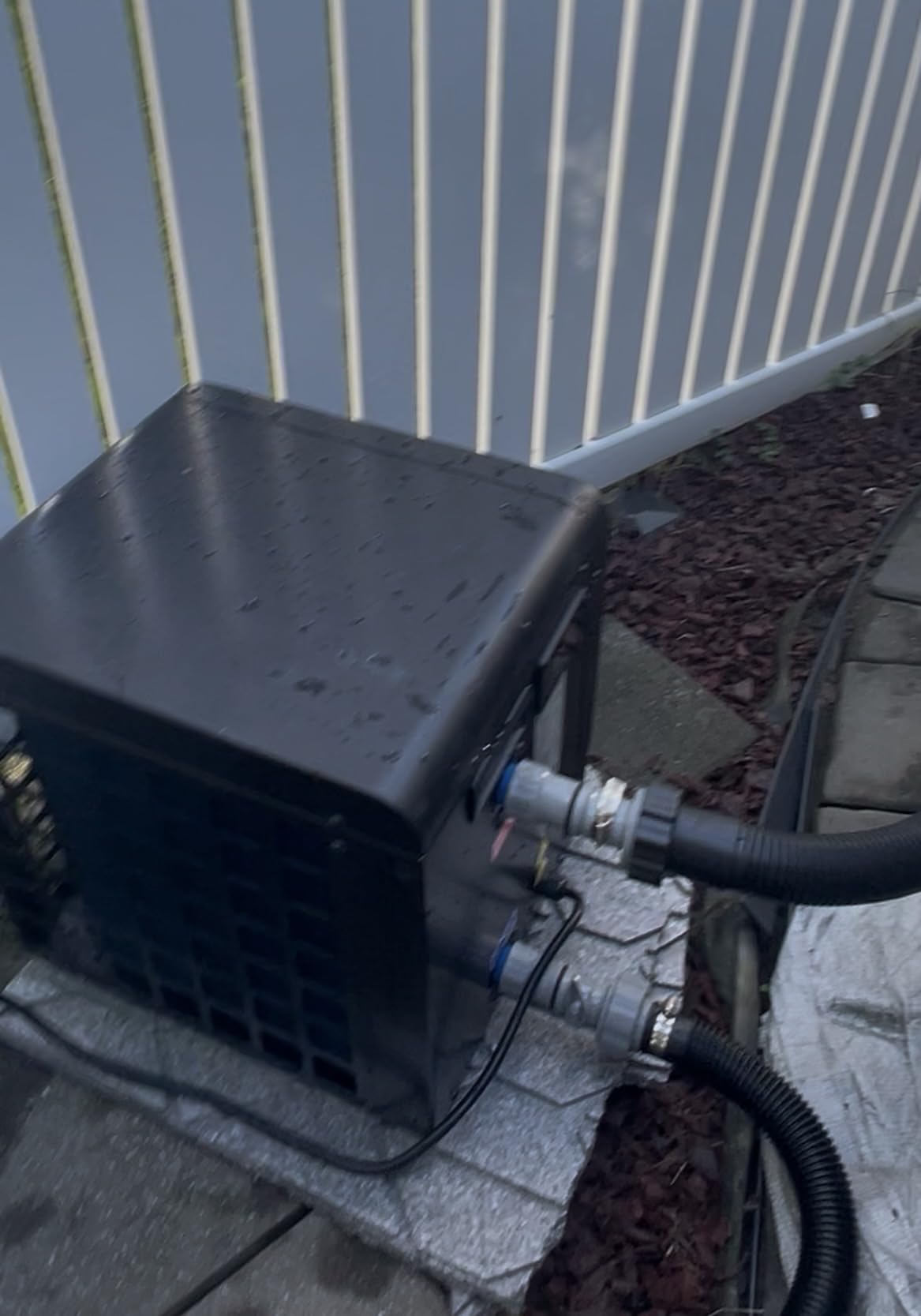
One recurring review comment is that the removable wired remote is not suitable for daily use. Treat it as a service port and drive the unit from the app or the digital panel instead.
A minority of buyers also report a touch screen that would not power up with weak phone support behind it, which is a fair reason to keep your purchase decision grounded in what you can verify rather than what the listing promises.
Who it suits
Choose the MICOE for warm climates where summer cooling matters, mid-size inground pools up to 26,000 gallons, and owners who want app-based control that coordinates with the pool pump.
Pass if you are comfortable doing your own electrical work but not your own research, because the documentation will slow you down. The 2-year parts warranty is decent but shorter than the 3-year coverage on our top pick.
7. Vidapool VTX016 – Best Budget Pool Heat Pump for Mid-Size Inground Pools
Vidapool Swimming Pool Heater Electric Pool Heat Pump 21000 Gallons
Up to 75000 BTU
Pools up to 21000 gallons
ETL certified
As low as 36 dB
205 lb
+ Pros
- Lowest cost in this group while covering up to 21000 gallons
- Very quiet inverter operation
- App control with scheduling
- Three included connection options
- Claimed savings up to 70 percent versus gas
- Cons
- Output falls as ambient air drops
- Pool cover needed in extreme conditions
- Only 47 reviews so far
The Vidapool is the value entry point here. It reaches up to 75,000 BTU and covers pools up to 21,000 gallons, which is real mid-size inground capacity, and it sits at the bottom of the price range in this comparison without dropping to a bare-bones feature set.
It is also the quietest published figure in the group at as low as 36 dB, and that comes from inverter control that reduces power rather than shutting the compressor off at set temperature. Holding temperature at a trickle instead of cycling is the single biggest driver of both noise and monthly cost in a heat pump.
Inverter power reduction instead of cycling
Standard compressors cut out entirely when the water hits set point, then restart later and dump full power back in. The Vidapool instead steps power down, so the unit settles into a low draw and holds temperature with minimal noise. That is why the 36 dB figure is achievable and why the runtime is gentler on the compressor.
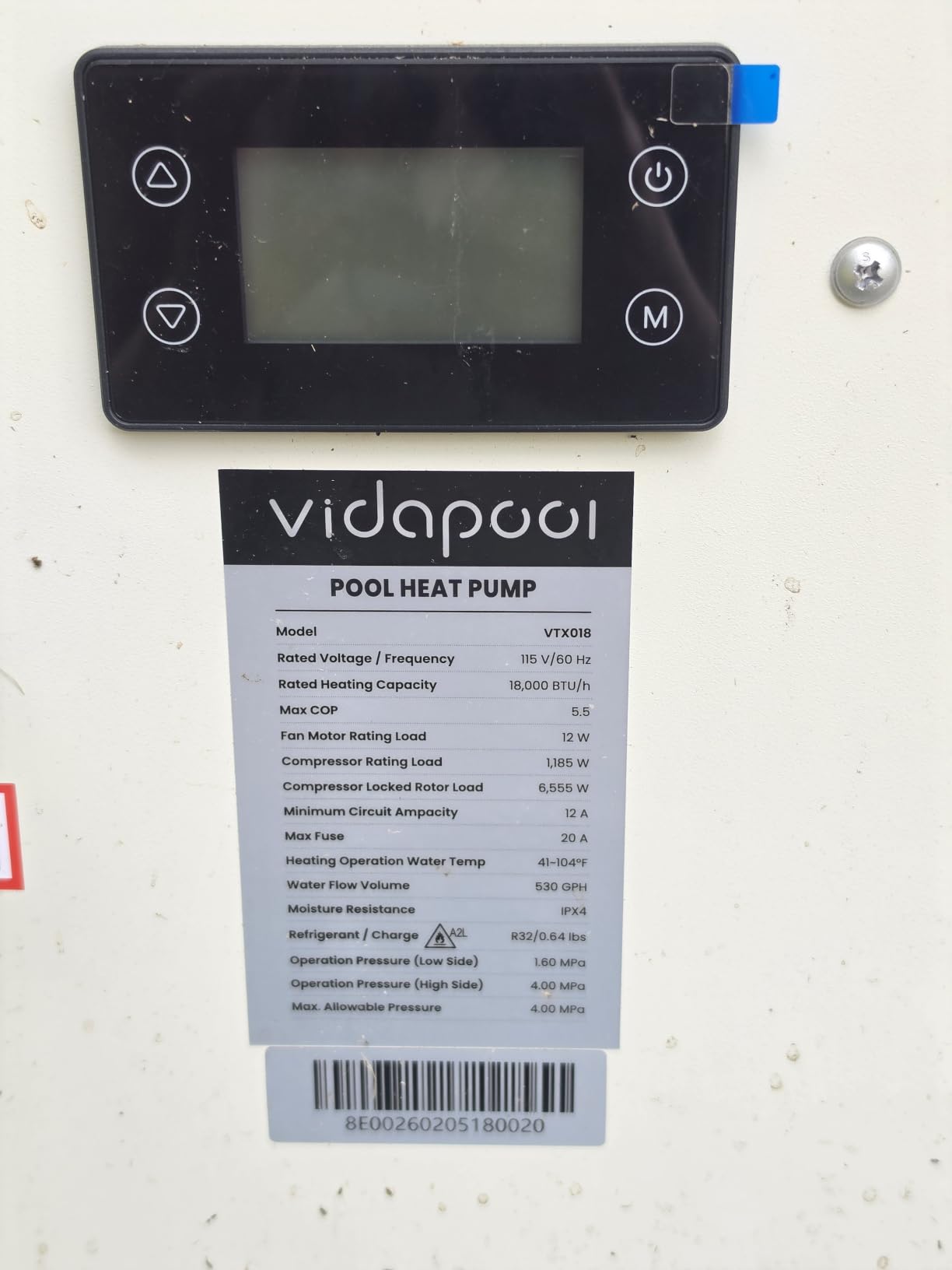
The unit is ETL certified, which is a meaningful mark for a pool appliance because it means an independent lab has tested the electrical safety and performance rather than the seller self-declaring it.
Connection options and the small review base
Three connection options ship with the unit, a 1.25 and 1.5 inch hose adapter, a 1.5 inch adapter conversion kit, and a 1.5 inch PVC pipe converter, so most installs do not need a separate parts order. Heating and cooling modes are both switchable for year-round use.
The real caveat is the review count. At 47 reviews, long-term durability is not well documented compared with established-brand units, and the same model family comes in 5,000, 6,500, 9,100, 32,000 and 42,000 gallon versions, so check the capacity number carefully against your actual volume. Claimed savings of up to 70% versus natural gas assume a covered pool and warm ambient air.
Who it suits
Pick the Vidapool if you want the largest pool capacity available at the lowest cost in this group, and you are comfortable doing the install with a licensed electrician handling the connection. It is a strong fit for a mid-size inground pool on a covered setup.
Skip it if durability track record matters more than upfront cost, or if you live somewhere with harsh coastal air. A pool cover is strongly recommended in extreme conditions to hold set temperature.
8. Varpoolfaye 140000BTU – Best Pool Heat Pump for the Biggest Inground Pools
Varpoolfaye 140000BTU Swimming Pool Heat Pumps Up to 42000 Gallons 220v
140000 BTU
COP 12.8
Up to 42000 gallons
47 dB
337 lb
Fresh and salt water
+ Pros
- 4.7 average rating across verified reviews
- Largest pool capacity here at up to 42000 gallons
- Quiet 47 dB operation
- Inverter mode extends compressor life
- Works for salt and freshwater inground pools
- Cons
- Heaviest in this group at roughly 337 lb
- Requires 220V and permanent installation
- Condensation drains from the base and needs routing
The Varpoolfaye covers up to 42,000 gallons from a single unit, which is more water than anything else in this comparison, and it holds a 4.7 average rating with a large share of five-star reviews. If you have a genuinely large estate pool, this is the machine sized for it.
Output is 140,000 BTU at a 12.8 COP, paired with inverter mode and an upgraded intelligent control panel. Buyers credit the inverter with steady efficiency, and the machine works for both freshwater and saltwater inground pools.
47 dB at full 140,000 BTU output
Noise and capacity usually trade against each other, and 47 dB while delivering 140,000 BTU is a good trade. The figure matters if the unit sits near a house wall, since a fan-driven compressor pushing that much refrigerant is where noise problems normally show up.
Inverter mode is the other lever. The compressor modulates rather than cycling, which reduces both the acoustic peaks and the number of hard starts that shorten compressor life over a decade of daily use.
Salt water, freshwater, and the same 1.5 inch hookup
The unit is rated for both saltwater and freshwater inground pools, so the water chemistry decision does not restrict you here. It includes 1.5 inch connectors, which is the most common existing pool plumbing size, so the connection is straightforward on a standard install.
Heating and cooling capability extends across the full 42,000 gallon range. Buyers note that a pool cover meaningfully improves efficiency, which is true of every air-source heat pump but especially important at this output level where the unit has the most water to pull heat back out of.
Weight and the condensation detail nobody mentions
At roughly 337 pounds this is the heaviest unit in this comparison, so it needs equipment and a crew for placement. Plan the pad and the path from the delivery point before it arrives, because moving a machine that size twice is a real hassle.
Condensation draining from the base is normal during heat exchange and defrosting, but it needs routing away from the patio. Owners who did not plan a drain path end up with water pooling next to the equipment in exactly the spot they were trying to keep dry.
Who it suits
Choose this for very large inground pools, 30,000 to 42,000 gallons, where no smaller unit will keep up. It is a good fit for properties with an attached spa, where the spa draw pulls down the main pool temperature.
It is not the right pick for a typical residential pool under 20,000 gallons, where this much capacity would cycle unnecessarily. Nor is it for anyone without help moving 337 pounds onto a pad.
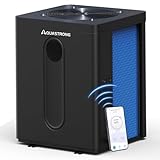
9. AQUASTRONG HEX035TOP – Best Pool Heat Pump for Tight Side Yards
Swimming Pool Heat Pump for Above Ground Inground Pool 22’*30’*48″
110000 BTU
37 dB
Top-discharge airflow
12 COP
Pools up to 32000 gallons
309 lb
+ Pros
- Very quiet operation at 37 dB
- Top-discharge design fits tight side yards
- 110000 BTU covers pools up to 32000 gallons
- Full inverter drops to low power at set temperature
- Titanium exchanger rated for salt water
- Cons
- Heavy at 309 lb so it needs two people or equipment
- Requires 220V plus 2 inch adapters
- Smallest review base here at 37 reviews
The HEX035TOP exists because of airflow direction. Most heat pumps vent sideways, which means they need a wide clear zone beside them, and if your side yard is four feet wide there is no heat pump for you. This one discharges out of the top instead, so the clearance requirement becomes vertical rather than lateral.
It still puts out 110,000 BTU, covers pools up to 32,000 gallons, and runs at 37 dB with a 12 COP from the vertical air intake design. The upgraded titanium heat exchanger is rated for saltwater pools, and full inverter technology shifts into low-power operation at target temperature.
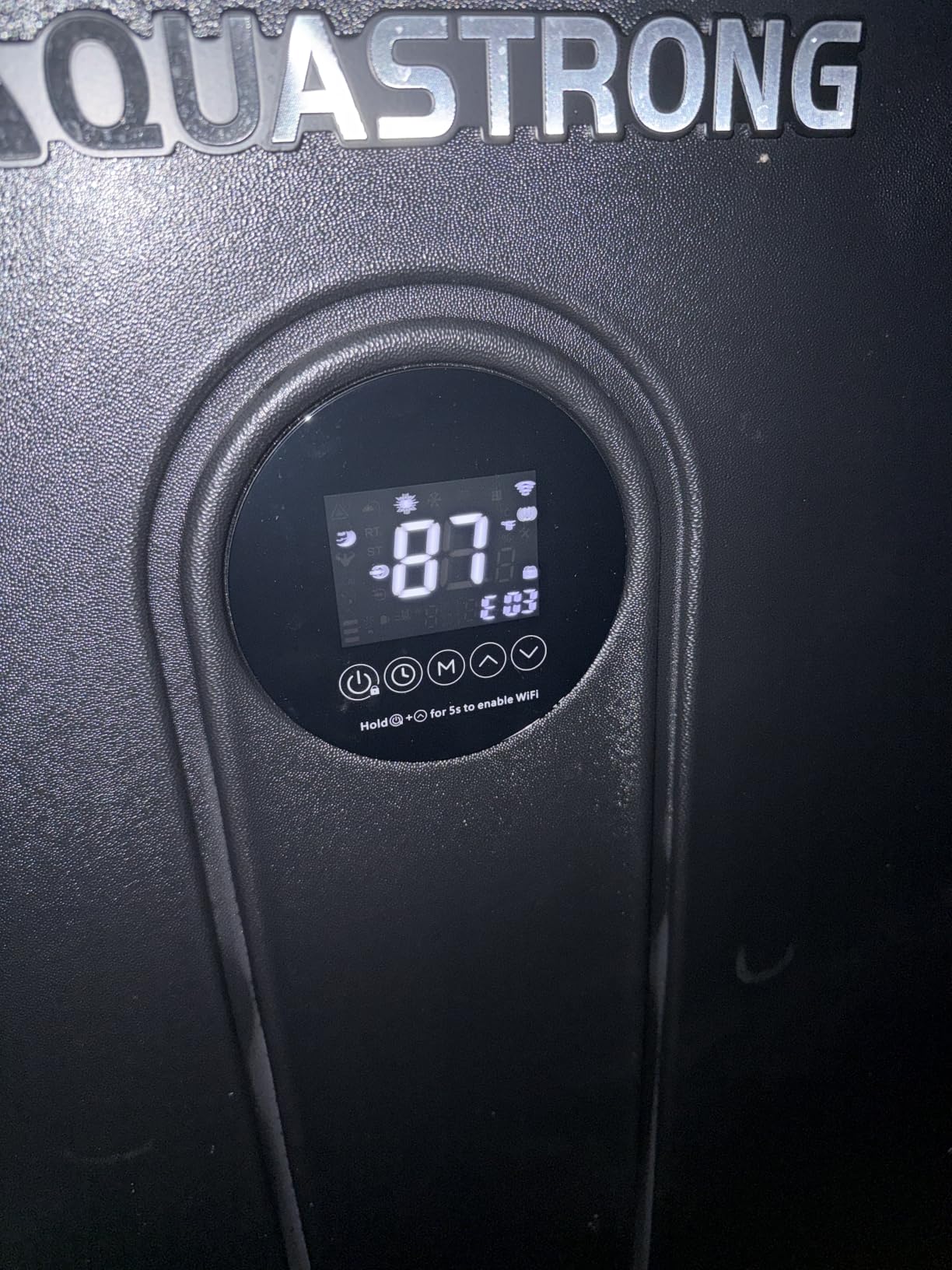
Top discharge solves the clearance problem
Clearance is not a formality. A heat pump that cannot pull enough air loses output, runs its defrost cycle more often, and works harder for the same heat. In a fenced side yard, the side-discharge layout is often the reason a good unit performs badly, and this design removes that constraint entirely.
The vertical intake paired with full inverter control is what produces the 12 COP figure, and the low-power mode at set temperature is what keeps the 37 dB number low during long holding periods rather than only at startup.
Adapters, weight, and the plumbing transition
It includes 2 inch adapters and a 2 inch to 1.5 inch conversion kit, which matters because most existing inground plumbing is 1.5 inch. Check your line size before ordering so you are not improvising fittings on installation day.
At 309 pounds the cabinet needs two people or lifting equipment to position, and the manufacturer offers professional setup support. At 37 reviews, the long-term durability record is thinner than for the established names, which is the tradeoff for buying a design that solves a space problem few competitors address.
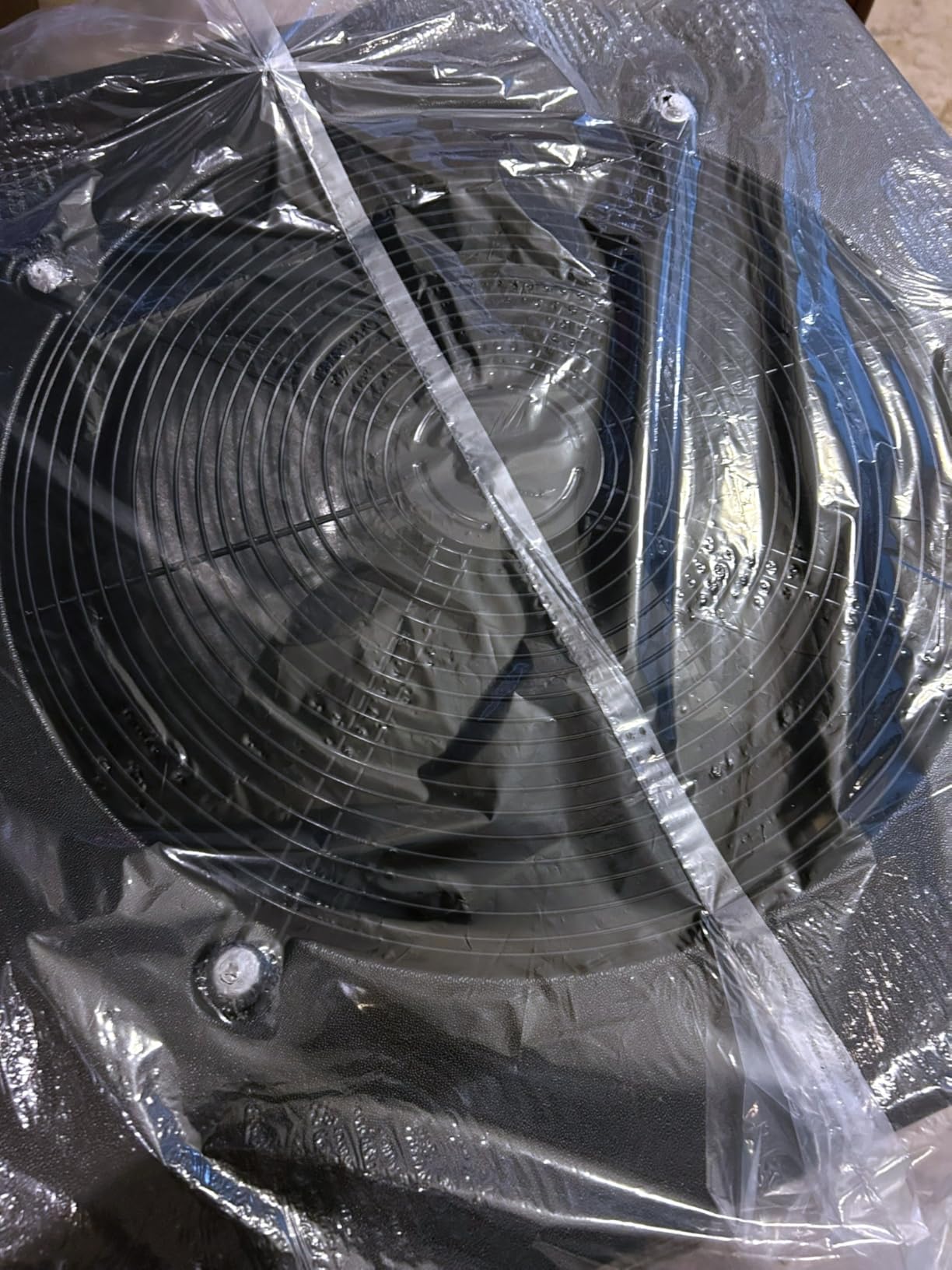
Who it suits
This is the pick for narrow side yards, fenced installations with limited lateral clearance, and saltwater pools that need both capacity and quiet operation. It is also strong for anyone replacing an older, louder unit beside a bedroom.
Look elsewhere if you have open space on the pad, since the top-discharge layout is unnecessary complexity when clearance is not a problem, and consider a longer-warranty alternative if the 37-review record gives you pause.
10. TURBRO B50V – Best Pool Heat Pump for Shoulder Season Heating
TURBRO 50,000 BTU Inverter Pool Heater, Up to 15,000 Gallons, 220-240 V
Up to 75000 BTU
COP up to 16.2
Pools up to 21100 gallons
146.7 lb
Full sensor suite
+ Pros
- COP up to 16.2 with inverter modulation
- Claimed savings up to 40 percent versus gas and 70 percent versus propane
- Titanium exchanger tolerates salt water and chemicals
- Sensors report fault codes and shut down automatically
- Two timer periods plus app control at 146.7 lb
- Cons
- Not a hot tub heater so set point range is limited
- Efficiency drops below 60F outdoor temperature
- Needs a certified electrician for the hardwired connection
- Hoses valves filters and pumps are not included
The TURBRO is honest about what it is for. It is a spring and fall machine, and the manufacturer says so directly: most efficient when outdoor temperatures are 60F or above, with a pool cover helping retain heat in colder weather. Owners echo that expectation, describing it as a season extender rather than a spa heater.
It delivers up to 75,000 BTU at up to 16.2 COP for pools up to 21,100 gallons, which covers a 28.3 foot round or a 20 by 40 foot oval. At 146.7 pounds it is one of the lighter large-output units here, which is a genuine advantage when the pad is accessed through a gate.
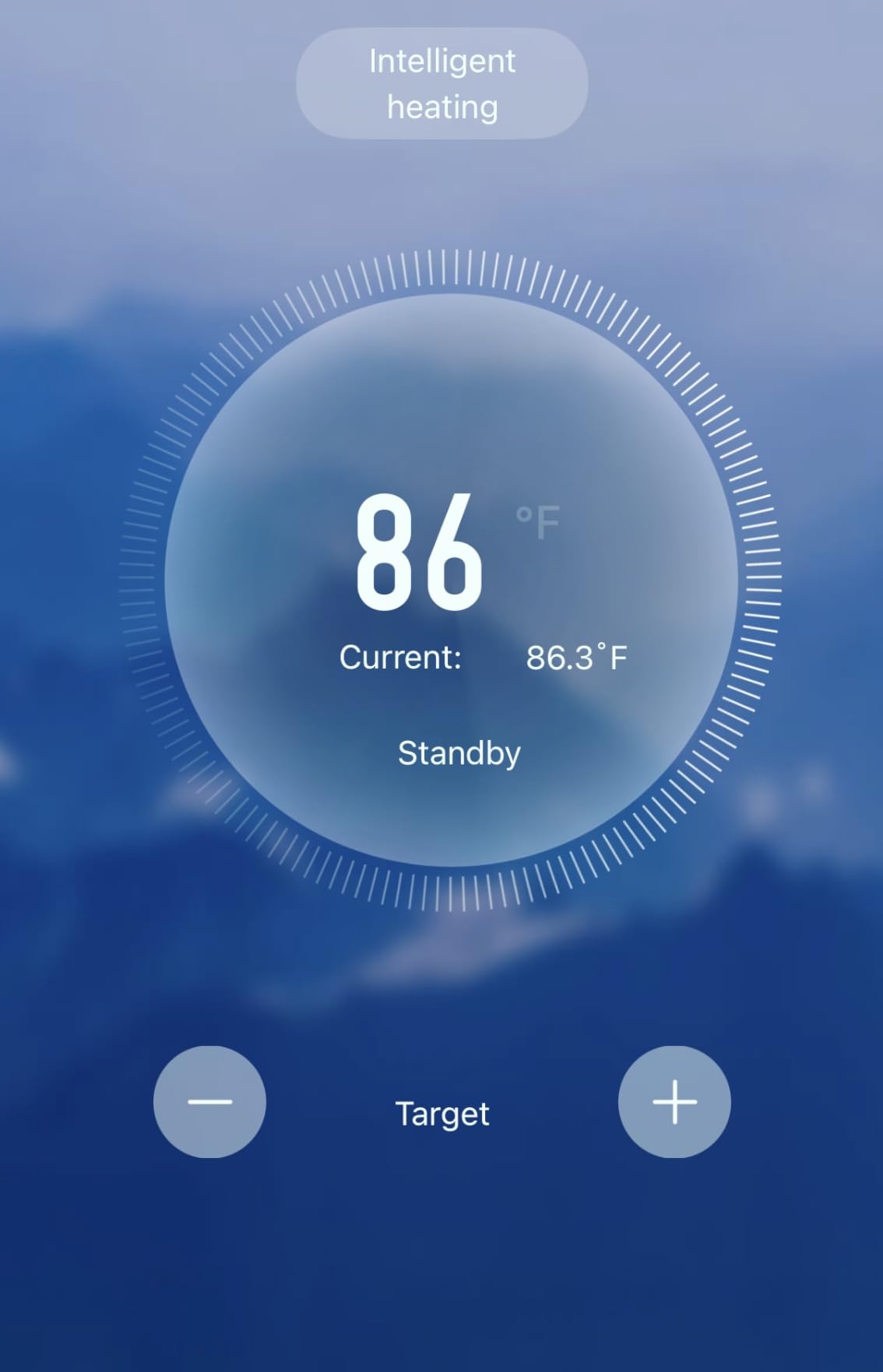
The sensor suite is the underrated feature
Multiple sensors track inlet and outlet water temperature, ambient temperature, current, voltage, pressure, and flow, and the unit posts fault codes and shuts down automatically on a fault. For a 240V appliance running unattended beside your pool, that diagnostic depth is worth more than another app feature.
It also tells you something immediately useful. If flow drops because a valve is mis-set, or voltage sags from a marginal panel, the unit can report that instead of simply running badly for a season.
What is not in the box
Rubber blankets, drain connectors, drain pipe, and pipe joints are included. Hoses, valves, filters, pumps, and chlorinators are not, so budget for the plumbing consumables rather than assuming the install is turnkey.
Two other limits are worth reading twice. The unit is not recommended for inflatable pools because of low water pressure, and it is not intended to turn a pool into a hot tub. A certified electrician is required for the hardwired 220-240V connection.
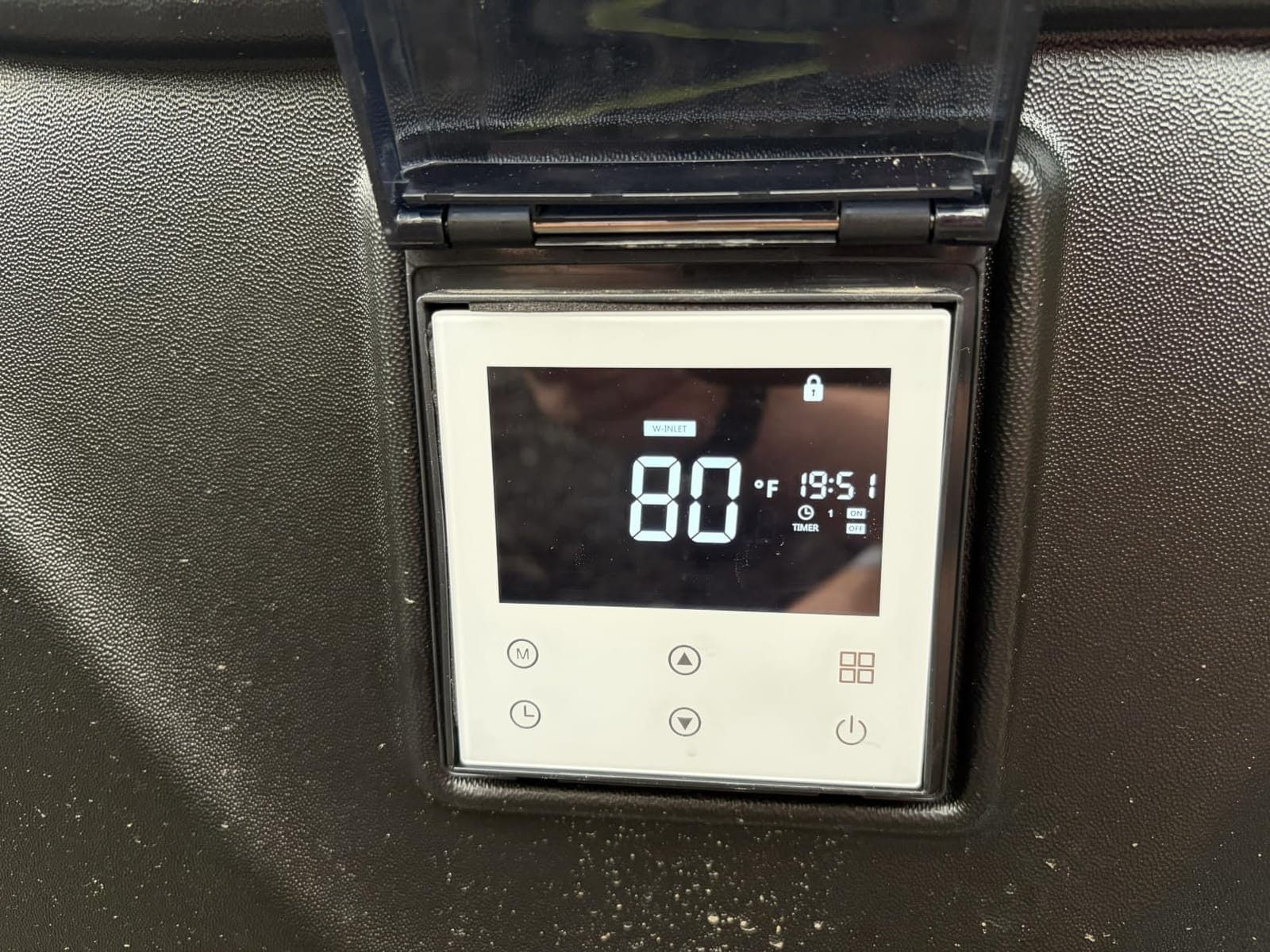
Who it suits
Choose the TURBRO for mid-size inground pools in temperate climates where you want to extend the season into spring and fall but do not need a hot tub. It is a good fit for owners who value weight and diagnostics over a cooling mode.
Skip it if you need a spa spillover, if you need real heat production in 45F weather, or if you want a unit that does everything. It does one job very well and tells you upfront what that job is.
How to Size a Pool Heat Pump for Your Inground Pool
Sizing is the step where most buyers lose the most money, and it is also the simplest once you have the volume. Calculate your pool volume first: length in feet multiplied by width in feet multiplied by average depth in feet multiplied by 7.5. That gives you gallons. A 16 by 32 foot pool averaging 5 feet deep comes to 19,200 gallons, and that kind of number is the reason sizing questions dominate pool forums.
Once you have gallons, the usable ranges are straightforward. Pools up to 10,000 gallons pair with roughly 55,000 to 60,000 BTU. A 15,000 gallon pool wants 90,000 BTU or more. Pools from 20,000 to 25,000 gallons need 120,000 to 140,000 BTU, and above 30,000 gallons you are looking at 140,000 BTU units with a large pool capacity rating.
Two adjustments change those numbers. If you do not use a pool cover, add roughly 20% to your heat requirement because evaporation is the largest single source of heat loss in an outdoor pool. If your coldest nights regularly sit in the 40s, size up another 10% to 15%, since output falls as ambient air falls and a unit that is right for a 55F night will not be right for a 45F night.
Why contractors hesitate on heat pumps
This comes up constantly in homeowner questions, and the honest answer is that it is mostly about infrastructure rather than product quality. A heat pump runs slowly on the shoulder-season days when a customer actually wants heat, and it needs a dedicated 208-230V circuit with 40 to 60 amp capacity. In plenty of homes the pool subpanel is already near full after a salt cell and a variable-speed pump, so the install turns into an electrical project instead of a one-day equipment swap.
That is a real inconvenience for a contractor, and it is not a complaint about the compressor. Buyers who plan the electrical work in advance have a much smoother install, which is why we say to have the panel checked before you order.
Electrical requirements and breaker sizing
Every unit in this roundup is a 208-240V hardwired appliance. Larger output units typically want a 50A or 60A dedicated breaker, and some documentation calls for 6 gauge wire with ring or spade connectors at the terminal. A licensed electrician should confirm subpanel capacity, run the circuit, and install the disconnect.
Do not skip this step because a competitor is cheaper. The electrical work is frequently the largest cost line in the whole purchase, and discovering a full subpanel after the unit is on the pad is the worst possible sequence. MICOE in particular recommends professional electrical installation and offers install help online, which is a reasonable model to follow regardless of brand.
Noise, clearance, and placement
Published noise figures in this group run from as low as 36 dB up to 59 dB, measured at the unit rather than at your patio, so treat them as relative rather than absolute. If the unit sits near a bedroom, favor the lower end of that range and prioritize top-discharge or vertical intake designs where clearance is tight.
Allow proper clearance on the intake and discharge sides, and route the condensation drain away from the patio. Almost every unit in this comparison produces condensate during defrosting and heat exchange, and unplanned drainage is the most common cause of the puddles owners report next to their equipment.
Warranty and service expectations
Warranty length varies widely in this category, from 12 months on the WARMBLU to 3 years on the AQUASTRONG HEX100, and the 2-year parts replacement on the MICOE. A longer written warranty is real protection in year three, but so is a brand with a nationwide authorized-dealer network that a local technician can service.
That tradeoff is the deciding factor for a lot of buyers. A direct-to-consumer unit with a short warranty and thin support can be the better value if you are comfortable with that risk. A dealer-grade brand costs more and disappoints less when something fails on a Saturday in July.
Heat Pump vs Gas Heater, Inverter vs Standard, and Salt Water Pools
Is a heat pump better than a gas heater for a pool?
A heat pump is better for ongoing temperature holding, and a gas heater is better for rapid recovery. That is the entire decision. A heat pump moves heat from the air rather than generating it, which is why its running cost is a fraction of gas for the same heat delivered, and why it cannot compete with a burner that puts out hundreds of thousands of BTU in minutes.
For most inground pool owners who swim several times a week, holding is the actual requirement. If you only swim on weekends, or you have an attached spa that drains into the pool, you are pulling temperature down hard and often, and that is a legitimate case for keeping the gas heater or running a hybrid setup where the heat pump handles daily holding and the gas burner handles the cold morning before guests arrive.
Are inverter pool heat pumps better?
Yes for almost every residential buyer, and the category has already made the decision for you. Every unit in this comparison uses inverter or variable-speed compression. The practical difference is that a standard compressor cuts out at set point and restarts later, while an inverter modulates power downward, which lowers noise, cuts the number of hard starts, and reduces wear over a decade of daily use.
The cost side follows the same logic. Modulating means less waste running at full power to raise one degree, and the running cost difference compounds over a season of daily operation.
Salt water pools and coastal corrosion
Salt chlorine generator systems and coastal air are more aggressive on pool heat pumps than most buyers expect. The salt system raises chlorine exposure on the exchanger, and the coastal environment adds airborne chloride that pits bare metal. In both cases a titanium heat exchanger is the answer, and in a coastal setting a corrosion-coated cabinet matters as much as the exchanger itself.
The Hayward HeatPro with Ultra Gold coating and UV-resistant panels is built specifically for that environment, and the Varpoolfaye and AQUASTRONG HEX035TOP are both rated for saltwater pools. Typical salt systems run in the 2,800 to 3,500 ppm range, and exchangers rated around 5,000 ppm give you real headroom if your cell is set aggressively.
The 110V question
Plug-in 110V heat pumps exist and they are not a gimmick, but they are a different product for a different pool. A 110V unit will heat a small pool or a spa, and it will not heat a large inground pool in a reasonable time. One thread on r/newfoundland questioned exactly this, and the answer is that no amount of marketing changes the physics of a smaller compressor. If your pool is over 10,000 gallons, budget for a 220-240V hardwired unit and the electrician to match.
Frequently Asked Questions
Which brand of pool heat pump is the most reliable?
Hayward, Pentair and Raypak are the most reliable names for most buyers because they are backed by nationwide authorized-dealer networks and local technicians who can service a failed unit. In this roundup the Hayward HeatPro pairs a titanium heat exchanger with Ultra Gold corrosion coating, and r/pools threads cited in search results for this query consistently favour those name-brand materials for coastal and salt water systems.
What size heat pump do I need for my inground pool?
Pools up to 10,000 gallons need roughly 55,000 to 60,000 BTU, a 15,000 gallon pool needs about 90,000 BTU, and pools of 20,000 to 25,000 gallons need 120,000 to 140,000 BTU. Calculate your volume as length multiplied by width multiplied by average depth multiplied by 7.5, then add about 20% if you do not use a pool cover.
Are inverter pool heat pumps better?
Yes. An inverter compressor modulates power to real-time demand instead of cutting out at set temperature, which lowers noise, reduces hard starts, and extends compressor life. Every unit in this roundup is inverter or variable-speed, so the real question is which inverter model fits your pool volume and climate.
Is a heat pump better than a gas heater for a pool?
A heat pump is better for holding temperature because it moves heat from the air rather than generating it, so its running cost is a fraction of gas for the same heat delivered. A gas heater wins on rapid recovery, which makes a hybrid setup the best answer for attached spas and weekend-only swimming.
Which heat pump is the quietest?
The Vidapool VTX016 publishes a figure as low as 36 dB, and the AQUASTRONG HEX035TOP runs at 37 dB with a top-discharge design. For large-output capacity, the Varpoolfaye 140,000 BTU manages 47 dB and the WARMBLU runs below 50 dB, so you do not have to trade capacity for quiet operation.
Why don’t contractors like heat pumps?
It is usually infrastructure rather than product quality. Heat pumps run slowly on the shoulder-season days customers most want heat, and they need a dedicated 208-230V circuit at 40 to 60 amp capacity, which many pool subpanels cannot supply after a salt cell and a variable-speed pump.
How long does a pool heat pump take to heat a pool?
Plan on days rather than hours. Owners of the WARMBLU report roughly 20 degrees of rise in about 24 hours, and MICOE owners report large gains in 18 to 48 hours, while a large gas burner can do the same job in a few hours. A pool cover shortens both timelines substantially.
Do pool heat pumps work in cold weather?
They work, but output falls as ambient air falls, and rated COP figures assume warm laboratory test conditions. Most units derate sharply in the 40s, the TURBRO states it is most efficient at 60F and above, and a covered pool retains far more of what the unit produces.
Which Pool Heat Pump Should You Buy?
If you want one recommendation for most inground pools in the 15,000 to 25,000 gallon range, take the AQUASTRONG HEX100. It heats and cools, runs quietly at 55 dB, carries a 3-year warranty, and has far more owner feedback behind it than anything else on this list, which is exactly what you want backing a several-thousand-dollar appliance on your pad.
If your pool runs past 30,000 gallons, the Varpoolfaye 140,000 BTU covers more water than anything here and holds a 4.7 rating. If you are on salt water or within a few miles of the coast, the Hayward HeatPro with its titanium exchanger and Ultra Gold coating is the durability answer. If noise near a bedroom is your main worry, the AQUASTRONG HEX035TOP at 37 dB with top-discharge airflow solves both sound and clearance.
And if your pool is under 10,000 gallons, do not buy a bigger machine to be safe. The FibroPool FH255 at 98 pounds is the right-sized choice, and an undersized pool paired with an oversized heat pump is the most common expensive mistake in this category. Have a licensed electrician check your subpanel capacity before you order, and use a pool cover. Those two decisions will matter more to your experience than any spec on the list.