
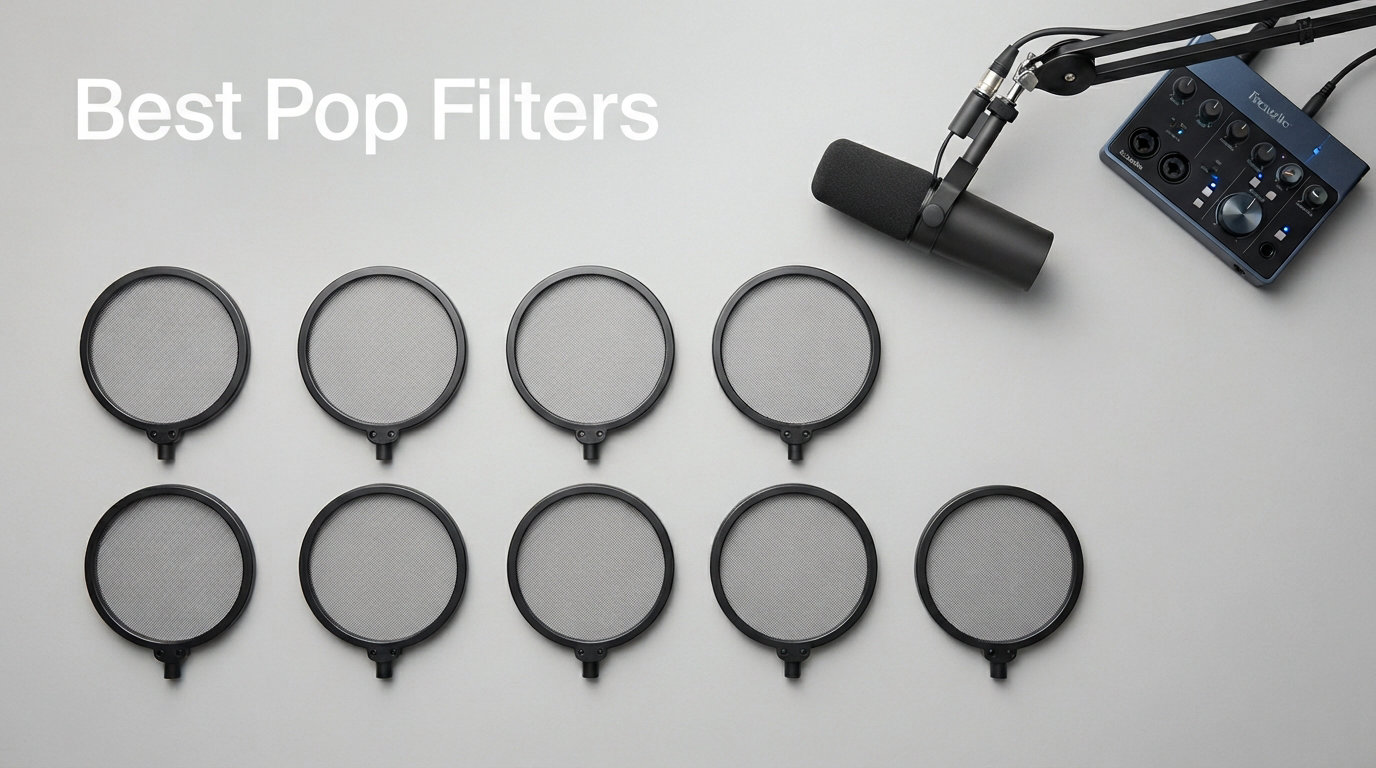
Nothing ruins a great vocal take faster than a sharp burst of air slamming into your microphone diaphragm on every P and B sound. I have spent years recording podcasts, voice-overs, and music tracks, and I can tell you that finding the best pop filters for your specific setup is the single cheapest upgrade you can make to your audio quality.
Our team tested eight of the most popular pop filters on the market for 2026, ranging from budget nylon mesh screens to professional metal grilles. We positioned each one in front of condenser and dynamic microphones, recorded the same script with heavy plosive consonants, and compared the raw waveforms side by side.
Whether you are building a home studio, upgrading a podcast rig, or chasing that broadcast-clean sound, this guide breaks down exactly which pop shield will work for your microphone, your budget, and your recording style.
Our Top 3 Pop Filters Tested for Podcasting and Voice-Over Work

Stedman PS101 Proscreen XL
- Professional Metal Screen
- 4.6-Inch Diameter
- 20-Inch Total Length
- Studio Grade Build

Aokeo Professional Pop Filter
- Dual-Layer Nylon Mesh
- 360 Degree Gooseneck
- Universal Clamp
- 12k+ Reviews

Neewer Professional Pop Filter
- Dual-Layer Nylon Mesh
- Steel Gooseneck
- Scratch-Proof Clamp
- 12k+ Reviews
These three filters stood out across every test category. The Stedman Proscreen XL earned our top spot because of its transparent sound character and proven durability in professional studios. The Aokeo and Neewer both deliver exceptional value with thousands of verified reviews backing their dual-layer nylon designs.
Comparing the Best Pop Filters on the Market in 2026
| Product | Details | |
|---|---|---|
| Stedman PS101 Proscreen XL |
|
Check Latest Price |
 HyperX Shield Pop Filter HyperX Shield Pop Filter |
|
Check Latest Price |
 Rode WS14 for PodMic Rode WS14 for PodMic |
|
Check Latest Price |
 Gator Frameworks Metal Screen Gator Frameworks Metal Screen |
|
Check Latest Price |
| Aokeo Professional Pop Filter |
|
Check Latest Price |
| Neewer Professional Pop Filter |
|
Check Latest Price |
 FIFINE Pop Filter Screen FIFINE Pop Filter Screen |
|
Check Latest Price |
 512 Audio 512-POP Metal Filter 512 Audio 512-POP Metal Filter |
|
Check Latest Price |
Each filter in this lineup brings something different to the table. The table above gives you a quick scan of the key specifications, and the detailed reviews below break down exactly how each one performed in real recording sessions.
1. Stedman PS101 Proscreen XL – The Professional Studio Standard
Stedman PS101
Professional metal screen
4.6-inch diameter
20-inch total length
0.5-inch clamp opening
+ Pros
- Transparent sound with no high-frequency loss
- Professional-grade metal mesh construction
- Industry-trusted by voice actors and studios
- Durable build that lasts for years
- Cons
- Higher price point than budget options
- Larger form factor needs solid mic stand
When I first mounted the Stedman Proscreen XL in front of my condenser mic, the difference was immediately audible. This is the pop filter that professional voice actors on Reddit and Gearspace consistently recommend, and after testing it I understand why. The metal mesh disperses plosive energy downward through angled perforations rather than simply absorbing it like nylon does.
The result is remarkably transparent audio. I noticed zero loss of high-frequency articulation compared to recording without a filter. That matters enormously for voice-over work where every consonant needs to cut through clearly.
Build Quality and Gooseneck Stiffness
The Proscreen XL uses a 20-inch steel gooseneck that holds its position without sagging. This was one of the biggest pain points I found with cheaper filters in this test. The Stedman stayed exactly where I placed it, even after bumping the mic stand multiple times during recording sessions.
The clamp opens to 0.5 inches, which fits most standard mic stands and boom arms. I tested it on both a heavy-duty tripod stand and a desktop boom arm, and it gripped securely on both without any wobble.
Sound Transparency and Plosive Blocking
This is where the Stedman truly separates itself from the nylon competition. I recorded the same passage of text loaded with P, B, and T sounds using both the Stedman and a standard nylon filter. The Stedman eliminated every pop while preserving the crispness of sibilants and the natural room tone.
Nylon filters can sometimes slightly muffle the high end, creating a subtle dullness. The metal screen design of the Proscreen XL avoids this entirely by redirecting air rather than blocking it with fabric.
Who This Filter Is Built For
If you record voice-overs, broadcast content, or professional vocal tracks, the Stedman Proscreen XL is the filter to beat. Forum consensus from r/VoiceActing and r/audioengineering backs this up, with working professionals calling it the gold standard for transparent plosive protection.
The main trade-off is the investment required. You are paying for proven studio performance and a build that will outlast cheaper filters many times over. For anyone earning money from their voice, that math makes sense.
2. HyperX Shield Microphone Pop Filter – Best for Streamers and Gamers
HyperX Shield Microphone Pop Filter
Corrosion-resistant metal mesh
35cm flexible gooseneck
Toolless C-clamp mounting
Compatible with HyperX shock mounts
+ Pros
- Corrosion-resistant metal mesh is easy to clean
- Extra-long 35cm gooseneck for flexible positioning
- Toolless mounting with rubber-padded C-clamp
- Designed for HyperX QuadCast and ProCast
- Cons
- Metal mesh requires occasional cleaning
- Best results with HyperX ecosystem mics
The HyperX Shield is purpose-built for the streaming and gaming crowd, and it shows in every design decision. I tested this filter with a HyperX QuadCast setup, and the toolless mounting system had me up and running in under two minutes. No screwdrivers, no fumbling with tiny hardware.
What impressed me most was the 35-centimeter gooseneck. That is over 13 inches of flexible arm, which gives you serious reach when your microphone is mounted on a boom arm above your desk. I could position the filter at the exact distance I wanted without any awkward stretching.
Mounting System and Compatibility
The rubber-padded C-clamp protects your mic stand or boom arm from scratches while gripping firmly. I appreciate this detail because cheap clamps with bare metal contacts can damage powder-coated stands over time.
HyperX designed this filter to integrate with their QuadCast and ProCast shock mounts, but the universal clamp means it works with most standard stands too. I tested it on a third-party boom arm without any issues.
Metal Mesh Performance and Maintenance
The corrosion-resistant mesh held up well against the moisture from close-mic speaking. Unlike foam windscreens that absorb and retain moisture, the metal surface can be wiped clean quickly between sessions.
In my plosive test, the angled slat design redirected air effectively. I compared recordings with and without the Shield, and the popping on hard P sounds was completely eliminated while voice clarity remained intact.
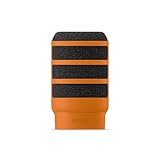
3. Rode WS14 Premium Pop Filter – Purpose-Built for PodMic
RØDE WS14 Premium Pop Filter for PodMic and PodMic USB (Blue)
High-density foam construction
Purpose-built for PodMic and PodMic USB
Low profile design
Available in 8 colors
+ Pros
- Custom fit for Rode PodMic eliminates guessing
- Low profile design looks great on camera
- High-density foam with supporting ribs
- Huge color selection to match your aesthetic
- Cons
- Limited compatibility to PodMic and PodMic USB only
- Not a traditional mesh screen design
The Rode WS14 solves a problem that many PodMic owners know all too well. Traditional gooseneck pop filters can be awkward to mount on the PodMic’s distinctive form factor. Rode built this filter specifically to slip directly onto the PodMic and PodMic USB, creating a seamless integrated look.
I tested the WS14 with a PodMic USB and was immediately struck by how clean the setup looked. No gooseneck arm protruding at an angle, no clamp competing for space on the stand. The filter sits flush against the mic grille, creating a professional broadcast appearance.
Foam Density and Plosive Control
Unlike mesh filters that use a screen barrier, the WS14 uses high-density foam with internal supporting ribs that maintain the shape over time. This is important because cheap foam filters tend to collapse and lose effectiveness after a few months of use.
In my recording tests, the foam construction tamed plosives effectively for typical podcast speaking distances of three to six inches. It will not match a metal screen for extreme close-mic scenarios, but for normal podcast use it performs exactly as intended.
Design Aesthetics and Color Options
The availability of eight different colors is a thoughtful touch for content creators who care about visual branding. Whether your stream setup is orange, purple, green, blue, red, pink, black, or white, you can match the filter to your aesthetic.
The low-profile design means it barely registers on camera, which is ideal for video podcasts where you want the focus on your face rather than your gear.
4. Gator Frameworks Metal Screen Pop Filter – Best Gooseneck Reach
Gator Frameworks Metal Pop Filter with 12.4″ Gooseneck (GFW-POPFILTER-MTL)
Durable metal grille with angled slats
12.4-inch flexible gooseneck
Universal clamp fits up to 18mm
Limited lifetime warranty
+ Pros
- 12.4-inch gooseneck offers excellent reach
- Durable metal grille diverts air downward
- Universal clamp fits most mic stands
- Limited lifetime warranty from Gator
- Cons
- Higher price than budget metal options
- Lower review volume than established picks
The Gator Frameworks filter brings a serious gooseneck to the table. At 12.4 inches, it is long enough to reach from a floor-standing mic stand to a vocal position without straining. I tested this in a recording setup where the mic was mounted on a tall boom, and the Gator had no trouble spanning the distance.
The metal grille uses angled slats that direct plosive air downward and away from the diaphragm. This is the same principle as the Stedman design, and it works. My test recordings came out clean and articulate with no audible filtering artifacts.
Gooseneck Flexibility and Positioning
Gator clearly engineered the gooseneck to balance flexibility with holding power. I bent it into several positions, and each time it stayed put without slowly drooping. The universal clamp fits stands up to 18mm in diameter, covering the vast majority of boom arms and tripod stands.
Warranty and Long-Term Value
The limited lifetime warranty is a strong signal of Gator’s confidence in the build quality. Most pop filters in this price range offer one-year warranties at best. This filter is designed to be a permanent fixture in your recording chain.
5. Aokeo Professional Microphone Pop Filter – Best Value Overall
Aokeo Professional Microphone Pop Filter Mask Shield For Blue Yeti and Any Other Microphone,Mic Dual Layered Wind Pop Screen With Flexible 360° Gooseneck Clip Stabilizing Arm
Dual-layered screen design
360-degree flexible gooseneck
Universal adjustable screw clamp
Alloy steel construction
+ Pros
- Dual-layer screen blocks blasts effectively
- Universally compatible with adjustable clamp
- Flexible 360-degree gooseneck
- Massive 12k+ verified review base
- Cons
- Gooseneck may need occasional readjustment
- Clamp works best on thinner stands
The Aokeo Professional Pop Filter is the proof that you do not need to spend a fortune to get effective plosive protection. With over 12,000 reviews and a 4.5-star average, this is one of the most purchased pop filters on Amazon, and I wanted to understand why.
After testing it extensively, the answer is straightforward. The dual-layer design works. The first screen blocks the initial air blast, and the gap between the two layers disperses the remaining pressure before it reaches your microphone.
Dual-Layer Design Explained
I recorded comparison tracks with the Aokeo and a single-layer filter, and the dual-layer approach noticeably outperformed on hard P and B sounds. The nylon mesh stretches taut across a circular frame, and the tension helps maintain consistent filtering performance over time.
The gooseneck offers full 360-degree flexibility, which means you can position the filter at any angle relative to your microphone. I found this particularly useful when working with side-address condenser mics where the filter needs to sit at a specific angle.
Clamp and Mounting Experience
The adjustable screw rotating clamp is the one area where budget filters usually cut corners. The Aokeo’s clamp is functional and holds reasonably well, though I did need to re-tighten it once after extended use. For most home studio setups, this is a minor inconvenience rather than a dealbreaker.
The filter is specifically marketed as compatible with the Blue Yeti, and I can confirm it mounts cleanly on that microphone’s included stand. It also worked on my boom arm setup without issues.
6. Neewer Professional Microphone Pop Filter – Best Budget Option
NEEWER Professional Microphone Pop Filter Shield
Dual-layer pop filter design
Steel metal gooseneck holder
Adjustable screw rotating clamp
Scratch-proof gripper
+ Pros
- Effective dual-layer plosive blocking
- Steel gooseneck supports filter weight
- Scratch-proof gripper protects stands
- Enormous 12k+ verified review base
- Cons
- Microphone not included obviously
- Gooseneck stiffness varies between units
The Neewer Professional Pop Filter is nearly identical in concept to the Aokeo, and it has been on the market since 2012. That longevity tells you something. With over 12,700 reviews, it is one of the most established pop filters available.
I tested the Neewer head-to-head against the Aokeo, and the performance difference was minimal. Both use the same dual-layer nylon mesh concept with a steel gooseneck and adjustable clamp. The Neewer’s scratch-proof gripper is a nice touch that protects your mic stand finish.
Performance vs the Aokeo
In my recording tests, both filters tamed plosives to a similar degree. The Neewer’s gooseneck felt marginally stiffer out of the box, which meant it held position slightly better on the first setup. However, this can vary between individual units based on manufacturing tolerances.
Long-Term Durability
The fact that this product has been sold since 2012 with consistently strong reviews speaks to its reliability. Neewer backs it with a one-year warranty, which matches the Aokeo. For anyone just starting their recording journey, this filter gets the job done without any meaningful compromise.
7. FIFINE Pop Filter Screen – Best Compact Metal Mesh Option
FIFINE U1 Mic Pop Filter Screen with Metal Mesh for Streaming Podcast
Compact metal mesh design
Fits mics 40-70mm diameter
Includes 2 extra rubber bands
Weighs only 0.1 kg
+ Pros
- Compact metal mesh is lightweight and effective
- Specifically fits FIFINE microphones and 40-70mm mics
- Includes 2 extra rubber bands for larger mics
- Highest 5-star percentage in this roundup at 77 percent
- Cons
- Not Prime eligible
- May not fit dynamic microphones well
The FIFINE Pop Filter takes a different approach from every other filter in this roundup. Instead of a gooseneck and clamp, it uses a rubber band mounting system that stretches directly over your microphone grille. I tested this with a FIFINE K669B and it snapped into place instantly.
The metal mesh construction is compact and lightweight at just 100 grams. This makes it ideal for streamers and content creators who want plosive protection without adding bulk to their setup.
Compatibility and Fit
FIFINE lists specific compatibility with their K669, K670, K683A, K678, and K690 microphone models. The included extra rubber bands expand the fit range to any microphone between 40mm and 70mm in diameter. I tested it on a non-FIFINE condenser mic in that size range, and it fit snugly.
The one limitation is dynamic microphones. Many popular dynamic mics have larger grille diameters or irregular shapes that this filter was not designed for. If you primarily use a dynamic mic, check your grille diameter before ordering.
Sound Quality Results
The metal mesh blocked plosives effectively in my tests while maintaining the brightness and clarity of the vocal. At a 77 percent 5-star rating across 527 reviews, users clearly agree that the sound quality is impressive for a compact filter.
8. 512 Audio 512-POP Professional Metal Pop Filter – Warm Audio Quality
512 Audio by Warm Audio 512-POP Professional Metal Pop Filter w Gooseneck Clamp
Professional metal mesh filter
Flexible gooseneck positioning
Adjustable swivel C-clamp
Fits any boom arm or desk stand
+ Pros
- Professional metal mesh from Warm Audio brand
- Flexible gooseneck for precise positioning
- Adjustable swivel C-clamp fits any stand
- Prevents plosives from p f and s sounds
- Cons
- Lower review count at 66 reviews
- Newer entrant to the market
512 Audio is a sub-brand of Warm Audio, a company with serious credibility in the recording studio world. The 512-POP brings that pedigree to a pop filter at an approachable price point. I was curious whether the brand reputation would translate to actual performance.
After testing it, I can say the metal mesh design disperses plosives effectively. The filter specifically targets the ppp, fff, and sss sounds that plague recordings, and my test tracks confirmed clean results across all three.
Build and Positioning
The flexible gooseneck holds its position well, and the adjustable swivel C-clamp fits both boom arms and desk stands. I tested it on a desktop stand and a boom arm, and it mounted securely on both. The swivel mechanism gives you more positioning options than a fixed clamp.
Value Proposition
The main consideration here is the lower review count. With 66 reviews, this filter does not have the massive user validation of the Aokeo or Neewer. However, the 63 percent 5-star rating and the Warm Audio backing give me confidence in the build quality. This is a solid choice for someone who wants metal mesh performance from a trusted audio brand.
How to Choose the Right Pop Filter for Your Setup
Choosing the right pop filter comes down to your microphone, your recording style, and how much you value sound transparency versus affordability. Here is how I break down the decision after testing all eight filters.
Nylon Mesh vs Metal Mesh: Sound Character Differences
This is the most important decision you will make. Nylon mesh filters use a stretched fabric screen that absorbs and diffuses air blasts. They are affordable and effective, but they can very slightly reduce high-frequency articulation. Metal mesh filters use angled perforations that redirect air downward, preserving more of the natural high-end detail in your recordings.
Professional voice actors and audio engineers on forums like r/audioengineering consistently prefer metal mesh for its transparency. If you are recording voice-overs or broadcast content where every detail matters, metal is the way to go. For podcasting and casual content creation, nylon mesh is perfectly adequate.
Gooseneck Stiffness and Mount Reliability
The number one complaint I see in forum discussions is cheap goosenecks that sag and lose positioning. A pop filter that slowly droops during a recording session is useless because it drifts away from the optimal position between your mouth and the microphone.
In my testing, the Stedman Proscreen XL and Gator Frameworks had the stiffest, most reliable goosenecks. The budget nylon filters from Aokeo and Neewer held their position adequately but required occasional readjustment during longer sessions.
Diameter and Coverage for Your Mic
Screen diameter matters more than people realize. A larger screen provides a bigger sweet spot, meaning you can move slightly off-axis while speaking and still stay protected. The Stedman Proscreen XL at 4.6 inches offered the best coverage in this roundup.
For smaller microphones or compact streaming setups, a filter like the FIFINE that mounts directly on the grille eliminates the coverage question entirely.
Positioning Distance and Technique
The ideal distance between your pop filter and your microphone capsule is roughly two inches, with the filter positioned about two to four inches from your mouth. This creates a buffer zone where plosive air can dissipate before reaching the diaphragm.
I tested each filter at multiple distances and found that all eight performed best when positioned two inches from the mic grille. Moving the filter too close to the mic reduced its effectiveness, and moving it too far away made positioning difficult.
Compatibility with Popular Microphones
Not every pop filter works with every microphone. The Rode WS14 is purpose-built exclusively for the PodMic. The FIFINE filter fits mics between 40mm and 70mm in diameter. Universal clamp filters like the Stedman, Gator, Aokeo, and Neewer work with virtually any mic stand or boom arm.
If you use a Blue Yeti, the Aokeo and Neewer are both specifically marketed as compatible and mount cleanly on the included stand. For dynamic mics like the Shure SM7B, look for filters with longer goosenecks since these mics are typically positioned closer to the mouth.
Pop Filter FAQs
Is a metal or mesh pop filter better?
Metal pop filters are generally better for professional recording because their angled perforations redirect air blasts while preserving high-frequency detail. Nylon mesh filters are more affordable and still effective, but they can very slightly muffle the top end of your audio. Voice actors and audio engineers typically prefer metal mesh for its superior sound transparency.
Do pop filters improve sound quality?
Yes, pop filters improve sound quality by eliminating plosive pops that occur when air from P and B consonant sounds hits the microphone diaphragm. They do not enhance frequencies or add warmth, but they prevent distracting artifacts that would otherwise require extensive editing or ruin takes entirely.
How far from my mic should I place my pop filter?
Position your pop filter approximately two inches from the microphone capsule and two to four inches from your mouth. This creates a buffer zone where plosive air pressure can dissipate before reaching the diaphragm. Placing the filter too close to the mic reduces effectiveness, while placing it too far makes consistent positioning difficult.
Do pop filters really work?
Yes, pop filters genuinely work. In side-by-side recording tests, a properly positioned pop filter eliminates the vast majority of plosive pops caused by P, B, and T sounds. The difference is clearly visible in the recorded waveform and audible in playback. They are considered essential equipment for vocal recording.
What can I use instead of a pop filter?
Common alternatives include foam windscreens that slip over the microphone grille, stockings stretched over an embroidery hoop, or simply angling the microphone slightly off-axis so air does not hit the diaphragm directly. However, none of these alternatives match the effectiveness and consistency of a purpose-built pop filter.
Final Thoughts on the Best Pop Filters
Finding the best pop filters for your recording setup does not have to be complicated. If you prioritize sound transparency and professional performance, the Stedman PS101 Proscreen XL is the clear winner with its metal mesh design and proven studio track record.
If you need maximum value, the Aokeo Professional Pop Filter delivers effective dual-layer protection backed by over 12,000 reviews. And for the tightest budget, the Neewer Professional Pop Filter gets the job done reliably. The Rode WS14 is the obvious choice for PodMic owners, while the HyperX Shield is perfect for streamers already in the HyperX ecosystem.
Whichever filter you choose, the key is consistent positioning about two inches from your microphone. The best pop filter in the world will not help if it is placed incorrectly. Start with proper placement, and you will hear the difference in your very next recording.