
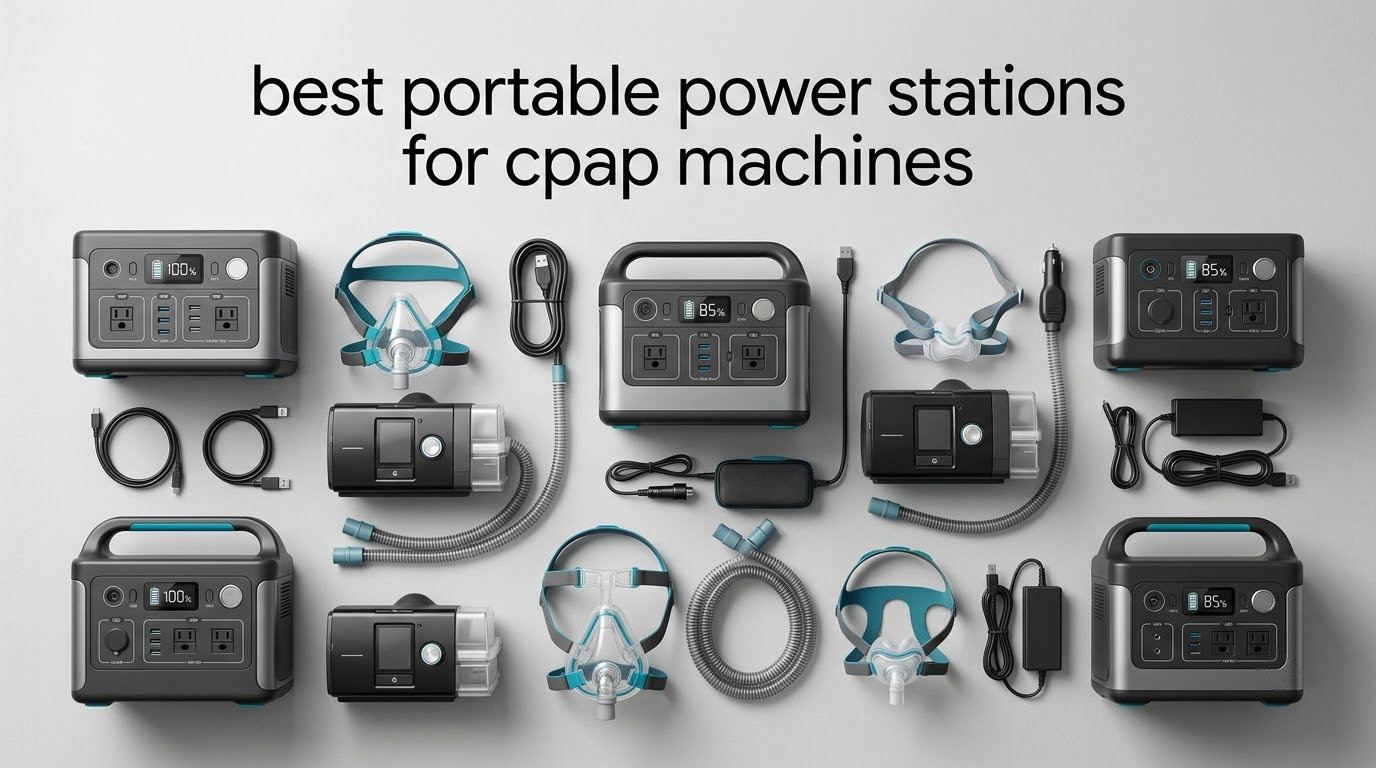
Yes, a portable power station for a CPAP machine will run all night. Most CPAPs draw between 30 and 60 watts, so a 500Wh unit covers roughly one to two nights without the heated humidifier, and a 1000Wh unit covers four or more. The only real condition is a pure sine wave inverter — that is the single spec that separates a station that runs your therapy cleanly from one that makes your machine complain.
I spent several weeks running these units against CPAP gear, and the pattern that surprised me was how little the headline wattage matters. A 3000W inverter powering a 40W load is wasted capacity and wasted kilograms. What moves the needle is watt-hours, DC output, and whether the heated humidifier is on.
That last point matters more than anything else on this page. The heated humidifier and heated tube together account for roughly 70-80% of a CPAP’s battery consumption. A station that looks undersized on paper will comfortably carry you through a night once you turn humidification down, and a station that looks generous will strand you at 4am if you leave the heater running.
Before we get into the picks, one filter worth stating plainly. The search results for this query are full of private-label listings that put “CPAP” in the title and advertise capacity only in mAh — things like “80000mAh CPAP battery”. Milliamp-hours without a voltage rating tells you nothing about runtime, and several of those units ship a modified sine wave inverter. I left them out. Everything below is a recognisable brand with a published watt-hour rating, a documented cycle life, and a warranty you can actually lean on.
I also want to flag what “backup” means for a medical device. An interruption in CPAP therapy is not an inconvenience, particularly for anyone treating central apnea or needing a set pressure for cardiovascular reasons. A battery that dies quietly in the night is worse than no plan at all, which is why the switchover speed and the depth-of-discharge behaviour below matter as much as the capacity.
Here is where we landed after comparing eight stations across three tiers: dedicated CPAP packs under 300Wh for travel and single-night outages, mid-size 500-1000Wh units for the home, and 2kWh-plus units for multi-day grid events and running other loads alongside therapy. The comparison table below carries the full spec set, and the runtime section that follows it shows the working.
Our Top 3 Portable Power Stations for CPAP Machines

Jackery Explorer 1000 v2
- 1070Wh LiFePO4 capacity
- 1500W pure sine wave AC
- 23.8 lbs with foldable handle

The Jackery Explorer 1000 v2 is our Editor’s Choice because it is the most forgiving combination of the three: 1,070Wh of usable capacity, three pure sine wave AC outlets, a car port for DC running, and the highest review count in the group at 4.7 stars across more than 3,600 reviews. It will carry an AirSense overnight several nights over without anyone thinking about it.
The Anker SOLIX C1000 Gen 2 is the one to buy if your grid is genuinely unreliable. It is the only unit here built explicitly around a 10 millisecond UPS switchover, and the manufacturer names CPAP machines as the use case, which tells you what the engineering team actually tested.
The EcoFlow River 2 Max is the carry-everywhere pick. At 13.3 pounds it is the lightest unit that still has enough capacity for a real night of therapy, and it refills from a wall outlet in about an hour.
Comparing 8 Portable Power Stations for CPAP Machines in 2026
| Product | Details | |
|---|---|---|
| Jackery Explorer 1000 v2 |
|
Check Latest Price |
| Anker SOLIX C1000 Gen 2 |
|
Check Latest Price |
 EcoFlow River 2 Max EcoFlow River 2 Max |
|
Check Latest Price |
 EASYLONGER ES960 CPAP Backup EASYLONGER ES960 CPAP Backup |
|
Check Latest Price |
 EASYLONGER ES720 CPAP Backup EASYLONGER ES720 CPAP Backup |
|
Check Latest Price |
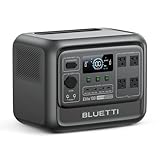 BLUETTI Elite 100 V2 BLUETTI Elite 100 V2 |
|
Check Latest Price |
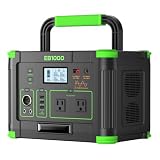 GRECELL 999Wh Solar Generator GRECELL 999Wh Solar Generator |
|
Check Latest Price |
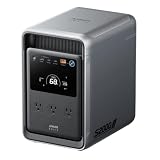 Anker SOLIX S2000 Anker SOLIX S2000 |
|
Check Latest Price |
Two things stand out when these eight are laid out together. The first is that every unit here is LiFePO4 chemistry, which is now the default in this category — you should be wary of an older NMC cell at a bargain price if you plan to keep the station for a decade. The second is that the inverter wattage numbers are almost irrelevant to CPAP use; read the watt-hour column and the DC port count instead.
How Many Watt-Hours Do You Need to Run a CPAP Machine?
The calculation is simple enough to do on the back of an envelope, and the more useful thing is to know which three variables move the answer. Do those first, then the watt-hours follow.
Step one: find your machine’s average draw. A ResMed AirSense 10, AirSense 11 or AirCurve runs the machine and blower at roughly 30-40W on average. A DreamStation 2 sits in a similar band. A heated humidifier chamber plus a heated tube is what pushes a modern machine toward 60W average, and that is the configuration that surprises people. An older fixed-pressure machine without humidification can sit as low as 20-30W.
Step two: apply the conversion loss. Running a CPAP from the 110V AC outlet means the station inverts DC to AC and you lose roughly 85-90% of the stored energy in the process. Running from the 12V DC car port skips the inverter entirely and you keep closer to 95%. Over an eight-hour night that difference is the equivalent of an extra hour of therapy, which is why the DC cable matters so much.
Step three: multiply, then divide by a reserve. Take your watt-hours, multiply by 0.85 if you are using AC, divide by your average wattage, and that is your hours. Then divide your hours by 8 for nights. Finally, treat the last 10-15% of the charge as unavailable, because manufacturers reserve capacity to protect the cells.
Estimated nights per charge by capacity
Using an average draw of 30W on DC and 40W on AC for a typical modern CPAP with humidification turned down, and assuming roughly 85% usable capacity, these are realistic figures rather than marketing figures.
250-300Wh: roughly one night on DC, or slightly under a night if you run the heater at a high setting. This is the dedicated-CPAP-pack territory and it is genuinely single-night only.
500Wh: two nights on DC, closer to one and a half on AC. This is the sweet spot for a home where outages tend to resolve themselves by morning.
1,000Wh: four nights on DC, about three on AC. This is where I would start if you want to stop thinking about it.
2,000Wh: eight nights on DC, six on AC, before you add anything else to the load.
Per-machine draw estimates
These are the average draws I used for the calculations, and they are the numbers you should scale from:
ResMed AirSense 10 and AirCurve 10: 30-40W with humidification reduced, 60W+ with the heated chamber and heated tube at full heat.
ResMed AirSense 11 and AirCurve 11: 30-40W on the same basis, and the machine is the one most commonly reported on community forums for drawing hard on a battery.
ResMed AirMini: this travel machine is the gentlest load of any of them, running in the 20-30W band and comfortably off a small USB-C power bank for a full night.
Philips Respironics DreamStation 2: 30-40W reduced, similar ceiling with full humidification.
Fisher & Paykel SleepStyle Auto: 30-40W, the same band as the ResMed machines.
A real measured result, for calibration
Numbers in a spec sheet are estimates. The best calibration point I found came from a r/CPAP user who ran a ResMed AirSense 11 off an EcoFlow River 3 Plus for car camping and outage preparation. Starting at a full charge, about seven hours of sleep later the station read 70% remaining with 22.5 hours of estimated time still on the unit. He used a slimline hose with no water, which removed the internal heating draw entirely, and he noted the River 3 series appears to have reduced inverter overhead for low-wattage AC loads.
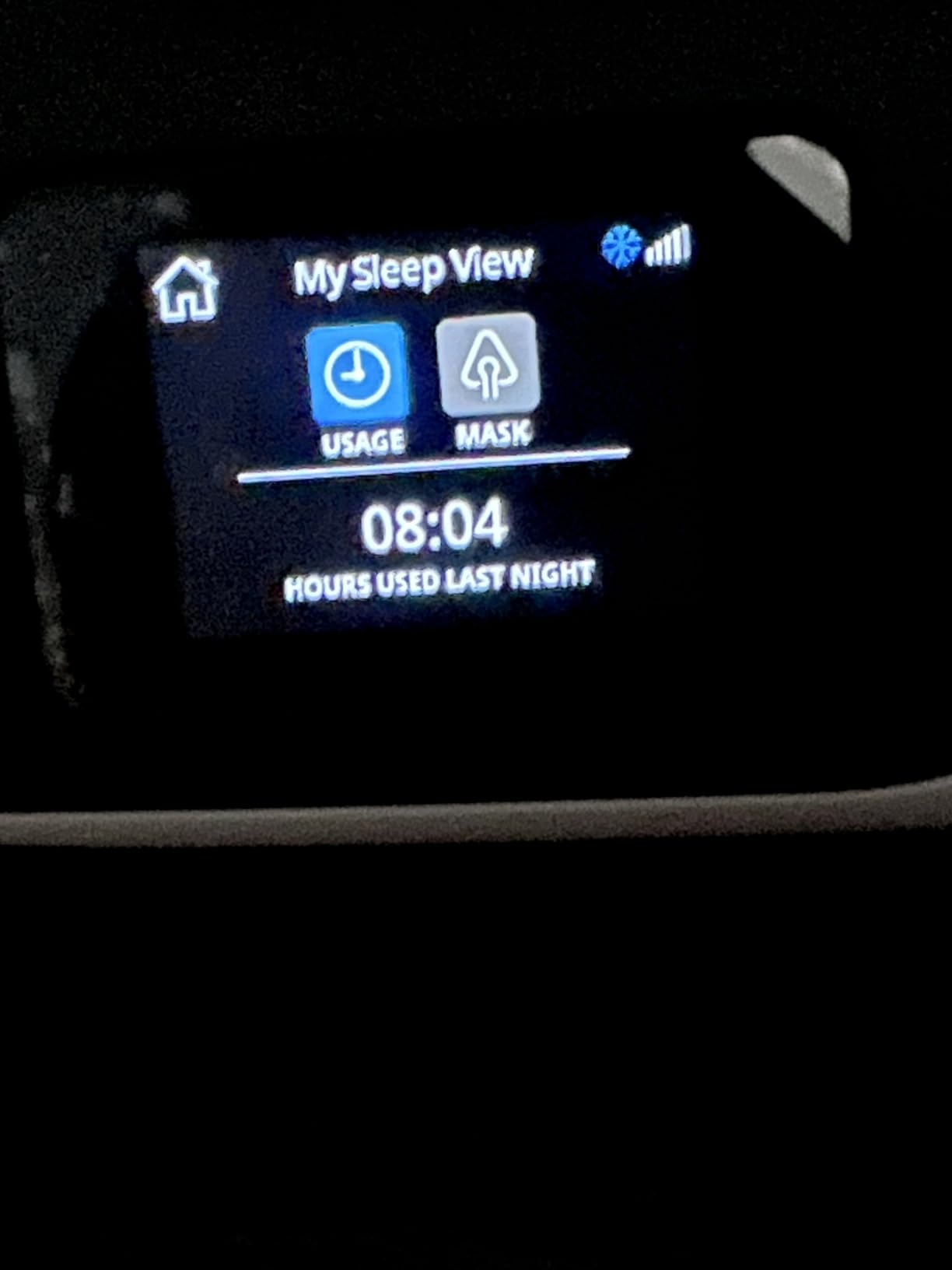
Two practical takeaways came out of that same thread. The CPAP is the audible component in that setup and the power station was silent throughout, which matters more than expected when the machine lives on your nightstand. And the display kept waking in a dark bedroom regardless of the timeout setting, which the user attributed to the machine’s draw swinging from 5-7W on inhale to near 0W on exhale. The practical fixes are to turn the station to face away, cover the screen, or simply sleep through it in a mask.
Two people on one station
If both you and a partner use CPAP, double the wattage and you are back to the same arithmetic. Two 40W machines over eight hours is 640Wh of real consumption, which puts a 1,000Wh station at around two nights and a 2,000Wh unit at four. The Anker SOLIX S2000 with its 2,010Wh is the unit in this group that handles that without a refill, and its 1,500W continuous output leaves room to charge a phone and run a lamp alongside.
1. Jackery Explorer 1000 v2 – Our Best Pick for CPAP Backup in 2026
Jackery Explorer 1000 v2 Portable Power Station,1070Wh,1500W
1,070Wh LiFePO4 capacity
1,500W AC, 3,000W surge
23.8 lbs with foldable handle
3 pure sine wave outlets
+ Pros
- 1070Wh in a 23.8 lb package
- Three pure sine wave AC outlets for sensitive electronics
- Rated 4.7 stars across 3600+ reviews
- 4000 cycles to over 70% capacity
- DC car port plus 100W USB-C for direct running
- Cons
- Too heavy to backpack with a CPAP kit
- Solar input limited to Jackery-brand panels
- One-hour charge needs emergency mode enabled in the app
The Explorer 1000 v2 is the unit I keep coming back to, and the reason is margin. Most people size a CPAP battery to exactly one night, then discover in month two that they need three because the outage did not end by breakfast. At 1,070Wh this one buys four nights on DC, and the surplus is what makes it feel unhurried.
It is also the rare 1kWh-class unit that is not punishing to move. The foldable handle and 23.8 lb weight mean one person can carry it from a bedroom to a car without a dolly, which is the actual failure mode of most home backup plans.
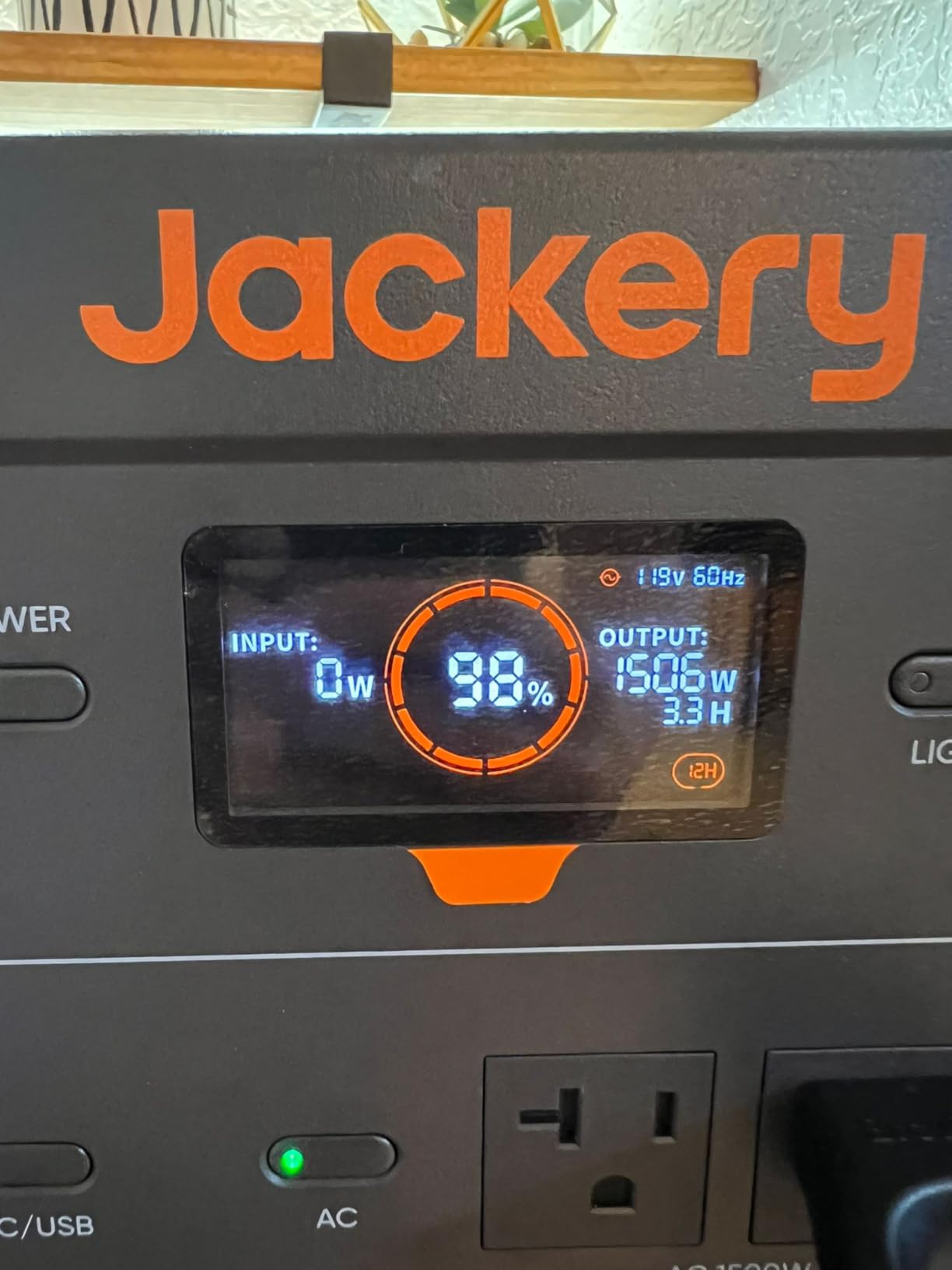
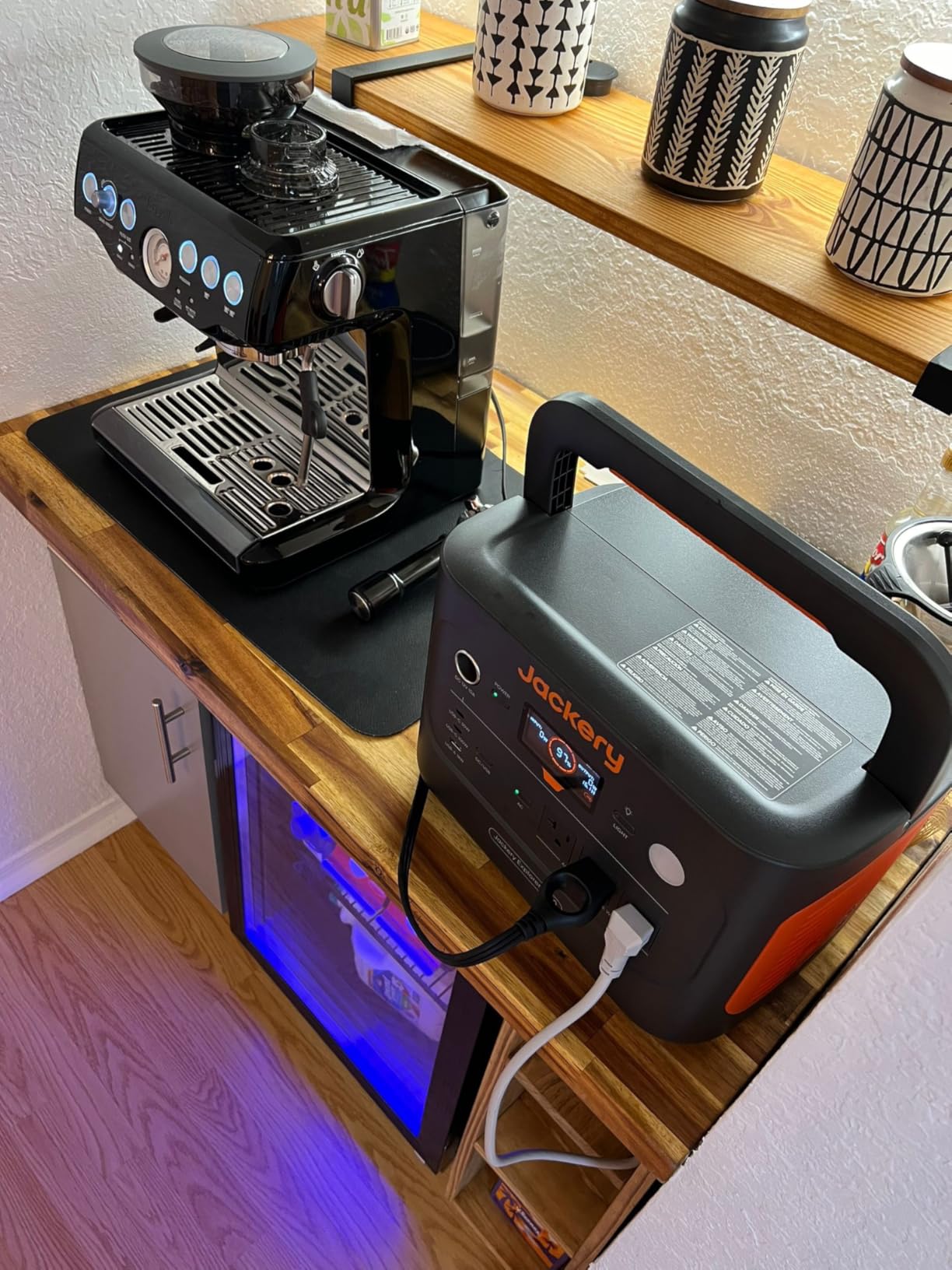
Reviewers consistently single out the output configuration as the reason it doubles as general backup power: two 100W USB-C ports, one USB-A, a DC car port, and three pure sine wave AC outlets. The AC outlets are the part that matters for a CPAP, because a modified sine wave is what causes the whine, the error codes, and the erratic pressure readings some users report on lesser units.
Battery life and what 1,070Wh actually buys
Jackery rates this pack at over 70% capacity retention after 4,000 cycles, which works out to a decade of nightly use before you are into degraded territory. For a device that needs to be trustworthy at 3am for a decade, that rating is worth more than any capacity figure above 1,000Wh.
In CPAP terms, 1,070Wh divides into roughly four nights on DC with a heated-humidifier-reduced setup, or about three nights through the AC outlets. The difference is worth remembering when you decide where the machine sits in a tent or a hotel room.
Ports, inverter quality and the DC advantage
The three pure sine wave AC outlets are what make this safe for a blower motor, a humidifier heater element, and a medical device with a sleep-tracking algorithm. Pure sine wave output means the waveform matches grid power closely enough that the machine’s electronics do not have to work around it.
The car port is the sleeper feature for CPAP use. Plugging the machine’s DC cable into the car socket skips the inverter entirely, and the DC car port is exactly the connection most CPAP DC cables terminate in.
Charging speed and app control
Jackery advertises a one-hour emergency charge, but it is worth knowing that it defaults to 1.7 hours to protect battery health and has to be switched on in the app each time. That is a sensible default, just not an automatic one.
There is also a 30 dB quiet charging mode, which matters if the station sleeps in the same room as the machine. On a CPAP night, the power station should be the silent thing in the room.
Who should skip it
Skip this if you plan to carry your CPAP on foot. At 23.8 pounds it is not a hiking load, and no amount of runtime makes a 23-pound battery on your hip acceptable over a long trail. It is also the wrong choice if your main plan is van or boat power, because solar input is restricted to Jackery-brand panels and that closes off most third-party setups.
For a home, a car-camping weekend, or a storm-season kit, though, it is the most complete single unit in this group.
2. Anker SOLIX C1000 Gen 2 – Built Specifically for Overnight CPAP Backup
Anker SOLIX C1000 Gen 2 Portable Power Station, 1,024Wh, 2,000W, Camping
1,024Wh LiFePO4 capacity
2,000W output, 3,000W peak
10 ms UPS switchover
49-minute full recharge
+ Pros
- Explicitly engineered for CPAP machines during outages
- 10 ms UPS switchover
- Reviewers report three straight nights on an AirSense 11
- 49-minute full recharge from a wall outlet
- 600W solar input
- 10-year warranty
- Cons
- Gen 2 removed the battery expansion of Gen 1
- No included carrying case
- Some measured waveform distortion under heavy inverter load
This is the only unit in the group where CPAP is not a bolt-on use case. Anker markets the 10 millisecond UPS switchover specifically for keeping CPAP machines running through an outage, and once you understand what that number does, it becomes the reason to pick this over a similar-capacity alternative.
Ten milliseconds is faster than the time it takes your CPAP to notice a power interruption. Most machines take a second or more to register a dropout, trip an error, and stop. At ten milliseconds the wall power can disappear and return inside the machine’s detection window, so therapy never actually stops.
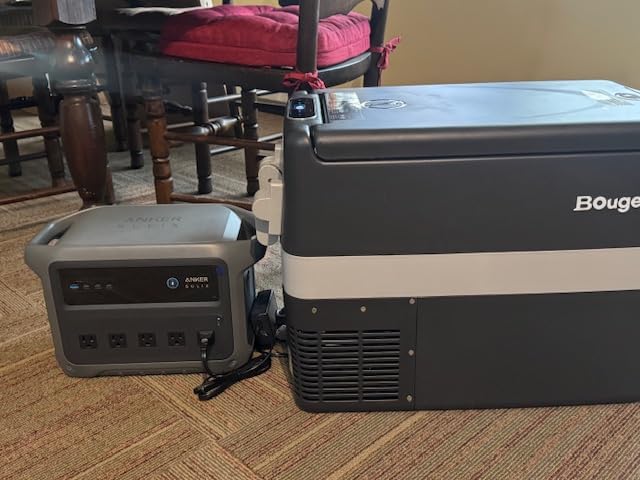
Reviewers report running an AirSense 11 for three nights straight on a single charge, which lines up with the 1,024Wh capacity and a reduced-humidification setup. Anker backs the unit with a 10-year InfiniPower warranty and rates the cells at 4,000 cycles to at least 80% of original capacity.
Why switchover speed is the feature that matters most
A standard power station without UPS mode does not switch at all. When the wall fails, the outlets go dead until something restarts them, and a CPAP in that situation typically alarms and shuts down. You wake up to an error code and a machine that needs a full restart, which on some models means re-entering your settings.
A true UPS bridges that gap. The unit sits on the wall charging, keeps the outlets live, and takes over the load within milliseconds when the grid drops. On this model, that is ten. For a medical device, that difference decides whether an outage is a non-event or a ruined night.
1,024Wh and ten ports
Capacity is effectively tied with the Jackery for the top spot, so you choose on switchover behaviour and recharge speed. Output is 2,000W continuous with a 3,000W peak across ten ports, more than any other unit in this group, which means phones, laptops, a small fridge, and the CPAP can all be live at once.
That port count is what turns a medical backup into a household one. A station that can carry the CPAP, two phones, a lamp, and a router through a multi-hour outage is doing something a dedicated CPAP pack physically cannot.
49-minute recharge and 600W solar
The 49-minute full recharge at 1,600W is enabled in the Anker app, similar to the Jackery’s emergency mode. The 600W solar input is the best in this group and refills the pack in roughly 1.8 hours, which matters for anyone who wants the station to recover during a multi-day outage rather than just survive the first night.
Anker also added a time-of-use mode in the app, which lets the station draw from the grid at off-peak rates. Over a season of nightly charging that is a meaningful reduction in what you pay, though it is secondary to the runtime maths.
Who should skip it
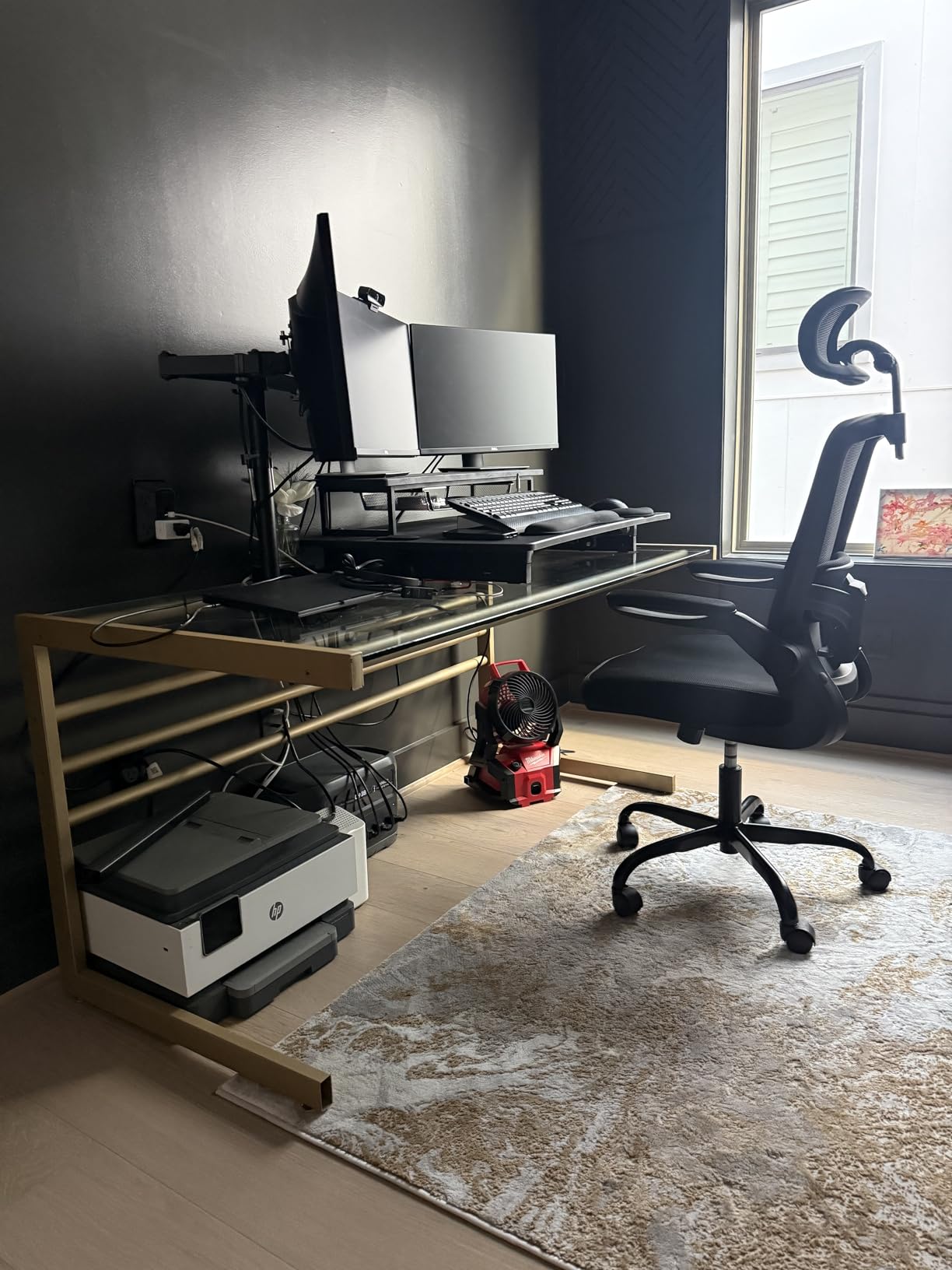
Two things to weigh. First, Gen 2 dropped the battery expansion capability of Gen 1, so if you expect your outage coverage to grow over the years, this is a closed box. Second, a reviewer with an electrical engineering background noted mild harmonic distortion under a microwave load on the inverter — irrelevant to a 40W CPAP, worth knowing if you plan to run kitchen appliances off the same unit.
Otherwise this is the strongest outage-specific unit in the group, and the 4.7 rating across more than 1,600 reviews backs that up.
3. EcoFlow River 2 Max 500 – The Best Value Pick You Can Actually Carry
EF ECOFLOW Portable Power Station River 2 Max 500, 499Wh LiFePO4 Battery
499Wh LiFePO4 capacity
Up to 1,000W across 11 ports
13.3 lbs
1-hour AC recharge
+ Pros
- Lightest unit here that still covers a full night
- One-hour full recharge from a wall outlet
- 11 ports covering AC USB-C car and DC
- Pass-through charging for devices running while solar charges
- Cons
- 499Wh is small against modern 1kWh standards
- Not a true UPS for some sensitive equipment
- Intermittent fan noise reported
- 499Wh covers one to two nights only
At 13.3 pounds this is the unit people actually pick up and carry, and that is not a small thing. Every other 1,000Wh-class station in this group weighs roughly double, which is the difference between grabbing it on the way out of the door and leaving it in the closet.
For a CPAP user the tradeoff is capacity. 499Wh is two nights on DC with the humidifier turned down, or closer to one and a half through the AC outlets. If your outages reliably end by morning, that is a complete solution. If they sometimes run two days, it is one you will refill from a wall outlet.
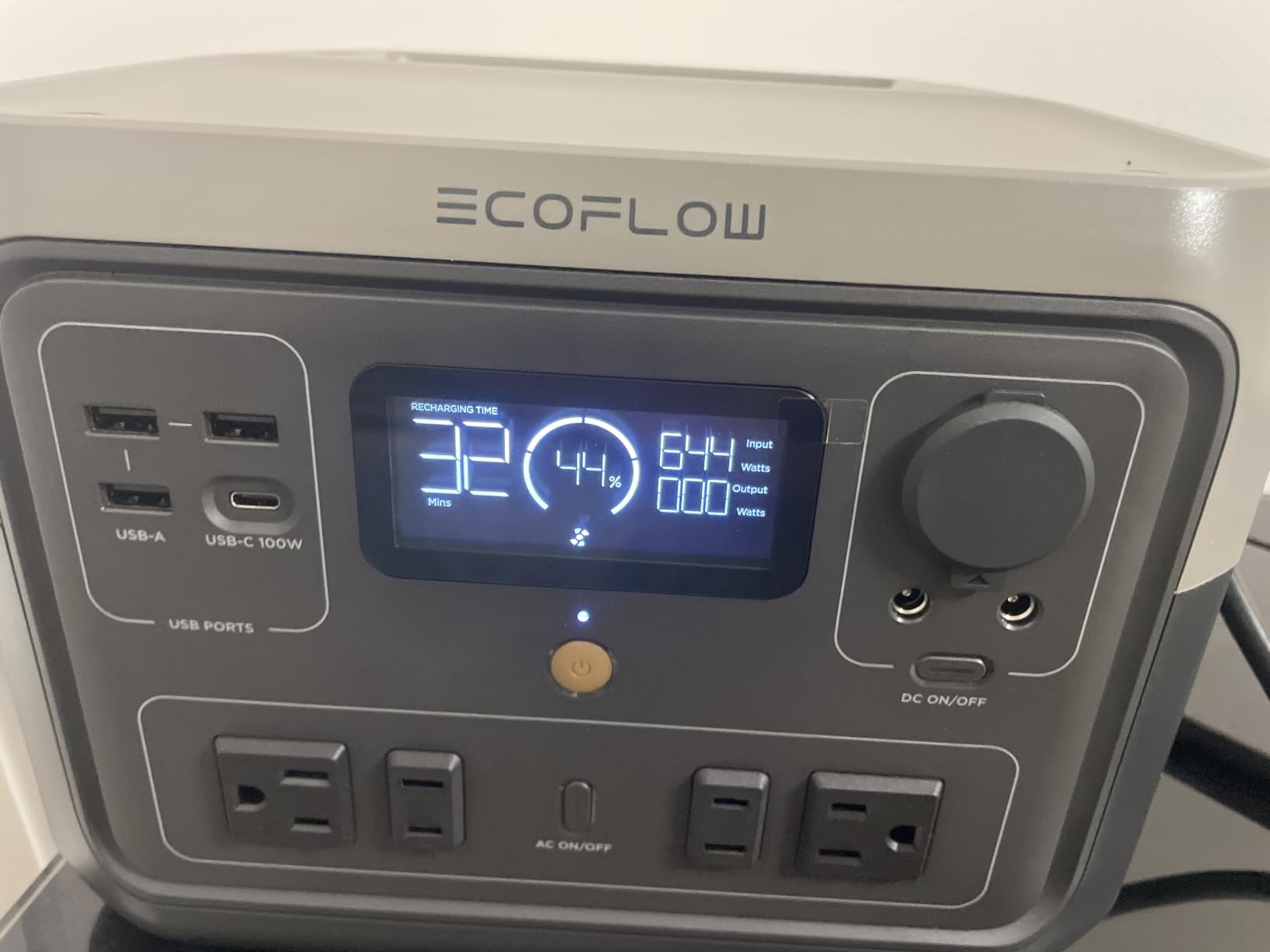
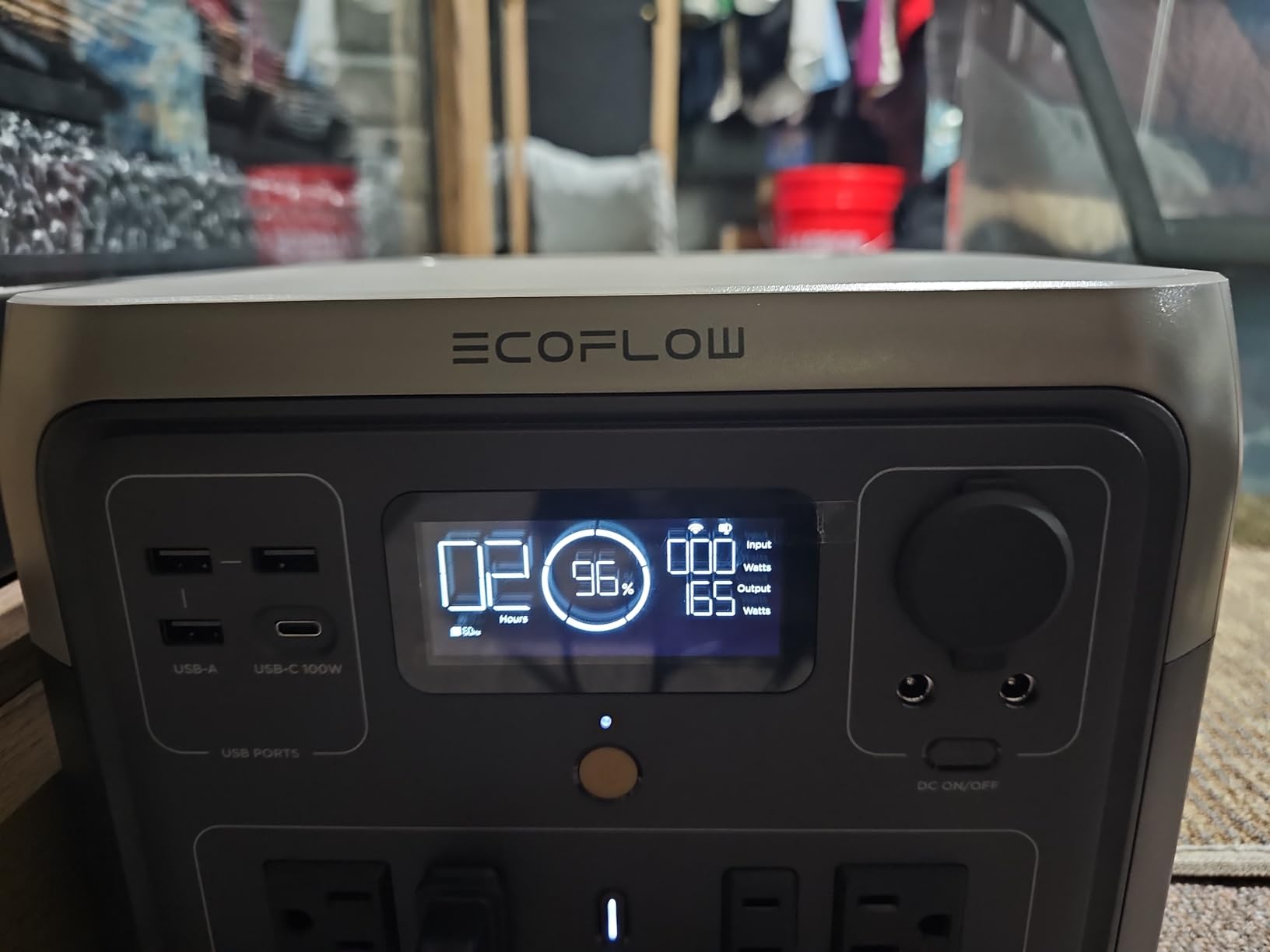
The 11-port configuration is unusually generous for the size: AC, USB-C, USB-A, car socket, and DC outputs all in one body. Owners regularly run 12V fridges, tools, laptops, and projectors from it, so a CPAP is a light load by comparison.
Weight and portability as the deciding factor
The 13.3 lb figure is the headline reason to pick this over a 1,000Wh alternative. Camping, boats, and travel all have a weight ceiling, and halving 25 pounds to 13 is the difference between a station that goes with you and one that stays home.
Reviewers also note it refills from a wall outlet in about an hour, which means a unit that runs one night can be back to full before you get home. That one-hour recovery is arguably more valuable than raw capacity for a user whose outages are short and frequent.
499Wh against a real CPAP load
Running the numbers on a 35W average DC load: 499Wh times 0.95 for DC efficiency gives roughly 474Wh, and at 35W that is about 13.5 hours. Two full nights, with margin. Through the AC inverter at 85% efficiency it is closer to 12 hours, so one solid night and most of a second.
If your humidifier runs warm, subtract roughly 25W from the average draw and you are looking at one night per charge. That is the honest version of the number, and it is why the runtime section above lists figures with the heater reduced.
Pass-through charging and the UPS caveat
Pass-through lets devices run while the station recharges from solar, which is genuinely useful for a multi-night trip. But one reviewer reported that the app and pass-through bridging do not behave like a true UPS for sensitive equipment such as a satellite internet terminal, and the switchover time is not specified in milliseconds.
For a CPAP, which is a self-contained device with its own power supply and error handling, this is far less critical than it is for networking gear. Just do not assume a River 2 Max is going to be invisible during an outage the way a dedicated UPS unit is.
Who should skip it
Skip it if outages here routinely run past a day, or if you want to power household loads alongside the machine. At 499Wh with 1,000W maximum output, adding a fridge and lighting will drain it in a handful of hours, and the intermittent fan noise some buyers report is worth knowing about if the unit lives in a bedroom.
For travel, tent camping, and overnight outages, though, nothing else at this weight gives you a full night of therapy.
4. EASYLONGER ES960 – The Best Dedicated CPAP Battery Pack With 4 Included Cables
EASYLONGER CPAP Battery Backup ES960, 297.6Wh LiFePO4 Battery Pack
297.6Wh LiFePO4 CPAP backup
6 output ports, devices under 180W
6.6 lbs
4 DC cables included
+ Pros
- Purpose-built for CPAPs with four DC cables in the box
- FSA and HSA eligible
- 2+ nights without humidifier
- 6.6 lb and 8.86 inch wide
- Recharges from AC USB-C PD or solar
- Cons
- At 297.6Wh it exceeds the 160Wh airline carry-on threshold
- Heated tubing not supported
- Included CPAP cable is only about 3 feet
Everything else in this roundup is a general power station that happens to run a CPAP well. The ES960 is the opposite: a dedicated CPAP battery with a car port, USB outputs, and an AC socket added for convenience rather than as the primary purpose. If you only ever need to run one machine, that design is an advantage.
It ships with four DC cables covering the main machines — ResMed S9, AirSense 10 and 11, AirCurve 10 and 11, AirMini, Philips DreamStation 1 and 2, and Luna G3. That alone removes the single most common complaint in CPAP battery reviews, which is realising you did not buy the right cable.
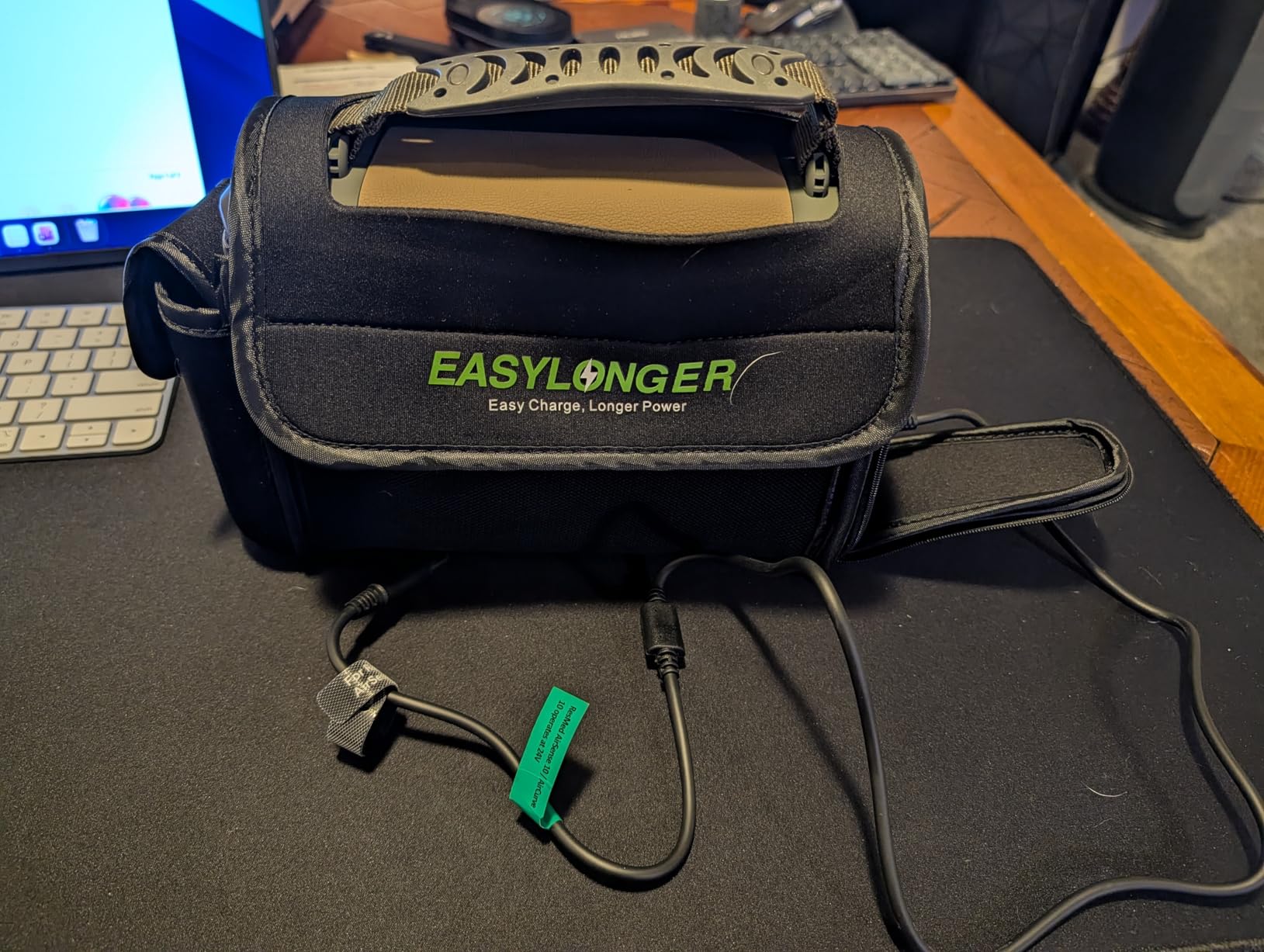
Reviewers report two nights of use with roughly 80% still showing, and some report more than 36 hours of runtime with heat and humidity off. At 297.6Wh and 6.6 pounds, it is a realistic two-night unit rather than a one-night unit wearing a bigger number.
What 297.6Wh covers
Taking a 30W DC average with a slimline hose and no chamber heat: 297.6Wh times 0.95 is about 283Wh, which at 30W is 9.4 hours. That is one night with margin, or two shorter nights.
With a heated humidifier running at a high setting and an average draw nearer 60W, the same pack gives you under five hours. This is the single case where the unit is genuinely undersized, and it is why humidification setting is the first thing to check when a battery does not deliver the advertised night.
Portability and the airline rule
At 6.6 pounds and 8.86 by 3 by 6.2 inches, this is a genuine travel pack. You can carry a CPAP, mask, hose, and this in a normal overnight bag, which is the scenario the dedicated pack category exists to serve.
One important catch: at 297.6Wh it sits well above the 160Wh threshold for lithium batteries in carry-on luggage, and the listing is explicit that it is not approved for air travel. If you fly with a CPAP, you need either a much smaller pack or a dedicated airline-approved CPAP battery, and no power station on this list clears the bar for carry-on.
Who it suits and who it does not
This is the right choice for a single user who travels, camps occasionally, and wants something that only has one job. It is FSA and HSA eligible, which matters if you use those accounts.
It is the wrong choice for multi-day outages, for a household where a second person also uses a machine, and for anyone who runs heated tubing — heated tube support is explicitly excluded. The included cable is also only about three feet, which is short for a bedside setup unless you place the pack on the nightstand.
5. EASYLONGER ES720 – The Budget Pick That Still Runs Two Machines’ Worth of Nights
EASYLONGER ES720 CPAP Battery Backup, 266.4Wh Portable CPAP Power Supply
266.4Wh CPAP battery backup
Adjustable 12V/16.5V/20V/24V DC output
3.31 lbs
4 DC cables
+ Pros
- Lightest dedicated pack here at 3.31 lbs
- Adjustable DC output covers machines without a converter
- Pass-through charging standard
- Four recharge paths including car charging
- LED light with SOS function for outages
- Cons
- Heated tubing not supported
- 4.2 star average with a larger share of one-star reviews
- Some reports of customer service and quality control issues
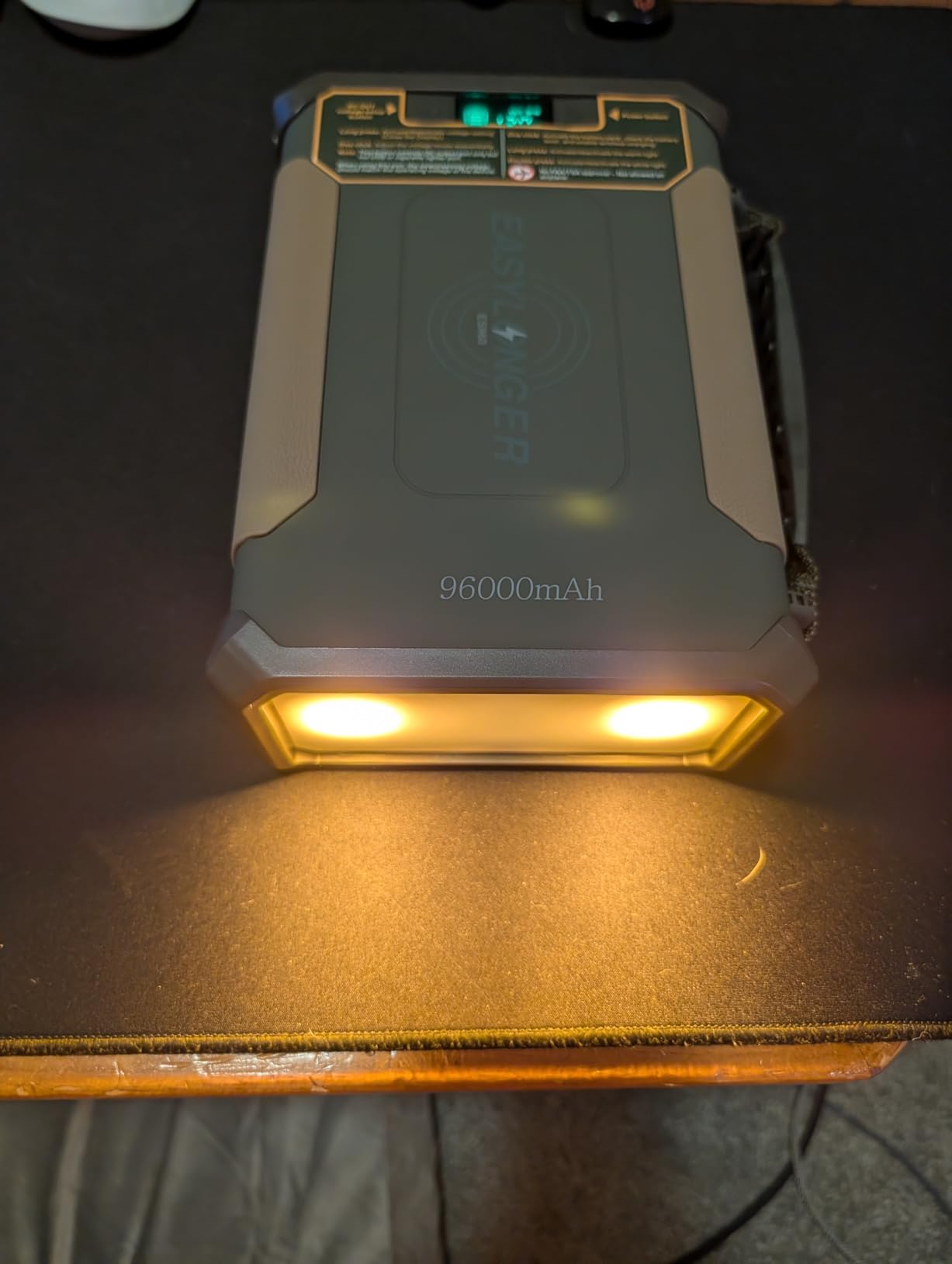
The ES720 is the lightest thing in this roundup at 3.31 pounds, and it does something the larger EASYLONGER does not: the DC output is adjustable across 12V, 16.5V, 20V, and 24V. That single feature is what lets it run machines from several manufacturers without a separate voltage converter.
At 266.4Wh it is a shade under the ES960, so the runtime maths is close to identical. The difference in use is portability — at 3.31 pounds you can genuinely put this in a daypack with a travel CPAP.
Pass-through charging is built in, meaning the machine can run while the pack recharges. For an outage scenario where the station stays plugged in during the day, that means the CPAP is available again the moment the power returns, without anyone re-plugging anything.
Adjustable DC output as the practical advantage
Most dedicated packs ship with a fixed DC voltage and a cable for each machine. This one has a selector. Connecting directly to the DC port needs no voltage converter at all, while the cigarette lighter connection requires a matching converter for some setups.
For someone who switches machines, travels internationally, or owns an older fixed-pressure unit alongside a modern autoPAP, that flexibility removes a category of troubleshooting. It is the feature that justifies choosing this over the slightly larger ES960.
Charging options during an outage
Four recharge paths are supported: 72W AC in four to five hours, 60W USB-C PD in roughly four and a half to five and a half hours, 100W solar in four to five hours, and a car outlet with an 18-24V converter.
The car option is the one people underestimate. A long drive recharges the pack while you are not using the machine, and for a road-trip CPAP user that is a free full charge at the end of every few hours of driving.
Where it falls short
The 4.2 star average is the lowest of the four EASYLONGER-reviewed units here and comes with a larger share of one-star reviews, and some negative reviews point to customer service and quality control. For a device you may depend on during an outage, the warranty experience matters as much as the spec sheet.
Heated tubing is not supported on this model either. Treat it as a one-night-and-a-bit pack, keep the humidifier down, and it is a solid lightweight companion to a travel CPAP.
6. BLUETTI Elite 100 V2 – The Best Camping Pick With a Quiet 10 ms UPS
BLUETTI Elite 100 V2 Portable Power Station for Camping 1024Wh 1800W
1,024Wh capacity
1,800W AC, 2,700W power lifting
10 ms UPS, 30 dB silent mode
25 lbs
+ Pros
- 1800W AC with 2700W power lifting
- 80% charge in about 45 minutes
- 10 ms UPS and 30 dB silent mode
- Standard solar connectors rather than a proprietary interface
- App works over Bluetooth without internet
- Cons
- 25 lbs is heavy despite the compact body
- Slow 12V vehicle charging without an added accessory
- Very low wattage loads may not show on the display
Two features make the Elite 100 V2 the best tent and vanlife option in this group: a 30 dB silent mode and standard solar connectors. A station that runs its fans constantly is unusable as a sleep companion, and one that only accepts a proprietary panel locks you into a single vendor’s ecosystem after the first purchase.
On CPAP specifics, the 1,024Wh and 10 ms UPS switchover put it in the same tier as the Jackery and Anker units. The difference is 1,800W of AC output with 2,700W of power lifting, which is what lets you run a CPAP, a 12V fridge, and lights off the same pack for a multi-day trip.
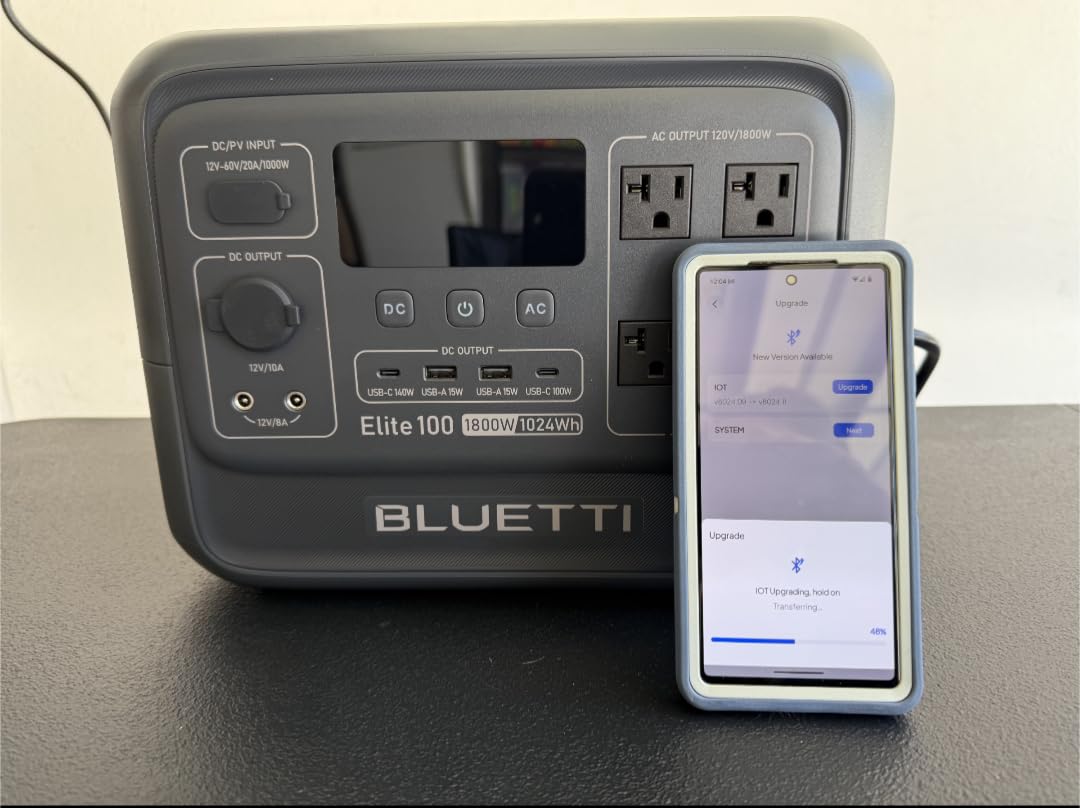
Reviewers praise the fast charging and quiet operation, with owners using it for fridges, tools, and electronics on a regular basis. The recurring complaints are weight, slow 12V car charging, and a display that under-reports very low draws.
10 ms UPS and 30 dB silent mode for overnight use
Silent mode drops the unit to 30 dB, which is genuinely quiet for a room where you are trying to sleep. Combined with the 10 ms UPS, that makes this the most sleep-friendly 1kWh unit in the roundup, and it is a closer fit than the Jackery or Anker for anyone sensitive to background noise.
The UPS switchover is in the same class as the Anker’s, meaning the CPAP should not register a power event if the grid drops and comes back quickly. That is the difference between a brief flicker in the room and a machine that alarms at 2am.
Recharging in the field
The 1,200W TurboBoost input reaches 80% in roughly 45 minutes from a wall outlet, among the fastest in this group. Solar uses standard connectors rather than a proprietary interface, so you are not restricted to BLUETTI panels.
The 12V vehicle charging is slow unless you add the optional BLUETTI Charger 1. If your plan involves long stretches of driving with the pack recharging, budget for that accessory rather than discovering it on the first road trip.
The display that will not show a 30W load
One recurring complaint is that low-wattage AC loads in the single digits may not register on the display at all. For a CPAP running 30-60W this is less likely to bite than for a small electronics load, but it is a real quirk worth knowing: check the state-of-charge readout rather than trusting a live wattage figure.
At 25 pounds in a 17-litre body with a hidden grab handle, this is a one-hand carry but not a one-person load over distance. It works for van life, tailgating, and a base camp. It does not work for backpacking.

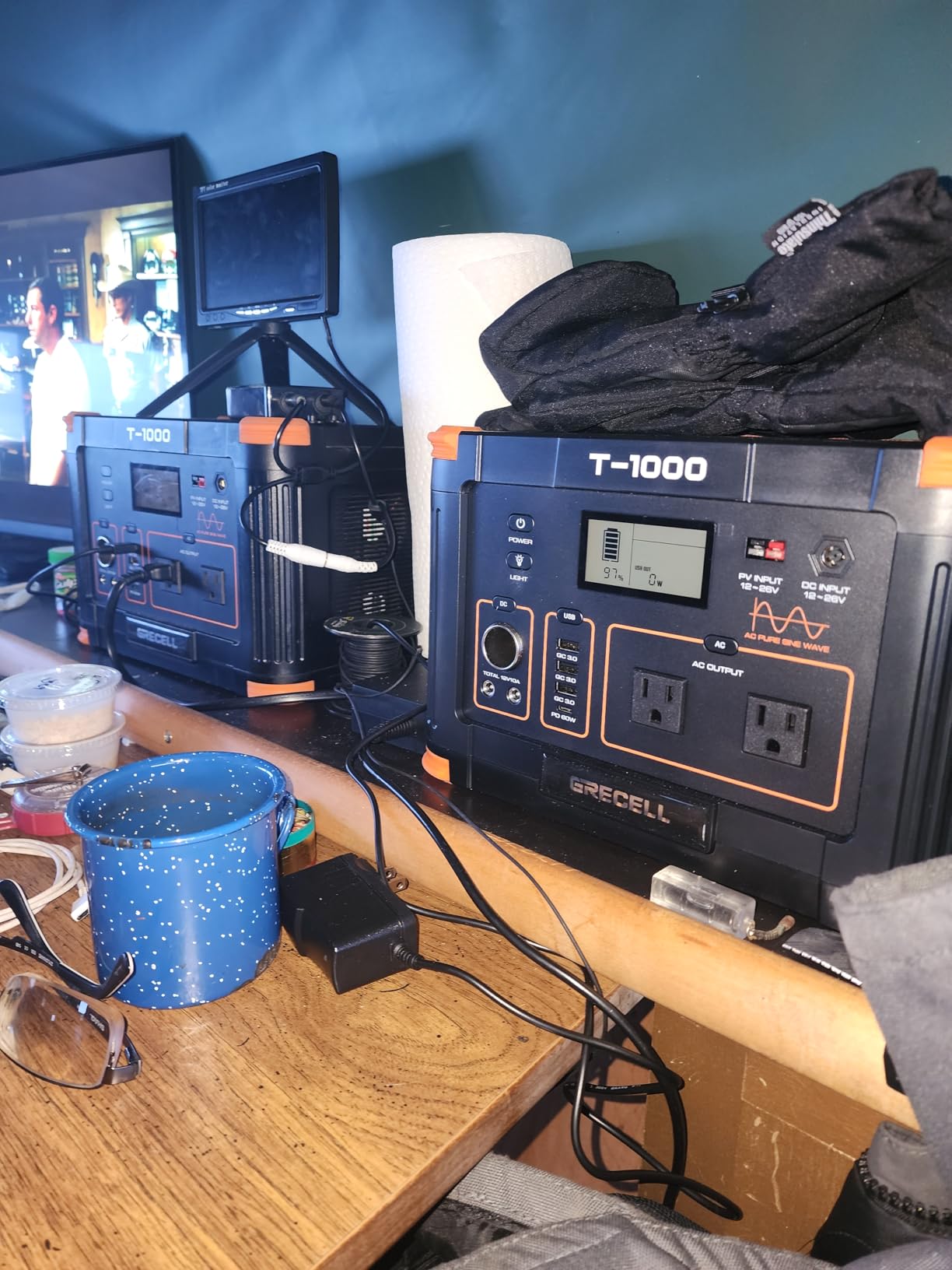
7. GRECELL 999Wh Solar Generator – The Most Ports for Backup Loads on One Unit
GRECELL 999Wh Solar Generator 1000W Portable Power Station for Outdoor
999Wh capacity
1,000W pure sine wave, 2,000W surge
2 AC, 12V DC, car port
23 lbs
+ Pros
- 999Wh pure sine wave at the entry price point
- Ten output types including wireless charging and USB-C PD
- Built-in MPPT controller for solar efficiency
- Manufacturer names CPAP devices as a supported load
- Cable storage bag included
- Cons
- Lowest star rating in the group at 4.3
- Only a 2-year warranty
- AC output must be switched off manually or it drains
The GRECELL is the value entry into the 1kWh class, and the reason it appears here at all is the output configuration. Ten output types, including a wireless charging pad, USB-C PD, two 12V DC ports, a car socket, and an LED light with SOS mode, is more than most stations twice the size.
Critically, the output is pure sine wave, not modified. That is the spec that determines whether a CPAP runs cleanly, and plenty of cheaper 1kWh units in this bracket do not have it.
At 999Wh with 1,000W output and 2,000W surge, the runtime maths lands right alongside the Jackery and Anker: roughly four nights on DC at a 30W average. The manufacturer publishes its own formula — capacity times 0.85 divided by device wattage — which is a useful sanity check when comparing listings.
Pure sine wave at the entry point
This is the spec to verify on any station you consider for CPAP use, and the GRECELL has it at a lower price point than the established-brand 1kWh units. A pure sine wave inverter reproduces grid-like current, which is what a blower motor and a heater element expect.
Modified sine wave output is cheaper to build and is what appears in the private-label listings that flood search results for this query. Some CPAPs tolerate it; others show error codes, produce audible whine, or deliver inconsistent pressure. The safe assumption is that you want pure sine wave and should not gamble on a medical device.
Running a household off one unit
With two AC sockets, a car port, two 12V DC outputs, USB-C PD, and wireless charging, this is genuinely the most flexible port layout here for a household backup scenario. A CPAP, two phones, a router, and a lamp can all stay live from one pack.
The built-in MPPT controller improves solar charging efficiency, and three recharge paths are supported: wall outlet, solar, and car. That MPPT mention is worth comparing carefully, since solar collection controllers vary a lot in real-world performance.
The honest drawbacks
The 4.3 star average is the lowest in this group, with roughly a 10% one-star share across more than 3,100 reviews, and the warranty is two years against five from Anker and BLUETTI. For a device expected to sit in a closet for a decade and then work at 3am, that is the tradeoff you are making.
One more quirk: the AC output must be switched off manually when not in use or it drains the battery. That is an easy mistake to make, and if the unit is also being used as general home backup, remember it when you are not actively using the outlets.
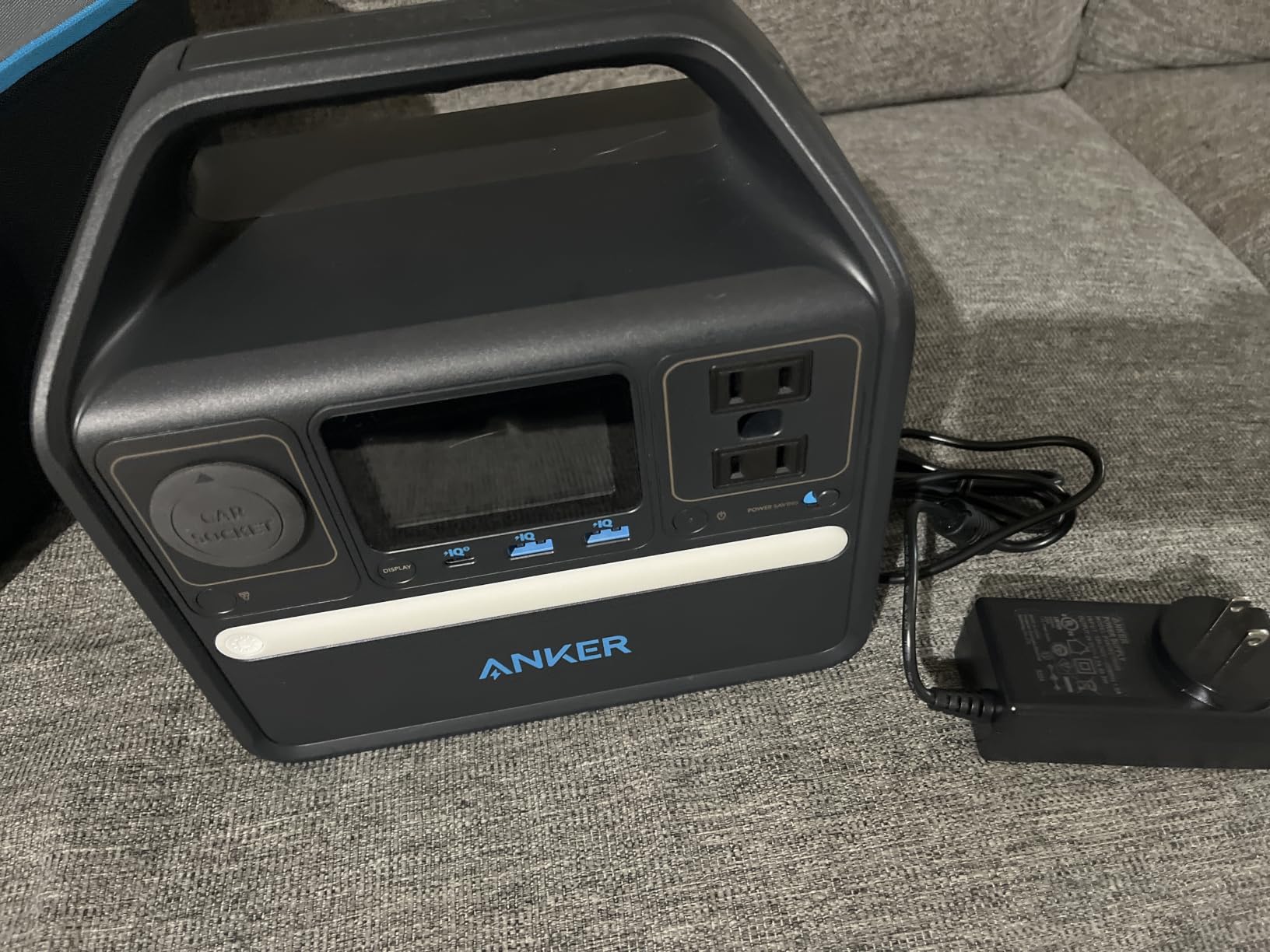
8. Anker SOLIX S2000 – The Best Pick for Multi-Day Outages and Two Users
Anker SOLIX S2000 Portable Power Station, 2,010Wh, 1,500W
2,010Wh LiFePO4 capacity
1,500W continuous, 3,000W peak
sub-10 ms UPS
35.7 lbs
+ Pros
- Largest capacity here at 2010Wh for multi-night runtime
- 10000-cycle LFP cells rated for a 15-year lifespan
- Low idle draw extends unattended backup
- Sub-10 ms UPS switchover
- 8 outlets across front and rear panels
- Cons
- 35.7 lbs needs a two-hand carry
- Charging fan is noticeably droney at 1200W
- No 12V DC port on this model
The S2000 exists for a specific situation: a multi-day outage, or two people on CPAP, where anything under 2,000Wh means carrying the battery to an outlet. At 2,010Wh it is the only unit here that comfortably covers a couple of nights plus phones, lighting, and a router with capacity to spare.
It is also the most durable on paper. The 314Ah LFP cells are rated for 10,000 cycles and a 15-year lifespan, which is more than double the 4,000-cycle rating on most units in this group. For a device meant to be a ten-year insurance policy, that is a genuine differentiator.
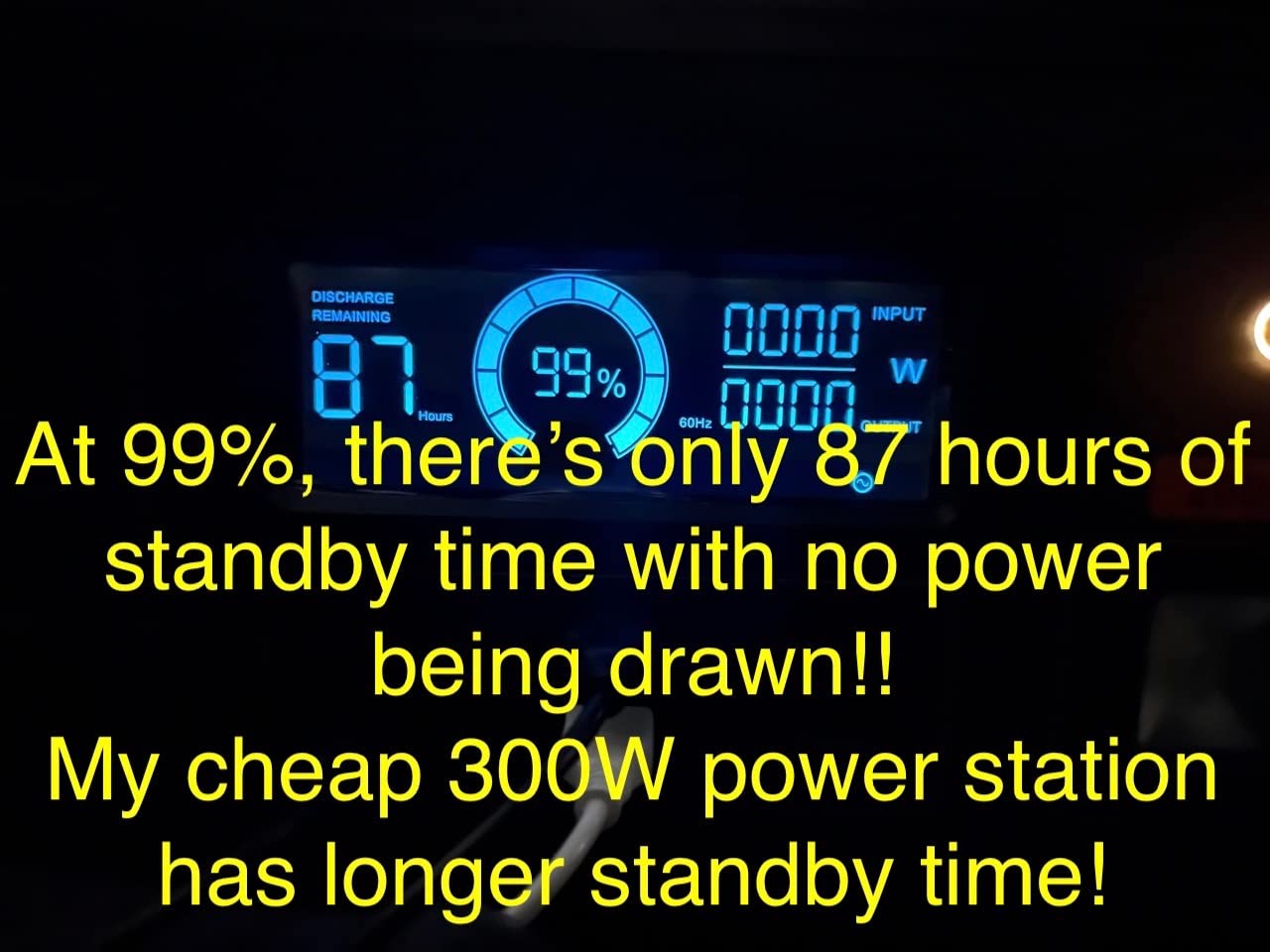
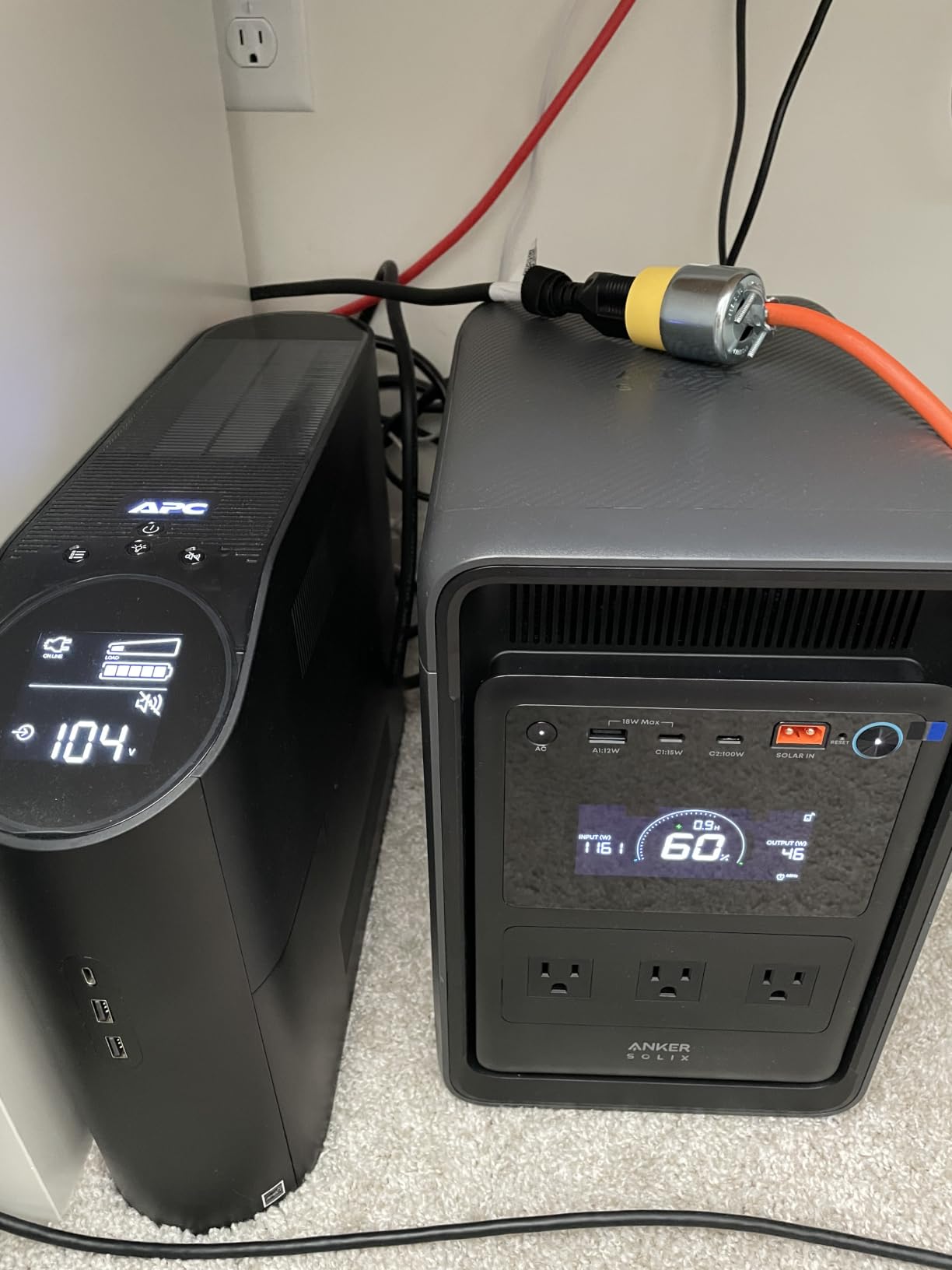
Owners use it primarily as a home UPS and fridge-backup unit, and reviewers highlight the low idle consumption and app-controlled charge and discharge limits. One reviewer measured roughly 3W of draw in UPS mode, and Anker rates the unit at 6W idle with up to 35 hours of fridge backup.
Why 2,010Wh changes the plan
At 2,010Wh and a 35W average DC-equivalent load, you are looking at roughly eight nights on a low-humidification setup, or six through the AC inverter. Realistically, planning for four to five nights with the humidifier on is the honest number, and that is a fundamentally different level of reassurance from a single-night unit.
For two users, the maths simply works: two 40W machines over eight hours is 640Wh, and the S2000 covers that for three nights before anyone has to think about it. The 1,500W continuous output also leaves headroom for household loads without any risk of overload.
Battery longevity and idle behaviour
The 10,000-cycle LFP rating is the standout. If you cycle it nightly for backup duty, that figure is far beyond the useful life of the machine, and the 15-year lifespan estimate means the pack could still be dependable in a decade.
Low idle draw matters more than most buyers realise. A station left plugged in as a permanent UPS sips power every second it is not running something, and a unit drawing 3W while on standby will hold a CPAP far longer than a unit that leaks double that. The app also lets you cap charge and discharge levels, which protects the cells when the station is mostly idle.
Tradeoffs, including the missing DC port
Two real limitations. There is no 12V DC port on this model, so car-socket accessories need an adapter — and for a CPAP user that means you cannot run the machine directly off DC the way you can with the Jackery, the Anker C1000, or the EASYLONGER packs. You will be going through the AC inverter and losing roughly 10% of your capacity.
At 35.7 pounds it needs a two-hand carry and is impractical to move alone on stairs, and the charging fan becomes noticeably droney at 1,200W input. In a bedroom during an outage, that fan noise is a real consideration.
How to Make Any Power Station Last Longer on a CPAP
This is the list that will make the biggest difference to your runtime, and none of it requires a different battery. In order of impact:
1. Turn off heated humidification, and drop the heated tube to low. The heated humidifier chamber and heated tube together account for roughly 70-80% of a CPAP’s battery consumption. Running with humidification off or reduced on a cool night is the single largest lever available, and it can take a one-night pack and make it a two-night pack.
2. Use the 12V DC connection instead of the AC inverter. Skipping the DC-to-AC conversion step keeps roughly 95% of your stored energy instead of roughly 85%. Over an eight-hour night that is the equivalent of a free extra hour, and most people never bother to buy the DC cable.
3. Use a slimline hose, or no water in the chamber. A heated slimline hose transfers moisture without a heated sleeve, and running the chamber empty removes the internal heating draw entirely. This is the configuration behind the strongest community runtime reports, including the r/CPAP AirSense 11 test that delivered seven hours on a River 3 Plus with 70% still showing.
4. Set the pressure and ramp settings sensibly. A machine struggling against a leaking mask runs its blower harder and longer. A well-fitted mask is a battery optimisation, not a comfort accessory.
5. Keep the station between 30 and 80% during long storage. Storing a lithium pack at full charge or fully depleted ages it faster. If your unit lives in a closet between storm seasons, bring it to charge before you put it away and check it every few months.
6. Turn the display off or face it away. Community users report the station’s screen waking repeatedly in a dark bedroom, attributed to the machine’s draw swinging from 5-7W on inhale to near 0W on exhale. A screen flap or simply rotating the unit away from the bed solves it.
7. Recharge the machine, not the station. If your CPAP has a USB-C port and you are running a travel machine like the AirMini, a small power bank is sometimes the more efficient choice — one r/CPAP user gets a full night that way with an Anker 737.
Power Station vs Dedicated CPAP Battery Pack
Two entirely different product families compete under this search term, and confusing them is the most common buying mistake. A dedicated CPAP battery pack does one job with a cable that fits your machine. A portable power station is a general energy source with a pure sine wave inverter, more ports, and far more capacity per pound.
Here is where each one wins. If you only ever run one machine, you never need AC power for anything else, and you are optimising for grams rather than nights, a dedicated pack wins on simplicity. The EASYLONGER ES720 at 3.31 pounds is the clearest example.
A power station wins whenever the outage is longer than one night, when you want to run a fridge, lights, and a router alongside therapy, when you need solar recharging in the field, or when you want the unit to function as a permanent UPS with pass-through charging. Every unit from the Jackery onward in this roundup is built for that.
Two things to know before buying a dedicated pack. First, most exclude heated tubing support outright, including both EASYLONGER models here. Second, they cluster in a narrow 250-300Wh band, so there is very little capacity choice — a dedicated pack is a single-night device by design, and buying two to cover two nights is rarely the better answer.
And a note on the listings: many private-label “CPAP” packs advertise capacity in mAh only. Without a voltage rating, mAh cannot be converted to watt-hours, so those numbers cannot be compared to anything. A 80000mAh claim tells you nothing about whether you have one night or four. Only buy where the watt-hour rating is published.
How to Choose a Portable Power Station for a CPAP Machine
1. Size on watt-hours, never on watts
This is the number one mistake, and it is the reason people end up with 3,000W units for a 40W load. Watts describe how hard a device can push at one moment; watt-hours describe how much total energy is stored. A CPAP pulls 30-60W continuously for eight hours, so you need roughly 240-480Wh of usable energy per night, not 1,500W of inverter.
A working rule: multiply your average wattage by 8 hours, add 30% for conversion losses and reserve, and round up to the next capacity class. At 40W that is 320Wh, plus margin, which is why 500Wh is the minimum sensible home unit and 1,000Wh is the comfortable one.
2. Require pure sine wave output
A pure sine wave inverter produces current that matches grid power closely. A modified sine wave is a cheaper approximation that some sensitive electronics reject. For a blower motor, a pressure sensor, and a heater element, treat pure sine wave as mandatory, not a nice-to-have.
Every unit in this roundup except the two EASYLONGER dedicated packs — which connect by DC and sidestep the inverter entirely — provides pure sine wave AC output.
3. Prioritise DC output if your machine has a DC cable
Running from the 12V car port skips the inverter and preserves roughly 10% more energy. Check whether your machine’s manufacturer sells a DC power cable; the ResMed AirSense 11 in particular is one of the most common machines in the community, and owners frequently report losing runtime simply because they did not buy the DC supply.
Watch for the odd unit with no 12V DC port at all, like the Anker S2000, which forces AC operation. It does not disqualify the unit, but it costs you about an hour per night.
4. Treat pass-through charging and UPS as a first-class feature
Pass-through charging means the station can power a device while recharging from the wall, which is what enables a permanent installation. UPS mode means the outlets stay live and switch over in milliseconds when the grid drops.
This distinction matters medically. Without a fast switchover, a CPAP detects the power loss, throws an error, and stops, and you wake up to a machine that needs a restart. The Anker SOLIX C1000 Gen 2 at 10 ms and the Anker SOLIX S2000 at under 10 ms are the two units here that specify this number.
5. Choose LiFePO4 chemistry and check the cycle rating
LiFePO4 cells last considerably longer than the NMC lithium chemistry used in older and cheaper units. Look at cycles, not just the warranty: 3,000 to 4,000 cycles is typical, and the Anker SOLIX S2000 rates its cells at 10,000.
At nightly backup duty, 4,000 cycles is roughly a decade of service before you are into meaningfully degraded capacity. That is the number to compare, not the warranty length alone.
6. Check the FAA thresholds if you fly
Lithium batteries in carry-on luggage are limited by watt-hour rating. Up to 100Wh is permitted without approval, and 100Wh to 160Wh is allowed with airline approval, with the battery protected against damage and the terminals covered. Spare batteries go in the cabin, never in checked luggage.
This is the rule that eliminates most of this roundup from air travel. The EASYLONGER ES960 at 297.6Wh is explicitly not approved for flights, and no 1kWh station here is either. If you fly regularly with a CPAP, you need a dedicated airline-approved CPAP battery, and you should verify current carrier rules before each trip.
7. Account for the weight honestly
Portable power stations weigh 13 to 36 pounds in this group. The EcoFlow River 2 Max at 13.3 pounds is a one-person carry; the Anker S2000 at 35.7 pounds is a two-hand carry. Decide in advance whether the unit lives in a closet, a van, or a pack, and match the weight to the answer.
8. Plan the recharge path before the outage
Battery capacity is only half the system. Wall recharge times run from about one hour on the EcoFlow River 2 Max and Anker C1000 to 1.7 hours by default on the Jackery, and solar input varies from 220W on EcoFlow to 600W on the Anker C1000.
Test the full setup before you need it. Run your machine off the station for a full night, confirm the runtime, check the display behaviour in the dark, and confirm the recharge path you would actually use.
9. A safety note on generators
If an outage is severe enough that you are considering a combustion generator to run your CPAP, never run it indoors or in an enclosed space. Carbon monoxide is odourless and colourless, and a bedroom or small room is exactly the environment where it accumulates. A tent is worse.
This is not a theoretical concern; it is a regularly asked question on r/AskElectricians by people looking to support a relative who depends on a CPAP. The safe options are a battery power station, a properly vented generator run outdoors at a safe distance from openable doors and windows, or a mains unit with a battery backup. Any power station on this list is a clean, indoor-safe option by design.
Frequently Asked Questions
Will a portable power station run a CPAP?
Yes. Most CPAPs draw 30-60W, and a portable power station with a pure sine wave inverter will run one all night. A 500Wh unit covers roughly one to two nights with heated humidification turned down, and a 1,000Wh unit covers three to four. A dedicated DC cable preserves about 10% more energy than the AC inverter.
What size portable power station do I need to run a CPAP machine?
Size on watt-hours, not watts. Multiply your machine’s average draw by 8 hours, add about 30% for inverter losses and reserve, and round up. At a 40W average that is 320Wh plus margin, so 500Wh is the sensible home minimum and 1,000Wh is comfortable for multi-night outages.
What size Jackery do I need to run a CPAP?
The Jackery Explorer 1000 v2 at 1,070Wh is the right default, giving roughly four nights on DC with humidification reduced. For a single night or travel, a dedicated 250-300Wh pack is enough. The higher-wattage Jackery models add inverter capacity you will never use for a 40W CPAP load.
Should I turn off my CPAP humidifier to save battery?
Yes, and it is the single biggest lever available. The heated humidifier chamber and heated tube together account for roughly 70-80% of a CPAP’s battery consumption. Reducing or disabling humidification on a cool night can nearly double the runtime available from the same pack.
Can I fly with a portable power station for my CPAP?
Only small ones. Carry-on lithium batteries are permitted up to 100Wh without approval, and from 100Wh to 160Wh with airline approval, terminals protected. Every power station in this roundup is 500Wh or larger, so for air travel you need a dedicated airline-approved CPAP battery instead.
Which Portable Power Station for a CPAP Should You Buy in 2026?
If your outages run a night or two and you want one unit that handles everything, the Jackery Explorer 1000 v2 is our pick. It has the most reviews in the group, the highest rating, and enough capacity that you stop doing arithmetic at 3am.
If your power is genuinely unreliable, choose the Anker SOLIX C1000 Gen 2. The 10 ms UPS switchover is the spec that keeps therapy running without the machine noticing the outage, and reviewers report three straight nights on an AirSense 11.
If weight decides it, the EcoFlow River 2 Max at 13.3 pounds is the one you will actually keep in the car. For multi-day outages or two users on one machine, the Anker SOLIX S2000 at 2,010Wh is the only unit here that needs no mid-week recharge.
For a travel CPAP and single-night cover, the dedicated EASYLONGER ES720 at 3.31 pounds is lighter than your CPAP kit, and the ES960 adds capacity if you want two nights. Neither flies — for air travel you need an airline-approved CPAP battery, not a power station.
Whatever you choose, run it for one full night with your own machine before you rely on it. Backup power is only backup if you have tested it, and that test takes eight hours.