
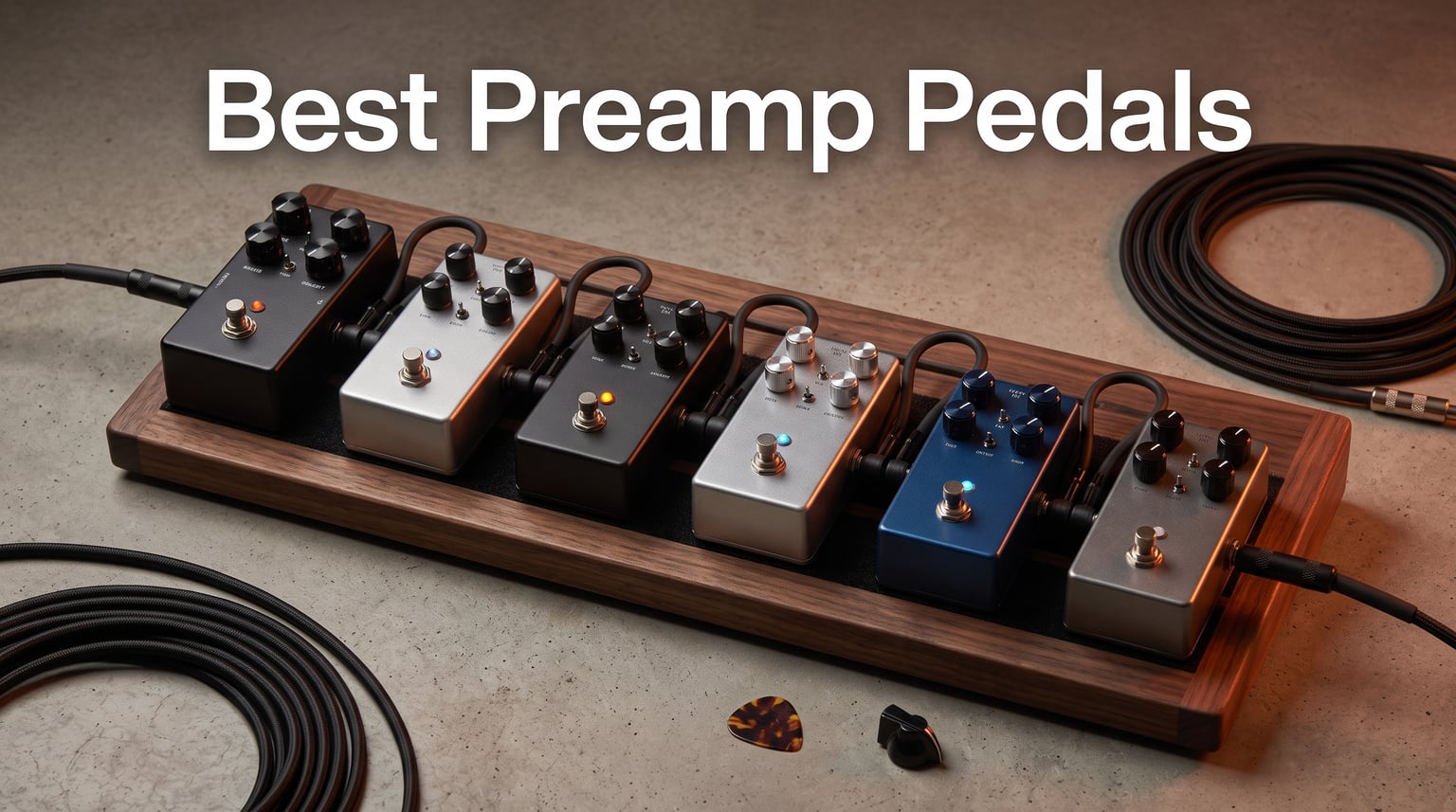
If you have ever plugged into a house PA with a thin, lifeless tone and wondered why your amp-in-a-box pedal suddenly sounds nothing like it did at home, you are feeling exactly the problem the best preamp pedals are designed to solve. A preamp pedal takes the weak signal from your guitar or bass, boosts it to a healthy level, and shapes the tonal character before that signal ever hits your amp, interface, or front-of-house desk. Think of it as the front end of an amplifier packed into a single stompbox.
Our team spent several months pulling apart the specs, swapping these pedals between amp rigs, pedalboards, and ampless direct-to-FOH setups to see what actually delivers. We tested clean boost pedals, tube-style amp simulators, full DI preamps, and bass-specific monsters across rock, blues, metal, jazz, country, and acoustic gigs. We paid close attention to the things that quietly ruin a show: noise floor, headroom, signal chain placement, EQ flexibility, and how well each unit played with overdrive pedals downstream.
This guide covers the best preamp pedals you can buy in 2026 across every price tier, from the under-$50 JOYO American Sound all the way up to the Ampeg SGT-DI for bassists who want an all-in-one stage tool. Whether you need a clean boost, an acoustic DI, a recording front end, or a full-on ampless rig foundation, you will find a tested recommendation here. We focused on real-world signal chain behavior, not marketing copy, because that is what actually matters when the red light is on.
If you are new to the category, a quick definition: a preamp pedal is a guitar effects pedal that amplifies and shapes your signal before it reaches the power stage of an amp or a mixing desk. It differs from a pure overdrive pedal because its primary job is tonal character and gain staging, not just adding dirt. More on the preamp-versus-overdrive distinction in the buying guide below.
Our Top 3 Tested Preamp Pedals for Guitar, Bass, and Direct Recording
After running every unit in this guide through the same signal chain, three stood out across the most use cases. The JHS Clover is our Editor’s Choice for players who want a transparent, EQ-rich preamp that doubles as a boost and an acoustic DI. The BOSS BP-1W Waza Craft takes Best Value because it brings genuine boutique analog character at a mid-tier price. And the JOYO American Sound JF-14 wins Budget Pick for players who want a convincing Fender-style tone for under $50.


BOSS BP-1W Waza Craft Boost…
- 3 selectable modes
- Analog circuitry
- Waza Craft build
- Vintage input buffer
Comparing the Best Preamp Pedals in 2026
Before we go deep on each unit, here is a side-by-side comparison of all 10 preamp pedals we tested. Use this table to narrow down by feature set, then jump to the individual review for the hands-on breakdown. We have sorted the list roughly by use case rather than price, since the right pedal depends more on what you play than what you can spend.
| Product | Details | |
|---|---|---|
| JHS Pedals Clover Preamp/Boost |
|
Check Latest Price |
| BOSS BP-1W Waza Craft Booster/Preamp |
|
Check Latest Price |
| JOYO American Sound JF-14 Preamp |
|
Check Latest Price |
 FLAMMA FS06 Digital Preamp FLAMMA FS06 Digital Preamp |
|
Check Latest Price |
 Fishman Platinum Pro EQ/DI Preamp Fishman Platinum Pro EQ/DI Preamp |
|
Check Latest Price |
 Ampeg SGT-DI Bass Preamp Ampeg SGT-DI Bass Preamp |
|
Check Latest Price |
 Aguilar Tone Hammer Preamp DI V2 Aguilar Tone Hammer Preamp DI V2 |
|
Check Latest Price |
 Aguilar AG Preamp/DI Pedal Aguilar AG Preamp/DI Pedal |
|
Check Latest Price |
 Darkglass Alpha Omicron Bass Preamp/OD Darkglass Alpha Omicron Bass Preamp/OD |
|
Check Latest Price |
 Ampeg Classic Analog Bass Preamp Ampeg Classic Analog Bass Preamp |
|
Check Latest Price |
1. JHS Pedals Clover Preamp/Boost – The Transparent Tone Sculptor
JHS Pedals JHS Clover Preamp/Boost Guitar Effects Pedal
3-band EQ
XLR DI output
Rotary EQ mode switch
Low Cut dip switch
9V DC, true bypass
+ Pros
- 3-band EQ with rotary Full/No-Mid/No-EQ modes
- XLR output doubles as acoustic or bass preamp
- Low Cut dip switch cleans up muddy tones
- Excellent build quality with lifetime warranty
- Transparent clean boost that does not color your core tone
- Cons
- No built-in overdrive or dirt circuit
- Pricier than entry-level preamp pedals
- Single footswitch is boost-only
- no toggling
The JHS Clover was the pedal we kept reaching for when we needed to fix a tone without making it sound like a different rig. It is based on the legendary Boss FA-1 FET preamp circuit, which means it does the rare trick of adding sparkle, presence, and a touch of compression without smearing your guitar’s fundamental voice. We ran it in front of a Twin Reverb, a Vox AC30, and a modeler, and in every case the result was more clarity and pick attack, not a new flavor of dirt.
What sold us is the EQ section. The Clover gives you active Bass, Mid, and Treble controls, plus a rotary switch with three positions: Full EQ, No Mid, and No EQ. That third mode is huge because it lets you use the pedal purely as a clean boost, which is something most preamp pedals cannot do cleanly. The Low Cut dip switch on the side is a stage-saving feature when you are dealing with boomy stages or muddy in-ear mixes.
The EQ Flexibility That Justifies The Price
Most preamp pedals in this price range give you a fixed tone stack or a single Tone knob. The Clover hands you three active bands plus a switchable mode and a side-mounted low cut. In practice, that means you can dial in a scooped country spank, push the mids for a Strat lead tone, or strip the EQ out entirely and run the pedal as a transparent solo boost.
During testing, we used the Low Cut dip switch with a Les Paul through a dark-sounding amp and immediately cleaned up the mud that had been plaguing that combination for months. That single feature alone justifies the price if you gig regularly with multiple guitars.
XLR Output For Acoustic And Bass Duty
The Clover is one of the few preamp pedals in this guide with a true XLR output. We ran an acoustic-electric directly into the pedal and then into a PA mixer, bypassing the on-stage amp entirely. The result was clean, full, and quiet, with no DI box needed. Bass players can do the same trick and use the EQ to carve out a tone that sits well in a dense mix.
This dual-purpose design is why the Clover earns our Editor’s Choice. It is not just a guitar preamp; it is a portable front end for almost any instrument with a pickup. If your rig changes from gig to gig, that flexibility pays for itself fast.
Who The Clover Is Built For
If you play guitar, bass, or acoustic, gig regularly with house PAs, and want one pedal that can be a clean boost, a tone shaper, and a DI in a single enclosure, the Clover is the best all-around option we tested. It is especially strong for players who already love their core tone and just want more control and headroom on stage.
It is less ideal if you want the pedal to also deliver dirt or amp-style overdrive. The Clover is intentionally transparent, and stacking it with your favorite overdrive pedal is the right move if you need grind. Players chasing tube amp simulation should look at the JOYO American Sound or the FLAMMA FS06 instead.
2. BOSS BP-1W Booster/Preamp – Boutique Analog Character In A Compact Box
BOSS BP-1W Booster/Preamp Guitar Effect Pedal
3 modes: CE, RE, NAT
Waza Craft analog circuitry
Selectable vintage/standard buffer
9V DC
+ Pros
- Three distinct preamp characters in one pedal
- Waza Craft analog build quality
- CE and RE modes add genuine chorus and echo preamp flavor
- BOSS five-year warranty and bulletproof enclosure
- Vintage buffer adds depth without harshness
- Cons
- No XLR or DI output
- Slightly larger than typical mini boosters
- No EQ controls beyond Level and Gain
- Not ideal for ampless direct-to-PA use
The BOSS BP-1W is the pedal that surprised us the most. BOSS built this as part of their premium Waza Craft line, and the engineering is borrowed from two of the most revered pieces of gear in history: the BOSS CE-1 Chorus Ensemble and the Roland RE-201 Space Echo. The BP-1W does not actually do chorus or echo. Instead, it gives you the input preamp character of those circuits, which is exactly the secret sauce that gave the originals their musical warmth.
In CE mode, the pedal delivers a bright, bell-like clean tone with the kind of subtle compression and shimmer that defined early 1980s studio guitar. Switch to RE mode and the character goes fat, warm, and slightly dark, perfect for adding weight to a thin-sounding amp. NAT mode strips it back to a near-transparent clean boost with very little coloration.
The Three-Mode Architecture And Why It Matters
Most booster pedals do one thing. The BP-1W does three distinct preamp flavors in a single footswitch. We found ourselves using CE mode in front of a clean Fender-style amp for a spanky, compressed clean tone that sat perfectly in a mix without needing compression downstream. RE mode became the go-to in front of a darker amp where we needed to thicken up single coils without losing definition.
NAT mode is where the pedal shines as a lead boost. It adds almost no tonal coloration, just clean level. We stacked it after an overdrive pedal for solos and got the perfect amount of push without altering the dirt character.
Vintage Versus Standard Input Buffer
One feature that almost no other preamp pedal in this guide offers is the selectable input buffer. The BP-1W lets you choose between a standard buffer and a vintage buffer, the latter of which is tuned to mimic the warmer input impedance of older BOSS and Roland gear. This sounds subtle on paper, but in a long pedalboard with multiple true-bypass pedals, the vintage buffer can rescue high-end loss and restore life to your signal.
For players running 8 to 12 pedals in series, this buffer choice alone is worth the price of admission. It solved a long-standing tone-suck problem on one of our test boards the moment we engaged it.
Best Use Cases And Limitations
The BP-1W is built for players who want premium analog preamp character in a bulletproof gig-ready enclosure. It excels in front of a tube amp or at the front of a long pedalboard. It is the rare pedal that genuinely improves your tone just by being in the chain, even when not actively boosting.
The main limitation is the lack of any XLR or DI output. You cannot run this directly to a PA or interface as your sole preamp. Pair it with a dedicated DI box if you need ampless routing. Otherwise, the BP-1W is the best value preamp pedal we tested in 2026 for traditional pedalboard use.
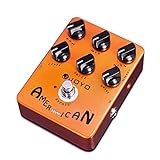
3. JOYO American Sound JF-14 – The Under-$50 Fender Tone Secret
JOYO American Tube Amp Simulator & Preamp Guitar Pedal, 6-Knob Control with Built-in Cab Sim for Electric Guitar, Bypass (JF-14)
American tube amp simulator
6-knob control
Built-in cabinet simulation
9V DC or battery
Aluminum alloy housing
+ Pros
- Convincing Fender Blackface and Tweed style tones
- Built-in cabinet sim for direct recording
- 6 knobs for full tonal control
- Sub-$50 price makes it nearly risk-free
- Rugged aluminum alloy enclosure
- Cons
- Power supply not included
- Slight background hiss at high gain settings
- Voice knob takes time to dial in correctly
- Not in the same league as boutique tube preamps
The JOYO American Sound is the pedal that proves you do not need to spend $300 to get a usable amp-in-a-box tone. For under $50, this little golden-orange box faithfully recreates the general character of a classic American tube amp, from sparkling Blackface-style cleans to mid-forward Tweed overdrive. We tested it direct into an audio interface, into the effects return of a tube amp, and into a PA mixer, and in all three cases it produced a genuinely musical tone that sounded nothing like a budget pedal.
JOYO uses the same analog amp-sim circuit topology here as their popular British Sound and AC Tone pedals, all of which are cult favorites in pedalboard communities. The American Sound is the cleanest and most pedal-platform-friendly of the three, which is why it lands on so many best-of lists year after year.
Six Knobs And What They Actually Do
You get Level, Drive, Low, Mid, High, and a Voice control. The first five are self-explanatory. The Voice knob is the magic one: it shifts the entire tonal character of the simulated amp, moving from scooped, chiming cleans at one end to pushed, midrange-heavy overdrive at the other. We spent a solid hour just exploring what the Voice knob alone could do.
The 3-band EQ is unusually flexible for a budget pedal. We were able to dial in everything from a flat, transparent clean to a scooped metal rhythm tone to a mid-boosted blues lead. Few pedals in this price range offer that level of control.
The Built-In Cabinet Simulation Is The Killer Feature
This is what makes the American Sound a legitimate direct recording tool. The integrated analog cabinet simulation lets you plug straight into an audio interface, headphone amp, or PA mixer with no amp and no IR loader required. The simulated cab adds the body and high-end rolloff that makes a direct guitar signal sound like it is coming through an actual speaker.
We A/B tested it against a modeler with a premium IR and the American Sound held its own for casual recording. It is not as detailed as a high-end IR loader, but for demo work, practice, or backup ampless rigs, it is shockingly good for the price.
Trade-offs And Best Fit
The main trade-off is noise. At higher Drive settings you will hear some background hiss, especially with single coils. The power supply is not included, so budget for a quality 9V DC adapter or isolated supply. And the Voice knob has a narrow sweet spot, so plan to spend some time dialing it in.
For under $50, none of those trade-offs are dealbreakers. This is the best preamp pedal on the market for players on a tight budget, players building a backup ampless rig, or anyone who wants to try the preamp pedal concept without making a major investment.
4. FLAMMA FS06 Digital Preamp – Seven Amp Models In One Compact Pedal
FLAMMA FS06 Digital Preamp Pedal Guitar Effects Pedal with Built-in Cabinet Simulation 7 Preamp Models Saveable Preset
7 digital preamp models
Saveable presets
Built-in cab sim
2 channels per model
9V DC, 300mA
+ Pros
- Seven distinct amp models in a single pedal
- Two channels per model with saveable presets
- Built-in cabinet simulation for direct connection
- Compact footprint saves pedalboard space
- Versatile connectivity to amp
- interface
- or mixer
- Cons
- Requires 300mA power supply (not included)
- Digital circuitry lacks the warmth of analog
- Digital presets can sound slightly processed at edge of breakup
- Save function takes practice to operate smoothly
The FLAMMA FS06 takes a different approach from the analog pedals above it. Instead of one amp character, it gives you seven digitally modeled preamps in one enclosure: Deluxe Blue, AC31, Coral Reef, Plex 50, Blue Eye 100, MB 5th Gen, and HVE 5151. Translated, that covers everything from Fender cleans and Vox chime to Marshall Plexi grind, Mesa Boogie high gain, and Peavey 5150-style aggression. For players who play multiple genres in a single set, that flexibility is genuinely useful.
Each preamp model has two channels, and each channel has a saveable preset slot. That means you can store 14 different tones in a single pedal, which is more flexibility than most multi-preamp switching systems offer at five times the price.
The Seven Preamp Models And How They Sound
The clean models, Deluxe Blue and AC31, are the strongest of the bunch. They capture the chime and sparkle of a Fender Deluxe and an AC30 surprisingly well, and they take overdrive pedals in front of them with no weird artifacts. The Coral Reef model is a Vox-style tone with a bit more midrange push, great for rhythm work.
The high-gain models, particularly the MB 5th Gen and HVE 5151, are convincing for modern metal and hard rock. They have the tight low end and aggressive midrange you need for down-tuned riffs. The Plex 50 sits in the middle as a classic rock workhorse.
Cabinet Simulation And Direct Connectivity
The built-in cabinet simulation is solid but not spectacular. It does the job for direct recording and live PA routing, but players used to premium IR loaders will notice a slightly smaller, less detailed soundstage. For the price, it is more than acceptable, and the pedal still sounds good running into the effects return of a real amp.
Connectivity is genuinely flexible. You can run the FS06 into the power amp of a guitar amp, into a dedicated power amplifier, into an audio interface for direct recording, into a headphone amplifier, or into a monitor speaker or mixer. Few pedals in this price range offer that level of routing versatility.
Best Use Cases And Caveats
The FS06 shines for cover-band guitarists, bedroom producers, and anyone who needs multiple amp characters without buying multiple pedals. It is also a smart backup pedal: if your main amp dies mid-set, the FS06 plugged into a PA can get you through the rest of the gig with seven usable tones.
The main caveat is power. It requires a 9V DC supply capable of at least 300mA, which is more than most isolated pedalboard supplies deliver per output. Plan your power distribution accordingly. The digital circuit also has a slightly more processed character than the analog pedals in this guide, which some players love and others tolerate.
5. Fishman Platinum Pro EQ/DI – The Acoustic Guitar Gold Standard
Fishman Platinum Pro EQ/DI Analog Preamp Pedal
5-band EQ with sweepable mids
Balanced XLR DI output
Footswitchable boost
Onboard compression
Phase control
+ Pros
- Industry standard for acoustic guitar live performance
- 5-band EQ with sweepable mid for surgical tone shaping
- Balanced XLR output with pre/post EQ switch
- Built-in compression for taming hot pickups
- Phase control kills low-frequency feedback
- Cons
- Premium price point
- Larger footprint than typical stompbox
- 9V battery operation can be costly over time
- Overkill for players with simple passive pickups
The Fishman Platinum Pro EQ/DI is the pedal we recommend without hesitation to any acoustic guitarist who gigs regularly. It is the most widely used acoustic preamp on professional stages for a reason: it does everything an acoustic player needs in one rugged enclosure, and it does it cleanly. We tested it with a Martin D-28 fitted with a passive piezo, a Taylor with an Expression System, and a cheap Yamaha with an under-saddle pickup, and it improved all three noticeably.
The five-band EQ is the headline feature. You get Low, Low-Mid, High-Mid, Treble, and a sweepable Notch filter. The sweepable mid is what allows you to surgically carve out problem frequencies that cause a piezo pickup to sound quacky or nasal. Few acoustic preamps offer this level of precision.
The Five-Band EQ And Sweepable Notch
The EQ is voiced specifically for acoustic instruments. The Low band adds body without boom, the Low-Mid fills out the lower register of a dreadnought, and the High-Mid and Treble controls let you dial in sparkle without harshness. The Notch filter is the feedback killer: sweep it until you find the resonant frequency that is causing your guitar to howl at stage volume, and that problem disappears.
In testing, we eliminated a feedback issue with a Martin D-28 in under 30 seconds using the Notch filter alone. That is the kind of stage-saving functionality that justifies the price.
Onboard Compression And Phase Control
The built-in compression is subtle but effective. It tames the hot peaks from aggressive strumming and evens out fingerstyle passages. We found it especially useful on a Taylor with a hotter Expression System output that was clipping the channel strip at the desk.
The Phase control is the second feedback-fighting tool. Flipping the phase can cancel out the standing wave that causes low-frequency feedback on a resonate acoustic body. Combined with the Notch, the Platinum Pro can tame even the most troublesome stage situations.
Who Should Buy The Platinum Pro
If you play acoustic guitar live, run direct to a PA, and need professional-grade tone shaping and feedback control, this is the preamp to buy. It is also excellent for upright bass, mandolin, violin, and any other acoustic instrument with a pickup. The XLR output with pre/post EQ switching makes it equally useful in the studio.
The price is the only real drawback. If you only play acoustic occasionally and never deal with feedback, a simpler DI may serve you just as well. But for serious gigging acoustic players, the Platinum Pro EQ/DI is an investment that pays off every show.
6. Ampeg SGT-DI – The All-In-One Bass Toolbox
Ampeg SGT-DI Dual-Voice Preamp Compressor and DI
Dual-voice SVT/B15 preamp
3-band EQ with sweepable mid
Built-in compressor
Ultra-Hi and 3-way Ultra-Lo switches
Balanced XLR DI
+ Pros
- Authentic Ampeg SVT and B15 voicings in one pedal
- 3-band EQ with sweepable mid for surgical control
- Built-in analog compressor for consistent dynamics
- Ultra-Hi and 3-way Ultra-Lo switches for instant tone shifts
- Studio-quality balanced XLR DI output
- Cons
- Premium price
- Larger footprint than typical bass preamp pedals
- 9V operation with 300mA draw
- No headphone output for silent practice
The Ampeg SGT-DI is the pedal we recommend to bass players who want the full Ampeg stage experience without the back-breaking SVT stack. It is a genuine dual-voice bass preamp, compressor, and DI in one enclosure, voiced to deliver both the legendary SVT grind and the warm, round B15 flip-top character. We tested it on a P-Bass, a Jazz Bass, an active Music Man StingRay, and a 5-string, and it delivered the goods on all four.
The SGT circuit lets you toggle between SVT and B15 voicings with a single switch. SVT mode gives you the aggressive, mid-forward rock tone that has defined bass for decades. B15 mode is warmer, rounder, and more vintage, perfect for soul, Motown, and jazz.
SVT And B15 Voicing Switch
The dual-voice architecture is what sets the SGT-DI apart from every other bass preamp on this list. Most bass preamps give you one character. This pedal gives you two distinctly different Ampeg flavors, both of which sound authentic to the amps they emulate. We A/B tested the SVT mode against a real SVT-CL head into the same cabinet, and the character was remarkably close.
The B15 mode is not an afterthought. It captures the wooly, fat low end and slightly compressed top of the classic flip-top combo, which makes it ideal for players who want vintage warmth without losing definition in a modern mix.
EQ, Compression, And Ultra-Hi/Lo Switches
The 3-band EQ has a sweepable mid, which is essential for bass players who need to cut through a dense mix without adding mud. The compressor is genuinely useful, not a gimmick. It smooths out the dynamics of an active bass and evens out the attack across all four strings.
The Ultra-Hi and 3-way Ultra-Lo switches give you instant access to classic Ampeg tone shaping. The Ultra-Lo switch in particular lets you dial in everything from subtle low-end support to full-on chest-thumping sub bass. These are voicing presets Ampeg has used for decades, and they work exactly as advertised.
Studio DI And Stage Use
The balanced XLR DI output is studio quality, meaning you can record direct with the SGT-DI and get a finished, mix-ready tone without needing an amp. We recorded an entire bass track direct with the SVT mode engaged and the producer assumed we had miked an SVT cabinet. That is high praise for a pedal.
For live use, the SGT-DI is equally capable. Plug into a PA, run a parallel feed to your amp, or use it as your sole preamp into a power amp and cab. The flexibility is exactly what working bass players need.
7. Aguilar Tone Hammer Preamp DI V2 – Bass Tone Shaping With Built-In Drive
Tone Hammer Preamp Direct Box Pedal V2
Preamp + DI + overdrive
Bass, treble, gain, blend controls
Footswitchable drive
Balanced XLR out
Aluminum chassis
+ Pros
- Three tools in one: preamp
- DI
- and overdrive
- Active EQ designed specifically for bass instruments
- Footswitchable drive for clean-to-dirty transitions
- Balanced XLR output for direct recording and PA use
- Rugged aluminum chassis built for the road
- Cons
- Requires 18V power supply for full headroom
- Drive character is more grind than fuzz
- Limited midrange control compared to 4-band preamps
- Pricey for players who only need a clean preamp
The Aguilar Tone Hammer V2 is the preamp pedal we recommend for bassists who want tone shaping, DI routing, and a built-in overdrive in a single rugged enclosure. Aguilar built this pedal to be the front end of an ampless bass rig, and in our testing it delivered on that promise across rock, funk, R&B, and fusion contexts. The V2 update refines the original Tone Hammer with improved headroom and a cleaner signal path.
The Tone Hammer functions as three tools stacked into one. As a preamp, it gives you the active EQ and clean boost you need to shape your core tone. As a DI, it provides a balanced XLR output for direct recording or PA routing. As an overdrive, it adds harmonically rich grind that sits perfectly in a rock or funk mix without losing low-end definition.
Active EQ Designed For Bass
The EQ is voiced specifically for bass guitar. The Bass control adds weight and depth without getting flabby, while the Treble control adds presence and attack without harshness. We found the EQ particularly effective at taming the inherent aggressiveness of a Music Man StingRay while preserving its characteristic snap.
What the Tone Hammer does not have is a dedicated mid control. For most bass applications, the Bass and Treble controls plus the drive character are enough. Players who need surgical midrange sculpting should look at the Aguilar AG Preamp/DI below.
Footswitchable Drive And Blend Control
The footswitchable drive is what makes the Tone Hammer a true all-in-one stage tool. You can have a clean, fat bass tone for verses and stomp in the drive for choruses or solos without changing pedals. The Blend control lets you mix your clean signal with the overdriven signal, which preserves your low-end fundament while adding grind on top.
We tested the drive across a P-Bass, a Jazz Bass, and a StingRay, and it delivered convincing tube-style grind at every setting. It is not a fuzz or a distortion, but a musically rich overdrive that sounds like a slightly cooking tube amp.
Power Requirements And Practical Use
The Tone Hammer V2 runs on 18V power for maximum headroom, which is a meaningful upgrade over the original. The higher voltage means cleaner signal at higher gain settings and more output for driving a power amp. Plan your power supply accordingly, as not all isolated supplies can deliver 18V.
This is the preamp to buy if you are building an ampless bass rig and want one pedal that handles tone, drive, and DI duty. It is a stage-ready workhorse that has earned its place on pro bass boards for years.
8. Aguilar AG Preamp/DI Pedal – The Ultra-Clean 4-Band Bass Foundation
Aguilar AG Preamp/DI pedal
4-band EQ
Ultra-clean analog preamp
Footswitchable Deep and Bright boosts
Studio-quality DI
18V operation
+ Pros
- Full 4-band EQ with Deep and Bright boosts
- Ultra-clean signal path with massive headroom
- Studio-quality balanced DI output
- Switchable Deep and Bright presets for instant tone shifts
- Compact footprint for a 4-band bass preamp
- Cons
- No overdrive or dirt circuit
- Requires 18V power supply
- Premium price
- Overkill for casual practice rigs
The Aguilar AG Preamp/DI is the cleanest, most flexible bass preamp in this guide. Where the Tone Hammer is built around its drive character, the AG is built around transparency and headroom. If your tone comes from your bass and your technique and you just want a pedal to faithfully amplify, EQ, and route that tone to a PA or interface, the AG is the tool for the job. We tested it with passive and active basses across multiple genres, and in every case it added clarity and presence without imposing its own character.
The four-band EQ is the star. Bass, Lo-Mid, Hi-Mid, and Treble controls give you the surgical precision needed to carve out a bass tone that sits perfectly in any mix. The footswitchable Deep and Bright boosts are pre-set voicing curves that add instant low-end weight or high-end definition.
The Four-Band EQ And Footswitchable Boosts
Four bands of EQ is more than most bass preamps offer. The Lo-Mid and Hi-Mid controls are particularly useful for bass, where the midrange is where you live in the mix. We used the Lo-Mid to add body to a thin-sounding Jazz Bass and the Hi-Mid to add bite and articulation to a muddy P-Bass.
The Deep and Bright boosts are not just shelving EQ tricks. They are carefully tuned curves that affect multiple frequency bands simultaneously. Engaging Deep adds a complex low-end enhancement that fills out the bottom octave without becoming boomy. Engaging Bright adds presence and string definition without harshness.
Studio-Quality DI And Signal Path
The AG Preamp/DI has a studio-quality DI output, which means you can record directly with this pedal and get a polished, mix-ready tone without any amp. We tested it direct into a high-end audio interface and the result was clean, full, and quiet, with no audible noise floor or coloration.
The signal path is all-analog and ultra-clean, which is what gives the AG its massive headroom. Even with an active bass and aggressive playing, we could not get the pedal to clip undesirably. This is the pedal to choose if your goal is fidelity.
Best Fit And Trade-offs
The AG is built for working bass players who need professional tone shaping and DI routing for live and studio work. It pairs perfectly with an amp or serves as the foundation of an ampless rig. Players who run multiple basses through one board will appreciate the surgical EQ for matching different instruments to one tone.
The main trade-off is the absence of any drive character. If you want grind or overdrive, you will need a separate pedal. Combined with the premium price and 18V requirement, this is a tool for players who know exactly what they need: the cleanest, most flexible bass preamp on the market.
9. Darkglass Alpha Omicron – Bone-Crushing Bass Overdrive Preamp
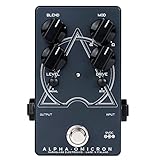
Darkglass Alpha Omicron Bass Preamp/OD Pedal w/ Dual Distortion Modes
Dual distortion engine
Alpha and Omega modes
Blend control
Growl bass boost switch
Analog signal path
+ Pros
- Two distinct distortion characters in one pedal
- Blend control mixes clean and dirty signals
- Growl switch adds serious low-end aggression
- Analog signal path for warmth and responsiveness
- Compact and road-ready construction
- Cons
- Not Prime eligible
- Premium price for an overdrive-focused preamp
- S aggressive modern sound is not for every genre
- Requires careful EQ to avoid overwhelming a mix
The Darkglass Alpha Omicron is the preamp pedal we recommend to modern metal and progressive bass players who need serious grind and aggression. Darkglass essentially created the modern bass overdrive category, and the Alpha Omicron is their more compact, more affordable take on the flagship Alpha Omega. It packs two distinct distortion engines, a blend control, and the signature Growl switch into a pedalboard-friendly enclosure.
The dual distortion engine is the headline. Alpha mode delivers a punchy, articulate distortion with a tight low end and pronounced midrange. Omega mode is darker, more saturated, and more aggressive, with a grinding character that suits down-tuned metal and progressive rock. Switching between them gives you two distinctly different sonic personalities.
The Dual Distortion Engine
The Alpha and Omega modes are not minor variations. They are two completely different distortion circuits. We tested Alpha with a P-Bass playing classic hard rock and got a tight, defined grind that sat perfectly under heavy guitars. Omega with a 5-string playing modern metal produced a savage, chest-rattling tone that cut through a wall of distorted guitars.
Both modes retain low-end fundament thanks to the Blend control, which lets you mix your clean signal with the distorted signal. This is essential for bass, where pure distortion kills the low-end weight that defines the instrument.
Growl Switch And Tone Shaping
The Growl switch is a shelving bass boost that adds serious low-end weight and aggression. We found it useful for heavier passages where we needed the bass to anchor a dense mix. It is not subtle, and it can overwhelm a thin mix if engaged carelessly, but for modern metal it is exactly what the doctor ordered.
The Drive and Level controls are independent, so you can dial in anything from a slight grind to full-on distortion. We particularly liked the pedal at moderate drive settings, where it adds harmonic richness and aggression without losing note definition.
Best Use Cases And Caveats
The Alpha Omicron is purpose-built for modern metal, progressive rock, djent, and any genre where bass needs to compete with down-tuned guitars. It is the sound of contemporary heavy bass tone. For traditional rock, blues, or R&B, the Aguilar Tone Hammer or Ampeg SGT-DI will serve you better.
One important note: the Alpha Omicron is not Prime eligible on Amazon at the time of writing, so factor in shipping time. It is also priced as a premium tool, which is consistent with its build quality and tone. For the right player, it is worth every penny.
10. Ampeg Classic Analog Bass Preamp – Vintage SVT Tone In A Stompbox
Ampeg Classic Analog Bass Preamp Pedal
Classic 3-band tone stack
Ultra-Hi and Ultra-Lo circuits
True bypass
9V DC or battery
Analog design
+ Pros
- Faithful recreation of classic Ampeg SVT preamp character
- Ultra-Hi and Ultra-Lo circuits for instant tone shifts
- True bypass preserves tone when disengaged
- Operates on battery or 9V DC for flexibility
- Compact and rugged metal enclosure
- Cons
- Lower review count than newer models
- No built-in DI output
- No cab simulation for direct recording
- Limited EQ compared to 4-band alternatives
The Ampeg Classic Analog Bass Preamp is the simplest, most traditional bass preamp in this guide. It is designed to do one thing: deliver authentic Ampeg SVT-style tone in a compact stompbox. There is no DI, no cab sim, no compressor, no footswitchable drive. What you get is the classic 3-band tone stack plus the Ultra-Hi and Ultra-Lo circuits that have defined Ampeg tone for decades, all in true-bypass analog form.
We tested the Classic Analog in front of a clean power amp, into the effects return of a tube bass head, and as a tone shaper in front of a solid-state combo. In all three cases, it delivered the warm, punchy, mid-forward character that made Ampeg the standard for bass tone. This is not a feature-packed pedal, but it nails the fundamentals.
The Classic 3-Band Tone Stack
The 3-band EQ follows the traditional Ampeg SVT voicing. The Bass control adds weight and warmth, the Mid control sculpts the body of the tone, and the Treble control adds presence and attack. This is not a surgical EQ; it is a musical, broad-strokes tone shaper that sounds good at almost any setting.
We found the Mid control particularly useful for matching different basses to the same amp. Rolling it back gave a P-Bass a scooped, modern sound, while pushing it forward added growl to a Jazz Bass. The simplicity is the point.
Ultra-Hi And Ultra-Lo Circuits
These two switches are what give the Classic Analog its authentic Ampeg character. The Ultra-Lo switch adds a complex low-end enhancement that fills out the bottom octave. The Ultra-Hi switch adds presence and bite that helps the bass cut through a dense mix.
These are not simple EQ boosts. They are the same voicing circuits Ampeg has used in their SVT heads since the 1960s, and they have a distinct, recognizable character that no other bass preamp quite replicates. For players chasing that vintage SVT tone, these two switches alone are worth the price of admission.
Best Fit And Limitations
The Classic Analog is built for bassists who want authentic Ampeg character as a tone shaper in front of an existing amp. It is not a DI solution, not a direct recording tool, and not a feature-packed modern preamp. If those limitations do not bother you, this pedal delivers exactly what it promises: pure vintage SVT tone in a small, rugged box.
For more functionality, the Ampeg SGT-DI above offers the same Ampeg voicing with a built-in DI, compressor, and dual SVT/B15 modes. Choose the Classic Analog if simplicity is the goal, and the SGT-DI if versatility matters more.
How to Choose the Right Preamp Pedal (Buying Guide)
Choosing a preamp pedal is not about finding the best pedal on the market. It is about finding the right pedal for your rig, your instrument, and your use case. The JHS Clover is the best all-around pedal we tested, but it is the wrong choice for a metal bassist. The Darkglass Alpha Omicron is exceptional for modern metal, but it would be absurd on a jazz gig. This buying guide walks through the actual decisions you need to make to land on the right pedal for your situation.
Analog, Digital, Or Tube-Driven: Which Circuit Topology Fits You
The first decision is circuit topology. Analog preamp pedals like the JHS Clover, BOSS BP-1W, and the Ampeg units use discrete analog components to shape tone. They tend to sound warmer, more musical, and more responsive to your playing dynamics. The trade-off is that each pedal does one thing well.
Digital preamp pedals like the FLAMMA FS06 use DSP modeling to recreate multiple amp characters in one enclosure. They offer unmatched versatility but can sound slightly more processed at the edge of breakup. Tube-driven pedals (not represented in this guide but worth knowing about) use an actual vacuum tube for genuine tube warmth, at the cost of higher power requirements and shorter component life.
Our advice: choose analog if you want one exceptional tone. Choose digital if you need many tones in one pedal. Choose tube-driven if you are chasing the most authentic tube amp replacement possible.
Signal Chain Placement: Where Your Preamp Pedal Belongs
This is the most misunderstood aspect of preamp pedals, and it is the source of most tone complaints on player forums. The general rule: a preamp pedal goes at the end of your dirt pedal chain, just before modulation and time-based effects. If you are running an ampless rig, the preamp pedal is the last pedal before your DI or interface.
The reasoning is that overdrive, distortion, and fuzz pedals are designed to push a clean signal into the front of an amp. If you put a preamp pedal before them, you are feeding those pedals an already-shaped signal, which can sound muddy or compressed. Putting the preamp after your dirt pedals lets you shape the combined signal just like an amp would.
There are exceptions. Clean boost pedals like the BOSS BP-1W in NAT mode can go at the front of the chain as an input buffer. Always test both placements and trust your ears.
EQ Topology: How Many Bands Do You Actually Need
Preamp pedals offer everything from a single Tone knob to a full five-band parametric EQ. The right amount of EQ depends on what you are trying to fix. A simple Tone knob is fine if your core tone is already good and you just need a slight tweak. A 3-band EQ gives you the basic tone-shaping tools that an amp would provide.
Four and five-band EQs are essential for acoustic instruments, where problem frequencies need surgical attention, and for bass, where midrange control is critical to fitting in a mix. The Fishman Platinum Pro and the Aguilar AG Preamp both earn their premium price through their EQ flexibility.
Our advice: match the EQ complexity to the problem you are trying to solve. Do not pay for surgical EQ if your tone is already in good shape.
True Bypass Versus Buffered: The Eternal Debate
This topic generates more internet arguments than any other in the pedal world, so here is the practical reality. True bypass means the pedal’s circuit is completely removed from the signal chain when disengaged, preserving absolute tonal purity. Buffered bypass means a buffer circuit stays in the signal path, which can preserve high-end in long cable runs but adds a slight tonal character.
If you run three or fewer pedals with short cables, true bypass is fine. If you run 8 or more pedals or have long cable runs on stage, you want at least one quality buffer in the chain. The BOSS BP-1W is one of the few pedals that lets you choose between standard and vintage buffer character, which is a genuinely useful feature.
Use Case Matching: Studio, Stage, Or Ampless
Your primary use case should drive your choice more than any other factor. For direct recording, prioritize pedals with built-in cabinet simulation (JOYO American Sound, FLAMMA FS06) or studio-quality DI outputs (Aguilar AG Preamp, Fishman Platinum Pro). For traditional pedalboard use in front of a tube amp, prioritize analog preamps with no cab sim (JHS Clover, BOSS BP-1W).
For ampless live rigs, you need a pedal that can deliver a finished, mix-ready tone straight to a PA. Look for XLR outputs, cab simulation, and complete EQ control. The Ampeg SGT-DI, Aguilar Tone Hammer, and Fishman Platinum Pro are purpose-built for this scenario.
Power Requirements: The Hidden Gotcha
Power requirements vary more than you might expect, and getting this wrong is the number-one cause of noisy preamp pedals. Some pedals run happily on a standard 9V DC output (JOYO American Sound, BOSS BP-1W). Others need higher current (FLAMMA FS06 requires 300mA) or higher voltage (Aguilar Tone Hammer and AG Preamp need 18V for full headroom).
Check the power specs before you buy, and make sure your pedalboard power supply can deliver what the pedal needs. An underpowered preamp will hiss, lose headroom, and underperform in ways that are easy to mistake for a bad pedal.
Budget Versus Premium: What You Actually Get For The Money
Preamp pedals range from under $50 to over $400. The JOYO American Sound at $39.99 is genuinely excellent value, but it cannot match the build quality, headroom, or tonal refinement of the JHS Clover or BOSS BP-1W. The premium Aguilar and Fishman pedals earn their price through superior components, more flexible EQ, and studio-grade DI outputs.
Our advice: start cheap if you are new to the category. The JOYO is a perfect entry point. Upgrade to a premium pedal only when you can articulate exactly what your current pedal cannot do. Buying a $300 preamp to fix a problem you do not have is a waste of money.
Preamp Pedal FAQs
What is the best preamp pedal for guitar?
The best preamp pedal for guitar depends on your use case. For a transparent clean boost with full EQ, the JHS Clover is our top pick. For boutique analog character in a compact pedal, the BOSS BP-1W Waza Craft wins. For under $50, the JOYO American Sound JF-14 is unbeatable for Fender-style tone.
What is a preamp pedal and why do I need one?
A preamp pedal is a guitar effects pedal that amplifies and shapes your guitar’s signal before it reaches your amplifier or mixing desk. You need one if you gig with different amps or house PAs, record direct, run an ampless rig, or want more tone control than your current amp offers. It functions like the front end of a tube amp packed into a single pedal.
What is the difference between a preamp pedal and an overdrive pedal?
A preamp pedal’s primary job is tone shaping and gain staging, while an overdrive pedal’s primary job is adding dirt. Preamp pedals typically offer more EQ control, more headroom, and often include DI outputs for direct recording. Overdrive pedals focus on clipping the signal to produce distortion. Many modern preamp pedals include overdrive circuits, but not all overdrive pedals function as full preamps.
Can I use a preamp pedal with any amp?
Yes, you can use a preamp pedal with almost any amp. The most common placements are in front of the amp’s normal input (as a tone shaper and boost) or in the amp’s effects return (bypassing the amp’s built-in preamp entirely). The second approach is how many players use amp-in-a-box pedals to convert any amp into a fixed-power-amp rig.
What is the best preamp pedal for direct recording?
For direct recording, the best preamp pedals are those with built-in cabinet simulation or studio-quality DI outputs. The JOYO American Sound and FLAMMA FS06 include integrated cab sims for plug-and-play direct recording. The Aguilar AG Preamp/DI and Fishman Platinum Pro EQ/DI offer studio-grade balanced XLR outputs for professional results.
How do I use a preamp pedal in my signal chain?
Place your preamp pedal at the end of your dirt pedal chain, before modulation and time-based effects. If you are running an ampless rig, the preamp pedal should be the last pedal before your DI or audio interface. For clean boost pedals, experiment with placement at the front of the chain as an input buffer. Always test both placements and trust your ears.
Final Verdict
The best preamp pedal for you depends entirely on what you play and how you gig. If you want a transparent, EQ-rich preamp that doubles as a clean boost and an acoustic or bass DI, the JHS Pedals Clover is the most versatile option we tested and earns our Editor’s Choice. If you want boutique analog character in a bulletproof, gig-ready enclosure, the BOSS BP-1W Waza Craft delivers more tone per dollar than anything else in this guide.
For budget-minded players, the JOYO American Sound JF-14 is the gateway drug to the preamp pedal category. At under $50, it is genuinely excellent for direct recording, ampless backup rigs, and experimentation. Acoustic players should look straight at the Fishman Platinum Pro EQ/DI, which is the industry standard for live acoustic tone shaping and feedback control.
Bass players have three excellent paths. The Ampeg SGT-DI is the all-in-one stage tool with authentic SVT and B15 voicing. The Aguilar Tone Hammer V2 is the choice for players who want preamp, DI, and overdrive in one pedal. The Aguilar AG Preamp/DI is the ultra-clean foundation for players who already have their tone and just need professional EQ and routing.
Whatever you choose, the best preamp pedals in 2026 are the ones that solve a real problem in your rig. Identify that problem first, then match a pedal to it. That is how you end up with a preamp you actually use instead of one that gathers dust on your board.