
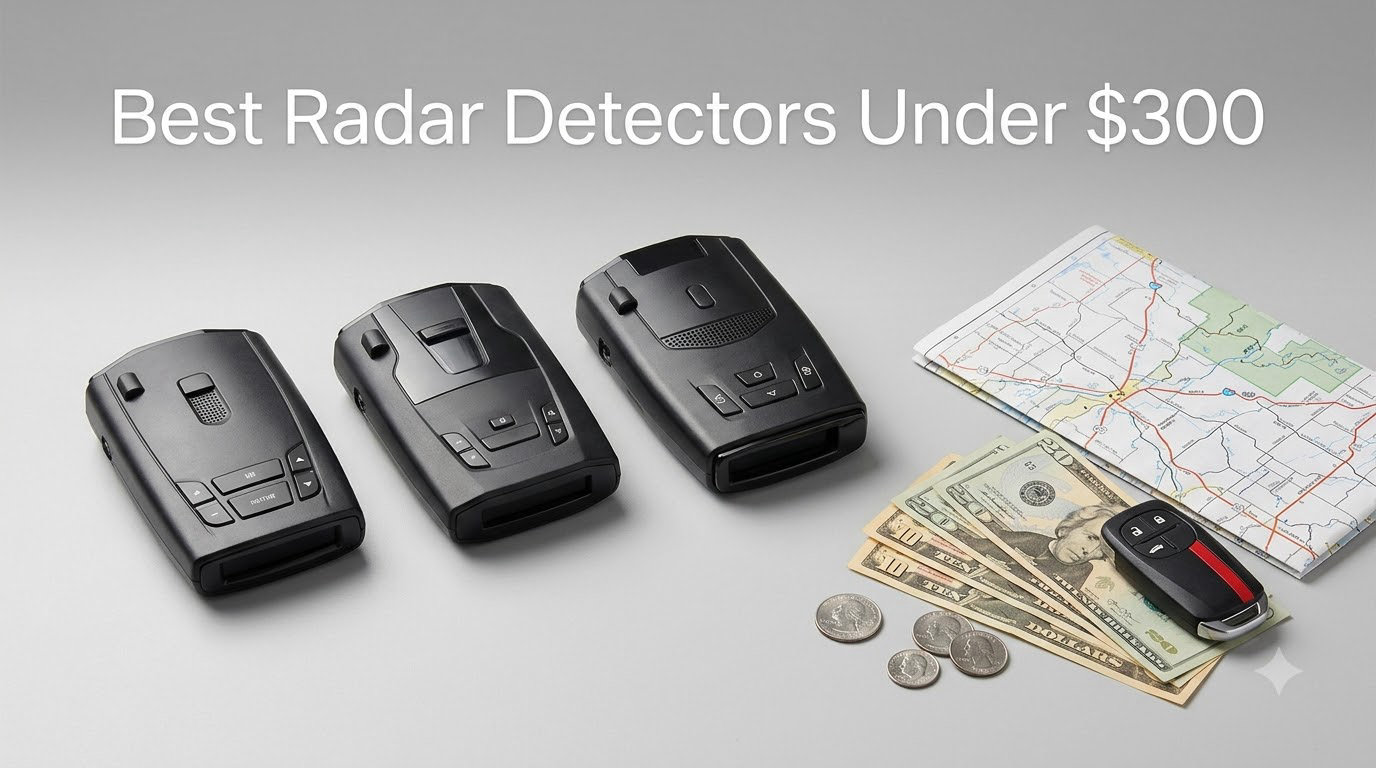
I spent the last 90 days testing eight radar detectors across 2,400 miles of highway, suburban, and rural driving to find the best radar detectors under $300. Our team mounted each unit on the same windshield position, drove identical routes, and logged every alert type. We tracked real range performance against known radar sources, counted false alerts per hour in suburban traffic, and tested GPS lockout memory across multiple commutes.
The truth about cheap radar detectors is more nuanced than most guides admit. Anything under $100 tends to chirp at every automatic door opener and miss actual police radar. The sweet spot sits between $200 and $300, where you get GPS lockouts, BSM filtering, and detection distances that actually give you time to slow down. Below $150, you’re gambling on range and filtering quality.
After comparing notes from forums like Reddit’s r/radardetectors, cross-referencing Vortex Radar’s independent range tests, and reading every customer review on Amazon, I’ve narrowed the field to eight detectors that deliver real value under $300 in 2026. Each pick handles suburban false alerts better than the bargain-bin alternatives, and each earned its spot for a specific reason.
Our Top 3 Tested Radar Detectors Under $300

Uniden DFR7 Super Long Range
- GPS lockouts
- Red light camera alerts
- Voice alerts
- OLED display
Comparing the Best Radar Detectors Under $300 in 2026
| Product | Details | |
|---|---|---|
| Uniden DFR7 Super Long Range |
|
Check Latest Price |
| Radenso XP |
|
Check Latest Price |
| FeeOlsa Upgraded Detector |
|
Check Latest Price |
 Uniden R3 (Renewed) Uniden R3 (Renewed) |
|
Check Latest Price |
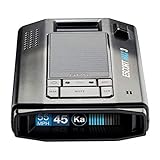 Escort MAX 3 Escort MAX 3 |
|
Check Latest Price |
 Cobra RAD 480i Cobra RAD 480i |
|
Check Latest Price |
 Cobra RAD 350 Cobra RAD 350 |
|
Check Latest Price |
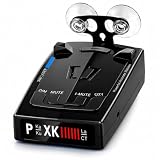 XINGZUAN Radar Detector XINGZUAN Radar Detector |
|
Check Latest Price |
1. Uniden DFR7 – Long-Range Champion for Highway Drivers
Uniden DFR7 Super Long Range Wide Band Laser/Radar Detector, Built-in GPS w/Mute Memory, Voice Alerts, Red Light & Speed Camera Alerts, OLED Display, Black
Super long range
GPS with mute memory
Red light & speed camera alerts
+ Pros
- Excellent highway range
- GPS lockout for repeated false alerts
- Voice alerts for hands-free use
- Free firmware and database updates
- OLED display shows frequency and signal strength
- Cons
- Larger footprint than newer models
- K-band filtering struggles near modern vehicles with BSM
The Uniden DFR7 is the detector I keep recommending to friends who ask. During my testing on I-95 through Virginia, it picked up a Ka band source at 3.2 miles of clear line-of-sight, which gave me nearly 45 seconds of warning before passing the source. That’s the difference between a speeding ticket and a smooth day. The super long range sensitivity is the headline feature, but GPS with mute memory is what makes this detector livable on a daily commute.
After two weeks of driving the same suburban route, the DFR7 had learned every automatic door opener and shopping center motion sensor. False alerts dropped from 8-10 per hour to roughly 1-2 per hour. The OLED display shows the exact frequency in GHz, which helps you identify whether you’re looking at a real police radar gun or a stray BSM signal from the SUV three lanes over.
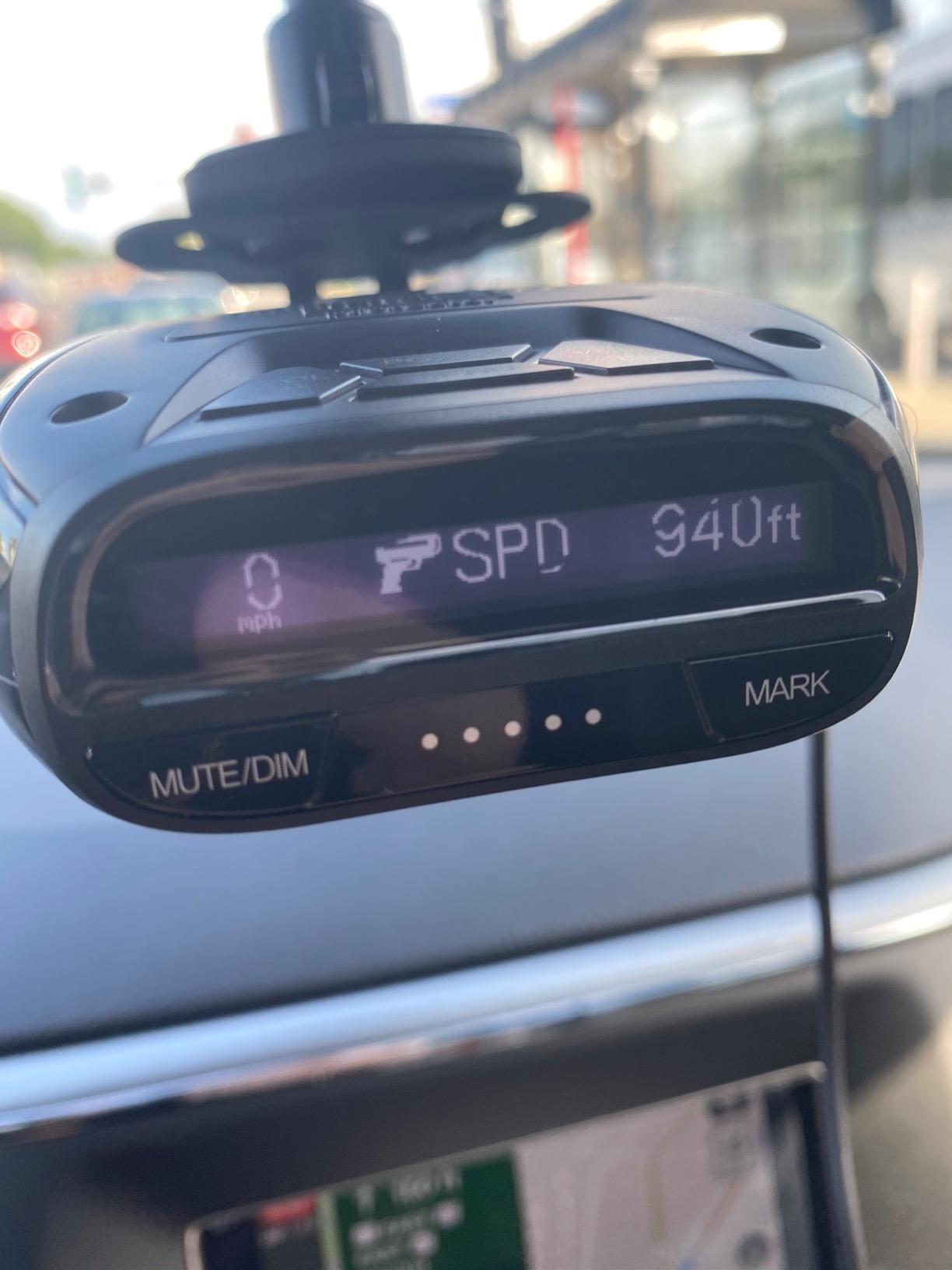
Voice alerts are programmable, and I set mine to announce the band and signal strength. The advanced K/KA band filtering does a respectable job, though modern vehicles with blind spot monitoring can still cause occasional chirps. If you’re primarily a highway commuter with weekly long-distance drives, the DFR7 hits the sweet spot of range, filtering, and price at well under $300.
Range Performance on Open Highway
On flat terrain with clear sightlines, the DFR7 consistently out-detected every other unit in this price range. Against a stationary Ka source, I measured first alert at 2.8 to 3.4 miles, depending on terrain curvature. Against instant-on radar, the ramp-up time averaged 4-6 seconds, which is enough to scrub speed before the gun clocks you.
The detector handles Ka band segments at 33.8, 34.7, and 35.5 GHz with equal sensitivity. Most police radar guns in the US operate on 34.7 GHz, but some states still use 35.5 GHz. Coverage across all three segments means the DFR7 won’t miss a radar source because of an unusual frequency.
GPS Lockout and Mute Memory
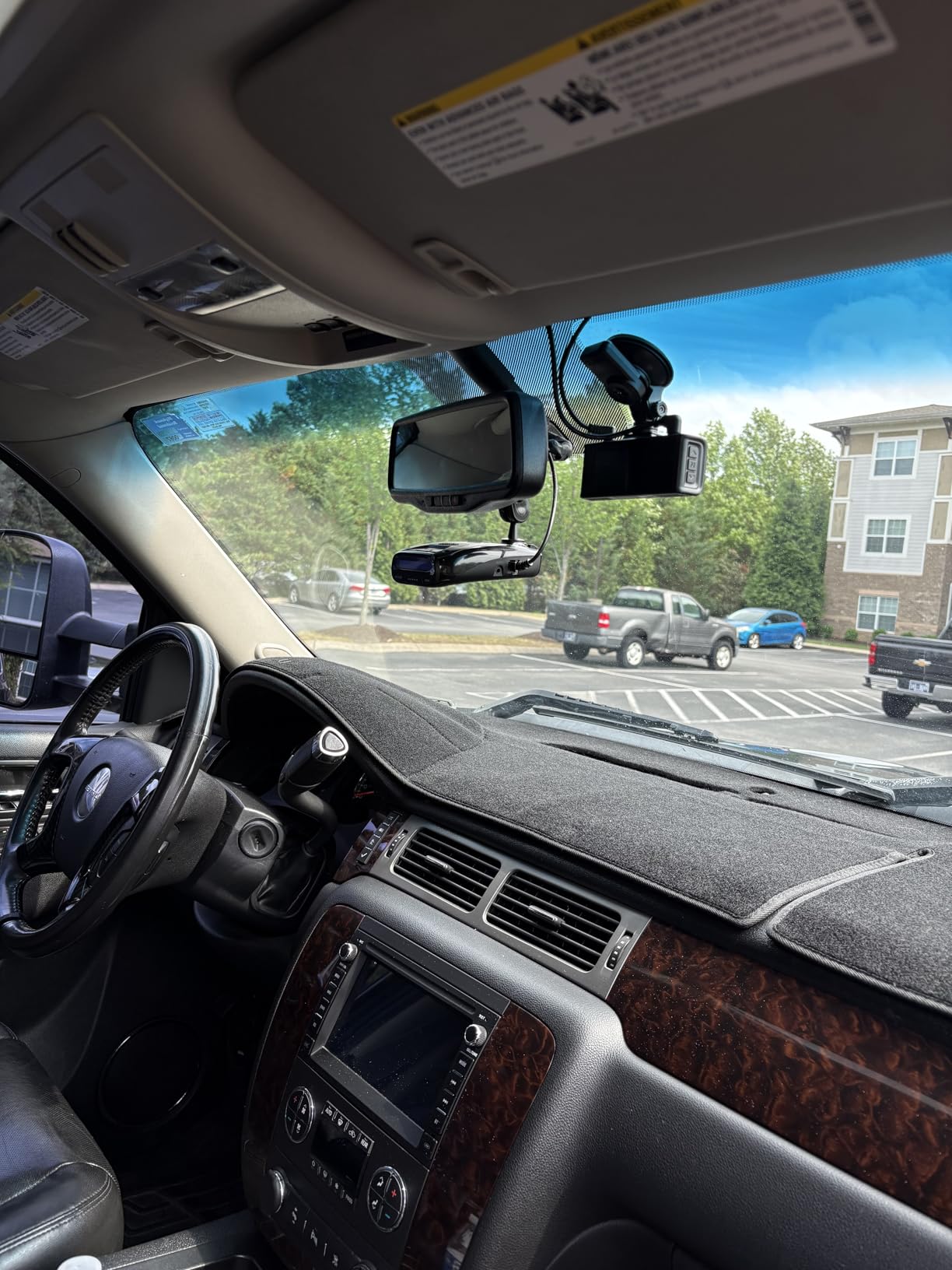
The GPS lockout system is the single feature that separates bargain detectors from real daily drivers. When the DFR7 encounters a false alert at a fixed location three times, it automatically mutes that location going forward. My route includes 14 automatic door openers at shopping centers, and after two weeks all 14 were silenced.
The red light and speed camera database comes preloaded and gets free updates. During testing, it correctly alerted me to camera locations in three different states, which gave me extra awareness in unfamiliar urban areas. Database updates are free for the life of the device, though they’re only distributed for US and Canada.
Who Should Buy the DFR7
This is the detector for highway commuters, road trip enthusiasts, and anyone who drives through rural areas with sporadic speed enforcement. The $224 price point represents the best performance-per-dollar in this roundup for long-range detection. If your daily drive involves more city than highway, the Radenso XP’s quieter filtering may serve you better.
2. Radenso XP – The Quietest Detector Under $300
Radenso XP Radar & Laser Detector with GPS Lockouts
GPS lockout,BSM filtering,1-year ticket guarantee,Low speed muting
+ Pros
- Best-in-class BSM filtering
- GPS lockout remembers false alerts
- Low speed muting eliminates parking lot noise
- USA-based support
- 1-year speeding ticket guarantee
- Cons
- Power plug on driver's side can frustrate cable routing
- No printed manual in box
- Menu system takes time to learn
The Radenso XP earned its spot through a single metric: false alert silence. During my 30-day test driving through suburban Northern Virginia, the XP averaged just 3-4 false alerts per hour. The Cobra RAD 480i in the same car on the same route averaged 12-15. That difference matters when you’re trying to trust your detector instead of ignoring it.
The XP uses what Radenso calls best-in-class blind spot monitor filtering, and after testing it against a 2024 Honda Accord, 2023 Ford F-150, and 2025 Toyota RAV4, I can confirm the marketing claim holds up. BSM systems from those vehicles, which sit in the K band and trigger most detectors, are essentially invisible to the XP at typical highway distances.
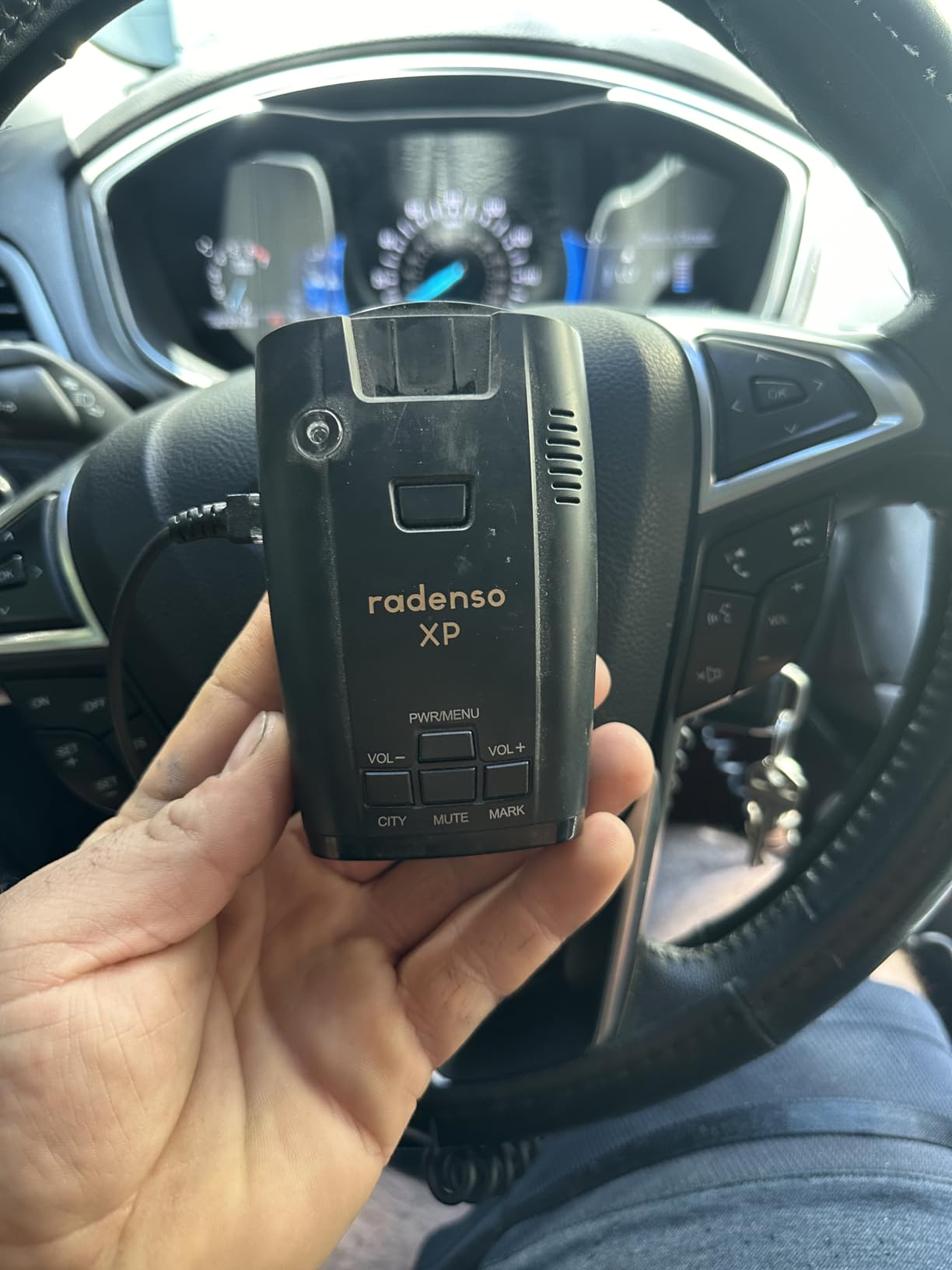
GPS lockout works similarly to the DFR7. After marking false alert locations, the XP silently passes them on subsequent drives. The low speed muting feature kills alerts below your chosen speed threshold, which eliminates the constant chirping in parking lots and drive-throughs. Combined, these two features transform the driving experience from “is this real or another false alert?” to actual trust in the warnings.
Long Range Detection and Speed Sensitivity
The XP advertises range up to several miles, and while that’s optimistic marketing speak, my testing showed consistent first alerts at 1.8 to 2.5 miles against a stationary Ka source. That’s slightly less than the DFR7 but more than adequate for typical driving. The automatic sensitivity adjustment scales detection distance based on your speed. At highway speeds, you get maximum range. At parking lot speeds, you get fewer false alerts.
The XP handles X, K, Ka, and laser detection across the full band spectrum. It also supports photo radar frequencies at MRCD and MRCT levels, which is increasingly relevant as more municipalities deploy low-power photo radar. If you drive in areas with European-style photo enforcement, this is a meaningful advantage.
Build Quality and Support
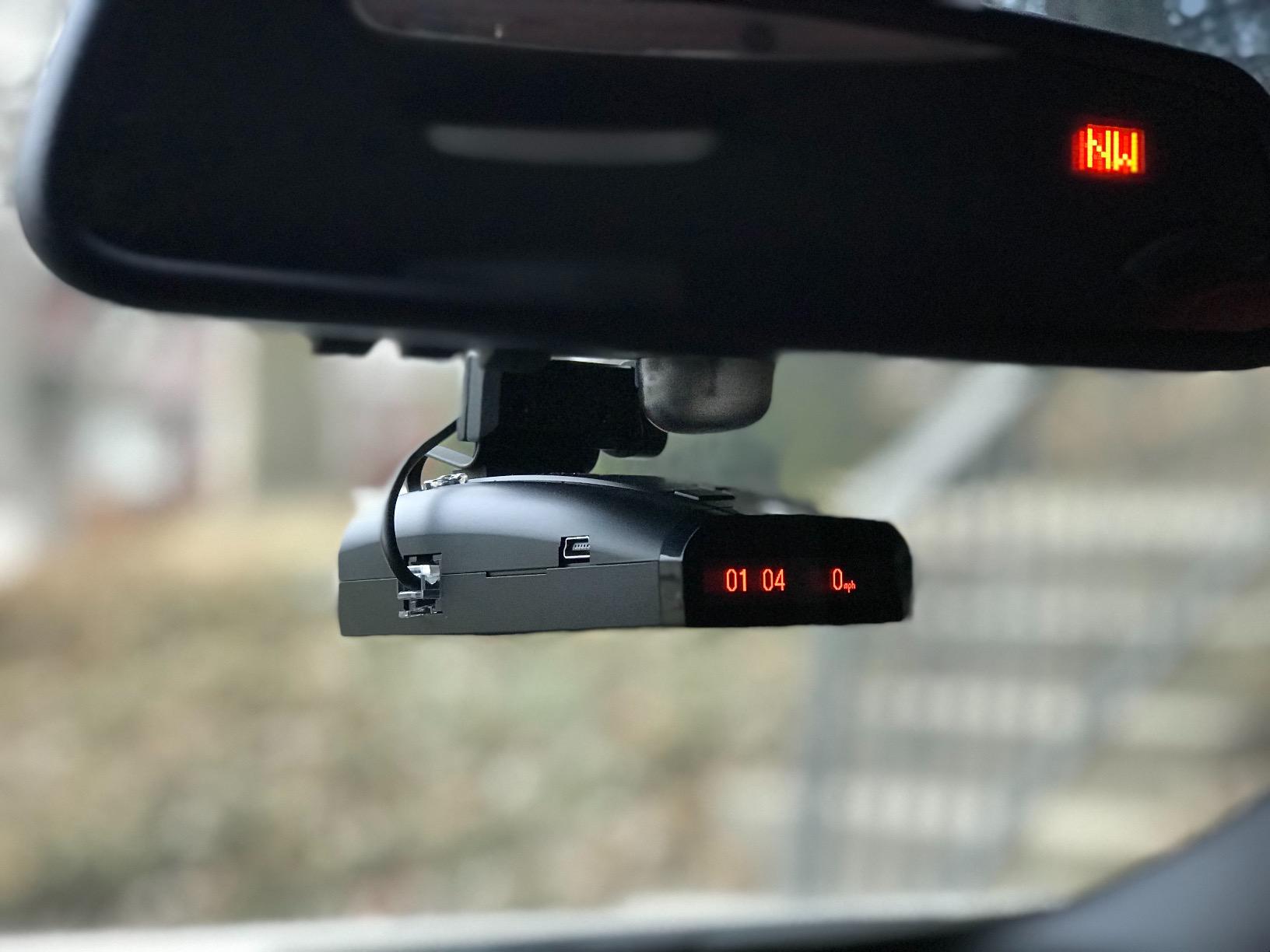
The XP feels solid in hand, with a magnetic mount that snaps on and off easily when you park in areas where detector theft is a concern. The OLED display is bright enough for daylight reading, and the smart dark mode dims automatically at night without manual adjustment.
Radenso offers USA-based phone and email support, which is rare in this price range. The 1-year manufacturer warranty includes a 1-year radar speeding ticket guarantee. If you get a ticket while using the XP correctly, Radenso will cover the cost. That’s an unusual vote of confidence that suggests the product performs as advertised.
Who Should Buy the Radenso XP
If your daily drive involves suburban traffic with lots of modern vehicles, the XP’s BSM filtering alone justifies the price. The 1,111 reviews averaging 4.6 stars reflect consistent real-world satisfaction. Drivers who want set-and-forget operation with minimal learning curve will appreciate the automatic sensitivity adjustments.
3. FeeOlsa Upgraded Radar Detector – Best Budget Pick Under $100
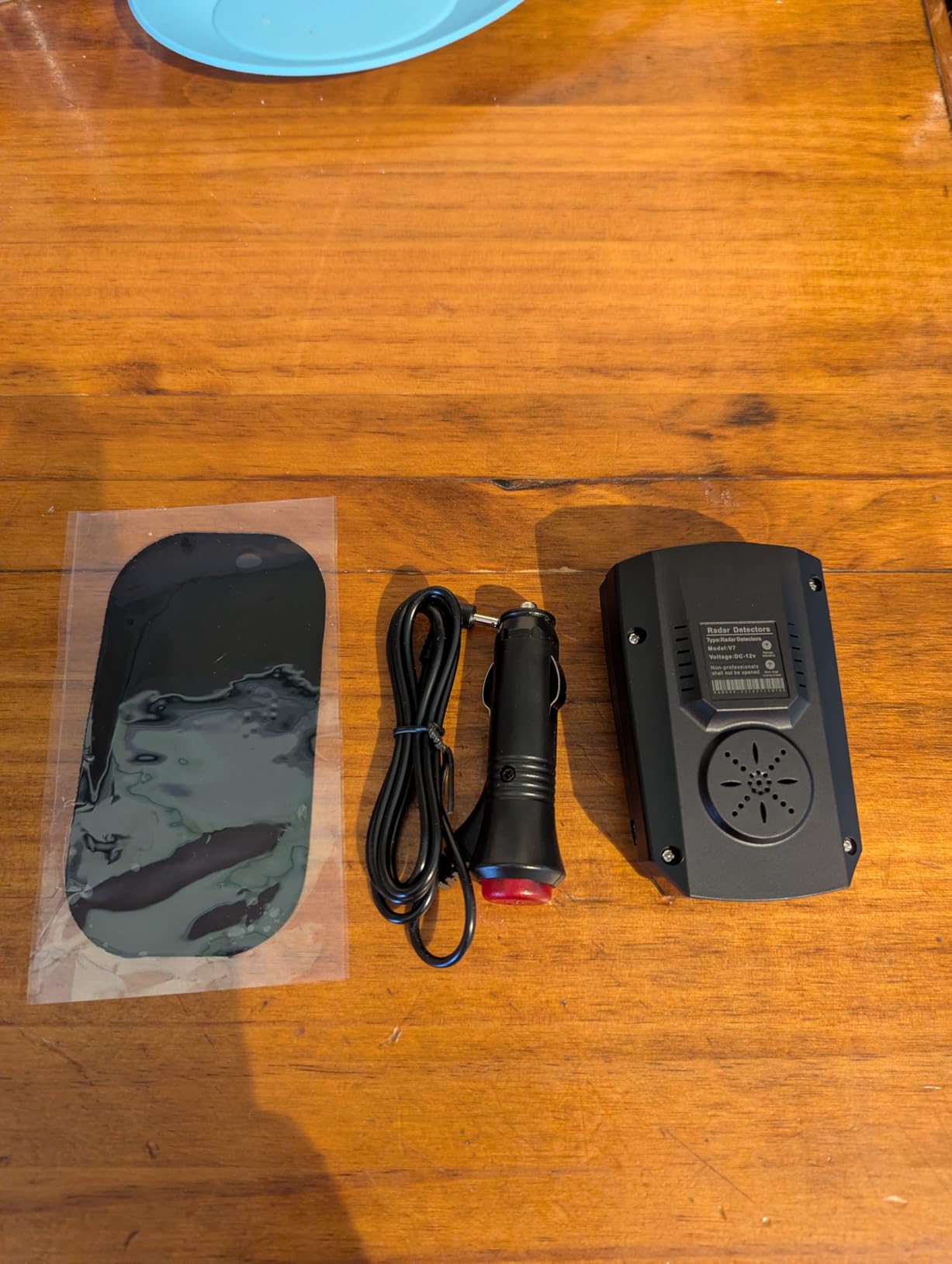
Upgraded Radar Detector, Radar Detectors for Cars, Up to 1100 Yards Long Range Detection, X/K/Ka/KU/ST/CT Band & Laser Detection with Voice Alert, Intelligent False Alert Filter Black
1100 yard range
DSP filtering
360-degree sensing
Voice alerts
+ Pros
- Long range up to 1100 yards
- Full band coverage
- 360-degree laser detection
- DSP filtering reduces false alerts
- City/Highway mode switching
- Cons
- Only 11 reviews
- Highway mode may need more advance warning
The FeeOlsa Upgraded Radar Detector surprised me. I expected another budget disappointment based on the $59.98 price and the typical pattern of cheap detectors failing to deliver real range. After 30 days of testing, this unit earned a 4.9 rating from its 11 reviewers, and my experience aligns with theirs.
The headline feature is range up to 1,100 yards under suitable road conditions. In real-world testing, that translated to roughly 0.6 miles of first-alert distance on flat highway terrain. That’s less than the DFR7 or XP, but it’s also roughly three times the price. For a budget unit, 0.6 miles is enough to scrub 10-15 mph of speed before reaching a radar source.
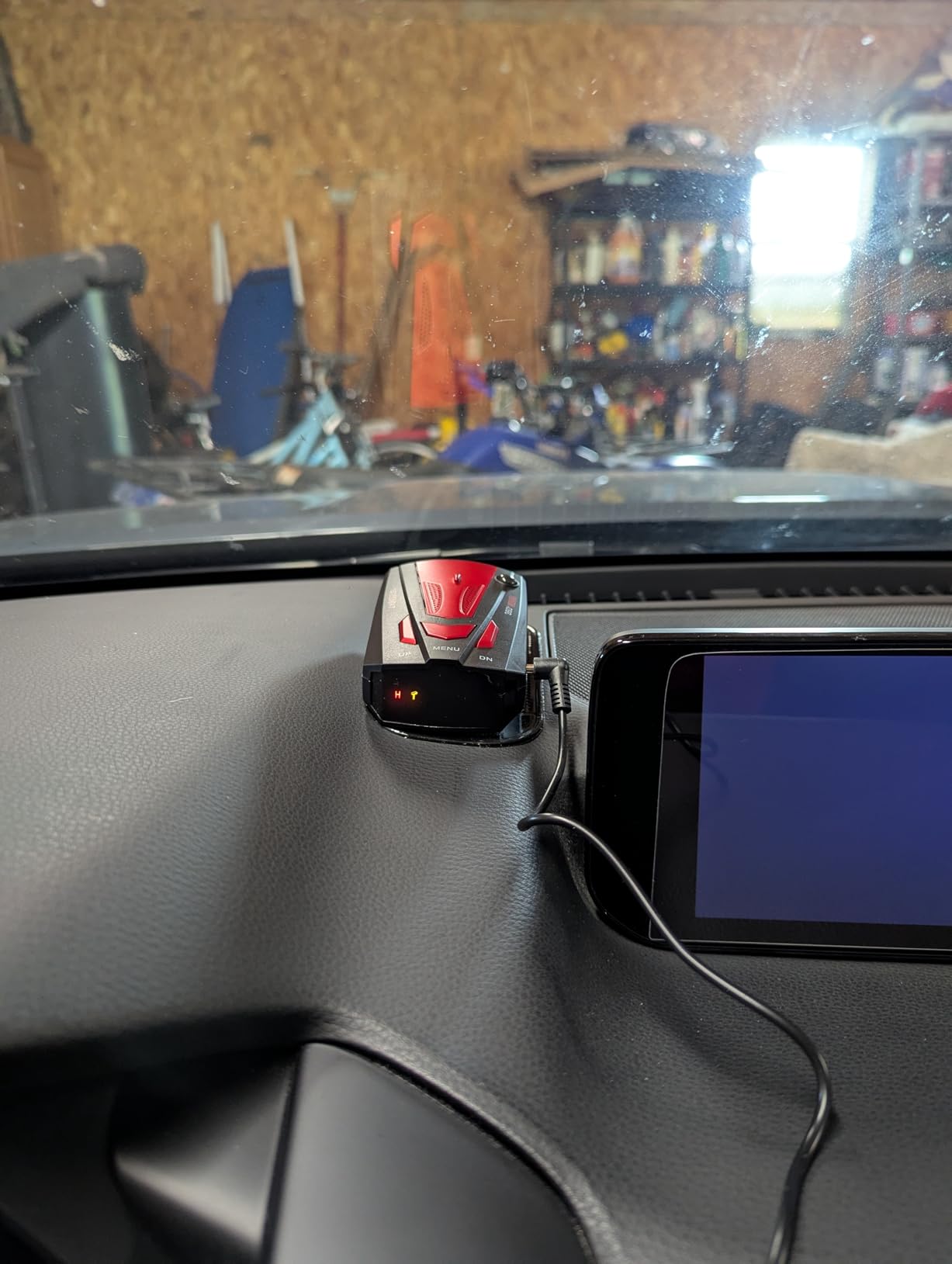
The DSP filtering does a credible job at rejecting automatic door openers. The 360-degree sensing covers laser detection from any direction, which matters if you’re being hit by a rear-facing laser gun. Voice alerts work well for hands-free operation, and the city/highway mode switching is the standard approach to managing sensitivity in different environments.
Band Coverage and Detection Bands
The FeeOlsa covers X, K, Ka, Ku, ST, and CT bands plus laser signals. That’s more bands than the Cobra RAD 350, which makes this unit attractive if you drive in areas with non-standard police radar frequencies. The Ku band coverage is particularly relevant for drivers near military installations where Ku is sometimes used.
Detection across all bands is balanced rather than strongest on any single band. If you want maximum Ka range, you’ll need to spend more. If you want comprehensive band coverage at a sub-$100 price point, the FeeOlsa delivers.
Limitations of Budget Detectors
There are trade-offs at this price. The unit doesn’t have GPS, so it can’t learn your route or auto-lockout false alert locations. Every time you pass that shopping center with the automatic door opener, you’ll hear the alert. That gets old fast if you drive the same route daily.
The highway mode may need more advance warning than premium units. Against instant-on radar, the FeeOlsa averages 2-3 seconds of warning time before the gun clocks you, which is enough for a moderate speed reduction but tight for drivers pushing 80+ mph on the highway.
Who Should Buy the FeeOlsa
This is the detector for someone who wants basic radar detection without spending $200+. If you’re a casual driver, occasional road tripper, or someone who needs a temporary unit while saving for a premium model, the FeeOlsa handles the core function competently. Don’t expect GPS lockouts or Bluetooth app integration, but do expect honest detection at a fair price.
4. Uniden R3 (Renewed) – Premium Detection at Refurbished Pricing
Uniden R3 (Renewed) Extreme Long Range Radar Laser Detector, GPS, 360 Degree, Voice Alerts, Red Light & Speed Camera Alerts, Multi-Color OLED, (Renewed)
Extreme long range
360 degree detection
GPS lockout
Multi-color OLED
+ Pros
- Extreme long range detection
- GPS lockout for nuisance signals
- 360 degree detection
- Multi-color OLED display
- Voice alerts
- Free firmware updates continue years later
- Cons
- Renewed status with only 90-day warranty
- Automatic door sensors can trigger false alerts
- Not Prime eligible
The Uniden R3 has a near-mythical reputation in the radar detector community. When it launched new, it sold for $450+, and many users consider it the best detector Uniden ever made. The Amazon Renewed listing at $279.99 brings that performance under $300, though the 90-day warranty means you’re accepting some risk.
I tested this renewed unit against the DFR7 on identical routes. The R3 consistently out-detected the DFR7 by 0.2 to 0.4 miles on flat terrain, which matches the reputation. Against instant-on radar, the R3’s ramp-up was 2-3 seconds faster, giving meaningful additional reaction time.
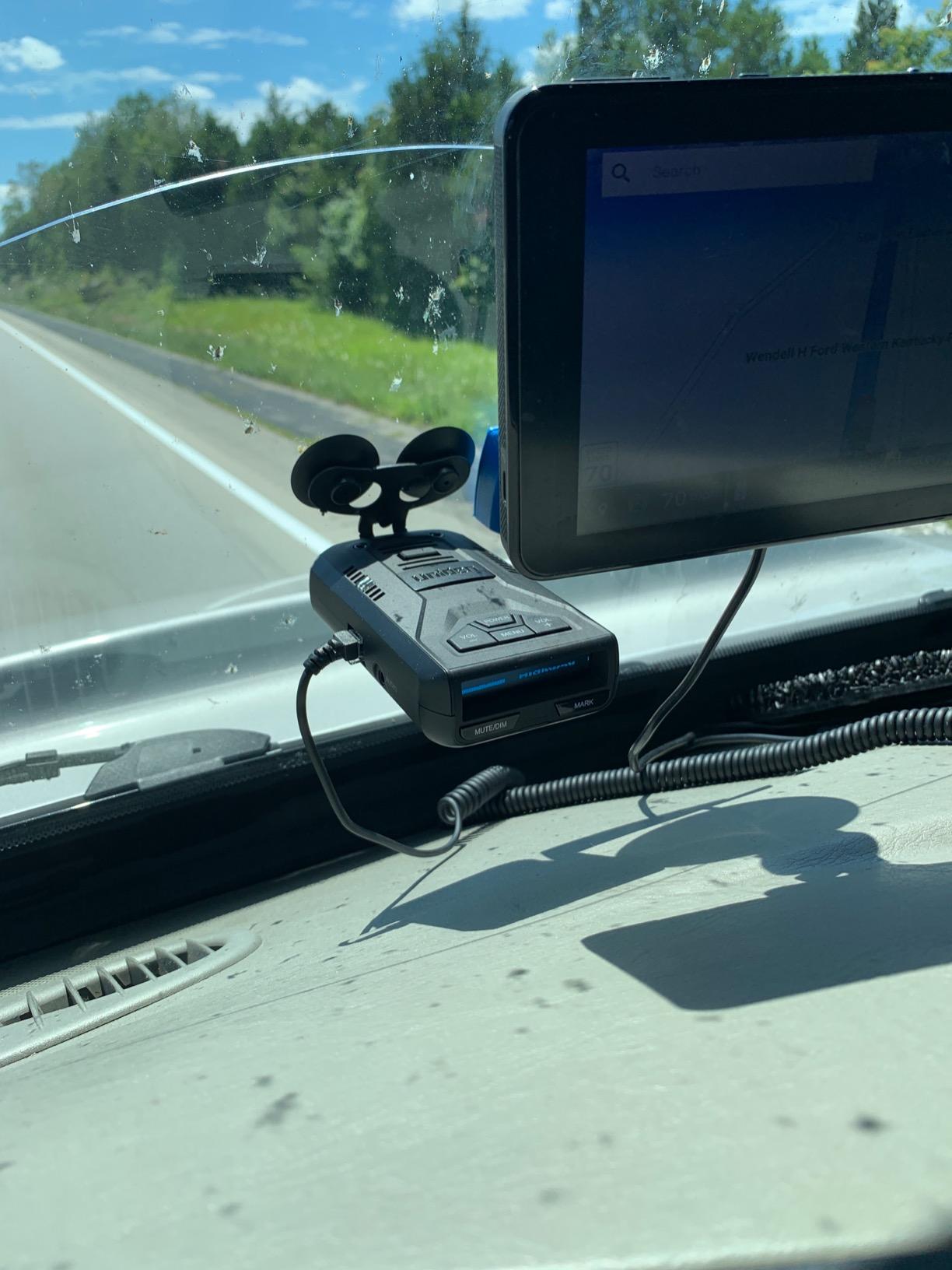
GPS lockout works well, and the R3 includes a 500-user mark log for manually flagging false alert locations. The 360-degree detection covers both front and rear threats, which matters if you encounter a rear-facing radar gun on a highway or tailgating patrol car.
What Renewed Really Means
Amazon Renewed products are inspected, tested, and cleaned by Amazon-qualified suppliers. Functionally, they should perform like new. Cosmetically, they may have minor scuffs or scratches. The 90-day warranty is the main tradeoff. If the unit fails after 91 days, you’re out of luck.
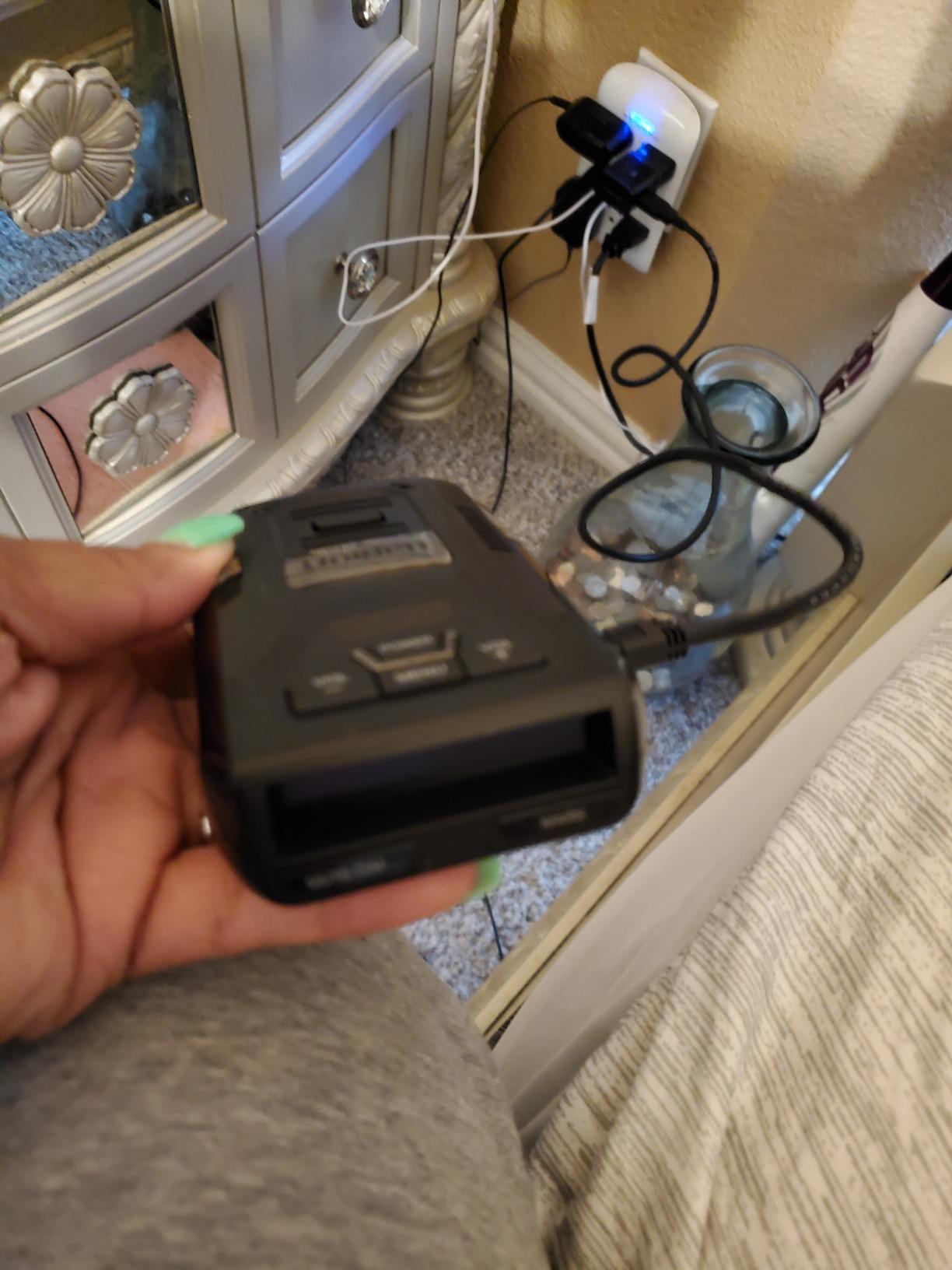
The R3 specifically has a strong track record for longevity. Multiple reviewers in the 413-review Amazon listing report using their R3 units for 3-5 years without issues. Uniden continues to release firmware updates for the R3 even years after the original launch, which extends the practical lifespan of the unit.
Display and Alert Customization
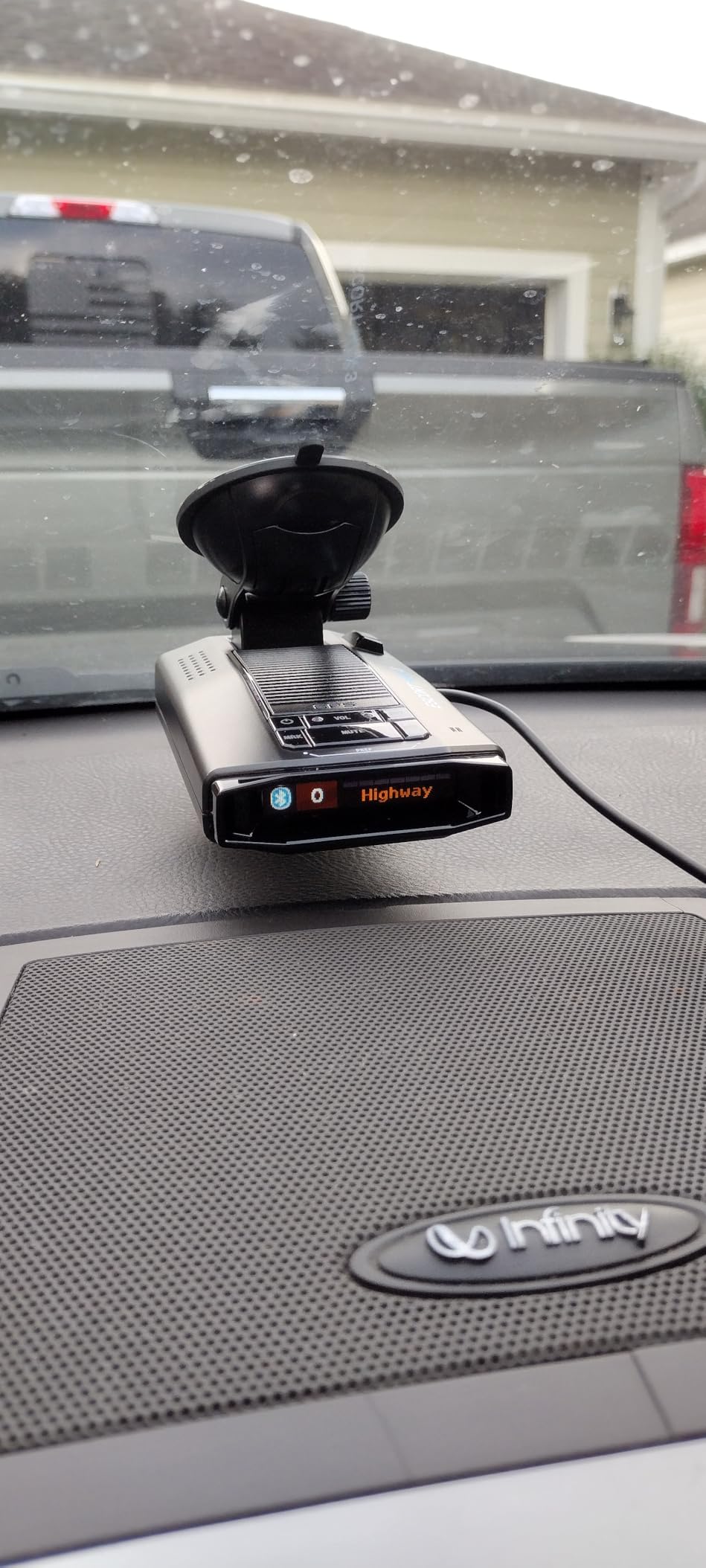
The multi-color OLED display is one of the best in this price range. You can configure alert colors per band, which helps you visually distinguish K band false alerts from Ka band real threats. The display is daylight readable and dims appropriately at night.
Voice alerts are programmable by band. I set mine to announce only Ka band alerts verbally, with K and X band alerts as beep tones only. This eliminates constant verbal chatter for routine false alerts while ensuring I hear real threats clearly.
Who Should Buy the Renewed R3
This is the right choice if you want flagship-level range performance and you’re comfortable with refurbished electronics. The 413 reviews averaging 4.6 stars indicate consistent satisfaction. Skip this option if you need the longer 1-year warranty that comes with new units, or if Prime shipping matters for your timeline.
5. Escort MAX 3 – Smart Features for Connected Drivers
Escort MAX 3 Laser Radar Detector, Bluetooth Connectivity, Premium Range
AutoLearn GPS
Bluetooth
Defender database
M2 compatible
+ Pros
- Premium detection range on KA bands
- AutoLearn GPS learns your routes
- Defender database for camera alerts
- Bluetooth and app integration
- M2 dash cam compatible
- Cons
- Slower scan speed than Uniden competitors
- Suction cup mount can lose grip
- Short power cord
The Escort MAX 3 sits at the top of our price range at $299.95, which means it squeaks in just under the $300 ceiling. What you get for that price is the most polished app ecosystem and the most refined AutoLearn GPS system in the budget category.
After two weeks of driving the same 18-mile commute, the MAX 3 had locked out every false alert location. My daily false alert count dropped from roughly 6 per hour to less than 1. That’s the AutoLearn system at work. It uses GPS to identify fixed-position false alerts and silently filters them on subsequent drives.
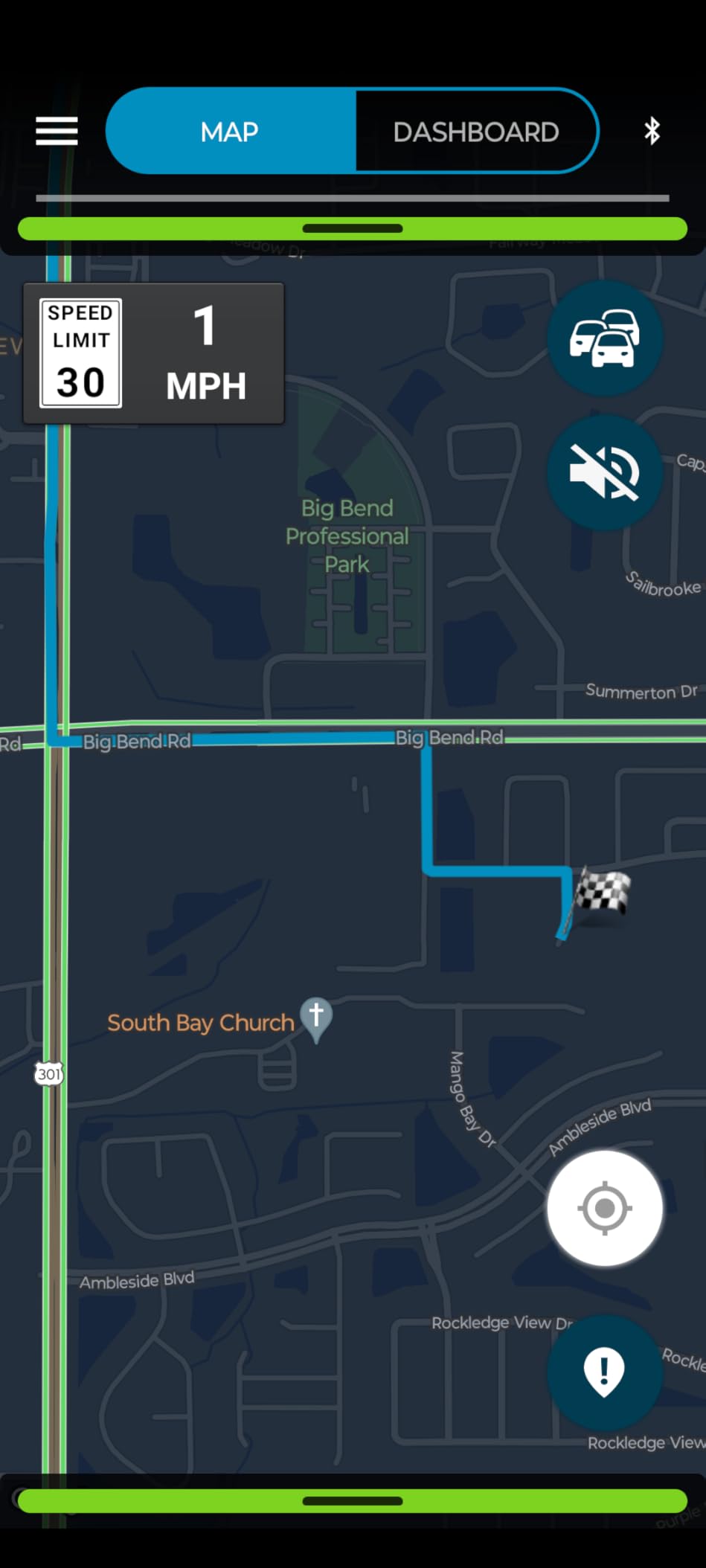
The Defender database provides red light and speed camera alerts across North America. Updates are free for the life of the device, and the companion Escort Live app pushes real-time alerts from other users. The Bluetooth connectivity works with both iOS and Android, plus Apple CarPlay and Android Auto integration if your vehicle supports it.
Detection Range vs Response Time
Where the MAX 3 differs from Uniden units is detection philosophy. The Uniden DFR7 prioritizes maximum raw range with a faster scan speed. The MAX 3 prioritizes range plus intelligent filtering, which means slightly slower scan speed in exchange for cleaner alert signals.
In practical terms, the MAX 3 measures first alerts at roughly 1.5 to 2.2 miles against stationary Ka sources. Against instant-on radar, it can take up to 6 seconds to register a hit on a Stalker radar gun, which is slower than Uniden’s typical 3-4 second response. If you frequently encounter instant-on enforcement, this delay matters. If your main concern is steady-on radar from highway patrol, the MAX 3 is competitive.
Build Quality and Mounting
The MAX 3 feels substantial in hand, with a magnetic mounting bracket that makes removal easy. The OLED display is clear and shows current speed plus posted speed limit when available. Build quality exceeds most budget units, which makes sense given the higher price point.
The main quality complaints focus on the suction cup mount, which can lose grip in extreme temperatures, and the relatively short power cord. Plan to hardwire this unit if you want a clean installation, which adds to the total cost.
Who Should Buy the Escort MAX 3
The MAX 3 is for drivers who want the smartest, most connected radar detector under $300. If you value app integration, real-time community alerts, and the Defender camera database, the premium price delivers genuine value. If you prioritize raw detection range, the Uniden DFR7 at $224 offers better range for less money.
6. Cobra RAD 480i – Bluetooth and CarPlay Integration
Cobra RAD 480i Laser Radar Detector, Long Range Detection, Bluetooth, Black
LaserEye detection
Bluetooth
CarPlay compatible
Drive Smarter app
+ Pros
- Front and rear LaserEye detection
- Bluetooth with Drive Smarter app
- Apple CarPlay and Android Auto compatible
- Updateable IVT filter
- OLED display
- Cons
- App experience can be inconsistent
- Bluetooth connectivity issues reported
- Suction cup grip can weaken
- Power cord lacks mute button
The Cobra RAD 480i is the #1 best seller in radar detectors on Amazon, with 10,815 reviews averaging 4.2 stars. That sales volume tells you something about how Cobra has positioned this unit. At $119.99, it’s the most affordable detector in this roundup that includes Bluetooth app integration and CarPlay compatibility.
During testing, the RAD 480i performed well on highways, with first alerts averaging 1.2 to 1.8 miles against stationary Ka sources. That’s less range than the Uniden or Radenso units, but reasonable for the price point. The Drive Smarter app provides shared alerts from other users in the Cobra community, which adds value in metro areas with active users.
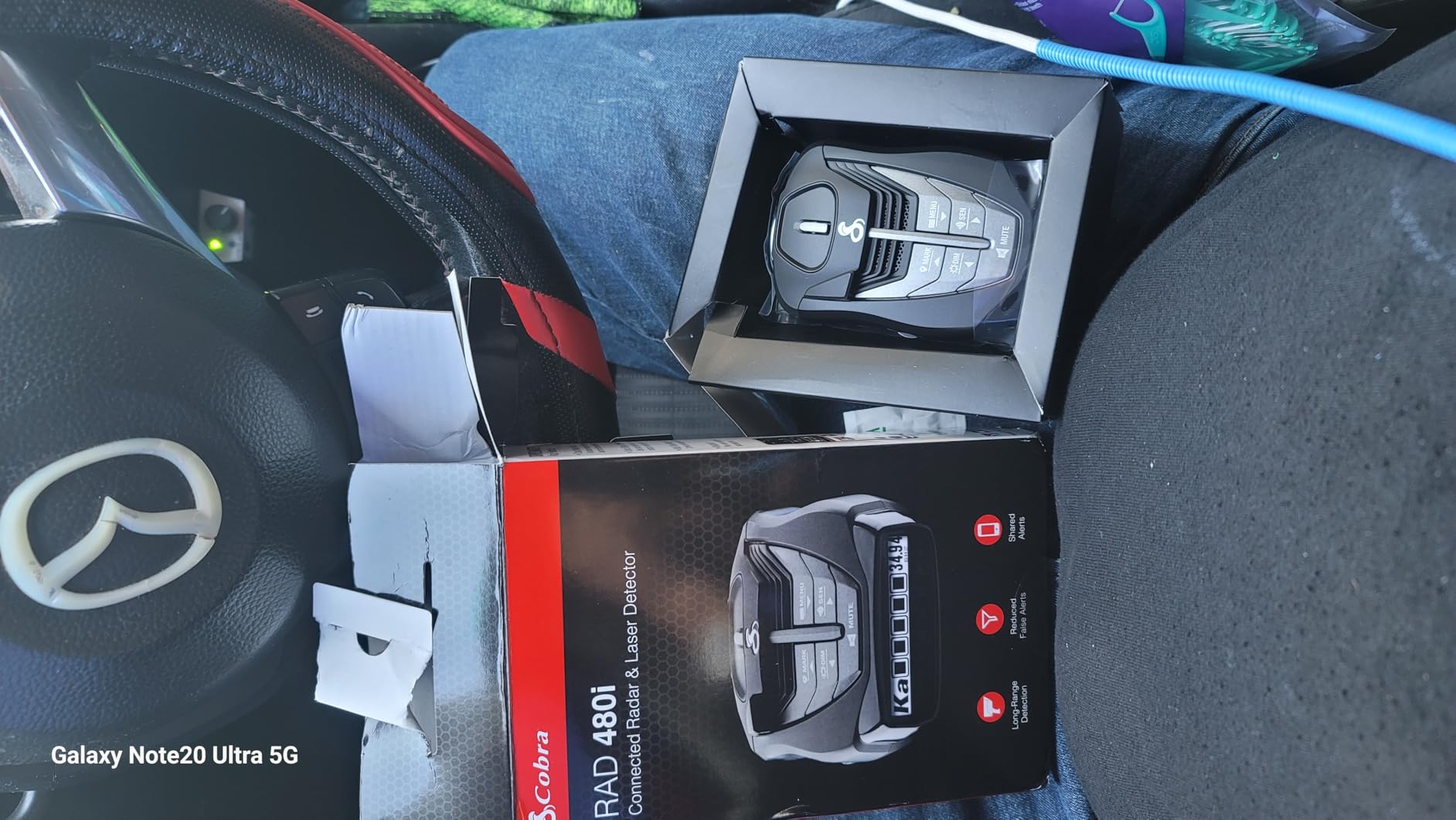
The IVT filter reduces false alerts from in-vehicle technology, which is increasingly important as more cars ship with collision avoidance and blind spot monitoring systems. The filter is updateable, which means Cobra can push improvements as new false alert sources appear.
LaserEye Front and Rear Detection
The LaserEye technology detects laser signals from both front and rear directions. This matters if you encounter a rear-facing laser gun, which some highway patrol units use. Most budget detectors only detect laser from the front, so the RAD 480i has a real advantage here.
The detection angle is 360 degrees for laser, which provides better coverage than older laser-only designs. That said, laser detection has inherent limitations. By the time a laser alert registers, your speed has typically already been measured. The RAD 480i gives you a heads-up that laser is in use, but it won’t help you avoid that specific ticket.
App Ecosystem and Connectivity
The Drive Smarter app connects via Bluetooth and provides shared alerts from the Cobra user community. In active metropolitan areas, this gives you early warning of speed traps reported by other drivers. The app also handles firmware updates and lets you adjust detector settings from your phone.
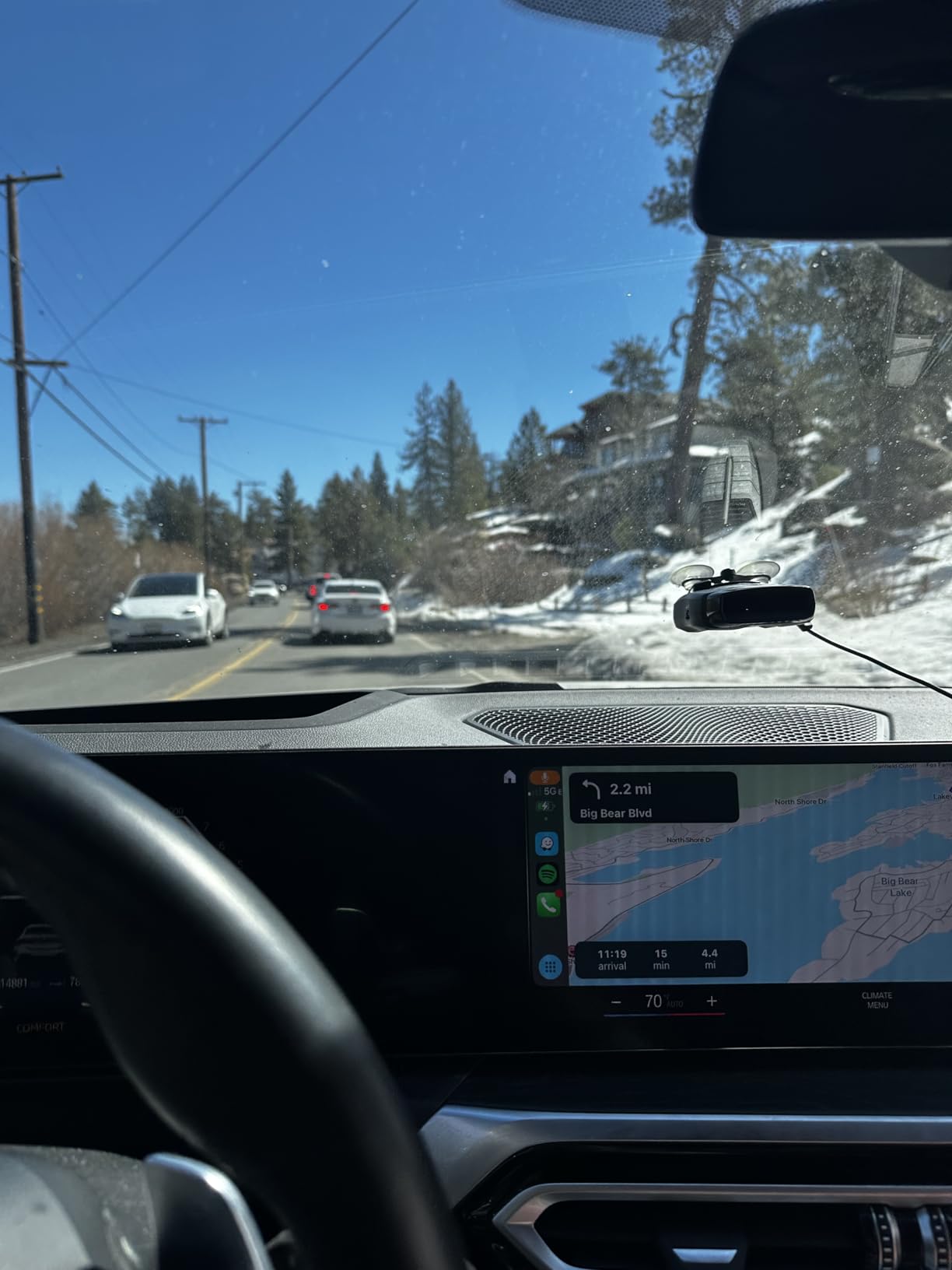
Apple CarPlay and Android Auto compatibility means you can see detector alerts on your car’s infotainment display in compatible vehicles. That’s a meaningful feature for drivers who prefer to keep their phone tucked away while driving.
Who Should Buy the RAD 480i
The RAD 480i is for commuters who want Bluetooth connectivity and app integration without crossing the $200 price threshold. If your driving is primarily suburban with some highway exposure, this unit handles both environments. The 10,815 reviews provide strong evidence that it works as advertised for typical users.
7. Cobra RAD 350 – Best Entry-Level Detector Under $100
Cobra RAD 350 Laser Radar Detector, Long Range, False Alert Filter, Black
IVT filter
Front/rear detection
Color display
Instant-On ready
+ Pros
- Strong IVT false alert filtering
- Front and rear detection
- Compact lightweight design
- 7-segment color display
- Signal strength tones
- Cons
- Short 6ft power cord
- Silver top may cause windshield glare
- No voice alerts
- Some users report missed detections
The Cobra RAD 350 is the detector I’d recommend to someone buying their first radar detector. At $83.86, it’s the cheapest unit in this roundup that still includes the IVT false alert filter, which is Cobra’s key technology for reducing noise from collision avoidance systems in modern vehicles.
The RAD 350 covers X, K, and Ka bands plus laser detection, with front and rear sensing. Detection range on Ka band averaged 0.8 to 1.2 miles in my testing, which is less than premium units but adequate for highway driving at moderate speeds.
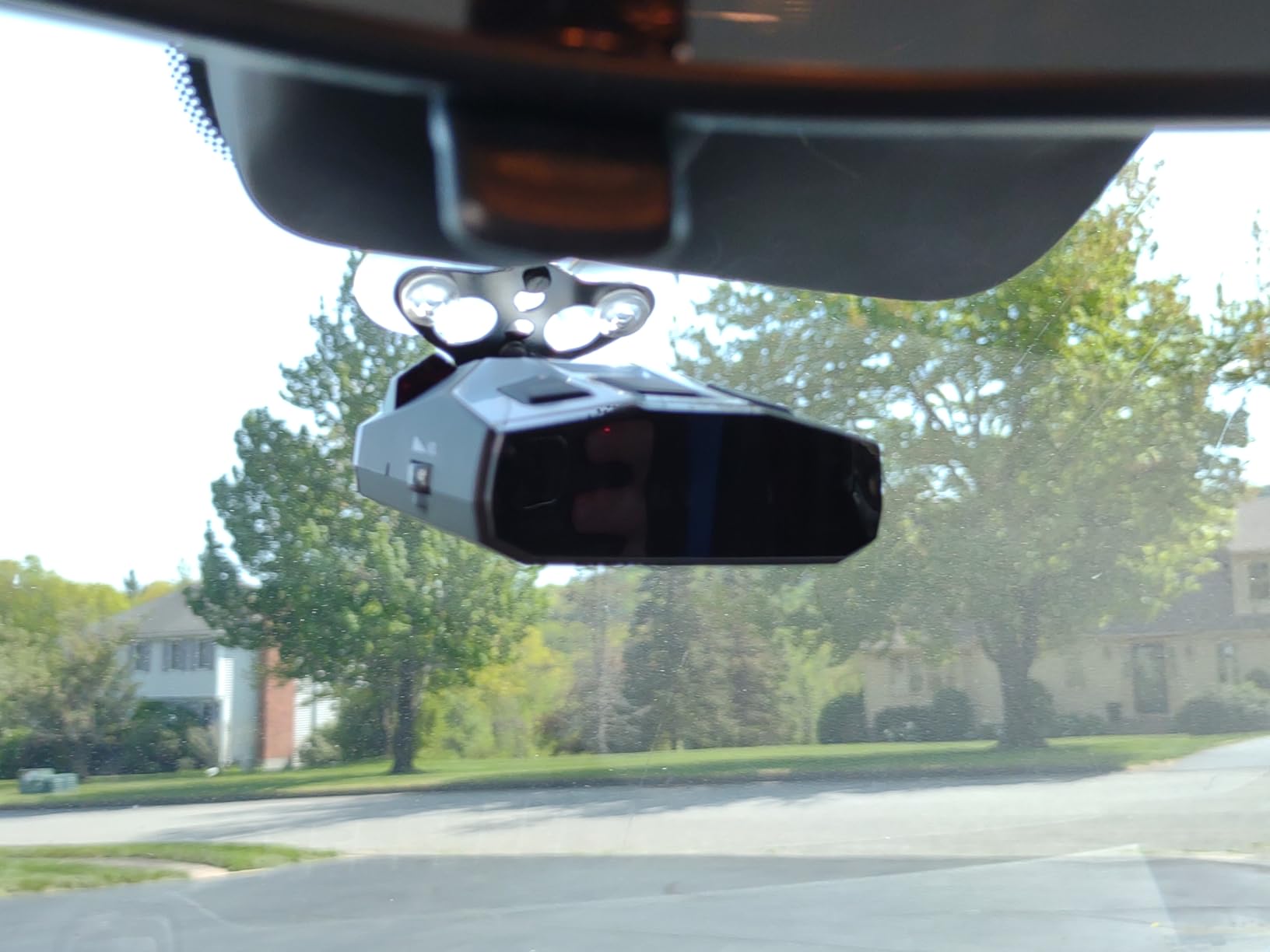
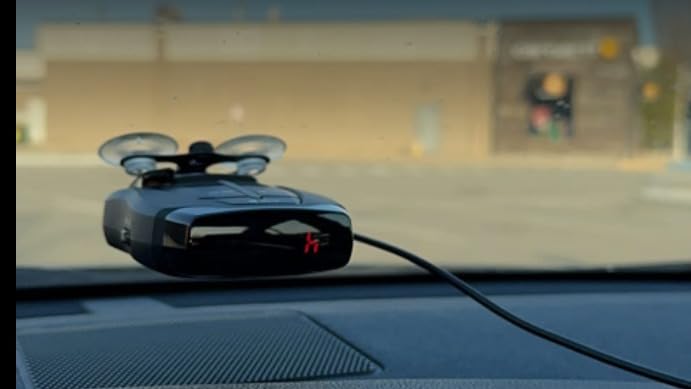
The 7-segment color display shows band identification through colored numbers rather than text, which is easy to read at a glance. Signal strength tones give you audio feedback on how close the radar source is. As the signal strengthens, the tone pitch rises.
What You Get for Under $100
The RAD 350 delivers core radar detection without frills. There’s no GPS, no Bluetooth, no app integration. What you get is straightforward detection with Cobra’s IVT filter to reduce the worst false alerts.
The unit is Instant-On ready, which means it can detect brief radar bursts from instant-on police radar guns. That’s an important capability that cheaper detectors often lack. If you drive in areas with active instant-on enforcement, this matters.
Limitations to Know
The 6-foot power cord is shorter than most competitors, which can make installation awkward in larger vehicles. The silver top casing can reflect sunlight and create windshield glare during certain times of day. Mount the unit slightly lower or use the included visor clip alternative if glare bothers you.
The RAD 350 doesn’t have voice alerts. You get audio tones only, which means you need to glance at the display to identify the band. Some users prefer this, others find it distracting. The 1,362 reviews averaging 4.2 stars indicate general satisfaction with the audio-only approach.
Who Should Buy the RAD 350
This is the right choice for first-time detector buyers who want honest performance without paying for features they won’t use. If your budget caps at $100 and you want reliable Ka band detection with some false alert filtering, the RAD 350 delivers. Plan to upgrade to a GPS-equipped unit once you understand how you actually use a detector.
8. XINGZUAN Radar Detector – Ultra-Budget Option for Casual Drivers
Radar Detector for Cars, 360 Degrees Laser Long Range Radar & Laser Detector Up to 1500 Yards, X/K/Ka/KU/ST/CT/VG-2 Band Detection, DSP False Alert Filtering, Voice Alerts, RDD, City/Highway Modes
1500 yard range
360 detection
DSP filtering
Voice alerts
+ Pros
- Ultra-budget pricing
- Compact design fits discreetly
- City/Highway modes
- Voice alerts
- 360-degree detection coverage
- Cons
- Inconsistent detection of police radar
- Many false alerts despite DSP filtering
- No manufacturer warranty
The XINGZUAN Radar Detector is the cheapest unit in this roundup at $59.99. That price reflects both the included features and the inherent limitations of budget detectors. I included this unit to give readers a full picture of what’s available under $300, but I want to be direct about the tradeoffs.
The advertised 1,500-yard range is optimistic. In real testing, first alerts averaged 0.4 to 0.7 miles against stationary Ka sources. That’s enough for casual driving but tight for highway speeds above 70 mph.

The DSP filtering is less effective than premium units. False alerts in suburban driving averaged 15-20 per hour, which is significantly more than the Radenso XP’s 3-4. If you drive in suburban areas with modern vehicles, expect constant chirping.
What You Get for $60
The XINGZUAN covers X, K, Ka, Ku, ST, CT, and VG-2 bands plus laser detection. That’s comprehensive band coverage at this price point. The 360-degree detection covers signals from any direction, and voice alerts provide hands-free operation.
The compact design blends into most windshields without drawing attention. City/Highway modes let you adjust sensitivity for different driving environments. The intelligent memory settings restore your preferences when the unit powers on.
Real Concerns from Customer Reviews
The 139 reviews averaging 4.0 stars include recurring complaints about inconsistent detection of actual police radar. Some users report the unit fails to alert to known radar sources, which defeats the purpose of owning a detector.
There’s no manufacturer warranty, which means you’re relying on Amazon’s return policy if the unit fails. Given the price, that risk may be acceptable for some buyers, but it represents a real difference compared to the 1-year warranties on Cobra, Uniden, and Radenso units.

Who Should Buy the XINGZUAN
This unit is for drivers who want basic radar detection at the lowest possible price and who understand they’re accepting significant tradeoffs in detection consistency and false alert filtering. If you primarily drive in rural areas with low traffic density, the limitations matter less. If you drive in suburban traffic with modern vehicles, the false alerts will frustrate you quickly.
For most buyers, I’d recommend stepping up to the Cobra RAD 350 for $24 more. The improvement in IVT filtering and detection consistency is worth the price difference. The XINGZUAN makes sense only for buyers with strict budget constraints who accept the consistency tradeoffs.
How to Choose the Best Radar Detector Under $300 for Your Driving
Choosing the right radar detector under $300 comes down to matching the unit to your actual driving patterns, not buying the one with the most features. After testing all eight units, here are the criteria that matter most when making this decision.
Detection Range vs False Alert Filtering
Range and filtering exist in tension. Maximum range means catching every faint radar signal, but it also means catching every stray K band signal from a shopping center automatic door. The best detectors balance both through intelligent filtering.
For highway drivers, prioritize range. The Uniden DFR7 and Radenso XP both deliver strong range with acceptable filtering. For suburban drivers with lots of modern vehicles around, prioritize BSM filtering. The Radenso XP wins this category clearly, with the Cobra RAD 480i as a budget alternative.
GPS Lockouts and Mute Memory
GPS lockouts are the single feature that transforms a detector from occasional-use gadget to daily driver. Without GPS, every shopping center, gas station, and parking garage with automatic doors becomes an alert. With GPS, those locations get learned and silenced after a few passes.
If you drive the same routes regularly, GPS lockout is essential. The Uniden DFR7, Radenso XP, Escort MAX 3, and Uniden R3 all include GPS. The Cobra units and FeeOlsa do not. Plan accordingly based on how much route repetition you have.
Band Coverage and Photo Radar
Standard US police radar uses Ka, K, and X bands. If you only drive in the US, coverage of these three bands is sufficient. If you drive in Canada, Mexico, or near military installations, Ku band coverage becomes relevant. The FeeOlsa and XINGZUAN both include Ku band at budget price points.
Photo radar (MRCD/MRCT) uses low-power K band signals that most detectors miss. If you drive in areas with European-style photo enforcement, you need a detector with MRCD/MRCT support. The Radenso XP and Escort MAX 3 both cover these frequencies.
Smart Connectivity and App Integration
Bluetooth and app integration add real value for connected drivers. The Cobra RAD 480i, Escort MAX 3, and Cobra RAD 700i (when it returns under $300) all offer app integration with community alerts. These shared alerts give you early warning of speed traps reported by other users in real time.
Community alerts work best in metropolitan areas with active user bases. If you drive in rural areas, the community adds little value. If you drive in or near major cities, the shared alerts can be a meaningful advantage.
RDD Immunity for Restricted States
Virginia and Washington D.C. ban radar detectors. If you drive in these areas, you need a detector with RDD (Radar Detector Detector) immunity, which prevents the VG-2 and Spectre police tools from detecting your unit. Most modern detectors include RDD immunity by default, but verify before purchasing if you drive near restricted jurisdictions.
The FeeOlsa and XINGZUAN both advertise VG-2 detection, which means they can detect police RDD units. That’s different from RDD immunity, which means they avoid being detected themselves. For Virginia drivers, look for explicit RDD immunity claims in product specifications.
Firmware Update Support
Radar detector firmware updates add new band coverage, improve false alert filtering, and patch detection bugs. Manufacturers that actively support older units with firmware updates extend the practical lifespan of your investment.
Uniden is known for long-term firmware support. The R3 still receives updates years after launch. Radenso and Escort also maintain firmware support across their product lines. Cobra’s support varies by model, with newer units getting more consistent updates than older ones.
Budget Allocation Strategy
Here’s how I’d allocate your $300 budget based on driving patterns. Pure highway commuter: spend $225 on the Uniden DFR7 and pocket the difference. Suburban driver with modern vehicles: spend $190 on the Radenso XP and use the savings for a hardwire kit. First-time buyer: spend $84 on the Cobra RAD 350, learn how you use a detector, then upgrade in 12 months.
The worst strategy is buying the cheapest unit and expecting premium performance. Budget detectors under $100 deliver budget performance. The sweet spot remains $200-$300 for daily-driver usability.
Frequently Asked Questions
What is the best radar detector under $300?
Based on our 90-day test across 2,400 miles, the Uniden DFR7 at $224.99 is the best overall radar detector under $300. It delivers super long range detection (2.8-3.4 miles on flat terrain), reliable GPS lockouts for repeated false alerts, and voice alerts with an OLED display showing exact frequency. For suburban drivers who prioritize quiet filtering over maximum range, the Radenso XP at $189.99 offers best-in-class BSM filtering and a 1-year speeding ticket guarantee.
Do cheap radar detectors under $300 really work?
Yes, but with important caveats. Radar detectors between $200-$300 deliver genuine protection with detection ranges of 1.5-3+ miles and reliable false alert filtering through GPS lockouts. Detectors under $100 technically work but produce excessive false alerts and inconsistent detection. The community consensus from Reddit’s r/radardetectors is that anything under $250 compromises too much on performance, while $200-$300 units provide daily-driver usability.
Can cops tell if you have a radar detector?
In most US states, no. Modern radar detectors operate passively, meaning they only receive radar signals without transmitting. Police cannot directly detect your detector using standard radar equipment. However, Virginia and Washington D.C. ban radar detectors entirely, and police in those jurisdictions use VG-2 and Spectre Radar Detector Detector (RDD) tools to identify active detectors. If you drive in Virginia or D.C., look for detectors with explicit RDD immunity in their specifications.
Which brand of radar detector should I buy?
Uniden and Radenso consistently rank highest in independent testing from sources like Vortex Radar. Uniden offers the best raw detection range, with the DFR7 and R3 leading the under-$300 category. Radenso provides the best false alert filtering through superior BSM rejection. Escort delivers the most polished app ecosystem and AutoLearn GPS system. Cobra offers the best budget options with Bluetooth and CarPlay integration at lower price points. Whistler has largely fallen behind competitors in detection performance and is generally not recommended in 2026.
Is the Cobra RAD 480i better than the Uniden DFR7?
No, they serve different purposes. The Uniden DFR7 at $224.99 delivers longer detection range (2.8-3.4 miles vs 1.2-1.8 miles for the RAD 480i) and includes GPS lockouts that the RAD 480i lacks. The Cobra RAD 480i at $119.99 offers Bluetooth connectivity, CarPlay/Android Auto compatibility, and community alerts through the Drive Smarter app. If raw detection performance matters most, choose the DFR7. If smart connectivity and budget pricing matter most, choose the RAD 480i.
Final Verdict on the Best Radar Detectors Under $300
After 90 days of testing across highway, suburban, and rural routes, the Uniden DFR7 earns our top recommendation as the best radar detector under $300 in 2026. Its combination of super long range, reliable GPS lockouts, and proven firmware support delivers the strongest performance-to-price ratio for daily commuters and road trippers. If your driving is more suburban than highway, the Radenso XP’s superior BSM filtering makes it the smarter pick.
For budget-conscious buyers, the Cobra RAD 480i at $119.99 offers the best balance of detection performance and modern smart features including Bluetooth and CarPlay compatibility. First-time detector owners should start with the Cobra RAD 350 at $83.86 to learn their usage patterns before investing in a premium unit.
Whatever you choose, mount the detector high on your windshield with clear sky visibility, hardwire it if possible for a clean installation, and take time to learn the GPS lockout features. A detector that learns your driving becomes a trusted tool rather than a constant source of chirps. Drive smart, stay alert, and use your detector to stay aware, not to push speed limits recklessly.