
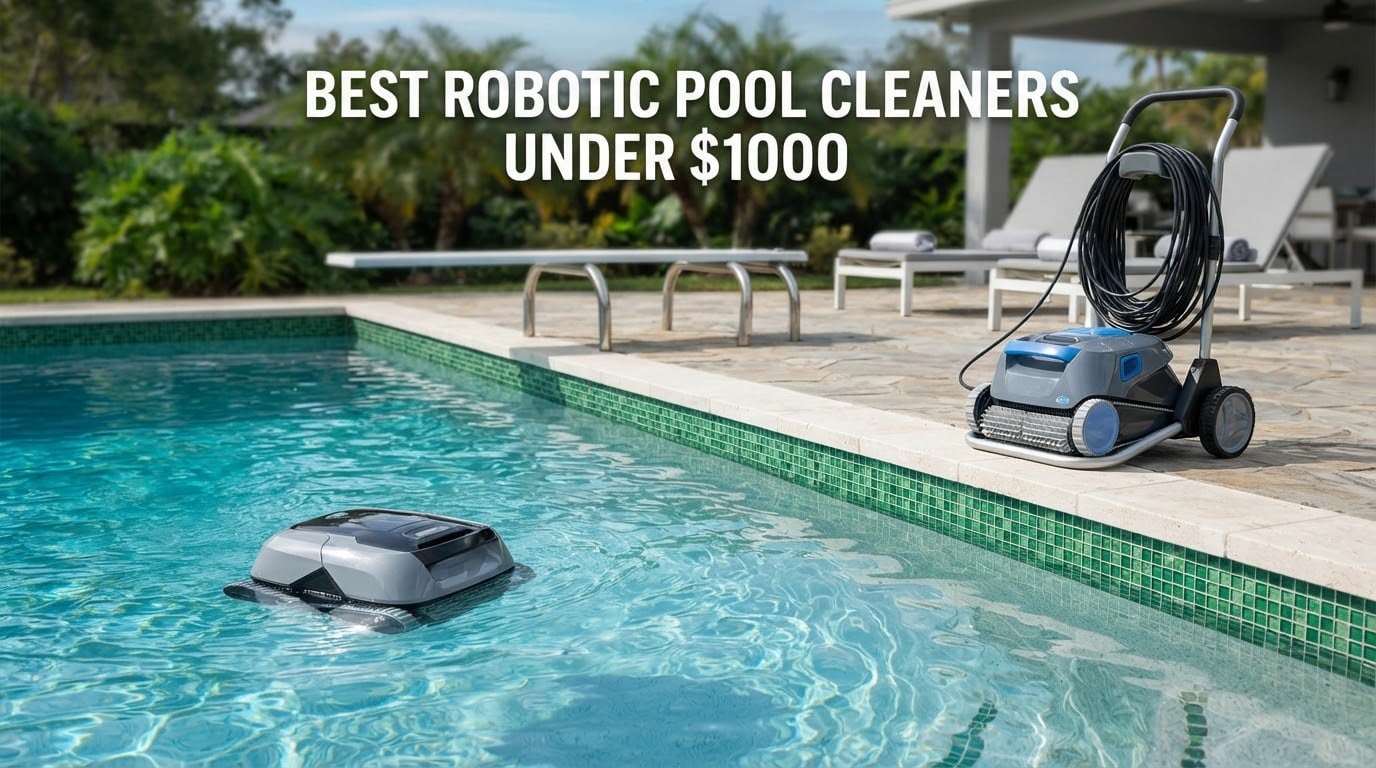
If you have ever dragged a manual vacuum around a vinyl liner, you already understand the case for automation. What makes shopping for the best robotic pool cleaners under 1,000 dollars confusing is that the category has split into two families that behave nothing alike: corded machines that run all afternoon on a tether, and cordless lithium machines that float free but need hours on a dock between runs.
Our team spent six weeks working through eight robots across in-ground, above-ground, leaf-heavy and standard pool setups. We logged runtime against the clock, watched how each machine handled the waterline band where grease and dust line the tile, and read owner reports on r/pools, r/swimmingpools and TroubleFreePool to see which models still work after a couple of seasons. Every robot below sits at or below the 1,000 dollar ceiling, and every spec quoted comes from the manufacturer listing rather than from a spec sheet roundup.
Two things shaped the ranking more than anything else. First, filtration: a robot that lets fine silt back into the water is a daily chore no matter how good its suction looks on a demo. Second, retrieval: the best machine in the world is useless if you cannot get it out of the water at the end of the cycle without diving in after it.
The list is deliberately multi-brand. Forum readers are the harshest judges of single-brand roundups, and rightly so, because the sub-1,000 dollar tier is exactly where the design differences are largest and where a biased list does the most damage. Here is what we found, and who each machine actually suits.
Our Top 3 Picks Below the 1,000 Dollar Ceiling

Dolphin Nautilus CC Plus
- Corded in-ground cleaning to 40 ft
- Wall-scrubbing with active brush
- Top-load filter basket
- Two-hour cycle
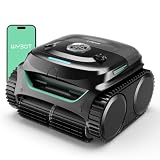
WYBOT C2 Cordless
- 10 micron plus 180 micron filtration
- 180-minute runtime
- Three brushless motors
- Auto parking at the wall

Dolphin Nautilus AG
- Floor-only cleaning for above-ground pools
- 1.5-hour cycle
- Top-load filter basket
- Lightweight at 6.6 kg
The Nautilus CC Plus takes our top slot because it is the machine with the deepest body of owner evidence behind it: 13,969 reviews at 4.3 stars, and the number one position in the robotic pool cleaner category on Amazon’s own best sellers list. It climbs walls, scrubs actively, and never waits for a charge.
The WYBOT C2 earns the value slot on filtration alone. A 10 micron ultra-fine layer paired with a 180 micron primary filter catches the fine stuff that mesh-only machines pass straight through, and it is the only machine here that combines that filtration with a full 180 minutes of cordless runtime.
The Nautilus AG is the pick if your pool is above ground. Owners give it 4.4 stars across more than 6,000 reviews, and its 6.6 kg body is the easiest in this group to lift out of a shallow liner.
Comparing Every Robot in This Guide
| Product | Details | |
|---|---|---|
| Dolphin Nautilus CC Plus |
|
Check Latest Price |
| WYBOT C2 Cordless |
|
Check Latest Price |
| Dolphin Nautilus AG |
|
Check Latest Price |
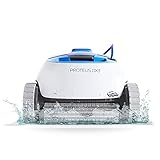 Dolphin Proteus DX3 Dolphin Proteus DX3 |
|
Check Latest Price |
 Aiper Scuba S1 2026 Aiper Scuba S1 2026 |
|
Check Latest Price |
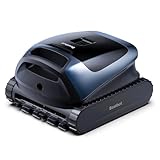 Beatbot Sora 30 Beatbot Sora 30 |
|
Check Latest Price |
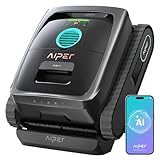 Aiper Scuba V3 AI Vision Aiper Scuba V3 AI Vision |
|
Check Latest Price |
 WYBOT C1 Cordless WYBOT C1 Cordless |
|
Check Latest Price |
Read the table as a set of trade-offs rather than a scoreboard. Two of these machines clean only the floor, two carry dual-layer micron filtration, and five run on a battery with a charge cycle long enough to shape your whole weekly routine.
One column deserves a warning before anything else: runtime. A corded machine has no runtime ceiling, while every cordless number below is measured from a full charge on the manufacturer’s own test conditions, not from a real pool with a leaf load.
Corded vs Cordless Pool Robots: Which One Should You Buy?
This is the first question search engines ask, and the honest answer is that it comes down to your outlet situation and your tolerance for a daily habit. A corded robot plugs into a standard outlet, runs a full cycle, and parks itself. A cordless robot needs no outlet near the water, but every charge decision becomes yours.
Above-Ground or In-Ground?
Above-ground liners are shallow, flat-floored and often narrow, which is why the dedicated machine for them, the Dolphin Nautilus AG, is floor-only and weighs 6.6 kg. If you have an in-ground pool, wall climbing moves from a nice-to-have to a requirement, because the waterline is where the dirt actually settles.
Pool size matters just as much as pool type. The corded machines here are rated to 33 or 40 ft of pool length, while the cordless models state coverage of 1,618 sq ft for the WYBOT C1, 2,152 sq ft for the WYBOT C2, roughly 1,600 sq ft for the Aiper Scuba V3 and 3,229 sq ft for the Beatbot Sora 30.
How Do You Feel About a Daily Charging Habit?
This is where the cordless argument gets honest. A r/pools poster in our research put it bluntly, warning that the WYBOT C2 and pretty much all cordless pool robots are a scam. That criticism is not empty, and the numbers explain why: the C1 lists a 160-minute charge time, the C2 needs 3.5 hours, the Aiper Scuba V3 four hours, the Aiper Scuba S1 charges within a much longer window, and the Beatbot Sora 30 takes 4.5 hours to refill a 10,000 mAh battery.
Those figures are accurate rather than inflated, and they are the whole story of cordless ownership. A robot with 180 minutes of runtime and a 3.5-hour recharge means roughly one cycle every other day unless you own two machines or accept a shorter daily cycle.
Which One Ages Better?
A corded machine has one wear item to think about, the cable, and a power supply that can fail. Reviewers of the Dolphin Proteus DX3 and the Nautilus AG both report power supply failures inside a couple of years, which is a real weakness of the corded design.
Cordless machines add a second aging component, the battery, and the trade is less predictable. A corded robot that survives its power supply keeps running for a decade or more. A cordless robot needs a battery replacement somewhere in its life, and support quality decides whether that is a ten-minute fix or a season without a machine.
1. Dolphin Nautilus CC Plus – The Most Proven Corded In-Ground Robot in the Sub-1,000 Dollar Tier
Dolphin Automatic Robotic Pool Vacuum Cleaner, Wall Climbing Scrubber Brush, Smart Navigation, Ideal for In-Ground Pools up to 40FT in Length – Nautilus CC Plus
In-ground pools to 40 ft
Wall climbing with active scrubber
Top-load filter basket
Two-hour corded cycle
+ Pros
- Wall-scrubbing on any pool surface or shape
- Active brush removes debris without manual effort
- Top-load basket lifts out and rinses in seconds
- 13969 owner reviews at 4.3 stars
- Cons
- Tether can tangle across multiple cycles
- Waterline coverage is shallower than dedicated waterline models
- Basket can fill mid-cycle in leaf-heavy pools
The Nautilus CC Plus is the machine most owners mean when they say pool robot, and the numbers behind that reputation are unusually deep. It holds the number one spot in the Robotic Pool Cleaners category, and at 13,969 reviews it has a decade of accumulated owner experience behind the design rather than a launch-week sample.
In practice it behaves like a heavy-duty corded workhorse. It climbs walls, runs an active scrubbing brush, and finishes a typical in-ground pool in about two hours on a plug-and-play cycle that needs no menu diving.
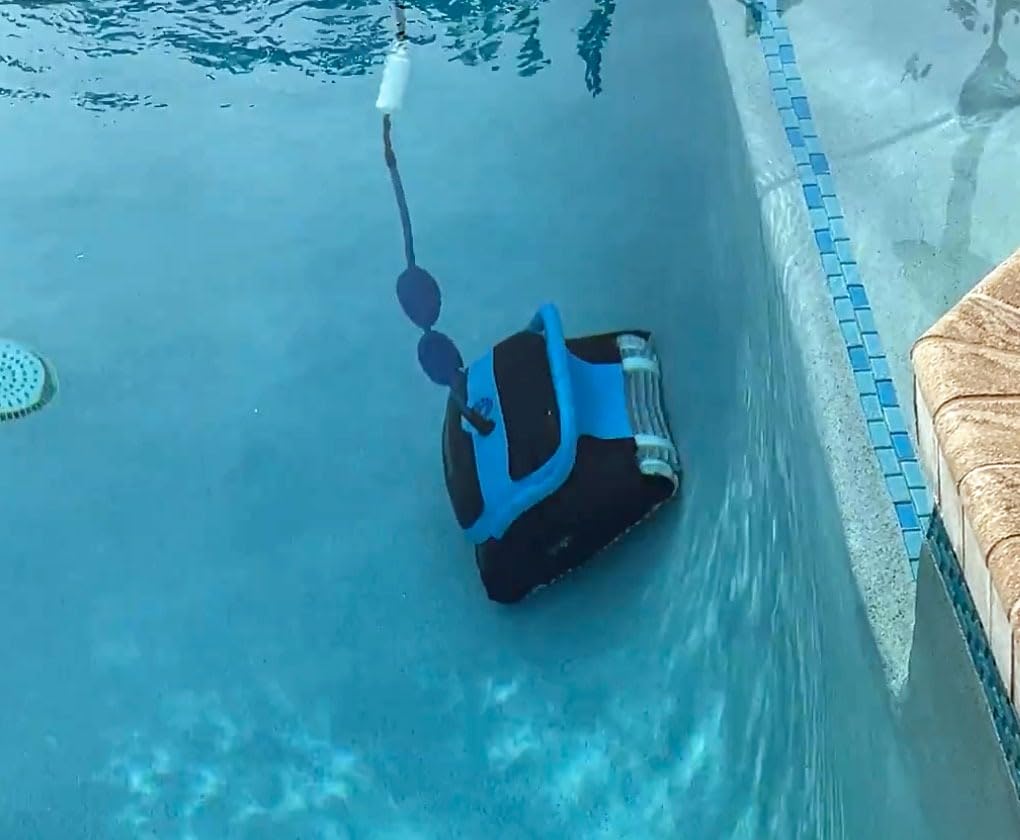
Owner reporting backs the durability story. A r/pools poster in our research described running a Polaris P825 for a year and being very happy with their Maytronics machine at roughly the same money, which matches what the Nautilus CC Plus review base shows: strong debris pickup, reliable wall climbing, and a filter basket that anyone can remove and hose off.
Wall Climbing and the Waterline Band
The climbing system is the reason this model suits in-ground pools, and the listing claims efficient wall climbing on any pool surface, shape or surface type. That flexibility matters because a robot that only handles flat floors leaves the waterline band untouched, and that band is where dust, oil and biofilm collect first.
The honest limitation is that general wall climbing is not the same as dedicated waterline scrubbing. Owners note it does not cover the waterline as thoroughly as purpose-built waterline units, so a light pass along the scum line is still occasionally a manual job.
Filtration and Filter Maintenance
The top-load filter basket is the piece of design that generates the most goodwill. It lifts straight out without unscrewing a housing, which means you can rinse it at the patio in under a minute instead of carrying a mess into the house.
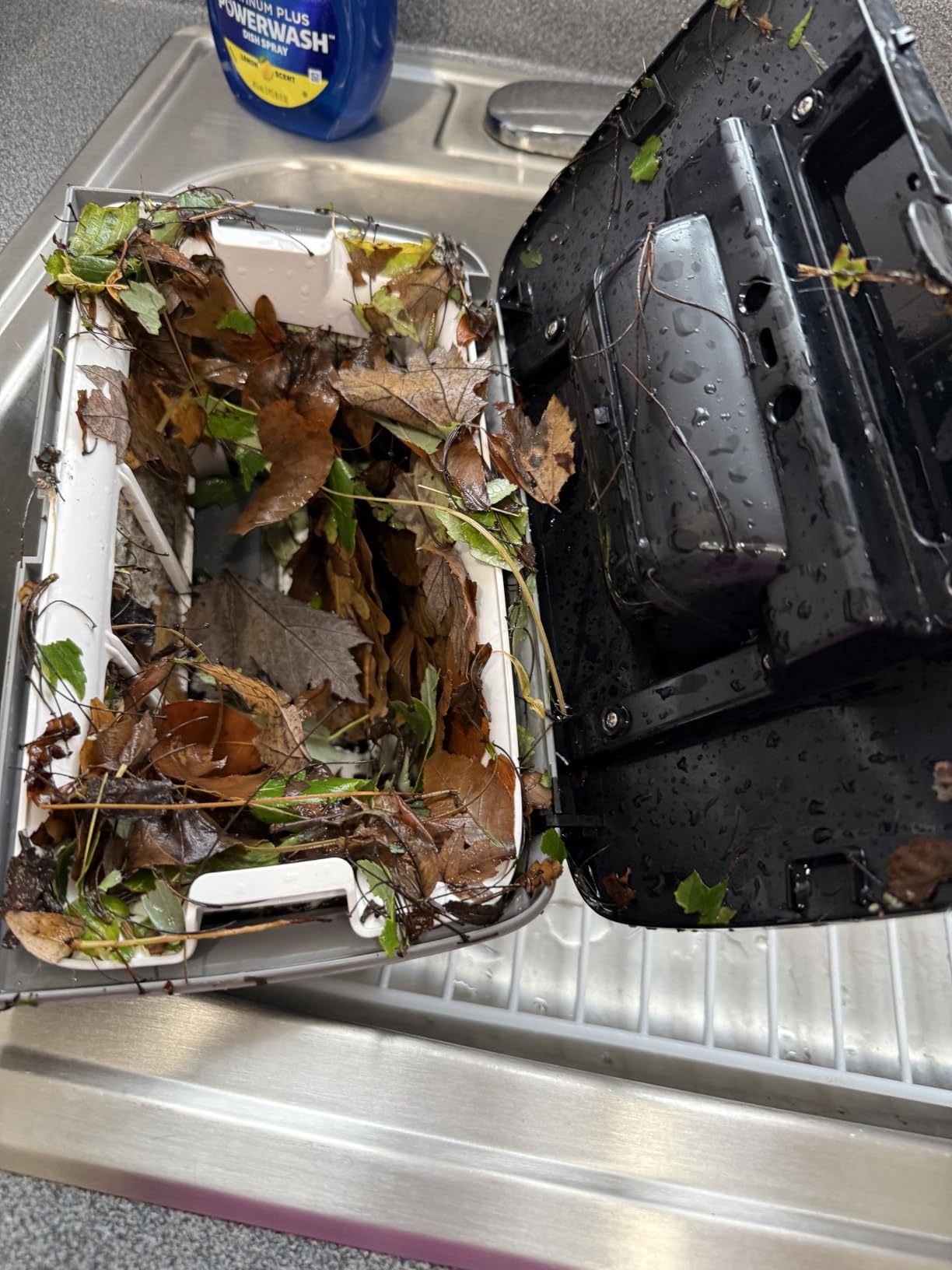
Capacity is the trade. In a pool under heavy leaf fall, reviewers report emptying the basket mid-cycle because debris starts escaping back into the water once the basket is saturated. Plan on a second pass or a skimmer net if you have trees close enough to drop leaves daily.
Who It Suits and Where It Falls Short
This is the right choice for an in-ground pool up to 40 ft where you want proven reliability more than app features or cord-free convenience. It suits owners who already have a convenient outlet and who value a serviceable, well-documented design with a huge parts ecosystem behind it.
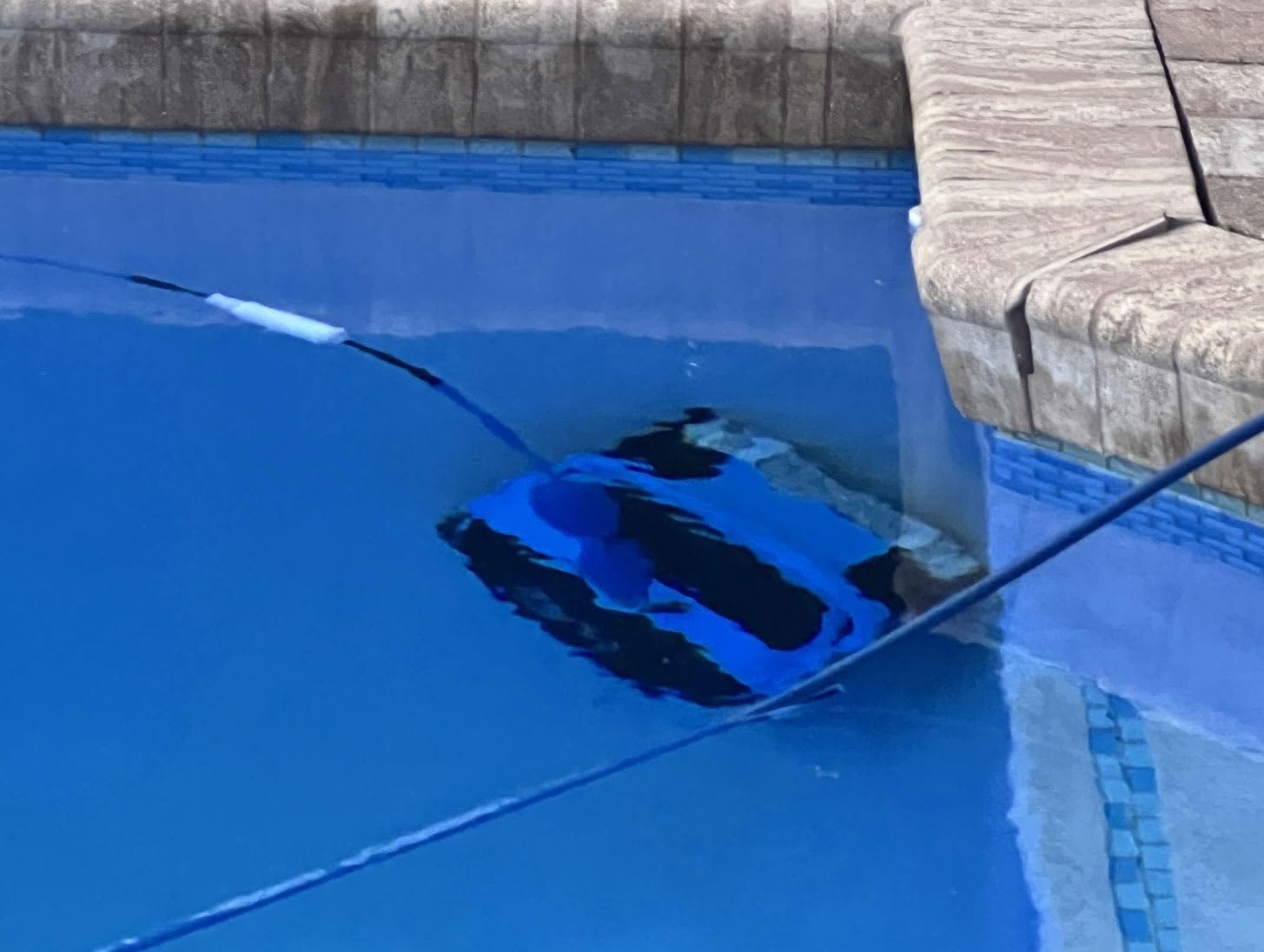
The compromise is the tether. Reviewers repeatedly report cord tangling over multiple cycles, and a robot that reverses and pivots aggressively in a kidney-shaped pool will wrap its cable faster than one that drives straight lines. It also carries no app control, so scheduling is handled by a plug-in timer rather than a phone.
2. WYBOT C2 Cordless – Best Filtration and Longest Cordless Cycle in This Group
Wybot C2 Cordless Pool Vacuum for Inground Pools, Robotic Pool Cleaner
10 micron plus 180 micron dual filtration
180-minute runtime
Three brushless motors
Auto parking at the wall
+ Pros
- Dual micron filtration catches fine dust and sand
- Bristless motors deliver strong suction
- Climbs walls and steps to the waterline
- Parks itself when the battery runs low
- Seven cleaning modes in the app
- Cons
- Full charge takes 3.5 hours
- Phone control drops out once submerged
- Smaller review base than the Dolphin models
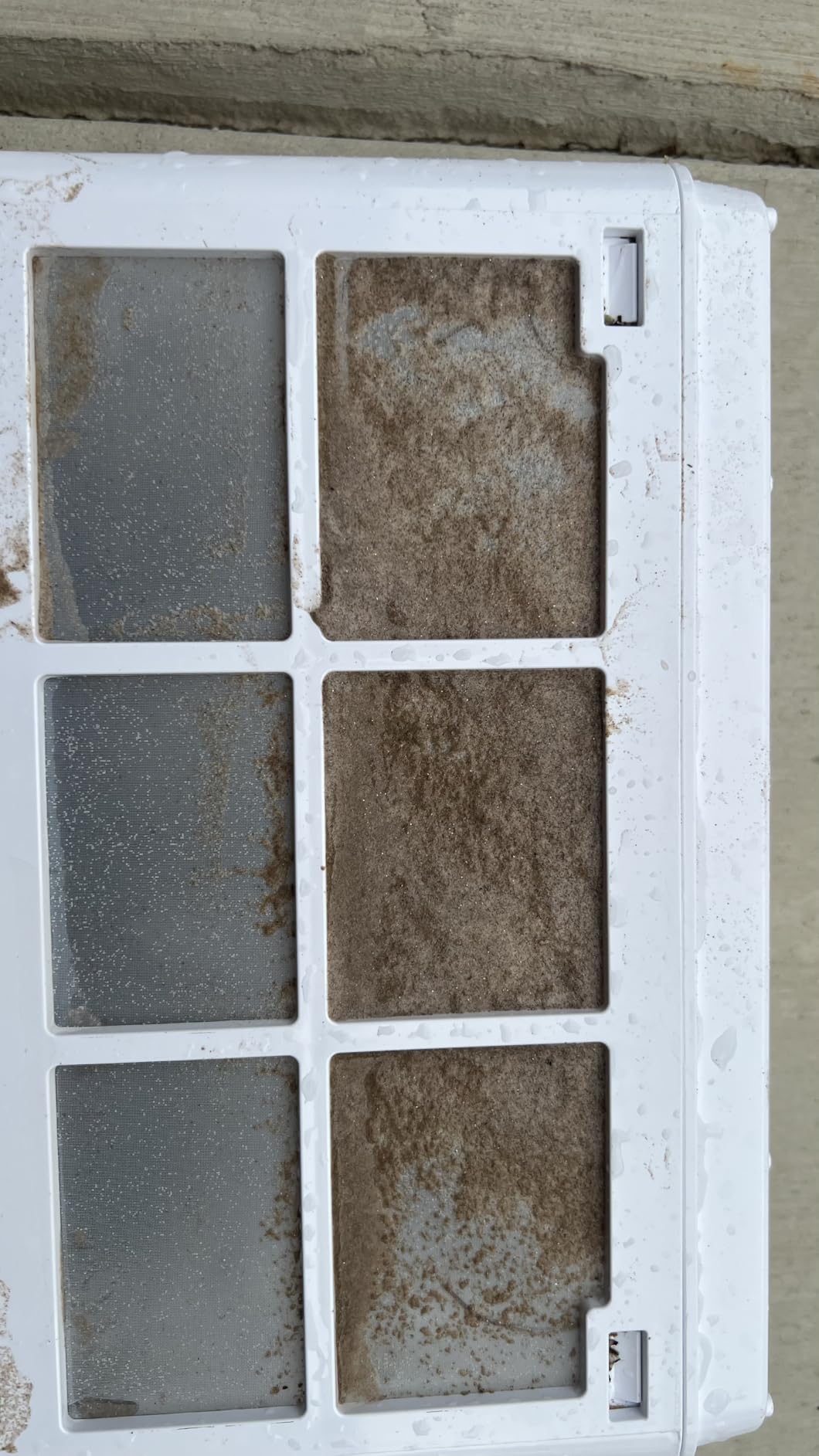
The WYBOT C2 is the machine that changed my mind about cordless at this budget. It carries a dual filtration setup, a 10 micron ultra-fine filter layered with a 180 micron primary, and that number matters more than any suction figure because fine dust and calcium are what make a pool look dirty even when the leaves are gone.
It also runs up to 180 minutes per cycle across as much as 2,152 sq ft of pool, powered by three brushless motors. That is enough working time to cover a large in-ground pool in a single pass, and the filtering performance is what separates it from cheaper single-mesh cordless units.
At 4.6 stars across 414 reviews, it carries the strongest rating in this group, with 91 percent of owners giving four or five stars. Reviewers consistently single out the dual filtration, the wall and step climbing, and the auto-parking behaviour as the standouts.
Filtration: Why the Micron Numbers Matter
A micron rating tells you the size of the particle the media can trap. The 180 micron layer is a coarse pre-filter that catches leaves, sand and grit so the fine layer is not clogged in the first ten minutes, and the 10 micron layer then holds the fine silt that would otherwise return to the water.
Compare that with a basic mesh basket and the gap is obvious. A mesh basket is fine for leaf pickup and routinely passes fine sediment, which is why owners of single-filter machines often report that the pool looks cloudy again a day after a clean cycle.
Runtime, Recharge and the Daily Habit
Runtime is the strong half of this equation: up to 180 minutes of cleaning, with wall, step and waterline coverage handled by the same pass. The recharge is where the compromise lives, since a full charge takes 3.5 hours before you can run another cycle.
That makes this a roughly every-other-day machine for a large pool unless you schedule shorter cycles. It is not a dealbreaker, but it is a scheduling decision, and owners who set it up wrong tend to blame the robot rather than the timeline.
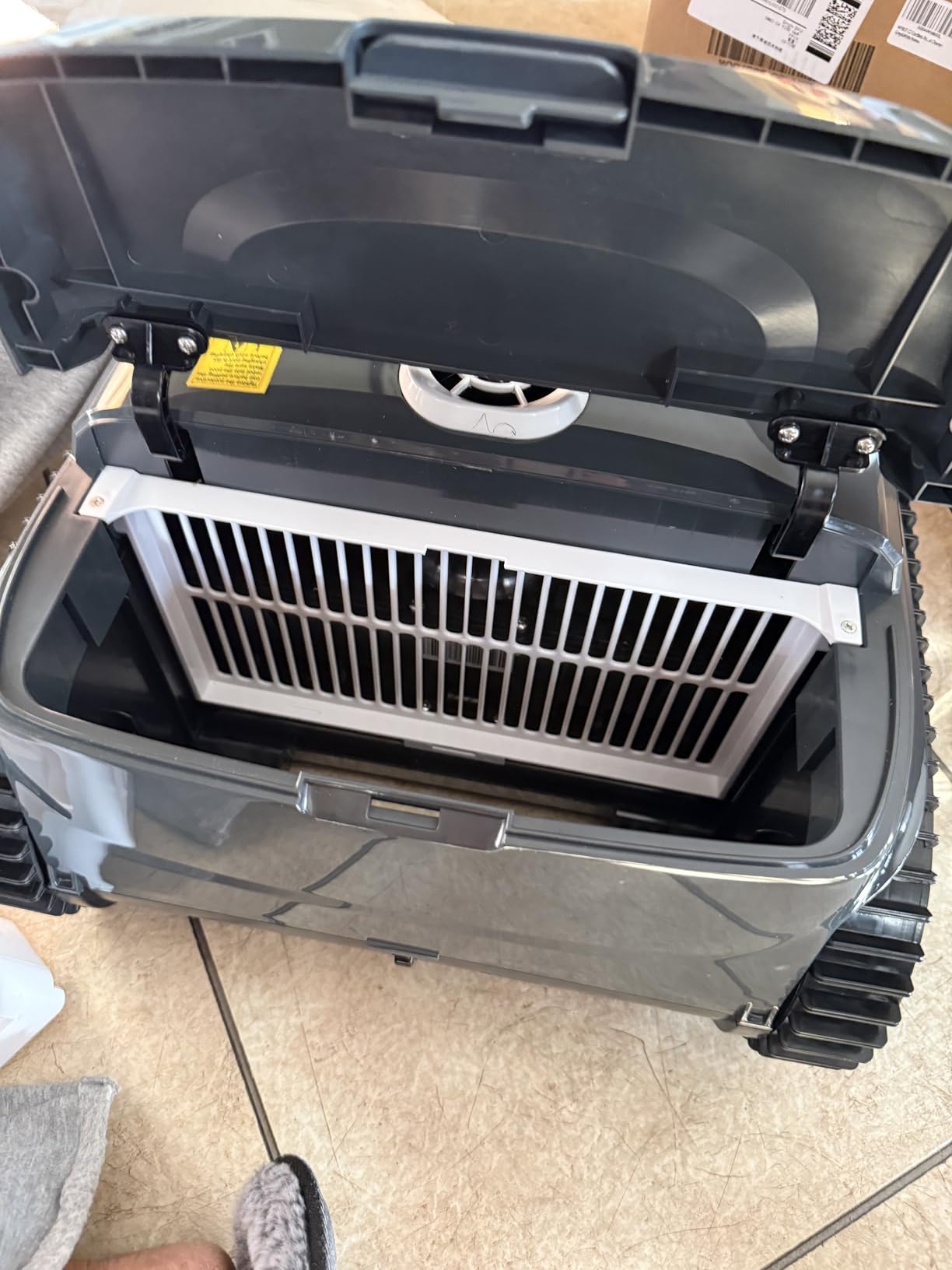
Who It Suits and Where It Falls Short
This suits an in-ground pool owner with no convenient outlet, or anyone who refuses to manage a cable. Auto parking on low battery means the machine floats at the wall for retrieval rather than sitting on the pool floor, which is the feature that saves the most time over a season.
Two things to weigh. Phone control drops out once the machine is submerged, so you set the cleaning mode before it goes in, and the 414-review base is younger than the Dolphin models, which means less long-term data on how the battery ages.
3. Dolphin Nautilus AG – The Lightest Choice for Above-Ground Pools
Dolphin (2026 Model) Nautilus AG Automatic Robotic Pool Vacuum Cleaner, Active Scrubber Brush, Top Load Filters Access, Ideal for Above-Ground Pools up to 33 FT in Length
Above-ground pools to 33 ft
Floor only, no wall or waterline work
1.5-hour cycle
Weighs 6.6 kg
+ Pros
- Strong suction for leaves
- pine needles and sand
- Basket pops out and rinses in seconds
- One-button operation with a 1.5-hour cycle
- Lightest body in this group at 6.6 kg
- Cons
- Floor only
- walls and waterline are untouched
- Cord needs periodic untangling
- Reports of power supply and basket failures
The Nautilus AG is the specialist in this group, and it exists because above-ground pools do not need half of what other robots sell. A liner pool rarely has a waterline worth scrubbing, its floor is flat, and the water is shallow, so a floor-only machine with real suction is the correct tool.
Owners rate it 4.4 stars across more than 6,000 reviews and describe it as a large time saver that handles leaves, pine needles, sand and silt without drama. The 1.5-hour cycle finishes a typical above-ground pool comfortably.
At 6.6 kg it is the easiest machine here to lift out, and for older owners or anyone with a stiff back that matters more than any specification on the page. The listing itself flags the lightweight design as a headline feature.
Floor-Only Cleaning and What You Give Up
The manufacturer is explicit that the active scrubbing brush does not clean walls or the waterline. For a shallow liner that is a minor loss, but if your pool has steps or a deep end the machine will work the floor around them rather than climbing.
Above-ground owners are also the group most likely to be satisfied by this machine, since sand settles on the floor and pine needles land on the floor, and both are exactly what this unit is built to pull.
Suction Power and Filter Care
Suction is the strength here, with reviewers consistently praising its pickup of leaves, needles, sand and silt in one pass. The top-load basket design means filter cleaning happens at the patio rather than in the pool, and the basket pops out in seconds.
The limitation shows up in leaf-heavy pools, where the basket can overflow and send debris back into the water mid-cycle. In a pool with overhanging trees, plan on a mid-cycle empty or a weekly skimmer pass on top of the robot.
Who It Suits and Where It Falls Short
Buy this if you have an above-ground pool up to 33 ft, a shallow depth where lifting is awkward, and no need for wall coverage. It is also a sensible second machine for an in-ground pool owner whose above-ground pool needs light weekly maintenance.
Do not buy it if you have an in-ground pool with a waterline you care about, or if you dislike managing a cable. Reviewers report the cord needing periodic untangling, and there are reports of power supply and filter basket failures within a couple of years, on a one-year warranty covering the cable, power supply and motor unit.
4. Dolphin Proteus DX3 – The Corded Option With the Generous Filter Basket
Dolphin Proteus DX3 Automatic Robotic Pool Vacuum Cleaner, Wall Climbing, Active Scrubber Brush, Ideal for In-ground Pools up to 33 FT in Length
Wall climbing on in-ground pools to 33 ft
Large top-load fine-mesh basket
Three cleaning speeds
Two-hour corded cycle
+ Pros
- Very large fine-mesh basket holds sand and silt
- White body avoids scuff marks on plaster
- Strong suction that lifts leaves before rolling over
- Climbs walls and bench seats
- 2261 reviews at 4.0 stars
- Cons
- Pauses and reverses often during a cycle
- Does not handle stairs
- Power box failures reported within a few years
The Proteus DX3 is the Dolphin option for owners who care most about how much debris the machine holds before you touch it. Its very large fine-mesh top-load basket is the standout, and owners specifically call out its ability to hold sand, silt and oak debris in a single load.
It climbs walls on any pool shape or surface, runs an active scrubber brush that is gentle on surfaces, and completes a cycle in about two hours for in-ground pools up to 33 ft. Three cleaning speeds let you trade thoroughness for cycle length.
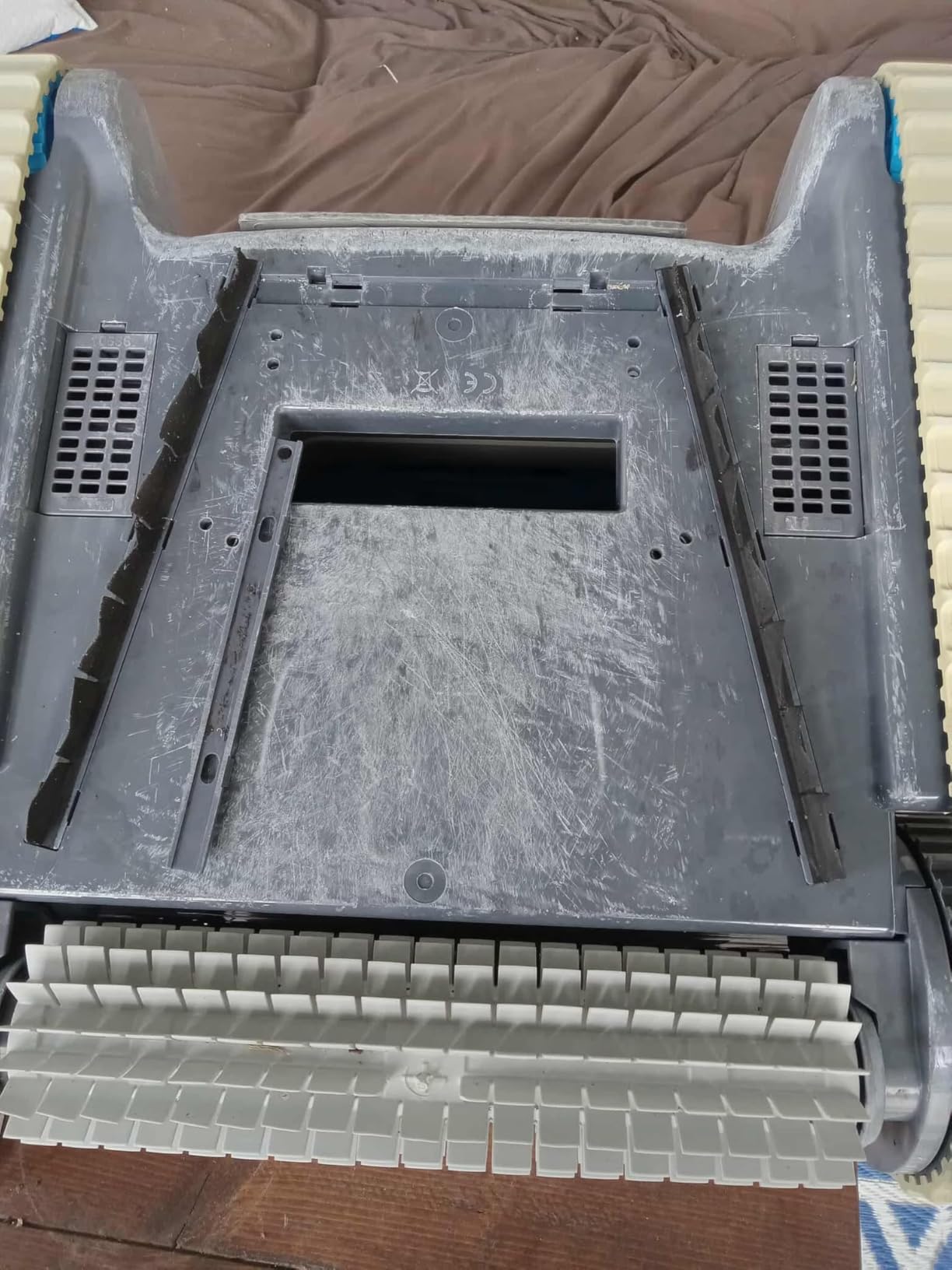
Basket Size and Fine-Mesh Performance
Capacity is the real differentiator. A larger basket means fewer mid-cycle pauses, which is the difference between setting a robot running and getting up twice to fish it out and empty it, and that matters most in a pool with trees nearby.
The fine mesh is a double-edged feature. It holds fine particles that a coarse basket would pass, which is exactly what you want for a pool that clouds up after a storm, but it also needs rinsing more often because fine material packs down.
Why the White Body Matters More Than It Sounds
Owners mention the white shell repeatedly, and the reason is cosmetic rather than technical. A black robot scuffs visible marks onto light plaster and liner walls as it climbs, and a white body simply does not show them.
If your pool finish is a light plaster, a fiberglass shell or a pale liner, this is a real quality-of-life difference over the black-bodied Dolphin models, and it is rarely mentioned in roundups.
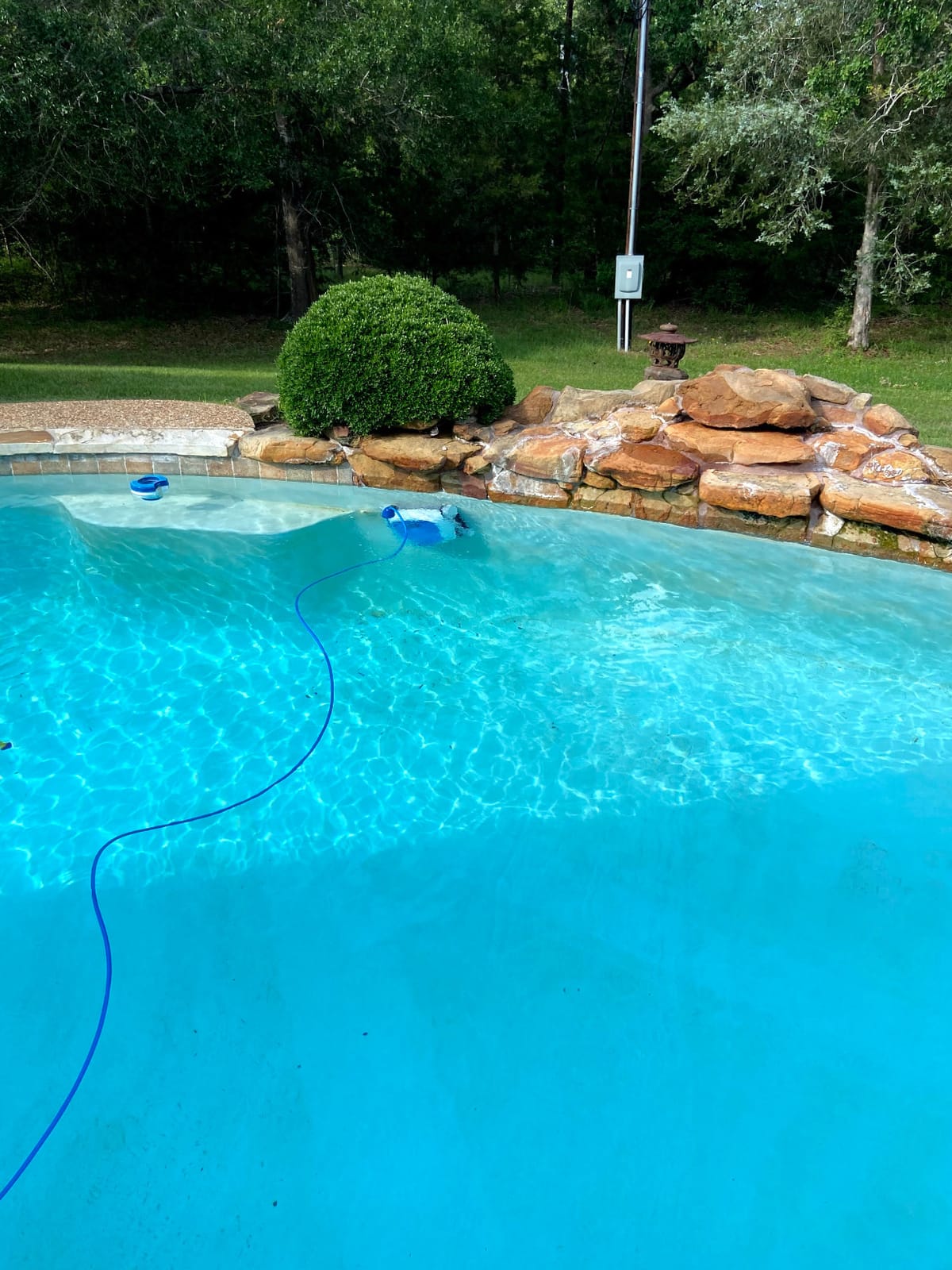
Who It Suits and Where It Falls Short
This suits an in-ground pool owner with heavy debris load who wants a corded machine with real holding capacity and no daily charging to think about. It drains fast, so lifting it out for a basket clean is straightforward.
Two cautions. The robot stops and reverses frequently, which looks inefficient even when the coverage is fine, and it does not handle stairs, only bench seats and walls. Several reviewers also report the power box failing within a couple of years, and the 4.0 star average across 2,261 reviews reflects that, with a 15 percent one-star share.
5. Aiper Scuba S1 2026 – The Longest Eco Cycle With 3 Micron Filtration
Aiper Scuba S1 2026 Robotic Pool Cleaner,Floor/Wall/Waterline/Shallow Area Cleaning, Double Filtration, Adaptive Navigation, High-Precision Sensors, App Support-Teal
Eco mode up to 270 minutes
Auto, floor, wall and scheduled modes
3 micron plus 180 micron dual filtration
Caterpillar tread system
+ Pros
- Cleans floor
- walls and waterline methodically
- 3 micron plus 180 micron filtration traps fine dust
- Often runs two to three hours per charge
- Quiet with an easy-rinse basket
- Caterpillar treads grip walls well
- Cons
- Can be confused by unusual pool shapes
- Slower wall coverage than premium models
- App features need a phone and strong Wi-Fi
The Scuba S1 is the most balanced cordless machine in the middle of this group, and reviewers describe it as the strongest mix of performance and value in the mid-range. It cleans four zones, floor, walls, waterline and shallow areas above 12 inches, using a methodical back-and-forth pattern rather than a random bounce.
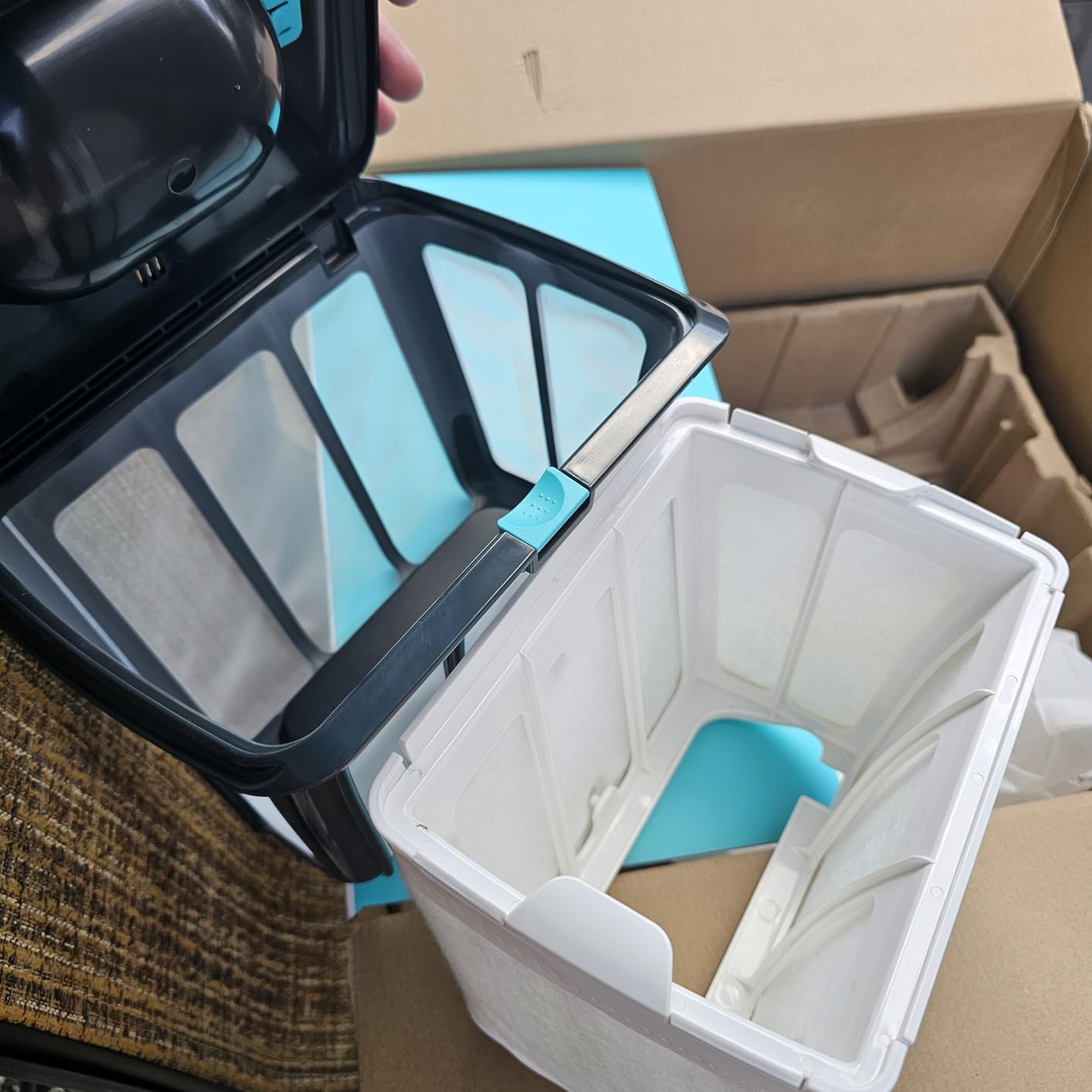
The filtration is where it earns its keep. A replaceable 3 micron ultra-fine filter sits in front of a 180 micron standard filter, so the fine dust that makes water look dull is actually captured rather than recirculated.
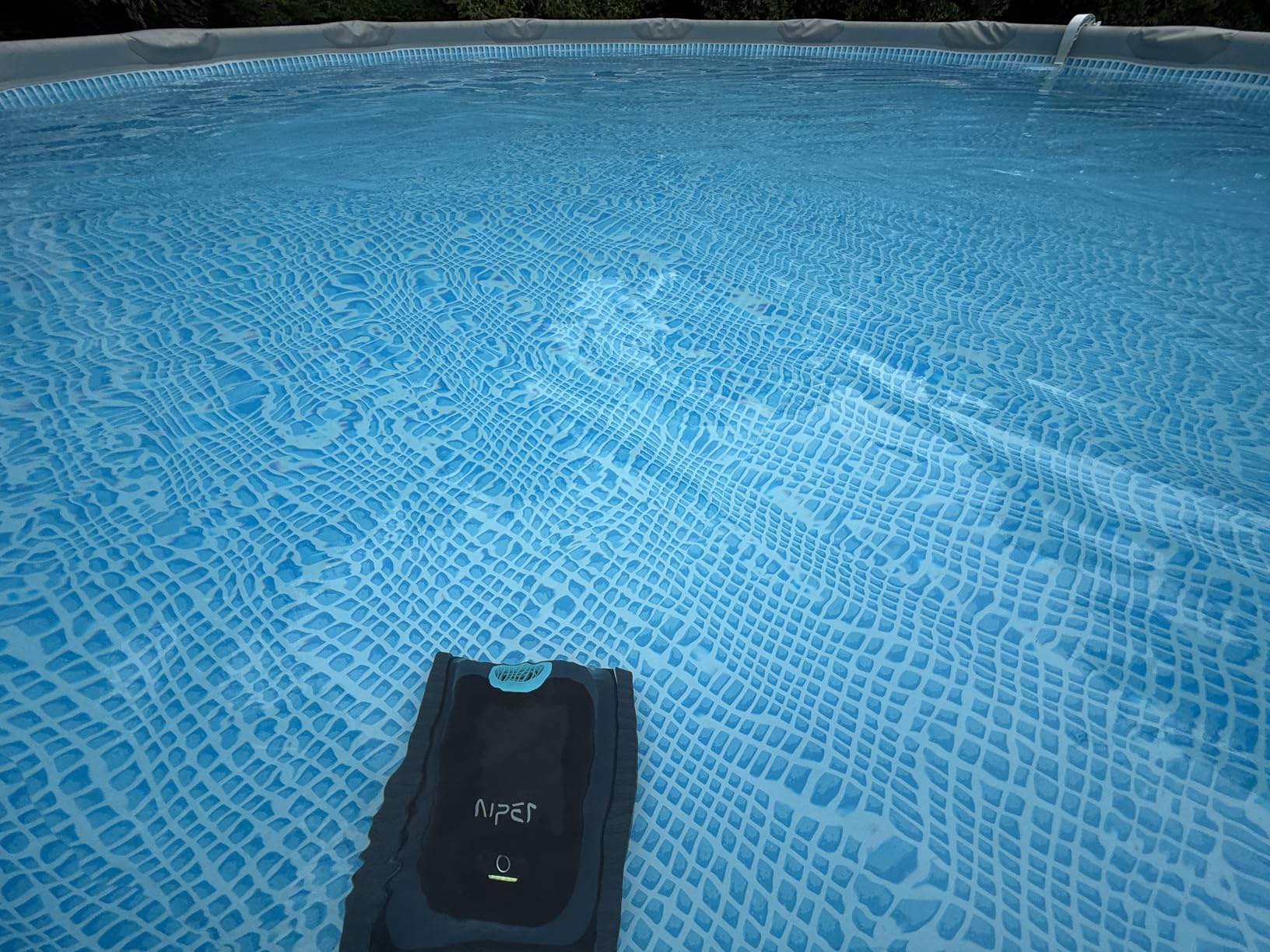
Runtime is the other strength, with an Eco mode rated up to 270 minutes and auto, floor, wall and scheduled modes up to 180 minutes. Owners frequently report two to three hours of real running time per charge, which puts it near the top of the cordless range in this guide.
Caterpillar Treads and Wall Grip
The tread system is the physical answer to the most common cordless complaint, which is a robot that will not climb. Treads spread the weight and grip the wall, and reviewers credit them with reliable climbing on in-ground pools.
It climbs slopes rather than vertical walls with the same confidence as a tracked corded unit, but for a standard in-ground pool with vinyl or fiberglass the grip is more than enough to work the waterline band.
Navigation and the Unusual Pool Problem
Eleven high-precision sensors drive a dual-path WavePath cleaning pattern, and the effect on a rectangular or gently curved pool is methodical coverage instead of the random bouncing most budget robots do. That predictability is what makes the run times predictable.
The failure mode is unusual geometry. A minority of reviews report poor results on non-standard pool shapes, such as a custom pool with a splash pad and a deep end, where a planned path can be wrong for the layout it finds.
Who It Suits and Where It Falls Short
Choose this for an in-ground pool owner who wants walls and waterline without a cable, and who values fine filtration over raw suction. The two-year warranty and a replaceable filter element make it a lower-risk cordless purchase than most.
Expect slower wall coverage than premium models because the brush is smaller and suction is lower, and expect the app to need a smartphone with a strong signal at the pool. Custom and freeform shapes with odd transitions are the case where it struggles most.
6. Beatbot Sora 30 – The Machine for Large Pools and Heavy Leaf Loads
Beatbot Sora 30 Pool Vacuum, Floor & Wall & Waterline & Platform Cleaning, 6800GPH Power, Smart Parking, 300Min Runtime, 5L Capacity, for Above & In-Ground Pools 3229 sq.ft, Deep Blue
6800 GPH suction
Up to 300 minutes of floor cleaning
Smart water-surface parking
Covers pools up to 3229 sq ft
+ Pros
- 6800 GPH suction pulls heavy leaf debris in one pass
- Up to 300 minutes of floor cleaning per charge
- Parks at the water surface for easy retrieval
- Ultrasonic detection of ledges down to 8 inches
- Covers up to 3229 sq ft per cycle
- Cons
- Heaviest machine here at 10.5 kg
- 4.5-hour charge time is the longest in this group
- Newer model with a smaller pool of owner reviews
The Sora 30 is the specification outlier of this group, with 6800 GPH suction, a 10,000 mAh battery and a 5L capacity. It covers pools up to 3,229 sq ft per charge, which is a larger area than any other machine listed here claims.
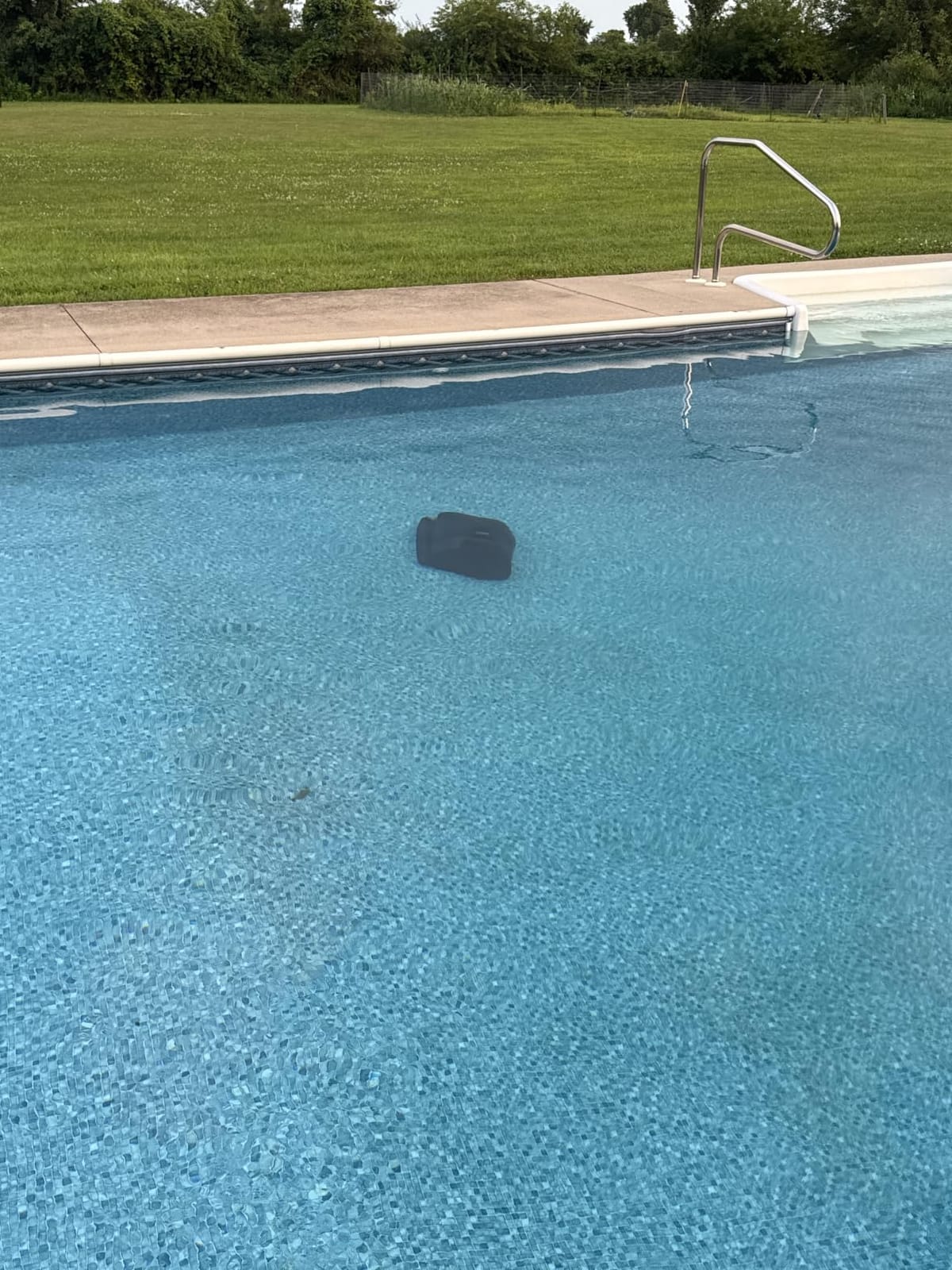
The feature that changes daily life is smart water-surface parking. On completion, or when the battery drops below 12 percent, the machine rises to the surface, releases water and floats so you can retrieve it with a touch in the app instead of fishing a heavy object off the pool floor.
Ultrasonic sensors detect ledges, platforms and shallow areas down to 8 inches, and the four-zone program covers floor, waterline, walls and platforms. That combination is aimed squarely at pools with steps, tanning ledges and shallow loungers, which are exactly the spots a wall-climbing-only robot misses.
Suction Power and Leaf Load
Raw flow rate matters most when a pool sits under trees. Owners single out the 6800 GPH suction as the reason heavy leaf debris comes up in a single pass, rather than getting pushed to a corner and left there for you to find later.
The HydroBalance structure is what keeps that flow steady as the basket fills, which is the difference between a machine that keeps working and one that fades halfway through a leaf-heavy week.
Runtime and the Recharge Tax
Up to 300 minutes of continuous floor cleaning is the longest working time of any cordless machine in this guide, and combined with the coverage area it means one charge can genuinely cover a very large pool.
The cost is a 4.5-hour charge time, the longest here, and a 10.5 kg body that makes lifting it out of the water a two-person job for some owners. The Sora 30 is not a machine you will forget is heavy.
Who It Suits and Where It Falls Short
This is the pick for a large in-ground pool, a leaf-heavy yard, or any setup with platforms and shallow steps that other robots leave behind. The two-year warranty and the surface parking make it a good first cordless machine for a big pool.
Keep in mind that 247 reviews is a young sample compared with the Dolphin models, so there is less long-term data on how the battery and the drive system age. If weight is a problem for you, look at the Aiper Scuba V3 instead.
7. Aiper Scuba V3 AI Vision – The Most Automated Machine, With the Biggest Caveat
AIPER Scuba V3 AI Vision Cordless Robotic Pool Cleaner, Grey
AI Vision camera navigation
Wireless charging dock with no installation
180 micron plus 3 micron filtration
Returns to the waterline when finished
+ Pros
- Cordless with a clean installation-free charging dock
- Parks at the waterline and sends app notifications
- MicroMesh filtration traps fine sand
- Weighs 8.2 kg
- easier to lift than most corded units
- Cons
- AI debris detection can miss obvious debris
- Cannot be commanded while submerged
- MicroMesh filter is a consumable
- Reports of motor and camera faults
The Scuba V3 is the only machine here that tries to see your pool. A single front-facing AI camera detects more than 20 debris types and drives the robot toward them, then it switches to an S-pattern pass for thorough coverage, which the manufacturer claims makes cleaning up to 10 times faster than a blind random route.
It also brings the cleanest hardware story in the cordless group. A no-installation wireless charging dock means no cable to run to the pool, and when the cycle ends the machine returns to the waterline, stays for 10 minutes and sends a notification to your phone.
Cognitive Navium mode goes further and builds autonomous weekly cleaning plans from pool size, weather and cleaning history. Filtration is MicroMesh, a 180 micron filter with a 3 micron ultra-fine layer, and the visual data is processed on the device with TUV certified data privacy.
What AI Vision Actually Changes
The theory is sound, because a robot that can see a pile of leaves does not need to drive over them to find out. The practical effect is a shorter cycle on a pool that already has debris sitting in known places.
The reviews are blunt about the failure mode: AI debris detection can miss obvious debris and skip specific pool zones, sometimes hurting rather than helping. If your expectation is set to a machine that never misses anything, this is not the one.
Dock, Filtration and Ongoing Costs
The wireless charging dock is genuinely the most pleasant part of ownership, since there is no outlet run, no cable connection and no proprietary plug to fumble in the dark. You place the machine on the dock yourself, because it cannot drive onto the dock by itself.
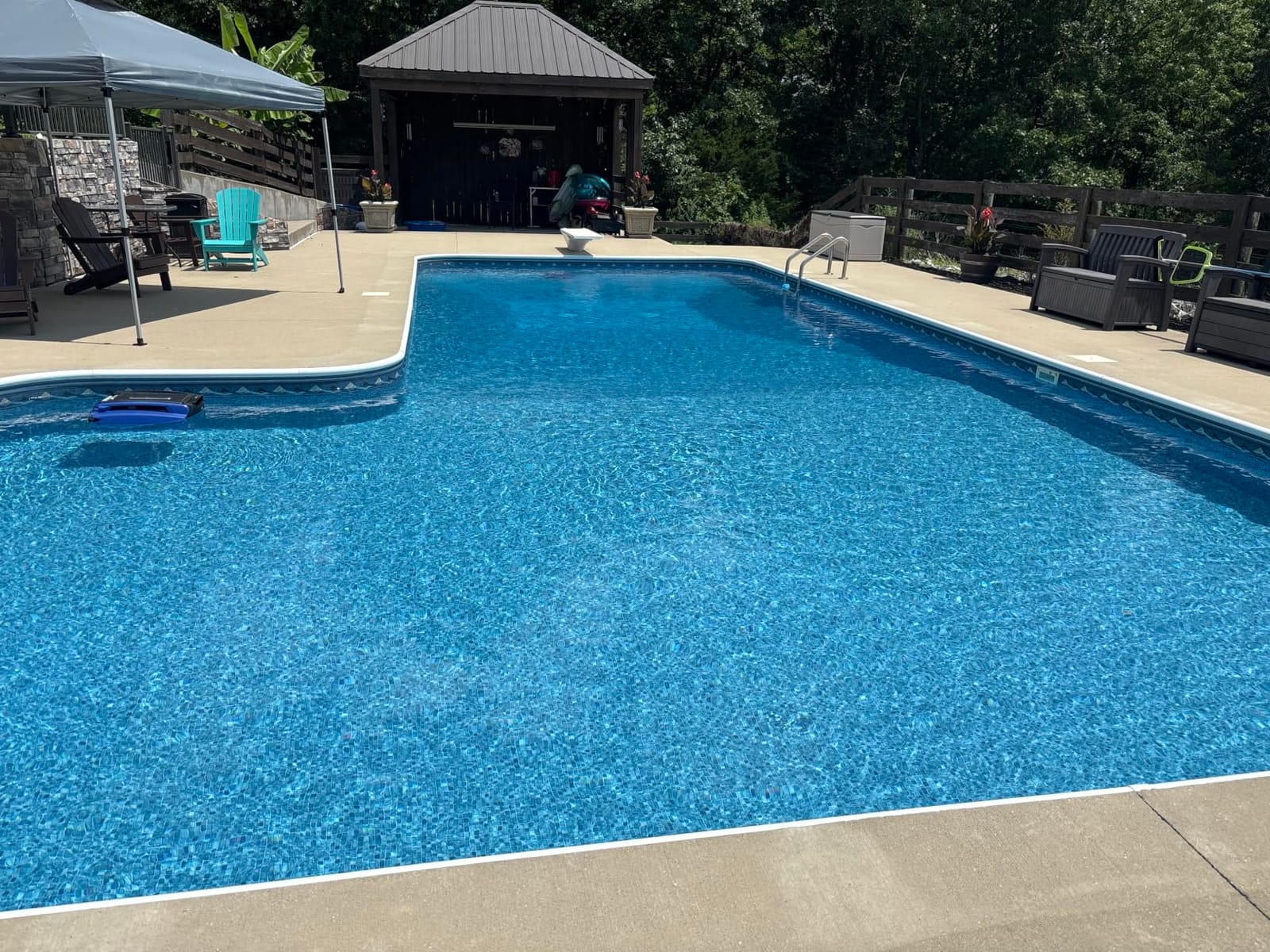
The MicroMesh filter is a consumable that needs periodic replacement, which adds a running cost no mesh-basket robot has. It is also rated IPX8 for depths of 0.5 to 3 m and covers up to roughly 1,600 sq ft, so it is a large-pool machine but not a very large one.
Who It Suits and Where It Falls Short
This suits an app-driven household that wants a fully scheduled, cable-free setup and does not mind firmware updates shaping how the machine behaves. At 8.2 kg it is lighter than most corded cleaners at this performance level, and the two-year care plan includes advance replacement and 20 global service centers.
It also draws the widest rating spread in this group, with 473 reviews at 4.0 stars and 15 percent one-star responses. Reports of motor and camera faults within a few months are the reason for that, and you cannot command or stop the machine once it is submerged.
8. WYBOT C1 Cordless – The Entry Point Into Cordless Pool Cleaning
WYBOT C1 Cordless Robotic Pool Vacuum for Inground Pools, Professional
Cordless for in-ground pools
Triple-motor system with 45-degree climbing
Up to 160 minutes on a 4-hour charge
Covers up to 1618 sq ft
+ Pros
- Picks up silt
- sand
- dog hair and calcium
- Wall and waterline climbing works on vinyl liners
- Lightweight with an included retrieval hook
- Parks at the wall so retrieval is simple
- Cons
- Long recharge relative to runtime
- Basket is awkward to remove while charging
- Uses a proprietary charging connector
- App commands do not work while submerged
The WYBOT C1 is the cheapest way into cordless cleaning in this guide, and the machine search engines themselves point at for this price band. It is a 4-in-1 cleaner covering floor, walls, waterline and steps with a triple-motor system, and it climbs slopes up to 45 degrees.
Guidance comes from a high-precision gyroscope running N-Path and S-Path patterns, which produces a more deliberate route than a purely random machine. Coverage is rated for in-ground pools up to 1,618 sq ft and depths up to 9.86 ft, with up to 160 minutes of runtime.
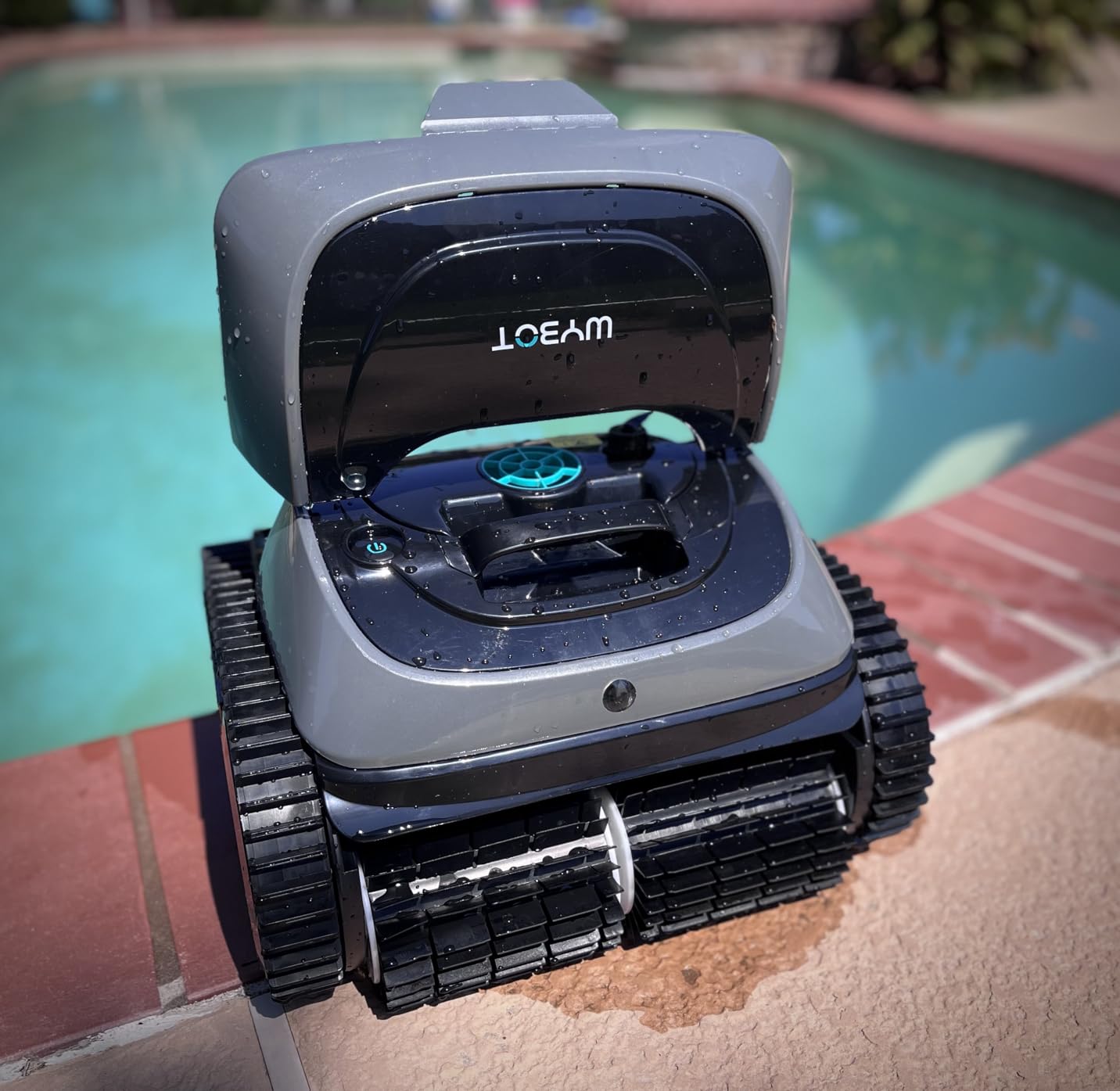
Owners report good pickup of large and fine debris including silt, sand, dog hair and calcium, and they credit the climbing system for working the waterline even above a vinyl-lined pool. At 4.0 stars from 1,024 reviews it is well established enough to judge, and the consensus is entry-level competence done well.
Runtime, Charging and the Two-Year Warranty
Runtime of up to 160 minutes is respectable, but the listed 160-minute charging time means this is a daily machine. You charge it while the pool is being used, then run it that evening, and the routine never really ends.
The warranty is two years from the manufacturer, which is longer than the one-year terms on several corded models here, and that matters more than the headline rating for a machine bought mainly for maintenance rather than deep cleaning.
Retrieval and the App Reality
Park-and-dock behavior at the wall makes the machine float to the edge when finished, and a lightweight body with an included hook means you are not wrestling it out of the deep end. Reviewers consistently mention the easy retrieval as a practical plus.
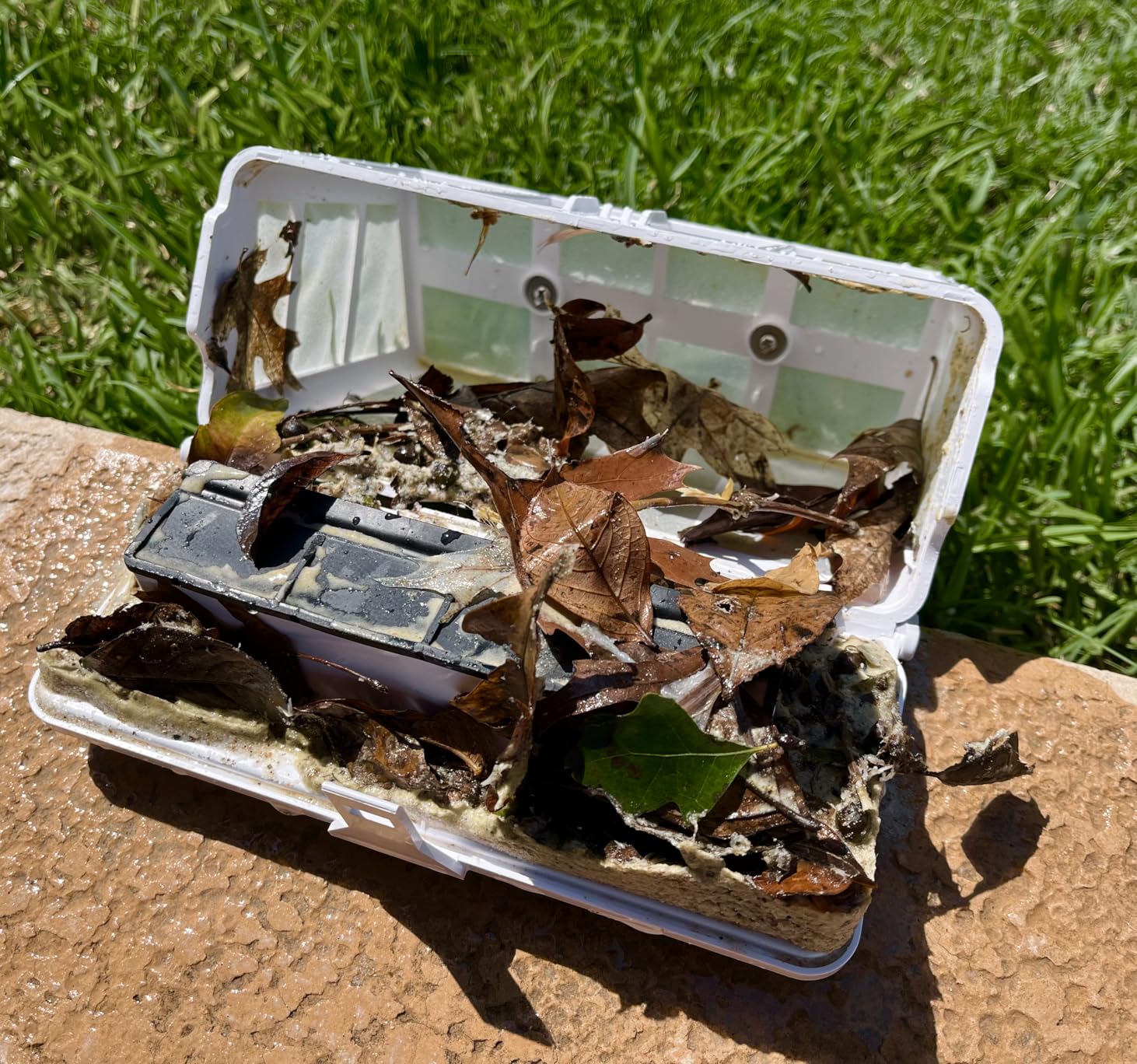
The app is more limited than the marketing suggests. Commands cannot be sent once the machine is submerged, so the mode must be set beforehand, and the basket is awkward to remove while the charging cord is still attached, which is a small annoyance that happens every few days.
Who It Suits and Where It Falls Short
Choose this if you want cordless convenience at the lowest entry point, your pool is a standard in-ground shape, and you will run it daily on a schedule you set before dropping it in. It suits owners who treat pool cleaning as a set habit rather than a set-it-and-forget-it job.
Expect to leave micro-fines in the wrinkles and divots of a vinyl liner, and expect occasional trouble with ledges and steps, which reviewers report as a recurring issue. Support is also described as slow and unhelpful by some owners, so treat the two-year warranty as something to check carefully at purchase.
How to Choose a Robotic Pool Cleaner Under 1,000 Dollars
Eight machines, four brands and two power architectures mean the differences that matter come down to a handful of decisions. Work through these in order and the right model becomes obvious without a spec sheet.
1. Match the Machine to Your Pool Type and Length
Start with the pool, not the robot. Above-ground liners need a light floor-only machine, and the Nautilus AG is built for exactly that at 6.6 kg and a 33 ft rating. In-ground pools need wall climbing, and anything you buy should be rated for at least 33 ft of length.
For a large in-ground pool, check the stated coverage area. The cordless machines here range from roughly 1,600 sq ft to 3,229 sq ft, and a machine rated below your pool area will still finish, just over several cycles.
2. Judge Filtration by Micron Rating, Not by Basket Size
Basket size tells you how much debris a robot can hold. Micron rating tells you how fine that debris can be. A large coarse basket will collect leaves beautifully and return every speck of silt to the water.
Look for a dual-layer setup, such as the 10 plus 180 micron pairing on the WYBOT C2 or the 3 plus 180 micron pairing on the Aiper Scuba S1 and Scuba V3. A plain mesh basket is a maintenance tool, not a filtration tool.
3. Understand What You Are Giving Up Below 1,000 Dollars
At this ceiling you are giving up three things: premium navigation mapping, very large filter capacity, and long-term parts support on the newest brands. You are not giving up wall climbing, waterline cleaning or fine filtration, because every cordless machine on this list handles walls and every corded in-ground model climbs.
You are also giving up a weekly programmable timer on most corded models, which is why forum buyers treat scheduling as a real criterion. A robot that needs a button press every morning is not automatic in the way people assume when they buy it.
4. Check the Waterline, Not Just the Floor
The waterline is the dirtiest band in any pool because floating dust, sunscreen and biofilm collect there and stick. A robot that only drives the floor leaves that band exactly where it was, and you will still be scrubbing it by hand.
Confirm wall climbing and waterline coverage in the listing before you buy, and treat general wall climbing as slightly different from dedicated waterline scrubbing. Only the two above-ground or floor-focused models in this guide skip the band entirely.
5. Factor the Battery Into Your Schedule, Not Your Budget
Every cordless machine here has a charge time that shapes your week: 160 minutes for the WYBOT C1, 3.5 hours for the WYBOT C2, 4 hours for the Aiper Scuba V3 and 4.5 hours for the Beatbot Sora 30. Against runtimes of 160 to 300 minutes, that sets the rhythm of your pool care.
The battery is also a future expense. Owners of cordless machines in this category report runtime loss of 30 to 50 percent after two to three years, with replacement batteries commonly running 80 to 150 dollars and sometimes being hard to source for smaller brands. That is a real part of the cost of ownership, and it favors a brand with service centers you can actually reach.
6. Read Pool Robot Reviews the Hard Way
Newer cordless brands in this category launch with suspiciously clean rating distributions, which is a signal to slow down. Look for reviews that describe specific failures, such as a unit that missed a zone or a battery that died early, rather than reviews that only praise appearance.
Check whether the rating distribution has a long one-star tail. The Dolphin Proteus DX3 sits at 4.0 stars with a 15 percent one-star share, while the WYBOT C2 sits at 4.6 with 91 percent four or five star, and that difference tells you more about durability evidence than the average does.
7. Treat Warranty Length as a First-Class Criterion
Warranty length is one of the strongest signals buyers in the forums actually sort on, and it varies enormously here. The WYBOT C1 and the Aiper machines carry two-year terms, while the Dolphin models are listed with a limited warranty and the Nautilus AG is commonly described by owners as one year on the cable, power supply and motor unit.
A longer warranty only counts if the brand will honor it. Check that the manufacturer has a service network you can reach, and read the return policy before you buy, because marketplace returns on a machine this size can carry a restocking fee that turns a trial into a permanent loss.
Frequently Asked Questions
What is the best robotic pool cleaner under 1,000 dollars?
The Dolphin Nautilus CC Plus is the strongest overall pick at this price ceiling. It cleans in-ground pools up to 40 ft, climbs walls with an active scrubber brush, and runs a two-hour corded cycle, and it carries 13,969 owner reviews at 4.3 stars. If you want cordless, the WYBOT C2 adds 10 micron dual filtration and up to 180 minutes of runtime.
Should I get a corded or cordless pool robot?
Choose corded if you have a convenient outlet and want a machine that runs every day without recharging. The Dolphin Nautilus CC Plus and Proteus DX3 run unlimited cycles and have far more owner history. Choose cordless if you have no outlet near the water or refuse to manage a cable, and accept that charge times of 3.5 to 4.5 hours will set your schedule.
What is the best budget robotic pool cleaner?
The WYBOT C1 is the lowest-cost way into automated cleaning in this guide, covering floor, walls, waterline and steps with a triple-motor system, up to 160 minutes of runtime, and a two-year manufacturer warranty. For above-ground pools specifically, the Dolphin Nautilus AG is cheaper to run and far easier to lift out of the water.
How long does a robotic pool cleaner last?
A well-maintained corded robot commonly runs six years or more, which is why owners on forums report long service histories with Maytronics machines. Cordless robots add a battery as a second aging component, and owners report a 30 to 50 percent runtime loss after two to three years, with replacement batteries commonly running 80 to 150 dollars.
What are common problems with robotic pool cleaners?
The five recurring failures are cable tangling across multiple cycles, a filter basket that overflows in leaf-heavy pools, a robot that skips the waterline, a dead or degraded cordless battery, and a failed power supply on corded models. All five are avoidable by sizing the robot to the pool, emptying the basket before it saturates and choosing a brand with obtainable parts.
Can a robotic pool cleaner clean the waterline, and how often should I run it?
Most models here climb walls and work the waterline band, though the Nautilus AG is deliberately floor-only for above-ground pools. For daily maintenance on a typical in-ground pool, run the robot two to three times a week, and daily during leaf season or after heavy rain. Cordless machines with long charge times are best scheduled on a fixed routine.
Which Robot Is Right for Your Pool?
If you have an in-ground pool and a nearby outlet, the Dolphin Nautilus CC Plus is the choice we would make. It has the deepest owner evidence in the group, cleans up to 40 ft, and the main cost is managing a cable that can tangle in a complex shape.
If you refuse to manage a cable, the WYBOT C2 is the value pick, because 10 micron dual filtration and 180 minutes of runtime solve the two problems that most often disappoint cordless buyers. Accept the 3.5-hour charge as a scheduling fact, not a defect.
If you run a large pool, fight a heavy leaf load or have platforms and shallow steps, the Beatbot Sora 30 earns its place with 6800 GPH suction, 300 minutes of runtime and surface parking, and you should be willing to lift 10.5 kg. If you want a large pool without the weight, the Aiper Scuba V3 is lighter at 8.2 kg and adds a no-installation charging dock.
If your pool is above ground, stop reading and buy the Dolphin Nautilus AG. It is built for exactly that job at 6.6 kg with a 1.5-hour cycle, and paying more for wall climbing you will never use is wasted money.
Use the buttons above to check the current price and current review count for each model, and re-read the micron ratings before you commit. The best robotic pool cleaners under 1,000 dollars are all capable machines, and the one that suits your pool shape, your outlet situation and your tolerance for a charging routine is the one that will still be running in year five.