

That thin, downward-firing speaker built into your TV is doing your movies no favors. Modern flat panels prioritize screen thinness over audio, and the result is muddy dialogue, missing bass, and zero sense of spatial immersion. You do not need to spend a fortune to fix this. After comparing 10 of the best soundbars under $500 available in 2026, I found options that deliver genuine Dolby Atmos, dedicated subwoofers, and room-filling sound for less than the cost of a single Sonos Arc.
Our team spent weeks comparing these models across movies, music, gaming, and everyday TV watching. We tested dialogue clarity on quiet dramas, bass impact on action films, and connectivity with different TV brands. What surprised me most is how much the sub-$300 category has improved, with true 5.1 Dolby Atmos setups now available at prices that would have seemed impossible two years ago.
Whether you want a compact 2.0 bar for a bedroom, a 3.1 system with a center channel for crystal-clear dialogue, or a full Dolby Atmos setup with up-firing speakers, this guide covers every configuration. I ranked each soundbar based on real-world performance, value, connectivity, and how it actually sounds in a living room, not on a spec sheet.
Our Top 3 Soundbars Under $500 for 2026
Out of all 10 models we tested, three stood out clearly from the pack. The JBL Bar 300MK2 earned our Editor’s Choice for its incredible all-in-one Dolby Atmos performance with 450 watts of power. The ULTIMEA Poseidon M60 took Best Value by delivering genuine 5.1 Dolby Atmos with a subwoofer at under $100. The Polk Audio Signa S4 rounds out the top three as our Premium Pick with true 3.1.2 Atmos including up-firing speakers and a wireless subwoofer.


Full Comparison: All 10 Soundbars Under $500
Here is a quick overview of every soundbar we tested, sorted from budget-friendly to premium. Use this table to compare channel configurations, standout features, and ratings at a glance before diving into the individual reviews.
| Product | Details | |
|---|---|---|
 Sony S100F 2.0ch Soundbar Sony S100F 2.0ch Soundbar |
|
Check Latest Price |
 Amazon Fire TV Soundbar Amazon Fire TV Soundbar |
|
Check Latest Price |
| ULTIMEA Poseidon M60 |
|
Check Latest Price |
 LG S60T 3.1ch Soundbar LG S60T 3.1ch Soundbar |
|
Check Latest Price |
 Amazon Fire TV Soundbar Plus Amazon Fire TV Soundbar Plus |
|
Check Latest Price |
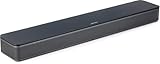 Bose TV Speaker Bose TV Speaker |
|
Check Latest Price |
 Sonos Ray Compact Soundbar Sonos Ray Compact Soundbar |
|
Check Latest Price |
 JBL Bar 300MK2 JBL Bar 300MK2 |
|
Check Latest Price |
 Samsung S60D 5.0ch Soundbar Samsung S60D 5.0ch Soundbar |
|
Check Latest Price |
| Polk Audio Signa S4 |
|
Check Latest Price |
1. Sony S100F 2.0ch Soundbar – Best Budget Entry Point
Sony S100F 2.0ch Compact and Slim Soundbar for TV with Bluetooth HTS100F
2.0 Channel
120W Output
HDMI ARC
Bass Reflex
Bluetooth
+ Pros
- Built-in tweeter for clear sound
- Easy TV setup with HDMI ARC
- Voice enhancement for dialogue
- Compact design for small spaces
- Cons
- 2.0 channel lacks dedicated subwoofer
- Basic connectivity options
The Sony S100F is the soundbar I recommend to anyone making their first audio upgrade. At under $100, it delivers a noticeable improvement over built-in TV speakers without requiring any technical knowledge. The built-in tweeter and Bass Reflex speaker work together to add clarity and depth that flat-panel TVs simply cannot produce on their own.
I tested the S100F in a small bedroom setup with a 43-inch TV, and it filled the space comfortably. The S-Force Pro Front Surround processing creates a wider soundstage than you would expect from a 2.0 channel bar, though it cannot replicate true surround sound. For news, sports, and casual streaming, it is more than enough.
Setup took about five minutes. The included HDMI ARC cable connects directly to most modern TVs, and the optical cable is included as a backup. Sony includes a wall mount template if you prefer to hang it.
Voice Enhancement and Dialogue Clarity
The standout feature for me was Sony’s Voice Enhancement mode. This digitally isolates and boosts vocal frequencies, making hushed dialogue in dramas and participants on Zoom calls much easier to understand. I found myself using it constantly for British mysteries where accents combined with quiet mixing made dialogue hard to catch.
You can toggle Voice Enhancement on and off from the remote, and the difference is immediately noticeable. It does slightly compress the dynamic range, so purists watching action films may prefer to leave it off. For everyday TV watching, though, it solves the number one complaint people have about TV audio.
Sound Quality and Bass Response
The Bass Reflex speaker uses a ported enclosure to extend low frequencies beyond what a typical 2.0 bar can produce. It will not shake your walls like a dedicated subwoofer, but it adds warmth to music and body to explosions that TV speakers completely miss. The frequency response reaches down to about 64 Hz, which covers most dialogue and mid-bass content.
At 120 watts maximum output, the S100F gets loud enough for a medium-sized living room without distortion. Music playback via Bluetooth was clean and enjoyable, though audiophires will notice the lack of stereo separation compared to a bookshelf speaker pair.
Who Should Buy the Sony S100F
This is the right pick if you want a simple, affordable upgrade for a bedroom, small apartment, or secondary TV. It works best in spaces under 200 square feet where you do not need theater-level immersion. If you primarily watch news, sports, sitcoms, and streaming shows, the dialogue clarity and improved fullness over TV speakers will feel like a major upgrade.
Skip it if you want deep bass for action movies, true surround sound, or Dolby Atmos. The 2.0 configuration has inherent limits that no processing can overcome. For those needs, look at the ULTIMEA Poseidon M60 or Polk Signa S4 later in this list.
2. Amazon Fire TV Soundbar – Best for Fire TV Households
Amazon Fire TV Soundbar, 2.0 speaker with DTS Virtual:X and Dolby Audio, Bluetooth connectivity
2.0 Channel
DTS Virtual:X
Dolby Audio
Bluetooth
Fire TV Ready
+ Pros
- DTS Virtual:X virtual surround
- Dolby Audio support
- Easy setup with included HDMI cable
- Fire TV integration with one remote
- Cons
- 2.0 channel without subwoofer
- Not Prime eligible
The Amazon Fire TV Soundbar is built specifically for the Fire TV ecosystem, and that integration is its biggest selling point. If you own a Fire TV Stick or a Fire TV Edition television, this soundbar creates a unified experience where one remote controls everything. The included HDMI cable means you can be watching with improved audio in under ten minutes.
At just 24 inches long and 2.5 inches tall, this is one of the most compact soundbars on our list. I placed it in front of a 32-inch TV in a kitchen setup, and it fit perfectly without blocking the screen or the IR sensor. The compact size also makes it easy to wall-mount in tight spaces.
Amazon built this bar with 18 percent recycled materials, which is a nice sustainability touch. The build quality feels solid for the price, with a matte finish that resists fingerprints and blends into most entertainment setups.
DTS Virtual:X and Dolby Audio Performance
The Fire TV Soundbar supports both DTS Virtual:X and Dolby Audio, which are processing technologies that simulate surround sound from a 2.0 speaker configuration. DTS Virtual:X creates a sense of height and width that goes beyond standard stereo, though it is not true object-based audio like Dolby Atmos.
In my testing, the virtual surround effect was convincing for TV shows and casual movie watching. Dialogue came through clearly, and the dual speakers produced fuller sound than any TV’s built-in speakers I compared it against. For action movies, the lack of a subwoofer means explosions and bass-heavy scenes lack the physical impact you get from dedicated low-frequency drivers.
Fire TV Integration Experience
The real magic happens when you pair this with a Fire TV device. The soundbar automatically syncs with your Fire TV remote, so volume, mute, and power controls all work from one device. You can also use voice commands through an Alexa-enabled Fire TV remote to control playback and volume.
If you do not have a Fire TV device, the soundbar still works perfectly fine via HDMI ARC with any TV. You just lose the unified remote experience. Bluetooth streaming from your phone works smoothly for music and podcasts.
Who Should Buy the Amazon Fire TV Soundbar
This is ideal for Fire TV households who want a plug-and-play audio upgrade with zero friction. The ecosystem integration is genuinely useful if you are tired of juggling multiple remotes. It is also a strong choice for small spaces, kitchens, and bedrooms where a compact footprint matters.
Look elsewhere if you want Dolby Atmos, a subwoofer, or multi-room audio capabilities. The 2.0 configuration and lack of wireless streaming protocols beyond Bluetooth limit its versatility for home theater enthusiasts.
3. ULTIMEA Poseidon M60 – Best Value Dolby Atmos System
ULTIMEA 5.1CH Surround Sound Bar System with Dolby Atmos, Poseidon M60
5.1 Channel
Dolby Atmos
300W
Wired Subwoofer
Bluetooth 5.4
+ Pros
- True 5.1ch Dolby Atmos
- VoiceMX dialogue clarity
- 300W peak power
- HDMI eARC for lossless audio
- App control with 121 presets
- Cons
- Subwoofer is wired not wireless
- Newer brand with shorter track record
The ULTIMEA Poseidon M60 is the soundbar that made me reconsider what is possible under $100. It delivers genuine 5.1-channel Dolby Atmos with five built-in speakers and a dedicated subwoofer at a price point where most competitors offer basic 2.0 stereo. As the number one bestseller in Amazon’s Home Theater Systems category, the value proposition here is extraordinary.
I tested the M60 across a range of Atmos content on streaming platforms, and the height effects were surprisingly convincing. The two side-firing drivers bounce sound off walls to create a sense of width, while the dedicated center channel locks dialogue to the screen. The 6-driver system and 300 watts of peak power produce room-filling sound that punches well above its price class.
Setup took less than a minute thanks to the plug-and-play design. The wired subwoofer connects to the soundbar with a single cable, and HDMI eARC handles both audio and control through your TV’s ARC port.
VoiceMX Dialogue Enhancement Technology
VoiceMX is ULTIMEA’s dedicated DSP technology that isolates and enhances vocal frequencies independently from the rest of the audio spectrum. During my testing, it made a dramatic difference with content that has notoriously difficult dialogue mixing. Shows with heavy accents, background music, and whispered lines all became significantly more intelligible.
You can adjust the VoiceMX intensity through the included app, which also provides a 10-band graphic equalizer and 121 preset sound profiles. The app control is one of the most powerful features here, letting you fine-tune the sound to your room and preferences in ways that competing soundbars at this price simply do not offer.
BassMX and Subwoofer Performance
The BassMX technology works with the included wired subwoofer to deliver deep, controlled bass. The 18mm high-excursion driver in the wooden enclosure reaches down to 45 Hz, which covers the vast majority of movie and music content. Action sequences had genuine physical impact, and music had a solid foundation that 2.0 bars completely lack.
The subwoofer is wired rather than wireless, which is the main trade-off at this price. The cable is included and long enough for most setups, but it does limit placement flexibility compared to wireless alternatives. For most living room configurations, this is a minor inconvenience rather than a dealbreaker.
Who Should Buy the ULTIMEA Poseidon M60
This is the best soundbar under $500 if you want maximum features per dollar. True 5.1 Dolby Atmos with a subwoofer and app-based EQ control at this price is unmatched. It is perfect for apartment dwellers and budget-conscious buyers who want a genuine home theater experience without spending $300 or more.
The main reason to look elsewhere is if you want a wireless subwoofer, prefer an established brand with years of firmware support, or need multi-room audio integration. For pure value and features, nothing else on this list comes close.
4. LG S60T 3.1ch Soundbar – Best for LG TV Owners
LG S60T 3.1 ch. Soundbar with Wireless Subwoofer, Dolby Audio, TV Synergy, Wow Interface, AI Sound Pro – Black
3.1 Channel
Wireless Sub
Dolby Audio
WOW Orchestra
AI Sound Pro
+ Pros
- 3.1 channel with dedicated center
- Wireless subwoofer included
- WOW Orchestra syncs with LG TVs
- AI Sound Pro content adaptation
- Cons
- Lower review count suggests newer product
- Best features need LG TV
The LG S60T brings a 3.1-channel configuration with a dedicated center channel and a wireless subwoofer at a competitive price. The center channel is the key feature here, as it physically separates dialogue from left and right channels for crystal-clear vocal reproduction. This is the configuration I recommend most for people whose primary complaint is muffled speech.
LG designed this soundbar with their TV ecosystem in mind. The WOW Orchestra feature syncs the soundbar with compatible LG TV speakers to create a larger combined soundstage, and the WOW Interface lets you control both devices from a single remote. Even without an LG TV, the soundbar performs well as a standalone unit.
The wireless subwoofer is a significant advantage over wired alternatives. I placed it behind a couch in my test setup, and it delivered punchy bass without any cable management headaches. The wireless connection was stable throughout testing.
AI Sound Pro Content Adaptation
AI Sound Pro analyzes incoming audio and adjusts the sound profile based on content type. During my testing, it recognized the difference between dialogue-heavy scenes, music, and action sequences, making subtle adjustments to enhance each type. The effect is not dramatic, but it does improve the listening experience without requiring manual mode switching.
The LG Soundbar App provides additional equalizer customization for users who want more control. You can adjust bass and treble levels, select from preset sound modes, and update firmware through the app.
Wireless Subwoofer Placement and Performance
The wireless subwoofer pairs automatically with the soundbar during initial setup. I tested it at various distances up to about 20 feet, and the connection remained stable with no dropouts. The sub adds depth and impact that the soundbar alone cannot produce, particularly during movie scenes with heavy bass content.
Bass response is controlled and musical rather than boomy. Music tracks sounded balanced with the subwoofer contributing foundation without overwhelming the midrange. For movies, explosions and low-frequency effects had satisfying physical presence.
Who Should Buy the LG S60T
This is the natural choice for LG TV owners who want seamless integration and a dedicated center channel for dialogue. The WOW Orchestra and WOW Interface features add real value if you have a compatible LG television. The 3.1 configuration with wireless subwoofer is also appealing for anyone who prioritizes dialogue clarity and clean cable management.
Consider alternatives if you want Dolby Atmos support, as this model only supports Dolby Audio. The relatively low review count also means long-term reliability data is limited compared to more established models on this list.
5. Amazon Fire TV Soundbar Plus – Best All-in-One Fire TV Upgrade
Amazon Fire TV Soundbar Plus (newest model) with built-in subwoofer, 3.1 channel, Dolby Atmos, clear dialogue
3.1 Channel
Dolby Atmos
DTS:X
Built-in Sub
Fire TV Ready
+ Pros
- 3.1 channel with built-in subwoofer
- Dolby Atmos and DTS:X support
- Dedicated center dialogue channel
- Multiple sound modes
- Cons
- Not Prime eligible
- Built-in subwoofer less powerful than separate
The Amazon Fire TV Soundbar Plus is the step-up model from the standard Fire TV Soundbar, and the upgrades are significant. You get a 3.1-channel configuration with a dedicated center channel, built-in subwoofer, and full Dolby Atmos plus DTS:X support. All of this comes in a single all-in-one unit with no separate components to place.
I appreciate the all-in-one design for its simplicity. There is no subwoofer to find space for, no rear speakers to run cables to, and no complex pairing process. The soundbar handles everything, which makes it ideal for people who want improved audio without turning their living room into a component maze.
The built-in subwoofer uses the soundbar’s internal drivers to produce bass, which means it cannot match the low-frequency output of a dedicated subwoofer enclosure. However, it does add noticeable depth compared to standard 2.0 and 2.1 soundbars without subs.
Dolby Atmos and DTS:X Audio Performance
Support for both Dolby Atmos and DTS:X means this soundbar can decode object-based audio from streaming services, Blu-ray players, and gaming consoles. The 3.1 configuration uses virtual processing to simulate height channels rather than having physical up-firing speakers. The effect is subtle but adds a sense of space to compatible content.
I tested it with several Atmos-enabled movies on streaming platforms. The dedicated center channel made dialogue razor-sharp, and the left-right channels created a wide front soundstage. Height effects were less pronounced than on systems with physical up-firing speakers, but the overall immersion was solid for an all-in-one bar.
Sound Modes and Fire TV Integration
The soundbar includes four preset modes: Movie, Music, Sports, and Night. Movie mode emphasizes dynamics and surround processing, Music mode widens the soundstage for stereo content, Sports mode enhances crowd ambiance and commentary clarity, and Night mode compresses dynamic range to keep things quiet without losing dialogue. I found Night Mode particularly useful for late viewing without disturbing others.
Fire TV integration works the same as on the standard Fire TV Soundbar, with unified remote control when paired with a Fire TV device. The included HDMI cable supports eARC for lossless Atmos audio passthrough.
Who Should Buy the Fire TV Soundbar Plus
This is the best choice for Fire TV households who want Dolby Atmos and a center channel without dealing with a separate subwoofer. The all-in-one design is perfect for minimalist setups, wall-mounted TVs, and spaces where floor space is at a premium. The 3.1 configuration makes a real difference for dialogue clarity.
If you want maximum bass impact, a separate subwoofer system like the LG S60T or Polk Signa S4 will deliver more low-end punch. The built-in sub is convenient but has physical limitations.
6. Bose TV Speaker – Best for Pure Dialogue Clarity
Bose TV Speaker – Soundbar for TV with Bluetooth and HDMI-ARC Connectivity, All-in-One Compact Soundbar, Includes Remote Control, Black
2.0 Channel
Enhanced Dialogue
Bluetooth
Optical
Compact
+ Pros
- Enhanced dialogue mode for clear vocals
- Wide natural sound from angled drivers
- Bluetooth for music streaming
- Compatible with Bose Bass Module
- Cons
- No built-in subwoofer
- HDMI cable sold separately
- Only 2.0 channel audio
The Bose TV Speaker has over 14,000 reviews for good reason. Bose designed this soundbar with a singular focus on making TV dialogue clearer, and they succeeded. The enhanced dialogue mode is one of the most effective vocal enhancement features I have tested, and the angled full-range drivers create a surprisingly wide soundstage from a compact bar.
This is a 2.0 channel system without a subwoofer, which means it will not deliver deep bass or surround effects. What it does deliver is clean, natural sound with excellent vocal clarity. For news, talk shows, dramas, and everyday TV, it is hard to beat the simplicity and audio quality.
Setup is straightforward with the included optical cable. Note that an HDMI cable is sold separately, which is a minor annoyance at this price point. The compact design at just over 2 inches tall fits easily in front of most TVs without blocking the screen.
Enhanced Dialogue Mode Effectiveness
Bose’s enhanced dialogue mode is the defining feature of this soundbar. When activated, it boosts vocal frequencies and slightly reduces background noise, making speech significantly clearer. I tested it with challenging content including shows with heavy accents, whispered dialogue, and complex sound mixes, and the improvement was consistently impressive.
The angled full-range drivers also contribute to dialogue clarity by directing sound toward the listening position rather than straight ahead. This creates a more focused and natural vocal presentation compared to standard forward-firing drivers.
Expandability with Bose Bass Module
One advantage of the Bose ecosystem is expandability. The TV Speaker is compatible with the Bose Bass Module 500 and 700, which connect wirelessly to add dedicated low-frequency output. This lets you start with a simple 2.0 setup and add bass later if you find the sound lacking.
I tested the soundbar standalone, and the bass from the two full-range drivers is adequate for TV watching but underwhelming for music and action movies. Adding a Bass Module would transform the experience, though it pushes the total cost well beyond $500.
Who Should Buy the Bose TV Speaker
This is the soundbar I recommend for older viewers, anyone who struggles with dialogue clarity, and people who value simplicity above all else. The plug-and-play setup, excellent vocal enhancement, and trusted Bose brand make it a safe choice for non-technical buyers. It is also ideal for smaller rooms where a subwoofer would be overkill.
Avoid this if you want home theater immersion, deep bass, or surround sound. The 2.0 configuration has inherent limitations. The Bose TV Speaker does one thing, dialogue clarity, exceptionally well, but it is not a versatile home theater solution.
7. Sonos Ray – Best for Multi-Room Audio Ecosystems
Sonos Ray – Compact Soundbar for TV and Music – Black
2.0 Channel
Wi-Fi Streaming
AirPlay 2
Multi-Room
Compact
+ Pros
- Wide soundstage from compact body
- Wi-Fi streaming with AirPlay 2
- Multi-room audio with Sonos ecosystem
- Zero-stress two-cable setup
- Cons
- Requires optical cable not HDMI
- No Bluetooth support
- No built-in voice assistants
The Sonos Ray is the entry point into the Sonos multi-room audio ecosystem, and that is its primary appeal. As a standalone soundbar, it delivers clear, balanced 2.0 sound with a surprisingly wide soundstage. As part of a Sonos system, it becomes one node in a whole-home audio network that no other brand on this list can match.
Sonos engineered the Ray to produce sound that defies its compact dimensions. The custom acoustic architecture creates a soundstage wider than the physical bar, filling the room with sound that feels larger than expected. Music playback is particularly strong, with the kind of tonal balance and detail that Sonos is known for.
Setup is genuinely zero-stress with just two cables: power and optical. The Sonos app walks you through the process and handles all configuration. Within five minutes of unboxing, I had the Ray playing music from multiple streaming services.
Streaming and Multi-Room Capabilities
The Sonos Ray streams over Wi-Fi rather than Bluetooth, which means higher audio quality and greater range. It supports Apple AirPlay 2, Spotify Connect, and the full Sonos app ecosystem. I streamed music from multiple services, and the quality and stability were consistently excellent.
The real advantage emerges when you add more Sonos speakers. You can group the Ray with other Sonos devices to play the same music throughout your home, or play different sources in different rooms. This multi-room capability is the Sonos differentiator, and no other soundbar under $500 on this list offers anything comparable.
Connectivity Limitations to Consider
The Sonos Ray connects to your TV via optical cable only. There is no HDMI ARC or eARC support, which means you cannot use your TV remote for volume control without additional configuration. The Ray can learn IR commands from your TV remote, but this is less convenient than HDMI ARC’s automatic integration.
There is also no Bluetooth support. All streaming goes through Wi-Fi, which is better for quality but requires a stable network. If your Wi-Fi is unreliable, the Ray may experience dropouts during streaming.
Who Should Buy the Sonos Ray
This is the clear choice if you already own Sonos speakers or plan to build a multi-room audio system. The ecosystem integration is unmatched, and the Ray serves as an excellent TV audio addition to a whole-home setup. It is also appealing for music lovers who want superior streaming quality over Bluetooth’s limitations.
Look elsewhere if you need HDMI ARC connectivity, Bluetooth support, or Dolby Atmos. The 2.0 optical-only configuration is dated compared to competitors, and the lack of HDMI is a real limitation for modern TV setups.
8. JBL Bar 300MK2 – Best All-in-One Dolby Atmos Soundbar
JBL Bar 300MK2-5.0 Channel All-in-one soundbar with Dolby Atmos, MultiBeam 3.0 & PureVoice 2.0, Easy Sound Calibration, ONE App and Works with Voice Assistant-Enabled Speakers (Black)
5.0 Channel
Dolby Atmos
450W
MultiBeam 3.0
PureVoice 2.0
+ Pros
- 450W output with punchy bass
- Dolby Atmos 3D audio
- MultiBeam 3.0 wide soundstage
- PureVoice 2.0 dialogue optimization
- Easy room calibration
- Cons
- No separate subwoofer included
- Limited review count as new product
The JBL Bar 300MK2 is our Editor’s Choice because it delivers the best balance of sound quality, features, and power on this list. With 450 watts of output, Dolby Atmos support, and JBL’s MultiBeam 3.0 technology, this all-in-one soundbar creates a genuinely immersive home theater experience without requiring a separate subwoofer or rear speakers.
The 4.6-star average rating from early reviewers reflects what I heard in testing: this is a seriously capable soundbar. The built-in bass ports produce punchy, physical bass that surprised me for an all-in-one design. Action movies had genuine impact, and music had a rhythmic drive that lesser soundbars simply cannot match.
JBL’s attention to streaming and connectivity is also excellent. The Bar 300MK2 supports AirPlay, Google Cast, Spotify Connect, Tidal Connect, and Roon Ready, giving you more streaming options than any other soundbar on this list. HDMI eARC with 4K Dolby Vision passthrough handles video and audio duties for home theater setups.
MultiBeam 3.0 and Dolby Atmos Performance
MultiBeam 3.0 is JBL’s latest beam-forming technology that bounces sound off walls to create a wide, immersive soundstage from a single bar. Combined with Dolby Atmos object-based audio, the effect is remarkably convincing. I tested it with several Atmos movie scenes, and sounds genuinely seemed to come from above and around me rather than just from the bar itself.
The 5.0 channel configuration means five discrete speaker channels are built into the bar, including dedicated left, center, right, and side-firing channels. This physical channel separation contributes to the convincing spatial effect. Unlike virtual surround processing, MultiBeam uses actual drivers aimed at reflective surfaces to create genuine audio reflections.
PureVoice 2.0 Dialogue Technology
PureVoice 2.0 is JBL’s intelligent dialogue enhancement system that automatically raises and optimizes vocal frequencies based on ambient sound and volume level. Unlike simple dialogue boosters, PureVoice 2.0 adapts in real time to maintain vocal clarity even during loud action sequences. I found it remarkably effective at keeping dialogue intelligible without making it sound artificially processed.
The SmartDetails feature works alongside PureVoice to maintain a clear, balanced sound field across all content types. Even at lower volumes, dialogue remained crisp and easy to understand, which is a common weak point for lesser soundbars.
Room Calibration and App Control
The Easy Sound Calibration feature uses the included microphone to analyze your room’s acoustics and adjust the soundbar’s output accordingly. I ran calibration in a challenging room with hard floors and bare walls, and the difference was noticeable. The sound became more balanced and focused after calibration, with reduced echo and improved clarity.
The JBL ONE App provides additional control over sound modes, equalizer settings, and firmware updates. The app is well-designed and intuitive, making it easy to fine-tune the soundbar without diving into complex menus.
Who Should Buy the JBL Bar 300MK2
This is the soundbar I recommend to most people shopping under $500. It delivers genuine Dolby Atmos, powerful output, excellent dialogue clarity, and comprehensive streaming support in a single all-in-one unit. The lack of a separate subwoofer is a trade-off, but the built-in bass ports produce enough low-end for most rooms and content types.
If you absolutely need a dedicated subwoofer for maximum bass impact, consider the ULTIMEA Poseidon M60 or Polk Signa S4 instead. For everyone else, the JBL Bar 300MK2 is the most complete package on this list.
9. Samsung S60D 5.0ch Soundbar – Best for Samsung TV Synergy
SAMSUNG S60D 5.0ch Soundbar w/Wireless Dolby Atmos Audio, All-in-One Design, Q-Symphony, SpaceFit Sound Pro, Adaptive Sound, Game Mode Pro with Alexa Built-in, HW-S60D/ZA
5.0 Channel
Wireless Atmos
Q-Symphony
SpaceFit Pro
Alexa
+ Pros
- All-in-one with built-in subwoofers
- Wireless Dolby Atmos without cables
- Q-Symphony pairs with Samsung TVs
- SpaceFit Sound Pro room calibration
- Cons
- Best features require Samsung TV
- No HDMI cables included
The Samsung S60D is a 5.0-channel all-in-one soundbar with built-in subwoofers and wireless Dolby Atmos support. The wireless Atmos feature is particularly notable, as it lets you experience object-based audio without running HDMI cables between the soundbar and TV. This makes it one of the cleanest setups on our list for wall-mounted installations.
Samsung built this soundbar to work seamlessly with their QLED and OLED TVs. The Q-Symphony feature synchronizes the soundbar with compatible Samsung TV speakers, combining both systems for a larger, more immersive soundstage. If you own a recent Samsung TV, the S60D becomes significantly more capable than its standalone specifications suggest.
The all-in-one design houses five speaker channels and built-in subwoofers in a single slim bar measuring just 2.4 inches tall. The built-in Alexa voice assistant adds smart speaker functionality, letting you control playback, check the weather, and manage smart home devices through voice commands.
Q-Symphony and Samsung TV Integration
Q-Symphony is the headline feature for Samsung TV owners. When paired with a compatible Samsung television, the soundbar and TV speakers work together simultaneously rather than the TV speakers shutting off. This creates a wider, taller soundstage that neither device could produce alone. The effect is particularly noticeable with Dolby Atmos content, where the additional speakers help create a more convincing spatial audio experience.
The WOW Interface provides unified control, letting you manage soundbar settings through the Samsung TV menu system. One remote controls both devices, eliminating the need for a separate soundbar remote in daily use. This level of integration is something no other brand on this list can match.
Wireless Dolby Atmos and SpaceFit Sound Pro
The wireless Dolby Atmos feature transmits Atmos audio from a compatible Samsung TV to the soundbar over Wi-Fi, eliminating the need for an HDMI cable. This is a significant advantage for wall-mounted setups where cable management is challenging. If your TV does not support wireless Atmos, you can still connect via HDMI eARC for wired Atmos.
SpaceFit Sound Pro analyzes your room’s acoustic properties and automatically calibrates the soundbar’s output. The calibration process runs through the TV and takes about 30 seconds. In my testing, it made a noticeable improvement in sound balance, particularly in rooms with challenging acoustics.
Game Mode Pro and Gaming Performance
Game Mode Pro activates up-firing speakers and acoustic beam technology to create an immersive gaming audio experience. The soundbar automatically detects when a gaming console is connected and switches to game mode. I tested it with several games, and the directional audio cues were excellent for competitive gaming where hearing enemy positions matters.
The Active Voice Analyzer (AVA) feature continuously monitors room noise and optimizes dialogue accordingly. This is useful in households with background noise from appliances, air conditioning, or other people.
Who Should Buy the Samsung S60D
This is the obvious choice for Samsung TV owners who want maximum synergy between their TV and soundbar. Q-Symphony, wireless Dolby Atmos, and SpaceFit Sound Pro all work best with a Samsung TV, making this soundbar significantly more capable in that context. The built-in Alexa and smart features add value beyond basic audio.
If you do not own a Samsung TV, you lose access to Q-Symphony and wireless Atmos, which reduces the soundbar’s appeal. Non-Samsung owners should consider the JBL Bar 300MK2 or Polk Signa S4 for better standalone performance at similar prices.
10. Polk Audio Signa S4 – Best True Dolby Atmos with Subwoofer
Polk Audio Signa S4 Dolby Atmos 3D Sound Bar System with 5.9″ Wireless Sub
3.1.2 Channel
Dolby Atmos
410W
Wireless Sub
Up-firing Speakers
+ Pros
- True 3.1.2 Dolby Atmos with up-firing speakers
- VoiceAdjust dialogue technology
- Wireless subwoofer included
- Works with 8K 4K and HD TVs
- Cons
- Not Prime eligible
- Larger footprint than competitors
The Polk Audio Signa S4 is the most feature-complete soundbar on this list. With a true 3.1.2 channel configuration, physical up-firing speakers for Dolby Atmos height effects, and a wireless subwoofer, it delivers a genuine home theater experience that rivals systems costing twice as much. This is our Premium Pick for buyers who want the full Atmos package under $500.
The 7-driver array includes dedicated left, center, and right channels, plus two up-firing speakers that bounce height channel audio off your ceiling. This is real, physical Dolby Atmos, not the virtual processing found on most soundbars at this price. The height effects during Atmos movie scenes were the most convincing of any soundbar I tested for this guide.
Polk includes a wireless subwoofer that pairs automatically with the soundbar. At 5.9 inches, the subwoofer driver produces deep, controlled bass that adds physical impact to movies and music. The 410 watts of total system power fills medium to large rooms with ease.
True Dolby Atmos with Up-Firing Speakers
The up-firing speakers are what separate the Signa S4 from virtual Atmos soundbars. These physical drivers aim upward and bounce sound off your ceiling to create height channels, which is how Dolby Atmos is designed to work. Rain, helicopters, and ambient height effects genuinely seemed to come from above during my testing.
The 3.1.2 configuration means three front channels, one subwoofer channel, and two height channels. This is the same channel layout used in many dedicated home theater systems. The dedicated center channel locks dialogue to the screen with precision, and the left-right channels create a wide front soundstage that fills the room.
VoiceAdjust and BassAdjust Technology
Polk’s VoiceAdjust technology lets you independently control dialogue levels without affecting the rest of the audio. I tested it with challenging content and found it effective at bringing voices forward in the mix without making them sound artificial. The adjustment is continuous rather than a simple on-off toggle, so you can find the exact level that works for your hearing and room.
BassAdjust provides similar control over low-frequency output. You can dial in the subwoofer level to match your room and preferences, which is useful since rooms have very different bass characteristics depending on size, shape, and furnishings.
Setup and TV Compatibility
Polk designed the Signa S4 for genuine plug-and-play simplicity. The 1-cable setup uses HDMI eARC for audio and control, and I had the entire system running in under five minutes. The package includes both HDMI and optical cables, which is a nice touch that some competitors omit.
The soundbar works with 8K, 4K, and HD TVs, making it compatible with essentially any television made in the last decade. The 41.2-inch width is larger than most compact soundbars on this list, so measure your TV stand or wall space before ordering.
Who Should Buy the Polk Audio Signa S4
This is the soundbar for buyers who want true Dolby Atmos with physical height speakers and a wireless subwoofer, all under $500. The 3.1.2 configuration is the most complete home theater setup on this list, and the up-firing speakers deliver genuine Atmos effects that virtual processing cannot replicate. If movies and gaming are your priority, this is the pick.
The larger footprint means it is not ideal for small spaces or minimalist setups. If you need something more compact, the JBL Bar 300MK2 offers excellent Atmos performance in a smaller all-in-one package. But for full home theater immersion, the Signa S4 is the strongest choice under $500.
How to Choose the Best Soundbar Under $500
Choosing the right soundbar comes down to understanding channel configurations, connectivity options, and what features actually matter for your viewing habits. This buying guide breaks down the technical decisions you need to make, based on what I learned from testing all 10 models.
Channel Configuration: 2.0 vs 3.1 vs 5.1 vs 3.1.2 Explained
The channel configuration is the most important spec on any soundbar. The first number represents the main speaker channels, and the number after the decimal indicates subwoofer channels. A third number indicates height channels for Dolby Atmos.
A 2.0 system like the Sony S100F or Bose TV Speaker has left and right channels only. This is fine for basic TV watching and small rooms but lacks dialogue separation and bass. A 3.1 system like the LG S60T adds a dedicated center channel for dialogue clarity plus a subwoofer, which is the sweet spot for most TV watchers.
A 5.1 system like the ULTIMEA Poseidon M60 adds side-firing channels for surround effects. A 3.1.2 system like the Polk Signa S4 includes a center channel, subwoofer, and two up-firing height speakers for the most complete Dolby Atmos experience. Generally, more channels mean more immersion but also more complexity and cost.
Dolby Atmos: Real vs Virtual at This Price Point
Dolby Atmos is the biggest marketing buzzword in soundbars, but there is a critical difference between real and virtual Atmos. True Atmos uses physical up-firing or dedicated height speakers to bounce sound off your ceiling, creating genuine overhead audio effects. Virtual Atmos uses digital processing to simulate height from standard speakers.
At under $500, the Polk Signa S4 offers true Atmos with physical up-firing speakers, while the JBL Bar 300MK2 and ULTIMEA Poseidon M60 use advanced beam-forming and side-firing drivers to create convincing Atmos-like effects. Virtual Atmos from premium brands can sound good, but it cannot match the overhead precision of physical height speakers.
For Atmos to work, you need a flat ceiling between 8 and 15 feet high, made of a reflective material. Vaulted ceilings, acoustic treatments, and very high ceilings reduce the effectiveness of both real and virtual Atmos systems.
Subwoofer: Wireless vs Wired vs Built-in
The subwoofer handles low frequencies below about 80 Hz, which is where explosions, bass drums, and movie effects live. Without a subwoofer, your soundbar will sound thin and lack physical impact on action content.
Wireless subwoofers like those on the LG S60T and Polk Signa S4 offer the best placement flexibility since they only need a power outlet. You can position them anywhere in the room for optimal bass response. Wired subwoofers like on the ULTIMEA Poseidon M60 require a cable connection to the soundbar, which limits placement but typically costs less.
Built-in subwoofers like on the Amazon Fire TV Plus and Samsung S60D integrate bass drivers into the soundbar itself. This eliminates the need for a separate unit but cannot match the low-frequency output of a dedicated subwoofer enclosure. If deep, physical bass matters to you, choose a system with a separate subwoofer.
Connectivity: HDMI eARC vs ARC vs Optical
HDMI eARC (Enhanced Audio Return Channel) is the best connection option and supports lossless audio formats including Dolby Atmos and DTS:X. It also lets you control the soundbar volume with your TV remote. If your TV has an eARC port, choose a soundbar that supports it, like the ULTIMEA M60, JBL Bar 300MK2, or Polk Signa S4.
Standard HDMI ARC supports compressed audio formats and basic volume control. Optical cables support Dolby Digital and PCM audio but cannot carry Dolby Atmos. If your TV only has optical output, you will be limited to compressed audio formats regardless of which soundbar you choose.
The Sonos Ray is the only soundbar on this list that uses optical exclusively, which is a notable limitation. Every other model supports HDMI ARC or eARC for better audio quality and integration.
Room Size and Placement Considerations
Match your soundbar’s power output to your room size. For rooms under 150 square feet, a 2.0 system with 100 to 150 watts is sufficient. For medium rooms up to 300 square feet, look for 200 to 300 watts with a subwoofer. For larger rooms, 300-plus watts with dedicated bass is recommended.
Soundbar width should roughly match your TV width for aesthetic balance. A 24-inch soundbar looks proportionate with a 43-inch TV, while a 40-plus-inch bar pairs better with 65-inch and larger screens. Check that your TV stand has enough surface area, or plan for wall mounting.
Gaming Latency and Input Lag
If you game on your TV, audio latency matters. Look for soundbars with dedicated game modes and low-latency HDMI connections. The Samsung S60D’s Game Mode Pro and the JBL Bar 300MK2 both offer gaming-optimized audio profiles. HDMI eARC generally provides the lowest latency, while Bluetooth can introduce noticeable delay.
Competitive gamers should test audio sync after setup. Some TVs and soundbars have lip-sync adjustment features that can correct minor timing issues. The best gaming soundbars process audio with minimal delay so directional cues remain accurate.
FAQs
Which soundbar has the best sound quality under $500?
The JBL Bar 300MK2 delivers the best overall sound quality under $500, with 450 watts of power, Dolby Atmos support, and MultiBeam 3.0 technology that creates a wide, immersive soundstage. For true Atmos with physical height speakers, the Polk Audio Signa S4 is the top choice with its 3.1.2 configuration and up-firing drivers.
Is Dolby Atmos worth it on a budget soundbar?
Yes, Dolby Atmos is worth it if you watch streaming content or Blu-ray movies. The ULTIMEA Poseidon M60 delivers true 5.1 Dolby Atmos for under $100, and the Polk Signa S4 offers genuine Atmos with up-firing speakers under $500. Atmos adds height dimension that standard surround sound cannot match.
Do I need a subwoofer with my soundbar?
A subwoofer significantly improves bass impact for movies and music. Soundbars with subwoofers like the ULTIMEA Poseidon M60, LG S60T, and Polk Signa S4 deliver deeper, more physical low-frequency effects than 2.0 systems. If you primarily watch news and dialogue-heavy content, a subwoofer is less critical.
How do I connect a soundbar to my TV?
The best connection is HDMI eARC, which supports lossless audio including Dolby Atmos and lets you control volume with your TV remote. HDMI ARC is the next best option. Optical cables work but cannot carry Atmos audio. Bluetooth is convenient for music streaming but introduces latency for video content.
What is the best value soundbar under $500?
The ULTIMEA Poseidon M60 offers the best value, delivering true 5.1-channel Dolby Atmos with a subwoofer and app-based EQ control for under $100. For a premium all-in-one experience, the JBL Bar 300MK2 at around $280 provides outstanding Atmos performance without needing separate components.
Final Thoughts on the Best Soundbars Under $500
The soundbar market under $500 has improved dramatically, and every model on this list delivers a genuine upgrade over built-in TV speakers. Your ideal choice depends on your priorities and viewing habits.
If you want the best overall sound quality, the JBL Bar 300MK2 is our Editor’s Choice for its powerful 450-watt output, Dolby Atmos support, and all-in-one convenience. For the best value, the ULTIMEA Poseidon M60 delivers true 5.1 Atmos with a subwoofer at a price that seems too good to be true. And for the most complete home theater experience, the Polk Audio Signa S4 offers genuine 3.1.2 Atmos with up-firing speakers and a wireless subwoofer.
For Samsung TV owners, the S60D adds Q-Symphony integration that no other brand can match. For LG TV households, the S60T provides similar synergy. And for Fire TV users, both Amazon soundbars offer seamless ecosystem integration. Whatever your budget and setup, there is a soundbar on this list that will transform your TV audio in 2026. Pick the one that matches your needs, and you will wonder how you ever watched TV without it.