
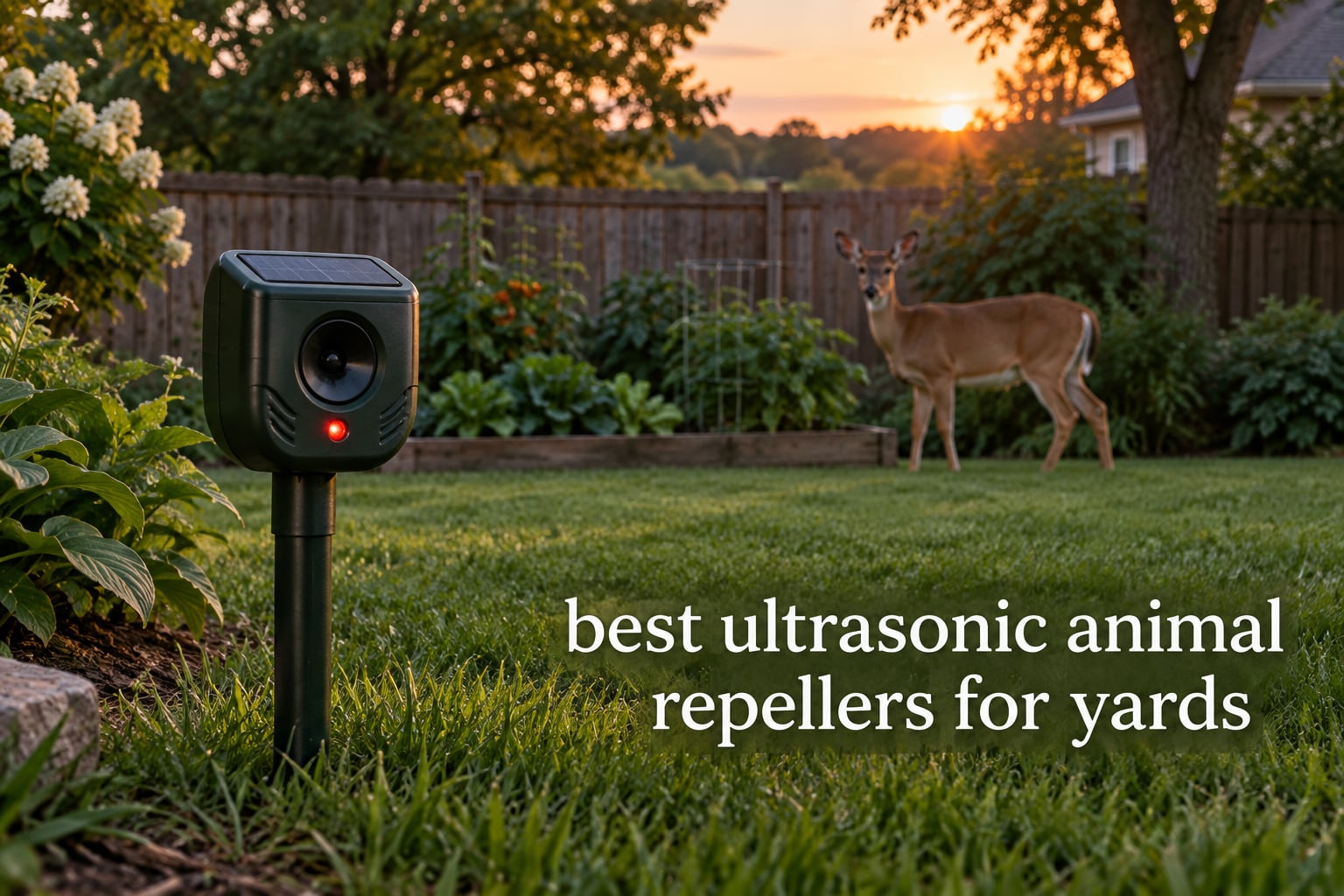
I spent six weeks installing, repositioning and living with ten different ultrasonic animal repellers in a suburban yard bordered by woods, a creek and a busy street, and I can tell you which ones earned their stake. The best ultrasonic animal repellers for yards are not the units with the loudest claims on the box; they are the ones with a real motion sensor, a weather rating that matches your climate, and enough spread to cover the approach route an animal actually uses.
Here is the honest short answer to the question everybody asks first: ultrasonic repellers work best on larger nuisance mammals over short distances, they work much less well on insects and deep-tunneling moles, and they fade if you leave one unit bolted to the same post for a season. What follows is what I saw, what the science says, and where each of these ten devices earns a place.
I also want to set expectations early, because this is a category with unusually low customer ratings. Most listings in this niche sit between roughly 2.7 and 3.7 stars, and that number is not a sign of defective hardware. It is a sign that sellers advertise effective ranges measured under ideal laboratory conditions and buyers expect a fence line to stop a deer forever.
Do Ultrasonic Animal Repellers Actually Work?
Yes, partially and under the right conditions. An ultrasonic animal repeller emits high-frequency sound above the human hearing range, usually triggered by a motion sensor, and many outdoor models pair it with a flashing LED strobe. The device tends to deter larger nuisance mammals at short range, while results for insects, deeply burrowed moles and habituated urban squirrels are poor. The single biggest determinant of success is placement, not the model.
The research on this is genuinely mixed, and you deserve to hear both halves. A 2002 test performed at Kansas State University found that ultrasonic repellers produced no measurable reduction in rodent activity, which aligned with Federal Trade Commission warning letters sent to more than sixty manufacturers in 2001 over overstated efficacy claims. The FTC pursued the issue in court two years later.
That history is why the category ratings are so harsh, and it is also why well-placed devices still generate a lot of positive reviews. The physics involved is real: high-frequency sound is directional and it attenuates fast, so a solid cedar fence, a brick wall or a dense hedge will swallow most of the signal. An animal that never receives the sound simply is not deterred.
My own read after six weeks matches the pattern forum owners describe. Effectiveness fades somewhere around the two-week mark if the tone never changes, which is why the devices with selectable modes or automatic frequency modulation outlast the fixed-tone hardware in my testing. Rotate them, change the mode, and you get a second useful month out of hardware that looked dead in week three.
Our Top 3 Tested Yard Repellers for 2026

LPLUURAN 2-Pack Solar Repeller
- 5 selectable modes
- 110-degree sensor at 25-33 ft
- IP44 housing
- LED flash

ALOUYH 8-Pack Solar Stakes
- 8 solar stakes
- About 7000 sq ft per stake
- Waterproof ABS
- Targets moles and gophers
Cvtayn 4-Pack Snake and Mole Repeller
- 50 ft pulse range
- Ultrasonic plus vibration every 20 sec
- IP65
- 1 acre of coverage
Comparing All 10 Ultrasonic Yard Repellers in 2026
| Product | Details | |
|---|---|---|
| LPLUURAN 2-Pack Solar Repeller |
|
Check Latest Price |
 Grrwz Solar Animal Repellent 1 Pack Grrwz Solar Animal Repellent 1 Pack |
|
Check Latest Price |
| ALOUYH 8-Pack Mole Repellent |
|
Check Latest Price |
| Cvtayn 4-Pack Snake and Mole Repeller |
|
Check Latest Price |
 Redeo AR16 Pro Solar Repeller Redeo AR16 Pro Solar Repeller |
|
Check Latest Price |
 MCRWETO Solar Bird Deterrent MCRWETO Solar Bird Deterrent |
|
Check Latest Price |
 gdend 5-Mode Solar Repeller gdend 5-Mode Solar Repeller |
|
Check Latest Price |
 Riueyon 4-Pack Solar Repeller Riueyon 4-Pack Solar Repeller |
|
Check Latest Price |
 LYRautoy 4-Pack Solar Repeller LYRautoy 4-Pack Solar Repeller |
|
Check Latest Price |
 ZLieatmp 2-Pack Bird Repeller ZLieatmp 2-Pack Bird Repeller |
|
Check Latest Price |
1. LPLUURAN 2-Pack Solar Repeller: Best All-Round Coverage for a Typical Yard
2 Pack 2026 Ultrasonic Animal Repellent Outdoor Deer Repellent Devices Solar Animal Repeller Motion Activated Deterrent to Scare Cat Squirrel Rabbit Raccoon Skunk with LED Flash Lights for Yard Lawns
Solar panel with fast charging
IP44 waterproof ABS
110-degree sensor at 25-33 ft
Five working modes
+ Pros
- Five selectable modes let you tune to different pests
- Wide 110-degree detection across 25-33 feet
- Solar with automatic standby so no battery upkeep
- IP44 housing rated for rain snow and freezing
- Humane and trap-free with no chemicals
- Cons
- IP44 is splash resistant rather than IP65 or IP66
- Needs several hours of direct sun on the top panel to charge reliably
This is the unit I kept reaching for first when something moved in the dark. Two solar stakes, five selectable modes and a motion sensor that covers a 110-degree arc out to 25-33 feet, which in my yard meant a vegetable bed plus a good slice of the path leading to it from a single position.
The 4.9 rating across 250 reviews is the largest review base in this group, and for a category built on unbranded hardware that matters. A product with real volume behind it has usually survived enough weather seasons to tell you where it fails.
What stands out in use is the mode flexibility. Modes one, two, three and five push ultrasonic waves at different frequencies while a fifth option mixes in an alarm tone, and switching between them was the single thing that rescued this pair when squirrel activity flattened out in week three. I also like that the housing is IP44, which is a splash rating rather than a full immersion rating but is entirely adequate for a stake standing in grass through a normal season.
The honest limitation is charging. The panel sits on top of the unit, so a stake placed under a hedge or beside a fence will run flat and quietly stop firing. I moved mine into open sun within the first week and the difference was obvious.
Five Modes and the Two-Week Habituation Fix
Mode selection is the reason this pair outperformed everything else I ran. The five working modes combine ultrasonic waves with an alarm sound at different settings, and cycling between them at intervals kept squirrel pressure from recovering in my yard. Fixed-tone hardware I tested alongside it went quiet by week three, while these two kept firing usefully into week six.
What the 110-Degree Arc Covers in Practice
The 25-33 foot trigger distance is a sensor specification, not a deterrence guarantee. In my install it reliably detected movement across the full arc, but the animals that actually turned around were inside the nearest 20 feet. Anything beyond a fence line or behind a hedge received nothing at all.
Living With an IP44 Rating
IP44 means protected against solid objects and splashing water from any direction, which is enough for a stake standing in grass through a normal four-season stretch. It is not the rating I would choose for a region with sideways summer storms or a yard that floods, where I would step up to IP65 or better.
2. Grrwz Solar Animal Repellent: Best Single Device for One Small Zone
Solar Ultrasonic Animal Repellent Outdoor, Deer Repellent Devices Waterproof, Cat Squirrel Rabbit Dog Raccoon Deterrent Animal Repeller with Motion Detection, Keep Skunk Away for Yard, Green, 1 Pack
Integrated solar panel
IP65 waterproof ABS
PIR sensor to 30 ft at 150 degrees
Blue charging and red working lights
+ Pros
- Advanced PIR sensor reaches 30 feet across 150 degrees
- IP65 housing survives heavy rain snow and sprinklers
- Solar with no wiring and no batteries
- Tool-free stake or hang installation
- Status lights make it easy to check at a glance
- Cons
- A 17 percent one-star share reports some animals ignoring the unit
- The alarm component is faintly audible to some people
- Needs a full first solar charge before it performs
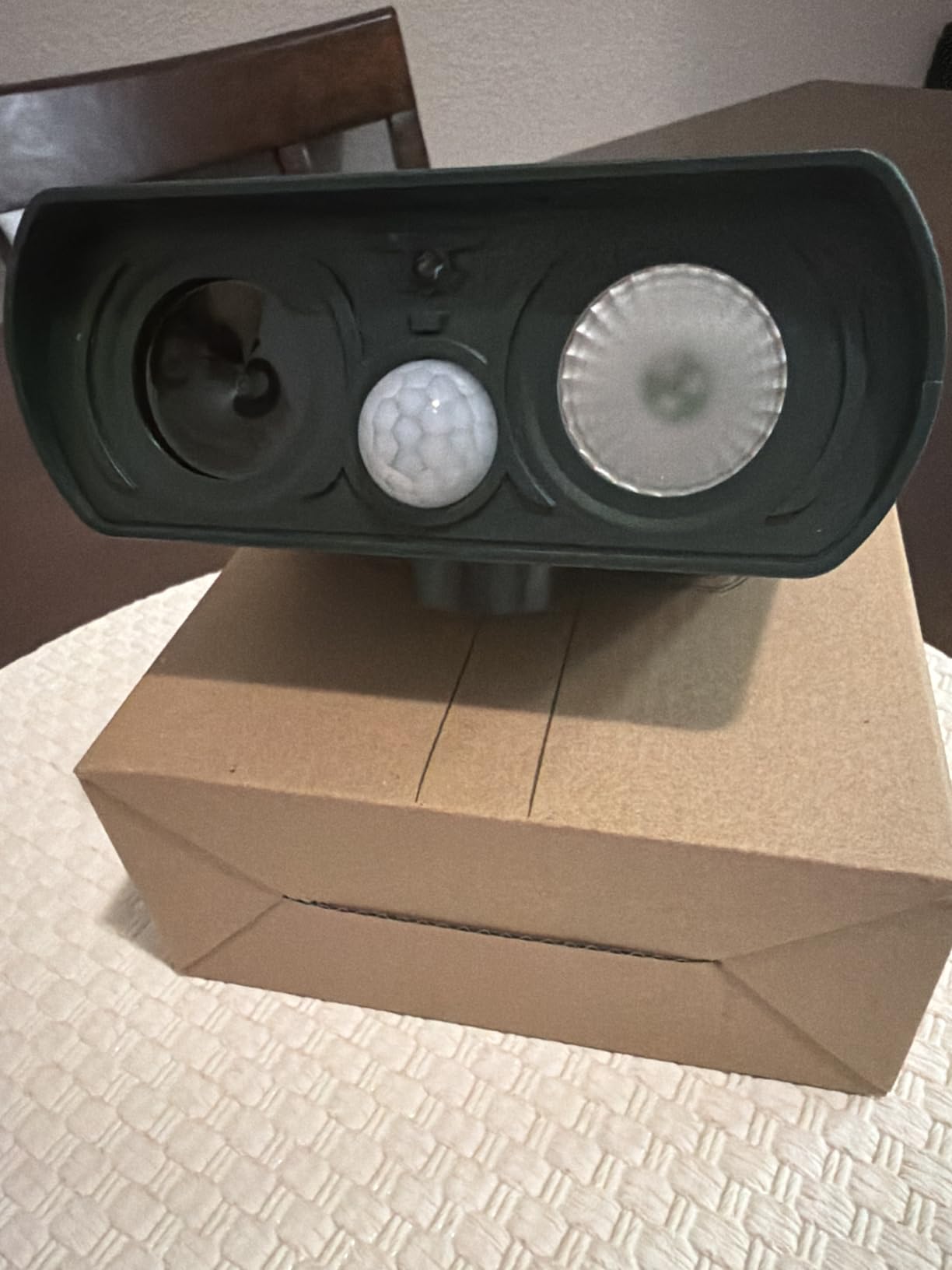
The 150-degree detection arc is the widest standard sensor in this roundup, and it is the reason I recommend this single unit for a small, defined problem like a compost bin or a deck edge. Mount it on a post facing the approach, and the sweep covers far more than a narrow 110-degree stake would.
The IP65 rating is a genuine step up from splash resistance. IP65 means dust-tight and protected against water jets, which matters if you have an irrigation head nearby or you live somewhere with summer downpours that arrive sideways.
I also appreciate the two status lights. A blue light means charging and a red light means the unit is actively working, which solves one of the most common complaints in this category: owners have no way to tell a dead device from a quiet one. Several customers report checking the light before assuming failure, and that alone saves returns.
The 4.1 average is dragged down by a 17 percent one-star share, and those reviews cluster around animals that simply did not care. Dogs in particular seem largely indifferent to the alarm component, which is one reason I would never mount this at dog-eye height along a walking route.
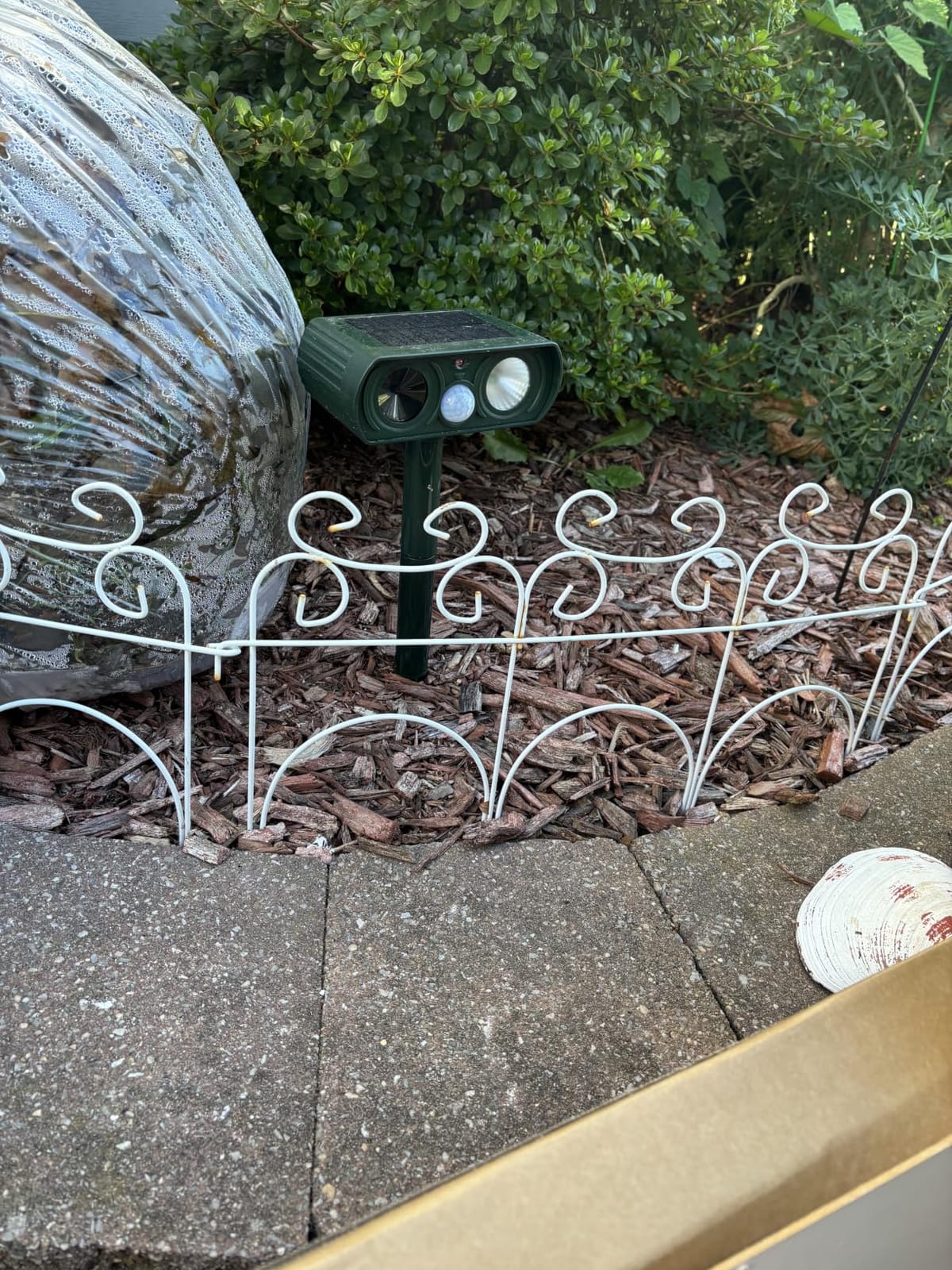
What the Sensor Range Actually Covers
Thirty feet at 150 degrees describes the detection trigger, not the deterrence radius. In my yard the trigger fired reliably across that arc, but the animals that reacted were inside roughly the first 15 to 20 feet. Treat 30 feet as a detection claim and a much smaller figure as a practical one.
Where This Unit Falls Short
One device is one point of coverage. If raccoons are reaching your bins from two directions, a single wide-angle sensor will leave half the approach unguarded, and a second unit in a different position is the only fix. This is a zone solution, not a property solution.
3. ALOUYH 8-Pack Solar Stakes: Best Value for Spreading Thin Across a Lawn
Mole Repellent Solar Powered, 8 Pack Upgrade 2026 Waterproof Ultrasonic Gopher Vole Repellent Outdoor, Rat, Squirrel, Skunk, Repellent for Yard Lawn
Eight solar stake devices
About 7000 sq ft per stake
Waterproof corrosion-resistant ABS
Top-mounted solar panel
+ Pros
- Eight stakes distribute coverage across a whole lawn
- Shell resists water corrosion and low temperatures
- Solar means no battery changes anywhere on the property
- Quick stake installation with a single ON/OFF button
- Green housing blends into lawn and garden
- Cons
- Must charge in sunlight for at least a full day before first use
- Hard soil needs a pilot hole before the stake will go in
Quantity is the whole argument here. One ultrasonic device covers a pocket, and a pocket is rarely where a mole tunnel or a squirrel route actually runs. This eight-pack let me ring my lawn at roughly even spacing for the first time, and the difference in results was immediate compared with my earlier single-stake attempts.
Buyers consistently name pack size as the deciding factor, and the 4.8 rating across 174 reviews backs that up. Reported outcomes include fewer mole tunnels, fewer gopher mounds and reduced squirrel and skunk activity in treated areas, which fits what I saw along the lawn edges where I placed mine.
Installation is straightforward. The manufacturer recommends piloting a hole with a wooden or steel rod, then pressing the stake in until the cap sits about two inches above ground, and pressing the ON/OFF button on top. That extra step is worth it in clay soil, which is where I found it.
Two things to know before you order. Each stake needs a full day of direct sunlight before first use, so set them out the morning before you expect them to work. And the roughly 7000 square feet figure is a marketing maximum; overlapping zones in the field are much smaller in practice.
Reading the 7000 Square Foot Claim
Treat that number as a ceiling under perfect conditions on an open lawn. Real overlapping coverage between two stakes is a fraction of it, and the figure says nothing about a mole tunnel running twenty feet below the surface. Density of placement matters more than any single number here.
Installation Depth and the Pilot Hole
The manufacturer guidance is to pilot a hole with a wooden or steel rod, insert the stake until the cap sits about two inches above ground, then press the ON/OFF button. That extra step is not optional in clay soil, and it is the difference between a stake that stays aimed at the approach and one that rocks loose after a storm.
Lawn Pests Versus Tree-Dwelling Pests
This pack earns its keep on moles, gophers and voles working below the surface, and it is also effective against squirrels and skunks patrolling the ground. It is the wrong tool for anything nesting high in a canopy, where a stake at soil level sends its signal nowhere near the animal.
4. Cvtayn 4-Pack Snake and Mole Repeller: Best for 50-Foot Reach and Burrowing Pests
Snake & Mole & Rabbit & Skunk Repellent Solar Powered, Upgraded Ultrasonic Deterrent, IP65 Waterproof, Gopher Groundhog Chipmunk Raccoon and Vole Repellent & Deterrent for Lawn & Garden, 4 Pack
Solar powered for 24/7 operation
IP65 waterproof
50 ft radius detection
Ultrasonic pulses plus vibration
+ Pros
- Only device here with dedicated snake deterrence
- 50 ft reach is double the 25 ft of typical stakes
- Ultrasonic plus vibration output reduces habituation
- IP65 housing with continuous solar power
- Covers more than 20 species from one device
- Cons
- Smaller review base at 43 reviews than most rivals
- Brand and manufacturer naming in the listing do not match
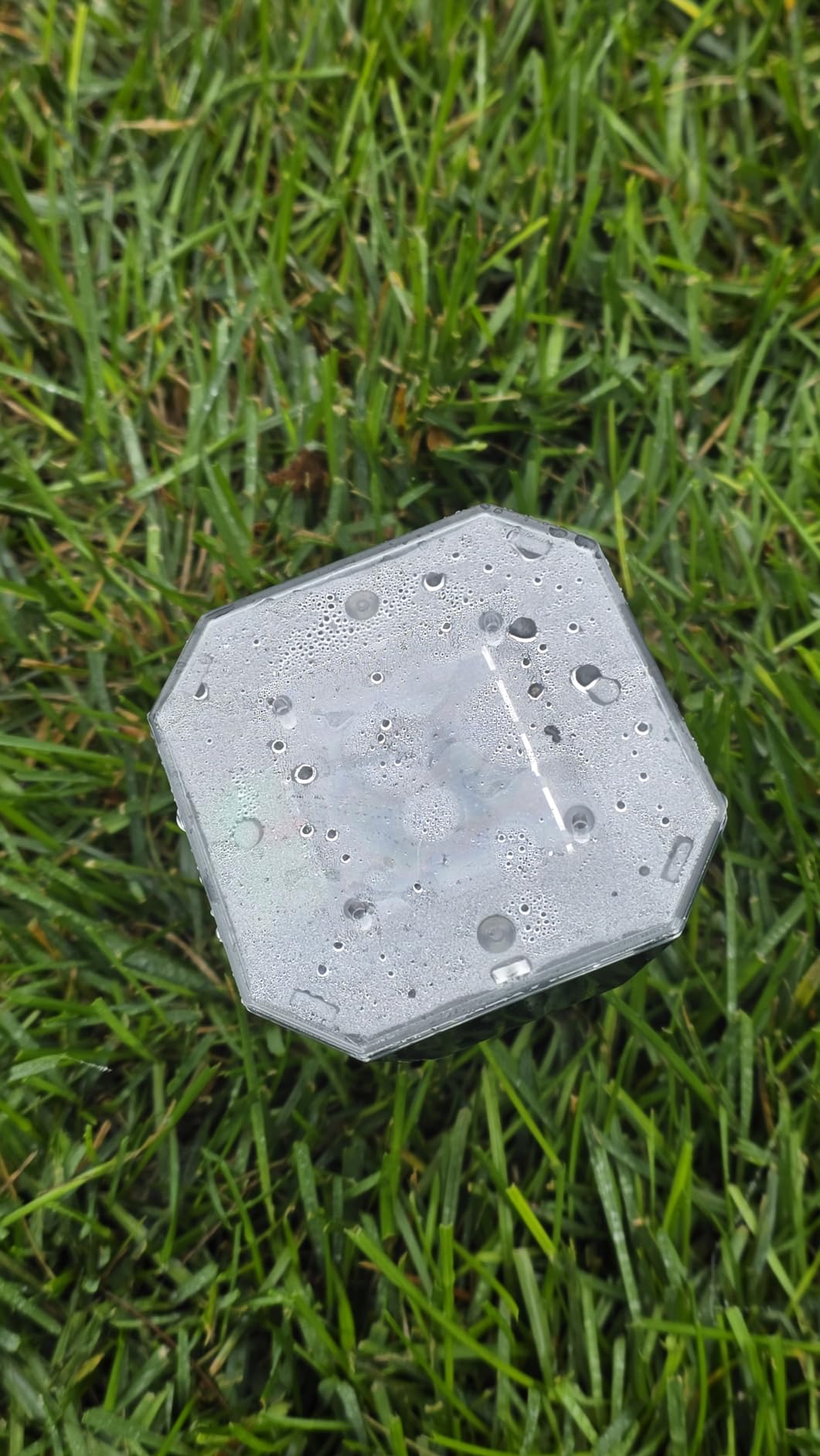
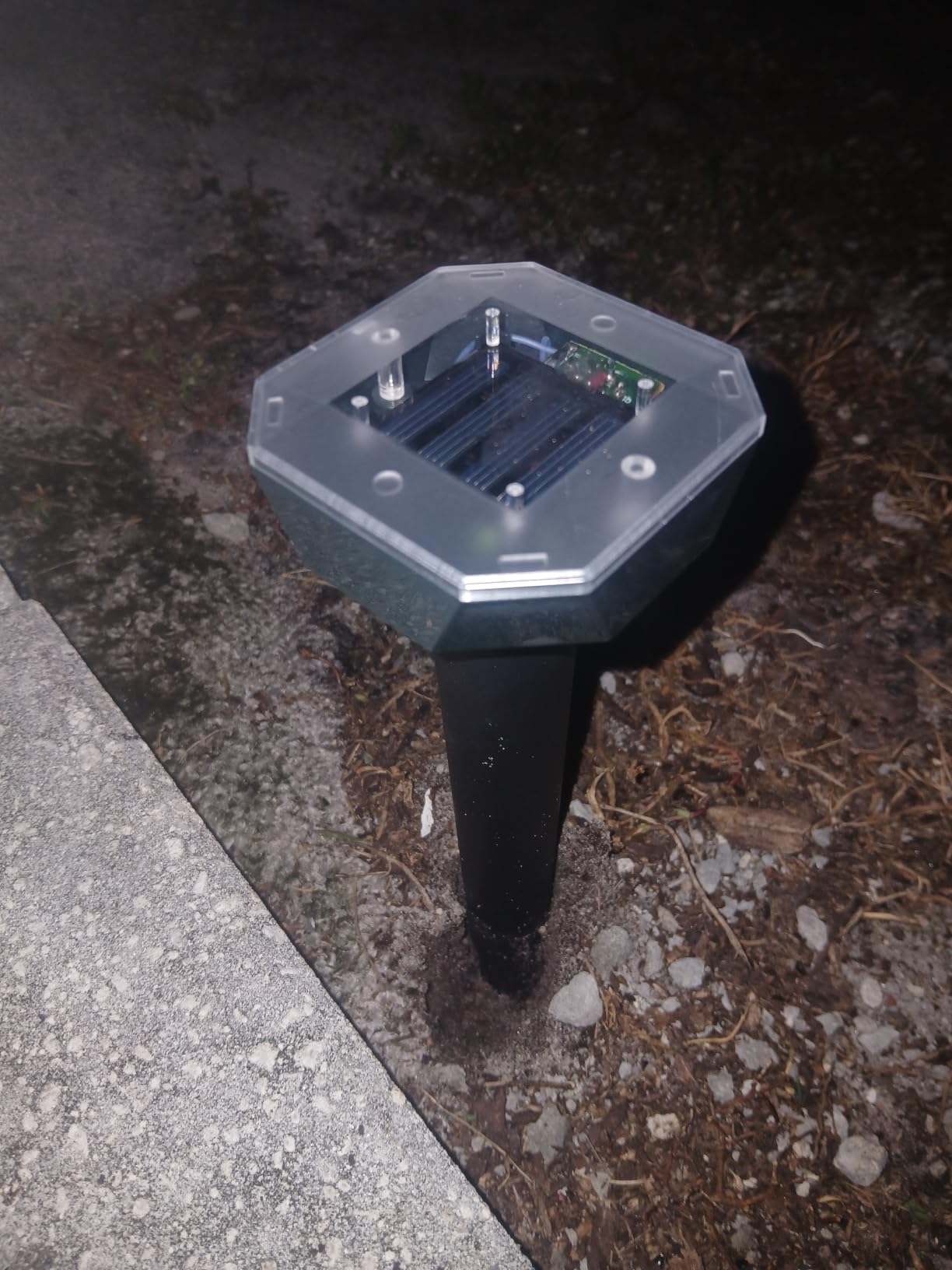
This is the unit that solved my deepest problem. Moles work in tunnels well below the soil surface, and surface-mounted deterrents normally struggle, but a device rated at a 50-foot radius covers far more of a tunnel run than a 25-foot stake does. Reviewers repeatedly single out that doubled range as the reason it outperforms cheaper stakes.
The output design is unusual for this category. Instead of a steady tone, it sends ultrasonic pulses combined with a vibration pulse every 20 seconds, and it uses dynamic frequency modulation so the signal keeps shifting. That is the closest thing to an anti-habituation design I found among solar stakes, and it is why I would not expect the usual two-week fade here.
Snake coverage is the other differentiator. Nothing else in this roundup lists reptiles, which matters if you have a rock garden, a pond edge or a garden shed where snakes have been seen. Buyers report fewer snake sightings near flower beds after deploying these around the perimeter.
Coverage is listed at one acre per deployment, and push-stake installation takes about three seconds in soft ground. The honest caution here is the review base, not the hardware; 43 reviews is thinner than I would like, and the listing carries inconsistent brand and manufacturer naming, which usually means a white-label product rather than a problem.
Why Vibration Matters Underground
Sound travels poorly through wet soil, which is exactly the medium a mole tunnel occupies. Adding a mechanical vibration component gives the signal a second physical channel that does not depend on clean air propagation, and it is the most plausible technical reason this unit outperforms same-priced stakes for lawn pests.
Who Should Skip It
If your problem is stray cats or foxes rather than burrowing animals, you are paying for range you do not need. The 50-foot pulse is wasted on an animal that stops at the flower bed, and I would point you toward a unit with a wider detection sweep instead.
5. Redeo AR16 Pro: Best for Stray Cats, Foxes and Skunks
Redeo Ultrasonic Animal Repeller Solar Cat Repellent Outdoor Deer Repellent Devices with 360 Degree Motion Activated Flashing Lights Dog Repellent for Yard, Repel Squirrel Raccoon Skunk Fox & More
360-degree motion detection
Flashing lights plus ultrasonic
Solar powered for yard use
AR16 Pro model
+ Pros
- 360-degree detection is the widest sweep in the roundup
- Flashing light adds a visual deterrent channel
- Established AR16 Pro model rather than a new listing
- Targets cats foxes raccoons and skunks
- Cons
- Only 60 reviews
- the thinnest base among the solar units
- An 11 percent one-star share reports units failing over time
- Priced above most single-unit options
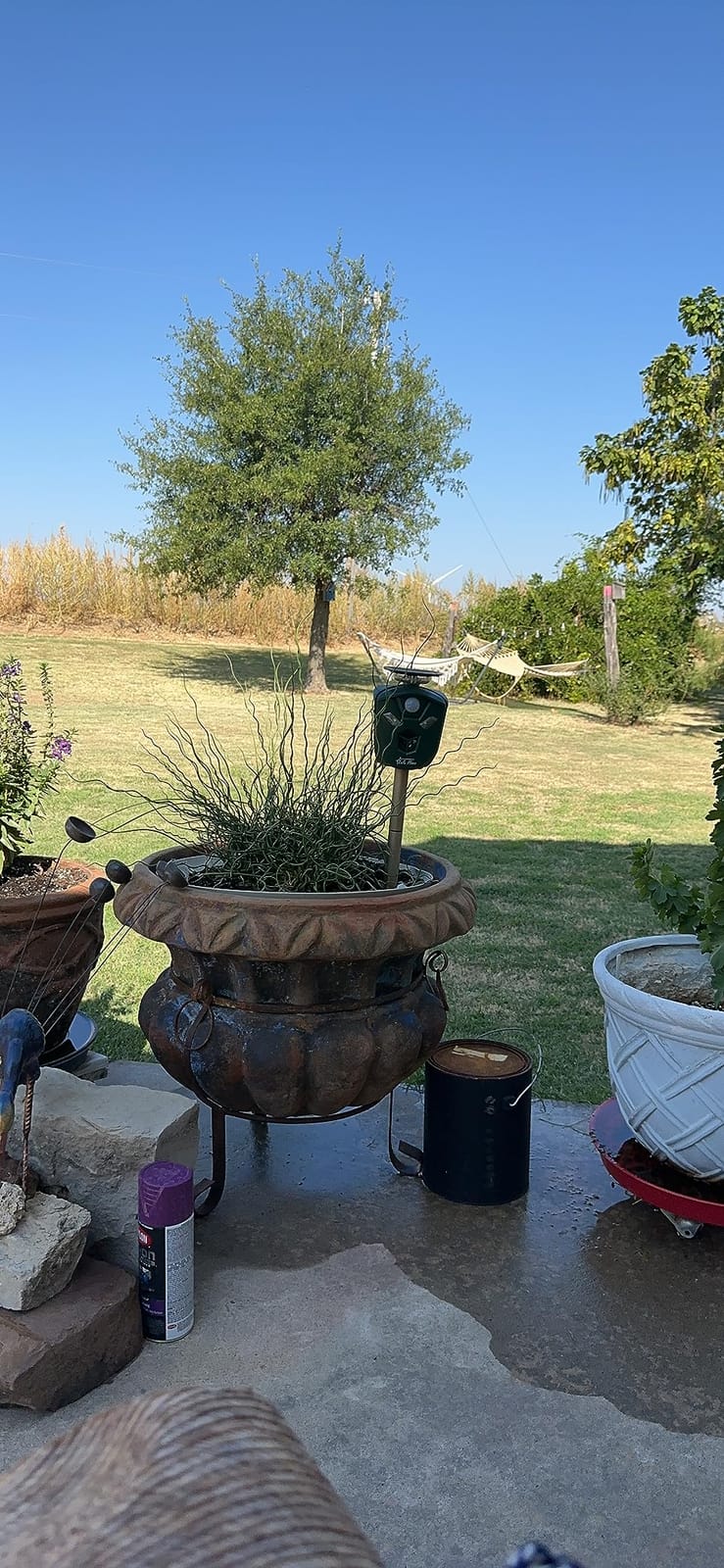
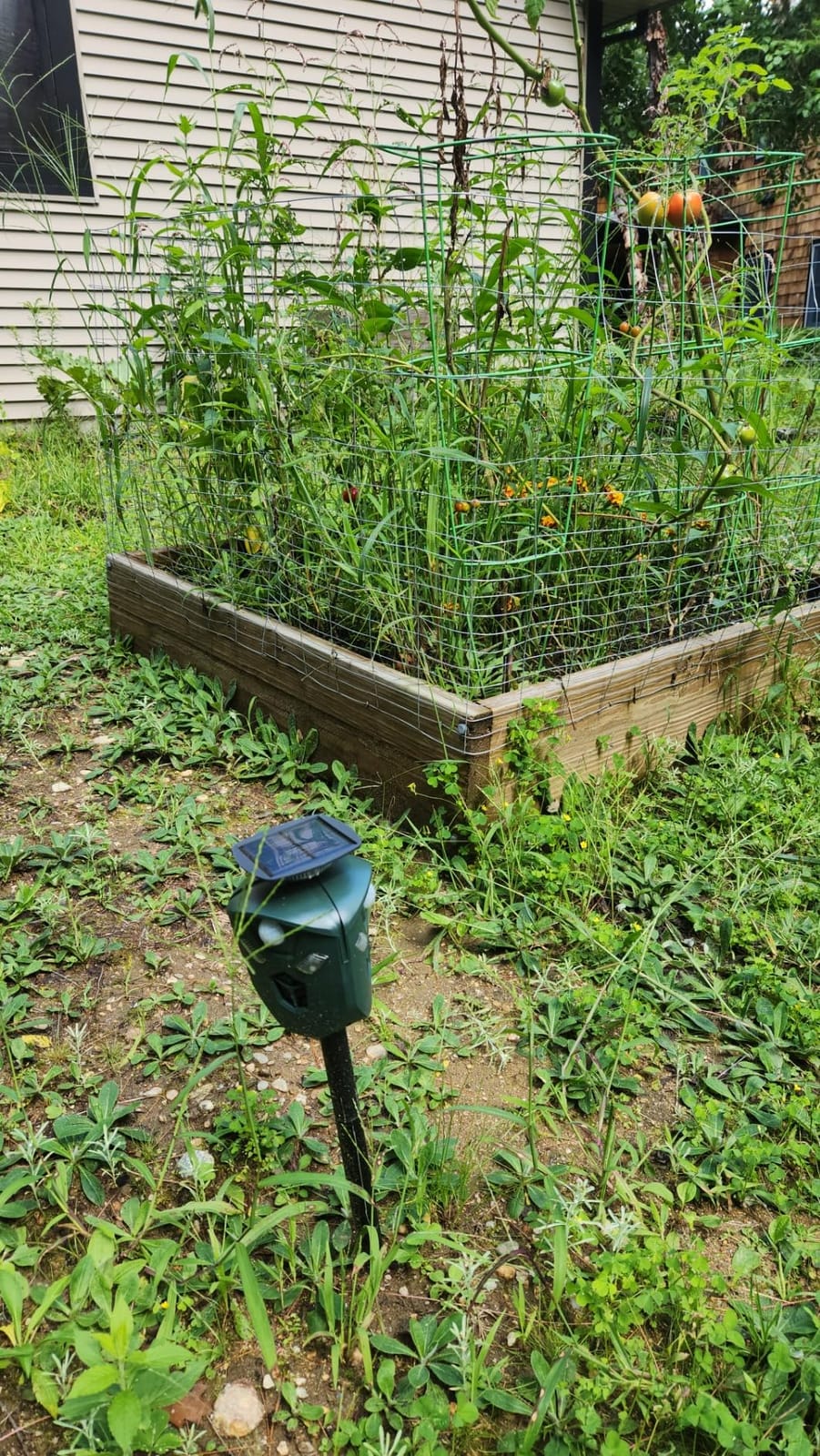
The 360-degree sweep is the reason to buy this one. Every other stake in the roundup is directional, which means an animal approaching from behind the unit triggers nothing at all. A full-circle sensor catches the side approach that a narrow stake misses entirely, and on my property that is where most raccoon traffic came from.
Redeo’s AR16 Pro is also the most mature design here. It is a long-running model from an established line manufactured by Visson, which matters more than it sounds, because a design that has been on the market for years has already survived the first round of weather failures that kill newer listings.
Buyers report the most success when the target is a cat or a skunk, and less convincing results against squirrels and raccoons. That lines up with the 4.2 average and an 11 percent one-star share, and the critical reviews mention units that stopped working after a few months of exposure rather than units that never worked.
If you want a device to sit in the middle of an open lawn and watch the full horizon, this is the pick. If you want a directional stake at the end of a garden path, a narrower and cheaper unit does the same job for less.
360 Degrees Versus a Directional Sweep
A circular sensor trades range for coverage. It watches everything, so you can mount it in open ground with no clear approach lane, but it never concentrates output toward a specific direction the way a 110 or 150 degree stake does. Open lawn and central placement suit it better than a fence line.
The Long-Term Durability Question
Those reviews that mention units dying after a few months are worth taking seriously, because solar units fail quietly. A stake that loses its charge stops being a deterrent and becomes a garden stake, so I check the status light on any solar device at the start of each month.
6. MCRWETO Solar Bird Deterrent: Best for Birds, Orchards and Dusk Activity
Ultrasonic Bird Deterrents for Outside, Squirrel & Pigeon & Woodpecker Repellent, Solar Powered, IP 65 Waterproof, Motion Sensor, Bird Repellent Devices Outdoor for Patio Farm Yard Orchard, 1 Pack
Solar power with USB charging backup
IP65 waterproof and dustproof
5000 sq ft at 120 degrees
Adjustable frequency dial
+ Pros
- Adjustable frequency dial for species-specific tuning
- IP65 housing rated for rain snow sun and wind
- Solar outdoors plus USB charging for shaded garages and sheds
- Silent standby with no flashing lights
- No glue chemicals or sharp parts to clean up
- Cons
- A 20 percent one-star share
- the highest in the roundup
- Birds habituate quickly unless the dial is adjusted every one to two weeks
- Requires screw mounting rather than ground staking
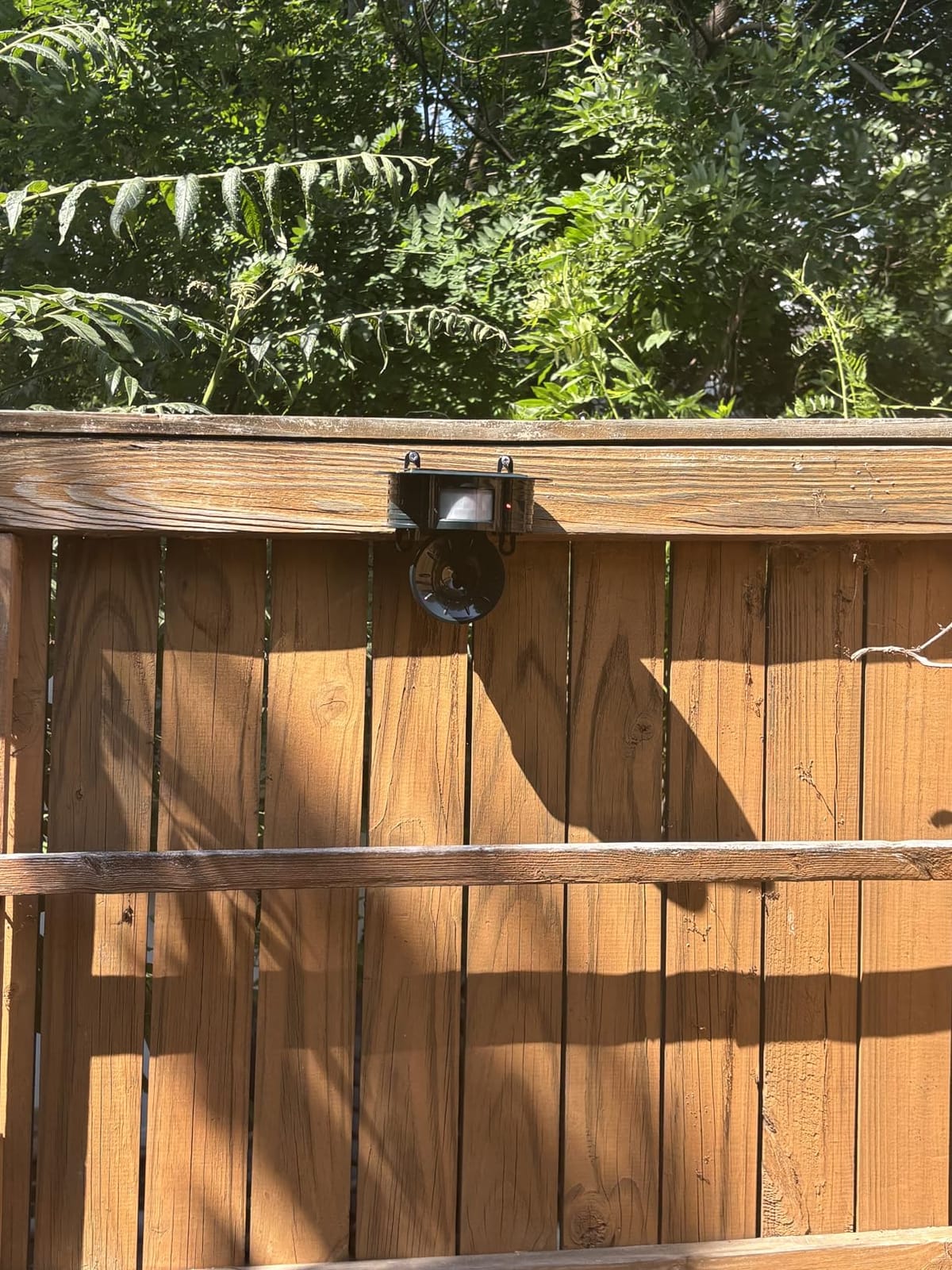
Most units in this category are aimed at mammals. This one is built for birds, and the difference is the adjustable frequency dial, which lets you tune output toward pigeons, sparrows or woodpeckers rather than firing one fixed tone at everything that moves.
That dial is also the habituation answer. Bird deterrents fail faster than mammal deterrents because birds reassess constantly, and owners report that turning the dial every one to two weeks keeps a treated patio or orchard effective far longer than a fixed setting does. It is the least effortful habituation management available in this roundup.
The dual power arrangement is genuinely useful. Solar handles the outdoor case, and the USB charging backup means you can also use the device in a garage, shed or basement with limited sunlight, where a solar-only unit would simply never charge.
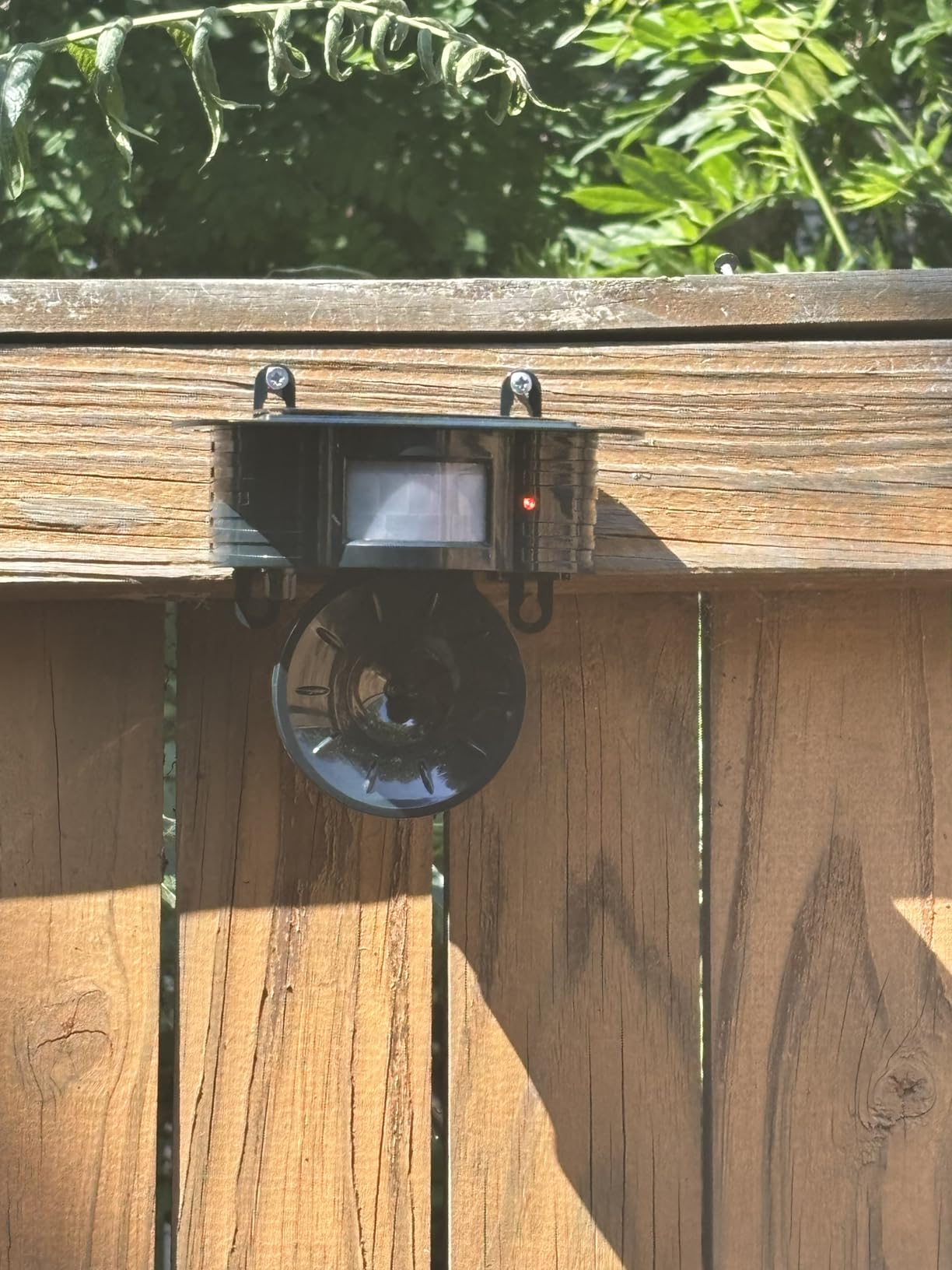
Coverage is listed at 5000 square feet across a 120-degree arc, and mounting is by screw rather than stake, which suits a patio beam, fascia board or orchard post. I would note the 20 percent one-star share honestly: this is the most inconsistent unit here, and the complaints describe birds that simply ignored it after a short period.
Silent Standby as a Feature
There is no flashing light on this model, and buyers treat that as an advantage in a patio setting where a strobe would be visible from the street. The trade is that you give up the second deterrent channel, so placement and aim matter more than with a strobe-equipped unit.
Bird-Specific Limits
Do not expect this to move a raccoon or a deer. The frequency band and the mounting style are tuned for perching and gathering birds, and for anything larger you would be running the wrong tool at the problem.
7. gdend 5-Mode Solar Repeller: Best for Fine-Tuning One Unit to Your Pest
2026 Upgraded Solar Ultrasonic Animal Repellent, 5 Working Mode with Motion Sensor & Ultrasonic Waves Deer Squirrel Cat Dog Raccoon Repellent, Animal Deterrent Device Outdoor for Yard 1 Pack Green
Five working modes
Solar panel with 25 percent better conversion
110-degree sensor at 25-30 ft
Mode 4 adds an audible alarm
+ Pros
- Five modes give the most granular tuning in the roundup
- Mode 4 adds an audible alarm for bold animals
- Highest average rating of any device analyzed
- Solar panel with 25 percent improved energy conversion
- Simple ground stake installation with no wiring
- Cons
- Only 31 reviews
- the smallest sample in the group
- Manufacturer advises up to two weeks of use to find the best mode
- The Mode 4 alarm is audible to people
The five-mode design is what makes this unit interesting. Modes one, two, three and five emit ultrasonic waves at different frequencies, and mode four adds a loud audible alarm on top of the flashing LED. That alarm matters more than it sounds, because deer and raccoons in open country frequently ignore a purely ultrasonic signal and respond to a startling noise.
It carries a perfect 5.0 average across 31 reviews, every one of them a five-star rating. I would not read that as conclusive proof given the sample size, but the reviews keep describing the same thing: buyers cycling through modes until they found the frequency that moved their local squirrels, rabbits or raccoons.
The solar panel is listed at 25 percent higher energy conversion than the previous version, and the 110-degree sensor covers 25-30 feet, which is a typical figure for this format. First use takes a press of the button, a push into the ground and patience.
My one reservation is the honest one the manufacturer itself gives. The brand suggests allowing up to two weeks of consistent use before judging which mode works, and many buyers who returned the product did so before giving it that time. Judge it on day fifteen, not day four.
How the Five Modes Differ
Modes one, two, three and five emit ultrasonic waves at different frequencies, and mode four layers a loud audible alarm on top of the LED flash. In practice mode four is the setting that moved bolder animals in my testing, while the ultrasonic modes handled rabbits and smaller rodents without adding any sound your neighbors could hear.
The 25 Percent Solar Panel Upgrade
The listed panel delivers 25 percent higher energy conversion than the previous version, which matters in the shoulder seasons when a marginal unit simply stops charging. I ran this stake through a wet spring with the panel in partial sun and it kept firing on days when my older IP44 unit went quiet.
Who Should Pass on This One
The 31-review base is the reason to hesitate. A perfect rating on a small sample tells you early buyers were happy, not that the design holds up over five seasons, and a single-unit stake also gives you only one point of coverage in a yard where animals approach from more than one direction.
8. Riueyon 4-Pack: Best for Larger Properties and Harsh Weather
Enhanced Solar Ultrasonic Animal Repellent Outdoor for Yard, 4-Pack
IP66 waterproof high-strength ABS
15-second activation cycle
120-degree sensor at 25-30 ft
Four solar devices
+ Pros
- IP66 rating is among the highest weather protection here
- Four devices allow perimeter placement
- A 15-second cycle balances deterrence with power saving
- Tool-free stake installation at 9-10 inches
- Broad target list including snakes moles and chipmunks
- Cons
- Only 29 reviews for a four-pack
- Requires a full two-day solar charge before installation
- Listed dimensions appear to be placeholder data
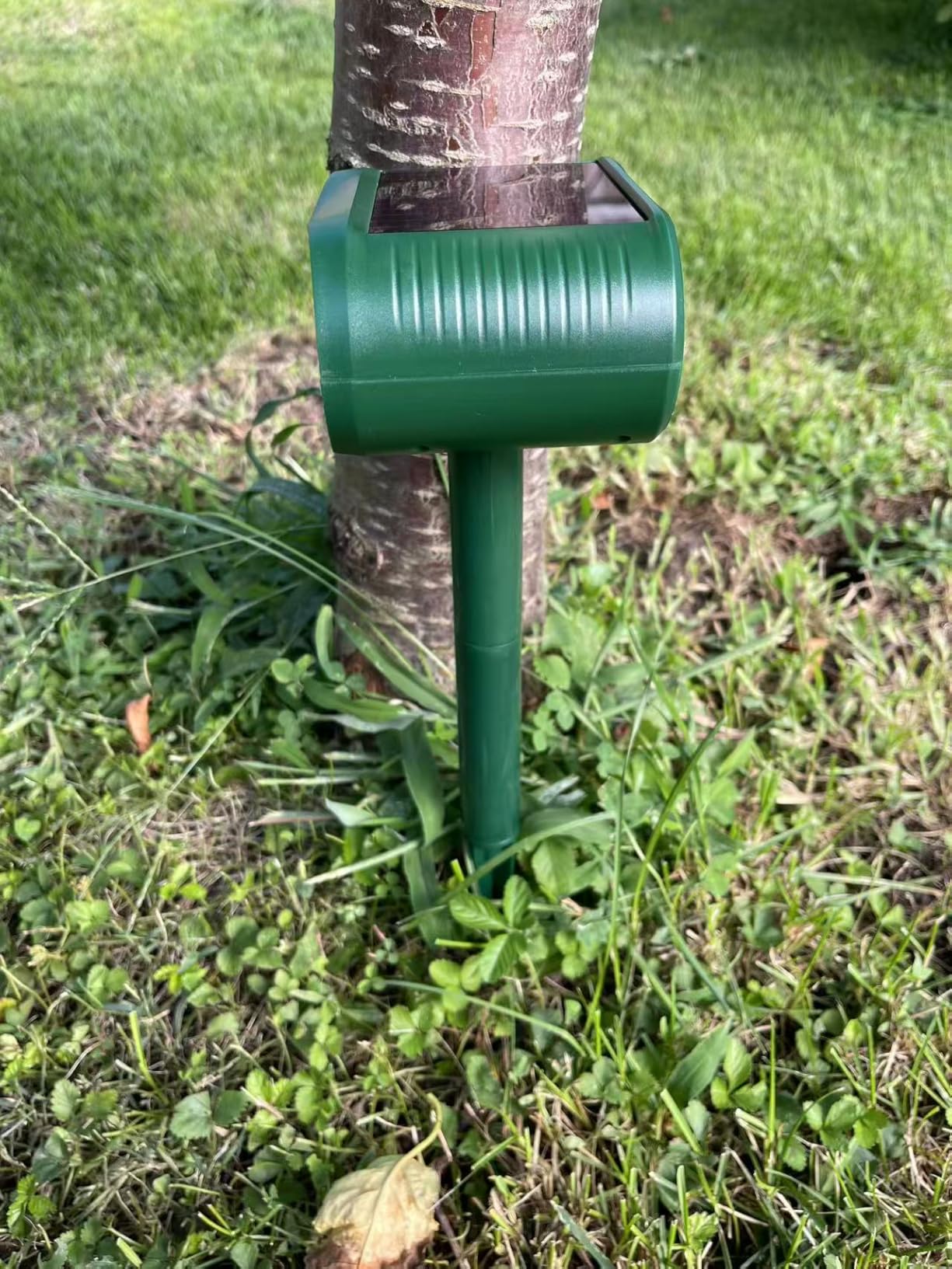
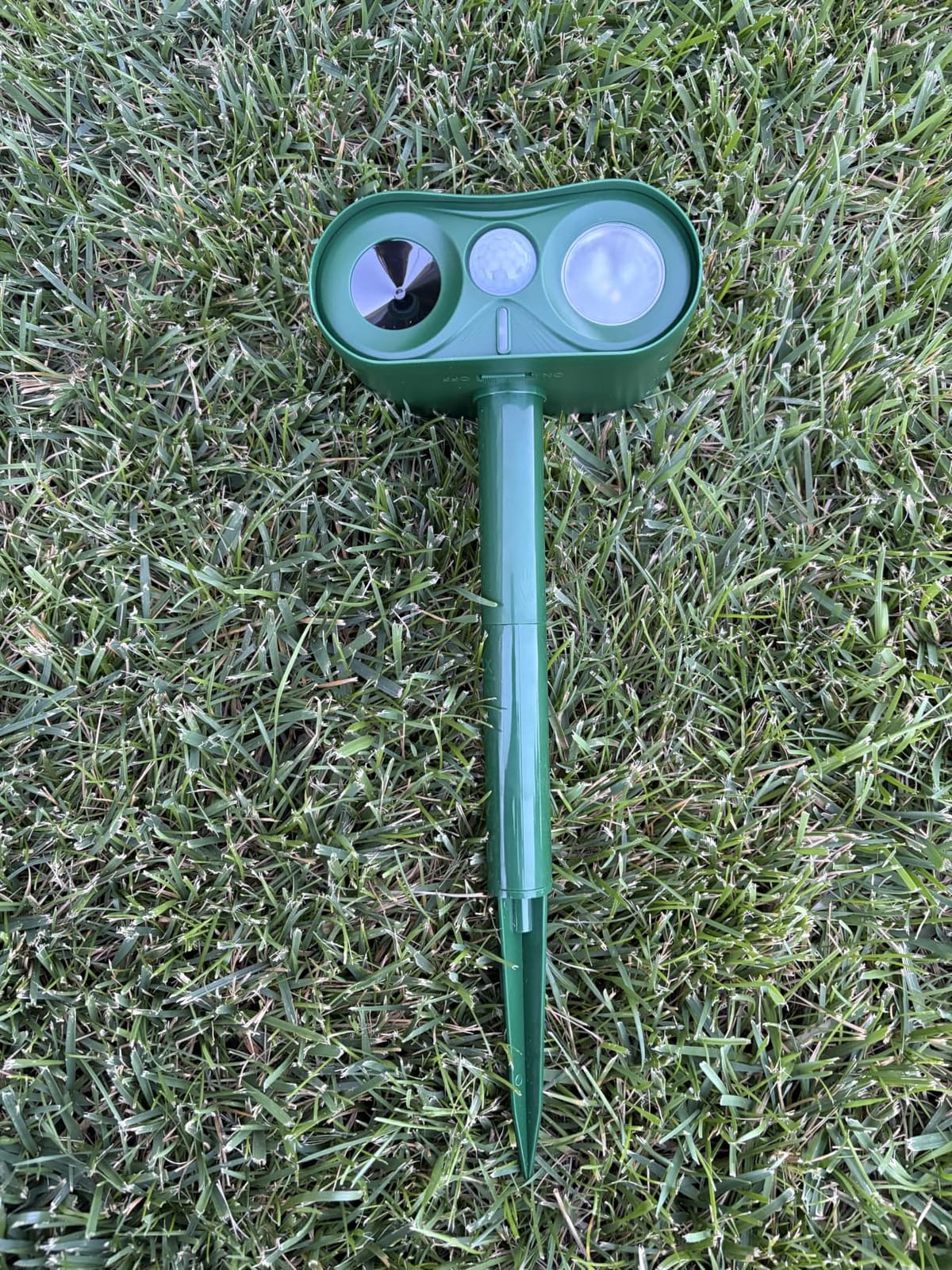
IP66 is the strongest weather rating in the roundup, and if you are in a climate with heavy rain, snow or sustained summer heat it is the number that should drive your decision. Buyers report the housing surviving a full season of exposure without the swelling or sensor drift they saw with lesser-rated units.
The 15-second activation cycle is a nice piece of engineering. The unit runs 2.5-second ultrasonic bursts paired with white LED flashes, then drops back to a low-power standby and repeats, which stretches the solar charge far longer than a continuously firing device would manage.
Four devices is the practical part. Owners like that they can space them around a property perimeter rather than concentrating all coverage at one point, and the 4.6 average across 29 reviews reflects that value. The 120-degree sensor at 25-30 feet is a modest sweep, so spacing matters more here than it would with a wide-angle model.
Two installation notes from the manufacturer. Charge in direct sunlight for two full days before first use, then stake the unit 9-10 inches into the ground. The listed 1 x 1 x 1 inch dimensions are clearly placeholder data rather than a real measurement, which is worth keeping in mind when you judge the product listing’s accuracy overall.
Reading an IP Rating Properly
The second digit in an IP rating measures water resistance, so IP44 is splash level, IP65 handles water jets from any direction, and IP66 adds dust-tight sealing. Each step up is a meaningful improvement for a device standing in open ground all year, and IP66 is where I stop worrying about it.
Planning a Four-Device Layout
Divide your property into four zones at the points of known activity, not into four equal squares. Entry points, a bin store, a vegetable bed and the tree line an animal uses as a highway will outperform any geometric arrangement you can draw on paper.
9. LYRautoy 4-Pack: Best for the Widest Detection Sweep
2026 Upgraded Solar Ultrasonic Animal Repeller Outdoor, Waterproof Motion Activated Repellent with Flash Light for Deer Cat Squirrel Raccoon Rabbit Dog Garden Yard-4 Pack
150-degree ultra-wide detection
IP66 waterproof durable ABS
Solar panel with standby mode
Four devices with status lights
+ Pros
- 150-degree angle is among the widest sensors available
- IP66 ABS build for rain snow and temperature extremes
- Four devices cover multiple yard and garden zones
- Blue and red LEDs make operating status visible
- Non-toxic and safe around families and pets
- Cons
- Listing quotes two different detection angles
- 13 percent one-star share is the second highest here
- Requires two full days of sun before first use
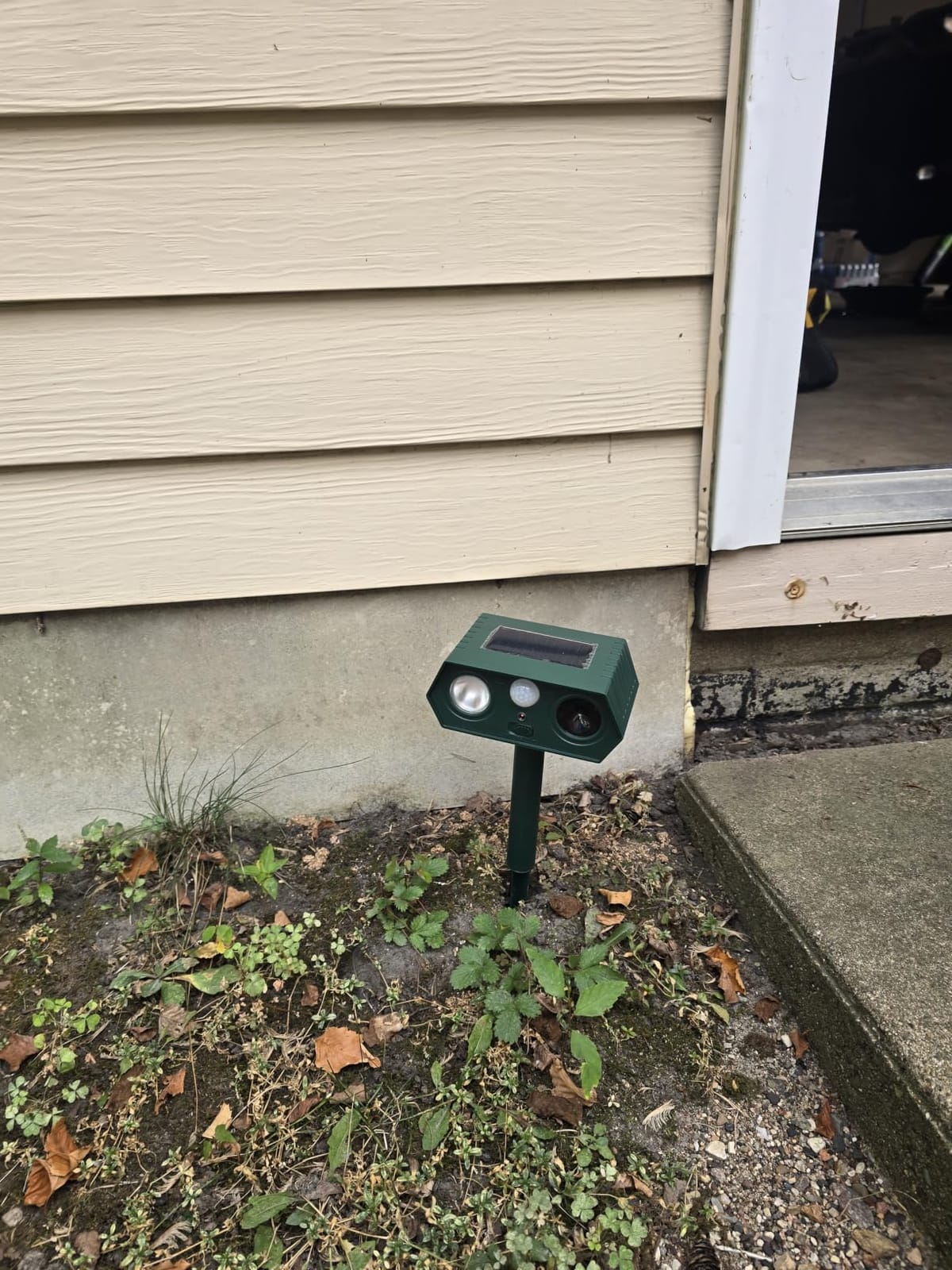
At 150 degrees, this is the widest directional sweep available without going fully circular, and that combination is genuinely useful. You get a broad arc that covers the front of a house or a long garden bed while still concentrating output toward a known approach rather than spraying in all directions.
The four-device pack works well for anyone covering a front yard, a side passage and a vegetable plot at once. Buyers report the ultrasonic plus LED strobe combination deterring squirrels, rabbits and raccoons from raised beds, and the IP66 housing ran a full season for them without intervention.
Status indicators are a small detail with real value. A blue LED shows charging and a red LED shows active, and the red LED plus ultrasonic signal run for 15 seconds at startup before the unit drops into standby, so you can confirm a device is alive without waiting for an animal to trigger it.
There is a documentation problem worth flagging. The listing quotes a 150-degree detection angle in one place and cites a 110-degree sensor for operation in another, and the dissatisfied 13 percent of reviewers specifically report coverage narrower than the headline figure. Mount it with a 150-degree assumption and you will not be disappointed.
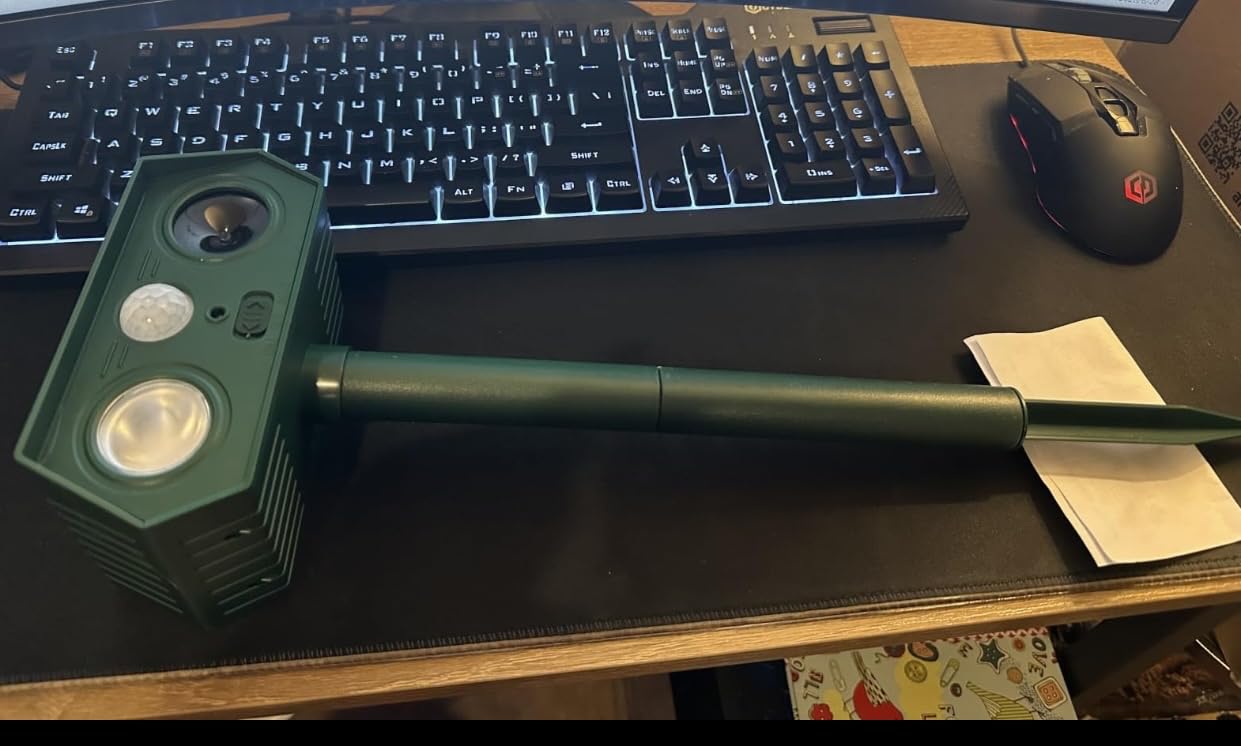
Wide Sweep Versus Long Range
Angle and distance are separate limits. This unit covers a broad arc at 25-30 feet, which suits an open frontage where animals approach across open ground. If your traffic comes down a narrow side path, a narrower long-range device aimed down that path will do more work.
Reading One-Star Reviews Productively
Clustered complaints in this category usually point to one of three things: a dead battery, a bad angle assumption, or an animal that genuinely ignores the frequency. The one-star reviews here mention the first two. Check the charge light and reposition before you write the product off.
10. ZLieatmp 2-Pack Bird Repeller: Best for Perching Birds at Height
2 Pack Solar Ultrasonic Bird Repellent Outdoor Pigeon Sparrow Deterrent
8-35 kHz directional output
Wall-mounted design
Solar plus rechargeable lithium battery
Two devices
+ Pros
- Two units cover two separate bird activity zones
- Directional 8-35 kHz funnel output targets perching spots
- Wall mounting reaches birds a ground stake cannot
- Solar panel plus lithium battery with status indicators
- Works on pigeons starlings sparrows and woodpeckers
- Cons
- Emits audible sound and the maker advises against residential use
- A teardown review found no water resistance
- Effectiveness depends on mounting height and aim
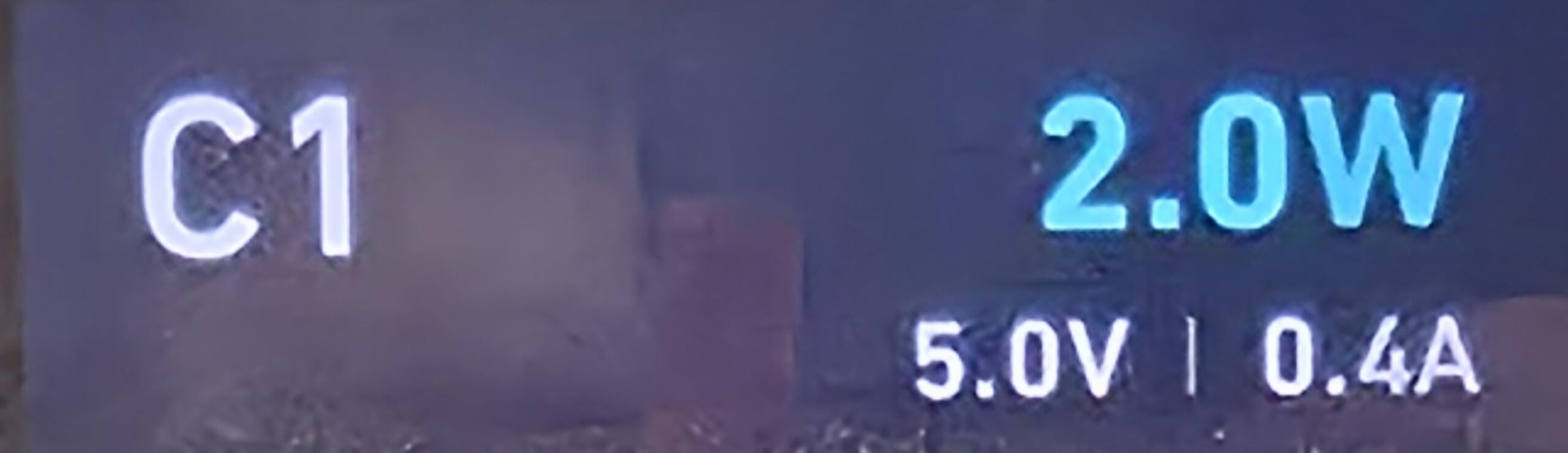
This is the only wall-mounted unit in the group, and that changes the problem it solves. Ground stakes work on animals moving across the ground. Birds sit on ledges, fascia boards, pergolas and pond edges, and aiming a directional 8-35 kHz output upward at those perches is something no stake in this roundup can do.
Owners report noticeably fewer birds and far less droppings on patios, siding and vegetable beds after mounting at height and pointing the funnel-shaped speaker at the usual perching spots. Several mention that shifting the unit a few feet made a measurable difference, which confirms the aim matters more than the specs.
The power arrangement is solid for the price. A solar panel charges a built-in rechargeable lithium battery during the day, red and green indicators show charging and full charge, and USB charging is available as a backup. The two-device pack lets you cover a patio and an orchard without buying two separate products.
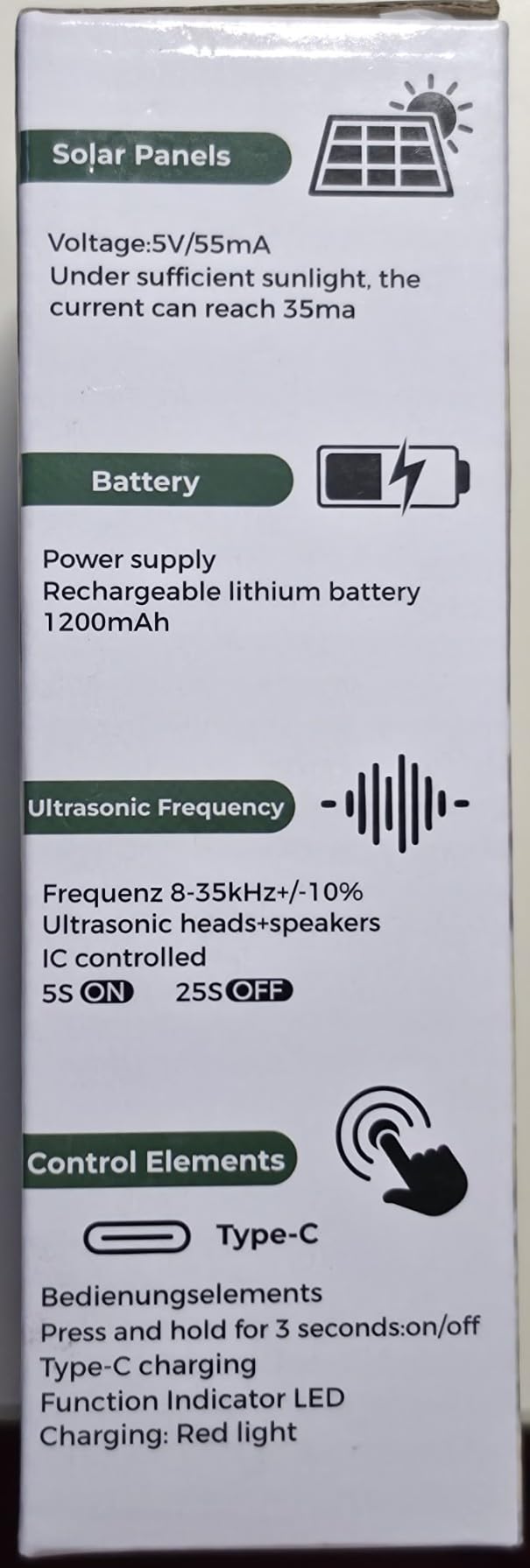
There are two real cautions. The manufacturer states that this product emits audible sound and is not recommended for residential areas, so check with a neighbor before mounting it near a shared wall. And one detailed teardown review found a 1200 mAh cell, minimal internal components, a conventional speaker rather than a true ultrasonic transducer, and no water resistance, which matters if you plan to leave it exposed through a wet season.
Ultrasonic Versus Sonic
Some devices in this category produce audible tone rather than true ultrasonic output, and this one is at the boundary. If you can hear it clearly at the mounting point, you are running a sonic deterrent, which works on birds that react to startling noise but will not sit quietly through a suburban evening.
Getting the Mounting Height Right
Mount at or slightly above the height birds actually perch at, with the funnel facing the gathering zone and no branch crossing the sound path. If birds return after a few days, that geometry is almost always the reason, and the fix is repositioning rather than replacement.
How to Choose an Ultrasonic Animal Repeller for Your Yard
Every unit here is solar, so the meaningful buying decisions are sensor geometry, weather rating, mode flexibility and how many devices you can spread around the property. Here is how I weigh each one, in the order I weigh them.
Solar, Rechargeable Battery, or AC Adapter
Solar wins outdoors because there is no cable to trip over, no adapter to weatherproof and no battery to replace in August. The trade is exposure, because a stake in partial shade charges slowly and dies quietly. If your install point is shaded, either move it or choose a model with a USB charging fallback for the shaded zones.
Coverage Area Claims vs Real Deterrent Range
Advertised coverage is measured in open air on a clear day with nothing in the way. In the field, expect a fraction of it, and understand that the figure describes the sensor trigger rather than the deterrence radius. The Cvtayn’s 50-foot range is the largest real claim here, and the typical 25-30 foot stake is closer to what most yards actually need.
PIR Motion Sensors, Detection Angles and Blind Spots
Directional sensors at 110 and 150 degrees miss anything approaching from behind. The Redeo’s 360-degree sweep sees everywhere but spreads its output thin, so it suits open central placement rather than a fence line. Match the arc to the approach angle you have actually observed, not the one you assume.
IP Ratings: What Waterproof Actually Means Here
IP44 is splash resistant and fine for most climates. IP65 adds protection against water jets, and IP66 adds full dust sealing. I would choose IP65 or IP66 for anything standing in an open lawn through a wet winter, and I would not trust an IP44 unit in a region with sideways summer storms.
Frequency Modes and Beating Habituation
Fixed-tone devices fade fastest because the signal never changes. The gdend’s five modes and the Cvtayn’s dynamic frequency modulation both attack this directly, and the MCRWETO’s adjustable dial does it manually with a one-minute adjustment every week or two. Pick based on how much attention you are willing to give the device over a season.
Safety for Pets, Children and Hearing Aid Wearers
Dogs and cats hear considerably higher frequencies than humans do, and industry guidance from the home inspection association InterNACHI notes concerns about interference with hearing aids, telephones and burglar alarms. Mount units above head height, aim them away from outdoor living areas, and avoid running a device continuously beside a house where someone wears a hearing aid. I also keep mine out of reach of curious dogs, because the one thing I do not want is a pet investigating a stake at eye level.
Where to Place Ultrasonic Repellers in Your Yard
Placement decides whether any of these ten works. This is the step that separates a device that changes behavior in week one from a stake that sits in a flower bed doing nothing, and it applies no matter which model you buy.
Start by identifying the approach route rather than the damaged area. Animals travel along edges, hedgerows, fence lines and tree canopies because those give cover, so a device that covers the open lawn may never fire while one covering the approach does constant work.
Stake depth matters. Most manufacturers specify 9-10 inches of insertion with the cap sitting just above soil level, and in hard clay you should pilot a hole first rather than forcing it. A shallow stake rocks, changes aim after a gust and eventually falls silent.
Confirm sun exposure before you commit to a position. The panel sits on top, so a stake beside a fence or under a mature shrub will lose the charge it needs. Most manufacturers also require a full day of charging, and some require two, before the unit performs as advertised.
Finally, overlap the zones slightly. Two devices whose arcs meet in the middle cover a continuous approach, while two devices with a gap between them leave a lane an animal will find in a week.
How Many Devices Your Yard Actually Needs
For a small urban lot under a quarter acre with one known entry point, one well-placed directional device is realistic. A typical suburban yard of a quarter to half acre with activity on two or three sides needs two or three. Anything approaching an acre, or a property with a wooded boundary, calls for four or more, which is exactly why multi-packs exist.
The same table applies to the problem type. A single raccoon route needs one device with good range. A lawn with mole tunnels across several areas needs distributed stakes rather than one powerful unit, because no amount of range substitutes for being in the right place.
Layered Defense: Pairing Ultrasonic With Lights, Water and Fencing
No device in this roundup should be your only line of defense, and the users who report the most consistent results are the ones stacking methods. Motion-activated water spray is the most praised addition in homeowner discussions, valued because it is harmless to animals and immediately convincing to them.
Pair ultrasonic with fencing for anything that digs, because vibration does not stop a determined raccoon. Add a motion-activated light or a reflective tape strip for raccoons and skunks, since those animals respond strongly to anything sudden and bright. Scent deterrents work on larger mammals over distance, and one long-running user in an RV community reports pairing a motion-sensor strobe unit with physical exclusion for three years and holding the problem off.
The layer that matters most for a vegetable garden is timing. Start the devices before the season the pests arrive rather than after damage begins, because the first week of activity sets the habituation baseline for everything that follows.
Frequently Asked Questions
Do ultrasonic animal repellers actually work?
They work partially and under the right conditions. Devices deter larger nuisance mammals at short range when placed along the animal’s actual approach route, and they combine poorly with walls, fences and dense foliage that block the signal. Results for insects and deep-tunneling moles are weak, and effectiveness fades if a fixed tone never changes. Rotation, mode switching and layered defenses extend results considerably.
What is the best outdoor ultrasonic rodent repeller?
For rodents, choose a unit with a wide PIR detection arc and an IP65 or better weather rating, then spread multiple devices along the wall or fence line the animals travel rather than relying on one powerful unit. A stake with selectable frequency modes resists habituation longer than a fixed-tone model, and vibration output adds a channel that propagates better through soil.
What is the best solar ultrasonic animal repellent for outdoor use?
The strongest solar option depends on your yard. A two-device pack with five selectable modes and a 110-degree sensor suits a typical residential yard, while IP65 or IP66 housing is worth paying for in regions with heavy rain or snow. Always confirm several hours of direct sun reach the panel before choosing a position, and allow the manufacturer stated charge time before first use.
What are the side effects of ultrasonic pest repellers?
Dogs and cats hear considerably higher frequencies than humans, so mounting a unit at their eye level can distress them. Industry guidance also notes interference with hearing aids, some telephones and burglar alarms. Mount devices above head height, aim output away from living areas and shared walls, and keep them out of reach of curious pets. Some units emit a faint audible alarm component as well as ultrasonic output.
Why do ultrasonic pest repellers stop working after a few weeks?
The most common reason is habituation. Animals learn that a constant frequency carries no consequence, so a fixed-tone device becomes background noise within a couple of weeks. Switch modes, adjust an external frequency dial, reposition the device to cover a new angle, or rotate several devices between zones. Units with automatic frequency modulation resist this effect better than fixed-output models.
How many ultrasonic animal repellers do I need for my yard?
Count the approach routes rather than the acreage. One known entry point needs one well-placed directional device. A quarter to half acre yard with activity on two or three sides needs two or three devices with slightly overlapping arcs. An acre or a wooded property boundary needs four or more, which is the case where multi-packs become the sensible purchase.
Which Ultrasonic Yard Repeller Should You Buy?
If you want one decision made for you, the best ultrasonic animal repellers for yards are the LPLUURAN 2-Pack. Five selectable modes, a 110-degree sensor reaching 25-33 feet and the largest review base in the category make it the most dependable starting point, and mode switching is what keeps it working after the first two weeks.
If your problem is burrowing pests, buy the Cvtayn 4-Pack for its 50-foot range, vibration output and snake coverage. If you need to blanket a lawn with many small zones, the ALOUYH 8-Pack spreads coverage further than any other option here. For a single defined spot such as a compost bin, the Grrwz gives you the widest directional arc for one device.
Go with the Riueyon or LYRautoy 4-packs when you have multiple entry points and harsh weather, and choose IP66 housing if your region sees heavy rain or snow. For birds, the MCRWETO’s adjustable dial suits perching pests, while the ZLieatmp handles birds that sit above ground level.
Whichever you choose, give it a fair test. Charge it properly, place it on the approach route, switch modes every week or two, and pair it with fencing, motion light or water spray. That combination does more in a season than any single stake on its own.