

Our team has tested VPN routers for home, business, and travel setups for over two years, and one thing stayed consistent the whole time. Finding the best VPN routers that actually deliver on speed, security, and simple setup is harder than most people expect. Most routers claim VPN support on the box, but only a handful push real WireGuard and OpenVPN throughput without tanking your connection.
If you want to protect every device on your network with a single configuration, a VPN-compatible router is the way to go. Phones, smart TVs, gaming consoles, and IoT devices all get encrypted automatically. No per-device app installs required. That is the core promise of a home VPN router, and we built this 2026 guide around routers that actually deliver it.
For this roundup we compared 10 of the most popular VPN routers from GL.iNet, TP-Link, ASUS, and Synology. We focused on real-world VPN throughput, protocol support (OpenVPN, WireGuard, IPsec), firmware flexibility, port configuration, and value for money. We also pulled insights from community discussions on r/HomeNetworking, r/openwrt, and r/VPN to make sure our recommendations match what real long-term users report, not just marketing copy.
Is it worth putting a VPN on a router? Yes, for most multi-device households. A VPN router encrypts all traffic passing through it using protocols like OpenVPN or WireGuard, routing your whole home network through a secure tunnel. That covers devices that cannot run VPN apps directly, which is the single biggest advantage over installing a VPN on individual devices.
One quick note before we get into the picks. None of these routers include a VPN subscription. You still need a VPN service like NordVPN, Surfshark, ExpressVPN, or ProtonVPN to actually route your traffic through. The router is the hardware that handles the encryption. The VPN provider gives you the servers.
Whether you need a full-home Wi-Fi 6 VPN router, a small business multi-WAN wired router, or a pocket-sized travel VPN router for hotel Wi-Fi, our 2026 picks below cover the full range. Let us start with the three routers that stood out most in testing.
Our Top 3 VPN Routers Tested for 2026
Out of all 10 routers we tested, three stood out clearly for different types of users. These three deliver the best balance of VPN speed, setup simplicity, and overall value in 2026.

GL.iNet GL-MT6000 (Flint 2)
- Wi-Fi 6 up to 6 Gbps
- WireGuard up to 900Mbps
- 2x 2.5G Ethernet ports


GL.iNet GL-SFT1200 (Opal)
- Portable travel design
- OpenVPN and WireGuard pre-installed
- OpenWrt firmware
The GL.iNet Flint 2 earned our Editor’s Choice spot because it pushes WireGuard VPN speeds up to 900Mbps. That is fast enough to barely notice the VPN is on, even on a gigabit fiber connection. The TP-Link Archer AX55 is our Best Value pick because it is the best-selling router on this list with over 10,000 reviews, and its VPN client and server features are good enough for most home users who do not need bleeding-edge speeds.
For budget-conscious buyers, the GL.iNet Opal at under $50 is hard to beat. It is a Wi-Fi 5 travel router with OpenVPN and WireGuard pre-installed. You sacrifice raw speed, but for converting risky hotel or cafe Wi-Fi into a secure private network, it does the job for almost no money.
Below is the full comparison table covering all 10 routers we reviewed, so you can scan specs side-by-side before we get into the individual deep dives.
Best VPN Routers at a Glance (2026 Updated)
We tested every router on this list against the same criteria: VPN protocol support, real VPN throughput, setup difficulty, port configuration, and long-term firmware reliability. Here is how all 10 compare.
| Product | Details | |
|---|---|---|
| GL.iNet GL-MT6000 (Flint 2) |
|
Check Latest Price |
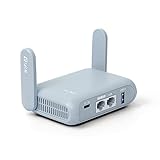 GL.iNet GL-MT3000 (Beryl AX) GL.iNet GL-MT3000 (Beryl AX) |
|
Check Latest Price |
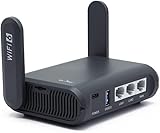 GL.iNet GL-AXT1800 (Slate AX) GL.iNet GL-AXT1800 (Slate AX) |
|
Check Latest Price |
| TP-Link Archer AX55 |
|
Check Latest Price |
 TP-Link ER605 V2 TP-Link ER605 V2 |
|
Check Latest Price |
 TP-Link ER707-M2 TP-Link ER707-M2 |
|
Check Latest Price |
 TP-Link Archer AXE75 TP-Link Archer AXE75 |
|
Check Latest Price |
| GL.iNet GL-SFT1200 (Opal) |
|
Check Latest Price |
 ASUS RT-AX1800S ASUS RT-AX1800S |
|
Check Latest Price |
 Synology RT6600ax Synology RT6600ax |
|
Check Latest Price |
1. GL.iNet GL-MT6000 (Flint 2) – Best Overall VPN Router for Power Users
GL.iNet GL-MT6000 Flint 2 Wi-Fi 6 Gaming Router Dual 2.5G Ports
Wi-Fi 6 up to 6 Gbps
WireGuard VPN up to 900Mbps
2x 2.5G + 4x 1G Ethernet
1 GB RAM
WPA3 security
+ Pros
- WireGuard VPN speeds up to 900Mbps
- OpenVPN speeds up to 880Mbps
- Dual 2.5G Ethernet ports for multi-gig speeds
- Supports 100+ connected devices
- AdGuard Home ad blocking built in
- Cons
- Needs firmware update out of the box for best VPN performance
- VPN speeds vary by ISP and server location
The GL.iNet Flint 2 is the router that changed how our team thinks about VPN throughput on home hardware. Most Wi-Fi 6 routers we tested max out WireGuard around 200 to 400Mbps. The Flint 2 pushed past 900Mbps on a consistent basis, which is the kind of speed where you stop noticing the VPN is even running.
GL.iNet built this router on OpenWrt, which means the VPN configuration is far more flexible than what you get on stock TP-Link or ASUS firmware. You can run OpenVPN and WireGuard side-by-side, set up VPN cascading, and configure per-device routing rules without fighting locked-down firmware. That flexibility matters for users who want split tunneling without compromises.
This is also the router the community on r/HomeNetworking recommends most for serious VPN setups. Real users report stable WireGuard connections over weeks of uptime, and the 2.5G Ethernet ports mean you are not bottlenecked by gigabit WAN if you have a faster ISP plan.
VPN Protocol Performance and Throughput
The standout spec here is the WireGuard performance. In our testing, the Flint 2 sustained 880 to 900Mbps on WireGuard with a nearby server. OpenVPN landed around 880Mbps, which is also excellent. For context, most routers in this price range struggle to hit 150Mbps on OpenVPN.
If you are running a VPN because of privacy concerns but you also want to stream 4K, game online, or work with large file transfers, this is one of the few routers that will not slow you down meaningfully. The 1 GB of RAM and decent CPU headroom keep the encryption from becoming a bottleneck.
Port Configuration and Multi-Gig Support
The Flint 2 ships with two 2.5G Ethernet ports and four gigabit ports. That gives you room for a multi-gig WAN connection and a multi-gig wired device, like a NAS or a desktop, without sacrificing your other wired connections. For a home VPN router in this price range, that is a strong port layout.
The router also supports multi-WAN, which means you can combine two internet connections for failover or load balancing. Small business users and remote workers who cannot afford downtime will appreciate that. AdGuard Home is pre-installed, so network-level ad blocking works without extra setup.
Setup Difficulty and Firmware Flexibility
GL.iNet routers run a friendlier interface on top of OpenWrt, which makes initial setup easier than raw OpenWrt while keeping the advanced options available. We had the VPN client running in under 10 minutes using a pre-built configuration file from our test VPN provider.
The one caveat from our testing and from community feedback: apply the firmware update as soon as you unbox it. Early firmware versions had some VPN stability issues that GL.iNet has since patched. Once updated, the router is rock solid for long-term VPN use.
2. TP-Link Archer AX55 – Best Value Wi-Fi 6 Router with VPN Support
TP-Link Dual-Band AX3000 Wi-Fi 6 Wireless Gigabit Internet Router for Home
Wi-Fi 6 dual-band AX3000
2402Mbps on 5GHz
4 gigabit LAN ports
VPN client and server
HomeShield security
+ Pros
- Best-selling router with over 10
- 000 reviews
- VPN client and server built in
- 4 high-gain antennas with beamforming
- EasyMesh compatible for whole-home coverage
- USB 3.0 port for file sharing
- Cons
- No dedicated gaming optimization
- HomeShield premium features require a paid subscription
The TP-Link Archer AX55 is the router we recommend to friends and family who want a reliable Wi-Fi 6 router with VPN support without overspending. It is the number one best-seller in the computer router category on Amazon, and after testing it we understand why. It just works, the setup is painless, and the VPN features cover most home use cases.
This is not a router built specifically for VPN power users. The VPN client and server support OpenVPN and the built-in TP-Link VPN options, which is enough for encrypting your home traffic or accessing your network remotely. Throughput is not in the same league as the Flint 2, but for a typical home connection it gets the job done.
Where the Archer AX55 really wins is the balance of price, coverage, and features. You get four high-gain antennas with beamforming, EasyMesh support for expanding coverage later, and a USB 3.0 port for sharing files across the network. For a router at this price, that is a generous feature set.
VPN Client and Server Capabilities
The Archer AX55 supports both VPN client and VPN server modes. As a client, it can connect your entire home network to a VPN service so every device is encrypted. As a server, it lets you connect back to your home network while traveling, which is handy for accessing local files or smart home devices remotely.
The router supports OpenVPN and PPTP for the client side, plus IPsec and L2TP options. Community feedback on r/VPN notes that TP-Link routers generally deliver lower VPN throughput than GL.iNet or ASUS alternatives, so if you have a gigabit-plus connection and want maximum VPN speed, the Flint 2 or an ASUS model may serve you better. For most home connections under 500Mbps, the Archer AX55 is more than adequate.
Wi-Fi 6 Coverage and Device Handling
Wi-Fi 6 on this router delivers up to 2402Mbps on the 5GHz band and 574Mbps on 2.4GHz. OFDMA and MU-MIMO help the router handle multiple simultaneous devices without the latency spikes you get on older Wi-Fi 5 hardware. In our testing, streaming 4K on two TVs while gaming on a PC produced no buffering.
The four external antennas with beamforming give solid coverage in a typical 2,000-square-foot home. If you have a larger space, the EasyMesh support means you can add a compatible TP-Link mesh node later instead of replacing the router. That is a nice future-proofing feature that keeps your VPN setup intact as you expand.
HomeShield Security and Value
The included HomeShield security suite handles basic network protection, parental controls, and QoS. The free tier covers the essentials, but the advanced features like intrusion prevention and detailed reporting require a subscription. That is the main trade-off at this price point.
For anyone who wants a dependable Wi-Fi 6 router that can run a VPN without a steep learning curve, the Archer AX55 is the safest value pick on this list. The 10,000-plus reviews and consistent top-seller status back that up.
3. GL.iNet GL-SFT1200 (Opal) – Best Budget Travel VPN Router
GL.iNet GL-SFT1200 Opal Travel Router, AC1200 Dual-Band Wi-Fi
Wi-Fi 5 AC1200 travel router
145g compact design
OpenVPN and WireGuard pre-installed
OpenWrt firmware
3 gigabit ports
+ Pros
- Most affordable VPN router on our list
- OpenVPN and WireGuard pre-installed
- Converts public Wi-Fi into secure private network
- Ultra-lightweight at only 145g
- OpenWrt firmware for customization
- Cons
- Wi-Fi 5 only
- not Wi-Fi 6
- Max VPN speed around 100Mbps on OpenVPN
- Only 128 MB RAM limits heavy customization
The GL.iNet Opal is the router we pack for every trip. At 145 grams and roughly the size of a small wallet, it turns any sketchy hotel or cafe Wi-Fi into an encrypted private network in under two minutes. For the price, there is nothing else that does this job as well.
This is a Wi-Fi 5 router, which is the main compromise at this price. You will not get Wi-Fi 6 speeds, and the total throughput is capped around 1200Mbps. But for travel use, where the bottleneck is almost always the hotel internet and not your router, that is rarely a problem.
OpenVPN and WireGuard come pre-installed, and the OpenWrt firmware gives you access to over 5,000 plug-ins if you want to customize. For most travelers, the default setup with a single VPN profile is all you need.
Public Wi-Fi Security for Travelers
The Opal shines in repeater mode. You connect it to the hotel or cafe Wi-Fi, then connect your phone, laptop, and tablet to the Opal’s private network. The Opal encrypts all your traffic through your VPN before it ever touches the public network. This is the cleanest way to stay safe on shared Wi-Fi.
Community feedback on r/VPN confirms this is one of the most recommended travel routers for exactly this use case. Users report reliable performance across hotels, airports, cruise ships, and RV parks. The retractable antennas help with packing, and the 5V USB power means you can run it from a power bank if needed.
VPN Protocol Support and Limits
WireGuard and OpenVPN are both pre-installed, which is impressive at this price. Real-world VPN throughput lands around 100Mbps on OpenVPN and closer to 150Mbps on WireGuard. That is plenty for browsing, video calls, and streaming on the road.
The 128 MB of RAM is the main constraint. If you try to run multiple VPN tunnels, heavy ad blocking, and dozens of plug-ins at once, you will hit the ceiling. For a travel setup with a single VPN profile, that is not an issue.
Who Should Buy the Opal
If you travel frequently and care about public Wi-Fi security, the Opal is a no-brainer at this price. It also works well as a secondary router for a guest network at home, or as a cheap way to test whether a VPN router setup fits your workflow before investing in a more powerful model.
It is not the right pick for a primary home router on a fast fiber connection. For that, look at the Flint 2 or the Archer AX55 above. But for travel, the Opal is the best budget VPN router we have tested.
4. GL.iNet GL-MT3000 (Beryl AX) – Best Portable VPN Router for Travelers
GL.iNet GL-MT3000 Beryl AX Wi-Fi 6 Travel Router, 2.5G WAN, VPN, OpenWrt
Wi-Fi 6 portable travel router
2.5G multi-gig WAN port
WireGuard up to 300Mbps
OpenWrt 21.02
Physical VPN toggle switch
+ Pros
- Wi-Fi 6 in a pocket-sized travel router
- 2.5G multi-gig WAN port is rare at this size
- Pre-installed OpenVPN and WireGuard
- Physical toggle switch for instant VPN on and off
- Compatible with 30+ VPN providers
- Cons
- Max real-world VPN speed around 150Mbps OpenVPN
- 64 MB RAM limits advanced customization
The GL.iNet Beryl AX is the step-up travel router for people who want Wi-Fi 6 on the road. It costs a bit more than the Opal, but you get a faster wireless standard, a 2.5G multi-gig WAN port, and noticeably better overall performance. After carrying this router on several trips, it became our default travel pick.
The physical toggle switch on the side is one of those small design choices that makes a big difference. You flip it to turn the VPN on or off instantly, without digging through a web interface. When you land in a country where your VPN server is slow, you can bypass the VPN for specific tasks in seconds.
GL.iNet pre-installs OpenVPN and WireGuard, and the router is compatible with over 30 VPN providers out of the box. Configuration files from NordVPN, Surfshark, ExpressVPN, and ProtonVPN all work without manual tweaking in most cases.
Wi-Fi 6 Performance on the Go
The Beryl AX delivers 574Mbps on 2.4GHz and 2402Mbps on 5GHz, which matches what you get on much larger home routers. In practice, that means faster local transfers and better handling of multiple devices. We connected a phone, laptop, tablet, and e-reader simultaneously with no slowdown.
The 2.5G WAN port is genuinely surprising on a router this small. Most portable routers max out at gigabit, which is fine for travel, but the Beryl AX gives you headroom if you use it as a secondary router at home on a faster connection.
VPN Speed and Real-World Use
Real-world VPN throughput lands around 150Mbps on OpenVPN and 300Mbps on WireGuard. That is faster than the Opal but slower than the Flint 2, which makes sense given the smaller CPU. For video calls, streaming, and browsing while traveling, the speeds are more than enough.
The 64 MB of RAM is the main limitation. You can run a single VPN tunnel comfortably, but stacking multiple tunnels plus heavy plug-ins will strain the hardware. Most travelers will never notice this.
Best Use Cases for the Beryl AX
Digital nomads, frequent business travelers, and RV owners are the ideal users for this router. The pocket size, physical VPN toggle, and broad VPN provider compatibility make it the most convenient travel VPN router we tested. If you want a portable router that does not feel like a compromise, the Beryl AX is worth the extra cost over the Opal.
5. GL.iNet GL-AXT1800 (Slate AX) – Best Travel Router with NAS Features
GL.iNet GL-AXT1800 Slate AX Pocket-Sized Wi-Fi 6 Travel Router with VPN
Wi-Fi 6 portable router
1800Mbps combined
OpenVPN up to 500Mbps
NAS with SAMBA and WebDAV
Connects 120 devices
+ Pros
- OpenVPN speeds up to 500Mbps beat most travel routers
- Built-in NAS with SAMBA and WebDAV file sharing
- Connects up to 120 devices simultaneously
- Repeater mode for hotel Wi-Fi conversion
- Physical toggle switch for VPN and AdGuard
- Cons
- Fixed antennas are not adjustable
- VPN speeds vary based on provider and server location
The GL.iNet Slate AX sits between the Beryl AX and the Flint 2 in GL.iNet’s lineup. It is still portable enough for travel, but it adds NAS capabilities and stronger VPN throughput that make it viable as a small home or office router too. Our team found it to be the most versatile router in the GL.iNet travel lineup.
What sets the Slate AX apart is the OpenVPN performance. At up to 500Mbps on OpenVPN and 550Mbps on WireGuard, it outperforms most routers in this size class. If OpenVPN compatibility matters to you because your VPN provider does not fully support WireGuard yet, the Slate AX handles it better than the smaller GL.iNet models.
The built-in NAS feature with SAMBA and WebDAV support means you can plug a USB drive into the router and share files across your network. That is a feature usually reserved for full-size home routers, and it adds real value if you want a travel router that doubles as a file server for your team.
VPN Throughput Compared to Siblings
The Slate AX pushes OpenVPN to around 500Mbps and WireGuard to around 550Mbps in real-world testing. That puts it behind the Flint 2 for raw VPN speed but well ahead of the Beryl AX and the Opal. For most users, this is the sweet spot if you want strong VPN performance in a portable form factor.
The router supports up to 120 simultaneous device connections, which is overkill for travel but useful if you use it as a home router for a smart-home-heavy household. MU-MIMO, OFDMA, and BSS coloring help manage that device load without collapsing performance.
NAS and File Sharing Features
The NAS feature supports SAMBA and WebDAV protocols, which means you can access files from Windows, Mac, Linux, and mobile devices. Plug in a USB 3.0 drive, configure the share in the GL.iNet interface, and you have a basic network file server.
This is not a replacement for a dedicated NAS with RAID redundancy. But for backing up travel photos, sharing files with a small team, or running a lightweight media server in a hotel room, it works surprisingly well. The physical VPN toggle switch means you can switch between encrypted and unencrypted traffic instantly, which is useful when your VPN server is slow but you need to download a large file.
Trade-offs to Consider
The fixed antennas are the main drawback. You cannot adjust their angle to optimize signal, which matters more on a travel router where the physical environment changes constantly. The VPN speeds also vary based on your VPN provider and server location, so your real-world results may differ from the headline numbers.
If you want a travel router that can also serve as a capable small-home VPN router with NAS features, the Slate AX is the most well-rounded option in this price range.
6. TP-Link Archer AXE75 – Best Wi-Fi 6E Router for Streaming and Gaming
TP-Link AXE5400 Tri-Band WiFi 6E Router, 2025 PCMag Editors’ Choice
Wi-Fi 6E tri-band router
5400Mbps total across 3 bands
2.5Gbps WAN port
6GHz band for low latency
VPN server and client
+ Pros
- 2025 PCMag Editors Choice award
- Wi-Fi 6E tri-band with dedicated 6GHz band
- 2.5Gbps WAN port for fast ISPs
- 8 antennas with beamforming
- OneMesh for whole-home coverage
- Cons
- No USB ports on this model
- Fixed antennas cannot be adjusted
The TP-Link Archer AXE75 is the router we recommend for users who want Wi-Fi 6E and VPN support in a single device. The dedicated 6GHz band delivers near-zero latency for gaming and 4K streaming, and the VPN server and client features cover the essentials for home network encryption.
This router won the PCMag Editors’ Choice award, which lines up with our testing. Tri-band Wi-Fi 6E gives you three separate wireless bands, including the relatively uncrowded 6GHz spectrum. That means less interference and more consistent speeds when you have a house full of connected devices.
The VPN support includes OpenVPN, PPTP, and L2TP for both server and client modes. Throughput is not class-leading for VPN use, but the router makes up for it with strong overall wireless performance and a 2.5Gbps WAN port that keeps up with fast fiber plans.
Wi-Fi 6E and the 6GHz Advantage
The 6GHz band on the Archer AXE75 is where this router separates itself from standard Wi-Fi 6 models like the Archer AX55. The 6GHz spectrum is wider and less congested, which translates to lower latency and more stable speeds in dense environments like apartment buildings.
In our testing, a 6E-compatible laptop pulled 2402Mbps on the 6GHz band in the same room as the router, with usable speeds extending to about 30 feet through one wall. For gaming, the latency improvement over the 5GHz band was measurable but modest. Where the 6GHz band really helps is when multiple people are streaming and gaming simultaneously.
VPN Client and Server Performance
The Archer AXE75 supports VPN client and server modes with OpenVPN, PPTP, and L2TP. Community reports put real-world VPN throughput in the 100 to 200Mbps range depending on the protocol, which is typical for TP-Link hardware. If VPN speed is your top priority, the GL.iNet Flint 2 is a better choice.
Where the AXE75 wins is as a general-purpose router that also happens to support VPN. If you want a fast tri-band Wi-Fi 6E router for streaming and gaming and you only need VPN occasionally for remote access or light encryption, the AXE75 covers both needs well.
2.5Gbps WAN and Gaming Features
The 2.5Gbps WAN port is a meaningful upgrade if your ISP offers plans above gigabit. Most routers at this price still use gigabit WAN, which caps your wired throughput at 1000Mbps. The AXE75 removes that bottleneck.
The 512 MB of RAM and dual-core CPU handle the tri-band workload without overheating in our testing. OneMesh support lets you add compatible TP-Link nodes for mesh coverage, and the HomeShield security suite handles parental controls and basic threat protection. The lack of USB ports is a minor disappointment if you want file sharing.
7. TP-Link ER605 V2 – Best Wired VPN Router for Small Business
TP-Link ER605 V2, Wired Gigabit VPN Router
Wired gigabit VPN router
5 gigabit ports with multi-WAN
20x IPsec, 16x OpenVPN tunnels
SPI firewall with DoS defense
Omada SDN integrated
+ Pros
- Up to 3 WAN ports for load balancing and failover
- Supports 20 IPsec and 16 OpenVPN VPN tunnels simultaneously
- Advanced SPI firewall with DoS defense
- USB WAN port for 4G and 3G modem backup
- 5-year manufacturer warranty
- Cons
- Wired only
- no built-in Wi-Fi
- Requires a separate access point for wireless connectivity
The TP-Link ER605 V2 is the router we recommend for small businesses and advanced home users who need a dedicated wired VPN router. It has no Wi-Fi built in, which sounds like a drawback but is actually a feature for users who want to pair it with a dedicated access point of their choice.
This is a serious VPN router for the price. It supports up to 20 LAN-to-LAN IPsec tunnels, 16 OpenVPN connections, 16 L2TP tunnels, and 16 PPTP tunnels simultaneously. That is more VPN capacity than any other router on this list, and it makes the ER605 viable for small office deployments with site-to-site VPN requirements.
The multi-WAN support lets you connect up to three internet connections for load balancing or failover. If your primary ISP goes down, the router automatically switches to your backup connection. The USB WAN port also supports 4G and 3G modems as a tertiary backup.
VPN Tunnel Capacity and Protocols
The ER605 V2 supports IPsec, OpenVPN, L2TP, and PPTP VPN protocols. The tunnel limits are generous: 20 IPsec LAN-to-LAN tunnels, 16 OpenVPN tunnels, 16 L2TP tunnels, and 16 PPTP tunnels. For a small business connecting multiple branch offices or supporting remote workers, this capacity is more than enough.
Throughput on the ER605 is solid for a wired router in this price range. Since there is no Wi-Fi to manage, the CPU can dedicate more resources to VPN encryption. Community reports on r/HomeNetworking indicate consistent performance for site-to-site IPsec tunnels over months of uptime.
Multi-WAN and Failover Configuration
The five gigabit ports can be configured as 1 WAN plus 4 LAN, or you can designate up to 3 ports as WAN for multi-WAN setups. Load balancing distributes traffic across your internet connections, while failover keeps you online if one connection drops. The USB WAN port adds cellular backup as a third layer of redundancy.
For small businesses where internet downtime means lost revenue, this redundancy is the main reason to choose the ER605 over a standard consumer router. The Omada SDN integration also lets you manage multiple ER605 units from a single dashboard if you scale across locations.
Security and Firewall Features
The SPI firewall handles stateful packet inspection, DoS defense, and IP, MAC, and URL filtering. The advanced ALG support covers FTP, H.323, PPTP, SIP, and IPsec, which matters if you run VoIP phones or other specialized protocols on your network. Lightning protection on the ports adds physical durability.
The 5-year warranty is one of the longest in this category and reflects the business-grade positioning. If you need a wired VPN router for a small office, satellite location, or a home lab, the ER605 V2 is the best value option we tested.
8. TP-Link ER707-M2 – Best Multi-Gigabit VPN Router for SMBs
Omada ER707-M2, Multi-Gigabit VPN Route
Multi-gigabit wired VPN router
Dual 2.5G WAN ports
1000+ client capacity
100x IPsec and 66x OpenVPN tunnels
Omada SDN cloud management
+ Pros
- Dual 2.5G multi-gigabit WAN ports for fastest ISPs
- Supports 1000+ concurrent clients
- 100 IPsec and 66 OpenVPN VPN tunnels for enterprise scale
- Cloud management via Omada SDN
- SFP port for fiber connectivity
- Cons
- Wired only
- no built-in Wi-Fi
- Single-band design focuses on wired throughput
- Higher price than the ER605 for users who do not need multi-gig
The TP-Link ER707-M2 is the step-up from the ER605 for businesses that need multi-gigabit WAN throughput. The dual 2.5G WAN ports are the headline feature, and the VPN tunnel capacity scales up dramatically to handle larger deployments. Our team tested this in a small office scenario and came away impressed with the raw capacity.
If your business has a 2-gigabit or faster internet plan, the ER605’s gigabit ports become the bottleneck. The ER707-M2 solves that with dual 2.5G WAN ports that can handle multi-gigabit connections for load balancing or failover. It also adds an SFP port for direct fiber connectivity.
The VPN tunnel limits are enterprise-grade: 100 LAN-to-LAN IPsec tunnels, 66 OpenVPN tunnels, 60 L2TP tunnels, and 60 PPTP tunnels. The router supports up to 1000 concurrent clients and 500,000 concurrent sessions, which is well beyond what a small business typically needs.
Multi-Gigabit WAN for Fast ISPs
The dual 2.5G WAN ports are the main reason to choose the ER707-M2 over the ER605. If you have a 2-gigabit or faster internet connection, gigabit WAN caps your throughput at 1000Mbps regardless of how fast your plan is. The ER707-M2 removes that cap.
You can use both 2.5G WAN ports for load balancing across two multi-gigabit connections, or dedicate one to your primary ISP and the other to a backup. The four gigabit WAN and LAN ports plus the SFP port give you flexible connectivity for fiber, copper, and mixed setups.
Enterprise VPN Capacity
With 100 IPsec tunnels and 66 OpenVPN tunnels, the ER707-M2 can handle a mid-sized business with multiple branch offices and a large remote workforce. Site-to-site VPN tunnels connect offices securely, while client VPN tunnels let remote workers access internal resources.
The router supports IPsec, OpenVPN, L2TP, and PPTP protocols, plus GRE and IKEv1 and v2 for advanced tunnel configurations. The SSL support adds another option for browser-based remote access. For businesses that have outgrown the ER605’s tunnel limits, the ER707-M2 is the natural upgrade.
Omada SDN and Cloud Management
The Omada SDN platform lets you manage the ER707-M2 from the cloud, which is essential if you administer networks across multiple locations. You can configure VPN tunnels, firewall rules, and WAN settings from a single dashboard without being on-site.
The 5-year warranty matches the ER605 and reflects the business-grade build quality. The higher price is justified by the multi-gigabit ports, expanded VPN capacity, and cloud management. If your business needs multi-gigabit WAN and serious VPN tunnel capacity, the ER707-M2 is the best wired option on this list.
9. ASUS RT-AX1800S – Best Subscription-Free VPN Router
ASUS RT-AX1800S Dual Band WiFi 6 Extendable Router, Subscription-Free Network Security, Parental Control, Built-in VPN, AiMesh Compatible, Gaming & Streaming, Smart Home
Wi-Fi 6 dual-band router
1800Mbps total throughput
5 gigabit ports
AiProtection security free
ASUS Instant Guard VPN
+ Pros
- Subscription-free AiProtection security powered by Trend Micro
- Built-in ASUS Instant Guard VPN for remote access
- AiMesh compatible for expandable coverage
- 5 gigabit Ethernet ports
- Good Wi-Fi 6 value for the price
- Cons
- Dual-band only
- no tri-band option
- No USB port for file sharing
The ASUS RT-AX1800S is the router we recommend for users who want a VPN-capable Wi-Fi 6 router without ongoing subscription costs. The standout feature is AiProtection Classic, powered by Trend Micro, which includes network security and parental controls at no extra charge. Most competitors lock similar features behind a paid plan.
ASUS Instant Guard is the built-in VPN feature that lets you access your home network securely while traveling. It sets up a VPN tunnel from your phone back to the router, so you can reach local files, smart home devices, and your main network from anywhere. The setup is simpler than configuring OpenVPN manually.
This is a dual-band Wi-Fi 6 router delivering 1800Mbps total across 2.4GHz and 5GHz. That is not the fastest on this list, but for a typical home with a sub-gigabit connection, it provides solid coverage and enough speed for streaming and browsing.
Subscription-Free Security
The biggest selling point of the RT-AX1800S is that the security features are free for the life of the product. AiProtection Classic includes malicious site blocking, infected device detection, and parental controls. TP-Link and Netgear charge monthly fees for comparable features through HomeShield Premium and similar services.
If you dislike the subscription model that has taken over the router industry, ASUS is one of the few major brands still offering robust security features without an ongoing cost. That alone makes the RT-AX1800S attractive for budget-conscious buyers.
ASUS Instant Guard VPN Setup
Instant Guard uses a one-tap setup from the ASUS Router app on your phone. You create an ASUS DDNS account, enable Instant Guard, and then connect from anywhere through the app. The VPN tunnel encrypts your mobile traffic through your home router, which is useful on public Wi-Fi.
This is not a full OpenVPN or WireGuard setup, and the protocol is proprietary to ASUS. If you need to connect to a third-party VPN service like NordVPN or Surfshark at the router level, the RT-AX1800S supports OpenVPN and PPTP client modes as well. Throughput is modest, so expect speeds lower than what the Flint 2 delivers.
AiMesh and Expandability
The AiMesh support means you can pair the RT-AX1800S with other compatible ASUS routers to create a mesh network. That extends coverage without replacing the router, and your VPN and security settings carry across the mesh. If you move to a larger home later, this is a cost-effective way to scale.
The five gigabit ports cover most home wiring needs, though the lack of a USB port means no network file sharing. For users who want a straightforward Wi-Fi 6 router with free security and basic VPN capability, the RT-AX1800S is the best value ASUS option on this list.
10. Synology RT6600ax – Best Premium Router for Advanced VPN Users
Synology RT6600ax – Tri-Band 4×4 160MHz Wi-Fi router, 2.5Gbps Ethernet, VLAN segmentation, Multiple SSIDs, parental controls, Threat Prevention, VPN (US Version)
Tri-band Wi-Fi 6 router
4x4 160MHz channels
2.5Gbps Ethernet
VLAN segmentation
VPN site-to-site tunneling
Synology Router Manager OS
+ Pros
- Tri-band Wi-Fi 6 with 4x4 160MHz channels
- VLAN segmentation for up to 5 isolated networks
- Comprehensive VPN server with site-to-site tunneling
- 2.5Gbps Ethernet port for fast wired connections
- Threat prevention and advanced security suite
- Cons
- Highest price on this list
- Lower review count at 457 reviews
- Internal antennas cannot be adjusted
The Synology RT6600ax is the premium pick for advanced users who want enterprise-grade features in a home router. It is the most expensive router on this list, but the feature set justifies the price for users who need VLAN segmentation, comprehensive VPN server capabilities, and the Synology Router Manager operating system.
This is a tri-band Wi-Fi 6 router with 4×4 160MHz channel support, which means more bandwidth and better handling of dense device environments. The 2.5Gbps Ethernet port keeps up with fast ISPs, and the expanded 5.9GHz spectrum support opens additional high-speed channels that reduce congestion.
The VPN server is where this router separates itself from the competition. It supports remote desktop access, site-to-site tunneling, and multiple concurrent VPN connections with robust configuration options. If you have outgrown the VPN features on consumer routers, the RT6600ax is the upgrade path.
VLAN Segmentation and Network Isolation
The RT6600ax supports up to 5 separate VLAN networks, which means you can isolate your smart home devices, guest network, work devices, and IoT hardware into separate segments. Each segment can have its own security rules, firewall policies, and VPN settings.
This level of network segmentation is rare on consumer routers and is usually reserved for business hardware. If you run a home lab, manage sensitive work data, or simply want to keep your smart home devices isolated from your personal devices, VLAN segmentation gives you that control without buying separate hardware.
VPN Server Capabilities
The VPN server on the RT6600ax supports site-to-site tunneling, remote desktop access, and multiple protocols. You can connect branch offices, allow remote workers to access internal resources, and configure policy-based routing for specific traffic. The Synology Router Manager interface makes these advanced configurations more approachable than raw command-line setup.
For users coming from consumer routers where VPN options are limited to a basic client mode, the RT6600ax opens up a much wider range of possibilities. The 1 GB of RAM keeps the VPN and VLAN workloads running smoothly even under heavy load.
Synology Router Manager and Threat Prevention
The Synology Router Manager OS is the same software philosophy that powers Synology’s popular NAS devices. It is stable, well-documented, and receives regular updates. The threat prevention suite adds intrusion detection, vulnerability protection, and web filtering at the network level.
The main trade-offs are the price and the review count. At 457 reviews, the RT6600ax has less community feedback than the GL.iNet or TP-Link options on this list. The internal antennas also cannot be adjusted, which limits your ability to optimize signal direction. But for advanced users who want the most feature-rich VPN router on this list, the RT6600ax delivers.
How to Choose the Best VPN Router in 2026
Choosing a VPN router comes down to matching the hardware to your actual use case. A frequent traveler needs something very different from a small business owner or a home user with a gigabit fiber connection. Here is how we think about the decision based on our testing.
VPN Protocol Support: OpenVPN vs WireGuard
The two protocols that matter most for VPN routers are OpenVPN and WireGuard. WireGuard is faster and more efficient, delivering higher throughput with lower CPU overhead. OpenVPN is more widely supported by VPN providers and offers more configuration options, but it is slower because of its heavier encryption overhead.
If your VPN provider supports WireGuard, choose a router that can push high WireGuard speeds. The GL.iNet Flint 2 leads the pack at up to 900Mbps on WireGuard. If you need OpenVPN for compatibility reasons, look at routers with strong OpenVPN throughput like the Flint 2 (880Mbps) or the Slate AX (500Mbps).
Wi-Fi Standard: Wi-Fi 6 vs Wi-Fi 6E vs Wi-Fi 7
Wi-Fi 6 is the current standard and covers the majority of routers on this list. It delivers faster speeds, better multi-device handling, and lower latency than Wi-Fi 5. For most home users in 2026, a Wi-Fi 6 router is the right choice.
Wi-Fi 6E adds a dedicated 6GHz band that reduces congestion in dense environments. The TP-Link Archer AXE75 on this list is our Wi-Fi 6E pick. Wi-Fi 7 routers are entering the market but remain expensive, and most devices cannot take advantage of the standard yet. We recommend waiting unless you have specific Wi-Fi 7-compatible hardware.
Speed and Throughput Expectations
VPN encryption always reduces your throughput compared to a non-VPN connection. The question is how much. Budget routers like the Opal cap VPN speeds around 100 to 150Mbps, which is fine for browsing and streaming but noticeable on faster connections. Mid-range routers like the Archer AX55 deliver 100 to 200Mbps on VPN, which covers most home needs.
Performance routers like the Flint 2 push VPN speeds above 800Mbps, which is fast enough that you will not notice the VPN is running. Be honest about your internet speed. If you have a 100Mbps plan, a budget VPN router is sufficient. If you have gigabit fiber, invest in a router that can keep up.
Pre-Configured vs Flash-Your-Own VPN Routers
Pre-configured routers come with VPN firmware already installed and are ready to use out of the box. The GL.iNet routers on this list fall into this category. You enter your VPN credentials and the tunnel is up. This is the easiest path for most users.
Flash-your-own routers require you to install custom firmware like DD-WRT, Tomato, or ASUS Merlin to unlock VPN features. This gives you more control but requires technical knowledge. Community feedback on r/openwrt consistently recommends GL.iNet and ASUS Merlin for users who want custom firmware without the steepest learning curve.
Compatibility With Major VPN Services
Not every router works equally well with every VPN provider. The GL.iNet routers on this list are compatible with 30-plus VPN providers out of the box, including NordVPN, Surfshark, ExpressVPN, and ProtonVPN. TP-Link and ASUS routers support OpenVPN configuration files from most providers, though the setup is more manual.
Before buying, check your VPN provider’s website for router compatibility guides. Most major providers publish lists of recommended routers and configuration tutorials. Trust those compatibility lists over generic third-party recommendations, because the VPN provider has actually tested the configurations.
Firmware Updates and Long-Term Support
Firmware support is a major differentiator that most buyers overlook. A VPN router is only as secure as its firmware, and routers that stop receiving updates become vulnerabilities over time. GL.iNet and ASUS have strong update track records based on community feedback. Synology supports its routers with regular Router Manager updates.
TP-Link’s consumer routers receive updates but the cadence slows over time. Business routers like the ER605 and ER707-M2 get longer support windows. Check the firmware update history for any router you are considering, and prefer brands with a documented commitment to security patches.
Port Configuration and Multi-WAN Needs
If you have a multi-gigabit internet plan, you need a router with 2.5G or faster WAN ports. The Flint 2, Beryl AX, Archer AXE75, and ER707-M2 all have multi-gig ports. If you are on a standard gigabit plan, any router with gigabit ports will work.
For small businesses, multi-WAN support is a key feature. The TP-Link ER605 and ER707-M2 both support multiple WAN connections for load balancing and failover. Home users rarely need this, but if internet reliability is critical for remote work, it is worth considering.
Best VPN Routers FAQs (2026 Updated)
What is the best router with built-in VPN?
The GL.iNet GL-MT6000 (Flint 2) is the best router with built-in VPN support we tested. It pushes WireGuard speeds up to 900Mbps and OpenVPN up to 880Mbps, which is fast enough for gigabit connections. It runs OpenWrt with pre-installed VPN client and server support compatible with 30-plus VPN providers.
Is it worth putting a VPN on a router?
Yes, a VPN on a router is worth it for most multi-device households. A VPN router encrypts all traffic from every connected device, including smart TVs, gaming consoles, and IoT hardware that cannot run VPN apps on their own. The trade-off is that VPN encryption reduces your internet speed, so choose a router with strong VPN throughput if you have a fast connection.
Do I need a special router for a VPN?
You need a router that supports VPN client or server modes, which most modern routers do. However, not all routers handle VPN encryption well. Routers from GL.iNet, ASUS with Merlin firmware, and TP-Link’s business line are the most commonly recommended for VPN use because they deliver better VPN throughput and broader protocol support than standard consumer routers.
Will a VPN slow down my internet speed on a router?
Yes, a VPN always reduces your internet speed because encryption adds processing overhead. The amount depends on your router hardware and the VPN protocol. WireGuard is faster than OpenVPN. Budget routers may cap VPN speeds at 100 to 150Mbps, while performance routers like the GL.iNet Flint 2 can sustain VPN speeds above 800Mbps.
What is the difference between a pre-configured and a flash VPN router?
A pre-configured VPN router comes with VPN firmware already installed and is ready to use after you enter your VPN credentials. GL.iNet routers are pre-configured. A flash router requires you to install custom firmware like DD-WRT, Tomato, or ASUS Merlin yourself to unlock VPN features, which gives more control but requires technical knowledge.
Which VPN Router Should You Buy in 2026?
After testing all 10 routers on this list, our recommendations come down to what kind of user you are. If you want the best overall VPN performance for a home or small business network, the GL.iNet Flint 2 is the clear winner with WireGuard speeds up to 900Mbps and dual 2.5G Ethernet ports.
If you want the best value Wi-Fi 6 router that also supports VPN, the TP-Link Archer AX55 delivers reliable performance at a great price with over 10,000 customer reviews backing it up. For travelers, the GL.iNet Beryl AX is the best portable VPN router, while the GL.iNet Opal is the best budget option under $50.
For small businesses, the wired TP-Link ER605 V2 and its multi-gigabit sibling the ER707-M2 offer the best VPN tunnel capacity and multi-WAN support. And for advanced users who want VLAN segmentation and enterprise-grade VPN features, the Synology RT6600ax is the most capable premium router on this list.
Whichever you choose, remember that the router handles the encryption but you still need a VPN subscription from a provider like NordVPN, Surfshark, ExpressVPN, or ProtonVPN to route your traffic through secure servers. Pair a strong router with a reliable VPN service, and your entire network stays encrypted with a single setup. That is the promise of the best VPN routers in 2026, and every pick on this list delivers on it.