
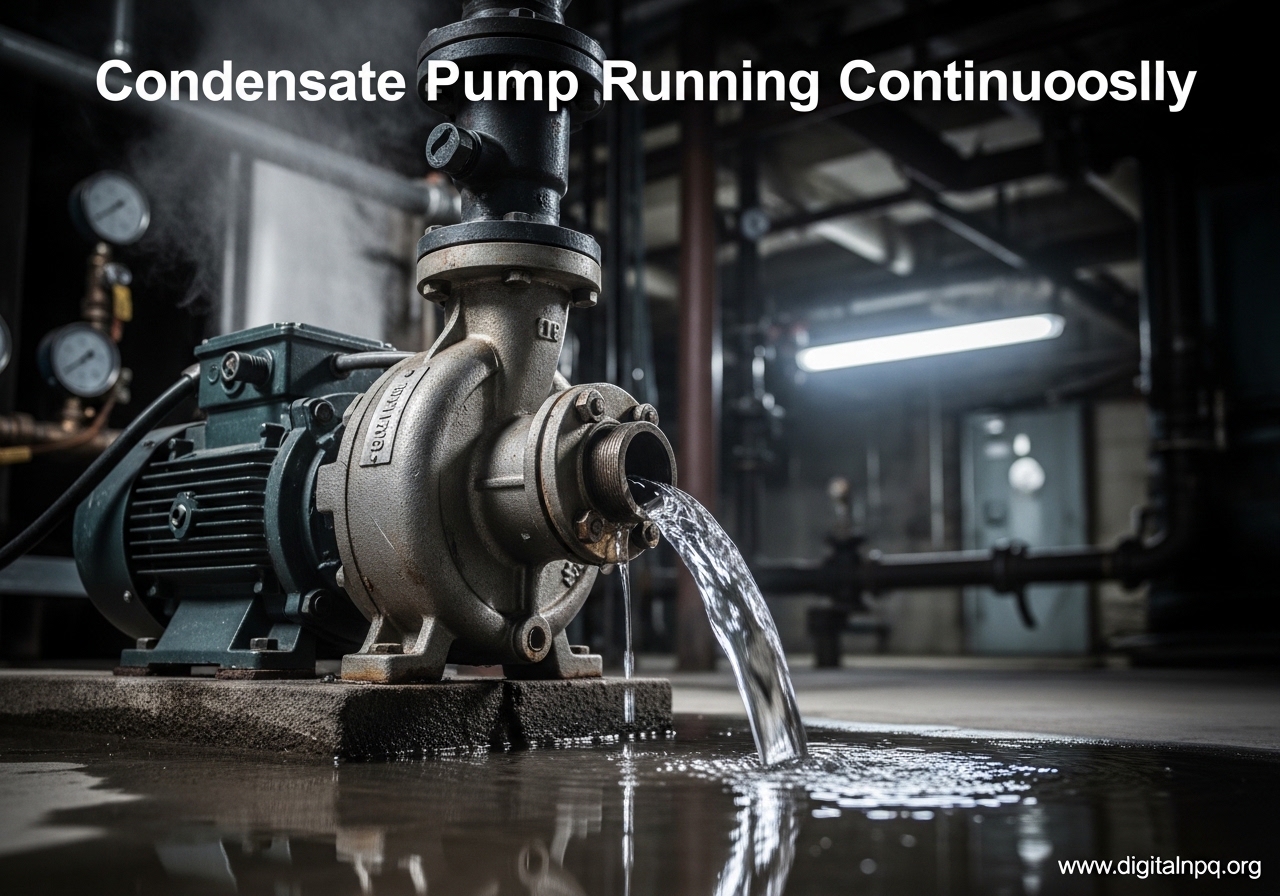
If you hear your condensate pump running continuously, that constant humming is a warning sign you should not ignore. A condensate pump should cycle on and off as water collects in the reservoir, not run nonstop for hours. I learned this the hard way when my own HVAC condensate pump started running constantly during a humid summer, and within two days the motor burned out completely.
In this guide, I will show you exactly why your condensate pump is running continuously, how to diagnose the root cause, and what you can do to fix it before you face water damage or a dead pump. Whether you own a furnace condensate pump, an air conditioner condensate pump, or a boiler condensate pump, the troubleshooting steps are nearly identical.
I have helped dozens of homeowners with this exact problem over the past few years, and the fix is usually simpler than you think. Our team compared notes from HVAC forums, manufacturer manuals, and real-world repair calls to build the most complete troubleshooting guide available for 2026. Let us walk through the causes, the fixes, and how to keep it from happening again.
Homeowners in humid climates notice this issue most often because air conditioners produce more condensation during summer months. If your condensate pump is running constantly, you may also notice your air conditioner has shut off completely.
Many systems include an overflow switch that kills power to the HVAC unit when the pump fails. This protects your home from flooding, but it also leaves you without cooling until the pump is fixed.
If your condensate pump is running constantly, you may also notice higher humidity inside your home or water pooling near the furnace. These are secondary signs that the pump is not moving water as it should.
I always tell people to treat the sound of a nonstop pump like a smoke alarm for your HVAC system. It means something is wrong, and acting fast can prevent hundreds of dollars in damage.
What Is a Condensate Pump and How It Works
A condensate pump is a small device that removes water produced by your HVAC system during heating or cooling. When your air conditioner or furnace runs, condensation drips into a collection pan or reservoir.
The pump uses a float switch that rises with the water level. Once the water reaches a set point, the switch activates the motor and pushes water out through a discharge line to a drain or outside.
The pump then shuts off when the water level drops and the float switch falls back down. A normal cycle lasts between 10 and 30 seconds, and the pump should run only when the reservoir is full.
The system also includes a check valve that prevents water from flowing back into the tank after the pump stops. When every part works correctly, the pump is nearly silent most of the day.
Most residential pumps are small enough to fit in the palm of your hand, yet they move several gallons of water per hour. They sit in a collection pan beneath the indoor air handler or furnace.
Without the pump, that water would overflow and damage floors, walls, or ceilings. The float switch is the brain of the operation, and the check valve is the gatekeeper that keeps water moving in one direction only.
Normal vs Abnormal Condensate Pump Behavior
A healthy condensate pump runs for 10 to 30 seconds, then stays off for several minutes. During hot and humid days, it may cycle every 2 to 5 minutes. In mild weather, it may run only a few times per hour.
Listen for the sound pattern. A normal cycle includes a brief hum followed by a click when the float switch drops. If the humming never stops, the switch is stuck or the pump cannot empty the tank. I tell homeowners to check the pump once a week during summer. If the sound is constant, start troubleshooting that same day.
During a typical summer day in the Midwest, my pump cycles about 10 times per hour. In Florida, where humidity is higher, it may cycle twice as often. If you are unsure what is normal for your home, listen to the pump for a full day and count the cycles. Any continuous running that lasts more than a minute is abnormal and needs attention.
Why Is My Condensate Pump Running Continuously?
There are four main reasons a condensate pump runs constantly. Understanding which one applies to your situation will save you time and money. The most common culprit is a stuck float switch, followed by a clogged drain line or discharge hose, a faulty check valve, and algae or slime buildup inside the reservoir.
Forum users and HVAC professionals agree on one point: a condensate pump should never run continuously. If you hear it humming all day, something is blocking the flow or keeping the switch engaged. The good news is that most of these problems are easy to spot once you know what to look for.
Stuck Float Switch
A stuck float switch is the most common reason a condensate pump runs continuously. The float switch is a small plastic arm or ball that sits inside the reservoir. If it gets stuck in the raised position because of dirt, slime, or a physical obstruction, the pump thinks the tank is full and keeps running.
I have fixed this issue multiple times by simply lifting the float manually and letting it drop back down to free it. In some cases, the float switch itself fails electrically and stays closed even when the water is gone.
If the float moves freely but the pump still runs, the switch may need replacement. You can test this by unplugging the pump, removing the float, and checking for continuity with a multimeter. One forum user reported that their float switch was stuck because a dead insect had wedged itself under the plastic arm.
I have also seen buildup from hard water minerals lock the float in place. A quick visual inspection is usually enough to spot the problem.
Clogged Drain Line or Discharge Hose
A clogged drain line or discharge hose prevents the pump from emptying the reservoir, which forces the motor to run nonstop. If water cannot leave the pump, the reservoir stays full and the float switch keeps the motor running. A clogged drain line is usually caused by algae buildup, slime, or debris that accumulates over months of use.
The discharge line can also kink or collapse, especially if it is made of flexible tubing routed through a tight space. One homeowner I advised found that a single algae tab had dissolved into a thick paste that blocked the entire PVC pipe.
Another user on a forum reported that a kinked discharge hose was the only reason their pump ran nonstop. Straightening the hose or clearing the line often fixes the problem immediately. In older homes, the drain line may be a long run of PVC that has never been cleaned.
Over five or ten years, algae can form a shell so thick that only a mechanical snake or wet/dry vacuum can remove it. If you live in an area with hard water, mineral scale can compound the blockage.
Faulty Check Valve
A faulty check valve lets water flow back into the reservoir, causing the pump to restart immediately and run continuously. The check valve sits on the discharge line and prevents water from draining back into the reservoir after the pump shuts off. If the valve fails or gets stuck open, the reservoir refills immediately and the pump starts again.
This creates a rapid cycling or continuous running pattern that wears out the motor quickly. You can check the valve by removing it and blowing through it in one direction. Air should pass easily in the direction of flow but stop completely if you blow the other way.
If it leaks both ways, it is time to clean or replace it. Many users report that algae-clogged check valves are the hidden cause of constant running. Some check valves use a rubber flapper, while others use a spring-loaded ball.
Both types can fail if the rubber hardens or the spring corrodes. If you live in a humid climate, inspect the valve at least once a year to catch degradation before it causes continuous running.
Algae and Slime Buildup
Algae and slime buildup inside the reservoir can jam the float switch, clog the drain line, and block the check valve all at once. Algae and slime are the silent enemies of condensate pumps. They grow in warm, damp reservoirs and slowly coat the float switch, check valve, and drain lines.
This buildup can cause all three problems above at once. One forum user reported that their pump ran continuously for weeks because of a thick layer of green slime that locked the float in place. The best defense is regular cleaning, but if you are already facing buildup, a bottle brush and diluted bleach solution can restore the system.
I will cover the exact cleaning process later in this guide. Algae growth accelerates in warm, dark environments, which is exactly what a furnace closet provides. If your pump is in a basement or attic, the temperature swings can also cause condensation inside the discharge line, adding more moisture for algae to feed on.
I have seen pumps that looked clean on the outside but were completely coated in green slime inside.
Cracked Reservoir or Collection Pan
A cracked reservoir or collection pan can prevent the float from reaching the correct level, causing the pump to run without ever shutting off. Another less common cause is a cracked reservoir or collection pan. If the tank is leaking, the float may never reach the correct level to trigger the shut-off, or the pump may be drawing air instead of water.
Inspect the plastic housing for cracks and check that the pump is seated firmly in the pan. Small cracks can be hard to spot. Fill the reservoir with water and watch for seepage.
If the water level drops while the pump is unplugged, the housing is leaking. Even a hairline crack can change the pressure inside the tank and confuse the float switch.
How to Fix a Condensate Pump Running Continuously
You can fix a condensate pump running continuously by inspecting the float switch, clearing the drain line, cleaning the check valve, and deep cleaning the reservoir. Before you touch the pump, turn off power to the unit at the breaker and unplug the condensate pump. Water and electricity do not mix, and the pump is usually sitting in a pool of water.
Wear rubber gloves and keep a towel nearby. Once the power is off, you can inspect the system safely. Always start with the simplest checks first.
The following steps are arranged from easiest to most involved, so you do not waste time on a complex repair if the fix is a two-minute job.
Tools You Need
You do not need a full toolbox to fix a condensate pump. I keep a small kit nearby that includes a Phillips screwdriver, a bottle brush, a wet/dry vacuum, a flashlight, and a multimeter. You will also need a rag, a small bucket, and a diluted bleach solution for cleaning.
Most of these items are already in your home.
Step 1: Check the Reservoir Level
Look inside the pump reservoir and note whether it is full or empty. This single observation determines your entire troubleshooting path. If the tank is full, the pump is running but cannot empty it.
If the tank is empty, the float switch is likely stuck or failed. One user on Reddit described this exact test: they opened the lid and saw the tank was bone dry, but the float was stuck up. They flicked it down and the pump stopped instantly.
That is the kind of quick win you want to find first. If you see water slowly rising while the pump runs, the motor may be spinning without moving fluid. This happens when the impeller is broken or jammed.
In that case, the pump is running dry and will overheat quickly. Unplug it immediately and inspect the impeller for cracks or debris.
Step 2: Inspect the Float Switch
Lift the float switch manually and release it to see if it moves freely. It should move up and down without resistance. If it feels gritty or sticky, clean it with a damp cloth and check the reservoir for slime.
If the float is physically damaged or cracked, replace it. A replacement float switch costs about $10 to $15 and installs in minutes. After cleaning, plug the pump back in and pour a cup of water into the reservoir.
The pump should run when the float rises and stop when the water is gone. If it keeps running with an empty tank, the switch is electrically stuck and needs replacement. Some pumps use a two-stage float switch that triggers at different water levels.
If the upper stage is stuck but the lower stage works, the pump may run longer than normal but still shut off eventually. Test both levels by raising the float slowly and listening for the click of each switch stage.
Step 3: Clear the Drain Line and Discharge Hose
Disconnect the discharge hose and drain line to remove any kinks, blockages, or algae buildup. If the reservoir is full, the pump is trying to move water but failing. Disconnect the discharge hose from the pump and check for kinks or blockages.
If the hose is clear, the clog is likely farther down the drain line. Remove the PVC pipe or flexible tubing from the pump outlet. Use a wet/dry vacuum to suck out the blockage from the end of the line, or blow compressed air through the pipe in short bursts.
Do not use high-pressure air, as it can damage the check valve or push debris into the pump housing. One DIYer told me they cleared a stubborn clog by pouring a 50/50 mixture of white vinegar and warm water down the line and letting it sit for 20 minutes.
The algae dissolved and the pump resumed normal cycling. This is a safe, chemical-free method that works well for mild buildup. If you cannot clear the line from the pump end, try accessing the drain from the exit point.
Many drain lines terminate near a floor drain or sink. Place the wet/dry vacuum hose over that opening and create a seal with your hand or a rag. The vacuum can pull the clog out from the far end without disassembling anything inside.
Step 4: Test and Clean the Check Valve
Remove the check valve and blow through it to confirm it opens in one direction and seals in the other. Locate the check valve on the discharge line, usually a small plastic fitting with an arrow showing flow direction. Remove it and inspect the internal flapper or ball.
If it is coated in slime or debris, scrub it with a small brush and rinse it under warm water. Reinstall the valve with the arrow pointing away from the pump. If the valve is cracked or the internal seal is broken, replace it.
A new check valve costs roughly $8 to $12 and is available at most hardware stores. After reinstalling, run the pump and listen for the valve to close firmly when the pump stops. If you do not hear a distinct click or thump when the pump shuts off, the valve may still be stuck partially open.
This is a common problem after cleaning because the flapper can stick to the housing if it is not fully dry. Wiggle the flapper with your finger to confirm it snaps back into place before reinstalling.
Step 5: Deep Clean the Reservoir and Pump Housing
If the pump still runs continuously, disassemble the housing and scrub the reservoir with a diluted bleach solution. If the above steps do not stop the continuous running, the pump itself may be clogged with algae or sludge. Remove the pump from the collection pan and take apart the housing according to the manufacturer’s instructions.
Use a bottle brush and a solution of one part bleach to ten parts water to scrub all interior surfaces. Rinse thoroughly with clean water and let the parts dry completely before reassembling. I do this every six months and have never had a pump run continuously since I started the routine.
A 15-minute cleaning twice a year prevents 90 percent of the problems I see. Pay special attention to the weep hole or vent opening near the impeller. If this tiny hole is blocked, the pump cannot create the suction needed to move water, and the motor will run indefinitely.
A straightened paper clip works well to clear this opening without damaging the housing.
Step 6: Check for Motor Failure
If the reservoir is empty, the float switch is free, and the lines are clear, the motor itself is likely failing and needs replacement. If the reservoir is empty, the float switch is free, the lines are clear, and the pump still runs nonstop, the motor itself may be failing. A worn motor can lose the ability to create pressure, so it runs continuously without moving water.
At this point, replacement is usually the best option. Most condensate pumps last between 5 and 10 years. If yours is older than that and has been running continuously for more than a day, the motor is likely burned out.
A new pump costs around $60 to $100, and installation takes about 30 minutes for anyone comfortable with basic hand tools. If the pump is new and running continuously, check the installation manual for a break-in period. Some models require a brief priming cycle.
However, if the pump runs for more than a few minutes after installation, double-check that the float was not wedged during shipping. I have seen new pumps come with a foam block under the float that the installer forgot to remove.
Repair or Replace: Making the Right Call
Most condensate pump repairs are simple DIY projects that take under an hour and cost less than $20. You can handle most condensate pump repairs yourself with a screwdriver, a bottle brush, and a wet/dry vacuum. If the problem is a stuck float, a clogged line, or a dirty check valve, a DIY fix takes under an hour and costs less than $20 in parts.
I have personally cleaned pumps that were running constantly for weeks and returned them to normal operation in 20 minutes. However, there are times when calling a professional is the smarter choice. If the pump is wired into your HVAC control board and you are not comfortable working with low-voltage wiring, hire a technician.
If you have already cleaned everything and the pump still runs continuously, an HVAC pro can test the electrical system and check for deeper drainage issues. Another reason to call a professional is if the safety shut-off switch has already killed your HVAC system. Many condensate pumps are connected to an overflow switch that shuts down the air conditioner or furnace when water backs up.
If your HVAC is not running at all, the problem may extend beyond the pump itself. A technician can trace the wiring and reset the system safely. If you are a renter, check your lease before doing any repairs.
Some landlords prefer to handle HVAC maintenance through their own contractors. A quick phone call can save you from losing your security deposit over a $15 repair that you could have reported. For homeowners, the decision is simple: clean it first, replace it second, and call a pro only if you are stuck.
The cost of a professional service call ranges from $100 to $200, plus parts. If the pump is more than eight years old, I usually recommend replacing it rather than paying a diagnostic fee. A new pump is only slightly more expensive than the labor to diagnose an old one.
Our team has found that replacing a failing pump at the first sign of trouble is cheaper than dealing with water damage later. When you shop for a replacement, match the gallon-per-hour rating of your old pump. An undersized pump will run more frequently and wear out faster, while an oversized pump may cycle too quickly and cause noise.
Most residential systems use a pump rated between 15 and 50 gallons per hour. I recommend sticking with a known brand like Little Giant, which HVAC forums consistently rate as reliable for continuous residential use.
Prevention and Maintenance Tips
Preventing a condensate pump from running continuously is much easier than fixing one that is already stuck. I follow a simple schedule that keeps my pump quiet and reliable year-round. Every three months, I remove the lid and check the reservoir for algae or debris.
Every six months, I do a full deep clean with diluted bleach. Place an algae tablet or a small amount of bleach in the reservoir every spring to inhibit slime growth. This single step is the most effective prevention tip I have found, and it costs less than a dollar per treatment.
Make sure the discharge line is supported along its entire run so it cannot sag or kink. A sagging line traps water and creates a perfect environment for algae. During high humidity months, your pump will naturally cycle more often.
In summer, I check the pump weekly because the air conditioner produces far more condensation. In winter, monthly checks are usually enough. If you notice the pump running more than once every few minutes during mild weather, inspect it immediately before the problem escalates.
One last tip: keep the area around the pump dry. If the collection pan is overflowing because the pump is not keeping up, you may have a sizing issue rather than a mechanical one. The pump must be rated for the volume of water your system produces.
If you have upgraded your HVAC or added a humidifier, the original pump may be too small. If you have a humidifier attached to your furnace, remember that it adds extra water to the condensate system during heating season. This extra load can overwhelm a pump that was sized only for summer air conditioning.
Upgrading to a higher-capacity pump or adding a second drain pan may be necessary for homes with whole-house humidification.
FAQ
How to fix a condensate pump constantly running?
Start by checking the reservoir level. If the tank is empty, lift the float switch to free it. If the tank is full, clear the drain line with a wet/dry vacuum or compressed air. Clean the check valve and scrub the reservoir with diluted bleach. If the pump still runs nonstop after these steps, the motor is likely burned out and needs replacement.
How long can a condensate pump run continuously?
A condensate pump should never run continuously. Running nonstop for more than a few minutes indicates a stuck float switch, clogged drain line, or motor failure. If left running for hours, the motor will overheat and burn out. Unplug the pump and troubleshoot immediately to avoid permanent damage.
Why is the pump running continuously?
The most common causes are a stuck float switch, a clogged drain line or discharge hose, a faulty check valve, or algae buildup inside the reservoir. Each of these issues either keeps the float switch engaged or prevents the pump from emptying the tank. A quick inspection of the reservoir and discharge line will usually reveal the problem.
Why does the water pump keep running but no leak?
If the pump runs but no water is leaking, the motor is likely running dry. This happens when the float switch is stuck in the on position while the reservoir is empty. It can also occur if the impeller is broken or the discharge line is blocked. Unplug the pump and check the float switch first.
Conclusion
A condensate pump running continuously is never normal, and waiting to fix it will only lead to a burned-out motor or water damage. By checking the reservoir level, freeing the float switch, clearing the drain line, and cleaning the check valve, you can solve most problems in under an hour. I have used these exact steps on my own home and helped many others do the same.
Prevention is the best long-term strategy. A quick cleaning every few months and an algae tablet in spring will keep your pump cycling normally and your HVAC system protected. If you have tried everything and the pump still runs nonstop, it may be time to replace the unit.
Address the issue today, and you will avoid the headache of a flooded basement or a silent air conditioner tomorrow. Take a few minutes this weekend to inspect your pump. Open the lid, check the float, and look inside the reservoir.
It is the fastest home maintenance task you can do, and it might save you from an expensive repair call next month. Your HVAC system depends on that little pump, so give it the attention it deserves.