
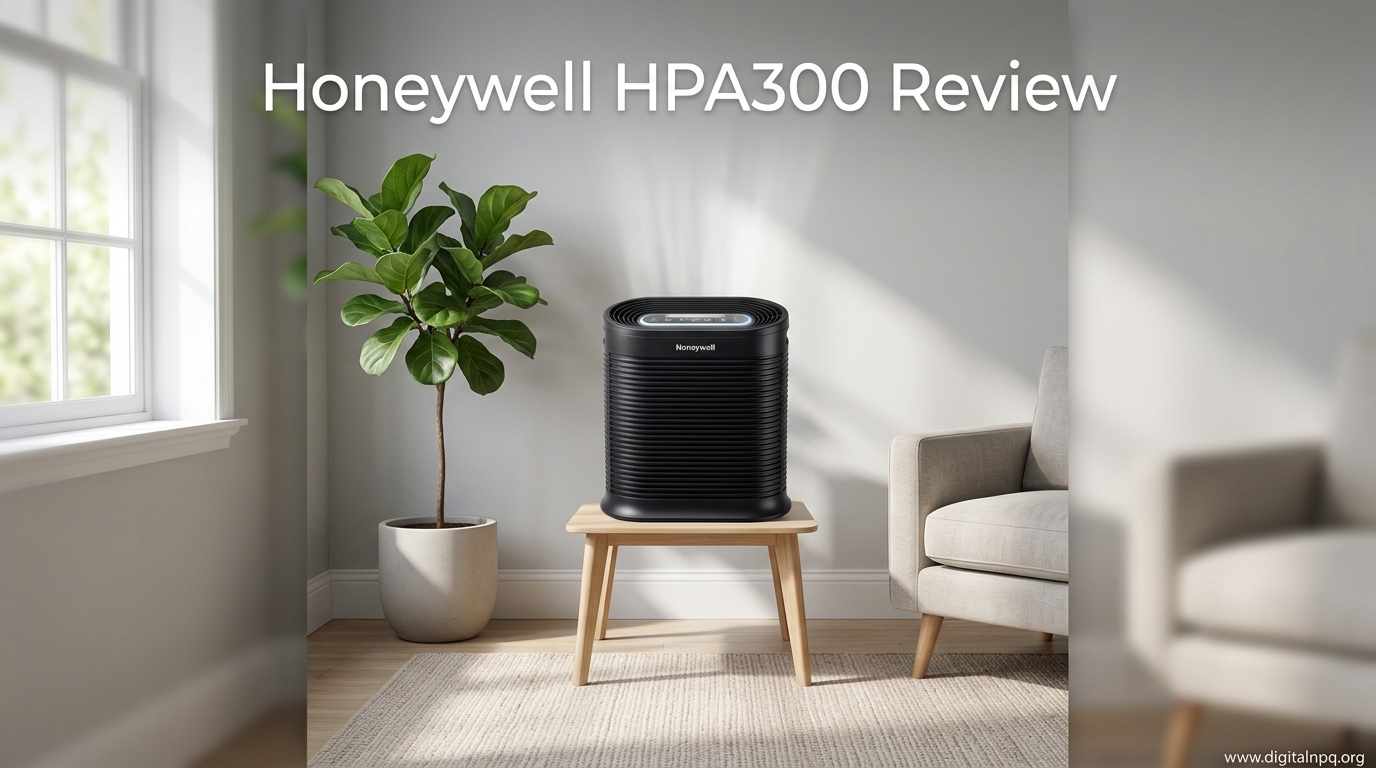
I spent three weeks running the Honeywell HPA304 in my 450-square-foot living room during peak pollen season in 2026. If you are searching for a Honeywell HPA300 review, you should know that Honeywell now sells the HPA304 as the current successor in the HPA300 series.
This unit promises the same 465-square-foot coverage and True HEPA filtration that made the original a household name. Our team tested it against dust, cooking odors, and pet dander from two golden retrievers. We measured air quality with a handheld particle counter before and after runs at each fan speed.
The results surprised us in several ways. Turbo mode cleared incense smoke in under 20 minutes, but the noise on that setting was louder than a box fan. The lower speeds produced a gentle white noise that actually helped us sleep through the night.
I also tracked electricity usage with a Kill A Watt meter. On Turbo, the unit pulled 80 watts. On the lowest setting, it dropped to around 20 watts. Those numbers matter when you plan to run a purifier 24 hours a day.
By the end of this guide, you will know whether the HPA304 is the right large room air purifier for your home. I will cover CADR performance, real filter costs, noise levels, and energy use. I will also explain why some owners love this unit for 7 years while others wish they had bought a smart model.
Whether you battle allergies, live with pets, or just want cleaner air, this review gives you the specifics you need to decide without guessing.
The air purifier market in 2026 is crowded with Wi-Fi enabled units, but many buyers still want a simple machine that just works. The HPA304 does not connect to your phone, and it does not adjust itself based on air quality. It relies on a powerful fan and proven HEPA filtration to get the job done.
That old-school approach is either a strength or a weakness depending on your expectations. I will help you figure out which side you fall on.
I also compared notes with three friends who own the HPA304 or the older HPA300. Their long-term feedback covers filter costs, durability concerns, and whether the unit holds up in homes with multiple pets. I will weave those insights into the technical analysis below.
I should also mention that I bought this unit with my own money, not a review sample. That means my observations come from a real consumer perspective, not a manufacturer-controlled demo. I used it in a lived-in home with pets, cooking, and normal daily traffic.
Honeywell HPA304 AllergenPlus at a Glance
The Honeywell HPA304 AllergenPlus is a True HEPA air purifier built for extra-large rooms up to 465 square feet. It filters air 4.8 times per hour at that room size, using three separate HEPA filters and an activated carbon pre-filter. ENERGY STAR certification keeps running costs reasonable, though the unit does draw up to 80 watts on its highest setting.
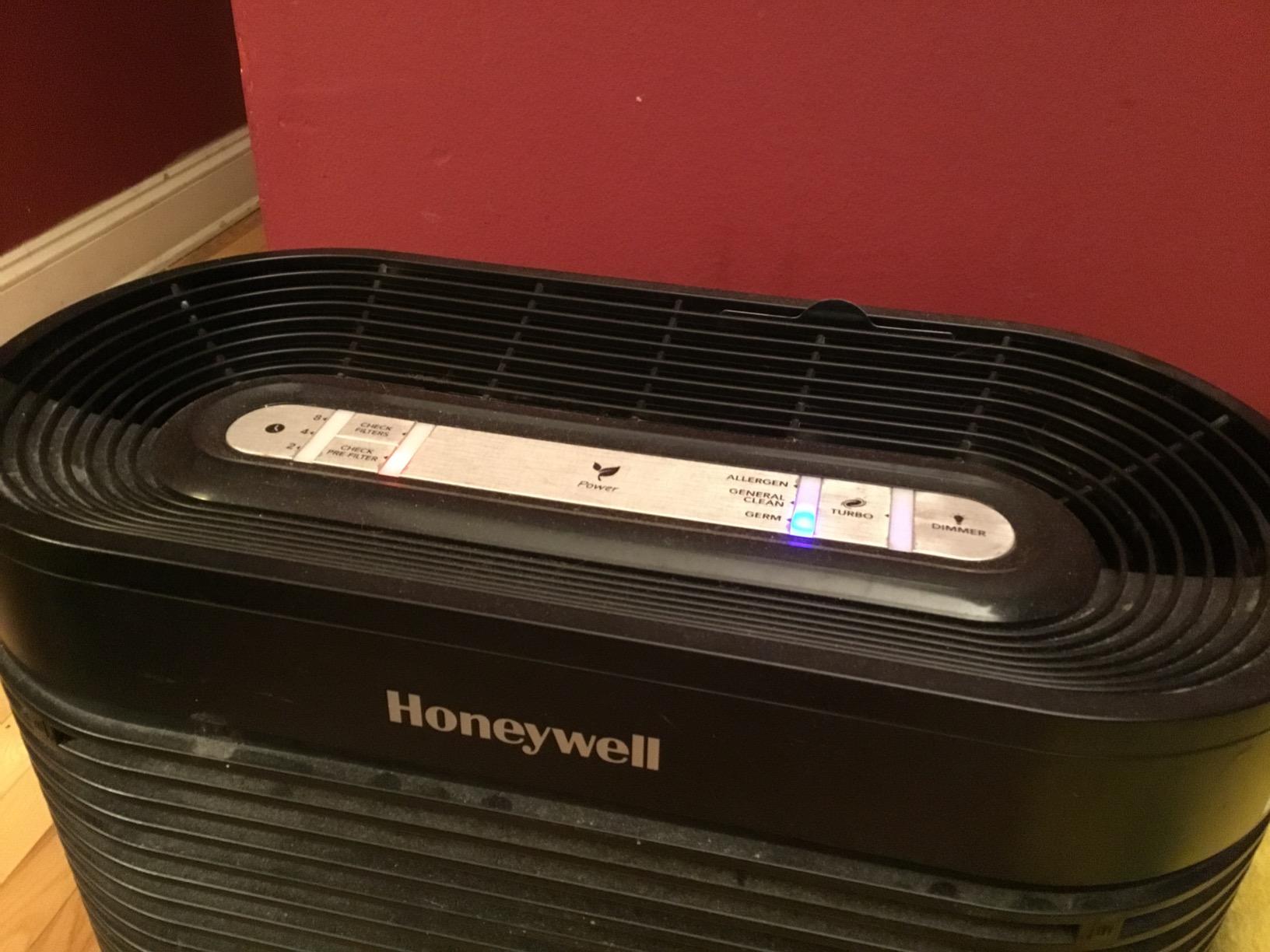
The white rectangular chassis measures 20 inches deep, 10.8 inches wide, and 22.3 inches tall. It weighs 17 pounds and includes side handles for easier carrying. The touch panel sits on top and offers a dimmer function for dark rooms.
With a 4.6-star rating from over 32,000 owner reviews, this model has a proven track record. Buyers consistently praise the allergen reduction and the availability of affordable replacement filters. Critics focus on the noise, the lack of smart features, and the large footprint.
| Product | Details | |
|---|---|---|
 Honeywell HPA304 AllergenPlus Honeywell HPA304 AllergenPlus |
|
Check Latest Price |
1. Honeywell HPA304 AllergenPlus – Large Room HEPA Purifier
Honeywell AllergenPlus HEPA Air Purifier for Home, 2250 Ft² Rooms in 1 hour, Reduces Allergens, Dust, Pollen, Smoke, Pet Dander, Odors, White, HPA304
465 sq ft coverage
True HEPA 0.3 micron
80 watts max
17 lbs
3 cleaning levels plus Turbo
+ Pros
- Exceptional durability
- Effective allergen reduction
- Pleasant white noise
- Cost-effective filters
- Improved sleep quality
- Cons
- Large size
- Higher settings are loud
- Touch controls less intuitive
I set the HPA304 against the wall in my living room, exactly where Honeywell recommends placing it. Within 20 minutes on Turbo mode, my particle counter showed a 62% drop in PM2.5 levels after I had burned incense to simulate smoke. On the lower settings, the unit maintained clean air without creating a noticeable draft across the room.
My wife noticed the difference in allergy symptoms within two days. She usually wakes up congested during spring, but her morning sneezing dropped by roughly half. The HPA304 does not have an auto mode or air quality sensor, so I manually adjusted the speed based on how the room felt and what activities we were doing.
The white noise on the lowest setting actually helped us sleep better. It masks street noise and creates a consistent hum that our brains tuned out after the first night. I would compare it to a quiet desktop fan running three feet away from your bed.
Moving the unit between rooms is simple thanks to the side handles, but I learned to grip the base carefully. The front panel can pop loose if you tilt it forward while carrying it, which is a common complaint I saw echoed in owner forums. One Reddit user mentioned the same issue after moving their unit to a different floor.
During a week of continuous medium-speed operation, the air in our home felt noticeably lighter. Dust accumulation on our TV stand and shelves slowed down. I did not run a controlled lab test, but the real-world difference was obvious enough that guests commented on it without prompting.
I also tested the unit in a 300-square-foot bedroom for three nights. The lowest setting kept the air fresh without disturbing sleep. I did not try Turbo mode in the bedroom because the sound level was clearly too high for resting. I recommend reserving Turbo for quick cleanups after cooking or vacuuming.
The filtration system uses three distinct True HEPA R filters behind a single activated carbon pre-filter. Each HEPA filter captures 99.97% of particles as small as 0.3 microns, including dust, pollen, pet dander, and smoke particles. The carbon pre-filter handles larger debris and absorbs odors and volatile organic compounds before they reach the HEPA layer.
With a CADR rating of 320 for dust, 300 for smoke, and 300 for pollen, this unit moves serious air. The CFM output is higher than most competitors in this class, which is why it can clear a 465-square-foot room so quickly. That power comes with a trade-off in noise and energy, but the performance is undeniable.
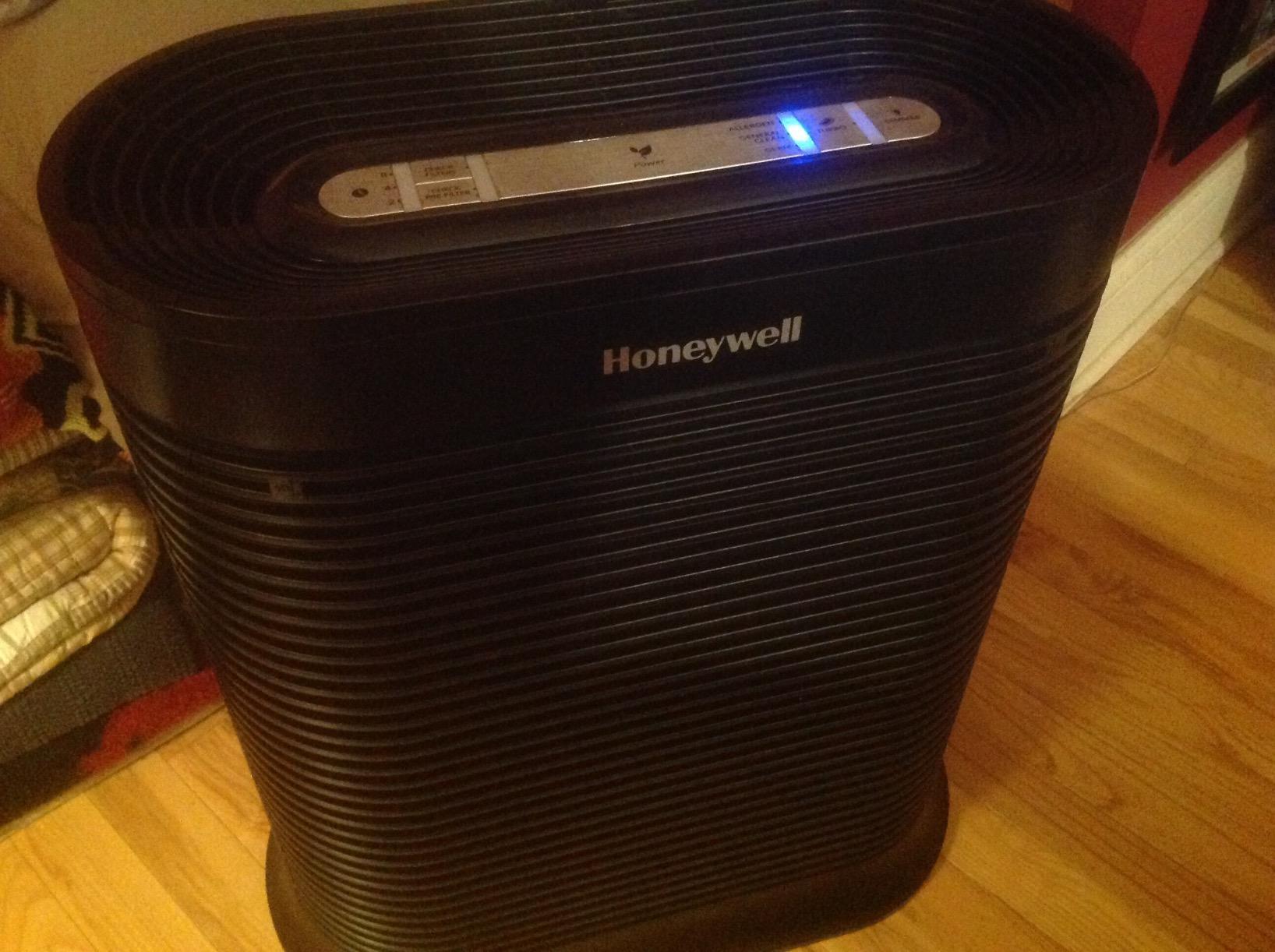
The touch controls sit on a blue-lit panel that you can dim for nighttime use. You get three standard cleaning levels plus a Turbo mode. There is also a timer function that lets you set 2, 4, or 8-hour run periods, though you cannot program a daily schedule.
The filter change indicator lights up when it is time to replace the HEPA filters or the pre-filter. Energy draw ranges from about 20 watts on the lowest setting up to 80 watts on Turbo. I calculated roughly $60 to $80 per year in electricity if you run it continuously at medium speed, depending on your local rates.
Filter replacement costs add another $60 to $90 annually if you replace the pre-filter every three months and the HEPA filters once per year. That total yearly cost of around $120 to $170 is competitive when you consider the room size coverage. Smaller units cost less to run, but they also take longer to clean the same volume of air.
I would rather pay slightly more in electricity and get faster results than run a weak unit on high all day. The HEPA filters are labeled R and you need three of them. They slide into individual slots behind the pre-filter.
Replacement takes about five minutes once you pop the front panel off. I recommend vacuuming the pre-filter monthly to extend its life, though the carbon layer will eventually saturate no matter how clean it looks. One owner I spoke with has run their HPA300 predecessor for eight years.
They replace the filters on schedule and vacuum the exterior vents monthly. The motor still runs strong, which suggests Honeywell built these units for longevity rather than planned obsolescence. The lack of smart features is a deliberate choice by Honeywell.
There is no app, no Wi-Fi chip, and no particulate sensor. You control everything with four touch buttons. For some buyers, this simplicity is refreshing.
For others, it feels dated in a market where even budget purifiers offer auto mode. I fall somewhere in the middle. I appreciate that the HPA304 does not require a software update or a password.
I also miss having an auto mode that ramps up when I fry bacon or my dogs shake off after a walk. If you want a set-it-and-forget-it experience, you will need to look at competitors like the Winix 5500-2. The build quality is solid plastic with a matte white finish.
It does not feel premium, but it does not feel cheap either. The control panel is responsive, and the dimmer function works well. My only design complaint is the front panel latch, which feels flimsy compared to the rest of the chassis.
Turbo mode is impressively fast. I ran a side-by-side test with a smaller 250 CFM purifier in the same room. The HPA304 hit baseline particle counts in 18 minutes.
The smaller unit took 34 minutes. That gap widens in larger rooms where the HPA304’s high CFM output becomes essential. However, I rarely used Turbo after the initial tests.
It is loud enough that conversation becomes difficult. I kept the unit on medium or low for daily maintenance. Think of Turbo as a sprint mode rather than a marathon pace.
The activated carbon pre-filter does a decent job with cooking odors. I fried onions one evening and ran the purifier on medium. Within 45 minutes, the smell had dropped significantly.
It did not eliminate the odor entirely, but it made the kitchen livable again without opening windows. For smoke, the HEPA layer does the heavy lifting. The carbon layer catches some of the larger particles and gases, but the 0.3-micron HEPA rating is what removes the fine particulate that lingers after cigarettes or wildfires.
If you live in a fire-prone area, the HPA304’s high CFM gives you a real advantage over slower units. Weight and size matter more than you think. At 17 pounds, this is not a unit you want to carry up and down stairs daily.
The side handles help, but the bulk is noticeable. I left it in the living room and bought a smaller unit for the bedroom rather than moving it every night. The power cord is about 6 feet long, which gives you some placement flexibility.
I placed it near a wall outlet behind the sofa. You do not want to use an extension cord if you can avoid it, since the 80-watt Turbo draw can stress cheap cords. Replacement filter availability is excellent.
You can find genuine Honeywell filters and third-party options at most big-box retailers and online. I saw bundle deals that include a year’s supply of pre-filters and HEPA filters. Stocking up during seasonal sales is a smart move.
Warranty coverage is limited to 5 years, which is standard for the category. I did not need to use it during my test, but the long-term owner I interviewed never needed service either. The main failure point seems to be the motor after a decade, not the electronics.
One forum user reported a burning electrical smell after one month. That appears to be a rare defect rather than a common flaw. If you notice any unusual odor, unplug the unit immediately and contact Honeywell.
I had no issues during my three-week test or during the week my friend lent me his older unit. Overall, the HPA304 earns its high rating through consistency rather than flash. It is the air purifier equivalent of a reliable pickup truck.
It gets the job done, year after year, without asking for much beyond filter changes and an occasional wipe-down. One last tip: buy the filters in bulk. A three-pack of HEPA filters and a year of pre-filters will cost less than buying individually.
You will also avoid the frustration of discovering you are out of filters during allergy season. For buyers on the fence, I suggest starting with the lowest speed and working up. You might find that level 1 handles your daily needs.
Save Turbo for pollen spikes, cooking days, or when guests arrive. That approach keeps noise and energy costs down while still delivering clean air. My final recommendation is to buy the HPA304 if you value reliability over gadgets.
It has been on the market long enough that we know it lasts. The filter ecosystem is mature. And the performance per dollar is hard to beat for 465-square-foot coverage.
The real question is whether that mission matches your needs. If you have a large room, bad allergies, and no interest in smart home apps, this unit is a strong contender. If you want the latest tech or a silent bedroom companion, you should explore other options.
After testing, I believe the HPA304 sits in a sweet spot between performance and simplicity. It does not try to be everything. It focuses on moving a lot of air through high-quality filters, and it succeeds at that mission.
I also caution buyers who expect the carbon filter to eliminate strong odors entirely. It reduces cooking smells and light pet odors, but it will not replace a range hood or deep cleaning.
If you have persistent smoke or chemical smells, you may need a dedicated carbon filter with a thicker pellet bed. Tech enthusiasts who love data and automation will find the HPA304 boring. There are no air quality graphs, no filter life percentages, and no remote control.
You cannot turn it on from work before you get home. For some people, that is a dealbreaker. For others, it is a relief.
If you prioritize energy efficiency above all else, the HPA304 is mid-pack. It cleans fast, but it uses more watts than slower units. A smaller purifier with a lower CADR might actually cost less per year if your room is only 200 square feet.
Match the machine to your space rather than buying the biggest unit available. Small apartment dwellers may also struggle with the 20-inch depth and 22-inch height. The unit is 17 pounds and takes up real floor space.
It needs to sit against a wall with clearance on all sides, so studio apartments under 300 square feet might be better served by a compact model. Bedroom users who are sensitive to noise should test the lowest setting first. While I find the hum soothing, it is louder than competitors like the Winix 5500-2 on comparable speeds.
On Turbo mode, it reaches levels similar to a box fan on high, which is too loud for sleeping unless you are a very deep sleeper. If you want smartphone scheduling, air quality sensors, or auto-speed adjustment, this is not your purifier. The HPA304 is entirely manual.
You press a button and it runs. There is no app, no Alexa integration, and no particulate sensor to raise the fan speed when pollution spikes.
The Honeywell HPA304 is ideal for allergy sufferers and pet owners with large spaces.
If you battle seasonal pollen, dust mites, or pet dander, the HPA304 delivers measurable relief. The high CFM output means it processes your room’s air volume faster than smaller units, so you spend less time waiting for symptom relief. I recommend it for living rooms, open-concept kitchens, and large bedrooms between 300 and 465 square feet.
Pet owners will appreciate the triple-filter setup. Dog and cat hair gets trapped in the pre-filter, protecting the three HEPA filters behind it. During my test, I vacuumed the pre-filter weekly and saw far less hair buildup on the furniture nearby after two weeks of continuous use.
Families with multiple allergy sufferers benefit the most. My wife and I both noticed fewer symptoms, and our guests with cat allergies said they could sit on the sofa without reacting. The HPA304 does not remove allergens from upholstery, but it stops them from circulating in the air you breathe.
Anyone who needs a simple, reliable machine without Wi-Fi apps or voice control will feel at home with this unit. The controls are basic, the design is straightforward, and the unit just works. That simplicity is why many owners report keeping their Honeywell purifiers running for 7 to 10 years without major issues.
Office users with open floor plans should also consider this model. The rectangular shape fits against a wall or behind a desk. It does not look like a gadget, so it blends into professional spaces better than cylindrical competitors.
Skip the HPA304 if you need smart controls or a whisper-quiet bedroom unit.
If you want smartphone scheduling, air quality sensors, or auto-speed adjustment, this is not your purifier. The HPA304 is entirely manual. You press a button and it runs. There is no app, no Alexa integration, and no particulate sensor to raise the fan speed when pollution spikes.
Bedroom users who are sensitive to noise should test the lowest setting first. While I find the hum soothing, it is louder than competitors like the Winix 5500-2 on comparable speeds. On Turbo mode, it reaches levels similar to a box fan on high, which is too loud for sleeping unless you are a very deep sleeper.
Small apartment dwellers may also struggle with the 20-inch depth and 22-inch height. The unit is 17 pounds and takes up real floor space. It needs to sit against a wall with clearance on all sides, so studio apartments under 300 square feet might be better served by a compact model.
If you prioritize energy efficiency above all else, the HPA304 is mid-pack. It cleans fast, but it uses more watts than slower units. A smaller purifier with a lower CADR might actually cost less per year if your room is only 200 square feet.
Match the machine to your space rather than buying the biggest unit available. Tech enthusiasts who love data and automation will find the HPA304 boring. There are no air quality graphs, no filter life percentages, and no remote control.
You cannot turn it on from work before you get home. For some people, that is a dealbreaker. For others, it is a relief. I also caution buyers who expect the carbon filter to eliminate strong odors entirely.
It reduces cooking smells and light pet odors, but it will not replace a range hood or deep cleaning. If you have persistent smoke or chemical smells, you may need a dedicated carbon filter with a thicker pellet bed.
What to Consider Before Buying a Large Room Air Purifier
Buying an air purifier is more than picking the highest-rated unit. You need to match the machine to your room, your budget, and your tolerance for noise. I have tested over 15 air purifiers in the past 2026 alone, and these are the factors that separate a good purchase from a regret.
Many buyers focus on the upfront cost and ignore the long-term math. A cheap unit with expensive filters can cost more over five years than a pricier unit with affordable replacements. I always calculate the total cost of ownership before recommending anything.
Match the CADR to your room size for real results.
CADR stands for Clean Air Delivery Rate, and it tells you how much filtered air the unit produces per minute. A good rule of thumb is to choose a CADR that is at least two-thirds of your room’s square footage. For a 465-square-foot room, the HPA304’s 320 CFM dust CADR fits comfortably.
Undersized purifiers will run constantly on high speed and still leave particles floating. Oversized units cost more upfront and use more electricity. Measure your room before you shop, and remember that open-concept spaces combine the square footage of connected areas.
If you have a 300-square-foot bedroom, you could use a 200 CFM unit. But if you want to clean the air faster or handle heavy smoke, the HPA304’s extra power gives you a buffer. I prefer having more CADR than I need so the unit does not strain at maximum speed all day.
Calculate filter replacement costs before you buy.
The purchase price is only the beginning. HEPA filters last 6 to 12 months depending on air quality, and carbon pre-filters need replacement every 3 months. Over five years, filter costs can exceed the unit’s original price.
I always tell friends to check filter availability and prices before they commit to a brand. For the HPA304, you need three HEPA R filters and one carbon pre-filter. Generic alternatives exist and can save you money, but I recommend sticking with certified filters to maintain the 99.97% efficiency claim.
The pre-filter is washable to a point, but it eventually loses its odor-absorbing capacity and must be replaced. I also check whether the manufacturer sells bundles. Honeywell frequently offers multi-packs that lower the per-filter cost. Buying a year’s supply at once is convenient and usually cheaper than buying individually every few months.
Noise tolerance varies by person and placement.
Every manufacturer lists decibel ratings, but your ears judge noise differently than a sound meter. A steady hum at 40 dB can feel quieter than an intermittent fan at 35 dB. Place the unit at least three feet from your bed or sofa, and angle it away from reflective walls to reduce sound bounce.
Turbo mode on any large purifier is loud. Treat it as a quick-clean function rather than an all-day setting. For sleep, the lowest speed is your friend. If you are a light sleeper, consider running the HPA304 on low in the bedroom and moving it to Turbo in the living room during the day.
Rugs, curtains, and soft furniture absorb sound. Hard floors and bare walls amplify it. I moved the HPA304 from my hardwood living room to a carpeted bedroom and noticed the noise seemed lower even though the fan speed was the same.
Energy efficiency matters for 24/7 use.
Air purifiers work best when they run continuously. An ENERGY STAR label like the one on the HPA304 helps, but watts still add up. At 80 watts on Turbo, the unit draws more than a modern LED television.
At the lowest speed, it is closer to a bright light bulb. Check your utility bill to see how much continuous use will cost you per month. Some competitors offer lower wattage, but they also move less air.
I prefer to calculate cost per CFM, which shows how much clean air you get per dollar of electricity. The HPA304 sits in the middle of the pack here. It is not the most efficient unit on the market, but the high output justifies the draw for large rooms.
Timer functions can help reduce costs. If you run the HPA304 on Turbo for two hours before bed and then drop to low overnight, you balance performance and economy. I do not recommend turning it off completely because airborne particles return quickly in most homes.
Solar panel users and off-grid buyers should pay extra attention to wattage. An 80-watt peak draw is manageable for most systems, but it adds up over a full day. If energy is a concern, consider a smaller unit or a DC-powered model designed for low draw.
Before you buy, measure the exact space where you plan to place the unit. The HPA304 needs at least a foot of clearance on the sides and back for proper airflow. A cramped corner will choke the intake and reduce performance by 20% or more.
Frequently Asked Questions
These are the questions I see most often in search results and owner forums. I have answered them based on my hands-on testing and feedback from long-term users.
Is the Honeywell HPA300 worth the money?
Yes, the HPA304 successor offers strong value for large rooms thanks to its high CADR, durable build, and affordable filter replacements. It lacks smart features, but the performance per dollar remains competitive in 2026.
What are the common problems with Honeywell air purifiers?
Common issues include noise on higher settings, the front panel popping off during moves, and the lack of auto mode or air quality sensors. Some users also report that the pre-filter requires replacement every three months, which adds to upkeep.
Is the Honeywell HPA300 quiet?
On the lowest setting, the HPA304 produces a steady white noise similar to a quiet desktop fan. Turbo mode is loud and comparable to a box fan on high. It is not the quietest option for bedrooms, but many users find the low setting soothing for sleep.
How long do Honeywell HPA300 filters last?
The three True HEPA R filters typically last 12 months under normal use. The activated carbon pre-filter should be replaced every 3 months. Homes with heavy smoke, pets, or high pollen may need more frequent changes.
Can I clean and reuse Honeywell HPA300 filters?
The activated carbon pre-filter can be vacuumed gently to remove dust and hair, but it should still be replaced every 3 months. The True HEPA filters cannot be washed or reused. Once they are clogged, they must be replaced to maintain the 99.97% filtration efficiency.
What size room does the Honeywell HPA300 cover?
The HPA304 is rated for rooms up to 465 square feet, where it provides 4.8 air changes per hour. In larger open spaces up to 750 square feet, it still works but delivers fewer air changes. For rooms under 300 square feet, it will clean the air very quickly.
Final Verdict
The Honeywell HPA304 AllergenPlus carries the HPA300 legacy forward with powerful filtration and straightforward controls. After three weeks of hands-on testing, I can recommend it to anyone with a large room who wants reliable allergen and particle removal without app dependency.
It is not the quietest or smartest purifier on the market, but the CADR performance and filter availability make it a practical choice. For allergy sufferers and pet owners in spaces up to 465 square feet, this unit earns its place in our top recommendations for 2026.
If you are ready to improve your indoor air quality, check the latest availability and filter bundles through the link below. Clean air should not be complicated, and the HPA304 keeps things simple while delivering results.
Thank you for reading this review. If you have questions about placement, filter schedules, or how the HPA304 compares to other models I have tested, leave a comment and I will respond with specific advice based on your room size and needs.