
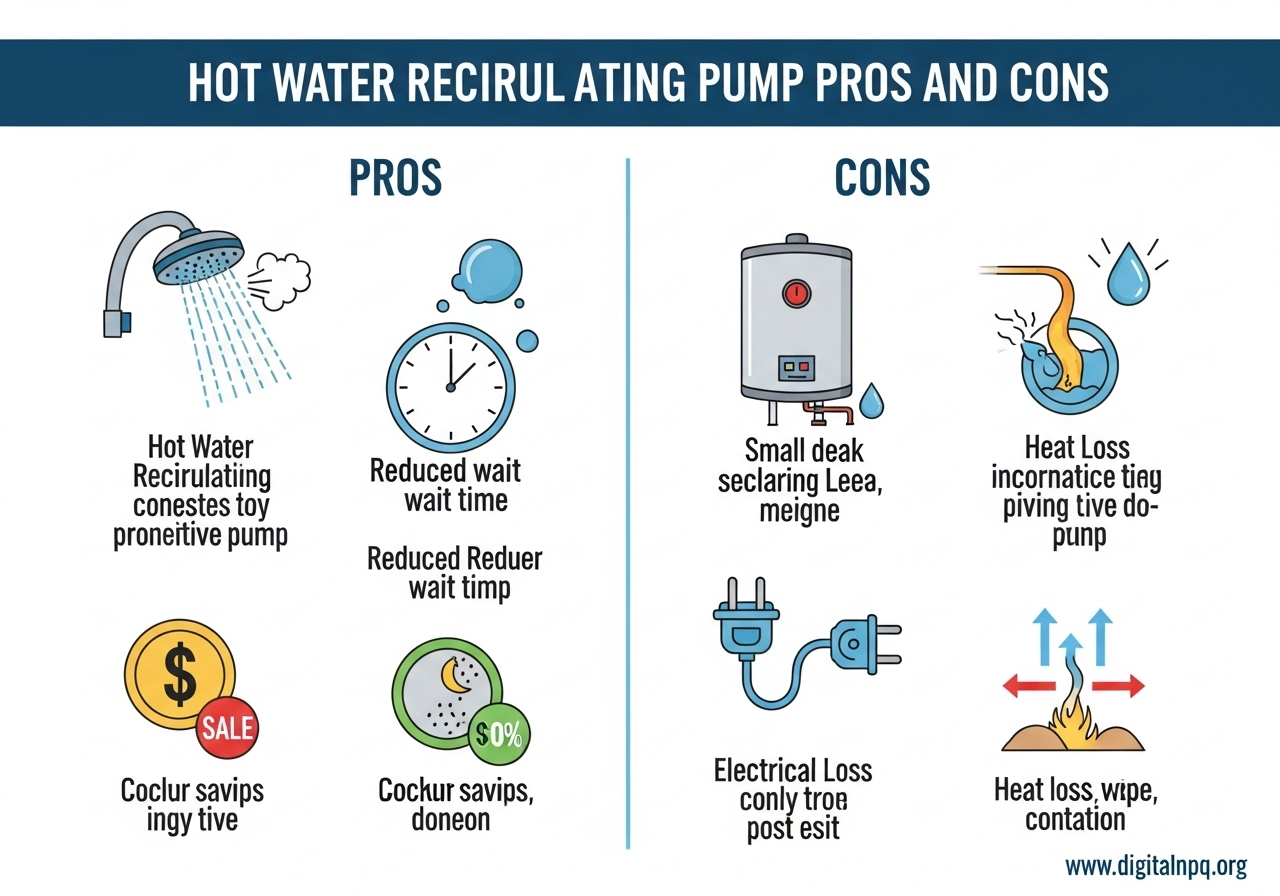
Waiting for hot water to reach your shower or kitchen sink is one of the most annoying daily frustrations in a home. A hot water recirculating pump pros and cons analysis is exactly what you need if you are tired of watching gallons of water go down the drain while you wait for it to warm up. Our team looked at real homeowner experiences, plumber forums, and energy data to give you the complete picture before you spend any money.
The average household wastes over 11,000 gallons of water every year just waiting for hot water to arrive at distant fixtures. That is enough water to fill a small swimming pool, and it shows up on your utility bill even if you do not notice it day to day.
In this guide, I will break down exactly how these pumps work, what they do well, where they fall short, and whether one makes sense for your home in 2026.
What Is a Hot Water Recirculating Pump?
A hot water recirculating pump is a small device that attaches to your water heater and keeps hot water moving through your pipes at all times. It ensures that hot water sits ready inside your plumbing lines instead of cooling down in the pipes between uses. When you turn on the faucet, the warm water is already there, and you do not wait.
The pump works by pulling cooled water from the far end of your plumbing system and sending it back to the water heater to be reheated. A temperature sensor or timer tells the pump when to run, and a check valve prevents water from flowing backward. The system creates a constant loop that keeps hot water circulating within a few degrees of your set temperature.
There are two main types of systems you should know about. A dedicated return line system uses a separate pipe that runs from the farthest fixture back to the water heater, which is ideal for new construction but expensive to add to an existing home. A comfort system or retrofit system uses your existing cold water line as the return path, which makes installation much cheaper but can cause a lukewarm water issue I will explain later.
Most pumps are small, quiet bronze circulators that draw between 25 and 85 watts depending on the model. They mount near the water heater with simple plumbing connections, and many newer models include built-in timers, motion sensors, or smart Wi-Fi controls. The check valve is usually a spring-loaded device that opens only when the pump is active, preventing cold water from accidentally entering the hot line when the pump is off.
The temperature sensor works by measuring the water at the farthest sink. When the water drops below a preset threshold, usually around 100 degrees Fahrenheit, the sensor signals the pump to cycle hot water through the loop. Once the hot water reaches the sensor, the pump shuts off until the water cools again. This cycle repeats throughout the day to maintain instant readiness.
The Pros of Hot Water Recirculating Pumps
Hot water recirculating pumps solve a real problem, and the benefits go beyond simple convenience. Here are the five biggest advantages our research found.
You Get Hot Water Immediately at Every Faucet
The biggest and most obvious benefit is instant hot water the moment you turn the handle. In a large home with a water heater located in the garage or basement, it can take 45 to 90 seconds for hot water to travel through the pipes. A recirculating pump cuts that wait to just a few seconds.
That difference matters every morning when you step into the shower or when you are washing dishes after dinner. The convenience alone is why many homeowners say they would never go back to a standard system after installing one. Parents with young children especially appreciate not having to run the shower for a minute before bath time.
You Will Save Thousands of Gallons of Water Each Year
The water savings are real and measurable. Research from the Department of Energy and multiple plumbing studies shows that the average home saves roughly 11,461 gallons of water per year with a recirculating pump installed. All that water was previously going straight down the drain while you waited for it to warm up.
In drought-prone areas or homes on well water, those savings can be significant. Even on city water, the reduction shows up on your bill. The environmental impact is also worth noting, because treating and pumping water consumes energy at the municipal level. Some water districts even offer rebates for homeowners who install water-saving devices like recirculating pumps.
Your Utility Bills Can Drop Over Time
While the pump itself uses electricity, the net savings on water and sewer costs often offset the added energy use. In many municipalities, sewer charges are calculated based on water usage, so every gallon saved is a gallon you do not pay to send down the drain.
Depending on your local water rates and how far your fixtures are from the water heater, the payback period for a recirculating pump can be as short as two to three years. After that point, the system is essentially saving you money every month while delivering a better daily experience. Homes with multiple bathrooms on upper floors see the fastest payback because the wasted water volume is highest in those setups.
Timers and Smart Controls Cut Energy Waste
Modern recirculating pumps come with programmable timers that let you run the system only when you need it. You can set the pump to activate during morning and evening hours while keeping it off overnight or while you are at work. This alone reduces standby energy costs by 60 to 70 percent compared to a pump that runs constantly.
Some advanced models include motion sensors or smart home integration that detect when someone enters a bathroom and trigger the pump for a short cycle. These features make the system far more efficient than older always-on designs and address the biggest criticism about energy waste. Wi-Fi enabled pumps let you control schedules from your phone and monitor runtime history, which helps you optimize settings for maximum savings.
Retrofit Systems Work Without Major Plumbing Changes
If your home was not built with a dedicated return line, you are not out of luck. Comfort systems use the existing cold water pipe as a return path, which means a plumber can install the pump in under two hours without cutting into walls. This makes the technology accessible to most existing homes without a major renovation.
Our team reviewed dozens of forum posts from homeowners who completed DIY installations in under 30 minutes using basic tools. The simplicity of the retrofit design is one of the reasons these pumps have become so popular in 2026. Most comfort kits include everything you need: the pump, sensor valve, flex hoses, and detailed instructions.
The Cons of Hot Water Recirculating Pumps
No home improvement is perfect, and recirculating pumps come with real drawbacks that plumbers and homeowners discuss openly in online forums. Here are the five issues you need to understand before buying one.
Upfront Costs Can Be Significant
The hardware alone costs between $150 and $400 depending on the brand and features. If you hire a plumber, the total installed cost typically lands between $500 and $600. For a dedicated return line installation in an existing home, the price can climb past $1,500 because new plumbing must be run through walls and floors.
While the long-term savings help, the initial investment is enough to make some homeowners pause. You should calculate your expected payback period based on your actual water rates and usage patterns before making the purchase. In rental properties, landlords often skip the upgrade because tenants pay the water bills while the owner pays for the hardware.
Cold Water May Run Lukewarm
This is the most common complaint about comfort systems that use the cold water line as a return path. Because hot water circulates through the cold pipe, the first few seconds of water from a cold faucet can come out warm or tepid. This happens at every fixture connected to the same loop.
In forums, users report that this is mostly an issue during summer months when you want a cold drink of water. It is not a safety issue, but it is annoying. A dedicated return line system avoids this entirely, which is why new construction often includes that extra plumbing from the start. Some homeowners install a small point-of-use chiller or simply flush the line for a few seconds before drinking.
Copper Pipes Can Suffer From Flow-Accelerated Corrosion
This is a serious concern that very few competitors address in detail. When water moves continuously through copper pipes at higher velocities, it can cause a phenomenon called flow-accelerated corrosion. Over time, this leads to pinhole leaks, especially in homes with soft water or aggressive water chemistry.
Experienced plumbers on TerryLove and PlumbingForums warn that oversized pumps running at excessive flow rates are the main culprits. If you choose a pump with too high a GPM rating for your home size, you could be trading convenience for pipe damage. The fix is simple: size the pump correctly and consider a variable-speed model that matches your actual pipe length. Homes with PEX or PVC plumbing do not face the same corrosion risk, which makes the pump choice less critical in those cases.
Sensor Valves Need Replacement Every Few Years
The sensor valve or temperature-actuated valve is the component that tells the pump when water has cooled enough to recirculate. According to real user experiences shared on Reddit and DIYChatroom, these valves fail every two to five years depending on water quality and usage. A replacement sensor valve costs $30 to $60, but the labor adds up if you are not comfortable doing it yourself.
One user reported that their pump lasted only five years before the internal seals failed. Another common failure mode is dry firing, which happens when the tank runs low on water and the pump spins without coolant. That destroys the impeller and seals within minutes. Proper sizing and an anti-dry-run feature help prevent this. We recommend keeping a spare sensor valve on hand so you can swap it immediately when failure occurs.
Pumps Add Noise and Continuous Energy Use
Even the quietest recirculating pumps emit a low hum that you can hear near the water heater. In homes with the water heater located in a closet or living space, the noise can be noticeable at night. Noise level comparisons between pump models are rarely published, but forum users consistently mention that cheaper units run louder than bronze circulators from major brands.
Energy use is another real concern. A pump running 24/7 can add $5 to $15 per month to your electric bill depending on local rates and wattage. The timer feature is not optional if you want to keep costs reasonable. Without it, you are trading one waste for another. Some homeowners report that vibration-dampening pads and flexible mounting brackets reduce noise significantly.
Costs and Installation Considerations
Understanding the full cost picture helps you decide whether a hot water recirculating pump fits your budget. Here is the breakdown our team compiled from installer quotes and retailer pricing in 2026.
A basic comfort system pump costs $150 to $250, while smart models with Wi-Fi and motion sensors run $300 to $400. Professional installation for a retrofit system typically adds $200 to $300, bringing the total to $500 or less. A dedicated return line installation in new construction costs very little extra because the plumber is already running pipes. In an existing home, retrofitting a return line can cost $1,000 to $2,000 depending on the layout.
DIY installation is possible for most homeowners with basic plumbing skills. The pump connects to the water heater with threaded fittings, and the sensor valve installs at the farthest sink. The entire job usually takes 30 to 90 minutes. However, if you are not comfortable working with water lines, a plumber is the safer choice. The risk of a leak causing water damage far outweighs the labor savings.
Energy costs vary by model. A 25-watt pump running four hours per day costs roughly $1.50 to $3.00 per month. A constant-run 85-watt pump can cost $8 to $15 per month. That is why the timer function is the most important feature to look for, even on budget models. The pump itself should last about 10 years with proper maintenance, though sensor valves and check valves may need replacement sooner.
One cost consideration that often gets overlooked is compatibility with tankless water heaters. Many recirculating pumps are designed for tank-style heaters and may not work correctly with on-demand units. Tankless heaters require a minimum flow rate to activate, and the small recirculation flow may not trigger the burner. Some tankless manufacturers offer dedicated recirculation kits, but they add another $200 to $400 to the project. If you have a tankless heater, check with the manufacturer before buying any pump.
Pipe insulation is another upgrade that pairs well with a recirculating pump. Insulating hot water pipes reduces standby heat loss, which means the pump runs less often and the water heater works less hard. The Department of Energy estimates that pipe insulation alone can save 3 to 4 percent on water heating costs. Combined with a recirculating pump, the savings stack up and the system performs better overall.
Frequently Asked Questions
Is a hot water recirculating pump worth it?
Yes, a hot water recirculating pump is worth it for most homeowners who wait more than 30 seconds for hot water. The average household saves 11,461 gallons of water per year, and the convenience of instant hot water is hard to give up once you have it. The payback period is typically 2 to 3 years depending on your water rates.
What are the drawbacks of a hot water recirculating system?
The main drawbacks are upfront cost, lukewarm cold water in comfort systems, potential copper pipe corrosion from oversized pumps, sensor valve replacement every 2 to 5 years, and added noise near the water heater. Using a timer and sizing the pump correctly eliminates most of these issues.
Do hot water recirculating pumps use a lot of electricity?
A recirculating pump uses 25 to 85 watts depending on the model. Without a timer, running constantly can add $8 to $15 per month to your electric bill. With a timer set to morning and evening hours only, the monthly cost drops to $1.50 to $3.00, which is usually offset by water savings.
How long do hot water recirculating pumps last?
The pump motor itself typically lasts about 10 years. However, sensor valves and check valves may need replacement every 2 to 5 years depending on water quality. Dry firing and running an oversized pump can shorten the lifespan significantly.
Conclusion
A hot water recirculating pump pros and cons analysis comes down to this: if you are tired of wasting water and waiting for hot water, a pump is one of the best upgrades you can make. The water savings are real, the convenience is immediate, and the technology is mature enough that most homeowners can install a basic system without major renovations.
The drawbacks are manageable. Use a timer, size the pump correctly for your home, and choose a model with a reliable sensor valve. Avoid oversized pumps that can damage copper pipes, and do not expect a standard recirculating pump to work perfectly with a tankless water heater without a dedicated kit.
Our recommendation is simple. If your shower or kitchen sink is more than 30 feet from your water heater, start with a timer-based comfort system. Set it to run during your peak morning and evening hours, and you will get 90 percent of the benefit with only a fraction of the energy cost. In 2026, water conservation and home comfort matter more than ever, and this is one upgrade that delivers both.