
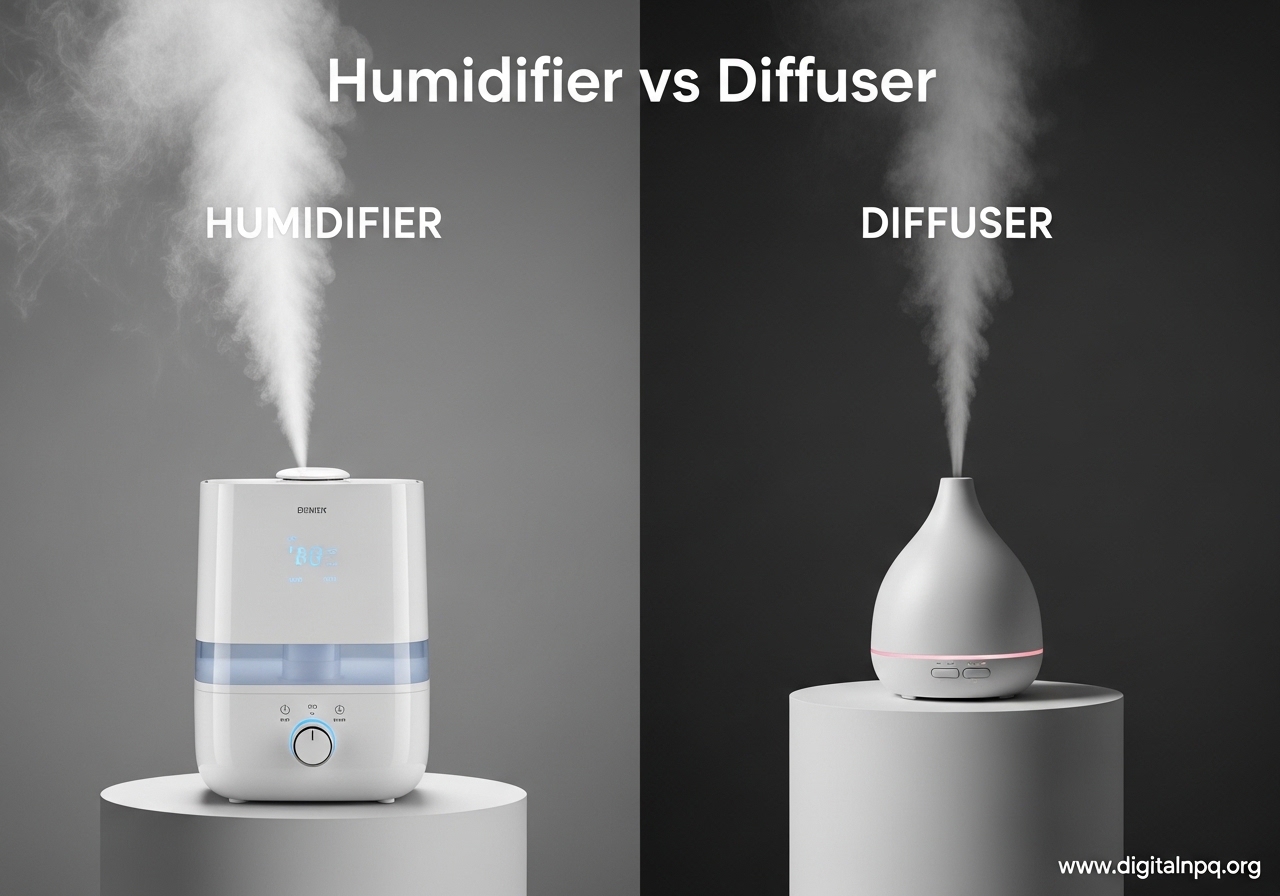
If you have ever stood in the home appliance aisle wondering whether you need a humidifier or a diffuser, you are not alone. The short answer: a humidifier adds moisture to dry air to improve humidity levels in a room, while a diffuser disperses essential oils into the air for fragrance and aromatherapy benefits. They look similar, but they serve completely different purposes.
I spent weeks researching both devices after moving into a dry climate apartment, and the confusion is real. Many people buy a diffuser thinking it will fix their dry skin, or grab a humidifier expecting it to fill the room with lavender. This guide breaks down exactly what each device does, when to use each one, and how to pick the right option for your specific needs.
Humidifier vs Diffuser at a Glance
Before we get into the details, here is a quick side-by-side comparison of how these two devices stack up against each other.
| Feature | Humidifier | Diffuser |
|---|---|---|
| Primary Purpose | Adds moisture to air | Disperses essential oils for scent |
| Output | Water vapor or steam | Fine mist with essential oils |
| Typical Tank Size | 1 to 6 gallons | 100 to 500 mL |
| Runtime | 8 to 48 hours | 3 to 10 hours |
| Essential Oils | Only with aroma tray (not standard) | Designed for essential oils |
| Room Coverage | Up to large rooms (500+ sq ft) | Small to medium rooms (200-300 sq ft) |
| Best For | Dry air, sinus issues, skin, plants | Aromatherapy, relaxation, fragrance |
What Is a Humidifier?
A humidifier is a device designed to increase the humidity level in a room or an entire home. It pulls water from a built-in reservoir and disperses it as vapor or mist into the surrounding air. The goal is simple: raise the moisture content so that dry air stops causing discomfort.
Dry air is more than just an annoyance. When indoor humidity drops below 30 percent, you start noticing chapped lips, itchy skin, scratchy throat, and even static shocks every time you touch a doorknob. Humidifiers directly address these problems by pushing the room’s relative humidity back into the comfortable 30 to 50 percent range recommended by the EPA.
Types of Humidifiers
Not all humidifiers work the same way. Here are the main types you will find on the market.
Evaporative humidifiers use a wick filter to absorb water from the tank. A built-in fan blows air through the wet filter, causing the water to evaporate naturally into the room. These are self-regulating because when humidity is already high, less water evaporates from the wick. They are widely available and tend to be budget-friendly.
Ultrasonic humidifiers use high-frequency sound vibrations to break water into microscopic droplets. These droplets form a fine cool mist that is silently pushed into the air. They are nearly silent during operation, which makes them a popular choice for bedrooms and nurseries.
Warm mist humidifiers (also called steam vaporizers) boil water internally and release the resulting steam into the air. The boiling process kills most bacteria and minerals, so the output tends to be cleaner. They are ideal for cold and flu season because the warm steam can feel soothing on congested airways.
Console and whole-house humidifiers are larger units that can humidify multiple rooms or an entire floor. They hold several gallons of water and run for a full day or more before needing a refill. Some connect directly to your HVAC system for whole-home coverage.
What Is a Diffuser?
A diffuser is an aromatherapy device that disperses essential oils into the air so you can enjoy their fragrance and therapeutic properties. While it does use water (in most models), its primary job is scent distribution, not humidity control.
Think of a diffuser as the modern replacement for scented candles and plug-in air fresheners. Instead of synthetic fragrances, it uses natural essential oils like lavender, eucalyptus, peppermint, or lemon. The device breaks these oils into fine particles and releases them as an aromatic mist that fills the room.
Types of Diffusers
There are four main types of diffusers, each using different technology to get essential oils into the air.
Ultrasonic diffusers are the most common type. They use a small vibrating disc that creates high-frequency vibrations in water, breaking essential oils into tiny particles and releasing them as a fine mist. They are quiet, affordable, and often include LED lights that create a calming ambiance. Most hold between 100 and 500 mL of water.
Nebulizing diffusers do not use water at all. They work by forcing a stream of air through a small tube that contains essential oil, atomizing the oil directly into the air. This produces the strongest scent output because the oil is not diluted. However, they use up essential oils faster and tend to be louder than ultrasonic models.
Heat diffusers use gentle heat to evaporate essential oils into the air. Candles or electric heating elements warm the oil, causing it to release its fragrance. While effective, heat can alter the chemical composition of certain oils, reducing some of their therapeutic properties.
Evaporative diffusers use a fan to blow air across a pad or filter soaked in essential oils. The air causes the oils to evaporate and disperse naturally. They are simple and portable but do not produce a visible mist.
Key Differences Between Humidifiers and Diffusers
Understanding the humidifier vs diffuser comparison comes down to a few critical distinctions that affect how you use each device and what results you can expect.
Moisture Output
This is the single biggest difference. Humidifiers produce a significant amount of water vapor, sometimes releasing up to several gallons of moisture per day. A typical humidifier can raise a room’s humidity by 10 to 20 percent, which is enough to relieve dry skin, protect wood furniture, and help houseplants thrive.
Diffusers, on the other hand, produce a very small amount of moisture. Even running a 300 mL diffuser for its full runtime adds only a trace amount of humidity to the air. It is not enough to make a noticeable difference in room humidity levels, even in a small space.
Tank Size and Runtime
The difference in tank size tells you a lot about what each device is built for. Humidifiers typically have tanks ranging from 1 gallon to 6 gallons, which translates to 12 to 48 hours of continuous operation. Some large console models can run for multiple days.
Diffusers hold between 100 and 500 mL of water and usually run for 3 to 10 hours before shutting off automatically. The smaller tank makes sense because the device is not trying to humidify a room. It only needs enough water to carry the essential oils into the air.
Essential Oil Compatibility
Diffusers are specifically designed to work with essential oils. The materials in the tank and internal components resist corrosion from concentrated oils, and the mist output is calibrated to disperse oil particles effectively.
Standard humidifiers are not built for essential oils. Adding oils directly to the tank can degrade plastic components, clog filters, and void the warranty. Some humidifiers do include a separate aroma tray or pad where you can add a few drops of oil without putting it in the water tank. If you want both functions, look for a humidifier specifically labeled as having an aromatherapy feature.
Room Coverage
Humidifiers are designed to treat entire rooms and can cover anywhere from 300 to over 1,000 square feet depending on the model. Whole-house units connected to HVAC systems can treat even larger areas.
Diffusers are best suited for small to medium spaces, typically 200 to 300 square feet. The scent dissipates quickly in larger or open-concept areas, so the effect is localized to the room where the diffuser sits.
Maintenance Requirements
Humidifiers require regular cleaning to prevent mold, bacteria, and mineral buildup. If you use tap water, minerals can create a white dust (especially with ultrasonic models) that settles on furniture. Most manufacturers recommend cleaning weekly and using distilled or demineralized water.
Diffusers need cleaning too, but the process is simpler. After each use, you should wipe out the tank and clean the ultrasonic disc. A weekly deep clean with water and white vinegar keeps the diffuser running well. Because diffusers use less water and run for shorter periods, buildup tends to be less of an issue.
Benefits of Using a Humidifier
If you live in a dry climate or run your heating system frequently during winter, a humidifier can make a noticeable difference in your comfort level. Here are the specific benefits I found most impactful.
Relieves dry skin and chapped lips. When indoor humidity drops, your skin loses moisture to the surrounding air. Running a humidifier keeps the air hydrated, which helps your skin retain its natural moisture. Many people notice softer skin and fewer cracked lips within a few days of consistent use.
Eases sinus congestion and sore throat. Dry air irritates the mucous membranes in your nose and throat, making congestion and morning sore throats worse. Adding moisture back into the air soothes these passages and can help you breathe more comfortably, especially while sleeping.
Reduces static electricity. If you get shocked every time you touch a light switch or your dog’s fur stands on end when you pet them, the air in your home is too dry. Raising humidity levels eliminates most static electricity problems.
Protects wood furniture and floors. Hardwood floors, wood furniture, and even musical instruments like guitars can crack and warp in extremely dry conditions. Maintaining proper humidity helps preserve these items.
Helps indoor plants thrive. Many common houseplants come from tropical environments and struggle in dry indoor air. A humidifier provides the moisture they need without you having to mist them by hand every day.
Benefits of Using a Diffuser
Diffusers serve a different but equally valuable purpose. If you are looking to create a calming atmosphere or enjoy the therapeutic effects of essential oils, a diffuser is the right tool for the job.
Provides aromatherapy benefits. Different essential oils offer different effects. Lavender is widely used for relaxation and sleep support. Peppermint can help with focus and alertness. Eucalyptus is popular during cold season for its clearing properties. A diffuser lets you fill your space with these natural scents without synthetic chemicals.
Creates a calming sleep environment. Many people run a diffuser with lavender or chamomile oil in their bedroom before bed. The gentle mist and soft LED lighting on most models create a wind-down routine that signals your body it is time to sleep.
Replaces synthetic air fresheners. Plug-ins, aerosol sprays, and scented candles often contain artificial fragrances and chemicals. A diffuser with pure essential oils gives you natural fragrance without the questionable ingredients.
Adds ambiance to any room. Most ultrasonic diffusers feature color-changing LED lights that can be set to a single color or left to cycle through. Combined with the gentle mist output, they double as decorative pieces that enhance the mood of a room.
Portable and energy efficient. Diffusers are compact, use very little electricity, and can be moved from room to room easily. You can run one on your desk while working, then move it to the living room in the evening.
Which One Do You Need?
Choosing between a humidifier and a diffuser comes down to what problem you are trying to solve. Here is a straightforward way to decide.
Choose a humidifier if: your indoor air feels dry, you wake up with a sore throat or dry sinuses, your skin is flaky and itchy, you have hardwood floors or wood furniture that is showing signs of drying, or you keep houseplants that need humidity. A humidifier addresses the physical quality of the air you breathe.
Choose a diffuser if: you want to enjoy essential oil fragrances, you are looking for a natural way to relax or improve your sleep, you want to replace chemical air fresheners, or you simply enjoy the ambiance of a gently glowing, misting device. A diffuser focuses on mood, scent, and aromatherapy.
What About Combo Devices?
Some humidifiers now come with a built-in aromatherapy tray, giving you the moisture output of a humidifier with the option to add essential oils. These 3-in-1 devices are a good middle ground if you want both benefits but only have space or budget for one unit.
The key thing to check is that the device has a dedicated aroma tray or essential oil compartment, not just instructions to add oils directly to the water tank. Oils in the main tank can damage the humidifier’s internal components over time.
Room-by-Room Recommendations
In the bedroom, a humidifier is usually the better choice because it runs longer and helps with overnight dry throat and sinus issues. If you primarily want aromatherapy for sleep, a diffuser with lavender oil works well.
In the living room, either device works depending on your goal. A large-room humidifier helps during dry winter months, while a diffuser creates a welcoming scent for guests.
In a baby’s room, a cool mist humidifier is generally recommended by pediatricians to maintain comfortable humidity levels. Avoid diffusers with strong essential oils around infants, as some oils are not safe for young children.
In a home office, a diffuser with peppermint or rosemary oil can help with focus and create a pleasant work environment without taking up much space.
Health and Safety Considerations
Safety is an important factor when comparing humidifier vs diffuser options, especially if you have respiratory conditions, pets, or small children at home.
Are Diffusers Safe for Lungs?
For most healthy adults, using a diffuser with high-quality essential oils in a well-ventilated room is safe. However, some people experience respiratory irritation from certain oils, particularly strong ones like eucalyptus, tea tree, or menthol-based blends.
If you have asthma or sensitive airways, start with a very small amount of oil and see how you react. Some Reddit users have reported that diffusers triggered asthmatic reactions, especially in enclosed spaces. Always use oils in moderation and keep the room ventilated.
Pet Safety
This is a topic most guides skip, but it matters if you have animals at home. Many common essential oils are toxic to pets, especially cats and dogs. Oils like tea tree, eucalyptus, clove, citrus, pine, and peppermint can cause symptoms ranging from mild respiratory distress to liver damage in pets.
If you have pets, research every essential oil before using it in a diffuser. Keep the diffuser in a room your pets can leave freely, and never run it in an enclosed space where a pet is trapped. Birds are particularly sensitive to airborne substances and should not be in the same room as a running diffuser.
Humidifier Safety
Warm mist humidifiers that boil water can cause burns if tipped over, so they are not ideal for households with young children. Cool mist humidifiers are generally safer but can disperse bacteria and minerals into the air if not cleaned regularly. Using distilled water and cleaning the tank weekly minimizes these risks.
If you have COPD or another chronic respiratory condition, talk to your doctor before using either device. Humidifiers can help by keeping airways moist, but excessive humidity (above 50 percent) can encourage mold and dust mite growth, which may worsen symptoms.
Maintenance and Cleaning Tips
Both devices need regular upkeep to function properly and stay sanitary. Here is what I recommend based on manufacturer guidelines and personal experience.
For humidifiers: Empty the tank daily and refill with fresh water. Do a deep clean once a week using a mixture of white vinegar and water. Scrub the tank interior with a soft brush to remove mineral deposits and biofilm. If your model uses a wick filter, replace it every 1 to 2 months depending on water hardness and usage.
For diffusers: After each use, pour out any remaining water and wipe the tank with a soft cloth. Clean the ultrasonic disc gently with a cotton swab dipped in rubbing alcohol. Once a week, run a cycle with water and a tablespoon of white vinegar to break down any oil residue. Never submerge the base in water, as it contains electronic components.
General tip: Always use distilled or demineralized water in both devices if your tap water is hard. Hard water creates mineral buildup faster and can shorten the lifespan of the device.
Frequently Asked Questions
What is the main difference between a humidifier and a diffuser?
A humidifier adds water vapor to the air to increase room humidity and relieve dry air symptoms. A diffuser disperses essential oils into the air for fragrance and aromatherapy. While they look similar, they serve completely different purposes.
Can a diffuser be used as a humidifier?
A diffuser does add a tiny amount of moisture to the air, but it is not enough to meaningfully change humidity levels. Diffusers have small tanks (100-500 mL) and are designed for scent, not humidity. If you need to raise the humidity in a room, a humidifier is the right choice.
Which is better for sinus problems, a humidifier or a diffuser?
A humidifier is better for sinus problems because it adds moisture to dry air, which helps thin mucus and soothe irritated nasal passages. Diffusers with eucalyptus or peppermint oil can provide some additional relief, but they do not change humidity levels. For actual sinus congestion, a humidifier addresses the root cause.
Is it good to sleep with a humidifier?
Yes, sleeping with a humidifier can help prevent dry throat, chapped lips, and sinus discomfort caused by dry air. Keep the humidity between 30 and 50 percent and clean the unit regularly to prevent bacteria and mold growth. Cool mist humidifiers are the safest option for overnight use.
Are diffusers safe for your lungs?
For most healthy adults, diffusers are safe when used with high-quality essential oils in a well-ventilated room. However, people with asthma or respiratory sensitivities may experience irritation from certain oils. Start with small amounts, choose gentle oils, and stop using the diffuser if you notice any breathing discomfort.
Will a humidifier help with a sore throat in the morning?
Yes, a humidifier can help with morning sore throat caused by dry air. When humidity drops overnight, your throat loses moisture, leading to that scratchy feeling when you wake up. Running a humidifier in your bedroom keeps the air moist and can prevent this discomfort.
Final Thoughts
The humidifier vs diffuser debate does not have a single winner because they do different things. If dry air is causing cracked skin, sinus issues, or static shocks, a humidifier is the tool that fixes the root problem. If you want to fill your home with natural fragrance, enjoy aromatherapy benefits, or create a calming atmosphere, a diffuser is exactly what you need.
Many households benefit from having both. A humidifier in the bedroom handles overnight dry air, while a diffuser in the living room or office provides fragrance and mood enhancement throughout the day. And if space or budget is tight, a combo humidifier with an aroma tray gives you the best of both worlds in a single device.
The most important thing is matching the device to your actual need. Now that you know exactly what each one does, you can make that choice with confidence.