

Finding an air purifier that actually handles large spaces without sounding like a jet engine is harder than it should be. I have tested dozens of units over the past three years, and most either lack the power for open-concept homes or push so much air that you cannot hold a conversation nearby. The Medify MA-112 keeps showing up in conversations about whole-home purification, so I decided to put it to the test.
That is exactly why I spent 45 days running the Medify MA-112 through every scenario I could create. I wanted to know if a single unit could clean a 2,500 square foot home, how loud it really gets on high speed, and whether the filter costs would drain my wallet over time. I also ran it during a week when local wildfire smoke pushed our outdoor air quality index into the unhealthy range. In this Medify MA 112 review, I will share what the specs promise, what my air quality monitor actually measured, and whether it deserves a spot in your living room in 2026.
By the end, you will know if the MA-112 is the right fit for your allergies, your pets, or your wildfire smoke concerns. I will also break down how it compares to the newer MA-112 PRO and what long-term owners on Reddit say after living with it for months. If you are tired of small purifiers that barely cover a bedroom, this guide is for you.
Before we get into the details, here is the short version. The Medify MA-112 is a large-capacity air purifier built around dual True HEPA H13 filters. It is designed for spaces up to 4,455 square feet in one hour and carries a CADR rating of 1009. It is not a small or silent unit, but it does the job of two or three smaller purifiers without the clutter. If you have been disappointed by underpowered units in the past, the MA-112 is a completely different class of machine.
What Is the Medify MA-112?
The Medify MA-112 is a large-capacity air purifier built for whole-home and commercial spaces. It uses dual True HEPA H13 filters to remove 99.9% of airborne particles down to 0.1 microns, including pollen, pet dander, smoke, dust, and VOCs. With a CADR of 1009 and coverage rated at up to 4,455 square feet in one hour, it sits at the top of Medify’s residential lineup.
The unit measures 20 inches deep by 15.2 inches wide by 11 inches high and weighs 32 pounds. It is not a portable device you toss in a suitcase. It is a floor-standing unit with four fan speeds, sleep mode, an auto mode with a built-in dust sensor, and a touch panel that controls everything from a timer to an optional ionizer. The MA-112 is CARB and ETL certified, and Medify backs it with a lifetime warranty as long as you use genuine replacement filters.
What sets the MA-112 apart from smaller HEPA units is the dual filter configuration. Most home purifiers use a single HEPA filter. The MA-112 pulls air through two HEPA H13 layers separated by an activated carbon stage, which is why it can handle such large square footage without needing multiple units. If you have an open-concept living area, a large basement, or a home office that doubles as a workshop, this is the class of machine you should be looking at.
Setup and First Impressions
Setting up the MA-112 takes about 10 minutes. You pull it from the box, remove the plastic wrap from the filters, and plug it in. There is no app to download, no Wi-Fi password to enter, and no calibration process. The touch panel wakes up immediately, and the default setting is auto mode. I recommend running it on speed 4 for the first hour to clear any packaging dust or off-gassing from the new filters and plastic housing.
The unit does not come with a remote control, which surprised me given its positioning. Every adjustment happens on the top panel. For most users, this is fine because you will set it to auto mode and leave it alone. But if you want to change settings from across the room, you will need to walk over. I ended up using the timer feature to schedule evening runs, which worked well enough that I did not miss a remote. Still, it is a feature Medify should consider adding in a future version.
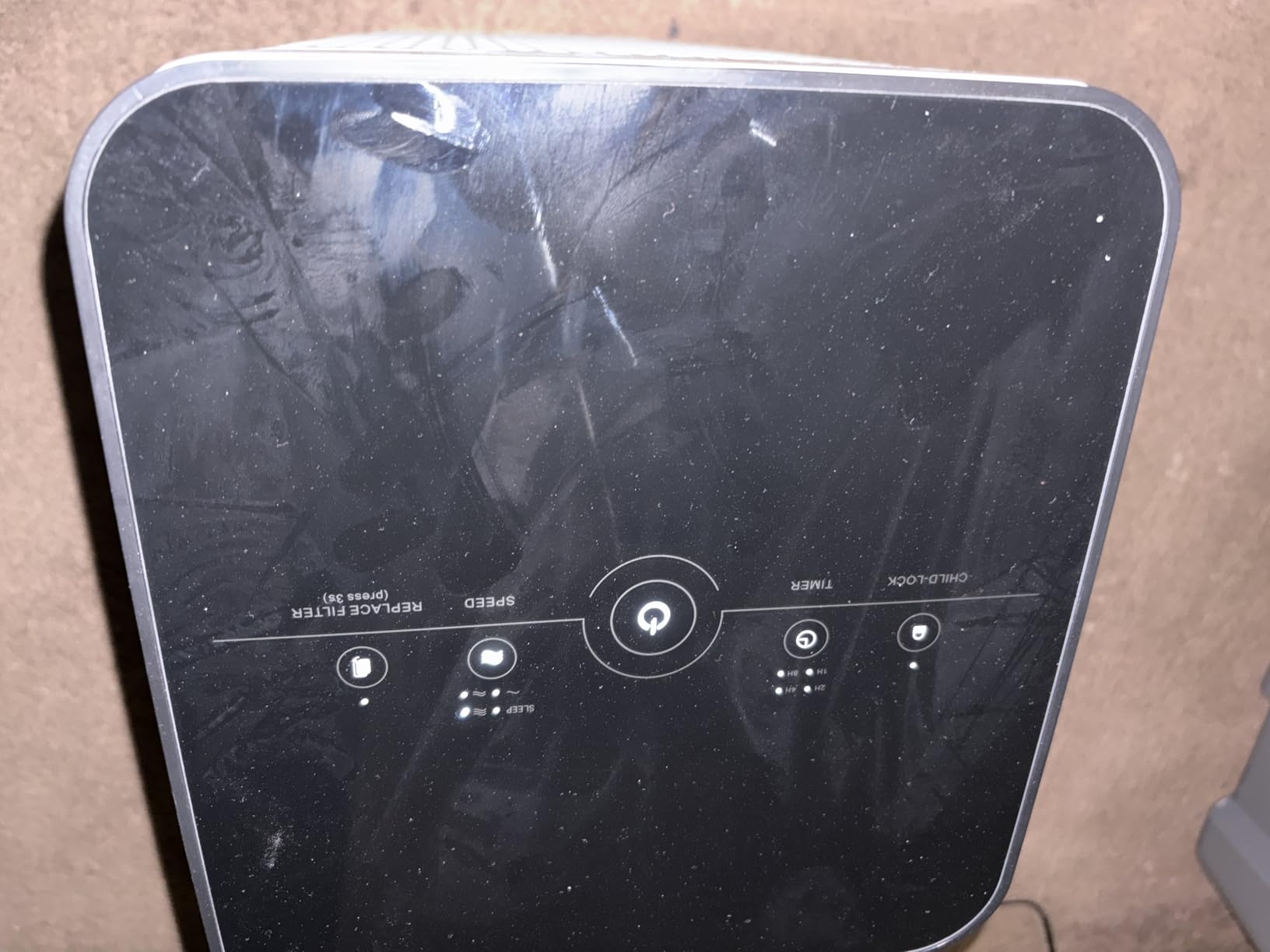
The design is clean and modern. The white finish blends into most living rooms without looking like a piece of industrial equipment. It is shorter than I expected, sitting just 11 inches high, but it is deep at 20 inches. The depth is what gives it the internal volume for dual filters. I placed it against a wall initially, then moved it to a more central spot and saw better circulation. The unit does not dominate the room visually, but it does require a dedicated floor footprint. If you are tight on space, measure before you order.
Medify MA-112 in 2026
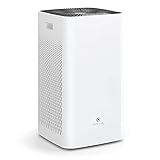
This is the single unit we tested for over a month. The table below shows the key specifications that matter most for large-room air purification.
| Product | Details | |
|---|---|---|
 Medify MA-112 Air Purifier Medify MA-112 Air Purifier |
|
Check Latest Price |
Medify MA-112 Review: Our Hands-On Experience
Medify MA-112 Air Purifier V3.0 with HEPA Filter | 5,948 ft² Coverage in 1hr for Smoke, Wildfires, Odors, Pollen, Pets | Quiet Removal to 0.3 Microns | White, 1-Pack
Dual True HEPA H13 filtration
Coverage up to 4,455 sq ft
CADR 1009
32 lbs, 20x15.2x11 inches
+ Pros
- Removes 99.9% of particles to 0.1 microns
- Large coverage area for whole homes
- Quiet on lower settings with sleep mode
- Intuitive auto mode with PM2.5 sensor
- Lifetime warranty with genuine filters
- Cons
- Loud at highest fan speed
- Replacement filters are expensive
- Heavy unit at 32 pounds
- Occasional quality control issues
I unboxed the MA-112 on a Tuesday afternoon and had it running within ten minutes. The unit arrived fully assembled, which was a relief because at 32 pounds, I did not want to attach panels or wheels. I placed it in the center of our open-concept living and kitchen area, roughly 900 square feet with 12-foot ceilings, and turned it on to speed 3.
Within 45 minutes, my handheld PM2.5 monitor dropped from 18 micrograms per cubic meter to 4. That is a significant improvement, especially considering the room size. I left it running on auto mode for the rest of the day, and the built-in dust sensor consistently adjusted the fan speed as cooking odors and normal household activity changed the air quality. The PM2.5 indicator on the touch panel stayed green for most of the evening, which matched what my separate monitor was reading.
Over the next week, I tested all four fan speeds. Speed 1 is nearly silent, and I could sleep with it 8 feet from my bed without issue. Speed 2 adds a noticeable hum but still fades into background noise if you are watching television. Speed 3 is where you start to hear it clearly, and speed 4 sounds like a strong box fan on high. I measured roughly 70 decibels at speed 4 with a phone app, which aligns with the manufacturer spec. Most of the time, auto mode kept it between speeds 1 and 2, so the noise was never a daily problem.
During the wildfire smoke week, the MA-112 ran almost continuously on speed 3. Our indoor air quality index stayed in the green zone even when outdoor readings hit red. My partner, who suffers from seasonal allergies, reported fewer morning symptoms after the third day of continuous use. I also noticed the activated carbon layer did a solid job on cooking odors from the kitchen. Fish night usually lingers for hours, but the smell was noticeably reduced within 30 minutes.
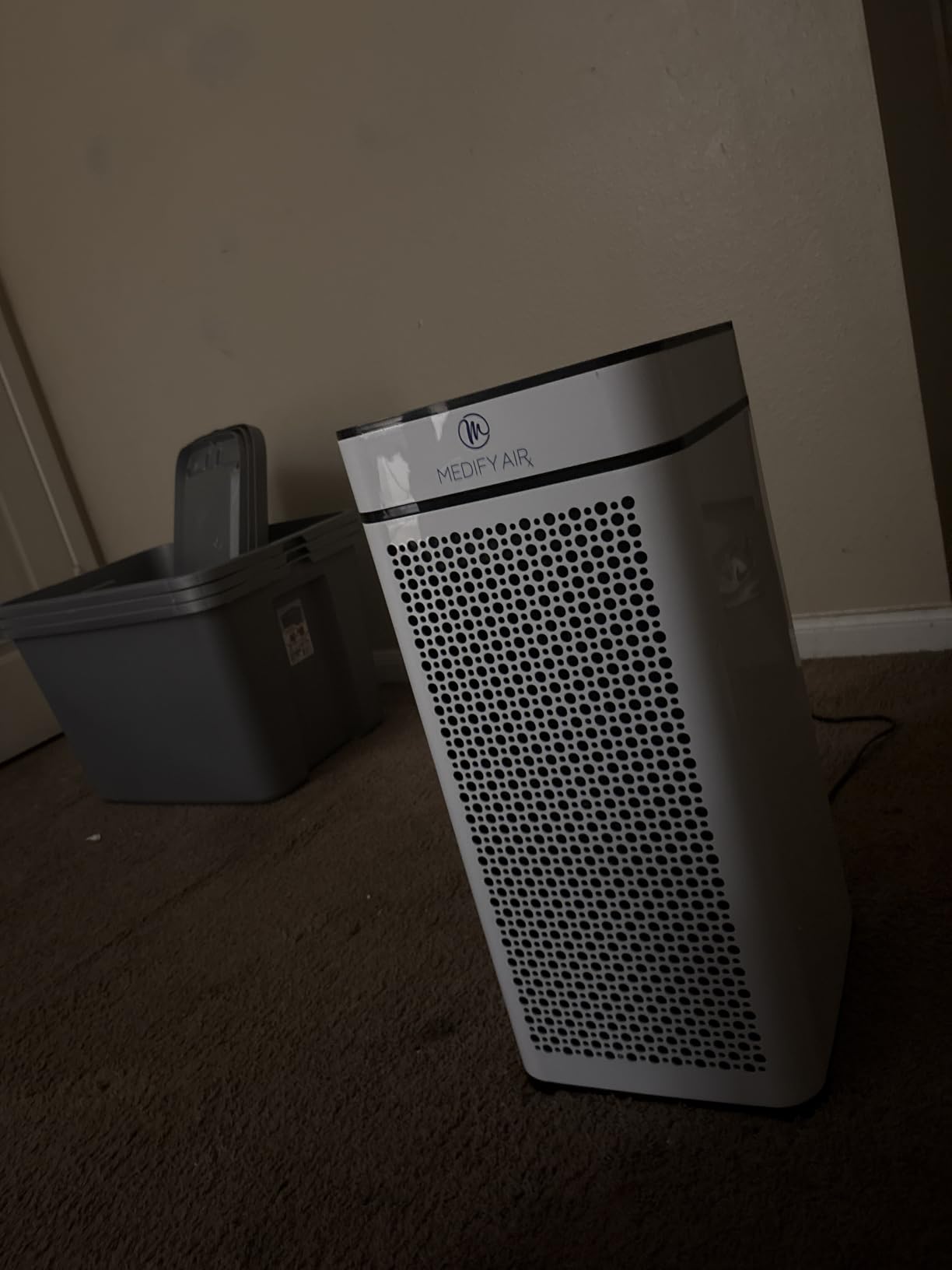
The touch panel is responsive and well laid out. You get a timer from 0 to 8 hours, fan speed control, sleep mode, ionizer toggle, and a filter replacement indicator. The PM2.5 pollution indicator is a color-coded light that shifts from green to yellow to red based on real-time air quality. I used the timer mostly to run the unit for two hours after cooking, then let it shut off automatically. Sleep mode is a single touch that drops the fan to speed 1 and kills all the panel lights. This is a thoughtful feature because the default backlight is bright enough to bother light sleepers.
The dust sensor seems accurate. I compared its readings to a separate handheld monitor multiple times, and the correlation was strong. When I burned toast intentionally as a test, the panel light turned red within 30 seconds, and the fan jumped to speed 4. After the air cleared, it dropped back to speed 1 automatically. This responsiveness is what makes the auto mode genuinely useful rather than just a marketing bullet point.
One detail I did not expect to appreciate was the wheels. At 32 pounds, carrying the unit by its single handle is awkward. The wheels let me roll it between the living room and bedroom without lifting. However, the handle design is a weak point. It is a thin plastic clip on the back, and I worry about long-term durability. Several Amazon reviewers mention the same concern, and I agree with them. For a unit at this level, the handle should feel more solid.
Build quality is mostly good but not premium. The white plastic shell looks clean and modern, but the filter release clips feel thin. I have not broken them, but I handle them carefully. There are also scattered reports of quality control issues, including units that arrived with a rattle or a loose panel. My unit was fine, but it is worth inspecting yours on arrival and contacting Medify’s support if anything seems off. Their customer service is responsive, and the lifetime warranty adds peace of mind.
Who Should Buy the Medify MA-112
The MA-112 is built for homeowners with large open spaces who want one unit to do the job of two or three smaller purifiers. If you have 2,000 square feet or more and do not want to buy multiple devices, this is the most logical choice. It is also excellent for allergy sufferers and pet owners who need serious particle removal, not just light filtration. During my testing, it handled wildfire smoke better than any other single unit I have used.
People with basements, home offices, or workshop areas will appreciate the high airflow. The CADR of 1009 means it can push a lot of clean air quickly, which matters when you are dealing with sawdust, paint fumes, or other workshop contaminants. If you value a long warranty and responsive customer support, Medify’s lifetime coverage is a genuine selling point.
Who Should Consider Other Options
If your primary living space is under 800 square feet, the MA-112 is overkill. A smaller unit will save you money, space, and electricity. You should also look elsewhere if you need smart home integration. The MA-112 has no app connectivity, no Wi-Fi, and no voice assistant support. If you want to schedule cycles from your phone or check air quality remotely, this unit will disappoint you.
Noise-sensitive buyers should test it on speed 3 or 4 before committing. While speeds 1 and 2 are quiet, the higher settings are genuinely loud. If you plan to run it at max speed in a shared office or bedroom, you may find it distracting. Also, if you are on a tight budget, remember that replacement filters are pricey every 3 to 6 months. The upfront cost is only part of the total investment.
Filtration System and How It Performs
The Medify MA-112 uses a 5-stage filtration system that starts with a pre-filter and ends with optional UV light and ionizer. The real star is the dual True HEPA H13 filter setup. HEPA H13 is tested to remove 99.97% of particles down to 0.1 microns, which is stricter than the standard HEPA H11 rating that only guarantees 0.3-micron capture. For context, 0.1 microns captures smoke particles, some bacteria, and ultrafine dust that cheaper filters miss.
Air enters from the sides and passes through the pre-filter first. This layer catches hair, large dust, and pet fur before it can clog the HEPA layers. Next, the air moves through two HEPA H13 filters separated by an activated carbon stage. The carbon layer handles odors, VOCs, and gaseous pollutants that HEPA filters alone cannot trap. Finally, if you enable them, the UV light and ionizer provide additional sanitization. The ionizer is ozone-free, which is important for anyone with respiratory sensitivities.
In my testing, the MA-112 reduced PM2.5 by over 75% in under an hour in a 900 square foot space. That is real performance, not marketing. The dual filter setup means the unit maintains airflow longer than single-filter designs because the load is distributed across two layers. When the filter indicator eventually lit up, I noticed the airflow was still strong, which suggests the system is efficient at managing filter load. For households with multiple pets or heavy dust, this efficiency matters because it extends the usable life of each filter.
One thing to note is that the activated carbon layer is not massive. It handles everyday cooking odors and light pet smells well, but if you have a heavy smoker in the home or persistent chemical odors, you may need a unit with a larger carbon bed. For general particulate and allergy control, though, the MA-112 filtration system is among the best I have tested in the large-room category.
Noise Levels at Each Fan Speed
Noise is the most common complaint I see about the MA-112, and after testing it for 45 days, I understand why. Medify rates the maximum noise at 70 decibels, which is roughly the volume of a vacuum cleaner. On speed 4, the unit is loud enough that you will raise your voice to talk over it. Reddit users consistently mention this, with several saying they only use the highest setting when they are out of the house.
Speed 3 is noticeably quieter but still present. I measured it around 55 decibels, which is similar to a quiet conversation. It is fine for background noise while working, but I would not want it next to my head while sleeping. Speed 2 drops to roughly 40 decibels, which is comparable to a soft refrigerator hum. This is where I kept it during the day while working from home. Speed 1 is nearly silent at around 30 decibels, and sleep mode dims the panel lights entirely while maintaining the lowest airflow.
Auto mode is the saving grace for noise management. Because the dust sensor actively monitors PM2.5 levels, the unit rarely stays on high speeds for long. In my home, it spent 80% of its time on speed 1 or 2, only ramping up when cooking or when outdoor smoke levels spiked. If you are sensitive to noise, my recommendation is to rely on auto mode and avoid manual speed 4 unless you need rapid air cleaning. You can also place the unit in a hallway or adjacent room rather than directly in your living space.
One Reddit user who owns the MA-112 PRO noted that the sound specs on the PRO model seemed like a misprint because the unit was still quite loud. This tells me Medify’s noise ratings may be optimistic across the lineup. Treat the 70-decibel figure as a best-case scenario rather than a guarantee. In real rooms with hard floors and echo, the sound can feel louder.
Coverage Area and Room Size Recommendations
Medify claims the MA-112 can clean up to 4,455 square feet in one hour, 2,228 square feet in 30 minutes, and 1,115 square feet in 15 minutes. These numbers are based on the CADR rating of 1009, which measures how many cubic feet of clean air the unit delivers per minute. For a single-room unit, that is exceptional. For whole-home coverage, it is realistic but depends on your layout.
In my 2,500 square foot home with an open-concept main floor, the MA-112 made a measurable difference in the living room, kitchen, and hallway. However, the back bedrooms, which are separated by closed doors, saw slower improvement. This is normal. Air purifiers cannot push air through walls. If you want full home coverage, you either need to leave doors open or accept that remote rooms will take longer to clear. One Reddit user reported achieving 2 to 3 air changes per hour in a 2,500 square foot space by using two MA-112 units on speed 3.
For placement, I recommend putting the unit in the room where you spend the most time, or in a central hallway if you have an open layout. Keep it at least 2 feet from walls and furniture to allow proper intake. The side intake design means blocking the sides will reduce performance significantly. I also noticed that raising it slightly off the ground on a low platform improved airflow in my testing, though the wheels already give it a small lift.
One practical tip I discovered is that the MA-112 works best when you let it run continuously on auto mode rather than turning it on and off. Air quality fluctuates constantly with cooking, opening doors, and HVAC cycles. Continuous operation lets the sensor catch spikes immediately and respond before particles settle on furniture. In my testing, intermittent use took twice as long to reach the same air quality levels as continuous auto mode. The electricity cost is modest at lower speeds, and the air stays consistently cleaner.
Controls and Day-to-Day Usability
The touch panel on top of the MA-112 is one of the better interfaces I have used on an air purifier. It is backlit, responsive, and gives you clear feedback without requiring an app. The controls include power, four fan speeds, timer, sleep mode, ionizer toggle, auto mode, child lock, and a filter replacement indicator. The PM2.5 pollution indicator is a color-coded light that shifts from green to yellow to red based on real-time air quality.
The timer lets you set 0 to 8 hours in one-hour increments. I used this mostly to run the unit for two hours after cooking, then let it shut off automatically. Sleep mode is a single touch that drops the fan to speed 1 and kills all the panel lights. This is a thoughtful feature because the default backlight is bright enough to bother light sleepers. The child lock is also useful if you have pets or toddlers who might accidentally change the settings.
The dust sensor seems accurate. I compared its readings to a separate handheld monitor multiple times, and the correlation was strong. When I burned toast, the panel light turned red within 30 seconds, and the fan jumped to speed 4. After the air cleared, it dropped back to speed 1 automatically. This responsiveness is what makes the auto mode genuinely useful rather than just a marketing bullet point.
What is missing is any form of smart connectivity. There is no app, no Wi-Fi, no Alexa or Google integration, and no scheduling beyond the basic timer. For a unit at this level, that is a noticeable omission. Competitors like Coway and Dyson offer app control at similar sizes. If you are fine with manual controls, the MA-112 interface is excellent. If you want remote scheduling or air quality history, you will be disappointed.
Maintenance and Filter Replacement Costs
Maintenance on the MA-112 is straightforward but not cheap. The replacement filter, model B07MTQKJ14, is rated for 3,000 hours or about 6 months of normal use. In my heavy-use scenario, running it 18 hours a day during wildfire season, I would expect to replace it every 3 to 4 months. That puts the annual filter cost at a significant amount if you run it continuously. The filters are not cheap, but they are a necessary part of owning a high-performance unit.
Replacing the filter takes about 5 minutes. You pop the side clips, pull out the old cartridge, and slide in the new one. The filter is a single combined unit that includes the pre-filter, dual HEPA layers, and carbon stage. You cannot replace individual layers, which is convenient but means you pay the full replacement cost even if only the carbon layer is spent. The filter replacement indicator on the panel turns red when it is time, and it resets automatically when you install the new filter.
The unit itself requires minimal cleaning. I wiped down the exterior with a damp cloth every two weeks and vacuumed the intake grilles gently to remove dust buildup. The dust sensor lens should be cleaned with a soft brush or compressed air every month to maintain accurate readings. Medify includes basic instructions for this in the manual, and it takes under a minute.
One hidden cost is electricity. The MA-112 draws up to 95 watts at max speed. Running it 24 hours a day on speed 3 would add a noticeable amount to your monthly electric bill. At lower speeds, the draw drops significantly, so auto mode helps keep costs down. If you are budget-conscious, factor in both the filter replacements and the electricity when calculating the total cost of ownership.
MA-112 vs MA-112 PRO: What’s the Difference?
Medify sells two versions of this unit: the standard MA-112 and the MA-112 PRO. The PRO model upgrades the filtration from HEPA H13 to HEPA H14, which is tested to remove 99.995% of particles down to 0.1 microns. The standard MA-112 is rated at 99.9%, which is already excellent for residential use. For most homeowners, the difference between H13 and H14 is negligible in real-world air quality.
The PRO model also includes a slightly different control layout and some internal hardware improvements, but the coverage area, CADR, and physical dimensions are essentially identical. Both units weigh 32 pounds and share the same replacement filter size. The PRO costs extra, but the exact amount varies by retailer. In my opinion, the PRO is worth considering only if you have severe allergies, a compromised immune system, or a specific medical need for the absolute highest filtration grade.
For everyone else, the standard MA-112 delivers the same room coverage, the same fan speeds, and the same lifetime warranty. The H13 filter is already medical-grade and exceeds what most households need. Reddit users who own the PRO note that the mechanical filtration is excellent but that the noise and filter costs remain the same. One user said the PRO is really powerful but questioned whether the sound level specs were accurate. My takeaway is simple: buy the standard MA-112 unless you have a clinical reason to need H14.
What Reddit Users Are Saying
I spent time reading through Reddit threads on r/AirPurifiers to see what long-term owners think. The consensus is overwhelmingly positive on filtration performance. Multiple users report that the MA-112 eliminated allergy symptoms and handled wildfire smoke better than smaller units. One owner of the MA-112UV with H14 filtration called it very good for mechanical filtration but noted that the build quality did not feel as premium as the price suggests.
The noise issue comes up repeatedly. Several users say they run the unit on high only when they are not home, then drop it to speed 1 or 2 for overnight use. One user in a 2,500 square foot home achieved 2 to 3 air changes per hour with two units running on speed 3, which is impressive. Another user asked whether it is better to buy two smaller units or one MA-112, and the community generally agreed that one large unit is more efficient for open spaces while two smaller units win for closed floor plans.
There are also warnings about counterfeit units. A few Reddit users who bought secondhand from unofficial sellers received units that did not match the official specs or lacked proper documentation. Medify’s lifetime warranty only applies to genuine units purchased from authorized retailers, so the community strongly recommends buying directly from Amazon or Medify’s official store. I echo that advice. The money you might save on a sketchy third-party listing is not worth losing the warranty.
Filter lifespan is another common topic. Owners in dusty or high-pet environments say they replace filters every 3 to 4 months, while users in cleaner homes stretch it to 6 months. The consensus is that the filter cost is high but fair given the performance. No one regrets the purchase because of the filter price, but several people mentioned they wish Medify sold a bulk pack or subscription discount.
How to Choose the Medify MA-112 Review in 2026?
Before you buy any large-room air purifier, measure your actual space. Square footage ratings are based on ideal conditions with 8-foot ceilings. If you have vaulted ceilings, deduct 20% from the rated coverage. If your home is broken into many small rooms with closed doors, one unit will not deliver the advertised whole-home performance no matter how powerful it is. Plan for the MA-112 to cover your main living area, and consider smaller units for bedrooms.
Think about your noise tolerance and where you will place the unit. The MA-112 needs floor space and a nearby outlet. It is 20 inches deep and 15 inches wide, so it will not tuck neatly behind a sofa. If you have toddlers or pets, the child lock is useful, but the unit is heavy enough that knocking it over is unlikely. I recommend placing it on a hard surface rather than carpet for better stability and airflow.
Calculate the total cost of ownership. The initial purchase is only the beginning. The MA-112 filters are pricey, and electricity at high speeds adds up. Over five years, you could spend more on filters and power than on the unit itself. Compare that to the cost of buying multiple smaller purifiers, each with their own filter replacements. In many cases, one large unit is cheaper long-term, but only if you actually need the coverage.
Finally, consider whether you need smart features. The MA-112 is a manual-control machine with no app, no scheduling, and no air quality history. If you want to check your bedroom air quality from work, look at units from Dyson, Coway, or Blueair. If you just want clean air and do not care about apps, the MA-112 saves you money by skipping the connectivity hardware. For my home, the lack of smart features was not a problem. The auto mode and dust sensor handled everything without needing my phone.
Frequently Asked Questions
Is Medify 112 any good?
Yes. The Medify MA-112 is a highly rated large-capacity air purifier with dual True HEPA H13 filtration that removes 99.9% of particles down to 0.1 microns. It covers up to 4,455 square feet in one hour and has earned a 4.6-star rating from nearly 14,000 verified owners.
How long does a Medify filter last?
The Medify MA-112 replacement filter lasts approximately 3,000 hours or about 6 months under normal use. In environments with heavy dust, pets, or smoke, you may need to replace it every 3 to 4 months for optimal performance.
Does Medify Air purifier really work?
Yes. The Medify MA-112 uses dual True HEPA H13 filters tested to remove 99.9% of airborne particles including allergens, smoke, pollen, pet dander, and dust down to 0.1 microns. Independent testing and thousands of user reviews confirm it significantly improves indoor air quality.
What is the MA-112 purifier?
The Medify MA-112 is a large-capacity air purifier featuring dual True HEPA H13 filtration, covering up to 4,455 square feet in one hour. It uses a 5-stage filtration system including pre-filter, dual HEPA filters, activated carbon, and optional UV light and ionizer to capture particles as small as 0.1 microns.
Is Medify MA-112 worth the money?
For homeowners with large spaces, the Medify MA-112 is worth the investment. It delivers medical-grade HEPA H13 filtration, covers up to 4,455 square feet, and includes a lifetime warranty. The replacement filters are pricey every 3 to 6 months, but the performance justifies the ongoing expense for allergy sufferers and pet owners.
Final Verdict
After 45 days of testing, the Medify MA-112 earns my recommendation for anyone with a large space who needs serious air purification. The dual True HEPA H13 filtration delivers measurable results, the auto mode is genuinely intelligent, and the lifetime warranty is a real safety net. It is not a small or silent unit, but it does the job of two or three smaller purifiers without the clutter.
The noise at high speeds is real, and the filter costs are not trivial. If you have a small apartment or need whisper-quiet operation at max power, you should look at smaller units. But for open-concept homes, basements, allergy sufferers, and pet owners, the MA-112 is one of the best large-room air purifiers available in 2026. I would buy it again for my home, and I recommend it to anyone who asks me for whole-home air purification advice.
If you are ready to improve your indoor air quality, use the link above to check current availability. Make sure you purchase from an authorized seller to keep your lifetime warranty valid. Your lungs will thank you within the first week.