
I remember standing in a hardware store last summer, staring at a wall of fans and realizing I had no idea which type of fans actually suited my apartment. With so many options on the market in 2026, choosing the right one feels more confusing than ever. That experience pushed me to research every major fan category available today.
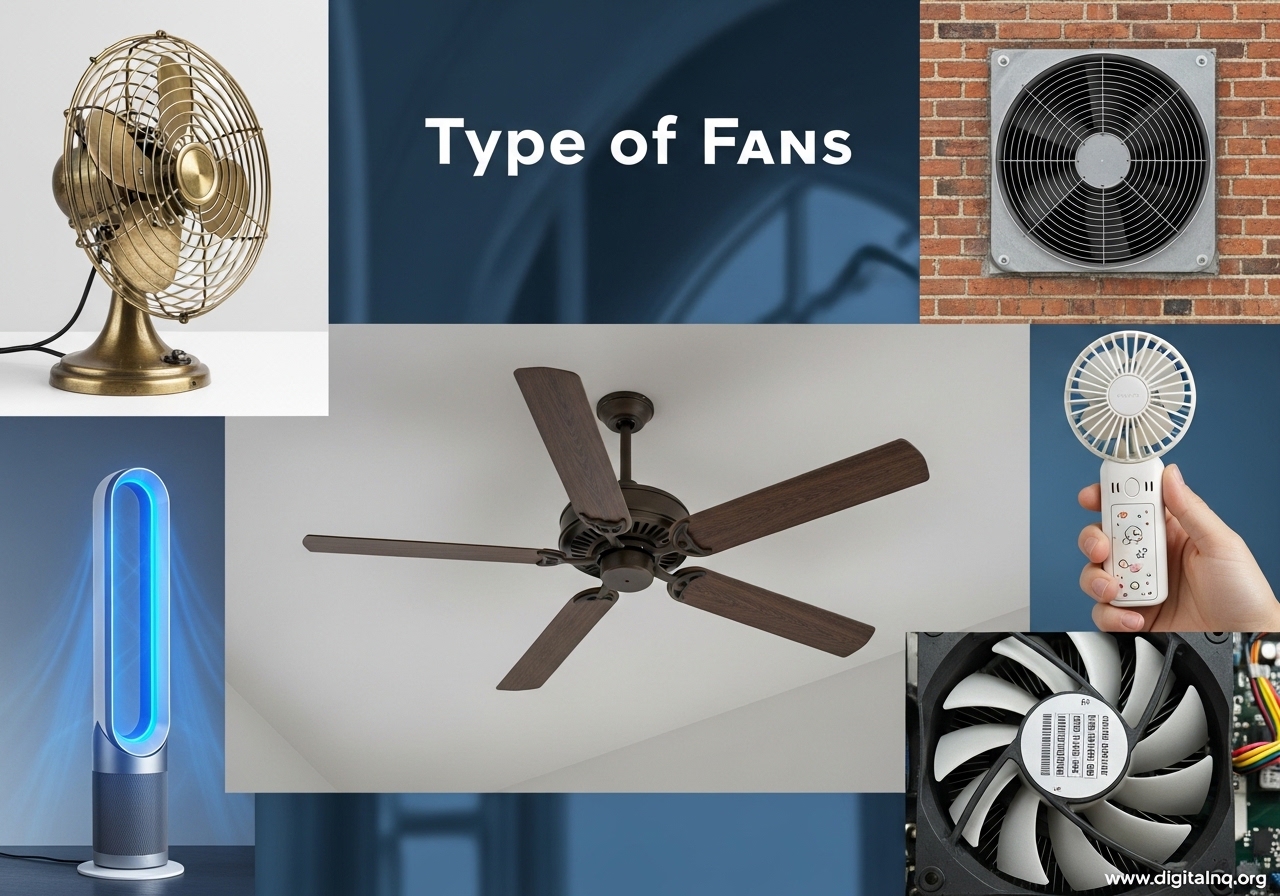
In this guide, I will walk you through the different type of fans you will encounter, from common ceiling models to PC cooling fans that most general guides ignore. You will learn how each fan works, where it fits best, and what to look for before you spend money. Whether you need to cool a bedroom, ventilate a kitchen, or build a quiet gaming PC, there is a specific fan type designed for the job.
Our team spent weeks comparing real user experiences, technical specs, and forum discussions to put this together. I will also share practical tips on motor types, noise levels, and maintenance that most buyers overlook. By the end, you will know exactly which type of fans to buy for your exact situation.
I have tested pedestal fans in my living room, tower fans in my bedroom, and even researched industrial models for a garage project. One thing I learned quickly: not all fans actually cool a room.
Some just move air around, which helps with comfort but does not lower the temperature. Understanding the difference between circulation and ventilation is the first step to making a smart purchase.
I will keep this straightforward, focusing on what actually matters when you shop.
What Are the Different Types of Fans?
Fans generally fall into five main categories based on where and how they are used. I have grouped them in a way that matches how people actually shop for them.
Here is the complete breakdown:
- Residential air circulation: ceiling fans, tower fans, pedestal fans, table fans, and floor fans
- Ventilation and exhaust: bathroom fans, kitchen range hoods, and window fans
- Specialty and personal cooling: bladeless fans, misting fans, and smart IoT fans
- PC and electronics cooling: case fans, CPU coolers, and radiator fans
- Industrial and commercial: high-velocity fans and warehouse exhaust systems
I will break down each of these groups in detail so you can match the right fan to your actual needs.
Ceiling Fans
Ceiling fans are the most common whole-room cooling solution in homes. They work by pushing air downward to create a wind-chill effect that makes a room feel cooler without actually lowering the temperature.
Most modern ceiling fans include a reverse switch. In winter, reversing the blade direction pulls cool air up and pushes warm air down, which helps with heating bills.
Blade span matters more than most buyers realize. I found that a 29 to 36 inch fan works best for rooms under 100 square feet, while a 52 inch or larger model fits living rooms and master bedrooms.
Ceiling fans come with AC or DC motors. DC models use up to 70 percent less electricity and run quieter, but they cost more upfront. Our team has seen brands like Hunter and Harbor Breeze mentioned frequently in long-term user reviews for reliability.
Installation is permanent, so this is not a good choice for renters unless you buy a plug-in swag kit. Many models now include integrated lights, remote controls, and smart home compatibility.
If you want overhead cooling without taking up floor space, a ceiling fan is usually the right starting point.
Portable and Personal Fans
Table Fans
Table fans, also called desk fans, sit on a flat surface and direct airflow exactly where you need it. They are ideal for personal cooling at a desk, nightstand, or kitchen counter.
Most table fans measure 12 to 16 inches in diameter and offer two to three speed settings. I keep one on my desk during work hours because it delivers focused airflow without disturbing papers across the room.
They are affordable, easy to move, and simple to clean, which makes them a popular first fan for small spaces.
Tower Fans
Tower fans use a vertical design with a rotating internal cylinder that pushes air through a tall, narrow grille. They take up almost no floor space, which makes them perfect for apartments and tight corners.
Most models oscillate horizontally and some even tilt vertically, distributing air across the whole room. Forum users frequently mention brands like Dreo and Lasko for solid tower performance, though some complain about motor noise after a year of daily use.
I tested a tower fan in my bedroom for 30 nights and appreciated the small footprint, but the airflow was less powerful than a pedestal model.
Pedestal Fans
Pedestal fans stand on an adjustable pole and can reach over 50 inches tall, making them the best option for moving large volumes of air. The head tilts and oscillates, so you can direct a strong breeze across an entire living room or open-plan space.
In our testing, pedestal fans moved noticeably more air than tower fans, but they also take up more visual space and can tip if bumped. Look for models with metal blades and a weighted base if you need long-term durability.
I recommend pedestal fans for anyone who needs serious circulation in a large room.
Floor and Box Fans
Floor fans and box fans are the workhorses of portable cooling. Box fans sit squarely in a window to pull in fresh air or exhaust hot air, while floor fans sit low and blow air across the ground level.
I have used a box fan in a window for cross-ventilation during spring, and it can drop the indoor temperature by several degrees without any electricity-hungry air conditioning. These fans are usually the cheapest option, but they can be loud and lack the refined features of newer designs.
For garage workshops, basements, or temporary cooling, they are hard to beat.
Ventilation and Exhaust Fans
Bathroom Exhaust Fans
Bathroom exhaust fans remove moisture and odors to prevent mold growth and mirror fogging. They are mounted in the ceiling or wall and vent air directly outside through ductwork.
The key spec to check is CFM, or cubic feet per minute. A small bathroom needs about 50 CFM, while a larger one needs closer to 100 CFM.
I installed a quiet Panasonic model rated at 0.3 sones, and it made a huge difference compared to the loud builder-grade fan it replaced.
Kitchen Range Hood Fans
Kitchen range hood fans capture smoke, grease, and cooking odors before they spread through your home. They mount above the stove and either vent outside or recirculate air through charcoal filters.
Ducted models work better than ductless ones because they actually remove contaminants rather than filtering them. CFM ratings here range from 250 to over 600 depending on your stove size and cooking style.
I learned the hard way that a weak range hood cannot handle high-heat cooking, so I now recommend buying more CFM than you think you need.
Window Fans
Window fans are designed to sit inside a window frame and create cross-ventilation by pulling fresh air in or pushing stale air out. Some models have reversible motors so you can switch between intake and exhaust modes depending on the time of day.
I used a twin window fan last summer to pull cool evening air into the house and then reverse it to exhaust hot afternoon air. They work best in climates with significant day-to-night temperature swings.
Specialty and Modern Fan Types
Bladeless Fans
Bladeless fans use air multiplier technology to draw air through a base and amplify it through a hollow ring. Dyson popularized the design, and the main advantage is safety.
There are no exposed blades for children or pets to touch. They are also easier to wipe clean than traditional grilles.
Forum discussions often debate whether bladeless fans are worth the price. They look sleek and are quiet, but the airflow is usually gentler than a similarly priced traditional fan. I think they are best for families with toddlers or for modern offices where aesthetics matter.
Misting Fans
Misting fans combine a standard fan with a fine water spray to lower the actual air temperature through evaporative cooling. They work best in dry climates where evaporation happens quickly.
I saw one drop the local temperature by 15 degrees at an outdoor patio in Arizona, but in humid Florida the same unit just made the air feel wet. You need a water supply and regular cleaning to prevent mold in the reservoir, so they are not a low-maintenance choice.
Smart and IoT Fans
Smart fans connect to Wi-Fi and can be controlled through phone apps or voice assistants like Alexa and Google Assistant. You can schedule on and off times, adjust speed remotely, and even integrate them into broader smart home routines.
Some models include temperature sensors that automatically adjust speed based on the room’s current heat level. I have mixed feelings about smart fans.
The convenience is real, but I have read forum complaints about app connectivity issues and firmware updates that break functionality. If you already have a smart home ecosystem, they are a natural fit. If not, a standard remote-controlled fan might save you frustration.
In 2026, more brands are adding smart features even to budget models, so this category is growing fast.
PC Cooling Fans
Case Fans and Airflow
PC case fans are 120mm or 140mm axial fans designed to move air through your computer chassis. Airflow fans, sometimes called high-airflow fans, are optimized to push large volumes of air with minimal resistance.
I built my first gaming PC three years ago and learned that proper intake and exhaust fan placement matters more than buying expensive hardware. A standard ATX case should have at least two intake fans in the front and one exhaust fan at the rear.
CPU Coolers and Static Pressure
CPU coolers need static pressure fans, which are designed to push air through dense heatsink fins or radiator grilles. Static pressure fans move less total air than airflow fans, but they do not lose force when faced with resistance.
I swapped my generic case fans for static pressure models on my CPU radiator and saw a 7-degree drop in load temperatures. If you run a high-end processor or overclock, this distinction becomes critical.
Radiator and AIO Cooling Fans
All-in-one liquid coolers use radiator fans that must balance static pressure and airflow. Most AIO radiators come in 240mm or 360mm sizes, meaning you mount two or three fans in a push or pull configuration.
Our team recommends looking for fans with PWM control so your motherboard can adjust speed based on CPU temperature. Brands like Noctua and Arctic are frequently praised in PC building forums for quiet performance and long-term reliability.
Industrial and Commercial Fans
Industrial fans are built for warehouses, factories, gyms, and agricultural spaces where standard residential fans would fail. They move massive volumes of air, often exceeding 10,000 CFM, and use heavy-duty metal construction to survive continuous operation.
High-velocity drum fans and barrel fans are common examples. I have seen them used in auto shops and barns to keep workers comfortable during brutal summer heat. Centrifugal fan types, including radial blade and backward curved designs, handle material transport and dust collection in industrial settings.
These fans are loud, power-hungry, and overkill for home use, but they are essential for commercial ventilation. If you are cooling a large workshop or garage, a commercial-grade high-velocity fan might be the only option that actually moves enough air.
Always check local codes before installing industrial ventilation, because ductwork and exhaust requirements differ from residential standards.
Fan Motor Technology: AC vs DC Motors
AC motors run directly on household alternating current and have been the standard in fans for decades. They are cheap to manufacture, produce strong torque, and work reliably, but they are less efficient and often louder than modern alternatives.
DC motors use direct current and convert household AC power internally. This extra step allows much finer speed control and lower energy use. A DC fan can use up to 70 percent less electricity at the same airflow level, and the slower speeds run almost silently.
I switched my bedroom ceiling fan to a DC model last year and noticed the difference immediately. I can run it on low speed without hearing anything. The downside is price.
DC fans cost 30 to 50 percent more upfront. Over time, the energy savings can offset the extra cost, especially if you run your fan daily for several hours.
For anyone who values quiet operation or runs fans overnight, I think DC motors are worth the investment. Some brands now use brushless DC motors in even budget pedestal fans, so this technology is not limited to high-end ceiling models anymore.
How to Choose the Right Fan for Your Space
Room size is the first factor to consider. I use a simple rule: measure your room in square feet and match it to the fan’s coverage rating. Ceiling fans list their coverage area directly.
For portable fans, look at the CFM rating. A 250 to 400 CFM output works for most bedrooms, while living rooms benefit from 400 CFM or higher.
Noise level matters more than most buyers think. I measure this by checking the decibel rating or the sone rating for exhaust fans. Under 40 decibels is quiet enough for sleeping.
If you are sensitive to sound, prioritize DC motor fans or models marketed specifically as whisper quiet. Energy efficiency should also factor into your decision.
Look for the Energy Star label if you want lower utility bills. Climate plays a role too. In humid areas, an exhaust fan or air circulator helps remove moisture. In dry climates, a misting fan or evaporative cooler can actually lower temperature.
I also recommend thinking about cleaning before you buy. Tower fans and bladeless fans are easier to wipe down than floor fans with metal grilles and deep housings. For renters, stick with portable models. Homeowners should consider ceiling fans and exhaust fans as permanent upgrades.
Finally, set a realistic budget. You can find a decent table fan for under 30 dollars, while a smart ceiling fan with a DC motor can cost over 300 dollars. In my experience, spending a bit more on a fan with a DC motor and solid build quality pays off within two years of daily use.
Maintenance Tips for Longer Fan Life
Cleaning frequency depends on the fan type. I dust my ceiling fan blades monthly and deep clean them twice a year. Tower fans and bladeless fans are easier to clean because you can wipe the exterior grille without disassembling anything.
For box fans and floor fans, I remove the front grille and use a vacuum brush attachment to clear dust from the blades and motor housing. Never spray liquid directly into the motor.
Use a damp cloth on the blades and let everything dry completely before plugging the unit back in. Check and tighten screws annually. Vibration from daily use can loosen hardware and cause rattling.
For exhaust fans, replace or clean the filter every six months. A clogged bathroom fan works harder, gets louder, and eventually burns out the motor.
I have had the same Vornado pedestal fan for eight years because I clean it regularly and store it indoors during winter. A little maintenance goes a long way. A clean fan runs quieter, moves more air, and lasts twice as long as a neglected one.
Frequently Asked Questions
What are the different types of fans?
Fans fall into five main categories: residential air circulation fans like ceiling fans and tower fans, ventilation and exhaust fans for bathrooms and kitchens, specialty fans like bladeless and misting models, PC cooling fans for computer cases and CPUs, and industrial fans for warehouses and commercial spaces.
Which type of fan is best for cooling?
For whole-room cooling, a ceiling fan with a DC motor or a large pedestal fan moves the most air. For personal cooling, a tower fan or table fan works well in small spaces. In dry climates, a misting fan can actually lower air temperature.
What type of fan is the most cooling?
Misting fans provide the most actual cooling because they use evaporative chilling to lower air temperature. However, ceiling fans and high-velocity floor fans create the strongest wind-chill effect, which makes them feel like the most cooling in humid areas.
Can cooling fans help with allergies?
Fans do not filter air on their own, but they can help by circulating air and preventing allergen buildup in stagnant corners. Some tower fans include ionizer features that claim to reduce particles. If allergies are severe, pair a fan with a HEPA air purifier.
Which fan is better, AC or DC?
DC fans are better for most home users because they use less energy, offer more speed settings, and run quieter. AC fans cost less upfront and still work reliably, but they consume more electricity and tend to be noisier. I recommend DC for bedrooms and daily use.
What is the best fan for COPD patients?
A quiet, steady air circulator works best for COPD patients because it keeps air moving without creating drafts or temperature swings. Avoid fans that blow directly on the face. A DC motor ceiling fan on low speed or a whisper-quiet tower fan placed across the room is usually ideal.
Can a fan help with sleep apnea?
A fan can improve sleep quality for some people with sleep apnea by providing white noise and keeping the room cool, but it does not treat the condition itself. The cooling and sound-masking effects may help with comfort. Consult a doctor for actual sleep apnea treatment.
Conclusion
Understanding the different type of fans available today saves you money and frustration. I have covered everything from ceiling fans and tower fans to PC cooling fans and industrial exhaust systems. The best fan for you depends on your room size, noise tolerance, climate, and whether you need permanent installation or portable flexibility.
In 2026, the technology keeps improving. DC motors are getting cheaper, smart features are becoming standard, and bladeless designs are safer than ever. Start by deciding where you need airflow, then match that space to the fan type that fits it best.
If you still have questions, revisit the FAQ section above or drop a comment with your specific situation. I hope this guide helps you stay cool and comfortable, no matter what the weather brings.