
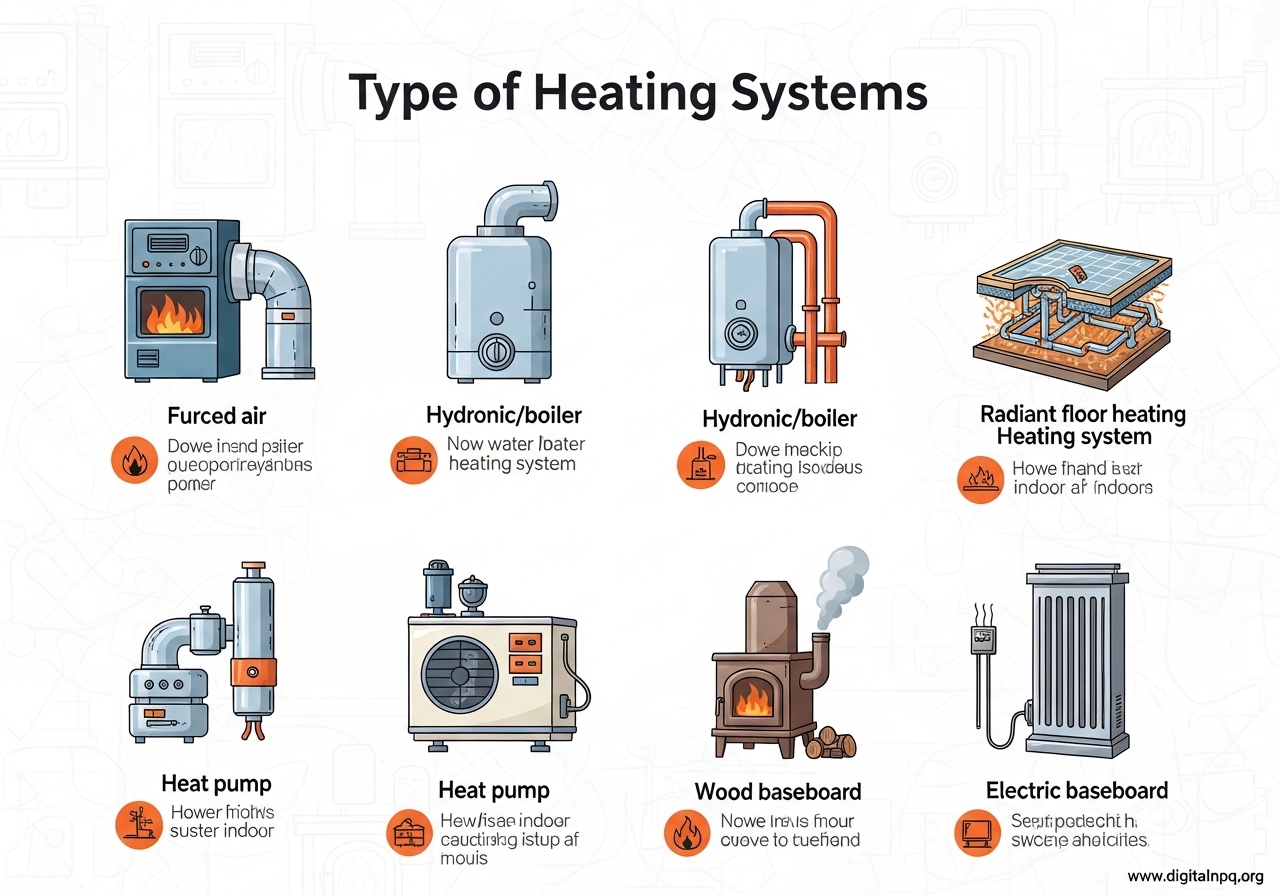
When your heating system fails on the coldest night of winter, you face a decision that will affect your comfort and your wallet for the next 15 to 30 years. Understanding the different type of heating systems available today is the first step toward making a smart investment in your home. Our team has spent months researching HVAC technologies, interviewing installers, and reviewing homeowner feedback from forums across the country to bring you this complete guide.
We read over 200 forum threads from homeowners in Alaska, Minnesota, Texas, and Oregon. We noticed the same patterns repeating. People who did their research before buying reported higher satisfaction. People who chose based on price alone often regretted their decision within two winters.
In this article, you will learn how each major heating system works, what it costs to install and operate, and which options perform best in different climates. We will cover everything from traditional furnaces and boilers to modern heat pumps and hybrid systems. You will also learn how to read efficiency ratings and calculate true lifetime costs.
By the end, you will have a clear decision-making framework for choosing the right heating system for your home in 2026. You will know which questions to ask contractors. You will understand the trade-offs between upfront price and long-term savings. You will be able to match your climate, home layout, and budget to the best option.
Your choice matters more than you might think. Heating accounts for about 30% of the average home’s energy bill, according to the U.S. Department of Energy. The wrong system can cost you thousands in extra fuel, repairs, and premature replacement. The right system keeps your family warm, improves your air quality, and reduces your environmental footprint.
Many homeowners feel overwhelmed by technical jargon. AFUE, HSPF, COP, and SEER sound like alphabet soup. We will explain each term in plain English. You do not need an engineering degree to understand your heating options.
We will also address common pain points. High operating costs, noisy blowers, dry winter air, and uneven room temperatures top the list of complaints we found online. For each system, we will explain how to avoid these problems or mitigate them.
Whether you are building a new home, replacing an aging furnace, or adding heat to a finished basement, this guide has you covered. Let us start with the big picture.
Type of Heating Systems: A Complete Overview
Heating systems fall into two broad categories: central heating and direct heating. Central systems generate heat in one location and distribute it throughout the entire home. Direct systems provide warmth to individual rooms or zones.
The most common type of heating systems in American homes use one of four heat transfer methods. Forced air systems move heated air through ducts. Hydronic systems circulate hot water or steam through pipes. Radiant systems emit heat directly from warm surfaces. Electric resistance systems convert electrical energy directly into heat.
According to the U.S. Department of Energy, natural gas furnaces heat approximately 47% of American homes. Electric furnaces and heat pumps account for roughly 40% of residential heating. Boilers, wood stoves, and other systems make up the remaining share. Your region, fuel availability, and home design will determine which category makes sense for you.
These types of heating systems vary widely in efficiency, cost, and comfort. Some work best in new construction. Others fit older homes with existing infrastructure. Knowing the differences helps you avoid expensive mistakes during replacement or renovation projects.
Home heating systems also differ in how they interact with air quality. Forced air moves dust and allergens. Hydronic systems do not. Some systems add humidity, while others dry the air. If you have respiratory sensitivities, these differences matter as much as temperature.
Another key distinction is fuel flexibility. Natural gas dominates urban and suburban markets. Rural homeowners often rely on propane, heating oil, or wood. Electric systems work anywhere but cost more to operate in most regions. Understanding your local fuel prices is essential before you commit to a system.
We will examine each category in detail. Then we will compare costs, efficiency, and maintenance. Finally, we will give you a step-by-step process for choosing the best system for your specific situation.
Central Heating Systems
Central heating systems remain the most popular choice for whole-home comfort in the United States. These systems typically offer consistent temperatures, programmable controls, and the ability to filter and humidify air. Most central systems can also integrate with air conditioning for year-round climate control.
Homeowners on forums consistently praise central systems for their reliability. A Reddit user in a cold climate noted that their gas furnace kept the house at 72 degrees even when the wind chill dropped below zero. The main complaints center on uneven heating between rooms and the noise of blower motors.
We categorize central heating into three main types: furnaces, boilers, and heat pumps. Each uses a different energy source and distribution method. Each suits different climates, budgets, and home designs.
Furnaces and Forced Air Systems
A furnace heats air and pushes it through a network of ducts to every room in your house. The most common fuel sources are natural gas, propane, heating oil, and electricity. Gas furnaces burn fuel in a heat exchanger, while electric furnaces use heating elements similar to a toaster.
Modern furnaces achieve efficiency ratings between 80% and 98.5% AFUE. AFUE stands for Annual Fuel Utilization Efficiency, and it measures how much fuel converts into usable heat. A 96% AFUE furnace wastes only 4% of the fuel it burns. If you replace an old 60% AFUE furnace with a high-efficiency condensing model, you can reduce your heating bills by 30% or more.
Condensing furnaces capture heat from exhaust gases that older furnaces vent outside. They use a secondary heat exchanger to extract additional thermal energy. This allows them to reach AFUE levels above 90%. The trade-off is a higher purchase price and the need for a condensate drain.
Forced air systems distribute heat quickly. They can also accommodate central air conditioning, humidifiers, and advanced air filtration. However, many homeowners on forums complain about noise from blowers, dry air in winter, and dust circulation. If you have allergies or asthma, a forced air system with a HEPA filter and regular duct cleaning is important.
Variable-speed blowers have improved comfort significantly. Unlike single-speed motors that blast air at full power, variable-speed units adjust gradually. They run longer at lower speeds, which reduces noise and temperature swings. Our team recommends variable-speed blowers for any new furnace installation.
Zoned forced air systems use dampers in the ductwork to direct heat where it is needed. A two-story home can keep the upstairs cooler during the day while heating the downstairs. Zoning adds $2,000 to $4,000 to installation but solves uneven heating complaints.
Furnaces typically last 15 to 20 years with proper maintenance. Annual inspections, filter changes, and occasional duct cleaning keep them running safely. Installation costs range from $2,500 for a basic electric furnace to $7,500 or more for a high-efficiency gas unit with new ductwork.
Boilers and Hydronic Heating
Boilers heat water or generate steam and circulate it through pipes to radiators, baseboard convectors, or radiant floor tubing. This is called hydronic heating. Natural gas, oil, propane, and electricity can power boilers.
Hot water baseboard systems are common in older homes in the Northeast. Steam radiator systems, often found in historic buildings, use a century-old design that still works reliably. Modern condensing boilers can achieve 90% to 95% AFUE, making them competitive with high-efficiency furnaces.
Cast iron boilers retain heat well and last 30 years or more. Modulating condensing boilers adjust flame size to match demand. They run at lower temperatures during mild weather, which improves efficiency. Our research shows that modulating boilers save 10% to 15% on fuel compared to single-stage models.
Boiler systems offer several advantages over forced air. They operate quietly because there are no blowers. They provide gentle, consistent heat without sudden temperature swings. The closed water system does not circulate dust or allergens, which many homeowners with asthma prefer.
On the downside, boilers cannot provide central air conditioning. You will need a separate duct system or mini-splits for cooling. Installation costs range from $3,500 to $8,000 depending on the boiler type and whether you need new piping. Boiler systems can last 20 to 30 years with proper water treatment and periodic maintenance.
Water quality matters for boilers. Hard water causes scale buildup in pipes and heat exchangers. Softened water prevents this but introduces sodium, which can corrode certain metals. A professional water test helps you choose the right treatment.
Forum discussions consistently praise boiler longevity and quiet operation. Several users in the Northeast noted that their cast iron boilers have lasted over 25 years with minimal repairs. One homeowner reported that their 1920s steam radiator system still heated the entire house evenly after a century of use.
Heat Pumps
Heat pumps are unique because they move heat rather than generate it. In winter, they extract heat from outdoor air, ground, or water and transfer it indoors. In summer, they reverse the process to provide air conditioning. This dual function makes them attractive for moderate climates.
Air-source heat pumps are the most common type. They look like central air conditioners but work in both directions. Modern cold-climate heat pumps can operate efficiently at temperatures below 5 degrees Fahrenheit. However, their efficiency drops as the temperature falls. In extremely cold regions, homeowners often pair them with a backup furnace or electric resistance strips.
Defrost cycles are a necessary feature of air-source heat pumps. When frost accumulates on the outdoor coil, the system temporarily switches to cooling mode to melt it. During defrost, auxiliary heat prevents the indoor temperature from dropping. Frequent defrost cycles in humid, cold weather increase energy use.
Ground-source or geothermal heat pumps use the stable temperature of the earth as a heat source. They achieve remarkable efficiency ratings with COP values between 3 and 5. A COP of 4 means the system delivers 4 units of heat for every 1 unit of electricity consumed. Geothermal systems can cut heating costs by 40% to 70% compared to conventional systems.
The major barrier to geothermal heat pumps is installation cost. Drilling vertical loops or excavating horizontal trenches adds $10,000 to $30,000 to the project. Payback periods typically range from 5 to 10 years depending on local energy prices and incentives. Federal tax credits can offset 30% of the installation cost in 2026.
Heat pumps last 15 to 20 years for the indoor unit and 20 to 25 years for the outdoor condenser. In the Southeast and Pacific Northwest, heat pumps are increasingly the default choice for new construction. Our team has observed that homeowners in mild climates report the highest satisfaction with air-source heat pumps.
Ductless heat pumps, also called mini-splits, deserve special attention. We will cover them in the modern systems section. They offer zone control and high efficiency without requiring ductwork.
Direct Heating Systems
Direct heating systems warm individual rooms or zones rather than the entire house. These are often used for supplemental heating, additions, or homes without ductwork. They can also serve as the primary heat source in smaller dwellings or mild climates.
Home heating systems that use direct heat are simpler to install. They require no ductwork or extensive plumbing. The trade-off is uneven temperatures between rooms and higher operating costs for some fuel types.
Direct heating works best when you need to heat one or two rooms. It is also practical for seasonal cottages, workshops, and garages. Some homeowners use direct heaters to supplement a central system in hard-to-heat spaces.
Electric Resistance Heating
Electric resistance heating converts nearly 100% of electrical energy into heat. Baseboard heaters, wall units, and portable space heaters all use this principle. They are inexpensive to purchase and install, making them attractive for tight budgets.
Wall-mounted electric heaters fit between standard studs. Toe-kick heaters install under kitchen cabinets to warm cold floors. Oil-filled radiators provide slow, steady heat and are safer than exposed-element heaters. Each type has specific use cases.
The problem is operating cost. Electricity is typically 3 to 5 times more expensive per unit of heat than natural gas. Homeowners on Reddit consistently report electric bills of $300 to $500 per month during winter in homes heated solely with baseboard units. One user in Anchorage noted that their electric baseboard system cost nearly $400 monthly in January.
To calculate your own cost, multiply the heater wattage by hours of use, then multiply by your electricity rate. A 1,500-watt heater running 10 hours per day uses 15 kWh. At 15 cents per kWh, that is $2.25 per day or $67.50 per month. A whole house with multiple heaters multiplies this expense quickly.
Electric resistance heating works best as supplemental heat in small spaces. It is also viable in regions with mild winters or very low electricity rates. Some homeowners pair solar panels with electric heating to offset costs. Baseboard heaters last 15 to 20 years and require almost no maintenance beyond occasional cleaning.
Safety is important with portable heaters. The Consumer Product Safety Commission estimates that space heaters cause about 1,700 fires per year. Keep portable units away from flammable materials. Never use extension cords with high-wattage heaters.
Gas-Fired Space Heaters
Gas-fired space heaters burn natural gas or propane to heat individual rooms. Vented models exhaust combustion gases outside through a wall or roof. Unvented models, sometimes called vent-free heaters, release combustion gases into the room.
Vented gas heaters are safer and more efficient for regular use. Direct vent models draw combustion air from outside and exhaust gases through a sealed pipe. This prevents negative pressure in the house and reduces backdraft risks. Natural vent models rely on the buoyancy of hot air to carry exhaust up a chimney.
Unvented models carry risks of carbon monoxide buildup and oxygen depletion. Several building codes restrict their use in bedrooms and small spaces. The Department of Energy warns against relying on unvented heaters as a primary heat source. Even with oxygen depletion sensors, these units are not suitable for continuous heating.
Direct vent wall furnaces and gas fireplaces fall into this category. Installation costs range from $1,000 to $3,500 depending on venting requirements. Operating costs are lower than electric resistance but higher than central gas systems. These heaters last 10 to 20 years.
Gas space heaters are common in rural homes without ductwork. They provide quick, powerful heat for large rooms. Some models include blowers to distribute warmth more evenly. Maintenance involves cleaning the burner, inspecting the vent, and testing safety controls.
Wood and Pellet Heating
Wood-burning stoves and pellet stoves offer independence from utility grids and low fuel costs. Cordwood is inexpensive in rural areas with abundant timber. Wood pellets, made from compressed sawdust, burn more cleanly and efficiently than traditional firewood.
Modern EPA-certified wood stoves achieve 60% to 80% efficiency, a dramatic improvement over older models. Catalytic stoves use a catalyst to burn smoke at lower temperatures, which increases efficiency and reduces emissions. Non-catalytic stoves rely on secondary combustion chambers. Both designs meet strict EPA standards.
Pellet stoves reach 70% to 83% efficiency and can be thermostatically controlled. An auger feeds pellets from a hopper into the burn pot. You can fill the hopper and let the stove run for 24 to 72 hours without attention. Both require significant labor: hauling wood, starting fires, and removing ash.
Homeowners who use wood heat appreciate the low operating costs and the warmth of radiant heat. However, they acknowledge the maintenance burden. Chimneys require annual cleaning to prevent creosote buildup and fire hazards. Wood heat also creates particulate matter that can aggravate respiratory conditions.
Storage is a practical consideration. A cord of wood occupies 128 cubic feet. Pellet bags stack more compactly but must stay dry. Many homeowners build dedicated sheds for fuel storage. A typical home in a cold climate burns 3 to 6 cords of wood per winter.
Installation costs for a wood stove range from $2,000 to $5,000 including hearth pad and chimney. Pellet stoves cost slightly more due to the automatic feed system and venting. With proper care, a quality stove can last 20 to 25 years.
Forum users in rural areas consistently rank wood and pellet heat as the cheapest option if you have free or cheap fuel. They caution that it is not a low-maintenance choice. You trade labor for savings.
Modern and Emerging Heating Systems
Technology continues to evolve in residential heating. Several modern systems offer superior efficiency, zone control, or environmental benefits compared to traditional options. These systems are worth considering if you are building new or planning a major renovation.
Our research shows that the fastest-growing categories are ductless mini-splits and hybrid heat systems. Both address the limitations of older technologies. Both qualify for federal tax credits and many utility rebates in 2026.
Smart thermostats have also changed how homeowners interact with their heating systems. WiFi-enabled controls learn your schedule, adjust temperatures remotely, and provide energy reports. They work with most central and modern systems. A programmable thermostat can save 10% on heating bills by lowering temperatures while you sleep or work.
Ductless Mini-Split Systems
Ductless mini-splits consist of an outdoor compressor and one or more indoor air handlers connected by refrigerant lines. Each indoor unit heats or cools a specific zone. These systems are inverter-driven, meaning they adjust output continuously rather than cycling on and off.
Hyper-heating models can maintain full capacity at temperatures as low as minus 13 degrees Fahrenheit. This makes them viable in colder climates than standard heat pumps. Multi-port compressors can serve up to eight indoor units from a single outdoor unit.
Mini-splits achieve SEER ratings up to 30 and HSPF ratings above 12. They are ideal for homes without ductwork, room additions, or areas that need independent temperature control. The Pacific Northwest has seen rapid adoption of mini-splits for both heating and cooling.
Installation costs range from $3,000 for a single-zone system to $15,000 or more for a whole-home multi-zone setup. The indoor units mount on walls or ceilings, which some homeowners find visually intrusive. Line-hide covers can conceal the refrigerant lines for a cleaner appearance. Mini-splits last 15 to 20 years and require filter cleaning and occasional refrigerant checks.
Homeowners praise the quiet operation and precise temperature control. One forum user in Seattle reported saving 35% on heating bills after replacing baseboard heaters with a multi-zone mini-split system.
Hybrid Heating Systems
Hybrid systems combine a heat pump with a gas furnace. The heat pump handles heating and cooling during mild weather. When temperatures drop below a set point, the gas furnace takes over. This dual-fuel approach maximizes efficiency across all seasons.
The switchover temperature is programmable. In mild climates, you might set it at 35 degrees. In colder regions, you might set it at 20 degrees. The system monitors outdoor temperature and energy prices to optimize the switch automatically. Some advanced thermostats calculate the exact cost per hour for each fuel and choose the cheaper option.
In the Midwest, where winter temperatures swing between mild and severe, hybrid systems have gained popularity. Homeowners report that the heat pump keeps them comfortable in fall and spring while the furnace provides reliable heat during January cold snaps. The system automatically switches between fuels based on outdoor temperature and energy prices.
Installation costs for hybrid systems range from $6,000 to $12,000. Operating costs typically fall between pure heat pump and pure furnace expenses. The main drawback is complexity. You have two systems to maintain instead of one. However, each system runs fewer hours, which can extend the lifespan of both.
Radiant Floor Heating
Radiant floor heating circulates warm water through tubing embedded in the floor or installs electric heating cables beneath the surface. Heat rises evenly from the floor, creating consistent comfort without drafts or noise.
Hydronic radiant systems pair with boilers and can heat entire homes. Electric radiant mats work well for small areas like bathrooms. The steady warmth and absence of blowing air make radiant floors popular among homeowners with allergies.
There are two main installation methods. Slab systems embed tubing in a concrete foundation. This provides excellent thermal mass but only works for new construction. Staple-up systems attach tubing to the underside of existing floors. This is less invasive but requires access to the joist bay.
The primary obstacle is installation cost. Retrofitting radiant heating into an existing home is expensive and invasive. It makes more sense for new construction or major renovations. Expect to pay $6 to $15 per square foot for hydronic installation and $8 to $15 per square foot for electric. Lifespan exceeds 30 years for the tubing or cables, though boilers and controls need replacement sooner.
Floor coverings affect performance. Tile and stone transfer heat best. Thick carpet and pad insulate against heat, which reduces efficiency. If you love carpet, use a thin pad and limit it to bedrooms where you want cooler temperatures.
How to Compare Heating Systems
Choosing between different heating systems requires more than comparing sticker prices. You need to understand efficiency ratings, lifetime costs, and maintenance obligations. This section breaks down the technical factors that affect your long-term satisfaction.
Our team recommends creating a simple spreadsheet. List each system you are considering. Add columns for installation cost, annual operating cost, expected lifespan, and maintenance cost. Multiply annual costs by lifespan and add installation. This gives you a true lifetime cost comparison.
Efficiency Ratings Explained
Furnaces and boilers use AFUE ratings. A unit with 90% AFUE converts 90% of fuel into heat and loses 10% up the chimney. Condensing units above 90% AFUE capture additional heat from exhaust gases. These ratings let you compare apples-to-apples across brands and fuel types.
Heat pumps use HSPF for heating and SEER for cooling. HSPF above 9 is good, and above 10 is excellent. The coefficient of performance, or COP, measures heat output relative to electrical input. A COP of 3 means 3 units of heat for every unit of electricity.
Electric resistance heaters have a COP of 1.0 by definition. Geothermal heat pumps often achieve COP values of 4 or higher. When comparing systems, look at the actual energy label rather than marketing claims. The Energy Star label is a reliable indicator of top-tier efficiency.
Be aware that efficiency ratings are measured under laboratory conditions. Real-world performance depends on installation quality, climate, and maintenance. A poorly installed high-efficiency furnace may perform worse than a properly installed standard unit. This is why contractor selection matters as much as equipment selection.
Installation and Operating Costs
Installation costs vary widely by region, home size, and existing infrastructure. A like-for-like furnace replacement costs $3,000 to $6,000. Switching from a boiler to a forced air system might require $10,000 to $20,000 for new ductwork.
Operating costs depend on fuel prices in your area. Natural gas has historically been the cheapest fossil fuel for heating in most regions. Electricity costs vary dramatically by state, from 10 cents per kWh in some areas to over 30 cents in others. Heating oil prices fluctuate with global petroleum markets.
Over a 15-year period, a high-efficiency heat pump might save $3,000 to $8,000 compared to an electric furnace. A geothermal system can save $10,000 to $20,000 over its lifetime but requires a much larger upfront investment. Forum users consistently warn against looking only at purchase price. One homeowner shared that they spent $1,200 less on a cheap furnace but paid $800 more per year in gas bills for a decade.
Financing options can affect your decision. Many HVAC contractors offer 0% financing for 12 to 36 months. Utility rebates can reduce the cost of high-efficiency heat pumps by $500 to $2,000. Federal tax credits may cover 30% of geothermal installations. Always ask your contractor about available incentives.
Energy audits help you size your system correctly. An oversized system cycles on and off too frequently, which wastes energy and wears out components. An undersized system runs constantly without reaching the set temperature. A Manual J load calculation determines the exact heating requirement for your home.
Lifespan and Maintenance Requirements
Furnaces and heat pumps typically last 15 to 20 years. Boilers and radiant systems often reach 25 to 30 years. Electric baseboard heaters last 15 to 20 years with minimal maintenance.
Annual maintenance is essential for combustion systems. A furnace tune-up costs $100 to $200 and includes cleaning the burners, inspecting the heat exchanger, and testing safety controls. Boiler maintenance involves checking water pressure, cleaning the burners, and inspecting the expansion tank.
Heat pumps need seasonal service for both heating and cooling modes. Mini-splits require filter cleaning every month and professional service annually. Wood stoves need chimney sweeping once per year to prevent fires. Pellet stoves need auger cleaning and ash removal every few days during heavy use.
Neglecting maintenance reduces efficiency, increases repair costs, and shortens equipment life. Homeowners who skip annual service often face major breakdowns during the worst possible weather. A $150 maintenance visit can prevent a $3,000 emergency repair.
Warranty terms vary by manufacturer. Most furnaces and heat pumps come with 5-year parts warranties and 20-year heat exchanger warranties. Some premium brands offer 10-year parts coverage. Register your equipment within 60 days of installation to activate full warranty protection.
Replacement signs include frequent repairs, uneven heating, rising energy bills, and strange noises. If your system is over 15 years old and needs a $1,000 repair, replacement is often the smarter financial choice. A new system will be more efficient and more reliable.
How to Choose the Right Heating System for Your Home
Your climate, home design, and budget will narrow the field to two or three realistic options. Here is how to make the final decision with confidence.
Start by listing your constraints. What fuel sources are available? What is your total budget? How long do you plan to stay in the home? Do you have ductwork, radiators, or neither? These answers eliminate many options immediately.
Cold climate homeowners in the Northeast and Upper Midwest should consider high-efficiency gas furnaces or boilers. If natural gas is unavailable, propane or fuel oil systems are common alternatives. Cold-climate heat pumps are improving rapidly, but many experts still recommend a backup heat source for weeks with subzero temperatures.
Mild climate homeowners in the Southeast, Southwest, and Pacific Coast have more flexibility. Heat pumps, mini-splits, and even electric resistance systems can work well. The growing popularity of heat pumps in these regions reflects their efficiency and dual heating-cooling capability. Cities like Atlanta, Los Angeles, and Portland see excellent heat pump performance.
Older homes with existing radiators often benefit from boiler replacement or retrofitting. Homes with good ductwork are natural candidates for furnaces or central heat pumps. Houses without ducts might find mini-splits or baseboard heating more practical. Historic homes sometimes need creative solutions like mini-splits or gas space heaters to avoid altering the structure.
Your budget matters too. If you have $15,000 to invest and plan to stay in your home for 20 years, a geothermal or high-efficiency heat pump offers excellent returns. If you need the lowest possible upfront cost and live in a mild climate, a standard electric furnace or baseboard system might suffice. Remember that operating costs often exceed installation costs over the lifetime of the system.
Environmental priorities also influence the decision. Heat pumps and mini-splits produce fewer carbon emissions than gas furnaces, especially as the electrical grid adds renewable sources. Wood pellets are considered carbon-neutral over the fuel cycle, though local air quality concerns remain. If you have solar panels, an electric heat pump or mini-split lets you heat your home with sunshine.
Finally, consider fuel availability and price stability. Natural gas lines do not reach every neighborhood. Heating oil prices can spike during cold winters. Electricity rates are more predictable but generally higher per unit of heat. Evaluate your local energy landscape before committing to a system. Call your utility company for historical rate data and projected trends.
Smart controls add another layer to your decision. Programmable and smart thermostats work with most central and modern systems. They allow remote adjustments, scheduling, and energy monitoring. Some utilities offer demand-response programs that pay you to reduce heating during peak hours. These programs pair well with heat pumps and mini-splits because they adjust quickly.
Once you have narrowed your options, get at least three quotes from licensed contractors. Ask each to perform a Manual J load calculation. Compare equipment models, warranties, and installation timelines. Check references and online reviews. The lowest bid is not always the best bid if the installer cuts corners.
Frequently Asked Questions
What are three types of heating systems?
The three most common types of heating systems are furnaces, boilers, and heat pumps. Furnaces use forced air to distribute heat through ducts. Boilers circulate hot water or steam through pipes to radiators or baseboards. Heat pumps transfer heat from outdoor air or ground into your home.
Which room heater is best for asthma patients?
Boiler systems and radiant floor heating are best for asthma patients because they do not blow dust or allergens through the air. Forced air systems can circulate particles unless paired with HEPA filtration and regular duct cleaning. Electric baseboard heaters are also acceptable since they do not produce combustion gases or blow air.
What are the most common heating systems?
The most common heating systems in American homes are natural gas furnaces, electric furnaces, and heat pumps. Gas furnaces heat about 47% of homes. Electric systems and heat pumps account for roughly 40%. Boilers, wood stoves, and direct heaters make up the remainder.
What are the 4 types of heat?
The four types of heat transfer used in residential heating are conduction, convection, radiation, and phase change. Conduction moves heat through solid materials like pipes. Convection circulates warm air or water. Radiation emits infrared warmth from hot surfaces like radiators or heated floors. Phase change occurs in heat pumps as refrigerant evaporates and condenses.
What is the most efficient heating system?
Geothermal heat pumps are the most efficient heating systems, with COP ratings between 3 and 5. Cold-climate air-source heat pumps are also highly efficient in mild to moderate winters. For combustion systems, condensing gas boilers and furnaces with AFUE above 95% offer the best efficiency.
Which heating system is cheapest to run?
Natural gas furnaces and boilers are generally the cheapest to run in areas with gas service. Wood and pellet stoves can be inexpensive in rural areas with cheap fuel. Heat pumps are the cheapest electric option because they move heat rather than generate it.
Conclusion
Understanding the type of heating systems available today gives you the power to choose comfort, efficiency, and value. We have covered furnaces, boilers, heat pumps, electric heaters, wood stoves, mini-splits, hybrid systems, and radiant floors. Each has strengths and weaknesses depending on your climate, home, and budget.
Our research and forum analysis confirm that the happiest homeowners are the ones who matched their system to their climate and lifestyle. A heat pump owner in Florida raved about their $80 winter electric bills. A boiler owner in Vermont praised the quiet warmth after decades of service. A mini-split user in Oregon loved the zone control in their remodeled bungalow.
The best heating system is the one that matches your specific situation. Take time to get multiple quotes from qualified installers. Ask about rebates and tax incentives available in 2026. Schedule a home energy audit to identify insulation and air sealing improvements that will reduce your heating load regardless of which system you choose.
Your home deserves a heating system that keeps you warm without breaking your budget. With the knowledge from this guide, you can make that decision with confidence. Start by assessing your current system, then use the framework we have provided to explore your options. Warmth is not a luxury. It is a choice you can make wisely.