
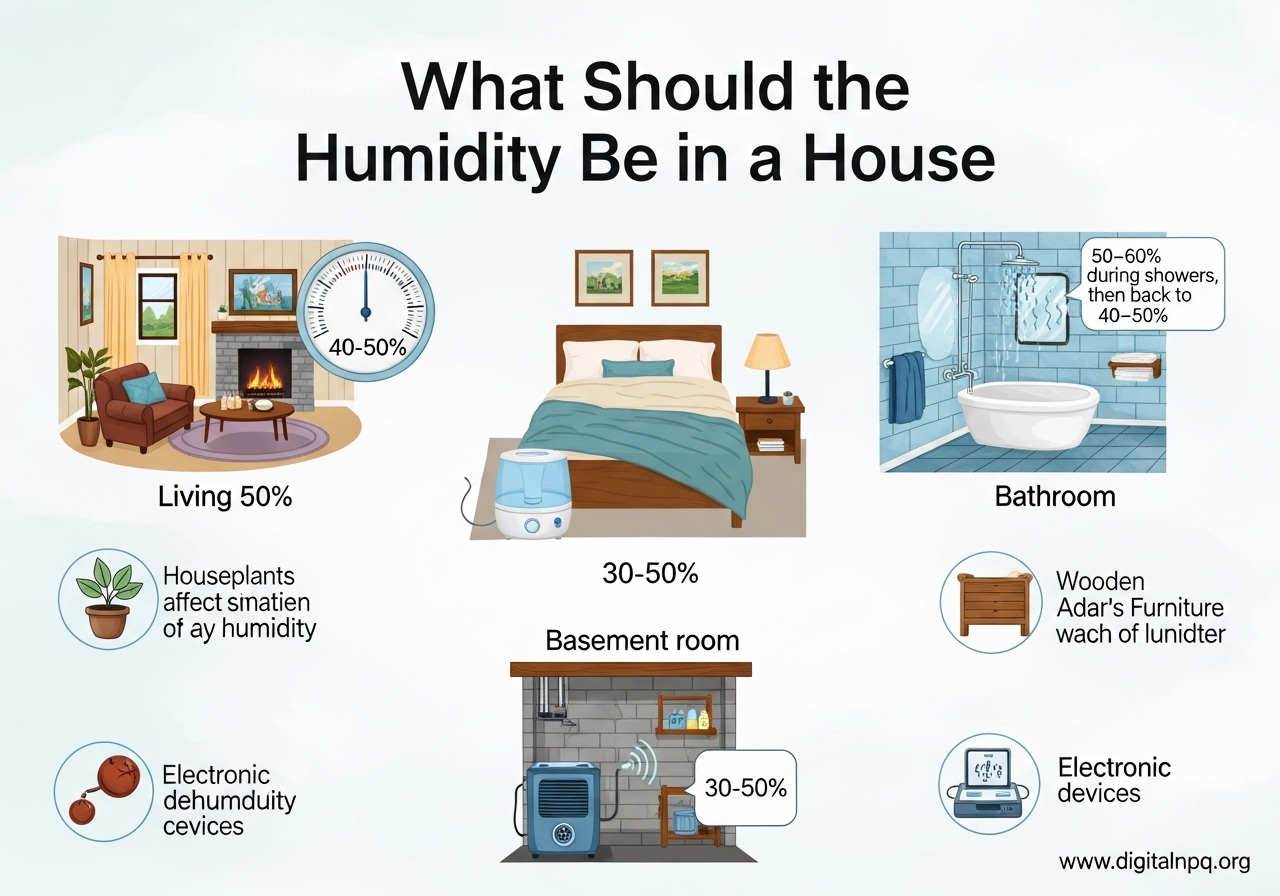
The ideal indoor humidity level for a house falls between 30% and 50%, according to guidance from the EPA and ASHRAE. If you have ever wondered what should the humidity be in a house, that 30-50% range is the short answer. But the full picture depends on your climate, the season, and which room you are measuring.
In this guide, I will break down exactly how to maintain a healthy humidity level for every room and season. I have spent months researching indoor air quality guidelines, and I also monitor my own home with a smart hygrometer. The tips below come from both official recommendations and real-world experience from homeowners.
By the end, you will know how to spot warning signs, adjust your home humidity range through the year, and protect both your family and your property.
What Should the Humidity Be in a House?
The recommended indoor humidity level is 30% to 50% relative humidity. This range strikes a balance between comfort, health, and home preservation. Staying inside this window keeps dust mites and mold in check while preventing the dry air that irritates skin and sinuses.
ASHRAE, the industry body for heating and cooling professionals, suggests 40% to 60% as acceptable. The EPA narrows that to 30% to 50% for mold prevention. In practice, most homeowners find 40% to 45% to be the sweet spot for daily living. I have tested this in my own home, and 42% keeps everyone comfortable without condensation on the windows.
Your exact target may shift slightly depending on the season. Winter often forces you toward the lower end because cold outside air holds little moisture. Summer may push you toward the upper end before you switch on air conditioning. The key is staying inside that 30-50% band year-round.
Relative Humidity vs. Absolute Humidity
Relative humidity is the percentage you see on weather apps and hygrometers. It tells you how much water vapor is in the air compared to the maximum amount the air could hold at that temperature. Absolute humidity is the actual mass of water vapor per unit of air. For home comfort, relative humidity is the number that matters.
Warmer air can hold more moisture. That means 50% relative humidity at 75 degrees feels very different from 50% at 65 degrees. The former feels sticky; the latter feels comfortable. When you set your home humidity targets, always think in terms of relative humidity at your normal indoor temperature.
Why Indoor Humidity Matters for Health and Comfort
Your house humidity range directly affects your health, your energy bills, and the condition of your home. Too much moisture encourages mold and dust mites, which trigger allergies and asthma. Too little moisture dries out mucous membranes, making you more vulnerable to colds and respiratory infections.
From a property standpoint, wood floors, furniture, and musical instruments all react to humidity swings. Wood expands in high humidity and contracts in low humidity. Over time, that movement causes cracking, warping, or joint failure. Electronics also suffer in very dry or very damp environments.
Energy efficiency is another factor. Dry air feels colder, so you may crank the heat higher in winter. Damp air feels warmer, but your air conditioner has to work harder to remove moisture in summer. Keeping a healthy humidity level helps your HVAC system run more efficiently year-round.
What Happens When Humidity is Too High
Indoor humidity above 50% to 60% creates problems for both your health and your home. Once you cross that threshold, mold spores find the conditions they need to grow. Dust mites also thrive in damp environments. If you are sensitive to allergens, high humidity can make your symptoms worse within days.
Yes, 70% humidity in a house is high. At that level, mold growth accelerates, condensation forms on windows and walls, and the air feels oppressive. If you consistently measure 70% or higher anywhere in your home, you need to take action immediately.
Health Risks of Excess Moisture
High humidity aggravates asthma and allergies because mold and dust mites multiply faster. You may notice coughing, sneezing, or itchy eyes that worsen indoors. Some people develop skin rashes or respiratory infections when mold levels climb. If you have infants or elderly family members, the risks are even higher.
Another issue is sleep quality. Damp air feels heavy and makes it harder for your body to cool itself at night. You may wake up feeling tired even after a full night in bed. I noticed this myself during a humid summer before I installed a dehumidifier in my bedroom.
Home Damage from High Humidity
Condensation on windows is one of the first visible signs. Over time, that moisture seeps into window frames, drywall, and insulation. Wood rot sets in, paint peels, and metal fixtures corrode. Basements are especially vulnerable because they receive less ventilation and tend to stay cooler.
Musty odors are another warning sign. That smell usually means mold or mildew is growing somewhere hidden. If you ignore it, the problem spreads to carpets, curtains, and HVAC ductwork. The cost of remediation far exceeds the cost of prevention.
What Happens When Humidity is Too Low
Indoor humidity below 30% causes a different set of problems. Dry air pulls moisture from everything it touches, including your skin, eyes, and respiratory tract. It also pulls moisture from wood, causing floors to crack and furniture joints to loosen.
Yes, 30% humidity can be too low in winter for many people. While it might prevent condensation on windows, it often leads to dry skin, nosebleeds, and static shocks. If you live in a cold climate, you may need to accept 30% to 35% in the depths of winter, but you should try to stay closer to 40% when possible.
Health Issues from Dry Air
Low humidity dries out the mucous membranes that protect your nose and throat. That makes it easier for viruses to enter your body. Studies show that flu viruses survive longer in dry air, which is one reason winter illness spreads so easily. Dry eyes, chapped lips, and irritated sinuses are also common complaints.
Static electricity becomes a nuisance below 30%. You may get shocks every time you touch a doorknob or pet your dog. While not dangerous, it is a clear signal that your air is too dry.
Property Damage from Low Moisture
Hardwood floors gap and crack when humidity drops. Guitars, pianos, and antique furniture suffer similar damage. Wallpaper can peel, and paint may chip. If you own valuable instruments or heirloom furniture, maintaining a stable indoor humidity level is essential for preservation.
Electronics are also at risk. Extremely dry air increases static discharge, which can damage sensitive components. While this is rare in normal homes, it is a concern for home offices with expensive equipment.
Seasonal Humidity Adjustments
Your target humidity should shift slightly with the seasons. In winter, cold outside air holds less moisture. When you heat that air indoors, the relative humidity drops sharply. That is why dry skin and static shocks are so common from December through February.
In summer, warm air holds more moisture. Outdoor humidity seeps indoors, and activities like cooking and showering add even more. Air conditioning removes some moisture, but in very humid climates it may struggle to keep up.
Winter Humidity Recommendations
In winter, aim for 30% to 40% relative humidity. If you push much higher than 40% in a cold climate, condensation will form on your windows. That condensation can rot window sills and promote mold growth. I run my humidifier at 35% during the coldest months and rarely see window fog.
Forum discussions from homeowners confirm this range. Many users with smart thermostats report that 35% to 40% keeps them comfortable without causing condensation. Some newer, well-insulated homes can handle 40% to 45% even in winter because the windows are more airtight.
Summer Humidity Recommendations
In summer, aim for 40% to 50% relative humidity. Your air conditioner will remove some moisture automatically, but in humid regions you may need a dehumidifier to stay under 50%. Basements and bathrooms are often the worst offenders during summer months.
Run your exhaust fans during and after showers. If you dry laundry indoors, consider moving it outside or using a vented dryer. Small habits like these prevent your home humidity from creeping above the safe range.
Spring and Fall Transitions
During mild seasons, you may not need any supplemental humidification or dehumidification. Simply monitor your hygrometer and adjust as needed. Many homes naturally stay between 40% and 50% during spring and fall without intervention. Use these months as a baseline to understand your home’s typical behavior.
How to Measure Indoor Humidity
The easiest way to measure indoor humidity is with a digital hygrometer. These small devices cost between $10 and $30 and display the current relative humidity as a percentage. Place them in the rooms where you spend the most time, especially bedrooms and living areas.
Smart thermostats like Ecobee and Nest also display indoor humidity readings. Many homeowners on HVAC forums praise these devices because they track trends over time. I use a smart thermostat myself, and I check the humidity graph at least once a week to spot patterns.
For accurate readings, place your hygrometer away from direct sunlight, vents, and windows. Leave it in place for several hours before trusting the number. If you want whole-house data, consider placing one device on each floor. Basements and attics often read very differently from main living areas.
Calibrating Your Hygrometer
Not all hygrometers are perfectly accurate out of the box. You can test calibration using the salt test. Place a spoonful of salt in a bottle cap, add a few drops of water to make a thick paste, and seal it in a small bag with your hygrometer. After 6 to 8 hours, the reading should be 75%. If it is off by more than 3%, adjust the device or note the offset.
How to Raise Humidity in a Dry House
If your indoor humidity level drops below 30%, you have several options to add moisture. The most effective solution is a humidifier. Cool-mist humidifiers are safer for homes with children because they do not use hot water. Warm-mist models can make a room feel slightly warmer, but they carry a burn risk.
Whole-house humidifiers connect to your HVAC system and distribute moisture through your ductwork. These are the best option if your entire home runs dry in winter. They require professional installation but eliminate the need for multiple portable units.
Natural methods also help. Houseplants release moisture through transpiration. Leaving a bowl of water near a heat source adds humidity as the water evaporates. Cooking with the lid off the pot, taking slightly longer showers, and air-drying laundry indoors are all small ways to boost humidity without buying equipment.
Humidifier Maintenance Tips
Clean your humidifier regularly. Standing water breeds bacteria and mold, which then get blown into your air. Empty the tank daily, disinfect it weekly, and replace filters according to the manufacturer’s schedule. Use distilled or demineralized water if your tap water is hard, since mineral buildup can damage the unit and create white dust.
How to Lower Humidity in a Damp House
If your home humidity consistently exceeds 50%, you need to remove moisture from the air. A dehumidifier is the most reliable tool. Portable units work well for single rooms like basements or bedrooms. For whole-house control, a central dehumidifier ties into your HVAC system.
Many homeowners in online forums say they set their dehumidifier to 45% and let it run automatically. I do the same in my basement during summer. The unit clicks on when humidity rises, shuts off when it reaches the target, and keeps the air comfortable without constant attention.
Ventilation is equally important. Run your bathroom exhaust fan for 15 minutes after every shower. Use your kitchen range hood when boiling water or cooking. If you have a clothes dryer, make sure it vents outdoors. Open windows on dry days to let humid air escape. If your basement feels damp, check for leaks, poor drainage, or cracks in the foundation.
When to Call a Professional
If your humidity stays high despite running a dehumidifier and using exhaust fans, you may have a hidden moisture source. Leaky pipes, poor drainage, or an oversized AC unit can all cause persistent dampness. An HVAC technician or home inspector can identify the root cause and recommend a permanent fix.
Room-by-Room Humidity Guide
Different rooms in your home have different humidity needs. Kitchens and bathrooms naturally run higher because of cooking and showering. Bedrooms and living rooms should stay closer to your overall target. Basements often need special attention because they are prone to dampness.
Here is a quick guide to what each room should ideally feel like:
Living Room: Keep this at 40% to 50% for comfort. It is where you spend the most waking hours, so it sets the standard for the rest of the home.
Bedroom: Aim for 40% to 50% for sleep quality. The best humidity level for sleeping is around 40% to 45%. Damp air makes you feel overheated; dry air irritates your throat and nose. Many users on home improvement forums report their best sleep happens at 42% to 45%.
Bathroom: Humidity here will spike to 60% or higher during showers. That is fine as long as it drops back down within 30 minutes. Run your exhaust fan and leave the door open afterward to let moisture dissipate.
Kitchen: Cooking can push humidity to 55% or higher. Use your range hood, especially when boiling water. If you notice condensation on kitchen windows, turn on a fan or crack a window while cooking.
Basement: Basements should stay between 30% and 50%. They are the most likely place to find mold because they are cooler and less ventilated. A dehumidifier is often essential in finished basements. Unfinished basements may tolerate slightly lower humidity.
Nursery or Baby Room: Parents frequently ask what should humidity be in house with baby. The answer is 40% to 50%. Babies have sensitive skin and smaller airways, so dry air causes more discomfort for them than for adults. A cool-mist humidifier in the nursery is a common solution, especially during winter. Clean it daily to prevent mold and bacteria.
Signs Your Humidity is Off
You do not need a hygrometer to notice humidity problems. Your body and your home will tell you. Here are the most common warning signs:
Signs of too little humidity: Static shocks, dry skin, chapped lips, nosebleeds, cracking wood, loose furniture joints, and increased dust. If you notice these in winter, your air is probably below 30%.
Signs of too much humidity: Condensation on windows, musty odors, mold spots, peeling paint, warping wood, and a clammy feeling on your skin. If you notice these in summer, your air is probably above 50%.
Addressing these signs early prevents expensive repairs. I check my windowsills every month during season changes. A small water stain on the wood is much easier to fix than a rotted frame.
Frequently Asked Questions
What is the healthiest humidity level for a home?
The healthiest humidity level for a home is 30% to 50% relative humidity, according to the EPA. ASHRAE recommends a slightly wider range of 40% to 60%. Most homeowners find 40% to 45% to be the most comfortable and healthy target for daily living.
What are signs of too little humidity?
Signs of too little humidity include static electricity shocks, dry and itchy skin, chapped lips, frequent nosebleeds, cracking hardwood floors, loose furniture joints, sore throat, and dry eyes. You may also notice that dust seems to settle more quickly around the house.
Is 70% humidity in a house high?
Yes, 70% humidity in a house is high. At 70%, mold growth accelerates, dust mites thrive, and condensation forms on windows and walls. You should take steps to lower indoor humidity if readings consistently reach 70% or higher.
Is 30% humidity too low in winter?
30% humidity is at the lower limit of comfort in winter. While it may prevent window condensation in cold climates, it can still cause dry skin, static shocks, and irritated sinuses. Many homeowners aim for 35% to 40% in winter if their windows and insulation can handle it.
What is the best humidity level for sleeping?
The best humidity level for sleeping is 40% to 45%. This range prevents dry throat and nasal passages while keeping the air light enough for your body to cool itself overnight. Many people report deeper sleep when bedroom humidity stays in this range.
What should humidity be in a house with a baby?
The ideal humidity in a house with a baby is 40% to 50%. Babies have sensitive skin and smaller airways, making them more susceptible to dry air. A cool-mist humidifier can help maintain this range in the nursery, especially during winter.
Conclusion
What should the humidity be in a house? The answer is 30% to 50% relative humidity for most homes and seasons. Staying within this healthy humidity level protects your family’s health, preserves your home, and keeps your energy bills in check.
Start by measuring your current indoor air quality with a hygrometer. Adjust your targets seasonally, keeping bedrooms and living rooms around 40% to 45%. Use a humidifier when winter air gets too dry, and run a dehumidifier when summer moisture climbs too high. Small changes in humidity control make a big difference in how your home feels and how well you sleep.