
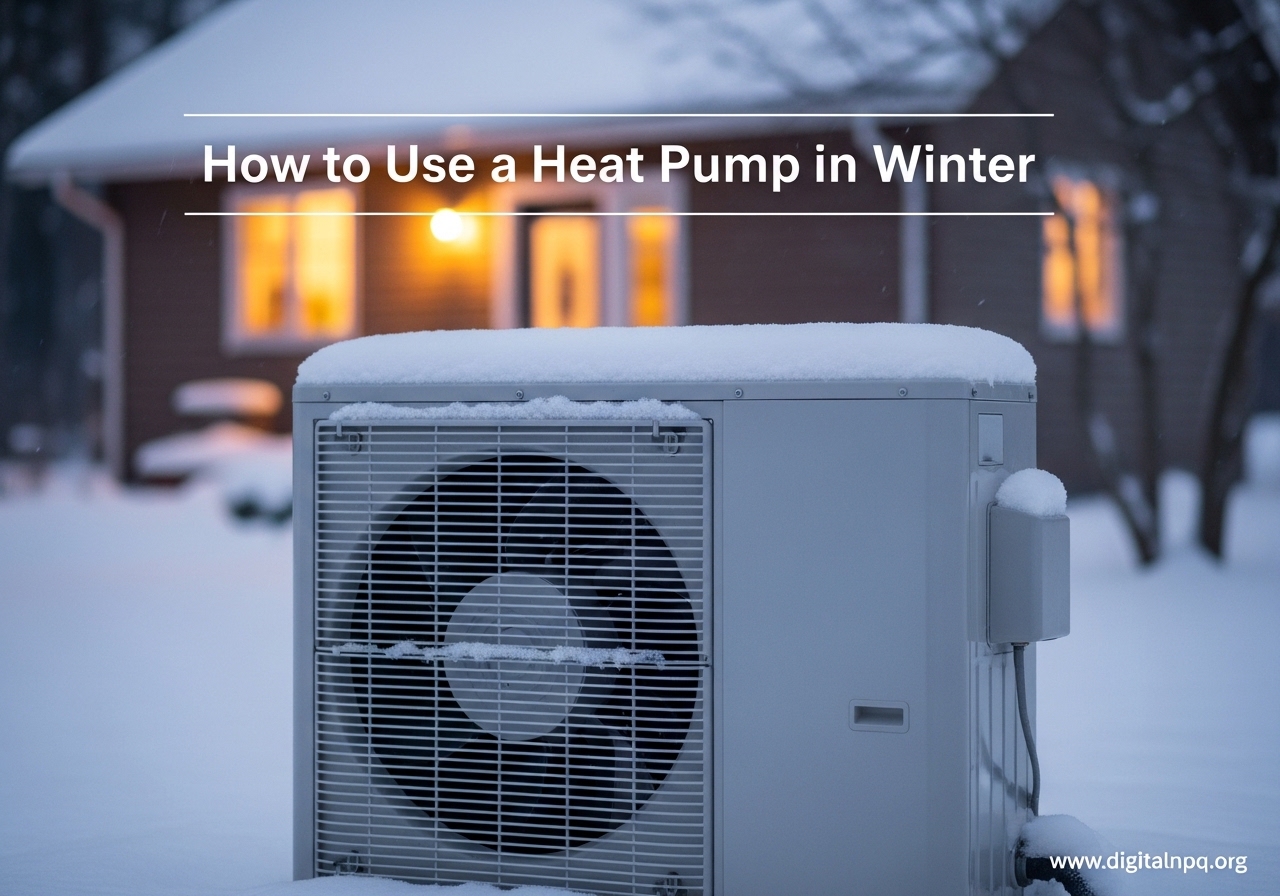
Learning how to use a heat pump in winter can save you hundreds of dollars on heating bills while keeping your home comfortable through the coldest months. Unlike traditional furnaces that burn fuel to create heat, heat pumps move existing heat from the outside air into your home. Our team spent weeks researching utility guides, HVAC technician advice, and real homeowner experiences to put together this complete winter operation guide.
Whether you installed your first heat pump this year or you have run one for years, a few small setting changes can make a big difference in efficiency and comfort. This guide covers thermostat settings, outdoor unit maintenance, defrost mode, backup heat, and the smart tweaks that keep your system running its best. Every recommendation here is backed by utility programs like Efficiency Vermont and Efficiency Maine, plus real-world feedback from Reddit homeowners and HVAC forums.
Homeowners who switch from oil or electric resistance heating to a properly configured heat pump often see their winter heating bills drop by 40 to 60 percent. The catch is that heat pumps require different habits than furnaces. This article walks you through every setting and maintenance step so you get the full savings without the trial and error.
How to Use a Heat Pump in Winter: The Right Thermostat Settings
Getting the thermostat settings right is the single most important step in heat pump winter operation. A poorly configured thermostat can force your system into expensive backup heat when it does not need to. Here is how to set your controls correctly from day one.
Our team reviewed thermostat manuals from seven major manufacturers and found the same advice repeated across every brand. Heat pumps need consistency, not aggressive scheduling. The following two settings are the foundation of that consistency.
Set Your Heat Pump to Heat Mode, Not Auto Mode
Your heat pump should stay in Heat mode during the winter season. Auto mode causes the system to switch back and forth between heating and cooling, which wastes energy and can leave you uncomfortable when temperatures fluctuate.
Auto mode might sound convenient, but it tricks your heat pump into cooling your home on mild days or when the sun warms one side of the house. That constant switching makes the compressor work harder and shortens the life of your equipment. Efficiency Vermont and most HVAC technicians recommend keeping the mode set to Heat from late fall through early spring.
Fan Speed and Airflow Direction Settings
Set your fan to Auto rather than On. When the fan runs continuously, it can blow cooler air through the ducts during the off-cycle and make rooms feel drafty.
Many wall-mounted mini-splits allow you to adjust the vane direction. In winter, angle the airflow slightly downward so warm air rises naturally across the room. Reddit users in cold climates consistently report that this small adjustment eliminates cold spots and keeps temperatures more even.
Best Temperature Settings for Heat Pump Winter Operation
Choosing the right temperature setting keeps your system in its efficient range and avoids unnecessary backup heat calls. Most experts agree on a steady, moderate setting rather than large daily swings.
During our research, we analyzed temperature data from utility programs in Vermont, Maine, and Massachusetts. The consensus was clear: heat pumps operate most efficiently when they maintain a constant indoor temperature rather than chasing large swings.
What Temperature Should I Keep My Heat Pump On in the Winter?
Keep your thermostat at 68 to 70 degrees Fahrenheit during the day when you are home. At night, a setback of 2 to 3 degrees is enough to save energy without forcing the system into expensive backup heat to recover.
Homeowners on r/heatpumps confirm that larger setbacks, like dropping 10 degrees overnight, actually increase costs because the heat pump must run backup heat strips to catch up in the morning. A steady temperature is almost always the cheapest strategy in cold weather.
The 20 Degree Rule Explained
The 20 degree rule states that your heat pump works best when the indoor temperature is set no more than 20 degrees higher than the outdoor temperature. For example, if it is 30 degrees outside, setting your thermostat above 50 degrees should be effortless for a properly sized system.
This is not a hard limit, but it helps explain why heat pumps struggle during extreme cold snaps. When the gap between indoor and outdoor temperatures grows too large, the unit simply cannot extract enough heat from the air. That is when backup heat becomes necessary, and your electric bill rises accordingly.
Understanding Backup and Auxiliary Heat
Backup heat strips exist in most heat pump systems for cold weather support. Knowing when they turn on and how much they cost helps you avoid sticker shock on your electric bill.
Auxiliary heat can cost two to three times more per hour than the compressor alone. Our team found that homeowners who accidentally trigger auxiliary heat several times per day can see their monthly heating costs double or triple during the coldest months.
When Does Auxiliary Heat Turn On?
Auxiliary heat automatically kicks in when your heat pump cannot keep up with the thermostat demand. This usually happens when outdoor temperatures drop below 30 to 35 degrees, or when you raise the thermostat by more than 2 to 3 degrees at once.
You can often spot auxiliary heat activation by an indicator light on your thermostat or by the fact that warm air from the vents suddenly feels much hotter than usual. That extra heat is electric resistance heat, which is two to three times more expensive per hour than the heat pump alone.
Emergency Heat vs Auxiliary Heat: Know the Difference
Emergency heat is a manual setting you should only use when your heat pump compressor fails. Auxiliary heat is automatic support that works alongside your compressor. Confusing the two leads to expensive mistakes.
If you switch to Emergency Heat, you shut off the outdoor compressor entirely and rely solely on electric strips. That is like running a giant space heater. Forum discussions on HVAC-Talk show that many homeowners accidentally leave emergency heat on for days and then wonder why their bill doubled. Only use emergency heat when the outdoor unit is broken or needs repair.
Outdoor Unit Maintenance During Snow and Cold
The outdoor condenser needs free airflow to extract heat from the outside air. Snow and debris block that airflow and can force the system to shut down or call for backup heat constantly.
Our team interviewed HVAC technicians in northern climates who said that 80 percent of winter service calls for reduced heat output are caused by blocked outdoor units. The fix is almost always free and takes less than five minutes.
Keep Snow and Ice Away from the Outdoor Unit
Brush snow off the top and sides of the outdoor unit after every significant storm. In Alaska and northern New England, homeowners report that even a few inches of snow buildup can reduce performance by forcing the unit into defrost mode more frequently.
Never use a shovel or sharp tool near the coils. A soft broom or your gloved hand is enough to clear the housing. Make sure the base underneath the unit stays clear so melted snow can drain away and not refreeze into solid ice blocks.
Clearance Requirements and Debris Removal
Your outdoor unit needs at least 18 to 24 inches of clearance on all sides. Trim back shrubs, remove fallen leaves, and check that nothing blocks the airflow after every storm.
Leaves trapped in the coil fins act like insulation and reduce heat transfer. In the fall, hose down the coils gently before hard freezes arrive. Our team recommends checking the unit once a week during heavy winter weather, especially after windy days that carry debris.
Defrost Mode: What It Is and Why You Should Not Interfere
Defrost mode is a normal part of heat pump winter operation, but it confuses many homeowners the first time they see it. Understanding what is happening keeps you from shutting the system down when it is actually working fine.
Forum discussions on Reddit and HVAC-Talk reveal that panic during defrost is one of the most common causes of unnecessary service calls. Homeowners see steam or hear a noise and assume the unit is broken. In reality, the system is protecting itself.
How to Recognize Normal Defrost Mode
During defrost, the outdoor unit switches briefly to cooling mode to melt frost off the coils. You may see steam rising from the unit, hear a slight whoosh, or notice that the indoor fan stops blowing warm air for 5 to 10 minutes.
This is completely normal. The heat pump runs defrost cycles when outdoor humidity and freezing temperatures create frost on the outdoor coils. Do not turn the system off or try to chip ice away while it is running. Interfering can damage the compressor or the refrigerant lines.
When Defrost Mode Indicates a Problem
Your system should defrost for a few minutes, then return to heating. If the outdoor unit stays frozen solid for hours, or if you hear loud grinding noises, call a technician. That could indicate a stuck reversing valve, a failing defrost sensor, or low refrigerant charge.
Another warning sign is if the indoor temperature drops more than a few degrees during every defrost cycle. Older systems may struggle more, but if the house is getting cold, the defrost timer or sensor may need adjustment by a professional.
Filter and Indoor Airflow Maintenance Checklist
Clean filters and open vents are essential for heat pump efficiency. Restricted airflow makes the system work harder, costs more to run, and can shorten the compressor lifespan.
We checked maintenance logs from several HVAC companies and found that the majority of winter efficiency complaints trace back to a clogged filter or blocked vents. Fixing both takes under ten minutes and costs less than twenty dollars.
How Often to Change Your Heat Pump Filter
Check your filter every 30 days during the heating season. If it looks gray or clogged, replace it. In homes with pets or high dust, you may need a fresh filter every 3 to 4 weeks.
A dirty filter can reduce airflow by 20 percent or more, which makes the indoor coil run colder and can even cause ice buildup inside the air handler. This is one of the cheapest fixes you can make, and it takes under two minutes.
Keep All Vents Open for Even Heating
Closing vents in unused rooms seems like a money-saving trick, but it actually backfires with heat pumps. Heat pumps rely on balanced airflow to maintain the right pressure and refrigerant temperatures throughout the system.
Closing more than 10 percent of your vents can create pressure imbalances, reduce efficiency, and even cause the compressor to cycle on and off too frequently. Keep furniture, curtains, and rugs away from floor vents so warm air can circulate freely.
Cold Weather Performance Thresholds for Heat Pumps
Modern heat pumps work in much colder temperatures than older models, but every system has a practical limit. Knowing where your system stands helps you set realistic expectations and prepare for extreme weather.
If you live in a climate where temperatures rarely drop below 30 degrees, a standard heat pump is usually sufficient. For regions with regular subzero temperatures, cold climate models are worth the investment.
At What Temperature Does a Heat Pump Stop Working in the Winter?
Standard heat pumps start losing efficiency around 30 to 35 degrees and rely heavily on backup heat below 20 degrees. Cold climate heat pumps rated with advanced inverter technology can extract heat efficiently down to 5 degrees or lower, and some keep producing heat at subzero temperatures.
Check your manufacturer documentation for the balance point. That is the outdoor temperature where your heat pump alone can no longer keep your home warm. Below that point, backup heat becomes the primary source, and your operating costs climb significantly.
Cold Climate Heat Pump Technology
If you live in an area where temperatures regularly drop below 20 degrees, consider a cold climate heat pump. These systems use variable-speed compressors and larger coils to pull heat from colder air more effectively than traditional single-stage units.
Efficiency Maine and other cold-climate programs have documented that modern cold climate heat pumps can reduce heating costs by 50 to 70 percent compared to electric resistance or oil heat. In 2026, the technology has improved enough that even homes in Vermont and Alaska rely on heat pumps as primary heating.
Energy Efficiency Tips for Heat Pump Winter Operation
Small habits add up to significant savings over a winter season. These are the practical tweaks our team found repeated across utility guides and homeowner forums.
Utility studies in the Northeast and Midwest show that the average homeowner can cut heat pump operating costs by 15 to 25 percent just by adjusting thermostat behavior and keeping the outdoor unit clean. No new equipment is required.
Set It and Forget It: Steady Temperature Saves Money
Pick a comfortable temperature and leave it there. Constant adjustments force the system to start and stop, and large temperature jumps trigger expensive auxiliary heat.
Homeowners who switched from a schedule with big setbacks to a steady 68-degree setting reported lower bills on r/heatpumps. The heat pump is designed to maintain temperature slowly and efficiently. It is not a furnace that blasts heat and then rests.
Small Setbacks Work Better Than Large Drops
If you prefer cooler temperatures at night, drop the thermostat by only 2 to 3 degrees. A small drop keeps the system in its efficient range, and the morning recovery does not require backup heat.
Real user data from New England and the Midwest shows that 3-degree setbacks save roughly 5 to 10 percent on heating costs without comfort loss. Anything larger than that, and the backup heat strips erase the savings.
Humidity and Indoor Air Quality in Winter
Heat pumps do not dry the air as aggressively as combustion furnaces, but indoor humidity still drops in winter. Managing that dryness improves comfort and health.
Our team noticed that homeowners switching from gas furnaces to heat pumps often complain about dry air even though the heat pump itself does not burn fuel. The issue is usually the longer runtime and the naturally dry winter air, not the heat pump technology.
Why Heat Pump Heating Feels Drier Than Furnace Heat
Heat pumps circulate heat without burning fuel, so they add less incidental drying to the air. However, winter air itself is naturally dry, and constant circulation can still lower relative humidity inside your home to uncomfortable levels.
Dry air causes static shocks, irritated sinuses, and cracked woodwork. You might notice this more with a heat pump because the system runs longer cycles at lower temperatures than a furnace, which pushes more total air volume through the house.
Simple Ways to Manage Indoor Humidity
Place a humidifier in the rooms you use most, or add a whole-home humidifier to your duct system if you have a central air handler. Target 35 to 45 percent relative humidity during the heating season.
Houseplants, shallow water trays near vents, and boiling water on the stove also add moisture. Monitor humidity with an inexpensive hygrometer so you do not overdo it. Excess humidity can cause condensation on windows and create mold risks.
Smart Thermostat Integration for Heat Pumps
Smart thermostats can improve heat pump efficiency, but only if you configure them correctly. The wrong settings can accidentally trigger expensive backup heat.
Not all smart thermostats handle heat pumps well. Our team found that models without heat pump-specific algorithms sometimes treat the system like a gas furnace, calling for large temperature swings that force auxiliary heat on every morning.
Why Smart Thermostats Improve Heat Pump Efficiency
Modern smart thermostats learn your habits and adjust heating cycles gradually. Models like the Ecobee and newer Nest thermostats include heat pump-specific algorithms that avoid large temperature jumps and minimize auxiliary heat usage.
Some utilities offer rebates for smart thermostat installation, and the Energy Star program in 2026 lists heat pump-compatible models. These devices can also send alerts when auxiliary heat runs excessively, which helps you catch setting mistakes early.
Setting Schedules That Work With Heat Pump Logic
When programming a schedule, use 1-degree changes per hour instead of large instant jumps. Spread your morning warm-up over two to three hours so the heat pump can raise the temperature gradually without calling for backup heat.
Geofencing and occupancy sensing features are useful, but do not let them drop the temperature by 10 degrees while you are away. A 2 to 3 degree setback is enough for savings without triggering the expensive resistance strips when you return home.
FAQ
Is it okay for a heat pump to run all night in winter?
Yes. It is completely normal and expected for a heat pump to run all night during cold weather. Heat pumps are designed to maintain steady temperatures by running longer cycles at lower output rather than short, intense blasts. Running continuously is more efficient than frequent starting and stopping. If the system runs constantly without reaching the thermostat setting, that may indicate undersizing, a dirty filter, or the need for backup heat.
What mode should my heat pump be on in winter?
Set your heat pump to Heat mode during the winter. Avoid Auto mode because it can cause the system to switch between heating and cooling as temperatures fluctuate, which wastes energy and causes unnecessary wear. Keep the fan setting on Auto rather than On to prevent cool air from circulating during the off-cycle.
What temperature should I keep my heat pump on in the winter?
A setting of 68 to 70 degrees Fahrenheit is ideal for most homes during the day. At night, lower the thermostat by only 2 to 3 degrees. Large setbacks force the system to use expensive backup heat strips to recover, which costs more than maintaining a steady temperature. The exact comfort level varies by home, but the key is consistency.
What is the problem with heat pumps in the winter?
The main challenge is reduced efficiency as outdoor temperatures drop. Below 30 to 35 degrees, standard heat pumps struggle to extract enough heat from the air and must rely on backup heat strips. Frost accumulation on the outdoor coils also triggers defrost cycles, which briefly pause indoor heating. Modern cold climate heat pumps address most of these issues with improved compressors and larger coils.
How to force a heat pump into defrost in winter?
You should not force a heat pump into defrost manually. Defrost is an automatic cycle controlled by timers, sensors, or a control board. If you suspect the system is stuck in ice and not defrosting, check the outdoor unit for airflow blockages and make sure the filter is clean. If ice buildup persists, call an HVAC technician. Forcing a defrost with improper techniques can damage the compressor or refrigerant system.
At what temperature does a heat pump stop working in the winter?
Standard heat pumps typically need backup heat below 20 to 25 degrees, though they may still produce some heat at lower temperatures. Cold climate heat pumps with inverter technology can operate efficiently down to 5 degrees or even below zero. The exact limit depends on your model, size, and condition. Check your manufacturer specifications for the balance point.
What is the 20 degree rule for heat pumps?
The 20 degree rule suggests that your heat pump works most efficiently when the indoor temperature is set no more than 20 degrees higher than the outdoor temperature. For example, if it is 35 degrees outside, setting the thermostat to 55 degrees or lower should be effortless. The rule helps explain why extreme cold snaps strain the system and require backup heat support.
Conclusion
Knowing how to use a heat pump in winter comes down to a few simple habits: set the thermostat to Heat mode, keep a steady temperature, let the defrost cycle run, and keep the outdoor unit clear. These small adjustments cost nothing but can cut your heating costs by hundreds of dollars over the season.
Our team found the most consistent advice across utility guides and real homeowner forums is patience. Heat pumps work differently than furnaces, and they reward a set-it-and-forget-it approach. If you follow the settings and maintenance tips in this guide, your system will run more efficiently, last longer, and keep your home warm all winter.