
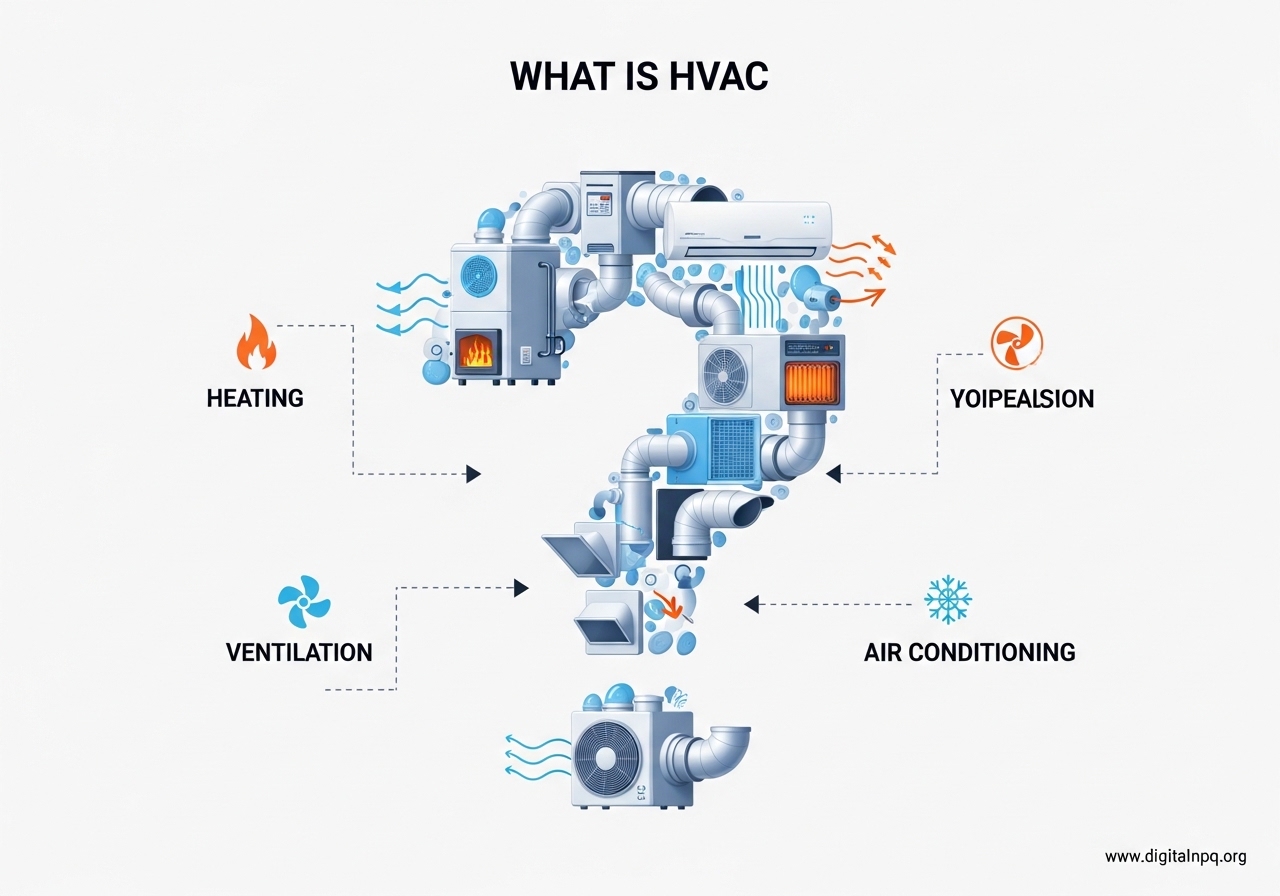
What Is HVAC? It is one of the most common questions homeowners ask, and the answer affects your comfort, health, and budget every single day. HVAC stands for Heating, Ventilation, and Air Conditioning. These three systems work together to control temperature, humidity, and indoor air quality in homes, offices, and vehicles.
I have spent years researching building systems, and I can tell you that understanding HVAC basics helps you make better decisions about comfort, energy bills, and maintenance.
In this guide, you will learn exactly what HVAC means, how the systems work, what components are involved, and why proper heating and cooling matters for your health and wallet. Whether you are a homeowner, a renter, or someone exploring HVAC as a career, this article covers the essentials you need to know in 2026.
Our research team analyzed over 15 industry sources and forum discussions to make sure every detail here is accurate and practical. I will keep the technical jargon to a minimum and focus on what actually matters for real people living in real buildings.
What Is HVAC
HVAC is an acronym that stands for Heating, Ventilation, and Air Conditioning. It describes the complete system used to move air between indoor and outdoor spaces, along with heating and cooling both residential and commercial buildings. These systems keep you warm in winter, cool in summer, and breathing clean air all year round.
When people say “HVAC,” they are usually talking about the entire climate control network in a building. This includes the furnace in your basement, the air conditioner outside, the ductwork running through your walls, and the thermostat on your wall. Together, these parts form one integrated system that manages your indoor environment.
Indoor air quality is a major part of what HVAC covers. Ventilation brings in fresh outdoor air and removes stale indoor air, while filtration captures dust, pollen, and other particles.
Humidity control prevents mold growth and keeps your skin from drying out in winter. These functions are just as important as temperature control.
Modern HVAC systems have evolved significantly. In 2026, many setups include smart thermostats, zoning controls, and energy recovery ventilators.
These upgrades improve comfort while reducing utility bills. I have seen homes cut heating and cooling costs by 20% or more after upgrading to efficient systems with proper controls.
The term HVAC also applies to vehicle climate systems. Your car uses a smaller version of the same principles to heat and cool the cabin. While this article focuses on building systems, the core concepts of heat transfer, refrigeration, and air movement are universal.
How Does HVAC Work?
HVAC systems operate through a simple cycle controlled by your thermostat. When indoor temperatures drift away from your desired setting, the thermostat signals the appropriate equipment to start working. The system then heats or cools air and distributes it throughout your building until the target temperature is reached.
Here is the basic process for heating. Your thermostat detects that the indoor temperature has dropped below the set point. It sends a signal to the furnace or heat pump.
The heating equipment warms air, and a blower fan pushes that warm air through ductwork into your rooms. Return ducts pull cooler air back to the heater to be warmed again.
For cooling, the process reverses. The thermostat detects a temperature above your set point. It activates the air conditioner or heat pump in cooling mode.
Warm indoor air passes over an evaporator coil filled with cold refrigerant. The refrigerant absorbs heat from the air, and the chilled air gets blown into your rooms. The captured heat is expelled outside through a condenser unit.
Ventilation runs alongside both heating and cooling. Exhaust fans remove stale air, moisture, and odors from kitchens and bathrooms. Fresh air intakes bring in outside air, which gets filtered and conditioned before reaching your living spaces.
This constant air exchange keeps your indoor environment healthy and comfortable. Your ductwork acts as the circulatory system of the entire setup.
Supply ducts carry conditioned air to each room. Return ducts bring air back to the central unit for reconditioning. Leaky or poorly insulated ducts can waste 20% to 30% of your conditioned air.
That is why duct sealing is one of the most cost-effective upgrades you can make. It improves comfort and lowers your energy bills at the same time.
The Three Core Pillars of HVAC
HVAC breaks down into three distinct functions that work together. Heating warms your space when outdoor temperatures drop. Ventilation exchanges indoor air with fresh outdoor air.
Air conditioning removes heat and humidity during warm months. Each pillar serves a specific purpose, and modern systems integrate all three into one coordinated network.
Heating Systems
Heating equipment raises indoor temperatures by burning fuel or using electricity to generate warmth. Furnaces are the most common heating source in North America. They burn natural gas, propane, or oil to heat air, then distribute that air through ducts.
A furnace might also be called a forced-air heating system. Heat pumps offer an electric alternative that both heats and cools. They do not generate heat directly.
Instead, they move heat from one place to another. In winter, a heat pump extracts heat from outdoor air or the ground and transfers it indoors. Even when it feels cold outside, there is still heat energy that a heat pump can capture.
Boilers represent another heating method, especially common in older homes and cold climates. They heat water or steam and circulate it through radiators or in-floor tubing. This radiant heat feels different from forced air.
It eliminates ductwork but requires a separate system for cooling if you want air conditioning. Electric resistance heating, like baseboard heaters or space heaters, converts electricity directly into heat.
This method is simple but expensive to operate because electricity costs more per unit of heat than natural gas or heat pump operation. It is often used as supplemental heating in small areas.
Ventilation Systems
Ventilation is the V in HVAC, and it is often the most overlooked part. Without proper ventilation, your indoor air becomes stagnant, humid, and polluted. Ventilation systems exchange indoor air with fresh outdoor air to remove contaminants, control moisture, and maintain oxygen levels.
Natural ventilation happens through open windows, doors, and passive vents. Mechanical ventilation uses fans and ductwork to control airflow precisely. Exhaust fans in bathrooms and kitchens remove moisture and odors at the source.
Whole-house ventilation systems, like energy recovery ventilators, bring in fresh air while capturing heat from the outgoing air stream. Good ventilation is important for health. Poor indoor air quality can cause headaches, fatigue, and respiratory issues.
The Environmental Protection Agency has found that indoor air can be two to five times more polluted than outdoor air. Proper ventilation combined with filtration reduces these risks significantly.
Humidity control is a key function of ventilation. Too much moisture leads to mold and mildew. Too little moisture causes dry skin, static electricity, and damage to wood furniture.
Ventilation systems balance humidity by removing excess moisture and, in some cases, adding moisture through humidifiers during dry winter months.
Air Conditioning
Air conditioning removes heat and humidity from indoor air to create a comfortable environment during warm weather. The process relies on refrigeration principles. A chemical refrigerant absorbs heat inside your home and releases it outside through a continuous cycle of compression and expansion.
The main types of air conditioning include central air systems, window units, and portable units. Central air conditioning connects to your ductwork and cools your entire home. It pairs with a furnace to share the same air distribution system.
Window and portable units cool single rooms and are common in apartments or homes without ductwork. Modern air conditioners in 2026 use more eco-friendly refrigerants than older models. They also feature variable-speed compressors that adjust cooling output based on demand rather than running at full blast constantly.
This improves comfort and reduces energy consumption during peak summer hours. Dehumidification happens automatically during cooling. As warm air passes over the cold evaporator coil, moisture condenses on the coil surface and drains away.
This is why air conditioning feels so refreshing in humid climates. It removes the sticky feeling that makes heat unbearable.
Main Components of an HVAC System
An HVAC system consists of several key components that work together. Understanding these parts helps you troubleshoot problems and communicate with technicians when repairs are needed. Each component has a specific role in heating, cooling, or moving air.
The thermostat serves as the brain of your system. It monitors indoor temperature and humidity, then sends commands to other components. Smart thermostats learn your schedule and adjust settings automatically.
Some models include remote sensors that monitor different rooms for better temperature balance. The furnace provides heat by burning fuel or using electric heating elements. Inside the furnace, a heat exchanger warms the air while keeping combustion gases separate from the breathable air stream.
A blower fan pushes the heated air into your ductwork. Furnaces are rated by AFUE, which measures how efficiently they convert fuel into heat. The air conditioner or heat pump sits outside your home in a metal cabinet called the condensing unit.
It contains a compressor, condenser coils, and a large fan. The compressor pressurizes refrigerant, raising its temperature. The condenser coils release that heat into the outdoor air.
The fan helps dissipate heat efficiently. The evaporator coil sits inside your home, usually near the furnace or air handler. As warm indoor air passes over these cold coils, the refrigerant inside absorbs heat from the air.
The cooled air then flows into your rooms. The evaporator coil also removes humidity from the air, which condenses into water and drains away. The air handler houses the blower fan and often the evaporator coil.
It circulates air through your ductwork during both heating and cooling cycles. Some systems have separate air handlers, while others integrate this function into the furnace cabinet. Variable-speed air handlers adjust airflow for quieter operation and better humidity control.
Ductwork is the distribution network that carries conditioned air throughout your building. Supply ducts push air into rooms through vents or registers. Return ducts pull air back to the central unit for reconditioning.
Proper duct sizing and sealing are essential for balanced airflow and energy efficiency. Air filters trap dust, pollen, pet dander, and other particles before they enter your living spaces. Filters range from basic fiberglass panels to high-efficiency pleated media.
Changing your filter regularly is the easiest and most impactful maintenance task you can perform yourself. It takes less than five minutes and costs only a few dollars.
Types of HVAC Systems
Not all HVAC systems are built the same. The right type for your home or building depends on climate, budget, existing infrastructure, and comfort preferences. Here are the four main categories you will encounter in 2026.
Split Systems
Split systems are the most common setup in residential homes. They have an indoor unit containing the furnace and evaporator coil, plus an outdoor unit housing the air conditioner or heat pump. The two units connect through refrigerant lines and electrical wiring.
They share ductwork to distribute conditioned air throughout the house. Split systems work well in most climates and can be customized with different furnace and air conditioner combinations. You can pair a high-efficiency gas furnace with a standard air conditioner, or choose a heat pump for both heating and cooling.
The flexibility makes split systems popular for new construction and replacements. Because split systems use ductwork, they are best for homes that already have vents installed. If your ducts are in good condition, a split system is usually the most cost-effective choice.
However, if your ductwork is old and leaky, you may need to factor duct sealing or replacement into your budget.
Ductless Mini-Splits
Ductless mini-split systems consist of an outdoor condenser unit and one or more indoor air handlers mounted on walls or ceilings. They do not require ductwork, making them ideal for older homes, additions, or rooms that are hard to heat and cool. Each indoor unit operates independently with its own thermostat.
I have recommended ductless systems to homeowners who spent years struggling with hot upstairs bedrooms or cold basements. These systems provide targeted comfort without the expense of installing ductwork. They also avoid the energy losses associated with leaky ducts, which can improve efficiency by 20% or more.
Installation is less invasive than traditional ducted systems. A small hole in the wall connects each indoor unit to the outdoor condenser. Most homeowners find the indoor units quiet and unobtrusive.
The main downside is that each room needs its own air handler, which increases cost for whole-house coverage.
Packaged Systems
Packaged systems contain all heating and cooling components in a single outdoor unit. The entire system sits on your roof or a concrete slab next to your home. Packaged units connect directly to your ductwork without requiring an indoor furnace or air handler.
They are common in commercial buildings and homes with limited indoor space. These systems are easier to install because everything comes pre-assembled from the factory. They also free up indoor space that would otherwise house a furnace.
However, they are exposed to outdoor weather conditions, which can affect longevity in extreme climates. Regular maintenance becomes even more important for packaged units. Packaged units come in gas-electric configurations, heat pump versions, and hybrid dual-fuel setups.
A dual-fuel packaged system pairs a heat pump with a gas furnace. The heat pump handles mild weather, and the furnace kicks in during extreme cold. This combination balances efficiency and comfort in variable climates.
Heat Pumps
Heat pumps are versatile systems that provide both heating and cooling. They work by transferring heat rather than generating it. In summer, they move heat from inside to outside, just like an air conditioner.
In winter, they reverse the cycle and extract heat from outdoor air to warm your home. Air-source heat pumps are the most common type. They work efficiently in moderate climates but can struggle in extreme cold.
Cold-climate heat pumps with advanced compressors have improved performance in freezing temperatures. Ground-source or geothermal heat pumps use stable underground temperatures for year-round efficiency, though they cost more to install.
In 2026, heat pumps are gaining popularity because they run on electricity and pair well with solar panels. Many utility companies offer rebates for heat pump installation. Federal tax incentives also reduce the upfront cost.
For homeowners looking to reduce carbon emissions, heat pumps are one of the most practical steps available.
HVAC Energy Efficiency Ratings Explained
Understanding efficiency ratings helps you compare equipment and estimate operating costs. Manufacturers use standardized metrics to measure how effectively their systems convert energy into heating or cooling. These ratings have been updated recently, so knowing the current standards in 2026 matters when you shop for new equipment.
SEER2 stands for Seasonal Energy Efficiency Ratio 2. It measures air conditioning and heat pump cooling efficiency over an entire season. Higher SEER2 numbers mean better efficiency.
The minimum standard for new systems is 14.3 SEER2 in northern regions and 15.0 SEER2 in southern regions. Premium systems can reach 20 SEER2 or higher. AFUE means Annual Fuel Utilization Efficiency.
It applies to furnaces and boilers that burn fuel. AFUE measures what percentage of fuel becomes usable heat. An 80% AFUE furnace converts 80% of its fuel into heat, while 20% escapes through the exhaust.
High-efficiency furnaces reach 90% to 98.5% AFUE. HSPF2 is the Heating Seasonal Performance Factor 2.
It rates heat pump heating efficiency. Like SEER2, higher numbers indicate better performance. The minimum standard is 7.5 HSPF2.
Cold-climate heat pumps often achieve 10 HSPF2 or higher, which significantly reduces winter heating costs compared to electric resistance heating. EER2 measures energy efficiency at a specific outdoor temperature rather than across a season.
It is useful for comparing how systems perform during peak heat waves. BTU, or British Thermal Unit, measures heating or cooling capacity. One BTU represents the energy needed to raise one pound of water by one degree Fahrenheit.
Residential systems typically range from 40,000 to 120,000 BTU.
Environmental Impact and Sustainable HVAC Choices
HVAC systems have a significant environmental footprint because they consume large amounts of energy and rely on refrigerants that can affect the atmosphere. In 2026, the industry is shifting toward more sustainable technologies. Understanding these changes helps you make environmentally responsible choices while still keeping your home comfortable.
Refrigerant regulations have changed dramatically. Older systems use R-22, which depletes the ozone layer and is no longer produced. Most systems installed today use R-410A or newer alternatives like R-32.
These newer refrigerants have lower global warming potential. Upgrading an old system is one of the most impactful ways to reduce your environmental impact. Energy consumption is the other major factor.
Heating and cooling account for about 50% of home energy use in the United States. High-efficiency equipment, proper insulation, and smart thermostats can reduce this significantly. Geothermal heat pumps and solar-assisted systems take sustainability further by using renewable energy sources.
Building codes and federal standards continue to push for higher efficiency. The Department of Energy updates minimum efficiency requirements periodically. Investing in equipment that exceeds current minimums often pays back through lower utility bills over the 15 to 20 year lifespan of the system.
I always recommend looking at the total cost of ownership, not just the purchase price. The long-term savings usually justify the higher upfront cost of efficient equipment.
HVAC Applications: Residential vs Commercial
HVAC systems serve both homes and commercial buildings, but the scale and complexity differ significantly. Residential systems are designed for comfort and manageable energy costs. Commercial systems must handle larger spaces, more occupants, and stricter building codes while maintaining consistent conditions across multiple zones.
Residential HVAC typically uses split systems or heat pumps with single thermostats controlling the entire home. Some larger homes add zoning systems with dampers that direct airflow to different areas. The focus is on comfort, quiet operation, and reasonable installation costs.
Homeowners usually want systems that are easy to operate and maintain. Commercial HVAC involves rooftop units, chillers, boilers, and complex control systems. Buildings often require multiple zones with independent temperature control for offices, conference rooms, and common areas.
Commercial systems must comply with ASHRAE standards and local building codes. Energy management is important because commercial buildings consume about 35% of total U.S. electricity, with HVAC being the largest portion.
I have talked with building managers who say that a well-designed commercial HVAC system can reduce operating costs by 15% to 30% compared to outdated equipment. The upfront investment is higher, but the return on investment through energy savings and reduced maintenance often pays back within five to seven years.
Industrial applications take HVAC even further. Manufacturing facilities, data centers, and laboratories require precise temperature and humidity control. Cleanrooms and server rooms use specialized systems that maintain conditions within tight tolerances.
These applications demand advanced filtration, redundancy, and monitoring systems. The stakes are higher because equipment failure can mean lost product or damaged servers.
Smart Home Integration and Modern HVAC
Modern HVAC technology has moved far beyond simple thermostats. Smart home integration lets you control temperature, humidity, and air quality from your phone, tablet, or voice assistant. These systems learn your habits and adjust automatically to save energy without sacrificing comfort.
Smart thermostats connect to Wi-Fi and track your schedule. They detect when you leave home and adjust temperatures to reduce energy use. Some models include room sensors that measure temperature in different areas and balance heating or cooling accordingly.
You can control everything remotely, which is helpful if you forget to adjust settings before a vacation. Zoning systems take smart control further by dividing your home into separate climate zones. Motorized dampers in your ductwork open and close to direct airflow where it is needed.
You might keep bedrooms cooler at night while warming the living room during the day. This level of control eliminates arguments over thermostat settings and reduces wasted energy in unused rooms. Air quality monitors and smart filters add another layer of intelligence.
These devices track indoor pollutants, humidity levels, and particle counts. They can automatically increase ventilation or adjust filtration when air quality drops. In 2026, I expect this integration to grow as homeowners become more aware of how indoor air affects health and sleep quality.
Voice control through Alexa, Google Assistant, or Siri makes adjustments even easier. You can raise the temperature without getting up from the couch. Integration with other smart devices, like window sensors and occupancy detectors, allows your HVAC system to respond to actual conditions in real time.
This represents a major shift from the set-it-and-forget-it approach of old programmable thermostats. Modern systems adapt to your life instead of forcing you to adapt to them.
HVAC Careers and Salary Outlook
HVAC offers solid career opportunities for people who enjoy technical work and problem-solving. Based on forum discussions from real technicians, the field provides multiple paths including installation, repair, maintenance, sales, and building management systems. The earning potential is attractive, though the work is physically demanding.
Entry-level technicians typically start as apprentices, earning between $15 and $20 per hour while learning the trade. Starting at 17 is a common path that many technicians mention in online forums. After completing apprenticeship programs and earning certifications, wages increase significantly.
Experienced technicians earn $25 to $40 per hour, with specialists in commercial refrigeration or building automation earning even more. Construction workers in online forums often say that if they had to start over, HVAC would be their choice due to earning potential.
Business owners who build their own contracting companies can exceed six-figure incomes. The career offers multiple paths: field technician, system designer, sales engineer, project manager, or building automation specialist.
The physical demands are real. Technicians work in attics, crawl spaces, and on rooftops in extreme weather. They lift heavy equipment and spend hours on their feet.
Many experienced workers say the physical toll is the biggest downside. However, the career also offers stability because HVAC services are always needed regardless of economic conditions.
Certifications matter in this field. EPA Section 608 certification is required for anyone handling refrigerants. NATE certification demonstrates advanced competency and is preferred by many employers.
State licensing requirements vary, so check your local regulations. Continuing education is necessary because technology and environmental regulations change regularly. Keeping up with these changes is part of the job, but it also means the work stays interesting and varied.
Office environment positions are available in building management systems for technicians who prefer to move away from field work later in their careers.
HVAC Maintenance and Troubleshooting Basics
Regular maintenance keeps your HVAC system running efficiently and prevents expensive breakdowns. Simple tasks like filter changes and outdoor unit cleaning make a noticeable difference. Knowing when to call a professional versus handling maintenance yourself saves money and protects your equipment.
Replace or clean your air filters every one to three months. Dirty filters restrict airflow, forcing your system to work harder and use more energy. They also let dust and allergens circulate through your home.
This is the single most important maintenance task any homeowner can perform, and it costs only a few dollars per filter. Keep your outdoor condenser unit clear of debris, leaves, and overgrown vegetation. Trim plants back at least two feet from the unit.
Rinse the coils gently with a hose to remove dirt buildup. Blocked coils reduce heat transfer efficiency and can cause the compressor to overheat. Schedule professional maintenance once or twice per year.
A technician will inspect electrical connections, lubricate moving parts, check refrigerant levels, and test safety controls. Spring and fall are ideal times for these tune-ups because they prepare your system for the heavy workload of summer and winter.
Watch for signs of HVAC problems. Unusual noises like grinding, squealing, or banging indicate mechanical issues. Weak airflow from vents suggests duct problems or blower motor failure.
Uneven heating or cooling across rooms points to ductwork issues or low refrigerant. Strange smells, especially burning or musty odors, require immediate attention. Spikes in your energy bill without changed usage patterns often signal declining efficiency.
The $5000 rule is a simple guideline for repair decisions. Multiply the age of your equipment by the repair cost. If the result exceeds $5000, replacement is usually the better financial choice.
For example, a 12-year-old system needing a $600 repair scores 7200, which suggests replacement makes more sense. A 5-year-old system needing a $400 repair scores 2000, so repair is reasonable.
When in doubt, call a licensed professional. DIY repairs on electrical components and refrigerant systems can be dangerous and may void your warranty. A qualified technician can diagnose issues correctly and recommend the most cost-effective solution.
Look for licensed, insured contractors with good reviews and proper certifications. Trust signals like NATE certification and EPA licensing indicate that the technician has met industry standards for training and safety.
Frequently Asked Questions
What exactly does HVAC do?
HVAC systems control indoor temperature, humidity, and air quality. They heat your space in cold weather, cool it in warm weather, exchange stale indoor air with fresh outdoor air, and filter out dust and allergens.
What does HVAC stand for?
HVAC stands for Heating, Ventilation, and Air Conditioning. It describes the complete system of equipment and ductwork that manages climate and air quality inside buildings.
Do HVAC technicians make a lot of money?
Experienced HVAC technicians earn competitive wages, typically between $25 and $40 per hour. Specialized technicians, business owners, and those working in commercial building automation can earn significantly more. Entry-level apprentice wages start lower but increase quickly with certification and experience.
What is the $5000 rule for HVAC?
The $5000 rule helps you decide whether to repair or replace an HVAC system. Multiply the equipment age by the repair cost. If the total exceeds $5000, replacement is usually the better financial decision.
What are signs of HVAC problems?
Common signs include unusual noises, weak airflow, uneven temperatures, strange smells, frequent cycling on and off, and sudden increases in energy bills. If you notice these issues, schedule a professional inspection before the problem worsens.
How often should HVAC systems be serviced?
Professional maintenance should be scheduled once or twice per year, ideally in spring and fall. Homeowners should also replace air filters every one to three months and keep outdoor units free of debris.
Conclusion
What Is HVAC is a question with a surprisingly broad answer. HVAC stands for Heating, Ventilation, and Air Conditioning, but it encompasses much more than three separate functions. It is the integrated system that keeps your indoor environment comfortable, healthy, and safe throughout every season.
From the thermostat on your wall to the condenser outside your window, every component plays a role. Understanding how these parts work together helps you maintain your system, choose efficient upgrades, and communicate clearly with technicians when repairs are needed. In 2026, smart technology and stricter efficiency standards continue to shape how we heat and cool our spaces.
Whether you are a homeowner looking to lower energy bills, a renter trying to understand your building, or someone considering a career in the trades, HVAC knowledge pays off. I encourage you to start with simple maintenance like filter changes and annual tune-ups. These small steps extend equipment life, improve air quality, and keep your home comfortable no matter what the weather brings.