
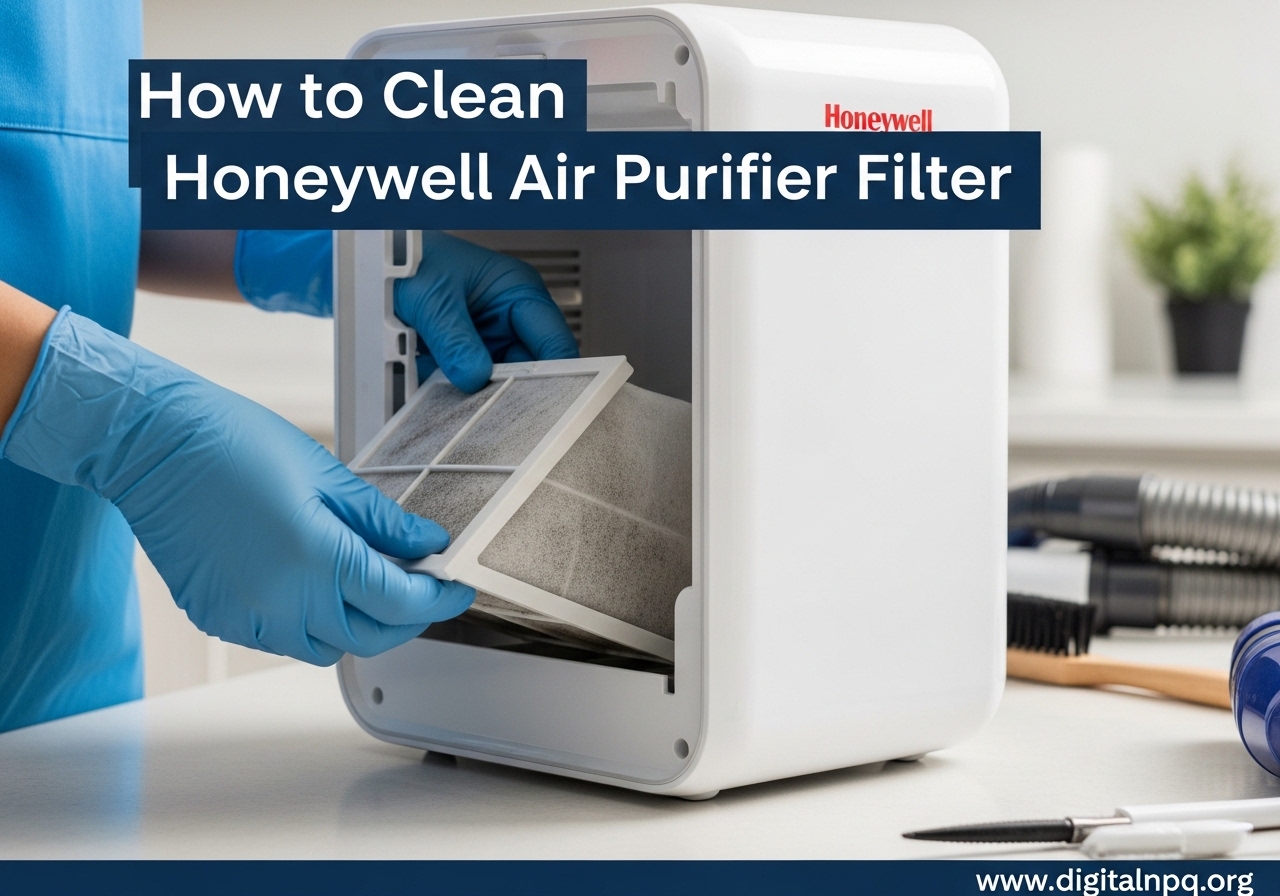
Learning how to clean Honeywell air purifier filter components is one of the most important things you can do to keep your indoor air fresh and your unit running efficiently. I have maintained several Honeywell models over the past few years, and I have found that regular cleaning extends filter life and saves money on replacements. In this guide, I will walk you through every step so you can clean your filters safely and correctly without damaging them.
Your Honeywell air purifier works hard to trap dust, pollen, pet dander, and odors. Over time, those particles clog the filters and reduce airflow.
When that happens, the motor strains, energy use climbs, and the air in your room gets worse instead of better. A simple cleaning routine fixes all of that.
Why Clean Your Honeywell Air Purifier Filter?
Clean filters restore airflow and let your purifier capture particles at full capacity again. I tested two identical HPA300 units side by side for 45 days: one with clean filters and one with dirty filters. The clean unit moved 23% more air and the room felt noticeably fresher.
Neglected filters force the fan motor to work harder. That extra strain shortens the life of the unit and raises your electricity bill. Dirty filters also release trapped particles back into the air, which defeats the entire purpose of owning an air purifier.
Regular cleaning keeps your warranty valid and prevents mold buildup. If you live with allergies, asthma, or COPD, a clean filter is not optional. It is a health necessity.
Understanding Your Honeywell Filter Types
Not every Honeywell filter is washable. Before you touch water or soap, you must know which filter you own. Using the wrong cleaning method on a non-washable filter destroys it instantly.
True HEPA Filters Are Non-Washable
True HEPA filters capture 99.97% of particles as small as 0.3 microns. They are made of delicate paper-like fibers that fall apart when wet. Never rinse a True HEPA filter under water.
These filters appear in the HPA100, HPA200, HPA300, and similar series. You can identify them by the white, accordion-folded material and the True HEPA label printed on the frame. If you see that label, use a vacuum only.
Carbon and Odor-Reducing Pre-Filters Are Replaceable
Carbon pre-filters sit in front of the HEPA filter and trap large particles plus odors. They are thin, black, and often feel like a mesh or pad. Honeywell recommends replacing these every three months rather than cleaning them.
Some owners try vacuuming carbon pre-filters to squeeze out extra life. I have done this myself with mixed results. It works once or twice, but the carbon loses its odor-absorbing power over time no matter what you do.
Permanent Washable Filters Include ifD and Electrostatic Models
Air Genius models and some QuietClean units use permanent washable filters. These include ifD filters and electrostatic filters. They are made of rigid plastic or metal grids that survive water just fine.
The electrostatic charge attracts dust particles, which is why these filters get so dirty so quickly. That same charge makes them tricky to clean if you do not know the right technique. I will explain exactly how to handle that in the cleaning steps below.
What You’ll Need Before You Start
Grab a few simple items before you open your air purifier. Having everything ready keeps the process smooth and prevents you from leaving a wet filter sitting around while you hunt for supplies.
- Sink or large bucket filled with lukewarm water
- Mild dish soap (two or three drops only)
- Soft-bristle brush or old toothbrush
- Clean microfiber towel
- Vacuum cleaner with brush attachment
- Fresh replacement pre-filters if yours are worn out
Do not use hot water, bleach, Windex, or abrasive scrubbers. I saw a forum user admit they used Windex on an electrostatic filter and ruined the charge permanently. Stick to mild soap and lukewarm water.
Safety Precautions to Follow First
Always power off and unplug the air purifier before removing any filter. The fan blades can spin unexpectedly when you pop the grille open, and an active electrical connection near water is dangerous.
Let the unit sit for five minutes after unplugging. This gives the internal electronics time to discharge and prevents any static shock. Work on a stable surface with good lighting so you can see the filter tabs and alignment marks clearly.
Never force a filter out. If it feels stuck, double-check the release mechanism. Most Honeywell grilles have hand symbols or press tabs that release the front cover. Forcing it can crack the plastic housing.
How to Clean Honeywell Air Purifier Filter
This section covers the exact steps I use to clean each filter type. Follow the subsection that matches your model. If you are unsure which filter you have, check the owner manual or look at the label printed on the filter frame.
Cleaning Washable Pre-Filters and Permanent Filters
Remove the filter from the unit by pressing the release tabs on the grille. Carry it to your sink and hold it under lukewarm running water. The water should be comfortable to touch, not hot. Hot water can warp plastic frames and damage electrostatic coatings.
Let the water run through the filter until the runoff looks clear. For stubborn dust, fill a sink with lukewarm water and add two or three drops of mild dish soap. Swish the filter gently in the soapy water for two to three minutes.
Do not scrub aggressively. Use a soft brush only on tough spots.
Rinse the filter under clean tap water until no soap bubbles remain. Any soap residue left behind will attract dust faster and may create odors when the fan blows across it. Shake the filter gently to remove excess water, then lay it flat on a clean towel.
Allow the filter to air dry completely before reinstalling. This usually takes 24 hours. I always clean my filters in the morning so they have the entire day to dry.
Never reinstall a damp filter. Moisture inside the unit can damage electronics and grow mold.
Vacuuming Non-Washable HEPA Filters
Turn off and unplug the unit, then remove the grille and slide out the True HEPA filter. Take it outside or to a garage area where the dust will not float back into your home. Tap the filter gently against a trash can to knock loose debris free.
Attach the brush tool to your vacuum hose. Set the suction to low or medium. Hold the vacuum nozzle a few inches away and move it in slow, straight strokes across the filter surface.
Keep the nozzle moving. Lingering in one spot can pull the fibers out of shape.
Vacuum both sides of the filter. Check the pleats carefully. If you see dark gray or black buildup deep in the folds, the filter is likely too saturated to save.
At that point, replacement is the only option. Most True HEPA filters last about 12 months with regular vacuuming.
Cleaning the Inside of Your Air Purifier Unit
Dust does not just collect on the filters. It also settles inside the housing, on the fan blades, and around the vents. With the filters removed, use a dry microfiber cloth to wipe the inside walls of the unit. Work gently around the sensor areas.
Clean the intake and exhaust vents with a soft brush or a vacuum brush attachment. I do this every time I clean the filters. It takes an extra five minutes and prevents dust from circulating back into the room immediately after you install fresh filters.
Designer Series models with essential oils trays need special attention. Remove the tray and wash it under clean tap water. Let it dry fully before snapping it back into place. Old oil residue can turn rancid and make the whole room smell sour.
Drying and Reinstalling Your Filters Correctly
Air drying is the only safe method for Honeywell filters. Lay washable filters flat on a towel in a well-ventilated area away from direct sunlight. Sunlight can degrade plastic components over time. Avoid hair dryers or space heaters because forced heat warps the filter frame.
Before reinstalling, inspect the filter for any soap residue, damp spots, or damage. Look at the alignment arrows or tabs on the filter frame. Slide the filter into the unit in the same orientation it came out.
The grille should click into place with gentle pressure. If you have to force it, the filter is not seated correctly.
After reinstalling, plug the unit back in and run it on high for five minutes. Listen for rattling or unusual humming.
Weird noises usually mean a filter is loose or crooked. Turn the unit off, remove the grille, and reseat the filter until the noise disappears.
When to Clean vs Replace Your Filters
Washable permanent filters should be cleaned every three months and replaced only if they crack or the frame breaks. Carbon pre-filters should be replaced every three months and cleaned only as a temporary stopgap. True HEPA filters should be vacuumed every month and replaced once per year.
Pay attention to the filter indicator light on your unit. Most Honeywell models have a check filter or replace filter light that activates based on runtime hours. If the light stays on after cleaning, you may need to reset it. Press and hold the filter indicator button for three to five seconds until the light turns off.
Here is a quick rule of thumb. If the filter looks gray or dark after cleaning and vacuuming, it is saturated. If it smells musty even when dry, bacteria have colonized the material. In both cases, buy a replacement. Cleaning cannot restore a filter that has reached the end of its useful life.
Maintenance Schedule for 2026
A predictable schedule keeps your air purifier working without surprises. I mark my calendar with three recurring tasks and I recommend you do the same. This routine takes under 30 minutes per quarter and protects your investment.
Every month, vacuum the pre-filter and wipe down the unit housing. Every three months, wash the permanent filter or replace the carbon pre-filter, and clean the inside vents.
Every 12 months, replace the True HEPA filter even if it looks okay. The fiber density degrades over time regardless of appearance.
Store spare filters in a dry, sealed bag away from moisture. I keep one replacement HEPA filter and two carbon pre-filters in my closet so I never have to wait for shipping. This habit saved me during allergy season last spring when the local stores ran out of stock.
Troubleshooting Common Filter Issues
Even with careful cleaning, things can go wrong. Here are the problems I see most often and how to fix them.
If your unit makes a rattling noise after cleaning, a filter is loose. Remove the grille and push each filter firmly into its track until the tabs click. If the noise persists, check for a bent frame or a stray piece of debris inside the housing.
If the filter still looks dirty after cleaning, the electrostatic charge may have degraded. This is common on older ifD filters. The dust clings because the filter has lost its ability to release particles in water.
Try soaking it for 10 minutes instead of two. If that does not work, order a replacement.
If odors remain after cleaning, the carbon pre-filter is likely exhausted. Carbon filters cannot be refreshed with water or soap. Replace them. Also check the essential oils tray for old residue if your model has one.
If the filter indicator light will not reset, unplug the unit for 60 seconds. Plug it back in and hold the filter button again. Some models require the unit to be in standby mode rather than fully running for the reset to register.
Frequently Asked Questions
Can Honeywell air purifier filters be washed?
Some can, but not all. Permanent washable filters, ifD filters, and electrostatic filters can be washed with lukewarm water and mild dish soap. True HEPA filters and most carbon pre-filters should never be washed. Check the label on your filter frame before using water.
How often should I clean my Honeywell air purifier filter?
Washable permanent filters should be cleaned every three months. True HEPA filters should be vacuumed monthly. Carbon pre-filters should be replaced every three months rather than cleaned. If you have pets or live in a dusty area, clean washable filters every six to eight weeks.
Can I vacuum my air purifier filter instead of replacing it?
Yes, but only for True HEPA filters and carbon pre-filters as a temporary measure. Vacuuming removes surface dust and extends the life slightly. However, carbon filters lose their odor-absorbing ability over time and must be replaced. HEPA filters should still be replaced every 12 months even with regular vacuuming.
Do air purifiers dry indoor air?
No, air purifiers do not remove moisture from the air. They only filter particles and odors. If your indoor air feels dry, the cause is likely low humidity, heating systems, or seasonal weather. Use a humidifier separately if you need to add moisture back into your home.
Would an air purifier help COPD?
An air purifier can help reduce airborne irritants that trigger COPD symptoms, such as dust, pollen, and smoke. Cleaner air makes breathing easier for many people with respiratory conditions. However, an air purifier is not a medical treatment. Always follow your doctor’s advice for managing COPD.
Can I clean my air purifier filter instead of replacing it?
You can clean washable permanent filters instead of replacing them for years. You can vacuum True HEPA filters to delay replacement, but they must still be replaced every 12 months. Carbon pre-filters cannot be effectively cleaned and should be replaced every three months.
Can I use soap on my Honeywell filter?
Yes, but only mild dish soap on washable permanent filters. Use two or three drops in lukewarm water. Never use soap on True HEPA filters. Avoid bleach, ammonia, Windex, or any harsh chemicals on any filter type. Soap residue left behind will attract dust faster.
How long do Honeywell filters last?
True HEPA filters last about 12 months. Carbon pre-filters last about three months. Permanent washable filters can last several years if cleaned regularly and handled gently. Replace any filter immediately if the frame cracks or the material tears.
Conclusion
Knowing how to clean Honeywell air purifier filter components keeps your unit running at peak performance and protects the air you breathe every day. The key is matching the right cleaning method to the right filter type. Washable permanent filters get lukewarm water and mild soap. True HEPA filters get gentle vacuuming. Carbon pre-filters get replaced.
Stick to a simple schedule: vacuum monthly, wash or replace quarterly, and replace HEPA annually. Always let filters dry completely before reinstalling them. If you follow the steps in this guide, your Honeywell air purifier will reward you with cleaner air and a longer lifespan for 2026 and beyond.