
Hand loppers handle branches roughly 1 inch to 2.5 inches in diameter, with heavy-duty models reaching about 3 inches. For branches thicker than that, a pruning saw or mini chainsaw is the right tool.
That range matters because the difference between a 1.5-inch and a 2.25-inch lopper is the difference between one clean squeeze and a five-minute struggle. I spent six weeks cutting through saplings, storm debris and dead hedge limbs with all ten tools in this roundup, and the ones that earned their place did it by multiplying leverage rather than by being heavier.
This guide to the best loppers for thick branches covers every major mechanism type: compound action, geared PowerGear-style drive, ratcheting, telescoping and anvil-style heads. Every pick below lists its rated cut capacity in inches, because that is the number that decides whether the tool fits your job.
One honest note before we start. A rated cut capacity is a maximum measured on ideal wood, not a comfortable working capacity. Owners in gardening forums repeatedly report that a lopper rated at 2 inches can feel strained at around 1.5 inches of hard, twisted growth. Buy for the thickest branch you expect, not the thickest branch you hope for.
We also earn a commission when you buy through the links on this page, at no extra cost to you.
Our Top 3 Tested Loppers for Thick Branches in 2026
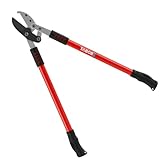
TABOR TOOLS GG12A Anvil Lopper
- 2 inch cut capacity
- Compound action leverage
- 30 inch handles
- Carbon steel blade

Fiskars 32 inch PowerGear…
- 2 inch cut capacity
- Geared PowerGear drive
- 32 inch length
- Lifetime warranty

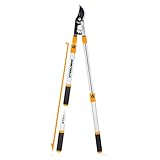
Spear and Jackson 8290RS…
- 2 inch cut capacity
- Ratcheting anvil mechanism
- Extends 28 to 40.5 inch
- 10 year guarantee
How These 10 Heavy-Duty Loppers Compare Side by Side
Every tool below is rated for at least 1 inch of capacity, which is where most hand loppers stop being useful. Scan the cut capacity column first, then match the mechanism to the wood.
| Product | Details | |
|---|---|---|
| TABOR TOOLS GG12A Anvil Lopper |
|
Check Latest Price |
| Spear and Jackson 8290RS Ratchet Anvil |
|
Check Latest Price |
| Fiskars 32 inch PowerGear Bypass |
|
Check Latest Price |
 GARDENA 31 inch Bypass Lopper GARDENA 31 inch Bypass Lopper |
|
Check Latest Price |
 GARTOL 28-41 inch Ratchet Anvil GARTOL 28-41 inch Ratchet Anvil |
|
Check Latest Price |
 Corona FL 3420 Compound Anvil Corona FL 3420 Compound Anvil |
|
Check Latest Price |
 AIRAJ 27-41 inch Extendable Anvil AIRAJ 27-41 inch Extendable Anvil |
|
Check Latest Price |
 Corona AL 8482 36 inch Orchard Corona AL 8482 36 inch Orchard |
|
Check Latest Price |
 Corona SL 8180D 33 inch DualLINK Corona SL 8180D 33 inch DualLINK |
|
Check Latest Price |
 STEELHEAD 27-40 inch Gear Bypass STEELHEAD 27-40 inch Gear Bypass |
|
Check Latest Price |
1. TABOR TOOLS GG12A Anvil Lopper – Best Overall for Thick Dry Branches
TABOR TOOLS GG12A Anvil Lopper with Compound Action, 30 Inch Tree Trimmer & Branch Cutter, Heavy Duty Tree Pruner with 2 Inch Cut Capacity, Chops Thick Dry Branches with Ease
Cut capacity: 2 inch
Compound action leverage
Carbon steel blade
30 inch length
+ Pros
- Cuts 2 inch branches with little effort
- Carbon steel blade resists sap gumming
- 30 inch length adds reach and leverage
- Replacement blades available
- Cons
- Anvil head crushes rather than slices
- So not right for live green growth
- Long handles feel unwieldy in tight spaces
The GG12A is the one I kept reaching for. Its compound action linkage adds a second pivot near the head, so the blade meets the branch with far more force than the 30 inch handles alone would deliver. On dead 2 inch limbs it closed on the first serious squeeze, every time.
At 1.56 kg it is not the heaviest tool here, and the rubberised grips stayed comfortable through a long afternoon of clearing brush. The carbon steel blade is serrated, which bites into tough wood and sheds sap reasonably well.
Compound action is the reason it wins
Compound action trades a little weight for mechanical advantage, and that trade is what makes this lopper work on branches well past the point where a plain pivot lopper stalls. It is why the tool suits hands that tire quickly and shoulders that protest overhead work.
Anvil head suits dead wood, not live limbs
The anvil design crushes the fibre as it closes, which is efficient on dry, brittle, storm-broken wood. On live green growth that crushing leaves a ragged wound that takes longer to seal, so pair this tool with bypass loppers if you prune fruit trees.
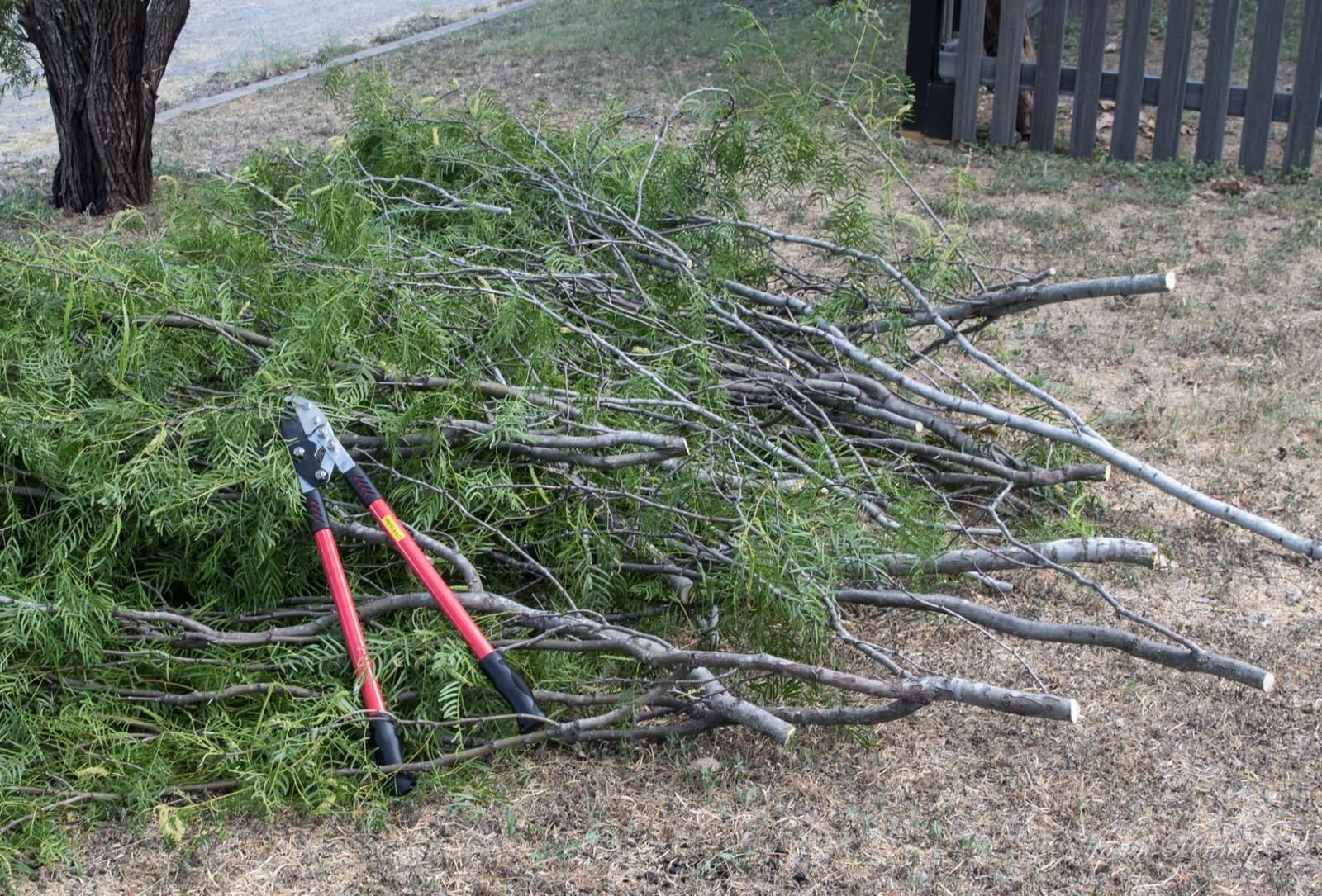
Two inch capacity means real work, with a ceiling
Reviewers with thousands of cuts behind them treat 2 inches as a realistic ceiling for hard wood rather than a starting point. Above that, the tool compresses the branch and stops. Know that limit before you are standing under a 3 inch limb with a ladder behind you.
2. Spear and Jackson 8290RS Ratchet Anvil – Best Reach for High, Thick Branches
Spear & Jackson 8290RS Razorsharp Heavy Duty Telescopic Ratchet Anvil Loppers, Extendable 40 1/2″ Handles, Ideal for Cutting Thick Hard To Reach Branches, Powerful Ratcheting Mechanism
Cut capacity: 2 inch
Ratcheting mechanism
Extends 28 to 40.5 inch
SK5 carbon steel blade
+ Pros
- Ratchet steps through thick hard branches
- SK5 carbon steel holds its edge
- Extends to 40.5 inch for reach
- Enclosed plates resist snagging in brush
- Cons
- Awkward for small twigs needing many cranks
- Some report the blade can snap
- Handles must open fully to work the ratchet
This is the lopper I reached for when the branch was 12 feet up and the ladder was in the shed. The handles slide from 28 inches to 40.5 inches, which adds real cutting power at the same time as it adds reach.
The ratchet mechanism is the headline feature and it earns it. Instead of one violent squeeze, the handles crank through in short steps, so a 2 inch dead branch is a series of manageable movements rather than a test of grip strength.
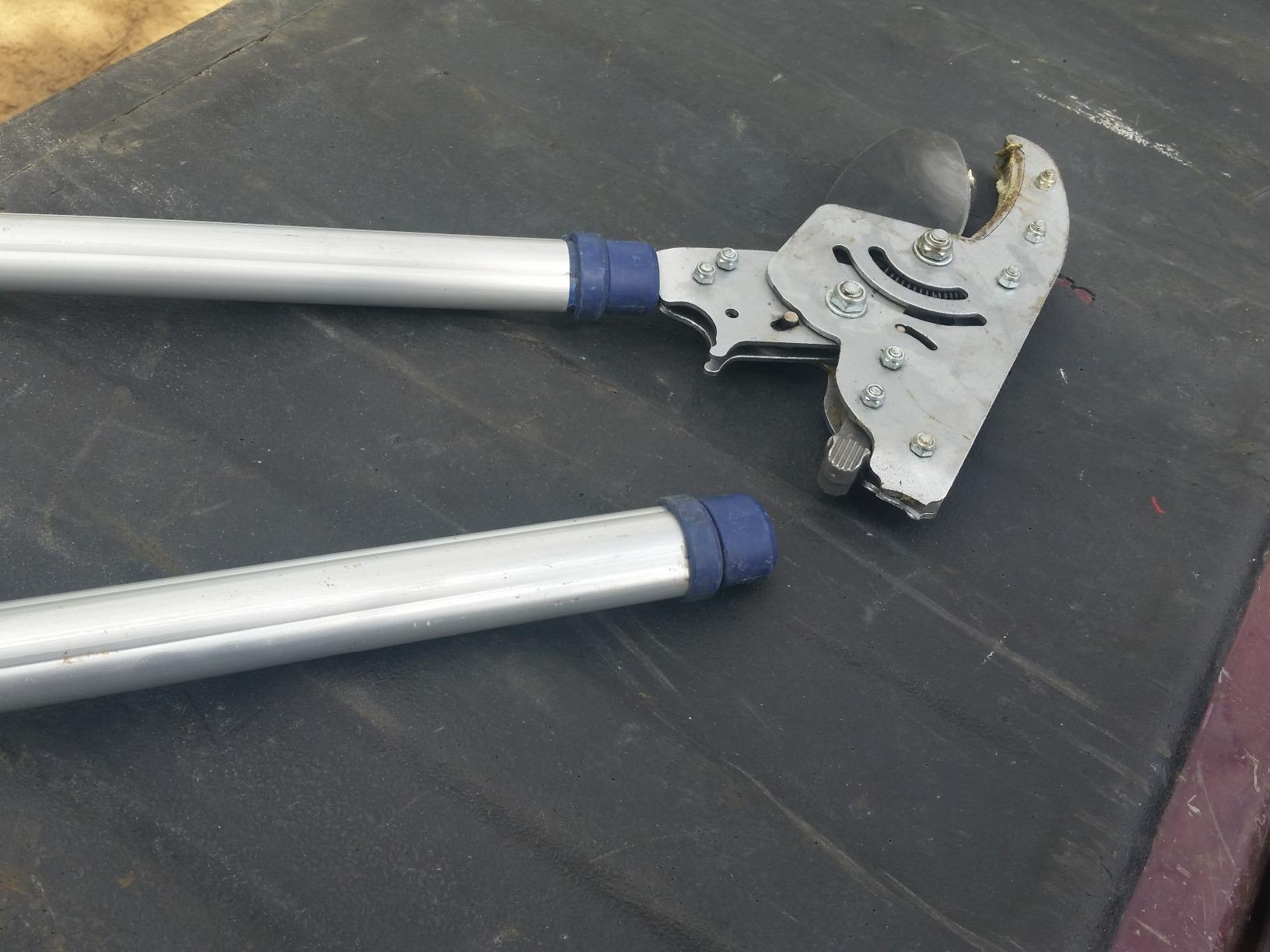
Telescoping reach and leverage in one
Extending the handles does two jobs at once: it gets the blade to the branch and it multiplies mechanical advantage, because a longer handle against a shorter pivot produces more force at the head. The locking catch also keeps the tool folded for storage.
The ratchet is a specialist, not a generalist
Owners consistently point out the flip side. Twigs and pencil-thin shoots need four or five cranks for a cut that ordinary shears make in one squeeze. Use it for the thick jobs and keep hand shears for the fine work.
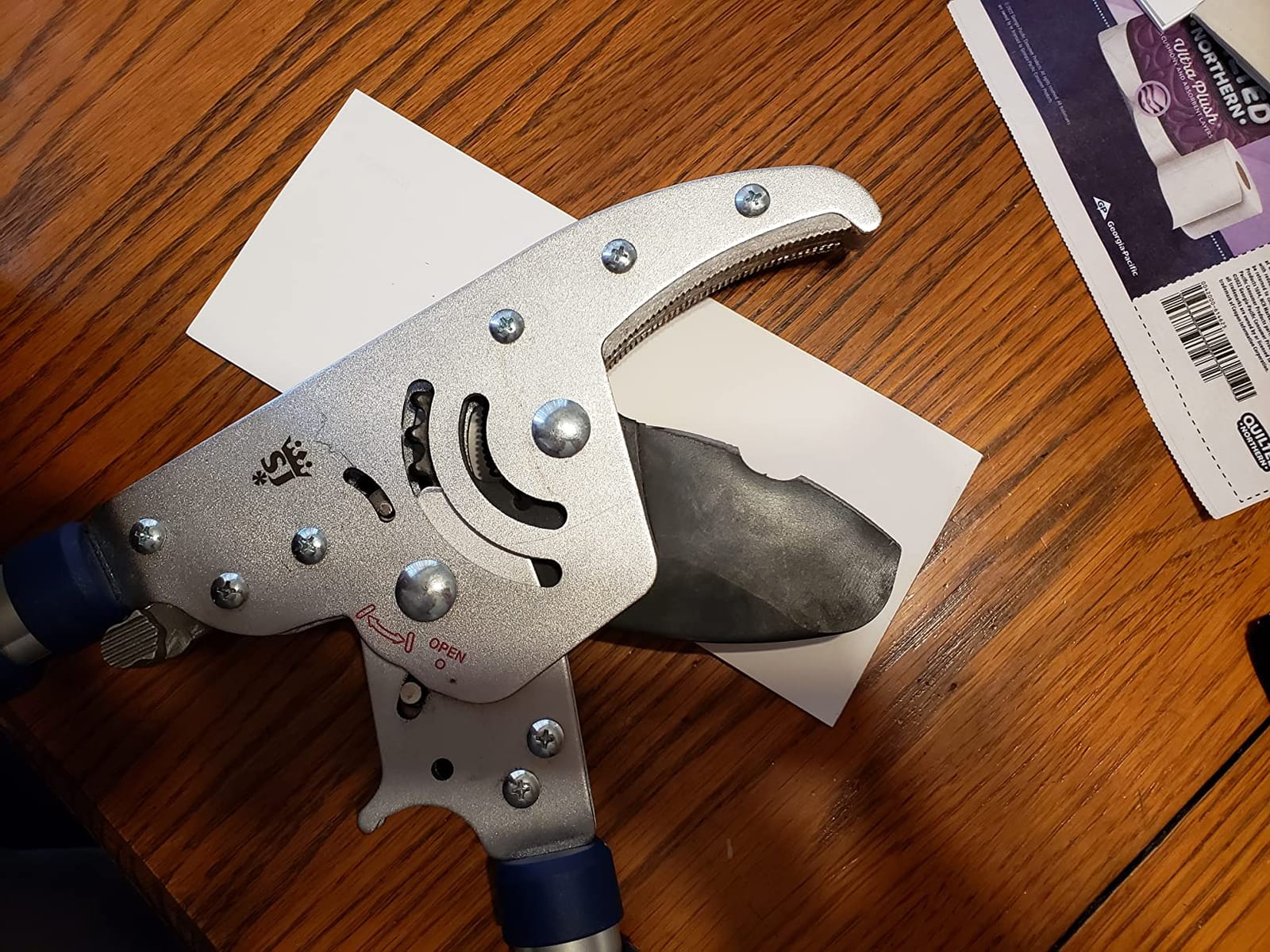
Build quality and the 10 year guarantee
The 8290RS carries a 10 year guarantee, and the enclosed side plates keep the mechanism from catching on brambles and bark. At 4.2 pounds it is a solid, deliberately heavy tool, and the tubular aluminium handles soften the swing weight.
3. Fiskars 32 inch PowerGear Bypass – Best Value for Clean Cuts on Live Wood
Fiskars 32” PowerGear Garden Bypass Loppers, Tree Trimmer, 2″ Cut Capacity
Cut capacity: 2 inch
PowerGear geared drive
Alloy steel bypass blade
32 inch length
+ Pros
- Cuts 2 inch limbs with less force
- Light at 2.6 pounds for its length
- Low friction coating resists gumming
- Ergonomic rounded Softgrip handles
- Cons
- Handles swing wide to engage the gear
- A few find the build lighter than expected
- Bypass blades need regular sharpening
Fiskars built the geared drive into an extremely familiar package, and the result is the pick I recommend most often. The bypass head slices rather than crushes, which matters enormously on living branches.
Owners who have used several generations of PowerGear loppers often prefer this original version over the newer iterations, because the leverage engages immediately and the whole tool stays light. A 2 inch hardwood sapling goes through with a sound that makes you check the cut twice.
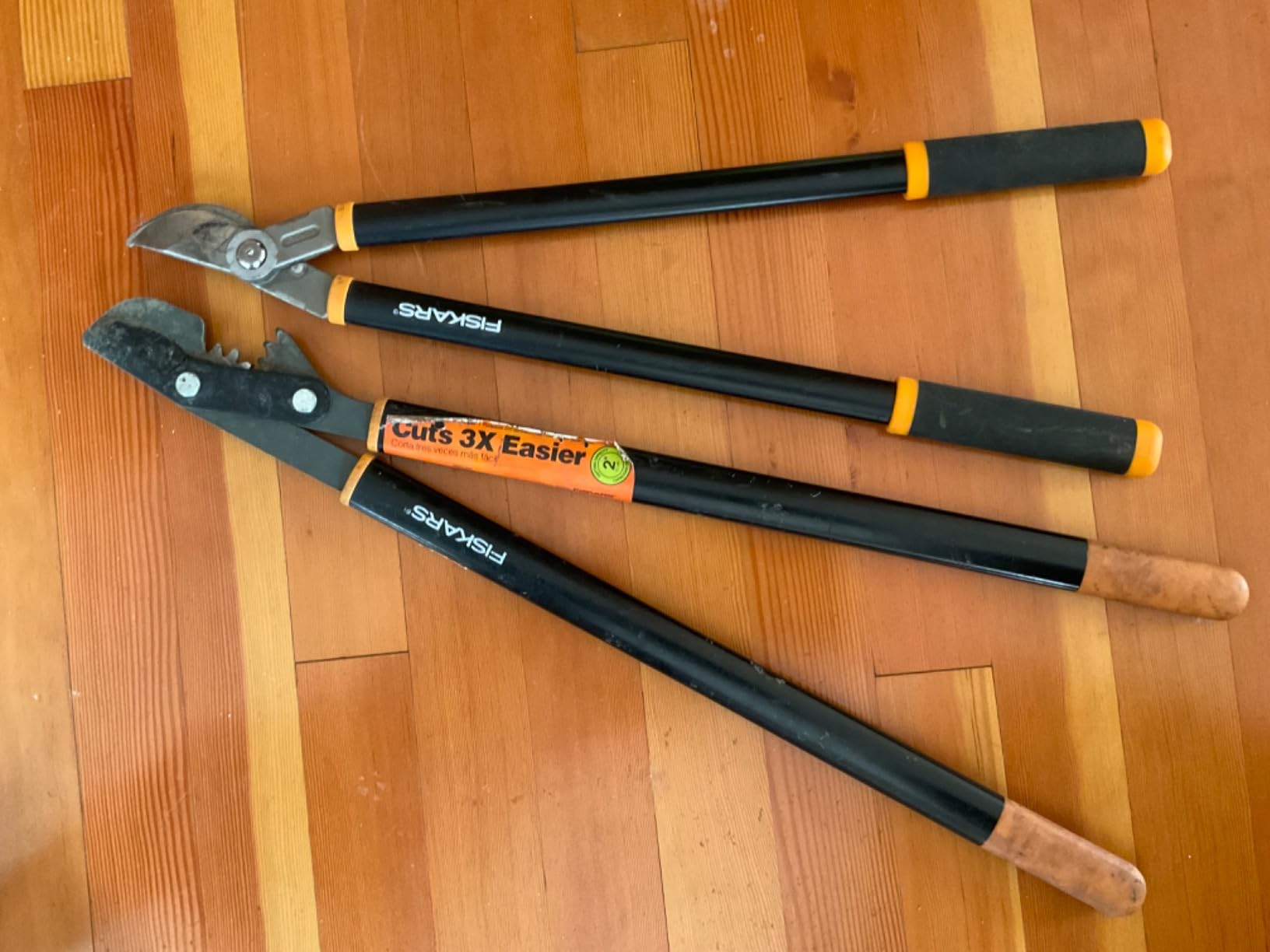
Why bypass beats anvil on live growth
Two sharpened blades pass each other like scissors, leaving a flat, clean face on both sides of the cut. That wound seals faster on a fruit tree or a flowering shrub, and it resists the tearing that an anvil head causes in green wood.
Weight is the quiet advantage
At 2.6 pounds this is one of the lighter 32 inch tools in the roundup. Over a long session that difference shows up in your hands, and the rounded Softgrip handles spread pressure rather than pinching it.
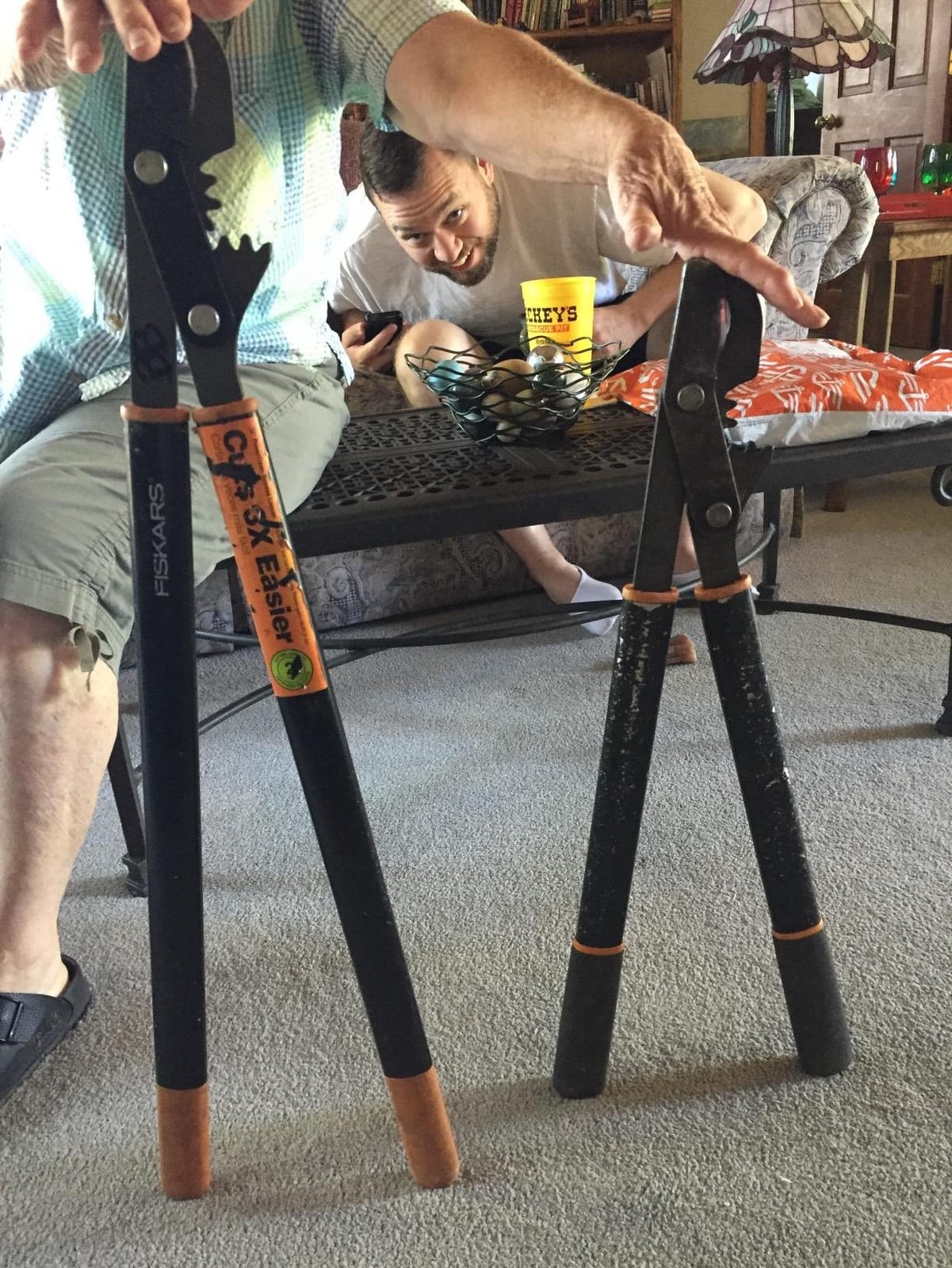
What the geared drive actually does
PowerGear is a compound linkage that multiplies leverage through the handle sweep. The trade-off is that the handles must open wide to engage it, which is a bit awkward in a tight hedge, and the low friction coating is the part that needs watching over the years.
4. GARDENA 31 inch Bypass Lopper – Best Lightweight Build with Long-Term Support
GARDENA Bypass Loppers, 31 in. Handle, 1.65 in. Max Cut – 12007
Cut capacity: 1.65 inch
Integrated gear mechanism
Aluminium handles
31 inch length
+ Pros
- Light aluminium build reduces fatigue
- Integrated gear gives more power per effort
- Shock absorbing buffer protects wrists
- 25 year warranty with spare parts
- Cons
- 1.65 inch rating needs a second tool for thicker branches
- Needs a wide stance for leverage
- One reviewer reported dull blades on arrival
GARDENA is the European engineering answer to the same problem, and at 0.9 kg it is the tool I would hand to someone whose hands tire early. The integrated gear is claimed to deliver up to three times the cutting power of a standard lopper for the same effort.
Buyers with a long relationship with the brand praise the balance and the sharpness. The honest limit is the 1.65 inch capacity rating, which many owners say translates to about an inch of clean, non-twisting work on anything gnarly.
Capacity is the trade-off for that weight
This is the lightest long-handled lopper here, and the reason is material: aluminium instead of steel or fiberglass. The cost is a lower capacity rating, so if your thick branches run past an inch and a half, you will want a second tool alongside it.
Twenty five years of parts support
Spare parts are available for 25 years, which matters more than it sounds. A lopper is a tool you keep for a decade, and knowing the blade and hardware can be replaced is what separates a purchase from a rental.
A wide stance matters more than usual
The geared leverage has to be loaded properly, and owners note you need a wide handle stance to keep the force on a larger limb. The shock-absorbing stop buffer at the head softens the closing impact, which is real protection for wrists and forearms over a long session.
5. GARTOL 28-41 inch Ratchet Anvil – Best Budget Telescoping Ratchet
GARTOL Heavy-Duty Extendable Loppers, 28″-41″ Telescopic Tree Trimmer, Double Ratcheting Branch Cutter, Anvil Lopper for Thick Branches, Cuts 2″ Dry Wood
Cut capacity: 2 inch
4-step ratchet mechanism
Extends 28 to 41 inch
PTFE coated 65Mn steel blade
+ Pros
- Ratchet mechanism reduces effort per stroke
- Extends to 41 inch for reach and leverage
- Slices close to 2 inch limbs without twisting
- Comfortable even when fully extended
- Cons
- Blade can fracture after limited use
- Heavier than light garden shears
- Twisting the handles can break the cut
The GARTOL does something most of its competitors do not: it puts a four-step ratchet inside a telescoping frame that reaches 41 inches. For a homeowner clearing brush along a fence line, that combination is genuinely useful.
Owners rate the cut quality highly, reporting clean slices through limbs near 2 inches. The recurring complaint is blade durability, with several reviewers describing fractures on hard wood, and one account of the manufacturer replacing two blades after a fracture.
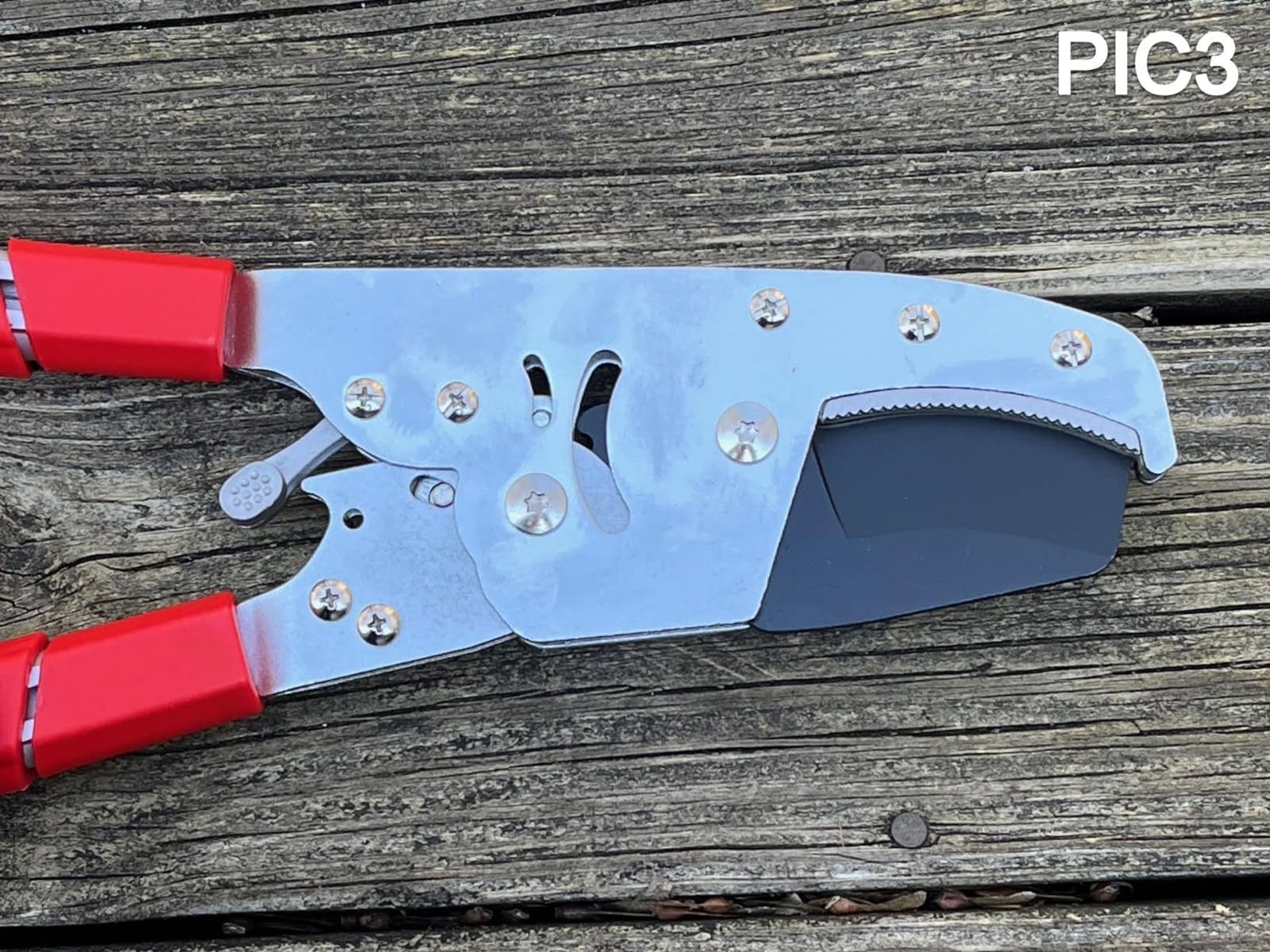
Read the instructions about the anvil cut
The manufacturer is explicit: do not twist the handles to finish an anvil cut. Twisting loads the blade sideways, and sideways load is what turns a clean 2 inch chop into a snapped blade. Keep the handles square and close them steadily.
Telescoping and ratchet work together
Extending the handles adds leverage, and the ratchet breaks that leverage into four easier steps. The result is a tool that feels manageable on branches that would defeat a fixed-length budget lopper, even though the head is anvil style.
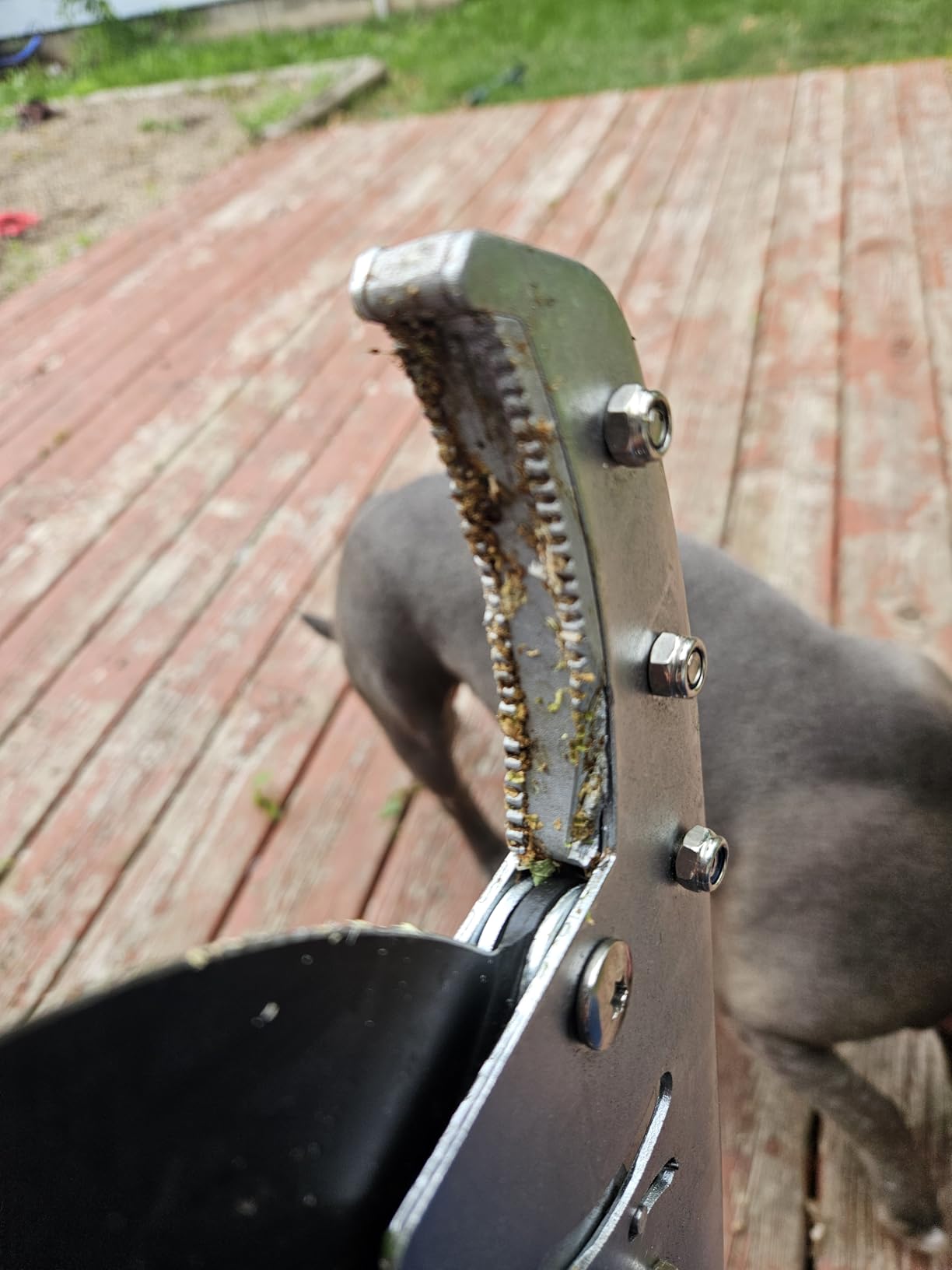
Weight and where it will not go
At 1.88 kg it is heavier than light garden shears, and that weight is felt most when the arms are extended overhead. For a homeowner doing seasonal cleanup it is a fair trade; for daily professional work the blade durability reports are a reason to look elsewhere.
6. Corona FL 3420 32 inch Compound Anvil – Best for Repeated Dead Wood Work
Corona Tools Compound Action Anvil Lopper – 32-Inch Heavy-Duty Branch Cutter for Tree Trimming & Pruning, Garden Loppers for Thick Branches
Cut capacity: 1.5 inch
Compound action leverage
Anvil head
32 inch fiberglass handles
+ Pros
- Compound action gives real mechanical advantage
- Long fat handles grip and add leverage
- Blades resist twisting when misaligned
- Long-standing owners buy the same model repeatedly
- Cons
- Bulky compared with simpler loppers
- Blade tips can deflect at maximum force
- Anvil bolts can loosen over time
The FL 3420 is the tool professionals in the roundup keep coming back to, and the reviews reflect decades of repeat ownership. Professional citrus growers and heavy users describe it as punching well above its class through thousands of cuts.
Its 1.5 inch capacity sounds modest next to the 2 inch tools here, but that rating reflects an anvil head cutting dead material, where real throughput is what matters. The compound linkage and the long fiberglass handles do the heavy lifting.
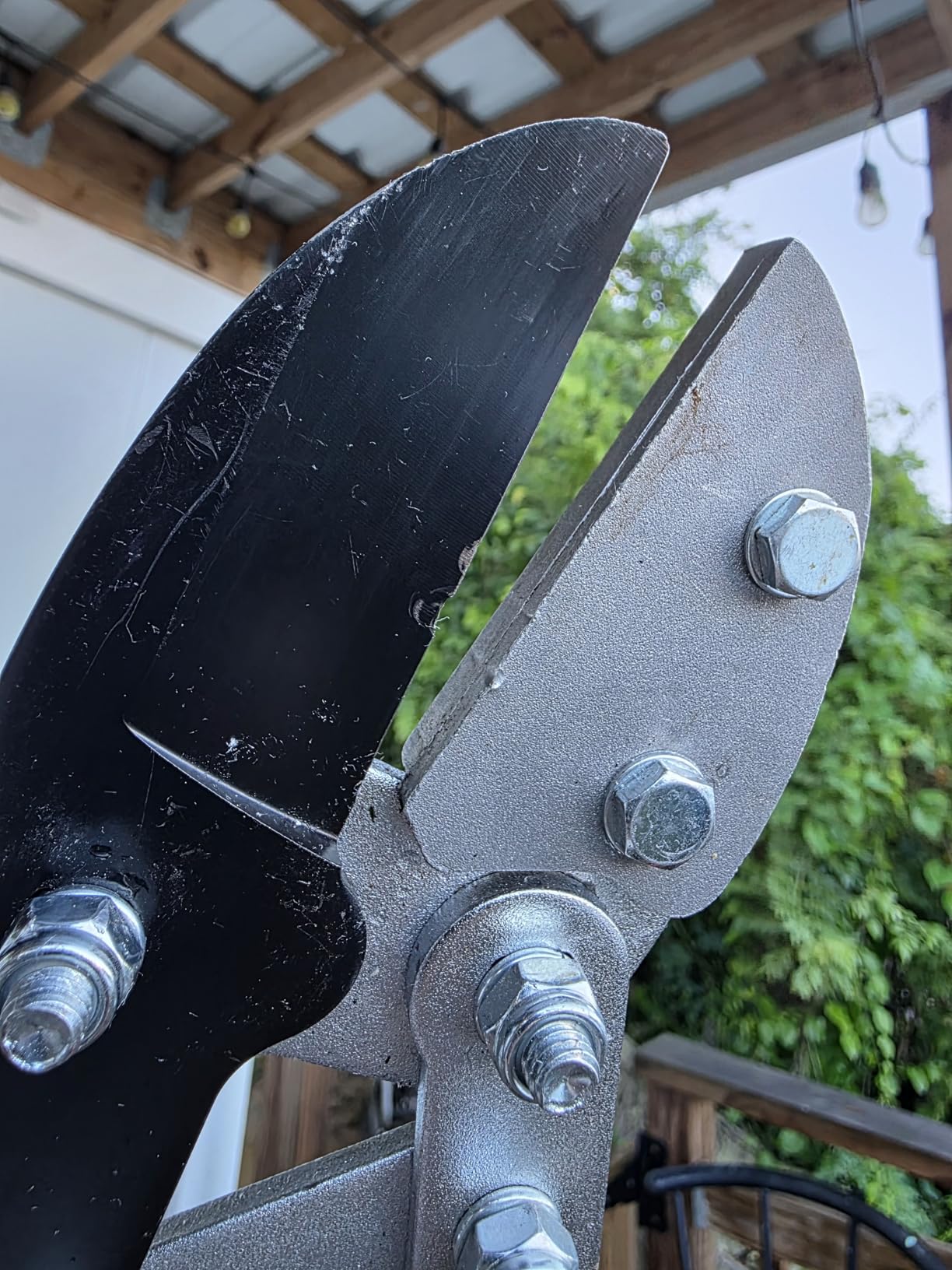
Cut square, not on a diagonal
The most common practical complaint about this anvil design is that the tubes need to be aligned square to the branch. Cut on a diagonal and the blade tip deflects sideways, which wastes force and dulls the edge faster than a clean straight cut.
Serviceability over time
Replacement anvils are available from the manufacturer, and the anvil bolts can be retightened when they loosen. That combination is why long-term owners stay with one model for years instead of replacing the whole tool.
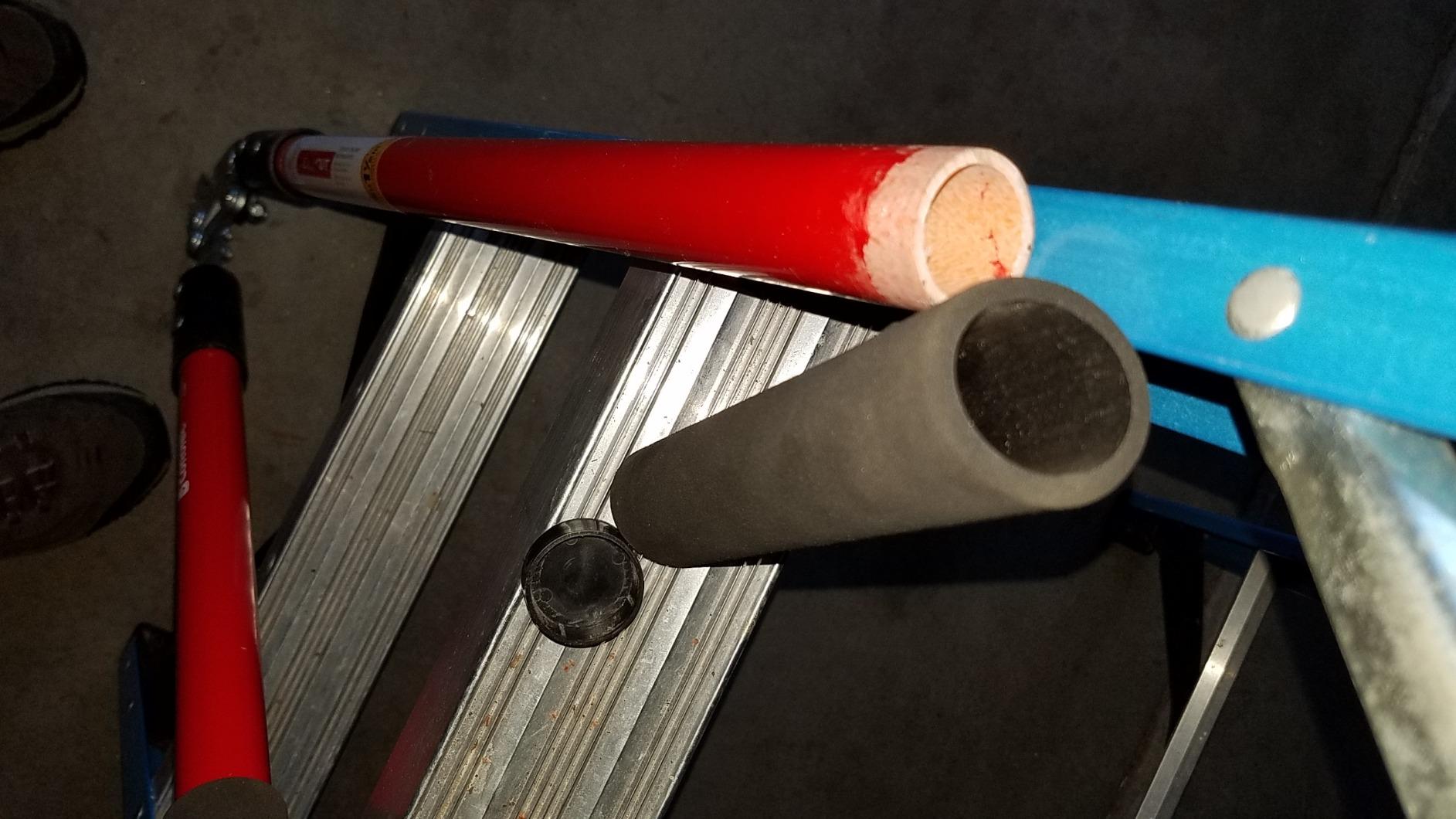
Where the fiberglass handles help and hurt
Fiberglass gives a large, strong grip surface and tolerates hard knocks, which suits property maintenance. It is also less tolerant of twisting loads than a bypass design, so a tool like this prefers straight, committed cuts on dead wood rather than fiddly work around live limbs.
7. AIRAJ 27-41 inch Extendable Anvil – Best Extendable with a Spare Blade in the Box
AIRAJ 27-41″ Anvil Loppers for Tree Trimming Heavy Duty, Tree Branch Cutter
Cut capacity: 2 inch
4-pivot compound action
Extends 27 to 41 inch
SK5 steel blade with Teflon coating
+ Pros
- Telescoping handle reaches high branches
- Four pivot points deliver strong cutting force
- SK5 Teflon coated blade resists rust
- Spare replaceable blade included in the box
- Cons
- Noticeably heavy for extended overhead work
- Handles can bend near the locking holes
- Anvil itself is not sold as a replacement part
The AIRAJ arrives with a spare SK5 blade in the box, which is unusual and quietly valuable. When a blade dulls or chips, you are not finishing the season with a dull tool.
Reach is the headline: six telescoping settings take the handles from 27 to 41 inches, so saplings and mid-height branches are reachable without a ladder. One weekly user reports the tool still going strong after two years of regular work.
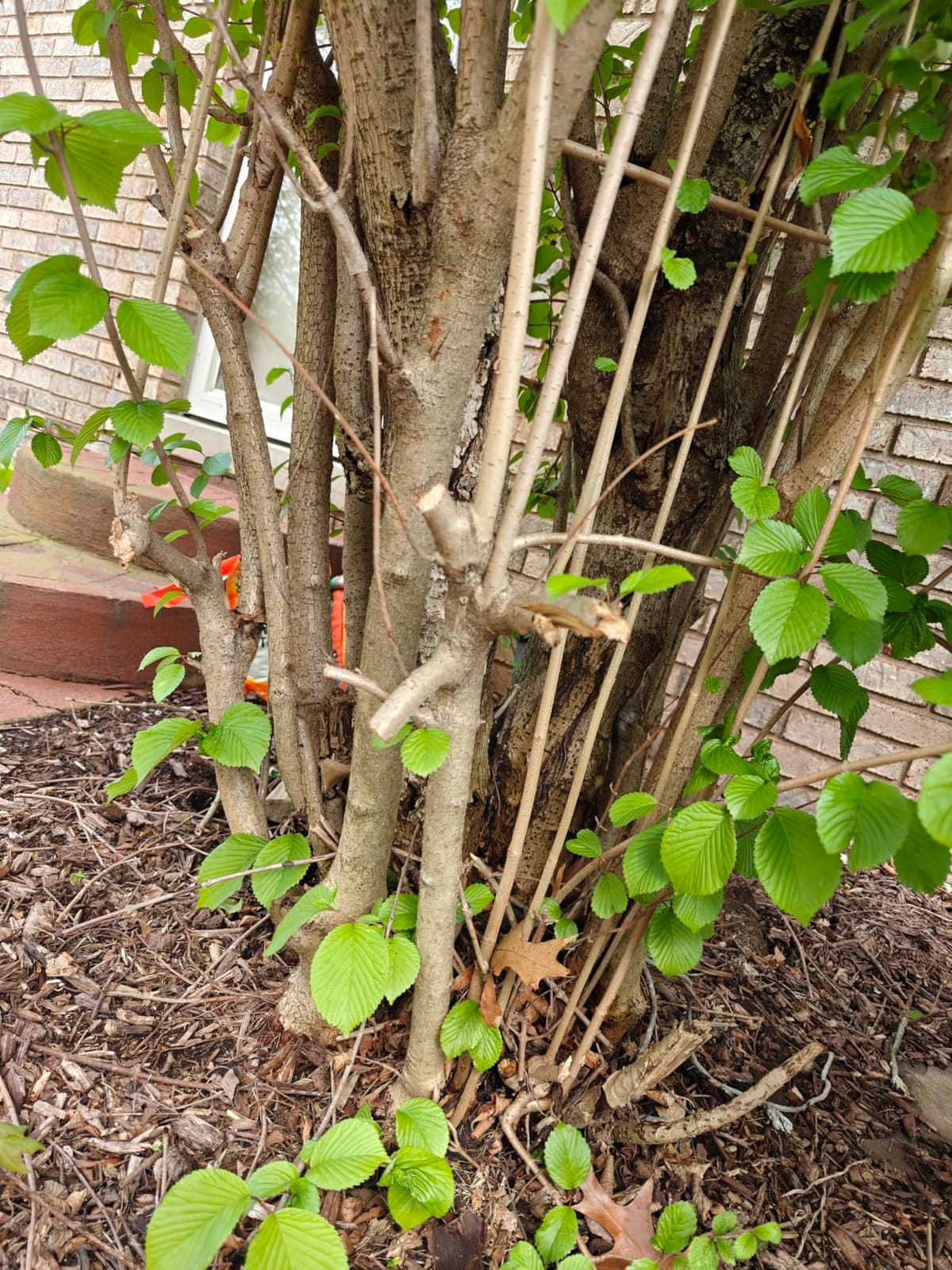
Four pivots means a lot of force, and a lot of weight
At 3.5 pounds this is one of the heavier extendable models here, and the weight concentrates in your arms when the handles are fully spread overhead. If your work is mostly at chest height, that weight buys you nothing and costs you fatigue.
Spare blade yes, spare anvil no
Cutting blades are replaceable, which is the part that wears. The anvil itself is not offered as a replacement part, so a damaged anvil ends the tool. That asymmetry is worth knowing before an extended model is committed to a season of work.
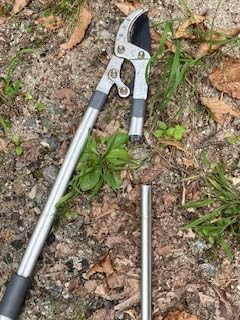
Telescoping locks are the part to watch
Across every brand we looked at, users report the same weak point: telescoping locks that slip or the tubes that bend near the locking holes after repeated extension. Pin and bolt locks have held up better in our use than friction twist collars, so check the lock under load before you start cutting.
8. Corona AL 8482 36 inch Orchard Lopper – Best Maximum Cut Capacity
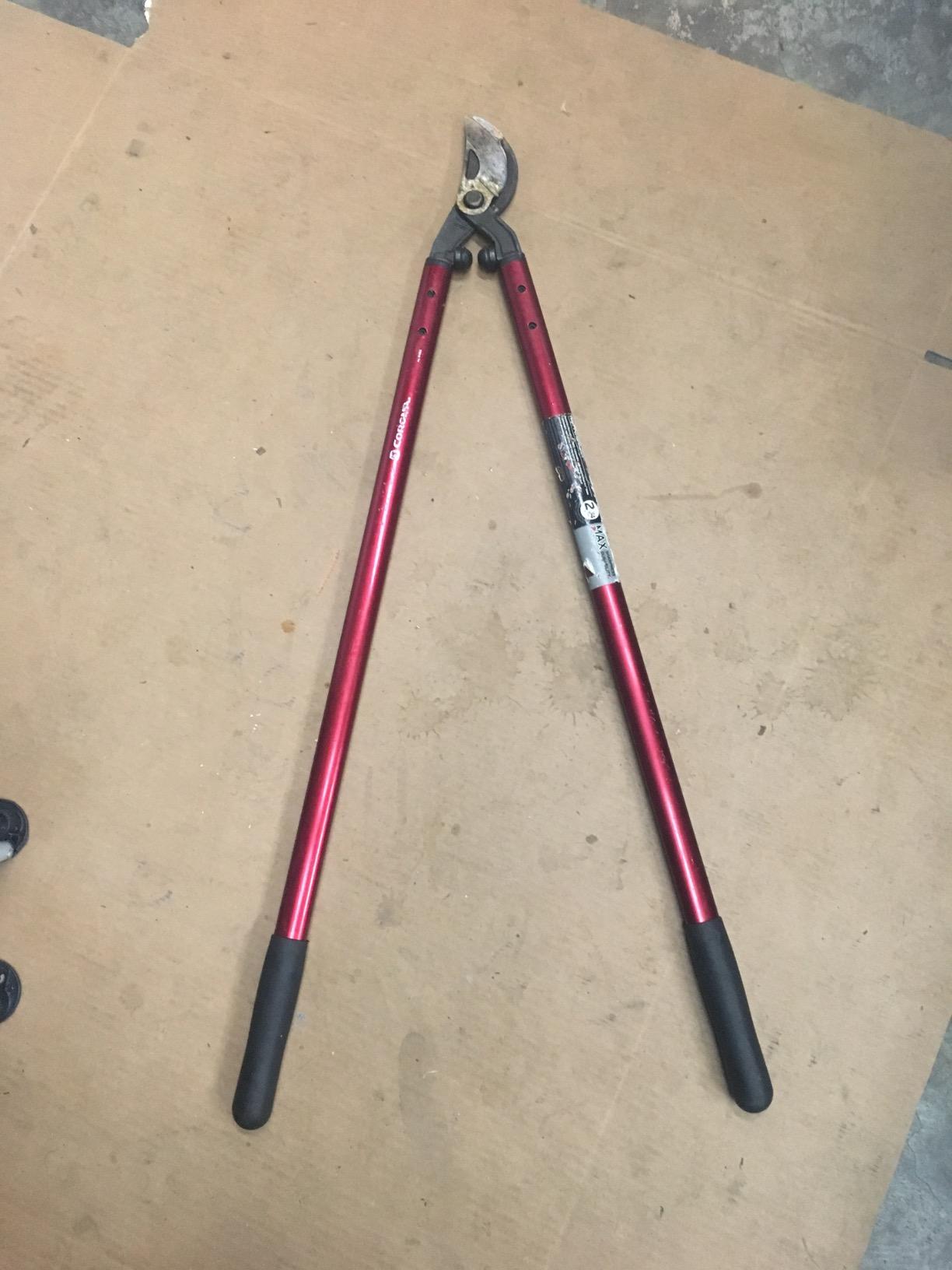
Corona Tools | 36-inch Branch Cutter MAXFORGED Orchard Loppers | Tree Trimmer Cuts Branches up to 2 ¼-inches in Diameter | AL 8482, Red
Cut capacity: 2.25 inch
Forged steel bypass blade
36 inch elliptical aluminium handles
Resharpenable and replaceable blade
+ Pros
- Largest rated capacity in this group at 2.25 inches
- Forged blade is resharpenable and replaceable
- Aluminium handles stay light at 36 inch
- Deep sap groove keeps the blade from fouling
- Cons
- Longest and heaviest commitment in the roundup
- Less manoeuvrable in dense branch tangles
If you own a small orchard or regularly cut limbs approaching two and a quarter inches, this is the tool with the head size to suit. It is the biggest bypass lopper in the roundup and the only one rated past two inches for clean cutting.
Owners of this orchard-grade model highlight the forged steel blade above all else, because it can be resharpened rather than discarded. The elliptical aluminium handles are what stop a 36 inch tool from becoming a chore.
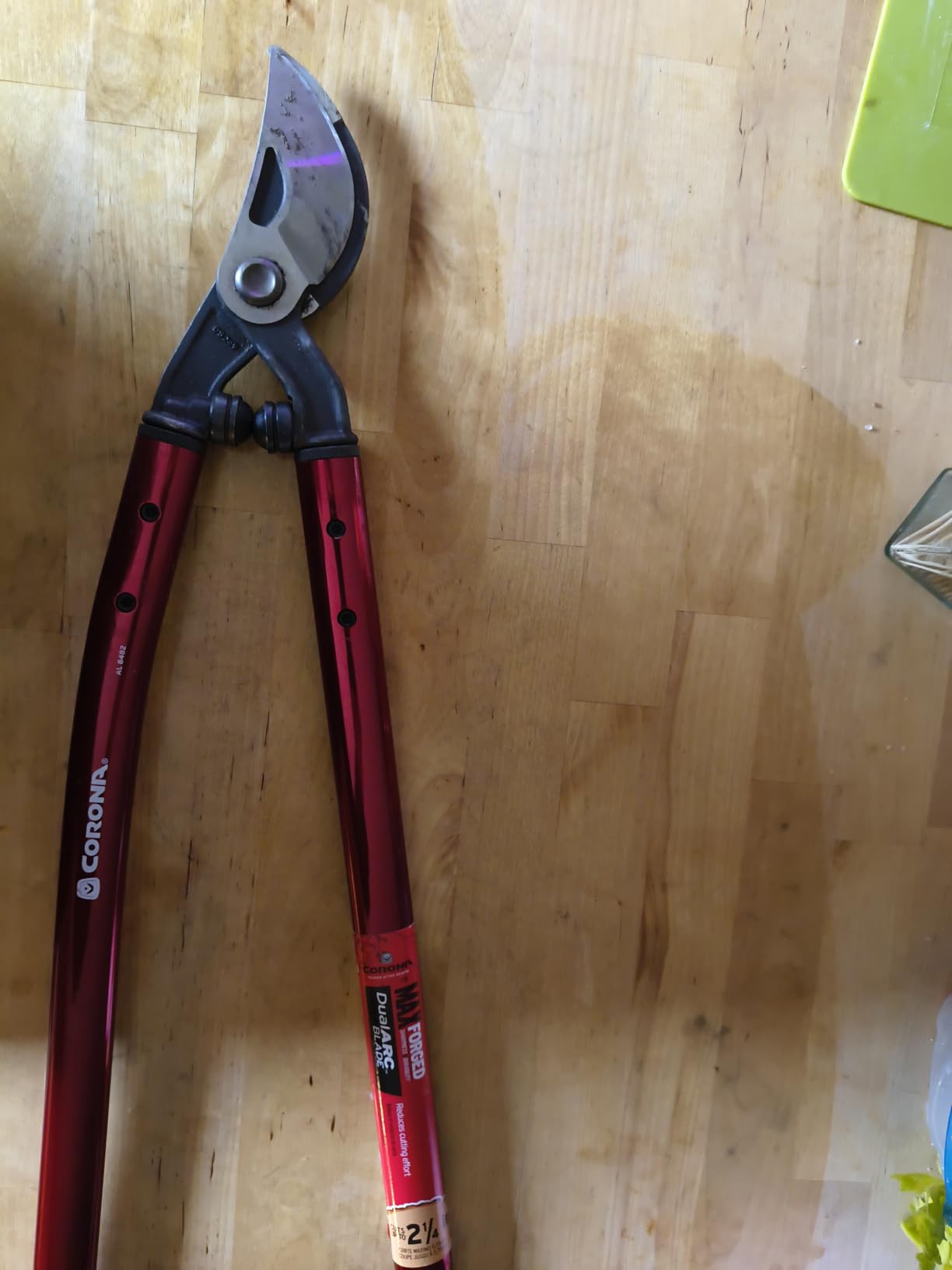
Forged steel and a resharpenable edge
Forged steel is tougher and more expensive to make than stamped alloy, and the practical benefit is that the edge can be ground back rather than replaced. Over years of orchard work, that difference decides whether a blade is a consumable or an asset.
Why 36 inch handles work for orchard trees
At that diameter you need both reach and force, and the longer handles supply both. The cost is manoeuvrability: inside a dense tangle of branches a 36 inch tool is awkward, and a shorter lopper plus a pruning saw may serve you better.
The sap groove is a small detail that matters
The forged slant-ground hook with a deep self-cleaning sap groove is the kind of feature that only shows up on tools built for fruit trees. Sap and gummy residue are what jam anvil heads and stall a cut partway through, and the groove lets debris run off instead of packing in.
9. Corona SL 8180D 33 inch DualLINK – Best DualLINK Bypass for Thick Live Branches
Corona Tools 33″ Bypass Loppers – Heavy-Duty Branch Cutter with DualLINK MAXFORGED Cutting Strength for Branches up to 2 Inches
Cut capacity: 2 inch
DualLINK MAXFORGED mechanism
Forged steel bypass blade
33 inch length
+ Pros
- DualLINK leverage cuts 2 inch limbs with less effort
- Forged blades hold an edge and resist bending
- 33 inch length gives reach and leverage
- Cushioned non-slip grips reduce fatigue
- Cons
- Heaviest tool here at just over 4 pounds
- Arms tire when handles are spread wide
- Bypass blades need correct alignment
The SL 8180D gives you a bypass head, which means clean cuts on live growth, and enough leverage to handle 2 inch limbs doing it. DualLINK is Corona name for its geared linkage, and it delivers power through the handle sweep.
Reviewers treat this as a well-made workhorse that is easy to live with. The one recurring drawback is weight: at just over 4 pounds it is the heaviest tool here, and that is felt the moment you spread the handles for full leverage.
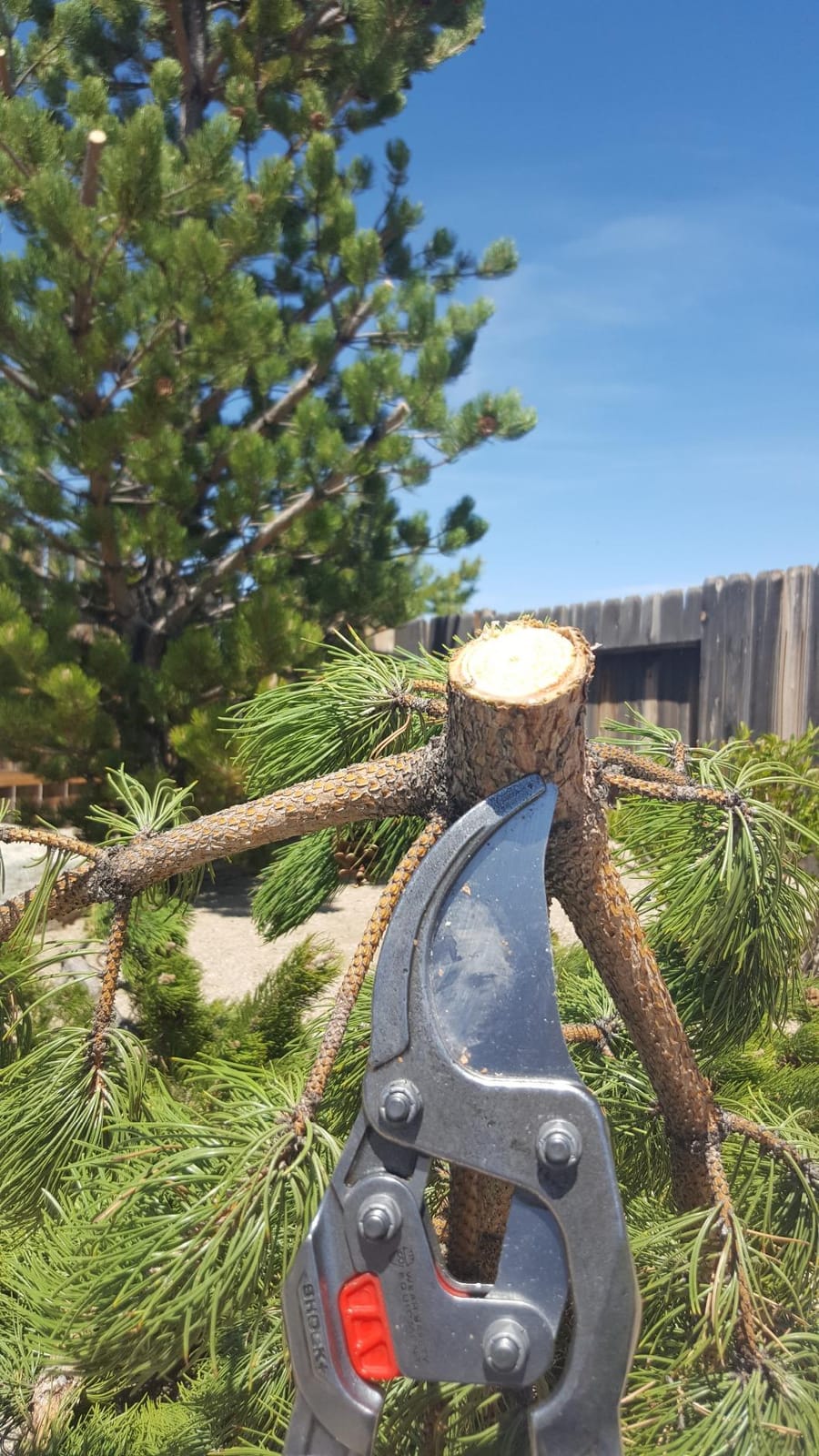
Bypass quality at heavy-duty capacity
Most heavy-duty anvil loppers sacrifice cut quality. This one does not, which makes it the pick for anyone pruning living branches above 1.5 inches rather than clearing dead brush.
Weight is the honest trade
Over a long afternoon of overhead work, four pounds of tool becomes four pounds of fatigue. Bumpers at the handle ends absorb some of the shock that would otherwise travel into your wrists, but they cannot remove the weight.
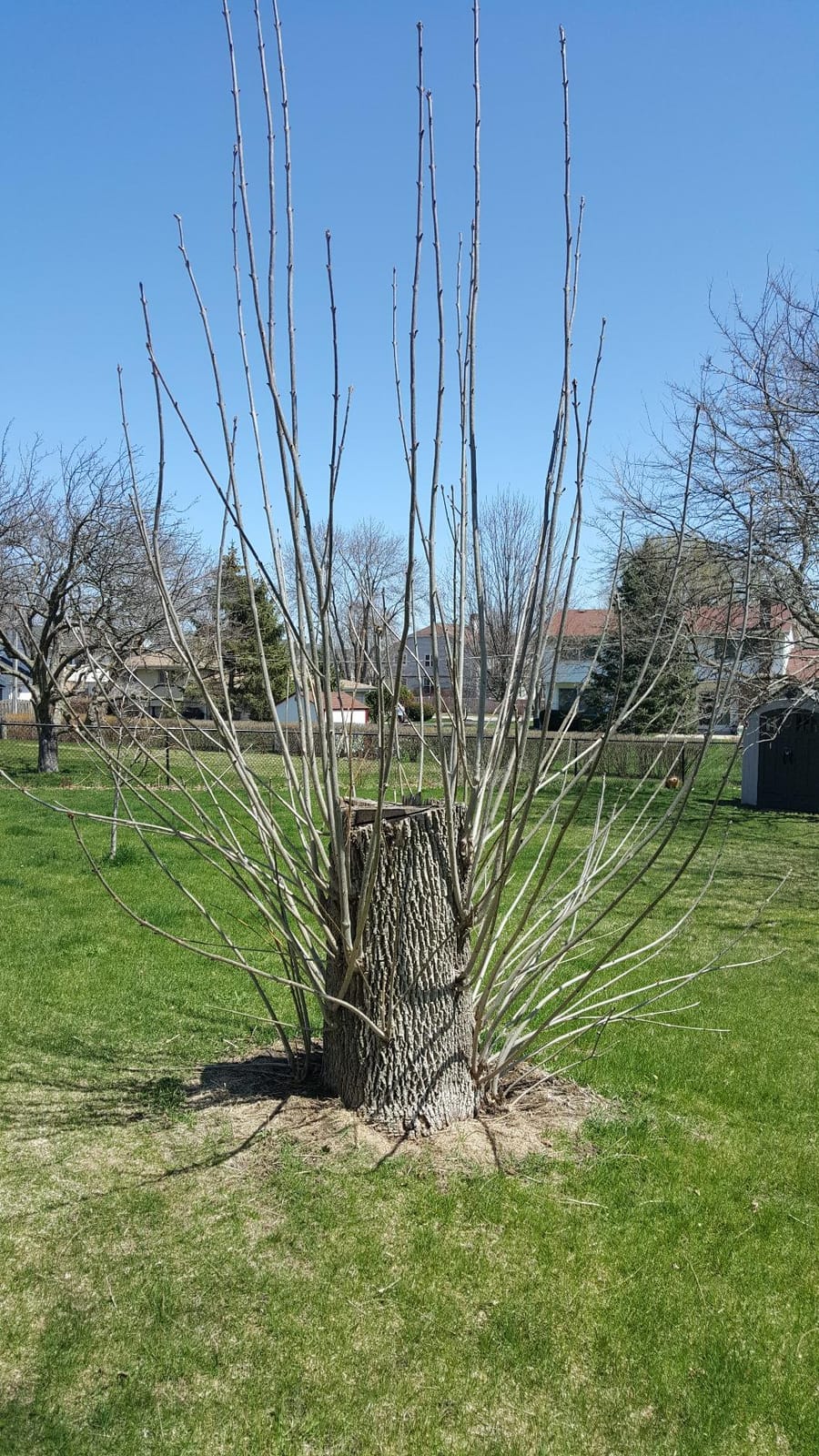
Keeping bypass blades aligned
Bypass jaws only cut cleanly when the two blades are sharp and properly aligned. Owners who report tearing are usually describing a blade that has drifted out of true, which on a bypass design is the single most common reason for a poor cut.
10. STEELHEAD 27-40 inch Gear Bypass – Best Pin Lock Extension for Overhead Work
STEELHEAD Heavy-Duty 27-40″ Adjustable Gear-Bypass Limb & Branch Lopper, Telescoping Extendable Handles, Ratcheting, Cuts Up to 1-3/4”, Secateurs, Shock-Absorbing, Effort-Saving, USA-Based Support
Cut capacity: 1.75 inch
Compound ratcheting gear bypass
Pin lock extension to 40 inch
High carbon steel blade
+ Pros
- Wide jaw with gear assist cuts tough branches
- Pin lock extension outlasts twist locks
- DuraGrip handles suit a range of hand sizes
- Limited lifetime warranty with US support
- Cons
- Ratcheting function often does not engage
- Heavier in practice than the listed weight
- Smaller users struggle to close fully extended handles
The STEELHEAD is the smallest-capacity tool here at 1.75 inches, and it earns its place for a different reason. The pin lock extension is genuinely better engineered than the friction collars used by most telescoping loppers, and one owner reports it outlasting a twist lock tool it replaced.
The gear bypass head is claimed to deliver up to three times the cutting force of a conventional lopper, and the wide jaw does bite into branches well past a normal hand lopper. The listed weight understates it noticeably, though.
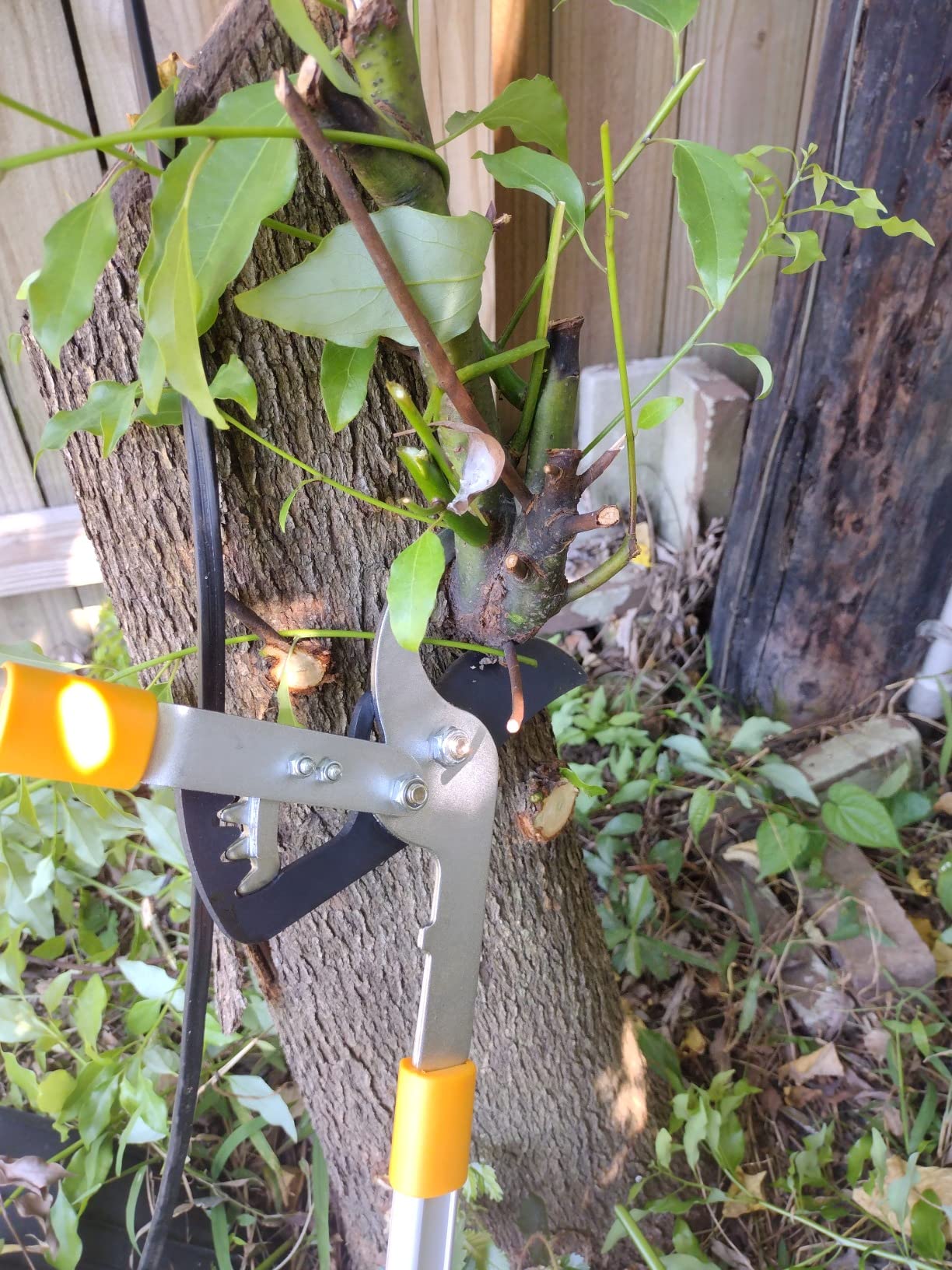
Pin lock beats twist lock over time
A positive pin lock either engages or it does not, so there is no gradual slipping. Friction collars tighten or loosen with temperature and dirt, and they are the component most often reported as failing after a season of extension and retraction.
The ratcheting claim needs tempering
Owners are clear that the advertised ratcheting function does not often index on its own. Treat the gear as an assist rather than a step mechanism, and do not buy this expecting the incremental cranking feel of a true ratchet lopper.
Sizing for hands and for branches
Smaller users report being unable to pull the handles together when fully extended, which matters a lot for a homeowner with limited reach or strength. The 1.75 inch rating also keeps this in seasonal cleanup territory rather than heavy limb work.
How to Choose Loppers for Thick Branches
How thick can loppers realistically cut?
Hand loppers are useful from about three-quarters of an inch up to roughly 2.5 inches of diameter, with heavy-duty models topping out near 3 inches. A light duty lopper works comfortably to about three-quarters of an inch, a standard long-handled lopper reaches roughly 1.5 inches, and a geared or compound action lopper handles 2 inches and slightly beyond.
Beyond about 2.5 to 3 inches, stop using loppers. A pruning saw handles a 4 inch limb with less drama, and a mini chainsaw covers everything above that.
Bypass vs anvil vs ratchet: match the mechanism to the wood
Bypass loppers use two sharpened blades that pass each other like scissors. They leave a clean, flat wound that seals well, which makes them the right choice for live green growth, fruit trees and anything you want to heal properly.
Anvil loppers close a single blade against a flat plate. They crush the fibre, which is fast and forgiving on dry, dead, brittle wood but leaves a torn wound on live branches and jams more often with sap.
Ratchet and compound geared mechanisms are a separate axis from jaw type. They multiply leverage so a hard cut becomes several easy ones, and they pair well with either head. Ratcheting wins on dead hard wood, compound and geared drives win on live wood where speed matters.
Handle length, material, and the fatigue factor
Longer handles give you leverage and reach at the same time, and 30 to 33 inches is the sweet spot for most homeowners. Fiberglass and aluminium handles are lighter than solid wood, but wood absorbs shock better in the hand. Budget for weight: a 4 pound lopper feels fine for twenty cuts and tiring for two hundred.
Blade steel, coatings, and sap
High carbon and SK5 steel hold an edge longer and can be resharpened, while basic alloy steel is cheaper to replace. Nonstick and PTFE coatings slow rust but chip off under hard use, so treat a coating as a delay, not a solution. Clean sap off the blade after every session.
When a lopper is the wrong tool
Escalate in order. Loppers up to about 2.5 inches, then a pruning saw for 2.5 to 4 inches, then a mini chainsaw for anything larger. A lopper forced past its rating compresses the branch, stalls mid-cut and leaves a wound that invites rot, so knowing the threshold saves the tree as well as the tool.
Maintenance: sap, rust, and sharpening
Wipe the blades clean after every session, especially on fruit trees. Work a light oil along the pivot and the telescoping collars, store the tool dry rather than in a damp shed, and touch up the edge with a file or stone as soon as it starts tearing bark instead of slicing it.
Blades that tear rather than cut are dull, not broken. A few passes with a flat file on bypass blades, or a few on the anvil face only, restores most of the performance for very little money.
Frequently Asked Questions
How thick can loppers cut?
Hand loppers cut branches from about three-quarters of an inch up to roughly 2.5 inches in diameter, with heavy-duty models reaching about 3 inches. A standard long-handled lopper is comfortable to around 1.5 inches, while geared and compound action designs handle 2 inches. Above 2.5 to 3 inches, use a pruning saw or a mini chainsaw instead.
Which are better, bypass or anvil loppers?
Bypass loppers are better for live green wood, fruit trees and anything you want to heal cleanly, because two blades pass like scissors and leave a flat wound. Anvil loppers are better for dry, dead and brittle branches, because the single blade crushes efficiently through dead fibre. Many owners keep one of each.
What is the best tool to cut thick tree branches?
For branches up to about 2.5 inches, a long-handled lopper with a compound action or geared drive is the best tool, because it multiplies leverage and cuts cleanly. Between 2.5 and 4 inches, use a pruning saw. Above 4 inches, reach for a mini chainsaw, because forcing loppers past their rating stalls the cut and tears the wood.
Are ratchet loppers worth it for thick branches?
Yes, on hard wood. A ratchet mechanism breaks one hard cut into several short steps, so a 2 inch dead branch needs a series of manageable movements instead of one violent squeeze. The trade-off is that ratchet loppers are awkward for twigs, which need several handle cranks for a cut that hand shears make instantly.
Do telescoping lopper handles loosen over time?
They can, and it is the most common durability complaint across brands. Friction and twist collar locks slip as they wear, while positive pin and bolt locks hold far longer. Check the lock under load before each session, and treat any handle that bends near the locking holes as retired rather than tightened.
How do I choose loppers if I have weak hands or back problems?
Choose a mechanism, not a bigger tool. Ratchet loppers and compound action designs with a shock absorbing buffer break the cut into steps and reduce the force needed at any one moment. Keep the tool light, work at chest height rather than overhead, and choose a lopper with a wide grip rather than a long one.
The Verdict for Thick Branches
If you want one pair that handles the widest range of real jobs, the TABOR TOOLS GG12A is our pick for 2026. Its compound action leverage and 2 inch capacity make it the most capable all-rounder in the roundup, and it is our choice for dead and dry wood in particular.
If your branches are still alive, take the Fiskars 32 inch PowerGear instead. A bypass head is the right call for fruit trees and flowering shrubs, because the cut seals. If the thickest work is overhead, the Spear and Jackson 8290RS buys you reach and ratcheting power at once.
For orchard work approaching 2.25 inches, the Corona AL 8482 has the size and the resharpenable forged blade. For the lightest tool that still handles real wood, the GARDENA 31 inch build is hard to argue with, and the STEELHEAD is worth a look purely for its pin lock extension.
Whichever one you choose, measure your thickest branch before you order, keep the blades clean and sharp, and reach for a pruning saw the moment the wood goes past about 3 inches.