
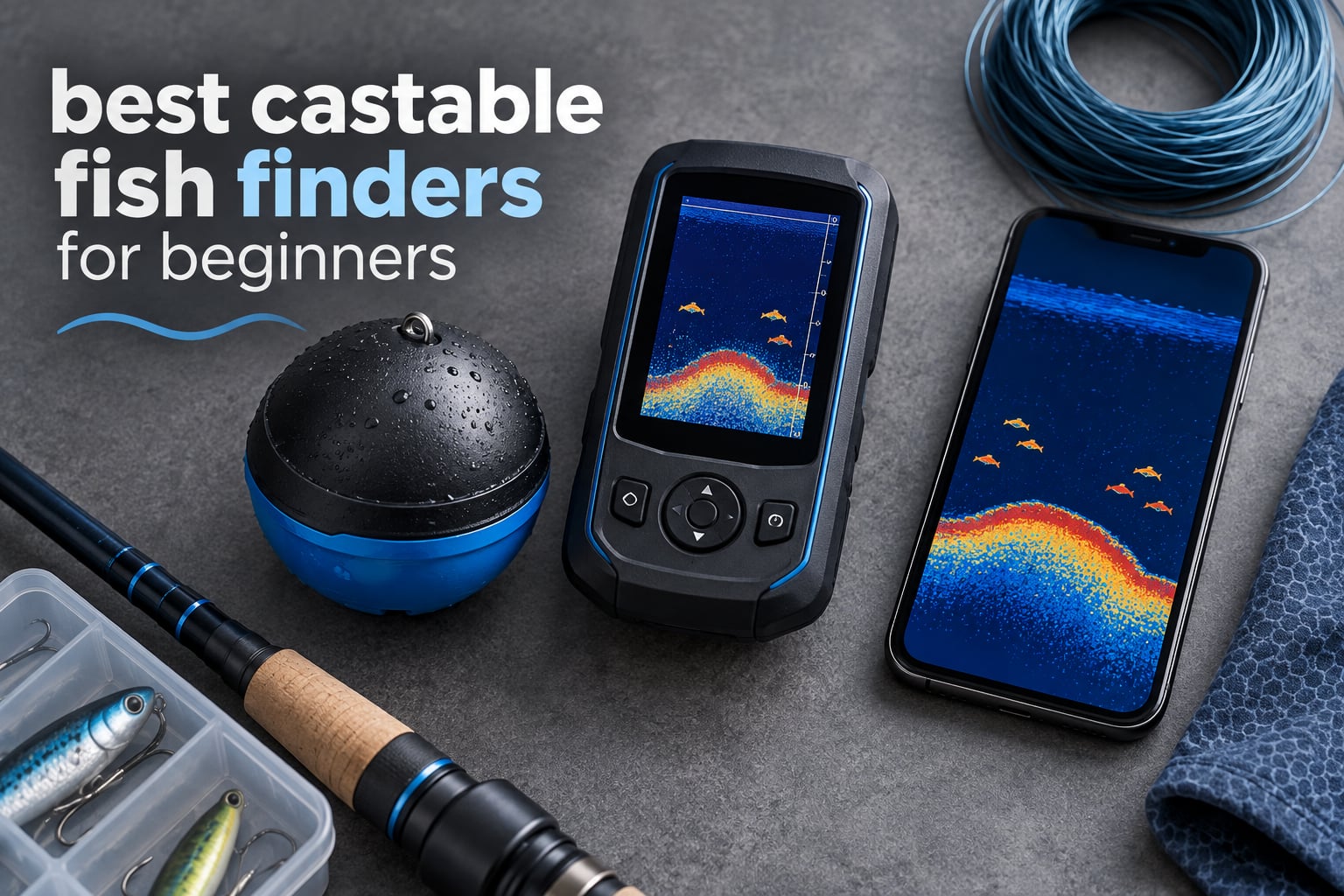
Will a castable fish finder actually put more fish in the boat? Bounded answer: yes, in the sense that it turns a blind guess at structure into a measured one — it shows you the depth, the bottom type, and where cover starts before you commit a cast. It will not find fish that are not there, and it will not replace reading water.
I have spent the last few seasons putting castable sonar through its paces from a boat ramp, a muddy bank, a dock on a reservoir, and a kayak. My rule for anything on this list was simple: it has to work on the first trip, with no wiring and no account to create, and the numbers on the box have to match what the screen showed.
That last point matters more than most spec sheets admit. Advertised ranges assume open water, a clear line of sight, and a phone held high. Wind, chop, and swell cut that figure hard, and the gap between the marketing number and the real number is where most beginner frustration comes from.
This guide covers all eight picks in the same format: who each one suits, what the connection really does, and where it falls short. Updated for 2026, and it lists current-generation models only.
Our Top 3 Castable Fish Finders for Beginners in 2026

ReelSonar iBobber
- Bluetooth to phone app
- 135 ft depth range
- 10+ hour battery
- Night LED ring

The iBobber takes the top spot because it has the deepest review history in this group and the fewest ways to fail. The Venterior is the pick if you refuse to put your phone in the rain, and the Deeper Start is the smoothest on-ramp if you want scan history with zero fuss.
Comparing the Eight Best Castable Fish Finders at a Glance
| Product | Details | |
|---|---|---|
| ReelSonar iBobber |
|
Check Latest Price |
 LUCKY 1108CP Handheld LUCKY 1108CP Handheld |
|
Check Latest Price |
| Deeper Start |
|
Check Latest Price |
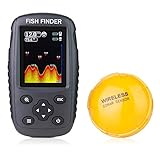 Venterior VT-FF005 Venterior VT-FF005 |
|
Check Latest Price |
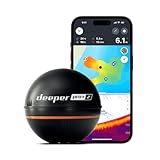 Deeper PRO+ 2 Deeper PRO+ 2 |
|
Check Latest Price |
 Garmin Striker Cast GPS Garmin Striker Cast GPS |
|
Check Latest Price |
 HawkEye FishPod 5X HawkEye FishPod 5X |
|
Check Latest Price |
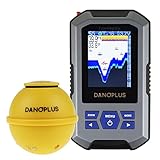 DANOPLUS DP-104 DANOPLUS DP-104 |
|
Check Latest Price |
What Is a Castable Fish Finder?
Short answer: A castable fish finder is a waterproof, battery-powered sonar ball you throw on a line or tether beside your kayak, boat, or bank position. It reads the water beneath itself and streams that image wirelessly to your phone, or to its own handheld screen, over a short-range connection it creates itself. No wiring, no hull drilling, no cellular signal required.
The term covers two different designs that get lumped together constantly. Phone-dependent models cast a dumb sensor and display everything on a free app. Handheld models ship a small receiver with their own LCD, so the only thing you need in your hands is the receiver. Both belong on a beginner’s shortlist; they fail in completely different ways.
How Castable Sonar Works and Why Real Range Is Shorter Than Advertised
Short answer: The ball floats, a downward-facing transducer reads the water column, and the reading travels to your device over Bluetooth or a Wi-Fi network the sonar itself generates. The advertised range is a best case. Wind, chop, swell, a low-held phone, and obstacles between you and the ball all cut it.
Bluetooth models like the iBobber and the FishPod 5X report connection distances in the 40 to 70 foot band for most people casting from a bank. Users on both report steady connections at that distance, and dropouts beyond it or when the sensor gets towed underwater at speed.
Wi-Fi models such as the Deeper Start, the Deeper PRO+ 2, and the Garmin Striker Cast build their own network, so cellular coverage is irrelevant. The Garmin lists streaming up to 200 feet and the Deeper PRO+ 2 is accurate to 330 feet, but both still depend on a clean line of sight across the water.
One more piece of physics worth knowing: a wide beam angle sounds like more coverage but returns less detail. The Venterior’s 105-degree beam covers a lot of water at once and reads poorly when towed behind a moving boat, while the Deeper PRO+ 2’s narrow beam trades coverage for fine separation on a single target.
1. ReelSonar iBobber – The Most Proven Castable Fish Finder for Beginners
Reelsonar Portable Fish Finder Accurate Fish Depth Finder with Depth Range of 135 feet 10+ Hours Battery Life with iOS & Android App Wireless
Bluetooth to phone app
135 ft depth range
10+ hour rechargeable battery
Night LED ring
+ Pros
- Most proven unit in the group
- Pairing to iOS and Android takes minutes
- LED ring makes it easy to find at night
- Compact and light enough for a small kayak deck
- Free app with tutorial and size color-coding
- Cons
- Practical Bluetooth range of roughly 40 to 50 feet in open air
- Needs water at least 3.5 to 5 feet deep to read properly
- App puts a noticeable load on phone battery
I keep coming back to the iBobber because the failure mode is always the same and it is never mysterious. You charge it, you pair the app, you cast it, and you get a screen with depth, temperature, and coloured arches. Six thousand-plus reviews of the same product make it the least risky purchase in this category.
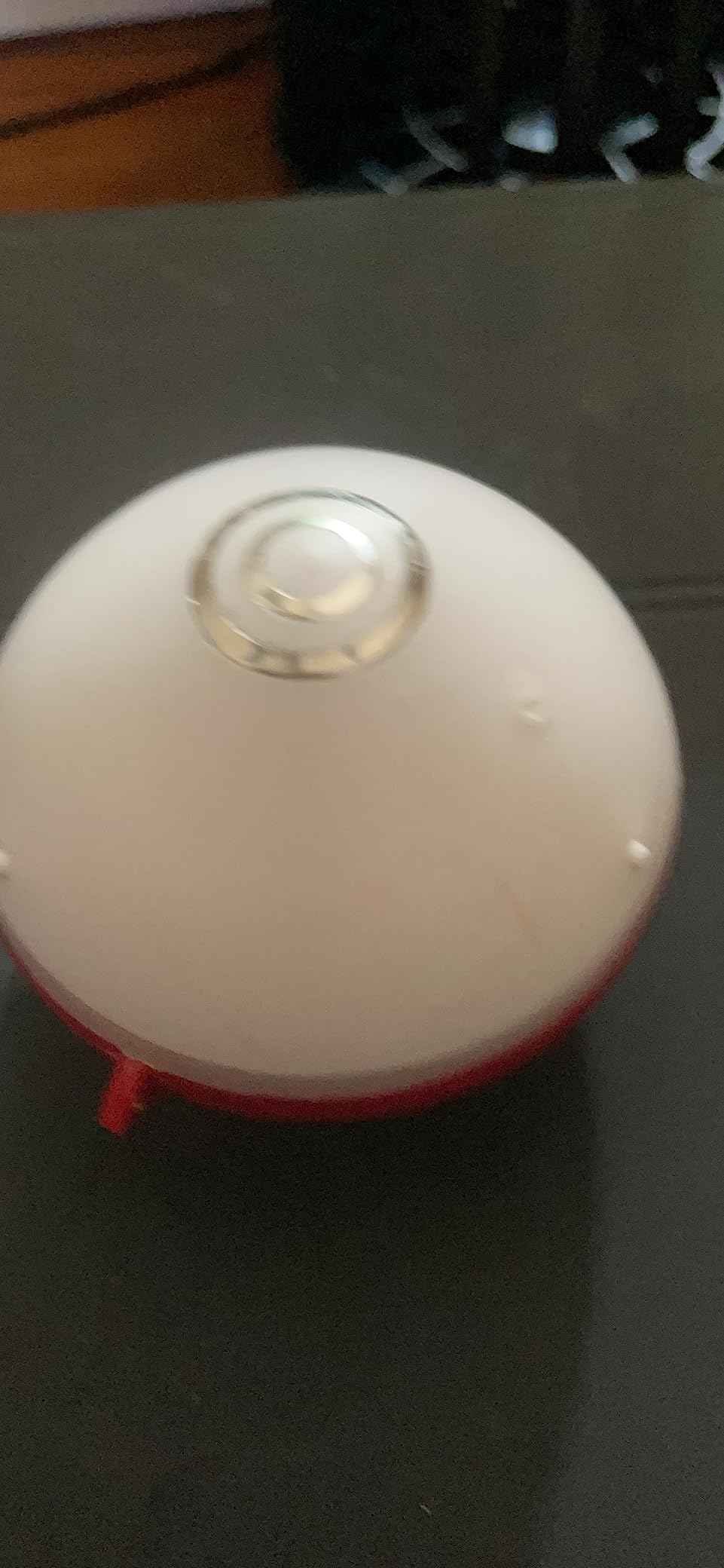
The night LED ring is the feature I did not expect to care about and now rely on. On an evening paddle, a glowing ring on the surface is the difference between retrieving your gear and losing it.
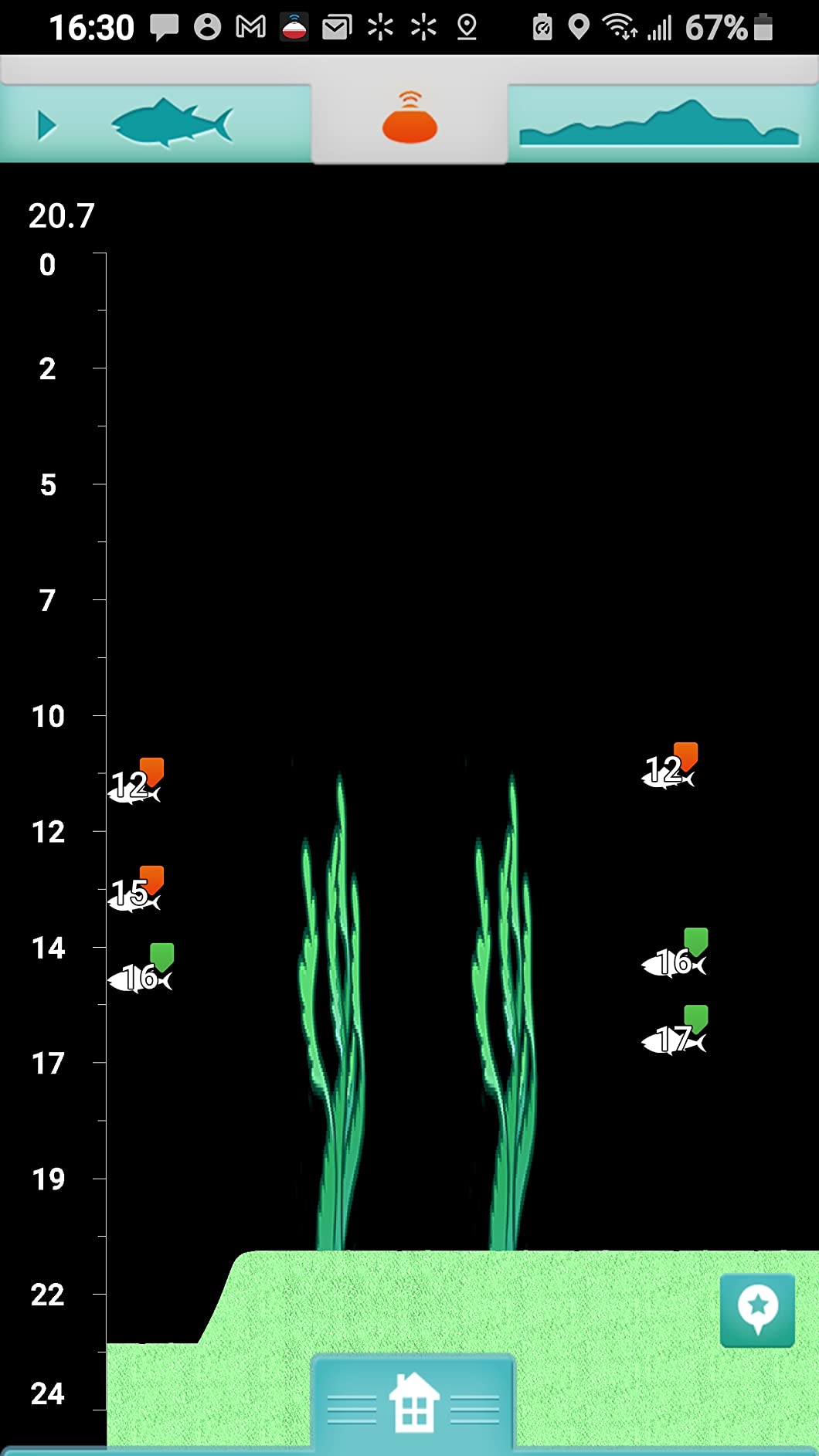
The honest limitation is range. If you want to probe water 80 feet from your hips, this is the wrong tool, and no software patch changes that.
Bluetooth Range and Where It Actually Holds
Roughly 40 to 50 feet in open air is the working figure owners report, which is enough for casting from a dock or a bank position. Beyond that, and especially with wind across the water, the app starts hunting for the sensor.
Minimum Depth and Water Clarity
The transducer needs at least 3.5 to 5 feet of water to return a useful reading. In shallows you will get a depth number and little else, which is a common reason beginners think the unit is broken.
Battery Life and Phone Battery Drain
Ten-plus hours on the internal rechargeable battery is a full day on one charge. The trade is your phone: the app draws power hard, so a power bank in a dry bag is not optional on a long trip.
Who It Is Good For and Who It Is Not
Good for a first season on a lake you partly know, night sessions, and anyone who wants a working answer in under five minutes. Not good for wide casting, deep water, or anglers who want to build saved maps of a new body of water.
One r/Fishing owner described being impressed by the iBobber and still not having caught anything with it yet, and that is exactly the right expectation to carry. It removes guesswork. It does not remove the need to fish.
2. LUCKY 1108CP – The Cheapest Way to Add a Screen, From a Kayak Only
LUCKY Kayak Portable Fish Depth Finder Water Handheld Fish Finder Sonar Castable Kayak Boat Fishfinder Transducer Fishing LCD Display FFC1108
Wired transducer sensor
3 to 328 ft depth range
2 inch backlit LCD
Neck strap included
+ Pros
- Lowest cost in the roundup
- Neck strap allows hands-free wear
- Backlit screen reads in sun and darkness
- Five levels of sensitivity for turbid water
- Works through a kayak hull
- Cons
- Transducer is wired so it cannot be cast from shore
- Several buyers report units that stopped powering on
- Does not separate fish sizes and reads minnows as fish
Be clear about what this is. The LUCKY 1108CP is a handheld reader with a wired transducer, and the transducer has to be attached to a hull. It is sold in the same aisle as castable sonar and it is not one, which is the single most common mix-up I see in this category.
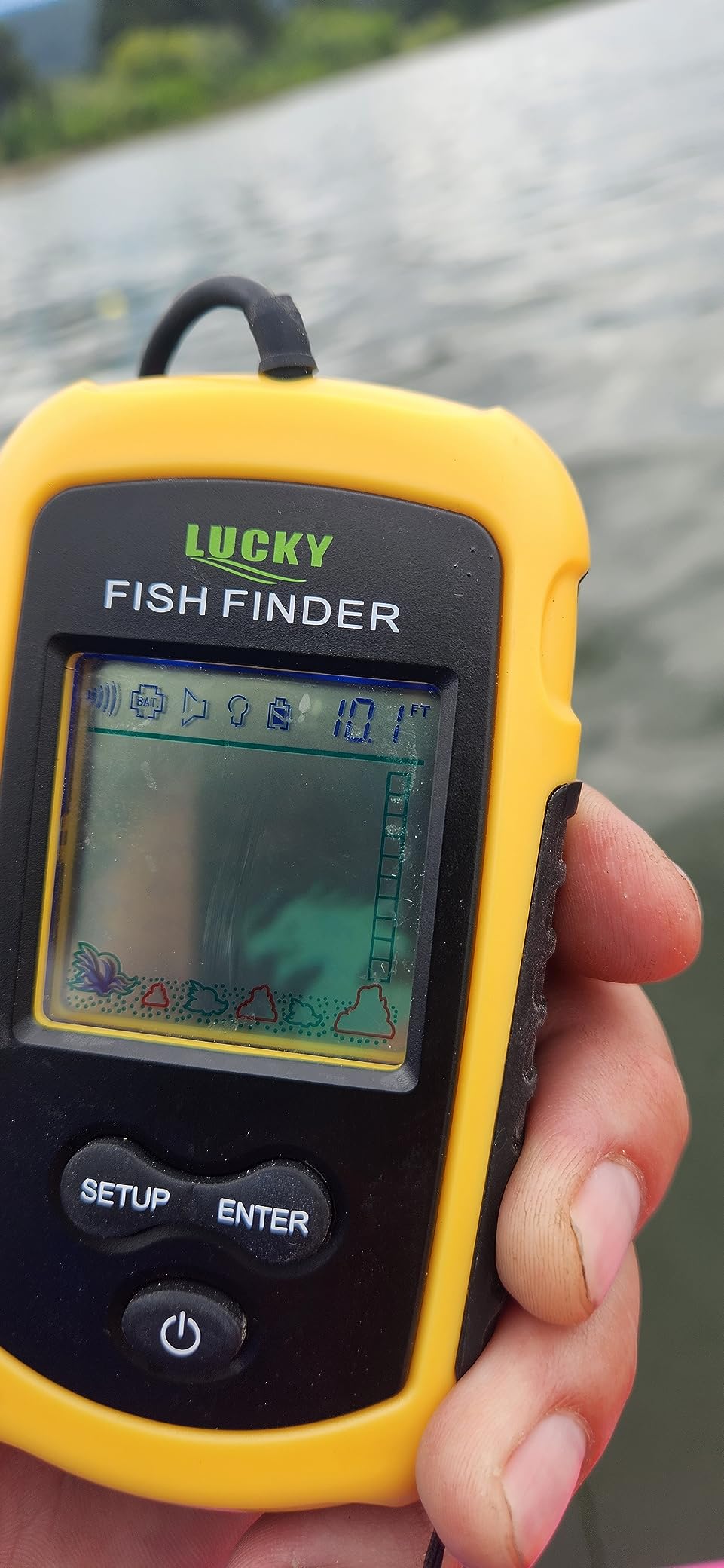
Used correctly from a kayak or small boat, it is a genuinely useful depth and bottom-structure tool. The backlit screen and neck strap make it easy to glance down while paddling, and 3 to 328 feet of range covers everything a beginner will fish.
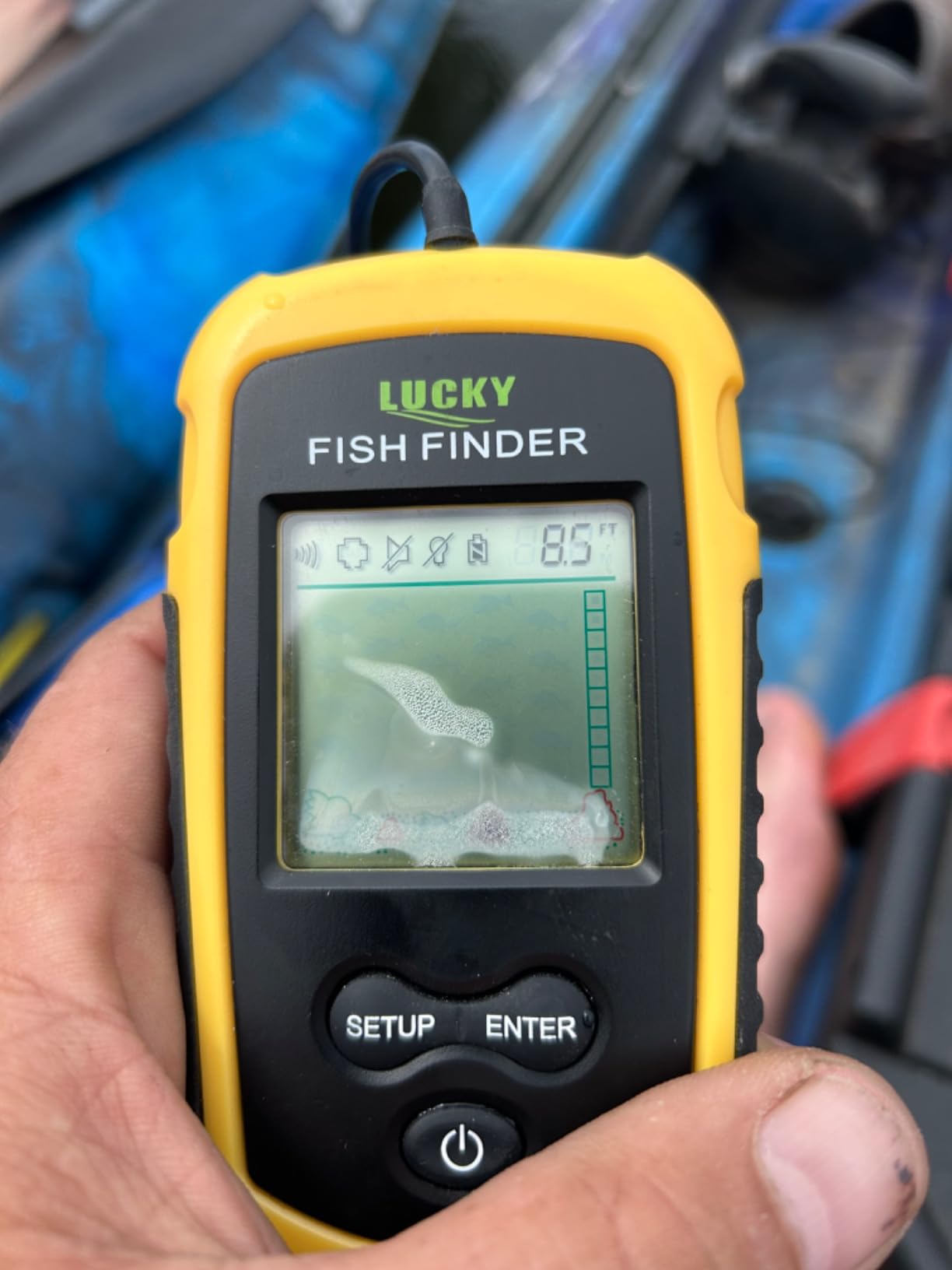
Why the Wired Transducer Changes Everything
Attach the sensor to a hull and you get continuous readings, which no castable in this list can match. Sit on a bank and you have nothing to attach it to, which rules out the use case most beginners actually have in mind.
Durability Concerns Reported by Owners
Several buyers on this model report hardware that stopped powering on shortly after first use. That is the main reason I would treat this as a backup tool rather than a primary fish finder, and it is worth checking the return window before committing.
Screen, Sensitivity and Bottom Reading
Five sensitivity levels let you work through clear or turbid water, and the display switches between feet and metres. It reads weed, sand, and rock reliably, but it does not separate fish size categories and picks up minnows as fish.
Who It Is Good For and Who It Is Not
Good for a kayaker on a hard budget who wants depth and bottom type and does not mind a wired sensor. Not good for bank fishing, for mapping, or for anyone planning to cast sonar.
3. Deeper Start – The Smoothest First Cast for a Phone-First Angler
Deeper Start Fish Finder – Portable and Depth Finder for Recreational Fishing from Dock, Shore, Bank or Kayak | Castable Deeper Smart Sonar with Free User Friendly App
Generates its own Wi-Fi network
165 ft casting and depth range
40 degree sonar beam
Six hour battery
+ Pros
- Ships ready to fish with no wires or external battery
- Self-generated Wi-Fi uses no mobile data
- Every scan auto-saves with time and location
- Sets up in minutes with the free app
- Night fishing mode included
- Cons
- Entry level model with no built-in GPS
- 40 degree beam is narrower than most rivals
- App fish identification is approximate rather than species accurate
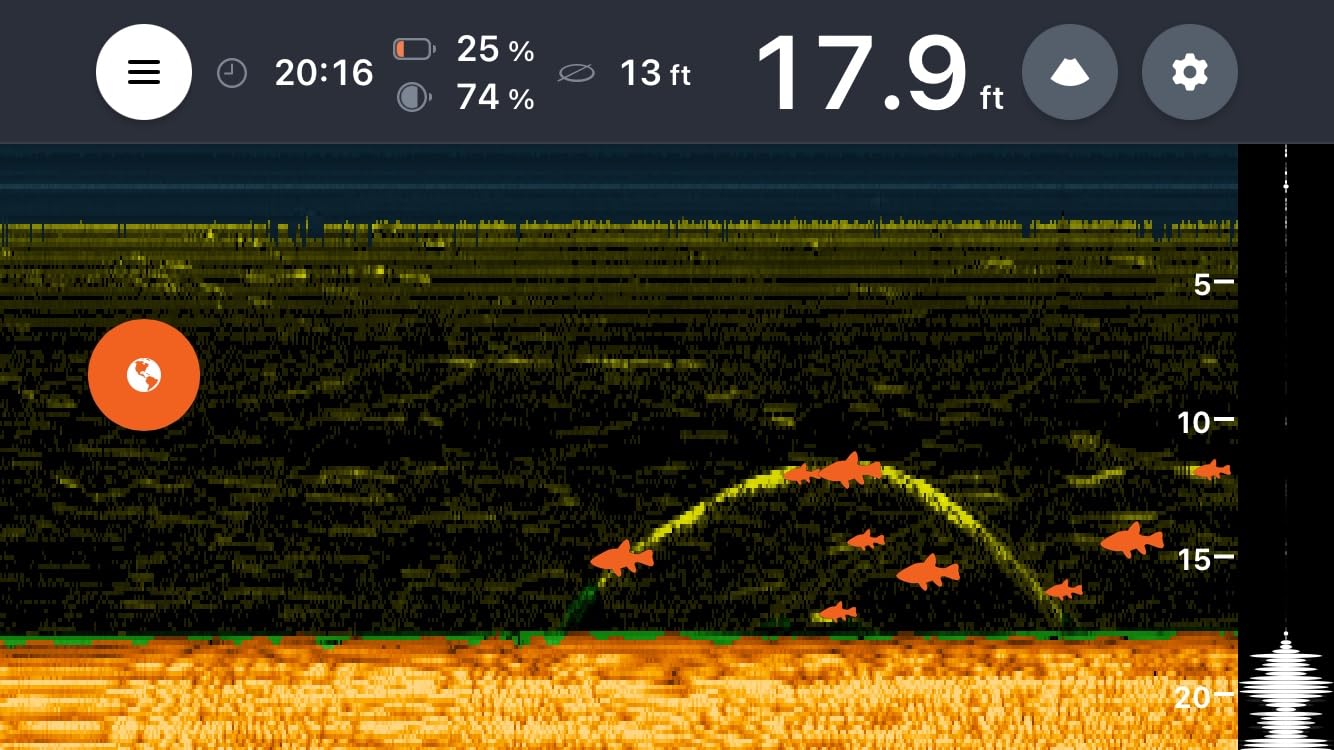
If your instinct is that a sonar ball should work the moment you open the box, the Deeper Start is the one. Charge it, download the app, and cast. The unit generates its own Wi-Fi network, so no cellular data is used and no router is involved.
The feature that earns its keep over a season is automatic scan history. Every scan is saved with a timestamp and location, which quietly builds you a personal log of a lake without any extra work.
Own Wi-Fi Versus Bluetooth
A self-generated network is more stable than Bluetooth at moderate distance and completely indifferent to cell coverage. It is also why the Deeper Start works on a lake in the middle of nowhere, which a phone-dependent design handles poorly.
Casting and Depth Range Limits
Both range out to 165 feet, so it is a bank and kayak tool rather than a big-water tool. The 40 degree beam is narrower than the Venterior’s 105 degrees, which means you cover less per cast but see more detail on what you do cover.
Battery and Charging
About six hours of use from a 2.5 hour full charge covers a normal day. That is less runtime than the iBobber’s 10-plus hours, so plan a top-up if you fish dawn to dusk.
Who It Is Good For and Who It Is Not
Good for a phone-toting beginner who wants history and reliability at an entry point. Not good for deep water, for mapping with on-board GPS, or for anglers who dislike maintaining an app.
4. Venterior VT-FF005 – The Best Rated Castable With Its Own Screen
Venterior Portable Rechargeable Fish Finder Wireless Sonar Sensor Fishfinder Depth Locator with Fish Size, Temperature, Bottom Contour, Color Display
Handheld color TFT screen
262 ft wireless range
2.6 to 164 ft depth
105 degree beam
+ Pros
- No phone and no app required
- Highest customer rating among handheld castables here at 4.3
- Selectable black or white screen background
- Works out of the box with no calibration
- Sensor powers on automatically in water
- Cons
- Wide 105 degree beam gives unreliable results when trolling
- Beam degrades against ice hole walls
- Accuracy weakens past roughly 120 feet
- Fish size categories are subjective
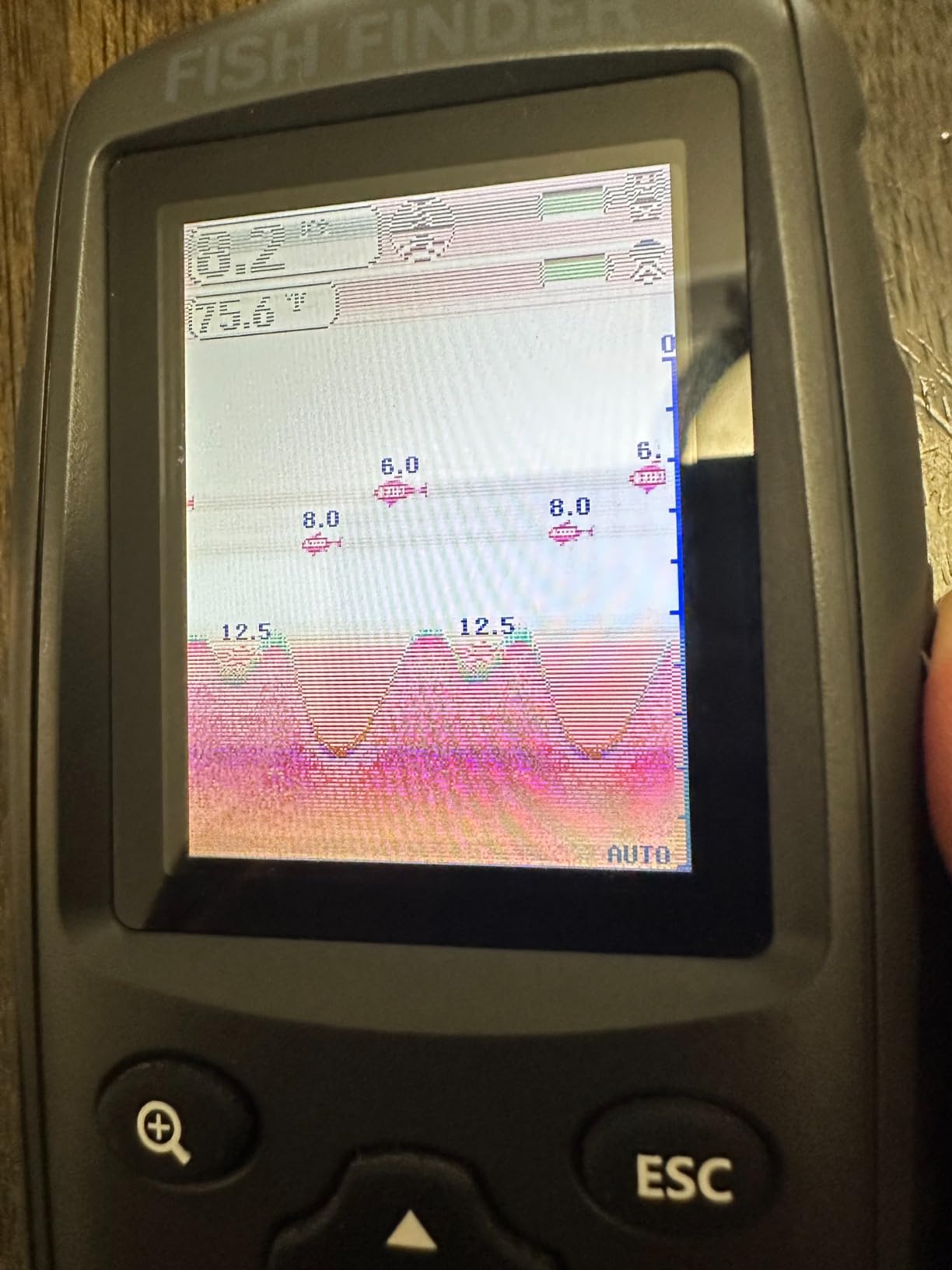
This is the pick for anyone who does not want a phone anywhere near a wet deck. The Venterior ships a handheld receiver with a 2.6 inch color screen, and the whole system works with no app, no pairing ritual, and no account.
Owners rate it highest in the group at 4.3 across more than 1100 reviews. The screen background switch between black and white is a small touch that matters more in practice than it sounds, since direct sun and a headlamp need opposite backdrops.
Screen Readability in Sun and at Night
Two background colours means you can flip the display rather than squinting. The interface is plain, with depth, temperature, fish size, and bottom contour on one screen, which is less information than a phone app but also less to learn.
The 105 Degree Beam Trade-Off
That wide beam covers a lot of water per cast and is the reason false returns show up when the sensor is towed behind a moving boat. Parked, drifting, or held still, it behaves well. Bounced off ice hole walls in a drilled hole, accuracy suffers too.
Range and Depth Reality
The wireless link works to 262 feet and the depth range runs from 2.6 to 164 feet. Reviewers report readings holding up well until roughly 120 feet, after which accuracy softens, so deep reservoirs are not its strength.
Who It Is Good For and Who It Is Not
Good for bank anglers, cold hands, and anyone who fishes without a phone. Not good for towing behind a moving boat, for ice fishing in a narrow hole, or for deep water.
5. Deeper PRO+ 2 – The Best Castable Fish Finder for Mapping New Water
Deeper PRO+ 2 Sonar Fish Finder – Portable Fish Finder and Depth Finder For Kayaks, Boats and Ice Fishing with GPS Enabled | Castable Deeper Fish Finder with FREE User Friendly App
Built-in GPS for custom maps
Accurate to 330 ft
Wide mid and narrow beams
Target separation down to 0.4 in
+ Pros
- On-board GPS records and saves bathymetric maps
- Three selectable beam widths
- 0.4 in separation on narrow beam for vertical jigging
- Light and cable-free
- Two year limited manufacturer warranty
- Cons
- Costs the most of the entry models
- Needs a phone or tablet since it has no screen of its own
- Multi-beam and map building take app familiarity to learn
The PRO+ 2 is the unit that gets recommended most often when people ask cold which castable to buy, and that reputation is built on one thing: on-board GPS. Cast a pattern from a dock and the sonar records the contours, and that map is waiting for you next trip.
For a beginner fishing familiar water, that is a feature you will not use. For anyone moving to a new lake, reservoir, or stretch of coast, it is the reason to spend more here.
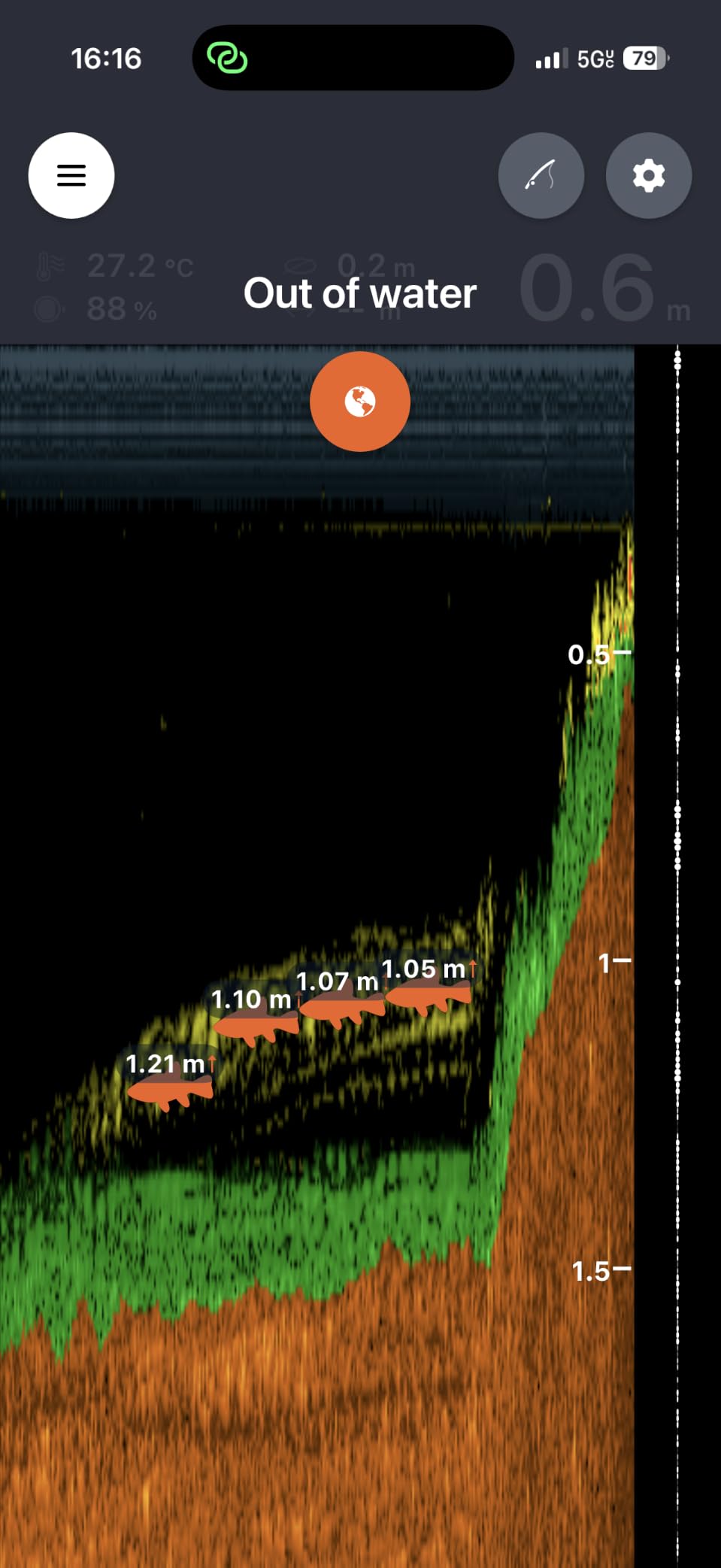
Three Beam Modes and What Each Is For
Wide sweeps an area quickly, mid is a general-purpose default, and narrow drills in on a single target. Narrow beam delivers 0.4 inch target separation, which is the number that matters for holding a lure directly under a fish you can see.
Bathymetric Mapping Workflow
Maps build in the free Fish Deeper app from the sonar’s own GPS. Cast along a drop-off, let the beam overlap between passes, and the app draws the bottom for you. It takes three or four trips before a map is genuinely useful, so set that expectation.
Range, Accuracy and Weight
Accuracy to 330 feet is the widest reach in this group and the weight is 3.2 ounces, so it carries nothing on a kayak. Two years of limited manufacturer warranty backs it, longer than most rivals here.
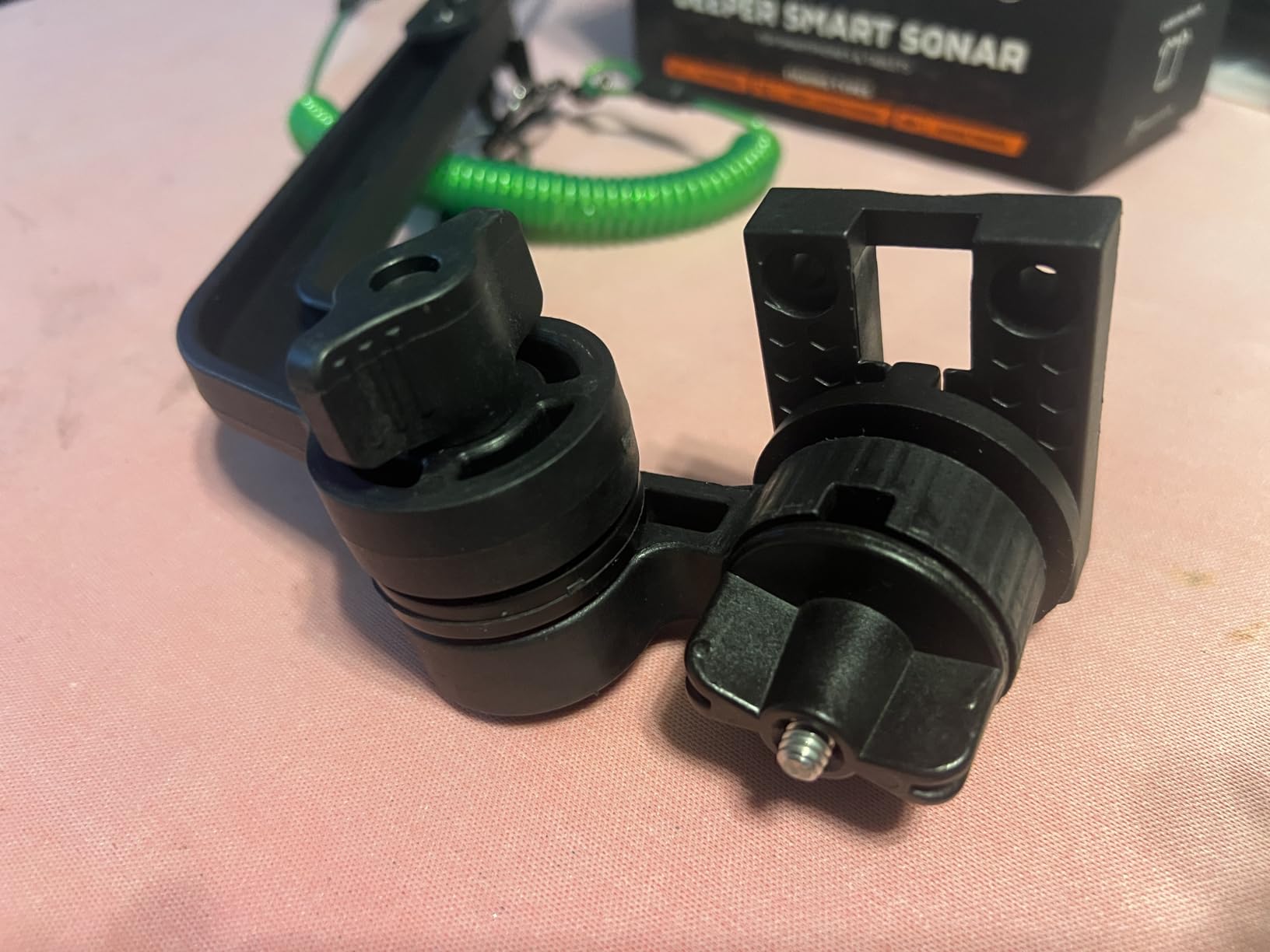
Who It Is Good For and Who It Is Not
Good for mapping unfamiliar water and for anglers who will fish the same spots for years. Not good for a first season on a lake you already know, or for anyone without a phone in the boat.
6. Garmin Striker Cast GPS – The Most Rugged Castable Sonar We Tested
Garmin Striker Cast, Castable Sonar with GPS, Pair with Mobile Device and Cast from Anywhere, Reel in to Locate and Display Fish on Smartphone or Tablet (010-02246-02)
GPS with Quickdraw 1 ft contours
Streams up to 200 ft
10+ hour USB rechargeable battery
IPX6 and IPX7 rated
+ Pros
- Highest customer rating in the roundup at 4.4
- Quickdraw contours build 1 ft custom maps
- IPX6 and IPX7 water resistance plus a 2 year warranty
- Auto powers on in water and off when retrieved
- Rated for 20 lb test line or heavier
- Cons
- Most expensive option in this roundup
- Requires a compatible phone or tablet with no built-in screen
- Quickdraw map building takes several trips to pay off
What separates the Striker Cast GPS from the rest is hardware. IPX6 and IPX7 water resistance, a rig point rated for 20 lb test line or heavier, and a two year warranty make it the only pick here I would leave on a wet deck without thinking about it.
Setup is genuinely quick: download the Striker Cast app, pair, fish. An r/bassfishing owner reported finding the unit still at roughly half charge after two months sitting in a tackle bag, which says a lot about how forgiving the battery management is.
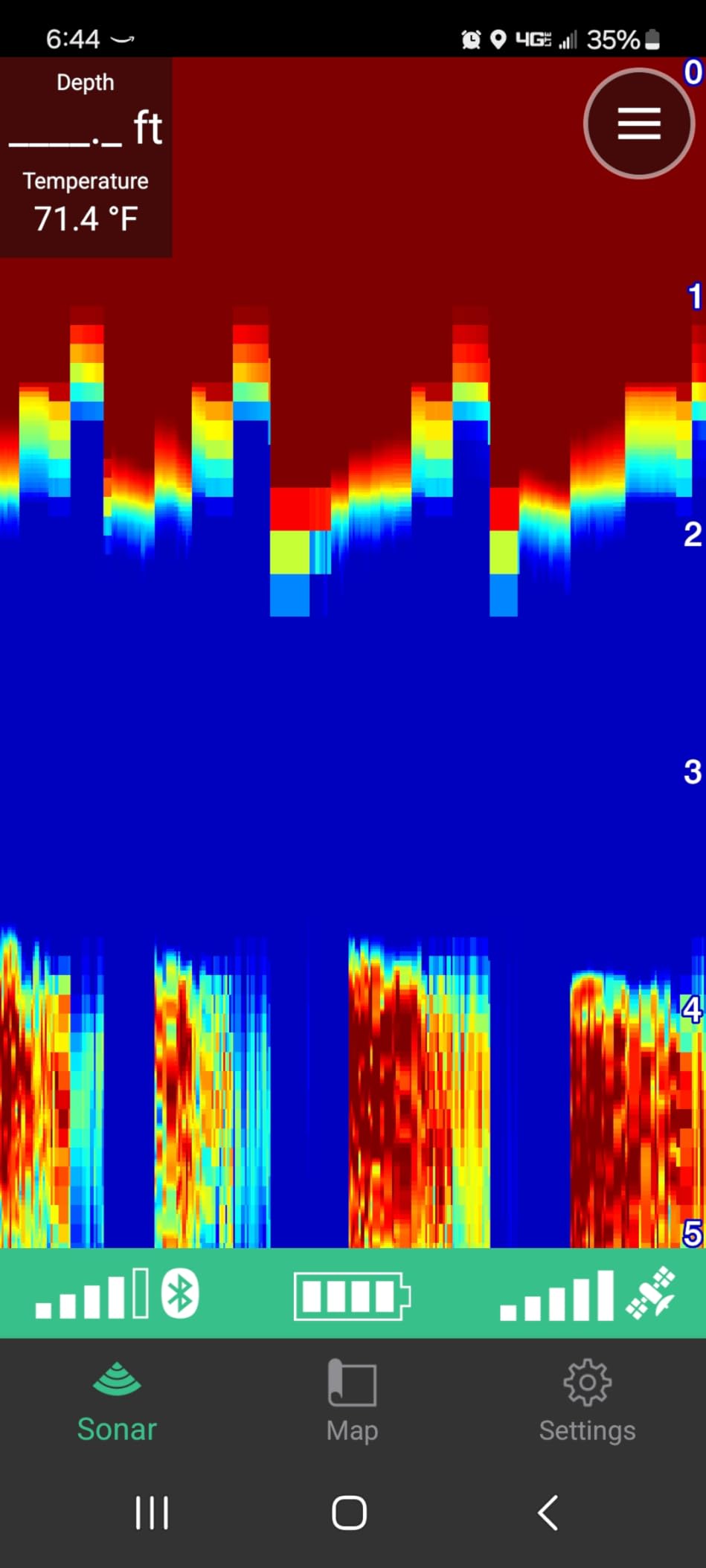
GPS, Quickdraw Contours and Saved Maps
Quickdraw draws your own bathymetric contours at 1 foot intervals and stores them against the on-board GPS, so your fishing spot stays in the app rather than in one session. Owners also pull maps from the Quickdraw community library, which can save a first trip on a new lake.
Streaming Range and Display Options
Sonar streams to a phone or tablet up to 200 feet, and the same hardware runs 2D and ice fishing flasher modes. It is still a phone display, which means the same sun glare and battery questions as every app-based unit here.
What the Non-GPS Version Does Not Do
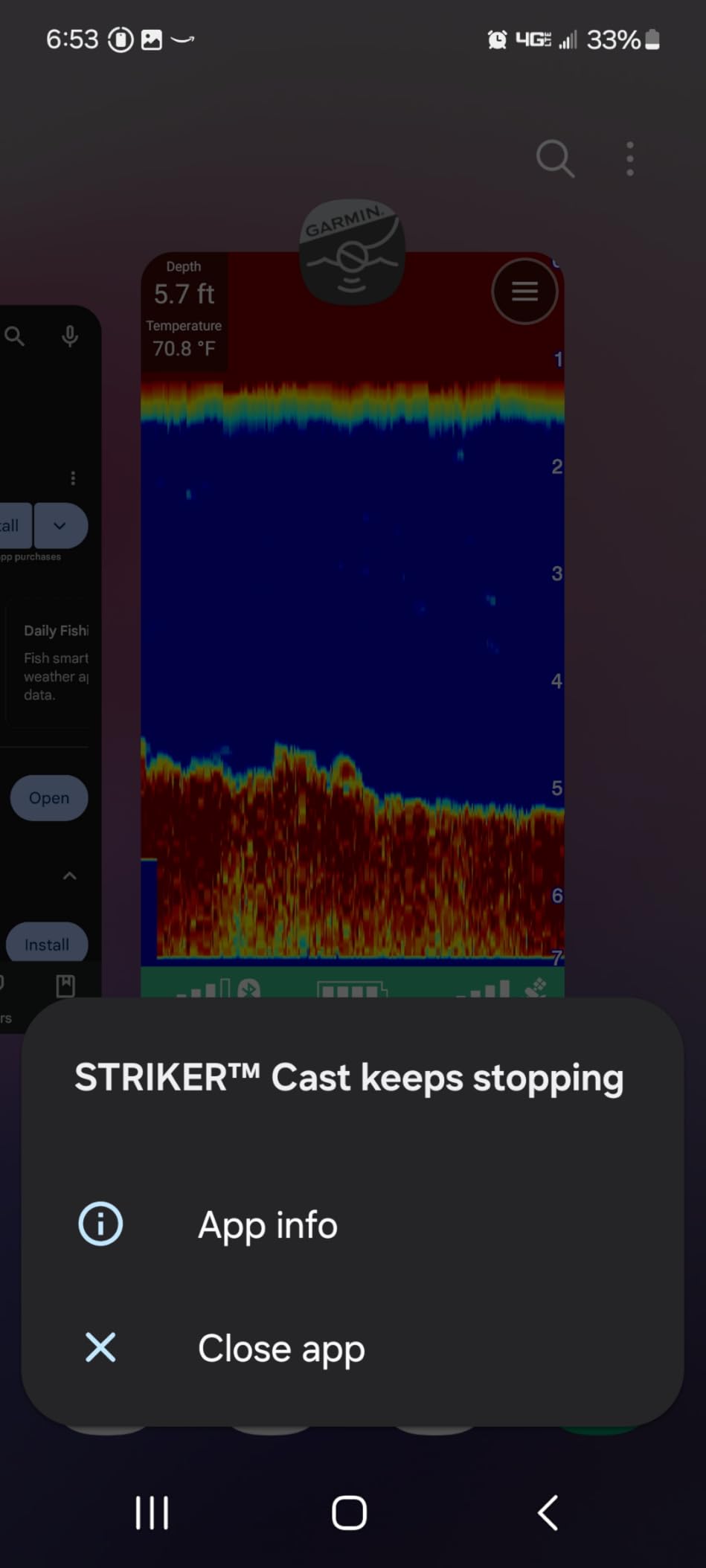
Buy the plain Striker Cast and you lose saved mapping entirely — the contours you draw live only in the running app session. Anglers on greatdaysoutdoors.com report this as the exact disappointment that follows buying the cheaper variant by mistake. If you want maps, take the GPS version.
Who It Is Good For and Who It Is Not
Good for anglers who fish in rain, cold, and rough water, and for anyone who wants saved maps with a rugged build. Not good for a casual first purchase, or for anyone unwilling to bring a phone.
7. HawkEye FishPod 5X – The Best Castable for Cluttered, Weedy Water
FishPod 5x Bluetooth Fish Finder With AI Technology
Bluetooth app connection
199 ft maximum depth
FishEcho clutter filtering
Four preset operating modes
+ Pros
- Bluetooth stayed stable casting 50 to 70 feet for many owners
- HD mode separates grass from fish in weed beds
- Readings matched a boat mounted Lowrance
- Free and very simple app
- Threaded insert accepts a custom clamp
- Cons
- Loses Bluetooth when trolling or when water laps the sensor
- Plastic line attachment eye feels flimsy
- Battery only reaches about 80 to 85 percent full
- No ground mapping in the app yet
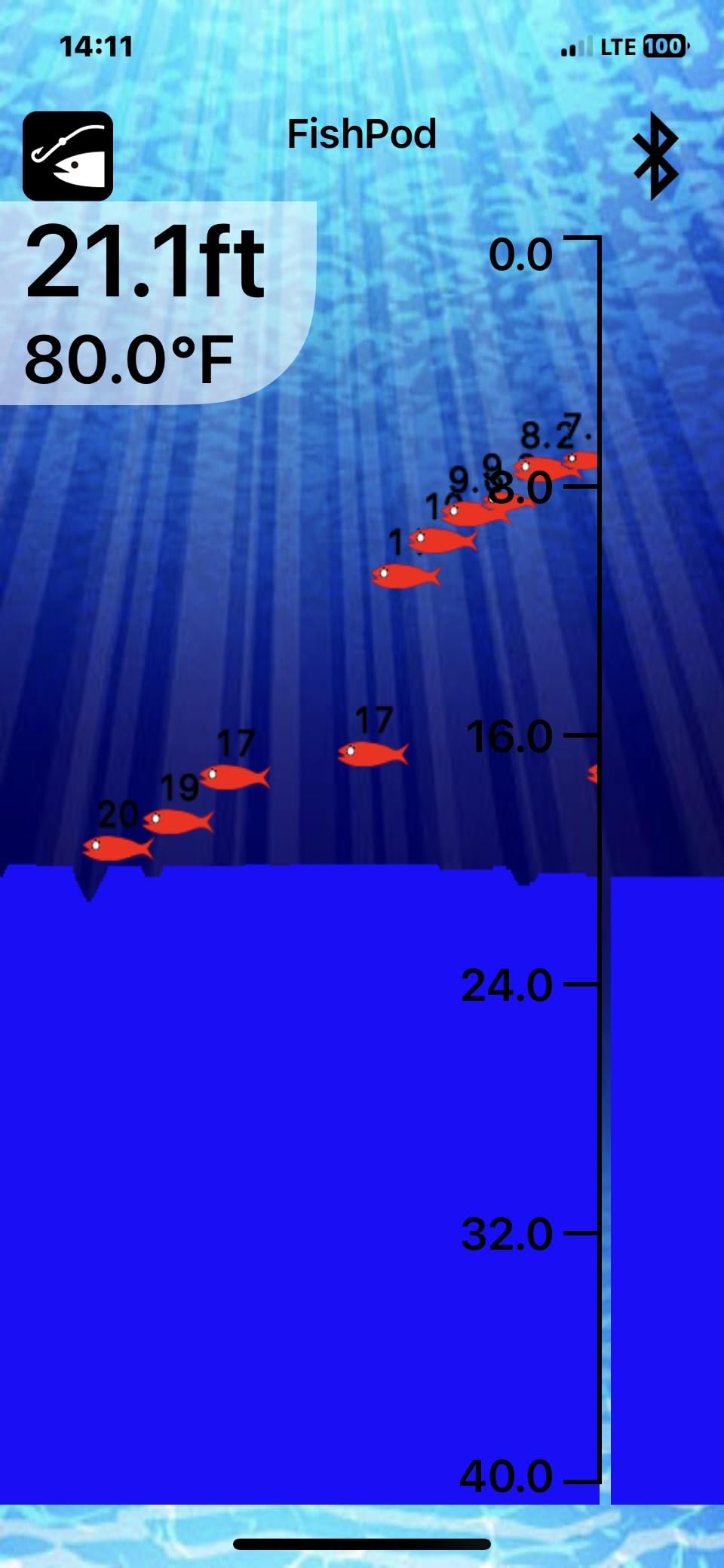
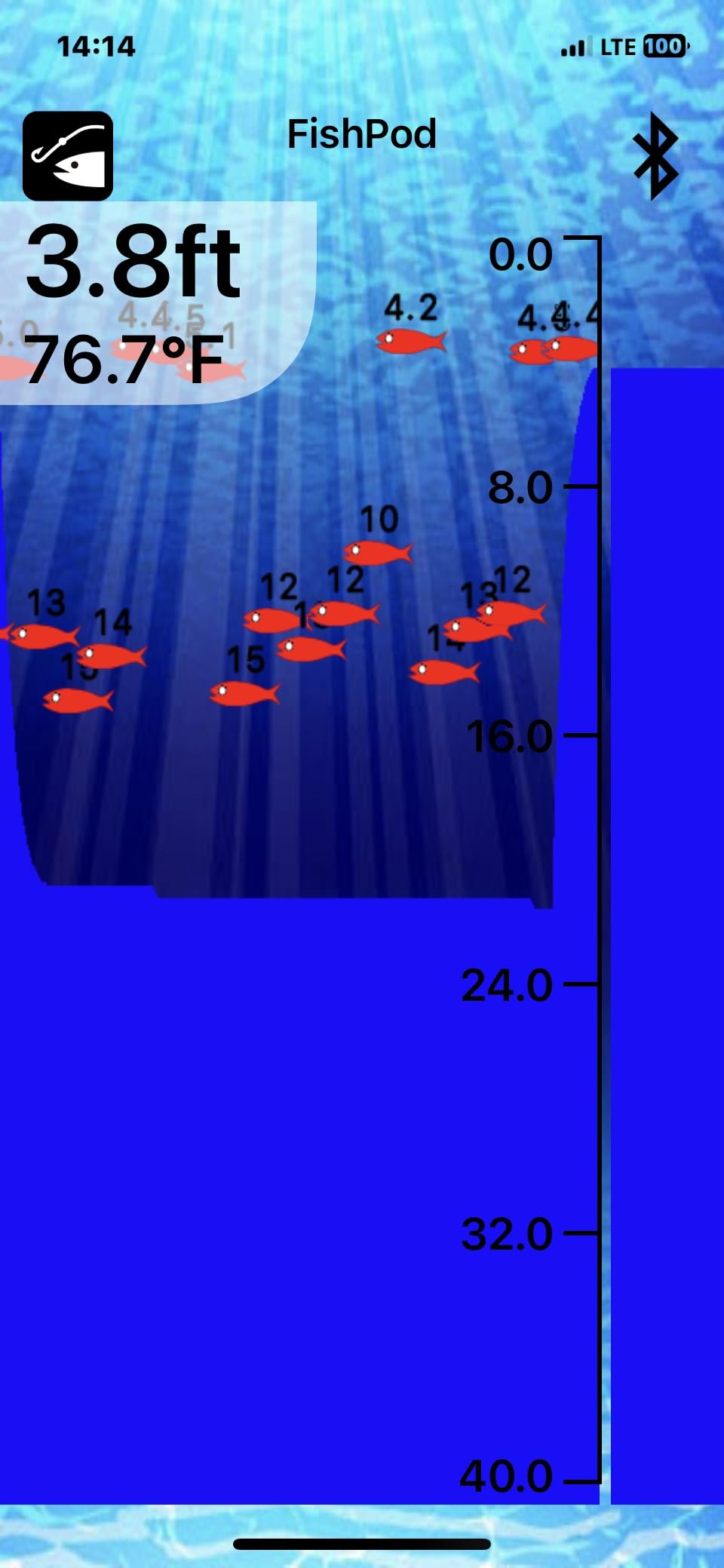
The FishPod 5X solves a specific beginner problem better than anything else here: dense aquatic vegetation that paints the whole screen with false fish. Its HD mode and FishEcho tuning pull real targets out of clutter, and users report depth and temperature readings that line up with a boat-mounted Lowrance.
There is a learning curve and it is worth paying. On the default sensitivity setting, heavy grass throws arcs that look exactly like bass. Switch to HD and the picture changes completely.
Four Operating Modes and When to Use Each
Presets adjust the screen for fish size, depth, or schooling, while BottomScan reads bottom contour and composition to separate vegetation from hard or soft bed. Vertical Flasher amplifies the most recent echo, which is the mode ice anglers switch to.
Bluetooth Behaviour in Practice
Most owners report zero dropouts casting 50 to 70 feet from the bank. The failures come when the sensor is towed underwater at speed or when water laps over it, so treat this as a cast-and-retrieve tool.
Battery, Mounting and the Plastic Eye
Owners report the battery topping out around 80 to 85 percent, so plan for that. The TraxNut fitting takes any quarter-20 bracket for a custom clamp, which is the one part of the system you may want to replace — the plastic line eye is the most common complaint.
Who It Is Good For and Who It Is Not
Good for weed-choked lakes, rivers, and shallow cover where a beginner will otherwise fish blind. Not good for trolling, for ground mapping, or for long days without a spare charge.
8. DANOPLUS DP-104 – A Compact Handheld With a Lit Sensor for Night Use
Portable Fish Finder Large HD Display Wireless Depth Finders for Boats with 147 feet Depth Detection Sensor, Rechargeable Castable Fish Finder Display Fish, Temp
2.4 inch color LCD
147 ft depth range
90 degree sonar beam
Illuminated sensor
+ Pros
- Large color screen for a compact handheld
- Rated 4.3 with 66 percent five star reviews
- Illuminated sensor switches on at water contact
- Audible fish alarm so you can fish without staring at the screen
- USB and AC adapters included
- Cons
- Shallower 147 ft reach than most rivals here
- Narrower 90 degree beam covers less per cast
- Only a one year warranty
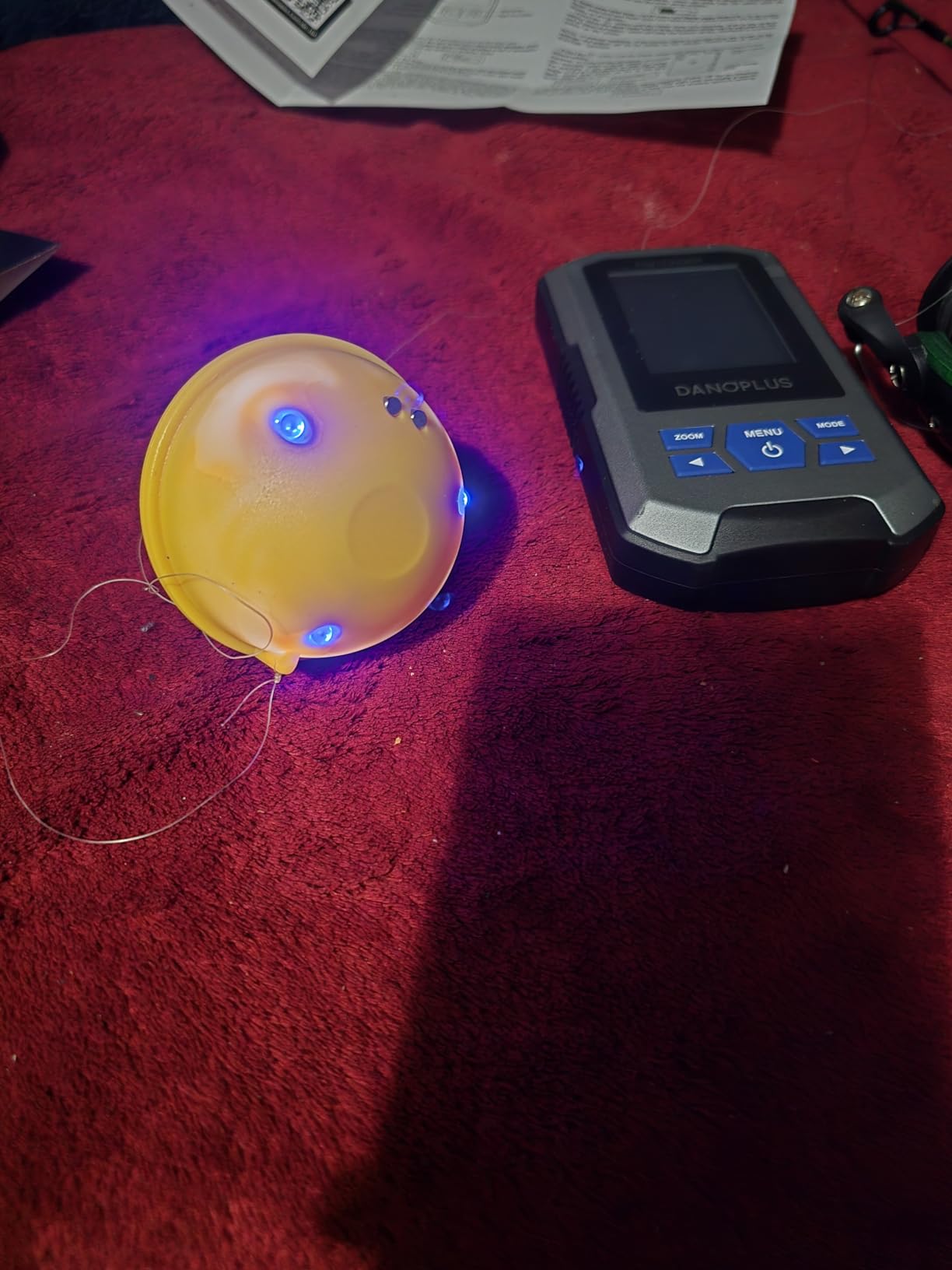
The DP-104 is the most compact package here, with a 2.4 inch color screen that punches above its size and an illuminated sensor that lights on contact with the water. That light does two jobs: it confirms the sensor is switched on, and it makes the unit visible after dark.
Add the audible fish alarm and you can fish without watching the display constantly, which is a genuine benefit when you are also handling a rod in the dark.
Screen Size and Language Support
The display supports 21 operating languages and carries fish size icons, fish depth, water temperature, water depth, bottom contour, and the water surface. Switchable units let you read in feet or metres without a settings trip.
Where the 147 Foot Range Runs Out
That is the shortest reach in the roundup and it matters on reservoirs and deep lakes. The 90 degree beam also covers less water per cast than the Venterior’s 105 degrees, so you work a spot with more casts.
Warranty and What You Give Up
One year of cover is the shortest warranty here, against two years on the Venterior, Deeper PRO+ 2, and Garmin. Reviewers still report reliable depth and temperature across the 147 foot range, so the saving is in warranty length rather than accuracy.
Who It Is Good For and Who It Is Not
Good for night sessions, small storage spaces, and anglers who want a full colour screen with no phone. Not good for deep water or for wide sweeping casts.
How to Choose Your First Castable Fish Finder
Short answer: Decide first whether you will fish with your phone in your hand. Everything else — range, depth, mapping, battery — follows from that one choice, and getting it wrong is what most buyers regret.
Phone App or Its Own Receiver
App-based models such as the iBobber, the Deeper Start, the Deeper PRO+ 2, the Striker Cast GPS, and the FishPod 5X give you a bigger screen and, on the two Deeper units and the Garmin, saved maps. You also accept sun glare, a wet phone, and a battery drain that ends the session early.
Handheld models such as the Venterior VT-FF005 and the DANOPLUS DP-104 keep your phone in your pocket. That is the deciding factor for anyone who has dropped a phone into a river or refuses to fish in the rain with one.
Connection Type and Honest Range
Bluetooth is simpler and pairs with an existing phone, but expect a practical 40 to 70 feet. A unit that generates its own Wi-Fi is steadier at moderate distance and completely independent of cell coverage, which matters on remote water.
Ignore the headline number and read the reviews for the real one. Advertised range assumes a raised phone and a flat water surface; both of those disappear on a windy afternoon.
GPS and Saving Maps
On-board GPS is what turns repeated trips into a map. The Deeper PRO+ 2 and the Garmin Striker Cast GPS both record bathymetric contours you can return to, and the Garmin also gives you access to the Quickdraw community library.
Buy the non-GPS variant only if you never want a saved map. Otherwise you will draw contours during a session and find them gone in the morning, which is the most reported disappointment in this category.
Scan Depth Versus What You Actually Need
Most freshwater lakes, ponds, and river runs sit well inside 150 feet. The 147 foot DANOPLUS and the 135 foot iBobber cover the majority of that. Deep reservoirs and any saltwater coastline are where the 199 foot FishPod, 164 foot Venterior, and 330 foot Deeper PRO+ 2 earn their extra reach.
Transducer Shape and Beam Angle
Round, ball-shaped pods survive rocks and banks better than flat designs, and that durability is why they dominate this category. Beam angle sets the trade: a 105 degree beam such as the Venterior’s sweeps more water per cast but returns fuzzy detail, while a 40 degree beam such as the Deeper Start’s is narrow and precise.
Which Variant Should You Order
Write the exact model name down before you order, including the GPS or non-GPS suffix, and check that the sonar has a screen if you need one. Same product family, very different capability. Reading the variant carefully costs nothing and prevents the most common purchase mistake here.
Before You Fish: Line, Phone and Safety Setup
Short answer: A castable sonar is only as good as the terminal tackle holding it. Use a shock leader, a separate rod, and a swivel you trust, and treat the phone as the fragile item it is.
Several owners across this roundup report losing a sonar ball after a supplied snap swivel failed at the connection point. Replace the swivel with one you have tested, tie a shock leader sized to your line, and keep the sonar on its own rod so a break does not cost you the rod and reel you are holding.
For the phone, a dry bag and a small power bank solve most of the problems forums describe: sun glare, spray, and a battery gone by mid-afternoon. The Garmin is rated for 20 lb test line or heavier at its rig point, and matching line strength to that rating keeps the failure where it belongs, at the swivel, not the pod.
None of this replaces standard safety kit. Wear a personal flotation device, carry a navigation light if you will be out after dark, and do not let a glowing screen keep you out later than you meant to stay. Long-time owners on enthusiast boards like SurfTalk are largely agreed that a mounted 9 inch screen eventually wins on big water, which is a reasonable reason to graduate rather than to fish harder on a phone.
Frequently Asked Questions
Are castable fish finders any good?
Yes, within a clear limit: they show you depth, bottom type, temperature, and where cover begins, which you cannot see from the bank. They are indications rather than identification, and they do not replace reading water. Most beginners who return one bought it for the wrong reason — they expected it to find fish instead of structure.
Which castable fish finder is the best?
The ReelSonar iBobber is the safest first purchase because it has the longest review history in this group and the fewest ways to fail. The Venterior VT-FF005 is the best option if you refuse to use a phone, and the Deeper PRO+ 2 is the right choice if you want on-board GPS and saved maps of unfamiliar water.
What is the easiest fish finder for a beginner?
The Venterior VT-FF005 and the DANOPLUS DP-104 are the easiest because both ship a handheld screen, so there is no app to download, no pairing, and no phone to keep dry. Among app-based units, the Deeper Start sets up fastest and generates its own Wi-Fi network, which removes mobile data from the equation entirely.
Is the Garmin Striker Cast worth buying?
The GPS version is worth it if you want saved bathymetric contours and the Quickdraw community map library, and its IPX6 and IPX7 rating makes it the most rugged unit in this roundup. The non-GPS version cannot save maps, so its drawn contours disappear when the app session ends. Choose the GPS variant unless you are certain you will never want a saved map.
Do castable fish finders work without mobile signal?
Yes. Units that generate their own Wi-Fi network, such as the Deeper Start, the Deeper PRO+ 2, and the Garmin Striker Cast GPS, ignore cell coverage completely. Bluetooth models like the iBobber and the FishPod 5X also work with no signal, but they depend on a short direct link between sensor and phone, so distance and obstructions matter far more.
How far can you cast a sonar ball?
Cast distance is set by your rod and line, not by the electronics. Bluetooth models report stable connections around 40 to 70 feet for most anglers, while the Garmin Striker Cast GPS streams up to 200 feet and the Deeper PRO+ 2 is accurate to 330 feet. Wind, chop, swell, and a low-held phone all reduce the real figure below the advertised one.
Which Castable Fish Finder Should You Buy First?
Short answer: Buy the ReelSonar iBobber if you want the lowest-risk first castable, the Venterior VT-FF005 if you want no phone in your hands, the Deeper Start if you want scan history for the least fuss, and the Deeper PRO+ 2 if you are about to learn unfamiliar water.
If you fish rough water, cold mornings, or a rental boat where nothing can be drilled, the Garmin Striker Cast GPS is the one I would pick for its IPX7 rating and two year warranty. If you fish weedy shallow cover, take the HawkEye FishPod 5X and learn the HD mode before your first trip. If you only ever fish from a kayak, the LUCKY 1108CP gives you continuous readings for very little, with the wired sensor attached to the hull.
Whichever one you choose, pair it with a shock leader, a replacement swivel, a dry bag, and a power bank. The best castable fish finder for a beginner in 2026 is the one that gets charged the night before and cast more than once.
We earn a commission from qualifying purchases at no additional cost to you. Product facts, ratings, and review counts come from the manufacturer and customer listing data; prices and availability change and are not shown here.