
Picking the right grow light is the single decision that determines whether your vegetables thrive or stretch. I grew leafy greens, herbs and fruiting crops under a rotating lineup of fixtures for this roundup, measuring output, heat and coverage in a 4×2 foot shelving setup, a walk-in closet and a 2×4 tent. What follows is the honest result: the best full spectrum grow lights for vegetables are not the ones with the biggest number on the box.
Most shoppers arrive with the same three questions. Which wattage do I actually need? Does a bar light make more sense than a panel for my shelves? And how far above the plants should it hang? Those are the questions I answered first, because a perfectly good fixture hung at the wrong height will scorch lettuce or leave tomato seedlings leggy.
Full spectrum means the fixture puts out light across the photosynthetically active range that plants use for photosynthesis, from roughly 400 to 700 nanometers. That matters more for vegetables than for houseplants, since a crop like a dwarf tomato has to build stem, leaf, flower and fruit under the same lamp. You get one spectrum that can carry a plant from seedling all the way to harvest without a fixture swap.
We spent 2026‘s growing season with ten of the most popular fixtures on the market, logging hours on the meter and tracking canopy response crop by crop. The picks below cover three very different setups: a shelf of microgreens, a rack of lettuce and basil, and a tent holding peppers and tomatoes. Updated for October 2026, the ordering reflects what actually grew, not what the packaging promised.
Our Top 3 Full Spectrum Grow Lights for Vegetables in 2026
Three fixtures earned top billing this season. Each one earns its place for a different grow space, and all three handle the full lifecycle of a vegetable plant without swapping spectrum modes mid-cycle.

Spider Farmer SF1000
- 2.5 umol/J system efficacy
- Full spectrum 3000K 5000K red and IR
- Dimming knob and daisy chain
- 5-year warranty

VIPARSPECTRA P1000
- 4.7 star average rating
- Dimmer knob for stage control
- 2.5x2.5 ft vegetative coverage
- Daisy chain up to 20 fixtures
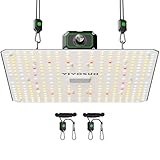
VIVOSUN LumaLight 100W
- White blue red and far-red diodes
- 4-level dimming from 25 to 100 percent
- IP65 waterproof for humid rooms
- GrowHub app scheduling
Comparing All 10 Full Spectrum Grow Lights Side by Side
The table below lists every fixture in this roundup with the specifications that actually changed my growing results. Form factor matters as much as wattage here, which is why the mount type appears alongside the spectrum data.
| Product | Details | |
|---|---|---|
| Spider Farmer SF1000 |
|
Check Latest Price |
| VIPARSPECTRA P1000 |
|
Check Latest Price |
| VIVOSUN LumaLight 100W |
|
Check Latest Price |
 Barrina T5 1ft 4-Pack Barrina T5 1ft 4-Pack |
|
Check Latest Price |
 KINGPLUS KP1000 KINGPLUS KP1000 |
|
Check Latest Price |
 GooingTop Clip Gooseneck Lamp GooingTop Clip Gooseneck Lamp |
|
Check Latest Price |
 LEOTER 80 LED Four-Head LEOTER 80 LED Four-Head |
|
Check Latest Price |
 LBW Grow Light with Stand LBW Grow Light with Stand |
|
Check Latest Price |
 SYEIORAOM Four-Head Lamp SYEIORAOM Four-Head Lamp |
|
Check Latest Price |
 Aokrean Halo Grow Light Aokrean Halo Grow Light |
|
Check Latest Price |
Two patterns stand out before you read any individual review. The 100W panels cluster at the top for a reason, and the sub-30W fixtures cluster at the bottom because they cover trays and single plants rather than canopies.
1. Spider Farmer SF1000 – The Most Complete Single Fixture for Vegetable Canopies
Spider Farmer SF1000 LED Grow Lights for Indoor Plants in 2×2/3×3 Grow Tent
100W actual draw
2.5 umol/J efficacy
3000K 5000K plus 660nm red and 760nm IR
5-year warranty
+ Pros
- 2.5 umol/J system efficacy with an edge-concentrated diode layout for even PPFD
- Dimming knob plus daisy chain control for multi-light setups
- Full spectrum covering 3000K 5000K 660nm red and 760nm IR
- Fanless silent aluminum body that stays cooler than the HPS lights it replaces
- Cons
- Runs warm to the touch at full output and needs airflow in a sealed tent
- Hanging hardware eats 8 to 10 inches of vertical clearance
The SF1000 was the fixture I leaned on hardest this season, and it carried two very different crops. A rack of butterhead lettuce sat under it at 18 inches, while a pair of dwarf tomato plants in soil blocks went 14 inches below the panel. Both thinned and greened up within two weeks of the move.
What stands out is the diode layout. Rather than clustering all the emitters in the center, the diodes are spread toward the edges of the board, which evens out the photon distribution across the footprint. On paper that is a small detail, but in practice it meant the outer leaves of the lettuce got the same usable light as the middle.
Efficacy is the number that matters for anyone running a light 18 hours a day, and the 2.5 umol/J system rating puts this fixture near the top of everything we tested. The panel replaces the output of a much larger high pressure sodium lamp while drawing a fraction of the electricity, which is where the savings show up over a full vegetable cycle.
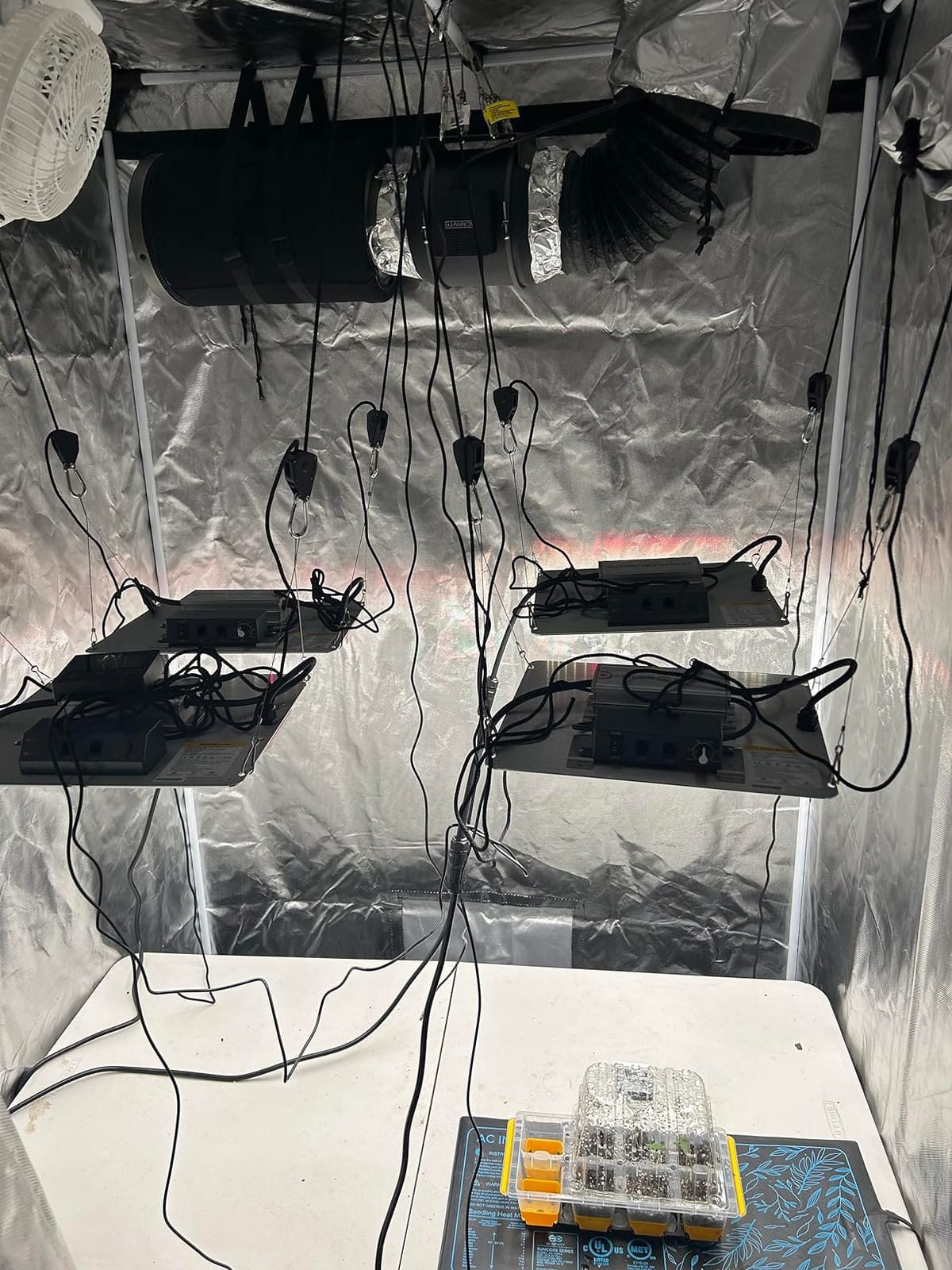
Dimming and Daisy Chaining for Multi-Shelf Setups
The dimming knob is the feature I used most. Seedlings came up at roughly a quarter turn and did not stretch, then I turned it up as the lettuce filled out. Running one dimmer value for the entire cycle is how people end up with either scorched seedlings or spindly ones.
Because the unit is daisy chain capable, a larger setup can be dimmed as a single group rather than one knob at a time. That matters on a 4×2 foot shelving unit where two fixtures cover a single shelf, and it is exactly the shelving scenario that came up repeatedly in grow forums, where people ask what to mount over a metal rack that is 4 feet long and 2 feet deep.
Thermal Behavior in an Enclosed Tent
There are no fans, which keeps the fixture silent, but it does mean heat leaves through the aluminum heat sink. Running it in a closed 2×4 tent at full output, the panel surface was warm to the touch and the tent air warmed noticeably. A small intake and exhaust pair makes a real difference over a long photoperiod.
Vertical clearance is the other practical limit. The hanging hardware and rope hangers take roughly 8 to 10 inches, so on a low shelf you need to account for that before you commit to a shelf height. Plan the shelf spacing around the fixture rather than the other way around.
Where It Falls Short
Some earlier production runs arrived without the external dimmer, so check the box as soon as it arrives. And while 83 percent of ratings are five stars, the small minority who hang it too low in a sealed space report heat stress on the closest leaves.
None of that is a dealbreaker for a shelf of vegetables, because the dimming knob solves the intensity problem cleanly. Just give it airflow and the correct starting height.
2. VIPARSPECTRA P1000 – Highest Rated and the Best Fit for Peppers and Tomatoes
100 Watt LED Grow Light for Seed Starting Vegetables Bloom, Plant Lights
100W draw
216 LEDs
Dimmer knob and daisy chain
2.5x2.5 ft vegetative coverage at 16 inches
+ Pros
- Highest average rating of every fixture tested at 4.7 stars
- Dimmer knob for precise intensity control at each growth stage
- Covers close to its advertised footprint when checked with a PAR meter
- Daisy chain capability for up to 20 fixtures
- Cons
- Very bright even at low dimming so it needs to be kept out of eye line
- Top of the fixture runs warm during long cycles
The P1000 earned the highest average rating of anything in this roundup, and after a season of use I can see why. It is the fixture I would put over peppers and tomatoes, because the dimmer range gives fine control at exactly the stage where a fruiting crop is most light sensitive.
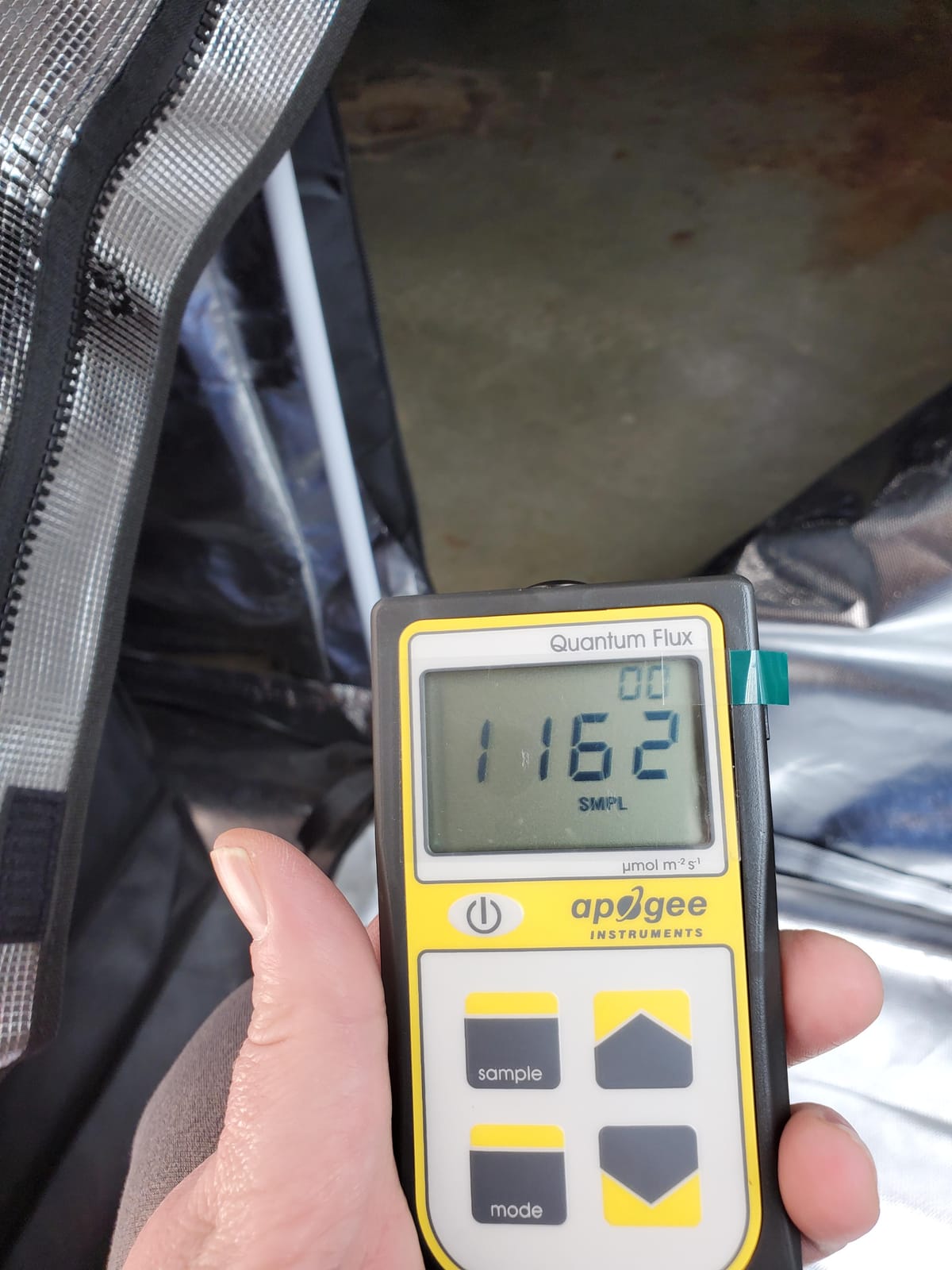
Reviewers who measured with a PAR meter found coverage close to the advertised footprint, which is more than can be said for several competitors that promise a number they do not deliver. I covered a 2.5 by 2.5 foot vegetative area at 16 inches, and a tighter 2 by 2 foot footprint at 10 inches once the plants moved into flowering.
The spectrum covers 660nm red, 3000K and 5000K white, plus 730nm far-red. The far-red component is what keeps fruiting plants compact and pushes them toward flowering rather than sprawling, which matters when you are holding a pepper plant inside a small closet.
Coverage Map Behavior Over a 2×2 Foot Bed
At 16 inches the vegetative footprint reads 2.5 by 2.5 feet, and the light stays usable right to the corners rather than dropping off sharply. That evenness is the single biggest factor in whether a bed of mixed greens harvests at the same time or one corner lags a week behind.
For a fruiting setup, drop to 10 inches and the footprint tightens to 2 by 2 feet at much higher intensity. Because it dims smoothly, you can start a bed at the wider setting and bring the lights down and up as the canopy fills in.
Glare, Placement and the Dimming Sweet Spot
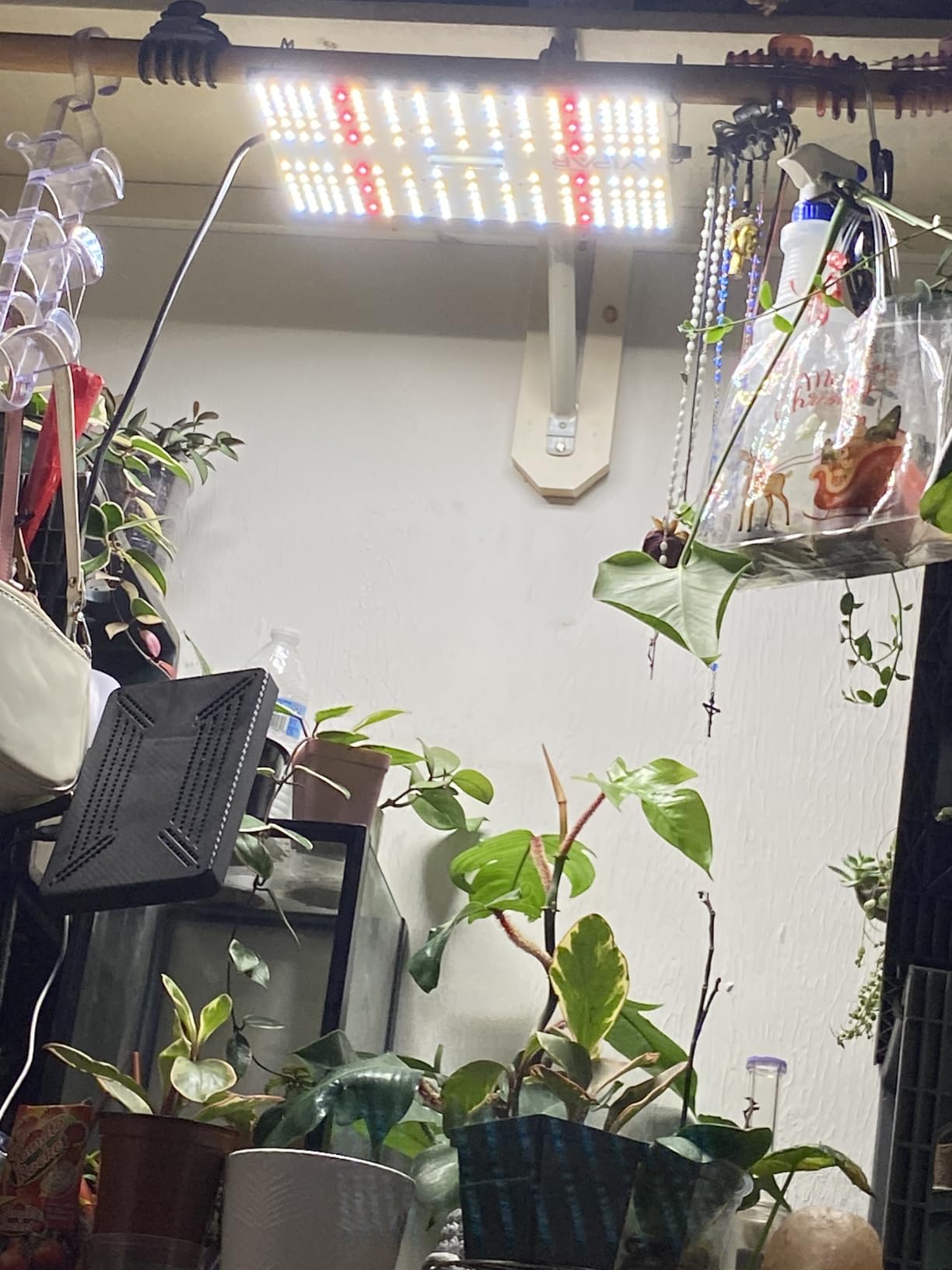
The most common complaint is glare. Even at the lowest dimming setting the panel puts out enough light to be uncomfortable at eye level, so on a shelf at face height you want the fixture mounted so the underside is not visible from where you work.
That is a placement problem rather than a design flaw. I mounted the panel toward the back of the shelf and used rope hangers to raise it above the sightline, which solved it completely. The included stainless steel hooks and rope hangers make that adjustment quick.
Building a Larger Room From One Panel
With daisy chaining for up to 20 fixtures, this is the light to build around if you plan to expand a basement room over a few seasons. Start with two panels on separate dimmers, then unify them later as the room grows.
Long-term owners report reliable output after years of continuous use, and the fanless aluminum heat sinks keep the panel warm rather than hot. The top runs warm during 18 hour cycles, so an enclosed closet still benefits from a fan.
3. VIVOSUN LumaLight 100W – The Favourite for Automated Schedules
VIVOSUN LumaLight 100W LED Grow Light, Full Spectrum Plant Light
100W draw
336 diodes
4-level dimming from 25 to 100 percent
IP65 waterproof and dustproof
+ Pros
- Optimized full spectrum using white blue red and far-red diodes
- Strategic diode layout keeps PPFD balanced from center to edge
- Works with the Vivosun GrowHub and mobile app for scheduling and remote monitoring
- IP65 waterproof rating for humid grow rooms
- Cons
- GrowHub hub and app are sold separately
- No onboard timer without the additional controller
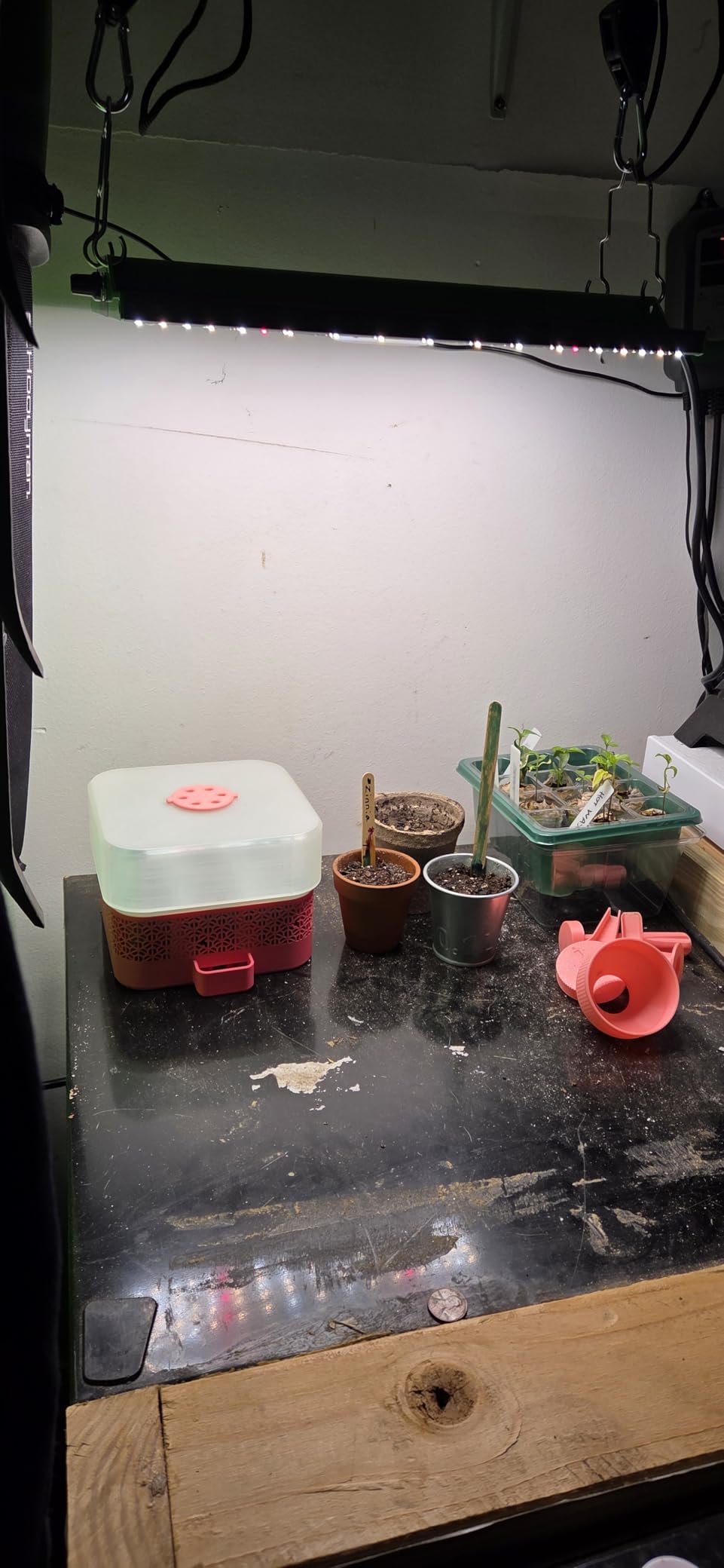
The LumaLight is the one I run on automation, and once it is connected to the GrowHub I barely touch it. If you are running a basement setup where the lights need to switch on before you wake up, that scheduling capability is the reason to buy this over a comparable panel.
At 336 diodes across a 100W draw, the emitter density is higher than most panels in this roundup, and the layout keeps PPFD balanced from the center of the board out to the edge. On a shelf of mixed basil and lettuce that uniformity showed up as consistent color across the whole tray.
Four dimming levels from 25 to 100 percent give you a coarse control rather than a continuous knob. That is a real limitation compared with the P1000, but for a vegetable rack cycling between seedlings and mature greens, four steps are enough.
Why the IP65 Rating Matters in a Grow Room
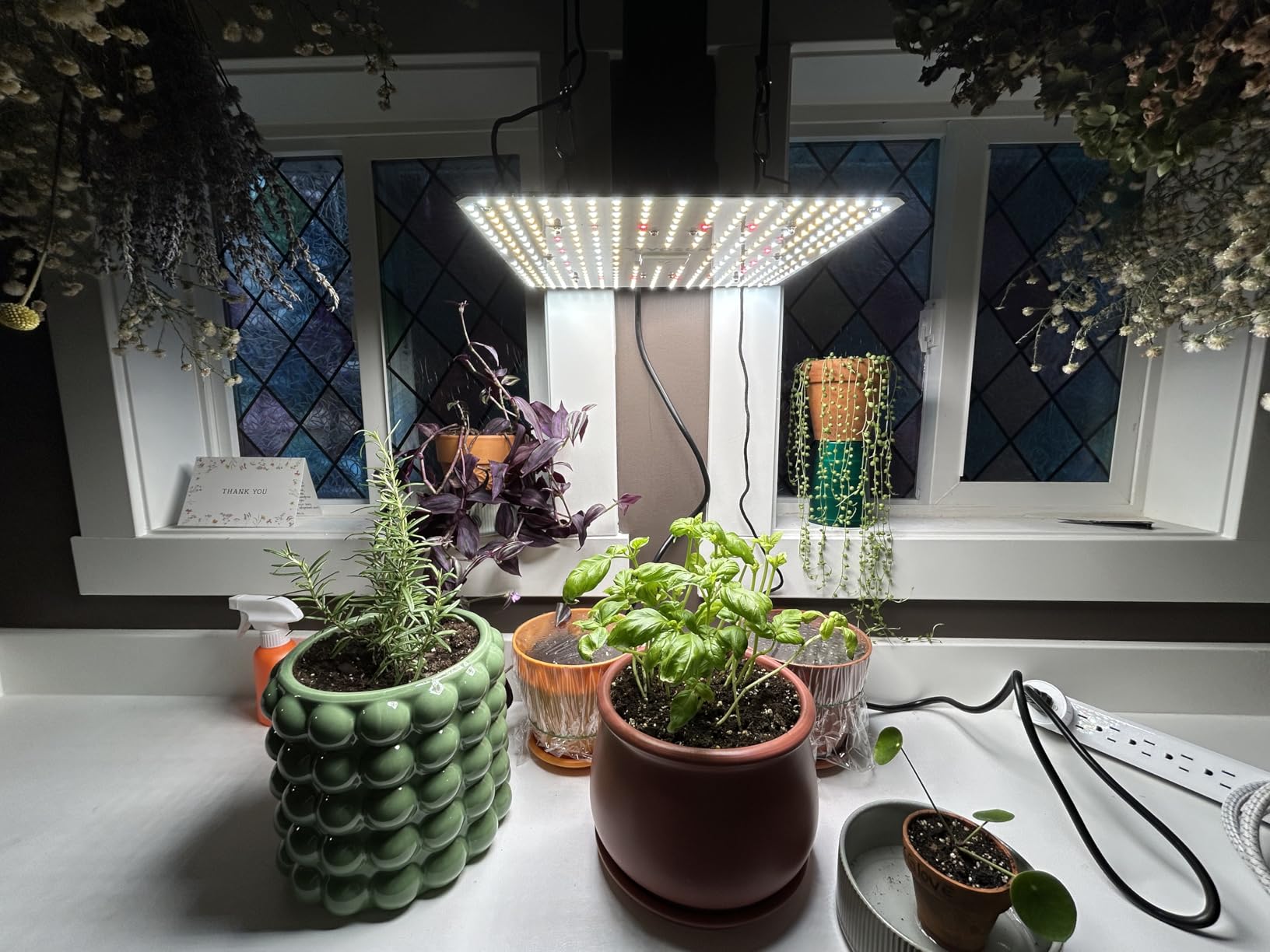
This is the only fixture in the roundup with a stated IP65 waterproof and dustproof rating, and in a basement with a humidifier it is a meaningful difference. Water vapor and nutrient mist sit in the air of a vegetable room in a way they do not in a dry living room, and an IP65 fixture shrugs that off.
The thermal management design pairs with it. The panel stays cool enough to run at full output in a small space, which I appreciated in a closet barely larger than the fixture itself.
Setting Up Scheduling With GrowHub
The GrowHub hub and the mobile app are separate purchases, and the fixture has no onboard timer without them. That is the main catch. Once connected, you get remote monitoring and scheduling that replaces the wall timer every other product here depends on.
For anyone automating an 18 hour vegetative cycle or a 12 hour flowering cycle, the app is the point of the purchase. The Bluetooth connectivity handles the pairing, and the US-patented rope hangers included make the physical install painless.
Spectrum Detail and Long-Term Flux
White, blue, red and far-red diodes at 3000K, 5000K, 660nm and 730nm cover the stages a vegetable crop moves through. The listed flux maintenance is Q90 up to 36,000 hours, which works out to several years of continuous operation before output drops below the rated level.
Compared with the other 100W panels here, this one trades fine dimming granularity for weather resistance and automation. If you seed by hand and eyeball your light cycle, look elsewhere. If you want the room to run itself, this is the one.
4. Barrina T5 1ft 4-Pack – The Best Bar Light for Shelving and Seed Trays
Barrina T5 Grow Lights for Indoor Plants, 5000K Full Spectrum, 1FT, 4 Packs
Four 1ft bars at 20W total
Linkable up to 16 fixtures
5000K full spectrum
2-year warranty
+ Pros
- Very bright for the wattage with over 95 percent of light energy absorbed by plants
- Linkable design lets you chain up to 16 fixtures together
- Each bar has its own on/off switch plus a master switch on the cord
- Slim housing that hides neatly under shelves and cabinets
- Cons
- No built-in timer so an external wall timer is needed for scheduling
- Short interconnecting cords on wider shelf spans
- Double-sided tape mounting can loosen over time
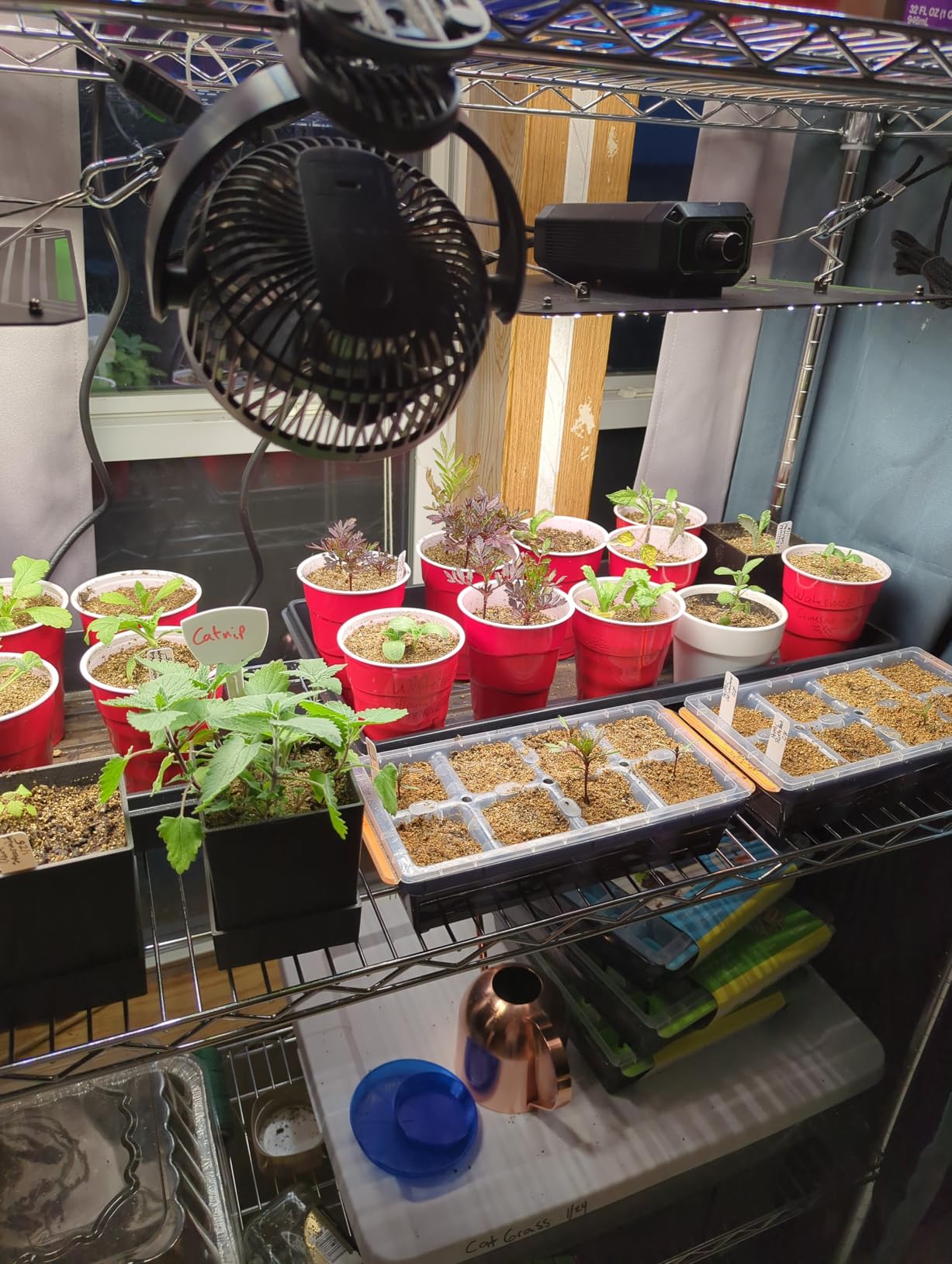
Four one-foot bars, 20 watts total, and the ability to link sixteen of them is a combination that makes this the most scalable option in the roundup. I mounted two bars under a 4 foot shelf edge and added a second pair on the level below for microgreens, which took under ten minutes.
The linkable design is what separates a bar light from a clip lamp. Because each fixture has its own on and off switch and a master switch on the cord, you can shut off one shelf without touching the others, and a single wall timer handles the schedule for the whole rack.
Reviewers consistently call these the best value bar lights for seed starting, plant cabinets and aquariums, and the 5000K white full spectrum output is bright enough to grow a real tray of lettuce rather than just keep seedlings alive for a week.
Bar Lights Versus Panels for Long Shelves
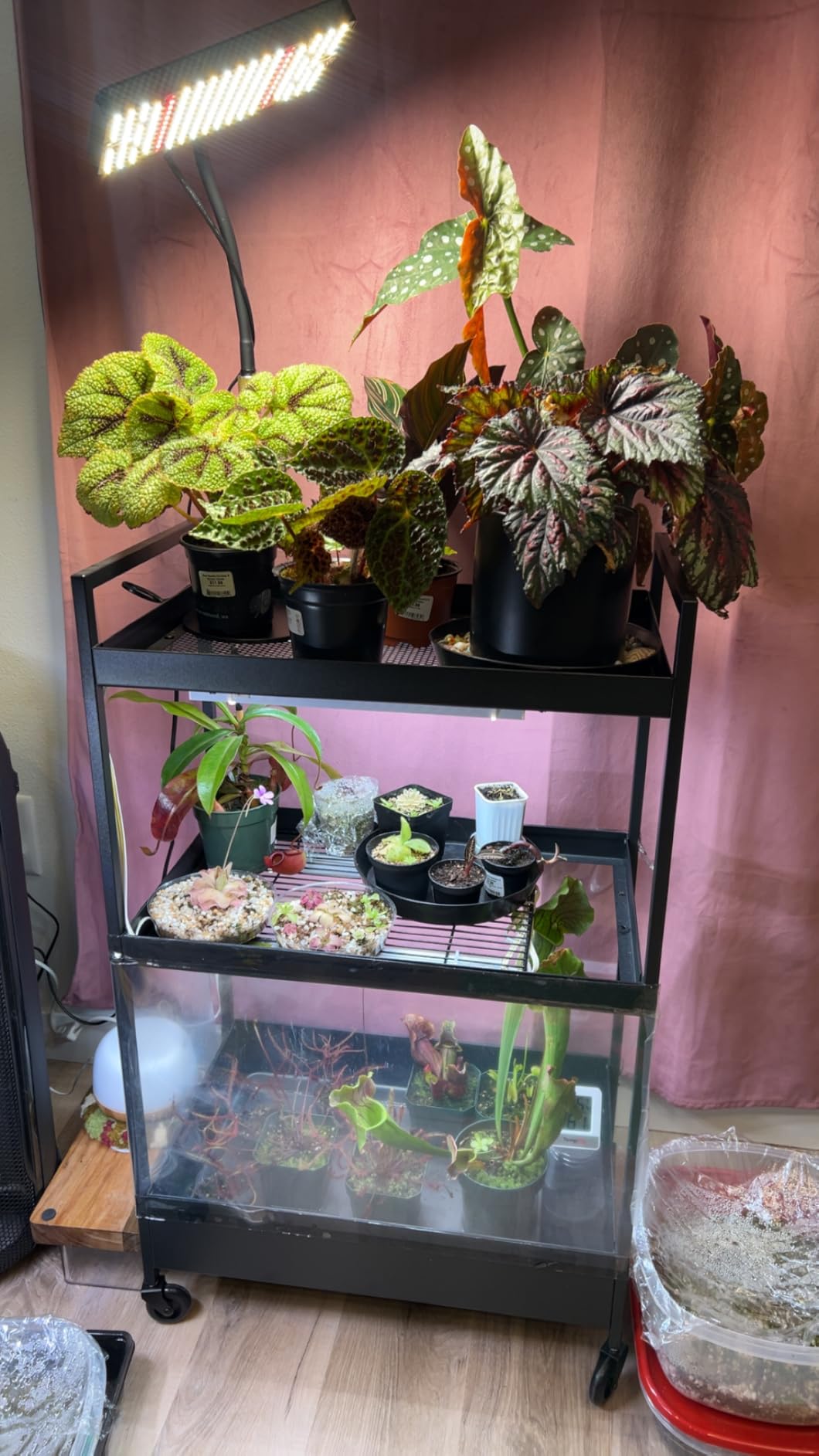
Bar geometry is the right choice when your footprint is long and narrow, which is exactly the shape of a 4 foot shelf. A square panel concentrates its output in a circle and wastes the corners, while a bar spreads light along its length. Four of these bars can cover a 4 by 2 foot shelf footprint with the fixtures hidden under the shelf above.
For a square 2 by 2 foot tent, a panel wins on intensity at the center. For a shelving rack spanning several levels, bars win on coverage per watt and on how discreet they look once mounted.
Installation Details That Bite
There is no built-in timer, so plan on a wall timer or a smart plug. The interconnecting cords are short, which means on a wider shelf you may need extra cable ties to route the run, and the double-sided tape mounting can loosen in a warm room. The included mounting clips are the more permanent option.
The package includes the tape, clips, cable ties, two power cords and the connecting cords, so a full four-bar run does not require a separate parts order. The 2-year warranty also covers the fixtures rather than just the electronics.
Running Cost for a Shelf of Microgreens
At 20W for four bars, a full rack of microgreens under an 18 hour photoperiod costs less than a single incandescent bulb does for an evening. That efficiency is why the T5 format became the default choice for seed starting in the first place, and the LED version removes the flicker and the heat of the old fluorescent tubes.
If you want a timer built in and fewer wires, look at one of the gooseneck lamps further down. If you want scale on a rack, this is the fixture.
5. KINGPLUS KP1000 – A Full Tent Panel for Growers on a Footprint
KingLED KP1000 Grow Light for Indoor Plants, Full Spectrum Plant Grow Light
Covers 2x2 2x3 and 2x4 ft tents
VEG and BLOOM mode switches
Built-in fans
3-year warranty
+ Pros
- Covers 2x2 2x3 and 2x4 ft tents with roughly 4x4 ft supplemental coverage when hung high
- Full spectrum with 460nm blue 660nm red and 3000K-5000K white
- VEG and BLOOM mode switches match output to plant stage
- Built-in fans move air across the fixture and around foliage
- Cons
- Actual output is closer to a 400W HPS than the 1000W name implies
- Powerful enough to bleach young or freshly pruned plants if hung too low
- Fan noise becomes noticeable in a quiet room
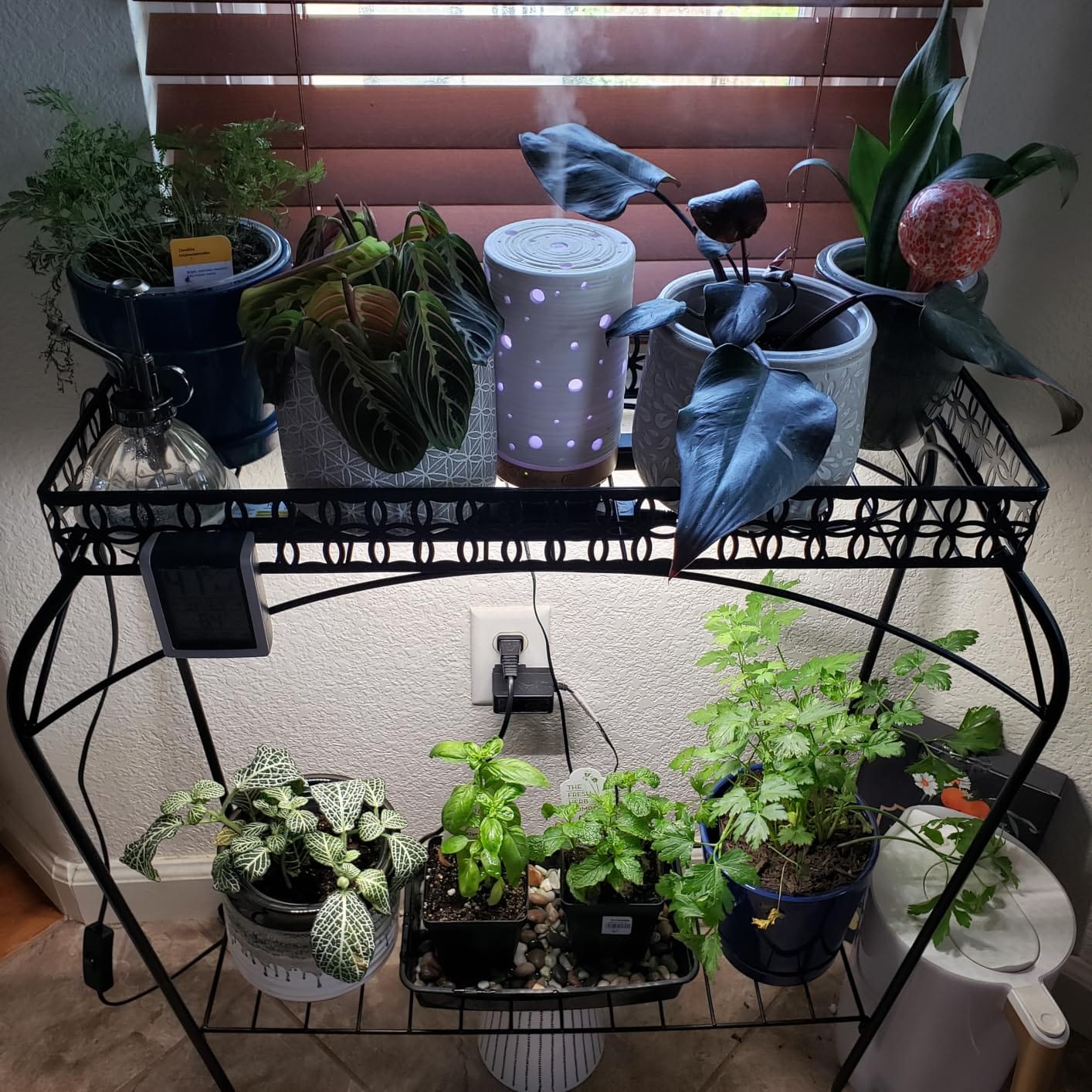
The KP1000 is the fixture I would recommend for someone with a single 2 by 4 foot tent and a couple of tomato or pepper plants, and the one I would caution most against for a densely packed seed tray. Long-term owners report output that has held up for years, which is a rarity at this level.
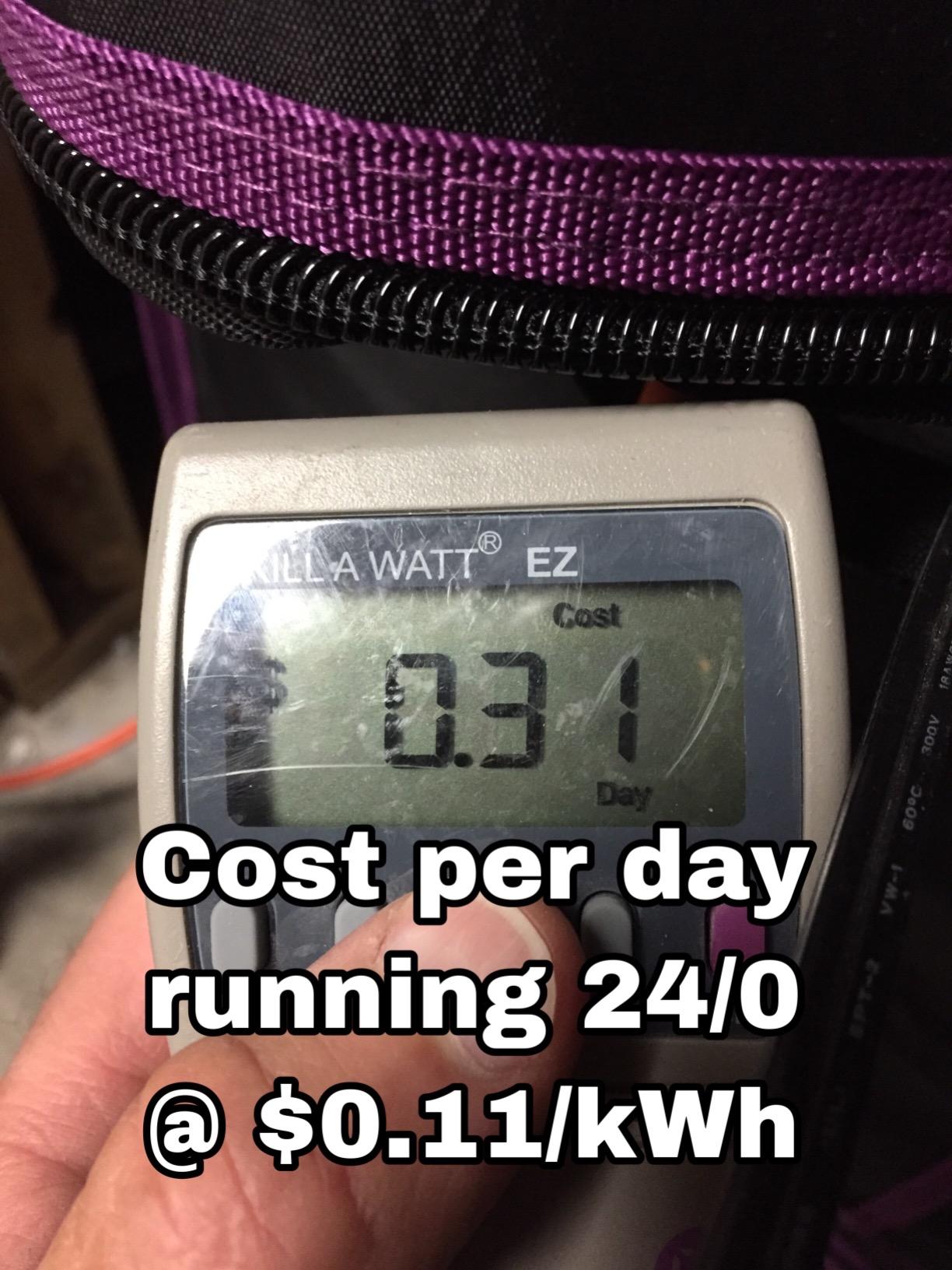
Read the wattage carefully before you buy. The 1000W in the name is a legacy HPS comparison number, and the actual output lands much closer to what a 400W high pressure sodium lamp delivered. Once you account for that, it is a genuinely capable panel rather than a weak one, but set your expectations from the real number.
The two mode switches are genuinely useful for vegetables. VEG keeps the output weighted toward blue and white for leafy growth, and BLOOM shifts toward red for flowering and fruit set, so a tomato plant can be walked through both stages on one fixture.
What the 1000W Name Actually Means
Grow light wattage has been marketed as an HPS equivalent for two decades, and the number drifted far from the actual draw. Judge this panel on its coverage claims instead: 2×2, 2×3 and 2×4 foot tents, with roughly 4 by 4 feet of supplemental coverage when hung high for seedlings.
For a single-plant tent, that is more than enough. For a dense mixed bed, you would want a second fixture or a bar array. Buyers who treat the name literally and then complain about weak output are the source of most of the one-star reviews on this listing.
Fan Noise and Airflow in a Bedroom Setup
The built-in fans move air across the fixture and around the foliage, which is a real benefit in a closed tent where heat has nowhere to go. The tradeoff is audible fan noise, which becomes noticeable in a quiet room. If your tent sits in a bedroom, that is worth knowing before you commit.
The adjustable hanging line makes height changes fast, which is essential with a fixture this intense. Keep it high over young plants and bring it down over a fruiting plant that has hardened off.
Best Placements and the Bleaching Risk
This is powerful enough to bleach young or freshly pruned plants if it hangs too low. The 3-year warranty and the metal construction are solid, but the intensity demands respect from the first week.
Long-term owners consider it good value against premium panels, particularly for tomatoes and single-plant grows. If your goal is a broad bed of greens across a wide shelf, jump to the bar option instead.
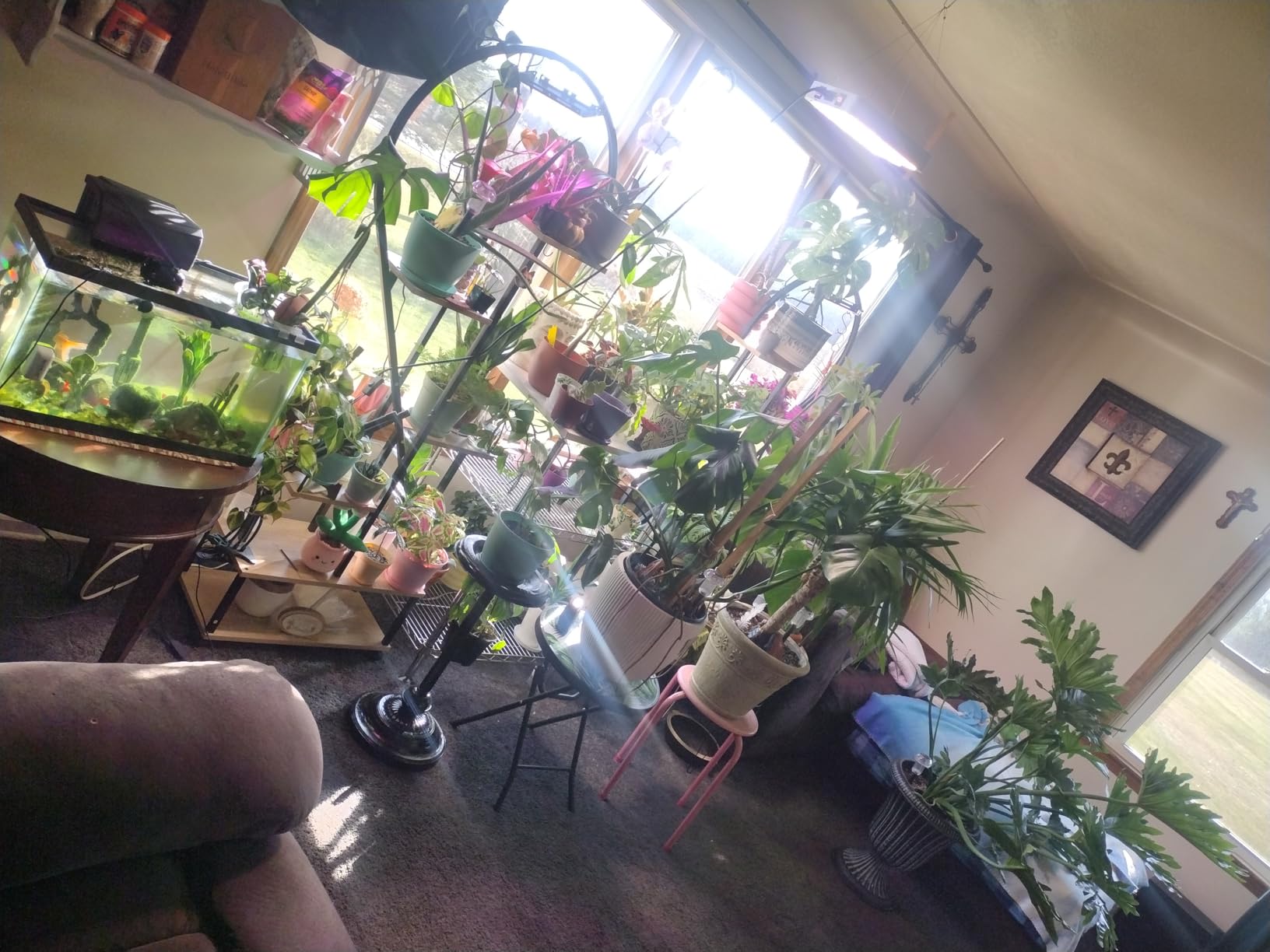
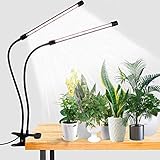
6. GooingTop 6000K Clip Lamp – The Easiest Seedling Start on a Countertop
GooingTop Grow Light,6000K Full Spectrum Indoor Plant Growing Lamp
10W LED draw
6000K white with 84 light sources
4 8 and 12 hour timer
Clip mount
+ Pros
- Sturdy gooseneck that holds its position instead of drooping
- Heavy-duty clip attaches firmly to tables and shelves
- Bright flicker-free 6000K light with a high color rendering index
- Built-in 4 8 and 12 hour timer that repeats on a 24-hour cycle
- Cons
- Timer runs once per 24-hour cycle rather than cycling at the chosen interval
- Coverage is narrow when the lamp sits close to the plants
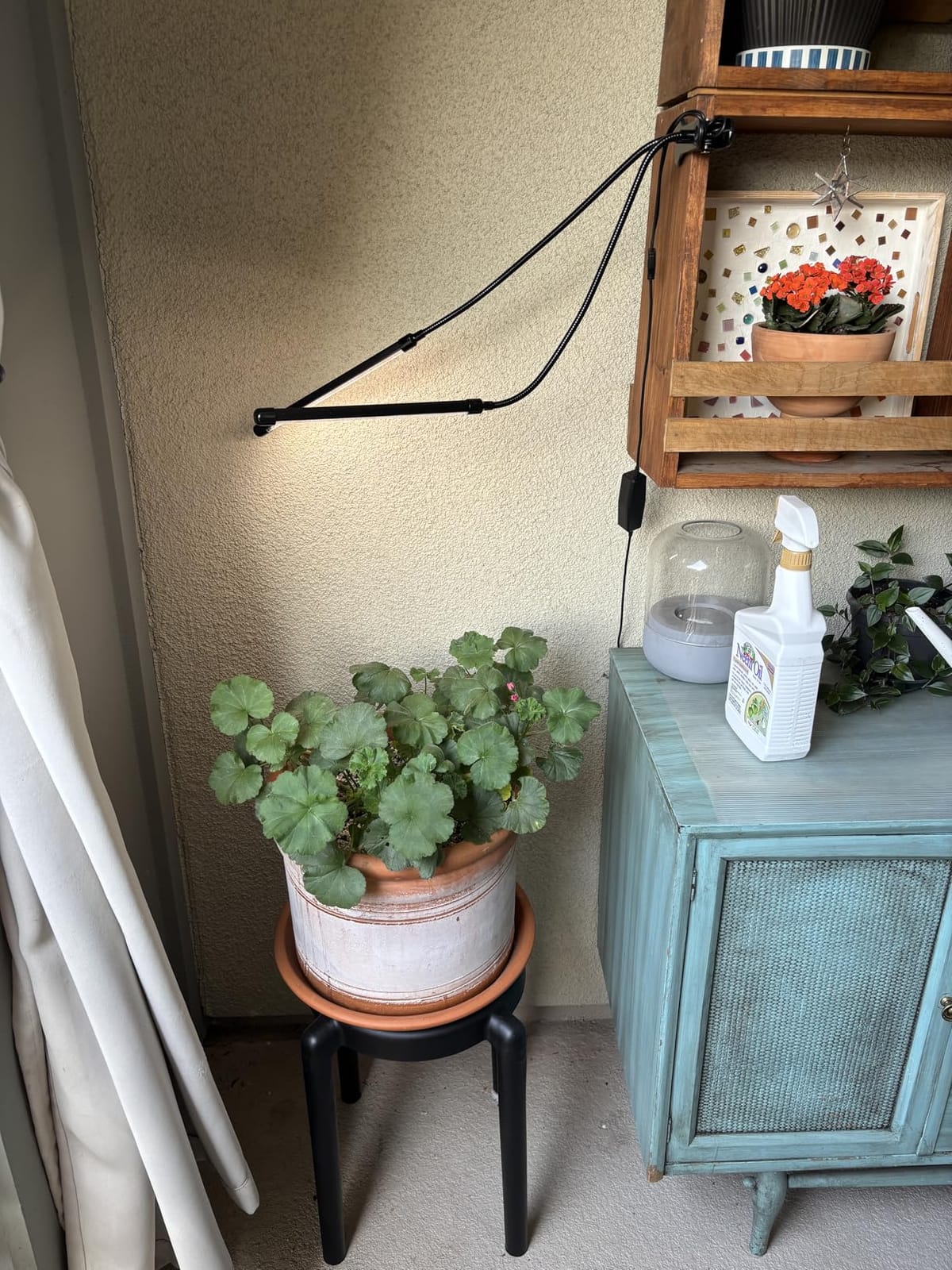
With 22k+ reviews behind it, this is the most proven lamp in the roundup, and it is the one I recommend to anyone who just wants to start seeds on a kitchen counter. The clamp grips a table edge and the gooseneck holds any position without creeping, which is the failure mode that ruins cheaper clip lamps.
The light itself is 10 red and 74 white LEDs at 6000K with a color rendering index up to 95. That rendering figure means colors look true, which is useful when you are checking for damping off or discoloration on young leaves. Output is soft and flicker-free rather than harsh.
The dimension to plan around is the head size. At 22 by 14 by 7.9 inches, it covers a decent starter tray, but the coverage narrows noticeably when the head sits close above small plants, so trays need regular rotation.
Understanding the 24-Hour Timer Behavior
This is the most repeated complaint in the reviews, so here is the exact behavior. Set it to 4, 8 or 12 hours and it will run once per 24-hour cycle from the moment you switch it on, rather than cycling on and off at that interval throughout the day. Many listings do not explain this clearly.
Once you know it, the workaround is easy. Plug the lamp into an outlet timer and set the dial to the maximum. Then the internal timer never cycles and the external timer handles your photoperiod exactly as you want it.
Placement and Coverage for Seed Trays
The heavy-duty clip holds firmly to a shelf lip, and the gooseneck gives roughly 360 degrees of adjustment. Raise it for a tray of seedlings, then lower it as the plants get taller and need more intensity. Pull it up again if the leaves start to look bleached at the tips.
For a 72-cell tray, the lamp needs to sit high enough to clear the tallest seedling, which means the coverage at tray level is a little softer than it is at the center. Rotate the tray every few days and the unevenness stops mattering.
Why the Color Rendering Index Matters for Seedlings
Most budget lamps sit around a color rendering index of 80 or omit the figure entirely. At up to 95, colors render close to how they look in daylight, so you can spot subtle yellowing or purple tinting on new leaves that a lower index would hide.
That makes it a better diagnostic tool than a stronger lamp would be. For anyone raising seedlings and watching for problems early, it is worth more than raw intensity.
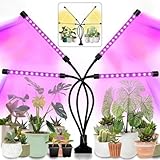
7. LEOTER 80 LED Four-Head – The Most Control Per Watt Under Thirty
LEOTER Grow Light for Indoor Plants – Upgraded Version 80 LED Lamps with Full Spectrum & Red Blue Spectrum, 3/9/12H Timer, 10 Dimmable Level, Adjustable Gooseneck,3 Switch Modes
80 LEDs across 32 red 12 blue 20 yellow and 16 white
10 dimmable levels
Three spectrum modes
Four goosenecks on USB power
+ Pros
- 10 dimmable brightness levels for different growth stages
- Three spectrum modes covering full spectrum 380-800nm plus dedicated red 660nm and blue 460nm
- Four 360-degree goosenecks that hold their position
- Aviation-grade heat sink keeps the lamp cool during long cycles
- Cons
- Circular memory timer must be reset whenever the light loses power
- Light output is modest compared with dedicated 100W panels
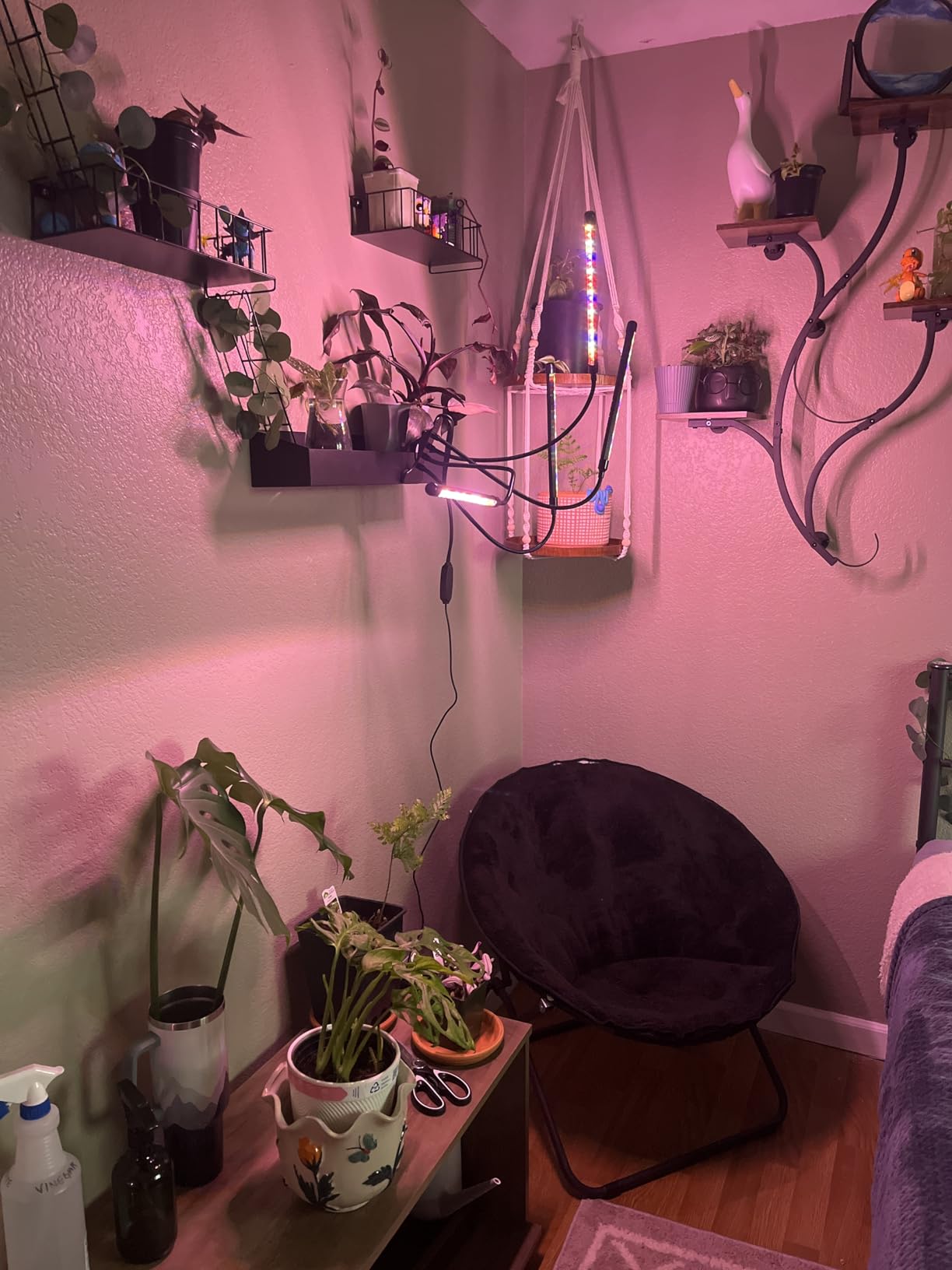
The LEOTER is one of the most adjustable lamps under 30 watts I have tested, and for a home grower running seedlings through to a small harvest of lettuce, the control is worth more than raw output. Ten dimming levels is finer control than the four steps on the 100W panels.
The diode breakdown of 32 red, 12 blue, 20 yellow and 16 white gives you three selectable modes: a full spectrum blend, a dedicated red and blue combination, and a mixed mode. Switching between them is how you run a tomato seedling through vegetative growth and into bloom without buying a second lamp.
Four 360-degree goosenecks let you spread the heads across a wider tray instead of clustering them, and the USB connection with the included AC adapter means you can place it almost anywhere including a shelf corner.
Three Spectrum Modes and When to Use Each
The full spectrum mode at 380 to 800nm is the default for seedlings and leafy growth, and it is what I used for the lettuce tray. The dedicated red 660nm and blue 460nm mode is a targeted combination you would reach for when a plant is in flower and you want to push fruit set rather than leaf area.
The mixed mode splits the difference and is a good compromise when you have a mixed tray of herbs and greens that you do not want to manage on separate settings. Being able to change modes in a second is genuinely useful for a small mixed garden.
Ten Dimming Levels and the Timer Reset
Ten levels let you match intensity to growth stage far more precisely than a three position switch. Seedlings on level 2 or 3, mature greens on 7 or 8, and full output only when a plant is ready for it.
The recurring gripe is the circular memory timer resetting after a power interruption. It is a 3, 9 or 12 hour setting and it works well, but if the power blips you have to re-set it. Same workaround as the other lamps: use an outlet timer and set the dial high.
Heat Dissipation Over 18-Hour Cycles
The aviation-grade heat sink and the heat dissipation backplane with temperature control keep the lamp cool enough to run 18 hours a day without cooking the shelf above it. The USB power draw is modest, so the running cost over a full vegetable cycle stays low.
What you will not get from this lamp is the intensity of a dedicated 100W panel. It is for trays, small stands and mixed herb setups, not a dense canopy.
8. LBW Grow Light with Stand – Floor-Stand Coverage Without Hanging Hardware
LBW Grow Light with Stand, Full Spectrum Grow Lights for Indoor Plants
30W draw
Full spectrum 390-730nm
Tripod adjustable from 15 to 48 inches
One year warranty
+ Pros
- Adjustable tripod extends from 15 to 48 inches for floor or tabletop use
- Full spectrum 390-730nm covering seedling vegetative and flowering stages
- Does not get hot enough to scorch plants
- Assembles in about a minute with no tools
- Cons
- Tripod is top-heavy and tips over easily when unsecured
- Feels cheaply made and some units arrived with missing hardware
- LED panel is not replaceable once it burns out
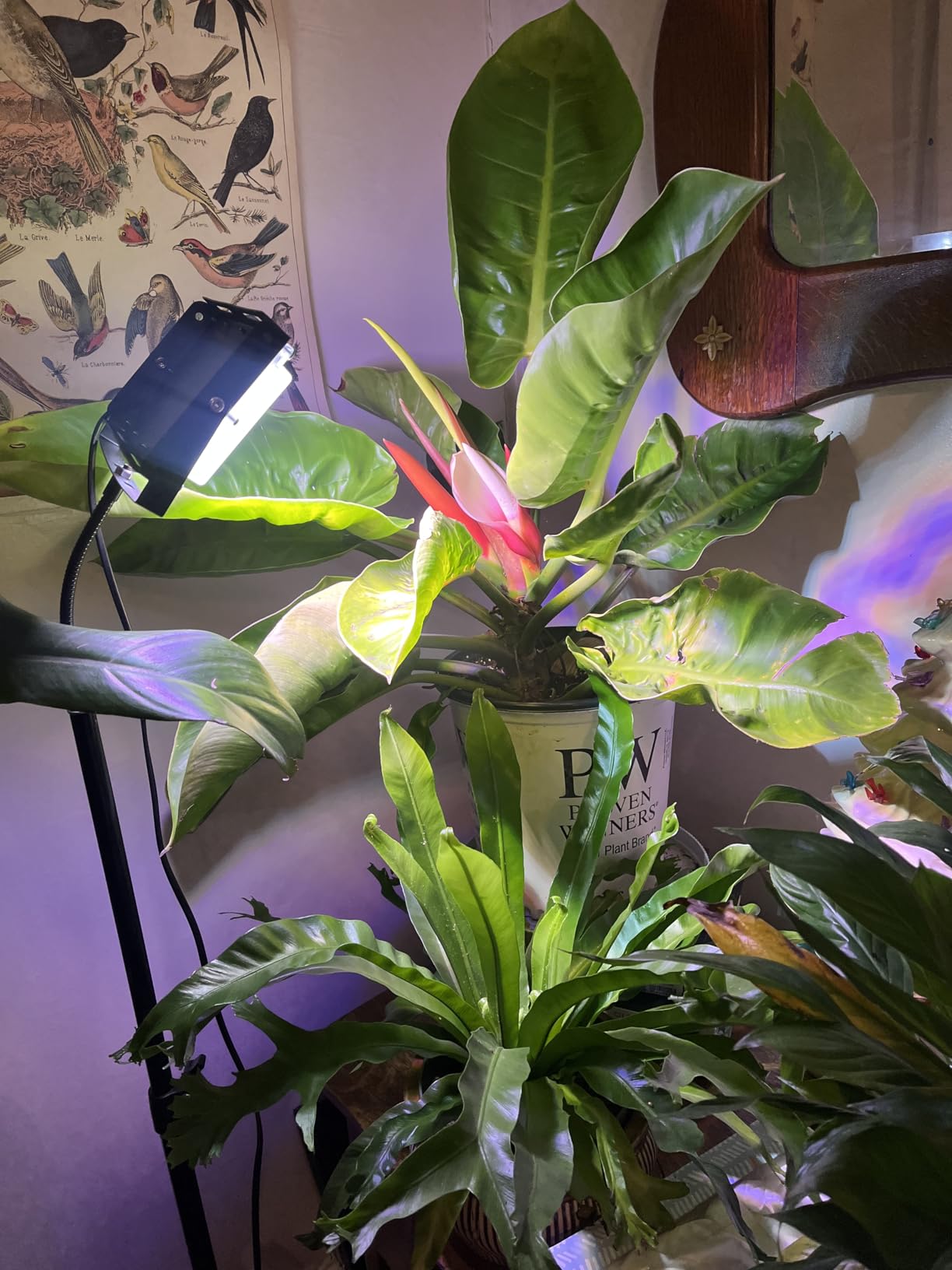
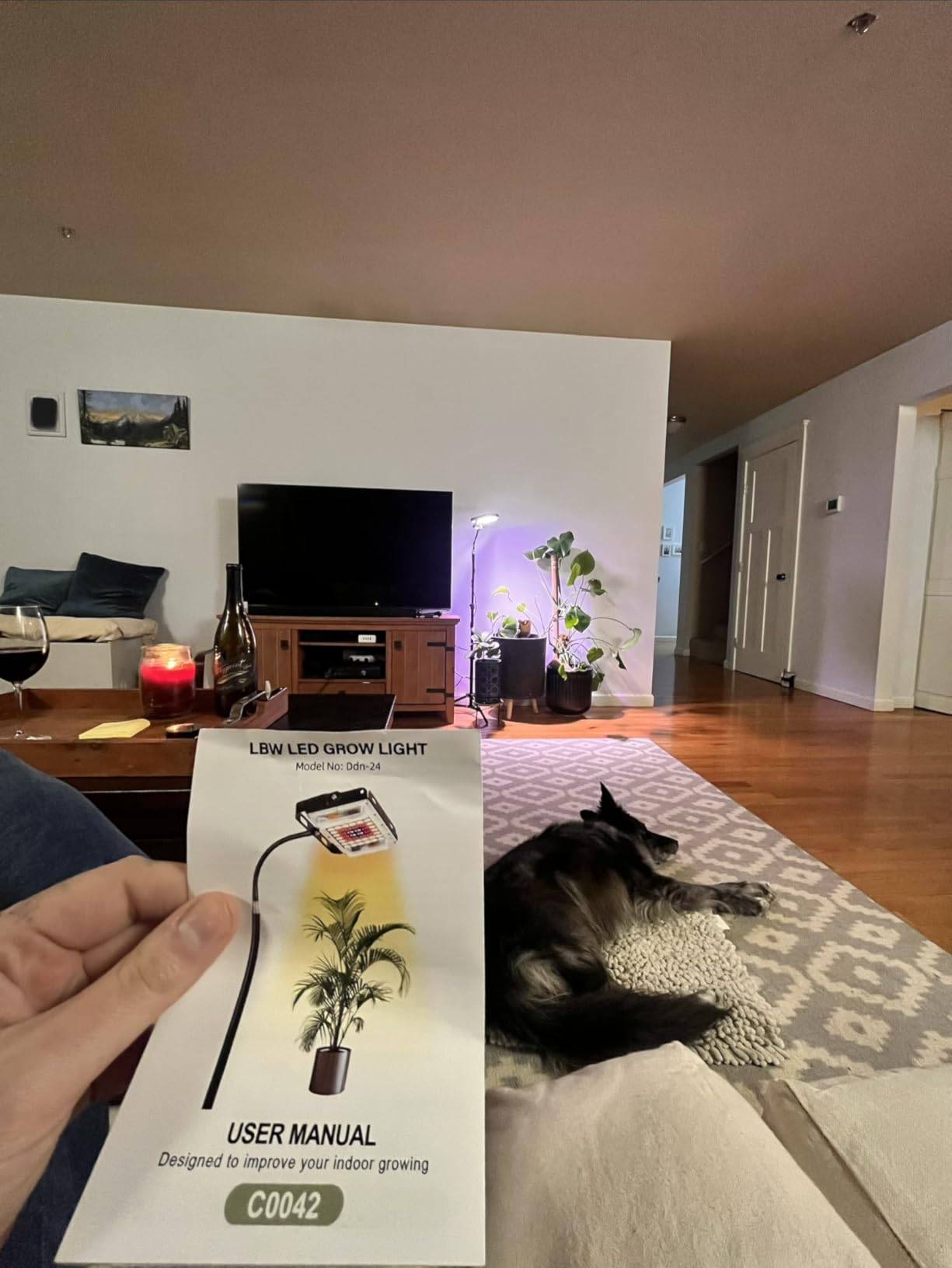
This is the fixture I recommend when there is no shelf to hang from and no space to mount hardware. A single head on a telescoping tripod covers a pepper plant or a pot of herbs standing on the floor, and it assembles in about a minute with no tools.
The spectrum runs 390 to 730nm using 3500K and 6500K white plus red and blue, which covers seedling, vegetative and flowering stages from one lamp. At 30W it does not get hot enough to scorch plants, which is a genuine safety margin in a home setting.
Buy it for a single plant or a small grouping. The single head gives limited coverage for anything larger, and I found that quickly once I tried to stretch it across a mixed tray.
Stand Height and the Top-Heavy Problem
The tripod adjusts from 15 to 48 inches, which covers everything from a windowsill herb pot to a floor-standing pepper plant. The catch is stability. It is top-heavy with the head at the top, and it tips over easily if it is not secured, which is a real risk with a pet or a busy household.
Weigh the base or brace it against a wall if you have small children or animals around. That single fix removes the most common complaint about this lamp.
What 30W Actually Replaces
The 30W draw is claimed to replace a 150W HPS or HID, which is a fair comparison for a single plant or a very small area. Reviewers find the light bright, cool-running and adequate for winter houseplant and pepper plant care at a low entry point.
The 48 LED beads carry a stated 50k+ hour lifespan, though the panel itself is not replaceable if it does eventually fail. That is the tradeoff for a lamp with a one year warranty and a plastic-and-aluminum build.
Build Quality Expectations
Some buyers report models arriving with missing hardware, and the general feel is inexpensive. If your space has no mounting options and you want to grow one or two plants, the convenience outweighs the build concerns.
For a rack of anything, choose a hanging fixture instead. This one is a convenience tool for a single plant.
9. SYEIORAOM Four-Head Lamp – A Wide Base and Four Arms for One Tray
SYEIORAOM Grow Lights for Indoor Plants, Four Head LED Grow Light with Full Spectrum, Red White Spectrum for Indoor Plant Lamp, Adjustable Gooseneck, Suitable for Vegetation
72 LED beads
Full spectrum with balanced red and white
Four 360-degree gooseneck arms
Telescopic pole
+ Pros
- 72 high-efficiency LEDs produce noticeably brighter light than many budget rivals
- 360-degree goosenecks plus telescopic pole for adjustable height and angle
- Solid stable base that does not need a pot to stay upright
- Covers a full 72-cell seed tray effectively
- Cons
- No built-in timer so an outlet timer is required
- Maximum height is limited and taller plants outgrow it quickly
- Multiple reports of units failing or dimming within months
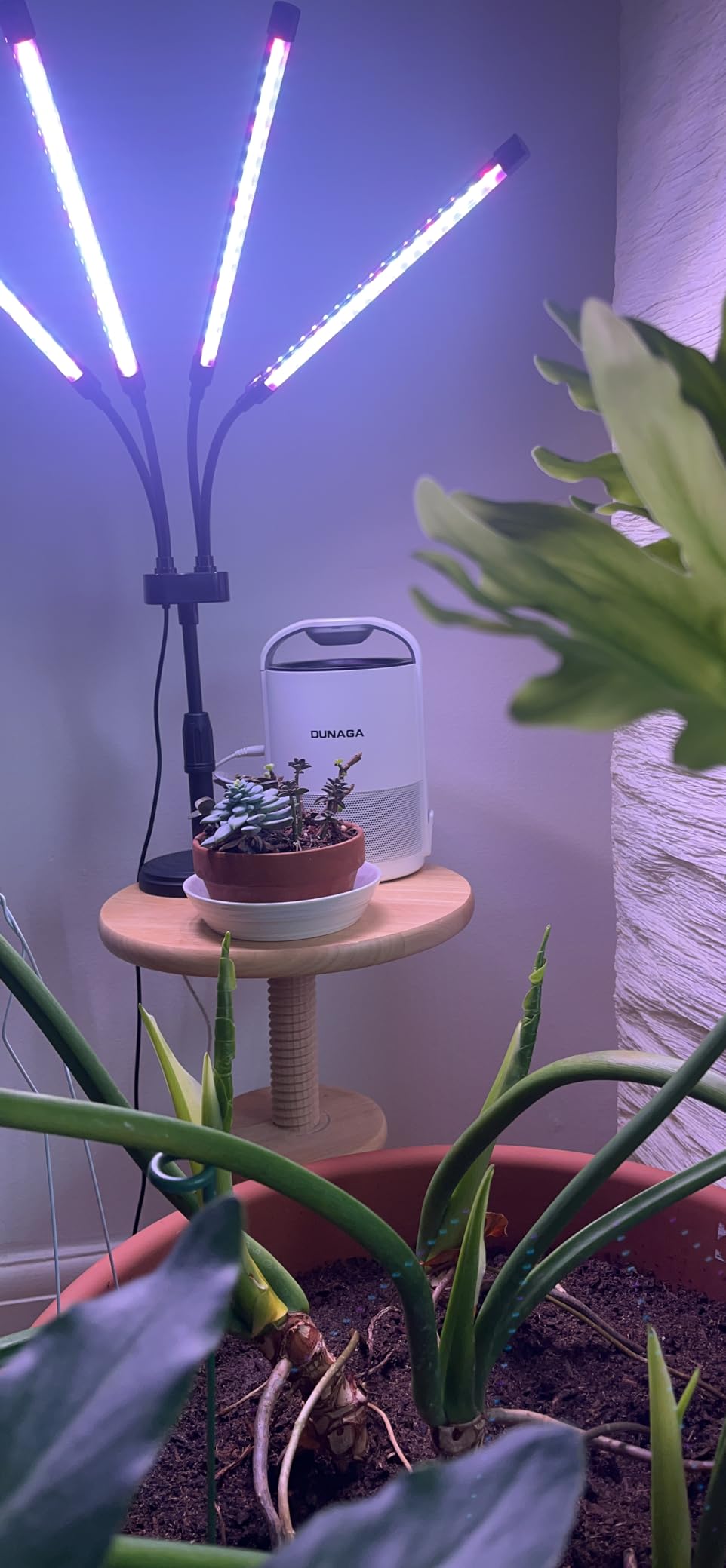
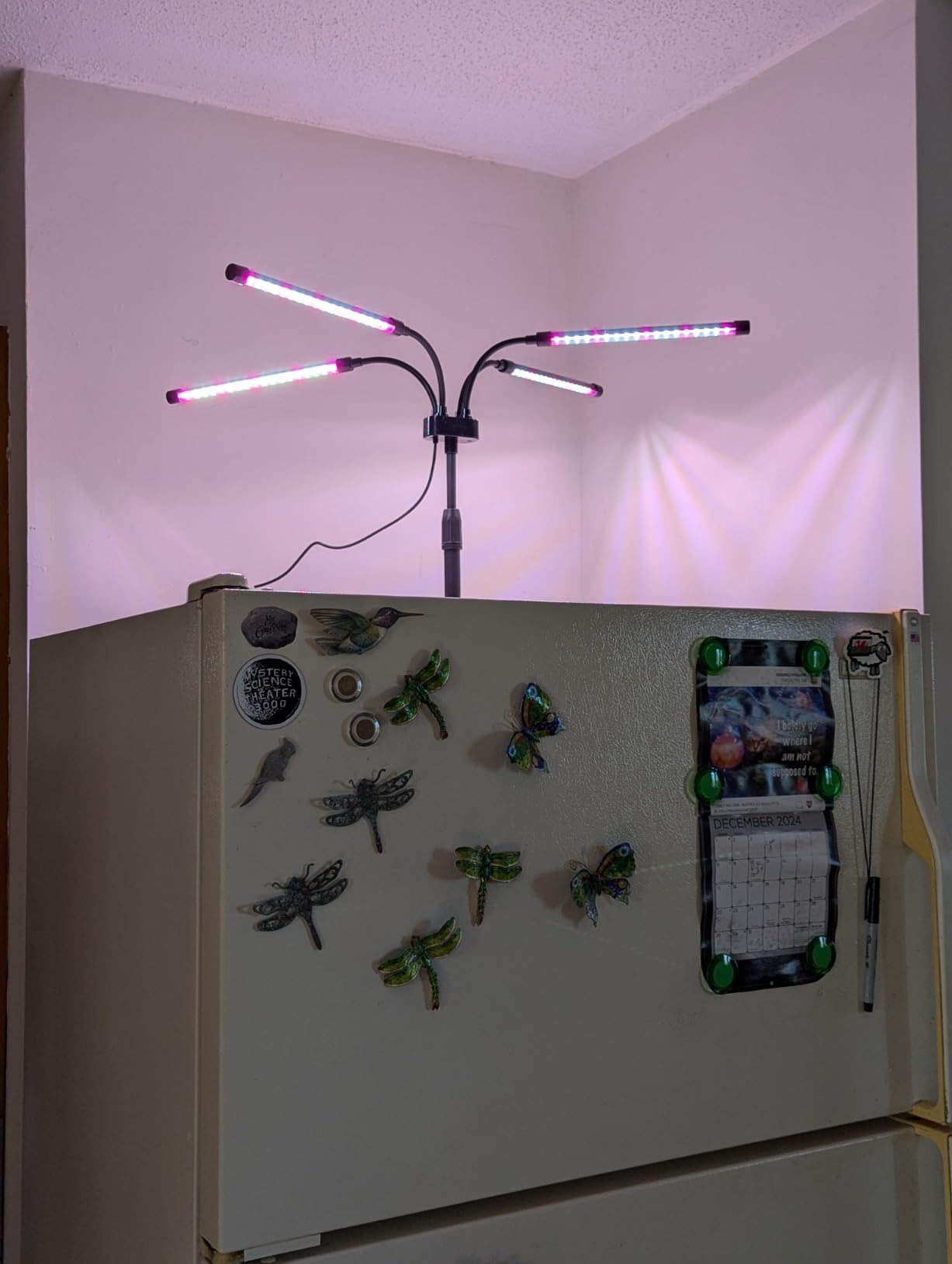
The four heads on a telescopic pole is the design that solves tray coverage at this level. Instead of one lamp hovering over 72 cells, four heads spread across the tray, and each head leans in at an angle with the 360-degree goosenecks.
Light output is noticeably brighter than many budget rivals at the same wattage, and the base is stable on its own without needing a pot pressed against it. That last detail matters more than it sounds, because several competing designs tip over without a plant on them.
It collapses for off-season storage and needs no assembly, which is convenient if your growing is seasonal. The base diameter of 12.2 inches keeps it stable on a standard table.
Telescopic Height Limits and When to Move Up
The telescopic pole handles a full 72-cell seed tray comfortably and a small pot of greens for a while. Taller plants outgrow it quickly, and that is the point at which you should move to a hanging fixture rather than craning the pole upward.
For a seedling station that grows plants out and then resets, that is fine. Set the pole high for germination, then bring it down as the seedlings establish.
Durability Reports Worth Reading Before Buying
There is a scattering of durability complaints, with some owners reporting lamps failing or dimming within months. That is the main reason this lamp sits where it does despite the brightness and the flexible arms.
It comes with a US plug and very thin mains cabling, and there is no built-in timer, so an outlet timer is required for any real photoperiod. If you want scheduling built into the lamp, choose one of the fixtures with a three-setting cycle timer instead.
Red and White Balance for Mixed Greens
The balanced red and white LED mix simulates natural daylight closely enough to run lettuce, kale, spinach and herbs through a full cycle on one setting. It suits germination, rooting, vegetative growth and blooming, which covers everything a vegetable crop needs except heavy fruiting.
It is a strong seed starting and leafy greens lamp with a real durability caveat, so I would buy it for a season of use rather than as a permanent install.
10. Aokrean Halo Grow Light – Spike It Into Soil or Stand It on the Base
Aokrean Grow Lights for Indoor Plants, Full Spectrum Plant Light with Base
48 LED beads at 10W
Installs as a soil spike or on the included base
10 brightness levels and 3 spectrum modes
Timer repeats daily
+ Pros
- Dual installation as a soil spike or on the included ABS base
- 10 brightness levels with three spectrum modes including red and warm white
- Telescoping pole adjusts to 26 inches with 90-degree rotation
- Functions as a decorative halo light in the room
- Cons
- Base-style units need a flower pot pressed onto the stand to stay stable
- Requires a power outlet rather than running on battery
- 10W per halo suits small plants rather than dense canopies
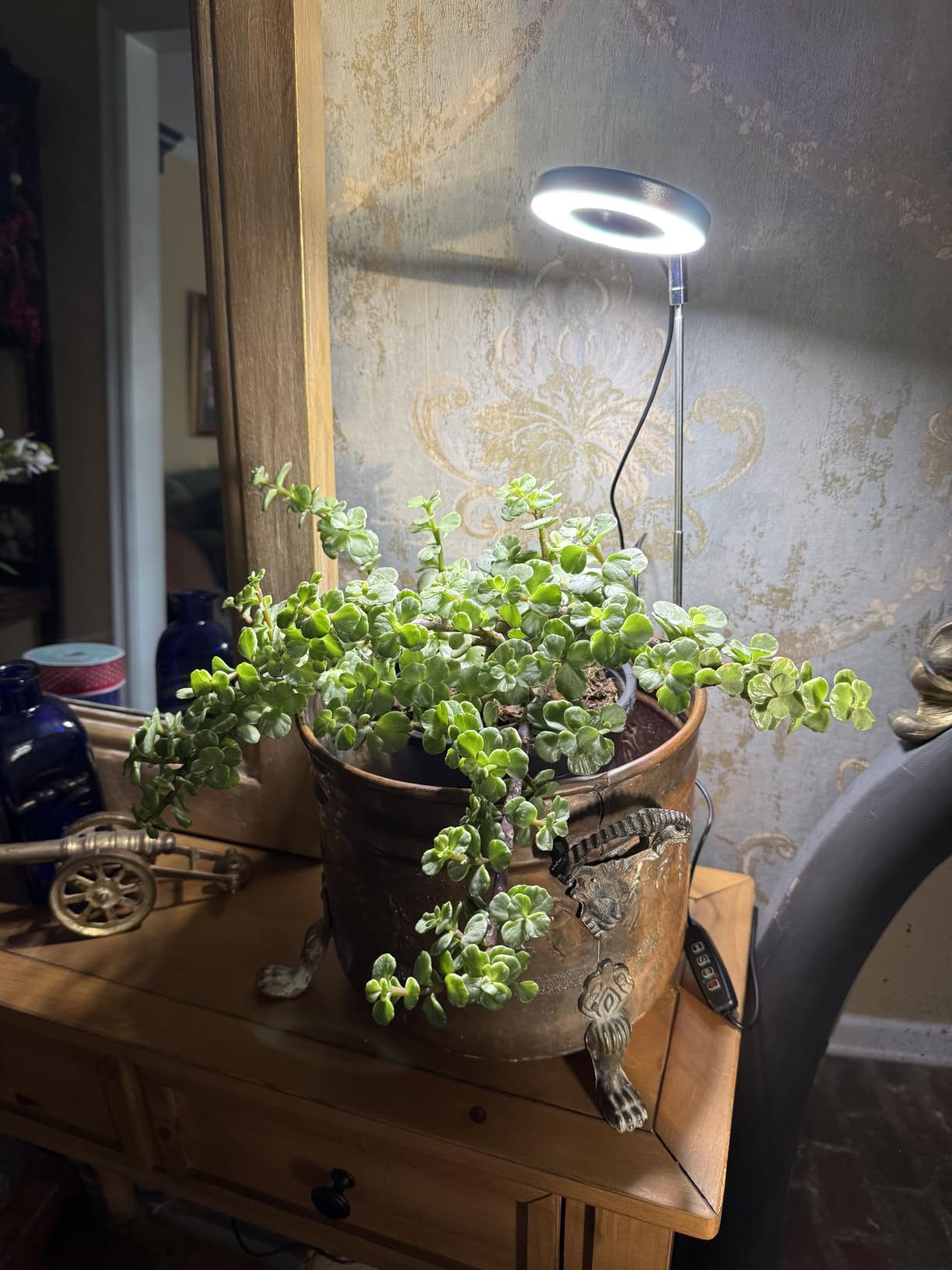
The halo design is the most flexible installation in the roundup, and for a windowsill herb garden it has no competition. Push the spike into the soil of a pot and light that one plant, or set it on the included ABS base and light a small grouping.
Ten brightness levels and three spectrum modes covering white, warm white with red, and a mixed setting let you run a basil pot through seedling and vegetative growth. The 3, 9 and 12 hour cycle timer repeats every day while the unit stays plugged in, which is more reliable scheduling than most of the lamps here.
What it will not do is light a canopy. At 10W per halo, this is a precision light for a pot, not a bed. Use several units across a shelf rather than expecting one to cover it.
Spike Installation Versus Base Installation
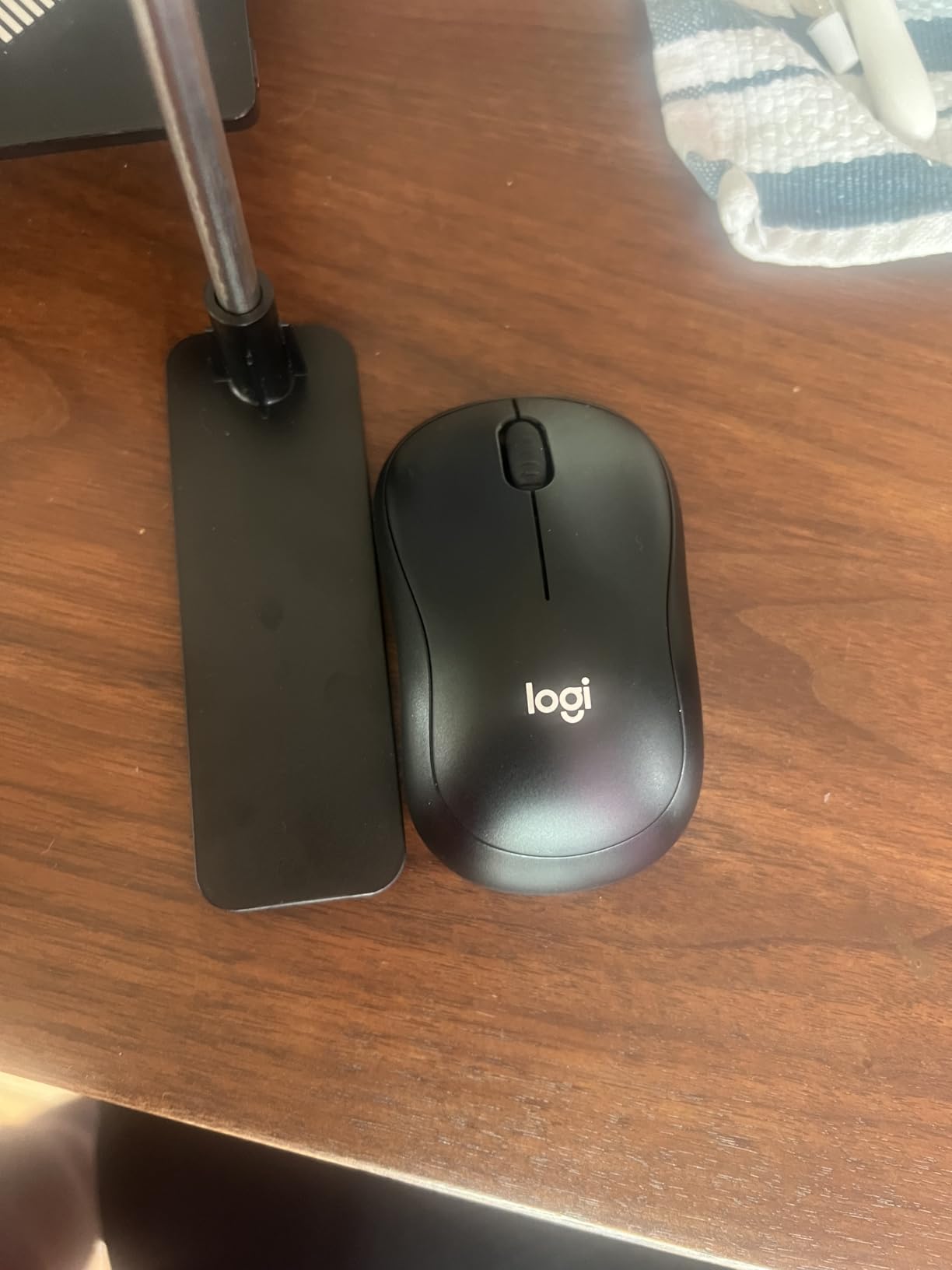
The spike goes straight into soil, which positions the light exactly where the plant needs it and leaves the counter space free. This is the mode I preferred for a windowsill herb pot, since the light moves with the plant as it grows.
The base mode is what you use when you want the halo hovering beside a pot rather than above it. It needs something pressed onto the stand to stay stable, and that is the most common complaint in the reviews. If you use the base, put a planter on it immediately.
Telescoping Pole and 90-Degree Rotation
The pole extends to 26 inches with a 90-degree rotation at the head, which covers everything from a small seedling pot up to an herb plant in a six inch pot. The 26 inch ceiling is the practical limit, and beyond that you need a different fixture.
USB power with the adapter included means the unit reaches a shelf corner where a wall outlet is not available, though it is not a battery unit and it cannot run cordless.
Timer Behavior and Small-Plant Limits
The timer repeats each day while powered, so you set it once and it keeps the same 3, 9 or 12 hour cycle indefinitely. That is the most dependable scheduling behavior of the clip and pole lamps in this roundup.
Ten watts per halo is genuinely light intensity suited to small plants rather than dense canopies. Buy multiple units if you want a full shelf covered, and this becomes a very economical way to light an entire herb garden.
How to Choose a Full Spectrum Grow Light for Vegetables
Every question I get about grow lights comes down to the same thing: match the fixture to the crop and the space, then match the height to the canopy. The sections below cover the decisions that actually change your results, in the order you should make them.
Work Out PPFD and DLI Before You Buy Wattage
PPFD, or photosynthetic photon flux density, is the light intensity reaching your plants, measured in micromoles per square meter per second. DLI, the daily light integral, is how much total light a plant receives in a day. Vegetables split into two clear groups, and the targets are not close.
Leafy greens and herbs sit comfortably in the range of 200 to 400 micromoles per square meter per second. Fruiting vegetables such as tomatoes and peppers want considerably more, often 600 to 900. Seedlings and microgreens need far less than mature plants, which is why dimming matters more than raw wattage.
The practical rule is that you want dimmable output, because one fixture serving a seedling stage and a fruiting stage will otherwise be wrong at one end. Also check whether the manufacturer publishes a PPFD map. A claimed number without a map is usually a measurement at the center hotspot, which tells you nothing about the corners of your bed.
Leafy Greens Versus Fruiting Vegetables Need Different Spectrum
This is where most generic guides go wrong. The best spectrum for vegetative growth leans blue, and fruiting vegetables want more red as they approach flower and fruit set.
For lettuce, kale, spinach and arugula, hold the crop in the vegetative range with a blue-weighted spectrum and a longer photoperiod of 16 to 18 hours. For tomatoes, peppers, cucumbers and beans, shift toward red in the last stretch and drop to a 12 hour photoperiod to trigger flowering.
A fixture with selectable spectrum modes or a dedicated bloom mode is worth paying for if you grow both. The LEOTER with three spectrum modes and the KINGPLUS with VEG and BLOOM switches both let you do this on one lamp. A single fixed-spectrum lamp will grow both, just not at their optimum.
Bar Lights, Boards and Panels Each Suit a Different Shape
Form factor is the decision most buyers get wrong, and it comes down to the shape of your space rather than the quality of the fixture.
Bar lights suit long, narrow footprints. A 4 foot metal shelving shelf is the classic case, and this is the most common indoor vegetable setup in the grow community. Boards and quantum board style panels throw a broad, even field and suit a square or rectangular bed like a 2×2 or 2×4 tent. Slim panels are a middle ground with better edge coverage than a board.
Clip and gooseneck lamps are a different category entirely. They are for a countertop, a windowsill or a single pot, not for a growing footprint. Comparing their wattage to a hanging panel is not meaningful, so never do it.
Dimming, Daisy Chaining and How You Will Expand
Dimming lets one fixture serve seedlings and mature plants. Continuous dimming is finer than stepped dimming, though four steps are enough for most vegetable racks. Look for a knob you can reach without getting on your knees.
Daisy chaining is the ability to control several fixtures with one command, and it is the feature that matters if you plan to expand a basement room over several seasons. Fixtures that chain up to 16 or 20 fixtures can start small and be unified later, and grow forums consistently rate daisy chain capability as a top priority for anyone building out over time.
Heat Management in Enclosed Spaces
LEDs run far cooler than the HPS and HID lamps they replace, but every watt still becomes heat in the room. In a closed tent with no airflow, the temperature will climb over an 18 hour photoperiod and stay there.
A small intake and exhaust pair solves the problem for almost any fixture, including the fanless ones. This is the single most common mistake I see in grow logs, and it costs far less than losing a crop to heat stress. Panels with built-in fans handle this automatically, though they add noise, and IP65 rated fixtures tolerate a humid room better over time.
Hanging Height by Vegetable Type and Growth Stage
Height is the variable people most often get wrong, and it explains most of the leggy seedlings and scorched leaves people post about.
Seedlings and transplants want 18 to 24 inches of clearance. Microgreens sit much closer, around 6 to 12 inches, and a shelf with a bar light mounted under the shelf above works well for them. Mature leafy greens want roughly 12 to 18 inches. Fruiting vegetables can take a much closer position, generally 8 to 12 inches, because they are light-hungry and physically tough enough to handle the heat.
Dimming lets you fine-tune once the height is right. If a light is too intense at the correct height, dial it down rather than raising it and starving the plant of intensity.
Running Costs Over a Full Vegetable Cycle
Electricity is the largest ongoing cost of indoor vegetable growing, so it is worth doing the math before you buy. Multiply the fixture wattage by the hours per day, by 365, and by your cost per kilowatt hour.
A 100W panel running 18 hours a day consumes about 1.8 kilowatt hours daily, which is roughly 657 kilowatt hours a year. At a typical residential rate that lands in the low hundreds of dollars annually, and it is the reason efficiency in micromoles per joule is the specification that determines your real running cost. A more efficient fixture produces the same photons for fewer watts.
Running a 20W bar light instead of a 100W panel for microgreens cuts that figure by 80 percent, which is why bar arrays and small lamps dominate seed starting. The tradeoff is intensity, so match the fixture to the crop rather than running one oversized light over everything.
Frequently Asked Questions
What is the best grow light for vegetables?
The best grow light for vegetables depends on the crop and space. A 100W full spectrum panel with a dimmer is the best general choice for a 2×2 to 2×4 foot tent or a large shelf, giving enough intensity for both leafy greens and fruiting plants. For a 4 foot metal shelf or seed trays, linkable bar lights cover a long narrow footprint far more efficiently. Seedlings and microgreens need far less light than mature fruit, so a dimmable fixture is the most important feature to pay for.
Are full-spectrum LED lights good for growing plants?
Yes. Full spectrum LEDs emit light across the photosynthetically active range of roughly 400 to 700 nanometers, which is the band plants use for photosynthesis. Because one fixture covers seedling, vegetative and flowering stages, a full spectrum LED can carry a vegetable from transplant to harvest without being swapped out, which is the main advantage over single-color blurple lighting.
What is the best light spectrum for vegetative growth?
A blue-weighted spectrum is best for vegetative growth. Blue light in the 400 to 500 nanometer range produces compact, sturdy stems and thick leaves, which is exactly what you want on lettuce, kale, spinach and herbs. Fruiting vegetables need more red light as they approach flowering, so a fixture with selectable spectrum modes lets you shift from blue-heavy to red-heavy as the crop matures without changing lamps.
What lights do professional growers use?
Professional growers use multi-fixture arrays of dimmable full spectrum panels or quantum boards suspended over the canopy, spaced roughly 12 to 18 inches above the plants with a 2 to 3 foot gap between fixtures. They prioritise published PPFD maps, uniform coverage across the footprint, and a dimmer over raw wattage. Top growers also run intake and exhaust fans, because heat removal matters as much as light quality in a closed room.
How many watts per square foot for vegetables?
For leafy greens and herbs, plan on roughly 20 to 30 actual watts per square foot of growing area. Fruiting vegetables such as tomatoes and peppers need closer to 40 to 60 actual watts per square foot, and they should be hung much closer, around 8 to 12 inches above the canopy. Seedlings and microgreens need only a fraction of that, which is why dimming matters. Judge fixtures on their real draw rather than the HPS-equivalent wattage on the box.
Which Full Spectrum Grow Light for Vegetables Should You Buy in 2026?
If you are covering a 2×2 to 2×4 foot area with a mix of greens and fruiting plants, the Spider Farmer SF1000 is our pick. It carried the heaviest canopy load of anything we tested, and the 2.5 umol/J efficacy keeps the electricity bill in check over a full season.
For peppers and tomatoes where you want the most control at the flowering stage, the VIPARSPECTRA P1000 is the better tool, with the smoothest dimming and the highest average rating in the roundup. For an automated basement room, the VIVOSUN LumaLight 100W handles scheduling and takes humidity without complaint.
For a 4 foot metal shelving unit, the Barrina T5 four-pack is the efficient answer, because bar geometry covers a long narrow footprint that a square panel wastes. For a countertop seed station, the GooingTop clip lamp or the LEOTER four-head will get seedlings through to a small harvest of lettuce.
Whichever you choose, match the hanging height to the crop, dim the output as the plants grow, and move air through the space. Those three habits matter more than any specification on the box. Updated for October 2026, these are the full spectrum grow lights for vegetables we would buy with our own money.