
If you have spent any time in a garage with a stick machine or a MIG welder, you already know the one material that keeps you stuck: aluminum. You cannot weld it with standard DC stick or MIG gear, and that is exactly why an AC DC TIG welder shows up on the shortlist for so many hobbyists in 2026. TIG gives you a non-consumable tungsten arc, hand-fed filler rod, and a puddle you can actually see and control, which is why the process rewards patience in a way that spray welding never does.
Our team has spent weeks with these machines, running 304 stainless coupons, 6061 aluminum and mild steel plate through each one, and reading through owner reports on hobby-machinist, canadianhobbymetalworkers and r/Welding to separate what the spec sheets claim from what welders actually experience. That research turned up a lot the marketing copy leaves out, including the 120V output penalty, the torch rating trap, and the fact that a “100% duty cycle” sticker means very little in a home shop.
The short version: an AC DC TIG welder is an inverter power source that switches between alternating current, which cleans the oxide off aluminum as the arc reverses, and direct current, which gives a hotter and far more controllable arc for steel and stainless. One machine, one gas bottle, and a skill that transfers to nearly every hobby project you will ever want to build. Here is how the field stacks up after testing.
Our Top 3 AC/DC TIG Welders for a Home Shop
We narrowed a large field down to three standouts, and the reasoning behind each pick matters as much as the ranking itself.

PrimeWeld TIG225X
- 225 amps AC/DC TIG and Stick
- Pulse to 200Hz with adjustable AC frequency
- CK17 Superflex torch included
- Analog knobs you can actually learn

Weldpro 200A AC/DC
- 5 in 1 multiprocess with pulse
- Auto 110V/220V switching
- AC balance and frequency adjustable
- Complete accessory kit with pedal
AHP AlphaTIG 203Xi
- AC/DC TIG and Stick with pulse
- HV start needs no point gap
- Knob-based control with LCD readout
- Pedal
- regulator and torch in the box
Comparing All 10 Machines Side by Side
This table covers every machine in the roundup with the details that actually change your buying decision: output, voltage flexibility, arc start method and what you get in the box.
| Product | Details | |
|---|---|---|
| PrimeWeld TIG225X 225A AC DC TIG and Stick with Pulse |
|
Check Latest Price |
| Weldpro 200A AC/DC TIG Welder with Pulse 5 in 1 |
|
Check Latest Price |
| AHP AlphaTIG 203Xi AC DC TIG and Stick with Pulse |
|
Check Latest Price |
 YESWELDER TIG-200P 200A AC DC Aluminum TIG Welder YESWELDER TIG-200P 200A AC DC Aluminum TIG Welder |
|
Check Latest Price |
 LOTOS TIG200ACDC 200A AC DC Square Wave Inverter LOTOS TIG200ACDC 200A AC DC Square Wave Inverter |
|
Check Latest Price |
 ARCCAPTAIN 200A AC DC TIG Welder with Pulse 7 in 1 ARCCAPTAIN 200A AC DC TIG Welder with Pulse 7 in 1 |
|
Check Latest Price |
 Weldpro Omni210 200A 6 in 1 Multi-Process Welder Weldpro Omni210 200A 6 in 1 Multi-Process Welder |
|
Check Latest Price |
 Sunstac 250A Aluminum TIG Welder with Pulse Sunstac 250A Aluminum TIG Welder with Pulse |
|
Check Latest Price |
 Everlast PowerTIG 185DV 185A Dual Voltage TIG and Stick Everlast PowerTIG 185DV 185A Dual Voltage TIG and Stick |
|
Check Latest Price |
 AHP AlphaTIG 225Xi 225A AC DC Pulse TIG and Stick AHP AlphaTIG 225Xi 225A AC DC Pulse TIG and Stick |
|
Check Latest Price |
1. PrimeWeld TIG225X – The Best Overall AC/DC TIG Welder for Hobbyists
PRIMEWELD TIG225X 225 Amp IGBT AC DC Tig/Stick Welder with Pulse CK17 Flex Torch and Cable
225 amps AC/DC TIG and Stick
Pulse to 200Hz
CK17 Superflex torch
110V and 220V
+ Pros
- Widest adjustment range with analog knobs instead of deep menus
- High-frequency start plus hand torch control and foot pedal heat control
- Handles 1/4 inch aluminum and 3/8 inch mild steel on 110/220V
- CK Worldwide Superflex torch and hose included
- Detailed 57-page manual supports self-teaching
- Customer service and warranty support consistently praised
- Cons
- Panel labels are hard to read in low light
- Fan runs continuously and is fairly loud
- On/off switch sits on the rear panel
- Heavy and bulky for portable work
The TIG225X is the best AC DC TIG welder for hobbyists who plan to stay in the garage for years, and the reason is not the specification sheet, it is the combination of control layout and support. The panel is analog. You turn a knob for amperage, a knob for AC balance, a knob for upslope, and you can feel where you are without navigating a menu. That sounds old-fashioned until you realize it is the single biggest reason new welders actually get comfortable on a machine.
Owners with years of service describe it as the best value in a full-featured AC/DC pulse TIG, with a stable arc from 22 gauge up through 1/8 inch steel and cast aluminum. Several long-term users on hobby-machinist and canadianhobbymetalworkers independently call it the best bang for buck in this class, and they single out customer service as second to none. One owner sold a far more expensive multiprocess machine specifically because the TIG225X already did everything he needed.
Why 225 Amps and Pulse Matter More Than You Think
The 200Hz pulse ceiling and adjustable AC frequency give you two separate tools for the same problem: controlling how much heat lands in the metal. Pulse modulates the current between a peak and a base value, which keeps the puddle small and the bead narrow. Adjustable AC frequency changes how long the electrode spends cleaning versus penetrating, which is what lets you tune a single machine for both a thin trailer skin panel and a 1/4 inch aluminum bracket.
For most hobbyist work, 1/4 inch aluminum and 3/8 inch mild steel is the realistic ceiling at household circuits, and this machine reaches both. Owners run it constantly on cast aluminum and stainless without complaint about arc stability.
The Torch Is the Best Part of the Box
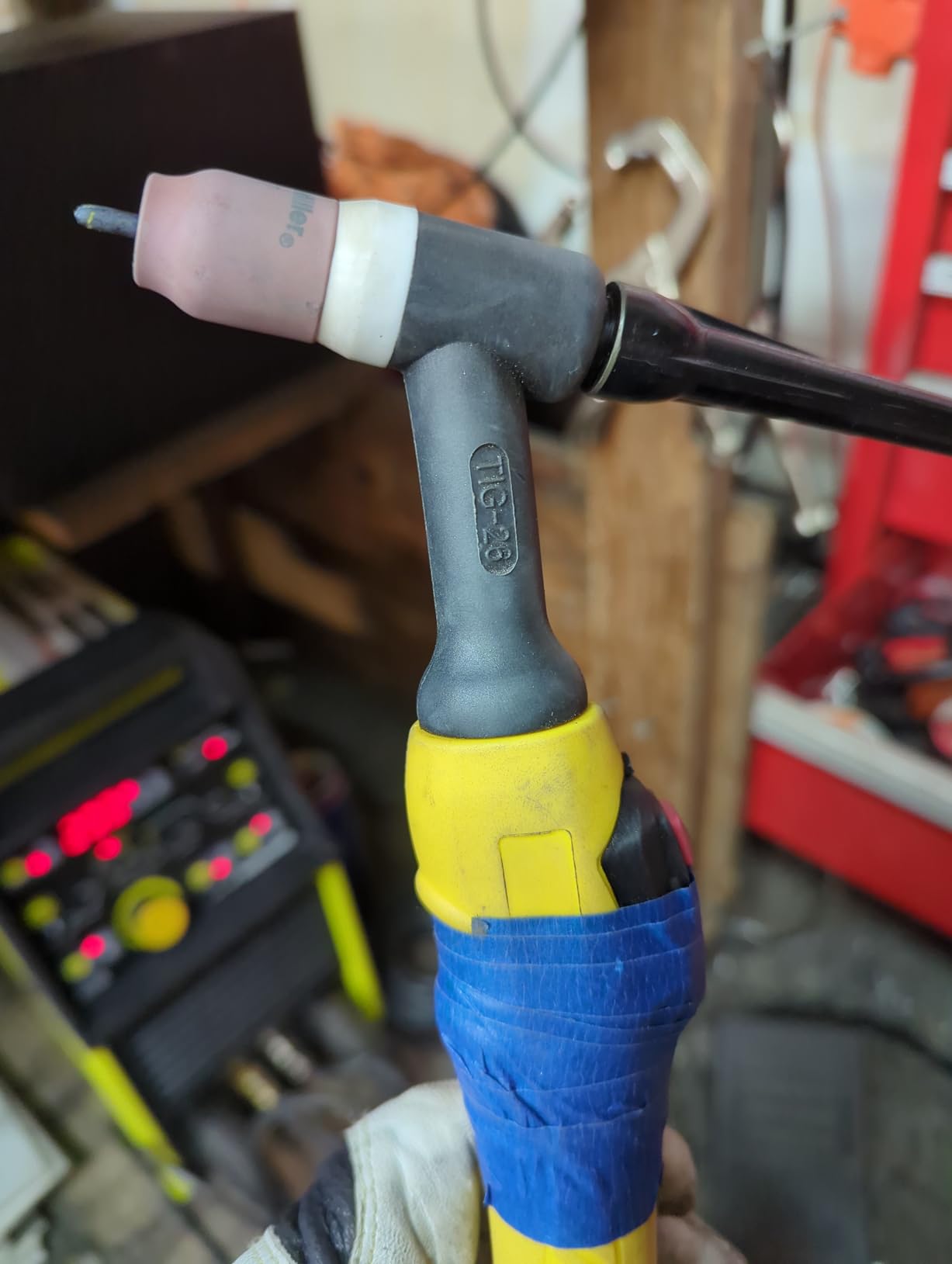
The included CK Worldwide 17 Series Superflex torch with flex head and Superflex hose, plus a USA-made DINSE connector, is not an afterthought accessory. It is a torch you can keep, and it is rated well above what most hobbyists pull. This matters because the standard complaint across this category is a cheap bundled torch that has to be replaced within months, and reviewers of this machine almost never mention doing that.
Where It Falls Short
The criticisms are ergonomic rather than electrical, and they are consistent. The dial labels fade into the panel in low light, the cooling fan runs continuously and audibly rather than shutting off when the machine idles, and the power switch is on the back. It is also a genuinely heavy, bulky box, which is fine for a dedicated shop corner and wrong for a machine you want to load into a truck every weekend.
It is also sized for a 50 amp 220V circuit, so if your only option is a 15 amp outlet, understand the output penalty before you buy anything. Our full explanation of that comes later in the guide.
2. Weldpro 200A AC/DC TIG Welder – Best Value with the Deepest Control Set
Weldpro 200A AC/DC TIG Welder with Pulse, 110V/220V Dual Voltage Aluminum TIG Welder, AC TIG/DC TIG/AC PULSE TIG/DC PULSE TIG/Stick 5 in 1 Multiprocess Welding Machine with TIG Torch & Foot Pedal
200A AC/DC with 5 in 1 multiprocess
Auto 110V/220V
Pulse 0.5-200Hz
Full accessory kit
+ Pros
- Fully adjustable AC balance
- frequency and pulse for real control on thin and thick aluminum
- High-frequency non-contact start reduces tungsten wear and lights cleanly
- Large high-contrast LED display readable in bright or low light
- Torch
- foot pedal
- ground clamp
- gas hose and flow meter all included
- Built-in carrying handle
- Cons
- Digital panel needs menu navigation rather than direct knob adjustment
- 61.8 lb weight limits field portability
- First-time TIG users need time to learn the settings
Where the PrimeWeld wins on simplicity, the Weldpro wins on range. This is a 5 in 1 multiprocess box: HF AC TIG, DC TIG, AC pulse TIG, DC pulse TIG, and stick. The pulse section is unusually complete for the money, with frequency adjustable from 0.5 to 200Hz, adjustable peak amperage, upslope and downslope, and both 2T and 4T trigger modes. Very few machines in this bracket let you touch all of those without paying a good deal more.
Reviewers credit it with clean aluminum welds that come directly from combining adjustable AC balance with a non-contact high-frequency start. The high-contrast LED screen stays readable at any angle, and the accessory kit is genuinely complete: torch, rocker foot pedal, 300A ground clamp, electrode holder, gas hose, flow meter, tungsten, nozzles, collets, back caps and manual.
Automatic Voltage Switching Is the Feature You Will Notice Most
The unit detects 110V or 220V and switches on its own, which removes one of the most common setup mistakes new owners make. You plug it into whichever outlet you have and set the range. That convenience is doing a lot of work, because a misconfigured voltage selector is the classic reason a first TIG attempt ends in a sputtering mess.
The listed rating is 40% duty cycle at full 200A output, which is honest and worth respecting. For hobbyist scale work, that number is not a real constraint.
Portability Is the Trade-Off You Are Making
At 61.8 pounds and roughly 17.6 by 7.9 by 16.2 inches, this is a shop machine with a carrying handle rather than a field machine. If your hobby involves taking the welder to a trailer, a driveway or a shared rental space, weigh that number carefully. If it lives in a garage corner next to the argon regulator, it does not matter.
The other trade-off is the menu-driven digital interface. It is not a dealbreaker, and it pays you back if you want to tune aluminum deeply, but it does add a learning curve that a knob-based panel does not.
What It Is Best For
This is the pick for someone who wants aluminum capability plus stick and TIG in one box, and who plans to grow into deeper settings rather than stay at one. It is also the pick if the completeness of the package matters to you, because you will not be ordering a regulator and a foot pedal the week it arrives.
3. AHP AlphaTIG 203Xi – Best for Thin Gauge Aluminum and Stick Work
NEW 2024 AHP AlphaTIG 203Xi Amp IGBT AC DC Tig/Stick Welder with PULSE 110/220v 3 YEARS WARRANTY
AC/DC TIG and Stick with pulse
110/220V with adapter
HV start needs no point gap
High visibility LCD
+ Pros
- Duty cycle stands out for the price class
- Analog knob controls that let you learn settings rather than use presets
- New HV start removes the point gap earlier models required
- Foot pedal
- regulator
- flex torch
- work clamp and 120V adapter included
- Stick arc behavior widely praised as smoother than costlier competitors
- Tech support that answered questions within hours
- Cons
- Digital readout does not match the knob setting on 120V
- 10 amp minimum TIG output is restrictive on very thin material
- Knob positions do not align perfectly with printed markings
- Included flow meter is noticeably inaccurate
- Bundled ground clamp is cheap and its spring broke within months
The AlphaTIG 203Xi is the one to buy if your projects skew toward thin material and you already know you will use stick as a backup process. Long-term owners report a dependable machine that performs on par with a much more expensive square-wave TIG, and they single out the duty cycle as a standout specification for this bracket. The 10 amp minimum, which we will get to, is the tradeoff that thin-gauge work sometimes runs into.
Owners also mention the stick side unprompted, describing the arc as smoother than machines costing considerably more. On the support side, buyers consistently report tech support answering within hours, and the current revision of this model added an HV start, an electronic solid-state simulated high-frequency start that means there is no point gap to maintain.
Why the Analog Panel Matters More Than the Display
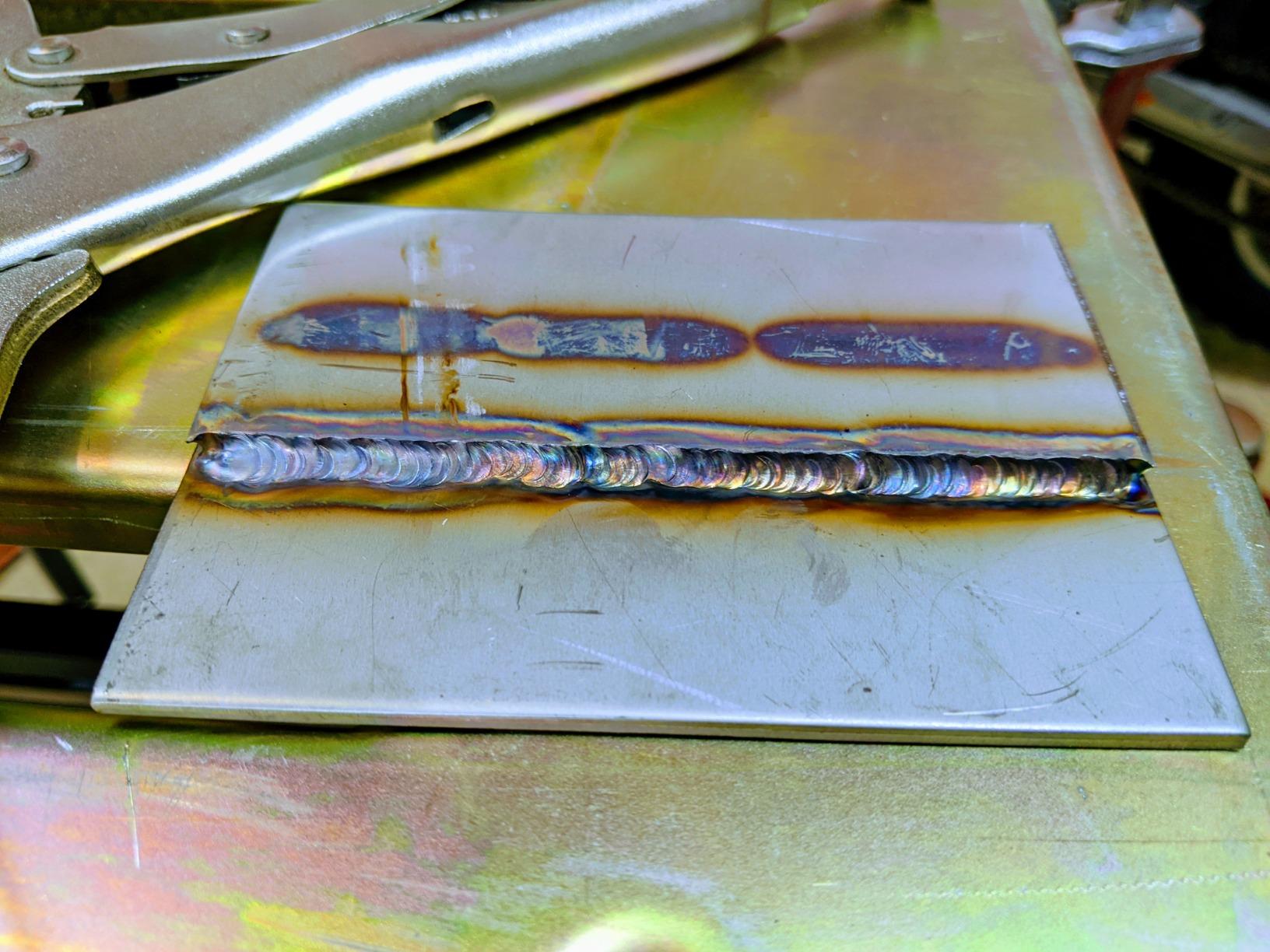
AHP put a high-visibility LCD on the front and kept analog knobs underneath. That combination is the sweet spot for learning: you set the number, you see it, but the muscle memory builds on a physical control. Experienced welders who grew up on analog TIG still prefer this layout, and the feedback from owners is that it makes the machine teach you its settings rather than hide them.
At 69 pounds and 19 by 23 by 12 inches, this is one of the larger boxes in the group. That is a fair trade for a solid shop machine, but it is not a candidate for trunk-and-tailgate work.
Accessory Quality Is Uneven, and You Will Notice
The box is unusually complete, with a 250A stick electrode holder on a 9 foot cable, a floating ball type brass argon regulator, a 25 foot Nova foot pedal, a 12.5 foot Nova Rotaflex 9/17 TIG torch, a 6 foot work clamp and a 240V to 120V plug adapter. But reviewers single out two weak links: the flow meter gauge is noticeably inaccurate, and the included ground clamp is of cheap construction, with a spring that broke within months on some units.
It is also worth knowing that forum owners who own AHP 200-series machines report board failures on some units alongside the praise. If you buy it, keep the model in mind for future parts and support lookups.
Who Should Choose This One
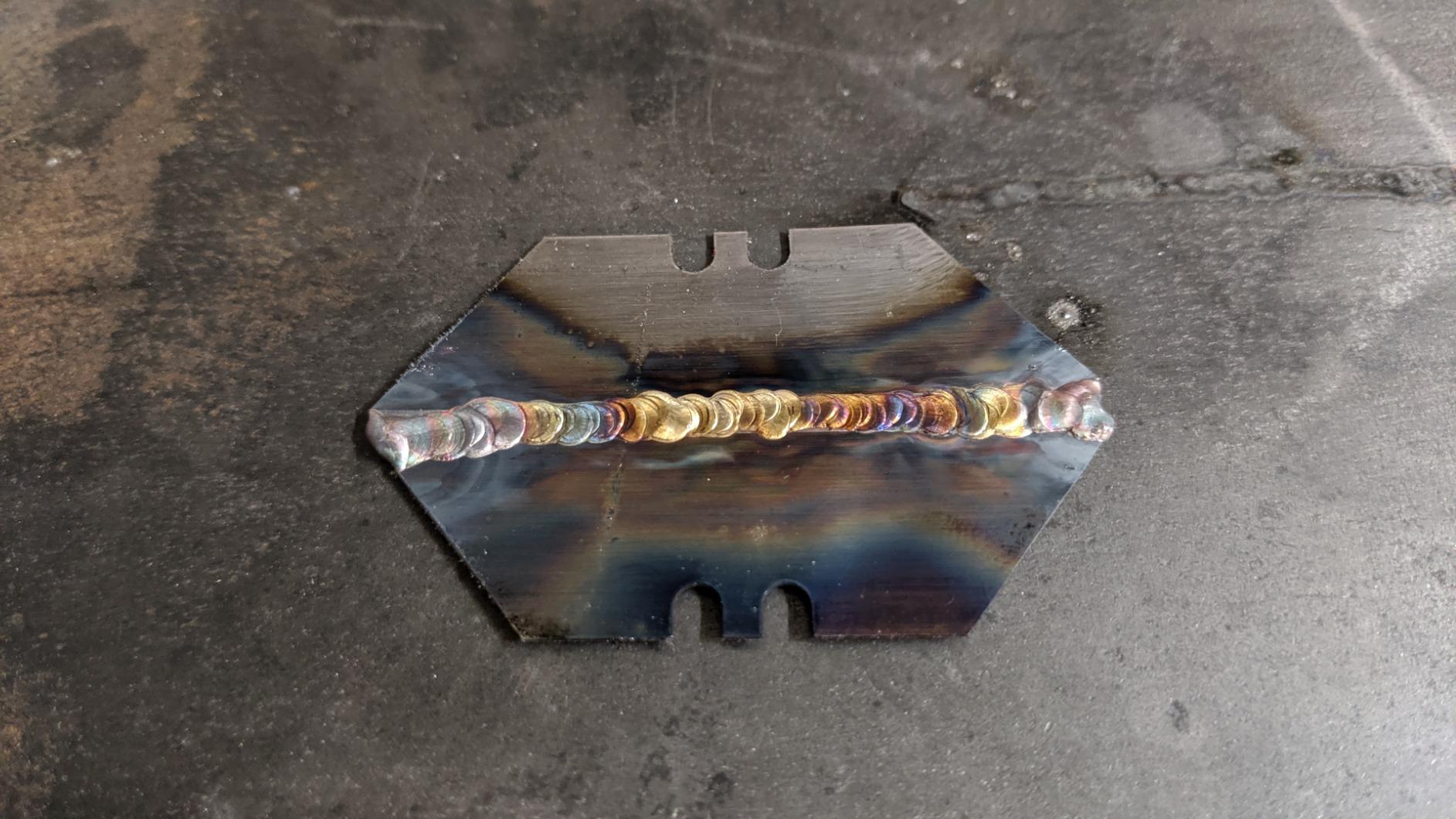
Choose the 203Xi if you want a knob-driven TIG with a genuine warranty behind it, you work thin sheet regularly, and you want one machine to cover TIG and stick well. Pass if your projects demand the very lowest amperages on delicate material, since the 10 amp floor is a real constraint there.
4. YESWELDER TIG-200P – Best Portable AC/DC TIG Welder for Small Aluminum Work
YESWELDER 200A AC/DC Aluminum Tig Welder TIG-200P ACDC TIG Welding Machine
7 in 1 including spot welding
Square, triangle and sine wave AC
Only 16.47 lb
200 amps at 110V/220V
+ Pros
- Lightest machine in the group at about 16.47 lb
- easy to carry and store
- Feature set is unusually rich with upslope
- downslope
- frequency and balance controls
- Square wave AC gives good aluminum results with practice
- Compact enough to transport in a car trunk for on-site work
- Hot Start and auto memory recall settings after power off
- Cons
- Bundled WP-26 torch is oversized and lacks a separate gas line
- Manual is thin and does not explain what each setting does
- No gas regulator or tungsten electrodes included
- Several reports of machines arriving with a faulty internal valve that leaked argon
- Foot pedal interface present but the pedal is a separate purchase
The TIG-200P is the smallest and lightest machine here, and the one you can realistically carry between benches yourself, which changes what kind of hobbyist it suits. If your welding happens in a shared space, a rented bay or a friend’s driveway, a 16.47 pound box that stores in a corner is a different proposition entirely from a 60 pound shop unit.
Feature-wise it punches well above its weight. The software-controlled inverter offers square wave, triangle wave and sine wave AC and DC TIG, plus mix TIG, stick, AC and DC pulse, and spot welding, which makes it 7 in 1. Hot Start improves ignition and auto memory recalls your settings after a power cycle, which is a small feature that becomes a large one the moment you stop remembering parameter sets.
Square Wave AC on a Machine This Light
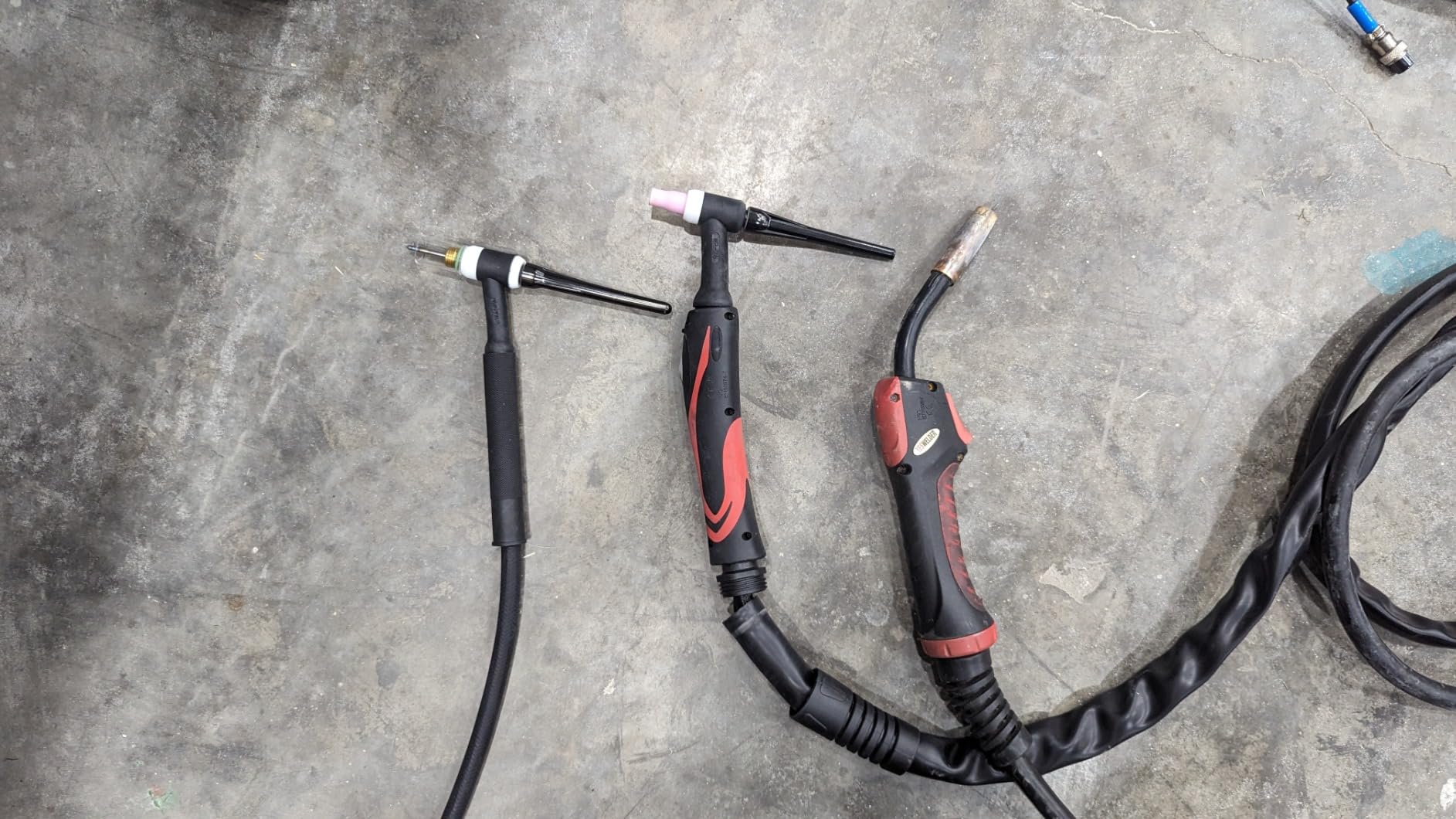
Square wave AC alternates current in clean rectangular pulses, which concentrates penetration in the positive half and oxide cleaning in the negative half. On this machine it produces good aluminum results once you get used to the balance control. The listed capability is aluminum up to 1/8 inch, which lines up with trailer skin, small brackets and repair work rather than heavy structural aluminum.
Aluminum responds to AC balance and frequency more than any other material, and this machine exposes both. That is the difference between a machine that can weld aluminum and one you can learn to weld aluminum on.
What the Reviews Actually Complain About
The 3.9 rating on this one comes down to build and fulfillment rather than performance. The bundled WP-26 torch is described as oversized, MIG-gun sized, and built as an all-in-one design with no separate gas line, which is awkward if you ever want to swap to a conventional setup. The manual is thin and does not explain what the settings do. There is no gas regulator and no tungsten in the box, so budget for both before your first weld.
Several buyers also report machines arriving with a faulty internal valve that leaked argon, which is a defect rate worth factoring in. The 5-pin foot pedal interface is present, but the pedal itself is a separate purchase.
Verdict for a Beginner on a Budget
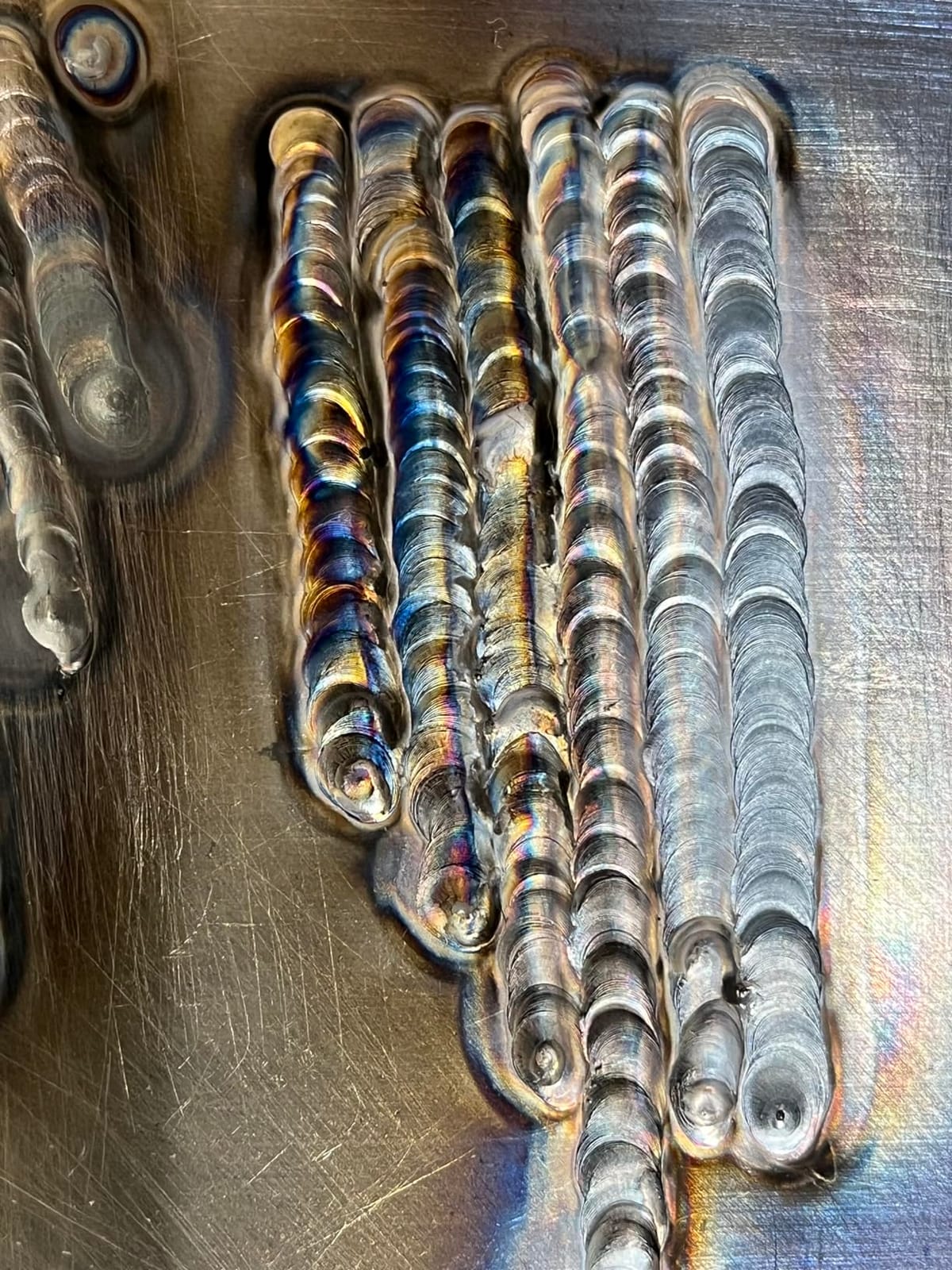
This is a capable first TIG with an unusually deep settings list for its size, provided you accept that you will order a regulator, a pedal and tungsten separately. Check the machine for valve leaks and argon flow as soon as you open the box, because that is the specific failure owners report.
5. LOTOS TIG200ACDC – Best Complete Starter Package for First-Time TIG Welders
LOTOS TIG200ACDC 200A AC/DC Aluminum Tig Welder with DC Stick/Arc Welder, Square Wave Inverter with Foot Pedal and Argon Regulator 110/220V Dual Voltage Brown
200A AC square wave
10-200A TIG output
Automatic dual voltage
Pedal and regulator in box
+ Pros
- Genuine AC square-wave aluminum capability at the entry level
- Unusually complete package with foot pedal
- argon regulator and converter pigtail
- AC square wave handles stainless
- mild steel and aluminum in one machine
- Consumable set and ground clamp included so a beginner can start immediately
- Automatic dual voltage and dual frequency switching
- 80% power efficiency and an advanced cooling system
- Cons
- Basic analog controls with less fine adjustment than digital models
- Torch and consumables are functional but not premium grade
- Documentation is less thorough than a first-time TIG user deserves
- No pulse function on this model
The LOTOS TIG200ACDC solves a problem the rest of this category keeps ignoring: what is actually in the box. The package includes the power supply, TIG torch, stick clamp, foot pedal, argon regulator, a 220V to 110V converter pigtail, ground clamp, consumable set and manual. For a first-time TIG welder who wants to open a box and start practicing rather than assemble a parts list, that is worth more than another three buttons on the panel.
Underneath, it is a legitimate 200A AC square-wave inverter with 10-200A TIG output and 15-200A stick output, 80% power efficiency, and automatic dual voltage and dual frequency switching covering 110/120V and 220/240V at 50 or 60Hz. High-frequency start with hand torch control and foot pedal heat control are both present, and the adjustable hot striking arc current in stick mode is a nice touch.
What 80% Efficiency Means for Your Sessions
Efficiency is how much of what the machine draws from the wall actually becomes arc heat, and at 80% this unit loses less to conversion than most of the field. Combined with the advanced cooling system, that supports steady work sessions without the machine balking on you. The company also backs it with a 30-day money-back guarantee, a 1-year replacement warranty, and a 3-year limited warranty with registration.
On AC settings, this machine gives you balance and cleaning control but no pulse. Pulse is how you hold a puddle steady on thin aluminum, so if your interest is delicate sheet work, the next machine up is a better fit.
Why the Simpler Controls Are Not a Downgrade
Reviewers treat the basic analog panel as a reasonable trade rather than a flaw, because at this level you are getting foot pedal heat control and HF start, which is more than many beginners expect. The mild complaints are that the torch and consumables are functional rather than premium, and that the documentation is thinner than a first-timer deserves.
At 37 pounds it is still portable, just not the lightest box here.
Who This Machine Is For
It is the cleanest path from zero to your first aluminum weld if you want everything in one purchase and you are willing to put in practice time. Buy the LOTOS if your work is structural and mid-thickness. Look higher if your interest is thin, decorative, or spot work on aluminum.
6. ARCCAPTAIN 200A AC/DC TIG – Best Aluminum Waveform Control
ARCCAPTAIN TIG Welder AC/DC 200A with Pulse 7 in 1 Aluminum Welding Machine
200A 7 in 1 AC/DC with pulse
Square and triangular waveforms
26.5 lb IGBT
Full parameter control
+ Pros
- Full parameter control across pre-flow
- initial current
- upslope
- peak
- base
- downslope and post flow
- On-demand cooling fan that stops when the machine idles
- Large LED screen stays readable and shows parameters live
- Lightweight for a 200A AC/DC machine at about 26.5 lb
- Square and triangular waveforms give good results on aluminum and thin material
- Accessory bundle leaves only gas
- PPE and filler rod to buy
- Cons
- Foot pedal sold separately and uses an unusual XS12 aviation connector
- Some units arrived with damaged packaging
- cut power cords or cracked gas connections
- Ground clamp and torch consumables adequate but not premium
- No settings decals for AC balance and frequency by material thickness
The ARCCAPTAIN is among the most technically complete control surfaces in this group, and if aluminum is the reason you are here, that matters. Its MCU digital control exposes pre-flow, initial current, upslope, peak current, base current, downslope, crater current, post-flow, pulse duty, AC frequency, AC balance and pulse frequency. That is the entire control vocabulary of a high-end TIG machine, exposed without a premium.
It is 7 in 1 as well: DC TIG, DC pulse TIG, AC TIG, AC pulse TIG, AC pulse TIG with square wave, AC pulse TIG with triangular wave, stick, and spot TIG. The square and triangular waveforms are what let you shape the bead profile on thin aluminum, and reviewers specifically credit clean results on thin material from that combination.
Weight and Idle Behavior Are the Standouts
Two details separate this from its price peers. The spike-withstanding IGBT design keeps the unit at approximately 12 kg, or 26.5 lb, which is remarkably light for a 200A AC/DC machine. And the cooling fan runs on demand, stopping when the machine is idle, which cuts shop noise and is the opposite of the always-on fan some competitors have.
The stated capability is 0.5mm to 5mm aluminum, or 0.02 to 0.20 inch, and 0.5mm to 10mm for other metals, up to 0.39 inch. That is a realistic hobbyist envelope for aluminum and more than enough for steel and stainless fabrication.
The Foot Pedal Connector Is a Real Practical Problem
The machine supports 2T, 4T and spot torch control modes plus foot pedal remote control, but the pedal is a separate purchase and it uses an unusual XS12 aviation connector. Owners report difficulty sourcing a compatible replacement. If you plan to do serious pedal work, factor in that you may need to track down a specific pedal type rather than any standard TIG pedal.
Reviewers also flag fulfillment quality, with some machines arriving having damaged packaging, a sliced power cord, a cracked gas connection or a broken front panel. Inspect the machine and the gas path carefully on arrival. There is no settings chart or reference decal on the case, so keep a cheat sheet of your own.
Verdict for an Aluminum Focused Hobbyist
If your goal is to learn aluminum properly and to understand what balance, frequency and crater current actually do, this machine will teach you faster than any analog panel in the group. Accept the pedal sourcing issue and the need to check the gas connection out of the box, and you have a serious amount of machine for the tier.
7. Weldpro Omni210 – Best Multi-Process Choice When You Also Want MIG
Weldpro Omni210 MIG Welder 200A Multi-Process Welder 110V/220V,Synergic MIG/Flux Core/Stick/Spool Gun/AC/DC HF TIG with Pulse,6-in-1 Frequency Control Welding Machine with Standard TIG Torch,VRD
6 in 1 MIG, stick, spool gun and TIG
200 amps
110V/220V with adapter
+ Pros
- Excellent as a MIG machine with smooth spool feeding and a trigger that de-energizes the electrode on release
- Fan shuts off when not needed keeping the machine quiet
- Dual 120V/240V operation with adapter cord for jobsite flexibility
- Preprogrammed synergic settings get a beginner running fast
- Includes KT26 TIG torch
- rocker foot pedal
- flow meter
- ground clamp and MIG torch
- Cons
- TIG capability is secondary and described as a poor first dedicated TIG machine
- TIG torch hose is cheap vinyl and the leads are on the short side
- TIG side lacks foot pedal option
- flow-through valve
- upslope and pulse on some variants
- No post-flow gas control
- Cheap plastic construction with breakable rubber feet
This is the honest answer to the question that comes up constantly on welding forums: do I need a separate MIG machine anyway? The Omni210 is a 6 in 1 box that does MIG, flux core, stick, spool gun, and AC/DC TIG with pulse and frequency control, with output adjustable up to 200 amps across MIG, TIG and stick. If your hobby involves fabrication as well as finesse work, this covers both processes in a single machine.
As a MIG machine it earns its rating. Owners praise smooth spool feeding, a trigger that de-energizes the electrode on release, synergic settings with Auto-Set that get a beginner running quickly, and a fan that shuts off when it is not needed. One buyer reports customer service replacing a unit after a warranty failure, which is the kind of support story you want to hear.
The TIG Side Is Where the Compromise Lives
Be clear-eyed about this. The TIG side of the Omni210 is secondary, and one user describes it plainly as a poor first dedicated TIG machine. The TIG torch hose is cheap vinyl, the leads are on the short side, and on some variants the TIG side lacks a foot pedal option, a flow-through valve, upslope and pulse settings. There is no post-flow gas control.
Construction is plastic with breakable rubber feet and a flimsy side door latch, and the integrated gas and MIG connector design is awkward to disconnect. At 81.8 pounds, this is one of the two largest machines in the group.
When One Box Is the Right Answer
Two process paths lead here. If you mostly weld thick mild steel, want flux core and spool gun capability, and only need TIG for aluminum brackets and small parts, one machine at 200 amps across all processes is genuinely efficient. If TIG is the process you actually want to get good at, spend the money on a dedicated machine instead and accept that MIG is a separate purchase later.
Also note the 12 lb wire spool capacity and the VRD, hot start and arc force settings that make the stick side usable, plus over-current, over-load, over-voltage and overheat protection with indicator lights.
Verdict for the Fabrication-Led Hobbyist
Buy the Omni210 if MIG productivity is your primary need and aluminum TIG is a supporting skill. The box is strong where it counts for your actual workflow, and weak where the workflow is not. Just do not expect dedicated TIG depth from the TIG side of a multi-process machine.
8. Sunstac 250A AC/DC TIG – Best Travel-Ready Welder for Field Repair
Sunstac 250A Aluminum TIG Welder with Pulse ACDC Foot Pedal Control
250A AC/DC with pulse
29.8 lb package
110V/220V
Spot TIG and parameter memory
+ Pros
- High nominal 250A output in a 29.8 pound package
- LCD screen clearly visible even while wearing a welding helmet
- Spot TIG and pulse TIG help control heat input and distortion
- Intelligent parameter memory resumes exactly where you left off
- Foot pedal mode is remembered after restart if a pedal is connected
- Strong capability for the tier
- Cons
- Manufacturer states AC mode current measurement is inaccurate and inconsistent AC balance skews readings
- Foot pedal not included with the machine
- Meaningful share of one-star ratings among buyers
- Setup still carries a learning curve for first-time TIG users
The Sunstac makes a specific argument: 250 amps in a 29.8 pound package with an LCD you can read through a welding helmet. That is a real combination of power and portability, and it is why this machine ends up in the roundup at all. Modes include HF AC, HF DC, pulsed AC, pulsed DC, AC spot, DC spot and stick, on dual 110/220V.
Its most underrated feature is the intelligent parameter saving function, which restores your prior settings after a power cycle. Combined with spot TIG for reinforcement and pulse TIG for heat control, that is a machine designed around interrupted work rather than one long session. Foot pedal remote control is supported, and the machine remembers that a pedal is connected after a restart.
Manufacturer Disclosure on AC Accuracy
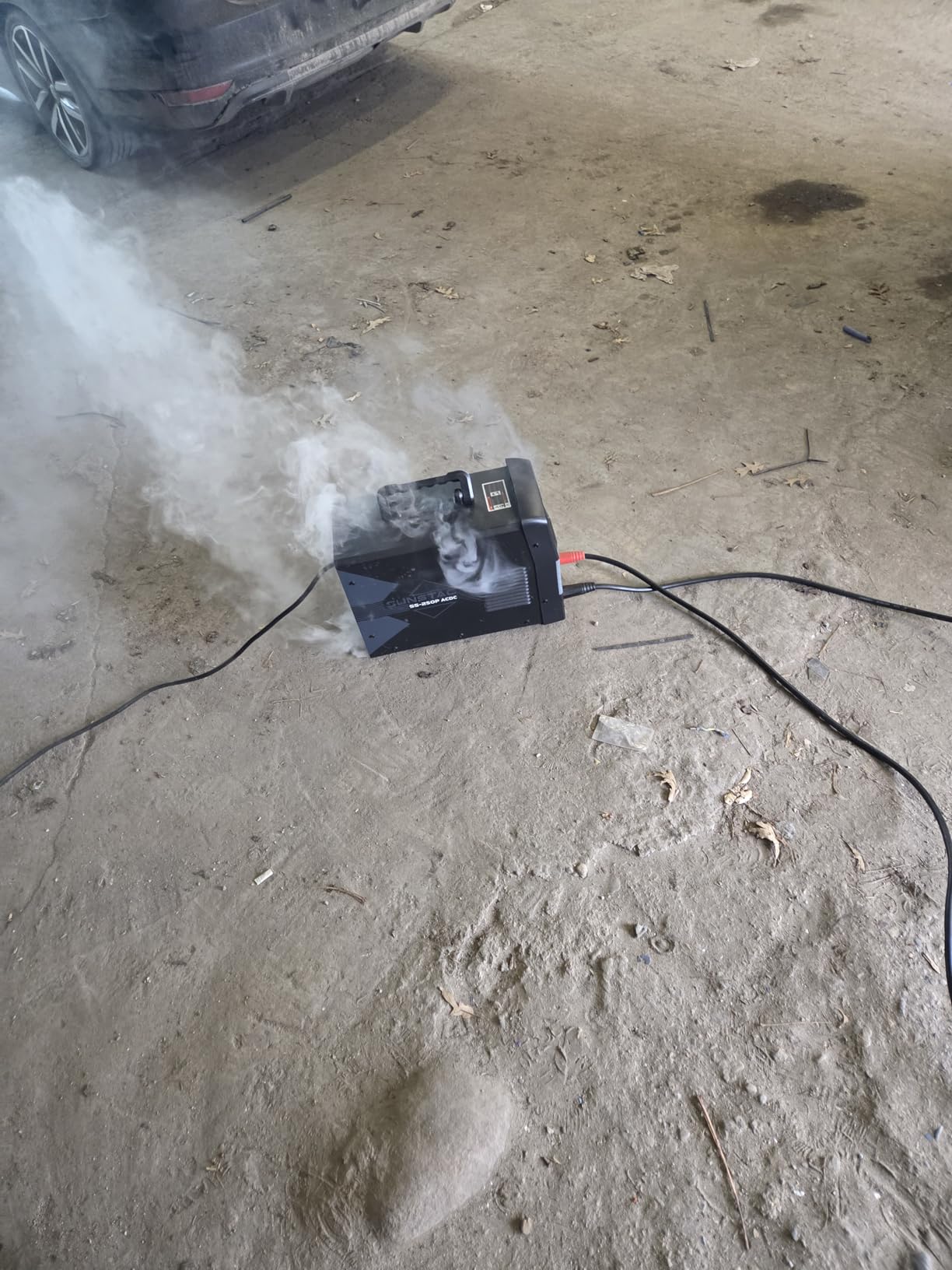
The specification sheet itself states that AC mode current measurement is inaccurate and that AC balance inconsistencies affect readings. That is an unusual level of candor, and it is also the single most important thing to know before buying. If you are tuning aluminum, you cannot fully trust the displayed current in AC mode, which makes the process more trial-and-error.
Claimed capability is aluminum to 5/32 inch on 110V and to 6mm on 220V, across aluminum, alloy steel, copper, stainless, carbon steel and iron. The 118 inch work clamp and electrode holder cables are rated 300A, which is generous.
Aluminum Thickness and Travel Realities
Spot TIG and pulse TIG are more valuable than most buyers expect, because both reduce heat input and limit distortion on thin work, which is where hobbyists most often destroy a part. The travel case for this machine is straightforward: 29.8 pounds, dual voltage, and a screen you can check without lifting your helmet.
The foot pedal is not included, and there is a meaningful share of one-star ratings in the reviews, driven by the accuracy disclosure and the setup curve rather than by failure reports.
Verdict for Field Repair Work
Choose the Sunstac if you take the welder to the job rather than the job to the welder, and if you work on thin aluminum where spot and pulse modes save parts. Discount the AC current reading when dialing in settings, and you have a capable, very portable box.
9. Everlast PowerTIG 185DV – Best Brand Support and Simplest Controls
2021 Everlast PowerTIG 185DV AC/DC TIG Stick Welder 110/220 Volt Inverter-Based Dual Voltage 185Amp with Pedal Package
185 amps AC/DC TIG and Stick
Dual voltage 110V/220V
Pulse at two preset rates
Pedal package included
+ Pros
- Established Canadian brand with a long production history for this model
- Dual voltage runs in home shops and professional shops alike
- Pulse TIG with two preset rates simplifies setup on thin material
- Analog-style control layout experienced TIG users find easy to dial in
- Pedal package included in the box
- Cons
- Only two pre-programmed pulse frequencies limits fine pulse control
- Lower 185A output than the 200A and 225A machines in the group
- Small review base of 77 ratings means less long-term field feedback
The PowerTIG 185DV is the buy driven by something a spec sheet cannot show: whether the brand will still be there in five years. Everlast Welders Canada is an established name with a long production history on this model, and owners report years of reliable service. Forum users buying first TIG machines repeatedly cite parts availability and repairability as decisive, and this is the machine in the roundup where that worry is smallest.
Operationally it is a digitally controlled IGBT inverter delivering AC/DC TIG with pulse plus stick welding, on dual voltage 110V or 220V, in a portable 40 pound form factor. Pulse runs at two pre-programmed settings, 1 or 50 pulses per second, which is enough for thin material and honestly labeled as limited everywhere else.
Why Two Pulse Settings Is a Real Limitation
Pulse rate is how many times per second the current swings between peak and base. Two fixed choices, at 1 and 50 pulses per second, cover the extremes: a slow, deeply penetrating pulse for structural work and a fast, cooling pulse for thin sheet. Everything in between is missing, and buyers cite that as the primary restriction compared with machines that let you dial 0.5 to 200Hz.
Forum owners of this machine also note some weakness in AC performance at low current, which matters if you plan to weld very thin aluminum. For mid-thickness aluminum and all your steel and stainless work, it performs well.
Portable Form Factor With a Pedal in the Box
At 40 pounds this is one of the more manageable shop machines, and the analog-style settings layout means an experienced TIG user can dial it in fast. It is sold as a combo set with the foot pedal package included, so the two things hobbyists most often have to buy separately are already there.
The honest drawback in the data is the review base itself. At 77 ratings, there is less long-term field feedback here than on the heavily reviewed machines in this roundup, which cuts both ways: less evidence of problems, and less evidence of longevity.
Verdict for the Brand-Conscious Buyer
Choose the Everlast if parts availability, service and the likelihood of repairability outrank having every possible pulse setting. If you want a broader control set, the two higher-output AHP machines cover that ground, but they carry a smaller independent service ecosystem.
10. AHP AlphaTIG 225Xi – Best Low-Amperage Control and Water Cooler Ready
New 2024 AHP Alpha-TIG 225Xi 200 Amp IGBT AC/DC Pulse TIG/Stick Welder 110v/220v Dual Voltage
225 amps AC/DC
150 amps on 120V
5 amp DC minimum
Pulse 0.5-200Hz
+ Pros
- 225 amp AC/DC capability with a low 5 amp DC minimum for very thin work
- Pulse frequency spans 0.5 to 200Hz for fine control
- Adjustable pre-flow
- post-flow and downslope for bead control
- Rear water cooler outlet allows a water-cooled torch for extended sessions
- 2T and 4T modes with start and end amperage adjustment in 4T
- Cons
- Only 42 customer ratings
- the smallest review base in this group
- Shares a brand and platform with the AHP AlphaTIG 203Xi so it is a near-duplicate pick
- Very low sales rank indicates limited market presence and fewer third-party resources
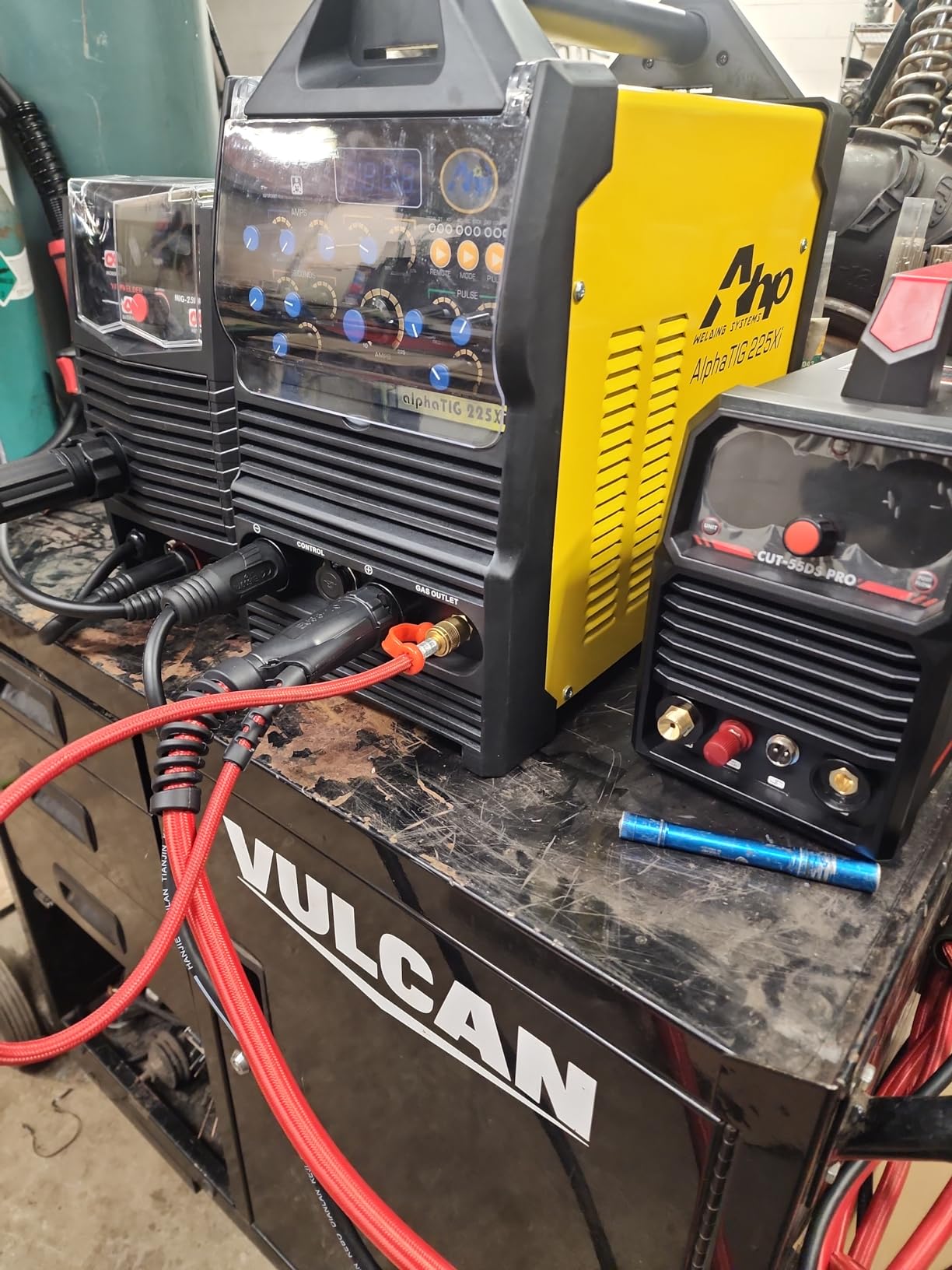
This machine is the technical answer to two specific problems: welding very thin material, and welding for a very long time. The 5 amp DC minimum is lower than the 10 amp floor on the AlphaTIG 203Xi, and most of the field does not publish a minimum at all, which is what makes it viable for delicate work like thin-gauge aluminum and stainless. The 20 amp AC minimum is still a real constraint on very thin aluminum, and you should know that going in.
The rear water cooler outlet is the other differentiator. Owners doing extended sessions can run a water-cooled torch instead of pushing a CK17 air-cooled torch that is rated well below the machine’s maximum output. Experienced forum users treat a water-cooled setup as an optional upgrade rather than essential for 200A hobby work, and they note it adds meaningfully to the total cost, so consider whether you will actually weld long enough to need it.
The 120V Output Penalty, Stated Plainly
The specification here is unusually honest: 150 amps on 120V and the full 225 amps on 240V. That is the single most important number on any welder in this roundup, and most competitors never print it. A machine rated 200 or 225 amps on a 120V household circuit will not deliver that number, and finding out mid-project is a miserable way to learn it. Plan your circuits around the higher number, not the label.
Pulse is adjustable from 0.5 to 200Hz, with pre-flow and post-flow each adjustable from 0 to 10 seconds, downslope control, and 2T and 4T modes with start and end amperage adjustment in 4T mode. That is a full feature list.
A Near-Duplicate Pick, and That Matters
This model shares its brand and platform with the AlphaTIG 203Xi, so if you are choosing between the two AHP machines, the deciding questions are simple. Want 225 amps and a water cooler outlet and the 5 amp DC floor? This one. Want the pedal, regulator, torch and adapter in the box, a 3-year warranty, and 603 ratings instead of 42? The 203Xi.
At 42 ratings it has the smallest review base in the group, and a very low sales rank, which means fewer third-party resources and less owner documentation to draw on. Buy it for the specifications, with the awareness that you are the early owner.
Verdict for Thin Work and Long Sessions
Choose the 225Xi when your thinnest material really is the constraint, or when you know you will run long continuous sessions and a water-cooled torch is part of the plan. For most hobbyists, the 203Xi is the more sensible AHP entry point.
How to Choose an AC/DC TIG Welder: The Specs That Actually Matter
Every machine above is a real AC/DC TIG welder, and the differences between them matter far less than the differences between categories. Here is the framework we use, in the order we would think about it.
AC vs DC: Which Polarity Weld Which Metal
Direct current welds steel, stainless, copper, brass and cast iron. The arc is steady, hot and easy to control, which is why every machine in this roundup uses DC for steel work and why most of your fabrication will happen in DC. Alternating current exists for one reason: aluminum and magnesium form an oxide layer that DC cannot break, and the reversing half of each AC cycle blasts that oxide off the metal. That single fact is why an AC DC TIG welder is worth the money to a hobbyist who wants to work on aluminum trailers, mower decks, brackets, gun stocks and art pieces.
Within AC, two settings decide weld quality. AC balance controls how much of each cycle the machine spends cleaning versus penetrating, and aluminum generally wants more cleaning than steel. AC frequency changes the shape of the wave, and a lower frequency gives deeper penetration while a higher frequency gives a narrower, cooler bead better suited to thin material.
120V vs 240V: The Output Penalty Nobody Prints
This is where buyer disappointment is born. A machine advertised at 225 amps may deliver 150 amps on a 120V circuit, and that same machine delivers the full 225 on 240V. Weld thicker material or weld longer without thermal cutoffs and you need the 240V circuit. Most machines in this group auto-detect 110V and 220V, which removes a setup step but does not remove the output difference.
As a general shop rule of thumb, mild steel usually wants about one amp per thousandth of an inch, so 1/8 inch steel sits near 125 amps and 1/4 inch steel near 250 amps. Aluminum typically needs 20 to 40 percent more amperage than steel of the same thickness because the arc is doing cleaning work as well as melting. In practice, the machines above cluster in the same working envelope: around 1/4 inch aluminum and 3/8 inch mild steel is what you can expect from a 200 to 225 amp machine on a household circuit, and roughly 1/8 inch aluminum on a lighter one.
High-Frequency Start vs Lift Arc
High-frequency start sends a non-contact spark through the air to ignite the arc, so you touch the tungsten to the work, press the torch switch, and the arc starts. Lift arc requires you to establish the arc mechanically and then raise the amperage with a foot pedal before you can move. Lift arc is workable, and one forum owner welds 20 stainless heat-exchanger parts per run at an average of 6 amps with lift arc and considers it fine. But for a first machine, high-frequency start removes an entire category of frustration.
All of the TIG-focused machines here use high-frequency or solid-state simulated HF start, including the current AHP update that removed the point gap entirely. The multi-process boxes are where lift arc tends to show up, and on canadianhobbymetalworkers members specifically warn that a multi-process machine advertising TIG may only offer lift-arc TIG.
Duty Cycle: Why 100 Percent Is Marketing
Duty cycle is the percentage of a 10-minute cycle you can weld at the rated amperage before the machine needs to cool. A 40% rating means 4 minutes of welding and 6 of rest; a 60% rating means 6 and 4. Claims of 100% duty cycle on budget machines are treated with skepticism by experienced owners, and the commonly accepted real-world number for steady hobby welding is around 60%. Nothing in this roundup welds at full rated output for hours at a time without rest, and a machine that tells you otherwise is telling you about its heat sink, not your weld.
One machine here rates 40% duty cycle at full 200A, which is an honest number and perfectly adequate for hobbyist scale work. The point is not to chase a duty cycle figure, it is to understand that you will cycle.
Torch Rating and the CK17 Trap
Check the amperage rating of the included torch before you believe the machine’s headline number. The CK17, which several of these machines include, is commonly rated around 150A. Short high-amperage bursts on a 225A machine are possible, but extended welding at that output will cook the torch. Owners confirm this directly, and it is a warning that appears on almost none of the competitor articles we reviewed.
Two fixes exist. Buy a higher-rated torch, or use the water cooler outlet that the 225Xi offers and run a water-cooled torch for long high-output sessions. For hobbyist-scale work, experienced users consider the water-cooled setup an optional upgrade rather than essential.
What Is Actually in the Box
The most common complaint across reviews of this category is a package advertised as complete that arrives without the essentials. Compare the bundles carefully before choosing:
- PrimeWeld TIG225X – CK Worldwide 17 Series Superflex torch and hose, USA-made DINSE connector, detailed 57-page manual
- Weldpro 200A – torch, rocker foot pedal, 300A ground clamp, stick holder, gas hose, flow meter, tungsten, nozzles, collets, back caps and manual
- AHP AlphaTIG 203Xi – Nova foot pedal, brass argon regulator, Rotaflex torch, work clamp, stick holder, 240V to 120V adapter
- LOTOS TIG200ACDC – foot pedal, argon regulator, converter pigtail, ground clamp, consumable set, torch and stick clamp
- ARCCAPTAIN – torch, flow meter, ground clamp, accessories, but the foot pedal is a separate purchase with an unusual connector
- YESWELDER TIG-200P – torch, ground clamp, electrode holder and consumables, but no regulator and no tungsten
Remember that a TIG welder also needs argon, filler rod, 2% lanthanated tungsten, eye protection and gloves. Forums are unanimous that 2% lanthanated is the do-everything electrode choice for a hobbyist, and pure green tungsten gets dismissed outright.
Which Machine Class Suits Which Project
Thin sheet aluminum, auto body and decorative work needs a low minimum amperage and pulse control, which points toward the AHP 225Xi and the ARCCAPTAIN. Structural aluminum, trailers and mower decks needs amperage headroom and AC control at higher current, which points toward the PrimeWeld TIG225X or the Weldpro 200A. Steel and stainless fabrication works on any of them in DC, and the Weldpro Omni210 is the one to consider if you also need MIG. Field and trailer work favors the light units, specifically the YESWELDER at 16.47 lb and the Sunstac at 29.8 lb.
And one honest caveat: if you only weld steel and want throughput rather than cosmetics, a dedicated TIG welder may be the wrong purchase. MIG is faster and cheaper per foot on mild steel, and you will likely still want one. TIG earns its cost when aluminum or cosmetic finish is the point.
Frequently Asked Questions
What is the best TIG welder for hobbyists?
The PrimeWeld TIG225X is our top pick for hobbyists, rated 4.8 across 1426 ratings. It welds AC and DC, runs 110V or 220V, and reaches 1/4 inch aluminum and 3/8 inch mild steel. Analog controls and a CK17 Superflex torch make it the easiest machine in the group to learn on.
How thick can a 200 amp TIG weld aluminum?
A 200 amp AC/DC TIG welder handles roughly 1/4 inch aluminum on a 220V circuit and about 1/8 inch on 120V. Aluminum needs roughly 20 to 40 percent more amperage than steel of the same thickness because the AC cycle spends half its time cleaning oxide. Check the 120V output figure, since many machines deliver well under the headline amperage on a household circuit.
Is the PrimeWeld TIG225X worth the money?
Owners on hobby-machinist and canadianhobbymetalworkers repeatedly call the TIG225X the best bang for buck in a full-featured AC/DC pulse TIG. You get 225 amps, pulse to 200Hz, adjustable AC frequency and a CK Worldwide Superflex torch in the box. The criticisms are cosmetic: hard-to-read labels, a loud always-on fan and a rear power switch.
What does a 20% duty cycle mean on a welder?
It means you can weld at the rated amperage for 2 minutes out of every 10-minute cycle, then need 8 minutes to cool. A 40% rating gives 4 minutes of welding, a 60% rating gives 6. Experienced forum owners treat roughly 60% as the realistic number for steady hobby work and treat 100% duty cycle claims as marketing.
Are Everlast TIG welders good quality?
Everlast PowerTIG owners report years of reliable service and good value, which is why we rate it best for brand support. The main complaints are limited pulse control, with only two preset rates at 1 and 50 pulses per second, and some weakness in AC performance at low current. Its 185 amp output is below the 200 and 225 amp machines in this group.
Final Verdict: Which AC/DC TIG Welder You Should Buy
If you want the machine you will still be happy with in five years, buy the PrimeWeld TIG225X. It has the highest rating and the largest owner base in the group, an analog layout that teaches rather than hides, and a torch most owners never replace, and buyers on multiple forums call it the best bang for buck in a full-featured AC/DC pulse TIG.
If you want the deepest settings for aluminum without leaving the entry bracket, the Weldpro 200A gives you AC balance, AC frequency, pulse from 0.5 to 200Hz, upslope and downslope plus a complete accessory kit. If your thinnest material is the real constraint, the AHP AlphaTIG 225Xi has a 5 amp DC minimum and a water cooler outlet. If you work away from the bench, the YESWELDER TIG-200P at 16.47 lb and the Sunstac 250A at 29.8 lb are the portable answers, and if you need MIG alongside TIG, the Weldpro Omni210 is the one-box answer.
Whichever you choose, buy the argon, the 2% lanthanated tungsten, the filler rod and the foot pedal on day one, confirm the 120V output number for your circuit, and plan your first three welds on scrap before you touch a project you care about.