
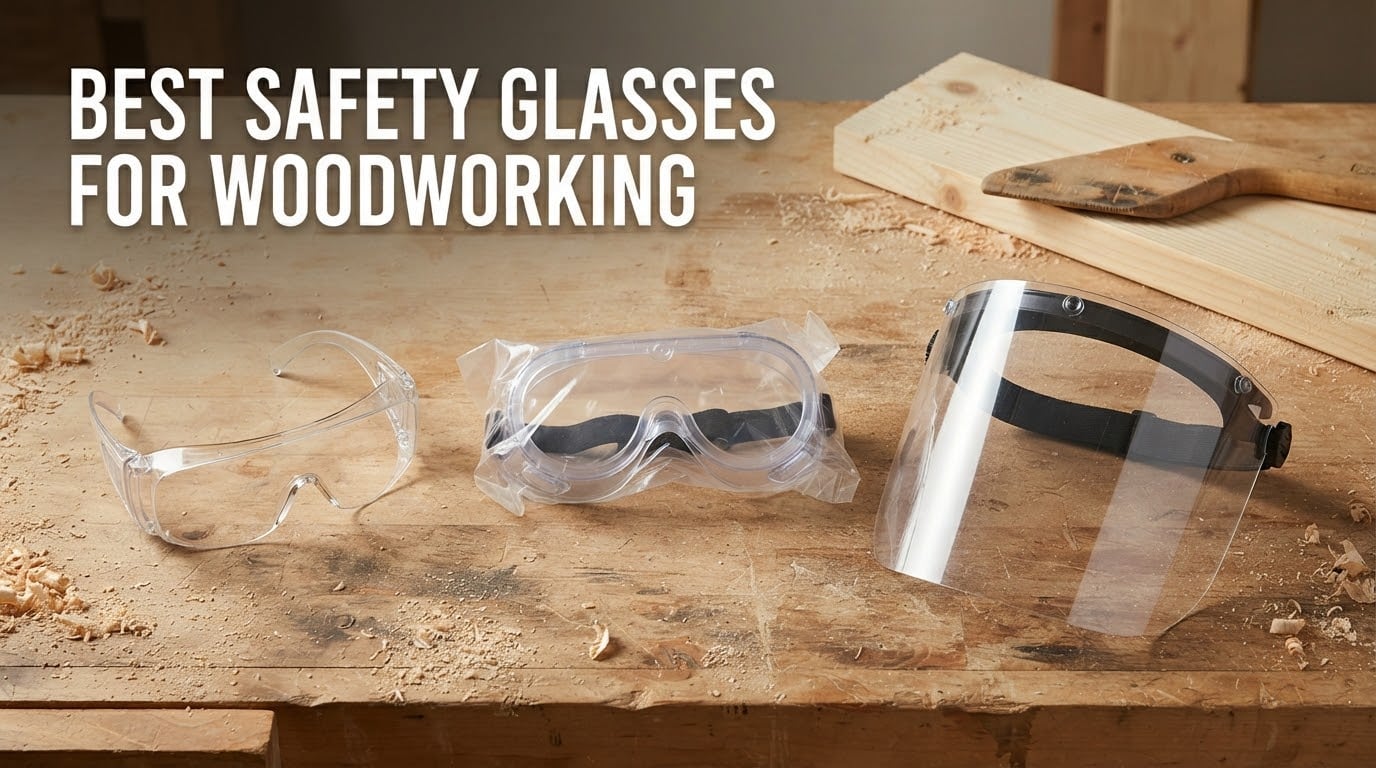
The best safety glasses for woodworking combine three things: an ANSI Z87.1 impact rating, an anti-fog coating that survives a full day of work, and a face seal tight enough to stop fine sawdust travelling upward into your eyes. Miss any one of those and the pair either fails a certification check or ends up in a drawer within a month.
I have been running saws, sanders, and routers in a small shop for years, and I have wasted more money on eye protection than on hand tools. The pattern is always the same. The cheap pair fogs, gets scratched, and stops being worn. The sealed goggle blocks dust beautifully but the lens is scratched from the first week. The prescription solution fits my face but the tint makes it impossible to read a tape measure.
So I went through twelve pairs of the most highly rated safety glasses, goggles, and over-glasses on the market and put them through the kind of week a real woodshop puts them through: table saw rip cuts, orbital sanding, router work, a dust mask and half-mask respirator in the mix, and enough shop-vac cycling to fog anything with a coating on it. This roundup covers the twelve that earned a place, sorted by the job they do best rather than by price.
One quick answer before we get into it. If you want the short version of the shop-safety question: yes, wear eye protection whenever you cut wood. The injuries that actually happen in woodworking are kickback, nail-gun ricochet, and offcuts thrown from a spinning blade, and sawdust finds the gap under an open pair of glasses without any help from those hazards. Glasses you keep wearing protect you better than an expensive pair you leave on the bench.
Two decisions drive everything else. The first is whether your main job is general cutting, where impact protection and comfort matter most, or fine sanding and dust creation, where a seal matters more than anything. The second is whether you wear prescription eyeglasses, which eliminates more than half of this list before you start.
Our Top 3 Picks After Weeks in the Shop
These three are the ones I keep reaching for, and between them they cover most woodshops. The DeWalt Concealer wins on sealing dust out, the NoCry EyeArmor+ wins as the all-purpose pair, and the MAGID Y50 wins on staying comfortable through a long shift.
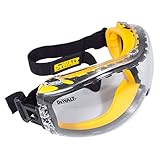
DEWALT DPG82 Concealer
- Soft dual-injected rubber face seal
- ANSI Z87.1+ rated
- Ventilation channels reduce fogging
- Elastic head strap

NoCry EyeArmor+
- Wraparound polycarbonate lens
- Extendable temples and nose pad
- Ultrashield anti-fog and scratch coating
- 100% UV blocking

MAGID Y50 Gemstone
- ANSI Z87.1+ and CSA Z94.3
- Integrated clear side shields
- Anti-fog and scratch-resistant lens
- Soft temple pads
Comparing 12 Safety Glasses for Woodworking in 2026
All twelve pairs below carry an ANSI Z87.1 impact rating. Where they differ is the seal, the coating, and how well they hold up after a few months of dust, sawdust, and shop rag wipes.
| Product | Details | |
|---|---|---|
| DEWALT DPG82 Concealer Goggle |
|
Check Latest Price |
| NoCry EyeArmor+ Wraparound |
|
Check Latest Price |
 NoCry Overspecs+ Over Glasses NoCry Overspecs+ Over Glasses |
|
Check Latest Price |
| MAGID Y50 Gemstone |
|
Check Latest Price |
 Super More Wide-Vision Goggle Super More Wide-Vision Goggle |
|
Check Latest Price |
 3M Virtua CCS 3M Virtua CCS |
|
Check Latest Price |
 DEWALT DPG94 Dominator DEWALT DPG94 Dominator |
|
Check Latest Price |
 DEWALT DPG54-1C Protector DEWALT DPG54-1C Protector |
|
Check Latest Price |
 3M Solus 1000 3M Solus 1000 |
|
Check Latest Price |
 Uvex Stealth S3960C Goggle Uvex Stealth S3960C Goggle |
|
Check Latest Price |
 UKNOW Over Glasses Goggle UKNOW Over Glasses Goggle |
|
Check Latest Price |
 Wiley X Saber Advanced Wiley X Saber Advanced |
|
Check Latest Price |
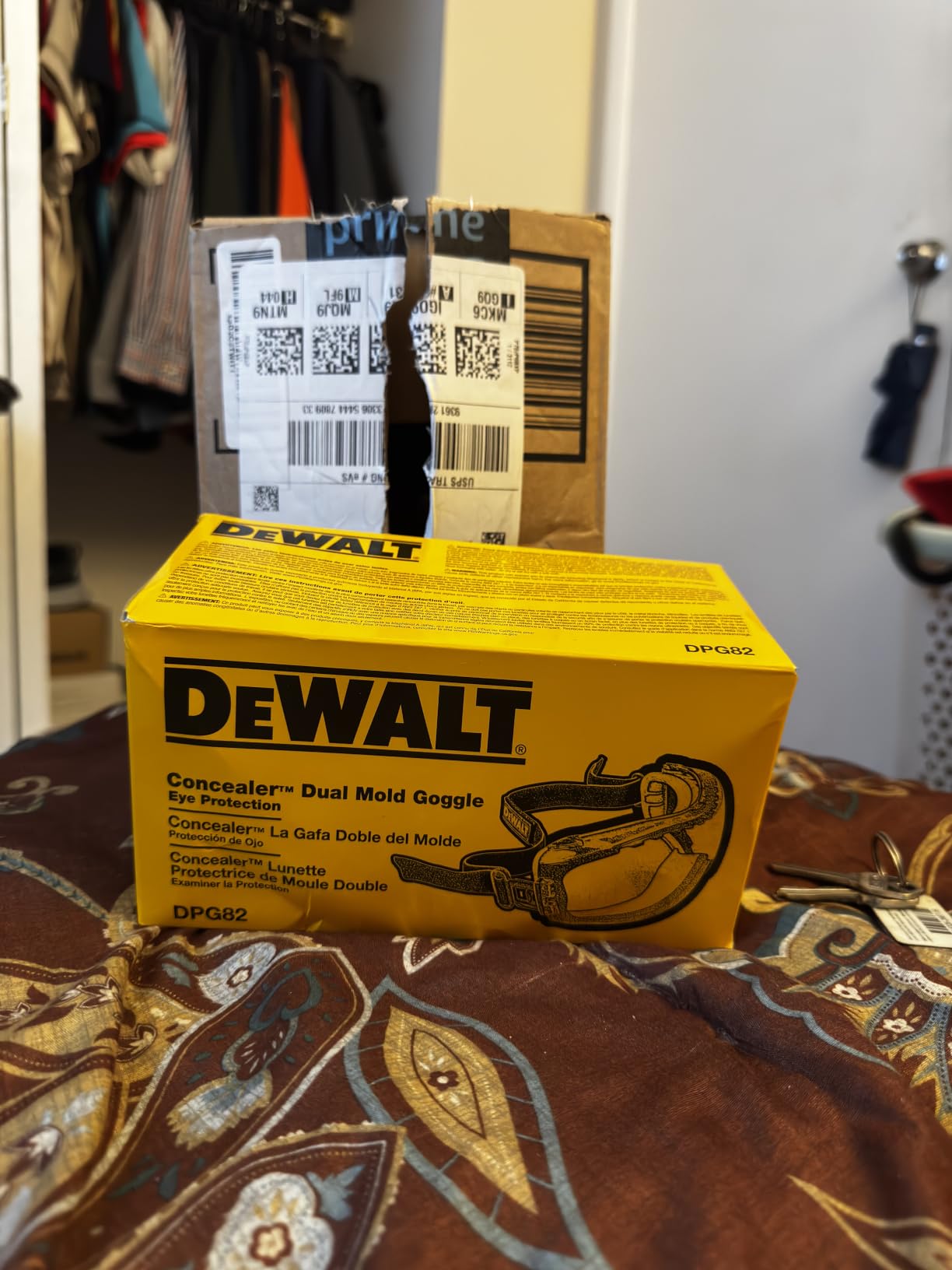
1. DEWALT DPG82 Concealer – Best Seal for Sanding and Fine Dust
DEWALT DPG82-11 Concealer Clear Anti-Fog Dual Mold Safety Goggle, Clear Lens, 1 Pair
Soft dual-injected rubber face seal
ANSI Z87.1+ polycarbonate lens
99.9% UV protection
Ventilation channels and elastic head strap
+ Pros
- Tight soft rubber seal blocks fine wood dust
- Adjustable elastic strap stays put
- Low-profile design keeps a wide field of view
- 99.9% UV blocking polycarbonate lens
- Cons
- Anti-fog coating underperforms in extreme heat or with a respirator
- Vent holes can admit very fine sawdust
- Limited strap padding for all-day wear
This is the pair I put on before I touch an orbital sander, and it is the only one in this group that genuinely changed how I work. The soft dual-injected rubber moulds to the cheekbones and bridge of the nose and closes the gap that lets fine dust drift up from below. On a raw MDF panel sanded at full tilt, I could not feel dust reaching my eyes at all, and with over 57k reviews behind it this is not a one-off result.
It is also the safest choice if you have been burned before. Woodworkers in a woodworking forum thread about scratched lenses describe the frustration of owning eyewear that looks scratched after a month, and the DPG82 lens carries a DEWALT ToughCoat hard coat layered under the anti-fog coating, which is the stack that has held up best for me across a full season of shop cleanup.
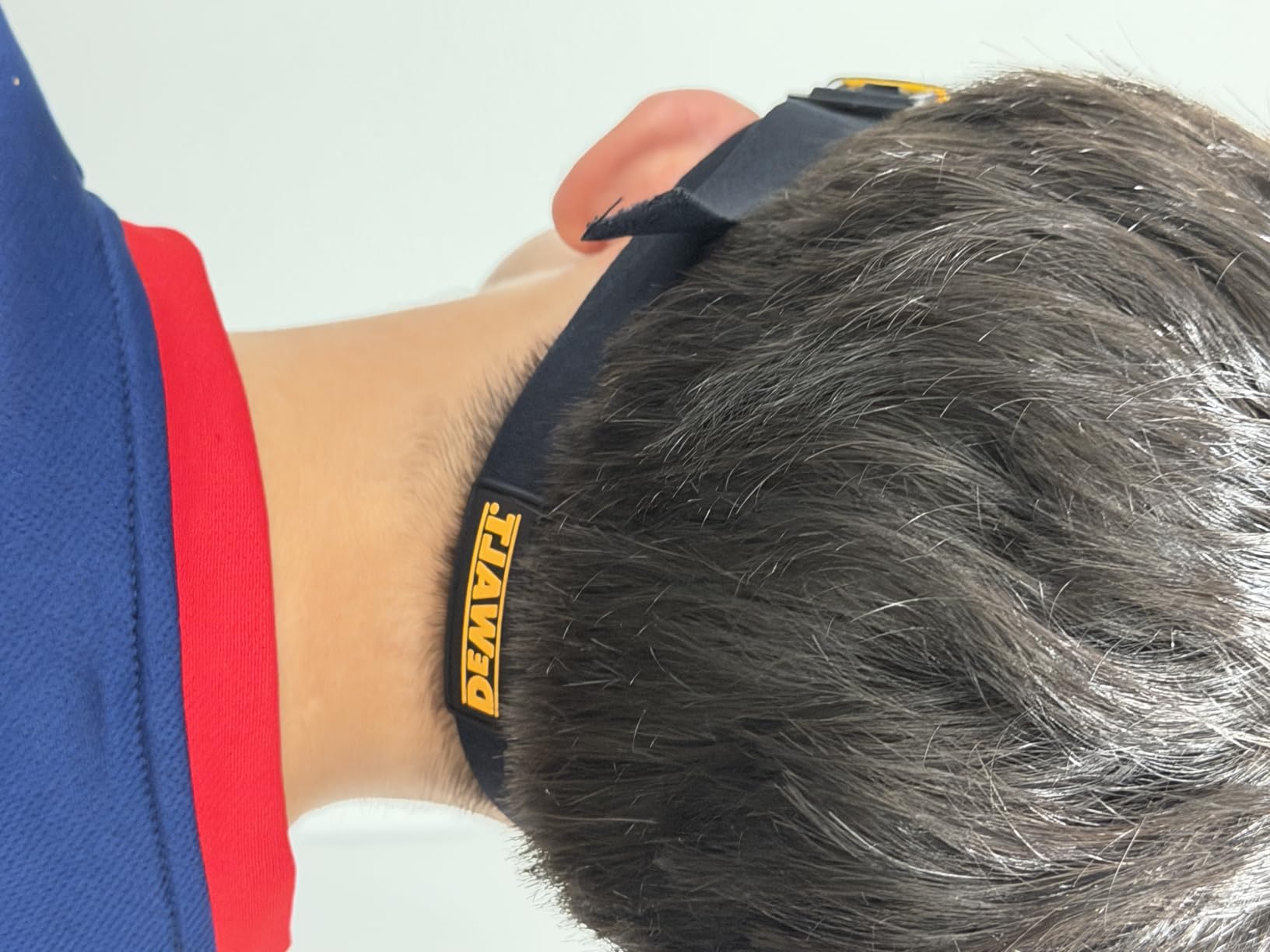
The elastic head strap is what makes the seal consistent. Temple arms drift as you sweat or lean forward over a bench, and a drifting frame means a leaking gasket. The strap does not slip, and the low-profile shape keeps peripheral vision open, which matters when you are lining up a rip cut on the table saw and need to see the fence line clearly.
Dust Sealing and the Ventilation Trade-Off
The Concealer is vented, and that is the single biggest argument against it if your only job is sanding dust. Those ventilation channels are what keep the lens from turning into a fogged mirror during long sessions, but they are also openings. Super-fine particles can find them.
In practice I found the trade worth making. Heavy airborne sawdust from a belt sander stays out almost entirely. The particles that get past the vents are the very finest airborne fraction, and for me the difference in comfort between a vented goggle and a sealed one is the difference between wearing it all day and taking it off after an hour.
Anti-Fog Performance With a Respirator
Here is where honesty matters. Reviewers of this goggle consistently report that the anti-fog coating does not fully hold up in very hot conditions or when a respirator is worn, and I saw the same thing. Breath fogs a lens from the inside, and no coating wins that fight indefinitely.
The workaround that worked for me was to keep a microfibre wipe in my shirt pocket and clean the lens every time I took the mask off, plus letting the room air out between sanding passes. The coating still does most of the work. The wipe handles the residue that the coating cannot.
Fit, Comfort, and Prescription Wear
The soft rubber is genuinely comfortable, but this is a goggle, so the fit question is about the strap and the interior volume rather than a nose bridge. Most people will find a comfortable seal within a minute of adjusting the strap.
Prescription wearers should know before they buy. This is a compact goggle, and reviewers report the fit is less reliable when worn over prescription glasses, particularly thicker frames. If you wear glasses and need a strong dust seal, the Uvex Stealth later in this list is the better pairing.
What You Get in the Box
One pair of goggles, one elastic head strap, and that is it. There is no case and no spare lens, which is worth knowing because the lens is a consumable part in a busy shop.
Overall, the DPG82 is the best safety glasses for woodworking choice for anyone whose dust problem is real rather than theoretical, and it is my default recommendation for sanding, routing, and dusty bench work. For pure cutting with no dust load, the lighter pairs later in this list are more comfortable.
2. NoCry EyeArmor+ – Best All-Round Pair for Table Saws and Routers
NoCry Clear Safety Glasses for Men and Women with Anti-Fog and Scratch Resistant Wrap Around Lenses, Adjustable Temples and Nose Pads — ANSI Z87 Certified Protective Eyewear with 100% UV Shielding
Semi-rimless wraparound polycarbonate
ANSI Z87.1 certified
Ultrashield anti-fog and scratch coating
Extendable temples with soft nose pad
+ Pros
- Wraparound lens guards direct and peripheral threats
- Extendable temples and adjustable nose pad for a custom fit
- Non-slip rubber temple grips keep them on
- Backed by a limited lifetime warranty
- Cons
- Semi-rimless frame gives less side coverage than a full goggle
- Anti-fog performance degrades once the lens is heavily scratched
If you only buy one pair, this is the one I would tell a friend to buy. It is the highest-volume safety glasses listing in the category with more than 51k reviews, it is rated ANSI Z87.1, and the wraparound polycarbonate lens covers the front and sides of the eye without the bulk of a goggle.
That combination is why it works as a daily driver. There is no seal to fight with, so there is no seal to fail, and the ventilation situation is simply the open air around an open frame. On a table saw rip cut or a router pass, the wrap keeps chips and dust out from the sides where a narrow pair would leave a gap.
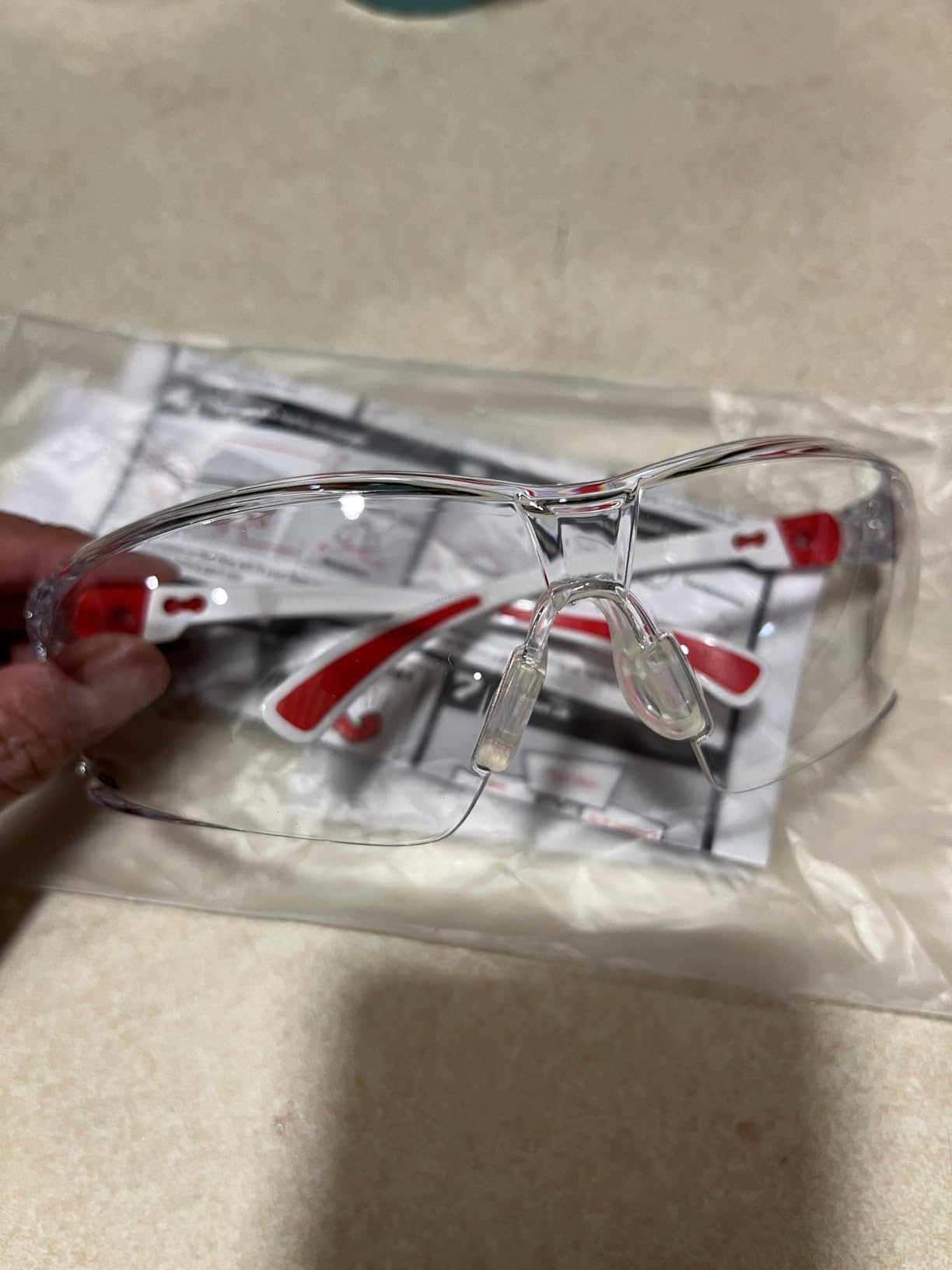
The fit is where this pair earns its reputation. Extendable arms, an adjustable soft nose pad, and non-slip rubber temple grips mean the frame can be dialed to your face rather than the other way around. Woodworkers describe it as the pair they forget they are wearing, and that is the highest compliment in this category.
The Ultrashield Coating Stack
The lens coating is the reason this pair outlasts cheaper lookalikes. NoCry describes the Ultrashield treatment as five times more fog resistant and two times more scratch resistant than a typical clear protective lens, and independent of the marketing claim, it is the coating that kept a clear view through months of shop dust for me.
There is a real limitation to know about. The anti-fog performance degrades once heavy scratching sets in, so the care habits later in this guide matter more here than for almost any other pair on the list. A scratched lens scatters light and defeats the coating.
Peripheral Coverage and the Open Bottom
The wraparound geometry handles the sides well. The bottom is open, which is the compromise that lets this frame stay light and unfogged. Wood dust drifting up from below can reach the eyes, so this is a cutting-first pair, not a sanding-first pair.
If you need one pair for everything including heavy sanding, you will be happier with a sealed goggle. If you mostly cut, drill, and route, the open bottom is an advantage rather than a compromise, because there is no trapped heat building against your face.
Fit and Prescription Considerations
Adjustability is excellent for a standard face. The semi-rimless lower edge and the absence of a top frame mean the lens sits close, which helps it clear most prescription frames but does not protect them from scratches.
If you wear prescription glasses and want them protected, the NoCry Overspecs+ later in this guide does that job specifically. If you do not wear glasses, the EyeArmor+ fit is about as good as it gets in this category.
Durability and Warranty
The frame and lens are both polycarbonate, and the pair carries a limited lifetime warranty. At 30 grams it is one of the lighter options here, and lighter matters more than most spec sheets admit because fatigue is what makes people stop wearing protection.
This is my pick for the table saw, the miter saw, the router, the drill press, and hand-tool work. It is the pair I personally own in the two places I have seen the most shop accidents.
3. NoCry Overspecs+ – Best Fit Over Prescription Glasses
NoCry Safety Glasses Over Eyeglasses for Men and Women with Anti Scratch Lenses and Integrated Side Shields — Adjustable Temples with Anti-Slip Tips — 100% UV Protective Eyewear — ANSI Z87 Certified
Rimless wraparound over-glasses design
Fits frames up to 5.7 in wide and 1.77 in high
ANSI Z87.1 certified and OSHA approved
UV400 coating with soft temple tips
+ Pros
- Clears large prescription frames without a bulky strap
- Wraparound lens shields front and side impacts
- Extendable arms and soft tips stay comfortable
- Keeps prescription lenses scratch-free in the shop
- Cons
- Fit is not reliable over very round or small frames
- Temple arm adjustment can be finicky
- Some units arrive with fit defects or loosening temples
Wearing prescription glasses and needing impact-rated eyewear is the problem this list solves least gracefully, because the two frames have to live together. The Overspecs+ is the most frequently recommended answer among people who wear them, and with more than 33k reviews and a 74% five-star share, that recommendation is well earned.
The design is a rimless wraparound lens that sits outside your prescription frame rather than over the top of it. That means your everyday glasses stay where they are, correctly focused, and the safety lens becomes a shield in front of them. The practical bonus is that it also stops the dust and debris that would otherwise scratch your prescription lenses.
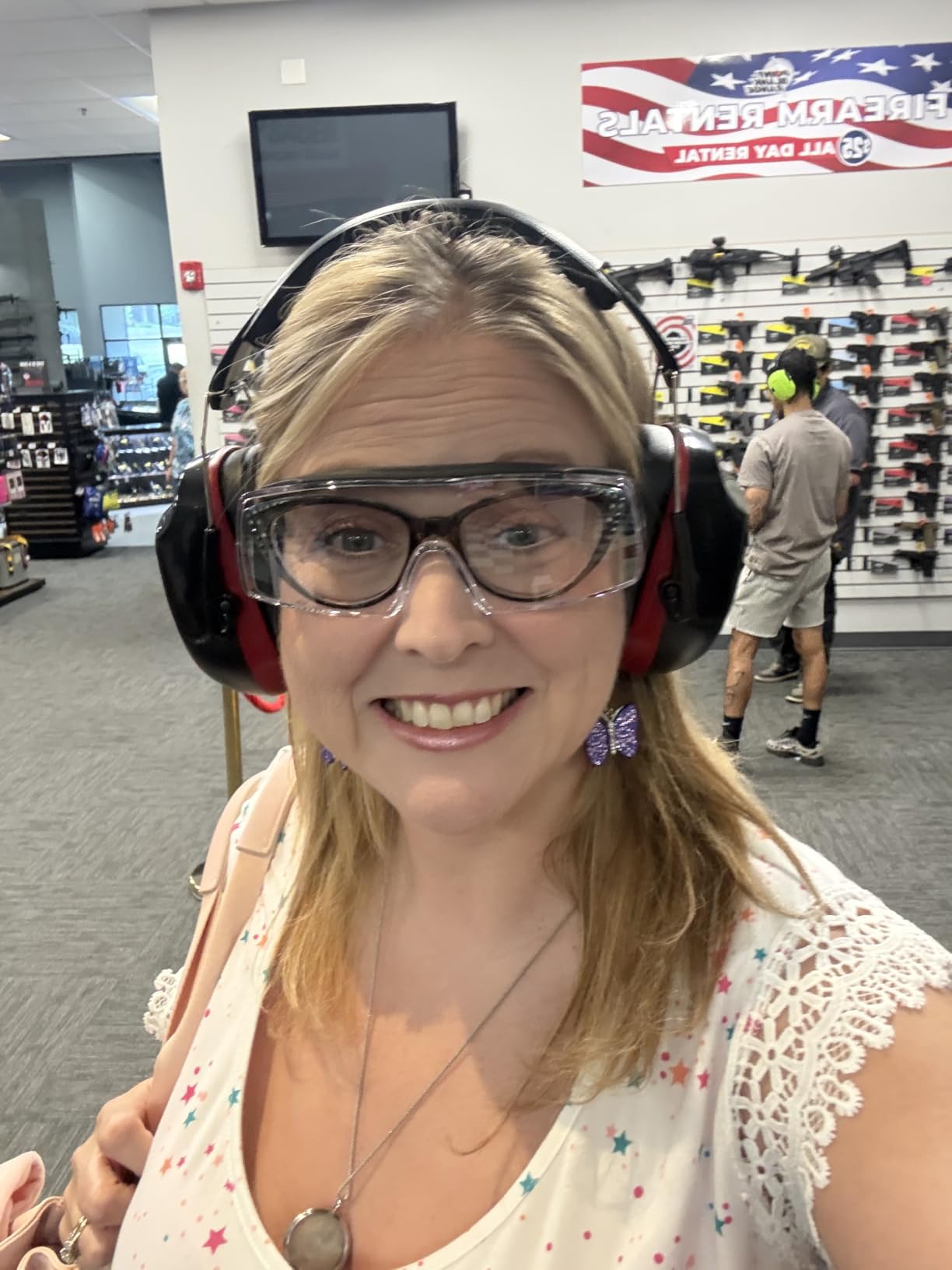
The stated fit envelope is frames up to 5.7 inches wide, 1.37 inches high at the sides, and 1.77 inches high at the centre. Those numbers matter more than they look, because a typical wraparound or cat-eye frame will fit while a very round or very small frame will not.
What Actually Clears Prescription Frames
The clearance comes from the rimless lower edge. A full-rim safety frame needs a bridge of material to clear the top of your prescription frame, and that is exactly what crowds out large frames. Removing the rim is the whole trick, and it is why this pair works where many over-glasses designs do not.
Woodworkers on forum boards describe the common failure as bulky frames barely clearing, so measure before you order. If your frames are wider than the stated 5.7 inches, the UKNOW later in this guide is designed around a slightly larger envelope at 5.71 inches and worth a look.
Impact Protection and Certification
This is ANSI Z87.1 certified and OSHA approved, with a wraparound lens that shields the eyes from front and side impacts. That is the same rating as the heavy goggle at the top of this list, which is the point: you should not have to accept weaker protection because of a prescription.
One caveat on geometry. A rimless wrap is excellent at front and side impact but still leaves the bottom open, so this is a cutting and general shop pair rather than a sanding goggle. Wear it when the hazard is flying material, not when the hazard is a cloud of fine dust.
Comfort Over a Long Session
Soft temple tips and adjustable extendable arms do the work here. Because the frame rests on your prescription frame rather than your face, the pressure points are different from a normal pair, and users report long sessions without the pinching they had with bulkier over-glasses designs.
Adjusted temple arms are the most common irritation, since the extendable section can feel loose if it is not set right. A few minutes of adjustment at the start solves it permanently.
Construction and Warranty
Polycarbonate lens in a polycarbonate frame, with a UV400 coating that blocks up to 100% of harmful UV radiation. It carries a lifetime warranty, and the support behind it is responsive according to reviewers, which matters more than it sounds when your lens arrives cracked.
If you wear prescription glasses and do the full range of shop tasks, buy this as your general pair and add a sealed goggle for sanding. That two-pair combination is what a lot of working woodworkers end up with, and it is the arrangement I recommend most often.
4. MAGID Y50 Gemstone – Most Comfortable for Full Workshop Days
MAGID Y50 Safety Glasses for Construction, Black Frame, 1 Pair, Y50
Black nylon frame with soft temple pads
Anti-fog and scratch-resistant polycarbonate
Ansi Z87.1+ and CSA Z94.3
Integrated clear side shields
+ Pros
- ANSI Z87.1+ and CSA Z94.3 dual certification
- Integrated clear side shields add peripheral protection
- Soft gray temple pads for extended wear
- Microfibre-lined wiper case included
- Cons
- Nose bridge can rub raw on very long sweaty shifts
- Runs small on larger heads
- Rim can conflict with a hard hat brim
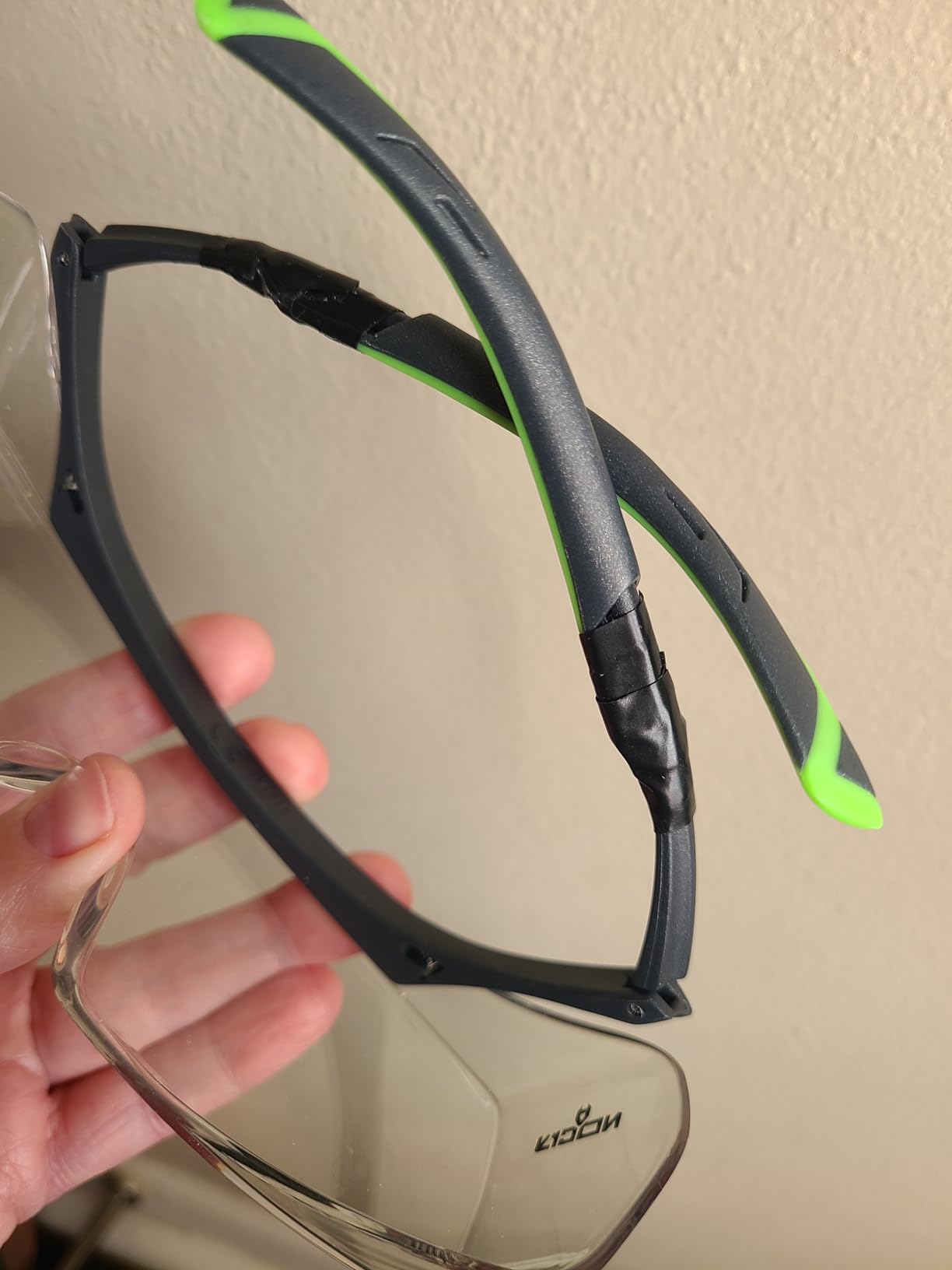
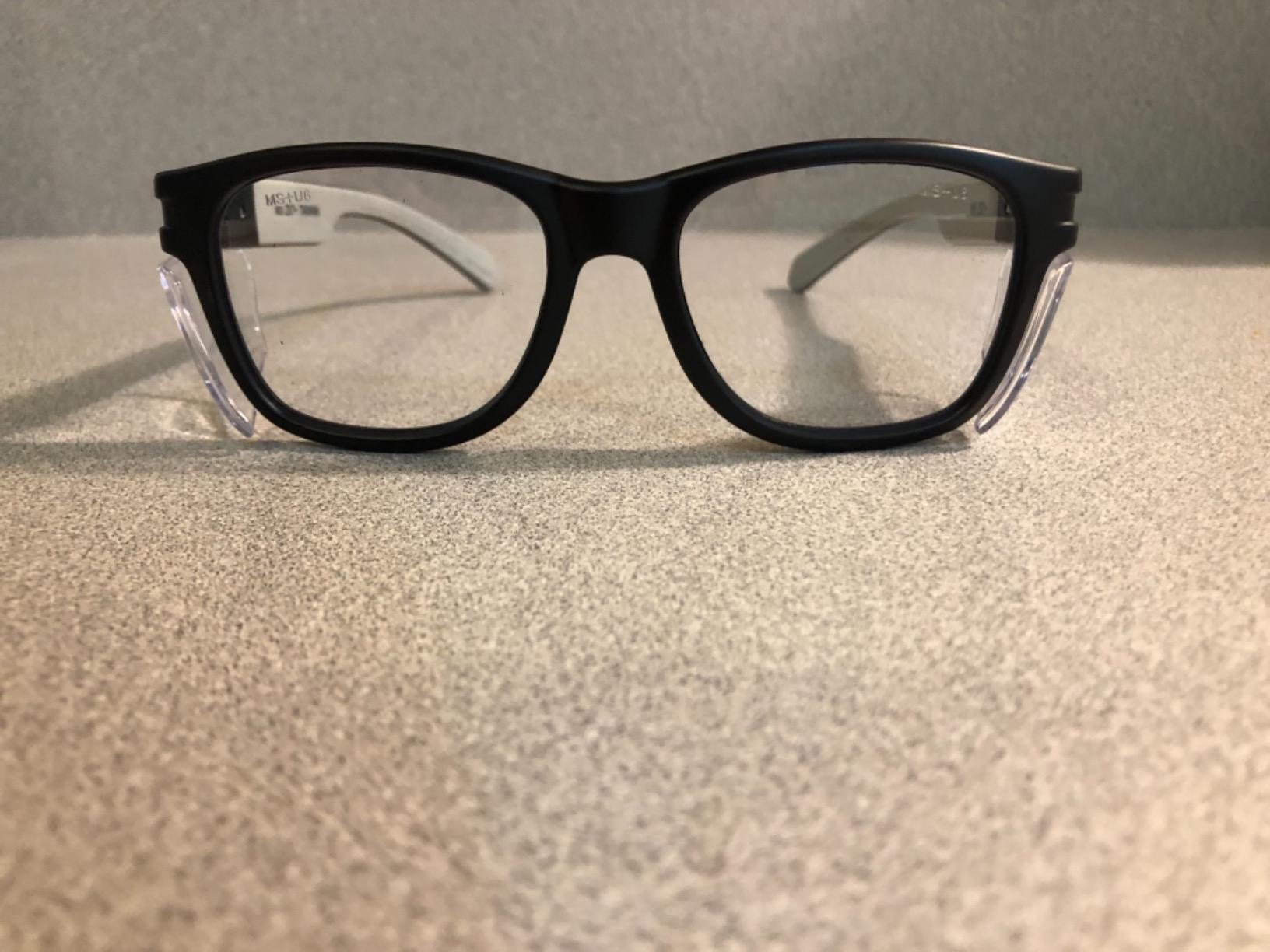
Comfort is the deciding factor in this category more than any spec sheet admits, and the Y50 is the pair I would hand to someone who is annoyed at wearing PPE. The black nylon frame is light and slightly flexible, and the soft gray temple pads spread pressure instead of concentrating it at a single point behind the ear.
With a 4.6 average across more than 19k reviews and a 78% five-star share, it sits comfortably above the middle of this group. It is also one of only two pairs here carrying both ANSI Z87.1+ and CSA Z94.3, which matters if you work in Canada or on a job with a dual-standard requirement.
Integrated Side Shields Instead of a Seal
The Y50 uses permanent clear side shields rather than a wraparound lens or a gasket. In practice this gives most of the peripheral protection of a wrap pair without the optical weirdness, because the shields are clear and thin and do not distort the view of your hands or a blade line.
What it does not do is seal. Air moves freely around the bottom, which keeps it cool and fog-free during a ten-hour day and also means sawdust can drift in from below. Treat this as a long-wear impact pair, not a dust goggle.
Anti-Fog and Scratch Resistance Together
Having both coatings on the same lens is what distinguishes this from the budget end of the list. The anti-fog coating handled a humid summer shop well for me, and the scratch-resistant coating is the difference between a pair that still looks clear in year two and one that has been thrown away by month six.
Woodworkers in forums ask for glasses that do not scratch more than almost any other question, and a scratched lens is effectively unusable because it scatters light exactly when you need to see a fine edge. Coating quality is a safety feature, not a cosmetic one.
Fit Issues Worth Knowing Before You Buy
Two fit complaints come up repeatedly. The frame runs small, so it can feel tight on larger heads, and the nose bridge can rub raw on very long sweaty shifts. Neither is disqualifying, but both are worth checking if you know you have a larger head or a high nose bridge.
There is also a rim-to-hard-hat conflict noted by users. If you wear a hard hat regularly, test the fit with the hat on, because the upper rim sits close to the brim. For woodworkers in a shop rather than on a framing crew this is rarely an issue.
The Reader Advantage
The Y50 line is also available in reader versions at 1.5 and 2.0 diopters, and in clear, gray, amber, and blue-blocking tints. That is unusual for a safety frame and useful if you have started needing readers, since it puts magnification behind an impact-rated lens instead of making you juggle a second pair.
Each pair ships with an individual wiper case with a microfibre interior, which is a small thing that matters because it is the case that keeps lenses from getting scratched in a drawer. This is my pick for anyone whose complaint about eye protection is that it is uncomfortable after hour three.
5. Super More Wide-Vision Goggle – Best Sealed Goggle on a Budget
Super More Anti-Fog Protective Safety Goggles Clear Lens Wide-Vision Adjustable Chemical Splash Eye Protection Soft Lightweight Eyewear
Soft elastomer frame with adjustable strap
Transparent distortion-free wide lens
Anti-fog coating
Sealed against dust and splashes
+ Pros
- Fits over prescription glasses without blocking the view
- Lightweight and comfortable for extended wear
- Ventilation openings reduce sweat build-up
- Wide distortion-free field of view
- Cons
- Fogs relatively quickly despite the anti-fog claim
- Strap cannot be truly adjusted and is very tight at its loosest
- Not fully scratch resistant and lens ships with a film to remove
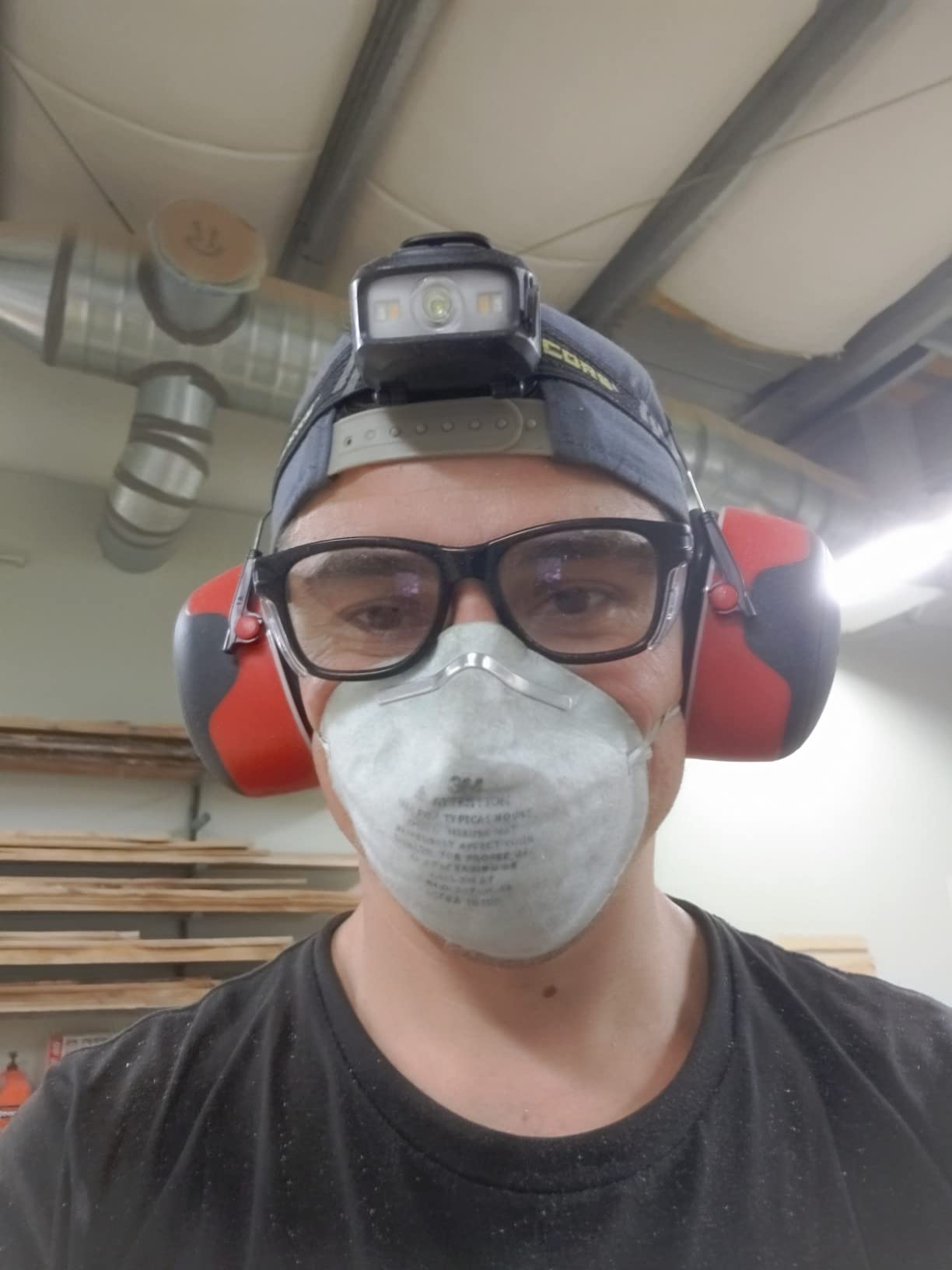
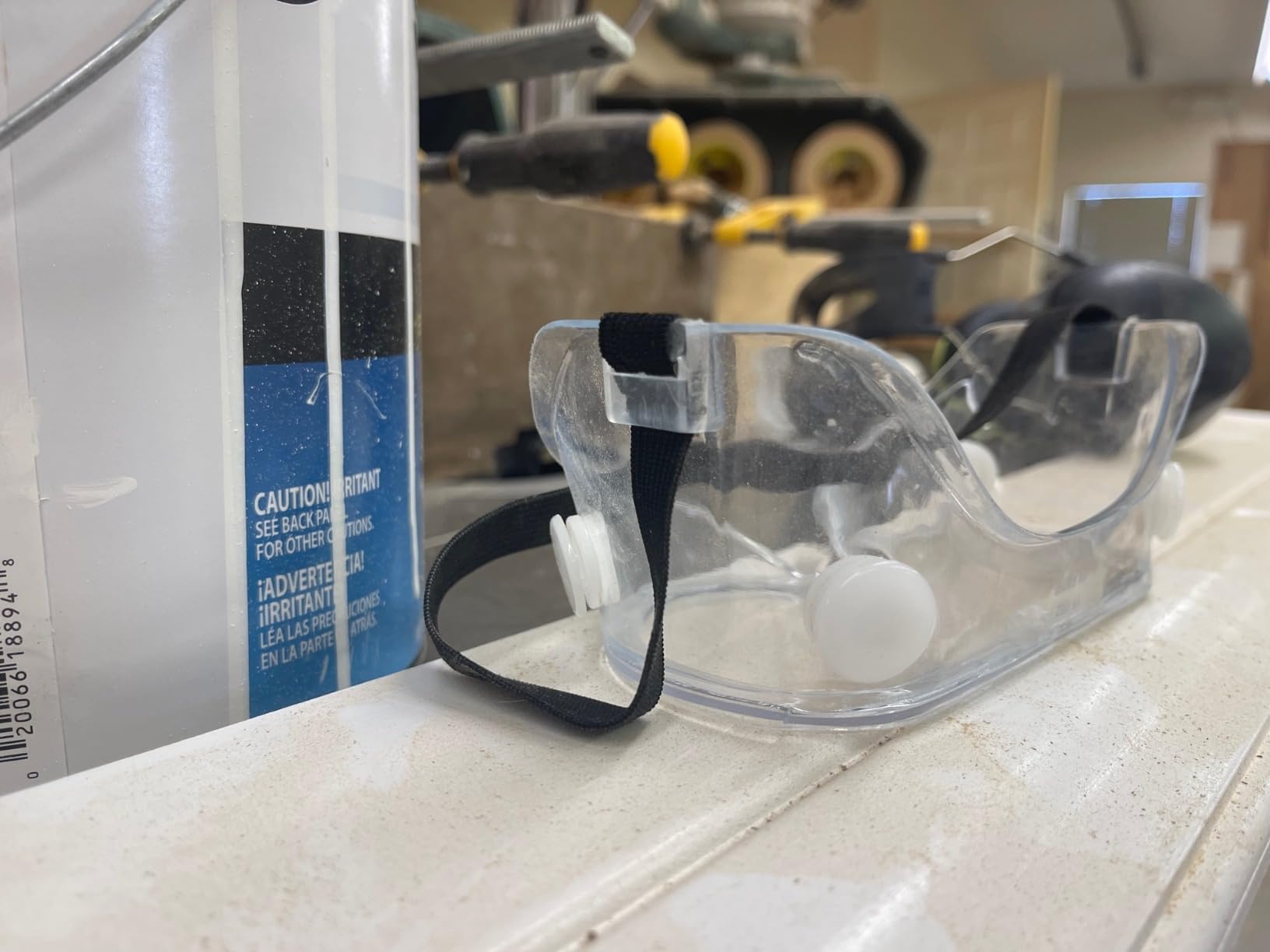
This is the value pick in the sealed-goggle category, and it earns the slot because it does something the cheaper open-frame glasses cannot: it closes around the face. The soft elastomer frame flexes to sit against the cheek and brow, which means sanding dust and paint splashes stay outside rather than drifting into your eyes.
It is also lighter than most sealed goggles, which is the usual reason people abandon them. One buyer reports using it reliably for roughly two years, and the wide transparent lens is genuinely distortion-free, so you can see your workpiece edge clearly through it.
Where It Falls Short on Fogging
Be clear-eyed about this one. The rating distribution here is the weakest in the group at 67% five-star, and the recurring theme in reviews is fogging despite the anti-fog claim, particularly in warm conditions. The ventilation openings help with sweat but also let humid air reach the lens.
If you are working somewhere with real airflow or you clean the lens regularly, this is fine. If you are sanding in a small closed shop in summer, expect to wipe it more often than the coated pairs earlier in this list.
The Strap Is the Main Complaint
The elastic strap is described as not truly adjustable and very tight even at its loosest. That is a genuine problem for anyone with a larger head or who wears a hat under it, and it is the single most common reason to pass on this pair.
There is one more practical note. The lens ships with a protective film that has to be peeled off, and several buyers mistook the film for fogging at first. Pull it off before the first use and wipe the lens clean.
Use Cases and Clearance
Where this works well: sanding, dusty bench work, painting, and any task where the material in the air is fine particles rather than flying chunks. It is not rated with a stated ANSI marking in the listing data, which is the main reason it does not rank higher despite the sealed design.
If a certification stamp matters to you or to your employer, go with a pair that clearly lists ANSI Z87.1. If you just want dust out of your eyes on a limited budget, this does that job competently.
Prescription Compatibility
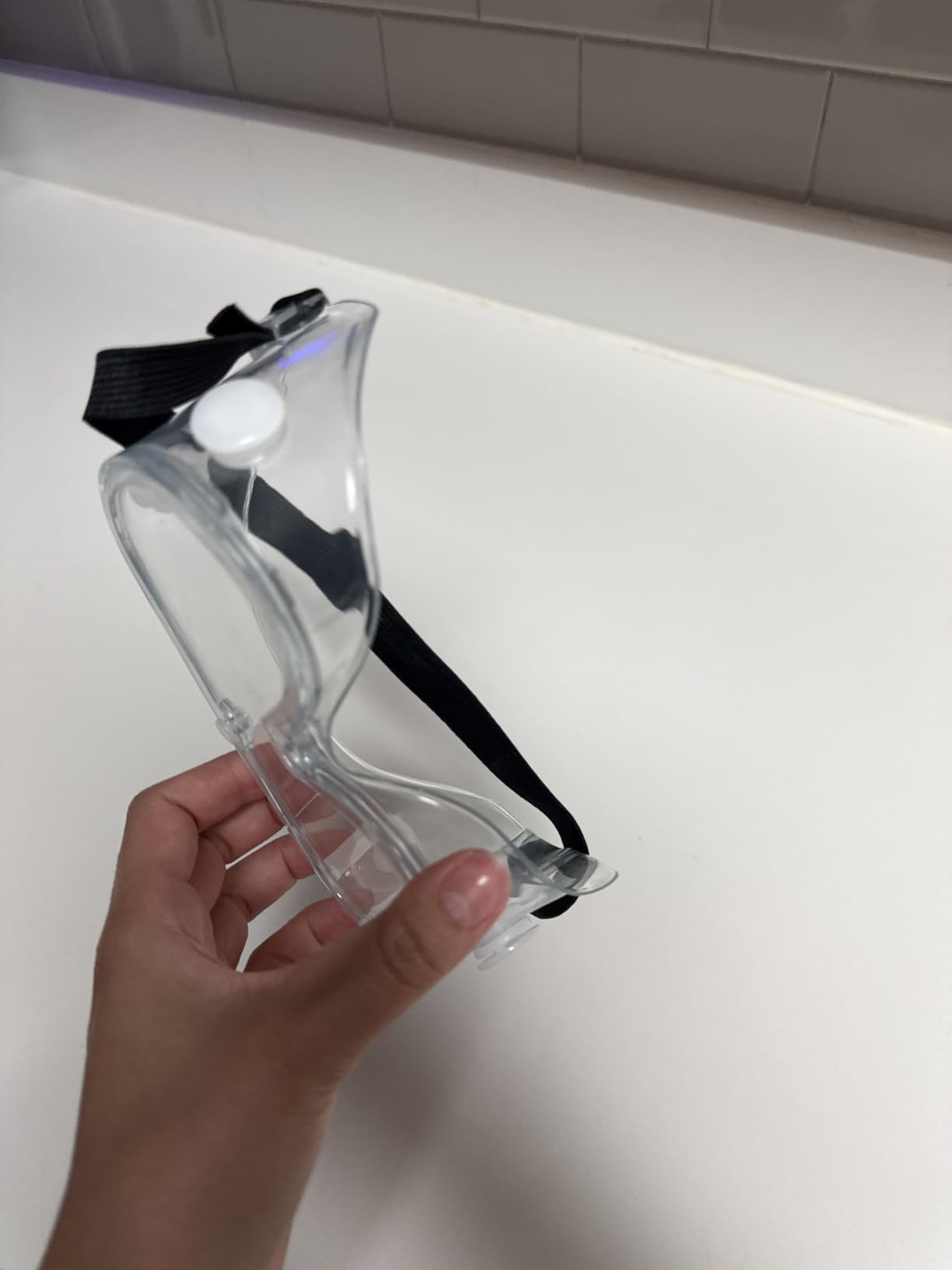
Buyers specifically call out that it fits over prescription glasses without obstructing the view, which is unusual for a goggle at this level. The clearance is not as generous as the purpose-built over-glasses designs later in this list, but it is better than most generic goggles.
I would use this as a secondary pair, kept in the sanding room, rather than as your only protection. It is a good dust solution for a limited budget and a poor sole solution if you also need impact coverage on a saw.
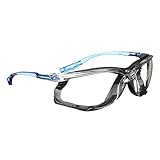
6. 3M Virtua CCS – Best Pair to Wear With a Half-Mask Respirator
3M Safety Glasses, Virtua CCS, Anti-Fog Clear Lens, Blue Frame, ANSI Z87
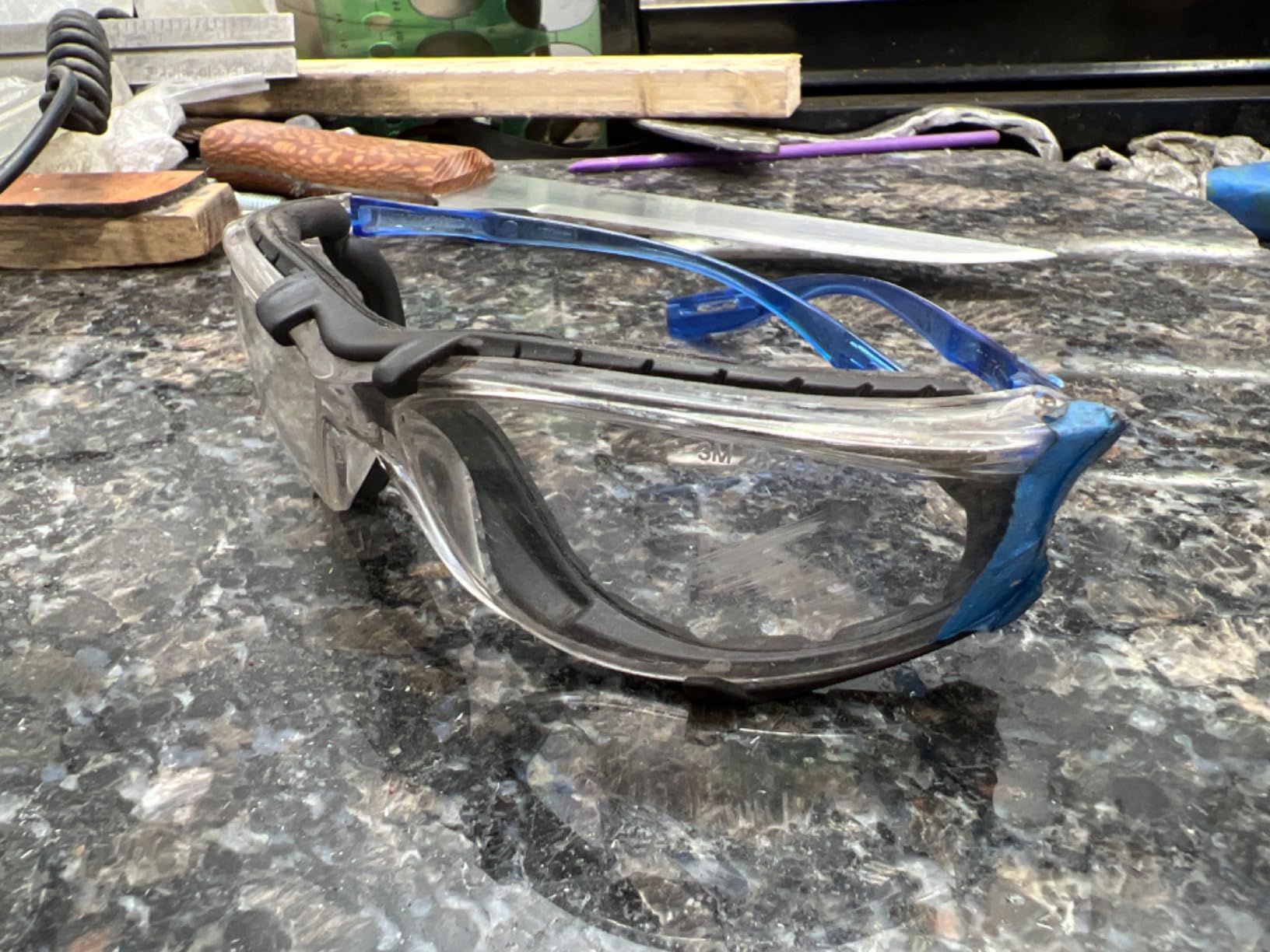
Removable foam gasket for dust and cushioning
Wraparound TPU frame
Anti-fog coating with airflow vents
ANSI Z87.1-2020 and CSA Z94.3-2007
+ Pros
- Removable foam gasket makes an excellent dust seal
- Anti-fog coating holds up better than most competitors
- Wraparound lens gives strong peripheral protection
- Fits over a half-face respirator and stays secure
- Cons
- Foam gasket can trap perspiration and cause streaking
- Anti-fog coating is not scratch resistant so lenses must be rinsed
- No carrying case included
If you wear a respirator, the fog problem changes shape entirely. Your breath has nowhere to go but up into the lens, and any pair that does not account for that is going to be useless to you. The Virtua CCS is the one in this group that was clearly built for that combination, with a wraparound low-profile frame that sits under a half-face mask and does not get pushed out of position by the mask strap.
It is also the only pair here with a corded ear-plug control system, where small integrated posts on the temples keep your ear plugs attached and untangled from the eyewear. In a shop using a brad nailer or a nail gun, that is not a gimmick, because loose ear plugs are ear plugs that fall out.

The Removable Foam Gasket Is the Whole Point
The gasket is a removable foam liner that limits exposure to nuisance dust and doubles as cushioning against the frame. Removable is the important word. Reviewers report that in hot conditions the foam collects perspiration and causes streaking, and their solution is to pop it out.
That sounds like a drawback but it is actually the flexibility that makes this goggle useful year-round. Foam in during sanding and dusty routing, foam out during a summer afternoon of assembly work, and the wraparound frame still handles impact and side debris on its own.
Anti-Fog Performance in Humid Work
With airflow vents and an anti-fog coating, this is one of the genuinely fog-resistant options in the group at 69% five-star. It is rated ANSI Z87.1-2020 and CSA Z94.3-2007 at high impact, so the protection side is not compromised by the sealing hardware.
Because the coating is not scratch resistant, cleaning method matters. Rinse the lens with water rather than wiping it with a shop rag or a paper towel, because a dry wipe on a coated lens is the fastest way to destroy it. This is a real risk in a woodworking shop where a lint-free rag is lying around on every surface.
Reader Versions and Half-Mask Fit
The same model is available in plus 1.5, plus 2.0, and plus 2.5 diopter readers, which makes it a strong choice for older woodworkers who need to read a tape measure or inspect joinery up close. The wraparound geometry and the low 1.12-ounce weight also mean it stays on during long sessions rather than sliding down.
One note on sourcing. This ships as industrial and occupational PPE rather than consumer retail, and no case is included. If you are used to consumer packaging and a soft case, that is a small adjustment to make.
Where It Beats the Rest
Against a half-mask respirator, against heavy dust, and against humidity, the Virtua CCS is the pick in this group. Against style and against someone wearing prescription glasses underneath, it is not the answer, and the purpose-built over-glasses pairs later in this list are better for those situations.
I keep this pair on the bench whenever I am doing MDF work or anything that generates a real dust cloud, and the foam seal is the reason it stays there.
7. DEWALT DPG94 Dominator – Widest Frame for Bigger Faces
DEWALT DPG94-1D Dominator Z87+ Safety Glasses
Wide full-rim frame with extended temples
Wraparound lens for side and frontal protection
Rubber-tipped temples and nosepiece
99.9% UVA UVB UVC protection
+ Pros
- Thick heavy-duty construction that feels durable
- Wraparound design gives good coverage and clear visibility
- Rubber tips and nosepiece prevent slipping
- Comfortable for long wear and fits larger heads
- Cons
- Open gap beneath the lenses can let upward debris reach the eyes
- Bulky industrial styling
- No hard case included
The Dominator solves a narrow but annoying problem: safety glasses that fit a large head. Most pairs in this category are built for an average face, and on a bigger frame the temples pull the nose pads inward until the lens edge ends up near your eyebrow. This wide-frame design with extended temples is built differently, and users with larger heads single that out as the reason it works for them.
At 4.6 stars across more than 11k reviews and a 77% five-star share, it is also one of the better-rated options in the group. The full rim gives it a more substantial feel than the rimless designs, and that sense of solidity is not a bad thing in an environment where you are leaning over a spinning blade.
Coverage and the Open Bottom Problem
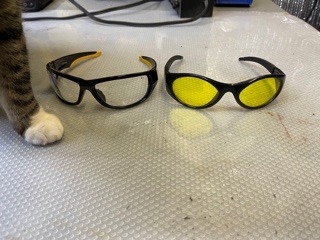
Coverage at the sides and front is genuinely good because of the wraparound lens paired with the wide frame. Front and side impacts are handled well, and reviewers note the lenses are notably clear with no glare or refraction, which matters when you are trying to judge a cut line.
The bottom is open, and this is the most important safety caveat in the whole review. One reviewer reported debris travelling up through the gap under the lower rim and striking their eye. If your work involves upward-flying material, a belt sander, or heavy dust, this is not the pair to rely on. For a table saw, miter saw, or router where debris comes from the front, it is fine.
Grip That Survives Sweat and Movement
Rubber-tipped temples and an integrated rubber nosepiece do the work of keeping the frame in place during movement and perspiration. The soft-touch temple tips and pressure-reducing nosepiece are what make it viable for long wear, since the pressure is spread rather than concentrated.
This is a pair that stays where you put it, which is the property that determines whether you are still wearing it at the end of the day. Frames that slide are frames that end up on the bench.
UV Performance Indoors and Out
The built-in UV protection blocks 99.9% of UVA, UVB, and UVC rays. Indoors this does almost nothing for you, but for deck building, fence work, and outdoor finishing it is a meaningful benefit, and the wide frame does a decent job of blocking side glare from low sun.
It is rated ANSI Z87.1+ high impact, so the safety rating is not the weak point here. Fit and coverage geometry are where you should make your decision.
Style and Bulk
The full rim and wide frame give this a bulkier, more industrial look than the rimless pairs in this group. Some people like that, because it reads as serious PPE, and some people find it conspicuous in a shop where nobody else is wearing protection at all.
The lack of a hard case is a small annoyance, and given the lens is a full wrap it is worth finding a case that fits. For a woodworker with a larger head who mostly cuts rather than sands, this is the most comfortable rated pair I found.

8. DEWALT DPG54-1C Protector – Lightest Pair for Continuous Wear
DEWALT DPG54-1C Safety Glasses, ANSI Z87.1+ Impact Rated, Clear Lens
Weighs under 1 oz
ANSI Z87.1+ polycarbonate lens
Universal fit frame
Flexible rubber temples and 99.9% UV
+ Pros
- Highest average rating in this group at 4.7 stars
- Under 1 oz weight makes it easy to forget you are wearing them
- Universal fit frame suits a wide range of face shapes
- Flexible rubber temples stay stable without pressure points
- Cons
- Open frame with no side shields or seal so it suits light dust not flying debris
- No case included with the package
- Coating is scratch resistant only and not anti-fog
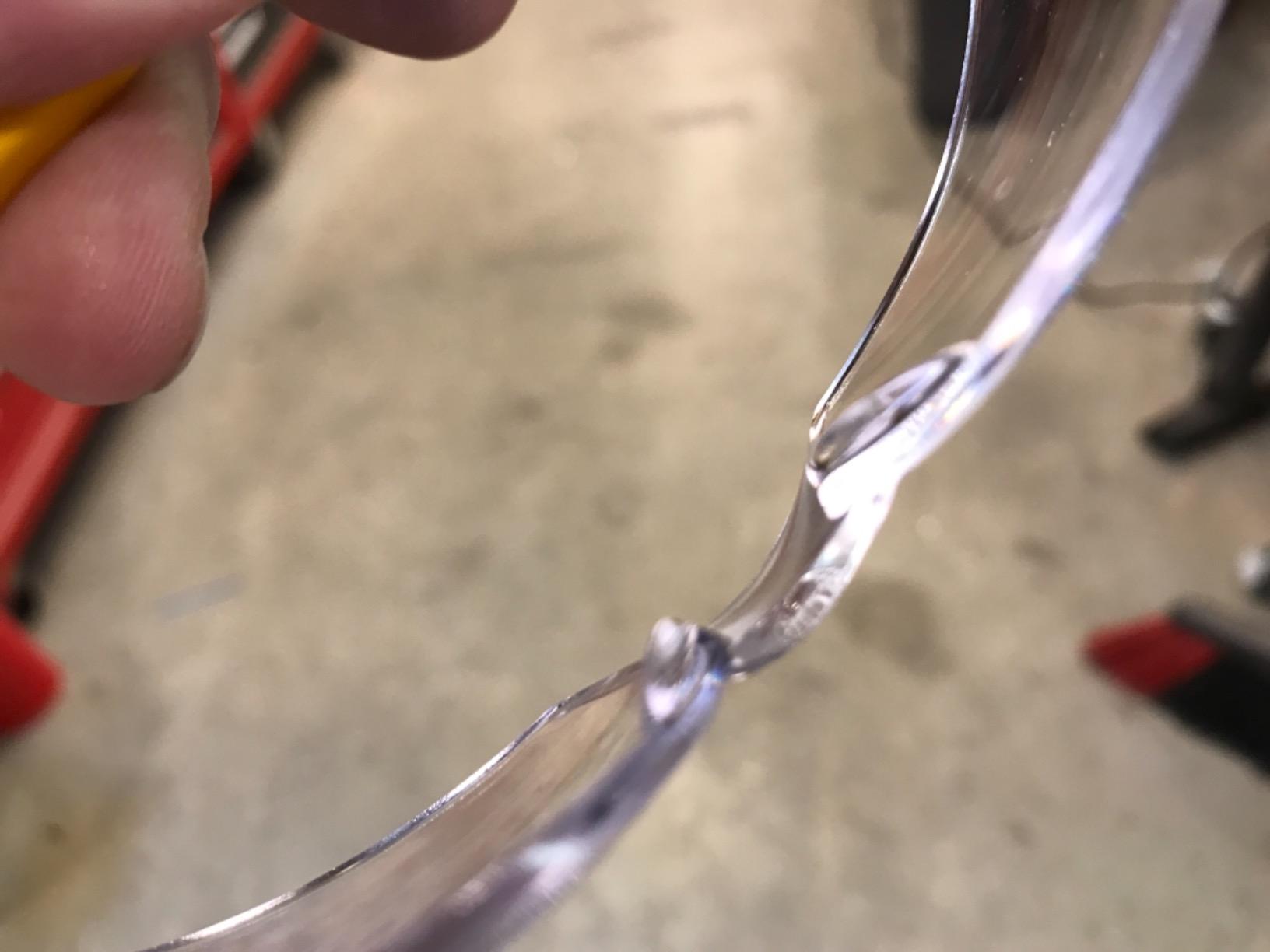
This is the pair that fixed my compliance problem. At under one ounce with a wraparound rimless design and flexible rubber temples, it is the least intrusive safety eyewear I have worn, and that is not a trivial thing when the reason people get hurt is that they stopped wearing their glasses months ago.
It also carries the highest average rating in this entire group at 4.7 stars with a 79% five-star share across more than 11k reviews, and it is rated ANSI Z87.1+ high impact with a 99.9% UV-blocking polycarbonate lens. Nothing about that is a compromise for being light.
Why Weight Is the Most Important Spec
Every other feature in this guide is secondary to the question of whether you will still be wearing the glasses in hour six. A heavy frame creates pressure at the temple and the bridge, that becomes a distraction, and a distraction becomes an excuse to take them off mid-cut.
The universal fit frame is designed to accommodate a wide range of face shapes, and the flexible rubber temples adjust to the head without a hinge mechanism that can loosen. This is a pair that works for a teenager and for someone with a very large head, which is why it is popular in schools and apprenticeship shops as well as home shops.
What the Open Design Cannot Do
There is no side shield and no seal, so this is dust-tolerant rather than dust-proof. The review data is honest about that: the open frame suits woodworking dust but not tasks with heavy flying chips, and the lens coating is scratch resistant rather than anti-fog.
That means no dedicated anti-fog protection. If you work somewhere hot or you wear a respirator, fogging will be your problem to manage with wipes rather than with the coating. It is still a perfectly good pair for a saw, a drill press, a planer, or a workbench.
Buying Several Is the Point
At this weight and with this rating, the sensible move is to buy several and leave one in each machine station. A pair in the saw, a pair at the bench, and a pair in the tool bag removes the excuse of not having protection within reach.
Because it is ANSI Z87.1+ rated, you can also use it on a job site or for non-woodworking power tool work, which extends its usefulness well beyond the shop.
Limitations to Plan Around
There is no case, and the lens coating is only scratch resistant, so a careless wipe or a dropped tool can cost you visibility. Treat the lens the way you would treat a camera lens and it will outlast the cheaper alternatives.
This is my recommendation for anyone who needs one pair for general power tool work and for anyone who has a history of taking their eye protection off. I would not use it as your sanding or routing protection.
9. 3M Solus 1000 – Best Anti-Fog Performance in Hot Conditions
3M Safety Glasses, Solus 1000, Scotchgard Clear Lens, Blue/Black Frame
Scotchgard anti-fog lens coating
Semi-rimless polycarbonate lens
Ansi Z87.1-2020 and CSA Z94.3-2007 high impact
Soft nose bridge and padded temples
+ Pros
- Scotchgard coating genuinely resists fogging in hot and humid work
- Very light weight that buyers forget they are wearing
- Good optical clarity with little to no distortion
- Stays on the face during heavy sweating
- Cons
- No temple adjustability and the fixed fit can sit too close on some faces
- A tight fit can trap sweat and increase fogging for some wearers
- Costs more than comparable models
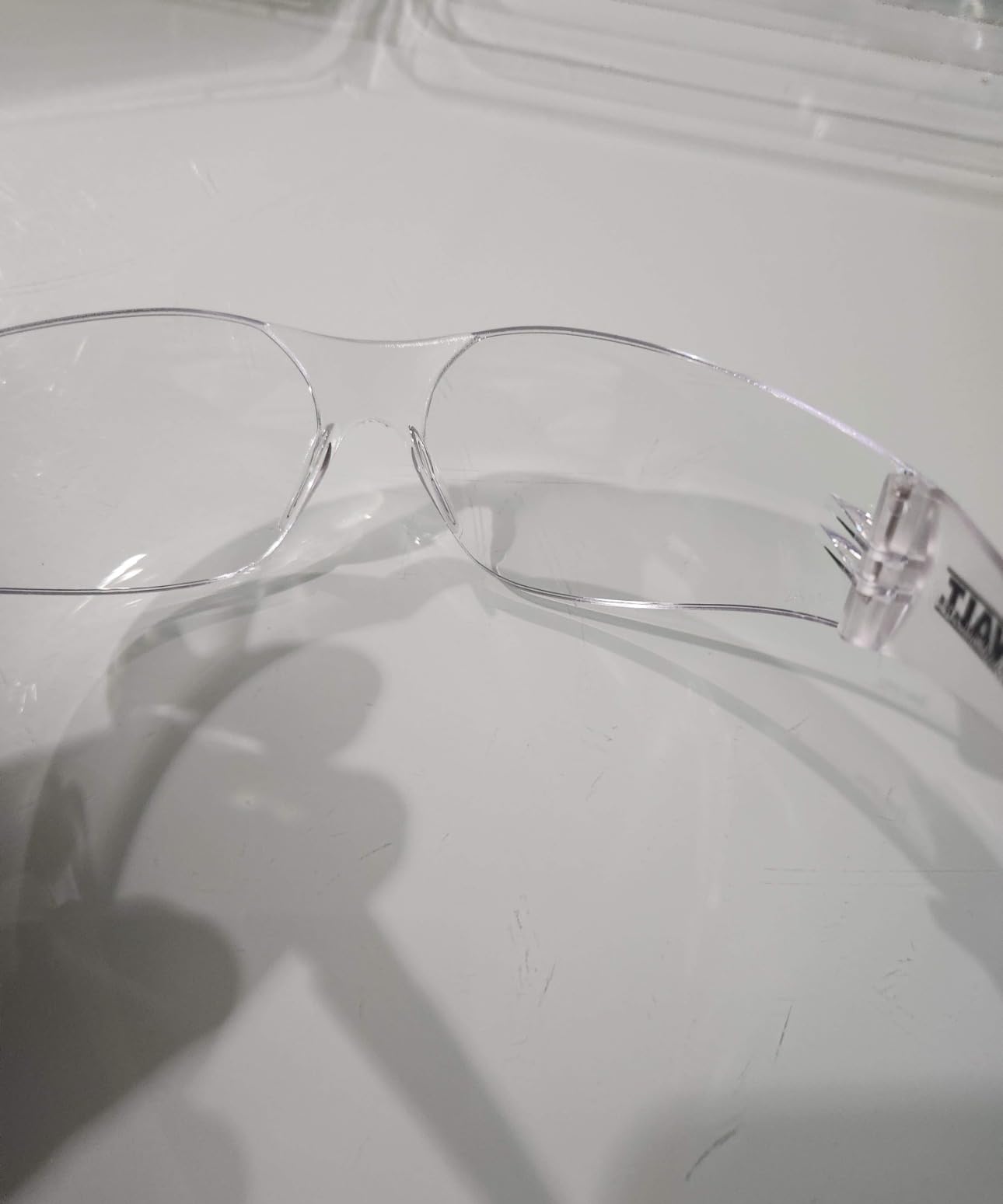
Almost every complaint in this category eventually comes down to fogging, and the Solus 1000 is the pair whose owners most consistently say the problem simply did not happen. The lens carries a 3M Scotchgard anti-fog coating that uses an active agent bonding to the lens itself rather than sitting on the surface, and reviewers report no fogging through long hot shifts.
That claim is the reason this pair is here. Everything else about it is competent, and the build is rated ANSI Z87.1-2020 and CSA Z94.3-2007 at high impact with 99.9% UV absorption, but the coating is the differentiator.

How the Coating Differs From the Others
Most anti-fog coatings are a film on the lens that gradually wears off. An active agent that bonds to the lens is more durable, which is why reviewers describe this coating as lasting through repeated handling rather than degrading within a few months.
3M designed the Solus line for hot and humid conditions, indoor and outdoor work, and physically demanding tasks. In practice that means it is at its best in the environment where the other pairs in this list struggle most: a closed shop in summer, or a full day of routing and sanding with a fan running.
Optics and Lightness
Reviewers consistently report very little to no distortion, which is what you want when judging a cut line or reading a marking on a board. At 1.12 ounces the frame is one of the lightest here, and the low profile keeps the whole thing out of your way.
The wrap coverage leaves few gaps for debris to enter from the front and sides. The bottom is open like the other non-goggle options, so this remains a cutting-first pair rather than a dust goggle.
The Fit Trade-Off
There is no temple adjustability, and this is the main drawback. Because the fit is fixed, it can sit too close to the face on some head shapes, and a closer fit can trap sweat, which paradoxically produces more fogging for those wearers. The same feature that makes it so good for a hot shop makes it less forgiving of an unusual face shape.
It is also more expensive than comparable models, and the review data shows buyers are aware of that. You are paying for the coating, and the coating is the point.
Variants Worth Knowing About
Gasket-equipped versions exist in the same series, so if you want the Solus fit with a dust seal there is a version of this design that closes the bottom gap. That is worth asking about if you are torn between this pair and a goggle.
For anyone whose main complaint is that their eye protection fogs and they take it off, this is the most direct answer in the list. I would pair it with a sealed goggle for the sanding days and keep these on the saw.
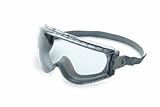
10. Uvex Stealth S3960C – Tightest Dust and Splash Seal in the Test
Honeywell UVEX Stealth Safety Goggles with Clear Uvextreme Anti-Fog Lens, Gray Body & Neoprene Headband (S3960C), Universal
D4 ANSI dust and splash rating
Soft elastomer body with gap-free fit
Uvextreme anti-fog coating
Pivoting quick-adjust neoprene headband
+ Pros
- D4 rating and elastomer body give a genuinely gap-free seal
- Uvextreme coating withstands repeated cleanings
- Toric lens with economical snap-on replacement
- Works with over-ear hearing protection and respirators
- Cons
- Bulky full-rim profile compared with lightweight safety glasses
- Heavier than frameless options for all-day wear
- No temple adjustability since the fit is set by the headband
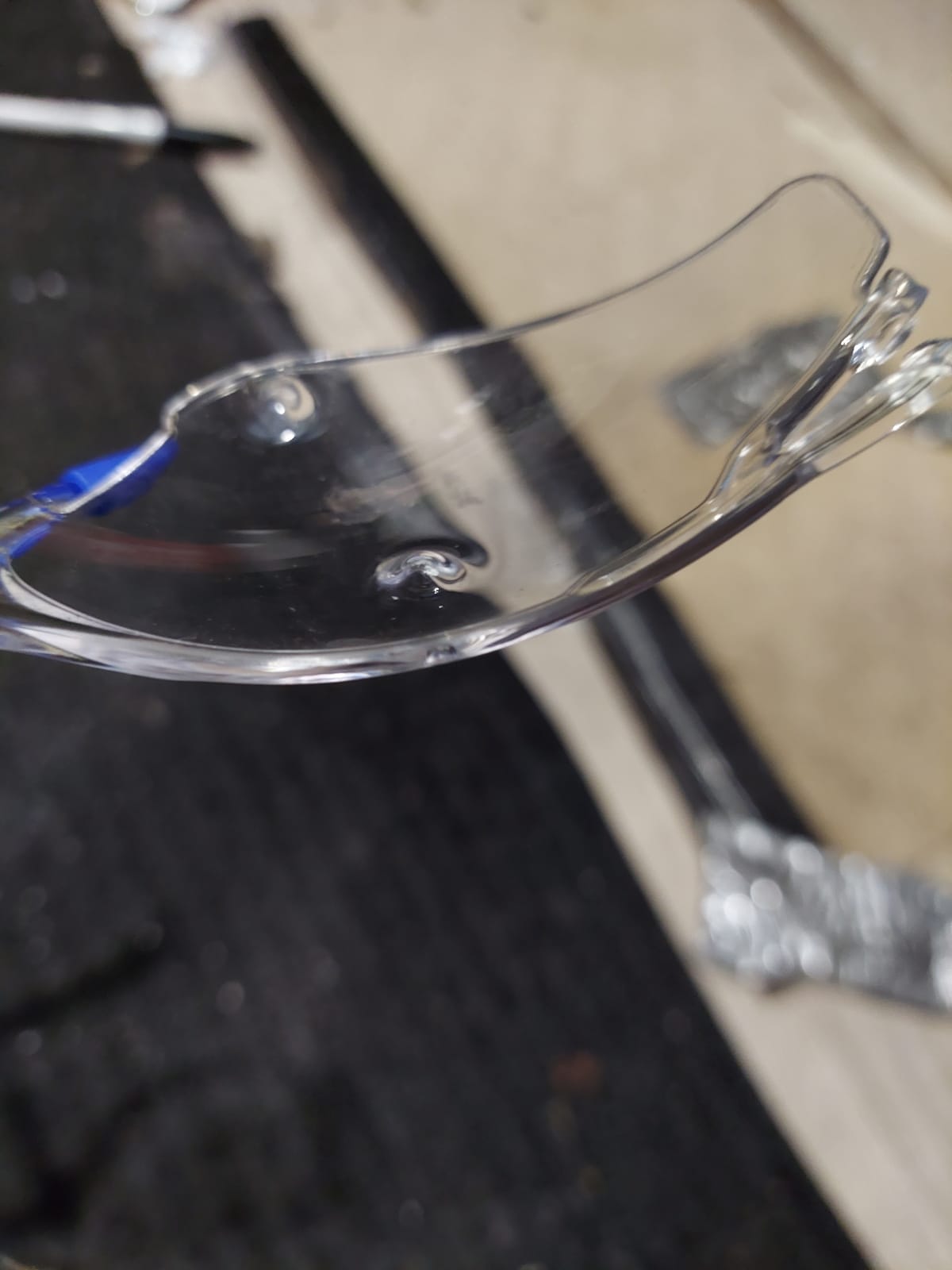
When the question is how much fine dust can be kept out of your eyes, this is the strongest answer in the group. The Uvex Stealth carries a D4 ANSI dust and splash rating, and the soft elastomer body flexes to conform to the face in a way that closes the gaps other goggles leave around the cheekbone and the temple.
D4 is a meaningful step up from the D3 rating that several open-frame pairs in this list carry. It is the designation for protection against moderate dust, which is precisely the hazard profile of sanding wood indoors without extraction.

Why the Elastomer Body Matters
Most goggle failures are not lens failures, they are seal failures at the perimeter. The elastomer body on this goggle flexes as you move, so the contact area with your face stays consistent rather than lifting at the corners when you look down or lean in.
Reviewers describe it as closing gaps other goggles leave open, and in a sanding context that is the difference between a productive afternoon and an afternoon spent blinking and rubbing. It is also listed as compatible with over-ear hearing protection and respirators, which is the second requirement in most working shops.
The Uvextreme Coating and Replaceable Lens
The Uvextreme anti-fog coating is built to withstand repeated cleanings, which is unusual. Most coatings degrade as they are cleaned, and a shop goggle gets cleaned constantly, so a coating that tolerates that is worth more than one that is merely stronger on day one.
The clear toric lens provides good optics and, importantly, snaps off and can be replaced economically. When a lens finally does get scratched beyond use, you replace the lens rather than the whole goggle. That single design decision extends the useful life of this purchase considerably.
The Bulk Trade-Off
This is a full-rim goggle and it is bulkier and heavier than the frameless safety glasses earlier in this list. There is no temple adjustability, since the fit is entirely set by the pivoting quick-adjust neoprene headband. On a smaller head, that headband does all the work and it can feel tight by hour four.
I also found that the full rim conflicts less well with some hearing protection setups than the frameless pairs, so if you wear over-ear muffs constantly, test the combination before committing. The listing does note compatibility, but head shape varies.
Where It Earns Its Place
Sanding, chemical-adjacent work, dusty bench tasks, and anything where the material in the air is a cloud rather than a projectile. The lens is also listed as prescription compatible at the frame level, so it is a workable option for people who need correction behind the goggle.
This is the pair I would buy for someone whose eyes keep getting irritated at the end of every sanding session. You accept weight and bulk in exchange for a seal that actually holds, and in that trade the Stealth wins.
11. UKNOW Over Glasses Goggle – Clears the Bulkiest Prescription Frames
UKNOW Safety Goggles Over Glasses, Anti Fog Safety Glasses with Clear Wraparound Lens, ANSI Z87.1 Protective Eyewear
One-piece wraparound lens
Hydrophilic anti-fog coating
Fits frames up to 5.71 in wide and 1.85 in high
Ansi Z87.1 rated with UV blocking
+ Pros
- Fits oversized prescription frames that many OTG models cannot
- Hydrophilic coating reported as fog free even in cold conditions
- Temple angle
- temple length
- and nose pad all adjustable
- One-piece lens avoids distortion and scratches less easily
- Cons
- Can feel uncomfortable behind the ears after about two hours
- Brow guard does not contact the forehead so it is not a full seal
- Very wide or unusually shaped glasses may not fit inside
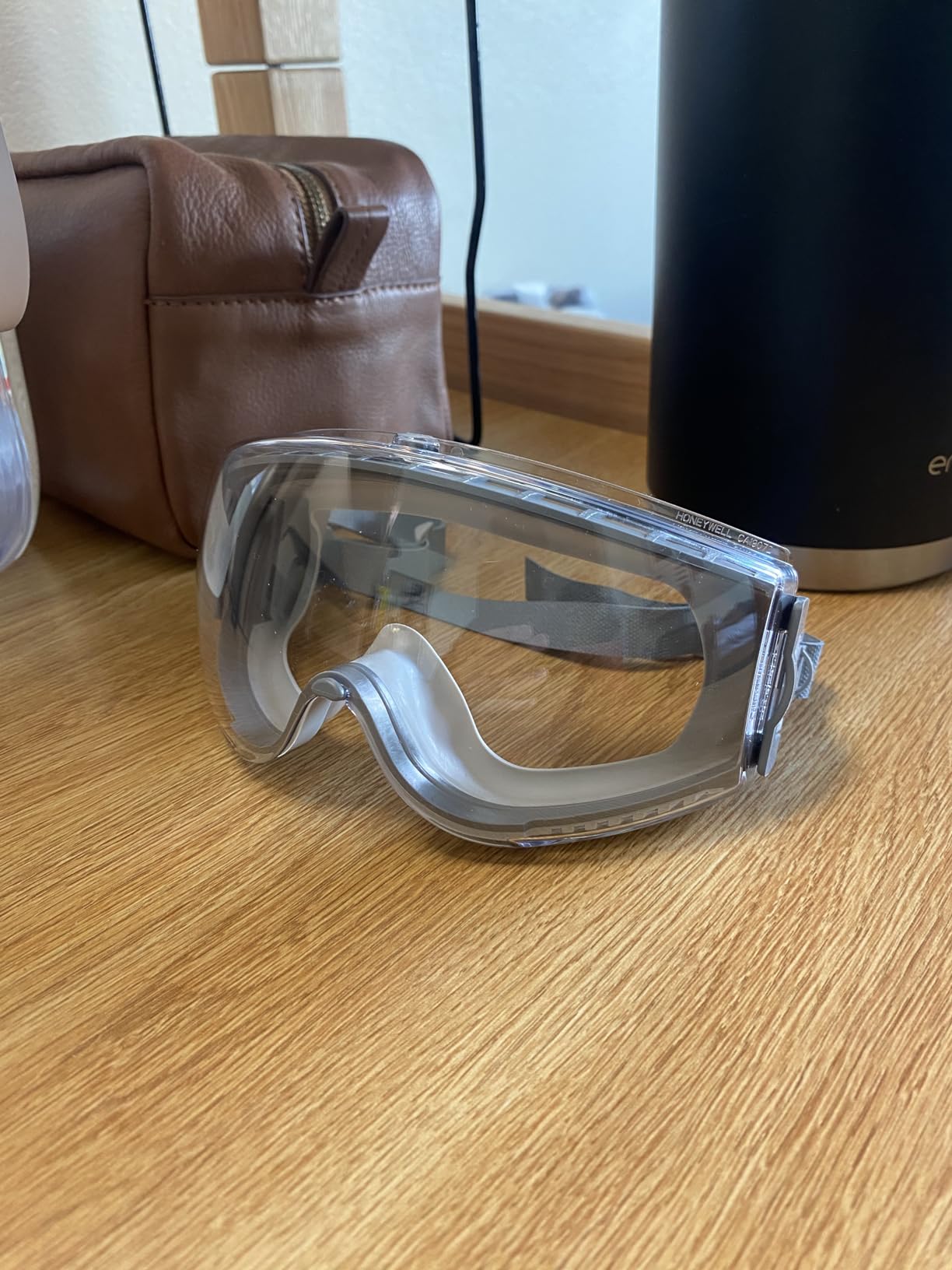
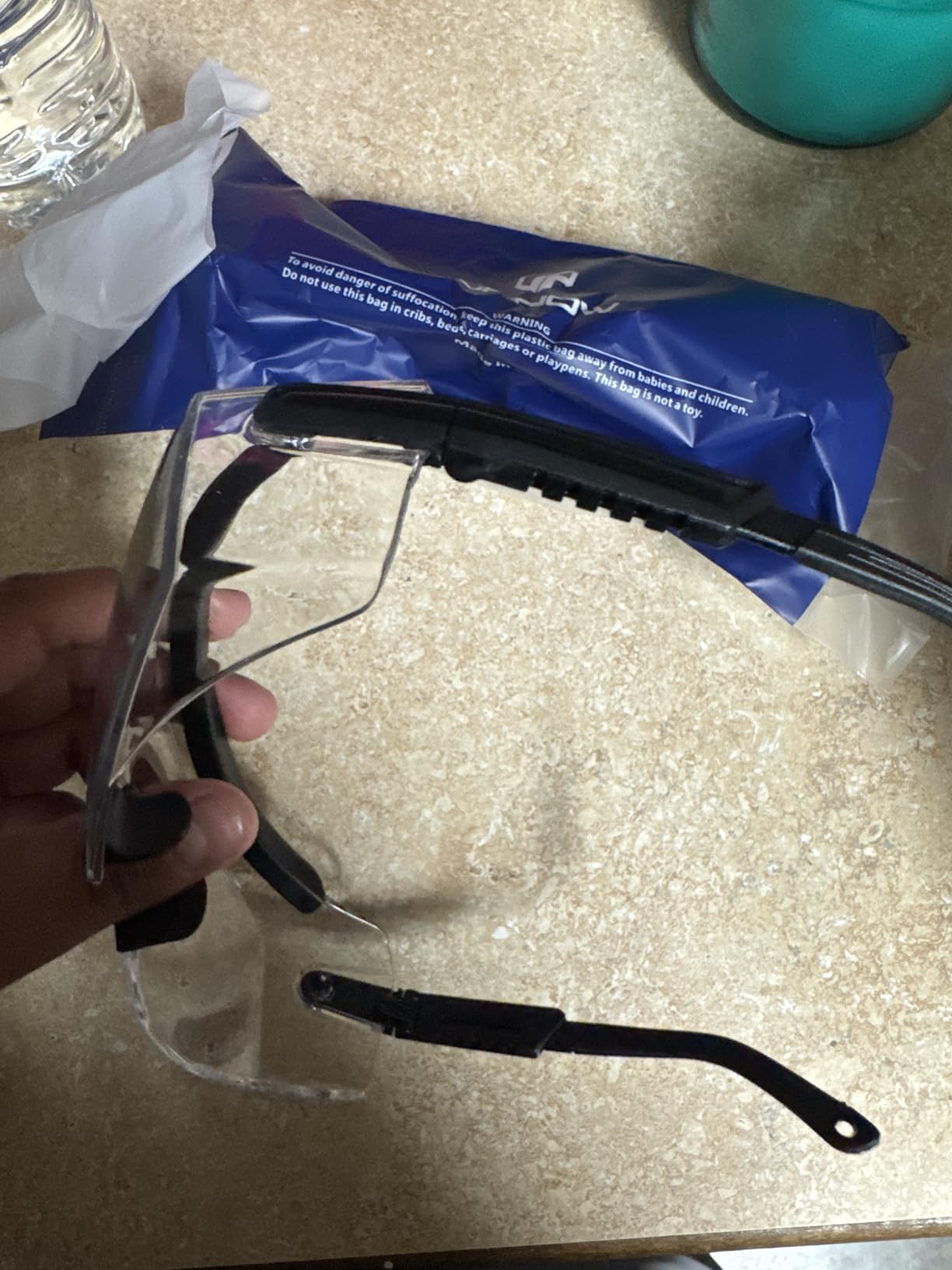
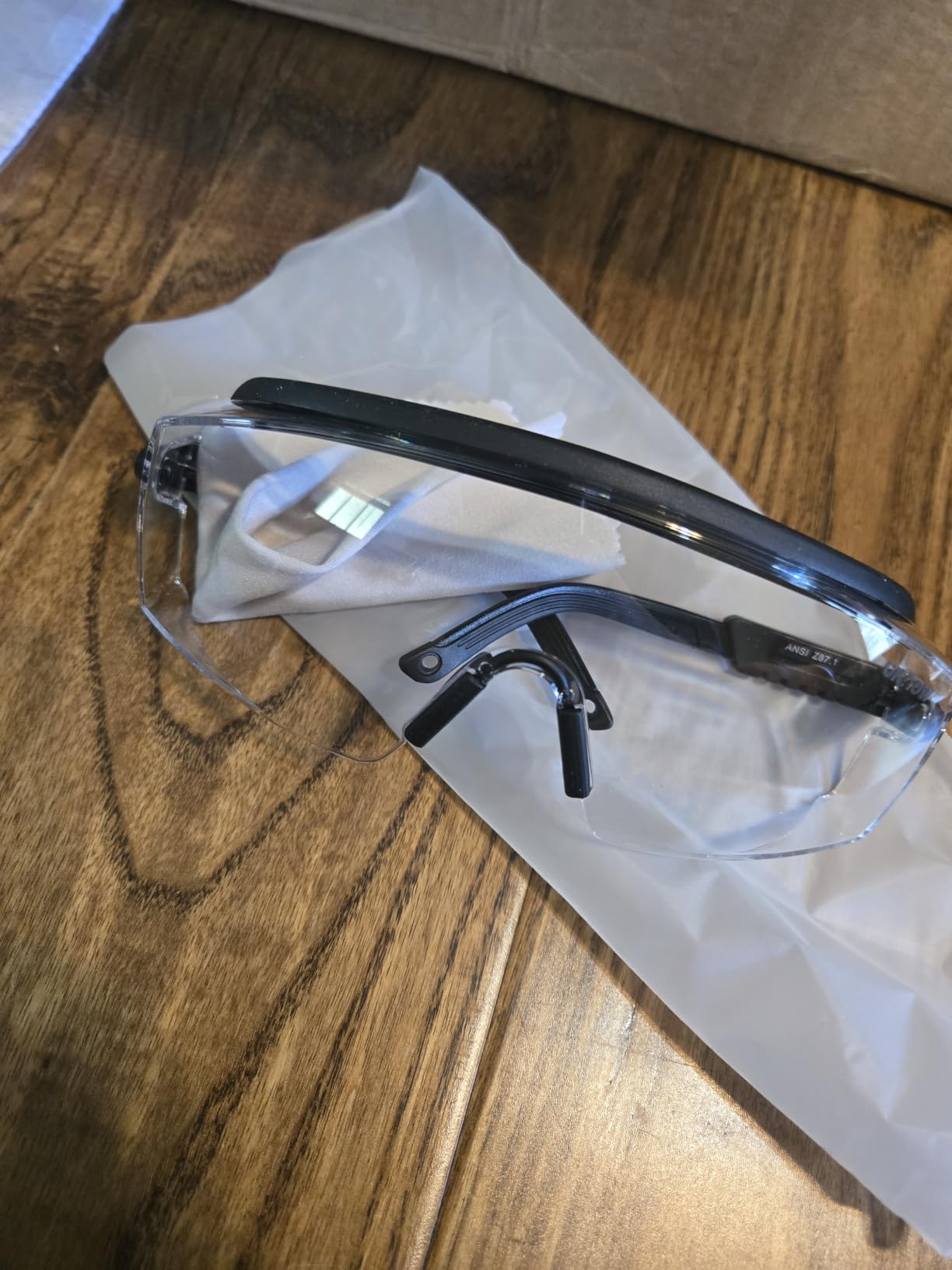
The most common complaint in woodworking forums about over-glasses is that the safety frame will not fit over ordinary prescription frames, let alone large ones. This goggle was designed specifically around that constraint, and it fits frames up to 5.71 inches wide and up to 1.85 inches high, which is the most generous stated envelope in this group.
It also carries the highest five-star share of any product here at 81% across more than 2k reviews, and the reason is consistent: it solves a problem other products do not, and the fit is adjustable in three places so it can be tuned to the individual.
How the Hydrophilic Coating Differs
Hydrophilic coatings work by absorbing moisture into the coating itself rather than repelling it, which clears fog quickly rather than merely slowing it down. Reviewers report it staying fog free even outdoors in cold conditions, which is the harder version of the problem because the temperature differential is larger.
That makes this the pair I would consider if you work in an unheated shop in winter or sand in a cold garage. In my testing the DeWalt Concealer at the top of this list handled warm humid conditions best, and this handled the temperature swing best.
Three-Way Adjustment
Temple angle, temple length, and the soft rubber nose pad are all independently adjustable. In practice this is what separates a goggle that works from one that does not, because face shape and temple position vary so much and most goggles give you only one adjustment point.
The one-piece wraparound lens also avoids the optical distortion you get with a two-piece lens assembly, and reviewers note it scratches less easily for the same reason. There is no seam for dust to lodge in.
What It Is Not
Be clear that this is not a full seal. The brow guard does not contact the forehead, so there is an open gap at the top, and the bottom is open as well. It is an impact and flying-particle goggle that happens to fit over glasses, not a dust goggle.
There are two more honest limitations. Reviewers report discomfort behind the ears after about two hours, which suggests the frame needs a break-in period or an adjustment for smaller heads. And at least one buyer received a broken unit, so inspect it on arrival.
Style and Availability
This is one of the few pairs in the group offered in a wide range of colours, from peach and teal to burgundy and cream. That is not a safety feature, but appearance is a real factor in whether you actually wear something, and a pair you like is a pair you put on without thinking.
For anyone whose prescription frames are too large or too unusually shaped for the standard over-glasses designs, this is the one to try first. It is lightweight, nearly seamless, and coworkers genuinely do not notice it.
12. Wiley X Saber Advanced – Best Impact Rating and Outdoor Build
Wiley X Saber Advanced Tactical Shooting Safety Glasses for Men & Women, ANSI Z87.1+ Shatterproof UV Protection (Matte Black Frame, Smoke Grey/Clear/Light Rust Shields, Interchangeable Lenses)
ANSI Z87.1+ and OSHA 1910.133 compliant
MIL-PRF-32432A ballistic standard
Interchangeable high-wrap shield lenses
100% UVA and UVB protection
+ Pros
- Dual ANSI and ballistic certification for impact performance
- Interchangeable lenses swap tint in seconds without tools
- High-wrap lens gives strong side and front coverage
- Styling looks far less like PPE
- Cons
- Highest cost in the group by a wide margin
- Tinted lens is poor for precision indoor work like reading a rule
- Semi-rimless wrap suits medium to large faces rather than smaller heads
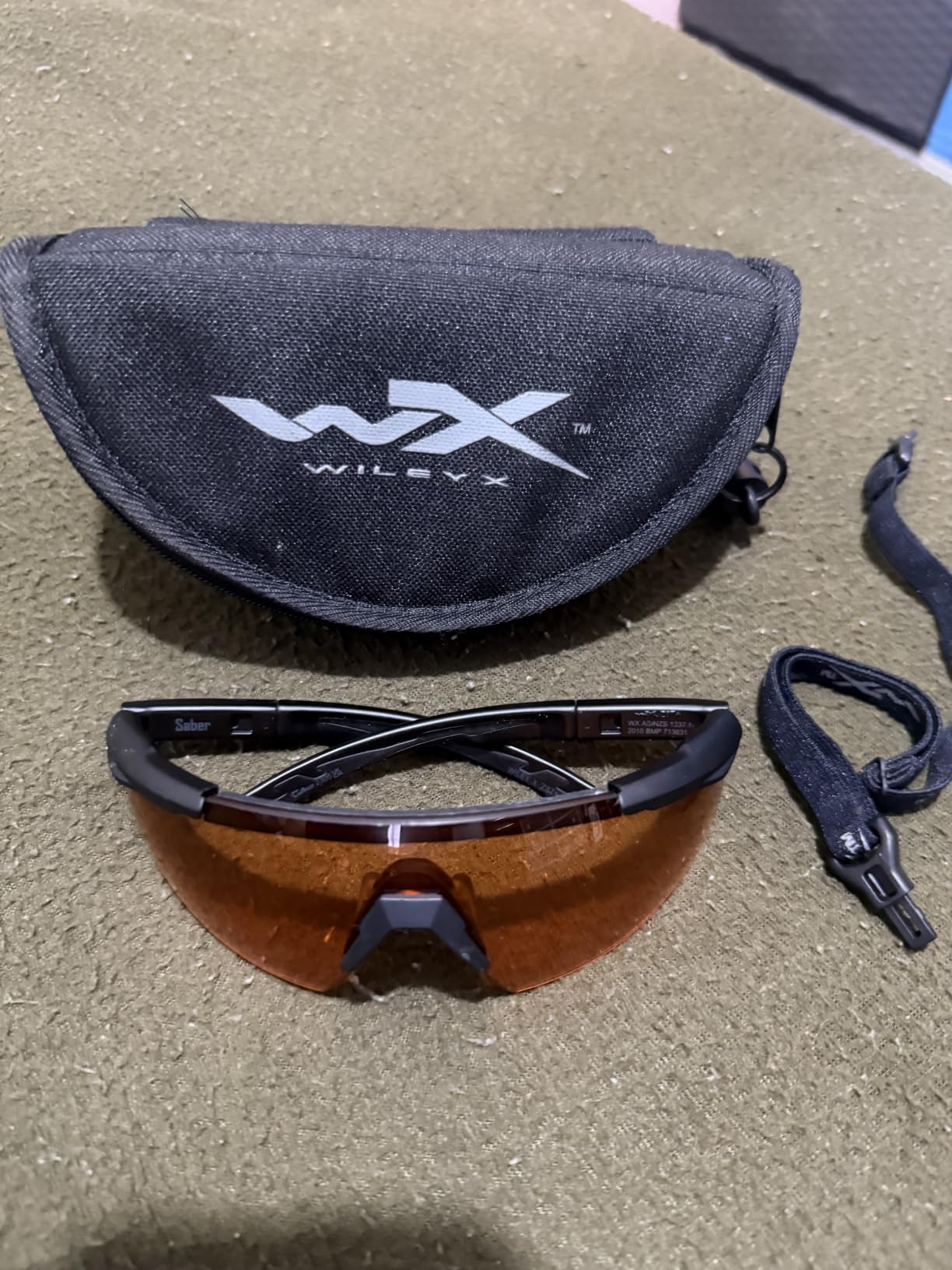
The Saber is the most heavily specified pair in the group and the most expensive by a wide margin, so it needs a clear reason to be on the list. That reason is certification depth: ANSI Z87.1+, OSHA 1910.133 compliance, and a lens built to the MIL-PRF-32432A ballistic standard, which is a fragment-resistance specification rather than a simple impact test.
At 4.7 stars with an 83% five-star share across more than 2k reviews, it is the joint-highest rated product here, and the build quality is immediately obvious. Every unit is hand-assembled and inspected in the United States, and the interchangeable high-wrap shield lens system is genuinely useful rather than a gimmick.
Swapping Lenses in Seconds
The high-wrap frame carries interchangeable shield lenses with a cushioned foam insert, and the swap takes seconds with no tools. For a woodworker that means one frame, two lenses, and a genuine change of character between indoor and outdoor work.
Shop days get the lighter tint and the deck project gets the darker shield. Because the lenses are interchangeable rather than fixed, the cost of owning two tints is one lens rather than two complete pairs, which is where the premium starts to make sense.
Why the Tinted Lens Is a Liability Indoors
This is the clearest drawback. A tinted lens reduces light and shifts colour perception, and reading a fine rule, checking a colour match on a stain, or judging whether a joint is flush are all precision tasks that a tint actively works against.
Owners report the same thing, so treat the tinted configuration as the outdoor lens and the clear interchangeable lens as the shop lens. If you only ever work indoors, you are paying for a capability you will not use, and one of the mid-priced wraparound pairs earlier in this list will serve you better.
Fit and Sizing
Sizing is one universal adult size at a 44 millimetre lens, 25 millimetre bridge, and 114 millimetre temple. The semi-rimless wrap flexes to fit most medium to large faces, which means smaller heads will find the frame loose and the high-wrap geometry less comfortable over a long day.
The flexible adjustable nose piece is the part that makes the fit work, and it is worth spending a few minutes on it before the first cut. A shield lens that sits wrong will let debris in at the bottom edge, which defeats the entire reason for buying something this heavily specified.
Where the Premium Pays Off
Professional appearance matters more than buyers expect. Owners frequently comment that it looks far less like PPE, and in a shop where nobody else is wearing eye protection, looking like a professional is part of making the habit stick.
This is the pick for someone who does serious outdoor woodworking, who works around contractors where the PPE standard is higher, or who simply wants the strongest impact specification available. For a single indoor hobby shop, it is more machine than you need.
How to Choose Safety Glasses for Woodworking
Every pair above is ANSI Z87.1 rated, so the certification box is ticked on all of them. The differences that actually change your experience are seal type, coating durability, fit, and how the frame interacts with a respirator. Here is how to weigh them for your own shop.
What ANSI Z87.1 Actually Means
ANSI Z87.1 is the United States standard for occupational eye protection, and the marking is stamped on the frame or the lens itself. It covers both impact resistance and optical quality, which is why a lens that distorts colour or produces visual flicker fails the standard even if it survives a strike.
A plus sign, as in Z87.1+, denotes the high-impact level, which is the one you want for woodworking. A plain Z87.1 rating still indicates impact protection, but the plus designates a more severe test. Some products carry additional markings: N for non-prescription, R for prescription, and Z87.2, which is a different application standard rather than an upgrade.
Gasket, Foam, or Open Frame
This is the single most important decision, and it is a genuine trade-off rather than a better-versus-worse comparison. A sealed gasket blocks the most dust and the most splashes. An open frame breathes, stays cooler, and fogs far less. You cannot get maximum sealing and maximum ventilation in the same pair.
The practical rule is to match the seal to the dust. Table saw cuts, routing, and assembly work throw discrete particles, so an open or semi-open frame is fine and more comfortable. Orbital sanding, belt sanding, and MDF work create an airborne cloud, and that is when a gasketed pair earns its weight.
Anti-Fog That Survives a Respirator
Anti-fog coatings vary enormously, and the marketing language is not reliable across brands. The honest ranking from this test is that a bonded or hydrophilic active coating outperforms a surface film, and that no coating survives a well-sealed half-mask respirator indefinitely.
Three practical habits fix most fogging. Clean the lens with a proper anti-fog wipe rather than your shop rag, which is what people try first and what makes the problem worse. Let the room ventilate between dusty passes rather than working in still air. And choose venting if you are in a hot shop, or sealing if you are in a cool one where breath does not travel as far upward.
The Bottom-of-Lens Gap and Periphery
Nearly every open-frame safety glasses design has a gap at the bottom of the lens, and it is the weakness reviewers raise most often. Debris travelling upward enters through it, and one owner of a full-rim pair in this group reported exactly that happening to them.
Peripheral coverage is the other half. A wraparound lens, integrated side shields, or a goggle each close the side gaps, and all three approaches appear in this list. If your work throws material at your face from the side, do not buy a narrow open pair.
Fitting Over Prescription Glasses and Readers
If you wear prescription eyewear, your fit envelope matters more than any feature. Measure the widest point of your frames and compare it against the stated clearance, and check the height at the bridge as well, since that is where most over-glasses designs fail. Rimless wrap designs clear frames best because there is no material to fit over the top.
If you are over 40 and finding you need to hold a tape measure at arm’s length, look at the reader and bi-focal options. The MAGID Y50 and the 3M Virtua CCS are both available in diopter versions, which puts magnification behind an impact-rated lens instead of making you switch between two pairs of glasses at the bench.
Scratches, Care, and When to Replace
A scratched lens is a safety problem rather than a cosmetic one, because the scratches scatter light exactly when you need to see an edge or a mark. Inspect lenses under a bright light at the start of each month and retire a pair when the scratching is visible in normal use.
Replace by condition rather than by date. Retire a pair when the lens is scratched enough to scatter light, when the frame no longer holds its shape, or when the elastic or foam components lose their tension. Rinse coated lenses with water rather than wiping them dry, and keep them in a case between sessions, because a lens loose in a tool bag is a lens that gets sanded by swarf and screws.
The Rest of Your Shop PPE for Cutting Wood
Eye protection answers one question. The rest of your personal protective equipment answers the others, and no amount of eyewear substitutes for any of the following.
- Eyes. ANSI Z87.1 rated eyewear at all times around saws, routers, sanders, lathes, and nail guns. Move up to a sealed goggle when the hazard is airborne dust rather than flying debris.
- Ears. Hearing protection from the first minute of running a saw or compressor. A brushless motor is still loud, and the 3M Virtua CCS in this roundup has a corded ear-plug control system on the temples specifically to keep plugs from tangling and falling out.
- Lungs. Respiratory protection for sanding, MDF work, and finish spraying. This is the item that determines your glasses choice, because a half-mask respirator is what turns ordinary fogging into an unusable pair. A fit-tested N95 or P100 is the minimum indoors.
- Face. A face shield for routing large profiled edges, lathe turning, and any operation that throws material at head height. A face shield does not replace safety glasses, since it does not stop particles entering the eyes from below or behind, and most manufacturers specify both together.
- Hands and body. Cut-resistant gloves for handling sharp stock and a dust collection system that captures dust at the machine. Dust collection is the single most effective control for airborne wood dust, and it reduces what ever reaches your eyes or your lungs in the first place.
Wood dust behaves differently by material. Hardwood dust is fine and hangs in the air, MDF dust is a dry powder that spreads everywhere, and pressure-treated dust carries preservatives that make extended exposure worth avoiding. That is a respirator and extraction problem more than an eyewear problem, and no pair of glasses on this list fixes it.
Frequently Asked Questions
Should you wear safety glasses when cutting wood?
Yes. The most common woodworking eye injuries come from kickback, nail-gun ricochet, and offcuts thrown from a spinning blade, and fine sawdust reaches the eyes from below through the gap under an open pair. Any ANSI Z87.1 rated polycarbonate eyewear materially reduces that risk, and a sealed goggle is worth adding for sanding work.
What does ANSI Z87.1 mean on safety glasses?
ANSI Z87.1 is the United States standard for occupational eye protection, covering both impact resistance and optical quality. A plus sign denotes the high-impact level, which is the one you want for woodworking. The marking is stamped on the frame or the lens, and look for it before you buy rather than trusting the product title.
Can you wear safety glasses over prescription glasses?
Yes, and there are three ways to do it. Over-glasses designs such as the NoCry Overspecs+ use a rimless wrap lens that clears frames up to 5.7 inches wide. Sealed goggles like the Uvex Stealth work with prescription lenses behind them. Or order a made-to-order prescription safety frame, which costs more but removes the layering problem entirely.
How do you stop safety glasses from fogging up?
Clean the lens with a proper anti-fog wipe rather than a shop rag, since dry wiping makes it worse. Let the room ventilate between dusty passes. Choose a venting design for a hot shop and a sealed design for a cool one. And if you wear a respirator, expect to wipe the lens every time you remove the mask, because no coating wins that fight indefinitely.
Are bifocal safety glasses worth it for woodworking?
For woodworkers over 40 who hold a tape measure at arm’s length, yes. Putting magnification behind an impact-rated lens removes the frustration of swapping between readers and safety glasses at the bench. The MAGID Y50 is available in 1.5 and 2.0 diopters and the 3M Virtua CCS in plus 1.5, 2.0, and 2.5, so the option exists without a special order.
Do safety glasses expire, and can a face shield replace them?
Replace by condition rather than by date. Retire a pair when the lens is scratched enough to scatter light, when the frame no longer holds its shape, or when foam and elastic components lose their tension. A face shield does not replace safety glasses, because it does not stop particles entering the eyes from below or behind, and most manufacturers specify both together.
Which Pair Should You Buy?
If your problem is dust in your eyes while sanding, start with the DEWALT DPG82 Concealer. It is the editor’s choice and the best safety glasses for woodworking pick overall, because the soft rubber seal is the only thing in this list that reliably kept fine dust out of my eyes over a full sanding session.
If you mostly cut rather than sand, the NoCry EyeArmor+ is the better all-round pair, and the DEWALT DPG54-1C Protector is the one to buy in multiples because you will leave a pair at each machine. If you wear prescription glasses, the NoCry Overspecs+ handles standard frames and the UKNOW goggle handles oversized ones. If fogging is what stops you wearing protection, the 3M Solus 1000 is the direct answer. If you need a genuine dust and splash seal, the Uvex Stealth carries the highest rating in the group. If you work outdoors and want the strongest impact specification available, the Wiley X Saber is worth the premium.
Whichever you choose, the deciding factor will not be the specification. It will be whether the pair is comfortable enough that you are still wearing it in hour six. Pick the one you will forget you have on, keep a second pair in the tool bag, and buy the goggle for the days when the dust is worst. All twelve of these remain current choices for 2026, and every one of them is a large improvement over the scratched pair sitting in the drawer.