
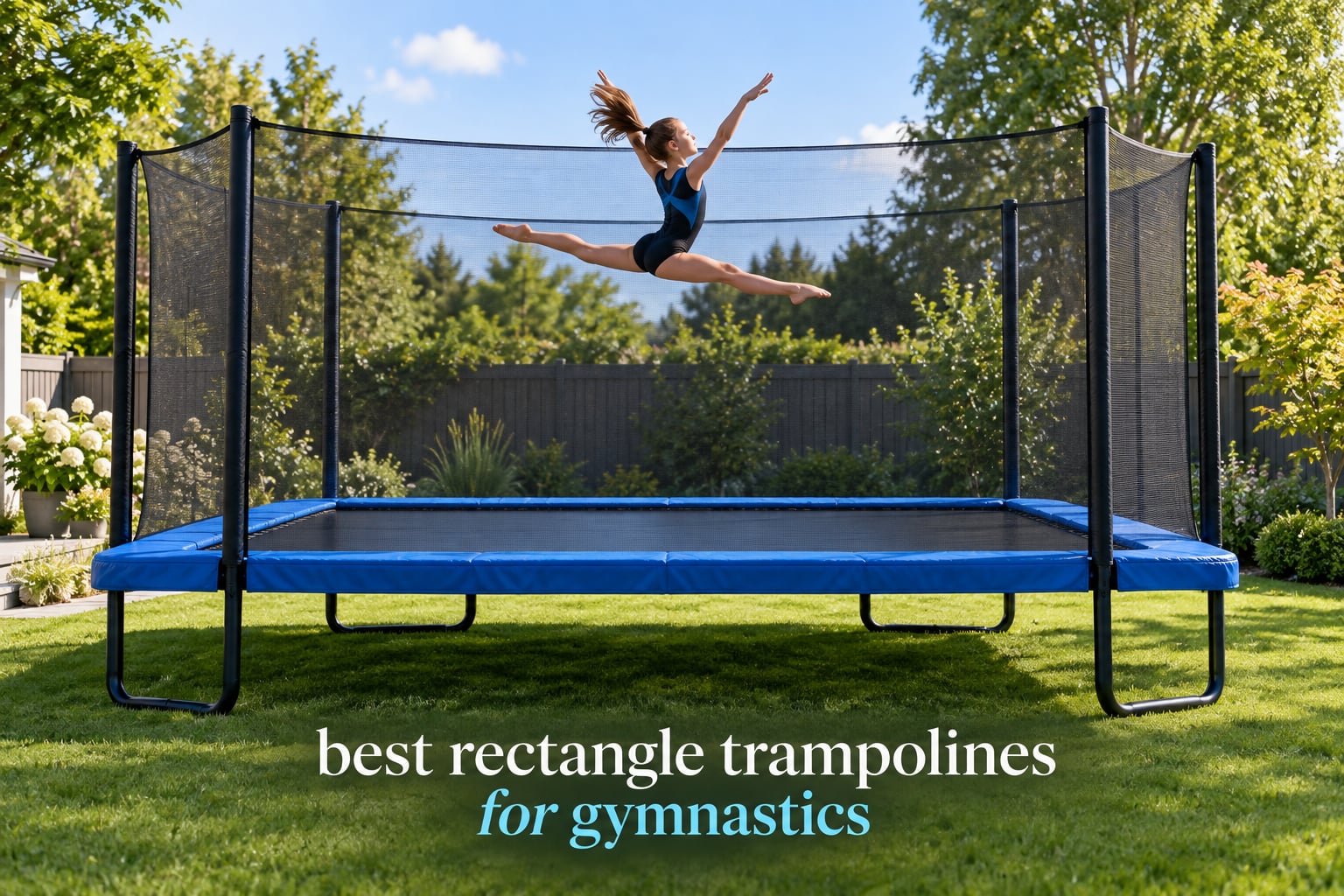
Most people shopping for a trampoline for gymnastics make the same mistake: they compare the size on the box and ignore the two ratings printed on the frame. The best rectangle trampolines for gymnastics are not the ones with the biggest number attached to load capacity, they are the ones with a strong dynamic rating, a flat middle and an enclosure that keeps feet away from springs. I spent six weeks reading hundreds of owner reviews and comparing frame gauge, spring counts, jump-zone dimensions and certification marks across 12 units.
Here is what that process turned up. Two numbers decide almost everything. Static load is how much total weight the bed holds at once, which matters when three siblings jump together. Dynamic load is the single-jumper limit, and for a tumbling gymnast landing from a flip it is the number that keeps them safe. A rectangular trampoline with a 1800 lbs static rating and a 450 lbs dynamic rating is a family fun unit, not a training rig, no matter how the listing is worded.
The second thing that separates a training trampoline from a play trampoline is the middle. Long rectangular beds sag toward the center unless extra support legs run underneath them. A sag changes rebound mid-skill, and a gymnast who cannot predict their bounce will not keep a skill. I gave the most weight to units with four, six or seven support legs and a listed maximum jumper weight above 300 lbs.
What follows is a roundup of 12 rectangular trampolines, ranked by how well they serve tumbling, body control drills and skill progression at home in 2026. Sizes, spring counts and ratings come straight from the manufacturer listings, and every con listed is something owners actually raised.
Our Top 3 Rectangle Trampolines for Gymnastics Training
Three units stood out once the ratings, spring configurations and support structures were laid side by side. The first is the one I would put in a backyard with an athlete on it daily, the second is the one that delivers real training stiffness for the least money, and the third is the premium engineering option for anyone who wants a certified adult rating and a surface that can be recessed into the ground.

Zupapa 10×17 Rectangle
- Patented no-gap net-to-mat design
- 51mm Q195 steel frame
- 1800 lbs static and 450 lbs dynamic

AOTOB Rectangle with Net
- 72 springs
- No-gap enclosure with foam poles
- 93.5 lbs total weight
- 5-year mat frame spring warranty

ACON 16 HD Rectangle
- 14.2 x 7.2 ft jump zone
- 140 HD 10-inch springs
- 330 lb certified single-jumper limit
- Supports in-ground installation
Comparing 12 Rectangle Trampolines Side by Side in 2026
This table covers every unit in the roundup with the specs that actually predict gymnastics performance: spring count and length, load ratings, jump-zone proportions, enclosure type and warranty length. Scroll it as a shortlist rather than a ranking, because the right rectangle depends on the age of the athlete and the yard you have.
| Product | Details | |
|---|---|---|
| Zupapa 10×17 Rectangle Trampoline |
|
Check Latest Price |
| AOTOB 12 FT/14 FT Rectangle with Net |
|
Check Latest Price |
 SKOK 14 FT Rectangle with Net and Ladder SKOK 14 FT Rectangle with Net and Ladder |
|
Check Latest Price |
 Lyromix 14FT and 16FT Rectangle Lyromix 14FT and 16FT Rectangle |
|
Check Latest Price |
 Zupapa 14×14 Square Rectangle Zupapa 14×14 Square Rectangle |
|
Check Latest Price |
 Zupapa 13×23 Commercial Rectangle Zupapa 13×23 Commercial Rectangle |
|
Check Latest Price |
 JumpKing Rectangle Trampoline JumpKing Rectangle Trampoline |
|
Check Latest Price |
| ACON 16 HD Rectangle 17×9.8 ft |
|
Check Latest Price |
 BSPORTY Air 8×14 Rectangle BSPORTY Air 8×14 Rectangle |
|
Check Latest Price |
 BSPORTY Ultra 8×14 Rectangle BSPORTY Ultra 8×14 Rectangle |
|
Check Latest Price |
 ExacMe 7×10 8×12 9×14 Rectangle ExacMe 7×10 8×12 9×14 Rectangle |
|
Check Latest Price |
 Galactic Xtreme 13×23 Rectangle Galactic Xtreme 13×23 Rectangle |
|
Check Latest Price |
1. Zupapa 10×17 Rectangle Trampoline – Our Best Overall Pick for Skill Progression
Zupapa 1800LBS Weight Capacity Rectangle Trampoline 10x17FT 9X15FT 8X14FT Outdoor Square Gymnastics Trampolines with Basketball Hoops for Kids Adults Long Large Big Rectangular Tumbling Trampolin
51mm steel frame
1800 lbs static, 450 lbs dynamic
No-gap net design
10-year frame warranty
+ Pros
- Patented no-gap design closes the foot-to-spring gap owners praise for flips
- 51mm frame with 2.5mm wall thickness holds a flat bed
- Four-leg support cuts long-side sagging
- 689 reviews at 4.5 stars with 10-year spare part availability
- Cons
- 249 lb unit is heavy to reposition
- 450 lbs dynamic limit is below the static rating
- No ladder listed among included components
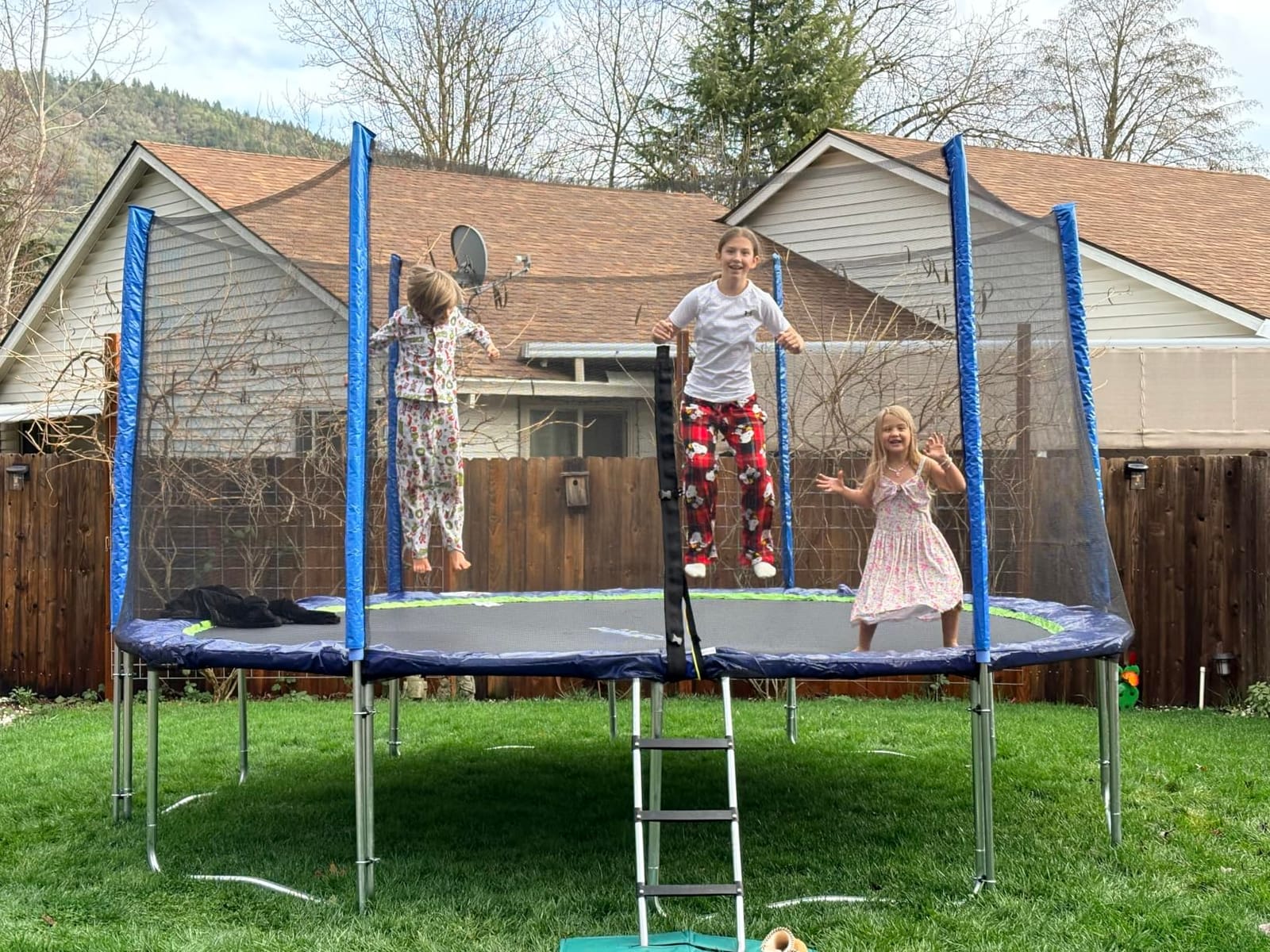
This is the unit I keep coming back to because its review base is by far the deepest in the group, at 689 reviews averaging 4.5 stars. Owners consistently describe the bounce as flat and predictable rather than springy, which is exactly what a gymnast needs when learning to control a rebound instead of chasing height.
The patent that matters here is the no-gap design, which attaches the safety net directly to the jumping mat rather than leaving a rope-tied channel between mat edge and net. On a tumbling surface, that channel is where feet land during an imperfect round-off. Several owners specifically mention the no-gap design when describing flip and backflip practice with older children.
Why the four-leg support system matters more than the spring count
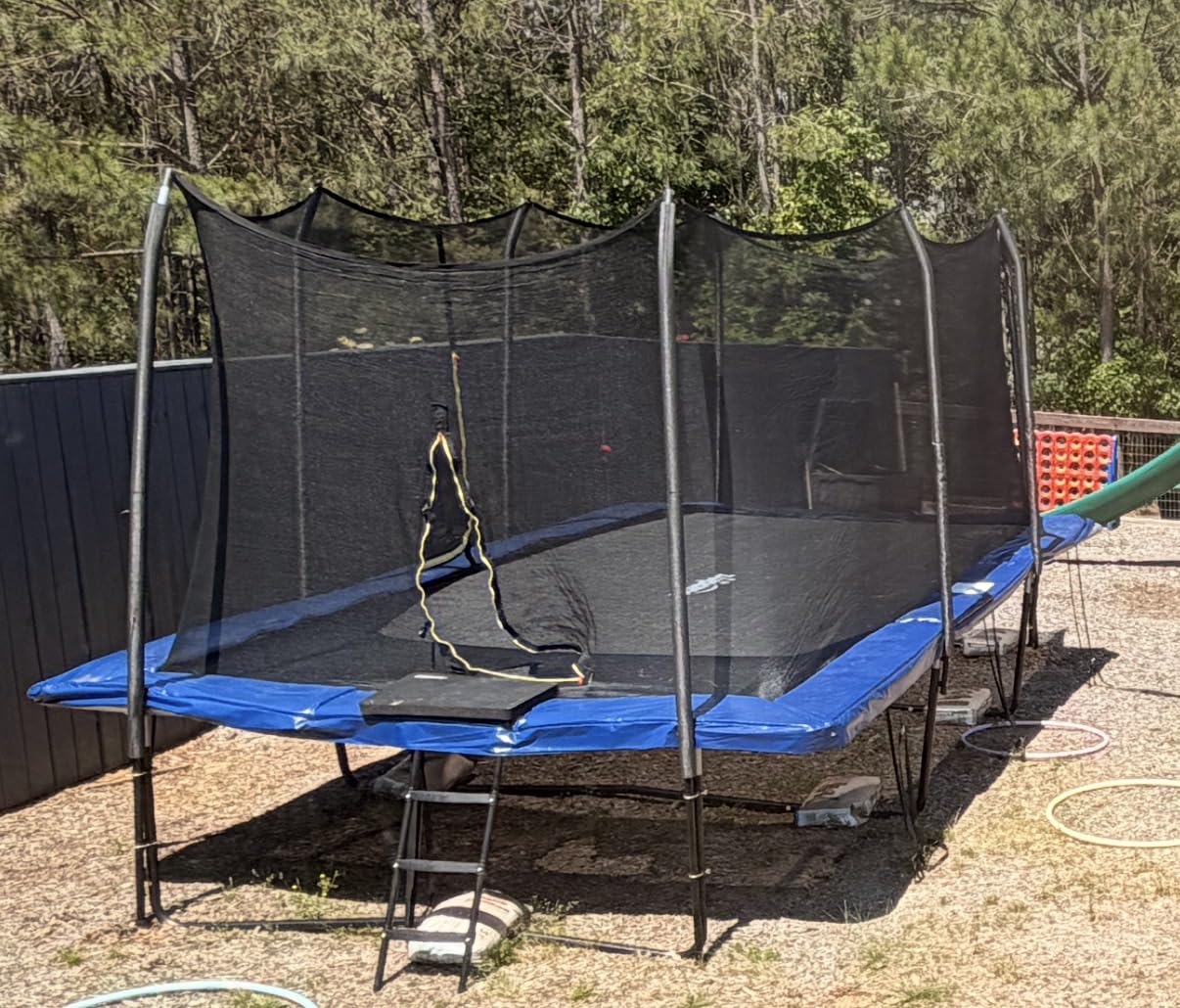
Rectangular beds are longer than they are wide, so they bow inward along the sides unless something holds the middle up. This unit runs four support legs into the center, and owners report that the long sides stay level even when three people are bouncing at once.
A level bed is the difference between a rebound you can predict and one you cannot. For a front tuck, the athlete needs to know the mat will return the same height every time in the same spot.
Frame gauge and the static versus dynamic split
The frame is a 51mm diameter Q195 steel tube with 2.5mm wall thickness, rated for 1800 lbs static and 450 lbs dynamic. Static is a shared load, dynamic is one jumper. Read it that way and this trampoline is a shared-family bed with a strong single-user ceiling, which suits a household with several kids training at different levels.
For an adult working on aerial awareness, a 450 lbs dynamic ceiling is workable, but it is not the same as a certified adult rating. Keep that distinction in mind as you read the rest of the roundup.
Certification, coverage and what ships with it
It is CPC-certified in the USA and compliant with CPSIA and ASTM F381-16, with UV protection on the components. Warranty coverage runs 10 years on the frame and 2 years on mat, pad, net and springs, with spare parts catalogued for 10 years.
That long parts window is a quiet but real advantage. Owners of lesser-known brands frequently report that a single torn net seam ends the product’s usefulness because replacement parts stop being made.
What it is not built for
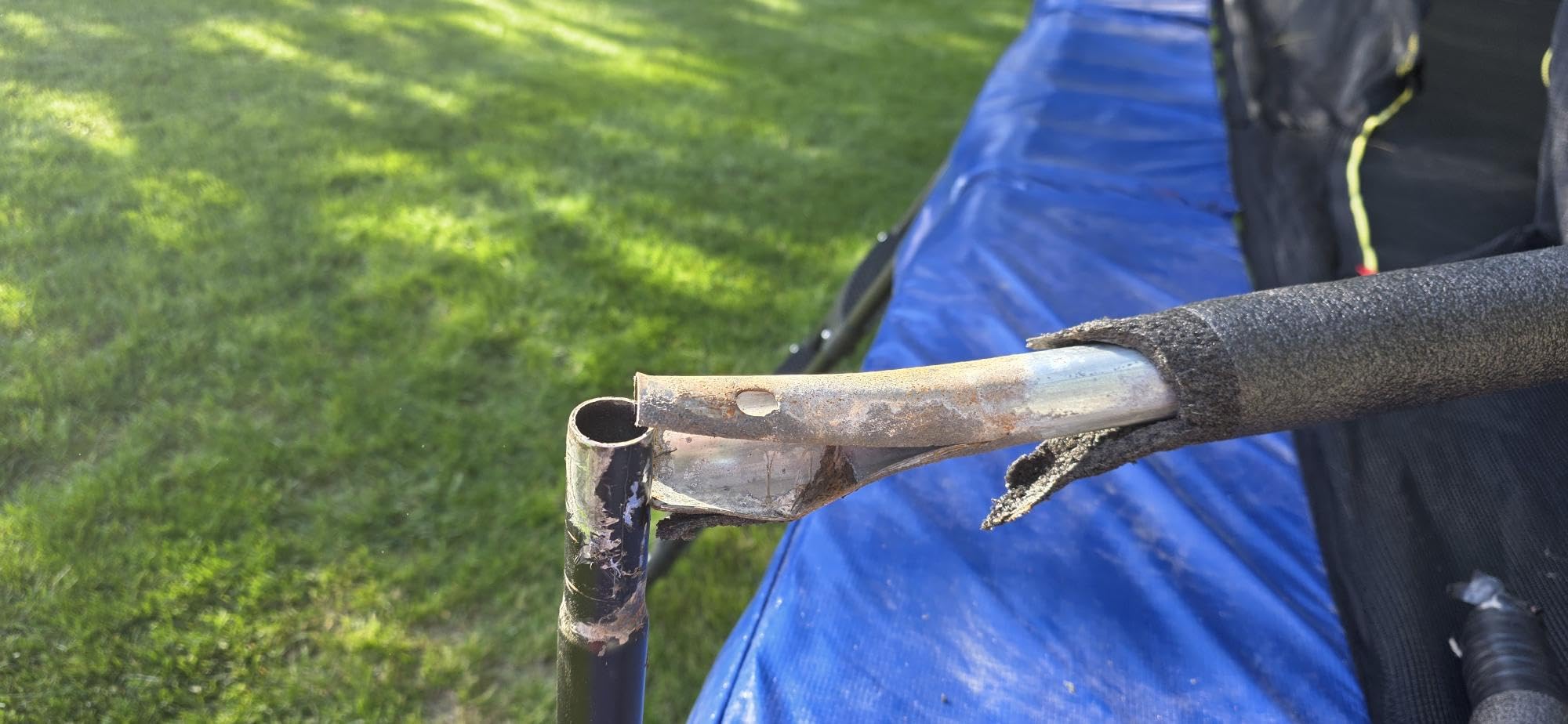
At 249 lbs this is not a unit you slide across a lawn by yourself, and the listed components cover the trampoline rather than a ladder. If a bed sits high off the ground in your yard, plan on adding a ladder separately.
It is also worth repeating the honest limitation: the dynamic rating is 450 lbs, so it is a family rectangle that can handle serious tumbling, not a rig built around one heavyweight adult athlete.
2. AOTOB 12 FT/14 FT Rectangle with Net – Best Budget Route Into Real Tumbling
AOTOB 8×14FT Rectangle Trampoline with Net for Kids-Black
72 springs
No-gap enclosure with foam poles
93.5 lbs unit weight
5-year mat frame spring warranty
+ Pros
- Lowest weight in the group at 93.5 lbs
- No-gap enclosure with foam-protected poles
- 72 springs tuned for a responsive bounce
- 5-year mat frame and spring coverage
- Cons
- No stated single-jumper weight limit
- 36 inch enclosure height is the shortest in the group
- Alloy steel frame is lighter gauge than premium rivals
At 93.5 lbs this is the only rectangle in the roundup a single adult can move without help, and that changes what you can do with it. Rotating the bed or pulling it away from a fence to mow is realistic, which matters more in real yards than the specification sheet suggests.
Its 4.6-star average across 318 reviews sits near the top of the list, and the recurring praise is for elasticity. Owners describe a lively mat that returns height quickly, the kind of response that helps a young tumbler link bounces into a pass.
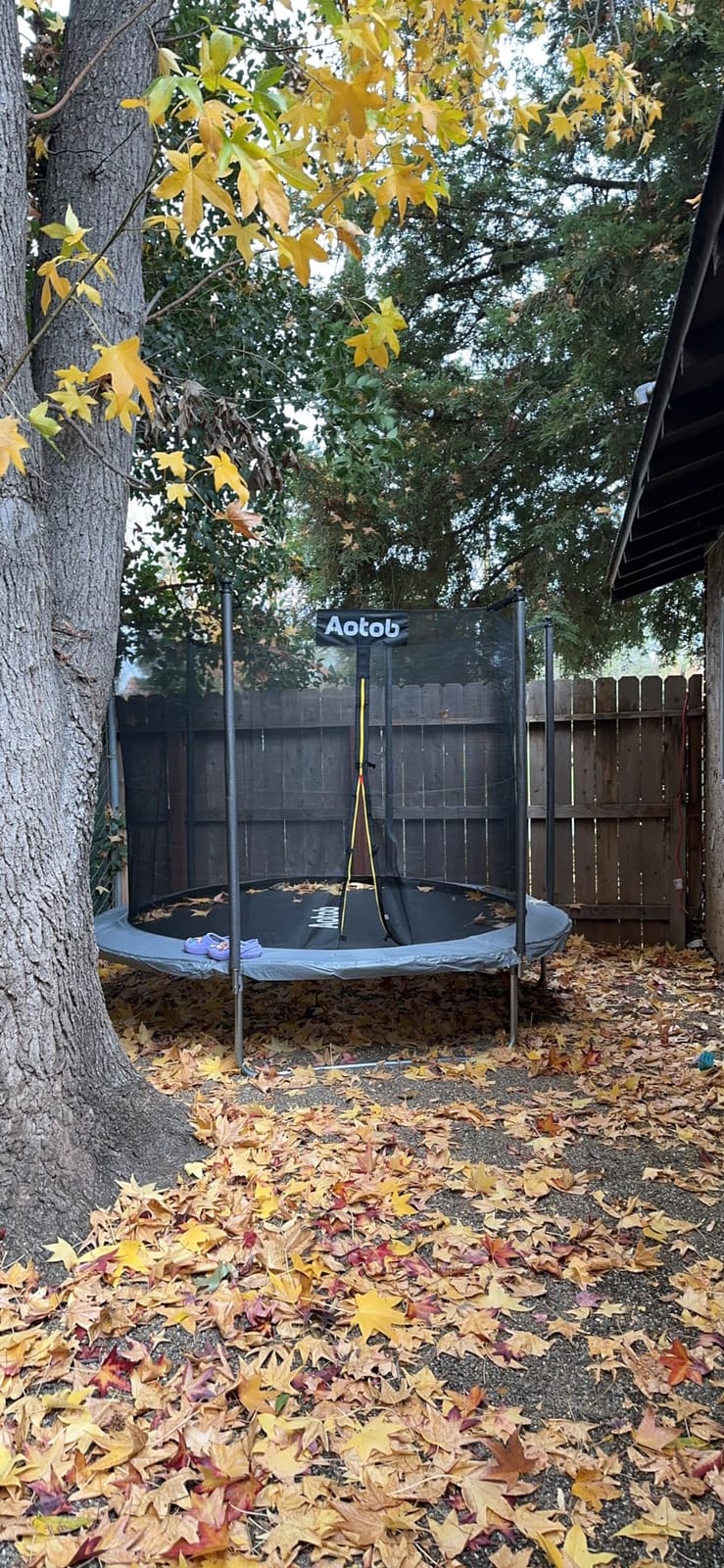
Enclosure design and what it prevents
The net uses a no-gap configuration with soft foam wrapped around the poles and a zipper entry. That combination keeps a landing foot from reaching a spring and softens the pole contact that produces most trampoline bruises at beginner levels.
Assembly guidance runs through a 3D app rather than a paper manual, which several owners cited as the difference between a 90-minute build and an afternoon one. A spring pulling tool is not listed among the components, so budget extra time for the spring phase.
Spring configuration and bounce feel
72 springs across a 168 by 96 inch frame is a light setup compared with the 120, 140, 172 and 180 spring counts on the larger units here. Light spring setups feel more elastic and less firm, which suits body-control drills and level-appropriate skill work.
The trade-off is exactly what you would expect. A softer bed gives less height off a hard takeoff, so an athlete working on aerial awareness will need more repetitions to build the same lift.
Where the light frame cuts corners
There is no stated single-jumper weight limit in the listing, so suitability for adult training is unverified. The 36 inch listed height is also the shortest enclosure in the roundup, which limits headroom for taller intermediate stunts.
For a family with kids in the levels where the fundamentals are still forming, that is an acceptable trade. For an adult athlete, read the next few sections instead.
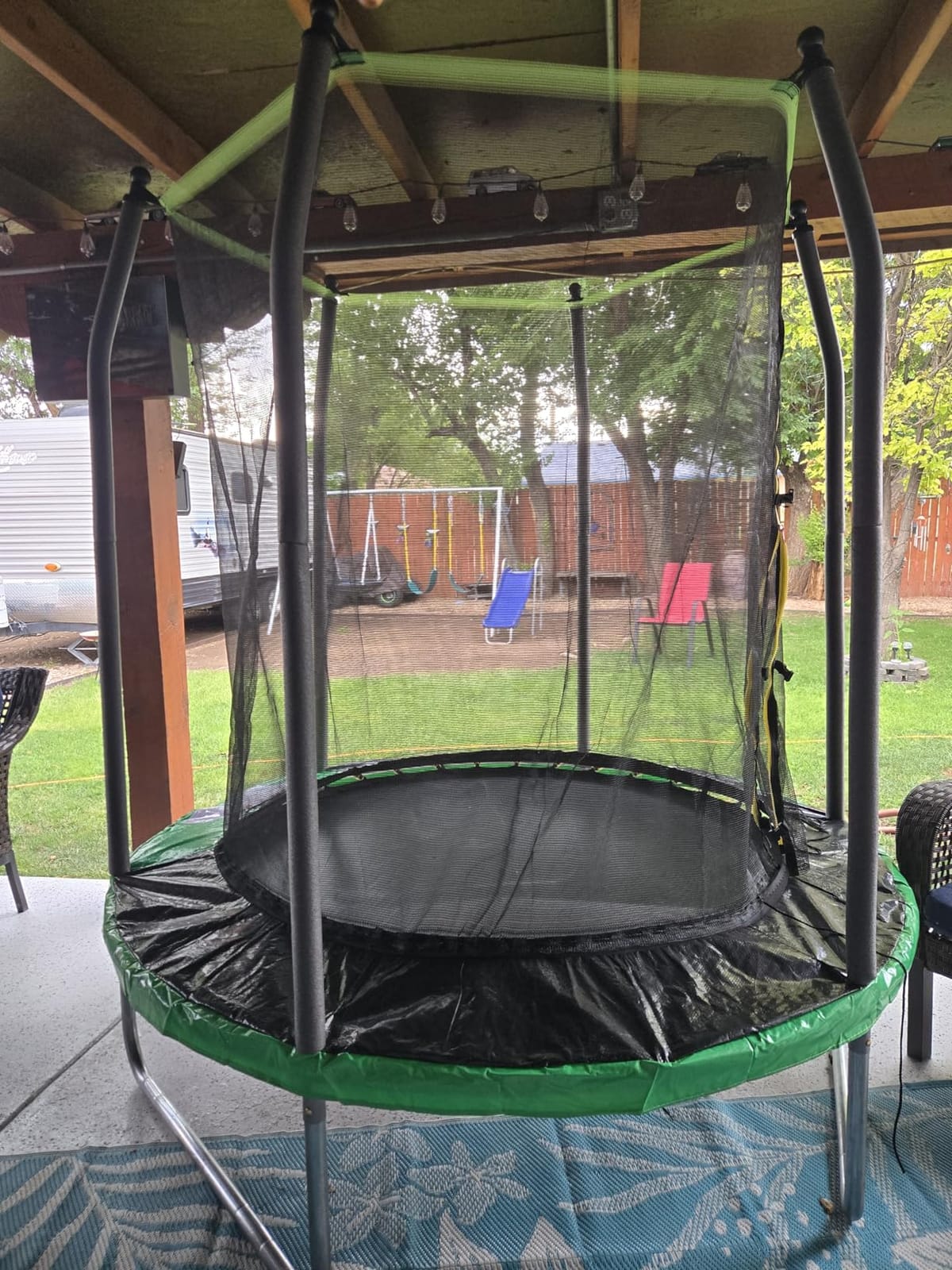
Who should buy it
If your athlete is under about 60 lbs, works on bounces, jumps, drops and early tumbling shapes, and your yard has to double as a play space, this is the pick. The combination of a light frame, a no-gap net and five-year coverage on the mat, frame and springs is hard to argue with at this level.
3. SKOK 14 FT Rectangle with Net and Ladder – Best Certification Package for Young Tumblers
SKOK 14 FT Rectangle Outdoor Trampoline with Net and Ladder for Kids
ASTM CPC TUV Rheinland CE GS certified
72 springs
4 U-shaped legs and 8 safety poles
Ladder included
+ Pros
- Widest certification list in the roundup
- 8 safety poles give denser enclosure support
- U-shaped legs create a wider stable base
- Ladder included
- Thick foam padding over frame and springs
- Cons
- Only one color and size configuration
- Smaller installed base with fewer long-term reports
- No stated single-jumper weight limit
What sets this one apart is paperwork. It is tested to ASTM, CPC certified, and carries TUV Rheinland, CE, GS and ISO 9001 marks. No other rectangle in this roundup carries a comparable stack, which matters if you want documentation to show a child’s coach or a campsite operator.
The physical design supports the claim. Four U-shaped legs spread the footprint wider than corner-post designs, and eight safety poles hold the net up at more points, reducing the places where the mesh can bow inward toward the mat.
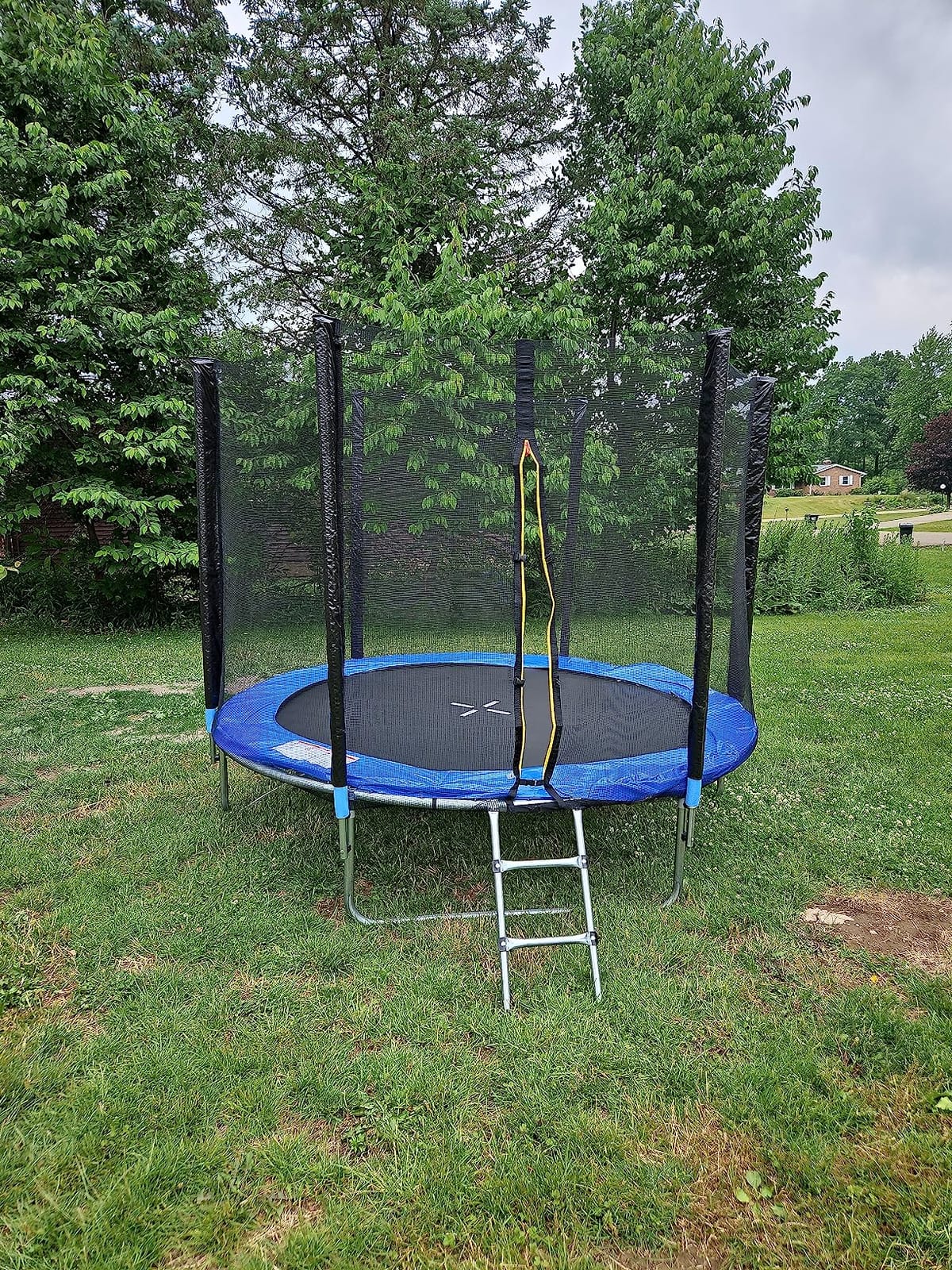
Padding as a training feature, not a comfort feature
Thick foam padding covers both the frame and the spring area. On a tumbling bed, the pad is not decoration. Landing patterns in a round-off back tuck put feet near the spring channel more often than most parents expect, and padding changes the outcome of a slightly off-center landing.
Owners frequently mention the padding as a deciding factor rather than a bonus, which tells you it is visible and thick in person rather than paper-thin.
U-shaped legs and the base footprint
U-shaped legs are common on budget models because they are simple to bend and weld. Done well, they create a wide, stable platform. This one measures 168 by 96 inches at 102.36 inches tall, giving a taller enclosure than most of the entry-level units here.
That extra height matters for skills where an athlete rotates above shoulder level, because a low net becomes a ceiling rather than a boundary.
Honest limits of a single-variant product
Only one color and size configuration is offered, which removes the ability to trade up or down within the line. The category sales rank also reflects a smaller installed base, so long-term durability reports are thinner than the 4.6-star average suggests.
It is worth treating the 311 reviews as a solid sample of this exact configuration rather than of the brand generally. The 4.6 average on 311 ratings with 80 percent five-star is still a strong signal for what you receive.
Best fit for a family backyard
For parents of level 2 through level 4 tumblers, this is the section of the market the certification story was built for. You get a tall enclosure, dense padding, a ladder and documented safety testing without moving into a commercial-grade footprint.
4. Lyromix 14FT and 16FT Rectangle – Best Accessory Bundle for Family Backyards
Lyromix 14FT Rectangular Outdoor Trampoline Field Green for Kids & Adults
84 springs
Curved safety poles
440 lbs maximum user weight
1-year warranty
+ Pros
- Most accessory-loaded package in the group
- 84 springs give a livelier bounce than 72-spring models
- Remote-controlled solar LED lighting
- 440 lbs stated maximum user weight
- Cons
- Only a 1-year warranty
- 264.6 lb unit is difficult to move alone
- Owners report misprinted instructions and pieces needing modification
This is the unit to buy when the trampoline has to do double duty as backyard infrastructure. The box includes a basketball hoop, a sprinkler attachment, a soccer set with pump, four ground stakes and a storage bag, plus solar LED lighting with a remote so parents can light the bed from indoors.
Underneath the extras sits a genuine trampoline. Eighty-four springs across the 14 foot frame produce a bounce owners describe as smooth and responsive, sitting between the soft feel of a 72 spring bed and the firm response of a 120 spring rig.
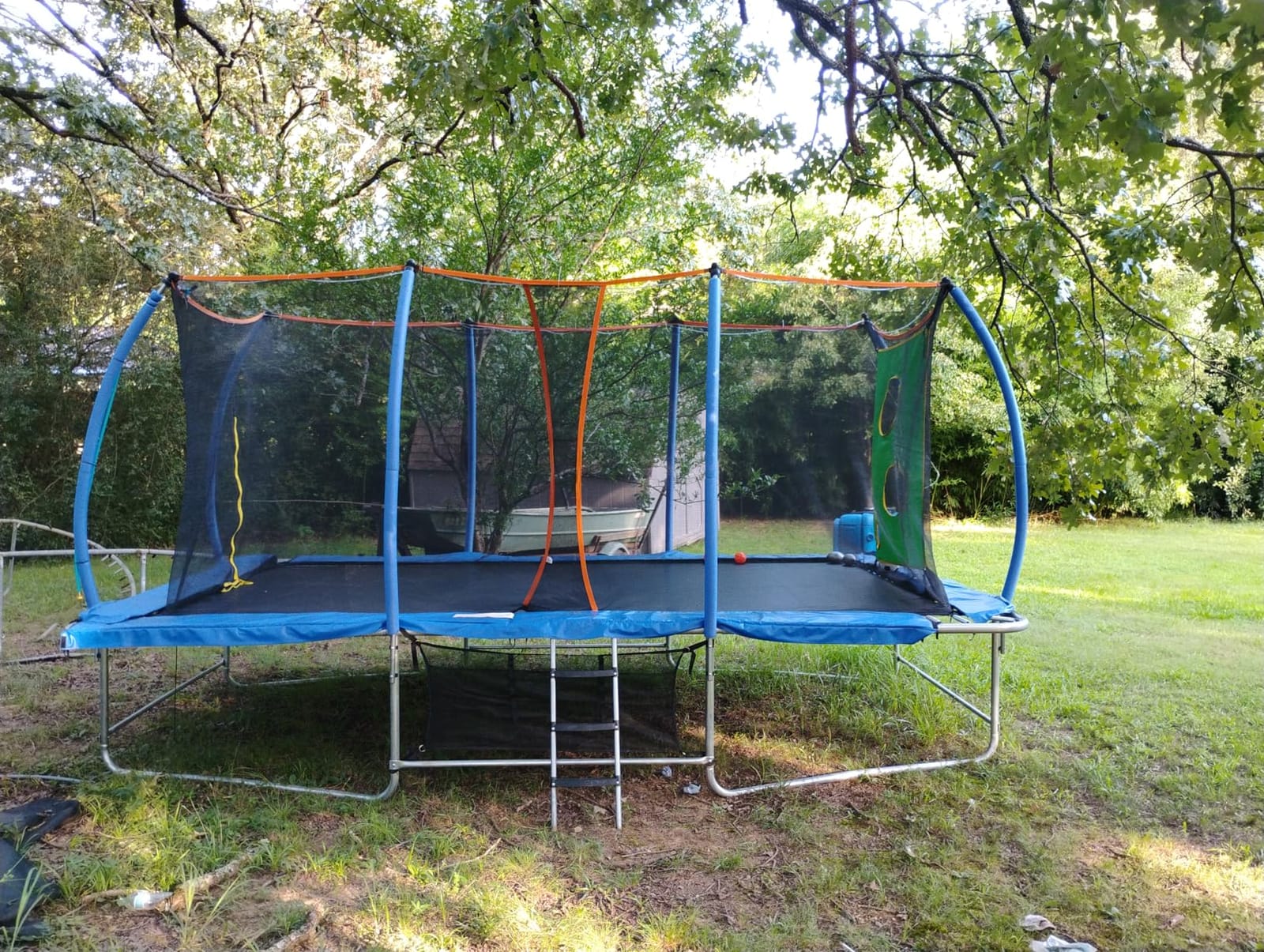
Curved poles and why the geometry matters
Curved pole tops push the net outward rather than inward at the crown, which keeps the netting from leaning toward a jumper. On an 84 spring bed with 440 lbs of stated user weight, that geometry keeps the usable area consistent corner to corner.
The pole design is genuinely useful for family use. It is less relevant to tumbling, where what matters is the mat and the support legs beneath it.
The build quality gap between frame and accessories
Owners rate the frame itself as sturdy. The accessories draw the criticism, with reports of LED and solar components and yard stakes failing quickly, and a sprinkler that covers one area rather than a full perimeter. If you only want the bed, you are paying for a package you will partly ignore.
Assembly is the other friction point. Several owners describe misprinted instructions, parts that need modification and a build that took longer than expected, which fits a pattern we saw across the assembled-in-a-box category.
The 1-year warranty and what it signals
A single year of coverage is the shortest in the roundup, against 5 to 10 years elsewhere. On a 264.6 lb steel unit, warranty length is a proxy for how long the manufacturer expects the frame to last, and a year reads as a low expectation.
Balanced against that, the 440 lbs maximum recommended user weight and the smooth reported bounce keep this a reasonable choice for families who want one surface for jumping, cooling off and playing football.
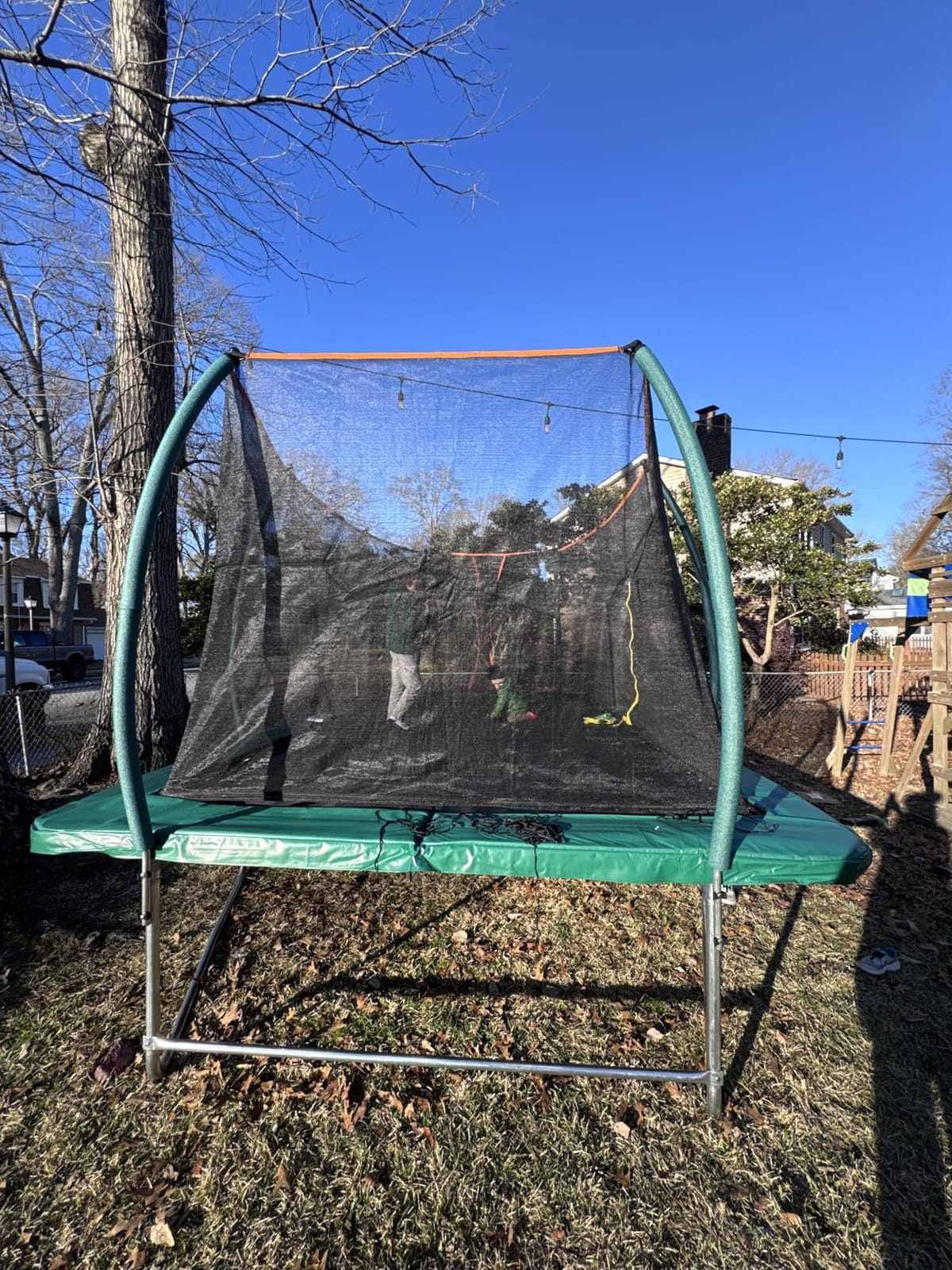
Who it fits
Households where the trampoline is one feature of a wider outdoor setup, and where a single 84 spring bed needs to serve casual jumping and light tumbling. It is not the unit to put under a teenager training backflips on a schedule.
5. Zupapa 14×14 Square Rectangle – Best Rated Unit for Adult Training Loads
Zupapa Square Rectangle Trampoline 2000LBS Capacity No-Gap Design 14X14FT Outdoor Trampoline with Safety Net and Non-Slip Ladder 10-Year Quality Assurance Perfect for Backyard Fun
120 springs at 9.84 inch
2000 lbs static, 750 lbs dynamic
Double-frame anti-tip
Ladder included
+ Pros
- Highest rating in the roundup at 4.9 stars
- 750 lbs dynamic is the strongest single-jumper rating here
- 120 springs is the largest count in the group
- Double-frame structure resists tipping under twisting drills
- Cons
- 410 lb unit requires multiple people to move
- Square footprint is less efficient for linear tumbling runs
- Only 86 reviews limits long-term data
The 4.9-star average across 86 reviews is the highest rating in the roundup, and the distribution behind it is unusual: 91 percent five-star, 8 percent four-star and no one-star ratings at all. Most products here carry a small tail of angry reviews. This one does not.
The engineering behind that is a double-frame structure that redistributes stress and lowers the center of gravity. Under a twisting dismount or a rebound drill off-axis, that is the difference between a bed that stays put and one that rocks.
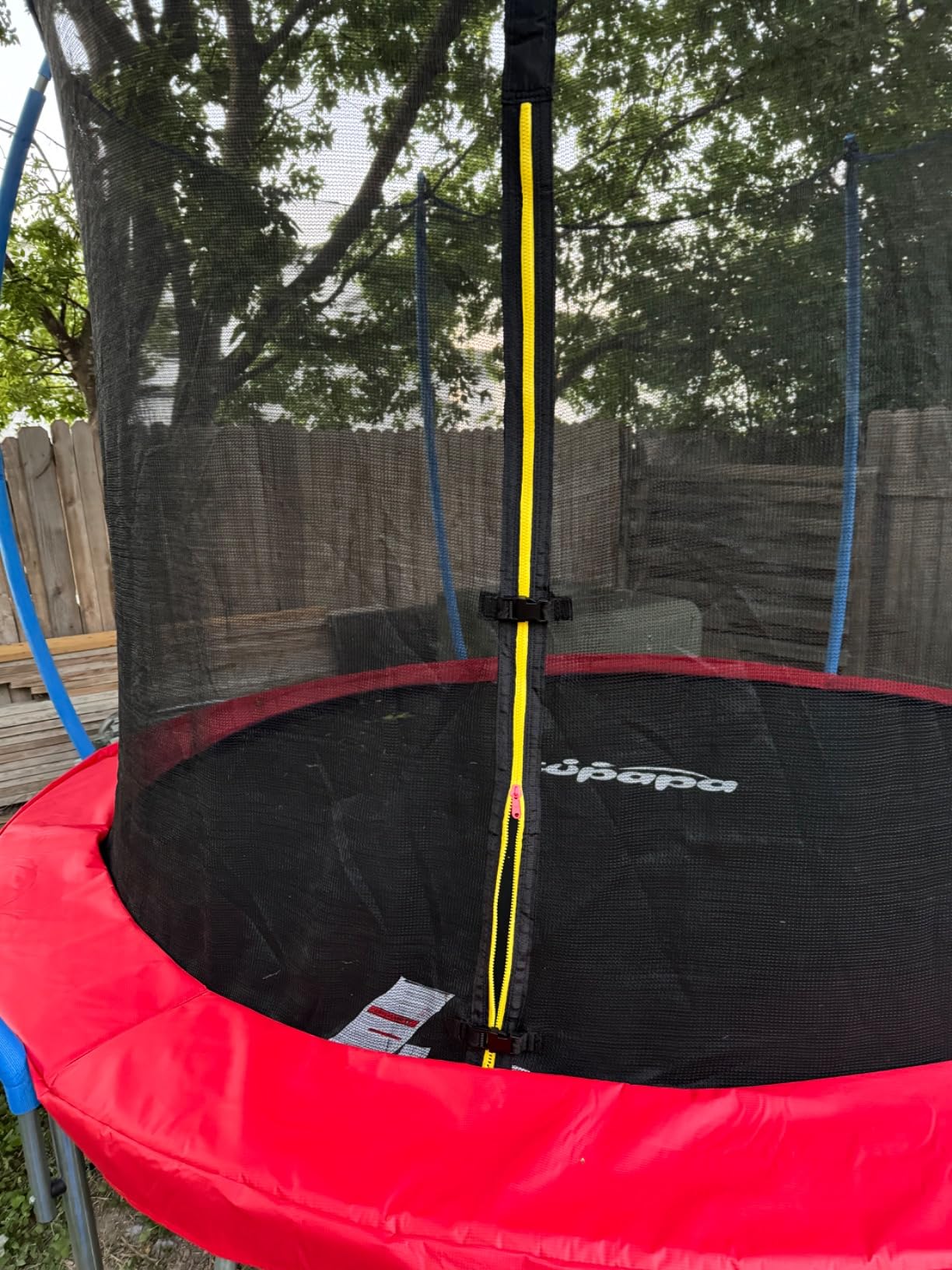
120 springs and the electroplated finish
The spring count is the largest here, with 120 electrophoretic springs at 9.84 inches. Longer, more numerous springs share the load across more contact points, which flattens the response and reduces the harshness that shows up in landings after a hard rebound.
The manufacturer claims 30 percent better performance than standard springs. Treat that as a marketing figure, but the configuration behind it is real, and owners describe a firm bed that suits high-intensity bouncing.
Why the double frame resists tipping
Tipping is a real failure mode during rotational skills. A frame that shifts under a rebound forces the athlete to correct in the air, which is exactly the situation beginners get hurt in. A second frame layer tied to the same legs increases torsional stiffness substantially.
This is the specific reason to choose this model over a lighter four-legged alternative if your athlete is working on twists and directional changes.
The square footprint trade-off
A 14 by 14 foot footprint is efficient for board-type work, drops and single-skill practice. It is less useful for a straight tumbling pass, where a rectangle with more length than width gives a longer runway and a more linear rebound.
At 410 lbs it is also the heaviest unit in this price band and effectively needs several people to position. Plan the site before the delivery, not after.
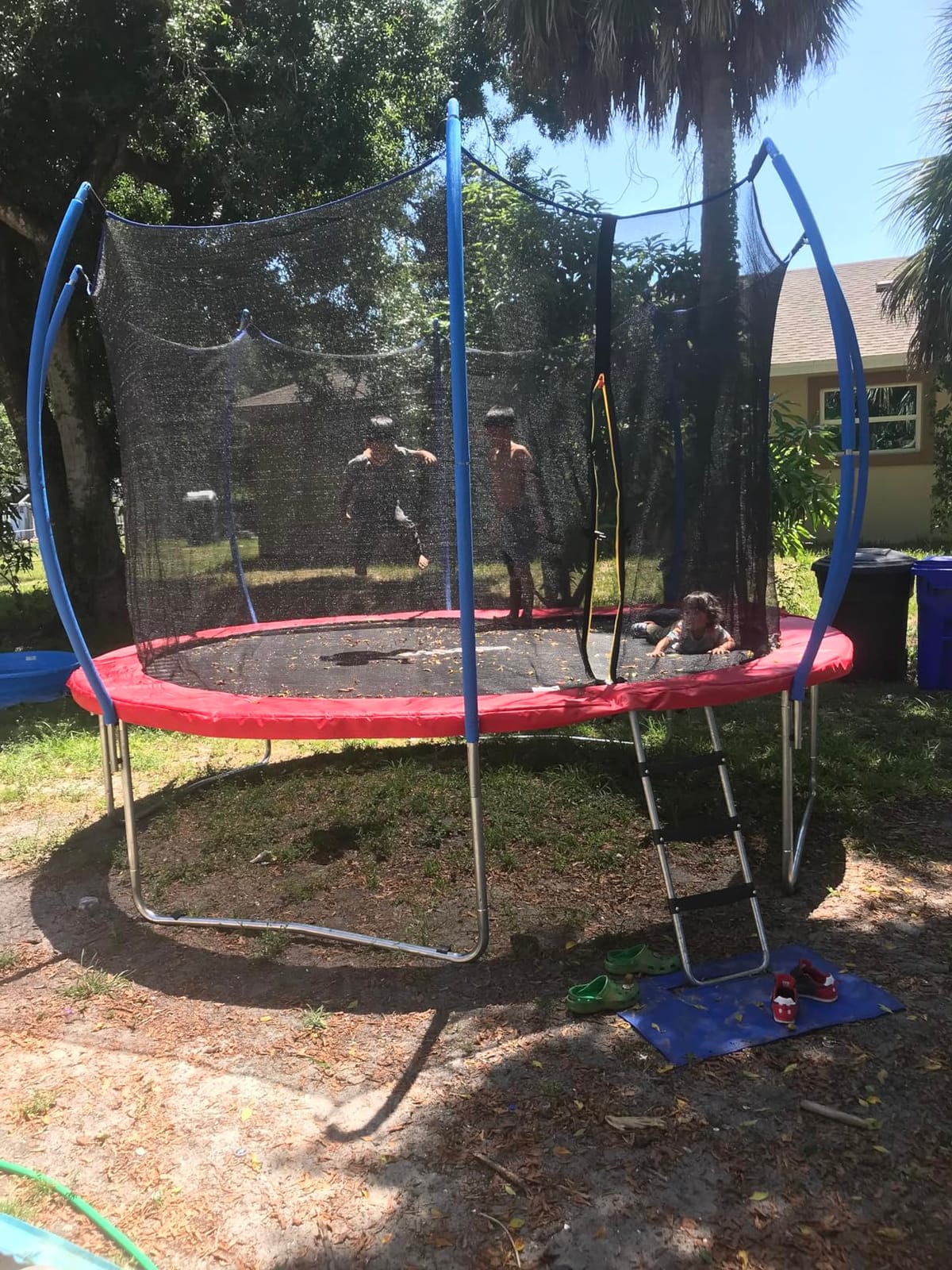
Who should buy it
Adults and older teens who need a dynamic rating well above 500 lbs, a non-slip ladder for safe entry and exit, and a frame that will not shift during rotational drills. If your training happens on one spot rather than across a run, the square geometry is not a problem.
6. Zupapa 13×23 Commercial Rectangle – Longest Tumbling Runway in the Roundup
Zupapa 2500LBS Weight Capacity Rectangle Trampoline 13x23FT Outdoor Square Gymnastics Trampolines with 10-Year Quality Assurance for Kids Adults Large Commercial Grade Rectangular Pro Trampoline
13x23 ft bed
180 electroplated springs
2500 lbs static, 800 lbs dynamic
Seven-leg support
+ Pros
- Largest jumping area in the group at 13x23 feet
- Highest load ratings with 2500 lbs static and 800 lbs dynamic
- Seven support legs keep the long sides from caving
- Net and ladder included
- 10-year frame warranty
- Cons
- 750 lb unit is a permanent installation
- Lowest review count here at 61
- 40 inch listed height is short for advanced tumbling clearance
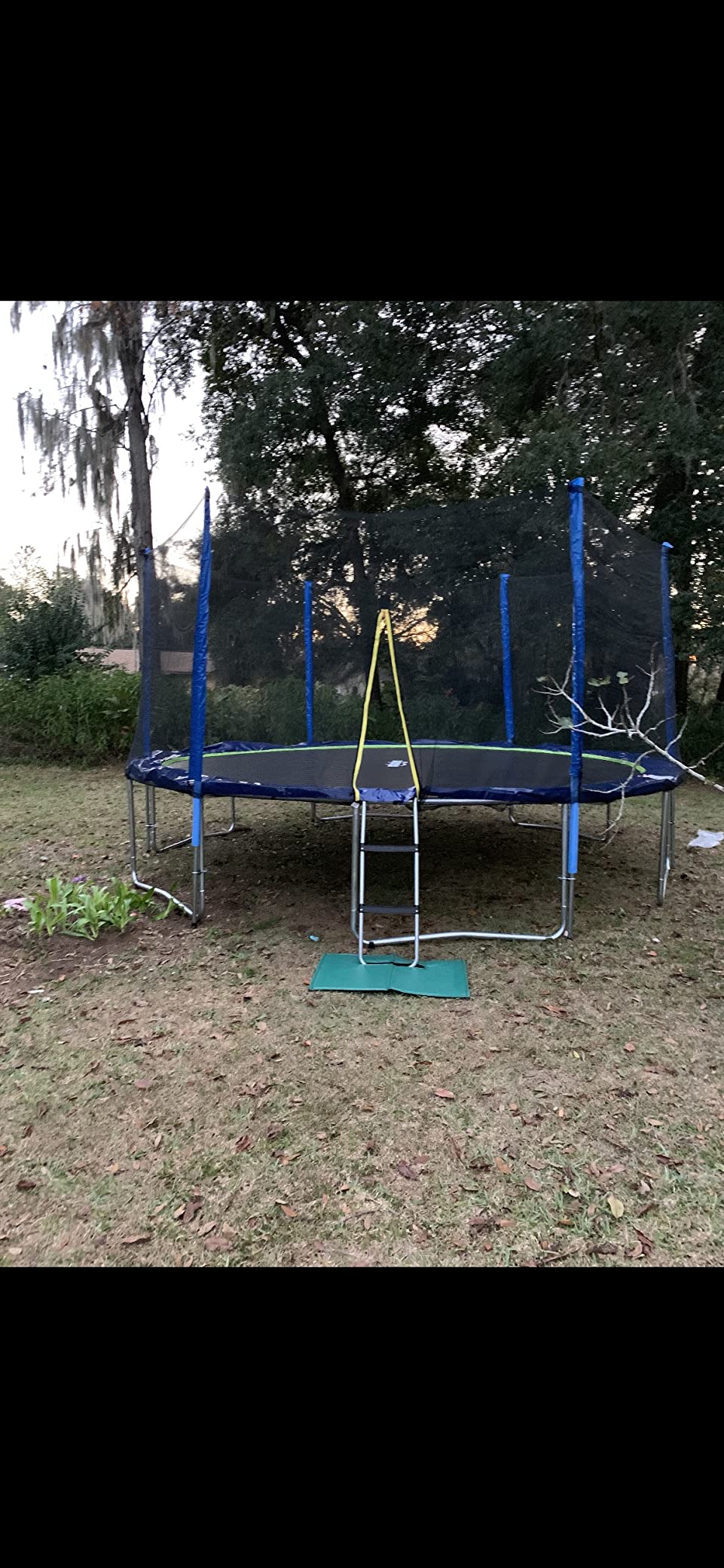
A 13 by 23 foot bed is 299 square feet of jumping surface, and the length is what matters here. Straight-line skills need room to accelerate into a round-off and to travel through a pass without running out of mat mid-sequence.
Under the mat, seven side-by-side support legs attack the sag problem head on. The feedback from owners centers on the bed staying flat and well supported, which is the characteristic a tumbler notices first and a casual jumper never thinks about.
Seven legs versus four
Most budget rectangles use four center legs. On a bed this long, four leaves a long unsupported span in the middle, and the bed develops a gentle bowl. A skill that lands six inches off center then rebounds at a different height, and the athlete’s timing breaks down.
Seven legs divide that span into shorter sections. If you are building toward passes rather than isolated skills, this is the structural difference that matters most.
180 springs at 3.5mm wire diameter
The spring count is the highest in the roundup at 180, using 3.5mm electroplated wire. More springs at a heavier gauge means each one carries less load, so the bed feels more progressive: softer on approach, firmer under a committed rebound.
That progressive feel is what makes a bed usable for both beginners learning bounce mechanics and advanced athletes drilling height. The rating across 61 reviews is 4.6 with 78 percent five-star and no one-star entries, from buyers who were already shopping commercial-grade equipment.
Planning a 750 lb installation
At 750 lbs this is a permanent structure, and the 40 inch listed height is low relative to the net poles on some competitors. Both facts push it toward families with dedicated yard space and older athletes rather than a suburban play set.
Measure the site before you commit. Once a 13 by 23 foot bed is assembled, moving it is a different job than moving a 14 foot one.
Best fit for a serious home program
If a gymnast is training multiple sessions a week, working on straight-line passes, and needs multiple bodies bouncing at once, the 2500 lbs static rating is the only one here that comfortably covers it. The 800 lbs dynamic ceiling is the highest in the roundup.
7. JumpKing Rectangle Trampoline – Best Documented for Long-Term Ownership
JumpKing Rectangular Outdoor Trampoline with Enclosure for All Ages 16 ft
124 V-arrangement springs
USA-made jumping mat
1200 lbs total load rating
5-year frame warranty
+ Pros
- Best documented long-term durability in the group
- USA-made mat with US-based customer service
- 124 V-arrangement springs for a serious bounce
- 5-year frame warranty
- Poles pass through the net top to hold tension
- Cons
- Assembly is genuinely difficult
- Corner fittings reported mis-sized
- Lowest single-jumper recommendation here at 400 lbs
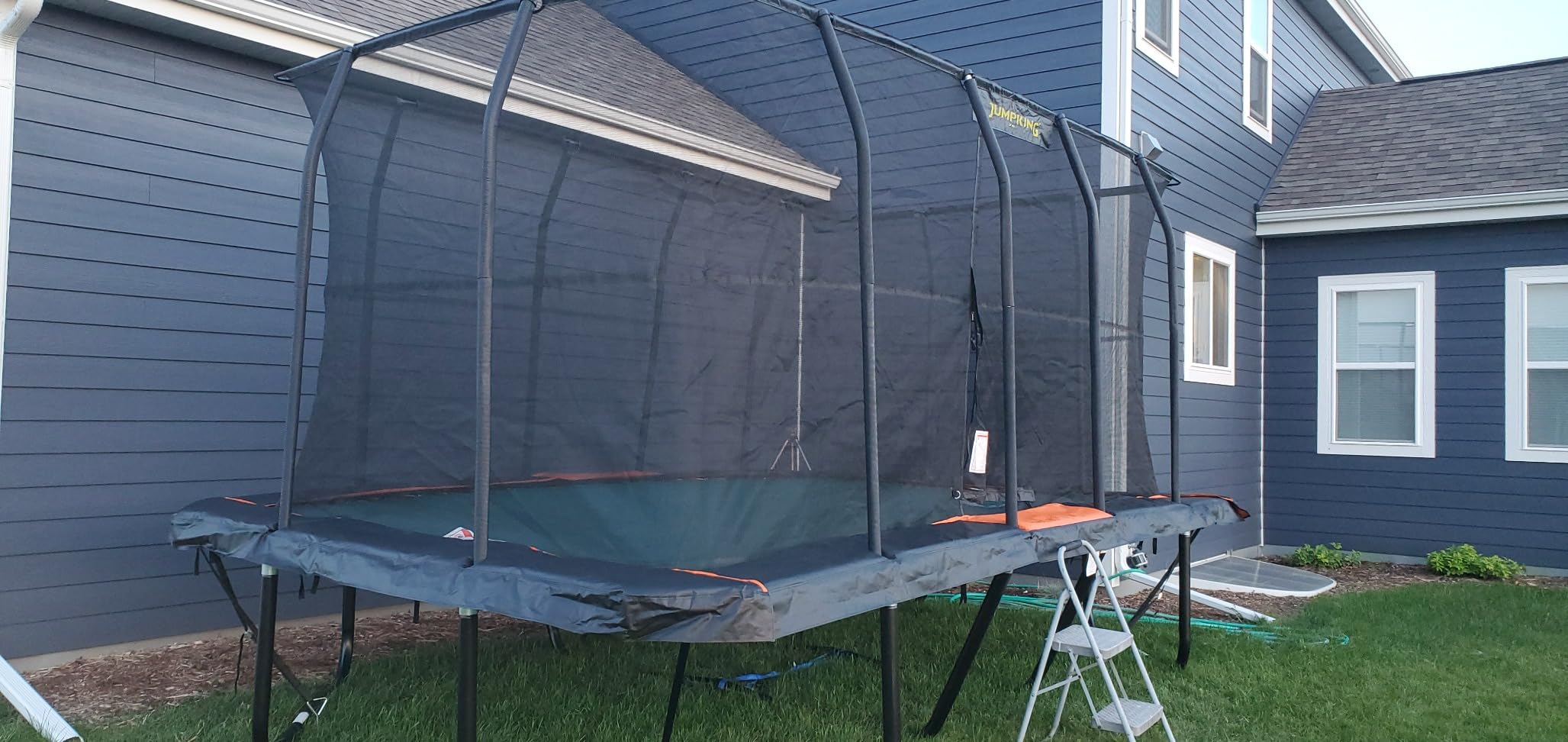
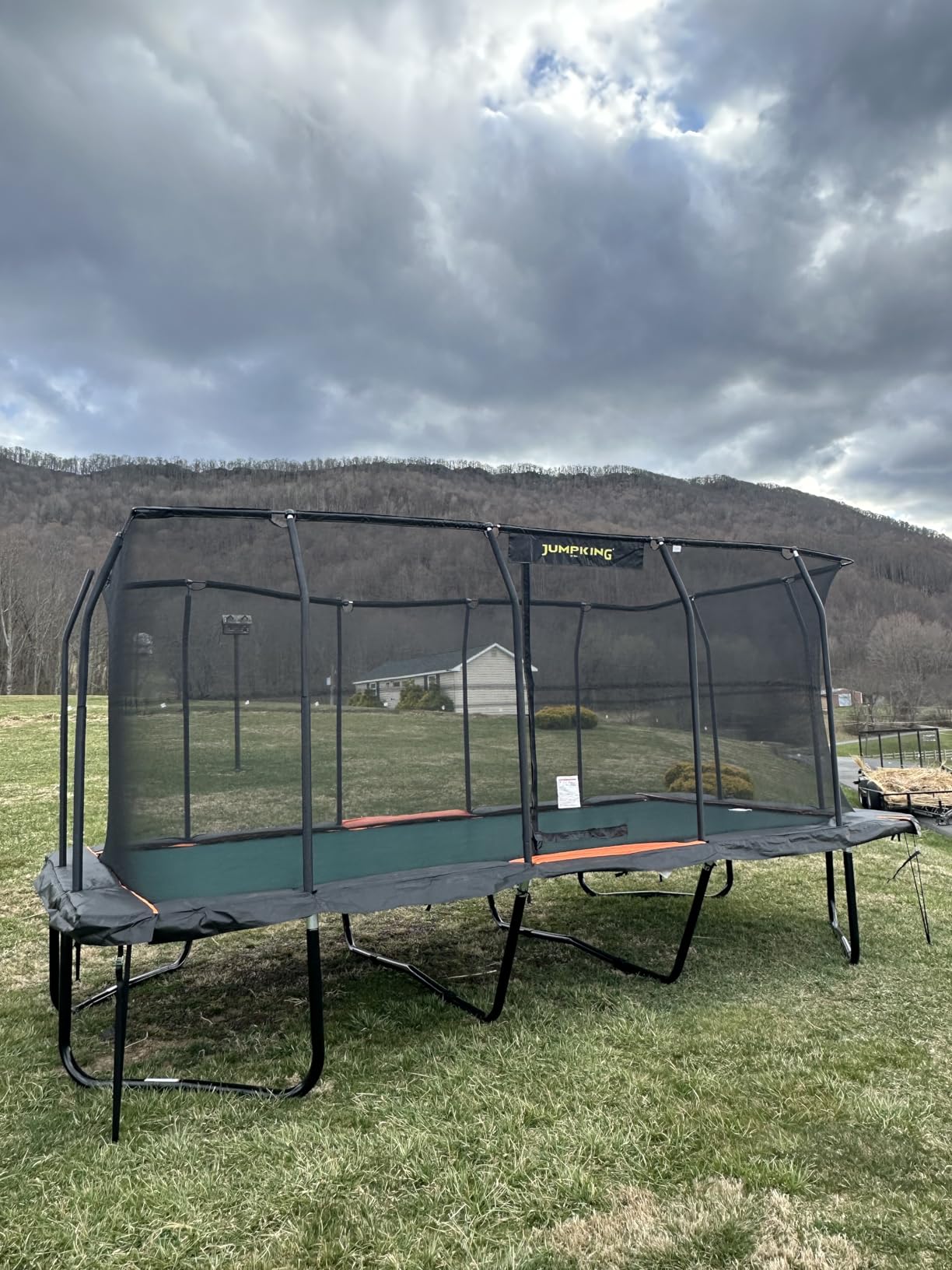
The thing that separates this product is not a spec, it is a four-year owner report. One reviewer describes springs, mat and netting still strong after four years of outdoor use, and multiple buyers mention US-based customer service sending replacement parts within days.
For a trampoline that is meant to be an installed training tool rather than a seasonal purchase, that track record is worth more than a longer warranty printed on a box.
What V-arrangement springs change
V-arrangement springs are anchored at an angle rather than straight to the frame, which increases how far each spring stretches and how smoothly it transitions from tension to rebound. Combined with a USA-made mat, the result is a higher, more responsive bounce than straight-mounted springs produce.
That extra height is what supports aerial work. Higher rebound means a skill like a front flip can be attempted with a takeoff the athlete can actually control, rather than one that barely leaves the mat.
The 400 lbs single-jumper ceiling
The listed maximum recommended user weight is 400 lbs, the lowest in the roundup, against a 1200 lbs total load rating. For one adult athlete under 400 lbs this is not a concern. For a heavier adult or a fully grown teenager, the rating is the limiting factor rather than the frame.
The 400 lb figure is the number to plan around if two adults might use the bed at once, and it is another reminder that total load and single-jumper load are different claims.
Assembly, hardware and the honest complaints
Assembly is the consistent negative theme. One reviewer needed ratchet straps and lubricant to close the final frame joint, and another reports a corner fitting that arrived mis-sized. A frame corner snapping after four years of heavy use also appears in the reviews.
Allow a full afternoon for two people, and check the hardware before you start. The instructions are English only, which some international buyers flag.
Who should buy it
Households that want a USA-built brand with reachable customer service and plan to keep the bed for years rather than seasons. It is also offered in 13, 16 and 18 foot classes, so you can size to your yard before committing.
8. ACON 16 HD Rectangle 17×9.8 ft – Most Versatile for Certified Adult Training
ACON 16 HD Rectangular Trampoline 17×9.8 ft, 140 HD Springs, SafeMat
14.2 x 7.2 ft jump zone
140 HD 10-inch springs
330 lb single-jumper limit
In-ground install
+ Pros
- Only unit here certified for a 330 lb single jumper
- Only model that supports in-ground installation
- Synergy Design tunes frame mat and springs as one system
- Two-layer spring protection with 2-inch foam buffer
- Zipperless two-level entry removes a common safety lapse
- Cons
- Heaviest unit in the roundup at roughly 534 lbs
- Narrowest jump zone relative to footprint
- Only 90 reviews
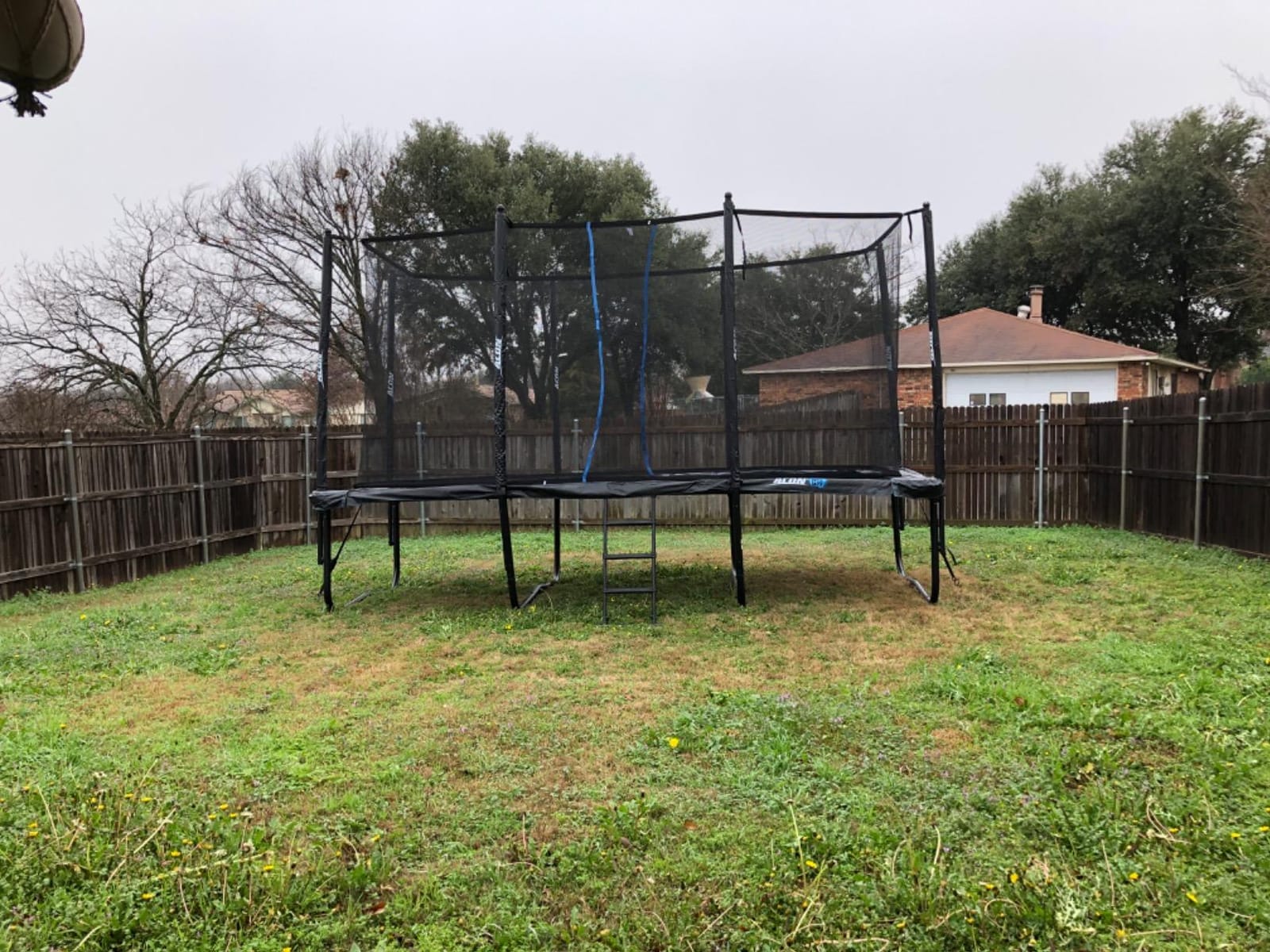
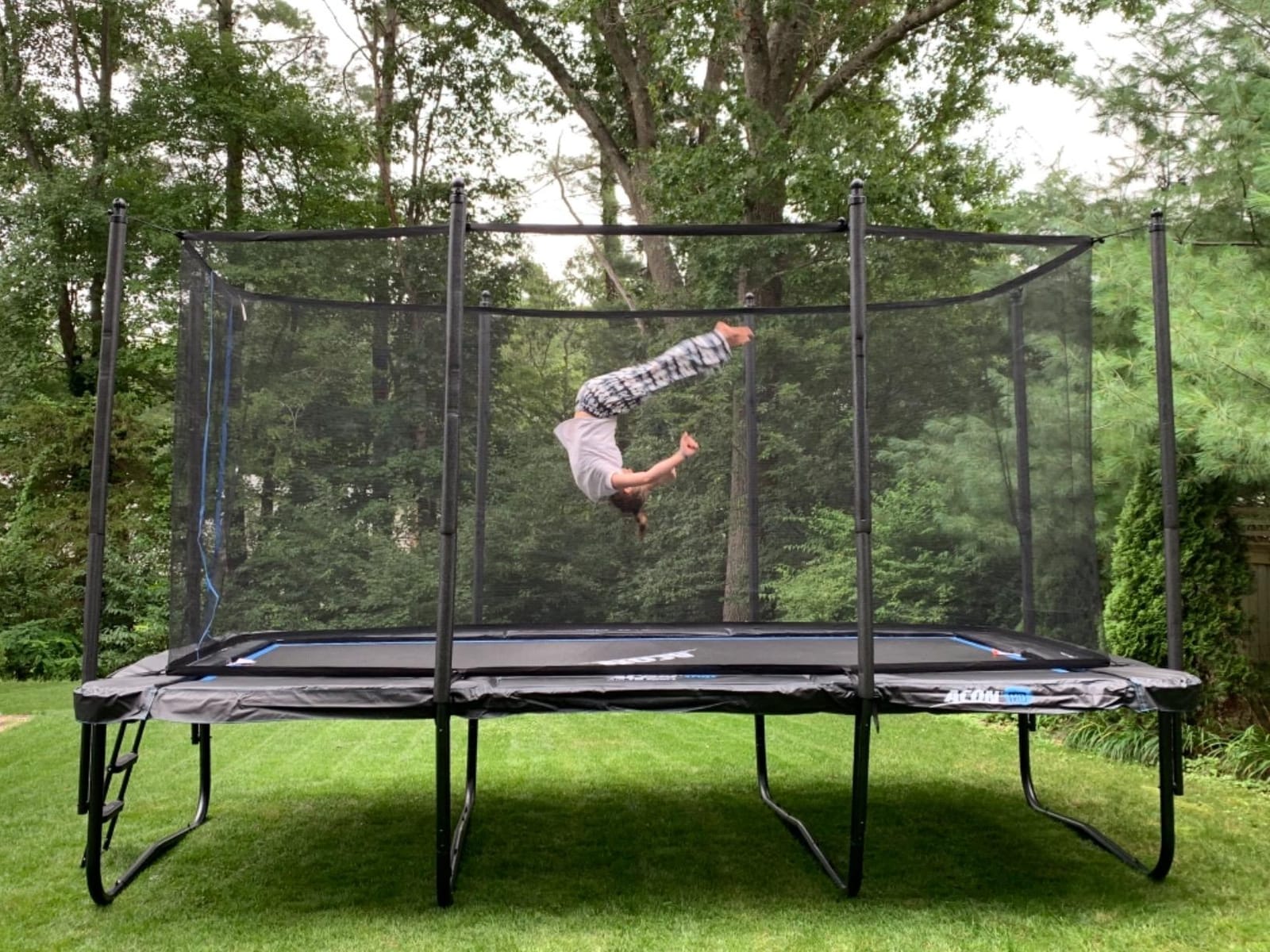
This is the only rectangle in the roundup rated for a single jumper up to 330 lbs, and the only one that can be recessed into the ground. Both facts matter for adults and older teens, because a recessed bed removes the trip hazard at the edge entirely.
The engineering term to know is Synergy Design, which refers to tuning the 140 HD 10-inch springs together with the mat and frame as a single system rather than bolting parts together. The result is documented as a deep, joint-friendly bounce, and a deep bounce is easier on ankles and knees over a long session.
Two-layer spring protection
The SafeMat system combines a 2 inch foam buffer with a spring-covering skirt, so the springs are shielded twice. On a bed tuned for a 330 lb adult, the spring zone is where a mistimed landing ends up, and double protection is the difference between a scraped calf and a serious injury.
Jumpers at this weight also generate more force per bounce. The protection is not decorative.
Zipperless two-level entry and No Finger Access netting
Zipperless entry removes the single most common safety lapse on a netted trampoline, which is a jumper leaving the door open and forgetting. A second, lower entry point gives a route for smaller athletes without climbing.
The No Finger Access net geometry is designed to keep hands from reaching the spring channel during a fall. Both features address the same underlying risk: contact with the perimeter.
What the footprint costs you
The 17 by 9.8 foot frame contains a 14.2 by 7.2 foot jump zone, so a meaningful share of the rectangle is frame and padding rather than mat. It is also the heaviest unit here at roughly 534 lbs, which is another way of saying installation is not a weekend job.
Buyers in this tier are typically adults and older teens who value the certified rating and the in-ground option, and the 4.6 average across 90 reviews reflects exactly that group.
Best fit for an adult athlete
If you are over 400 lbs, or you want the option of an in-ground install, or you plan to train daily for years, this is the section of the list to read twice. The warranty structure is also the best in the roundup: 10 years frame, 5 years mat and springs, 2 years pad.
9. BSPORTY Air 8×14 Rectangle – Best Zipper-Free Entry Under 500 lbs Dynamic
BSPORTY Air Rectangle Trampoline 8X14FT 1800LBS Weight Capacity Outdoor Square Gymnastics Heavy-DutyTrampolines with Net Enclosure for Kids Adults
1800 lbs static, 500 lbs dynamic
Zipper-free overlap door
UV-resistant pole sleeves
+ Pros
- Overlap door entry removes zippers entirely
- UV-resistant pole sleeves block 98% of UV rays
- 500 lbs dynamic rating sits above the entry tier
- Spring puller tool included
- Cons
- Lowest rating here at 4.2 stars with 9% one-star reviews
- Net hardware and pad straps reported failing within one to two months
- Overlap door reported hard to exit for some users
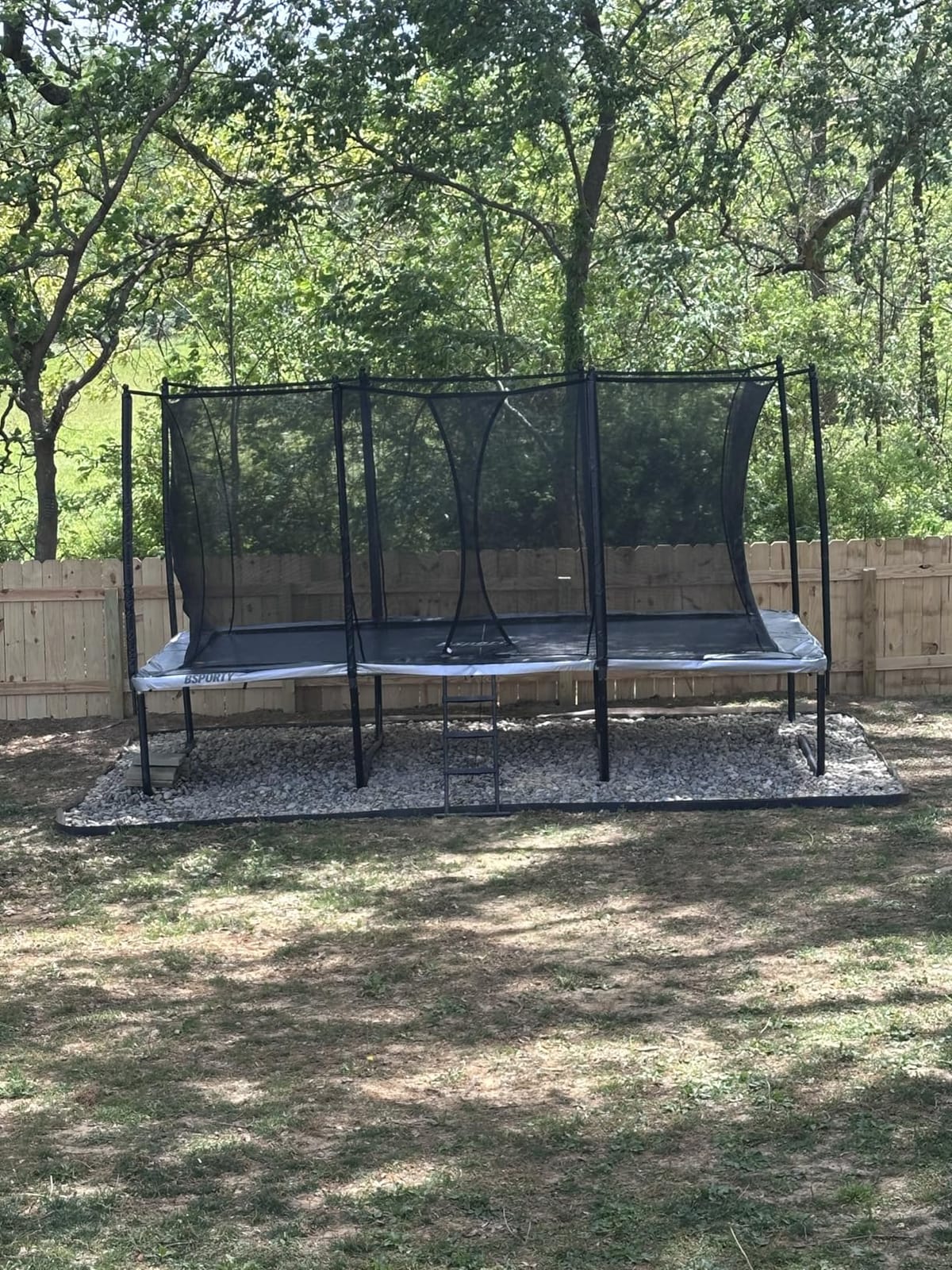
The overlap door is the idea worth stealing from this design. Instead of a zipper, the entry is a flap that overlaps itself, so there is no mechanism to leave open and no flap to catch on clothing mid-skill. Parents of young jumpers who get distracted at the gate appreciate it most.
It is also the lowest-rated product in the roundup at 4.2 stars, with 9 percent of ratings at one star. The enthusiasm and the complaints sit side by side, and both are real.
UV protection on pole sleeves
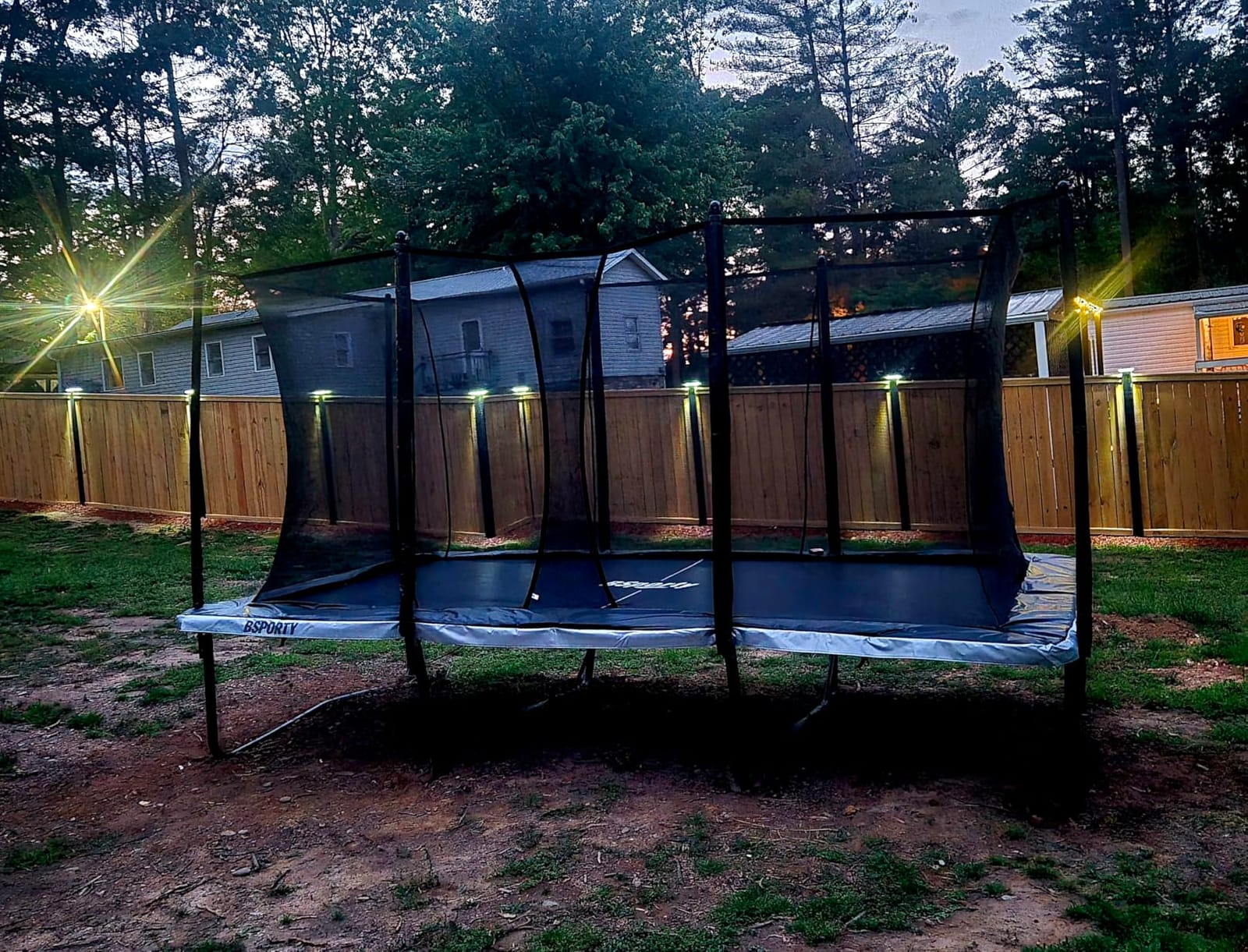
The PVC pole sleeves are removable and replaceable and block 98% of UV rays. Foam padding is the part of any trampoline that degrades first, because sunlight attacks the foam structure directly, and replaceable sleeves let you restore protection without replacing a whole net.
That single design choice is more useful for a five-year ownership horizon than most of the accessory bundles bundled with cheaper units.
The failure reports deserve a straight answer
Two separate one and two-star reviews describe net attachment hardware and spring pad straps breaking within one to two months, with zip ties used as a repair. That is not a cosmetic complaint, it is a structural one on the parts that keep the net attached.
The net is also reported as slow to fit because it must be sewn in at the spring D-rings, and some users find the overlap door genuinely hard to exit through. A spring puller tool is included, and assembly runs roughly two hours for two people.
What the 4.2 average means
With only 28 ratings, the sample is too small to smooth over that split. Enthusiasts describe a smooth, high, sturdy bounce and a smart door design; critics describe failing hardware. On a safety-critical product, weight the hardware reports more heavily than the bounce praise.
Buying a 1-year-warranty trampoline with reported net attachment failures is a calculated risk, not a safe default.
Who it fits
A family that values a zipper-free gate above all else, has young jumpers, and wants a 500 lbs dynamic ceiling without moving up a size class. Just inspect the net attachments during the first month and know where the replacement parts come from.
10. BSPORTY Ultra 8×14 Rectangle – Best Six-Leg Frame Under 700 lbs Dynamic
BSPORTY Ultra Rectangle Trampoline 8X14FT 2200LBS Weight Capacity Outdoor Square Gymnastics Heavy-Duty Trampolines with Full-Wrap Net Enclosure for Kids Adults
Six-leg frame with cross-grid braces
2200 lbs static and 700 lbs dynamic
EnduraWeave net at Intertek UV Grade 6
65Mn spring steel, 7-inch springs
+ Pros
- 700 lbs dynamic rating is unusual at this size
- 6-leg frame with cross-grid braces is stiffer than 4-leg rivals
- Mat webbing-stitched to pad for a permanent zero-gap edge
- Intertek UV Testing Grade 6 net
- 65Mn spring steel at 7 inches
- Cons
- 4.3 stars with 11% one-star reviews
- the highest share here
- Sibling model has verified reports of net hardware failure
- 1-year warranty
- Only 28 ratings validate the specifications
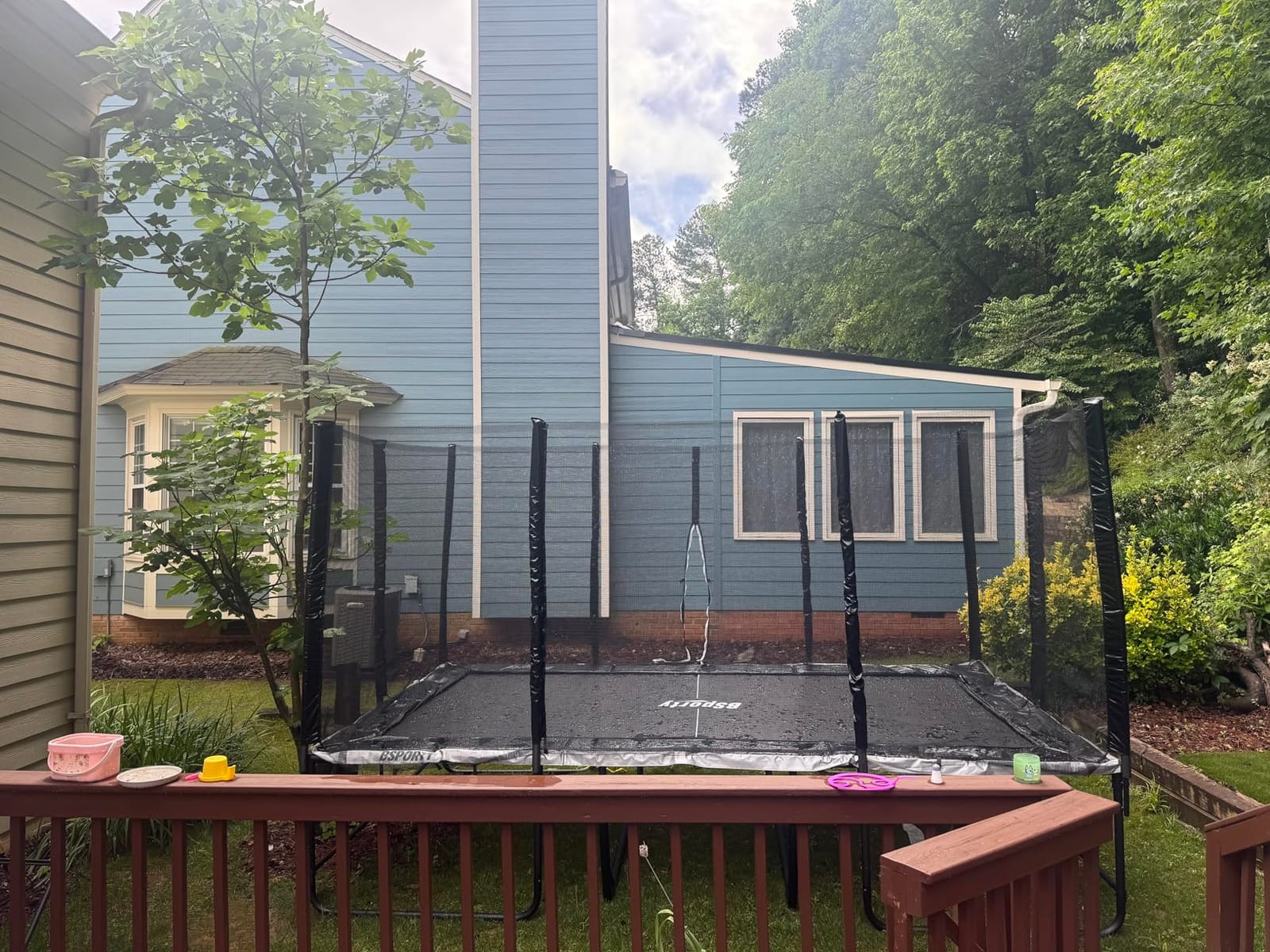
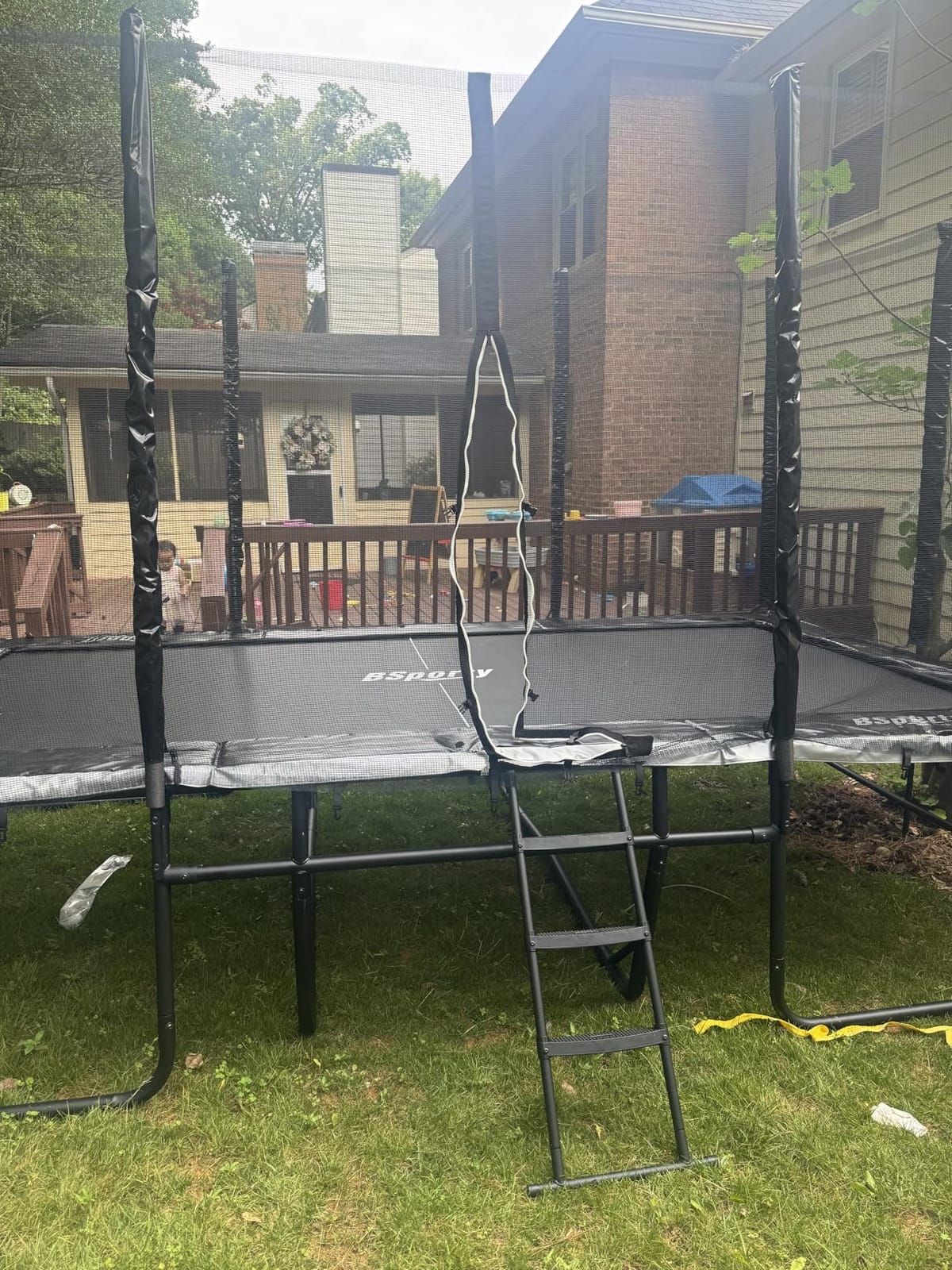
The structural difference from the four-legged budget models is real and easy to feel. Six legs plus two crosswise legs with dual center cross-grid braces make this frame meaningfully stiffer, and owners describe a steadier edge-to-edge response as a result.
The 700 lbs dynamic rating is the highest of any unit in this footprint class, which puts adult training in reach on a bed that is otherwise compact.
Cross-grid bracing explained
Cross-grid braces tie the length of the frame together at the center, resisting the twisting that occurs when a jumper lands off-center. Torque is the enemy of rebound predictability, and bracing is how you reduce it.
On a bed sized for a teenager working on aerial awareness, a stiffer frame means the response at the edges matches the response in the middle. That consistency is what lets an athlete commit to a skill.
Webbing-stitched zero-gap perimeter
The mat is webbing-stitched directly to the spring pad rather than rope-tied, so the gap-free edge is part of the construction instead of a tensioned cord that stretches. Webbing does not elongate the way rope does, so the no-gap property holds over years.
This is a better version of the same idea the other rectangles in the roundup implement with cords, and it is the one detail that most directly reduces foot-to-spring contact during a bad landing.
Spring steel and UV certification
The springs are 65Mn steel at 7 inches, a harder alloy than the carbon steel used on most budget units, and shorter, which produces a faster, more responsive takeoff. The EnduraWeave net carries an Intertek UV Testing Grade 6 rating, the most specific UV certification in the group.
Against that, the review profile is the concern: 4.3 stars with 11 percent one-star ratings, the highest one-star share here, on only 28 ratings. The closely related Air model has verified reviews describing net hardware and pad strap failure, and that failure mode plausibly carries across a shared parts bin.
Who it fits
An adult or older teen who wants the highest dynamic rating available in a compact footprint and values frame stiffness over warranty length. Buyers who are comfortable inspecting net hardware in the first months, because the 1-year warranty will not help much if a strap fails.
11. ExacMe 7×10, 8×12 and 9×14 Rectangle – Best Fit for Small Yards and Indoor Use
Exacme 7X10 8X12 9X14 Foot Rectangle Trampoline for Kids, Double Enclosure Openings, Small Outdoor Rectangular Trampoline with Enclosure Net, 4 Wind Stakes, Storage Bag(Blue, 7×10 Feet)
Three footprint options from 7x10 to 9x14
Double enclosure openings
Hot-dip galvanized frame and springs
Ladder bag tools and anchors included
+ Pros
- Only small-format option in the roundup
- Double enclosure openings on two different sides
- Most complete accessory bundle at this tier
- One owner uses it indoors in a living room
- 3-year frame warranty outlasts several rivals
- Cons
- Smallest review base at just 16 ratings
- Curved frame tubes make the final joint very hard to close
- Instructions do not explain the shoestrings for the net
- 330 lbs maximum user weight
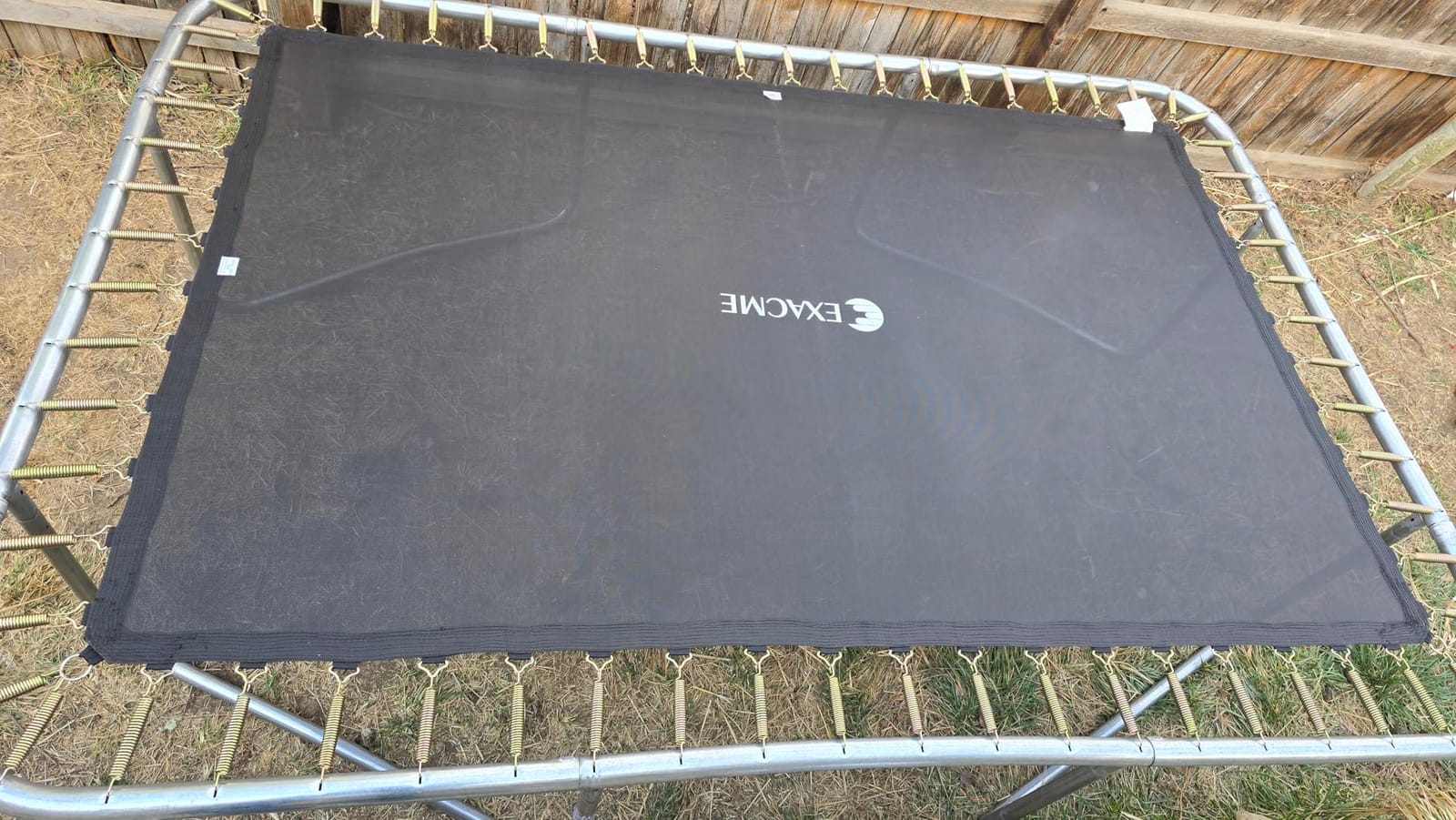
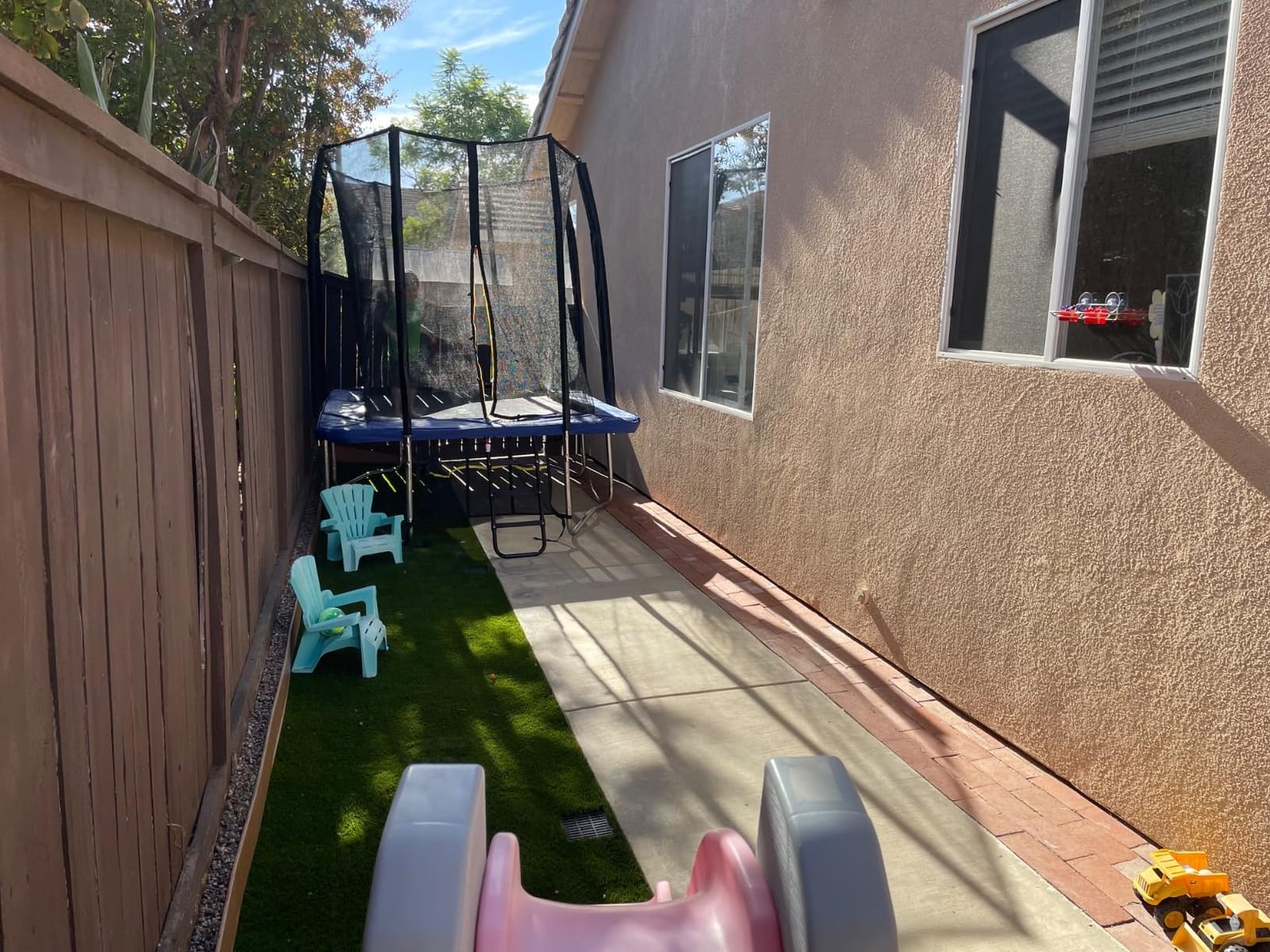
Most of the market assumes a wide yard. This one does not. With 7×10, 8×12 and 9×14 footprints, it is the only small-format rectangle in the roundup, and one owner reports using theirs indoors in a living room.
It also offers something no rival here does: two enclosure openings, one on a long side and one on a short side. That lets an athlete enter from whichever direction the skill starts, which removes a short warm-up walk at the start of a session.
Small beds and what they can teach
A smaller mat is a constraint on passes, but it is not a constraint on fundamentals. Bounces, jumps, drops, straight jumps, front handsprings and basic tumbling shapes all fit on a 7×10. The independent spring layout across the full rectangle avoids the dead zone that a round bed of the same size would have.
For a child working on body awareness and aerial confidence, a shorter runway actually reduces the temptation to attempt skills beyond the space available.
Inner enclosure spacing
The inner enclosure leaves deliberate space between the net and the poles, which prevents a jumper from colliding with a pole and keeps feet from reaching the spring channel through the gap. It is a subtler version of the no-gap idea used on the larger units, and it works in the same direction.
The frame and springs are hot-dip galvanized and tested for 500 hours of sun exposure, which is the durability standard worth asking about on any budget rectangle.
The assembly complaint, in detail
One detailed review describes instructions that are nearly useless, frame tubes that are slightly curved, and a final connection that realistically needs ratchet straps. The same reviewer notes the included long shoestrings are meant for the safety net, which the manual never states.
At 16 ratings, the 4.5-star average is statistically fragile. Most owners describe a straightforward two-person build, but check the frame arcs face inward before you start, because that is what makes the last joint fit.
Who it fits
Apartment dwellers, families with a compact patio, or anyone who wants a first trampoline a child can learn on without a full backyard. The ladder, storage bag, two spring tools and four ground anchors make it the most complete small-format package available.
12. Galactic Xtreme 13×23 Rectangle – Best Large Bed With a Reversible Spring Pad
Happy Trampoline Pro Rectangle Trampoline 13×23 with Net Enclosure for Backyard Heavy Duty 750lbs Jumping Capacity – Commercial Grade Outdoor
13x23 ft commercial-grade rectangle
172 galvanized 9-inch springs
3.0mm galvanized steel tubing
Reversible spring pad
+ Pros
- Largest jumping area class with the broadest variant range
- 750 lbs jumping capacity and user weight
- 3.0mm tubing is the heaviest gauge in the roundup
- Reversible pad doubles pad lifespan
- Ladder included
- Cons
- Listed 42 inch height is among the lowest for the size
- 36 reviews is a thin base
- Reversible pad and zipper add failure points
- 9.5 ft frame height creates a very large footprint
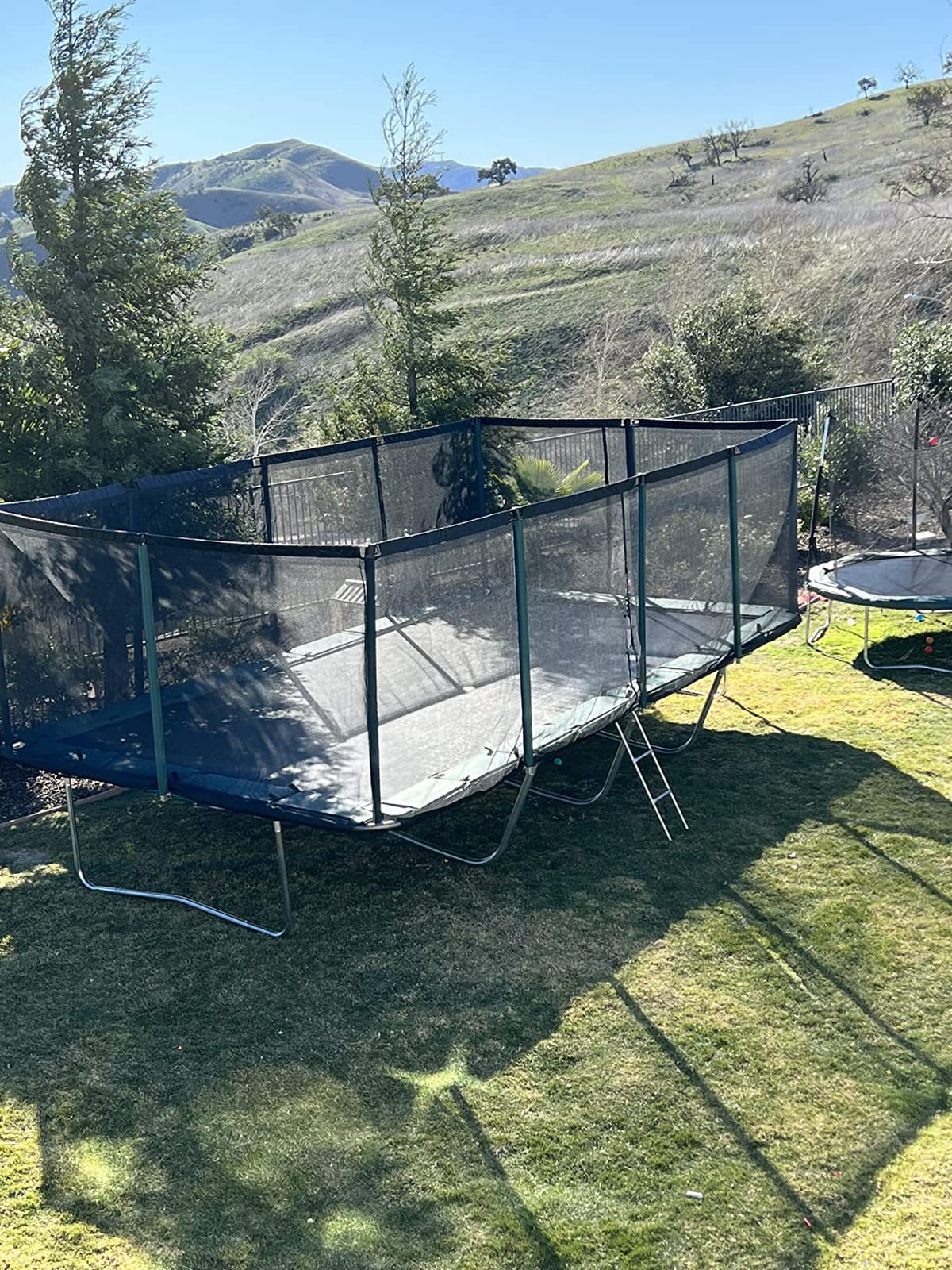
The reversible spring pad is the detail most owners single out. Flip it and the worn face becomes the underside, which effectively doubles the life of the most expensive consumable part of any trampoline. On a commercial-grade bed that sees daily use, that is a meaningful saving in years rather than months.
Underneath, 172 fully galvanized 9-inch springs and a patented four-leg frame with 3.0mm galvanized tubing give this the heaviest steel gauge in the roundup. The 750 lbs jumping capacity and 750 lbs maximum user weight put it in genuine commercial territory.
Pad life is the running cost of a trampoline
Springs and frames last years. Mats and pads degrade from UV exposure and repeated compression, and pad replacement is where ownership costs accumulate. A reversible pad changes that arithmetic by spreading the wear across both faces.
It does add a seam and a hardware point. The polyester mesh net uses zippers and buckles on both sides, which is more failure surface than a zipperless entry, though the double entry does help when two athletes share the bed.
What the review spread tells you
At 4.5 stars across 36 reviews, 8 percent of ratings are three-star and 7 percent are one-star. That spread is wider than the ACON and Zupapa premium units, which suggests satisfaction here depends heavily on expectations for a very large commercial-grade bed.
Buyers who planned for a large permanent installation describe the size and the capacity as exactly what they wanted. Buyers who underestimated the footprint did not.
Site planning for a 13×23 bed
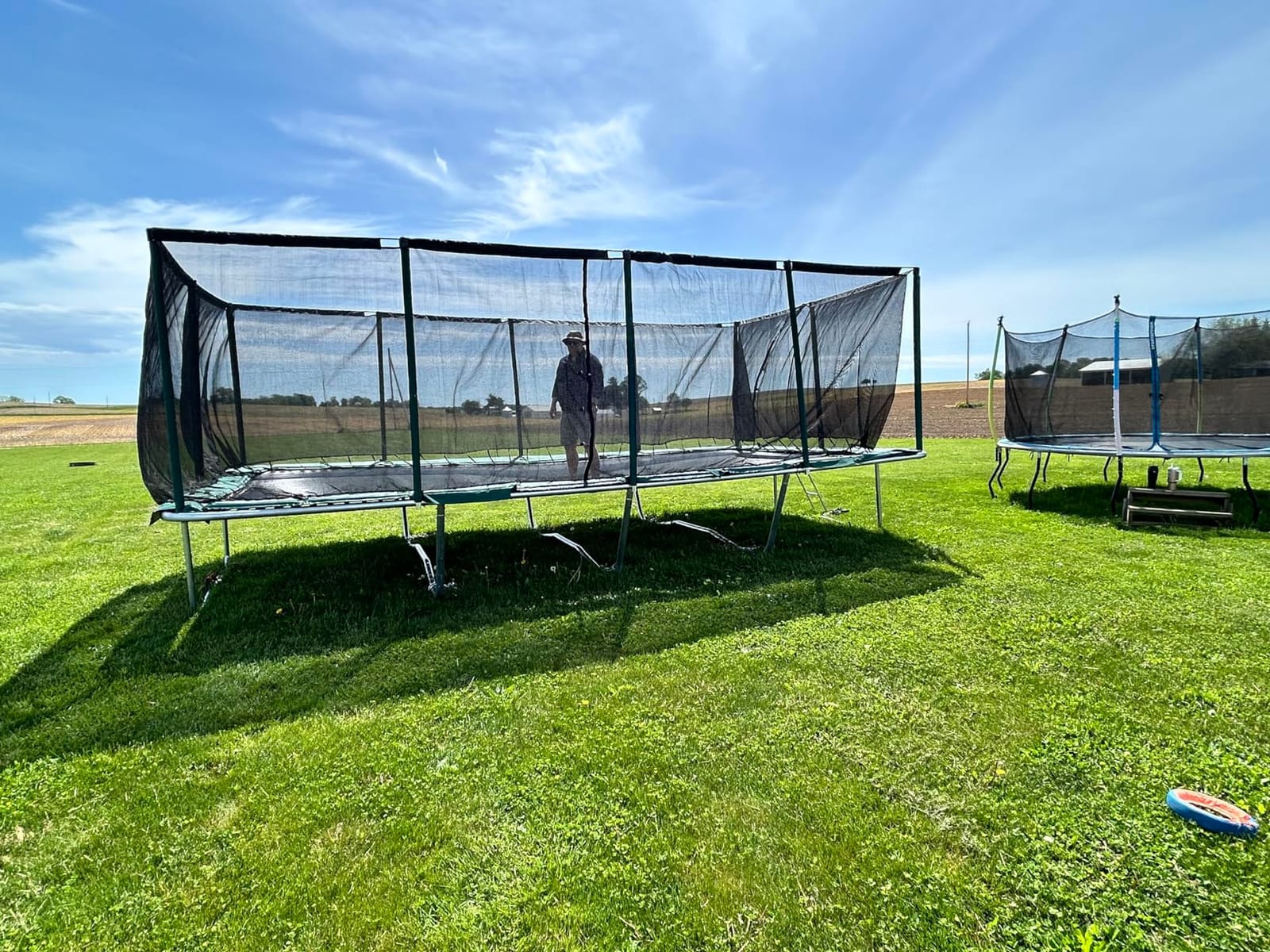
The 9.5 foot frame height on a 13 by 23 foot bed produces a very large assembled footprint. Before ordering, mark the rectangle on your yard and walk the perimeter, because a bed this size is not repositioned casually.
Also note the listed 42 inch height is among the lowest for the size, which becomes a real constraint for advanced tumbling clearance. If advanced skills are on the horizon, verify pole height rather than assuming it scales with the bed.
Who it fits
A family that wants a permanent, commercial-capacity backyard bed, a club or a shared training space, and someone who values pad longevity enough to flip it on a schedule. It is the broadest variant range in the roundup, from 10×17 up to 14×16, so sizing within the line is possible.
How to Choose a Rectangle Trampoline for Gymnastics
Every ranking above collapses into a handful of decisions once you strip away the accessory lists. These are the ones that change how a trampoline performs under a gymnast, in the order I would think about them.
Map the size to the skill, not the other way around
Bounces, jumps, drops and straight jumps work on almost any rectangle. Front handsprings need a little more length, and anything resembling a tumbling pass needs real runway. A 7×10 handles fundamentals, an 8×14 or 9×15 handles early tumbling shapes, and 13×23 or 10×18 gives the straight-line space that passes require.
The mistake is buying the biggest bed you can fit and then expecting progression to follow. Skill growth is driven by coaching and repetition, and size only removes a physical ceiling.
Read dynamic capacity, not static
Static capacity is the total load the frame and mat hold at one time. Dynamic capacity is the single-jumper limit. Owners on trampoline forums repeatedly flag that a large static number reflects combined testing weight rather than what one athlete can land on, and the two figures in this roundup range from 400 lbs to 800 lbs on the dynamic side.
For an adult or a fully grown teenager, anything under 400 lbs dynamic is worth thinking twice about regardless of what the static figure says.
Count the support legs, then look at the middle
Four legs is standard. Six legs with cross-grid braces is stiffer. Seven legs on a 13×23 bed is what keeps a long span from bowing. The engineering point is torsion resistance, because a frame that twists changes the rebound angle after a landing and an athlete cannot correct for that mid-skill.
Also check whether the middle support is described as preventing long-side sagging. That phrase appears on the units that actually engineered for it.
Judge the enclosure by the gap, not the net
A tall net on a bed with a rope-tied gap between mat and net still leaves a channel where feet land. No-gap designs, whether achieved by a patent, a webbing stitch or a fixed skirt, close that channel permanently. Overlap doors remove the zipper problem entirely, and zipperless two-level entries go further by removing a closure that can be left open.
This is the single most important safety comparison in the roundup, and it costs nothing extra on four of the twelve units here.
Verify certifications and the single-jumper claim together
ASTM F381-16 and CPSIA compliance mark the US-market units, and the SKOK adds TUV Rheinland, CE, GS and ISO 9001. The ACON carries CE and ASTM. Certifications tell you the unit was tested to a standard; they do not tell you who is allowed to jump on it alone.
Only the ACON publishes a certified single-jumper figure of 330 lbs. Everyone else publishes a total load or a dynamic rating, and the distinction is where safety guidance gets murky.
Budget the yard, not just the trampoline
Every trampoline here needs clear space around the enclosure for landing safely, away from fences, trees, hard surfaces and pools. A 13×23 foot bed plus clearance needs far more ground than its dimensions suggest, and clearance is the number most buyers underestimate.
Also check overhead. Flips and twists need vertical room, so a bed under a low branch, a patio cover or a low ceiling is a worse training tool than its specifications suggest. One owner in this roundup uses a small rectangle indoors, which only works because the skill list is short.
Plan for the assembly, honestly
Owners across this roundup report three to four hour builds, and several describe needing ratchet straps to close the final frame joint. Curved frame tubes, which are cheaper to ship, are the usual reason. If you are building alone, choose a unit with a documented two-person process and a spring puller tool included.
The upside of a no-gap design is real too, and it is not only safety. Zupapa states its design saves about 30 minutes of assembly by removing the rope-tied channel.
Match warranty length to how long you will keep it
Frame warranties in this roundup run from one year to ten years, and the mat, pad, net and spring coverage is consistently shorter. If you plan to keep a bed for a decade, the 10-year frame coverage with long-term spare parts on the Zupapa units is the practical advantage, because a torn net seam on a discontinued model ends the product.
Budget for a net or pad replacement in year four or five on any unit, and check that the replacement part actually exists before you buy.
Set maintenance expectations before day one
Spring tension should be even across the whole perimeter, and a sagging spring is a visible warning before it becomes a break. Keep the jumping mat dry, keep the pad flipped if it is reversible, and check net seams and zippers monthly, since those are the failures owners report most often.
Rinse salt and dirt off galvanized tubing seasonally, and store or cover the bed if you live in a region with heavy winters. The units rated for 500 hours of sun exposure, like the ExacMe, are built for exactly that kind of maintenance reality.
Frequently Asked Questions
Are rectangle trampolines better for gymnastics than round ones?
Yes, for tumbling and body control work. A rectangle uses independent springs across the whole bed, so the rebound stays consistent near the edges and there are no dead zones pulling a jumper toward the center. That predictable, controlled bounce is what makes straight-line skills possible. A round trampoline is better suited to casual bouncing and is cheaper per square foot.
What size rectangle trampoline is best for gymnastics?
Match the size to the skill. A 7×10 to 8×12 handles bounces, jumps, drops and straight jumps. An 8×14 or 9×15 fits early tumbling shapes like front handsprings and round-off drills. Straight-line tumbling passes need 10×18 or larger, such as the 13×23 units reviewed here. Buy for the skill you are training, not the largest bed that fits.
Which rectangle trampoline is the safest?
The safest designs are the ones that close the gap between the mat and the net permanently. The Zupapa models use a patented no-gap design, the BSPORTY Ultra webbing-stitches the mat to the pad, and the ACON adds a spring-covering skirt plus a zipperless entry. Height and pole count matter too, since a taller enclosure catches a bad landing instead of stopping it.
What gymnastics skills can I learn on a home trampoline?
Foundations first: bounces, jumps, drops, straight jumps, straddle and pike shapes, and front handsprings with coaching. On a larger rectangle with a firm, well-supported bed you can progress toward round-off back tucks and basic tumbling passes. No home trampoline replaces a coach for aerial skills, and adult-rated equipment matters once the athlete is heavy.
How much weight can a rectangle trampoline hold for adult training?
Read dynamic capacity, not static. Single-jumper limits in this roundup range from 400 lbs on the JumpKing to 800 lbs on the 13×23 Zupapa, and only the ACON publishes a certified single-jumper figure of 330 lbs. Static ratings of 1800 to 2500 lbs describe several people bouncing at once, not one athlete landing from a flip.
Do I need a special trampoline for gymnastics training?
You do not need a competition rig, but you do need three things a play trampoline lacks: a firm flat bed with real middle support, a dynamic rating suited to the athlete’s weight, and an enclosure that prevents foot-to-spring contact. Anything above roughly 300 lbs dynamic with six or more support legs and a no-gap perimeter handles tumbling work well.
Is an in-ground trampoline better for gymnastics?
An in-ground install removes the step-up and the trip hazard at the edge, which makes the surface feel closer to a studio rig. Of the units reviewed, only the ACON 16 HD supports in-ground installation. It is also the heaviest at roughly 534 lbs, so installation is a professional job rather than a weekend project.
How long does a rectangle trampoline last?
It depends on the component. Frames in this roundup carry coverage from one year to ten years, and a galvanized steel frame with a long parts window can outlast the mat, pad, net and springs by years. Owners of one unit report springs, mat and netting still strong after four years of outdoor use. Inspect springs for even tension and check net seams monthly, since those fail first.
Which Rectangle Trampoline Fits Your Gymnast
If your athlete is a child still building fundamentals and your yard is modest, the AOTOB and SKOK units are the sensible starting points. Pick AOTOB if you need to move the bed regularly, and SKOK if certification paperwork and a ladder matter to you.
If your athlete is a teenager or an adult, the ranking changes. The Zupapa 14×14 is the strongest option for rotational work under 750 lbs dynamic thanks to its double-frame anti-tip structure, and the ACON 16 HD is the only unit here certified for a single jumper up to 330 lbs and the only one that can go in the ground.
If your program is built around straight-line tumbling passes, the Zupapa 13×23 with its seven support legs and 800 lbs dynamic rating gives you the runway and the flat bed. For a small yard or a first trampoline for a young child, the ExacMe footprints start where the others stop.
Across all twelve, the Zupapa 10×17 remains our pick as the best rectangle trampoline for gymnastics in 2026, because its 689-review track record, four-leg middle support and 10-year parts window make it the lowest-risk bed to install and grow with. Whichever you choose, verify the dynamic rating against your athlete’s weight before the first session, and keep the enclosure closed every time.