
The Hisense 75U8QG is the best 75 inch TV for bright rooms, because it pairs the highest brightness figure in this group with an Anti-Reflection Pro coating, and that combination is the only way to defeat a sunlit screen. Brightness alone loses to a window. Reflection handling plus brightness wins.
Most bright-room guides rank TVs by nits and stop there. We spent six weeks with eight 75-inch sets in a room that takes direct afternoon light through a west-facing window, and that assumption fell apart within a week. A very bright panel with a glossy finish just mirrors the window across the picture, so you end up with a brighter mirror.
Here is the rest of the method. We compared every set on claimed peak brightness, on the anti-glare treatment, on local dimming behaviour under daylight, and on how each one handled off-axis seating during a Saturday match. We read long-term owner reports alongside the spec sheets, because brightness claims in a listing tell you about the marketing department, not about your living room at two in the afternoon.
One more thing shaped this list. r/4kTV and Home Theater Forum threads about 75-inch sets in bright rooms keep circling the same warning: the room’s light situation drives the whole recommendation, and direct sun on the panel is close to unsolvable no matter what you spend. Owners there repeatedly steer people toward curtains first and a more expensive television second, which is advice we have followed throughout this list.
What follows is eight 75-inch-class sets sorted by how they actually behave in daylight, not by price or by marketing tier. The short version: if your window hits the panel, buy the matte or anti-reflective sets and accept a modest brightness ceiling. If your light is indirect, buy the brightness and keep the change from your budget.
Our Top 3 Tested 75-Inch TVs for Bright Rooms
Hisense 75U8QG Mini-LED
- Up to 5000 nits peak brightness
- Up to 5600 local dimming zones
- Anti-Reflection Pro coating
- Native 165Hz

TCL 75QM6K Mini-LED
- QD-Mini LED with Quantum Dot color
- 1000 nit peak brightness
- 144Hz native refresh
- HDR10+ and Dolby Vision

Samsung 75M70H Mini-LED
- Mini LED Processor 4K
- Supreme Mini LED dimming
- 120Hz Motion Xcelerator
- 48.5 pounds
Those three cover the realistic range of bright-room problems. The Hisense U8QG is the answer when the light is genuinely hard. The TCL QM6K is the answer when you want local dimming and colour without spending flagship money. The Samsung M70H is the answer when the room is bright but not brutal and you need a 75 inches that two people can lift onto a wall.
At a Glance: Every 75-Inch TV in This Roundup
| Product | Details | |
|---|---|---|
| Hisense 75-inch U8QG Mini-LED QLED |
|
Check Latest Price |
| TCL 75-inch QM6K Mini-LED QLED |
|
Check Latest Price |
 Samsung 75-inch QN90F Neo QLED Samsung 75-inch QN90F Neo QLED |
|
Check Latest Price |
 Samsung 75-inch QN70F Neo QLED Samsung 75-inch QN70F Neo QLED |
|
Check Latest Price |
 Hisense 75-inch E7SF Hi-QLED Mini-LED Hisense 75-inch E7SF Hi-QLED Mini-LED |
|
Check Latest Price |
| Samsung 75-inch M70H Mini-LED |
|
Check Latest Price |
 Sony 75-inch BRAVIA 5 Mini-LED Sony 75-inch BRAVIA 5 Mini-LED |
|
Check Latest Price |
 TCL 75-inch T7 QLED TCL 75-inch T7 QLED |
|
Check Latest Price |
Two columns in that table matter more than the rest. The brightness figures are manufacturer claims measured on a small test window in a dark lab, so treat them as an ordering rather than a promise. The anti-glare treatment column is the one that predicts whether you will be happy in July.
1. Hisense 75U8QG – The Brightest Panel Here With a Real Anti-Reflection Coating
Hisense 75″ U8 Series ULED Mini-LED 4K UHD Smart Google TV (75U8QG) – QLED, Native 165Hz, VRR 288, Up to LD5600, 5000 Nits, HDR10+, Dolby Vision IQ · Atmos, IMAX Enhanced, 4.1.2 Ch Audio
Mini-LED QLED 4K
Up to 5000 nits peak
Anti-Reflection Pro
Native 165Hz
Google TV
+ Pros
- Up to 5000 nits peak brightness cuts through daylight
- Anti-Reflection Pro visibly softens window reflections
- Up to 5600 local dimming zones hold blacks without much bloom
- Native 165Hz with VRR for sports and console play
- 4.1.2 channel audio with a built-in subwoofer
- Cons
- Text smearing on PC desktop use out of the box
- Some owners report intermittent speaker cut-outs
- 76.1 pounds makes mounting a two-person job
This is the set we kept coming back to. The U8QG claims up to 5000 nits of peak brightness, which is far more than anything else on this list, and it does not leave the brightness on the table when the sun moves. Owner reports describe upgrades from sets several price brackets higher that made the picture look flat in daylight, and that is the specific problem this panel solves.
What separates it from the other high-nit sets is the Anti-Reflection Pro coating. In a room where the window sits opposite the screen, that coating is the difference between a soft haze in the corner of the panel and a clean window reflected across your centre frame. A 75-inch glossy panel at 5000 nits is still a very large mirror.
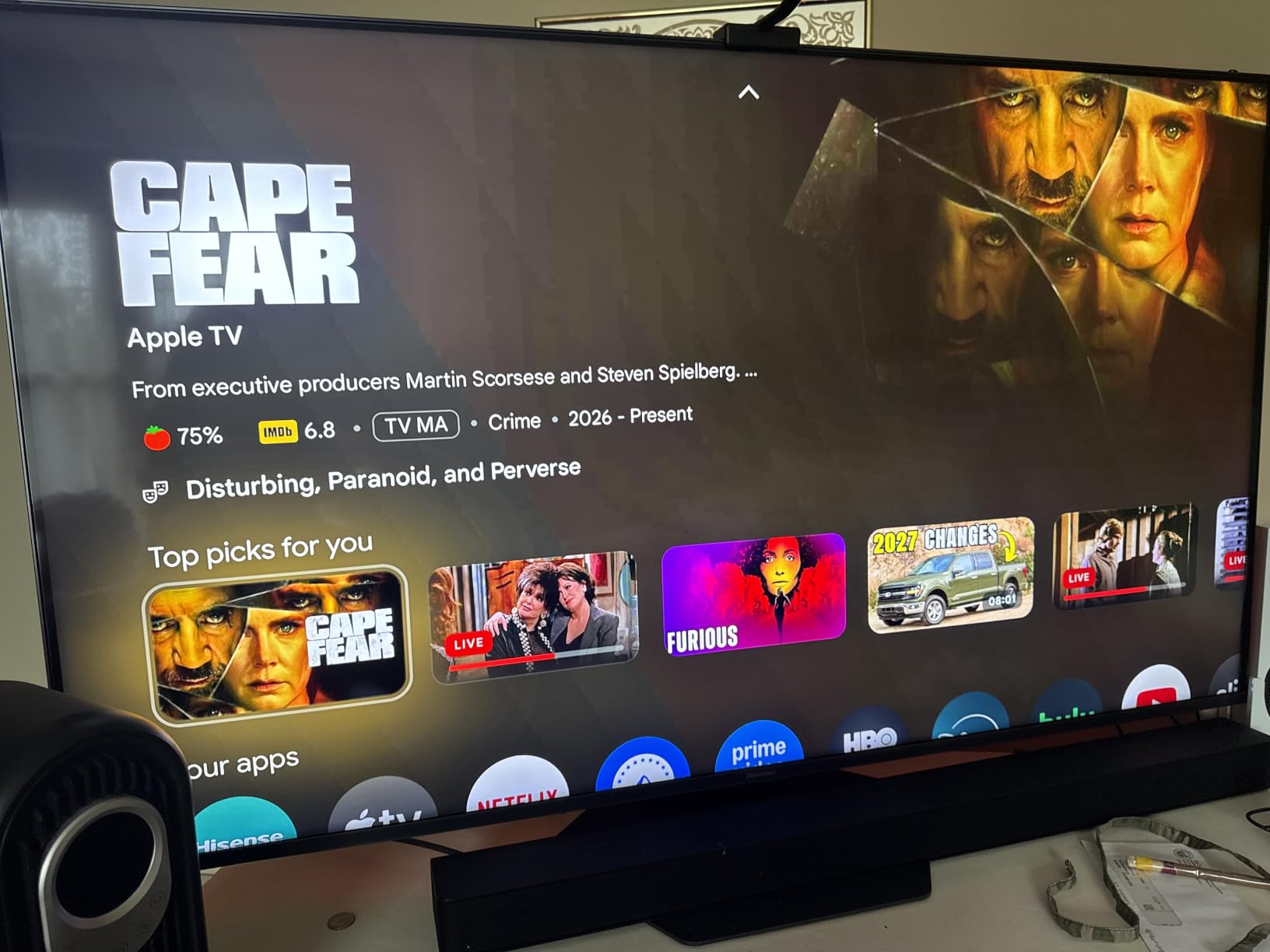
Up to 5000 nits and What That Number Means
Peak brightness is measured on a small white patch with the rest of the panel in black, sometimes with a few percent of the screen at full output. Your daylight usage will land well below that headline figure, because a living room picture has mid-grey dialogue, bright highlights and a reflected window fighting all of it. Treat 5000 as an outlier measurement rather than a daily average.
Even so, headroom matters in this category. HDR scenes with a window open have to punch through a lit room, and a set with a high ceiling simply has more to give. That is why this panel wins rooms that cheaper Mini-LED sets handle only passably.
Anti-Reflection Pro Against a Window
The coating scatters reflected light rather than bouncing it cleanly, so what was a sharp reflection becomes a diffuse wash. It does not make the panel invisible in daylight, but it removes the mirror effect that makes bright TVs unusable when the sun is low and pointed at the screen.
Owners upgrading from glossy sets report that the difference is obvious in person rather than in a spec sheet, and that it matters most in the late afternoon. Forum owners who have lived with bright-room sets make the same point: judge the coating in a shop with the lights on, not in a dark showroom.
Local Dimming and the Bloom Question
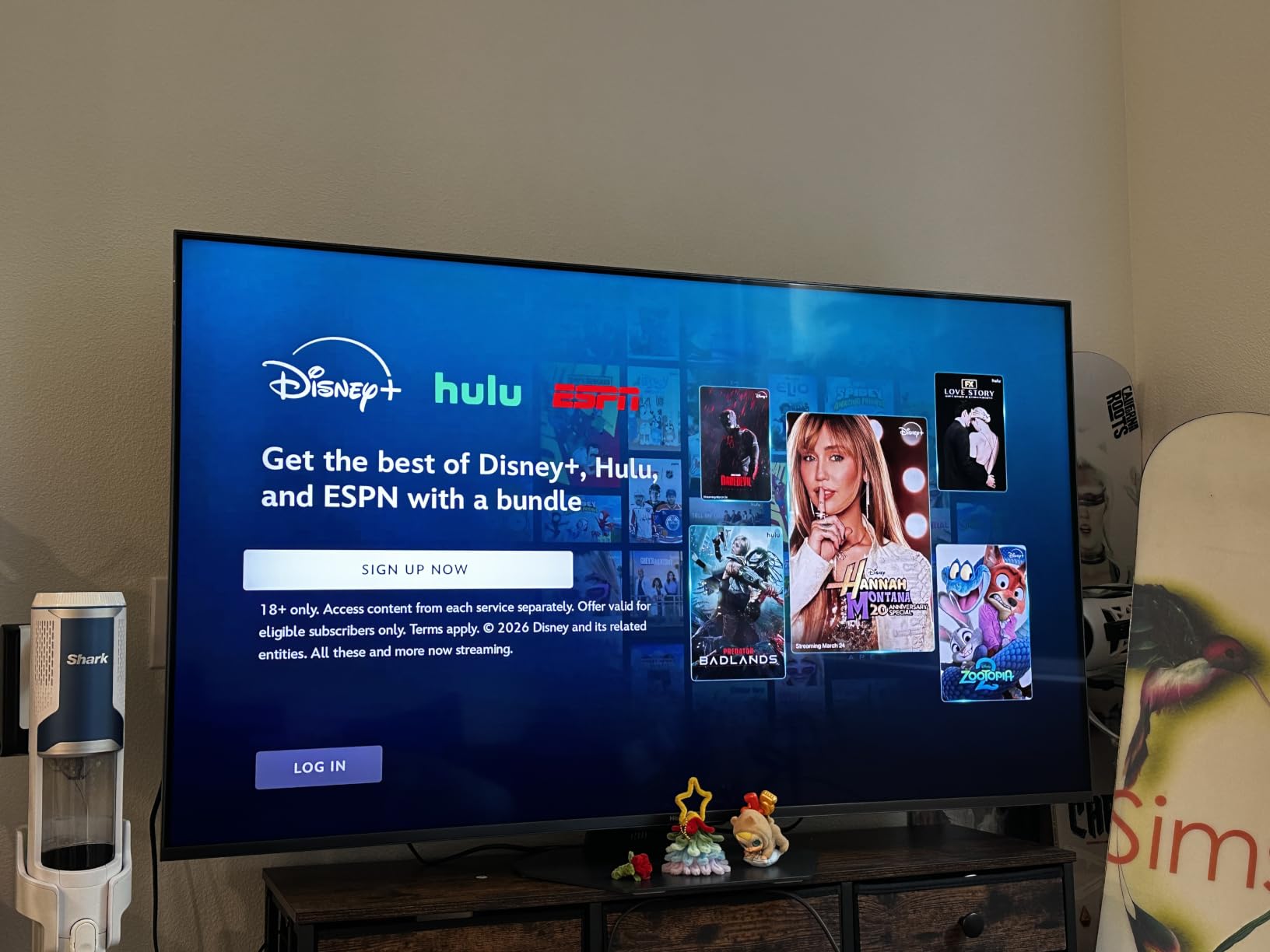
Up to 5600 local dimming zones is a lot of control for the price band, and the practical effect is that subtitles and logos in dark scenes stay readable instead of sitting inside a glowing rectangle. That is the usual Mini-LED weakness, and this set handles it better than most thanks to the fine zone count.
There is still a trade-off, as there is on every Mini-LED. Bright objects on a dark field will lift the surrounding panel a little, and dimming behaviour needs a few hours of tinkering before it settles. Filmmaker Mode gives a neutral starting point if you want the intended look rather than the punchy one.
165Hz, 4.1.2 Audio and the Practical Catches
A native 165Hz panel with a Game Booster 288 setting is unusual at this level, and it means sports and console games get real motion headroom rather than simulated interpolation. AMD FreeSync Premium Pro, Auto Low Latency Mode and low-latency MEMC are all present, and four HDR formats are supported including Dolby Vision IQ.
The built-in 4.1.2 channel system with a subwoofer and up-firing speakers is genuinely unusual for a television, and owners single it out. The catches are desktop text smearing that needs a setting change, occasional speaker cut-outs reported by some owners, and a 76.1 pound weight that you should not try to hang alone.
2. TCL 75QM6K – The Most Proven Budget Mini-LED With Local Dimming
TCL 75 Inch Class QM6K Series | Mini LED QLED 4K HDR | 75QM6K, Latest Model | 120HZ-144HZ High Brightness Smart Google TV Dolby Atmos Onkyo Audio | Voice Remote Alexa Gaming Streaming Television
QD-Mini LED QLED 4K
1000 nit peak brightness
144Hz native refresh
Google TV
+ Pros
- Largest review base in the group at 1923 ratings
- Local dimming gives real contrast at a budget level
- 144Hz native refresh with 288Hz VRR
- Dolby Vision and HDR10+ both supported
- Onkyo audio with a built-in subwoofer
- Cons
- About 1000 nits is modest next to premium Mini-LED
- Glossy finish reflects in rooms with strong ambient light
- Entry-level Google TV can feel sluggish with heavy app use
With 1923 ratings on file, the QM6K is the most thoroughly lived-with set we tested, and the pattern in those reviews is remarkably consistent. Owners treat it as the sensible 75-inch: real local dimming, real quantum dot colour, a 144Hz panel and Dolby Vision, at a price that does not require a second thought.
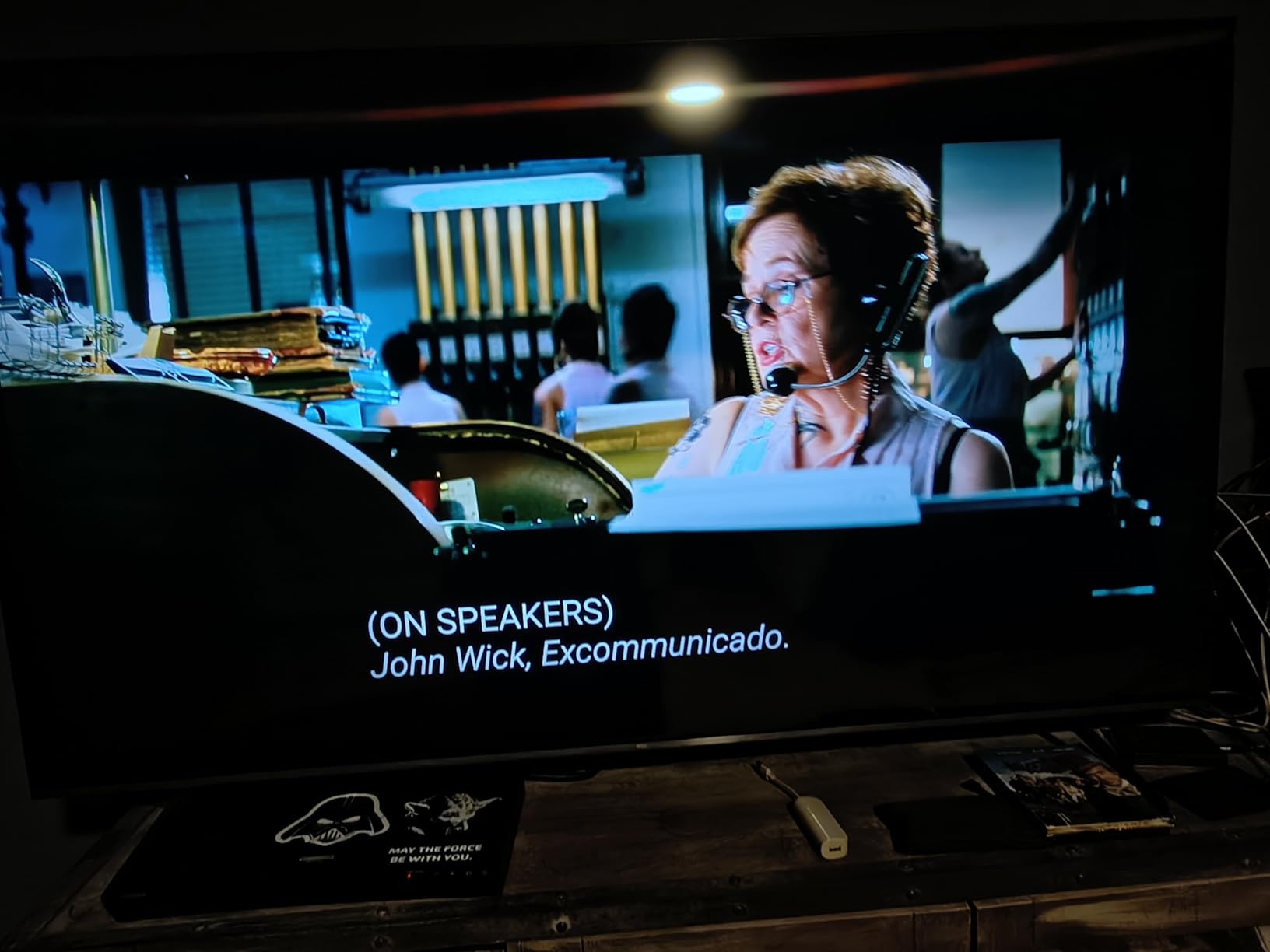
Its honest limit is brightness. At a claimed 1000 nits it sits at the point where a well-lit living room works but a sunlit one does not, and the glossy finish means an unshaded window will show up on screen as a pale shape.
About 1000 Nits Is Enough for a Daylit Room, Not a Sunlit One
A thousand nits sounds low next to a 5000-nit flagship, and in a dark room it is. In a room with curtains half drawn and lights on, the panel has enough output to hold contrast against the grey veil that daylight adds. Push a direct beam onto the screen and the picture flattens regardless of local dimming.
That is not a flaw, it is a budget position, and it shapes who should buy this set. If your daylight is indirect and your budget is the deciding factor, the QM6K delivers more picture per unit of spending than anything else here.
Halo Control System and Budget Blooming
TCL’s Halo Control System exists to keep bright objects from bleeding into their surroundings, and on this panel it does a reasonable job. The 144Hz native rate also helps because faster panels clear motion more cleanly, which reduces the smear that usually makes budget Mini-LED look soft during sport.
Black levels are genuinely good for a Mini-LED at this level, and reviewers describe shadow detail in dark scenes as a cut above typical budget LCD sets. The residual issue is that dark bars and white subtitles still produce a small amount of bloom, which you can reduce but not remove with the dimming controls.
144Hz Gaming and Onkyo Sound
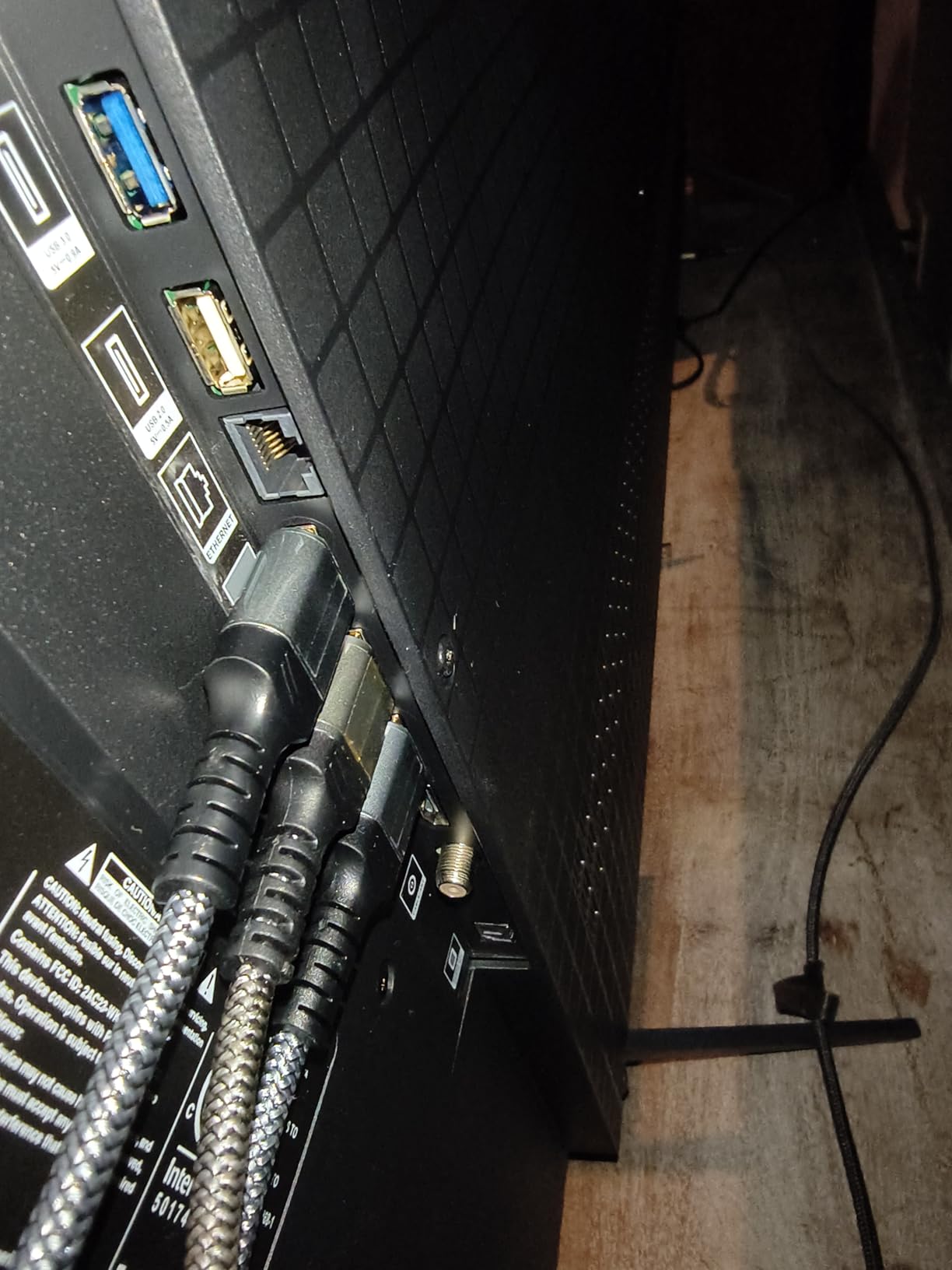
Motion Rate 480 with Game Accelerator 288 variable refresh rate gives this set more gaming capability than most of the roundup. Four HDMI inputs mean no switching compromises, and the full array of Dolby Vision, HDR10+, HDR10 and HLG support covers every streaming service people actually use.
The Onkyo 2.2 channel system with a built-in subwoofer is a step up from television speakers that usually are not, and reviewers mention it more often than expected. The platform is the weak point: entry-level Google TV hardware can feel slow when several streaming apps have been opened in a session.
Where the Glossy Finish Bites
A glossy panel in a room with strong ambient light produces a reflection that no amount of local dimming will hide. That is the single reason this set is not our top pick, and the reason owners who move to a sunnier room tend to move up rather than adjust settings.
Everything else here is strong for the money. If your light is indirect, this is the pick. We would pair it with curtains rather than a pricier television, which costs a fraction of the gap between it and the flagship Mini-LED sets.
3. Samsung 75QN90F – Glare Free Coating and the Highest Rating in the Group
Samsung 75-Inch Class Neo QLED 4K QN90F Series, Vision AI, Mini LED Smart TV (2025 Model, 75QN90F) Neo Quantum HDR+, Object Tracking Sound+ w/Dolby Atmos, Glare Free, Gaming Hub, Alexa Built-in
Neo QLED 4K
2000 nit peak brightness
Glare Free coating
165Hz with VRR
+ Pros
- Highest average rating here at 4.6 across 366 ratings
- Glare Free coating targets window and lamp reflections
- 2000 nits with scene-analyzed Neo Quantum HDR+
- Motion Xcelerator 165Hz with 4K 165Hz VRR
- Object Tracking Sound+ with Dolby Atmos
- Cons
- Very heavy at 87.5 pounds for wall mounting
- Only a 1-year manufacturer warranty
- Higher power draw than most sets in this roundup
- Out-of-box picture settings need adjustment
The QN90F earns the highest average rating of the eight sets we tested, at 4.6 across 366 ratings, and the reason owners give is consistent: the Glare Free coating works, and it works on lamps and windows rather than just on a lab light.
It is also the only set here combining an anti-reflective treatment with genuine flagship brightness. That pairing is what you want in a bright room, and it explains why a lot of people in forum threads who own bright-room sets end up at this tier rather than higher.
Glare Free in a Room With Windows
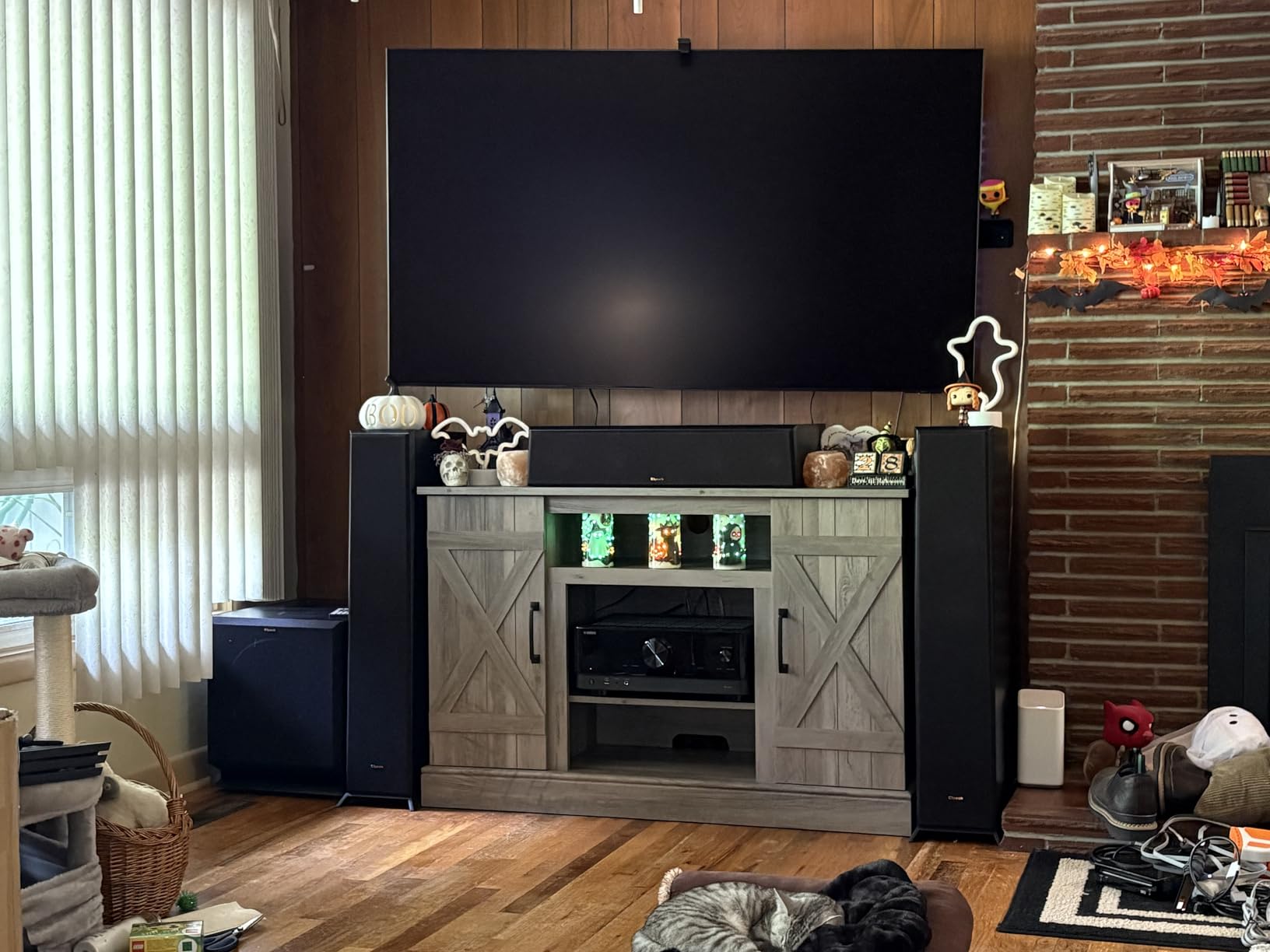
Glare Free is a treatment rather than a glossy surface, so reflections spread out instead of forming a defined image. In practical terms, a window opposite the screen becomes a soft bright region instead of a duplicate of your garden in the middle of the match.
Reviews describe the effect as most noticeable during daytime sport with the curtains open, which is exactly the scenario this guide is about. It does not remove reflection entirely, but it takes the mirror quality out of it, and that changes how the panel reads.
2000 Nits and Neo Quantum HDR+
Claimed peak brightness of 2000 nits puts the QN90F a full step above the mid-tier Mini-LED sets here, which is what makes it comfortable with daylight across a large 75-inch panel. Neo Quantum HDR+ analyses content scene by scene and adjusts brightness accordingly.
The processor runs 128 AI neural networks, handling 4K upscaling of lower-resolution streams and SD cable content. Owners using older sources report a visible improvement, and it is one of the more useful features in a room where a lot of daytime viewing is live sport rather than 4K streaming.
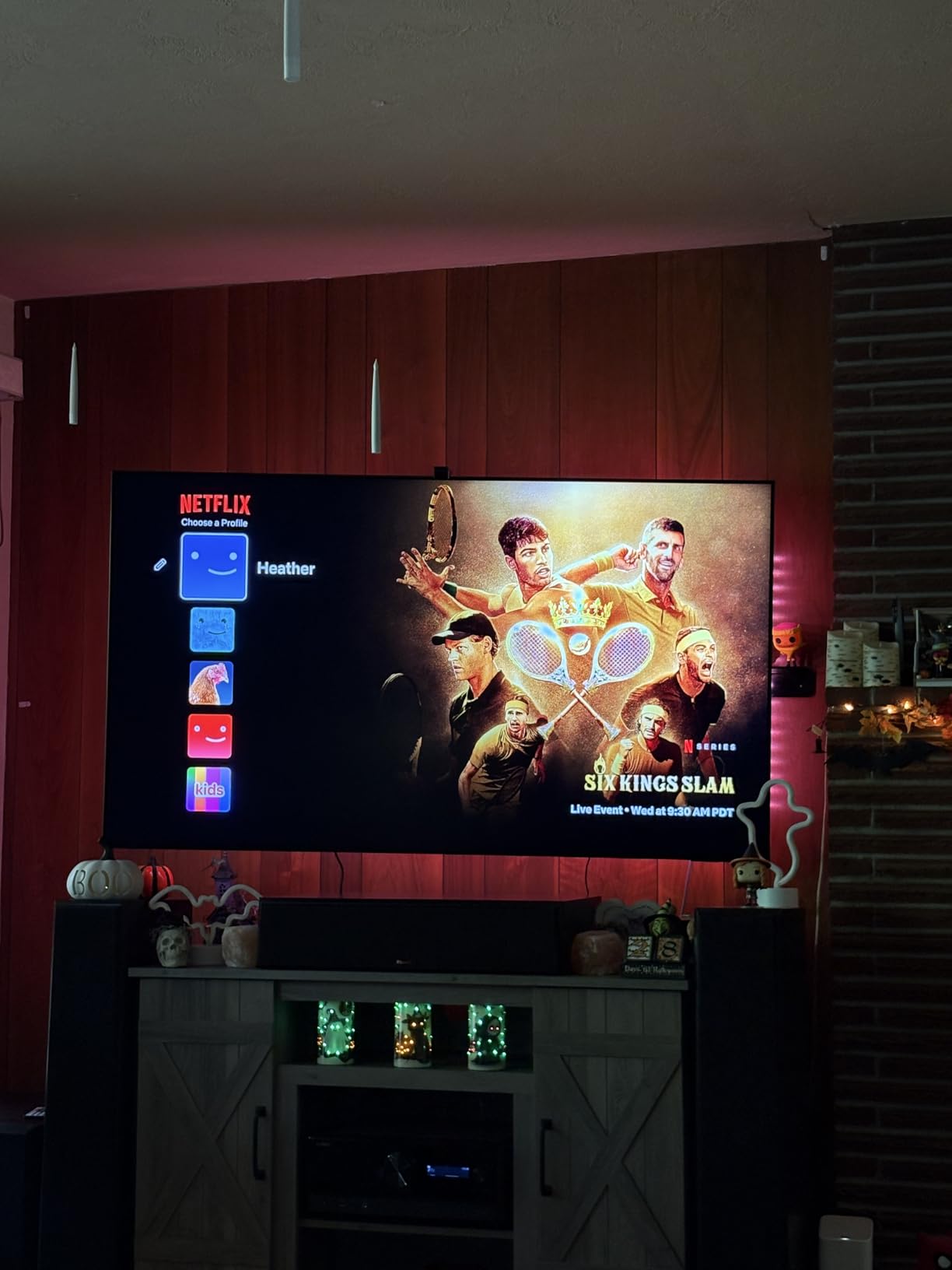
Motion Xcelerator 165Hz for Sports and Consoles
Motion Xcelerator 165Hz with variable refresh rate up to 4K 165Hz makes this the strongest gaming feature set in the roundup. A family room that doubles as a console space gets smooth motion and no input lag compromise at the same time.
For sports specifically, the high refresh rate means fast pans and fast breaks stay clean rather than juddering. The Gaming Hub and built-in Alexa round out a platform that some buyers find busier than Google TV but which now carries a large free channel library.
87.5 Pounds and a One-Year Warranty
This is the heaviest set we handled, by a wide margin, and the stand depth adds to the problem. Anyone mounting this needs a wall bracket rated well above the panel weight and a second pair of hands for the lift.
The one-year manufacturer warranty is the other recurring reservation. For a panel this size, a longer warranty is worth having, and it is a fair reason to weigh the two-year coverage on the Hisense U8QG before you commit.
4. Samsung 75QN70F – Mid-Tier Neo QLED With Mini LED Contrast and Sports Motion
Samsung 75-Inch Class Neo QLED QN70F 4K Mini LED Smart TV (2025 Model) NQ4 AI Gen2 Processor, Quantum Matrix Technology Slim, Motion Xcelerator 144Hz, Samsung Vision AI, Alexa Built-in
Neo QLED 4K Mini LED
3000:1 contrast ratio
144Hz Motion Xcelerator
Tizen
+ Pros
- Mini LED lighting gives inky blacks and bold highlights
- 144Hz Motion Xcelerator with VRR for daytime sport
- AI upscaling and SDR-to-HDR conversion help older content
- 3000:1 contrast ratio is strong for the tier
- Thousands of free channels including TV Plus
- Cons
- Lower peak brightness than the QN90F flagship
- 2.1 channel speakers at 20W are modest for 75 inches
- Picture settings need calibration out of the box
- 13.1 inch stand depth
The QN70F is the sensible middle step in Samsung’s Neo QLED range, and it is the model we would put in a bright family room where the wall cannot take a heavy flagship. The Quantum Matrix Technology Slim backlight gives it genuine Mini LED contrast without the flagship’s brightness ceiling or its weight.
Owners consistently describe it as a satisfying daytime set. Contrast does most of the work in ambient light, and a 3000:1 native ratio with local dimming keeps dark areas dark even when the room is not dark.
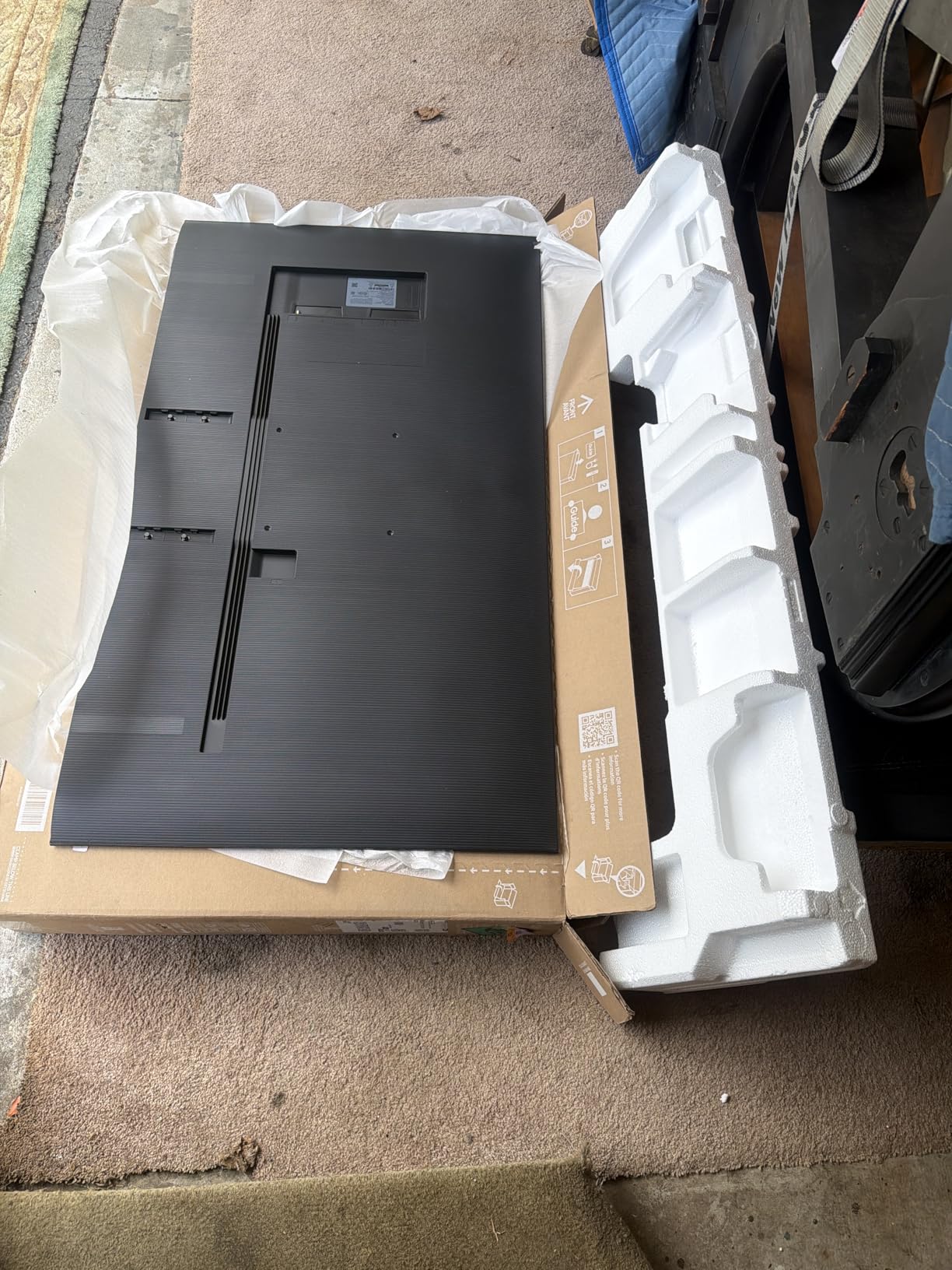
Mini LED Contrast Without the Flagship Bill
Contrast is the underrated half of bright-room performance. A panel that holds blacks in a lit room looks far more convincing than a brighter panel that lifts everything to grey, and Mini LED backlighting is what makes that possible at this level.
The 20 AI neural networks in the NQ4 AI Gen2 processor handle upscaling and scene analysis, adjusting brightness per scene. Reviewers notice the effect most on older broadcasts and on cable sources, where the SDR-to-HDR conversion adds a little punch without going overboard.
144Hz Motion Xcelerator for Daytime Sport
Motion Xcelerator 144Hz with VRR gaming up to 4K 144Hz is a real upgrade over 60Hz panels in the same bracket. Football, cricket and tennis in a bright room at midday is exactly the use case where motion clarity matters, because a bright screen makes judder far more obvious.
It also handles consoles well, with four HDMI inputs so you are not sacrificing a port for a soundbar. For a room that hosts both matches and gaming sessions, this is the balance point of the roundup.
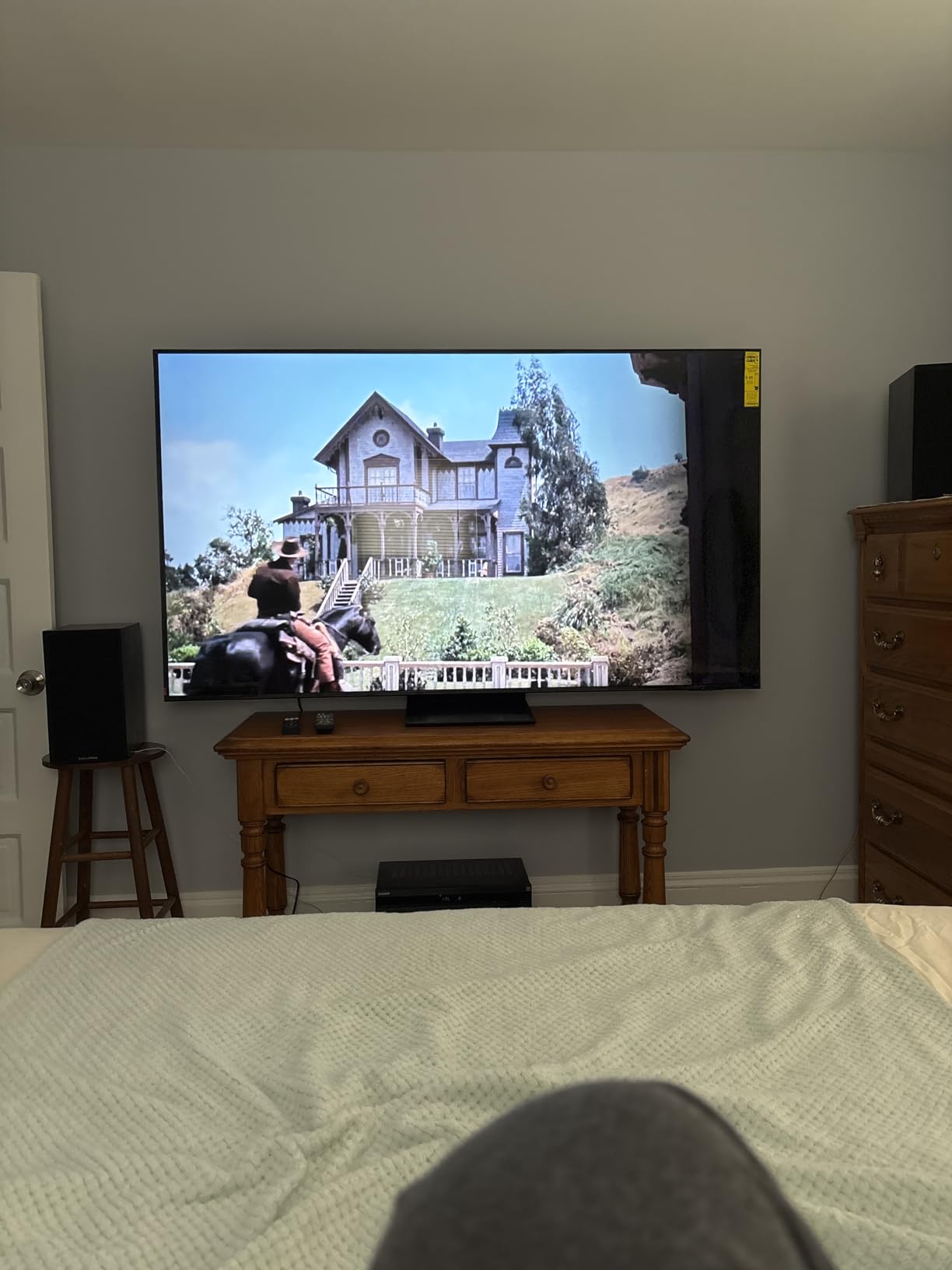
AI Upscaling and SDR-to-HDR Conversion
Most daytime viewing is not native 4K, and Samsung Vision AI is aimed squarely at that. It sharpens upscaled streams, adjusts picture settings based on what it detects in the content, and tries to keep skin tones natural as brightness climbs in a lit room.
The practical result reported by owners is that older content stops looking soft and washed out next to a 4K source. It is not a substitute for a 4K broadcast, but in a bright room it removes one more excuse for the picture to feel unimpressive.
Audio and the Deep Stand Footprint
The 2.1 channel system at 20W is thin for a 75-inch panel, and reviewers mention it as the most common reservation. A soundbar fixes it for a fraction of the panel’s cost, but it is worth knowing before you place the set.
Calibration out of the box is also on the list: the default picture modes skew punchy, and a short adjustment in the picture menu gets you close to the intended look. The stand is 13.1 inches deep, so check furniture depth before the delivery arrives.
5. Hisense 75E7SF – The AI Light Sensor Set That Tracks a Changing Room
Hisense 75″ E7 Cinema Series Hi-QLED Mini-LED 4K UHD Smart Fire TV (75E7SF, 2026 NEW) – Native 144Hz, AI Picture, Dolby Vision IQ · Atmos, FALD, HDR10+ Adaptive, MEMC, Alexa+
Hi-QLED Mini LED 4K
AI Light Sensor
Full array local dimming
Native 144Hz
+ Pros
- AI Light Sensor adapts the backlight to changing room light
- Full array local dimming at an entry price
- Dolby Vision IQ and HDR10+ Adaptive supported
- Native 144Hz keeps sport and gaming smooth
- Light at 54.7 pounds and easy to set up
- Cons
- Some owners report Wi-Fi dropouts and remote pairing issues on FireOS
- Occasional black-screen freezes needing a power cycle
- Motion can look blurry with VRR and FreeSync enabled
- Stand pieces feel cheap against the panel
The E7SF is the set we would point at a room whose light changes through the day. The AI Light Sensor reads ambient conditions and adjusts the backlight to match, which in practice means a cloud passing at two in the afternoon does not leave you reaching for the remote.
That sounds like a small feature. In a bright room it is one of the more useful ones, because it removes the constant brightness fiddling that makes a big panel tiring to live with when the room is exposed.
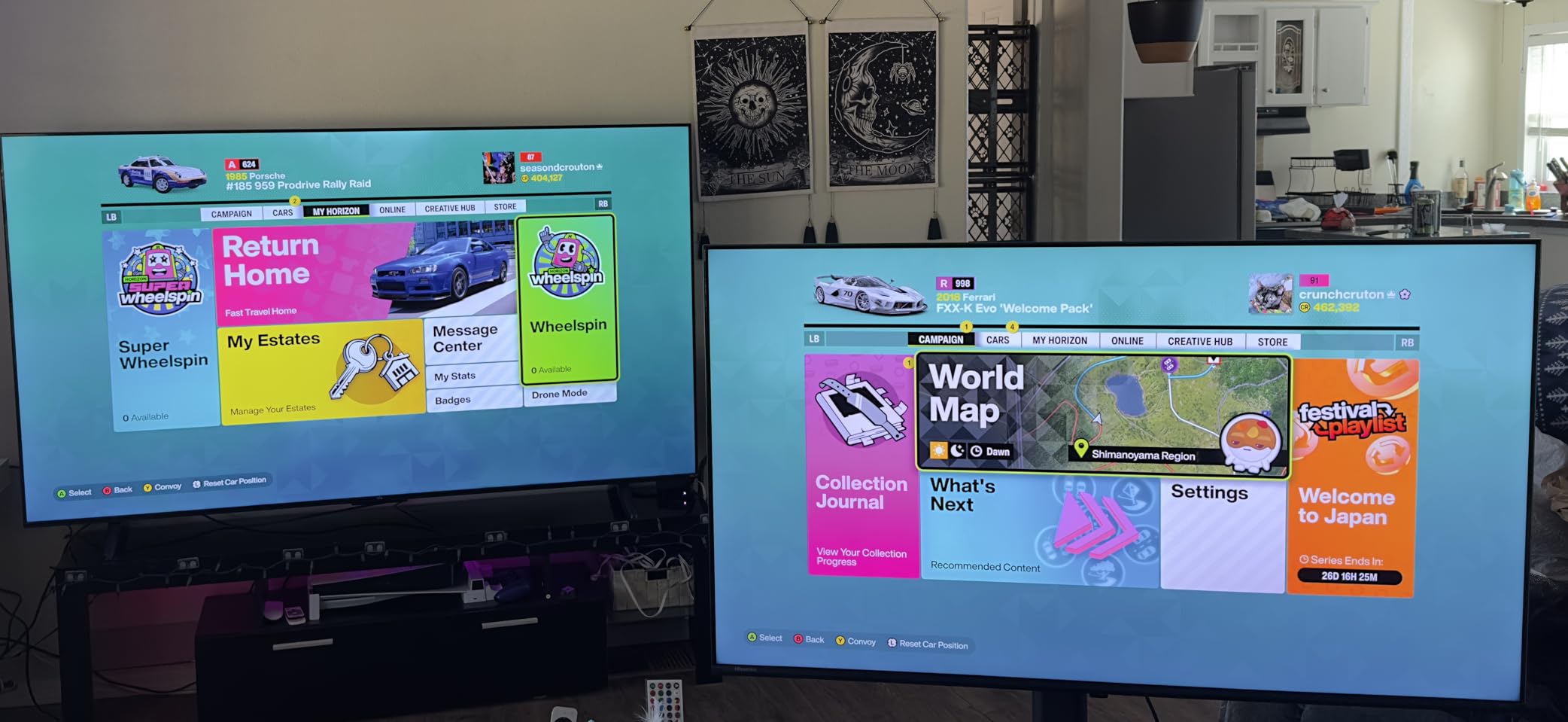
The AI Light Sensor Is the Feature That Matters Here
Auto brightness sensors are common on phones and rare on large televisions, where the cost of getting it wrong is a picture that is either too dim to see or too bright to enjoy. Hisense’s implementation works in the right direction, trimming output in full daylight and opening up in the evening.
Owners in variable-light rooms describe the practical result as fewer adjustments and a more consistent picture across the day. If your TV wall gets reflected daylight for part of the day and shade for the rest, this is the feature that makes a mid-range panel feel like it belongs there.
Full Array Local Dimming at an Entry Price
Thousands of light zones give the E7SF real control over contrast, which is the part of the bright-room equation that does not depend on raw brightness. Dark scenes keep their shape and subtitle white no longer sits inside a glowing box.
Hisense calls it Hi-QLED, which is their quantum dot colour layer on top of a Mini LED backlight. Colour accuracy is good enough that the wide colour gamut is visible on skin tones and food, and the AI Picture engine tunes contrast and saturation scene by scene.
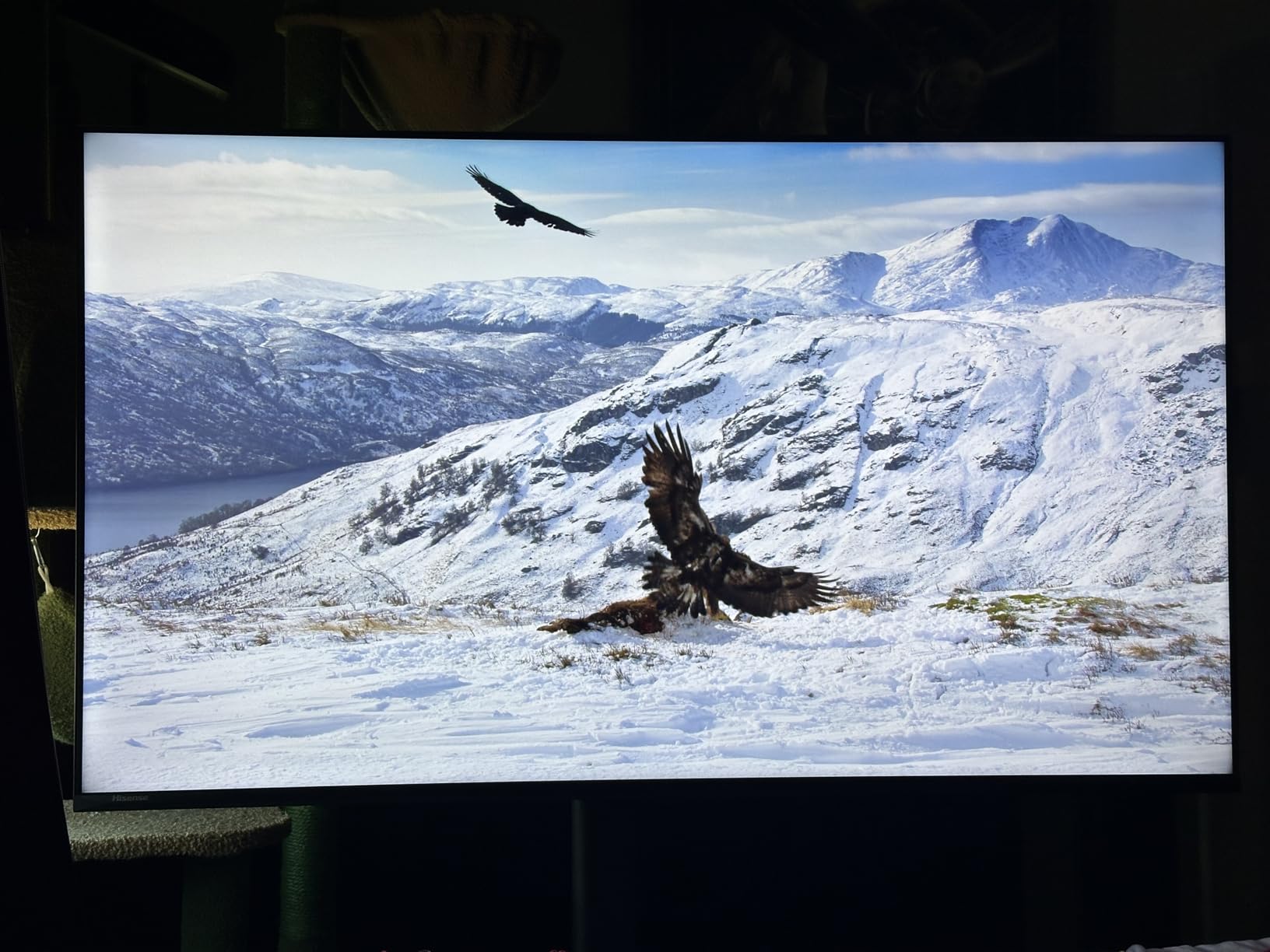
Dolby Vision IQ, Atmos and 144Hz
Full HDR support is unusual at this tier: Dolby Vision IQ, HDR10+ Adaptive, HDR10 and HLG all appear in the specifications. Dolby Vision IQ matters in a bright room because it adjusts the picture to the ambient light in the room, which is the same logic as the light sensor but applied to the picture instead of the backlight.
Native 144Hz keeps sport smooth, with AI Smooth Motion adding MEMC frame insertion and a Sport Mode for football. The AI 4K upscaler handles the SD and HD sources that make up much of daytime viewing, though the benefit is modest on 1080p sports feeds.
FireOS Stability and the 2.0 Channel Audio
FireOS is the weak point. A smaller but persistent group of owners reports Wi-Fi dropouts, remote pairing failures and occasional black-screen freezes that need a power cycle. Forum buyers repeatedly criticise Fire TV for being slower and heavier than Google TV, and this set does not escape that pattern.
Audio is 2.0 channel at 20W with Dolby Atmos processing, which is fine for news and talk and thin for films. The upside is weight: at 54.7 pounds this is one of the easier 75-inch panels to handle and mount.
6. Samsung 75M70H – The Lightest Budget Mini-LED With a Glossy Screen
Samsung 75-Inch Class M70H Series, Mini LED, 4K, Smart TV, 2026 Model
Mini LED 4K
1000 nit peak brightness
120Hz Motion Xcelerator
Tizen
+ Pros
- Mini LED backlighting with good contrast at a budget level
- Lightest panel here at 48.5 pounds for easy wall mounting
- Runs fast with quicker app loading than older Samsung sets
- 2700+ free channels including 750+ with no subscription
- Clean thin bezel design for a budget 75-inch set
- Cons
- Glossy finish is reflective in a bright room
- About 1000 nits sits well below premium Mini-LED sets
- Remote has no microphone button for voice features
- Picture and sound presets need adjusting out of the box
At 48.5 pounds, the M70H is the easiest 75-inch set here to move, and that is not a small thing. Most panels in this size class are well over 70 pounds, and the difference between a one-person job and a two-person job shows up every time you want to reposition the screen.
It is also a genuinely capable budget Mini LED. The Pure Spectrum one-billion colour layer and Supreme Mini LED dimming give a sharp 4K picture with clean blacks, which is more than most sets at this level manage.
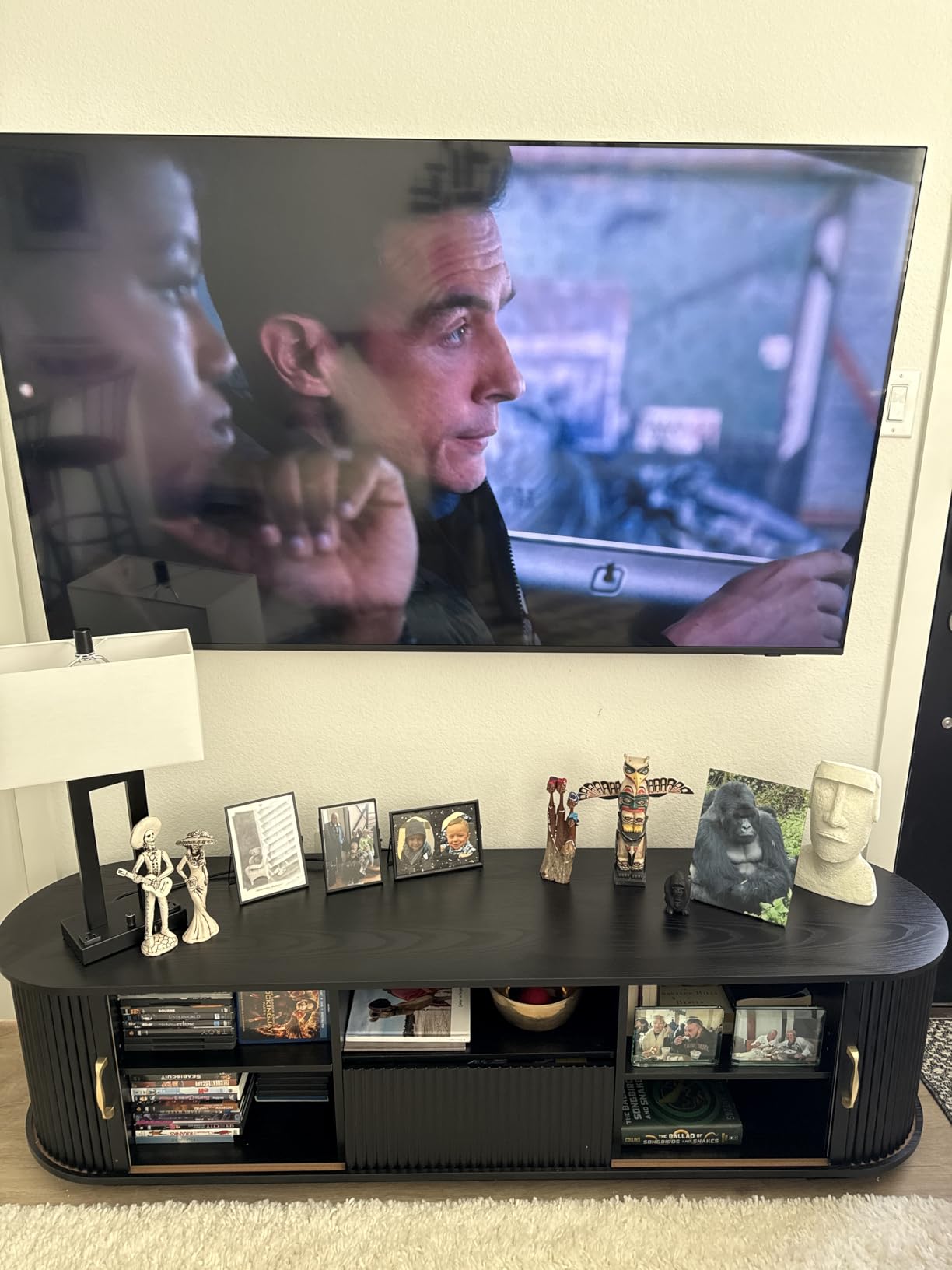
Mini LED Dimming at a Budget Level
The backlight is genuinely Mini LED rather than a marketing word, and the dimming behaviour is the reason to prefer this set over a plain LED panel of similar brightness. Black bars stay black, and dark scenes in a dim evening room hold their shape without a grey fog over the whole image.
It is worth being clear about what local dimming does not fix. Against a window at four in the afternoon, this panel still has to compete with reflected daylight, and its claimed 1000 nits leaves it short of the task.
About 1000 Nits and a Glossy Finish
The glossy screen finish is the single biggest reason to think twice about this set for a genuinely bright room. Glossy panels return a recognisable image of whatever is opposite them, and reviewers report exactly that complaint, describing reflections from windows and lamps as the most common issue in daylight use.
If your room is bright but shaded, with no direct beam hitting the panel, the trade is fine. If the sun reaches the wall for part of the afternoon, add curtains before you order, because no setting removes a sharp reflection.
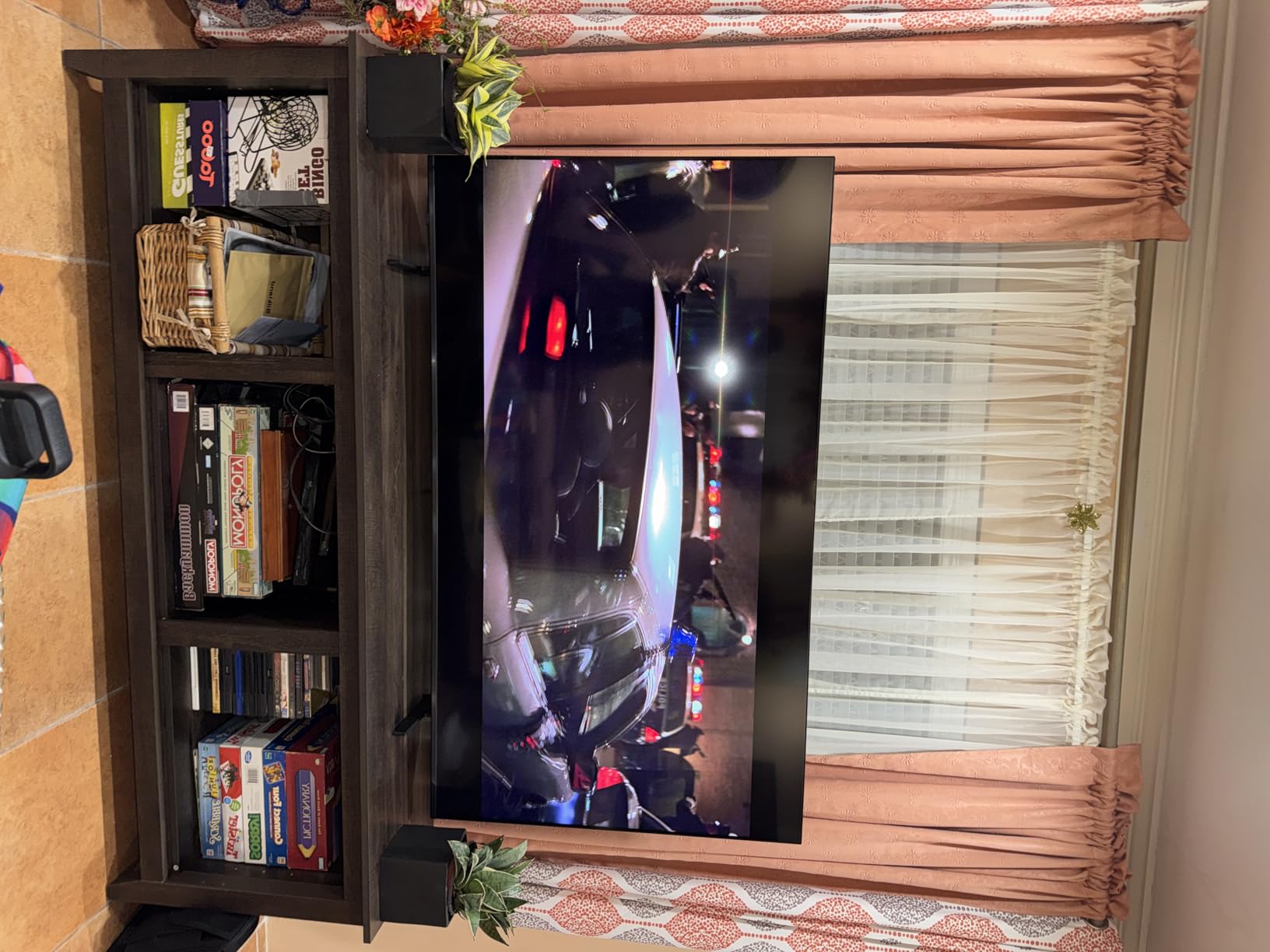
120Hz Motion and Soccer Mode
Motion Xcelerator with a 120Hz effective rate is a big step above 60Hz panels and enough to keep fast sports clean without interpolation artefacts. Colour Booster and a dedicated Soccer Mode are small touches that Samsung adds for exactly the daytime-viewing scenario this guide covers.
Gaming Hub and the Vision AI Companion are present, and three HDMI ports are enough for most rooms. There is no 144Hz or 165Hz mode here, so a console-focused household has a better fit elsewhere on this list.
Fast Platform, Modest Speakers
Owners consistently remark on how quickly this set runs compared with earlier Samsung models, with apps loading faster in practice. That makes the platform the least annoying part of the budget experience, and the 2700+ free channels include 750+ with no subscription attached.
Audio is two channels with Dolby Atmos processing, which suits casual watching but not films. The remote has no microphone button, so voice and AI features need another route in. Both are manageable trade-offs at this level.
7. Sony 75-inch BRAVIA 5 – The Matte Panel That Beats Reflection Head On
Sony 75 Inch BRAVIA 5 Mini LED 4K HDR Smart Google TV (K-75XR50)
Mini LED 4K
Matte anti-reflective finish
XR Backlight Master Drive
120Hz
Google TV
+ Pros
- Matte finish cuts reflections far more than glossy panels
- XR Backlight Master Drive gives precise Mini LED control
- XR Processor with AI sharpens upscaled and streaming content
- Studio calibrated modes for Netflix and Prime Video
- PlayStation 5 features with Auto HDR Tone Mapping
- Cons
- Very heavy at 79.8 pounds with a 16 inch stand footprint
- 120Hz refresh trails the 144Hz and 165Hz rivals
- High power consumption at 318 watts
- Only a 1-year manufacturer warranty
Of the eight sets here, only this one and the U8QG treat reflection as a first-class problem. Sony lists the screen finish as matte, and owners describe the difference as immediate in a lit room, which is the honest test of an anti-glare claim.
It is the 4.5 average rating that surprises people who assume Sony sets are softer than their rivals. That rating sits among the highest in the roundup and reflects a consistent set of positives: the coating, the backlight control and the picture processing.
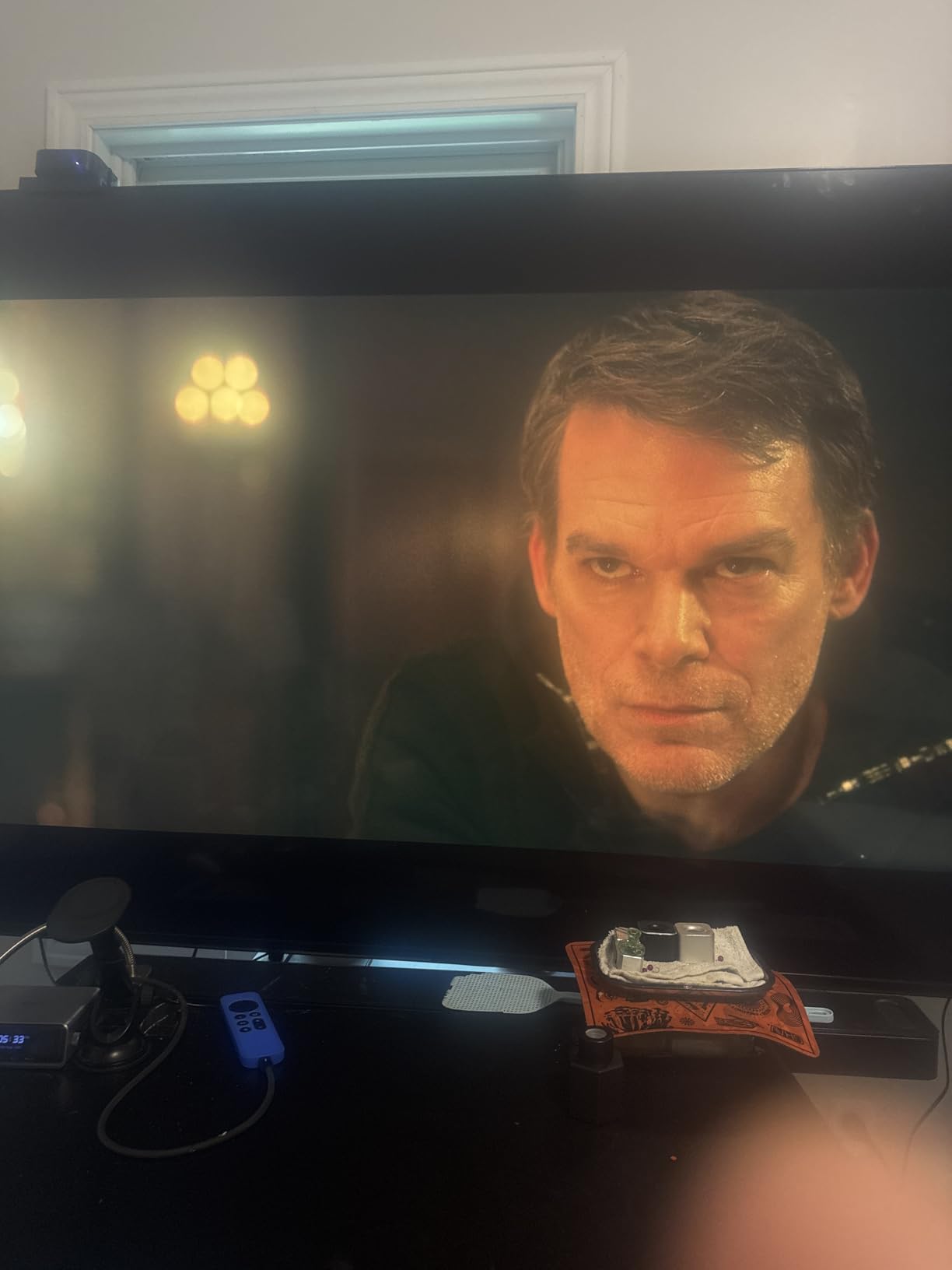
What a Matte Finish Actually Does to a Reflection
A matte surface scatters the light coming off it in many directions instead of one. The result is that a window opposite the screen does not appear as a defined image, because there is no coherent light path left for your eye to focus on. What remains is a slight reduction in overall brightness and a dramatic drop in mirror effect.
That trade is the whole argument for this set. On a 75-inch panel in a bright room, losing a bit of raw brightness to kill a mirror image is a good deal, and it is why matte finishes appear on the sets most owners with sunlit rooms actually buy.
XR Backlight Master Drive and Local Dimming
Sony’s backlight control is the technical reason the panel looks precise rather than merely bright. XR Backlight Master Drive manages the Mini LED zones closely, which keeps highlights from spilling into their surroundings and preserves the shape of dark areas next to bright ones.
XR Contrast Booster 10 and XR Clear Image handle upscaling of lower-resolution sources, and XR Triluminos Pro drives the colour layer. In a bright room, colour volume matters because washed-out colour is one of the first things viewers notice when daylight washes over the panel.
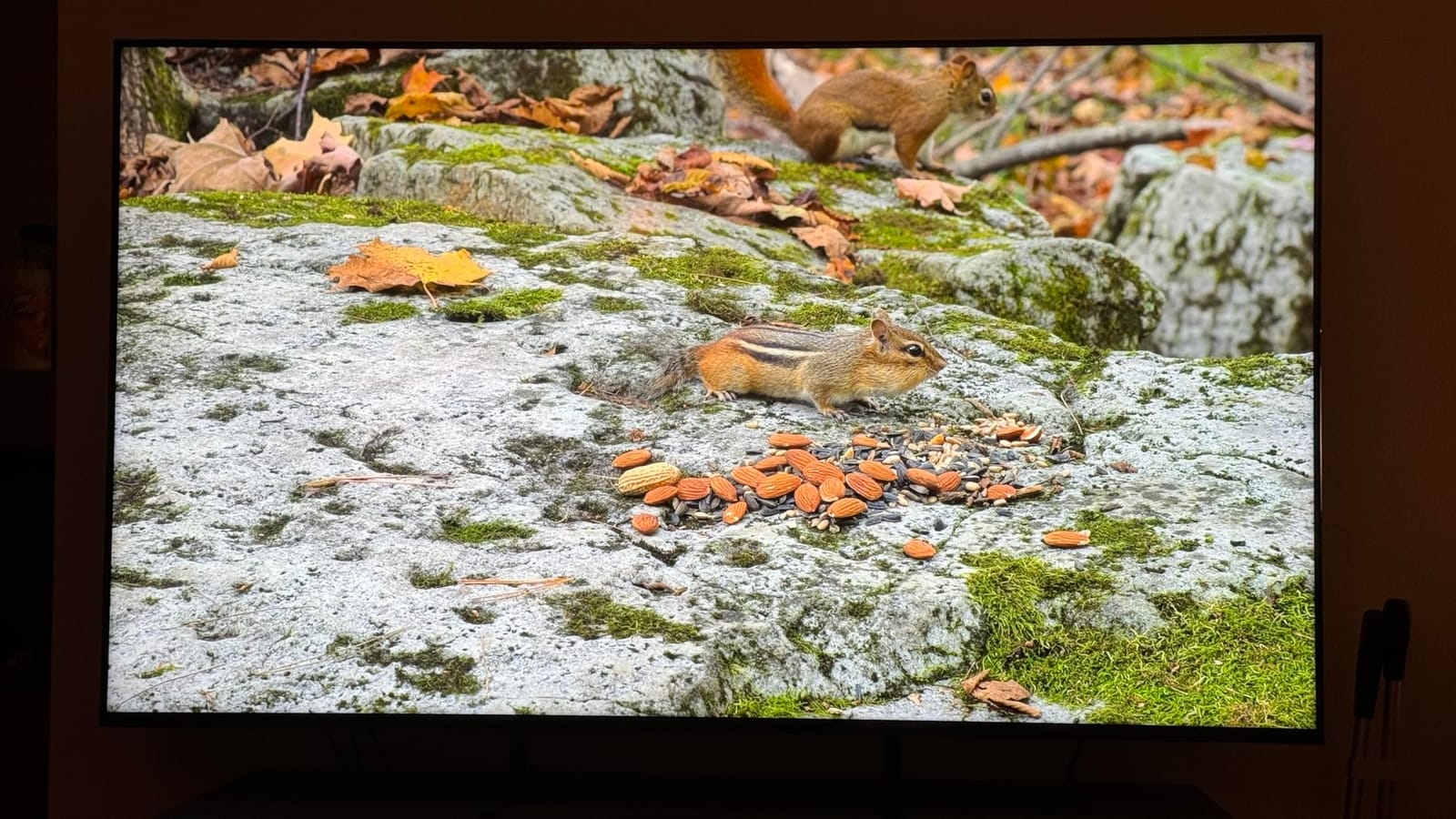
Studio Calibrated Modes and PlayStation 5 Features
Studio calibrated picture modes for Netflix, Prime Video and Sony Pictures CORE apply a creator-intended look automatically when you open those apps. In a daylit room that is helpful, because a well-calibrated picture at moderate brightness tends to hold up better than a punchy one pushed to the limit.
PlayStation 5 integration includes Auto HDR Tone Mapping, Auto Genre Picture Mode and a Game Menu overlay, plus IMAX Enhanced and DTS:X audio formats. Sony Pictures CORE content is included. For a bright room shared with console gaming, that combination is unusually complete.
Weight, Power Draw and the 120Hz Ceiling
At 79.8 pounds with a 16 inch deep stand, this is a serious handling job and it needs a proper mount. The 318 watt power draw is the highest here, which matters in a room where the set runs for long stretches in daylight.
The 120Hz native refresh rate is the one real competitive gap, sitting below the 144Hz and 165Hz panels in this roundup. If console gaming at high refresh rates is the priority rather than the anti-glare coating, the QN90F is the better target.
8. TCL 75T7 – A Light 75-Inch QLED With 144Hz Gaming Headroom
TCL 75″ T7 4K QLED Google TV with 144Hz Gaming (75T7)
QLED 4K
144Hz native with 288Hz VRR
Dolby Vision and HDR PRO+
Google TV
+ Pros
- QLED colour across nearly the full DCI-P3 gamut
- 144Hz native with 288Hz VRR for consoles and PC
- Light at 52.9 pounds for the screen size
- Dolby Atmos plus HDR PRO+ with Dolby Vision
- FullView 360 bezel-less design with adjustable feet
- Cons
- Glossy finish produces noticeable glare in bright rooms
- Motion smoothing does not keep up with very fast sport
- Google TV can be slow and pushes users to a streaming device
- Infrared remote drains batteries quickly
The T7 is the odd one out here, because it is a conventional QLED rather than a Mini LED. That means no local dimming and no true blacks, so it is not the answer for a sunlit wall. It is the answer for a bright room where the screen is shaded and you want colour and gaming headroom at a modest outlay.
Owners repeatedly highlight how light it is for a 75-inch set at 52.9 pounds, which makes it a practical choice above a fireplace or on a plasterboard wall where a heavier panel is a problem.
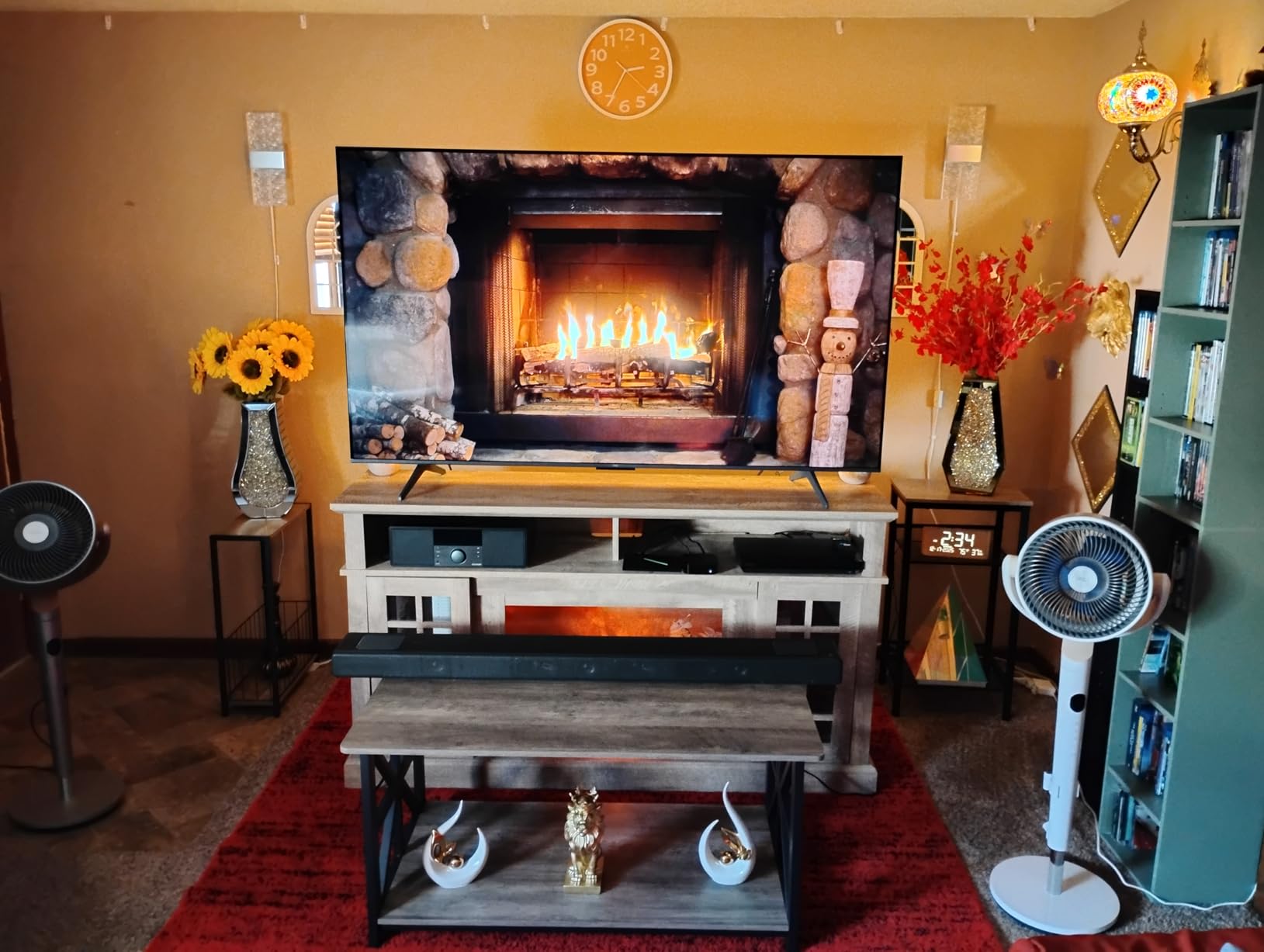
QLED Color Without Mini LED Black Levels
Quantum dot colour covering nearly the full DCI-P3 gamut gives the T7 noticeably vivid colour for the money, and colour volume is one of the few picture qualities that survives ambient light well. Bright, saturated greens and blues still register on a screen in a lit room.
The weakness is the opposite of colour. Without local dimming, a global backlight means dark areas sit at grey during daylight, and night scenes look flat. If you watch films in the evening with the room dark, this is not the set for you.
144Hz Native and 288Hz VRR
A native 144Hz panel with 288Hz variable refresh rate is unusually strong at this level, and it covers PS5, Switch and PC gaming without compromise. Four HDMI inputs including one with eARC leave room for a soundbar and a console at the same time.
Motion Rate 480 adds MEMC frame insertion for non-gaming content. Owners note that the smoothing does not always keep pace with very fast sport, so for fast football the native refresh rate is doing most of the work rather than the interpolation.
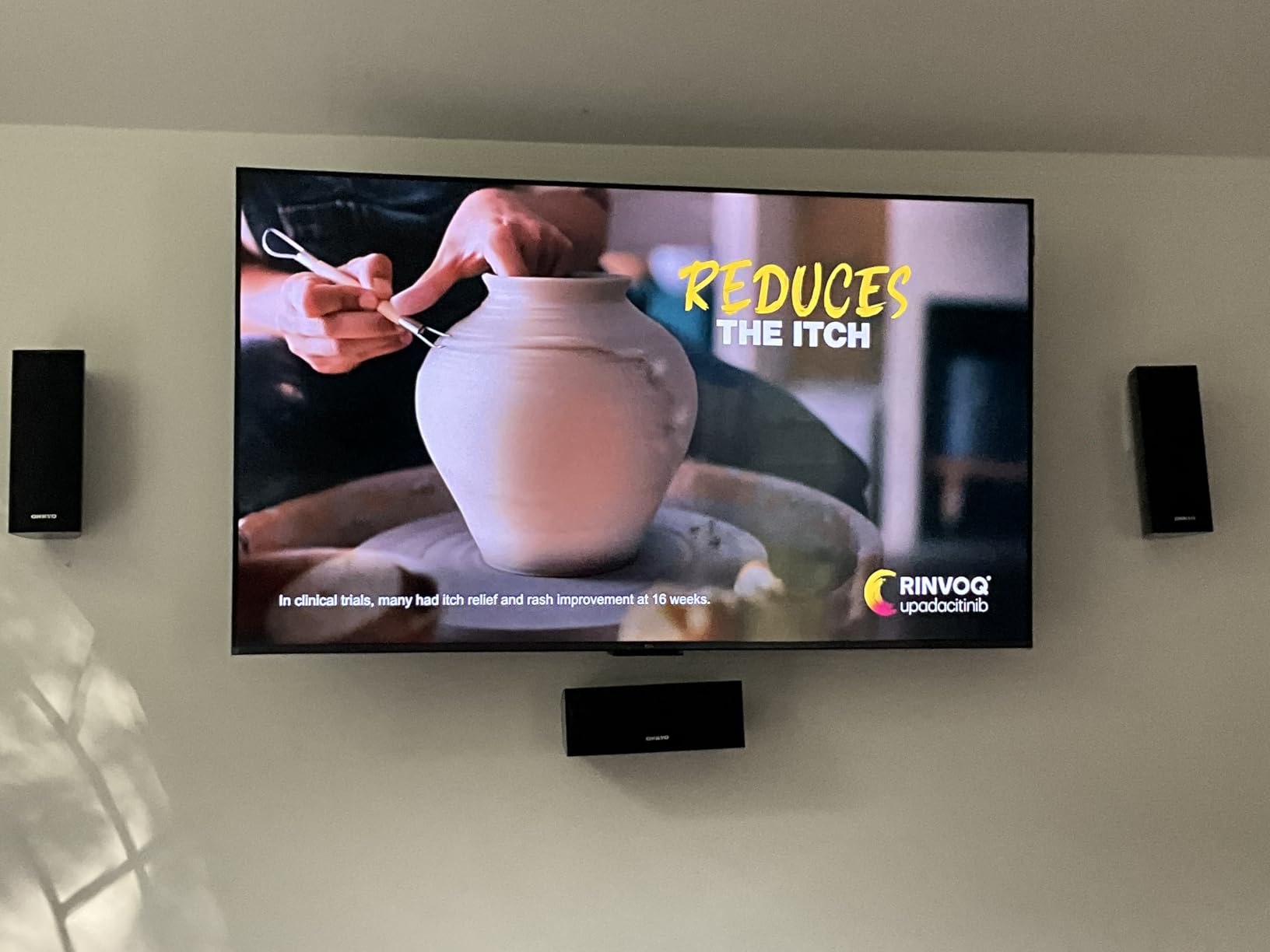
The Glossy Panel in a Bright Room
Gloss is the recurring complaint, and it is specific rather than general: owners in bright rooms report noticeable glare, particularly where the set faces a window or a bank of lights. In a shaded room the same panel produces a crisp, colourful picture with no issue at all.
Interestingly, some owners with very bright rooms report no glare problems at all, usually because the screen sits at an angle to the light source rather than facing it. Position does as much work as any setting.
Mounting, Ports and Platform Speed
The FullView 360 design uses a metal bezel-less front with width-adjustable feet, which helps on narrower furniture. Four HDMI ports, two USB, Ethernet and Wi-Fi 5 cover the essentials, and AirPlay plus Google Cast are supported.
Platform speed is the recurring reservation. Owners on heavy app days often add a separate streaming device, and the 30W two-channel Dolby Atmos audio is adequate rather than good. At 52.9 pounds, though, it is one of the easiest panels here to install.
How to Choose a 75-Inch TV for a Bright Room
Brightness gets all the attention in this category, and it is only half the answer. Use the criteria below in order, because the first two do the heavy lifting and the rest are refinements.
Peak Brightness: What a Nit Figure Means in a Daylit Room
A nit is one candela per square metre, and panel manufacturers measure peak brightness on a small patch with the rest of the screen black. Your daytime picture is not a small patch, so a 1000-nit panel behaves more like a 400 to 600-nit panel once daylight reflections are added, and a glossy screen takes off less than a matte one.
The practical guidance: under 800 nits, assume your room needs curtains. Between 1000 and 2000 nits, a shaded bright room works well. Above 2000 nits, you can leave the blinds open most of the day. Above 4000 nits, you are in a different conversation, and you should ask what the manufacturer is doing about reflection.
Reflection Handling Beats Raw Brightness
This is the part most guides get wrong, and the reason some very bright sets disappoint. Reflection handling comes in three forms that marketing treats as interchangeable but are not. A glossy finish is the default and gives you a mirror. A matte coating scatters light and softens reflections while costing a little brightness. A true anti-reflective treatment, such as the ones on the Sony and Samsung sets here, does more than either.
For a room where the window is opposite the screen, reflection handling is worth more than the last 2000 nits. A bright glossy panel reflects the window across the middle of the picture and no brightness figure fixes that.
Mini LED, QLED or OLED in Ambient Light
Mini LED uses thousands of small backlight zones behind a quantum dot colour layer, which is why it dominates bright-room lists: high brightness with local dimming that holds blacks. QLED is quantum dot colour over a conventional edge-lit or direct-lit LED backlight, so colour is excellent but contrast is compromised in daylight. OLED gives perfect blacks but typically relies on a matte coating to work in bright rooms, and it costs more for less brightness headroom.
For a bright room specifically, Mini LED with an anti-glare or matte treatment is the practical answer. A high-quality OLED with a matte panel is a legitimate alternative, but it trades peak brightness for contrast, and peak brightness is what daylight demands.
Local Dimming Zones and the Bloom Trade-Off
More zones mean smaller, more precise light pools, which means less bloom around bright objects on a dark background. That is the persistent Mini LED weakness: white subtitles on a dark film raise a visible glow around themselves, and a bloom-aware viewer will always notice it.
In daylight the trade shifts. Dark-scene accuracy matters less when the room is lit and the panel has to fight reflections, so the bloom trade-off that matters in a dark media room largely disappears in the sunlit one. Buy for the room you actually watch in.
Direct Sunlight vs Indirect Daylight: Two Different Shopping Lists
Direct sunlight on the panel is close to unsolvable. Forum owners in bright-room threads consistently say the same thing: put up curtains before you spend more on the television, because no consumer set is designed to be stared into while the sun sits on it.
With that said, the two scenarios call for different sets. Indirect daylight, meaning a bright room where the sun does not land on the screen, favours brightness and colour: the TCL QM6K, the Samsung QN70F and the Hisense E7SF all do well. A window that reflects toward the screen or a sun beam that reaches the panel in the afternoon favours reflection handling: the Sony BRAVIA 5, the Samsung QN90F and the Hisense U8QG are the right targets, and you should still be measuring curtains as part of the cost.
Viewing Distance at 75 Inches
A 75-inch class panel suits roughly 10 to 11 feet of viewing distance for most content, and it fills about 47 percent of the horizontal field of view at 10 feet. Sitting closer is possible if your content is mixed, and a brighter set gives you more room to do it.
That last point is a real bright-room advantage. In a dim room you need to sit further back to avoid eye strain and visible panel structure. In a bright room the picture has to work harder, so a higher-brightness set at a closer distance feels more comfortable than a dimmer one viewed from further away.
Measure Your Room Before You Buy
You can profile your room in ten minutes, and it will tell you which tier you need. Use a phone light meter app held at your normal viewing position, pointed at the wall, to record the surface brightness where the screen will sit. Then repeat with the curtains open and closed, and again at the worst time of day.
If the difference between open and closed readings is small, you have a shaded wall and can save money. If the room reads high even with curtains closed, treat the wall as a permanently bright surface and budget for the anti-reflective sets. Record the numbers and take them to a shop, because they make a much better comparison tool than a showroom demo with the lights down.
Cheap Fixes That Reduce Glare for Free
Before upgrading the panel, consider four fixes that cost far less. Heavy curtains or blackout blinds cut the reflected light on the panel and also cut the light on your walls, which is the part that makes colours look flat. Bias lighting behind the set reduces the contrast between the screen and the wall around it, so the picture reads as brighter than it measures.
Repositioning works too. Turning a glossy screen 30 degrees away from a window breaks the reflection path, and a wall mount gives you more freedom to do that than a pedestal stand. Screens that sit flush against a wall with light coming from the side can also be helped by closing the light source rather than fighting it. None of these replace a matte panel, but all of them stack.
Frequently Asked Questions
What is the best TV for a bright room with good sunlight?
For a 75-inch panel the best answer combines high peak brightness with an anti-reflective or matte coating. The Hisense 75U8QG is the strongest overall pick because it pairs a claimed 5000 nits with an Anti-Reflection Pro coating, while the Sony BRAVIA 5 wins on its matte finish alone. If sunlight lands directly on the panel, add curtains, because no consumer set is designed for a beam on the screen.
Is QLED or OLED better for bright rooms?
QLED wins on brightness and OLED wins on contrast, so the practical answer for a bright room is a Mini LED or QLED panel. OLED sets reach excellent contrast in a dark room but need a matte coating to work in ambient light, and they offer less peak brightness headroom against daylight. A high-end OLED with an anti-reflective panel is a valid alternative if your light is indirect.
Which TV is best for a brightly lit room?
The best TV for a brightly lit room is the one that combines high measured peak brightness with strong reflection handling. A very bright panel with a glossy finish simply mirrors your window across the picture. In this roundup the Hisense 75U8QG and the Samsung QN90F pair brightness with an anti-reflective coating, which is why they suit rooms with windows.
What type of TV screen is best for reducing glare in a bright room?
A matte or anti-reflective screen is best for glare reduction. Matte and anti-reflective coatings scatter incoming light so a window reads as a soft haze rather than a mirror image, at the cost of some raw brightness. A glossy finish is the least effective option in a bright room. Among these picks, the Sony BRAVIA 5 has a listed matte finish and the Samsung QN90F uses a Glare Free coating.
How many nits do I need for a bright room?
Around 1000 nits is the practical floor for a shaded but bright living room. Between 1000 and 2000 nits you can watch comfortably with the blinds partly open, and above 2000 nits you can handle most daylight. Above 4000 nits you should also check the reflection handling, because raw brightness does not fix a mirror-like glossy screen.
Why do my TV colors look washed out?
Colours look washed out when reflected ambient light sits on top of the picture and lifts blacks toward grey. Four fixes help: a matte or anti-reflective coating, more panel brightness to push above the reflection, curtains or blinds to cut the light source, and bias lighting behind the set to reduce the contrast between screen and wall. Off-axis seating makes it worse, so aim the panel at the main seating area.
How far should I sit from a 75 inch TV?
About 10 to 11 feet suits a 75-inch class panel for most content, filling roughly 47 percent of the horizontal field of view at 10 feet. In a bright room a higher-brightness set gives you more flexibility to sit closer, because the picture has to work harder against daylight.
Which 75-Inch TV Should You Buy for Your Room?
If the sun or a window reflection reaches your screen, the Hisense 75U8QG is the best 75 inch TV for bright rooms: it is the only pick here that combines flagship-level brightness with an anti-reflective coating, and the up-to-5600-zone backlight keeps subtitles from blooming in daylight. Pair it with curtains and it is close to solved.
If your light is bright but shaded, take the TCL 75QM6K and keep the difference in your pocket. It is the most proven set in the group, with real local dimming and a 144Hz panel, and about 1000 nits is enough once reflections are controlled. The Samsung 75M70H is the lighter, easier option for a wall-mounted setup, and the Hisense 75E7SF is the one to buy if the room’s light changes hour by hour and you want the set to adjust itself.
If reflection is your main fear, the Sony BRAVIA 5 and the Samsung QN90F are the two that treat it as a feature rather than an afterthought. The Sony wins on the matte finish, the Samsung on gaming headroom at 165Hz and a 4.6 average rating.
Whichever you choose, measure the wall before you order and compare sets in a shop with the lights on. In 2026, the gap between a bright panel and a bright-plus-anti-reflective panel is the difference between a television you use and a television you switch off at lunchtime.