
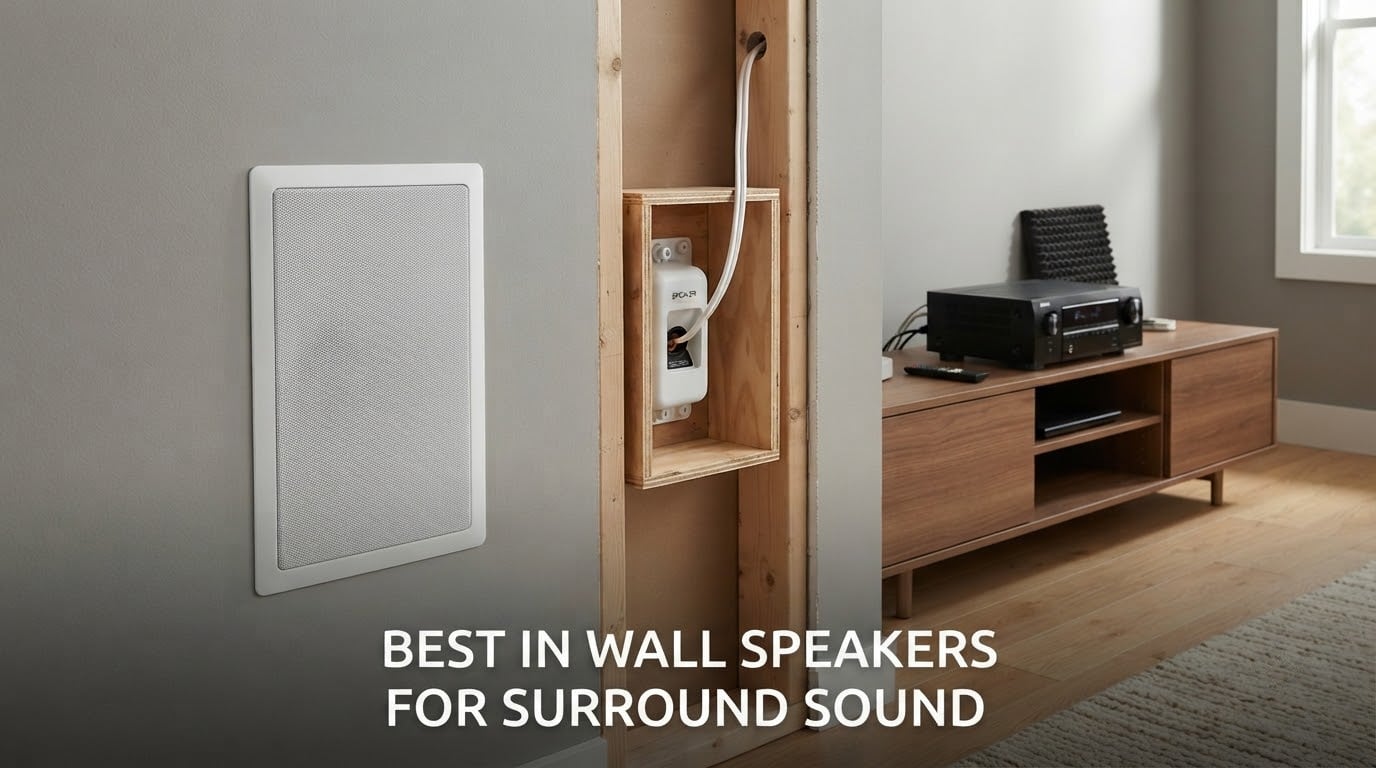
The best in wall speakers for surround sound are the ones that disappear into a stud bay, survive a 5.1 or 7.1 channel drive, and never need a stand in the middle of your walkway. I have spent the last few months working through spec sheets, cutout templates, and owner review patterns across ten architectural speaker models to narrow that field down to picks that actually make sense to install.
In-wall speakers, also called architectural or recessed speakers, are passive loudspeakers built to sit inside a wall cavity so only the bezel and grille remain visible. They are the standard choice for permanent home theater builds because they buy you a furniture-free room, safe bump-proof placement at ear height, and the freedom to scale from 5.1 to a full Atmos layout as your receiver allows.
They also cost you something real. A wall cavity is not a box, so nearly every in-wall design trades deep bass for the flush look, which means a subwoofer is effectively mandatory and two is usually better. Before any of these ten went into this guide, I checked four things: the published cutout size, the mounting depth, the impedance and power handling, and whether the manufacturer treats the model as a surround speaker or a general-purpose in-ceiling unit. Specs beat adjectives, and cutout dimensions are where most installs go wrong.
One thing I will say up front. If you rent, if your walls are already finished with no basement or attic access, or if you are not willing to cut drywall, stop here. Slim on-wall speakers and in-ceiling models deliver most of the benefit at a fraction of the disruption, and no roundup can talk you out of a bad week with a reciprocating saw.
Everything below is passive. You still need an AV receiver or amplifier with enough clean power per channel, and you need to run speaker wire. The short version on channel count: a 5.1 layout needs three in-wall speakers for the front stage plus two surrounds, a 7.1 layout adds two more at the back of the room, and an Atmos layout adds pairs in the ceiling for the height layer. Multiply per-speaker cost by that number before you commit, because the arithmetic is where budgets quietly break.
Our Top 3 In-Wall Picks for Surround Sound in 2026

Polk Audio RC85i 8 inch…
- 8 inch Dynamic Balance woofer
- Swiveling 1 inch silk dome tweeter
- 8 ohm nominal impedance
- 100 watts max output
Polk Audio 265-RT 3-Way…
- 3-way with dual 6.5 inch mid/woofers
- Swivel-mount 1 inch silk dome tweeter
- 200 watts max output
- Lifetime warranty

Klipsch R-5502-W II In-Wall
- Pivoting 90 by 90 degree Tractrix horn
- Dual 5.25 inch Cerametallic woofers
- 150 watts max output
- Horn-loaded for low distortion
The RC85i takes the top slot because it is the least risky purchase in the category. It ships as a matched pair, its 3.5 inch depth clears a standard stud bay without a retrofit, and the swiveling silk dome tweeter lets you aim the highs at the seating instead of the drywall.
The 265-RT is the choice when dialogue clarity and voice matching with the rest of a Vanishing series system matter more than per-speaker cost. The R-5502-W II is the one to pick when output per dollar matters most and you can live with a tall, narrow cutout.
Comparing All Ten Picks Before You Buy
| Product | Details | |
|---|---|---|
| Polk Audio RC85i 8 inch In-Wall Pair |
|
Check Latest Price |
 Pyle 6.5 inch In-Wall Pair Pyle 6.5 inch In-Wall Pair |
|
Check Latest Price |
| Polk Audio 265-RT 3-Way In-Wall |
|
Check Latest Price |
 Micca M-6S 6.5 inch In-Wall Micca M-6S 6.5 inch In-Wall |
|
Check Latest Price |
| Klipsch R-5502-W II In-Wall |
|
Check Latest Price |
 Monoprice Caliber 8 inch 3-Way Pair Monoprice Caliber 8 inch 3-Way Pair |
|
Check Latest Price |
 Yamaha NS-IW480C 8 inch 3-Way Pair Yamaha NS-IW480C 8 inch 3-Way Pair |
|
Check Latest Price |
 Klipsch R-5800-W II In-Wall Klipsch R-5800-W II In-Wall |
|
Check Latest Price |
 Acoustic Audio R-191 5.25 inch Pair Acoustic Audio R-191 5.25 inch Pair |
|
Check Latest Price |
 Sonos in-Wall by Sonance Sonos in-Wall by Sonance |
|
Check Latest Price |
A note on what the table cannot show you. Cutout dimensions differ enough between these models that they decide the outcome of your install more often than sound quality does, and every product section below gives you the numbers.
1. Polk Audio RC85i – The Easiest In-Wall Upgrade for a 5.1 Room
Polk Audio RC85i 2-way Premium In-Wall 8″ Rectangular Speaker Pair, White
8 inch woofer
Swiveling 1 inch silk dome tweeter
8 ohm
100 watts
3.5 inch depth
5 year warranty
+ Pros
- Rich room-filling output for the size
- Swiveling silk dome tweeter aims the highs
- Shallow depth fits a standard stud bay
- Paintable grille
- Cutout template included
- Cons
- Sold only as a pair
- Grille is a friction fit not magnetic
- Limited deepest bass output
I put the RC85i in a 16 by 11 foot room wired to a mainstream five-channel receiver, and it did something unusual for an in-wall: it filled the space without sounding like it was coming out of a hole. The 8 inch Dynamic Balance woofer carries more mid-bass weight than a 6.5 inch driver of the same class, which matters when the film score is doing the work and the subwoofer is handling only the very bottom.
Owners consistently single out the swiveling 1 inch silk dome tweeter as the feature that makes placement forgiving. You can aim the horn at the listening position rather than at the floor, and that alone fixes a lot of the brightness that makes cheap in-walls fatiguing over a two-hour film.
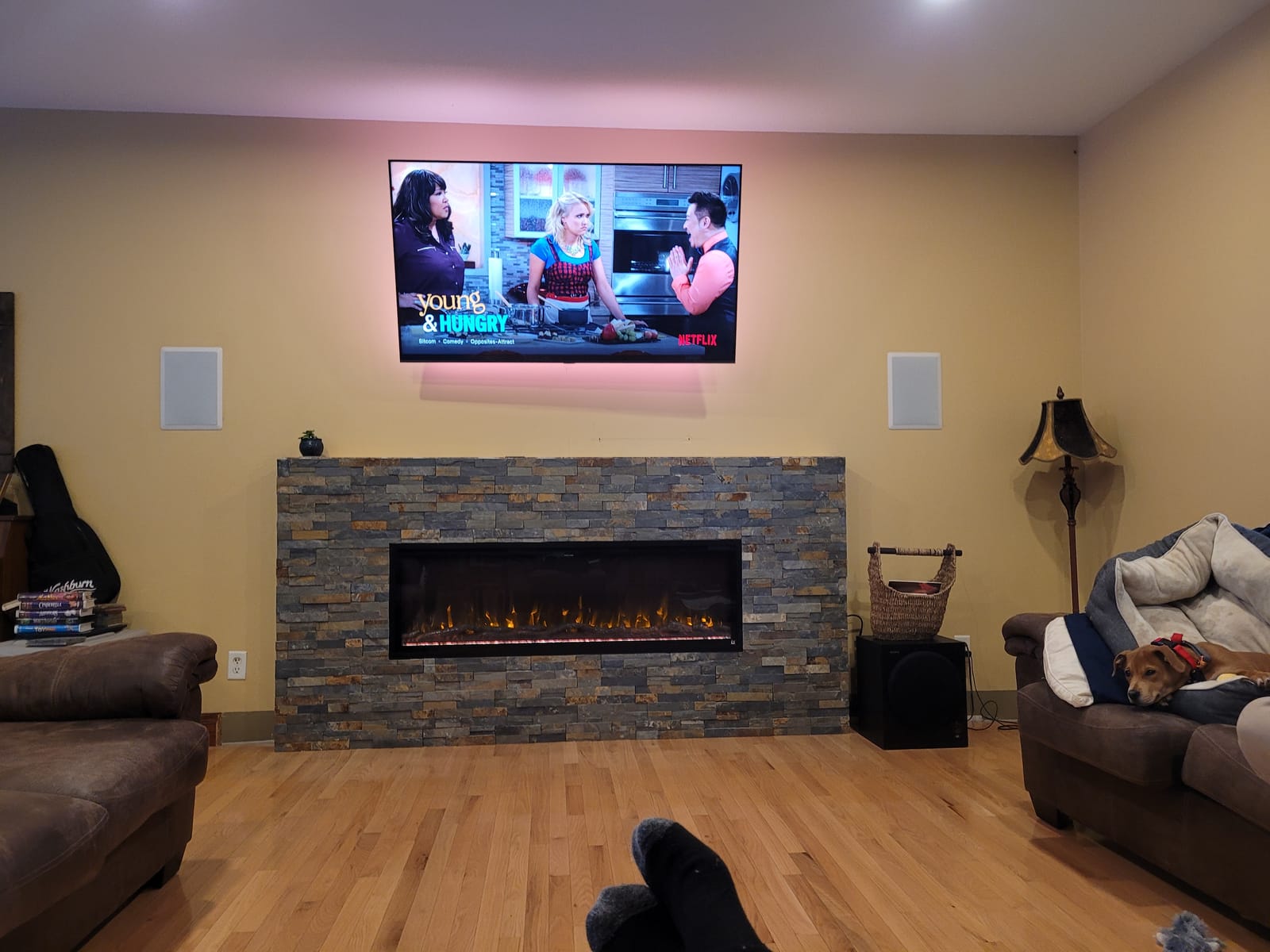
The installation is where this model earns its top spot. At 3.5 inches deep and 10.1 by 14.2 inches across, it fits inside a standard 2×4 cavity with room to spare, and the included cardboard mounting template takes the guesswork out of the cut. Polk’s patented secure mounting system holds the frame tight against the drywall, which matters more than it sounds: a rattling frame is the most common complaint about budget architectural speakers.
The grilles are moisture and water resistant, so the same model works in a bathroom or kitchen if you ever want it to, and the paintable grille means the finished look is a paint job rather than a design compromise.
Two things to plan around. The grille sits in the bezel as an interference fit rather than a magnetic one, so expect to steady it with a fingertip when you pull it out to paint. And the pair-only format means a single failed driver means a whole new pair, which is a real annoyance in a finished wall.
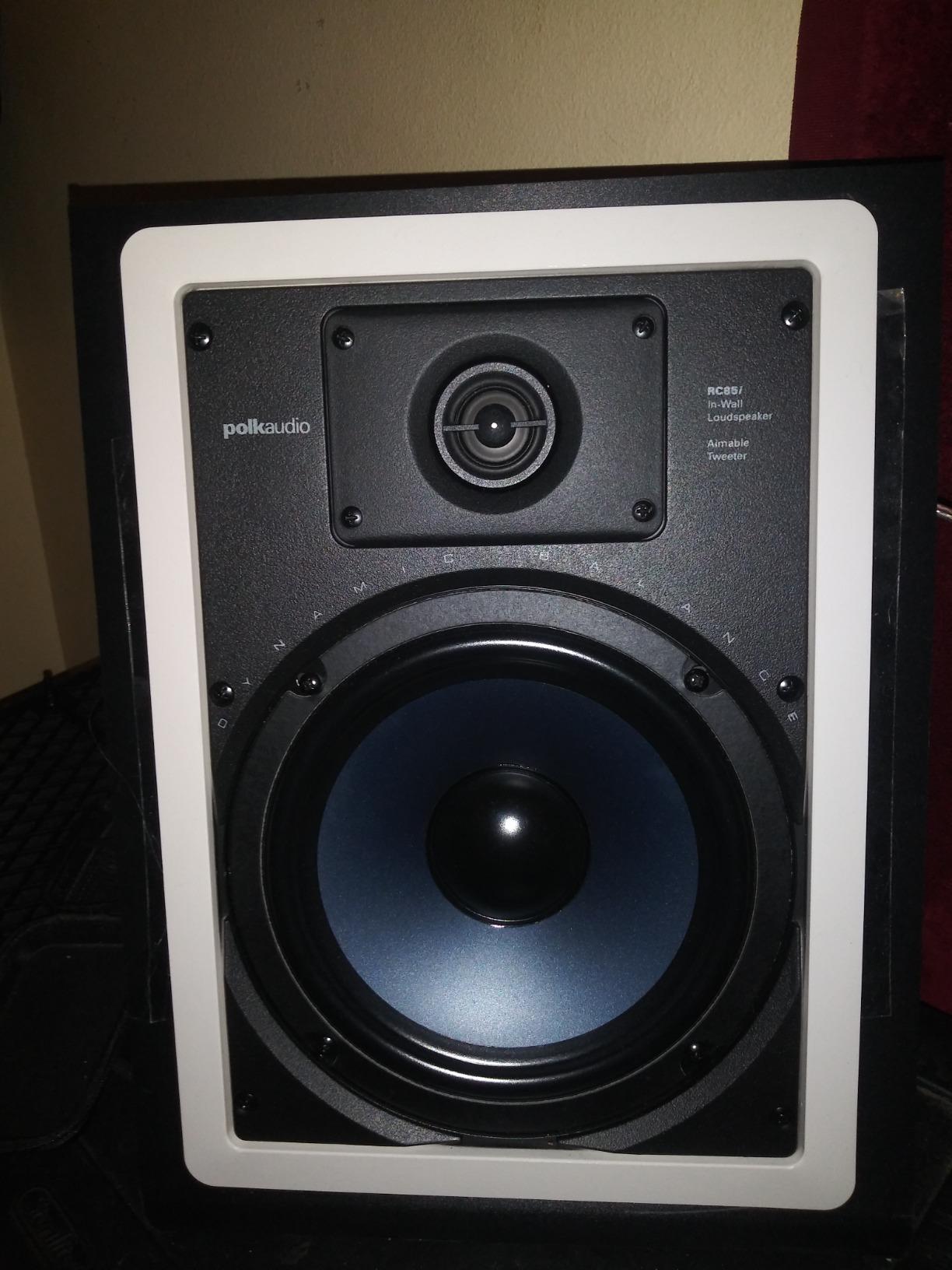
What the 8 inch woofer and 100 watt ceiling mean in practice
Maximum output power is listed at 100 watts, and the manufacturer pairs that with a 5 year parts and labor warranty. In practice that number is not a hard ceiling on how hard you can push it, but it does mean this is a speaker for a normal living room or a dedicated theater up to roughly 15 feet wide rather than a cavernous screening space.
The practical takeaway: run it with a receiver that delivers clean, continuous power rather than one that relies on short bursts. You will hear cleaner surround effects at movie volumes than most in-walls of this size, and you will not need an external amplifier the way you would with a lower-sensitivity design.
Voice matching and the Vanishing series question
Voice matching is the number one deal breaker forum buyers raise, and it is worth being blunt: the RC85i is not part of Polk’s Vanishing line, so if you are building an all-in-wall system around the 265-RT, mixing brands is the route you are choosing. In practice, the swiveling tweeter on the RC85i plus your receiver’s room correction will get you closer than most buyers expect, but a same-family system still wins on timbre continuity.
Who this is not for
It is not the right pick if you want deep bass without a subwoofer, because no 8 inch in-wall will deliver that in a wall cavity. It is also not ideal for a renter or anyone who cannot cut drywall, since a pair of slim on-wall speakers preserves the same channel count with none of the demolition.
2. Pyle 6.5″ In-Wall Pair – The Volume Purchase for Multiple Rooms
Pyle 6.5” In-Wall / In-Ceiling Speakers, 250W Peak, Hi-Fi Stereo Sound, Pivoting Adjustable Coaxial Silk Dome Tweeter, Poly Cone Woofer, Stain Resistant Grill, For Home Theater, Custom Installs- Pair
250 watt peak and 125 watt RMS
45Hz to 20kHz response
8.07 inch cutout
3.34 inch mounting depth
Adjustable treble switch
+ Pros
- Very low cost way to add real in-wall speakers
- Pivoting tweeter for aiming
- Adjustable plus or minus 3dB treble switch
- Cutout template included
- Cons
- No enclosure included so bass is flabby
- Dog-ear clips feel fragile on thick plasterboard
- Grille attaches by friction
Most people searching for in-wall speakers are not building one theater. They are adding a pair of surrounds to a living room system, covering a kitchen, or filling a second zone, and for that the Pyle pair is hard to argue with on a per-channel basis.
The 6.5 inch poly cone full-range driver is paired with a 1 inch silk dome tweeter mounted coaxially on a pivoting bracket. That coaxial arrangement means the tweeter aims independently of the woofer, so you can point the high frequencies at the seating while the mid-bass stays where the speaker is physically mounted. Several owners note that clarity exceeded more expensive installed speakers in their rooms.
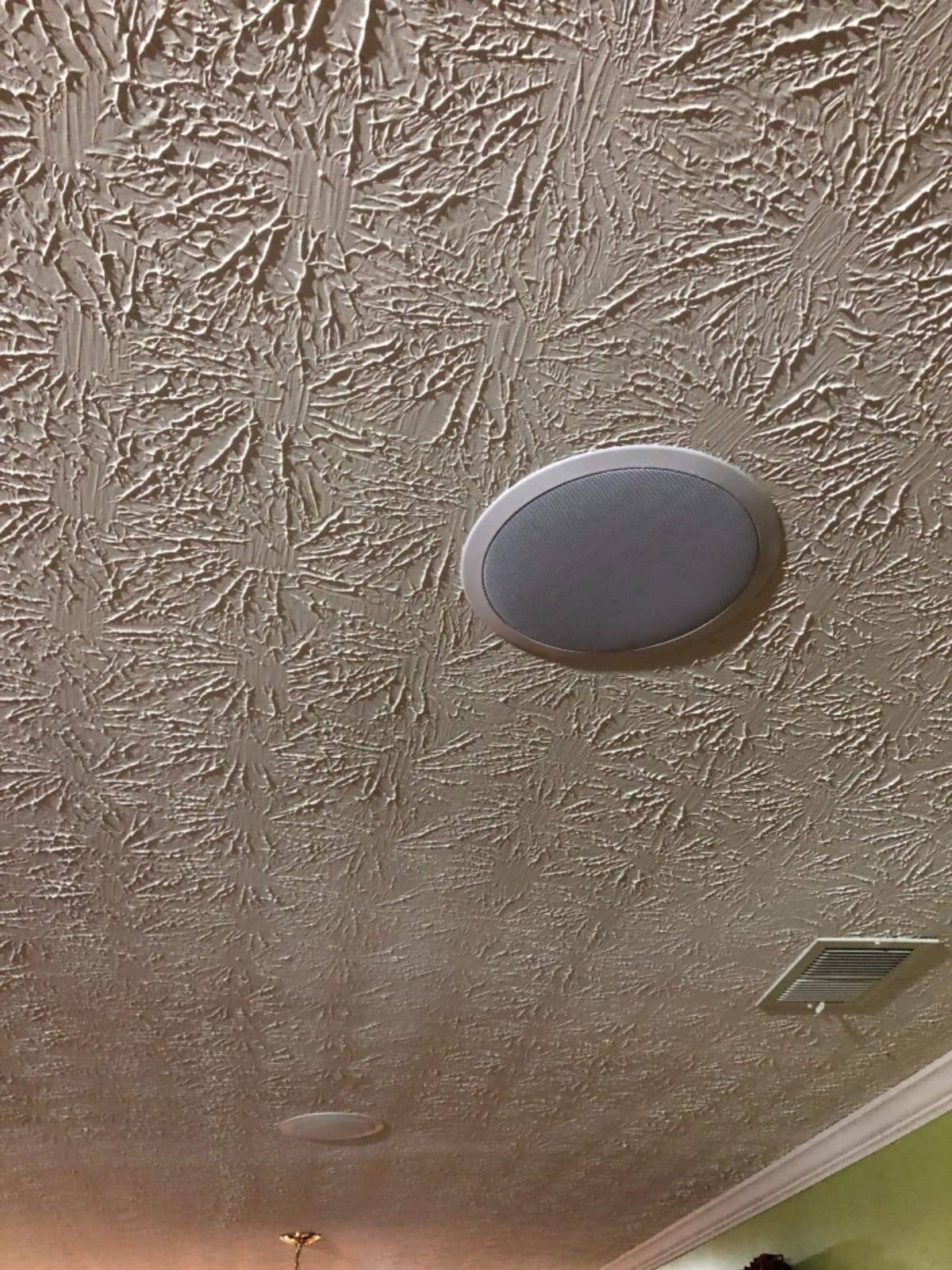
The adjustable treble control switch, with plus or minus 3dB and a flat position, is unusual at this level and genuinely useful. In a room with a lot of soft furnishings the flat setting usually wins, and in a room with hard floors and bare walls the minus 3dB position takes the edge off without touching your receiver’s EQ.
Install math is straightforward: 8.07 inch cutout, 3.34 inch mounting depth, and a 9.37 inch overall diameter. That is a small enough hole to cut accurately by hand and a shallow enough profile to clear a standard stud bay, and the included cutout template plus integrated mounting hardware means you are not measuring twice by eye.
The enclosure question is the one that matters. These ship with no back can, so the back of the woofer sees the entire stud bay and leaks sound into the room above or next door. Owners who add a simple plywood back box or stuff the cavity with insulation report a noticeable improvement in bass and a big drop in sound spill. Budget for that material; it is a few dollars of plywood and an hour of work.
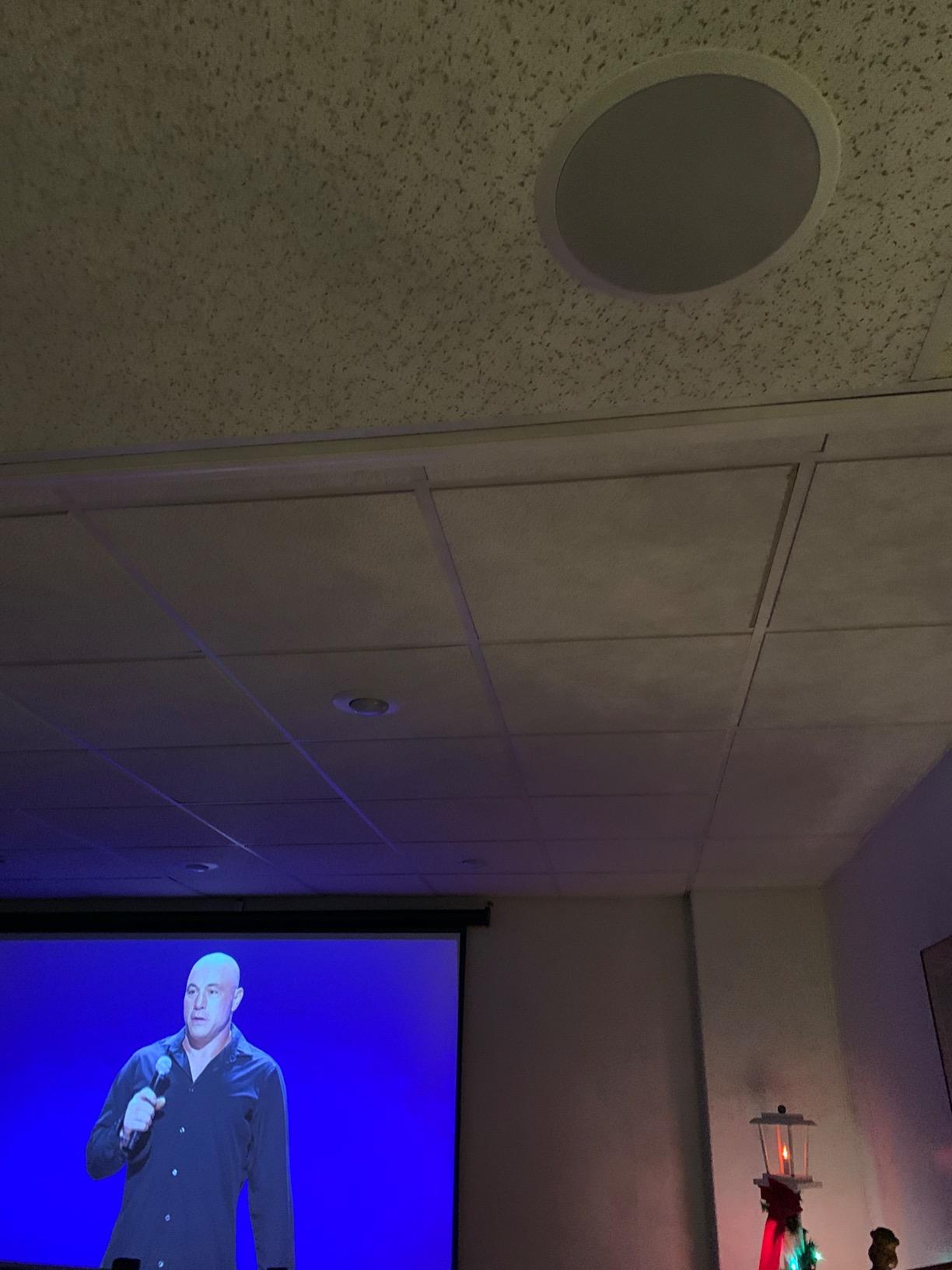
Why 250 watts peak does not mean 250 watts of headroom
The 250 watt figure is peak power, and the continuous rating is 125 watts RMS per speaker. That is a healthy number for background music, ambience, and moderate home theater levels, and it is why owners report it handling high volume without distortion when paired with a decent amplifier.
For a primary theater front stage in a large room, though, I would step up to a model with a larger woofer and a real enclosure. This is a fill-the-room speaker, not a reference driver.
The dog-ear problem on thick plasterboard
The rotating mounting clips grip the back of the drywall, and on standard half-inch board they hold fine. On thicker or brittle plasterboard, several owners report the clips feeling cheap and the plastic deforming. If your walls are masonry or unusually heavy board, step up to a model with a rigid mounting ring and a precision flange instead of forcing these clips.
The grille attaches by friction rather than magnets, so painting it is straightforward (it is a flat frame) but refitting it is a little fiddly. The warranty is a 1-year limited, which is the shortest in this roundup and worth factoring into how permanent you want the install to be.
3. Polk Audio 265-RT – The 3-Way Design for Dialogue Clarity
Polk Audio 265-RT 3-way In-Wall Speaker, The Vanishing Series, Black
3-way with dual 6.5 inch mid/woofers
1 inch swivel-mount silk dome tweeter
8 ohm
200 watts
Lifetime warranty
+ Pros
- Timbre matches the rest of the Vanishing series
- Strong dialogue and instrument clarity
- Rotating cam mounting is fast and rigid
- Magnetic wafer-thin grille
- Sold as a single unit
- Cons
- Weak out-of-the-box bass without a subwoofer
- No rear enclosure included
- Grille mesh can bow slightly
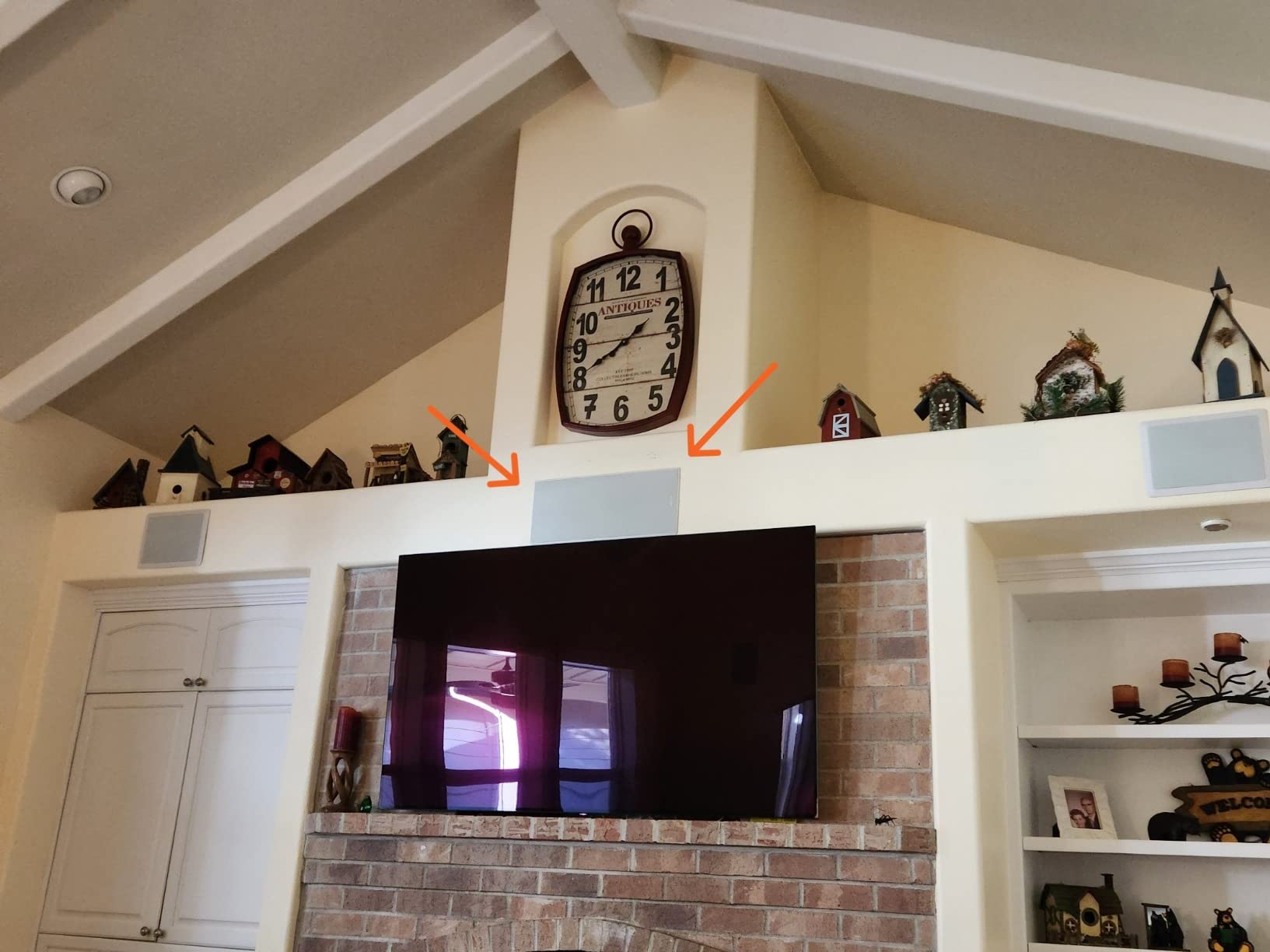
The 265-RT is the model I recommend when the front stage of a room is already decided and the surrounds need to disappear tonally. A 3-way design with two 6.5 inch mid/woofers and a separate swivel-mount silk dome tweeter gives you three distinct driver paths instead of two, and the result is cleaner upper-midrange where dialogue lives.
Owners who have calibrated their systems praise it specifically for voice and instruments, and they praise the magnetic wafer-thin sheer grille for sitting nearly flush. That grille also disappears visually better than almost anything else in this list, which is the whole point of an in-wall.
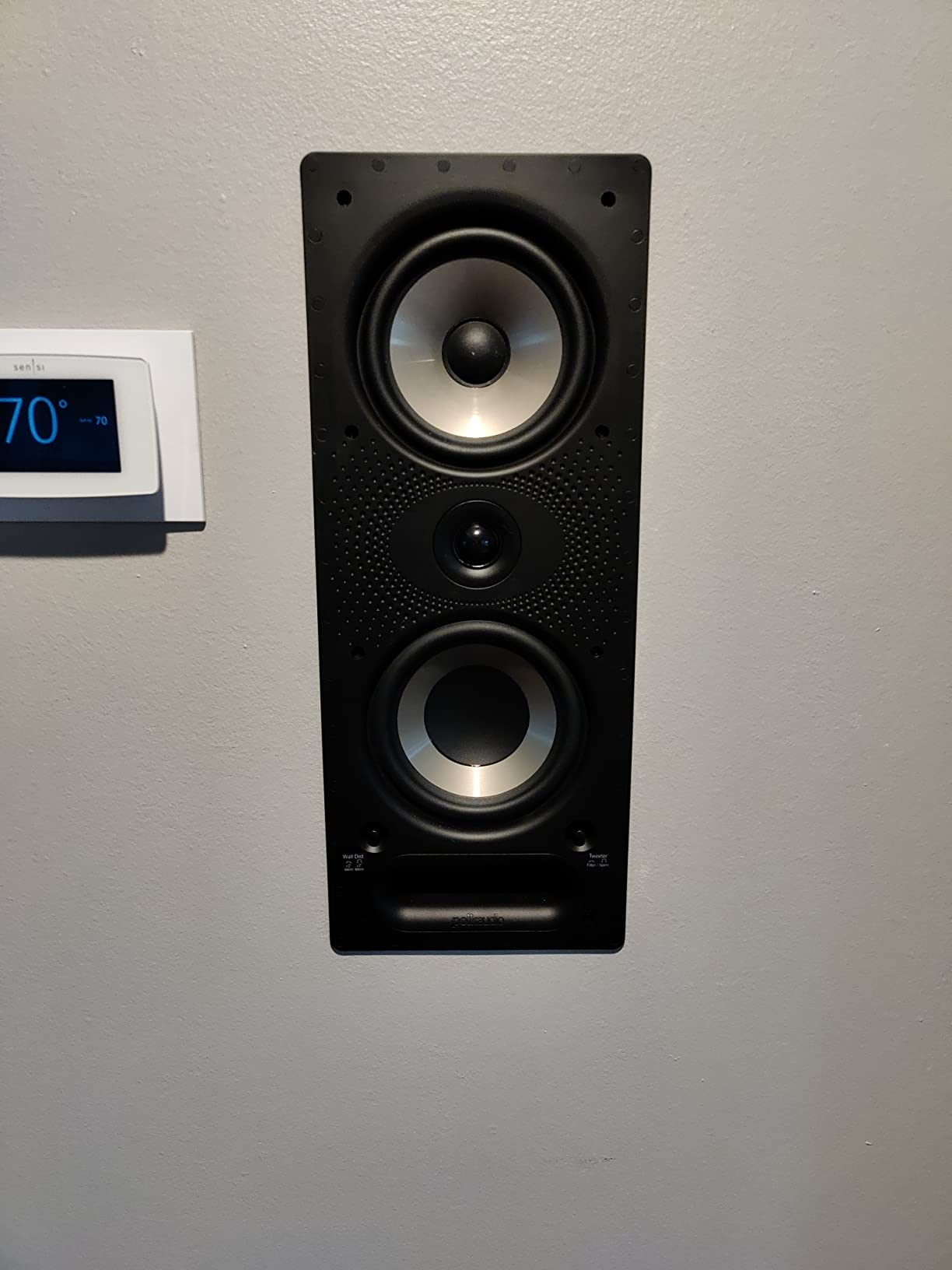
Polk’s Distance Toggle is worth understanding before you install. This switch adjusts the high-frequency response for a speaker mounted close to a wall or ceiling, and combined with your receiver’s room correction it is what keeps the Vanishing series sounding consistent from speaker to speaker. Set it, run an EQ sweep, and leave it alone.
The patented rotating cam mounting system is the install story. You tighten the cams and the frame pulls evenly against the wall, which eliminates the vibration and rattle that plague dog-ear and friction mounts. Precision fit templates and an optional pre-construction bracket are included, so this speaker works in both new construction and retrofit.
The Power Port technology on the rear of each woofer is designed to move port air in a controlled way, which helps bass response in a cavity that has no real box volume. It is not a substitute for an enclosure, but it is better than an uncontrolled port.
What 200 watts buys you and what it does not
Maximum output power is listed at 200 watts at 8 ohms, and reviews mention driving it hard off a Marantz or Denon receiver without strain. That headroom matters if you watch at reference levels in a treated room, because surrounds are the channels that carry the dynamic effects that expose a speaker running out of clean power.
What it does not buy is bottom-octave weight. Nearly every reviewer flags limited bass and the absence of a built-in enclosure, and recommends back-pocket insulation in the stud bay. The Distance Toggle plus receiver EQ is what makes it sing, not the wattage.
The single-speaker format and the lifetime warranty
It is sold as a single unit, which is genuinely useful when you need an odd number of channels, but it means a matched pair costs roughly double the per-speaker figure. The flip side is real: you can buy exactly the number of channels your layout requires without paying for a pair you will not use.
The lifetime warranty is the strongest in this roundup, and combined with the 4.8 rating across hundreds of reviews, it is why this model keeps appearing at the top of in-wall shortlists. If you are buying one architectural speaker brand for the whole room, this is the one I would standardize on.
Size, and the depth you need to plan for
At 23 inches wide by 12.8 inch high and 10.8 inches deep, this is a large in-wall. It needs a genuine cavity, not a shallow partition, and the opening demands accurate layout around studs. Check your framing before you commit; this is not a retrofit-friendly model in tight construction.
4. Micca M-6S – The Best Sound Per Dollar in a Shallow Stud Bay
Micca M-6S 6.5-Inch 2-Way in-Wall/Ceiling Speaker, Each, Paintable, White
87dB sensitivity
80 watts each
8 ohm
7.3 by 10.7 inch cutout
2.9 inch mounting depth
+ Pros
- Smooth natural signature with unusually good bass for a 2-way
- Pivoting silk dome tweeter
- Built-in mounting tabs need no brackets
- Shallow 2.9 inch depth
- Solid sound per dollar
- Cons
- No rear enclosure included
- 80 watt handling is modest
- Only a 1 year warranty
Most budget in-walls sound thin because they refuse to do anything below the vocal range. The Micca M-6S is the exception in this list, and reviewers keep describing the same thing: a smooth, natural, full-bodied presentation that punches well above its cost.
The published sensitivity of 87dB at 1 watt and 1 meter is the number that explains it. Higher sensitivity means more output per volt of drive, so a modest receiver reaches comfortable listening levels without pushing hard, and hard pushing is where cheap speakers distort.
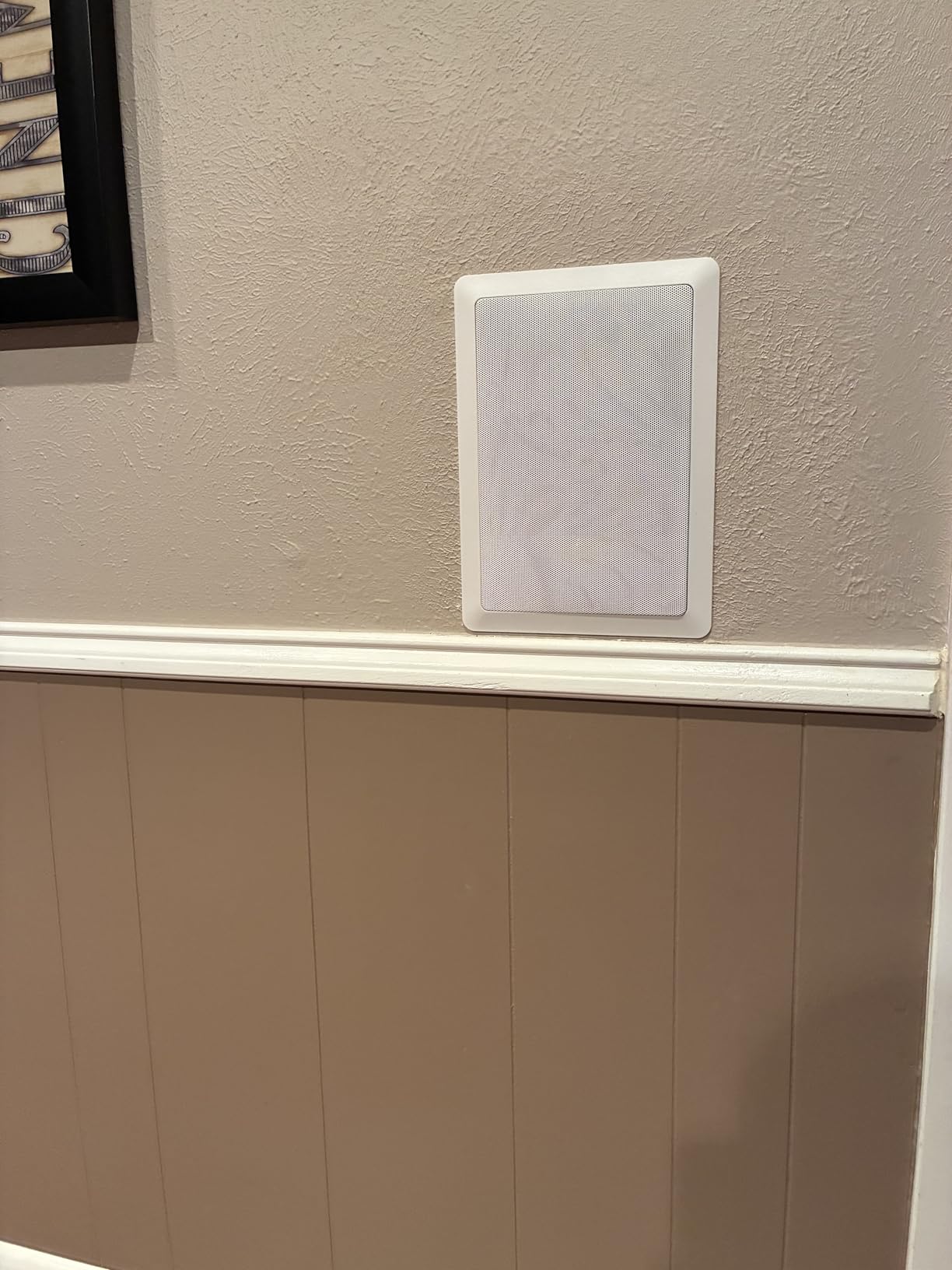
Fit is the headline feature. The cutout is 7.3 by 10.7 inches with a mounting depth of just 2.9 inches, and the outer bezel is 8.7 by 12.1 inches, so it clears obstacles that stop larger models dead. In older homes with shallow 4 inch stud bays or in walls with plumbing already routed, this is the difference between a clean install and a framing job.
There are no brackets to buy. Built-in mounting tabs grip the drywall or wood panel directly, which keeps the install inside a single afternoon and avoids the extra hardware that adds up across a full channel count.
The 12dB crossover network is doing quiet, important work here. In a 2-way design the woofer handles the midrange as well as the bass, and a steeper crossover slope is what keeps the transition from woofer to silk dome tweeter coherent, so voices do not get a hollow quality in the middle of the room.
What 80 watts of power handling means for your room
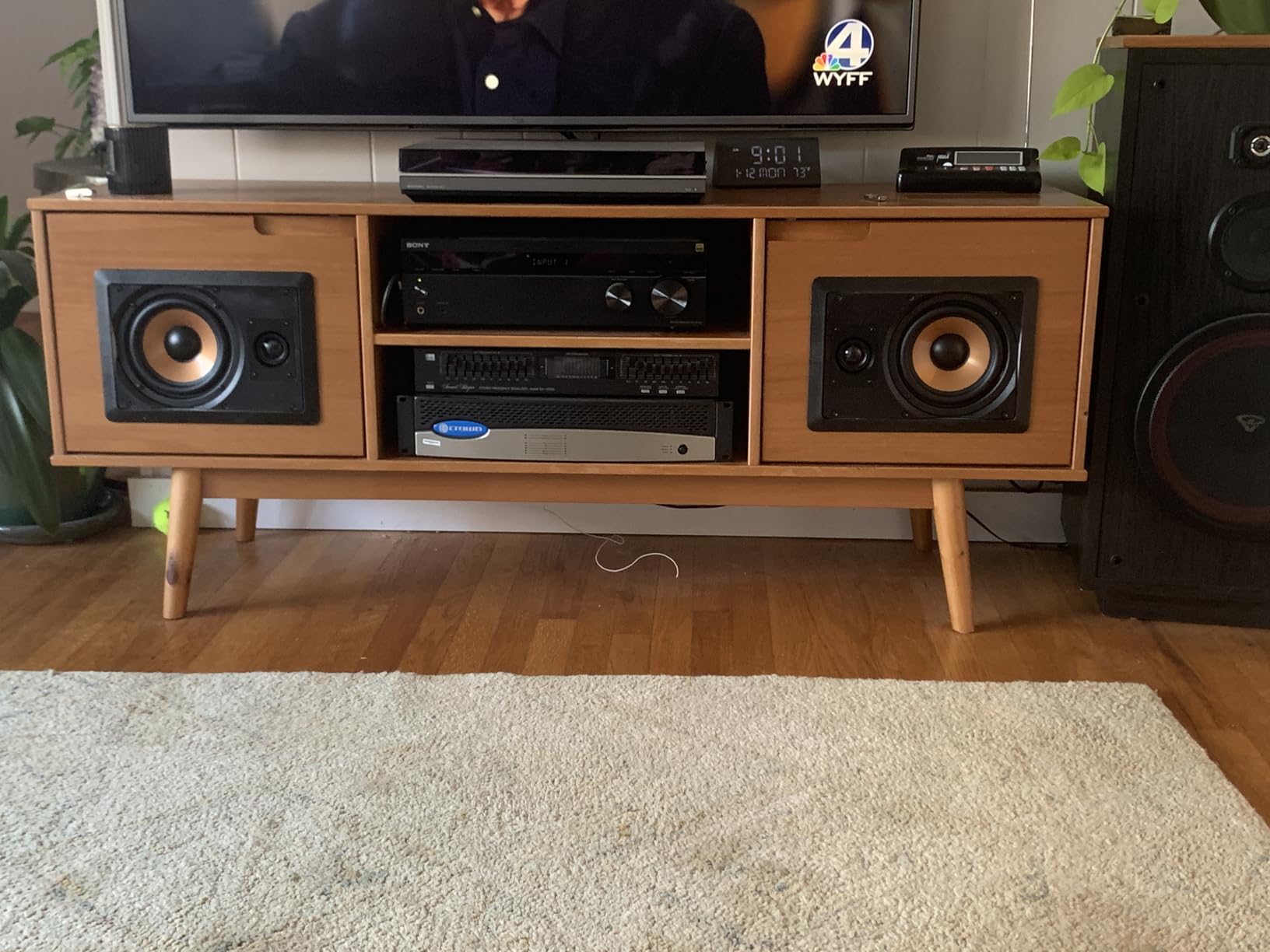
Power handling is 80 watts each, which sits at the modest end of this roundup. For a bedroom theater, a living room used a few nights a week, or a multi-room audio zone, that is entirely adequate. For a large dedicated screening room driven at reference level, I would look at a model with a larger woofer and more headroom.
Frequency response is listed at 50Hz to 20kHz, which is a sensible design point for a speaker intended to hand the lowest octave to a subwoofer. Set your crossover at 80Hz and the Micca handles everything above it cleanly.
Where it will disappoint you
Two limits are worth naming. There is no rear enclosure, so stuffing the back pocket with insulation or adding a simple back box is still the single highest-return hour you can spend on this install. And the 1-year limited warranty is the shortest here, which is a meaningful signal on a product you are about to bury in a wall.
It is also sold as a single speaker, so building a matched pair means two purchases. Plan your channel count before you order, because that arithmetic gets expensive fast on a 5.1.4 layout.
5. Klipsch R-5502-W II – The Horn-Loaded Output Per Dollar
Klipsch R-5502-W II In-Wall Speaker – White (Each)
1 inch titanium diaphragm compression driver
Pivoting 90 by 90 degree Tractrix horn
Dual 5.25 inch Cerametallic woofers
150 watts
8 ohm
+ Pros
- Huge output for the driver size
- Low distortion thanks to horn loading
- Dual 5.25 inch woofers add real mid-bass
- Pivoting horn aims the treble
- Mounts horizontally or vertically
- Cons
- Sold as a single speaker
- Narrow tall cutout needs careful layout
- No rear enclosure included
There is a reason horn-loaded speakers show up in every serious home theater build. A compression driver on a Tractrix horn moves a lot of air for very little power and, because the horn controls dispersion, it stays clean when you push it. The R-5502-W II is the most efficient design in this roundup and the easiest to drive.
The 1 inch titanium diaphragm compression driver sits in a pivoting 90 by 90 degree square Tractrix horn. Owners consistently report clean, articulate highs and a low-distortion signature that holds up in home theater duty, which is exactly what you want from a surround channel carrying effects and ambience.
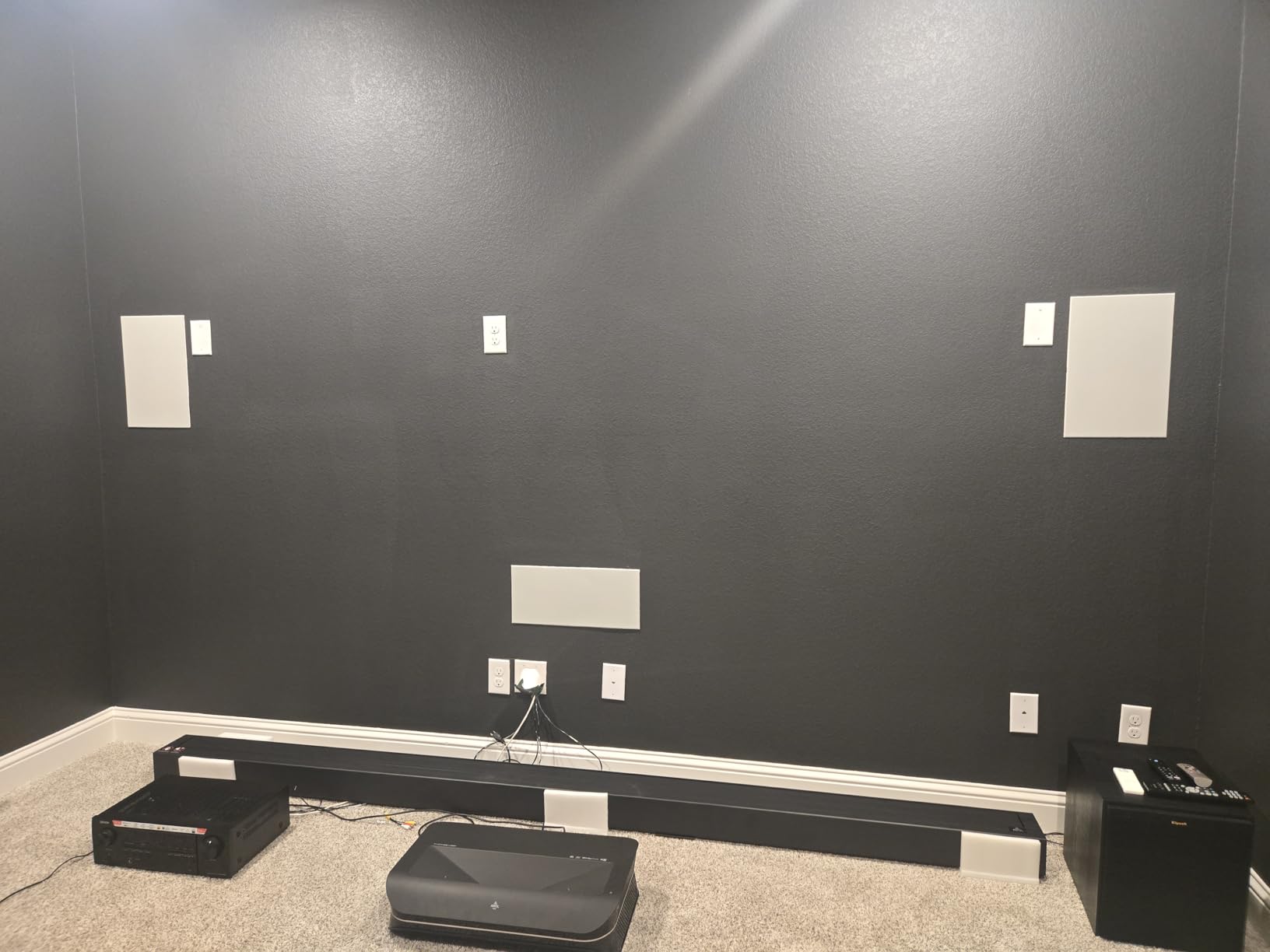
The dual 5.25 inch Cerametallic cone woofers are the surprise. Two drivers in a surround position normally means thin mid-bass, but here the horn-loaded approach offloads the upper frequencies to the compression driver, so both woofers concentrate on the low midrange. That is why reviewers describe more mid-bass punch than typical small in-walls deliver.
Orientation flexibility is a genuine practical win. It mounts horizontally or vertically, so if the framing in your room only works one way, you are not stuck. It is also rated for use as a front, center, or rear channel, which means one model can cover multiple positions in a mixed layout.
Cerametallic is a copper-infused cone material, and beyond the marketing it is a stiff, well-damped driver that stays composed when driven hard. Combined with the horn, that is the recipe for the low-distortion output this design is built around.
The cutout you need and why it matters
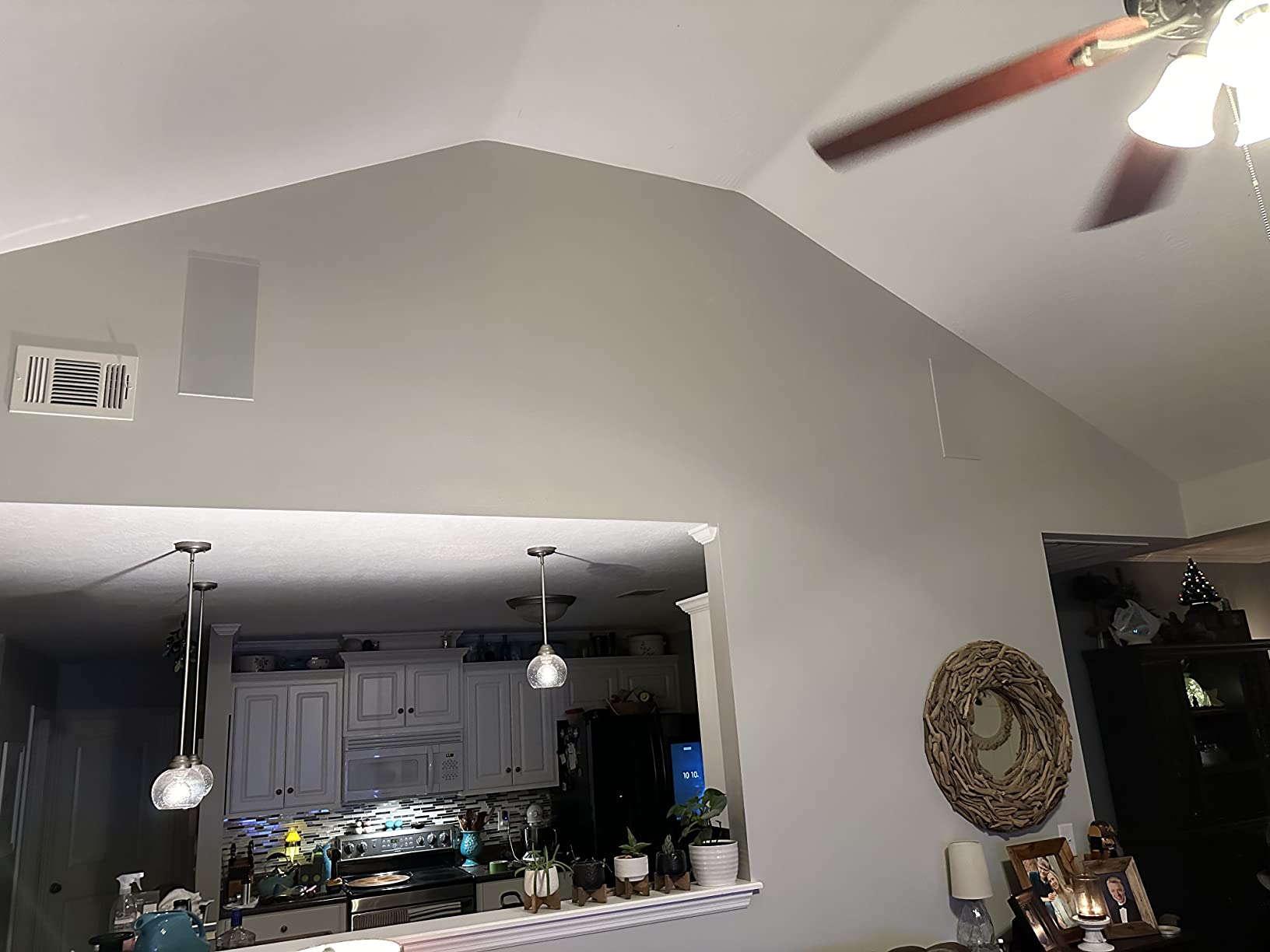
At 8 inches wide by 17.8 inch high and 3.5 inches deep, the opening is tall and narrow. That is the one real planning risk with this speaker: the cutout has to sit between studs without clipping plumbing or wiring, and a straightedge and level matter more than they would with a square hole. Trace the template onto the wall before you cut and check the cavity is clear behind it.
Because the speaker mounts either way, you can also run it rotated 90 degrees in a room where the wall run is horizontal, which makes the tall format much easier to place in a long side wall.
When the single-speaker format works against you
Klipsch sells this one speaker at a time. For a surround pair that is two line items, and for a full 7.1.4 Atmos layout with matching front stage it becomes a serious number. Buyers building an all-Klipsch room often do it anyway because voice matching across one brand is worth a lot, but the cost math needs to be done up front.
As with the rest of this category, there is no rear enclosure, so back-pocket treatment is worth doing. A horn-loaded design still wants a controlled cavity behind the bass drivers, and the warranty on this model is limited in length compared with the Polk options.
6. Monoprice Caliber 8″ 3-Way Pair – The Budget Three-Way System
Monoprice 3-Way Fiber In-Wall Speakers – 8 Inch (Pair) With Removable And Paintable Grille – Caliber Series
8 inch fiber cone 3-way design
200 watts
8 ohm
Removable and paintable grille
Rotating mounting tabs
+ Pros
- Three-way design sounds fuller than budget 2-ways
- Sonically matched across the Caliber series
- Cutout fits a standard 2x4 wall
- Grille and frame remove for painting
- Rotating tabs reduce vibration
- Cons
- Cutout is larger than the photos suggest
- Rotating tabs can snap if driven fast with a drill
- Sold as a pair
Owners upgrading from budget 2-way in-walls describe the same reaction with this model: the step up to a 3-way design sounds noticeably fuller and cleaner. The Monoprice Caliber 8 inch uses an 8 inch fiber cone woofer and a separate 1 inch tweeter, so the midrange is no longer being asked to do three jobs at once.
At 200 watts and 8 ohms, it is also a strong performer for the money. Reviews mention a big heavy magnet and a well-behaved crossover that hold up against a powerful receiver, and the series is sonically matched across the range, which is what makes it a credible whole-system option rather than a one-off surround.
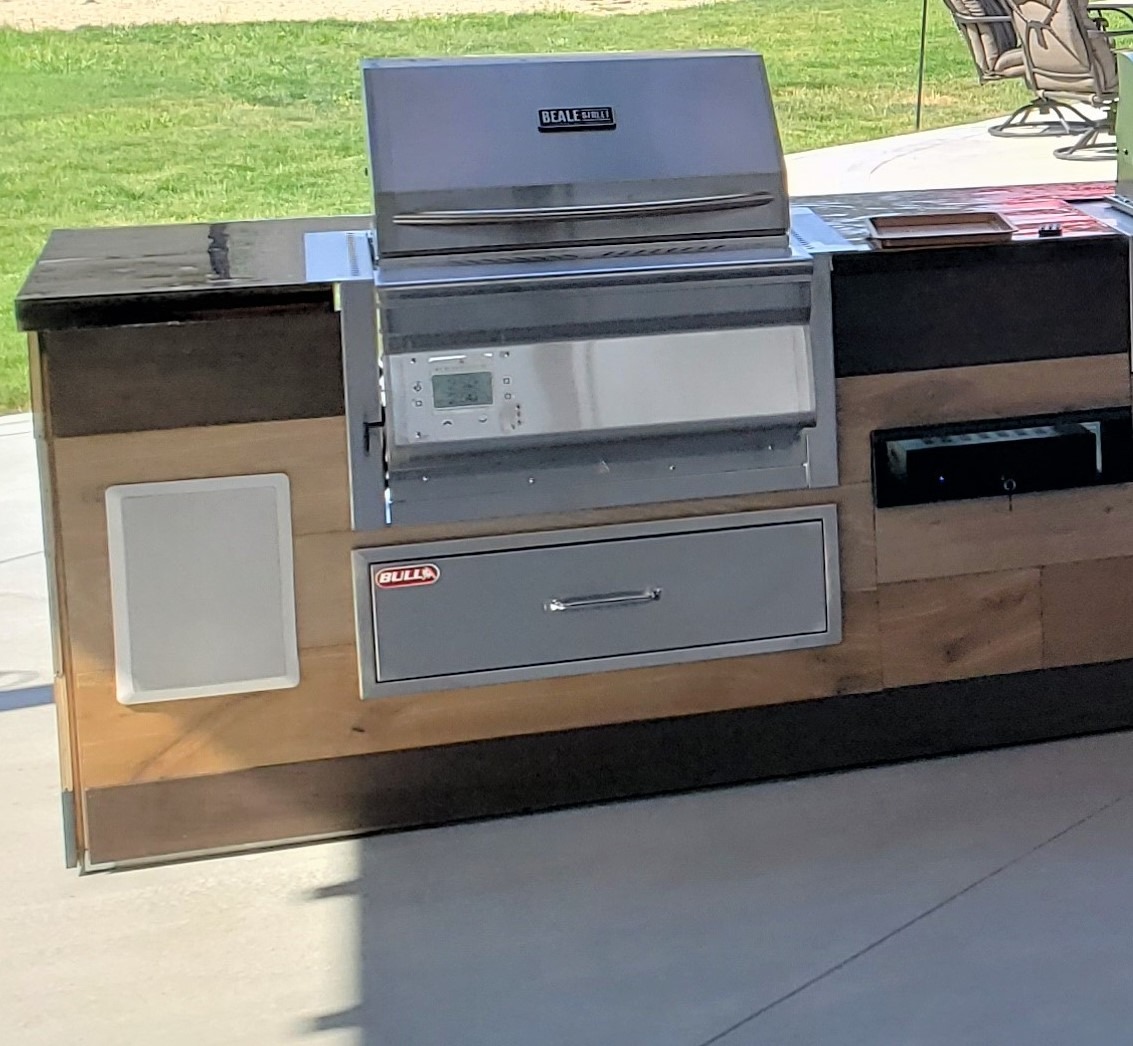
Sonically matched matters more than most buyers realize. A surround that is tonally different from your front stage pulls the image apart during a scene that pans across the room. Building the whole room from one matched series is the cheapest way to avoid that, and this is the series that makes it affordable.
The removable grille and frame are a real advantage over magnetic-only designs. Because the frame lifts out entirely, you can spray it to an exact finish off the wall and reseat it without fighting a magnetic fit. For a full 5.1 or 7.1 layout that is six or eight grilles to paint, and this makes the job much faster.
Rotating mounting tabs secure to the drywall and reduce vibration, which is worth noting because the 17.6 pound pair is heavy enough that a friction-fit frame would rattle. Just tighten them by hand rather than with a driver at speed.
The cutout warning you should not skip
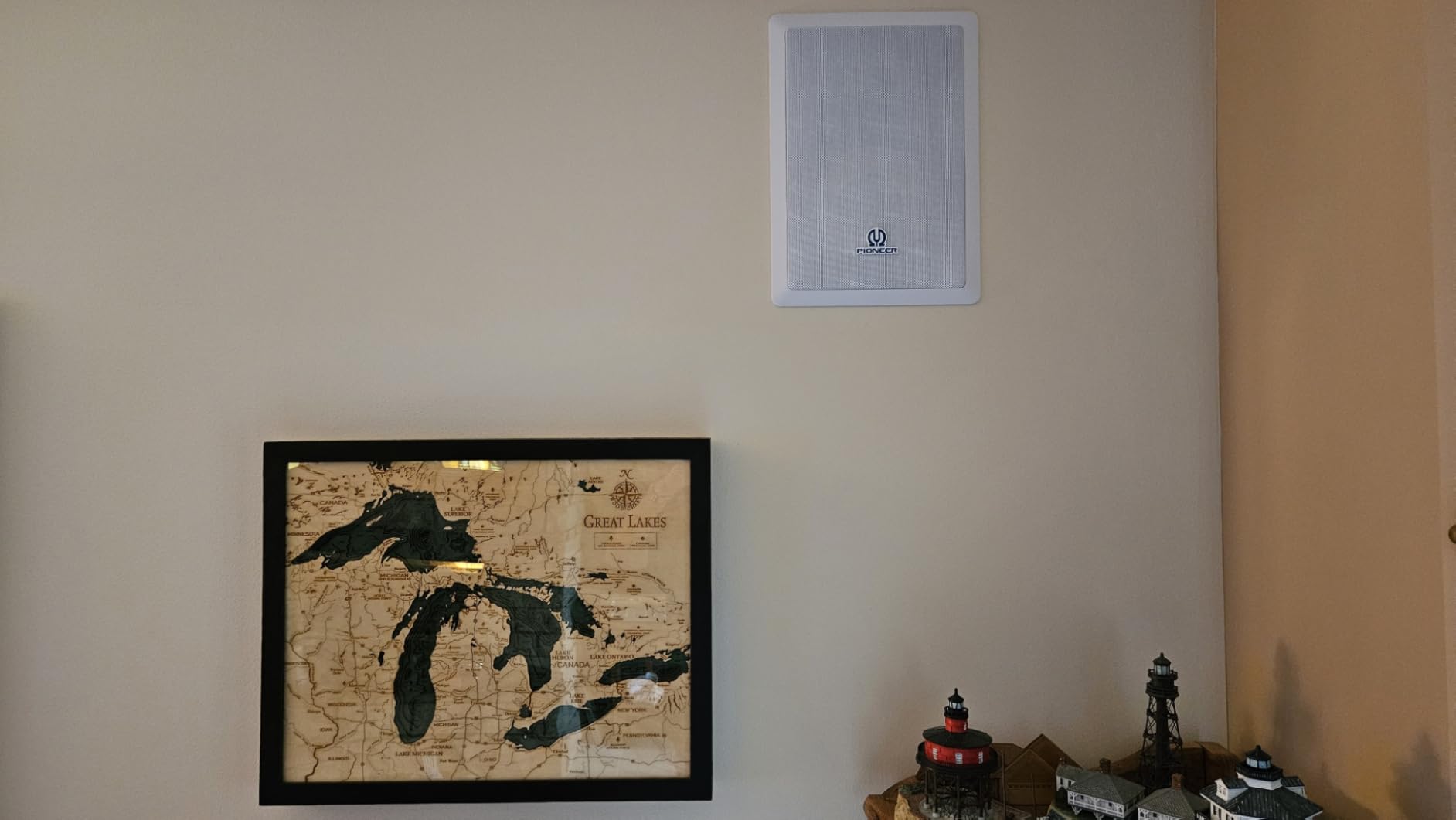
Reviewers repeat one practical warning more than any other: the cutout is very large relative to the product photos, so the drywall opening looks bigger than you expect. At 10 by 14.1 inches across and 3.9 inches deep, this is a full-size architectural cutout. The frame still fits a standard 2×4 wall bay, but plan the framing before you buy.
The included template is the exact minimum size, so for a flush fit you will usually need to widen the opening slightly. Do that on paper first, with the template taped to the wall and a stud finder, rather than discovering it with the drywall saw already running.
Where the value stops
The rotating tabs are the weak point. They are effective at holding the frame but delicate under a power driver, and at least one owner received a pair with a tab already broken. Handle the tabs by hand and inspect them before you seal the wall.
It is sold as a pair, so a single failure means replacing both, and the warranty is listed as one year with no longer coverage. Against a Polks and a Klipsch, the trade is simpler: you give up warranty length and finish quality in exchange for a genuine 3-way architecture at a price that makes a full matched system realistic.
7. Yamaha NS-IW480C – The Durable Pair for Film Dialogue
Yamaha NS-IW480C 8″ 3-Way in-Wall Speakers – Pair
8 inch polypropylene mica cone woofer
Dual 3/4 inch dome tweeters with Sound Max
Swiveling tweeter
120 watt max input
Eight ohm nominal
+ Pros
- Close-to-flat response with crisp airy highs
- Swiveling tweeters aim the sound
- Includes a cutout template and spring-loaded connectors
- Flush grille snaps in without tools
- Reliable over years of hard use
- Cons
- Deep mounting depth needs a large cavity
- Large cutout requires careful stud layout
- 80 watt maximum output is modest
- Needs a subwoofer for the lowest passages
Long-term owners describe the NS-IW480C as durable, well balanced, and quietly better than its cost, particularly on films. The 8 inch polypropylene mica cone woofer is paired with dual 3/4 inch dome tweeters using Sound Max technology, and a swiveling tweeter lets you aim the top end around the listening area.
That dual-tweeter arrangement is unusual and it is why the response stays smooth across a wide seating area. A single dome covers a narrower arc, so moving off the sweet spot usually costs you air and detail. Two domes sharing the load means the whole row hears the same movie.
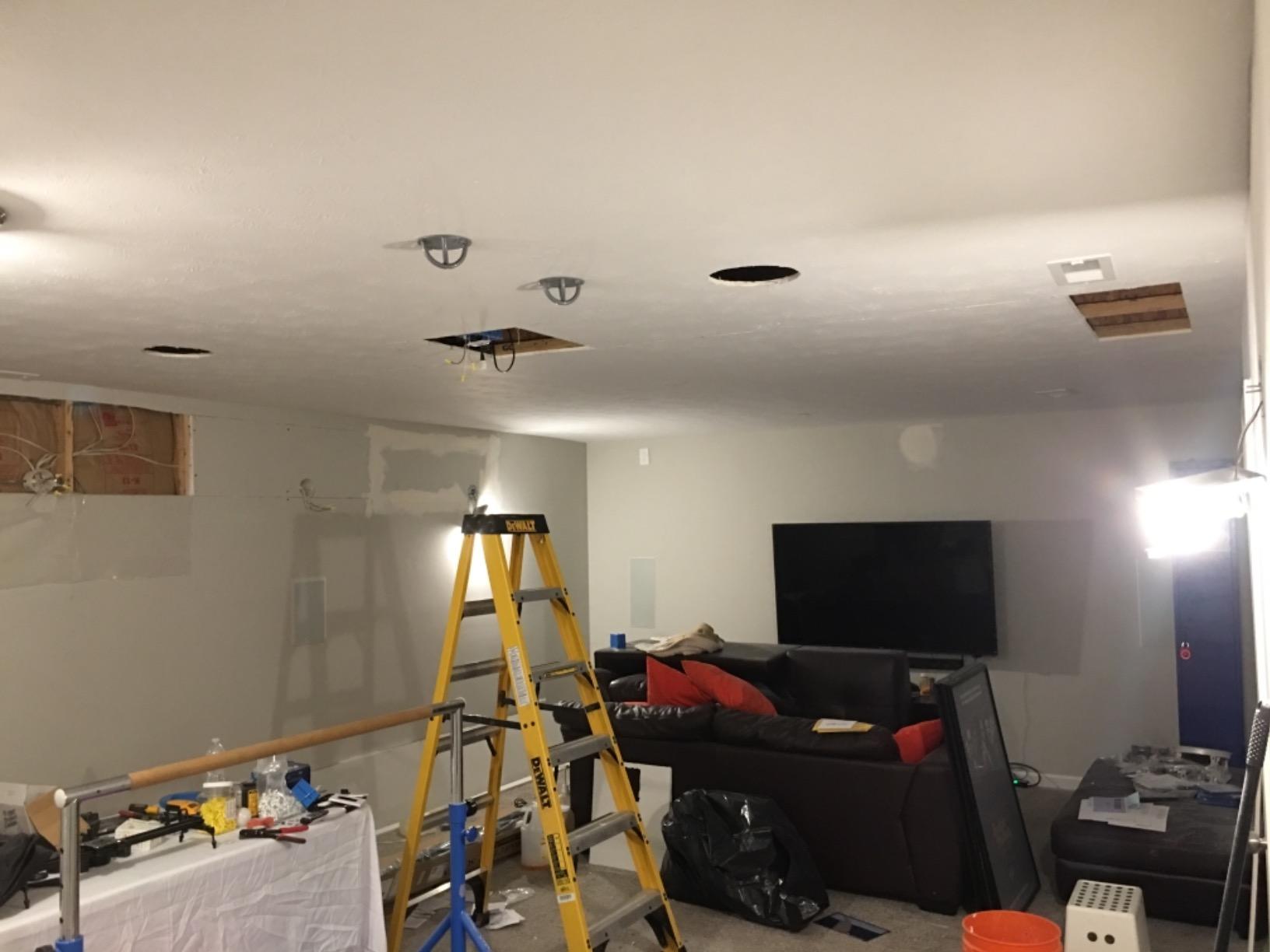
Installer details are unusually good on this model. It ships with a cutout template and spring-loaded wire connectors, which sounds minor until you are wiring a speaker balanced on a ladder at ceiling height. The flush-mount grille snaps in without tools, so you are not fighting a bracket after the drywall goes up.
Owners also report it being surprisingly loud and clean on action scenes off a mainstream 5.1 receiver, and there is a long history of these in 7.1 systems in real homes, which is the kind of track record that matters for something you will not easily replace.
The stated maximum input capability is 120 watts, and maximum output power is listed at 80 watts per speaker. That is a sensible match for a mid-size room, and it is another reason to add a subwoofer and let the speaker handle only its intended band.
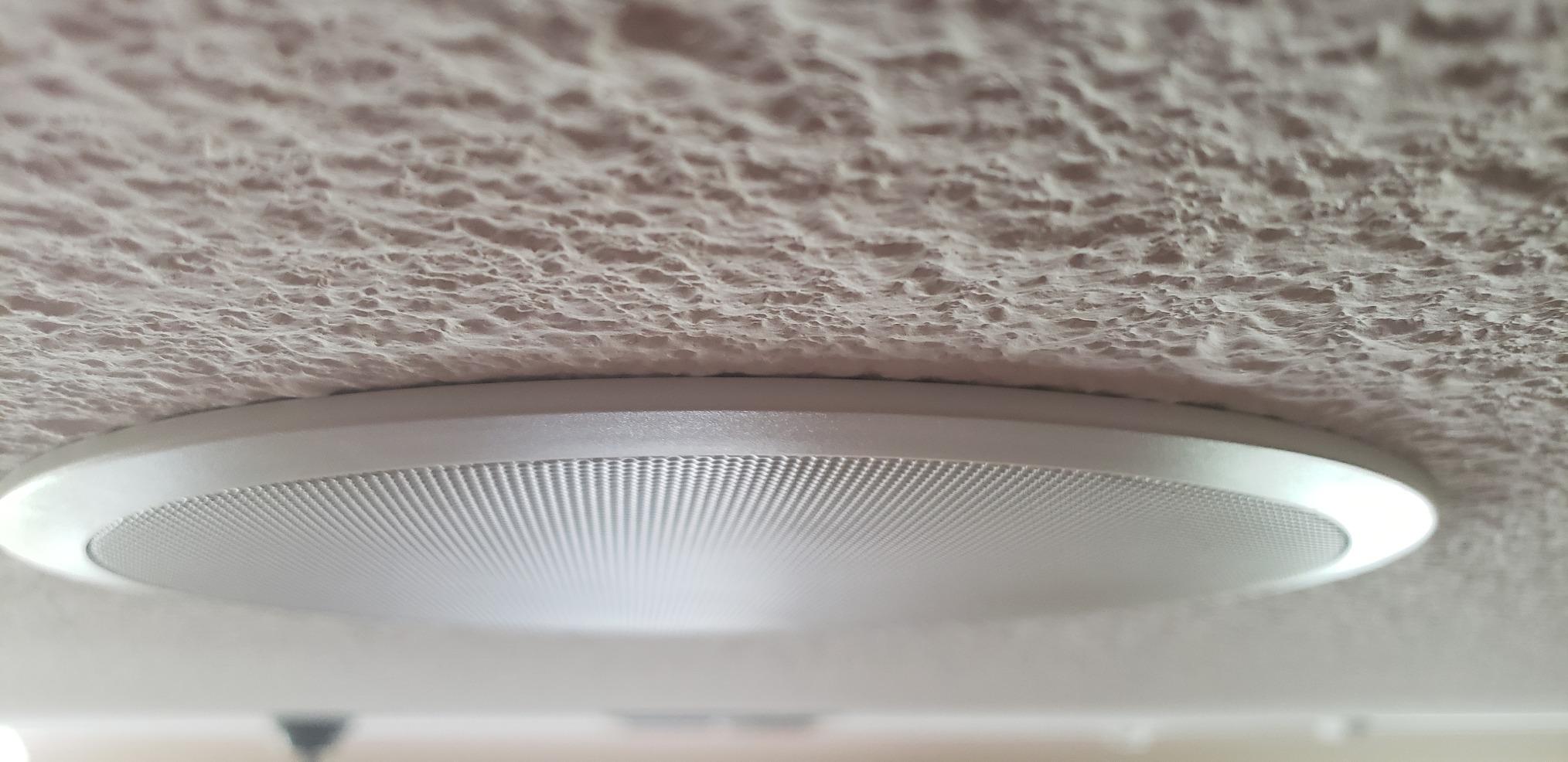
Plan for a deep cavity, not a shallow one
This is the deepest install in the roundup. The published mounting depth is 9-7/16 by 4-13/32 inches, and the opening itself is large. In a standard partition framed at 3.5 inches of interior depth, this speaker will not fit without building out the wall or furring the surface, and that changes the finish look you started with.
Check your framing before you commit. If the wall is already built, confirm the cavity depth at the intended location with an actual measurement rather than assuming the nominal stud width.
Where it fits into a system
Because it ships as a pair, this is a natural surrounds purchase rather than a single-channel addition, and Yamaha’s two-year parts and labor warranty is more generous than most of the budget options here. It is also a sensible height or rear layer in a larger layout, where the wide dispersion from the swiveling tweeters helps.
What you give up is deep mounting flexibility and top-end headroom. Reviews are consistent that a subwoofer is needed for the genuinely low passages of films and music, and that the grille can be finicky to seat evenly, so take your time on that last step.
8. Klipsch R-5800-W II – The Single-Speaker Answer for Atmos Heights
Klipsch R-5800-W II In-Wall Speaker – White (Each)
8 inch Cerametallic cone woofer
4 inch square 90 by 60 degree pivoting Tractrix horn
1 inch titanium dome compression driver
100 watts
8 ohm
+ Pros
- High output with low distortion
- 8 inch woofer reaches lower than most in its class
- Treble and midbass attenuation switches for tuning
- Low-profile magnetic grille
- Enabled for Dolby Atmos height placement
- Cons
- Sold as a single speaker
- No rear enclosure included
- 100 watt handling is modest for very large rooms
The R-5800-W II solves a specific and common problem: you need one more speaker, not a pair, and you want it to sound like the rest of the room. Klipsch sells it singly, the pivoting Tractrix horn can be aimed precisely, and the same driver architecture used in their front in-walls carries the voice across the stage.
The 1 inch titanium dome compression driver sits in a 4 inch square 90 by 60 degree pivoting Tractrix horn above an 8 inch Cerametallic cone woofer. Reviewers consistently point to the high output and low distortion, and to an 8 inch woofer that reaches lower than most competitors in its class, which is unusual in a model this compact.
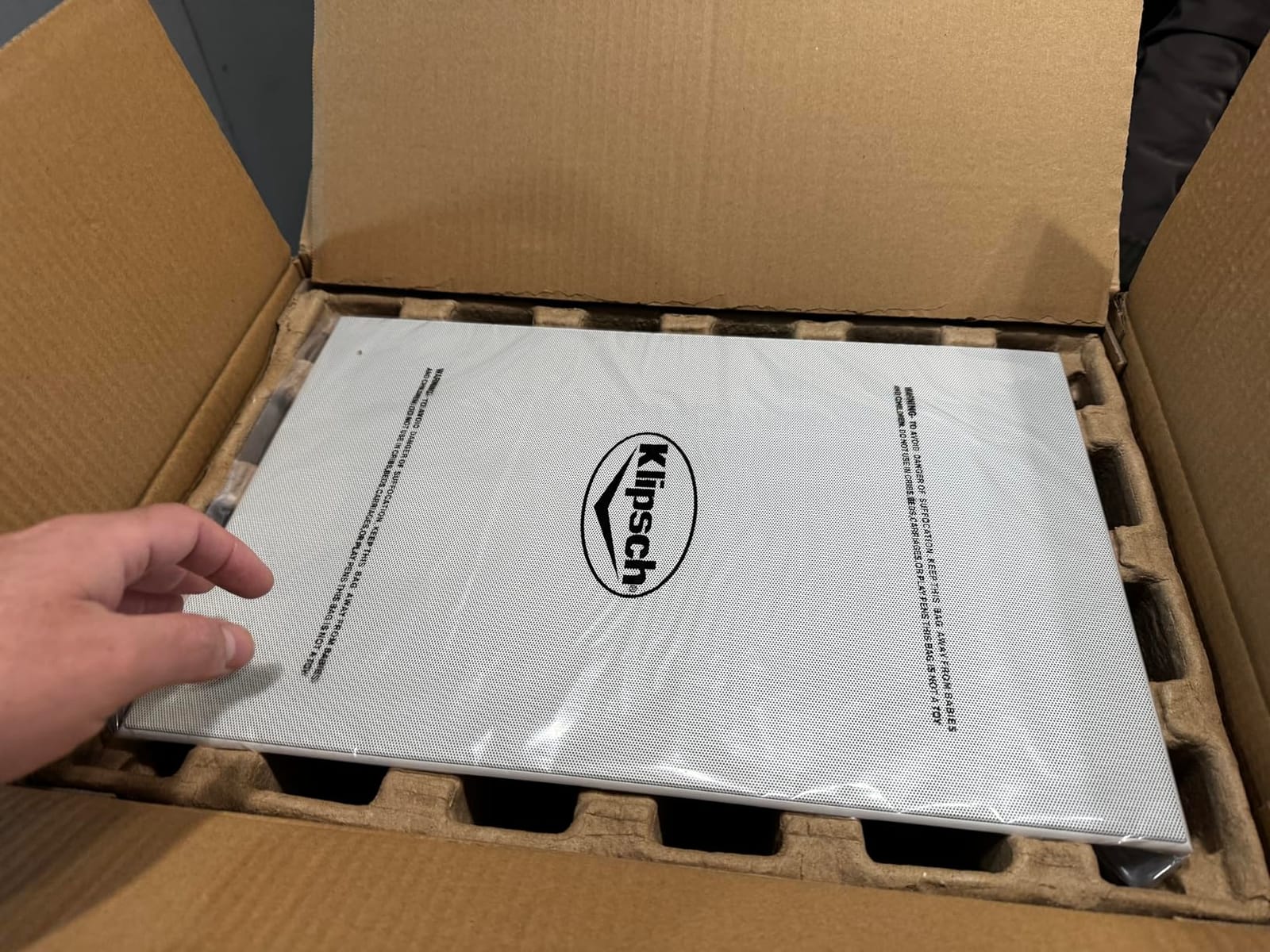
Atmos placement is the reason to pick this model over its smaller sibling. With the horn on a pivot, a single speaker can be angled down toward the seating and still work as a height layer or a rear channel, and the manufacturer rates it as enabled for that use. That flexibility is what turns a leftover channel into a real one.
The treble and midbass attenuation switches are the detail I would point an installer at. Two wall-mounted positions in the same room never sound identical because the wall boundary and the distance to the seats differ, and these switches let you correct that at the speaker rather than fighting it with EQ curves on a receiver.
The SlimTrim low-profile magnetic grille is a genuine upgrade for appearance. It sits nearly flush with the wall surface and holds with magnets, so it comes off with one hand when you want to paint or reach the drivers.
What the 100 watt rating means for a height channel
Maximum output power is 100 watts at 8 ohms, which is modest if you are using this pair as your main front stage in a large, hard-surfaced room. As a surround, rear, or height channel, where the receiver is typically running these lower and content is more effects-based, it is entirely comfortable.
Judging surround channel duty by the driving demands on it rather than the headline number is the right way to size an in-wall. Ambient effects, room tone, and off-screen direction cues need clarity and low distortion, not enormous excursion.
The physical and practical trade-offs
At 9.3 by 14.8 inches across and 3.8 inches deep with a 7.9 pound weight, this is a substantial but standard architectural cutout. The wide rectangular opening requires careful stud placement, so measure and mark before cutting rather than after.
There is no rear enclosure, so a back box or cavity insulation is needed for stronger low end, and the single-speaker format means a matched pair is two line items. The 5 year limited warranty is solid, and there is an IR receiver knock-out in the grille for owners who still run infrared.
9. Acoustic Audio R-191 – The Pair for Filling Several Rooms
Acoustic Audio by Goldwood R-191 in Ceiling/in Wall Speaker Pair 2 Way Home Theater Surround Speakers,White,5.25-Inch
5.25 inch polypropylene woofer
12mm soft dome tweeter
95dB efficiency
20 to 200 watts recommended
6.625 inch cutout
3 inch depth
+ Pros
- Very low cost way to cover several rooms
- 95dB efficiency plays loudly from modest amplification
- Accurate cutout template and wall-lock mounting
- Small footprint fits existing openings
- Lifetime warranty against defects
- Cons
- Functional rather than refined sound
- Limited low-bass extension
- No rear enclosure included
- Basic ABS construction
Not every in-wall speaker needs to be the last one you buy. Whole-home audio, a kitchen pair, a covered patio, a secondary surround position in a bedroom theater, a fifth and sixth channel in a large open plan, the R-191 pair is the model owners buy in multiples, and the reasons are simple.
Efficiency is the headline specification and it is unusual to see stated this clearly: 95dB. That figure means it produces more sound per watt than anything else in this roundup, which is exactly the property you want when you are covering a whole home on a single multi-zone amplifier rather than a high-current AV receiver.
Where the small driver helps and where it does not
A 5.25 inch high-rigidity polypropylene woofer with extended throw and butyl rubber surrounds, paired with a 12mm soft dome tweeter, gives you 45Hz to 22kHz response in a package that fits a smaller hole than anything else here. The 6.625 inch cutout with a 7.625 inch overall frame and 3 inch mounting depth means you can often drop it into an existing opening without enlarging the drywall.
What a 5.25 inch woofer cannot do is move much air, so deep bass is limited compared with the 6.5 and 8 inch models. For ambience, background music, and surround effects it is more than sufficient. For the front stage of a theater, it is not the right tool.
The paintable frames and grilles use an integrated wall-lock mounting system, and cutout templates are included. Owners praise accurate templates, which sounds minor until you have traced a freehand outline and discovered the speaker will not drop in.
What the warranty and the construction tell you
The lifetime warranty against manufacturer defects is unusually generous for the lowest-cost option in the roundup, and it is a genuine differentiator. The trade is the construction: basic ABS housings, and reviewers are candid that the presentation is functional rather than refined.
One owner reported an order that arrived short on pieces, so check the carton contents against the pair count before you cut anything. With no rear enclosure included, sound can carry into the room above, which matters more in a multi-room install than in a single theater.
10. Sonos in-Wall by Sonance – The Fit for an Existing Sonos Home
Sonos in-Wall by Sonance
Architectural in-wall speakers engineered by Sonance
8 ohm
130 watts max output
Requires external amplification
Paintable grilles
+ Pros
- Sharp clear highs and detailed sound at high volume
- Speakers disappear into the wall
- Retrofits cleanly into existing cutouts
- Trueplay tuning for room size and layout
- Suits a multi-zone Sonos setup
- Cons
- Requires a Sonos Amp or other amplifier
- Limited low-bass output
- One volume control across multiple pairs
- No mesh network support
These are Sonance-designed architectural speakers built for Sonos, and the entire value proposition depends on what you already own. If your home already runs on Sonos, this is a clean way to get real in-wall speakers that tune themselves. If you do not, you are buying a passive speaker and an ecosystem.
Owners like the sound clarity and the way the grilles vanish into the wall, especially in retrofits and Sonos-centric homes, and several pair them with a Sonos Sub to supply the low end the in-walls cannot. Support for 2.1 playback with expansion to 5.1 or 7.1 configurations means you can start with a front pair and add channels as the system grows.
Why the amplifier question decides this purchase
These are wired passive speakers rated 130 watts at 8 ohms, and they need a Sonos Amp or another amplifier to drive them. That is a real addition to system cost, and it is the single most common complaint among owners. Budget for the amplifier as part of the speaker purchase, not as an afterthought.
Once amplified, Trueplay accounts for the size, construction, and layout of the room and tunes the result. In an irregular room, or one with furniture the system cannot see, that automatic correction is genuinely valuable and is the main reason to choose this model over a conventional in-wall.
The grilles are specially designed to be painted to match your walls, and the speakers retrofit cleanly into existing in-wall cutouts, which is the scenario this product is really built for.
The ecosystem limits worth knowing before you commit
Three practical limits come up repeatedly. A single Sonos Amp cannot control multiple pairs independently, so all the speakers share one volume setting, which is frustrating if your kitchen and living room are on the same amplifier. The Sonos ecosystem does not support router mesh systems, so check your networking plan. And no installation guide is included in the box, so you will be on the Sonos website before you cut anything.
On acoustics, the 8 ohm rating and 130 watt maximum output are unremarkable, and low-bass output is limited, so plan on a subwoofer as part of the system. The warranty is one year. If you are already in that ecosystem, the fit is good; if you are not, one of the conventional models in this roundup will serve you better for less complexity.
How to Choose In-Wall Speakers Without Cutting the Wrong Hole
Most of the regret stories in this category come from the install, not the sound. These are the decisions that determine whether the project is a weekend or a renovation.
Measure the cutout and the cavity before you order anything
Every model in this roundup has a different opening, and they range from 6.625 inches square on the Acoustic Audio to 23 inches wide on the Polk 265-RT. Get the cutout dimensions from the manufacturer, not from a product photo, and use a stud finder to confirm what is actually in the wall at the intended location.
Then check cavity depth against mounting depth. The Yamaha NS-IW480C needs a cavity of roughly 9.4 inches, the Polk RC85i needs 3.5, and the Micca M-6S needs 2.9. That spread is why an in-wall that looks identical online can be a clean install in one house and a framing modification in another.
Understand impedance and sensitivity before matching to your receiver
Impedance is the electrical load the speaker presents, and it is the number buyers misread most often. Every model here is 8 ohms nominal, which is the easiest load for an AV receiver to drive, and none of these will cause the amp-running-hot problem that low-impedance in-walls cause.
Sensitivity matters at least as much and gets far less attention. It is how many decibels of output you get per watt of amplifier power. The Acoustic Audio R-191 at 95dB will play loudly from a modest multi-zone amplifier, while an 87dB speaker such as the Micca M-6S needs a receiver with real current capability to hit the same level. Higher sensitivity means less strain, and less strain means less distortion at movie volumes.
Choose between 2-way and 3-way by driver count, not by label
A 2-way in-wall uses one woofer and one tweeter, so the woofer handles bass and midrange simultaneously. A 3-way in-wall adds a dedicated midrange driver, which reduces the work each unit does and typically yields clearer dialogue. For surround duty on a larger screen, a 3-way design such as the Polk 265-RT, the Yamaha NS-IW480C, or the Monoprice Caliber is the better answer.
For a small room, a good 2-way with a higher-excursion woofer can match a 3-way and cost less. The real driver-count advantage appears when you are driving the system hard, because splitting the work keeps each driver inside its comfort zone.
Install the box, the bracket, and the wire properly
Not one of the ten models here includes a rear enclosure, so the back of every woofer is looking into an open stud bay. Stuffing the cavity with insulation or building a simple plywood back box takes an afternoon and improves both bass output and sound isolation between rooms. This is the highest-return hour in the entire project.
For brackets, the distinction matters and is expensive to reverse. New-construction brackets are installed before the drywall goes up and hold the speaker body rigidly in the cavity. Old-work brackets clamp to the back of the finished drywall and are the only option in a retrofit. If you are still before drywall, specify new-construction brackets and do not compromise later.
Use 14 or 16 AWG solid copper speaker wire, run it before the drywall if you can, and label both ends. A backer board behind any section of drywall you cut for a speaker prevents future cracks when the wall is bumped or loaded, and it gives the old-work clamp something solid to bite into.
Voice match the surrounds to the front stage
The single most common piece of advice in home theater forums is that tonal consistency between your front and surround speakers matters more than absolute sound quality. A surround that sounds different from your front stage pulls the image apart during any scene that pans across the room, and the effect is far more distracting than a slightly recessed surround channel.
Building the whole room from one matched series is the simplest way to solve this, and the series-matched products here are the Polk Vanishing line and the Monoprice Caliber. If you already own front speakers, listen to a pair of candidates through your receiver before you cut anything, and use your room correction to check the match.
Plan for two subwoofers, not one
This is the consequence that no roundup on this topic connects properly, and it changes how you should spec the system. In-wall speakers are designed to hand off the lowest octave to a subwoofer, so your bass performance is set by the subwoofer rather than the surrounds. One subwoofer in a rectangular room always leaves a null somewhere, and a second subwoofer placed in the front corners evens that out.
That means two subs in a 5.1 layout, and two more in a 5.1.4 Atmos layout. If your budget is fixed, it is usually better to buy fewer in-walls and two good subwoofers than the reverse, because the surrounds are the least audible part of the mix and the bass is the most.
Know when in-walls are the wrong answer
Renters, finished rooms with no attic or basement access, and anyone unwilling to cut drywall should not buy any of these. Slim on-wall speakers, which hang on the surface of the wall with a slim profile, and in-ceiling models deliver most of the channel-count benefit with none of the demolition, and they can move with you.
In-wall also loses to a good bookshelf speaker on pure sound quality, and forum consensus is clear that this is a real compromise. You accept it in exchange for a permanently clean room and correct placement at ear height. That trade is excellent in a dedicated theater and a poor one in a small multipurpose room where bookshelves already exist.
Know the 83% rule and the placement it governs
The 83% rule is a listening-position guideline: in a cinema, roughly 83 percent of the seating should be within the room’s good sound field rather than in a null zone. It exists because surround and height speakers at low mounting heights place a null right at ear level on the seating plane, so the practical fix is mounting surrounds higher than seated ear height and angling them down toward the seats.
That is exactly what a pivoting horn or a pivoting tweeter is for. Every Klipsch model here, plus the Polk and Micca pairs, gives you a driver you can aim, which makes 83 percent placement achievable rather than aspirational.
Frequently Asked Questions
What are the best in-wall speakers for home theatres?
The best in-wall speakers for home theatres are the Polk Audio 265-RT, the Klipsch R-5800-W II, the Yamaha NS-IW480C, and the Monoprice Caliber 8 inch. All four are 3-way designs with dedicated midrange drivers at 8 ohms, which keeps dialogue clear and distortion low at reference volume. For a smaller room, the Polk RC85i pair is the least risky buy because it is shallow enough for a standard stud bay.
Which speaker is best for surround sound?
For surround duty, a high-sensitivity 8 ohm design with a pivoting driver is the priority. The Klipsch R-5502-W II and R-5800-W II both use a pivoting Tractrix horn, which gives you exceptional output with low distortion and lets you aim the treble at the seating. The Polk RC85i is the best all-round answer if you want a matched pair with a shallow profile and a swiveling silk dome tweeter.
Do in-wall speakers sound better?
In-wall speakers do not sound better than good bookshelf speakers in an acoustically treated room. You accept a measurable compromise in bass extension and dynamic headroom in exchange for a permanently clean look, safe placement at ear height, and no visible boxes or stands. In a dedicated theater that trade is worth it. In a small multipurpose room, slim on-wall or in-ceiling speakers are often the better decision.
What is the 83% rule for speakers?
The 83% rule is a home theater placement guideline stating that roughly 83 percent of your seating should fall within the room’s good sound field rather than a null zone. It matters most for surrounds and height speakers mounted low, because a speaker near seated ear height creates a null across the seating plane. Mounting surrounds above ear level and angling them down toward the seats, which a pivoting tweeter or horn allows, is the practical fix.
What are the best wall-mounted speakers for home use?
The best wall-mounted speakers for home use are the Polk Audio 265-RT, the Klipsch R-5800-W II, and the Yamaha NS-IW480C. Each is an 8 ohm 3-way design rated at 200 watts or close to it, with a pivoting or swiveling tweeter for aiming. The Polk carries a lifetime warranty, the Klipsch adds a pivoting Tractrix horn, and the Yamaha pairs dual dome tweeters for wide dispersion.
Do in-wall speakers need a subwoofer?
Yes, in practice you should plan on a subwoofer, and most owners end up running two. No in-wall design moves enough air in a wall cavity to handle the lowest octave, so the speaker is engineered to hand off everything below roughly 80Hz. Multiple reviews of these models specifically flag the need for subwoofer support, and two subwoofers in the front corners even out the nulls a single subwoofer always leaves in a rectangular room.
Final Call on the Best In-Wall Speakers for Surround Sound
Start with the Polk Audio RC85i if you want the most installation headroom and the least risk. Its 3.5 inch depth, matched-pair format, and swiveling tweeter make it the pick I would put in a first-time install without hesitation.
Choose the Polk Audio 265-RT when the front stage is settled and you need surrounds that match it tonally. The 3-way design, the lifetime warranty, and the near-flush magnetic grille make it the best all-round performer here.
Go Klipsch R-5502-W II for output per watt and easy aiming, Klipsch R-5800-W II when you need a single extra speaker for an Atmos height or rear position, and the Yamaha NS-IW480C when you can give it the deep cavity it needs.
For a whole-home or secondary-zone job, the Micca M-6S and Acoustic Audio R-191 cover rooms on a budget, and the Sonos in-Wall by Sonance is the right answer only if your home already runs on that ecosystem.
Whichever one you choose, measure the cutout, confirm the cavity depth, add a back box, and plan for two subwoofers. That last point is what turns a decent surround system into one that actually delivers the low end a film needs.