

Three picks stand out if you want the short answer. The Snap Circuits Jr. SC-100 is the best STEM toy for girls overall, with a 4.8 rating across 29k+ reviews and a project library that keeps going long after the box is opened. The ThinkFun Gravity Maze is the best value for a child who wants a real puzzle instead of a toy, and the National Geographic Science Magic Kit wins for kids who would rather run an experiment than assemble a circuit.
All three are screen-free, which is not an accident. When we sorted twelve kits for age, engineering depth and how long they hold attention, the ones that survived longest were the ones that gave a child something physical to predict, build and test.
That last point matters more than it sounds. Research from the LEGO Group and the Geena Davis Institute found that parents steer children toward STEM toys more often for sons than daughters, and that by age six girls already report doubting that people of their gender are really smart about math and computing. A toy that is genuinely engaging is a cheap intervention against that.
What follows is a roundup of twelve STEM toys for girls, ordered by how much we would trust them to hold up under repeat play. Every entry includes the age range, whether it needs a screen or a battery, and honest drawbacks, because a review that lists only advantages is not a review.
Our Top 3 Tested STEM Toys for Girls in 2026

Snap Circuits Jr. SC-100
- 100+ buildable projects
- No soldering or tools
- Combines with other Snap kits


National Geographic Science…
- 100+ experiments
- Bonus experiment booklet
- Household ingredients
The Snap Circuits kit wins on breadth of projects and the highest rating in this group. The Gravity Maze wins on repeat value for a single player who wants a genuine challenge. The Science Magic Kit wins on sheer volume of experiments for a child who likes asking why.
Comparing 12 STEM Toys for Girls by Pillar, Age and Screen Use
| Product | Details | |
|---|---|---|
| Snap Circuits Jr. SC-100 |
|
Check Latest Price |
| ThinkFun Gravity Maze |
|
Check Latest Price |
| National Geographic Science Magic Kit |
|
Check Latest Price |
 3Doodler Start+ Essentials 3Doodler Start+ Essentials |
|
Check Latest Price |
 TOSY Magnet Pyramid Glow TOSY Magnet Pyramid Glow |
|
Check Latest Price |
 Rurvale 44-Piece Magnetic Tiles Rurvale 44-Piece Magnetic Tiles |
|
Check Latest Price |
 Smartivity Robotic Mechanical Hand Smartivity Robotic Mechanical Hand |
|
Check Latest Price |
 Ruko 6088 Dancing Robot Ruko 6088 Dancing Robot |
|
Check Latest Price |
 Doctor Jupiter Girls First Science Kit Doctor Jupiter Girls First Science Kit |
|
Check Latest Price |
 2Pepers 3-in-1 Robotics Kit 2Pepers 3-in-1 Robotics Kit |
|
Check Latest Price |
 Butterfly EduFields Engineering Kit Butterfly EduFields Engineering Kit |
|
Check Latest Price |
 Creativity for Kids Mermaid Terrarium Creativity for Kids Mermaid Terrarium |
|
Check Latest Price |
Five picks need no batteries at all: the Gravity Maze, the Science Magic Kit, the Rurvale tiles, the TOSY pyramid and the mermaid terrarium. The Ruko robot is the only one that adds app content, and even there the app is a bonus rather than a requirement.
1. Snap Circuits Jr. SC-100 – The Best Overall STEM Toy for Girls Ages 8+
SNAP CIRCUITS Jr. SC-100 STEM Electronics Kit, 100+ Projects, Ages 8+
100+ projects
30+ snap modules
No soldering
Ages 8+
+ Pros
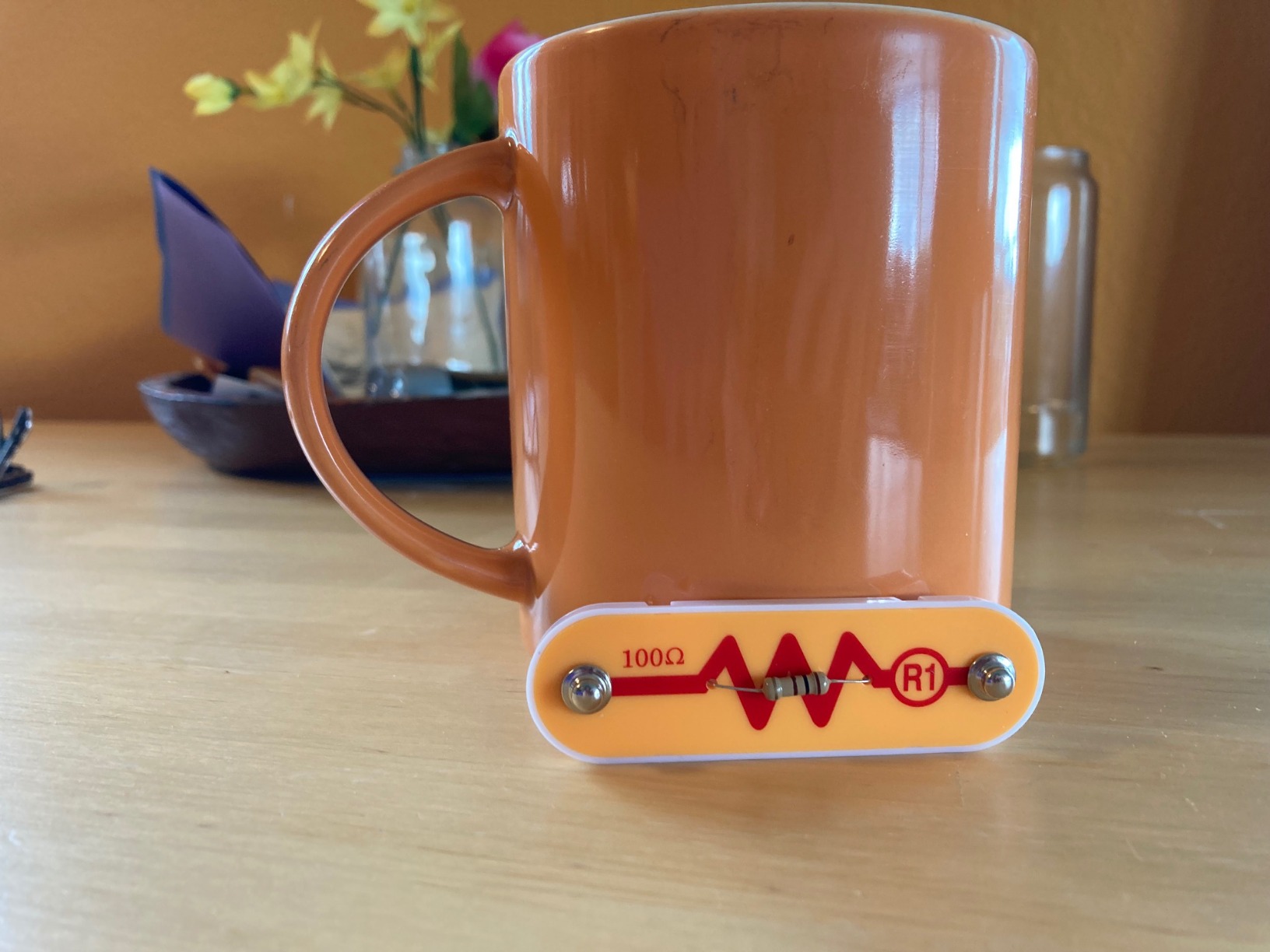
- Numbered color-coded parts snap onto a plastic grid
- Over 100 electronic projects in one box
- Combines with other Snap Circuits kits
- Strong award record and STEM pedigree
- Cons
- Small parts are hard for younger builders to manage
- Projects are limited to included parts until extra kits are added
The thing that makes this kit work is that it removes the two things that kill most electronics kits for kids: a soldering iron and a confusing instruction booklet. Parts are numbered and color-coded, and they snap onto a plastic grid, so a nine-year-old can start building without an adult translating the manual.
It is graded for ages 8 and up, which is accurate in our view. The project library is the real draw. With more than 100 electric-powered projects available from 29 Snap Circuits parts, a child who works through the basics still has a flying saucer and dozens of others waiting.
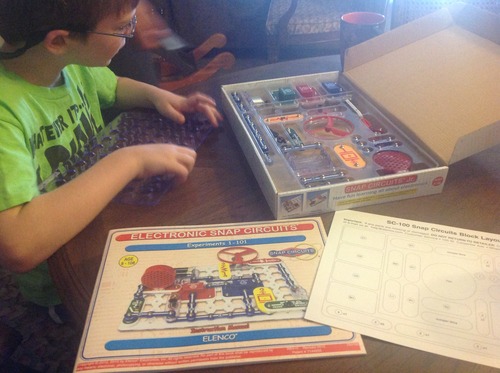
Reviewers consistently describe it as a screen-free activity for older children and a platform kids can expand, and the box weighs about 640 grams with a footprint just over 12 by 9.5 inches, so it stores on a shelf rather than taking over a table.
Why the Snap-Together Design Removes the Barrier
Every connection is mechanical. There is nothing to strip, cut or solder, which means a child who gets frustrated can take the whole thing apart and try again without destroying anything. That reversibility is what keeps experimentation going.
The grid itself is the lesson. A child who builds ten projects learns conductivity, polarity and series circuits without ever being told the words.
100+ Projects and How to Extend the Kit
The four-color manual is organised by difficulty, so a beginner can start simple and a confident eight-year-old can jump in. It needs alkaline batteries, which is the one ongoing cost, and nothing else is required to begin.
Because Snap kits stack, a second box is genuinely additive rather than duplicative. The box ships with a four-color manual plus 30 or more snap modules on the board, and it measures about 1.75 inches deep, so it slides onto a toy shelf rather than claiming floor space.
The kit has won a Specialty Toy of the Year Award and appears on Dr. Toy lists, which is a reasonable proxy for how many educators and testers have put hands on it.
For Whom Its Good and Where It Falls Short
It suits a child aged 8 to 14 who is willing to follow a sequence. Reviewers report that younger builders can find the sheer number of small parts challenging to manage, so under-8s will want an adult working alongside them.
Be aware of the honest limitation: projects are limited to the included parts until you add another kit. A child who exhausts all 100 will ask for more, and that is a reasonable thing to plan for rather than a defect.
2. ThinkFun Gravity Maze – The Best Value Screen-Free Problem Solver
ThinkFun Gravity Maze – Falling Marble Logic Game – Challenging STEM Toy for Kids 8-12 – Gravity Marble Maze – Brain-Building Fun – Educational Gift – Boosts Critical Thinking & Problem Solving
60 challenge cards
9 towers and 3 marbles
No batteries
Ages 8-12
+ Pros
- Progressive difficulty from beginner to expert
- Builds spatial reasoning and persistence
- Travels well for trips
- Answers printed on card backs
- Cons
- Towers do not grip firmly during fast play
- Too hard under age 8 without adult help
- Later puzzles repeat familiar patterns
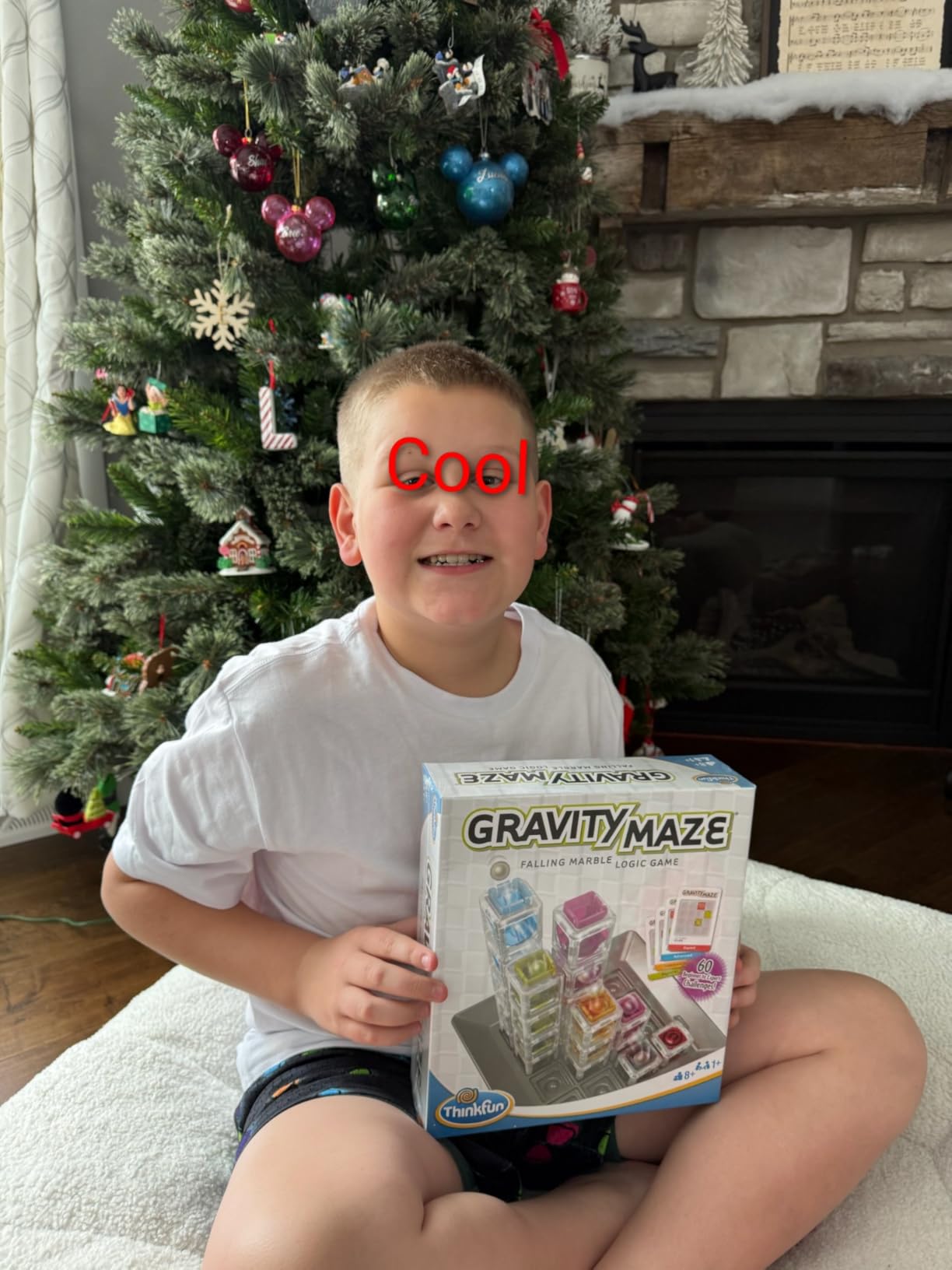
This is a puzzle dressed as a toy, and that is the compliment. A child builds a tower on the grid, releases a marble at the top and has to get it to the target on the floor. Nothing is powered. Nothing is even electronic. The entire product is plastic, paper and gravity.
It is single-player and fits 75 pieces in a package about 9.4 by 2.8 by 10.5 inches, weighing just over a pound. It travels well, and parents report it holding a child for three or more hours on a long flight.
60 Challenge Cards and a Real Difficulty Curve
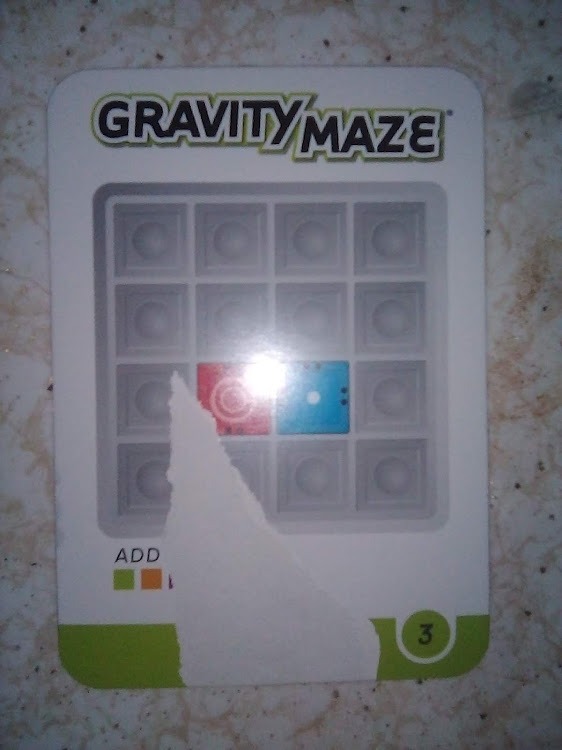
The 60 challenge cards run from beginner to expert, and they are the reason this toy keeps working. Early cards teach a single idea. Later ones require planning several tower heights at once and thinking about where the marble will land rather than where you want it to land.
Answers are printed on the back of each card, which matters more than it sounds. A frustrated eight-year-old can check and try the next card instead of handing the game back to an adult.
Spatial Reasoning Without a Single Screen
Every solve is a prediction followed by a test. That loop is the core skill in engineering thinking, and this toy runs it dozens of times in an afternoon without a single line of text a child has to decode.
It needs no batteries and no device. If your family limits screen time, this is the easiest recommendation on the list to defend.
For Whom Its Good and Where It Falls Short
The grip is the recurring weakness. Reviewers note the towers do not snap into place very securely, so a build can fall apart during excited play, and the clear pieces with small orientation dots can be hard to see against a light background.
It is also a completed-puzzle experience. Many families report it being beaten within a week or two and then revisited periodically, which is fine, but a child who wants continuous building will want a magnetic tile set alongside it. Under age 8, expect to help.
3. National Geographic Science Magic Kit – 100+ Experiments Without a Screen
National Geographic Science Magic Kit with 100+ Experiments for Kids 8-12
100+ experiments
20 with supplies
Bonus booklet
Ages 8+
+ Pros
- Over 100 experiments plus a bonus booklet
- Clear step-by-step instructions
- Enough material to repeat experiments
- Encourages children to explain what they observe
- Cons
- Single-use powder packets waste supplies if experiments are paused
- Adult supervision required
- Experiments can be messy
The trick with this kit is the packaging. A slime experiment that looks like a magic trick gets finished by a child who would abandon a beaker labelled acid-base indicator. The underlying science is real; the framing is what keeps it moving.
The box contains everything needed for 20 experiments, plus a bonus booklet describing 85 or more additional experiments using common household items. The physical materials are metal and paper, and the kit needs no batteries.

Magic Format That Keeps Kids Experimenting
Instructions are colourful and step-by-step, which is what makes it usable by an eight-year-old working alone. More importantly, the booklet encourages children to explain what they observe, so the activity becomes a prompt for a question rather than a recipe to complete.
Reviewers repeatedly describe it as a strong birthday or holiday gift, and note that there is enough material to run many experiments more than once rather than exhausting the contents in an afternoon.
What the Reagents and Mess Actually Mean for Parents
Be realistic about supervision. This is a messy kit and it needs a close adult nearby, particularly when a child is under 10. Set it up on a tray or in the kitchen and it is a good weekend activity.
The most common complaint is packaging rather than content. Several powder packets are labelled discard after opening, so a half-finished experiment can waste supplies. That is a minor annoyance, not a defect, but it explains why a few families rate it below the top tier.

Blue Marble, the maker, won a Toy Association Toy of the Year Award and backs the kit with a U.S. support team. It weighs about 1.5 pounds and measures roughly 8.9 by 3.2 by 12 inches, so the booklet stays flat inside it.
For Whom Its Good and Where It Falls Short
Younger children tend to use too much of each reagent and need hands-on help, so the 8+ grading is honest. It is also a kit with a shelf life: once the 20 supplied experiments are done, the rest depends on household ingredients and adult willingness to improvise.
For a child who loves asking why, that is a feature. For a child who wants a single build that stays assembled on a desk, pick a robotics kit instead.
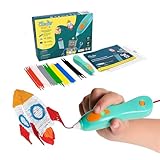
4. 3Doodler Start+ Essentials – Screen-Free Making That Builds Fine Motor Skills
3Doodler Start+ Essentials 3D Pen Set for Kids, Easy to Use, Learn from Home Art, Educational STEM Toy for Boys & Girls Ages 6+
Cool-to-touch nozzle
72 mixed-color strands
USB-C charging
Ages 6+
+ Pros
- No hot parts
- so the nozzle is safe to touch
- Easy to learn with project guides
- Slim grip suits child and adult hands
- Extruded plastic cleans off surfaces
- Cons
- One charge often covers a single project
- Included filament runs out quickly
- Needs practice to draw a steady line
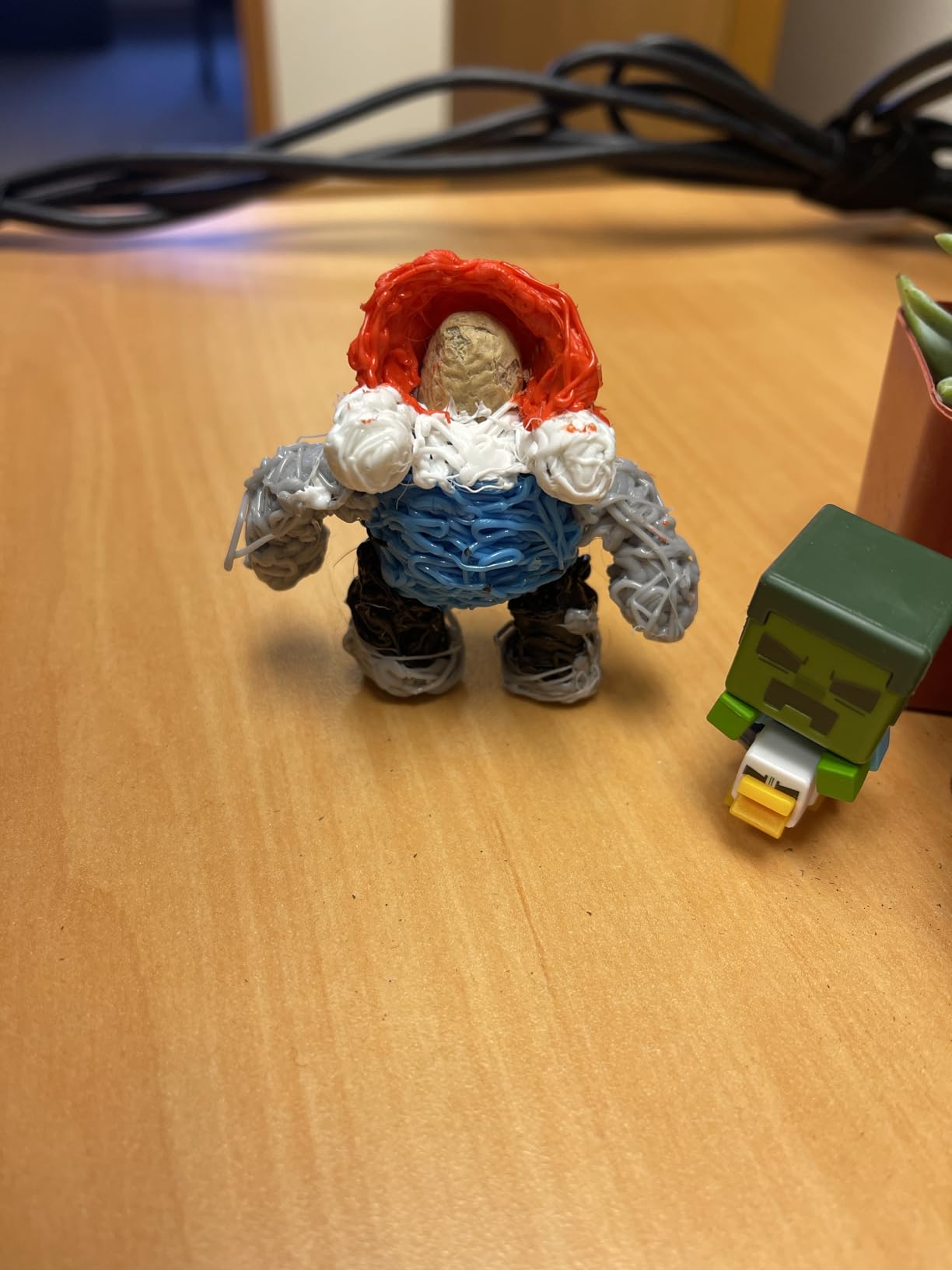
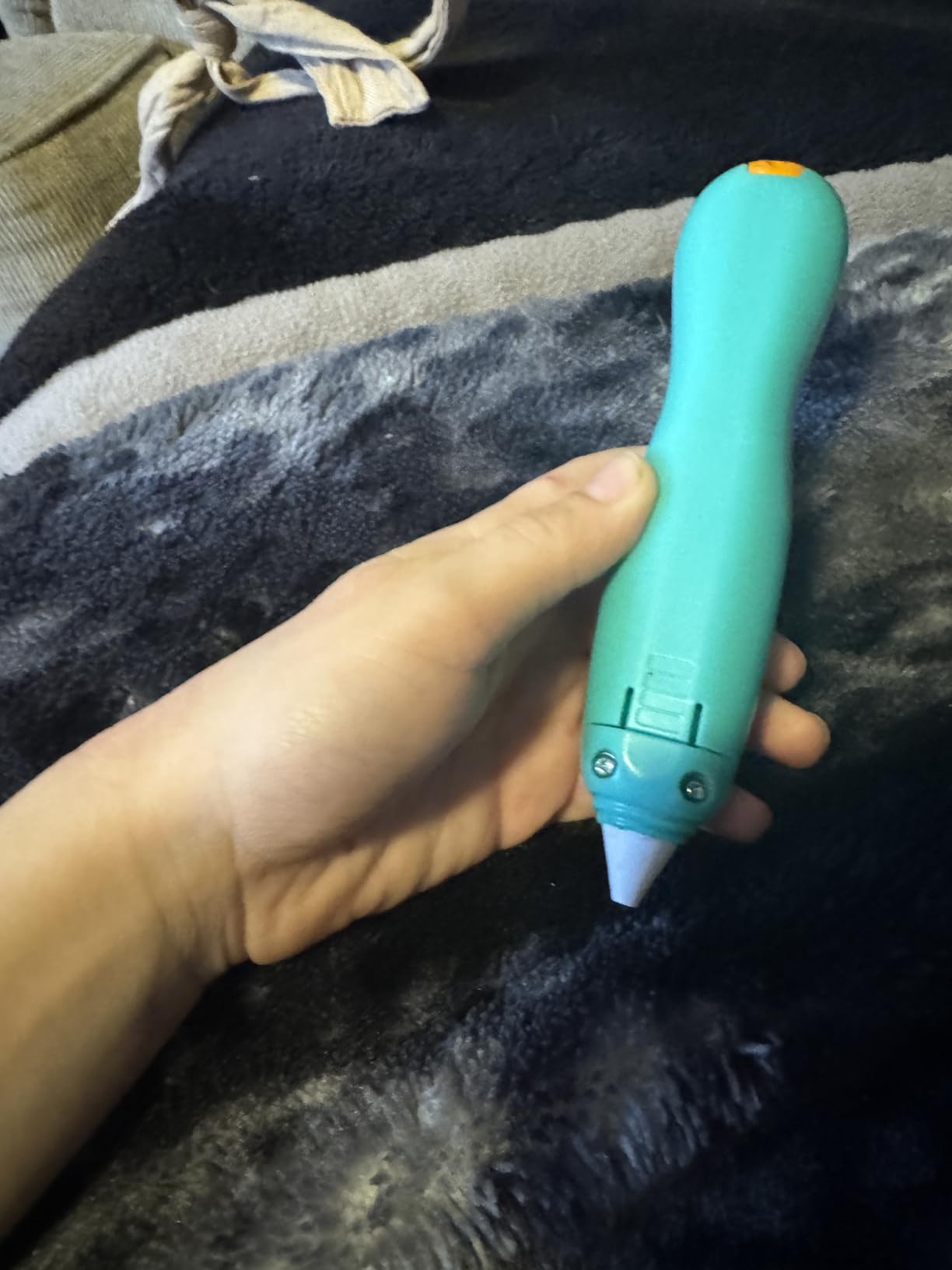
A 3D pen looks intimidating until you realise this one has no hot parts. The nozzle and the extruded plastic stay cool enough to touch, which is the entire difference between a toy a parent supervises anxiously and one a child uses freely at the table.
The box contains the Start+ pen, a DoodlePad, 72 mixed-color plastic strands, a USB-C charging cable and an activity guide. It weighs about 10.7 ounces and is graded for ages 6 and up.
The Child-Safe Nozzle Changes the Calculus
Most 3D printing pens for children run hot enough to worry an adults. This one does not, and reviewers single that out as the dominant reason for the enthusiasm. The slim grip also works in small hands and adult hands, which makes it a co-play toy rather than a supervised task.
Geometric reasoning comes built in. A child drawing a cube on a flat pad is working through faces, edges and vertices without being asked to.
Battery Life and Filament Refills Are the Trade-Offs
Here is the honest part. Reviewers consistently report short battery life, with one full charge often covering only a single project, and a few who bought about 20 for a library program note pens dying before a session ends. Plan a charger within reach.
Filament is a recurring cost. The included 72 strands go quickly, so refills are an almost immediate add-on, and reviewers also find the included colors less vibrant than expected. Melted plastic does not come out of clothing, which is worth saying out loud before the first session.
For Whom Its Good and Where It Falls Short
It suits a child who wants to invent rather than follow instructions, aged 6 to about 11. Expect the first hour to involve frustration while a child learns to draw a steady line, because extrusion speed does not wait for a steady hand.
Against it: the pen is a drawing tool rather than a mechanical system, so it teaches less about physics than a robotics kit. In exchange you get something screen-free, safe to touch, and endlessly extendable with new strands. The manufacturer carries a one-year warranty and reviewers report free replacements and live tutorials, which is unusually good service for this category.
5. TOSY Magnet Pyramid Glow – Magnetic Tiles That Light Up in the Dark
TOSY Magnet Pyramid Glow – 1 Cube Transforms into 1 Billion Shapes, 12 Pieces, 243 Rare Earth Magnets, Glowing, Holographic Design Magnet Tiles Creative Puzzle STEM/STEAM Toy
12 pieces
243 rare earth magnets
UV flashlight included
Ages 6+
+ Pros
- Endlessly replayable transformation concept
- Holographic finish holds a glow charge
- Works as a calming sensory fidget
- Travels well and packs small
- Cons
- Magnets release easily so builds need gentle handling
- Rotating display stand is unstable
- Materials feel thin and plasticky
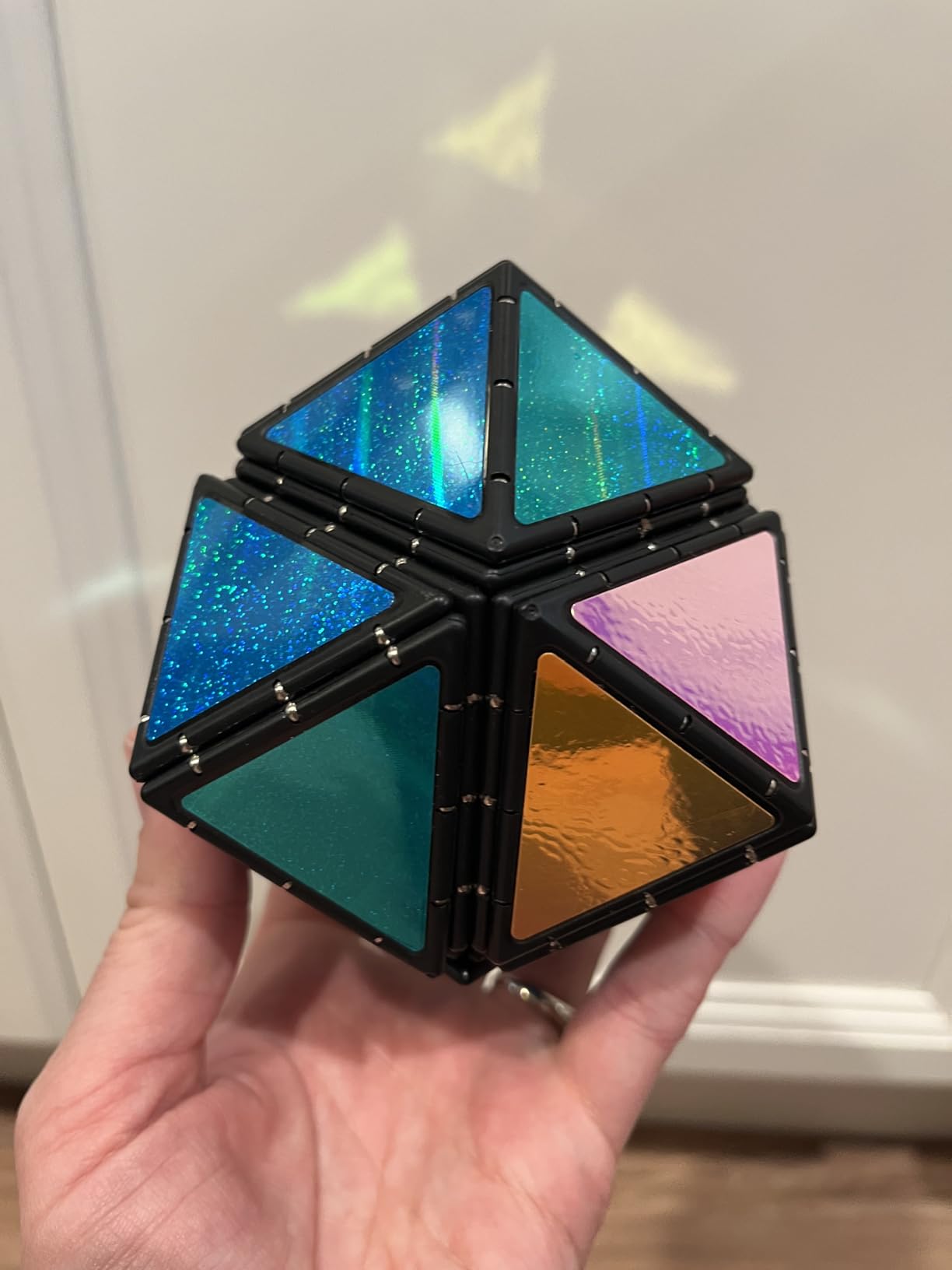
This is a fidget object that happens to be a geometry puzzle. The 12 cubes contain 243 rare earth magnets between them, and because each cube holds every face, a flat square can fold into a pyramid, then close into a cube, then partially collapse into something new. A spinner accessory and an idea booklet are included.
No batteries. Manual operation. It is graded for ages 6 and up and suits two to four players, though we think a solo fidget use is the more common one.
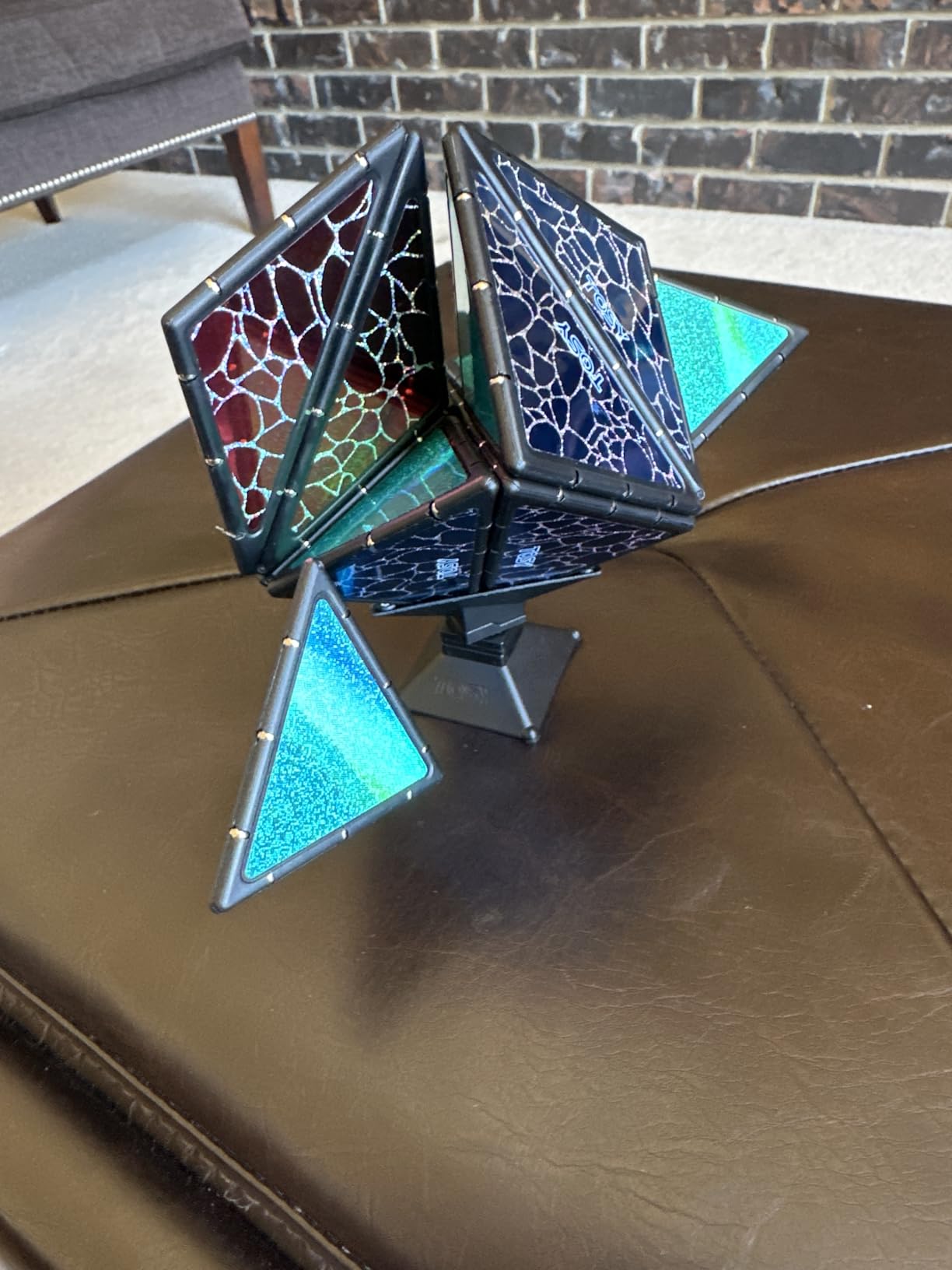
Twelve Pieces, Hundreds of Forms
The count is worth clarifying early. The marketing number 243 refers to magnetic points, not pieces. There are 12 cubes in the box, and several buyers report early disappointment from misreading that figure despite accurate listing text.
Geometry is the quiet curriculum here. A child folding a flat sheet into a solid has to track which faces stay connected, which is a more abstract ask than it looks and a genuinely useful precursor to reading a net or a blueprint.
The UV Flashlight and the Sensory Case
The included UV flashlight charges the holographic stickers so they glow brighter and longer in a dark room. Several families mention it working well as a travel toy and as a calming fidget, and reviewers point to it being useful for neurodivergent children during processing time.
The glow is real but modest. The flashlight lights only small sections at a time, so treat it as a party trick rather than a night-light feature.
For Whom Its Good and Where It Falls Short
Fragility is the recurring theme. Magnets do not always hold firmly, the rotating display stand is unstable and can come apart, and several reviewers describe the plastic as thin for the money it costs. Handle it gently and it is fine; hand it to a child who throws toys and it will not survive.
Magnet safety deserves a note. Twelve cubes containing small powerful magnets is a genuine ingestion concern for any child under 3 and for siblings who are still mouthing objects. Keep it away from a mixed-age household floor.
6. Rurvale 44-Piece Magnetic Tiles – The Best Starting Point for Ages 3 to 5
Rurvale Toddler Girl Toys, Magnetic Tiles 44pcs, Birthday Gifts Ideas for Girls Toys Age 3 4 5, Magnetic Blocks, Magnet STEM Montessori Toddler Kids Christmas Toy Gifts for 3 4 5 6 7 Year Old Girls
16 squares and 12 triangles
16 number tiles
Ages 3 to 8
No batteries
+ Pros
- Mixes shapes with number tiles for early counting
- Non-toxic ABS with processed magnetic edges
- Storage bag included
- Low entry point for the youngest builders
- Cons
- Magnet strength and durability are average
- Some filler pieces are not magnetic
- Appeal fades for children past about 7
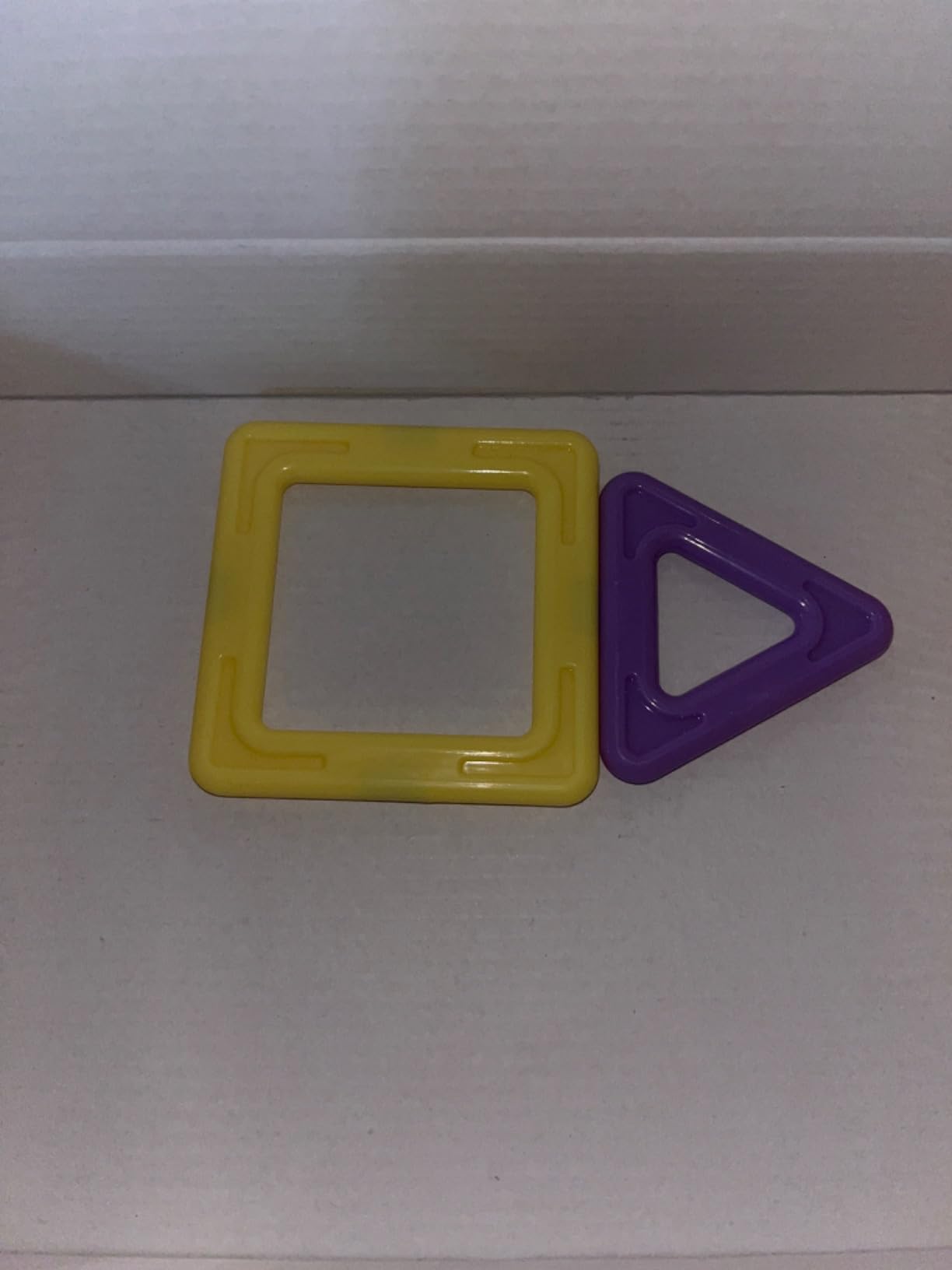
The youngest band on this list is where most guides go quiet, and it is the one that matters most for early confidence. This 44-piece set is built for ages 3 to 8, and the design decision that works is the mixing of geometry with arithmetic: 16 square tiles, 12 triangle tiles and 16 number and math tiles.
Because the number tiles are non-magnetic, a child can build a flat pattern of squares and triangles, then place the numbers on top to count what they made. That is a real early maths activity disguised as construction.
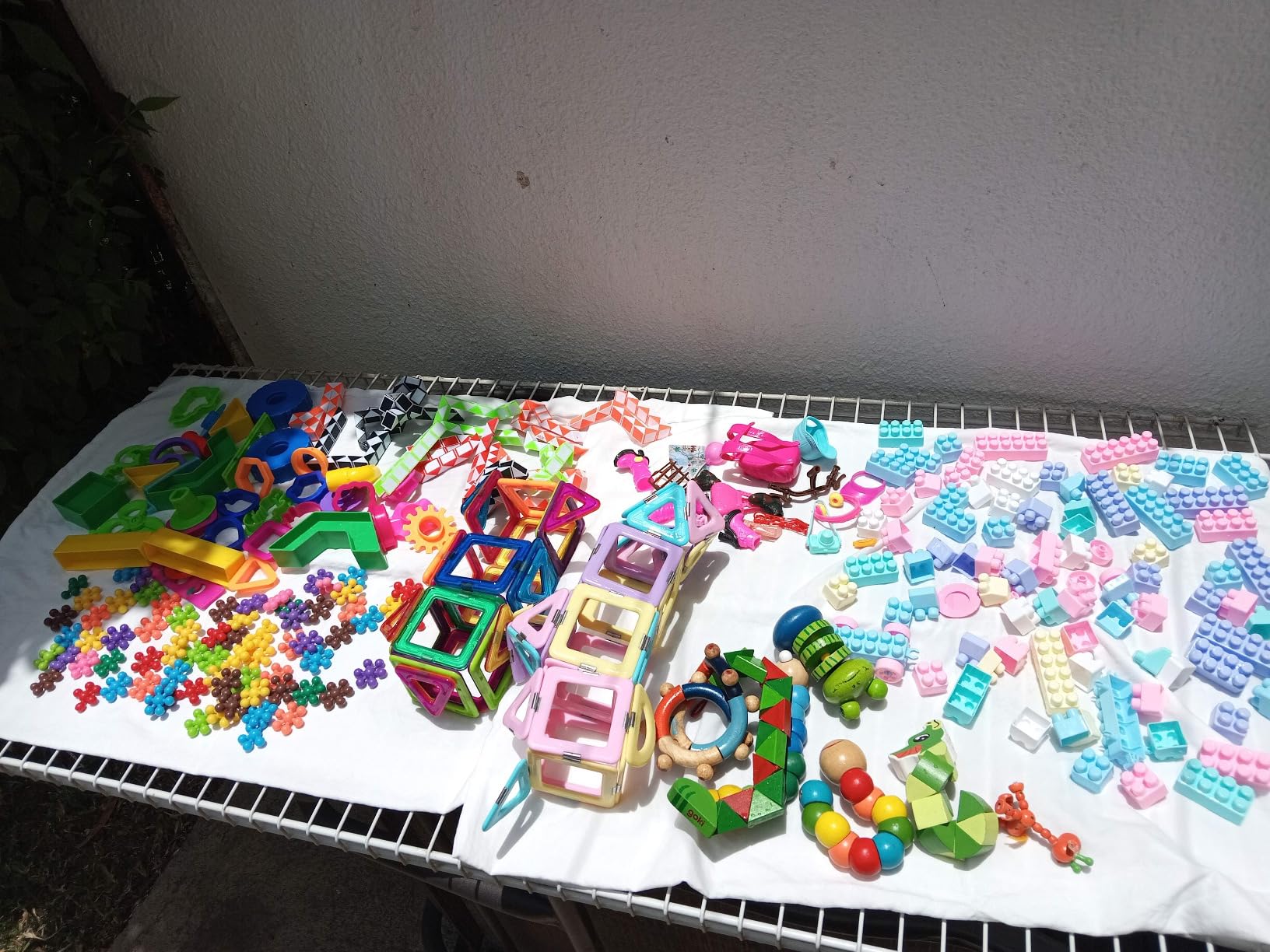
Number Tiles That Turn Building Into Counting
Colours, shapes, magnetic polarity and architectural design are all in play, and none of it is explained in a manual, which is correct. Open-ended play works best when the adult narrates rather than instructs, and this set gives a parent something to ask about.
It needs no batteries and weighs about 12 ounces, with a package around 8 by 5.7 by 1.6 inches. The included storage bag is a small thing that matters more than it sounds, because a tidy-up routine is part of the play.
Small-Piece Safety for the Youngest Builders
The listing describes processed magnetic sheet edges and non-toxic ABS, and the target audience covers both boys and girls. For a 3-year-old, supervise the first few sessions and check that no small piece is being put in a mouth.
One structural limitation to set expectations: only the 28 magnetic blocks connect, so a child who expects all 44 tiles to snap together will be disappointed the first time. Explain it once, or hand the number tiles over as a separate counting game.
For Whom Its Good and Where It Falls Short
Magnet strength and piece durability are considered average next to premium tile sets, and build quality is basic. That is an honest trade: you get a broad, varied set for a young child whose hands are still developing fine motor control, at a cost that suits a stocking-stuffer or party-bag budget.
It is also a short-term set. Reviewers note it is best suited to younger toddlers and that appeal fades quickly past about 7. Plan to move up to a larger magnetic set or a robotics kit around first grade.
7. Smartivity Robotic Mechanical Hand – A Serious Wood-Built Engineering Project
Smartivity Robotic Mechanical Hand STEM Toy for Kids 8-14
Engineered wood
Ages 8-14
2 to 4 hour build
Lifetime parts
+ Pros
- Substantial screen-free build that teaches mechanics
- Wood construction survives repeated assembly
- Illustrated manual sustains a long session
- Lifetime replacement parts program
- Cons
- Fiddly finger joints for younger hands
- Some children need adult help reading instructions
- Finished model has limited movement
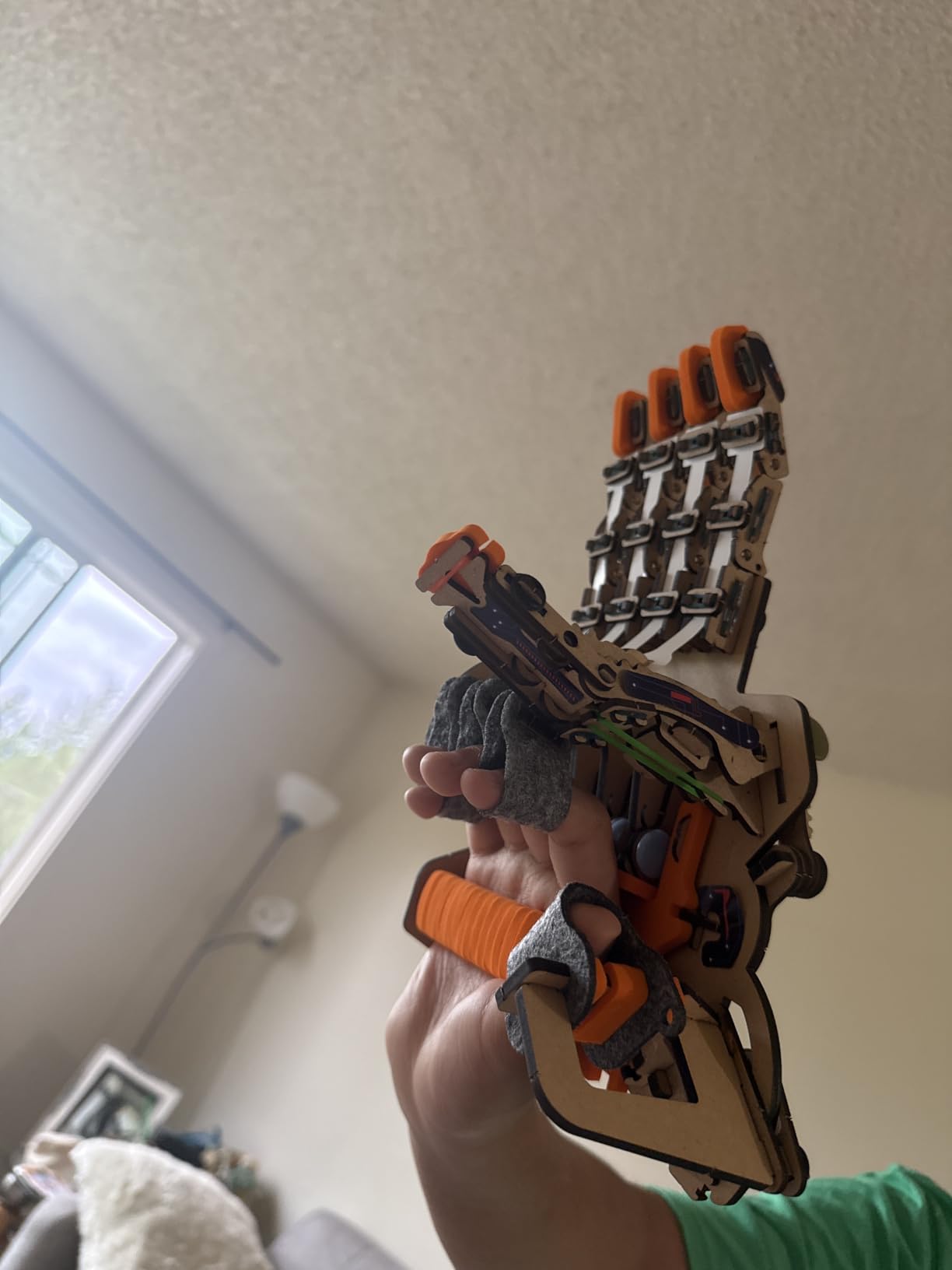
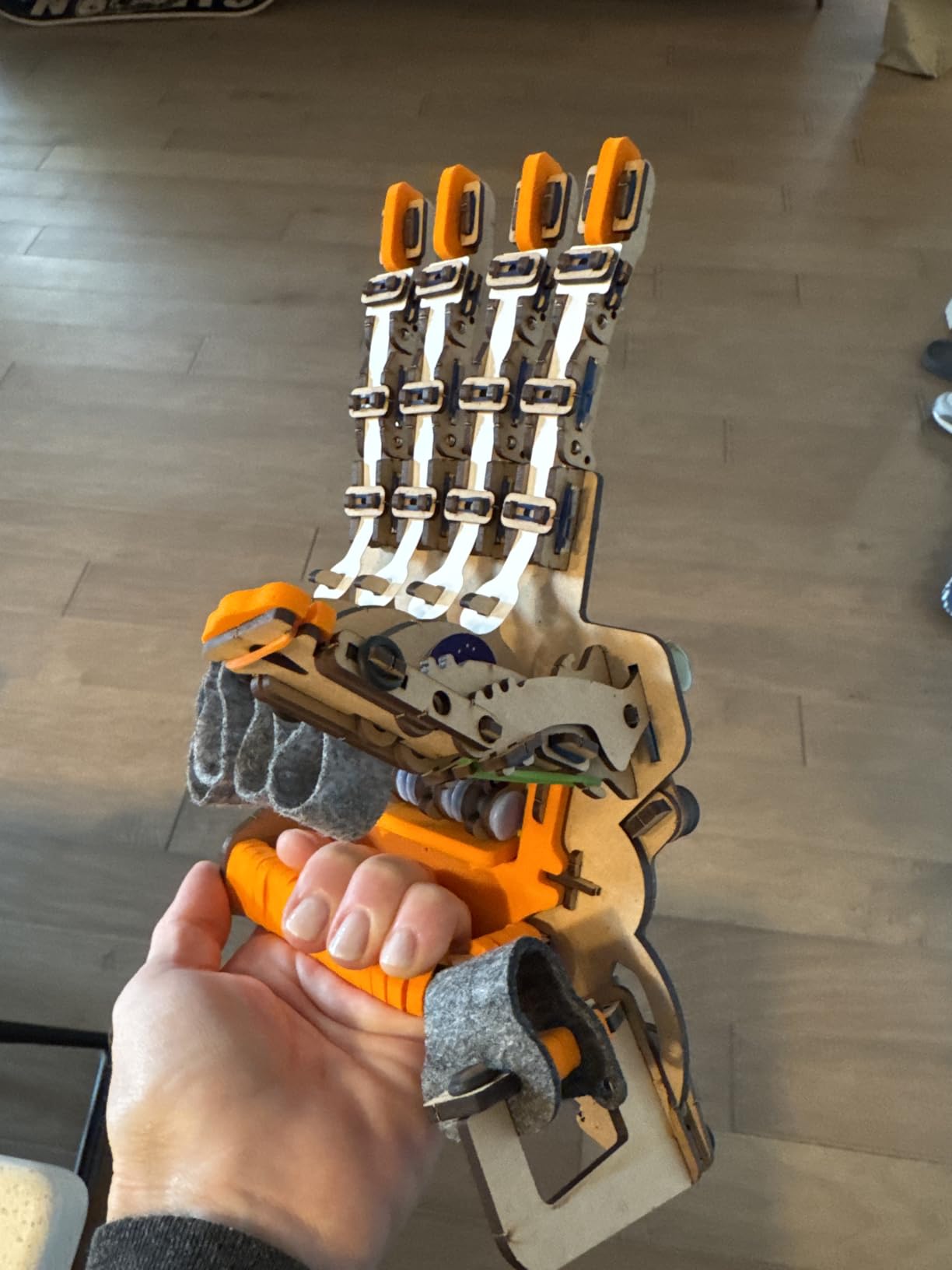
Most robotics kits for this age are plastic. This one is engineered wood, and that single decision changes how it feels in the hand and how long it survives a child who is not gentle with new things.
It is a mechanical anatomical hand, graded for ages 8 to 14, in a package about 11.8 by 9.8 by 7.5 inches weighing roughly a quarter of a kilogram. It is entirely screen-free, which puts it in a different category from most robotics recommendations.
A Two to Four Hour Build That Earns Its Keep
Reviewers describe the manual as genuinely engaging for a session that runs two to four hours. That duration is the product. A child who spends an afternoon on assembly arrives at the finished mechanism with a sense of having made something rather than opened something.
The hand demonstrates how linkages convert one motion into another, which is a far more transferable idea than pressing buttons on a prebuilt robot. It is also the kind of model that gets left on a desk, which quietly keeps the engineering visible every day.
Replacement Parts and Long-Term Durability
Smartivity includes a lifetime supply of replacement parts, and reviewers rate the company favourably on that basis. For a wooden model with finger joints, a spare finger is worth more than any feature in the box.
The kit carries STEM.org approval and a 2022 Innovative Toy of the Year award in the Netherlands, plus a Parents’ Choice Award. It was tested by families in more than 33 countries, and the manufacturer reports kid-testing for over 1000 hours.
For Whom Its Good and Where It Falls Short
Assembly is the friction point. Some children need an adult nearby to read the illustrated instructions, and the finger joints can be fiddly to align for smaller hands. Budget a shared sitting rather than a solo one.
Once built, the model is a fixed mechanism rather than an open-ended system. If a child wants to keep inventing new things indefinitely, pair it with a magnetic tile set. If they want one impressive object with a real sense of craftsmanship, this is the pick we would hand a child who loves mechanisms.
8. Ruko 6088 Dancing Robot – Gesture Control and 50 Programmable Sequences
Ruko 6088 Dancing Robot for Girls with APP, Remote, and Gesture Sensing
Gesture sensing
50 motion sequences
Rechargeable
Ages 3-6
+ Pros
- Wave a hand to steer it with no buttons
- Up to 50 programmable sequences
- Reinforced legs improve walking stability
- Rechargeable battery with up to 120 minutes of play
- Cons
- Some robots arrive with no audio and need replacing
- Remote needs two AAA batteries that are not included
- Struggles on uneven surfaces
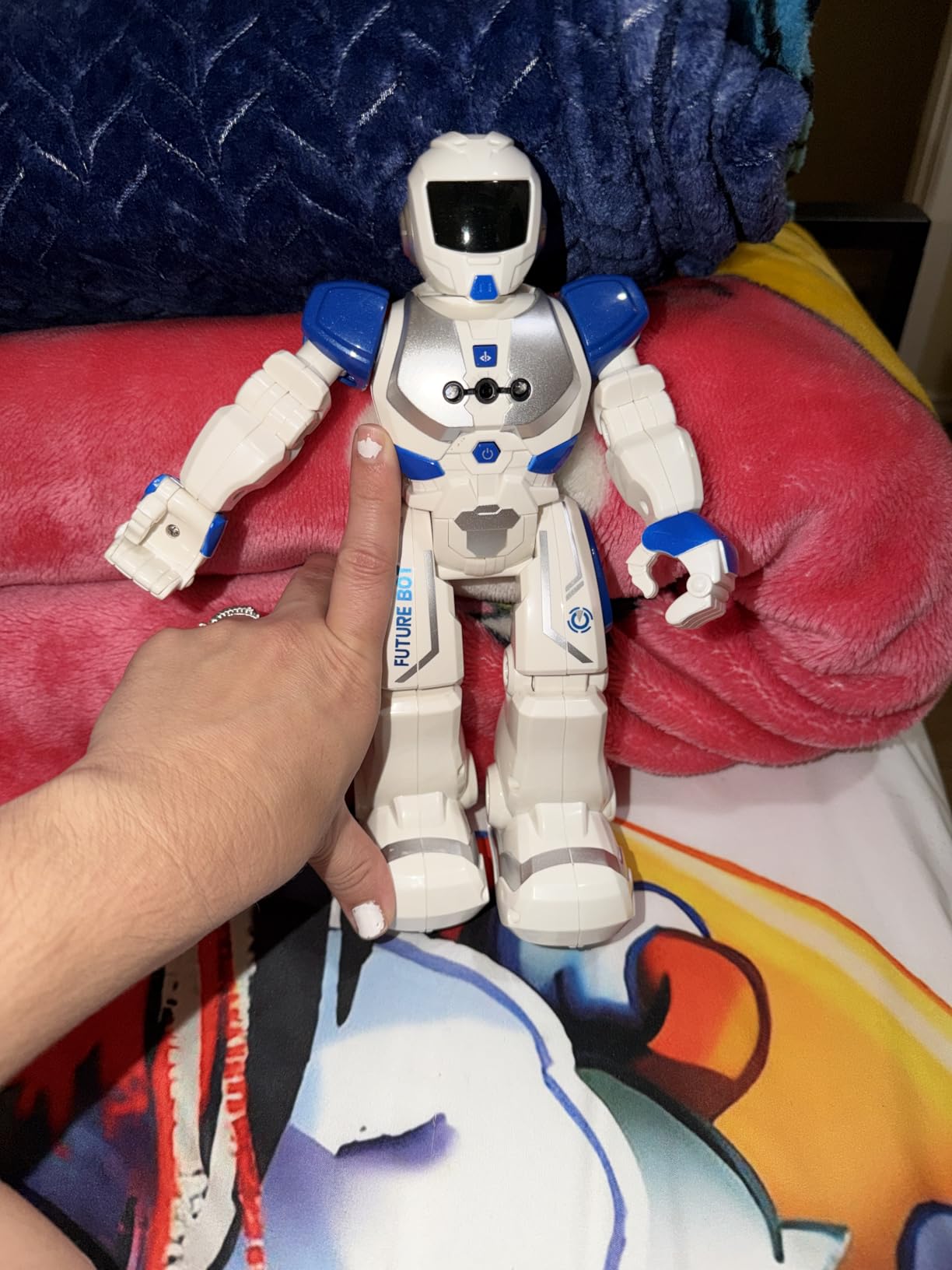
Most programmable robots for this age need a tablet, and that requirement is where many parents stop. This one has a genuine screen-free path: wave a hand in front of the chest sensor and the robot moves forward, back, left or right. No reading required.
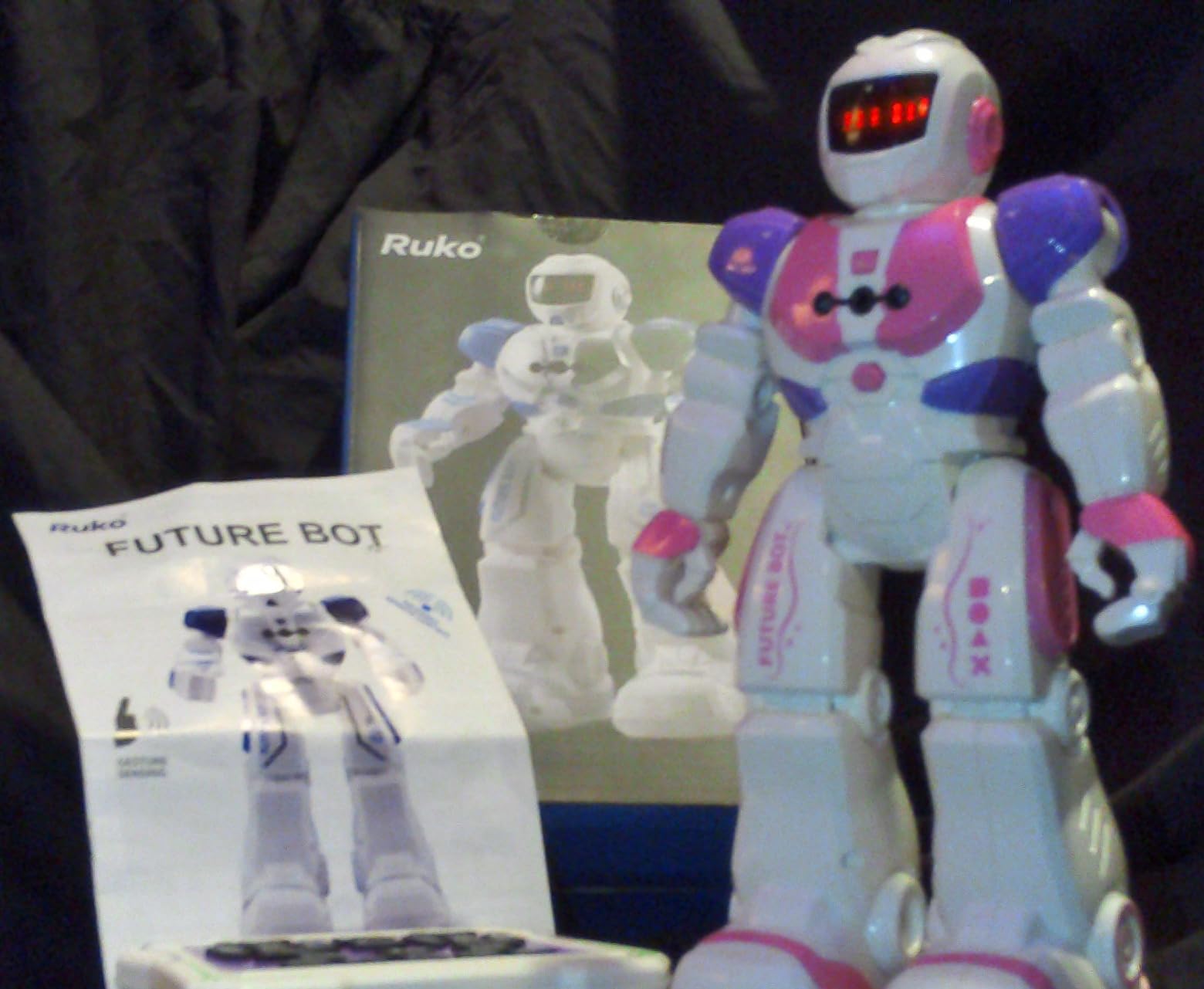
The box contains the robot, a remote control, a charging cable and a manual. It is ABS plastic with rounded edges, weighs about 0.35 kg and measures 6.3 by 3.4 by 10.8 inches. It is graded for ages 3 to 6.
Gesture Sensing That Works Before a Child Can Read
There is a developmental argument for this. A three-year-old cannot follow a printed instruction, but can absolutely learn that moving a hand causes a thing to move. Reviewers consistently praise the gesture control as the feature that holds a young child’s attention without a screen.
The robot also sings, dances and has animated LED facial expressions, which is not STEM but is the reason a child asks to turn it on again tomorrow.
Programmable Mode as a First Taste of Coding
The programmable mode lets a child build up to 50 different motion sequences. That is the earliest useful idea in coding: a program is a list of instructions, and the machine does them in the order you gave them.
There is a rechargeable lithium-ion battery that takes about two hours to charge and delivers up to 120 minutes of play, so it survives a session rather than dying halfway through. An accompanying app adds games and quizzes about Earth and space, but the toy is fully functional without it.
For Whom Its Good and Where It Falls Short
Quality variance is the main theme in the reviews. Some buyers received a robot with no audio output or that fell over when reversing, and the listing reflects a revised edition with reinforced leg joints and an optimized centre of gravity. Sellers shipped replacements in the cases described, so check the unit on arrival.
Two practical notes. The remote control needs two AAA batteries that are not included, and walking is steady on hard floors and carpet but can struggle on uneven surfaces. It suits ages 3 to 6; a 9-year-old will outgrow it fast.
9. Doctor Jupiter Girls’ First Science Kit – Real Lab Gear for Ages 4 and Up
Doctor Jupiter Girls’ First Science Experiments Kit for Kids Ages 4+
Real beakers and goggles
100+ experiments
Ages 4-8
Meets ASTM F963-17
+ Pros
- Actual lab equipment rather than plastic props
- Well-illustrated manuals for adults and kids
- 100+ experiments across water and color science
- Meets U.S. safety standard ASTM F963-17
- Cons
- Real adult supervision needed for messier experiments
- Some reagents are single-use
- More a parent-child activity than solo play
What separates this from a generic craft kit is the equipment. It ships with 2 beakers, a conical flask, a spatula, 2 stirring sticks, fabric face masks, spray bottles, cups, a funnel, safety goggles and a tray. That is real lab kit, and children notice the difference.
Alongside it you get food essence, baking powder, psyllium husk, corn starch, dried peppermint leaves, three food colours and a bonus booklet with more than 100 unique experiments. It is graded from age 4, weighs about 650 grams and meets the ASTM F963-17 U.S. safety standard.
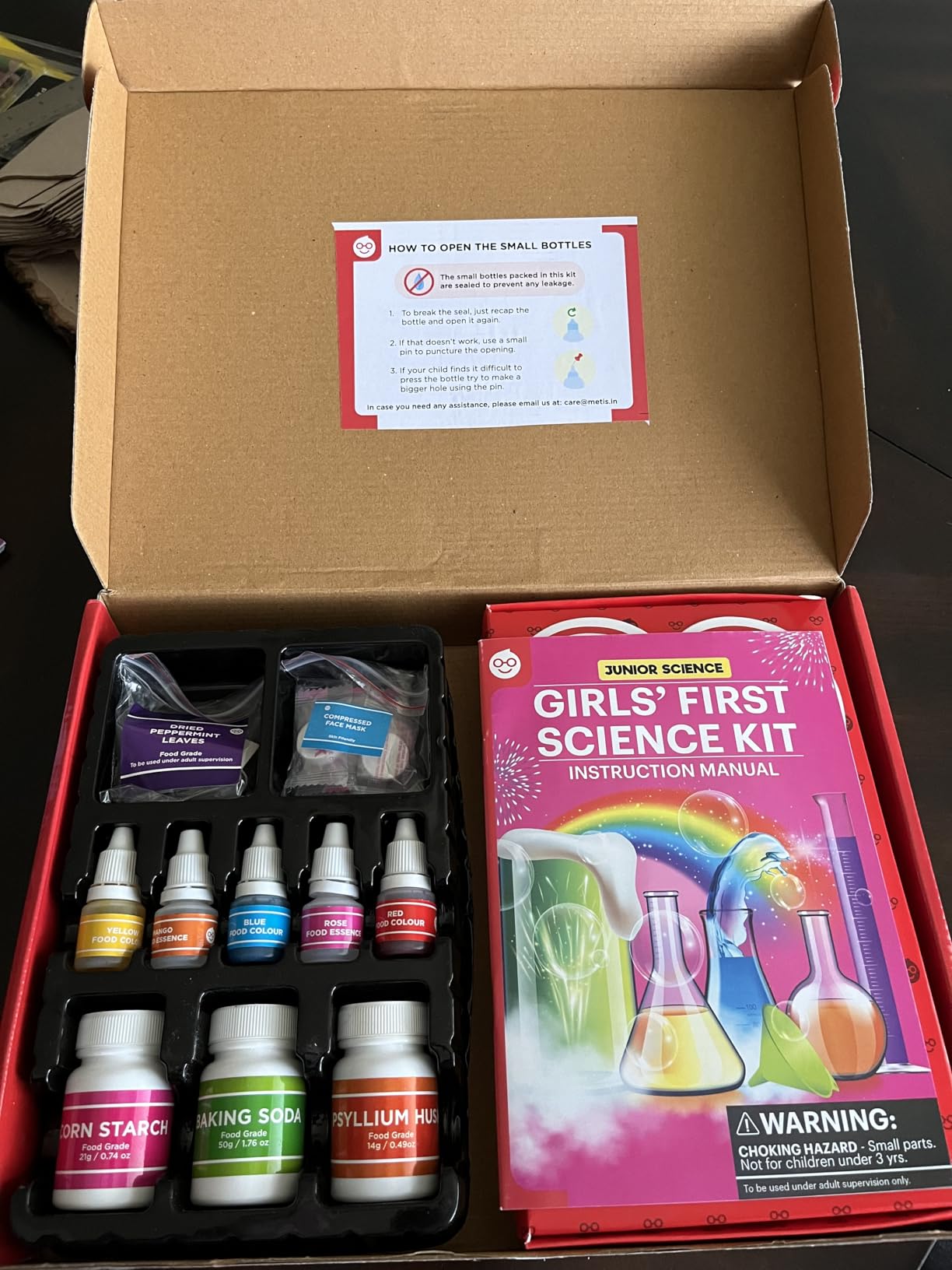
Proper Lab Equipment Instead of Plastic Props
Wearing goggles changes behaviour. Reviewers note that the kit is deliberately positioned for girls aged 4 to 8, and several parents say that the framing helps spark an early interest in science. The more useful effect is the role play: a child who puts on a mask and a pair of goggles behaves like a scientist conducting an investigation.
Experiments cover water science, color science and volcano science, and the manuals are well illustrated with steps written for both children and adults to follow together.
A Parent-Child Activity More Than Solo Play
This is the honest limitation. The messier experiments need real adult supervision, and younger children tend to use too much of each reagent, which means an adult is genuinely needed rather than nominally present.
Some reagents are single-use, so an experiment cannot always be repeated even if she wants to see it again. Budget for a repeat run rather than expecting one to stretch.

For Whom Its Good and Where It Falls Short
It suits a 4-to-8-year-old and an adult who wants an hour on a Saturday. It is less suitable for a child who wants independent play, because the supervision requirement is not negotiable with powders and liquids.
For a birthday, a holiday or a science fair project, it is one of the stronger choices here, and the manufacturer backs it with a 100% no-questions refund promise.
10. 2Pepers 3-in-1 Robotics Kit – Three Working Robots Without Soldering
Girls Science Kit for Kids Age 8-12, STEM Engineering Educational Toy
Three robots in one box
Screwdrivers included
No sewing or soldering
Ages 8-12
+ Pros
- Doodling
- bubble and motion robots in one set
- No soldering or sewing required
- Produces visible results quickly
- Blends an experiment with a craft project
- Cons
- Cardboard and plastic parts feel flimsy on rebuilds
- Assembly needs steady hands and patience
- Little to do once all three are built
This kit builds three separate robots: a Doodling Robot, a Bubble-Making Robot and a Motion Robot. Each one teaches a different principle, from basic circuitry and motors to mechanical motion and airflow, and the box includes screwdrivers and all the craft supplies.
It is graded for ages 8 to 12 and up, needs no sewing and no soldering, and the package is a compact 5.9 by 5.9 by 2.7 inches. Sixty items ship in the box.
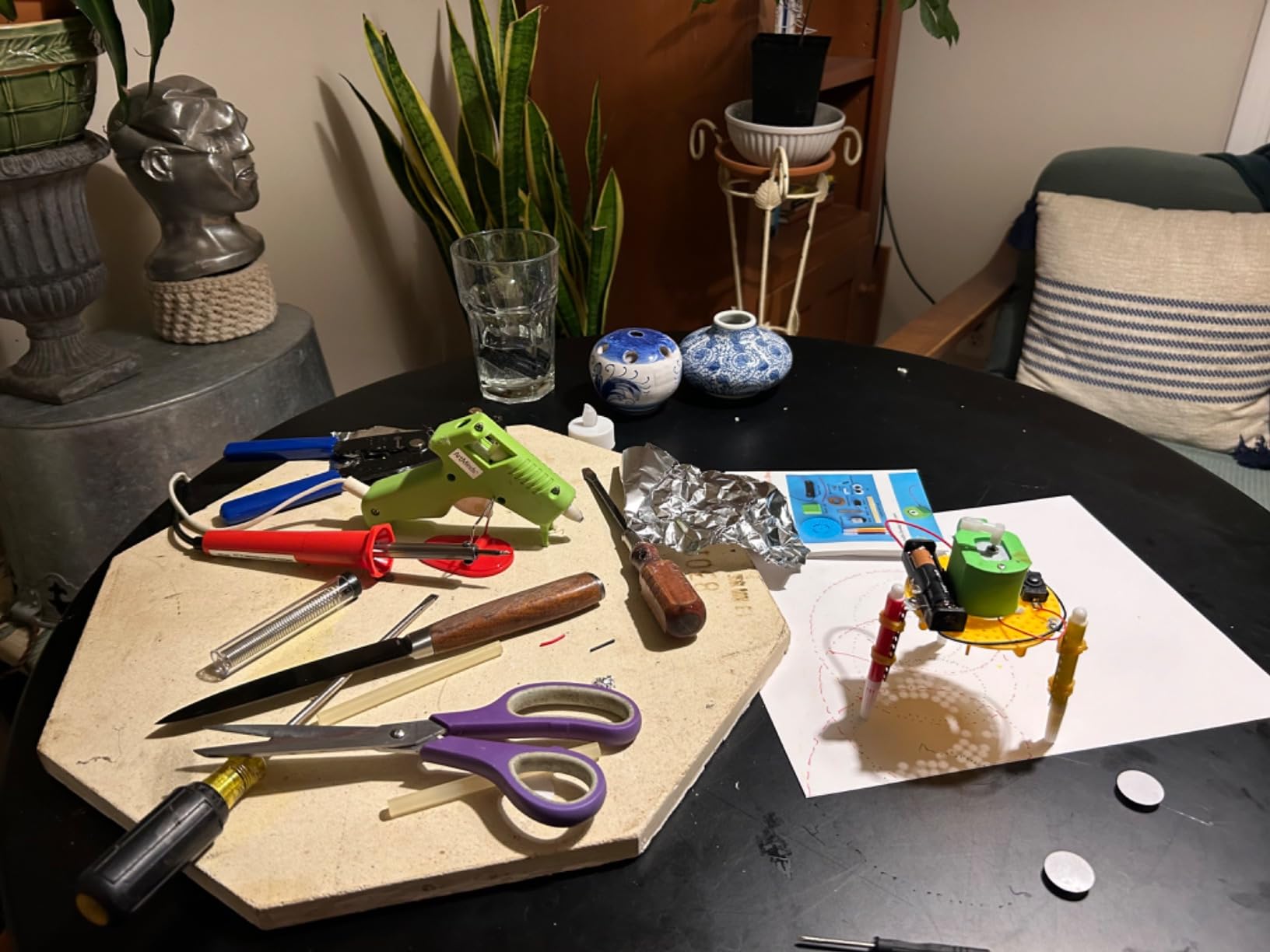
Three Robots, Three Scientific Principles
The three-in-one format is the main draw. A child who builds the bubble robot and then the doodling robot is not repeating the same activity twice, and the visible results arrive quickly, which keeps motivation high during a build that would otherwise stall.
Because the parts are a mix of cardboard and plastic, this sits between a craft kit and an electronics kit, and it works well as a birthday gift where a parent wants a robotics experience without a long commitment.
Visible Motorized Results Keep Motivation High
The bubble robot adds a consumable element, since it needs refilling liquid to run again. That is a small recurring chore rather than a limitation, and it does add a sensory element the other two builds do not have.
The instructions are clear, but assembly requires steady hands and patience. Reviewers note this is the main reason the rating sits below the electronics kits in this roundup.
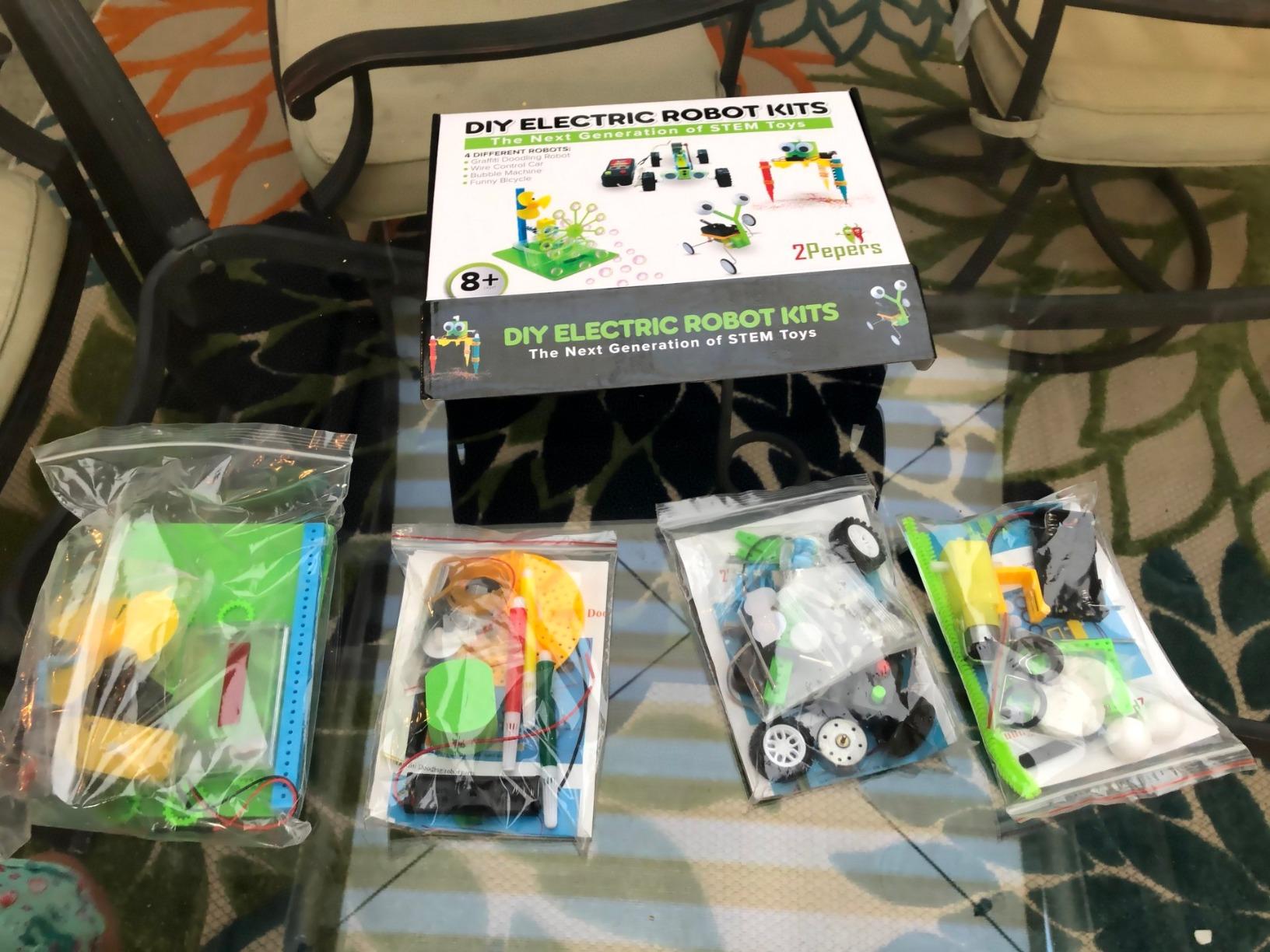
For Whom Its Good and Where It Falls Short
It suits a child aged 8 to 13 who likes building and is ready for something more physical than a screen-based coding toy. The trade-off is durability. Small cardboard and plastic parts can feel flimsy for repeated rebuilds, and once all three robots are built there is little else to do with the set.
Judge it as a project box rather than an open-ended system. If you want something a child returns to for years, look at a magnetic tile set or the Snap Circuits kit instead.
11. Butterfly EduFields Engineering Kit – 100+ Gear and Lever Models
Butterfly EduFields 100+ Girls Engineering Science Kit for Kids Age 8-12
100+ models
20 reusable part types
Wood construction
Ages 8-12
+ Pros
- 100+ working models covering gears levers and circuits
- Durable wood parts that rebuild again and again
- Designed by engineers with two decades of STEM teaching
- Screen-free and boxed for gifting
- Cons
- Instructions can be dense for the complex models
- 20 part types must cover 100+ projects
- Some reviews report missing or short-supplied parts
- Directions in English only
Most of the models in this box actually move. That is the difference between a kit that produces a gear assembly and one that produces a working hand-cranked mechanism, a lever arm or a small motorised device, and it is why engineering children tend to stay with this format.
The kit covers more than 100 models spanning gears, levers, circuits and working machines, built from 20 component types in durable wood. It is graded for ages 8 to 12, weighs about 600 grams and packages down to 10 by 5 by 1 inches.
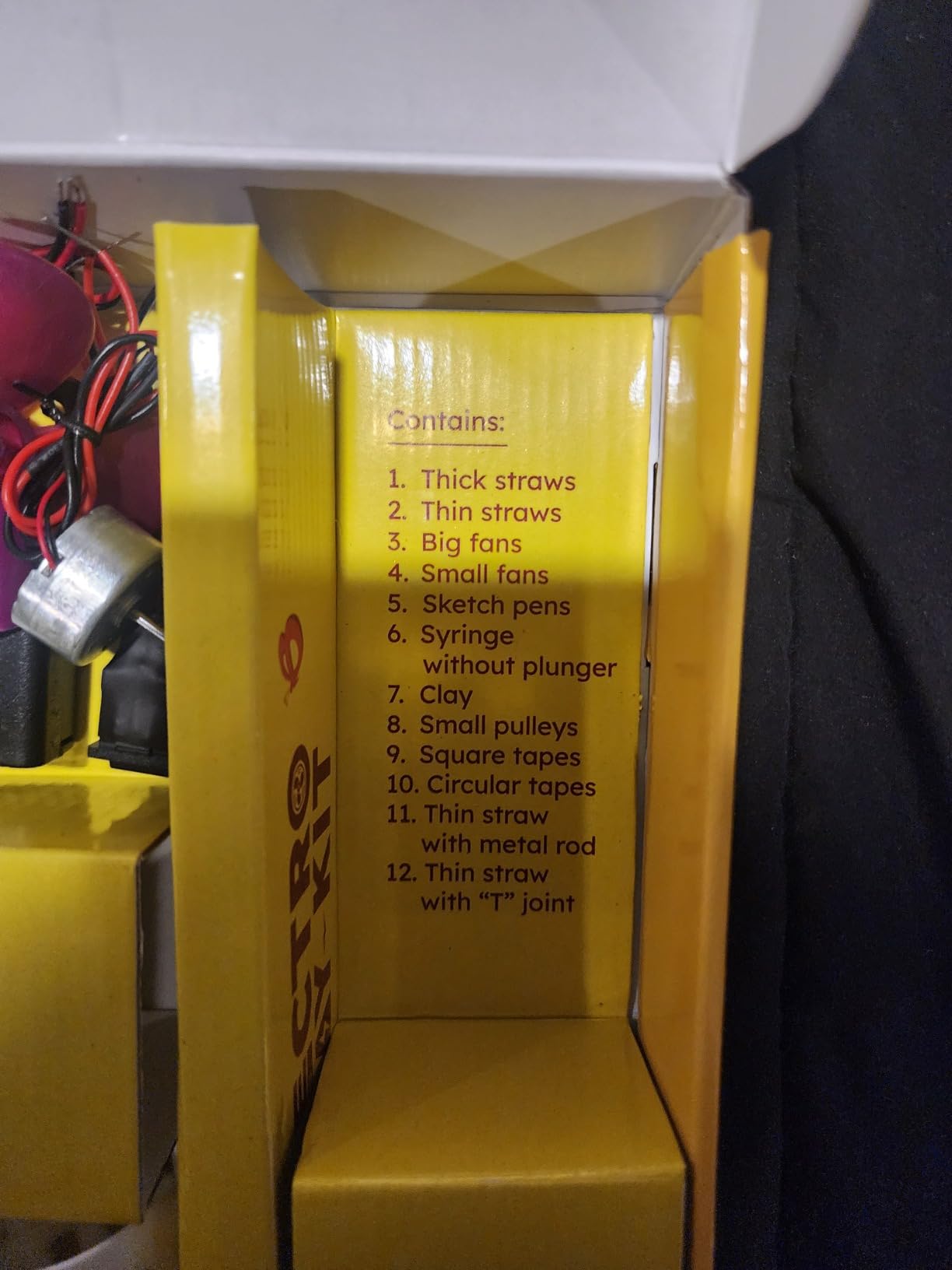
Why 20 Reusable Parts Cover 100+ Models
Reusing a small parts inventory across more than 100 builds is a clever design. The same levers, axles and connectors have to be understood differently in each model, so the child learns transfer rather than memorising a single assembly. Parts are reusable and rebuildable, which is the real value in a mechanical kit.
Positive reviews focus on the volume of projects, the wooden part quality, and the fact that the mechanisms genuinely work. The kit was designed by engineers from IIT with more than 20 years of hands-on STEM education experience.
The Widest Rating Spread in This Roundup
This has the most uneven reviews of the twelve. It is well rated overall, but a meaningful minority of one and two-star reviews concentrate on two things: parts arriving missing or short-supplied, and instructions that are hard to follow without help on the more complex builds.
Directions are in English only, which is worth checking if that is not your household language. If you buy it, lay the parts out and count them before your child opens the manual.
For Whom Its Good and Where It Falls Short
It suits a child aged 8 to 12 who is genuinely mechanical in their interests and who has an adult nearby for the harder models. Because a set of 20 component types has to cover 100+ projects, some models inevitably repeat elements, and a child who dislikes repetition will notice.
For a first engineering kit the number of working models is the draw. For a gift, it needs a plain box and no assembly expectations on the morning it arrives.
12. Creativity for Kids Mermaid Terrarium – Guaranteed Growth in 3 to 5 Days
Creativity for Kids Mini Garden: Mermaid Terrarium Kit – Mermaid Gifts for Girls, Crafts and Toys, Stocking Stuffers for Kids (Ages 6+)
Chia seeds sprout in 3 to 5 days
5.25 inch tall
No soil mess
Ages 6+
+ Pros
- Seeds are close to guaranteed to sprout
- Everything needed is in one box
- Vermiculite mix stays contained
- Teaches routine and responsibility
- Cons
- Adhesive pearls and scales fall off the terrarium
- Growing area is small so it needs light watering
- Best for ages 4 to 8
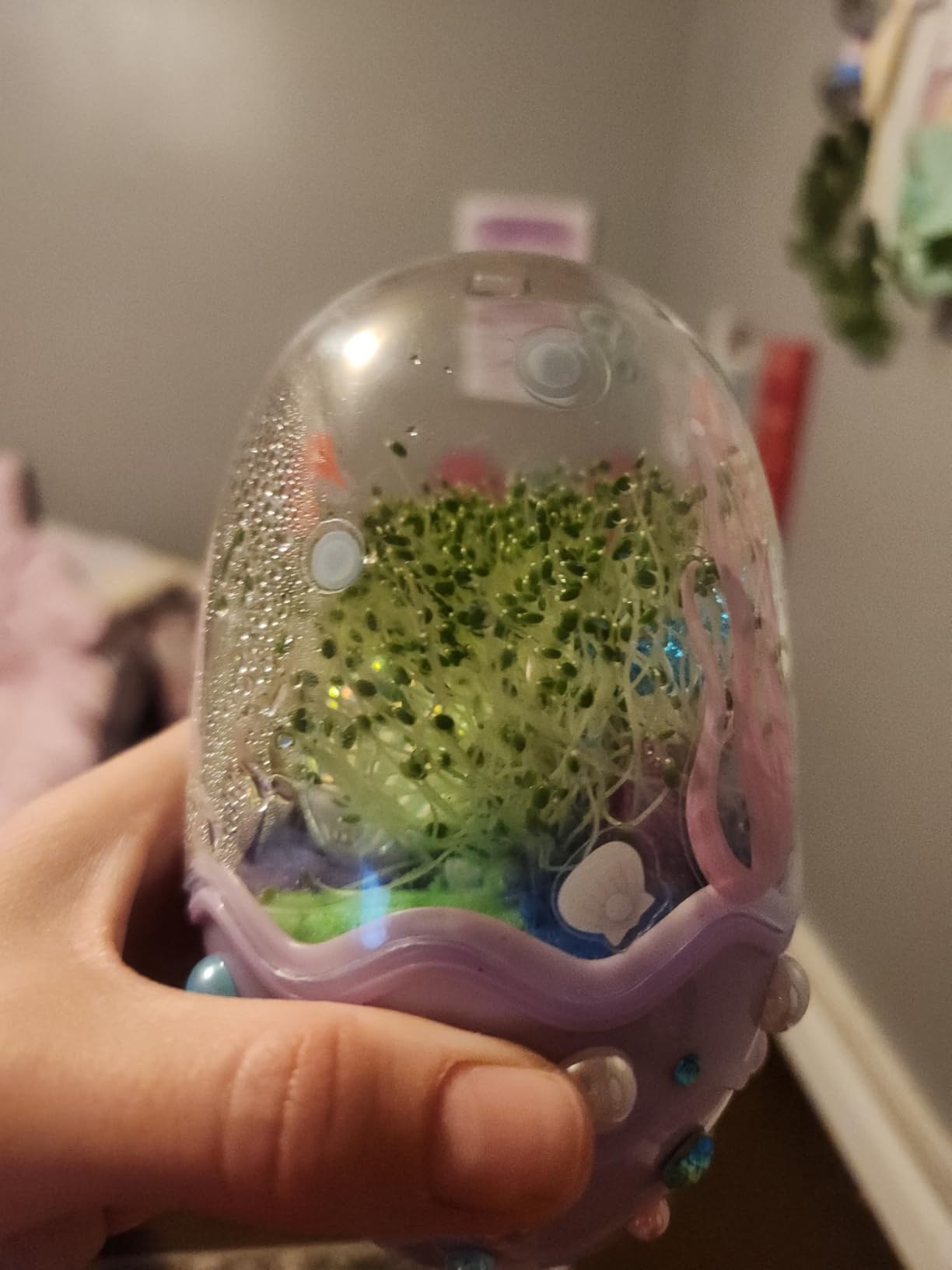
This is the simplest way on our list to put a child in charge of something alive. The kit is a plastic egg terrarium with potting mix, a water dropper, colored sand, white gravel, a mermaid tail figure, a clam shell figure and self-adhesive scale details, and the chia seeds sprout within three to five days of planting.
The important detail is what it is not. There is no soil. The growing medium is vermiculite, which stays put, so this is a science activity a child can do on a table or in a bedroom without an adult chasing spilled dirt.
Biology and Nurturing With No Soil Mess
The immediate result is the whole trick. A child plants on Monday and sees growth by Thursday, which converts an abstract idea about germination into a personal event. It teaches care and responsibility more than it teaches botany, and reviewers consistently praise it on exactly that point.
The terrarium measures 5.25 inches tall by 3 inches wide and the whole package is 7 by 4.75 by 7 inches, so it travels. The maker carries a 30-day warranty against defects.
A Party Favor That Teaches Something Real
Because each kit is self-contained, this is the STEM option that works for a group. Parents buy it repeatedly as a party favor or holiday stocking stuffer, and a room of eight girls each growing their own terrarium produces more conversation than one shared kit.
The trade-offs are honest and small. The self-adhesive pearl and scale decorations stick poorly and begin falling off, which is the reason the single three-star review exists. One child reviewer also wished the mermaid figure sat in the growing medium rather than being applied as a sticker.

For Whom Its Good and Where It Falls Short
It is best suited to ages 4 to 8. Older children may find it too simple, and the growing area is small enough that it needs regular but light watering, which is the one ongoing chore in an otherwise self-contained product.
Treat it as a first science experience rather than a long-term kit. It works best as an introduction, an add-on gift, or a birthday party activity, and it pairs easily with a bigger set.
How to Choose a STEM Toy for Girls: 5 Things to Check Before You Buy
Match the Toy to Her Temperament, Not Just Her Age
Age grading tells you whether a child can use the toy safely. It does not tell you whether she will enjoy it. The most useful split is between children who like a clear goal and children who like an open brief, and almost every guide gets this wrong by assuming age predicts temperament.
A child who wants to finish something will thrive on Snap Circuits, the Smartivity hand and the Butterfly EduFields models. A child who invents will thrive on magnetic tiles, the TOSY pyramid and the 3Doodler. Buying the wrong one is not a failure of the toy; it is a mismatch.
Open-Ended Play Versus Instruction-Driven Kits
Open-ended play has no correct answer, which is its strength and its weakness. It does not develop as fast, and it needs a parent who can ask questions rather than give directions. Instruction-driven kits deliver a result quickly and teach a specific technique, then often sit finished on a shelf.
Parents we heard from consistently preferred open-ended, replayable sets, and the successful toys were the ones a child can keep building with for years. If you can only buy one thing, buy the open-ended option.
Does It Need a Screen, a Battery, or an App?
This is the single most useful question to ask before checkout. Only one of the twelve picks here leans on an app for extra content, and even it works fully without a device.
Battery requirements matter for different reasons. The Gravity Maze, Science Magic Kit, Rurvale tiles and mermaid terrarium need none. The 3Doodler is USB-C rechargeable but has short battery life. The Snap Circuits kit needs alkaline batteries, so keep spares. A toy that dies mid-session teaches frustration rather than engineering.
Small Parts, Magnets and Age Grading
Both magnetic tile sets in this roundup contain small powerful magnets, and magnet ingestion is a genuine concern in a house with a child under 3. Magnetic tiles are safe for the age they are graded for and genuinely risky for a toddler who mouths objects.
For science kits, check the safety standard. The Doctor Jupiter kit meets ASTM F963-17, the U.S. toy safety standard, which is a specific claim worth looking for rather than a vague reassurance. Kits with powders and liquids need an adult in the room regardless of age grading.
How to Tell an Open-Ended Toy From a Pink Rebrand
Some kits marketed for girls are rebranded versions with the same content, more closed-ended play and worse build quality. The tells are consistent: a gender-themed colour scheme doing the work that play features should do, a low piece count, and an activity that ends rather than continues.
A better test is whether the toy is fun for a child who does not care about the theme. The kits we would steer away from here are the ones where the pink is doing the persuading. Where a kit is explicitly designed for girls and also includes real equipment, real gears or real experiments, the positioning is a bonus rather than a substitute.
One more filter worth using: age-graded labelling. Parents discard products with no clear age range before reading the description, and a manufacturer who prints a real age grade on the box is telling you they thought about who is using it.
Frequently Asked Questions
What are some good STEM toys for girls?
The strongest all-round picks are the Snap Circuits Jr. SC-100 for ages 8 and up, which offers more than 100 electronic projects with no soldering required, and the ThinkFun Gravity Maze for ages 8 to 12, a 60-card screen-free puzzle that builds spatial reasoning. For younger builders, magnetic tiles and the Ruko 6088 dancing robot work well. Choose by age and temperament rather than by theme.
What are some good STEM kits for girls?
For science specifically, the National Geographic Science Magic Kit supplies materials for 20 experiments plus a booklet of 85 more, while the Doctor Jupiter kit ships real beakers, goggles and a conical flask for ages 4 and up. For engineering, the Butterfly EduFields kit covers 100+ working gear and lever models for ages 8 to 12. The best kits include a bonus booklet so play does not end with the supplied materials.
What are the best STEM toy brands?
The brands that appear most often in high-volume, well-reviewed listings in this category are Snap Circuits, ThinkFun, 3Doodler, Smartivity and Learning Resources style open-ended construction sets. Look for brands that publish a real age grade, include a safety standard, and offer replacement parts, since that tells you the manufacturer expects repeated use.
What is the best STEM gift for a 10-year-old?
At 10, a child is ready for instruction-driven engineering. The Snap Circuits Jr. SC-100 covers ages 8 and up with more than 100 projects and stacks with other kits, while the Smartivity Robotic Mechanical Hand offers a two to four hour wood build in the 8 to 14 band. For a child who prefers inventing over assembling, magnetic tiles are the better gift.
Do STEM toys need batteries or a tablet?
Most do not. Most of the toys reviewed here run without batteries or a device, including the ThinkFun Gravity Maze, the National Geographic Science Magic Kit, the Rurvale magnetic tiles and the mermaid terrarium. The Snap Circuits kit needs alkaline batteries and the 3Doodler is USB-C rechargeable with short battery life. Only the Ruko 6088 robot includes an app, and it works without one.
Are STEM toys worth it?
They are worth it when the toy matches the child’s temperament and the activity can repeat. The most-mentioned successful toys in parent discussion are open-ended sets a child can keep building with for years, rather than a project that ends in an afternoon. A kit that gets finished once teaches less than a magnetic tile set used every week.
Which STEM Toy for Girls Should You Buy?
Pick by age and by what she already loves. If she is 8 or older and wants to understand how electricity works, the Snap Circuits Jr. SC-100 is the best STEM toy for girls in 2026 and the one we would buy first. It carries the highest customer rating in this group at 4.8, it stacks with other Snap kits when the 100 built-in projects run out, and it is the pick we keep returning to when a parent asks for one.
If she is 8 to 12 and prefers a puzzle to a project, choose the ThinkFun Gravity Maze. If she is 8 to 12 and wants to ask why, choose the National Geographic Science Magic Kit. If she is 6 or younger, start with magnetic tiles or the Doctor Jupiter science kit, and accept that the appeal will fade around age 7 or 8.
Two principles cover most of the remaining decisions. Open-ended sets outlast instruction-driven kits, and any toy that needs a device is a worse first purchase than the same toy without one. Whatever you choose, remove it from the packaging before you hand it over, and then say we are going to be engineers rather than we are going to play with a toy.