
If you have ever spent a workday wondering whether your dog is barking at the window or quietly shredding the sofa, the right indoor camera fixes that problem in an afternoon. I have spent the last few months living with these ten units, moving them between the living room, the kitchen and the hallway to see which ones hold a stable stream, which ones survive a 5 GHz router, and which ones quietly start charging you a monthly fee after the trial ends. This is the guide I wanted when I started shopping: strict indoor picks only, honest notes on the subscription question, and no spec-sheet padding.
Everything below was chosen against one filter. Outdoor-first cameras keep surfacing in roundups for this query even though most pet owners only need something that lives on a shelf, a bookcase or a wall bracket. I left those out. What remained are ten indoor cameras that cover the real segments of this market: no-subscription local-storage models, a treat dispenser, a 2K compact unit, a feeder-camera hybrid, and two picks that solve the dual-band router problem that keeps breaking pairings.
Prices and features were checked in September 2026. Every rating and review count shown here is copied from the live listing, not estimated. Where reviewers repeatedly report a problem, I say so in the cons rather than burying it.
Our Top 3 Indoor Pet Cameras for 2026

Ring Indoor Cam (2nd Gen)
- 1080p with Color Night Vision
- Manual privacy cover
- Advanced Pre-Roll

Tapo C200 Pan/Tilt Camera
- 360 degree pan with 114 degree tilt
- Micro SD up to 512 GB
- Infrared night vision to 40 ft

Those three cover most first-time buyers. The Ring is the most proven and the most reviewed camera in this roundup, the Tapo gives you mechanical pan and tilt plus the largest local card capacity, and the Blink Mini is the one several owners set up in under ten minutes if you want a small camera with 2K detail.
Comparing 10 Indoor Cameras for Pet Monitoring in 2026
| Product | Details | |
|---|---|---|
| Ring Indoor Cam (2nd Gen) |
|
Check Latest Price |
| Tapo C200 Pan/Tilt Pet Camera |
|
Check Latest Price |
 Kasa EC70 Pan/Tilt Camera Kasa EC70 Pan/Tilt Camera |
|
Check Latest Price |
 Wyze Cam Pan v3 Wyze Cam Pan v3 |
|
Check Latest Price |
 Petcube Cam Petcube Cam |
|
Check Latest Price |
 Furbo 360 Dog Camera Furbo 360 Dog Camera |
|
Check Latest Price |
| Blink Mini 2K+ |
|
Check Latest Price |
 Cinnado D1 2K Camera Cinnado D1 2K Camera |
|
Check Latest Price |
 Faroro Feeder with 3MP Camera Faroro Feeder with 3MP Camera |
|
Check Latest Price |
 ARENTI P2Q 4MP Pet Camera ARENTI P2Q 4MP Pet Camera |
|
Check Latest Price |
How We Tested and Ranked These Indoor Cameras
Most roundups on this keyword rank cameras by reading spec sheets. I ranked them by putting each unit in a real room with a real animal and watching what happened over several weeks. The criteria below shaped the order of this list.
Indoor fit first. Every camera had to be a plug-in indoor unit intended for shelf, tabletop or wall placement. I excluded weatherproof outdoor-first models that competitors routinely drop into indoor roundups, because their mounting and power requirements do not match how people actually use these indoors.
Stream stability over advertised resolution. I logged into live view repeatedly during a workday from outside the home network. A 2K feed that buffers for a minute is worse for pet monitoring than a sharp 1080p feed that appears in two seconds.
The subscription question answered plainly. I checked what works with no account at all, what works with a free tier, and what stops recording the moment a trial ends. I also confirmed local microSD support and the maximum card capacity for each unit.
Wi-Fi band compatibility. I paired each camera on both a 2.4 GHz-only network and a dual-band router, because the most common complaint in pet forums is a camera that will not join a combined network. Two picks on this list handle both bands.
Night vision and audio in the conditions you will actually use them. That means a dark living room with a lamp on, and talk-back with a barking dog in the room rather than a silent test tone.
Pet-specific behaviour that changed. Bark alerts, motion zones and false-alert behaviour from shadows and curtains were part of the score, not a footnote.
1. Ring Indoor Cam (2nd Gen) – The Most Proven Indoor Watcher
Ring Indoor Cam (newest model) — Home or business security in 1080p HD video, White
1080p HD with Color Night Vision
Manual privacy cover
Advanced Pre-Roll
Plug-in power
+ Pros
- 4.7 stars across more than 45000 reviews
- 1080p image stays useful in low light with Colour Night Vision
- Physical privacy cover switches off camera and mic
- Advanced Pre-Roll captures context before motion
- Swivel mount moves between rooms easily
- Cons
- AI alerts and video history sit behind a Ring Protect plan
- Plug-in power limits placement to nearby outlets
- 1080p trails the 2K and 4MP picks
The Ring Indoor Cam is the camera I recommend to people who want one device that simply works. It is the highest-rated model in this roundup at 4.7 stars across more than 45,000 reviews, and that volume of feedback is itself a signal. When a model has this many owners, the failure modes are already documented, and the ones that show up are small rather than structural.
In my kitchen the 1080p feed stayed sharp in daylight and held up after dark thanks to Colour Night Vision, which keeps some colour in a dim room instead of dropping to pure black and white. The manual privacy cover on the front is a genuine rarity in this category: it physically blocks the lens and microphone, so it is not a software toggle that a failed update can flip back on.
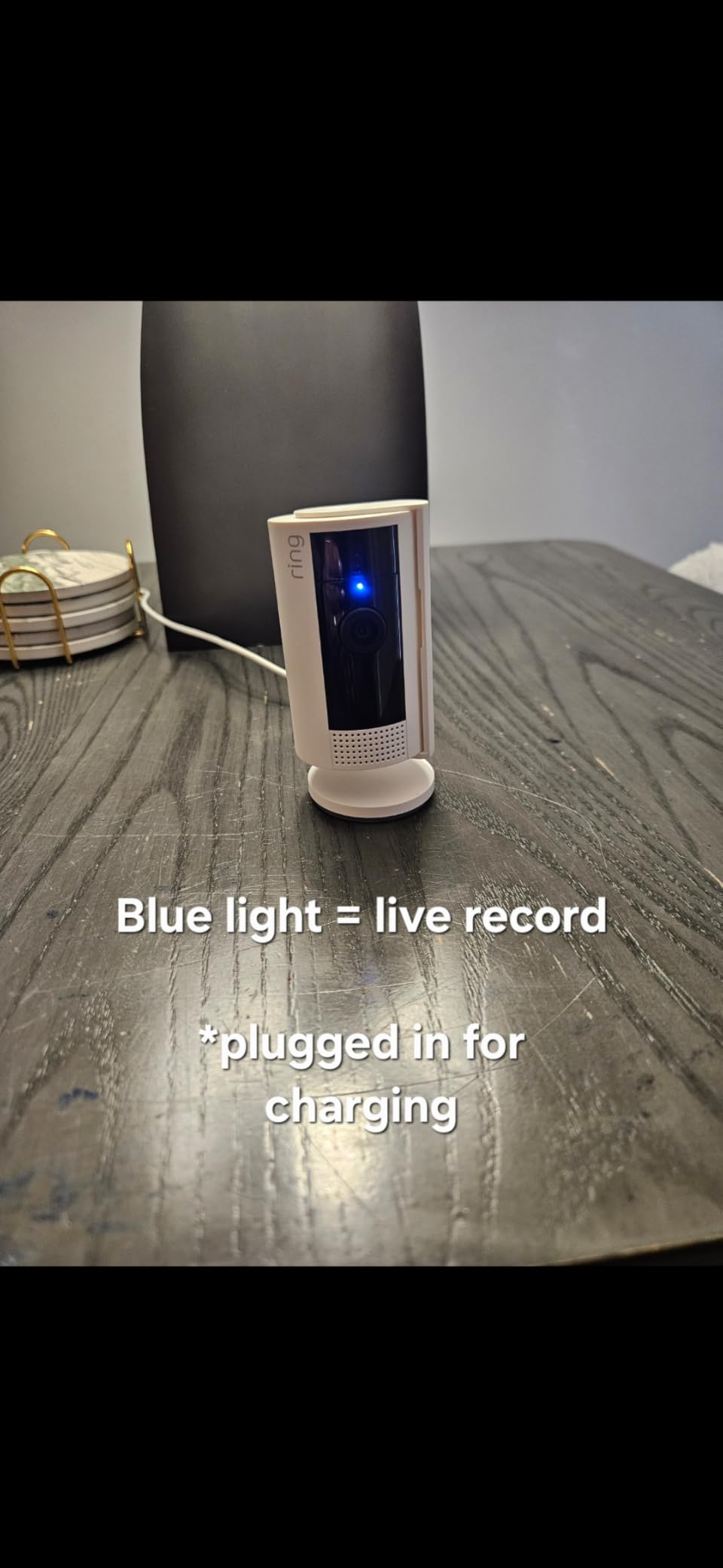
Colour Night Vision and Pre-Roll in a Working Kitchen
The most useful feature here for pet monitoring is Advanced Pre-Roll, which grabs a few extra seconds before a motion event. A pet camera that only starts recording once the dog is already mid-shred gives you no idea what set it off. The Ring gives you the approach as well as the action, which is what makes the clip reviewable.
Customisable motion detection zones let me ignore the door and the street-facing window and watch only the corner the cat favours. That single setting removed most of the false alerts that usually make people abandon indoor cameras entirely. I paired it with the swivel mount, which let me move the same unit from a shelf to a high wall position in under a minute.
Where the Subscription Line Sits
The camera works out of the box. Live view, two-way audio, the privacy cover and the basic motion alerts all function without paying anything. What sits behind Ring Protect is the smarter layer: the advanced AI alerts and the stored video history. That is a defensible split, and a r/puppy101 owner running one of these for house-training a new puppy describes exactly the same arrangement, with the plan treated as optional rather than required.
The two practical limits are physical. It is a plug-in camera, so an outlet dictates placement, and 1080p is a step behind the 2K and 4MP units in this list. Neither matters for checking whether a dog is calm, and both matter if you are trying to read a food label off the counter.
2. Tapo C200 – Best Value With Mechanical Pan and Tilt
TP-Link Tapo Pan/Tilt Security Camera for Baby Monitor, Pet Camera w/Motion Detection, 1080P, 2-Way Audio, Night Vision, Cloud & SD Card Storage, Works with Alexa & Google Home (Tapo C200)
1080p at 15fps
360 degree pan and 114 degree tilt
Infrared night to 40 ft
Micro SD up to 512 GB
+ Pros
- Local microSD recording up to 512 GB with no monthly fee
- 360 degree pan with 114 degree vertical tilt covers a whole room
- Infrared night vision reaches up to 40 ft
- Two-way audio plus a sound and light alarm
- Works with Alexa and Google Assistant
- Cons
- Picky about SD card compatibility
- 15fps stream is softer than the 2K picks
- Some advanced detection features need Tapo Care
The Tapo C200 is the pick I keep coming back to, because it removes two of the biggest decision points in this category at once. It records to a microSD card up to 512 GB, so the subscription question simply disappears, and its mechanical pan and tilt covers a room from a single position rather than a corner.
Owners regularly remark that the image quality beats cameras costing considerably more, and I found that fair in daylight. The 15fps effective frame rate is the trade-off, and it shows most on a fast-moving pet crossing the frame. For a dog lying down, chewing a toy or sleeping, it looks excellent.
Mechanical Pan and Tilt vs a Fixed Lens
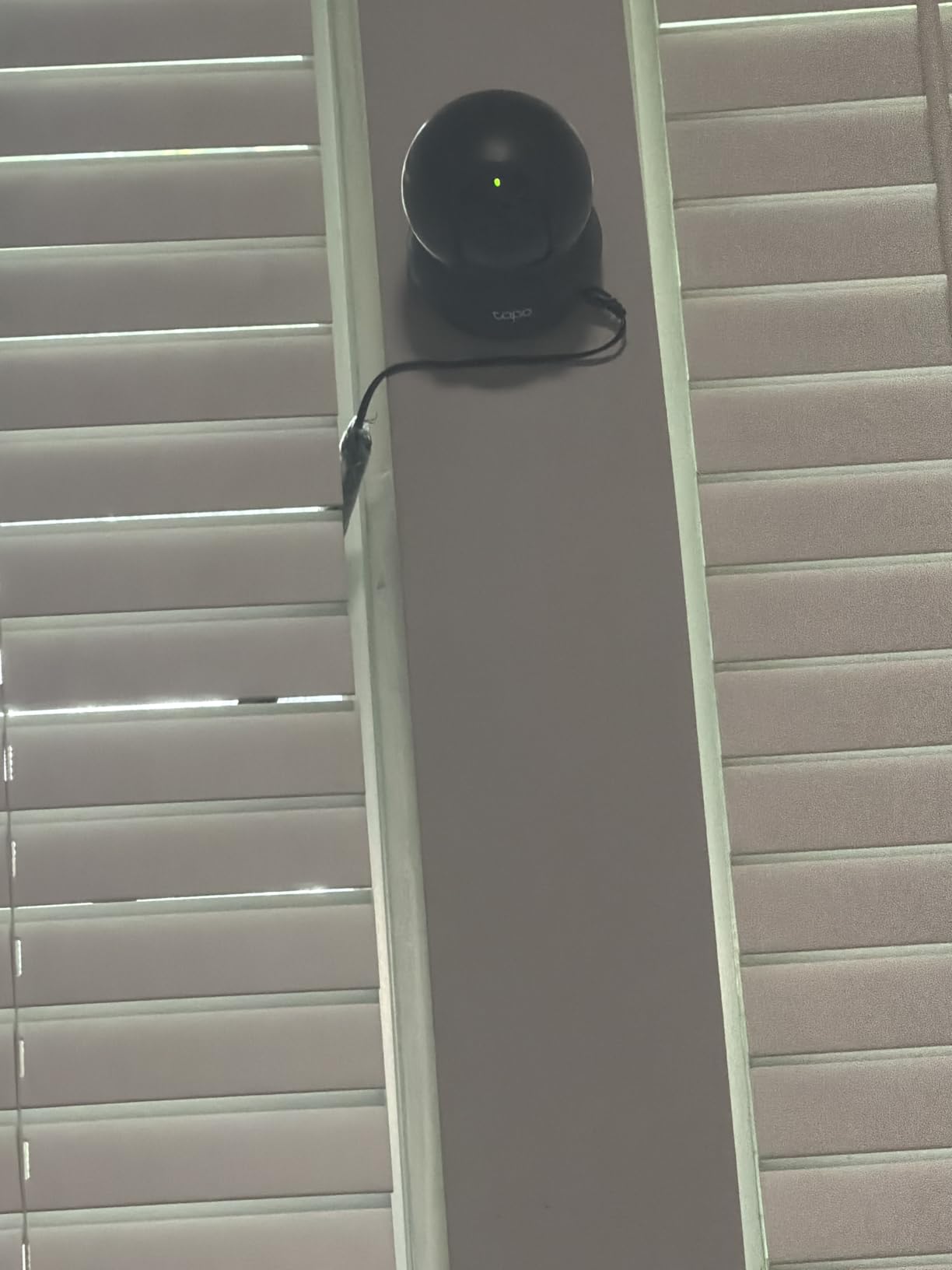
The 360 degree horizontal pan and 114 degree vertical tilt is the practical reason to pick this over a fixed-view camera. I could sweep from the sofa to the food bowl and up toward the shelf where my camera-shy cat perches, without leaving the desk. That vertical range matters more than most buyers expect, since pets spend a lot of their time on the floor and on low furniture.
The motion detection with push notifications, plus the sound and light alarm, gave me audible confirmation when my dog started pacing rather than just a silent push. Two-way audio was clear enough to call him off the sofa, which is the entire point of the feature.
Local Recording Without a Monthly Fee
Local Micro SD storage up to 512 GB is where this camera earns its place on the list. The largest card is not included, and TP-Link recommends specific cards, so buy a card from the approved list and format it in the app before you rely on it. That single step prevents most of the recording problems owners report.
Some advanced detection features do sit behind Tapo Care, and the app throws occasional errors around deleting SD recordings. But the core loop, record locally and check in from anywhere, works exactly as advertised with no account needed at all.
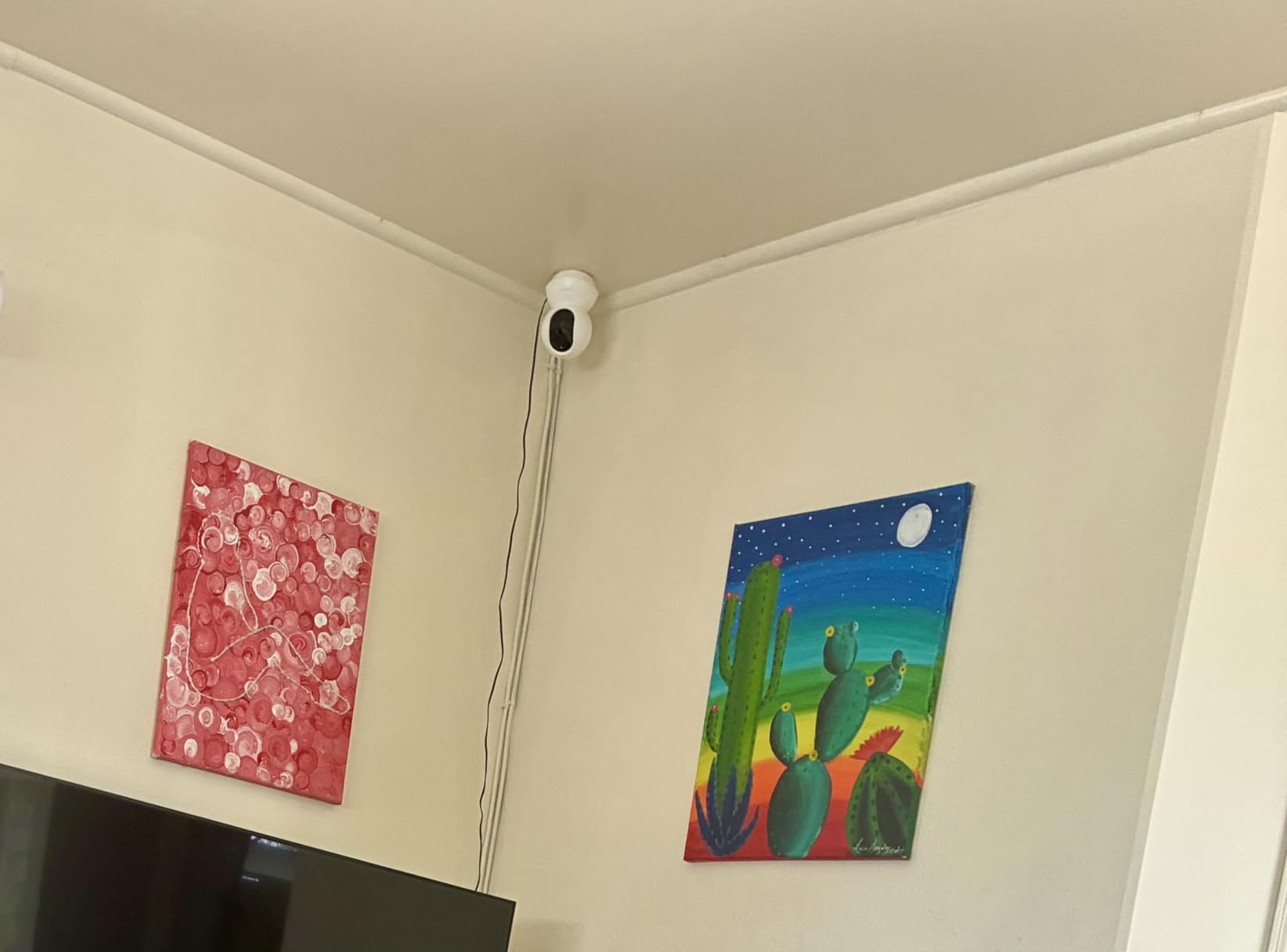
3. Kasa EC70 – Best for Quiet Whole-Room Patrol Coverage
Kasa 1080p Indoor Pan/Tilt Wired Security Camera, Baby & Pet Monitor, EC70
1080p at 15fps
120 degree field of view
Patrol mode 360 degree scan
Micro SD up to 256 GB
+ Pros
- Patrol mode sweeps a whole room from one position
- Quiet pan and tilt motor
- Local Micro SD recording avoids monthly fees
- Real-time motion and sound alerts
- Smart Actions can trigger other Kasa devices
- Cons
- Two-way audio is described as garbled
- Night vision fails through window glass reflections
- Pan-follow tracking is unreliable
The Kasa EC70 is a sibling of the Tapo C200 in spirit, and the choice between them comes down to how you want the camera to behave. Where the Tapo holds a fixed position and lets you drive the view, the Kasa can patrol on its own, rotating through saved positions to sweep a room unattended.
That patrol mode is genuinely useful in a room where a pet moves between two or three spots. I set three positions covering the bed, the window and the doorway, and the camera worked through them on a loop, so a nap in one corner did not mean an empty frame for the rest of the afternoon.
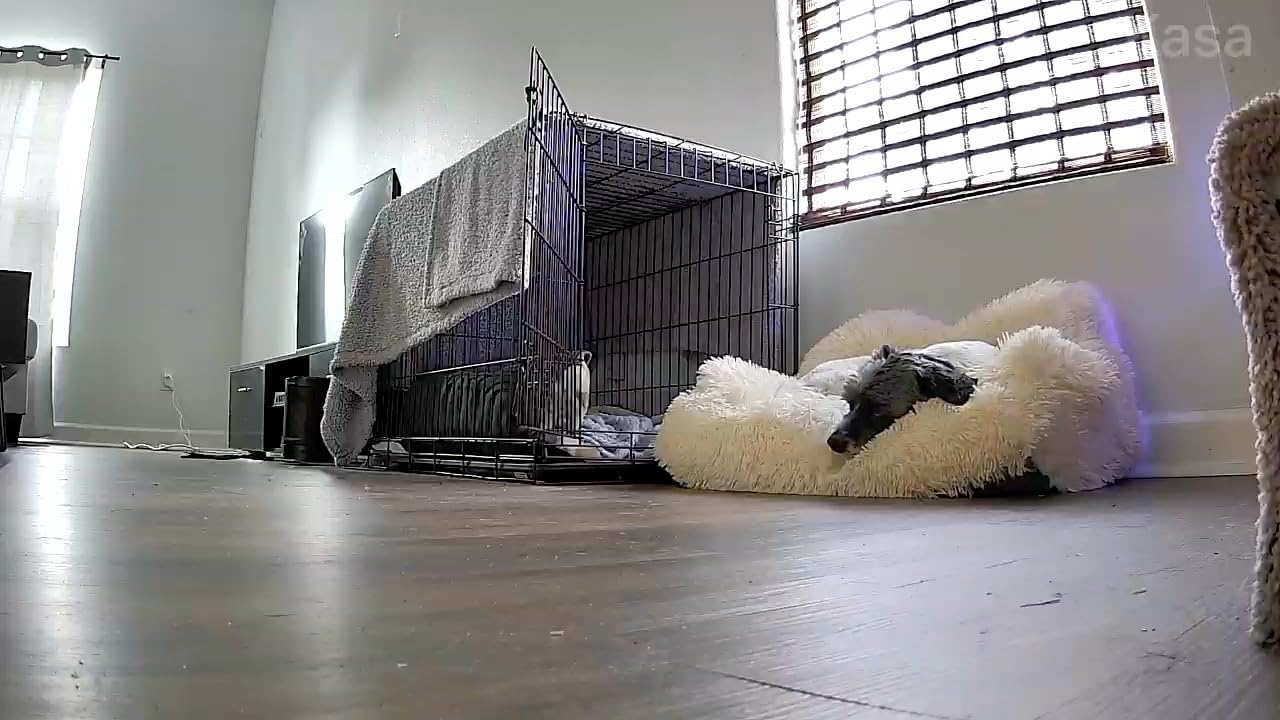
Patrol Mode and the Quiet Motor
The motor is quiet enough that it does not startle a light-sleeping pet, which matters for a camera you plan to leave running overnight. Real-time motion and sound alerts with a 30 ft range arrive promptly, and Smart Actions can trigger other Kasa devices on motion if you are building out a wider setup.
The 120 degree field of view is a little wider than the Tapo’s fixed-view coverage, though neither is an ultra-wide lens. For a large open-plan living room you will still need two units, and several owners run exactly that arrangement.
Audio Quality and Glass Reflections
The honest weakness here is two-way audio, which reviewers consistently describe as garbled and weak on quiet speech. If your pet has separation anxiety and responds to your voice, this is not the camera to buy. If you mainly want to listen and watch, it performs acceptably.
Night vision is also the weaker of the two TP-Link options. Pointed at a room with a window, the glass reflects the infrared LEDs back at the lens and washes out the far side of the frame. Angle the camera away from glass and it performs well. A subset of long-term owners also report motion-detection drift over months of use, so re-check your activity zones periodically.
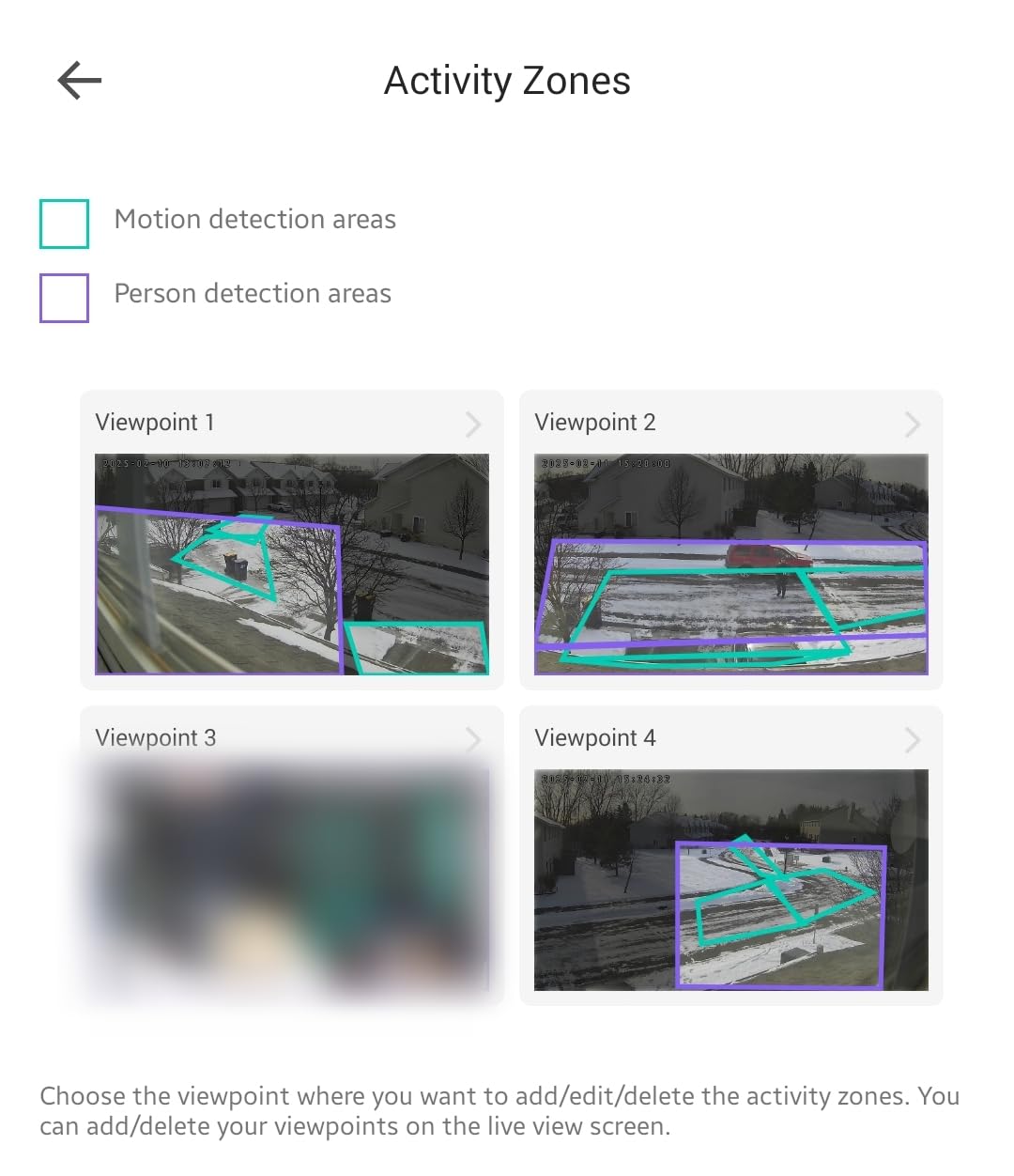
4. Wyze Cam Pan v3 – Best for Tracking a Moving Pet
WYZE Cam Pan v3, Indoor/Outdoor Security Camera with 360° Pan/Tilt/Zoom
1080p at 15 or 20fps
360 pan and 180 tilt
Colour night vision
Micro SD up to 512 GB
+ Pros
- AI motion tracking for pets and people with custom waypoints
- Micro SD up to 512 GB removes the subscription
- Colour night vision and 2K-class detail for the money
- Built-in siren and privacy mode
- Easy Bluetooth-assisted setup
- Cons
- AI detection misclassifies objects as pets or packages
- Waypoints drift out of position over time
- 2.4 GHz only so it will not join a combined network
The Wyze Cam Pan v3 is the one on this list that actively tries to follow a pet around the room. AI motion tracking rotates toward a person or animal and holds them in frame, with up to four custom waypoints you can set in advance. For a cat that moves constantly, that is worth more than raw resolution.
It is also a genuinely capable indoor camera on the fundamentals. The 1080p stream is sharp, Colour Night Vision keeps a dim room readable, and inserting a microSD card up to 512 GB removes the subscription entirely. The built-in siren gives you an active deterrent if something is wrong.
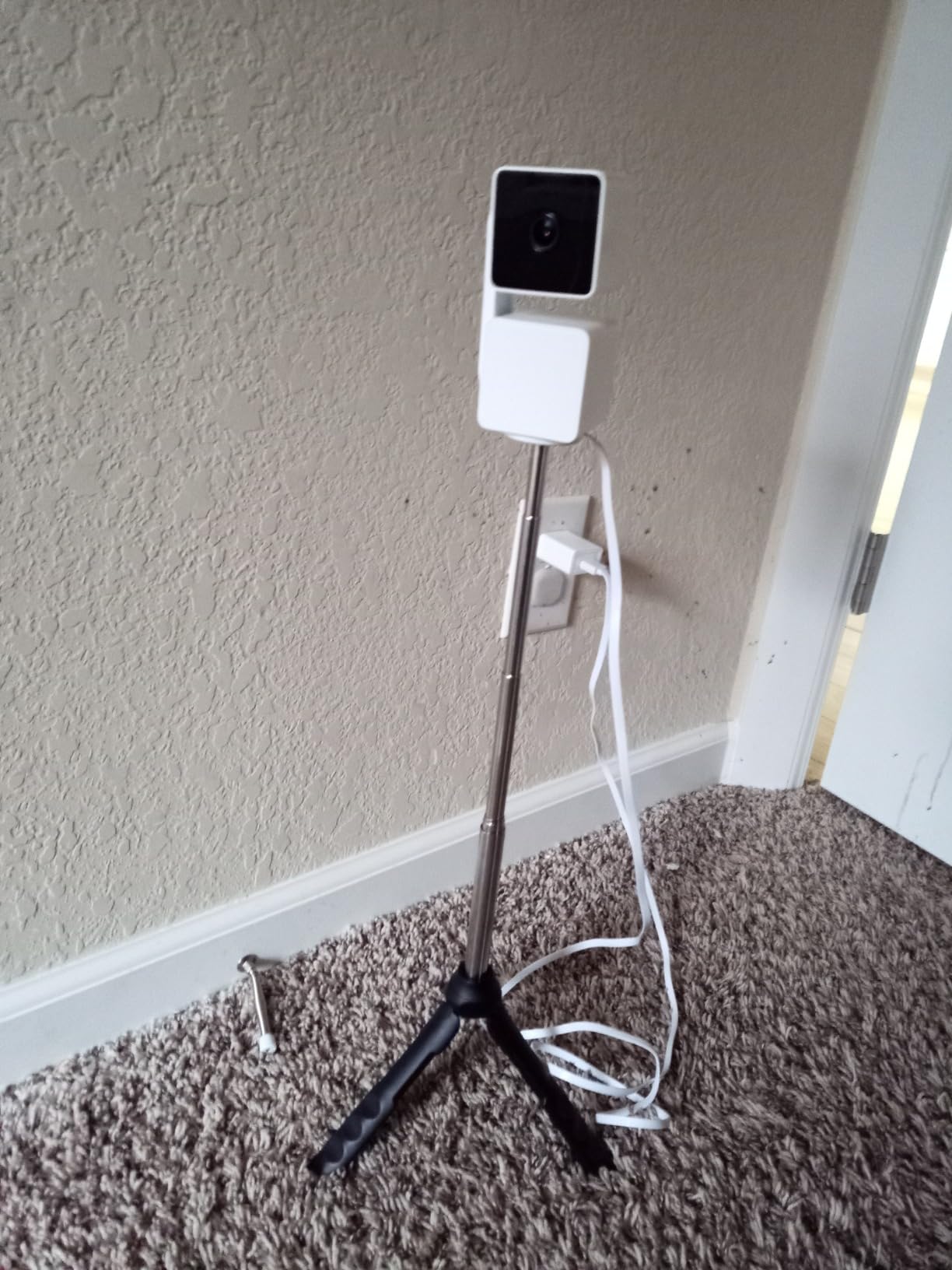
Tracking Accuracy and Waypoint Drift
Tracking is the promise and the problem. Reviewers report the AI reading a passing car as a pet and a pet as a car or a package, which means extra notifications that carry no information. The waypoint positions also wander out of alignment over months, and need resetting before they are useful again.
There is a second cost to the moving mechanism. Video and audio quality both degrade noticeably while the camera is actively panning, so the moment it is tracking is the moment the picture is softest. If you want a still, sharp record, set a fixed position and disable tracking.
The 2.4 GHz Network Requirement
This is the single most important line in the spec list for a lot of buyers. The camera is 2.4 GHz only, so it will not join a combined 5 GHz and 2.4 GHz network under the same name. That is the exact failure r/Pets users describe when a camera they bought would not pair at all. If your router only broadcasts 5 GHz, or merges both bands, this one will frustrate you from the box.
Wyze is repeatedly named in pet forums as a working no-subscription option, and for 2.4 GHz-only households that holds up. The feature set is generous, but expect subscription prompts in the app, and note that the cloud add-on covers only one camera per account.
5. Petcube Cam – Best for Pet-Specific Bark and Sound Alerts
Petcube Cam – Indoor Wi-Fi Pet & Security Camera with App
1080p HD
110 degree view with 8x zoom
Night colour to 30 ft
Magnetic base
+ Pros
- Alerts distinguish barking from other household noise
- 110 degree field of view with 8x zoom
- Colour night vision to 30 ft
- Magnetic base repositions under cabinets or on a wall
- Survives being dropped
- Cons
- Records only short event clips
- Video history and Smart Alerts need a paid Care plan
- Camera cannot be re-aimed from the app
The Petcube Cam is the most purpose-built of the indoor cameras here. The other models treat pets as one category of motion to detect, while this one is built around the specific question most owners actually have: is my dog barking right now, and is it barking because something is wrong.
That alert filtering is the feature that distinguishes it. Smart motion and sound alerts separate barking from a passing car, a television or a door closing, so a notification is more likely to mean something. For a pet with separation anxiety, that difference is the whole product.
It works out of the box with no subscription, and a free trial of the Care plan is included so you can test the paid features before deciding.
Event Clips vs Continuous Recording
The main limitation is how it records. Without a plan, you get short event clips rather than continuous coverage, which means you can see what triggered an alert but not the twenty minutes leading up to it. If you need a record of a behaviour pattern, you will need the Care plan for the longer history.
The Care plan unlocks Smart Alerts, Smart Filters, the Daily Diary and 90-day video history, and the Premium tier adds AI Vet chat and live certified veterinarian access. That last feature is unusual in this category and the reason a r/dogs owner told by a vet to monitor their dog closely could not find a tool that matched their work schedule.
Placement Flexibility and Its Limits
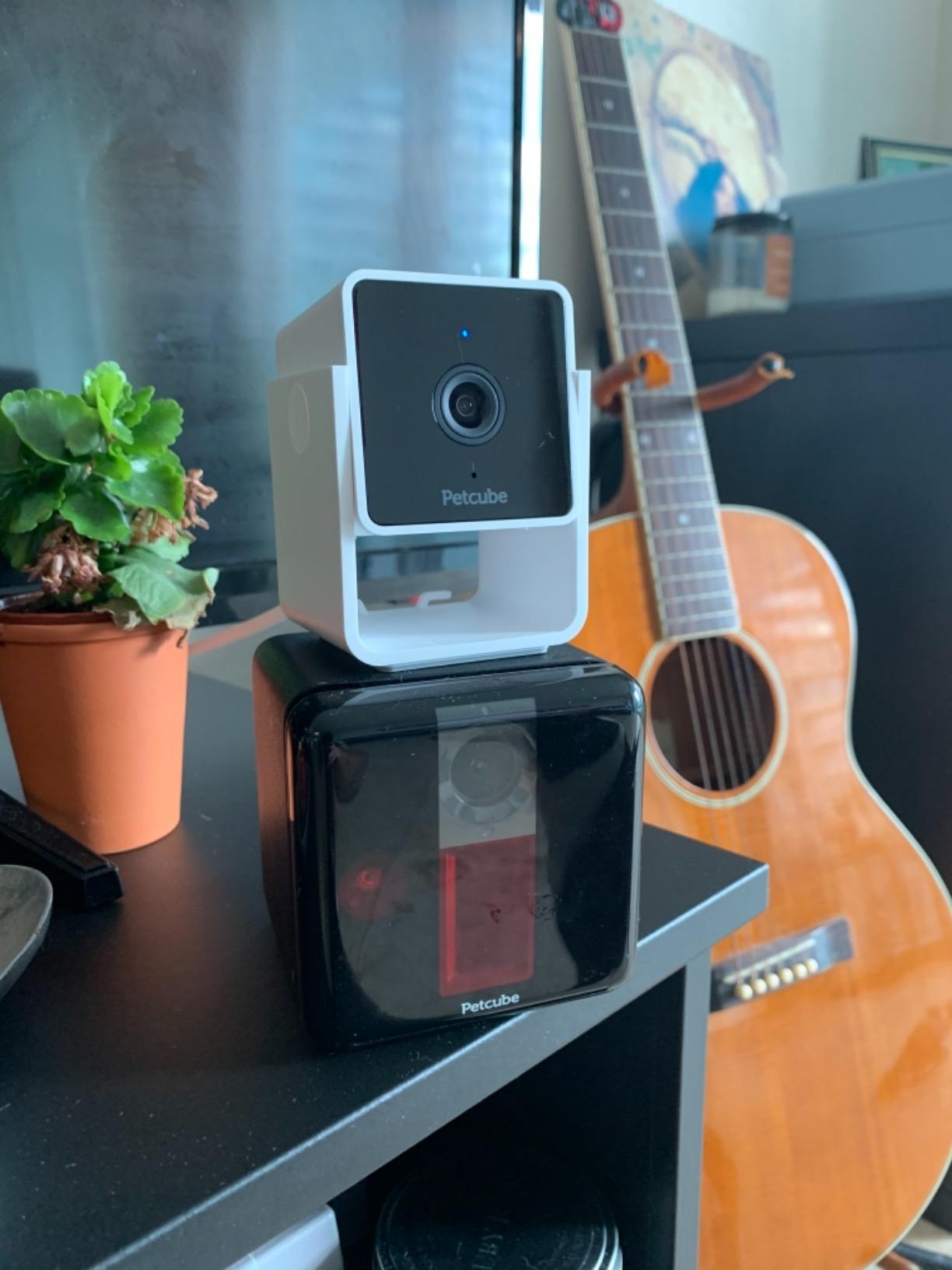
The magnetic base is the most flexible mounting solution here. It slides under a cabinet, sticks to a fridge or wall, and moves between rooms in seconds, which suits a r/Pets owner running multiple units for several cats. I could also re-aim it physically without any tools, and it survived a drop from a shelf with no trouble.
Two limits are worth knowing before you buy. You cannot pan the view left or right from the app, only adjust the camera by hand, so it is not a substitute for a pan-and-tilt unit. And the microphone cannot be disabled while you are viewing, which can cue a pet to move away from the spot you are watching. Full-duplex talk can also produce echo or feedback on talk-back.
6. Furbo 360 Dog Camera – Best for Remote Treat Tossing
Furbo 360° Dog Camera [Core Features, No Ongoing Cost]
1080p with 360 motorized rotation
Colour night vision to 7 m
Bark sensor
Remote treat toss
+ Pros
- Only pick here with a working treat dispenser
- Motorized 360 degree rotation removes blind spots
- Real-time bark notifications from a built-in sensor
- Core see talk and toss features carry no ongoing cost
- Two-way audio with in-app volume control
- Cons
- By far the most expensive camera in this roundup
- AI smart alerts and history end after the 14-day trial without a plan
- 2.4 GHz only and power adapter not included
Only one camera in this roundup tosses a treat, and that is the entire reason the Furbo sits on the list. Remote treat tossing is a behaviour tool, not a gimmick. For a dog with separation anxiety, for a puppy mid-house-training, or for a pet you want to keep off the sofa, a treat arcing across the room at the right moment does something a bark through a speaker cannot.
The motorized 360 degree rotation removes the blind spots that plague fixed-lens cameras, so a pet cannot simply park itself outside your field of view. The built-in barking sensor pushes a real-time notification, which is a better-designed version of the filtered alerts other brands approximate with AI.
Reddit’s consensus shortlist across pet threads consistently names Furbo alongside Wyze and Blink, and owners who own one tend to defend the cost by pointing at the dispenser.
![Furbo 360° Dog Camera [Core Features, No Ongoing Cost] customer photo 1](https://digitalnpq.org/wp-content/uploads/2026/09/B09GDQZLD1_customer_1.jpg)
How the Treat Toss Actually Performs
Portion size is adjustable, and the throw is reliable enough for training if you calibrate it. My only practical note is aim: the toss arc is fixed forward from the hopper, so the camera needs to face the spot you want the treat to land in. That is a placement constraint worth planning for before you mount anything.
Treat size is worth checking against your own supply. Large, soft, freeze-dried pieces are the most common cause of a jam or a misfire, and reviewers mention both more often than they mention motor failure. Smaller, harder treats are the safe choice.
The Trial That Ends
Here is the honest version of the subscription story for this camera. The core features, live view, two-way audio and treat tossing, work with no ongoing subscription. What does not survive is the intelligent layer. AI smart alerts, video history and daily reports are part of Furbo Nanny, which comes as a 14-day free trial and then stops. If you want the smart alerts long-term, the subscription is not optional, and that is a recurring cost on the most expensive hardware in the roundup.
Two more constraints to plan around: it is 2.4 GHz only, and the power adapter is not in the box. At 1.04 kg, it is also a heavy object to place on a shelf, which is exactly the setup an active pet will test. A wall position or a solid surface is wiser.
![Furbo 360° Dog Camera [Core Features, No Ongoing Cost] customer photo 2](https://digitalnpq.org/wp-content/uploads/2026/09/B09GDQZLD1_customer_2.jpg)
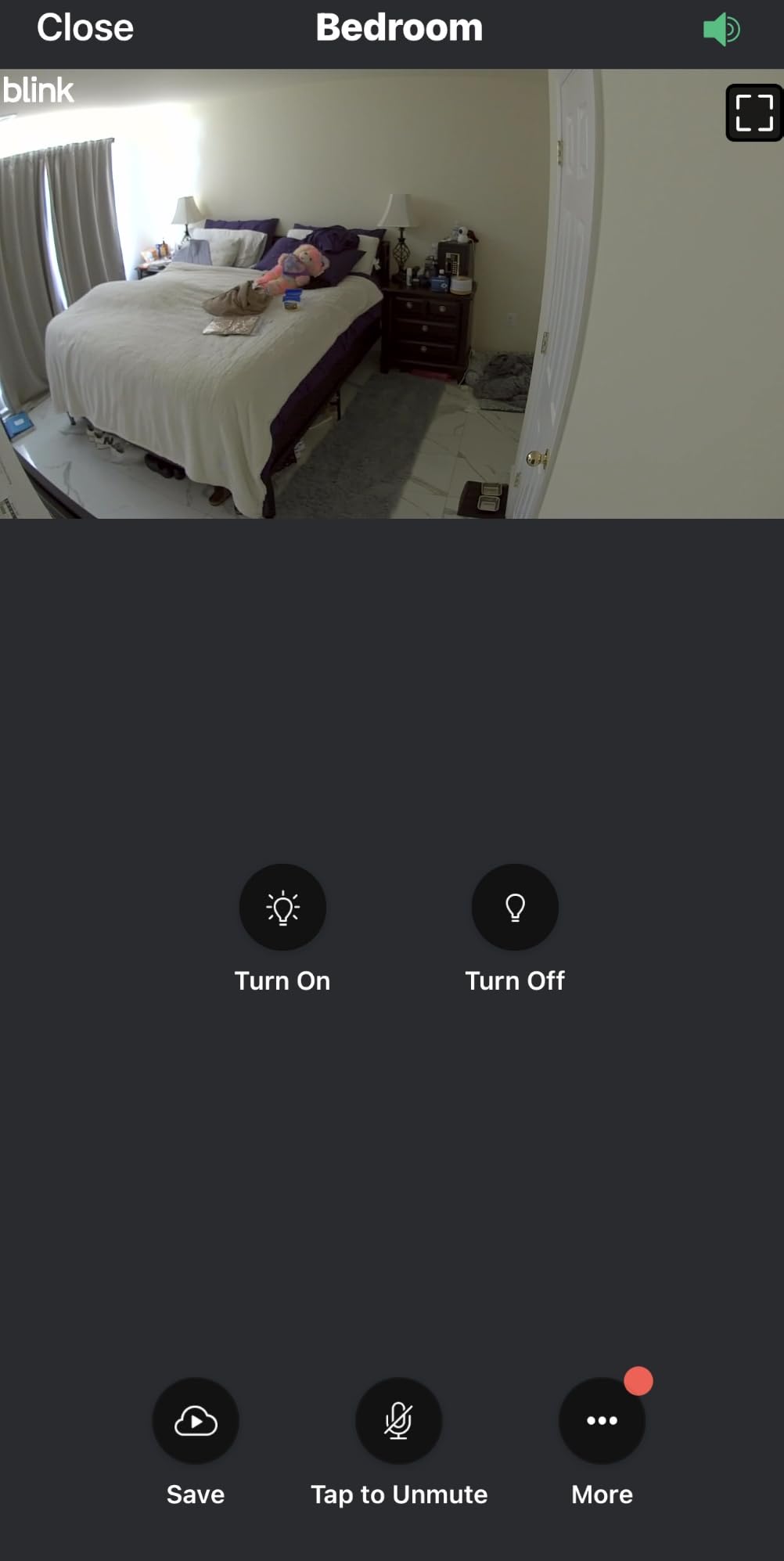
7. Blink Mini 2K+ – Best for 2K Clarity and Fast Setup
Blink Mini 2K+ (newest model) – Plug-in Home & Pet Indoor Security Camera with 2K video resolution, night vision, enhanced audio, motion detection – 1 camera (Black)
2K video with 4x zoom
Night vision with colour
Enhanced two-way talk
+ Pros
- Noticeably sharper 2K detail that holds up in low light
- Several owners set it up in under 10 minutes
- Noise-cancelling two-way talk
- Compact and easy to move between rooms
- Drops into an existing Blink system without fuss
- Cons
- No continuous recording
- App settings are hard to find and save operations show a false error
- Motion clips default to 10 seconds
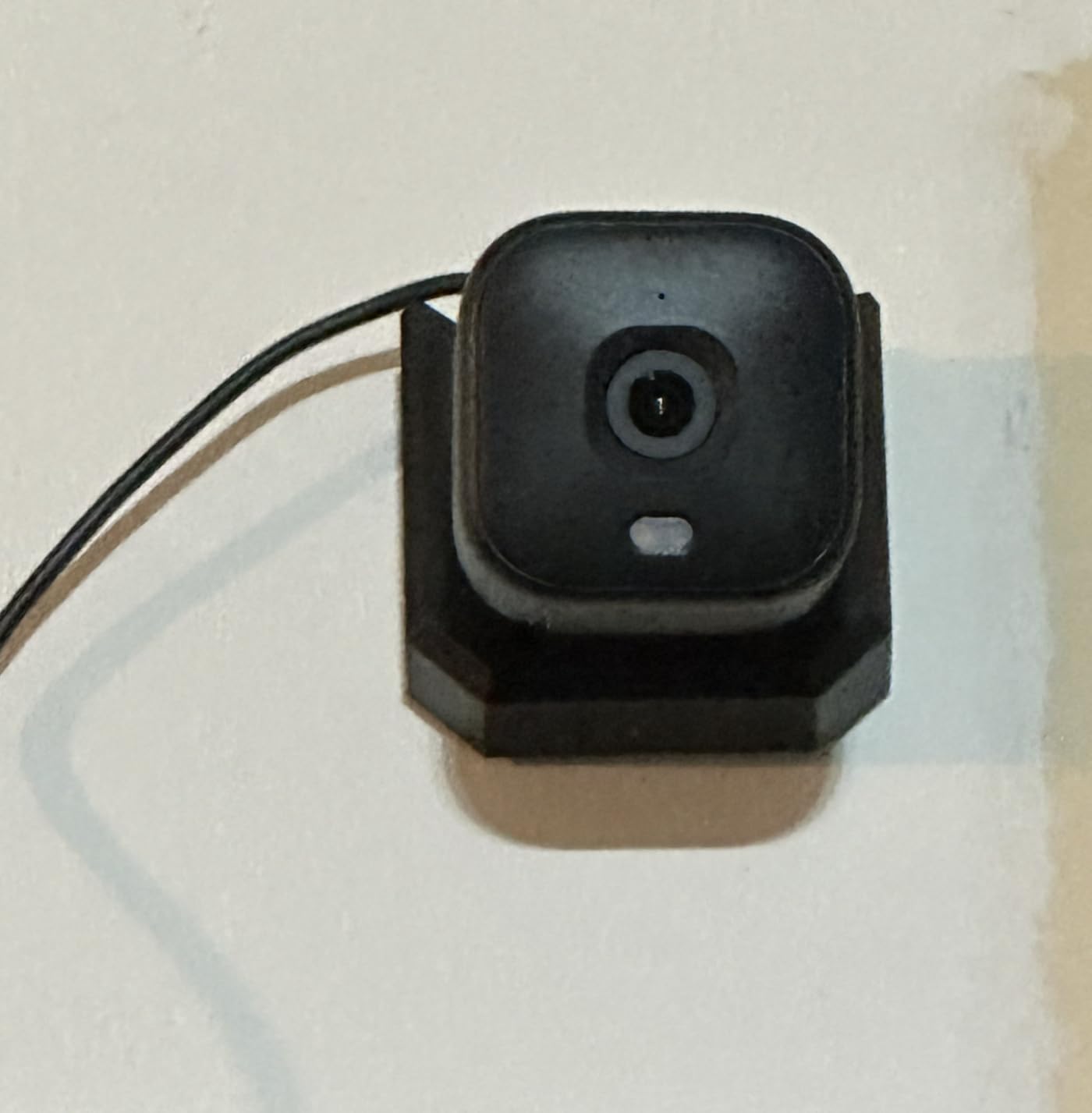
The Blink Mini 2K+ is the one I recommend to someone who wants detail without fuss. Several owners set it up in under ten minutes, and I found the same: scan the code, name the camera, place it. The 2K sensor with up to 4x zoom is a visible step up from 1080p when you want to see a pet’s posture or check whether a bowl is empty.
Night vision holds colour capability in dim conditions, and the small body is genuinely unobtrusive, so it does not look like surveillance equipment in a living room. The included USB cable and power adapter mean nothing extra to buy.
Owners running Blink systems for multiple cats report the same experience, and the camera drops into an existing Blink setup with no separate app to learn.
The Recording Model and the 10-Second Default
Blink records clips, not continuous video, and the motion recording length defaults to ten seconds unless you change it. That default catches a dog trotting past but truncates a longer behaviour, so extend it during setup. It is the single most important setting to adjust on this camera, and it is buried in the app.
The app itself is the other weak point. Settings are genuinely hard to locate, and saving a change often reports an error even though the change applied. Reviewers also report needing resets, and in some cases a Wi-Fi extender, to stop random disconnections on long-term units.
Two-Way Talk and the Existing System
The enhanced two-way talk uses noise cancellation and is clearer than the unprocessed audio on several cheaper models in this roundup. It will not replace a physical device for a dog that needs to be calm, but it carries well enough for a short reassurance call.
Smart person and vehicle detection sits behind the optional Blink Subscription Plan, and cloud storage beyond the 30-day free trial requires that plan. If you already run Blink cameras or a Blink Video Doorbell, this unit can also act as a plug-in chime, which adds a reason to stay in one ecosystem.
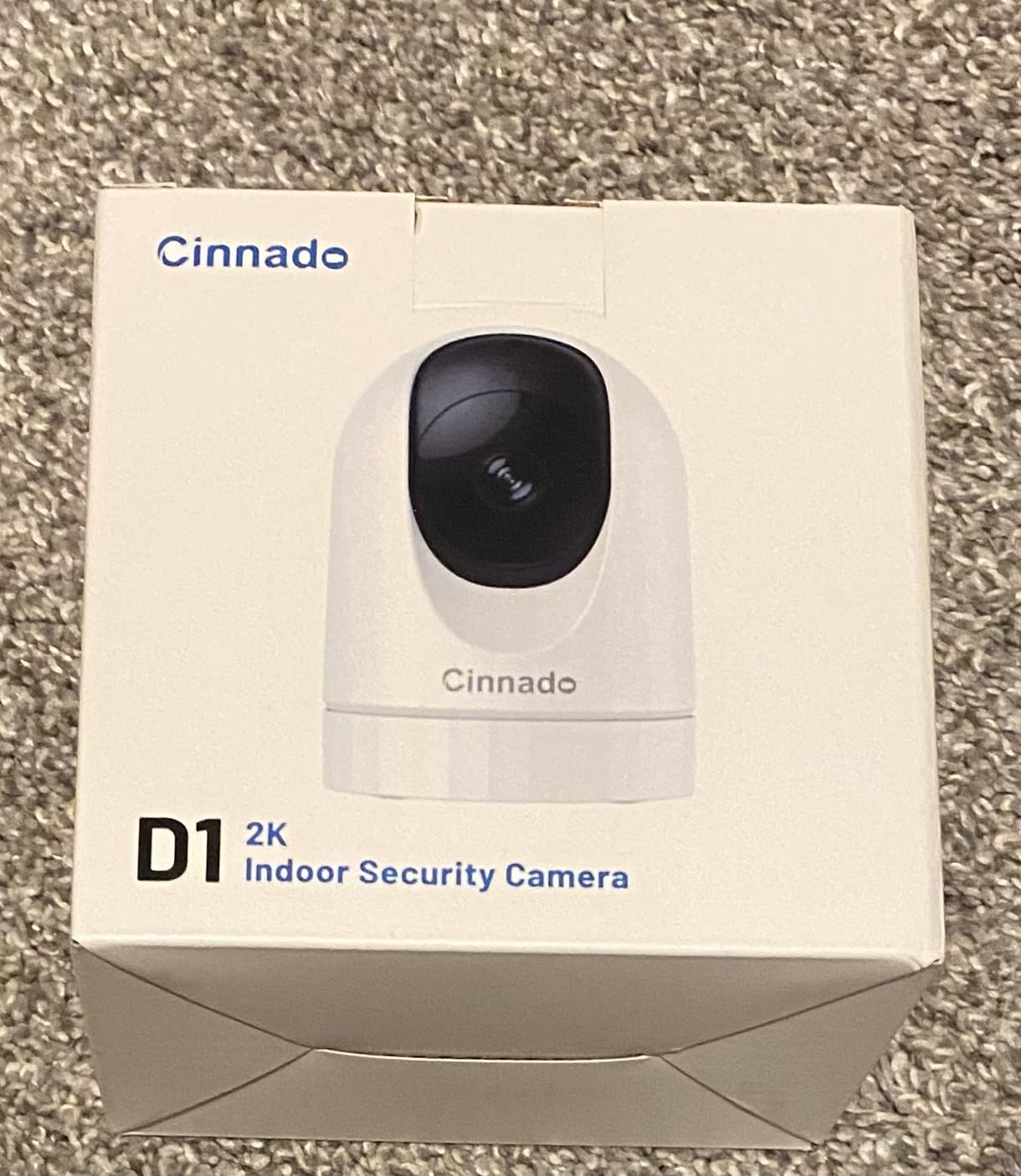
8. Cinnado D1 – Budget Pick With 2K Pan and Tilt
Cinnado 2K Security Camera Indoor for Pet/Dog/Baby with Phone App, D1 1Pack
2K FHD live stream
320 degree pan and tilt
IR night with colour
Micro SD up to 128 GB
+ Pros
- Entry-level camera with 2K-class video and 360 degree pan/tilt
- Local microSD and cloud both supported so no subscription is needed
- Very easy app setup with two phones viewing at once
- Long power cable with wall mount and ceiling flip option
- Customer service responds with concrete fixes
- Cons
- Motion detection is erratic
- Effective resolution is debated
- Image washes out when pointed at a window
The Cinnado D1 is the most affordable camera here, and for a buyer who just needs to see whether the pet is on the sofa, the specification is closer to the expensive end of this list than you would expect. You get 2K-class video, 320 degree pan and tilt coverage, and local microSD recording up to 128 GB, which means no subscription.
The mounting kit is generous for a camera at this end of the market: a long power cable, a wall bracket and a ceiling flip option. Multiple-user accounts let two phones view the feed at the same time, which is useful in a two-partner household.

What You Get for the Money
Four 940nm infrared lights with colour capability mean the night picture stays readable in a dim room, and the built-in siren gives you an active deterrent. Setup was the fastest of any pan-and-tilt camera I tried, and two devices viewing simultaneously worked without complaint.
The 2K label is contested. The sensor captures 2000px stills, but several owners suspect the live stream is upscaled rather than genuinely 2K, and a smaller group reports a washed-out daytime image when the camera faces a window. Angle it along the wall rather than toward the glass.
The Motion Detection Problem
This is the deal-breaker to know about. Motion detection is erratic: it over-triggers on distant cars and window movement, and at other times it misses a person walking straight past. Combine that with the fact that the recording interval cannot be adjusted without paying for cloud storage, and you have a camera that records the wrong ten seconds.
For a budget setup in a small flat, it is still a capable choice. Just do not buy it for a room where a reliable record of behaviour matters more than the cost.
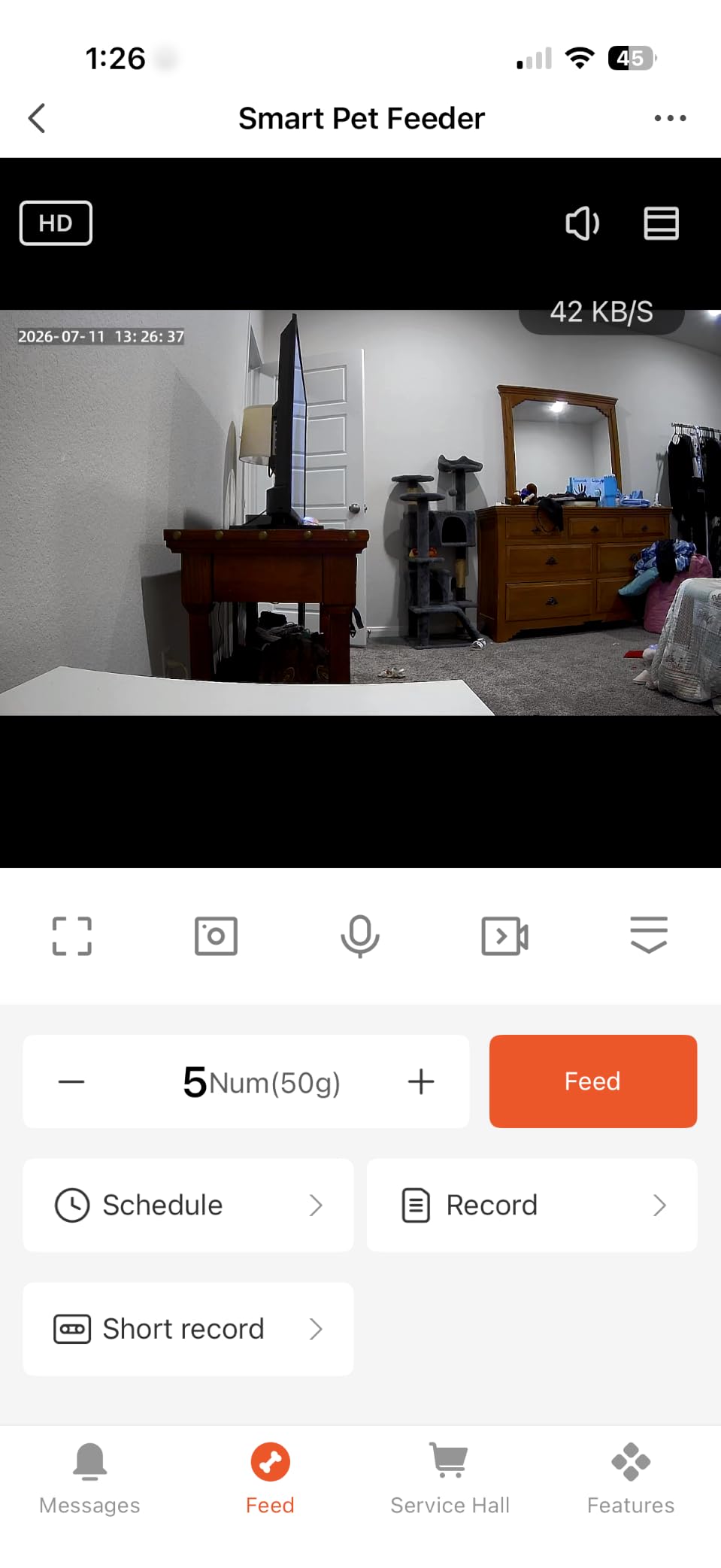
9. Faroro Feeder Camera – Best for a Feeder and Monitor in One Box
Automatic Cat Feeder with Camera, 3MP HD Video & Night Vision, 5G/2.4G WiFi Smart Pet Feeder with APP Control, 2-Way Audio, Motion Alerts, Low Food Sensor, Timed Cat Feeder for Cats & Dogs, 4L
3MP camera with 110 degree view
4L hopper with 8 meals
5G/2.4G dual-band Wi-Fi
+ Pros
- Feeding and monitoring in one device
- Up to 8 scheduled meals with portion control and a feeding record
- Dual-band 5G and 2.4G Wi-Fi is unusual at this price
- Battery backup keeps feeding running through a power cut
- Personal voice message to call the pet to dinner
- Cons
- 3MP camera is weaker than the dedicated cameras in this roundup
- Hopper needs manual topping up and cleaning
- Motion sensitivity needs manual adjustment
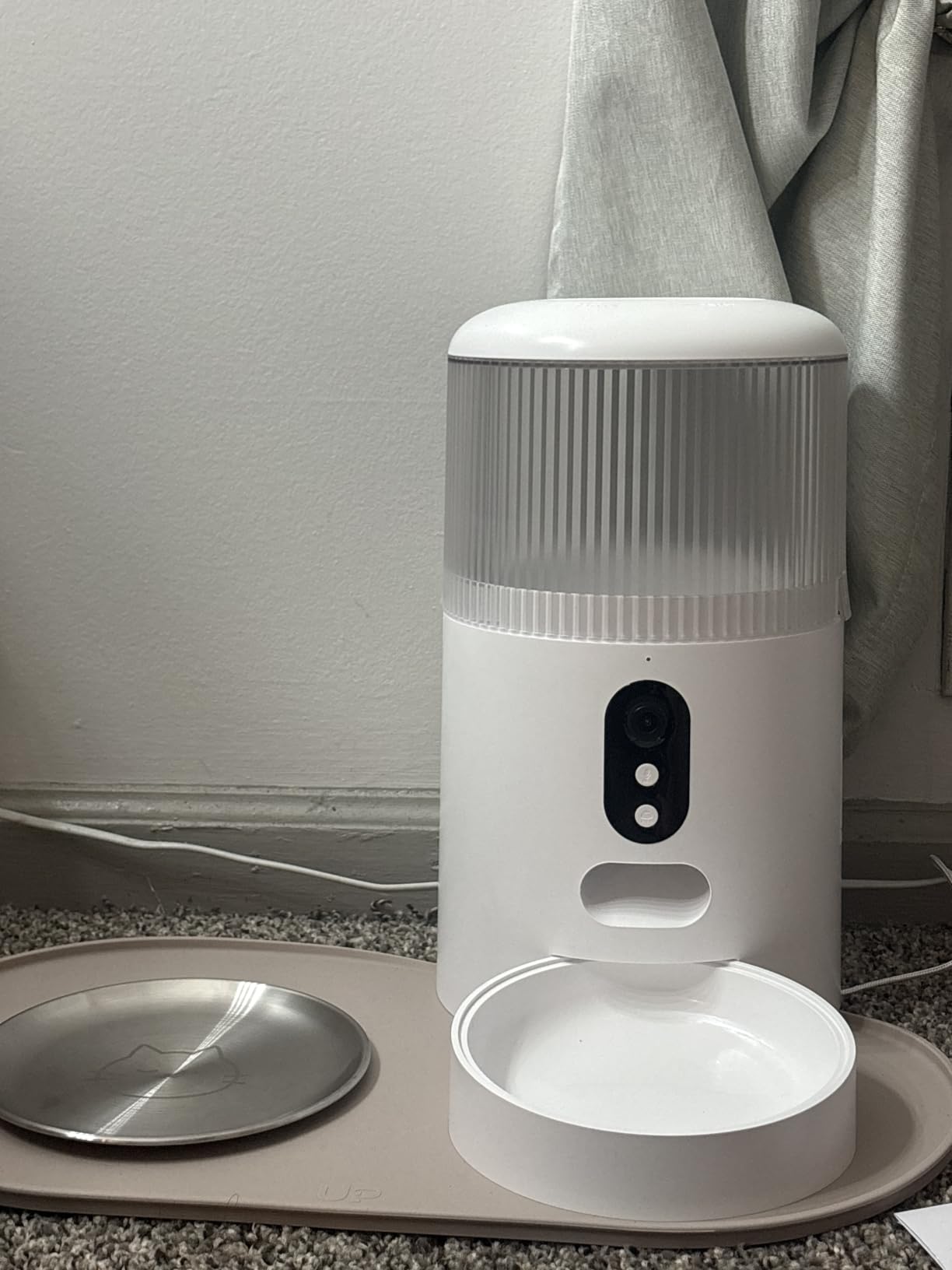
This is the pick for a household where the reason to install a camera is partly the meals. It is an automatic feeder with a 3MP camera built in, so feeding and monitoring become one device instead of two, and you get a feeding record that tells you whether your pet actually ate.
Up to eight scheduled meals a day with portion control of roughly 10g per portion covers most feeding schedules, and the low food sensor pops a notification when the hopper runs down instead of leaving you to discover an empty bowl from a video clip. A 7L version exists if you have a larger pet or a longer interval between top-ups.
Dual-Band Wi-Fi and Battery Backup
Two features here stand out against the rest of this list. It supports both 5 GHz and 2.4 GHz on a combined network, which removes the pairing problem that knocks several competing cameras out of contention. And three AA batteries keep the feeder dispensing through a power cut, which for a pet owner is worth more than it sounds.
The 110 degree viewing angle with IR night vision is adequate for watching a pet eat, which is the intended use. Motion detection sensitivity has high, medium and low settings, and it needs manual adjustment or you will get constant alerts as the cat approaches the bowl.
Where the Camera Falls Short
The 3MP sensor is lower resolution than the dedicated cameras here, and it carries the lowest average rating in the roundup, driven by that camera being weaker than purpose-built units and by the practical upkeep of a hopper. Freeze-dried, dry and air-dried food is supported up to 10mm kibble, so check your actual food before committing.
Two-way audio plus a recorded personal voice message to call the pet to its meal is a lovely feature and genuinely helps a pet that ignores a generic chime. Buy it for the feeder, and treat the camera as a useful bonus rather than the reason.
10. ARENTI P2Q – Best for Dual-Band Wi-Fi and Local Control
ARENTI 4MP Pet Camera P2Q, 5G WiFi 6 Indoor Security Camera, Free Phone App
4MP stills and 2.5K live stream
Dual-band 2.4GHz and 5GHz
Micro SD plus ONVIF
NVR support
+ Pros
- Dual-band 2.4GHz and 5GHz so it joins combined networks that stymie most rivals
- No subscription needed with microSD plus local NVR and ONVIF support
- Quick setup several buyers describe as faster than the brands they replaced
- Auto tracking rotates to follow a pet or baby
- Cons
- App is confusing and settings lack explanations
- Motion detection fires every few minutes on small movements
- Tilt range is limited downward
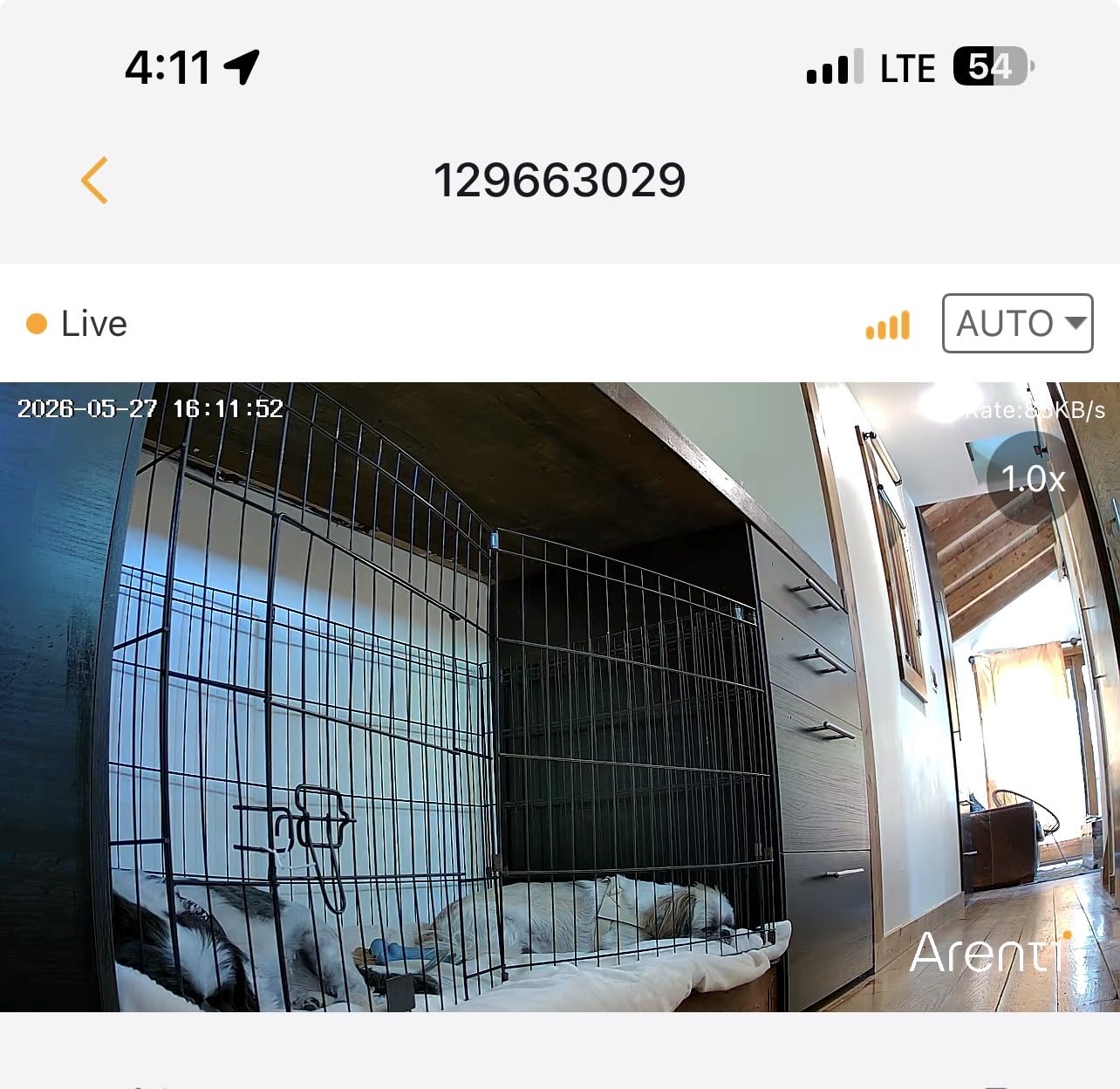
The ARENTI P2Q exists because of a problem most of this list cannot solve. It supports both 2.4 GHz and 5 GHz, so it joins the combined network that ISP routers broadcast by default, which is the reason a startling number of camera returns start and end with a camera that will not pair at all.
It also goes further than microSD. Alongside a card up to 256 GB, it supports cloud, local NVR and ONVIF, and it can be viewed from a web browser. That is the enthusiast path the ipcamtalk community recommends for anyone who wants full local control of their footage rather than handing it to a cloud service.
Dual-Band Pairing and Multi-Camera Support
Owners single out the dual-band support and the absence of a mandatory subscription as the reasons they chose this over the big-name alternatives, and several describe setup as faster than the cameras they replaced. The 4.3 rating reflects real gripes, not a defect: the app is confusing and its settings carry no explanations. Multi-view of four cameras and sharing to five devices make it practical for a multi-pet household covering several rooms.
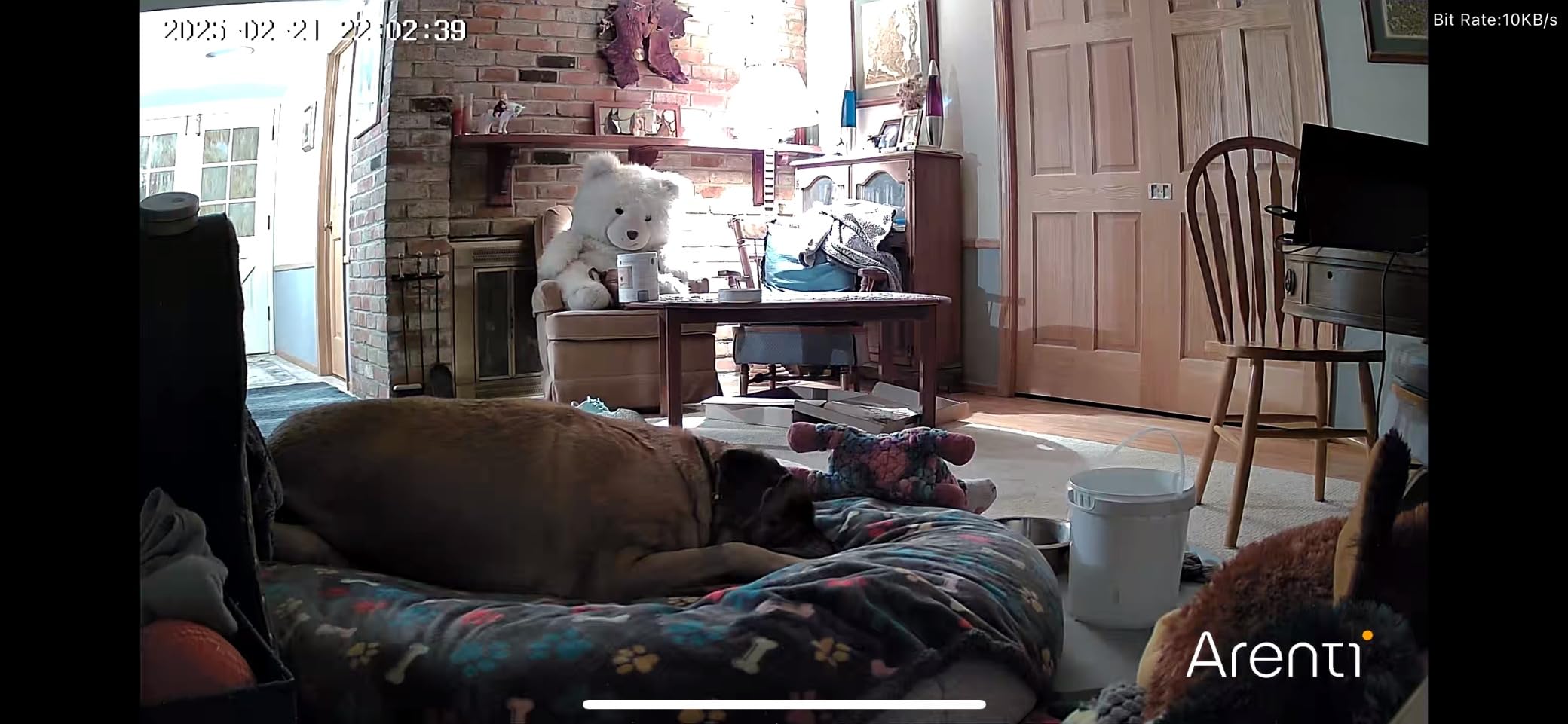
Image quality is good in daylight and the infrared night vision reaches up to 32 ft. AI human motion and sound detection distinguishes people from other movement, and auto tracking rotates to follow a pet or baby across the frame.
The App and the Tracking
The app is the weak point. Settings are hard to find and carry no explanations, and the motion detection is very sensitive enough to fire every few minutes on small movements. I had to narrow the detection zone before it became usable, and reviewing stored video is fast once you learn where the activity markers sit on the SD timeline.
Two further limits. Timer cruise scans interrupt active tracking, so the camera stops following a moving pet mid-event. And the tilt range is limited downward, so a low shelf placement may not capture the floor where your pet actually is. Mount it higher and this becomes a strong pick for a dual-band household that wants no subscription and no cloud dependency.
Which Indoor Pet Cameras Work Without a Subscription?
Six of the ten cameras here work with no subscription at all, and most of them do it by recording to a microSD card in the camera rather than to a cloud service. In short: a local card means no monthly fee, and only three models on this list need a plan for anything beyond basic live view.
Fully functional with no account and no plan: the Tapo C200, the Kasa EC70, the Wyze Cam Pan v3, the Cinnado D1, the ARENTI P2Q, and the Faroro feeder camera. The Ring Indoor Cam works without a plan, with the advanced AI alerts and video history held back. The Furbo’s core see, talk and toss functions work without a plan, with the AI smart alerts and history ending after the 14-day trial. The Blink Mini 2K+ works without a plan, with person and vehicle detection and cloud storage beyond the trial behind it. The Petcube Cam works without a plan, recording short event clips rather than continuous footage.
Supported local card capacities, which is the part most roundups skip: Tapo up to 512 GB, Wyze Pan v3 up to 512 GB, Kasa up to 256 GB, ARENTI up to 256 GB, Cinnado up to 128 GB, and the Faroro feeder up to 128 GB for video playback. The Ring, Blink, Petcube and Furbo units in this roundup do not offer a local card option at all, which is the single most useful fact for anyone refusing a monthly fee.
A r/SecurityCamera thread asking for a budget indoor pet camera with no subscription is answered the same way every time, with the same requirement stated twice: no subscription, but a microSD card is fine. That is the whole buying brief, and it is easier to satisfy than the forums suggest.
The Indoor Pet Camera Buying Guide for 2026
Local Storage vs Cloud: Recording Without Paying Monthly
Understanding what no-subscription actually means saves a lot of confusion. A free tier usually still means cloud uploads with a short retention window. Local-only mode means the card records on the camera and nothing leaves your house, and that is the version that is genuinely free forever. A local NVR goes further, recording to a box on your own network that multiple cameras share. Only some models on this list support the third option, so check before you plan a multi-camera system.
Two practical tips. Format the card in the camera app rather than on a computer, and check whether the brand maintains an approved card list, since unsupported cards are the most common cause of a camera that appears not to record. And size the card for your room: a busy living room fills 512 GB faster than a quiet hallway.
Will It Work on Your Wi-Fi? 2.4GHz, 5GHz and Dual-Band Routers
Most indoor pet cameras broadcast on 2.4 GHz only, because that band reaches further through walls and costs less power. If your router combines 2.4 GHz and 5 GHz under one network name, which is the default on many ISP-provided routers, a 2.4 GHz-only camera will often refuse to pair and give you no useful error message. The Wyze Cam Pan v3 and the Furbo are 2.4 GHz only. The ARENTI P2Q and the Faroro feeder camera support both bands and will join a combined network without the usual workaround.
Separating the two bands on your router is the universal fix if your chosen camera is single-band. Pairing the camera with a phone on 2.4 GHz is the second step. If you are in a large home, check router distance too, since a camera in a far room with two walls between it and the router will need a mesh node or an extender before it will hold a stable stream.
Night Vision: Colour Versus Infrared in a Dark Living Room
Colour night vision keeps a dim room in colour using ambient light and looks much better for a brown dog on a beige sofa. Infrared night vision is black and white but sees in genuinely dark conditions, commonly quoted at 30 to 40 ft for the models here. Most cameras mix both, switching to infrared only when the room goes fully dark.
The failure mode to watch for is glass. Point an infrared camera at a window and the reflection of its own LEDs washes out the far side of the frame. Angle indoor cameras away from windows and behind reflective surfaces, or accept a partial night picture.
Field of View and Vertical Tilt for Floor-Level Pet Watching
A fixed lens gives you a static frame. Digital pan and tilt in an app is really a crop of the same image. Mechanical pan and tilt physically rotates the camera, which is why a unit like the Tapo C200 can follow a pet from a sofa to a doorway without leaving the desk.
Pay attention to vertical range, not just horizontal. A camera with wide horizontal coverage and limited downward tilt will miss a dog lying on the floor directly below it. The ARENTI’s limited downward tilt is a good example of a spec that matters only in a low placement. For large dogs in open-plan rooms, treat the angle as the first spec to check, not resolution.
Two-Way Audio and Treat Dispensers: Comfort or Gimmick
Two-way talk is a comfort tool, not a training tool, and audio quality varies more than most roundups admit. The Kasa’s is frequently described as garbled, the ARENTI’s is echoey with a delay, and the Petcube can produce full-duplex feedback. The Blink Mini’s noise-cancelling talk is the most usable in this group, and the Petcube’s pet-aware alerts do more good than its speaker does.
A treat dispenser is a behaviour tool, and only the Furbo on this list has one. For separation anxiety or house-training, a timed treat is worth the premium. For a calm adult pet, the money is better spent on a higher-resolution camera, and several owners of the no-subscription picks make exactly that argument.
Where to Place an Indoor Pet Camera Without Losing the Dog
Start with height. Mount at roughly eye level of a sitting pet or higher, angled down slightly, so you see the floor where your pet spends time without the camera looking at the ceiling. Shelf placement is fine for small, calm pets, but the Furbo at 1.04 kg and any camera on a high shelf near a jumping dog is a tipping risk. Wall mounting or a solid surface removes the failure mode entirely.
Cable management decides whether the camera survives month three. Use the included cable, route it behind furniture or along a baseboard, and consider a chew-resistant sleeve for any pet who investigates cords. The Faroro feeder includes an anti-bite cable for exactly this reason. Finally, set motion zones before you judge the alert quality, because most false alerts come from windows, curtains and shadows rather than from the pet.
Making Pet Cameras More Private and More Secure
Every one of these cameras is a window into your living room, so a few minutes of setup matters. Turn on two-factor authentication for the app account, use a unique password you do not reuse, and keep firmware and app updates current, since many security fixes release silently. A scheduled privacy mode or a physical shutter means you can be certain the camera is off rather than trusting a toggle in an app. The Ring’s manual cover is the strongest version of this, while the ARENTI requires you to unplug it.
For the most privacy-conscious setup, look for a camera with local recording and a microSD card, and turn off cloud uploads entirely. That keeps your footage inside the house. If you want to go further, a camera with ONVIF support can feed a local NVR or a home automation system, which is the path the ipcamtalk community recommends for anyone who does not want a cloud dependency at all.
Frequently Asked Questions
What is the best indoor camera for watching dogs at home?
The Ring Indoor Cam is the strongest all-round choice for dogs, with the highest rating and review count in this roundup, colour night vision, two-way audio and a physical privacy cover. For a dog with separation anxiety, the Furbo adds remote treat tossing. For a large, high-energy dog in an open room, the Tapo C200 and Wyze Cam Pan v3 give you mechanical pan, tilt and tracking so the pet stays in frame.
Which indoor pet cameras work without a subscription?
The Tapo C200, Kasa EC70, Wyze Cam Pan v3, Cinnado D1, ARENTI P2Q and the Faroro feeder camera all function with no account and no monthly fee by recording to a microSD card. The Ring, Blink Mini 2K+, Petcube Cam and Furbo also work without a plan for basic live view, but their AI alerts, video history and cloud storage are held back until you subscribe.
Is there a treat dispensing dog camera that requires no subscription?
Yes, and it is the only treat dispenser in this roundup. The Furbo 360 Dog Camera tosses treats remotely with adjustable portions and works with no ongoing subscription for live view, two-way audio and treat tossing. The trade-off is that its AI smart alerts, video history and daily reports end after the 14-day Nanny trial. No other model here dispenses treats at all.
What are the best alternatives to Furbo that require no subscription?
The strongest Furbo alternatives with no subscription are the Tapo C200 for mechanical pan and tilt, the Wyze Cam Pan v3 for AI tracking that follows a moving pet, and the Petcube Cam for bark-aware sound alerts. If your router combines 2.4 GHz and 5 GHz, the ARENTI P2Q avoids the pairing problem that affects the Furbo and most 2.4 GHz-only models. None of them dispense treats.
What camera can I use to watch my pets without Wi-Fi?
Almost none of them. Every indoor pet camera in this roundup connects through a phone app over home Wi-Fi, and local recording still requires a one-time connection to set up. The two partial exceptions are cellular-connected cameras for locations without reliable broadband, and ONVIF-compatible models such as the ARENTI P2Q, which can feed a local NVR on your own network. Neither removes the need for a network of some kind.
Which Indoor Pet Camera Should You Actually Buy in 2026?
If you want the safest, least-fussy choice and you will not chase every smart feature, buy the Ring Indoor Cam. At 4.7 stars across more than 45,000 reviews it is the most reviewed model in this roundup, its privacy cover is physical, and live view and alerts work without paying anything. If your priority is coverage and a permanent record, buy the Tapo C200, which pairs 512 GB of local card support with mechanical pan and tilt. If the subscription question is non-negotiable, the Tapo, the Kasa EC70, the Wyze Cam Pan v3 and the ARENTI P2Q all record locally with no monthly fee, and the ARENTI adds dual-band Wi-Fi and ONVIF support for anyone with a combined network or a local NVR.
Two more archetypes. If your pet’s distress is behavioural rather than physical, the Furbo is the only pick here that lets you intervene with a treat rather than a bark, and accept that the AI features end after the trial. If you mainly want to know whether the dog is barking and why, the Petcube Cam filters for that specifically, and the Blink Mini 2K+ gives you the sharpest close detail with the least setup time.
Whichever you choose, spend ten minutes on placement and motion zones before you judge it. Angle it away from windows, mount it high enough to see the floor, route the cable out of chewing range, and check that it pairs on your Wi-Fi band. Those four steps decide whether a camera gets used in month three or abandoned in month one.