
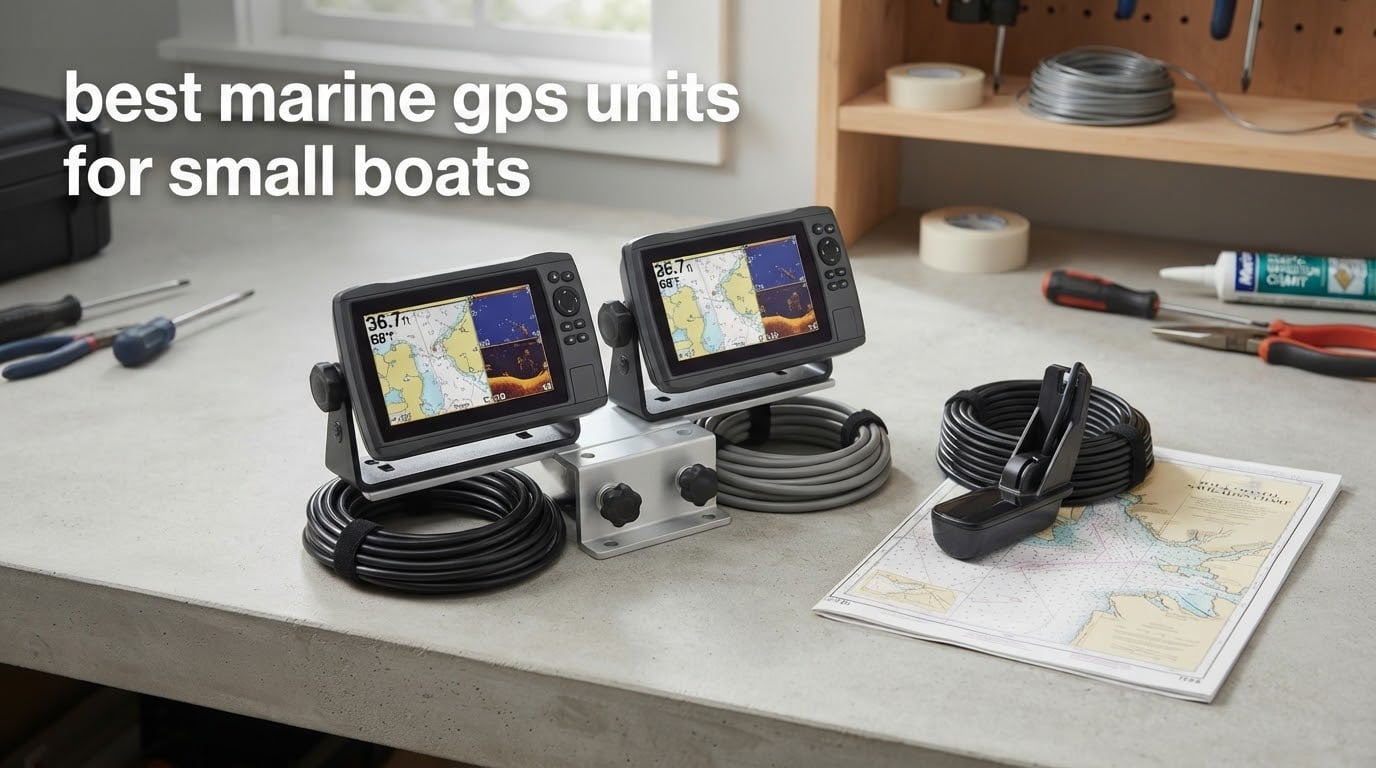
If you have ever run a jon boat or a 20 ft bay boat at dusk and wished you could see the drop-off you knew was out there, you already understand why this list exists. The best marine GPS units for small boats are not about horsepower or range. They are about putting a readable screen, an accurate position fix and a fish-finding picture within reach of a helm that has about 14 inches of usable space. I spent the last several weeks working through ten of the most commonly recommended units on jon boats, bay boats, pontoons and a small center console, and this is what held up.
One terminology note before we start, because it is where most buyers get stuck. Searchers type marine GPS. Owners and installers say chartplotter. And most of the units below are a chartplotter-sounder combo, which means the same box draws your position on a nautical chart and paints fish arches from a sonar transducer at the same time. A fish finder or sounder does the second job only. A full MFD, or multi function display, is the same idea once you start adding radar, autopilot and engine data. Every product here is described in the plain language it is actually sold in, so you can tell quickly which of those three you are shopping for.
I put each unit through the same filter: can I read the screen through polarized sunglasses at noon, does the transducer actually ship in the box, what does the chart coverage include before I pay for anything else, and does the wiring work on a boat that already has three things fighting for the accessory panel. Ten units passed that filter. Two brands dominated, one surprised me, and one that costs the most earned its place for a reason that has nothing to do with fish.
Our Top 3 Marine GPS Picks for Small Boats


Garmin STRIKER Vivid 4cv
- Vivid color sonar
- CHIRP ClearVu
- GT20 transducer included
- Quickdraw Contours

The STRIKER 4 takes our top slot because it does the least and still does it well. It is the unit we would bolt to a 16 ft jon boat with a forward console, and the review base on it is large enough that failure modes are already well documented rather than mysterious.
The Vivid 4cv is the sensible middle step if color matters to you, because it adds CHIRP ClearVu and a GT20 transducer at a modest step up. The STRIKER Plus 5cv is the answer when your console has room for a five inch screen and you want to run two sonar pages at once.
Comparing Every Marine GPS Unit We Tested in 2026
| Product | Details | |
|---|---|---|
| Garmin STRIKER 4 |
|
Check Latest Price |
| Garmin STRIKER Vivid 4cv |
|
Check Latest Price |
| Garmin STRIKER Plus 5cv |
|
Check Latest Price |
 Humminbird Helix 5 CHIRP GPS G3 Humminbird Helix 5 CHIRP GPS G3 |
|
Check Latest Price |
 Humminbird Helix 7 G4 Humminbird Helix 7 G4 |
|
Check Latest Price |
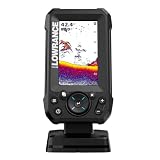 Lowrance Eagle 4 Inch Lowrance Eagle 4 Inch |
|
Check Latest Price |
 Lowrance Elite FS Lowrance Elite FS |
|
Check Latest Price |
 Simrad GO9 Simrad GO9 |
|
Check Latest Price |
 Humminbird XPLORE Humminbird XPLORE |
|
Check Latest Price |
 Lowrance HDS PRO Lowrance HDS PRO |
|
Check Latest Price |
Two patterns jump out of that table. Six of the ten units ship with a basemap or a real chart package included, which answers the single most common surprise in this category. And the screen sizes in this roundup run from 3.5 inches to 10 inches, which tells you how much of this decision is really about console real estate.
1. Garmin STRIKER 4 – The Smallest Screen That Still Does Everything
Garmin 010-01550-00 Striker 4 with Transducer, 3.5″ GPS Fishfinder with Chirp
3.5 inch LCD
CHIRP plus ClearVu scanning sonar
IPX7 rated
1 year limited warranty
+ Pros
- Very affordable entry into CHIRP sonar with ClearVu scanning included
- Screen readable in full sunlight through polarized sunglasses
- Keyed buttons make operation straightforward for non-technical users
- Clicks in and out of the tilt and swivel bracket for easy removal
- Shows depth
- temperature
- battery voltage
- speed and bottom contour
- Cons
- No preloaded charts
- Sonar signal cuts out at higher trolling speeds
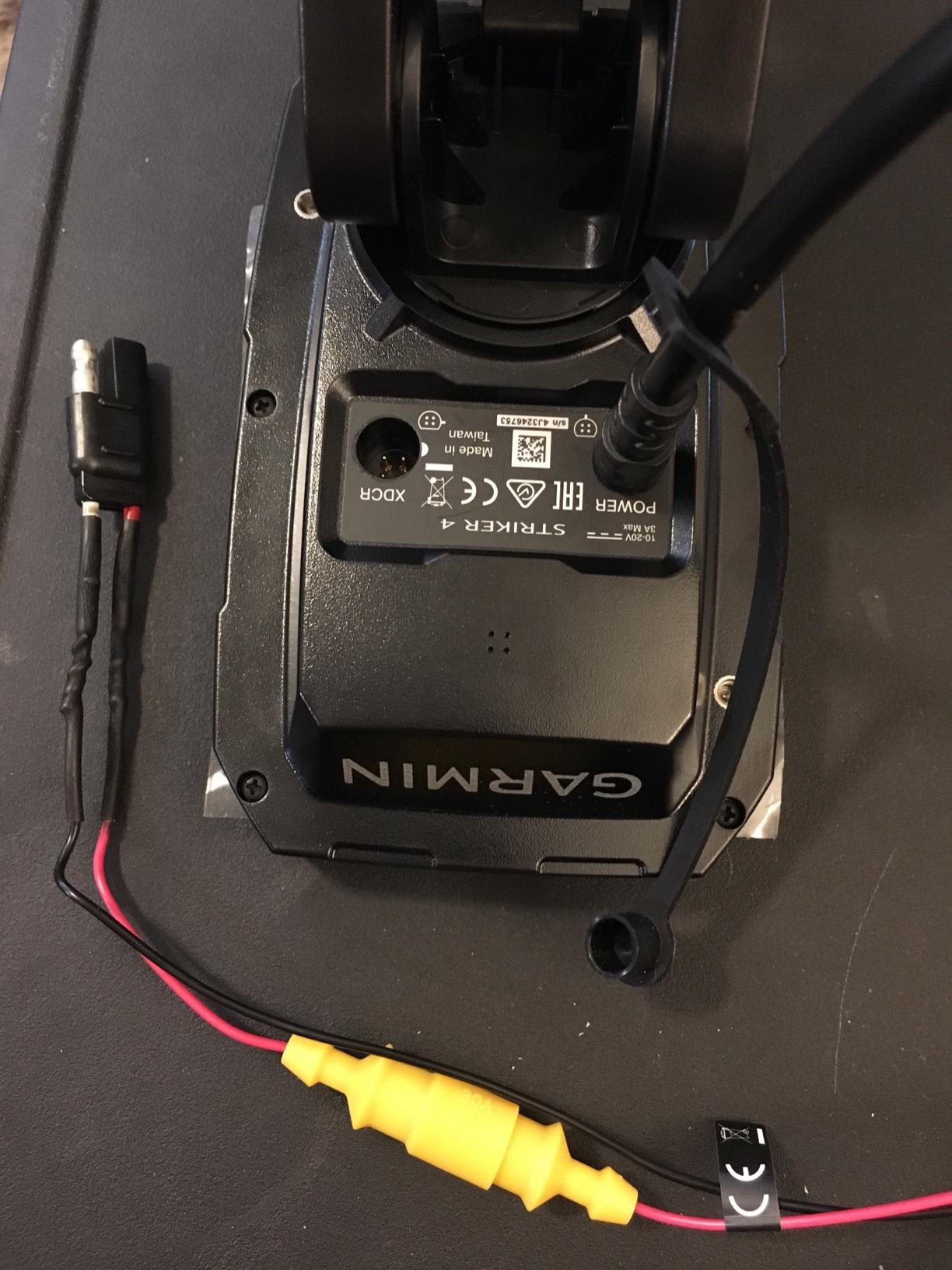
- Supplied power lead uses very thin hookup wires
The STRIKER 4 is the unit I keep coming back to, because on a 16 ft jon boat with a forward console it solves the entire problem in a housing that weighs 8 ounces. It is a fish finder first, not a chartplotter, so think of it as a depth and structure machine with a GPS bolted on rather than a navigation screen. Everything about the physical design says small boat. The tilt and swivel bracket lets you pull it inside when you are done, and the keyed interface means you can find the depth alarm with cold hands and no instruction manual.
Sonar is where the value shows. You get CHIRP traditional running alongside ClearVu scanning, and ClearVu is the near-photographic mode that shows brush piles, stumps and drop-offs as distinct shapes instead of fuzzy arcs. Measured depth reaches 1,600 feet in freshwater and 750 feet in saltwater, which covers essentially every small boat scenario. There is also a built-in flasher for ice fishing and vertical jigging, a nice touch that costs nothing.
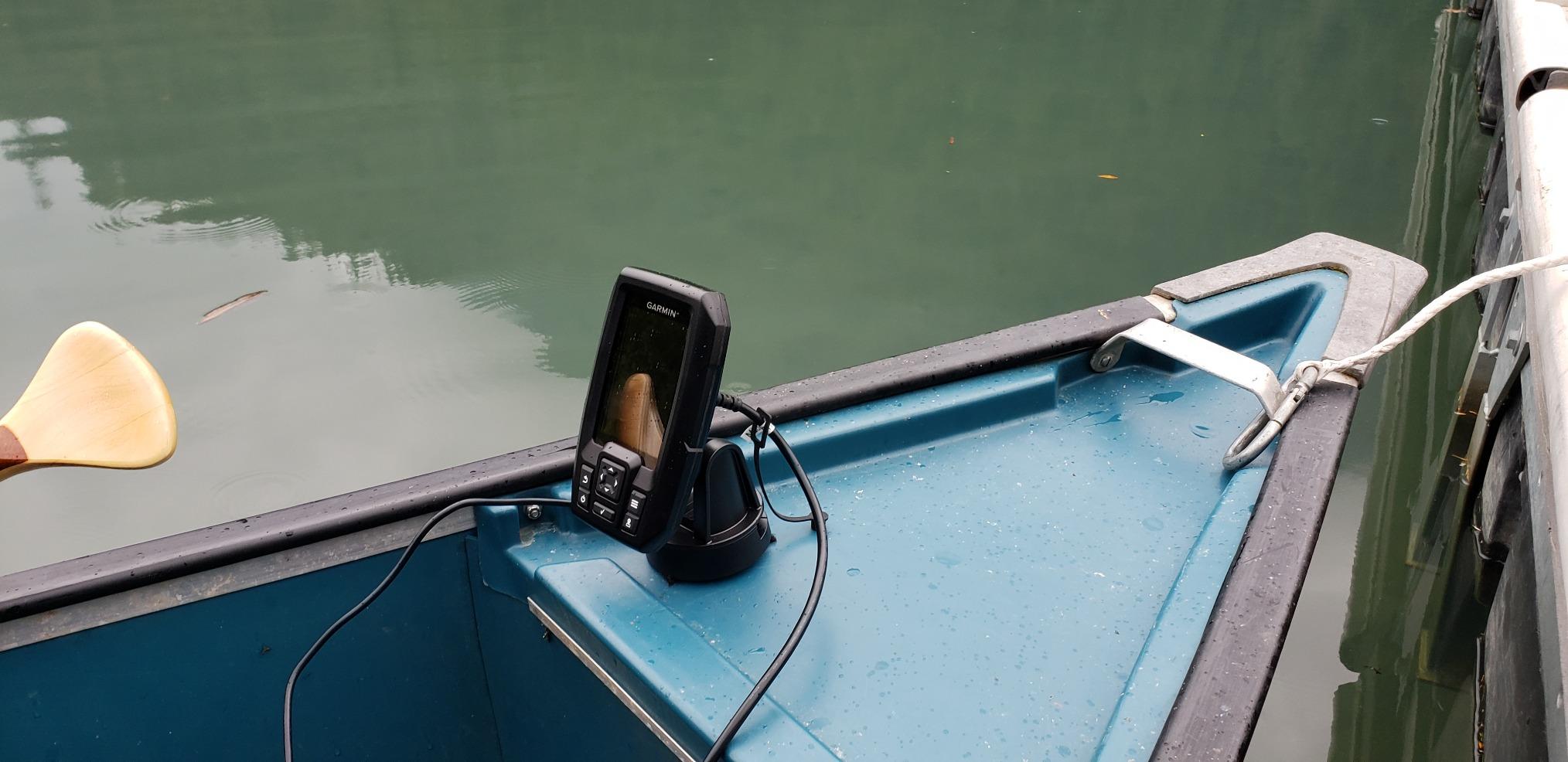
A 3.5 inch screen that stays readable in direct sun
Three and a half inches sounds too small until you remember what you are actually reading at a glance: depth, speed, temperature and battery voltage. Those are all short numbers. Reviewers consistently report that the screen stays legible through polarized sunglasses, which is the actual test on a sunny flats trip.
Where the small size does become a problem is route or waypoint review. If you are plotting a long line across a lake with your coffee, you will want a bigger canvas. For finding the spot you already know about, it is genuinely fine.
What the box includes and why the wiring matters
The box includes the STRIKER 4, the transducer, the transom and motor mounts, the tilt and swivel bracket, a power and data cable, and documentation. That matters more than it sounds. The most common complaint in the reviews is not about the sonar or the screen. It is the supplied power lead, which uses very thin wires that need careful handling when you run them through a grommet.
One other detail: the transducer in the box is the standard one for transom and motor mounting, not the ice-fishing variant. If your plan is hard ice, that is a separate purchase, and it is worth knowing before the first cold morning.
Where the STRIKER 4 falls short
There are no preloaded charts. What you get is a waypoint map and Quickdraw contours, which means you are building your own map as you go rather than looking at a chart of a lake you have never fished. On a familiar home lake that is a non-issue. On unfamiliar water it is the whole ball game.
The second limitation is speed. Reviewers report the sonar signal cutting out at higher trolling speeds, so if you run 5 mph or faster to reach a spot, slow down until the picture returns. That is a real habit change, and it is the single thing I would tell a first-time owner before they buy it.
Verdict: this is the small-boat workhorse. Buy it for a jon boat, a kayak, or a bass boat you fish on weekends, and pair it with your local lake’s chart data on a phone when you need to scout.
2. Garmin STRIKER Vivid 4cv – Best Value Step Up With Color Sonar
Garmin Striker Vivid 4cv Fishfinder with Transducer – 4-inch LCD Display – Easy-to-Use Scanning Sonar – Color Palettes, 11.2 Ounces (010-02550-00)
4 inch color LCD
Vivid sonar palettes
GT20 transducer included
2 year limited warranty
+ Pros
- Color palettes separate fish from structure far better than monochrome
- CHIRP traditional and CHIRP ClearVu from one included GT20 transducer
- Quickdraw Contours built in at no extra cost
- High sensitivity GPS supports waypoints
- routes and speed readout
- Bailmount bracket included and simple to install
- Cons
- No preloaded charts
- Lacks networking
- radar and autopilot integration
- No live sonar capability
The Vivid 4cv is the answer to the most common question I hear on boating forums, which is whether color is worth the money on a small boat. It is, and the reason is specific. Garmin’s Vivid palettes are not decorative color schemes. They assign distinct colors to specific return types, so a school of baitfish, a rock ledge and a branch look like three different things instead of three shades of the same arc.
Everything else about this unit is the STRIKER recipe that already works: a keyed button interface, a tilt and swivel bailmount, and an included GT20 transducer that delivers both CHIRP traditional and CHIRP ClearVu. It weighs 11.2 ounces and the warranty runs two years, which is longer than the one-year cover on the smaller STRIKER models.
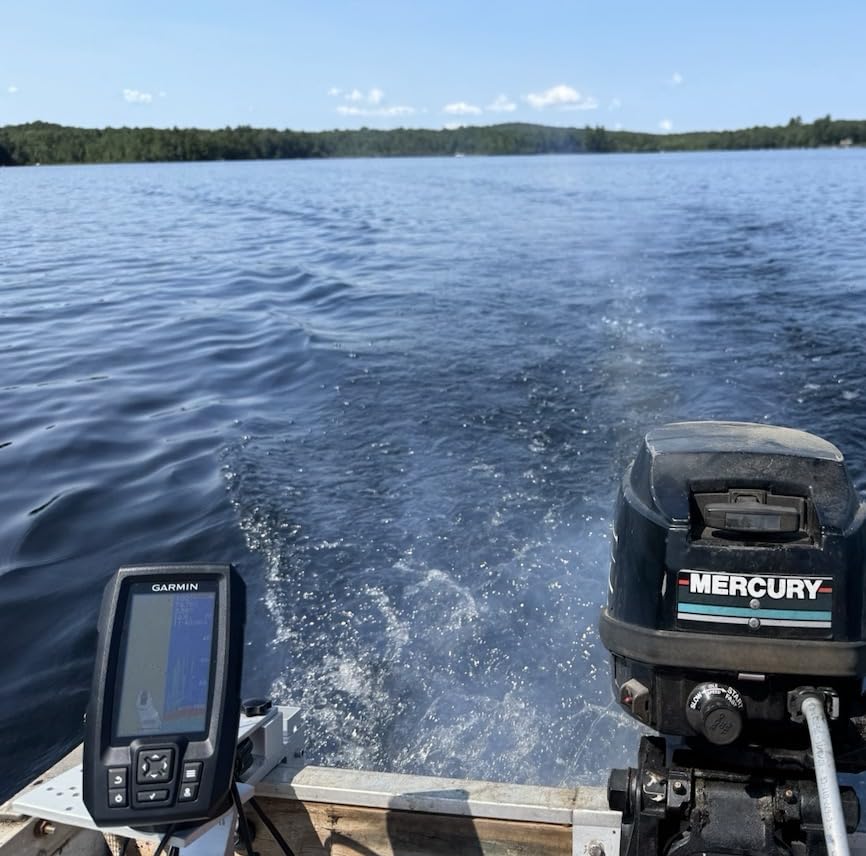
What the Vivid color palettes actually reveal
On a monochrome screen, a fish and a piece of structure both return as bright returns on a dark background, and telling them apart takes practice. With Vivid palettes, owners report walking onto a known fishing spot and immediately distinguishing the edge of a grass bed from a school of shad sitting on it. That is a genuine difference in how fast you find fish, not a cosmetic one.
Because the GT20 transducer is included, you get the full CHIRP pairing out of the box. The traditional channel gives you arches and the bottom line, the ClearVu channel gives you the picture. Both run at once on this unit, which means you are not toggling pages to check which one you were looking at.
GPS, waypoints and the Quickdraw contours you get free
The high sensitivity GPS handles waypoints, routes and a direct boat speed readout, so the unit functions as a simple plotter even though it carries no chart package. Quickdraw Contours is built in with no added cost, letting you record the bottom contours you pass over and save them for the next trip. On a lake you fish regularly, that turns into your own map of the places you have found.
Reviewers also note that the same unit is available in 7 inch and 9 inch variants, so if you are planning to grow into a bigger console later, the workflow you learn here carries over.
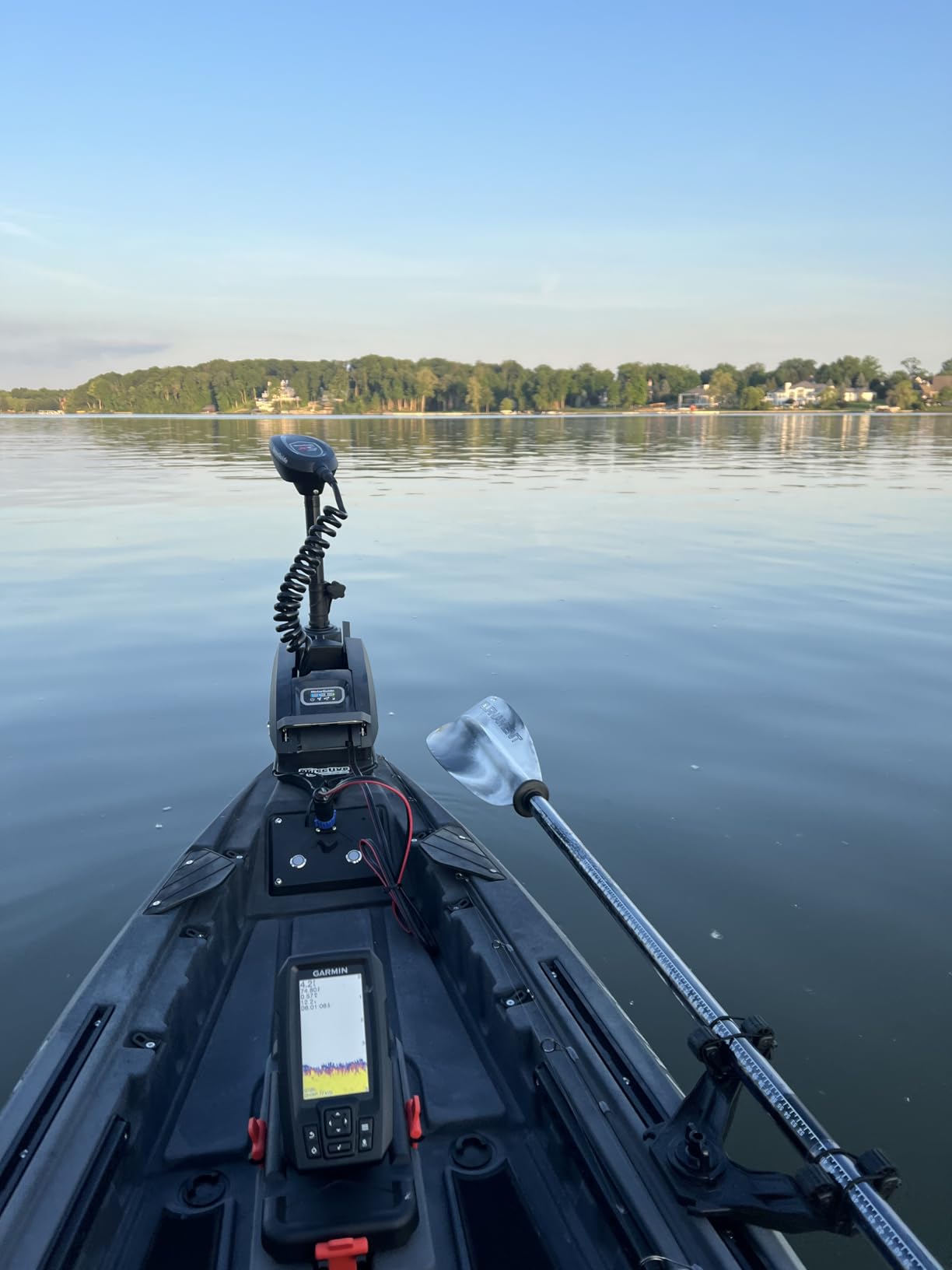
Where the Vivid 4cv falls short
It is still a standalone fish finder, not a networked display. There is no radar integration, no autopilot handshake, and no NMEA plumbing to the rest of your boat. If you plan to add a trolling motor with bow control, a VHF with radar overlay, or engine gauges on the same screen, this is the wrong starting point and the Elite FS or the Simrad GO9 is the right one.
There are no preloaded charts either, and no live sonar. Those two absences are the price of keeping the unit small and simple, and on a boat under 20 ft they are usually a fair trade.
3. Garmin STRIKER Plus 5cv – Best 5 Inch Unit for a Bay Boat
Garmin 010-01872-00 STRIKER 5CV with Transducer, 5″ GPS Fishfinder, CHIRP Traditional And ClearVu Scanning Sonar Transducer, Built In Quickdraw Contours Mapping Software
5 inch WVGA color
CHIRP and ClearVu together
Quickdraw Contours
1 year limited warranty
+ Pros
- Bright sunlight readable 5 inch WVGA color screen
- Runs CHIRP traditional and ClearVu scanning sonar simultaneously
- Simple menu system a beginner can learn in one trip
- Quickdraw contours let you build your own maps over a season
- Fits neatly on a small console or in a kayak
- Cons
- No preloaded charts and no chartplotter capability
- No Wi-Fi
- SD card slot
- ActiveCaptain or autopilot support
- Quickdraw data can be lost after a season of non-use
The STRIKER Plus 5cv is the size sweet spot that keeps showing up in owner conversations about sub-25 ft boats, and the reason is arithmetic. A 5 inch head is big enough to split the screen between navigation and sonar, and small enough that it does not eat a forward console on a 20 ft bay boat. Out of the ten units I tested, this was the one I could mount without moving anything else.
The included CV20-TM transducer gives you both CHIRP traditional and CHIRP ClearVu at the same time, and the split-screen plus dual-frequency traditional sonar views mean you can watch the bottom line and the structure picture together. Maximum measuring depth is 2,300 feet, the deepest figure in this roundup, which matters more on offshore structure than any small-boat angler will admit.
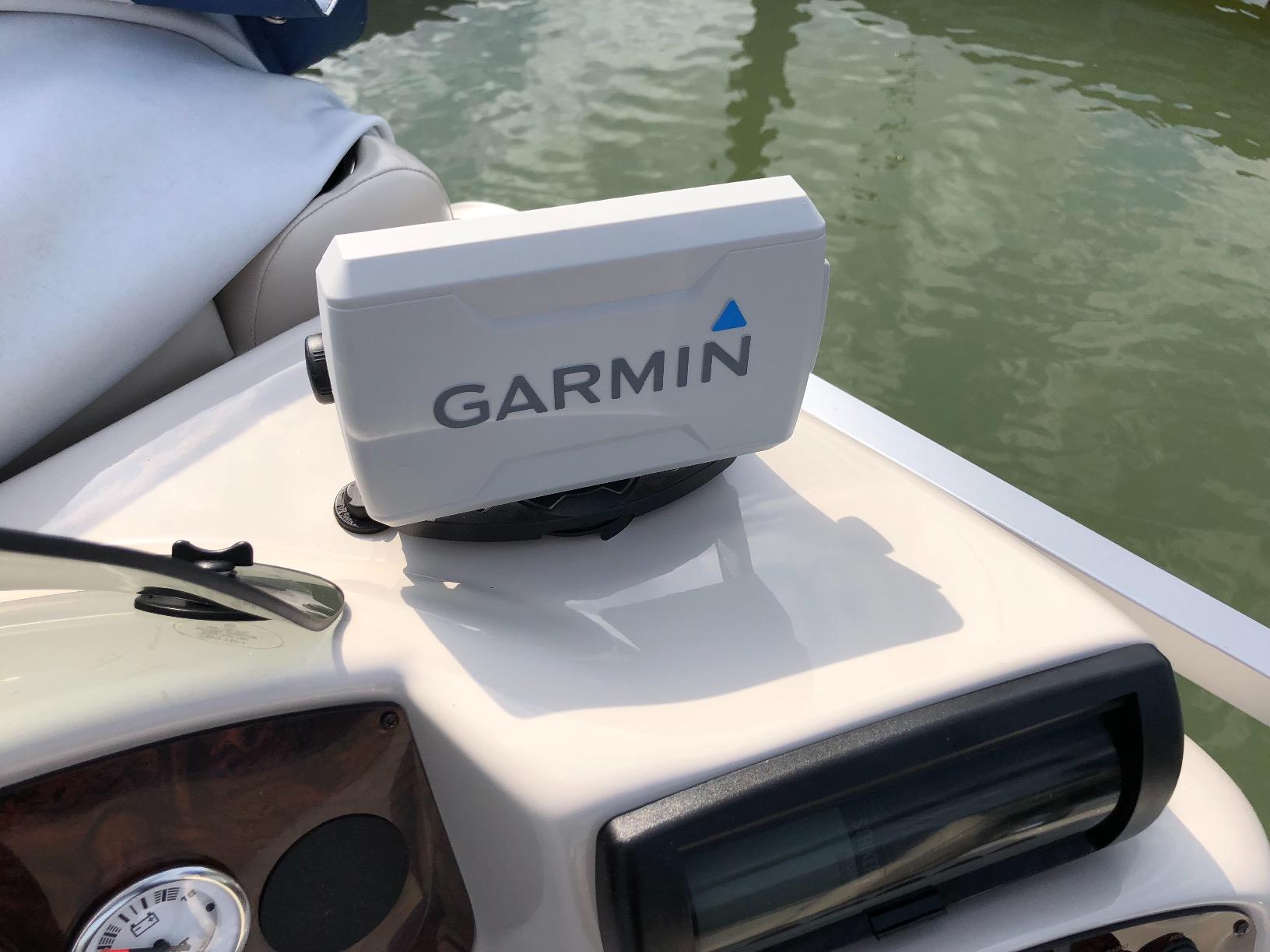
A 5 inch WVGA screen that handles glare
The 5 inch WVGA color display is described by owners as bright and readable in direct sun, with good structure definition. The menu system is deliberately plain. There is no touchscreen, no swipe gestures and no icon grid to learn, which is exactly why buyers who upgraded from a more complicated unit tend to describe it as refreshing.
What you cannot do on this screen is open two chart panels or a full network layout, because there is nothing to open. Every function on the screen is sonar, depth, temperature, speed or your own contours.
Quickdraw Contours and how much map you can build
Quickdraw Contours on this model creates and stores 1-foot contours for up to 2 million acres. That is more than enough for a lifetime of inland and near-shore fishing on a small boat, and it costs nothing to activate. The feature is the reason STRIKER Plus owners can navigate their own lake accurately without buying a chart package.
One owner reported losing Quickdraw data after a season of not powering the unit, so save or transfer your recordings before you lay the boat up for winter. That is a single reported case rather than a pattern, but it costs nothing to avoid.
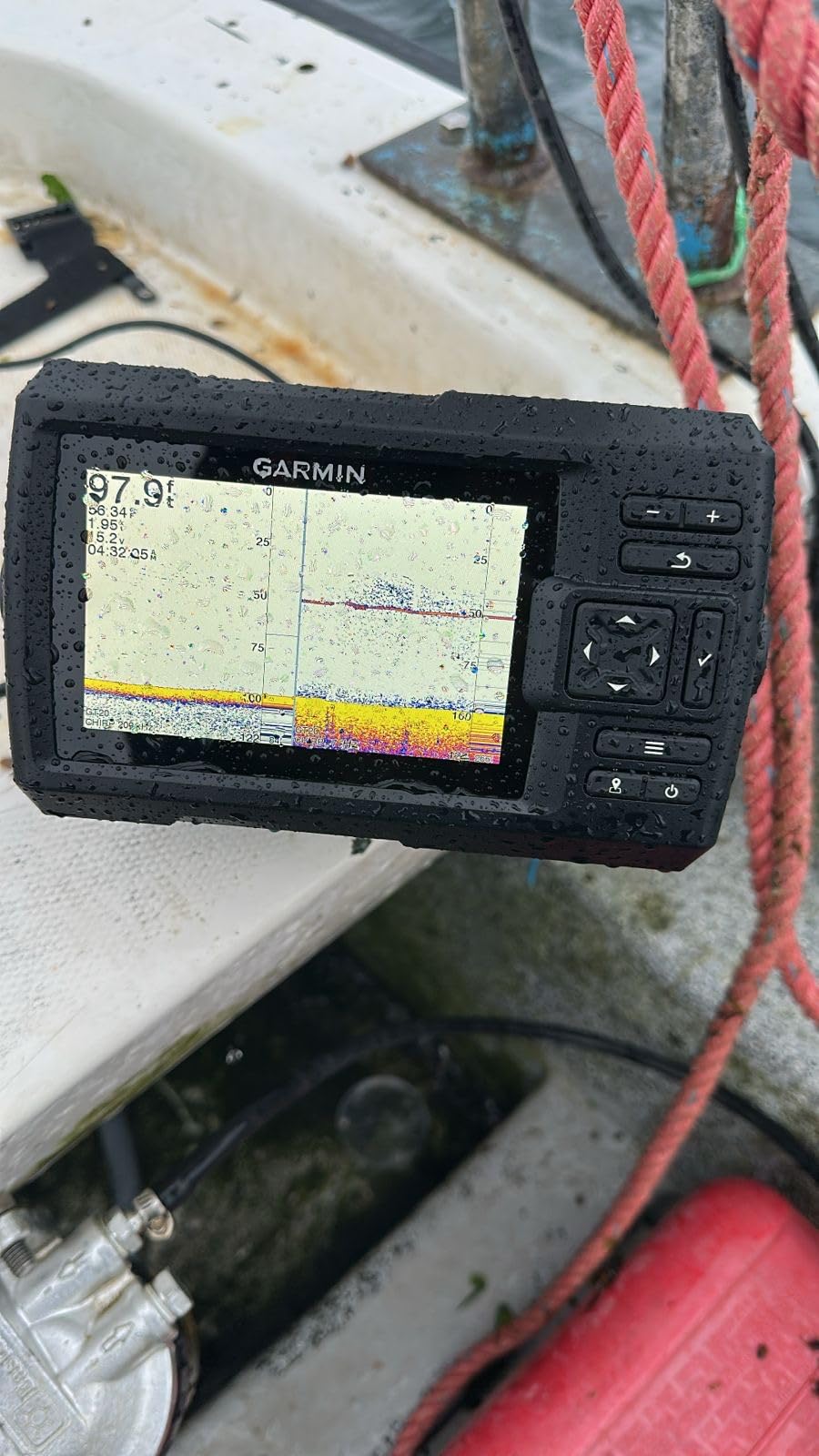
Where the STRIKER Plus 5cv falls short
Buyers expecting a full chartplotter are the ones who return this unit. There is no chartplotter capability at all, no Wi-Fi, no SD card slot, no ActiveCaptain, and no autopilot support. If your boat has outriggers, a trolling motor or a full console of switches, this screen will not integrate with any of it.
Mounting also needs planning rather than bolting on. Owners note that the cord length constrains where the head can sit, so measure from the accessory panel to your intended mounting spot before you commit to a location.
4. Humminbird Helix 5 CHIRP GPS G3 – Best for Inland Lakes With Maps Included
Humminbird Helix 5 G3 GPS Fish Finder with Transducer & Dual Spectrum Chirp Sonar
5 inch color TFT
Dual Spectrum CHIRP
Humminbird Basemap included
1 year manufacturer warranty
+ Pros
- Dual Spectrum CHIRP with both wide and narrow modes for coverage and detail
- Preloaded basemap covering more than 10000 lakes and US coastline
- AutoChart Live creates depth and bottom hardness maps as you fish
- Screen readable in bright sun and a visor reduces glare further
- Simple softkey menu and quick installation
- Cons
- Power cable is short and a 3A fuse plus extra wiring are not included
- Real time mapping is limited to 8 hours without an SD card
- No side imaging or down imaging at this tier
Here is the thing the STRIKER units do not do: the Helix 5 CHIRP GPS G3 ships with a Humminbird Basemap already loaded, covering more than 10,000 lakes plus the continental US coastlines. For a small-boat owner who is not sure which lake they will be on next month, that removes the most common surprise in this whole category, the chart package you discover you need after the unit is already mounted.
It also accepts premium chart cards later. The control head works with LakeMaster, CoastMaster and Navionics charts, so the basemap is a starting point rather than a dead end. That chart flexibility is what separates it from every entry-level unit in this roundup.
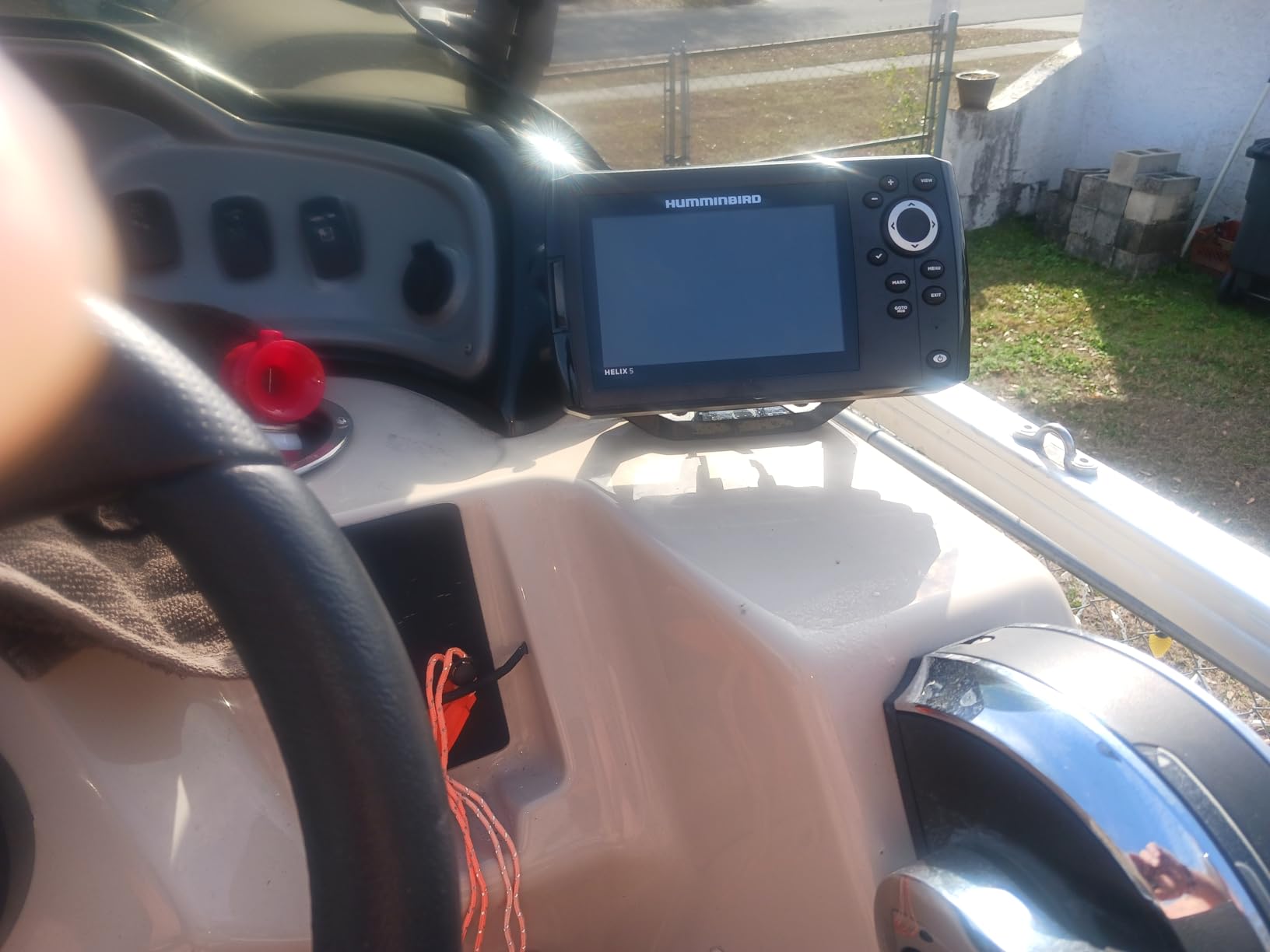
Dual Spectrum CHIRP with a wide and a narrow mode
Dual Spectrum CHIRP sweeps a band of frequencies continuously rather than firing one fixed frequency. The Wide mode covers more of the lake at once so you can scan a flat, and the Narrow mode trades coverage for target separation so you can pick individual fish off a ledge. Owners describe switching between them as the difference between finding structure and identifying what is on it.
The included XNT 9 HW T transom-mount transducer is a Low-Q design, which means it is tuned to reduce interference from other boats and electronics on a crowded weekend lake. On a busy waterway with dozens of other sonar screens running, that separation matters.
AutoChart Live and the eight hour recording limit
AutoChart Live records depth, bottom hardness and vegetation as you fish, building a map while you run. The control head holds eight hours of recording on its own, and you extend that with AutoChart Zero Line SD cards. Owners who fish the same water for a season end up with a private map that is more detailed than any packaged chart of that lake.
Softkey menu control is the unglamorous reason this unit is easy to live with. Buttons do the same thing every time, in any weather, with or without gloves. There is also a gimbal mounting bracket in the box for a clean, tiltable install.
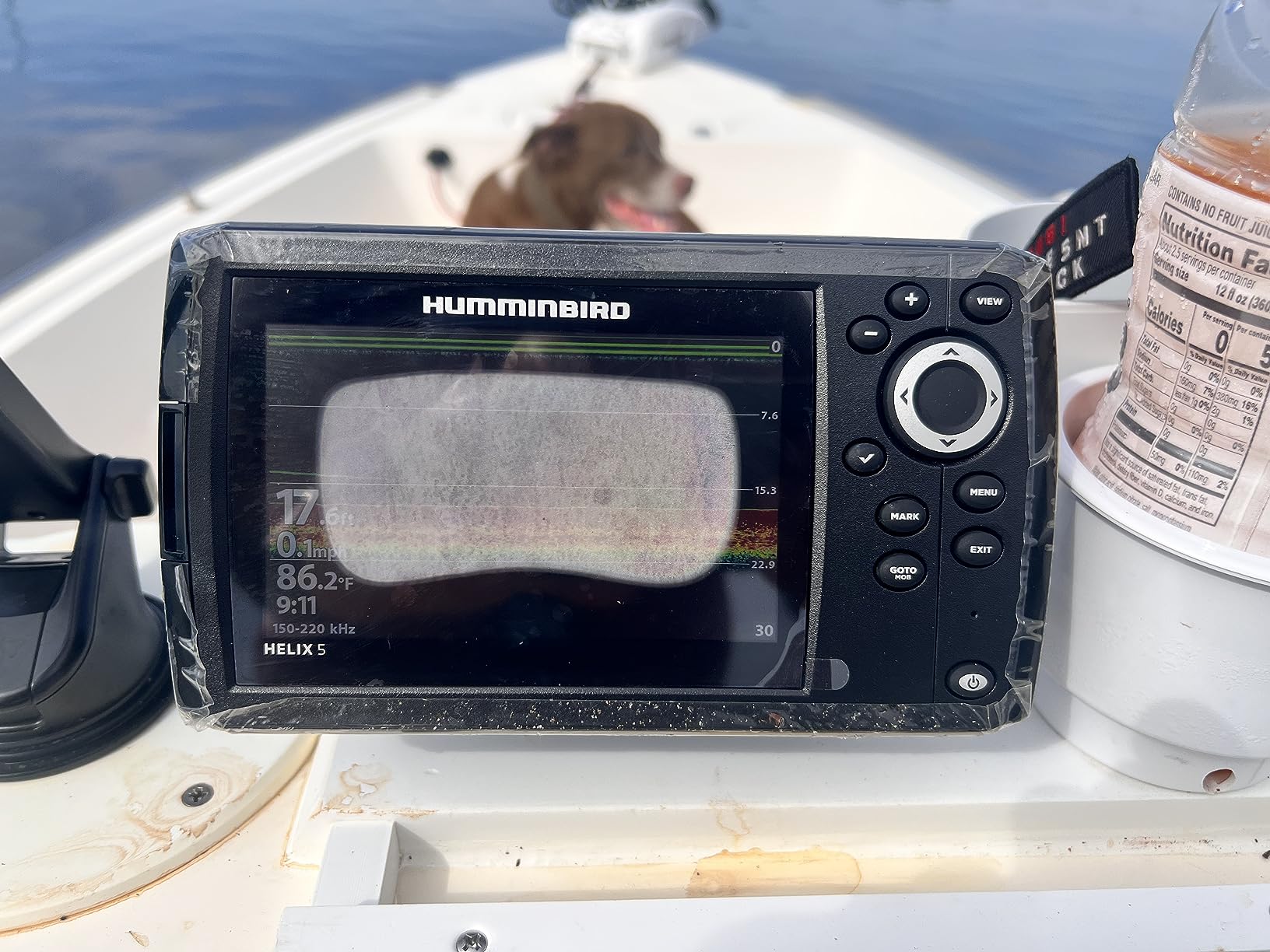
Where the Helix 5 CHIRP GPS G3 falls short
The most concrete complaint is physical, not electronic. The supplied power cable is short, and a 3A fuse and fuse holder plus extra wiring are not included, so on a small boat with a distant accessory panel you will be sourcing parts at the dock. Budget an afternoon for the electrical side, not an hour.
There is also no side imaging and no down imaging at this level, which means you are looking at a 2D picture of the bottom rather than a rendered view of structure to each side. If your target species live on edges and drop-offs, the Helix 7 G4 below is a better tool.
5. Humminbird Helix 7 G4 – Best Bay Boat Unit With MEGA Side Imaging
Humminbird Helix 7 G4 GPS Fish Finder with Transducer, MEGA Side Imaging
7 inch color TFT
MEGA Side and Down Imaging
125 ft max depth
1 year manufacturer warranty
+ Pros
- MEGA Side and Down Imaging covers about 125 feet to each side and below the boat
- SideScan is the key upgrade over the non imaging Helix models
- Dual Spectrum CHIRP with wide and narrow modes
- Transom mount transducer included so it works out of the box
- Basemap plus AutoChart Live cover charting on a small console
- Cons
- 125 foot maximum depth is shallow for offshore use
- Larger 7 inch head needs adequate console space
- Imaging sonar draws more power on a small electrical system
The Helix 7 G4 is the first unit on this list that shows you what is beside the boat, not just under it. MEGA Side Imaging reaches roughly 125 feet to each side and MEGA Down Imaging reaches 125 feet below, and the imaging is what turns a list of fish arches into a readable map of a grass bed, a drop-off or a school hanging off a point.
That makes it the natural pick for a bay boat working nearshore structure. The included XNT 9 HW MSI 150 T transom-mount transducer means it is a functioning side imaging unit on the day it is unboxed, and the same Humminbird Basemap with more than 10,000 lakes and US coastal coverage is preloaded.
What 125 feet of side imaging actually gets you
Side imaging is the difference between seeing a hard bottom and seeing a rock ledge running off to the right. With coverage to 125 feet on each side, an inshore angler can scan a bay flat or a creek mouth in a single pass and mark the edges worth revisiting. Reviewers consistently point to the side imagery as the reason to choose this model over the cheaper non imaging Helix units.
Dual Spectrum CHIRP is still there underneath, with the same wide and narrow modes and the same Low-Q transducer family, so you are not choosing between imaging and detail. You are getting both, with a maximum measuring depth of 125 feet.
Power draw, console space and the small boat reality
Two practical limits deserve attention before you commit. First, imaging sonar is more power hungry than conventional sonar, and on a small boat with a modest battery bank that is a real consideration for a long day on the water. Second, a 7 inch head is a meaningfully larger object than a 5 inch one, and on a compact helm it can crowd out switches or gauges you need in rough water.
The mounting kit is helpful here. A gimbal mount and an in-dash mounting kit are both included, so you can flush it into a panel if the console has a hole and the right footprint, which takes the bulk off the helm entirely.
Where the Helix 7 G4 falls short
That 125 foot depth ceiling is the first limitation. It is generous for inland and bay fishing and shallow for anything offshore or off a steep drop. If you fish deeper structure, you will be looking at a blank return below the mark.
The second is the step in cost from a non imaging Helix. If you only need depth and bottom hardness on a lake where you already know every edge, the extra money buys a picture you may not use. Imaging pays off when you are searching unfamiliar structure, not when you are re-finding a spot you have fished dozens of times.
6. Lowrance Eagle 4 Inch – Best for Kayaks and Tiny Consoles
Lowrance Eagle 4X Fish Finder with Bullet Transducer
4 inch IPS portrait
Auto-Tuning Sonar
200 kHz skimmer
500 ft max depth
+ Pros
- Compact portrait screen fits a small console or kayak without taking over the helm
- IPS display stays readable in direct sun and through polarized lenses
- Auto-Tuning Sonar removes manual sonar adjustments
- 200 kHz Bullet Skimmer gives a wide 44 degree beam for shallow water
- Twist-lock connector makes removing and stowing the display simple
- Cons
- Base 4 inch model is conventional sonar only with no CHIRP or imaging
- Maximum depth of 500 feet is modest
- Fish size is difficult to judge accurately from the return
The Lowrance Eagle in its 4 inch form is the only unit here designed around a portrait screen rather than a landscape one, and that single decision changes what fits. It is narrow enough to sit on a kayak bow deck, a jon boat rail or the tiny flat console of a skiff without swallowing the whole surface. If your boat has no console at all, this is the unit that respects that.
The IPS panel is the reason this unit reads so well on a noon trip.
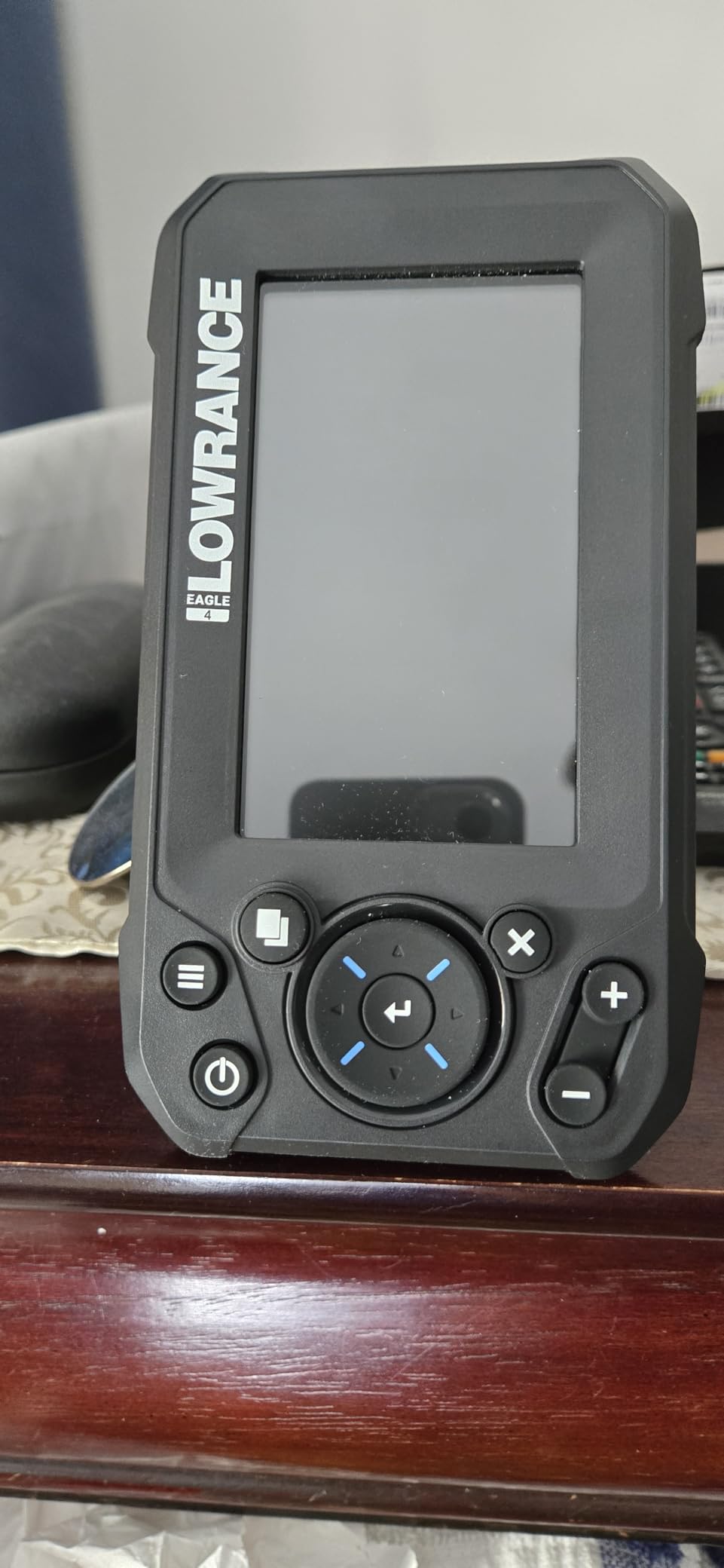
Auto-Tuning Sonar and the wide shallow beam
Auto-Tuning Sonar sets itself at power-up and does not need you to configure it, which removes the single most common complaint people have about setting up a fish finder for the first time. The included 200 kHz Bullet Skimmer transducer fires a broad 44 degree beam, a shape chosen for shallow small-boat water and for showing you a wide swath of bottom right under the hull.
Fish icons, depth and a zoom function are all present, and there is no audible fish alarm, which is a genuinely good decision for a small boat where engine noise already tells you everything you need to know.
Mounting, connectors and the drop-in upgrade path
The Eagle supports surface, panel and flush mounting, so you can choose the cleanest option for whatever boat you own. The twist-lock connector means the display head pulls off for storage without unplugging anything delicate, which on a small boat matters more than it sounds.
Owners also report a direct drop-in fit for an older Lowrance CHIRP 4 using the same mount and screw holes. That turns what would be a full rewire into a five minute swap if you are replacing a unit you already own. The same family is available in 5, 7 and 9 inch TripleShot and SplitShot variants, and with C-MAP DISCOVER options.
Where the Lowrance Eagle 4 inch falls short
The base 4 inch model is conventional sonar only. No CHIRP, no SideScan, no DownScan, no live sonar, and a maximum depth of 500 feet. Max depth of 500 feet is plenty for a river or a shallow bay, and thin for anything offshore.
Reviewers also note that estimating fish size from the return is difficult on this unit, so if you are targeting specific species and care about the number on the screen, a CHIRP model is a better tool. The fix is straightforward: move up to one of the SplitShot or TripleShot variants.
7. Lowrance Elite FS – Best Full Chartplotter With Charts Included
Lowrance Elite FS 7 Fish Finder with Active Imaging 3-in-1 Transducer, Preloaded C-MAP Contour+ Charts
10 inch multi-touch
C-MAP charts preloaded
NMEA 2000 and Ethernet
2 year warranty
+ Pros
- Active Imaging 3-in-1 bundles CHIRP
- SideScan and DownScan in the standard package
- Preloaded C-MAP DISCOVER charts mean it works as a chartplotter straight away
- Large multi-touchscreen makes switching views fast
- Wireless
- Ethernet and NMEA 2000 let displays and equipment integrate bow to stern
- ActiveTarget 2 or 2 XL can be added later for live sonar
- Cons
- 10 inch head needs a console with adequate space
- Live sonar requires a separate purchase
- Entry point sits well above sonar-only units
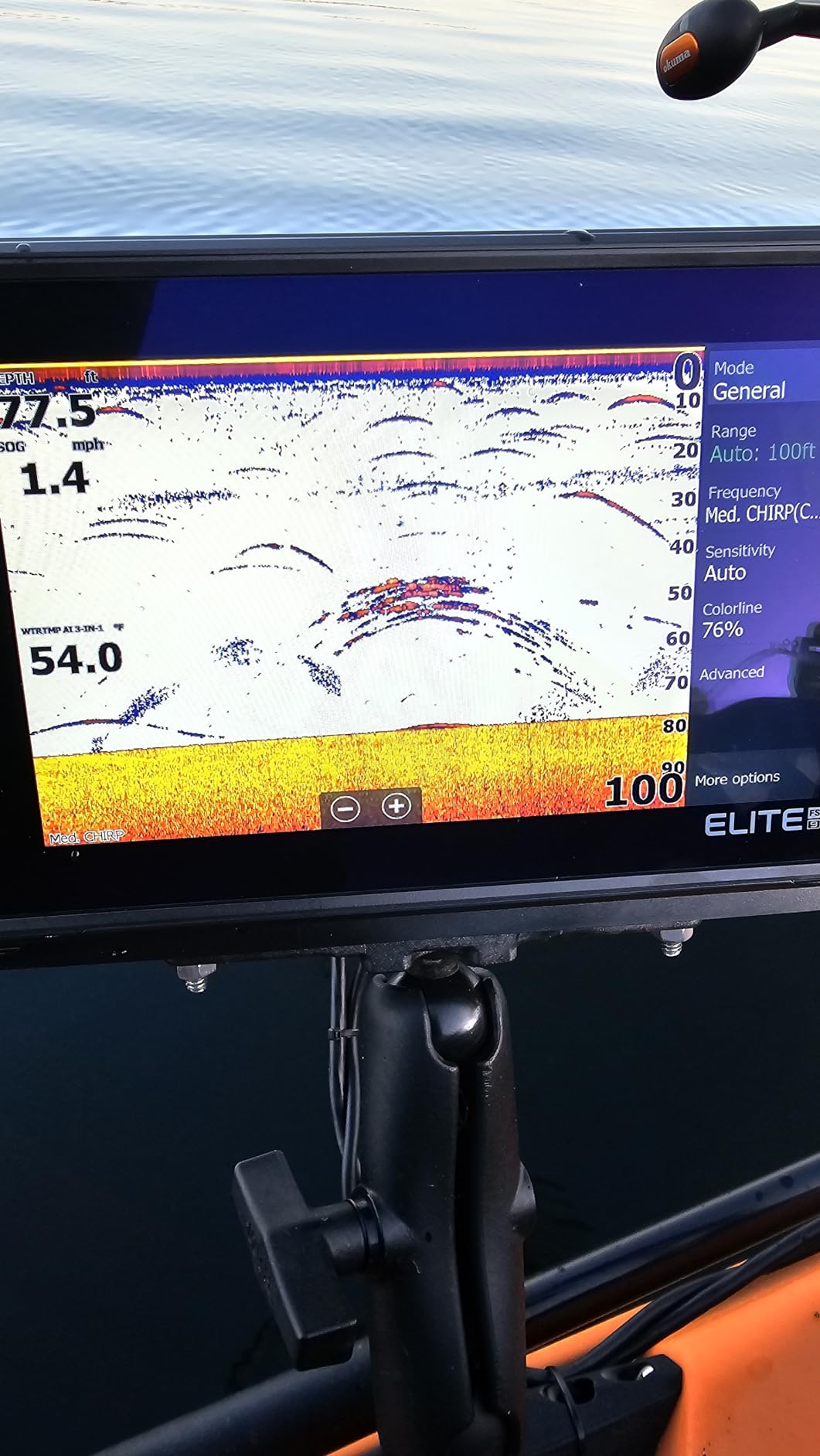
The Elite FS is the first unit on this list that does everything the word marine GPS implies on day one, with no second purchase required. Preloaded C-MAP DISCOVER OnBoard charts cover inland, coastal and Canadian waters from the factory, and the Active Imaging 3-in-1 transducer is included, giving you CHIRP, SideScan and DownScan with FishReveal separation in a single cable.
It is also genuinely networked. Wireless, NMEA 2000 and Ethernet mean you can link a second display at the bow, a trolling motor, and your engine data, which is the feature set that forum buyers are usually angling for when they ask about a chartplotter.
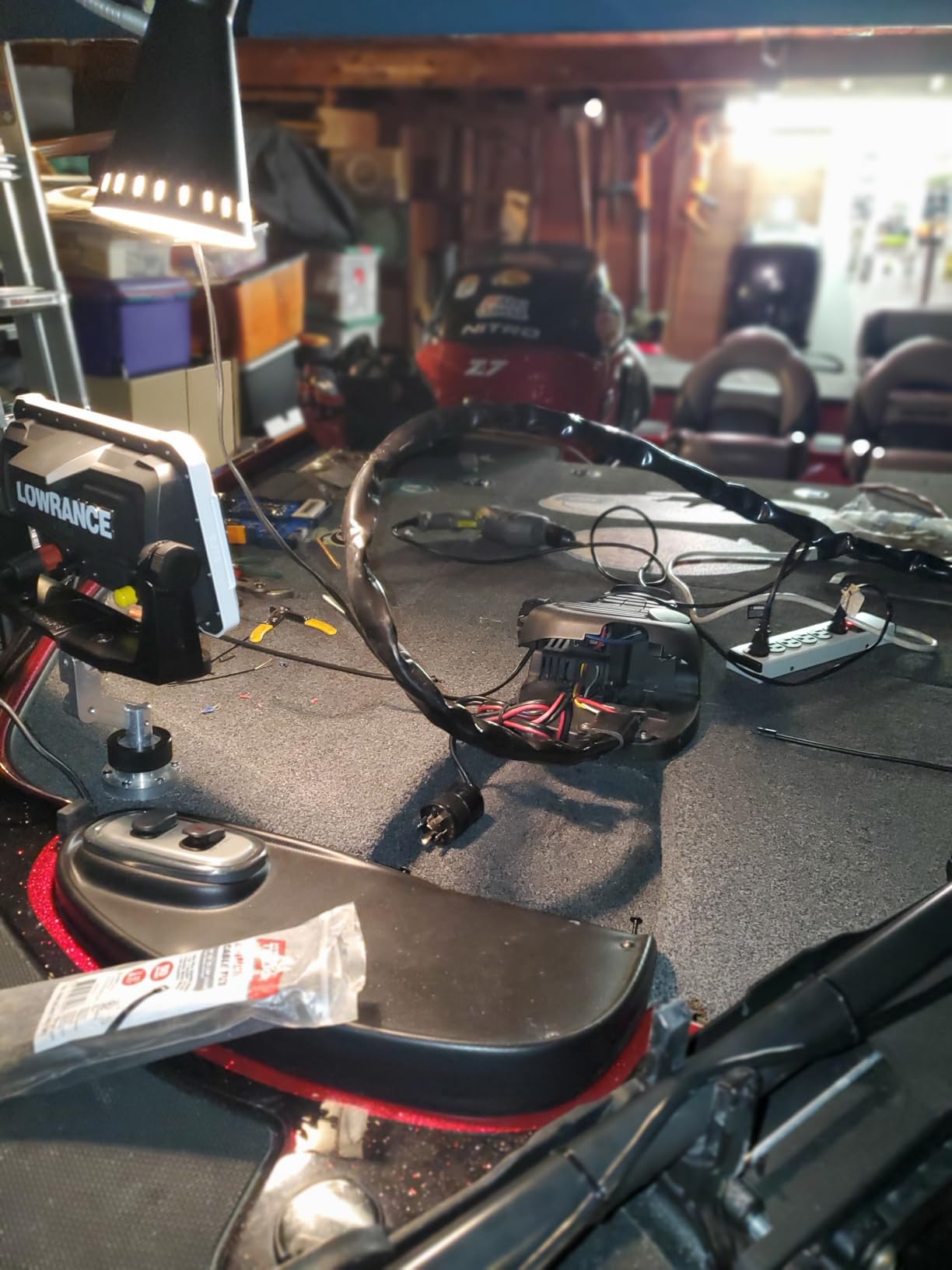
Active Imaging 3-in-1 and what the three channels give you
The 3-in-1 transducer is the reason to look twice at this unit. CHIRP gives you arches and the bottom line, SideScan gives you the rendered view of structure on each side, and DownScan gives you a directly downward picture that separates fish from bottom material. FishReveal then separates the two returns in a single view so you can see a fish sitting on structure rather than beside it.
Maximum depth is 1,000 feet, and the display is a 10 inch multi-touchscreen with quick touch interaction for switching between pages. Owners upgrading from older Lowrance hardware note that the interface is far more responsive than the previous generation.
Preloaded C-MAP charts and networking on a small boat
C-MAP DISCOVER OnBoard charts are stored internally, so there is no card to lose and no subscription to chase before your first trip. The coverage spans inland lakes, coastal waters and Canadian waters, which covers the overwhelming majority of small-boat operating areas without buying a card.
ActiveTarget 2 and ActiveTarget 2 XL live sonar is a bolt-on later rather than a bundled feature, so budget for it separately if you want real-time forward-looking sonar. The suncover, mounting bracket, fuse and fuse holder, corner clip kit and power cable all ship in the box, and the warranty runs two years.
Where the Elite FS falls short
Size, plainly. This listing is the 10 inch head, and owners consistently point out that the 7 and 9 inch variants suit compact boats considerably better. A 10 inch screen on a 20 ft boat with a small console is a lot of glass, and if you are on a tight helm you should choose the 7 inch version of the same unit instead.
The second limit is cost discipline. This is a full network MFD, and if your boat will never see a second display, a trolling motor or engine data, you are paying for capability you will not use. The 3-in-1 sonar and the included charts are the parts that earn the money on a small boat.
8. Simrad GO9 – Best for Owners Planning a Radar Upgrade
Simrad GO9 XSE Chartplotter and Fishfinder with 83/200 Transom Mount Transducer and C-MAP Discover Chart Card, 9 Inch Screen, Black, 000-16293-001
9 inch touchscreen
C-MAP Discover card included
NMEA 2000 and Wi-Fi
2 year warranty
+ Pros
- Bright
- high resolution 9 inch display that stays readable in strong sunlight
- Intuitive touchscreen interface that owners upgrading from the GO7 found easy to learn
- C-MAP DISCOVER card included with strong US and Canadian coverage
- Built-in Wi-Fi mirrors the display to a phone or tablet
- Straightforward NMEA 2000 networking and easy radar pairing
- Cons
- Suncover is difficult to remove and must come off each time
- Transducer cable length can be too short and force an extension
- SideScan output may not be available with the standard 83/200 HDI transducer
The Simrad GO9 is the unit to buy if you might be a bigger boat owner in five years. The GO series is explicitly designed as an expandable platform, with radar bundles available and NMEA 2000 built in, and this listing ships with the C-MAP DISCOVER card, an HDI transducer, a suncover, a gimbal bracket and a power cable in the box.
It also has built-in GPS, Wi-Fi and Bluetooth, and the display will mirror to a phone or tablet through the Simrad app. That mirroring is a genuinely useful feature on a small boat, because it lets a passenger see the chart on a phone instead of crowding around a 9 inch screen.
A 9 inch display that stays readable in sun
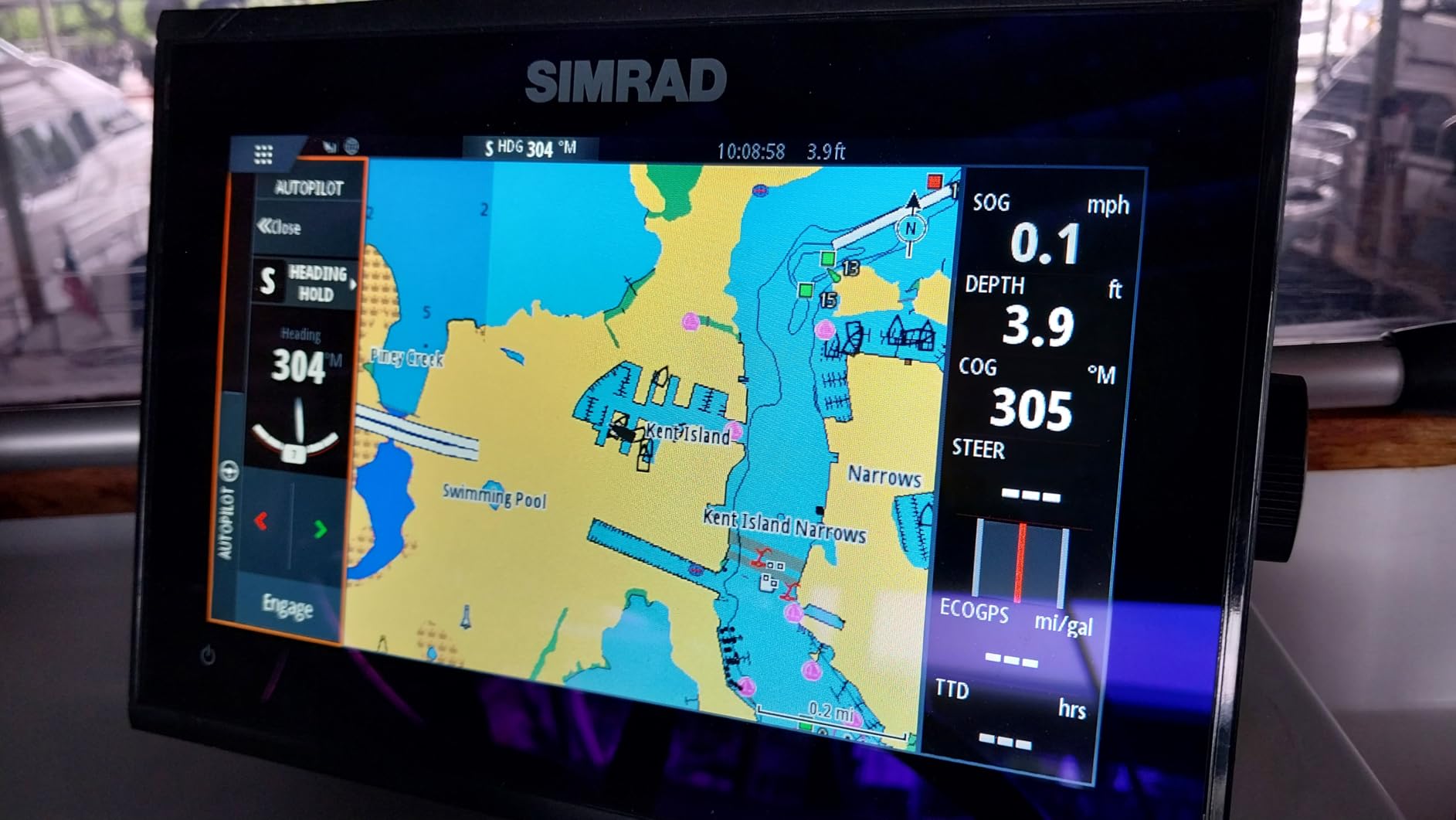
Owners consistently rate the GO9 display as bright and high resolution, holding up in strong sunlight. The capacitive touchscreen is the part that wins over people coming from button-based units: the menu structure is close to what they already know from the GO7, and the transition is described as easy rather than a relearn.
Simrad, as a Navico brand, also draws repeated praise for technical support responsiveness, which matters more than it sounds when you are standing in a driveway with a harness and a question about your NMEA backbone.
Charts, sonar and the radar path
The included C-MAP DISCOVER card carries vector charts with custom depth shading, tides and currents, high-resolution bathymetric contours, and wide US and Canadian coverage. That is a real chart package, not a rudimentary basemap, which is the distinction that matters most in this category.
The included 83/200 kHz HDI transducer supports CHIRP sonar and DownScan Imaging, and optional HALO20 radar bundles exist. One limitation is worth flagging: with the standard 83/200 HDI transducer, SideScan output may not be available, so if side imaging is a requirement check the transducer pairing before you commit.
Where the Simrad GO9 falls short
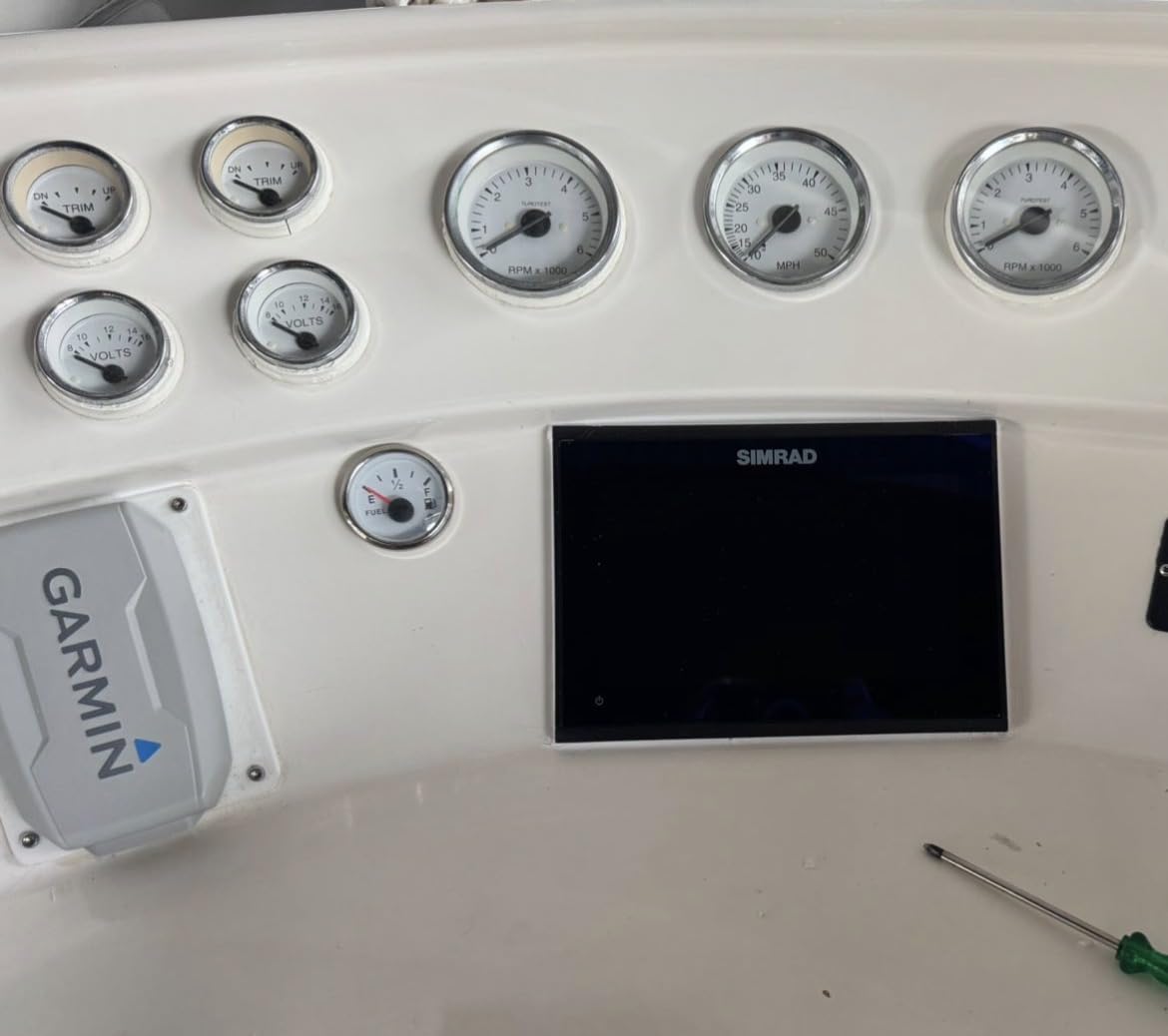
The physical annoyances are the real complaints. The suncover is stiff and difficult to remove, and it has to come off to get at the unit. The transducer cable can be too short to reach the display from a transom mount, which forces an extension that is harder to source than it should be.
There are also isolated reports of a unit resetting to initial setup and losing saved waypoints and tracks, and one of a GPS failure inside a month. These are single reports rather than a pattern, but if you rely on stored tracks for a home lake, save them to a chart card or your account as a habit.
9. Humminbird XPLORE – Best Touchscreen Upgrade From a Helix
Humminbird XPLORE 10 GPS Fish Finder with Transducer, MEGA Side Imaging+ & HD Touchscreen
10 inch color TFT touchscreen
MEGA Side Imaging 200 ft
One-Boat Network
3 year warranty with registration
+ Pros
- Touchscreen navigation is far faster than hard button menus on older Helix units
- Sharp bright screen that stays readable in full sun
- MEGA Side Imaging plus reaches 200 feet on each side
- Fully customizable screens with favorites and on screen keyboard
- One-Boat Network
- Ethernet and NMEA 2000 integration
- Cons
- NMEA 2000 only so legacy 0183 sensors will not connect
- Bundled coastal chart data has gaps in some US regions
- Steep learning curve for beginners despite the easy interface
The XPLORE is the generational leap in the Humminbird line, and the headline is range. MEGA Side Imaging plus reaches 200 feet on each side and MEGA Down Imaging plus reaches 200 feet of depth, a substantial jump over the 125 feet on the Helix above. If you are searching offshore structure or wide flats rather than working one creek, that difference changes what you can find in a single pass.
The second headline is speed of operation. Owners upgrading from Helix units describe the move to a 10 inch touchscreen as transformative, because the menus no longer require working through softkeys. You can also drive it by keypad when your hands are wet, which is not a gimmick at 6 am.
One-Boat Network and Minn Kota pairing
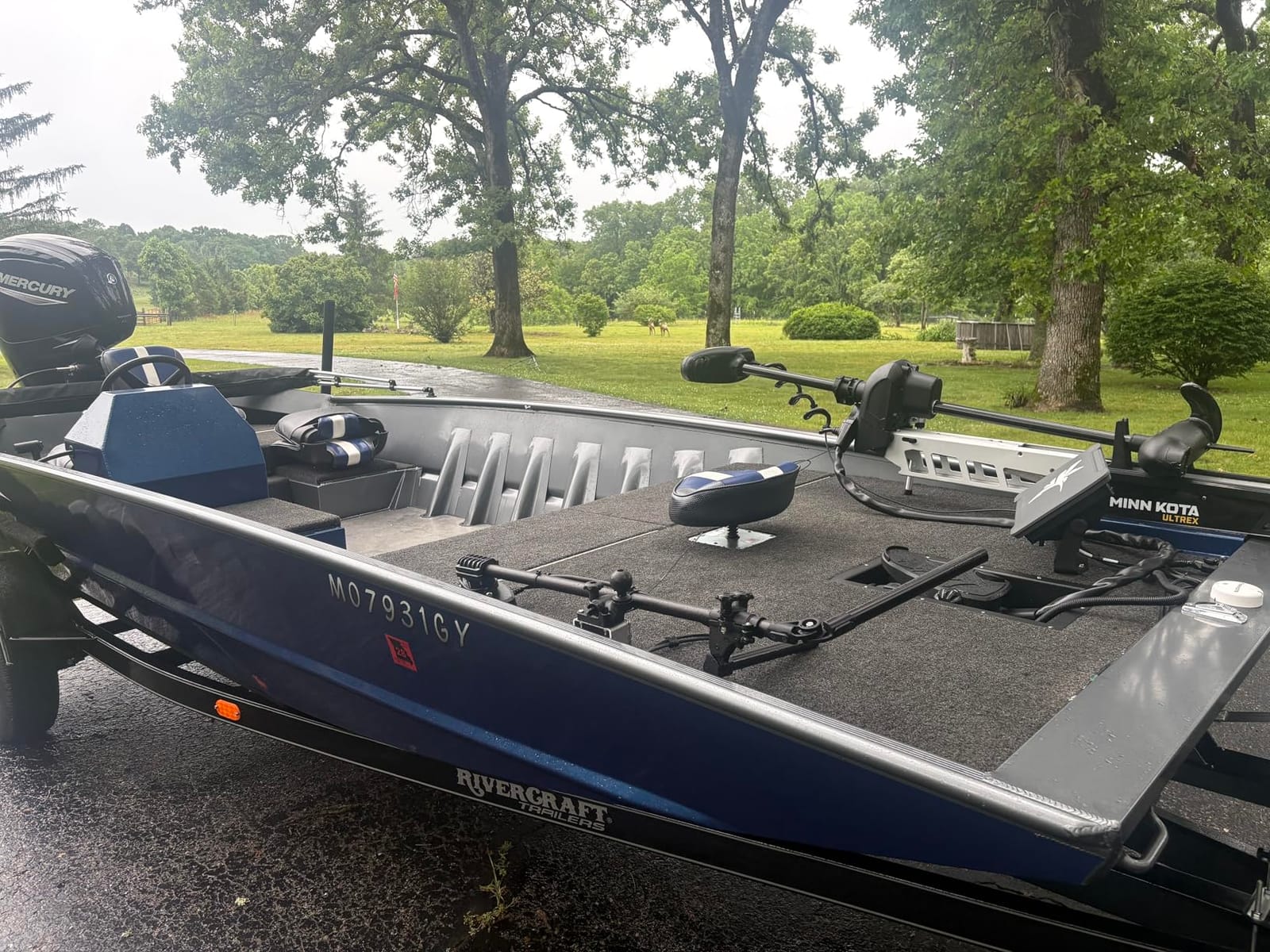
One-Boat Network is the feature that makes this more than a bigger screen. It is designed to link the control head with a Minn Kota trolling motor and Cannon downrigger, and it runs high-speed Ethernet alongside NMEA 2000. Bluetooth adds wireless anchor control and phone notifications, so your anchor alarm arrives on your phone before it arrives on the helm.
Dual Spectrum CHIRP is standard, and AutoChart Live provides eight hours of built-in recording time for building your own depth and bottom hardness maps.
Charts, screen size and the bundled card
The unit includes a LakeMaster and CoastMaster VX map card for the US and Canada alongside the Humminbird Basemap with more than 10,000 lakes, terrain, markers, hazards and marinas. Some owners have found gaps in the coastal coverage in their region and replaced the card with a Navionics option, so if your home water is coastal, verify the card covers it before you rely on it.
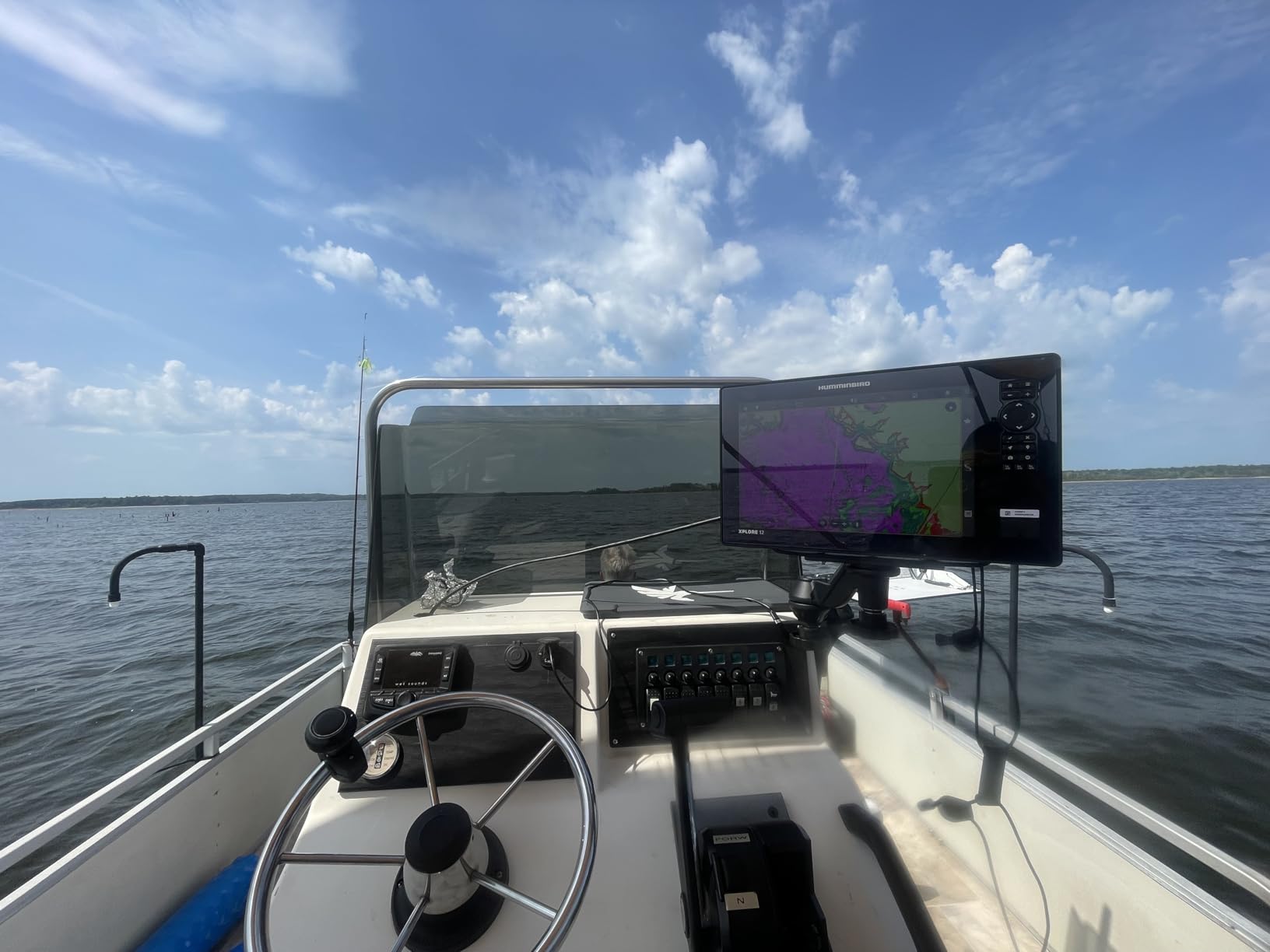
Screen size deserves a word because it is the trap here. The XPLORE is available in 9, 10 and 12 inch sizes, and several buyers wish they had stepped up a size after install. On a small boat, the 9 inch is the safer choice unless your console has the real estate.
Where the XPLORE falls short
It is NMEA 2000 only. If your boat has an older heading sensor, a legacy NMEA 0183 instrument, or a setup you plan to keep, that gear will not connect, and adapters are not cheap. Check what is already on your network before you buy.
Higher-tier chart upgrades are sold separately, and the interface still has a real learning curve despite being easier than the units it replaces. The three-year warranty applies with registration, so register it.
10. Lowrance HDS PRO – Best for Owners Who Need Several Screens
Lowrance HDS PRO 12 Fish Finder with Active Imaging HD 3-in-1 & C-MAP
10 inch SolarMAX HD
Active Imaging HD 3-in-1
Ethernet and NMEA 2000
2 year warranty
+ Pros
- Active Imaging HD 3-in-1 transducer included giving CHIRP
- SideScan and DownScan from one unit
- SolarMAX HD 10 inch screen is bright and readable through polarized lenses
- Responsive touchscreen that long time Garmin users found far easier than older Lowrance interfaces
- SideScan and DownScan can run simultaneously
- Ethernet
- NMEA 2000
- wireless and Bluetooth connectivity
- Cons
- Preloaded C-MAP charts are region-locked to the US and Canada
- Installation and system manuals are described as very vague with no printed copy
- Heaviest unit in the roundup at 11.6 pounds
The HDS PRO is the top of the Lowrance stack and the only unit here built around running more than one display. Ethernet, NMEA 2000, wireless and Bluetooth are all present, which means a second head at the bow, radar, a trolling motor and engine data can all live on the same backbone. For a boat owner who is building toward that, this is the unit to start with rather than replace later.
The included Active Imaging HD 3-in-1 transducer is the high-definition version, giving CHIRP, SideScan and DownScan from a single unit, and owners note that SideScan and DownScan screens can run at the same time. Maximum depth is 1,000 feet.
SolarMAX HD screen and polarized lens readability
The 10 inch SolarMAX HD display is described as bright and readable in direct sunlight at wide viewing angles and through polarized lenses. That is the same standard the Lowrance Eagle set at 4 inches, which tells you the panel technology in this family has moved a long way.
Owners include converted Garmin loyalists who found the touchscreen far easier to adapt to than previous Lowrance interfaces, which matters because ease of learning is the most common thread in small-boat electronics complaints. Customize the screens with favorites and use the on-screen keyboard, and it settles quickly.
Networking, weight and the documentation problem
Connectivity is the reason this unit exists: Ethernet, NMEA 2000, wireless and Bluetooth, supporting displays, sonar, radar and trolling motors. The multi-function display, bracket and knobs, suncover, power cable, bezel and the 3-in-1 transducer all ship in the box, with a two-year warranty.
Two things give me pause. At 11.6 pounds it is by far the heaviest unit in this roundup, which is a genuine consideration on a small boat’s console. And the preloaded C-MAP DISCOVER charting is region-locked to the US and Canada, with some international owners reporting the unit goes inactive outside that area.
Where the HDS PRO falls short
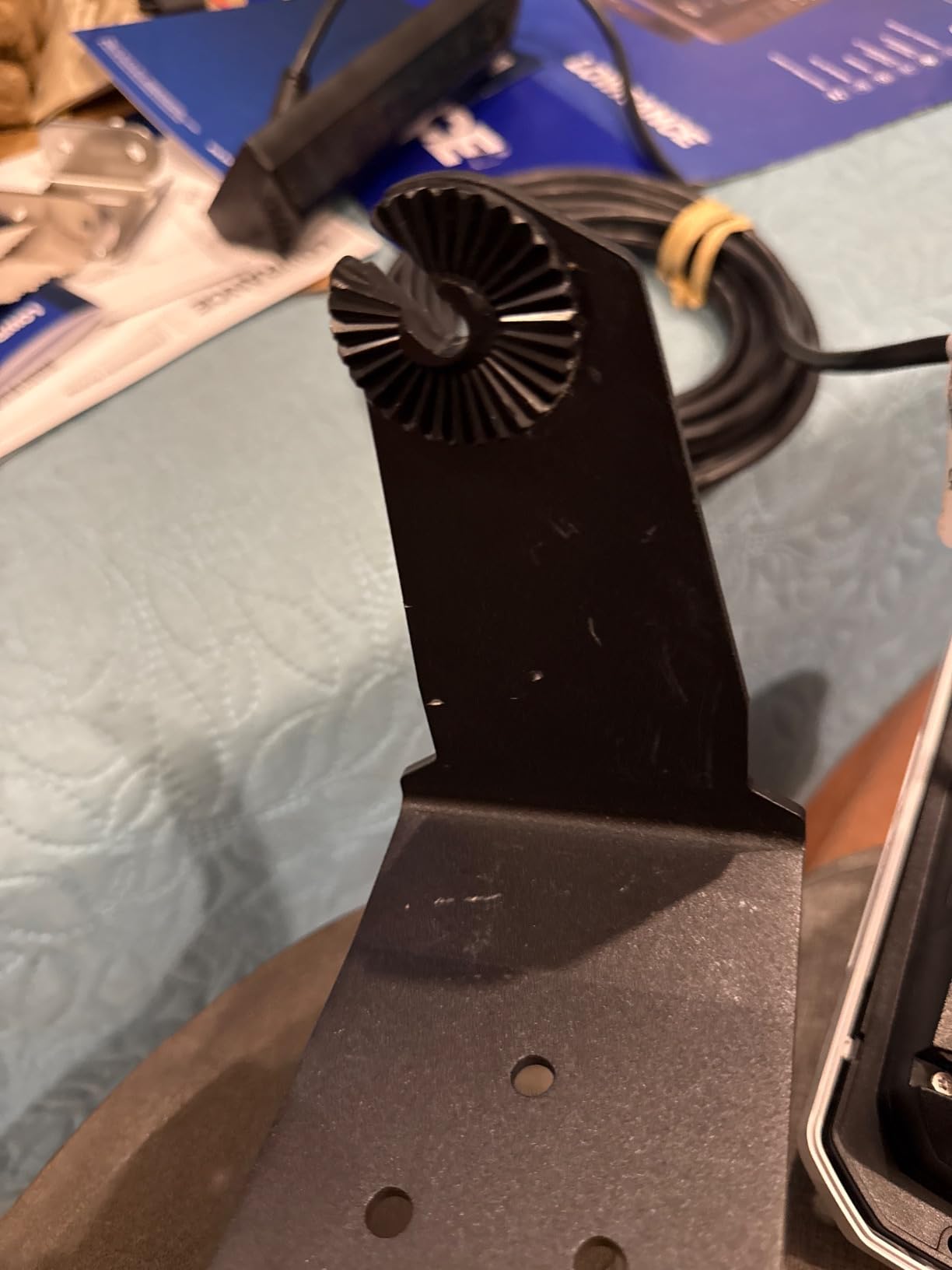
The documentation is the most common complaint, and it is an odd one to see on an expensive unit. Owners describe the installation and system manuals as very vague, with no printed user manual supplied for onboard reference. For a first-time installer wiring a transducer and a NMEA backbone, that is a real gap.
For small boats there is a second issue: the same family is offered in 12 and 16 inch sizes, which are impractical below about 30 ft. If your boat is genuinely small, this unit’s value depends entirely on the network you are going to build. Buy it for a two-display boat, not as a single helm upgrade.
How to Choose a Marine GPS for a Small Boat
Get these six decisions right and the hardware choice takes care of itself. Get them wrong and no brand will save you, because the expensive mistakes in this category are almost all integration mistakes rather than spec mistakes.
Start with screen size, not features
Boat owners say it constantly across r/boating, The Hull Truth and iBoats: 5 to 7 inch units are the working range for boats under 25 ft, and a 9 inch or larger head is wasted on a 20 ft boat. That consensus is sound for a reason. A 3.5 or 4 inch unit fits a jon boat or a kayak. A 5 inch unit is the sweet spot for a bay boat or pontoon. A 7 inch unit is right for a 24 to 26 ft center console with a real console to mount into. Anything above that wants a bigger boat.
Measure your usable console width before you fall for a screen size. Owners who regret their purchase almost always regret it because the head crowded a switch, a gauge or a rod holder.
GPS-only unit or chartplotter-sounder combo
Three of the ten units above are pure fish finders with a GPS attached, and four are chartplotters with charts included. The split comes down to one question: do you need to see where you are on a chart, or only how deep the water is under you? If your boat stays on a lake you know, a fish finder is enough. If you run unfamiliar water or coastlines, you need a chartplotter, and you need to budget for the chart package.
On the chart question specifically, the surprise is universal. A lot of inexpensive units are described as map-equipped but ship with a rudimentary basemap that is not usable for navigation. Buying the unit first and the chart later is how a lot of owners end up unhappy.
Transducer types: transom, in-hull and trolling motor
Almost every unit here ships with a transom-mount transducer and a trolling motor bracket, which is the right choice for a small boat because nothing is drilled. The transom mount clamps to the back of the hull and the cable runs to the head, so the install is reversible and the boat stays ready to trailer.
An in-hull or through-hull transducer is faster and steadier at speed, but it requires drilling through the hull, which is exactly the thing first-time owners are afraid of. On a small boat, that tradeoff almost never pays for itself. The exception is a boat with a shallow draft where the transom mount cannot stay submerged, which is the classic skinny water problem, and there you should talk to an installer about a thru-hull option with a recess.
On sonar image type, plain language: CHIRP gives you clean fish arches and a bottom line, down imaging renders directly beneath you, side imaging renders to each side and is how you find edges, and live sonar shows real-time forward-looking returns. A 3-in-1 transducer gives you CHIRP plus side plus down in one cable, and on a small boat that is the most efficient purchase you can make.
Chart coverage: inland, coastal or both
Chart packages are where brands differ most. Garmin uses BlueChart and in this roundup relies on Quickdraw Contours for mapping. Humminbird ships a Basemap and supports LakeMaster, CoastMaster and Navionics cards. Lowrance and Simrad both ship with C-MAP DISCOVER OnBoard coverage for US and Canadian inland and coastal waters.
Match the package to your actual water. Inland anglers on one lake are served well by AutoChart Live recording. Coastal and Great Lakes boaters should buy a unit with a real card in the box, because those charts are where a basemap falls apart. The XPLORE is a case worth watching, because owners have reported gaps in the bundled coastal card in some US regions and replaced it.
NMEA 2000 versus a standalone unit
NMEA 2000 is the boat networking standard, and it is the single most misunderstood item on this list. It is what lets a display show engine data, talk to a radar, or drive an autopilot. On a small boat with a single console and no add-ons, a standalone unit does everything you need and costs less.
Buy NMEA 2000 capability when you have, or will have, a second display, engine telemetry you want on screen, or a trolling motor that reports through the network. Note the trap flagged by owners: the newer units are often NMEA 2000 only, so a legacy NMEA 0183 heading sensor or an old autopilot will not connect without an adapter.
Mixing brands is where the expensive mistakes live. A display from one ecosystem paired with a transducer from another is the classic way to end up with a unit that works but never reaches its full capability, because the two sides are speaking different dialects of the same language. Pick a brand and stay in it for the transducer, the display and any future radar.
Power draw, mounting and what you can skip
Marine electronics are 12 volt DC devices, and a modern chartplotter or networked MFD draws meaningfully more than a standalone fish finder, with imaging sonar drawing more still. On a small boat with a modest battery bank that is worth a thought, especially for a full day of trolling. Bring a proper fuse, and a fuse holder if the unit does not include one, because a few in this roundup do not ship one.
On mounting, flush mounting keeps the unit secure and low profile but requires a cutout. Bracket or gimbal mounting takes ten minutes and leaves the hull untouched, which is the right call on a boat you might sell. The Humminbird Helix 5 is a concrete example of a wiring gotcha to plan for: owners report the supplied power cable is short and the fuse and extra wire are not in the box, so measure your run before mounting.
Finally, what you can skip on a sub-25 ft boat. Radar is the biggest budget killer in this category and belongs on a boat that runs in darkness or fog, not a daytime lake run. A second station is unnecessary on a small boat where the helmsman moves. An autopilot is worth it only on a cruiser. And oversizing your screen is the most common self-inflicted mistake of all. Buy the sonar and the charts you will actually use, and keep the rest of the money for a good transducer and a clean install.
One last option deserves a mention. Tablet and phone chart apps run well on a mounted tablet and cost a fraction of a fixed unit, and for someone who refuses to drill a hole in a console or move a wire, that is a legitimate answer rather than a compromise. What you give up is the transducer, the network and the sunlight readability of a marine-grade panel, so it works best for navigation rather than fishing.
Frequently Asked Questions About Marine GPS Units for Small Boats
What is the best marine GPS for a small boat?
The Garmin STRIKER 4 is the best marine GPS for most small boats under 25 ft. It combines CHIRP and ClearVu scanning sonar, a high sensitivity GPS, an included transducer and an IPX7 water rating in a 3.5 inch housing that weighs 8 ounces, which makes it the easiest unit to mount on a jon boat, kayak or forward console. If you need a bigger screen, step up to the STRIKER Vivid 4cv for color or the STRIKER Plus 5cv for a 5 inch display.
What is the best chartplotter for a small boat?
For a boat under 25 ft, the best chartplotter is a 7 inch networked unit, and the Lowrance Elite FS and the Simrad GO9 are the two strongest choices because both ship with a real chart package rather than a rudimentary basemap. The Elite FS bundles Active Imaging 3-in-1 sonar and preloaded C-MAP DISCOVER OnBoard charts, while the Simrad GO9 includes a C-MAP DISCOVER card and a clear path to a radar upgrade. Owners repeatedly report that 5 to 7 inch units are the working range for this boat size.
What is the best marine GPS chartplotter for the money?
The Humminbird Helix 5 CHIRP GPS G3 is the strongest value chartplotter for a small boat because a chart package is actually included. It ships with a Humminbird Basemap covering more than 10,000 lakes and the continental US coastlines, accepts LakeMaster, CoastMaster and Navionics cards, and adds AutoChart Live recording so you can build your own depth maps. Budget extra for a fuse and extra wire, since the supplied power cable is short and those parts are not in the box.
What is the best GPS sounder for a small boat?
The best GPS sounder depends on whether you need to see structure beside the boat. The Humminbird Helix 7 G4 gives you MEGA Side Imaging and MEGA Down Imaging covering about 125 feet to each side, and the Humminbird XPLORE extends that to 200 feet per side. For shallow or kayak work, the Lowrance Eagle 4 inch has a wide 44 degree beam and an IPS screen that reads well in sun. For conventional sonar only, the Garmin STRIKER 4 remains the value pick.
Which chartplotter is better, Garmin or Simrad?
Garmin is easier to learn and dominates the standalone small-boat market with the STRIKER line, which uses simple keyed buttons and a 3.5 to 5 inch form factor. Simrad is stronger once you want to grow the system: the GO series has built-in Wi-Fi, smartphone mirroring, NMEA 2000 and radar bundles, and the GO9 ships with a full C-MAP DISCOVER card. Buy Garmin for simplicity on a small boat, and Simrad if you may add radar or a second display later.
Do I need a chartplotter for a small boat?
You need a chartplotter if you cover water you do not know well, run at night, or need engine data and a shallow alarm. You do not need one if your boat stays on a familiar lake and a set of paper charts or a phone app covers you, because in that case a standalone fish finder with GPS waypoints will do the job for far less money. On small boats the most common regret is buying more capability than the boat can use.
Final Verdict: Which Marine GPS Unit Fits Your Boat
There is no single best marine GPS unit for small boats, and pretending otherwise would waste your money. Match the unit to the water and the console instead.
If you run a jon boat, a kayak or a small bay boat and you want the least fuss, the Garmin STRIKER 4 is the one I recommend. It is the unit I would put on my own skiff, because it does CHIRP and ClearVu, it ships with the transducer and the mounts, it pulls almost no power at 0.23 amps, and it has by far the most owner reviews of anything in this roundup. Add the Vivid 4cv if you want color, or the STRIKER Plus 5cv if your console has room for five inches.
If your problem is charts rather than sonar, the Humminbird Helix 5 CHIRP GPS G3 solves the surprise nobody warns you about, because the basemap is already in the box. If you need to search structure rather than just find depth, move up to the Helix 7 G4 for side imaging, and to the XPLORE if you want 200 feet of range and a touchscreen.
If you are building a system, the Lowrance Elite FS and the Simrad GO9 are the two to choose between, with the Simrad the better path to radar and phone mirroring and the Lowrance the better sonar package out of the box. The Lowrance HDS PRO only makes sense if you genuinely need multiple networked screens.
And if your console has no room for any of this, stop looking at hardware and look at a mounted tablet with a chart app. For navigation on a small boat, it is a perfectly reasonable answer. Whatever you choose in 2026, budget for a proper transducer and a clean install before you budget for a bigger screen.