
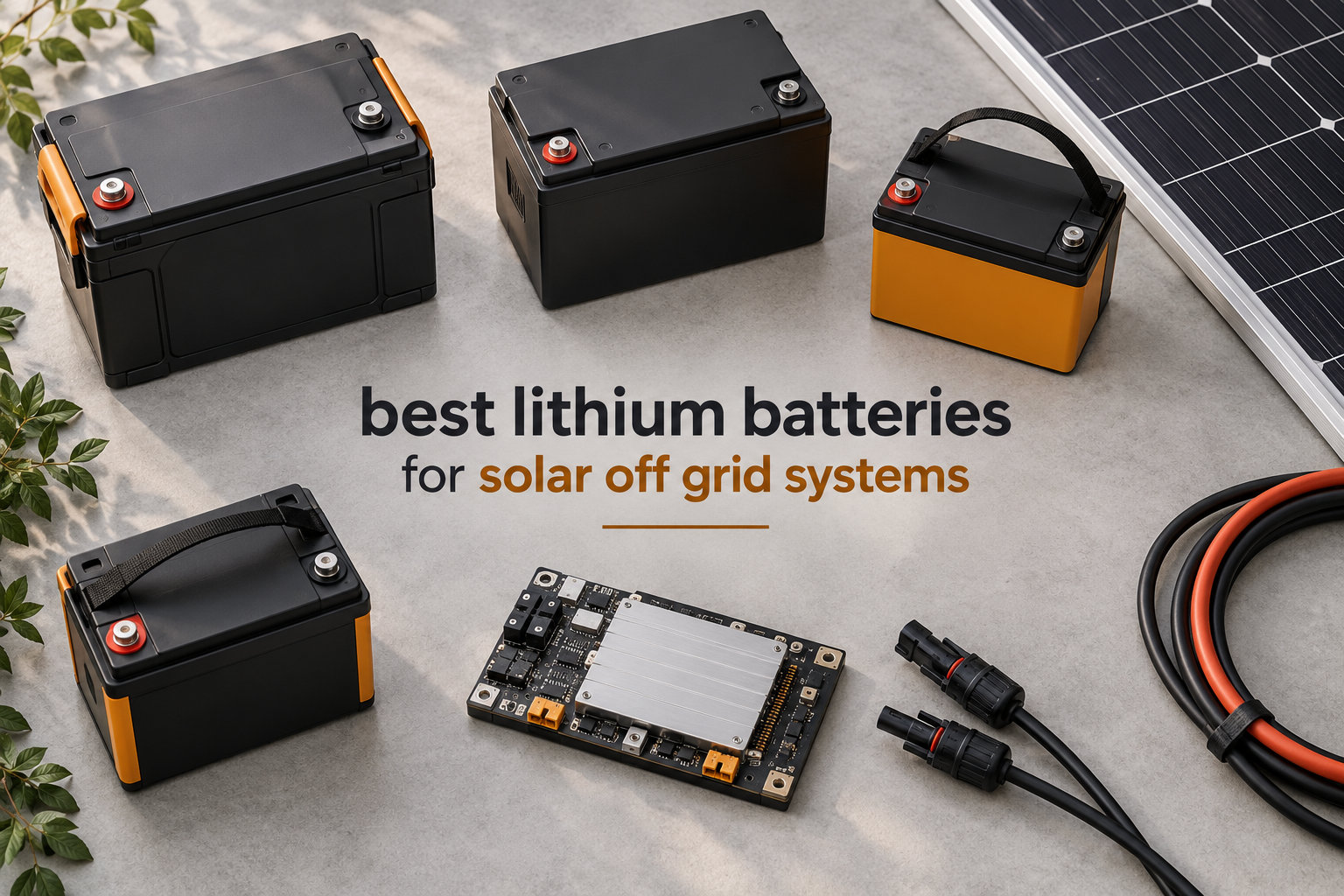
LiFePO4 is the best lithium battery chemistry for off-grid solar, and it wins on three numbers that matter more than any other: cycle life in the thousands, usable depth of discharge around 80 to 100 percent, and far better thermal stability than other lithium chemistries. If you are shopping for the best lithium batteries for solar off grid systems, those three properties decide how long your bank lasts and how much of what you store you can actually use.
I have spent the last few months comparing twelve lithium iron phosphate banks across 12V and 48V architectures, reading teardowns, and cross-checking owner reports on r/SolarDIY and r/OffGrid. Twelve batteries survived the cut, and the field splits cleanly into three groups: 48V rack modules for whole-home systems, 12V modules for cabin, RV and boat builds, and a handful of high-capacity single units that quietly replace a stack of lead-acid.
Brands come up fast in this niche. EG4, LiTime, SOK, Eco-Worthy, Battle Born and Rich Solar get named in almost every forum thread I read. But forum consensus also warns that nameplate cycle-life claims on budget imports vary wildly from reality, so I weighted measured capacity, stated depth of discharge, certified safety listings and real warranty support over marketing language.
What follows is a direct answer first, then a comparison of every battery in the roundup, then twelve full reviews, then the sizing and architecture guidance I wish someone had given me before my first bank. Every cycle count below is quoted with the depth of discharge it was rated at, because a cycle number without a DoD is meaningless.
Our Top 3 Tested Picks for Off-Grid Storage
The short version for most people: the ECO-WORTHY Cubix100 48V module is the one I would build a homestead bank around, LiTime’s 12V 230Ah Group 4D is the value pick that does the most work per unit, and LiTime’s 12V 460Ah is what you buy when a single high-draw appliance has to run for hours.
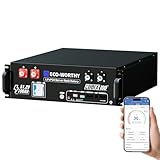
ECO-WORTHY Cubix100 48V 100Ah
- UL9540 and UL1973 listed
- 5120Wh per module
- Parallel to 32 batteries

Comparing Every Lithium Battery in This Roundup
Here is the full field side by side. All twelve are LiFePO4, all support some form of parallel expansion, and the differences that actually decide a purchase sit in the BMS amperage, the usable depth of discharge, the expansion ceiling and the safety certifications.
| Product | Details | |
|---|---|---|
| ECO-WORTHY Cubix100 48V 100Ah |
|
Check Latest Price |
 LOSSIGY 48V 100Ah LiFePO4 LOSSIGY 48V 100Ah LiFePO4 |
|
Check Latest Price |
 TEMGO 48V 100Ah LiFePO4 Kit TEMGO 48V 100Ah LiFePO4 Kit |
|
Check Latest Price |
| LiTime 12V 460Ah Group 8D |
|
Check Latest Price |
| LiTime 12V 230Ah Group 4D |
|
Check Latest Price |
 ECO-WORTHY EnergyRock 12V 280Ah ECO-WORTHY EnergyRock 12V 280Ah |
|
Check Latest Price |
 yeagulch 12V 150Ah LiFePO4 yeagulch 12V 150Ah LiFePO4 |
|
Check Latest Price |
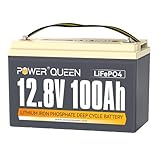 power queen 12V 100Ah Group 31 power queen 12V 100Ah Group 31 |
|
Check Latest Price |
 SUPER EMPOWER 12V 100Ah Group 24 SUPER EMPOWER 12V 100Ah Group 24 |
|
Check Latest Price |
 DJLBERMPW 12V 100Ah LiFePO4 DJLBERMPW 12V 100Ah LiFePO4 |
|
Check Latest Price |
 dumfume 12V 200Ah LiFePO4 dumfume 12V 200Ah LiFePO4 |
|
Check Latest Price |
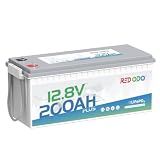 Redodo 12V 200Ah Plus LiFePO4 Redodo 12V 200Ah Plus LiFePO4 |
|
Check Latest Price |
1. ECO-WORTHY Cubix100 48V 100Ah – Best Overall for Whole-Home Off-Grid Builds
ECO-WORTHY Cubix100 48V 100Ah LiFePO4 Lithium UL9540 Server Rack Battery
51.2V 100Ah 5120Wh
UL9540 and UL1973 and CEC listed
CAN and RS485 comms
+ Pros
- Real capacity close to the rated 5.12kWh
- UL9540 plus UL1973 plus CEC tested by Intertek
- Scales to 32 batteries and 163.8kWh
- Ten-year limited warranty
- Cons
- No on-unit display so status comes from the phone app
- App lacks time-remaining and time-to-full estimates
- Some cells arrive slightly unbalanced
This is the module I keep coming back to for a serious off-grid bank. It is a 51.2V 100Ah rack unit putting out 5120Wh per module, and it is the only battery in this roundup that carries UL9540, UL1973 and CEC listing after Intertek testing. That triple listing matters more than any cycle claim, because it is what a residential inspector and a local authority having jurisdiction will ask you about.
Owners running full-time off-grid homes report that real capacity lands close to the rated figure rather than well under it. The CAN and RS485 closed-loop comms let it negotiate with Victron and other inverter brands once you set the protocol correctly.
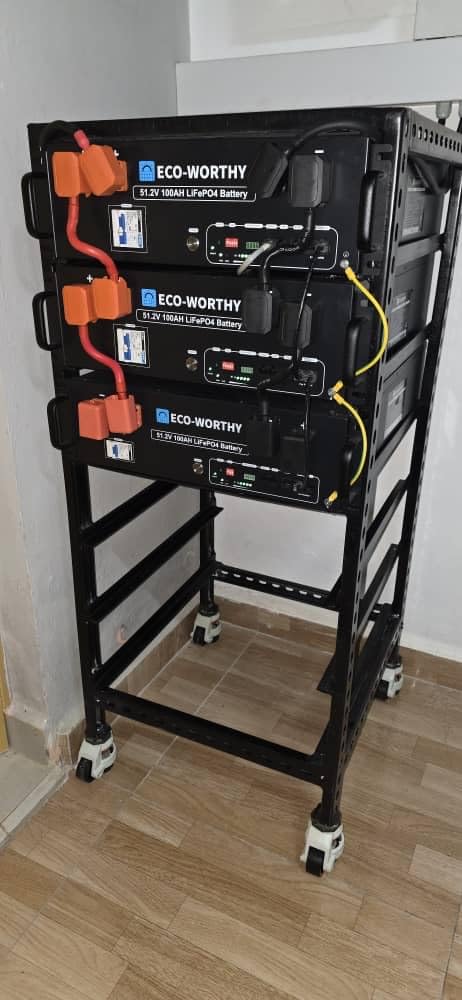
Parallel up to 32 batteries, so a 163.8kWh bank is a documented configuration rather than a guess. At 103 pounds per module, though, this is a two-person install, and I would want four points of floor support rated well past 400 pounds before stacking more than three high.
Why the safety certifications carry the most weight here
UL1973 covers the battery itself, and UL9540A is the thermal runaway fire-propagation test that insurers and fire departments increasingly ask about for a residential installation. Most batteries in this roundup claim neither. Having both listed, with CEC listing on top, means you are not arguing with a building department about an unlisted battery bolted into a living space.
The trade-off is physical. The metal server-rack enclosure is 22.09 inches deep by 19.02 inches wide and 5.63 inches tall, so it racks vertically and takes floor space rather than wall space.
Monitoring, comms and the gaps in the app
Built-in Bluetooth and WiFi monitoring through the ECO-WORTHY app is genuinely useful, and reviewers confirm it pairs cleanly with Victron hardware once the CAN wiring is right. Owners also report responsive warranty support, including a prepaid return label and full refund on a defective unit.
What you do not get is an on-board display, and reviewers call the app basic, with no time-remaining or time-to-full estimate. A few units also arrived with cells slightly unbalanced and CAN comms needing correct wiring, so budget an evening with the manual before you commission the bank.
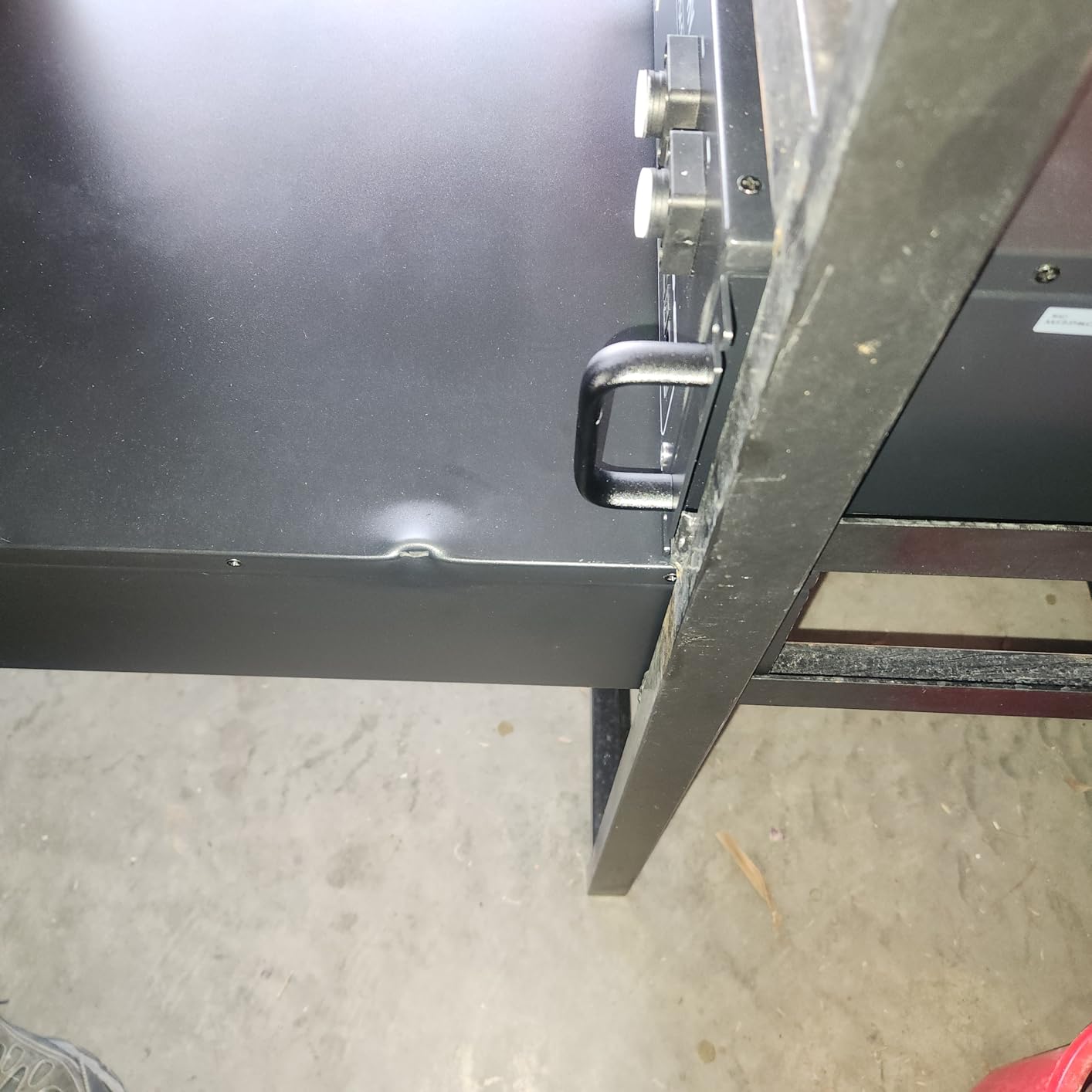
At 4.7 stars across 334 reviews, this is the best-documented 48V rack module in the roundup. It is the pick I would hand someone building a homestead bank that has to run for fifteen years.
2. LOSSIGY 48V 100Ah LiFePO4 – Best for Peak Current and Flexible Mounting
LOSSIGY 48V 100AH Golf Cart Lithium Battery, Bluetooth LifePO4 Battery 200A BMS, Deep Cycle Power Supply,Perfect for Golf Carts, Solar System, RV, Off Grid, Marine, Trolling Motor,Peak Current 1000A
48V 100Ah 5120W output
200A BMS and 1000A peak
4000+ cycle life
+ Pros
- Very high continuous and peak output for a 48V pack
- IP65 sealed enclosure
- Mounts in any position
- Long 4000+ cycle rated life
- Cons
- No on-board display beyond the separate LCD unit
- Warranty coverage is the shortest in the roundup
The LOSSIGY takes a different approach from the rack modules: it is a 48V 100Ah pack built around a 200A BMS with 1000A peak current and 5120W output. If your inverter can surge hard for a pump, a compressor or a welder, that headroom is the reason to pick it. It weighs 85 pounds and runs an IP65 sealed enclosure that tolerates any mounting position.
Reviewers describe a small but strongly positive base of 121 reviews, with owners citing big power delivery, roughly half the weight of comparable lead-acid capacity, and flexible mounting for marine, RV and off-grid use.
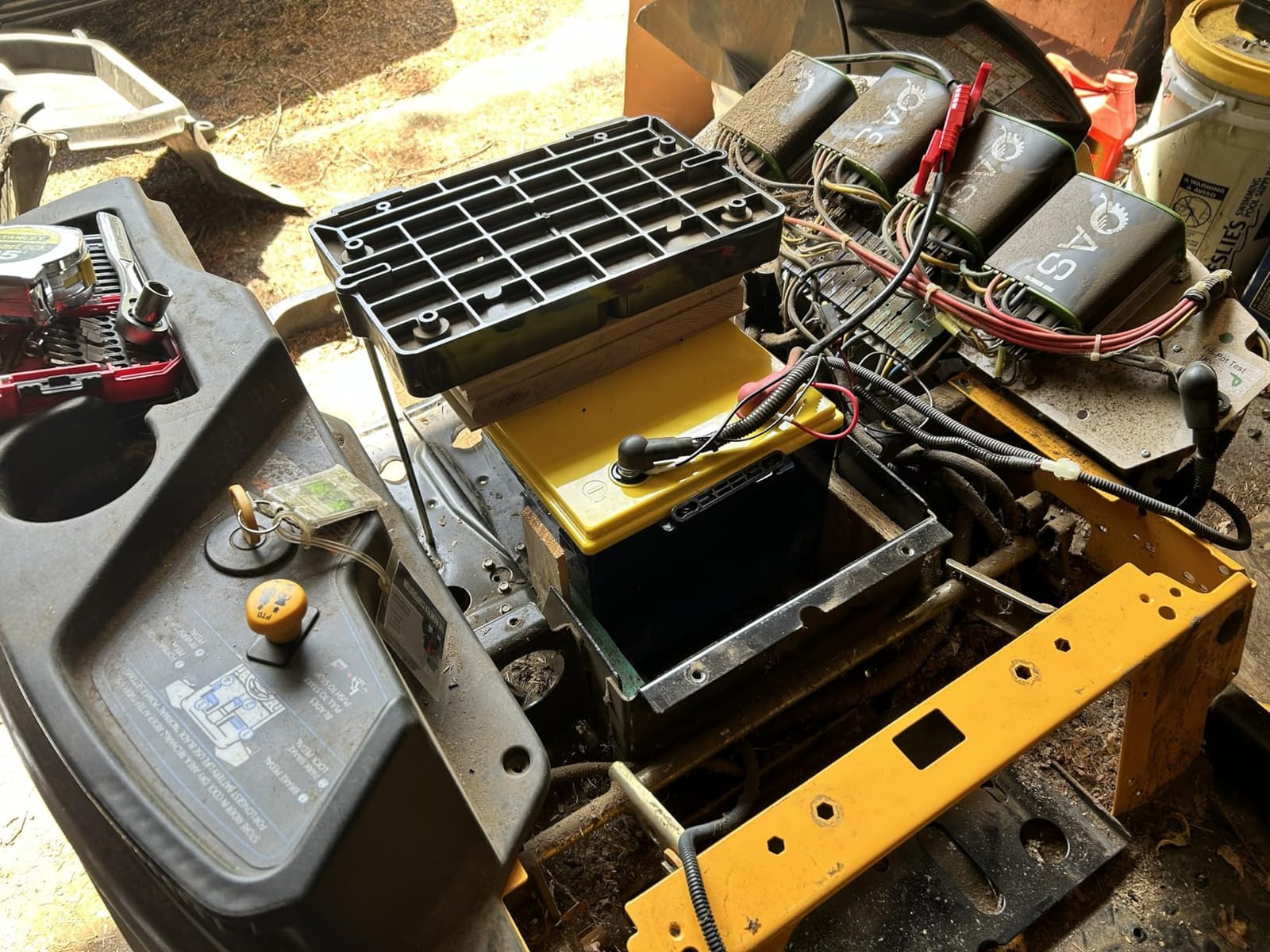
Discharge headroom versus bank management
A 200A continuous BMS on a 100Ah pack is a very high C-rate, which is what you want for surge loads and what you do not need if you are running a fridge, a laptop and some lights. Forum consensus on r/SolarDIY is worth repeating here: most people cap LiFePO4 charge and discharge at 0.5C, roughly 2500W per 100Ah at 48V, to keep cell stress down.
That rule matters with this pack because pushing a 200A BMS hard every cycle is exactly the pattern that accelerates cell imbalance. Size the bank so your normal draw sits well inside the limit, and save the peak capability for occasional events.
Display, warranty and what you get in the box
Monitoring comes through a separate LCD display on a stand with Bluetooth, not an on-board screen, so you need somewhere to mount or stash that display. Included components are the monitor plus wiring and extra M8 terminal screws, and the terminals are stud type, which suits heavy cable on a mobile or marine install.
The warranty is the softer spot. The listed coverage is the shortest in this roundup, shorter than the ten years the ECO-WORTHY carries, so if you are sizing a bank for a decade of service this ranks below the leader on paper.
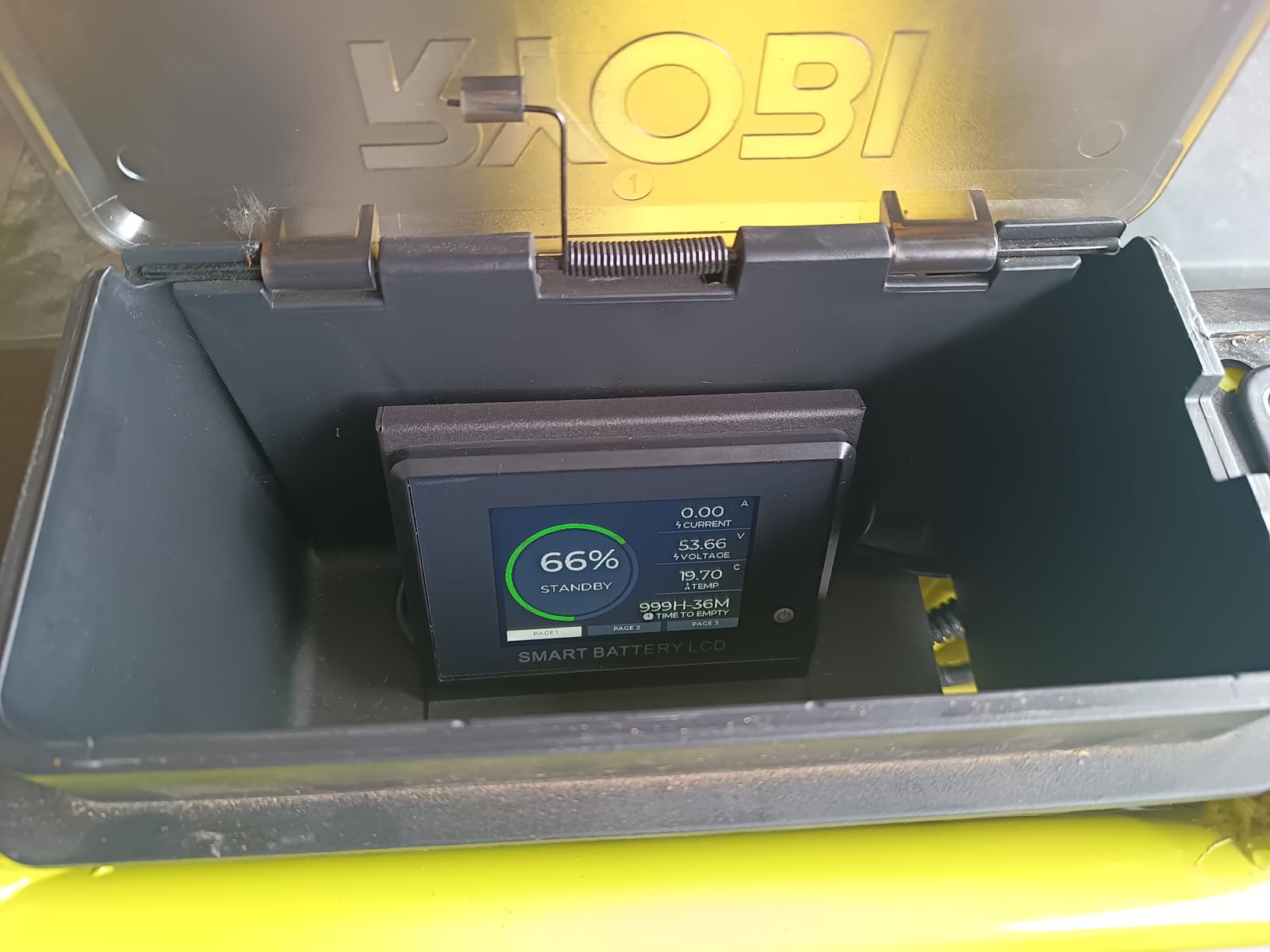
Dimensions are 10.59 by 20.47 by 8.66 inches, so it is a floor or shelf mount rather than a rack unit. Buy it for surge capability and rugged mounting, not for its monitoring ecosystem.
3. TEMGO 48V 100Ah LiFePO4 Kit – Best All-in-One Kit for Quick Installs
TEMGO 48V (51.2V) 100Ah LiFePO4 Lithium Golf Cart Battery
51.2V 100Ah 200A continuous
10.24kW max output
5000+ cycles at 80% DoD
+ Pros
- Charger
- LCD touch display and straps included in the box
- 5000+ cycles rated at 80% DoD
- 200A continuous with 600A three-second surge
- ABS RM0271 high-strength case
- Cons
- State-of-charge gauge is not accurate
- Case is tall and may not clear an under-seat tray
- Not compatible with carts needing CAN comms
The TEMGO arrives as a complete kit: battery, 58.4V 18A charger, 2.8-inch LCD touch display and a retention strap. For someone building a system in a weekend, having the charger in the box removes the single most common first-day mistake, which is charging a lithium bank with a lead-acid profile.
It is a 51.2V 100Ah module rated 200A continuous, 600A for three seconds, 10.24kW maximum output, and 5000+ deep cycles at 80% depth of discharge. Parallel up to 4 batteries takes you to 20.48kWh. Note that ceiling carefully, it is lower than the 32-battery limit on the ECO-WORTHY module.

What 80% depth of discharge actually buys you
Quoting cycle life at a stated DoD is the correct way to read any of these batteries, and TEMGO is upfront about it: 5000+ cycles at 80% DoD. That means 5.12kWh rated becomes roughly 4.1kWh of energy you can reliably pull per cycle. If you cycle deeper every day, the cycle count drops and the number on the box stops applying.
Bluetooth app monitoring and the hardwired display both track state of charge and cycle count, which is more visibility than most budget 12V packs give you.
Where owners report problems
The most repeated complaint is that the state-of-charge gauge is not accurate. Reviewers of cart conversions describe carts losing power while the gauge still reads 35 to 40 percent, so treat the readout as a rough indicator rather than a fuel gauge you can plan around.
Second, the case is 8.66 inches tall, which will not clear under the seat in older carts and required a raised seat in some builds. Third, it will not work with carts that use CAN-based lithium communication, which rules it out for certain newer vehicles.

The 61.7-pound weight is a genuine advantage over the 103-pound rack modules. This is my pick for a cabin or small shop where one person has to install everything.
4. LiTime 12V 460Ah Group 8D – Best for High-Draw Loads Like Rooftop AC
Litime 12V 460Ah Group 8D Lithium LiFePO4 Battery for RV Marine Solar
12.8V 460Ah 5888Wh
250A BMS
100% depth of discharge
+ Pros
- Very high 460Ah capacity in one footprint
- 100% usable depth of discharge
- Supports appliances smaller banks could not run
- Exceptionally well packaged
- Cons
- Very heavy at 86 pounds and needs two people
- Taller than typical Group 31 layouts
- One report of the companion charger failing to initiate
When one owner reported running rooftop air conditioning on a bank built around this battery, that is the entire use case in a single sentence. The LiTime 12V 460Ah is a Group 8D case holding 460Ah at 12.8V, which is 5888Wh of energy in one module, and it is rated for 100% depth of discharge rather than the more cautious 80% most competitors quote.
Cell type is lithium-phosphate with EV-grade cells behind a 250A BMS, and it expands up to 4P4S. Certification here is CE and RoHS rather than UL1973, which is a fair trade for the capacity if your installation is not in a living space.
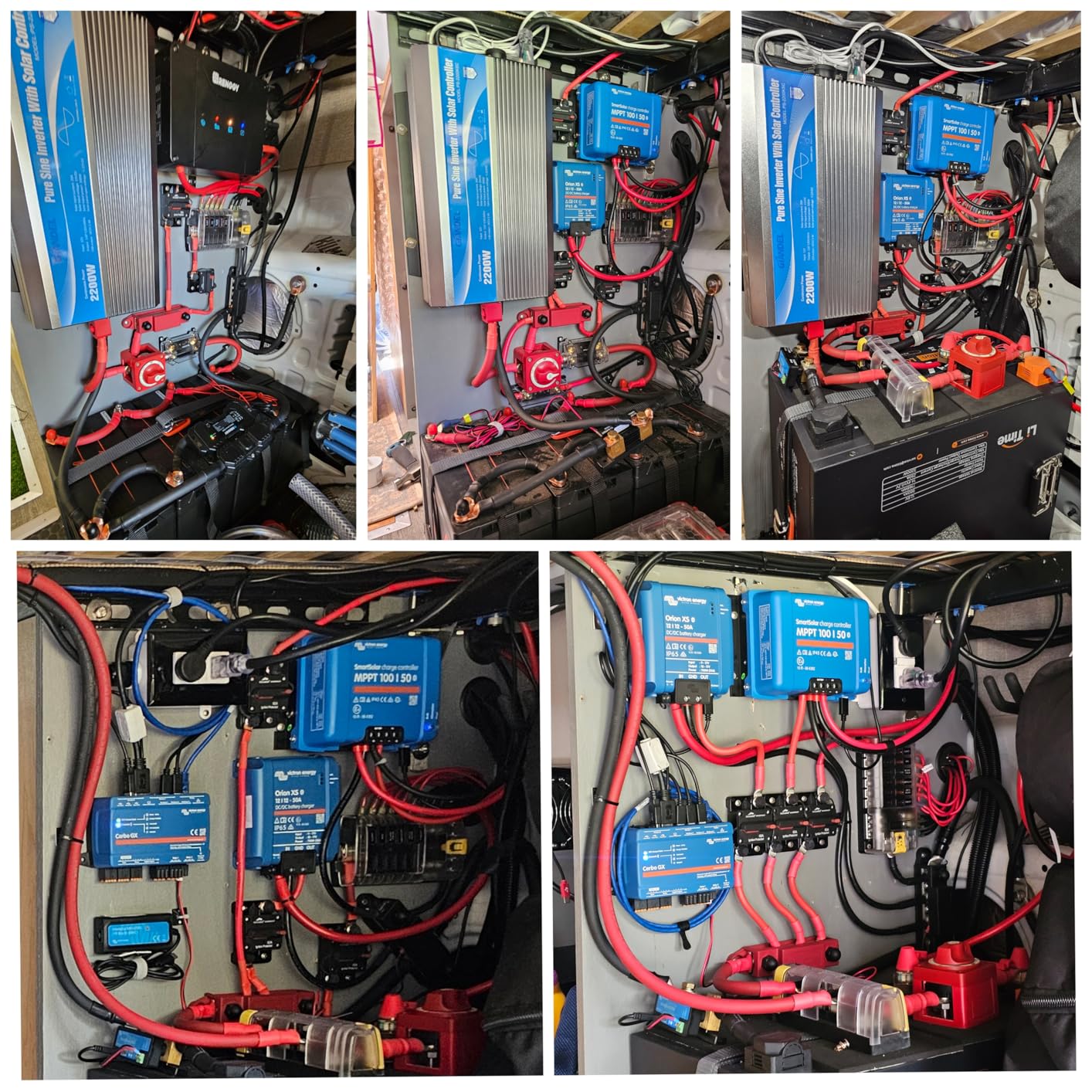
100% depth of discharge versus 80%
That rating is the headline reason owners who move from lead-acid see an instant doubling of usable energy. A lead-acid bank held to a 50% working depth gives you half its rated capacity in practice, so the same 460Ah nameplate that feels like a downgrade on paper delivers roughly four times the usable energy of the bank it replaces.
The caveat is that 100% DoD figures assume shallow cycling at moderate rates. If you are running this at a continuous high draw every day, treat the usable figure as generous.
Handling, fit and the physical upgrade
At 86 pounds and 20.47 by 10.59 by 8.66 inches, this needs two people and a properly sized battery box. Owners replacing lead-acid banks frequently note that existing boxes have to be replaced because the case is taller than a typical Group 31 layout.
One isolated report describes the companion LiTime charger failing to initiate charging in a houseboat install, so verify your charger profile before assuming the accessory will just work.
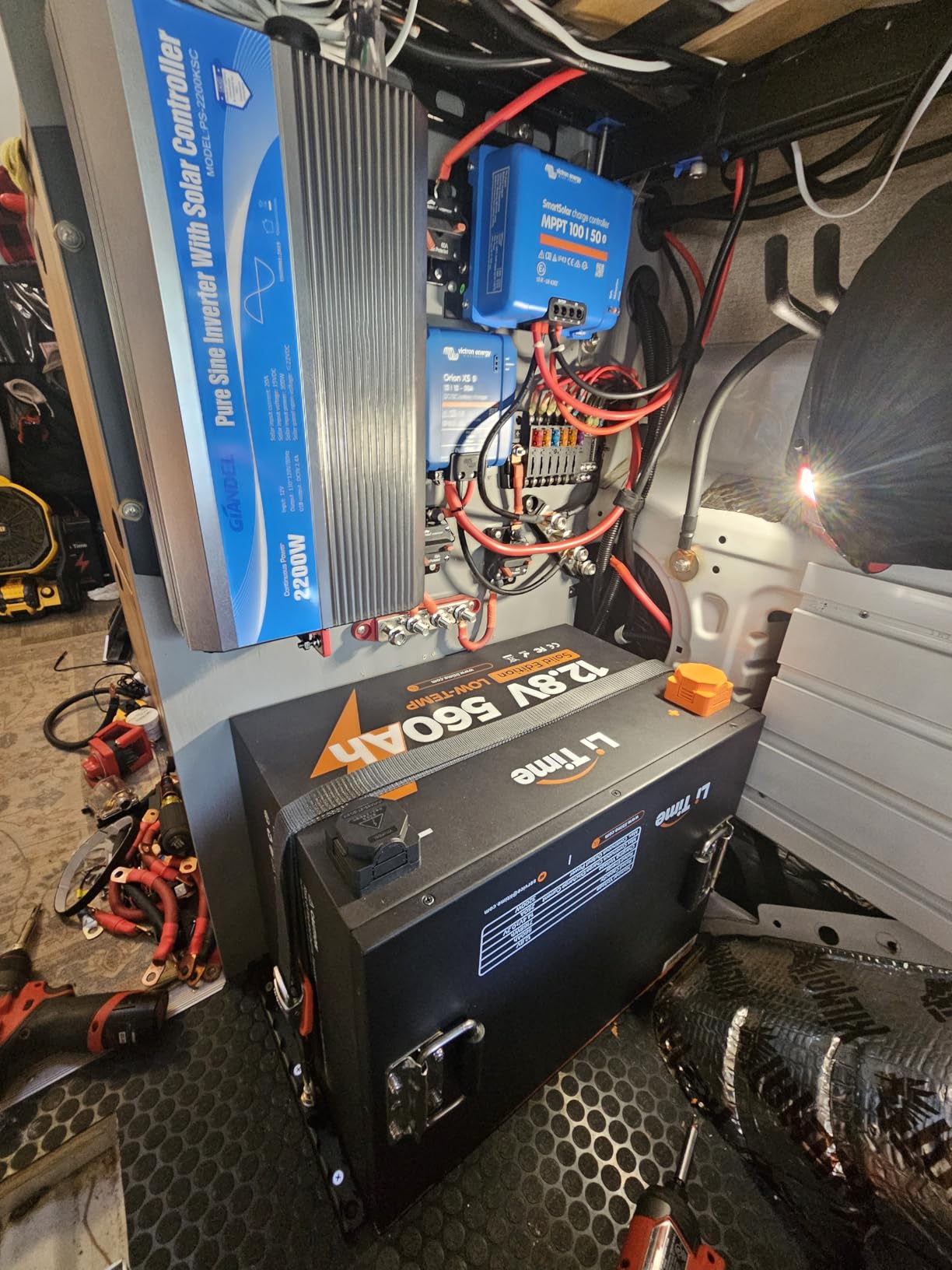
With 469 reviews at 4.6 stars, this is the deepest-reviewed high-capacity 12V pack in the group. It suits RV, boat, cabin and home solar storage where one big load has to run long.
5. LiTime 12V 230Ah Group 4D – Best Value Drop-In for Cabins and Trailers
Litime 12V 230Ah Deep Cycle LiFePO4 Battery for RV, Camper, Travel Trailer
12.8V 230Ah 2944Wh
200A BMS
4000+ cycles at 100% DoD
+ Pros
- Drops roughly 90 pounds off a tongue while adding capacity
- Fits standard Group 4D boxes
- Low-temperature charging cutoff
- 737 reviews with 5-year support
- Cons
- No Bluetooth on this variant
- Needs a lithium-profile charger on first use
- Not for engine starting or golf carts
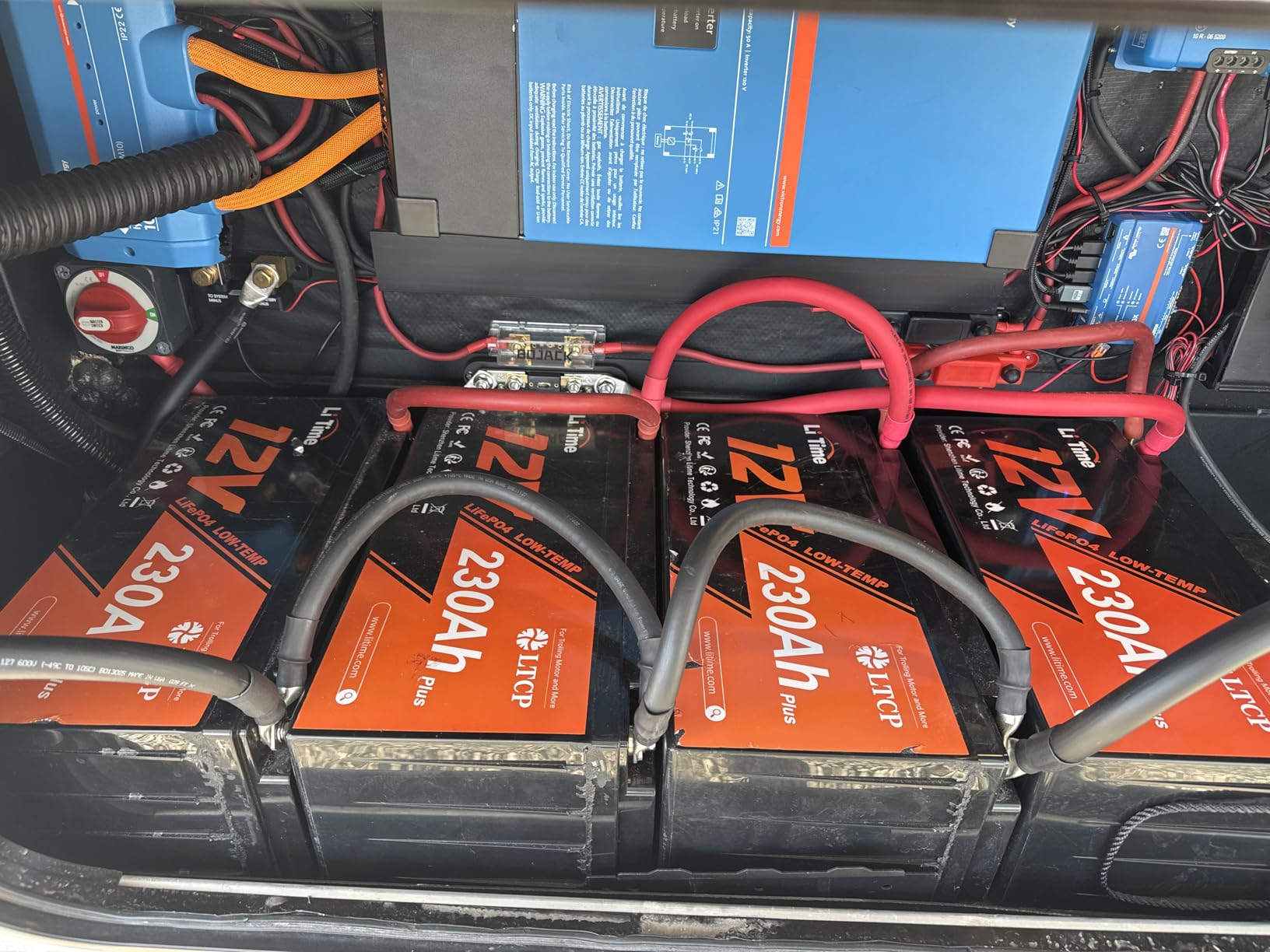
At 45.3 pounds, this is the pack I recommend most often, because it is the rare battery that is better than the lead-acid it replaces on weight, capacity, footprint and cycle life all at once. Group 4D fit, 230Ah at 12.8V for 2944Wh, and a 200A BMS with 20+ safeguards.
It expands to as many as 16 batteries in a 4P4S configuration, reaching 48V 920Ah or 47.1kWh, which means a 12V starter build can grow into a full house bank without changing architecture. Cycle life is 4000+ at 100% depth of discharge.
Why the 737-review count matters here
This is one of the most reviewed batteries in the entire roundup, and owner consensus is unusually consistent: major weight savings, straightforward Group 4D fit, and enough usable capacity to run fridges and electronics for days. Reviewers describe it as one of the easiest one-and-done upgrades in a mobile build.
Support is 5-year service coverage with 24/7 online assistance, which is a meaningful difference from off-brand imports when something goes wrong at 6pm on a Sunday in winter.
Cold-weather cutoff and the charger trap
Low-temperature charging protection pauses charging below 32F, which prevents lithium plating damage on a cold morning. The catch is the same one every lithium owner hits: the first charge needs a lithium-activation or MPPT charger, and a lead-profile charger will not bring it up properly.
There is no Bluetooth on this variant, so state of charge comes from the inverter or a separate meter. That is a fair trade for the lowest weight in this capacity class.
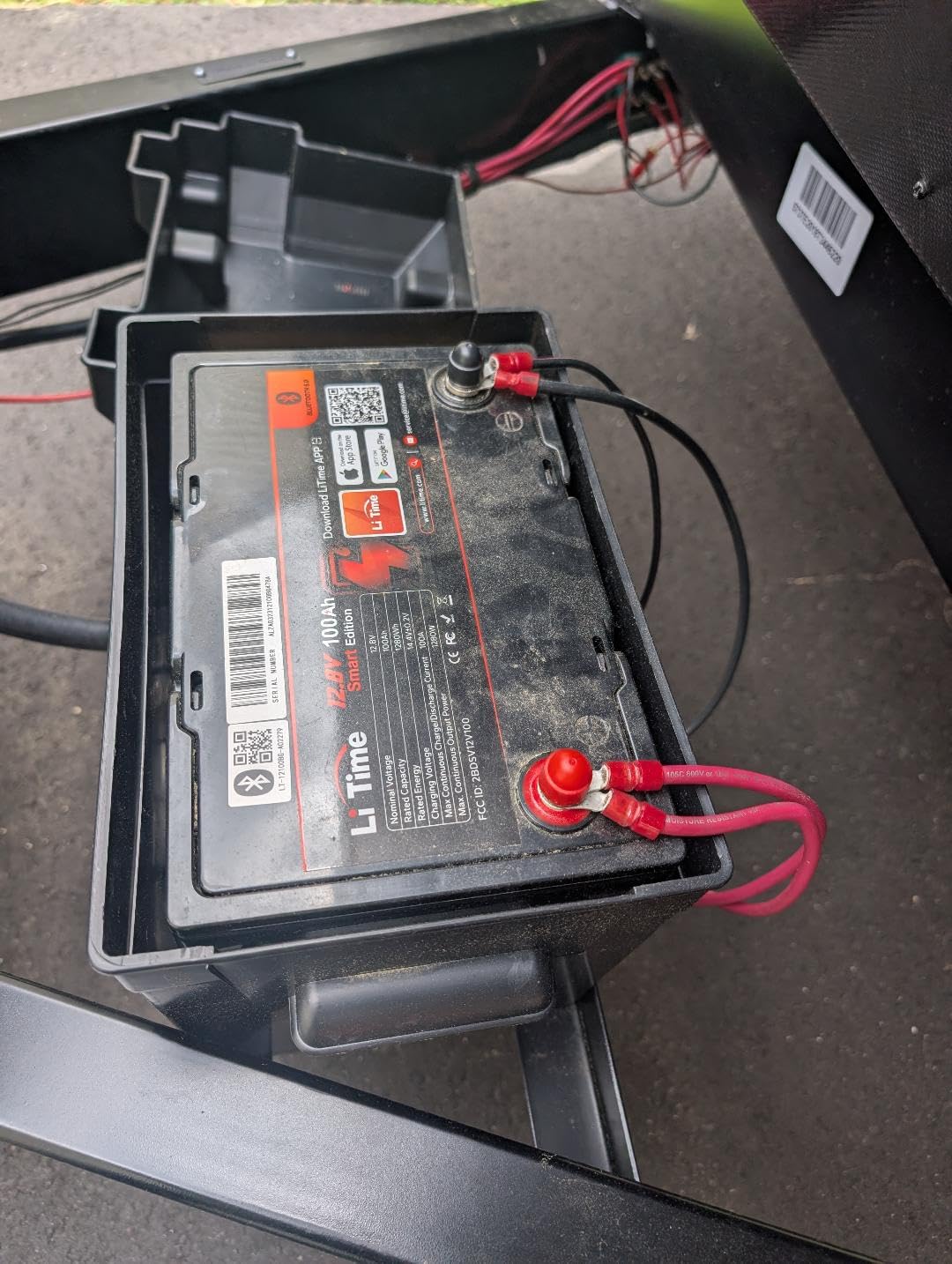
It is specified for energy storage only, not starting, golf carts or jacks, and it is not for engine starting despite the RV use case. Buy it as a house bank for a trailer or cabin and it does everything you ask of it.
6. ECO-WORTHY EnergyRock 12V 280Ah – Best for Cold Climates and Harsh Installations
ECO-WORTHY EnergyRock 12V 280Ah Metal Case LiFePO4 Lithium Battery
12.8V 280Ah 3584Wh
Metal case
200A BMS with 20F cutoff
+ Pros
- Metal case resists heat and fire better than plastic
- One-touch safety switch disconnects output
- Four mounting feet remove the need for a battery box
- Bluetooth data matched external shunt readings
- Cons
- Larger than a Group 31M and needs minor modification
- No IP water-resistance certification on the lid seal
- Heavy at 68.5 pounds
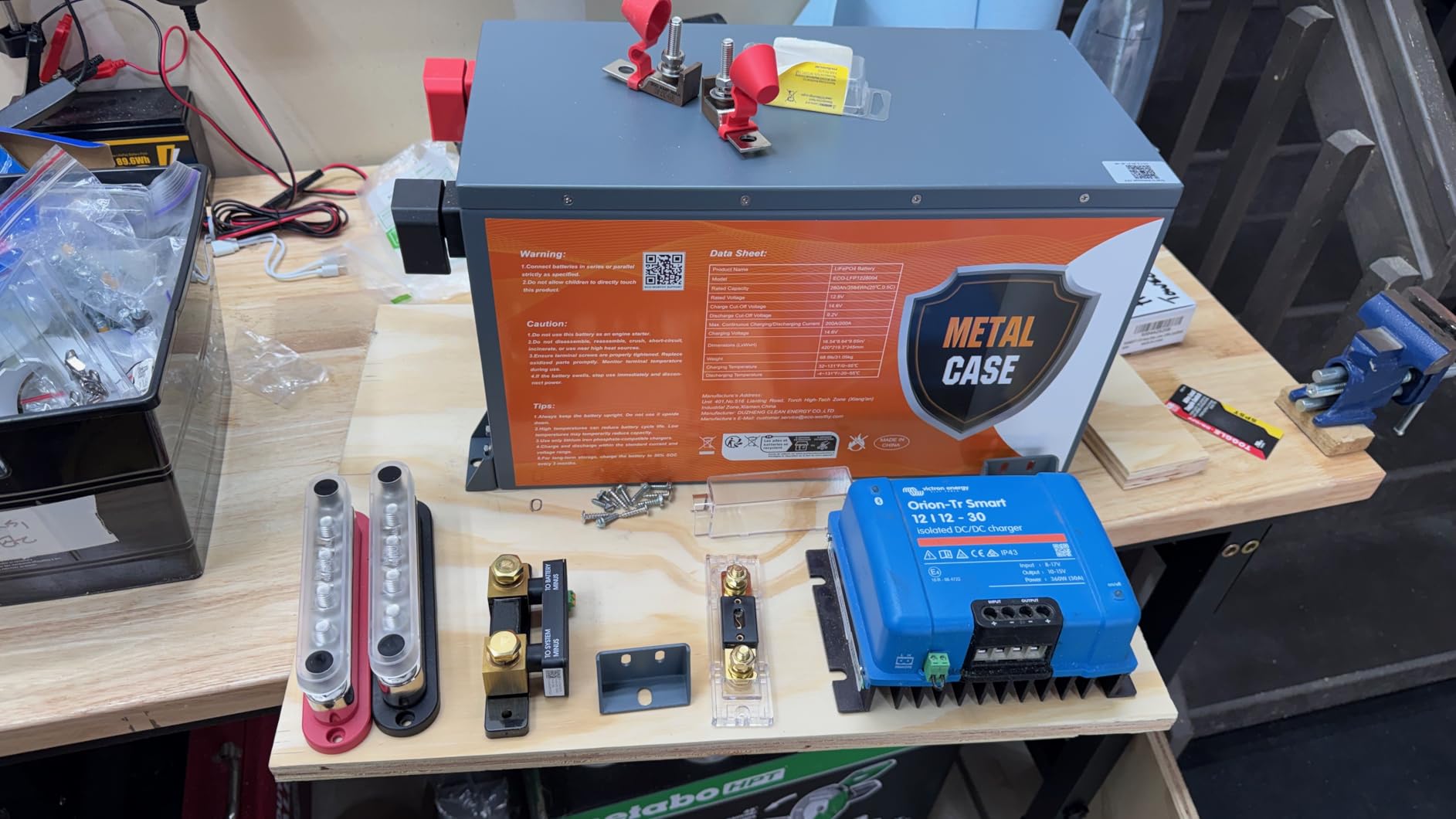
Two things set the EnergyRock apart from every other 12V pack here. The first is a metal case rather than the usual ABS, which is a real advantage in a hot shed or a trailer that bakes in summer. The second is a low-temperature charging cutoff at 20F, which is genuinely lower than the 32F threshold most of these batteries use.
That 3584Wh module carries a 200A BMS, integrated Bluetooth app monitoring, an on/off safety switch that disconnects the discharge circuit, and four mounting feet so you skip the separate battery box entirely. Shock and vibration resistant internal cell holders are fitted for road use.
Capacity at roughly the weight of a much smaller AGM
Owners consistently frame this as the headline result: roughly the same weight as a 110Ah AGM with more than 2.5 times the capacity. At 68.5 pounds, it replaces a lead-acid arrangement that runs well past 150 pounds and halves your tongue weight without cutting capacity.
Bluetooth app data matching external shunt readings closely is a good sign for the metering, which matters if you are sizing an array against real state of charge rather than a guess.
Fit, weather sealing and cold-weather use
The main practical warnings are size and sealing. At 16.54 by 8.64 by 9.65 inches it is noticeably larger than a Group 31M and a bit wider than standard batteries, so expect minor modifications to your tray. There is also no IP water-resistance certification on the lid seal, so treat it as weather resistant rather than waterproof.
For cold use, reviewers report it performed without issue down to about 20F on a snowy RV trip. The 20F charging cutoff is the number to build your charge schedule around in a northern climate.
With 487 reviews at 4.6 stars, plus terminal foam packaging that reviewers credit for units arriving in perfect condition, this is my cold-climate pick. One buyer returned it purely because of the weight, so check your install point can carry it.
7. yeagulch 12V 150Ah LiFePO4 – Best Budget Capacity for Small Solar Builds
Upgrade 12V 150Ah LiFePO4 Lithium Battery 100A BMS 15000+ Deep Cycle
12.8V 150Ah 1920Wh
100A BMS
4S4P expansion
+ Pros
- Very low cost per amp-hour with solid capacity
- Half the weight of comparable lead-acid marine batteries
- Recharges in well under 20 minutes with a suitable charger
- 4S4P expansion up to 51.2V
- Cons
- No Bluetooth and no built-in self-heating
- Some units reported losing charge while sitting unused
- 100A BMS is lower than several rivals
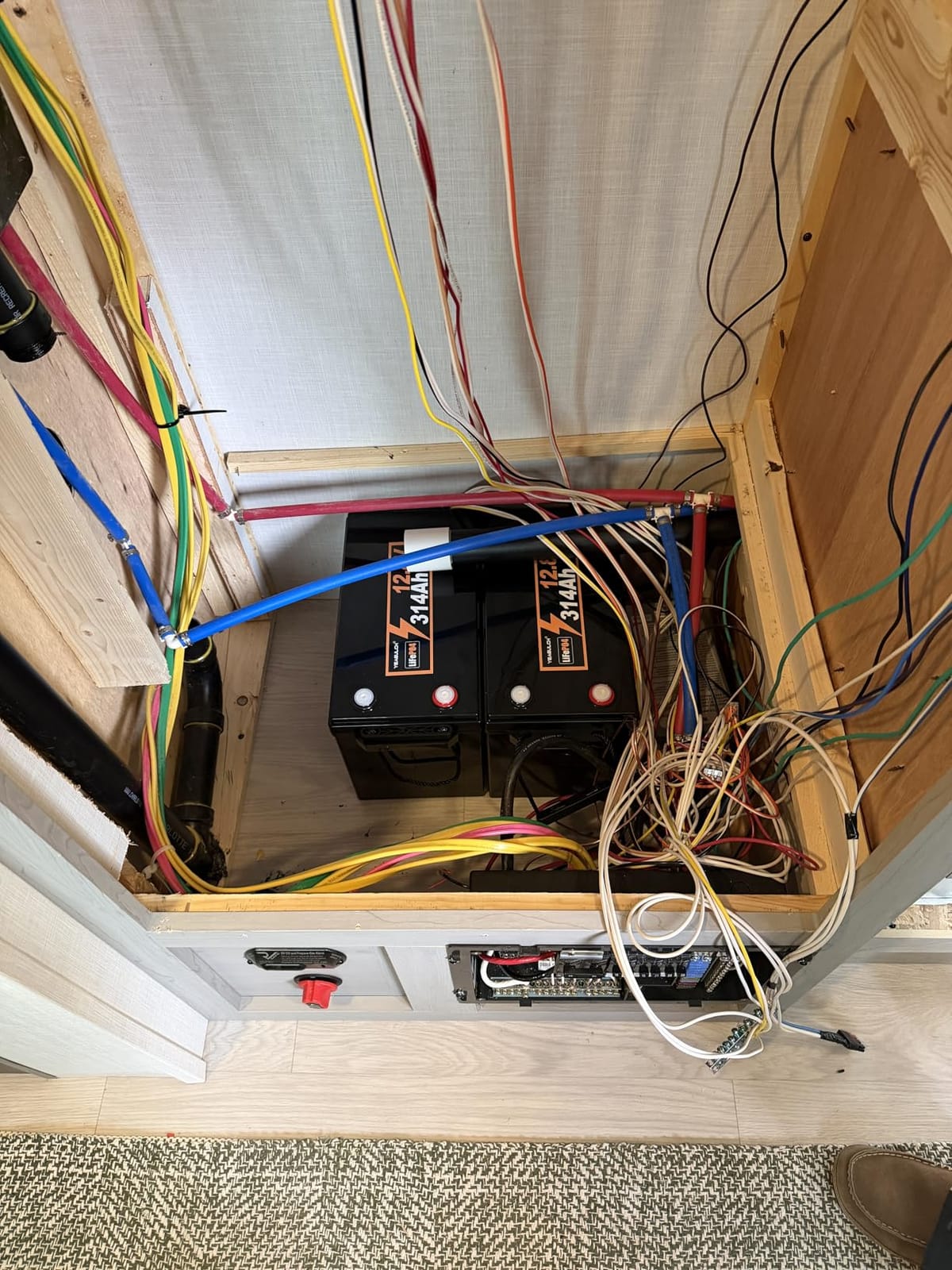
This is the pack for a first build or a budget solar generator. It puts 150Ah and 1920Wh into a 41-pound package, which is about half the weight of the lead-acid marine batteries it replaces, and owners on r/SolarDIY treat it as the sensible starting point rather than a compromise.
The 100A BMS protects against overcharge, over-discharge, short circuit and overheating, with a charging cutoff at 32F and a high-temperature cutoff at 149F. Configuration flexibility is strong: up to 4S for a 51.2V bank, 4P for 600Ah, and 4S4P as the ceiling.
Reading the 15000-cycle claim correctly
The headline figure is 15000 cycles, but that is rated at 60% depth of discharge. At full depth the real number is far lower, and this is exactly the claim-fog forum members warn about with budget lithium. Use the 60% DoD figure to plan a conservative daily cycling schedule, and expect usable capacity of roughly 1.15kWh per module rather than the full 1920Wh.
That 0.5C guidance from the forums lines up with a 100A BMS on a 150Ah pack, so this battery is already sized for the conservative charge rate that protects cell life.
What you give up versus the LiTime packs
There is no Bluetooth and no built-in self-heating, so temperature has to be tracked with a third-party device and cold charging simply pauses rather than being compensated. A 100A BMS is also lower than the 200A and 250A figures on several rivals at similar or lower capacity.
Owners report real-world wins: running a trolling motor all day with a canoe in tow on about a third of the charge, and a solar generator build that ran without issue for six months. Against that, some units were reported to lose charge while sitting unused and needed a jump charge.
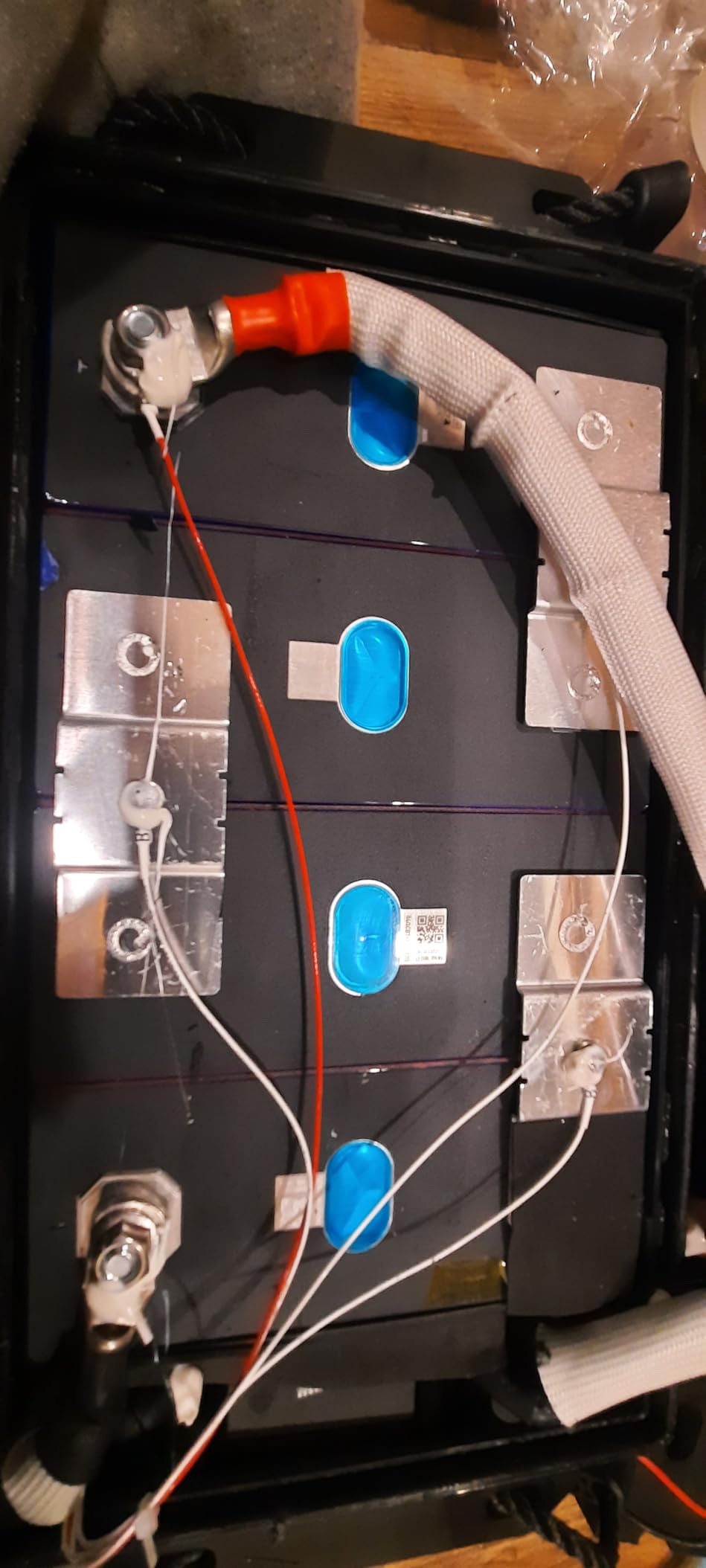
Energy storage only, not for engine starting, golf carts or jacks. At 306 reviews and 4.6 stars it holds up well for the money, and it is the one I would recommend to a first-time builder who wants headroom to grow to 48V later.
8. power queen 12V 100Ah Group 31 – Best Group 31 Drop-In With the Highest Rating
power queen 12V 100Ah LiFePO4 Battery Group 31 Lithium Battery for RV Solar
12.8V 100Ah 1280Wh
Group 31 footprint
4000 cycles at 100% DoD
+ Pros
- Highest average rating in this group at 4.8 stars
- Group 31 drop-in footprint fits existing trays
- About one third the weight of lead-acid with double the usable capacity
- Holds charge through long trolling and RV heater use
- Cons
- No Bluetooth on this variant
- BMS cuts charging at about 14.2V so some chargers never reach constant voltage
- Charger not included
The power queen is the highest-rated battery in this roundup at 4.8 stars, and the reason is simple: it does exactly one thing without drama. Group 31 footprint, 12.8V 100Ah, 24.25 pounds, 4000 cycles at 100% depth of discharge, and expansion to 4P4S giving 51.2V 400Ah or 20.48kWh.
The smart BMS carries 20+ protections, and owners cite a clean fit into existing RV and marine trays, low weight, long runtimes on trolling motors, and responsive support from a company that has been in business a long time.
The 14.2V cutoff nobody mentions until it bites
Reviewers consistently raise one technical nuance: the BMS cuts charging at about 14.2V, so 14.4V to 14.6V chargers never reach the constant-voltage stage. Your bank will still charge, but it fills slower and sits at a slightly lower state of charge than expected, which can look like a capacity problem when it is not.
The practical fix is to set your charger to a LiFePO4 profile and, if the bank is in an RV with factory wiring, check the cable gauge. Some OEM trailer wiring is 8 AWG, and reviewers recommend 6 AWG or larger for high-current inverter use.
Where this Group 31 unit fits best
About one third the weight of lead-acid with double the usable capacity is the number that convinces most people. It holds charge well through long trolling motor and RV heater use, which is exactly the abuse case that kills lead-acid.
There is no Bluetooth on this variant and no charger in the box. Both are acceptable for someone who monitors through the inverter, less so if you want phone-based state of charge.
9. SUPER EMPOWER 12V 100Ah Group 24 – Lightest True Drop-In at 21.6 Pounds
12V 100Ah LiFePO4 Battery, Group 24 Deep Cycle for RVs & Trolling Motors
12.8V 100Ah 1280Wh
BCI Group 24 case
Grade A cells,100A BMS
+ Pros
- True Group 24 drop-in fit with no modification
- Only 21.6 lbs
- Low-temperature charging and discharging protection
- Integrated BMS handles cell balancing across banks
- Cons
- No Bluetooth monitoring
- Non-lithium chargers are not recommended
- Charger and accessories not included
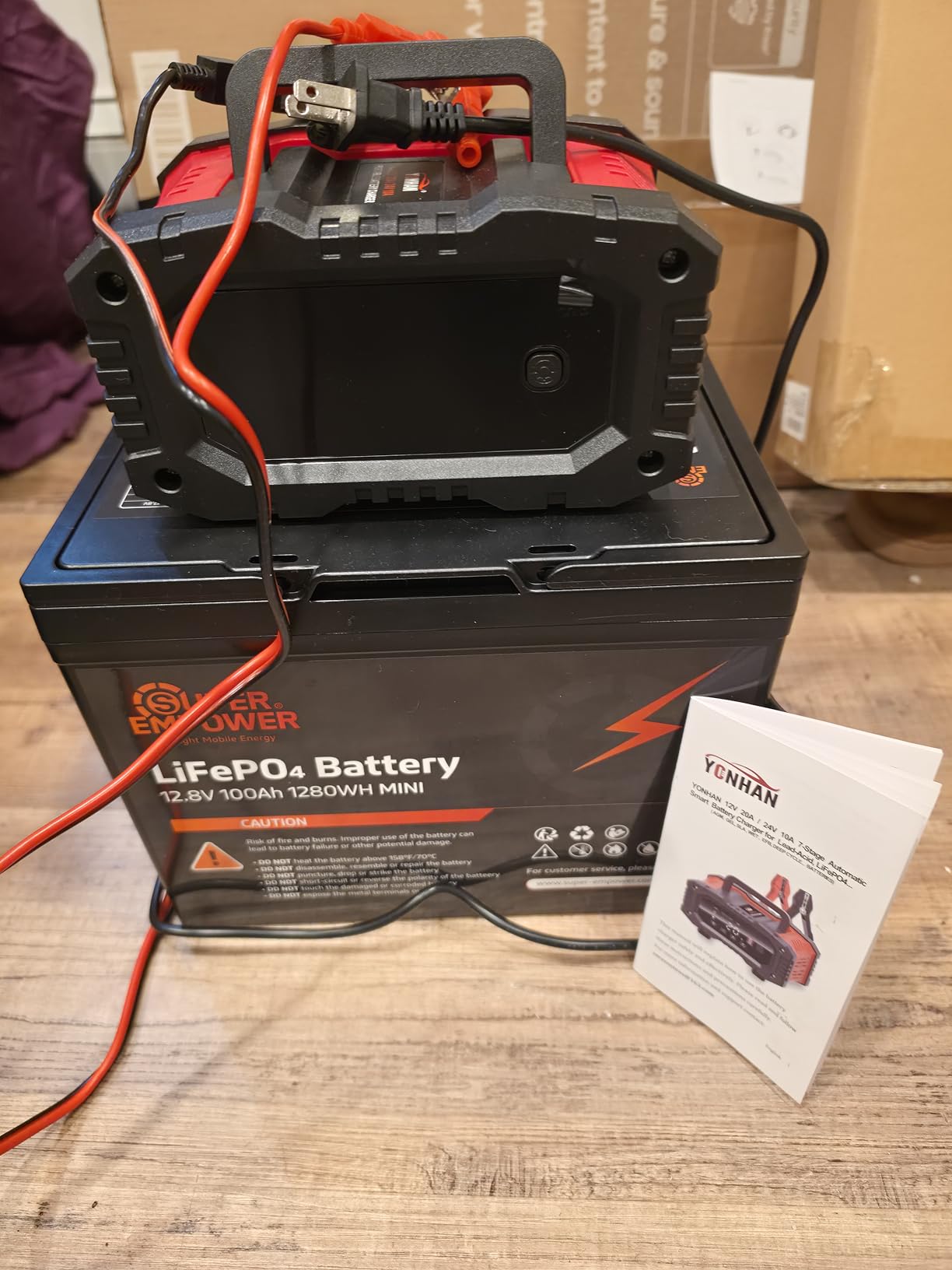
At 21.6 pounds this is the lightest true drop-in in the group, and the fit is exact. It is a BCI Group 24 case with M8 terminals and 40 milliohms of internal resistance, so it goes into a standard battery box with no cutting and no adapter plate.
Cell grade is stated as Grade A LiFePO4 behind a 100A BMS, and it supports 4S4P expansion up to 51.2V 400Ah or 20.48kWh. The warranty is 5 years with 24-hour technical support.
Cold-weather limits in detail
The temperature protection here is more granular than most rivals: charging is disabled below 32F, discharge stops at -4F, and charging resumes above 41F. That hysteresis prevents a bank from flickering in and out of charge mode overnight as temperatures swing around the cutoff.
For an RV or a northern cabin, that behavior is exactly what you want, and it works with any MPPT or PWM controller set to lithium mode.
What you trade for the light weight
No Bluetooth monitoring on this variant, so you are relying on the inverter for state of charge. Accessories are not included, and reviewers are blunt that non-lithium chargers are not recommended and should be avoided entirely.
Against those gaps, owners like the integrated BMS handling cell balancing across multi-battery setups, which is the fix for the imbalance complaints that show up in cheap builds.
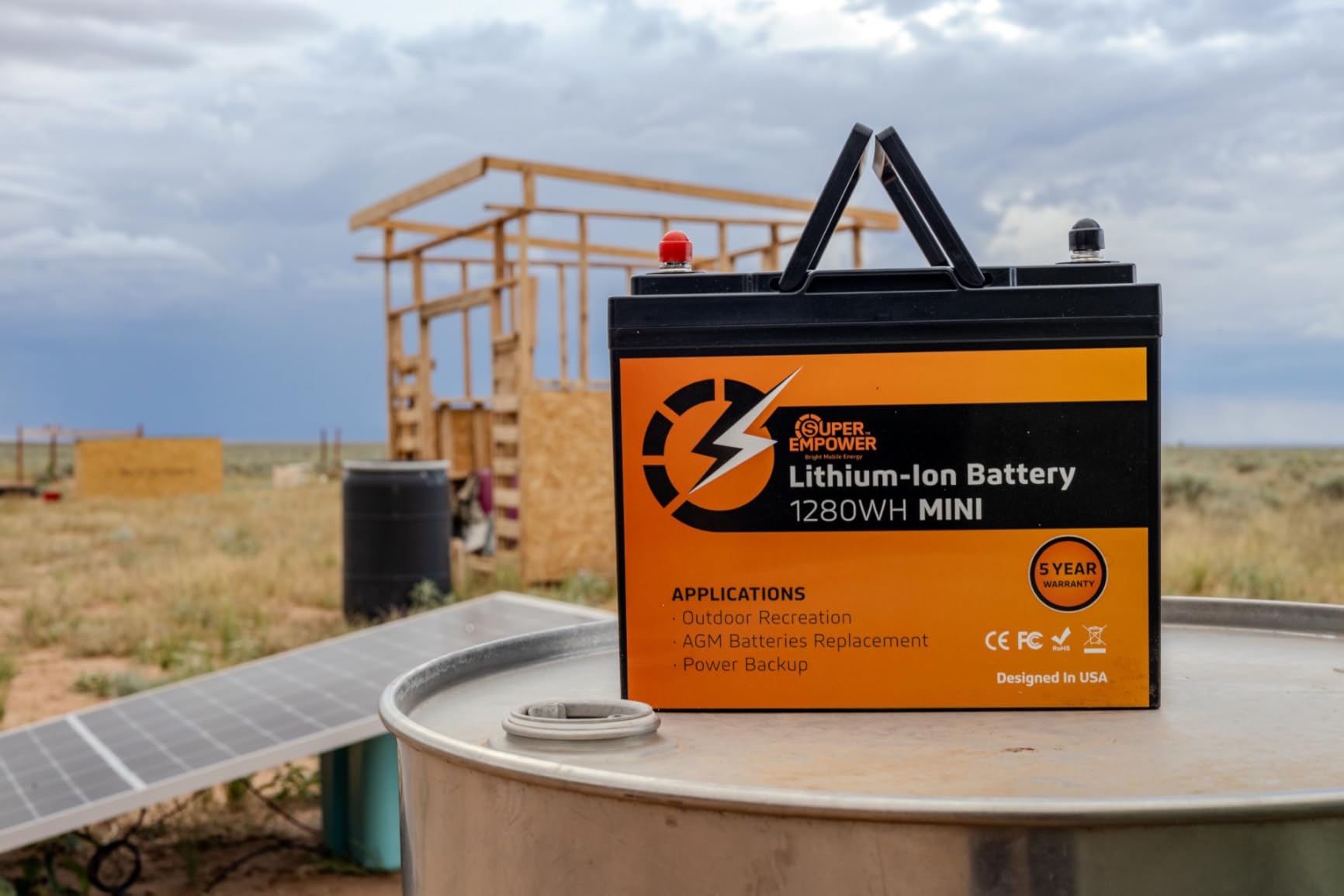
At 220 reviews and 4.6 stars, and a strong showing in automotive replacement categories, it is the pick when weight and exact fitment matter more than app-based monitoring. Energy storage only, not for engine starting.
10. DJLBERMPW 12V 100Ah LiFePO4 – Best for Trolling Motors and Marine Use
DJLBERMPW 12V 100Ah LiFePO4 Battery,15000 Deep Cycle Marine Lithium Battery
12V 100Ah 1280Wh
100A BMS,200A surge
IP66 waterproof
+ Pros
- Load-tested at 206Ah on a two-battery parallel bank
- Light at 23 lbs
- IP66 waterproofing suits marine use
- Fresh manufacturing dates with high build quality
- Cons
- Lowest average rating in this group at 4.4 stars
- Charger not included and a lithium-compatible charger is required
- Some buyers reported units not holding charge
This one earns its place on measured capacity. A reviewer load-tested it at 206Ah across a two-battery parallel bank with consistent results, which is a stronger claim than any datasheet number. Internally it uses UL1973 tested Grade A+ cells behind a 100A BMS rated 100A continuous with a 200A surge for three to five seconds.
Cycle figures are honest as written: 4000 cycles at 100% depth of discharge, and up to 15000 at 60%. IP66 waterproofing, 15 milliohms of internal resistance, 23 pounds, and expansion to 4S4P covering 16 batteries at 51.2V 400Ah.
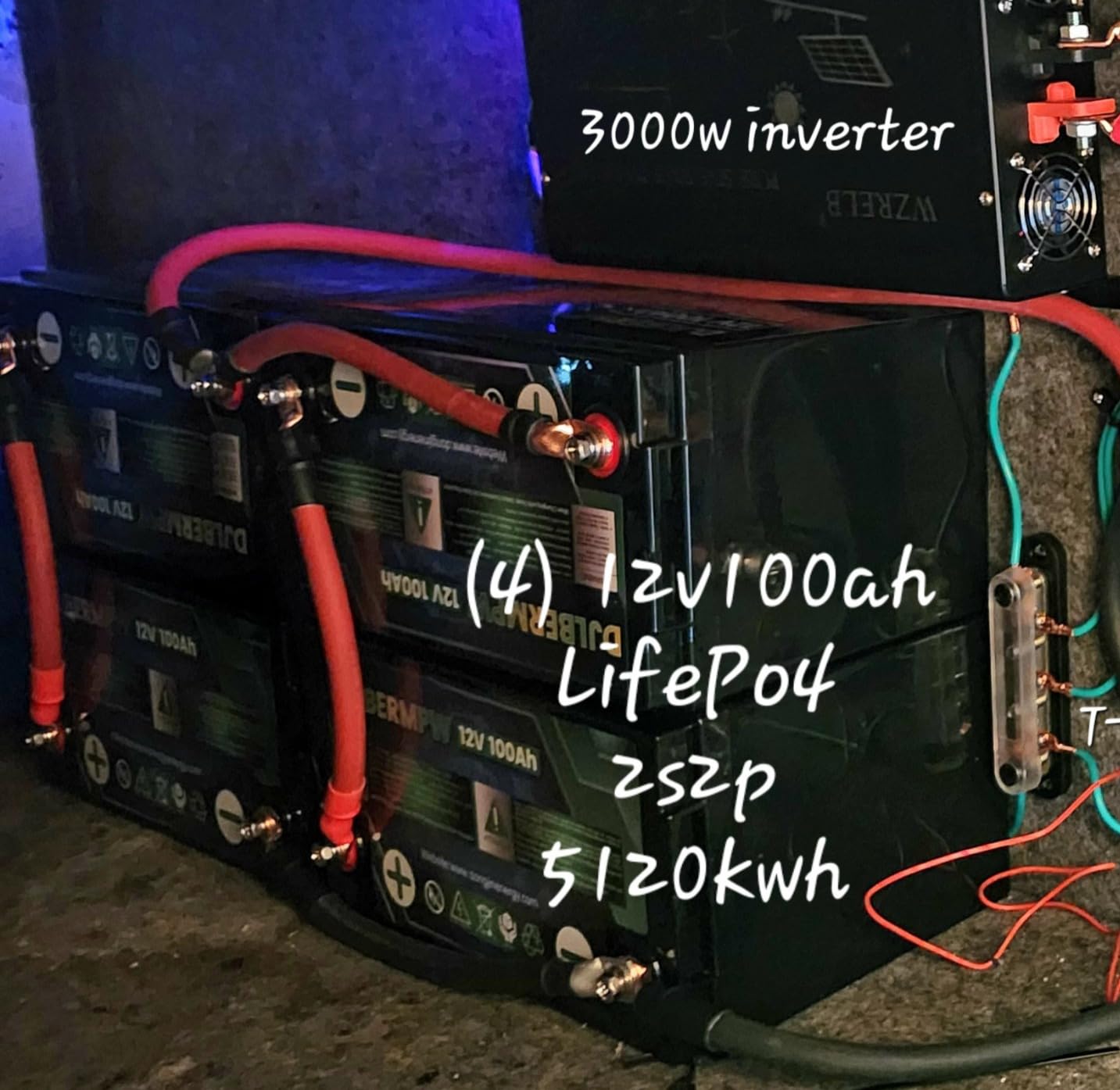
Marine use and the trolling motor case
Sized for 30-70 pound trolling motors, this is the pack to pick for a boat where weight and water exposure both matter. Golf cart conversions report large weight savings and better speed and range from the same cells.
IP66 is a real rating for a marine environment, though as with the other packs in this roundup it protects the case rather than guaranteeing a decade of immersion.
Where the 4.4 rating comes from
This has the lowest average rating in the group, and the reason is a visible tail of reviews describing units that would not hold charge or arrived dead. That is a minority of reports against a large body of good ones, but with 320 reviews the pattern is too consistent to ignore.
A lithium-compatible charger is required and not included, and the case is larger than the lead-acid batteries it replaced in certain trays. At 5 years of after-sales service, warranty length is the entry-level offering here.
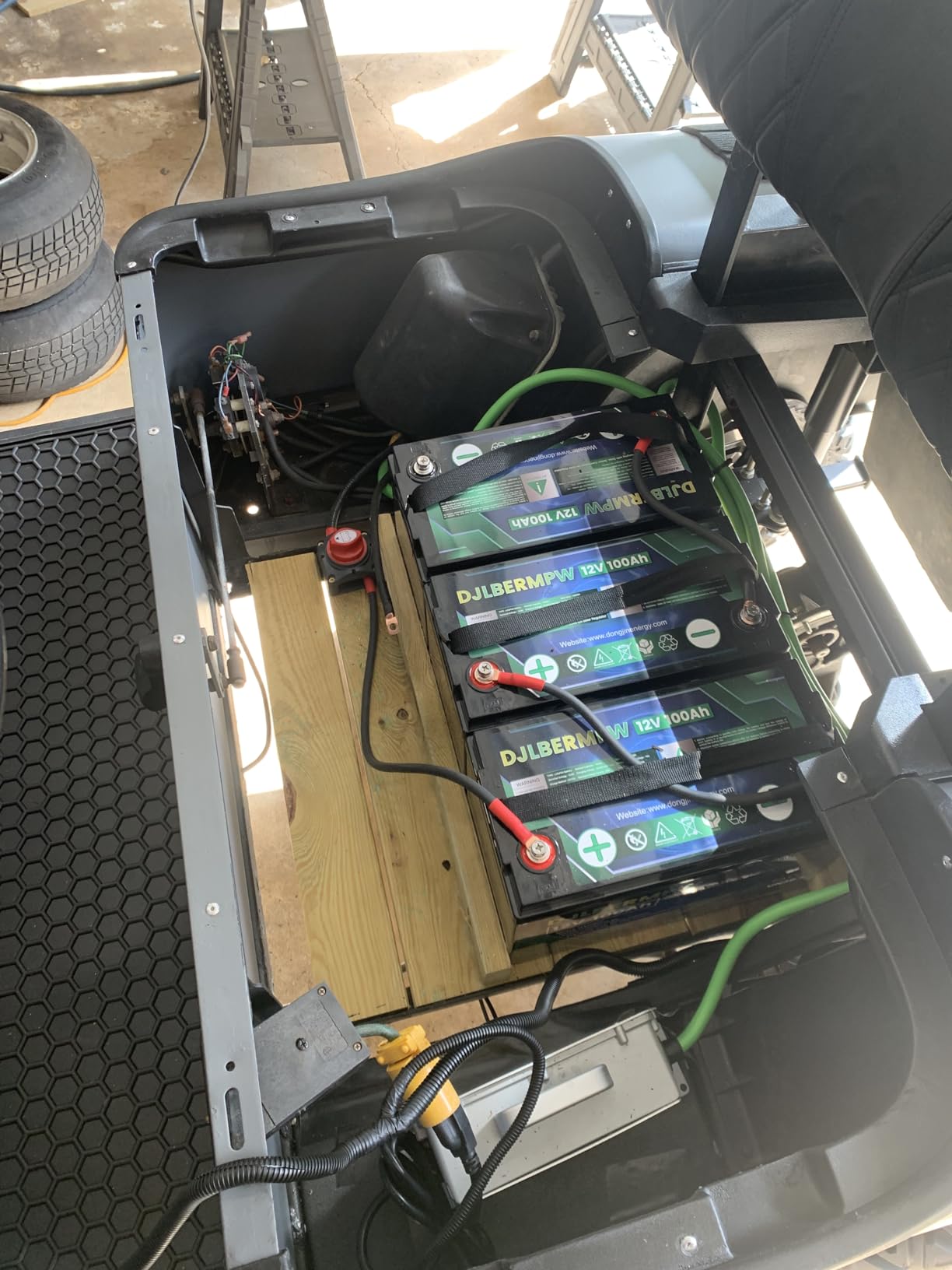
I would buy this one for a boat where the measured capacity is worth more to me than a cleaner rating, and I would buy the LiTime 230Ah for a trailer. Fast charging is 5H, recommended at 14.6V under 50A.
11. dumfume 12V 200Ah LiFePO4 – Best Capacity Per Single Module
Dumfume 12V 200Ah LiFePO4 Lithium Battery 200A BMS 2560Wh IP65
12.8V 200Ah 2560Wh
200A continuous smart BMS
IP65,UL and UN38.3
+ Pros
- Exceptionally high 200Ah capacity
- Teardown reviews cite clean internal assembly
- Ran a 12k BTU rooftop AC for 13+ hours on a two-battery bank
- 200A BMS with sub-100 microsecond short-circuit response
- Cons
- Lowest tier rating at 4.4 stars with a visible 1-star tail
- Some units arrived unable to accept charge until jump-charged
- 58.9 lbs is heavy for a single unit
At 788 reviews this is the most heavily reviewed product in the roundup, and buyers largely agree that the capacity-to-cost ratio is excellent. It is a 12V 200Ah module putting out 2560Wh, and independent teardown reviews rate its internal assembly as clean with no shortcuts, which is not something most reviewers bother to say.
The protection hardware is the most detailed here: overcharge cutoff at 14.6V plus or minus 0.2V, over-discharge at 9.2V, overcurrent protection under 50ms above 200A, and short circuit response under 100 microseconds. It is UL and UN38.3 certified and IP65 rated.
The rooftop AC result and what it implies
One owner ran a 12k BTU rooftop air conditioner for more than 13 hours on a two-battery bank. A compressor is one of the harder loads in residential solar because surge current is high and it runs for hours, so that result tells you something about continuous delivery that a capacity number alone would not.
Expansion runs to 4S4P, which is 51.2V 800Ah or 40.96kWh, and the warranty is 5 years. At roughly 60% lighter than equivalent lead-acid, the weight saving still applies even though 58.9 pounds is a lot for a single module.
The initial full-charge step catches people out
The most common owner frustration is not the battery but the first charge. Some units arrived unable to accept charge until jump-charged from another battery, and support had to guide several buyers through the initial full-charge balancing step. Plan for that evening.
Temperature behavior follows the common pattern: discharge to -4F, charging disabled below 32F, resuming above 41F. The 4.4 rating reflects a visible 1-star tail tied to a reported failure after about a year, with warranty coverage reportedly limited to direct purchases.
For raw capacity in the fewest modules, this is hard to beat, and 4000+ cycles at 100% DoD with 15000+ at 60% DoD is a well-stated pair of numbers. Handle it with two people.
12. Redodo 12V 200Ah Plus LiFePO4 – Best for Trailer Builders With Fixed Compartments
Redodo 12V 200Ah Plus LiFePO4 Battery, 200A BMS
12.8V 200Ah 2560Wh
200A BMS and 2560W continuous
IP65 case
+ Pros
- 2560Wh of usable energy in a single 12V unit
- 200A continuous BMS matched to larger inverter demands
- IP65 case with a complete accessory kit
- Supports up to 4P4S for larger banks
- Cons
- No Bluetooth
- self-heating or low-temperature cutoff on this model
- 20.95 inch length requires checking compartment clearance
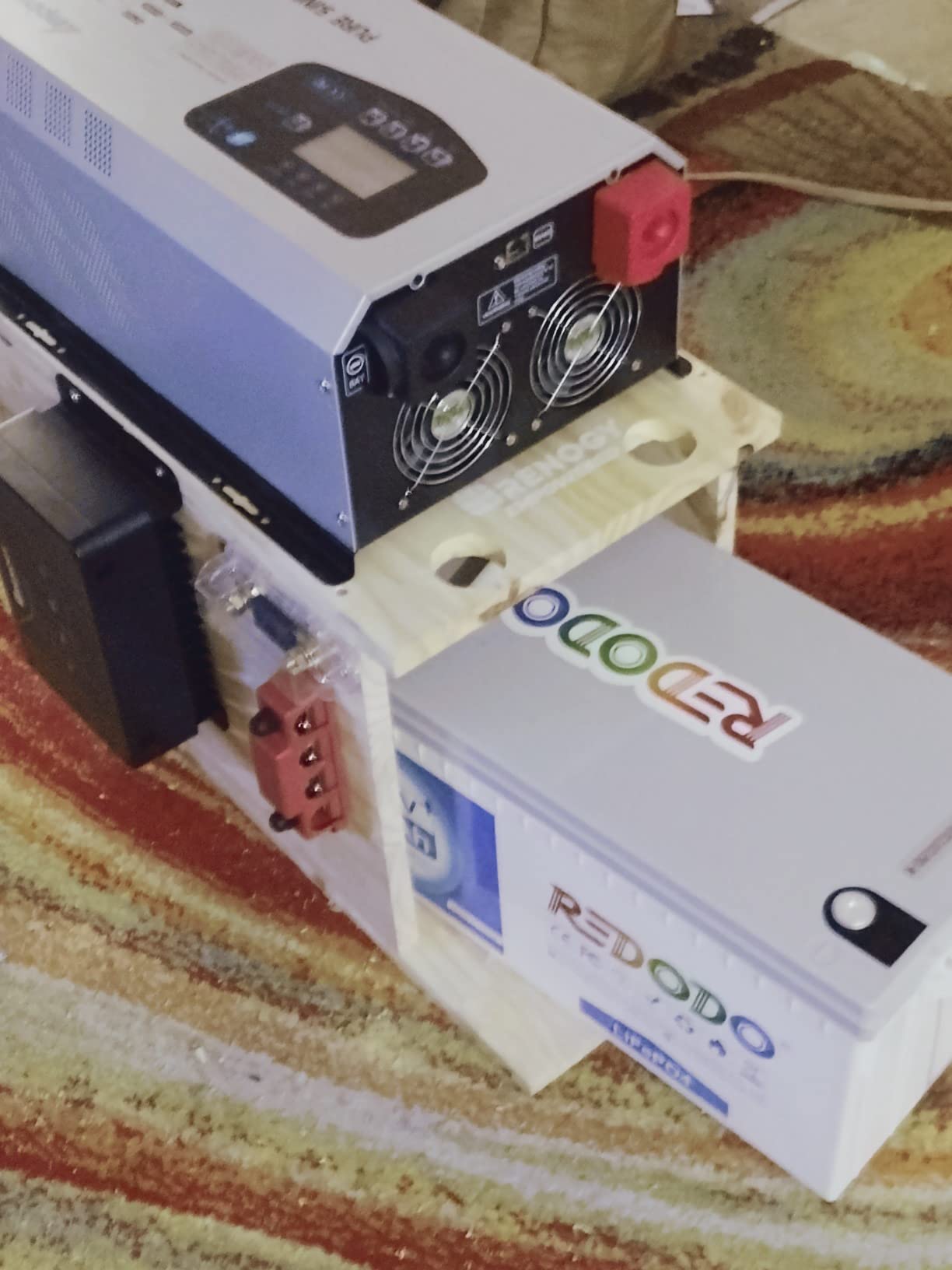
The Redodo 200Ah Plus is built for a specific job: putting 2560Wh into a travel trailer compartment that already exists. It uses 8 lithium-ion cells, M8 terminals, 40 milliohms internal resistance, and a 200A BMS supporting 200A continuous discharge and 2560W continuous output. Expansion covers 4 parallel and 4 series configurations, and the cycle figure is 4000.
The box includes the battery, a guide card, user manual, terminal bolts, insulating caps and washers, which sounds minor until you are assembling in a gravel parking lot.
No cold-weather features on this variant
This is the model to avoid if you build in a cold climate. There is no Bluetooth, no self-heating and no low-temperature cutoff, so charging has to stay between 32F and 122F. In a northern winter that means your charge controller has to stop calling for charge on its own, and you need something that does that automatically.
That is a real limitation rather than a nitpick, and it is why the ECO-WORTHY EnergyRock ranks higher for cold installs despite being a smaller module.
Fit, weight and the fixed-compartment reality
At 20.95 inches long excluding terminals, 8.15 wide and 8.5 tall, and 49.6 pounds, compartment clearance is the first thing to measure. Buyers are cautioned to check before ordering because trailer battery trays are rarely oversized.
A 14.4V LiFePO4 compatible charger is required and not included. The IP65 ABS case and 5-year manufacturer warranty are solid, and at 133 reviews this is the thinnest evidence base in the roundup, so test it early rather than trusting it untested.
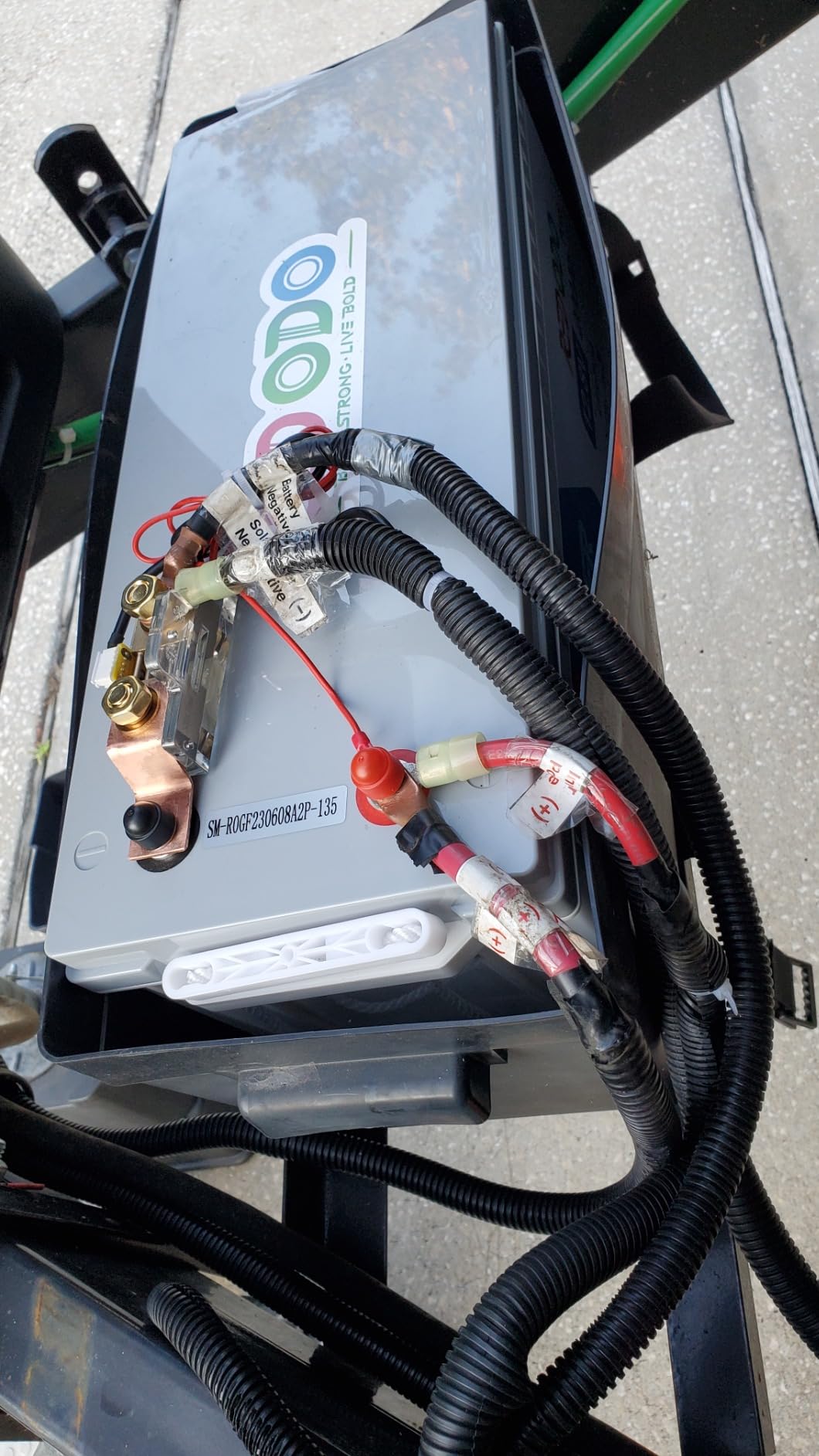
For a mild-climate trailer build with a fixed compartment, the 2560Wh and 200A continuous output are the appeal. For anything else, one of the 12V 100Ah drop-ins is a safer first step.
How to Choose a Lithium Battery Bank That Fits Your System
Every mistake I have seen in forum threads traces back to one of four decisions: bank size, system voltage, depth of discharge assumptions, and where the battery physically lives. Get those right and the brand choice matters far less.
Size your bank from daily kWh, not from inverter size
Work from your actual daily load. Measure or estimate kilowatt-hours used per day, multiply by the days of autonomy you want, then divide by your usable depth of discharge and your inverter round-trip efficiency. A household using 12kWh a day wanting two days of autonomy at 80% usable depth and roughly 95% inverter efficiency needs about 32kWh of bank.
That number is the one to size the array against too. A common rule of thumb on the forums is to cap charge at 0.5C, roughly 2500W per 100Ah at 48V, which tells you how much solar can usefully refill the bank in a day.
Pick your system voltage before you buy anything
This is the decision people regret. Below about 2kW of inverter, 12V is fine. Between 2kW and 5kW, 24V halves your bus amperage. Above 5kW, move to 48V, because a 5kW inverter on 48V draws roughly 104A against nearly 420A on 12V, and that difference is what forces 2 AWG or heavier cable and big breakers.
Owners on r/SolarDIY repeatedly say they built 12V and wished they had gone 48V, and the common regret is the copper cost and the number of cables rather than the batteries themselves. Nearly every battery in this roundup supports 4S4P or better, so starting at 12V and expanding later is a valid path if you size the wiring for where you are going.
Depth of discharge, cycle life and round-trip efficiency
Lead-acid is typically held to a 50% working depth; LiFePO4 modules here are rated from 60% to 100%. That is why users report needing only about half the capacity when moving from a stack of Group 31 lead-acid to lithium, and it is the single biggest change in your bank sizing.
Round-trip efficiency above 95% for quality lithium against roughly 70% for lead-acid means less array oversizing too. Always read a cycle life figure with the depth of discharge it was rated at, since 15000 cycles at 60% DoD and 4000 cycles at 100% DoD describe very different battery lives.
BMS quality, cell grade and inverter communication
Cell imbalance is the failure mode that shows up most often in the r/SolarDIY thread on the subject. Continuous cycling with a cheap integrated BMS that cannot correct imbalance drifts the cells apart until the weakest one sets the pack limit, and a r/SolarDIY discussion describes owners stepping into a solar trap from exactly that pattern.
Look for stated Grade A cell sourcing, a named BMS amperage limit that matches your inverter, and a published inverter compatibility list. CAN bus and RS485 closed-loop comms let the battery and inverter agree on state of charge instead of guessing, and that is worth more than a phone app.
Climate matching and install environment
Match the battery to where it lives. For a hot desert install, thermal management and a metal case matter most, and the EnergyRock’s metal enclosure is the reason it ranks well there. For a cold northern cabin, you want a low charging cutoff or built-in self-heating; the EnergyRock’s 20F cutoff is the lowest threshold in this roundup, and most others pause at 32F.
Then decide indoor or outdoor. Without self-heating, lithium batteries belong in a climate-controlled room between roughly 32F and 122F, and an unheated shed in winter is the wrong room. If you have no heated space, buy a battery with a low-temperature charging cutoff and accept the slower winter charge, rather than putting a 12V pack in a freezing box and hoping the BMS holds.
Installation safety and grounding
Batteries in a bank are a series string, and a series string is only as safe as its weakest connection. Use the same cable length and gauge on every parallel run, torque terminals to spec, and add a fuse or breaker within a few inches of each battery positive so a short does not become a fire.
Keep the bank in a ventilated, temperature-controlled space with an E-Stop or disconnect reachable without reaching over the bank, and check whether your authority having jurisdiction wants UL1973 and UL9540A documentation for a residential install. In a fire-code sense these are different tests, and having both listed shortens the conversation considerably.
Frequently Asked Questions
Which battery is best for off-grid solar?
LiFePO4 is the best chemistry for off-grid solar, and among the batteries here the ECO-WORTHY Cubix100 48V 100Ah is the strongest all-round pick for whole-home systems because it carries UL9540 and UL1973 certification, scales to 32 modules, and has a 10-year warranty. For smaller builds, the LiTime 12V 230Ah Group 4D is the best value drop-in at 4000+ cycles and 100% usable depth of discharge.
What size solar battery do I need to be off-grid?
Size from your daily load, not your inverter. Multiply daily kilowatt-hours by the days of autonomy you want, then divide by usable depth of discharge and inverter efficiency. A household using 12kWh a day wanting two days of autonomy at 80% usable depth and about 95% inverter efficiency needs roughly 32kWh of battery bank.
What is the best 12V battery for off-grid power systems?
The LiTime 12V 230Ah Group 4D is the best 12V pick for most off-grid systems, delivering 2944Wh at 45.3 pounds with a 200A BMS, 4000+ cycles at 100% depth of discharge, and expansion to 16 batteries. The LiTime 12V 460Ah is the alternative when a single high-draw load such as a rooftop air conditioner has to run for hours.
How long will a 12V battery last with a 5000 watt inverter?
Runtime depends on bank size, not inverter size. One 12V 100Ah module holds about 1.28kWh rated, and at roughly 95% inverter efficiency and 80 to 100% usable depth of discharge that is close to 1kWh of usable energy, or around 12 minutes at a full 5kW draw. A 5kW inverter wants at least 40 to 50kWh of bank for meaningful runtime.
Can you charge LiFePO4 batteries in the cold?
Not without protection. Charging below 32F causes lithium plating that permanently damages cells, so most batteries here disable charging at that threshold. The ECO-WORTHY EnergyRock 12V 280Ah has the lowest cutoff in this group at 20F. If your install has no heated space, pick a battery with a low-temperature cutoff or built-in self-heating.
Which Lithium Battery Fits Your Off-Grid Build
Pick by architecture first, then by environment, then by capacity. If you are running a whole-home system above 5kW, the ECO-WORTHY Cubix100 48V module is the battery I would build around in 2026, because the triple safety listing, 32-module expansion ceiling and 10-year warranty are what a long-lived bank actually needs.
If you want the most usable energy per unit of effort, the LiTime 12V 230Ah is the value pick. For one demanding load such as rooftop air conditioning, take the LiTime 12V 460Ah. In a cold climate, the ECO-WORTHY EnergyRock’s 20F charging cutoff is the number that matters. On a boat or for a trolling motor, the IP66 DJLBERMPW 12V 100Ah holds up well. And if you are replacing a trailer bank without room to change the tray, the power queen Group 31 is the cleanest fit.
Whichever you choose, size the bank from your daily kWh, quote every cycle number with its depth of discharge, and give the battery a climate-controlled home unless it has cold-weather hardware. That combination will still be running long after 2026 turns over.