
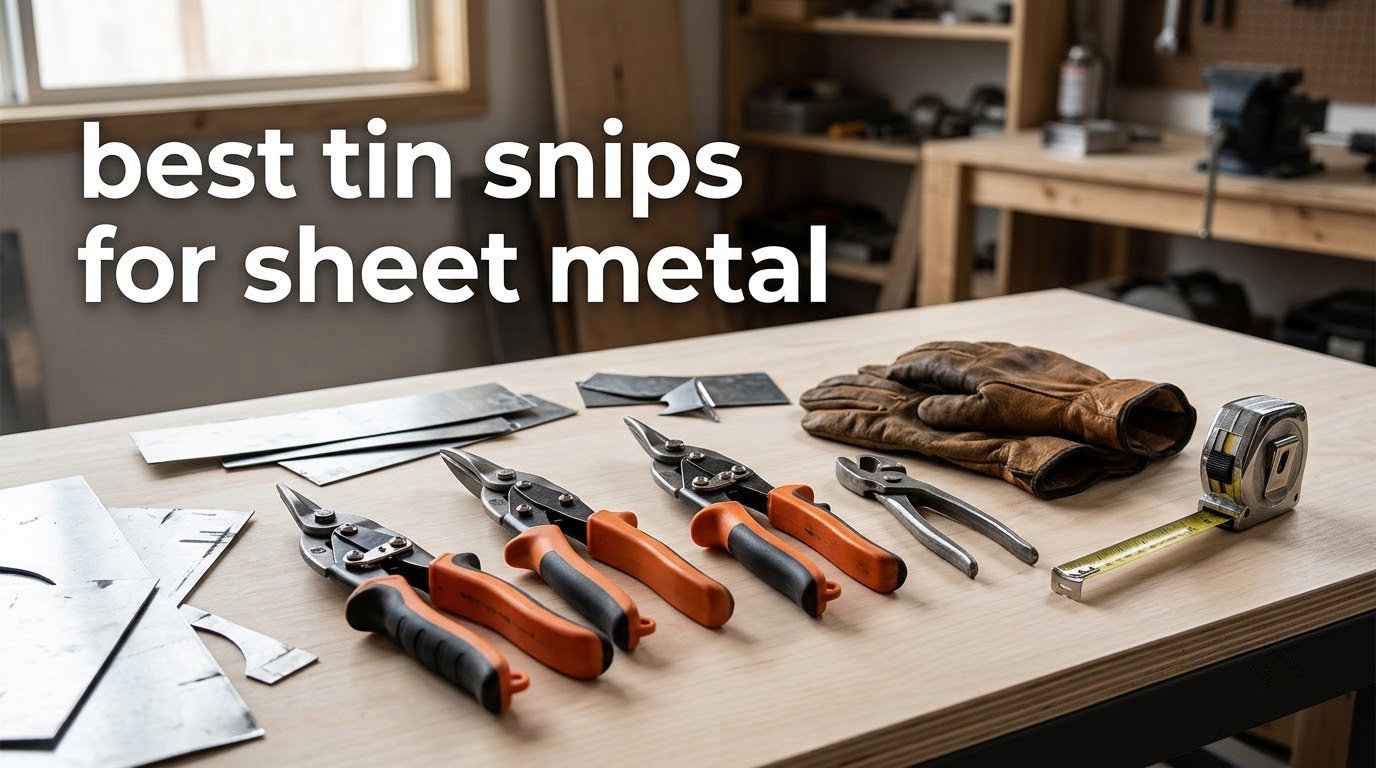
If you cut sheet metal for a living, the snips in your pouch decide how the rest of the job goes. A pair that bends 18 gauge steel instead of severing it wastes a panel, rounds off a blade and leaves you with a sore thumb by the hundredth cut. I have spent years watching roofers, HVAC techs and sheet metal fabricators test cut after cut, and the pattern is consistent: the best tin snips for sheet metal are the ones with compound action, a blade that matches the gauge you actually work in, and a handle that does not wreck your wrist on a long run.
This roundup covers 12 pairs that earn a place in a real tool bag, from a straight-cut tinner workhorse to offset aviation snips for stainless and a set that cuts circles without changing tools. I weighed them on cutting capacity, blade construction, leverage design, latch and spring behaviour, grip and warranty, then cross-checked the specs against what buyers report after months of use rather than the first week of ownership.
A note before we start, because it trips up almost everyone. Tin snips and aviation snips are the same family of tool. Tinner snips are the older straight-blade design that bites the metal from both sides at once, and aviation snips are the compound-action descendant that multiplies your hand force several times over. Buy the pattern that matches the cut you are making, and the gauge rating that matches the metal, and the tool does the rest.
Our Top 3 Tin Snips for Sheet Metal in 2026

Wiss M3R Straight Cut Snips
- Cuts 18 gauge cold rolled steel
- Molybdenum blades with conk ground edges
- Spring action with built in handle stops
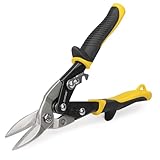
HURRICANE 10 Inch Aviation Snips
- Cuts 20 gauge steel and 22 gauge stainless
- Micro serrated chrome vanadium blades
- Tyregrip non slip handle

Amazon Basics Straight Cut Snips
- Compound action cuts to the tip
- 18 gauge steel and 22 gauge stainless
- Serrated edge blade
Our top pick, the Wiss M3R, has the deepest body of owner history in the group and the cleanest straight cut on 18 gauge material. The HURRICANE pair takes the value slot because a 20 gauge rating and a grippy handle usually cost more than you would expect. The Amazon Basics snip is the budget answer that surprises people most, cutting to the tip with compound action at a fraction of the pro-tier pricing.
Comparing All 12 Tin Snips Side by Side
| Product | Details | |
|---|---|---|
| Wiss M3R Straight Cut Snips |
|
Check Latest Price |
| HURRICANE 10 Inch Aviation Snips |
|
Check Latest Price |
| Amazon Basics AMAS04 Straight Cut Snips |
|
Check Latest Price |
 CRAFTSMAN CMHT73756 Aviation Snips CRAFTSMAN CMHT73756 Aviation Snips |
|
Check Latest Price |
 Midwest Snips Bulldog MWT-6716B Midwest Snips Bulldog MWT-6716B |
|
Check Latest Price |
 Finder 12 Inch Aviation Snips Finder 12 Inch Aviation Snips |
|
Check Latest Price |
 Midwest Snips MWT-SS6510L Left Cut Offset Midwest Snips MWT-SS6510L Left Cut Offset |
|
Check Latest Price |
 Midwest Snips MWT-6510S Offset Straight Midwest Snips MWT-6510S Offset Straight |
|
Check Latest Price |
 IRWIN 21304ZR Tin Snip IRWIN 21304ZR Tin Snip |
|
Check Latest Price |
 Klein Tools 89556 Metal Cutter Klein Tools 89556 Metal Cutter |
|
Check Latest Price |
 Klein Tools 1202S Aviation Snips Klein Tools 1202S Aviation Snips |
|
Check Latest Price |
 Malco M2007 Max2000 Offset Snips Malco M2007 Max2000 Offset Snips |
|
Check Latest Price |
Every pair above cuts sheet metal cleanly within its rated gauge. The differences come down to cut pattern, handle geometry and how much metal the blades are willing to take before they start folding it.
1. Wiss M3R Straight Cut Snips – Compound Action With a Decade of Owner Reports
Crescent Wiss 9-3/4″ Straight, Left, & Right Cut Aviation Snips | M3R
9.75 inch straight cut
18 gauge cold rolled steel
Precision cast molybdenum blades
12 ounce weight
+ Pros
- Compound action makes repetitive cuts smooth and low effort
- Holds an edge through years of daily use
- Cuts clean through 18 gauge steel and wire mesh
- Built in handle stops for consistent blade opening
- Cons
- Straight cut only
- so no tight curved cuts
- A small number of buyers report a unit failing after light use
- Sharp jaws punish careless hand placement
The Wiss M3R is the pair I hand to someone who needs one tool that simply works. Owners describe pairs that have been in service for a decade, and one reported a snip that spent six months outdoors and came back needing only a touch-up on a sharpening stone. That kind of longevity comes down to precision cast molybdenum blades with conk ground edges and serrations that spread the cutting force across the jaws instead of concentrating it on a thin line.
Spring action feeds the material forward for you, so you are closing the handles rather than fighting them. That matters more on a roofing job than it sounds, because the difference between a guided cut and a wrestling match is the difference between a straight edge on the panel and a bent one. The serrations also give the jaws something to grip, which is why the cut stays clean on 18 gauge cold rolled steel, aluminium, wire mesh and spring-tempered stainless shim.
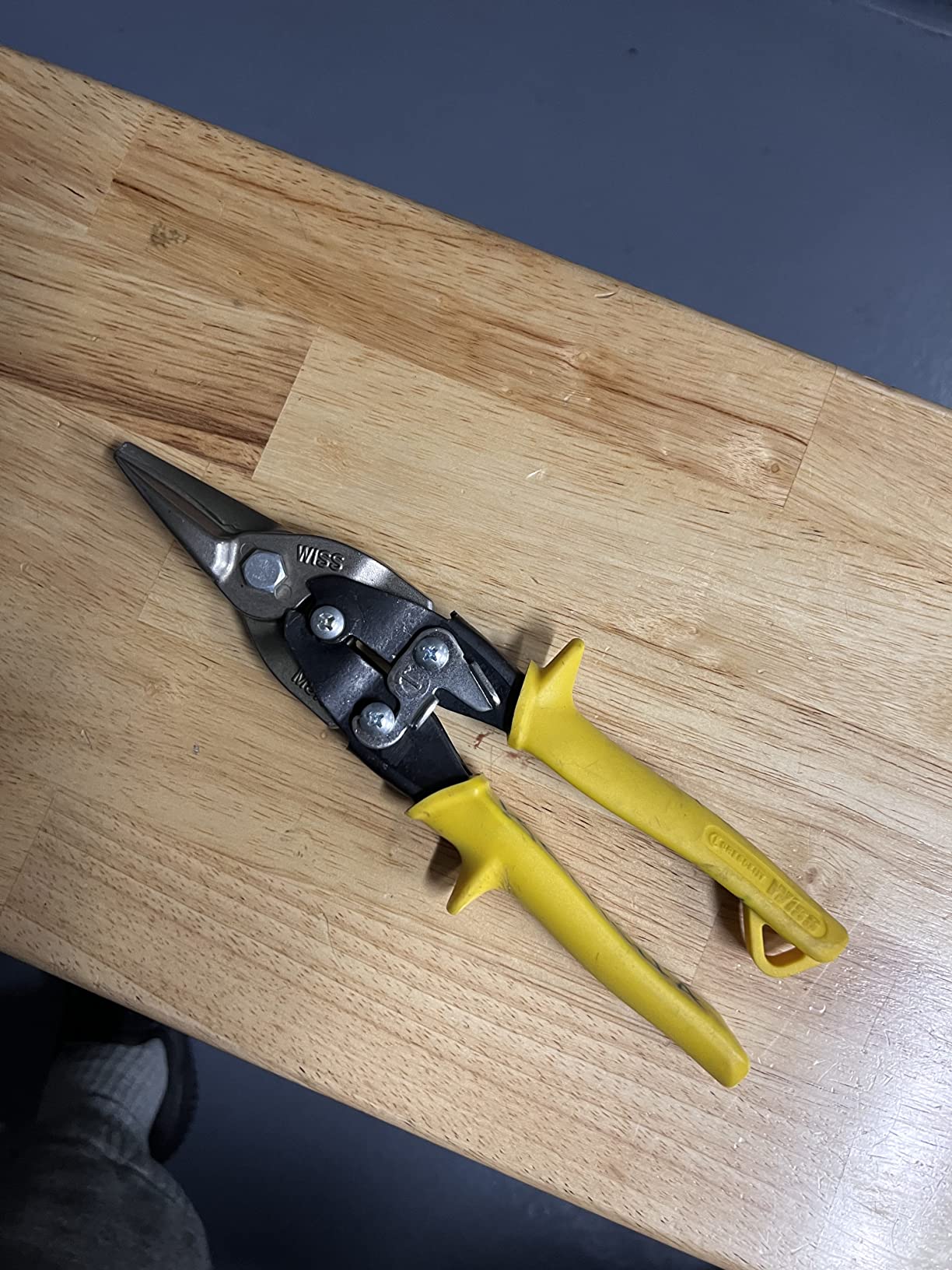
Compound action and the serrated edge
The compound linkage is the reason this snip out-muscles lighter tinner snips. Your hand closes the handles, the linkage multiplies that force, and the serrations resist the metal sliding sideways. Buyers consistently report clean cuts with minimal burr or folding at the end of the run, and the design controls blade bypass specifically to prevent tears.
The trade-off is that these are straight-cut snips. They will make gentle curves and a long straight run beautifully, but they will not follow a tight radius the way a left-cut or right-cut pattern does. Plan your cuts so the shape falls in the snip’s natural path.
A free-float design on the pivot bolt is a small detail with a long payoff, because it reduces the binding that normally shows up after a season of use. Handles include built-in stops that limit how far the blades part, so the opening stays consistent cut after cut, plus a hang hole for a pegboard.
Who it suits and who it does not
Roofers, HVAC technicians, electricians running conduit and any homeowner cutting flashing or duct stock will find the 18 gauge rating adequate for the overwhelming majority of sheet metal work. The single material non-slip grips stay comfortable through a long session and wipe clean easily.
If you work exclusively in tight radii, notching or circles, you need a left-cut, right-cut or offset pattern instead. Buyers with reduced hand strength also note that the snip is heavier than a slim tinner, though the compound action offsets much of that effort.
The standard limited lifetime warranty is the quiet confidence behind this pick. Blades and the pivot are treated as consumables that should not fail from normal use, and a pair of snips you keep for a decade is the cheapest tool in the bag.
2. HURRICANE 10 Inch Aviation Snips – The Value Pick for Thin Sheet and Gutters
HURRICANE 10 inch Aviation Tin Snips, Straight Cut Metal Shears with Non-Slip Tyregrip Handle, Cr-V Steel Blades Shears for Thin Sheet Metal, Aluminum, Gutter & DIY Projects
10 inch straight cut
20 gauge cold rolled steel
22 gauge stainless
Forged chrome vanadium blades
+ Pros
- Comfortable Tyregrip handle reduces fatigue on long jobs
- Cuts 20 gauge steel and 18 gauge galvanized cleanly
- Light enough to control one handed
- Good for HVAC duct and gutter repairs
- Cons
- Dulls quickly if pushed past its rated gauge
- Not suited to tight circles or sharp angled cuts
- Safety latch can occasionally stick
These snips land in a spot no competitor covers as well. Most aviation snips claim 18 gauge, but plenty of real sheet metal work is thinner: flashing, soffit, gutter repair, duct patches and 20 gauge cold rolled stock. For that, the HURRICANE 10 inch pair handles the material cleanly and comfortably without asking you to overpay for headroom you never use.
The forged chrome vanadium blades carry micro-serrations that grip the metal and stop it walking out of the jaws mid-cut. Buyers put these through copper, licence plate, chicken wire and 22 gauge stainless and describe the effort as low. The Tyregrip handle is soft, ribbed and easy to hold for a full afternoon of cuts.
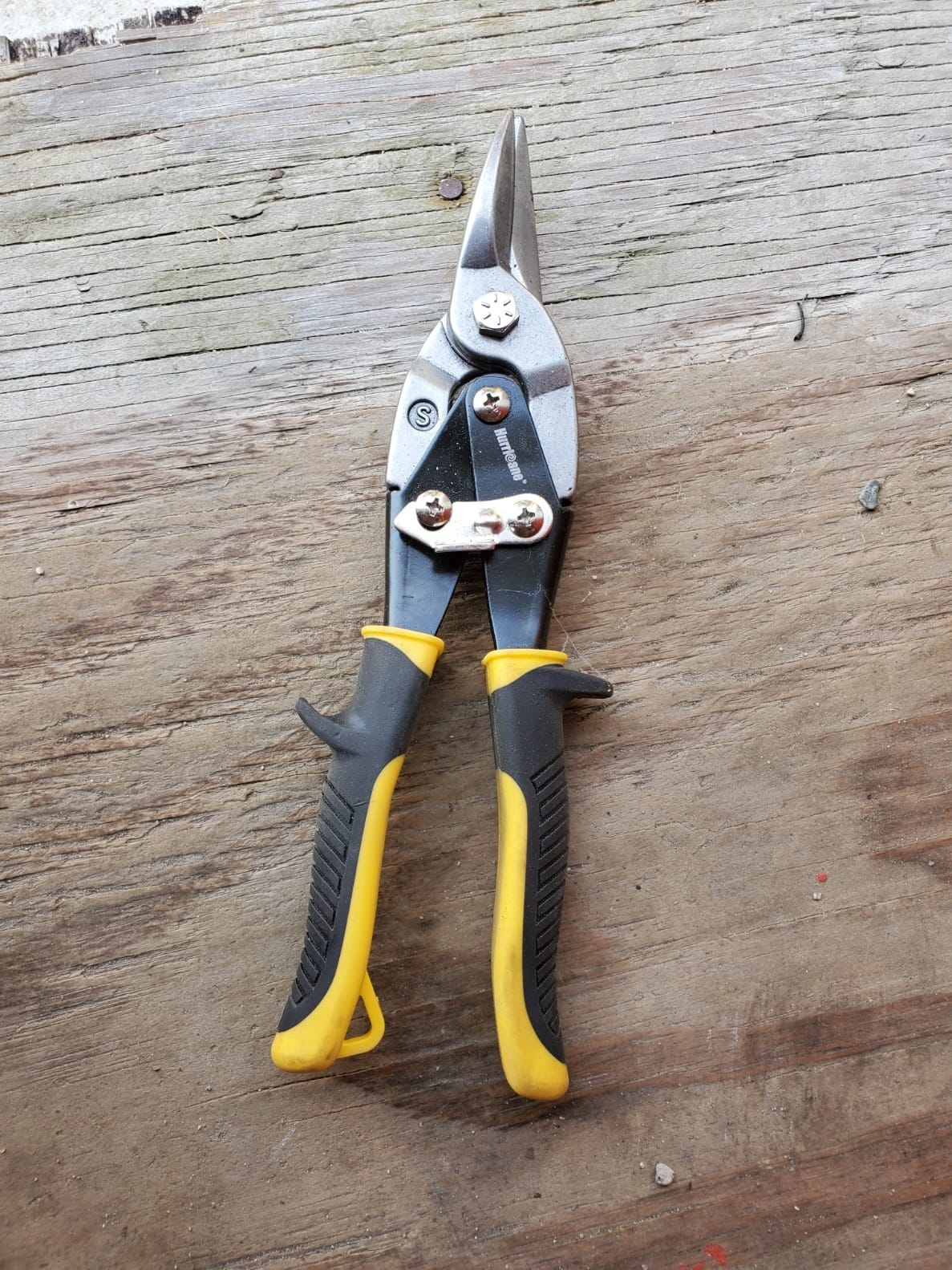
Where the 20 gauge rating actually helps
Gauge numbers confuse people because lower numbers mean thicker metal. A 20 gauge rating means these snips will bite through material the 18 gauge snips only skim, which is the difference between a cut that severs and a cut that leaves you wrestling a folded edge. For 20 gauge cold rolled steel and 18 gauge galvanized sheet, this pair is comfortably inside its range.
On hardened steel, rod or heavy wire mesh the story changes. Owners consistently report that pushing past the rated gauge dulls the edge fast, so treat the specification as a hard ceiling rather than a suggestion.
Spring, latch and one-handed control
A self-opening spring with a manual safety latch means you can open the tool one handed on a ladder or in a crawlspace, and it stays shut in the pouch until you release it. At roughly 14 ounces the tool stays controllable for long single-handed runs where a bulkier snip would tire the grip.
The design targets straight-line cutting and wide, gentle curves. Tight circles and sharp angles are outside its comfort zone, and the latch does occasionally stick after heavy use, a small thing you can clear with a drop of oil on the moving parts.
For HVAC duct work, gutter repair, garage projects and any homeowner who wants a forgiving first pair of tin snips, this is the tool I point at. It is not a precision pattern snip, and it will not replace a forged bulldog in a fabrication shop.
3. Amazon Basics AMAS04 – Budget Straight Snips That Cut to the Tip
Amazon Basics Straight Cut Aviation Tin Snips, Metal Cutters with Safety Latch
9.84 inch straight cut
18 gauge cold rolled steel
22 gauge stainless
Chrome vanadium steel
+ Pros
- High compound action cuts clean right to the tip
- Sharp and ready to use with no adjustments
- Light and comfortable for long cutting sessions
- Handles vinyl strip metal straps and thin PVC
- Cons
- Unfinished steel rusts quickly if left wet or exposed to rain
- Some find it heavy and one handed operation awkward
- Straight cut pattern limits curves
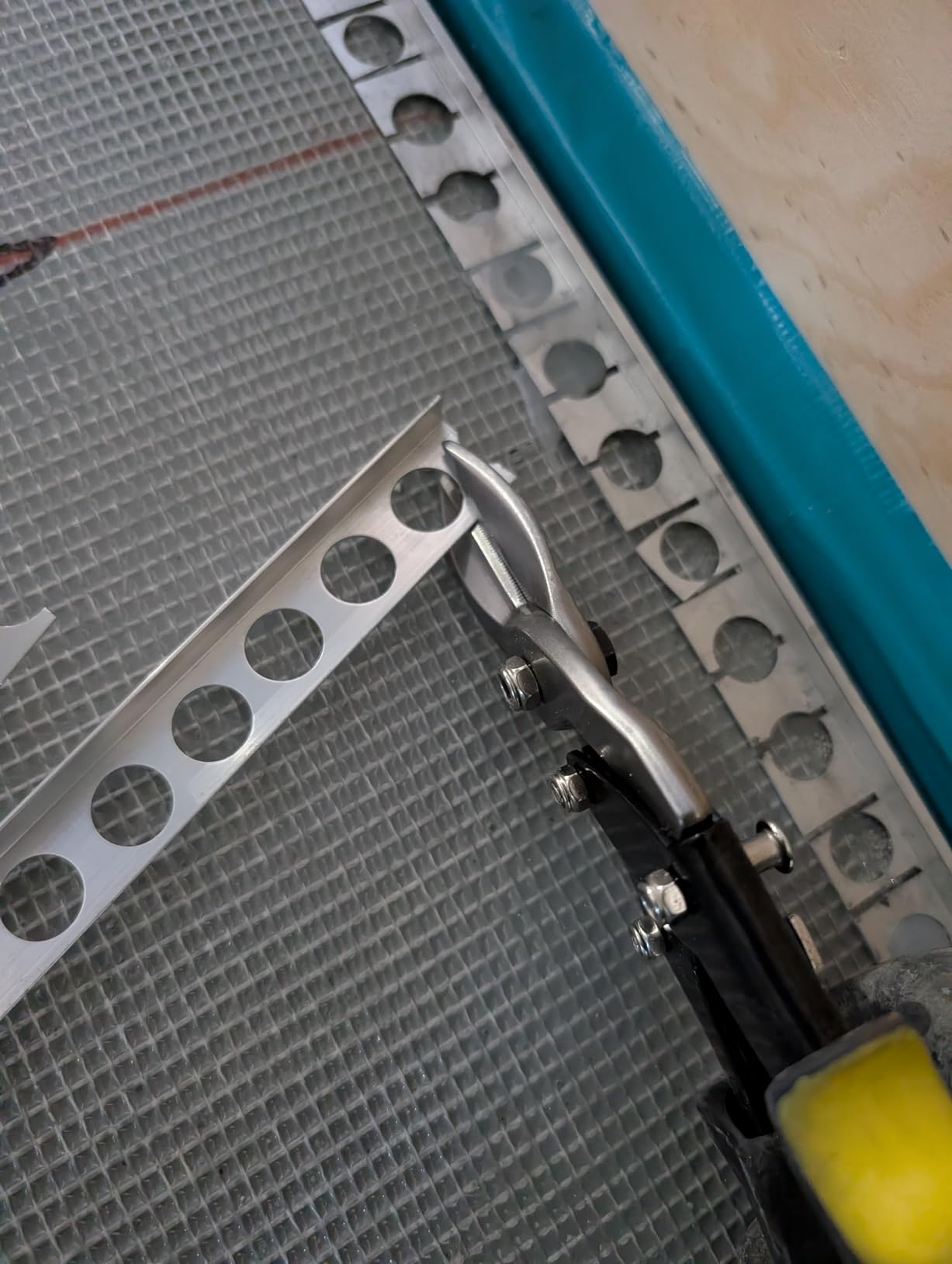
Every snip on this list has a compound linkage, and that is the feature people notice most here. The high-leverage design cuts right up to the tip of the jaws, which means the last inch of a straight run still bites cleanly instead of leaving a nub. Owners compare the cut quality to pricier tools and find the difference mostly in the finish, not in whether the metal got cut.
The chrome vanadium steel goes through high-frequency heat treatment, and the serrated edge is sharp straight from the box with no tightening or sharpening required. At just under 13 ounces it is light in the hand, which matters when you are trimming vinyl, aluminium strip, metal straps, thin PVC and square steel pipe in long runs.
The rust issue and how to avoid it
The one consistent complaint is corrosion. The steel is not fully sealed, so surface rust appears fast if the snips sit wet or out in the rain. Wipe the blades dry after use and give them a light film of oil, and the problem disappears. It is a two-minute habit that turns a good tool into a long-lived one.
The two-colour handle has a rubberised grip, and a latch locks the tool closed with one-handed auto release. A limited one-year warranty covers manufacturing defects, which is the shortest term in this group but normal for the price tier.
Where the budget tier shows
Some users with smaller hands find the tool heavy and awkward to operate one-handed, and the spring return is not as strong as on a dedicated aviation snip. The straight-cut pattern also rules out tight curves and notches, so it complements a curved pattern snip rather than replacing one.
For a homeowner, a renter or a student learning fabrication, this is the pair that makes the least sense to upgrade from immediately. It teaches you where your hand should sit and how the compound action feels, and it will not break on a first project.
4. CRAFTSMAN CMHT73756 – Induction Hardened Edge for Daily Trade Work
CRAFTSMAN Aviation Snips, Straight Cut (CMHT73756)
18 gauge cold rolled steel
22 gauge stainless
Induction hardened cutting edge
Full lifetime warranty
+ Pros
- Induction hardened edge stays sharp longer than untreated jaws
- Spring release action stays consistent
- 1/4 inch blade markings speed up repeat cuts
- Trusted by tradespeople who cut daily
- Cons
- Repetitive snipping can leave the thumb sore
- Heavy spreading can spread the jaws slightly
- Straight cut only
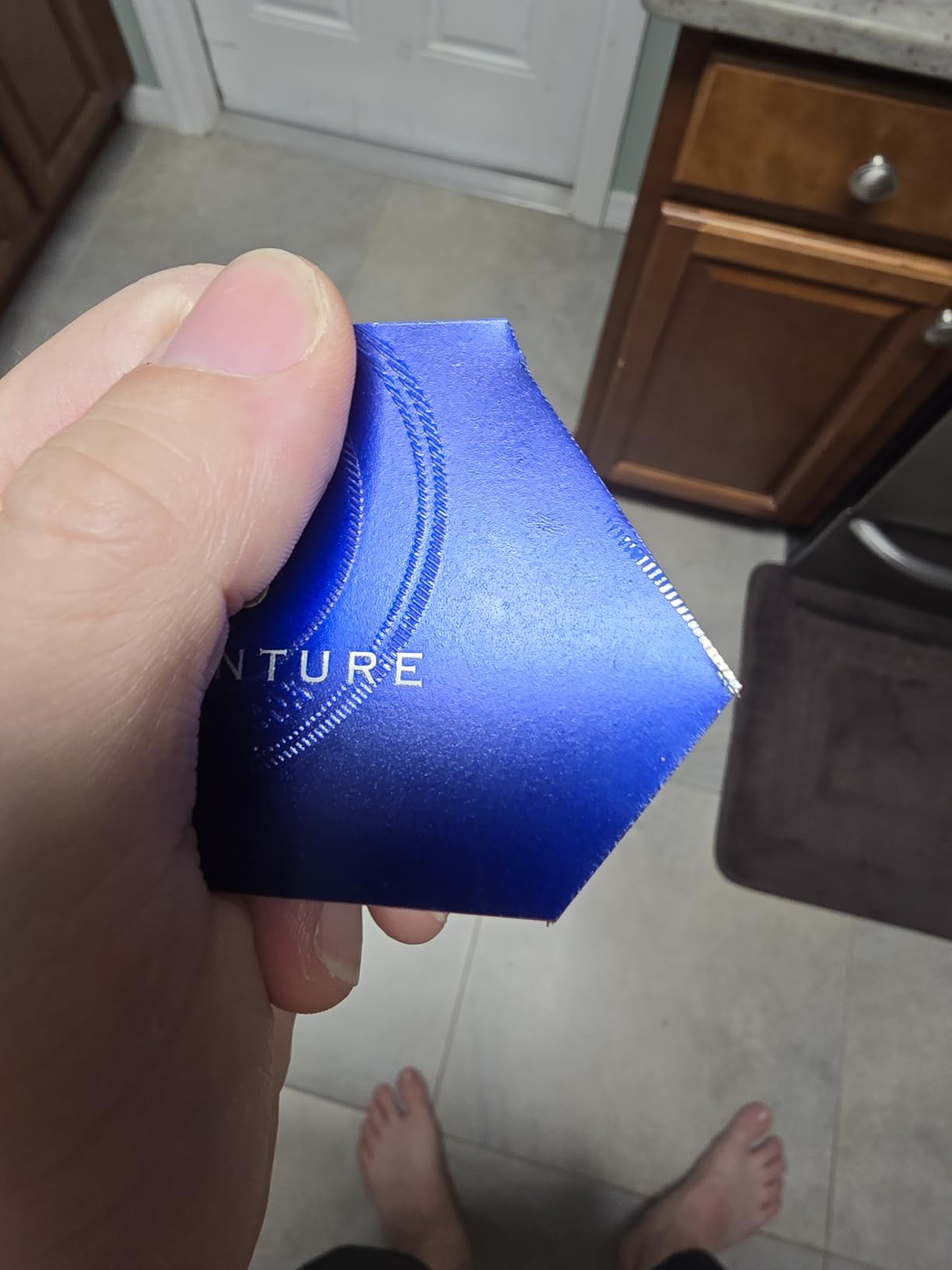
The argument for this pair is edge retention, and the induction hardened cutting edge is the reason. Rather than hardening the whole blade, the working edge is treated separately so it resists wear where the metal actually touches the sheet. Tradespeople who cut every day report outlasting cheaper brands across a year of daily use with no resharpening.
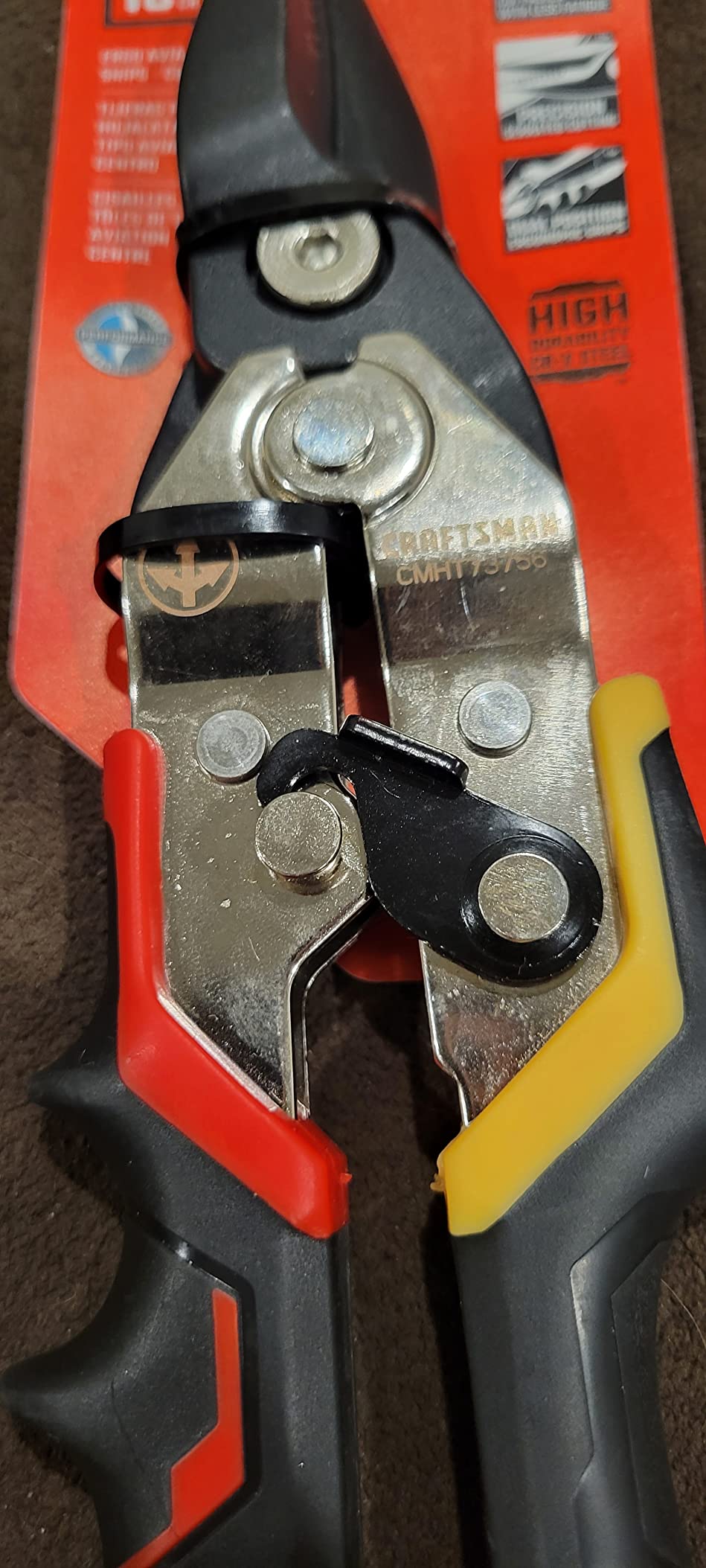
The other quiet feature is the 1/4-inch blade markings stamped along the jaw. When you are cutting flashing or trim to a set dimension, you can sight against the mark instead of measuring, and the repeat cuts line up far more consistently than they do on an unmarked snip.
Capacity and the spring-assisted latch
It cuts up to 18 gauge cold rolled steel and 22 gauge stainless, which is the mainstream aviation snip rating and the point where most tradespeople say their real work starts. A spring-assisted latch lets you open the tool one handed, and one drylining user reported the release action never faltered over a full project.
That consistency matters more than it sounds. Snips with a weak return force you to reopen the tool by hand for every cut, and after several hundred repetitions your hand tells you about it.
Comfort over a long shift
Repeated snipping can leave the thumb or hand sore, especially for users with limited grip strength, and that is the most common complaint in the reviews. If you are cutting several hundred feet of trim in a day, a pair of cushioned snips from another category may be worth pairing with these.
Heavy spreading jobs can work the jaws apart slightly and leave a small gap, and the straight-cut pattern will not follow a tight curve. The full lifetime warranty is the strongest coverage statement attached to any snip here, and the brushed stainless construction shrugs off job-site abuse.
5. Midwest Snips Bulldog MWT-6716B – Forged Blades for Extra Thick Material
MIDWEST Bulldog Aviation Tin Snip – Straight Cut Regular Tinner Shears, Made in the USA – MWT-6716B
Bulldog pattern straight cut
18 gauge cold rolled steel
Hot drop forged molybdenum blades
Made in the USA
+ Pros
- Highest rated snip in the group
- Forged heat treated blades hold an edge on tough material
- Cuts 18 gauge steel to the tip with 20 percent less effort
- American manufacture buyers take real pride in
- Cons
- Costs noticeably more than imported tools with similar reach
- Users with arthritis or limited strength find them heavy
- Handles feel less heavy duty than some expect
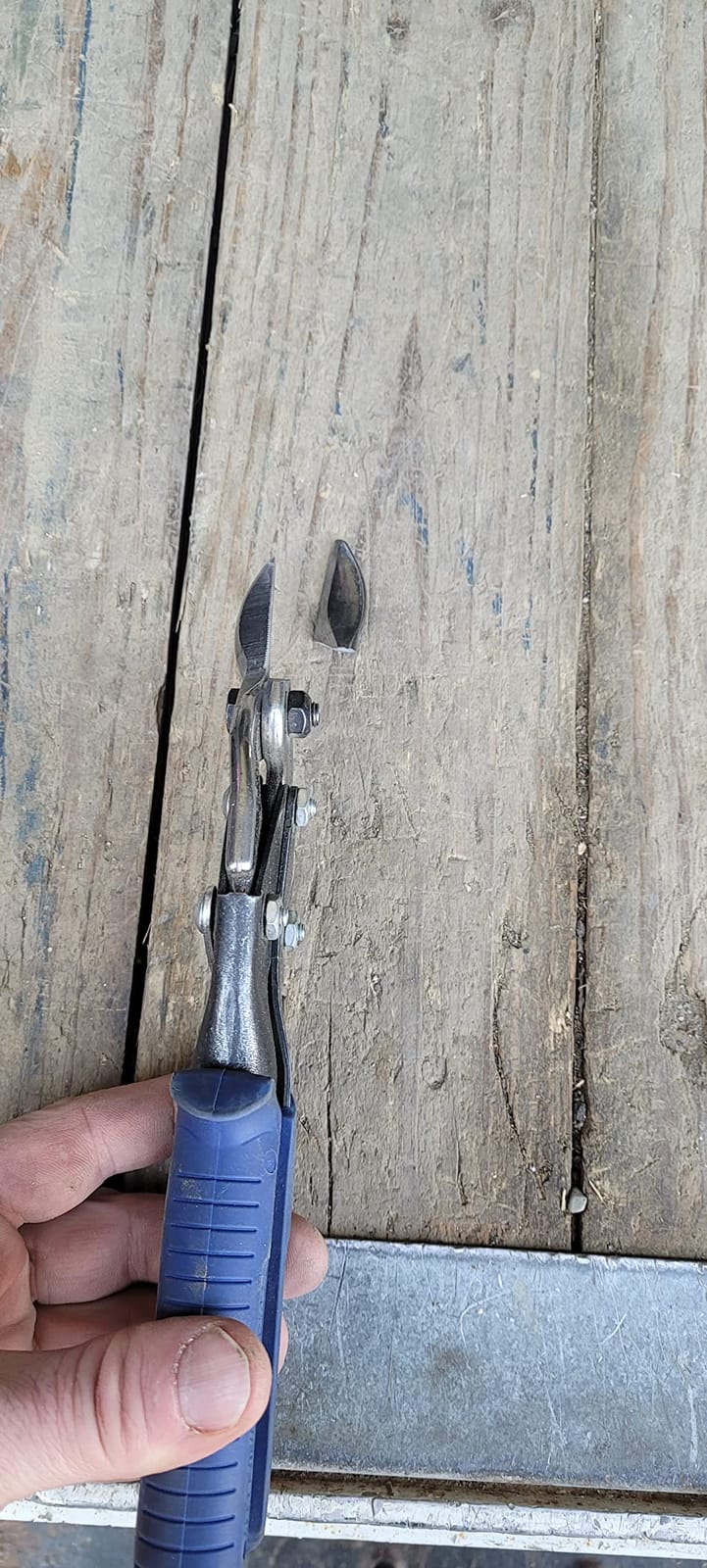
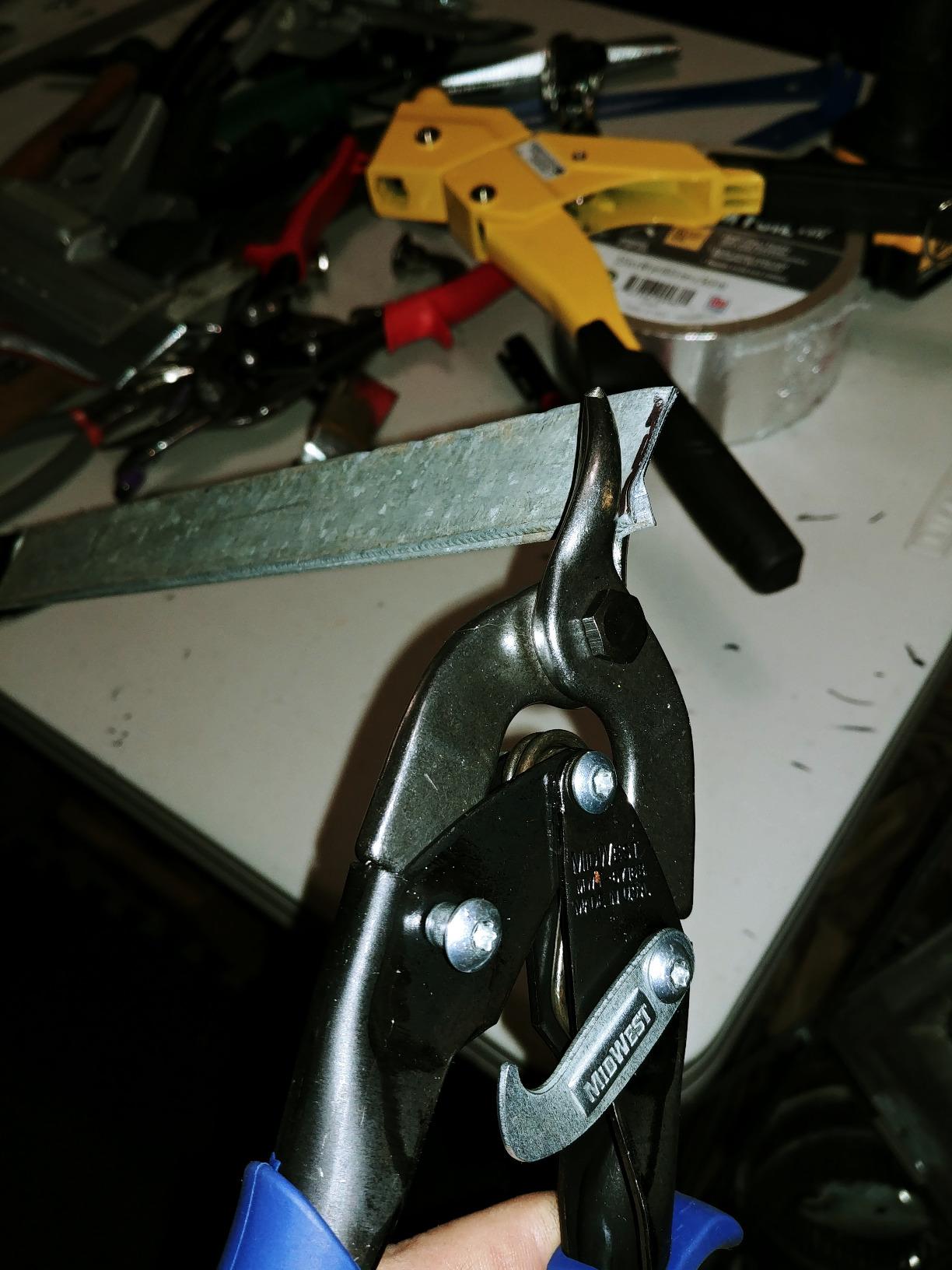
The bulldog pattern exists for one reason: trim cuts in extra thick material. Where a standard tinner snip stalls and folds the metal, the bulldog geometry concentrates the compound action at the heel of the blades, and the Glidetech molybdenum alloy blades, hot drop-forged and austemper heat-treated, keep the edge under that load.
Buyers call these the best snips they have used and describe sheet metal cutting like butter. They cut 18 gauge cold-rolled steel from the beginning of the blade to the tip with 20 percent less effort, which is the claim I find most credible because it is consistent across the reviews.
Why the bulldog pattern is different
A conventional aviation snip distributes force along the length of the jaw, which is efficient for a long cut. A bulldog snip pushes the pinch point lower and further back, so the blades act like a short lever on tough material. You get a shorter, heavier bite that suits trimming notches, tabs and heavy flashing rather than sweeping long curves.
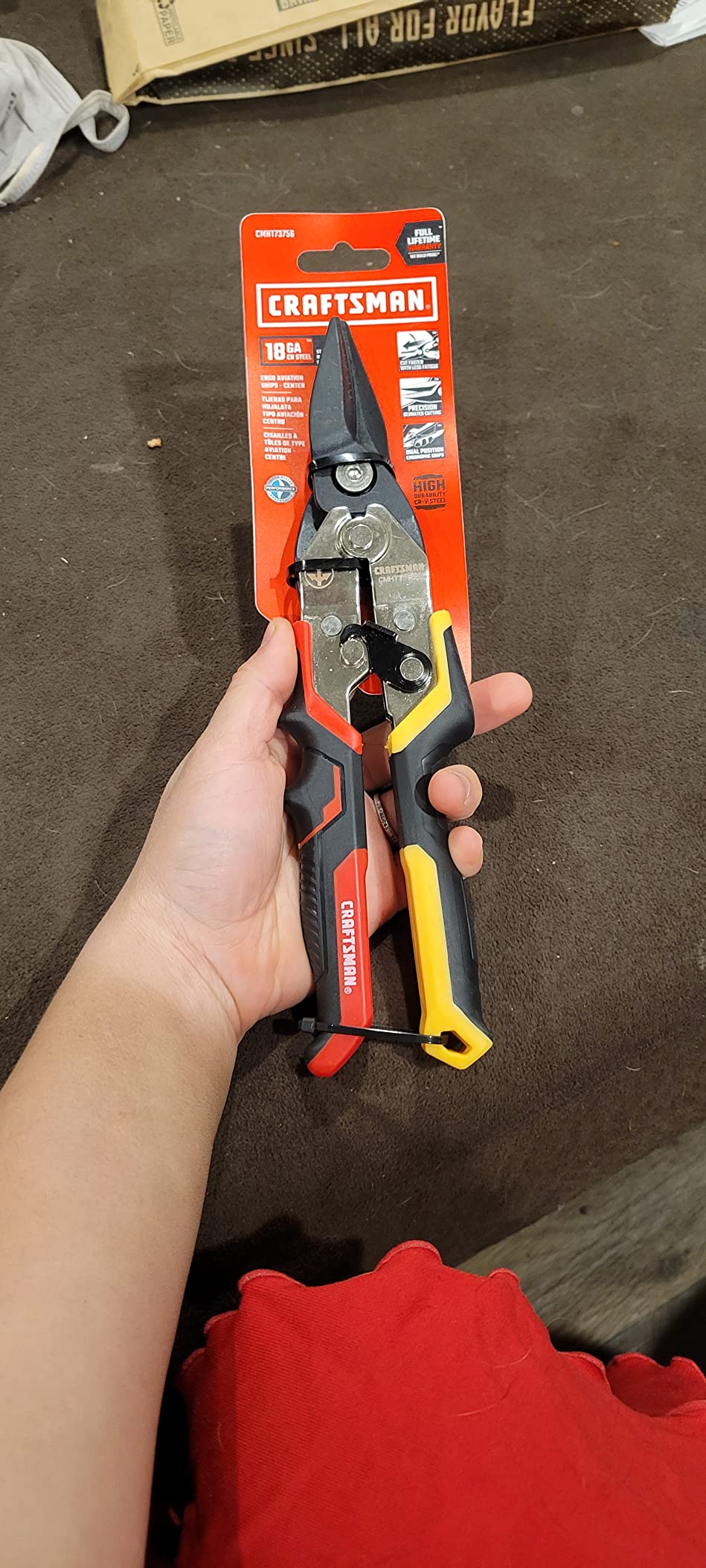
The round point and classic finish are traditional, and the multicoured handles help you identify the pattern on a dark bench. Colour coding is part of the convention across the industry, where red typically means left cut, green right cut and yellow straight.
Build quality and the weight question
Made in the USA from premium grade steel, and several buyers explicitly say the American build justifies the premium compared with imported tools of similar capability. The limited lifetime warranty on blades and spring against manufacturing defect is a real commitment from a company that has been making snips for generations.
The honest drawback is weight. Users with hand arthritis or limited strength find them heavy and hard to manoeuvre, and one buyer expected heavier duty handles than the Kush N Power grips delivered. For a fabricator cutting all day, that is a trade you make gladly. For occasional siding work, it is worth weighing.
6. Finder 12 Inch Aviation Snips – Reach for Long Straight Runs
Finder 12″ Aviation Snips, Long Straight Cut Tin Snips Cutting Shears Power Cutter with CR-V Blade & Comfortable Grip, 300mm Scissors for Cutting Metal Sheet, Hard Material, Industrial Quality
12 inch extra long straight cut
Austemper heat treated CRV steel
Serrated cutting edges
Metal safety lock
+ Pros
- Extra long body gives reach and control on large sheet
- Soft grip handle with ribbing resists hand slippage
- Handles a wide range of sheet and non metal material
- Anti rust oil treatment slows corrosion
- Cons
- Straight cut only
- so no tight curves or notching
- Serrated carbon edge can tear very soft material
- Lower sales rank than the leading options
Length is the whole idea here. A 12 inch body means longer handles, more hand clearance from the cut line and more force delivered from a single squeeze, which is why this pair suits long straight runs across a full sheet of material. The ribbed TPR soft grip is shaped to stop your hand sliding forward at the moment of maximum squeeze.
The blades are hot drop-forged chrome vanadium steel, austemper heat-treated, and the head carries a vibration grinding finish with anti-rust oil treatment. The serrated edges are the reason it grips, and also the reason it is not the right tool for very soft or very thin material where a serration can tear rather than cut.
Material range and safety lock
Buyers use it on sheet material, beading, cans, copper, vinyl siding, cardboard, shingles, plastic plate and even leather and tile. That breadth is unusual at this tier and makes it a useful one-tool answer for someone who does odd jobs rather than specialising.
The metal safety lock between the handles keeps the blades closed while the tool sits in a bag or on a ladder, and the tail suspension hole makes it easy to hang in a workshop. Keep the hand above the cutting line and the straight pattern leaves the work safely visible.
Where the extra length stops helping
Two limits are worth naming. First, straight cut only, so tight curves and precision notches are out of reach. Second, a serrated carbon steel edge will tear thin vinyl or soft plastics where a smooth ground edge would slice cleanly, so keep it on metal and tougher sheet goods.
The category sales rank trails the leading brands, which usually reflects lower marketing spend rather than lower build quality. For sheet metal, roofing trim and general workshop use, the reach and the grip are the reasons to pick it.
7. Midwest Snips MWT-SS6510L – Offset Cut Blades Built for Stainless
MIDWEST Special Hardness Aviation Snip – Left Cut Offset Stainless Steel Cutting Shears, Made in the USA – MWT-SS6510L
Offset left cut
18 gauge cold rolled steel
Forged molybdenum alloy blades
11.5 inch overall
+ Pros
- Offset geometry makes long and tight left curves easier
- Special Hardness blades suit stainless inconel and titanium
- Fabricators report pairs lasting eight years
- Hand stays clear of the cut line
- Cons
- Does not handle the toughest gutter guard or hardened strip
- Cut quality not to everyone taste against standard models
- Most expensive snip in this group
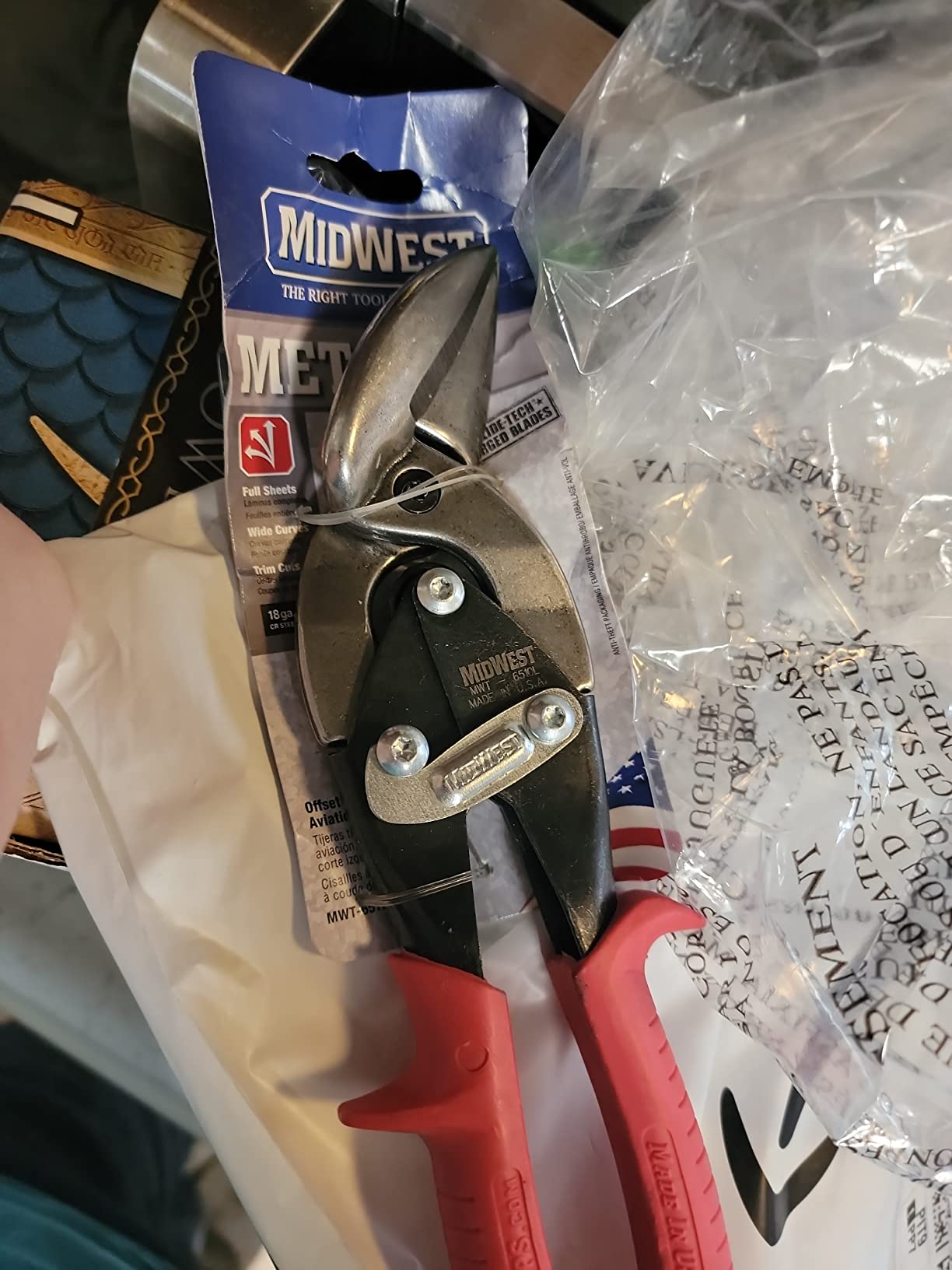
Stainless is a different material. It work hardens, it has no grain to follow, and ordinary snips that cut mild steel beautifully will smear and struggle. This Special Hardness model from Midwest Snips uses hot drop-forged molybdenum alloy blades with austemper heat treatment, aimed squarely at stainless, inconel and titanium rather than mild steel alone.
Long-serving fabricators and roofers report decades of use and pairs lasting eight years without breaking or losing their cut. The offset left-cut geometry is the second reason to choose it: long straight runs and tight left curves both become easier, and your knuckles stay out of the way of the work.
Offset handles and wrist position
Offset means the handles sit below the line of the blades, which rotates your wrist into a more natural angle for the length of the cut. On a long run through a roofing panel, that difference shows up in your hand at the end of the job rather than at the first cut.
It is a left-cut pattern, so it follows tight curves turning one direction and cuts straight lines cleanly. That makes it the natural partner to a right-cut pair for anyone who shapes notches and returns in sheet metal. A buyer with reduced hand strength also found it manageable despite the 15 ounce weight.
Where Special Hardness stops
Despite the name, a minority of buyers report it does not handle the toughest gutter guard or heavily hardened strip material. A few also feel the cut quality does not match the standard Midwest snips they normally reach for, and one reported receiving the standard model instead of the Special Hardness version, so check the model number on the box when the package arrives.
It also cuts 24 gauge stock and aluminium cleanly, and the pinch-thru-point design carries 18 gauge cold rolled steel to the tip with 20 percent less effort. For stainless flashing, chimney work and long offset trim runs, it earns its place in a bag that already has a general purpose pair.
8. Midwest Snips MWT-6510S – Offset Straight Cut for Roofing and Duct
MIDWEST Aviation Snip, Straight Cut Offset, Tin Snips
Offset straight cut
18 gauge cold rolled steel
Glidetech forged blades
Made in the USA
+ Pros
- Built to survive years of continuous daily cutting
- Glidetech forged blades stay sharp on aluminium and stainless
- Handles even hardware cloth and gopher wire
- American manufacture is a repeated point of approval
- Cons
- Open jaws are wide for average size hands
- Tuning varies between individual pairs
- Offset pattern adds little over a straight snip for cross cuts
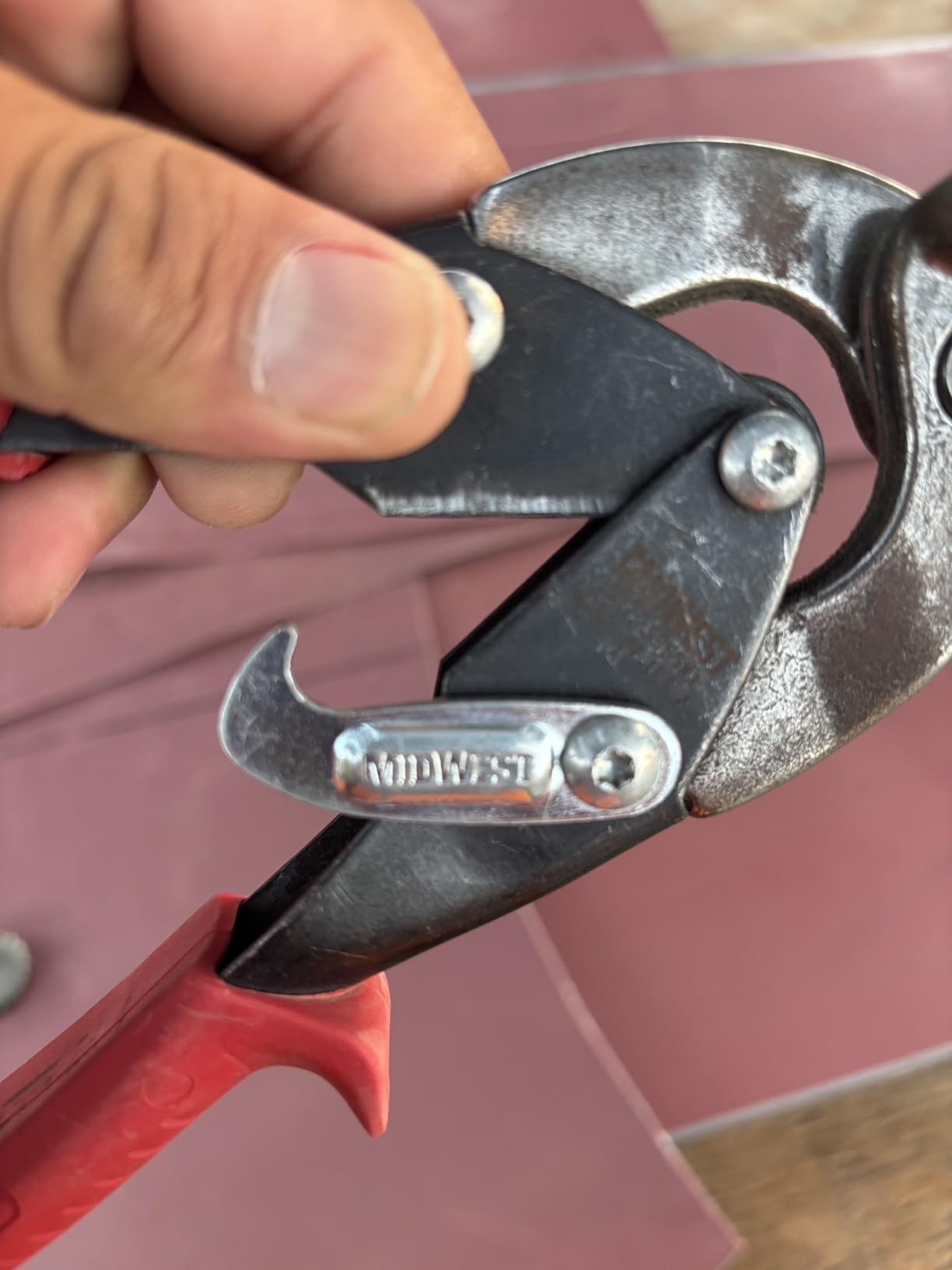
This is the offset straight-cut answer, and it fills a gap most people do not realise exists. A straight pattern is already good for long lines, so the question is whether offset geometry adds anything. For roofing panels, duct trunk and long trim, it does, because the hand sits lower and the cut runs flat across the sheet instead of twisting.
The Glidetech forged molybdenum alloy blades are hot drop-forged and austemper heat-treated, the same construction used in the higher pattern models. One owner reported five years of continuous use with the snip still cutting cleanly, and others mention that it handles even hardware cloth and gopher wire.
Grip sizing and the width of the jaws
The most common ergonomic complaint is that the fully opened snips present a wide gap, and users with average-size hands have to choke up on the tool to get a full grip. If you have small hands, try the pattern in a shop before committing, or hold it further down the handle and accept a slightly shorter stroke.
Tuning also varies between individual pairs, so some open to a wider gap than others. A quick check on delivery is worth five seconds: close the blades, look for even contact along the jaw, and exchange it if the gap is obvious.
Duct, panel and long-run work
For duct trunk, rectangular trunk and long straight runs in sheet, the offset keeps your wrist level and the sheet flat. Reviewers note that a user with reduced hand strength found them manageable, though at 15 ounces they are not a light tool.
A few users argue the offset pattern is not much better than a plain straight snip for cross-cuts and can be harder to hold on a line, which is fair. The limited lifetime warranty on blades and spring, the forged construction and the American build are what make this the durable choice in its class.
9. IRWIN 21304ZR – Deep Jaw Tin Snip for Gutter and Soffit Work
IRWIN 21304ZR Tin Snip, Multi Purpose, 11-3/4-Inch (21304)
11.75 inch multi purpose
24 gauge cold roll steel
26 gauge stainless
Hot drop forged blades
+ Pros
- Long deep jaw reaches into tight places
- Preferred over pricier snips for cut quality and blade life
- Comfortable and balanced for repetitive siding work
- Flat blade cuts straight and curved shapes
- Cons
- Spring tension is weak on some units and they do not self open
- Handles can bind at the opening after weeks of use
- Lower gauge capacity than most aviation snips here
Exterior trim work has its own demands: thin material, lots of length, awkward angles near a roof edge, and a lot of repetition. The IRWIN 21304ZR answers that with a long, deep cutting jaw that reaches into tight places and still cuts heavy for its rating, and trade users running gutters and siding frequently rank it above pricier alternatives for cut quality and blade life.
Hot drop-forged steel blades and precision-ground edges keep a tight grip on each cut, and the flat blade profile cuts straight lines and curves. Once the spring washer is broken in, the blades open readily for fast repetitive cuts on sheet aluminium, siding and soffit.
Reading the 24 gauge rating correctly
This snip is rated for 24 gauge cold-rolled steel and 26 gauge stainless. That is lighter than the 18 gauge aviation snips on this list, and it is not a weakness, it is a different tool. Soffit, fascia, drip edge and trim coil at that thickness are exactly what it is built for, and it does them with less hand effort than the gauge number suggests.
Set expectations properly if you are coming from an 18 gauge snip. Asking it to bite 18 gauge cold rolled steel will fold the metal and roll the cutting edge, which is the fastest way to shorten its life.
The spring decides how long your hand lasts
The one real flaw reported is the spring. On some units the tension is too weak and the snips do not self-open, so you pull them apart by hand or use two hands for every cut. That is tiring across a full day of gutter runs, and handles can bind at the opening after several weeks of use.
Test the spring the moment you open the package. A pair that springs open on its own will serve you; a pair that does not should go back. A light oil on the pivot and the spring washer fixes most of the binding complaints.
10. Klein Tools 89556 – Long Multi-Purpose Cutter With Replaceable Blades
Klein Tools 89556 Metal Cutter, Tin Snips Cut Tin, Copper, Aluminum, Vinyl, Steel and Stainless Steel, 12-Inch
12 inch tool
24 gauge steel and 28 gauge stainless
3.5 inch blades
Replaceable cutting edges
+ Pros
- Full 3.5 inch blades cut straight lines and wide curves
- All steel construction with replaceable blades extends tool life
- Large handles work well with gloves on
- Handles tin copper aluminium soft metals and vinyl
- Cons
- Light gauge rating compared with aviation snips
- 12 inch body takes up more pouch space
- No safety latch listed in the specifications
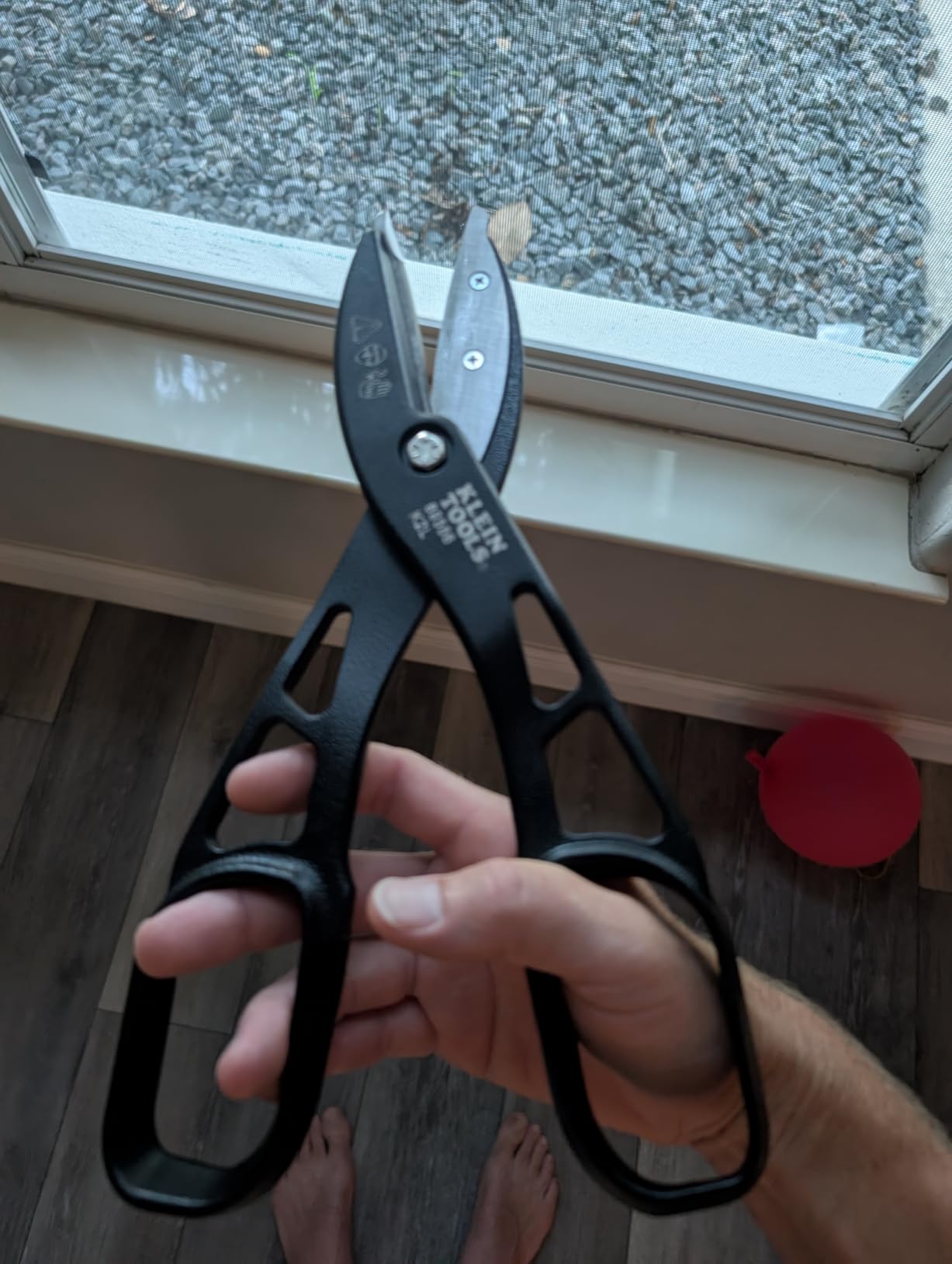
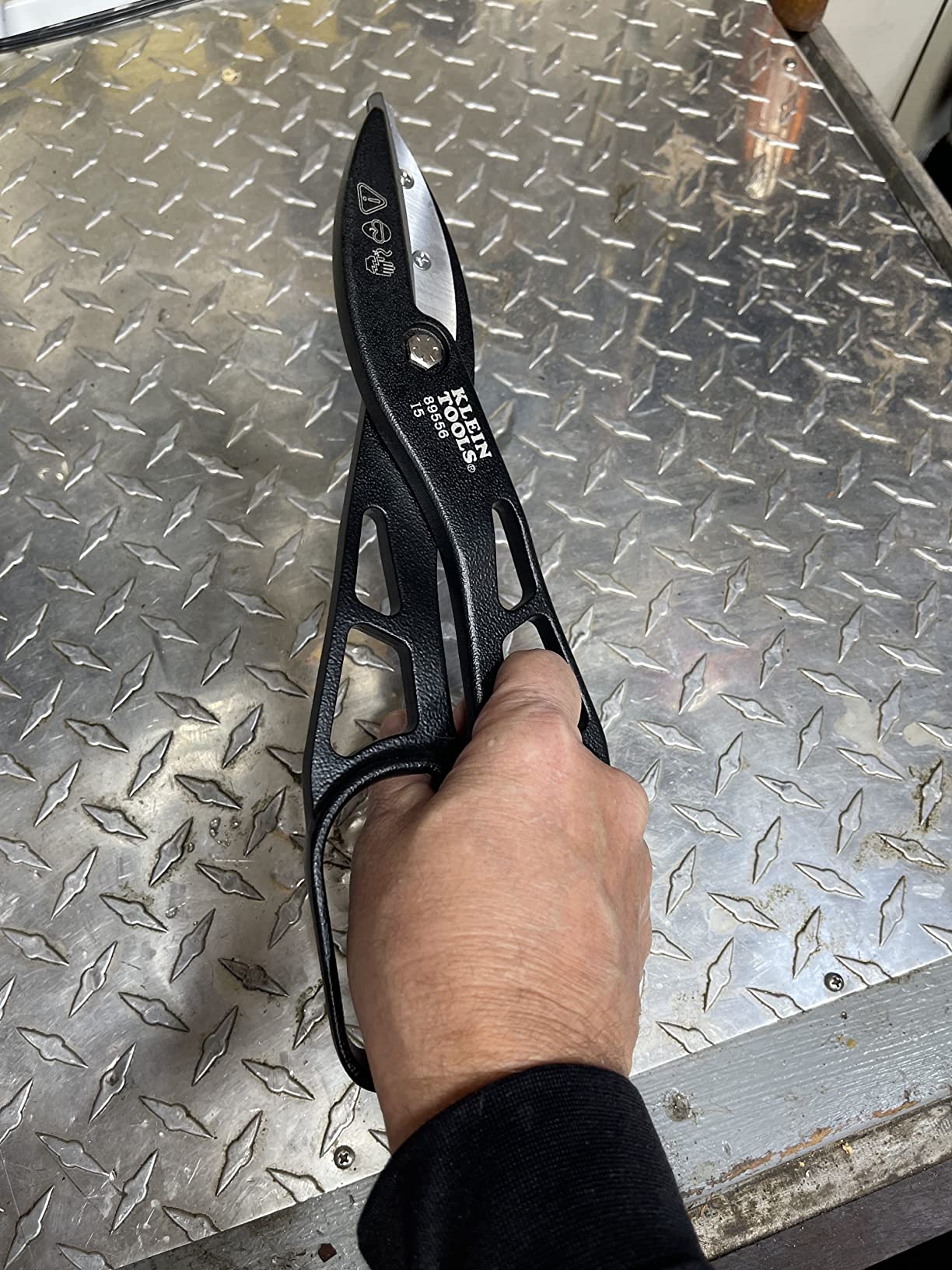
The thing that separates this pair from every other tin snip on the list is that the cutting blades can be replaced. All-steel construction with easily replaceable cutting blades means a dull jaw is a five-minute fix instead of a new tool, and over years of service that changes the economics completely.
The 12 inch body carries full 3.5 inch blades, so you get a long straight run in one squeeze and enough control for wide curves. Reviewers like the reach, the all-steel build and the large handles sized to accommodate gloves, which matters for anyone working outdoors in the cold.
What 24 gauge and 28 gauge really cover
Excellent for 24 gauge steel and 28 gauge stainless, this rating puts it in the light sheet category: thin flashing, duct skins, ceiling grid, trim coil, tin, copper, aluminium, soft metals and vinyl. Electricians cutting ceiling grid and HVAC technicians trimming duct skins get a clean cut with very little effort.
Ratings sit in the middle of this group because the capacity is geared to lighter material than several aviation snips here. If your work is 18 gauge cold rolled, choose one of the aviation patterns instead and keep this one for the light stuff and the replaceable edge.
Build, size and the missing latch
High-carbon cutting blades in a brushed steel body hold up well to job-site knocks, and the 13.4 ounce weight keeps the balance reasonable for its length. The larger handles are the standout for gloved work, where a slim snip turns into a slipping snip.
Two practical drawbacks. The 12 inch body occupies more space in a tool pouch than a standard 10 inch aviation snip, and no safety latch appears in the specification details, so the blades are free to open if you drop it. Carry it in a pouch rather than loose.
11. Klein Tools 1202S – Straight Aviation Snips With an Integrated Wire Cutter
Klein Tools 1202S Metal Shears, Aviation Snips, Straight Cut
10.5 inch straight cut
18 gauge steel and 22 gauge stainless
Forged serrated blades
Color coded contoured grips
+ Pros
- Forged heat treated serrated blades cut cleanly and last
- Handles 18 gauge steel and 22 gauge stainless
- Self open latch allows one handed opening
- Contoured grips stay comfortable through extended use
- Cons
- Straight cut only
- left right and offset are separate models
- Serrated edge leaves a rough finish on very soft material
- Heavier feel than cheaper alternatives
Most snips tell you not to cut wire, and most snips get cut wire by somebody eventually. This pair solves that with an integrated wire cutter, a small dedicated notch in the handle that shears light wire without putting a nick in the working blade edge.
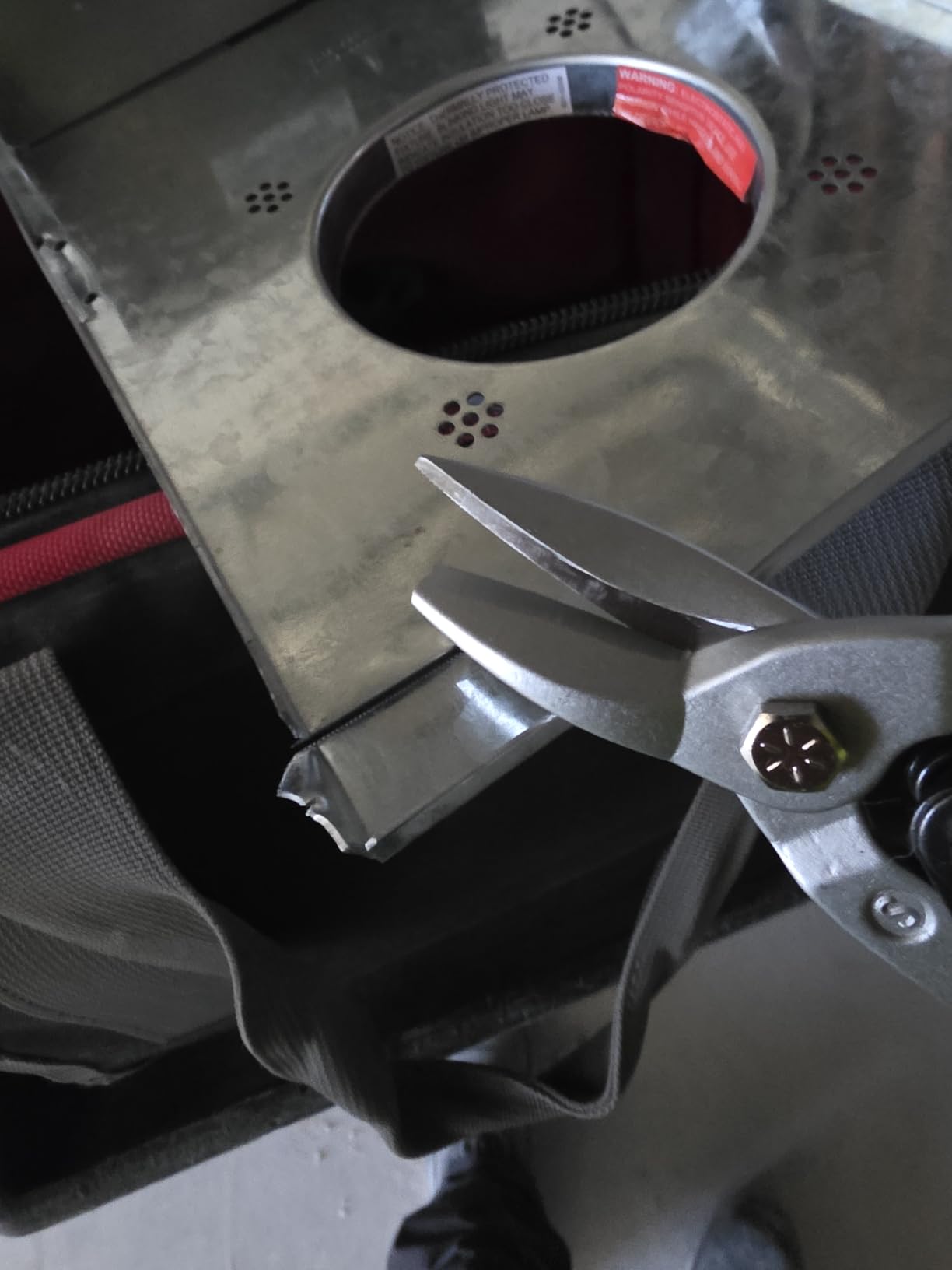
That is not a gimmick. Forum users repeat the same warning endlessly: nick the blades on banding wire or a hidden staple and the snip is finished. A built-in wire cutter means the temptation disappears. The blades themselves are forged from heat-treated steel with serrations, and they handle 18 gauge steel and 22 gauge stainless, which is the mainstream aviation rating.
Cut pattern and finish quality
This is the straight-cut member of the Klein range. Left, right and offset versions are separate models, so if your work involves tight radii you will need to pair it with another pair. Straight runs, trimming and wide gentle curves are where it earns its place.
The serrated edge grips well and resists slipping on the material, which helps when you are cutting a shape freehand. On very soft or very thin material the serrations can leave a slightly rough finish compared with a smooth ground edge, so keep it for structural cuts and visible trim on tougher stock.
Self open latch and grip
The self-open latch opens the tool one handed in the middle of a job, a small feature that saves a great deal of fumbling when you are holding sheet with the other hand. The colour coded contoured grips are shaped for extended use and let you tell cut patterns apart on a dark bench at a glance.
At 14.4 ounces it feels heavier than cheaper alternatives, and that is the trade for forged heat-treated steel. For electricians, roofers and fabricators who want one predictable straight-cut snip with a wire cutter built in, this is a tidy package.
12. Malco M2007 Max2000 – One Snip for Right Curves, Straight Runs and Circles
Malco M2007 Max2000® 10 inch Offset Aviation Snips | 18ga. Capacity | Offset Sheet Metal Snips | Offset Tin Snips | Metal Shears (Offset – Cuts Right, Straight & 5in Dia. Circles)
10 inch offset
Cuts right straight and 5 inch circles
18 gauge capacity
Sharp precision tip
+ Pros
- Compound linkage multiplies hand force for low effort cuts
- One tool handles right curves straight lines and circles
- Serrated lower jaws grip sheet and layered material
- Adjustable pivot bolt lets you tune blade play
- Cons
- Most expensive option in this group
- Unusual geometry creates a learning curve
- Serrated jaws not ideal for a cosmetic edge on visible trim
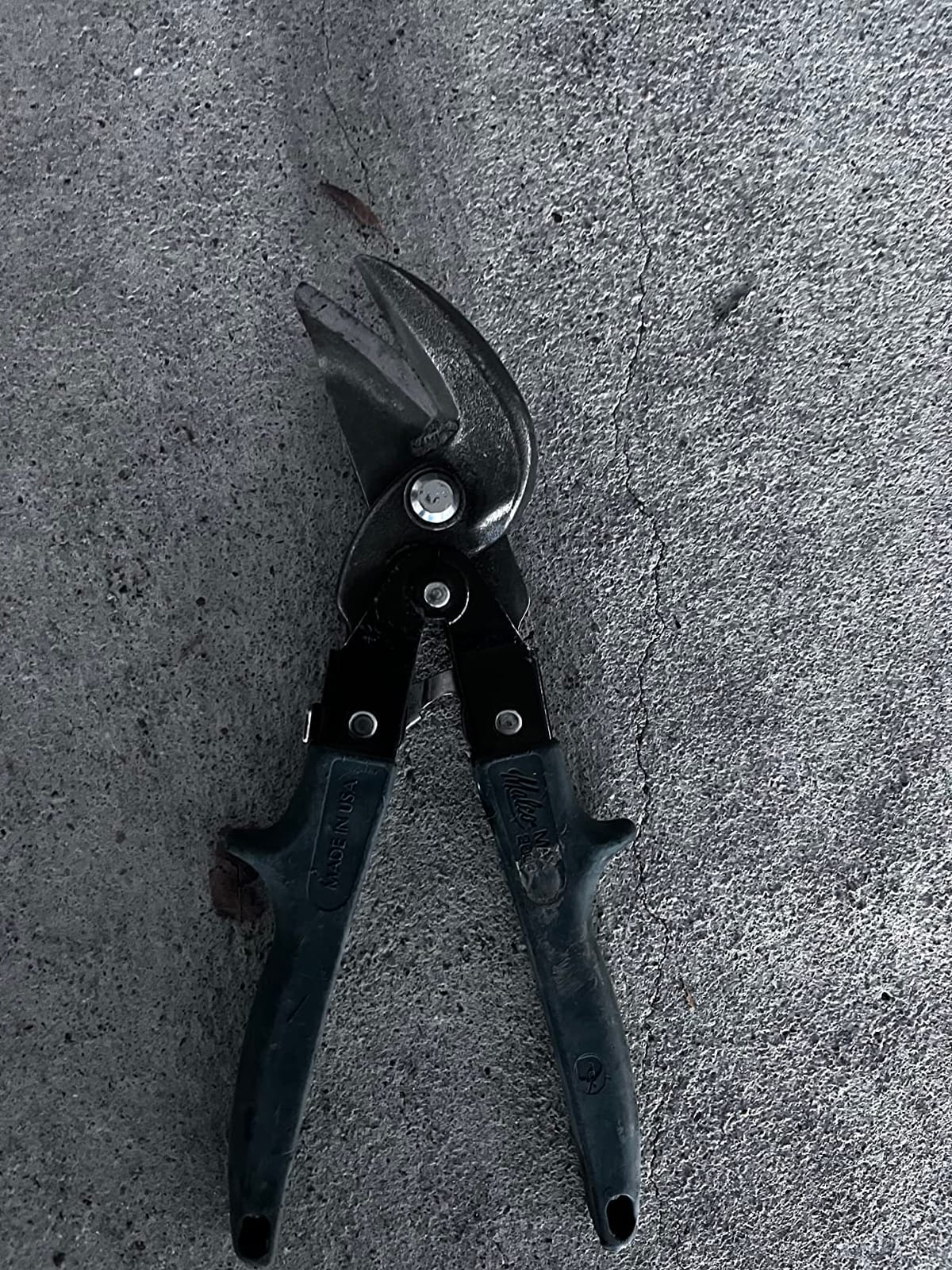
This is the odd one out, and the odd one out is exactly why it is here. The Malco Max2000 combines an offset body with a cutting pattern that handles right-hand curves, straight lines and circles up to 5 inches in diameter in a single tool. Most fabricators carry two or three pairs to cover that range, so the consolidation has real value.
Compound linkage multiplies your hand force before it reaches the blades, and the serrated lower jaws grip sheet metal and layered material firmly enough to reduce slipping and distortion. The sharp precision tip and adjustable pivot bolt let you tune the blade play to your hand, which is unusual at this level.
Where the unique pattern pays off
Cut a 4 inch circle in 18 gauge material with a conventional straight snip and you will be reshaping the blank several times before the disc is free. With this pattern the disc comes out in one continuous run, and the right-cut geometry handles the radius where a straight snip fights you. That is the specific job this tool was designed around.
Buyers single out the compound leverage and the one-tool range as the reasons to buy, and report high satisfaction on sheet metal, layered material and seam work. Fast offset cuts in vinyl plastics and layered metal are the other area owners highlight.
Price, learning curve and edge finish
It carries the highest price in this group and the heaviest price to capability trade-off, and reviews are candid about that. The unusual geometry also means a real learning curve compared with a standard straight or offset snip, so budget a few cuts to find your rhythm.
Serrated jaws are not ideal for leaving a smooth cosmetic edge on visible trim, and the listed weight figure is far lower than the tool feels in the hand. For a fabricator or HVAC shop that cuts circles often, that is worth it. For a homeowner trimming flashing once a year, it is not.
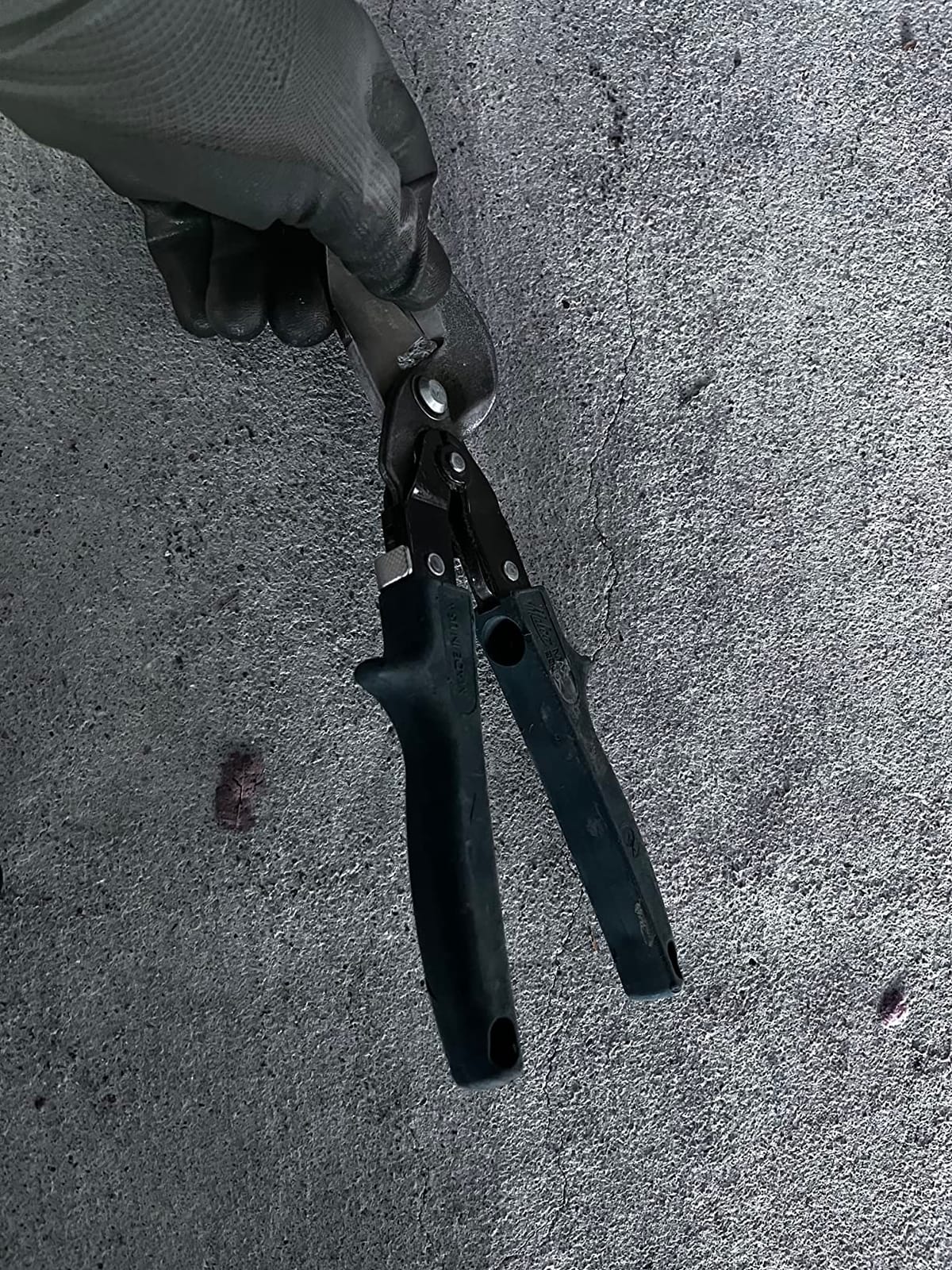
How to Choose Tin Snips for Sheet Metal
The right tin snip is a decision about three things: the cut pattern, the gauge rating and the handle geometry. Get those right and everything else is preference. Work through them in that order and you will not buy twice.
Aviation snips and tinner snips share the same core job
A tinner snip is the original design: flat blades that cut straight and curve, with the metal bitten from both sides at once. An aviation snip adds a compound linkage between the handles, which multiplies your hand force several times over and cuts 18 gauge cold rolled steel without the arm wrestling that bends the edge. Both are hand tools for sheet metal; the aviation pattern is the modern descendant and the one most trades reach for.
What aviation snips do not do is curve in every direction. Because the lower blade has to clear the upper one, the cut curves one way: left, right or straight. That is the entire left, right and straight conversation, and it is a pattern choice, not a quality choice.
Left, right and straight cuts explained
Left-cut and right-cut snips are mirrors of each other. The left-cut version curves to your left as you advance, the right-cut curves to your right, and both handle straight lines cleanly. Straight-cut snips give you a long straight run and gentle curves in either direction but will not follow a tight radius. If you shape notches, cut flanges or return a corner, buy a matched left and right pair. If you trim panels, a straight pair is enough.
Colour coding is the industry shorthand. Red is conventionally left cut, green is right cut and yellow is straight. A buying tip nobody mentions: the Wiss M3R ships as a set of three in one package, so you get all three patterns in a single purchase, which is better value than buying them one at a time and far better than finding the one pattern you need is the one you did not buy.
Read the gauge rating as a ceiling
Lower gauge numbers mean thicker metal. An 18 gauge rating covers cold rolled steel up to 1.2 mm, and 20 gauge covers a thinner sheet. Treat the rating as a hard ceiling, because pushing past it folds the metal, rolls the cutting edge and dulls the blade in a single cut. The serial numbers on the jaw matter too: cutting 20 gauge cold rolled is not the same job as cutting 20 gauge spring-tempered stainless, and a serrated edge that handles mild steel can struggle with work-hardened stainless.
Offset handles and wrist fatigue
Offset handles sit below the blade line and rotate your wrist into a more natural angle for the length of the cut. On long runs, particularly roofing panels and duct trunk, that is the difference between a hand that is tired at lunch and a hand that is fine. Upright and straight handles feel more natural for short trim cuts and for people cutting below waist height.
For left-handed users the news is better than it used to be. Most of the snips here are ambidextrous, meaning the tool works the same in either hand, and a right-cut snip can simply be turned around so the curve follows the direction a left hand naturally travels. The one thing to avoid is a left-hand-only pattern that forces the wrist into a twist you cannot hold.
Forged and heat treated steel versus cast blades
Drop-forged, heat-treated blades are the reason professional snips hold an edge for years. Induction hardening the cutting edge alone, as on the CRAFTSMAN, is a smarter version of the same idea, spending the treatment where the work happens. Cast or unfinished steel costs less and can be sharpened at the start, but it wears faster and, in the case of some budget models, will surface rust if you leave it wet.
Serrated versus smooth edge is the second materials decision. Serrations grip and resist slipping, which suits freehand work and tougher stock. Smooth ground edges leave a cleaner finish on thin and soft material such as vinyl and very light aluminium.
What kills a snip, and how to avoid it
Cut wire with sheet metal snips and you will put a permanent nick in the cutting edge. Banding, staples, roofing nails and hardware cloth are the usual culprits, and the damage is not repairable by sharpening. A dedicated wire cutter like the one built into the Klein 1202S removes the temptation entirely.
Beyond that, wipe the blades dry and oil the pivot and spring after a wet job, and never cut hardened steel or rod with a light gauge snip in the hope it will manage. Check the spring return when the tool arrives, since a snip that does not open on its own is the one fault that will tire your hand every single day. If you notice the jaws spreading or a visible gap, that pair needs adjusting or returning, and most quality snips carry a lifetime warranty for exactly this reason.
Frequently Asked Questions
What is the difference between tin snips and aviation snips?
A tinner snip has flat blades that cut the metal from both sides at once and is designed for straight cuts and gentle curves. An aviation snip adds a compound linkage that multiplies your hand force, so it cuts 18 gauge cold rolled steel and 22 gauge stainless with far less hand effort. Both are hand tools for sheet metal and both come in left, right and straight patterns.
What gauge of metal can tin snips actually cut?
Most quality aviation snips are rated for 18 gauge cold rolled steel and 22 gauge stainless steel. Light gauge multi purpose snips are often rated for 24 gauge steel and 28 gauge stainless, and specialist blades go further for stainless, inconel and titanium. Treat the rating as a ceiling rather than a suggestion, because cutting past it folds the metal and rolls the edge.
Do I need left, right and straight cut snips?
Only if your work requires it. Straight cut snips handle long runs and gentle curves and suit trimming panels, siding and flashing. Left and right cut pairs are needed for tight radii, notches and flanges in fabrication, ductwork and auto body work. A three pattern set such as the Wiss M3R covers every case in one purchase.
Are Malco snips better than Midwest snips?
Both are respected American makers with forged blades and limited lifetime warranties, and the honest answer is that it depends on the pattern. Midwest is stronger in the bulldog and offset patterns for thick material, while the Malco Max2000 covers right curves, straight lines and circles up to 5 inches in a single tool. Pick the pattern your work requires before you pick the brand.
Can tin snips cut stainless steel and vinyl siding?
Standard snips handle light stainless and vinyl, but specialised blades are needed for work hardened stainless, inconel or titanium. For vinyl siding, a straight cut pattern with a serrated edge grips the material and stops it cracking or shattering, and the 24 gauge class multi purpose snips such as the IRWIN and Klein 89556 are sized for that work.
Which Tin Snips Should You Buy in 2026
If you want one pair that covers the widest range of work, pick the Wiss M3R. It comes as a straight, left and right set in a single purchase, cuts 18 gauge cold rolled steel cleanly, and has the longest ownership history of anything on this list. That is our editor’s choice and the pair we keep reaching for.
If you cut thinner material and want a comfortable handle for long afternoons, the HURRICANE 10 inch pair is the smarter spend. If you are outfitting a first tool bag, the Amazon Basics snip delivers compound action and a cut right to the tip at the entry point. For thick material and heavy trim work, the Midwest Snips Bulldog is the professional standard, and for stainless, the offset Special Hardness left cut is the one fabricators reach for.
Long offset runs on roofing panels and duct trunk call for the Midwest MWT-6510S, while gutters and soffit at light gauge are the IRWIN’s natural territory. Replaceable blades and glove-friendly handles make the Klein 89556 the long-service option, an integrated wire cutter makes the Klein 1202S the safest snip on a roofing job, and one tool for right curves, straight lines and circles is the Malco M2007.
Whichever you choose, match the pattern to the cut, respect the gauge rating and keep wire away from the blades. That is how the best tin snips for sheet metal stay sharp and in your hand for years instead of months.