
Short answer first: the best cordless drills for home use are the DEWALT DCD771C2 two-battery kit for general work, the AVID POWER CD316-20 if you are furnishing a first apartment on a small budget, and the Makita XFD131 if you want a tool that still feels tight after years of weekend jobs.
I have drilled through joists, hung cabinets and stripped more screw heads than I care to admit, and the pattern is consistent. Almost every homeowner needs one mid-weight 18V or 20V drill with a half-inch chuck, two batteries and a charger in the box.
Two caveats before the list. Torque figures here are manufacturer-rated and are not measured on the same rig by every brand, and kit contents vary more than almost any other tool category, so confirm what is included with the exact model number.
Our Top 3 Cordless Drills for Home Use in 2026
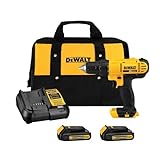
DEWALT DCD771C2 Drill Drive…
- 650 in-lb max torque
- 1/2 in ratcheting chuck
- Two 1.3Ah batteries plus charger
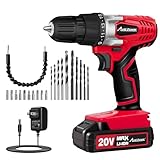
AVID POWER CD316-20 Drill Set
- 15+1 clutch settings
- 22 accessories included
- 2.5 lb body with LED
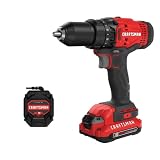
CRAFTSMAN CMCD700C1 Drill Kit
- 1/2 in keyless chuck
- Two speeds to 1
- 500 RPM
- 60-minute or less charging
The DEWALT covers the boring 90 percent of household drilling without a second purchase. The AVID set is what I hand to a renter assembling flat-pack furniture, because the 22-piece bundle removes the excuse of not owning the right bit. The CRAFTSMAN is my pick when charging downtime is the annoyance you will actually feel.
Comparing the Best Cordless Drills for Home Use in 2026
| Product | Details | |
|---|---|---|
| DEWALT 20V Max Drill Driver Kit DCD771C2 |
|
Check Latest Price |
| AVID POWER 20V Drill Set CD316-20 |
|
Check Latest Price |
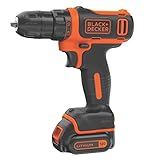 BLACK+DECKER 12V MAX BDCDD12C BLACK+DECKER 12V MAX BDCDD12C |
|
Check Latest Price |
| CRAFTSMAN V20 Drill Kit CMCD700C1 |
|
Check Latest Price |
 BLACK+DECKER 20V MAX Kit BCD702C1 BLACK+DECKER 20V MAX Kit BCD702C1 |
|
Check Latest Price |
 DEWALT 20V MAX Brushless DCD777D1 DEWALT 20V MAX Brushless DCD777D1 |
|
Check Latest Price |
 Makita XFD131 18V LXT Brushless Kit Makita XFD131 18V LXT Brushless Kit |
|
Check Latest Price |
 Ryobi 18V ONE+ Drill Set Ryobi 18V ONE+ Drill Set |
|
Check Latest Price |
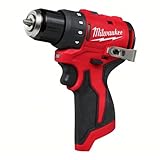 Milwaukee M12 Subcompact Brushless 3401-20 Milwaukee M12 Subcompact Brushless 3401-20 |
|
Check Latest Price |
 Bosch GSR18V-400B22 Drill Driver Kit Bosch GSR18V-400B22 Drill Driver Kit |
|
Check Latest Price |
Read the Milwaukee row carefully: that M12 listing is a bare tool, so a battery and charger are separate purchases on that one model. Every other entry here includes at least one pack and a charger.
1. DEWALT DCD771C2 – The All-Rounder With Two Batteries in the Box
DEWALT 20V Max XR Drill Driver, Battery and Charger (DCD771C2)
650 in-lb max torque
300 UWO motor
1/2 in ratcheting chuck
3.6 lb with two XR 1.3Ah packs
+ Pros
- Compact body works in cabinets and between studs
- 1/2 in ratcheting chuck grips bits firmly
- Two batteries mean no waiting while one charges
- 4.8 average across nearly 50000 reviews
- Cons
- Not suitable for concrete or masonry
- 1.3Ah packs are smaller than 2.0Ah kits
- Chuck caps the largest bit diameters
This is the drill I reach for when a friend needs a shelf hung, a wardrobe assembled or cabinet hinges reattached. The 300 UWO motor and half-inch chuck handle 30mm holes in timber and 13mm in metal, which covers furniture, framing lumber and light metal work without a second tool.
What sells it at home is the pair of XR 1.3Ah batteries and the contractor bag. One pack on the tool while the other charges means no waiting in the middle of an evening.
The single-sleeve ratcheting chuck is the detail owners mention most, tightening one notch at a time so a bit grips without the runaway you get on a plain keyless chuck. At 3.6 pounds it stays comfortable through a full afternoon of cabinet hardware, and two speeds at 0-450 and 1500 RPM cover driving and drilling.
The manufacturer lists it for home repairs, DIY, light construction, wood, plastic and light metal, and explicitly not for concrete or masonry, so concrete anchors need a tool with a hammer function.
2. AVID POWER CD316-20 – The Starter Set With Every Bit You Need
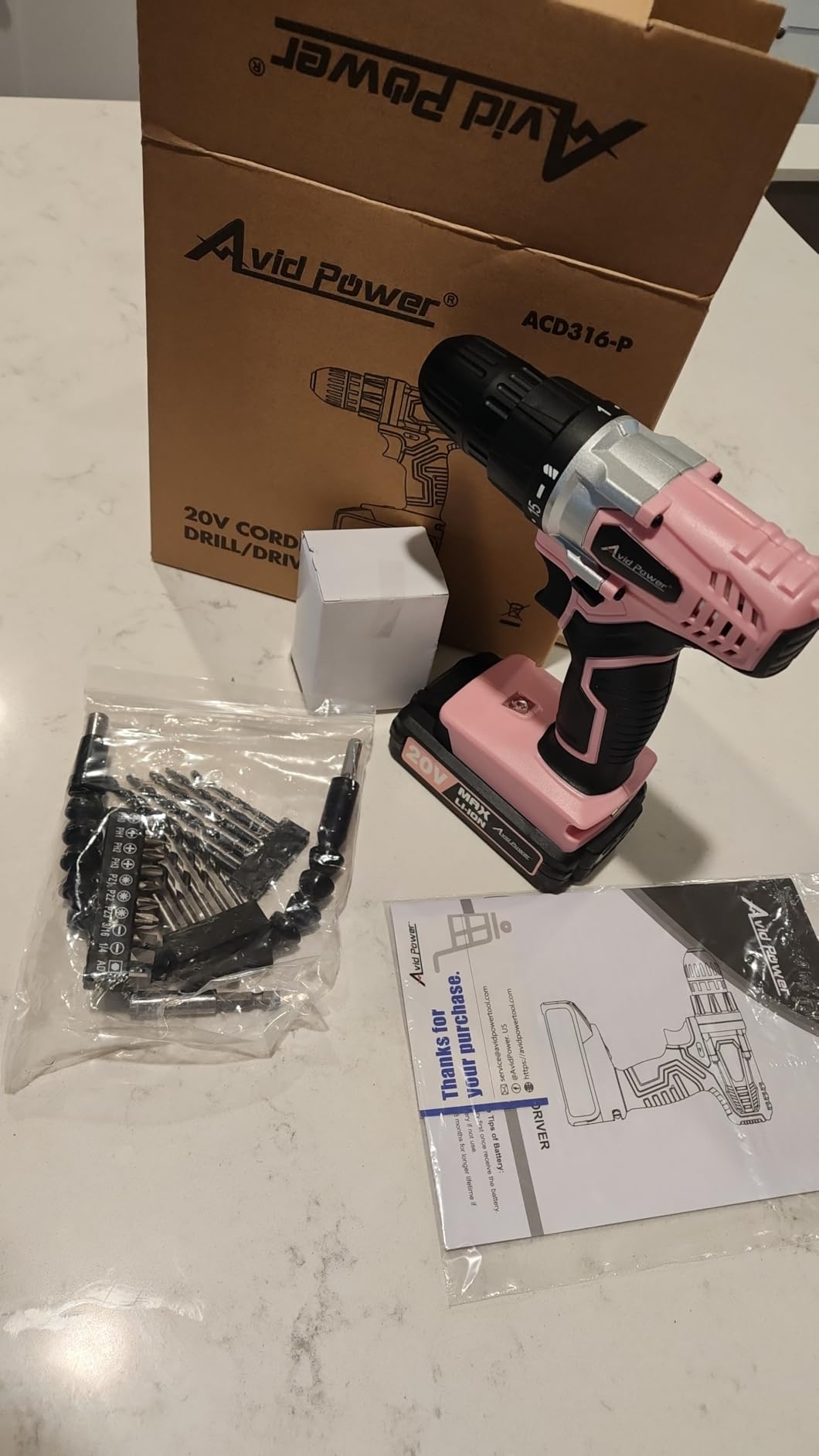
AVID POWER 20V Cordless Drill Set for Home DIY & Beginner Projects – Lightweight Power Drill with Battery Charger & 22 Bits, Variable Speed, 3/8″ Keyless Chuck, Ideal for Furniture Assembly (Red)
280 in-lb torque
15+1 clutch settings
2.5 lb with rubberized grip
3/8 in keyless chuck
+ Pros
- 22 accessories cover bits
- drivers
- flexible shaft and extension bar
- 2.5 lb body reduces fatigue
- Charge level display on the pack
- LED light for dark cupboards
- Cons
- Works only with AVID POWER packs
- Not rated for concrete or masonry
- 25mm bit size ceiling
- 550 RPM is slow for large holes
Reviewers consistently treat this as a first drill rather than a forever drill, and for a first drill it removes nearly every reason to put it back in the box. The bundle includes 10 drill bits, 10 driver bits, a flexible shaft and an extension bar, which is the difference between a tool you use and a tool you step over.
At 2.5 pounds with a rubberized grip it stays comfortable through flat-pack furniture assembly, where the tool sits at odd angles and the other hand is holding a cam lock aligned.
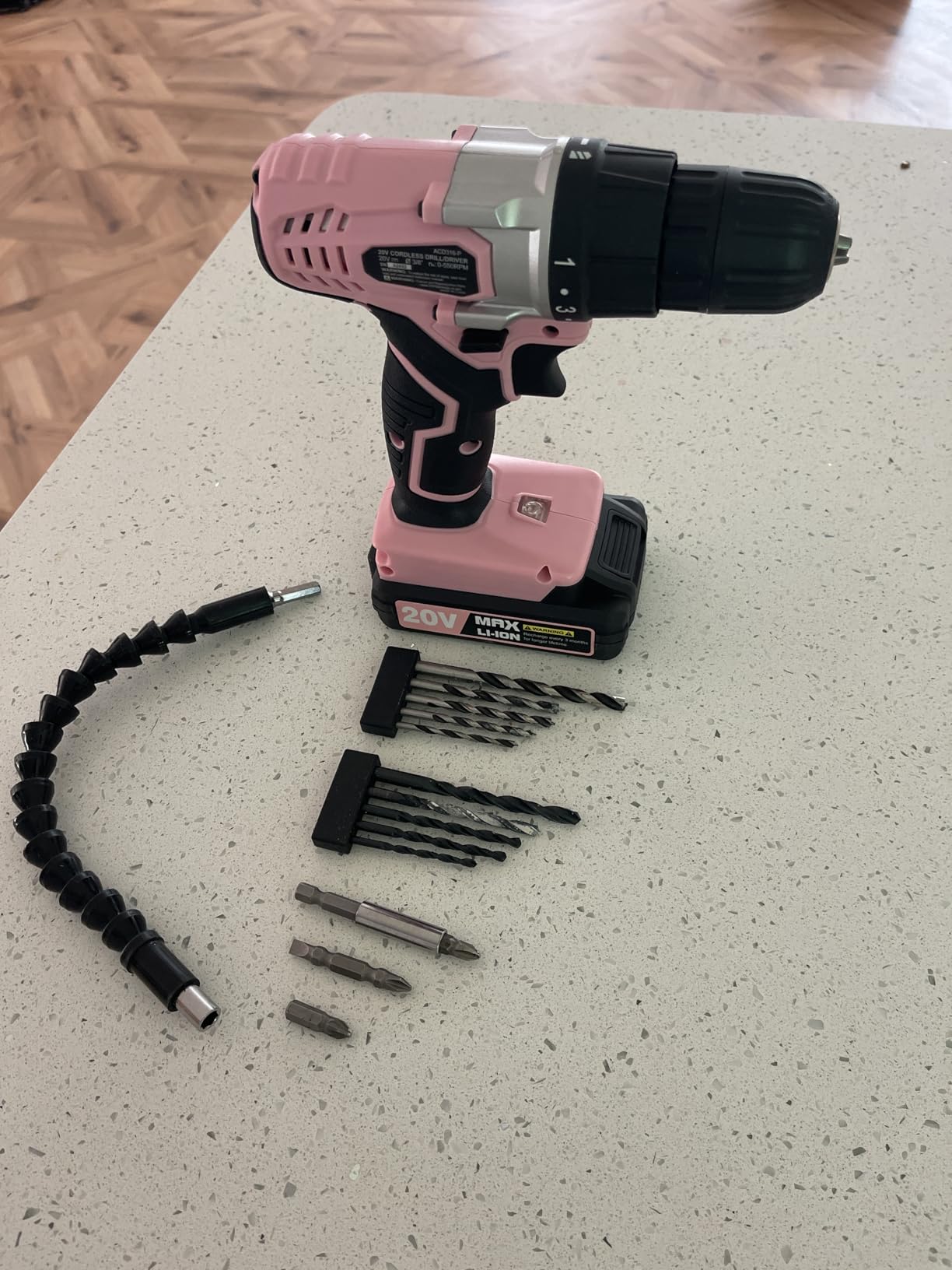
The 15+1 clutch settings and real-time battery level display are what owners bring up most: clutch control is what stops a cabinet screw being driven flush and chewed, and the display avoids the mid-project stall. Drilling capacity is 20mm in wood and 10mm in steel, so picture hooks, shelf brackets, drawer runners and light joint work are all in range.
The catch is ecosystem lock: the battery is AVID POWER only, there is no cross-brand compatibility, and higher-capacity packs from the same line are not a realistic upgrade path. At 550 RPM the tool is also slow for boring large holes, and it is not rated for concrete or masonry walls.
3. BLACK+DECKER 12V MAX BDCDD12C – A Lightweight Drill for Overhead Work
BLACK+DECKER 12V MAX Cordless Drill/Driver, Battery and Charger Included (BDCDD12C)
2.8 lb tool weight
11 position clutch
Keyless chuck
Battery, charger and bit included
+ Pros
- Light enough for one-handed overhead work
- Compact body reaches inside cabinets
- 11 position clutch for control
- Keyless chuck speeds bit changes
- Cons
- 10 mm chuck and 10mm wood capacity
- 550 RPM is slow for larger bits
- 12V has less power than 18V and 20V
- 2 year warranty against 3 year terms elsewhere
There is a physical limit to how long anyone can hold a full-size drill above their head, and this is the pick for people who hit it. At 2.8 pounds with a compact body it suits ceiling light fittings, curtain rails, a bathroom mirror or anything behind furniture.
The 11 position clutch keeps it from over-driving small screws into drywall anchors, and the LED means you are not holding a flashlight in your teeth while a keyless chuck swaps bits in seconds.
Shelves, pictures, cabinet hardware, switch plates, small furniture and short wood screws are all well within a 12V pack, and a battery, charger and double-ended bit are included so nothing else needs buying. The limits are the 10mm chuck and 10mm rated wood capacity, a quoted 26 N m of torque, and a 2 year warranty against the 3 year and 5 year terms offered by the other models here.
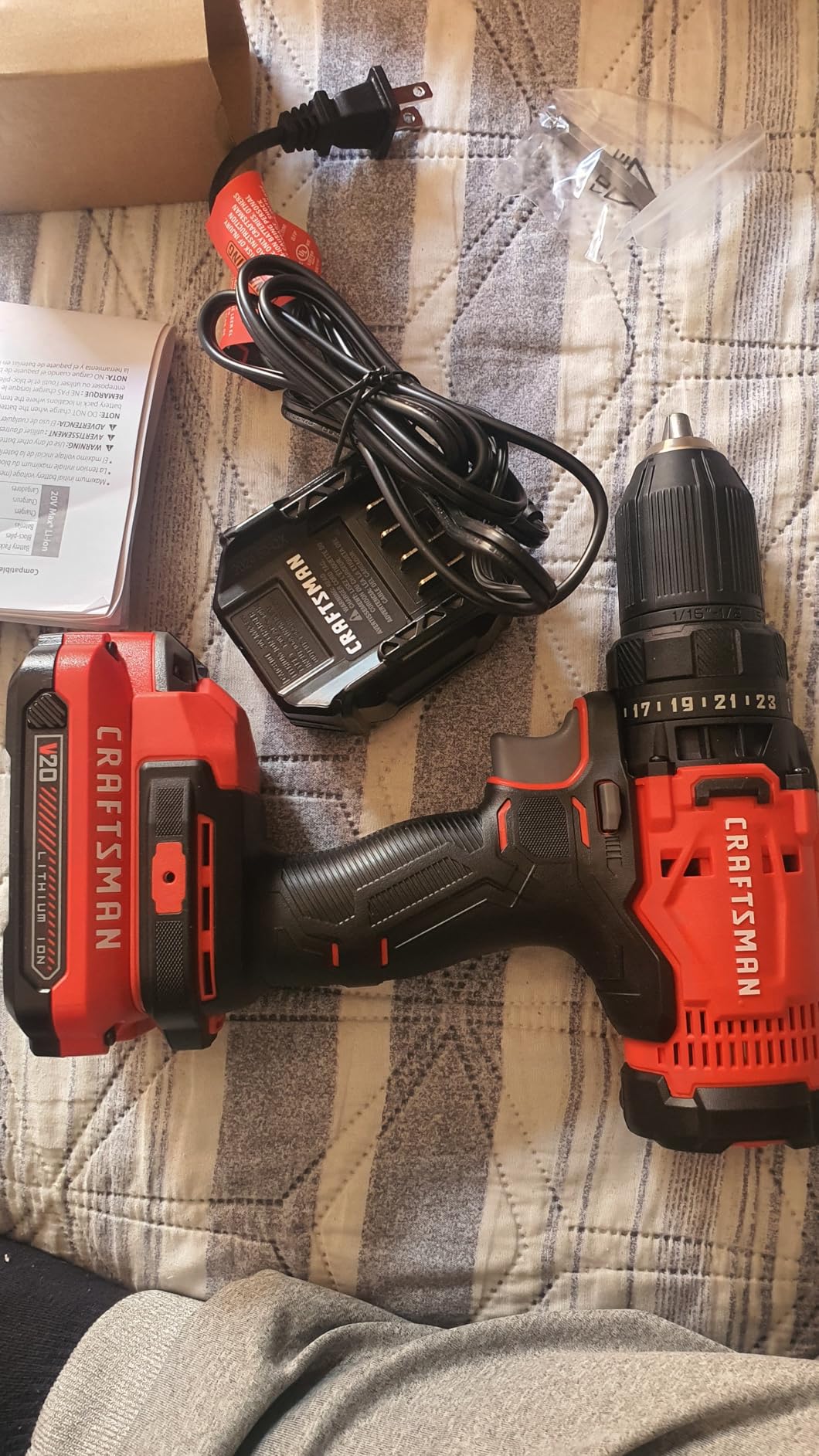
4. CRAFTSMAN V20 CMCD700C1 – Fast Charging and a Half-Inch Keyless Chuck
CRAFTSMAN V20 Cordless Drill/Driver Kit, 1/2 inch, Battery and Charger Included (CMCD700C1)
1/2 in keyless chuck
Two speeds, 0-350 and 0-1,500 RPM
280 UWO motor
Charges in 60 minutes or less
+ Pros
- 1/2 inch chuck accepts common bit sizes
- Two-speed gearbox covers drilling and fastening
- 60-minute or less charge on the included charger
- LED light and hang hook
- 3 year limited warranty
- Cons
- 280 UWO is below premium brushless output
- Includes a single 1.3Ah battery
- CRAFTSMAN 20V platform is narrower than DEWALT or Milwaukee
The thing you feel most on a CRAFTSMAN V20 is the charger, because sixty minutes or less for the included pack means a lunch break is enough to get back to work. Everything else is a competent general-purpose drill: a half-inch keyless chuck that takes standard bit sizes, a two-speed gearbox covering 0-350 and 0-1500 RPM, and an LED light for dark work areas.
Owners rate it 4.7 across more than 6000 reviews, and the praise lands on balance rather than power. A two-battery kit works because one pack is always on the tool, while a one-battery kit only works if recharge time is short, and that is the trade this model makes.
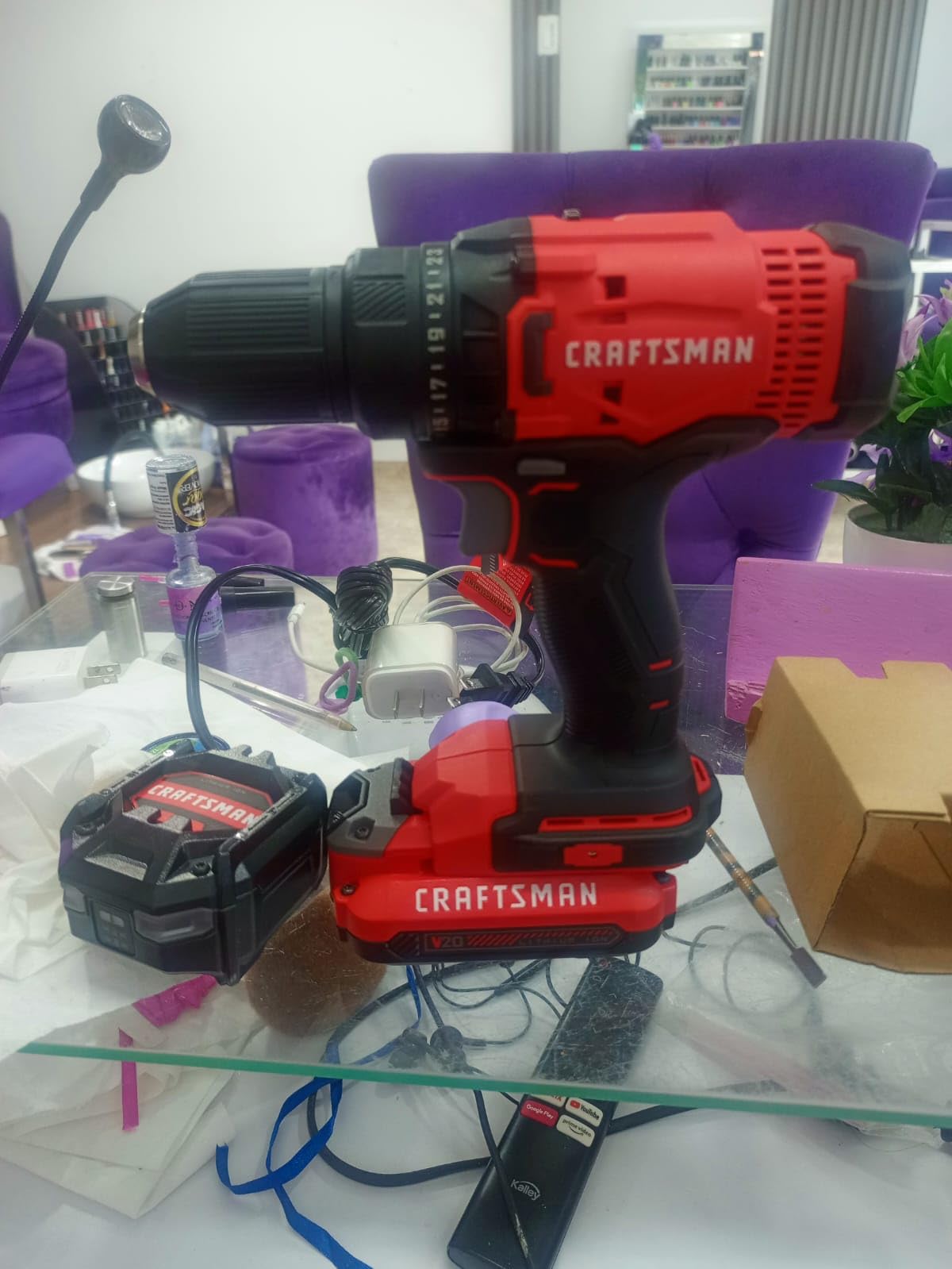
If you already own CRAFTSMAN 20V packs, adding this drill costs you one pack less than any two-battery kit on this list. Against that, the 280 UWO motor is why reviewers call it a utility drill, and the CRAFTSMAN 20V platform is narrower than DEWALT or Milwaukee when you add a second tool later.
5. BLACK+DECKER 20V MAX BCD702C1 – A Compact Entry Into the 20V MAX Platform
BLACK+DECKER 20V MAX Cordless Drill Kit with Battery, Charger, Includes Double Sided Drill Bit (BCD702C1)
20V MAX lithium-ion battery included
11 position clutch
Integrated LED light
Built-in driver bit holder
+ Pros
- Low-cost entry to the 20V MAX platform
- 11 position clutch helps avoid stripped screws
- Built-in bit holder keeps the driver bit on the tool
- Compact and light for a 20V drill
- Cons
- Single-speed gearbox rated to 600 RPM
- 3.5 N m torque is low for heavy fastening
- 10 mm chuck limits bit diameter
- Slow in sustained bit changes
Pick this if your real question is how cheaply you can get into a large battery platform. The BCD702C1 shares packs with the rest of the BLACK+DECKER 20V range, so the first drill is the expensive part and everything added later costs less.
Reviewers value the ratio of capability to cost rather than raw capability: for driving screws into studs, mounting a television bracket and general household fastening, it does the job without ceremony. The built-in driver bit holder keeps the bit on the tool instead of lost in a drawer.
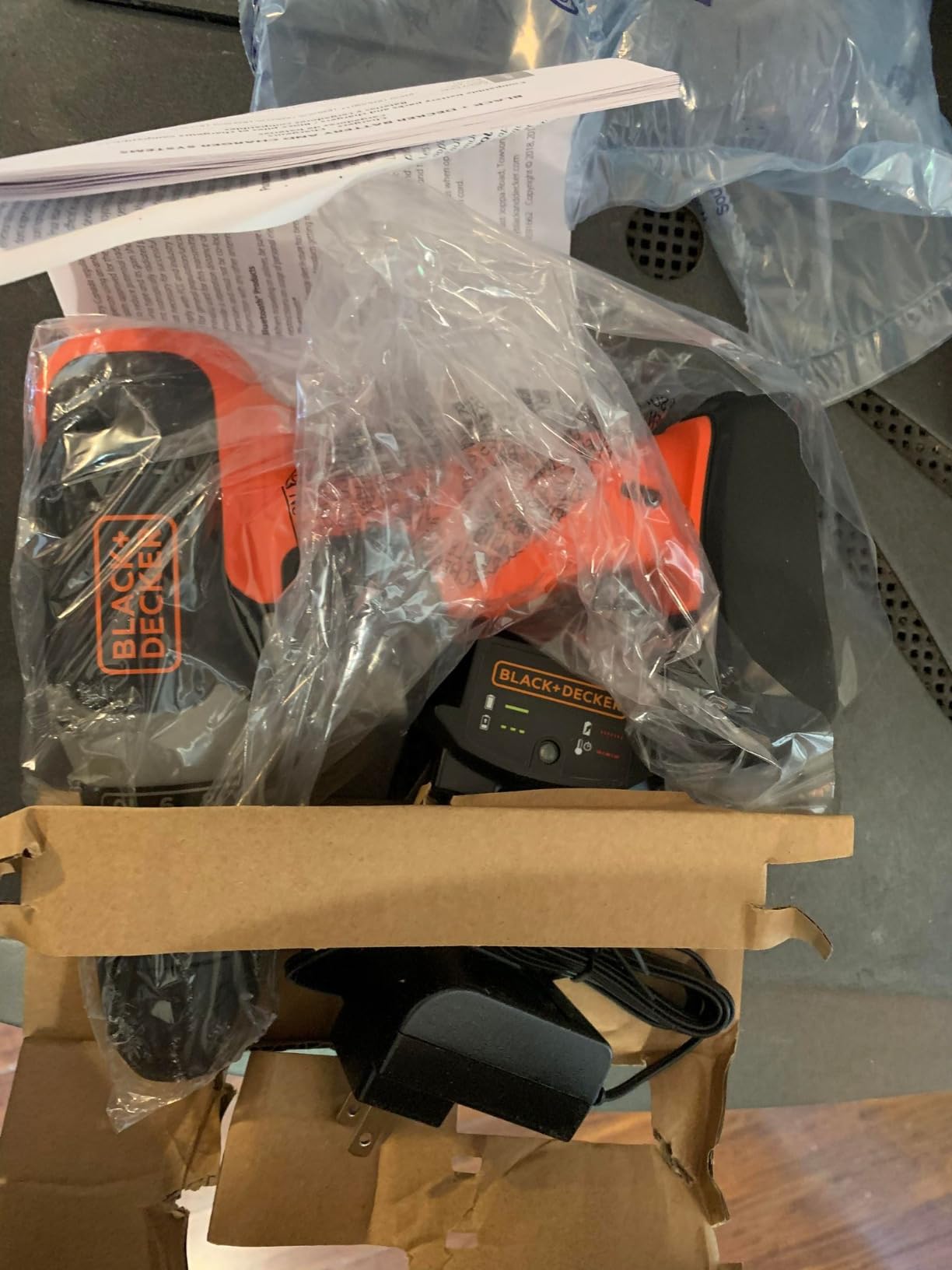
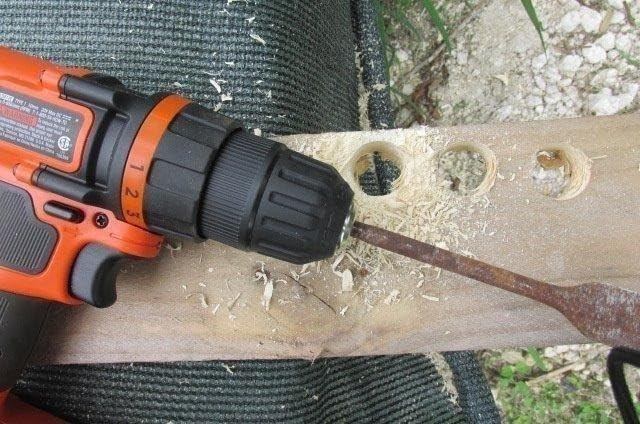
For screw driving and light drilling, one speed is not a real limitation, and 25mm wood capacity covers shelf brackets, pilot holes for joist screws and cable routes. It tops out at a rated 600 RPM and 3.5 N m though, so masonry anchors, lag bolts and large boring work are out, and the 10mm chuck caps bit diameter.
6. DEWALT 20V MAX DCD777D1 – Brushless Power in a Compact Body
DEWALT 20V MAX Cordless Drill Driver Set, Electric Drill, Brushless 1/2 In 2 Speed, 2.0 Ah Battery and Charger Included, LED Light (DCD777D1)
Brushless motor
53.1 N m max torque
7.6 in front-to-back length
2.0Ah battery and charger included
+ Pros
- Brushless motor gives smoother power and longer runtime
- 7.6 inch length reaches into tight areas
- 2.0Ah pack outlasts 1.3Ah kits
- LED with 20-second release delay
- Cons
- Heavier at 5.1 lb for the kit
- Single 2.0Ah battery instead of a two-battery set
- Noisy at higher speed settings for some users
This is the upgrade step for someone who already owns a brushed 20V drill and noticed it warming up and slowing down. A brushless motor has no carbon brushes to wear, runs cooler, wastes less energy as heat and gets more work out of the same amp-hour rating, and owners upgrading from brushed models describe the difference in power delivery as immediate.
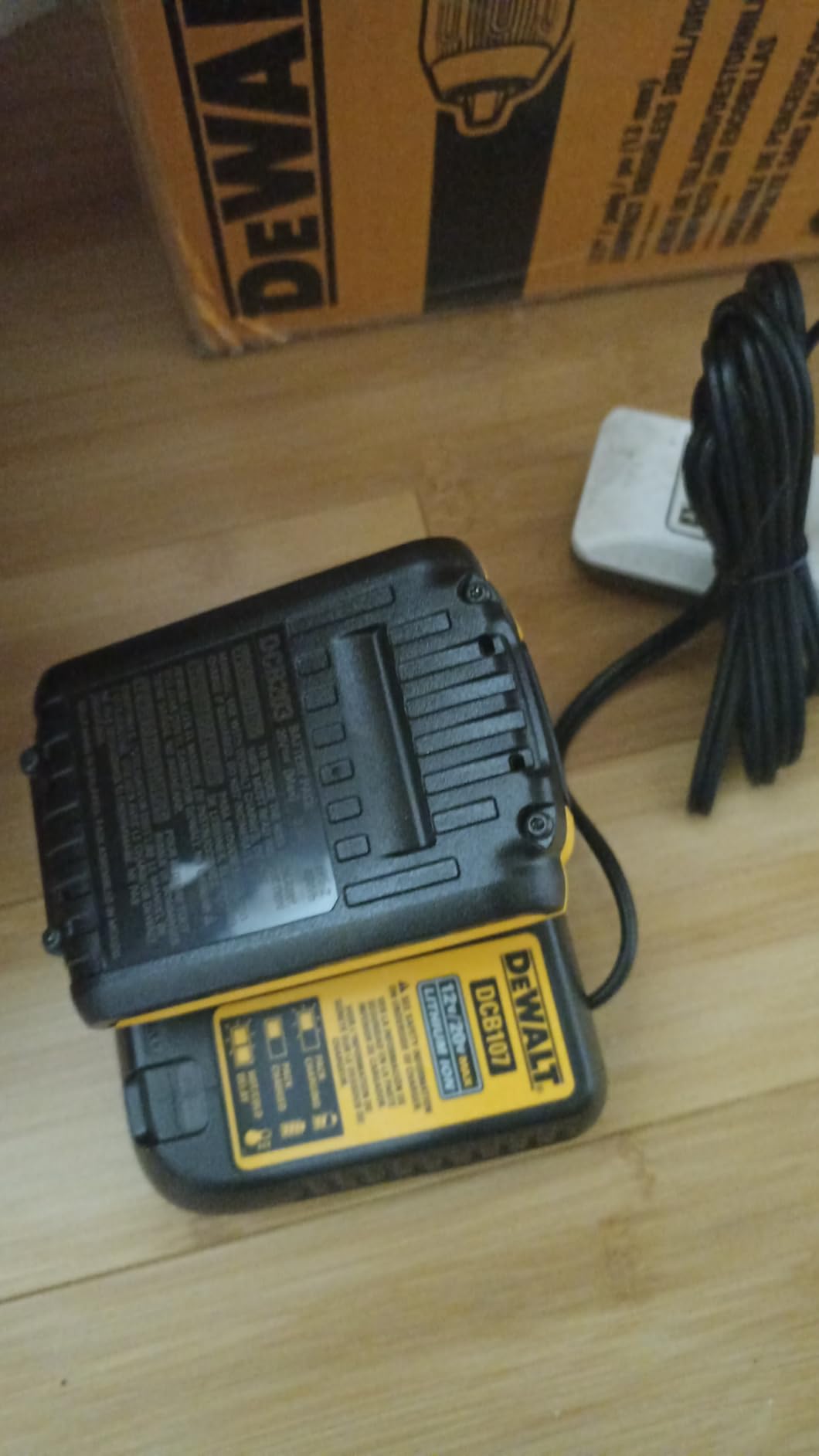
The 7.6 inch front-to-back length is the number that matters most in a house, because it is what lets the chuck reach a cavity between studs, behind a washing machine or inside a cabinet back where a full-length drill will not fit. The LED work light with a 20 second trigger release delay stays on after you let go, so you can line up the next screw with both hands free.
The trade is weight: at 5.1 pounds for the kit it is heavier than the entry drills here, and it includes one 2.0Ah pack rather than two.
7. Makita XFD131 18V LXT – The One You Still Have in a Decade
Makita XFD131 18V LXT® Lithium-Ion Brushless Cordless 1/2″ Driver-Drill Kit (3.0Ah), Variable Speed
440 in-lb max torque
Brushless motor
Two speeds, 0-500 and 0-1,900 RPM
3.0Ah battery, charger and bag
+ Pros
- Brushless motor gives smooth
- sustained torque
- Balanced grip suits users with hand and wrist issues
- Chuck and clutch hold bits securely
- 3.0Ah pack holds charge for days of use
- 3-year warranty on tool
- battery and charger
- Cons
- 18V LXT packs and accessories cost more
- Newer LXT tools are not fully interchangeable with older generations
- Heavier than 12V and compact 18V rivals
This is the one I recommend to people who already know a second battery, a grinder and eventually an impact driver are coming. The 18V LXT platform is the entry point, and the included 3.0Ah pack with DC18SD charger means you can add tools without buying into a second battery ecosystem.
Long-term owners describe it as durable enough to keep for a decade, with control as the consistent theme: a smooth chuck and clutch, the highest top speed in this group at 1900 RPM, and a balanced grip that suits people with hand or wrist issues. Torque is rated at 440 in-lb with 1.25 inch wood drilling capacity, which covers lag screws, deck framing and pocket holes with real low-speed control.
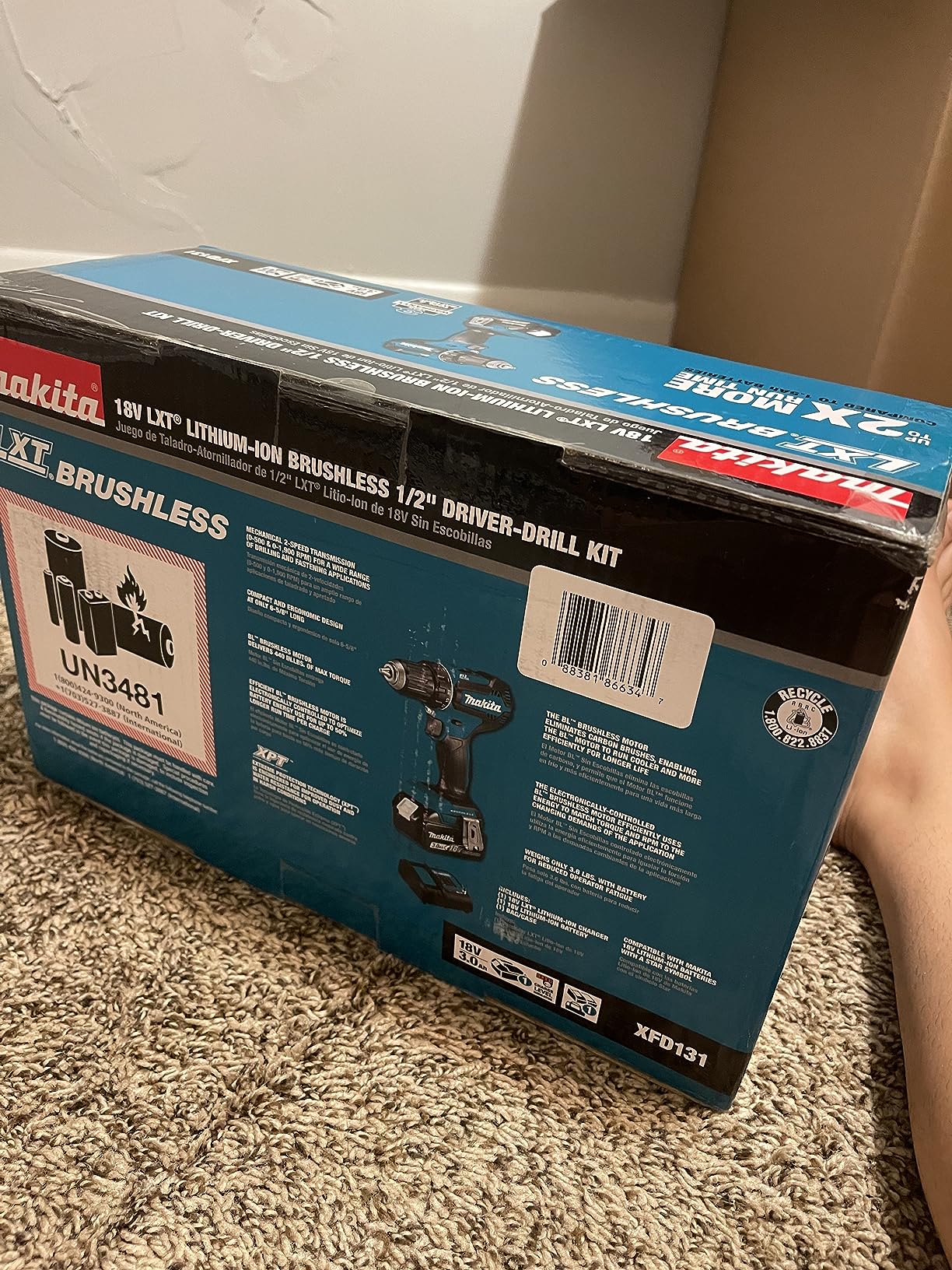
The electronically controlled brushless motor is rated at up to 50 percent longer runtime per charge than a comparable brushed motor. The honest downsides are cost: LXT packs and accessories are among the priciest here, newer LXT generations are not fully interchangeable with older ones, and the kit weighs 7.3 pounds, which is poor for long overhead sessions.
8. Ryobi 18V ONE+ Drill Set – Buy the Platform, Not the Torque Number
Ryobi 18V Drill Set with Lithium-Ion Battery, Charger, Bits & Bag
24 speed settings
55 in-lb torque
18V ONE+ battery and charger
Bit set and tool bag
+ Pros
- Complete bundle with drill
- battery
- charger
- bits and bag
- Compact charger takes little space
- 18V ONE+ platform spans 250+ compatible tools
- Battery holds charge well and recharges fairly quickly
- Cons
- 55 in-lb torque is modest for heavy work
- 10 mm chuck limits larger bit sizes
- Utility drill rather than a heavy-duty one
The argument for Ryobi at home is arithmetic rather than torque. The ONE+ platform spans more than 250 compatible tools, and people in r/Tools and r/Skookum point to that breadth as the reason to start here rather than with a narrower brand.
Everything needed to begin is in the box, including a PBP002 18V ONE+ battery, a compact charger, a multipurpose bit set and a tool bag. Once you are inside the platform, adding a sander, a recip saw or a garden tool costs one pack less each time, which over a ten-year ownership period is the cheapest way to build a tool collection.

The 24 speed settings give fine-grained control, the work light and weight suit everyday furniture work, and the pack holds charge across days of intermittent use. The drill itself is not the reason to buy it: 55 in-lb is modest next to the brushless kits here, and the 10mm chuck limits larger bit sizes.
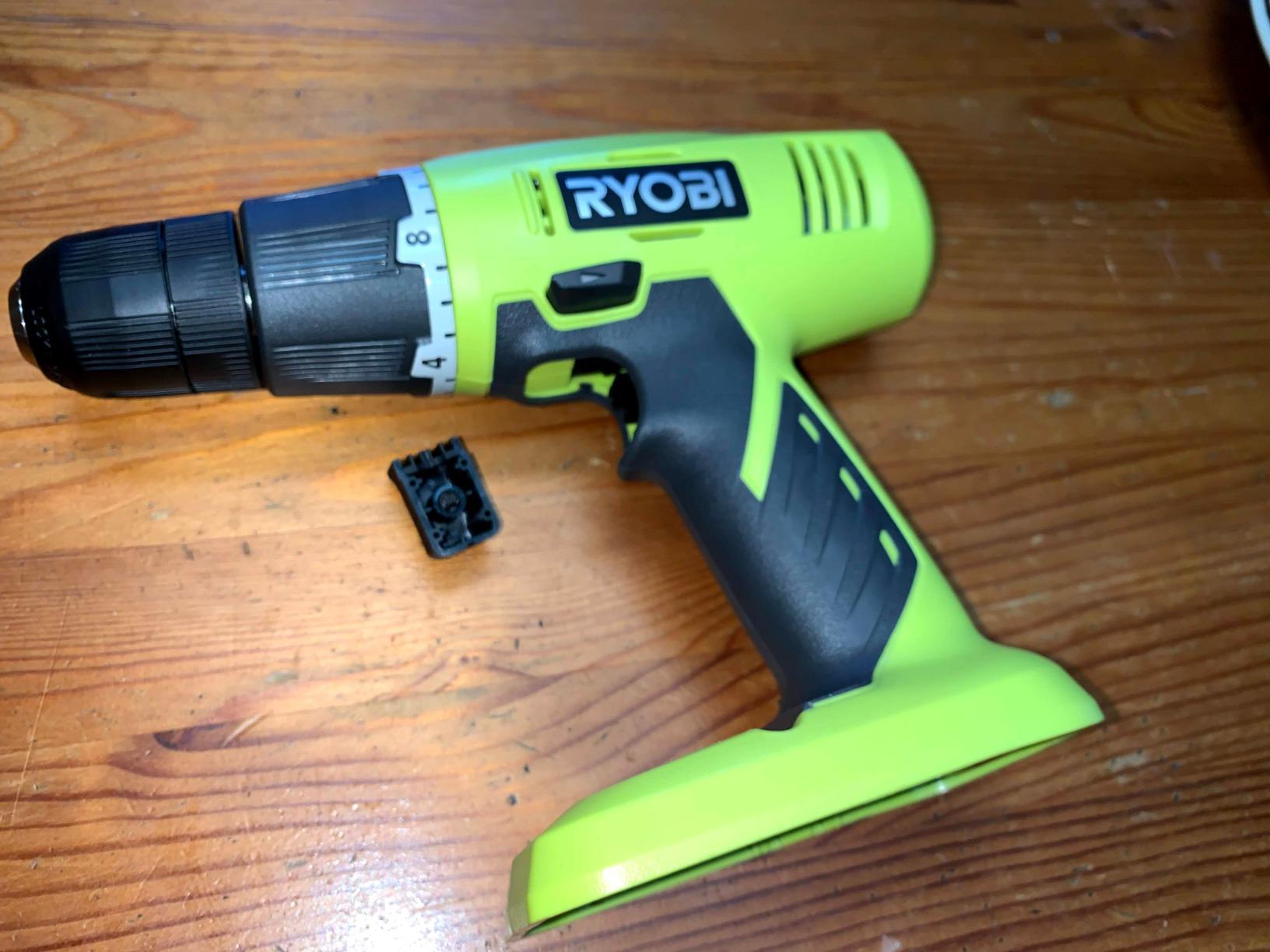
9. Milwaukee M12 3401-20 – Subcompact Brushless for Panels and Electrical Work
Milwaukee Electric – M12 SUBCOMPACT BRUSHLESS 3/8 Drill/Driver,12V
1.3 lb tool weight
350 in-lb torque
Metal 3/8 in keyless chuck
12 clutch settings
+ Pros
- 1.3 lb is exceptionally light for a brushless drill
- Brushless motor resists overload and overheating
- Metal 3/8 in keyless chuck is durable
- 12 clutch settings for fine control
- Ideal for electrical
- HVAC and in-cabinet work
- Cons
- 3/8 inch chuck limits bit diameter
- This listing is the bare tool so battery and charger are separate purchases
- 350 in-lb torque is low for larger fasteners
At 1.3 pounds this is among the lightest brushless drills here, and that number matters for anyone working overhead, inside a wall cavity or under a sink. It is aimed at electricians, HVAC technicians and maintenance professionals, and the same size suits a homeowner who would rather hold a drill one-handed while guiding the bit with the other.
The brushless motor prevents overloads and overheating, which is how a tool this small delivers 350 in-lb and still stays cool in continuous use. The metal 3/8 inch keyless chuck is durable and holds bits well, and 12 clutch settings give fine control on small fasteners, which is what switch plates and faceplates call for.
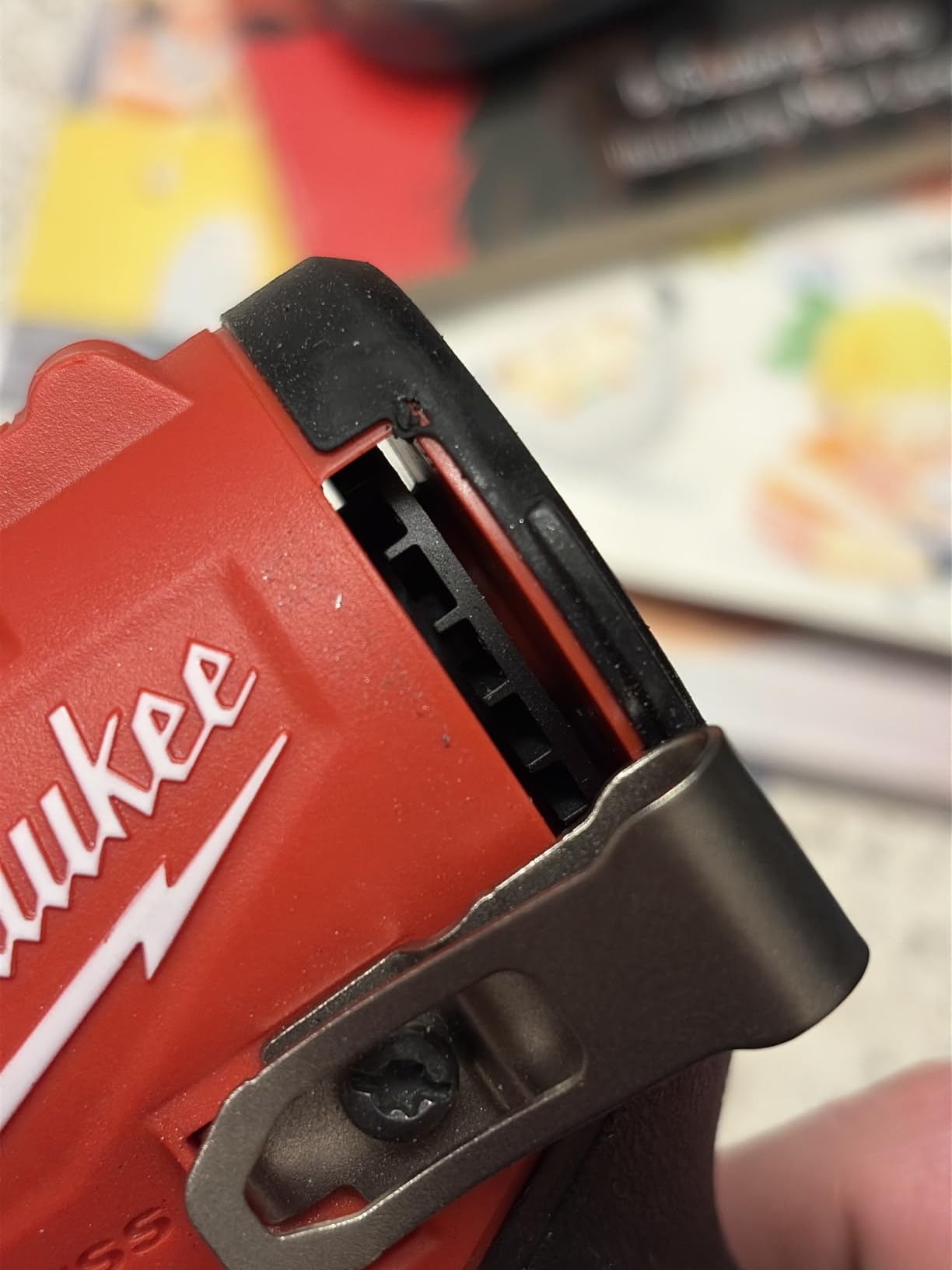
Read the kit contents before comparing it to anything else on this list: this listing is the bare tool, and the M12 battery and charger are separate purchases, the most repeated caveat in the reviews. The 3/8 inch chuck also caps bit diameter, so for general household work rather than panel access, a half-inch chuck drill is the safer buy.
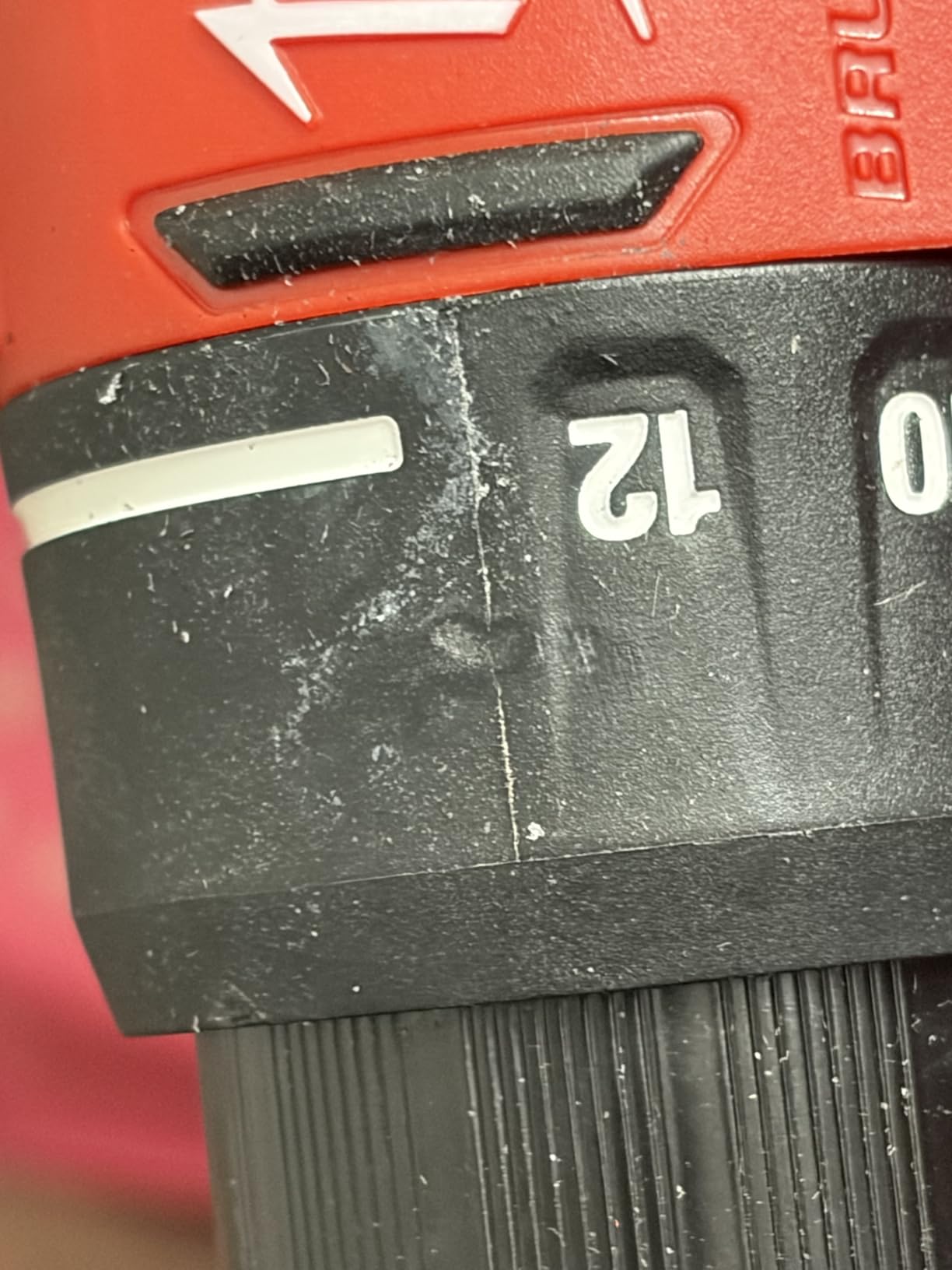
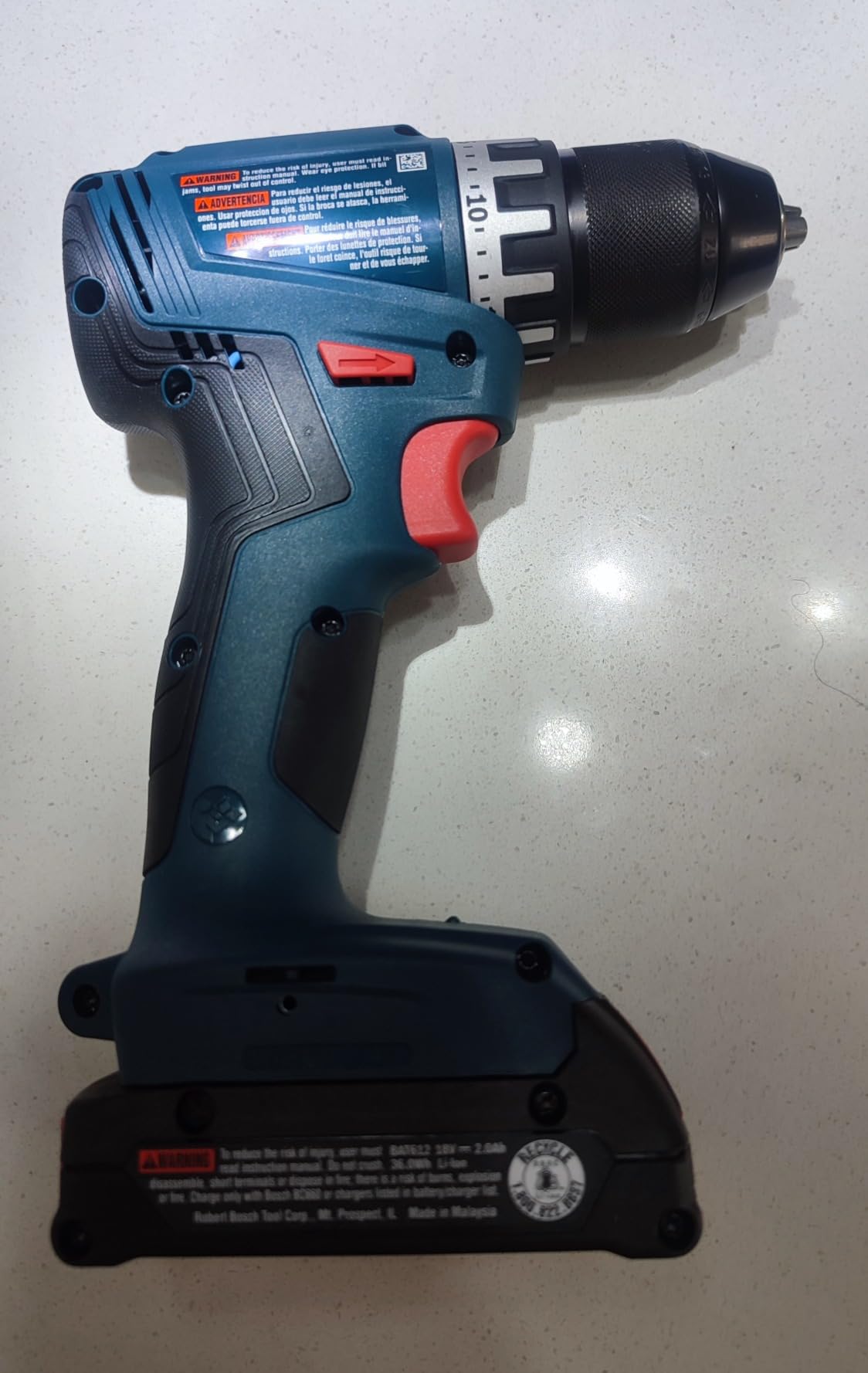
10. Bosch GSR18V-400B22 – Rated Torque From a Sub-Two-Pound Tool
BOSCH GSR18V-400B22 18V Compact Brushless 1/2 In. Drill/Driver Kit with (2) 2 Ah Standard Batteries
400 in-lb torque
6.3 in compact head
20 clutch settings
All-metal chuck, two 2.0Ah packs
+ Pros
- 400 in-lb from a body under 2 lb
- Two 2.0Ah SlimPack batteries and charger included
- 6.3 inch head fits tight spaces
- All-metal chuck for durability and bit retention
- Five year tool warranty
- Cons
- Locking chuck must be hand tightened and can bind
- 2.0Ah SlimPack packs drain faster on sustained work
- Lowest average rating in this group
This is the power-to-weight outlier in this group. Bosch rates 400 in-lb from a tool weighing 907 grams, and reviewers upgrading from an older drill describe a large jump in both power and battery technology for a very manageable hand load.
Two 2.0Ah SlimPack batteries and a charger are in the kit, and owners call the two-battery setup a must-have once they have worked without it.
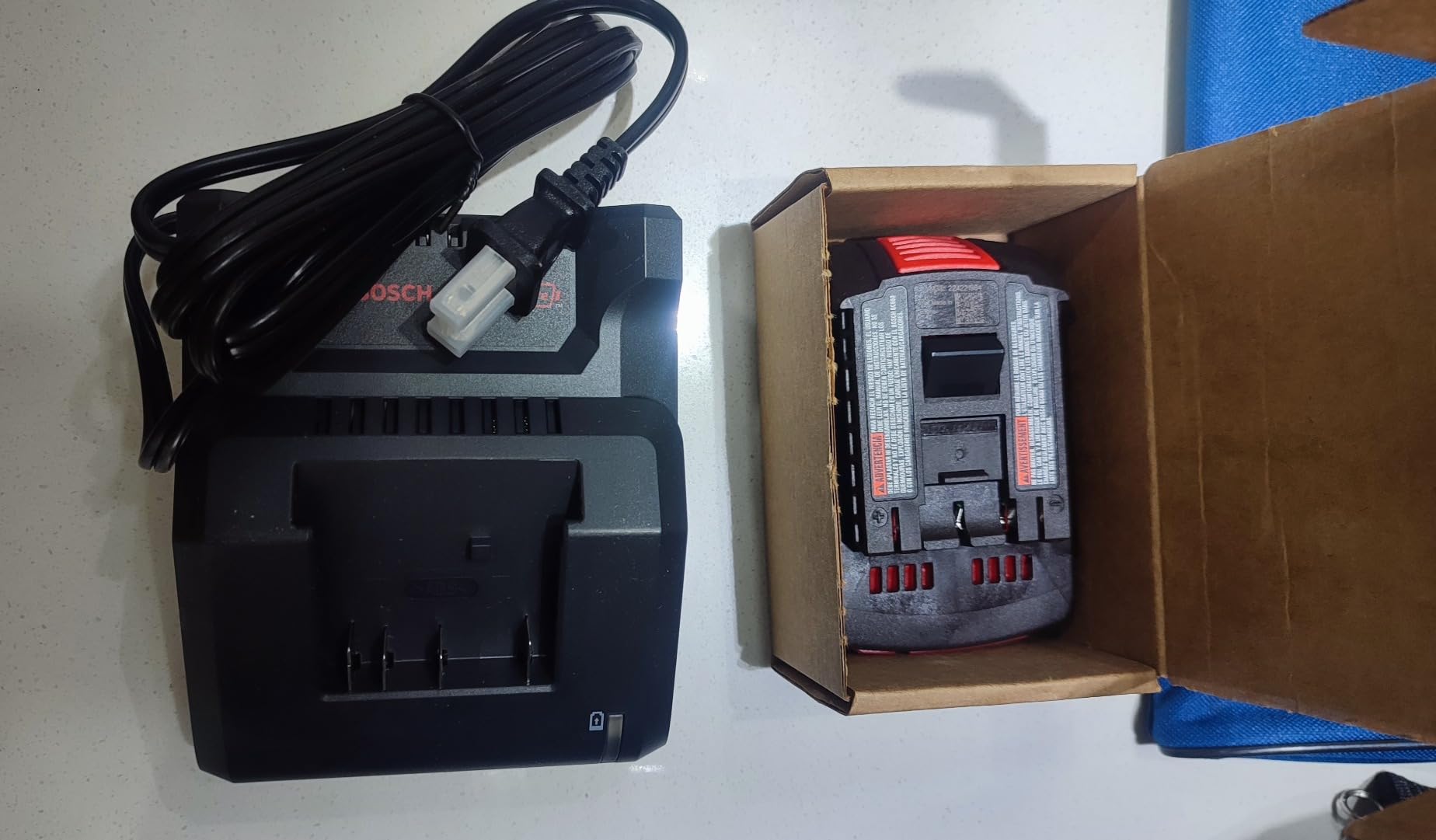
The 6.3 inch head length is excellent for confined spaces, and 20 clutch settings give finer control than most drills here, meaning fewer stripped fasteners on cabinet hardware. The locking chuck is the strongest part of the design and the most common source of confusion: it cannot be spun closed, it must be hand tightened, and the manual does not make that obvious.
Against that, the 2.0Ah SlimPack packs drain faster under sustained heavy work, and this drill carries the lowest average rating in the group.
How to Choose a Cordless Drill for Your Home
The spec sheet matters far less than three questions: what you will actually drill, whether you will be holding it overhead, and which battery platform you want to be living with for ten years. Answer those and the list above narrows fast.
18V vs 20V is a labelling difference, not a power difference
A lithium-ion cell sits at 3.6V when full and about 3.2V when depleted, so a five-cell pack works out to 18V nominal and peaks near 20V. That is the whole explanation: 18V and 20V MAX are the same chemistry class labelled two different ways. What genuinely differs is the motor, the gearing and the cell format, so compare rated torque, tool weight and runtime.
Chuck size decides what you will never be able to do
The chuck is the largest bit shank the tool grips, and it caps every job beyond it. A 3/8 inch chuck, roughly 10mm, takes standard twist bits, driver bits and small hole saws, while a 1/2 inch chuck, roughly 13mm, adds Forstner bits, large hole saws and paddle bits.
For most homes half-inch is right, because stepping up costs little and removes a whole class of jobs you cannot finish. Choose 3/8 inch only when weight is your binding constraint.
Brushless earns its premium on a first purchase
Brushless means no carbon brushes to wear, a cooler running temperature and more runtime per amp-hour. Brushed motors are proven and reliable, and forum consensus generally treats brushless as worth the premium when you are buying at full specification. Read the motor type in the listing rather than the marketing, because the two can differ by hours of runtime across a year.
Amp-hours, and why two batteries beat one
Amp-hours measure capacity, not power, so a 2.0Ah pack holds roughly twice the charge of a 1.3Ah pack and adds weight to the end of the tool. Owners who added a second pack cite having one charge while the other works as the single biggest quality-of-life change, which is the honest reason to pay for a two-battery kit. Check the specific SKU, because the same model number is often offered in one-battery and two-battery configurations.
Masonry at home: drill, hammer drill or rotary hammer
For a concrete or brick anchor the escalation runs plain drill, then hammer drill, then rotary hammer. A standard drill like most picks here will walk the bit and stall on a sleeve anchor. A hammer drill adds a rapid reciprocating action that breaks the concrete and is the right tool for a handful of anchors, and forum discussions route repeated masonry work toward a rotary hammer, a different class of tool.
What to look for when buying a cordless drill
- Battery platform size. Count how many tools share the pack before you buy, not after.
- Chuck size. Half-inch for most homes, three-eighth-inch only when weight dominates.
- Voltage class. 12V for light and overhead work, 18V or 20V for general use.
- Brushless motor. Worth the premium on a first purchase at full price.
- Kit contents. Confirm batteries and charger are in the box for that exact model number.
- Rated torque. A few hundred in-lb covers household work, and brand ratings are not comparable.
- Weight and balance. The spec that decides more purchases than any other, especially above shoulder height.
How to spot a weak drill platform
No mainstream brand is bad outright, but weak platforms share warning signs: a single-speed gearbox on a 20V drill, no stated warranty length, a small closed battery ecosystem that makes every future pack a single-source purchase, and marketing that hides kit contents behind a model number. The more expensive mistake is buying into a narrow ecosystem rather than buying a poor tool.
Frequently Asked Questions
What is the best cordless drill for home DIY?
For most homeowners the DEWALT DCD771C2 is the best cordless drill for home DIY. It has a 1/2 inch ratcheting chuck, two 1.3Ah batteries and a charger in the box, and 300 UWO of motor output. It handles shelves, flat-pack furniture, cabinet hardware and drywall anchors. On a very small budget, the AVID POWER CD316-20 covers the same basics with 22 included accessories.
Is there a big difference between 18V and 20V cordless drills?
No, not in practice. A five-cell lithium-ion pack is 18V nominal and peaks at about 20V, so 18V and 20V MAX are the same voltage class labelled two different ways. The real differences are the motor, the gearing and the cell format. Compare rated torque, tool weight and runtime rather than the voltage printed on the box.
What is a good amount of torque for a cordless drill?
For typical household work, a few hundred in-pounds is enough. Around 300 in-lb handles shelving, cabinet hardware and drywall anchors, while 400 to 500 in-lb leaves room for lag screws, decking and larger boring work. Treat these as manufacturer-rated figures measured differently by each brand, so use them as a rough ranking rather than a lab comparison.
How do I know what size my drill chuck is?
Read the maximum chuck size in the specification block, or measure the inside diameter of the chuck jaws with a caliper. A 3/8 inch chuck is roughly 10mm and accepts standard twist bits, driver bits and small hole saws. A 1/2 inch chuck is roughly 13mm and adds Forstner bits, large hole saws and paddle bits.
Which cordless drill brands are considered the worst?
No mainstream brand is bad outright, but weak platforms share warning signs: a single-speed gearbox on a 20V tool, no stated warranty length, a small closed battery ecosystem, and kit contents hidden behind a model number. Value brands suit light duty only. The more common and more expensive mistake is buying into a narrow ecosystem, not buying a poor drill.
Which Cordless Drill Should You Buy?
Match the drill to the job, not to the spec sheet. If most of your work is overhead, in-cabinet or inside a wall cavity, weight beats torque and the BLACK+DECKER 12V BDCDD12C or the 1.3 pound Milwaukee M12 is the right tool. If you want the balance of capability, weight and kit contents, the DEWALT DCD771C2 is the choice, and it is the drill I recommend to most people reading this.
Furnishing a first home on a limited budget, the AVID POWER CD316-20 gives you a drill, a battery, a charger and 22 accessories in one box. Buying into a platform you expect to grow, the Ryobi 18V ONE+ set is the broadest ecosystem at more than 250 shared tools, and the Makita XFD131 is the one most owners report still feeling tight years later. For a brushless motor in a compact body, the DEWALT DCD777D1 fills that gap.
Whichever you settle on, confirm what is included in the box for that exact model number before you commit, and give the 18V versus 20V labelling debate no more of your attention than it deserves. Check the current price and reviews for the model you picked, then go hang that shelf.