
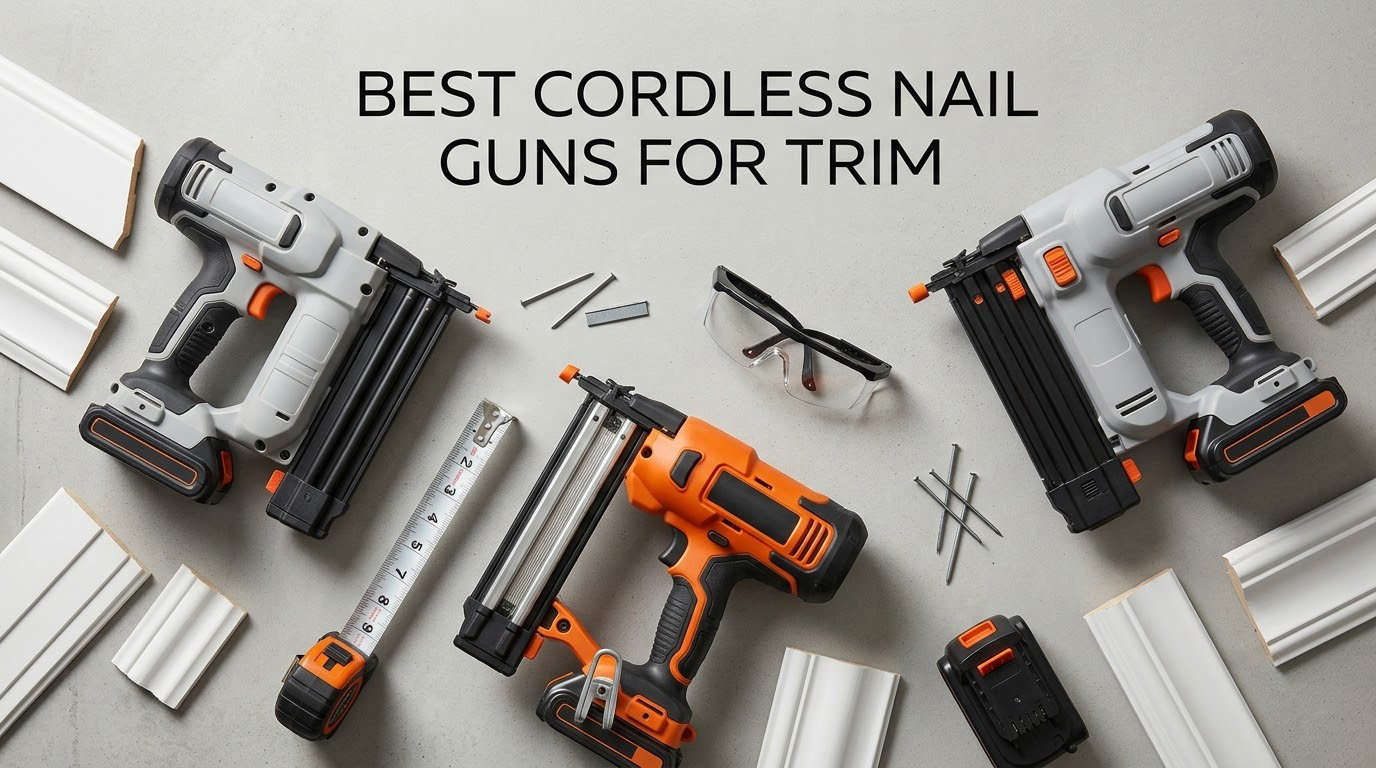
Best cordless nail guns for trim fall into two families: an 18-gauge brad nailer for delicate molding, cabinet trim and pre-finished work, and a 15 or 16-gauge finish nailer for baseboards, door casing and crown molding. Our top pick for trim overall is the DEWALT DCN680B, with the Metabo HPT NT1850DG as the best value if you want a complete kit.
I have spent years watching trim carpenters and weekend DIYers pick the wrong nailer, and it is almost always the same mistake: choosing the body first and the gauge second. A nailer that feels great in the store will split a painted poplar casing if it is driving 15-gauge nails through it. The gauge decision comes first, and everything else follows from the trim profile in front of you.
For this roundup I compared 12 cordless nailers side by side, weighing the published specifications, the feature sets that actually reduce downtime on a job site, and the failure patterns that show up repeatedly in owner reviews. I looked at nail length ranges, drive systems, magazine geometry, weight, tool-free adjustments, warranty terms, and how many nails a single charge actually delivers. I also flagged which models arrive as a bare tool and which include a battery and charger, because that decision changes the real cost more than anything else on the spec sheet.
What I could not do is fire 12 nailers through the same stack of hardwood trim for a month. So where I make a performance claim, it comes from the manufacturer’s stated specification or from the pattern in thousands of owner reviews, and I tell you which is which.
Our Top 3 Cordless Nail Guns for Trim
These three cover the widest range of trim jobs. The DEWALT DCN680B leads on proven reliability, the Metabo HPT NT1850DG is the strongest complete kit, and the Milwaukee M18 FUEL brad nailer is the pick for owners who already run M18 packs.

DEWALT DCN680B 18-Gauge…
- Brushless motor
- Micro nose design
- Tool-free jam and stall release
- 6.2 lb body

Metabo HPT NT1850DG Brad…
- Battery and charger included
- 700 nails per charge
- 5.5 lb body
- Tool-less depth control

Milwaukee M18 FUEL 18-Gauge…
- Nitrogen air spring drive
- Zero ramp-up time
- 6.5 lb body
- Sequential and contact modes
Comparing All 12 Cordless Nail Guns for Trim in 2026
Every nailer below is a real cordless brad or finish nailer, not a stapler or a pneumatic tool in disguise. The table is set up so you can scan gauge, drive and platform before you read a single review.
| Product | Details | |
|---|---|---|
| DEWALT DCN680B 18-Gauge Cordless Brad Nailer |
|
Check Latest Price |
 DEWALT DCN660B 16-Gauge Angled Finish Nailer DEWALT DCN660B 16-Gauge Angled Finish Nailer |
|
Check Latest Price |
 Makita XNB02Z 16-Gauge Straight Finish Nailer Makita XNB02Z 16-Gauge Straight Finish Nailer |
|
Check Latest Price |
| Metabo HPT NT1850DG 18-Gauge Brad Nailer Kit |
|
Check Latest Price |
 CRAFTSMAN CMCN618B 18-Gauge Brad Nailer CRAFTSMAN CMCN618B 18-Gauge Brad Nailer |
|
Check Latest Price |
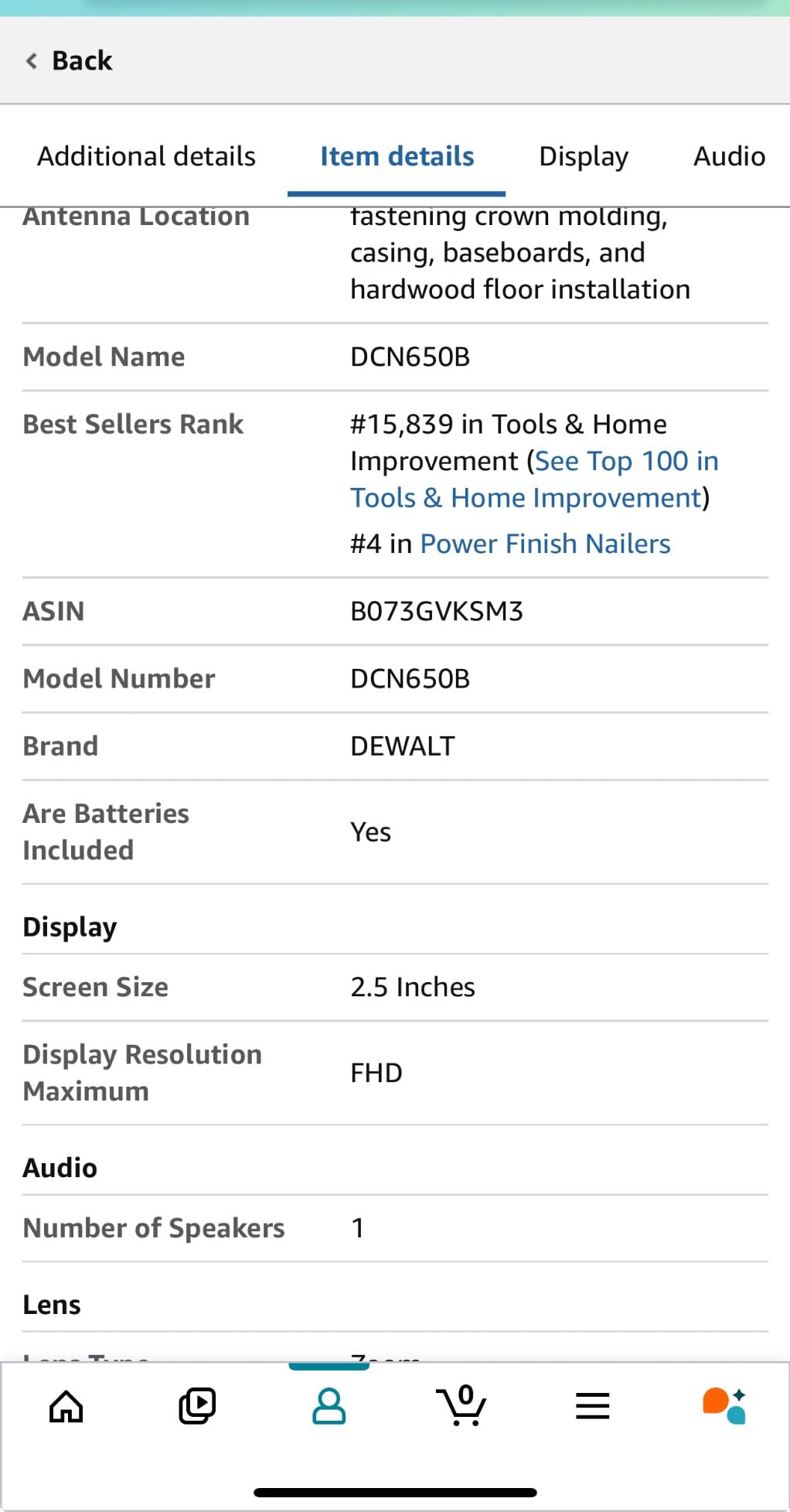
 DEWALT DCN650B 15-Gauge Angled Finish Nailer DEWALT DCN650B 15-Gauge Angled Finish Nailer |
|
Check Latest Price |
 Ryobi P321 18-Gauge ONE+ Brad Nailer Ryobi P321 18-Gauge ONE+ Brad Nailer |
|
Check Latest Price |
| Milwaukee M18 FUEL 18-Gauge Brad Nailer |
|
Check Latest Price |
 WORX WX842L 20V 18-Gauge Brad Nailer WORX WX842L 20V 18-Gauge Brad Nailer |
|
Check Latest Price |
 WEN 20512 20V 18-Gauge Brad Nailer Kit WEN 20512 20V 18-Gauge Brad Nailer Kit |
|
Check Latest Price |
 CRAFTSMAN CMCN616B 16-Gauge Finish Nailer CRAFTSMAN CMCN616B 16-Gauge Finish Nailer |
|
Check Latest Price |
 Ryobi P326 16-Gauge ONE+ Finish Nailer Ryobi P326 16-Gauge ONE+ Finish Nailer |
|
Check Latest Price |
1. DEWALT DCN680B 18-Gauge Brad Nailer – The Most Proven Choice for Delicate Trim
DEWALT DCN680B 20V MAX* XR® 18 GA Cordless Brad Nailer (Tool Only)
18-gauge cordless brad nailer
6.2 pounds
Brushless motor
Micro nose design
+ Pros
- Brushless motor for runtime and durability
- Micro nose gives a clean line of sight
- Tool-free depth jam and stall release
- Selectable sequential or contact trigger
- LED diagnostics and reversible belt hook
- Cons
- Tool-only unit needs a battery and charger
- 18-gauge nails will not hold thick hardwood
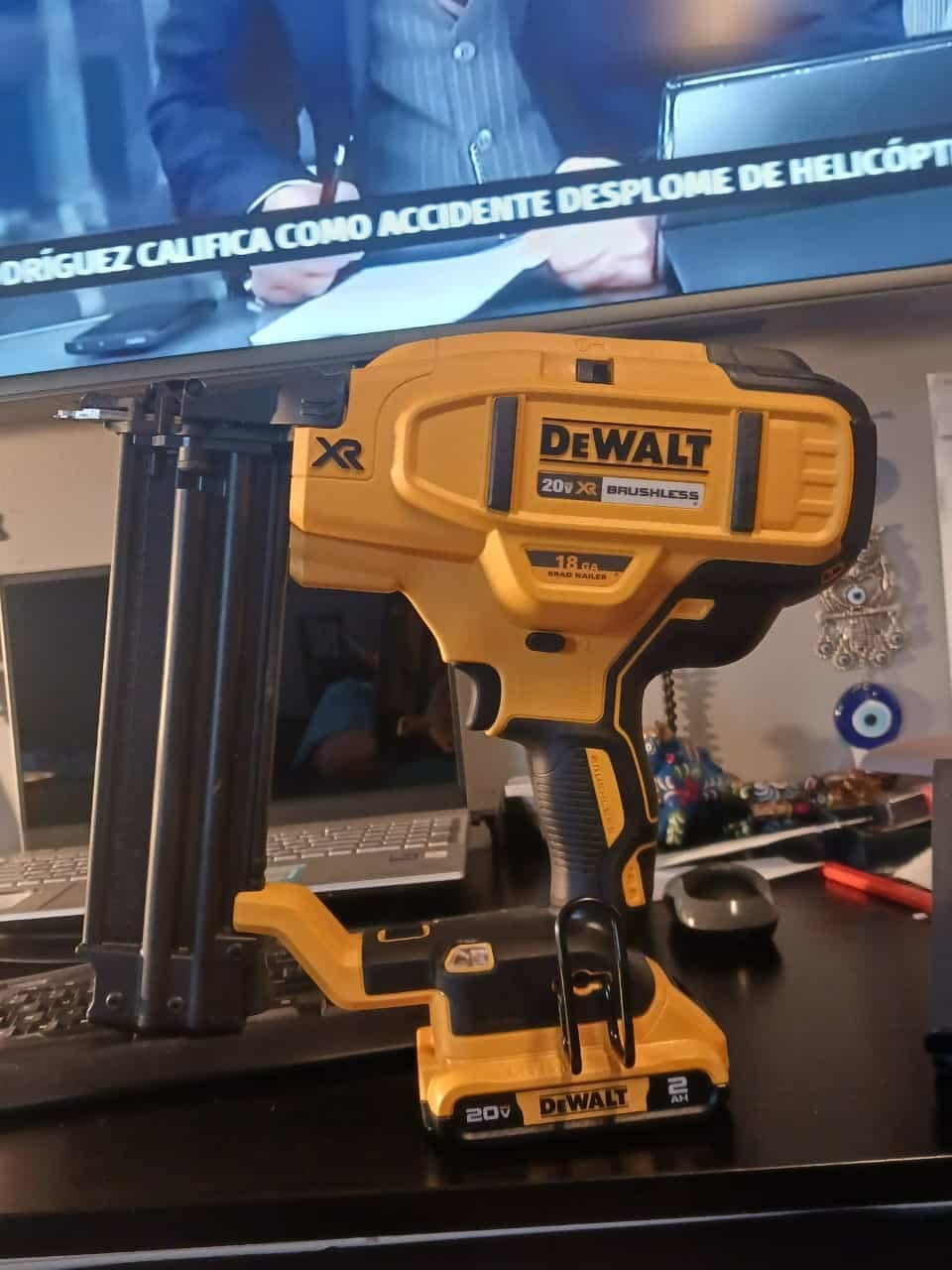
The DCN680B is the one I hand to someone who has never used a cordless nailer and does not want a lesson. It is a 6.2 pound 18-gauge brad nailer with a brushless motor, and at 4.8 stars across more than 3700 reviews it has the longest proven track record of anything on this list. Owner reviews describe the same thing repeatedly: the nail lands where you aimed and the tool does what the trigger told it to do.
What separates it from the other 18-gauge brad nailers here is the tool-free layer. Depth adjustment, jam release and a stall-release lever that resets the driver blade all work without a hex key, and a selectable trigger switches between sequential and contact actuation. On a long casing run that is the difference between finishing the room and stopping every ten minutes.
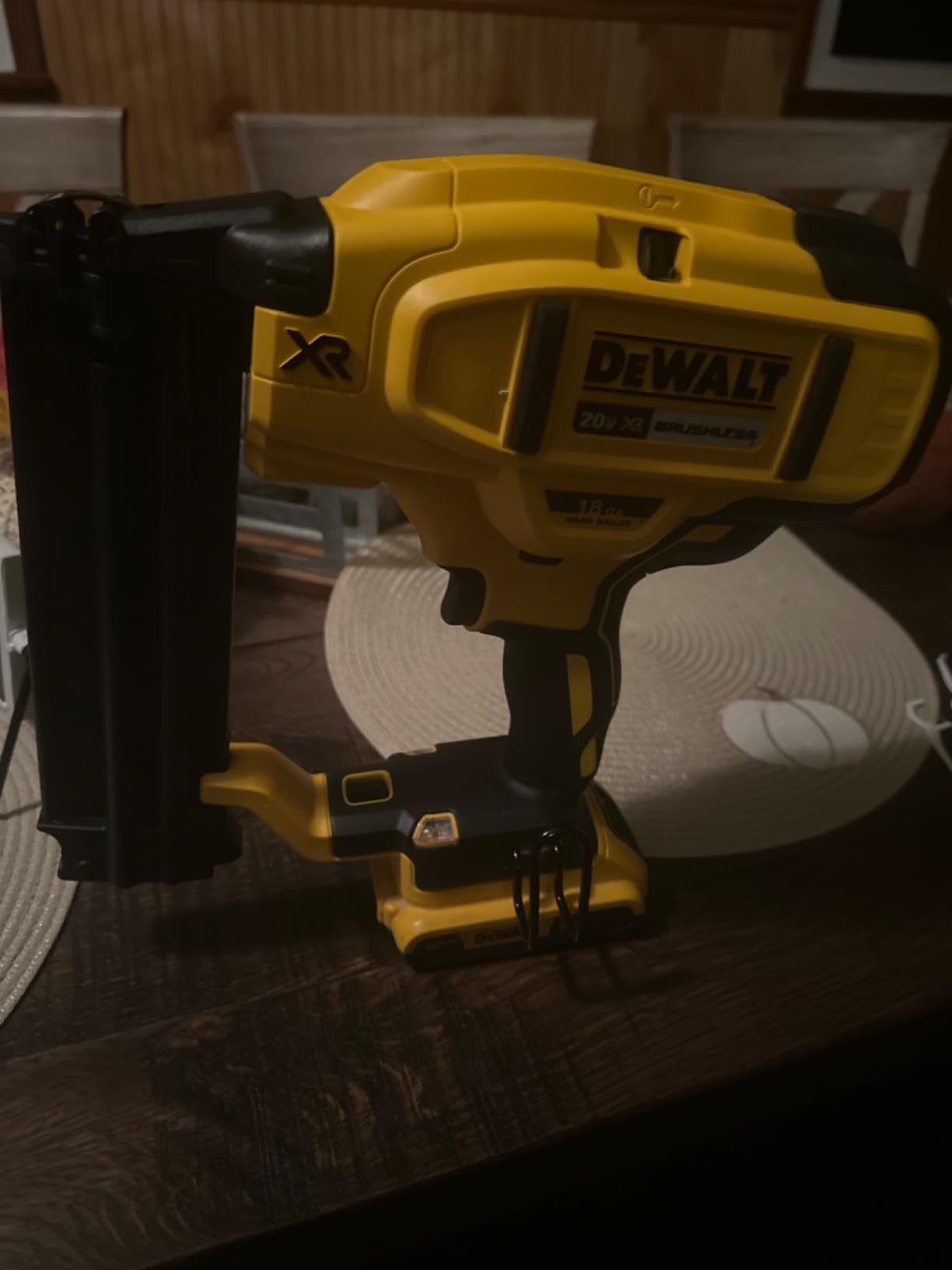
The micro nose is the feature nobody mentions in a spec list but every trim carpenter notices. It pulls the tool body back from the nail line, so you can see the entry point instead of guessing at it. On painted MDF casing, or on a light-colored hardwood baseboard, that visibility is the difference between a clean countersink and a visible blemish you have to fill.
Owners also credit the multi-functional LED, which does double duty as workspace lighting and a diagnostic readout. When the tool stalls, the light pattern tells you whether it is a low nail, a jam or a battery condition, which takes a lot of guesswork out of troubleshooting in a dim hallway.
Brushless Motor and Tool-Free Adjustments
The brushless motor is the reason this tool holds a 4.8 average rather than settling in the mid fours. There is no commutator to wear, so the motor holds its output in hardwood where a brushed motor bogs down. The tool-free depth wheel is a smaller win that becomes a large one over a full day, because you are not hunting for a wrench every time you change material.
For a homeowner, the belt hook that can be flipped for either hand and the low nail lockout that stops the tool firing an empty magazine are the two features that prevent the most damage. Dry-firing a brad nailer into finished trim leaves marks that are tedious to repair.
Where 18 Gauge Falls Short
This is an 18-gauge tool, and that is a deliberate scope limit rather than a flaw. If you are hanging 1×4 poplar baseboard into studs, toe-nailing a heavy hardwood threshold, or installing fiber cement trim, an 18-gauge nail does not have the shank diameter to hold. For that work you want the 15 or 16-gauge finish nailer.
It is also a bare tool. Battery and charger are sold separately, so if you do not already own 20V MAX packs, that is an added purchase before the first nail goes in.
Best For Cabinet Trim and Painted Molding
This is the nailer I would hand a cabinet installer doing face frames and crown in a finished house. The micro nose, the countersinking control and the near-invisible brad holes fit decorative work where a 15-gauge hole would show. It is equally at home on picture frames, quarter round and painted MDF trim.
2. DEWALT DCN660B 16-Gauge Angled Finish Nailer – The Best Cordless Finish Nailer for Baseboards
DEWALT 20V MAX* Finish Nailer, Angled, 16GA, Tool Only (DCN660B)
16-gauge angled finish nails
Inline angled magazine
20V MAX platform
Brushless motor
+ Pros
- Angled inline magazine reaches tight spots
- Brushless motor
- Tool-free depth jam and stall release
- Selectable sequential or contact trigger
- Compatible with all 20V MAX batteries
- Cons
- Tool-only unit needs a battery and charger
- Bulkier than a brad nailer overhead
If you install baseboard for a living, the DCN660B is the tool you already know. It is a 16-gauge angled finish nailer, which makes it the single most versatile cordless nailer you can own: 16-gauge nails hold 1x and thicker baseboard to studs reliably, and the angled magazine reaches tight corners and inside closets where a straight magazine will not go.
That versatility is the one-tool answer to trim. Owner reviews for this model call out the angled inline magazine as the deciding feature, and the 4.6 average with a large review base reflects a tool that simply does not get in the way of the work.
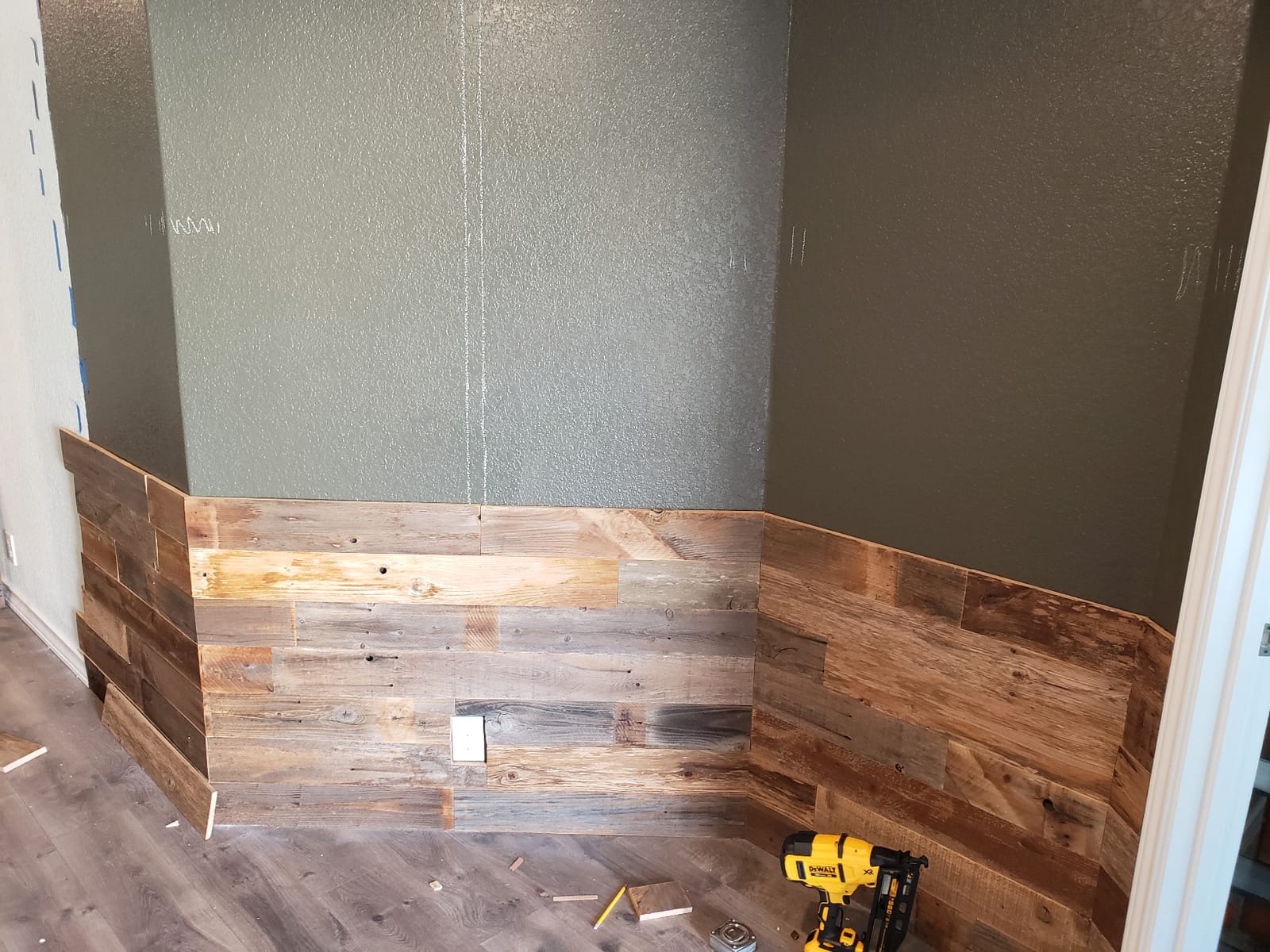
The brushless motor is the same architecture DEWALT uses across its cordless line, so the nailer is compatible with every 20V MAX battery you already own. If you came from a pneumatic setup and a compressor is sitting in the garage gathering dust, this is the tool that replaces it for finish work in occupied rooms.
Multi-functional LED lighting, a reversible belt hook and the same tool-free depth, jam and stall release system round out a feature set that leaves little to complain about. The remaining complaint in reviews is simply that the body is bulkier than a dedicated brad nailer, which you feel on a long overhead run.
Why 16 Gauge Is the Versatile Middle
Nail gauge is a diameter decision, and 16 gauge sits in the practical middle. A 16-gauge nail has enough shank to hold 1x baseboard and 3/4 inch casing into studs, and it is still small enough that a well-set countersink leaves a hole you can fill once. That is why it is the compromise most trim carpenters settle on.
The angled magazine is what turns that spec into a workflow advantage. Toe-nailing into studs at floor level, reaching into a tight closet corner, and shooting the far side of a door jamb are all jobs where a straight magazine is simply too wide to fit.
What to Know Before You Buy
This is a bare tool, and DEWALT 20V MAX packs and chargers are separate purchases. Plan for that before you start, because it changes the economics of the whole setup if you are starting from nothing.
It also cannot do the delicate decorative work an 18-gauge brad nailer does. On pre-finished trim where the hole must disappear, step down in gauge rather than trying to set the depth wheel finer.
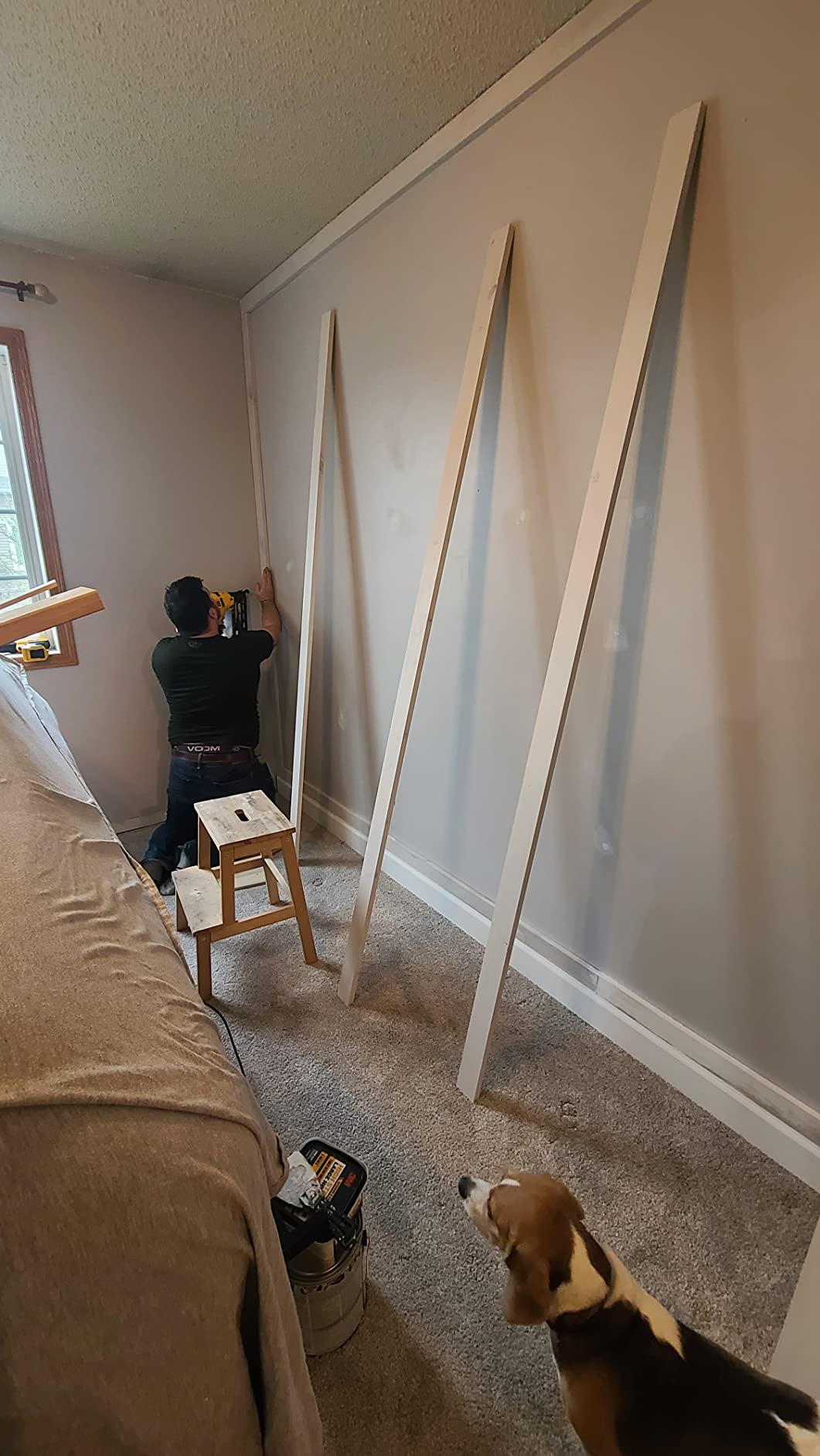
Best For Baseboard, Casing and Full-Room Finish Runs
This is my pick for the homeowner installing a full first floor of trim, and the pick for a contractor who wants one nailer that covers nearly everything. If you want a second nailer later, an 18-gauge brad for the small detail work pairs with it perfectly.
3. Makita XNB02Z 16-Gauge Straight Finish Nailer – Reach and Drive Power in a Straight Magazine
Makita XNB02Z 18V LXT Straight Finish Nailer, 16 Gauge, 2-1/2″
16 gauge straight nails 1 inch to 2-1/2 inch
8.12 pounds
Up to 1000 nails per 5.0Ah pack
3-year warranty
+ Pros
- Compact center height improves visibility
- Drives 16 gauge nails to 2-1/2 inch
- Up to 1000 nails per 5.0Ah battery
- Anti-dry-fire mechanism
- No-mar tip and safety glasses included
- Cons
- Heaviest finish nailer here at 8.12 pounds
- Straight magazine is awkward in very tight corners
The Makita XNB02Z is the counterpoint to the DCN660B. It is also a 16-gauge finish nailer, but it uses a straight magazine, and that single design choice changes the way you work. A straight magazine gives you a clear line of sight along the entire nail strip, which is why finish carpenters use them for long, visible runs where every nail head gets noticed.
Drive power is the other headline. Manufacturer specifications state that the motor drives standard 16-gauge straight finish nails from 1 inch to 2-1/2 inch, and up to 1000 nails from a 5.0Ah 18V LXT battery. That is a longer nail than most 16-gauge cordless nailers accept.
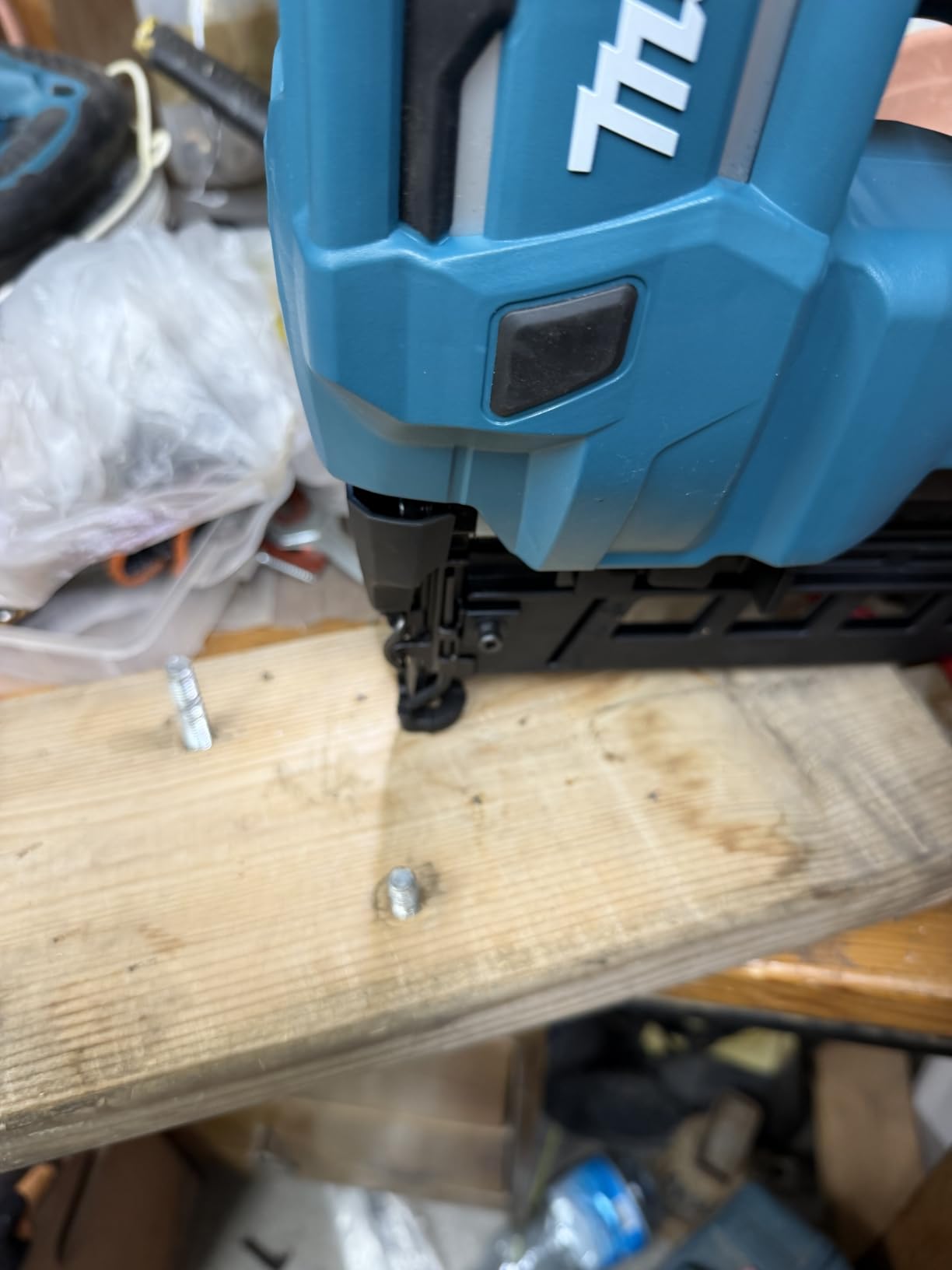
Owners consistently praise the compact center height, which lets you see around the nose tip when fastening in tight spots, and the outright power to sink a nail into hardwood. The anti-dry-fire mechanism prevents driving blanks and marking the work surface, and a no-mar tip plus safety glasses are included in the box.
The 4.3 average tells you where the reservations are. Weight is the first, and it is a real one: at 8.12 pounds this is the heaviest finish nailer on the list, and that shows up in your shoulder during a day of overhead crown. A 3-year limited warranty and a reversible belt clip are the parts of the package owners mention as positives.
2-1/2 Inch Nails and the Straight Magazine Trade-Off
The 2-1/2 inch capability is the reason to choose this tool if you are fastening into thick material or want longer setback options. A 16-gauge nail that long will hold heavy baseboard and thick casing that a shorter 16-gauge nail would only pinch.
The straight magazine, in exchange, demands a clear approach path. It will not fit into a tight closet corner the way an angled magazine does, so plan your trim layout accordingly. A straight magazine is easier to sight down, and that is worth a lot when the nail heads will be visible.
Runtime and Battery Reality
The 1000-nails-per-charge figure is tied to a 5.0Ah battery, which is not included. Owners in forums are consistent on the wider point: the small packs that ship in a lot of kits are simply too small for a full room of trim, and moving up to a 5.0Ah pack is what turns a mid-morning charge into an all-day tool.
Cold weather works against every lithium-ion nailer, and forum owners report a meaningful runtime loss in winter. If you are trimming through a cold season, keep a second pack on the charger rather than expecting one pack to finish the day.
Best For Visible Straight Runs and Long Nail Setbacks
I would pick this one over an angled model when the baseboard run is dead straight, brightly lit, and going to be looked at closely. It is also a strong choice for anyone who prefers a visible nail strip and wants maximum drive authority from a straight magazine.
4. Metabo HPT NT1850DG 18-Gauge Brad Nailer Kit – The Best Value Complete Package
Metabo HPT Brad Nailer, 18 Gauge Cordless, 18V Kit, NT1850DG
18 gauge brads 5/8 inch to 2 inch
5.5 pounds
700 nails per charge
Battery and charger included
+ Pros
- Comes with battery charger no-mar nose caps and hook
- Lightest body here at 5.5 pounds
- 700 nails per charge on the 2.0Ah pack
- No ramp-up time between nails
- Tool-less depth of drive and bright LED
- Cons
- 18-gauge brads are not for framing or hardwood flooring
- Platform is Metabo HPT specific
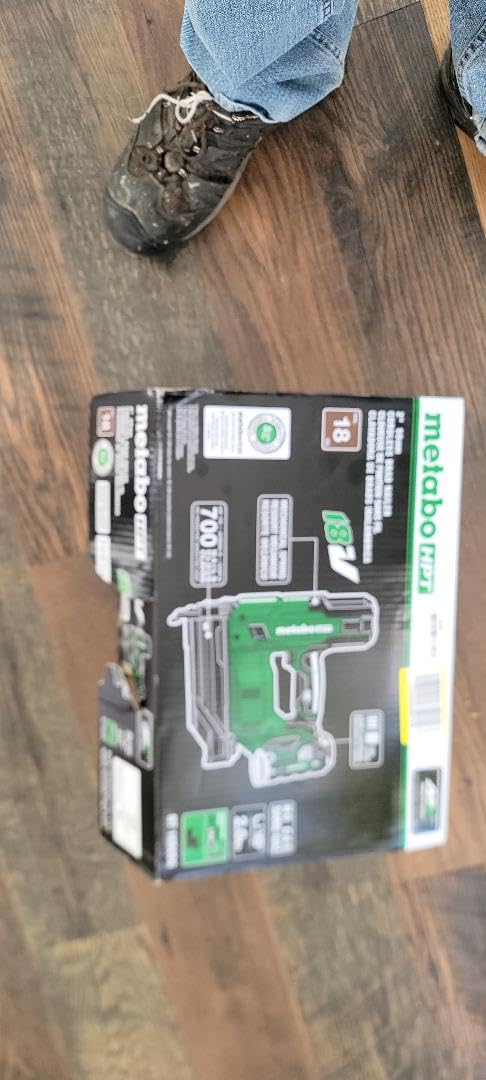
The NT1850DG is the answer for a buyer who has no battery ecosystem at all and does not want to start one. The kit includes the nailer, a battery, a charger, no-mar nose caps, a hook and safety glasses, so the only remaining purchase is nails.
At 5.5 pounds it is the lightest tool on this list, and that weight is a real advantage rather than a rounding error. On a ladder or an overhead run of crown, half a pound of tool weight compounds fast, and this is the one I would not notice I was carrying.
Performance comes from a mechanical spring drive that powers brad nails up to 2 inch, with no ramp-up time between nails. Specifications list 700 nails per charge on the included 2.0Ah battery, which the fuel gauge tracks. The low center height fits the nose into tight spots that a bulkier tool cannot reach.
Owners highlight the light weight, the complete box contents and clean nail placement as the reasons for a 4.7 average with 86 percent five-star ratings. The recurring limit is the obvious one: 18-gauge brads are not structurally suitable for heavier framing work or hardwood flooring.
Spring Drive, Runtime and the Included Pack
A mechanical spring drive stores its energy in a spring rather than compressing air. In practice that means no ramp-up time between nails, which the specification sheet calls out and owners confirm, and no fuel to manage.
Be clear-eyed about the 700-nail figure: it comes from the included 2.0Ah pack, which is the smallest sensible capacity. The same tool on a 5.0Ah pack covers a full day of trim. Buy the kit for the box contents, then add a larger pack if you expect a whole-house job.
Where the Platform Locks You In
Metabo HPT runs its own 18V MultiVolt battery family rather than the DEWALT, Makita or Milwaukee packs most people already own. The kit solves the entry problem neatly, but it does not solve the second-nailer problem, and buyers with a large existing collection should weigh that before committing.
Tool-less depth of drive and a bright LED work light are included, and both earn their place on a dim stairway or an unlit basement.
Best For First-Time Buyers and Overhead Trim
This is the kit I recommend to anyone starting from an empty toolbox, and the pick for anyone whose worst trim experience is arm fatigue on a ladder. The included no-mar nose caps also make it a safe choice on pre-finished material.
5. CRAFTSMAN CMCN618B 18-Gauge Brad Nailer – Balanced Handling for V20 Battery Owners
CRAFTSMAN V20 Brad Nailer, 18GA, Cordless, Bare Tool Only (CMCN618B)
18-gauge cordless brad nailer
Up to 420 nails per charge
Balanced center of gravity
Tool-free jam and stall
+ Pros
- Well-balanced center of gravity in the hand
- Tool-free jam and stall settings
- Up to 420 nails per charge
- Reliable firing on pine and poplar
- No-mar tip protects finished trim
- Cons
- Heavier than expected for long sessions
- Substantial plastic in the construction
- Slower cycle rate than pneumatic brad guns
The CMCN618B is a bare 18-gauge brad nailer built around balance rather than headline specifications. CRAFTSMAN describes it as lightweight with a well-balanced center of gravity, and owners report the same impression: it sits in the hand in a way that does not make you want to set it down between cuts.
That matters more than raw specs for a brad nailer, because the tool spends most of its life in a repetitive up-and-down motion. A well-balanced body lets you keep the nose square, and a square nose is what puts the nail where you wanted it.
The specification sheet lists up to 420 nails per charge and firing power that holds across varied climate conditions and materials.
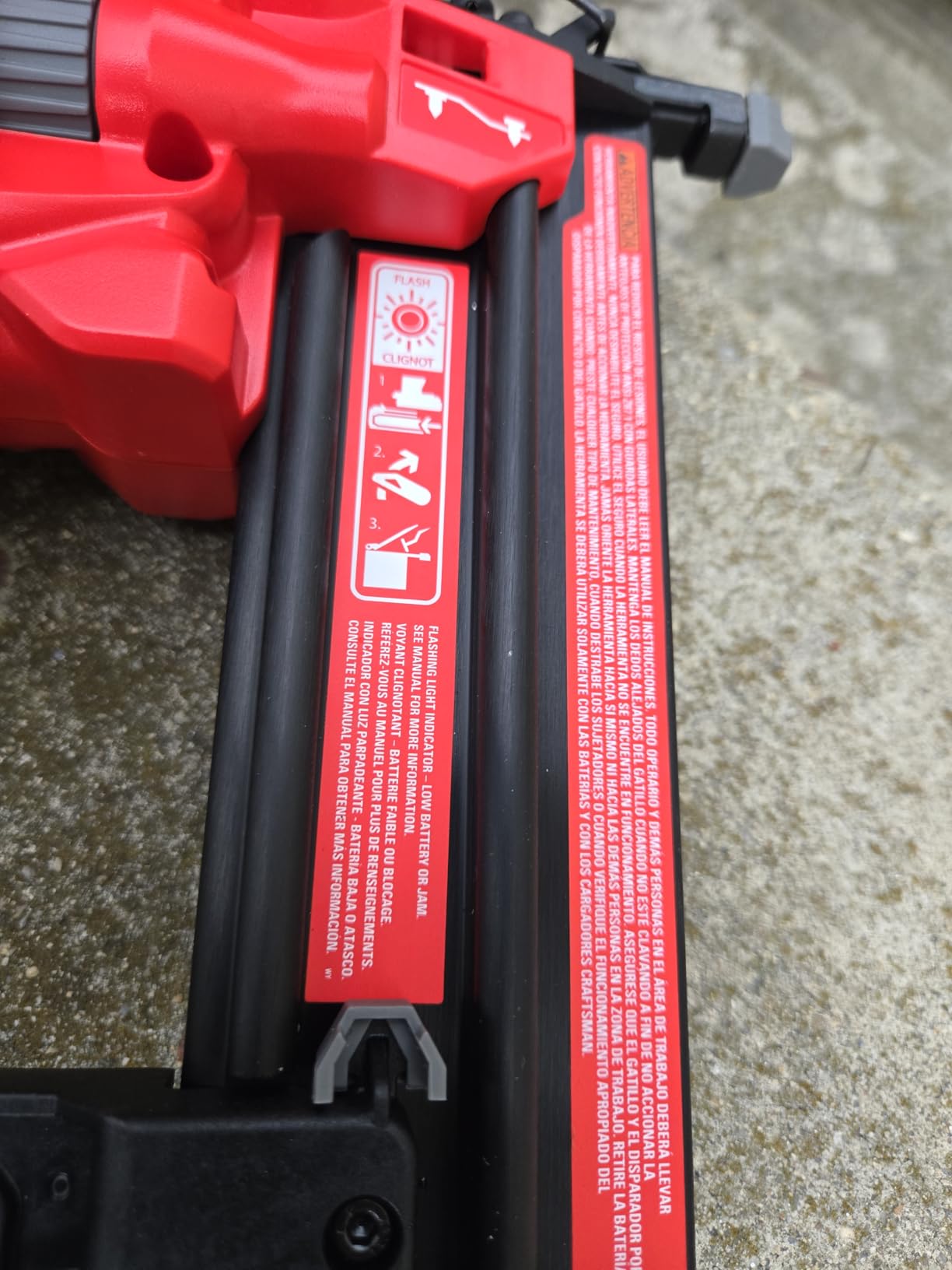
Tool-free jam and stall settings match the feature set on higher-tier tools, which is a genuine value at this level.
Owners with V20 batteries report reliable firing after a depth adjustment on pine and poplar, and the no-mar tip is called out as protecting finished trim. The 4.6 average reflects a capable, uncomplicated tool, tempered by notes about plastic construction and slower cycle rate than air-driven brad guns.
Tool-Free Jam and Stall Handling
Jams and stalls are the two things that turn a trim run into a frustrating one. Both of these release without tools here, so a misfire is a thirty-second pause rather than a trip to the truck for a hex key. On a long run of baseboard, that difference adds up.
For someone already running CRAFTSMAN V20 packs, the ecosystem argument settles the decision on its own. The nailer uses the batteries you have, which removes the single biggest hidden cost in buying a cordless nailer.
The Runtime and Weight Compromise
420 nails per charge is honest for a compact brad nailer, and it is less than half of what a larger pack delivers. Plan on a mid-day top-up or move to a higher-capacity V20 pack before a long project.
Owners also note that it feels heavier than expected over long sessions and that the construction uses a lot of plastic. Neither issue affects the fastening quality; both affect how the tool feels at the end of a ten-hour day.
Best For Repeat Baseboard Runs on Common Lumber
I would pick this for someone cutting a lot of poplar and pine baseboard in a house that is already framed. The balance and jam handling carry more weight here than maximum nail capacity, because the material is routine and the volume is high.
6. DEWALT DCN650B 15-Gauge Angled Finish Nailer – The Heavy-Duty Choice for Crown Molding
20V MAX XR Lithium-Ion Cordless 15-Gauge Angled Finish Nailer (Tool Only)
15-gauge angled finish nails
6.6 pounds
Micro nose design
Inline angled magazine
+ Pros
- Handles crown molding casing and hardwood floors
- Micro nose improves line of sight
- Inline magazine for tight spaces
- Brushless motor
- Full tool-free adjustment suite
- Cons
- Heavier than a brad nailer overhead
- Tool-only unit needs a battery and charger
When the question is what gauge is best for crown molding, the answer is 15. Crown is the heaviest trim profile in most houses, it often gets toe-nailed or back-nailed into a return, and it needs a nail that will not back out over a heating season. The DCN650B is a 15-gauge angled finish nailer, and that is the correct tool for the job.
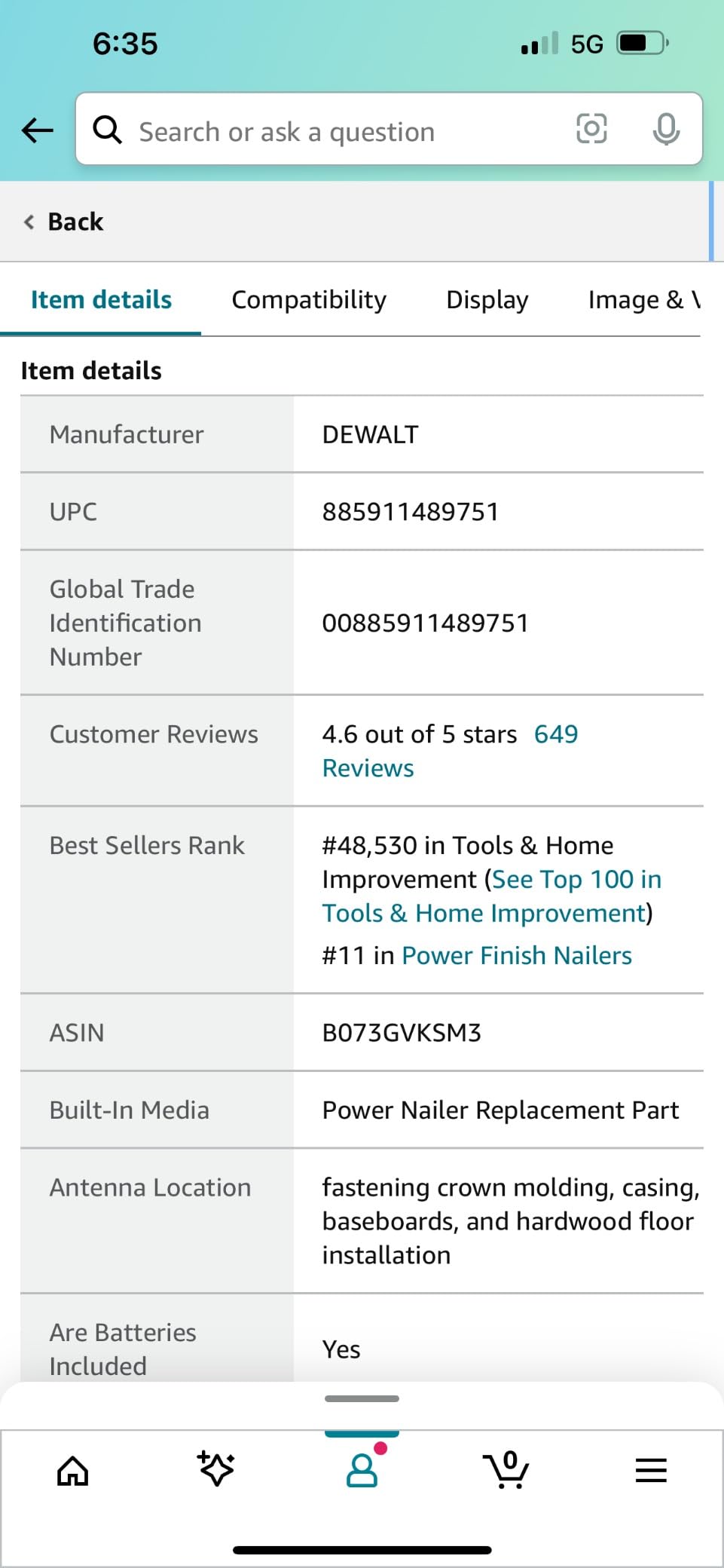
It shares the DCN660B platform and the same brushless architecture, so if you own 20V MAX batteries you can carry one charger for both. The manufacturer lists crown molding, casing, baseboards and hardwood floor installation as intended uses, which tells you how much range the drive system covers.
The micro nose is the feature that shows up in reviews most often, because a 15-gauge nail head is large enough that you want to see exactly where it goes before it lands. Tool-free depth adjustment, jam release and a stall-release lever complete the picture, along with a selectable trigger for sequential or contact firing.
The 4.5 average with 77 percent five-star ratings describes a dependable workhorse with some reservations. Reviewers mention the weight overhead and the fact that this is a bare tool. The inline magazine gives you the same tight-space reach as the 16-gauge model, which is unusual at this gauge.
15 Gauge for Crown, Jambs and Thick Material
A 15-gauge nail has a shank diameter that holds real material. That is why it is the go-to for door jambs, extension trim, thicker crown runs and hardwood flooring trim, and why it is the safe answer when you are fastening into 1x lumber repeatedly.
The trade-off is the hole. A 15-gauge nail leaves a noticeably larger mark, so on pre-finished or painted trim you should either fill and caulk or use a smaller gauge. It is the right tool for structural trim and the wrong tool for hiding a fastener.
Overhead Work and Platform Fit
At 6.6 pounds, this sits in the middle of the weight range. It is noticeably heavier than a brad nailer, and on a long ladder day you will feel the difference between a 5.5 pound tool and this one.
Because it uses the same 20V MAX batteries as the DCN680B and DCN660B, a DEWALT owner can run all three from one battery family. If you are building a cordless trim setup from scratch, that consolidation is worth real money.
Best For Crown Molding, Jambs and Exterior Trim
This is the nailer for a trim carpenter or a serious DIYer who works in hardwood and thick softwood. I would reach for it the moment the material stops being decorative and starts being structural.
7. Ryobi P321 18-Gauge ONE+ Brad Nailer – Quiet, Balanced Value on the ONE+ Platform
Ryobi 18V ONE+ 18-Gauge Cordless Airstrike Brad Nailer (Tool Only) P321
18-gauge brad nailer
6 pounds
18V ONE+ platform
Tool-free depth adjustment
+ Pros
- Shares batteries across the 18V ONE+ platform
- Well-balanced textured grip
- Tool-free depth adjustment between wood types
- Good runtime on a 4.0Ah pack
- One-handed magazine loading
- Cons
- Some owners report the driver freezing mid-magazine
- Heavier than the lightest rivals
- 30-day limited warranty
The P321 is the sleeper in this group, and owners in the trim forums say so plainly. It sits in the middle of the pack on every specification, yet the recurring feedback is that it performs like tools costing considerably more, particularly on cabinet and face-frame work.
The ONE+ platform argument is what tips it for a lot of people. Ryobi packs are among the most widely owned residential tool batteries, so a homeowner who already has a ONE+ driver and a stack of batteries gets a capable trim nailer at essentially no ecosystem cost.
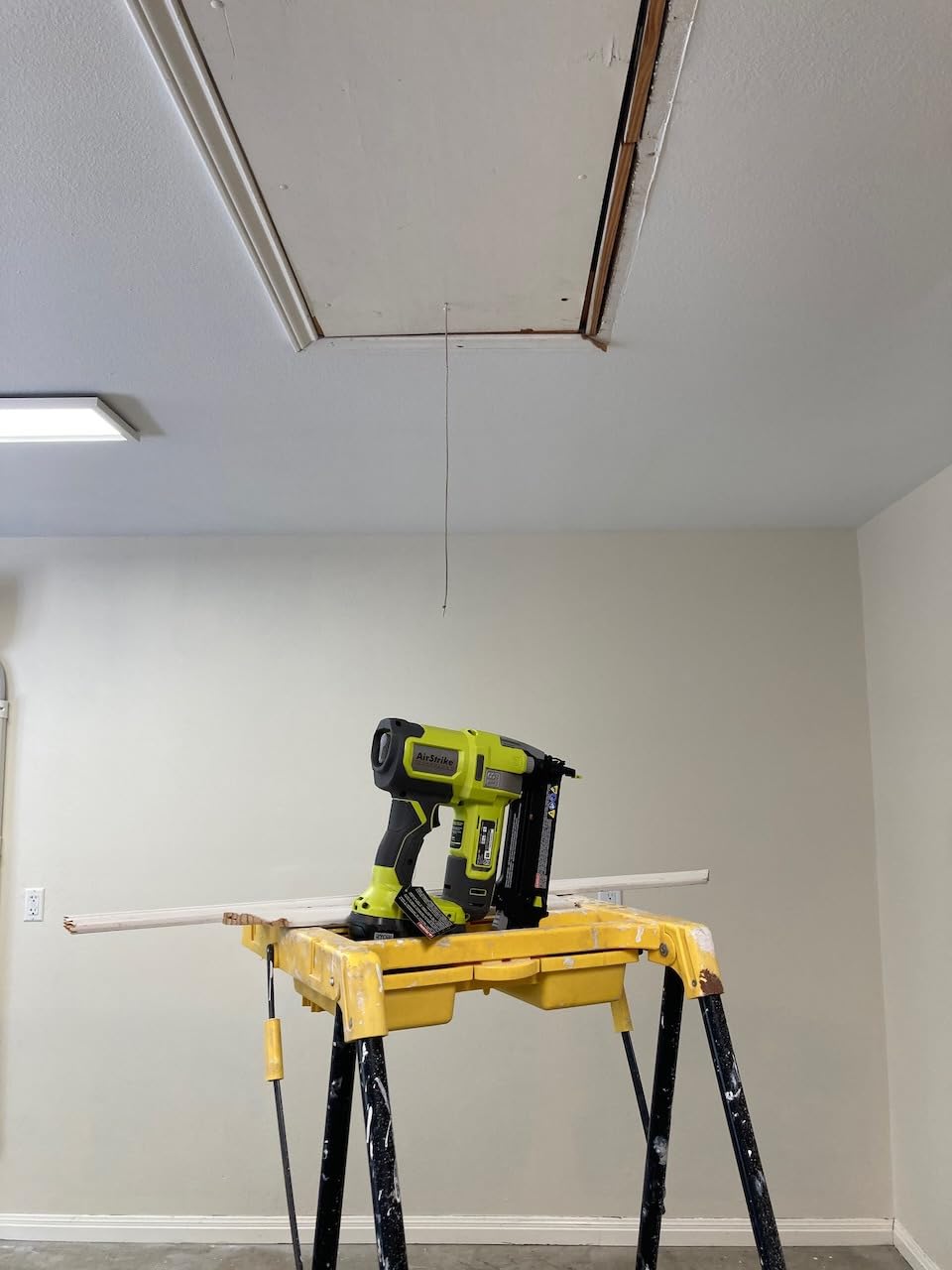
At 6 pounds with a textured, non-slip grip, it is well balanced for long sessions. Tool-free depth adjustment lets you move between trim MDF and hardwood without hunting for a tool, and one-handed magazine loading is a small convenience you notice on the hundredth reload.
Owners report that a single 4.0Ah pack covered a full afternoon of trim work, and that the tool runs quietly compared with pneumatic equipment. The 4.4 average reflects that experience, alongside one recurring reliability complaint I would want you to know about.
The Freezing-Driver Issue and How Owners Solve It
Several owners report the driver freezing partway through a magazine. The consistent fix in those accounts is lubrication of the nail feed tab with a light oil, and the problem stops recurring once the magazine rail is serviced.
I would rather tell you this than bury it. It is an intermittent issue, not a universal one, and it is cheap to prevent. Before a project, run a few nails and oil the feed rail. Ryobi also lists a 30-day limited warranty, which is the shortest here, so the tool is worth servicing rather than abusing.
Cabinetry and Quiet Operation
Quiet operation is a genuine advantage in an occupied house. A pneumatic nailer in a finished room is loud enough to rattle windows, and owners specifically call this tool out as a good fit for interior work where noise matters.
For cabinet trim, face frames and interior casing, the 18-gauge brad format is exactly right. The hole it leaves is small enough to disappear under a bead of caulk or glue, which is the whole game on cabinet work.
Best for ONE+ Owners Doing Cabinet and Interior Trim
If your tool collection is Ryobi, this is the answer and it is not a compromise. If you are starting fresh with no batteries at all, compare the complete-kit options before deciding, because this one is a bare tool.
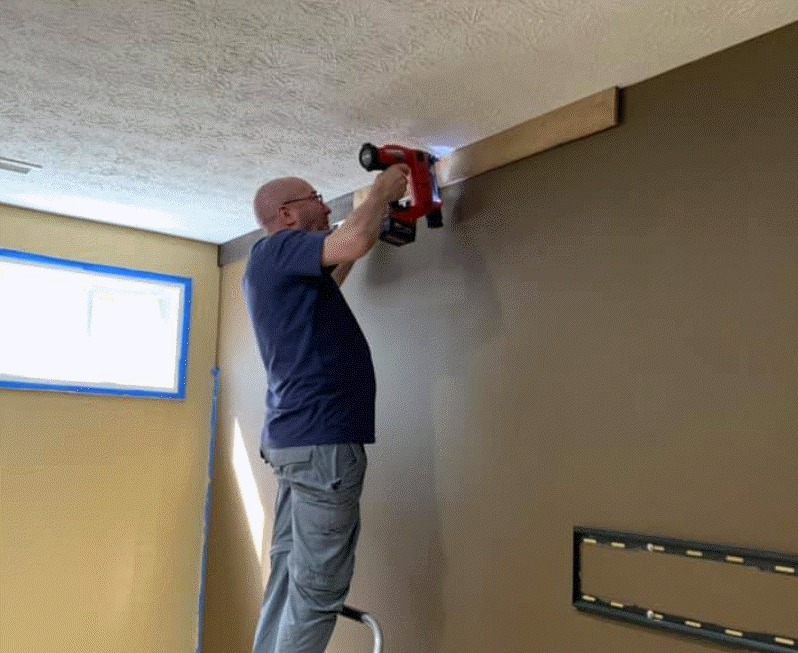
8. Milwaukee M18 FUEL 18-Gauge Brad Nailer – Consistent Drive in an 18-Gauge Body
Milwaukee Electric – M18 Fuel 18 Gauge Brad Nailer
18-gauge brad nailer
6.5 pounds
Nitrogen air spring drive
Zero ramp-up time
+ Pros
- Nitrogen air spring sinks nails consistently in hard and soft woods
- Zero ramp-up time with a high fire rate
- Quiet running and low battery draw
- Tool-free depth adjustment
- Sequential and contact firing modes
- Cons
- Larger than compact models overhead
- Bare tool - battery and charger sold separately
The M18 FUEL brad nailer earns its reputation on drive consistency, and the drive system is the reason. Milwaukee uses a nitrogen air spring mechanism rather than a mechanical spring, and the stated result is nails driven to proper depth in both hard and soft woods while leaving clean nail holes.
Clean holes are not a cosmetic detail on trim. An 18-gauge nail is already small, but a nail that stops a sixteenth of an inch proud of the surface shows on painted baseboard and catches the light across a whole wall. Consistent depth is what keeps that from happening.
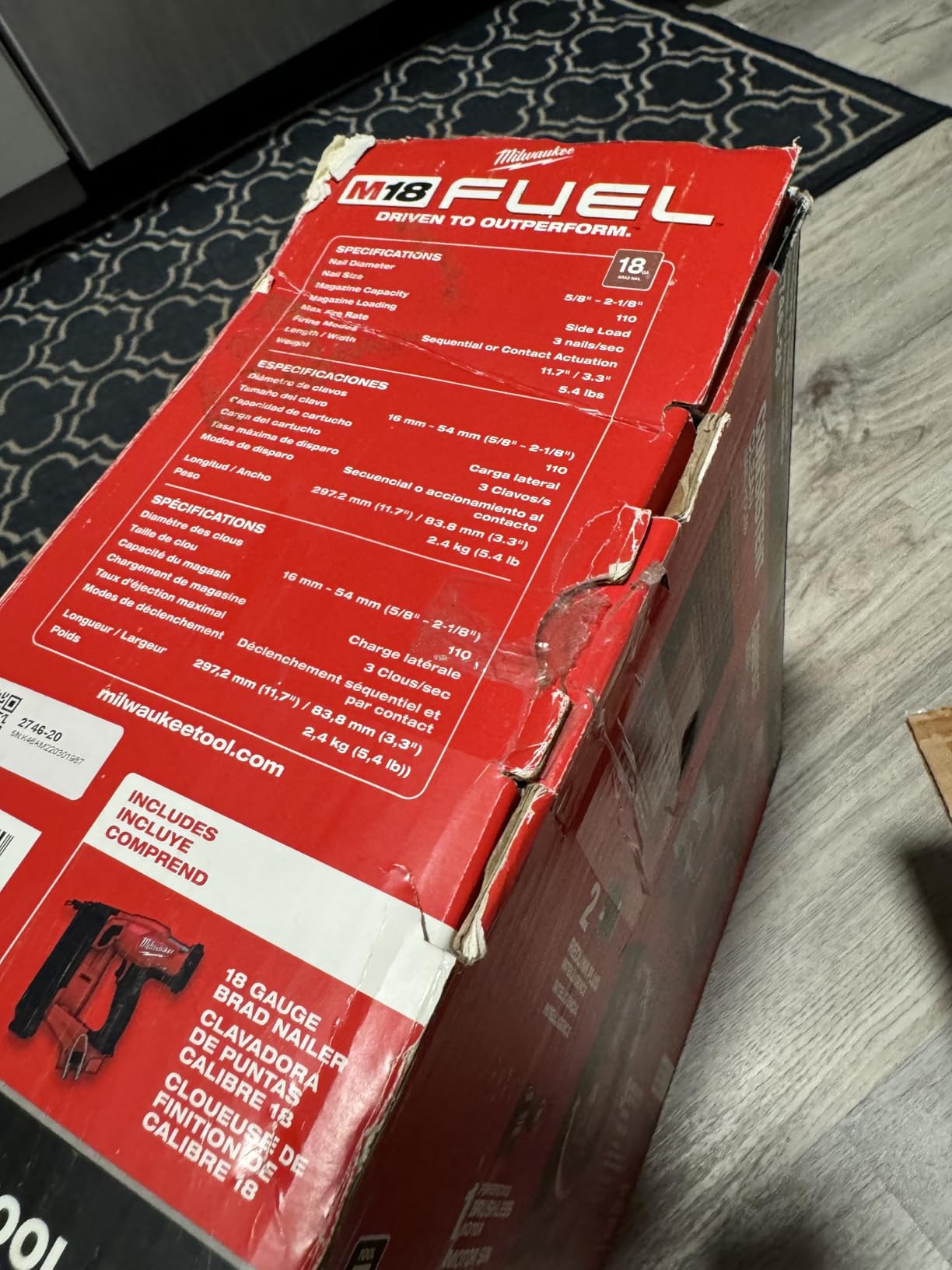
The POWERSTATE brushless motor with REDLINK PLUS intelligence delivers a high fire rate with zero ramp-up time, meaning the first nail and the thousandth nail come off the driver with the same energy. Sequential and contact actuation modes let you choose precision or speed, and tool-free depth adjustment handles material changes.
Tradespeople and serious DIYers rate the drive consistency, fire rate and quiet running highly, and many compare it directly to pneumatic and gas-cartridge rivals. A minority of reviews concern third-party seller fulfillment rather than the tool itself, which is worth keeping in mind when reading any listing.
Nitrogen Air Spring Versus Mechanical Spring
Both systems store energy and both fire without a compressor. The difference shows up in consistency: the air spring maintains a more uniform output, which is why this tool is the pick when you are nailing into maple or a dense hardwood trim profile rather than soft pine.
There is no gas cartridge to buy or store, and no fuel line to run. The onboard LED work light and the low battery draw per charge mean the pack lasts through a full trim day in most conditions.
M18 Ecosystem and Sizing
M18 packs are among the most widely owned professional batteries in North America, so for a working tradesperson the ecosystem is already in the truck. The cost of adding this nailer is a bare tool and nothing else.
Owners do note that it is larger than the compact models, which is noticeable working overhead. If most of your trim is delicate detail work in tight spots, the Metabo HPT is the lighter option; if you are moving volume, this is the faster one.
Best For Professional Trim Volume and Hardwoods
This is the one I would put in a contractor’s bag alongside a 15 or 16-gauge finish nailer. It is the pair pro carpenters actually carry, and between them they cover essentially all interior and exterior trim work.
9. WORX WX842L 20V 18-Gauge Brad Nailer – Hardwood Drive on the PowerShare Platform
WORX Cordless Brad Nailer, 20V 18GA Nail Gun, WX842L
18-gauge brads up to 2 inch
7.06 pounds
80 nails per minute
Anti-ejection design
+ Pros
- NailForce air impact drives brads up to 2 inch into hardwood
- 80 nails per minute firing rate
- Battery runs 140+ PowerShare tools
- Tool-free jam release
- Anti-ejection design stops flying nails
- Cons
- Heavier at 7.06 pounds than compact brad nailers
- PowerShare has less third-party cross-compatibility
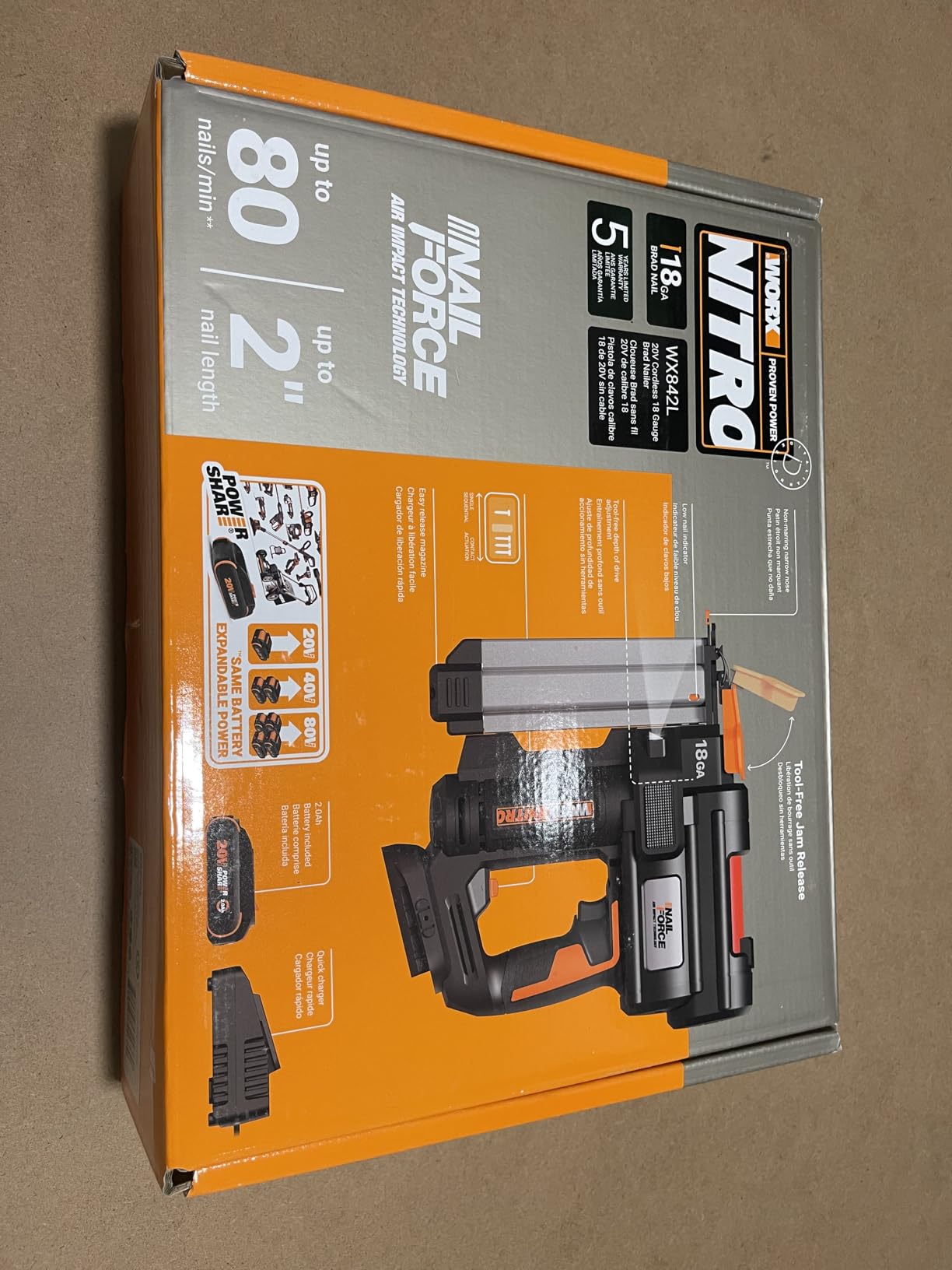
The WX842L makes the boldest hardwood drive claim of any 18-gauge nailer in this group. The NailForce Air Impact Technology is the company name for the drive system, and the specification is brad nails driven up to 2 inch into hardwood, which is a meaningful claim for a nailer this size.
The 80 nails per minute firing rate is the second number worth noting. That is a production-relevant rate for someone running casing around a house rather than hanging a few pieces of trim on a weekend.
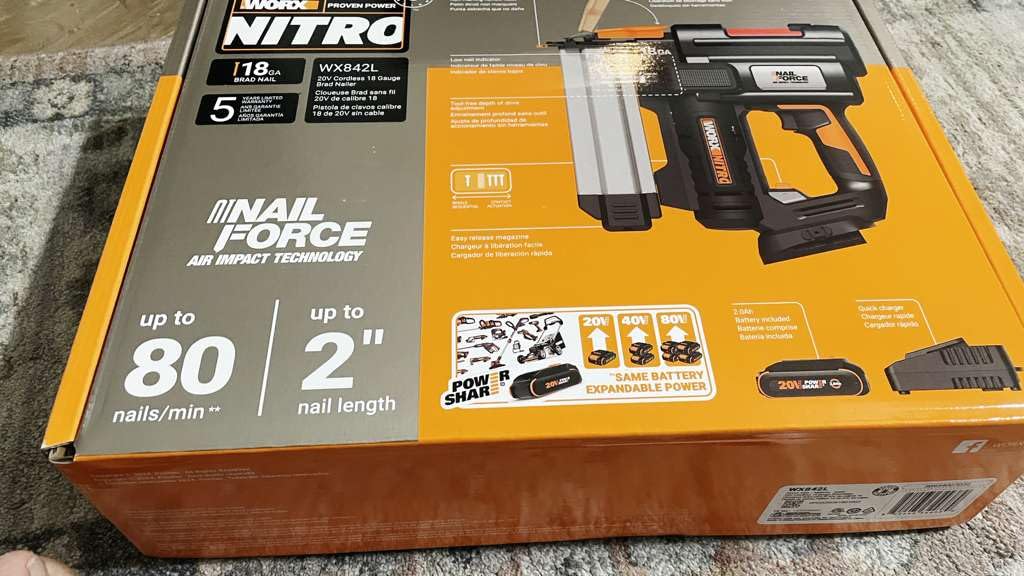
Owners credit the air impact system with genuine hardwood drive and credit the fast cycle with keeping up on long runs. The anti-ejection design is singled out as a safety plus, because it keeps nails from flying when you open the magazine or clear a jam, which is a real hazard with any brad nailer.
Tool-free jam release matches the feature set of higher-tier tools, and the stated uses include panel molding, window trim and small baseboards. The 4.5 average with 78 percent five-star ratings points to a tool that performs above its tier.
Anti-Ejection and Jam Safety
Most brad nailer accidents happen during a jam clear, not during firing. The anti-ejection design addresses the failure mode directly, retaining nails in the magazine when the cover is opened. It is a small engineering decision that removes a real risk in a tool you hold at chest and head height.
Tool-free jam release means the recovery is quick when the tool does stall. Combined with the fast cycle rate, that is what keeps production moving on a long casing run.
PowerShare Ecosystem and Weight
PowerShare packs run more than 140 tools plus outdoor power equipment, so the battery investment is not tied to a single nailer. That is a genuine advantage if you want the same packs for a hedge trimmer and a vacuum.
The offsetting issue is cross-compatibility. Outside of Ryobi and WORX products, third-party support for the platform is thinner than the big ecosystems, and at 7.06 pounds this is a heavy brad nailer. If you work overhead often, a lighter tool may serve you better.
Best For Hardwood Molding and High-Volume Casing
I would pick this one for someone working in hardwood trim or running casing volume on a tight schedule. The hardwood drive claim is the reason to reach for it ahead of lighter 18-gauge brads.
10. WEN 20512 20V 18-Gauge Brad Nailer Kit – The Only Kit Here That Includes Nails
WEN 20V Max Cordless 18-Gauge Brad Nailer with 2.0Ah Battery and Charger (20512)
18-gauge brads 3/4 inch to 2 inch
7.84 pounds
100-nail magazine
Battery charger and 400 nails included
+ Pros
- Tool comes with battery charger and 400 brad nails
- Smart LED reports battery magazine and temperature
- 3/4 inch to 2 inch brad range
- 100-nail capacity magazine
- Cons
- Brushed motor has less power and durability than brushless rivals
- Heaviest of the 18-gauge brad nailers here at 7.84 pounds
- Lowest average rating in this group
The WEN 20512 is the only kit in this roundup that includes nails. You get the nailer, a 2.0Ah battery, a charger and 400 18-gauge brad nails, which means a first-time buyer can install trim the same afternoon the box is opened with nothing else to buy.
That completeness is the reason it lands here despite ranking last on the specification sheet. For a homeowner doing a single room, or for anyone who wants a complete trim setup on a small budget, the box contents are the deciding factor.
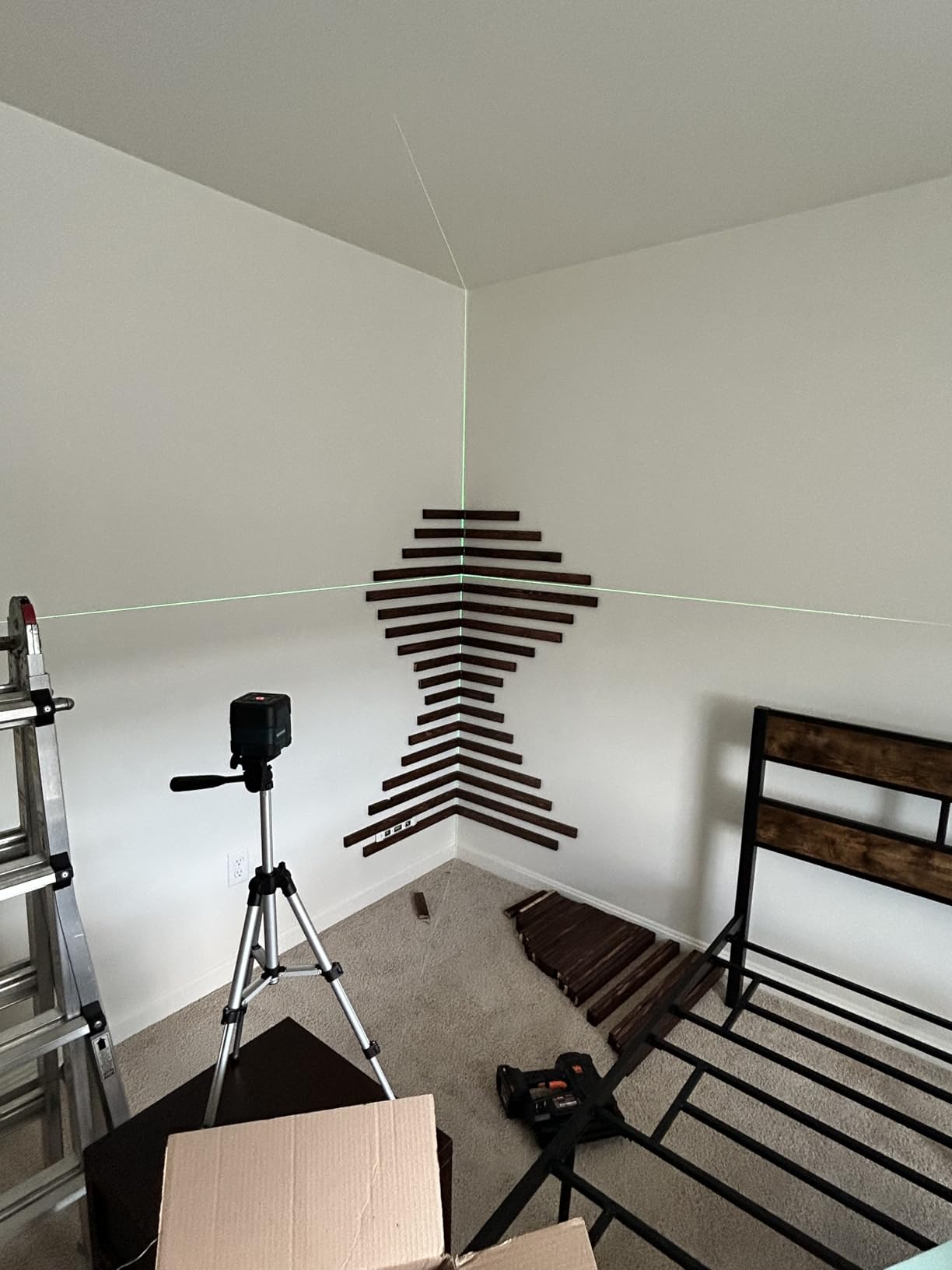
The smart LED indicator is the genuinely useful feature, and it is more than a battery light. It tracks battery status, magazine fill and tool temperature, so you can see a problem before the tool stops driving rather than after you have a half-finished run of baseboard.
The 100-nail magazine and the 3/4 inch to 2 inch brad range cover standard trim work well. At 7.84 pounds this is the heaviest of the 18-gauge brad nailers here, and that is felt on a ladder even though the tool itself is compact.
Why the Brushed Motor Matters Less Than It Sounds
The brushed motor delivers less power and less durability than the brushless motors in every other tool here. In practice that means it will not sink nails as hard into hardwood and you will not be running as long from now. For poplar and pine trim in a conditioned house, it is adequate.
The 4.2 average with a 10 percent one-star share is the weakest rating here, and owner reviews mention lower driving power and occasional unit failures. That is a real reliability caveat, and for a tool you plan to keep for years I would weigh it honestly.
Status LED and Complete Box Contents
On a tool that is entry-level, the status LED is the feature that most reduces frustration. Knowing the magazine level and tool temperature at a glance is how you avoid a mid-run stall on a long baseboard.
The included nails close the loop. Most nailer purchases leave you making a separate trip to the store for a box of brads, and for a first project that friction is what stops people finishing the job.
Best For a First Trim Project on a Small Budget
Buy this one if you are outfitting a first project and want everything in a single box. Once you outgrow it, the battery platform is portable to other WEN tools, but the tool itself is not the one to build a long-term trim business around.
11. CRAFTSMAN CMCN616B 16-Gauge Finish Nailer – 16-Gauge Capability on the V20 Platform
CRAFTSMAN V20 Cordless Finish Nailer, 16 Gauge, Bare Tool Only (CMCN616B)
16-gauge finish nailer
7.6 pounds
Up to 375 nails per charge
3-year limited warranty
+ Pros
- 16-gauge drive suits base molding and finish trim
- Tool-free jam and stall settings
- Balanced center of gravity with belt hook
- No air hose hazard when working on a ladder
- 3-year limited warranty
- Cons
- Heavier at 7.6 pounds with a battery added
- Slower cycle rate than pneumatic finish nailers
- Smaller review base means less long-term data
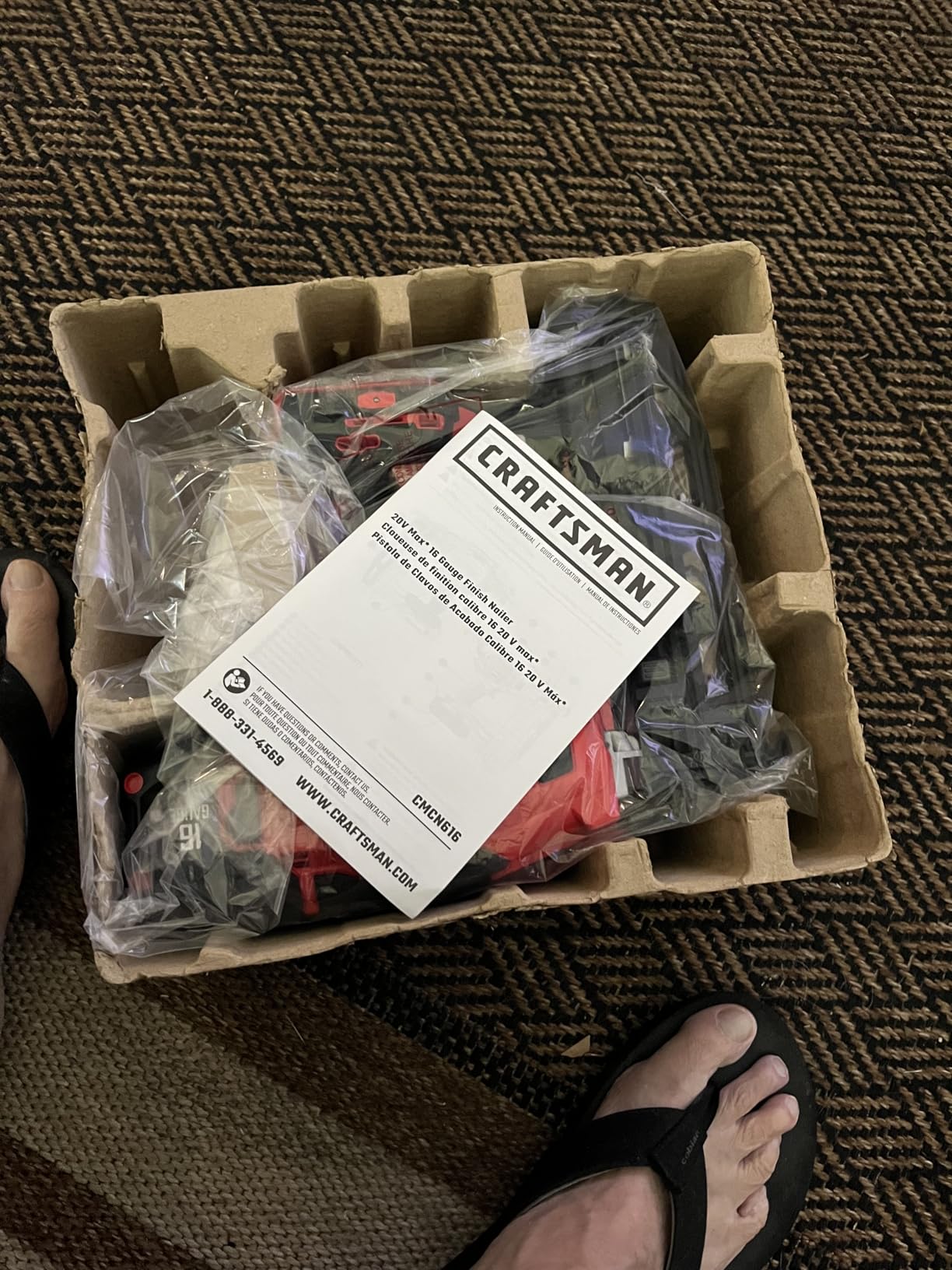
The CMCN616B is the 16-gauge option for CRAFTSMAN V20 owners, and the feature owners mention most is not a specification at all: there is no hose. Working on a ladder with a pneumatic finish nailer means managing an air line, and eliminating that is the core promise of the whole cordless category.
Drive quality is the other selling point. Owners appreciate 16-gauge performance for base molding and finish trim, along with jam-free shooting, and the specification lists up to 375 nails per charge on a V20 battery.
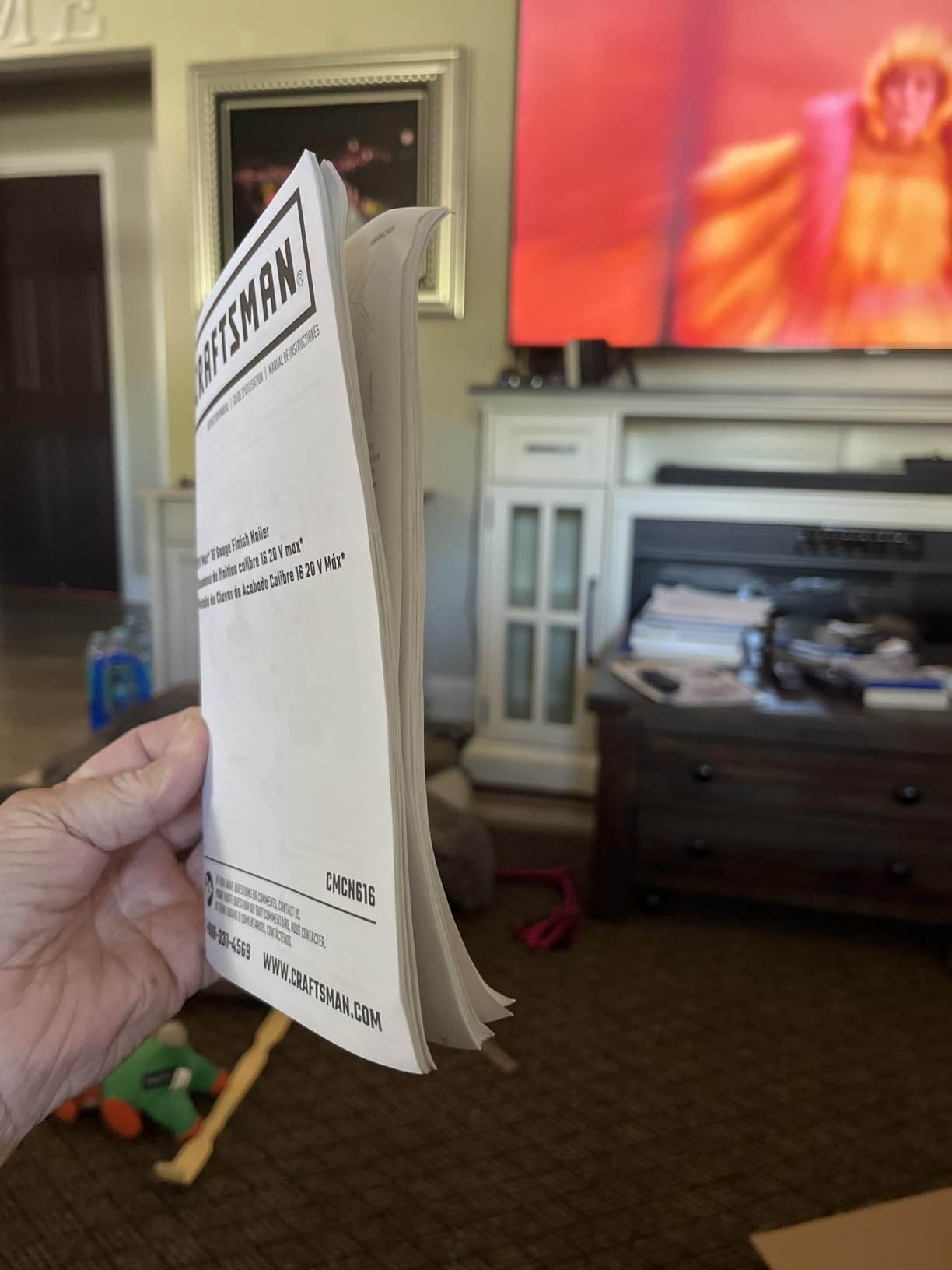
Tool-free jam and stall settings, a belt hook, and a well-balanced center of gravity match the rest of the CRAFTSMAN nailer line. A 3-year limited warranty is longer than several competitors offer, and the tool is VERSATRACK compatible with a separately sold clip.
The 4.3 average is the catch, and it comes down to the review base. At 222 ratings this has the thinnest long-term data of any tool here, and the rating mix includes a 13 percent one-star share, with a smaller share of owners reporting a unit failing early.
Why You Might Pair This With a Brad Nailer
A 16-gauge finish nailer and an 18-gauge brad nailer are not competitors; they are a set. The finish nailer handles baseboard, casing and thicker crown, and the brad nailer handles the small detail work where the hole must disappear. Pros carry both, and many DIYers arrive at the same pair eventually.
If you already own a V20 brad nailer, adding this one covers the rest of the trim scope on batteries you already have. That is an unusually clean entry point into full trim capability.
Weight and the Ladder Test
At 7.6 pounds before you add a battery, this is the second-heaviest finish nailer here. Weight is the most common complaint in reviews, and on a full day of overhead work that is a genuine endurance cost.
The cycle rate is also slower than a pneumatic finish nailer. For a room of baseboard that difference barely registers. For a production schedule with multiple trim carpenters, it is worth factoring in before you commit.
Best For V20 Owners Needing Baseboard Capability
I would pick this when the priority is a 16-gauge finish nailer on an existing V20 battery collection, and the work is residential interior trim rather than high-volume production. For a new buyer with no batteries, a complete kit is the more sensible starting point.
12. Ryobi P326 16-Gauge ONE+ Finish Nailer – Compact Nose for Blind Nailing in Tight Spots
RYOBI ONE+ 18V 16-Gauge Cordless AirStrike Finish Nailer (Tool Only), P326, Green
16-gauge finish nails
7.3 pounds
78 percent smaller nose
Onboard pump drive
+ Pros
- 78 percent smaller nose for blind nailing access
- Onboard pump runs without a flywheel spin-up
- Air pressure adjustment dial for tuning to woods
- 16-gauge drive handles thick hardwood
- Shares ONE+ batteries and chargers
- Cons
- Heavy and bulky at 7.3 pounds overhead
- Will drive deeper than intended at the lowest setting
- 30-day limited warranty
The P326 solves a specific problem: getting a 16-gauge nailer into places a 16-gauge nailer normally will not go. The specification claims a 78 percent smaller nose than the previous Ryobi finish nailer, and for blind nailing behind a toe-kick or inside a tight return, that nose is the entire point of the tool.
It uses an onboard pump design rather than a spinning flywheel, and it behaves more like an air tool as a result. Owners call it a smart alternative to gas nailers, and several mention the quiet running as the standout trait in an occupied house.
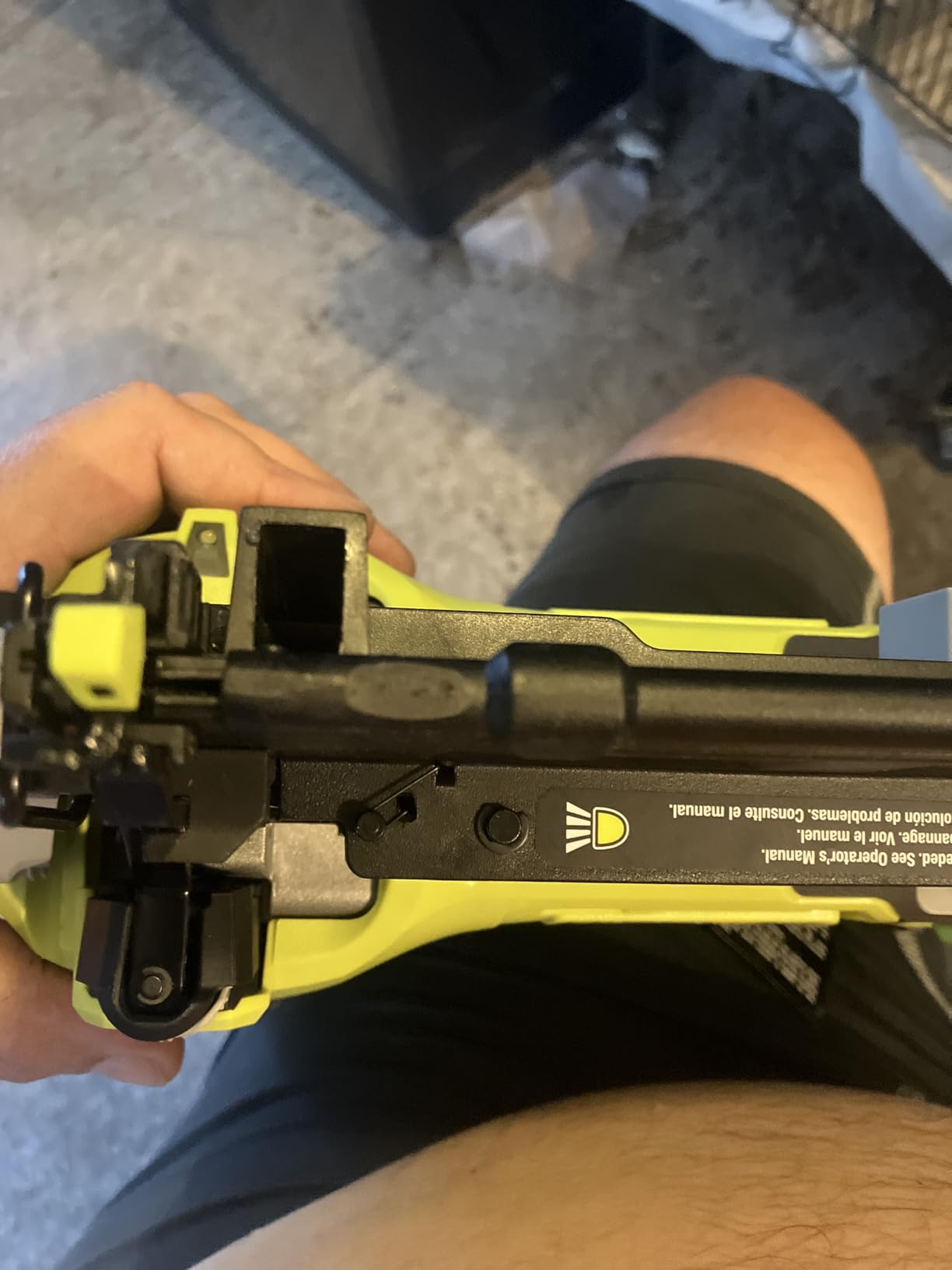
The adjustment dial regulates air pressure speed, which is how you tune the tool to different woods rather than fighting a single depth setting. Owners also report 16-gauge drive power that handles 3/4 inch solid hickory with capacity to spare, which is a hardwood test most compact finish nailers fail.
The 4.2 average and 189-rating review base mean less long-term data than the tools above it. A 12 percent one-star share points to reliability and depth-adjustment complaints, and one owner reported a striking-pin alignment fault that required a warranty claim.
The AirStrike Pump Versus a Gas Cartridge
AirStrike technology eliminates the compressor, the hose and the gas cartridge. The pump runs like an air tool without the flywheel spin-up, which is why this nailer is quiet relative to gas-powered products and needs no fuel storage.
The pressure dial is a genuinely useful control that most competing tools do not offer in this form. Rather than a coarse depth wheel, you are tuning the pressure that the pump delivers, which is a finer adjustment when you move between soft MDF and dense hardwood.
Depth Control and Weight Are the Two Complaints
Two reports stand out and you should know them. First, this tool can drive nails deeper than intended and will not fire at the lowest depth setting, which is exactly the failure mode that marks pre-finished trim. Test it on scrap before you shoot painted casing.
Second, at 7.3 pounds it is heavy and bulky for extended overhead work. The small nose fights that disadvantage in tight spots and loses to it on a long ceiling run. The 30-day limited warranty is also the shortest in this group.
Best For Blind Nailing in Tight Interior Corners
This is the specialist pick for the awkward jobs, not the volume work. If your trim project is full of tight returns and toe-nail detail, the nose geometry is worth more than the extra weight. For a long run of crown, choose something lighter.
How to Choose a Cordless Nail Gun for Trim
Most wrong purchases come from reading a feature list instead of answering one question first: what am I nailing, and into what? Once that is settled, the gauge, magazine and platform decisions follow in order, and the rest of the spec sheet matters much less.
15 vs 16 vs 18 Gauge: Which One Do You Actually Need?
Start with the trim profile. 18-gauge brad nails are around 0.040 inch in diameter and are for delicate work: crown under 4 inch, cabinet trim, picture frames, shoe molding, quarter round and anything pre-finished where the hole has to disappear. 16-gauge finish nails are thicker and hold 1x baseboard, 3/4 inch casing and standard crown to studs. 15-gauge nails are thicker still and are for door jambs, extension trim, thick crown and anything structural.
The forum consensus that keeps repeating is that 16 gauge is the most versatile single tool for trim, while 18 gauge is sufficient for trim and little more. If you are buying one nailer and nothing else, choose a 16-gauge finish nailer. If you are willing to own two, an 18-gauge brad plus a 15 or 16-gauge finish nailer covers everything.
On the question of whether 15-gauge nails are too big for trim: they are too coarse for painted and pre-finished material, because the hole is large enough to see. On solid softwood and hardwood trim they are the right answer, because holding power matters more than a clean face.
Straight vs Angled Magazine: Does It Matter for Trim?
Yes, and for trim specifically. An angled magazine is narrower at the nose, so it reaches into tight closets, inside corners, toe-nail positions at the floor and the far side of a door jamb. A straight magazine gives you a longer, clearer line of sight along the nail strip, which is valuable on long visible runs.
Forum advice commonly recommends toeing nails into studs or using an angled nailer to fit tight closets and corners where a straight magazine will not go. If your project includes a lot of interior corners, the angled magazine is the deciding feature.
Battery Platform: Why Your Existing Drill Is the Most Important Decision
This is the single biggest driver of purchase regret. Almost every nailer in this roundup is a bare tool, and the platform determines what you spend next. DEWALT 20V MAX, Milwaukee M18, Makita 18V LXT, Ryobi 18V ONE+, WORX PowerShare and CRAFTSMAN V20 are all separate ecosystems, and each locks you into its own packs and chargers.
The practical rule I use: buy into the platform you already own. If you have three 20V MAX batteries and a charger, the DEWALT DCN680B, DCN650B and DCN660B all run on them. If you have a stack of ONE+ packs, both Ryobi tools are free of ecosystem cost. Only buy a new platform if the nailer itself is clearly the better tool.
One flexibility worth knowing: Metabo HPT runs MultiVolt, which accepts 18V and 36V packs, giving you a path to more runtime later. That is the exception rather than the rule in this category.
Tool-Only vs Kit: What Is Actually in the Box
Only two of the twelve products here come with a battery and charger. The Metabo HPT NT1850DG and the WEN 20512 are complete kits. The other ten are bare tools, and the DEWALT models, the Milwaukee, the CRAFTSMANs, the Ryobis and the WORX all require a separate purchase before the first nail goes in.
For a buyer with no batteries, that difference matters more than any feature on the spec sheet. For a buyer with a full complement of packs, a bare tool is the cheaper and smarter choice because the kit version is just the same tool plus batteries you already own.
Weight, Balance and Overhead Work
The weight range here runs from 5.5 pounds on the Metabo HPT to 8.12 pounds on the Makita XNB02Z, and that 2.6 pound spread is more than a full extra battery on some tools. On a ladder, a heavy finish nailer is a shoulder problem by the second hour.
Balance matters as much as raw weight. A nailer whose center of gravity sits square under your grip does not fight you, and several owners on this list single out balance rather than weight when explaining why a tool feels good. For overhead crown molding, I would look for under 6 pounds if your work is mostly above shoulder height.
Sequential vs Contact Actuation, Dry-Fire Lockout and No-Mar Tips
Sequential actuation fires one nail per trigger pull, which gives you control. Contact actuation, sometimes called bump fire, fires as long as the trigger is held and the safety contact stays depressed, which is faster for long runs. Several tools here let you switch between them tool-free, and that is worth having even if you only use one mode.
Dry-fire lockout and low nail lockout stop the tool from firing an empty magazine, which prevents a burst of marks on finished trim. Most tools on this list have some version of it, and owners consistently treat it as a feature that protects the work rather than a novelty.
No-mar tips do the same job at the material, by preventing the metal nose from denting soft wood around the hole. The Metabo HPT kit includes no-mar nose caps and the Makita includes a no-mar tip, and owners call them out as the feature that protects pre-finished trim through a whole-house renovation.
Which Nailer for Which Trim Job?
Map the profile to the gauge before you shop. These six scenarios are the shortcut that gets you to the right tool in one step.
Baseboard and 1x Material
For 1×4 and taller baseboard into studs, use a 16-gauge finish nailer. An 18-gauge brad is not strong enough to hold it, and a 15-gauge nail is more than you need unless the baseboard is hardwood. The DEWALT DCN660B is the most versatile pick here, and the CRAFTSMAN CMCN616B covers the same work on a different platform.
Crown Molding and Crown Moulding
Lightweight crown under 4 inch takes an 18-gauge brad and will look better for it. Standard and heavy crown wants a 15 or 16-gauge finish nailer, with toe-nailing into the return or blocking to keep the face clean. The DEWALT DCN650B is built for exactly this, and the Metabo HPT handles the lighter profiles overhead.
Door and Window Casing
Casing over painted or pre-finished material wants an 18-gauge brad, because the hole size is what determines whether the job looks professional. On unpainted casing going into a future paint job, a 16-gauge finish nailer is fine and holds better. Blind nailing behind a return rewards a small nose, which is where the Ryobi P326 earns its place.
Shoe Molding, Quarter Round and Picture Frames
These are the smallest profiles in the house and the hardest to hide holes in. An 18-gauge brad nailer is the correct answer, and a no-mar tip matters more here than on any other trim. The DEWALT DCN680B and the Ryobi P321 are the strongest choices for this work.
Cabinet Trim and Face Frames
Cabinet work is 18-gauge territory. You want a small hole that disappears under a bead of caulk, and a compact body that fits inside a cabinet box. The Ryobi P321 and the Metabo HPT NT1850DG are both well suited, and the lighter tool wins when you are working overhead inside a cabinet.
Exterior and Fiber Cement Trim
Exterior door trim and fiber cement are a 15-gauge job, at minimum, and they need a nailer that will drive into dense material. Hold power matters far more than hole visibility out there. The DEWALT DCN650B is the pick, and the Milwaukee M18 FUEL brad nailer is the alternative if the exterior work is light casing rather than structural trim.
Cordless vs Pneumatic Finish Nailers: Honest Trade-Offs
The honest answer is that pneumatic is still faster for high-volume work, and cordless wins decisively anywhere a compressor is a problem. Forum consensus splits along exactly that line, and it is the correct line to split along.
For framing, decking and any job where you are running hundreds of feet of trim with a crew, a pneumatic nailer fires continuously, cycles faster and costs less to run. An air hose will not die on a ladder the way a battery does, and there is no charge cycle. If you already own a compressor, the pneumatic case is real.
For finished and occupied rooms, cordless is the better tool outright. There is no compressor noise in the house, no hose snagging on a ladder, no exhaust, and no fuel cartridge storage. A pneumatic nailer is also unusable in places a cordless one works fine, such as a finished attic or a bathroom with no outlet nearby.
There is one cordless-specific consideration nobody mentions: cold weather. Forum owners report a 30 to 40 percent runtime loss in winter for lithium-ion nailer packs. If you are trimming through a cold season, budget for the shorter run time or keep a second pack warm.
There is also no PSI to set on a cordless nailer. Owners searching for what PSI a brad nailer should be set at are really asking about depth control, and the answer is the tool-free depth wheel at the nose. Turn it until the nail head countersinks flush without sinking below the surface.
Troubleshooting: Why Your Cordless Nailer Jams or Shallow-Drives Nails
Jams and shallow driving account for most of the complaints about cordless nailers, and in most cases the cause is not a defective tool. It is a nail brand, a collation geometry, or a depth setting that has drifted.
Why Your Nailer Keeps Jamming
Start with the last few nails in a strip. The most frequently reported pattern across trim forums is a jam that appears on the final two or three nails of a collation, and that it goes away with a fresh strip. That points at the strip geometry rather than the tool.
Next, look at the nail brand. Owners consistently report that switching from off-brand nails to a better-known collation fixed misfires in an otherwise identical nailer. Cheap nails have inconsistent glue and inconsistent head geometry, and both cause the driver to stall. After that, clean the feed rail and the magazine, and check that the driver blade is not worn or bent.
Finally, confirm the tool is not being starved by a low battery or a partially seated pack, which can produce a weak shot that looks like a jam. The LED diagnostics on several tools here report tool conditions that would otherwise be a guess.
Why Your Nails Are Not Going In All the Way
Shallow driving is a depth problem in most cases. Turn the depth wheel toward more drive, and test on scrap of the same species and thickness as the actual trim. Wood density varies enormously between poplar and maple, and a setting that works on MDF will not sink a nail into hardwood.
Check the magazine tension and the follower spring next. A follower that has weakened over time leaves the strip under tension that is inconsistent, and the driver cannot carry the nail the last fraction of an inch. If nails are not sitting square in the strip before the tool fires, that is the problem.
On some models the depth wheel itself becomes stiff enough that owners report needing pliers to turn it. That is a known complaint across several brands, and a small amount of lubricant on the wheel thread restores it. If a nail will not go fully flush and the wheel is already at maximum, the tool is underpowered for the material and you need a heavier gauge.
Prevention Beats Clearing
The most effective jam prevention is boring but simple: buy a consistent nail brand, keep nails dry, and do not mix collations in the same magazine. Tool-free jam release and stall-release levers on most of these models cut downtime dramatically once a stall does happen, and the low nail lockout prevents the dry-fire burst that marks finished trim.
One last note from the forums: if the jam happens repeatedly at the same point in the same strip, replace the nails before you troubleshoot the tool further. Nail brands and their collations are the single most common cause, and the fix is usually free.
Frequently Asked Questions
What type of nail gun is best for installing trim?
A 16-gauge cordless finish nailer is the most versatile single tool for trim because it holds 1x baseboard and 3/4 inch casing to studs. An 18-gauge brad nailer is the right choice for delicate profiles like crown under 4 inch, cabinet trim and pre-finished molding where the nail hole must disappear.
Should I use a 16 or 18 gauge nailer for trim?
Use 16 gauge for baseboard, door and window casing, and standard crown, and use 18 gauge for lightweight crown, shoe molding, quarter round, cabinet trim and painted or pre-finished trim. The 18-gauge nail leaves a near-invisible hole; the 16-gauge nail holds thicker material.
Which is better for hanging trim, a brad nailer or a finish nailer?
A brad nailer is better for small, delicate trim because its 18-gauge nails leave almost no visible hole. A finish nailer is better for baseboard, casing and heavier crown because 15 or 16-gauge nails hold thicker material to studs. Most professionals carry both.
Why does my brad nailer keep jamming?
The most common causes are the last two or three nails in a strip, low-cost off-brand nails with inconsistent glue and head geometry, and a weakened magazine follower spring. Try a fresh strip from a consistent nail brand first, clean the feed rail, and check the driver blade for wear.
How many nails can I expect per charge?
Published figures usually reflect a small 2.0Ah pack, and 700 nails per charge is a common headline number. Larger packs multiply that substantially, so a 5.0Ah pack typically delivers well over a thousand nails on the same tool. Cold weather can cut runtime by 30 to 40 percent.
Can I use these nailers with my existing battery system?
Usually yes, if you already own packs from the same brand. DEWALT 20V MAX, Milwaukee M18, Makita 18V LXT, Ryobi 18V ONE+, WORX PowerShare and CRAFTSMAN V20 are separate ecosystems, and most of these nailers ship as bare tools. Metabo HPT MultiVolt packs are the flexible exception, accepting 18V and 36V.
Which Cordless Nailer Should You Buy?
If you want one answer, the DEWALT DCN680B is the best cordless nail gun for trim because it has the strongest combination of proven reliability, tool-free jam handling and a 4.8 rating across more than 3700 reviews. It is the tool I would hand someone who does not want to think about it.
If you are starting with no batteries, the Metabo HPT NT1850DG is the value pick. It arrives complete, it is the lightest tool in the group, and the 700-nail figure on the included pack is a real number rather than a headline. The WEN 20512 is the budget alternative if you also want nails in the box.
If baseboard is your primary job, choose a 16-gauge finish nailer. The DEWALT DCN660B is the most versatile option and works on any 20V MAX battery you already own, and the CRAFTSMAN CMCN616B covers the same scope on a V20 platform.
If you work in hardwood or thick crown, go up in gauge. The DEWALT DCN650B handles 15-gauge work that an 18-gauge brad simply cannot hold, and the Metabo HPT NT1850DG or Ryobi P321 handle lighter crown overhead without weighing down your shoulder.
If you already own M18 packs, the Milwaukee M18 FUEL brad nailer gives you the fastest, most consistent 18-gauge drive available. If you run ONE+ tools, the Ryobi P321 and the Ryobi P326 cover both the delicate and the mid-gauge work on batteries you already have.
Whichever you choose, buy the bigger battery pack on your first purchase rather than the small one. It is the single change that turns a mid-morning recharge into a full day of work, and it is the least expensive performance upgrade available in this category.