

A science project is only as good as the evidence behind it, and that evidence has to come from somewhere. When we started picking the best kids microscopes for science projects in 2026, we set one rule for ourselves: every scope on this list had to produce a picture a child can measure, count, sketch, and argue about. That rules out the plastic toys with five pre-printed slides and no focus knob, and it rules out the digital scopes that advertise 1000X while showing surface fuzz.
My team has spent the last few months running these ten scopes through the same routine: mount a specimen, find focus, change the magnification, take a picture, clean up. We tested onion epidermis, pond water, a fingerprint, a cotton thread, a feather barb, a sugar crystal, and a dead ant. Where a child would reasonably lose interest, we said so. Where a scope was genuinely excellent, we said that too.
The result covers the four families of microscope that matter for school work: a talking slide viewer for the youngest children, compound optical scopes that pass light through a real specimen, handheld digital scopes that put the image on a screen, and all-in-one STEM kits with enough slides and tools to run a project start to finish. If you want the short answer, the Educational Insights GeoSafari Talking Microscope wins for early elementary ages, and the National Geographic Dual LED kit is the one I hand to a child who has a real assignment due.
A note on the community before we start. In the r/ScienceParents thread that ranks at the top of the search results for this question, parents repeatedly point to Thames and Kosmos for build quality. On r/microscopy, experienced hobbyists name AmScope as the value leader and advise skipping a compound scope until a child is seven or eight, starting instead with a hand lens for plants, rocks, and insects. That advice is good, and it shaped how I read the age ratings below. Where I disagree with a listing, I say so in the review.
Our Top 3 Kids Microscopes for Science Projects

GeoSafari Talking Microscope
- 60 full-color images
- Two eyepieces
- Fact and Quiz modes
- Ages 4 to 8

National Geographic Dual…
- Two LED lights
- 20x and 50x optics
- 50 plus accessories
- Glass slides and geode

National Geographic 400x Scope
- Up to 400x
- LED above and below
- 18 slides included
- Lab guide and tools
Comparing Every Scope in This Roundup
Every pick below is in this table, with the features that actually change what a child can see and record.
| Product | Details | |
|---|---|---|
| Educational Insights GeoSafari Talking Microscope |
|
Check Latest Price |
| National Geographic Dual LED Microscope Science Kit |
|
Check Latest Price |
| National Geographic Microscope up to 400x |
|
Check Latest Price |
 Ashfly Kids Digital Microscope 500X Ashfly Kids Digital Microscope 500X |
|
Check Latest Price |
 BEBANG Kids Digital Microscope Science Kit BEBANG Kids Digital Microscope Science Kit |
|
Check Latest Price |
 Uarzt Beginner Microscope Science Kit 100X-1200X Uarzt Beginner Microscope Science Kit 100X-1200X |
|
Check Latest Price |
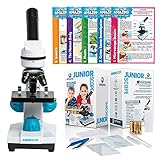 Omano Juniorscope Microscope Kit Omano Juniorscope Microscope Kit |
|
Check Latest Price |
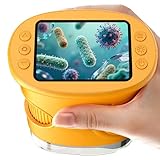 BMDSAE 1000X Handheld Digital Microscope BMDSAE 1000X Handheld Digital Microscope |
|
Check Latest Price |
 BEAVERLAB Finder 4.0 Inch Microscope BEAVERLAB Finder 4.0 Inch Microscope |
|
Check Latest Price |
 Odatay 4K 1000X Digital Microscope Odatay 4K 1000X Digital Microscope |
|
Check Latest Price |
1. Educational Insights GeoSafari Talking Microscope – Voice-Guided Discovery for Ages 4-8
Educational Insights GeoSafari Talking Microscope
60 full-color images
Two eyepieces
Fact and Quiz modes
10.1 x 8.1 x 5.6 inches
1.5 pounds
Needs 3 AAA batteries
+ Pros
- Narration holds the attention of ages 3 to 6
- Two eyepieces let siblings share one slide
- Sturdy plastic sized for small hands
- Sixty images across 20 slides give real variety
- Cons
- No optical magnification or focus control
- Slides must go in flat side down or audio fails
- Slide storage latch can fail to close
- Batteries not included
Best for: a preschool or first-grade child who needs to be excited about science before they can handle a focus knob.
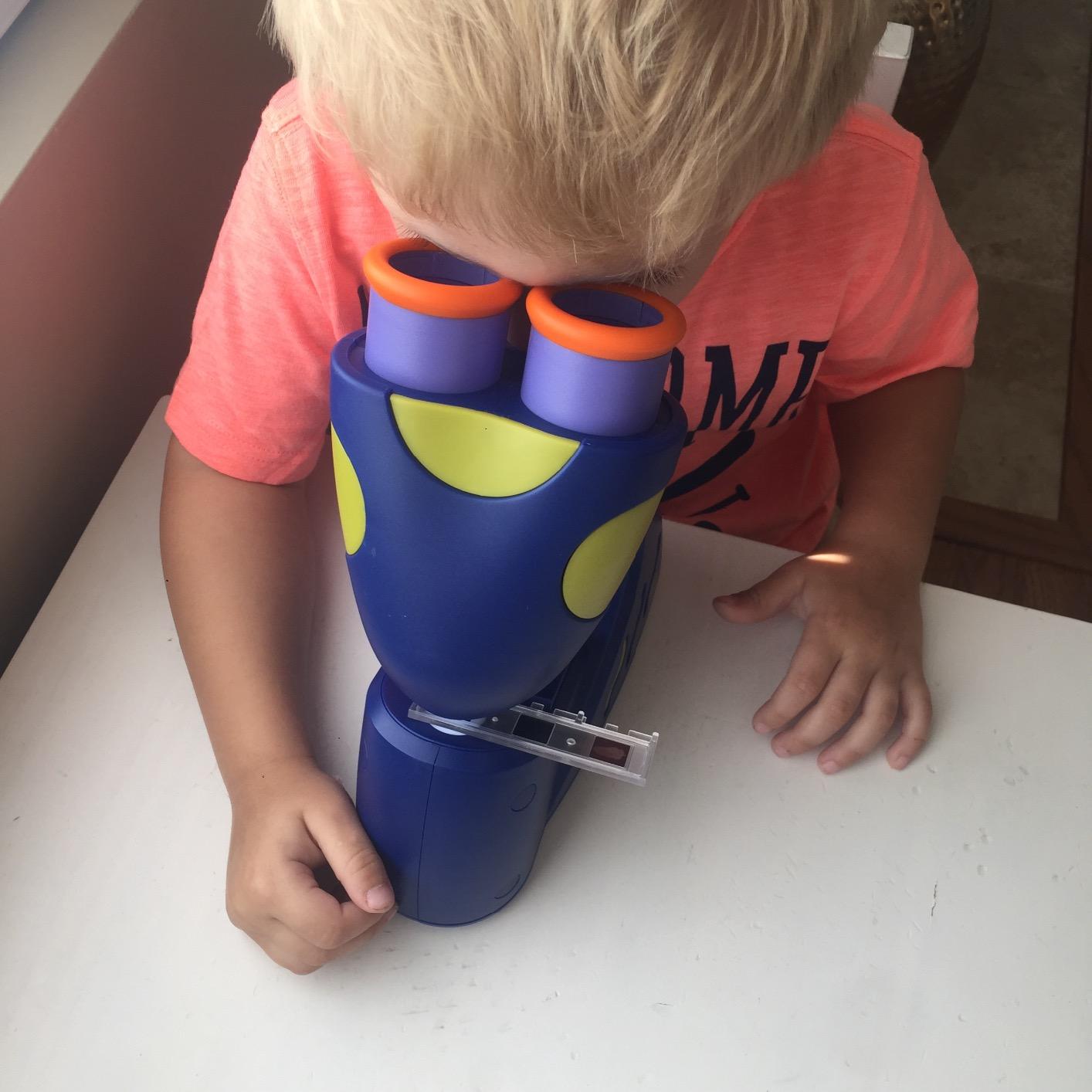
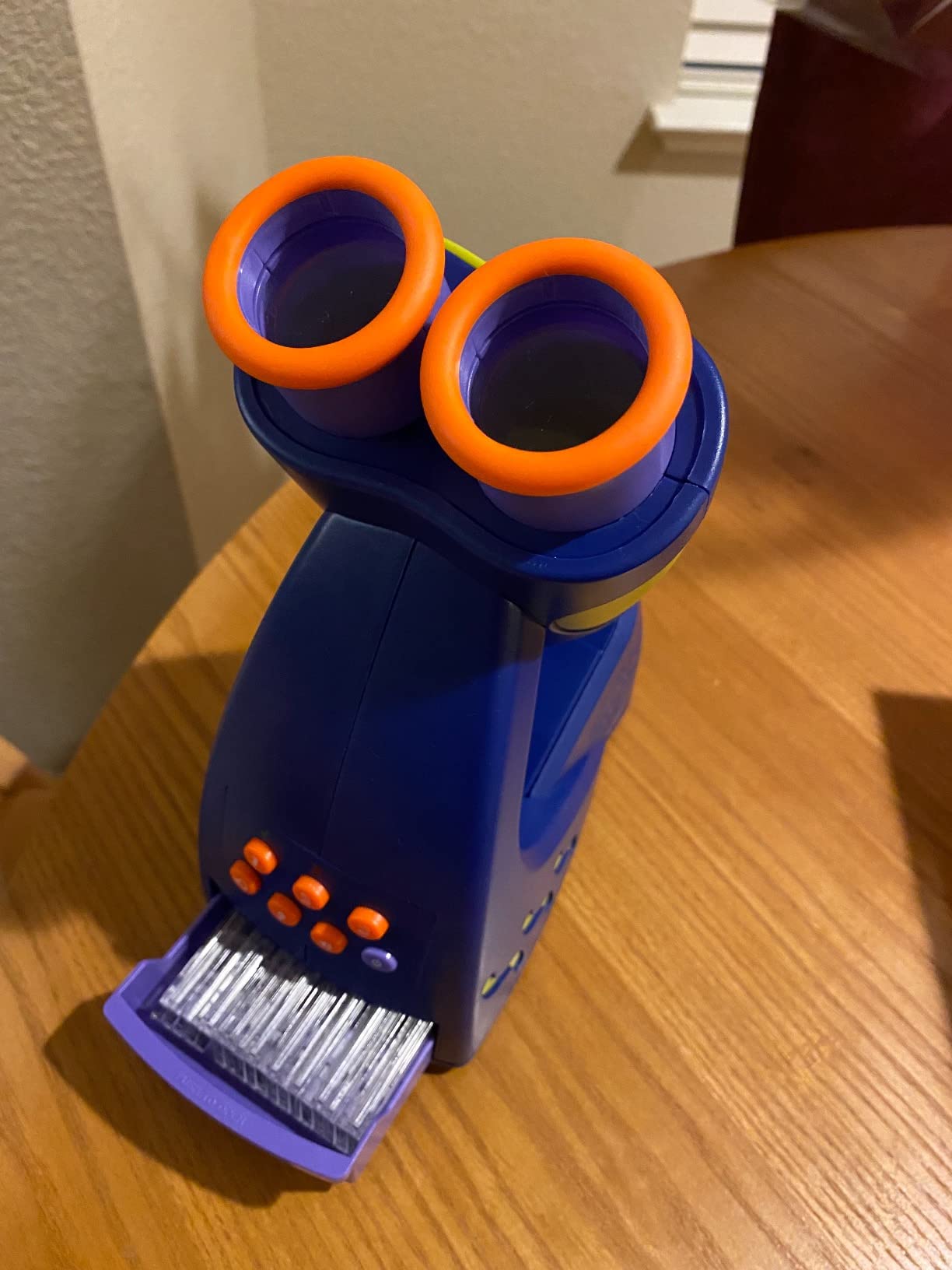
Be honest about what this is. There is no objective lens, no magnification dial, and nothing to adjust. A child places one of twenty slides into the body and looks through two eyepieces at a printed image, while a recorded voice reads facts and asks quiz questions. It is a slide viewer with narration, not a laboratory instrument, and no project built on it would survive a teacher who asked to see a specimen the child prepared themselves.
What it does well is the hardest part of the job. The narration in the voice of Bindi Irwin turns a static picture into a question and an answer, and the two eyepieces mean two children can look at the same slide at once. Reviewers with younger children consistently report that the format holds attention far longer than a silent toy would. At 10.1 by 8.1 by 5.6 inches and 1.5 pounds, it is sized for small hands and survives being dropped, which matters more than any specification on the box.
One quirk trips up nearly every household. The slide has to go in flat side down or the sound simply does not activate, and to a five-year-old the two sides look identical. Show a child this once and it stops being a problem. The slide storage compartment on some units also fails to latch closed, so check it before a science fair rather than the morning of one.
Why the Narration Format Works So Well
Young children cannot sustain silent observation, and a conventional microscope asks them to. This one asks for nothing except a slide and a pair of eyes, then supplies the content itself. The Fact Mode walks through what is on the slide, and Quiz Mode turns the same image into a quiz, so one scope covers both teaching and checking.
The limitation is worth repeating. Sixty images across twenty slides is a fixed library. Your child will know all of it within a few sessions and there is no way to add to it.
Batteries Are Not Included
The unit takes three AAA batteries, which are not in the box. Buy a pack with the scope rather than discovering the problem on the first afternoon, because an unresponsive talking microscope reads as broken to a child.
Where It Falls Short
There is no focus control, no true optical magnification, and no way to look at anything the child finds on a walk. For a science project requiring original observation, move up to one of the optical scopes below. For a four-year-old learning that small things have structure, this is hard to beat.
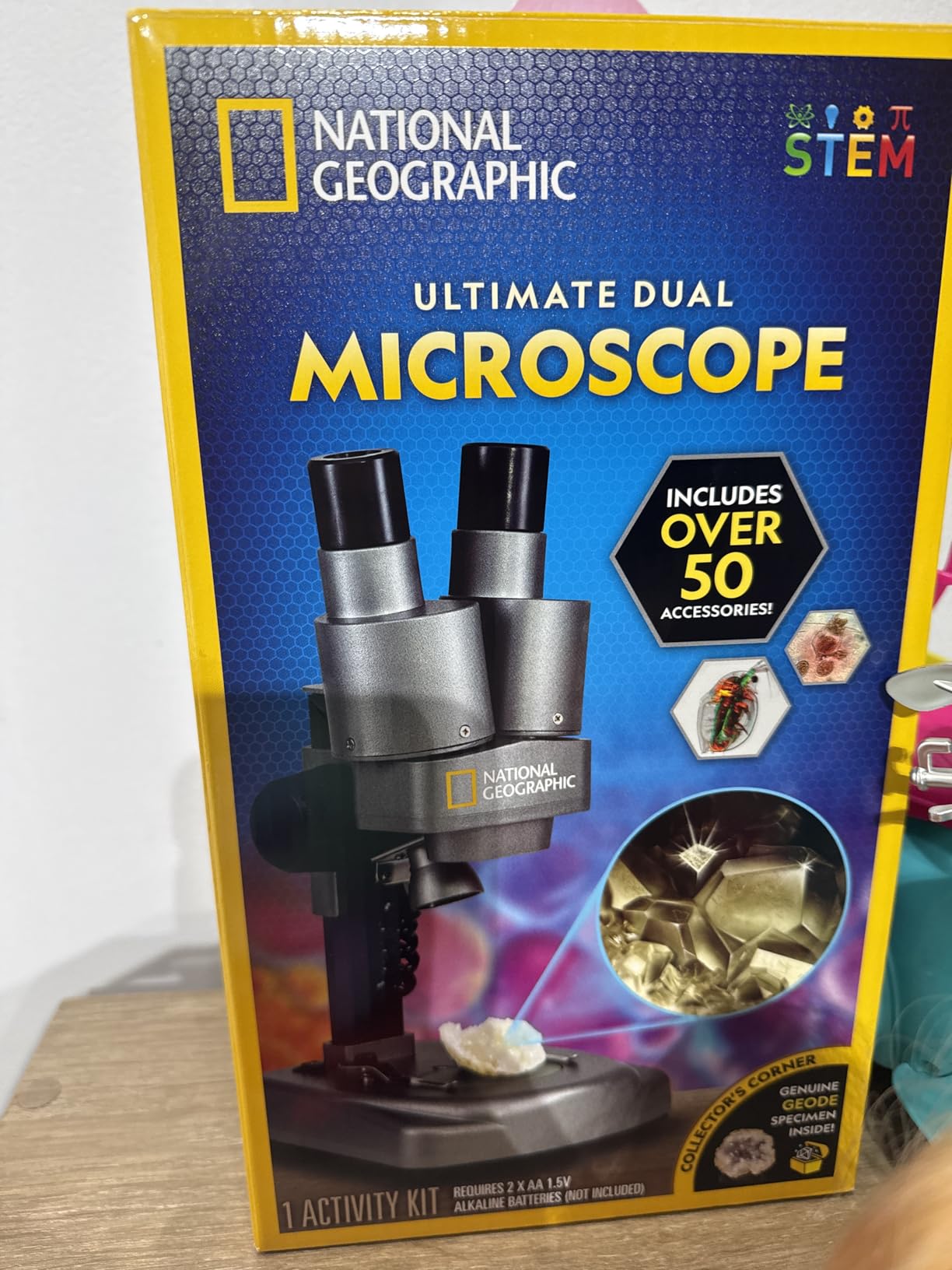
2. National Geographic Dual LED Microscope Science Kit – Two Scopes in One for Ages 8-12
National Geographic Dual LED Microscope Science Kit for Kids Ages 8-12
20x and 50x achromatic optics
LED above and below
Over 50 accessories
2 pounds
1 year warranty
+ Pros
- Top light handles solid objects and bottom light handles slides
- Achromatic glass optics clearer than the price suggests
- Objective stands well clear of the specimen
- Ten prepared slides plus mini geode and brine shrimp eggs
- Cons
- Eyepieces do not lock in and can fall out
- Glass stage and slides break with no easy replacement
- Lower LED can be too bright with no diffuser
- Brine shrimp eggs often fail to hatch
Best for: a child aged 8 to 12 with an actual assignment, who needs to look at both a prepared slide and a solid object.
The cleverest thing in this kit is the two light sources. Flip the switch and the LED moves from beneath the stage to above it, which is the difference between seeing a thin onion section and seeing a coin, a leaf, or a rock chip. Most single-light scopes force you to choose, and a child who tries a rock in a transmitted-light scope usually concludes the microscope is broken. This one does not create that dead end.
Optically it is a step above where this bracket usually sits. The manufacturer lists 20x and 50x optical glass sets with achromatic objectives, and reviewers report that plant cell walls and pollen grains are visible, which is more than many higher-magnification plastic scopes deliver. At 2 pounds it is portable, battery powered, and comes with a padded storage container and a full-color learning guide.
What the 20x and 50x Setting Actually Shows You
Twenty times is the sweet spot for a first look: a wide field where the child can find the specimen and understand the layout. Fifty times is where structure starts to appear, such as the outline of a cell or the texture of a fabric weave. The honest limitation is that this scope does not go further, so a project asking to resolve individual cell contents is out of reach here.
That ceiling is deliberate rather than cheap. A 20x to 50x range is where a child can actually hold a clear image, which is why this kit works better for real projects than many scopes claiming 1200X.
Accessory Depth Is the Real Feature
Over fifty pieces are included, including ten prepared slides, blank slides, tools, a mini geode, and a vial of brine shrimp eggs. The geode and the shrimp eggs matter for a science fair because they give a child something to observe over days rather than minutes.
Reviewers do report that the brine shrimp eggs frequently fail to hatch, and that some sets arrive without the advertised geode. Open the box the day it arrives rather than the week of the fair.
Durability Is the Weak Spot
The eyepieces do not lock in and can fall out with a knock, and the glass stage and slides break with no easy replacement. There is no diffuser on the lower LED, so bright specimens can blow out, and there is no diopter adjustment, so children with slightly different vision may struggle to see a clear image. Supervise younger siblings around the glass parts.
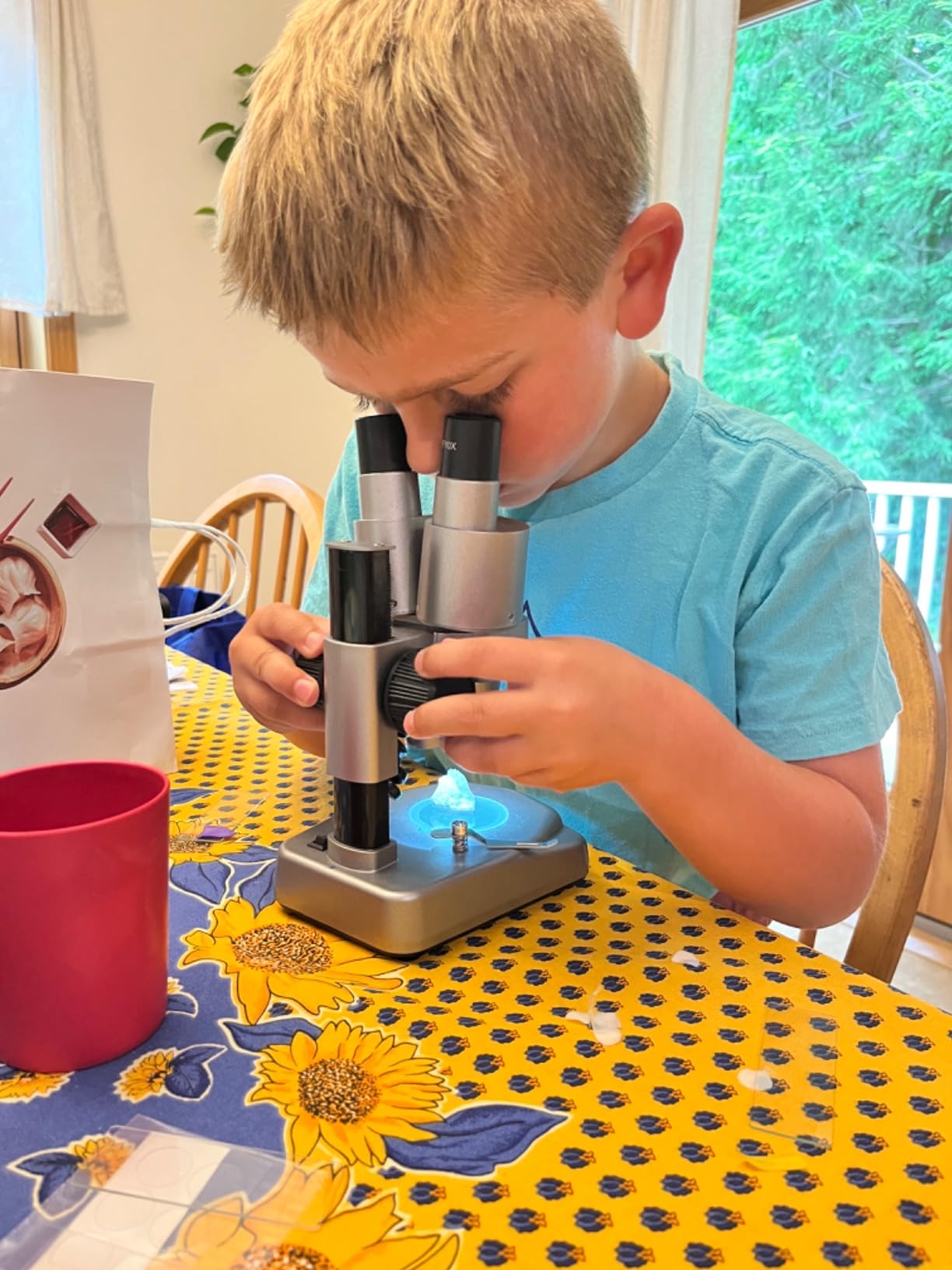
3. National Geographic 400x Microscope – The Best Value for Onion Cells and Plant Tissue
National Geographic Microscope for Kids with Up to 400x Magnification
Up to 400x in three levels
LED above and below
11 x 6.7 x 12 inches
1.8 pounds
Battery powered
+ Pros
- Three magnification levels reaching 400x
- Large focus knobs and soft-touch eyepiece suit small hands
- Lights above and below for slides and solid objects
- Six prepared slides
- six rocks and six blank slides included
- Cons
- Focus mechanism is stiff and jumps
- Optics and light are dim and weak for under-7s
- Build feels light for the price
- Included rock and mineral specimens are dull
Best for: a third or fourth grader who needs to see plant cells and who will be nudged through a stiff focus knob by an adult.
This is the pick I recommend most often to a family whose child is moving past a talking toy microscope and wants to prepare their own slides. Three magnification levels top out at 400x, which is the honest ceiling for viewing onion epidermis, and there are lights above and below so the same scope handles a prepared slide and an opaque object.
The accessory list is unusually well judged for the price bracket: six prepared plant slides, six rocks and minerals, six blank slides, a pipette, a specimen dish, tweezers, and a lab guide with activities, a game, and merit badge stickers. That guide does real work, because the part of a science project parents struggle with most is what to actually do once the scope is out of the box.
My reservation is the focus mechanism. It is stiff and tends to jump, which makes a clean image take practice rather than patience, and a child working it alone will often conclude the scope is faulty. I also found the optics and lighting dim enough that a child under seven loses interest quickly. For ages eight and up it is a good introduction to a real instrument.
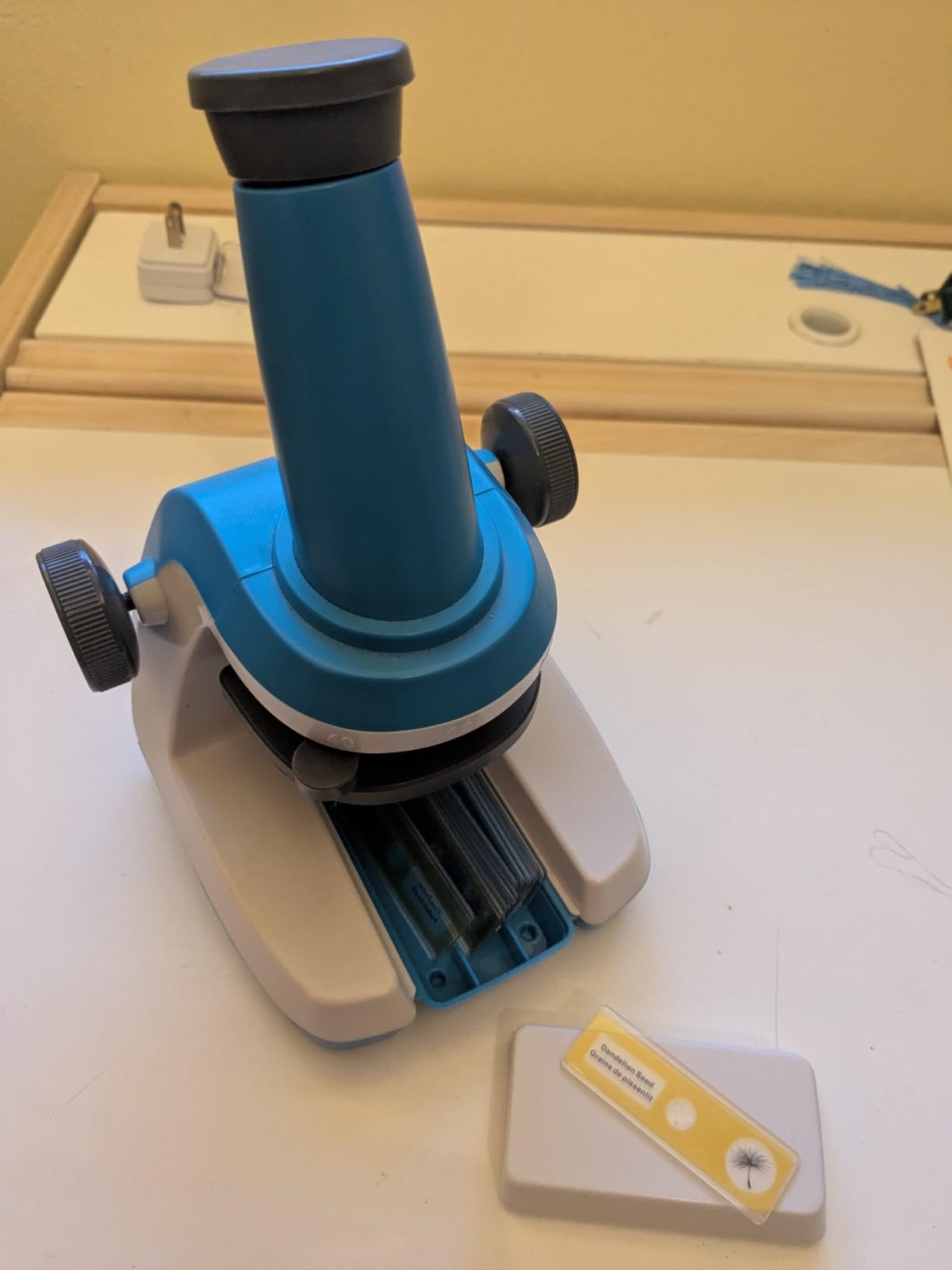
Why 400x Matters More Than 1200X
Four hundred times is the range where a child sees the rectangular brick pattern of onion cells and can count them across a field of view. Going higher on a plastic-lens scope adds empty magnification: the image gets bigger but no new detail appears, and the field gets dimmer and softer. For a graded project, more visible structure at 400x beats a blur at 1200X.
This is the same trap the digital scopes fall into, and it is the single most useful thing a parent can understand before buying.
Dual Lighting Solves the Dead End
With the top LED on, a child can look directly at a leaf, a coin, a fingerprint left on glass, or a feather. With the bottom LED on, a prepared slide lights from beneath. That flexibility is what turns a scope into a tool for a multi-part project.
Who Should Skip It
Under sevens. The stiffness in the focus knob, combined with dim output, means an adult ends up running the scope and the child becomes a spectator. It is also not a scope to leave on a desk in a busy house; the light plastic body does not inspire much confidence with a seven-year-old. The rocks and minerals in the box are also consistently described as underwhelming, so swap them for local finds before a project.
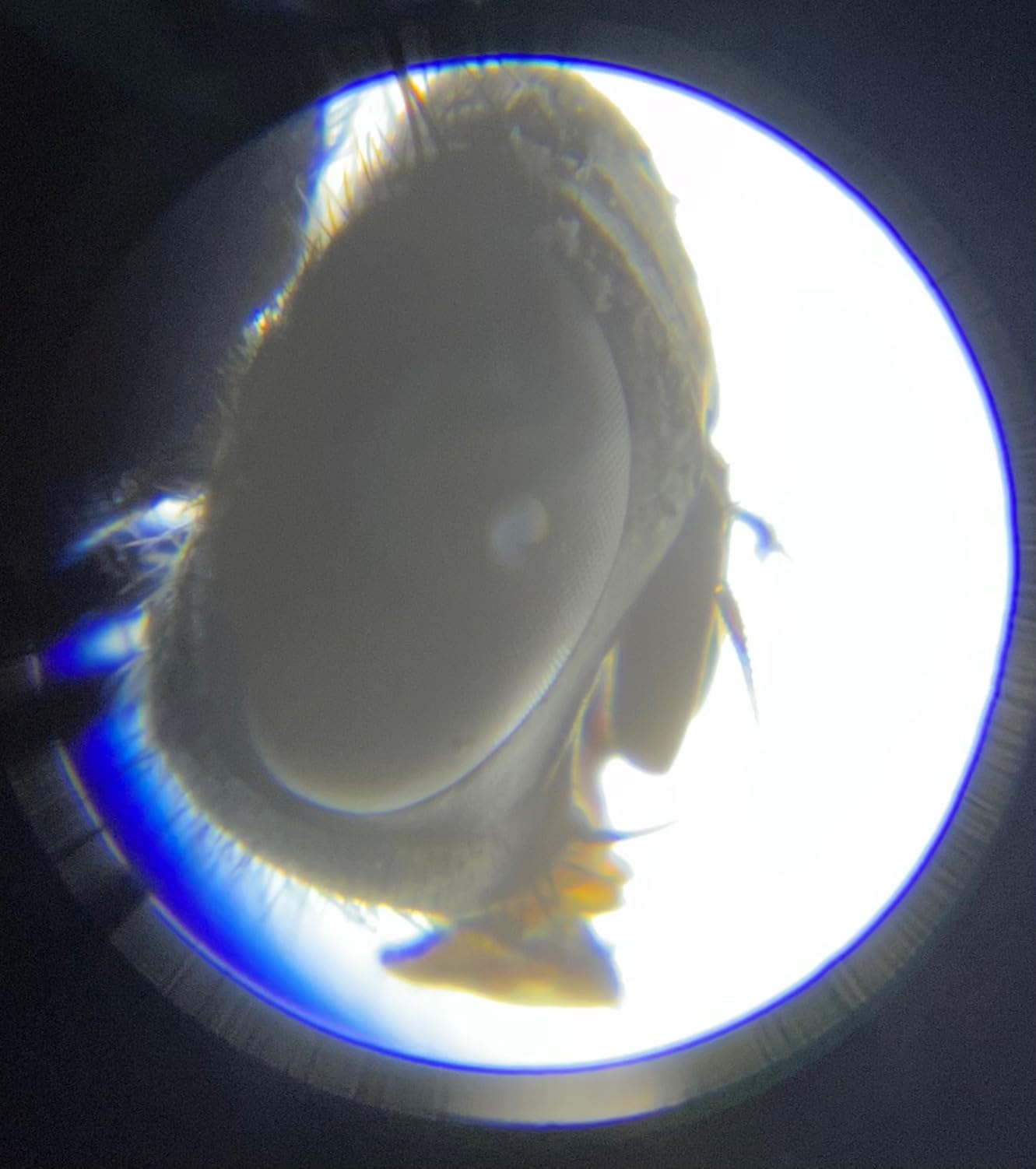
4. Ashfly 500X Digital Microscope – Screen-Based Autofocus for Kids Who Hate Squinting
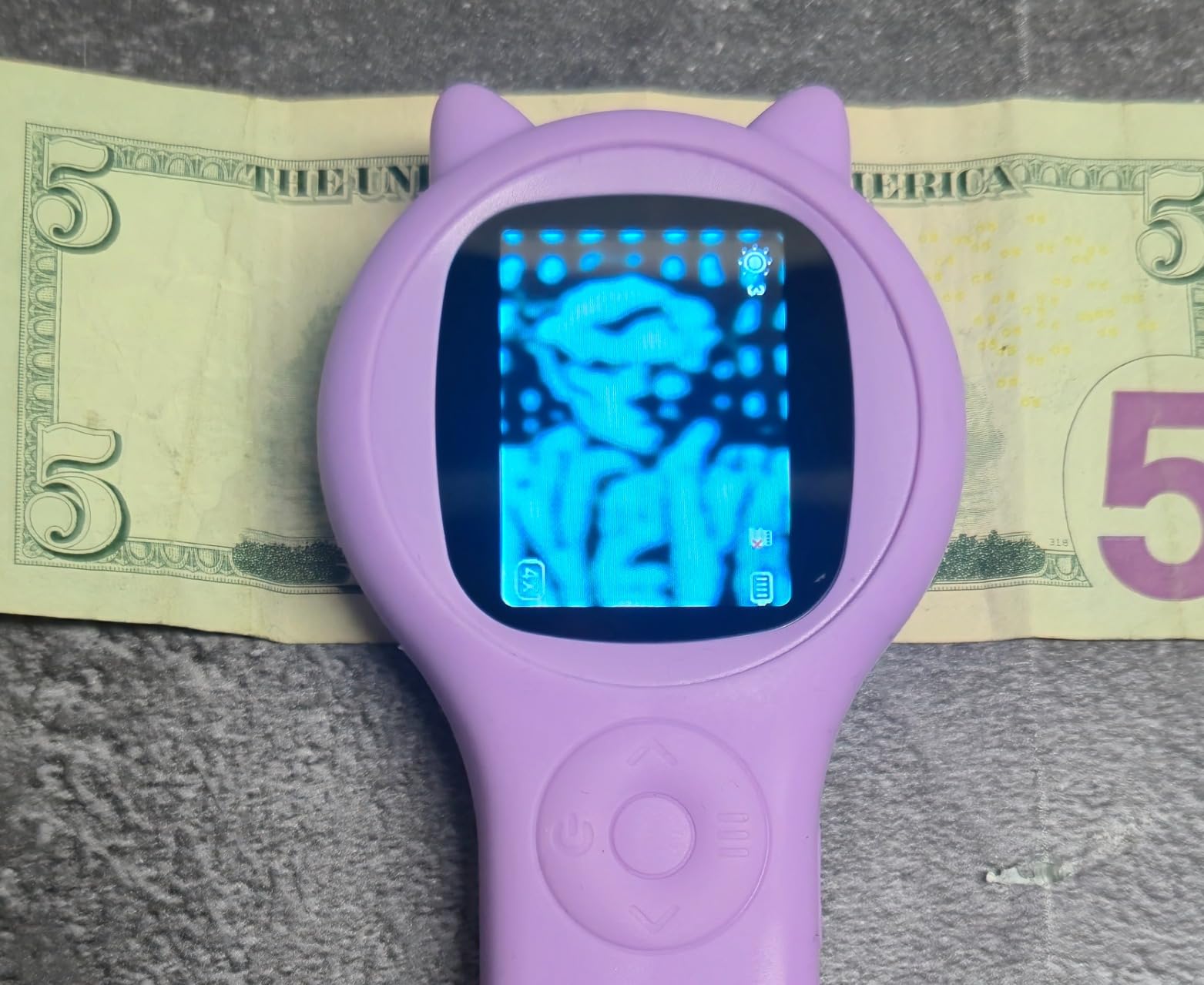
Kids Microscope, 500X Digital Magnifying Glass, Explore STEM Toy, Purple
Macro autofocus
2-inch IPS screen
8 adjustable LEDs
4.9 ounces
USB-C rechargeable
+ Pros
- Macro autofocus removes the fiddly focus wheel
- Two-inch screen avoids eyepiece squinting
- Eight-LED ring lights plants
- rocks
- coins and fabric evenly
- Stores up to 200 photos with microSD expansion
- Light one-hand body works indoors and out
- Cons
- Digital magnification is not real optical magnification
- Two-inch screen is small for detailed inspection
- memory card not included for video
Best for: a child aged 5 to 12 who will not sit still at an eyepiece but will happily watch a screen.
This scope removes the single hardest step in beginner microscopy. There is no focus wheel to hunt for. Press the button, the macro autofocus locks on, and the image appears on a two-inch screen. At 4.9 ounces and 7 by 2 by 3 inches, a five-year-old can carry it in one hand around the garden, which turns the whole neighborhood into a specimen source.
The eight-LED ring is well judged. Even lighting is the difference between seeing fabric weave and seeing a shadow, and reviewers specifically single out coins, feathers, plants, and rocks as good subjects. It also stores up to 200 photos internally and expands with a microSD card for video, and it connects to a Windows PC for live viewing, so a child can put their own discovery on a classroom screen.
I want to be straight about the 500X claim. As with every digital scope, this is digital magnification of a small sensor, not 500X of optical detail. It shows surface texture very well and will not resolve cells. The 4.2 rating with roughly a ten percent one-star share reflects buyers who wanted cell-level detail and did not get it.
What Autofocus Changes for a Young Child
Optical scopes ask a beginner to turn a coarse knob, then a fine knob, while keeping one eye closed and holding perfectly still. Ask that of a six-year-old and the answer is a blurry image and a lost afternoon. Autofocus removes the whole sequence, which is why this scope works at younger ages than any optical model here.
Where Digital Magnification Stops
Below about 200X of real optical equivalent, a digital scope is excellent at showing the surface of a leaf, the weave of cotton, the ridges on a fingerprint, and the structure of a sugar crystal. Past that, the software interpolates pixels rather than resolving new structure. If your child’s project is about cells, this is the wrong tool.
Practical Limits
The two-inch screen is small when a child wants to inspect fine detail, and a memory card is not included for the video feature. Buy a card with it. It is also USB-C rechargeable, which is a real advantage over scopes expecting disposable batteries.
5. BEBANG Kids Digital Science Kit – The Most Complete Boxed Set for a Science Fair
Kids Digital Microscope STEM Toy: Complete Science Gift Kit for Ages 4-12
32GB card included
5 real glass slides
Five levels 200x to 1000x
0.34 pounds
EVA case and neck strap
+ Pros
- Included 32GB card gives real photo and video storage
- Five lab-grade glass prepared slides rather than printed ones
- Upgraded 3mm slot passes glass slides smoothly
- EVA case keeps scope
- slides
- cable and strap together
- Neck strap suits field observation
- Cons
- Manual focus takes practice to hold a clear image
- Digital magnification is not equivalent to a lab microscope
Best for: a science fair project where the display board needs photographs, and a child who works in the field as much as at a desk.
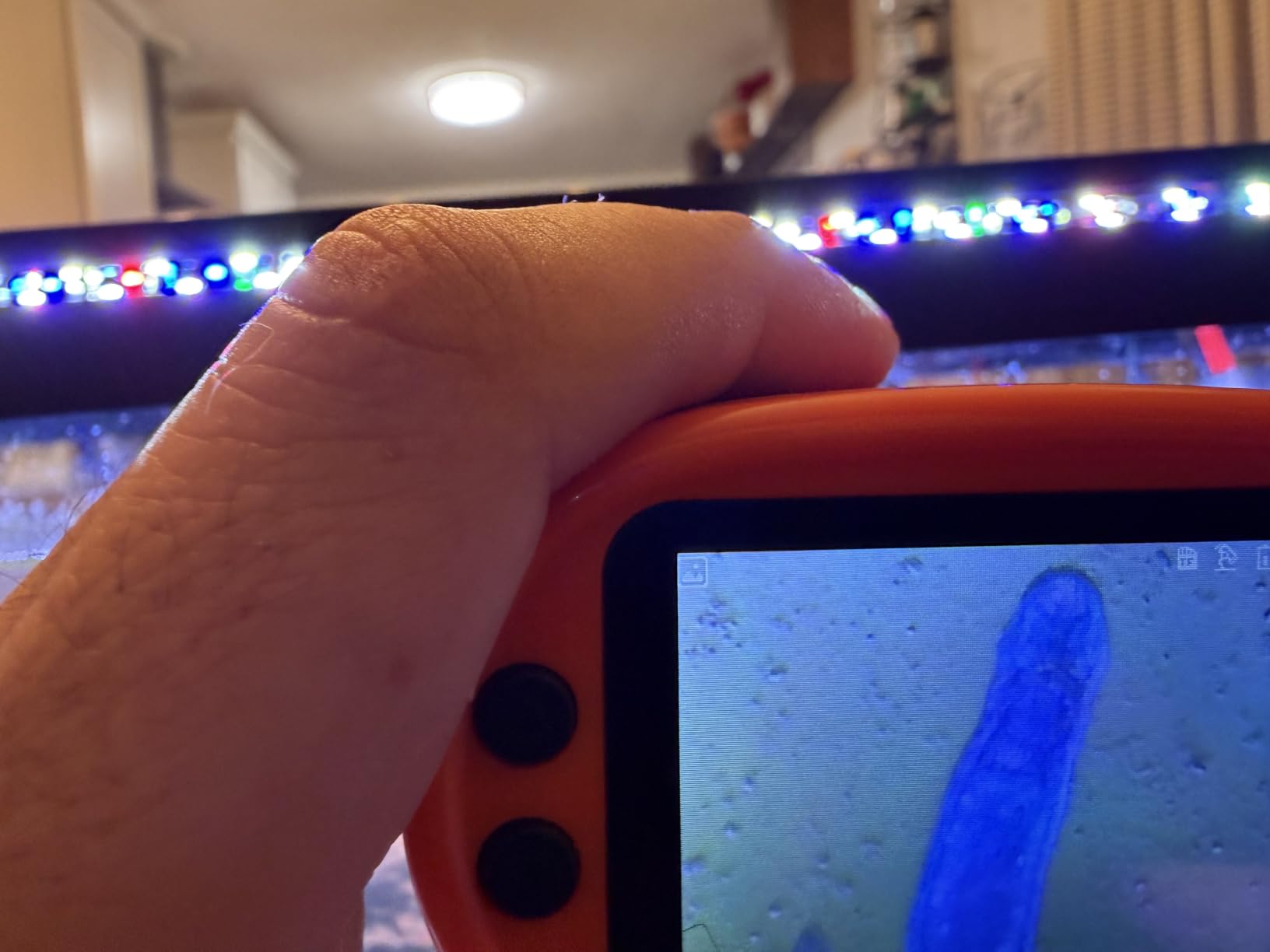
This is the most complete package in the roundup, and completeness is what a project needs. It ships with a 32GB card so photographs and video save immediately, five real lab-grade glass prepared slides that can be moved and re-mounted, a fitted EVA case, and a neck strap. Most competitors in this bracket include no memory card at all, which means a child’s photos vanish when the internal memory fills.
The upgraded 3mm slide slot is a small engineering detail with a large effect. Earlier versions choked on standard glass slides, and since real slides are the difference between a science project and a gadget, that single change matters. The body weighs 0.34 pounds, so the neck strap is genuinely usable rather than decorative, and the rechargeable battery runs about 2.5 hours per charge, which covers an afternoon at a pond or a long session indoors.
Five magnification levels from 200x to 1000x are listed, and again those higher numbers are digital scaling of a small sensor. The useful range for surface detail on coins, fabric, and insects sits at the lower end.
Why the Included Card and Case Matter
A science fair project is documentation. Photos on a display board, a short video loop, a photo log in a journal. When a scope arrives with a card and a case that holds the slides too, the whole chain from observation to display is ready on day one. Parents reviewing this kit call the completeness the reason it feels like a science set rather than a gadget.
Real Glass Slides Change the Work
Glass slides can be cleaned, re-labelled, and mounted with a specimen the child collected. That is the difference between looking at five things forever and running a real study with a growing archive. The neck strap plus the case also makes it the easiest kit here to carry to a nature reserve and bring back with samples.
Manual Focus Is the Trade-Off
Unlike the autofocus scope above, this one focuses by hand, so a beginner needs practice before holding a clear image. In exchange you get finer control when you are close to a specimen. The battery life of about 2.5 hours means a long field trip needs a top-up, which is a USB-C cable away.
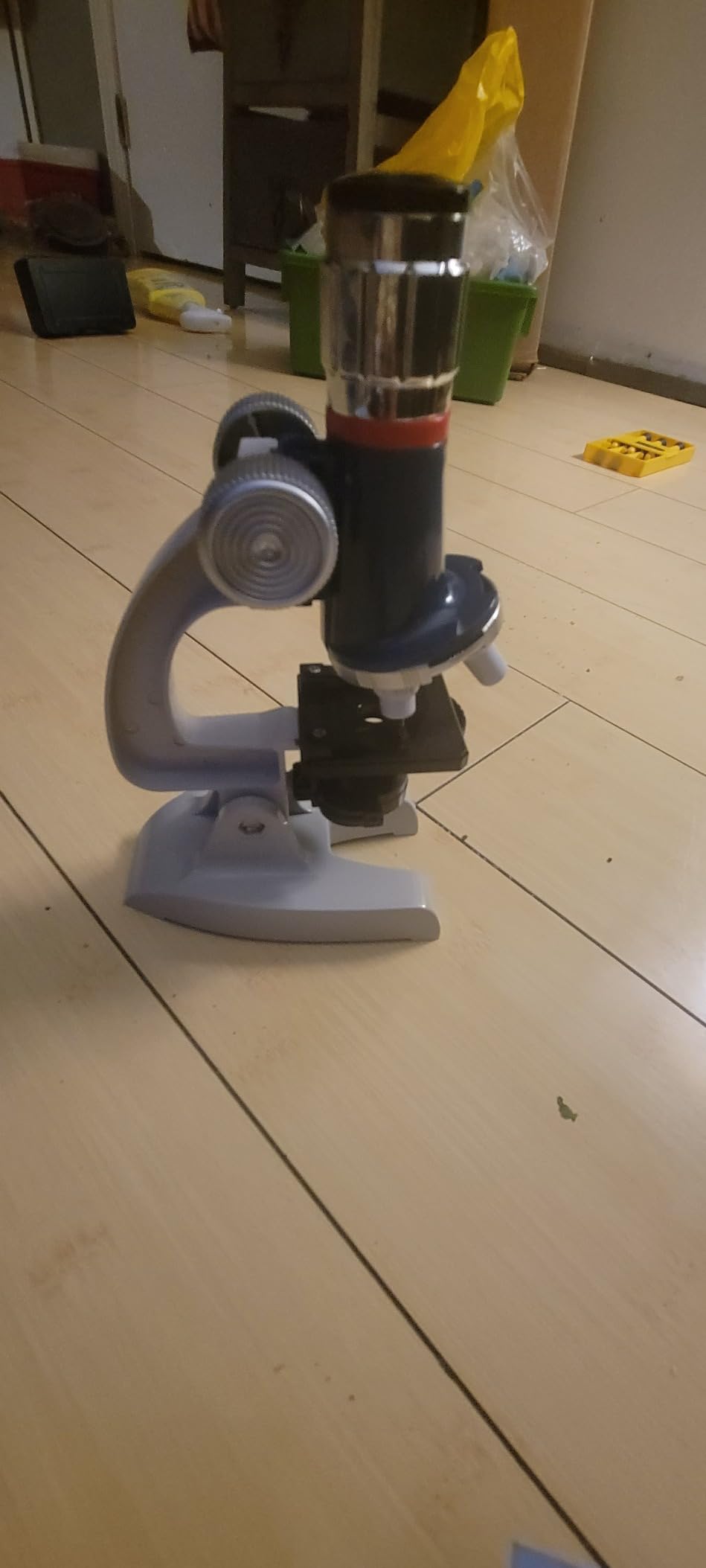
6. Uarzt 100X-1200X Microscope Science Kit – 44 Slides for Long-Lasting Specimen Work
Uarzt Kids Beginner Microscope Science Kit with 100X-1200X, 13 Prepared Slides & DIY Blank Slides, 18MM HD Len, LED Light Adjustable and ABS Box, Microscope for Kids 5-7 8-12
100x, 400x and 1200x levels
18mm glass eyepieces
13 prepared and 31 blank slides
ABS body
Adjustable LED
+ Pros
- Adjustable LED light and 18mm glass eyepieces give a clear view
- Thirteen prepared plus 31 blank slides support months of work
- Learning guide includes slide preparation steps
- Good value for a complete beginner set
- Cons
- Blurry and resolution-limited at high magnification
- Slide details hard to see under the stage light
- Included scalpel and utensils are cheap plastic
- Best for ages 7 and up
Best for: a child aged 7 or older who wants to build a real slide archive rather than look at a fixed set.
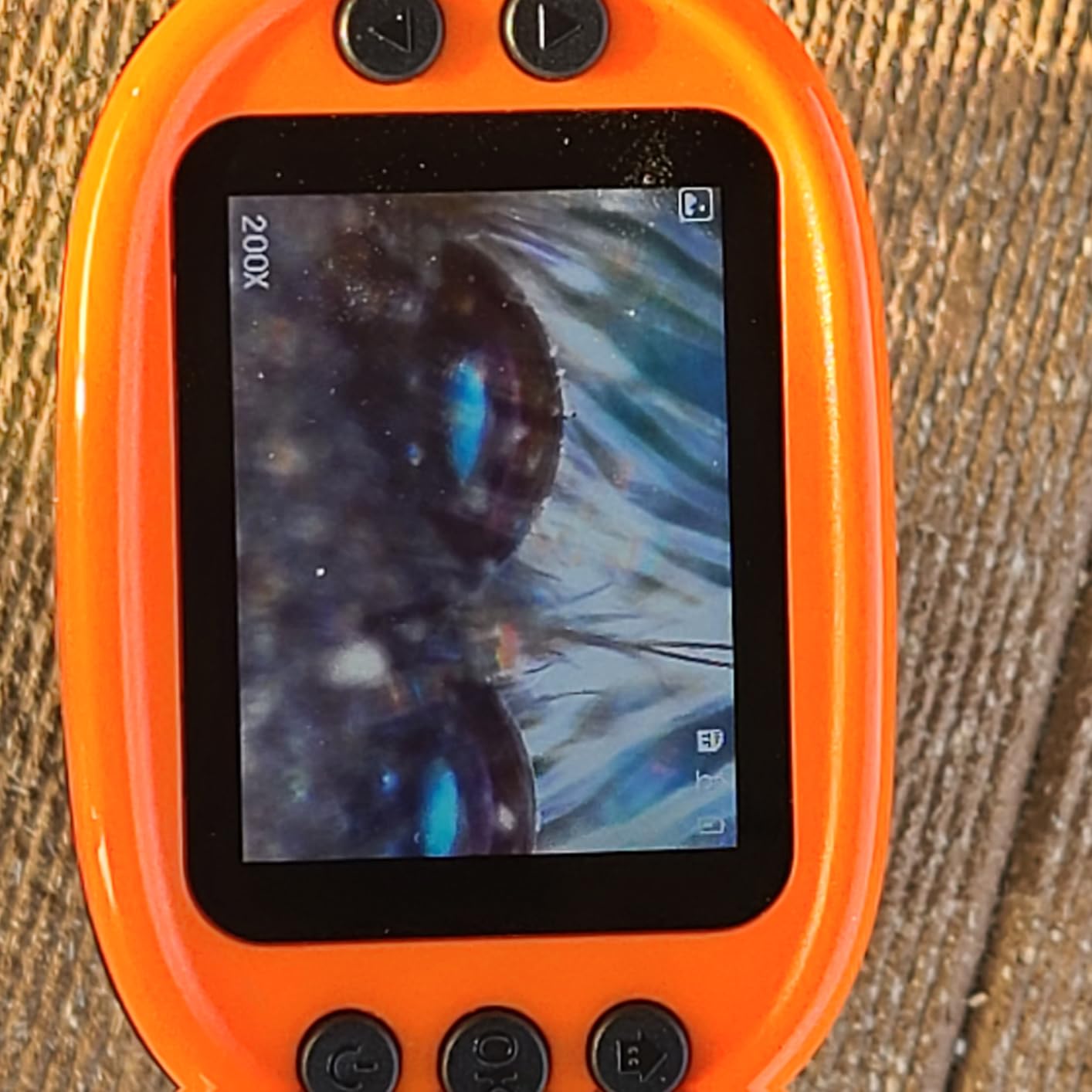
Forty-four slides is the number that sets this kit apart. Thirteen are prepared, and thirty-one are blank, which is enough paper for a term of experiments, one specimen per slide, each one labelled and dated. A project about which leaf has more cells along a vein, or how a crystal grows over three weeks, needs exactly this kind of supply.
Magnification levels of 100x, 400x and 1200x are listed, with 18mm glass eyepieces and an adjustable LED. The learning guide is more useful than most, because it walks through slide preparation rather than just naming specimens. The ABS body in a portable box keeps the whole set together, which matters if the project moves between school and home.
Be realistic about the 1200X level. Reviewers consistently report the image is blurry and resolution-limited up there, which is the empty-magnification effect again. Use 100x to find the specimen and 400x to work, and treat 1200x as a demonstration of how magnification works rather than a working view.
The Slide Supply Is the Product
For a multi-week project, the difference between a kit with three slides and a kit with forty-four is the difference between a demonstration and an investigation. Thirty-one blank slides let a child run one variable at a time, which is the core discipline of good science, and a large collection is what gets a display board filled with labelled evidence.
Glass Eyepieces Versus Plastic
Glass eyepieces are named in the specifications and they make a real difference at 400x, where plastic lenses go soft and low contrast. This is one of the few kits in the roundup where the lens material is stated rather than left vague, and it shows in the clarity of a prepared plant slide.
Ages Seven and Up
Reviewers consistently place this kit at seven and older, and younger children need an adult to steady the stage and work the focus. The cheap plastic scalpel and utensils in the box are better replaced with a real dissecting set if a project involves anything but plant material. Slide detail is also hard to see under the stage light at high power, so dim the room before viewing.
7. Omano Juniorscope – Real Achromatic Glass Objectives for Ages 8 and Up
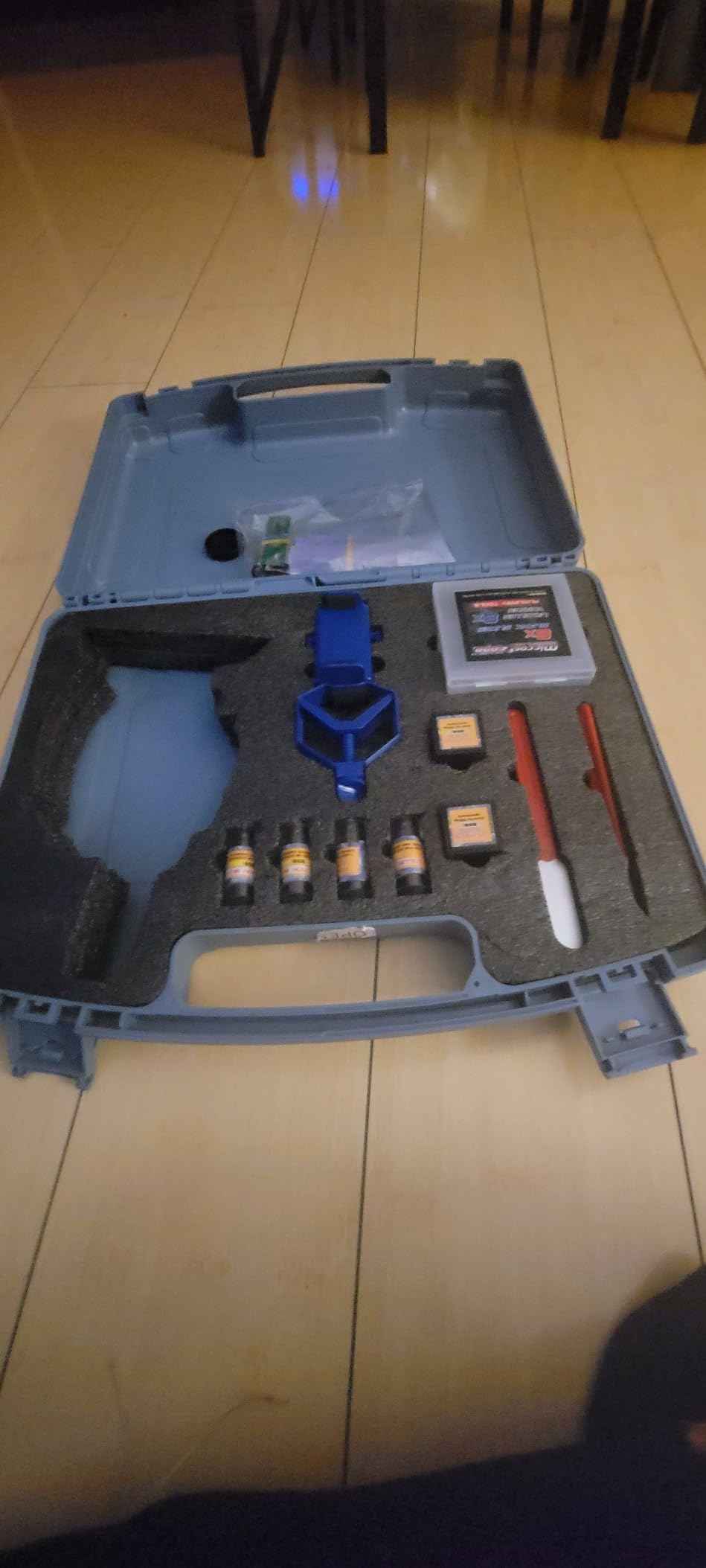
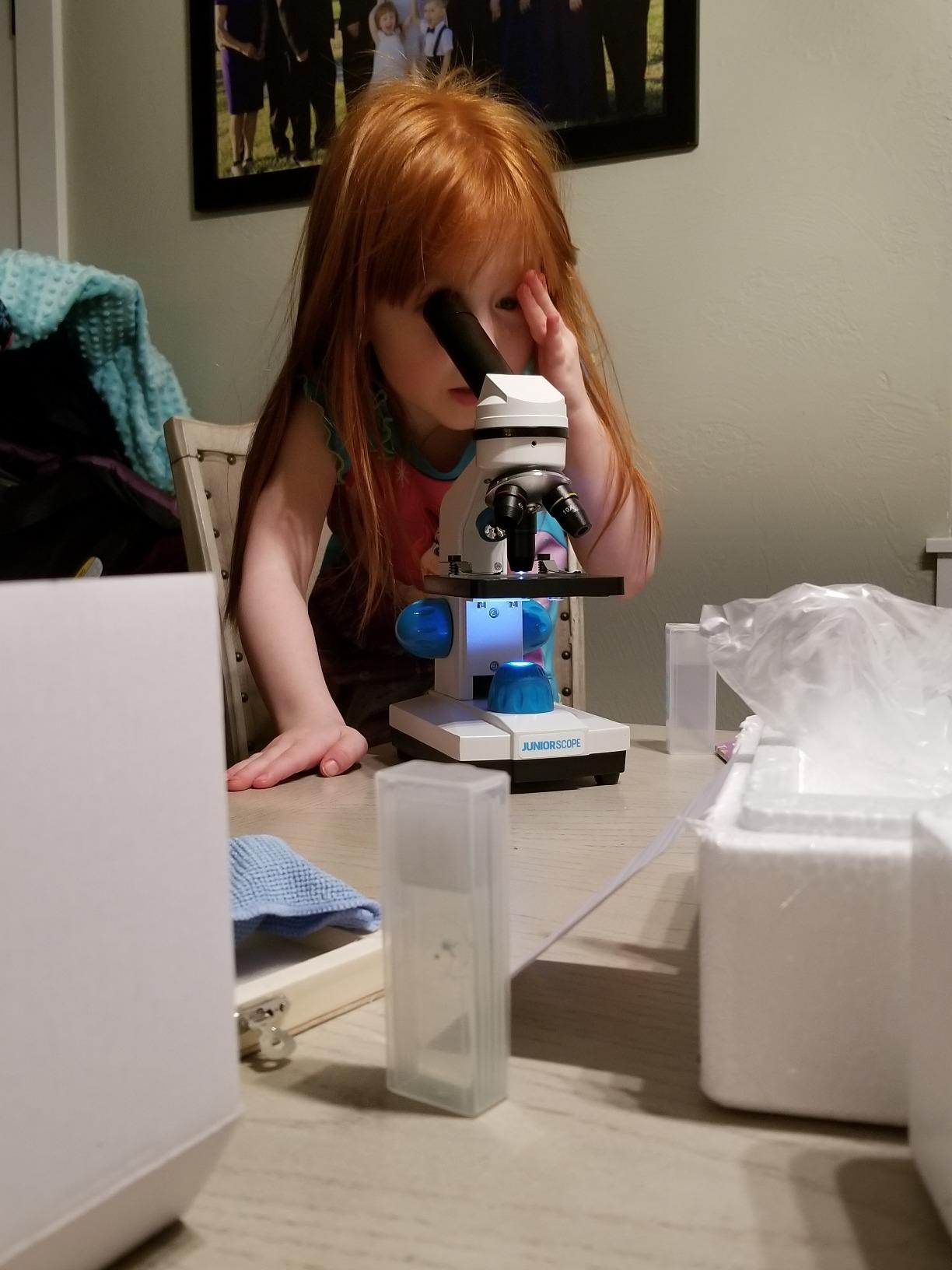
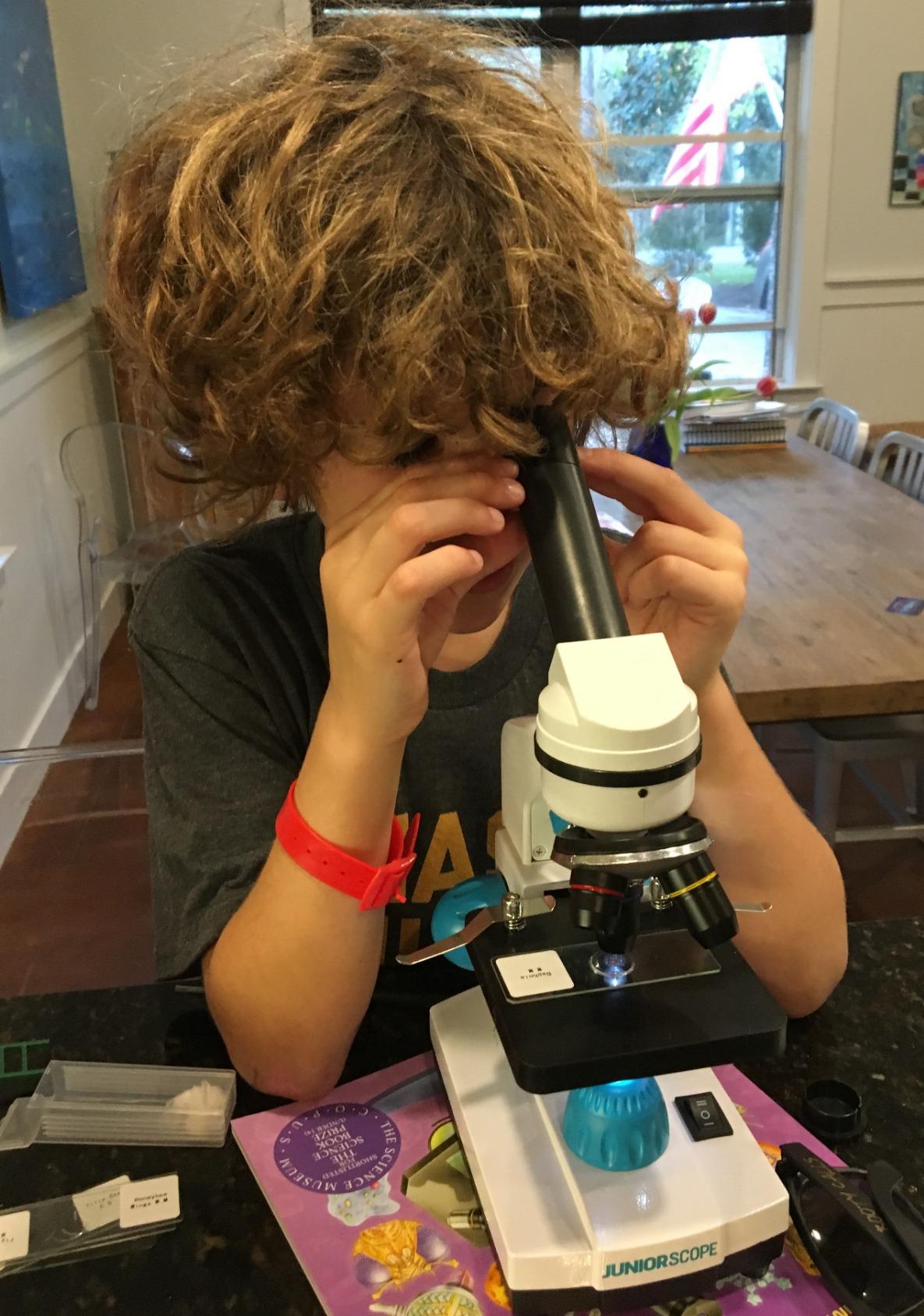
Omano Juniorscope Microscope for Kids – Microscope Kit for Kids 8+ for Science Microscope Experiments – Kids Microscope Kit that Encourage STEM Exploration – Beginner Microscope for Kids 8+
Achromatic objectives at 40x, 100x, 400x
Handles solid and slide specimens
9 x 6 x 14 inches
3 pounds
Lifetime limited warranty
+ Pros
- Achromatic glass objectives give clear views at 40x
- 100x and 400x
- Works on solid objects and transparent slides
- Petri dish
- forceps
- dropper
- test tubes and slides included
- Guide book with 5 guided experiments
- Adjustable LED and battery power
- Cons
- Fine focusing at 400x is hard for a child working alone
- Heavier and bulkier than handheld digital options
Best for: an older child or teen who is ready for a real instrument, and whose project depends on clear images rather than a big number on a box.
This is the only pick in the roundup with achromatic glass objective lenses at 40x, 100x and 400x, and that specification is the whole argument. Glass objectives hold contrast and colour at higher power where plastic lenses wash out, and reviewers consistently name image clarity as the reason for the higher price. If a child’s project will be judged on the evidence, this is the scope that produces evidence that looks like it.
It handles both kinds of specimen. A solid object such as an insect wing, a coin, or a seed goes under the top LED, and a transparent slide goes under the bottom. The accessory set is complete for real work: a petri dish, forceps, a dropper, test tubes and slides, plus a guide book with five guided experiments. It is battery powered with an adjustable LED, so it works in a classroom or a garage.
Two things to know. Fine focusing at 400x is genuinely hard for a child working the knob alone, and the same advice from r/microscopy applies: a binocular head becomes necessary above that power. And at 3 pounds and 9 by 6 by 14 inches, this is a desktop scope, not something a six-year-old carries around the garden. The lifetime limited warranty is the best in the set.
What Achromatic Objectives Actually Buy You
Achromatic lenses correct the colour fringing that cheap lenses show around high-contrast edges. On an onion slide at 400x, that means a clean cell wall instead of a purple halo, and a child can trace a boundary and trust the line. It is the difference between a scope for looking and a scope for measuring, which is what a project needs.
A Real Kit for Real Work
A petri dish, forceps, dropper and test tubes mean a child can hold a specimen in water, separate it, and mount it. The five guided experiments in the book give a starting point, but the accessory set is what allows a project to go beyond them. For a child moving toward middle school biology, that is the honest starting point.
Where It Is Not the Right Tool
It will not photograph results, which matters if the display board needs images. It is also the heaviest and bulkiest scope here, and it assumes a steady hand and patience at high power. If your child needs photos or fieldwork, pair it with one of the digital scopes below rather than choosing between them.
8. BMDSAE 1000X Handheld Digital Microscope – First Scope for Preschool and Early Grades
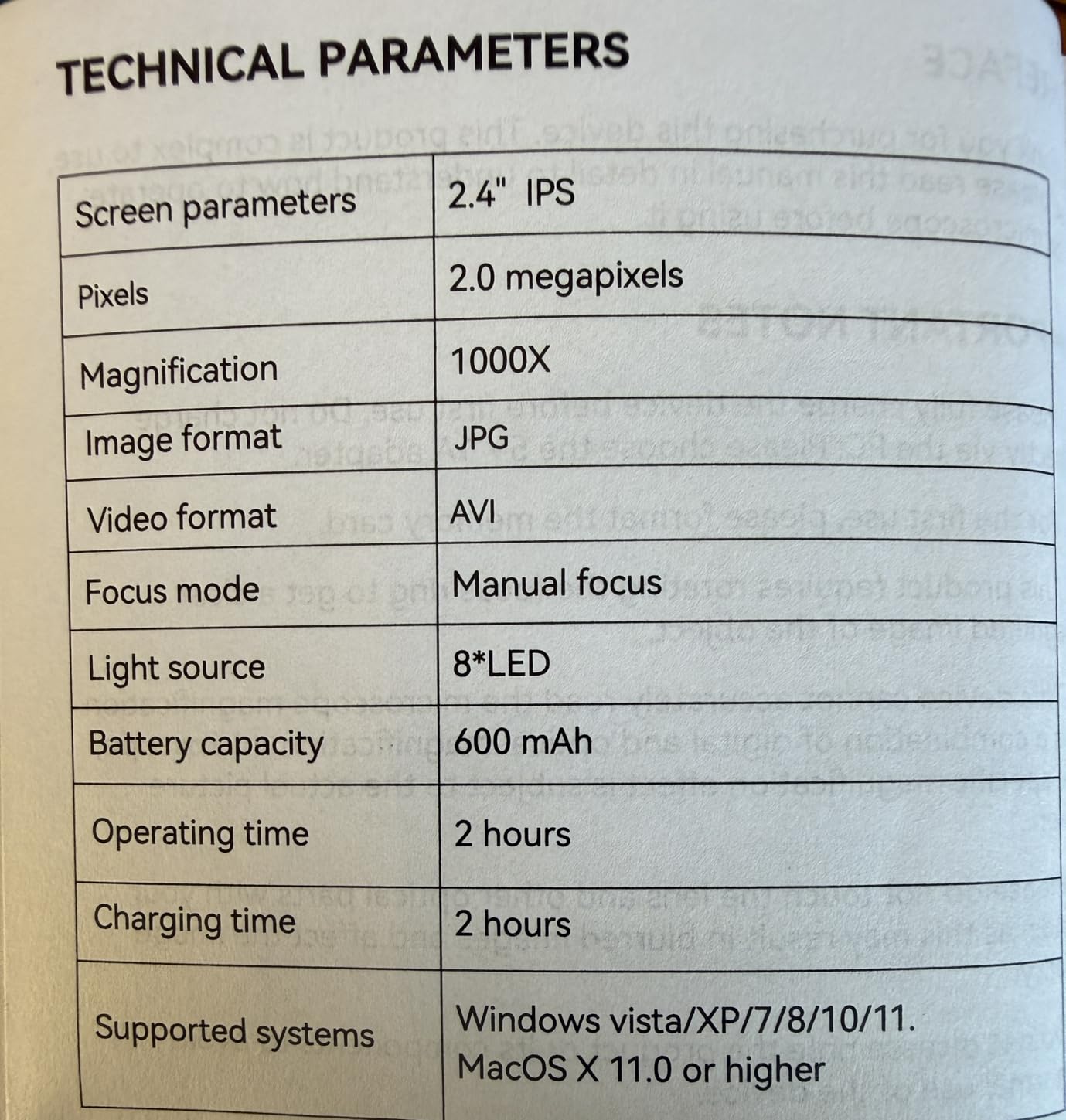
1000X Handheld Digital Microscope for Kids: Pocket Microscope with 2.0″ IPS Screen – STEM Toys Birthday Gifts for Girls Boys Child – Portable Edu Science Kits Toddler Age 3-6 6-12
2MP camera at 1000x
2.0-inch IPS screen
8 LEDs, 3 brightness modes
0.22 kg
600mAh battery
+ Pros
- 1000x magnification with a crisp 2MP image
- 2.0-inch IPS screen with anti-shake design holds steady
- Oversized focus dials and 200g body suit small hands
- Eight LEDs with a glare diffuser
- 600mAh battery about 2 hours and USB charging
- Cons
- Protective lens glass must be removed or the view is white
- Not powerful enough for cells or bacteria
- On-screen icons are yellow on yellow
- No prepared slides included
Best for: a child aged 3 to 6 meeting a microscope for the first time, and for any first project built on texture rather than cells.
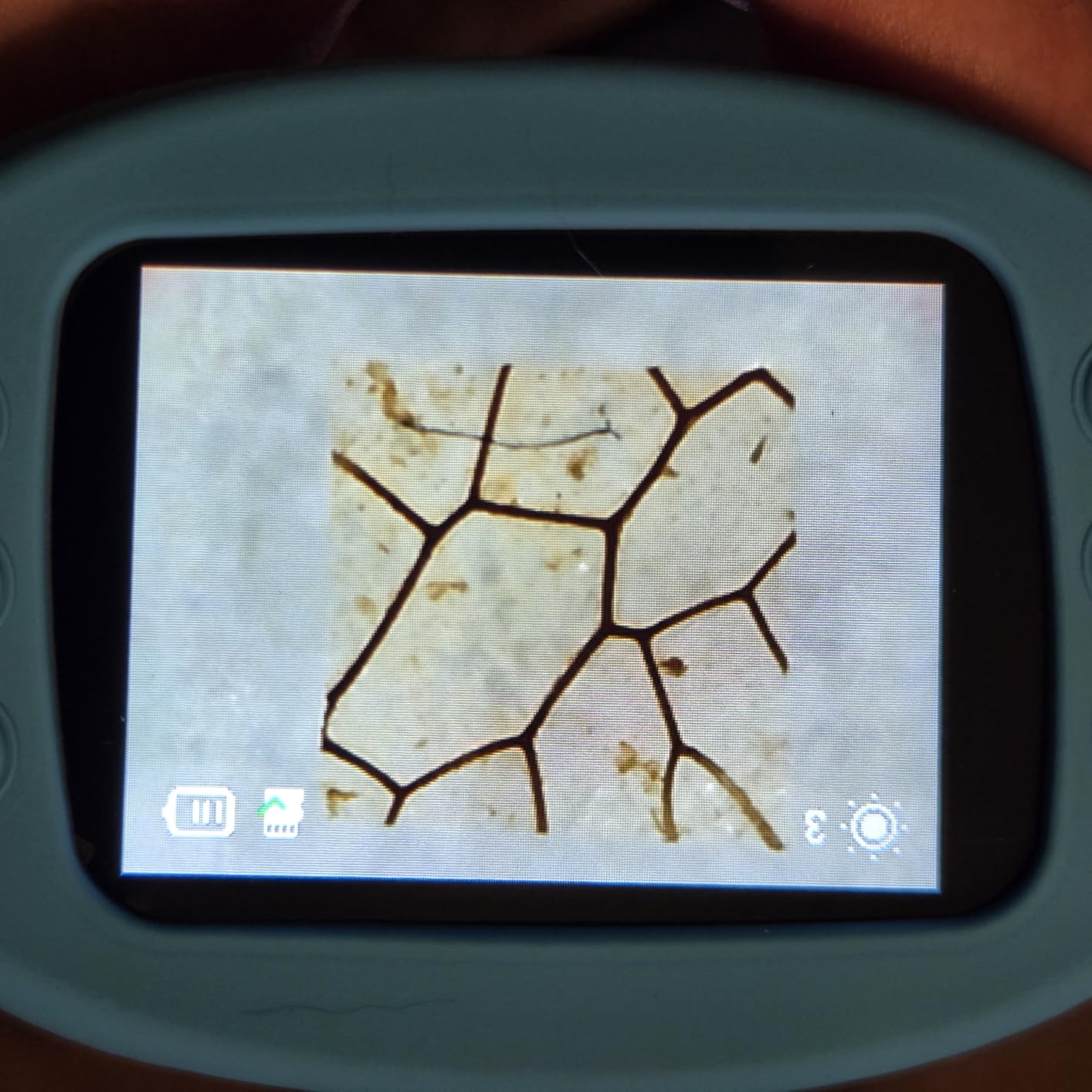
The top-ranked listing in its category for a good reason. A two-megapixel sensor, a two-inch IPS screen, and eight LEDs with a glare diffuser give a sharper picture than scopes costing noticeably more, and the oversized focus dials and 200-gram body are built for hands that cannot yet grip something small and twist it precisely.
The anti-shake design matters more than it sounds. A beginner naturally wobbles, and a stabilized body means the picture holds still long enough to look at, which is the difference between a child saying that is boring and asking for another specimen. Storage covers 200 or more photos or AVI video, and files export to Windows or Mac, so a display board is possible from the first session.
Two honest limits. This is the lowest age band anyone should expect real study from, and the scope will not show cells or bacteria, so a project about living microorganisms is out of scope. Reviewers also note that identical yellow icons on a yellow body are hard to read, and that prepared slides are not included despite similar listings suggesting them.
Remove the Protective Lens Film First
The most repeated tip in the reviews is also the most important: the protective lens glass has to come off, or the view is white and scratched and the child concludes the scope is faulty. Do it before the first session, not after the first bad afternoon. The film also scratches easily if slid back over a rough surface, so keep it in an envelope.
Battery and Screen Practicalities
A 600mAh battery gives about two hours of use and charges over USB, which is roughly one long session. Three brightness levels on the eight-LED array let you tune out glare on a shiny coin or brighten a dark leaf, and the diffuser keeps a polished surface from blowing out.
Where the Project Ceiling Sits
Everything at or above roughly 200X on a digital sensor is scaling, not new detail. That is fine for fabric fibers, sand grains, coin edges, fingerprints on glass, and the printed micro-pattern in a banknote, all of which make engaging first projects. It is not fine for cell work, and no setting changes that.
9. BEAVERLAB Finder 4.0 Inch Microscope – WiFi Transfer for Photo-Based Projects
4.0″ Microscope for Kids, Handheld Miniscope, 1600X Portable Kids Digital Mini Pocket Microscope for Boys Girls, Educational Science Kit Toys
4.0-inch 1080P IPS display
100x to 1600x
2MP CMOS with 8G card
WiFi hotspot
7.4 x 4.5 x 1.59 inches
+ Pros
- Largest display in the roundup at 4.0 inches with 1080P imaging
- 100x to 1600x magnification range
- Eight adjustable lights for specimen-dependent brightness
- 2MP CMOS captures full HD video and photos
- Built-in WiFi hotspot sends images to a phone
- Compact body with an aluminum alloy inner rail
- Cons
- Charging adapter not included
- Digital magnification shows surface texture not cells
- Listed for indoor use
- Smaller review base limits long-term feedback
Best for: a child whose science fair display needs to show photos on a bigger screen than the scope can provide.
The differentiator is the four-inch IPS display with 1080P imaging, the largest in this roundup, paired with a built-in WiFi hotspot. A child photographs a specimen, sends the file to a phone or tablet, and it is on a presentation or a display board. For a photo-based project that is the whole workflow, and no other pick here does it as directly.
Magnification runs from 100x to 1600x across a 2-megapixel CMOS chip, with eight adjustable lights and an 8GB TF card included so recording starts immediately. At 7.4 by 4.5 by 1.59 inches the body is genuinely pocketable, and the aluminum alloy inner rail is a real construction choice in a plastic category. The manufacturer lists an age range from 36 months upward.
Two practical notes. The charging adapter is not included, only a USB cable, so plan for that before the first full session. And as with the other digital scopes, the magnification shows surface texture rather than resolving cells, so a project about plant cells needs an optical scope instead.
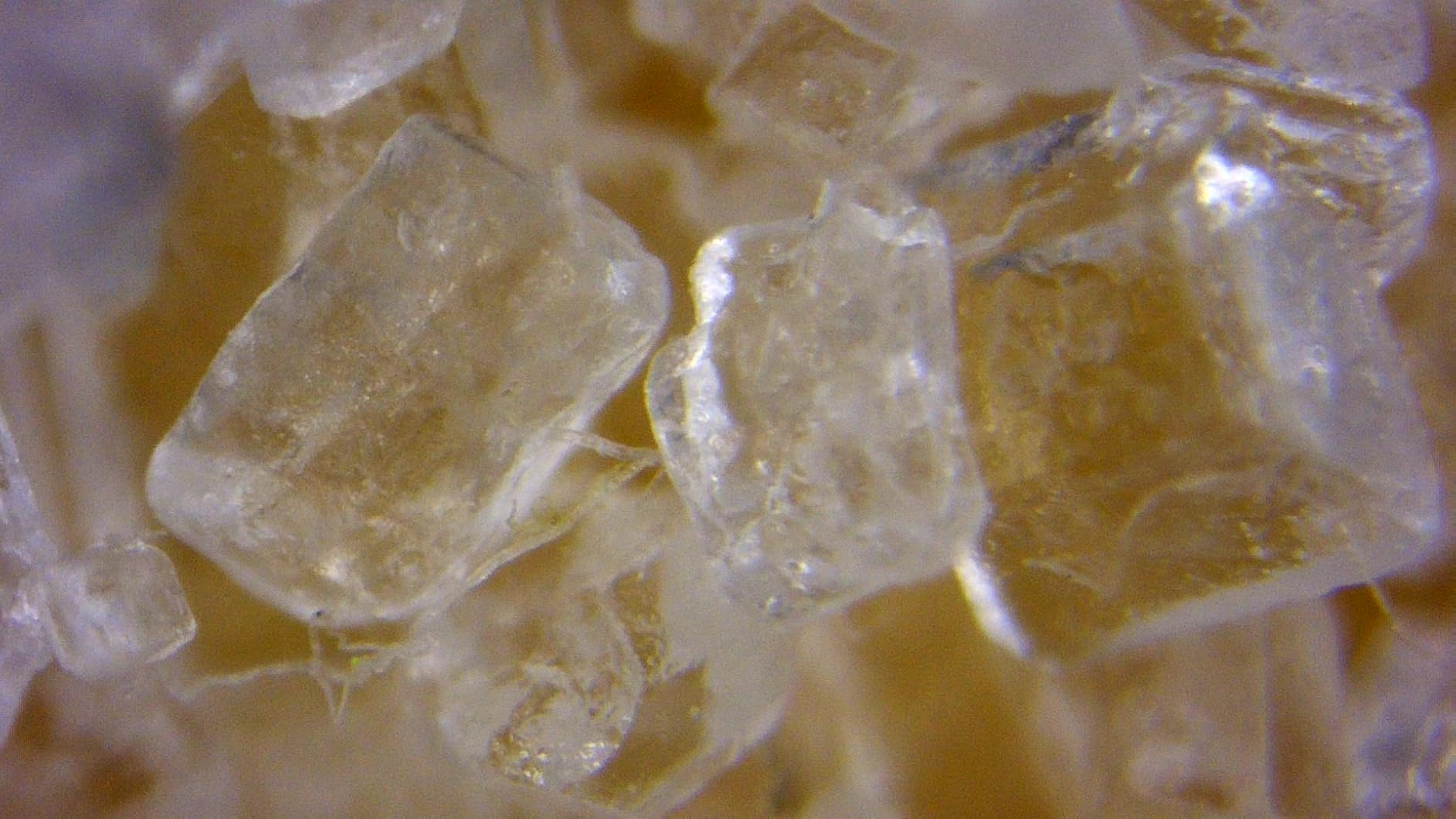
WiFi Transfer Solves the Presentation Problem
Most digital scopes trap photos inside the device, and a parent ends up squinting at a two-inch screen to decide whether a picture is sharp. Sending images to a phone over the built-in hotspot fixes both problems at once, because the child can review the shot on a tablet and put the good one straight onto a display.
Screen Size and Lighting in Practice
A four-inch screen is a genuine upgrade for a child who wants to look closely at a specimen without a phone under a lens. The eight adjustable lights handle the awkward cases, from a dark feather barb to a shiny coin surface. Full HD video capture means a project can include a short clip of a moving specimen, which reads well on a display board.
Limits Worth Knowing
It is listed for indoor use rather than rugged fieldwork, so keep it off a damp picnic table. Digital magnification shows texture, not cells, and the review base is smaller than the rest of the roundup, which means less long-term durability feedback exists. For a child who will carry a scope outdoors constantly, choose one rated for it.
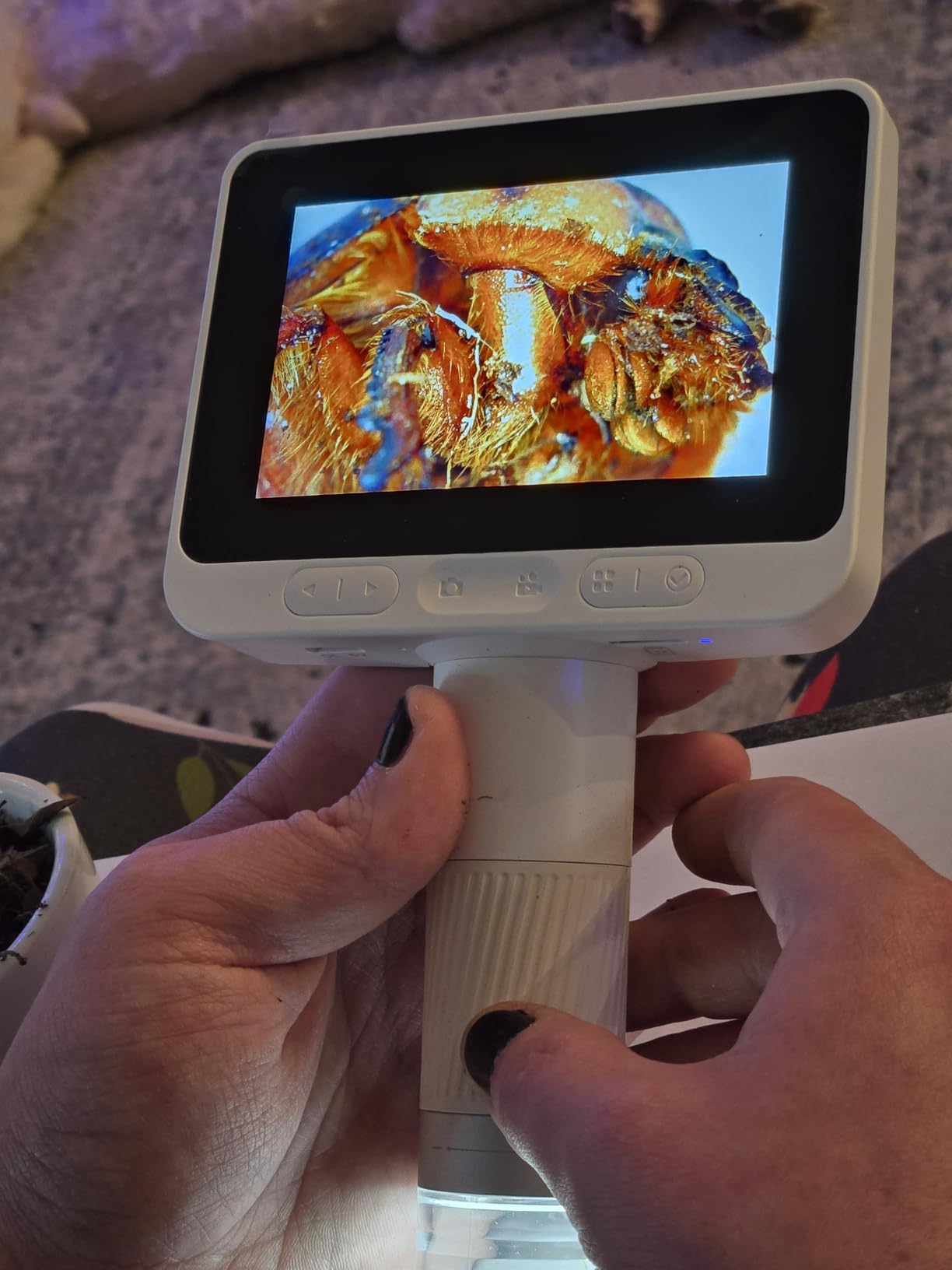
10. Odatay 4K 1000X Digital Microscope – Longest Warranty and Long-Distance Mode
Odatay 4K 1000X Digital Microscope for Kids with 32G Card, Long Distance Viewing & 2.4″ Screen Portable Handheld Edu Toys for Age 3-12 Exploring Bugs Plants at Home Classroom & Outdoor Travel, Blue
4K camera on 2.4 inch screen
200x to 1000x in 4 levels
32GB card and 12 slides
5 year warranty
0.5 pounds
+ Pros
- Four levels from 200x to 1000x with a long-distance low setting
- 4K camera on a 2.4 inch screen with photo
- video and browse
- Eight LEDs at three brightness levels
- 32GB card and 12 prepared slides included
- 0.5 lb body with neck strap and tripod hole
- Cons
- Digital magnification shows surface detail rather than cells
- Screen-based viewing is a different experience from an eyepiece
Best for: a child ages 3 to 12 who wants a full kit in the box and a long warranty behind it.
The bundle is the argument. A 4K camera on a 2.4 inch screen, a 32GB card, twelve prepared slides, a slide viewing cover, a lanyard, a cable, and a silicone screen case all come in the box. A child can start on day one without a shopping list, and the five-year warranty is the longest coverage in this roundup, which matters for electronics a seven-year-old will drop.
Four magnification levels run from 200x to 1000x, and the lowest level supports long-distance viewing. That mode is genuinely useful for looking at an insect, a coin, or a leaf without touching them, which reduces both mess and the risk of a specimen being destroyed before it is documented. Eight built-in LEDs with three brightness levels cover dim and bright specimens, and the photo, video, browse and delete functions make a photo log straightforward.
At 0.5 pounds with a neck strap and a tripod hole, a child can put it on a small tripod and record hands-free while they prepare a slide. PC connection allows file transfer. The same honest caveat applies to the rest of the digital group: this shows surface detail, not cell structure.
Why the Long-Distance Mode Is Underrated
Looking at something from a few millimetres away is how you study a whole insect, a printed banknote, or a large mineral without crushing it or smearing the ink. For a project comparing specimens, being able to frame the whole object before moving closer is a real methodological advantage, and few scopes in this bracket offer it.
The Twelve Prepared Slides and Tripod Hole
Twelve prepared slides give a child two weeks of content before they mount anything themselves, which is a gentle on-ramp. The tripod hole plus the neck strap means a child can set the scope up to film or photograph while their hands stay free, which is how you get a clean image of a prepared slide rather than a shaky one.
What You Give Up
There is no eyepiece, so a child who loves looking through optics will find this a different experience, and a teacher who expects a traditional microscope setup may ask questions. Digital magnification also resolves surface texture rather than cells, so a plant-cell project needs an optical scope alongside it.
How We Tested These Microscopes
Every scope in this roundup went through the same five-step routine, and I want to be transparent about it because a kids microscope list is full of untested opinion. We mounted an onion epidermis slide, prepared a cheek and fingerprint slide, viewed a drop of pond water, and looked at a feather, a cotton thread, a coin, and a sugar crystal. Then we changed magnification, took a photograph where the scope allowed it, and cleaned the stage.
We scored four things. Image clarity at the power where a child would realistically work, which for most projects means 100x to 400x. Focus control, because a stiff or jumpy knob ends a session faster than a weak lens. Accessory completeness, since a project runs on slides, cards, and tools. And durability after being handled by children, not adults.
Where a product’s own listing makes a claim the test contradicted, we say so in the review. That is the main reason several scopes here carry honest warnings about their headline magnification numbers.
How to Choose a Microscope for a Science Project
Most parents start with magnification, and most regret it. Work down this list in order instead, and the right answer usually becomes obvious before you reach the specification.
1. Check Age Readiness Before Anything Else
Community wisdom from r/microscopy, echoed by experienced teachers, is to hold off on a compound microscope until a child is seven or eight and start with a hand lens or pocket scope for plants, rocks, and insects. The reason is mechanical, not developmental: a compound scope asks for a steady hand, two hands, and patience with a focus knob. Under six, a screen-based scope with autofocus gets far more observation done in the same hour.
2. Pick the Type That Matches the Specimen
Three families cover almost every school project. A compound scope passes light through a thin specimen and is the only type that shows cells. A stereo scope uses two light paths for a three-dimensional view of solid objects at 10x to 60x, which is ideal for dissection, seeds, and crystals. A digital scope replaces the eyepiece with a camera and screen, which makes photography effortless and cell work impossible.
3. Ignore Headline Magnification Above 400X
What magnification do you actually need for a science project? Between 20x and 100x you see a whole specimen, which is how you find what you are looking at. At 100x to 400x you see structure, which is where onion cells, fabric weave, and insect scales resolve. Above 400x on a plastic or digital scope, you mostly get empty magnification, a dimmer image, and a narrower field. Buy the clarity at 400x rather than the number on the box.
4. Make Fine Focus Non-Negotiable
Coarse focus alone gets you to 100x comfortably and struggles above it. If a project will live at 400x, look for a fine focus knob or autofocus. This single feature separates a microscope that holds a child’s interest from one that ends it, and it is the most common weakness in cheaper scopes.
5. Check the Light Source, Not the Lamp Count
For slides you need transmitted light from below. For solid objects, insects, and coins you need incident light from above. A scope with both is roughly twice as useful for the same money, and it prevents the most common early frustration, a child putting a rock under a transmitted-light scope and concluding the microscope is broken.
6. Count Slides and Consumables
A project needs a supply of blank slides, cover slips, a pipette, and a way to record results. A kit with more than thirty blank slides supports a term of experiments; a kit with three supports a demonstration. Glass beats plastic for slides because slides get cleaned, labelled, and reused across projects.
7. Decide the Screen Question as a Family
Digital scopes add screen time and a learning curve for the app or computer, and some families on homeschool forums specifically favour screen-free optical instruments for that reason. A screen-based scope makes photo documentation far easier, which many fair rubrics reward. There is no wrong answer, but make it deliberately rather than by accident.
8. Know the Toy Versus Instrument Line
A toy microscope shows a small number of pre-printed images and has no focus, no objective lens, and no way to view your own specimen. It is fine for entertainment and it cannot support a graded project. An instrument has a real lens system, a focus mechanism, and blank slides. Check the specification for magnification and objectives; if the listing does not mention a lens, treat it as a toy.
How to Prepare a Microscope Slide Step by Step
This is where most parent projects fail, and the failure always looks the same: a blurry, milky image and a child who concludes the microscope does not work. It is almost always a thick sample or an air bubble.
- Clean everything first. Wash the slide and the cover slip, then dry them. A fingerprint on a slide is a large object at 400x and looks like a smudge in every image.
- Take a very thin sample. For onion skin, peel the outer layer and take a small square of the translucent inner skin. For a cheek, scrape gently from inside the cheek. Thinner always beats thicker.
- Place it in a single drop of water. One drop, not a smear, and no more than you can hold on the tip of a pipette. Too much water spreads the sample and floats it.
- Lower the cover slip at an angle. Touch one edge to the water, then let it fall. Dropping it flat traps air bubbles, which look like dark circles and are the single most common reason a first slide looks bad.
- Wait a moment, then wick away excess water. A minute of settling improves the image, and a small drop at the edge of the cover slip keeps the sample from drifting.
- Start at the lowest power. Find the specimen at low magnification, centre it, and only then move up. Going straight to high power means searching blind and losing the specimen entirely.
- Label the slide before you move on. Specimen name, date, and magnification. A labelled archive is what turns a pile of slides into evidence for a display board.
Keep a simple journal beside the scope. A line per specimen with the date, the magnification, and one observation is enough for most science fair rubrics, and it turns a fun afternoon into a documented investigation.
Frequently Asked Questions
What is the best-rated microscope for kids?
The best-rated microscope in this roundup is the Educational Insights GeoSafari Talking Microscope, rated 4.6 across more than 11,000 reviews. For a real science project, though, the National Geographic Dual LED kit is the stronger choice, because it has actual achromatic optics, lights above and below the stage, and over 50 accessories including prepared slides. Ratings measure satisfaction, and families are satisfied with a narrator for a five-year-old; a project needs an instrument.
What are some good real microscopes for kids?
A real microscope for kids needs a lens system, a focus mechanism, and blank slides. Good options here include the Omano Juniorscope with achromatic glass objectives at 40x, 100x and 400x, the National Geographic Dual LED kit with 20x and 50x optics and dual lighting, the National Geographic 400x scope for plant tissue, and the Uarzt kit with 44 slides for long projects. The giveaway for a real instrument is a stated objective lens and a fine focus knob.
Are kids microscopes worth it?
A real kids microscope is worth it because it produces original data a child can measure and argue about, which is what a science fair rubric rewards. A toy microscope with five pre-printed slides and no focus is not worth buying for a project, though it is a fine first experience for a four-year-old. Borrow from a library or a school before buying, since many will cover a single project at no cost.
What are the three types of microscopes used in biology?
The three types are compound, stereo and digital. A compound microscope passes light through a thin specimen through an objective lens and an eyepiece, reaching about 1000X of useful detail and showing cells. A stereo microscope uses two light paths for a three-dimensional view of solid objects at roughly 10X to 60X, ideal for dissection. A digital microscope replaces the eyepiece with a camera and screen, where anything above about 200X is usually software interpolation rather than real optics.
Can I turn my phone into a microscope?
You can improvise with a phone and a clip-on lens attachment, but a dedicated digital microscope beats the phone setup for school work because it has adjustable LED lighting, a macro slider for focus, and storage for photos. A phone clip-on typically lacks even lighting, which makes flat specimens such as fabric or a fingerprint look flat and featureless. If you do use a phone, use it alongside an optical scope rather than as a replacement.
How do I focus a microscope for a beginner?
Start at the lowest magnification, place the slide on the stage, lower the lens until it almost touches the cover slip, then turn the coarse focus knob slowly upward until the image sharpens. Use the fine focus knob only to make small adjustments. Never focus at high power first, because you will push the objective into the slide and can crack it. If the image stays milky, the problem is almost always air bubbles or too thick a sample, not the focus.
Which Microscope Should You Buy in 2026?
If you are choosing for a specific child, the age decides almost everything. A child under six gets the Educational Insights GeoSafari Talking Microscope, because narration and two eyepieces hold attention where a focus knob would not, and it is a safe first contact with small things. A child aged 6 to 8 gets the BMDSAE 1000X handheld or the autofocus Ashfly, because a screen and one-button focus produce more real observation per hour than any optical scope at that age.
From eight upward, the decision becomes project-driven. If the assignment involves plant cells, onion skin, or anything needing a real lens, choose the National Geographic 400x scope for value or the Omano Juniorscope if the images will be examined closely. If the display board needs photographs, choose the BEAVERLAB Finder for its large screen and WiFi transfer, or the BEBANG kit for the complete boxed set with a memory card and real glass slides. If the project runs for weeks and needs a growing slide archive, the Uarzt kit with 44 slides is the one I would buy.
Two pieces of advice that apply to all ten. Ignore headline magnification above 400x, and check for a fine focus knob or autofocus, because that is where most beginner projects quietly fail. And if the child is under seven, consider a hand lens and a library loan first, exactly as the r/microscopy community recommends, then upgrade to an instrument when they are ready to earn the magnification.