
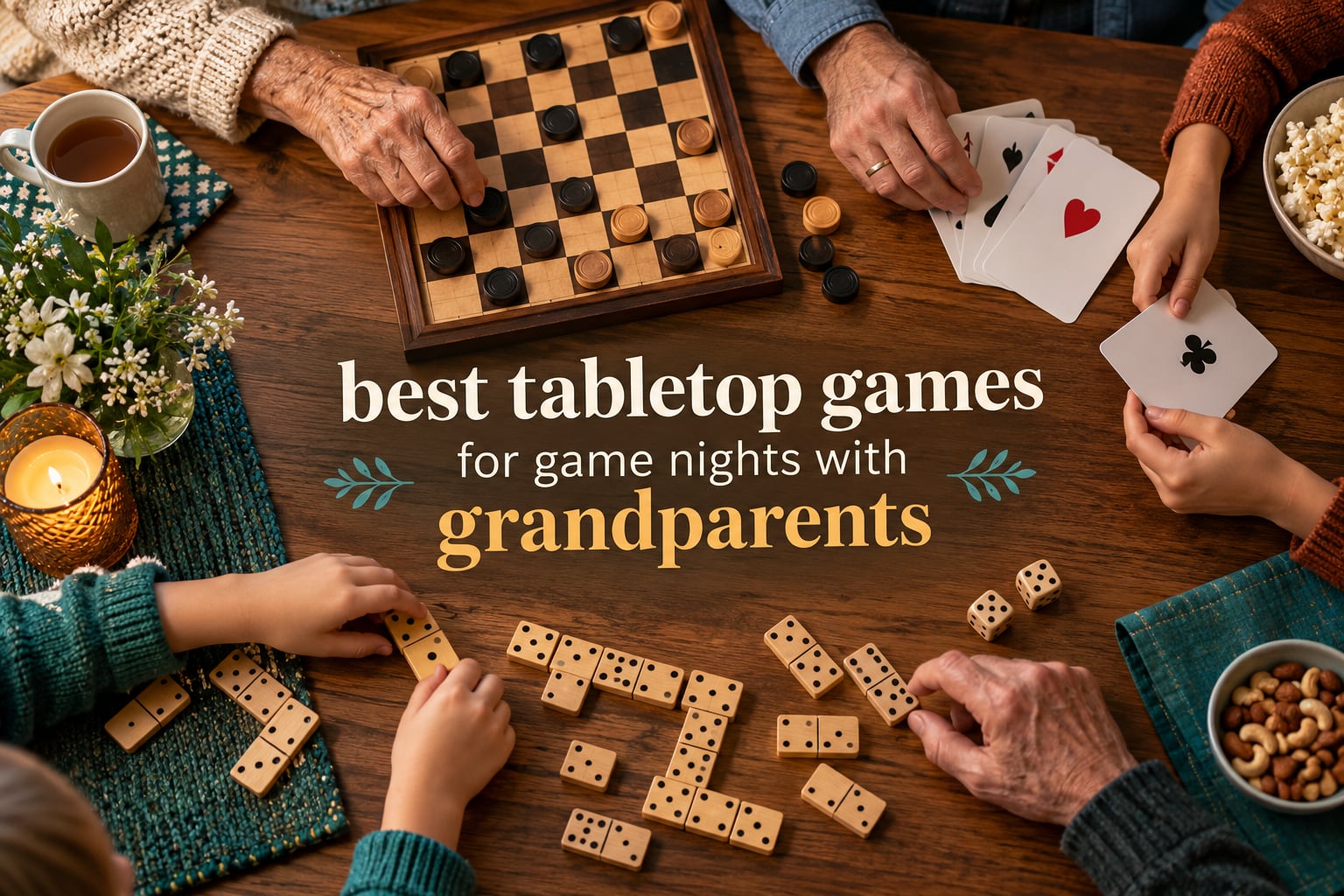
Most lists of family game night recommendations are written by people under forty, for a table of people under forty. The moment a grandparent joins that table, the design problem changes completely: rules have to land in one explanation, components have to be readable at arm’s length, and no mechanic can quietly remove a player from the game for being slow or unlucky. That is why picking the best tabletop games for game nights with grandparents is a different exercise from picking great family games, and why a ranked list that ignores those three constraints is useless at the exact table you are planning for.
We pulled twelve games together and scored each one against those constraints rather than against general family appeal. Every entry below carries the same spec block: player count, recommended age, play time, how long the rules take to teach, and the specific generational risk the game either avoids or creates. We also flagged who should skip each one, because a recommendation without a warning is just an advertisement.
The good news is that the games that survive a three-generation table tend to have one thing in common: they are generous. They let a beginner be competitive on turn one, they do not punish a slow player with a lost turn, and they keep everyone in the same game for the same amount of time. Updated for 2026, and tested against the two scenarios that actually come up most: a grandparent and grandchild playing alone, and a holiday table of ten.
Our Top 3 Picks for a Three-Generation Table
We narrowed twelve games down to three that carry a whole mixed-age evening on their own. SKYJO wins on the combination of the largest review base in our testing and a component design that requires no reading at all, which is the single most reliable way to keep a 78-year-old in the game. Five Crowns is the calmest option, with non-combitive pacing and no penalty cards. Sequence in a Tin covers the big table, absorbing up to twelve players without a rulebook seminar.


Sequence in a Tin
- Two to twelve players
- Teaches in under two minutes
- Tin stores the whole game
Comparing 12 Tabletop Games for Grandparents in 2026
Use this table to self-select in about fifteen seconds. Find your table size, check that the player count covers everyone who will actually sit down, and read the teaches-in column before anything else. A game that takes ten minutes to explain has already lost half the evening before the first turn.
| Product | Details | |
|---|---|---|
| SKYJO |
|
Check Latest Price |
| Sequence in a Tin |
|
Check Latest Price |
| Five Crowns |
|
Check Latest Price |
 Yahtzee Yahtzee |
|
Check Latest Price |
 Giant UNO Giant UNO |
|
Check Latest Price |
 Monopoly Monopoly |
|
Check Latest Price |
 Herd Mentality Herd Mentality |
|
Check Latest Price |
 Skip-Bo Skip-Bo |
|
Check Latest Price |
 Queensell Dominoes Queensell Dominoes |
|
Check Latest Price |
 Checkers Checkers |
|
Check Latest Price |
 What Do You Meme What Do You Meme |
|
Check Latest Price |
 I should have known that I should have known that |
|
Check Latest Price |
1. SKYJO – The Number Card Game That Needs No Reading at All
magilano SKYJO, Fun Card Game for Young and Least Young, Fun Game Parties in The Circle of Friends and Family.
2 to 8 players
Ages 8+
About 30 minutes
150 cards plus a notepad
+ Pros
- No reading required
- Scales from 2 to 8 players
- Teaches in one explanation
- Round structure keeps the pace moving
- Compact tin travels easily
- Cons
- Scorekeeping needs adding and subtracting negatives
- Cards start stiff before they flex
- Luck can frustrate strategy-focused players
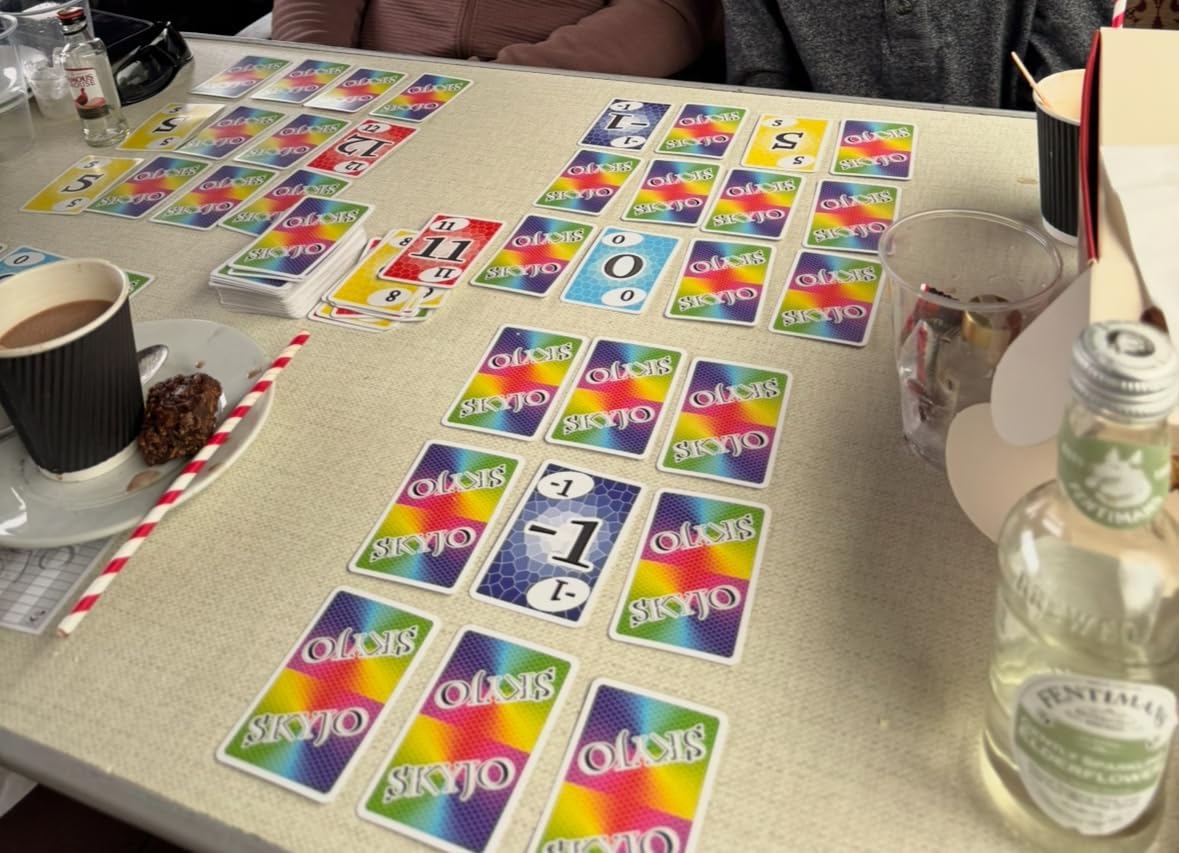
This is the game we hand to a table the moment a grandparent says they cannot see small print. Every card carries a single number and a set of coloured animal symbols, so the entire game can be played by people who do not read the box, the manual, or each other’s scorepads. Reviewers consistently describe picking it up within a couple of minutes of seeing it.
It also has the largest review base of anything we tested, which matters for a different reason: when a game this simple has been played tens of thousands of times, the edge cases have already been solved. It repeats well with house rules, which is how most families end up playing it.
The educational framing on the box is real rather than decorative. The listed objective is to develop calculation, estimation, and concentration skills, and a round genuinely requires you to add up what went badly. In a household where the grandchild is meant to be the student, this one quietly reverses the roles.
Why the no-reading design carries a three-generation table
Reading load is the quiet killer at mixed-age tables. The moment a game needs fine print to resolve a dispute, the player with tired eyes either leans in and slows everything down or asks someone else to decide for them. SKYJO removes that moment entirely because the card is the rule.
With 150 game cards, a notepad, and picture-based instructions in the box, setup takes a couple of minutes. That matters more than it sounds: a game that is ready to play before the kettle finishes boiling gets a fair hearing from a generation that has seen a lot of suggestions declined.
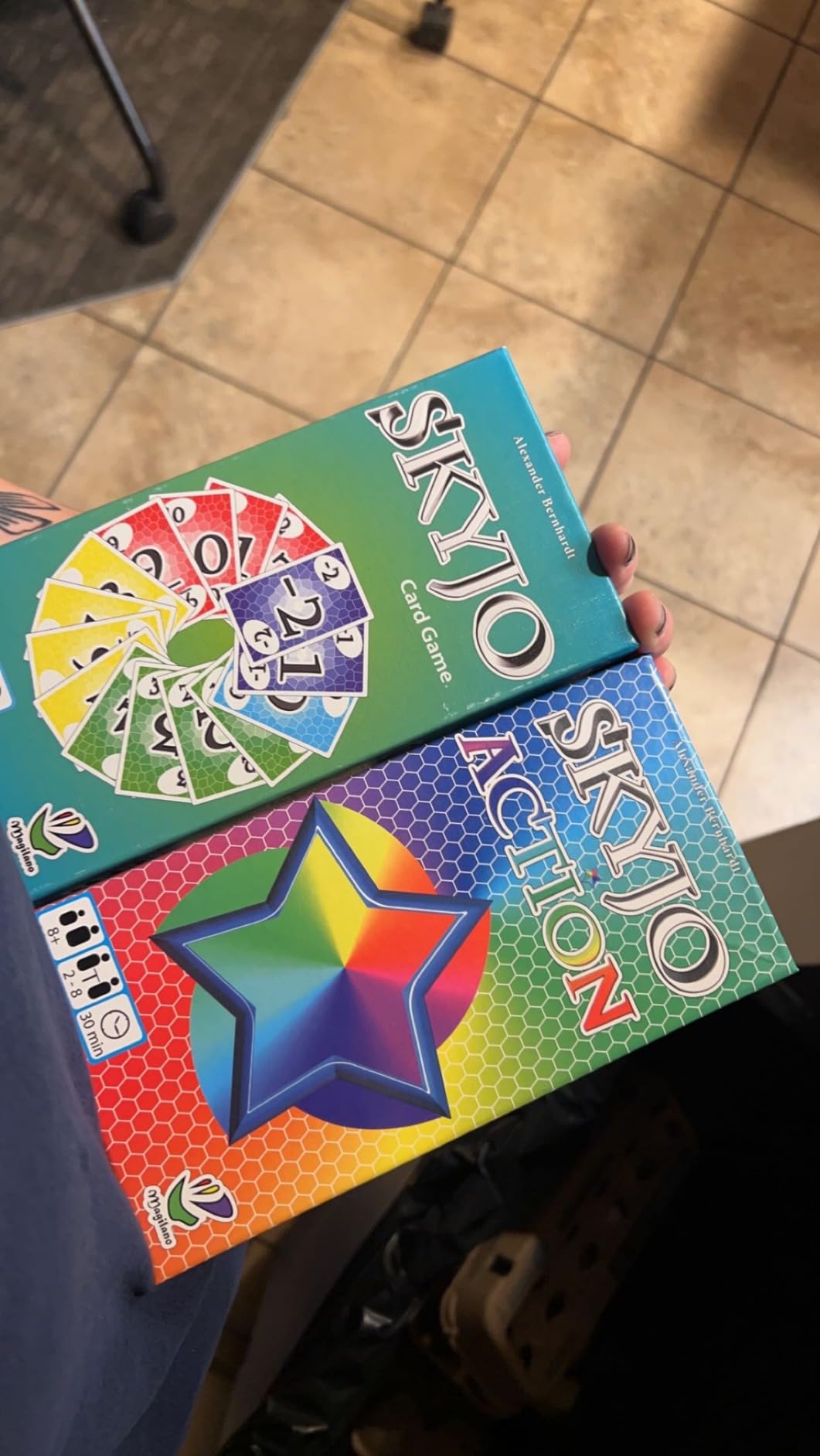
Scales from two players to a full table
The 2 to 8 player range means the same box covers a grandparent and grandchild duet on a rainy afternoon and a table of eight after a holiday meal. Reviewers report the game being handed between both situations without anyone having to relearn it.
At the smaller end, the arithmetic at the end of a round gets more exposed with only two players, so keep the notepad in the middle of the table rather than in one player’s hand. At eight players, rounds stay short enough that nobody loses interest while others decide.
Who should skip it
Skip SKYJO if the table is dominated by players who resent luck-based scoring. The game has a genuine luck component, and reviewers who prefer strategy flag that as the main friction point. It is also not the game for a player who dislikes keeping score at all, since the end-of-round addition and subtraction has to happen somewhere.
Cards arrive stiff and need some play before they flex, which matters if you are handing the deck to someone with limited hand strength. The box measures 7.64 by 3.98 by 1.38 inches and weighs 9.07 g, so it fits in a jacket pocket and a handbag alike.
2. Sequence in a Tin – The Big-Table Absorber Up to Twelve Players
Sequence in a Tin – Five-in-a-Row Fun for Everyone by Jax, White, 2-12 Players
2 to 12 players
Ages 7+
Teaches in under two minutes
Tin stores board and pieces
+ Pros
- Tin doubles as storage so nothing gets lost
- Scales from 2 to 12 players
- Teachable in under two minutes
- Mix of luck and strategy
- Cons
- Folding card board feels less substantial
- Long waits between turns at high player counts
Sequence is the answer to the table that keeps growing. The tin version ships with a folding game board, 135 playing chips, two decks of playing cards, and a storage tin that doubles as the container, so the whole thing sets up in one motion and nothing goes missing between holidays.
The mechanic is one sentence: play a card from your hand, put a chip on the matching board space, five in a row wins. Buyers describe the teaching time in minutes rather than minutes-and-then-some, which is exactly what you need when a grandparent is the person you most want to keep in the game.
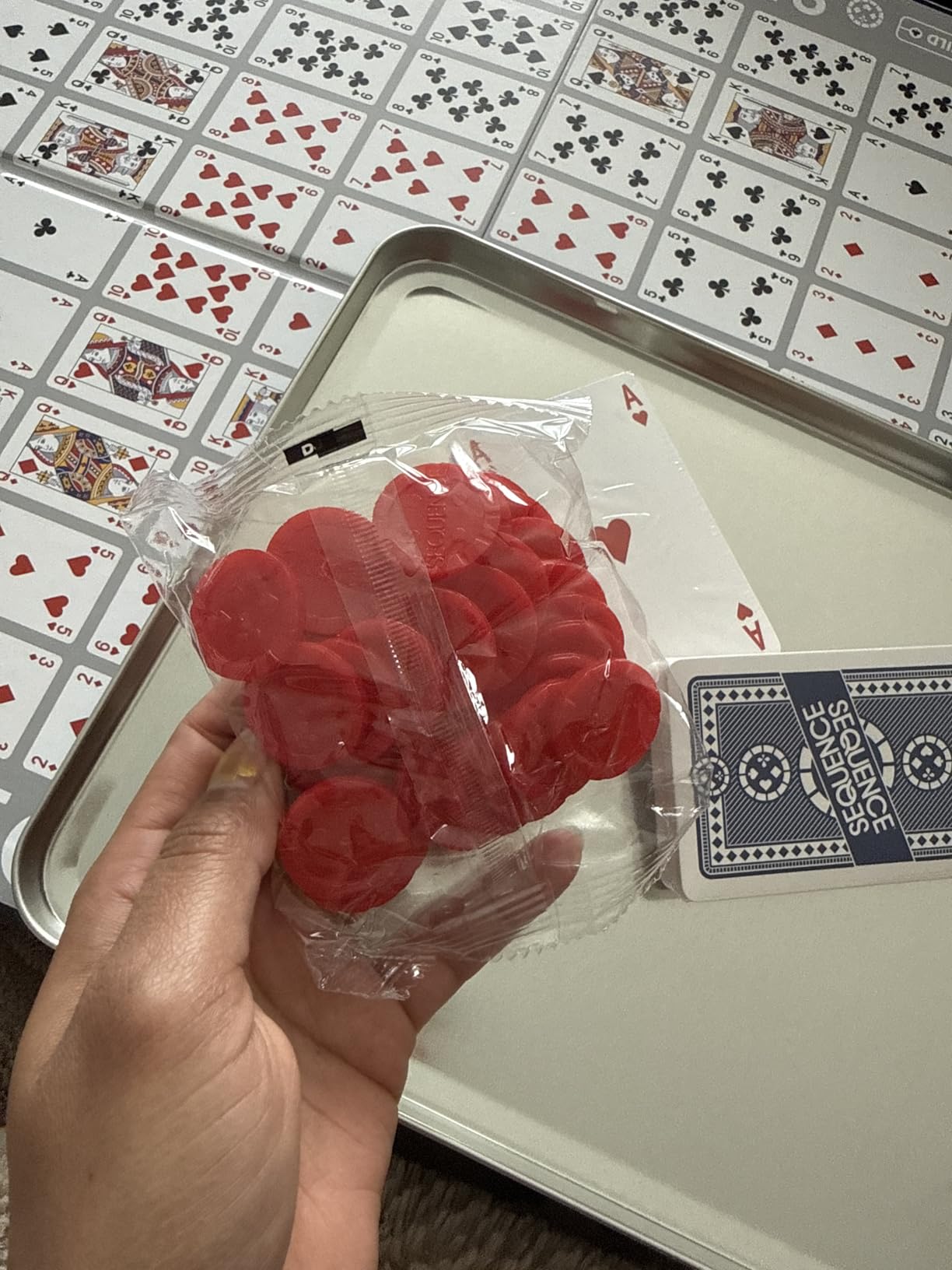
Because it plays with teams, a losing player is never out. That matters more than the headline player count, since the games that end grandparent evenings early are the ones where a slow turn or a bad hand pushes someone out of the action.
Card and chip readability at distance
The play uses standard playing cards laid on a printed board rather than tiny icon tiles, so the visual load is low and the colours carry the identification. A player who cannot make out a dense grid of symbols can still follow a red card landing on a red space, which is a meaningful advantage over tile-placement games with dense iconography.
It is rated for ages 7 and up, so it is one of the few entries here that a five-year-old grandchild can join without an adult running the game on their behalf. At 1.13 kg the tin has some heft, which reviewers like, but it is a folding card design rather than a solid wooden board.
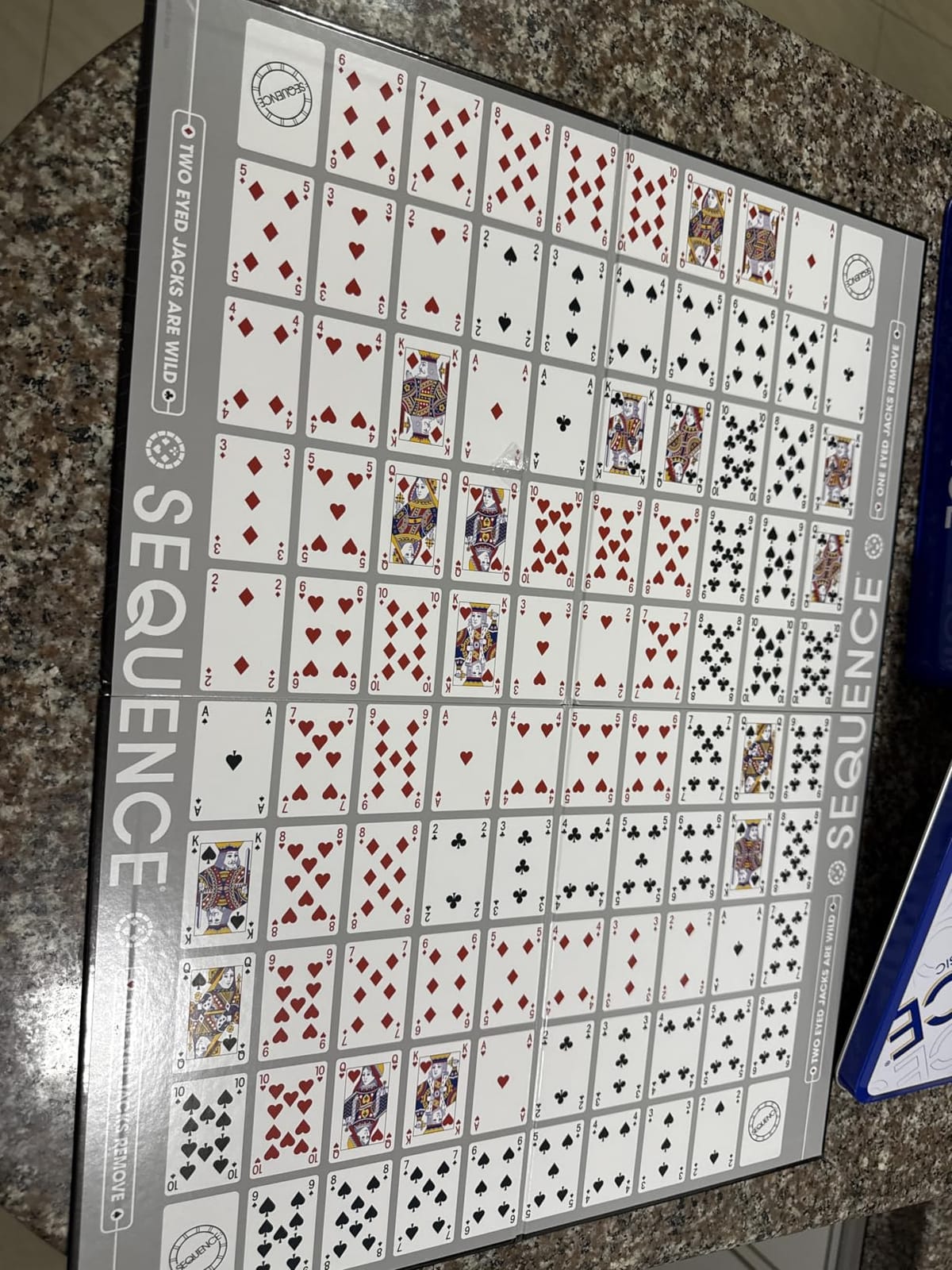
What happens at ten and twelve players
This is where honesty helps. Reviewers flag that high player counts create long waits between turns, and a grandparent who spends four of their ten turns watching other people move chips may drift. The fix is not a different game but a different table: split the group into two boards, or run it as two teams.
Item dimensions are 10.62 by 8.38 by 2.87 inches, so the board needs a clear stretch of table rather than a coffee table corner. It fits a dining table comfortably and a kitchen counter awkwardly.
Who should skip it
Skip it if your table prizes tactile quality above portability. The folding board is described by reviewers as feeling less premium than a solid game, and there is no magnetic or weighted element to keep pieces anchored.
Also skip it for a fast two-player duet. The game is playable at two, but the appeal of the format lives in the group, and a two-player game with a much wider board and a better weight profile exists a few entries down.
3. Five Crowns – The Calmest Card Game at the Table
Five Crowns Rummy Style Card Game for Kids and Adults, Family Game Night
2 to 7 players
Ages 8+
Two full decks and a rulebook
6.4 ounces
+ Pros
- Calm pacing with no penalty cards
- Easy rules that beginners pick up fast
- Scales from two to seven players
- Compact and travel friendly
- Highest average rating in our testing
- Cons
- Two decks are harder to shuffle by hand
- Scorebook sold separately
- Light on depth for experienced rummy players
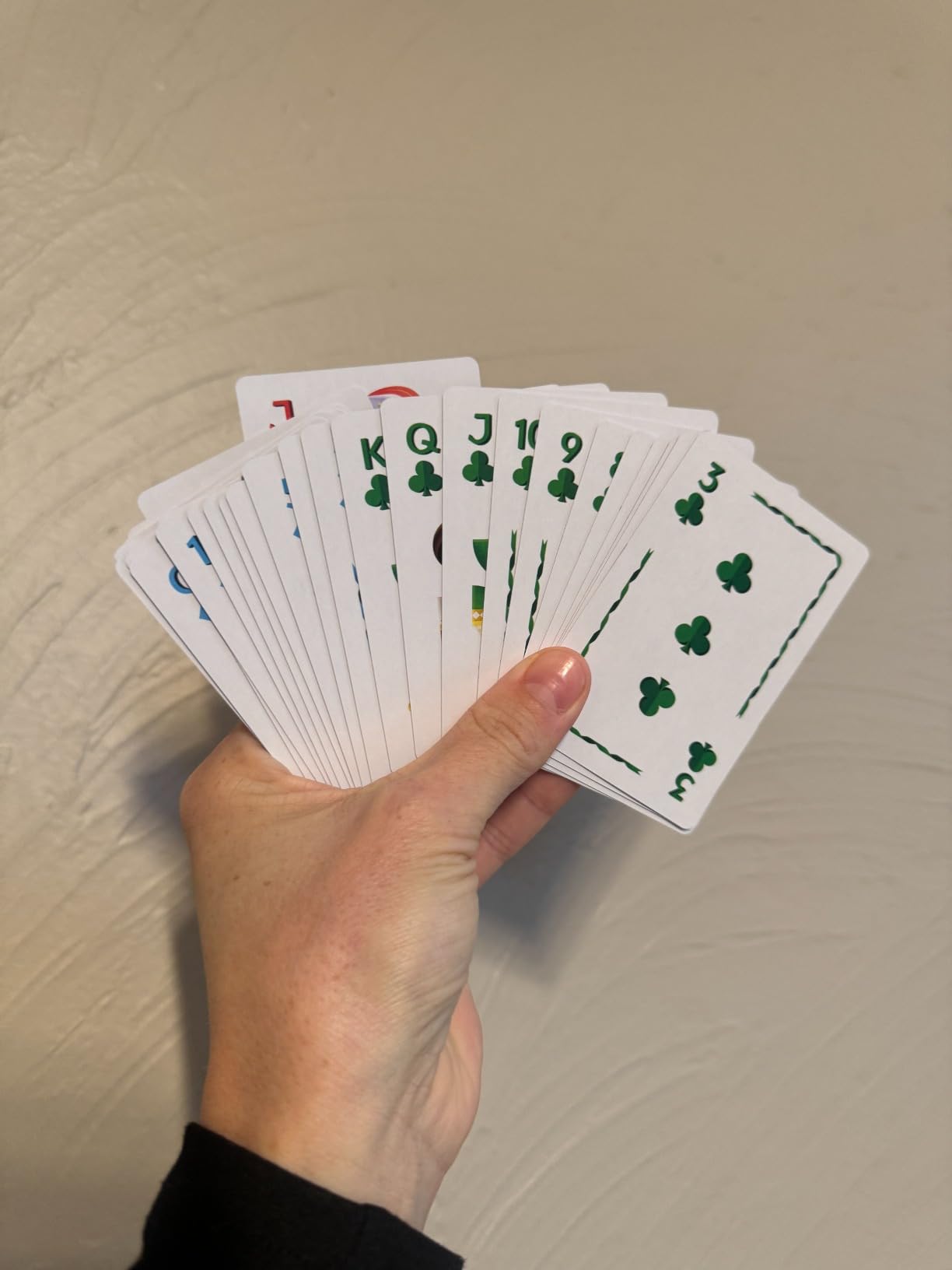
Five Crowns carries the highest average rating of anything in our testing, with 92 percent five-star ratings across more than 34,000 reviews, and it does so without a single penalty card in the box. That absence is the whole pitch. Nothing punishes a bad deal, so nobody is eliminated by a run of poor draws.
It is rummy with a fifth suit of stars and rotating wild crowns, and the rules fit on one page. Buyers describe it as a game that gets heavy use in houses with both children and adults, and many reviewers note that it becomes a family tradition played specifically with grandparents.
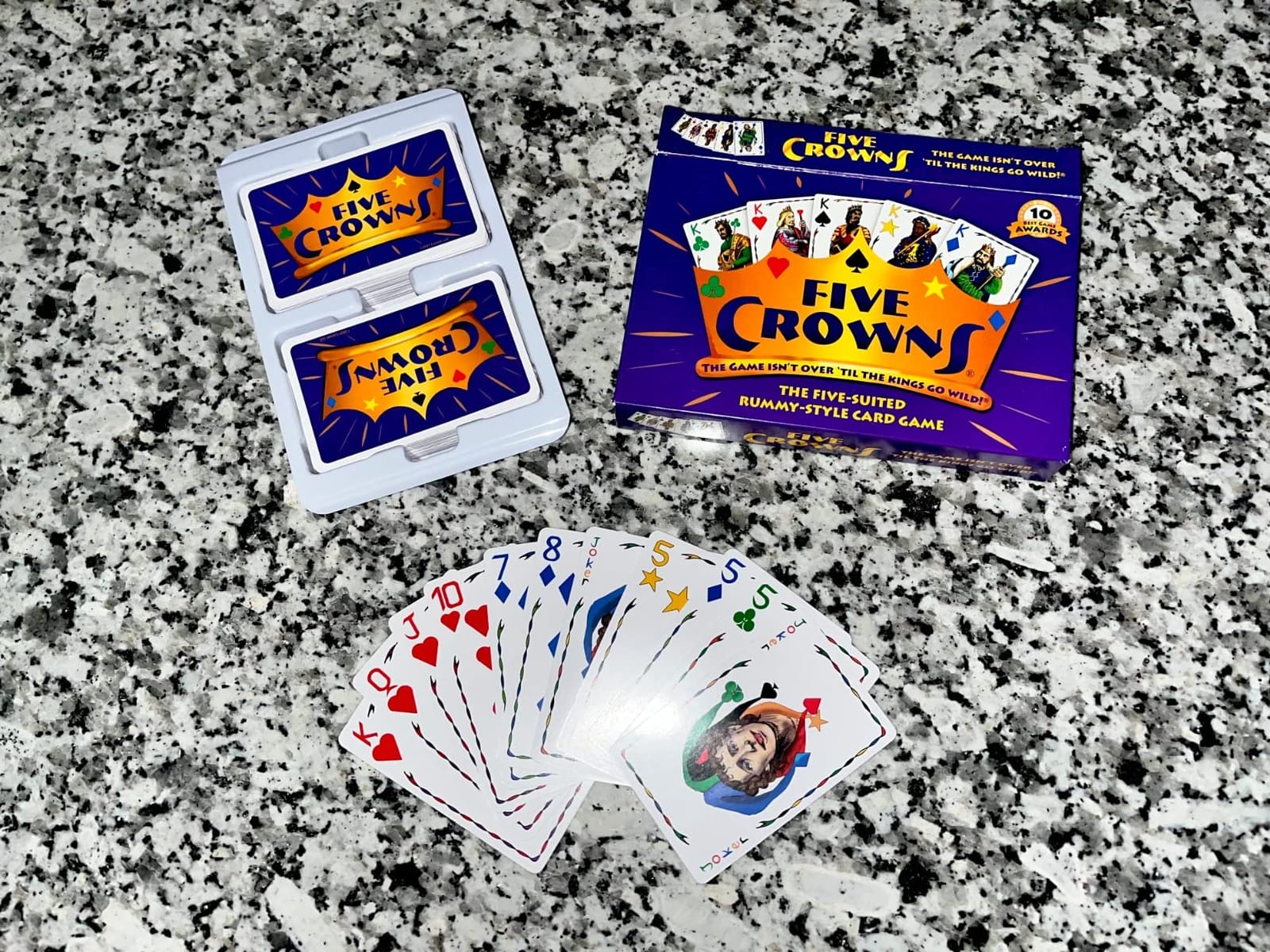
Scoring runs on a points sheet, which means the score is visible to everyone at all times. No whisper exchanges, no private recalculations, and no grandchild quietly doing arithmetic that is driving the table’s confidence.
Why the no-penalty design protects the evening
Games that take points away when you play badly create a quiet dynamic at a mixed table: the confident player pushes, and the beginner starts playing defensively and stops enjoying it. Five Crowns removes that lever, and reviewers repeatedly cite the non-combative pacing as the reason it survives family settings.
The technical detail worth knowing is that two full decks are used, so a card shuffler genuinely helps. Hand-shuffling a double deck is the slowest part of the night, and if the person who taught the game is also the person shuffling, the round start slips.
Two to seven players without a rules seminar
The scale from two to seven is unusually wide for a rummy variant, and the extra players cost nothing in complexity. Every additional player just takes more cards and adds one more entry to the score sheet. This makes it a safe bet for a table that ranges from a duet to a seven-person gathering.
Recommended age is 8 and up, and the box measures 6.5 by 1 by 5.5 inches at 6.4 ounces, so it packs flat in a bag. Several reviewers describe it as the game they bring in the car, which is a good sign for grandparents who play while travelling or waiting.
Who should skip it
Skip it if the table is full of experienced rummy players. Reviewers with a serious background in the genre describe the strategy as light, and the fifth suit adds breadth of decision rather than depth of calculation. The scorebook is also sold separately, so budget for a piece of paper if you are comparing options.
It is a card game with face-down hands, so it is not the right choice for a player who prefers a completely open table or who finds hidden information stressful. For those players, the domino set and the checker board further down fit better.
4. Yahtzee – Two Dice Sets, a Familiar Rule Set, and a Full Evening
Hasbro Gaming Yahtzee Game, Fast-Playing Dice Games for Kids, Teens, and Adults, Strategy Games, Family Games for Kids, 2 or More Players, Ages 8 and Up
2 or more players
Ages 8+
Shaker and five dice
No batteries needed
+ Pros
- Fast playing with little downtime
- Setup and storage are trivial
- Familiar rules most adults know
- Scoring sheet records the game
- Cons
- Heavily luck dependent
- Noisy at larger table sizes
- Feels thin as a physical object
Yahtzee needs one shaker and five dice. That is the entire component list, and it is why this is the most portable entry here: no board to unfold, no pieces to lose, and a scoring sheet that doubles as a record of the evening.
Almost every adult at the table already knows the scoring categories, straights, full houses, and the five-of-a-kind gamble. That removes the teaching problem entirely, which leaves the whole evening for play. Buyers cite the quick pace and the easy fit with mixed ages as the two things that keep it in rotation.
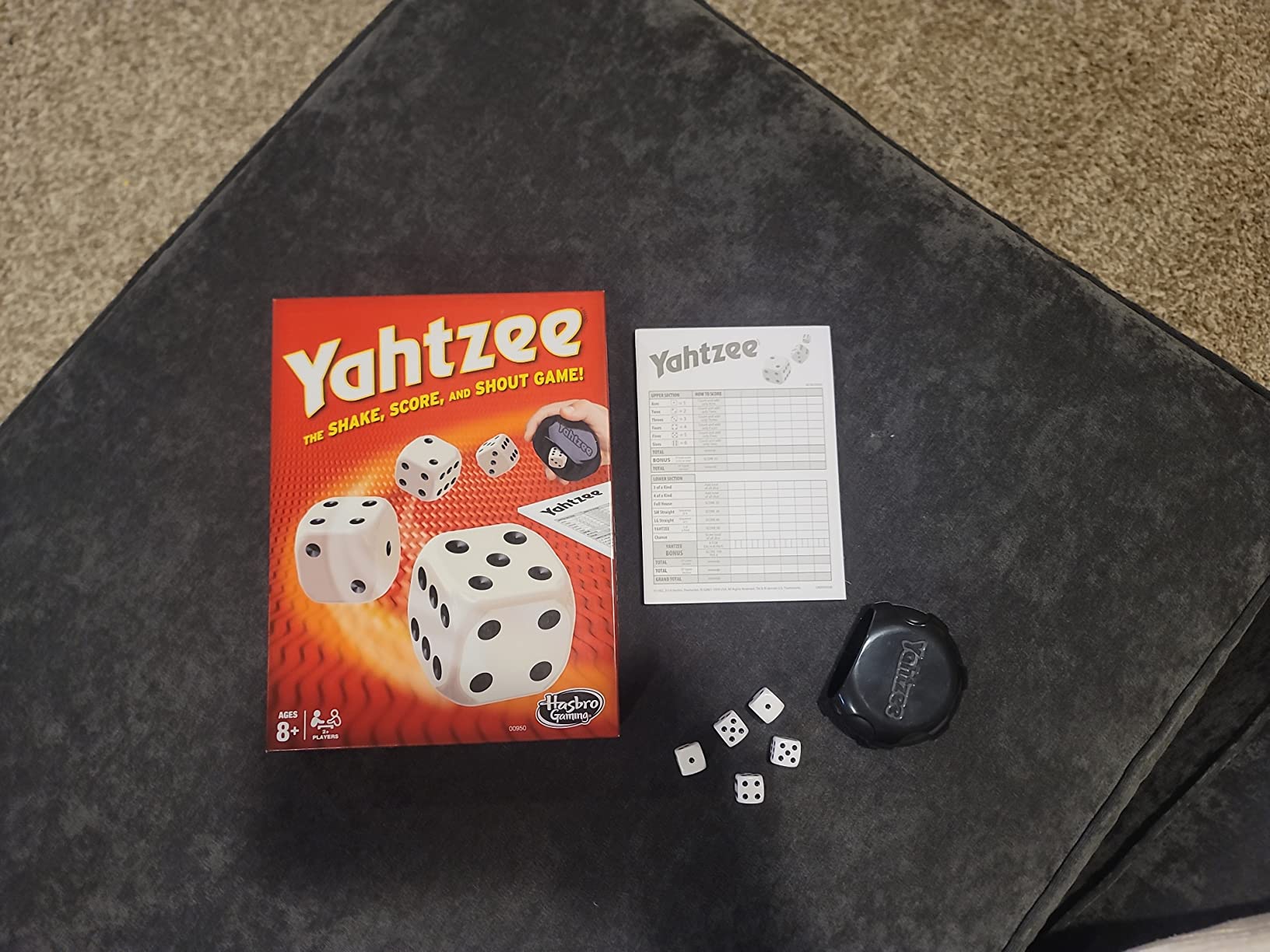
Nobody needs batteries and nothing needs explaining twice. When a table includes a grandparent who is tired at the end of a long gathering, a game that can start in ninety seconds and end on a scoring category is a kind one.
Luck, scoring, and the two-player case
The honest framing is that this is a luck game with a scoring wrapper. Reviewers who prefer strategy flag the dice as the main criticism. For a duet, though, the arithmetic gives two people something to argue about, and the shorter turns keep a conversation going rather than stalling it.
At two or more players it scales to a crowd, but the pace degrades as the table grows. Each person is waiting on their own roll, and the noise of five dice hitting a table gets real. In a quiet room with someone who has hearing loss, that is a real consideration rather than a footnote.
Why the scoring sheet is doing hidden work
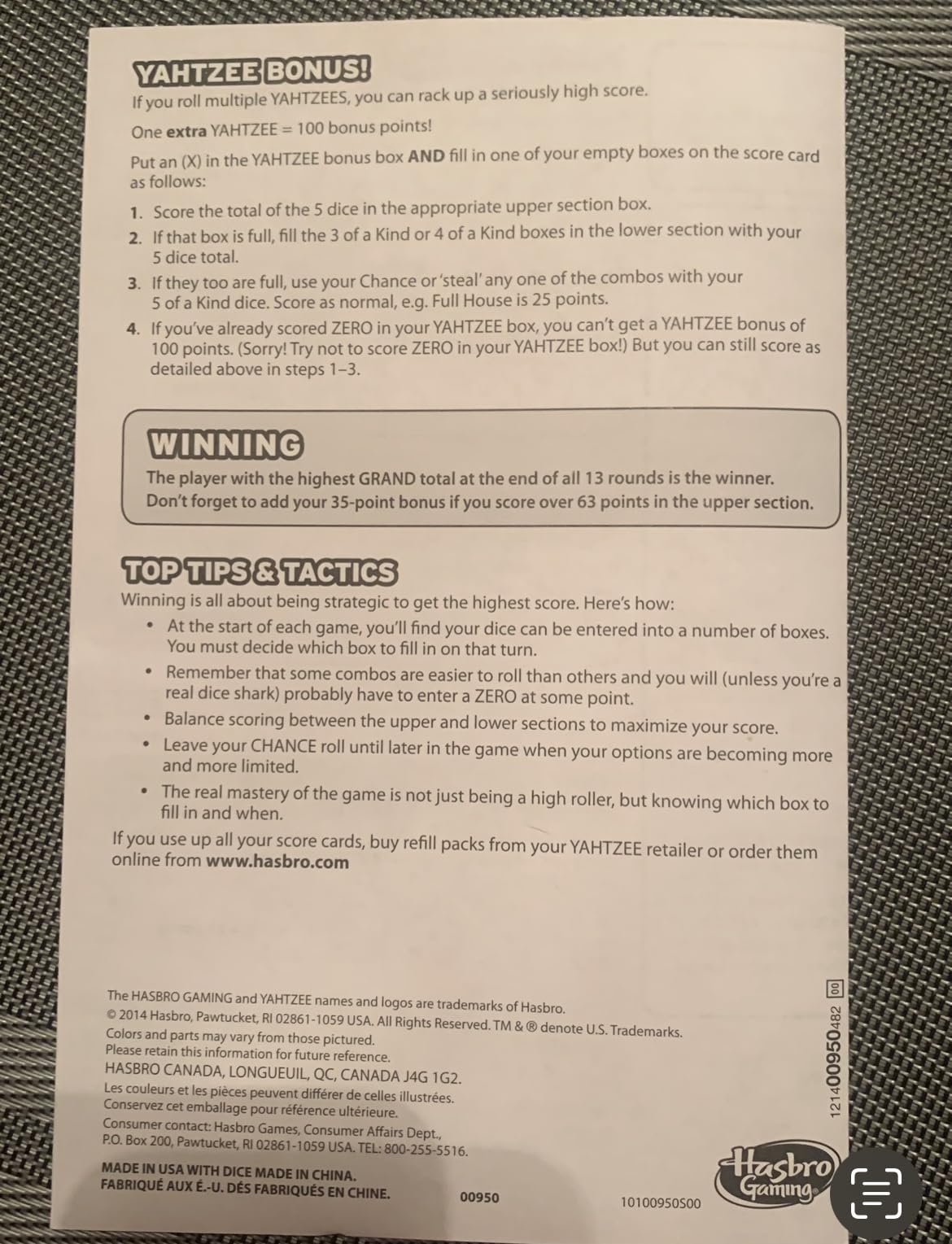
Because each category is scored once and a turn involves filling a chosen slot, players are constantly evaluating a board state that only they can see. That is a low-stakes form of private information, which keeps a competitive player engaged without creating a bluffing or hidden-role dynamic.
There is no elimination at all. A bad sheet only costs points, and the game ends when the dice run out, so a grandparent who rolls badly still finishes the evening having played every turn.
Who should skip it
Skip it if the table is noise-sensitive or if the group dislikes pure luck. It is also the least substantial object in this roundup: reviewers note the minimal physical components make it feel thinner than a proper board game, and the box is 1.58 by 7.87 by 10.51 inches with no table presence.
It is also not a game for a player who needs something to hold and look at. With no board and no shared space, a player with limited vision or limited fine motor control gets less from it than from a tile or card game with a large central board.
5. Giant UNO – Oversized Cards Solve the Visibility Problem
Mattel Games Giant UNO Card Game for Kid, Adult & Families, Color Blind Accessible & Customizable Large Deck
2 to 10 players
Ages 7+
Cards about 3 times normal size
Colour blind accessible
+ Pros
- Oversized cards are far easier to see and hold
- Graphic symbols help colour blind players
- Scales to 2 to 10 players
- Blank wild cards allow house rules
- Cons
- Fewer cards fit in a hand late in the game
- Bulkier than a standard deck
- Gameplay is luck driven
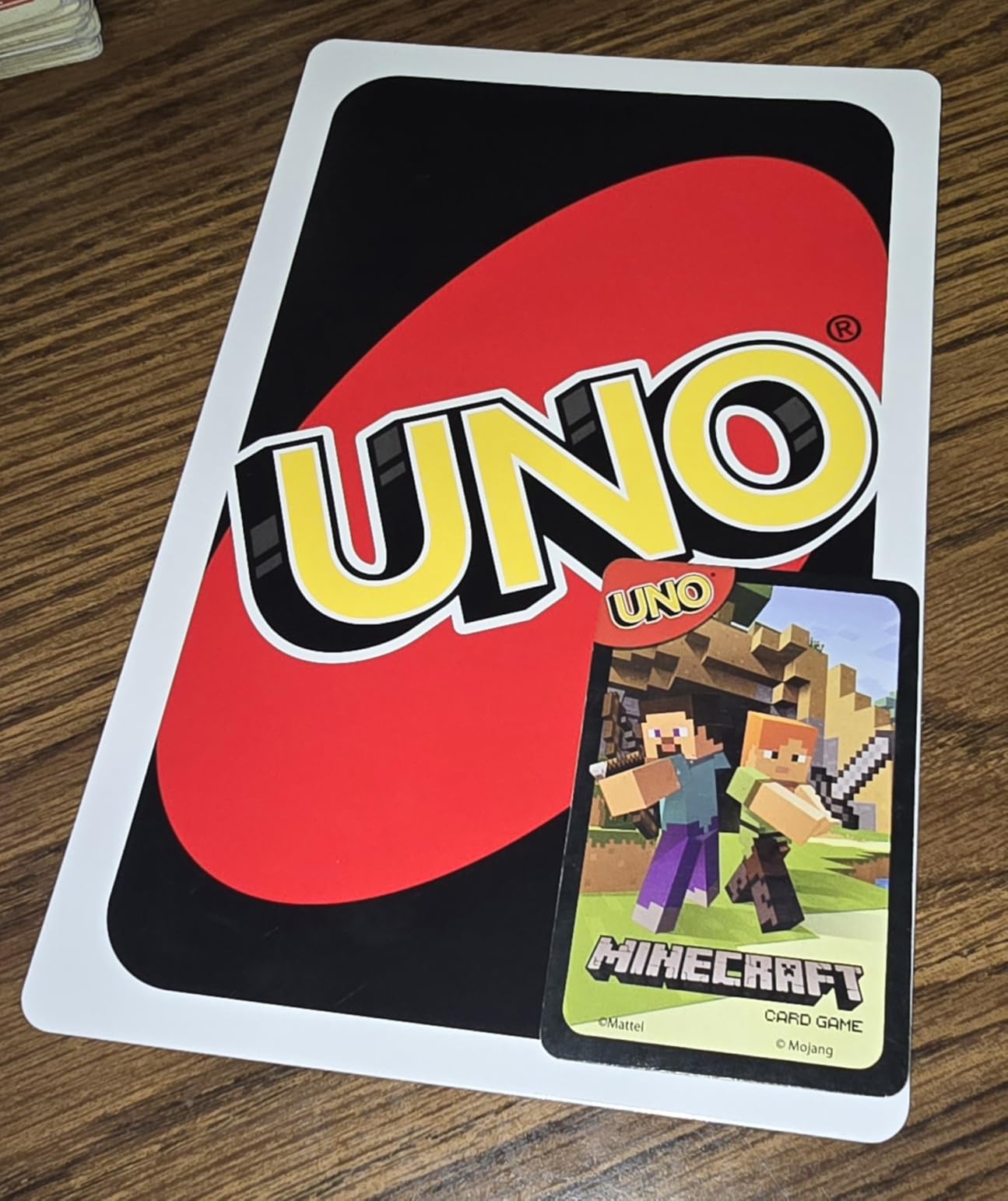
Most accessibility talk about board games is abstract. This one is a physical fact: the cards are roughly three times the size of a standard deck, measuring about 5 by 8 inches, and reviewers consistently name that as the single reason to choose it over the ordinary version.
Every card also carries a graphic symbol for its colour, which makes the deck playable for colour blind players. Two blank wild cards are included so you can write your own house rules onto them, which is the fastest way to slow a game down for a player who needs a little more thinking time.
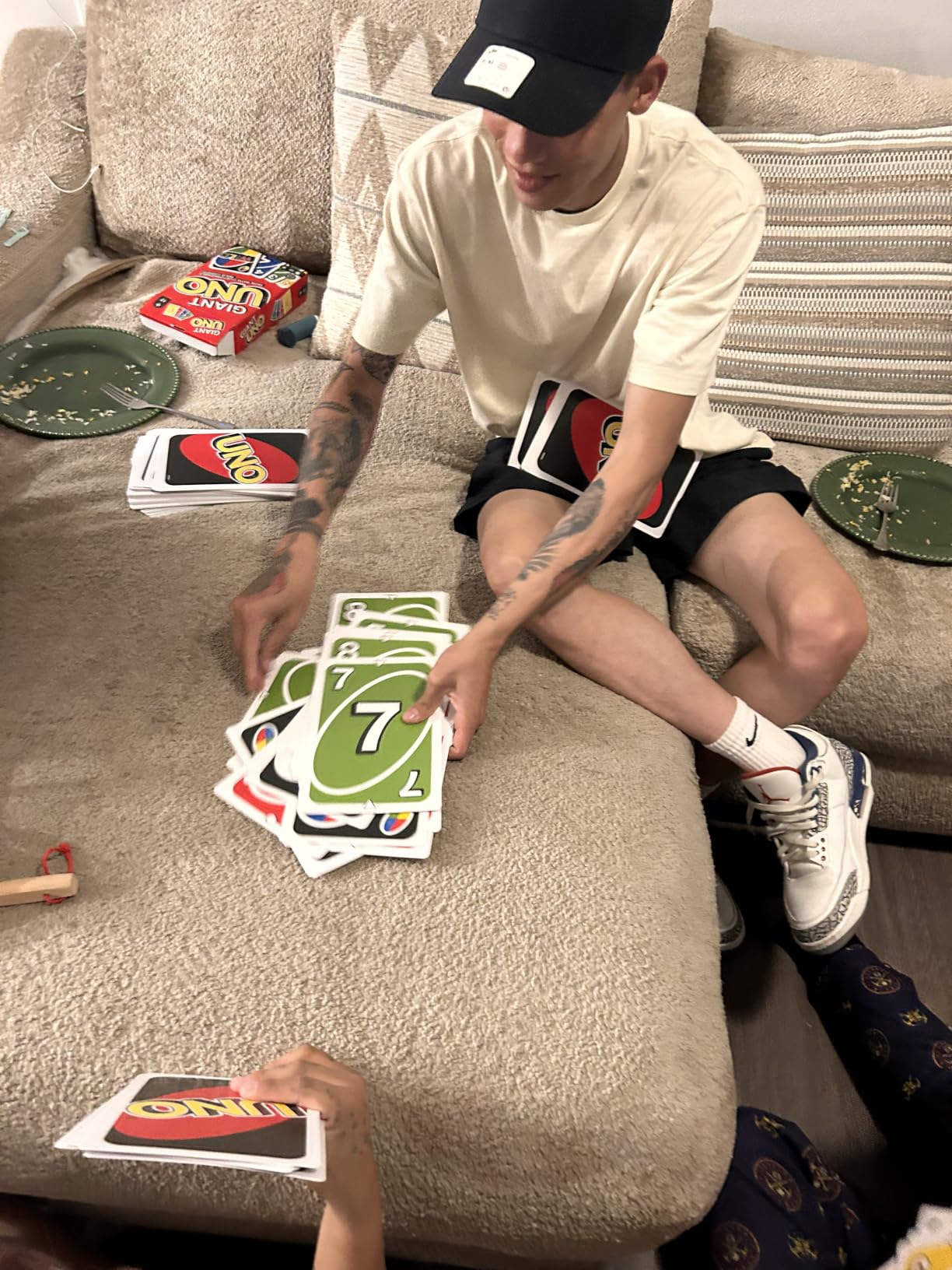
The 2 to 10 player range is what makes this a serious contender for a holiday table rather than a party trick. It sits at the awkward middle of the size range: too many players for a two-person evening, exactly right for a family meal with cousins, aunts, and a grandmother who does not want to be a spectator.
Symbols over colours, and why that matters
A player who cannot reliably distinguish red from green in dim lighting is not stuck with a game they cannot play. The printed symbols on each card carry the information independently of the colour, so a misread colour does not end a turn. Reviewers single this out almost as often as the size.
The trade is honest and worth naming. Larger cards mean fewer fit in a hand, so a late-game hand of large UNO cards is awkward to hold and slower to sort. At 1 kg the deck is also noticeably bulkier than a standard pack, which makes it a shelf game rather than a travel game.
Familiarity as a teaching shortcut
Match the colour or number, use the action cards, race to empty your hand. It is a format most families have met before, so the teaching burden is close to zero and the evening starts on turn one. That is the same logic that makes a familiar classic a safe bet and a new strategy game a gamble.
There is no elimination and no hidden role, and the outcome turns more on luck than strategy, which reviewers note as a limitation. For a table where a grandparent might not want a long strategic contest, that trade is usually in your favour.
Who should skip it
Skip it if the table wants depth. With little room for strategy, a group of experienced card players will exhaust its interest quickly. It is rated for ages 7 and up, so a three-year-old cannot join, and it needs a table surface wide enough for a 2 to 10 player layout.
It is also the wrong pick if a player has reduced hand grip strength. The cards are large and stiff by design, and oversized formats that solve vision problems can create grip problems for a player with arthritis.
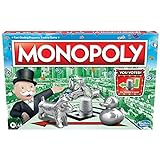
6. Monopoly – The Game Nobody Has to Explain
Monopoly Game, Family Board Games for 2 to 6 Players & Kids Ages 8 and Up, Includes 8 Tokens (Token Vote Edition)
2 to 6 players
Ages 8+
About two hours
8 tokens, dice, money, houses
+ Pros
- Grandparents already know the rules so no teaching is needed
- Eight tokens for a full table
- Mix of trading building and luck
- Durable board and components
- Cons
- Long play time with slow turns
- Bankruptcy can end an evening early
- Maximum of six players
- Ages 8 and up excludes young children
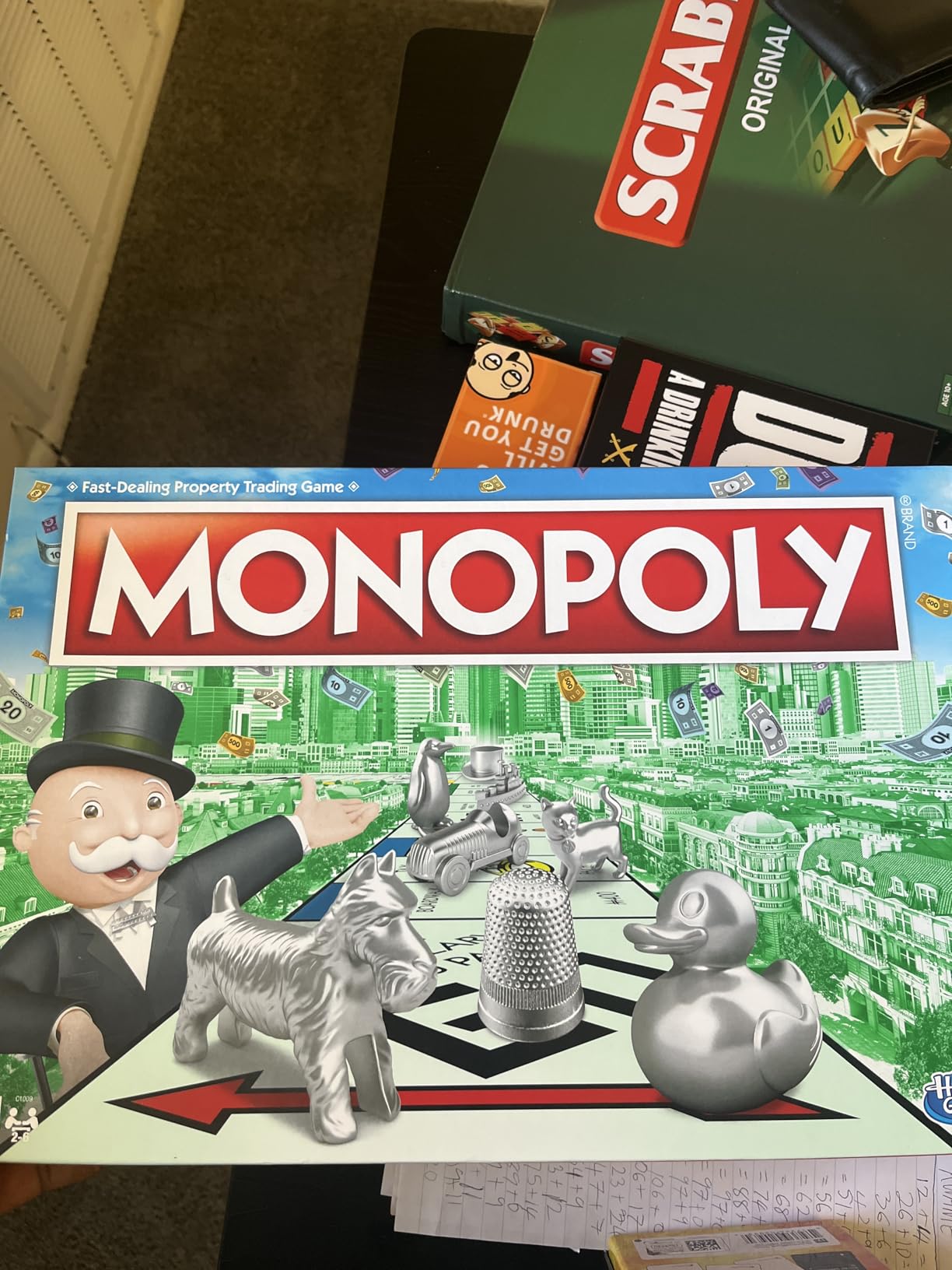
There is one advantage no modern game in this roundup can copy: a grandparent can pick up Monopoly and start without a single question. The rule set is pre-loaded, which means the first twenty minutes of your evening do not disappear into an explanation.
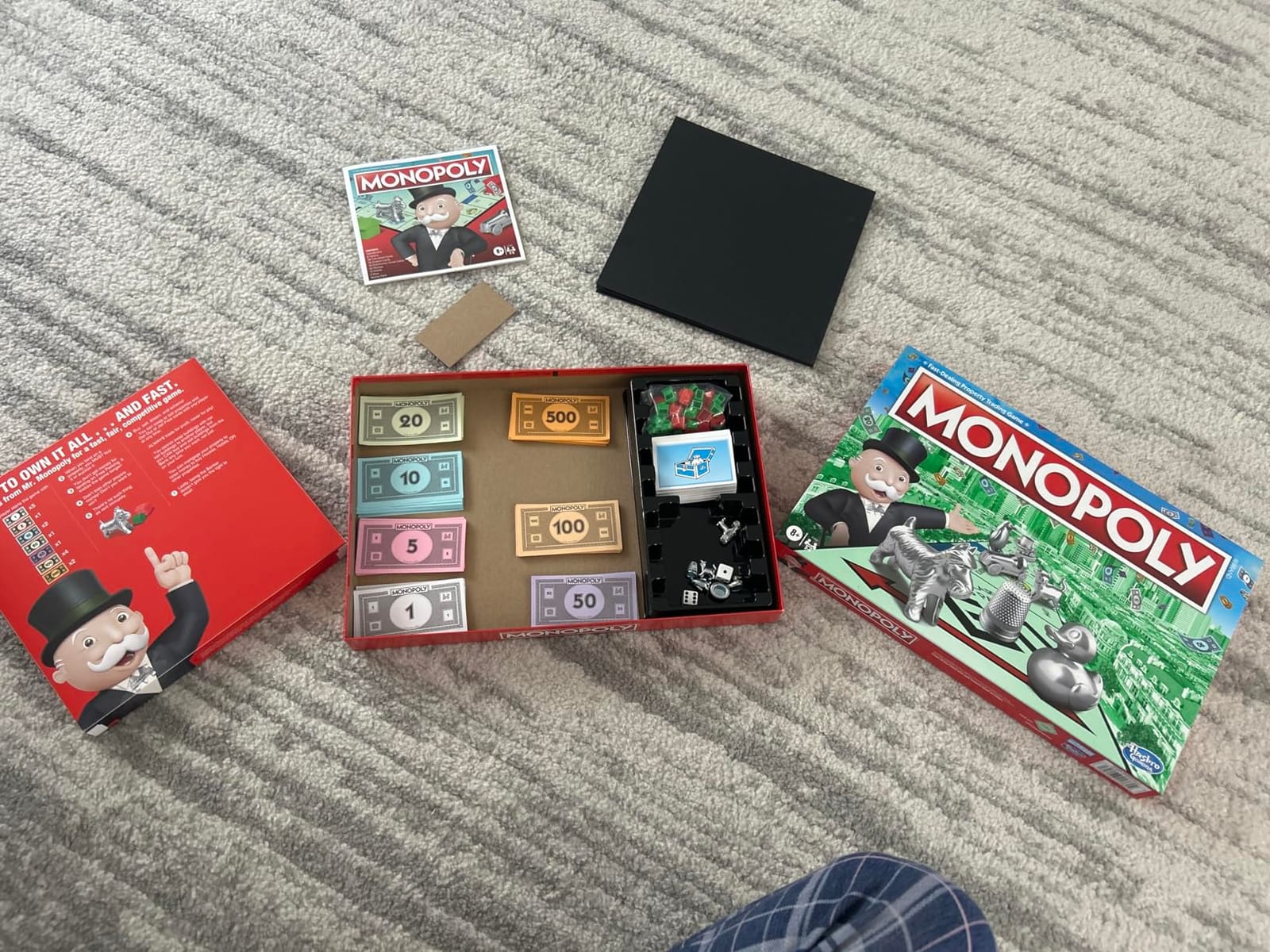
Buyers treat it as a reliable intergenerational anchor, and the component list supports a full table: a gameboard, 8 tokens, 28 Title Deed cards, 16 Chance cards, 16 Community Chest cards, 32 houses, 12 hotels, two dice, and a money pack. The board is 15.75 by 10.51 inches, which needs a real table.
It also has a track record of being the game children bring out specifically to beat a relative, which is a kind of social lubricant. A BoardGameGeek thread on gaming with grandparents notes that reintroducing the traditional games people already know often works better than teaching something new, and Monopoly is the most widely shared example of that.
The two-hour problem, and how to handle it
Estimated play time is around 120 minutes, and the honest complaint from reviewers is not the length but the stretches of slow turns. Money sits still while three people take their turn, and a grandparent who was enjoying it can be counting the minutes by the third lap.
The fix is structural rather than motivational. Start it early rather than after a meal, set a firm end time before anyone is invested, and agree in advance that bankruptcy sends a player into spectator mode with a job rather than to the sofa. That keeps everyone in the same room without pretending the game is short.
Elimination is the mechanic to watch
When a player goes bankrupt, they are out. That is the single most common way a mixed-age evening fragments, because a player who leaves the table usually leaves the room. Forum discussion of multigenerational play keeps returning to this exact failure mode.
It is worth naming that the standard edition is elimination-driven and two-hour-long by design, and that neither suits a table with a tired guest or a hard stop on the evening. The last-edition variants that soften this are worth considering for a mixed table, though the standard edition is the one most grandparents remember.
Who should skip it
Skip it if your table is under six people, since the board is built for a specific number of seats and the game is rated 8 and up, meaning younger grandchildren sit out. It carries a small-parts warning, which matters if a three-year-old will be in the room even if not playing.
Skip it if you need the whole group in one game. With a hard six-player ceiling, a table of nine or ten has to split, and splitting a table is exactly the fragmentation you were trying to avoid.
7. Herd Mentality – Twenty Players, Twenty Minutes, Constant Laughter
Herd Mentality Board Game: Funny Family Party for Game Night, 4-20 Players
4 to 20 players
Ages 10+
About 20 minutes
Bonus questions included
+ Pros
- Holds 4 to 20 players for a huge gathering
- Extremely quick to learn
- Works as a natural icebreaker
- Guess the majority needs little reading
- Cons
- Ages 10 and up excludes younger children
- Light on strategy once patterns are spotted
- Thin cardboard construction
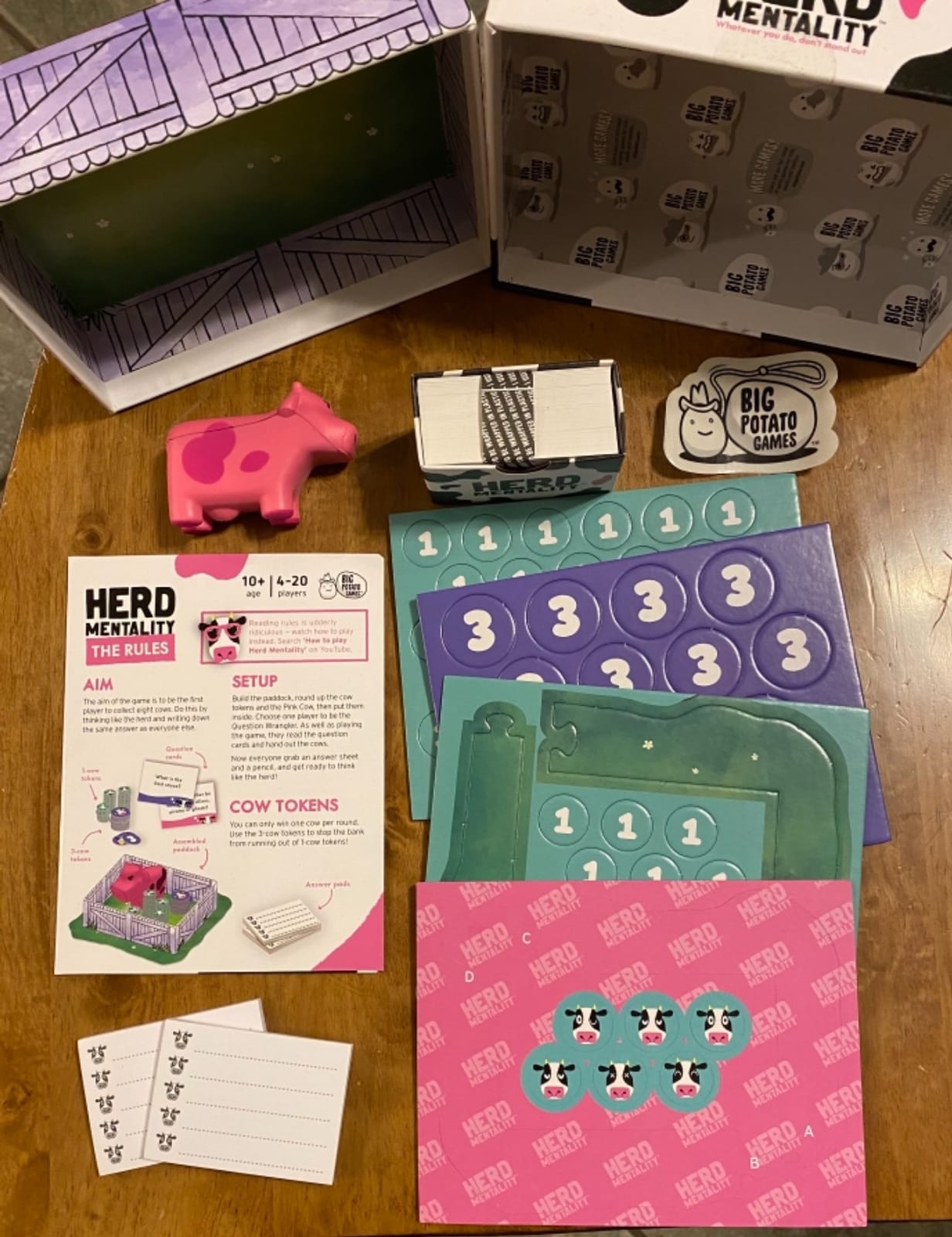
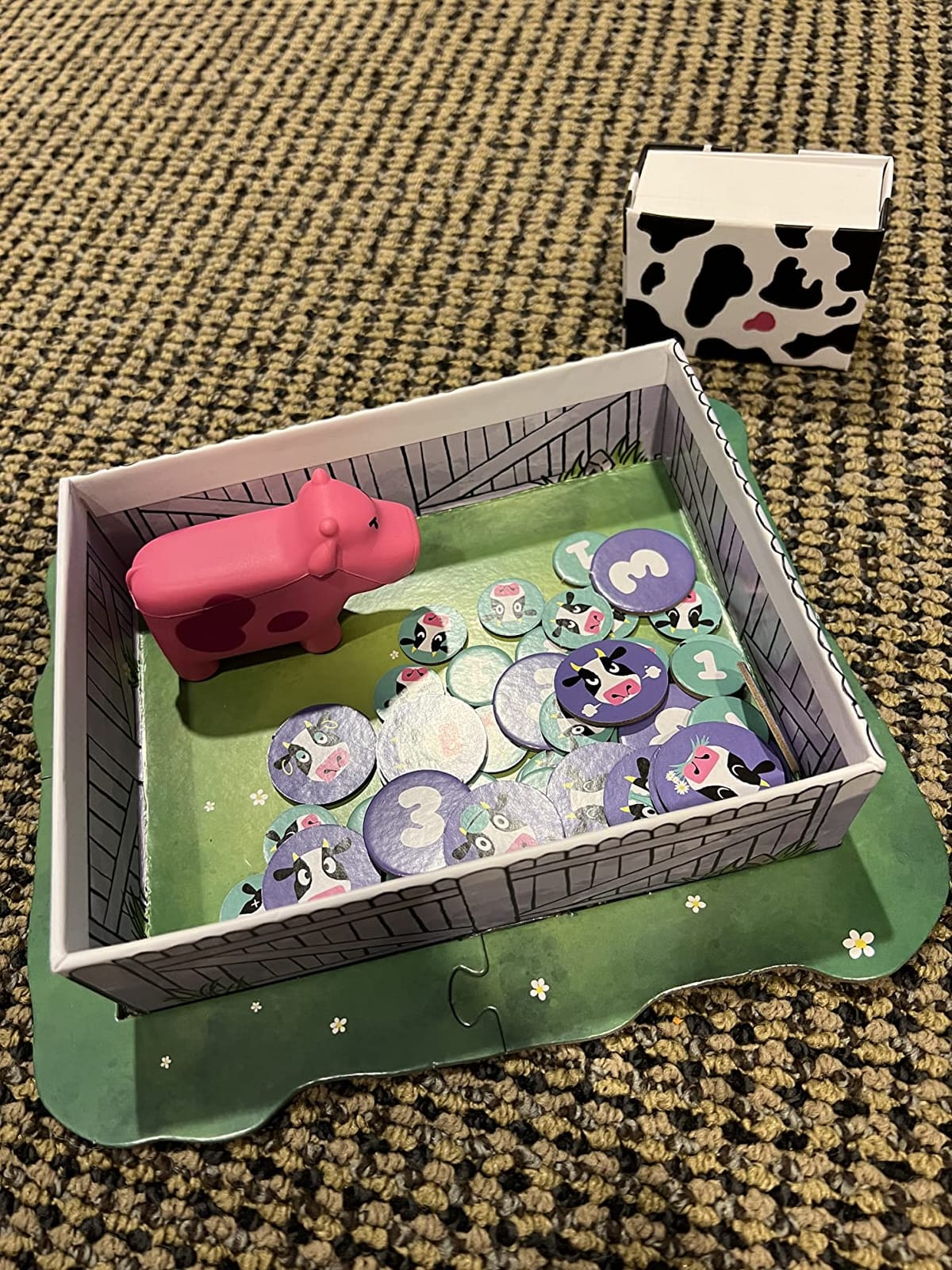
Twenty players is not a party trick here, it is the design brief. Herd Mentality holds 4 to 20 people, runs about 20 minutes, and asks one question: what number do most of the people at this table think of? If your guess is in the majority you win a cow, and the odd one out takes the pink cow of doom.
That is the whole game, and it teaches in the time it takes to read it aloud. Buyers describe it as an icebreaker that keeps a big table talking, and as a useful filler between heavier games when the conversation needs restarting.
There is no elimination, no hidden role, and nothing to memorise. The worst outcome is a pink cow, which is a badge rather than a punishment, and the game can be paused mid-round without anyone losing progress.
What a twenty-player round actually looks like
Every player writes a number on a card, cards go face down, and the group counts the tallies together. The counting is the social centre of the game, which means twenty people who do not know each other are negotiating a shared answer within a minute of sitting down.
The pack includes the main game plus bonus content with 20 extra questions, and it weighs 449 g in a flat cardboard box measuring 7.4 by 5.8 by 0.04 inches. It travels flat and survives being carried in a coat pocket, which is how it ends up at gatherings nobody planned.
Why it ages well, and where it stops
The mechanic has no age floor in practice. It is rated 10 and up, so younger grandchildren are excluded on paper, but a seven-year-old can answer a number question and count a tally as well as anyone. The rating is a packaging decision more than a play barrier.
It does thin out as a group gets good at it. Reviewers note limited strategic depth once the patterns are recognised, so it works best in the first hour of a gathering or between two heavier games, not as the only game of the evening.
Who should skip it
Skip it if your table has fewer than four people; the game is designed around a majority, and with three players the majority is a coin flip. Skip it if a member of the table does not want to be put on the spot, because the game is a series of small public guesses and it is more exposing than it looks.
Skip it if you want tactile play. The pieces are cardboard, and reviewers describe the construction as thin for what it costs, so this is a five-minute laugh rather than an object you will keep for a decade.
8. Skip-Bo – The Quiet Card Game That Keeps Everyone Talking
Mattel Games Skip-Bo, Ages 7+, 2-6 Players
2 to 6 players
Ages 7+
Sequential card stacks
Slick at first then breaks in
+ Pros
- Very low stress and conversational
- Simple for children with depth for adults
- Genuinely popular with retired players
- Fast rounds
- Durable cards
- Cons
- Cards start slick and slippery
- Wear out under very heavy use
- Six and nine cards need reading carefully
- Maximum of six players
Skip-Bo is the game we keep coming back to for households where a grandparent plays regularly rather than occasionally. It shows up in reviews again and again with retired adults playing it weekly, which is a better signal for this topic than any spec sheet.
It comes from the creators of UNO and plays like a calmer cousin: you build descending stacks of cards, you can open a pile with a spare card from your hand, and the first player to empty their stockpile wins. There are no penalty cards, no colour-matching scramble, and almost no downtime.
The pace is the feature. Rounds are short, turns are quick, and the game produces conversation rather than silence, which is the actual goal of a game night with grandparents. Nobody is watching anyone else think for a long time.
Reading load, and the one card to watch
Skip-Bo is a reading game, but the reading is minimal and self-correcting: you play a card, and the stack either takes it or does not. The one genuine trap is the numbered cards, where telling a 6 from a 9 depends on remembering which digit carries the line, and that trips up experienced players as often as beginners.
It is rated for ages 7 and up, so it is one of the few entries where a young grandchild can be an equal participant rather than a passenger. The listed dimensions are 7.87 by 35.04 by 6.89 inches, which is a stacked package rather than a table footprint.
Durability, because this one gets heavy use
Two themes dominate the reviews: the cards start slick out of the box, and they eventually wear out. Multiple buyers report buying replacement decks for the same reason after years of regular use, so if your household will play this weekly, buy the second deck while the first is in service.
That is a real argument in favour of this game despite the wear, because the wear is evidence of use. A game that survives years of weekly play with a grandparent has already passed the test this article is about.
Who should skip it
Skip it for a table of more than six. The ceiling is the problem, not the game: a seven-person gathering needs a second deck or a different choice, and a split table is worse than a game rated for ten.
Skip it if the table includes a player who dislikes luck or a player who cannot safely hold a slick card. The break-in period is real, and handing new glossy cards to someone with reduced grip strength is how a friendly night turns into a card on the floor.
9. Queensell Dominoes – Tactile, Familiar, and Quiet
Queensell Dominos Set for Adults, Double 6 Dominoes Set with 28 Tiles in Wooden Case, Classic Dominoes, Family Board Game for Kids & Adults, Travel Game for Family Game Night, Juegos de Mesa
2 to 4 players
Ages 8+
28 melamine tiles
Wooden storage case
+ Pros
- Weighty tiles that stand up reliably
- Deeply engraved and colorfast dots
- Wooden case protects and organises
- Universally understood rules
- Cons
- Metal centre pegs not mentioned in the listing
- Wooden lid opens too easily
- Maximum of four players
- Only 28 tiles so runs stay short
Dominoes are the safest game in this roundup for a table that includes a player with reduced vision. Nothing has to be read, the information is carried by shape and by the two ends of a tile, and a player who cannot see the whole hand can still feel and hear the game.
This set is 28 double-six melamine tiles in a wooden case, rated for 2 to 4 players and ages 8 and up, with an estimated 30 minutes of play. Forum threads on gaming with grandparents keep naming dominoes as a case where the tactile nature of the pieces is an asset rather than a dexterity problem.
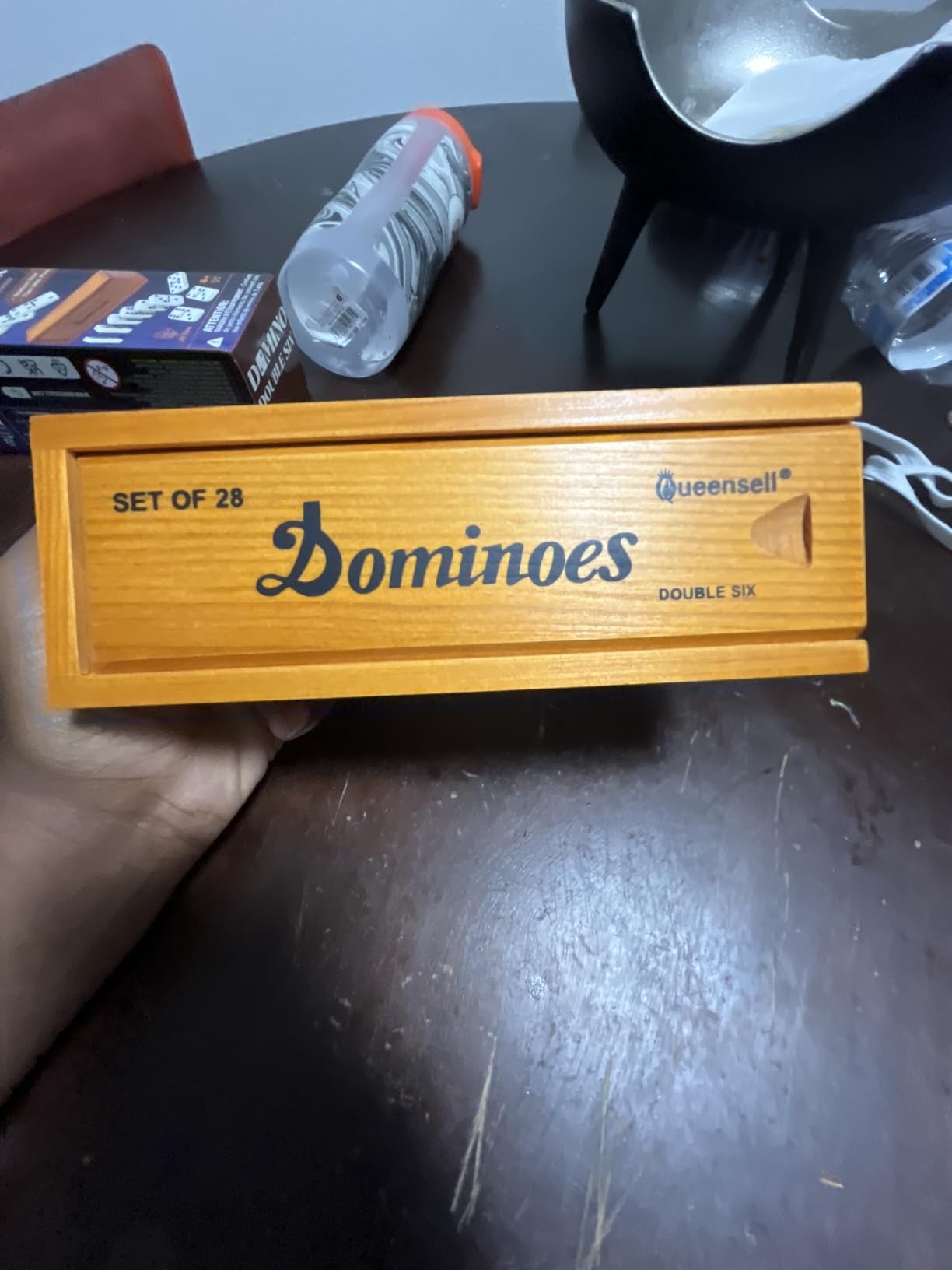
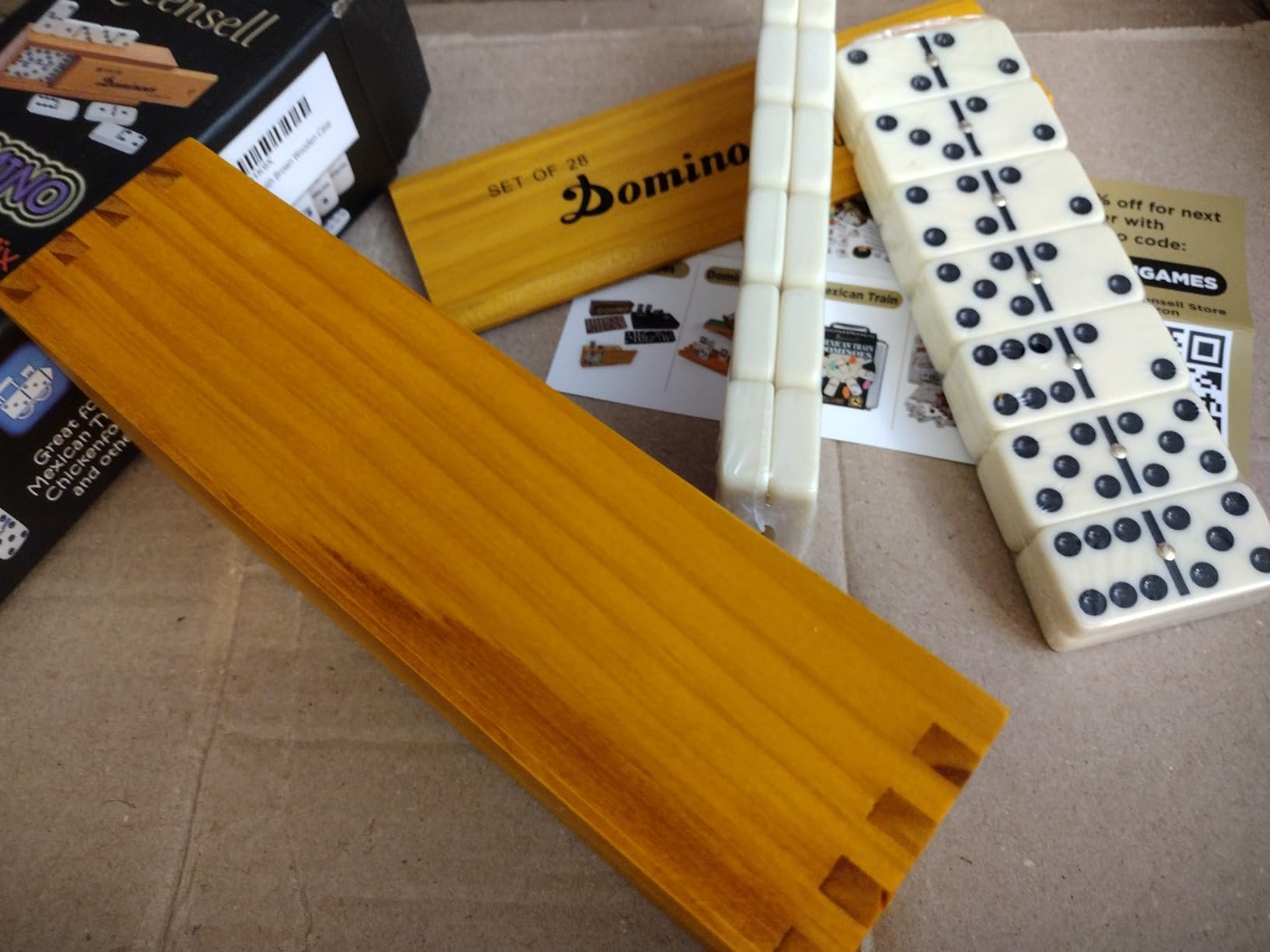
Buyers praise the build quality: tiles with deeply engraved, colorfast dots and smooth edges, heavy enough to stand on their edge reliably. That weight is the difference between dominoes that feel like a game and dominoes that slide off the table every turn.
Why dominoes suit reduced vision and limited dexterity
Domino play is a matching exercise, and the matching is physical. You feel the pip pattern, you read the two ends, and you look for the tile in the chain that shares one of them. A player with limited vision can play competently with tiles held close, which is a different situation from a game played on a distant board.
The counters are against limited dexterity rather than for it. Heavy, smooth-edged tiles are easier to grip than small wooden pieces, which is exactly what you want at a table where a dropped component is a broken component.
What a wooden case adds to a family night
The case is a small wooden box that keeps all 28 tiles organised and protected, which means the set can be carried to a grandparent’s house rather than lent out. Forum discussion of traditional games keeps returning to the point that reintroducing a familiar set is often easier than teaching a new one.
Two build details are worth knowing. Each tile has a metal centre peg that is not mentioned in the listing and that some buyers dislike, and the wooden lid opens a little too easily, so the case needs to be kept upright in a bag. At 8.19 by 2.99 by 2.24 inches it is genuinely portable.
Who should skip it
Skip it for a large gathering. With a ceiling of four players, a table of eight splits into two games, and with only 28 tiles the chains stay short, so a bigger group runs through the set quickly.
Skip it if your group wants a real contest. Dominoes are luck and memory with no strategic layer, and experienced players exhaust the novelty within a session. The tiles also double as coasters, which reviewers like as a bonus and a player with a good table may not.
10. Checkers – Two Players, Zero Teaching, No Elimination
Kangaroo – Multiplayers Strategy Checker Board Game for Kids & Adults – Portable Educational Travel Cardboard Checkers – Includes Large Board w/ 24 Checkers (12 Red and 12- Black) 15×15 Inches
2 players
Ages 6 to 10 listed
15 by 15 inch board
24 interlocking checkers
+ Pros
- Near-universal rules need no explanation
- Large board is comfortable for adults
- Two-player default at a big family table
- Interlocking pieces stay stable
- Lightweight and portable
- Cons
- Only two players can play
- Cardboard board is somewhat flimsy
- Stacked pieces do not always lock together
Checkers is the answer to a specific and very common problem: the family gathering has twelve people, and a grandparent wants to play. Pair them with a grandchild on a 15 by 15 inch board and everybody else is still in the room, still talking, and nobody has been benched.
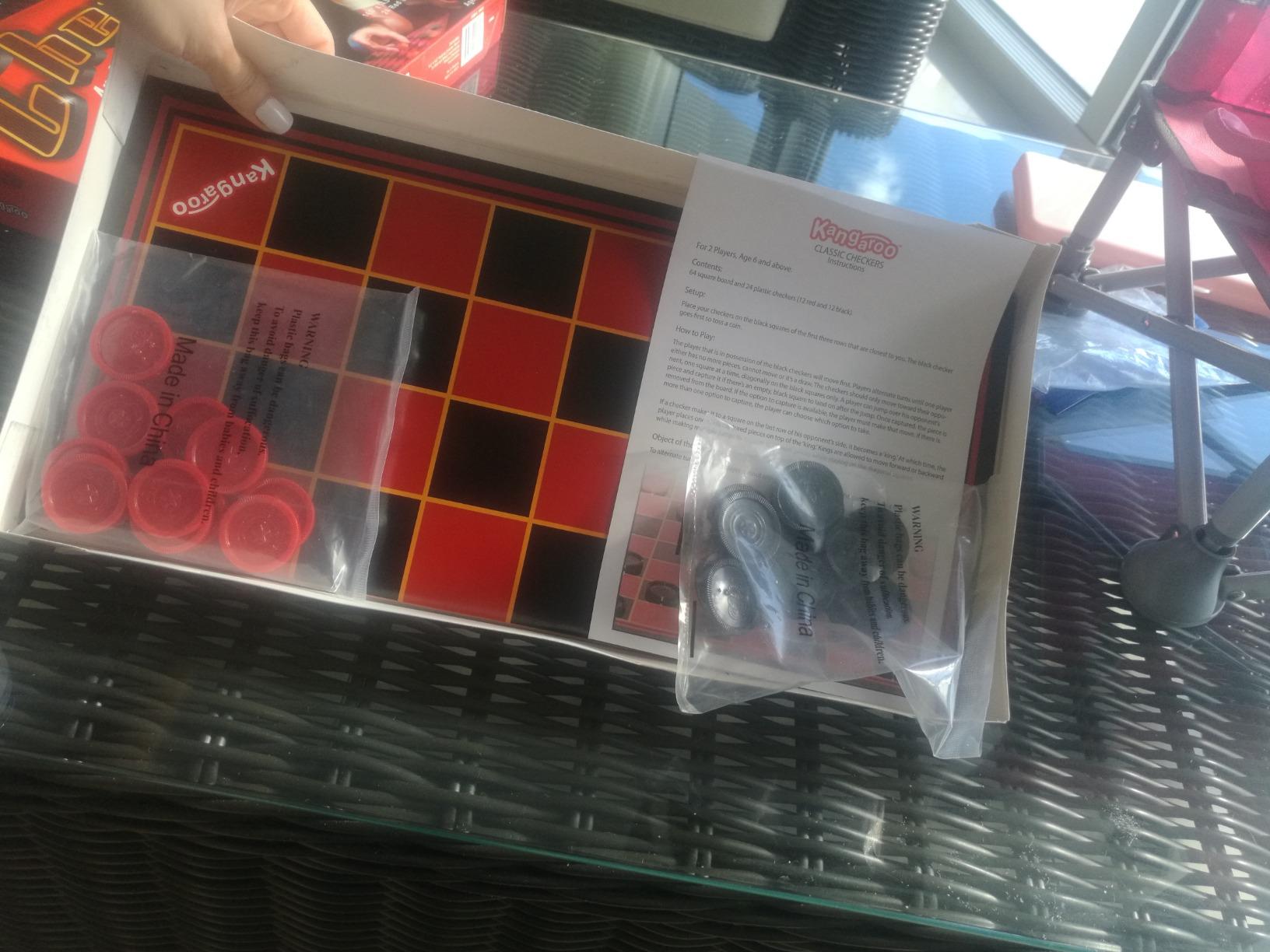
There is no rules explanation to give. The board is 15 by 15 inches open, with 24 interlocking checkers in red and black, and the pieces stack rather than slide. Reviewers point to the zero learning curve and the board size as the two reasons it works for adults.
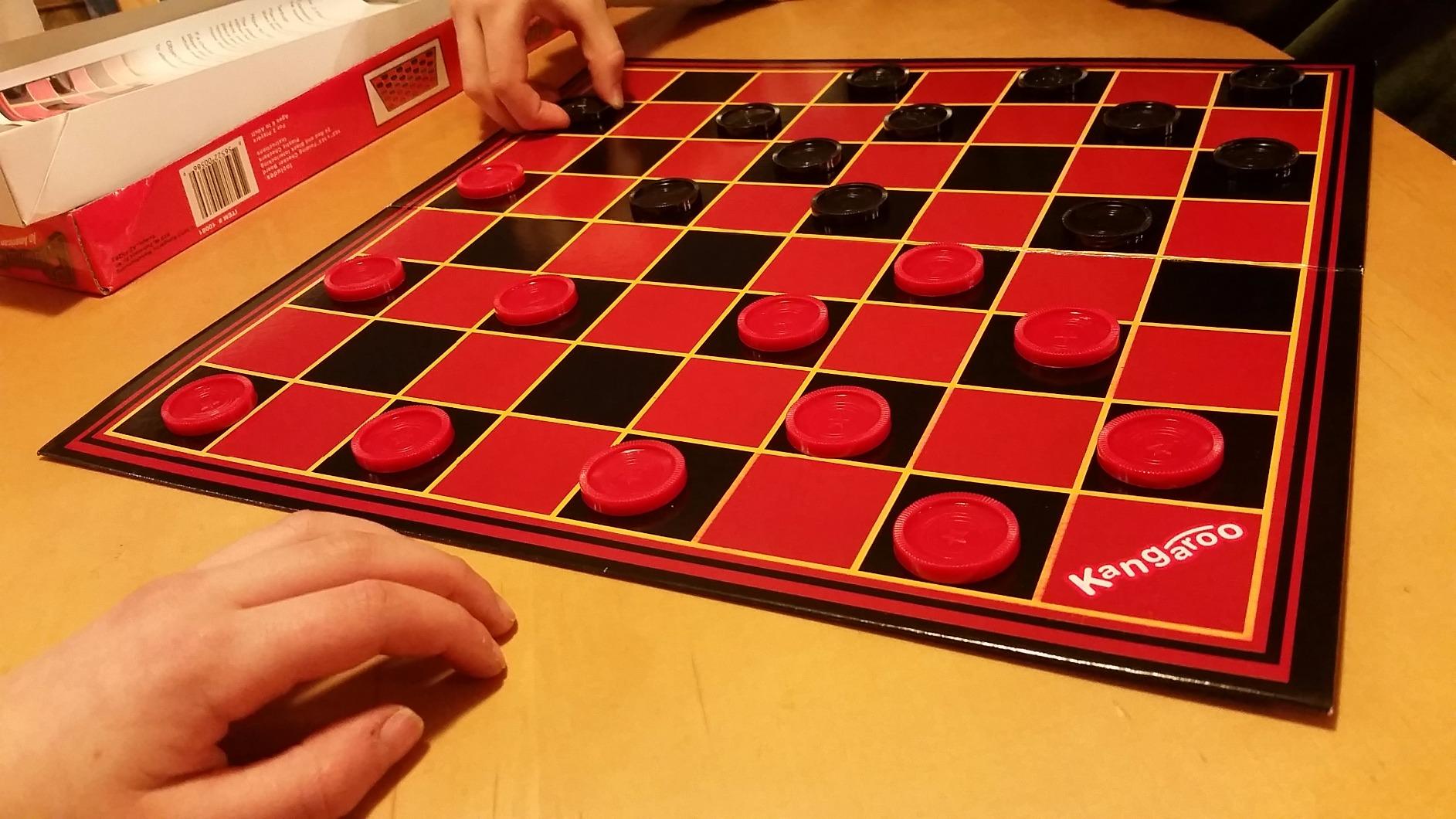
It is also one of the few games here with no elimination of any kind. A player with no moves makes one legal jump and then has to pass, and a board full of blocked pieces still produces a full game. Nobody is ever sent away from the table.
The duet case, which almost no roundup covers
A grandparent and grandchild playing alone is the most common real scenario and the least covered by competing lists. Checkers fills it with zero teaching, a comfortable board, and a piece that stays put. A BoardGameGeek thread asking for simple two or three player games for an elderly beginner keeps pointing back at familiar abstract games like this one.
Scoring is the only part that needs explaining, and it can be explained in a sentence: a piece that reaches the far row becomes a king, and a king moves in any direction. That is a single rule added to a game that is already understood.
Two things to fix before the first game
The board is cardboard at 7.04 ounces and reviewers describe it as somewhat flimsy, so put it on a flat, hard table rather than a cloth-covered one. The stacked pieces do not always lock together, which means a captured row can slide if the table gets bumped.
The listed recommended age is 6 to 10 years, which is clearly a packaging default for a game the whole family plays. It carries a small-parts warning for that reason, so supervise a very young child around the pieces rather than around the game.
Who should skip it
Skip it for a group night, full stop. Two players is a hard limit, and the game is a bad fit for a table of six. Use it as the pairing activity at the edge of a gathering rather than as the main event.
Skip it if a player wants progress they can feel. Checkers is a flat learning curve in both directions: there is nothing to unlock and nothing to get better at, which is precisely the appeal and precisely the limitation.
11. What Do You Meme – Trivia Split by Generation
WHAT DO YOU MEME? All of Us – The Family Trivia Game for All Generations – Family Card Games for Kids and Adults
4 or more players
Ages 12+
480 trivia cards
60-second timer included
+ Pros
- Splits questions by generation for a fair chance
- 480 cards give a huge question bank
- Lightweight format travels easily
- Works with three and four generations
- Cons
- Printed rules feel overcomplicated
- 60-second timer is tight for slower players
- Content leans heavily on US pop culture
- Younger children under 12 excluded
The premise here is the best single idea in this roundup for a three-generation table: the questions are sorted by generation, so the boomer cards, the Gen X cards, the millennial cards, and the Gen Z cards each have a designated expert. Everyone is the authority on something, and nobody is the family dummy.
The pack holds 480 trivia cards, 8 wild cards, a 60-second timer, a scoreboard, 2 tokens, and instructions, in a basket-format package measuring 10.75 by 7.75 by 2.2 inches. At 4 or more players it is built for a family-scale evening rather than a pair.
Reviewers describe families successfully using it with three and four generations at once, and the listed educational objective is promoting intergenerational learning and understanding alongside strategic thinking and teamwork. That is a rare case where the packaging claim and the reviewer experience match.
The timer is the setting you will change
Reviewers almost universally modify the printed rules, and two changes come up every time: play in teams rather than individually, and drop or extend the 60-second timer. The printed rulebook is described as overcomplicated for what is essentially a guessing game, so budget five minutes of simplification before anyone plays.
The reason to change it is generational. A sixty-second window is fine for a teenager and genuinely hard for a player retrieving a fact from fifty years ago. Leaving the timer out costs nothing in drama and removes the main reason a slower player gets embarrassed.
Know what you are buying before you buy it
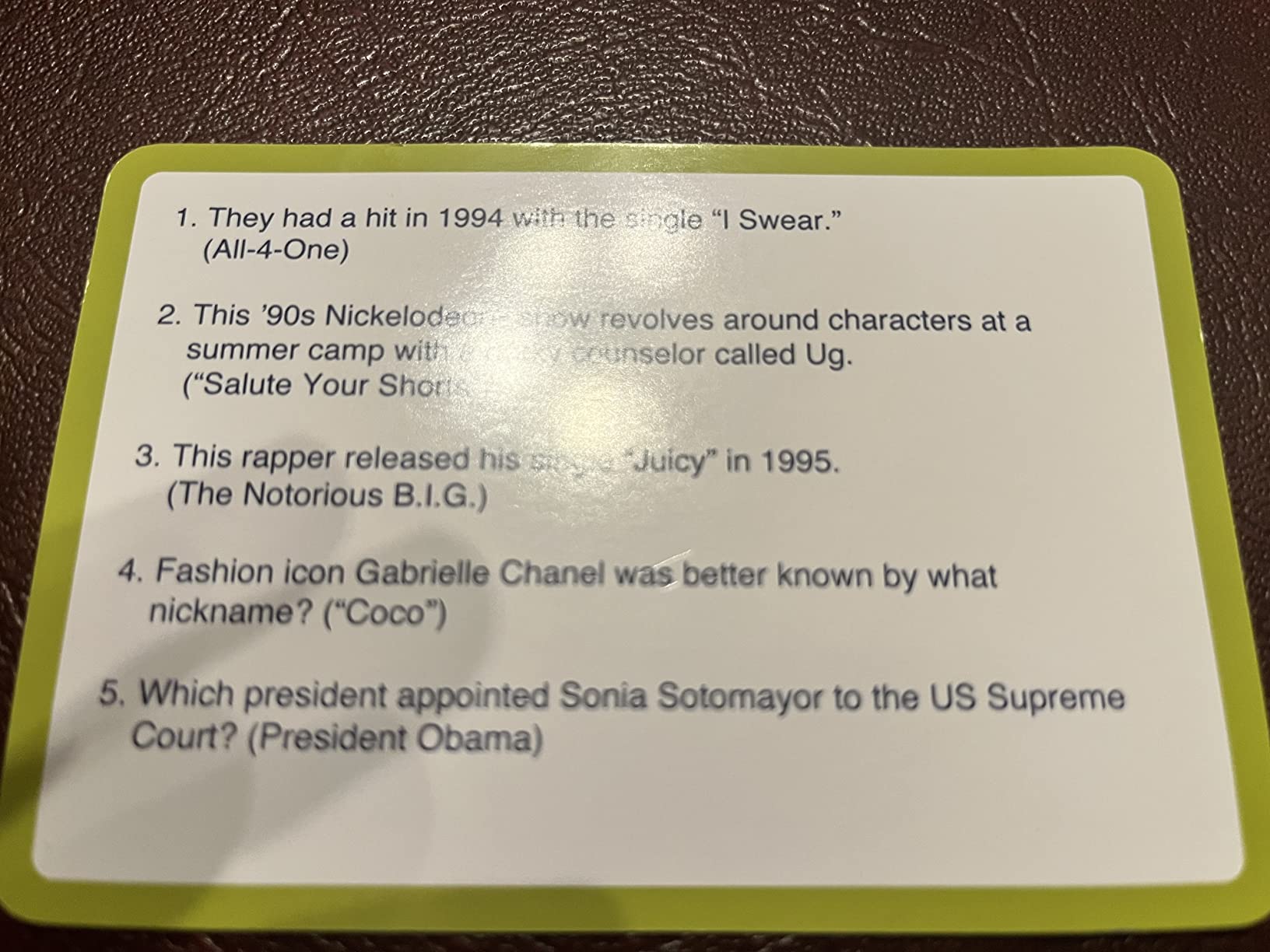
The question bank is broad but distinctly American, leaning on US music, film, and pop culture. Non-US reviewers note the content skew heavily, and outside the United States you should expect a significant share of the 480 cards to be unanswerable by anyone at the table.
The rating is 12 and up, which is the practical limit here. A family with children under 12 needs a different game for the youngest players, and the default scoring gives little incentive to work through every card on a turn.
Who should skip it
Skip it if the family is not based in the United States, or if the grandparents are not interested in American popular culture. That is a content problem, not a design problem, and it is not fixable with house rules.
Skip it for a table that includes players under 12 or a two-player evening. It needs four or more players to work, and the generational split is wasted with a duet.
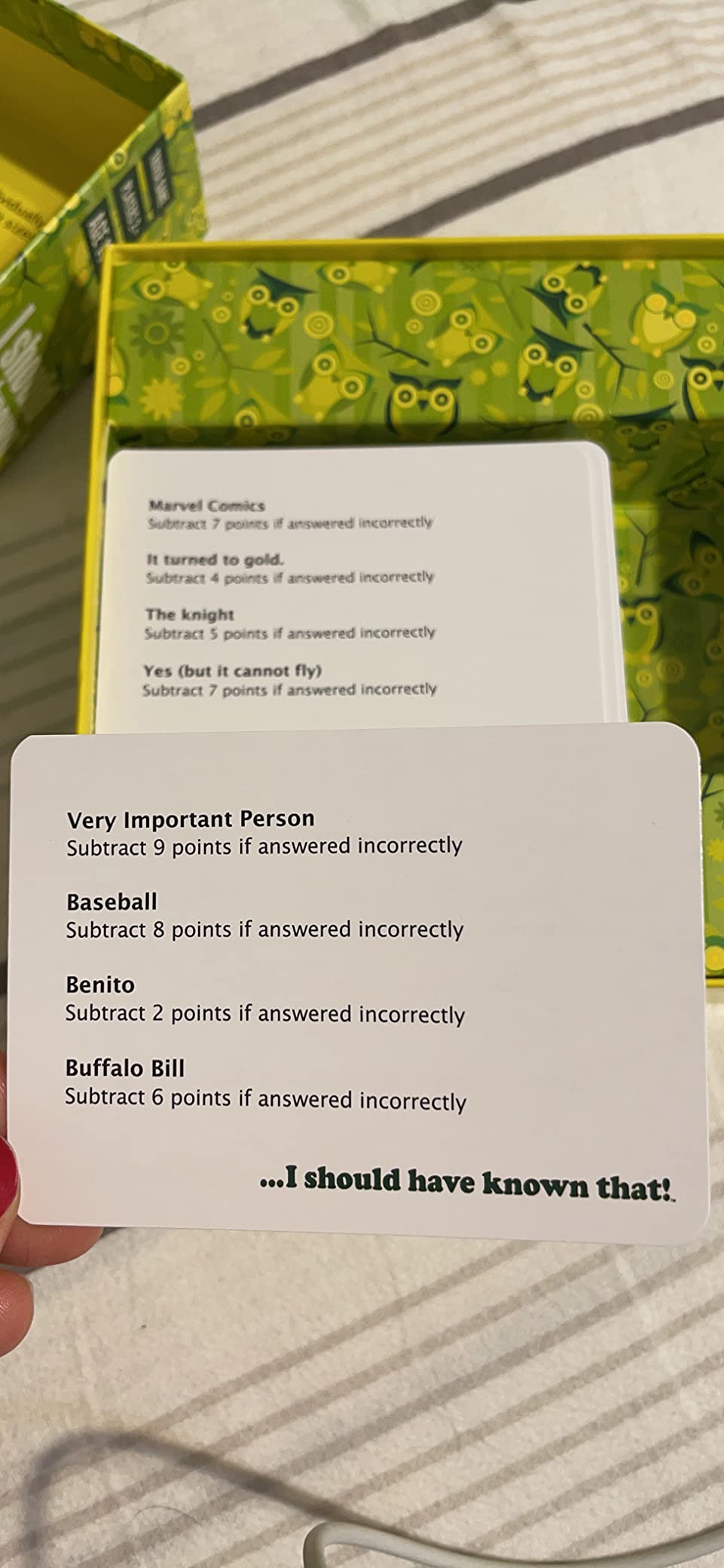
12. I should have known that – Penalty Scoring for an Adult-Only Evening
I should have known that! – A Trivia Game About Things You Oughta Know, Green
More than 2 players
Ages 14+
110 cards with 400+ questions
Penalty scoring
+ Pros
- Inverted scoring keeps confident players nervous
- Over 400 questions across 110 cards
- Compact box travels and stores well
- Broad general culture questions
- Repeatedly described as humorous
- Cons
- Ages 14 and up excludes younger children
- Requires reading a full card of statements
- Difficulty varies and some cards are too hard
- Weakest rating spread in our testing
This is the adult-crowd option. You are not trying to make a seven-year-old happy; you are trying to make a group of grandparents and their adult children laugh at each other, and the scoring twist does that work. You lose points for every wrong answer rather than gaining them, which keeps confident players permanently nervous.
The pack is 110 cards carrying more than 400 questions, in a compact box measuring 5.7 by 5.7 by 1.8 inches at 8.8 ounces. It is rated for more than two players and ages 14 and up, which makes it a poor fit for a table with young grandchildren present.
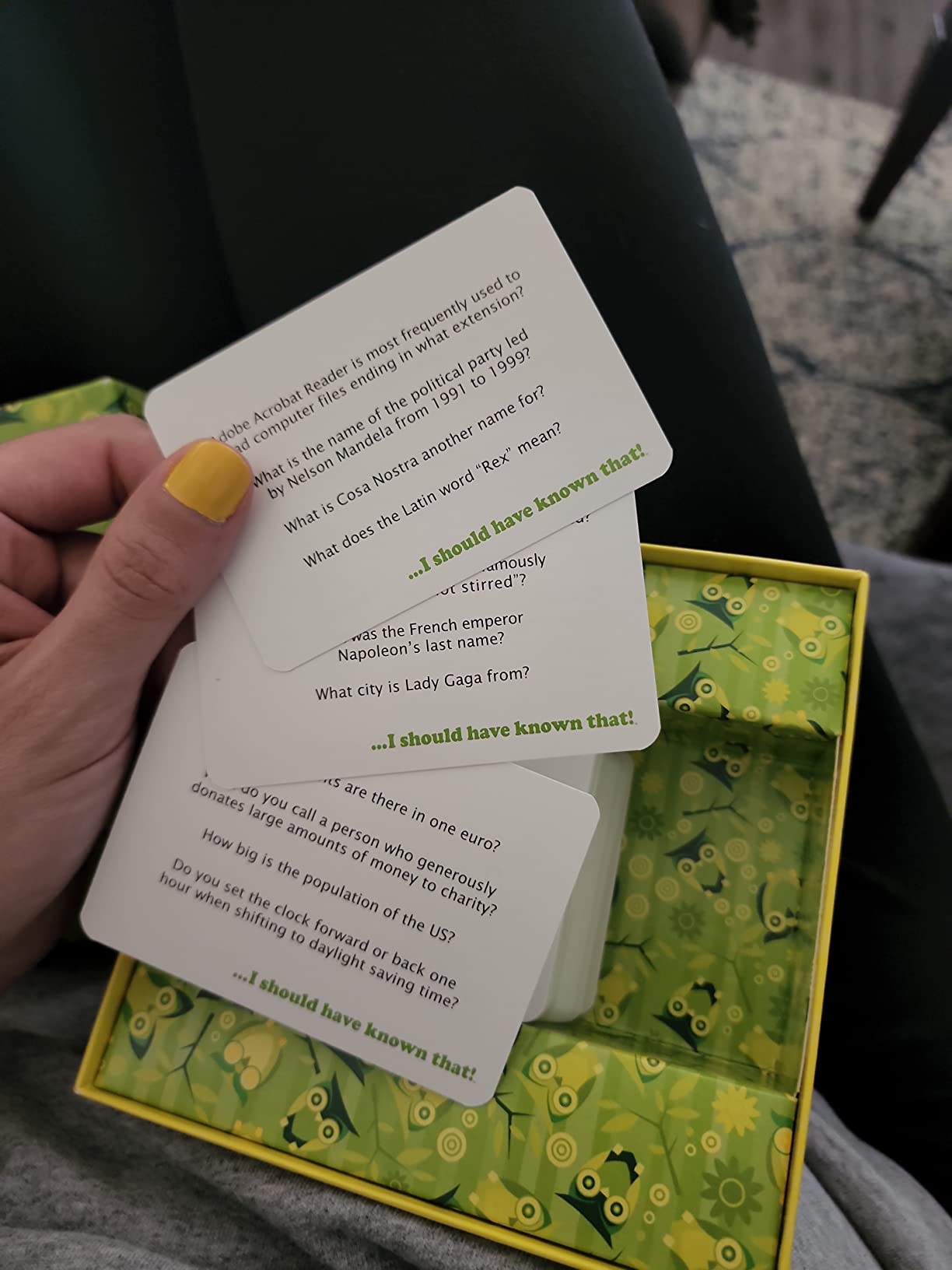
The questions are broad general culture rather than narrow specialist trivia, so nobody needs a given subject to contribute. Reviewers describe the format as entertaining and humorous, and the phrase the game is built around is one everybody has said.
Reading load is the hidden cost
Unlike a question-and-answer game, this one deals a card of true and false statements that a player reads through and judges. That is a genuine reading load, sustained across a card rather than a single question, and it is the reason this entry sits at fourteen and up rather than eight.
It is also the reason it does not belong on a table with vision problems. If a player at the table needs large print, this is a box to skip rather than to modify, because the reading is the mechanic and there is no spoken workaround.
Difficulty is uneven, so expect a spread
About 9 percent of reviews give three stars, the weakest spread in our testing, and the reason is consistent: some cards are too hard for most of the people at the table. When nobody gets a card, the scoring is flat and the round has no story.
That is manageable if you deal from the middle of the deck and skip a card that stalls the table. It is not manageable if you are playing with someone who takes the loss personally, because the penalty system punishes exactly the player who was still learning.
Who should skip it
Skip it for a table with children under 14, and skip it for a two-player evening. The format needs a crowd to generate the right amount of nervousness, and with a duet the penalty scoring just feels like losing.
Skip it for a quiet or careful group. The question cards produce laughter and mild competitive tension, and some players find the constant risk-taking-on-purpose unpleasant. Checkers or the domino set suit that table better.
How to Pick a Game Your Grandparents Will Actually Want to Play
Pick by table size first, then by how long the rules take, and only then by theme. A game that cannot seat the table is out regardless of how good it is, and a game that needs a fifteen-minute teaching round has already spent the best part of a short evening explaining itself.
Match the game to the size of the table
For a duet, you have two honest options: checkers for zero teaching and a real board, or Five Crowns for a card game with more going on. For a table of four to six, SKYJO, Sequence, Skip-Bo, and Five Crowns all cover the range. For eight to twelve people, Sequence, Giant UNO, and Herd Mentality are the only entries here that seat the table without splitting it.
When the table is bigger than any single game allows, do not split it. Put a two-player game on a side table and keep the main table together. A side table that people drift to and from holds the group together better than two half-games.
Use teach time as your first filter
Set a five-minute ceiling before you buy anything. SKYJO, Sequence, Giant UNO, Yahtzee, and checkers all teach in one explanation with no rulebook read-aloud. What Do You Meme needs its rules rewritten, Five Crowns needs one page of scoring explained, and I should have known that needs a sustained reading habit.
Teach the game to one person first, not to the table. Pick the least experienced player in the group, teach them privately, and let them teach the rest. You find the sticking point in ninety seconds instead of losing a round to it.
Remove elimination before you remove anything else
Elimination is the mechanic most likely to end a grandparent’s evening. When bankruptcy or a knock-out sends someone out of a game, they tend to leave the table, and the room splits. Every entry above except Monopoly keeps eliminated players in the game or avoids elimination entirely, and that is the single strongest filter in this roundup.
Hidden roles and bluffing are the second filter, for a different reason. They depend on someone maintaining a private story, which is demanding with fatigue. The games here that avoid hidden information include SKYJO, Sequence, Five Crowns, checkers, and the domino set.
Start with the games your grandparents already know
A BoardGameGeek thread on gaming with grandparents is full of specific traditional names: Bridge, Canasta, Pinochle, Euchre, Spades, Hearts, and Risk. Readers there note that reintroducing what people already played often works better than teaching something new, and a Reddit commenter described a grandparents’ own game from childhood that their family had never heard of.
That is the point worth taking seriously. Ask what your family played, buy that, and treat the evening as a reunion rather than a new activity. Monopoly, checkers, dominoes, and Yahtzee are all in this roundup for exactly that reason. If you want the simplest possible entry point, an ordinary deck of playing cards is the traditional answer that keeps surfacing in threads about easy card games for older players.
Guests who need large print or high contrast
Look for three things in a component, in this order: physical card or tile size, contrast between elements, and whether information is carried by shape as well as colour. On size, Giant UNO is the clearest example, with cards roughly three times normal and graphic symbols on every one. On shape, dominoes win outright because the tile is the information.
Forum discussion of large-print gaming describes people physically recreating cards in a bigger format, sometimes in plain black and white for contrast, because the commercial large-print catalogue is thin. Photocopying a word grid at a larger scale or writing a handful of high-contrast labels takes ten minutes and fixes most of what a player actually complains about.
Players in their eighties and up
The consistent advice from care-related discussion is the same: large print, simplified rules, cooperative play, and no bluffing or hidden roles. If a player is in their eighties, the deciding factors are almost never theme or depth. They are how fast a round ends, whether anyone is eliminated, and whether the game can be played without anyone losing track of whose turn it is.
That points toward checkers, the domino set, and Yahtzee, all of which have a shared central board or a visible score, no private information, and no losing-a-turn penalty. Add Giant UNO if vision is the primary barrier, and skip anything that requires sustained close reading.
Plan the night, not just the game
- Choose the game before the day, and choose the one that needs the least explaining.
- Deal and set up before anyone arrives so the first thing a guest sees is people playing, not a rulebook.
- Say the teach out loud in one sentence, then start. Do not stop to re-explain mid-round unless someone asks.
- Agree the end time before anyone is invested, not after.
- Keep a short game ready as a second round, because a 20-minute game after a heavy one is a better ending than one more round of the heavy one.
- If a player drops out mid-game, switch that player to a duelling role, a scorekeeping job, or a second table with a smaller game. Do not let them sit out.
Most game night problems are scheduling problems wearing a costume. A grandparent who leaves at nine is not bored, they are tired, and a 20-minute game planned as the second round solves it without anyone admitting anything went wrong.
Frequently Asked Questions
What are some fun games for grandparents and grandkids to play together?
For a two-player duet, checkers and Five Crowns are the strongest picks. Checkers needs no explanation at all and runs on a 15 by 15 inch board with 24 interlocking pieces, while Five Crowns adds real decisions and scales to seven players later if more people join. Both avoid elimination, so nobody is ever sent away from the table.
What are some old games I can play with my grandparents?
Start with the traditional card and abstract games people already know: Scrabble, Rummikub, chess, checkers, Yahtzee, dominoes, and Rummikub-style rummy. Forum discussion of gaming with grandparents names Bridge, Canasta, Pinochle, Euchre, Spades, Hearts, and Risk as well. Reintroducing something familiar is usually easier than teaching a modern game.
What are some good board games for playing with elderly people?
Pick games that teach in one explanation, need no fast reflexes, and never eliminate a player. The strongest fits in this roundup are SKYJO, which needs no reading at all, Sequence, checkers, and Yahtzee. A useful rule of thumb: if a game can end with a player out of it, it is a poor choice for a mixed-age table.
What are some fun games for 80-year-olds?
Choose games with no elimination, no hidden roles, no bluffing, and no sustained close reading. Checkers, dominoes, and Yahtzee all score in a visible place with nothing hidden, and Giant UNO works well when reduced vision is the main barrier because the cards are roughly three times normal size with graphic symbols on each one.
What are some good board games for a large group of people?
Only three entries in this roundup seat a group of ten or more without splitting the table. Sequence holds 2 to 12 players, Giant UNO holds 2 to 10, and Herd Mentality holds 4 to 20. Sequence teaches in under two minutes, Herd Mentality runs about 20 minutes, and Giant UNO uses oversized cards that stay readable across a long table.
What is the best card game for older people?
Five Crowns is the one we would put in front of an older player. It has no penalty cards, a visible points sheet that nobody has to keep secret, easy rules, and a non-combative pace that reviewers repeatedly describe as family-proof. It scales from two to seven players and travels flat, though two full decks mean a card shuffler helps.
Where to Start on Your Next Grandparent Game Night
If you are organising a three-generation family table and want the least friction, start with SKYJO. It needs no reading, scales from two to eight players, and a new player is competitive on the first round. For a calmer, more conversational evening, pick Five Crowns, where nothing is ever taken away from you. For a table of ten or more, Sequence or Herd Mentality keeps everyone in one game. For a grandparent with reduced vision, Giant UNO and the domino set are the two that solve the problem physically rather than with house rules. For a duet, checkers.
The best tabletop games for game nights with grandparents share three traits: rules that land in one explanation, components readable at arm’s length, and no mechanic that removes a player for being slow. Check those three boxes first, and the choice takes about fifteen seconds. Then make sure the game is out on the table before anyone arrives, because the fastest rules explanation in the world is the one you skip.