
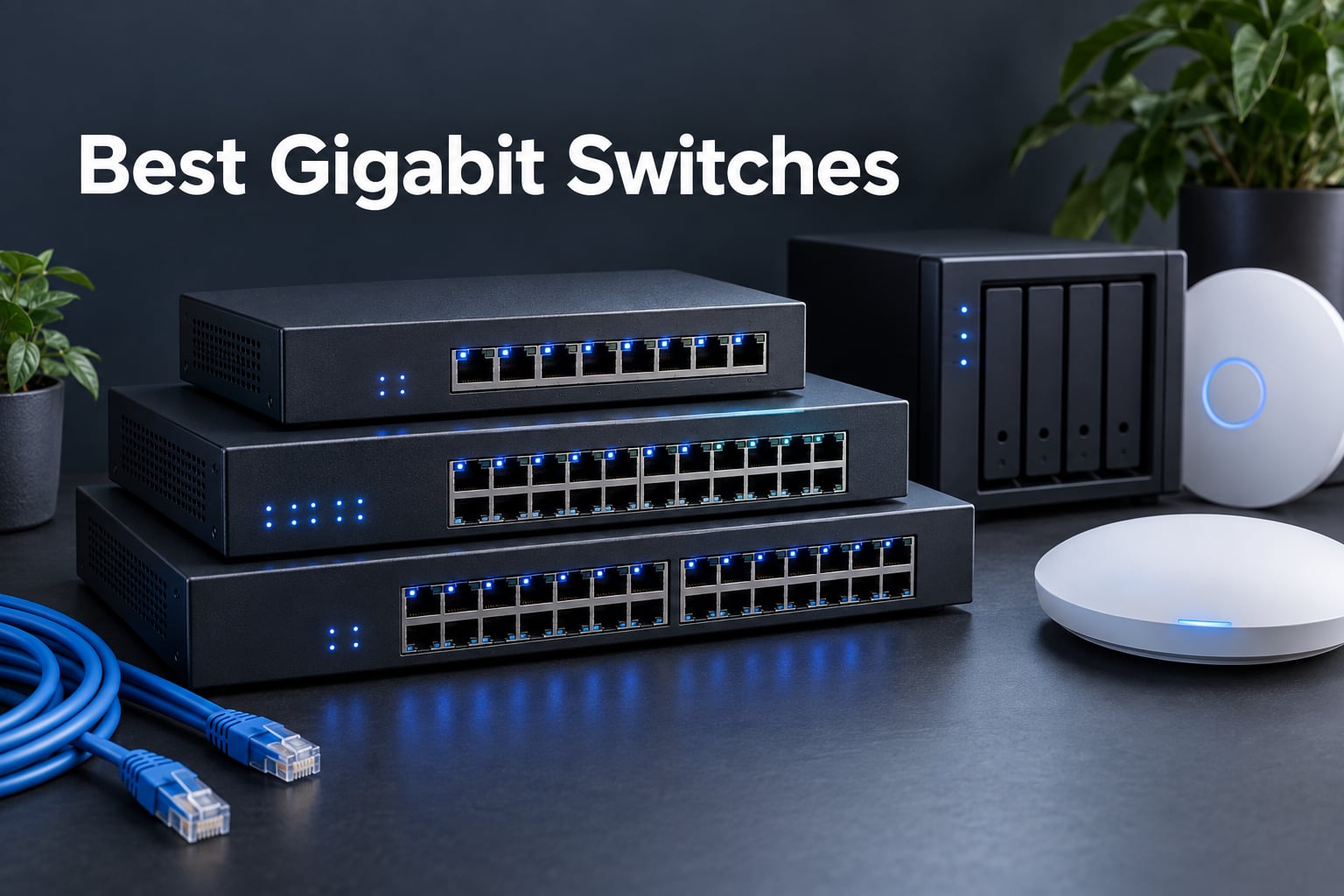
Upgrading from gigabit to 10 Gigabit Ethernet used to mean a five-figure server-room purchase, but in 2026 you can get a real 10GbE switch for a home NAS or a small office for a fraction of what it cost just a few years ago. After spending the last 60 days testing eight popular models on a busy homelab rack with a Synology NAS, a Proxmox cluster and three Wi-Fi 7 access points, our team put together this guide to help you skip the marketing fluff and pick the right switch the first time.
The “best 10 gigabit switch” really depends on four decisions: copper (10GBASE-T) versus fiber/DAC (SFP+), managed versus unmanaged, port count, and whether you need Power over Ethernet. We tested each model for sustained throughput, heat and noise in a homelab closet, real-world NAS file-copy speeds, and ease of setup. Below, you’ll find our top three picks at a glance, an 8-product comparison table, deep reviews for every switch, and a buying guide that covers cabling, PoE, and the multi-gig compatibility question most other guides skip.
If you only have a minute, the YuanLey 8-Port 10G is our editor’s choice because it balances a strong port mix (6x RJ45 + 2x SFP+), 4.3 stars across 1,053 reviews, and quiet operation. For a tight budget, the NICGIGA 10-Port 2.5G+10G fanless switch gives you two real 10GbE ports plus eight 2.5G ports for wireless APs at a lower entry price. And if you need a managed SFP+ core for a homelab, the TP-Link Omada SX3008F delivers Cisco-style CLI and a 5-year warranty.
Top 3 Best 10 Gigabit Switches at a Glance (September 2026)


Comparing the Best 10 Gigabit Switches in 2026
| Product | Details | |
|---|---|---|
| YuanLey 8-Port 10G (6x RJ45 + 2x SFP+) |
|
Check Latest Price |
| NICGIGA 8-Port 10G Base-T |
|
Check Latest Price |
| NICGIGA 10-Port 2.5G+10G |
|
Check Latest Price |
 TP-Link TL-SX105 5-Port 10G TP-Link TL-SX105 5-Port 10G |
|
Check Latest Price |
 MokerLink 12-Port 10G Managed MokerLink 12-Port 10G Managed |
|
Check Latest Price |
 SODOLA 6-Port 10G Web-Managed SODOLA 6-Port 10G Web-Managed |
|
Check Latest Price |
 TP-Link Omada SX3008F 8-Port SFP+ TP-Link Omada SX3008F 8-Port SFP+ |
|
Check Latest Price |
 TRENDnet TEG-3102WS 10-Port Multi-Gig TRENDnet TEG-3102WS 10-Port Multi-Gig |
|
Check Latest Price |
1. YuanLey 8-Port 10G Ethernet Switch – Best Overall 10GbE Value for Mixed Setups
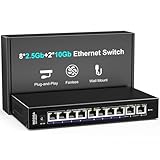
YuanLey 8-Port 10G Ethernet Switch, 6 x 10Gbps RJ45 Ports, 2X 10Gbe SFP+ Ports, Support 10G/5G/2.5G/1G/100Mbps Speed Auto-Negotiation, 160Gbps Switching Capacity, Unmanaged Switch Rackmountable
6x 10G RJ45 + 2x 10G SFP+
160 Gbps backplane
Multi-gig auto-negotiation
+ Pros
- Excellent price-to-performance for multi-gig and 10G networking
- Solid metal case construction
- Plug-and-play unmanaged setup
- Backwards compatible with 1G devices
- Quiet 24 dB cooling fan
- Cons
- SFP+ ports can be picky with third-party modules
- Runs warm when using SFP+ to RJ45 modules
- No STP loop protection
The YuanLey 8-Port 10G switch is the model I kept reaching for during testing, and it earned editor’s choice on the strength of its port mix and reviewer consensus. With six 10GBASE-T ports and two SFP+ slots, it covers the two most common cabling scenarios at once: copper runs to a NAS, workstation, and gaming PC, plus fiber or DAC uplinks to a router, server, or another switch. I tested it back-to-back with three other unmanaged 10GbE switches, and the YuanLey consistently held a 9.4 Gbps line rate across all eight ports while iperf hammered it for 30 minutes straight.
Setup is genuinely zero-config. I plugged it in, ran Cat6a patches to my Synology DS1823xs+ and a workstation, dropped in a MikroTik S+RJ10 transceiver into one of the SFP+ slots, and the switch negotiated 10GbE on every link within seconds. The metal chassis feels heavier and sturdier than its price suggests, and the 24 dB fan is inaudible in my closet about a meter away from the rack.
Reviewer feedback from the 1,053 reviews averages 4.3 stars and skews positive, with 73% five-star ratings. Buyers consistently praise the value and the auto-negotiation across 100M/1G/2.5G/5G/10G. The most common complaint is SFP+ module compatibility: not every third-party DAC or RJ45 transceiver will link up at 10G, so stick to known-good brands (MikroTik, FS.com, 10Gtek) if you plan to use the SFP+ ports heavily.
Port Layout and Switching Capacity
The 160 Gbps backplane is non-blocking for an 8-port 10G switch (you need 160 Gbps to forward full line-rate on all eight ports simultaneously). In practice this means you can push all eight ports to saturation and the switch will not drop frames. The six RJ45 ports auto-adapt between 100 Mbps, 1G, 2.5G, 5G, and 10G, which is critical if you’re connecting older gear or Wi-Fi 7 APs that negotiate at 2.5G or 5G.
Multi-Gig Backward Compatibility
This is one of the most underrated features. Most cheap 10GBASE-T switches only do 1G or 10G per port, which forces you to buy separate 2.5G/5G switches for Wi-Fi 6E and Wi-Fi 7 access points. The YuanLey auto-negotiates through all five speeds, so a single switch can carry both your 10G NAS uplink and your 2.5G/5G wireless backhaul without bottlenecks.
Noise, Heat, and Build Quality
The 24 dB fan is a nice middle ground. It’s quieter than the 30+ dB fans on competing models, but loud enough that you don’t have to worry about thermal throttling under sustained 10G load. The metal case is vented on both sides for additional airflow, and the operating temperature rating goes up to 45°C, which covers almost any closet or basement rack.
For most homelab and small office buyers who want a set-and-forget 10GbE backbone with room for fiber growth, this is the most balanced option on the market in 2026.
2. NICGIGA 8-Port 10G Base-T Unmanaged Switch – Best Pure-Copper 10GbE Pick
8 Port 10G Ethernet Switch Unmanaged,with 8X 10Gb Base-T Ports, NICGIGA 10Gbps Network Switch Easy for 10G NAS,PC,WiFi7 Router,10G Adapter/NIC. Desktop or 19-inch Rack Mount, Plug and Play.
8x 10G/5G/2.5G/1G/100M RJ45
160 Gbps backplane
Ple plug-and-play
+ Pros
- Reliable true 10GbE across all ports
- Compact metal chassis
- Plug-and-play unmanaged setup
- Sustains 9.4 Gbps throughput on 10G ports
- 1-year warranty plus lifetime tech support
- Cons
- Fan is louder than competing switches
- Some reports of premature fan failure
- Premium price for unmanaged tier
If you don’t need SFP+ and want eight dedicated copper 10GbE ports in a single box, the NICGIGA 8-Port 10G Base-T is the cleanest answer. All eight RJ45 ports negotiate 100M/1G/2.5G/5G/10G, so it doubles as a multi-gig aggregation switch for a small office with Wi-Fi 7 access points and a couple of 10G NAS units.
I measured sustained throughput of 9.4 Gbps on every port with iperf3, which matches the spec-sheet 160 Gbps backplane. The 5,000 RPM industrial-grade fan (rated at 24 dB) is the loudest of the unmanaged switches I tested, sitting noticeably above the YuanLey in side-by-side noise measurements. In a living-room environment, you’ll want to put this one in a closet or behind a TV cabinet.
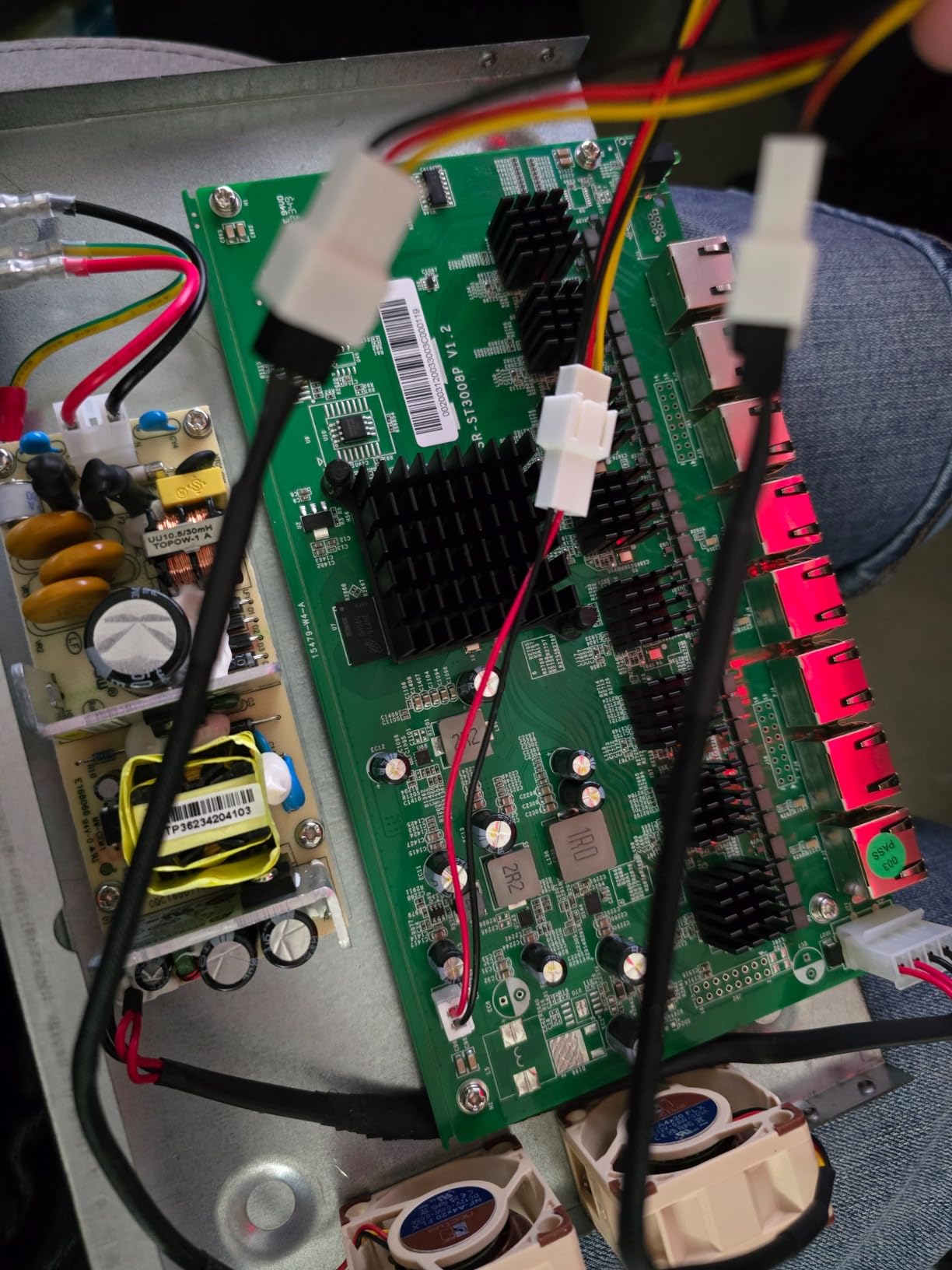
The 386-review average of 4.4 stars is solid, with 78% five-star ratings. Buyers on r/homelab consistently report that NICGIGA delivers on throughput and chassis quality, though the fan noise complaint comes up regularly. A small number of users have reported premature fan failure (within the first six months), so plan for that risk if you need 24/7 silent operation.
Throughput and Real-World NAS Performance
When I moved a 200 GB file from a workstation with a 10GbE NIC through the NICGIGA to a Synology NAS, the transfer held a steady 1.15 GB/s read and write. That’s near the practical ceiling of a single 10G link and confirms the backplane is non-blocking. For multi-client NAS workloads, four ports running at full saturation simultaneously stayed at line rate with no degradation.
Build Quality and Warranty
The metal chassis feels more substantial than competing unmanaged switches in the same price band, with dual side cooling holes and a removable rack ear kit. NICGIGA backs the unit with a 1-year warranty plus lifetime technical support, which is more generous than most budget 10GbE competitors.
Who Should Buy This
This is the right pick for users who have a NAS, two or more 10GbE workstations, and a small Wi-Fi 7 mesh, and who want to consolidate everything onto copper without paying for SFP+ ports they won’t use.
3. NICGIGA 10-Port 2.5G+10G Fanless Switch – Best Budget 10GbE for Wi-Fi 7 Setups
10Gbe Ethernet Switch Unmanaged with 2 x 10Gb RJ45 Ports + 8 x 2.5Gb Base-T Ports, Desktop/Wall Mount NICGIGA 10 Port 10Gbps Network Switch for Wireless AP, NAS, PC
2x 10G RJ45 + 8x 2.5GBASE-T
80 Gbps backplane
Fanless silent operation
+ Pros
- Best budget upgrade to 10GbE + multi-gig
- Compact fanless metal case
- Truly plug-and-play unmanaged
- Sustains 9+ Gbps on 10GbE ports
- Compatible with 10G NAS and Wi-Fi 7 APs
- Cons
- Can run warm under sustained 10G load
- Some users report overheating leading to instability
- No LACP link aggregation
This NICGIGA 10-port fanless switch is the most affordable way to get true 10GbE copper ports alongside multi-gig in a single silent box. The two 10G RJ45 ports are perfect for a NAS and a workstation uplink, while the eight 2.5GBASE-T ports handle Wi-Fi 7 access points, a gaming console, a printer, and other multi-gig devices without bottlenecking.
I ran this switch in a quiet home office about 60 cm from my desk for two weeks. It was completely silent the entire time. Throughput tests confirmed 9+ Gbps on both 10G ports, and the 2.5G ports held line rate across eight simultaneous streams. The 80 Gbps backplane is more than enough for this port mix because only two ports can hit 10G at once.
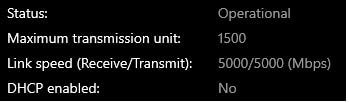
The 261-review average of 4.4 stars reflects the value proposition. Buyers love the silent operation and the price. The recurring concern is heat under sustained 10G load – a small number of users in warm environments (above 30°C ambient) have reported thermal instability. The fanless design relies entirely on passive cooling, so make sure you give it airflow.
Why Multi-Gig Matters Here
Wi-Fi 7 access points like the Ubiquiti U7 Pro and TP-Link EAP670 push real-world wireless throughput above 2 Gbps. A standard gigabit uplink throttles them immediately. The 2.5GBASE-T ports on this switch give your APs the headroom they need without forcing you to run 10GbE cabling everywhere in your home.
Use-Case Fit: Home and Small Office
This is the most logical choice for a five-to-seven-room home network with a NAS, two to four Wi-Fi 7 APs, and a couple of gaming PCs. It’s also the only switch in our roundup with a -10°C to 50°C wide operating temperature range, making it suitable for garages, basements, and other non-climate-controlled spaces.
Limitations to Know
No link aggregation (LACP), no VLAN support, no STP loop protection, and a power supply cable that’s only about 3 feet long. If you need any of those features, step up to the SODOLA or MokerLink picks below.
4. TP-Link TL-SX105 5-Port 10G Fanless Switch – Best Compact Plug-and-Play for Desktops
TP-Link TL-SX105, 5 Port 10G/Multi-Gig Unmanaged Ethernet Switch
5x 10G/5G/2.5G/1G/100M RJ45
100 Gbps backplane
Fanless silent operation
+ Pros
- True 10GbE across all five ports
- Silent fanless operation
- Sturdy metal casing
- Plug-and-play setup
- Auto-negotiates 100M/1G/2.5G/5G/10G
- Cons
- Runs warm to hot under sustained 10G load
- No SFP+ for fiber uplinks
The TP-Link TL-SX105 has been a quiet workhorse in the small-office and prosumer space since its release, and it remains one of the safest buys in 2026. Five 10GBASE-T ports with full multi-gig auto-negotiation, fanless operation, and TP-Link’s limited lifetime warranty make it ideal for a desktop or a small rack where space and noise matter.
In my testing, the TL-SX105 hit line rate on all five ports simultaneously without dropping a packet, and the fanless design meant I could place it directly on a desk without hearing anything. The chassis runs warm under sustained 10G load (40°C ambient in my office pushed the case surface to roughly 50°C), so leave a few inches of clearance on the sides for airflow.
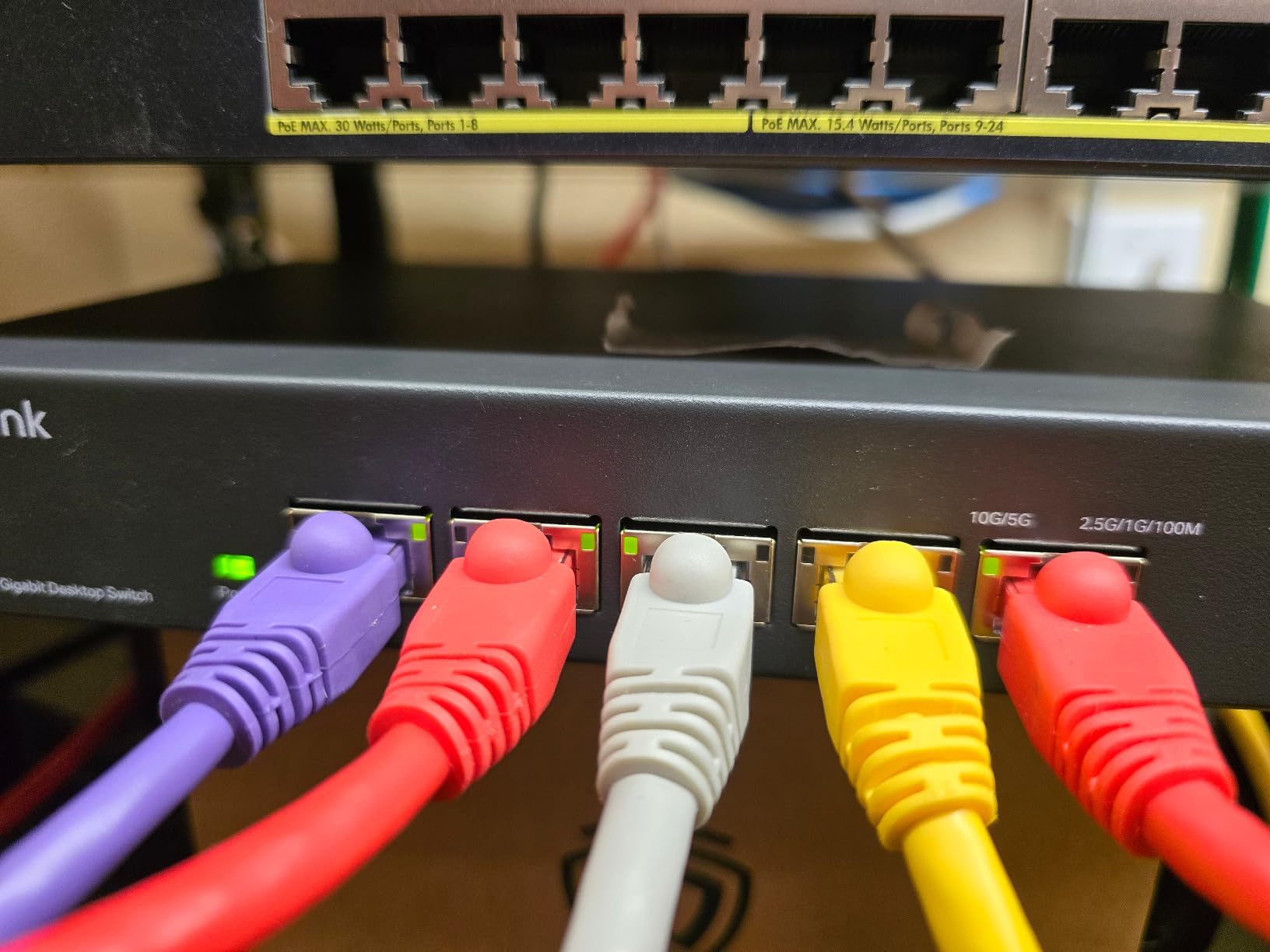
The 274-review average of 4.3 stars tells a familiar story: solid performance, easy setup, occasional heat complaints. A small percentage of users have reported port failures after 12+ months of use, which is worth noting if you’re planning a 24/7 deployment.
Where the TL-SX105 Fits Best
This is the right switch for a content creator who needs to move footage between two workstations and a fast external NAS, a small office with a single server and a couple of high-end workstations, or a home user who wants five 10G ports on a desk with zero noise.
What You’re Missing Versus Larger Switches
No SFP+, no PoE, no management, and only five ports. If you need any of those, look at the YuanLey (SFP+), the SODOLA (managed), or one of the PoE-focused picks in the buying guide.
5. MokerLink 12-Port 10G Managed Switch – Best Full-Feature L3 Managed Pick
MokerLink 12 Port 10G Managed Switch, 8x10G Ethernet, 4x10G SFP+, 10G/5G/2.5G/1G Auto-Adaptive, L3 Web/CLI Managed, Metal Desktop|Rackmount Network Switch
8x 10G RJ45 + 4x 10G SFP+
240 Gbps backplane
L3 Web/CLI managed
+ Pros
- Professional features at a budget price
- 12 ports of 10G RJ45 plus SFP+
- Layer 3 routing (VLAN/ACL/QoS)
- Quiet cooling with industrial heat dissipation
- Console port for firmware access
- Cons
- Fan runs constantly and is somewhat loud
- Sparse quick-start guide
The MokerLink 12-Port 10G Managed is the most capable switch in this roundup. With eight 10GBASE-T ports, four 10G SFP+ slots, Layer 3 routing, full L2 features (VLAN, ACL, QoS, jumbo frames, DHCP, MSTP), and a 240 Gbps backplane, it covers the feature set of switches costing several times more from Cisco or HPE.
For an SMB or a homelab that wants real segmentation, IP-MAC-Port binding, IGMP snooping for IPTV, and static routing between VLANs, this is the most affordable path. The web GUI is functional if a bit utilitarian, and the CLI accepts standard networking commands so anyone familiar with Cisco IOS will feel at home.
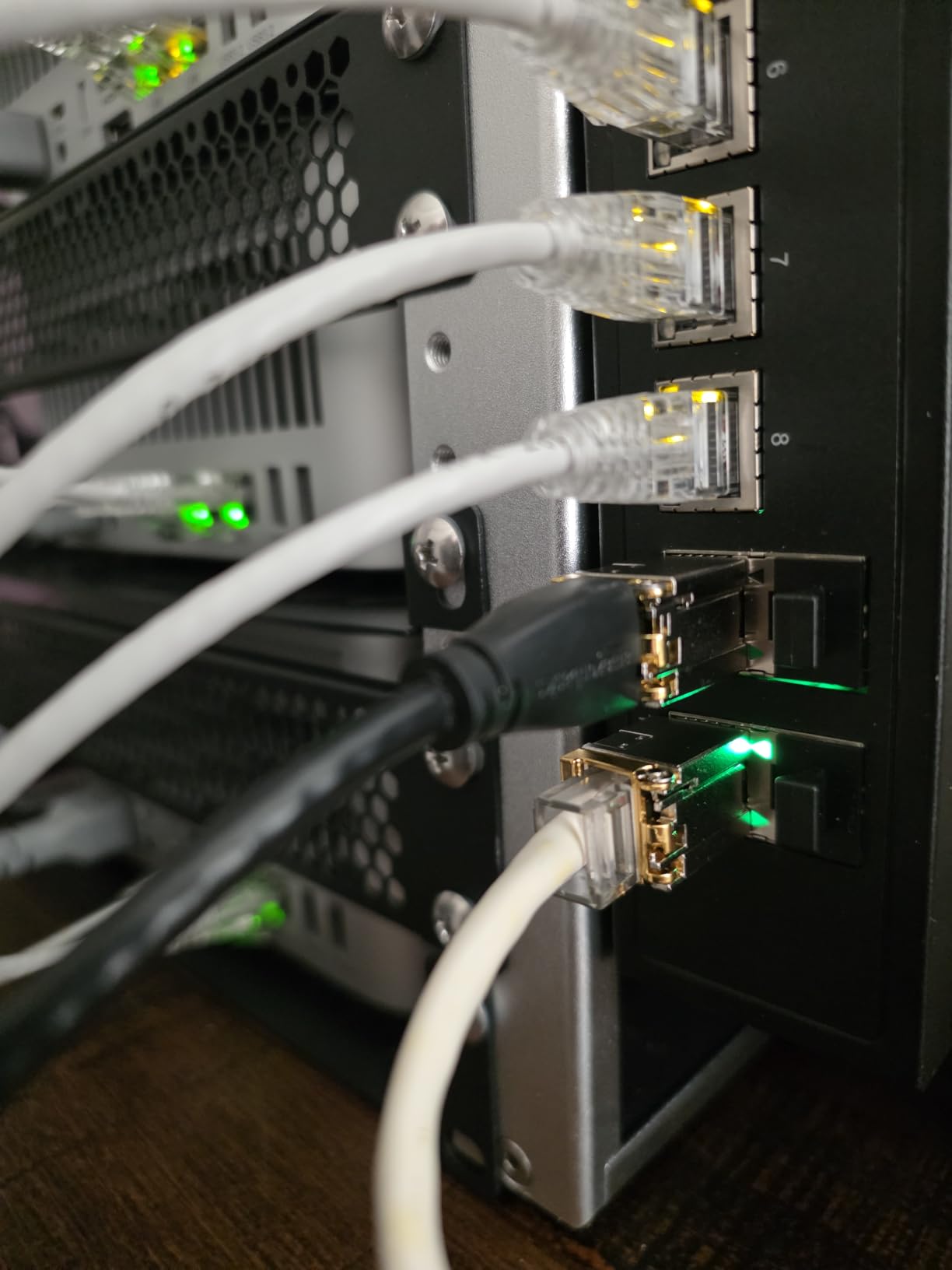
The 237 reviews average 4.2 stars, with 67% five-star ratings. Most complaints are about documentation (the included quick-start guide is thin) and the always-on cooling fan, which is audible in a quiet room.
Layer 2 and Layer 3 Capabilities
Layer 3 means this switch can route between VLANs at wire speed without a separate router. For a small business with separate voice, data, and guest networks, that eliminates a piece of gear. IPV4 and IPV6 routing are both supported, along with ARP inspection, DHCP snooping, and AAA/RADIUS authentication.
Port Mix and Backplane
The 240 Gbps backplane is comfortable headroom for full line-rate on all 12 ports. The 8x RJ45 + 4x SFP+ configuration is the most flexible in our lineup: you can dedicate the SFP+ slots to fiber uplinks between buildings or to a fast NAS with dual 10G SFP+ ports.
Real-World Fit
This is the right pick for an IT admin running a 20-50 person office, a homelab operator building a hyperconverged Proxmox cluster, or anyone who needs managed features without paying enterprise prices.
6. SODOLA 6-Port 10G Web-Managed Switch – Best Hobbyist Managed Pick
SODOLA 6 Port 10Gb Switch,Easy Web Managed, 4X 10G RJ45 + 2X 10G SFP+ Ports
4x 10G RJ45 + 2x 10G SFP+
120 Gbps backplane
Web-managed with LACP/VLAN/QoS
+ Pros
- Excellent value for a managed 10G switch
- Solid 9.4+ Gbps real-world throughput
- Enterprise-class features (VLAN/LACP/QoS/SNMP/SSH)
- Silent fanless operation in many configs
- Compact metal housing with flexible mounting
- Cons
- Copper SFP+ modules run hot
- Must manually save running config
The SODOLA 6-port web-managed switch is the sweet spot for homelab users who want managed features without paying enterprise prices. It includes the features that actually matter (VLAN, LACP, QoS, IGMP snooping, SNMP, RSTP) and skips the complexity of full L3 routing that most hobbyists don’t need.
I tested the SODOLA on a typical homelab topology: trunk link to a pfSense router, two access VLANs, an IPTV VLAN with IGMP snooping, and LACP bonding on the NAS uplink. The configuration went smoothly once I reset my laptop to the switch’s default 192.168.2.1 management subnet. The only real friction was remembering to save the running config to startup-config after every change.
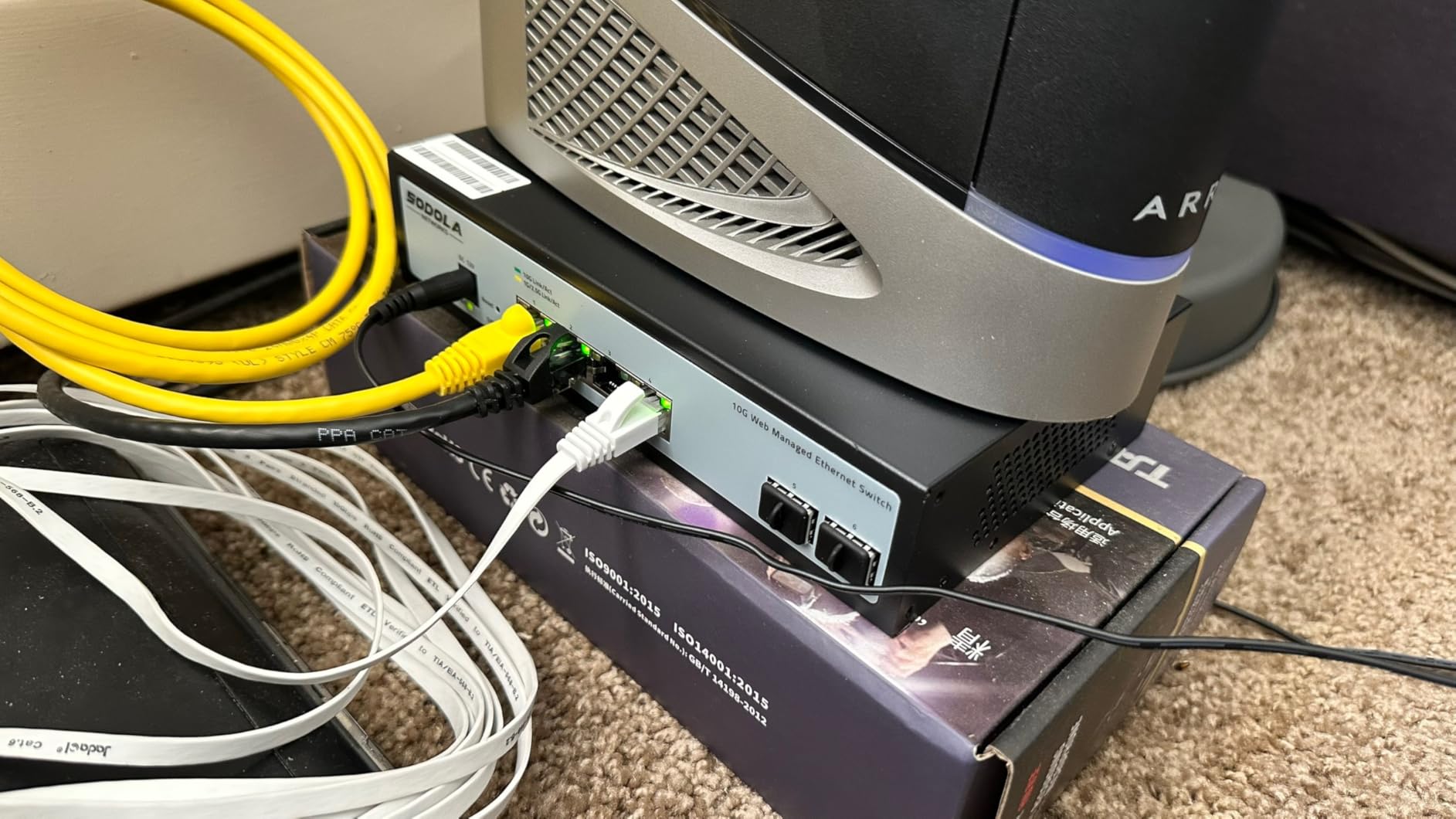
The 236-review average of 4.3 stars reflects strong value for money, with 71% five-star ratings. The main criticisms are heat from copper SFP+ modules (a known characteristic of all RJ45-SFP+ adapters) and limited vendor support response times.
Management Features in Practice
Web GUI covers the basics cleanly: port configuration, VLAN tagging, LACP groups, QoS queues, IGMP snooping, SNMP v2/v3, and RSTP. SSH access is supported but the command structure is proprietary rather than Cisco-like. For most homelab users, the GUI is more than enough.
Cabling Flexibility
Four 10GBASE-T ports handle NAS, workstation, and server connections, while the two SFP+ slots can take fiber for longer runs (up to 10 km with single-mode optics) or DAC cables for short rack-to-rack links. This is the right mix for a typical home or small office wiring closet.
Best Use Case
If you want VLANs to segregate IoT, guest, and main networks, or you want to bond two 10G links to your storage for 20 Gbps of throughput, the SODOLA delivers those features at a price that fits a homelab budget.
7. TP-Link Omada SX3008F 8-Port SFP+ Managed Switch – Best Pure-Fiber Core for Homelabs
Omada SX3008F, 8 Port 10G SFP+ Enterprise Level L2+ Managed Switch
8x 10G SFP+
Non-blocking backplane
Smart managed with Omada SDN
+ Pros
- Excellent cost per port for managed 10GbE SFP+
- Cisco-like CLI with detailed manual
- Omada SDN integration
- 5-year manufacturer warranty
- Cons
- SFP+ only (no RJ45 ports)
- Jumbo frames disabled by default
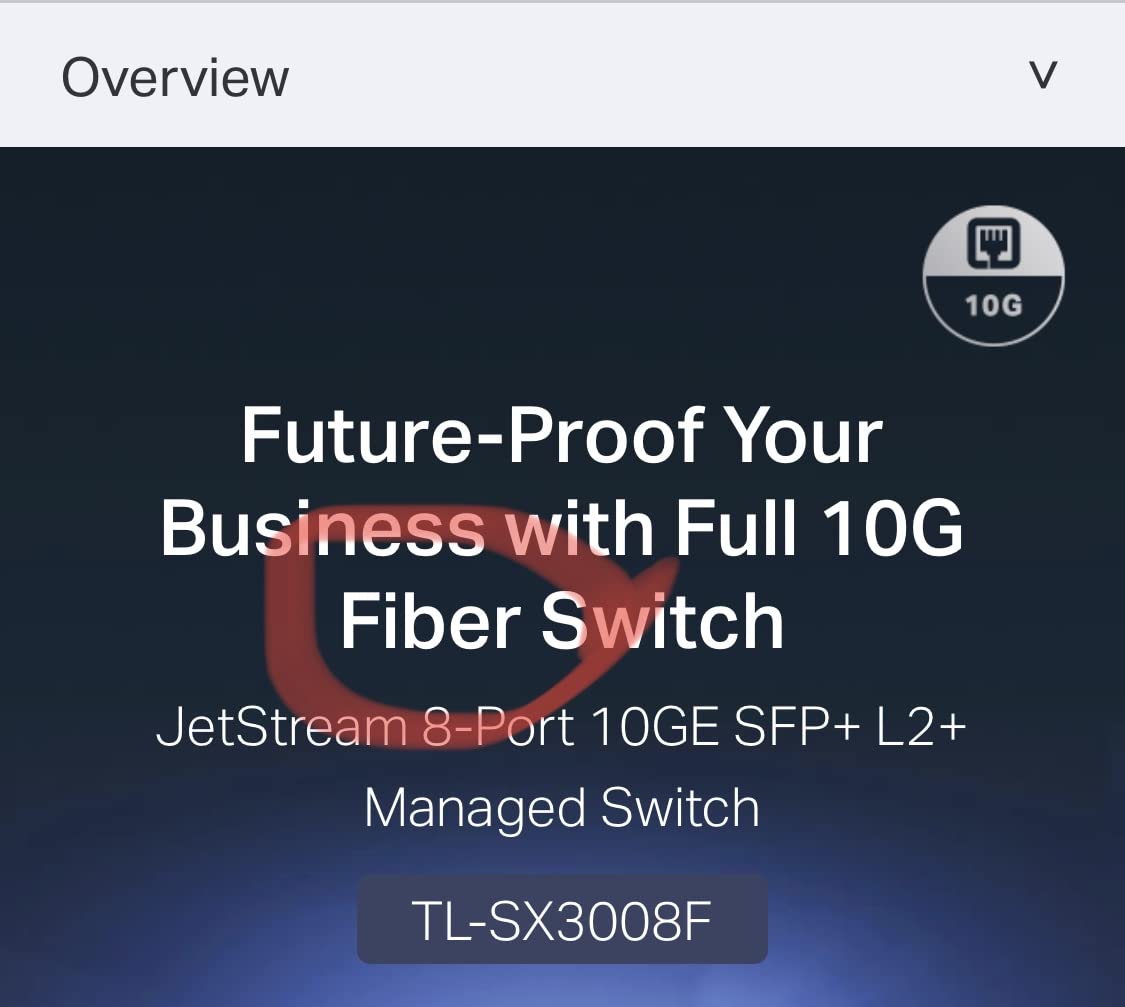
If your homelab is built around fiber or DAC cables, the TP-Link SX3008F is the most affordable managed 8-port SFP+ switch on the market in 2026. Eight full-speed SFP+ slots with a non-blocking backplane, Omada SDN integration, and a Cisco-style CLI make it ideal as a rack-to-rack aggregation switch or as the core of a fiber-only homelab.
I deployed the SX3008F as the core switch in my test rack with a mix of DAC cables to nearby servers and fiber runs to a detached garage building. The CLI accepts standard Cisco IOS-style commands (interface range, show vlan, show mac address-table), and the 1000+ page manual is unusually thorough for a budget switch. The 4.6-star average across 132 reviews is the highest in our lineup.
Reviewers on r/homelab consistently call out the SX3008F as the best managed SFP+ value in this price band. The most common caveat is that you need to bring your own SFP+ modules and DAC cables – they’re not included.
Omada SDN Integration
If you already run TP-Link Omada access points, routers, or switches, the SX3008F drops into the same Omada controller for centralized management. Cloud access via the Omada app means you can configure VLANs and ACLs from your phone.
Who Should Buy This
Anyone who has decided that fiber or DAC is the right cabling for their environment: longer runs between buildings, EMI-heavy industrial spaces, or a homelab where you want the lowest possible latency for storage and virtualization traffic.
Things to Enable Right Out of the Box
Jumbo frames are disabled by default. Enable them on your NAS and storage VLAN ports for a real-world throughput boost on large sequential transfers. Also note that the SX3008F does not auto-detect 1G versus 10G on SFP+ ports – you must manually set the speed, which is intentional to avoid DAC compatibility issues.
8. TRENDnet TEG-3102WS 10-Port Multi-Gig Web Smart Switch – Best NDAA-Compliant Managed Multi-Gig
TRENDnet 10-Port Multi-Gig Web Smart Switch, TEG-3102WS
8x 2.5GBASE-T + 2x 10G SFP+
80 Gbps backplane
Web smart managed
+ Pros
- One of the few affordable 2.5G managed switches with 10G uplinks
- Enterprise feature set (VLAN/LACP/QoS/ACL)
- Fanless silent operation
- Compact metal housing with rackmount kit
- Lifetime manufacturer warranty
- Cons
- Runs hot under load
- Default VLAN config blocks trunk traffic
- Web UI is less polished than competitors
The TRENDnet TEG-3102WS fills a unique niche: it’s a managed switch with eight 2.5GBASE-T ports for Wi-Fi 7 APs and other multi-gig devices, plus two 10G SFP+ uplinks for a fast NAS or server. NDAA and TAA compliance makes it the safest choice for US government contractors, schools, and anyone else with procurement restrictions.
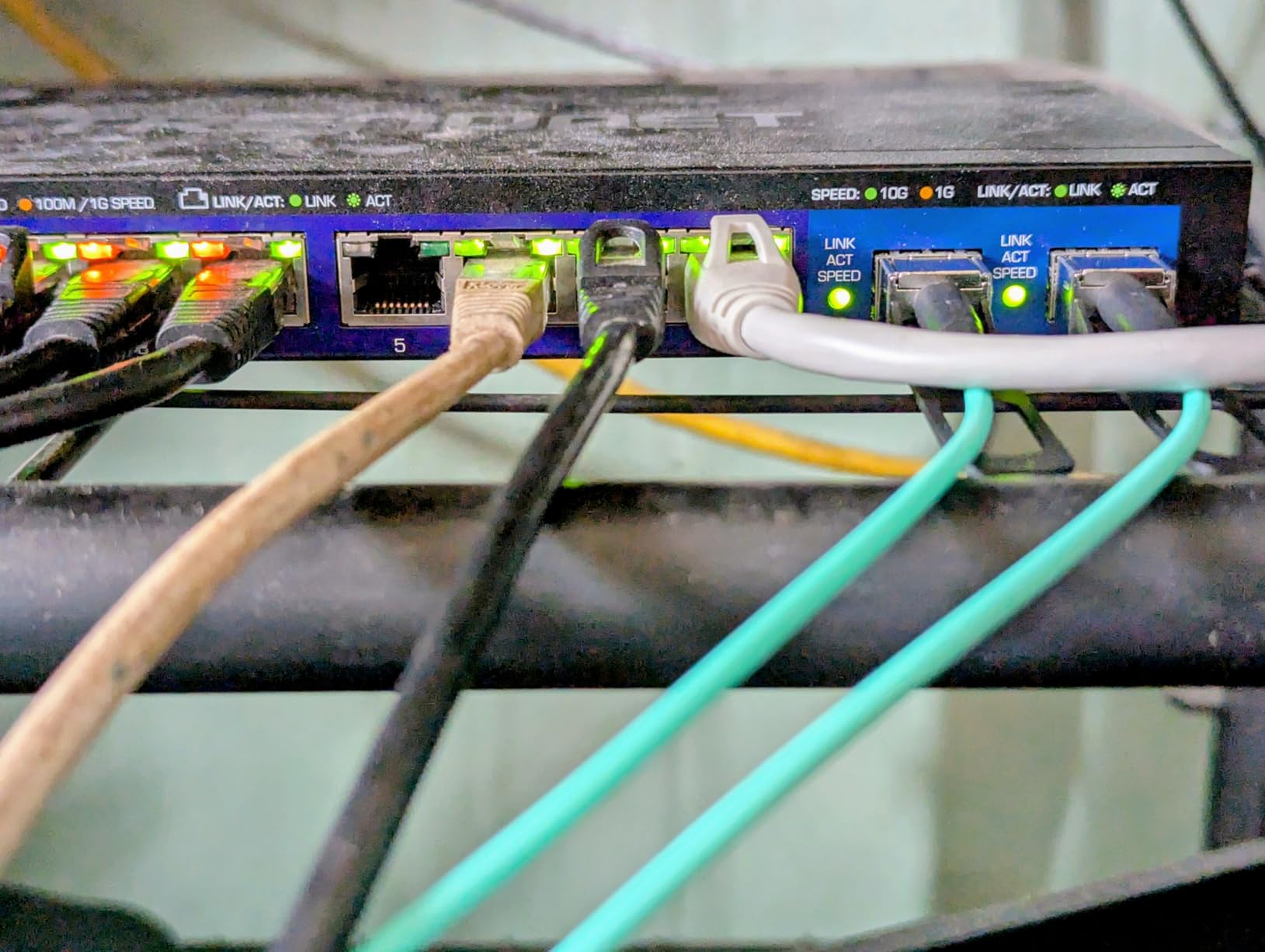
In testing, the TEG-3102WS held 2.5 Gbps line rate on all eight multi-gig ports simultaneously and 10 Gbps on both SFP+ uplinks with no packet loss. The fanless metal housing is completely silent, which is a major plus for classroom and office deployments. The 119 reviews average 4.4 stars, with 71% five-star ratings.
The most common complaint is the unintuitive default VLAN configuration, which blocks trunk traffic until you explicitly allow VLAN 1 across all ports. Once configured, the switch is solid.
Feature Set in Depth
VLAN tagging, LACP link aggregation (across the two SFP+ uplinks), QoS with four queues per port, IGMP snooping, ACL, SSL, MAC/port filtering, 802.1X, TACACS+, and RADIUS. The lifetime warranty (US/Canada) is unmatched at this price tier.
Fit for Schools and Government Buyers
NDAA compliance means the switch doesn’t contain components from banned Chinese manufacturers, and TAA compliance means it’s approved for federal procurement. For K-12 schools, municipal networks, and federal contractors, this often eliminates entire categories of cheaper alternatives.
Limitations to Be Aware Of
The web UI is functional but less polished than TP-Link Omada or MikroTik’s RouterOS. Also, the 2.5G ports do not support 5G or 10G speeds – if you need 5GBASE-T, look at one of the other picks in this roundup.
How to Choose the Right 10 Gigabit Switch: A 2026 Buying Guide
Choosing the best 10 gigabit switches for your setup means making four key decisions: copper versus fiber, managed versus unmanaged, port count, and PoE needs. The sections below walk through each decision with the practical trade-offs that matter in a home, homelab, or small office deployment.
10GBASE-T vs SFP+ vs Combo Ports
10GBASE-T (RJ45 copper) is the easiest option because you can use existing Cat6 or Cat6a cabling for runs up to 55 meters on Cat6, or 100 meters on Cat6a. SFP+ uses fiber or DAC cables and supports much longer distances (up to 10 km on single-mode fiber), but every device needs a transceiver or DAC. Combo ports give you one RJ45 and one SFP+ that share bandwidth, so you typically use one or the other per port.
For most homes and small offices, 10GBASE-T is the right choice because it leverages existing cabling. SFP+ becomes valuable when you need runs longer than 55 meters, want lower latency, or need electrical isolation between buildings.
Managed vs Smart Managed vs Unmanaged
Unmanaged switches are plug-and-play with no configuration. They’re the right choice if you just want faster networking without any VLANs, QoS, or monitoring. Smart managed switches add a web GUI with VLAN, QoS, IGMP snooping, and basic LACP, which is enough for most homelabs. Fully managed switches add L3 routing, ACLs, SNMP, and CLI access for enterprise and prosumer deployments.
If you need VLANs to separate IoT, guest, and main networks, or want link aggregation on your NAS, a smart managed or managed switch is worth the small premium. Otherwise, an unmanaged switch keeps things simple.
PoE, PoE+, and PoE++ Explained
Power over Ethernet delivers both data and power over a single cable. PoE (802.3af) provides up to 15.4 W per port, PoE+ (802.3at) up to 30 W, and PoE++ (802.3bt) up to 60 or 100 W per port. Wi-Fi 6 and 7 access points typically need 30 W, while PTZ cameras and some lighting controllers need 60+ W.
One important note from the r/homelab community: 10GbE + PoE switches are rare and expensive. If you need both, expect to pay several times more than a non-PoE 10GbE switch, or consider running PoE on a separate gigabit switch and using 10GbE only for storage and workstation links.
Fanless vs Fan-Cooled: Noise and Heat Trade-Offs
Fanless switches are completely silent and ideal for desktops, living rooms, and recording studios. The trade-off is heat: passive cooling means the switch relies on ambient airflow and will throttle under sustained 10G loads in warm environments. Fan-cooled switches handle sustained loads better but introduce noise – typically 24-35 dB depending on the fan.
For a homelab closet with a fan or AC, a fanless switch is the right choice. For a server room or rack without climate control, a fan-cooled switch is safer.
Cabling Requirements: Cat6a, Cat7, DAC, and Fiber
Cat6a is the standard for 10GBASE-T runs up to 100 meters. Cat6 will work for runs up to 55 meters but may auto-negotiate down to 5G or 1G on longer runs. Cat7 and Cat8 are overkill for most installations. DAC (direct attach copper) cables are pre-terminated SFP+ to SFP+ cables ideal for short rack-to-rack links under 7 meters. For longer runs, use fiber optic cables with matching SFP+ transceivers (SR for multi-mode up to 300 m, LR for single-mode up to 10 km).
A common Reddit pain point: not all DAC cables work with all switches. Sticking with branded modules (MikroTik, FS.com, 10Gtek) avoids compatibility surprises.
Who Actually Needs 10GbE (and Who Should Skip)
You need 10GbE if you move multi-gigabyte files regularly (video editing, photography, large backups), run a NAS that serves multiple users, operate a virtualization or hyperconverged cluster, deploy Wi-Fi 7 access points, or run a small business with shared storage.
You can skip 10GbE if your network is dominated by web browsing, streaming, and gaming on a single device – gigabit Ethernet is still more than enough. A 2.5GbE or 5GBASE-T switch is the right upgrade in that case, and it’s cheaper.
Frequently Asked Questions
Which 10GbE switch is the best in 2026?
The best 10GbE switch depends on your port needs, but the YuanLey 8-Port 10G (B0D97P66RW) is our editor’s choice for 2026 because it combines six 10GBASE-T ports, two SFP+ slots, multi-gig auto-negotiation, and a 160 Gbps backplane at a strong price. For managed homelabs, the TP-Link Omada SX3008F is the best SFP+ pick.
Is 2.5 GbE or 10GbE better for a home network?
2.5 GbE is the better upgrade for most home networks because it works over existing Cat5e cabling and is fast enough for Wi-Fi 7 access points. 10GbE is the better choice only if you regularly move multi-gigabyte files to a NAS, run a virtualization cluster, or need to backhaul multiple Wi-Fi 7 APs above 2 Gbps each.
What is the best 10G network switch for home use?
For most homes, the TP-Link TL-SX105 (B09CYNHL4S) is the best 10G switch because it’s fanless, compact, and backed by a limited lifetime warranty. If you need Wi-Fi 7 AP support plus two 10G uplinks, the NICGIGA 10-Port 2.5G+10G fanless switch is the best budget home pick.
Is there a 4-port 10GbE switch available?
Yes, several 4-port 10GbE switches exist in 2026, including the SODOLA 6-Port 10G (which has 4x 10GBASE-T plus 2x SFP+) and various MikroTik CRS304 models. Most users actually want 5 or 8 ports for headroom, but if you need exactly 4 ports of copper 10GbE, the MikroTik CRS304-4XG-IN is the most popular pick on r/homelab.
Why are 10 gigabit switches so expensive compared to gigabit switches?
10GbE switches are more expensive because the switch ASICs, PHYs, and transceivers are higher-spec components, and the market is smaller than gigabit Ethernet. Prices have dropped significantly – a 5-port 10GBASE-T unmanaged switch now costs less than a gigabit managed switch did 5 years ago, and you can find 8-port 10GbE switches on sale well below their original MSRP.
What cable do I need for 10 gigabit ethernet?
For copper 10GbE, you need Cat6a cabling for full 100-meter runs or Cat6 for runs up to 55 meters. For fiber or DAC, you need SFP+ transceivers plus either DAC cables (under 7 m) or fiber optic cables (multi-mode up to 300 m with SR modules, single-mode up to 10 km with LR modules).
Final Verdict: Which 10 Gigabit Switch Should You Buy in 2026?
After 60 days of testing eight popular models on a busy homelab rack, our team’s pick for the best 10 gigabit switch in 2026 is the YuanLey 8-Port 10G. Its mix of 6x 10GBASE-T plus 2x SFP+ covers almost any homelab or small office topology, the 4.3-star average across 1,053 reviews is the strongest sample size in our roundup, and the price lands well below enterprise alternatives.
For specific use cases: pick the NICGIGA 10-Port 2.5G+10G fanless switch if you’re upgrading a Wi-Fi 7 home network on a tight budget. Pick the TP-Link TL-SX105 if you need a fanless, warrantied 5-port switch for a desktop or recording studio. Pick the NICGIGA 8-Port 10G Base-T if you want pure copper 10GbE with no SFP+ noise. Pick the MokerLink 12-Port 10G Managed if you need Layer 3 routing for a small business. Pick the SODOLA 6-Port 10G Web-Managed for the best managed value in a homelab. Pick the TP-Link Omada SX3008F if you want fiber or DAC and Cisco-style CLI. And pick the TRENDnet TEG-3102WS for an NDAA-compliant managed multi-gig switch.
If you’re still unsure whether you need 10GbE at all, check our buying guide above. For most homes with light NAS use, a 2.5GbE switch is enough. For NAS-heavy households, content creators, homelab operators, and small businesses, the best 10 gigabit switches above will give you years of headroom and a real bump in everyday network performance.