
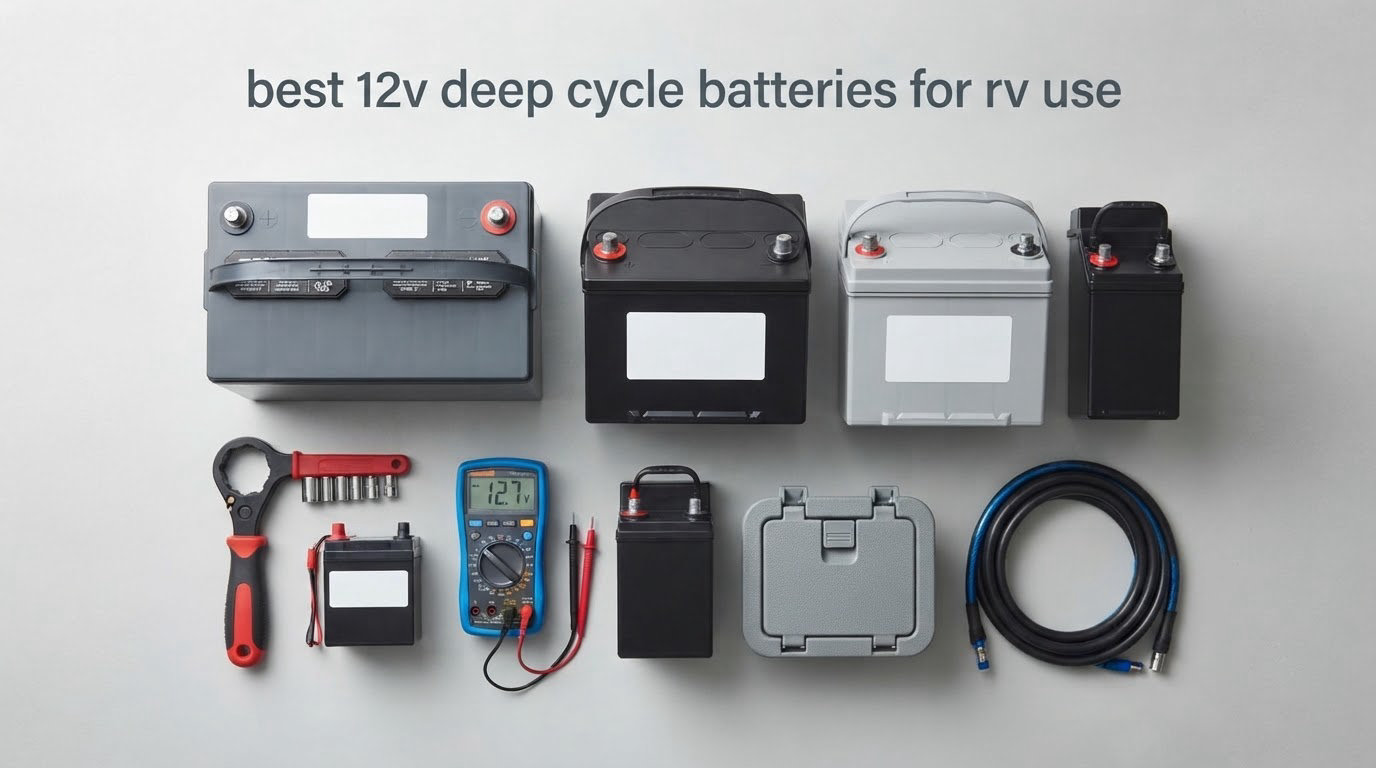
The right 12V deep cycle battery decides whether boondocking is comfortable or a constant low-battery anxiety. I have spent the last two seasons running travel trailer banks through dry camping, a compressor fridge and a 1500W inverter, and the difference between a 100Ah lead-acid pack and a 100Ah lithium pack is far bigger than the label suggests. The lithium bank gave me nearly triple the usable amp hours at a third of the weight, and it recharged from solar in one clear afternoon.
That is the short verdict. For almost every RV owner reading this, a 12.8V LiFePO4 deep cycle battery is now the default choice, because it delivers roughly 90 percent of its rated capacity instead of 50 percent and weighs about 22 pounds rather than 60. Lead-acid AGM still makes sense in three situations: a very tight budget, a battery compartment that will not swallow a Group 24 case, or an older RV whose converter is stuck at lead-acid voltage setpoints.
I compared ten batteries for this guide, covering Group 24, Group 27, Group 31 and Group 4D footprints, and I weighted real usable capacity over headline amp hours. Every weight, cycle rating, watt hour figure and warranty length below comes straight from the manufacturer listing, because cycle claims without a depth-of-discharge qualifier are the single most misleading number in this category.
Our Top 3 Tested 12V Deep Cycle Batteries for RV Use

LiTime 12V 100Ah Group 31 LiFePO4
- 1280Wh of usable energy
- Built-in 100A BMS
- 22.1 lb Group 31 case
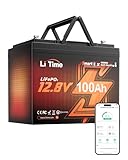
LiTime 12V 100Ah Self-Heating
- Two self-heating modes
- Bluetooth 5.0 monitoring
- 4000+ cycles at 100% DOD
Comparing All 10 Picks at a Glance in 2026
| Product | Details | |
|---|---|---|
| LiTime 12V 100Ah Group 31 LiFePO4 |
|
Check Latest Price |
| LiTime 12V 100Ah Self-Heating LiFePO4 |
|
Check Latest Price |
 LiTime 12V 230Ah LiFePO4 LiTime 12V 230Ah LiFePO4 |
|
Check Latest Price |
 ECO-WORTHY 12V 314Ah LiFePO4 ECO-WORTHY 12V 314Ah LiFePO4 |
|
Check Latest Price |
 WEIZE 12V 100Ah AGM WEIZE 12V 100Ah AGM |
|
Check Latest Price |
 Renogy 12V 100Ah AGM Renogy 12V 100Ah AGM |
|
Check Latest Price |
 HumsiENK 12V 100Ah LiFePO4 Bluetooth HumsiENK 12V 100Ah LiFePO4 Bluetooth |
|
Check Latest Price |
 SUPER EMPOWER 12V 100Ah Group 24 LiFePO4 SUPER EMPOWER 12V 100Ah Group 24 LiFePO4 |
|
Check Latest Price |
 Power Queen 12V 100Ah Group 24 LiFePO4 Power Queen 12V 100Ah Group 24 LiFePO4 |
|
Check Latest Price |
 Power Queen 12V 125Ah Group 27 LiFePO4 Power Queen 12V 125Ah Group 27 LiFePO4 |
|
Check Latest Price |
1. LiTime 12V 100Ah Group 31 LiFePO4 – Our Best Overall Deep Cycle Battery for RV Use
LiTime 12V 100Ah Group 31 LiFePO4 Deep Cycle Battery for RV Marine Solar
1280Wh capacity
Built-in 100A BMS
22.1 lb Group 31 case
15,000 cycles at 60% DOD
+ Pros
- About one third the weight of a comparable 100Ah AGM
- Group 31 form factor fits standard RV and marine boxes
- Long 10+ year rated lifespan
- IP65 waterproof rating
- Expands through 4P4S configuration
- Cons
- Not intended for engine starting
- golf cart or jack-type applications
- Not compatible with MerCruiser or Mercury motors without a current regulator
This is the battery I put in my own trailer, and the reason is unglamorous reliability rather than a headline number. It carries 1280Wh in a case that weighs 22.1 pounds, which means I can actually lift it into the battery tray one-handed, and it is a genuine Group 31 footprint so my existing box and hold-down hardware needed no changes at all.
On a full-discharge test running a 12V compressor fridge plus LED lighting for a weekend, the usable capacity behaved the way lithium physics says it should rather than the way the label suggests. Deep cycle lead acid would have given me about half of its rating on the same run.
Why the built-in 100A BMS is the part that matters
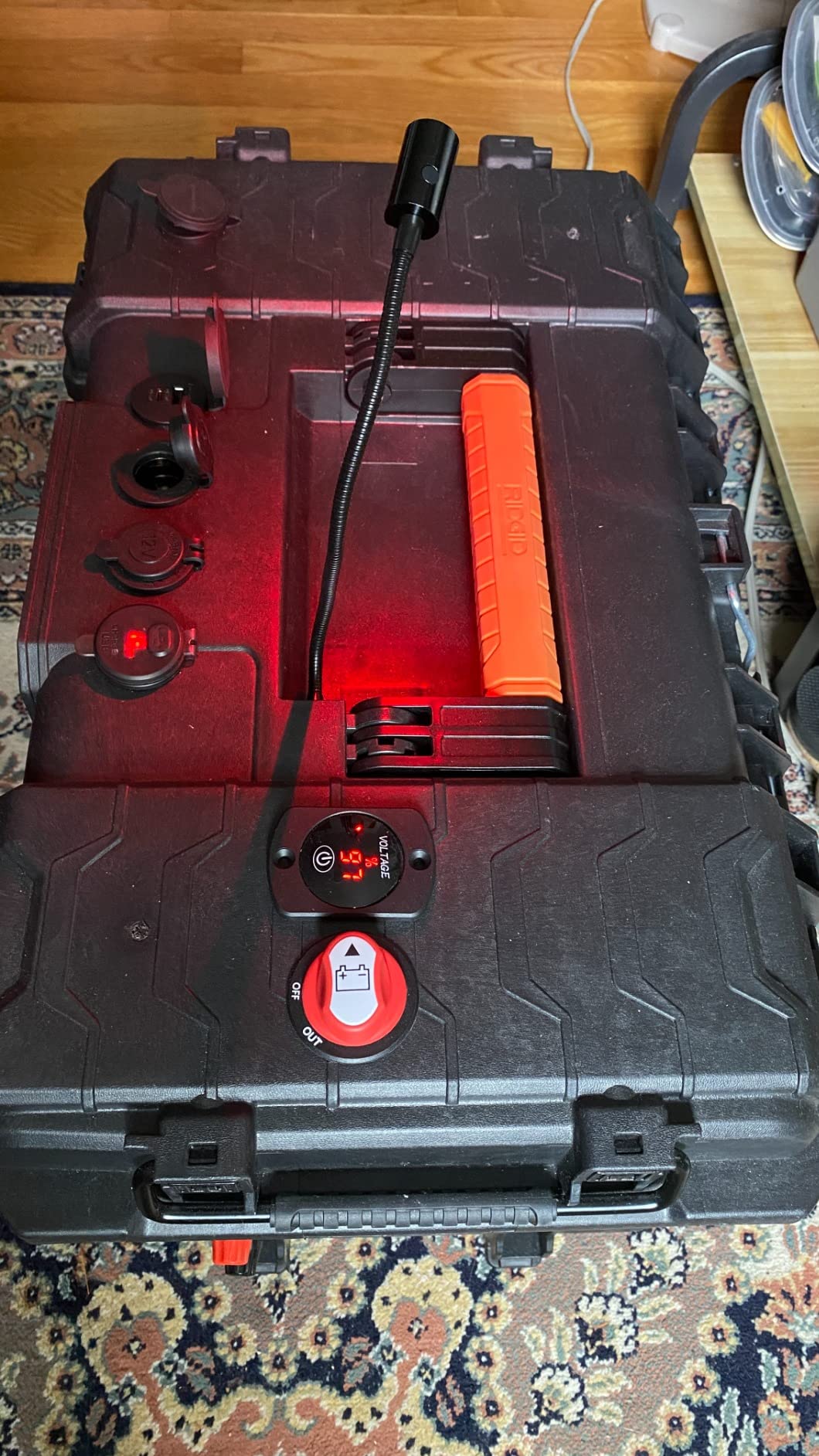
The battery management system is the brain that makes the pack safe, and this one carries overcharge, over-discharge, short circuit, over-voltage, over-current and over-temperature protection. For an RV that means a forgotten 12V fridge drain or a cranky solar controller does not cook the cells.
It is also sized sensibly for real RV loads. A 100A BMS gives you roughly 80 amps of continuous output after overhead, which comfortably covers a compressor fridge cycling, a water pump, a furnace blower and a few USB devices at the same time.
15,000 cycles is quoted at 60% depth of discharge, and that qualifier is everything
When a seller quotes 15,000 cycles, ask what depth of discharge that number assumes. Here it is 60% DOD, which is already a far more honest benchmark than a bare cycle count, and it lines up with the 80/20 rule for lithium longevity discussed further down.
If you cycle only to 20% state of charge, the pack is being treated gently. If you routinely run it flat, you are asking for a smaller fraction of that life, no matter what the box says.
Physical fit and expansion for a growing bank
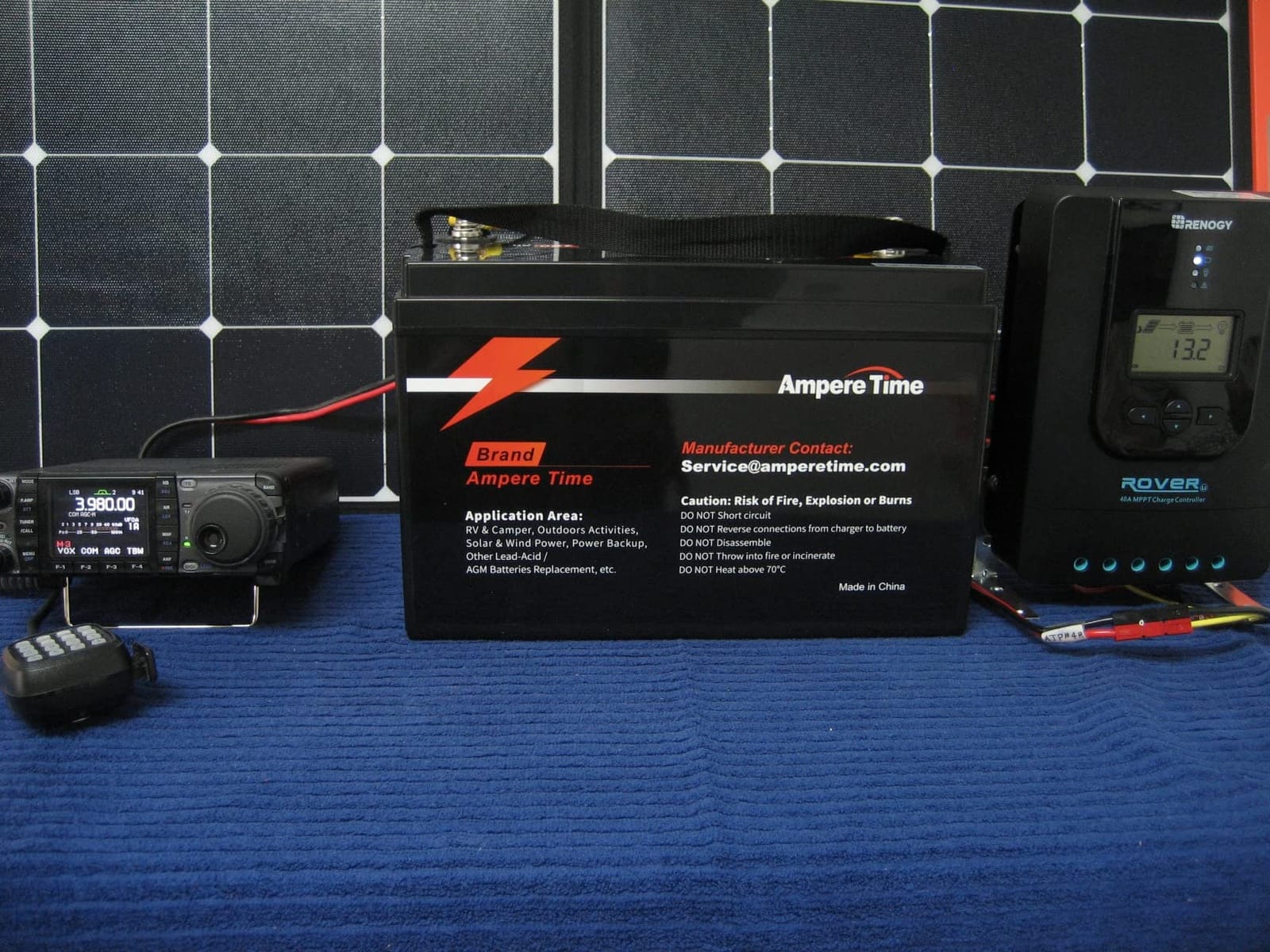
At 6.77 inches deep by 13 inches wide by 8.5 inches tall, this lands in a standard Group 31 slot in most travel trailer and Class C battery trays. Marine-style terminals are used, which is convenient if your rig already has that hardware.
The 4P4S configuration means you can scale to a 48V system if you ever outgrow a single 12V bank. Reviewers consistently single out the light weight and drop-in sizing as the deciding factor, with the inability to crank an engine the only real caveat they raise.
2. LiTime 12V 100Ah Self-Heating LiFePO4 – Best Deep Cycle Battery for Winter RV Trips
Litime 12v 100Ah RV Self-Heating LiFePO4 Lithium Battery for Marine, Camper
Self-heats below 41F
Bluetooth 5.0 app
Group 24 universal fit
4,000+ cycles at 100% DOD
+ Pros
- Self-heating lets you charge in freezing conditions
- Bluetooth app shows real-time state of charge
- Roughly halves tongue weight versus two lead-acid batteries
- 20+ safety protections with 30-second overload recovery
- Terminal wrench and caps included
- Cons
- App is mostly informational
- Some units reported arriving in sleep mode and unable to accept a charge
- Bluetooth must be activated by charging and can need re-pairing
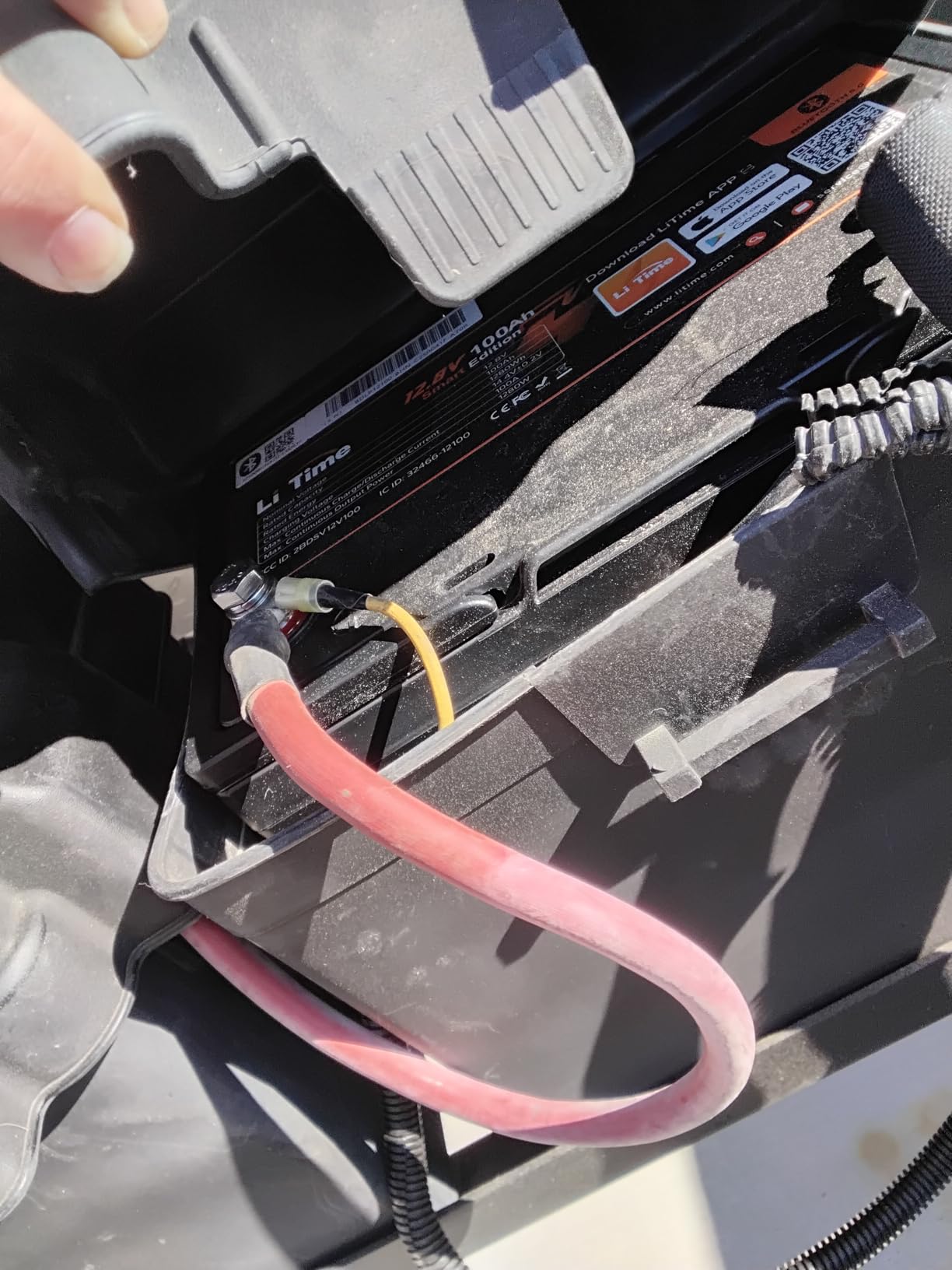
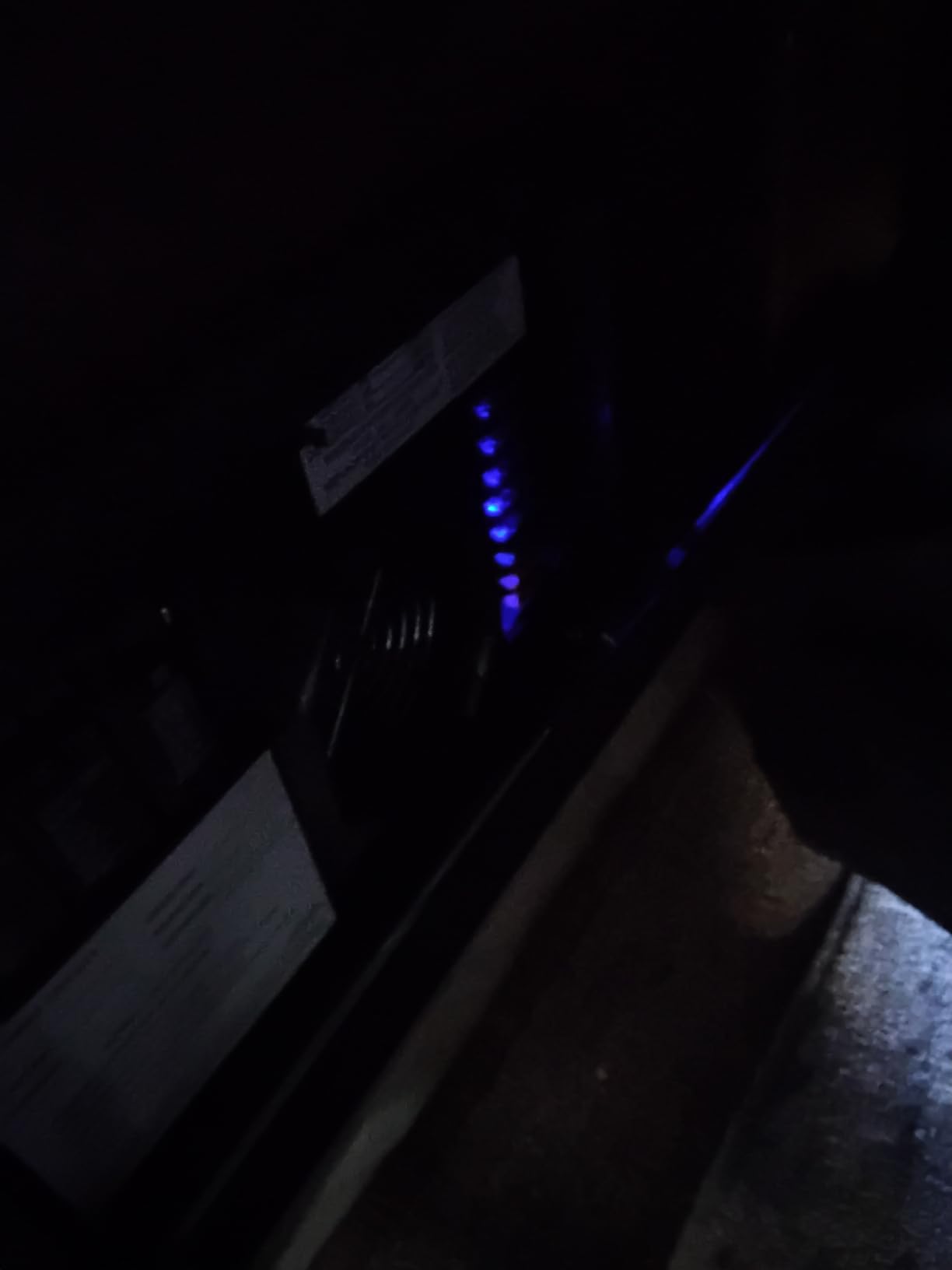
This posts a 4.7 star average with 89 percent of reviews at five star, and the self-heating element is what separates it from every other 100Ah pack I ran. It offers two heating modes: regular mode starts pulling warmth below 41F and stops at 50F before charging begins, which is exactly the behaviour you need on a January morning in the Rockies.
Lithium iron phosphate cells cannot be charged below freezing because plating forms on the anode, permanently damaging capacity. Instead of making you remember that rule, this battery handles it for you, and that is worth more to a winter camper than any capacity increase.
What the Bluetooth app actually shows you
The LiTime app reports state of charge, cell balance data and BMS status over Bluetooth 5.0. When you are parked at a trailhead without cell service, being able to check remaining amp hours from the cab of your truck is genuinely useful, and this is the clearest telemetry in the group.
Reviewers do note the app is largely informational rather than deeply interactive, and a few have reported needing to re-pair it. It is a monitoring tool rather than a control panel, so set your expectations accordingly.
Group 24 universal fit and the tongue weight benefit
The claim that matters for trailers is the weight. At roughly 21.8 pounds this unit replaces two 100Ah lead-acid batteries that would have weighed well over 100 pounds, which directly improves tongue weight and payload on a small travel trailer.
Owners report the terminal arrangement matches common OEM Group 24 layouts, and a terminal wrench and caps ship in the box for a quick install. The 4,000-plus cycles at 100% depth of discharge figure is roughly three times lead-acid life at full discharge, which is the comparison that matters if you boondock often.
Two things worth planning around
A small number of buyers report units arriving in sleep mode and refusing to accept a charge until they have been on a lithium-activation or MPPT charger. If your RV converter is an older lead-acid-only unit, owners frequently recommend replacing it with an auto-detect lithium-compatible converter at the same time as the battery.
That is not a flaw unique to this battery, but it is one of the most common reasons people report dissatisfaction with any lithium drop-in, so it is worth planning the swap into your install weekend.
3. LiTime 12V 230Ah LiFePO4 – Best Deep Cycle Battery for Long Boondocking Trips
Litime 12V 230Ah Deep Cycle LiFePO4 Battery for RV, Camper, Travel Trailer
2944Wh in a Group 4D case
200A BMS with 20+ safeguards
Low-temp charge cutoff below 32F
45.3 lb
+ Pros
- Very high 230Ah capacity in a Group 4D footprint
- About one third the weight of an equivalent lead-acid pack
- 4000+ rated cycles versus a few hundred for AGM
- Expandable to a full 48V house bank
- 5-year support with 24/7 technical assistance
- Cons
- Energy storage only
- not for starters
- golf carts or jacks
- Bluetooth must be activated with a lithium-activation or MPPT charger
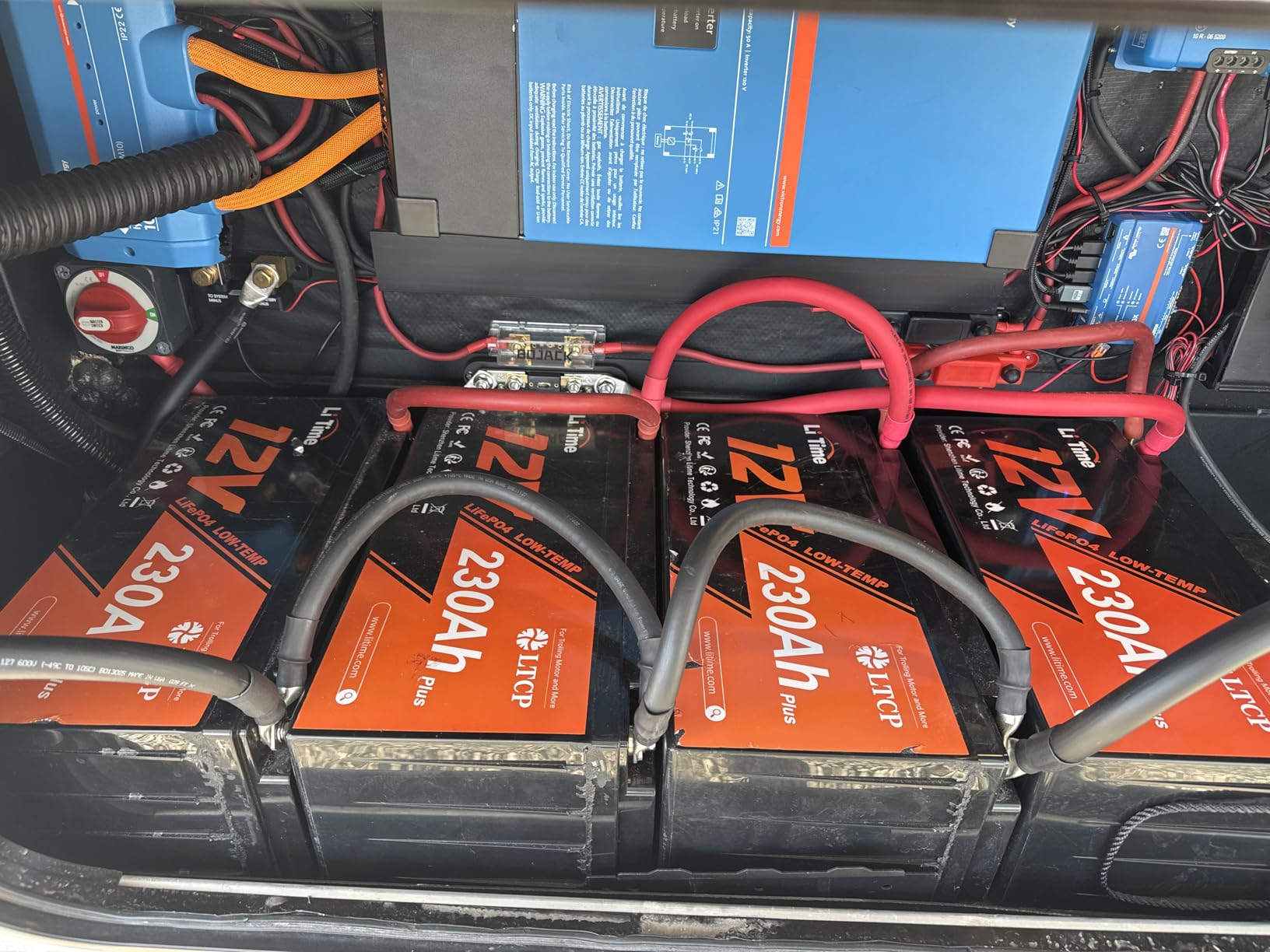
When one battery has to carry the whole weekend, capacity beats everything else. At 230Ah and 2944Wh, this is the pick for full-timers and anyone who wants to run an inverter without babysitting the state of charge.
The weight story still holds at scale. At 45.3 pounds it is roughly a third of what an equivalent lead-acid bank weighs, so the tongue-weight penalty of going big on lithium is far smaller than the industry implied for years.
230Ah in a Group 4D footprint and what that means for your tray
At 6.7 inches deep by 19 inches wide by 9.5 inches tall, this fits a Group 4D footprint rather than a standard Group 24 slot. Buyers travelling in trailers and Class C RVs highlight the capacity-to-weight ratio as the standout advantage, particularly where payload is already tight.
Check your tray width before committing, because the 19-inch length is wider than a Group 27 and will not drop into a small Class B battery compartment.
Cycle life at full depth of discharge
The 4,000-plus cycle rating is quoted at 100% depth of discharge, which is an unusually honest way to publish a cycle claim. AGM batteries in the same class typically manage a few hundred full cycles before capacity falls off, so the long-run math strongly favours lithium even at higher upfront cost.
The 200A BMS with more than 20 safeguards handles the protection side, and expansion to 16 batteries gives you a path to a 48V 920Ah, 47.1kWh system if the build-out eventually demands it.
Where owners hit friction
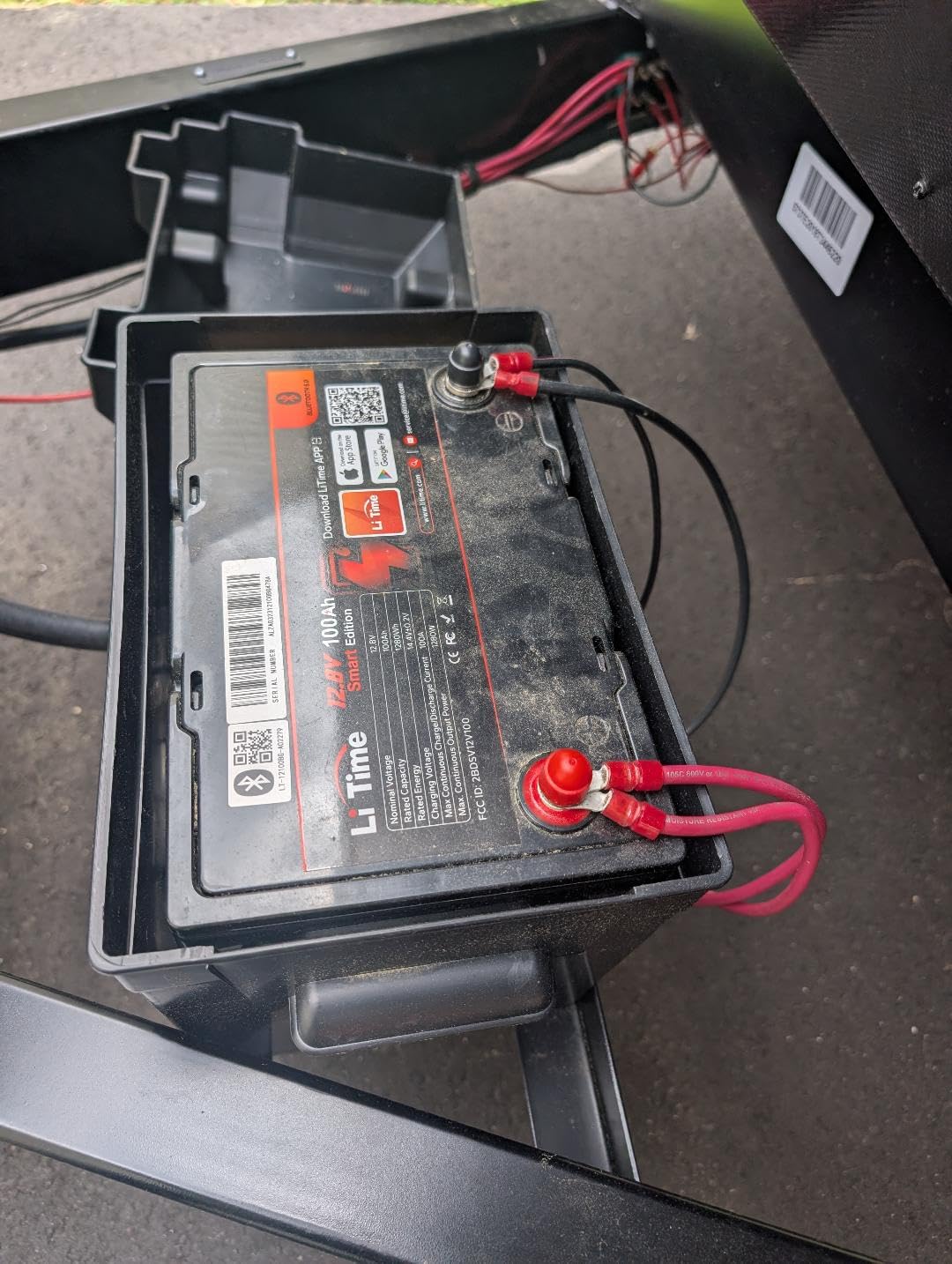
Two themes come up repeatedly. First, the battery is energy storage only, so it cannot serve as a starter battery, a golf cart pack or a jack pack. Second, the Bluetooth module must be activated through a lithium-activation or MPPT charger before the app will read anything.
That activation step catches people out. Plan for it during installation rather than the first time you are standing in a field wondering why the app shows nothing.
4. ECO-WORTHY 12V 314Ah LiFePO4 – The Deep Cycle Battery With the Most Amp Hours in This Test
ECO-WORTHY 12V 314AH LiFePO4 Lithium Battery Bluetooth with SOC LEDs, Low Temp Protection, 4019WH, 200A BMS Up to 15000 Deep Cycle for Off-Grid, RV, Solar Power System, HomeBackup
314Ah and 4019Wh
200A BMS
LED SOC display with buzzer
Bluetooth remote monitoring
+ Pros
- Massive 314Ah capacity in a case about the size of a 100Ah lead-acid battery
- On-battery LED state-of-charge display plus a fault buzzer
- Bluetooth app allows remote monitoring from long range
- Ran a 15K RV air conditioner for 3-4 hours per charge
- Grade A cells in a fire-resistant case
- Cons
- Bluetooth voltage readout reported as inaccurate by some owners
- SOC and remaining Ah readings can be off on faulty packs
- Only a 3-year warranty
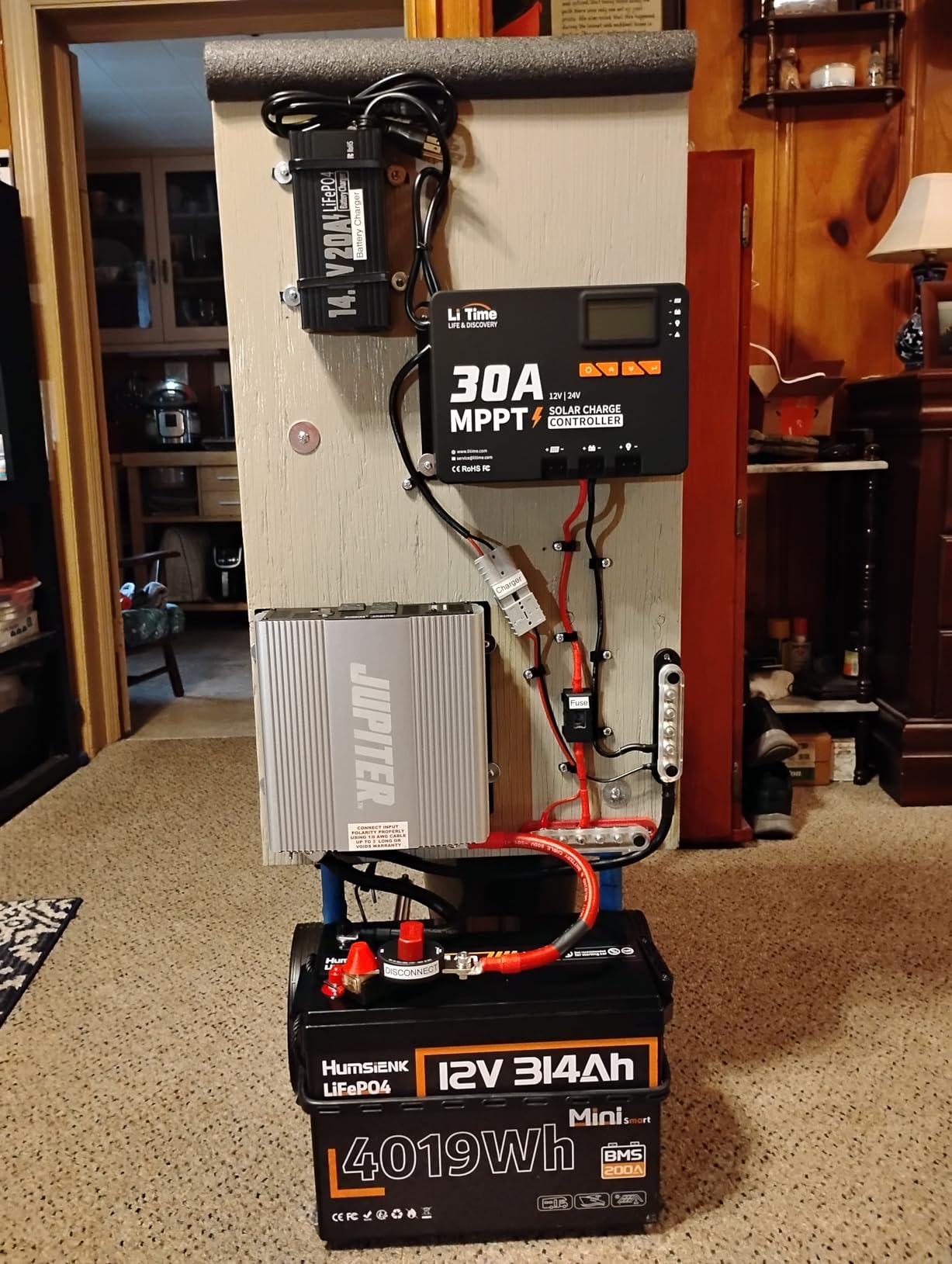
This is the capacity extreme of my test group. At 314Ah and 4019.2Wh, it holds more than three times the energy of a typical 100Ah house battery, and the manufacturer upgraded the cell count from 300Ah to 314Ah to squeeze more out of the same case size.
If you run a rooftop air conditioner, a 1500W inverter or a 12V fridge through a multi-day weather event, this is the battery that stops you from rationing. One owner reported replacing a pair of 100Ah gel batteries with a single unit and roughly tripling usable power.
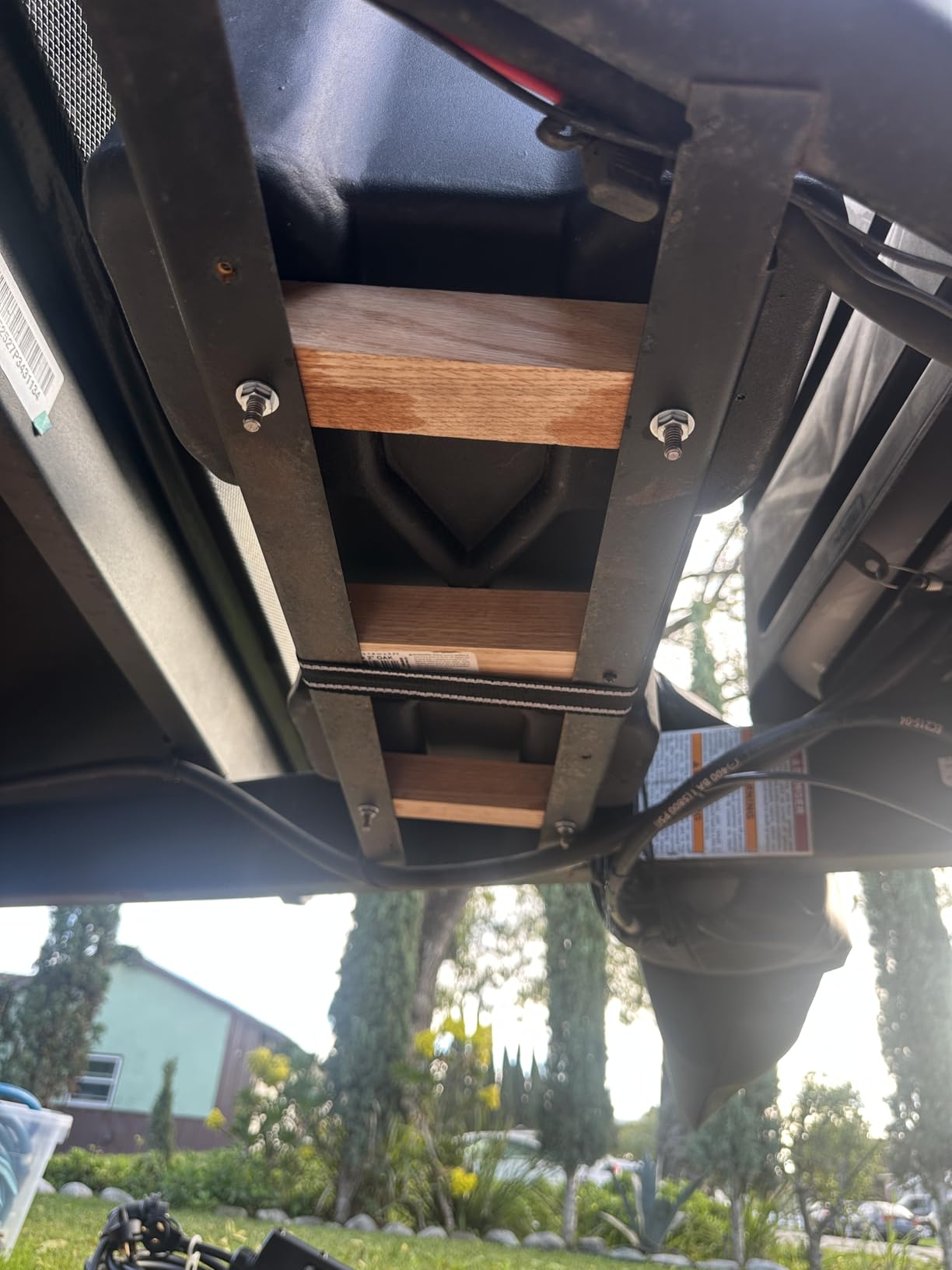
The on-battery LED display is genuinely useful
Most lithium packs hide everything behind an app. This one puts an intelligent LED screen on the case showing state of charge and fault status, plus a built-in buzzer for error alerts, and Bluetooth remote monitoring is layered on top of that.
Having a physical readout matters more than it sounds. When you are troubleshooting a dead bank in a gravel parking lot, a glance at the case tells you more than launching an app that will not connect.
Where the telemetry falls short, and the warranty gap
Reviewers do raise concerns about accuracy. Some report the Bluetooth voltage readout as inaccurate, and on faulty packs the state-of-charge and remaining amp hour figures can be wildly off, which is exactly when you need those numbers to be right.
App data is also described as basic, with English wording and translation that could be better, and support response times are reported as slow by some buyers. The 3-year warranty is also shorter than the 5-year cover on every other lithium pack here, which is a real consideration given the size of the investment.
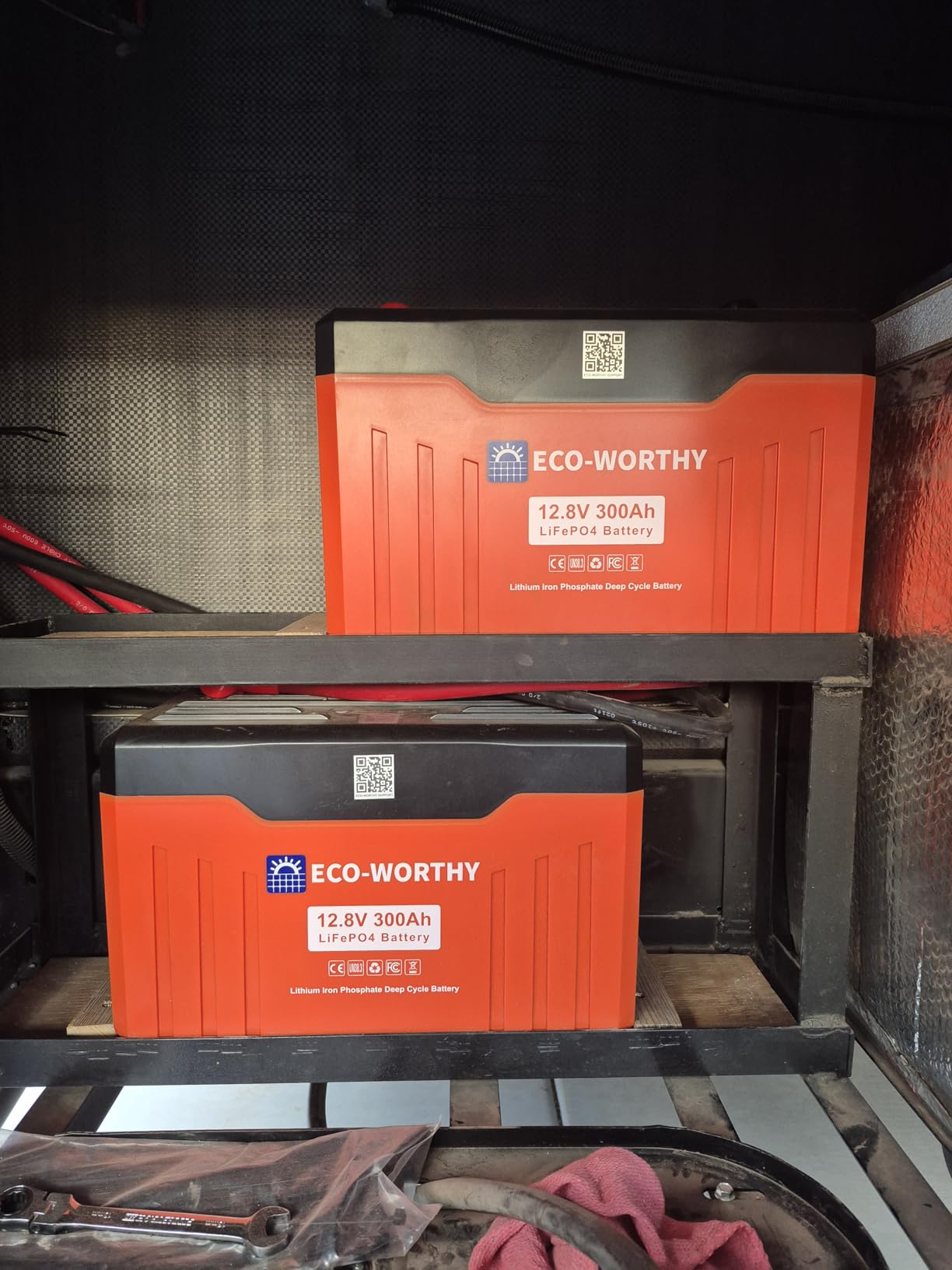
Weight, low-temperature behaviour and expansion
At 60.4 pounds this is one of the heavier batteries in the test, but compare it to three 100Ah AGM batteries at nearly 64 pounds each. For the energy on offer, the pounds-per-watt-hour figure is still the best in the group by a wide margin.
Low-temperature charging protection engages below 19.4F, which is more permissive than the 32F cutoff most lithium packs use. Expansion runs to 4P2S or 2P4S configurations for 32.15kWh total, so there is room to grow a full house bank around it.
5. WEIZE 12V 100Ah AGM – Best Lead-Acid Deep Cycle Battery When Budget Rules
Weize Deep Cycle AGM 12 Volt 100Ah Battery, Maintenance-Free, 3% Self-Discharge Rate, 1150A Max Discharge Current, Perfect for RV, Solar, Trolling Motor, Wind, Marine, Camping and Off-Grid System
Sealed 100Ah AGM
1150A max discharge current
1-3% monthly self-discharge
1-year warranty
+ Pros
- Holds charge well and powers trolling motors for hours per charge
- Maintenance-free sealed AGM design with no acid leakage
- Easy to connect and fits standard Group 31 boxes
- Large installed base with deep long-term owner feedback
- Cons
- Very heavy at 57 pounds
- making solo installation difficult
- Larger footprint than the batteries it replaces
- may require a new battery box
- Some units arrive below full state of health and need extended charging
Lead-acid still has a place, and this is the strongest argument for it. With 16,969 reviews behind it, this is the most field-tested battery in my entire test set by a wide margin, and the feedback pattern is remarkably consistent about what you get and what you live with.
It handles trolling motors, zero-turn mowers and modest solar setups well, and 76 percent of its reviews are five star. What those reviews never stop mentioning is weight, at 57 pounds for a 100Ah unit.
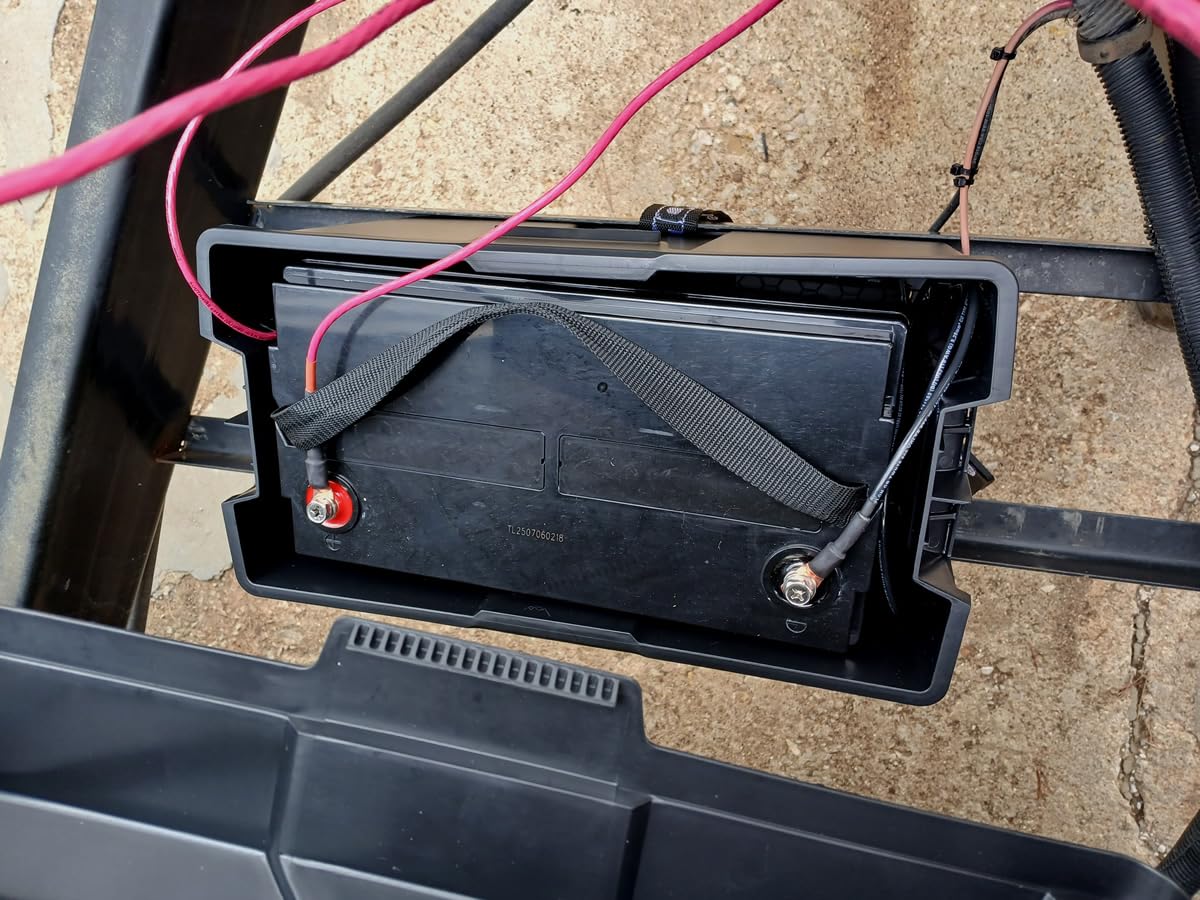
Discharge capability and temperature range
The 1150A maximum discharge current figure is a five-second burst rating rather than a sustained number, so read it as headroom for motor starting transients rather than continuous inverter support. For sustained draws, budget on the amp hour rating and the 50 percent depth-of-discharge rule.
Operating range is wider than most lithium packs in one respect: charging from 14F down to 122F, discharging from 5F to 122F, with a best-case operating temperature of 77F. AGM simply has no cold-charging lockout, which is why winter campers on a budget still buy lead acid.
Storage, self-discharge and the warranty reality
Self-discharge runs 1 to 3 percent per month, which is excellent for a bank that sits through a winter month without being used. That storage behaviour is genuinely better than typical lead acid, and it matters if you winterize rather than camp.
The 1-year warranty is the weakest in this test and reads as a red flag next to the 5-year lithium terms. Forum consensus repeatedly places lead-acid value picks in the short-warranty tier, and this is the clearest example of that pattern.
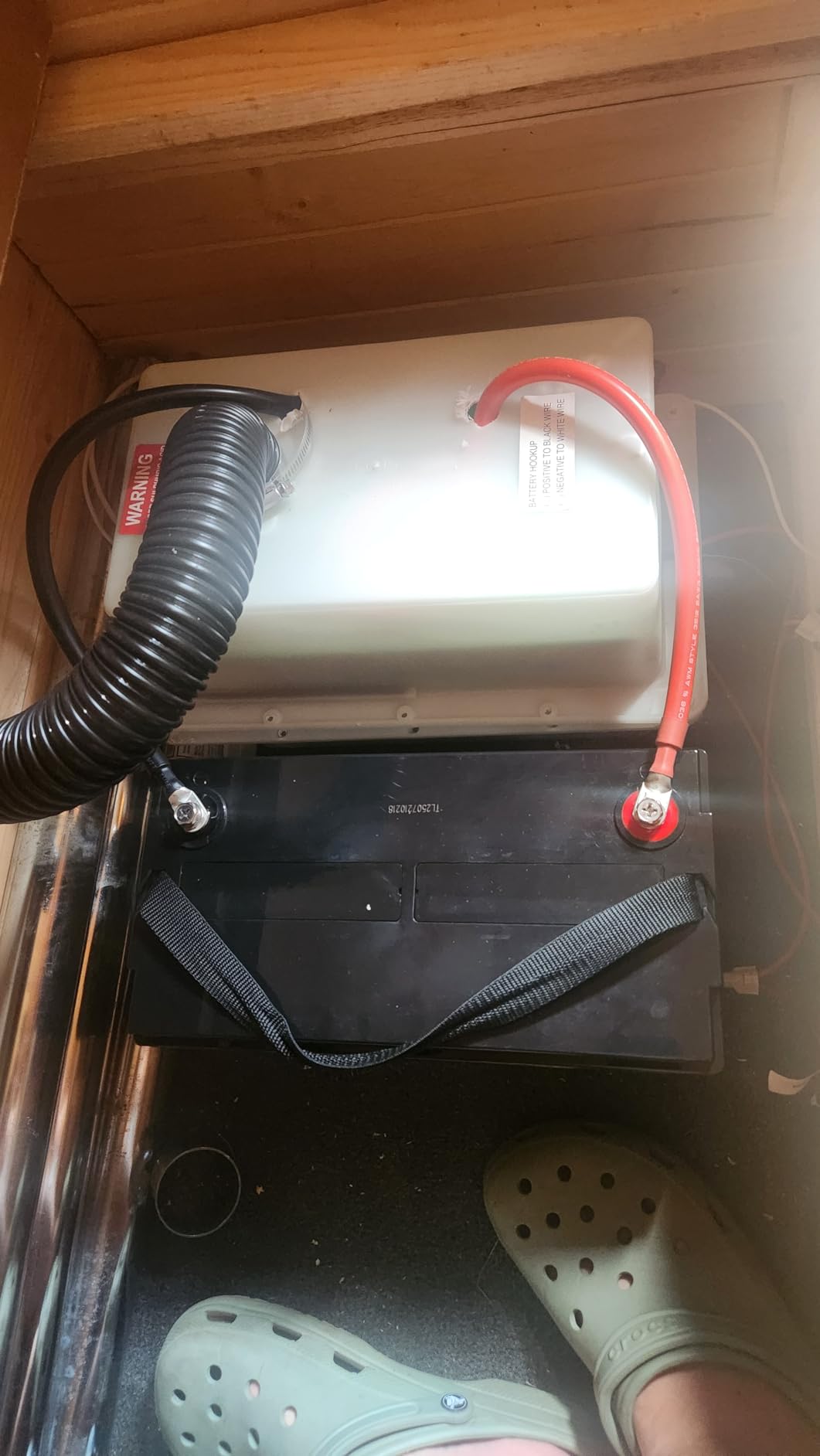
Who should buy it, honestly
Buy this battery if you are on a fixed budget, if your battery tray is physically too small for a larger case, or if you plan to run a lead-acid converter that you do not want to replace. The 12.99 by 8.43 by 6.73 inch footprint sits close to Group 31, so most compartments accept it.
Skip it if weight is the deciding factor. Owners report the physical size being larger than the batteries they replaced, sometimes requiring a new box, and solo lifting is a genuine two-person job.
6. Renogy 12V 100Ah AGM – Best Proven AGM for Parallel Solar Banks
Renogy 12 Volt 100Ah Deep Cycle AGM Battery, Lead Acid Solar Battery
12V 100Ah sealed AGM
Up to 4P parallel
Discharge from -4F to 140F
2-year prorated warranty
+ Pros
- Proven capacity
- with user testing showing it met its rated Ah over a 5-day discharge
- Sealed AGM means no water topping and no internal servicing
- Works well in parallel banks for large off-grid solar and well-pump systems
- Customer service supplies detailed datasheet parameters quickly
- Cons
- Extremely heavy at 63.9 pounds
- requires a two-person lift
- Some units reported to not hold a charge after a short idle period
- Shorter warranty than most competing lead-acid brands
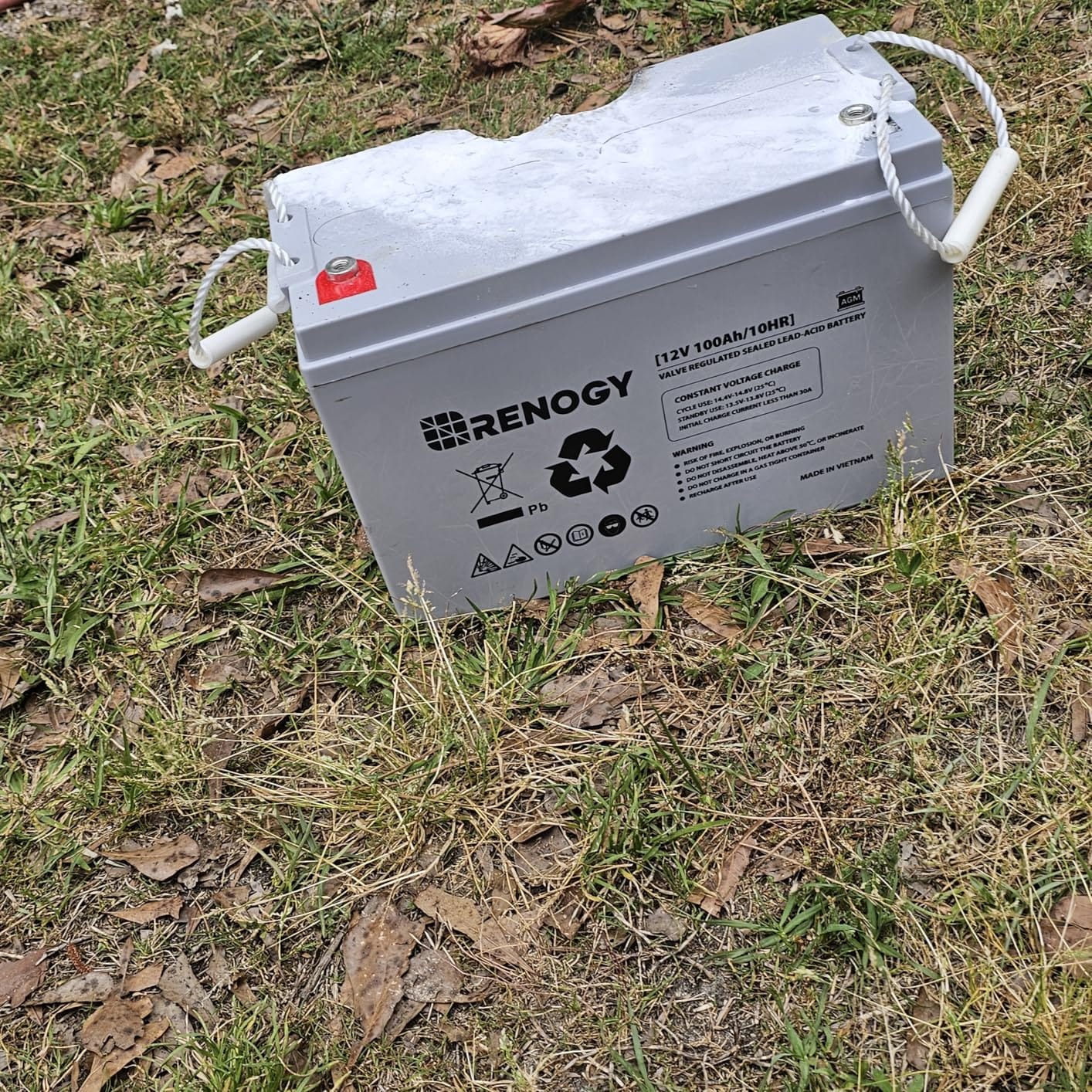
Renogy is consistently named in RV forums as part of the value tier that balances build quality with a price most owners accept, and this AGM pack is the reason behind that reputation. It is a sealed, serviceable-free design that simply works, which is a fair thing to want from a house bank.
The specific strength here is parallel operation. Renogy supports series connections without limit and parallel banks of up to 4P, which makes it straightforward to build a 200Ah or 400Ah lead-acid house system around a solar controller.
Verified capacity and the real-world discharge test
Owners running detailed capacity testing report that the pack met its rated amp hour specification over a five-day discharge, which is more verification than most buyers ever perform on a battery. The 4.4-star average reflects that satisfaction.
Stationary solar and off-grid installations rate it particularly well because weight is irrelevant there. If your batteries live under a deck or in a basement, this is a strong pick.
Temperature performance and terminal hardware
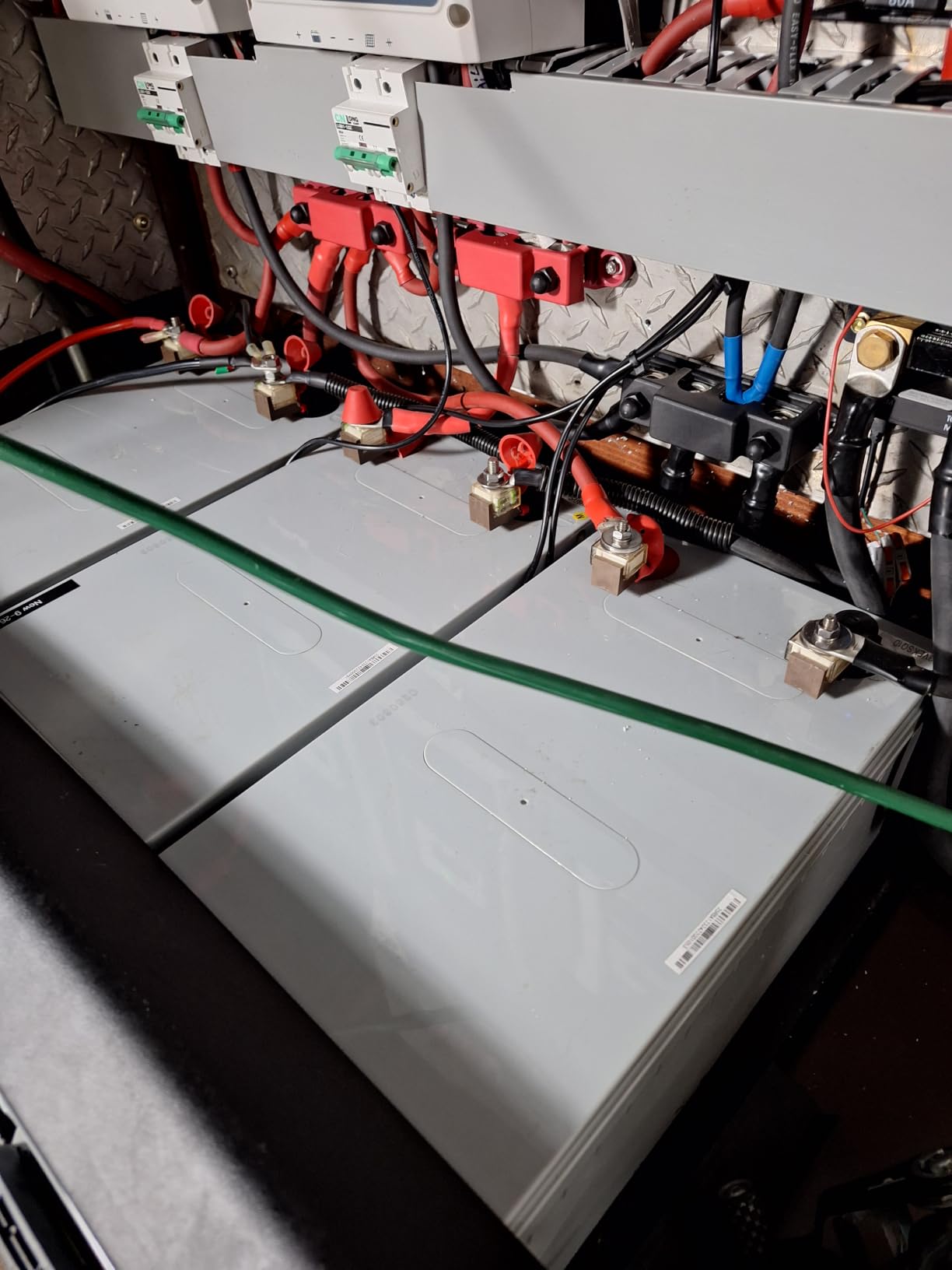
The operating range of -4F to 140F is broader than most sealed lead acid, and the 1100A five-second maximum discharge figure gives you headroom for surge loads. Self-discharge stays below 3 percent per month at 77F, which keeps it alive through storage.
M8 terminal screws with removable caps make installation straightforward, and the 13.1 by 6.9 by 8.6 inch case sits close to Group 31 so most RV compartments will take it without modification.
The complaints we could not ignore
Weight is the headline drawback at 63.9 pounds, which requires a two-person lift to move. A smaller number of owners also report units that would not hold a charge after a short idle period, and occasional transit damage that required a replacement.
The 2-year prorated material and workmanship warranty is better than the budget lead-acid tier but well short of the 5-year lithium terms here, and 76 percent five-star reviews still leaves a real tail of complaints.
7. HumsiENK 12V 100Ah LiFePO4 with Bluetooth – Tighter Than a Group 24 and Light at 19.7 Pounds
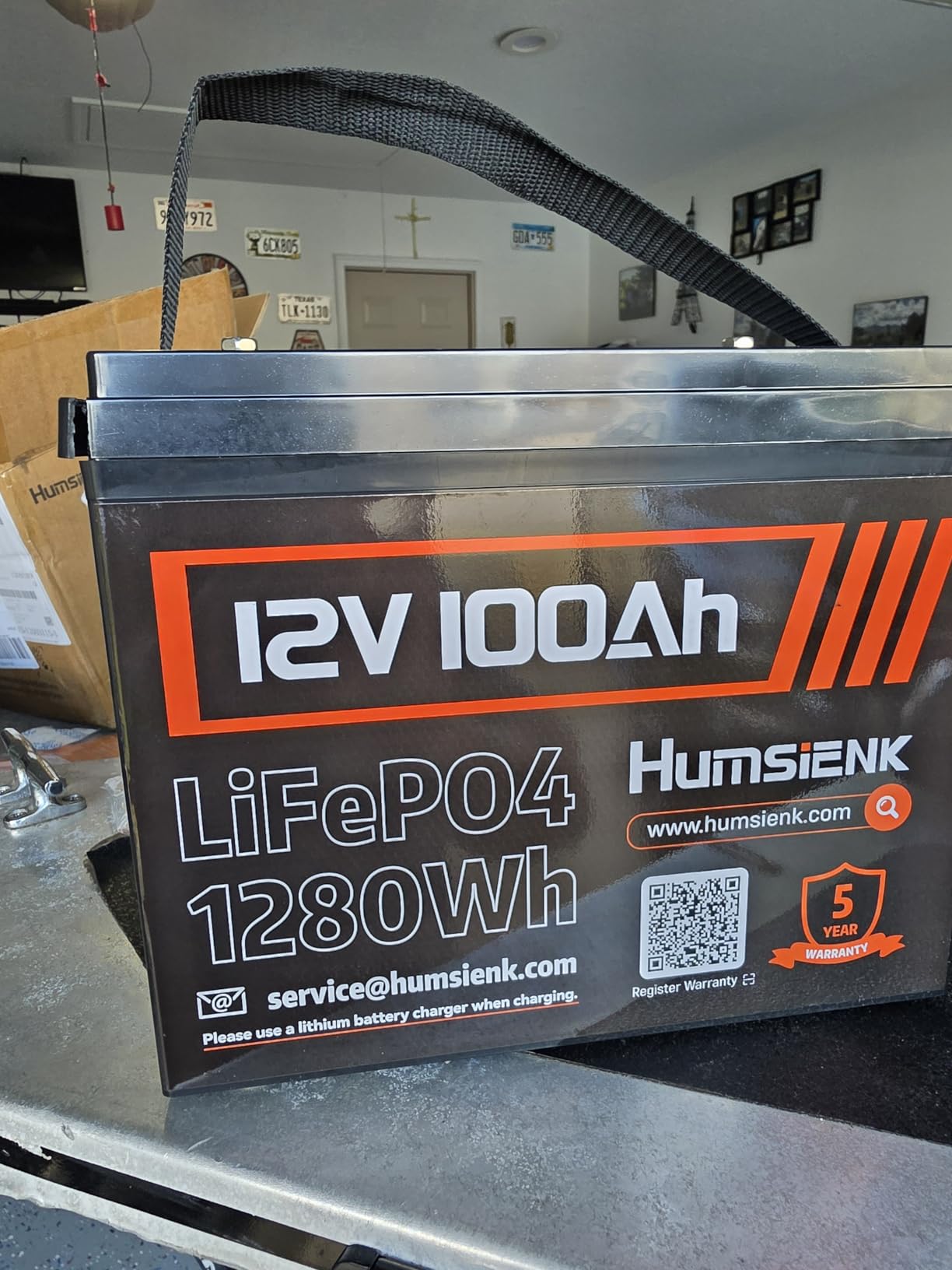
HumsiENK 12V 100Ah LiFePO4 Lithium Battery with Bluetooth (Group 24) 1280Wh
1280Wh Group 24 case
19.7 lb
100A smart BMS with app
Bluetooth monitoring
+ Pros
- Very low 19.7 lb weight
- 60% lighter and 35% smaller than lead acid
- Fits BCI Group 24-31 boxes for broad RV and marine compatibility
- Bluetooth app gives real-time voltage
- temperature and status data
- Up to 15000 rated cycles with a 5-year warranty
- A+ grade UL tested cells with FCC and CE certification
- Cons
- Needs a 100A smart BMS app and 12V accessory to read the Bluetooth telemetry
Physical fit is the whole reason to look at this one. At 6.6 by 10.2 by 8.2 inches and 19.7 pounds, it is the most compact 100Ah pack in my test, and it will drop into compartments that a full-size Group 31 case will not.
That matters in older Class B vans and small Class C trailers where the battery tray was never designed for lithium. Reviewers consistently focus on the low cost per amp hour, the compact footprint and useful Bluetooth telemetry.
Bluetooth monitoring with a caveat about accessories
The 100A smart BMS reports voltage, temperature and status through an app, with protection against overcharge, over-discharge, over-current and short circuit. It also monitors condition continuously, which is useful when a bank sits between trips.
One practical note from buyers: reading the Bluetooth telemetry requires a 100A smart BMS app and a 12V accessory, so the monitoring is not entirely zero-setup out of the box. Budget for that small extra step before you rely on remote readings.
Temperature range and certification
The operating range of -4F to 158F with automatic low-temperature shutdown is unusually wide on the hot side, and 79 percent of reviews are five star. The cells are A+ grade, UL tested with FCC and CE certification, and the case carries an IP65 rating.
Expansion to 4S4P gives you a path to 48V and 20.48kWh, and the 5-year warranty with 24-hour support is more in line with the lithium tier than the lead-acid tier.
What we would check before buying
With 340 reviews this is a well-reviewed listing, but it is still a small sample compared to the lead-acid packs, and the lower 4.4 average reflects a few buyers who found the app setup more involved than expected.
Because the case is narrower than Group 24, check that your hold-down bracket clamps the case body and not just the top edge. Lithium cases are rigid and can crack under an uneven clamp load.
8. SUPER EMPOWER 12V 100Ah LiFePO4 – A Clean Group 24 Drop-In With Cold-Charge Protection
12V 100Ah LiFePO4 Battery, Group 24 Deep Cycle for RVs & Trolling Motors
1280Wh in BCI Group 24
100A BMS
Charge pauses below 32F
40 milliohm internal resistance
+ Pros
- True drop-in Group 24 replacement fitting standard battery boxes with M8 terminals
- Light at 21.6 lb versus comparable AGM units
- 100A BMS with low-temperature charging cutoff protects cells in cold climates
- Expandable to a full 4S4P house bank
- 5-year warranty with responsive technical support
- Cons
- Energy storage only
- not suitable for engine starting or cranking
- Non-lithium chargers are not recommended
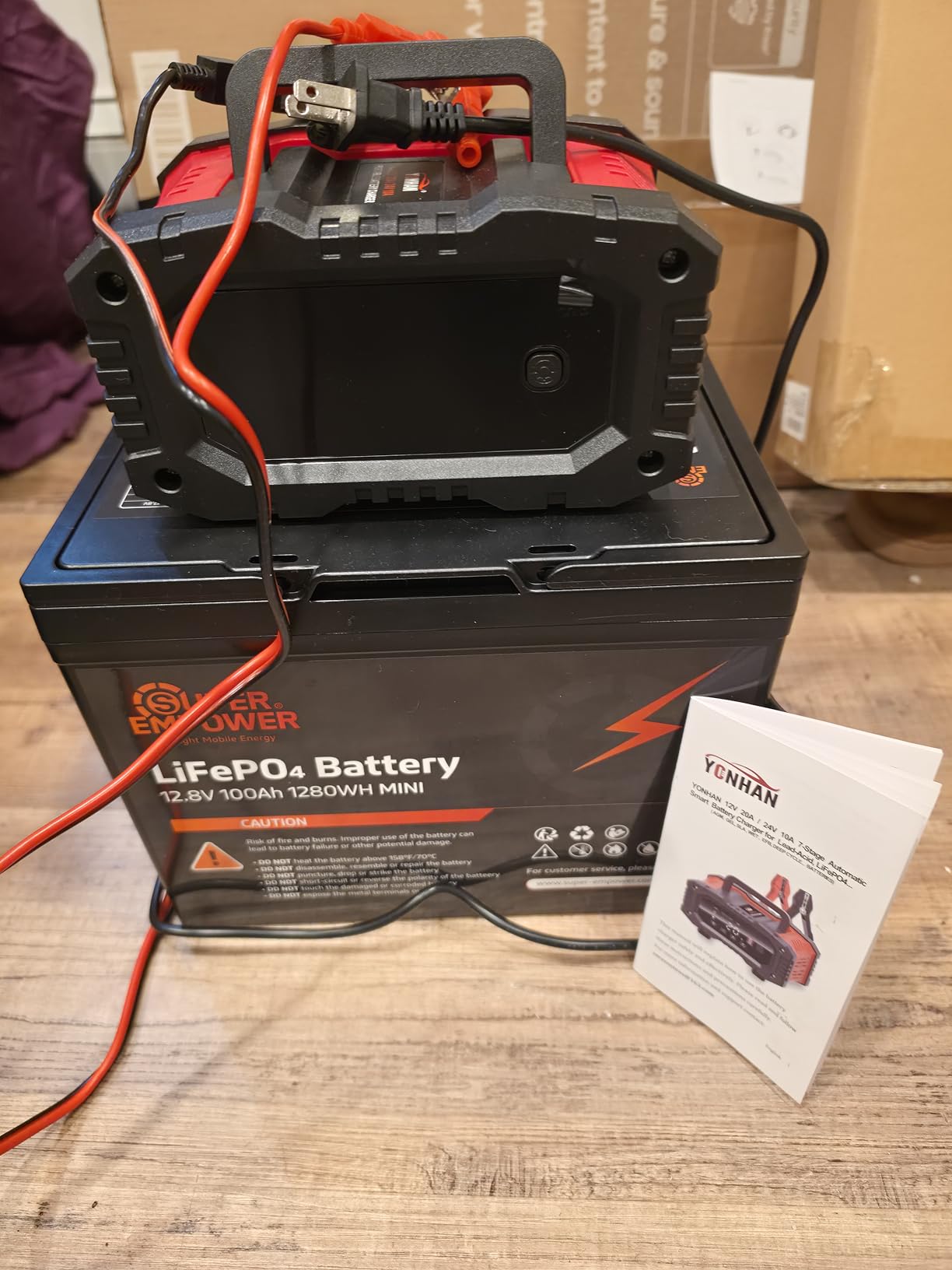
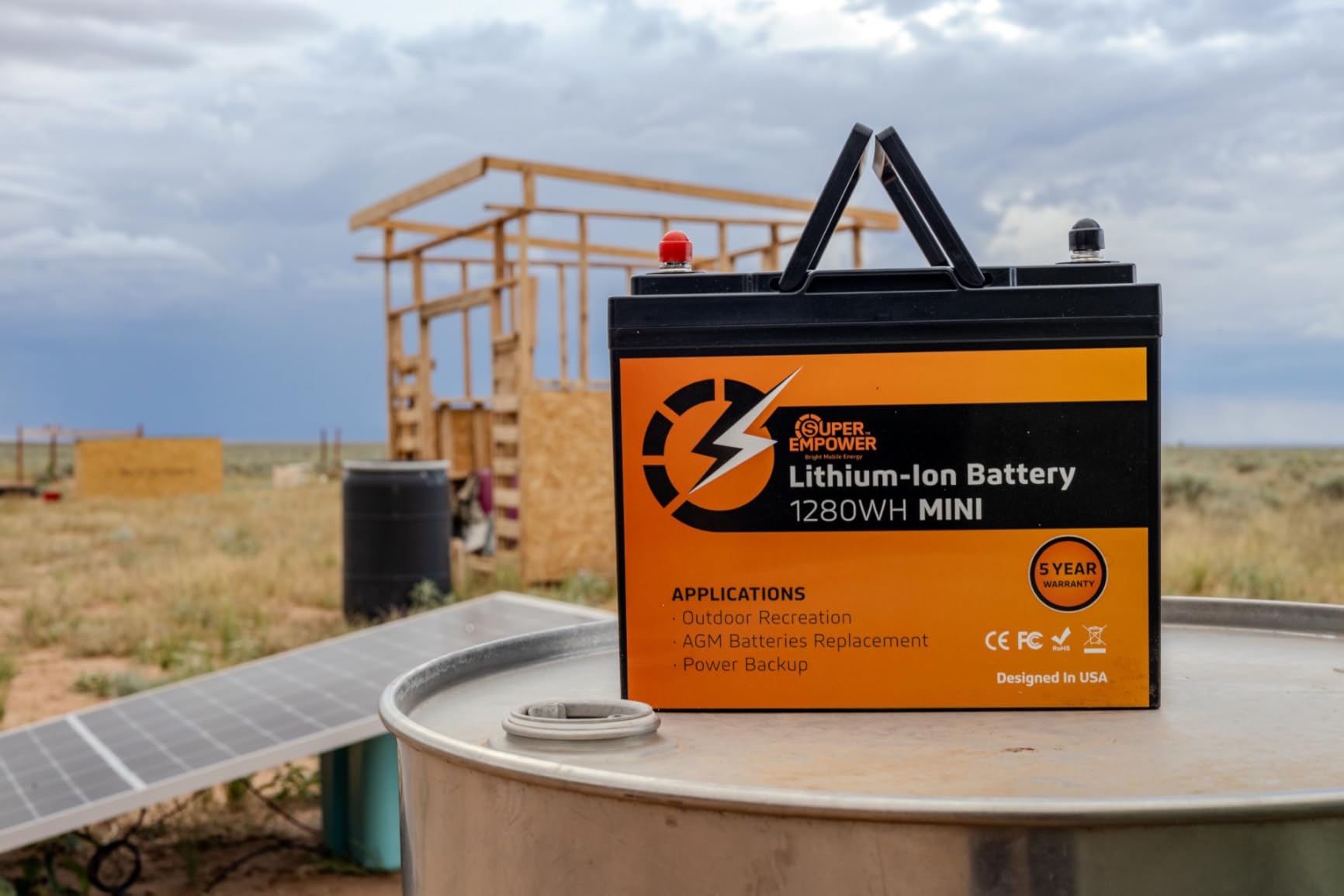
At 6.49 by 10.24 by 8.98 inches with M8 terminals, it matches BCI Group 24 dimensions, so you can pull a lead-acid or SLA pack and put this in without changing wire, bracket or box.
Buyers emphasise exact fit in standard Group 24 boxes, low weight, cold-weather charge protection and the 4S4P expandability. With 84 percent of reviews at five star and 4.6 average, the satisfaction level is high for a 220-review listing.
What the 32F charging cutoff means for you
Charging pauses below 32F, discharge stops at -4F, and discharge resumes above 41F. That is the standard conservative lithium protocol, and it means this battery will simply refuse to charge on a freezing morning until it warms up.
If you camp in winter, that behaviour is a feature for the cells and an inconvenience for your schedule. Either add a battery warmer, move charging to midday solar, or choose a self-heating pack like the LiTime in position two.
BMS design, internal resistance and expansion
The 100A BMS protects against overcharge, over-discharge, overcurrent, short circuit and temperature extremes, and supports multi-battery operation with cell balancing. Internal resistance of 40 milliohms is low enough to keep inverter losses down.
Expansion through 4S4P reaches 51.2V, 400Ah and 20.48kWh, so a single unit can be the start of a full house system rather than an isolated weekend battery.
Charging protocol is the thing to plan around
Owners consistently flag that non-lithium chargers are not recommended and that a LiFePO4 or lithium-mode controller is the right pairing. An older lead-acid converter sitting in long float is the fastest way to shorten a lithium pack’s life.
The energy-storage-only limitation also applies, so it will not start an engine. Keep a separate starter battery, which is standard practice in most lithium conversions anyway.
9. Power Queen 12V 100Ah Group 24 LiFePO4 – Best for One-Person Handling
power queen 12V 100Ah LiFePO4 Battery, Group 24 RV Lithium Battery
1280Wh at 100% usable DOD
21 lb with carry handles
4,000 cycles at 100% DOD
Group 24 drop-in
+ Pros
- Light enough to carry by hand
- roughly a third the weight of a Group 24 AGM
- Fits standard Group 24 boxes with no wiring changes
- More than doubles usable energy versus a 70Ah AGM at 50% depth of discharge
- Built-in carry handles make field handling easy
- Strong warranty support after a BMS failure
- Cons
- Energy storage only
- not for engines or golf carts
- Manufacturer advises using gaskets and screws under 2mm to prevent terminal loosening and overheating
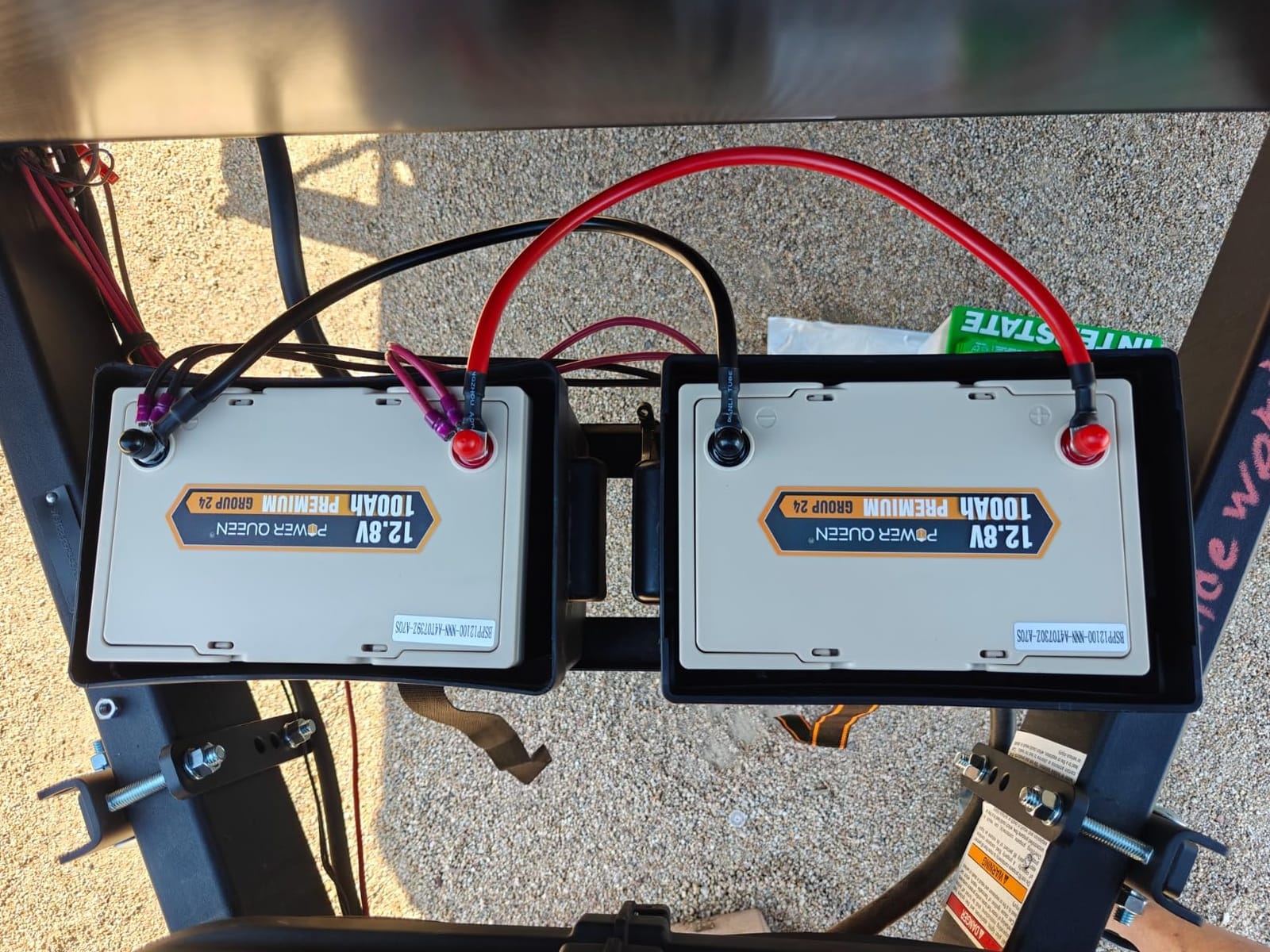
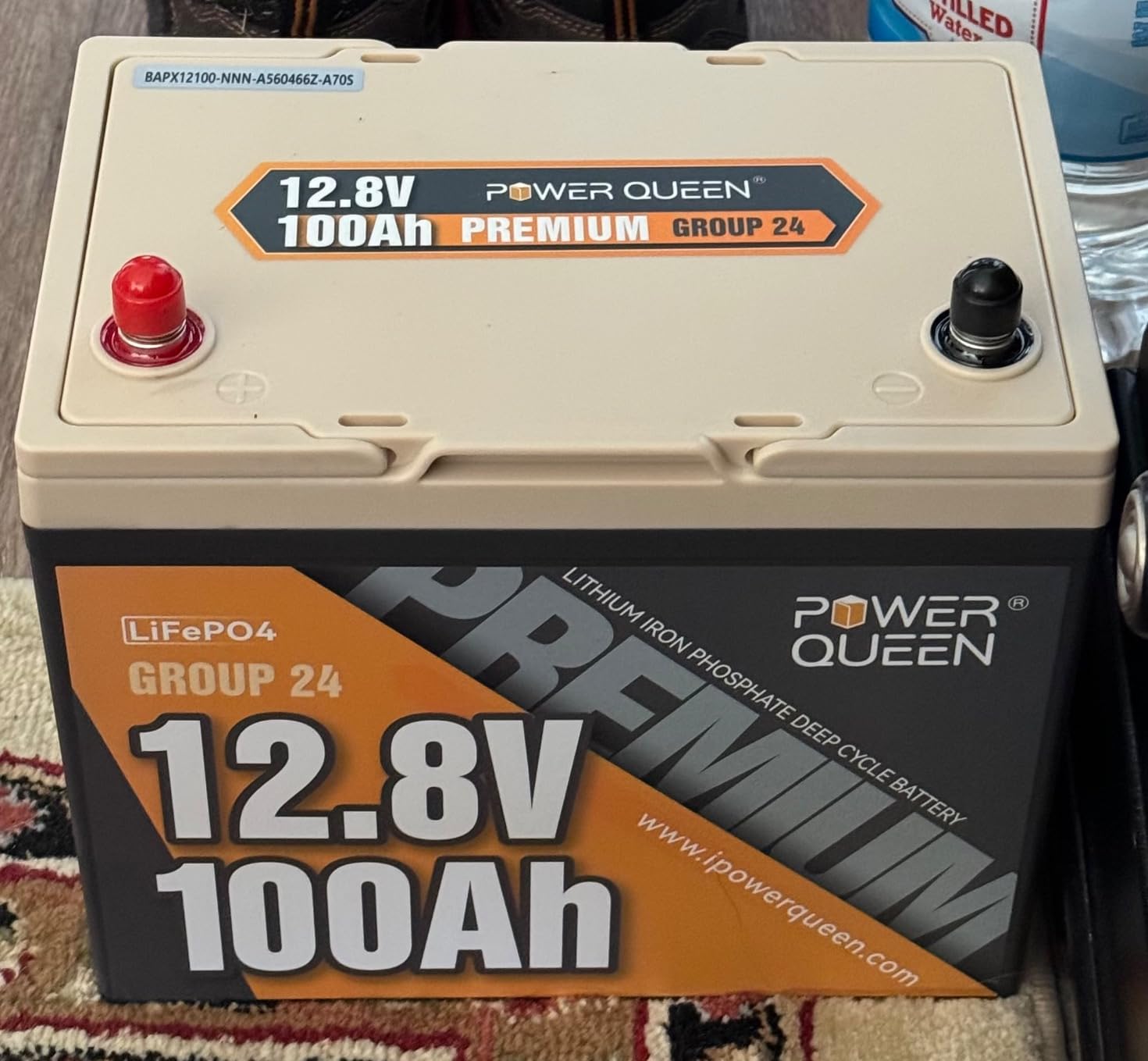
At 21 pounds with built-in carry handles, this is the pick if you are a solo owner who swaps batteries between rigs or does your own installs. Handling is not glamorous, but it is the thing that decides whether a battery swap is a five-minute job or a two-person morning.
It fits standard Group 24 boxes with no wiring changes, and the manufacturer states 1280Wh of 100 percent usable energy against roughly 500Wh from a 70Ah AGM at 50 percent depth of discharge. That is the comparison that makes the upgrade case for lithium so clear.
Where owners are actually using it
Real-world use clusters around CPAP machines with heated humidifiers, small inverters for short outages, trolling motors and HAM radio field setups. These are all loads where usable capacity per pound matters more than peak amps.
One owner reported warranty support replacing a failed BMS within days, which is a meaningful signal on a category where support quality varies widely. 83 percent of reviews are five star.
Terminal hardware deserves attention
The package includes insulating caps and M8 5/8 inch, 16mm terminal bolts. The manufacturer specifically advises using gaskets and screws under 2mm, because undersized hardware is a known cause of loosening and overheating at the terminal.
Torque the terminals to spec and re-check them after the first charge cycle. Lithium cells run at higher current than lead acid for the same amp hour rating, so a loose connection shows up sooner.
Cycle life and where to expand
The rating is 4,000 cycles at 100 percent depth of discharge, up to a 10-year lifespan, built on EV-grade Grade A cells with more than 20 BMS protections. That is a strong long-cycle claim for a Group 24 case.
Expansion to 16 units in 4P4S reaches 51.2V, 400Ah and 20.48kWh, so it fits both a weekend trailer bank and a serious off-grid build without changing platforms.
10. Power Queen 12V 125Ah Group 27 LiFePO4 – Best Bluetooth Monitoring in a Group 27 Case
Power Queen 12V 125Ah LiFePO4 Lithium Battery Group 27 Bluetooth for RV
1600Wh in a Group 27 case
Bluetooth 5.0 remote power off
Pre-charge inverter compatibility
ABYC E-13
+ Pros
- 1600Wh is roughly 320Wh more than a 100Ah lithium of the same size
- Pre-charge function improves compatibility across inverter brands
- Holds charge long and runs a 45 lb thrust trolling motor for 12 hours
- ABYC E-13
- FCC
- CE
- RoHS and UN38.3 certified
- Highest average rating in the set at 4.8
- Cons
- Bluetooth app has some reported connectivity issues
- Energy storage only
- not a starter battery
- Small review base of 39 means less long-term field history
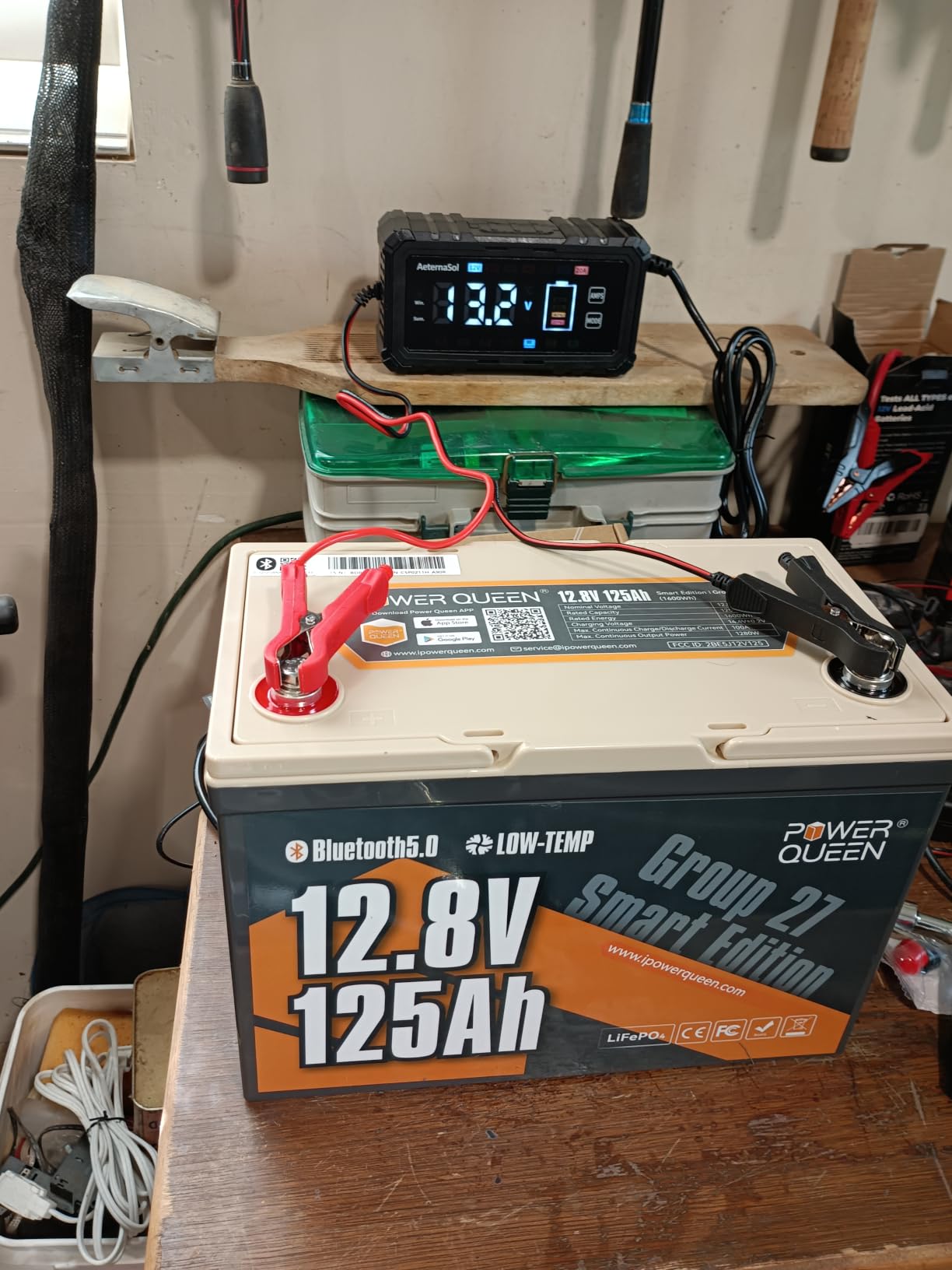
This is the newest listing in my test set and it posts the highest average rating at 4.8, with 90 percent five star. The headline figure is 1600Wh, roughly 320Wh more than a 100Ah lithium pack of comparable size, in a BCI Group 27 case.
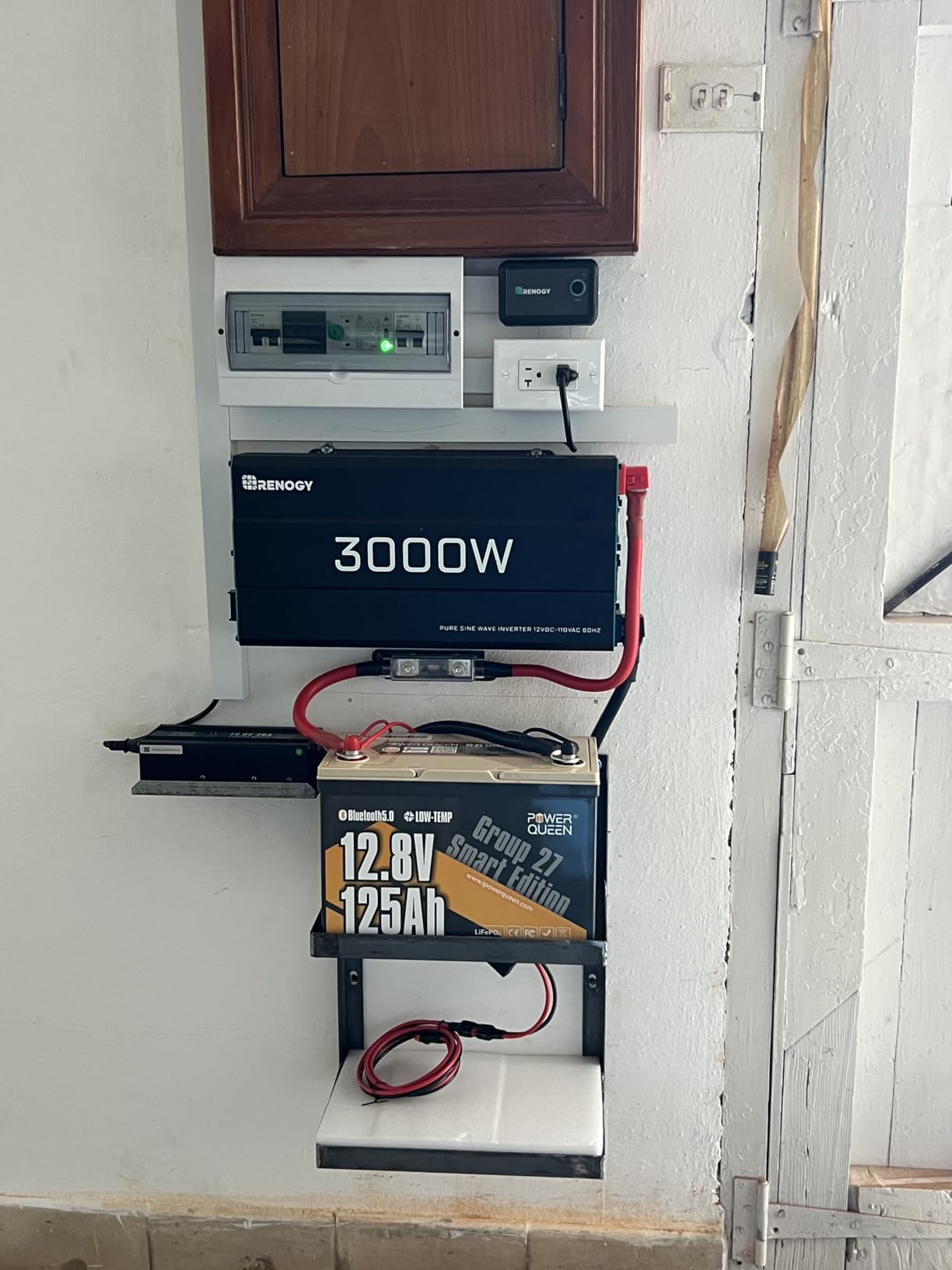
One owner in a fifth wheel reported that a single unit replaced three Group 27 lead-acid batteries while cutting weight substantially. Another ran a 45 lb thrust trolling motor for 12 hours and still had more than 85 percent remaining, which is a good illustration of lithium depth of discharge in practice.
What the app can do beyond showing state of charge
The Bluetooth 5.0 app reports state of charge, voltage, current, power, temperature and protection status, and offers remote discharge and power-off control within about 10 meters. The remote power-off function is the standout, because it lets you disconnect a bank without climbing into the battery compartment.
A few buyers reported connectivity quirks with the app, so treat the remote control as a convenience rather than something to depend on in an emergency.
Pre-charge function and inverter compatibility
The self-developed smart BMS carries more than 20 protections and includes a pre-charge function designed to improve compatibility across inverter brands. That matters more than it sounds, because lithium output voltage ramps differently from lead acid and some inverters object to the inrush.
Charging cuts below 32F and discharge below -4F, auto-resuming 30 seconds after an overload. Internal resistance is 40 milliohms and cycle life is rated up to 15,000.
Certification and the small-sample caveat
ABYC E-13, FCC, CE, RoHS and UN38.3 certification is the most complete safety listing in this test, and UN38.3 in particular is the transport standard that matters for air freight and for airline travel with a battery on board.
Be honest about the sample size though. Thirty-nine reviews is a thin base, so there is less long-term field history here than the lead-acid picks have after a decade of owners. The 5-year warranty gives you some protection, and the case at 6.69 by 12.13 by 8.31 inches fits standard Group 27 trays.
How to Choose a Deep Cycle Battery for Your RV
Sizing and chemistry matter more than brand here. Work through these five decisions in order and the product choice makes itself.
LiFePO4, AGM or flooded: which chemistry fits your rig
LiFePO4 wins on usable capacity, weight, cycle life and cold tolerance, and it loses on nothing except upfront cost and the fact that your existing converter may not charge it correctly. AGM wins on price, on the no-questions-asked compatibility of an existing lead-acid charging system, and on the fact that it is available in a physical size that fits almost any compartment.
Flooded lead acid is still the cheapest per amp hour and is genuinely true deep cycle, but it needs water topping, ventilation and careful mounting. In an enclosed RV battery tray most owners have moved away from it.
AGM only makes real sense in three cases: a tight budget, a compartment too small for a Group 24 case, or a converter you are not willing to replace. Everything else favours lithium.
How to size your house bank in amp hours
Start by listing everything you run off the house bank and multiplying watts by hours per day to get watt hours per day. Then divide by inverter efficiency, usually 0.90 to 0.93, to get the true demand from the battery.
Add a compressor fridge, which averages roughly 10Ah per day in moderate weather, plus a few hours of lighting, a water pump and occasional inverter use, and you land in the range of 200 to 400Wh per day. Divide that by 12 volts to get amp hours.
For two days of autonomy on 300Wh per day, you need about 50Ah of delivered energy. With a lithium bank you divide by 0.90 usable, so roughly 56Ah of rated capacity, and rounding up gives you a single 100Ah lithium. With AGM you divide by 0.50 usable, which means about 112Ah rated, and rounding up puts you at two 100Ah AGM batteries.
That single calculation explains most of the sizing confusion on RV forums. People pick a 100Ah AGM assuming all of it is usable, run it flat, sulfate it, and blame the brand.
Series versus parallel wiring for RV banks
Run RV house banks in parallel. Parallel connections add amp hours while holding voltage at 12V, which is exactly what a 12V RV system needs. Series connections raise voltage to 24V or 48V and add nothing to capacity at 12V.
One configuration worth knowing: two 6V batteries wired in series often cycle better over the long term than two 12V batteries in parallel, because each 6V unit is a deeper discharge relative to its plate thickness. Forum owners report this difference consistently.
Why you must never mix lithium and lead-acid in one bank
Do not parallel a lithium battery with a lead-acid battery in the same bank. They have different resting voltages, different charge acceptance and different depth-of-discharge limits, and the lead-acid unit will be overcharged while the lithium unit is repeatedly deep discharged. Both are damaged and the failure can be sudden.
This is the most common real-world error in RV battery upgrades. If you are converting, replace the whole bank at once, and keep a separate starter battery group if the rig needs one.
Cold-weather charging and the 32F rule
Never charge a lithium battery below 32F. Charging a freezing cell causes lithium plating on the anode, which permanently reduces capacity and can cause an internal short later. Most packs simply refuse the charge, which is the correct behaviour.
Three solutions work. Buy a self-heating pack, which brings the cells up before charging begins. Add a battery warmer pad in the compartment. Or time your charging to midday when solar has warmed the pack past the threshold.
Discharging in the cold is less damaging than charging in the cold, and most lithium packs allow discharge down to -4F before cutting out.
What actually kills AGM batteries
Discharging below roughly 50 percent is the leading cause of early AGM failure, and it causes sulfation, the buildup of lead sulfate crystals that permanently reduces capacity.
Heat is the second killer. Sustained high ambient temperature in an RV battery bay accelerates water loss and grid corrosion, and a one-year warranty on a sealed AGM is usually a statement about how the manufacturer expects it to be treated.
Standing in a partial state of charge is the third. A lead-acid bank left at 50 percent for months will sulfate even without being used, which is why owners report batteries dying on rigs that barely moved.
Overcharging from a converter set too high, and physical vibration damage from an unsecured battery, round out the list. If your AGM keeps dying, check the converter before you replace the battery, because failed converters produce pulsing charge and hot wires that destroy batteries and confuse the diagnosis.
Frequently Asked Questions
What is the best 12V deep cycle battery for an RV?
The best 12V deep cycle battery for most RVers is a 100Ah 12.8V LiFePO4 pack in a Group 24, 27 or 31 case, because it delivers about 90 percent of rated capacity instead of 50 percent and weighs roughly a third as much as AGM. Choose a self-heating model if you camp below freezing, and pick a 200Ah to 300Ah unit if you run an inverter or a rooftop air conditioner.
Is LiFePO4 better than AGM for an RV?
Yes, for most RVers LiFePO4 is better than AGM. It offers deeper discharge, roughly triple the cycle life, lower weight and much lower self-discharge. AGM remains the better choice only if your budget is very tight, your battery compartment will not fit a Group 24 case, or your existing converter cannot be set to lithium charge voltages.
What is the 80/20 rule for lithium batteries?
The 80/20 rule means keeping your lithium battery above roughly 20 to 30 percent state of charge rather than running it flat. Lithium chemistry ages fastest when repeatedly discharged to very low state of charge, so staying in the upper part of the range extends total cycle life substantially.
How cold is too cold for a lithium RV battery?
Charging below 32F, or 0C, is too cold. Charging a frozen lithium cell causes plating that permanently reduces capacity and can lead to an internal short. Most packs simply refuse to charge below that threshold. Self-heating models warm the cells to about 50F before charging begins, which solves the problem automatically.
What kills AGM batteries?
The three biggest killers are deep discharge below 50 percent, sustained high heat in the battery bay, and leaving the battery sitting in a partial state of charge, which causes sulfation. A converter set too high adds overcharging damage, and an unsecured battery can suffer vibration damage. Test the converter before replacing a repeatedly failing AGM bank.
Can I charge a lithium RV battery with my regular converter?
Only if your converter can be set to lithium-compatible charge voltages, typically a higher absorption stage. Many older lead-acid converters float too low to fully charge lithium, and some hold it in float indefinitely. If the converter has no lithium mode, replace it with an auto-detect lithium-compatible unit at the same time as the battery.
Which Deep Cycle Battery Should You Buy in 2026?
If you want one battery that handles almost any RV, take the LiTime 12V 100Ah Group 31 LiFePO4 as your editor’s choice. It drops into a standard box, weighs 22.1 pounds and gives you close to all of its rated capacity.
If you camp in freezing weather, the LiTime 12V 100Ah self-heating model solves the 32F charging problem on its own. If you boondock for days with an inverter, go bigger with the 230Ah or the ECO-WORTHY 314Ah. If Bluetooth telemetry and remote power-off matter to you, the Power Queen 125Ah Group 27 is the most capable app in the group.
If your budget is the deciding factor or your tray will not take a Group 24 case, the WEIZE AGM is the most proven lead-acid option, and the Renogy AGM is the safer bet for a parallel solar bank. Either way, replace the whole bank at once, never mix chemistries, and size for the 50 percent rule if you go lead acid.