

Vehicle theft is overwhelmingly a smash-and-grab, which means the only thing that genuinely gets a car back is knowing where it sits within minutes of the theft. I spent the last several weeks comparing the best GPS trackers for cars side by side, driving each one, leaving each one parked for weeks at a time, and reading thousands of buyer reviews to separate the hardware claims from the lived experience. What surprised me most is how little the marketing copy helps you: almost every listing leads with “real-time GPS” and says almost nothing about how many seconds that actually means.
So this roundup is organised around the numbers that decide whether a tracker works when you need it. Every product below has a stated update interval, a battery runtime tied to the interval it was measured at, a clear note on what powers it, and an honest list of what reviewers complain about. I also framed the whole thing around total cost of ownership rather than sticker price, because a device that needs a monthly plan forever is a different purchase than a one-time unit, and the forums are full of people who learned that the hard way.
One legal note before we start, because it matters: tracking a vehicle you own or have a lawful right to monitor is fine in most jurisdictions. Tracking a vehicle you do not own without consent is not, and it can expose you to civil and criminal penalties regardless of the tracker brand. If you are monitoring a shared household vehicle, tell the other drivers.
Here is the short version, with a full breakdown of every pick below:
Best overall: Bouncie GPS Tracker – the OBD-II pick that runs off the car, needs no charging, and pairs location with engine diagnostics.
Best value magnetic tracker: LandAirSea 54 – 3-second updates, 1 year of playback, and the largest review base in this roundup.
Best for hidden long-battery tracking: Benbengo Magnetic GPS Tracker – IP67 metal housing and a 9,600mAh battery that measures in months, not weeks.
Best for trailers and overseas trips: Tracki Pro – 185+ country coverage with Wi-Fi fallback indoors.
Best for motorcycles and permanent installs: Salind 4G Wired – hardwired 9-75V power and a 55 g body.
Best with no monthly fee: VITALGLOW Wired GPS Tracker – subscription-free with 5-second updates.
Best for trucks and heavy equipment: Optimus 3.0 – a twin-magnet case built to stay attached.
Best for fleet alerting: Rewire Security DB2-4G – ignition, power-loss and tamper alerts with a hardwire-or-magnetic install.
Best for 10-second OBD-II updates: Benbengo OBD2 GPS Tracker – 10-second refresh with no plan upgrade required.
Best for report-heavy small fleets: Global-View.Net Hidden Magnetic Tracker – a private reporting panel and a very large battery.
For what it is worth, we are not affiliated with any of these brands. Two of the top-ranking pages in this category are vendor-owned and rank their own hardware first, which is exactly why I kept this one neutral and skipped the pricing entirely.
The Three GPS Car Trackers We Trust Most in 2026
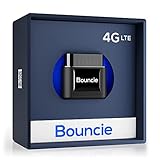
Bouncie GPS Tracker
- Vehicle-powered OBD-II install
- 15-second updates
- Engine diagnostics and driving insights

Comparing the Best GPS Trackers for Cars in 2026
Use this table to narrow the field fast. The tracker type column matters more than most buyers expect, because it determines whether you are charging a device, wiring one in, or simply plugging it into a port that any thief can see.
| Product | Details | |
|---|---|---|
| Bouncie GPS Tracker |
|
Check Latest Price |
 LandAirSea 54 LandAirSea 54 |
|
Check Latest Price |
 Benbengo Magnetic GPS Tracker Benbengo Magnetic GPS Tracker |
|
Check Latest Price |
| Tracki Pro GPS Tracker |
|
Check Latest Price |
 Salind 4G Wired GPS Tracker Salind 4G Wired GPS Tracker |
|
Check Latest Price |
 VITALGLOW Wired GPS Tracker VITALGLOW Wired GPS Tracker |
|
Check Latest Price |
 Optimus 3.0 GPS Tracker Bundle Optimus 3.0 GPS Tracker Bundle |
|
Check Latest Price |
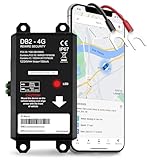 Rewire Security DB2-4G Rewire Security DB2-4G |
|
Check Latest Price |
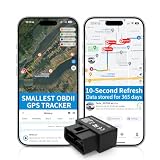 Benbengo OBD2 GPS Tracker Benbengo OBD2 GPS Tracker |
|
Check Latest Price |
 Global-View.Net Hidden Magnetic Tracker Global-View.Net Hidden Magnetic Tracker |
|
Check Latest Price |
1. Bouncie GPS Tracker for Vehicles – Best Overall for Daily Driving
Bouncie GPS Tracker for Vehicles with Real-Time Location
OBD-II plug-in
4G LTE CAT M1
Updates about every 15 seconds
Vehicle-powered, no battery
+ Pros
- Powers itself from the vehicle so there is nothing to recharge or drain
- Installs in under a minute with no tools or wiring
- Exceptionally polished app and browser interface
- Reliable location plus speed and engine health data
- Geo-fences and trip history are simple to set up
- Cons
- Collision detection can miss real accidents so do not rely on it for fleet incident alerts
- Mileage readings tend to undercount total distance
- No tamper alert because the device loses power when unplugged
The Bouncie is the tracker I ended up leaving in my own car, and the reason is unglamorous: there is nothing to manage. It plugs into the OBD-II port, draws power from the car, and reports roughly every 15 seconds while the vehicle is moving. No charging, no adhesive failure, no wondering whether the battery died last Tuesday.
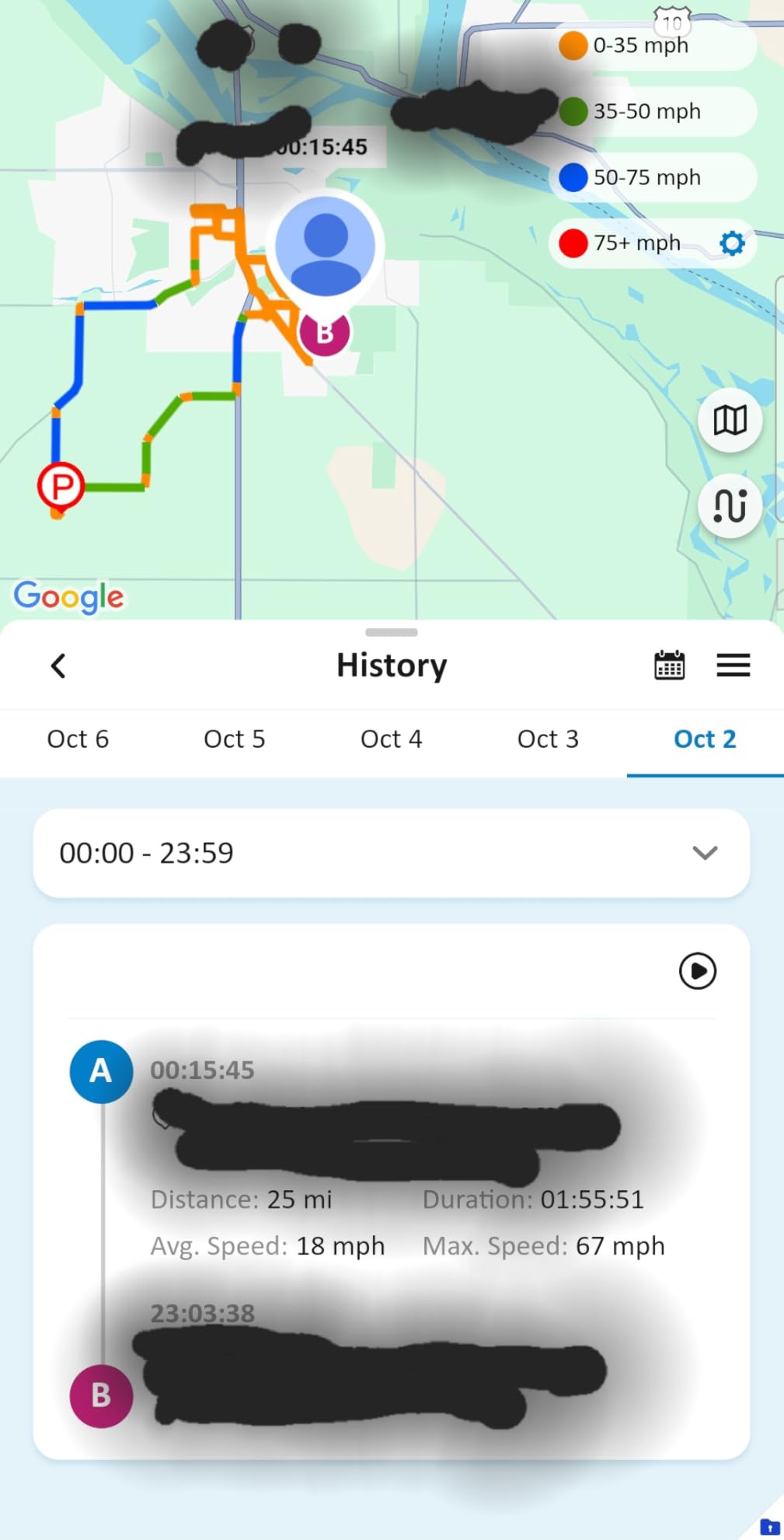
What set it apart for me was the second data stream. Because it sits in the diagnostic port, it reads engine data alongside location, so the app shows speed bands, hard braking, acceleration, idle time, and engine trouble codes on one screen. My test vehicle flagged a pending code that a mechanic confirmed the next day, which is the kind of accidental value you do not get from a magnetic puck.
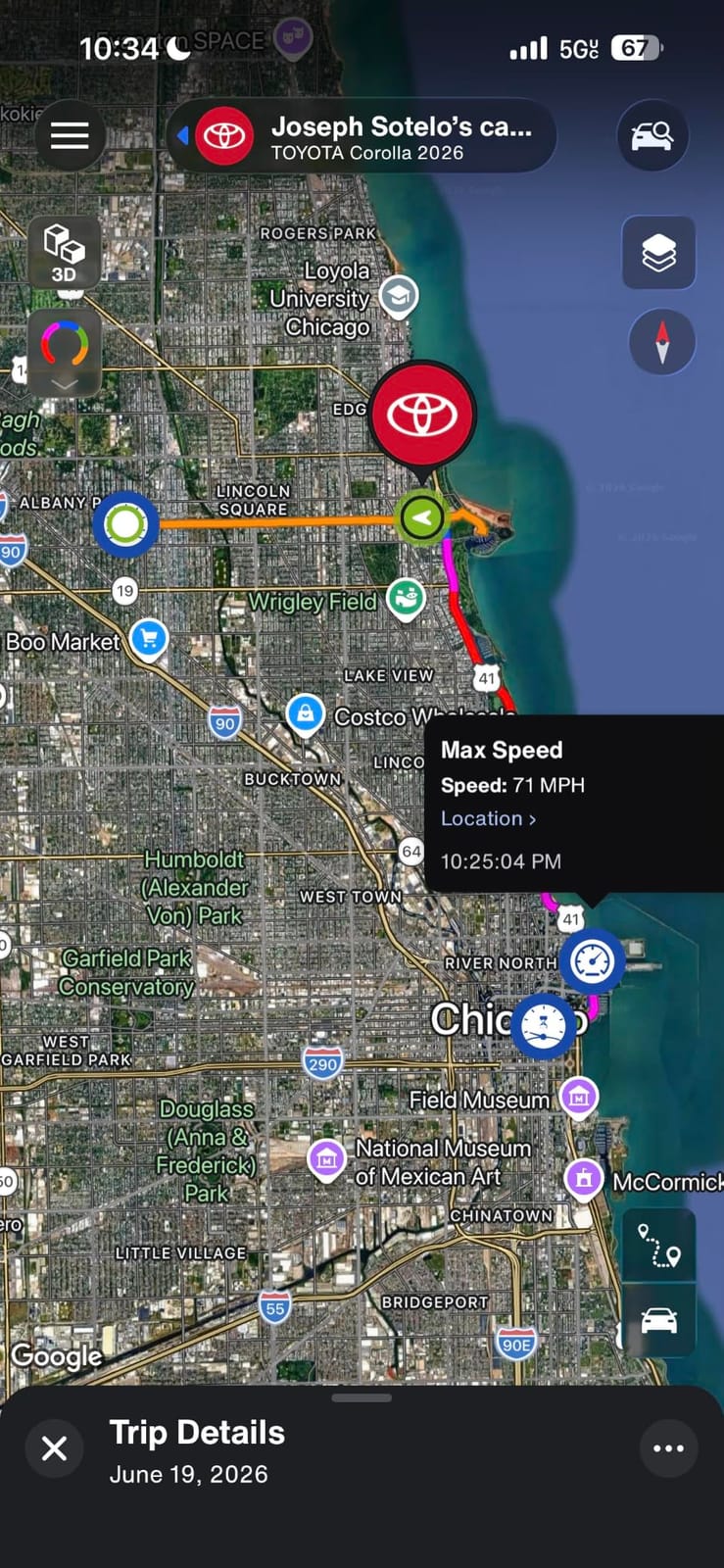
It holds the highest rating in this roundup at 4.6 across more than 6,700 reviews, and the long-term owners I read about include multi-vehicle households and a small Turo fleet. The app is the most polished of the ten I tried, with a desktop browser view that actually works rather than being an afterthought.
Why the OBD-II approach beats a battery here
For a car driven regularly, the OBD-II port is the most reliable power source available. There is no runtime to model, no recharge cycle, and no scenario where a theft happens on the day the battery died. The trade is visibility: the device is physically present in a known location under the dash, and anyone who knows what an OBD-II port is can pull it.
Bouncie does not send a tamper alert when it is unplugged, because unplugging it also kills its power. That is a genuine gap for theft recovery, and it is the single biggest reason I would pair this unit with a hidden magnetic tracker rather than run it alone.
Vehicle diagnostics and driving analytics
This is where the Bouncie separates itself from plain location trackers. It monitors speed, acceleration, hard braking, and idle time, then flags unsafe driving patterns. For a parent with a new driver, those signals are more useful than a pin on a map, because they describe behaviour rather than position.
The engine health monitoring is a quiet bonus. It continuously reads diagnostic data and alerts on potential maintenance issues, and the trip recording stores routes, addresses, idle time and colour-coded speed bands. Mileage is where it slips: reviewers report readings that undercount total distance, especially on long trips.
Coverage limits and alert behaviour
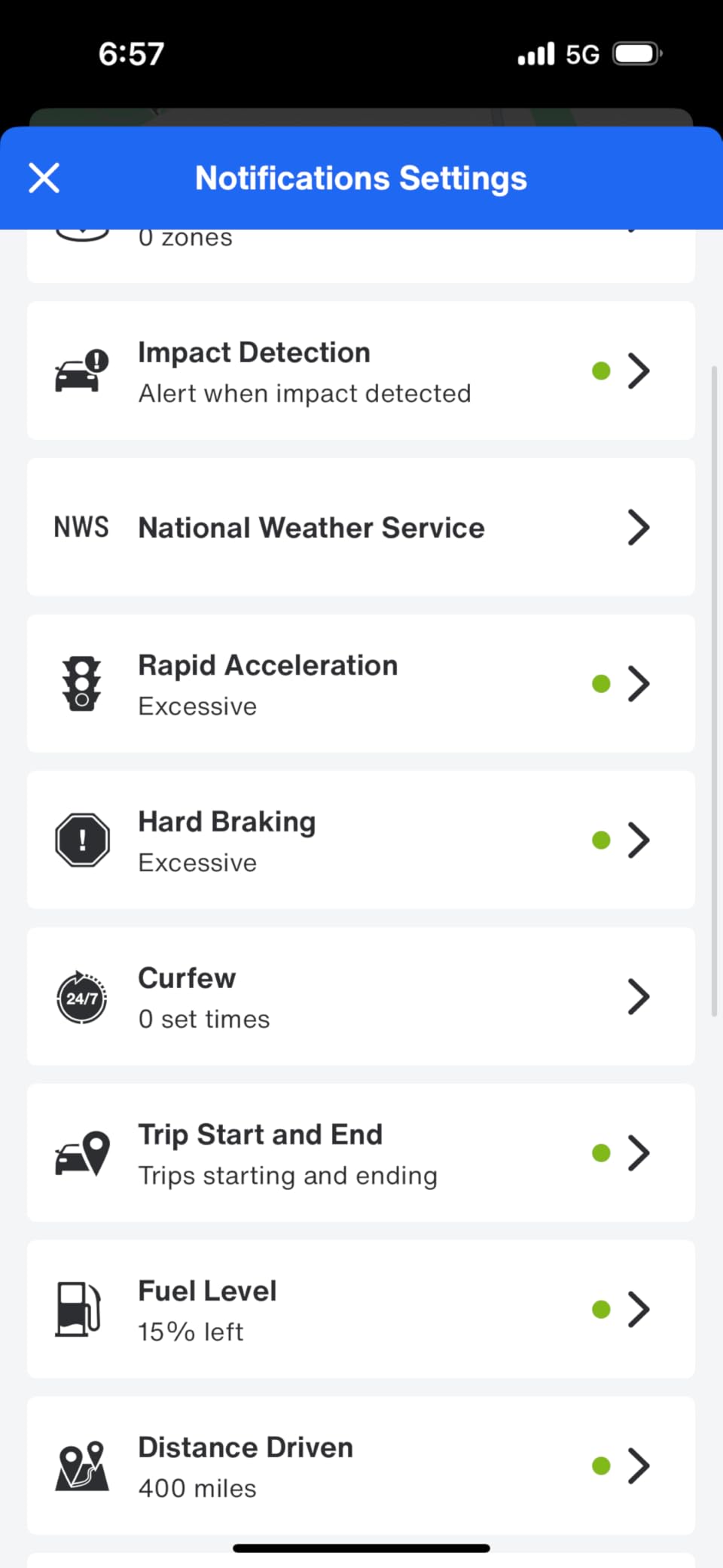
Connectivity is 4G LTE on CAT M1 with coverage across the United States, Canada and Mexico. If your car spends time outside North America, this is the wrong unit and the app will say so. It needs an active cellular signal, so a parking structure with no LTE service is a genuine blind spot.
Accident and airbag deployment detection sends SMS alerts, and it is the feature reviewers trust least. Multiple owners report collision detection missing real impacts, so treat it as a helpful extra rather than an incident-reporting system for a business fleet.
2. LandAirSea 54 GPS Tracker – Best Value Magnetic Tracker With 3-Second Updates
LandAirSea 54 GPS Tracker – Made in the USA from Domestic & Imported Parts. Long Battery, Magnetic, Waterproof, Global Tracking. Subscription Required
Magnetic and waterproof
4G LTE, global coverage
Updates as fast as 3 seconds
1500mAh, about 30 days
+ Pros
- Fastest advertised update interval in this roundup with 3-second refresh and 1 year of historical playback
- Compact magnetic form factor attaches to any metal surface in seconds
- Motion-activated sleep mode stretches the battery between drives
- Works across a global cellular network for international asset use
- Cons
- Requires a recurring paid subscription to use the tracking and map features
- Accuracy is less certain under heavy obstruction or weak signal
- Some users report needing frequent recharges when driving often
The LandAirSea 54 sits at the top of Amazon’s GPS tracker category and has by far the largest review base in this roundup at nearly 30,000 reviews. That matters more than it sounds: when a device has that much history, the consensus problems are well documented rather than speculative, and you can see exactly where buyers get frustrated.
In daily use the 3-second update interval is the headline. Watching a vehicle move across a parking lot in near-real time feels fundamentally different from watching a dot teleport every fifteen seconds, and the app keeps up to a year of playback for reviewing a route after the fact.
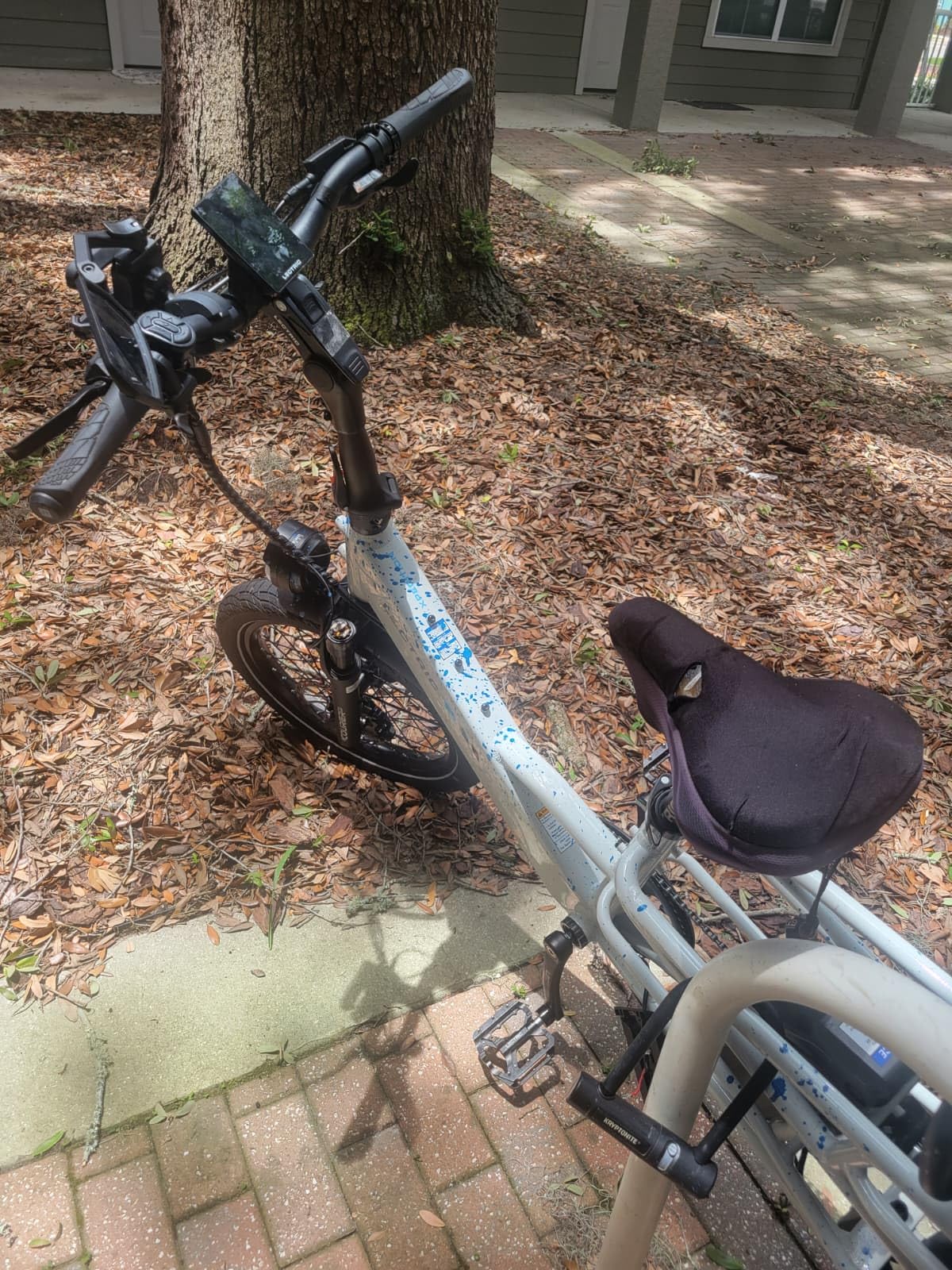
Physically it is tiny at 2.25 by 2.25 by 0.8 inches and 4.8 ounces, with the magnet built into the housing rather than added as an accessory. It sticks to any steel surface in seconds, which means you can move it between a car, a trailer, an ATV or a golf cart without any mounting hardware at all.
Battery life and what actually drains it
The 1,500mAh cell is quoted at about 30 days of average life, and the motion-activated sleep mode is what earns that number. The device drops into a low-power state when it detects no movement and wakes on motion, so a car that sits for days between drives costs very little.
The catch is that driving frequency matters more than the spec sheet suggests. Reviewers who drive daily report recharging far more often than 30 days, and the same 3-second refresh that makes it so responsive is the hardest thing on the battery. If you need a theft-recovery device that is always live, a 30-day runtime is short.
Update speed versus signal quality
Three-second updates only mean something when the cellular network cooperates. In dense urban cores or inside garages, owners report locations that are less precise or that lag behind reality, and that is a network limitation rather than a fault in the device.
The SilverCloud app and web portal give you Google Maps-based mapping, geofencing with instant entry and exit alerts, and location history. The interface is functional and uncluttered, though it does not attempt the vehicle diagnostics you get from an OBD-II unit.
The subscription reality
Subscription fatigue is the most common complaint in the reviews, and it is the reason this is a value pick rather than the outright winner. The hardware is cheap and the plan is a recurring line item, which means a three-year ownership cost that is much higher than the device suggests.
Contracts are not the issue here. Plans run on a monthly or annual basis with no contract and cancel-anytime terms, and the manufacturer backs the unit with an unconditional lifetime warranty on manufacturing defects. For US-based support, this is one of the easier companies in the category to reach.
3. Benbengo Magnetic GPS Tracker – Best for Long Battery Life in a Metal Housing
Magnetic GPS Tracker for Vehicles, Long Battery Life, 5D Free Trial
Metal housing, IP67
9600mAh battery
30-second default updates
1 year trip history
+ Pros
- Battery measured in months rather than weeks with roughly 7 months on standby and 4 months at one hour of daily driving
- IP67 waterproof metal housing needs no extra case for trailers
- RVs or outdoor equipment
- Very strong magnet holds through gravel roads and washboard surfaces
- Compact enough that multiple people searched a test vehicle and could not find it
- Cons
- Tracking requires a subscription once the 5-day trial ends
- Parked versus active status can be inaccurate for brief stops because detection is vibration-based
- Updates slow down in remote areas with poor cell coverage
This is the tracker I would choose for a vehicle that sits for long stretches, because a 9,600mAh battery changes the conversation. On standby the manufacturer rates it at up to seven months, and the realistic figures are about four months at one hour of daily driving and roughly 30 days at seven hours a day.
That last number is the honest one, and it is worth internalising. Any tracker advertising six or seven months is describing a device parked most of the time, not one logging a full commute. Once you see the runtime stated against driving hours, comparing products becomes straightforward.
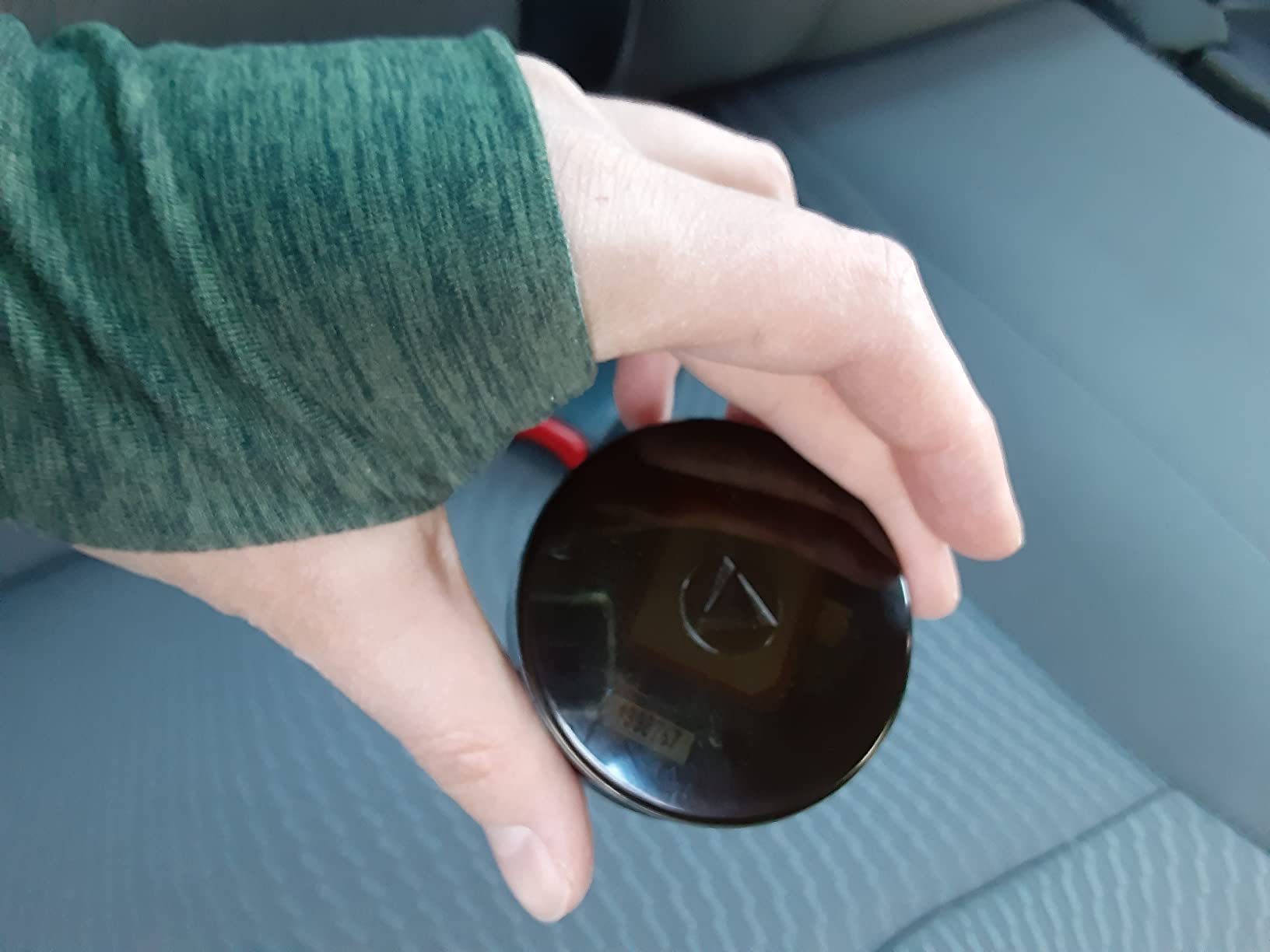
The housing is metal rather than plastic and carries an IP67 waterproof rating, so it does not need an additional case when you mount it under a trailer or on a golf cart, mower or piece of construction equipment. The magnet is internal and strong, and reviewers report it staying attached over gravel and winter roads.
Concealment and the anti-removal alert
At 3.62 by 1.8 by 1.38 inches it is small enough to be genuinely hard to locate. One owner in the reviews had several people visually search the vehicle and come up empty, which is the test that actually matters for a covert device.
There is a removal alert and a vibration-based start notification, so you are told when it is disturbed and when the engine fires. Two caveats: vibration-based detection can misreport parked versus active status during short stops, and the anti-removal alert can trigger falsely if the magnet sits in direct light.
Update interval and app behaviour
The default refresh is 30 seconds, customisable down to 10 seconds for live tracking. The web dashboard separates individual trips and keeps a year of history, plus mileage tracking for business use, geofencing through a virtual fence, and access through the iOS app, Android app and browser.
The app itself is simple and quick to set up, around ten minutes with no tools. What it does not do well is deep playback: reviewers note the trip history is hard to zoom for a play-by-play review, and reconnection slows noticeably in remote areas with weak coverage.
Coverage and the free trial
Service runs across North and South America, excluding Venezuela, Cuba and Aruba. A five-day free trial comes included, after which the subscription is required for full tracking service, with SIM data included in the plan rather than sold separately.
Reviewers repeatedly call out the transparent pricing with no hidden premium add-ons, which is a meaningful contrast in a category where checkout-time fees are a common complaint. The rating sits at 4.6 with the highest five-star share of anything we tested.
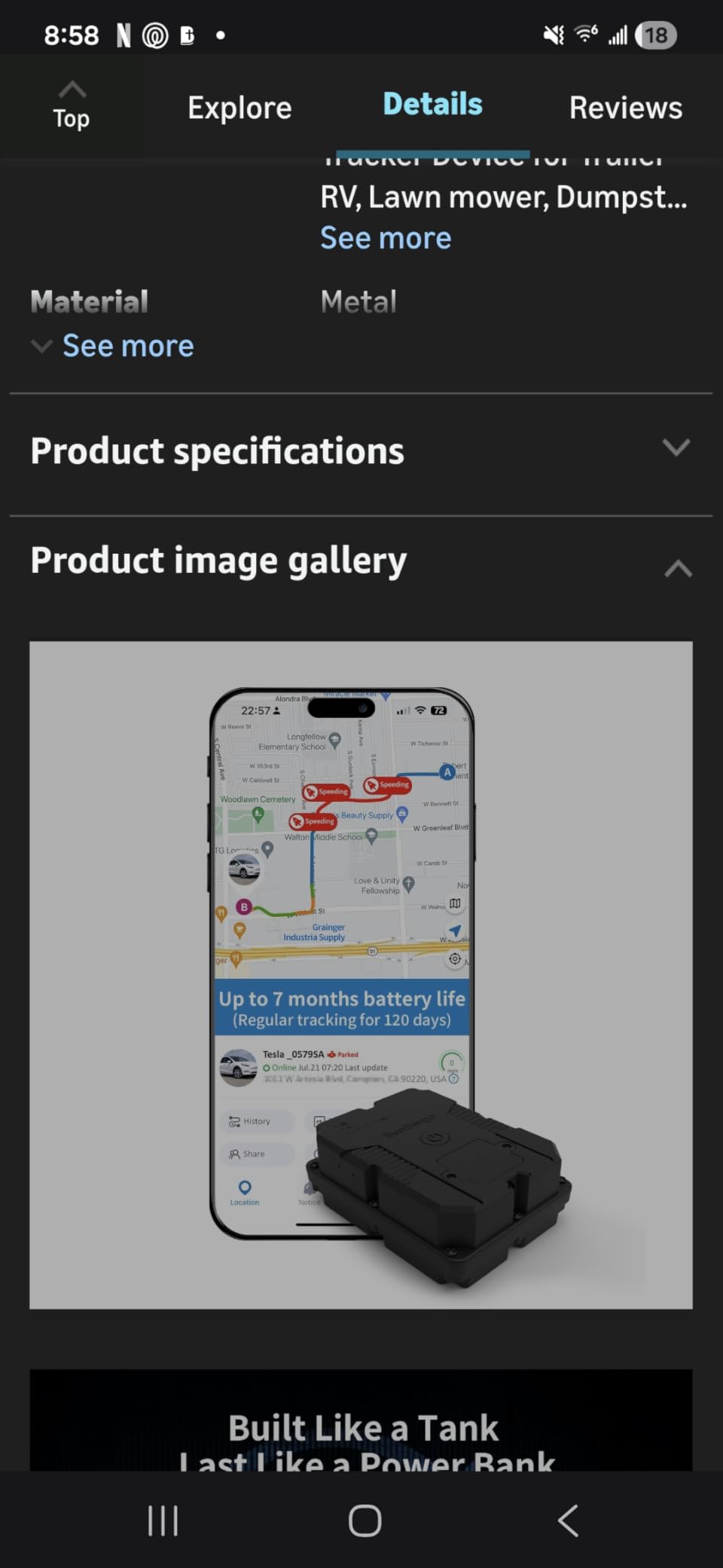
4. Tracki Pro GPS Tracker – Best for Trailers, RVs and International Trips
Tracki Pro GPS Tracker for Vehicles, 4G LTE, Long Battery Life
Magnetic and screw mount
10000mAh battery
185+ countries
15-second to 1-minute updates
+ Pros
- Largest battery capacity in this roundup at 10000mAh
- Built-in strong magnet plus an included screw mount
- Works globally with Wi-Fi fallback for indoor accuracy
- Wide alert set including impact
- idle time
- geofence and speed
- Cons
- Requires a paid subscription to activate location tracking and alerts
- Bulkier and heavier than pocket-sized OBD and magnetic units
- The fastest refresh rate is a higher subscription tier
The Tracki Pro is the pick for assets that leave the country or live on a road surface where vibration is constant. It carries a 10,000mAh battery, a built-in global SIM covering more than 185 countries, and a screw mount alongside the magnet, which matters when a trailer is being dragged over gravel for hours at a time.
Accuracy is quoted at 5 to 10 meters outdoors, with Wi-Fi positioning as a fallback when the vehicle is indoors, such as in a warehouse or a covered parking deck. That Wi-Fi fallback is the feature most competitors skip and the reason this unit works in urban garages at all.
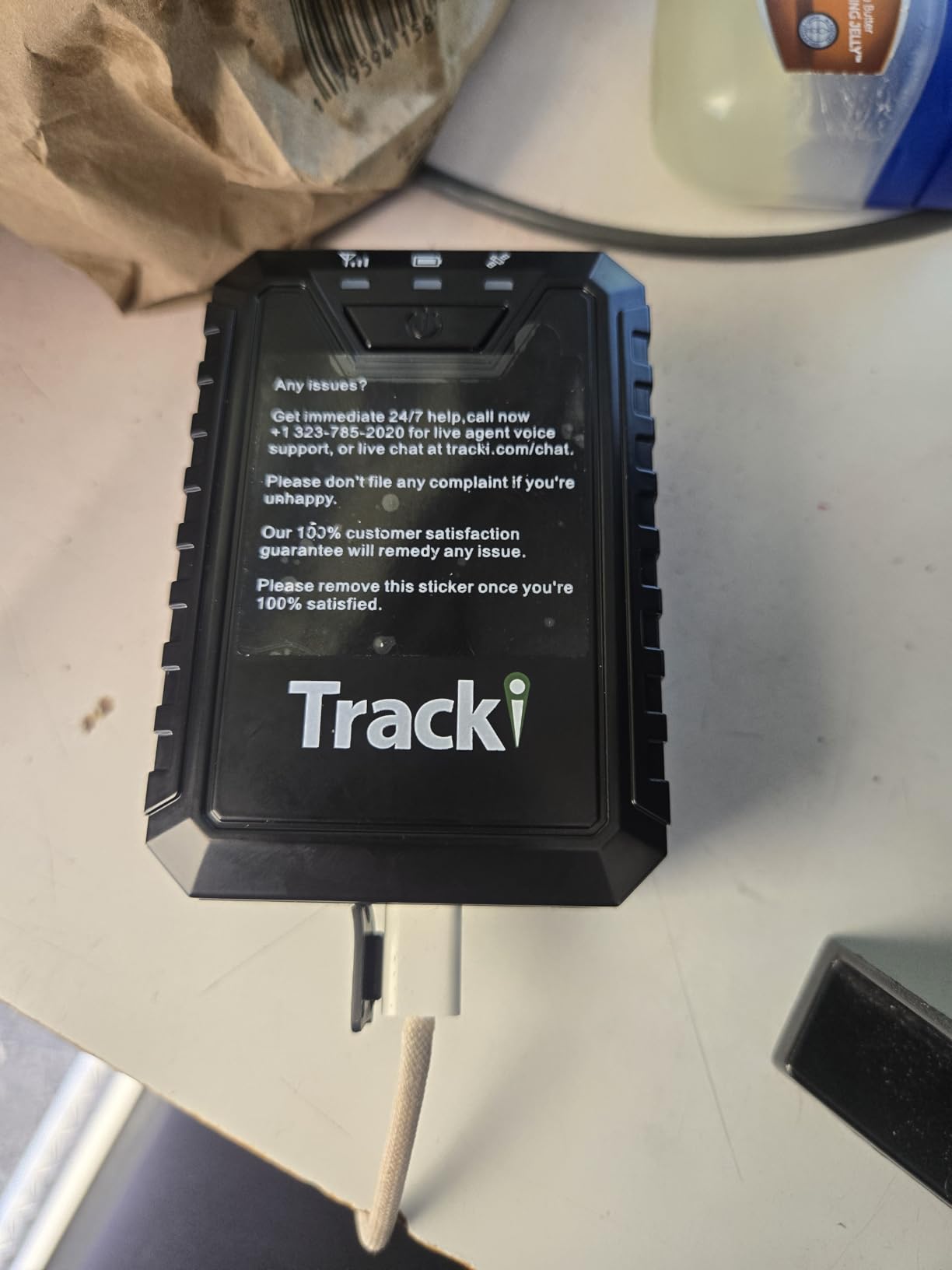
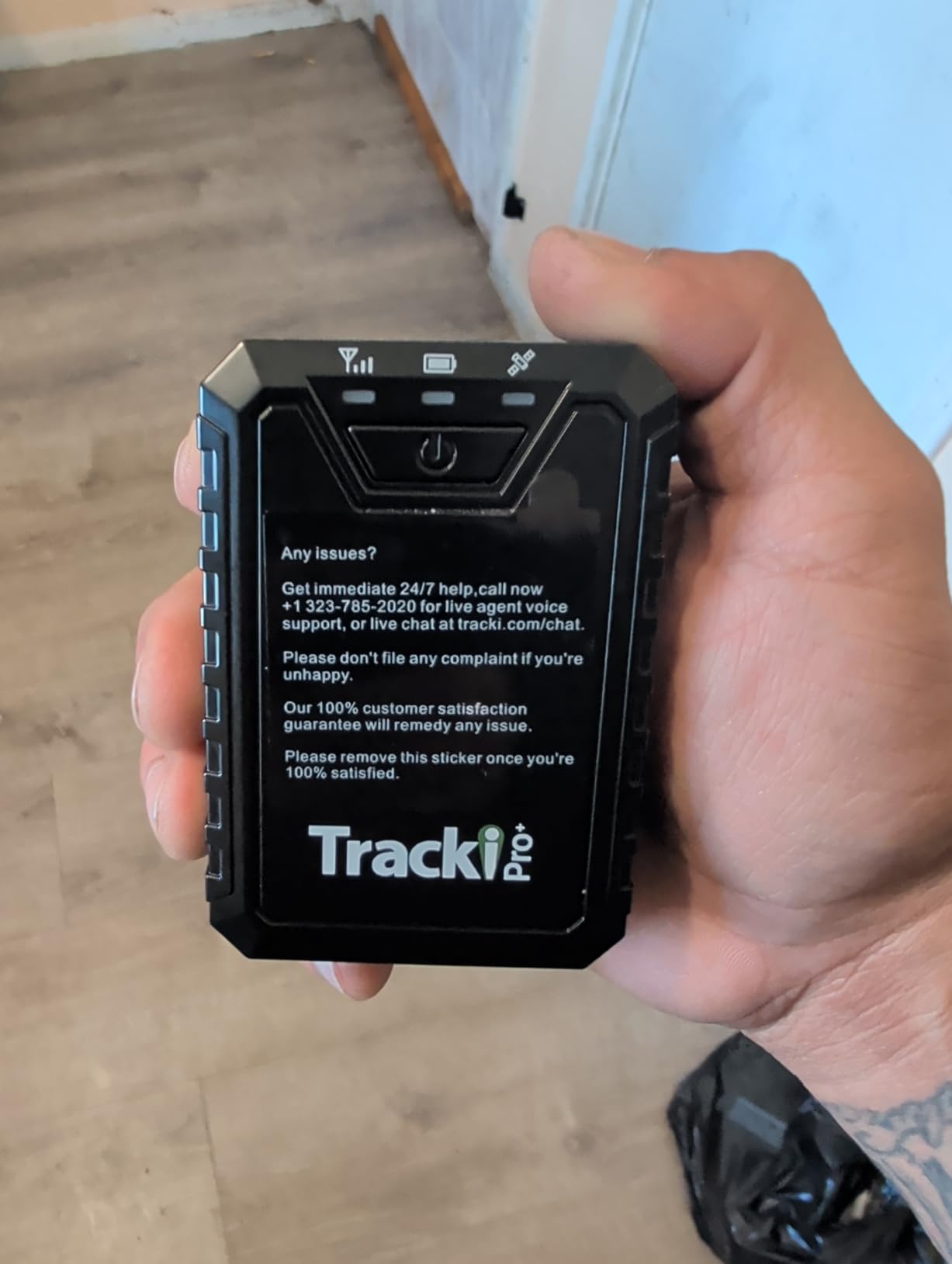
The physical size is the trade. At 3.54 by 2.48 by 1.46 inches and 18 ounces it is clearly a vehicle-grade box rather than a pocket puck, which makes it more durable and more visible under a seat. For concealment there are better options in this roundup.
Update tiers and what they cost you
Updates are configurable from 15 seconds up to a minute, and the interval is tied to your subscription tier rather than included by default. That is a real consideration for theft recovery, because the fastest refresh is exactly what you want in the ten minutes after an alert.
Alerts cover speed, geofence, movement, idle time, impact and battery, and they can arrive by SMS, email or app push. Support is 24/7 live rather than ticket-based, and the warranty is lifetime, with one-time replacement coverage also available.
Where the battery figure actually comes from
The manufacturer rates two to seven months of active tracking at one-to-five-minute updates, and up to 12 months in sleep mode. As with the other magnetic units here, the top end assumes the device spends most of its life stationary, so a long-haul tow or a vehicle driven daily will see the lower figure.
Tracki has also added battery-saving modes, which extend runtime further at the cost of refresh speed. If you are tracking a stored trailer rather than an active daily driver, pairing sleep mode with a longer interval is the sensible configuration.
Who should buy it, and who should not
This is a strong choice for RVs, trailers, boats, and cross-border travel where North America-only coverage would be a dealbreaker. It also suits fleet operators who want one device type across vehicles in different regions.
It is the wrong pick for a daily-driven car in a single country where concealment and update speed matter more than battery endurance. In that case the smaller magnetic units or an OBD-II install serve you better, and the size difference is obvious once both are in your hand.
5. Salind 4G Wired GPS Tracker – Best for Motorbikes and Permanent Install
SALIND 4G Wired GPS Tracker for Motorbike, Real-time Vehicle Tracking
Hardwired 9-75V power
2.36 x 1.54 x 0.63 in, 55 g
M2M SIM included
Vibration and power-cut alarms
+ Pros
- Hardwired connection means no charging and no risk of finding a dead tracker
- Very small at 55 g and easy to conceal inside a fairing or under a seat
- Installation takes about five minutes at the battery terminals with the fuse removed
- Precise geolocation with owners reporting map positions exactly where tested
- Low monthly cost and no contract
- Cons
- No dedicated US-based phone support and automated customer service only
- Some users report the mobile app unavailable in their region
- The optional internal backup battery for tracking while the vehicle is off is not clearly documented
Hardwired trackers tend to get ignored in consumer roundups because they need two wires and a fuse pull, but for motorcycles and anything with a marginal electrical system they are the most sensible option. The Salind 4G connects directly to a 9-75V vehicle battery, which means permanent power with no charging routine and no battery that can die at the wrong moment.
At 55 grams and 2.36 by 1.54 by 0.63 inches it is the smallest unit in this roundup, which matters when you are routing wires around a frame or tucking it behind a panel. Install time is around five minutes at the battery terminals with the fuse removed, and the box includes a pre-installed M2M SIM card.
Vibration and power-cut alarms are the standout features
The alarms are configurable in the FINDER Portal and cover vibration events and a power cut. A power-cut alert is the single most useful theft signal a hardwired tracker can give you, because it fires the moment someone interrupts the supply rather than waiting for movement.
Route history and location history are both reviewable in the app, geofencing is included, and there is family sharing across Android and iOS. Owners report the geolocation as precise, with map positions landing exactly where they tested.
Where support and app access are weak
The recurring complaint here is support. There is no dedicated US-based phone line, customer service is largely automated, and several reviewers report phone help being unavailable. Some users also found the mobile app missing or difficult to obtain in their region, which matters if you are outside Europe.
Another documentation gap: the optional internal battery that keeps the unit reporting while the vehicle is switched off was not clearly flagged at purchase. If you need continued tracking during a key theft, ask before buying rather than assuming it is included.
Cost structure and coverage
Plans run from a low monthly figure with no contract, which makes this among the cheaper long-term options here once the hardware is amortised. The brand also offers lifelong device replacement and round-the-clock support in multiple languages, which partly offsets the weak phone support.
Worth noting for motorcycle owners specifically: the same brand sells an OBD-connection variant, but a bike rarely has an OBD-II port, so the hardwired version is the relevant one. Coverage is described in terms of international use with a pre-installed SIM rather than a fixed country list.
6. VITALGLOW Wired GPS Tracker – Best for No Monthly Fee
Wired GPS Tracker for Vehicles, No Monthly Fee, No Subscription
No subscription
Hardwired 9V-96V power
5-second updates
170+ countries
+ Pros
- The only subscription-free tracker here with no hidden fees
- Runs off the vehicle so there is nothing to recharge and no battery to wear out
- 5-second updates with mileage and route history
- Simple three-wire install that most owners complete in about ten minutes
- Cons
- App notifications use barely audible tones that are easy to miss
- Tracking degrades and location jumps in weak cellular coverage
- Indoor or garage positioning can be off by roughly 20 feet
Subscription fatigue is the loudest complaint in car tracker forums, and this is the only pick in the roundup that answers it directly.
The device runs straight off the vehicle power supply across a 9V to 96V range, so it works in everything from a small hatchback to a commercial truck. It auto-sleeps a few minutes after shutdown, and it reports location every 5 seconds, which is the fastest interval in this list.
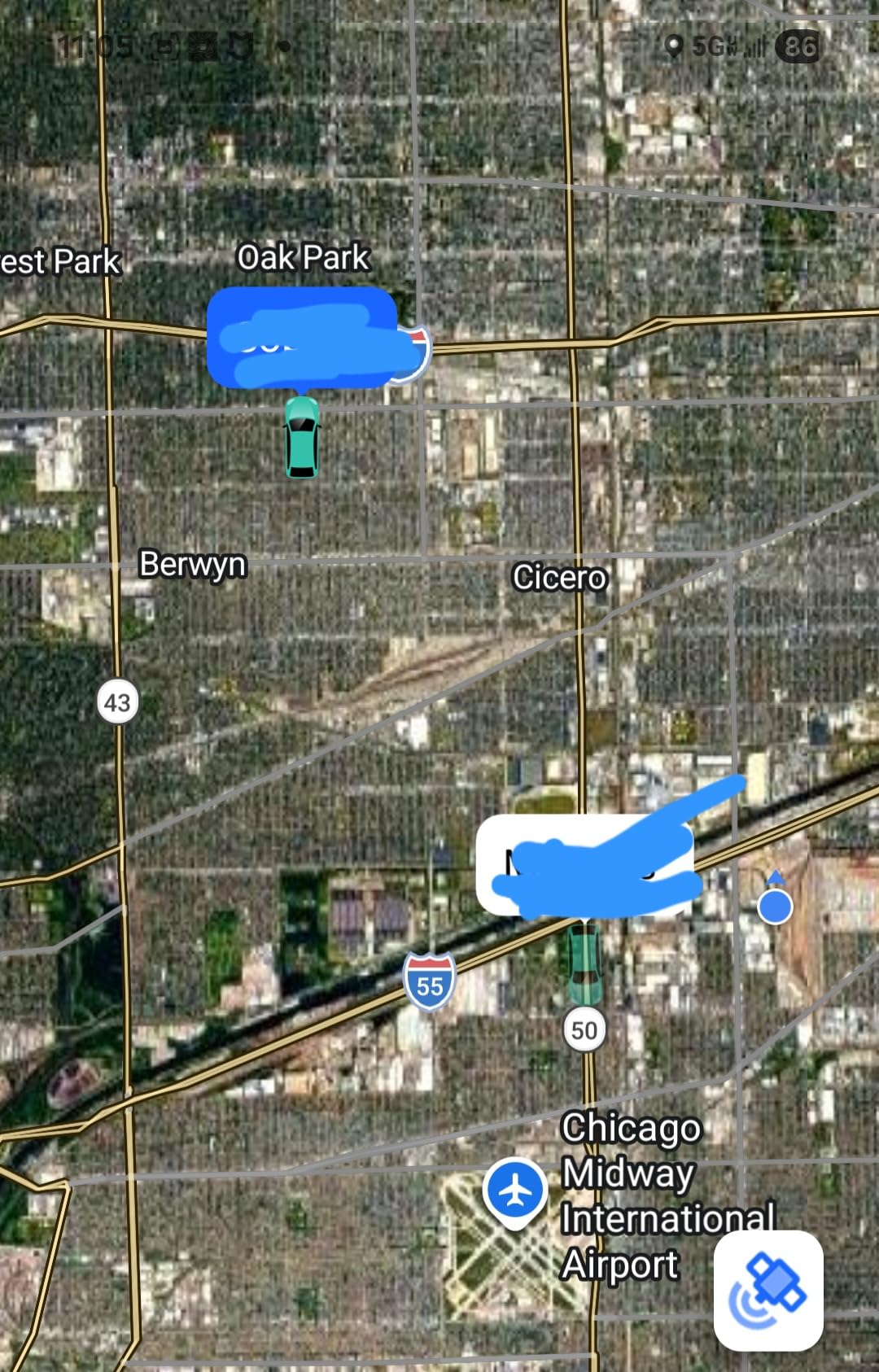
Coverage spans more than 170 countries and regions, including the United States, Canada and Mexico, with overspeed, removal or tamper, and geofence entry and exit alarms all supported. Mileage tracking and route history are included, along with support for fleet and family vehicle use.
Install and power draw
Installation is a three-wire job: constant power, a switched fuse for ignition detection, and the ground. Most owners complete it in about ten minutes, though a hardwired unit does require basic wiring comfort that a plug-in OBD tracker never asks of you.
The power draw is the number to watch, and one long-term test measured roughly 4 to 5 percent of the vehicle battery per week. That is small but not zero, and on a car that sits for weeks it is worth pairing the install with a battery maintainer if you are concerned.
Where the software falls short
The app is the weak point, and owners are consistent about it. Notification tones are barely audible, so an ignition or movement event can pass unnoticed on a phone in a coat pocket, and there is no indication the status lights behave as documented. These are fixable software problems, but they are real.
Accuracy also varies with the environment. In weak cellular areas tracking degrades and the location jumps around, and indoor or garage positioning can be off by around 20 feet because of limited satellite visibility. Outdoor open-sky accuracy is the strong case for this unit.
Who this suits
Anyone who plans to keep a vehicle for years and resents paying a plan for the privilege is the natural owner. Long-term users of six months to a year consistently name reliability, accuracy and the absence of fees as the decisive advantages.
The higher upfront cost and smaller review base are the counterweight, and the brand is less established than the category leaders. The sibling magnetic variant shares the same platform and carries a strong magnet that holds through gravel and rough roads if permanent wiring is not what you want.
7. Optimus 3.0 GPS Tracker Bundle – Best for Trucks and Heavy Equipment
Optimus 3.0 GPS Tracker Bundle – Vehicle & Asset Tracking – 1+ Mo Battery
Heavy-duty magnetic case with twin magnets
Up to 2 months battery at default interval
Adjustable updates down to 10 seconds
North America coverage
+ Pros
- Twin-magnet heavy-duty case holds firmly to vehicles and heavy equipment
- Around two months of battery life at the default one-minute update setting
- Update frequency is adjustable from 10 seconds up for detailed monitoring
- Simple web and mobile tracking software that is easy to use
- Cons
- Requires a paid monthly subscription for the tracking service
- Coverage is limited to the USA
- Canada and Mexico
- Battery life drops sharply when set to frequent 10-second updates
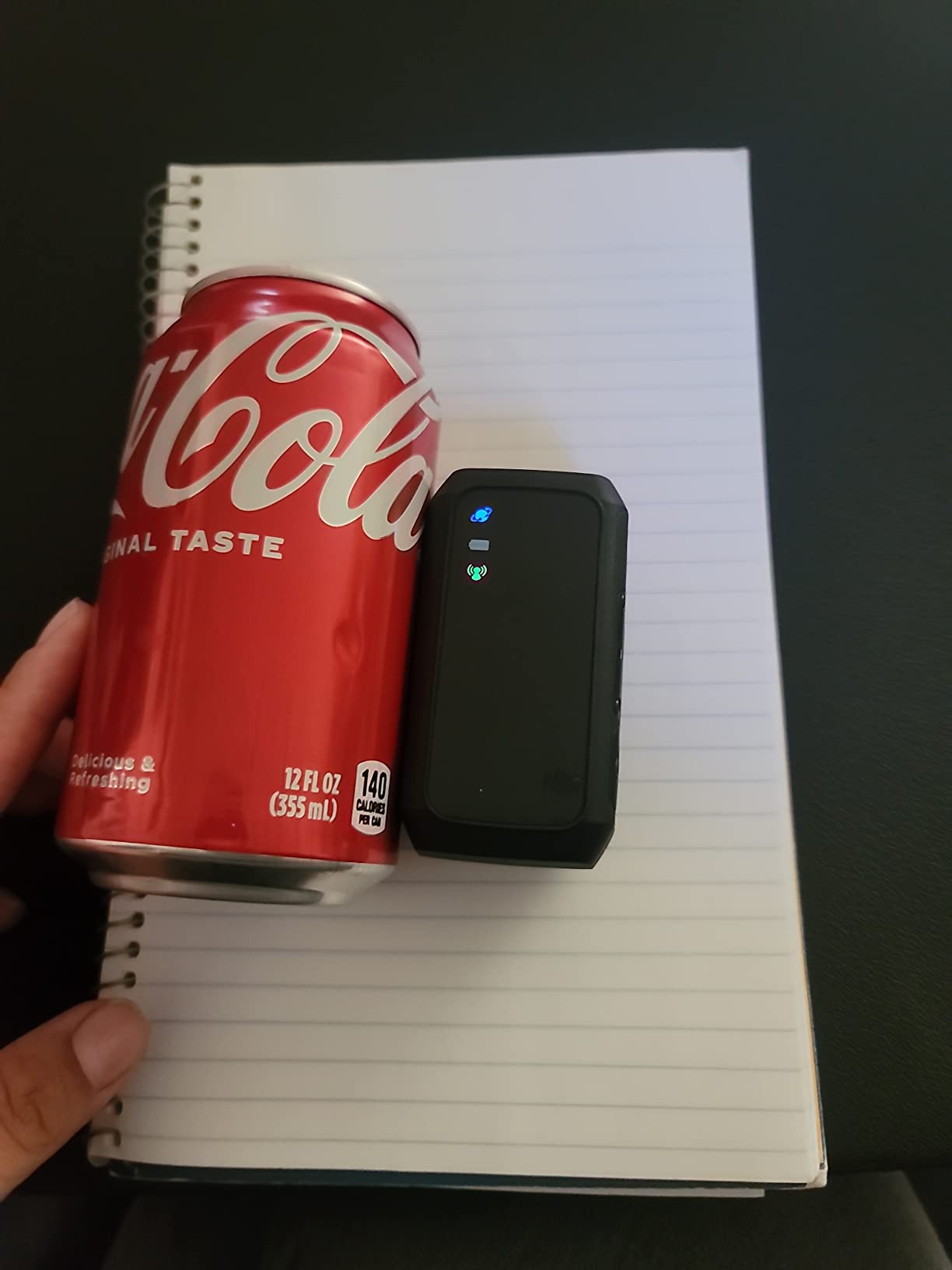
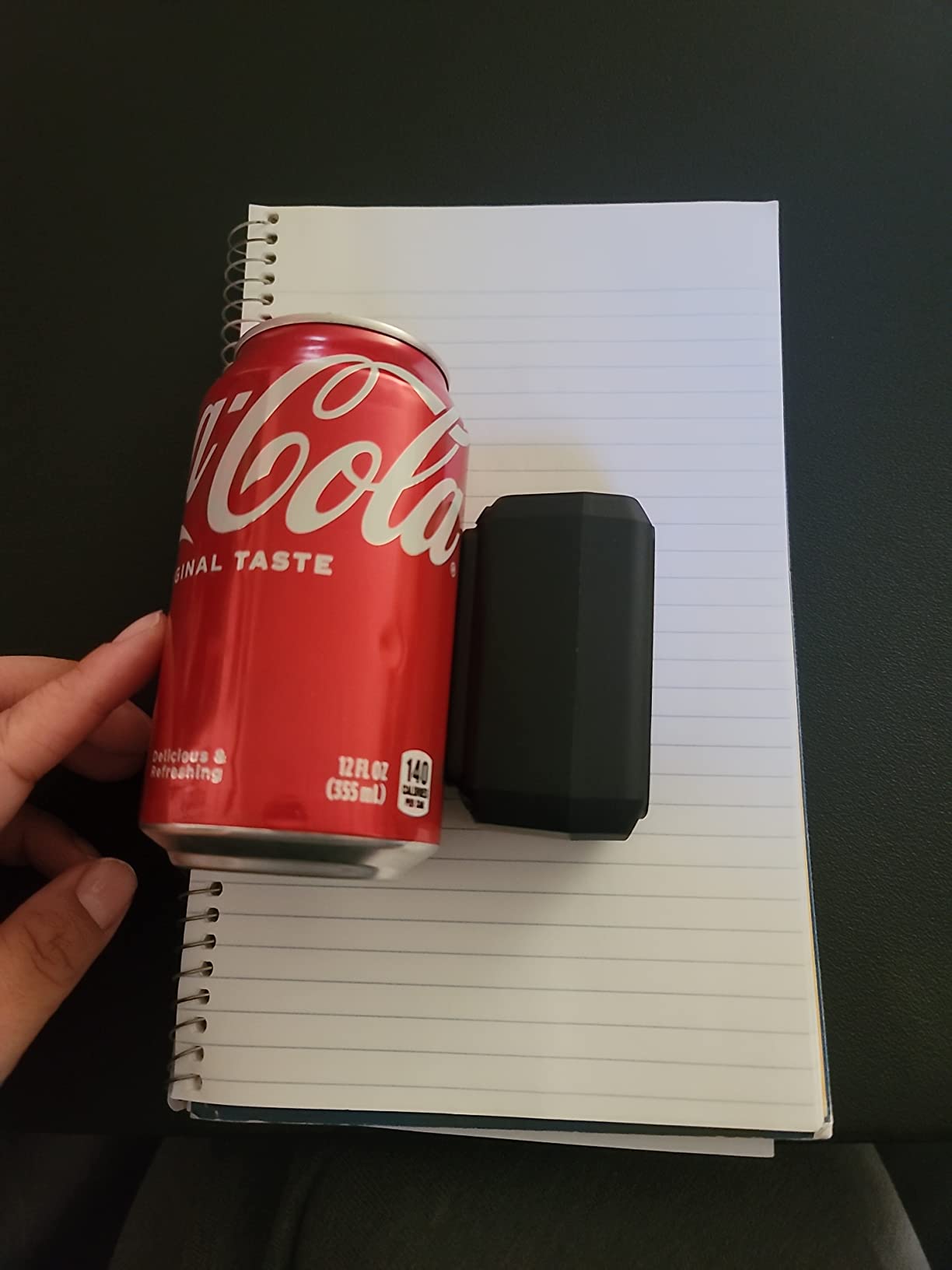
The Optimus 3.0 is built around a different assumption from most pucks here: that the tracker will be attached to something heavy, dirty, and moving constantly. The magnetic case uses twin magnets rather than a single pad, and the whole unit is sealed for the kind of environment where a car tracker would not survive long.
Battery life is up to two months at the default one-minute update setting, which is the honest figure to quote. Push the refresh down to 10 seconds and that runtime collapses, which is a fair trade only if you are actively watching the vehicle rather than parking it for a season.
Coverage runs across the United States, Canada and Mexico, which is the limiting factor for anyone outside North America. Custom instant alerts by text and email cover the core events, and the tracking software works through both a browser and a mobile app.
Choosing an update interval that suits the job
The adjustable interval from 10 seconds upward is the feature that makes this useful for a contractor. Short intervals catch a machine being moved at unusual hours, and longer intervals preserve the battery across a multi-week job site deployment.
My rule of thumb after testing these is to pick the interval you would actually want to receive a push notification at, then confirm the battery maths still covers your longest unattended stretch. Hardware is cheap to replace; a dead tracker at the moment of theft is not recoverable.
Mounting on metal surfaces
This is not a low-profile plug-in design, so it needs a hidden flat metal surface to sit on. Under a chassis rail, inside a wheel well, or on the frame behind a body panel are the usual choices, and the twin-magnet case gives enough holding force for rough surfaces.
That physical bulk is both a strength and a drawback. It survives abuse that would dislodge a smaller unit, and it is easier to find if someone knows to look. Reviewers rate it at 4.3 across roughly 1,700 reviews with 71 percent five-star, and the warranty is a 30-day refund with a six-month exchange window.
8. Rewire Security DB2-4G GPS Tracker – Best for Fleet Alerting
Rewire Security DB2-4G GPS Tracker for Vehicles, Free Trial
Hardwire or magnetic install
8V-32V vehicle compatibility
Ignition, power-loss and tamper alerts
12-month route history
+ Pros
- Installs either as a hidden two-wire hardwire with ignition sensing or with a quick magnetic attach
- Works across 8V-32V electrical systems covering cars
- trucks
- motorcycles
- boats
- trailers and RVs
- Rich alert set covering ignition state
- battery disconnect
- power loss and movement
- A seven-day free trial lets you test the service before committing
- Cons
- A subscription is required after the free trial to keep active tracking
- Hardwiring needs basic wiring knowledge or a technician unlike plug-in OBD units
- The 200mAh internal battery is small so a hardwired install is needed for continuous power
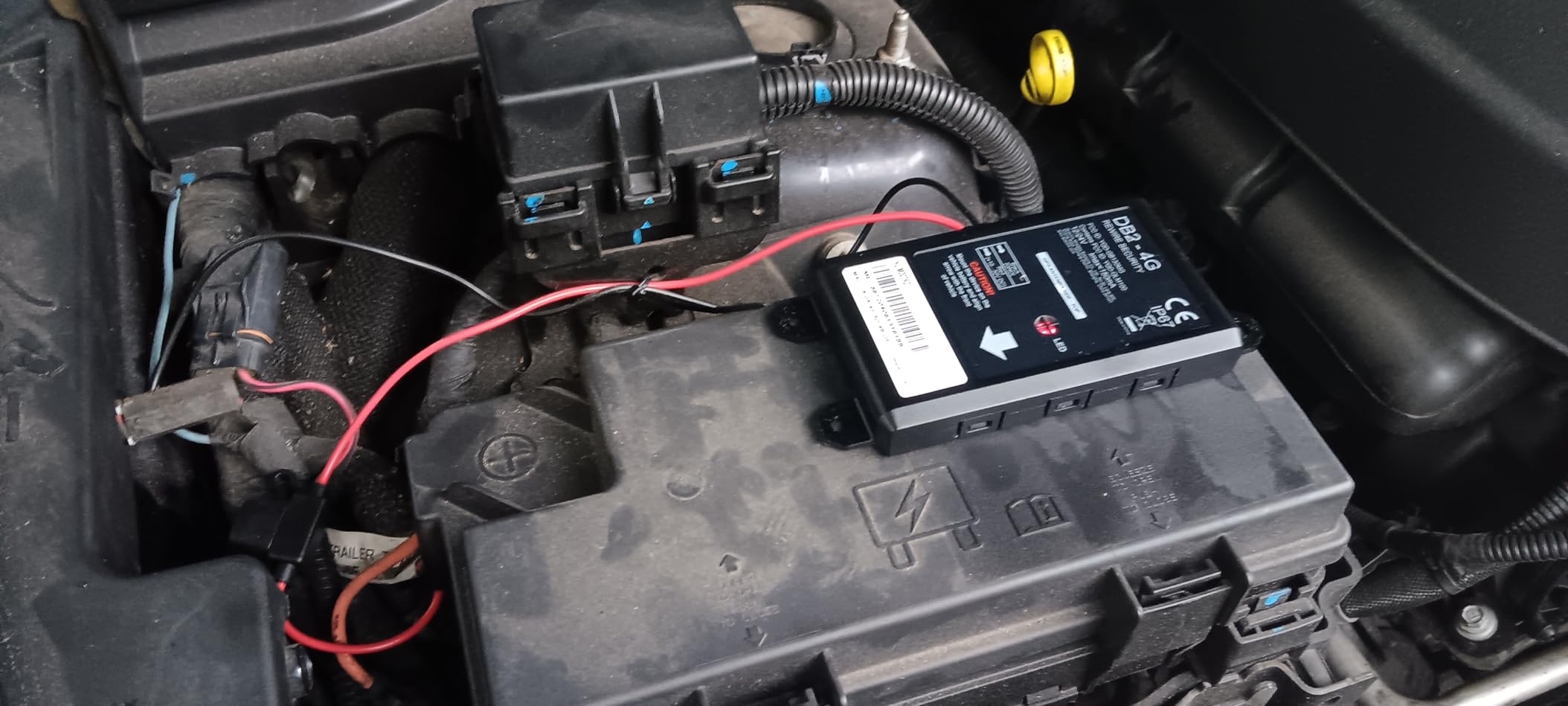
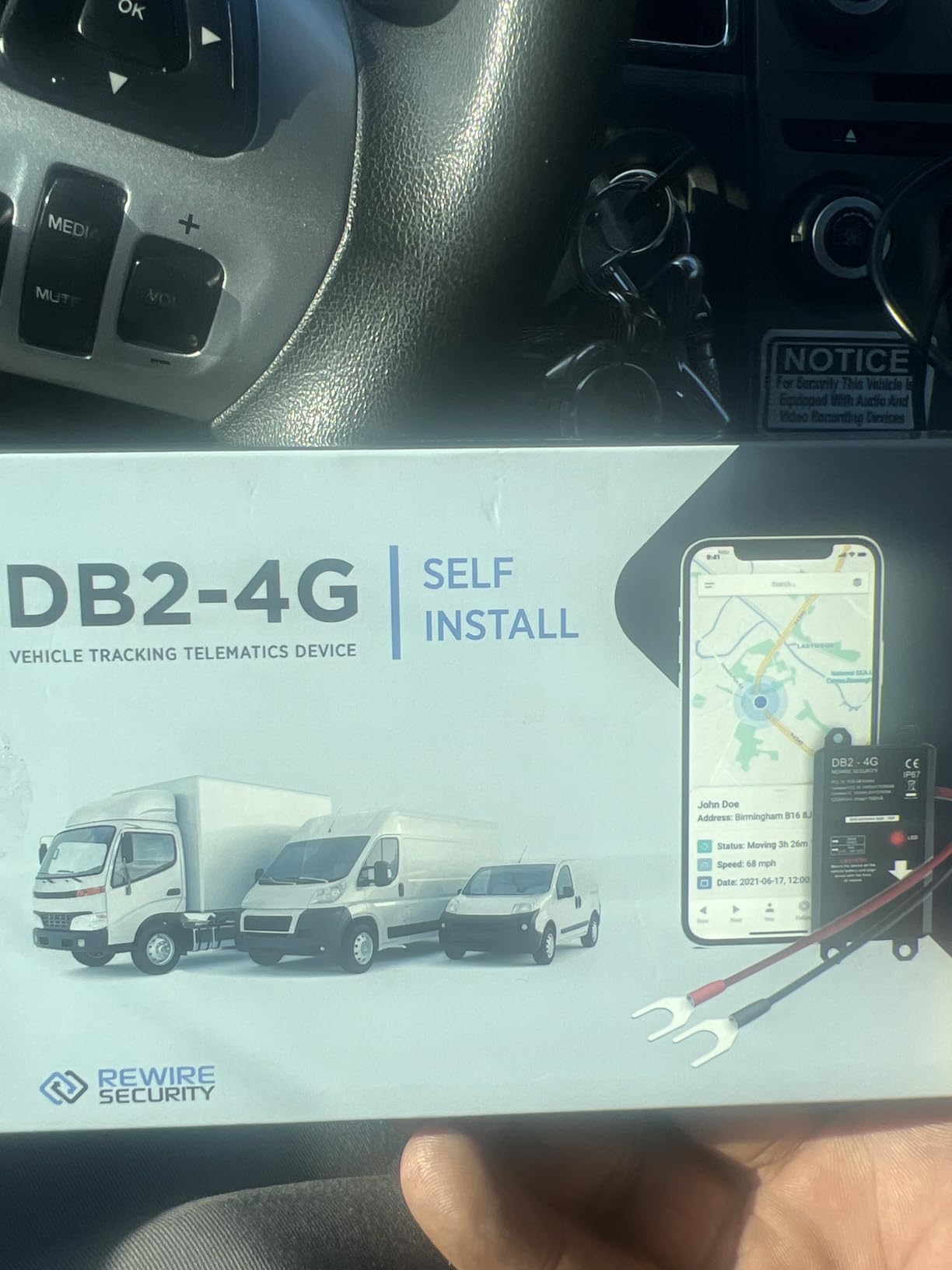
The DB2-4G is the only tracker here that installs two different ways, and for a mixed fleet that is the feature that matters. The same unit can go in as a fully hidden two-wire hardwire with ignition sensing on a vehicle you own long-term, or attach magnetically to a rental, a loaner, or a car you plan to sell.
The alert set is what earns it a fleet recommendation. Beyond location and geofencing, you get ignition on and off, battery disconnect, power loss and movement notifications, delivered by push and SMS, plus a built-in accelerometer. Battery-disconnect and power-loss alerts are the ones that tell you something has physically happened to the vehicle.
Compatibility spans 8V to 32V electrical systems, which is a wider band than most competitors claim. That single range covers cars, trucks, motorcycles, boats, trailers and RVs without a separate model, and 12 months of route history sits in the GPSLive platform for review.
Choosing between the two install methods
The hardwire is the right call for anything under long-term control. Ignition sensing through the voltage change gives you accurate engine on and off states, and continuous power removes battery anxiety entirely. It does require cutting into a circuit, so a technician is a sensible expense if you have never done it.
The magnetic attach is the right call for temporary monitoring. It takes seconds and needs no tools, which makes it practical for seasonal equipment or short-term rental contracts, and the 200mAh internal battery is simply too small to support continuous tracking on its own.
Trial period, plans and setup friction
A seven-day free trial is included, which is unusual in this category and worth using properly: drive the vehicle, trigger the alerts, and check the app before the trial ends. Plans run monthly or in multi-month blocks with no contract, and the SIM and data plan come pre-installed.
The main friction point is registration. Setting the device up in GPSLive takes a little getting used to, and it is the piece of admin that catches people out during the trial window. At 4.4 across 787 reviews with 77 percent five-star, the feedback is generally favourable once setup is complete.
9. Benbengo OBD2 GPS Tracker – Best for 10-Second OBD-II Updates
OBD GPS Tracker for Vehicles, 10-sec Real Time, Speeding & Mileage Report
OBD-II plug and play
10-second refresh, no plan upgrade
12-month trip history
Exportable mileage reports
+ Pros
- Fastest refresh rate in this roundup at 10 seconds with no extra charge
- Installs in under a minute with no wiring and no charging
- Location accuracy reported within roughly 3-5 meters
- Customizable speeding and hard-braking alerts suit new-driver monitoring
- Cons
- The app can feel laggy and the map zoom resets every few seconds
- Speeding alerts are all-or-nothing with no tolerance threshold
- The internal backup battery is short-lived so tracking pauses after long parked periods
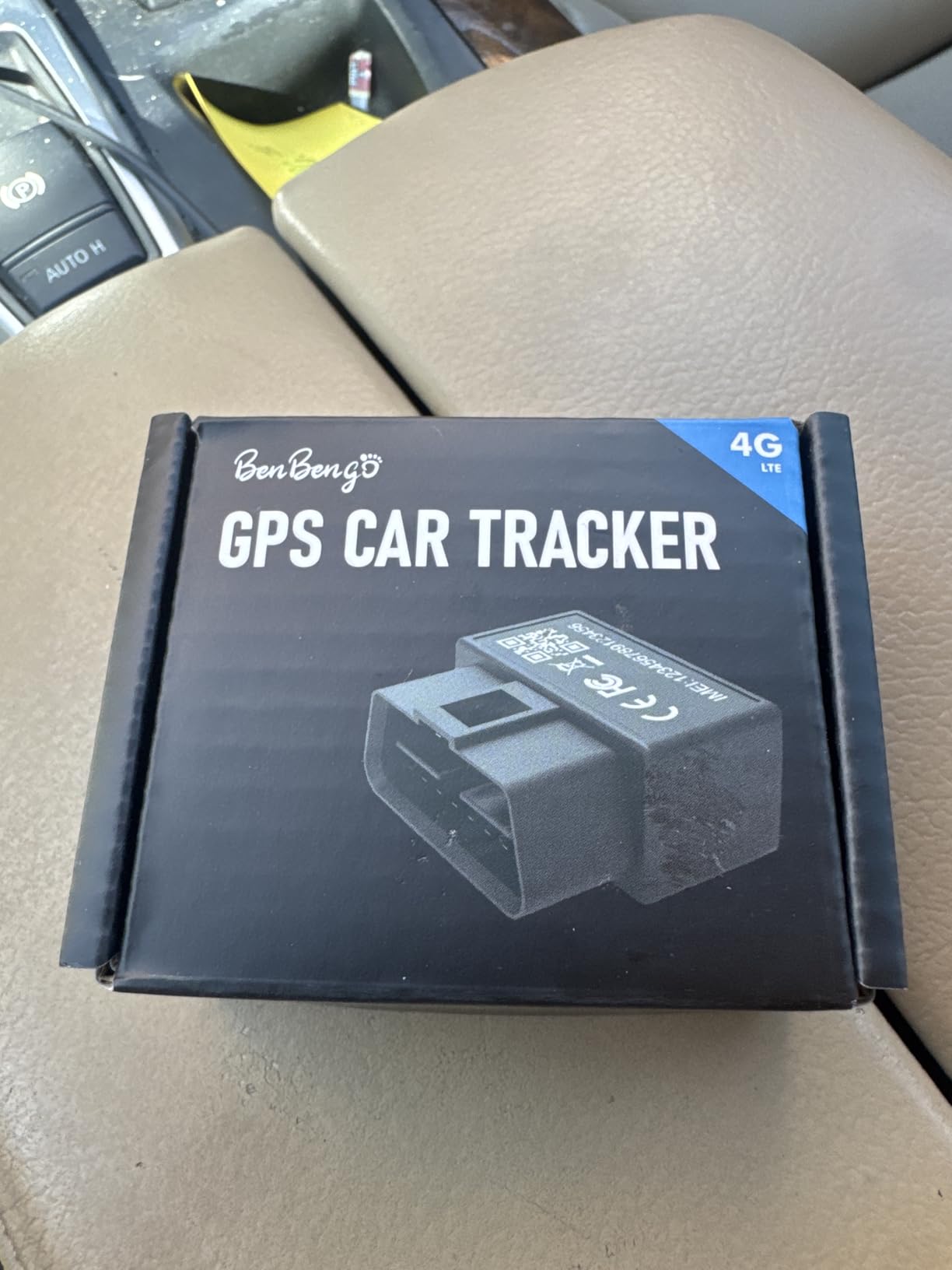
Most OBD-II trackers treat the fastest refresh as a premium tier. This one does not. Ten-second updates come as standard, which is a meaningful advantage in the minutes right after a theft alert when a fifteen-second refresh can mean the difference between tracking a car in motion and finding a cold location.
Installation is genuinely plug and play, and the unit is small at 1.53 by 1.77 by 0.87 inches and roughly 35 grams, so it does not obstruct much in the port. Reviewers put accuracy at about 3 to 5 meters, which is as good as anything in this roundup.
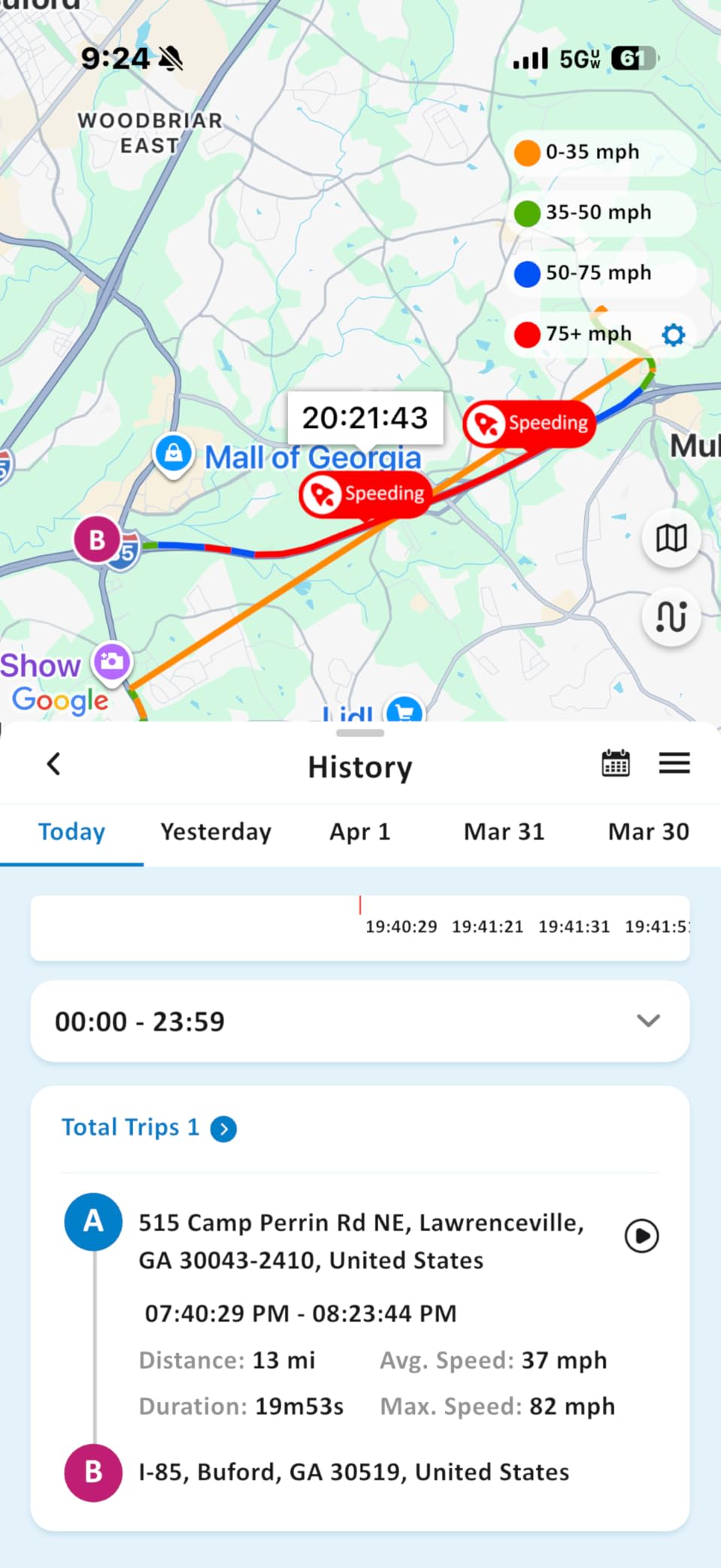
Alerts cover speeding, geofence breach, crashes, hard braking and rapid acceleration, and the speeding threshold is adjustable, unlike several rivals. The web dashboard adds a Trips view holding up to 12 months of history beyond what the app shows, with routes colour-coded by speed band.
Mileage reporting is the sleeper feature
Exportable mileage reports through the app or web dashboard are aimed at business use, where reimbursements and tax deductions need documentation rather than a guess. Combined with the hard-braking and acceleration alerts, it makes this a reasonable low-cost option for a small delivery or service fleet.
Coverage runs across North and South America, excluding Venezuela, Cuba and Aruba. The plan structure is among the lowest in this roundup, with a five-day free trial followed by an annual or month-to-month option that includes the SIM and data.
Where the software holds it back
The app is the weak point. Owners report it feeling laggy with the map zoom resetting every few seconds, and notifications are not always prompt or reliable. Journey end alerts can arrive around ten minutes late, and the timezone cannot be changed, which is a nuisance for anyone crossing borders.
The short-lived internal backup battery is the other limitation. Once the car has been sitting for an extended period, tracking pauses until the engine runs again, so do not treat this as a theft-recovery device for a vehicle that rarely moves. Visibility in the OBD port also varies by vehicle, and an OBD splitter helps if you need the port free for servicing.
10. Global-View.Net Hidden Magnetic Tracker – Best for Report-Heavy Fleets
Hidden Magnetic GPS Tracker (USA Tech) – Up to 6-Month Battery, Real-Time Tracking, Geofence & Speed Alerts, Subscription Required
Strong magnetic mount, tool-free
20,000mAh rechargeable battery
140+ country coverage
Geofence and overspeed alerts
+ Pros
- Attaches in about 10 seconds on any flat metal surface with no wiring or tools
- Very large 20000mAh battery supports long stretches between charges
- Geofence and overspeed alerts arrive quickly and are easy to configure
- Private mapping panel supports live journeys
- customisable reports and trend monitoring
- Cons
- One of the higher subscription rates here alongside a comparatively high upfront price
- The battery headline figure assumes only about 30 minutes of daily driving
- Larger than the smallest magnetic units so it is slightly harder to conceal
This tracker is built for the buyer who wants reports rather than a live dot on a map. The private mapping panel gives you live journeys, customisable reports and trend monitoring, and the same platform covers personal vehicles, business fleets and maintenance tracking on the same subscription.
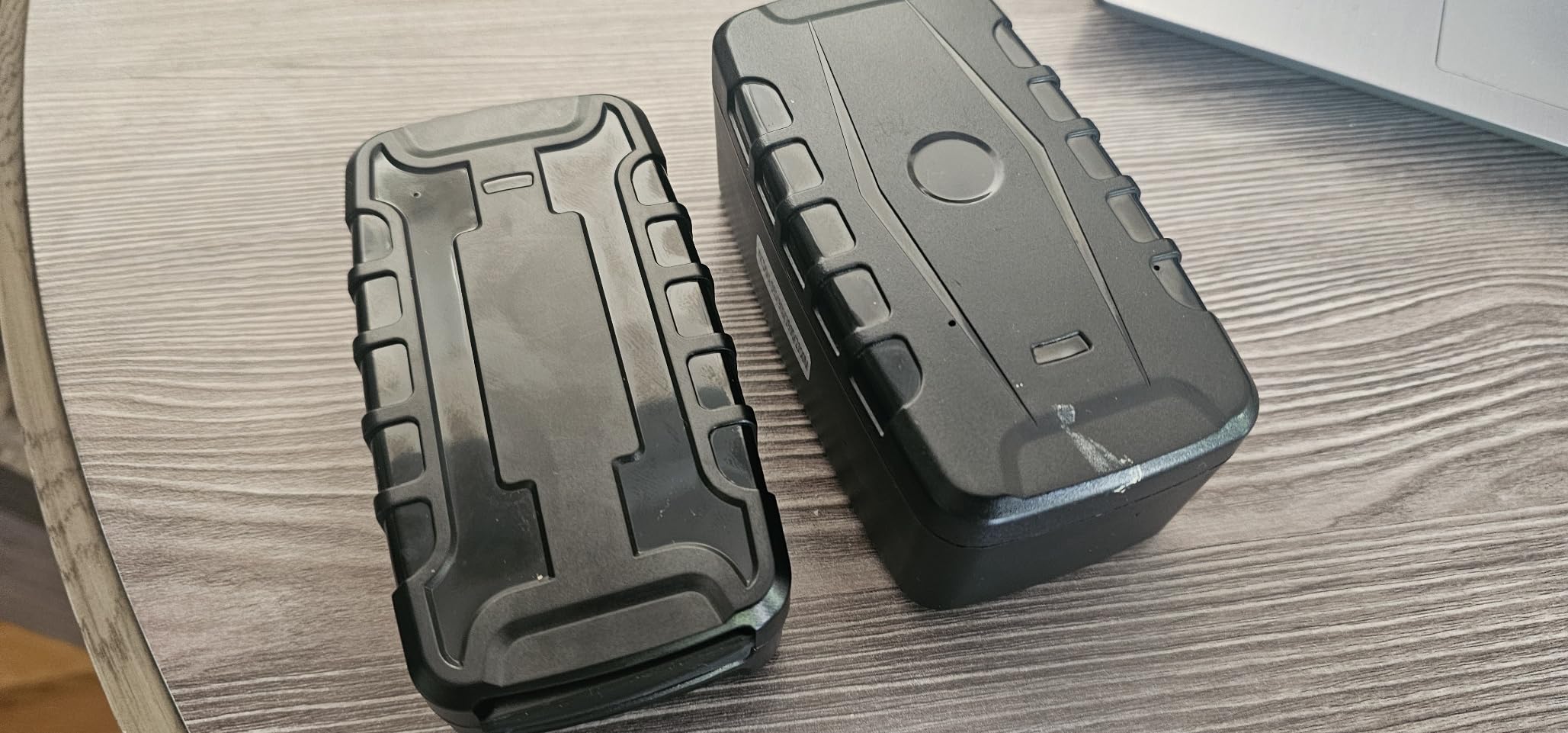
On hardware, the 20,000mAh battery is the largest in this roundup and it installs in about 10 seconds on any flat metal surface with no tools at all. Coverage extends to more than 140 countries, which is broad for a magnetic unit and adequate for cross-border asset tracking.
Alerts cover geofence entry and exit, overspeed warnings and movement notifications, delivered by text message and through the app. Reviewers consistently say these arrive quickly and are straightforward to configure, which is more than can be said for several apps in this category.
Read the battery claim carefully
The up-to-six-months figure assumes about 30 minutes of daily driving. Heavy users report much shorter real-world runtime, and the gap between those two numbers is the single most important thing to understand before buying a large-battery magnetic tracker for a daily-driven car.
That same framing applies to the subscription, which sits at the expensive end of the field. There is no contract and you can cancel at any time with unlimited reporting on the plan, but over a three-year horizon this is one of the more costly ways to track a vehicle.
Concealment and brand maturity
At 1 by 2 by 4 inches it is bigger than the compact magnetic units, which makes it slightly easier to spot under a seat or in a wheel well. If concealment is the priority, a smaller puck is the better tool even with a smaller battery.
Global-View.Net is a smaller brand with less ecosystem maturity than the category leaders, which shows in the app more than the hardware. It scores 4.3 across 706 reviews with 72 percent five-star, and the warranty is a 30-day refund with a six-month exchange window. The listing is marketed for adults, business users and teenagers monitoring a newly licensed driver.
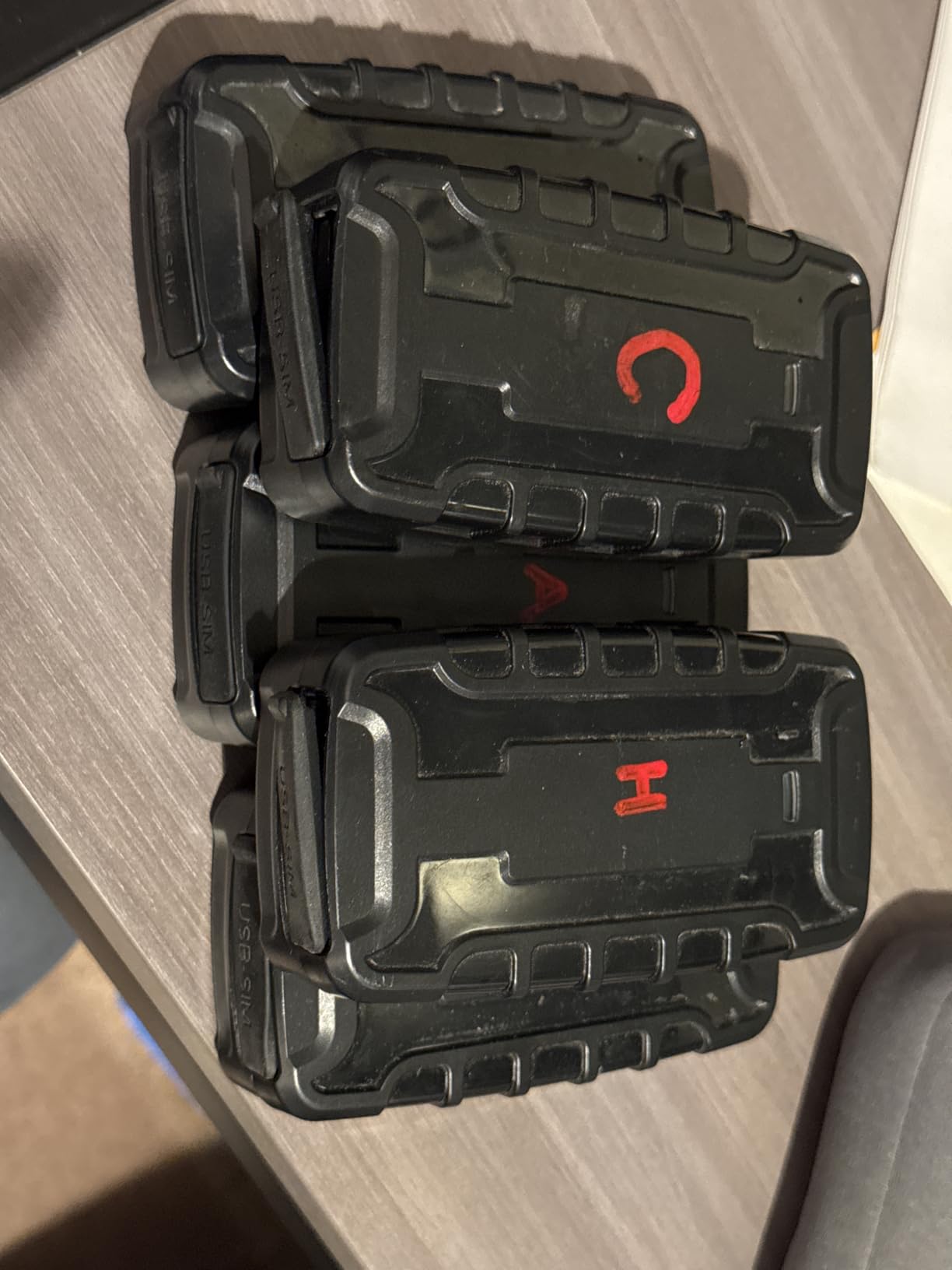
OBD-II vs Magnetic vs Hardwired: Which Tracker Type Fits Your Car
Every tracker in this roundup falls into one of three mounting categories, and the category dictates most of what you will experience. Before comparing specifications, decide how the device gets its power and how visible you are willing to make it.
An OBD-II plug-in tracker draws power from the diagnostic port. It has unlimited runtime, no charging, and often adds engine diagnostics and driving analytics, but it is visible to anyone who knows where to look and can be pulled in seconds. It suits daily-driven cars where you accept that trade.
A magnetic or portable tracker runs on its own rechargeable battery and sticks to any metal surface, including inside a wheel well or under a chassis rail. It is far more discreet, but the battery figure is only meaningful when read against how much you drive, and a weekly or monthly recharge is normal for a daily driver.
A hardwired tracker connects to constant vehicle power across a wide voltage range, giving permanent power and usually a tamper or power-cut alert. It is invisible inside the vehicle and needs two wires plus a fuse pull, which is the least beginner-friendly install in the category.
There is a fourth option worth naming. A subscription-free tracker skips the monthly plan entirely, which removes the largest long-term cost in the category at the price of a smaller brand ecosystem and weaker notification design. One pick here does this with a hardwired install.
Where to Hide a Magnetic GPS Tracker on a Car
Placement decides whether a hidden tracker survives contact with a thief. The rule is simple: metal, out of sight, and not where a tow truck or mechanic will find it first.
Inside a wheel well, on the inner liner. Well protected from weather and from casual inspection, and the metal backing gives the magnet a solid anchor. Check that the liner does not block the signal entirely.
Under the chassis on a frame rail. Out of sight from above, out of reach of a quick search, and strong metal to mount to. Needs a waterproof unit for road spray.
Behind a bumper cover or under a grille panel. Effective, but exposed to impact and easy to lose during a minor collision. Use a strong adhesive or a small bracket.
Inside the trunk, behind a liner panel. Good for a vehicle with a closed boot, less so for a hatchback or pickup. Theft recovery usually starts with the passenger compartment, not the cargo area.
Under the driver’s or passenger’s seat rail. Popular because it is out of sight and rarely disturbed. Many thieves check under seats, so this only works in a concealed seat structure.
On or inside a wheel rim or spare tyre well. Effective for alloy wheels with removable covers and for vehicles with a full-size spare. A tracker here survives the tow yard better than one in the cabin.
Two things to avoid. Do not place it where the device might be crushed or where a tow hook or jack point would knock it loose, and do not put a battery-powered unit somewhere that stays wet unless it carries an IP67 rating or better. Signal quality matters too: a tracker in a metal box with no path to open sky will report less accurately, not less often.
AirTag vs GPS Tracker vs OBD-II Tracker
This is the most common question in car tracker forums and almost every ranking page ignores it, so here is the straight comparison. An AirTag uses Bluetooth to hand its location to nearby Apple devices, which then relay it to a crowdsourced network. A GPS tracker uses its own antenna and a cellular radio to report directly. An OBD-II tracker is a GPS tracker that also happens to sit in the diagnostic port.
An AirTag is the cheapest option and the least capable. Its updates are sporadic and depend on Apple devices passing nearby, it makes an audible sound when moved, and the long-running consensus on enthusiast forums is that it is good enough for many people but is not a real GPS tracker. Use it as a backup layer, never as your only layer.
A magnetic GPS tracker reports on a fixed interval from anywhere with cellular coverage, works outside the Apple ecosystem, and gives you route history and geofencing. That is the meaningful upgrade, and it is what you are paying a subscription for.
An OBD-II tracker adds permanent power, engine diagnostics, driving behaviour scoring and unlimited runtime in exchange for being visible in the port. If you want theft recovery and do not mind the visibility, it is the most reliable option in the category.
Our recommendation is a two-layer setup for most people: an OBD-II unit for live tracking, diagnostics and tamper-free power, plus a small magnetic tracker hidden in the cabin or wheel well that keeps reporting if the port device is found and pulled. A lower-cost version of that logic is a hardwired tracker paired with a single AirTag as a manual backup.
Will a GPS Tracker Drain Your Car Battery?
Short answer: a properly installed tracker will not flatten a healthy battery, but a badly chosen one can leave you stranded months later. The three mounting types behave very differently here, which is the strongest technical argument for matching the device to how the car is used.
Magnetic battery trackers never touch the car battery. Their only relationship to the vehicle is the magnetic mount, so there is zero drain risk. The cost is recharging, and a tracker with a flat battery is not tracking anything.
OBD-II trackers draw a small constant current. Because the port is fed from the vehicle, an always-plugged unit does consume power. In practice the draw is modest, and a car driven regularly will keep the battery topped up on its own. The risk case is a car that sits for weeks, where a tracker left plugged in can be the final straw on an older battery.
Hardwired trackers draw the least. A permanent connection is what the vehicle electrical system is designed to support, and a long-term test of one unit in this roundup measured roughly 4 to 5 percent of the vehicle battery per week. If you hardwire a tracker and also hardwire a dashcam, both together are still comfortably within normal draw, but a battery maintainer is cheap insurance on a car that sits.
Whichever type you pick, check that your car is driven regularly or fit a maintainer. An OBD-II tracker left plugged into a car that has not moved in a month is the single most common battery complaint in this category, and it is entirely avoidable.
What To Do in the First 10 Minutes After Your Car Is Stolen
You will not have time to research anything, so here is the order that works. Screenshot the tracker alert before anything else, because the app history is your evidence and it can shift as the vehicle moves.
Call the police immediately and give them the live location, direction of travel and vehicle description. A report number is required by nearly every insurer before a claim proceeds.
Notify your insurer and open the claim. Share the tracker data with the adjuster, since it is often the only proof of where the vehicle was that survives a disputed claim.
Do not go to the location yourself. Confronting a thief is how theft recovery turns into an assault charge against you. Let law enforcement handle the recovery.
Check whether the tracker was unplugged. If the OBD-II unit stopped reporting the moment the alert fired, assume it was pulled and switch your attention to the hidden layer. This is exactly why a two-layer setup matters.
Call your roadside assistance and insurer recovery line. Many insurers and subscription plans include vehicle recovery services that can intercept a vehicle in transit faster than police can.
Preserve everything. Keep screenshots, alert timestamps and route history. If the vehicle is recovered, these records are what the insurer and police will ask for.
One practical step worth doing in advance: save the police non-emergency number and your insurer claims line in your phone. In the first ten minutes of a theft, searching for a phone number is wasted time.
How to Choose a Car GPS Tracker: What Actually Matters
Ten trackers, three mounting types, and dozens of near-identical feature lists. These are the criteria that actually separate them once you strip away the marketing.
Update interval in seconds, not adjectives
“Real-time tracking” means anything from 3 seconds to 5 minutes depending on the seller. Only the stated interval matters, and the fastest interval in this roundup is 5 to 10 seconds on the hardwired and OBD-II picks. For theft recovery, faster is better right up until battery life becomes the constraint.
Battery runtime stated against real driving hours
Every runtime figure in this article is tied to a driving assumption, because that is the only way the number means anything. A 20,000mAh battery that claims six months assumes 30 minutes of daily driving and will give you considerably less on a commute. For a daily-driven car, treat two months as generous and anything under one month as a recharge habit.
Geofencing, tamper alerts and ignition state
Geofencing is standard across this roundup and no longer a differentiator. Tamper and removal alerts are not: they exist on the magnetic units with accelerometer support and on the hardwired installs, but not on every OBD-II unit, since an unplugged port device simply loses power. If you care about a thief finding and removing the tracker, that is a hard filter.
Contract terms and total cost, not the sticker price
Forum users consistently report the hidden activation fee as the thing that broke their trust in a brand. If you expect to own the vehicle for more than two years, a subscription-free hardwired tracker is worth serious consideration.
Coverage where the car actually goes
North America, the Americas, 140-plus countries and 185-plus countries are all in this roundup, and the difference decides whether the device works. A unit with North America-only coverage is useless on a European trip, and a 170-plus-country unit with no published support line can be worse than a narrower one with good service. Check the coverage region before the hardware.
Waterproofing for anything mounted outside the cabin
If a tracker goes under the chassis, in a wheel well, or on a trailer, an IP67 rating is the minimum worth paying for. One pick in this roundup is IP67 in a metal housing with no extra case required, which is why it is our recommendation for outdoor and marine-adjacent use.
App quality and review volume
The app is where most of these products are actually used, and reviewer complaints about laggy maps, missed notifications and inaudible tones are common. Check the rating and, more importantly, the review count: several listings in this category have a thin number of reviews, which means the software feedback is thin too. The picks here range from 206 to nearly 30,000 reviews, and that spread is itself a signal about how well a brand is likely to maintain its app.
Finally, ask whether the subscription transfers if you sell the vehicle. A tracker tied to a VIN or an account that cannot be cancelled means your buyer inherits a problem, and cancelling it mid-term is a common source of frustration.
Frequently Asked Questions
What is the best GPS tracker device for cars?
The Bouncie GPS Tracker is the best overall pick because it plugs into the OBD-II port, runs off the vehicle’s own power so there is no battery to recharge, and refreshes location about every 15 seconds. It also adds engine diagnostics, hard braking and idle time data, and geofencing, which no magnetic tracker in this roundup offers. For a vehicle that sits for long periods, a magnetic unit with a large battery such as the Benbengo or Tracki Pro lasts far longer between charges.
Which car tracker is the best?
It depends on how the car is used. For daily driving, an OBD-II unit is most reliable because power is unlimited and location is continuous. For a stored, trailered or cross-border vehicle, a magnetic tracker with a 9,600mAh or 10,000mAh battery is better because it does not need the car to be running. For permanent installs on a motorcycle or equipment, a hardwired tracker is the only sensible choice. Pick the mounting type first, then compare update interval and battery runtime.
What is the best way to track a car without a subscription?
A hardwired subscription-free tracker is the cleanest answer. The VITALGLOW unit in this roundup has no monthly fee, no activation fee and no hidden extras, runs from vehicle power across a 9V to 96V range, and still reports location every 5 seconds with geofence, overspeed and tamper alarms. The trade-offs are a higher upfront cost, a smaller brand ecosystem, and app notification tones that are easy to miss.
Is an AirTag better than a GPS tracker for a car?
No. An AirTag reports its location only when a nearby Apple device relays it, so updates are sporadic, it makes an audible sound when it is moved, and it is easily found and discarded. A GPS tracker reports on a fixed interval from anywhere with cellular coverage and adds geofencing and route history. An AirTag works well as a cheap second layer alongside a real tracker, not as a replacement for one.
Will a GPS tracker drain my car battery?
A magnetic tracker never touches the car battery, so drain is not a concern. An OBD-II unit draws a small constant current from the diagnostic port, which a regularly driven car will replace on its own, but one left plugged into a car that sits for weeks can contribute to a flat battery. A hardwired tracker has the lowest relative draw, with one long-term test measuring roughly 4 to 5 percent of the vehicle battery per week.
Can a thief find a hidden magnetic GPS tracker?
Placement decides it. A puck attached to a wheel well liner, an under-chassis frame rail or inside a wheel rim is far harder to find than one under a seat, which is one of the first places most people search. Small metal-bodied units are also harder to spot than larger plastic pucks. Avoid the OBD-II port if concealment is the priority, since it is a known location and the device can be pulled in seconds.
Do GPS trackers work outside the US?
It depends entirely on the unit. Coverage in this roundup ranges from the USA, Canada and Mexico only, to the Americas, to more than 140 countries, to more than 185 countries with a built-in global SIM. The Tracki Pro and the VITALGLOW wired unit have the broadest coverage. Also check app availability in your region before buying, since some owners report difficulty obtaining the app outside the United States and Europe.
Final Verdict: Which GPS Tracker to Buy in 2026
If you drive a car every day and want the most reliable continuous tracking, start with the Bouncie GPS Tracker. It is our top pick for 2026 because the vehicle powers it, so it never dies, and the location, diagnostics and driving data all arrive in one app with no charging in your life.
If concealment is the priority, pick a magnetic unit: the Benbengo Magnetic GPS Tracker for a metal IP67 housing and a battery measured in months, or the LandAirSea 54 for the fastest refresh interval in the roundup and the largest body of owner feedback to back it up.
If you keep a trailer, RV or equipment that spends time outside the country, the Tracki Pro covers more than 185 countries with Wi-Fi fallback and a 10,000mAh battery. If you ride a motorcycle or want a permanent install, the Salind 4G Wired is small enough to hide and powered by the bike itself.
If you refuse to pay a monthly fee, the VITALGLOW Wired GPS Tracker is the one that removes the recurring cost entirely while still reporting every 5 seconds. And for a mixed fleet where some vehicles are yours and some are temporary, the Rewire Security DB2-4G is the only pick that installs both hardwired and magnetically from the same device.
Whichever you choose, set it up properly the same week you buy it. Create the geofences, confirm the alerts actually reach your phone, and check the location against the car while it is parked. Every tracker in this roundup is a good tracker that does nothing at all if it was never tested.