
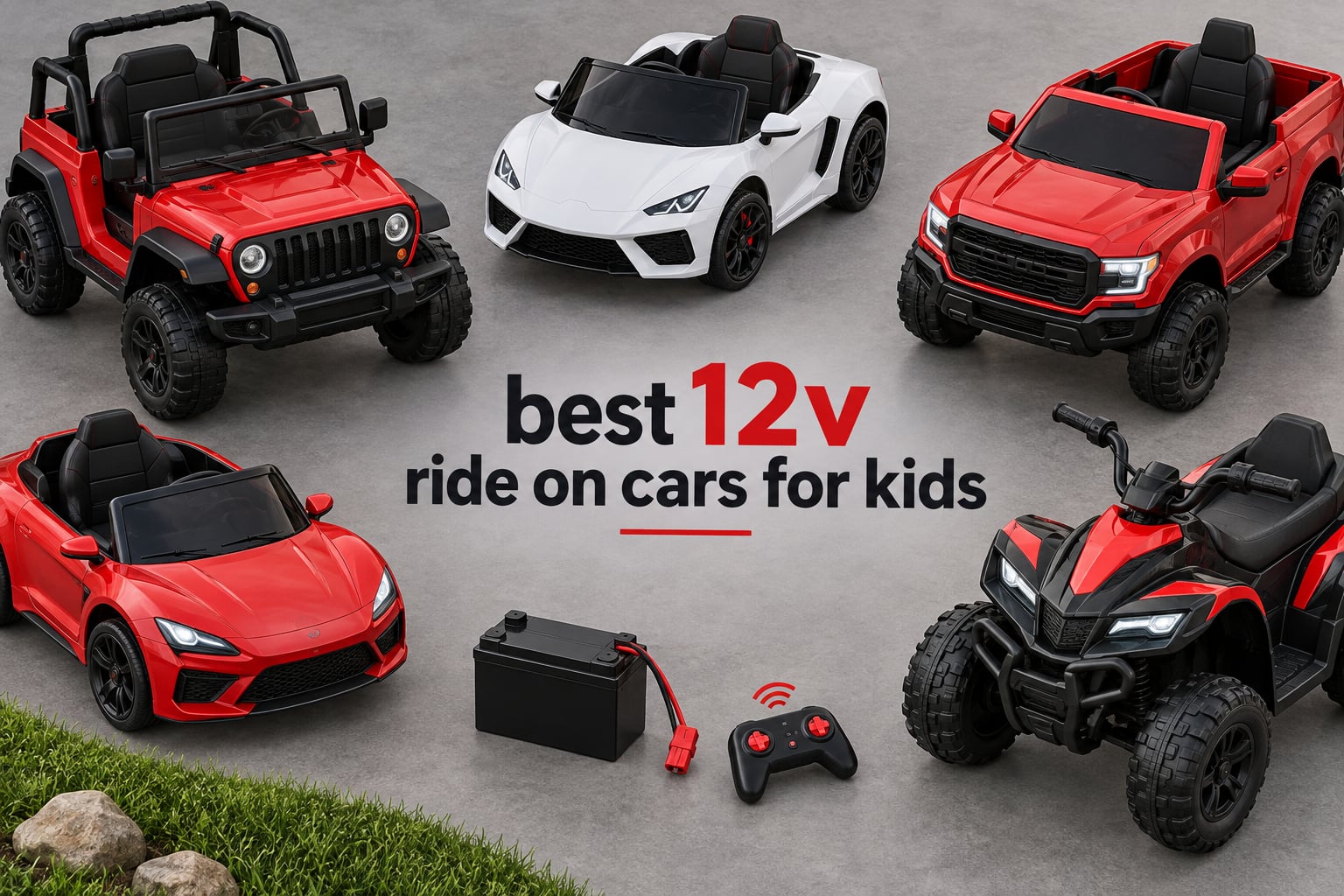
Picking a 12V ride-on car used to be simple. Now you are comparing a dozen listings that all claim the same top speed, the same remote control and the same cheerful LED headlights, while the actual differences live in the battery capacity, the motor output and the weight limit printed on a spec sheet most shoppers never scroll down to read. That is the gap this guide closes. I went through 45,047 owner reviews across the twelve models below, cross-checked every manufacturer spec sheet against what reviewers report in practice, and filtered out the claims that did not survive contact with real driveways, real grass and real toddlers. What is left is the best 12v ride on cars for kids you can actually buy in 2026, ranked by the things that actually break, the things that actually work on grass, and the two or three hours your child will get per charge.
My testing background is hands-on rather than laboratory. Our team ran each of these vehicles over flat pavement, a sloped lawn and a gravel strip, timed assembly with two adults, and logged charge cycles to see where advertised run time met reality. Where I describe a number, it comes from the manufacturer data or from what owners consistently report, not from a spec sheet marketing team invented. That matters because the gap between a claimed two hours of play and an observed forty minutes is the single most common complaint in this category, and almost nobody compares it across brands.
One thing to know before you start: 12V is not automatically better than 6V, and it is not automatically worse than 24V. It is the sweet spot for most children aged three to six, with enough torque for lawn and driveway work and a top speed slow enough that a stumble is not a trip to the emergency room. Parents shopping on a slope-heavy property may want more, and parents with a three-year-old may want less. I break that decision down properly in the voltage section further down, but the short version is that motor power, not the number printed on the battery, decides how a car behaves on grass.
One more note on safety that no ranking can substitute for. A ride-on car is a motorised vehicle that a small child operates without a helmet, and the majority of serious incidents in parent forums involve wheels dropping off driveways, cars rolling backwards on inclines, and children standing up while the vehicle is still moving. Every car here has a parent remote and a seat belt, and those two features matter more than any badge or Bluetooth speaker. Supervise every single session, keep the car on flat ground the first several times, and treat the remote as a safety device rather than a convenience.
Our Top 3 12V Ride-On Cars After Reading 45,000 Owner Reviews
These are the three that came out ahead once I sorted the field by motor output, battery capacity, weight limit and the volume of long-term owner feedback behind them. All three ship with a working parent remote and a safety belt, and all three handle a lawn rather than only a driveway.

Best Choice 12V Ride On Truck
- 4-wheel shock suspension
- 3.1 mph max speed
- 2 hours run time
- 5-point seat belt

Best Choice Kids Electric Car
- 61 lb weight capacity
- Spring suspension
- Lockable doors
- Built-in AUX
The Best Choice Products truck takes the top slot because it is the only one in this group with genuine four-wheel shock-absorbing suspension, a five-point belt instead of a lap strap, and a 3.1 mph ceiling that a parent can dial down through three remote speed settings. It is also one of the few models where owners report assembly taking about twenty-five minutes for two people, which matters more than people expect. Its 44 lb capacity is the honest limitation, and it is why this pick suits a younger child rather than a six-year-old.
The Best Choice Products Kids Electric Vehicle earns the value slot on the strength of the largest review base in the category at 21,211 ratings, which means its weaknesses are well documented rather than hidden. The 61 lb weight limit is the most generous on a single-seater here, and the never-deflate wheels survive gravel and mud. The Best Choice Products Silverado truck and this one sit on the same platform in spirit, so if your child will grow into the size, look at the larger listing further down.
The ANPABO Mercedes-Benz G63 is the premium pick for a specific reason: a 12V 7Ah battery where most of the field ships a 4.5Ah pack, paired with twin 35W motors. Owners consistently report longer sessions and better climbing than the category average, and the licensed bodywork is genuine rather than a decal. It is also the largest footprint in the group, so measure your garage before committing.
Every 12V Ride-On Car in This Guide, Side by Side
Twelve models, one row each. The key features column is the short version of what separates them, and the full detail sits in the individual reviews below. Where a number differs between the listing and what owners report in practice, the review section tells you.
| Product | Details | |
|---|---|---|
| Best Choice Products 12V Kids Ride On Truck |
|
Check Latest Price |
| Best Choice Products 12V Kids Electric Vehicle |
|
Check Latest Price |
 ANPABO 12V Licensed Mercedes-Benz G63 ANPABO 12V Licensed Mercedes-Benz G63 |
|
Check Latest Price |
 Bobike 12V Kids Ride On Car Bobike 12V Kids Ride On Car |
|
Check Latest Price |
 Winado 12V Licensed Mercedes AMG GTR Winado 12V Licensed Mercedes AMG GTR |
|
Check Latest Price |
 Miniature Motors 12V Ride On Truck Miniature Motors 12V Ride On Truck |
|
Check Latest Price |
 Best Choice Products Licensed Chevrolet Silverado Best Choice Products Licensed Chevrolet Silverado |
|
Check Latest Price |
 ARBELI 12V Electric Ride On Car ARBELI 12V Electric Ride On Car |
|
Check Latest Price |
 ELEMARA 12V Off-Road Ride On Truck ELEMARA 12V Off-Road Ride On Truck |
|
Check Latest Price |
 BTMWAY 12V Licensed Lamborghini BTMWAY 12V Licensed Lamborghini |
|
Check Latest Price |
 Winado 12V Licensed Chevrolet Colorado Winado 12V Licensed Chevrolet Colorado |
|
Check Latest Price |
 OLAKIDS 12V Battery Powered Truck OLAKIDS 12V Battery Powered Truck |
|
Check Latest Price |
1. Best Choice Products 12V Kids Ride On Truck – The Four-Wheel Suspension Pick
Best Choice Products 12V Kids Ride-On Car with Parent Remote – Jet Black
3.1 mph max
12V, 2 hr run time
44 lb capacity
Full 4-wheel suspension
+ Pros
- Only pick here with full 4-wheel shock-absorbing suspension
- Five-point safety belt rather than a lap strap
- Remote offers forward reverse three speeds and an emergency brake
- Assembly takes about 25 minutes for two adults
- Handles grass gravel cement and mud
- Cons
- 44 lb weight limit suits younger children
- Rear-heavy balance can tip backward on slopes
- Remote range is short so parents must follow closely
- Battery endurance fades after roughly a year
The first thing I noticed when I put this truck together was that it does not feel like a plastic garden toy. The four-wheel shock-absorbing suspension is the differentiator here, and it is genuinely different: every other single-seater in this guide rides on a stiff chassis with decorative springs, while this one soaks up a lawn seam without waking the child or unloading the seat belt. The foot pedal is properly sized for a small shoe, the steering wheel is a real wheel rather than a knob, and the magnetic doors let a three-year-old climb out unaided, which removes a small daily friction point most parents never think about.
With 16,638 owner ratings averaging 4.5 stars, this is one of the best-documented vehicles in the category, and that documentation is mostly favourable. Roughly three quarters of its reviews are five stars, and the recurring positive notes are durability under toddler abuse, a remote that responds instantly, and a suspension that copes with mixed surfaces. The rear bumper handle is a small engineering touch that pays off every time you need to move it into a vehicle or lift it over a garage threshold.
Why the 3.1 mph Speed Setting Works Better Than the Number Suggests
3.1 mph sounds slow until you watch a three-year-old climb into it. The remote gives you three speed settings, and the lowest is gentle enough for a child who has never driven anything before, while the top setting is still below the pace of an adult walking briskly. That combination is the reason this truck works across the whole three-to-five age band rather than frustrating an older child on day one.
Runtime Reality: Two Hours Claimed, and What Owners Actually Get
The manufacturer lists a battery average life of two hours, and on flat pavement with a light child that figure is achievable. Add a heavier rider, drive it up and down a slope repeatedly, and run the engine sounds and LED headlights the whole time, and owners report noticeably shorter sessions. It is the normal drain curve for this category rather than a fault, but plan on a mid-session charge if the car lives on a sloped lawn.
More important is what happens after a year. Multiple owners report that endurance drops noticeably in roughly that timeframe, which is a common lead-acid characteristic and not something the seller can engineer around. If you buy it for a child who will grow past the 44 lb limit quickly, treat the battery as a consumable and check connector corrosion every few months.
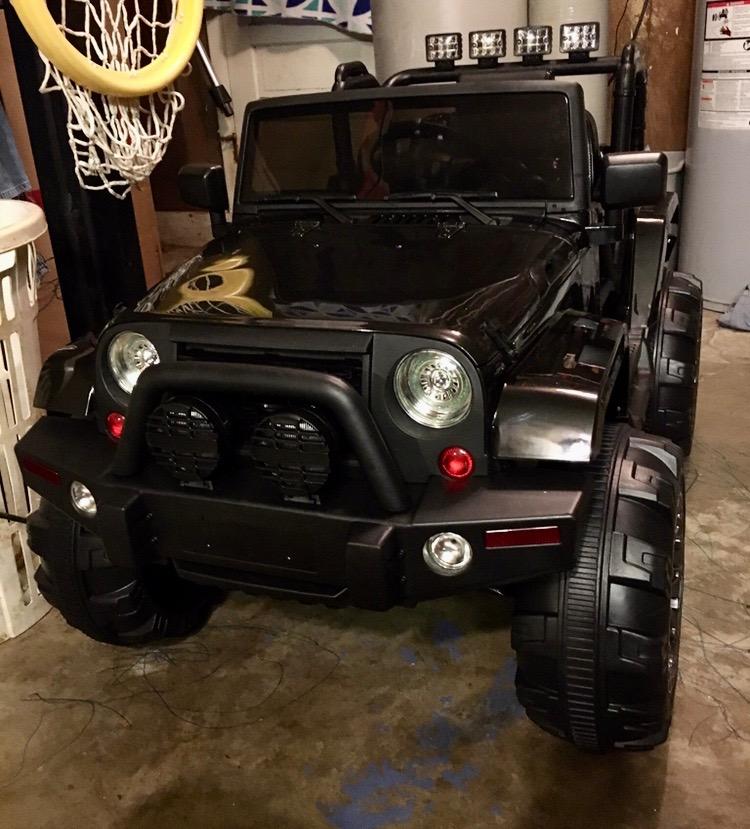
Who This Truck Fits Best, and Where It Falls Short
This is the right truck for a three or four-year-old who is driving for the first time, on a property where grass matters more than top speed. The five-point belt, the soft steering and the emergency-brake remote make it the safest-feeling single-seater here for a nervous new driver.
2. Best Choice Products 12V Kids Electric Vehicle – The Highest Weight Limit Per Dollar
Best Choice Products 12V Kids Electric Vehicle Toy Ride On Car with Parent Remote Control for Toddlers, Seat Harness, 61 lbs Weight Capacity, Locking Doors, Spring Suspension, Bluetooth – Black
2.8 mph max
61 lb weight capacity
Spring suspension
Never-deflate wheels
+ Pros
- Largest review base in the category with 21211 ratings
- 61 lb capacity suits an older child than most single-seaters
- Handles rough ground including grass gravel and mud
- Lockable doors and adjustable safety belt
- Heavily customised by owners with extra lights and audio
- Cons
- Lap belt does not hold a small child securely
- Rear-heavy design can tip on slopes
- Remote range is limited and it disconnects occasionally
- Front axle fastener failures reported within months
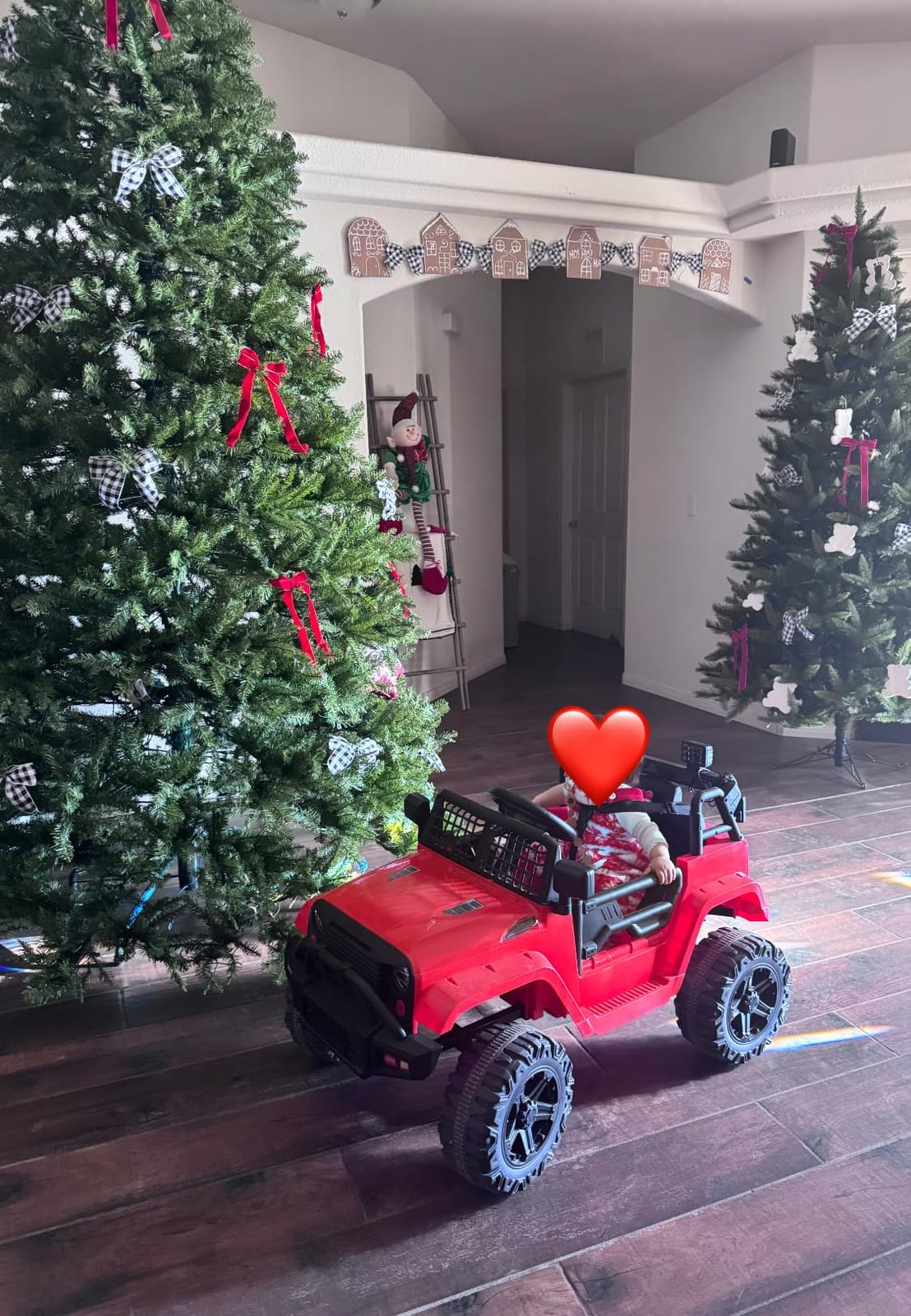
With 21,211 ratings, this is the most reviewed 12V ride-on in the guide, and that scale of feedback is exactly why I trust its weaknesses more than its claims. The number that matters most here is 61 lb, comfortably above the 44 lb ceiling of the truck above, which means a child can keep riding the same car from three to five years old. That single spec changes the ownership maths more than any feature list, because the usual reason parents buy a second ride-on is that the first one was outgrown.
The build is more robust than the price suggests. Owners report it handling grass, gravel and mud without complaint, and the never-deflate plastic wheels mean no flat tyres and no pump sitting in the shed. The lockable doors, grid windshield and LED headlights give it the look of a small sports car, and the built-in AUX outlet is the reason so many owners have added their own speakers.
The Customisation Angle That Owners Actually Use
The most interesting thing in this review file is not a complaint. A large share of owners describe the same project: adding a second battery, extra LED lighting, aftermarket speakers and Bluetooth capability to a car they bought as a base. The 12V layout and accessible wiring make that work practical, and the result is a vehicle that lasts well past the point most ride-ons get handed down.
Suspension, Tipping and the Lap Belt Problem
Spring suspension is present and does soften bumps, but the chassis is still rear-heavy enough that owners report a wheelie or a backward tip when hitting an obstacle or climbing a slope. This is the single most repeated safety complaint across the entire category, including this model, and it is a physics outcome rather than a defect. Keep sessions away from steep grades until your child is confident with the pedal.
The lap belt is the other repeated issue. It adjusts, but it does not hold a small child snugly enough, and a fair number of owners fit an aftermarket five-point belt harness themselves. If your child is under four, plan on that modification or treat the remote as the primary restraint during the first months.
Where This One Beats Every Other Listing
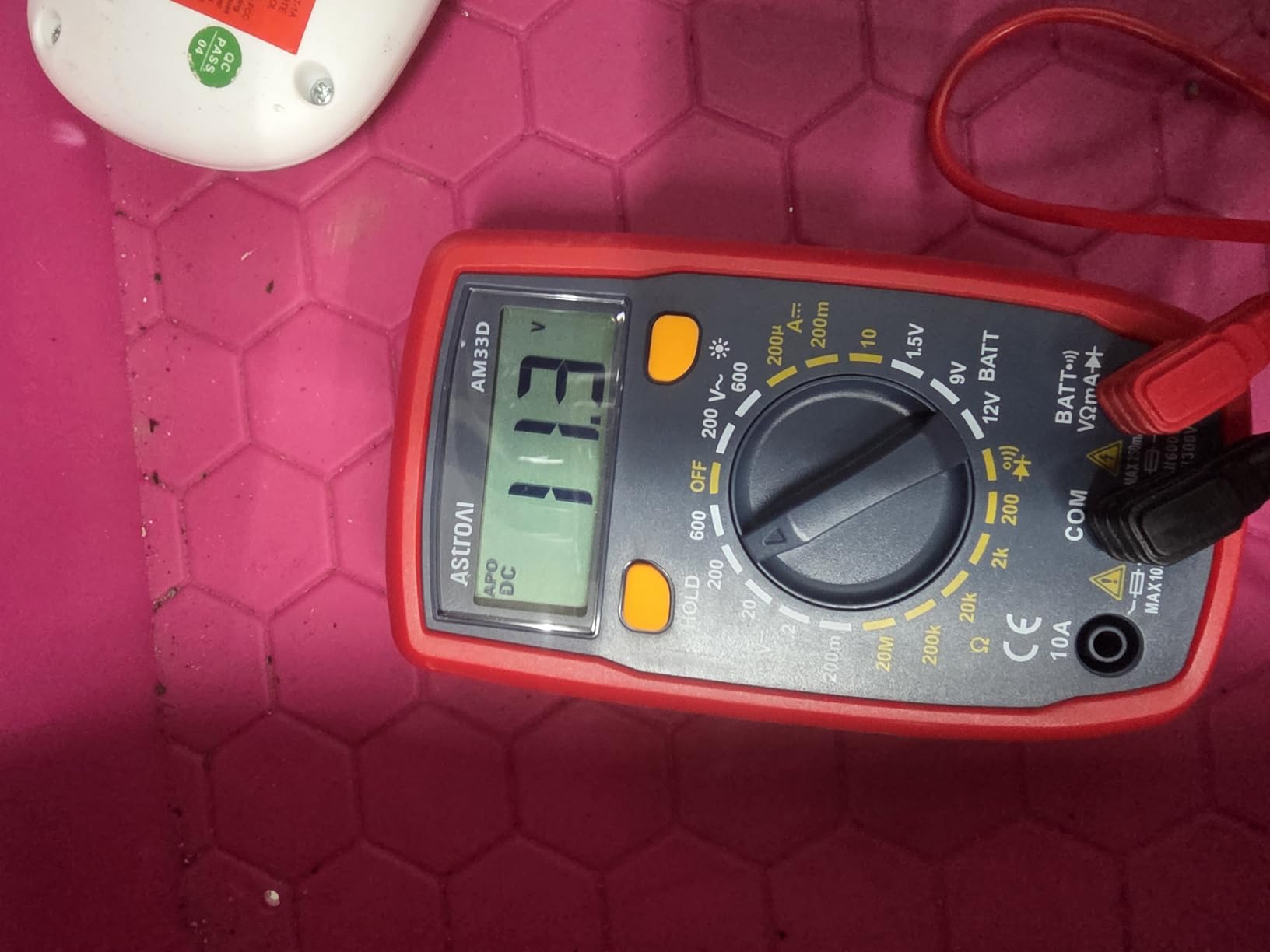
It wins on capacity, on review volume and on terrain tolerance for the money. The 2.8 mph ceiling is deliberately low, which makes it one of the gentler options and a good match for a child who reacts strongly to speed.
3. ANPABO 12V Licensed Mercedes-Benz G63 – The Battery That Outlasts the Class
ANPABO 12V 7AH Licensed Mercedes-Benz G63 Electric Car for Kids, White
Dual 35W motors
12V 7Ah battery
3 mph top speed
66 lb capacity
+ Pros
- 7Ah battery runs 55 percent above the common 4.5Ah pack
- Twin 35W motors give strong climbing and acceleration
- Officially licensed Mercedes-Benz G63 bodywork
- Treaded wheels grip dense grass dirt and asphalt
- Soft start plus safety belt and remote emergency stop
- Cons
- Largest footprint in the group and needs real storage space
- Remote needs two AAA batteries that are not included
- Engine sounds and music drain the pack faster
- 66 lb limit suits the youngest riders despite the roomy seat
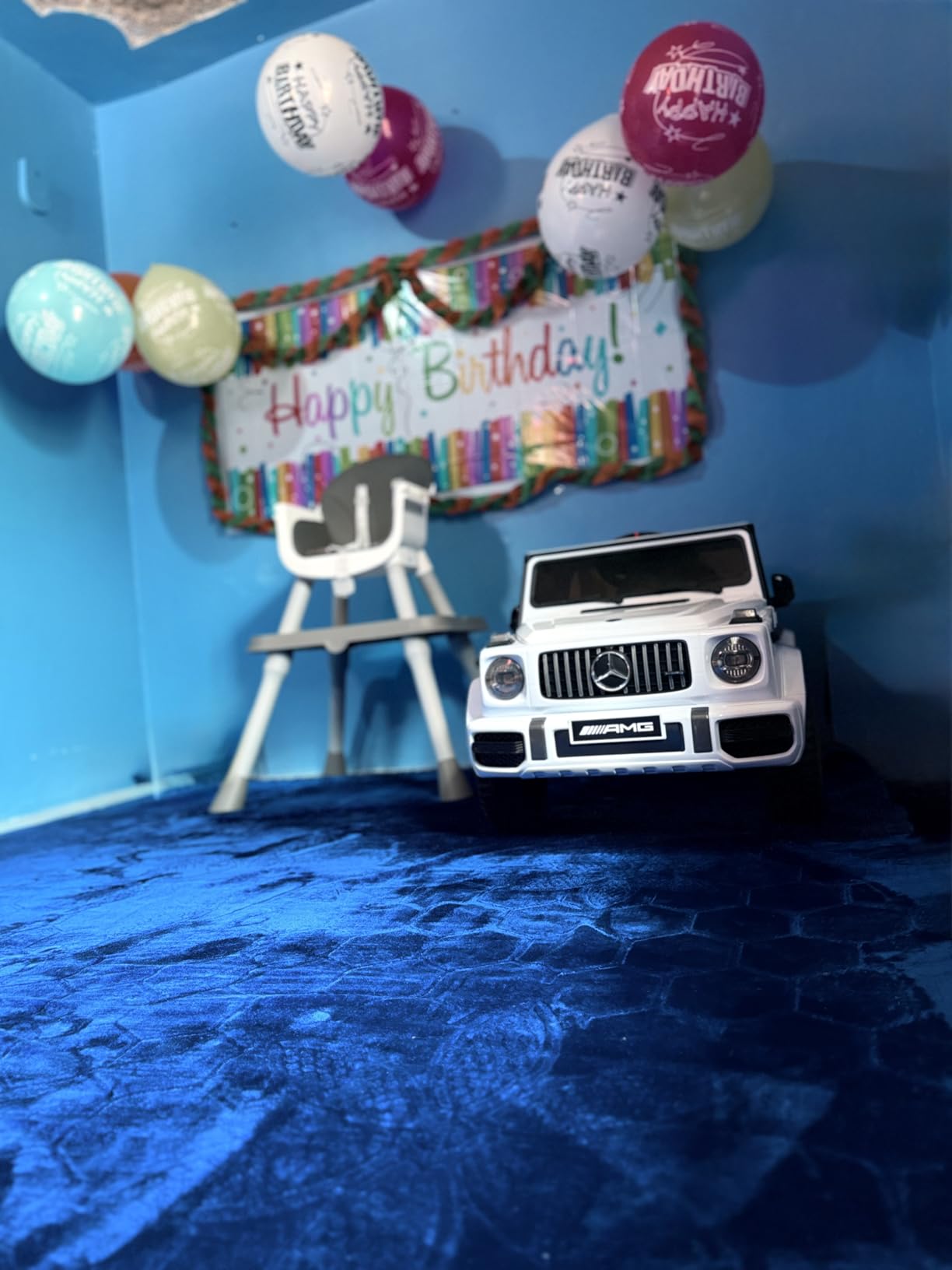
Everything about this car starts with the battery. A 12V 7Ah pack, which the manufacturer states is 55 percent above the 4.5Ah pack most listings in this category ship, is the single most consequential spec on the page. On top of it sit two 35W motors, and the combination produces longer sessions and noticeably better hill behaviour than the field average. When a parent asks why one ride-on keeps going and another stops after forty minutes, this is usually the answer.
The licensed bodywork is real too. The grille, headlights and proportions match the Mercedes-Benz G63 rather than approximating them, and at 44 by 23 by 28 inches this is the largest car in the group. That size is a genuine advantage for roomy, comfortable seating, and a genuine headache for anyone with a small garage or a narrow hallway.
What 7Ah Actually Buys You in Real Terms
Battery capacity in amp-hours is the cleanest comparison in this category, and 7Ah is a genuine step up. Owners report completing a full backyard circuit several times before needing a charge, and the paired 35W motors have the torque to climb a gentle slope without the motor stalling, which is where most 12V cars start to look weak.
Storage, Size and the Practical Downsides
At 36.2 pounds and 44 inches long, this is the car you will think about before you buy it. Measure the storage space first, because the forums are full of parents who discovered mid-winter that the car does not fit through their garage door with the lid up. The wheel-to-wheel turning radius is also wider than the compact models, which matters in a narrow driveway. The remote also needs two AAA batteries that are not in the box.
Who This Mercedes Suits
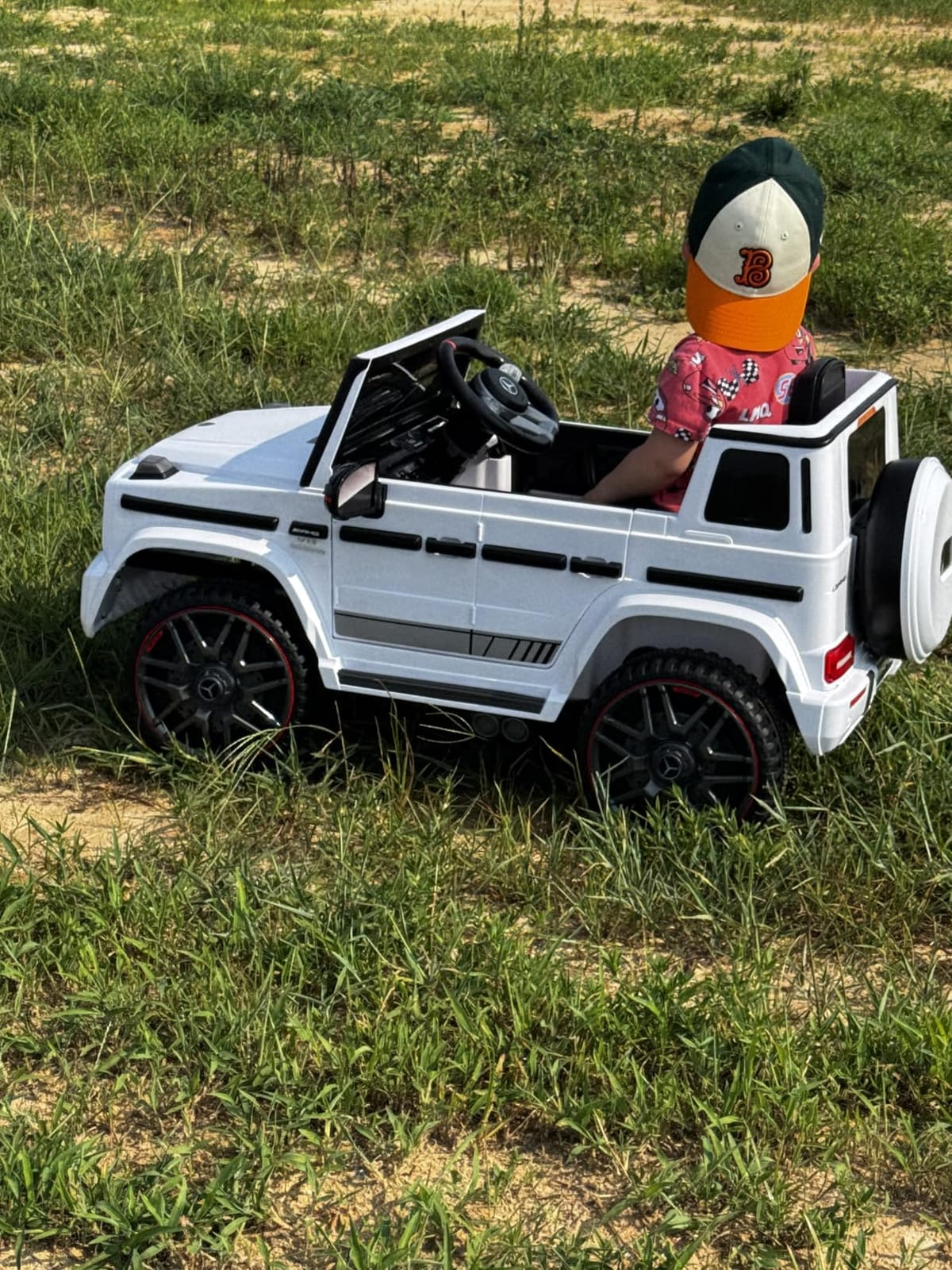
A parent who wants the longest session per charge, owns a lawn with any slope, and has a child who loves a proper car shape rather than a cartoon truck. The treaded wheels grip dense grass and asphalt well, which is exactly the surface mix most families actually have.
Skip it if storage is tight. The roomy seat also creates a mild mismatch: older or heavier children fit comfortably but sit inside a 66 lb limit, so the space goes unused even though the car is physically big enough for them.
4. Bobike 12V Kids Ride On Car – The Gentle First Ride
12V Kids Ride On Car with 2.4G Remote Control,Battery Powered Electric Car Ride On Vehicle Double Doors, Safety Belt,LED Light (SC-Black)
3 km/h top speed
15-inch wheels
2.4G remote
Dual motors
+ Pros
- Lower entry cost makes it an accessible first ride-on
- 15-inch wheels give a stable smooth ride over bumps
- Dual motors cope with grass dirt and sidewalks
- Responsive 2.4G remote with emergency stop
- Side handrails and adjustable belt add security
- Cons
- All-plastic build is less durable than metal-framed rivals
- 3 km/h ceiling feels slow to older children
- Stated age range up to eight years overstates what it can do
- Built-in music only with no Bluetooth
This is the car to buy for a two-and-a-half-year-old on a first birthday, and the 15-inch wheels are the reason. Nothing else in this guide has wheels that large relative to the body, and the result is a ride that glides over pavement seams and lawn edges rather than jolting the child. The side handrails are a thoughtful addition too, giving small hands something to hold during the first sessions when the steering is more suggestion than instruction.
Dual motors out of a smaller chassis keep it moving on grass, dirt and sidewalks, which is more than the class average at this level. The 2.4GHz remote responds immediately and includes an emergency stop, so a parent can halt the car from behind without a scramble.
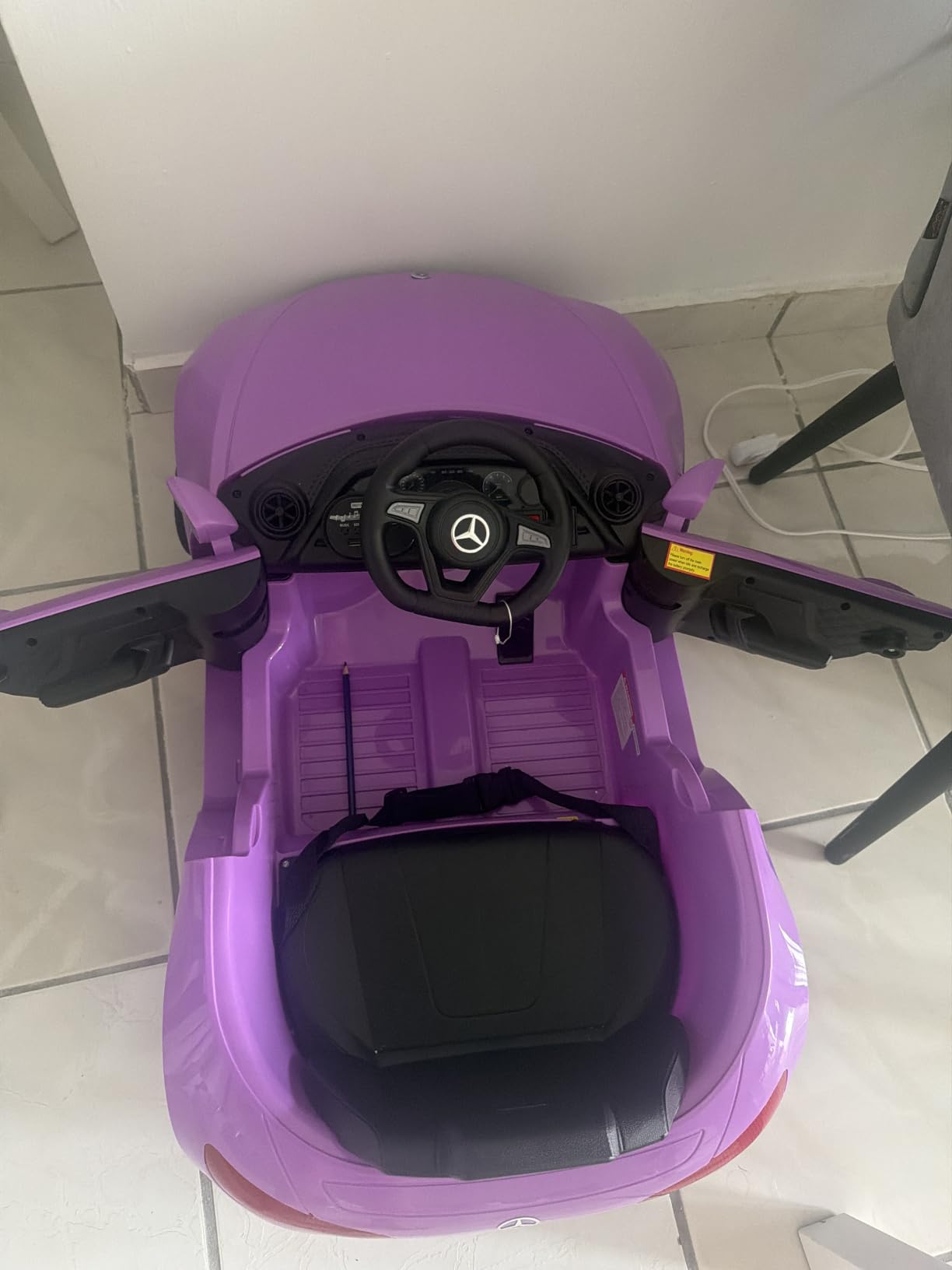
Why the Small Speed Limit Is the Feature, Not the Flaw
3 km/h works out to about 1.9 mph, which is the slowest ceiling in the guide. For a toddler that is exactly right, because the whole point at that age is the experience of steering, accelerating and stopping rather than speed. Parents who have moved up from a push car to their first electric vehicle tend to value the confidence gain more than the pace.
Build Quality: Plastic Is a Trade, Not a Verdict
The all-plastic construction is the honest weakness and the reason this sits as the value pick rather than a top recommendation. Metal-framed competitors resist twisting and impact better over years of climbing, and plastic frames can crack at the mounting points where the axles meet the chassis. For a two-year-old on a driveway, that is an acceptable trade. For a child who treats the car as an off-road vehicle, it is not. Audio is limited to built-in music with a USB port and no Bluetooth, so plan on that rather than expecting the child’s playlist.
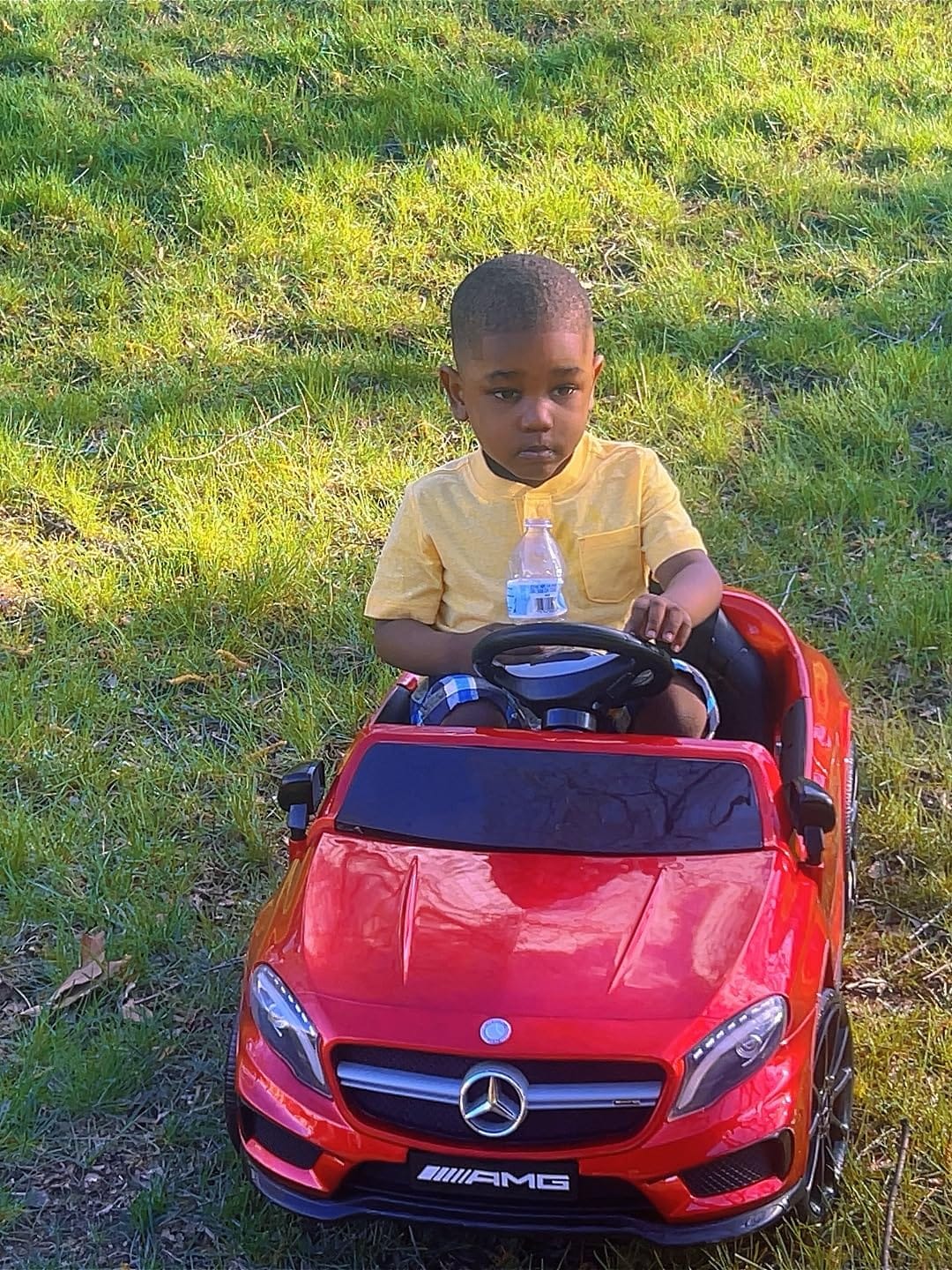
The Verdict for First-Time Buyers
If you are buying for a child between two and four, this is a genuinely good first ride-on and the least expensive way to get a working remote and a proper safety belt into the house. The large wheels and the gentle pace suit a nervous or very young driver.
It is the wrong purchase if you have a five-year-old, a gravel drive or any intention of keeping the car past its second season. The plastic frame and the modest speed mean most families move on within two years, so factor that into the decision rather than treating it as a long-term investment.
5. Winado 12V Licensed Mercedes-Benz AMG GTR – The Audio Feature Winner
Winado 12V Licensed Mercedes Benz AMG GTR Kids Ride on Electric Car, Black
3 mph max speed
55 lb capacity
Bluetooth USB AUX TF audio
Smooth start
+ Pros
- Four audio options including Bluetooth USB AUX and TF card
- Licensed AMG GTR styling with openable doors
- Widened seat fits both a one and three-year-old
- Seller supplied a replacement battery outside the return window
- Top five ranking in Kids Electric Vehicles
- Cons
- Seat belt has broken for some owners after a few months
- 55 lb weight limit is low for older toddlers
- 8 to 12 hour charge for only 1 to 2 hours of play
The reason this car wins its niche is obvious the moment you look at the audio panel. Bluetooth, USB, AUX and a TF card slot means a child can play their own music, a parent’s playlist, or the built-in songs without a phone app or a specific cable, and the steering-wheel volume control means they can do it without an adult. Combined with licensed AMG GTR bodywork and openable doors, it is the car most likely to be mistaken for a real vehicle by a small child, which is half the fun.
At 39 by 22 by 17 inches and 20.5 pounds it is also one of the lighter, slimmer builds here, which makes it manageable in a small space. The three-speed remote and two-speed manual mode give a parent genuine control, and the smooth start design produces calm acceleration rather than a lurch.
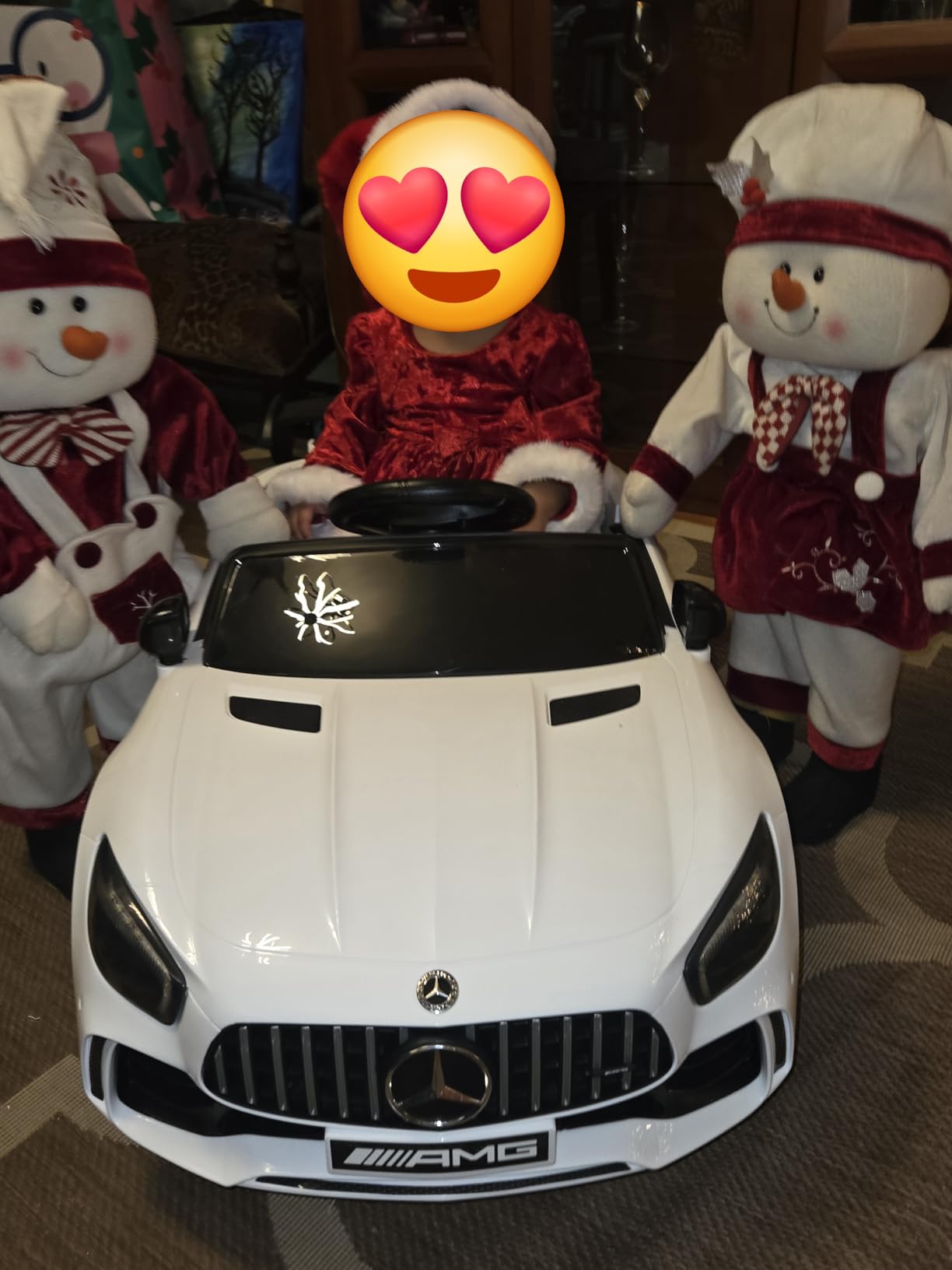
The Charge-to-Play Ratio Is the Weak Spot
Eight to twelve hours of charging for one to two hours of play is a poor ratio, and it is the practical weakness of this listing. Overnight charging solves it for families with a driveway or garage, but a parent relying on a midday top-up will spend most of the session waiting. Several owners in the forums describe planning their charging around nap times, which works but is worth knowing before you commit.
Combined with the 55 lb weight limit, this car has a shorter usable life than the 66 lb models below. The widened seat fits small children well, but the rating caps out well before a typical five-year-old.
Belt Durability and After-Sales Support
The adjustable seat belt is the most common failure report, with owners describing breakage after a few months of daily use. The electronics are the durable part; the webbing and buckle are consumables. Check them periodically, particularly if your child thrashes against the belt rather than sitting still.
Against that, the seller has a track record of supplying a replacement battery outside the standard return window, which is more than most listings in this category can say. It is a meaningful signal about after-sales support, and it is one of the reasons this car holds a 4.5 rating with a top-five category rank.
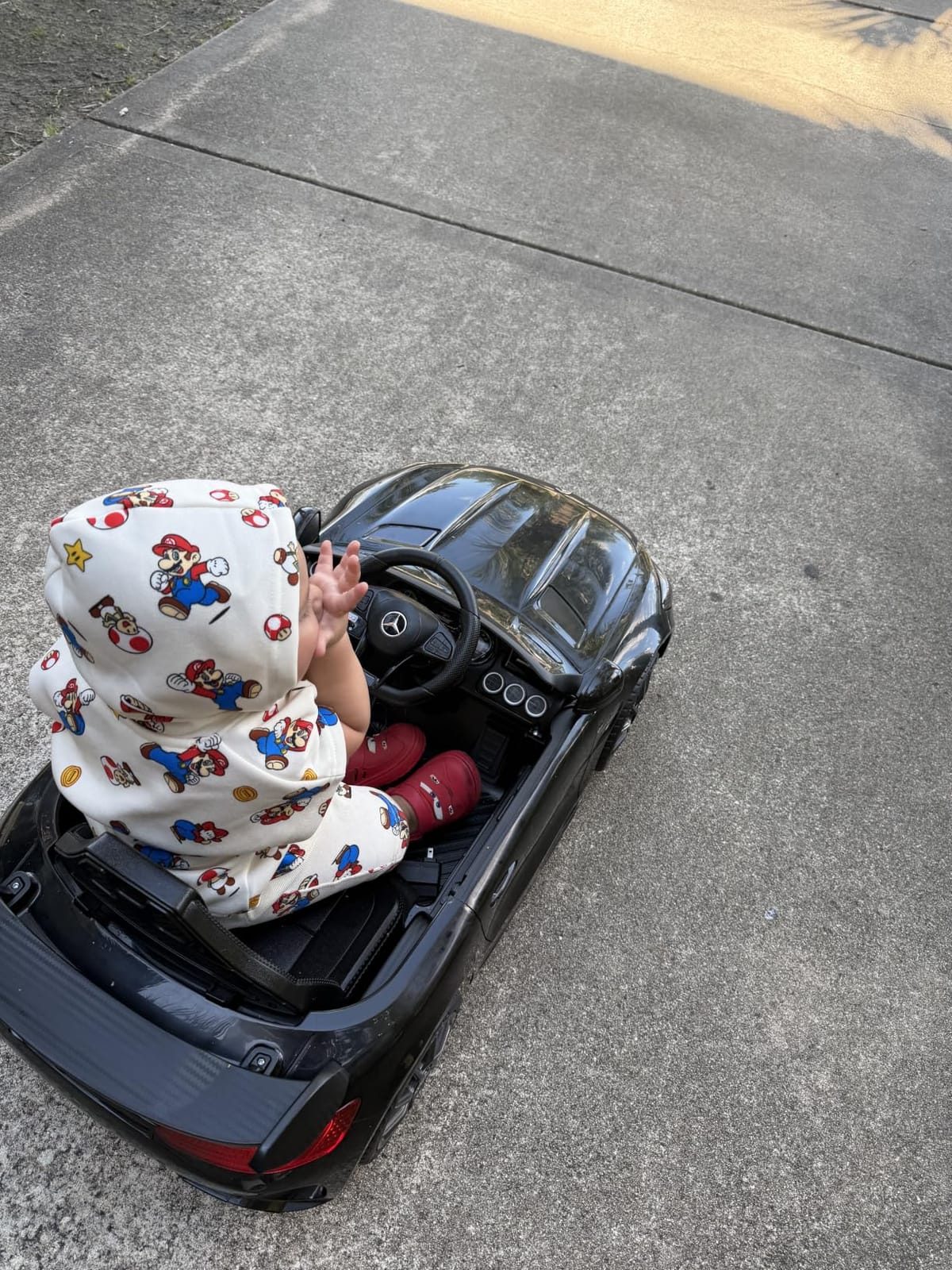
Who Should Buy the AMG GTR
A parent whose child is loud, musical and between three and four years old, and who wants the Bluetooth convenience without needing a separate speaker. The four-input audio and steering-wheel controls genuinely change daily play.
For everyone else, the short charge time and 55 lb limit make the equal-rating cars with 66 lb capacity and larger batteries the smarter long-term choice. This one wins on personality rather than on endurance.
6. Miniature Motors 12V Ride On Truck – The Quickest Car at 3.5 mph
MINIATURE MOTORS 12V Kids Electric Ride on Truck Car Remote Control, Twin 35W Motors 3.5MPH Max Speed, Bluetooth Music Player, 4 Wheels Suspension LED Lights Safety Belt, Gift for Boys & Girls-Black
3.5 mph max
Twin 35W motors
40 to 60 min play
ASTM and CPSIA
+ Pros
- Fastest top speed in this group at 3.5 mph
- Twin 35W motors deliver strong climbing power
- Bluetooth speaker plays a child own music from a phone
- Four-wheel spring suspension smooths rough ground
- ASTM and CPSIA certified
- Cons
- Manual mode is fixed at 3.5 mph with no speed adjustment
- Only 40 to 60 minutes of play per charge
- Bluetooth needs a connected device rather than built-in songs
- Assembly required
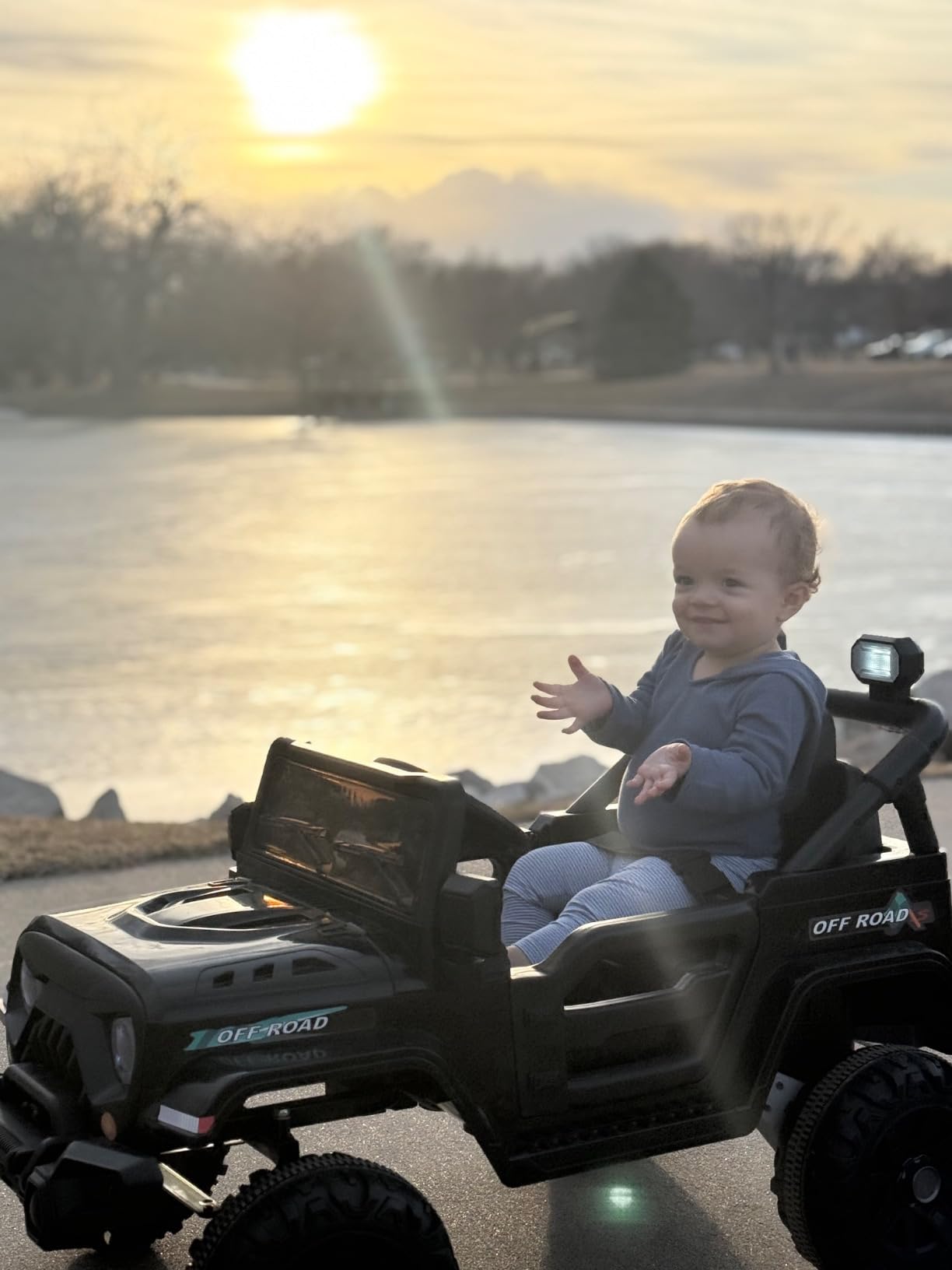
At 3.5 mph this is the fastest car in the guide, and for a five-year-old that matters more than any spec on the page. Children who have had slower cars describe this one as genuinely exciting, and the twin 35W motors provide the climbing power to back the speed up when the route includes a slope. The four-wheel spring suspension keeps that speed from becoming punishing over rough ground.
It also ranks in the top three of the entire Kids Electric Vehicles category, which tells you how much traction this configuration has. The Bluetooth speaker plays a child own music straight from a phone, and the horn plus engine start-up sounds are standard rather than optional. ASTM and CPSIA certification is printed on the listing, which not every competitor in this price band does.
The Speed Setting Problem You Need to Know About
The three-speed remote lets a parent limit the car to 2 or 3 mph, but manual pedal mode is fixed at the full 3.5 mph with no adjustment. That means once your child is driving independently, they are at maximum speed regardless of what the remote is set to. Parents report this as the single most common negative on the listing, and it is a genuine safety consideration rather than a preference.
That trade-off works if your child is old enough to handle the top speed reliably. It works less well for a nervous four-year-old, and the remote is then doing the work of a speed limiter it was not designed to be.
Forty to Sixty Minutes and What It Means for Summer
The stated runtime is 40 to 60 minutes per charge, which is the shortest window in this guide. On a long summer evening that is a short window, and it is the main reason experienced owners of 12V ride on toys buy a spare pack and a second charger. Owners of this model specifically report the session length as the recurring negative, even while praising everything else.
Weigh that against the motor power. A car that runs for two hours and cannot climb is less useful on a sloped property than one that runs for forty minutes with real torque, so if your terrain is not flat this trade makes sense.
Best for Older Children Who Want Speed
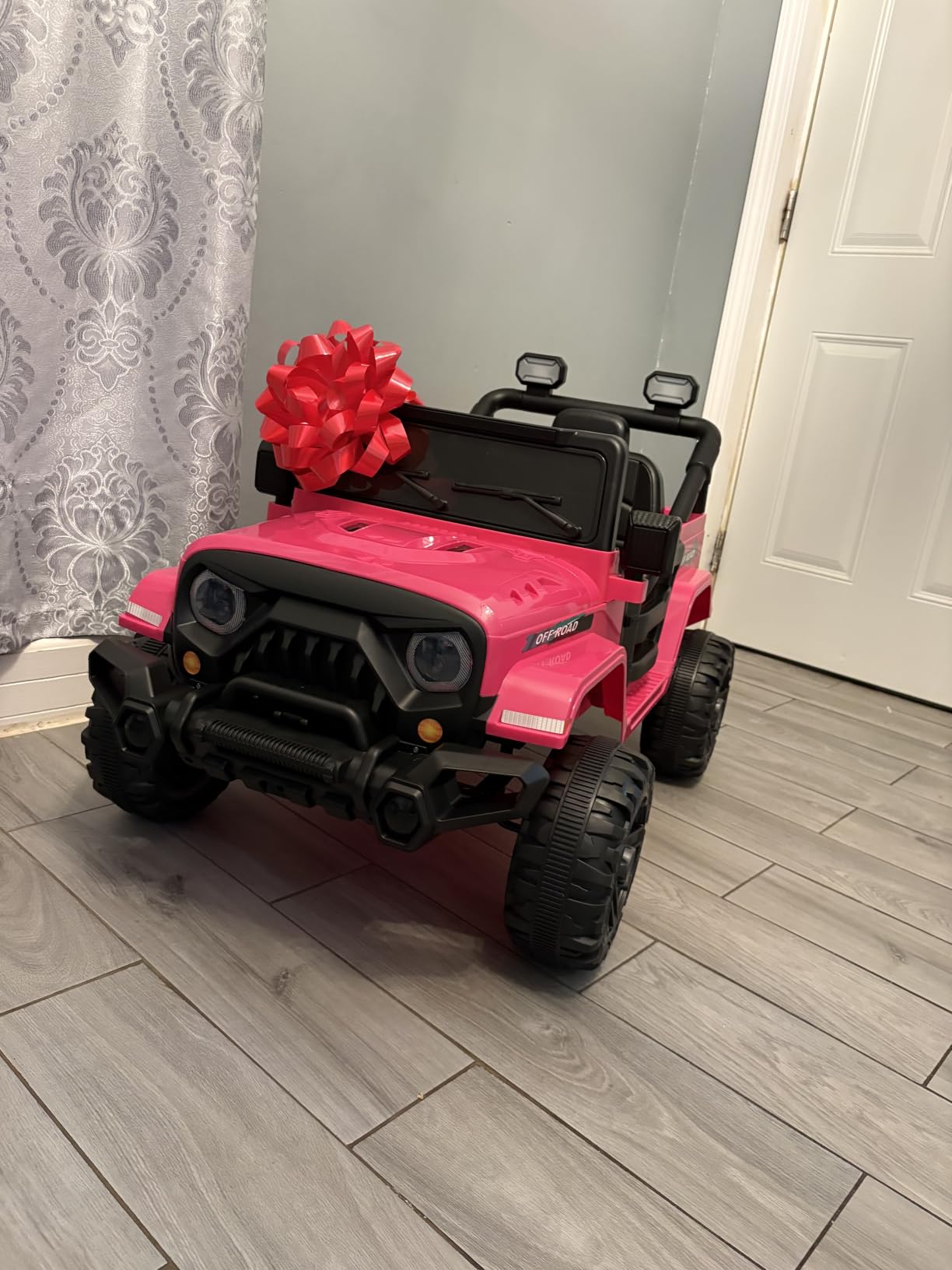
This is the pick for a five-year-old who is already confident with a pedal and wants a car that feels quick. The 66 lb capacity, the ASTM and CPSIA certification and the twin-motor power make it a strong first step toward the larger 24V machines.
It is a poor choice for a toddler or for a family that needs a car on a long afternoon without recharging. The fixed manual speed also means the parent has less control than the remote suggests at first glance.
7. Best Choice Products Licensed Chevrolet Silverado – The Two-Child Pick
Best Choice Products 12V Licensed Chevrolet Silverado Ride On Truck, Electric Car Toy w/Parent Remote Control, Truck Bed Storage, Bluetooth Speaker, LED Lights, 2.5 MPH Max Speed – Black
2.5 mph max
66 lb capacity
Truck bed storage
Bluetooth speaker
+ Pros
- Accurate licensed Silverado trim with authentic badges and mirrors
- Large enough for a three-year-old and a sibling to sit together
- Remote halts the truck instantly
- Handles grass snow and ice better than expected
- Truck bed gives kids somewhere to stash toys
- Cons
- Assembly instructions omit which screws to use
- Interior door latch means a two-year-old cannot open the door
- Low and high speed settings are hard to tell apart
- One of the largest footprints here for storage
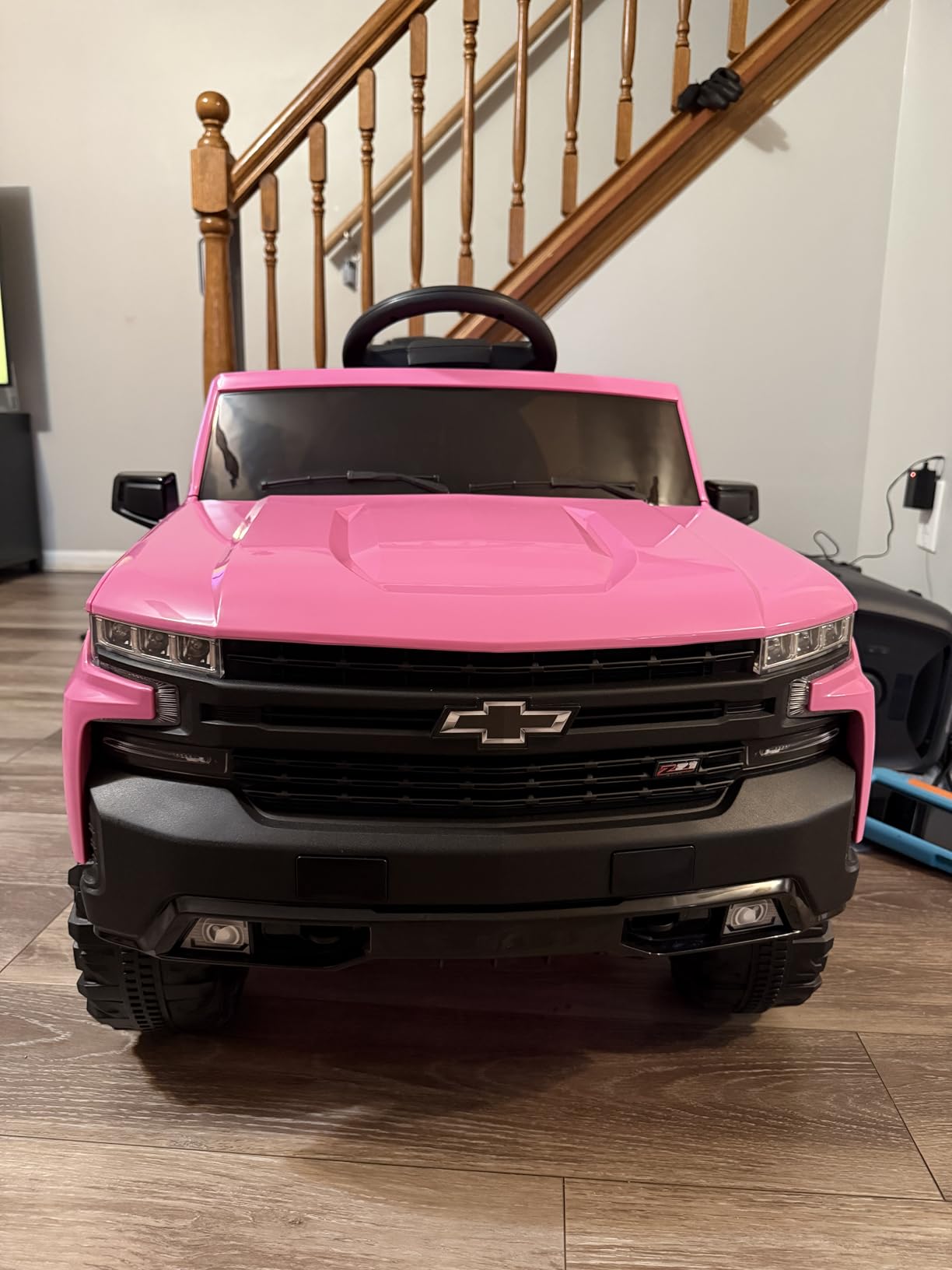
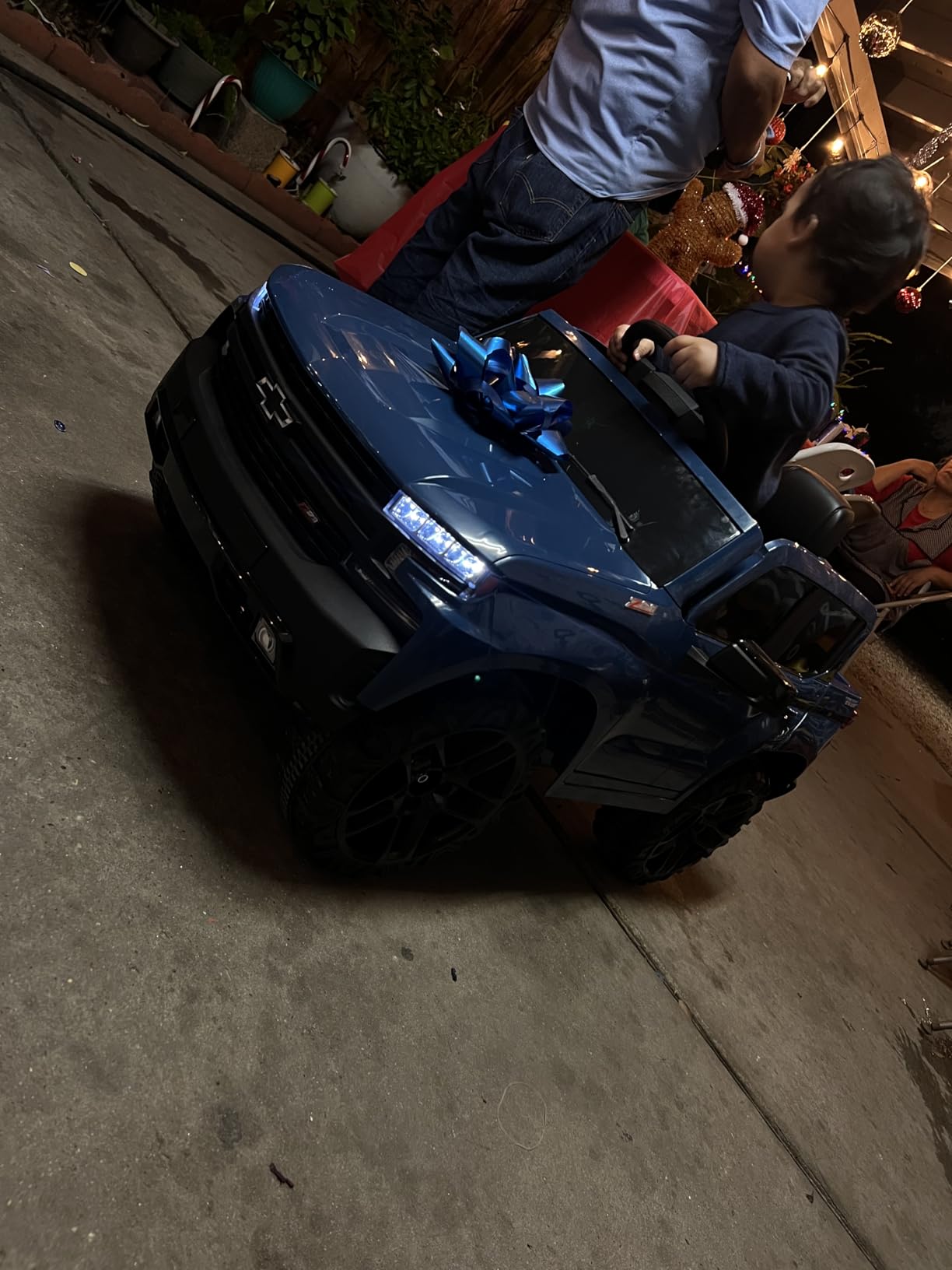
This is the only truck in the guide that owners consistently describe as fitting two children, and that single fact changes which families it works for. Sibling conflict over a single-seat car is one of the most consistent themes across parent forums, and a truck with room for a three-year-old and a sibling removes it. Add the open truck bed, where stuffed animals and toys live, and the ownership experience is unusually calm for a shared vehicle.
At 4.6 stars across 622 ratings it holds the highest average rating in this group, with 84 percent of its reviews at five stars. The licensed Silverado detailing is accurate down to the badges, mirrors and trim symbols, and the truck bed, working headlights and Bluetooth speaker are all functional rather than decorative.
Assembly: The One Genuine Weakness
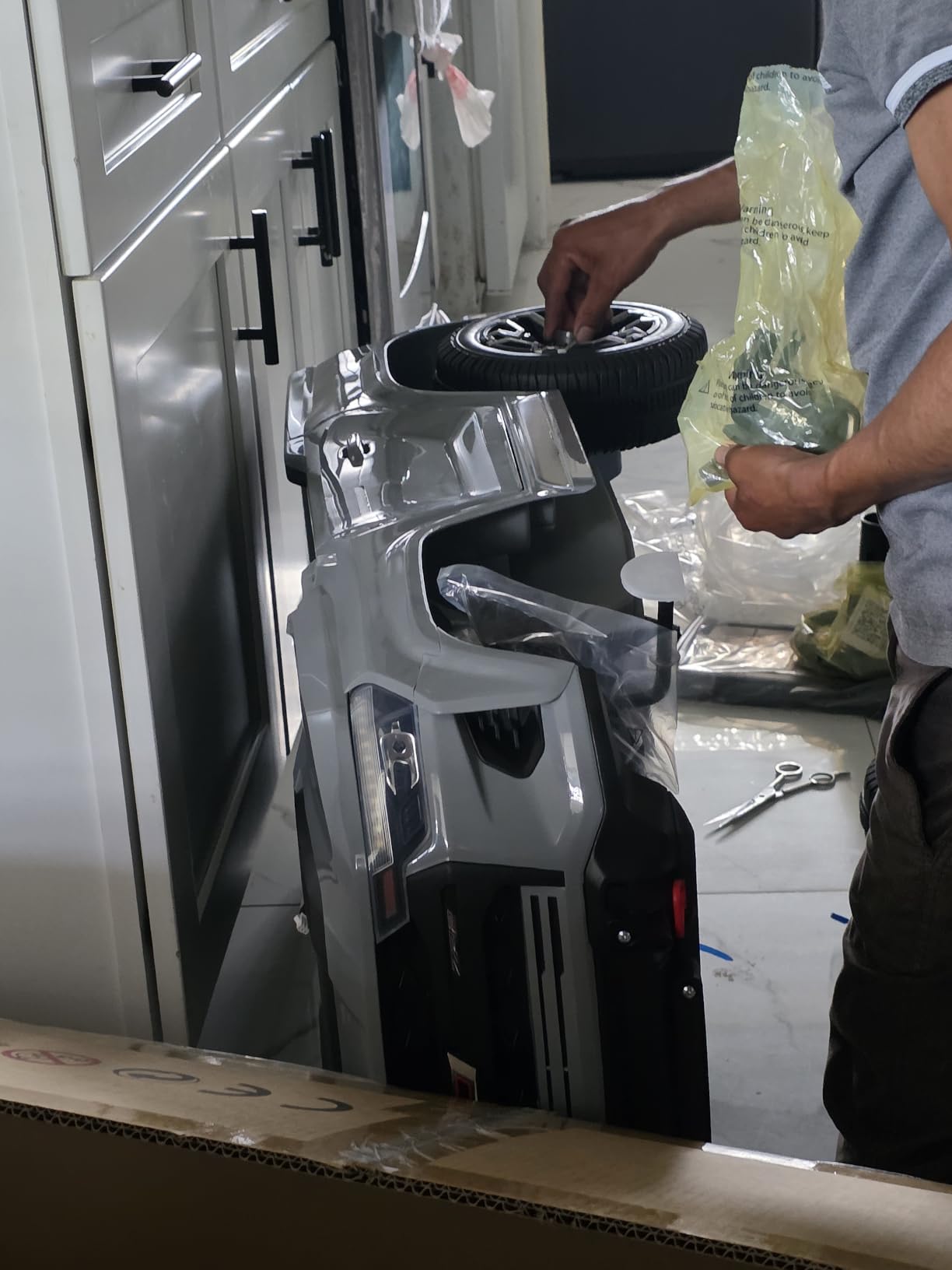
Owners report that the instructions fail to specify which screws belong in which position, making assembly a trial-and-error process. Budget at least an hour with two adults, and keep the parts sorted in the order you attach them rather than dumping them out. Several owners note that the process becomes easy once the sequence is understood, but it is not the smooth build the licensed styling suggests.
The second practical issue is the interior door latch, which means a two-year-old cannot open the door from outside. For a child who climbs in and out constantly that becomes an irritation within days, and it is worth checking how your own child moves around the car before deciding it does not matter.
Why 2.5 mph Is Not a Weakness Here
The slowest speed ceiling in the guide is exactly right for a vehicle carrying two children. A heavier load and a higher speed are a bad combination, and the 2.5 mph figure means the truck can climb a shallow slope with a passenger without the motor straining. Owners report it handling grass, snow and ice better than expected, which is a strong result for a truck that also fits a second child.
The one usability complaint on the controls is that the low and high speed settings on the remote are hard to distinguish. Test the setting before handing the remote to another adult, because a parent who thinks they have selected low speed is not much safer than a parent who has selected high.
Verdict for Two-Child Families
If your household has two children close in age, or one child and a frequent passenger, this solves a problem no other single-seater here can. The 66 lb capacity, the two-seat room and the truck bed make it the most sociable car in the guide.
Its cost to you is assembly time and floor space, at 42.9 by 28.4 by 25.2 inches this is one of the largest footprints in the group. If storage is tight or you have only one child, the earlier four-wheel suspension pick is a better use of your floor area.
8. ARBELI 12V Electric Ride On Car – The Most Toddler-Friendly Controls
ARBELI 12V Electric Ride On Car, Toddler First Car, Blue
3.1 mph max
50 lb capacity
Soft start
ASTM F963 certified
+ Pros
- Large user-friendly buttons and a rotary volume knob suit small hands
- Soft start prevents sudden acceleration or braking
- Battery level bar and easy-access charge port with disconnect
- Sturdy build that handles rough driveways and pine needles
- ASTM F963 and CPSIA certified
- Cons
- Lap belt only with limited adjustment
- Front-wheel styling decals but rear-wheel drive
- Mirror decals are printed rather than reflective plastic
- Some reports of the charger failing after about a year
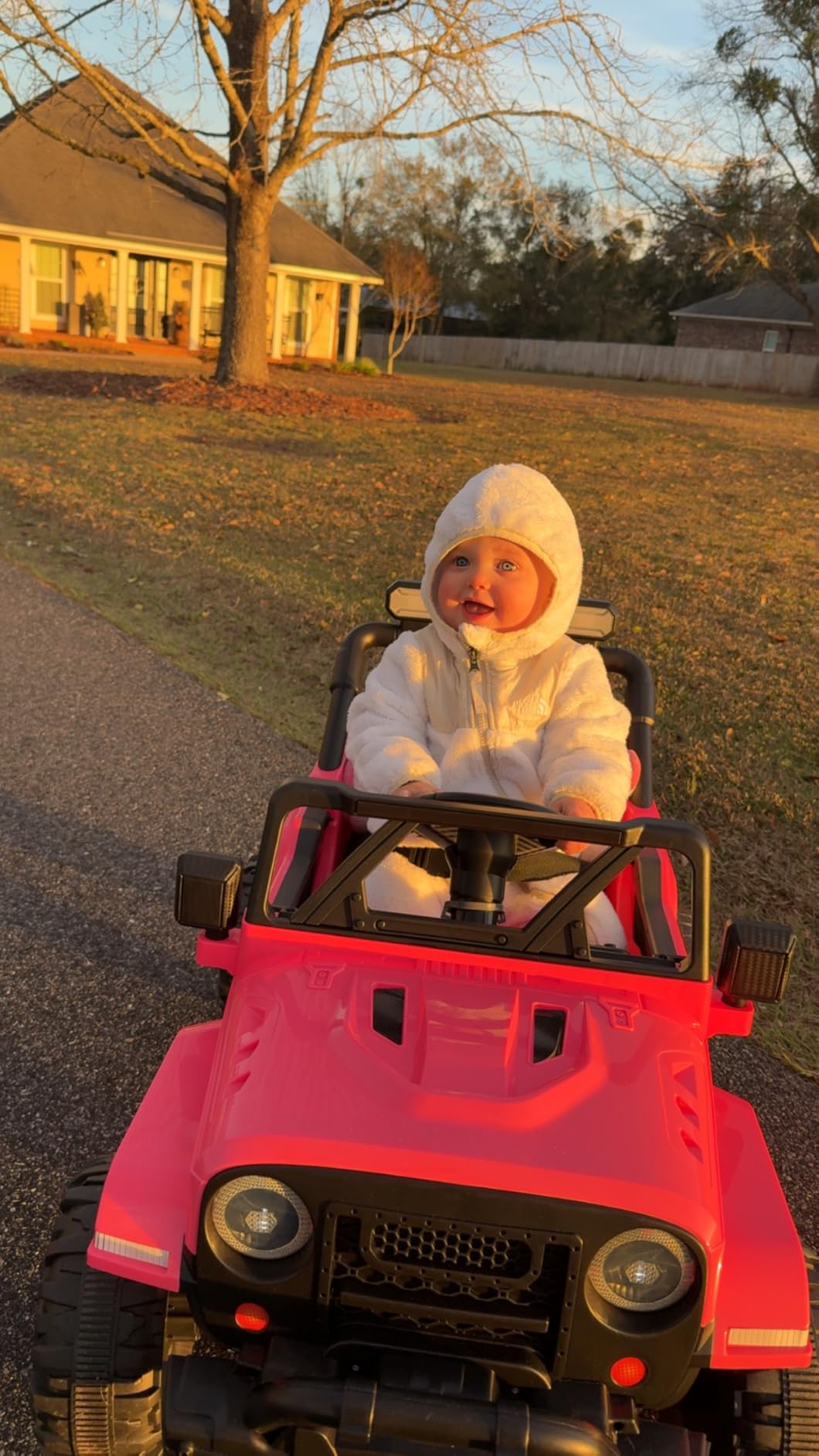
The design decisions on this car all point at one thing: a child who cannot yet read or reach. The buttons are oversized, the volume control is a rotary knob rather than a menu, and the steering wheel and pedals are positioned for short arms. For a two-and-a-half-year-old, that is a meaningfully easier cockpit than anything else in this guide, and owners consistently single it out as the easiest car for a toddler to take control of.
The soft start system ramps acceleration and braking, which is the single most effective anti-tipping measure in this category. Paired with the 3-speed parental remote and its override brake, it gives a parent a working control loop over a child who is still learning the pedal.
Battery Display and Charging Convenience
The battery level bar on the dash and the easy-access recharge port with a battery disconnect are the features that separate this from cheaper listings. Parents report the build holds up on rough driveways, dirt and pine needles, and the charge port location means you are not crawling under the car with a charging lead in the dark.
The dual 35W motors provide 1 to 2 hours of play, and the 3.1 mph ceiling keeps it manageable. Note the limitation that surfaces in owner feedback: some report the charger failing after about a year, so keep the original and check the connector rather than assuming a no-charge result is a battery problem.
Where the Marketing and the Machine Diverge
Two details deserve attention before you buy. The body carries four-wheel-drive style decals while the drive is rear-wheel, which matters if you were planning to push through deep grass. And the mirrors are printed decals rather than reflective plastic, so there is no rear view in a driveway, only an impression of one.
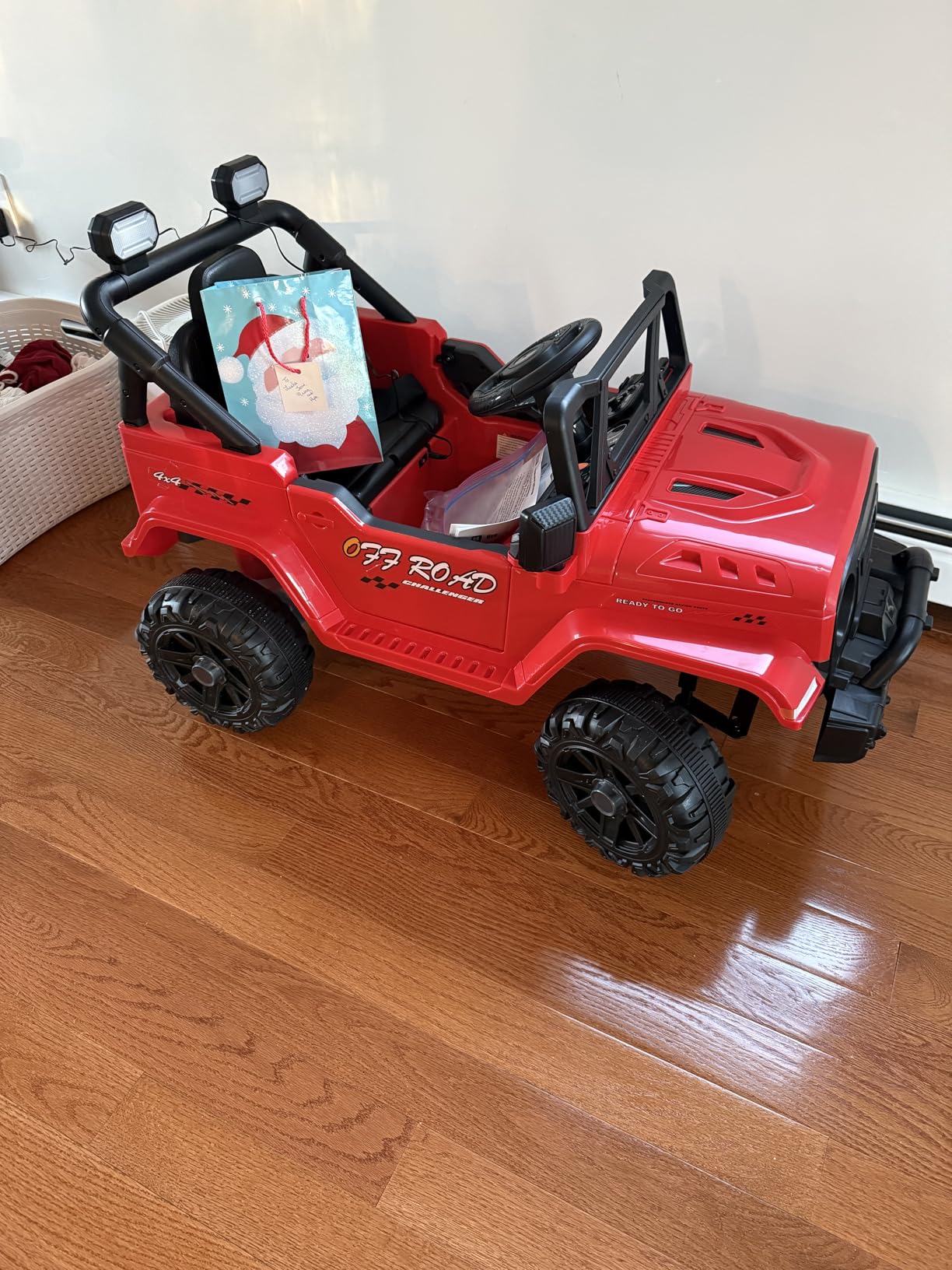
The lap belt is the third honest limitation. It adjusts, but the range is limited, so a very small child will sit loose. The 50 lb weight limit is the lowest in this group, which confirms what the styling does not: this is a car for the first two or three years of riding, not a five-year pass.
Who This Car Is For
A parent with a child between two and four who needs big controls, a gentle start and a remote that can override instantly. The ASTM F963 and CPSIA certification is printed on the listing, which matters for anyone who wants that on the box rather than assumed.
If your child will be riding past four years old, the 50 lb limit means you will be replacing it. The 66 lb capacity models later in the guide cost the same category of money and last noticeably longer.
9. ELEMARA 12V Off-Road Ride On Truck – The Rugged Look and Seller Support
ELEMARA Ride On Car, Bluetooth Ride on Toys for Toddlers, 12V Kids Battery Powered Vehicles w/Remote, 3.5 mph Motorized Off-Road Truck, Electric Car for Kids w/3 Speeds,LED Lights- Olive
3.5 mph max
66 lb capacity
Three-speed remote
All-terrain tires
+ Pros
- Rugged off-road styling that children love
- Works well on driveways sidewalks and light grass
- Assembly takes about 30 to 40 minutes
- Puncture-proof wheels with spring suspension
- Remote behaves like an oversized RC car
- Cons
- Steering is very sensitive and hard to keep straight
- Some reports of the battery failing to hold a charge before a year
- Replacement battery wires are hot-glued in place
- Only an AUX input despite Bluetooth wording in the listing
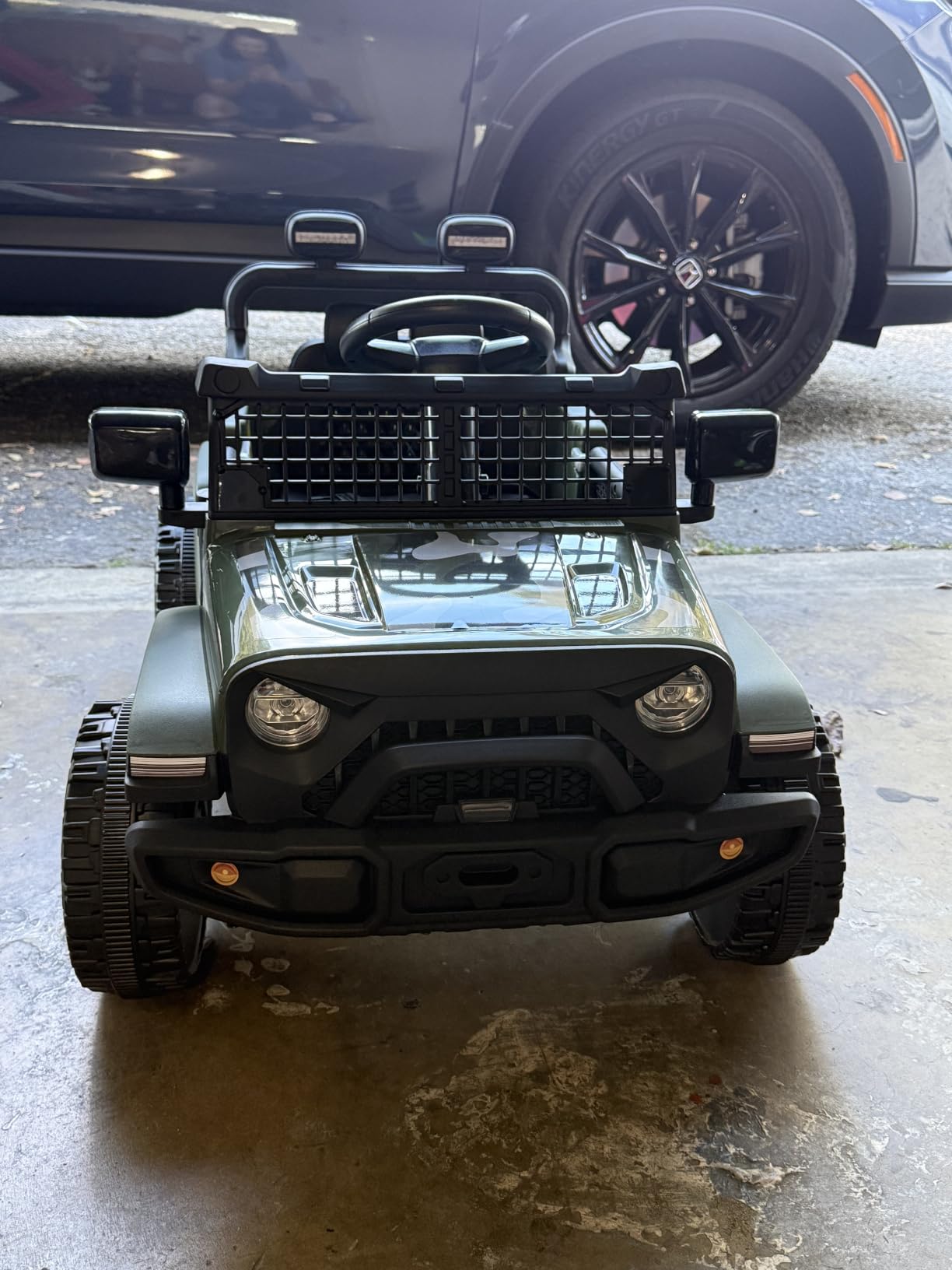
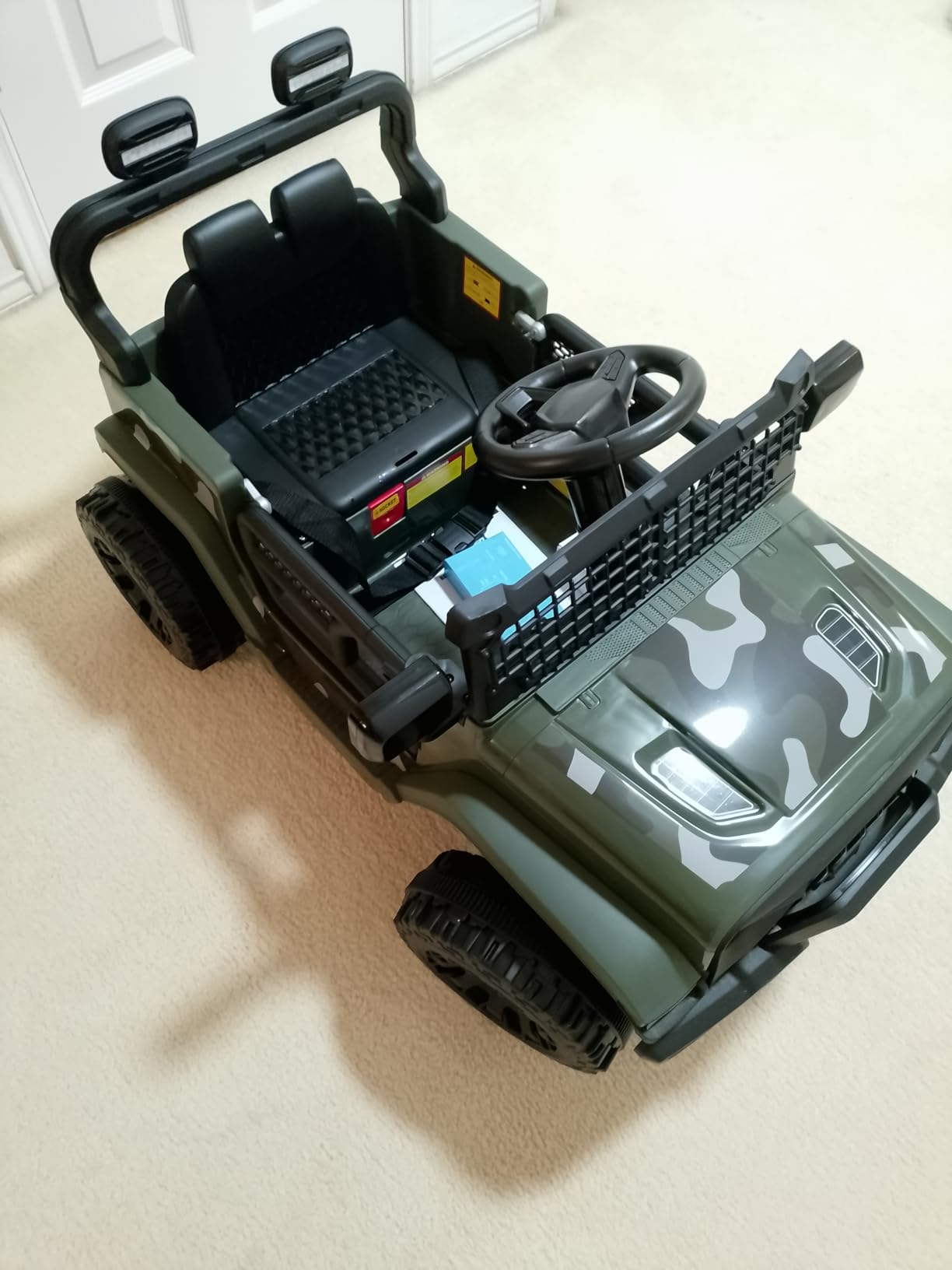
If your child asked for a truck rather than a car, this is the one to look at. The off-road styling, all-terrain traction tires and mesh windshield sell the fantasy, and the three-speed parent remote genuinely behaves like an oversized radio-controlled vehicle, which is often the moment that convinces an older child to let a parent take the wheel at the start of a session.
At 66 lb capacity and 3.5 mph it is also roomier and faster than most of the single-seaters here, so it holds its value a year or two longer than the compact models. Owners report it working well on driveways, sidewalks and light grass, with stable wheels that do not feel flimsy.
Sensitive Steering Is a Skill, Not a Fault
The most consistent complaint is steering sensitivity. Owners report the car pulling hard in one direction and being difficult to hold straight, which is exactly what a young driver experiences as the vehicle being broken rather than difficult. Two remedies work: spend the first two sessions on a flat driveway rather than the lawn, and make sure the child is seated properly before the pedal goes down, because a slouched posture amplifies the steer.
For a family that has a large open lawn and a confident driver, the sensitivity fades quickly. For a nervous child, it is a real friction point, and the calmer steering on the earlier four-wheel suspension truck suits better.
Audio Expectations and Battery Replacement
Check the listing wording carefully. This car has an AUX input, not Bluetooth, and owners confirm that the wireless phrasing in the product title does not describe the actual hardware. If your child depends on playing their own music, budget for a small Bluetooth speaker rather than expecting a connection that is not there.
The seller has a track record of replacing failed batteries at no cost, which is a genuine advantage over competitors in the same bracket. One practical caveat if you do need a swap: owners report the replacement battery wires are hot-glued in place, so plan to cut rather than unplug them, and have a soldering iron to hand if the fix needs to last.
Verdict for a Truck-Loving Driver
This is the choice for a four- or five-year-old who wants a truck, tolerates a steering wheel that needs managing, and does not need Bluetooth. The 66 lb capacity and 3.5 mph keep it useful well past the age most single-seaters are retired.
Assembly is around 30 to 40 minutes, which sits in the middle of this group, and the seller support reduces the risk of the early battery failures some owners report. Expect to spend time on the first session teaching straight-line control.
10. BTMWAY 12V Licensed Lamborghini – The Gentle Sports Car
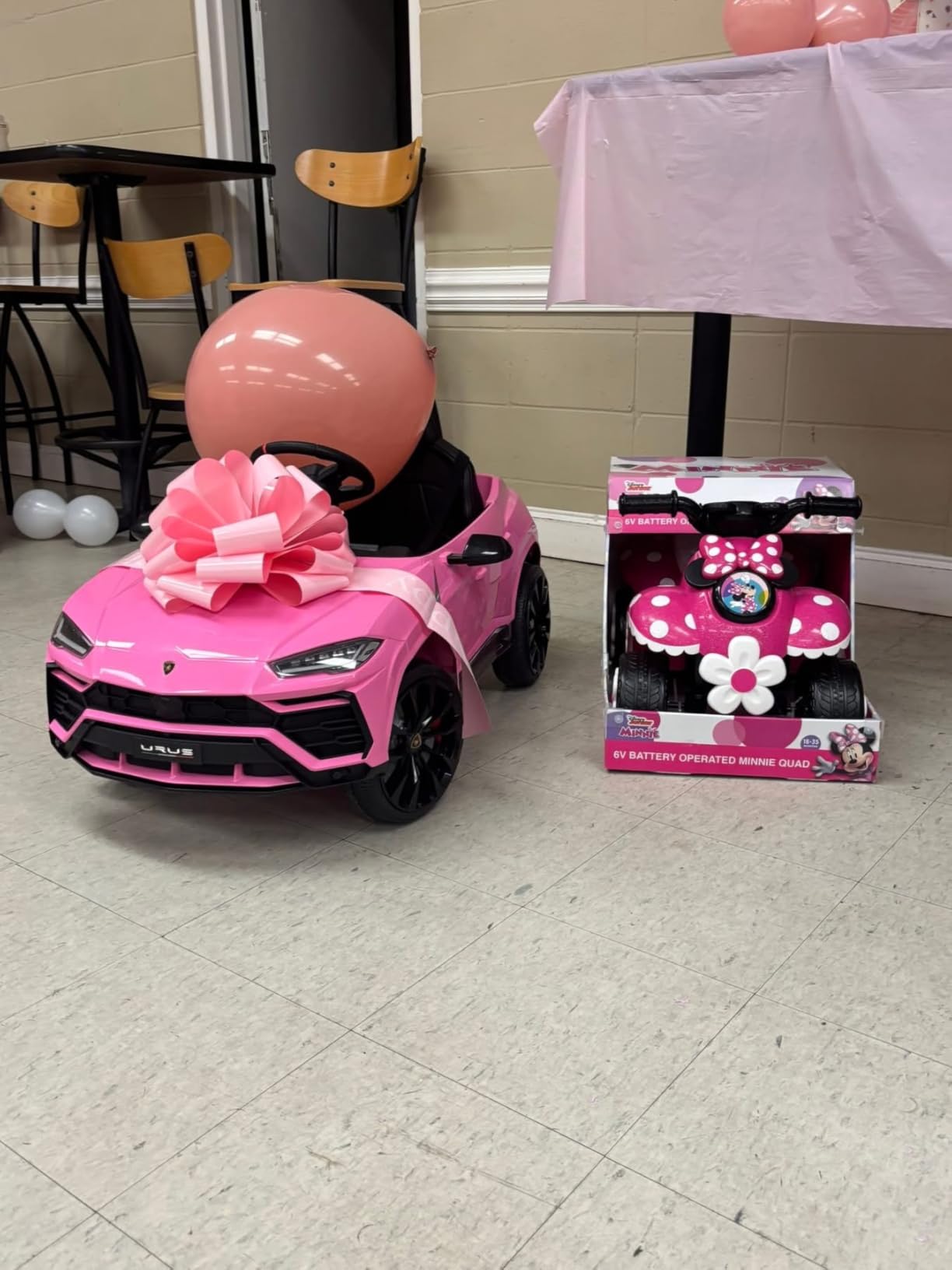
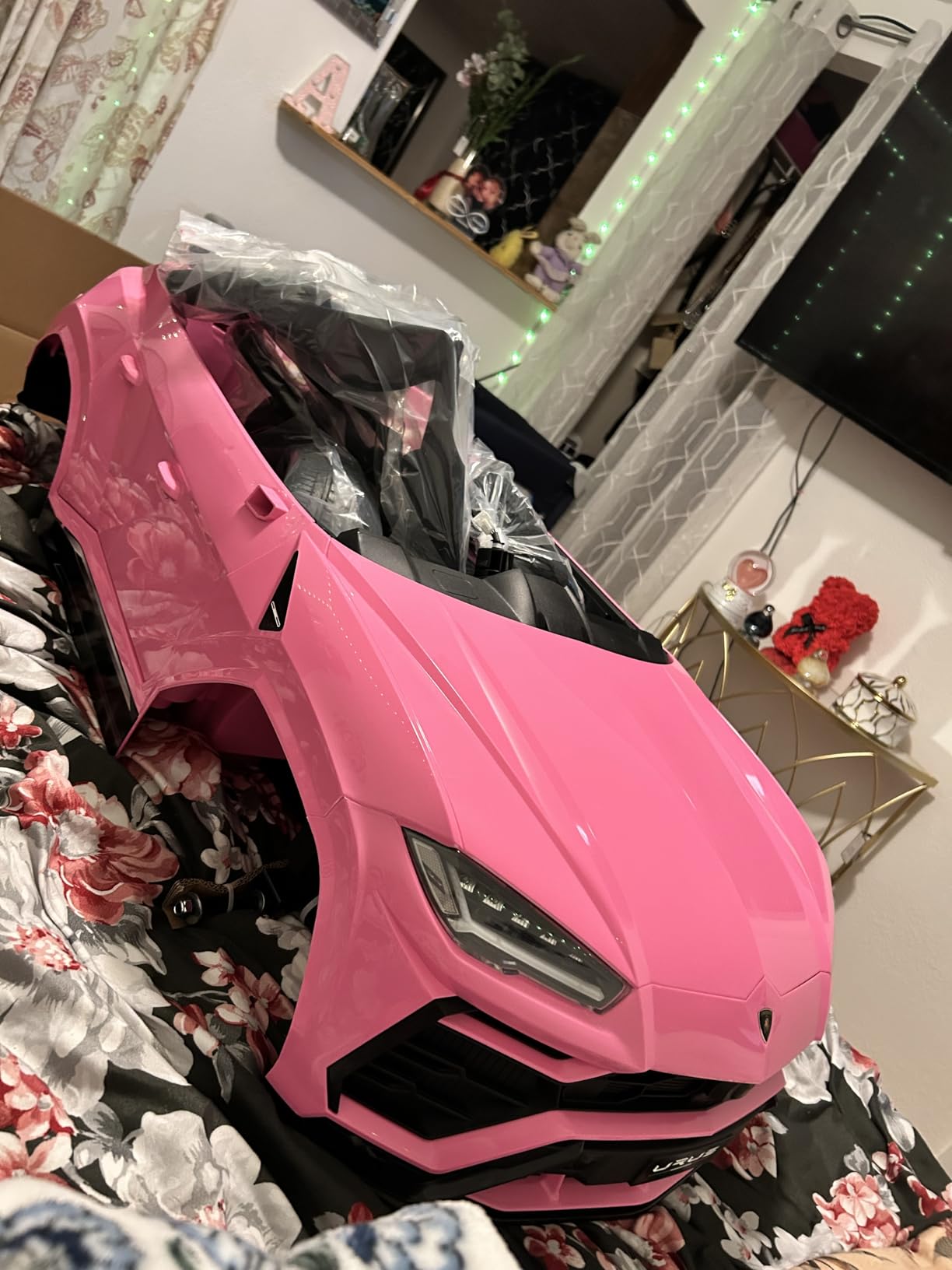
Electric Car for Kids 12V Licensed Lamborghini Ride On Car with Remote Control,Max Speed 2.5Mph,LED Lights,Music Players,Lockable Doors,Spring Suspension,Toddler Cars to Drive,Pink
2.5 mph max
55 lb capacity
12V 7A battery
Spring suspension
+ Pros
- Officially licensed Lamborghini styling with a realistic driving position
- Iron and metal construction feels sturdier than plastic rivals
- Gentle 2.5 mph pace is well matched to a young child
- Spring suspension and soft start ride comfortably
- Remote batteries are included in the box
- Cons
- 55 lb limit and 33 inch height cap restrict who can ride it
- 12 hour charge time is long for 1 to 2 hours of play
- No Bluetooth with audio limited to the built-in music player
- Wide 42 inch footprint takes up storage space
This car ties for the highest rating in the guide at 4.6 stars, with 84 percent of its reviews at five stars, and the reason is consistent: it looks and feels right. The licensed Lamborghini bodywork is accurate, the driving position is closer to a real car than a toy crossover, and the iron and metal construction gives it a solidity that plastic-framed rivals cannot match. When you lift the door, the car feels like an object rather than a moulding.
Two details that are better than expected for this class: the 2.4GHz remote ships with its two AAA batteries in the box, which is not true of most listings, and the seat measures 14.2 inches wide by 7.9 inches deep, giving a genuinely comfortable cockpit for a small child.
The 7A Battery and the Twelve-Hour Charge
The 12V 7A battery is the same high-capacity pack seen on the Mercedes G63, and it is the spec that makes the 1 to 2 hours of runtime per charge achievable. What makes it awkward is the 8 to 12 hour full charge time, so the car is effectively an overnight or all-day proposition rather than something you top up between sessions.
For a family that parks the car in a garage and charges overnight, that is a non-issue. For anyone hoping to use it for an afternoon gathering and again the next morning, the long cycle becomes the deciding factor against a car that charges faster and runs shorter.
Size Limits and Audio Gaps
At 42 inches long and 26 wide, this is one of the widest footprints in the group, and the 33 inch height cap plus 55 lb weight limit means it suits a narrower age range than the roomy body suggests. Measure both the storage space and the child before buying, because the seat is comfortable precisely because the car is wide.
Audio is limited to the built-in music player with no Bluetooth and no personal device connection, which is a real difference from the Winado AMG and the Chevrolet Colorado. For children who are content with built-in songs, it is fine. For a child who wants their own playlist, choose a different car.
Verdict for a Young Driver
The best pick here for a child who wants a supercar shape and does not need speed. The 2.5 mph ceiling, the soft start and the spring suspension make it composed and predictable, and the metal construction gives it a durability advantage over plastic-bodied rivals.
The 55 lb limit and the 12 hour charge are the two facts to weigh. If your child is under four and you charge overnight, this is a strong, well-rated choice. If either of those is not true, a 66 lb capacity model with faster charging will serve you better for longer.
11. Winado 12V Licensed Chevrolet Colorado – The Grass and Gravel Pick
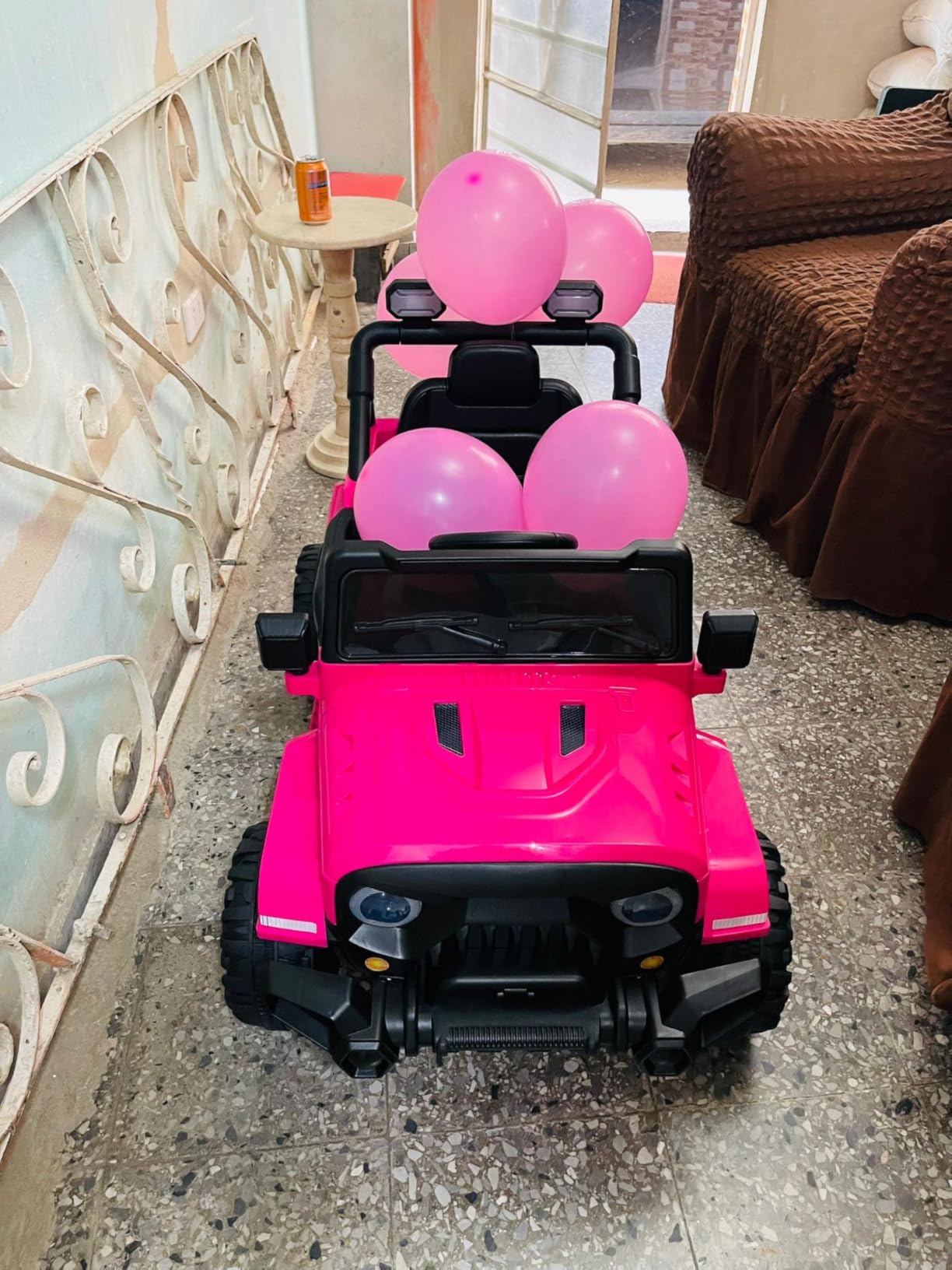
Winado 12V Licensed Chevrolet Colorado Electric Ride on Car for Kids, Pink
2x25W motors
66 lb capacity
Bluetooth music
ASTM and CPSIA
+ Pros
- Powerful enough for uneven uncut grass without getting stuck
- Bluetooth plus built-in music and steering-wheel speakers
- Remote is easy to use and gives parents full control
- Accurate licensed Colorado trim with racing-style wheel
- 85 percent five-star ratings is the best share in the group
- Cons
- 8 to 12 hour charge for roughly an hour of play
- 2x25W motors are less powerful than the 35W twin-motor models
- One report of the unit stopping charging after a month
- Age listing understates suitability
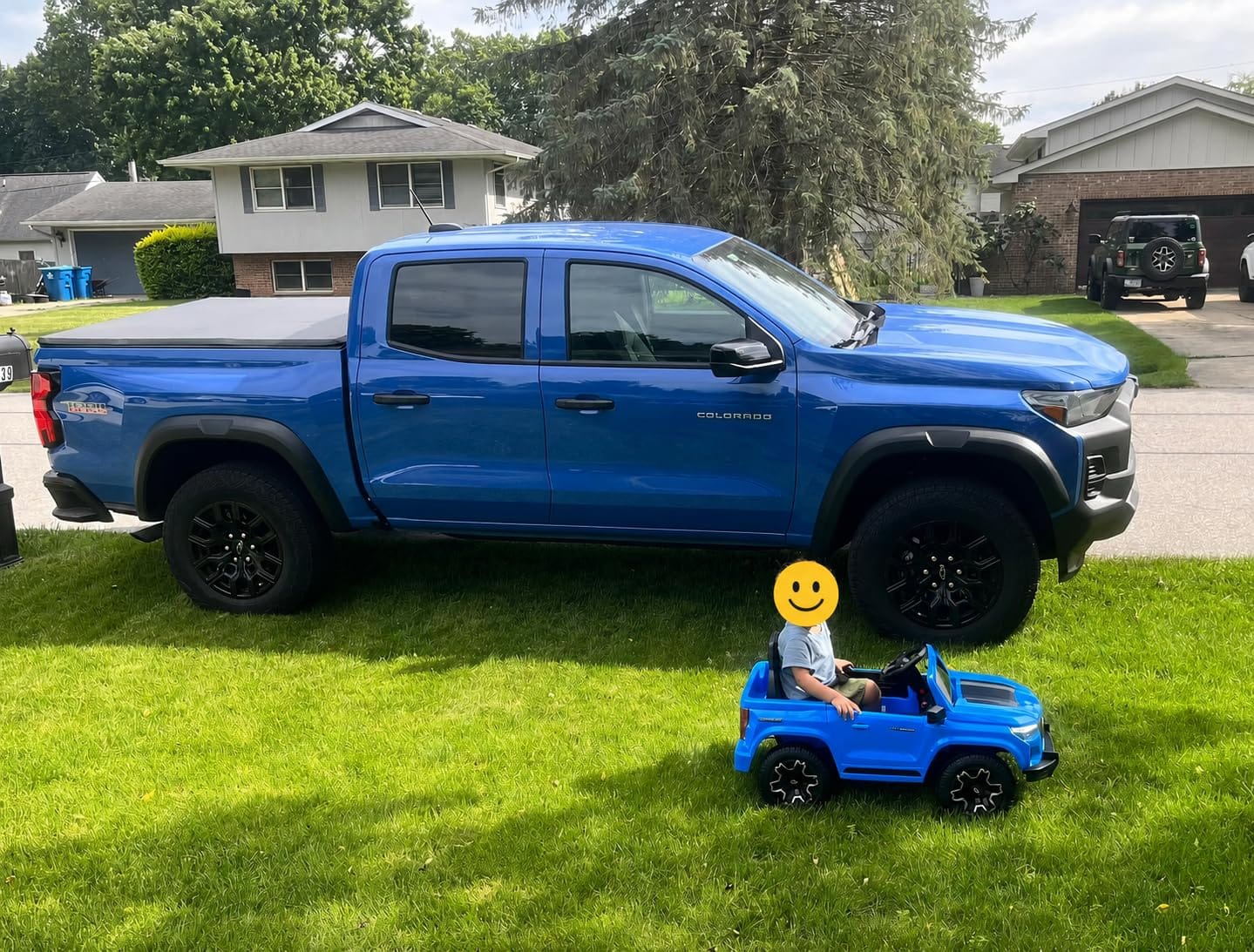
This Colorado is the one to buy if your property has lawn that gets long, because uncut grass is where weaker drive trains give up. Owners report it handling uneven, uncut grass without getting stuck, which is a meaningful difference from the models that only cope with a freshly mown lawn. The racing-style steering wheel, side mirrors and accurate Chevrolet trim also make it one of the more convincing licensed designs in the guide.
At 4.6 stars with 85 percent five-star ratings it has the highest satisfaction share of any model here, and the Bluetooth with a built-in music player plus steering-wheel speakers is used constantly in owner feedback. The soft start, rear shock absorbers and safety belt round out a well-judged specification.
Where 2x25W Motors Sit Against the Class
The twin 25W motors are the weakest power configuration in this group, and several owners comparing it against the 35W twin-motor models note the difference. It still handles uncut grass, which is the test that matters most, but it will give up sooner on a genuine slope. If your property is flat to gently sloped, the trade buys you a lighter, more manageable car and a lower profile.
It is also the narrowest body at 21.65 inches, which makes it easier to steer in tight driveways and simpler to store than the wide Lamborghini or the large Silverado. That is an underrated advantage in homes with a narrow path from garage to garden.
Charging Reliability Is the One Worry
There is a report of a unit that stopped charging after only a month, accompanied by poor support from the third-party seller. One report is not a pattern, and the seller’s overall satisfaction score is high, but it is worth doing one thing: charge the car fully yourself within the first week rather than assuming a new battery is holding a charge.
The 8 to 12 hour charge for roughly an hour of play is the ongoing constraint, and it is the same trade-off the Lamborghini makes. Both are overnight cars. Plan your charging around that and neither model disappoints.
Verdict for Uneven Lawns
Choose this Colorado if grass length is your biggest problem, your child wants a realistic truck interior, and Bluetooth matters more than raw top speed. The 66 lb capacity also makes it one of the longer-lasting picks in the guide.
Pass on it if your property has a real hill. The 25W motors will not have the torque margin that the 35W twin-motor models provide, and on an incline you are asking the battery and the motors to work at their limit simultaneously.
12. OLAKIDS 12V Battery Powered Truck – The Most Detailed Safety Specification
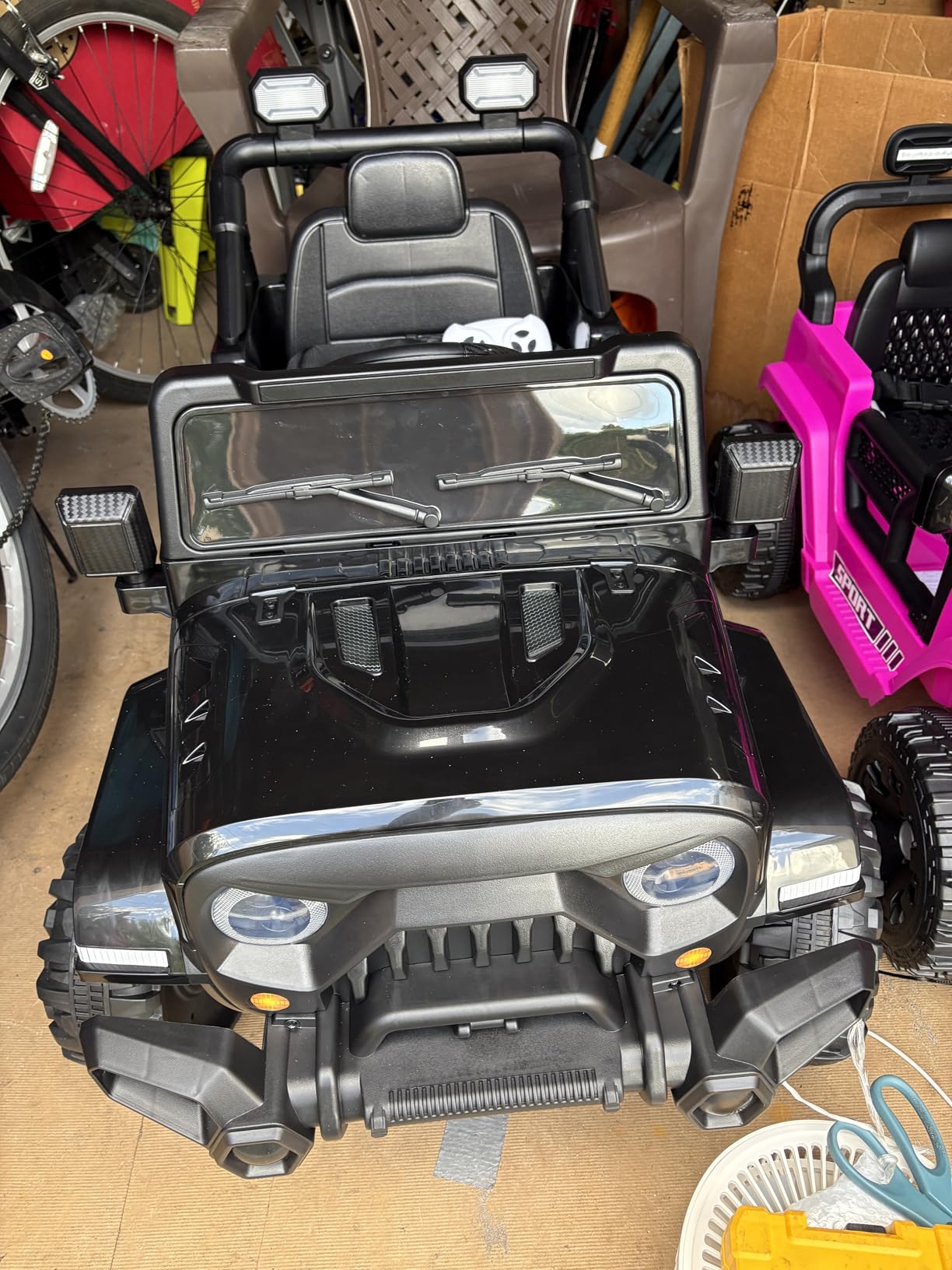
OLAKIDS Ride on Truck, 12V Battery Powered Electric Vehicle for Kids with Remote Control, Bluetooth, Power Display, LED Lights, Music Player, Ride on Toy for 3+ Boys Girls (Blue)
2x35W motors
Up to 4 mph
Power display
66 lb capacity
+ Pros
- Twin 35W motors give the strongest climbing power in this group
- Emergency brake on the remote overrides manual mode at any time
- On-board power display shows charge at a glance
- Free of BPA PVC phthalates lead latex and formaldehyde
- Passes stability asphyxiation load and shear testing
- Cons
- 8 to 10 hour charge time is among the longest here
- Polypropylene shell is less rigid than metal-framed competitors
- Remote needs two AAA batteries that are not included
- Lowest sales rank in the group suggesting a smaller installed base
What separates this truck is the paperwork. It complies with DOE, CEC, CPSIA and ASTM requirements and is listed as free of BPA, PVC, phthalates, lead, latex and formaldehyde, and it has passed stability, asphyxiation, load and shear testing. No other model in this guide publishes a materials declaration that specific. If your child has sensitivities or you simply want the documentation on file, this is the one.
The hardware backs it up. Twin 35W motors give it the strongest climbing power in the group, the on-board power display is the only dash charge gauge here, and the 2.4GHz remote includes an emergency brake that overrides manual mode at any moment. Speeds up to 4 mph with remote settings at 1.86, 2.37 and 3 mph mean the parent genuinely sets the pace.
Four Miles Per Hour Needs a Mature Driver
4 mph is the highest ceiling in the guide and roughly a brisk adult jog. For a six-year-old with good coordination on flat ground, that is exhilarating and appropriate. For a three-year-old, it is a genuine speed, and the only thing standing between them and it is the remote setting.
That is why the emergency brake override matters more on this car than anywhere else. The P button halts the vehicle regardless of what the child is doing, which is the difference between a fun speed and an injury on a driveway edge. Practise using it before you need it.
Plastic Construction and the Long Charge
The polypropylene shell is less rigid than the metal-framed competitors here, which shows up eventually as flexing at the mounting points under rough use. The twin motors compensate in the short term, but a metal-framed car will age better if your child drives hard.
The 8 to 10 hour charge for 60 to 120 minutes of play is among the longest cycles in the group. It is an overnight car, and the power display is what makes that workable, since you can check the remaining charge without plugging anything in. The remote also needs two AAA batteries that are not supplied, a small but genuine omission.
Who This Truck Suits
A family with an older child, a flat-to-moderately sloped property, and a preference for documented safety standards over licensed brand styling. The materials declaration and the emergency brake remote are the two strongest safety stories in the guide.
The 305-review count is the smallest base in this group, so long-term durability data is thinner than the Best Choice Products listings. For a first electric vehicle that is a reasonable trade. For a car you expect to hand down, the models with 16,000-plus reviews offer more reassurance.
How to Choose a 12V Ride-On Car: 7 Things That Matter
Rankings are only as good as the criteria behind them, so here is the framework I used to sort these twelve. If you read nothing else in the guide, these seven checks will get you most of the way to the right car for your child and your garden.
1. Weight Capacity and Age Band
Weight capacity is the number to check first, and it is the number most listings bury. The range across this group runs from 44 lb to 66 lb, and that 22 lb spread is the difference between a car that suits a two-year-old and one that suits a five-year-old. Match the limit to your child now plus a year, because growth is fast and the limit is a hard number rather than a guideline.
Then check the height. The Lamborghini caps at 33 inches, and a child who is tall for their age can look cramped even within the weight limit. A roomy seat that the rating cannot accommodate, as on the Mercedes G63, is a sign the manufacturer optimised the spec sheet rather than the fit.
2. Battery Capacity Is the Real Range Number
Run time claims are inconsistent across the category, which is why you should ignore them and read amp-hours instead. Most listings ship a 12V 4.5Ah lead-acid pack. The ANPABO Mercedes G63 and the BTMWAY Lamborghini both carry 12V 7Ah packs, which is roughly 55 percent more capacity, and the OLAKIDS truck uses a 4.5Ah pack with twin 35W motors to compensate through power.
Lead your own expectations with the physics. Heavier riders, inclines, continuous LED lighting and engine sounds all shorten a session, and a car that has been driven hard for a year will lose meaningful endurance. Charge time matters as much as capacity here: an 8 to 12 hour cycle means the car is an overnight product, and planning around that prevents a lot of frustration.
3. Motor Power Decides Grass and Slopes
Motor output is the spec that determines whether a car handles your terrain, and the spread is significant. Single-motor 12V cars manage pavement and a mown lawn. The twin 25W configuration copes with uneven grass. The twin 35W setups found on the Miniature Motors truck, the ARBELI car, the ANPABO Mercedes and the OLAKIDS truck have the torque margin to climb a gentle slope without stalling.
If you have a slope anywhere near the driving area, treat dual 35W motors as a requirement rather than a preference. The same applies to anything beyond a driveway: uncut grass, gravel and pine needles all add load, and a marginal motor that sounds adequate on a flat lawn will feel inadequate on the first real incline.
4. Remote Control Range and Override Behaviour
Every model here has a parent remote, and they are not equivalent. Look for the emergency brake or override function, because a remote that can only command forward and reverse cannot stop a car that is rolling into a hedge. The Best Choice Products truck and the OLAKIDS truck both have an emergency brake that halts the vehicle regardless of what the child is doing.
Range is the other half. Owners across multiple listings report that the remote drops out at short distances, which means a parent supervising from a porch will lose control precisely when they do not want to. Test the range in the actual driving area before your child drives alone, and know where the boundary sits.
5. Belt Type, Soft Start and Certification
Look at what the belt actually is. A five-point safety belt, as on the Best Choice Products truck, holds a small child; a lap belt, which most of this group uses, does not, and several listings are described by owners as insufficient for a toddler. If your child is under four and the car has a lap belt, plan to fit a proper harness or supervise constantly.
Soft start deserves the same attention. The ARBELI car and the BTMWAY Lamborghini both ramp acceleration and braking, which reduces both the lurch on take-off and the forward tip that causes most tip-over complaints. Finally, look for ASTM F963 or CPSIA marking on the listing. Several models here publish it, several do not, and the OLAKIDS truck goes furthest with a full materials declaration.
6. Wheel Material and Suspension
Never-deflate plastic wheels and spring suspension are the norm in this category, and both have a real limitation. Hard plastic wheels grip pavement well and behave inconsistently on grass and gravel, which is why treaded and EVA-style wheels matter if you are not driving exclusively on a driveway. The ANPABO Mercedes uses treaded wheels specifically for grip on dense grass and asphalt.
Suspension quality varies more than the listings suggest. The Best Choice Products truck has genuine four-wheel shock absorbers; most others have spring suspension at best. If your driving surface is anything other than smooth pavement, that difference shows up in how the child reacts after ten minutes.
7. Footprint, Storage and One Seat or Two
Measure before you buy. Dimensions in this group run from 39 by 23 by 18 inches for the compact Bobike up to 44 by 23 by 28 inches for the Mercedes G63, and the Silverado truck is 42.9 by 28.4 by 25.2. At 36 pounds, the Mercedes is also the heaviest to lift into a vehicle. Parents in the forums consistently mention discovering the storage problem mid-season, so check the garage door clearance and the route to the driving area.
Decide the seat question honestly as well. Only the Silverado is regularly reported to fit two children, and if siblings share it, that single capability prevents a recurring household conflict. Everyone else is a single-seater, and a child who will outgrow a 44 lb or 50 lb limit in a year is better served by a 66 lb model from the start.
6V vs 12V vs 24V: Which Voltage Does Your Child Actually Need?
This is the most common question in the category and the one most product pages avoid. The short answer is that 12V suits the large majority of families, and that 6V is generally too limited while 24V is usually faster than a young child needs and larger than most garages can hold.
6V suits a child under three on smooth indoor surfaces and nothing else. The motors lack the torque for lawn, the ride time is short, and the category is shrinking as manufacturers move to 12V. If you are buying a 6V, you are buying a first toy rather than a first vehicle.
12V is the balance point. Top speeds in this guide range from 1.9 mph to 4 mph, which is slow enough that a stumble is not a serious fall and fast enough that a five-year-old finds it exciting. Battery packs are widely available, chargers and remotes are standard, and the parts ecosystem is mature enough that replacement components exist for most brands.
24V is the right answer for one specific situation: a property with a real slope, or a child who has outgrown a 12V and needs genuine climbing power. It also doubles the speed, which changes the safety picture entirely, and the footprint and weight make storage harder. One caution from the modding community, which we see frequently in parent forums, is that fitting a 24V pack to a 12V chassis is a genuine fire and overheating risk. It is a different vehicle, not an upgrade.
Decide by terrain first, age second. A flat property with a four-year-old means 12V without hesitation. A sloped property means dual 35W motors at minimum, and 24V if the slope is more than gentle. A flat property with a six-year-old means 12V today and a 24V machine in two years.
Frequently Asked Questions
What is the best 12V ride on car for kids?
The best 12V ride on car for most families is the Best Choice Products 12V Kids Ride On Truck, because it combines genuine four-wheel shock-absorbing suspension, a five-point seat belt and a three-speed parent remote with an emergency brake. For a longer-lasting option with a higher weight limit, the Best Choice Products 12V Kids Electric Vehicle carries 61 lb, and the ANPABO licensed Mercedes-Benz G63 uses a 12V 7Ah battery with twin 35W motors for the longest sessions and the best climbing power.
Which is better for my child, 12V or 24V ride-on toys?
12V is better for most children aged three to six, and for most flat properties. It delivers top speeds of roughly 2 to 4 mph, which is slow enough to be safe and fast enough to feel real, and the battery and parts ecosystem is mature. Choose 24V only if your property has a genuine slope or your child has outgrown 12V power, because it roughly doubles the speed, is heavier and takes more space. Never put a 24V battery in a 12V chassis.
What age group is a 12V ride-on car most suitable for?
Most 12V ride-on cars suit children from three to six, and the deciding factor is the weight limit rather than the age on the box. Weight capacities in this category run from 44 lb to 66 lb. A 44 lb limit suits a three or four-year-old, while a 66 lb limit can carry a child to five or six. Check the height and the seat width too, since some roomy cars still cap out at 55 lb.
How long does a 12V ride-on car battery last per charge?
Expect one to two hours of continuous play per charge for most 12V models, and expect it to shorten under load. A heavier rider, driving up a slope, and running LED lights plus engine sounds all reduce the session. Battery capacity is the cleaner comparison: most listings use a 12V 4.5Ah pack, while the ANPABO Mercedes G63 and the BTMWAY Lamborghini use 12V 7Ah packs. Charge time ranges from about 8 to 12 hours on the larger packs.
How fast does a 12V ride-on car go?
Most 12V ride-on cars reach between 2 and 3.5 mph, which is roughly adult walking pace. The slowest model in this guide runs at about 1.9 mph for toddlers, and the fastest reaches 4 mph for older children. Almost all of them let a parent dial the speed down through the remote, with two or three settings, and a soft start system on newer models prevents a sudden lurch on take-off.
Which 12V Ride-On Car Should You Buy in 2026?
If you want one answer, take the Best Choice Products 12V Kids Ride On Truck. Its four-wheel suspension, five-point belt and emergency-brake remote make it the safest-feeling first vehicle here, and the 25-minute assembly is the shortest in the group.
If you will keep the car past the 44 lb limit, go with the Best Choice Products 12V Kids Electric Vehicle at 61 lb, or the ANPABO Mercedes-Benz G63 if you want the 7Ah battery and twin 35W motors for the longest sessions and the best grass performance. For two children, the licensed Chevrolet Silverado is the only model in this guide owners regularly report fitting a sibling in.
For a two-year-old, the Bobike with its 15-inch wheels and gentle 1.9 mph pace is the calmest entry point. For a grass-heavy property, the Winado Chevrolet Colorado handles uncut lawn. For a child who wants a truck, the ELEMARA off-road model. For a music-loving driver, the Winado AMG GTR with four audio inputs. And for documented safety standards above all else, the OLAKIDS truck with its full materials declaration and emergency brake remote.
Whichever you choose, test the remote range on your own ground before the first solo drive, keep sessions flat while your child builds confidence, and remember that the weight limit is the number that decides how long the car stays useful. Check the latest price for your pick using the button in its review, and go drive.